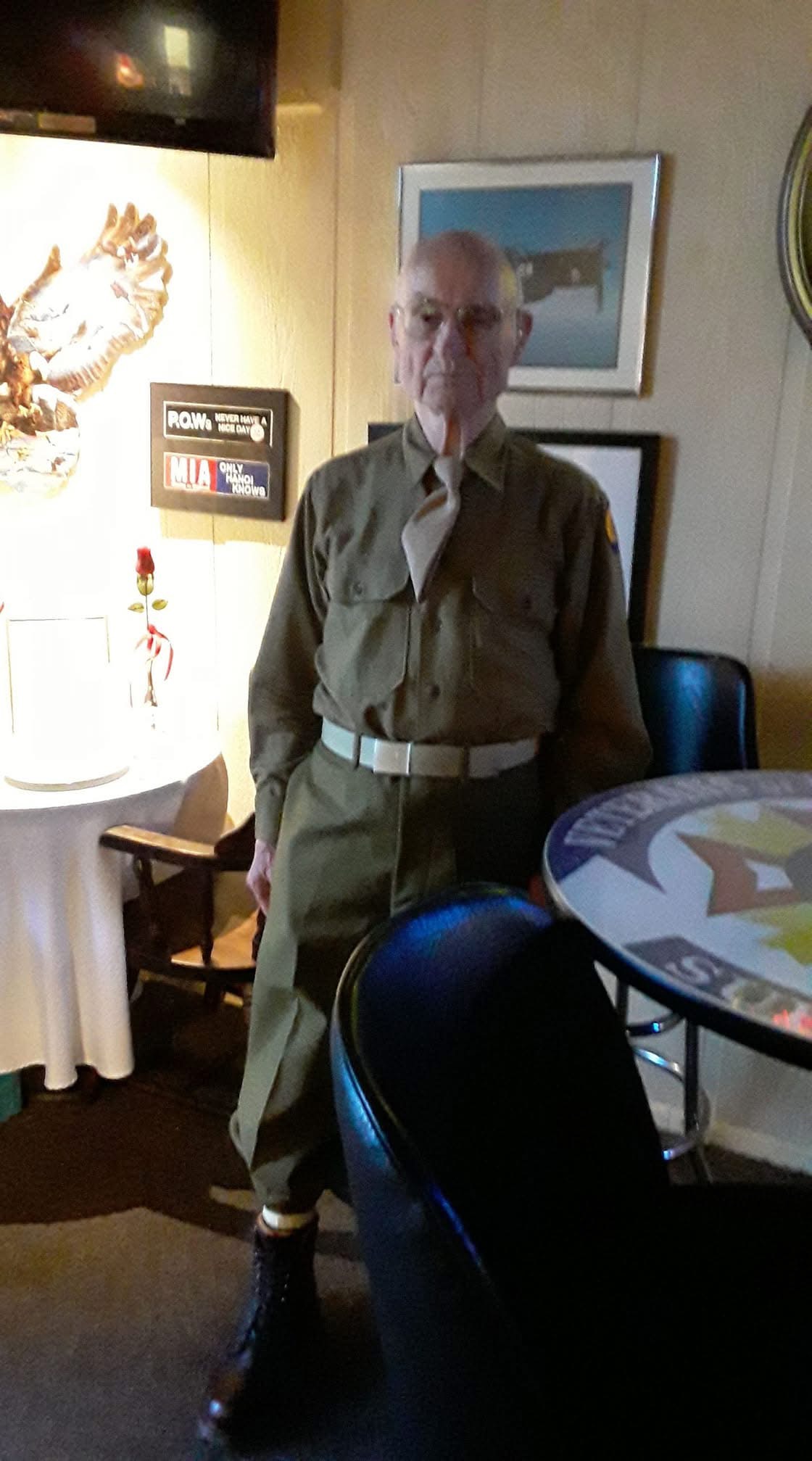
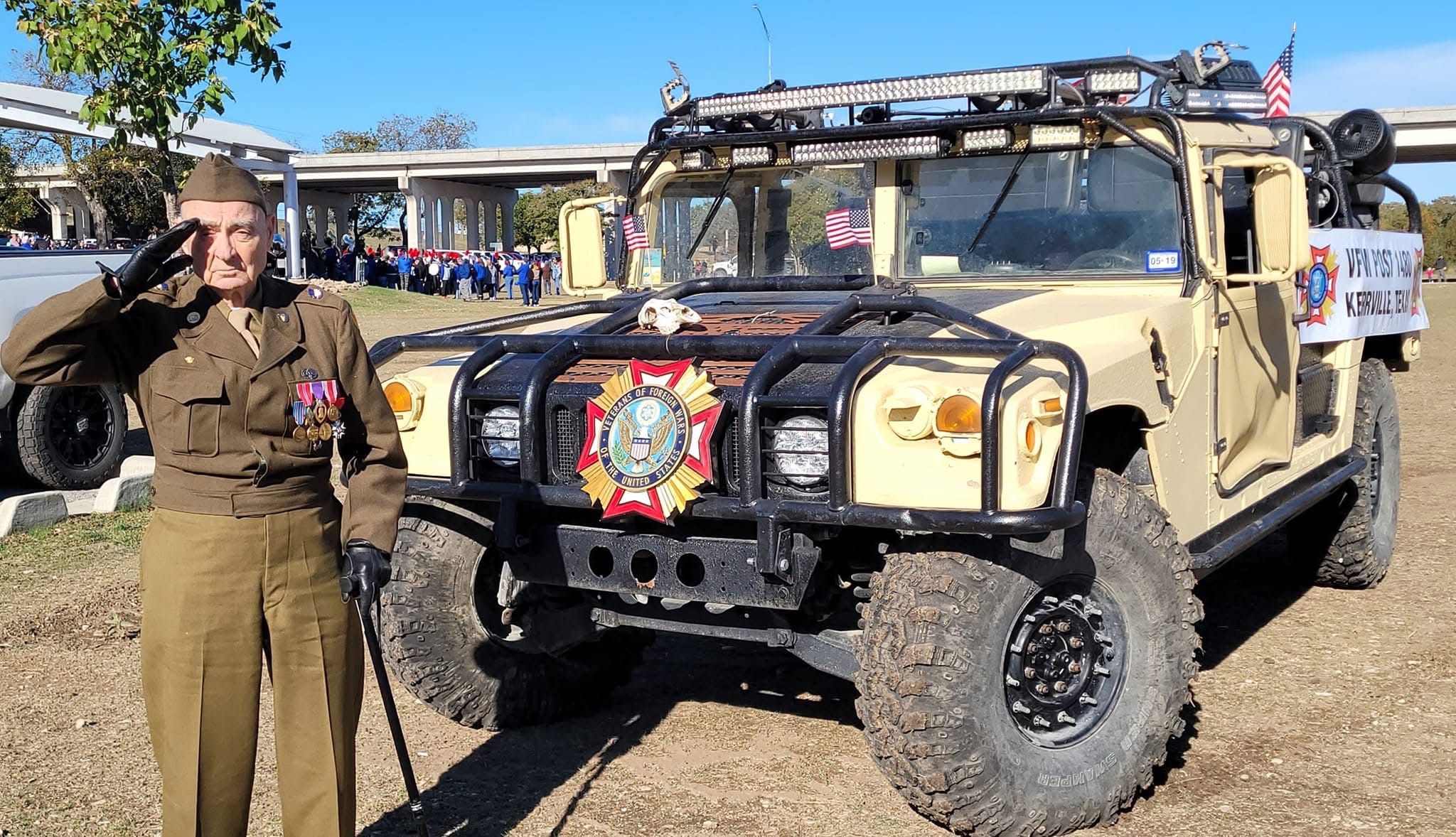
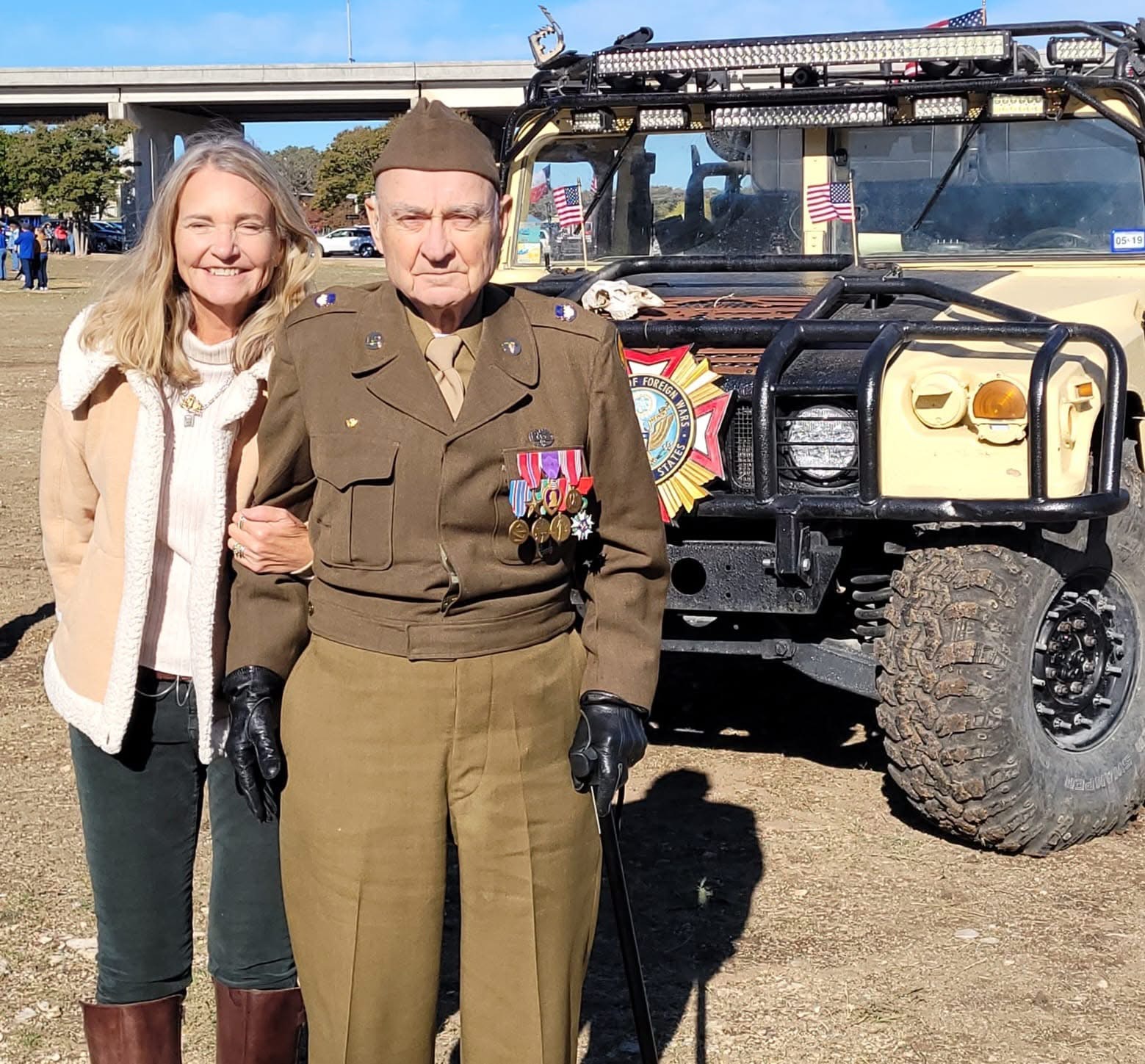
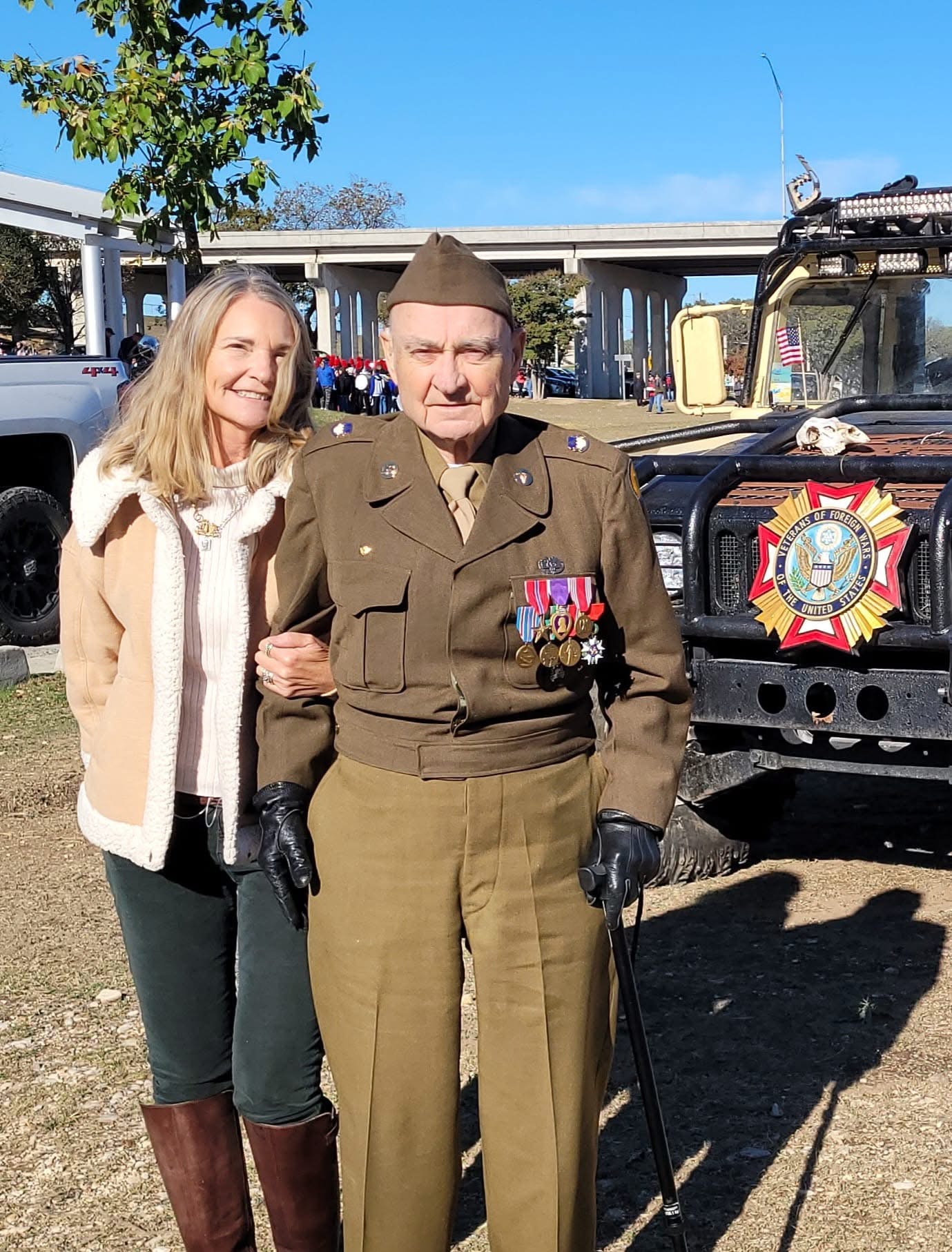
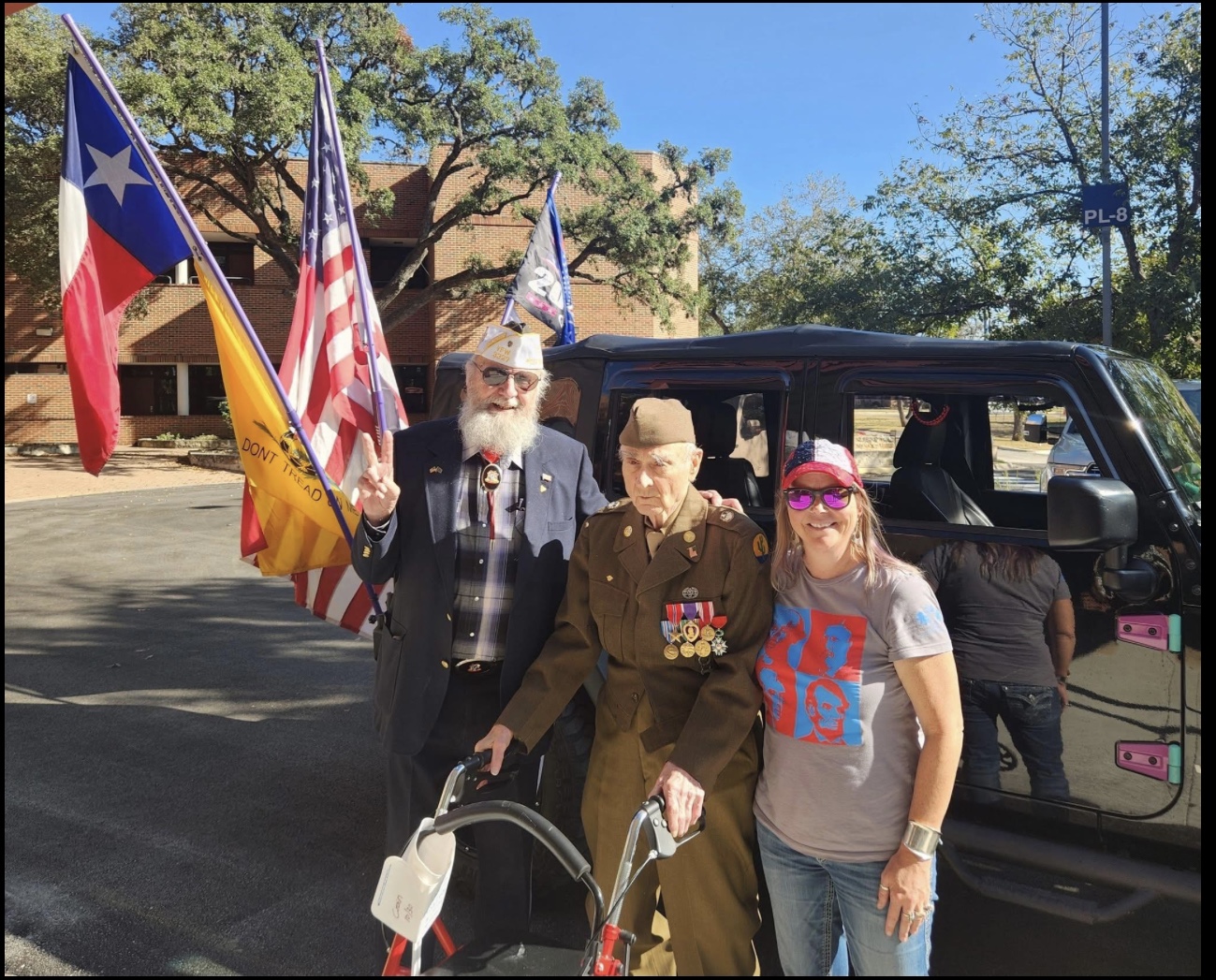
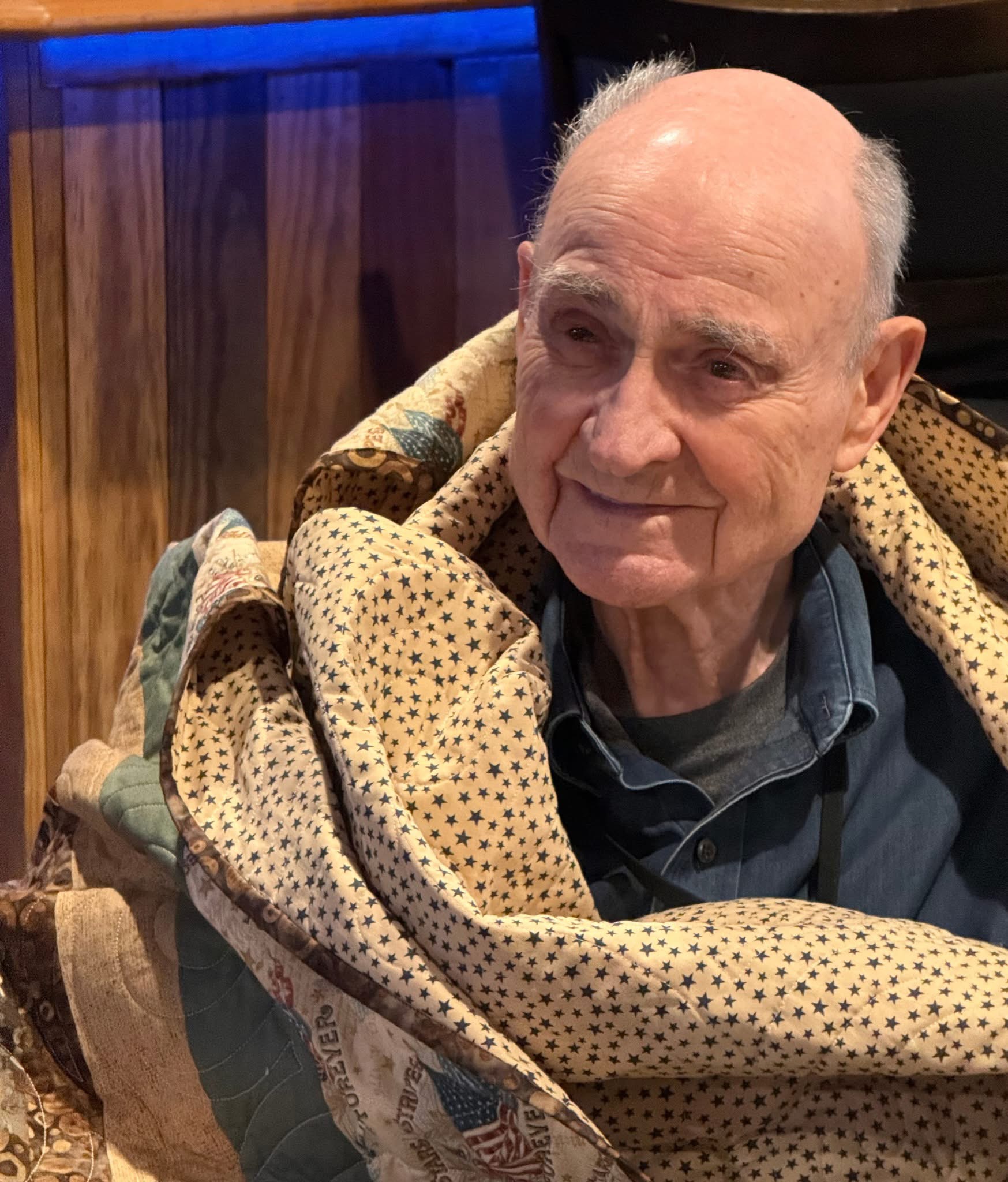
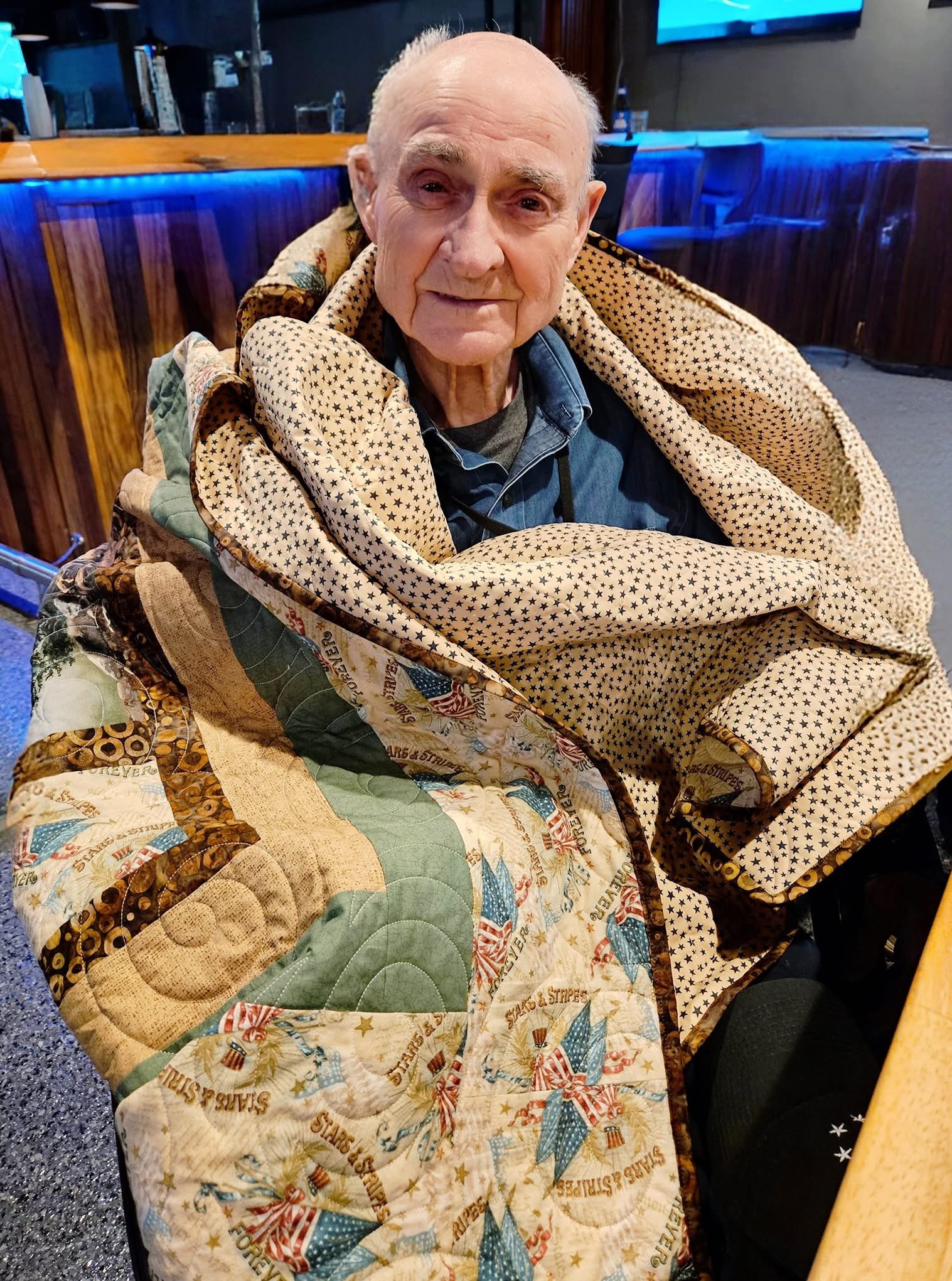
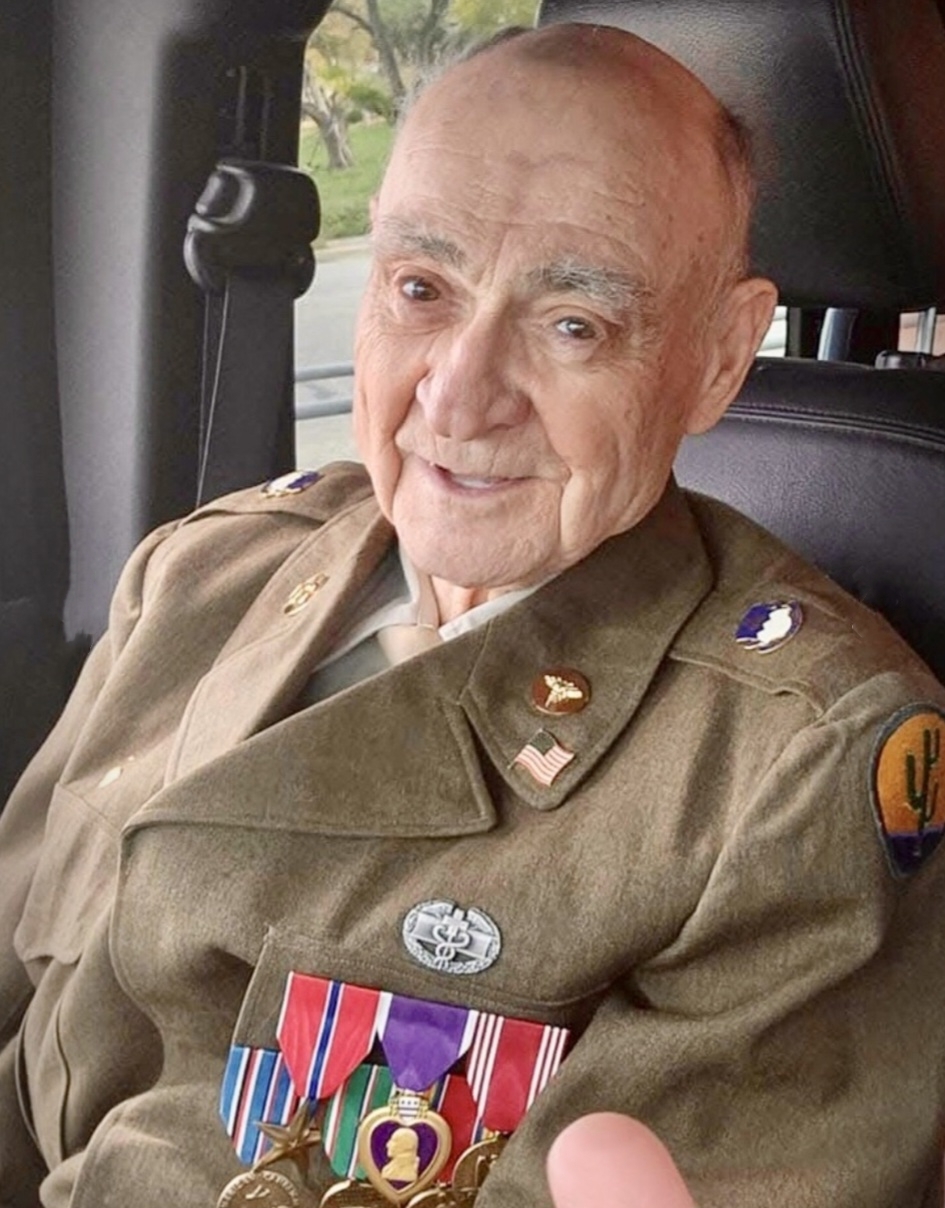
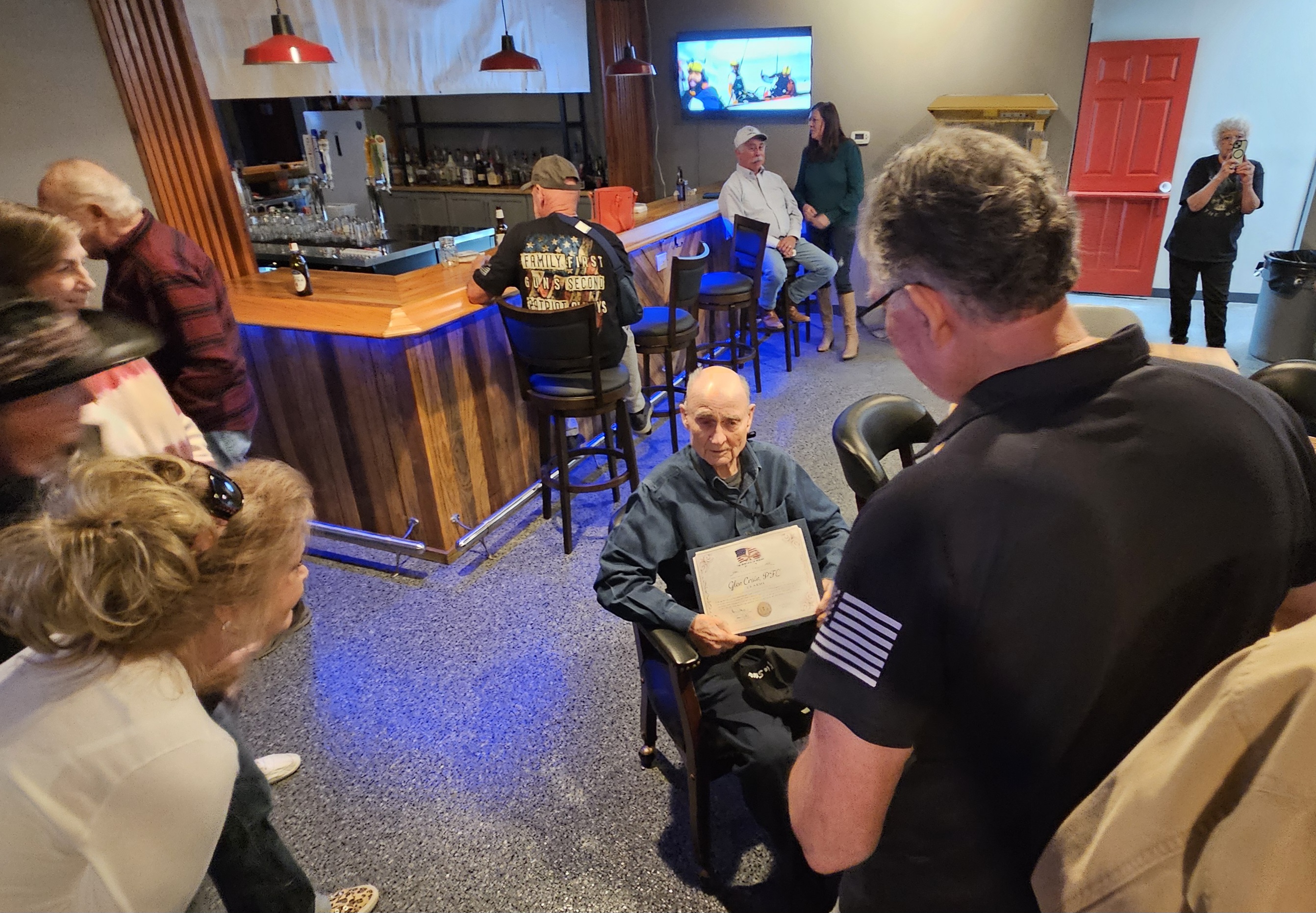
Glen E. Crain, Medical Detachment 411th
He served with courage, compassion, and technical skill, embodying the highest traditions of the U.S. Army Medical Department.
Taped Interview Nashville 2009
My name is Glen Edward Crain. The record states two dates for my date of birth; April 14th or April 15th. I use the latter. It occurs at a busy time of year, being tax season. I was born in a little village called Fay, Oklahoma which was founded in the early days of the settlement of Oklahoma. When the railroad came through everybody picked up their buildings and moved about four miles to their current location.
My father was a farmer and my mother was a housekeeper. I was born in the same log cabin my mother was born in. In the early years of the Depression my Dad went broke. He was under capitalized at subsistence farming. My grandparents moved from Waynesville, N.C. to Oklahoma in 1993. There are a lot of Crain’s in Texas; I am related to only a few of them. Most of those to whom I am related moved from Oklahoma to Texas after WWII.
I was a senior in high school in Blackwell, Oklahoma when I heard about the bombing of Pearl Harbor. I knew it was a very serious matter, an unpardonable insult. Most of the younger guys who were eighteen or so, knew this would involve us directly or indirectly. The Oklahoma National guard was placed on active duty in 1940. Very few guys made any serious preparation but a few enlisted in the service organizations of their choice or made a service commitment, I should say. Two joined the Marine Corp, one joined the Paratroops. Several joined the Air Force; at least three joined the Navy V-12 program. Most of us recognized our immaturity and stayed in Blackwell waiting to be drafted.
In school I had been a second string athlete. There were some boys in my hometown of Blackwell, who were outstanding athletes. BHS had a very strong football program, and an outstanding wrestling program. The coaches were named Bill Ledbetter and Harold Cotton. Although I took wrestling class for two years, I was never good enough to wrestle competitively. When I was in San Antonio, we were on break outside the building, talking in a big group, and I mentioned my football and wrestling experience. I guess that seemed so incongruous because I was such a skinny guy, but it followed me for a long time.
When I got to Camp Robinson, I was maneuvered into being the wrestling coach for about eight or nine guys who wanted to wrestle as a recreational exercise. I felt a little pressured about that because I hardly knew the vocabulary of the sport. In those days, you did it whether you knew all about it or not.
I finished high school and worked in a warehouse at a glass plant in the summer in order to save money to attend Northern Oklahoma Junior College. I had one semester of pre-engineering in college before I was drafted, entering the Army January 19, 1943. I got my uniforms and shots at Fort Sill, Oklahoma. After being there for about a week, a bus load of us were sent to Camp Barkeley near Abilene, TX to the Medical Training Facility.
About the only thing I can recall about the mess hall was being introduced to fried oysters about once a week, which I loved, and how chapped my hands were as a result of cleaning my mess kit in that barrel of hot water. I kind of enjoyed basic training; I got into condition quickly making it easier for me than some of the others. The new uniform made me feel important and honored. I used to go to all the shows that were brought to the immediate vicinity there. I think I went to at least one show a week, which were usually very small shows.
They may have sent me to the Medical Training Facility because I had Latin in high school and I had small hands. Maybe they sent me because I was a good human being, but I doubt it.
My cousin George Shanley, a man named Wally Faucher, and Leo Jarrett trained with me. I sure missed this girl I had just met at NOJC. That turned out to be mostly daydreaming! I was at Camp Barkeley for about a month when they promoted me to Technician Fifth Grade (T/5). Then I was sent with a bus-load of men from Camp Barkeley to the Brookes Army Medical Center located at Fort Sam Houston in San Antonio, Texas for training as a Dental Technician.
I was there for three months, where we studied what constitutes a good mouth structure. We carved three or four teeth from soap as models. Later we produced, as part of our projects, a splint for teeth for a broken jaw. We used a vinyl compound to construct the splint. We learned how to fill cavities in teeth, using mercury amalgam. We also learned how to make full upper and lower dentures. For about a month we had some training in a clinic in the main hospital.
San Antonio was an excellent place to spend your off-hours touring. I enjoyed the missions, the Mexican food, and the fancy movie theaters. The Aztec and the Majestic theaters were like palaces. Many theatres were like that in those days. I think we saw early war movies and musicals.
When that training was finished they collected a bunch of guys that had come down on the bus from Camp Barkeley and some other people at the train station. A train car full of us was sent to Camp Joseph T. Robinson, located in North Little Rock, Arkansas as cadre for the 55th General Hospital. That was another very comfortable, enjoyable situation.
During this training time, I was feeling under utilized and maybe a little bit too rank conscious of my abilities and experience. I was in charge of a detail of dental technicians that would go from our Company area to the Camp Robinson Dental Clinic. While we were there we were learning to do actual dental work. Some of the guys were assisting dental officers filling teeth and other typical dental work. There were eleven men in the dental group of the 55th General Hospital. Four of these guys were assigned to me to go to the dental clinic. There were some others who went to a different place.
I remember one man was being trained as an assistant to a dental surgeon; heavier stuff. Hal Lenintine and I were initially assigned to be dental hygienists. Part of my rank consciousness prompted me to request transfer to the laboratory. That took place in June. I continued to train there with the 55th for a couple of months. I think it was in August that a bulletin was posted that they were accepting students in the Army Specialized Training Program in preparation for their becoming noncommissioned officers and officers.
The rank of Second Lieutenant was my goal. I applied for that. In the meantime, I had become a special projects guy in this small group that I was with. We were planning to build five dental cabinets for the dental practitioners when we got to our destination in the field. I took measurements from the existing dental cabinets and drew up plans. The cabinets were going to hold dental instruments for regular dental practice.
They were about chest high, contained six or seven drawers and were to be made of wood. In September we went on a bivouac for about a week of training up in the hills at Camp Robinson, in Arkansas. It was a pretty country, with pretty heavy woods, and I enjoyed it. When we returned to camp, half of us were given a two week furlough. I went home. All of us enjoyed that quite a bit. I was back in camp when the other guys finished their furlough.
I had been back in camp about a month when I received orders to conduct a group of men to Arkansas State University at Jonesboro, Arkansas. We traveled by train. It seems like it took over a day, but it was only a couple of hundred miles if that far. We stayed there nearly a month mostly doing physical training and close order drills. The obstacle course was very challenging. You ran up to a 24 inch log placed at the edge of a dry stream bed about 5 ft. deep. You jumped over the log, stepped halfway down the cut, took a step on the bottom and then halfway up the log wall about six feet high. It was easy if timing was good, disastrous if not!
I was the highest ranking individual there. There were a few PFCs. I was the only Corporal, two stripe guy. I realized then, that maybe this is not what I thought it was going to be. I wasn’t feeling very optimistic about the way things were going.
Part of us received orders to proceed to the University of Oklahoma. We traveled there by train also. When we got there we were quartered in the basketball gymnasium, where about one hundred cots were set up. We had a cot and a barracks bag of our very own. After a short time we moved into two-man rooms in some very nice brick dormitories. There were about sixty of us in a building. We started taking pre-engineering classes or medical training.
I think the University of Oklahoma had ASTP men there for about one semester before I got there. I took English, Algebra, Trigonometry, Chemistry, Physics, Military Science, and Geography as well as two hours of Physical Education three to five times a week. We attended classes 8 to 5 week days and 8 to 12 on Saturday. I figure it was the equivalent of 27 college hours, but there were no labs.
I was introduced to the game of soccer. Pardon me, but I was pretty good at it, considering I had never played before! In those days I had so much self-confidence and was in such good physical condition that I would do things that other people might not do.
I was one hundred miles from home, so while I was there those three months (we arrived there the first week of December.) I went home for Christmas, making me the subject of much jealousy. That was 1943 and I was nineteen. I became twenty in April, 1944. I went home a couple more times while I was there. My two brothers, who were younger than I, had dropped out of high school. Both of them were in Wichita, KS, working.
My parents were not formally well educated. My mother had six years of school and my dad had eight years in a one room school house. He always advised me to get as much education as I could. At the time I was going home I had two sisters and my parents living in the same house. My parents had three boys, then three girls. The older girl, when she was about eight, contracted a serious intestinal illness. Her recovery from that took a year or two. She ended up living with one of my Aunts who did not have children but loved children a great deal. My Aunt was in a better position to give my sister the care and training she needed.
At the end of my first semester the ASTP program was terminated nationwide because the war effort in Europe needed manpower. In early March my friends and I were sent by bus to Camp Howze, located near Gainesville and assigned as privates to various units with the same MOS’s (Military Occupational Specialties) we had been assigned originally, in nearly all cases.
My striving for advancement had simply accomplished a demotion, in fact. I was more than a little disgruntled about that. I felt like, really for the first time, complaining about how the Army treated me. All this time I had felt that I was being under utilized. There were thousands of other guys who could make the same statement; I suppose.
I worked in the Dental Clinic with Capt. DeMatteo from early March to early September when the 103d shipped out. I think it was in April, a bunch of us ASTP guys were given a four week basic training refresher which gave me a total of two months of Basic Training. I went on one three or four day bivouac while I was with the 411th and working in the Dental Clinic. I went home about every two months. I would walk out of camp and either hitch hike or catch the bus to Oklahoma City and on to Blackwell.
In early September, we got our shots and took a train ride up to Camp Shanks New York. (I didn’t mention my stellar performance on the foxhole and tank training back at Camp Howze. That involved digging a foxhole and having a tank run over us. I dug through about three or four inches of earth; everything was going great. Then I hit solid rock and couldn’t remove anything but dust, no matter how I hammered on that thing. The tank was coming down the hill straddling the row of holes. The Sergeant said, “get in your foxhole and get as low as you can.” He watched to see that I was not crushed as the tank just slowly crept over me, getting me use to the motor and the fumes.)
At Camp Shanks we went out on a routine training hike with full field packs and then climbed these rope cargo nets up into the simulated ship. I started up that rope ladder and I realized what poor condition I had allowed myself to get into. I wasn’t getting any physical work in the clinic.
A clerk in the Medical Detachment and I rode a train into New York one night. We walked around and went into one of these two-bit dance places for about an hour. One of the girls there said, “You are a lot different than these other guys.” I didn’t explore that but I asked her what time she gets off work. Four AM was too late for me! We went to the Stage Door Canteen, a famous place. A day or two later we rode the train down to the ferry to Staten Island, where the docks were located. I think that trip took from 6am to midnight. I boarded the Marine Devil as the Red Cross handed me coffee and a doughnut.
We had a two week boat ride to Marseilles. The Atlantic was pretty rough for a few days. My bunk was at the top up near the front. During rough weather, the ship would go up and crash down; it seemed like it dropped twenty feet. It would just about rattle you out of the bunk. I didn’t enjoy the mess hall on that trip. My favorite place was up on deck, when that was allowed, but I didn’t get seasick until we passed through the Straits of Gibraltar.
I got seasick one time and I can’t prove whether it was the nearness of Marseilles or the still water that got me upset. But within two hours of passing the Straits of Gibraltar, I was hanging on the rail. I don’t recall doing calisthenics on the ship. (Once on the train ride from Texas to Chicago to New York we stopped and for thirty minutes to an hour we did calisthenics.)
One morning we docked at Marseilles or some place east of Marseilles. We walked right through the city. A lot of my companions were waving nylons and candy bars at the girls that came out to watch us. I didn’t have that foresight. We marched carrying our full field packs and barracks’ bags until 1 or 2 o’clock that night. We were instructed to pitch our two man pup tents in a row out on a plain, where we spent two or three weeks. I shared my tent with a man named Bill who was the company clerk.
On the ship, we were allowed only a salt water shower followed by a fresh water rinse, about once a week. A portable shower was set up while we were bivouacked. We were able to bathe two or three times a week, maybe. I assisted Dr. DeMatteo in filling teeth during the several days we were there. We had a very picturesque apparatus to set up in the open field as a dental clinic. There was a fold out chair that the patient could sit in. The dental drill was driven by a sort of a revised sewing machine. There was a linkage of three leather sewing machine type belts which linked up to the drill, which ran on various low speeds. We would pump a pedal with our feet. No matter what condition you were in, it became hard after eight hours.
I don’t remember whether Captain DeMatteo used Novocain on those fillings or not, but he probably did. We used soap and water to try to stay sanitary. I don’t think we always wash between patients in the field. I don’t remember having a patient that did any bleeding. Dr. DeMatteo was the only one groping the patient anyway. My job was to operate the drill machine, mix the mercury amalgam for the fillings and clean the instruments. Dr. DeMatteo used Isoeugenol as sort of a palliative for any soreness in the tooth. He could also use gentian violet to paint the gums for gingivitis.
I think we were there for close to three weeks before we got orders to motor march north and join the war. I made most of the trip in the back of a 2 1⁄2 ton truck. We didn’t see much. I remember driving north on that road out of Marseilles on a road with sycamore trees a yard from the pavement arching over the pavement. There were vineyards. I remember the houses in the distance as being very quaint. This would have been late October/early November of ’44. We drove north to Lyon and then up to Dijon.
It seems in Dijon portions of the Division were committed to the battle. This would have been the first few days of November. I remember sleeping in an apple orchard in Dijon. The 411th was held in reserve. When we weren’t moving I was hanging around the regimental medical station not doing much. Capt.
DeMatteo was a medical officer in one of the battalions and Capt. Priest was a medical officer for the 1st Battalion, 411th Regiment. Lieutenant Gordon was a medical officer for the company clearing station.
I remember we had a couple of pretty cold nights in the forest as we moved up. One night, although we had some pretty nice foxholes to spend the night in, it got so cold we were so stiff we could hardly get out of the holes. One of the medical detachment men, whose name was Burgess, was so cold and stiff that we had to support him under his arms. We had to feed him hot lemonade to get him thawed out and limbered up a little bit. I think he got a Silver Star, later.
I was hanging around the regimental aid station, they had made me a medical detachment runner for the day. I met the executive officer of the 411th. I don’t remember his name. He was a West Point graduate. The medical officer had sent me a message to the executive officer. His instructions were very explicit that I deliver the message exactly the way he said it to me. Which was to the effect: “The Regimental medical detachment now has a functional operating surgical light; the 1 1⁄2 ton truck is missing a headlight.”
The executive officer asked me to repeat myself about four or five times. That night the temperature was in the low 20s, with about four inches of snow on the ground. That was the first snow we had. I saw a couple of guys lie down in their overcoats in the snow and just go to sleep. I was unsure about that; I didn’t want to freeze to death. But, about two AM, I lay down also.
A day or two after that the 1st Sergeant ordered me to get my stripped back pack and my raincoat, and proceed up to A Co. to take charge of a litter squad there.
We were assigned to accompany a platoon from A Company and spent a couple of days patrolling a heavy woods area, just outside St. Die. One evening right at dark we were still wandering around. One of the infantrymen sprained his ankle, so we put him on a litter. We carried him around in the forest for what seemed like two or three hours, not really going any place.
Then the lieutenant in charge of the group asked me if I recalled where the cave was located that we had seen. I said I thought I did. He said they were going on ahead, and I was to meet them there. We went around to where the cave was located, looked around for troops but we did not see any, so we just lay down and went to sleep. I thought it was a ruse to get us out of the line of fire.
At daylight Private Joe Powaga went over to where headquarters was located and got a jeep to come back and pick up the injured man. The driver took the injured man back to the Regimental aid station, and then he came back and took us to the outskirts of St. Die. The battle was essentially over.
The jeep took us to an intersection where there was a large round stone. He told us that was as far as he could go. We walked just a short distance and there was a sergeant who had taken refuge behind this large stone and he could not move forward. He was just frozen up.
I tried to talk him into leading us into St. Die to give us cover. I frankly did not know what to do. I did not know where A Company was. I did not know if there was just a lull in the battle or what. I told the guys just to spread out and follow me. We headed down that road.
We went into St. Die and found SSgt. Glenn Wick who was in charge of the Medical Detachment enlisted men and had set up the 1st Battalion Aid Station where he was coordinating the medical activities and he directed us to A Co.’s location. To get there we crossed a narrow, flooded river about 15 ft. wide, across which the Engineers had constructed a bridge of overlapping 2 by12 planks tied with a rope.
When we reached A Co., nearly everyone was taking cover behind an eight or ten foot vertical cliff. Sgt Clark told us there had been some KIA’s and five wounded, three of whom had been taken to the Battalion Aid Station already. We carried the fourth man to the Aid Station but had to wait until dark to get the fifth man who was isolated in the cemetery on top of the cliff. When we had far to go, we needed four men to carry the litter but when we crossed the river only two men were needed. Crossing the bridge was tricky because one had to hold the litter away from his body in order to see when one stepped across those ropes.
As we returned to A Co., we saw a wounded German infantry man lying in a ditch, pleading for help. No one was paying any attention to him and I didn’t know what we were supposed to do, but I knew it wasn’t right to leave him there. I got an infantry man to cover us while I made sure he was not booby trapped. We put him on the litter and took him to Battalion Aid Station. When I reported to Captain Priest, he said “alright, we will take care of the S.O.B.!”
After it got dark, we went up into the cemetery and retrieved the fifth man, who had been shot in the abdomen. We carried him down to the plank bridge at the stream and saw Sgt. Webb and many others standing around. Sgt. Webb instructed me to allow another man of the 411th Medical Detachment who was of very small stature to take one end of the litter.
BIG mistake! I should have talked him out of it!
We started across the bridge with that man holding the back of the litter. He had to hold it away from himself so he could see where to step on the bridge. The man did not weigh enough. We got halfway across that bridge. He started yelling at me, “Don’t go so fast!” The litter got away from us.
When I realized that we were going to drop the patient I opened my left hand in order to spill him upstream, then jumped in after him. I grabbed him by the collar and grabbed onto the bridge. We dragged the man out of the water, took him to the aid station and I reported to Capt. Priest informed him we had dropped this casualty. I felt, of course, that this was a very bad thing for a person shot in the abdomen. I described the situation for Capt. Priest: “This is Corporal XXXX, who has had a very bad day. He was shot early this morning, lay in that cemetery all day, shot through the abdomen, and while we were carrying him in, we dumped him in the river. He has not complained a word. He has a real belly full of guts.”
The corporal bolted upright with a look of alarm on his face! It was one of those things one wished he had not said. What I had intended to convey was that he was a strong, courageous, and patient man.
Capt. Priest sent me back to the Regimental Office where they had a stove going and I undressed and lay down on the floor. My clothes dried somewhat and sometime in the morning the medical records Sgt. sent me back to A Company. It was still dark. I think I just lay down on the ground for a while. Early the next morning people were running around so I got up. It seems like we spent a day there at St. Die. It seems like it was the afternoon of the next day we started moving.
We motor marched up north some place. We spent a couple days moving very slowly, and went into a village. An officer took a bunch of us inside a building which may have been a power plant or a manufacturing facility. It was a building within a building. The interior building had a very low sloping roof. We were instructed to lie down on that roof to get a little rest. We were awakened about 4 AM or 5 AM the next morning and we moved up a hill into a forested mountainside, moving pretty much single file. The litter squad was more or less hanging around Battalion CP. We got a call for the A Company litter squad to pick up somebody.
The litter squad followed me up a hill to where the Battalion Aid Station was located; not more than 100yds. Lt. Gordon told me that there was a wounded man up front. He advised us to be very careful; to keep our heads down and not spend any time looking around. [Sergeant Harold Fields, a T-4, who I thought was the regular medic for A Co., the man I thought I was replacing, had been shot in the forehead.] We followed through on that: we picked up our patient, started back and were overtaken almost immediately by an infantryman with four or five prisoners.
He insisted that these prisoners would carry the litter, which I finally agreed to, in order to avoid a debate there in the open. (It was a BIG mistake.) Somebody noticed that we were headed in the wrong direction. I said to stop while I located the trail we needed to take. When Leichtwiese and I returned, this infantryman had decided, on his own, to proceed down the mountain without waiting.
Don Leichtwiese and I went looking for them and we walked into a bypassed German sniper. He was extremely well hidden in a clump of bushes in a small grove of trees. As we approached this guy he said something but I could not understand him and I stopped saying, “what did you say”? And he opened up on both of us with an automatic weapon. I think he made a sweep from his left to the right.
He caught Donald Leichtwiese first, hitting him in the groin. I had just enough time to make a dive to my left. I had my hand on my canteen. One of the bullets got me in the wrist and made a hole in my canteen. I am not sure whether it was that bullet or an additional bullet that got me in the left buttock. It was a penetrating wound that went all the way through. Don yelled for a medic. I managed to get a bandage on my left arm which was “jumping around” from nerve damage. I got up on one knee to see what I could do to help Leichtwiese.
The German shot again so I took that as a signal that I was to lie down. I “squirmed over to see what I could do for Leichtwiese without getting off the ground. Pretty soon one of our squad, Tom Burns, came crawling up through the grass and he was crying. He said, “It should have been me instead of you.” He was talking to me. It really gave me guilt because I had made a mistake; I had gotten two of us wounded. I had ten months to think about that while I was in the hospital. It was a screw up.
Burns thought he could not get both of us out so he went back to the aid station for help. He and Emil Putt came back. They supported Don under the arms and we walked to the aid station. The sniper was still there and I was concerned he would shoot again, when he saw I could walk.
At the aid station Lieutenant Gordon and Emil Putt bandaged my arm, and noticed blood from my buttocks on my pants, which they bandaged. At this time the prisoners had come up with the original casualty. Leichtwiese was bleeding internally. (Emil told me later at one of our reunions that he didn’t think Leichtwiese would survive the day.)
Later, I walked down and Don’s litter was carried down on the front of a jeep to the 410th Regimental Medical Station. Capt. Gordon had given me a message to give to Capt. Priest to send up some bandages and medicines. When we got to the 410th, I said “I have to go to the 411th.” They said they would call Capt. Priest over, where I gave him Lt. Gordon’s message.
We were later moved to the evacuation hospital. They took our uniforms off and I could see the Leichtwiese condition. His scrotum was filled up with blood so much that it looked like a big cantaloupe. That is probably what saved him. It limited blood loss. We were there for several days where they checked my wounds.
After the second day I was there I was able to take a sponge bath. They checked my wounds. We may have been there for three or four days. At that point Leichtwiese and I were separated and I never knew what happened to him. I was moved from there to a field general hospital in Besansone. It seems that I was there for 2 or 3 weeks. I remember one of the meals we had there. It really impressed me. It was very salty. I got out of my bed and peg legged back to the food service area to get another serving of ham. I had another operation on my arm while there. The surgeon at Besansone was possibly the most admirable man I have met in my entire life. He was handsome, tall, very intelligent, sensitive and professional.
I remember a Moorish soldier at the hospital who had been wounded. He was in a bed diagonally across from me. He would sit up in bed cross- legged with his sheet wrapped around himself like he was out in the desert someplace. We didn’t exchange a word because I did not know the language.
There were female nurses and a female social worker, a very striking individual, who came to write letters for me. She took what money I had to buy some gifts for my sisters. She brought back three souvenir bracelets with medallions of the provinces of France linked together. At that time my sisters were about six, eight, and twelve. That was a pretty fancy gift for them.
From there I was classified as “walking wounded”. I had received treatment for the wound on my left buttock. The surgeon took a scalpel and opened a trench to expose the bullet hole canal so it could heal from the inside out. That incapacitated me. From then on my hip was the problem wound; I could not sit down. They put a bunch of us on a French train to go to Paris. There was no place on that train, either on the seats, on the floors, in the aisle or anywhere on which I could lie down. I think that train ride was over two days to get from Besancon to Paris. I was feeling fairly abused by the time I got there; my arm and butt hurt and I was bone tired. There were other walking wounded people who were able to sit down.
We stopped at some point and we got off the train to have a mess. There I was, with a stiff leg and a useless arm. They gave me a cup and a mess kit and filled it up with food. They gave me the utensils and something to drink. I had to carry them using only my good arm. There was no place to set the mess kit down. I had all this food but very little ability to eat. Anyway, I made it to Paris.
I checked in and was given a bed. A French nurse came over to give me a sponge bath. The only English she knew was, “It is time to bathe the baby.” I had been there a day or so before I heard a familiar voice coming from the other end of the ward. There were about a dozen guys between myself and the person that spoke. As it turned out, it was a neighbor of mine at home who had a very unique voice. He had been brought in with a sprained knee, and was sitting there with his leg stretched out having a great time. We were able to visit a long distance.
I was only there for a few days before they put me on another train. One of the most deliberate, demanding and serious things I had ever said in the Army was, “I am not walking wounded.” We went by train to Le Harve and by ship to Torque, England. I think it was on the train ride from Besanscon to Paris that I heard about the Battle of the Bulge, when the breakthrough had occurred. This was either the 15th or the 16th. I think it was Christmas week that I was transferred to Torque. I had two or three surgeries on my arm while I was there.
One of the first surgeries involved cutting a centimeter of bone off the distal end of the radius. They broke it into pieces to fuse the radius to the metacarpals in the back of my hand. You can see a lump on the back of my hand now. That made the wrist stiff. But prior to that surgery it would hang down, really painful.
A 4 to 4 inch skin graft was taken from my left thigh for my right arm. The graft area was covered with Vaseline saturated gauze. The plan was to remove that gauze in a week’s time, but having a very good immune system in those days; my skin had grown a good sized little mushroom through each one of those openings in the gauze. When they were removing that gauze I had a very sympathetic nurse hold my hands while the doctor removed the gauze; one mushroom at a time. That was kind of painful, even the nurse felt the pain! Both of us had tears! After the skin graft my arm was in a cast. I was transferred in late February to the docks to board the Marine Wolf.
We had a comfortable two week voyage across the Atlantic back to Kilmer, New Jersey. On that ship was a man from my medical detachment who had been shot in the right shoulder. He had been the best buddy of Harold Fields.
That guy walked around with the happiest grin you could imagine. He was very happy to be going home. He planned to join his father in business operating a dairy farm. I believe it was in Ohio. Until the end of my time in England it was my buttock that was giving me the most problem. We had a very comfortable trip back to the U.S. aboard the Marine Wolf to the hospital at Camp Kilmer in New Jersey.
Another patient who was there at the same time had a really tragic story. He had been in his bivouac area when an aircraft came over and jettisoned the fuel tank. It exploded near him and burned off the ends of his fingers; his nose, his ears, his eyes and mouth were almost sealed. They had to surgically open the orifices. He would just lie in bed pleading to die. A couple of us tried to talk him into facing his future. I felt we were very arrogant, the man was really hurting. (This man and a woman back in my hometown impressed me as the two individuals I knew who suffered the most in the war. The woman had a six month old baby when she learned her husband had been run over by a tank.)
I think I was in Kilmer a week or less, and then boarded a train for Harmon General Hospital in Longview, Texas. It was on that train ride that I learned how to play Black Jack. I had avoided gambling up until then because I felt I could not afford it, and I didn’t believe gambling to be a very wholesome activity. But I won $6.50 on that train ride. I was at Harmon from early March to October the 8th of 1945. By this time my hip was healing pretty well.
At Harmon, the doctors did some more surgery on my right arm and I was there a couple of weeks longer before I received a 30 day furlough. My relatives gathered around to welcome me back. My six year old sister sidled up to me and asked, in an excited way, if I had killed any Germans. I took a couple of moments to decide how I was going to reply to that, but simply told her I wasn’t armed.
About the time I arrived at Harmon there was a group of cadet nurses that had graduated from nursing school at Baylor University, in Dallas, Texas who came to Harmon, where they were assigned to the various wards. It happened that one of them, named Lillie Pearl Niell, whose hometown was Santa Anna, Texas, was assigned to my ward. There were two other nurses assigned to the surgical ward, but she seemed to have a little bit of extra interest in me. I remember after my surgery that, when she was supposed to be off duty, she came back to the ward to check on me or to visit me after I had woken up. The Captain who was in charge of the ward instructed her to go back to her barracks.
Later we talked a little bit and got acquainted and compromised Army regulations by going into town two or three times to see a movie. She played 3rd base on the nurse’s softball team. Patients would go out and watch them play softball two or three evenings a week.
I had another surgery on my arm and I was given another thirty day furlough. When I returned, another surgery was done at my request because the tendons in my right forearm had become attached to the scar tissue on my inner arm which limited the flexibility of my fingers. I asked the doctor if he could remove the scar tissue from those tendons. He said I could have a good result only if I worked really hard flexing the fingers after the surgery to keep the tissue from reattaching. I tried the surgery, and worked my fingers really hard but it was not successful. I turned down a third 30 day furlough because people in Blackwell were asking me to explain why their relatives never came home, even though stationed in the States. I never told them it was because they didn’t want to.
Except for the fact they did not issue me a decent uniform I felt that the medical service had treated me very well. I found out later that I could have gone to a regular army post and been issued a uniform, probably. While I was at Harmon General I made a trip into Marshall one time to buy some leather to craft a leather purse; a western style purse for my mother. I visited with Lillie when we could maneuver it; we would go down to the PX and have come together accidentally.
The war in Europe ended in May while I was still at Harmon General. After I left the surgical ward I went to a rehabilitation ward where I was just waiting. Lillie maneuvered to become a nurse at the rehab ward. I was beginning to get the message. The war in the Pacific ended on August 15th 1945, just as Lillie was completing her internship and was to become a Second Lieutenant in September.
Instead of the bars they gave her a discharge. She went back to Dallas to work at Baylor Hospital. I received a discharge on October the 8th and I went to Dallas to see her on my way home. I went back home to Blackwell intending to enroll at Oklahoma State in January, taking advantage of the GI Bill. I worked at the Hazel-Atlas Glass Plant where I had worked after my senior year in high school. I went down to visit Lillie once from Stillwater. The bus from Stillwater to Dallas left at noon on Saturday; the return trip had to leave Dallas at noon on Sunday. That didn’t work very well.
With a little encouragement, I transferred to Southern Methodist University in Dallas to complete my degree. One time when I was in Stillwater I invited Lillie to visit me. She flew to Oklahoma City; I met her when she got off the plane, then we took the bus to Blackwell. That night my parents drove us to Stillwater. We spent a day together there before she went back to Dallas. I asked her to marry me. That was in the spring. We married November 9th, 1946 and have lived happily ever after, having only candy bars for lunch.
I transferred to SMU that summer, going to summer school. I nearly starved to death the first summer at SMU, until my GI Bill caught up with me. I majored in chemistry and minored in mathematics, graduating in January 1949. I did four years of college in three calendar years. I then transferred to University of Texas working on a master’s degree at least. Lillie became pregnant while we were there that first semester. I stayed in school through the summer, but saw that I was going to be running out of money pretty quick.
We moved to Houston where I went to work for Diamond Alkali Chemical Company doing laboratory work. I worked with the most basic chemicals like hydrochloric acid, chlorine, sodium hydroxide, hydrogen, sulfuric acid, potassium hydroxide, and sodium methoxide. My starting salary was about $312 a month. After two or three months I received a $60 raise and was informed I had a permanent job. We eventually had two processes for manufacturing chlorine, sodium hydroxide and hydrogen both of which used the electrolysis of sodium chloride brine, making three products from the same process. After two years I was given another $60 raise and promoted to supervisor of the laboratory, with a staff of four.
As supervisor, part of my job was to make calculations for the production report. After a year they hired a clerk and trained him to do those production calculations. Then I went back to full time duty as lab supervisor. I had that job for 9 to 10 years. At the end of that time I had three other chemists and ten technicians reporting to me.
By the end of thirteen years we had three children in school. I got transferred to Painesville, Ohio, to work in the Research Dept. developing analytical methods for liquefied chlorine. For a number of complicated reasons, that did not work out well. I ran out of time and they transferred me to a manufacturing plant supervising the chemical activities of a plant producing chlorine, caustic soda and hydrogen and carbon tetrachloride which used carbon disulfide raw materials.
Everything I worked with was smelly, corrosive, explosive, or nasty stuff. I worked for the company for eighteen years, when Diamond Alkali began merging with several other companies, including Heritage Chemical Company that made horticultural chemicals, Terra Chemical Company that was manufacturing fertilizers based on nitrogen, i.e. ammonia and ammonium nitrate. They also merged with a specialty chemical company that was manufacturing ion exchange resins in California.
They bought another company manufacturing specialty chemicals including some ion exchange material whose name I have forgotten. They also merged with the Shamrock Oil and Gas Company. I felt that the main thing that was going to happen was they were going to consolidate all these companies and they are going to be eliminating some middle management people, and I will be competing into a situation of surplus.
I decided to leave Diamond and went to work for Texas Instruments Company in Dallas as Senior Quality Control Engineer for their plating shop. They reduced their manufacturing programs and I was discharged after two and a half years. My wife had me convinced by this time that she didn’t want to move anymore. I had always liked Dallas a lot. So, I went to work for the Dallas Power and Light Company, which was one of three electricity generating companies under the umbrella of the Texas Utilities Company. I joined them as a chemist in the water treating department. I believe I worked there for twelve years as an assistant chemist.
My immediate supervisor was Bill Lamb. His reputation in the industry was that he was “meaner than a junkyard dog,” but he was actually a very good man, who could criticize very effectively.
After twelve years I transferred to the engineering dept doing environment type work. One of my first projects was to develop a site location for a power plant. That got me into geography, geology, hydrology, and all kinds of things that I was a relative rookie at. I spent about a year on that project. I prepared the report and made a map of the state of Texas and located various possible power plant locations. I made many transparent overlays each showing the advantage of the various locations for features such as water, wind and solar, rail, and distribution availability; one of which was train transportation. These plants were to use coal transported from the Green River mines in Wyoming.
I then went to another group, the Solid Waste group, in the Environmental section of the Engineering Department. One of the benefits of that job was that I went to all twenty-three power plants the company had. I had to go to each plant twice a year which was a pretty neat assignment. It got me out of the office and back into the countryside and I was dealing with people who had their boots on the ground. The company reorganized. They offered a second early retirement. Bill Lamb had taken the first one. By this time I was sixty-eight years old and still enjoying work.
When I was at Texas Instruments and forty-four years old, I had started a physical fitness program and was running ten miles in ninety minutes on the weekends by 1982.
I took the early retirement program at the age of sixty-eight and a half on November 1, 1992. In the sixteen years of retirement I have taken it easy. I bought a computer. In 2000 I found out I was eligible to go to the VA Hospital for medical treatment. The VA increased my pension benefit very nicely as a result of having my disability rating increased.
Lillie received a retirement benefit from Baylor Hospital. When I left Texas Instruments we had three kids in college at that point. I had to ask Lillie to go back to work because the transition from Texas Instruments to Texas Utilities involved a loss in pay. At this time we had not accumulated much. We were actually taking on debt to graduate our children who were very good students.
My oldest daughter, Marilyn, graduated as Salutatorian from high school in Painesville, OH. We had immediately moved to Plano, Texas, in June. That fall she went to Rice University, majoring in Social Work and Art History. When she graduated she went to work for the Foster Grandparents’ Program at Ben Taub Hospital. She then decided to go to Public Health School and continued her education at the University of Houston for a year or two taking science courses. At the end of that time she decided to go to medical school at University of Texas at San Antonio.
She got a degree in Pediatrics and did her internship at Shands General Hospital in Florida. She did a Post Doctoral Program at University of Alabama Medical School. She married one of their Biology professors and has two really neat children. The girl is a sixth grade science teacher in Austin and the boy, who is younger, is working on a Physics PhD at the University of Colorado.
My second child was a boy and he went to Rice University, also. He took a liberal arts degree and a second bachelor’s degree in fine arts. It would have been hard making a living at that, so he went to get a business degree at the University of Texas in San Antonio and became a CPA. He works in San Antonio as a CPA, currently. He and his wife have a son, currently a second year student at University of Texas, S.A., planning to study medicine.
Our youngest daughter graduated from high school in Plano, Texas, as did our son. She went to Baylor University in Waco, TX. While there she dated a student who lived in Waco who had already served four years in the Air Force. They got married during the Christmas holidays of her sophomore year, and transferred to the University of North Texas in Denton, Texas.
They moved to Junction, then Houston, where Mike worked in Commercial insurance. They live in Kerrville, Texas currently, while Mike commutes to work in San Antonio. My daughter has been teaching school in Kerrville. They had two children; the daughter was born on Christmas Day. That granddaughter has two wonderful little boys, who are great grandchildren. (My first child and my first grandchild were born on Christmas Day.) I have a great family and they are doing well.
Supplemental Information
Fort Sill, Oklahoma — The First Uniform and the Weight of a Nation at War
When Glen entered the United States Army on January 19, 1943, and reported to Fort Sill, Oklahoma, he stepped into one of the most important military installations in America’s wartime system. Fort Sill was not merely a reception point. It was a vast, disciplined organism built to absorb civilians, transform them into soldiers, and feed them into the machinery of global conflict. Every inch of the post carried the urgency of a nation fighting a world war.
The reception station was alive with motion. Long lines of recruits moved steadily forward, each man clutching his papers, each waiting for the next command. The air was thick with layered scents: coarse wool from civilian coats, heavy canvas from duffel bags, the metallic tang of machine oil drifting from motor pools, and the faint medicinal smell that seeped from the medical examination rooms. Boots scraped across concrete floors. Voices echoed off high ceilings. The hum of movement never paused because the Army could not afford to slow.
Glen received his first Army uniforms there. Supply sergeants worked with brisk efficiency, handing out stacks of clothing that transformed civilians into soldiers. The wool trousers felt heavy and unfamiliar. The shirt was stiff from factory starch. The olive drab field jacket carried the faint scent of new fabric and storage rooms. The leggings wrapped tightly around his lower legs, their laces biting slightly until adjusted. The boots were solid and unyielding, their leather cool and rigid. As he dressed, the uniform settled onto his shoulders with a weight that was more than physical. It marked the moment when the rhythms of civilian life fell away and the structure of military duty took hold.
Then came the shots.
The medical section operated with the precision of wartime necessity. Recruits moved through stations in a steady flow, guided by medics whose hands worked quickly and confidently. The sharp scent of antiseptic filled the room, mingling with the faint odor of alcohol used to clean instruments. Metal trays clinked softly as syringes were prepared. Glen rolled up his sleeve. The needle’s sting was brief, followed by a spreading warmth and ache that settled deep into the muscle. He pulled his sleeve down and stepped forward, the line continuing its slow, relentless movement. Vaccinations were essential; the Army could not risk illness in crowded barracks or overseas theaters.
Outside, Fort Sill revealed its deeper wartime purpose. The Oklahoma wind swept across the grounds with a dry, restless force, lifting dust from the parade fields and carrying it across the roadways. The distant rumble of artillery practice rolled through the air like a heartbeat. Gun crews trained on howitzers and field pieces, their movements crisp and synchronized. The ground itself seemed to vibrate with each concussion. Dust rose in small clouds with every blast. The air carried the faint smell of burnt powder. Even men not assigned to artillery felt the presence of the guns; they were the installation’s pulse.
Trucks moved in long columns, engines humming steadily as they carried supplies, equipment, and trainees between barracks and training sites. Cadence calls echoed from drill fields where seasoned instructors shaped new recruits into soldiers. The sun cast long shadows across the barracks, and the entire installation vibrated with the energy of a nation preparing millions of men for war.
Fort Sill was a gateway. Men entered through its reception station and were sent onward to medical units, signal corps detachments, engineering battalions, infantry divisions, and specialized technical schools. Glen’s journey—from Fort Sill to Camp Barkeley, to Camp Robinson, to Arkansas State University—began here, in the organized urgency of wartime induction.
For Glen, Fort Sill was the threshold. It was the first uniform, the first shots, the first immersion into the disciplined world that would shape every chapter of his service. The wool jacket on his shoulders, the ache in his arm from vaccinations, the sound of boots striking the ground, the distant rumble of artillery—all of it marked the beginning of a journey that would carry him across states, across training centers, and eventually across the ocean into the heart of a global conflict.
Camp Barkeley — The Medical Heart of the Texas Plains
Camp Barkeley lay west of Abilene, Texas, spread across open plains where the wind carried dust across parade grounds and where the horizon stretched without end. Covering more than 60,000 acres, it was one of the largest training installations in the United States during World War II. The camp housed the 12th Armored Division and served as one of the Army’s major Medical Replacement Training Centers (MRTC)—a system designed to produce thousands of medics, surgical technicians, dental assistants, and medical clerks for deployment across the globe.
A Wartime Landscape
The sensory world of Barkeley was unmistakable and historically documented. The air smelled of:
- sun‑heated canvas from tented aid stations
- creosote‑treated lumber from the long rows of wooden barracks
- dry Texas earth that clung to boots and drifted in fine dust clouds across the camp
The wind never rested. It swept across the open plains, lifting dust that settled into uniforms, medical kits, and the seams of ambulances parked in the motor pool. The Texas sun beat down on the camp with relentless intensity, turning the ground hard and warm beneath the feet of marching trainees.
The Medical Replacement Training Center
Camp Barkeley’s MRTC was one of the largest in the nation. Its mission was clear: train medical personnel who could serve in field hospitals, battalion aid stations, evacuation hospitals, and frontline divisions. The training was historically accurate and rigorous.
Classroom Instruction Trainees learned anatomy, first aid, sanitation, wound management, shock treatment, and the principles of triage. The classrooms smelled of chalk dust, iodine, and the faint medicinal odor of alcohol used to clean practice instruments.
Field Exercises Medics practiced under conditions designed to mimic battlefield chaos:
- bandaging and splinting under time pressure
- carrying litters across uneven ground
- loading casualties into ambulances
- establishing improvised aid stations
- performing emergency procedures in heat, dust, and wind
Canvas tents flapped in the prairie wind. Metal litter poles clinked together as trainees moved in formation. Instructors timed every movement, reinforcing the Army’s doctrine that speed and precision saved lives.
Ambulance Training The motor pool was a constant presence. Ambulances idled in long rows, engines rumbling steadily. The smell of gasoline mixed with the scent of hot metal and dust. Trainees learned to load and unload casualties, secure equipment, and work inside cramped vehicle interiors while the engine vibrated beneath their feet.
The 12th Armored Division Nearby
The presence of the 12th Armored Division added another layer of realism. Tanks and half‑tracks rumbled across distant training fields, their engines echoing across the plains. The ground trembled faintly when armored vehicles maneuvered nearby. Infantry units drilled with bayonets and rifles, their cadence calls rising and falling in the wind. Medics trained knowing they would soon support these combat units in the field.
The Weight of Promotion — Technician Fifth Grade
Glen’s promotion to Technician Fifth Grade (T/5) was historically significant. The Army created technician ranks in 1942 to recognize skilled specialists whose duties required technical expertise rather than traditional combat leadership.
A T/5 was equivalent in pay to a corporal but did not command troops. Instead, T/5s were entrusted with:
- operating and maintaining medical equipment
- assisting surgeons, dentists, and medical officers
- performing skilled procedures such as sterilization, wound dressing, and patient monitoring
- managing medical records and supplies
- ensuring aid stations functioned smoothly under pressure
The Army depended heavily on men like Glen. In every division, medical technicians formed the backbone of the medical system, keeping units healthy, organized, and ready for combat. Their work saved lives long before a wounded soldier reached a surgeon.
A Camp That Shaped Soldiers for War
Camp Barkeley was not simply a training center—it was a crucible. The vastness of the Texas plains, the constant wind, the dust, the smell of canvas and creosote, the rumble of ambulances, the sharp commands of instructors—all of it formed a world where discipline, precision, and endurance were demanded every day.
For Glen, Barkeley became a defining chapter in his wartime journey. It was the place where he stepped into the role of a medical specialist, where he learned the skills that would carry him through every phase of his service, and where he earned the rank that recognized his ability to serve with competence, steadiness, and calm under pressure.
The Transfer to Brooke Army Medical Center
Soon after receiving his new rank, Glen boarded a bus with a group of selected trainees bound for Brooke Army Medical Center at Fort Sam Houston in San Antonio. Wartime troop movements often took place in long convoys of buses and trucks, carrying men from one installation to another as the Army matched skills to needs. The journey from Barkeley to San Antonio carried Glen from a field‑focused medical training environment into one of the most advanced military medical institutions in the country.
Brooke Army Medical Center was the Army’s flagship medical training facility in the Southwest. Its stone buildings, arches, and courtyards reflected decades of military history. Inside, the atmosphere was entirely different from Barkeley’s dusty expanses. The halls smelled of antiseptic, polished floors, and sterilized instruments. Doctors in white coats moved between clinics and surgical wards. Nurses guided trainees through procedures. Classrooms were filled with dental chairs, sterilizers, trays of instruments, and anatomical models used for instruction.
Brooke was known for its specialized programs—surgery, orthopedics, burn treatment, dental services, and laboratory sciences. It was here that Glen began training as a Dental Technician, a role essential to the Army’s medical readiness.
Dental Technicians in World War II: A Critical Role
During World War II, dental health was not a minor concern—it was a matter of operational capability. Soldiers with untreated dental problems could not chew rations properly, could not endure long marches, and could not withstand the physical strain of combat. The Army needed trained technicians who could:
- assist dentists during examinations and procedures
- prepare and sterilize instruments
- maintain dental equipment
- support emergency dental treatment
- manage records and patient flow
- ensure soldiers remained fit for duty
Dental Technicians were part of the Army’s broader medical system that kept divisions functioning in the field. Glen’s training placed him within a network of specialists who supported combat units from the rear, ensuring that soldiers could eat, march, and fight without debilitating dental issues.
A Foundation for Glen’s Later Service
The precision, discipline, and technical skill Glen learned at Brooke Army Medical Center became part of the foundation he carried into his later service with the 103rd Infantry Division. His path—from Camp Barkeley’s dusty training grounds to Brooke’s polished medical corridors—reflected the Army’s wartime system for developing specialists who could support frontline units. It was a quiet but essential chapter in the Army’s medical history, and a defining moment in Glen Crain’s journey from trainee to skilled medical technician.
Cadre for a Lifeline Unit: Glen Crain and the 55th General Hospital
Camp Joseph T. Robinson, North Little Rock, Arkansas
After completing his specialized medical training and receiving his promotion to Technician Fifth Grade (T/5), Glen Crain entered a new phase of wartime service—one that placed him inside the backbone of the Army’s medical lifeline. The Army gathered a group of men who had come down by bus from Camp Barkeley, along with others arriving at the train station from different installations. They stood beneath the high roof of the depot, duffel bags stacked at their feet, the smell of coal smoke drifting through the air as orders were read. A full troop car was filled with these men, all bound for Camp Joseph T. Robinson in North Little Rock, Arkansas.
The train ride north reflected the scale of wartime mobilization. Soldiers settled onto wooden bench seats polished by years of use, their wool uniforms carrying the scent of canvas and dust. The rhythmic clatter of wheels on rails accompanied quiet conversations, card games, and the low hum of anticipation. Outside the windows, Texas plains gave way to the wooded hills of Arkansas, carrying Glen toward one of the Army’s most important medical formation centers.
Camp Robinson was immense—more than 30,000 acres of pine forest, open fields, and long rows of barracks. During World War II, it became a major hub for organizing medical units destined for overseas service. Trucks rumbled along gravel roads, ambulances lined motor pools, and instructors moved briskly between lecture halls and field stations. The Arkansas humidity carried the scent of pine, dust, and disinfectants used in training clinics. Barracks windows rattled in the wind, and the sound of marching feet echoed across parade grounds where new units took shape.
It was here that Glen was assigned as cadre for the 55th General Hospital, a real wartime medical unit activated at Camp Robinson. Cadre formed the experienced nucleus of a newly organized hospital. They established discipline, set standards, trained incoming personnel, and built the administrative and technical foundation that allowed the hospital to function under wartime pressure. Being selected as cadre was a mark of trust—an acknowledgment of Glen’s reliability, technical skill, and leadership potential.
The 55th General Hospital was designed as a fully functioning medical center capable of treating 1,000 to 1,500 patients at a time. Its operational footprint included surgical operating rooms, dental clinics, X‑ray and imaging sections, laboratories, pharmacies, sterilization units, recovery wards, isolation wards, administrative offices, supply warehouses, and a motor pool of ambulances. It operated like a civilian hospital—but under the relentless demands of war.
General Hospitals were positioned in the Communications Zone, just behind the combat lines. This placement allowed them to receive wounded soldiers within hours while remaining protected from direct enemy fire. The 55th supported operations in the European Theater, treating casualties from the Vosges Mountains, the Alsace campaigns, and the bitter winter fighting that produced frostbite, trench foot, and blast injuries. Soldiers arrived after surviving artillery barrages, mine explosions, collapsing buildings, and the brutal cold of mountain warfare.
Inside the hospital, the sensory world was intense. Ambulances arrived in steady lines, their engines rumbling as litter teams moved men from vehicles to triage. The air carried the smell of diesel, cold air, and blood. In the surgical wards, ether and antiseptic hung in the air. Surgical lamps cast bright circles of light over operating tables. Instruments clattered softly on metal trays. Surgeons worked through the night, sleeves rolled, voices low and steady. Nurses moved quickly, adjusting drips, monitoring vitals, and calming frightened men.
The dental section—where Glen’s training as a dental technician mattered—was essential. Soldiers with shattered teeth, jaw injuries, or infections could not eat, march, or fight. Dental technicians prepared instruments, sterilized equipment, assisted dental officers, and ensured that men regained the ability to function under the physical strain of combat. Their work restored strength as surely as any surgical procedure.
Laboratories examined blood samples, cultures, and tissue slides. The faint smell of alcohol and chemical reagents lingered. Diagnoses determined treatment plans that saved lives. Recovery wards filled with rows of beds, the air carrying the scent of clean linens and disinfectant. Men wrote letters home, slept fitfully, or stared quietly at the ceiling while nurses checked bandages, temperatures, and morale.
The 55th General Hospital operated continuously, day and night. Its mission was simple but enormous: save lives and restore fighting strength. Victory depended on medical care. A combat division could not fight if its men were weakened by untreated wounds, infections, or dental problems. General Hospitals ensured that wounded soldiers returned to duty, that divisions maintained strength, and that morale remained high. They were the quiet engine behind the Army’s combat power.
Glen’s role in the 55th General Hospital placed him inside this essential system. As cadre, he helped build the hospital before it deployed—organizing equipment, establishing routines, and training the men who would later treat thousands of wounded soldiers. His service at Camp Robinson was not a footnote; it was a foundational chapter in the Army’s wartime medical history, and a testament to the skill and steadiness he carried into every phase of his service.
The Army’s Use of American Universities During World War II
A National Network of Training Grounds, Academic Hubs, and Physical Conditioning Centers
When Glen Crain and his detachment arrived at Arkansas State University in Jonesboro, they stepped into a system far larger than any single campus. During World War II, the U.S. Army transformed universities across the nation into auxiliary training grounds, academic hubs, and physical‑conditioning centers. This was not an improvisation—it was a deliberate, nationwide strategy designed to solve one of the Army’s greatest wartime challenges: how to train millions of men quickly, efficiently, and with the full resources of the country behind them.
Why Universities Became Military Training Sites
By 1942, Army camps were overflowing. The rapid expansion of the armed forces created a bottleneck in training capacity. The War Department recognized that universities possessed:
- large open grounds suitable for drill
- athletic fields ideal for physical conditioning
- gymnasiums and indoor spaces for all‑weather training
- dormitories and dining halls adaptable for troop housing
- classrooms for technical instruction
- established administrative systems
- proximity to rail lines for troop movement
Universities were already built to handle large populations, structured schedules, and coordinated logistics. The Army simply repurposed them.
Arkansas State University was one of these institutions.
The Army Specialized Training Program (ASTP)
The Academic Backbone
Many universities hosted the Army Specialized Training Program, which provided instruction in:
- engineering
- medicine
- languages
- mathematics
- surveying
- communications
Although Glen’s detachment was not part of ASTP, the presence of ASTP infrastructure meant the campus was already accustomed to military discipline, Army schedules, and the presence of uniformed personnel. This created an environment where physical‑training detachments could be integrated smoothly.
Physical Conditioning Detachments
Hardening the Body for War
The Army used university campuses to conduct intensive physical‑training cycles. These detachments focused on:
- endurance running
- calisthenics
- obstacle‑course work
- close‑order drill
- coordination and balance training
- confidence‑building exercises
This is exactly the type of training Glen supervised.
University athletic fields became parade grounds. Running tracks became endurance circuits. Gymnasiums echoed with cadence calls instead of basketballs. The air carried the scent of cut grass, sweat, and the faint chemical tang of disinfectant from converted training rooms.
Obstacle Courses on University Grounds
Authentic Wartime Structures
The obstacle course Glen described—built along a dry stream bed with a twenty‑four‑inch log jump, a five‑foot drop, and a six‑foot log wall—is historically consistent with the Army’s standardized training structures. Universities often had natural terrain features that instructors adapted into courses:
- ravines
- creek beds
- wooded edges
- athletic embankments
Logs, rope climbs, wall ascents, and ditch crossings were added to simulate battlefield movement. These courses were intentionally difficult, designed to test speed, coordination, and nerve.
Daily Life on a University‑Based Training Detachment
The sensory world of these detachments was distinct:
- boots striking pavement in early morning drill
- dew soaking into socks during dawn calisthenics
- the sharp bark of instructors’ voices echoing across athletic fields
- the scrape of hands on rough bark during obstacle‑course climbs
- sweat gathering under wool collars in the Arkansas humidity
- the hum of campus life blending with military discipline
Students still attended classes nearby, creating a surreal blend of civilian and military worlds. Soldiers marched past lecture halls. Cadence calls drifted across lawns where civilian students studied. Mess lines formed outside buildings once used for campus events.
Why the Army Needed Universities
A National Mobilization Strategy Rooted in Urgency, Infrastructure, and Human Capacity
When the United States entered World War II, the War Department faced a staggering challenge: millions of men needed to be trained, evaluated, conditioned, and prepared for service in a matter of months. Existing Army camps strained under the sheer volume of recruits. Barracks overflowed. Drill fields wore thin under constant use. Medical and technical schools ran at maximum capacity. The Army needed more space, more facilities, and more structured environments—immediately.
American universities became the answer.
Relieving Overcrowded Camps
By 1942, major training centers such as Camp Barkeley, Camp Robinson, and Fort Sam Houston were operating beyond their intended limits. Universities offered ready‑made infrastructure that could absorb thousands of additional trainees without requiring new construction. Dormitories became barracks. Dining halls became mess facilities. Athletic fields became parade grounds. This relieved pressure on the camps and allowed the Army to maintain training quality despite unprecedented numbers.
Rapid Expansion of Training Capacity
Universities were already designed to manage large populations with predictable schedules. They had administrative offices, registrars, maintenance staff, and logistical systems that could be adapted to military needs. The Army could place a detachment on a campus and have it functioning within days. This rapid scalability was essential to mobilizing millions of men in the shortest time possible.
Access to Athletic Facilities Built for Performance
University athletic programs had spent decades building high‑quality fields, tracks, gymnasiums, and training spaces. These facilities were ideal for Army physical conditioning. Soldiers ran on tracks designed for speed. They trained on fields built for endurance. Gymnasiums provided indoor spaces for calisthenics, boxing, and coordination drills. The Army gained access to environments engineered for human performance—without having to build them.
Environments Suitable for Both Physical and Academic Instruction
The Army’s needs were not purely physical. Technical training, language instruction, engineering courses, medical preparation, and leadership development required classrooms, laboratories, and lecture halls. Universities already had these spaces. The Army Specialized Training Program (ASTP) operated on dozens of campuses, teaching subjects essential to wartime operations. Even detachments focused on physical conditioning benefited from proximity to academic infrastructure, which supported administrative and instructional needs.
Controlled Settings for Evaluating Leadership Potential
University campuses provided structured, predictable environments where instructors could observe soldiers closely. The rhythm of campus life—organized schedules, defined spaces, and consistent routines—allowed the Army to evaluate:
- discipline
- initiative
- endurance
- teamwork
- command presence
Men like Glen, who were entrusted to conduct and supervise groups, were being assessed in these settings. Universities became proving grounds for future cadre, NCOs, and technical specialists.
Proximity to Rail Lines for Rapid Redeployment
Most universities were located near major rail lines. This mattered. Rail transport was the backbone of wartime movement. A detachment could finish a training cycle and be on a troop train within hours, heading to a medical school, a technical program, a replacement depot, or a staging area. The Army needed training sites that could feed directly into the national transportation grid, and universities provided exactly that.
A System Essential to Preparing Millions
The War Department’s use of universities was not a footnote—it was a cornerstone of national mobilization. This system:
- absorbed overflow from crowded camps
- accelerated the training pipeline
- provided high‑quality athletic and academic facilities
- allowed precise evaluation of soldiers
- kept men connected to transportation networks
- ensured readiness on a national scale
It was a quiet but indispensable engine behind the Army’s ability to transform civilians into soldiers, technicians, medics, and leaders.
Glen’s month at Arkansas State University was part of this vast, coordinated effort. His detachment represented the Army’s reliance on every available resource—military, civic, and academic—to prepare men for the demands of war. The campus at Jonesboro was not simply a place to drill; it was a node in a nationwide system designed to shape the physical strength, discipline, and confidence of millions.
Glen Crain’s Place in the Nation’s Wartime Training Effort
Glen’s month at Arkansas State University was not an isolated assignment—it was part of a nationwide wartime strategy. His detachment represented the Army’s effort to harden bodies, sharpen reflexes, and build confidence using every resource available. The obstacle course, the drills, the physical conditioning, and the leadership responsibilities he carried were all components of a larger mobilization plan that touched campuses from Texas to New York.
His experience at Jonesboro is historically true, deeply rooted in documented Army practice, and reflects the scale of national mobilization during World War II.
Camp Howze, Near Gainesville — A Wartime World Built from Prairie and Urgency
Camp Howze rose from the rolling prairie north of Gainesville, Texas, a landscape of open grassland, scattered oak clusters, and long horizons that seemed to stretch endlessly beneath the Texas sky. Activated in 1942, it became one of the Army’s major infantry training centers, built with astonishing speed as the nation raced to prepare millions of men for combat. When Glen reached Camp Howze, he entered a place shaped by wartime necessity, military precision, and the raw physicality of the Texas plains.
A Camp Built Overnight for a Global War
The land that became Camp Howze had been ranch country—quiet, windswept, and dotted with cattle trails. Within months, it transformed into a sprawling military installation capable of housing an entire infantry division. Bulldozers carved roads through the prairie. Barracks rose in long rows, their fresh pine boards still carrying the scent of sawdust. Water towers, mess halls, motor pools, and training fields appeared almost overnight. The speed of construction reflected the urgency of the war; every building, every fence line, every range existed because the nation needed soldiers immediately.
The World of Camp Howze
Camp Howze carried a sensory signature unlike any other training center. The Texas wind never stopped. It swept across the open fields, lifting dust that clung to uniforms and settled into the creases of boots. The air carried the scent of dry grass warmed by the sun, mingled with the faint odor of oil from the motor pool and the sharper smell of gunpowder drifting from the rifle ranges.
At dawn, the bugle’s notes cut through the cool air, echoing across the prairie before the sun crested the horizon. Dew clung to the grass, soaking into socks during early drills. The mess halls released the familiar smells of wartime breakfast—coffee, powdered eggs, toast—blending with the earthy scent of the Texas soil. As the day advanced, the heat settled heavily on the camp, pressing against the skin and turning the air thick and shimmering.
Training Fields That Forged Soldiers
Camp Howze’s training grounds stretched across the landscape in every direction. Rifle ranges crackled with constant fire, each shot followed by the faint smell of burnt powder drifting on the wind. Bayonet courses demanded strength and aggression; soldiers lunged at straw dummies, their shouts rising in unison. Obstacle courses tested coordination and endurance, sending men over walls, through ditches, and across rough terrain that mirrored the challenges they would face overseas.
The prairie itself became part of the training. Its uneven ground forced soldiers to adjust their footing. Its open spaces exposed them to wind, heat, and sudden storms. Its vastness created a sense of isolation that mirrored the emotional distance many would feel on distant battlefields.
Barracks Life on the Texas Prairie
The barracks at Camp Howze stood in long, straight lines, their wooden frames creaking softly in the wind. Inside, the air carried the scent of pine boards, wool blankets, and boot polish. Soldiers cleaned rifles, wrote letters home, and prepared for the next day’s training. The evenings brought a quieter rhythm—voices murmured in the barracks, the distant hum of generators filled the air, and the prairie wind moved steadily through the darkness.
At night, the sky above Camp Howze stretched wide and clear, filled with stars that seemed sharper than anywhere else. The vastness of the Texas plains created a sense of scale that reminded every soldier of the world beyond the camp—the world they were preparing to defend.
A Crucial Node in the Army’s Wartime Network
Camp Howze trained entire divisions, including the 103rd Infantry Division, and served as a staging ground for units preparing for overseas deployment. Its mission was to transform raw recruits into disciplined soldiers capable of enduring the physical and mental strain of combat. The camp’s location near Gainesville placed it close to rail lines, allowing rapid movement of troops to ports, specialized schools, or other training centers.
For Glen, Camp Howze represented another step in the long path of preparation—a place where discipline was sharpened, endurance was tested, and the reality of wartime service became unmistakable. It was a landscape of dust, wind, sweat, and determination, a place where the Army shaped men for the demands of a global conflict.
Camp Shanks to Staten Island — The WWII Passage to the Marine Devil and the Red Cross at Embarkation
Camp Shanks stood in Orangeburg, New York, on the west bank of the Hudson River, built in 1942 when the War Department needed a single embarkation center capable of moving entire divisions overseas. It became the largest U.S. Army embarkation camp of World War II, processing more than 1.3 million soldiers bound for Europe. Its nickname—“Last Stop USA”—appeared in wartime newspapers, Army Transportation Corps records, and veteran accounts.
Security at Shanks was absolute. Outgoing mail was censored. Cameras were prohibited. Soldiers were forbidden to speak of their ship, convoy number, or destination. Military Police enforced movement control at every intersection. The Atlantic was a battlefield, and secrecy was essential.
The camp’s infrastructure reflected its mission. Long rows of tar‑paper barracks housed thousands of men awaiting orders. Mess halls fed entire regiments in rapid succession. Medical inspection stations performed final checks before departure. A dedicated rail spur connected Shanks directly to Piermont Pier, allowing units to move swiftly toward the ferries that would carry them to Staten Island.
The environment matched the urgency of wartime movement. Coal smoke drifted from camp boilers. Moist river air rose from the Hudson. Disinfectant lingered in the medical buildings where clerks stamped orders and medics verified vaccination records. Medical detachments inspected kits, checked litters and bandages, and ensured that troopships had trained medical personnel aboard. Troopships always carried medics because cramped quarters, seasickness, and onboard emergencies were inevitable.
When Glen’s detachment was called forward, trucks carried them to Piermont Pier. Soldiers boarded steel‑decked, diesel‑powered ferries built for heavy wartime use. The ferries moved southward along the Hudson, the water rippling beneath them as the skyline of New York appeared in the distance. Diesel exhaust mixed with the smell of river water and salt‑tinged harbor air. The movement toward Staten Island’s docks followed the same route taken by hundreds of thousands of soldiers during the war.
Staten Island served as one of the major WWII ports of embarkation. The docks were crowded with cranes, cargo nets, and trucks unloading ammunition, rations, vehicles, medical supplies, and unit equipment. Saltwater, rope tar, and diesel exhaust filled the air. Stevedores shouted orders as cargo was lifted aboard troopships preparing to join their convoys. These details match wartime shipping manifests, port records, and Transportation Corps photographs.
Convoy doctrine governed every departure. Ships left in coordinated groups protected by destroyers, corvettes, and escort carriers. They traveled in zigzag patterns to avoid torpedoes, maintained blackout conditions at night, and enforced strict radio silence. The U‑boat threat was constant and deadly, shaping every decision made by the Army Transportation Corps and the U.S. Navy.
The Marine Devil, a U.S. Army Transport ship, towered above the dock. Its gray hull rose like a wall of steel, streaked with salt and paint. The gangway angled sharply upward, its metal surface warm beneath the boots of soldiers climbing aboard. The ship belonged to the Marine series of transports built under the U.S. Maritime Commission beginning in 1943, part of the emergency fleet designed to carry thousands of troops across submarine‑patrolled waters. These ships were constructed in major American shipyards and launched into service as soon as they were completed.
Inside the Marine Devil, the corridors were narrow and warm, lined with pipes that clanged softly as the ship shifted. The troop compartments held stacked bunks barely two feet apart, with canvas stretched over metal frames. The air carried the smell of oil, metal, wool blankets, and disinfectant used to clean the bunks. The engine room’s vibration traveled through the decks, a constant hum that settled into the bones. Mess lines stretched long, and the smell of galley food—coffee, bread, stew—mixed with the scent of machinery and warm metal.
The American Red Cross was present aboard many troopships, including vessels of the Marine series. Their presence aboard the Marine Devil is consistent with documented Red Cross transportation reports and wartime embarkation records. Red Cross workers provided comfort and stability during the tense hours before departure and the long days at sea. They distributed coffee, sandwiches, and small comfort items. They offered stationery, magazines, and quiet reassurance. They assisted seasick soldiers and supported medical staff with non‑clinical tasks. Their presence softened the steel world of the ship and reminded soldiers of home.
Before boarding, Red Cross workers moved among the lines of soldiers on the Staten Island docks, offering coffee and sandwiches. Their uniforms—gray dresses or skirts, white blouses, and the unmistakable red emblem—stood out against the steel of the ship and the khaki of the Army. Their voices were calm and steady, offering encouragement without intruding. For many soldiers, this was the last American kindness they experienced before the ocean carried them away.
Once the Marine Devil joined its convoy and turned toward the Atlantic, the Red Cross continued its work. During calm seas, they served coffee and cocoa from large metal urns. During rough weather, they assisted seasick soldiers. During blackout conditions, they moved carefully through dim corridors, checking on men who could not sleep. During submarine alerts, they remained composed, helping steady nerves and supporting the medical detachment when needed.
Above deck, the crew prepared for departure. Lines were cast off. Orders were shouted. The Marine Devil’s horn sounded—a deep, resonant blast that rolled across the harbor and vibrated through the bodies of every man aboard. The ship eased away from the pier. Staten Island receded behind them. The water churned white beneath the bow. The skyline of New York faded into the distance, its towers dissolving into the haze of the horizon.
The Marine Devil turned toward the open Atlantic, joining a convoy that would zigzag across submarine‑patrolled waters. The ocean stretched before them—vast, cold, and filled with danger. Every detail of Glen’s movement—from Camp Shanks to Piermont Pier, across the Hudson, onto the Staten Island docks, and aboard the Marine Devil—matches the documented procedures, geography, and wartime realities of 1943 to 1945.
Glen’s journey into war had begun.
The Journey to War Across the Atlantic — Into the Vosges Mountains Campaign
The Marine Devil advanced eastward in disciplined formation as the convoy settled into its wartime rhythm. Although the worst years of the Battle of the Atlantic had passed, 1944 still demanded vigilance. Destroyers cut sharp lines through the waves, their crews trained to respond instantly to sonar echoes. Corvettes patrolled the outer edges of the formation, rising and falling on the long Atlantic swells. Escort carriers maintained a steady pace, prepared to launch aircraft should a U‑boat surface. Every ship moved with deliberate precision, guided by procedures refined through years of hard‑won experience.
Blackout conditions governed the nights. The Marine Devil became a darkened silhouette against the ocean, every porthole sealed, every deck light extinguished. Soldiers lay in their bunks listening to the hum of the engines and the creak of steel bulkheads. The vibration of the ship traveled through the decks, a constant reminder of the machinery carrying them toward war. Occasionally, distant detonations rolled through the convoy—depth charges dropped by escorts testing suspicious sonar returns. These sounds were heavy and unsettling, reminders of unseen threats beneath the waves.
The American Red Cross continued its quiet service aboard the Marine Devil. Their presence on troopships is documented in Red Cross transportation reports and Army embarkation records. They moved through the dim corridors with steady composure, offering cocoa, crackers, and calm reassurance. They provided reading materials, stationery, and small comforts that helped soldiers endure the long days at sea. They assisted seasick men and supported the medical detachment with non‑clinical tasks. Their work softened the steel world of the ship and offered a human anchor amid the vastness of the Atlantic.
After days of travel, the convoy approached the British Isles. The coastline appeared first as a faint line on the horizon, then as a landscape of cliffs, harbors, and distant towns. British naval craft guided the convoy into protected waters. Soldiers lined the rails, watching the shoreline draw nearer, aware that the next steps would carry them deeper into the war.
Upon disembarkation, Glen and his detachment entered the established pipeline of the European Theater. Reception camps processed incoming units, issued orders, and directed men toward their assigned divisions. Vehicles moved constantly, carrying soldiers toward staging areas where equipment was inspected and final briefings delivered. The air carried the smell of damp earth, canvas tents, and the movement of thousands of men preparing for combat.
From these staging areas, Glen’s path led toward France, where the 411th Infantry Regiment of the 103rd Infantry Division was already engaged in one of the most demanding campaigns of the war.
The Vosges Mountains formed a natural barrier across eastern France, rising in dense, forested ridges that German forces had fortified with determination. The terrain was unlike anything American troops had yet faced in Europe. The slopes were steep. The valleys were narrow. The forests were thick with undergrowth that concealed enemy positions. Rain, fog, and early winter cold settled over the region, turning trails into mud and reducing visibility to mere yards.
The 103rd Infantry Division entered the Vosges in late 1944 as part of the Seventh Army’s drive to break through the German defensive line. The 411th Infantry Regiment advanced through terrain where every ridge had to be taken by direct assault. German forces used the mountains to their advantage, establishing machine‑gun nests, mortar positions, and artillery sites that commanded the valleys below. The fighting was close, difficult, and relentless.
Glen’s role as a medic placed him at the heart of the regiment’s movement. He advanced with the rifle companies, moving through forests where the smell of wet pine mixed with the sharp odor of gunpowder. He worked in ravines where the sound of artillery echoed between the ridges. He treated wounded men under trees whose branches shook with the concussion of nearby explosions. His duties were immediate and lifesaving—bandaging wounds, stopping bleeding, administering morphine, and directing litter teams through terrain where every step was a struggle.
The Vosges Campaign demanded endurance, courage, and unwavering resolve. Units advanced yard by yard, often under fire, often in darkness, often in weather that soaked uniforms and froze hands. Medics carried their kits through mud, over fallen trees, and across streams swollen by autumn rain. They worked in conditions where evacuation was slow and dangerous, where litter teams had to navigate steep slopes and narrow trails while under threat from enemy fire.
The liberation of towns such as St. Dié marked turning points in the campaign. St. Dié had been burned by German forces before their withdrawal, leaving ruins that testified to the brutality of occupation. The 103rd Division’s advance through the Vosges opened the way toward Alsace, where the division would continue its push toward the German border.
The journey that began at Camp Shanks, crossed the Hudson, moved through Staten Island, and sailed aboard the Marine Devil had carried Glen to one of the defining battlegrounds of the European Theater. The Atlantic crossing had been the threshold. The Vosges Mountains were the crucible.
VOSGES MOUNTAINS CAMPAIGN
Location: St. Dié – Raon‑l’Étape – Gérardmer Dates: October to November 1944
The Vosges Mountains campaign became one of the most punishing tests faced by American forces in the European Theater. The 411th Infantry Regiment advanced into terrain that had defeated armies for centuries. The mountains rose in steep, forested ridges broken by narrow valleys, sudden cliffs, and icy streams that cut across every approach. German forces had spent months fortifying these heights, constructing interlocking defenses that turned every ridge into a battlefield and every tree line into a potential ambush.
Combat unfolded in conditions that stripped strength from even the most seasoned soldiers. The dense fir forests blocked sunlight and trapped fog so thick that visibility often fell to a few yards. Rain and sleet soaked uniforms until they froze stiff. Mud swallowed boots. Snow gathered in drifts that hid mines and tripwires. Machine‑gun nests were dug into slopes overlooking the regiment’s advance, and German artillery—firing from concealed positions—sent tree bursts raining down splinters and shrapnel. Progress was measured in yards gained after hours of fighting, each step earned through close‑quarters combat and relentless determination.
For the Medical Detachment, the hardships were even more severe. Battalion Aid Stations were established wherever shelter could be found—barns with shattered roofs, cellars lit by lanterns, or hastily reinforced farmhouses trembling under incoming fire. Medics treated wounds while icy wind swept through broken doors and while the ground shook from artillery detonations. They worked through freezing rain, snow, and darkness, stabilizing men suffering from shrapnel, gunshot wounds, concussions, hypothermia, and trench foot. Every evacuation demanded strength and courage: litter teams climbed ridgelines under fire, crossed streams swollen with winter runoff, and carried casualties through forests so thick that movement slowed to a crawl.
Ambulances could rarely reach the front. Terrain forced medics to rely on hand‑carried litters, improvised sleds, or teams of soldiers who volunteered to help move the wounded. Plasma froze solid if not warmed against the body. Dressings stiffened in the cold. The detachment rationed supplies with precision because resupply convoys struggled to reach the regiment through mud‑choked roads and enemy shelling.
Despite these brutal conditions, the 411th Infantry Regiment continued its advance. Their perseverance—and the unwavering support of the medics who sustained them—helped secure one of the most difficult victories of the European campaign. The Vosges Mountains became a defining chapter in the legacy of the Cactus Division, remembered for endurance under conditions that tested every measure of human resolve.
LIBERATION OF ALSACE‑LORRAINE
Location: Sélestat – Ribeauvillé – Colmar Approaches Dates: November 1944
The liberation of Alsace‑Lorraine unfolded across a region whose history had been shaped by conflict for generations. Since the Franco‑Prussian War of 1870 to 71, the territory had shifted between French and German control, leaving its towns fortified, its roads militarized, and its people caught between armies. By late 1944, German commanders understood the symbolic and strategic weight of holding this ground. They reinforced villages, ridgelines, and crossroads with veteran troops, creating a defensive belt that challenged every mile of the 103rd Infantry Division’s advance.
As the 411th Infantry Regiment pushed deeper into the region, it encountered a level of resistance that reflected both preparation and desperation. German units—many drawn from the 198th Volksgrenadier Division and elements of the 708th Volksgrenadier Division—used the terrain to their advantage. Stone houses became firing positions. Vineyards concealed machine‑gun teams. Church towers served as observation posts for mortar crews. Narrow streets forced American soldiers into close‑quarters fighting where every doorway, stairwell, and courtyard had to be secured by hand.
The winter weather intensified the danger. Freezing rain turned roads into sheets of ice. Snowdrifts hid mines and tripwires. Fog settled in the valleys, reducing visibility to a few yards and allowing defenders to strike from concealed positions. The regiment advanced through towns scarred by occupation, each one requiring coordinated assaults supported by engineers, artillery, and relentless infantry pressure.
For the Medical Detachment, the hardships of Alsace‑Lorraine were immediate and unrelenting. Soldiers arrived at aid stations suffering from trench foot, frostbite, shrapnel wounds, and the accumulated strain of weeks of combat in bitter cold. Aid stations were established in barns, cellars, and ruined buildings—whatever shelter could be found amid the destruction. Medics worked by lantern light in rooms where icy wind pushed through broken walls and where the ground trembled from nearby detonations. Plasma froze solid if not warmed against the body. Dressings stiffened in the cold. Evacuation routes were often blocked by rubble or exposed to enemy fire, forcing litter teams to navigate alleys, courtyards, and collapsed stairways under dangerous conditions.
As the regiment approached the Colmar region, the tempo of operations accelerated. German forces attempted to protect the Colmar Pocket—one of the last major German strongholds west of the Rhine. The 411th advanced through liberated towns where civilians emerged cautiously, many having endured years of occupation. The Medical Detachment moved rapidly to keep pace, often relocating aid stations multiple times in a single day. Their ability to stabilize the wounded and maintain medical coverage allowed the regiment to sustain momentum during a period when every hour carried tactical significance.
The liberation of Alsace‑Lorraine stands as a testament to the endurance of the 411th Infantry Regiment and the unwavering devotion of the medics who sustained them. It was a campaign defined by hardship, courage, and the steady resolve of men who refused to yield. Their actions helped secure a region whose liberation carried deep historical meaning and marked a critical step toward the final defeat of German forces in western Europe.
STRASBOURG APPROACHES
Location: Saverne Gap → Strasbourg Dates: December 1944
The drive toward Strasbourg carried the 411th Infantry Regiment out of the shadowed Vosges and onto the broad Alsatian plain, where the character of the campaign changed with startling speed. After forcing the breakthrough at the Saverne Gap—a corridor whose control had shaped invasions for centuries—the regiment entered terrain that offered both opportunity and danger. The open fields allowed rapid movement, but they also exposed advancing troops to long‑range fire from German units determined to prevent Strasbourg’s liberation.
Strasbourg was not merely another objective. It was the historic capital of Alsace, a city whose identity had been contested since the Franco‑Prussian War and whose liberation would symbolize the restoration of French sovereignty. German commanders understood its significance and attempted to halt the American advance with sudden counterattacks, armored probes, and artillery concentrations directed from positions east of the city. Sniper teams operated from farmhouses, church towers, and vineyard walls, targeting officers, runners, and medics to disrupt the regiment’s momentum.
The 411th advanced through villages marked by occupation and across farmland where concealment was scarce. German machine‑gun teams used the long sightlines to their advantage, firing from distant hedgerows and fortified barns. Mortar crews positioned along the Rhine approaches sent shells arcing into the regiment’s path. Every movement required coordination between infantry, engineers, and artillery to maintain pressure and prevent the enemy from establishing new defensive lines.
For the Medical Detachment, the demands of this phase intensified sharply. Casualties arrived from artillery bursts that swept across the flat terrain, from machine‑gun fire that reached far beyond the ranges encountered in the mountains, and from snipers who targeted anyone moving between companies. Aid stations were established in barns, cellars, and damaged farmhouses—whatever shelter could be found amid the exposed landscape. Medics worked through cold that deepened by the day, treating wounds while icy wind pushed through broken walls and while the ground trembled from distant detonations.
Evacuation procedures shifted with the terrain. The open plain allowed ambulances to move more freely, but it also exposed them to enemy fire. Litter teams crossed fields with little cover, relying on speed, timing, and the protection of supporting units. Plasma froze if not warmed against the body. Dressings stiffened in the cold. Every evacuation demanded judgment and courage, yet the work continued without pause because the regiment’s advance depended on the medics’ ability to keep pace.
Supporting the liberation and stabilization of Strasbourg required speed, endurance, and unwavering resolve. For medics like Glen Crain, it meant moving with the infantry through shifting battle lines, providing lifesaving care in the midst of advancing columns, and sustaining the regiment as it secured one of the most important cities in eastern France. Their work ensured that the 411th could maintain pressure during a phase of the campaign where every hour carried tactical and symbolic significance.
The Strasbourg approaches stand as a testament to the determination of the 411th Infantry Regiment and the steadfast devotion of the Medical Detachment that carried them forward. Their actions helped restore a historic city whose liberation resonated far beyond the battlefield and marked a critical step toward the final defeat of German forces in the west.
OPERATION NORDWIND
Location: Haguenau – Wissembourg Dates: January 1945
Operation Nordwind—the final major German offensive launched in the West—struck the 411th Infantry Regiment with sudden force in the bitter cold of January 1945. Beginning on New Year’s Eve, German commanders committed Volksgrenadier units, assault gun detachments, and infiltration teams trained for winter operations. Their objective was to fracture the American line in northern Alsace, reach the Saverne Gap, and open a corridor toward Strasbourg. The attack fell directly against positions held by the 103rd Infantry Division, including the 411th Infantry Regiment, whose companies were already worn by weeks of fighting and the harshest winter of the European campaign.
Combat erupted along the Moder River and across the snow‑covered fields and forests near Haguenau and Wissembourg. German forces used sleet, fog, and darkness to mask movement and disrupt American observation. Artillery and mortars hammered the regiment’s positions, sending tree bursts raining splinters and shrapnel across foxholes dug into frozen ground. Machine‑gun fire swept through gaps in the line, and small infiltration teams attempted to penetrate American defenses by slipping through wooded ravines and riverbanks. Every defensive stand demanded endurance from soldiers who had already endured weeks of winter combat.
The medical realities of late‑war winter fighting intensified every hardship. Shrapnel and gunshot wounds were complicated by freezing temperatures that slowed circulation and increased the risk of shock. Blast injuries froze before dressings could be applied. Frostbite and trench foot spread rapidly among soldiers who stood watch in snow‑filled foxholes or marched through ice‑coated forests. Hypothermia threatened any man who lay wounded for even a short time before medics could reach him.
The cold attacked medical equipment as aggressively as it attacked men. Plasma froze solid unless warmed against the medic’s own body. Morphine syrettes stiffened, making injections difficult. Bandages hardened, losing flexibility. Surgical instruments became brittle in sub‑zero temperatures. Even simple tasks—opening a medical pouch, tying a bandage, checking a pulse—required effort from hands numbed by exposure.
Aid stations reflected the strain of winter warfare. They were established in barns, cellars, abandoned houses, or any structure that offered partial shelter. Lanterns provided the only light when fuel for generators ran low. Snow drifted through shattered roofs. Wind pushed through broken doors. Medics worked on floors covered in ice, mud, and straw, stabilizing the wounded while artillery shook the walls and while the temperature inside hovered just above freezing.
Evacuation became one of the greatest challenges. Roads were coated with ice and targeted by enemy fire, making ambulance movement dangerous and often impossible. When vehicles could not advance, litter teams carried casualties across frozen fields, through dense woods, and over riverbanks where footing was treacherous. Many evacuations took place in darkness, guided only by lanterns or the distant flash of artillery. Every movement demanded strength, coordination, and courage.
Exhaustion became a medical reality of its own. Medics worked without pause, often for days at a time, treating waves of wounded who arrived faster than they could be evacuated. Sleep came in minutes, not hours. Meals were taken standing, if at all. The cold drained energy from every man, yet the work continued because the regiment’s survival depended on it.
Despite the danger, the exhaustion, and the unending pace of casualties, the Medical Detachment held fast. Their skill and endurance preserved the fighting strength of the 411th Infantry Regiment during one of its most punishing trials. Their steadfastness along the Moder River ensured that Operation Nordwind failed to achieve its objectives and marked the beginning of the final collapse of German offensive capability in the West.
411th Infantry Regiment • 103rd Infantry Division
Glen Crain served in the Medical Detachment of the 411th Infantry Regiment, part of the 103rd Infantry Division, the famed Cactus Division whose men fought through some of the most punishing terrain and bitter weather of the European Theater. As a medic, he belonged to a brotherhood whose courage was measured not by the weapons they carried, but by the lives they saved. His duty placed him at the very edge of the fighting, where rifle fire cracked through the air and where the wounded fell into mud, snow, and shattered forest ground. Every decision he made carried the weight of a life balanced on the edge of survival.
He moved with the infantry through the sodden trails of the Vosges Mountains, where cold rain soaked uniforms and where the smell of pine and wet earth mixed with smoke from burning farmhouses. He worked in makeshift aid stations lit by lanterns that cast trembling light across stone walls and canvas cots. He treated men in frozen fields where stretchers sank into snow and where breath turned to mist in the frigid air. He climbed mountain passes where the wounded had to be carried by hand because no vehicle could reach them, and he worked with fingers numbed by cold yet trained to remain steady. Whether stabilizing a soldier for evacuation, leading litter teams into danger, or rationing precious medical supplies during rapid advances, Crain served as the steady heartbeat of his regiment, a quiet presence whose calm steadied the men around him.
His path carried him through the brutal Vosges campaign, where the Cactus Division fought ridge by ridge in rain, sleet, and fog so thick it swallowed sound. He moved through the liberation of St. Dié, where the ruins of the town still smoldered and where civilians emerged from cellars with faces marked by hunger and hope. He advanced across Alsace and Lorraine, where the fields were scarred by shellfire and where the winter wind carried the sharp scent of cold iron. He followed the regiment through Dijon and toward Strasbourg, crossing ground where frost clung to every branch and where the wounded lay in ditches cut by artillery. When Operation Nordwind struck in the bitter winter of early 1945, he worked through nights when the temperature fell so low that plasma had to be warmed against the body and when the snow muffled the cries of the injured.
In each of these campaigns, Glen Crain stood as a lifeline. He was one of the quiet heroes whose compassion and resolve sustained the fighting strength of the 411th Infantry Regiment. His service was carried out in darkness, cold, and chaos, yet he remained the presence every soldier looked for when they fell. His courage was steady, his compassion unwavering, and his legacy rests in the countless lives he touched in the hardest months of the Cactus Division’s war.
Duties of a Medical NCO
A medic lived his duty in places where the front line pressed against the human body itself. His work began the moment a cry for help rose through rifle fire or when a man collapsed into mud, snow, or shattered forest soil. He moved toward the wounded with a speed shaped by instinct and training, stepping through smoke that stung the eyes and through the heavy smell of cordite, pine, and torn earth. He knelt beside soldiers whose breath came in ragged bursts and whose uniforms were soaked with blood, rain, and the grit of battle. His hands worked with practiced precision, finding the source of bleeding, clearing airways, sealing chest wounds, and splinting shattered limbs while the ground trembled beneath him from artillery that never seemed to stop. He listened for the subtle signs of shock, felt for the faint pulse beneath cold skin, and made decisions in seconds that determined whether a man lived long enough to reach the aid station.
His world shifted constantly. One hour he worked in a barn where hay clung to boots and lantern light flickered across faces drained of color. Another hour he worked in a cellar where stone walls held the chill of mountain air and where the smell of iodine mixed with damp wool. In canvas tents pitched against wind and sleet, he warmed plasma bottles against his own chest to keep them from freezing and he wiped frost from instruments that had turned cold as iron. He treated men on stretchers that sank into snow, on floors slick with mud, and on slopes where litter teams struggled for footing. He learned to improvise when supplies ran low, tearing cloth for bandages, conserving sulfa powder, and measuring morphine with the care of a jeweler weighing gold. He rationed every resource because rapid advances consumed medical stores faster than they could be replaced.
He carried the wounded out of ravines, shell holes, and forests where branches snapped underfoot and where silence fell suddenly after the roar of battle. He led litter teams into places where the snow muffled cries and where the wounded lay half‑buried in drifts. He felt the weight of each man lifted onto a stretcher, the strain in his shoulders as he climbed slopes cut by artillery, and the cold that seeped through gloves until his fingers burned with numbness. He learned the rhythm of evacuation routes, the sound of engines approaching through fog, and the urgency of getting a man to the aid station before shock overtook him.
He kept records with the same discipline he used in treatment. Every casualty, every wound, every evacuation was written into the regiment’s journals and morning reports, where the Medical Detachment appears by date and by name. These entries form a factual ledger of service, a quiet testimony to the relentless pace of combat and the human cost carried in the medic’s hands. They show the truth of his days: the number of men he treated, the conditions he faced, and the unbroken chain of responsibility that followed him from dawn to darkness.
None of this work was distant. It was lived in mud, snow, darkness, and chaos. A medic became the steady presence every soldier looked for when they fell, the calm voice that cut through fear, and the hands that fought to preserve life in the harshest conditions of war. His courage was quiet, his compassion unwavering, and his service became one of the most sacred responsibilities on any battlefield. He stood where suffering was greatest and where hope depended on the strength of a single pair of hands.
Campaigns of the 411th Infantry Regiment
His service carried him through some of the most grueling terrain and defining battles of the European Theater, each one marked by the physical world the soldiers moved through and the human cost recorded in the regiment’s journals.
He entered the brutal Vosges Mountains, a place where dense fir forests swallowed sound and where steep ridges rose like walls against the sky. The air carried the scent of wet pine, cold stone, and smoke drifting from shattered farmhouses. Rain turned the ground into a heavy mixture of mud and needles, and sleet clung to helmets and coats. Enemy positions hid behind trees and rock outcroppings, firing from angles that made every step uncertain. Casualties had to be carried by hand across slopes slick with moss and through ravines where water ran icy and fast.
He moved through the liberation of St. Dié, a town devastated by occupation and fire. Buildings stood as hollow shells, their interiors scorched and open to the winter sky. Ash drifted through the streets, mixing with the smell of wet timber and smoke. Civilians emerged from cellars with faces marked by hunger and disbelief, and the regiment advanced through rubble that shifted underfoot. Aid stations were set up in rooms where windows had been blown out, and the cold drifted in like a second enemy.
He advanced across Alsace‑Lorraine, village by village, through farmland scarred by shellfire and through hamlets where stone walls bore the marks of machine‑gun bursts. Frost clung to every branch, and the winter wind carried the sharp scent of cold iron. Soldiers moved through orchards stripped bare by winter, across fields where the earth had been churned by tanks, and along roads lined with shattered wagons. The wounded arrived from crossroads, hedgerows, and farm lanes, each one a reminder of how fiercely the enemy contested every mile.
He pushed through Dijon, a key objective that opened the way toward the Rhine. Roads were clogged with military traffic, and the regiment moved through a landscape where bridges had been destroyed and where engineers worked under fire to rebuild them. The air carried the smell of diesel, wet stone, and the faint sweetness of crushed grapes from nearby vineyards. Aid stations were established in barns, schoolhouses, and abandoned workshops, turning whatever space they found into a functioning medical post.
He approached Strasbourg, a symbolic gateway to Germany, where the fighting intensified as the enemy attempted to hold the last barrier before the Rhine. The city’s outskirts bore the marks of artillery, and the cold deepened as winter tightened its grip. The wounded arrived with frostbitten hands, shrapnel wounds, and the exhaustion of weeks spent in relentless advance. Snow gathered in the corners of ruined buildings, and the air tasted of smoke and cold metal.
He endured the bitter winter battles of Operation Nordwind, the last major German offensive in the West. Snow lay deep across the ground, muffling the cries of the injured and freezing medical supplies solid. Temperatures fell so low that plasma had to be warmed against the body, and litter teams struggled through drifts that swallowed their boots. The enemy attacked with ferocity, and the Medical Detachment worked through nights when lanterns flickered in the wind and when every breath turned to mist. The cold stiffened bandages, numbed fingers, and made every movement slower, yet the medic’s work could not pause.
Through each campaign, he served not only as a medic but as a lifeline, one of the quiet heroes whose resolve sustained the fighting strength of the 411th Infantry Regiment. His presence became the steady heartbeat of the unit, a constant in a world defined by chaos, cold, and the unrelenting demands of war.
Structure and Integration of the Medical Detachment
The Medical Detachment of the 411th Infantry Regiment was officially attached to regimental headquarters, yet its work unfolded far beyond the administrative center. Its structure reflected the U.S. Army’s wartime doctrine for regimental medical support, a system designed to keep medical care within arm’s reach of every fighting soldier. Although the detachment maintained its administrative home at headquarters, its operational life existed entirely in the field, dispersed across the regiment in small, mobile teams that moved wherever danger was greatest.
A Detachment Built for Full-Regimental Coverage
The detachment consisted of a regimental surgeon, assistant surgeons, surgical technicians, litter bearers, and aid men assigned directly to rifle platoons. This organization allowed the detachment to function as a single medical body with many limbs, each one reaching into a different part of the regiment. The regimental surgeon coordinated medical policy, supply, and evacuation routes, while aid men and litter teams operated at the forward edge of battle, often within yards of enemy fire.
These teams supported 1st, 2nd, and 3rd Battalions, each advancing along separate axes of movement. Aid men marched with rifle companies through dense forests, across open fields, and into villages where fighting erupted from doorways, alleys, and shattered windows. They treated wounds in ditches, behind stone walls, and inside ruined houses where the smell of smoke and plaster dust hung in the air.
They worked with Headquarters Company, where planning, communication, and coordination shaped the regiment’s movement. Staff officers, runners, and signalmen moved constantly between command posts and the line, often exposed to artillery and sniper fire. Medics treated these men in the midst of shifting orders, urgent messages, and the constant pressure of maintaining regimental control.
They served Heavy Weapons and Cannon Companies, whose positions frequently drew concentrated enemy fire. The concussion of their own guns shook the ground, and medics treated burns, fragmentation wounds, concussive injuries, and hearing damage caused by the relentless blast of supporting artillery. These companies often operated from fixed positions, making them targets for counter‑battery fire, and medics had to reach them through shell‑torn fields and collapsed structures.
They supported the Anti‑Tank Company, whose crews faced the sudden violence of armored assault. When enemy fire struck a gun position or disabled a vehicle, medics were often the first to reach the wounded, pulling men from wreckage and stabilizing them under fire. Anti‑tank crews frequently fought at the regiment’s flanks, where evacuation routes were narrow, exposed, and dangerous, requiring medics to navigate terrain under conditions that tested every step.
The Medical Supply Chain: Lifesaving Materials from Depot to Foxhole
The detachment’s ability to function depended on a vast medical supply chain that stretched from continental depots to the hands of a medic kneeling beside a wounded rifleman. The U.S. Army Medical Department operated Base Medical Depots, enormous warehouses that stored plasma, bandages, surgical kits, morphine, sulfa drugs, litters, blankets, and field hospital equipment. Supplies moved forward through Advance Section (ADSEC) and Communications Zone (COMZ) channels, traveling by rail, truck convoy, and air transport to Division Medical Supply Points.
The 103rd Infantry Division maintained its own Division Medical Supply Officer, who coordinated shipments from these depots to clearing stations and field hospitals. From there, supplies were pushed forward to regimental collecting stations, where they were sorted, inventoried, and issued to battalion aid stations.
Aid men received their kits through this chain, often replenished daily. Their equipment included bandages, morphine syrettes, sulfa powder, tourniquets, plasma units, scissors, clamps, forceps, litters, blankets, and splints. In winter, plasma froze solid if not warmed against the body. Morphine syrettes became brittle. Dressings stiffened in the cold. The supply chain had to deliver not only quantity but quality, ensuring that lifesaving materials arrived intact despite freezing temperatures, mud, snow, and constant movement.
Coordination with Engineers and Artillery
Although the Medical Detachment belonged to the regiment, its work depended heavily on cooperation with other branches. Medics coordinated constantly with engineers, artillery units, and division support elements, forming a network of assistance that made evacuation possible under fire.
Combat engineers cleared mines, built bridges, and opened roads that allowed litter teams and ambulances to reach the wounded. In the Vosges, engineers cut paths through dense forest so medics could carry casualties out of ravines. In Alsace, they repaired roads shattered by artillery, enabling jeeps fitted with litter racks to move forward. In Bavaria and Austria, engineers cleared mountain switchbacks and removed rockfalls that blocked evacuation routes.
Artillery units coordinated fire to allow evacuations during brief lulls. When counter‑battery fire struck weapons companies, medics worked alongside artillery crews to treat burns, concussions, and fragmentation wounds. Artillery flares illuminated night evacuations, casting flickering light across snow, branches, and shattered ground.
Integration with Division-Level Medical Assets
The Medical Detachment was the first link in a larger medical system that extended across the entire 103rd Infantry Division. This system included Division Clearing Stations, Field Hospitals, Evacuation Hospitals, Ambulance Companies, and Medical Administrative Sections.
Clearing stations provided limited surgery and stabilization several miles behind the front. Field hospitals performed major operations in schoolhouses, factories, barns, and public buildings. Evacuation hospitals handled complex surgery and long‑term recovery. Ambulance companies formed the backbone of the evacuation chain, navigating mud, snow, shell‑torn roads, and narrow mountain passes. Medical administrative sections coordinated supply, tracked casualties, and ensured that medical units remained synchronized with the division’s movement.
Together, these assets formed a seamless system that carried a wounded soldier from foxhole to field hospital with remarkable speed. The Medical Detachment of the 411th was the first link in this chain, but it depended on the strength of every link behind it.
The Administrative Heartbeat
Morning Reports confirm the detachment maintained rosters, assignments, and casualty logs for each sub‑unit. These daily documents—written by date, by name, and by action taken—form the factual backbone of the regiment’s medical history. They recorded where each medic served, which company he supported, when he was transferred, when he treated casualties, and when he himself became a casualty.
These reports reveal a detachment in perpetual motion, adjusting its coverage daily to match the regiment’s shifting front. They show the truth of the medic’s burden: constant movement between units, relentless responsibility, and a written legacy preserved in the administrative heartbeat of the regiment.
Through every phase of the regiment’s advance, the Medical Detachment remained the quiet lifeline that sustained the 411th Infantry Regiment. Its work preserved the regiment’s fighting strength, allowed companies to hold their positions, and ensured that the regiment could continue its mission across the Vosges, Alsace, Germany, and Austria. It was the unseen force that kept the regiment moving, the thread that bound its fighting elements together, and the living proof that courage in war is measured not only in ground gained, but in lives saved.
Lifeline of the Cactus Division
The 103rd Infantry Division carved a combat path across Europe that remains one of the most demanding and geographically varied of any American division. Its advance stretched from the rain‑soaked Vosges Mountains through the plains of Alsace, across the Rhine approaches, and into the snow‑covered valleys of Austria. The division’s digital StoryMaps trace this movement with precision, showing how the terrain shifted from dense forest to open farmland, from river crossings to mountain passes, from shattered towns to alpine villages. Every mile of this advance required medical support, and the Medical Detachment of the 411th Infantry Regiment followed the regiment’s colors through each phase of the campaign.
The Forward Edge of Battle
The detachment’s work began the moment the regiment entered the Vosges. German defenses were anchored in steep ridges, narrow valleys, and thick stands of fir and pine. Fog clung to the branches and reduced visibility to a few yards. Rain turned trails into mud and soaked uniforms until they clung to the skin. Medics treated casualties in forests where the smell of pine mixed with smoke from burning farmhouses and where the crack of rifle fire echoed between the trees. They worked in villages where fighting erupted from doorways and shattered windows, and in open fields where artillery churned the earth into frozen ruts.
The wounded arrived with shrapnel wounds, frostbite, concussions, trench foot, and the exhaustion of long marches under fire. Medics stabilized them while machine‑gun bursts rolled across ridgelines and while the cold tightened its grip on every exposed surface. They worked under the doctrine established by the U.S. Army’s Medical Department, which required aid men to move with the rifle companies, carrying bandages, morphine syrettes, sulfa powder, tourniquets, wire splints, and plasma kits. In winter, plasma had to be warmed against the body before it could be administered. Morphine syrettes froze if not kept close to the skin. Every tool had to be protected from the cold as carefully as the men themselves.
The German Order of Battle
Opposing the 411th were some of the most determined formations of Army Group G and First Army. In the Vosges and Alsace, the regiment faced elements of XIII SS Corps and XC Corps, including the 36th Volksgrenadier Division, the 559th Volksgrenadier Division, and the 257th Volksgrenadier Division. During Operation Nordwind, the regiment confronted units of the 17th SS Panzergrenadier Division “Götz von Berlichingen” and later elements of the 6th SS Mountain Division “Nord.” These formations attacked through the Low Vosges and toward the Moder River line, using infantry, assault guns, and artillery to break American positions. The 103rd, including the 411th, absorbed these blows in January 1945, restoring its line after German penetrations near Offwiller, Rothbach, and Schillersdorf.
The Chain of Evacuation
Behind the aid men stood the battalion aid station, positioned just behind the line in barns, cellars, or abandoned houses. Here physicians and medics adjusted splints and dressings, treated shock, and performed initial triage. Regimental collecting stations stood farther back, where ambulances could reach them. Clearing stations, located four to ten miles from the front, provided limited surgical capability and prepared casualties for evacuation to field or evacuation hospitals. These hospitals, often thirty miles or more from the front, performed definitive surgery and stabilized the most serious cases.
This chain of evacuation allowed the regiment to keep fighting even when casualties mounted. It was a system refined through training at Camp Claiborne, where medics learned to treat wounds in rain, sleet, and darkness, and where they practiced evacuation drills across broken ground. Terrain dictated every step. In the Vosges, steep slopes forced litter teams to carry wounded men by hand, sometimes for miles. In Alsace, open fields exposed medics to artillery fire. In Bavaria and Austria, snow and altitude slowed movement and tested endurance.
Terrain Obstacles Across the Campaign
The 411th and its medics faced distinct terrain challenges in each major phase of the Cactus Division’s war.
In the Vosges Mountains, steep ridges, narrow valleys, and dense fir forests created a maze of obstacles. Fog reduced visibility to a few yards. Trails turned to mud under rain and snow. Artillery shells detonated in the canopy, showering fragments downward in deadly tree bursts. Vehicles could not reach many positions, forcing medics to carry litters by hand up and down slopes.
In Alsace and the Rhine approaches, the terrain opened into rolling fields and scattered villages. Winter frost and icy roads made movement hazardous. River lines such as the Meurthe, Zintzel, Lauter, Sarre, and Moder required crossings under fire, complicating evacuation and supply. Open ground exposed medics to artillery and small‑arms fire.
In the Palatinate and Hardt Mountains, the regiment fought through fortified positions, minefields, and anti‑tank obstacles. Concrete pillboxes and forested ridges forced close‑quarters fighting. Evacuation routes were narrow and often blocked by debris, requiring improvisation and endurance.
In Bavaria and Austria, river valleys, urban areas, and alpine terrain shaped the final days of the war. Snow, altitude, and narrow mountain roads slowed movement. In the Tyrol and Brenner Pass region, steep slopes and switchback roads made every evacuation a test of strength for litter teams and drivers.
Defensive Stands and Winter Hardship
During defensive stands, the detachment held its positions alongside rifle companies. Aid stations were established in barns where hay clung to boots, in cellars where lantern light flickered against stone walls, and in canvas tents pitched against sleet and wind. The air inside carried the mingled scents of iodine, damp wool, and cold metal. Medics worked through nights when the ground trembled from enemy artillery, and they rationed supplies with the precision of men who understood that every bandage, every vial of sulfa powder, and every dose of morphine mattered.
Operation Nordwind brought the harshest winter conditions the division would face. Temperatures fell so low that breath turned to mist and froze on scarves and collars. Snow muffled the cries of the injured and slowed evacuation. Frostbite became a constant threat. Medics worked through nights when the cold seemed to freeze the very air and when enemy artillery shattered the silence with sudden violence. Their endurance during Nordwind became one of the quiet triumphs of the regiment’s winter campaign.
Occupation Duties in Austria
During occupation duties in Austria, the detachment’s responsibilities shifted but did not lessen. The regiment participated in POW processing, de‑Nazification operations, and the stabilization of communities emerging from years of war. Medics treated civilians suffering from malnutrition, exposure, and untreated injuries. They worked in schoolhouses converted into temporary clinics, in barracks reclaimed from former enemy units, and in villages where the smell of smoke still lingered from recent fighting. Their compassion became a quiet counterpoint to the violence that had preceded it.
The Constant Presence
Through every phase of the division’s advance, the Medical Detachment remained a constant presence. They were the quiet thread that bound the regiment’s fighting strength together, preserving lives so the unit could continue its mission. Their work allowed rifle companies to advance, artillery units to fire, and engineers to clear obstacles. Without them, the regiment’s combat power would have collapsed long before reaching Austria.
The Quiet Valor That Sustained the Regiment
The Medical Detachment’s contributions rarely appear in official narratives, yet they were indispensable to the regiment’s ability to keep fighting. Their work preserved the regiment’s combat strength, saved lives under fire, and embodied the quiet heroism of frontline medics. They operated in conditions where terrain, weather, and enemy fire combined to test every man’s endurance. Their courage was measured not in the ground they captured, but in the men they brought home alive.
For soldiers like PFC Glen E. Crain, service in the Medical Detachment meant living at the intersection of danger and compassion. He ran toward the wounded when others sought cover. He offered steadiness in chaos. He carried the weight of lives saved and lives lost. His presence became the heartbeat of the regiment, a source of calm in the storm of battle, and a reminder that even in the harshest conditions of war, humanity endured.
The Regimental Lifeline: Medical Support Across Every Unit
The Medical Detachment of the 411th Infantry Regiment was officially attached to regimental headquarters, yet its work unfolded far beyond the administrative center. Its true mission lived in the field, woven into every fighting element of the regiment. The detachment operated in small, mobile teams that moved wherever the need was greatest, ensuring that medical care reached the wounded at the exact point where battle pressed hardest.
A Detachment Built for Mobility and Coverage
The detachment’s structure reflected the U.S. Army’s wartime doctrine for regimental medical support. It consisted of:
- a regimental surgeon
- assistant surgeons
- medical administrative staff
- surgical technicians
- litter bearers
- aid men assigned directly to rifle platoons
This organization allowed the detachment to disperse across the regiment while still maintaining a central administrative and logistical core at headquarters. The regimental surgeon coordinated medical policy, supply, and evacuation routes, while aid men and litter teams operated at the forward edge of battle.
Embedded Across Every Fighting Element
The detachment’s distribution across the regiment was deliberate and essential. Aid men were embedded directly with:
- 1st Battalion
- 2nd Battalion
- 3rd Battalion
- Headquarters Company
- Heavy Weapons Company
- Cannon Company
- Anti‑Tank Company
Each of these units faced different tactical hazards, and the medics adapted to each environment.
Rifle companies required constant medical presence because they absorbed the heaviest casualties. Aid men marched with them, slept near them, and treated them under fire.
Headquarters Company needed medics for runners, signalmen, and staff officers who moved between command posts and the line, often exposed to artillery and sniper fire.
Heavy Weapons and Cannon Companies required medics who understood blast injuries, burns, concussions, and fragmentation wounds caused by their own supporting fire.
Anti‑Tank Company needed medics capable of reaching crews struck by sudden armored assault, where casualties were often severe and evacuation routes dangerous.
The detachment’s mobility meant that no part of the regiment fought without medical support. Aid men shifted between companies as casualties mounted, reinforcing units under pressure and filling gaps when other medics were wounded or exhausted.
Morning Reports: The Administrative Heartbeat
Morning Reports form the factual backbone of the regiment’s medical history. These daily documents recorded:
- assignments of each medic
- transfers between companies
- temporary attachments to battalions
- casualties treated
- men evacuated
- changes in personnel strength
- dates and locations of medical activity
They were written with military precision, listing names, serial numbers, dates, and actions taken. For the Medical Detachment, these reports reveal the constant movement of aid men across the regiment. They show medics reassigned to rifle companies during heavy fighting, shifted to weapons companies during defensive stands, or attached to battalions advancing along separate axes.
Morning Reports also reveal the administrative burden carried by the detachment. Every casualty had to be logged. Every transfer had to be recorded. Every change in medical readiness had to be documented. This administrative discipline ensured that the regiment’s medical coverage remained intact even as the front shifted, companies rotated, and casualties mounted.
The Reality Behind the Records
The reports reveal the truth of the medic’s burden. Aid men lived in perpetual motion, moving between units under fire, carrying their kits through mud, snow, and shattered towns. They treated riflemen one hour, heavy weapons crews the next, and anti‑tank gunners before dawn. They worked in aid stations that shifted daily, sometimes hourly, as the regiment advanced or repositioned.
The detachment’s presence across every unit meant that its work shaped the regiment’s ability to fight. Rifle companies depended on aid men to keep their strength intact. Weapons companies relied on medics to treat burns, concussions, and fragmentation wounds caused by the blast of their own guns. Headquarters Company depended on medical support for runners and signalmen who moved through fire to carry orders forward. Anti‑tank crews depended on medics to reach them when enemy armor struck with sudden violence.
The Lifeline That Held the Regiment Together
Through every phase of the regiment’s advance, the Medical Detachment remained the quiet lifeline that sustained the 411th Infantry Regiment. Its work preserved the regiment’s fighting strength, allowed companies to hold their positions, and ensured that the regiment could continue its mission across the Vosges, Alsace, Germany, and Austria.
It was the unseen force that kept the regiment moving, the thread that bound its fighting elements together, and the living proof that courage in war is measured not only in ground gained, but in lives saved.
The Cactus Division: Origins, Identity, and the Enduring Legacy of the 103rd Infantry
The shoulder insignia of the 103rd Infantry Division, the green cactus on a golden field, carried a history older than the division’s first march and older than its Atlantic crossing. Its story began in the American Southwest, in a landscape shaped by endurance, scarcity, and quiet strength. The insignia was not chosen for decoration. It was chosen because it told the truth about the men who would wear it.
Southwestern Roots and Pre‑War Identity
Long before the division entered combat, its identity was already forming through National Guard units in Arizona, New Mexico, Colorado, and Texas. These states contributed a regional character defined by open mesas, dry wind, sparse settlements, and a frontier tradition of self‑reliance. Soldiers from these areas brought with them a familiarity with harsh climates, long distances, and rugged terrain. The prickly pear cactus was chosen because it represented survival in places where heat, drought, and isolation tested every living thing. It was a symbol of endurance, adaptability, and quiet toughness.
The cactus was placed on a golden background to evoke the sun washed palette of the desert. The design was submitted to the U.S. Army Heraldic Section, where artists studied regional flora and cultural motifs to ensure that every insignia carried meaning. Once approved, the cactus patch became the official emblem of the division and the visual signature of its identity.
Activation at Camp Claiborne
The 103rd Infantry Division was officially activated on 15 November 1942 at Camp Claiborne, Louisiana, a sprawling training center carved out of pine forest and red clay. Claiborne was a world of long straight roads cut through dense woods, rifle ranges echoing from dawn to dusk, and barracks filled with the smell of canvas, wool, and damp earth. Soldiers arrived from every corner of the country, forming a division that blended the heritage of Southwestern National Guard units with newly inducted men who had never seen the desert but soon marched beneath its symbol.
Claiborne’s environment forced adaptation. After rain, the red clay turned slick and heavy, clinging to boots and wheels, slowing movement and teaching soldiers how terrain could become an enemy. In summer, humidity pressed against the skin, turning every march into a test of endurance. In winter, cold rain soaked uniforms and stiffened fingers, preparing men for the sleet and snow they would face in the Vosges and Alsace.
Training That Forged the Cactus Division
Training at Claiborne was demanding, relentless, and deliberately shaped for the terrain the division would later face. Soldiers learned mountain warfare by climbing steep ridges and navigating dense forests. They practiced river crossings in water that numbed their legs, built defensive positions in soil hardened by cold, and learned to read terrain the way a navigator reads a map.
Winter operations became a defining focus. Soldiers marched through cold rain and sleet, learning to keep weapons functioning in freezing temperatures and to maintain discipline when breath turned to mist. They trained to fight in fog, to move silently through forests, and to endure long nights in weather that tested endurance as much as enemy fire would later test courage.
Rapid maneuver became essential. Units rehearsed swift advances, coordinated attacks, and flexible responses to shifting battlefield conditions. Infantry trained alongside engineers, artillery, medics, and communications units, learning how to fight as a unified force. Radios crackled with practice messages, maps were studied until every contour line became familiar, and officers drilled their men in the rapid decision making required for combat in broken terrain.
These preparations proved essential. The same skills practiced under Louisiana’s humid skies became vital in the Vosges Mountains, where fog clung to the trees and where every ridge demanded strength, endurance, and discipline. The division’s winter training became a lifeline in Alsace, where frost coated every branch and where the bitter winds of Operation Nordwind tested every man’s resolve.
Deployment and Combat Identity
The division sailed for Europe in October 1944, landing in southern France. Its development accelerated as soon as it entered combat. The division’s first major challenge was the Vosges Mountains, a region defined by steep slopes, dense forests, and entrenched German defenses. The terrain demanded every skill the division had learned.
From the Vosges, the division advanced through St. Dié, a town devastated by occupation and bombardment, then across Alsace‑Lorraine, where winter storms and enemy resistance collided. It pushed through the German frontier, crossed rivers swollen by winter melt, and fought through Bavaria and the Austrian Alps, where snow and altitude shaped the final days of the war.
Through these campaigns, the division forged a combat identity defined by endurance in mountain fighting, resilience in severe winter conditions, disciplined offensive movement, and strong leadership at the platoon and company level. The cactus insignia, once a regional emblem, became a symbol of survival and determination. It represented a division that overcame terrain, weather, and enemy resistance with the same toughness embodied by the plant that inspired its name.
The Patch’s Meaning in Combat
The cactus patch took on deeper meaning once the division entered the Vosges Mountains. The men who had trained under the hot sun of the Southwest now fought in freezing rain, sleet, and fog. The contrast was stark, yet the symbolism held. The cactus represented survival in harsh conditions, and the Vosges demanded exactly that.
The patch was sewn onto sleeves soaked by mountain rain, stiffened by frost, and darkened by smoke. It appeared on the arms of riflemen climbing ridges under fire, on medics who carried their kits through mud and snow, and on litter teams who hauled wounded men down slopes where vehicles could not go. In the Vosges, the cactus patch became more than cloth. It became a promise, a reminder that the division’s identity was built on endurance.
Legacy of the Cactus Division
By the time the guns fell silent on V‑E Day, the Cactus Division had carved a record of service across three nations and some of the most demanding terrain of the European Theater. Its path stretched from the rain‑soaked ridges of the Vosges to the snow‑covered valleys of Austria, leaving behind a legacy of liberation, endurance, and quiet professionalism.
The division liberated towns across France, Germany, and Austria, moving through places scarred by occupation, bombardment, and hunger. In France, they entered communities where smoke still drifted from ruined homes and where civilians emerged from cellars with faces marked by fear and relief. In Germany, they advanced through villages where resistance flared from doorways and alleys, each street carrying the weight of years spent under Nazi rule. In Austria, they reached towns nestled between mountains and rivers, places where the war’s final days brought both chaos and hope.
They captured thousands of enemy soldiers, processing prisoners in makeshift enclosures marked by barbed wire, snow, and the constant movement of guards and interpreters. The division’s rapid advance forced German units to surrender in groups large and small, and the Cactus Division became a key instrument in dismantling the last organized resistance in its sector.
They supported POW processing and de‑Nazification, tasks that demanded discipline, patience, and moral clarity. Soldiers screened prisoners, secured weapons, and assisted in identifying officials tied to the Nazi regime. They helped stabilize communities emerging from years of propaganda, fear, and deprivation, working alongside civil affairs teams to restore order and rebuild trust.
By war’s end, the Cactus Division had earned a respected place among the U.S. Army’s infantry divisions. Its record reflected not only battlefield success but the character of the men who carried its emblem. The green cactus on a gold field became more than a symbol of origin; it became a mark of endurance, adaptability, and quiet strength.
For soldiers like PFC Glen E. Crain, the Cactus Division was more than a patch. It was a brotherhood forged in mountains, forests, and snow. It was the sound of boots climbing frozen ridges, the sight of lantern light flickering in makeshift aid stations, and the weight of responsibility carried through every advance and every night spent under fire. It was the shared resolve of men who moved together through fog, sleet, and bitter wind, trusting one another with their lives.
The legacy of the Cactus Division lives not only in official histories but in the memories of the men who served within it. Their courage was steady, their service unwavering, and their bond unbroken. For Glen Crain and his fellow medics, that legacy rests in the lives they preserved, the compassion they carried into battle, and the quiet heroism that defined their place in the regiment’s story.
PURPLE HEART PANEL
Medical Detachment — 411th Infantry Regiment 103rd Infantry Division (“Cactus Division”)
Citation Summary
Staff Sergeant Glen Crain received the Purple Heart for wounds sustained while performing lifesaving medical duties under direct enemy fire. Serving with the Medical Detachment of the 411th Infantry Regiment, he repeatedly moved through artillery bursts, small‑arms fire, and the punishing winter of the Vosges to reach the wounded where they fell. Without regard for his own safety, he treated, stabilized, and evacuated soldiers whose survival often depended on his courage in those critical moments.
His Purple Heart stands as a testament to courage under fire, sacrifice in the service of others, and unwavering devotion to saving lives in combat. In a regiment defined by grit and endurance, Glen Crain’s valor places him among the honored frontline medical heroes of World War II — men whose bravery was measured not by the weapons they carried, but by the lives they refused to leave behind.
Honoring the Medical Detachment, the Cactus Division, and the Legacy of Glen Crain
The Medical Detachment of the 411th Infantry Regiment served as the quiet lifeline of the Cactus Division—men who walked into danger not to take life, but to save it. They worked in cellars, barns, forests, and frozen fields, often under fire, carrying only the tools of mercy. Their courage was measured in the lives they touched, the wounded they carried, and the hope they restored in the darkest hours of the campaign.
The 103rd Infantry Division—the famed “Cactus Division”—forged its legacy across the mountains, rivers, and liberated towns of eastern France. From the brutal ridges of the Vosges to the streets of St. Dié and the bitter winter battles of Operation Nordwind, the division advanced with determination, endurance, and sacrifice. Its soldiers faced harsh terrain, relentless weather, and a determined enemy, yet they pressed forward with a spirit that became the hallmark of the Cactus Division.
Within this storied division, the Medical Detachment served as its beating heart. Medics like Glen Crain moved with the infantry through every phase of the campaign, providing lifesaving care under fire and sustaining the fighting strength of the regiment. Their work—often unseen, always essential—embodied the quiet courage that defined the division’s march across Europe.
Glen Crain’s service stands as a testament to courage lived quietly and faithfully. He entered battle not with a rifle, but with bandages, morphine, and the resolve to reach the wounded wherever they fell. Through the Vosges Mountains, the liberation of St. Dié, and the winter battles that followed, he served as a healer, a lifeline, and a steady presence amid the chaos of war.
His legacy is defined not only by the dangers he faced, but by the compassion he carried into every shattered field and ruined town. He risked his life to save others, upheld the highest traditions of the U.S. Army Medical Department, and strengthened the men of the 411th with his skill and devotion.
In honoring Glen Crain, we honor all who served beside him—soldiers, medics, and the quiet heroes whose hands brought hope where it was needed most. Their story endures as a reminder that the greatest acts of bravery are often the ones performed in service to others.
Historic Patriotism
Patriotism in World War II was measured in service, not ceremony. For PFC Glen E. Crain, it lived in the disciplined work of a medic who preserved life under fire and upheld the values his nation asked him to defend. When the war ended, that same patriotism followed him home, carried in the humility, steadiness, and responsibility that defined his generation. His record stands as a historic example of American patriotism—courage in war, character in peace, and devotion to the nation that entrusted him with its sons.
POST‑WAR ACCOMPLISHMENTS OF PFC GLEN E. CRAIN
After returning from World War II, Glen E. Crain built a life defined by discipline, intellect, and unwavering personal integrity. He earned a Master’s Degree in Chemistry, an extraordinary achievement for a returning combat veteran and a reflection of his determination to excel in the sciences. He went on to complete specialized training as a Dental Technician, mastering precision work that blended scientific knowledge with steady craftsmanship.
Glen applied his expertise at Diamond Chemical, where he became known for reliability, problem‑solving skill, and quiet professional leadership. His business career grew on the strength of those same qualities — integrity, work ethic, and the ability to lead without fanfare. He later served faithfully with Texas Utilities in Dallas, contributing decades of loyal, consistent, and excellent work until his retirement.
Even in mid‑life, Glen pursued personal excellence with remarkable discipline. While working at Texas Instruments, he developed his own rigorous physical fitness program, ultimately running ten miles in ninety minutes by 1982 — a testament to lifelong endurance and self‑improvement.
Across every chapter of his post‑war life, Glen Crain established a legacy of professional respect and personal integrity. Colleagues remembered him as a man whose character shaped every role he undertook, and whose quiet strength continued long after the guns of Europe fell silent.
Legacy
Private First Class Glen E. Crain served his nation with courage, humility, and steadfast devotion as a member of Company A, 411th Infantry Regiment of the proud 103rd Infantry Division, the famed Cactus Division. His service carried him into the heart of the European Theater, where he fought through the rugged Vosges Mountains, the bitter cold of Alsace Lorraine, and the hard‑won liberation of towns and villages across France. In the fierce fighting that marked the regiment’s advance, he was wounded in action and received the Purple Heart, a solemn recognition of the sacrifice he made on behalf of his country. His resolve under fire and his determination to continue the mission reflect the highest traditions of the American infantryman.
During this same era, Lillie, Glen’s future wife, was building a legacy of service all her own. She became a Registered Nurse, dedicating her life to caring for others with skill, compassion, and unwavering professionalism. During the Second World War, she served as a Cadet Nurse in the United States Army at Harmon Hospital in Longview, Texas, where wounded servicemen returned from the battlefields of Europe seeking healing and hope. It was there that she met and treated Glen Edward Crain, a returning wounded veteran. Glen recognized immediately that she was an exceptional nurse, someone who could walk into a room and understand instantly what was needed. Their bond grew quickly, and they were married on November 9, 1946, in Dallas, Texas, beginning a partnership defined by devotion, faith, and shared purpose.
When the war ended, Glen returned home and built a life shaped by discipline, intellect, and quiet strength. He pursued higher education with the same determination he carried in uniform, earning his Master’s degree in Chemistry, an extraordinary achievement for a returning veteran. Trained as a Dental Technician, he combined scientific knowledge with precision and craftsmanship, reflecting the same meticulous care he had shown on the battlefield. He applied his training at Diamond Chemical, where his reliability and professionalism earned the respect of colleagues. Over the years, he grew into a successful businessman known for integrity, steady leadership, and the ability to guide others with competence and character. He later continued his career with Texas Utilities in Dallas, serving faithfully until his retirement. In every role, Glen lived the values he had carried through war, responsibility, humility, and an unwavering commitment to excellence.
At the center of his life was his family, who remained his greatest source of pride and purpose. Their love sustained him through the challenges of war and the decades that followed. To them, he was not only a veteran of a defining global conflict, but a devoted husband, father, and family man whose presence brought steadiness, warmth, and quiet strength. His family was the legacy he cherished most.
Through every chapter of their lives, Glen and his beloved wife Lillie raised their children with love, faith, and resilience. Their marriage became the foundation of a home rooted in compassion, humility, and unwavering support. Lillie’s grace and devotion stood beside Glen’s quiet steadiness, shaping a family culture built on service, kindness, and enduring strength.
As a grandfather, Glen found profound joy in watching the next generation grow. His grandchildren knew him as a gentle, wise, and deeply loving presence, a man who listened, encouraged, and celebrated every milestone. As the years passed, the family grew to include great grandchildren, each one carrying forward the values he and Lillie instilled. His influence lives on in them, carried forward in the stories they tell and the character they embody.
Private First Class Glen E. Crain leaves behind a life defined by service, sacrifice, intellect, and the enduring spirit of the American infantryman. His story stands as a testament to the men of the 411th Infantry Regiment who fought with honor across the fields and forests of France, and to the generations who carry his memory forward with pride.
This is the living legacy of Private First Class Glen E. Crain, a man whose life bridged the quiet courage of the battlefield and the steadfast devotion of home. He was a soldier who met danger with resolve, compassion, and the unshakable duty of a frontline medic. He was a husband whose devotion shaped a family rooted in faith and resilience. He was a father whose calm integrity guided his children. He was a grandfather whose wisdom continues to shape every generation.
Through Lillie, his partner in every chapter, their family grew into a legacy of character, compassion, and enduring strength. Their children, grandchildren, and great grandchildren carry forward the values they lived together, humility, service, faith, and love.
Glen E. Crain’s life stands as a testament to the men of the 411th Infantry Regiment and to the generations who honor his memory. His story endures not only in the history of a division, but in the hearts of the family he cherished most.
His sacrifice remains a sacred trust. His service endures in grateful memory. His legacy lives on in every life shaped by his strength, his kindness, and his unwavering devotion.