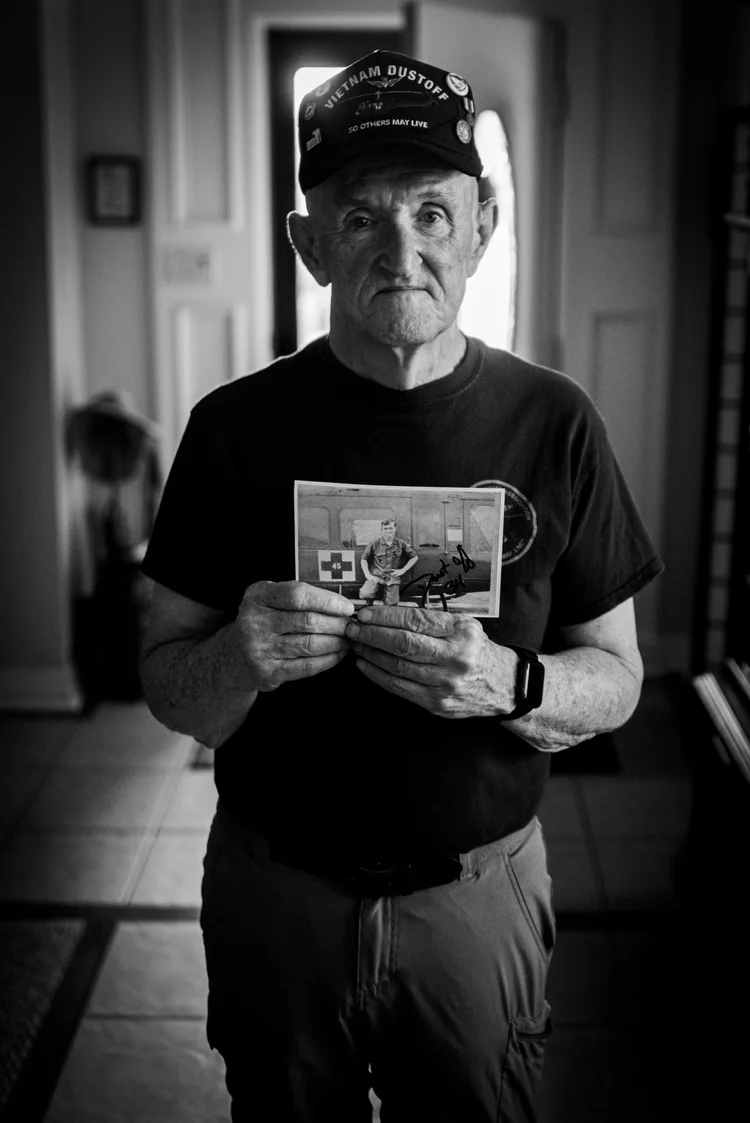
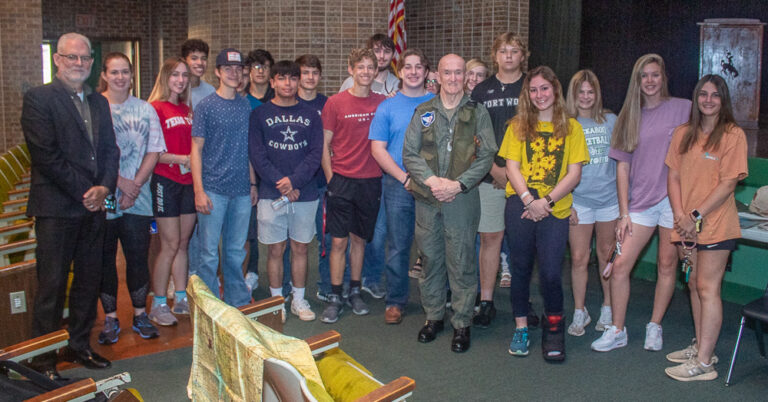
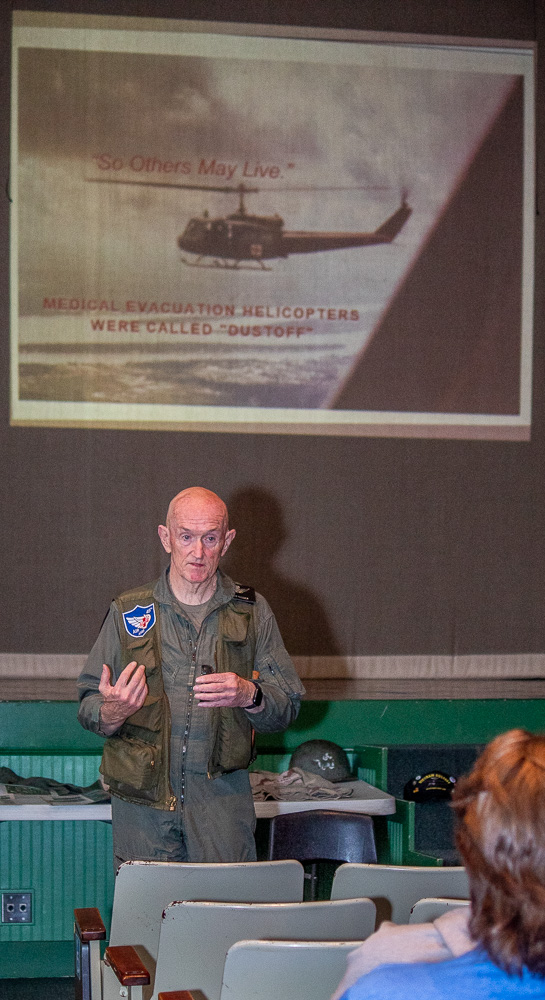
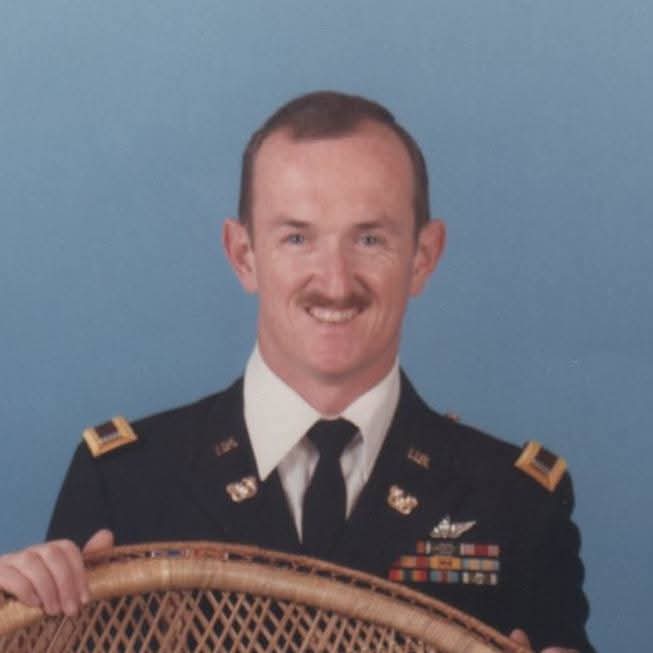
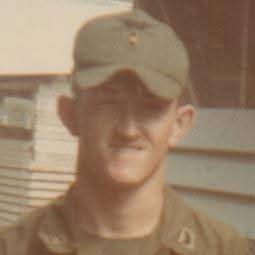
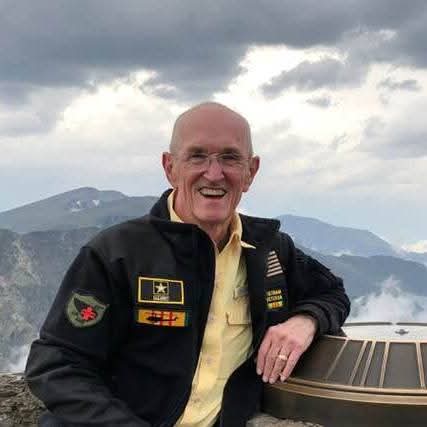
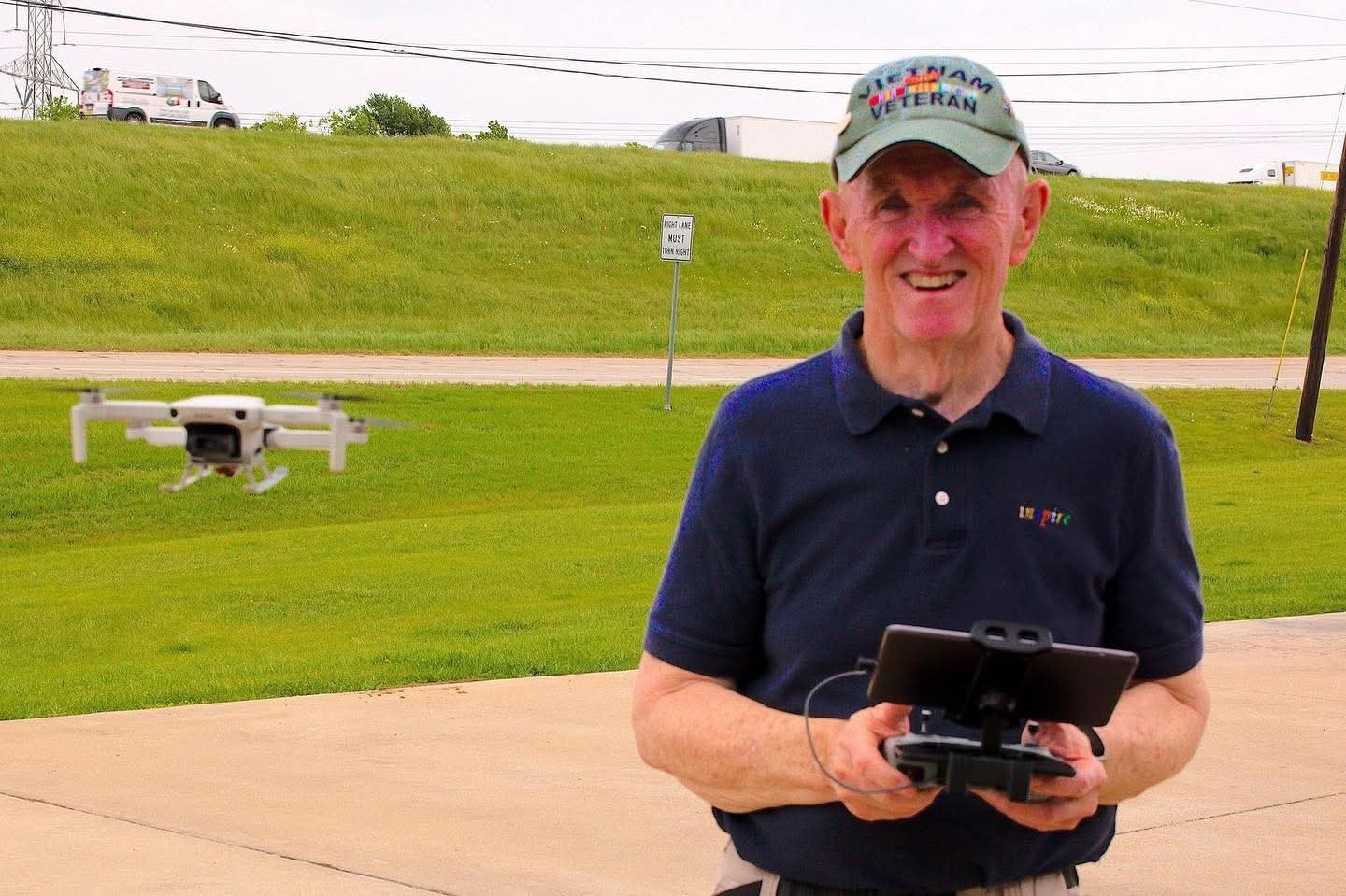
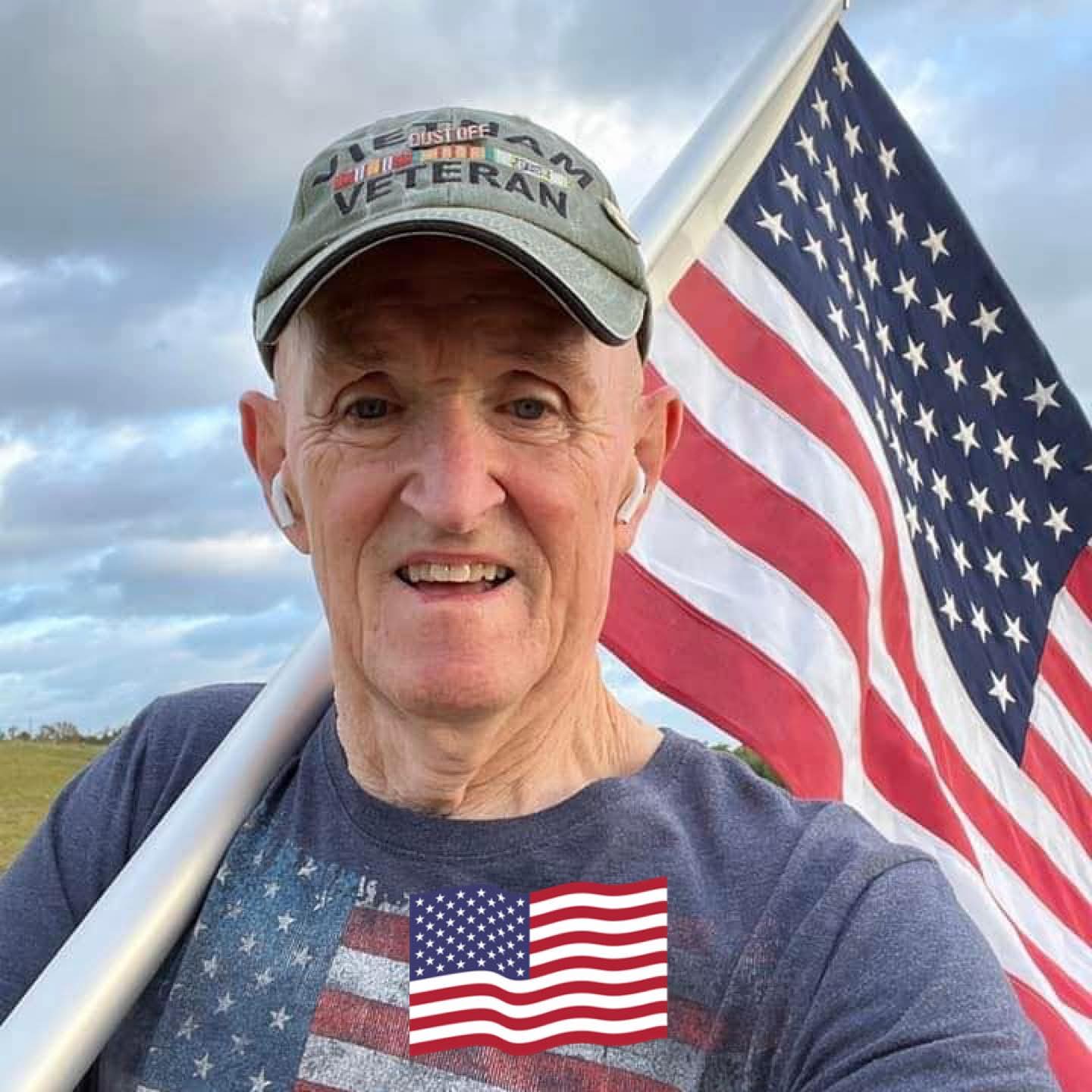
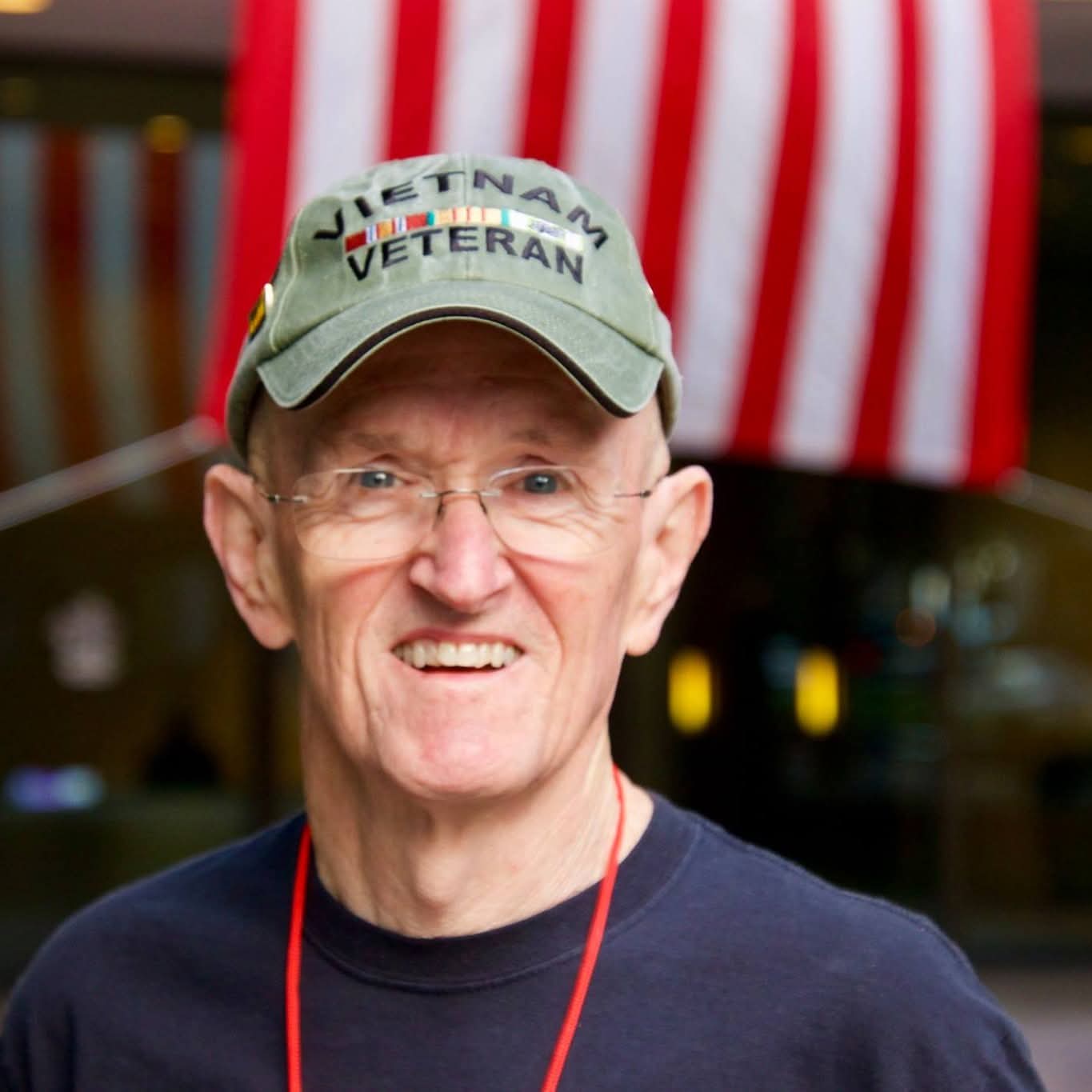
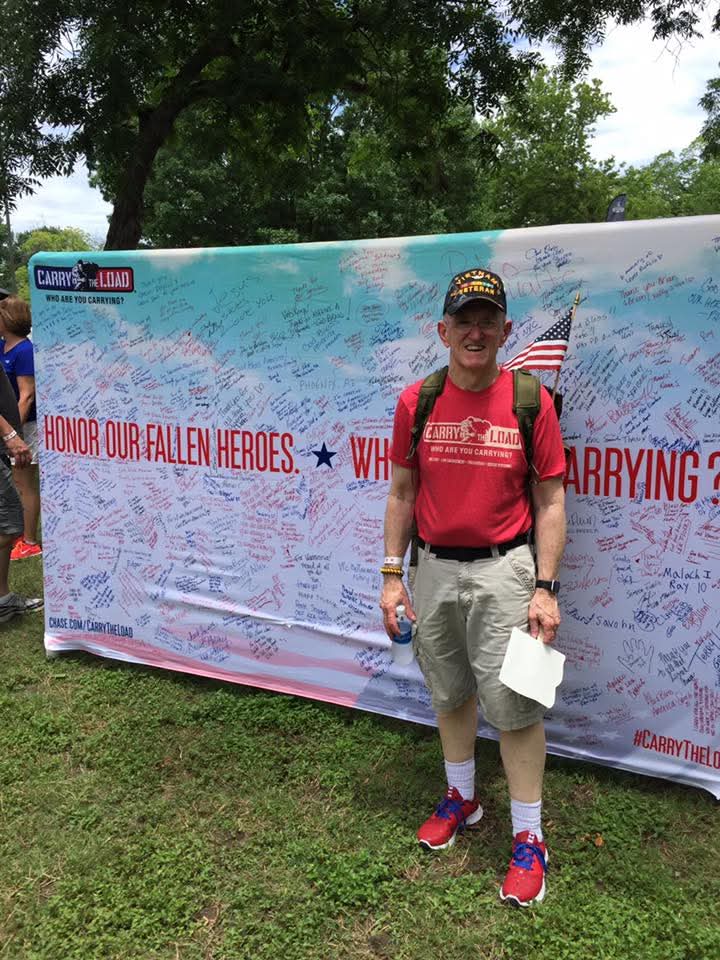
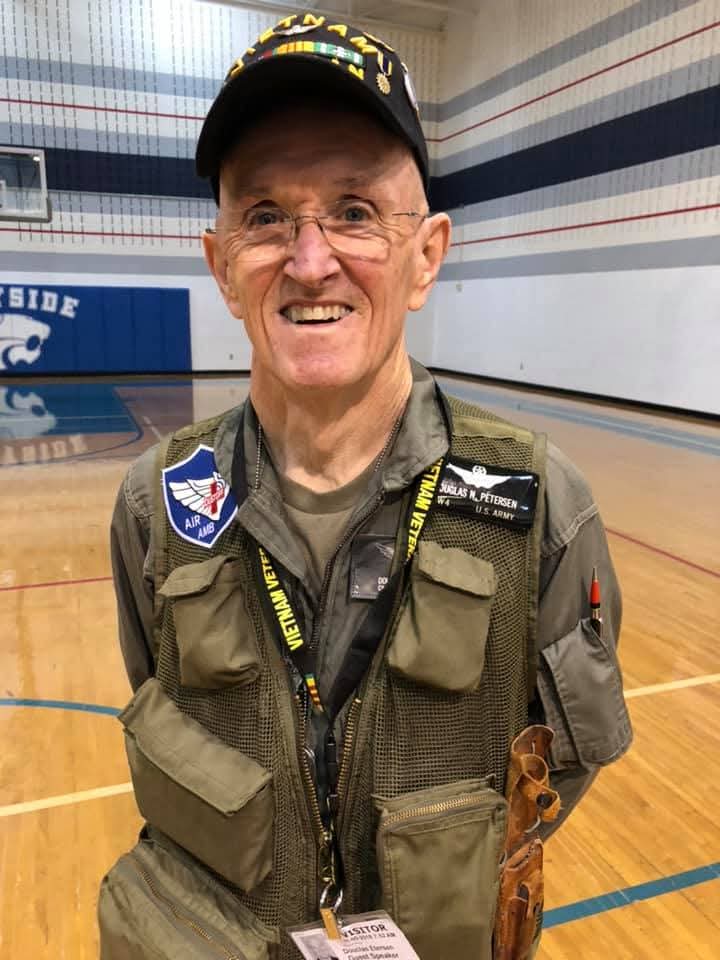
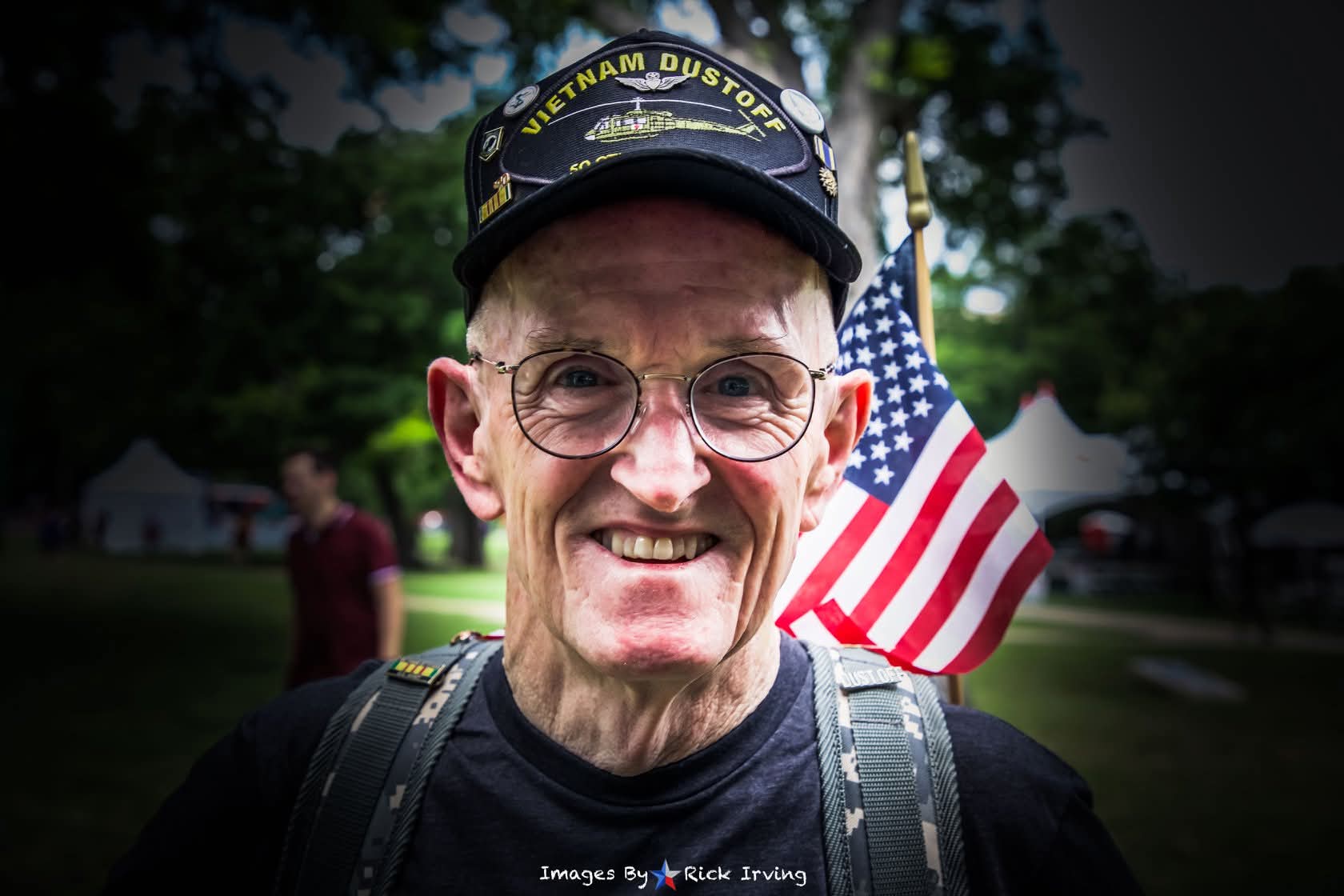
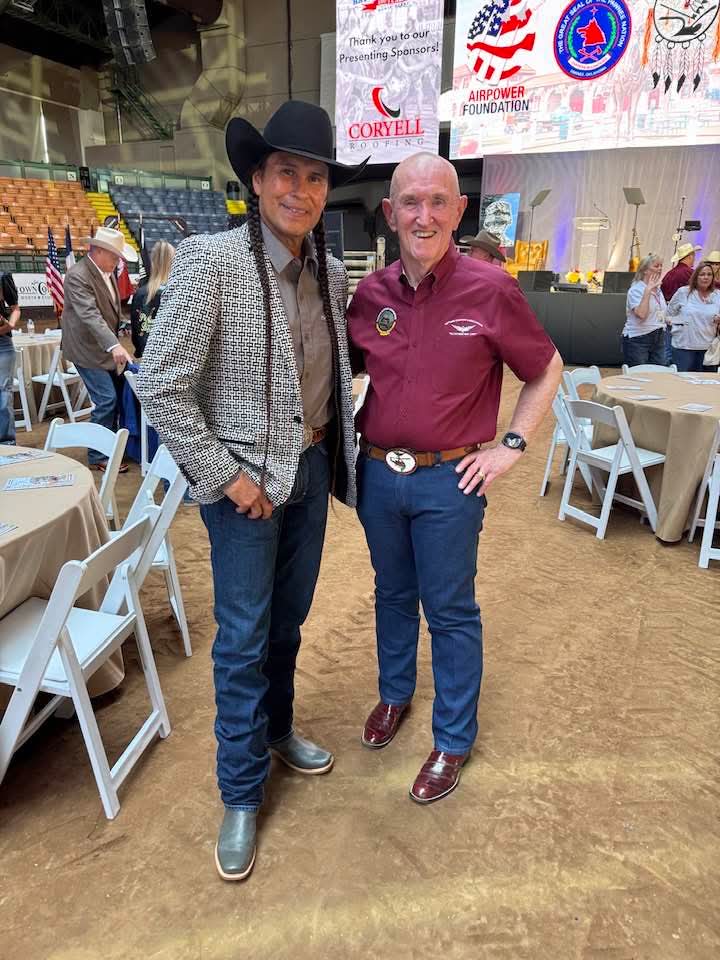
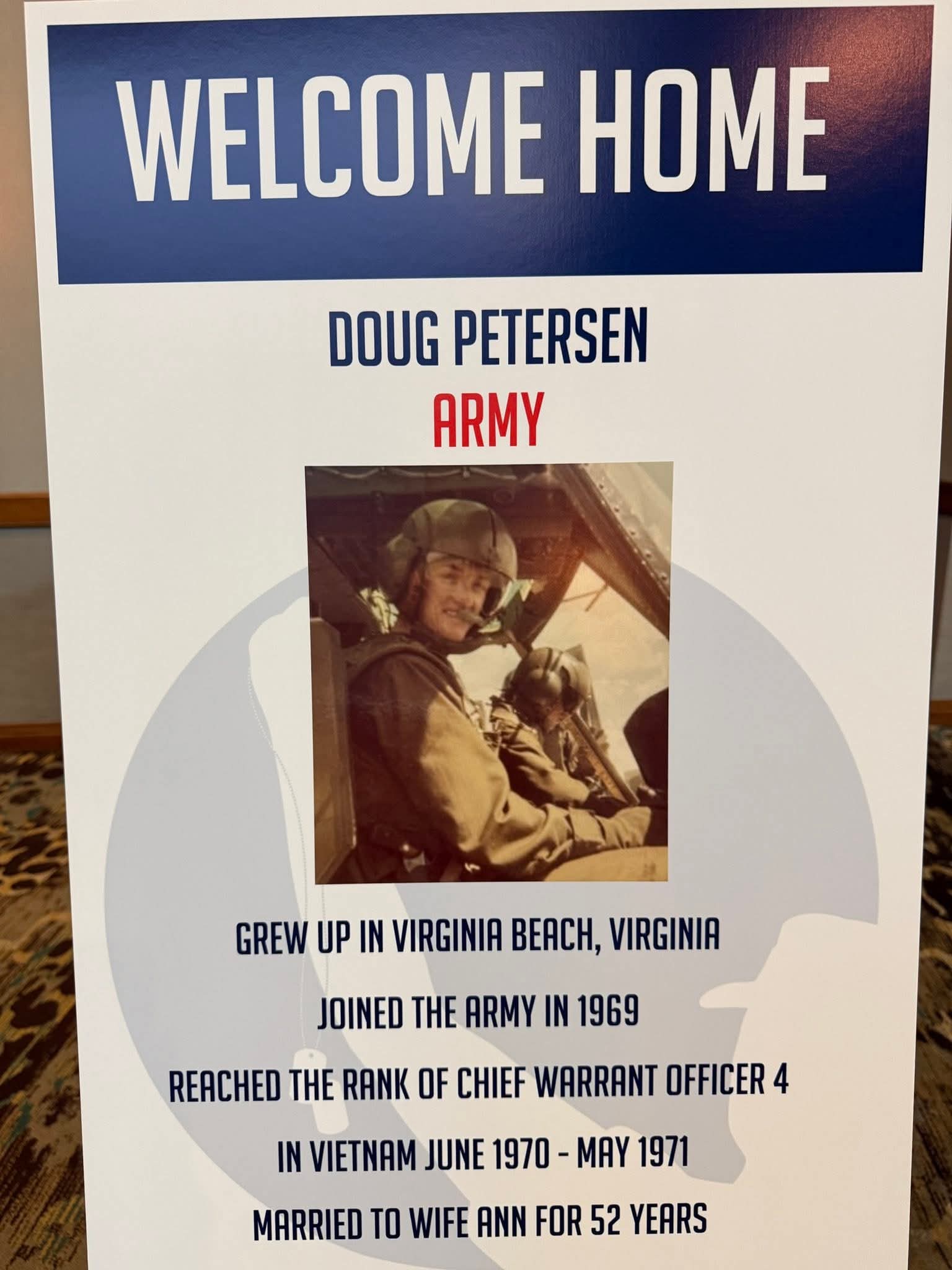
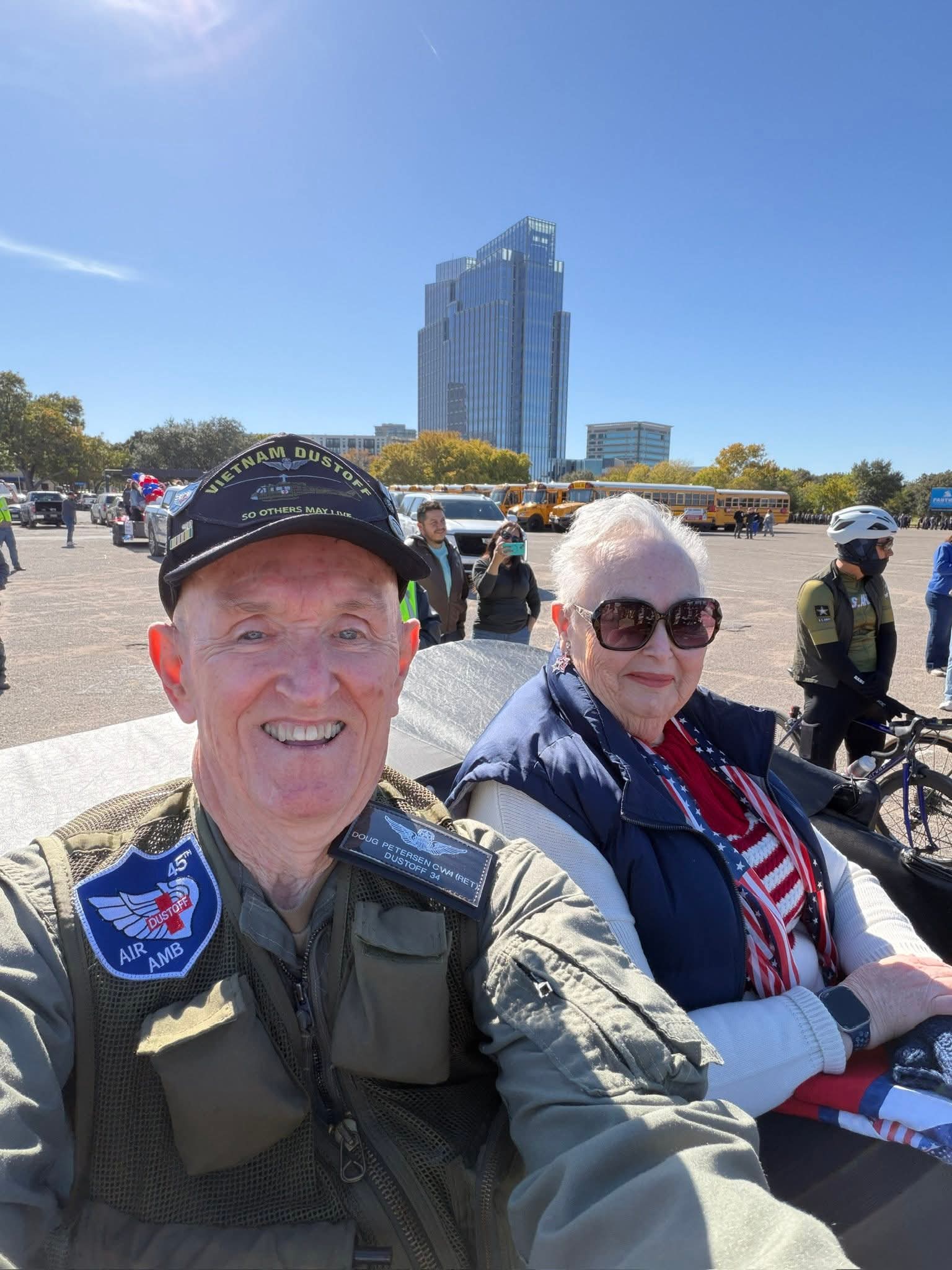
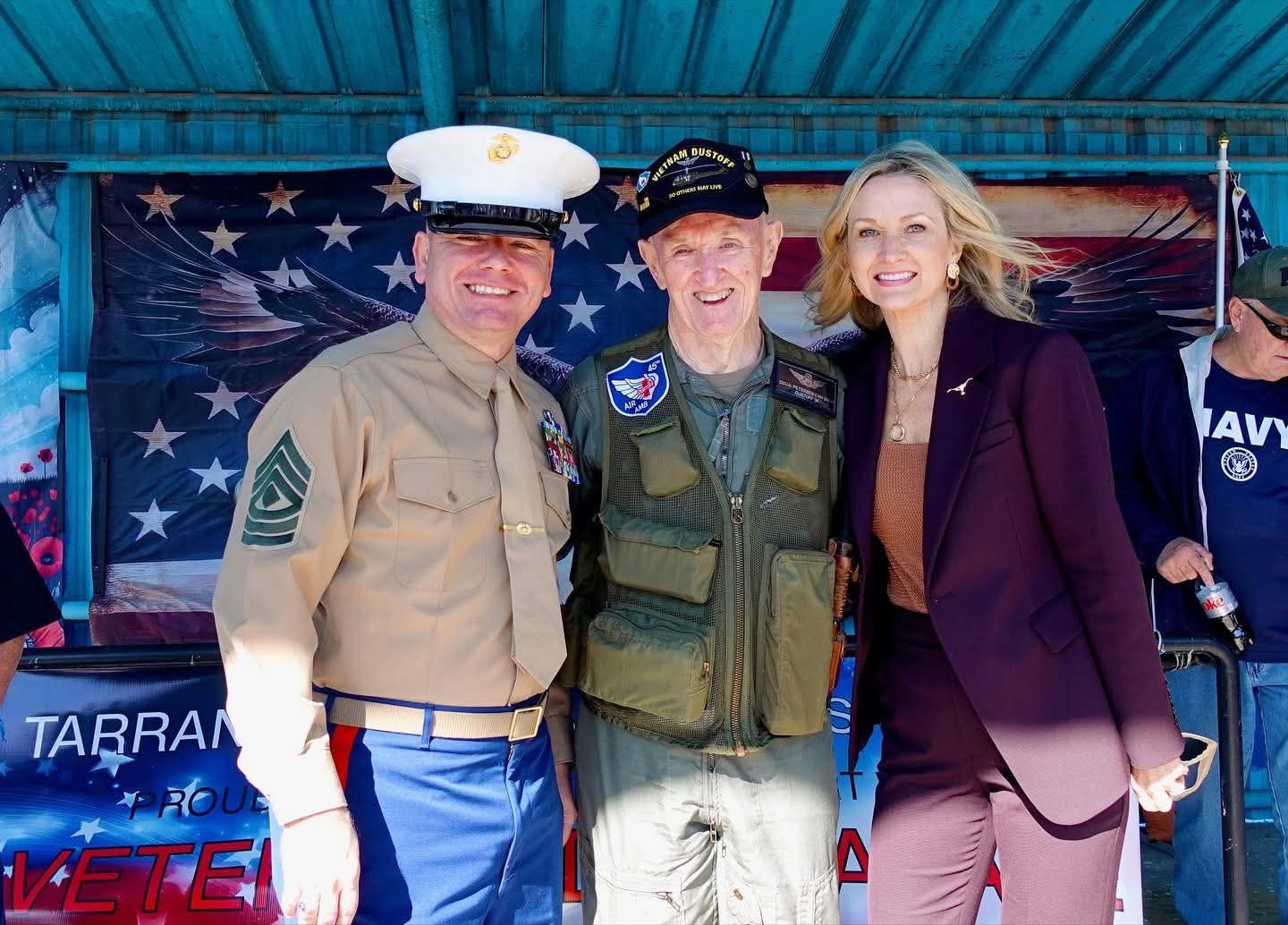
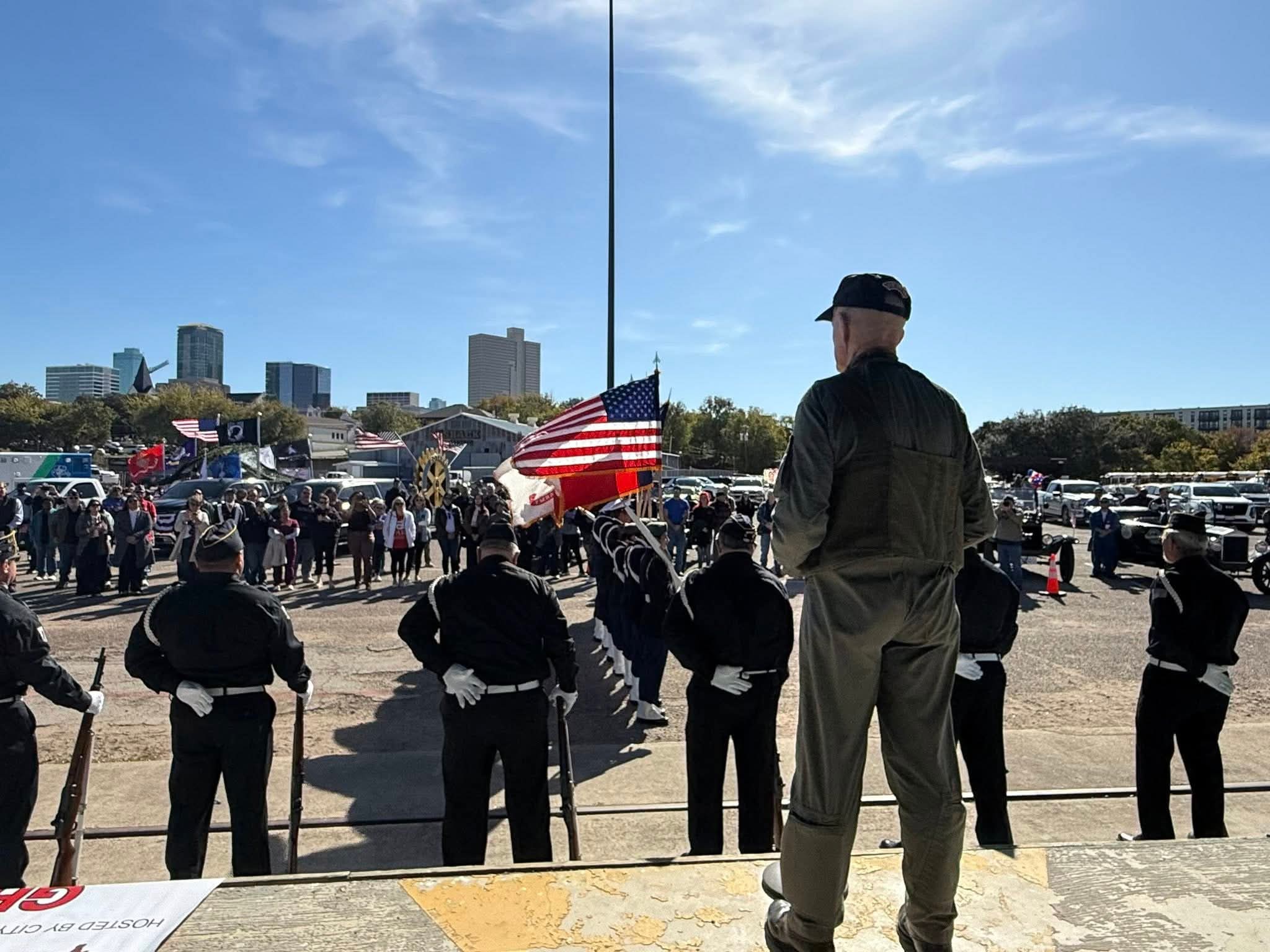
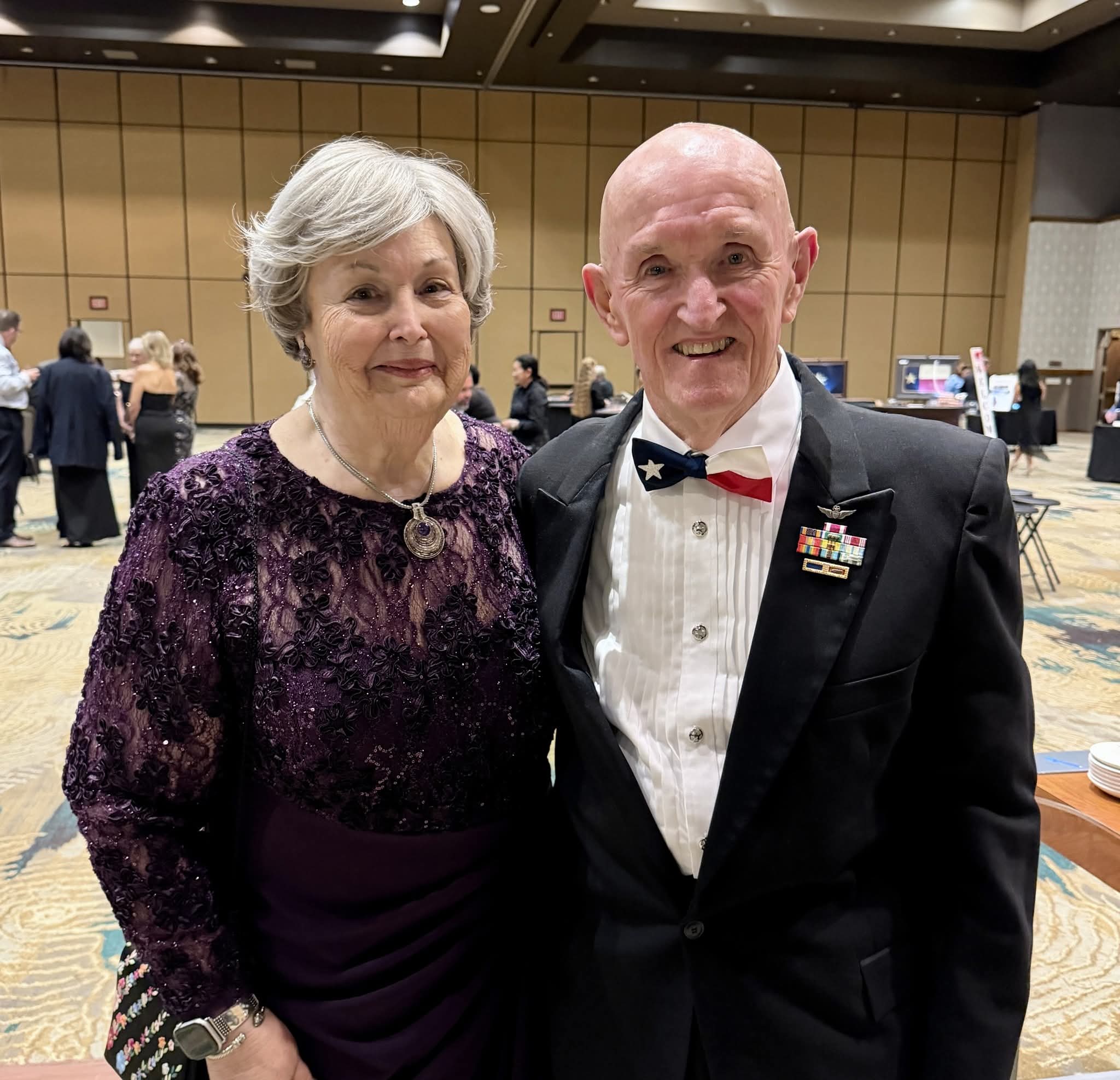
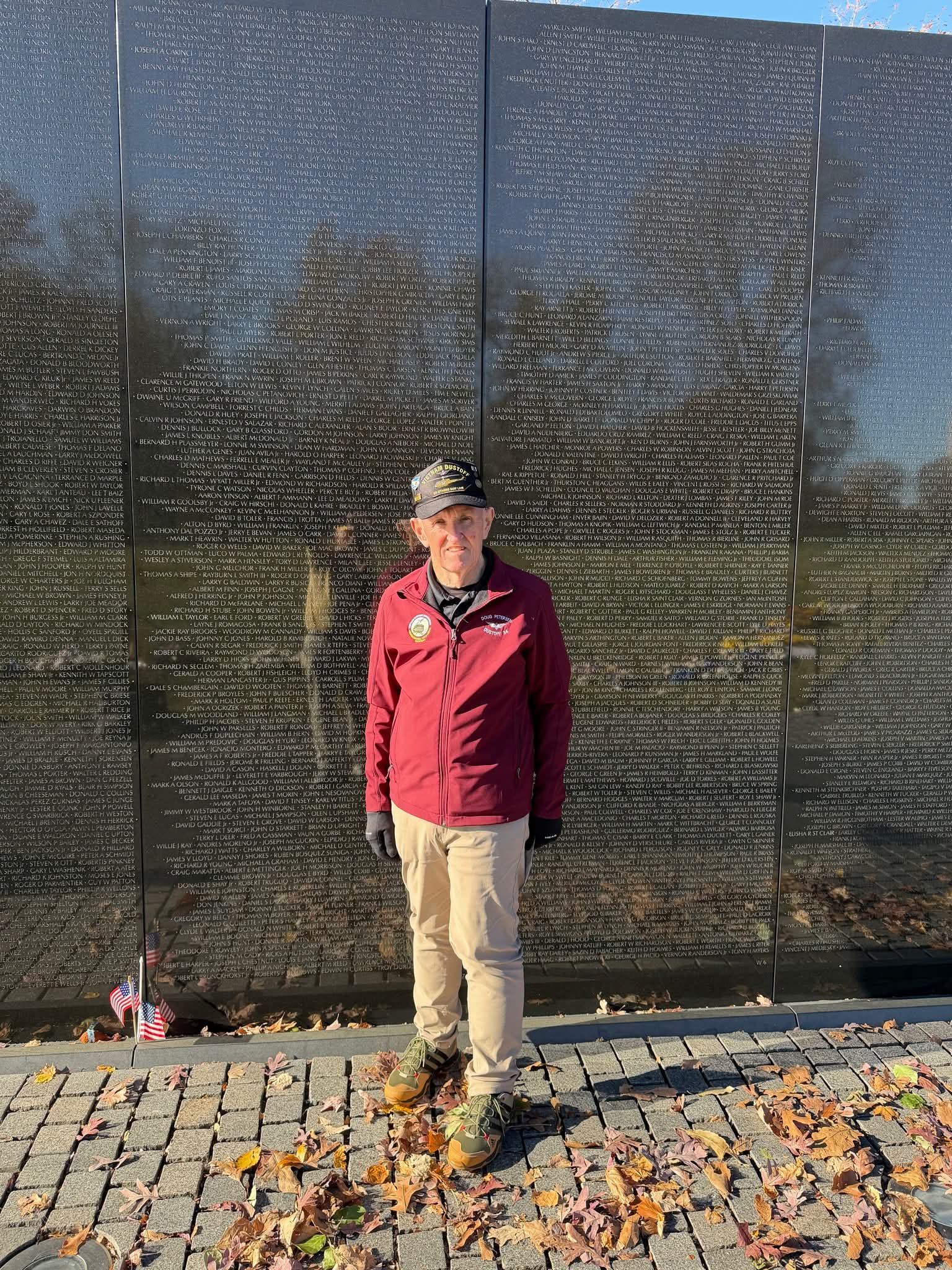
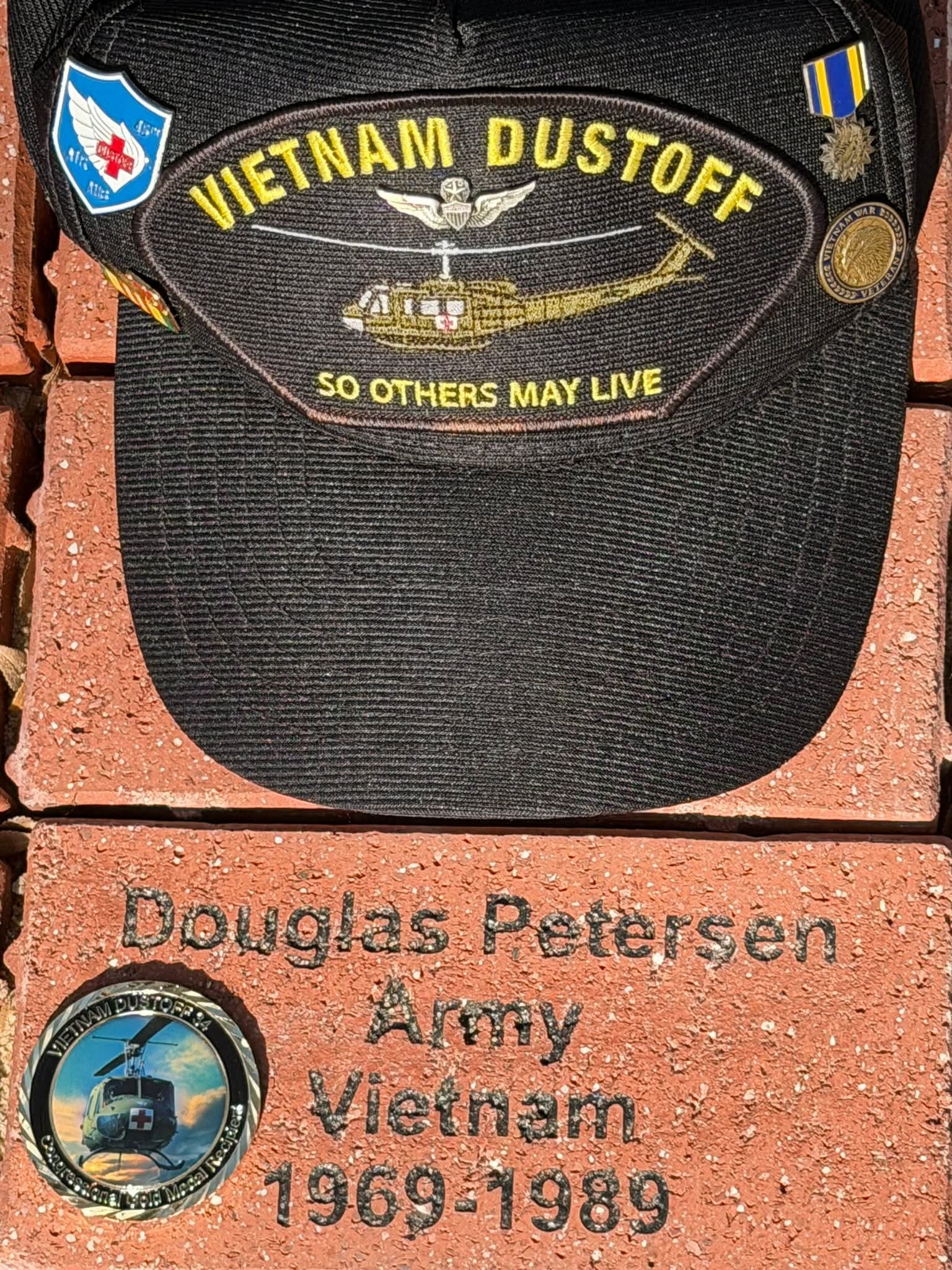

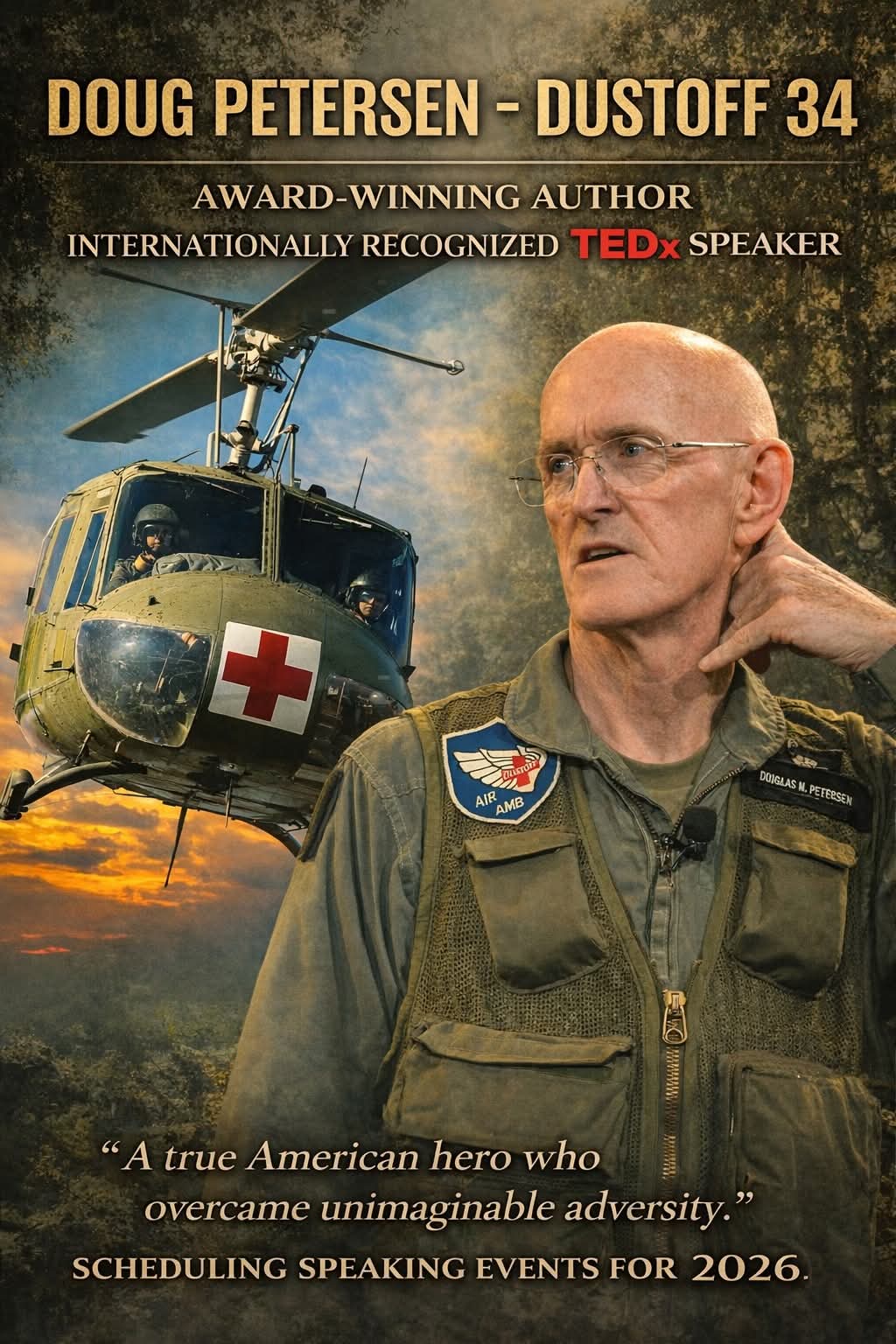
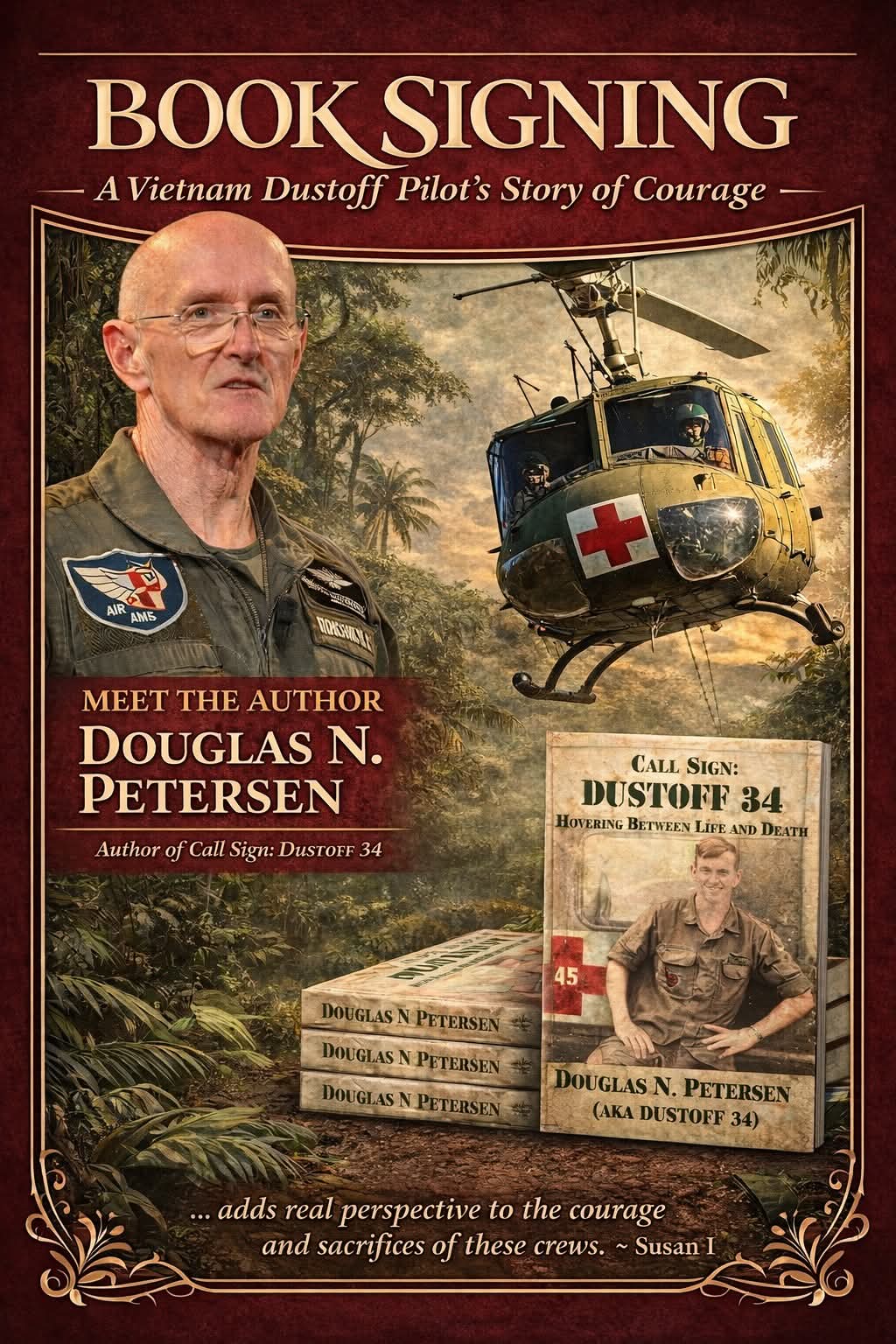


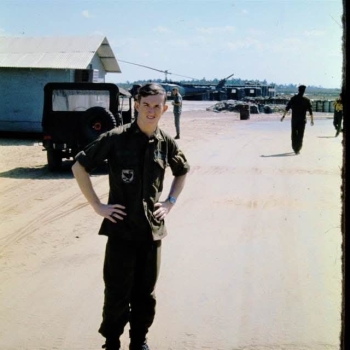
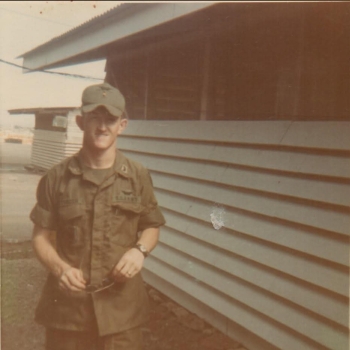
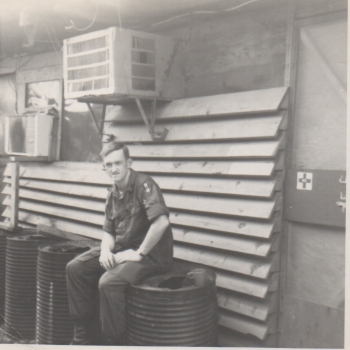
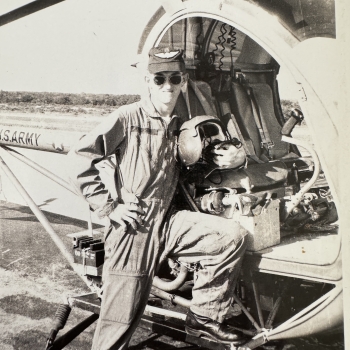
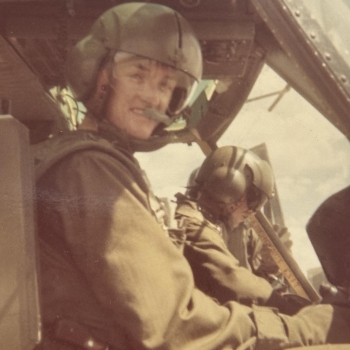
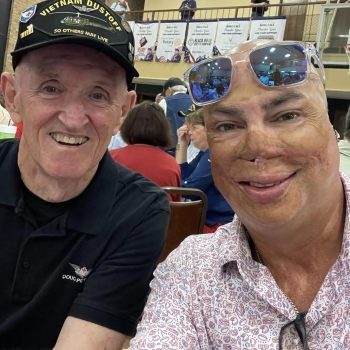
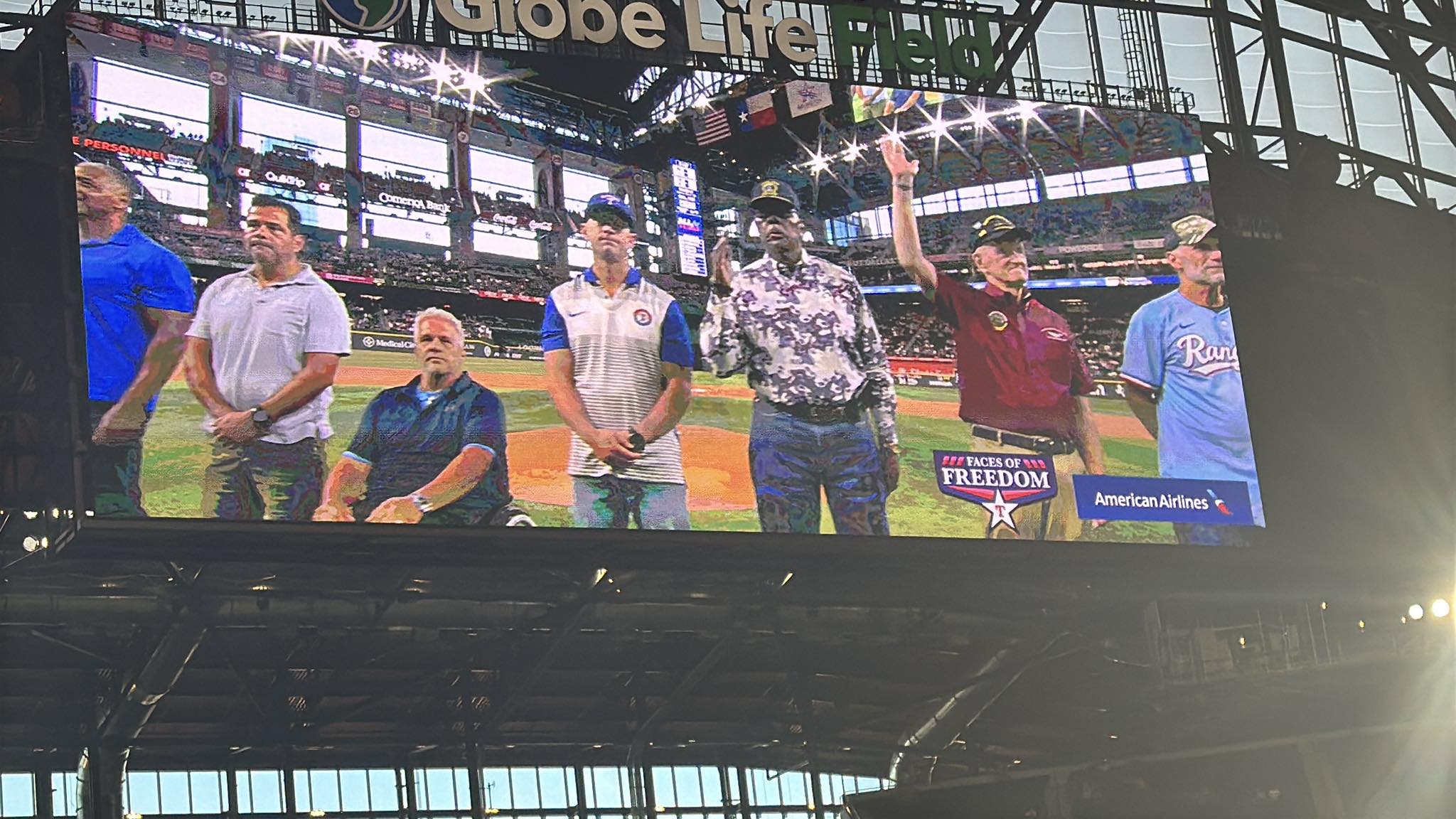
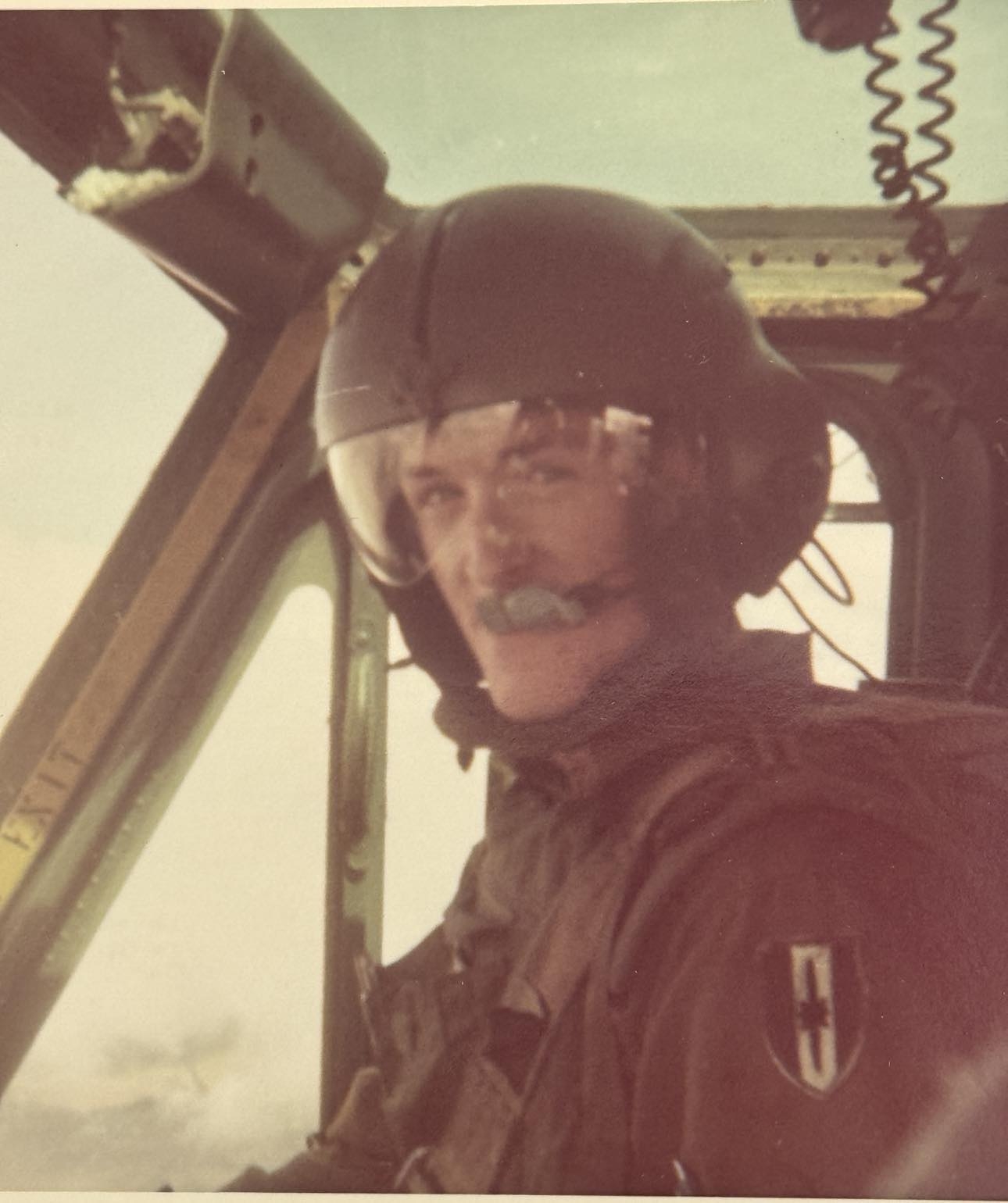
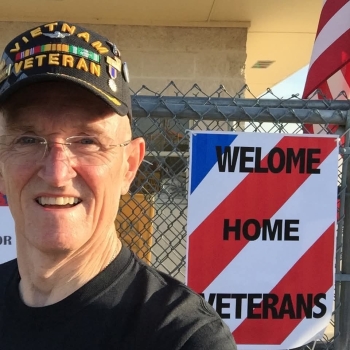
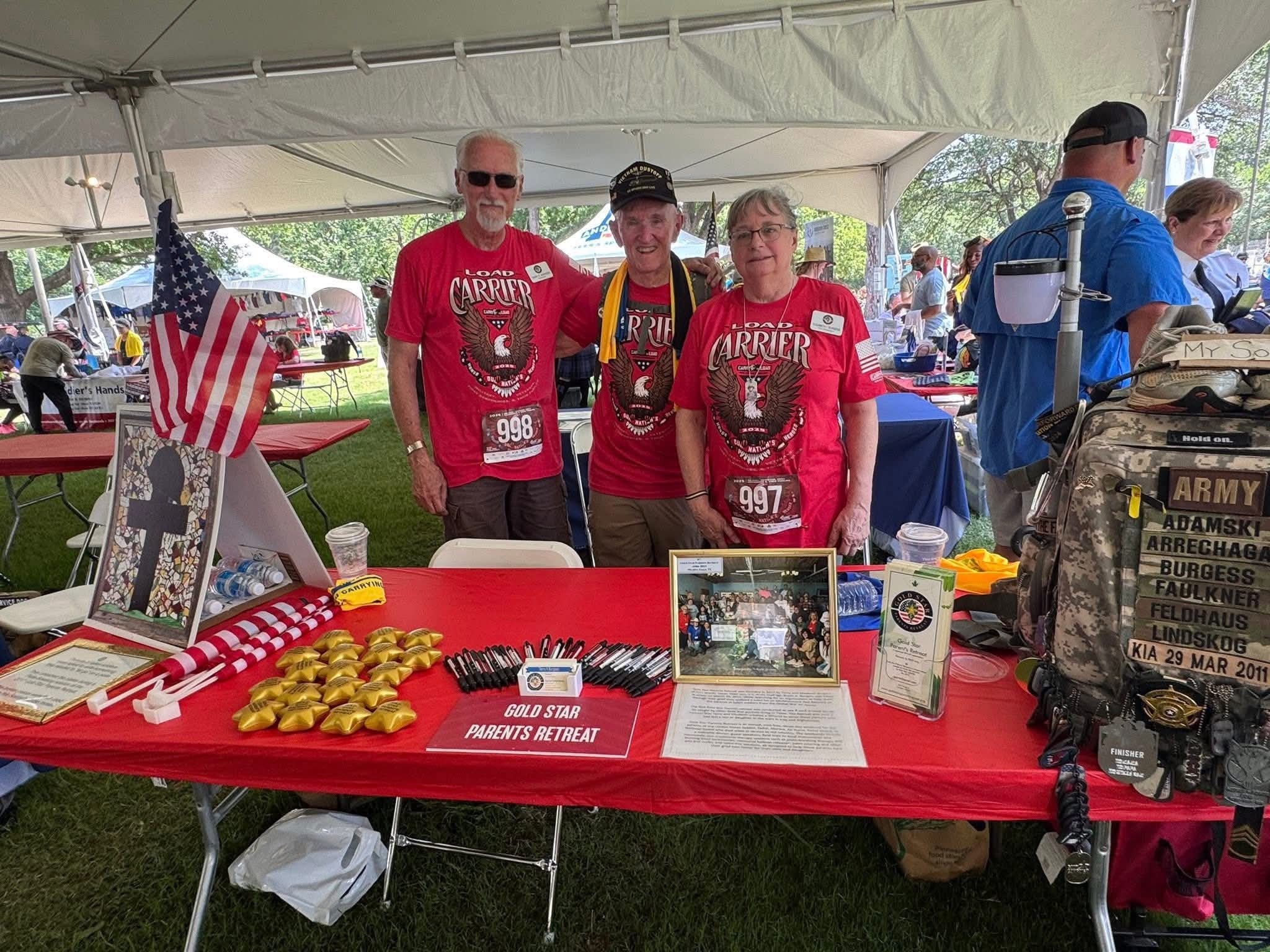
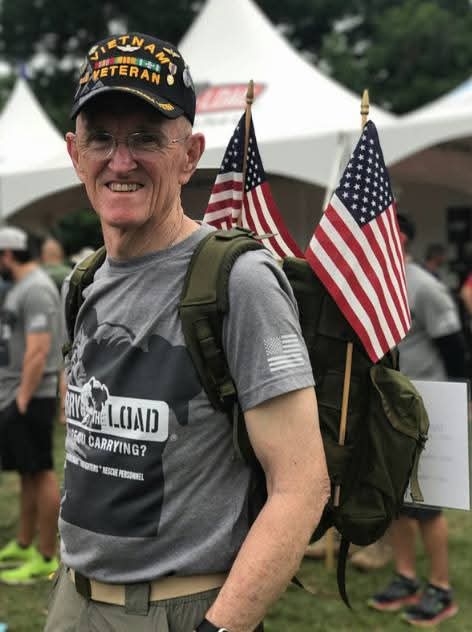
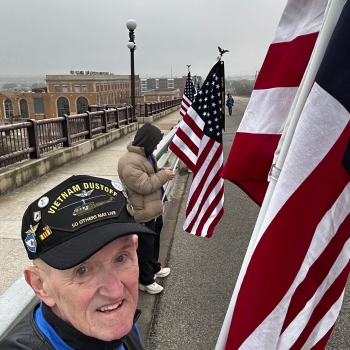
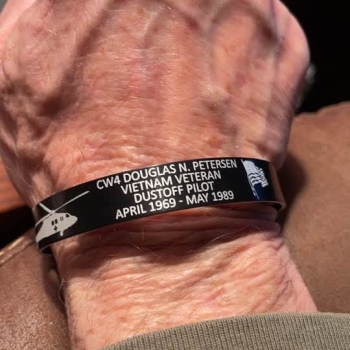
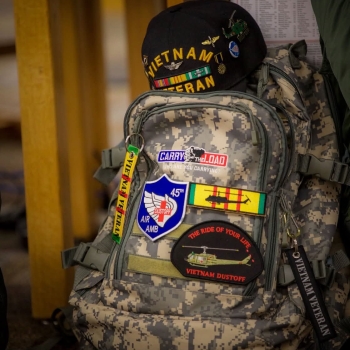
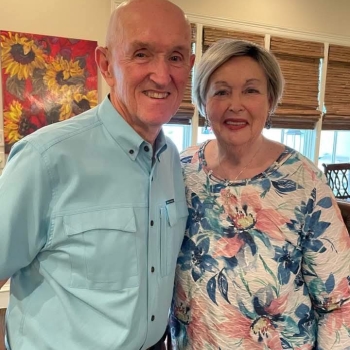
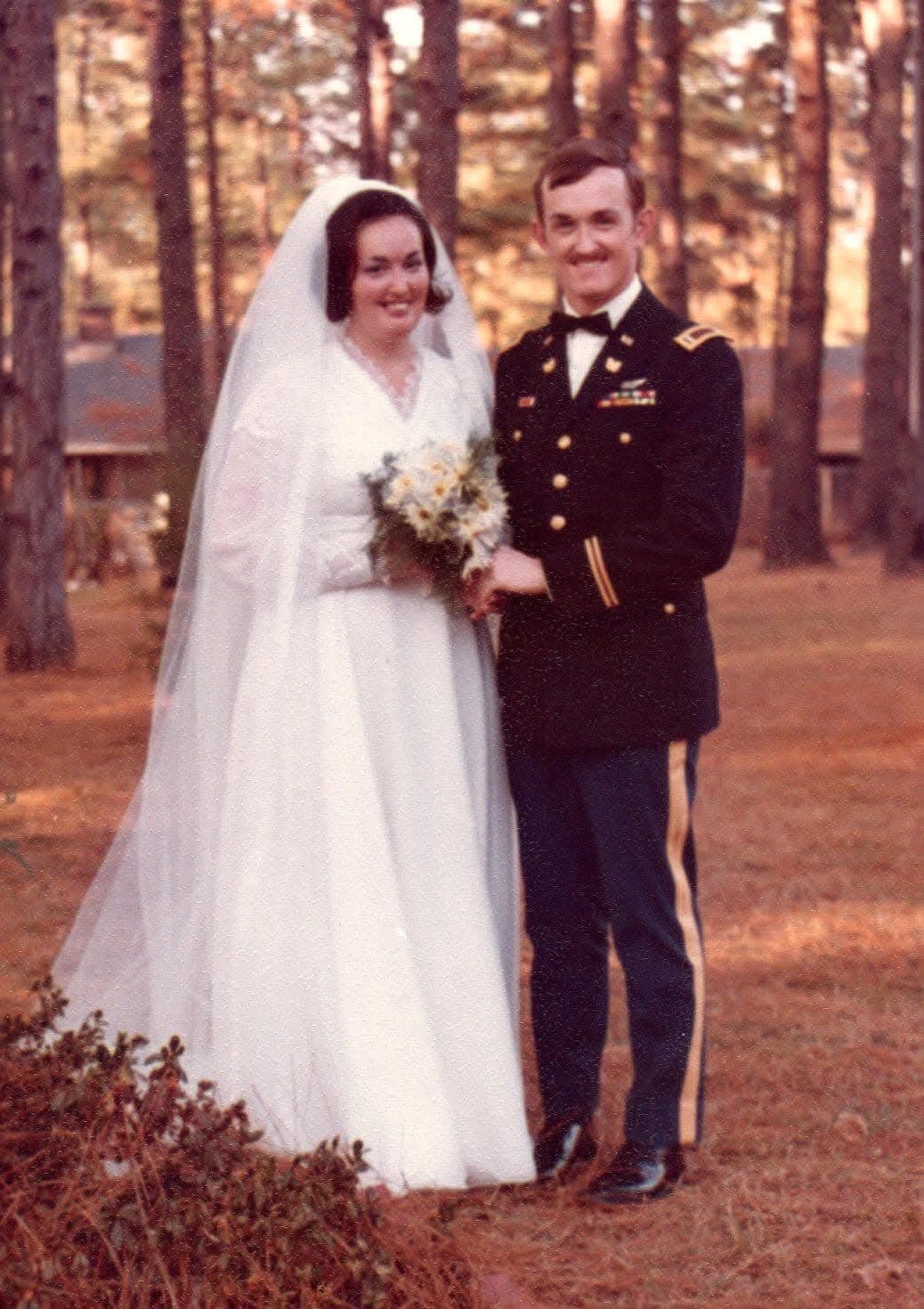
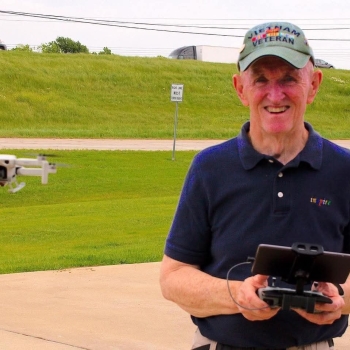
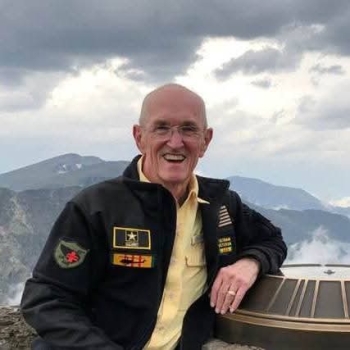
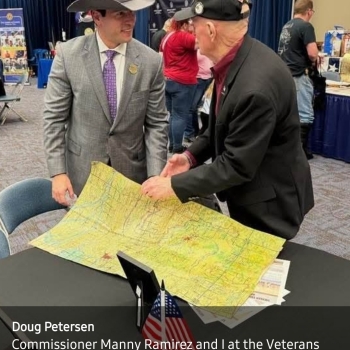
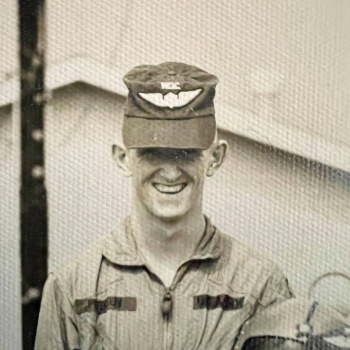
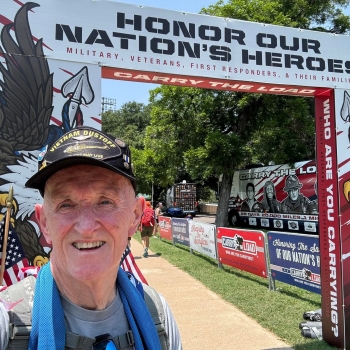
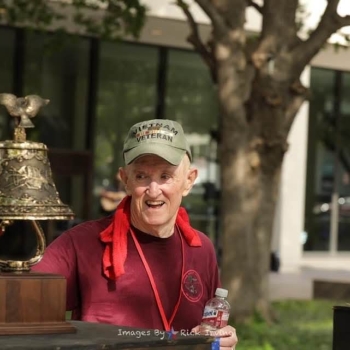
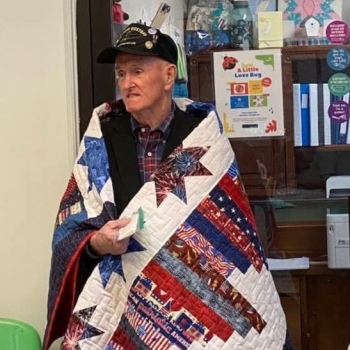
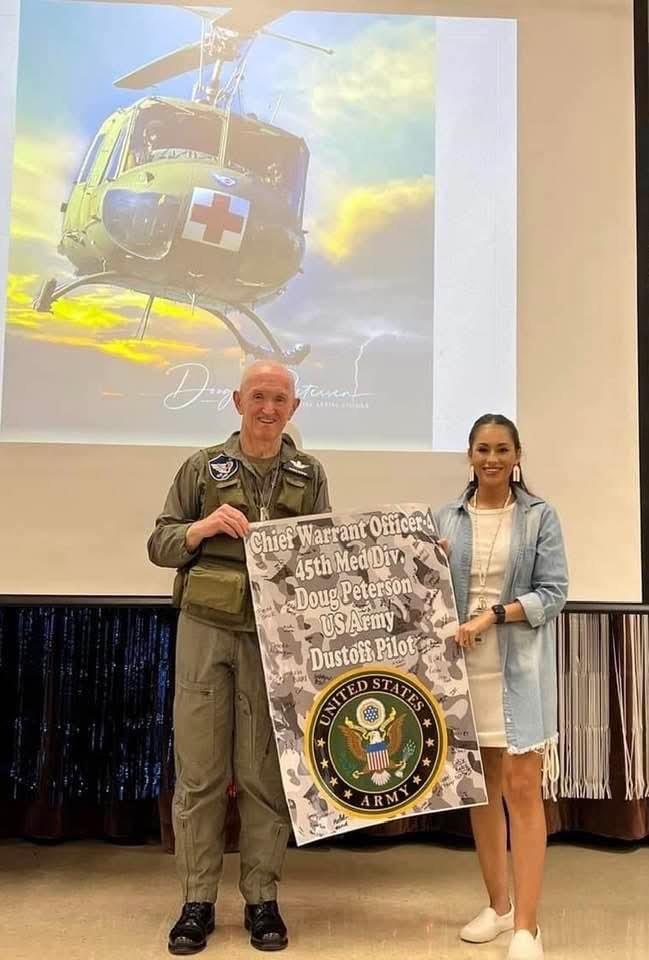
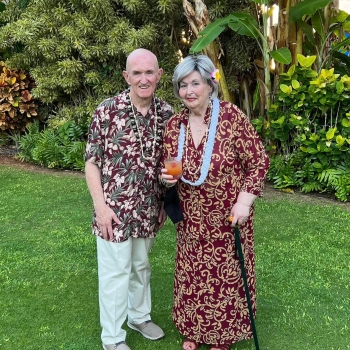
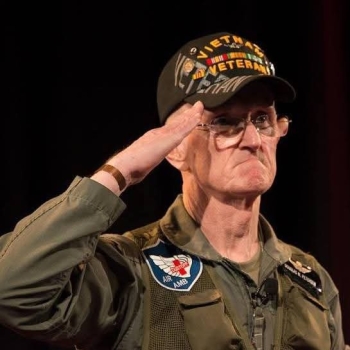
Douglas N. Petersen grew up on the East Coast and began his lifelong commitment to service early, enrolling in a military college before enlisting in the United States Army. During this time he recognized the essential role of helicopters in combat as the Vietnam War intensified, and he made the decision to leave school and join the Army. He was sworn in and traveled by bus to Fort Polk, Louisiana, where he began basic training in early 1969. His basic training company was Alpha Company, First Battalion, First Brigade, A‑1‑1.
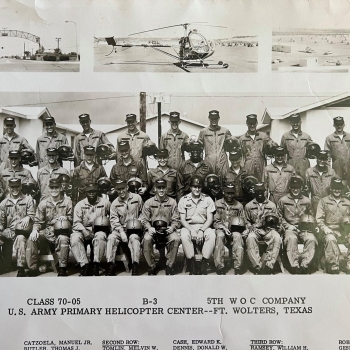
After graduating from basic training, he traveled by bus to Texas and the United States Army Primary Helicopter Training Center at Fort Wolters in Mineral Wells. This was during the first week of July 1969. He was assigned to the Fifth Warrant Officer Candidate Company, 70‑5. After graduating from Fort Wolters in early December, he traveled to Fort Rucker, Alabama, where he began flying the UH‑1 Huey helicopter.
In April 1970 he was among a group of classmates selected to train in UH‑1B gunships, learning to fire twin miniguns capable of delivering between two thousand five hundred and four thousand rounds per minute, or twin 2.75‑inch rockets, or the forty‑millimeter grenade launcher. In early May he was promoted to Warrant Officer One and the next day was awarded his United States Army Aviator Badge.
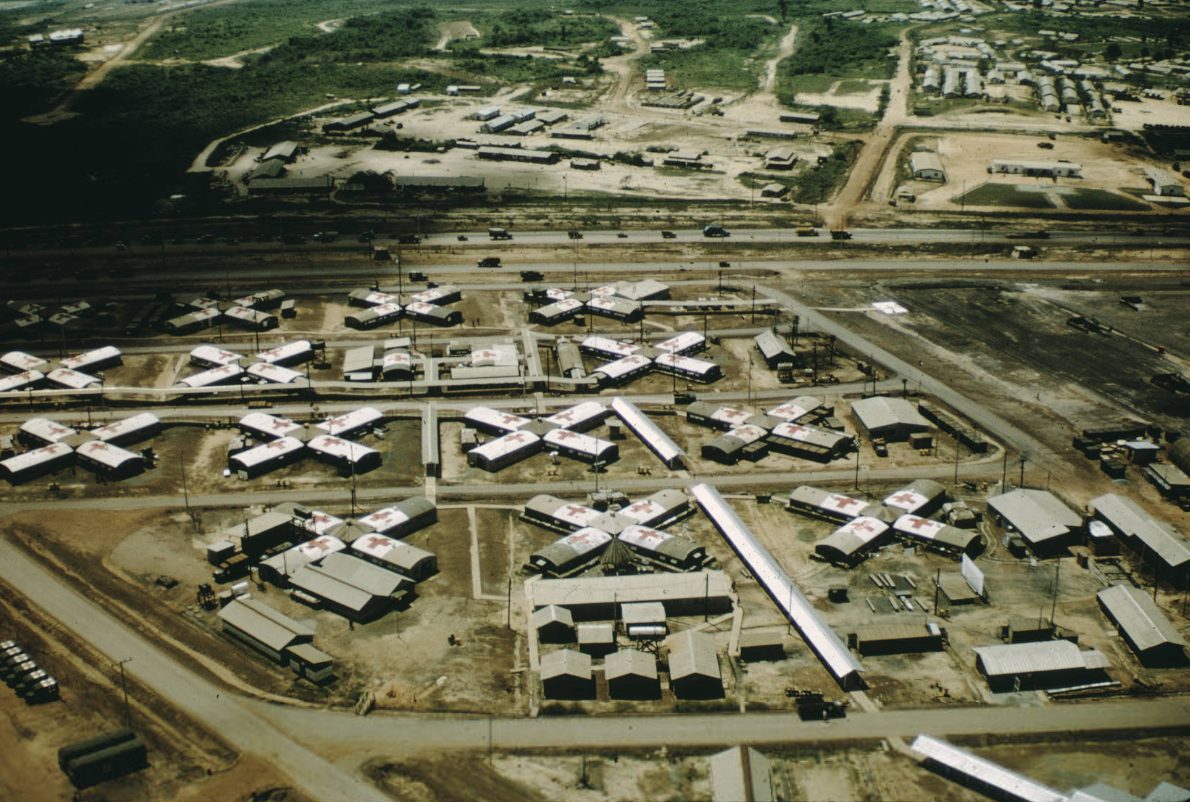
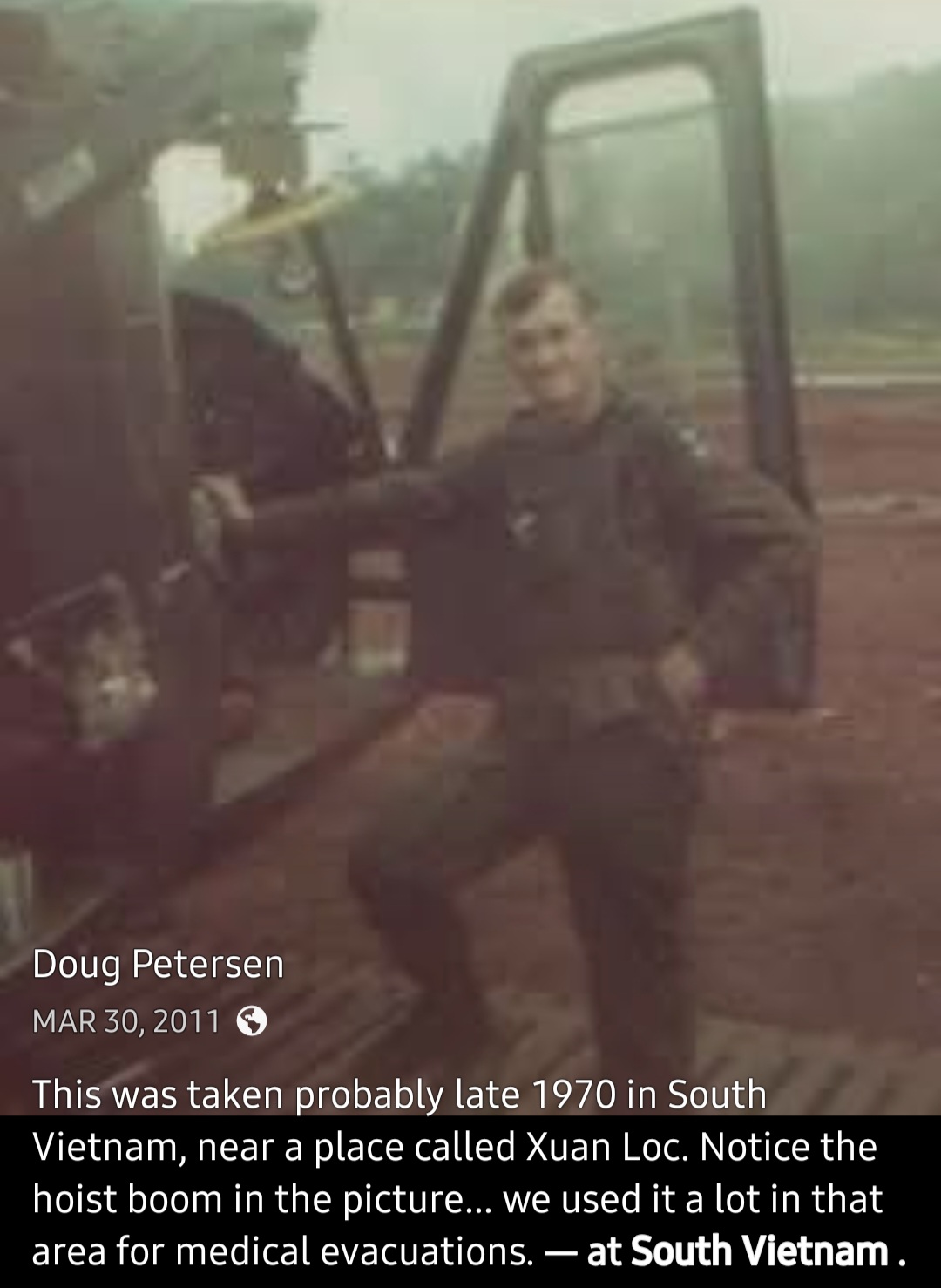
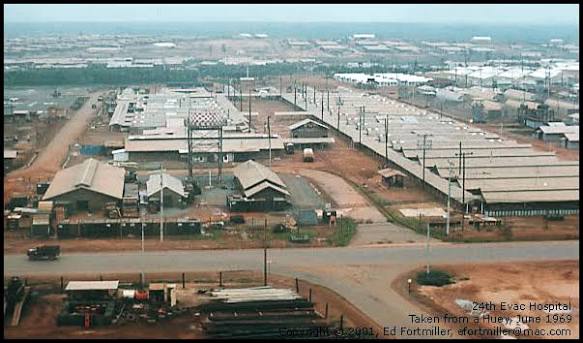
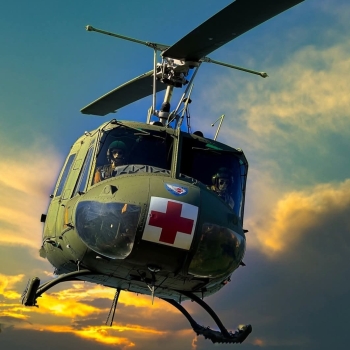
His first stop in Vietnam was the 90th Replacement Battalion in Long Binh for indoctrination and assignment. Although he had received gunship training, he was assigned to the 45th Medical Company (Air Ambulance) as a Dustoff pilot. Long Binh had two major hospitals, the 93rd Evacuation Hospital and the 24th Surgical Hospital. Depending on the patient’s injuries, the crew transported them to the appropriate facility. To meet the Golden Hour and place Dustoff crews closer to wounded soldiers, the unit operated out of four remote sites: Tay Ninh, Tan An, Nui Dat, and Xuan Loc.
Tay Ninh was a remote standby site northwest of Long Binh near the Cambodian border. The area was known for the Michelin rubber plantation and Nui Ba Den mountain. It was reported that the top and bottom of the mountain were secured by American forces while the enemy controlled the middle through a complex tunnel system. Although Doug flew missions in this region, he did not recall flying to the standby station often. It was, however, the area where he was first shot down between Tay Ninh and Long Binh as he approached a pickup zone.
Doug spent most of his four‑day standby rotations at Tan An, a United States Navy riverboat base along the Mekong River southwest of Saigon. It had a short runway for fixed‑wing aircraft and a refueling area for helicopters. Tan An was in the upper Mekong Delta, a flat region with many rice paddies. Crews flew at fifteen hundred to two thousand feet to avoid small‑arms fire. Upon arrival in the pickup area, ground units would radio “Pop smoke” to mark the location. They were instructed not to tell Doug the color of the smoke, because the enemy would sometimes mimic the signal to confuse and ambush the helicopter. Later in the 1960s, Kool‑Aid commercials inspired informal names such as Cho‑Cho Cherry or Goofy Grape.
Doug also flew many missions at night. Ground units might pop a flare or use a strobe light. If the enemy was close, they might only be able to use a Zippo lighter. Once the pickup zone was identified, the crew went black out, turning off all exterior lights and descending rapidly in total darkness so the enemy could not see them.
He did not have many four‑day standby rotations at Nui Dat, southeast of Saigon. It was operated by Australian forces. One unique memory was that at four o’clock in the afternoon Doug and his crew would enjoy tea, an unusual experience in a combat zone.
Xuan Loc was about forty miles east of Saigon. Their standby location was within the compound of a 105‑millimeter artillery fire base. They slept in a small steel shipping container. Gia Ray mountain stood just east of the compound and served as a useful reference point. Beyond the mountain, all the way to the China Sea, lay heavy jungle. As a result, the crew conducted hoist missions. At the pickup location they hovered just above the jungle canopy for twenty to thirty minutes, making the helicopter a vulnerable target. Standard operating procedure required gunship support, but most of the time it did not arrive. The hoist was a mechanical device mounted on the right side of the helicopter behind the pilot’s seat. Its long steel cable allowed the crew to retrieve casualties when landing was impossible.
The 45th Medical Company was deactivated in April 1971, and Doug was not reassigned to the unit. As a decorated Vietnam veteran, he flew hundreds of life‑saving missions under enemy fire, rescuing wounded soldiers and civilians from the battlefield.
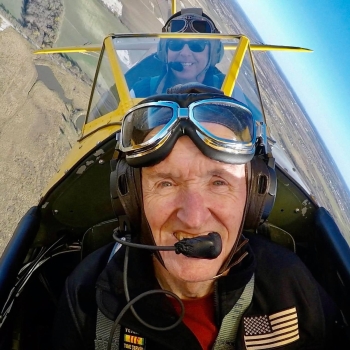
Doug continued his military career for more than twenty years as an Army aviator, serving across the United States and completing two tours in Germany. Over the course of his service he flew multiple aircraft, including the UH‑1H Huey, OH‑58A Kiowa, UH‑60A Blackhawk, C‑12, and U‑21. He retired from the United States Army after serving more than two decades as an aviator, a career marked by mastery of his craft, quiet professionalism, and unwavering devotion to the mission.
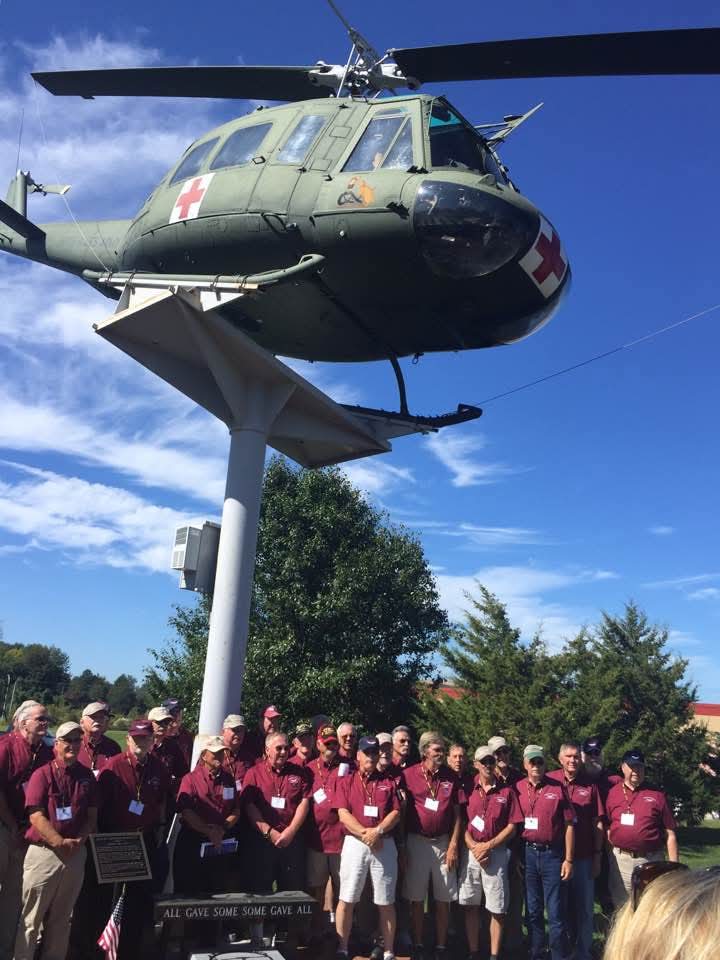
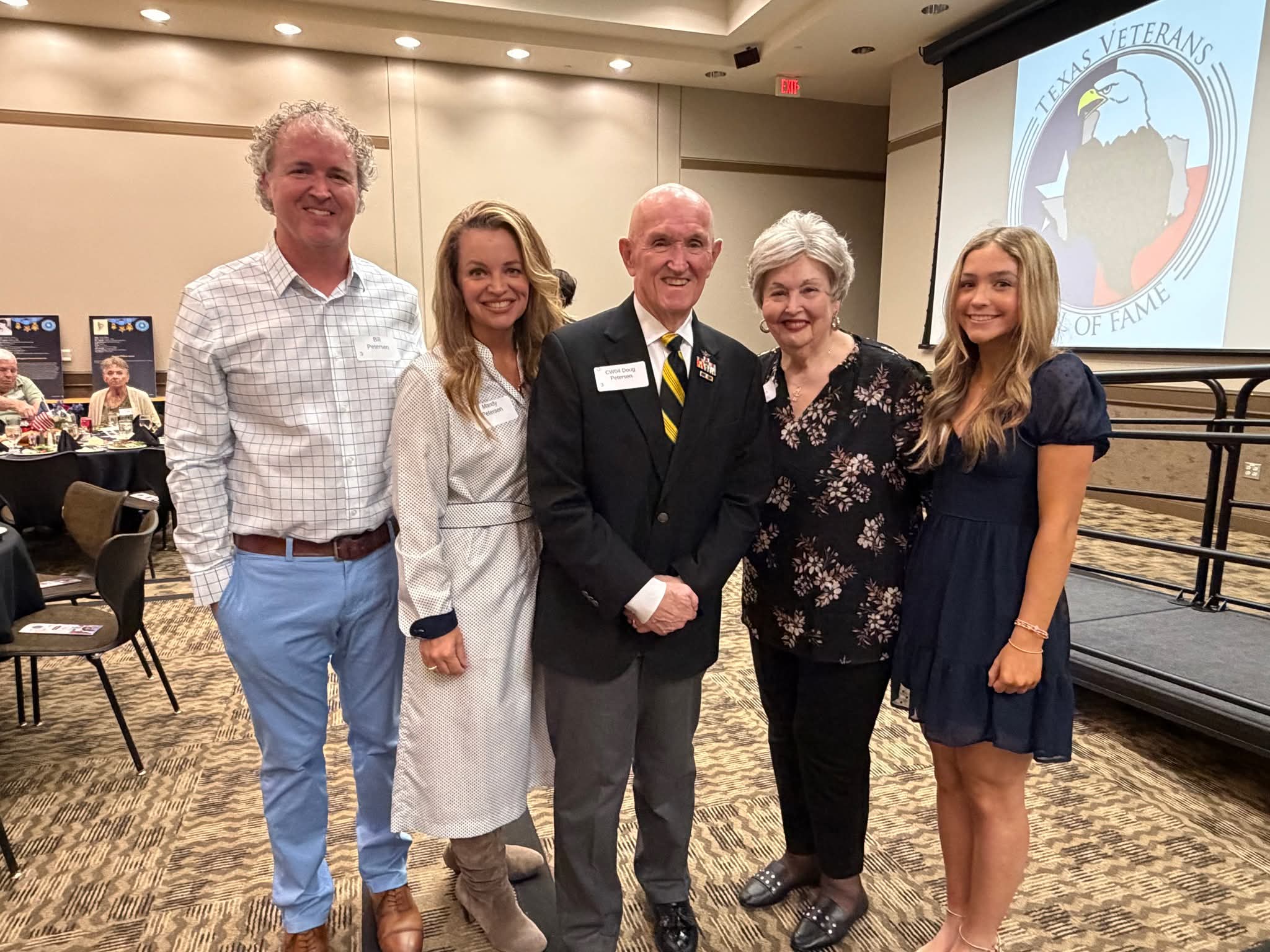
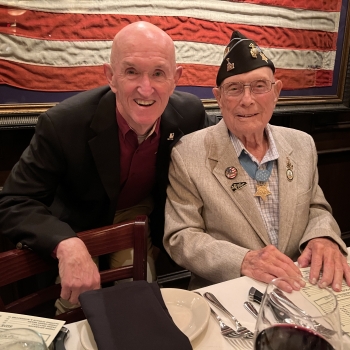
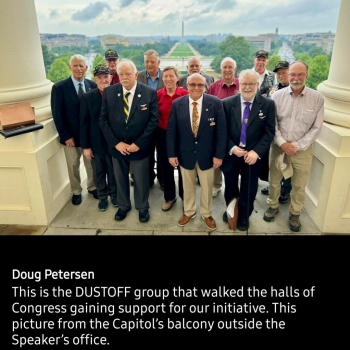
For their extraordinary service, Doug and his fellow Dustoff and MEDEVAC crew members of the Vietnam War were awarded the Congressional Gold Medal, the highest civilian honor bestowed by Congress. His individual military decorations include the Meritorious Service Medal, twenty‑one Air Medals, the Army Commendation Medal with three oak leaf clusters, and the Presidential Unit Citation. He retired after twenty years of service as a Chief Warrant Officer Four.
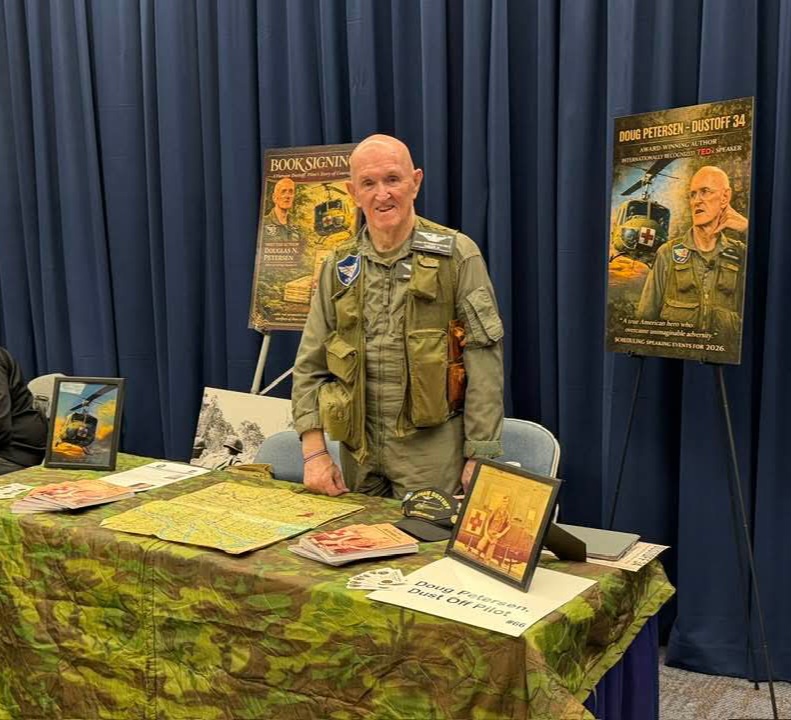
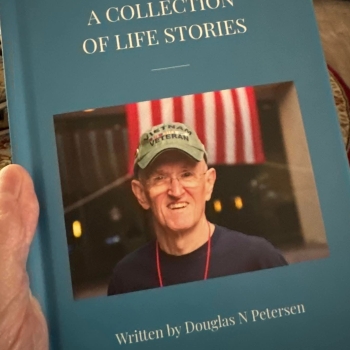
Following his military career, Doug spent twenty‑five years in the financial services industry, helping military families build lasting financial security. His passion for service continued through writing, public speaking, and coaching. He is the award‑winning author of six inspirational books, three of which received Global eBook Awards in the Inspirational and Visionary Non‑Fiction category.
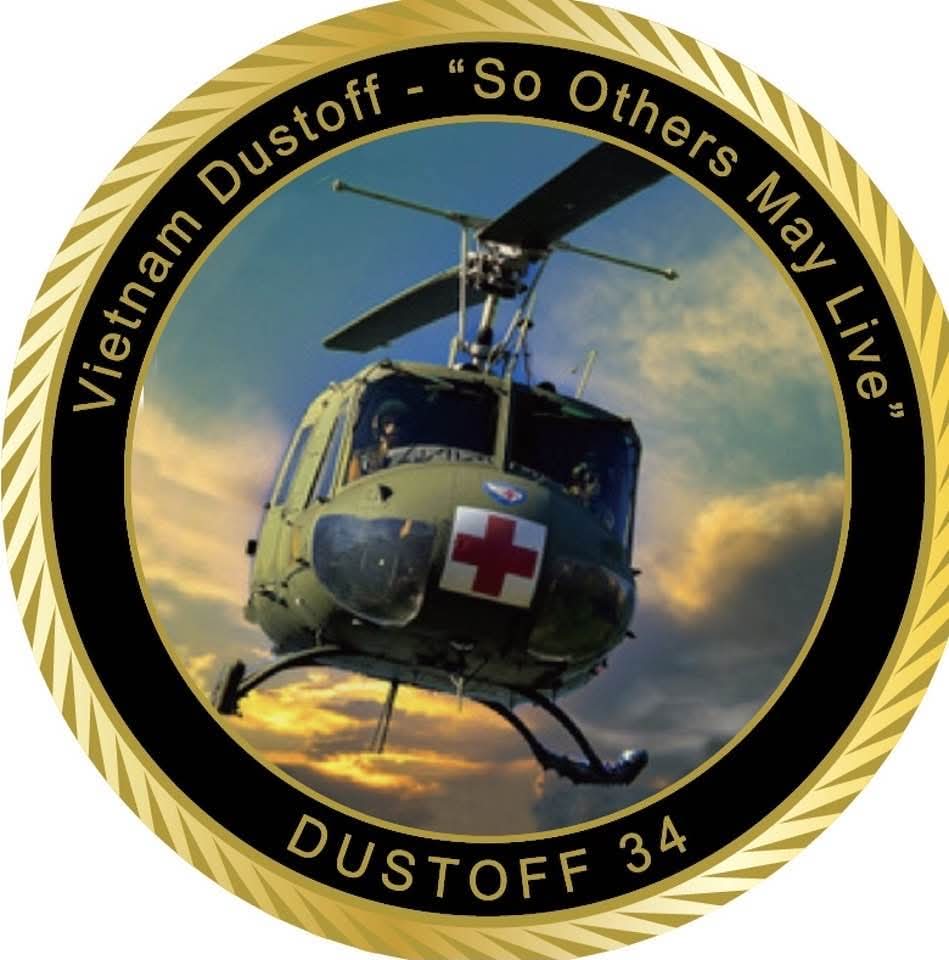
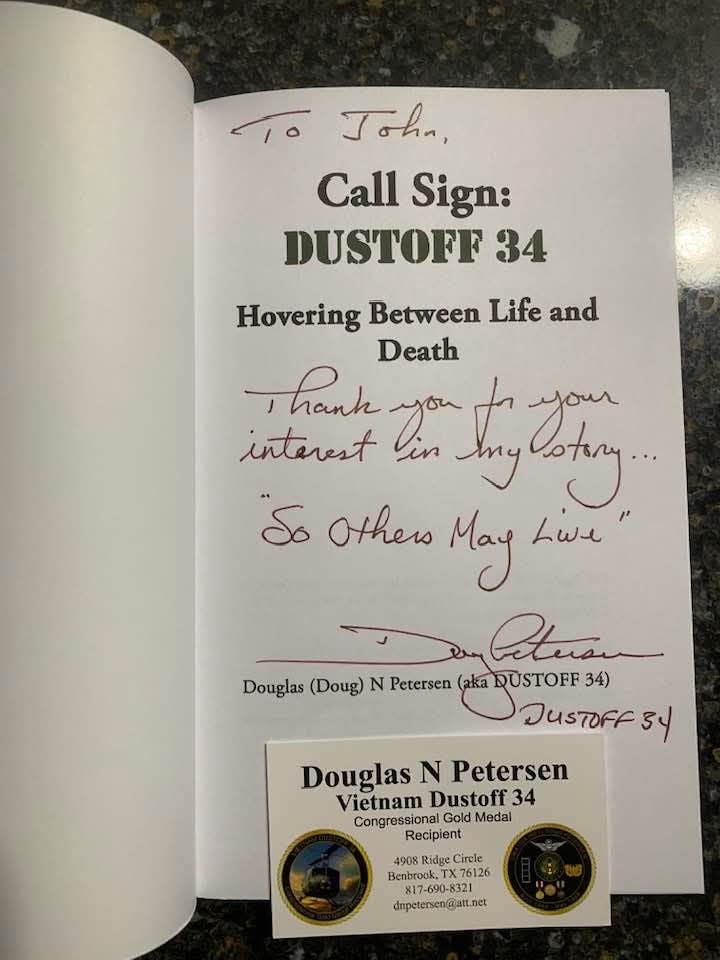
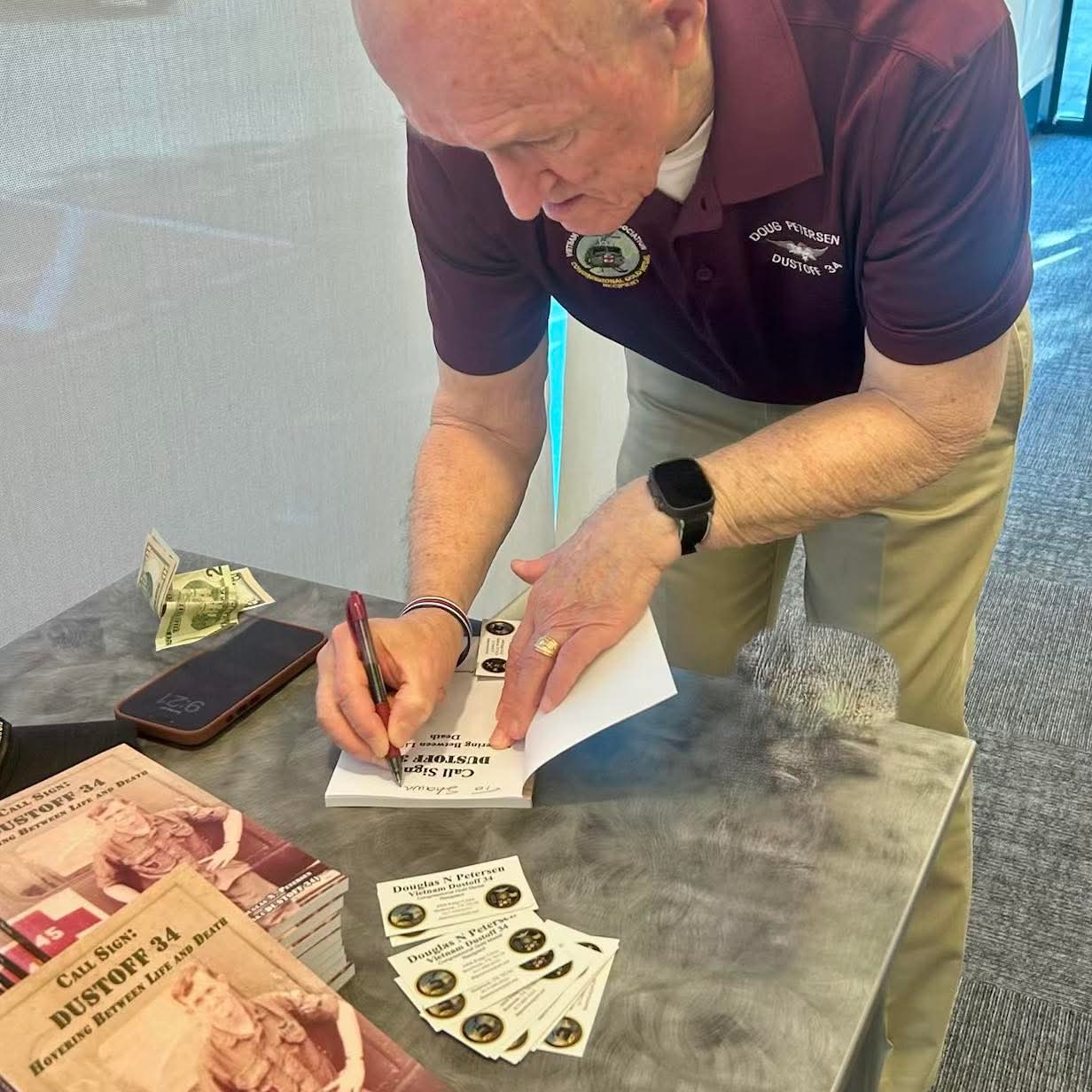
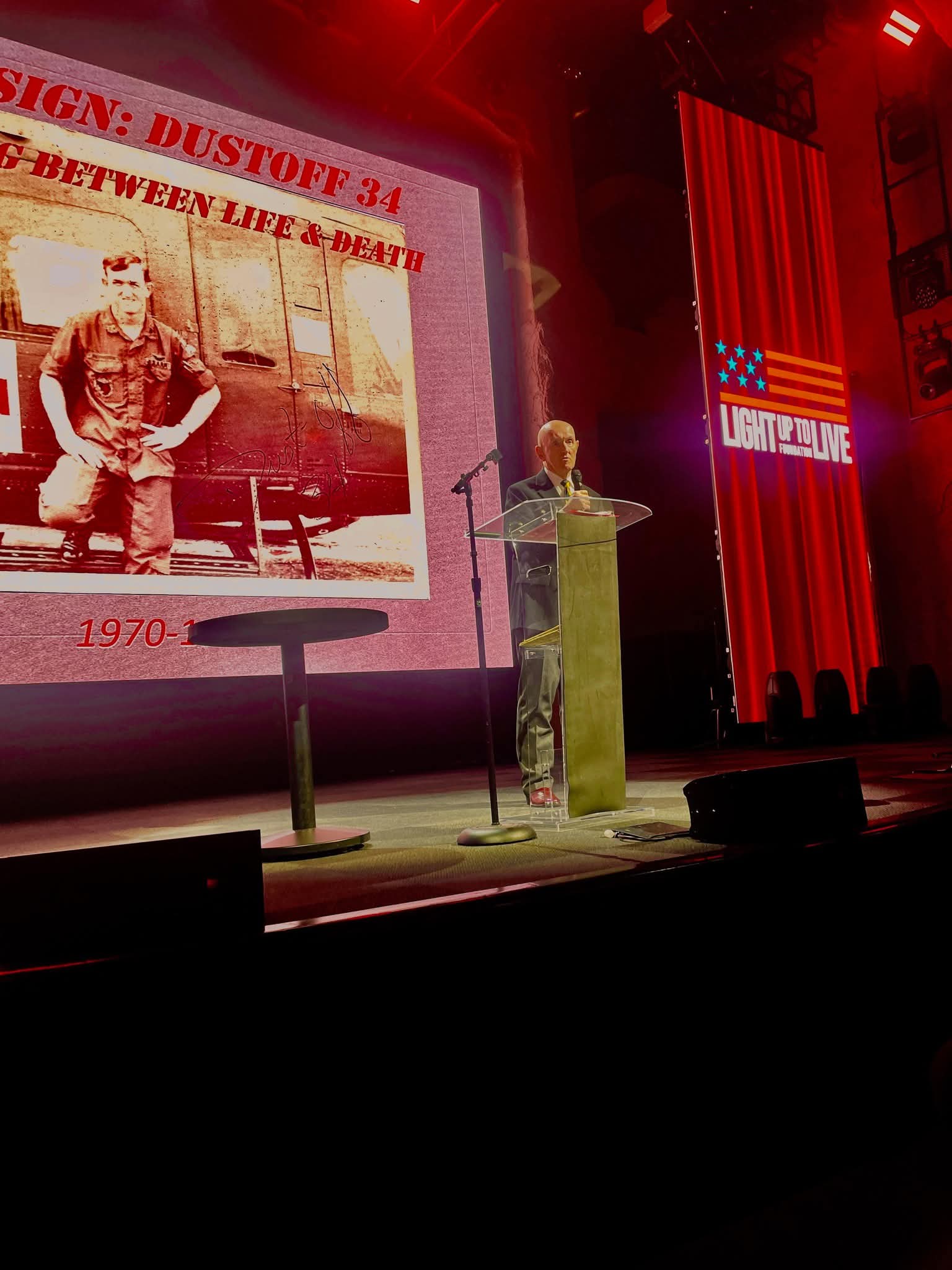
His latest book, Call Sign: DUSTOFF 34 – Hovering Between Life and Death, offers a powerful and deeply personal account of his experiences flying medical evacuation missions during the Vietnam War. It captures the harsh realities of combat rescue and honors the courage and selfless service of Dustoff crews who risked everything under the enduring creed, “So Others May Live.”
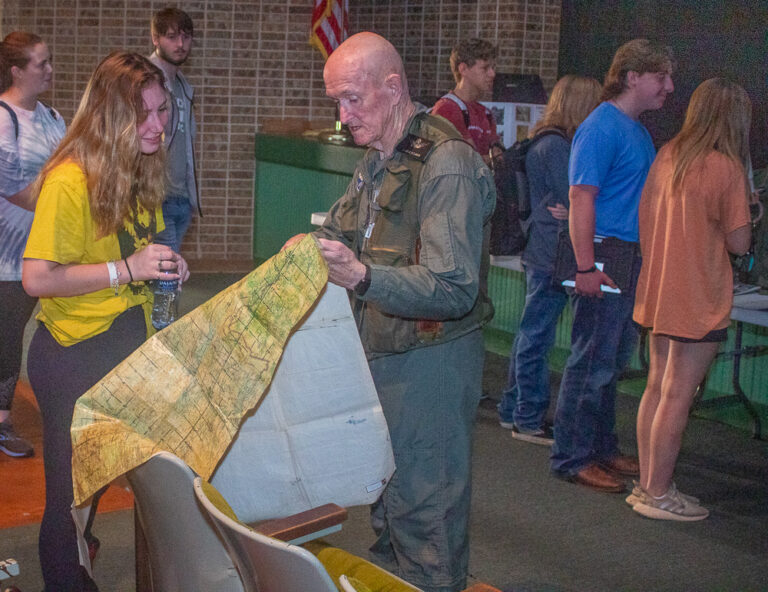
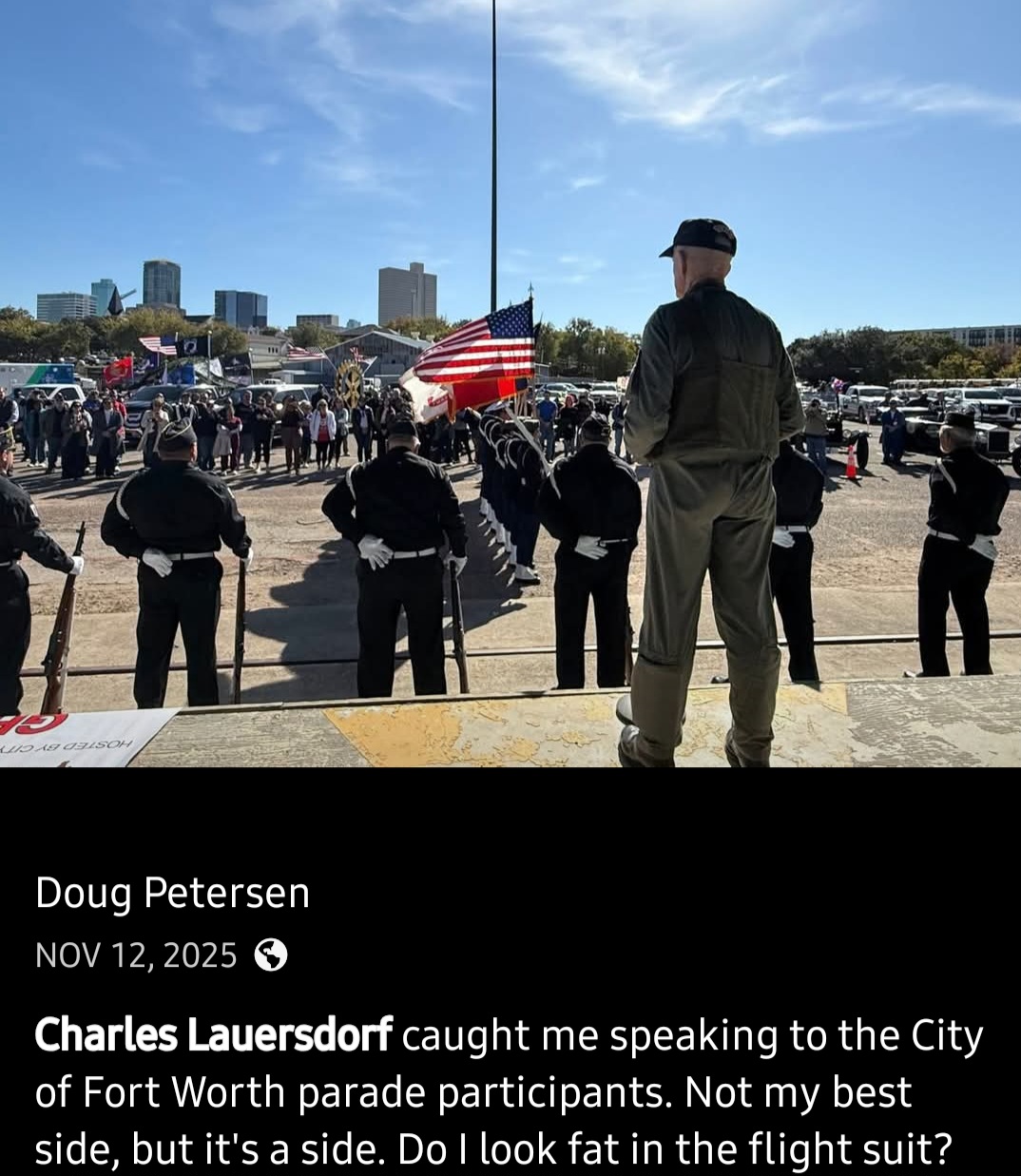
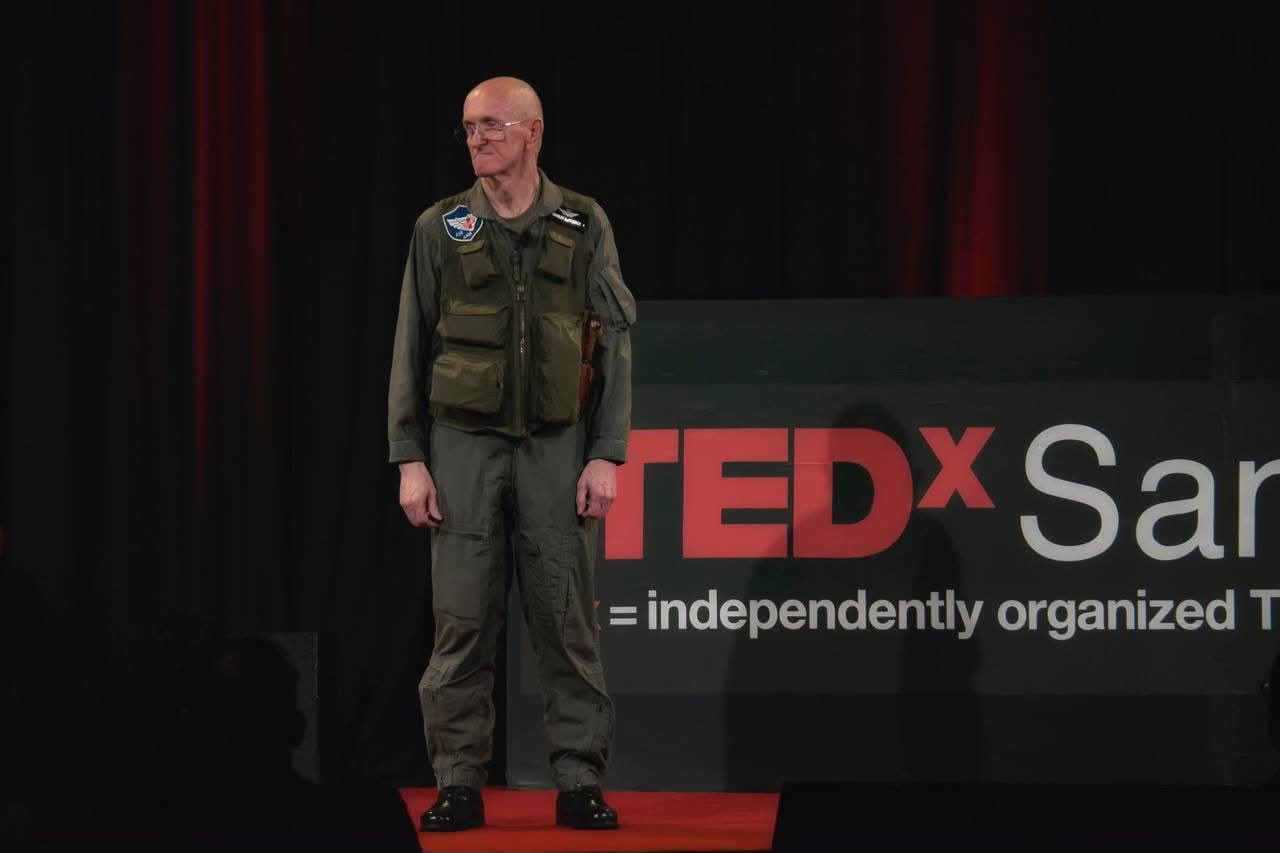
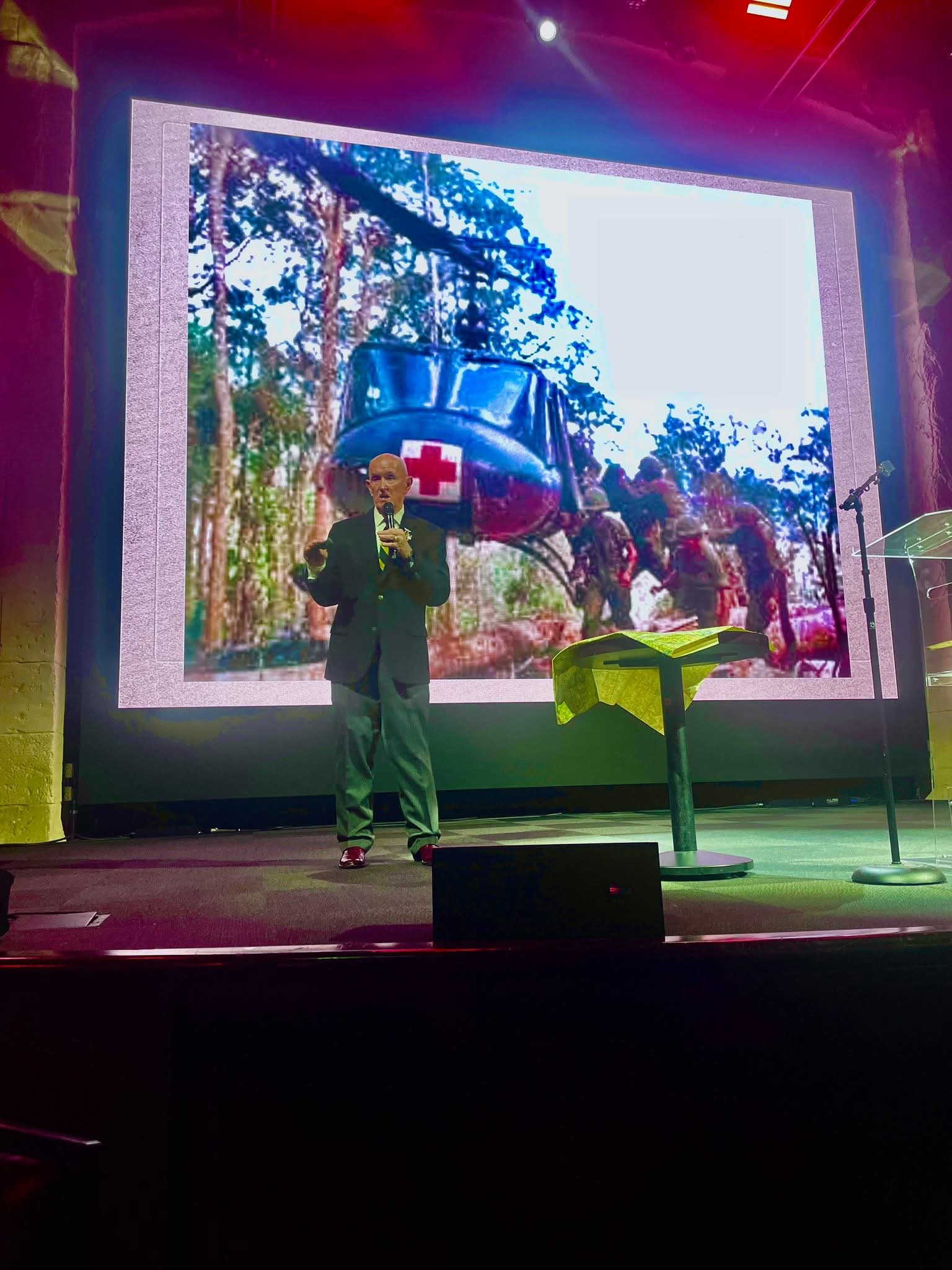
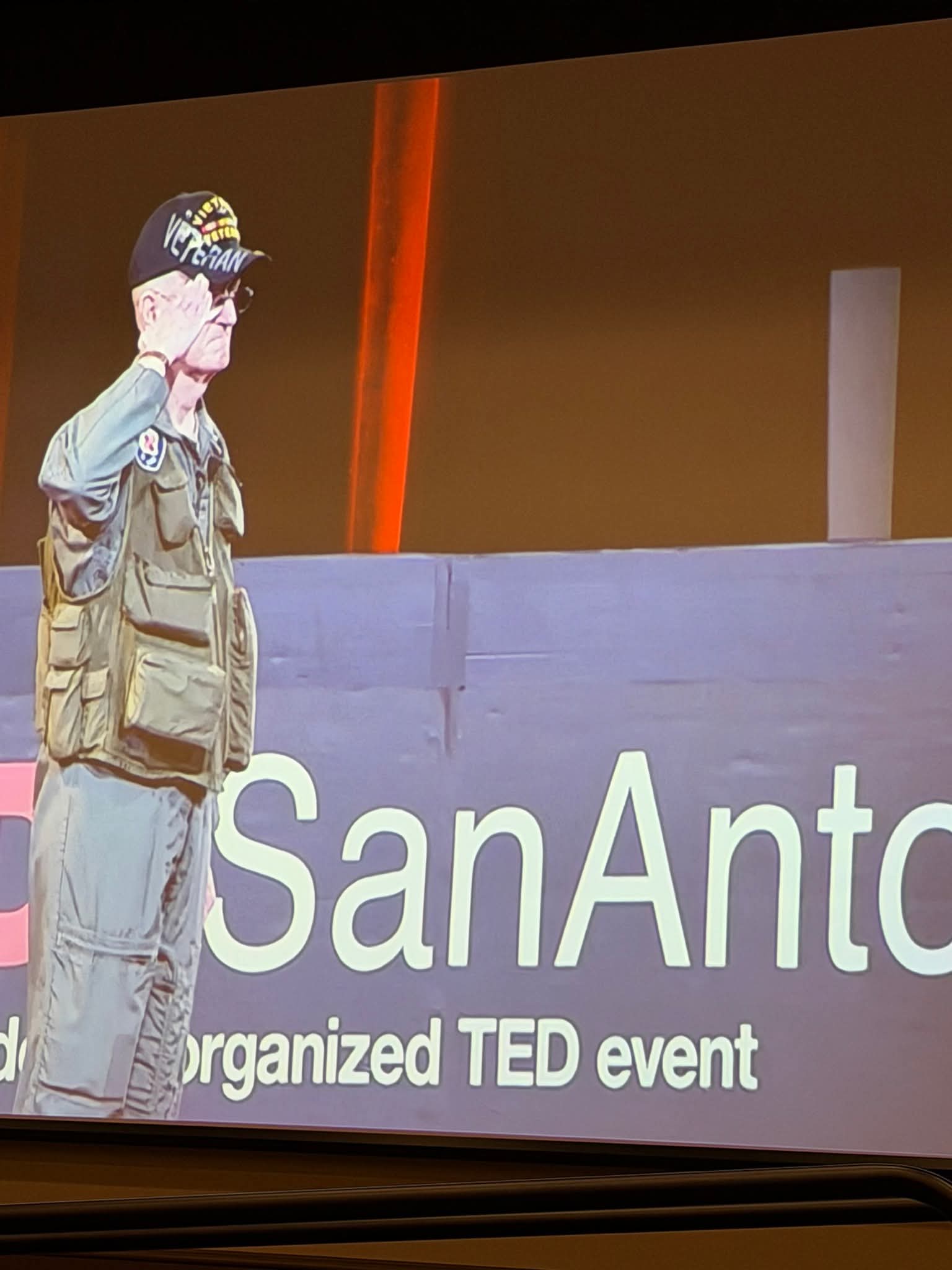
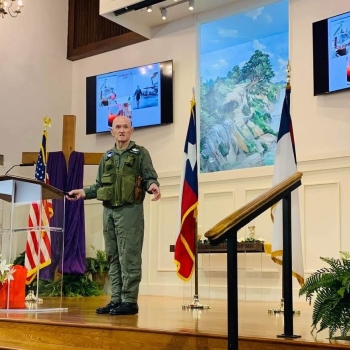
Doug is an internationally recognized speaker, known for his TEDx talk in San Antonio, where he recounts one of his unforgettable Dustoff missions in Vietnam. He and his wife, Ann, remain actively involved in supporting military and veteran families through their ongoing volunteer work with nonprofit organizations.
Supplemental Information
The Birth of Dust Off
Dust Off did not begin in Korea. The Korean War revealed the promise of helicopter evacuation, but the system was still experimental and lacked the identity, doctrine, and dedicated units that would later define Dust Off. The true birth of Dust Off took place in Vietnam, where the demands of a new kind of war forced the United States Army to create a medical evacuation force unlike anything the world had seen.
In April 1962, the Army deployed the 57th Medical Detachment (Helicopter Ambulance) to Vietnam. This small unit arrived with five UH‑1 Huey helicopters and a mission that was still taking shape. They had no established procedures, no formal doctrine, and no guarantee that commanders would protect their aircraft for medical use alone. The men of the 57th had to build the system from the ground up. They had to prove that helicopter ambulance service could function in a real combat environment and that the wounded deserved a dedicated lifeline.
Their early months were marked by improvisation and determination. They fought to preserve the purity of their mission, insisting that their aircraft be used only for the evacuation of casualties. This insistence became the foundation of Dust Off culture. The helicopter existed for one purpose. It existed to save lives.
In 1963, Major Lloyd Spencer selected the call sign Dust Off for the 57th. The Army normally required call signs to change regularly for security reasons, but medical leaders argued that a permanent call sign saved lives. In moments of crisis, clarity mattered more than protocol. Dust Off became the identity of every helicopter ambulance crew in Vietnam. It became a symbol of hope for the wounded and a promise that help was coming.
The Dust Off ethos took its final shape under Major Charles Kelly, commander of the 57th. Kelly believed that the wounded came first, regardless of danger. When warned that he was flying too close to enemy fire, he answered with the words that became the creed of all Dust Off crews. When I have your wounded. On July 1, 1964, Kelly was killed in action while attempting to evacuate casualties under fire. His death became the moral cornerstone of Dust Off. It established the expectation that crews would go wherever the wounded needed them, even at extraordinary personal risk.
After Kelly’s death, Dust Off expanded across Vietnam. Additional medical detachments arrived. Major divisions such as the 1st Cavalry Division and the 101st Airborne Division formed their own helicopter ambulance elements. By the height of the war, every corps in Vietnam had dedicated medevac coverage. Dust Off crews flew day and night, in monsoon rain, through jungle terrain, and into landing zones under direct enemy fire. Their aircraft were unarmed. Their casualty rates were among the highest of any aviation community.
The results were historic. Rapid helicopter evacuation increased survival rates dramatically. The 57th alone evacuated nearly 78,000 patients during its Vietnam service. Across the entire theater, Dust Off crews saved hundreds of thousands. Their innovations shaped modern medevac doctrine and influenced civilian emergency medical systems worldwide.
Dust Off became more than a call sign. It became a tradition built on devotion, sacrifice, and the belief that every wounded soldier deserved a chance to live. It remains the official call sign for Army aeromedical evacuation units today, carried forward by modern UH‑60 Black Hawk crews who continue the mission with the same spirit that guided Major Kelly and the men of the 57th.
Dust Off: A Tribute Across All Eras
Dust Off is one of the most courageous traditions in American military history. Its pilots, medics, and crew chiefs carried a mission that never changed from Vietnam to the present day. They lifted off in darkness, in monsoon rain, in desert storms, and in mountain valleys. They flew unarmed into places where danger waited in every direction. They answered every call with the same promise. Reach the wounded. Bring them home alive.
The pilots of Dust Off were known for skill that bordered on the impossible. They threaded UH‑1 Hueys between trees in Vietnam, skimmed over city streets in Somalia, and crossed vast desert expanses in Iraq. They landed on slopes so steep that crew chiefs had to brace the aircraft by hand. They hovered in place while enemy fire struck the ground beneath them. Their courage became legendary among infantry units who said that the sound of helicopter blades meant hope was coming.
The medics of Dust Off worked in the sky with a calm that saved lives. They treated gunshot wounds, burns, amputations, and shock while the aircraft shook under fire. They worked in the narrow space of a helicopter cabin, often in darkness, often while the pilot climbed hard to escape danger. Their hands brought life back to soldiers who would not have survived without them. They carried the wounded with gentleness even when the world around them was violent.
The crew chiefs of Dust Off kept the aircraft alive. They maintained engines, rotors, radios, and hoists in conditions that tested every part of the machine. They scanned the jungle, the desert, and the mountains for threats while the medic worked. They guarded the aircraft door with vigilance that saved lives as surely as the pilot’s courage. Their devotion ensured that Dust Off could answer every call.
After Vietnam, Dust Off carried its mission into Grenada, Panama, Desert Storm, Somalia, Iraq, Afghanistan, and humanitarian crises around the world. The aircraft changed from the UH‑1 Huey to the UH‑60 Black Hawk. The medical equipment became more advanced. The training grew more sophisticated. Yet the heart of the mission remained identical to the one carried by Major Charles Kelly and the men of the 57th Medical Detachment. When I have your wounded.
Dust Off crews across all eras share a single legacy. They placed the lives of others above their own. They flew without hesitation. They saved thousands. They carried forward a tradition built on devotion, sacrifice, and the belief that every wounded soldier deserves a chance to live. Their service stands among the highest expressions of military honor.
This tribute panel honors every pilot, every medic, and every crew chief who ever lifted off under the Dust Off call sign. Their courage shaped history. Their mission continues.
Combat Medics on the Battlefield
Combat medics were the first link in the lifesaving chain that carried the wounded from the battlefield to the operating table. Their work took place in the most dangerous environment of all, often within yards of enemy fire, and always under the weight of knowing that every second mattered. They moved toward the wounded when others sought cover, guided by training, devotion, and the belief that every life deserved a chance to survive.
Medics reached the injured before anyone else. They assessed wounds, stopped bleeding, opened airways, and stabilized patients with remarkable speed. Their actions bought the time needed for evacuation. Many lives were saved in those first moments, long before a helicopter could arrive. Their courage was not theoretical. It was lived in mud, jungle, desert, and city streets, wherever soldiers fell and needed help.
Combat medics carried limited supplies, yet they used them with extraordinary skill. They applied tourniquets, administered intravenous fluids, treated shock, and prepared patients for transport. They worked while rounds struck the ground nearby. They worked while explosions echoed around them. They worked while calling for Dust Off, knowing that the helicopter would come if it was possible to reach them.
The partnership between medics and Dust Off crews was built on trust earned through experience. Medics knew that if they could stabilize the wounded, Dust Off would arrive with speed that changed survival rates across entire wars. Dust Off crews knew that medics had already fought to keep the patient alive long enough to reach the aircraft. This relationship formed the foundation of the golden hour, the critical period in which rapid care and rapid evacuation saved lives that would once have been lost.
Combat medics carried emotional weight equal to their physical burden. They saw the cost of battle in every patient. They held hands, offered comfort, and spoke words meant to steady the spirit. They carried memories of lives saved and lives lost. Their service demanded courage, compassion, and a steadiness that few ever experience.
This tribute honors the combat medics who stepped into danger to reach the wounded. Their work began the journey that Dust Off continued and the field hospitals completed. Their legacy is written in the lives they saved and in the devotion they carried into every moment of service.
The Dust Off Medic Inside the Aircraft
The Dust Off medic inside the aircraft was the heartbeat of the mission. While the pilot flew into danger and the crew chief guarded the aircraft, the medic cared for the wounded in the narrow space of the helicopter cabin. This role demanded skill, courage, and a calm that held steady even when the aircraft shook under enemy fire. Every mission placed the medic at the center of life and death.
Dust Off medics treated injuries that ranged from gunshot wounds to blast trauma to severe shock. They worked in conditions that were never still. The helicopter banked, climbed, and descended as the pilot maneuvered to escape danger. The medic worked through vibration, noise, and urgency, often with limited light and limited space. Their training allowed them to act quickly, but their devotion allowed them to act with compassion.
Inside the aircraft, the medic continued the care that the battlefield medic had begun. They applied tourniquets, started intravenous fluids, managed airways, and monitored vital signs. They reassured the wounded with words meant to steady the spirit. They held hands. They offered comfort. They carried the emotional weight of seeing the cost of battle up close, yet they remained focused on preserving life.
The Dust Off medic formed a critical link in the chain that created the golden hour. Their work ensured that the wounded arrived at the field hospital alive and stabilized. Surgeons and nurses trusted the medic’s judgment. They knew that the care provided in the air often determined whether a patient could survive long enough to reach the operating table. This partnership between air and ground medical teams changed the history of combat medicine.
Dust Off medics served in missions that demanded courage equal to that of the pilots who flew into danger. They stepped into the aircraft knowing that every call meant urgency, risk, and responsibility. They carried memories of lives saved and lives lost. Their service was not only technical. It was deeply human. It was shaped by compassion, steadiness, and the belief that every life deserved a chance to survive.
This tribute honors the Dust Off medic inside the aircraft. Their work formed the center of the mission. Their hands carried hope from the battlefield to the field hospital. Their legacy endures in every modern medevac crew that follows in their path.
The Evacuation Chain from Ground to Sky to Surgery
The evacuation chain that carried the wounded from the battlefield to the operating table stands as one of the most transformative achievements in military medicine. It was not a simple sequence. It was a living system shaped by courage, discipline, and the shared belief that every life deserved a chance to survive. Each link depended on the others. Each moment carried weight. Each action reflected devotion that changed the history of combat care.
The journey began on the battlefield, where combat medics reached the wounded under conditions that tested human endurance. They moved through gunfire, explosions, and chaos to reach soldiers who had fallen. Their training allowed them to assess injuries with remarkable speed. They stopped bleeding, opened airways, treated shock, and stabilized patients with limited supplies. Their work bought time. Their courage ensured that the wounded could survive long enough for evacuation. Historical records show that these first minutes often determined whether a patient lived or died.
Dust Off crews formed the next link in the chain. Pilots flew unarmed into active combat zones, guided by the medic’s call and the urgency of the mission. They maneuvered through hostile fire, rough terrain, and unpredictable weather to reach the wounded. Crew chiefs assisted with loading patients and protected the aircraft. Medics inside the helicopter continued lifesaving care as the aircraft lifted away from danger. The helicopter became a moving emergency room, carrying the wounded toward hope with a speed that changed survival rates across entire wars. This rapid evacuation created the foundation of the golden hour, a concept that remains central to modern emergency medicine.
As the aircraft approached the field hospital, the medical teams were already preparing. Nurses organized triage stations with practiced efficiency. Surgeons reviewed incoming reports and prepared operating rooms. Medics readied equipment for immediate intervention. The sound of rotor blades signaled that the next battle for life was about to begin. This coordination was not accidental. It was the result of training, discipline, and the shared understanding that every second mattered.
When Dust Off touched down, the transition from air to ground was swift and precise. The wounded were moved from helicopter to triage within moments. Nurses assessed injuries with calm clarity. Surgeons began treatment as soon as the patient reached the operating table. Many operations started within minutes of arrival. This speed transformed survival rates and demonstrated the power of the evacuation chain. Historical accounts from Vietnam show that this system saved thousands of lives that would once have been lost.
Inside the field hospital, the work was intense and unrelenting. Surgeons repaired shattered limbs, controlled internal bleeding, and treated complex trauma. They worked through exhaustion, guided by skill and devotion. Nurses monitored vital signs, administered medication, and offered comfort that steadied the spirit as much as the body. Medics, anesthetists, laboratory technicians, and support staff ensured that every part of the medical system functioned without delay. Their service formed the final link in the chain, completing the mission that began on the battlefield.
This chain from ground to sky to surgery was not only a sequence of medical steps. It was a partnership built on trust. Combat medics trusted Dust Off to arrive. Dust Off trusted the field hospitals to save the wounded. The hospitals trusted the crews in the sky to bring patients to them in time. This trust was earned through experience, through missions flown in darkness, through rescues carried out under fire, and through the shared understanding that every life mattered.
The evacuation chain changed the history of combat care. It set the standard for modern emergency medicine. It demonstrated what becomes possible when courage, skill, and compassion form a single mission. Reach the wounded. Restore life. This is the true, factual, and historical story of how lives were saved. Their legacy endures.
Dust Off and the Field Hospitals
Dust Off crews and the field hospitals formed one of the most important and life saving relationships in modern military history. Their partnership was not symbolic. It was operational, essential, and built on the shared mission of preserving life under the most difficult conditions.
Dust Off pilots flew unarmed into active combat zones to retrieve the wounded. Their goal was to reach casualties as quickly as possible and deliver them to medical teams who could provide surgical care. This partnership created the foundation of what became known as the golden hour, the critical period in which rapid evacuation and immediate treatment dramatically increased survival rates. This concept is historically documented and remains a cornerstone of modern military medicine.
When a Dust Off helicopter approached a field hospital, the medical staff already knew what was coming. Surgeons prepared operating tables. Nurses organized triage stations. Medics stood ready to receive patients whose injuries ranged from gunshot wounds to blast trauma to severe shock. These teams worked with extraordinary speed and precision. Their training and discipline allowed them to stabilize patients within minutes of arrival, a process that saved countless lives.
The relationship between Dust Off crews and field hospital personnel was built on trust. Pilots trusted the medical teams to take over the moment the helicopter touched down. Doctors and nurses trusted Dust Off to bring the wounded to them faster than any ground transport could achieve. This trust was earned through experience, through missions flown in darkness, through rescues carried out under fire, and through the shared understanding that every life mattered.
The men and women who worked in the field hospitals carried emotional weight equal to that of the crews in the sky. They saw the cost of battle in every patient. They worked through exhaustion, through nights filled with urgency, and through days filled with quiet aftermath. Their service was not only technical. It was deeply human. They held hands, offered comfort, and fought for life with skill and compassion.
Dust Off and the field hospitals were two halves of a single mission. One reached the wounded. The other restored life. Together they created a medical system that changed the history of combat care and set the standard for modern emergency medicine. This partnership is fully documented in Army medical records, historical accounts, and the testimonies of those who served.
The Journey from Battlefield to Operating Table
The journey from battlefield to operating table was one of the most remarkable achievements in modern military medicine. It began with the wounded lying in places where danger still pressed close. It ended in the hands of surgeons and nurses who fought to preserve life with skill and compassion. Every step in this journey was shaped by urgency, trust, and the shared belief that every life was worth saving.
On the battlefield, medics reached the wounded first. They worked under fire, stabilizing injuries, stopping bleeding, and preparing patients for evacuation. Their actions bought precious minutes. Their courage ensured that the wounded could survive long enough for Dust Off to arrive.
Dust Off crews formed the next link in the chain. Pilots flew unarmed into active combat zones, guided by the call for help and the knowledge that every second mattered. Crew chiefs scanned the terrain for threats while medics inside the aircraft continued lifesaving care. The helicopter became a moving emergency room, carrying the wounded away from danger and toward hope.
As the aircraft approached the field hospital, the medical teams were already preparing. Nurses organized triage stations. Surgeons reviewed incoming reports. Medics readied equipment for immediate intervention. The sound of rotor blades signaled that the next battle for life was about to begin.
When Dust Off touched down, the transition was swift and practiced. The wounded were moved from helicopter to triage within moments. Nurses assessed injuries with calm precision. Surgeons began treatment as soon as the patient reached the operating table. Many operations started within minutes of arrival, a process that transformed survival rates and defined the golden hour.
Inside the field hospital, the work was intense and unrelenting. Surgeons repaired shattered limbs, controlled internal bleeding, and treated complex trauma. Nurses monitored vital signs, administered medication, and provided comfort that steadied the spirit as much as the body. Medics, anesthetists, laboratory technicians, and support staff ensured that every part of the medical system functioned without delay.
This journey from battlefield to operating table was not only a sequence of medical steps. It was a partnership built on trust. Medics trusted Dust Off to arrive. Dust Off trusted the field hospitals to save the wounded. The hospitals trusted the crews in the sky to bring patients to them in time. Together they created a system that changed the history of combat care and set the standard for modern emergency medicine.
This is the true and factual story of how lives were saved. It honors the medics on the ground, the crews in the air, and the medical teams who received the wounded. Their work formed a single mission. Reach the wounded. Restore life. Their legacy endures.
The Hands That Received the Wounded
The men and women who served in the field hospitals formed the final link in the lifesaving chain that began with Dust Off. Their work was not distant from the battlefield. It was an extension of it. Every helicopter that touched down carried the urgency of combat directly to their doors, and every patient who arrived depended on their skill, their steadiness, and their compassion.
Field hospital nurses were often the first to touch the wounded after the Dust Off crew. They moved with practiced calm, assessing injuries, stabilizing vital signs, and preparing patients for surgery. Their hands carried gentleness and precision in equal measure. They worked through exhaustion, through nights filled with urgency, and through days marked by the quiet aftermath of battle. Their devotion saved lives that would once have been lost.
Surgeons in the field hospitals performed operations under conditions that demanded speed, clarity, and unwavering focus. They treated gunshot wounds, blast trauma, burns, and catastrophic injuries that arrived without warning. Many surgeries began within minutes of Dust Off landing, a process made possible by the partnership between air evacuation and frontline medical care. Their work transformed the golden hour from theory into reality.
Medics, anesthetists, laboratory technicians, and support staff formed the backbone of these hospitals. They prepared operating rooms, managed blood supplies, monitored patients, and ensured that every part of the medical system functioned without delay. Their contributions were essential, and their service carried emotional weight equal to that of the surgeons and nurses beside them.
The relationship between Dust Off crews and the field hospitals was built on trust. Pilots flew with the knowledge that if they could reach the hospital in time, the medical teams would fight for every life. Doctors and nurses worked with the confidence that Dust Off would bring the wounded to them faster than any ground transport could achieve. This partnership changed the history of combat medicine and set the standard for modern emergency care.
The men and women of the field hospitals did more than treat injuries. They offered comfort. They spoke words of reassurance. They held hands. They carried the emotional burden of seeing the cost of battle and still choosing compassion. Their service stands among the highest expressions of military devotion, a testament to courage, skill, and the belief that every life is worth saving.
This tribute honors the nurses, surgeons, and medical teams who received the wounded. Their work completed the mission that Dust Off began. Their legacy endures.
Aircraft Flown : A Legacy Written in Flight
Over the course of his military career, Doug Petersen mastered a remarkable range of Army aircraft, each one representing a distinct era of aviation and a different profile of service. His flight log reflects versatility, discipline, and a depth of experience that spans both rotary‑wing and fixed‑wing missions.
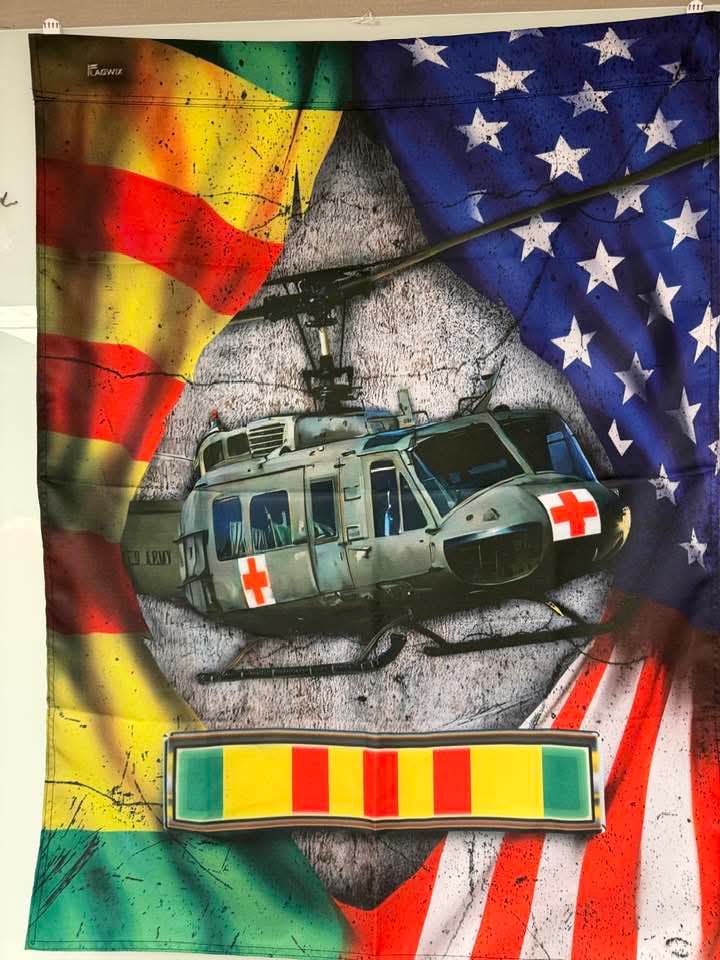
UH‑1H Huey The Huey was the iconic Dust Off aircraft of the Vietnam War. It was unarmed, fast, and trusted to carry the wounded from the battlefield. Its thumping rotor blades became a symbol of hope for soldiers who waited for rescue. Mastery of the Huey placed Doug within the lineage of pilots who flew into danger for the sake of the injured.
OH‑58A Kiowa The Kiowa was a nimble scout helicopter used for reconnaissance and observation. It demanded precision flying, quiet discipline, and the ability to read terrain with instinctive clarity. Doug’s experience in the Kiowa reflects a pilot who understood both the subtlety and the urgency of aerial reconnaissance.
UH‑60A Blackhawk The Blackhawk represented the next generation of Army aviation. It brought greater power, lift, and survivability. Pilots who transitioned from the Huey to the Blackhawk carried forward the Dust Off spirit into a modern aircraft capable of reaching the wounded in more demanding environments. Doug’s proficiency in the Blackhawk shows a pilot who adapted as the Army evolved.
C‑12 The C‑12 was a twin‑engine fixed‑wing aircraft used for personnel transport and light cargo missions. It required a different skill set, one rooted in long‑range navigation, instrument precision, and the professionalism of Army airlift operations. Doug’s ability to move seamlessly between rotary‑wing and fixed‑wing platforms demonstrates rare versatility.
U‑21 The U‑21 was a versatile utility aircraft supporting logistics, liaison, and transport operations. It served as a reliable link between units, missions, and command elements. Doug’s experience in the U‑21 reflects a pilot trusted to carry out missions that required steadiness, judgment, and a mastery of multi‑role aviation.
Together, these aircraft trace the arc of Doug Petersen’s career. They reveal a pilot who served in moments of life‑or‑death urgency and in missions of quiet professionalism. They show a man who adapted, excelled, and answered every requirement placed before him. They honor a pilot who carried the Dust Off spirit into every cockpit, regardless of the aircraft he flew or the mission he faced.
Dust Off Pilot — Vietnam War
Doug Petersen served as a Dust Off pilot during the Vietnam War, flying under the callsign Dust Off 34. His service placed him within one of the most dangerous and lifesaving missions of the conflict. Dust Off pilots flew unarmed, trusting skill, speed, and faith to carry them through missions that demanded courage equal to any in military aviation. Over the course of nearly 1,000 combat hours, Doug flew medical evacuation missions into active firefights, landing in places where gunfire, chaos, and uncertainty were constants. His mission was singular and sacred. Reach the wounded. Lift them out of danger. Deliver them to safety.
Dust Off operations in the Mekong Delta were among the most demanding in Vietnam. The Delta’s geography created a battlefield unlike any other. Rice paddies stretched for miles. Canals cut through villages and farmland. Dense vegetation concealed both friendly forces and enemy positions. Weather shifted without warning, turning clear skies into monsoon storms that reduced visibility to a few yards. Landing zones were often improvised, carved out of narrow dikes, flooded fields, or small clearings surrounded by hostile fire. Doug maneuvered the UH‑1 Huey through these hazards with precision born from training, instinct, and devotion. Every approach carried risk. Every departure carried hope.
Operating across this vast region, Doug transported casualties to Army of the Republic of Vietnam hospitals, primarily in My Tho, and to the major United States medical facilities in his area of operations. These included the 93rd Evacuation Hospital and the 24th Surgical Hospital in Long Binh, two of the most critical medical centers supporting American and allied forces.
The 93rd Evacuation Hospital was a high‑volume combat medical facility that stood at the heart of the Delta’s medical support network. It operated with a full surgical staff, intensive care wards, and triage teams trained to begin treatment within minutes of arrival. Historical records show that the 93rd routinely received casualties directly from Dust Off aircraft, often in waves that reflected the intensity of fighting across the region. Surgeons performed complex trauma surgery day and night. Nurses stabilized patients with remarkable speed. Medics and technicians maintained blood supplies, monitored vital signs, and ensured that every part of the hospital functioned without delay. Dust Off crews like Doug’s were essential to its mission, delivering patients whose survival depended on rapid evacuation and immediate surgical care. The partnership between Dust Off and the 93rd became one of the defining strengths of the golden hour.
The 24th Surgical Hospital in Long Binh served as a major surgical center for United States forces and allied troops. It specialized in emergency trauma surgery, orthopedic repair, neurosurgical intervention, and critical care for the most severely wounded. Its location near large troop concentrations and major operational commands made it a central hub in the medical evacuation chain. The 24th was known for its ability to begin operations within minutes of Dust Off landing. Surgeons and nurses worked with extraordinary focus, transforming the helicopter’s arrival into immediate action. Many patients arrived in critical condition, stabilized only by the care provided by the Dust Off medic in the aircraft. Doug’s flights brought the wounded directly into the hands of these teams, completing the lifesaving chain that began on the battlefield and continued through the air.
Every sortie carried the weight of lives hanging in the balance. Doug flew missions in daylight, darkness, monsoon storms, and hostile fire. He lifted casualties from jungles, rice paddies, roadsides, and villages caught in the violence of war. He flew into places where the enemy still held the ground, trusting that speed and skill would carry him through. Each extraction became a testament to courage, precision, and faith under fire. Dust Off pilots accepted risk not for strategic gain but for human life. Their devotion shaped the culture of Dust Off and set the standard for every medevac pilot who followed.
Doug Petersen: Dust Off 34 — Into the Zone
The Call
For Doug Petersen, the mission always began the same way: a radio call cutting through the thick Vietnamese air — “DustOff, we have wounded. Immediate extraction.” At just twenty‑one, Petersen was already an aircraft commander, flying the unarmed UH‑1H Huey marked only with red crosses. He knew exactly what that call meant. Someone on the ground was bleeding out, and every second he hesitated was a second they didn’t have.
Dust Off didn’t wait for gunships. They didn’t circle overhead. They went straight in — because lives depended on it.
The Approach
Petersen dropped the Huey to treetop level, rotor blades slicing through the humid Vietnamese air as the jungle rushed beneath him in a blur of green and shadow. The Mekong Delta did not offer gentle approaches. It offered a corridor of danger where every foot of altitude carried risk. Flying low reduced exposure to enemy fire, but it also placed the aircraft within reach of small arms, machine guns, and the sudden violence that lived along the tree lines.
The crew chief leaned out the open door, eyes sweeping the terrain with practiced urgency. He searched for movement. He searched for muzzle flashes. He searched for anything that might betray enemy positions waiting to strike. His voice cut through the cabin as he called out what he saw, shaping Petersen’s decisions second by second.
Petersen scanned for the colored smoke that marked the wounded. Sometimes it was green. Sometimes it was red. Sometimes it was yellow. Sometimes it drifted weakly in the air because the soldier who threw it had already collapsed. The smoke was the only signal Dust Off had. It told Petersen where the wounded were. It told him where to land. It told him where danger waited.
Then the first rounds struck the aircraft.
The sound was unmistakable. Sharp. Violent. Metallic. Rounds hitting the fuselage felt like fists slamming into the Huey’s skin. The aircraft shuddered under the impact. The crew chief shouted new warnings. The medic braced himself inside the cabin. Petersen kept the Huey steady, flying through the fire because the wounded were already dying.
Later, he would say that fear had no place in those moments. Only focus. The wounded were losing blood. The medic on the ground was fighting to keep them alive. The platoon was pinned down and could not move. His job was to reach them before death did.
The approach demanded judgment shaped by experience. Petersen had to decide how close he could land without endangering the crew. He had to decide how long he could remain on the ground. He had to decide how to maneuver through threats while protecting the wounded inside the aircraft. Every decision carried consequences. Every second mattered.
The Huey descended toward the smoke, toward the wounded, toward the chaos that defined Dust Off missions in Vietnam. The approach was not simply a flight path. It was the beginning of the lifesaving chain. It was the moment when courage became action. It was the moment when Doug Petersen stepped fully into the role that defined his service.
The Hit
On two missions, Petersen’s Huey absorbed catastrophic fire. One round tore through the aircraft’s systems. Another slammed into the tail boom. The Huey lurched violently, half flying and half falling, as alarms sounded and metal shuddered under the strain.
Petersen fought the controls with everything he had, coaxing the crippled aircraft toward anything that resembled a survivable landing. He brought it down hard, skids collapsing, windshield fracturing, but alive.
And then came the second battle. Surviving on the ground until rescue arrived.
The Evacuation
Even after a shoot‑down, Petersen’s priority never changed: get the wounded out.
He and his crew pulled casualties from the wreckage, took defensive positions, and held their ground until another Huey roared in to extract them. Minutes later, bruised, bleeding, and covered in dust, Petersen climbed aboard the rescue ship.
And like so many DustOff pilots, he said the same thing:
“We’ll be ready for the next one.”
Because that was the DustOff creed. Because that was the measure of the mission. Because that was Doug Petersen.
The Zone
A hot landing zone was chaos compressed into seconds. As Doug Petersen dropped the Huey toward the wounded, the world narrowed to instinct and urgency. The engine roared. Rotor wash tore at the ground, lifting dust, debris, and smoke into the air. The crew chief leaned out the open door, scanning for movement or muzzle flashes that might betray enemy positions. The medic braced himself to sprint into the open, fully exposed, to reach the casualties.
The smells were unforgettable. Burning vegetation. Blood. Cordite. The humid rot of the Vietnamese jungle that clung to everything. Veterans would recall it decades later because it marked the moment when danger and duty collided.
Dust Off crews flew unarmed Bell UH‑1H Hueys painted with red crosses. They were medical ships, not gunships. Their protection came from speed, precision, and the hope that the red cross would be honored. In Vietnam, it often was not. Enemy fire struck the aircraft as Petersen descended. Rounds hit the fuselage with sharp metallic violence. The Huey shuddered under the impact, yet Petersen held the aircraft steady because the wounded were already dying.
The Mekong Delta offered no gentle approaches. Rice paddies reflected the sky in sheets of water. Canals cut through villages and farmland. Tree lines concealed both friendly forces and enemy positions. Soldiers fought from knee‑deep water with almost no cover. Petersen flew above this terrain with the calm focus of a pilot who understood that hesitation cost lives.
Weather shaped every mission. Clear skies could vanish in minutes as monsoon clouds rolled across the Delta. Rain fell in heavy curtains that blurred the horizon. Wind pushed the Huey sideways. The aircraft vibrated under the strain of rapid maneuvers. The crew chief called out what he saw. The medic prepared for casualties he had not yet reached. Petersen searched for the colored smoke that marked the wounded.
Landing zones were rarely ideal. Some were narrow dikes barely wide enough for the skids. Some were small clearings carved out of dense vegetation. Some were flooded fields where the aircraft had to hover because the ground could not support a landing. Documentary footage from American Medevac, filmed at Hawk Hill in 1971, captures this reality. Dust Off crews dropped into explosions, smoke, and small‑arms fire while medics sprinted to load casualties. It remains one of the clearest visual records of what these missions truly looked and felt like.
The approach demanded judgment shaped by experience. Petersen had to decide how close he could land without endangering the crew. He had to decide how long he could remain on the ground. He had to decide how to maneuver through threats while protecting the wounded inside the aircraft. Every decision carried consequences. Every second mattered.
When the Huey touched down, the battlefield surged around them. Medics shouted assessments. Soldiers carried the wounded toward the aircraft. The Dust Off medic stabilized patients as quickly as possible. Petersen held the Huey steady, refusing to lift until every casualty was aboard. The crew chief guided the loading, watching the tree lines for movement. The medic worked with urgency shaped by training and devotion.
Once the wounded were inside, Petersen lifted the Huey out of the zone with speed that reflected the mission’s purpose. The aircraft climbed toward safety, carrying lives that had been moments from loss. The medic continued treatment in the cabin. The crew chief monitored the aircraft and the terrain. Petersen flew toward the hospitals that formed the final link in the lifesaving chain.
This was the reality of a hot landing zone in Vietnam. It was not a simple flight. It was a journey into danger shaped by courage, skill, and the belief that every life mattered. Doug Petersen flew into these zones nearly one thousand times. Each mission carried the weight of human life. Each extraction became a testament to devotion under fire.
Crew Roles and Procedures
A DustOff crew was a four‑person lifeline: aircraft commander, co‑pilot, crew chief, and medic. Each carried a distinct responsibility, yet all four moved with a single purpose — reach the wounded and bring them home.
The aircraft commander flew the mission, threading the Huey through jungle canopies, gunfire, and impossible terrain. The co‑pilot managed radios, navigation, and systems, keeping the aircraft stable and the commander informed. In the back, the crew chief and medic worked as a seamless team, scanning for threats, guiding the approach, and stabilizing casualties the moment the skids touched down.
Every pickup demanded precision. Some required a quick, exposed landing under fire. Others forced the crew to hover over trees or hoist the wounded from impossible angles. Whatever the situation, the rule never changed:
No hesitation. No compromise. Get the wounded out.
It was the creed that defined DustOff and the creed Doug Petersen lived by.
Emotional and Long‑Term Impact
The work of a Dust Off crew fused profound pride with an equally profound burden. Pilots, medics, and crew chiefs carried the deep satisfaction of saving lives, sometimes dozens in a single day, yet many bore lasting psychological scars from repeated exposure to the wounded and the dying. They lived with the constant knowledge that a single mistake could cost lives. Veterans later described themselves as becoming kings of denial, pushing aside fear and emotion simply to keep flying the next mission. It was the only way to function under the relentless moral pressure to go in when others needed help.
When a Dust Off aircraft arrived, the world collapsed into a narrow tunnel of rotor wash, smoke, shouting, and urgency. Pilots descended through low clouds or broke through jungle canopy into tight clearings, roadcuts, or hastily marked landing zones. Ground troops popped colored smoke to guide them in. Dust, debris, and tracer rounds filled the air as the Huey settled into the chaos.
Dust Off crews flew unarmed Bell UH‑1H Hueys marked with red crosses intended to signal protection under the Geneva Conventions. In Vietnam, the marking offered little safety. Their defense was speed, maneuvering, and faith. Faith in their training. Faith in each other. Faith in the mission that demanded they go where others could not.
For many, the memories never faded. The faces of the wounded. The weight of decisions made in seconds. The knowledge that courage sometimes meant flying into places no one else would go. And yet, despite the danger, the trauma, and the cost, Dust Off crews kept returning to the sky.
Because someone needed them. Because the mission was sacred. Because that was the Dust Off way, and the life Doug Petersen lived.
The Emotional Reality
Dust Off veterans describe their missions as a volatile mix of fear, adrenaline, and fierce purpose. Many later said the work gave them a kind of clarity that bordered on instinct:
Get in. Get them out. Don’t think about the danger until later.
It was a survival mindset — a way to keep flying when the stakes were life and death on every mission. The Vietnam DustOff Association often reflects on this duality: extraordinary courage wrapped around unspoken trauma.
The Cost of Courage
Courage carried a price that Dust Off crews rarely spoke about. They flew into danger because lives depended on them, yet every mission carved its own mark. Pilots and medics lived with the weight of decisions made in seconds, choices that determined whether a wounded soldier lived or died. They carried the memory of faces, voices, and final moments that returned long after the war ended. The cost of courage was not only the danger of each flight. It was the quiet burden that followed them home, the knowledge that devotion to the mission demanded everything they had to give.
Dust Off PTSD and Long‑Term Effects
The psychological impact of Dust Off service was profound. Crews witnessed trauma at a pace few could comprehend. They saw the wounded, the dying, and the aftermath of battle day after day. Many described themselves as becoming kings of denial, pushing emotion aside simply to keep flying. The constant exposure to suffering, combined with the pressure to perform flawlessly under fire, left lasting scars. Some carried nightmares. Some carried guilt. Some carried silence. Modern studies recognize Dust Off veterans as among those most deeply affected by combat‑related stress, not because they fought, but because they saved. Their trauma came from compassion, responsibility, and the relentless urgency of their mission.
Why They Kept Going
Dust Off crews returned to the sky for reasons that reached beyond duty. They went because someone needed them. They went because the mission was sacred. They went because they believed that every life mattered, and that their presence could turn despair into hope. Pilots flew into places no one else would go. Medics ran toward the wounded when danger still pressed close. Crew chiefs watched the tree lines and protected the aircraft with vigilance shaped by devotion. They kept going because saving lives became part of who they were. It was the Dust Off way, and it was the life Doug Petersen lived with unwavering faith and courage.
Inside the Aircraft: Controlled Chaos
Once the casualties were aboard, the Huey transformed into a flying emergency room. Inside the cramped, vibrating cabin, the medic worked in deafening noise, fighting for every breath and heartbeat as the aircraft clawed for altitude. Space was measured in inches. Communication was reduced to gestures, shouts, and instinct. The crew chief steadied patients, secured litters, and scanned the terrain for threats while the medic performed lifesaving interventions in midair.
The Vietnam Veterans Memorial Fund’s DustOff series emphasizes the staggering scale of this mission: nearly a million lives — military and civilian — were saved by DustOff crews in Vietnam. The sheer volume of missions meant that controlled chaos became routine, and routine became survival.
These flights forged a bond unlike any other. Crews who “laid their lives on the line so that others may live” still gather today, united by shared memory and the emotional weight of what they carried — and what they could never forget. The cabin of a Dust Off Huey was a place of urgency, courage, and sacrifice, where seconds mattered and every life was worth the risk.
How Long Did It Take to Reach the Field Hospital?
On average, DustOff crews delivered a wounded soldier to a field hospital in about 33 minutes from the moment they lifted off with the casualty. This wasn’t a guess or a legend — it was a documented, war‑changing reality.
That 33‑minute window became the backbone of Vietnam‑era combat medicine. It reshaped how medics treated the wounded and how commanders understood survivability on the battlefield.
- It meant the difference between life and death for thousands.
- It meant medics could stabilize, not sustain, knowing a surgical team was minutes away.
- It meant surgeons could intervene before shock, blood loss, or infection closed the door.
And it meant DustOff pilots — unarmed, flying low, flying fast, and flying first — were the thin, fragile line that made the Golden Hour real long before the term became standard in modern trauma care.
Every minute mattered. Every decision mattered. And for crews like Doug Petersen’s, that 33‑minute race was repeated day after day, mission after mission, life after life.
The Golden Hour
The golden hour is one of the most important truths in modern combat medicine. It is not a slogan. It is a documented reality born from the experience of war. It reflects the critical period in which rapid evacuation and immediate medical care dramatically increase the chance of survival. The golden hour became possible because medics, Dust Off crews, and field hospital teams formed a seamless chain of lifesaving action.
The idea emerged from the Vietnam War, where the speed of helicopter evacuation changed outcomes across entire campaigns. Before helicopters, wounded soldiers often waited hours for transport. Many died before reaching surgical care. Dust Off changed that reality. Pilots flew unarmed into danger. Medics stabilized patients in the aircraft. Field hospitals prepared to operate within minutes of arrival. This system reduced mortality rates to levels never seen in earlier conflicts.
The golden hour was created by people who refused to accept preventable loss. It was shaped by medics who ran toward the wounded under fire. It was shaped by pilots who lifted casualties from places where danger still pressed close. It was shaped by nurses and surgeons who stood ready the moment the Huey touched down. Their combined devotion turned minutes into survival.
Historical records show that the golden hour saved thousands of lives. It became the foundation of modern emergency medicine. Civilian trauma systems across the world adopted its principles. The legacy of the golden hour reaches far beyond the battlefield. It continues in every emergency room where rapid response and rapid care save lives.
The golden hour honors the courage of those who created it. It honors the medics on the ground, the crews in the sky, and the medical teams who received the wounded. It stands as a testament to what becomes possible when skill, compassion, and urgency form a single mission. Reach the wounded. Restore life. This is the true and factual legacy of the golden hour.
What Those 33 Minutes Felt Like
Inside the Huey, the golden hour was not quiet or controlled. It was a race lived through vibration, heat, and motion. The aircraft shook with constant force, metal flexing under strain as the engine fought to keep power in the air. Wind and rotor wash slammed through the cabin, carrying dust, smoke, and the heavy humidity of the Vietnamese jungle.
Blood mixed with dirt on the floor. Hydraulic mist hung in the air. The medic worked in a world that never stopped moving, reaching for bandages and IV lines while the aircraft pitched and rolled beneath him. He stabilized the wounded by touch and instinct, never pausing, never losing focus, even when the cabin felt like a storm.
Up front, the pilot flew as if every second were a heartbeat. Because it was. He threaded the Huey through tree lines, over canals, and away from enemy fire with a precision shaped by urgency. The crew chief called out threats and terrain. The medic fought to keep life inside the aircraft. The co‑pilot kept systems steady and the radios clear.
Those thirty‑three minutes were not measured by clocks. They were measured by breath, blood loss, and the narrowing window in which a life could still be saved. They were the minutes that defined Dust Off. They were the minutes Doug Petersen lived again and again, nearly a thousand times, carrying the wounded toward the hospitals that waited to restore life.
This is what the golden hour felt like inside the Huey. It was motion, danger, devotion, and the belief that reaching the wounded in time could change everything.
The Mission of Dust Off Pilots
- DustOff pilots flew unarmed UH‑1 Huey medevac helicopters
- They flew into active firefights to extract wounded soldiers
- They were on call 24 hours a day
- They often flew multiple missions per day
- They routinely took enemy fire
- They carried only a .38 revolver
- They used smoke markers, flares, and radio calls to locate wounded
- Night missions were the most dangerous
- DustOff pilots saved hundreds of thousands of lives in Vietnam
Why 33 Minutes Mattered
The 33‑minute evacuation time didn’t just improve survival rates — it redefined battlefield medicine.
Before Vietnam, evacuation times were measured in hours, not minutes. Many wounded never made it to a surgeon. But DustOff changed everything. Their speed shattered every previous standard and transformed what was medically possible in combat.
That 33‑minute window meant:
- Survival rates soared, especially for chest wounds, abdominal trauma, and major limb injuries that once proved fatal.
- Field hospitals functioned like forward trauma centers, because the wounded arrived alive enough — and soon enough — to save.
- Medics could focus on stabilization, knowing they didn’t have to sustain a patient for long stretches.
- Surgeons could intervene before shock, blood loss, or infection closed the door.
Dust Off crews didn’t just shorten the timeline. They rewrote it.
Their unarmed Huey’s, flying low and fast, made the Golden Hour real years before the term became standard. And for pilots like Doug Petersen, that race against time wasn’t theory — it was the rhythm of every mission, every day, every life they lifted from the battlefield.
Mission Reality
Dust Off crews lived a mission defined by urgency, courage, and uncompromising purpose. Every day, they:
- Landed in hot LZs — zones under active fire, smoke, and chaos
- Extracted wounded soldiers in seconds, often under direct threat
- Flew without gunship escort, relying solely on speed, skill, and faith
- Operated under the sacred motto: “So others may live.”
Their work was relentless. Their courage was constant. And their impact was immeasurable.
The Sacred Mission
Dust Off carried a mission that rose above strategy, terrain, and the shifting course of war. It was sacred because it centered on the preservation of human life. Pilots, medics, and crew chiefs flew not to take ground or hold positions, but to lift the wounded from places where hope was fading. Their purpose was simple and profound. Reach those who could not reach safety. Restore life where life was slipping away.
Every call for evacuation carried a moral weight that shaped the identity of the crews. They flew unarmed into danger because someone needed them. They descended into chaos because a soldier’s survival depended on their arrival. They returned again and again because the mission demanded devotion that did not bend under fear or fatigue. The sacred mission lived in the hearts of those who answered the call, and it defined the service of Doug Petersen throughout his time in Vietnam.
When I Have Your Wounded
The phrase became a promise spoken across battlefields and remembered long after the war ended. When I have your wounded. It reflected the trust between Dust Off crews and the soldiers who waited for them. Ground troops knew that when the Huey appeared through smoke or rain, help had arrived. They knew the pilots would descend through fire. They knew the medic would run toward them. They knew the crew chief would watch the tree lines with unwavering vigilance.
For the wounded, the sight of a Dust Off helicopter meant survival. For the crews, it meant responsibility. Once a casualty was aboard, the mission shifted from danger to urgency. The medic worked to stabilize life. The pilot flew with precision shaped by devotion. The crew chief guarded the cabin and the aircraft. Every movement carried the weight of the promise. When I have your wounded, I will bring them home.
The words became part of Dust Off’s legacy. They honored the courage of those who flew and the trust of those who waited. They captured the spirit of a mission that saved thousands of lives and defined the service of Doug Petersen with clarity and grace.
The Scale of the Mission
During the eleven years of the Vietnam War, approximately 1,400 pilots and 2,000 crew members flew DustOff missions. Together, they rescued an estimated 900,000 patients — military and civilian. No other aviation mission in the war carried greater personal risk.
The danger was staggering:
- The risk of injury for Dust Off crews was three times higher than any other helicopter mission in Vietnam.
- Virtually every one of the nearly 500,000 missions was flown solo, without escort or support.
- They flew day and night, in monsoon rains, low clouds, jungle heat, and enemy fire.
- Their single purpose never changed: get the wounded from the jungle to a medical facility within the Golden Hour.
And they did. Again and again.
Their speed and precision produced a 97% survival rate for those who reached medical care — a number that reshaped battlefield medicine and saved lives on a scale the world had never seen.
Dust Off crews didn’t just perform a mission. They defined what courage looks like in its purest form.
So Others May Live
In the end, the story of Doug Petersen, Dust Off 34, is the story of a young pilot who chose courage over safety, duty over fear, and compassion over self‑preservation. He flew into places no one else would go, unarmed and unshielded, because lives depended on him. He carried the wounded from chaos to hope, from the edge of death to the hands of those who could save them. And long after the war, he carried the memories. The faces. The voices. The weight and the blessing of every life he touched.
His story is also the story of every Dust Off crew member who served in Vietnam. Those who came home and those who did not. Aircraft commanders, co‑pilots, crew chiefs, and medics who lifted the wounded from fire and carried them toward life. Their courage shaped the mission. Their devotion shaped the legacy. Their sacrifice shaped the future of battlefield medicine.
It is the story of every medic on the ground who ran toward danger to reach the wounded. It is the story of every soldier who popped smoke to guide the Huey in. It is the story of every nurse and surgeon in the field hospitals who stood ready to operate within minutes of arrival. Together, they formed the lifesaving chain that defined the golden hour and transformed survival itself.
Dust Off crews changed battlefield medicine. They changed what was possible. But their greatest legacy is simpler. They showed what it means to give everything so that someone else might live.
Doug Petersen lived that creed in the air over Vietnam, and he lived it every day afterward. In his service. In his faith. In his writing. In the hope he offered to others. His story endures because the mission never truly ended. It simply found a new way to fly.
Dedication to the Dust Off Warriors Who Never Returned
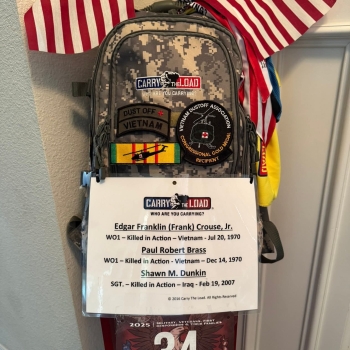
This tribute honors the 213 Dust Off warriors who gave their lives in Vietnam, men who flew unarmed into danger so others might live. Their courage lifted wounded soldiers from fear into safety. Their sacrifice carried hope into places where hope had been lost. Their devotion shaped a mission that asked everything of them and received everything they had to give. Their names are preserved in the Vietnam Dustoff Memorial, drawn from the official records of the United States Army and the Department of Defense, and their memory endures in every life saved and every Dust Off who continues the work they began. May this remembrance stand in heartfelt gratitude, may it speak with the deepest respect, and may it bear the living flame of their legacy as a quiet and enduring light, a light that rises from their service, a light that moves from their hands into ours, a light that continues to shine with sacred strength for all who follow.
A New Mission of Service
After completing more than twenty years of military service, Doug Petersen entered the financial services field, where he spent twenty‑five years helping families build stability, security, and long‑term confidence in their futures. The transition was not a departure from his calling. It was an evolution of it. Doug carried into this new profession the same calm judgment, steady presence, and mission‑first mindset that defined his aviation career in Vietnam.
He guided clients through financial planning, retirement preparation, and life‑shaping decisions with clarity and compassion. Families trusted him because he listened. They trusted him because he understood responsibility. They trusted him because he had lived a life where protecting others was not an idea but a daily reality.
Doug’s service did not end in Vietnam. He went on to serve more than twenty years in the United States Army, retiring with distinction as a Chief Warrant Officer Four. His career reflects discipline, skill, and the quiet strength of a pilot who carried the Dust Off spirit into every assignment that followed. His legacy endures in the lives he saved, the missions he completed, and the example he set for generations of Army aviators.
In his new mission, Doug continued to lift burdens and offer hope. He helped people find a path forward during moments of uncertainty. He provided direction when futures felt unclear. He offered reassurance when life changed suddenly. His work became an extension of the same devotion that carried him through Dust Off Thirty‑Four. The aircraft was gone, but the purpose remained. Protect people. Serve with integrity. Give others the confidence to move toward tomorrow.
Doug Petersen lived that mission in the air over Vietnam, and he lived it again in the quiet, steady work of guiding families toward financial security. Service did not end when he left the cockpit. It simply found a new way to fly.
Inspirational Speaker and Award‑Winning Author
Doug’s next chapter unfolded as an award winning inspirational speaker and the author of 6 books, several of which earned global e book honors. His writing and presentations rise from the deep well of a life devoted to service, shaped by the courage, faith, and emotional weight of saving lives during Dust Off missions. Every story he shares carries the imprint of those moments when a pilot must decide, in an instant, what it means to place another person’s life above his own.
His voice reaches veterans’ groups, schools, churches, and corporate leadership teams with a sincerity that steadies and a hope that endures. Audiences describe his message as humble, powerful, and profoundly life affirming. They hear the voice of a man who has witnessed the cost of service, carried the weight of responsibility, and chosen to transform those experiences into encouragement for others.
Doug invites listeners to consider the true nature of resilience. He speaks with the authority of someone who has faced danger, lived through the quiet aftermath of missions that changed lives, and discovered that courage grows from devotion rather than bravado. He shows how faith anchors a person in the darkest hours and how service continues to shape the heart long after the mission ends.
His message is not theoretical. It is lived. It is earned. It is carried forward from the cockpit of a Dust Off helicopter into every room where he speaks and every page he writes. Doug Petersen’s voice reminds audiences that resilience is not the absence of hardship. It is the strength to rise, to serve, and to carry others through danger with compassion and unwavering resolve.
Across every page he writes and every room he enters, Doug returns to the themes that define his calling:
- Courage in the face of impossible odds.
- Resilience forged through hardship and service.
- Faith as an anchor in moments of fear and uncertainty.
- The emotional burden and blessing of saving lives.
- Lessons learned from DustOff missions that continue to shape his purpose today.
Doug has spoken to audiences of every kind, including veterans’ groups, schools, churches, and corporate leadership teams, and the response is always the same. Listeners describe his message as humble, powerful, and life affirming. They speak of a sincerity that disarms, a gentleness that invites reflection, and a hope that lingers long after he steps away from the podium. His presence carries the quiet authority of someone who has lived through moments that test the soul, and his words remind audiences that courage and compassion are not ideas. They are choices made in real time, often under the weight of responsibility that few ever experience.
Doug’s voice reaches people because it is shaped by service. It carries the memory of lives saved, the cost of danger faced, and the faith that steadied him in the cockpit of a Dust Off helicopter. His message does not rise from theory. It rises from truth. It rises from experience. It rises from a life devoted to lifting others, both in the air and on the ground.
A Final Reflection on Doug Petersen’s Journey
Doug Petersen’s story gathers the weight of a life shaped by service and steadied by faith, and it reminds us that his voice carries the memory of lives saved, the cost of danger faced, and the compassion that guided him through every chapter of his journey. Audiences speak of a sincerity that disarms, a gentleness that invites reflection, and a hope that lingers long after he steps away from the podium. They feel the quiet authority of someone who has lived through moments that test the soul and understand that courage and compassion are not ideas. They are choices made in real time, often under the weight of responsibility that few ever experience.
Doug’s message endures because it rises from truth. It rises from experience. It rises from a life devoted to lifting others, both in the air and on the ground. His story stands as a testament to resilience, to faith, and to the quiet power of service. It reminds us that the mission does not end when the uniform is set aside. It continues in every act of guidance, every word of encouragement, and every moment when one person chooses to carry another toward safety. Doug Petersen’s legacy is a voice carried forward, steady and compassionate, calling us to rise, to serve, and to live with unwavering resolve.
Legacy
Doug Petersen’s legacy is defined by courage, selflessness, and a lifelong devotion to serving others. As a young United States Army Dust Off pilot in Vietnam, he flew nearly a thousand combat hours on unarmed medical evacuation missions, descending into active firefights with nothing more than a .38 revolver for protection. Dust Off crews lived the creed “So others may live,” and Doug embodied it each time he lifted wounded soldiers out of danger under enemy fire. Among the most courageous aviators of the war, he met every mission with unwavering resolve.
He flew through monsoon storms, narrow jungle canyons, and sheets of enemy fire to reach soldiers who had no other hope. Every mission demanded precision, calm under pressure, and a willingness to risk everything for someone else’s life. Doug met those demands without hesitation. His aircraft became a lifeline, a quiet promise that help was coming even in the darkest moments of combat.
His service was not only heroic; it was deeply human. Doug carried the weight of the men he saved, the ones he could not reach, and the memories that remained long after the war ended. Yet he lived with humility, never seeking recognition for the extraordinary bravery he showed day after day. To him, it was simply the right thing to do.
Doug’s service did not end in Vietnam. He went on to serve more than twenty years in the United States Army, rising to Chief Warrant Officer Four. His career reflects discipline, skill, and the quiet strength of a pilot who carried the Dust Off spirit into every assignment that followed. His legacy endures in the lives he saved, the missions he completed, and the example he set for generations of Army aviators.
After retiring from the military, Doug continued his life of service in a second career helping families build financial security. Later, he became an award‑winning inspirational speaker and author, transforming the trauma and intensity of combat into messages of purpose, resilience, and hope. Through six books and countless speaking engagements, he offered others the wisdom forged in the crucible of war, courage in fear, strength in adversity, and faith in the face of uncertainty.
Doug understood the visible and invisible wounds carried by those who served. He stood beside veterans with compassion, mentorship, and unwavering support. Whether helping someone navigate the VA, advocating for veteran services, mentoring younger service members, or offering a quiet presence to those struggling with their memories, Doug made sure veterans knew they were not alone. His advocacy was heartfelt, grounded in experience, and driven by loyalty to his brothers in arms.
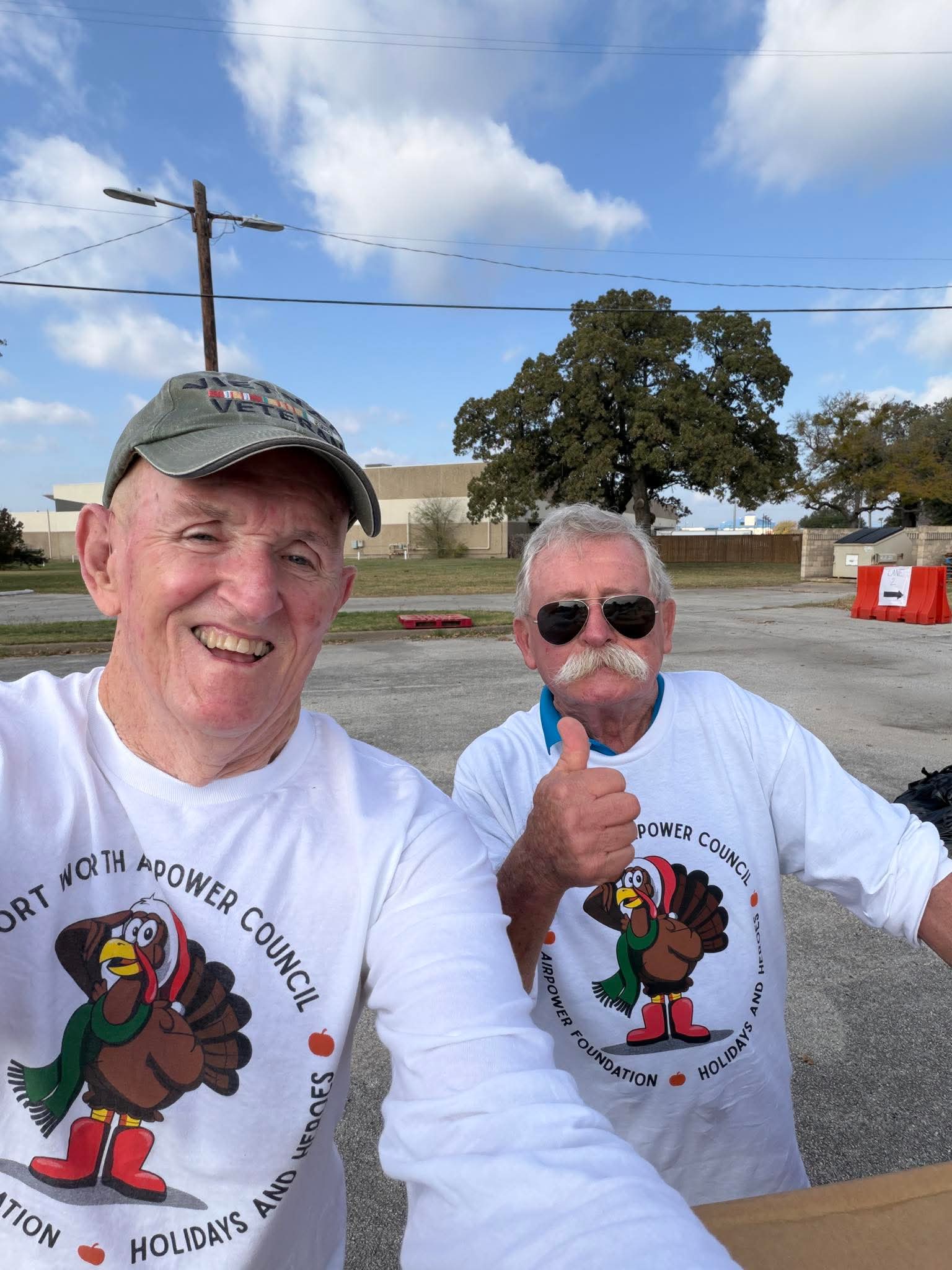
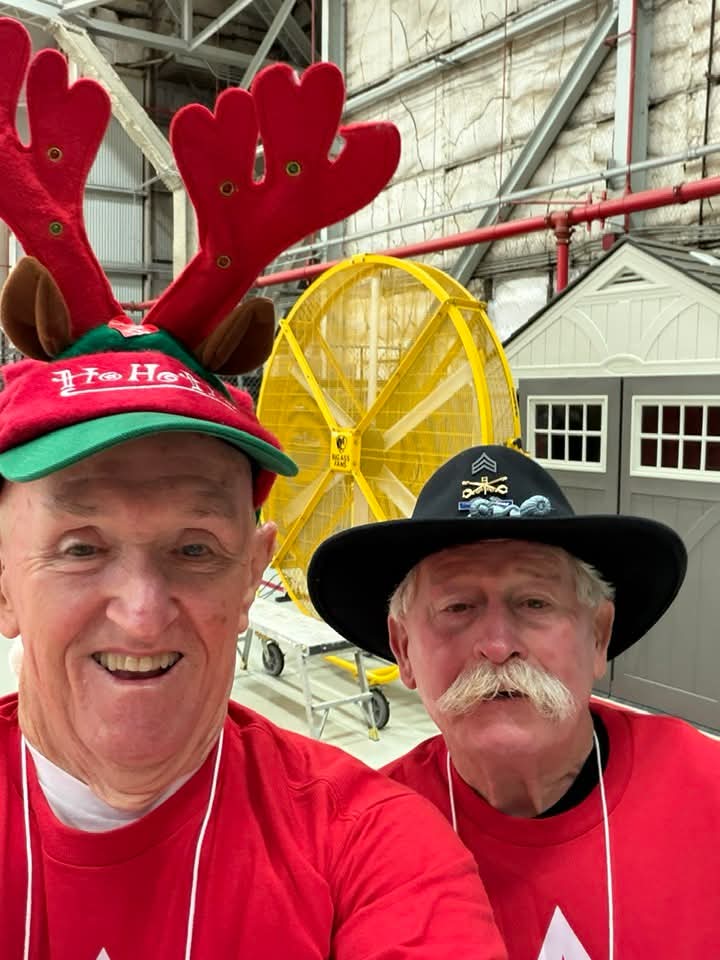
His dedication extended far beyond the veteran community. Doug believed deeply in service beyond the uniform. He poured his time, leadership, and heart into his community, supporting local programs, strengthening civic organizations, and showing up wherever help was needed. He served not for recognition, but because he believed service was a calling. His presence made his community stronger, not through grand gestures, but through consistent acts of integrity, kindness, and compassion.
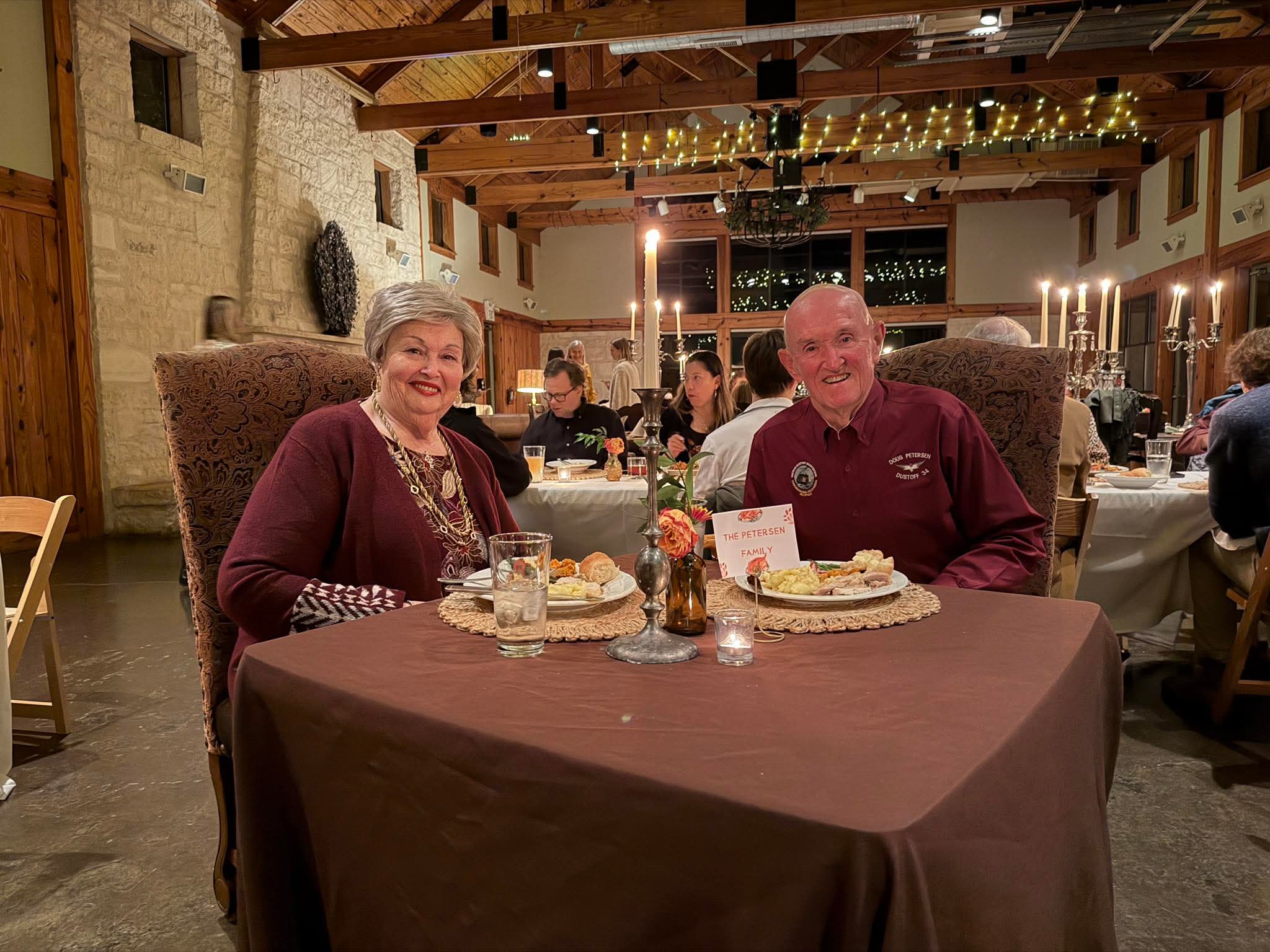
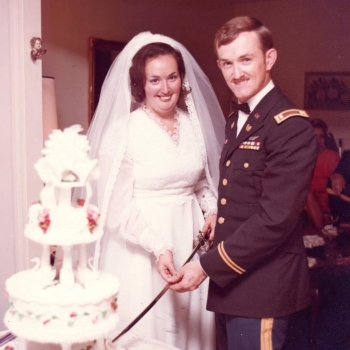
At the center of his life, the anchor through every chapter, was his family. Doug was a devoted husband to Ann, the love of his life and his constant companion. Their bond was steadfast, tender, and enduring, a partnership built on faith, laughter, shared purpose, and the quiet certainty that they belonged to one another. Ann was his anchor, his encourager, and the one who understood the weight he carried without needing it explained. To Doug, she was home. She was his love forever.
He was a proud father, guiding his children with the same steadiness he brought to the cockpit, firm when needed, gentle when it mattered, and always present with love. He was a cherished grandfather, delighting in the joy and wonder of the next generation. And he was a beloved great‑grandfather, offering warmth, patience, and gentle encouragement to the youngest branches of his family tree. To them, he was a source of stories, laughter, and quiet wisdom, a presence that made them feel safe, seen, and deeply loved.
Through every chapter of his life, Doug carried a mission that never faded. He worked with devotion to keep the Dust Off flame burning, ensuring that the courage and sacrifice of those who flew medical evacuation missions would never be forgotten. He honored their memory in his writing, his speaking, and his advocacy. He made certain that future generations understood what Dust Off meant, what it demanded, and what it gave to the world. Keeping that flame alive was not a duty. It was a promise, one he fulfilled with reverence and unwavering heart.
Doug taught through example, through the missions he flew, the lives he saved, the faith he carried, and the quiet strength he lived long after the war. His story stands as a testament to the extraordinary bravery of Dust Off crews and the enduring spirit of a man who gave everything he had to bring others home.
Woven through every chapter of his life is the truth Dust Off crews knew in their bones — the truth Doug lived every day:
Dust Off 34 — Courage is not the absence of fear. Courage is going anyway.
…his enduring love for Ann, the woman who walked beside him through every chapter