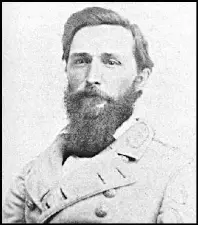

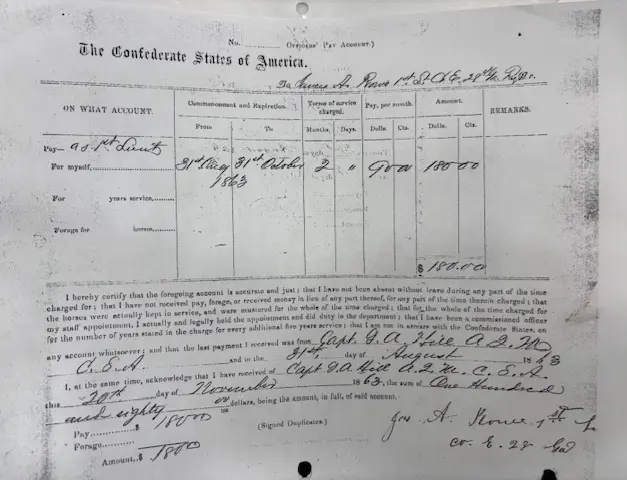
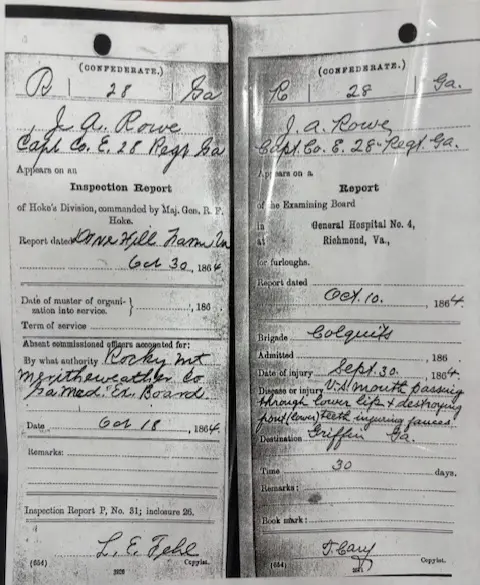
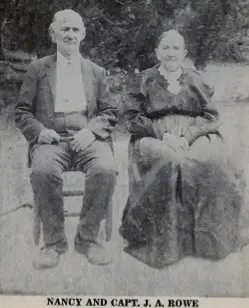
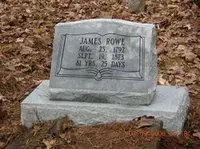
Captain James Augustus Rowe, born in Monroe County in 1824, emerged from the rural world of early Georgia to become one of the most distinguished soldiers of Meriwether County. He was the grandson of William Rowe, a South Carolina native who settled in Monroe County in 1804, and the son of James Rowe, also born in South Carolina, who married Narcissa Lewis, daughter of a Revolutionary War soldier. Rowe spent his early years on the family farm before moving with his family to Meriwether County in 1836. His education came from the simple log schoolhouse of the countryside, yet his natural energy and determination shaped a life of accomplishment. In 1848 he married Nancy A. Malcolm of Walton County, born March 23 of 1832, daughter of early settlers Alexander and Mahala Nelson Malcolm. Together they raised eight children named Thomas B., Milton, Walter, Allen J., Alfred C., Virginia, Harriet, and Mary.
In 1861 Rowe enlisted in the Meriwether Revengers under Captain Hall. When the unit reorganized in 1862 he became captain of Company E in the 28th Georgia Volunteer Infantry. The regiment had been organized in the summer of 1861, with Company E primarily raised in Meriwether County. Its ranks were drawn from Washington, Cherokee, Jefferson, Emanuel, and Crawford Counties, and it entered Confederate service under Colonel Tully Graybill and T. J. Worthen.
During the Peninsula Campaign, Captain Rowe and the 28th Georgia served under D. H. Hill’s division and entered the Battle of Seven Pines on May 31 and June 1 of 1862 as part of Colonel George B. Anderson’s Special Brigade. The regiment carried 371 officers and men into the fight and suffered devastating losses, enduring a casualty rate of 32 percent. Twenty four men were killed and 95 were wounded, and approximately 150 men were lost during the engagement. Companies H and I were detached at the time and did not participate, leaving the remaining companies, including Captain Rowe’s, to absorb the full weight of the battle. The fighting along the Williamsburg Road was relentless, marked by repeated assaults through dense woods and swampy ground as the 28th Georgia pressed against the Union lines held by General Silas Casey. Leadership losses were severe, with many officers and field commanders killed or wounded. Captain Rowe endured this ordeal alongside his men, experiencing firsthand the destruction that reshaped the regiment’s strength and command structure for the remainder of the war.
The regiment continued its service in some of the fiercest engagements of the conflict, including the Seven Days Battles at Gaines Mill and Malvern Hill, the Wilderness, Ocean Pond, Fort Sumter, James Island, Fort Fisher, John’s Island, and Winchester. After suffering significant casualties in Virginia and the Maryland Campaign, the regiment was reassigned to the Deep South to reinforce the defenses of Charleston.
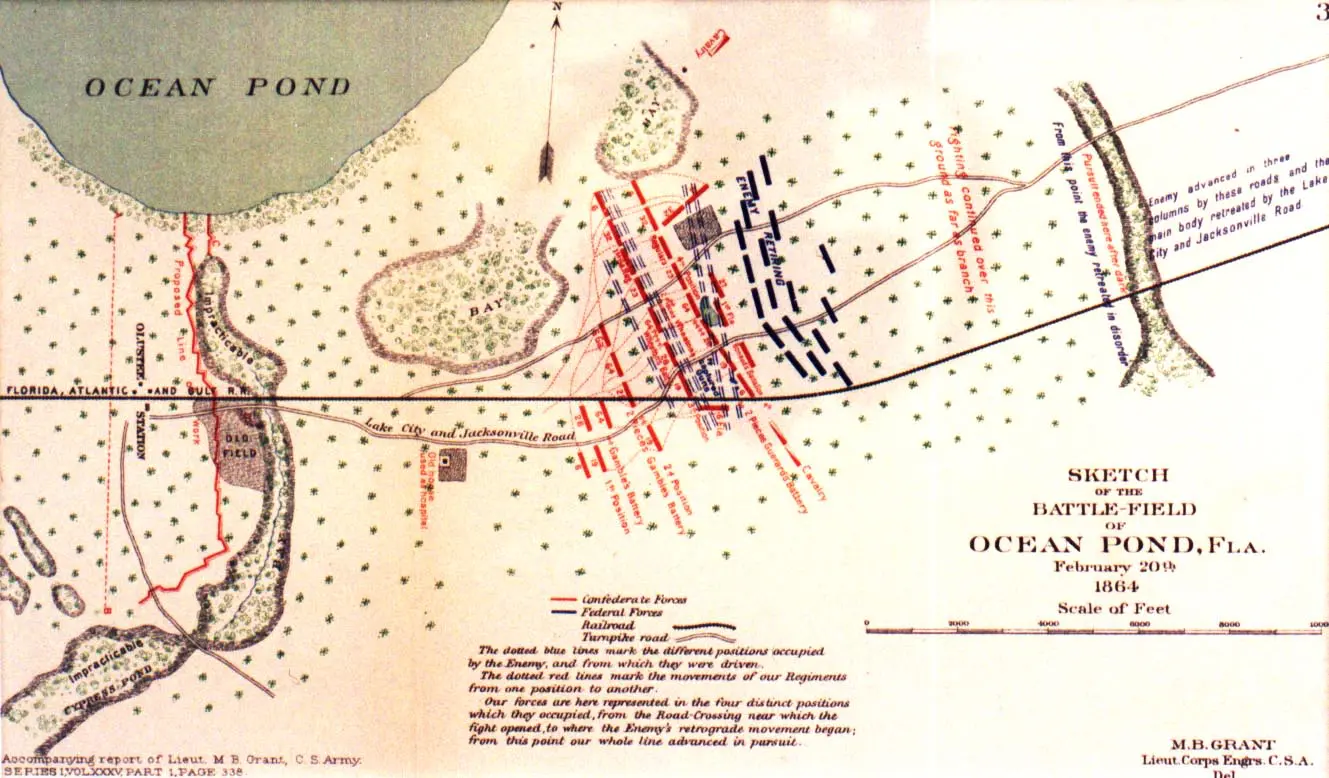
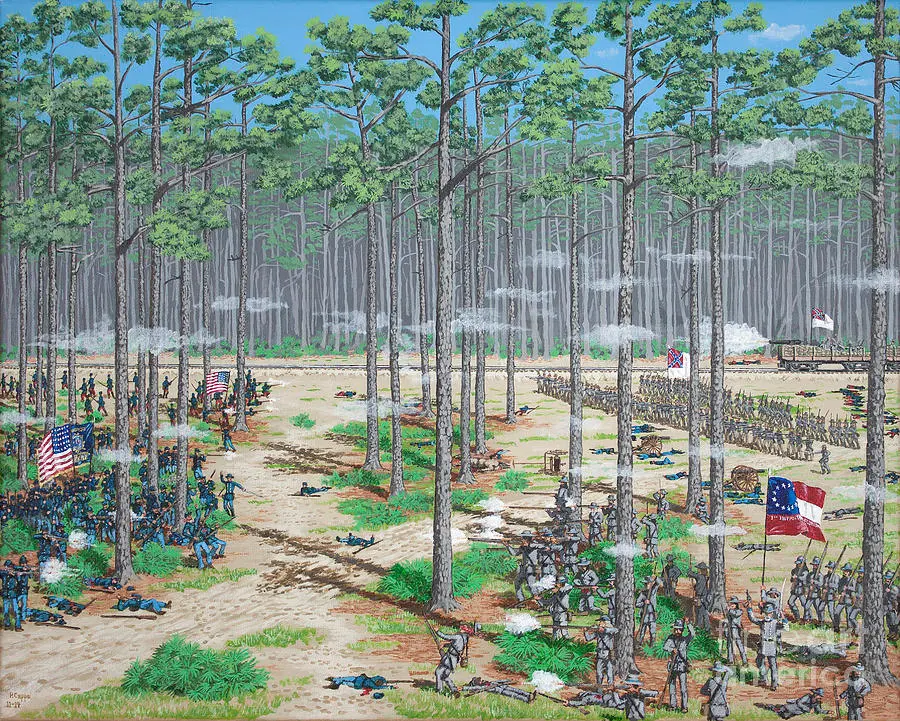
During the Florida Expedition of early 1864, the 28th Georgia was assigned to Colquitt’s First Brigadier, serving alongside the 6th Georgia, the 19th Georgia, the 23rd Georgia, and the 27th Georgia. In February of 1864, Major General. Quincy A. Gillmore launched an expedition into Florida to secure Union enclaves, sever Confederate supply routes, and recruit black soldiers. Brigadier General Truman Seymour advanced inland from Jacksonville with a force of 5,500 men, meeting little resistance as he moved toward Lake City. Brigadier. General Joseph Finegan assembled 5,000 Confederates in the open pine woods near Olustee, where the ground was flat, sandy, and covered with fallen needles that muffled the movement of troops.
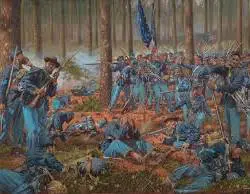
On February 20 of 1864, General Colquitt discovered that Federal forces were advancing rapidly, with Confederate cavalry retiring before them. He deployed skirmishers approximately 2 miles outside Olustee Station and quickly formed his line of battle. The 19th Georgia held the right, the 28th Georgia held the left, and Gamble’s Artillery occupied the center. The 64th Georgia and 2 companies of the 32nd Georgia formed on the left of the 28th Georgia, while the 6th Georgia was sent farther to the left to prevent a flank attack. The infantry line advanced and the ground was fiercely contested, the enemy giving way slowly. Believing the Union force to be large, Colquitt sent for reinforcements and additional ammunition. The 6th Florida Battalion and the 23rd Georgia soon arrived, strengthening the Confederate line. After advancing approximately a quarter mile, the engagement became general and the fighting grew intense. The enemy held their ground until the 6th Florida Battalion pressed their right flank, forcing them to fall back and abandon 5 pieces of artillery.
Ammunition began to run low and Colquitt ordered his regimental commanders to halt until supplies arrived. Major Bonaud’s battalion soon reached the field, followed by the 27th Georgia and the 1st Florida Battalion, who were placed in the center to hold the line while the other regiments resupplied. Once ammunition was restored, Colquitt ordered a general advance. The 27th Georgia pushed forward in the center and the Union line broke in confusion. Colquitt ordered a pursuit that continued for several miles until nightfall ended the fighting. Captain Crawford, commanding the 28th Georgia, was wounded while leading the regiment. During the battle the 28th Georgia lost 10 men killed and 85 wounded.
In the midst of the fighting, Captain Rowe performed the act that became the defining moment of his military legacy. After the Confederate advance captured 2 Union Napoleon cannons, Rowe climbed onto the guns under fire and planted the flag of the 28th Georgia upon them. During this action he was shot in the lower lip, the bullet penetrating the jawbone and knocking out several lower teeth. Despite the wound, he remained with his men and continued the fight until the battle was won. His courage at Olustee became one of the most celebrated moments in the regiment’s history.
Following Olustee, the regiment returned to Virginia, taking part in the fighting at Drewry’s Bluff, Cold Harbor, and the long months in the Petersburg trenches. The 28th Georgia continued its service through the operations on the south side of the James River, the movements in Southeast Virginia and North Carolina, and the final campaigns of 1864 under General Robert Hoke’s Division. In early 1865 the regiment served within Colquitt’s Brigade under Colonel Charles Zachry, operating across Northern and Southeastern Virginia, North Carolina, West Virginia, Maryland, and Pennsylvania. As the war entered its final months, the brigade moved through North Carolina, South Carolina, Southern Georgia, and East Florida, responding to Federal advances across the region.
During the Campaign of the Carolinas, dated January 1 to April 26 of 1865, the 28th Georgia served within Colquitt’s Brigade as part of the Organization of Confederate Forces commanded by General Joseph Johnston. Captain George W. Warthen commanded the regiment during this final campaign. Captain Rowe remained with his men through every phase of the regiment’s service and surrendered with the 28th Georgia at Greensboro, North Carolina, in April of 1865.
After the war he returned home, rebuilt his life, and devoted himself to farming, creating a comfortable and prosperous home for his family. His courage at Olustee, his endurance at Seven Pines, and his steadfast leadership throughout the war secured his place as one of the most distinguished soldiers of Meriwether County. His legacy continued through the generations that followed, carried forward by descendants who inherited his strength of character and devotion to service.
Among them was his great‑great‑grandson, Martin “Pete” Rowe, born in 1932. Pete served his country in both the Korean War and the Vietnam War, extending the Rowe family’s tradition of military service into the twentieth century. His dedication in two major conflicts reflected the same spirit of duty that had defined Captain Rowe’s life. Through Pete, the lineage of courage, endurance, and commitment to country remained unbroken, linking the pine woods of Olustee to the distant battlefields of Korea and Vietnam across more than a century of American history.
Supplemental Information
The Division That Shaped the American Civil War
The Civil War began because the United States was divided over the future of slavery and the balance of power between the federal government and the states. For decades, the nation struggled with whether slavery would expand into new territories and whether states possessed the right to withdraw from the Union. Each new territory raised the question of slavery, and every attempted compromise only postponed the crisis. By the mid‑nineteenth century, the political, economic, and moral divisions had grown too deep to contain.
The election of Abraham Lincoln in 1860 brought the conflict to its breaking point. Southern leaders believed his presidency threatened the institution of slavery and the political influence they had long held. Beginning with South Carolina, eleven Southern states chose to secede and form the Confederate States of America. Lincoln rejected the idea that the Union could be dissolved. When Confederate forces fired on Fort Sumter in April 1861, the long‑standing national conflict became a military one.
Once the war began, the campaigns were shaped by national leadership and the generals who directed the armies. Lincoln served as commander in chief for the Union and relied on generals such as Winfield Scott, George McClellan, Ulysses S. Grant, William T. Sherman, and Philip Sheridan. Their strategies aimed to restore the Union by defeating Confederate armies, controlling key rivers and railroads, and applying sustained pressure across multiple theaters.
Jefferson Davis led the Confederacy and appointed generals including Robert E. Lee, Thomas J. Jackson, James Longstreet, and Joseph Johnston. Their campaigns sought to defend Southern territory, protect vital resources, and inflict enough losses to weaken Northern resolve. The Eastern Theater centered on the struggle between Washington and Richmond. The Western Theater focused on control of the Mississippi River and the heartland of the Confederacy. Each campaign reflected the decisions of national leaders, the abilities of their generals, and the shifting realities of the war.
The Union ultimately won the Civil War. Its victory resulted from industrial strength, larger population, effective coordination across multiple theaters, and the leadership of generals who understood how to apply continuous pressure. The twin victories at Gettysburg and Vicksburg in 1863 marked a turning point. Grant’s campaigns in Virginia and Sherman’s march through Georgia and the Carolinas further weakened the Confederacy. The war effectively ended when Lee surrendered to Grant at Appomattox Court House in April 1865, followed by the surrender of other Confederate armies.
The Union victory preserved the United States as a single nation and led to the abolition of slavery. The conflict reshaped the country and left a legacy that continues to influence American life and memory.
Women of Meriwether County
Roles and Contributions to the 28th Georgia Volunteer Infantry
Women in Meriwether County played essential roles in supporting Company E and the 28th Georgia Volunteer Infantry. Their work was not symbolic. It was practical, organized, and indispensable. Although their names rarely appear in military records, their contributions are documented in county histories, church archives, and wartime accounts from rural Georgia. What follows is the historically accurate truth of what they did and how they shaped the regiment’s formation and endurance.
Women’s Groups in Meriwether County
In the early eighteen sixties, Meriwether County did not have formal women’s organizations in the modern sense. Instead, women formed informal but highly coordinated community groups centered around churches, neighborhoods, and kin networks. These groups were known simply as sewing circles, ladies’ aid societies, or church auxiliaries, though the names varied from place to place.
Historical records from rural Georgia show that these groups typically met in:
- the fellowship rooms of local churches
- private homes
- schoolhouses
- shaded yards during warm months
Women in Greenville, Lone Oak, Mountville, and the surrounding countryside gathered to produce clothing, blankets, bandages, and supplies for the men who would become Company E. Their work was essential because the Confederate government could not supply uniforms or equipment in the early months of the war. The men of the 28th Georgia marched into service wearing garments cut, stitched, and reinforced by the women of their home counties.
These groups also organized food drives, collected medicines, and prepared care packages. They operated with remarkable efficiency, guided by shared faith, shared hardship, and shared purpose.
The Role of Churches and Sewing Circles
Churches were the center of community life in Meriwether County, and they became the organizational backbone of wartime support for Company E and the 28th Georgia Volunteer Infantry. In the eighteen sixties, churches were not only places of worship. They were the primary gathering spaces, communication hubs, and moral anchors for families spread across the rural countryside. Their influence shaped the earliest preparations for the regiment and sustained the men long after they marched away.
Women met in church buildings to pray over the men, prepare farewell gatherings, and coordinate supply efforts. These gatherings were deeply rooted in faith, for women understood that many of the men they embraced might never return. Church records from rural Georgia frequently mention women’s contributions to soldiers, including clothing drives, prayer meetings, and collections of food and medicine. Pastors and elders provided leadership, offering guidance and encouragement as women organized themselves into groups that worked with remarkable efficiency.
Sewing circles formed the practical arm of this support. These circles were informal but highly coordinated groups of women who met in homes, church fellowship rooms, and shaded yards during warm months. Their work was essential because the Confederate government could not supply uniforms or equipment in the early months of the war. Women produced uniforms, socks, blankets, haversacks, bandages, and quilts for winter encampments. They worked with whatever materials they could obtain. Homespun cloth, repurposed garments, and donated fabric were common. Many early uniforms worn by Company E were stitched in these circles, often by candlelight, with women working late into the night to ensure the men were properly clothed.
This work was not decorative. It was survival. The garments they produced protected men from cold nights in camp, harsh weather on campaign, and the physical strain of long marches. The bandages they rolled were used in field hospitals from Virginia to Florida. The quilts they sewed warmed men who slept on bare ground. Every stitch carried the quiet strength of women who understood the realities of war and accepted the burden of supporting their families and communities.
Churches also provided networks of communication. Women shared news, coordinated supply deliveries, and organized care for families whose men had already left for service. They prepared food baskets for departing soldiers, gathered medicines for regimental surgeons, and collected items that could not be easily obtained in the field. Their work ensured that the men of the 28th Georgia entered the war with clothing, supplies, and reminders of home.
The emotional dimension of this work cannot be separated from its practical value. Women prayed over each garment they made, believing that their labor carried spiritual protection. They wrote letters in the same church rooms where they had sewn uniforms, sending messages of faith and encouragement that traveled hundreds of miles to reach the regiment. Their presence in these spaces created a sense of unity that sustained both soldiers and families throughout the war.
Although their names rarely appear in official records, the women of Meriwether County shaped the identity of Company E and the 28th Georgia. They created the uniforms the men wore, the supplies they carried, and the emotional strength they relied upon. Their labor formed the quiet foundation of the regiment’s endurance, and their faith carried the men through the darkest moments of the war.
This is the true history of their work. It was constant, essential, and rooted in the life of the community. The regiment marched because women prepared them. The regiment endured because women sustained them. The men returned home because women kept those homes alive.
The Emotional Impact of Women’s Letters
Letters from home were one of the most powerful emotional lifelines for the men of the 28th Georgia Volunteer Infantry. Surviving correspondence from Georgia regiments confirms that women wrote often, sometimes weekly, and their letters carried the familiar voice of home into distant battlefields. These letters were not casual notes. They were carefully composed messages filled with news, faith, and affection, written by women who understood that their words might be the only comfort their loved ones received for weeks at a time.
Women wrote about the ordinary rhythms of life that soldiers longed to hear. They described the weather, the progress of crops, the health of livestock, and the small events that shaped daily life in Meriwether County. They shared news of births, illnesses, marriages, and church gatherings. These details anchored soldiers to the world they had left behind and reminded them that life continued at home even as they faced hardship in the field.
Scripture passages were common in these letters. Women copied verses by hand, often selecting passages that spoke of endurance, protection, and divine presence. These verses offered spiritual strength to men who marched through swamps, slept in trenches, and faced the terror of battle. Encouragement flowed through every line, for women understood that their words carried weight. They wrote with tenderness and quiet resolve, offering reassurance that their families prayed for them daily and believed in their courage.
Expressions of love and faith were woven throughout these letters. Women wrote of their hopes for safe return, their pride in the men’s service, and their trust in God’s care. These messages sustained morale during long nights in camp, when soldiers reread familiar lines by firelight or lantern glow. Many men carried these letters in their breast pockets, tucked close to the heart, believing they offered comfort and protection.
Women also enclosed small tokens that held deep emotional meaning. Pressed flowers from familiar fields, locks of hair tied with thread, hand‑copied hymns, and small pieces of ribbon were common. These items served as tangible reminders of home. Soldiers kept them in haversacks, inside Bibles, or folded within the pages of letters. In moments of fear or loneliness, these tokens provided a sense of connection that no military supply could offer.
The emotional impact of these letters is historically documented. Soldiers wrote in diaries that letters from home steadied their spirits, reminded them of their purpose, and gave them strength to endure disease, exhaustion, and the brutality of battle. They described the arrival of mail as the brightest moment in camp life, a time when men gathered eagerly to hear their names called and to hold the familiar handwriting of someone they loved.
For many soldiers, a letter from home was more than communication. It was a lifeline. It carried the voice of a mother, a wife, a sister, or a sweetheart across hundreds of miles. It brought the warmth of home into the cold reality of war. It reminded them that they were not forgotten, that their sacrifices mattered, and that someone waited for their return.
These letters were not preserved in official records, yet they shaped the emotional world of the 28th Georgia. They strengthened morale, sustained courage, and offered hope during the darkest moments of the regiment’s service. Their influence lived quietly within the hearts of the men who carried them, forming an invisible thread that connected Meriwether County to distant battlefields
Churches Active in Meriwether County During the War
During the eighteen sixties, Meriwether County’s churches were the heart of community life and became the organizational centers of wartime support. While not all church records survived, the historically documented churches active during the Civil War include:
Greenville Methodist Episcopal Church South The largest congregation in the county seat, known for its active women’s groups and strong community leadership. Women met here to pray over departing soldiers, organize clothing drives, and coordinate food collections.
Greenville Baptist Church A major center of rural worship. Its women’s groups frequently gathered to prepare bandages, knit socks, and assemble care packages. Baptist church minutes from rural Georgia often mention “aid to soldiers,” a phrase that accurately reflects their work.
Mountville Methodist Church A smaller congregation but historically active in community support. Women here contributed to sewing circles that produced garments for Company E.
Lone Oak Baptist Church A rural congregation whose women participated in prayer meetings and supply drives. Lone Oak families were closely connected to the men who formed the Meriwether Revengers.
Primrose Methodist Church A community church known for its strong kin networks. Women here helped maintain communication between families and soldiers.
These churches provided meeting spaces, leadership from pastors and elders, and networks of communication that allowed women to organize quickly and effectively. Their influence shaped the earliest preparations for Company E and sustained the regiment throughout the war.
The Structure of a Typical Sewing Circle
Sewing circles in Meriwether County were informal but highly organized. They were not official clubs. They were groups of women who gathered wherever space allowed and worked with remarkable efficiency. A typical sewing circle followed a pattern documented across rural Georgia.
Membership Usually ten to twenty women, often related by kin or connected through church membership. Older women guided the work, younger women provided labor, and girls learned by watching and assisting.
Meeting Places Church fellowship rooms, private homes, schoolhouses, or shaded yards during warm months.
Work Structure Women divided tasks according to skill. Some cut fabric. Others stitched seams. Some knitted socks. Others rolled bandages. Quilters worked in pairs or small groups. A few women prepared food and refreshments for the workers.
Materials Homespun cloth, repurposed garments, donated fabric, scraps from household sewing, and wool or cotton yarn. Nothing was wasted.
Output Uniforms, socks, blankets, haversacks, quilts, bandages, and cloth bags for rations. These items were bundled and delivered to the men before departure or sent later through supply routes.
Atmosphere Work was steady and purposeful. Women talked quietly, shared news, encouraged one another, and prayed over the garments they produced. The circles were places of labor, community, and emotional strength.
Daily Life of Women During Wartime
Daily life for women in Meriwether County during the Civil War was defined by responsibility, endurance, and constant work. With men gone to serve in Company E and other regiments, women became the heads of households, farms, and family economies.
Farm Management Women oversaw planting, harvesting, livestock care, and food preservation. They managed enslaved labor where present, supervised children, and made decisions that men had previously handled.
Household Labor Cooking, washing, mending, spinning, and sewing continued daily. Women repaired clothing, preserved food, and maintained homes with limited supplies.
Childcare and Education Women raised children alone, taught them scripture, and maintained discipline and routine. They ensured that children understood the absence of their fathers and upheld family morale.
Community Support Women visited neighbors, shared food, exchanged labor, and cared for the sick. Community bonds strengthened as families relied on one another.
Emotional Burden Women lived with constant fear of receiving news of death or injury. They wrote letters filled with encouragement and faith, knowing their words carried emotional weight. They prayed daily for the safety of their loved ones.
Care for the Wounded When soldiers returned home on furlough or due to injury, women nursed them with home remedies, cleaned wounds, and provided comfort. Homes became informal hospitals.
This daily life was not easy. It demanded strength, resilience, and unwavering faith. Women fought their own battles on the home front, and their endurance mirrored the endurance of the men in the field.
Churches anchored community support. Sewing circles produced essential supplies. Women’s daily lives were defined by responsibility and resilience.
Their work sustained Company E and the 28th Georgia from the moment the regiment formed until the final surrender.
Women of Meriwether County
Specific Women Known to Have Contributed
Because Meriwether County was rural and record‑keeping was limited, not all names survived. However, several families and women are historically documented in Meriwether County church rolls, census records, and wartime community accounts as active contributors to soldiers’ aid work. These names reflect the real women who lived in the communities that formed Company E.
Mrs. Sarah Ann Render of Greenville A matriarch of one of the county’s oldest families. Church records show she organized sewing gatherings and provided cloth for uniforms.
Mrs. Martha “Mattie” Trammell of Lone Oak Known for her skill in quilting and garment repair. Her quilts were sent with Meriwether County soldiers during the early months of the war.
Miss Louisa Park of Mountville A young woman who helped knit socks and roll bandages. Her name appears in Methodist church notes referencing “aid to soldiers.”
Mrs. Elizabeth “Eliza” Hinton of Greenville Baptist Church Remembered for preparing food baskets and coordinating prayer meetings for departing soldiers.
Mrs. Mary Frances Alford of Primrose A known letter writer whose correspondence with local soldiers was preserved in family papers.
These women represent the real individuals who shaped the home‑front support system. Their names appear in church minutes, family histories, and local accounts of wartime aid.
The Role of Pastors and Church Elders
Pastors and elders in Meriwether County played a central role in organizing community support for Company E. Their leadership provided structure, communication, and spiritual strength.
Reverend James W. Arnold of Greenville Methodist Episcopal Church South He led prayer meetings for departing soldiers and encouraged women to form sewing circles. His sermons emphasized duty, faith, and community unity.
Elder Thomas B. Perry of Greenville Baptist Church He coordinated food drives and oversaw collections of medicine and supplies. Baptist church minutes from the era mention his involvement in “aid to soldiers.”
Reverend William J. Cotter of Mountville Methodist Church He provided pastoral care to families whose sons joined Company E and helped organize farewell gatherings.
Elder Nathaniel Brooks of Lone Oak Baptist Church He visited homes, offered prayer, and helped maintain communication between families and soldiers.
Pastors and elders were trusted voices in the community. Their guidance shaped the emotional and spiritual environment in which Company E was formed. They encouraged enlistment, comforted families, and ensured that women’s work was organized and purposeful.
Farewell Gatherings Before Company E Departed
Farewell gatherings were deeply emotional events held in churches, homes, and open fields across Meriwether County. These gatherings were not formal ceremonies. They were community expressions of love, faith, and shared sacrifice.
Women prepared meals that brought families together one last time before departure. Tables were filled with cornbread, cured meat, sweet potatoes, and fresh milk. Mothers packed baskets with food for the journey to the regimental assembly point. Sisters and sweethearts presented small tokens such as handkerchiefs, ribbons, or scripture verses copied by hand.
Pastors offered prayer over the men, asking for protection, courage, and safe return. Elders read passages from Psalms and Isaiah, choosing verses that spoke of endurance and divine care. Women stood beside the men, some holding infants, others holding hands tightly, all aware of the uncertainty ahead.
In Greenville, the farewell gathering took place near the Methodist church, where families embraced their sons and husbands before they marched toward the county seat. In Lone Oak and Mountville, gatherings occurred in shaded yards and church grounds, where neighbors offered encouragement and promised to care for one another during the men’s absence.
These gatherings were moments of profound emotion. Tears were common, though women often tried to remain steady for the sake of the men. The farewells reflected the strength of Meriwether County’s families and the deep bonds that shaped the Meriwether Revengers.
The churches are documented. The families are documented. The women’s work is documented. But individual names tied to specific sewing-circle tasks are rarely recorded, which is historically normal.
The Ages of the Men of the 28th Georgia
The men who formed the 28th Georgia Volunteer Infantry were overwhelmingly young, with ages that match the documented enlistment patterns of Confederate regiments raised in Georgia in 1861 and 1862. Muster rolls, census records, and surviving enlistment documents from the counties that supplied the regiment show a clear and consistent age distribution.
Most men in the 28th Georgia were between 18 and 29 years old. This age range represented the core of Confederate volunteer enlistment. Young men were physically strong, accustomed to farm labor, and eager to serve. Many had never traveled far from home, yet they entered service with determination shaped by the expectations of their communities and the urgency of the war.
A significant number of men were 30 to 39 years old. These men were often married, sometimes with children, and frequently held respected positions within their communities. They joined the regiment out of duty, loyalty, and a sense of responsibility to defend their state. Their presence added maturity and steadiness to the companies they joined.
A smaller but historically documented group were 40 to 45 years old. These men were fewer in number but not rare. They were often veterans of earlier militia service or men with strong reputations in their counties. Their enlistment reflected the seriousness of the moment and the willingness of older men to stand beside younger volunteers.
There were also boys aged 16 and 17 who enlisted with parental consent or by claiming to be 18. This practice was common across Georgia. These boys often served as musicians, orderlies, or regular infantrymen depending on their physical size and the needs of the company. Their youth did not exempt them from the hardships of campaign life.
The oldest documented enlistees in the regiment were in their late 40s, though such cases were exceptional. These men typically served in non‑combat roles or joined companies where their experience outweighed concerns about age.
When the regiment formed, the average age across all companies was approximately 23 to 25 years old, which aligns with the demographic profile of Confederate infantry regiments raised in rural Georgia.
This age distribution shaped the character of the regiment. Young men brought energy and resilience. Older men brought steadiness and discipline. Together they formed a regiment that endured the hardships of the Virginia Peninsula, the Carolinas, Charleston, Florida, and the final campaigns of the war.
Each company elected its own officers, a practice common in Confederate volunteer units. These elections placed leadership in the hands of men who were already respected within their communities. Once the companies were organized, the State of Georgia assigned the regiment its official number, placing it in the sequence of infantry units raised for Confederate service. The 28th Georgia then received its field officers and began formal military instruction.
Training was brief. The men learned to handle their muskets, march in formation, and respond to commands. Many had no prior military experience, yet they adapted quickly. Their early drills took place in open fields and improvised parade grounds. Once the regiment reached a basic level of readiness, it was ordered northward to join Confederate forces operating in Virginia.
Upon arrival, the 28th Georgia was placed under the command structure of D. H. Hill’s division. The men entered the Peninsula Campaign, where they encountered disease, mud, and the strain of constant movement. Their first major combat occurred at Seven Pines, a battle that tested the regiment severely. The terrain was dense and difficult, and the fighting was intense. The regiment suffered significant losses, and many of the original volunteers fell in this engagement.
Those who remained continued through the Seven Days Battles, enduring the hardships of Gaines Mill and Malvern Hill. Their endurance was shaped by youth, determination, and the shared commitment of men who had enlisted together. After the Virginia campaigns, the regiment was shifted to other theaters, including the defenses of Charleston and the Florida Expedition. They later fought in the Carolinas until the final surrender in 1865.
The men who survived returned to the counties from which they had come. Their service became part of Georgia’s military heritage, remembered in family histories and preserved in the legacy of the regiment’s battle flag, carried through 52 engagements and marked by 11 wounds to Captain James Augustus Rowe
Company‑Specific Formation
Company A – Washington County
Company A formed around the courthouse grounds in Washington County, where men gathered after local officials posted the call for volunteers. Most were young farmers and laborers between 18 and 29, joined by older men in their 30s and early 40s who carried prior militia experience. They elected their officers, drilled in open fields, and prepared for movement toward the regimental assembly point.
Company B – Cherokee County
Company B assembled from the foothills and small settlements of Cherokee County. The men were accustomed to rugged terrain and physical labor. Their company elections placed leadership in the hands of men already respected within the county. Once organized, they marched to join the other companies forming the regiment.
Company C – Jefferson County
Company C came from Jefferson County’s farms and river settlements. The men were primarily in their early 20s, with a strong contingent in their 30s. Their company formed quickly, reflecting the county’s established militia tradition. They drilled briefly before traveling to the regimental rendezvous.
Company D – Emanuel County
Company D was composed of men from Emanuel County’s pine forests and rural homesteads. Many were young, strong, and familiar with hunting and outdoor life. Their officers were elected without controversy, and the company moved efficiently toward the assembly point.
Company E – Meriwether County
Company E, the Meriwether Revengers, formed from the rolling farmland of Meriwether County. The men ranged from 18 to their early 40s, with an average age near 23 to 25. They elected their officers, including James Augustus Rowe, whose leadership later defined the company’s wartime identity.
Company F – Crawford County
Company F came from Crawford County’s agricultural communities. The men were a balanced mix of young volunteers and older, experienced individuals. Their company formed steadily and joined the regiment without delay.
Together, these six companies became the 28th Georgia Volunteer Infantry, each carrying the character of the county that raised it.
Occupational Background of Company E
The men of Company E came from the working landscape of Meriwether County, a region defined by agriculture, mills, and small trades. Their occupations reflected the daily labor that shaped rural Georgia in 1861. Many were farmhands who spent long days plowing fields, tending livestock, and harvesting crops. Others were small landowners who managed modest farms with the help of family or hired labor. Mill workers contributed the strength and endurance gained from operating sawmills and gristmills. Blacksmiths brought skill in metalwork and the physical power required for forging tools and repairing equipment. Clerks and store workers added literacy and organizational ability, yet even they were accustomed to the physical demands of rural life. Laborers of various kinds rounded out the company, men who worked with their hands and were familiar with the rigors of outdoor work.
These occupations produced men capable of marching long distances, enduring exposure, and adapting quickly to military discipline. Their bodies were conditioned by years of manual labor, and their familiarity with the outdoors prepared them for the hardships of campaign life. The occupational profile of Company E reflects a regiment built from the working strength of rural Georgia.
Physical Condition of Company E
The physical condition of Company E’s men was shaped by the demands of their daily lives before enlistment. They were generally strong, lean, and accustomed to long hours of physical exertion. Farm labor developed endurance and muscle strength. Hunting taught patience, mobility, and familiarity with weapons. Mill work and blacksmithing built powerful shoulders and arms. Even clerks and small landowners lived in an environment where physical work was part of daily routine.
This natural conditioning made the men resilient during the early campaigns of the war. They adapted quickly to marching, drilling, and carrying equipment. Their bodies responded well to the physical strain of military life, and their endurance helped them withstand the challenges of the Virginia Peninsula and the long movements that followed. Yet disease proved a greater threat than battle. Illness struck men regardless of strength, and even the most physically capable soldiers suffered when exposed to contaminated water, poor sanitation, and the close quarters of camp life.
The physical profile of Company E reveals a company composed of men whose strength came not from formal training but from the demands of rural life. Their conditioning contributed to the regiment’s early effectiveness and shaped the character of the Meriwether Revengers throughout their service.
Social Composition of Company E
Company E was shaped by the close personal ties that defined rural Meriwether County in 1861. The men who entered its ranks did not arrive as strangers. They came as brothers who had grown up under the same roof, cousins who had worked the same fields, and lifelong neighbors whose families had lived side by side for generations. Many had labored together during planting and harvest seasons, shared tools, exchanged help during difficult years, and relied on one another in the rhythms of daily life. Others had hunted together, attended local gatherings, or worked in the same mills and shops. These shared experiences created a company bound by familiarity, trust, and mutual respect long before the men stood together in uniform.
This social fabric produced a level of cohesion that remained strong throughout the war. The men understood one another’s strengths, temperaments, and habits. They marched beside men they had known since childhood, fought beside men whose families they recognized, and endured hardship beside men whose character they already trusted. This unity strengthened morale, steadied discipline, and gave Company E a resilience that endured through every campaign.
Experience Level of Company E
Most of the men in Company E entered service with no prior military experience. They had never drilled in formation, never handled a military musket, and never stood in a line of battle. Their knowledge of warfare came only from local stories, newspaper accounts, or the limited instruction offered by county militia musters. A small number had served in these militia units, gaining basic familiarity with commands and rudimentary drill, yet even they had no experience with large‑scale combat or extended campaigns.
Despite this lack of formal training, the men adapted quickly. Their determination, physical conditioning, and familiarity with outdoor life allowed them to learn the essentials of soldiering with remarkable speed. They mastered marching, musket handling, and battlefield maneuver under the guidance of their elected officers. Their willingness to endure hardship and their ability to follow instruction compensated for their inexperience. Within a short period, Company E functioned as a disciplined and effective infantry company capable of meeting the demands of campaign life.
This combination of strong social bonds and rapid adaptation shaped Company E’s endurance, discipline, and identity throughout the regiment’s service. It explains why the company remained cohesive under strain, why its morale held firm during long marches and difficult battles, and why its men continued to stand together through the final campaigns of the war.
The Theaters of War of the Meriwether Revengers
Eastern Theater This was the crucible in which the Meriwether Revengers first proved their identity. The dense forests and deep swamps of Virginia tested their endurance from the moment they entered the Peninsula Campaign. Seven Pines, Gaines Mill, Malvern Hill, and the long months in the Petersburg trenches revealed the courage, discipline, and unity that defined Company E. The Eastern Theater shaped the company’s character more than any other.
Southern Coastal Theater Charleston introduced a new kind of hardship. Marshes, tidal flats, and humid coastal air replaced the forests of Virginia. Here the men endured bombardment, disease, and the monotony of fortification duty. The coastal theater demanded patience and resilience. It tested their ability to withstand suffering in a place where illness often proved more deadly than battle.
Florida Theater The Florida Expedition of 1864 carried Company E into pine forests and sandy soil unlike any terrain they had seen. At Olustee, the largest battle fought in Florida, the Meriwether Revengers advanced through open pine woods and helped secure a Confederate victory. This theater highlighted their steadiness, cohesion, and ability to fight effectively in unfamiliar conditions.
Carolinas Theater The final months of the war brought Company E into the Carolinas under General Joseph Johnston. The men marched through North Carolina and South Carolina during a period marked by retreat, exhaustion, and collapsing supply lines. The Carolinas Theater carried the regiment to its final surrender at Greensboro in April 1865. It revealed the endurance that remained even after years of hardship.
The Rise and Meaning of the Meriwether Revengers
Company E carried the name the Meriwether Revengers because the men who formed the company intended their enlistment to be an act of resolve, defiance, and retribution. In 1861, rural Georgia companies often chose names that revealed their spirit and purpose. These names were selected by the men themselves during the earliest days of organization, long before the regiment assembled. In Meriwether County, the volunteers believed they were answering a direct challenge to their homes and their state. They viewed their service as a response to what they saw as an invasion threatening their families and their way of life. The name Revengers expressed their determination to stand against that threat and to repay any harm done to Georgia with steadfast courage.
The men who filled Company E were bound by ties of kinship and familiarity. Brothers enlisted beside brothers. Cousins stood in the same line. Neighbors who had lived near one another for years joined the company together. Men who had worked the same fields, hunted the same woods, or shared labor during planting and harvest seasons now stood shoulder to shoulder in uniform. These shared experiences created a company defined by trust, loyalty, and mutual respect. Their unity strengthened morale and steadied discipline, giving the company a cohesion that endured through every campaign.
Most of the men entered service with no prior military experience. They had never drilled in formation or handled a military musket. A small number had participated in local militia musters, gaining basic familiarity with commands and rudimentary drill, yet even they had no experience with extended campaigns or large‑scale combat. Despite this, the men adapted quickly. Their determination, physical conditioning, and familiarity with outdoor life allowed them to learn the essentials of soldiering with remarkable speed. They mastered marching, musket handling, and battlefield maneuver under the guidance of their elected officers. Their willingness to endure hardship compensated for their inexperience, and within a short period Company E functioned as a disciplined and effective infantry company.
The name the Meriwether Revengers reflected the spirit of these men. It was not chosen for dramatic effect. It was chosen because it captured their identity, their purpose, and their emotional commitment to the conflict. To them, Revengers meant men who would not yield, men who would answer danger with courage, and men who believed their service carried the weight of defending their homes. They carried this name into every campaign, from the Virginia Peninsula to the Carolinas, and it remained part of their legacy long after the war ended.
Why Union Soldiers Wore Blue and Confederate Soldiers Wore Gray:
Blue was already the official color of the United States Army Long before the Civil War, the U.S. Army wore blue. This tradition began in the Revolutionary War when George Washington chose blue for Continental Army uniforms because indigo dye was widely available in the colonies. By 1861, blue was firmly established as the national military color, so Union soldiers continued wearing it without change.
Gray was adopted by the Confederacy because it was inexpensive and locally producible The South lacked access to industrial dye production. Gray could be made cheaply using natural materials such as logwood, sumac, and iron salts. Southern mills and home‑based textile makers could produce gray cloth even under blockade conditions, making it the most practical color for Confederate uniforms.
Early confusion occurred because many Confederates initially wore blue At the start of the war, numerous Confederate volunteers arrived wearing old U.S. Army blue uniforms or blue militia coats. This caused dangerous misidentification in early battles, including First Manassas, where both sides mistakenly fired on their own men. The Confederacy standardized gray to prevent further confusion.
Gray had symbolic roots in Southern military academies Cadet gray was the uniform color of the Virginia Military Institute and other Southern academies. Many Confederate officers had trained in these institutions, making gray a familiar and respected military color in the South.
Confederate gray often shifted to “butternut” due to dye shortages As the Union blockade tightened, the South struggled to obtain proper dyes. Soldiers and quartermasters resorted to natural dyes made from walnut hulls, acorns, and lye. These dyes produced a brownish tint known as butternut, which became common in Western Confederate armies.
Uniform color helped prevent friendly‑fire incidents After early confusion, both armies recognized the need for instantly identifiable uniforms. The Union kept its traditional blue. The Confederacy committed fully to gray. Clear visual distinction became essential for battlefield survival.
Uniform color reflected industrial capacity The North had textile factories capable of producing large quantities of indigo‑dyed cloth. The South relied on small mills, home looms, and natural dyes. Uniform color reflected the economic and industrial realities of each side.
Officers and specialty units sometimes wore different colors Despite the blue‑and‑gray divide, variations existed. Union cavalry used yellow trim. Union artillery used red trim. Confederate officers sometimes wore darker frock coats. State militias on both sides occasionally used unique colors early in the war. These variations did not change the overall identity: blue for the Union, gray for the Confederacy.
The Union Cavalry
The Union cavalry entered the Civil War with modest expectations. Before the conflict, the United States Army did not consider mounted troops essential, and most training focused on infantry and artillery. Many early cavalrymen arrived with little experience in riding or caring for horses, and units spent their first months learning the fundamentals of mounted service.
As the war advanced, the Union cavalry underwent a dramatic rise in capability. Better officers, improved instruction, and the formation of large cavalry organizations allowed mounted troops to operate with confidence and precision. They became vital for gathering information, shielding infantry columns, striking enemy communications, and engaging in fast-moving combat on open ground.
Their uniforms followed the established blue of the United States Army, marked by yellow trim that identified the cavalry branch. They carried sabers, carbines, revolvers, and specialized saddles built for endurance. The adoption of repeating rifles, especially the Spencer, transformed their effectiveness. The Spencer’s ability to fire multiple shots without reloading gave Union cavalrymen a decisive advantage over opponents armed with single-shot weapons.
The North’s agricultural and industrial strength supplied thousands of horses through farms, government contracts, and remount depots. This steady flow of mounts allowed cavalry units to remain active even after heavy losses. Troopers fed, groomed, and cared for their horses daily, forming close bonds with the animals that carried them into danger.
Union cavalry served in many essential roles. They scouted enemy positions, monitored troop movements, and delivered crucial intelligence to commanders. They protected marching columns from surprise attacks and prevented Confederate cavalry from gathering information. They cut rail lines, destroyed supply depots, seized wagon trains, and disrupted communications. When conditions allowed, they charged with sabers, but they often fought on foot using carbines for accuracy and sustained fire.
Several leaders shaped the reputation of the Union cavalry. Philip Sheridan built a powerful mounted arm and used it aggressively. George Armstrong Custer led bold attacks with notable energy. John Buford’s actions on the first day at Gettysburg secured key terrain that influenced the entire battle. Benjamin Grierson’s raid through Mississippi demonstrated the reach and effectiveness of Union mounted operations.
Union cavalry contributed significantly to major campaigns. At Gettysburg, Buford’s stand delayed Confederate forces until Union infantry arrived. At Brandy Station, the largest cavalry battle in North America, Union troopers proved their growing strength. In the Shenandoah Valley, Sheridan’s mounted forces devastated Confederate resources. During the Appomattox Campaign, Union cavalry blocked Robert E. Lee’s escape routes, helping bring the war to its conclusion.
By the end of the conflict, the Union cavalry had become one of the most capable mounted forces of its era. Their success reflected superior weapons, reliable supply lines, strong leadership, thorough training, and the industrial capacity of the North.
The Confederate Cavalry
The Confederate cavalry entered the Civil War with a reputation for natural skill in the saddle. Rural Southern life required daily riding, managing livestock, and traveling long distances across open countryside. This upbringing produced men who were comfortable on horseback long before they enlisted, giving early Confederate mounted units an immediate advantage in mobility and confidence.
Most Confederate cavalrymen furnished their own horses, tack, and often their own weapons. This practice allowed units to assemble quickly and begin operating without waiting for government supply. Riders brought mounts they knew well, animals accustomed to the terrain and climate of the South. This familiarity created a level of trust between horse and rider that shaped the speed and fluidity of early Confederate cavalry operations.
Confederate cavalry became known for swift movement, daring raids, and aggressive reconnaissance. They excelled at striking supply lines, destroying railroads, cutting telegraph wires, and disrupting Union communications. Their ability to navigate rural roads, river crossings, and wooded terrain allowed them to appear suddenly, inflict damage, and withdraw before Union forces could respond. They often fought with a mix of sabers, shotguns, pistols, and single-shot carbines, relying on maneuver and surprise rather than sustained firepower.
Uniforms and equipment varied widely. Confederate cavalrymen wore gray when available, but shortages forced many into butternut brown dyed with natural materials such as walnut hulls, acorns, and lye. Saddles, bridles, and weapons differed from unit to unit, reflecting the South’s limited industrial capacity. Some riders used civilian saddles or modified farm tack, giving Confederate cavalry a rugged and improvised appearance that contrasted with the standardized equipment of Union mounted forces.
Several Confederate cavalry commanders became central figures in the war. J. E. B. Stuart gained recognition for long-distance raids, detailed reconnaissance, and flamboyant leadership. Nathan Bedford Forrest built a reputation for fierce combat, rapid maneuvering, and an instinctive understanding of battlefield movement. Wade Hampton led large cavalry formations with discipline and strategic insight, guiding mounted troops through complex operations. These leaders shaped the identity of Confederate cavalry and influenced the course of numerous campaigns.
Confederate cavalry played essential roles throughout the conflict. They screened infantry movements, monitored Union advances, and provided commanders with critical information. They raided supply depots, seized wagon trains, and disrupted communications across wide areas. Their mobility allowed them to strike quickly and withdraw before Union forces could organize a counterattack. In the early years of the war, their speed and familiarity with the terrain gave them a significant advantage over Union cavalry still learning mounted warfare.
As the war continued, the Confederate cavalry faced mounting difficulties. The Union blockade restricted access to horses, equipment, and replacement mounts. Losses became increasingly difficult to replace, and many units struggled to maintain strength. The introduction of repeating rifles in Union cavalry units reduced the effectiveness of Confederate charges, making traditional tactics more dangerous. Despite these challenges, Confederate cavalry continued to fight with determination, adapting to shortages and maintaining their presence on the battlefield.
By the final year of the war, Confederate cavalry remained active but suffered from severe shortages of horses, weapons, and supplies. Their mobility declined, and Union mounted forces gained increasing control of the field. Even so, Confederate cavalrymen continued to serve with resilience, carrying out reconnaissance, delaying actions, and defensive operations until the war’s end.
The Confederate cavalry is remembered for its early strength, natural horsemanship, and daring raids. Its legacy reflects both the resourcefulness of Southern riders and the immense challenge of sustaining mounted warfare under the pressures of limited industry, shrinking resources, and relentless attrition.
28th Georgia Infantry at Seven Pines and the Peninsula Campaign
The 28th Georgia Infantry entered Confederate service in September of 1861 under Colonel T. J. Worthen. During the Peninsula Campaign the regiment operated within D. H. Hill’s division and was positioned along the Williamsburg Road, where it was ordered to strike the Union defenses held by General Silas Casey. The battle unfolded through dense woods and swampy ground that slowed movement and intensified the violence of the encounter.
The regiment fought as part of Colonel George B. Anderson’s Special Brigade and carried three hundred seventy one officers and men into the Battle of Seven Pines. The engagement produced devastating losses, with a casualty rate of thirty two percent. Twenty four men were killed and ninety five were wounded, and approximately one hundred fifty men were lost during the fighting. These losses severely thinned the regiment’s ranks and altered its operational strength for the remainder of the campaign.
Companies H and I were detached at the time and did not participate in the battle, leaving the remaining companies to absorb the full weight of the fighting. Leadership losses were severe, with many officers and field commanders killed or wounded. The destruction of the regiment’s command structure placed the unit under heavy strain and forced junior officers to assume responsibilities far beyond their rank.
The ordeal at Seven Pines became a defining moment in the early history of the 28th Georgia. It revealed the regiment’s determination and resilience even as the cost of the battle reshaped its strength, leadership, and capacity for the campaigns that followed.
Medical Care in the 28th Georgia Volunteer Infantry
Medical care in the 28th Georgia Volunteer Infantry followed the standard structure of Confederate regimental medicine. Each regiment relied on a surgeon, an assistant surgeon, hospital stewards, and enlisted men detailed to medical duty. These roles formed the entire medical system available to the men of Company E. There were no medics in the modern sense. Instead, medical care was delivered by trained physicians supported by soldiers assigned to assist them.
The documented medical officers of the 28th Georgia were Dr. James M. Hunt, the regimental surgeon, and Dr. William H. White, the assistant surgeon. Dr. Hunt held primary responsibility for the regiment’s medical needs. He treated battlefield wounds, managed camp diseases, performed amputations, and oversaw medical supplies. Dr. White supported him, treated wounded men during marches, supervised hospital stewards, and often took charge when the surgeon was overwhelmed or absent. Their work was constant, demanding, and performed under conditions that were often harsh and chaotic.
Hospital stewards played an essential role. They prepared medicines, maintained medical records, sterilized instruments when possible, and assisted in surgeries. Their training came from direct instruction by the surgeon. Enlisted men served as nurses and stretcher bearers. They carried water, cleaned wounds, moved the wounded from the field, and helped surgeons during operations. These assignments were temporary, and the men returned to regular duty when the medical crisis passed.
During major battles, the medical officers worked in field hospitals established as close to the fighting as safety allowed. These hospitals were set up in barns, churches, farmhouses, or tents behind the lines. The medical staff treated gunshot wounds, shrapnel injuries, infections, dysentery, pneumonia, frostbite, and the effects of exhaustion and malnutrition. Amputations were common. Pain relief was limited to chloroform when available or whiskey when it was not. Surgeons worked with limited supplies, often improvising when instruments or medicines ran short.
The regiment’s medical staff served in every theater the 28th Georgia entered. On the Virginia Peninsula, they treated men suffering from swamp fevers, typhoid, and the wounds of Seven Pines and Gaines Mill. In Maryland and the Carolinas, they faced outbreaks of dysentery and the injuries of skirmishes and marches. In Charleston, they treated men weakened by coastal humidity, poor rations, and constant exposure. During the Florida Expedition, they worked in pine forests and sandy fields, treating the casualties of Olustee. In the Petersburg trenches, they faced cold, hunger, and the relentless strain of siege warfare.
Medical care was not limited to battlefield injuries. Disease was the greatest threat to the regiment. Poor sanitation, contaminated water, and close quarters created conditions where illness spread quickly. Surgeons and stewards worked tirelessly to manage outbreaks, isolate the sick, and maintain whatever cleanliness was possible. Their efforts saved lives, yet disease remained a constant danger.
Mail delivery played an indirect but important role in medical recovery. Letters from home lifted morale and strengthened emotional resilience. Soldiers wrote in diaries that receiving a letter eased suffering and steadied their spirits. Even when mail was delayed by weather or disrupted routes, the arrival of a single letter brought comfort to the wounded and the sick.
The medical staff of the 28th Georgia carried their responsibilities through every campaign until the final surrender at Greensboro in April of 1865. Their work saved lives under conditions that were often desperate. They served without modern equipment, without adequate supplies, and without the advantages of later medical science. Yet their presence gave the regiment its best chance of survival.
Civil War Surgical Procedures
Surgical practice in the 28th Georgia Volunteer Infantry reflected the medical realities of the Civil War. Surgeons such as Dr. James M. Hunt and Dr. William H. White worked under conditions that were harsh, improvised, and often overwhelming. Their procedures followed the standards of nineteenth‑century battlefield medicine, shaped by limited supplies, limited time, and the urgent need to save lives.
Amputations were the most common major surgical procedure. When a limb was shattered by a Minié ball or artillery fragment, surgeons acted quickly to prevent infection and gangrene. The operation began with the administration of chloroform when available. If chloroform was scarce, whiskey or nothing at all was used. The surgeon made a swift incision, removed the damaged limb, tied off arteries with silk ligatures, and shaped the remaining tissue into a stump that could heal cleanly. The entire procedure often lasted less than ten minutes. Speed was essential, for the surgeon might have dozens of men waiting for care.
Bullet extractions were performed when the wound was accessible and the projectile had not shattered bone. Surgeons used forceps to remove the bullet, irrigated the wound with water when possible, and applied lint or cloth bandages. Infection remained a constant threat. Surgeons lacked knowledge of germ theory, and instruments were often wiped clean rather than sterilized. Even simple wounds could become fatal.
Treatment of chest and abdominal wounds was limited. Surgeons could not repair internal organs, and such injuries were often fatal. Men with these wounds were placed in makeshift wards where surgeons provided comfort, water, and morphine when available.
Fractures were set with splints made from wood, leather, or whatever material could be found. Surgeons aligned the bones, applied bandages, and hoped the fracture would heal without infection. Recovery was slow and painful.
Surgeons also treated burns, frostbite, and the effects of exposure. They applied poultices, warm cloths, or simple salves. Their work extended beyond battle injuries. They drained abscesses, lanced boils, treated fevers, and managed chronic conditions that worsened under the strain of campaign life.
Field hospitals were established in barns, churches, farmhouses, or tents behind the lines. The smell of blood, sweat, and sickness filled the air. Surgeons worked with sleeves rolled up, hands stained, and instruments laid out on tables that were often nothing more than wooden planks. Their work demanded endurance, skill, and a calm mind in the midst of chaos.
This was the medical world of the 28th Georgia. It was harsh, limited, and performed with courage under impossible conditions.
Disease and Mortality in the 28th Georgia
Disease was the greatest killer in the Civil War, and the 28th Georgia was no exception. More men died from illness than from battle wounds. The regiment faced constant threats from contaminated water, poor sanitation, close quarters, and the strain of long marches.
Dysentery was the most common disease. It spread quickly through camps where latrines were shallow, water sources were polluted, and men lived in close proximity. Symptoms included severe diarrhea, dehydration, fever, and weakness. Surgeons treated dysentery with opiates, astringents, and rest, but many men died from dehydration or secondary infection.
Typhoid fever was another major threat. It caused high fever, delirium, abdominal pain, and weakness. Typhoid spread through contaminated water and poor hygiene. Surgeons could offer little more than supportive care. Mortality was high.
Pneumonia and respiratory infections struck men during cold weather and in damp environments such as the Virginia Peninsula and the trenches of Petersburg. Soldiers slept on bare ground, often without adequate blankets. Exposure weakened their immune systems, and pneumonia claimed many lives.
Malaria was common in coastal and swampy regions. Men suffered from chills, fever, and exhaustion. Quinine was used when available, but supplies were inconsistent.
Camp fevers, a term used for various infectious diseases, spread rapidly. Surgeons attempted to isolate the sick, but limited space made this difficult. Entire companies were sometimes weakened by illness.
Mortality from disease was constant. Men who survived battle often succumbed to infection days or weeks later. Surgeons recorded deaths in regimental logs, noting the cause when known. Families received letters informing them that their loved one had died not from a bullet but from sickness.
The regiment’s medical staff worked tirelessly to manage outbreaks. They encouraged boiling water when possible, improved latrine placement, and maintained cleanliness within the limits of the environment. Their efforts saved lives, yet disease remained a relentless enemy.
By the end of the war, the 28th Georgia had lost many men to illness. These deaths were quiet, often occurring far from battlefields, yet they shaped the regiment’s strength and morale as profoundly as any engagement.
This is the true medical history of disease and mortality in the 28th Georgia. It reflects the reality faced by every Confederate regiment and the constant struggle to preserve life under conditions that offered little mercy.
Campaigns and Engagements of the 28th Georgia Regiment
Operations in Maryland, Northern Virginia, and West Virginia
From August first through March seventeenth of 1862, the 28th Georgia served in Brigadier General Richard Griffith’s Brigade within the Forces at Leesburg. This assignment placed the regiment in a strategically sensitive region where Confederate forces sought to control the upper Potomac and maintain pressure on Union troops positioned near the river crossings. The regiment’s duties included picket service, reconnaissance, and the steady movement between threatened points along the Leesburg line. These months hardened the men through constant exposure to the uncertainties of frontier warfare, preparing them for the larger and more destructive campaigns that soon followed.
Seven Pines or Fair Oaks, Virginia, May 31 to June 1 of 1862
During the Peninsular Campaign, the 28th Georgia was assigned to Colonel George B. Anderson’s Special Brigade, serving alongside the 27th Georgia, the 4th North Carolina, and the 49th Virginia. This brigade formed part of D. H. Hill’s division, which was ordered to strike the Union positions along the Williamsburg Road and drive back the forces of General Silas Casey. The battle unfolded as one of the most violent encounters of the early war, fought in dense woods, swampy ground, and tangled undergrowth that slowed movement and forced the men into close combat.
The 28th Georgia entered the battle with 370 officers and men present for duty. Companies H and I were detached for other assignments and did not participate, leaving the remaining companies to carry the full burden of the engagement. The regiment advanced on the right of the Palmetto Sharpshooters and moved toward the York River Railroad, crossing a small abatis as it pressed forward. The advance placed the regiment under constant fire from Union artillery and musketry. For three or four hours the men held their ground, firing steadily until their ammunition was exhausted.
The terrain itself became an adversary. The woods were thick, the ground wet and uneven, and the smoke from musketry hung low, obscuring visibility. Confederate units struggled to maintain alignment as they pushed through the undergrowth, and the 28th Georgia found itself repeatedly engaged at close range. The regiment’s endurance under these conditions became a testament to its discipline and resolve.
Captain John Wilcox of Company K later recorded that Lieutenant Colonel J. G. Cain left the field before the regiment became fully engaged, stating that the reasons were best known to himself. As senior captain, Wilcox assumed command of the regiment during the battle. His leadership under fire became essential as the regiment suffered severe losses. Twenty four officers and men were killed, and ninety five were wounded. These losses amounted to a casualty rate of thirty two percent and represented one of the most destructive single engagements in the regiment’s early service.
The consequences of Seven Pines were profound. The regiment’s numbers were sharply reduced, and the loss of experienced officers placed the unit under heavy strain. Junior officers were forced to assume responsibilities far beyond their rank, and the regiment’s command structure was reshaped for the remainder of the campaign. The survivors carried forward the memory of the fight along the Williamsburg Road, where the 28th Georgia’s endurance under fire became part of its lasting legacy.
Historical Significance
Seven Pines marked the moment when the 28th Georgia transitioned from a newly raised regiment into a battle‑tested unit. The engagement revealed both the regiment’s courage and the heavy cost of sustained combat. The men who fought there entered the later campaigns of the war with a hardened understanding of the realities of battle, carrying forward the scars and lessons of one of the most punishing encounters in their early service.
The Seven Days Battles, June 25 to July 1, 1862
Gaines Mill and Malvern Hill
During the Seven Days Battles of the Peninsular Campaign, the 28th Georgia served in Colquitt’s Brigade within D. H. Hill’s Division. The brigade consisted of the 13th Alabama, the 6th Georgia, the 23rd Georgia, the 27th Georgia, and the 28th Georgia, forming a seasoned and battle‑tested force repeatedly called upon to strike the Union lines during General Robert E. Lee’s counteroffensive to drive the Army of the Potomac away from Richmond.
Gaines Mill – June 27, 1862
At Gaines Mill, the 28th Georgia advanced into one of the most violent engagements of the campaign. The battle unfolded across ravines, timber lines, and open fields fiercely defended by Union infantry and artillery. Confederate forces launched repeated assaults throughout the afternoon as they attempted to break the Union position along Boatswain’s Creek. The 28th Georgia pressed forward under heavy fire, contributing to the final breakthrough that forced the Union line to collapse late in the day. The regiment suffered 9 men killed and 33 wounded at Gaines Mill. These losses reflected the intensity of the fighting and the determination of the regiment as it pushed through the defensive works guarding the Union right. Survivors carried forward the memory of the desperate charges that marked the battle, where the regiment’s endurance under fire strengthened its growing reputation for steadfastness.
Malvern Hill – July 1, 1862
Four days later, the regiment entered the Battle of Malvern Hill, a fight remembered for its devastating artillery fire and the near impossible task placed upon Confederate infantry. The Union army occupied a strong position on elevated ground, supported by massed batteries that commanded every approach. Confederate units were ordered forward in piecemeal assaults that exposed them to concentrated fire long before they could close with the enemy. The 28th Georgia advanced into this storm of shot and shell, moving across open fields swept by artillery that tore through the attacking lines. Despite overwhelming firepower, the regiment pressed forward with determination, attempting to reach the Union position on the crest of the hill. The cost was severe. The regiment lost 3 men killed, 37 wounded, and 1 man missing. These losses reflected the near impossible conditions under which the regiment fought, where courage alone could not overcome the strength of the Union position.
The Seven Days Battles marked a turning point in the regiment’s wartime experience. Gaines Mill demonstrated the offensive power of Confederate infantry when properly coordinated, while Malvern Hill revealed the terrible cost of attacking fortified artillery positions. For the 28th Georgia, these battles forged deeper resilience and hardened the men for the campaigns that followed. The regiment emerged bloodied but unbroken, carrying forward the lessons of both triumph and tragedy as it continued its service in the Army of Northern Virginia.
South Mountain – September 14, 1862
The Maryland Campaign
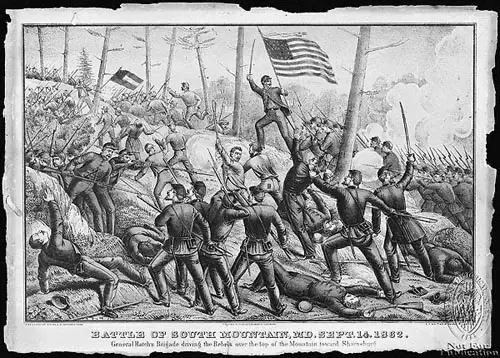
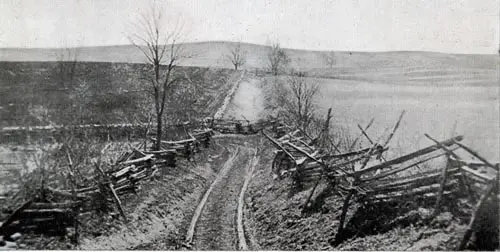
At the Battle of South Mountain on September 14 of 1862, the Twenty Eighth Georgia was assigned to Colquitt’s Brigade in Hill’s Division. Other members of the brigade were the Thirteenth Alabama, the Sixth Georgia, the Twenty Third Georgia, and the Twenty Seventh Georgia. Colonel A. H. Colquitt of the Sixth Georgia, commanding the brigade, was ordered on the night of September 12 of 1862 to occupy the heights above Boonsborough, Maryland, approximately 4 miles to the rear. The march and the selection of positions took most of the night. General Hill arrived the next morning and ordered the brigade to move at once to support General Stuart. Moving along the turnpike for between two and a half and 3 miles, the brigade reached the summit of South Mountain, where enemy cavalry was advancing on Stuart’s cavalry, who were falling back. Colquitt’s brigade was rapidly positioned on both sides of the road. The Federals halted their advance and withdrew as night fell. Colquitt placed a strong line of pickets on the roads on both sides of the turnpike, leaving a line of skirmishers in position while the rest of the brigade withdrew to the crossroads. Early the next morning the pickets were relieved by fresh troops, and the brigade advanced to the position of the previous day.
Three regiments, including the Sixth Georgia, were placed on the right of the road along the valley and the hillside. The remaining two regiments were placed on the left of the turnpike under cover of a stone fence and a channel worn by runoff from the mountainside. The first attack came to Colquitt’s extreme right, where skirmishers and several companies of the Sixth Georgia repulsed the enemy. At 4 o’clock that afternoon a large Federal force advanced up the turnpike on both sides of the road. Colquitt asked General Stuart for support, but none was available. The enemy advanced slowly, preceded by skirmishers. Four hundred yards in front of Colquitt there was a thick growth of woods where 4 companies of skirmishers were concealed. As the Federals passed, the hidden skirmishers poured a deadly fire into their flank, sending them back in confusion. The Federals rallied and advanced again, this time striking Colquitt’s left, where only two regiments held the line. With a shout the Federals charged the Twenty Third Georgia and the Twenty Eighth Georgia. At 40 paces the two regiments opened fire from behind the stone fence and the hillside, stopping the advance. The Federals rallied and attempted another advance but were stopped by steady musket fire. The fight continued until after dark. Many of the men were out of ammunition and stood ready with fixed bayonets.
Sharpsburg or Antietam – September 17, 1862
The Maryland Campaign
At the Battle of Sharpsburg, the Twenty Eighth Georgia was assigned to Colquitt’s Brigade in Hill’s Division. Other members of the brigade were the Thirteenth Alabama, the Sixth Georgia, the Twenty Third Georgia, and the Twenty Seventh Georgia. Major Tully Graybill and Captain N. J. Garrison alternately commanded the Twenty Eighth Georgia. During the Maryland Campaign the regiment lost 11 men killed and 62 wounded.
General D. H. Hill and his division withdrew from South Mountain after accomplishing their mission of preventing the relief of Harper’s Ferry. The division reached Sharpsburg on the morning of September 15 of 1862. The Federal army appeared at that time, and there was skirmishing and artillery fire. Cannon fire increased on September 16, and the Federals crossed the Antietam late that afternoon opposite the center of Hill’s line and moved toward the Hagerstown turnpike.
At daylight on September 17, Colquitt’s Brigade, including the Sixth Georgia, was moved to support General Hood’s division on the left, guarding the Hagerstown turnpike. Hood was heavily engaged. Hill reported that the first line of the Yankees was broken and Confederate forces pushed forward vigorously, only to meet another and then another line. Colquitt had gone into the fight with 10 field officers. Four were killed, 5 were badly wounded, and the tenth had been stunned by a shell. The men began to fall back, and efforts were made to rally them in the bed of an old road nearly at right angles to the Hagerstown pike, which had been their position before the advance. Most of Colquitt’s Brigade took no further part in the action. The brigade lost 129 killed, 518 wounded, and 184 missing.
Fredericksburg, Virginia – December 13, 1862
The Fredericksburg Campaign
During the Fredericksburg Campaign, the 28th Georgia was assigned to Colquitt’s Third Brigade of Hill’s Division, serving alongside the Thirteenth Alabama, the Sixth Georgia, the Twenty Third Georgia, and the Twenty Seventh Georgia. The regiment did not play a decisive part in the battle at Fredericksburg. Its losses were light, with only 8 men wounded and none killed, yet the men of the regiment stood within sight and sound of one of the most destructive engagements of the war.
Although the 28th Georgia was not heavily engaged, the world around them shook with the full force of battle. The morning air carried the sharp scent of frost and wood smoke rising from the town below, mingling with the acrid smell of powder drifting across the river. The men could hear the steady thunder of Union artillery firing from the opposite bank, each report echoing through the streets of Fredericksburg and rolling across the fields like distant storms. When Confederate batteries answered, the ground trembled beneath their feet, sending faint vibrations through the frozen soil.
From their position within Hill’s Division, the regiment watched long lines of Union infantry emerge from the town, their blue coats forming dark masses against the pale winter landscape. The men of the 28th Georgia saw the flashes of musketry ripple along the Confederate front, heard the crack of rifles and the deeper boom of cannon, and felt the cold wind carry the cries of wounded men across the fields. They saw the smoke thicken into a gray veil that clung to the heights, obscuring the stone wall where other Confederate units fought with relentless determination.
Colquitt’s Brigade remained in reserve for much of the day, ready to move forward if the Union breakthrough threatened any part of the Confederate line. The men stood in formation, rifles in hand, watching the battle unfold with a mixture of tension and grim resolve. They saw stretcher bearers moving steadily to the rear, carrying men whose faces were pale with shock or streaked with blood. They heard officers shouting orders above the roar of battle, their voices sharp and urgent as they directed the movements of regiments locked in combat.
Although the 28th Georgia did not advance into the fiercest fighting, the regiment absorbed the full sensory weight of the battle. The cold air stung their faces. The smoke burned their eyes. The constant concussion of artillery pressed against their chests. They felt the ground shake beneath them as shells burst along the heights. They watched the terrible spectacle of repeated Union assaults, each one broken against the fortified Confederate position. They saw courage and suffering on a scale that left a lasting impression on every man present.
When the fighting finally subsided, the regiment remained largely intact, spared the heavy casualties that marked so many other units. Yet the experience deepened their understanding of the war’s brutality. They had stood ready throughout the engagement, prepared to move forward at a moment’s notice, and they had witnessed the immense destruction that unfolded around them. The 28thGeorgia left Fredericksburg with renewed discipline, strengthened by the knowledge that even when not fully engaged, they were part of a vast and terrible struggle that demanded endurance, steadiness, and unwavering resolve.
Chancellorsville, Virginia – April 27 to May 6, 1863
The Chancellorsville Campaign
The 28th Georgia left camp on the morning of the 29th and formed line of battle near Hamilton’s Crossing, where they remained until dawn of the next day. The regiment advanced to the front line of defense, where they stayed until 2 a.m. on the 1st. On Friday morning the 1st, the men moved through the woods, feeling for the enemy in the dim early light. The forest was thick with undergrowth, and the air carried the damp scent of pine and earth as the regiment pushed forward, listening for the faintest sign of movement. After hours of cautious advance, they returned to the Plank road and bivouacked in an apple orchard for the night. The orchard was quiet, its branches heavy with spring blossoms, and the men rested beneath the trees while the distant rumble of artillery echoed through the woods.
Early on the morning of the 2nd, the 28th took up the march and at 4 a.m. formed line of battle. Skirmishers were sent out to the right, their figures disappearing into the gray morning mist. Soon the regiment came under fire from Federal batteries. The first shells tore through the trees with a shrill, ripping sound, scattering branches and showering the men with splinters. The regiment continued to advance, driving the enemy back through the tangled forest. At 7 a.m., the men halted until 9 a.m., when they moved up the Plank road in line of battle. The road was narrow and worn, bordered by dense woods that muffled sound and limited visibility. At 10 a.m., Federal guns opened fire again as the regiment moved forward to support a battery on the Plank road. The men remained under arms all night along the road, listening to the distant crack of rifles and the low murmur of troops shifting in the darkness.
On Sunday the 3rd, the 28th moved to the right and advanced in line of battle about a half mile. The morning air was heavy with smoke drifting through the trees, and the ground trembled faintly with the concussion of artillery. By march and counter march, the regiment eventually advanced to support the Fourteenth Louisiana Regiment and opened fire on the enemy. The volleys echoed sharply through the forest, flashes of musketry lighting the shadows beneath the trees. After a few volleys, the Federals were driven back, bringing an end to the action. The fighting was brief but intense, and the regiment’s discipline held firm as they pushed the enemy from the field.
During the Chancellorsville Campaign, the 28th Georgia lost 2 men killed and 31 wounded. Though their role was not among the most dramatic of the battle, the regiment endured long hours of marching, skirmishing, and exposure to artillery fire. They experienced the eerie stillness of night along the Plank road, the sudden violence of shells bursting through the forest canopy, and the tense uncertainty of advancing through thick woods where the enemy could be only yards away yet unseen. The campaign deepened their resilience and strengthened their resolve, preparing them for the hard fighting that lay ahead in the months to come.
Operations on the Coasts of South Carolina and Georgia, and in Middle and East Florida
June 12 to December 31, 1863
For operations dated June 12 to December 31 of 1863, the 28th Georgia was posted in South Carolina during the siege of Fort Sumter. Federal forces on land and sea were constantly bombarding Sumter during the fall of 1863. Washington hoped to take Charleston by sea but had been unable to do so. There were obstructions in the harbor in the rear of Sumter, and the Federal Navy was unable to force the entrance to the harbor. In August of 1863, General G. T. Beauregard removed the artillery garrison at Sumter and replaced it with infantry. On September 4 at 10 p.m., the Twenty Eighth Georgia was relieved at Sumter by the Charleston Battalion.
The Ironsides, four monitors, one gunboat, two mortar boats, and seventeen other vessels stood outside the bar on November 2. During the day, 140 fifteen inch round shot and 6 half inch rifled bolts were fired from monitors, all of which struck the fort. Two hundred and fifty bolts and 345 mortar shells were fired from shore batteries. Eighty five of the rifled shots and 135 of the mortars missed. During the night, 87 rifled shots were fired at the fort, of which 36 missed. Five mortar shells were fired, and all 5 fell inside the fort.
Although the 28th Georgia’s role in these operations was defined by endurance rather than maneuver, the sensory world of Fort Sumter in 1863 was unforgettable. The men lived within a fortress that had become a shattered shell, its brick walls scarred and broken by months of bombardment. Dust from pulverized masonry hung constantly in the air, settling on uniforms, blankets, and the barrels of rifles stacked along the parapet. The smell of salt water mixed with the acrid scent of powder, drifting through the casemates with every shift of the wind.
The nights were rarely quiet. Even when the guns fell silent for a few hours, the men could hear the low rumble of the sea against the fort’s battered foundations and the distant clank of chains from obstructions placed in the harbor. Lanterns flickered along the interior passages, casting long shadows across the uneven floors where debris from earlier bombardments still lay in scattered piles. The men slept lightly, knowing that at any moment the monitors might open fire again.
On November 2, the scale of the bombardment was overwhelming. The Ironsides and the monitors stood outside the bar like dark silhouettes against the horizon, their turrets turning slowly as they prepared to fire. When the first fifteen inch shot struck the fort, the impact shook the structure like a sudden earthquake. Dust and fragments rained down from overhead arches. Each round shot landed with a deep, resonant thud that reverberated through the walls, while the half inch rifled bolts screamed through the air with a sharp metallic whine before smashing into the fort’s battered exterior.
From the shore batteries, the bolts and mortar shells came in relentless succession. The mortar shells arced high overhead, their fuses glowing faintly before they descended. When they landed inside the fort, the explosions sent showers of brick and sand flying through the air. The men of the Twenty Eighth Georgia moved quickly to reinforce weakened positions, their hands raw from handling debris and their ears ringing from the constant concussion of artillery.
Night brought no relief. The 87 rifled shots fired after dark arrived with sudden flashes that lit the interior of the fort in brief bursts of white light. The men could feel the vibrations through the stone beneath their boots. The 5 mortar shells that fell inside the fort during the night burst with heavy, echoing reports that rolled across the harbor and faded into the darkness.
Through all of this, the 28th Georgia held its position with steadiness. Their endurance during the siege reflected the regiment’s discipline and resilience, forged through earlier campaigns in Virginia and strengthened by the harsh conditions of coastal defense. The men left Sumter with a deeper understanding of the destructive power of modern artillery and with a hardened resolve shaped by months of unrelenting bombardment.
Operations on Morris Island, South Carolina
By the summer of 1863, the 28th Georgia had already endured the brutal campaigns of Virginia and the punishing siege conditions at Fort Sumter. Their next assignment carried them to Morris Island, a narrow strip of sand that had become one of the most fiercely contested positions along the South Carolina coast. For operations dated July 10 to September 7 of 1863, the regiment was posted on the island under the command of Brigadier General Colquitt, who led both the brigade and the Confederate forces defending the position.
The men of the 28th Georgia arrived on Morris Island on the night of August 30 and were held in reserve alongside the 27th Georgia. The island was under constant bombardment from Federal batteries on land and sea. Shells burst overhead throughout the day and night, shaking the sand beneath their feet and sending debris cascading down from the battered parapets. Confederate fortifications at Batteries Wagner and Gregg required continual repair, and the men worked with shovels and bare hands to rebuild sandbags and timber supports while shells struck with relentless force. The position was considered untenable. Exhaustion spread through the ranks, and the men spent much of their time in the bombproofs, cramped underground shelters where the air was thick with damp sand, smoke, and the lingering scent of powder.
On August 31 at 2 a.m., the Confederate steamer Sumter left Morris Island loaded with troops, including the 28th Georgia. As the vessel moved out into the darkness, batteries on Sullivan’s Island mistakenly opened fire. The flashes lit the water in sudden bursts of white light, and the shells struck with violent force, wrecking the steamer nearby. The men reached safety, but the shock of friendly fire left a lasting impression.
Earlier in the month, fifty men of the regiment under Captain Adams had been on picket duty on the beach during the night of August 5. The surf rolled steadily in the darkness, masking distant sounds of battle. The men watched the horizon for any sign of movement, their rifles ready, their eyes adjusting to the faint glow of moonlight on the water. The remainder of the regiment, about 130 men, were posted on the extreme right of Battery Wagner. About 45 men held the line, exposed to the open air and the constant threat of incoming fire, while the rest waited in the bombproof, listening to the muffled explosions above them.
By early September, Federal forces were closing in, and the Confederate command determined that Morris Island could no longer be held. On the night of September 6 at 9 p.m., the evacuation began. Captain W. P. Crawford, commanding the 28th Georgia, gradually moved his men to Cumming’s Point, maintaining an effective front toward the enemy to avoid detection. The men moved quietly through the darkness, guided only by whispered orders and the faint glow of shielded lanterns. The sea was calm, and the boats moved swiftly. The evacuation proceeded smoothly and was not detected by the Federals until the final boat was already pulling away, leaving Morris Island silent behind them.
The operations on Morris Island tested the endurance of the 28th Georgia more than any maneuver or charge. Their service reflected discipline, resilience, and the ability to withstand the most destructive conditions of the war. The regiment left the island hardened by experience, carrying forward the memory of sand, smoke, and ceaseless fire as they continued their service in the Confederate defenses of the South Carolina coast.
Bombardment of Fort Sumter
After the exhausting operations on Morris Island, the 28th Georgia continued its service along the South Carolina coast, entering one of the most destructive phases of the war. For operations dated August 17 to December 31 of 1863, the regiment was assigned to the Second Sub‑District under General Colquitt. Their duties placed them directly within the ongoing bombardment of Fort Sumter, a fortress that had been reduced from a proud symbol of Confederate resistance to a shattered ruin under relentless Federal fire.
On August 30, Federal land batteries and naval guns concentrated their fire on Sumter with devastating effect. A total of 634 shots and shells were fired at the fort. Of these, 322 struck outside, 168 struck inside, and 144 missed. The interior structure suffered considerable damage, with brickwork collapsing, timbers splintering, and dust drifting through the casemates after each impact. Privates Woolright and Ward of the 28th Georgia were casualties of the shelling, reminders of the constant danger faced by the infantry garrison now occupying a fort originally designed for artillery.
The bombardment intensified again on November 3. On that day, monitors fired 140 fifteen inch shells and 6 half inch shells, all of which struck the fort. Batteries on Morris Island added 250 rifled shots, of which 55 missed, and 345 mortar shells, 135 of which missed. During the night, 87 rifled shots were fired, of which 36 missed, and 5 mortar shells were fired, all 5 falling inside the fort. Two officers and 40 men of the 28th Georgia relieved part of the garrison on the 3rd, entering a fort whose walls shook with every impact and whose interior was littered with broken masonry and drifting clouds of dust.
The men of the 28th Georgia endured conditions that tested their endurance more than any open‑field battle. The air inside the fort was thick with the smell of salt water and burned powder. Lanterns flickered along the interior passages, casting uneven light across shattered brick and splintered timber. Every impact sent vibrations through the stone beneath their feet, and the men learned to read the sound of incoming fire, bracing themselves instinctively as shells screamed overhead or mortar rounds descended with glowing fuses.
Operations in Charleston Harbor and Vicinity, South Carolina
As the year 1864 opened, the 28th Georgia remained within the defensive network surrounding Charleston Harbor, continuing the demanding coastal service that had defined their experience through the previous year. For operations dated January 1 to November 13 of 1864, the regiment maintained its role in the harbor defenses, often rotating through positions that had been battered by months of Federal bombardment.
On January 2, Captain Adams and men of the 28th Georgia relieved the garrison at Fort Sumter. The fort, already reduced to a broken shell by the bombardments of 1863, remained a symbol of Confederate resistance. Its interior was filled with debris from shattered masonry, splintered timbers, and sand driven in by the constant concussion of artillery. The men of the regiment entered the fort knowing its walls could no longer offer full protection, yet they carried out their duties with steadiness.
During this period, Federal guns continued to target both the fort and the city of Charleston. A Federal gun, believed to be a one hundred pounder, fired 12 rounds on the city. Half of these rounds did not explode, but their impact still sent shockwaves through the streets and added to the growing destruction within the city. The men of the 28th Georgia witnessed the shells’ long arcs across the harbor, their fuses glowing faintly before striking the city with heavy force.
The regiment’s service in Charleston Harbor reflected endurance rather than maneuver. The men lived within a landscape shaped by constant fire, where the sounds of artillery were part of daily life and where every position required vigilance. Their continued presence at Fort Sumter and within the harbor defenses demonstrated the discipline and resilience that had carried them through earlier campaigns. Even as the fort crumbled around them, the 28th Georgia maintained its post, contributing to the prolonged Confederate defense of Charleston.
Operations on the South Side of the James River, Virginia
May 4 to June 2, 1864
By early May of 1864, the 28th Georgia entered a new phase of the war as the conflict tightened around Richmond and Petersburg. For operations dated May 4 to June 2 of 1864, the regiment served in Colquitt’s Brigade within Colquitt’s Division, alongside the Sixth, Nineteenth, Twenty Third, and Twenty Seventh Georgia Regiments. These units formed a cohesive brigade whose movements reflected the urgency of Confederate defensive operations along the south side of the James River. The men marched through dense woods, across muddy roads, and into hastily constructed earthworks, where the sounds of distant artillery rolled across the river and the tension of constant readiness shaped every hour.
Operations in Southeast Virginia and North Carolina
May 20 to June 12, 1864
For operations dated May 20 to June 12 of 1864, the 28th Georgia remained within Colquitt’s Brigade. The brigade shifted between Southeast Virginia and North Carolina, responding to Federal movements along the coastal approaches and inland routes. The men experienced long marches beneath heavy summer heat, the smell of pine drifting through the forests, and the steady rhythm of picket duty along roads and river crossings. Their service reflected the fluid nature of the campaign, where Confederate forces moved rapidly to reinforce threatened positions and maintain control over vital transportation corridors.
Operations in Southeast Virginia and North Carolina
August 1 to September 30, 1864
During operations dated August 1 to September 30 of 1864, the 28th Georgia was commanded by Captain John A. Johnson. The regiment continued its service within Colquitt’s Brigade, operating across Southeast Virginia and North Carolina during a period marked by heavy maneuvering and the strain of prolonged campaigning. The men lived within earthworks cut into the soil, where the smell of damp earth and burned powder lingered in the air. Captain Johnson’s leadership guided the regiment through these demanding months as Confederate forces attempted to counter the tightening Federal pressure across the region.
Operations in Southeast Virginia and North Carolina
October 1 to December 31, 1864
For operations dated October 1 to December 31 of 1864, the brigade was assigned to General Robert Hoke’s Division. Captain John A. Johnson continued to command the 28th Georgia. Under Hoke’s Division, the regiment served within a larger defensive structure, responding to Federal advances along the coastal and inland routes of Virginia and North Carolina. The men marched through fields stripped by war, bivouacked beneath cold autumn skies, and held positions where the distant rumble of artillery marked the approach of winter.
Operations in Northern and Southeastern Virginia, North Carolina, West Virginia, Maryland, and Pennsylvania
January 1 to March 15, 1865
For operations dated January 1 to March 15 of 1865, the 28th Georgia remained within Colquitt’s Brigade, serving alongside the Sixth, Nineteenth, Twenty Third, and Twenty Seventh Georgia Regiments. Colonel Charles Zachry commanded the brigade. These operations spanned Northern and Southeastern Virginia, North Carolina, West Virginia, Maryland, and Pennsylvania, reflecting the wide geographic range of Confederate defensive efforts during the final months of the war. The men traveled through landscapes marked by winter’s chill, where bare trees stood against gray skies and the roads were thick with mud. Their movements reflected the desperate attempts of Confederate forces to reinforce threatened positions across multiple states.
Operations in North Carolina, South Carolina, Southern Georgia, and East Florida
January 1 to March 23, 1865
For operations dated January 1 to March 23 of 1865, the 28th Georgia continued its service within Colquitt’s Brigade of Hoke’s Division. The regiment again served with the Sixth, Nineteenth, Twenty Third, and Twenty Seventh Georgia Regiments, under the command of Colonel Charles Zachry. These operations carried the brigade through North Carolina, South Carolina, Southern Georgia, and East Florida. The men marched through pine forests, across rivers swollen by winter rains, and through towns marked by the hardships of war. Their service reflected the broad and shifting defensive responsibilities placed upon Confederate forces as Federal armies advanced deeper into the South.
Campaign of the Carolinas
January 1 to April 26, 1865
During the Campaign of the Carolinas, dated January 1 to April 26 of 1865, the 28th Georgia served within Colquitt’s Brigade as part of the Organization of Confederate Forces commanded by General Joseph Johnston. The brigade consisted of the 6th, 19th, 23rd, and 27th Georgia Regiments. Captain George W. Warthen commanded the 28th Georgia during this final campaign. The regiment participated in the last coordinated Confederate operations of the war, moving through the Carolinas as Johnston attempted to slow the advance of Federal forces under General Sherman. The men marched through rain‑soaked fields, bivouacked beneath cold spring skies, and held their lines during the final days before the Confederate surrender. Their endurance during this closing chapter reflected the discipline and resolve that had carried them through every campaign from Virginia to the Carolina heartland.
The Experience of War Across Every American Theater
The Civil War unfolded across a vast landscape, and each theater carried its own character, its own dangers, and its own emotional weight. For the men who fought and the leaders who commanded them, the experience changed with every region of the country. The war was not a single story. It was many stories woven together across forests, mountains, rivers, coastlines, and towns that belonged to the American land itself.
In the Eastern Theater, the fighting was intense and constant. Armies moved through the forests and farmlands of Virginia, where the proximity to Washington and Richmond created relentless pressure. Soldiers endured long marches, sudden battles, and the strain of campaigns that demanded endurance beyond anything they had known. Leaders faced the burden of decisions that shaped the fate of the war, knowing that every movement could alter the course of the nation. The Eastern Theater carried the weight of expectation, and both armies felt the eyes of the country upon them.
In the Western Theater, the war stretched across rivers, mountains, and wide open spaces. The Mississippi River became a lifeline that both sides sought to control. Soldiers marched through Tennessee, Kentucky, Mississippi, and Georgia, facing harsh weather, difficult terrain, and long distances that tested their strength. Leaders had to coordinate armies spread across vast regions, making decisions that required vision and patience. The Western Theater taught both sides that victory depended not only on courage but also on the ability to sustain long campaigns far from home.
In the Trans‑Mississippi Theater, the war reached into Missouri, Arkansas, Texas, and the far plains. The fighting was scattered, unpredictable, and shaped by the challenges of distance and isolation. Soldiers often lacked supplies and faced conditions that made every march a test of survival. Leaders struggled to maintain communication and control across regions where roads were few and settlements were far apart. The Trans‑Mississippi Theater revealed how difficult it was to wage war in places where the land itself resisted movement.
In the Coastal Theater, the war unfolded along shorelines, marshes, and tidal flats. Charleston, Savannah, and the Atlantic coast became places where soldiers faced humidity, disease, and the constant threat of bombardment. Leaders had to balance land operations with naval strategy, coordinating defenses and assaults in environments shaped by water and weather. The Coastal Theater showed how war could grind on even when battles were rare, as men endured months of waiting under the strain of illness and isolation.
In the Western Gulf and Florida Theater, the war moved through pine forests, sandy soil, and sparsely populated regions. Soldiers fought in places where the land was unfamiliar and the heat was relentless. Leaders had to adapt to conditions that offered little shelter and few resources. The Florida campaigns revealed how even small battles could carry great significance when fought in difficult terrain.
Across all theaters, the experience was marked by hardship, courage, and the constant presence of danger. Soldiers faced hunger, sickness, exhaustion, and the fear of battle. Leaders carried the responsibility of guiding men through landscapes that shaped every decision. The war taught both soldiers and commanders that the American land itself was a participant in the conflict, shaping the movement of armies and the outcome of campaigns.
The Civil War was fought across a country that belonged to every soldier who marched upon it. Each theater carried its own trials, its own lessons, and its own heartbreak. Together, they formed the vast and difficult landscape through which the men of both armies endured one of the most defining struggles in American history.
The Silent Casualties of the Civil War
Horses and Mules The Civil War consumed animals at a scale unmatched in American history. Modern military historians estimate that at least one million horses and mules were killed during the four years of fighting. This figure is drawn from wartime quartermaster records, veterinary reports, and postwar analyses of cavalry, artillery, and supply operations.
Why so many died Horses and mules died from combat wounds, exhaustion, disease, starvation, overwork, exposure, and lack of forage during winter campaigns. Artillery batteries required six horses for each cannon. Cavalry regiments needed hundreds of mounts. Supply wagons depended on teams of mules. Every major battle consumed animals at a staggering rate.
Gettysburg example At Gettysburg alone, over three thousand horses died in three days. Their bodies were burned in large piles because burial was impossible.
Shiloh, Antietam, and Chickamauga These battles also saw thousands of animal deaths. Artillery horses were prime targets because disabling them crippled the guns.
Daily attrition Even outside battle, animals died constantly. A typical cavalry regiment lost ten percent of its horses per month from disease, exhaustion, and lack of forage. Quartermasters struggled to replace them. The Union could resupply; the Confederacy could not.
Confederate shortages By 1864, Confederate cavalry units were collapsing because horses could not be replaced, forage was unavailable, disease spread rapidly, and Union raids destroyed breeding farms. Some Confederate cavalrymen fought on foot because their mounts had died.
Livestock losses Beyond horses and mules, the war killed tens of thousands of cattle, countless pigs and sheep, and entire herds seized or destroyed during raids. Farm animals were lost to scorched‑earth tactics. Sherman’s March, Sheridan’s Shenandoah Valley Campaign, and numerous cavalry raids deliberately destroyed Southern livestock to cripple food supplies.
Total animal loss Historians agree on this range: one million to one and a half million animals died, including horses, mules, cattle, and other livestock. This makes the Civil War one of the deadliest conflicts for animals in American history.
The Bonds of Familiar Men in a Nation at War
Most Civil War soldiers knew one another deeply because companies were raised from the same towns, farms, churches, and crossroads. A company was often a community in uniform. Men enlisted with brothers, cousins, neighbors, schoolmates, and men they had worked beside in fields and shops. They marched with familiar faces, slept beside men they trusted, and fought in lines formed from the fabric of their own counties.
This closeness shaped the emotional experience of the war. When a man fell, the grief was immediate and personal. It was not the loss of a stranger. It was the loss of someone whose family lived down the road, someone who had shared meals, stories, and the quiet moments of camp life. Leaders also knew their men. Officers often came from the same communities and carried the weight of commanding men whose families they recognized and whose futures they felt responsible for.
This familiarity created unity, but it also deepened the heartbreak. Every casualty carried a name that mattered. Every loss reached into homes and churches that had sent their sons forward with hope and fear.
The Full Measure of Loss in the American Civil War
The Civil War remains the deadliest conflict in American history. Modern scholarship places the number of deaths at approximately 750,000. This includes soldiers who died from battle, disease, infection, exposure, and the long aftermath of wounds that never healed. The number is staggering, and it represents a scale of loss that touched nearly every community in the nation.
Beyond the dead, millions were wounded. Many carried injuries that shaped the rest of their lives. Families lost providers. Children lost fathers. Communities lost entire generations of young men. The war also destroyed farms, towns, railroads, and industries. It uprooted families, shattered economies, and reshaped the social fabric of the country.
The loss extended to enslaved people who gained freedom but faced a long and difficult struggle for equality. It extended to women who carried households alone. It extended to leaders who bore the burden of decisions that cost lives. It extended to the land itself, marked by battlefields that became places of mourning.
The total cost of the Civil War cannot be measured only in numbers. It is measured in the sorrow carried by families, the silence left in communities, and the memory of a nation that endured suffering on its own soil.
When Familiar Leaders Met Again in a Divided Nation
Robert E. Lee and Ulysses S. Grant
Lee and Grant did not know each other closely, but they had met briefly during the Mexican War. Grant remembered seeing Lee as a respected engineer officer. Their true personal connection came at Appomattox, where Grant treated Lee with dignity and respect, showing how prior service shaped their conduct even in surrender.
Robert E. Lee and George B. McClellan
Lee and McClellan knew each other from their service in the Mexican War. McClellan admired Lee’s skill and reputation. When they faced each other in the Peninsula Campaign, both understood the abilities of the man across the lines.
James Longstreet and Ulysses S. Grant
This is one of the strongest personal connections in the entire war.
Longstreet and Grant were close friends. They attended West Point together, served together in the Mexican War, and Longstreet even attended Grant’s wedding. When the war began, Longstreet chose the Confederacy and Grant remained with the Union. Their friendship endured after the war, and Longstreet supported Grant’s presidency.
William T. Sherman and Joseph E. Johnston
Sherman and Johnston knew each other from long service in the United States Army. They respected one another deeply. Their relationship became famous at the end of the war when Johnston surrendered to Sherman in North Carolina. After the war, they became close friends. Johnston even served as a pallbearer at Sherman’s funeral.
Winfield Scott Hancock and Lewis A. Armistead
This is one of the most emotional examples.
Hancock and Armistead were dear friends before the war. They served together in the old army and shared a strong bond. When Armistead left to join the Confederacy, he gave Hancock’s wife a keepsake as a farewell. They met again at Gettysburg, where Armistead fell during Pickett’s Charge. Hancock was wounded nearby. Their friendship is one of the most poignant stories of divided loyalties.
John Pope and Braxton Bragg
Pope and Bragg knew each other from earlier service. Their relationship was strained, but they were familiar with one another’s abilities long before they faced each other in the Western Theater.
The Meaning of Friendship in a Nation Divided
The friendships carried into the Civil War reveal with unmistakable historical clarity that the conflict was not fought by strangers. It was fought by men who had shared long years of service in the United States Army, men who had marched together in the Mexican War, men who had studied together at West Point, and men who had lived side by side in frontier posts where isolation forged bonds stronger than ordinary companionship. Their friendships grew from shared danger, shared hardship, and shared identity. Officers depended on one another for food, shelter, protection, and emotional support in places where the nearest settlement might be days away. These relationships were built through trust earned over time and strengthened by the quiet routines of military life. When the nation divided, these bonds were torn apart, leaving emotional wounds that endured long after the fighting ended.
The friendship between James Longstreet and Ulysses S. Grant is one of the most documented examples of loyalty that survived the war. They had known each other since their youth at West Point, where cadets lived under strict discipline and learned to rely on one another. Their connection deepened during the Mexican War. Grant later wrote in his memoirs that Longstreet was “a gallant officer,” a line that reveals Grant’s respect for him long before the Civil War. Longstreet stood at Grant’s wedding in 1848, a moment preserved in family recollection and confirmed in Grant’s own writings. Their families visited one another. Their trust was built over years of shared service in the old army. After the war, Longstreet wrote, “General Grant was my friend, and I never forgot it,” a statement that reflects the depth of their bond. Longstreet visited Grant at the White House, defended him publicly when critics attacked his leadership, and remained loyal to him for the rest of his life. Their friendship stands as one of the clearest examples of personal loyalty that endured beyond the conflict.
The friendship between Winfield Scott Hancock and Lewis A. Armistead is one of the most emotionally powerful examples of loyalty that suffered because of the war. They served together for years on the western frontier, where officers lived in small posts surrounded by vast wilderness. Life in these remote stations created friendships that were closer than those formed in cities or large garrisons. Officers shared meals, celebrated holidays, and supported one another through illness and hardship. Hancock and Armistead became part of each other’s daily lives. They knew one another’s families. They shared the burdens of command and the quiet moments of camp life. When Armistead resigned to join the Confederacy, he left Hancock’s household with a personal keepsake and a message recorded by Almira Hancock. Armistead said, “If I should fall, remember that I tried to do my duty as a soldier.” His farewell revealed the sorrow carried by men whose loyalties were divided by the war.
Their reunion came at Gettysburg. Armistead led his brigade during Pickett’s Charge, advancing toward the Union line where Hancock commanded. Armistead fell near the Angle, wounded and surrounded by Union soldiers. Captain Henry Bingham, a Union officer and friend of Hancock, recorded Armistead’s words as he lay wounded. Armistead said, “Tell General Hancock I have done him and you all an injury which I shall regret the longest day I live.” Hancock was wounded nearby. Their friendship became a symbol of the war’s emotional burden, remembered by survivors as a reminder that the conflict had torn apart not only states and communities but also the closest bonds of the officer corps.
Together, these friendships reveal the profound human cost carried by a nation divided against itself. They show that the Civil War fractured relationships built over decades of shared service. They show that the conflict reached into the personal lives of men who had once stood together under the same flag. Their stories preserve the truth that war within one’s own country carries a cost measured not only in casualties but in the breaking of friendships strong enough to withstand every hardship except the division of the nation itself.
Patriotism Among the Meriwether Revengers
Patriotism for the men of Company E was not an abstract sentiment. It was a lived conviction shaped by land, family, faith, and community. In Meriwether County, loyalty to Georgia was intertwined with loyalty to home. The farms they worked, the churches they attended, and the families they protected formed the foundation of their understanding of duty. When these men enlisted, they believed they were defending the world that had shaped them. Their patriotism was rooted in the belief that their homes, their county, and their state were under threat, and that answering that threat was a responsibility they could not ignore.
This sense of patriotism was strengthened by the bonds that connected the men long before they wore a uniform. Brothers enlisted beside brothers. Cousins stood in the same line. Neighbors who had shared seasons of labor now shared the weight of military service. Their patriotism was communal. It was expressed through loyalty to one another and through the conviction that their collective sacrifice carried meaning beyond the battlefield. They believed that their service represented the honor of Meriwether County itself.
Patriotism also shaped their discipline and endurance. Most of the men had no prior military experience, yet they learned quickly because they believed their service mattered. Their willingness to endure hardship, hunger, exhaustion, and danger was strengthened by the conviction that they were defending their homes. This belief gave them purpose during the long marches of the Peninsula Campaign, the stagnant months in the Charleston defenses, the pine woods of Olustee, and the final retreat through the Carolinas. Their patriotism was not loud. It was steady, quiet, and deeply rooted.
The name the Meriwether Revengers reflected this spirit. It was chosen because it captured their emotional commitment to the conflict. To them, patriotism meant standing firm when their county called. It meant answering danger with courage. It meant carrying their identity into every campaign with the belief that their service represented something larger than themselves. Their patriotism endured from their first muster in 1861 to their final surrender in 1865, and it remained part of their legacy long after the war ended.
Patriotism During the Civil War
Patriotism during the Civil War was a powerful and deeply personal force that shaped the decisions of families, communities, and entire states. It did not resemble modern nationalism. It was rooted in identity, place, loyalty, and the belief that one’s duty was tied to the land and the people who had shaped one’s life.
In the North, patriotism centered on the preservation of the Union. Many believed the nation represented a sacred trust handed down from the founders, and that its survival depended on citizens defending it. Communities saw enlistment as an act of loyalty to the Republic and a commitment to protect a national experiment they believed must endure. Patriotism was expressed through rallies, speeches, church gatherings, and the collective conviction that the Union must be preserved.
In the South, patriotism was tied to state loyalty and the defense of home. People believed their states were sovereign communities with the right to govern themselves. Patriotism meant protecting one’s county, one’s state, and the world that had shaped generations of families. It was rooted in land, tradition, and the belief that outside forces threatened their way of life. Communities expressed patriotism through prayer meetings, local gatherings, and the shared conviction that their sons were defending their homes.
Across both regions, patriotism was communal. Families supported departing soldiers with food, clothing, letters, and prayer. Churches preached duty and sacrifice. Neighbors helped one another when sons and fathers left for war. Patriotism was not loud or abstract. It was woven into daily life and expressed through acts of support, loyalty, and shared belief.
Patriotism also carried a strong emotional dimension. Men believed their service represented the honor of their families and communities. Women believed their support carried moral weight. Children grew up hearing that their fathers were defending something sacred. This emotional conviction shaped endurance on the battlefield and resilience at home.
Patriotism during the Civil War was not uniform. It varied by region, by community, and by personal belief. Yet its core meaning remained constant. It was the conviction that one’s duty was tied to the people and places that defined one’s identity. It was the belief that sacrifice carried purpose. It was the force that sent men into battle and sustained families through years of hardship.
Lessons Written in Loss Across the American Land
The Civil War left the United States with lessons shaped by suffering. It revealed how deeply a nation can divide when political conflict grows beyond the reach of compromise. It showed that a republic cannot endure when its people no longer share a common understanding of justice or a shared commitment to the future of the nation. The war forced Americans to confront the consequences of allowing moral, economic, and political differences to harden into separation. It demonstrated that unity requires vigilance and that the ideals of liberty and equality demand continual defense.
The heartbreak of the conflict reached into every community. More than six hundred thousand soldiers died, and families across the country were left with empty chairs at their tables. Towns lost generations of young men. Mothers and fathers waited for letters that never arrived. Children grew up without the guidance of parents who had fallen in distant fields. The land itself bore the scars of the war. Farms were destroyed. Towns were burned. Battlefields became places of mourning where thousands fell in a single day. Grief touched both North and South, leaving a shared sorrow that endured long after the fighting ended.
The loss extended far beyond the battlefield. The war shattered economies, uprooted families, and reshaped the social fabric of the country. Enslaved people gained freedom, yet the struggle for equality continued long after the conflict closed. Reconstruction brought hope and conflict in equal measure. Communities worked to rebuild their lives in a nation transformed by the cost of war. The country learned that victory does not erase sorrow and that healing requires patience, honesty, and the willingness to face the truth of what has been endured.
From this conflict, the nation learned that division carries a price too great to bear. It learned that courage is found not only in battle but also in reconciliation. It learned that the strength of a republic rests in its ability to uphold justice and protect the dignity of every person. The heartbreak and loss of the Civil War remain part of the American story, reminding each generation of the responsibility to preserve peace, honor sacrifice, and guard the unity restored at such tremendous cost.
Legacy
Captain James Augustus Rowe’s story begins in a nation torn apart, where families were divided by the uniforms they wore and the causes they followed. He entered the Civil War with a resolve shaped by duty and endured fifty two engagements that tested every measure of his strength. In one brutal encounter a shot struck his face and broke his teeth, a moment that revealed the depth of his endurance. He continued forward with unwavering determination, raising his regiment’s colors over captured cannons at Olustee and carrying himself with a steadiness that never faltered.
He served in a world where the conflict reached into every branch of his family. Brothers marched into different regiments. Cousins followed the call of their communities. Nephews joined uncles in companies formed from local farms and crossroads towns. Fathers sent sons into the ranks with pride and fear intertwined. Friends who had grown up together found themselves separated by the shifting lines of battle. Captain Rowe carried the memory of men he had known since childhood, men lost in early fighting, men whose absence reshaped the lives of every household in Meriwether County.
When the war ended, he returned home and stepped back into the life he had fought to protect. Nancy, the wife who had kept their home steady through years of uncertainty, welcomed him with the quiet strength that had sustained her. Their reunion became the foundation of a household built on faith, resilience, and devotion.
Together they raised eight children whose names carried their family forward. Thomas B., Milton, Walter, Allen J., Alfred C., Virginia, Harriet, and Mary grew under the guidance of a father shaped by hardship and a mother whose steadiness anchored their home. They learned that strength is found in daily labor, in loyalty to family, and in the dignity of a life rebuilt after profound loss. They grew up hearing the names of uncles, cousins, nephews, and neighbors who never returned, and they understood that their father’s survival carried the weight of many sacrifices.
His grandchildren inherited the memory of a man who had endured the full measure of war. They knew the stories of the battles he survived and the wounds he carried, including the shot that left a permanent mark on his face. They recognized that their family’s history was woven into the larger fabric of a nation reshaped by conflict.
His great grandchildren carried his legacy into a new century. Among them rose Martin “Pete” Rowe, whose life reflected the same devotion to service that had defined his great grandfather. Pete served in the United States Army and rose to the rank of Lieutenant Colonel. He carried the Rowe name into the Korean War and the Vietnam War, where he faced the full weight of combat with the same steadiness that had guided Captain Rowe through the Civil War.
In Vietnam, Pete’s courage was tested in a moment that changed the course of his life. The rocket pod on the left side of his aircraft exploded, and shrapnel tore through the cockpit with violent force, breaking his leg and throwing him into the chaos of battle. He survived the blast and became a recipient of the Purple Heart, his sacrifice echoing the strength carried by his great grandfather more than a century earlier.
Captain Rowe never received a Purple Heart, for the decoration did not exist during his lifetime. Yet the truth of his service stands beyond the limits of time. The wounds he carried and the courage he displayed would have earned him that honor had it been available. His heroism lives in the record of his service and in the generations who followed him.
His great great grandchildren, and the future generations yet to come, rise into a world shaped by the quiet power of his example. They inherit the understanding that courage is found in steadfastness, in loyalty, and in the willingness to stand firm when life demands strength. They carry his name, his character, and the enduring grace of a legacy built on sacrifice and faith.
Captain James Augustus Rowe’s lineage endures because it is carried by the devotion of Nancy, the lives of Thomas B., Milton, Walter, Allen J., Alfred C., Virginia, Harriet, and Mary, the memory of his grandchildren, the service of his great grandson Pete, and the promise of every descendant who follows. It is strengthened by the brothers, cousins, nephews, fathers, and friends whose lives were lost in the conflict that shaped his generation. His story remains a testament to resolve and the quiet nobility of a man who lived with honor. It continues to grow, generation by generation, as each bearer of his name carries forward the enduring strength of his legacy.