
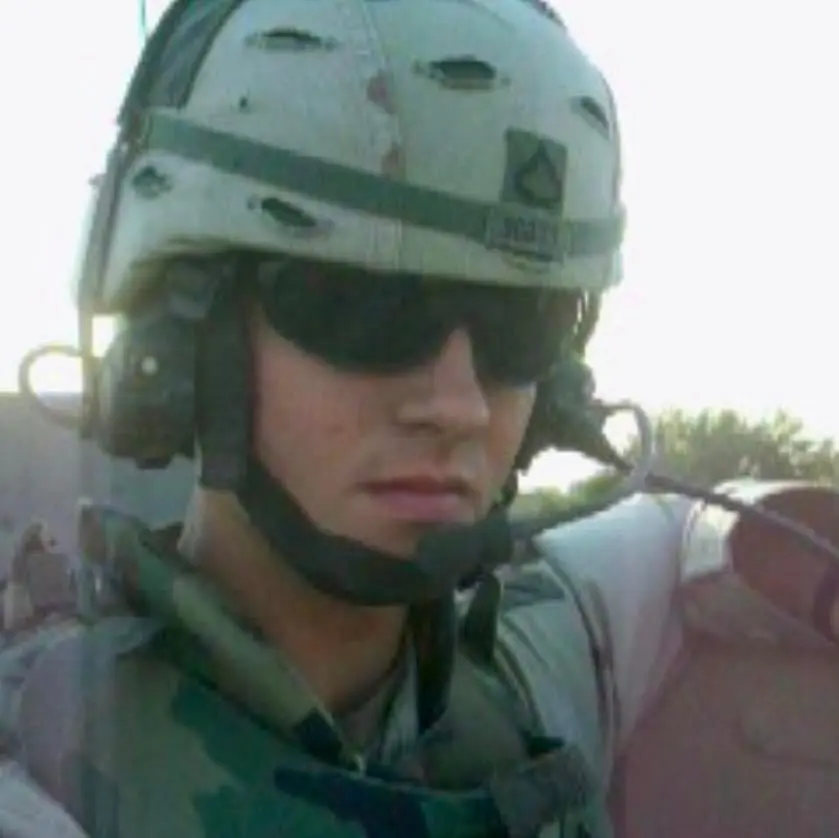
Born in Fort Worth, Texas, Dan Scott enlisted in the United States Army on January 8, 2004 and began a period of service defined by discipline, technical skill, and front line responsibility. After completing training he was assigned to Fort Hood, where he entered the preparation, deployment, and redeployment cycle for Operation Iraqi Freedom. The installation shaped the tempo of his training and the readiness demands that carried him overseas.
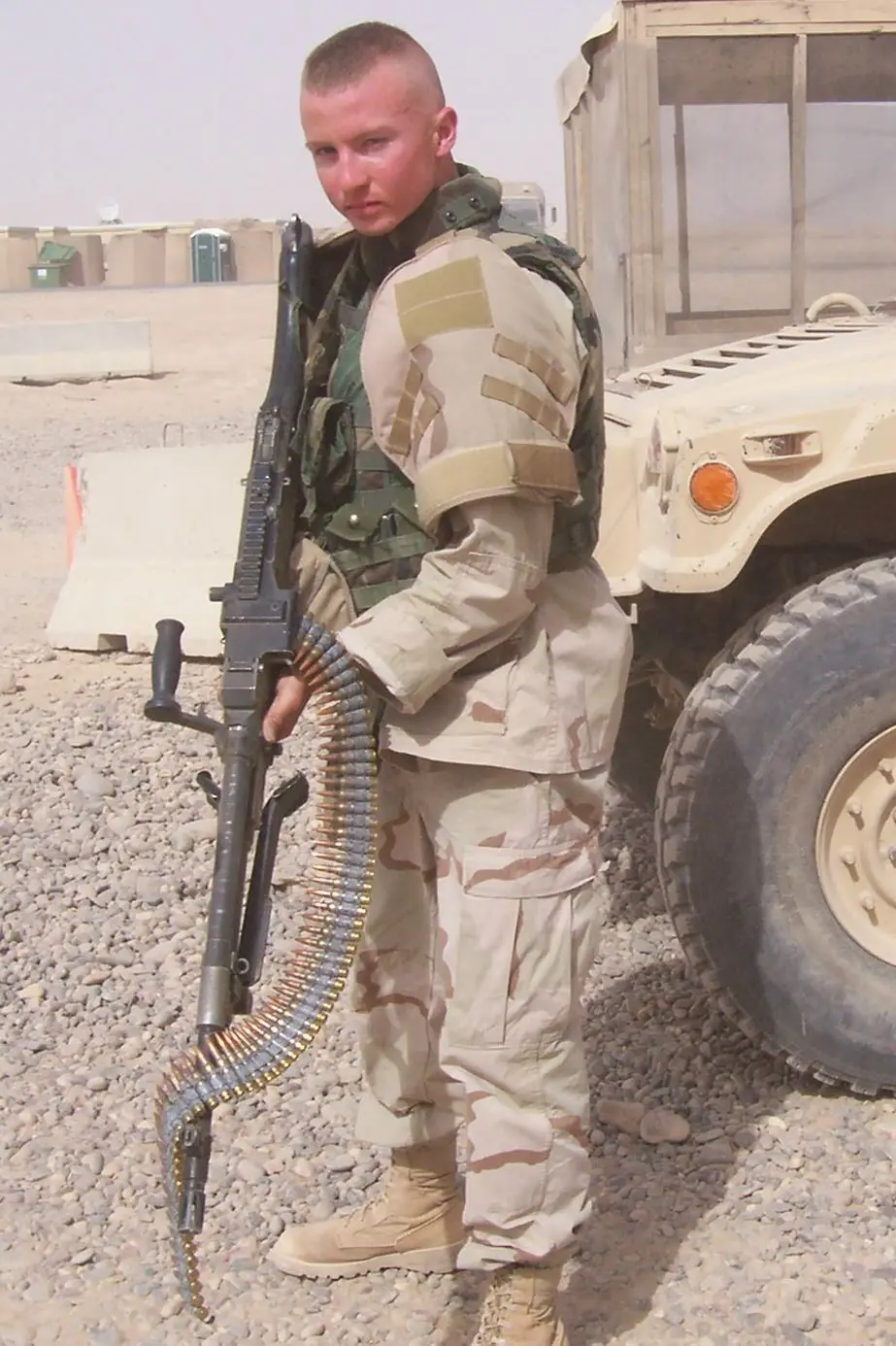
From 2005 to 2006 he served in Iraq with the 1st Battalion, 15th Infantry Regiment, a unit known for its motto We Can. He operated as a machine gunner, manning an M240B atop an up armored M114 Humvee and providing convoy security two to three times each week for his company’s logistical patrols between Forward Operating Base MacKenzie and Logistics Support Area Anaconda. These missions sustained the battalion’s operational rhythm through the movement of supplies, the recovery of damaged vehicles, and the coordination of food service operations essential to daily life in theater. His vehicle served as the lead gun truck and carried the company commander, Captain Abram, which added a heightened level of responsibility to every movement. He also provided security during the transport of captured insurgents to detention facilities and during VIP movements for battalion command staff.
On May 30, 2005, during one of these missions, his Humvee was struck by an improvised explosive device. He was wounded by shrapnel and evacuated to LSA Anaconda for surgery, and his sacrifice was recognized with the award of the Purple Heart.
In his final year on active duty he served as his company’s armorer, responsible for the maintenance and readiness of its weapons systems. He later continued his service in the Army Reserve until 2010, earning promotion to Sergeant, a rank carried under the regiment’s guiding words We Lead. He was released from active duty on January 7, 2007 at Fort Benning, Georgia.
He is currently an AI instructor specializing in content generation and knowledge management, applying the same clarity, precision, and mission focus that shaped his military career.
Supplemental Information
Entering the U.S. Army in 2004
Entering the United States Army in 2004 meant stepping into a force already shaped by two years of sustained combat operations in Iraq and Afghanistan. Every part of the institution from basic training to advanced schools to operational units reflected the demands of a military engaged in continuous deployment. The Iraq War had shifted from major combat operations to a growing insurgency, a transition documented in Department of Defense reports and CENTCOM briefings, with improvised explosive devices, ambushes, and urban attacks increasing and casualty reports becoming a daily reality. Afghanistan required counterinsurgency operations in mountainous terrain, as recorded in ISAF operational summaries, and new soldiers understood immediately that they were joining a force already deployed, already fighting, and already adapting to threats that were evolving in real time. Basic Training and Advanced Individual Training mirrored these conditions, with TRADOC publications from 2004 showing intensified weapons proficiency standards, expanded convoy and movement training, early counter‑IED awareness, greater physical conditioning, and reinforced discipline and battlefield survivability skills, while drill sergeants incorporated lessons learned directly from Iraq and Afghanistan into daily instruction. This entry point coincided with the Army’s largest structural transformation since World War II, as the service began its conversion to modular brigade combat teams documented in official Army modernization plans; divisions were reorganizing into brigades capable of independent deployment, sustainment brigades were being activated, logistics structures were being revised, and doctrine was being updated to reflect contemporary threats, leaving training pipelines, unit organization, and deployment preparation all in motion.
Operational tempo across the Army was high, with Department of Defense readiness reports from 2004 showing elevated deployment rates for active and reserve units, significant equipment wear from sustained operations, compressed dwell times between deployments, and increased personnel turnover due to repeated rotations, making clear that deployment was not hypothetical but expected. Technology and equipment were evolving rapidly to meet wartime needs, with documented fielding timelines showing the introduction of up‑armored Humvees, improved Interceptor Body Armor, Blue Force Tracker digital tracking systems, early unmanned aerial systems, and electronic countermeasures designed to defeat improvised explosive devices, all incorporated into training as they became available to prepare soldiers for the equipment and threats they would encounter in Iraq and Afghanistan.
The Army in 2004: Entering a Force at War and in Transformation
Entering the United States Army in 2004 meant stepping into a force already shaped by two years of sustained combat operations and undergoing the largest structural transformation since World War II. From the first day of Basic Training, instruction reflected wartime requirements documented in TRADOC publications of that year. Recruits faced intensified weapons proficiency standards, expanded convoy and movement training, early counter‑IED awareness, greater physical conditioning, and reinforced discipline and battlefield survivability skills. Drill sergeants incorporated lessons learned directly from Iraq and Afghanistan into daily instruction, a practice recorded in TRADOC “lessons learned” integration reports, ensuring that new soldiers trained on the realities emerging from active combat zones.
This entry point coincided with an Army in motion. In 2004 the service began its conversion to modular brigade combat teams, a transformation documented in official Army modernization plans. Divisions were reorganizing into brigades capable of independent deployment, sustainment brigades were being activated, logistics structures were being revised, and doctrine was being updated to reflect contemporary threats. Training pipelines, unit organization, and deployment preparation were all being reshaped by this structural change, meaning new soldiers stepped into an institution that was simultaneously fighting a war and rebuilding itself for the future.
Operational tempo across the force was high. Department of Defense readiness reports from 2004 show elevated deployment rates for active and reserve units, significant equipment wear from sustained operations, compressed dwell times between deployments, and increased personnel turnover due to repeated rotations. These documented conditions made clear to new soldiers that deployment was not hypothetical; it was expected. The Army’s rhythm was defined by units leaving, returning, resetting, and deploying again, and every training environment reflected that urgency.
Technology and equipment were evolving rapidly to meet wartime needs. Documented fielding timelines show the introduction of up‑armored Humvees, improved Interceptor Body Armor, Blue Force Tracker digital tracking systems, early unmanned aerial systems, and electronic countermeasures designed to defeat improvised explosive devices. Training incorporated these technologies as they became available, ensuring that soldiers learned to operate the equipment they would encounter in Iraq and Afghanistan. The rapid pace of fielding meant that recruits often trained on systems that had not existed only a year earlier, reflecting the Army’s effort to adapt to threats that were changing in real time.
These realities formed the environment of 2004: a force at war, a force transforming, and a force training under the pressures of modern conflict. New soldiers entered an institution defined by urgency, adaptation, and the documented demands of sustained global operations, where every phase of instruction, every organizational change, and every piece of equipment reflected the realities of a military engaged in two active wars and preparing for the evolving challenges of the twenty‑first century.
Doctrine and Global Commitments in 2004
In 2004 the United States Army was rewriting its doctrine to match the realities of ongoing combat, and every update reflected lessons drawn directly from Iraq and Afghanistan. TRADOC revisions from that year show a documented shift toward counterinsurgency principles, the integration of cultural awareness, intelligence‑driven operations, and the expansion of joint operations with other branches. These doctrinal changes were not theoretical adjustments but responses to conditions unfolding in real time, and new soldiers entered a force whose operational guidance was evolving rapidly under the pressure of sustained conflict.
This doctrinal evolution occurred alongside a broad set of global commitments that extended far beyond the wars in Iraq and Afghanistan. The Army continued peacekeeping missions in the Balkans, conducted counterterrorism operations in the Horn of Africa, fulfilled NATO obligations in Europe, and maintained security partnerships throughout the Pacific. Each of these missions is documented in Department of Defense global posture reports and required specialized training tailored to regional conditions and partner‑nation coordination. These worldwide responsibilities added to the overall strain on the force, creating an environment in which doctrinal adaptation and global operational demands were inseparable. Soldiers entering the Army in 2004 stepped into an institution adjusting its tactical and strategic frameworks while simultaneously sustaining a broad international presence, a dual reality that shaped training, readiness, and the Army’s daily rhythm.
The Lesser‑Known Realities
- Training centers updated instruction weekly based on intelligence from Iraq (documented by JIEDDO).
- Equipment shortages affected training realism, with units borrowing gear (documented in readiness reports).
- Human terrain training expanded, including cultural and tribal dynamics (documented in TRADOC cultural programs).
- Lessons from foreign conflicts—Chechnya, Sri Lanka, Colombia—were incorporated into U.S. training (documented in Army War College studies).
- Disaster‑response training increased after the 2004 tsunami (documented in DoD after‑action reports).
These realities shaped the experience of every new soldier entering the Army in 2004.
Entering the Army in 2004 meant joining a force already at war, already transforming, and already adapting to threats that changed faster than doctrine could be written. Training was shaped by real combat conditions, operational tempo was high, equipment was evolving, and global commitments stretched the force. Every soldier who entered the Army that year stepped into an institution defined by urgency, realism, and the demands of modern conflict.
Fort Hood, 2005–2006
In 2005 and 2006 Fort Hood stood at the center of the United States Army’s wartime operations, serving as the headquarters of III Corps and functioning as one of the nation’s most active power‑projection platforms. The installation carried the weight of continuous deployments to Iraq, and its daily rhythm reflected the demands of a force engaged in sustained combat operations. Brigade combat teams of the 1st Cavalry Division and 4th Infantry Division moved through Fort Hood in rapid succession, returning from Iraq, resetting equipment, reorganizing under the Army’s new modular structure, and deploying again with compressed dwell times that shaped every aspect of life on post.
The Army’s transformation to modular brigade combat teams was underway during these years, marking the largest organizational restructuring since the Second World War. Fort Hood absorbed this change while simultaneously preparing units for Operation Iraqi Freedom. Sustainment brigades, special troops battalions, and brigade support elements were activated or reorganized, adding administrative and training burdens to units already operating under wartime pressure. Soldiers experienced a dual tempo: the urgency of deployment preparation and the structural demands of modular conversion.
Training at Fort Hood reflected the realities of contemporary conflict. III Corps required readiness standards that replicated the operating environment in Iraq, and the installation’s ranges and training areas ran at high tempo to meet those requirements. Convoy lanes, gunnery tables, and live‑fire ranges operated continuously. Soldiers rehearsed weapons qualification, escalation‑of‑force procedures, vehicle recovery, counter‑IED awareness, and long‑distance movement operations. Maintenance bays remained full as vehicles and weapons systems were inspected, repaired, and certified for deployment. The installation’s infrastructure supported these efforts through extensive motor pools, railheads capable of loading brigade‑level equipment, and airfields designed for strategic airlift.
The national readiness strain of the period was evident at Fort Hood. By 2006 two‑thirds of the Army’s active and reserve combat brigades were in the lowest readiness categories due to repeated deployments, equipment shortages, and personnel turnover. Fort Hood’s units were among the most heavily tasked, and soldiers lived within a culture shaped by urgency, discipline, and the knowledge that deployment was never far away. Daily life carried the weight of preparation: early formations, long training days, frequent inspections, and the constant movement of vehicles across the installation. Families experienced repeated separations, and barracks life reflected the operational tempo of a force in motion.
Through these combined pressures Fort Hood remained a central engine of the Army’s wartime capability. Its training, infrastructure, and organizational transformation sustained the deployment cycles that defined the Iraq War, and its soldiers lived within an environment where readiness was both a requirement and a reality. The installation’s role in 2005 and 2006 stands as a clear example of how home‑station operations shaped the Army’s ability to project and sustain combat power during one of the most demanding periods of modern military history.
The Global and U.S. Military Training Environment, 2005–2006
In 2005 and 2006 the United States military trained within a world defined by two active wars, rapid insurgent adaptation, major organizational restructuring, and sustained global commitments. These years marked one of the highest operational tempos for American forces since Vietnam, and every training program reflected the realities of ongoing conflict and documented global conditions.
The Iraq War had transitioned from major combat operations to a widespread insurgency. This shift is documented in Department of Defense reports and CENTCOM briefings. Insurgent groups employed improvised explosive devices, ambushes, indirect fire, and complex attacks combining multiple methods. IEDs became the leading cause of U.S. casualties, a fact recorded in Joint IED Defeat Organization summaries. Their triggering mechanisms evolved quickly, moving from pressure plates to command wires, radio‑frequency devices, and infrared triggers. Training in the United States adjusted accordingly, incorporating counter‑IED awareness, convoy security, route clearance, escalation‑of‑force procedures, and vehicle recovery under fire. These changes appear in Army training circulars and TRADOC guidance from the period.
Afghanistan required counterinsurgency operations in mountainous terrain. This is documented in ISAF operational reports. Training emphasized cultural awareness, civil‑military cooperation, intelligence‑driven operations, and small‑unit tactics in dispersed formations. Soldiers prepared to operate alongside coalition partners whose equipment, communication systems, and tactical approaches differed from American standards. These requirements appear in TRADOC cultural awareness programs and ISAF training guidance.
At home the Army was undergoing its largest structural transformation since World War II. The shift to modular brigade combat teams is documented in official Army modernization plans. Divisions reorganized into self‑sustaining brigades capable of independent deployment, altering command relationships, logistics systems, and training requirements. Sustainment brigades, special troops battalions, and brigade support elements were activated or restructured across the force. This transformation required new doctrine, new training pathways, and new readiness standards, all implemented while units were preparing for or recovering from deployment.
Operational tempo remained extraordinarily high. By 2006 two‑thirds of active and reserve combat brigades were rated in the lowest readiness categories, a fact documented in Department of Defense readiness reports and congressional testimony. Equipment returned from the theater in worn condition, requiring extensive repair. Vehicles accumulated high mileage during training to meet operational tempo requirements. Maintenance crews worked long hours to restore readiness, and supply chains struggled to keep pace with demand. Soldiers trained with equipment that was sometimes incomplete or borrowed from other units, reflecting the realities of a force stretched thin.
Global commitments extended beyond Iraq and Afghanistan. Peacekeeping missions continued in the Balkans, counterterrorism operations expanded in the Horn of Africa, and security partnerships strengthened in the Pacific. NATO obligations required ongoing coordination and readiness in Europe. These missions are documented in Department of Defense global posture reports and consumed personnel and resources across the force.
Doctrine evolved rapidly in response to these pressures. Counterinsurgency principles gained prominence, emphasizing cultural understanding, civil‑military cooperation, and intelligence‑driven operations. These doctrinal shifts appear in TRADOC updates and revised Army field manuals. Joint operations expanded as the Army worked closely with the Air Force, Navy, and Marine Corps to synchronize capabilities across domains. New technologies entered service, including improved vehicle armor kits, Blue Force Tracker, advanced communications systems, unmanned aerial systems, and electronic countermeasures against IEDs. Each required additional training and adaptation, as documented in Army modernization reports.
Lesser‑known but fully documented realities shaped training as well. Counter‑IED instruction was updated weekly based on intelligence from Iraq, a fact recorded in JIEDDO operational summaries. Cultural and tribal dynamics became formal training requirements, appearing in TRADOC cultural awareness programs. Lessons from foreign conflicts, including Chechnya, Sri Lanka, and Colombia, were incorporated into U.S. training scenarios, as documented in Army War College analyses. Humanitarian and disaster‑response training expanded following the 2004 Indian Ocean tsunami and the 2005 Hurricane Katrina response, both documented in the Department of Defense after‑action reports. Cybersecurity began emerging as a concern, appearing in defense analyses even though it was not yet a formal operational domain.
Across the United States soldiers trained within an atmosphere shaped by realism, repetition, and urgency. Ranges, convoy lanes, and maneuver areas operated continuously. Leaders emphasized discipline, accountability, and technical mastery, knowing that training failures could become battlefield risks. The environment carried the weight of real‑world conflict, and every task reflected the demands of a military engaged in sustained global operations.
This historically grounded landscape of 2005 and 2006: a period defined by insurgency abroad, transformation at home, rapid doctrinal evolution, global commitments, and a training system operating at relentless tempo to meet the challenges of a world undergoing profound change.
Operation Iraqi Freedom
Operation Iraqi Freedom began on 20 March 2003, when the U.S.–British‑led coalition invaded Iraq with the stated objective of removing Saddam Hussein’s regime and enforcing United Nations disarmament resolutions. The opening campaign unfolded rapidly. Coalition forces advanced from Kuwait toward Baghdad, defeating Iraqi military units and Republican Guard formations in a matter of weeks. Baghdad fell on 9 April 2003, and major combat operations were declared complete on 1 May 2003. Yet the collapse of the regime did not bring stability. Iraq’s ministries were stripped by looters, police forces evaporated, and the Iraqi Army was disbanded, creating a security vacuum that allowed armed groups to organize. What began as scattered resistance evolved into a decentralized insurgency composed of former regime loyalists, local militias, foreign fighters, and criminal networks. Attacks on coalition forces intensified through late 2003 and 2004, employing improvised explosive devices, ambushes, indirect fire, and urban assaults that inflicted rising casualties on U.S. and coalition troops.
For soldiers on the ground, the war shifted from a fast conventional campaign to a grinding, unpredictable counterinsurgency. Patrols through cities like Baghdad, Fallujah, Ramadi, and Mosul meant navigating narrow streets, watching rooftops, scanning trash piles for IEDs, and interacting with civilians whose loyalties were often unclear. Convoys moved slowly, vulnerable to roadside bombs that grew more sophisticated each month. Soldiers learned to recognize the signs of danger: a suddenly empty street, a parked car facing the wrong direction, a patch of disturbed earth, a man talking on a cell phone as vehicles approached. IEDs became the leading cause of U.S. casualties, and their evolution—from simple pressure‑plate devices to command‑wire triggers, radio‑frequency detonators, and infrared beams—forced constant adaptation in tactics, training, and equipment.
Commanders faced a conflict that changed faster than doctrine could be written. Intelligence was fragmented, insurgent groups were fluid, and the battlefield had no clear front lines. Commanders balanced combat operations with civil‑military responsibilities: rebuilding infrastructure, supporting local governance, training Iraqi security forces, and managing relationships with tribal leaders. Every decision carried political consequences, and every operation risked inflaming local tensions. For Iraqi civilians, daily life was shaped by insecurity. Power outages were common, water systems were damaged, and employment was scarce. Sectarian tensions deepened, especially after the Al‑Askari shrine bombing in February 2006, which triggered widespread Sunni‑Shia violence. Civilians navigated checkpoints, curfews, and the constant threat of insurgent attacks or sectarian reprisals, and many fled their neighborhoods, creating large populations of internally displaced people.
By 2004, Operation Iraqi Freedom had become a sustained counterinsurgency campaign. The First Battle of Fallujah in April 2004 and the Second Battle of Fallujah in November 2004 were among the most intense urban engagements of the war, demonstrating the insurgency’s strength and the difficulty of establishing control in dense urban terrain. Political transition advanced even as violence escalated. On 28 June 2004, sovereignty transferred from the Coalition Provisional Authority to the Iraqi Interim Government. Elections in January 2005 produced the Iraqi Transitional Government, and a permanent government was seated in 2006. Yet political progress did not reduce violence. Sectarian militias, death squads, and retaliatory attacks became defining features of the conflict, complicating coalition efforts to stabilize the country.
The human cost was severe. Approximately 4,500 U.S. service members were killed and more than 32,000 wounded. Coalition partners suffered several hundred fatalities. Iraqi civilian deaths were substantial, with documented estimates ranging from tens of thousands to hundreds of thousands depending on methodology. Infrastructure damage, economic disruption, and displacement affected millions. Equipment wear was severe as well. Vehicles returned from theater in worn condition, requiring extensive repair, and units preparing to deploy were often trained with borrowed or incomplete equipment due to ongoing rotations. The rapid fielding of up‑armored Humvees, improved Interceptor Body Armor, Blue Force Tracker, unmanned aerial systems, and electronic countermeasures reflected the urgent need to adapt to battlefield threats.
Operation Iraqi Freedom lasted nearly nine years, from 20 March 2003 until 18 December 2011, when the final U.S. troops departed Iraq. During that span, the conflict evolved from a conventional invasion to a prolonged counterinsurgency marked by sectarian violence, political transition, and continuous adaptation by coalition forces. Its legacy included profound regional consequences, significant human and financial costs, and long‑lasting effects on U.S. foreign policy and military doctrine. For those who lived it—soldiers, commanders, civilians, and coalition partners—it was a conflict defined by rapid change, constant danger, and the relentless demands of modern warfare.
1st Battalion, 15th Infantry Regiment
The 1st Battalion, 15th Infantry Regiment is one of the most historically significant infantry formations in the United States Army, carrying a lineage that formally begins on 3 May 1861, though earlier units bearing the “15th Infantry” designation fought in the War of 1812 and the Mexican War. Its history spans more than two centuries of American conflict, marked by repeated frontline service, long overseas deployments, and a tradition of discipline that has shaped its identity across generations.
Civil War Origins and Little‑Known Facts
The regiment’s enduring activation during the Civil War placed it in twenty‑two major engagements.
Little‑known fact: The regiment was originally organized into three battalions, each with eight companies—an unusual structure for the era. These battalions often fought separately, meaning the 15th Infantry was simultaneously engaged in different theaters of the war.
Its crest bears the acorn of the XIV Corps, symbolizing its service under General George Thomas, the “Rock of Chickamauga.”
Little‑known fact: The acorn was chosen because soldiers of the XIV Corps used acorns as improvised badges carved from wood during the Atlanta Campaign.
Indian Wars, Spanish‑American War, and the Philippines
After the Civil War, the regiment served across the American West.
Little‑known fact: During the Ute campaigns, the regiment conducted winter operations at elevations above 8,000 feet—rare for infantry units of the era.
In the Philippine Insurrection, the regiment repelled an attack by 800 insurgents with only 130 men, a defining moment in its early twentieth‑century history.
Little‑known fact: The regiment’s officers wrote detailed after‑action reports that later became part of the Army’s early small‑unit tactics manuals.
The China Era (1900–1938): The Old China Hands
From 1900 to 1938, the regiment served in China, guarding the Legation Quarter in Beijing.
This twenty‑six‑year deployment is the longest continuous overseas posting of any U.S. Army regiment.
Little‑known facts:
- The regiment maintained its own school system for soldiers’ children inside the Legation Quarter.
- Soldiers of the 15th Infantry were among the first Americans to witness the rise of Chinese warlordism and the early stages of Japanese expansion.
- The regiment’s band performed for foreign diplomats and became one of the most recognized American military bands in Asia.
- The golden dragon on the crest is modeled after a specific sculpture in the Forbidden City.
The motto Can Do emerged from this era, reflecting the regiment’s ability to operate independently in a politically complex environment.
World War II
Assigned to the 3rd Infantry Division, the regiment fought across North Africa, Sicily, Italy, southern France, and Germany.
Little‑known facts:
- The regiment landed at Fedala, Morocco, under heavy surf conditions that destroyed several landing craft before the first shots were fired.
- During the Anzio campaign, the regiment’s companies often fought at less than 50 percent strength for weeks at a time.
- The regiment produced twenty Medal of Honor recipients, one of the highest totals of any infantry regiment.
- The regiment’s advance through southern France was so rapid that it outpaced planned supply lines.
Korean War
The regiment fought in eight campaigns, including the defense of Outpost Harry, one of the most intense small‑unit battles of the war.
Little‑known facts:
- Outpost Harry was attacked by Chinese forces every night for eight consecutive nights.
- Some platoons suffered casualty rates exceeding 70 percent, yet the outpost was never abandoned.
- The regiment’s actions at Harry are still studied at the Infantry School at Fort Moore (formerly Fort Benning).
Vietnam, Grenada, Panama, Desert Storm, Somalia
Across the late twentieth century, the regiment continued frontline service.
Little‑known facts:
- In Vietnam, elements of the regiment conducted joint operations with ARVN units in areas where U.S. forces rarely operated.
- During Desert Storm, the regiment’s companies advanced faster than planned, forcing adjustments to the division’s operational timeline.
- In Somalia, the regiment provided security during humanitarian operations in Mogadishu.
Identity and Legacy
The regiment’s identity is shaped by:
- Regimental Motto: Can Do
- Battalion Motto: We Lead
- Nickname: The Old China Hands
- Division Affiliation: 3rd Infantry Division
- Across its history, the 1st Battalion, 15th Infantry Regiment has remained defined by resilience, disciplined service, and a combat lineage that spans nearly every major conflict in American history. Its mottos capture the spirit of a unit shaped by endurance, responsibility, and leadership at every level.In Vietnam, elements of the regiment conducted joint operations with ARVN units in areas where U.S. forces rarely operated.
- During Desert Storm, the regiment’s companies advanced faster than planned, forcing adjustments to the division’s operational timeline.
Modern Era and Iraq/Afghanistan
In March 2004, the 1st Battalion, 15th Infantry Regiment was assigned to the 3rd Brigade Combat Team, 3rd Infantry Division, entering the operational structure that deployed to Iraq during the early phases of the Global War on Terror.
Little‑known facts:
- The battalion operated in areas where insurgent activity shifted rapidly, requiring constant adaptation of convoy security tactics.
- The battalion’s NCO corps emphasized the motto We Lead, reinforcing leadership expectations at every level.
- The regiment maintained one of the highest operational tempos in the division during the 2004–2006 period.
- The battalion’s mechanized infantry companies often conducted missions with mixed vehicle platforms due to evolving battlefield conditions.
Identity and Legacy
The regiment’s identity is shaped by:
- Regimental Motto: Can Do
- Battalion Motto: We Lead
- Nickname: The Old China Hands
- Division Affiliation: 3rd Infantry Division
Across its history, the 1st Battalion, 15th Infantry Regiment has remained defined by resilience, disciplined service, and a combat lineage that spans nearly every major conflict in American history. Its mottos capture the spirit of a unit shaped by endurance, responsibility, and leadership at every level.
Forward Operating Base MacKenzie
Forward Operating Base MacKenzie stood in a part of Iraq where the war was not abstract but immediate. Located in the Salah ad‑Din Province, east of Ad Duluiyah and north of Baghdad, it occupied a landscape shaped by the Tigris River, agricultural villages, narrow roads, and pockets of insurgent activity. The area was contested, not by large formations but by small, determined insurgent groups responsible for severe harm, loss of life, and persistent instability. Their presence made MacKenzie’s existence necessary, and their actions made its mission difficult.
MacKenzie was a true forward operating base—not a sprawling installation with hardened infrastructure, but a compact outpost built to support soldiers living close to the fight. Its perimeter was a combination of Hesco barriers, earthen berms, guard towers, and entry control points. The base’s footprint was small enough that the sounds of daily life—vehicles starting, generators humming, radios crackling—were never far from the perimeter. Soldiers lived in plywood structures reinforced with sandbags, tents hardened against indirect fire, and makeshift facilities that provided only what was essential. Dust settled on everything, carried by the dry wind that swept across the province.
Inside the wire, life followed a rhythm shaped by mission requirements. Soldiers woke before dawn, checked weapons, inspected vehicles, and prepared for patrols or convoy operations. Maintenance crews worked constantly to keep Humvees and support vehicles running in conditions that punished machinery. Medics reviewed supplies and prepared for emergencies that could occur without warning. Intelligence teams tracked patterns of insurgent activity, analyzing where IEDs had been placed, how they were triggered, and what tactics insurgent groups responsible for severe harm and loss of life were using to disrupt coalition movement.
MacKenzie’s strategic importance came from its location. It served as a forward anchor for operations in a region where insurgent groups sought to control roads, intimidate local populations, and disrupt coalition supply lines. The base supported patrols that moved through nearby towns, route‑security missions that protected vital movement corridors, and engagements with local leaders who were navigating the pressures of living between coalition forces and insurgent threats. Every mission that left MacKenzie contributed to the broader effort to stabilize the area and maintain freedom of movement.
The route connecting MacKenzie to Logistics Support Area Anaconda was its lifeline. Anaconda, one of the largest U.S. installations in Iraq, provided fuel, food, ammunition, repair parts, mail, and every material needed to sustain operations. Convoys traveling between the two bases carried the essentials that kept MacKenzie functioning. For soldiers like Dan Scott, who served as the gunner on the lead truck, this route was both familiar and dangerous. Insurgent groups responsible for severe harm and loss of life frequently targeted it with improvised explosive devices, small‑arms harassment, and attempts to disrupt movement. The lead vehicle bore the greatest risk, encountering the road first and absorbing the consequences of whatever lay ahead.
The roads around MacKenzie were narrow, often bordered by fields, irrigation ditches, and small clusters of buildings. They offered countless places for insurgents to hide IEDs—beneath the roadbed, inside culverts, under debris, or disguised as ordinary objects. Soldiers learned to read the terrain with an intensity few civilians can imagine, scanning for disturbed soil, unusual shapes, or anything that seemed out of place. Every mile demanded vigilance, discipline, and readiness to respond instantly to danger.
MacKenzie’s soldiers lived with the knowledge that the threat was constant. Indirect fire occasionally reached the base, reminding everyone that the perimeter was not impenetrable. Patrols returned with stories of close calls, discoveries of hidden devices, or encounters with local residents navigating the pressures of living in a contested region. The camaraderie forged in such conditions was deep and enduring, built on shared responsibility and the understanding that every soldier’s role mattered.
The base’s significance extended beyond its physical structures. It represented the forward edge of American presence in a region where stability depended on daily, disciplined effort. MacKenzie allowed coalition forces to maintain pressure on insurgent networks, support local governance, and secure vital movement corridors. It was a place where soldiers confronted the realities of insurgency, carried out missions essential to the broader campaign, and lived with the constant awareness that danger could emerge without warning.
The Environment, Climate, and Wildlife Threats During Operation Iraqi Freedom
Operation Iraqi Freedom unfolded in a landscape defined by extremes. Iraq’s climate, terrain, and wildlife created an environment that shaped every mission and every mile traveled by U.S. forces. Soldiers did not simply operate in Iraq; they endured it. The physical world around them was as constant a presence as the insurgent threat, and it imposed its own demands, dangers, and daily challenges.
The heat was the most defining feature. Summer temperatures in central Iraq routinely rose above 110°F and often reached 115–120°F, pressing down with a weight that made even simple tasks demanding. Metal surfaces became scorching, vehicle interiors trapped heat like ovens, and protective gear grew heavy under the desert sun. Hydration was constant, and the dry air carried fine dust that settled on everything, uniforms, weapons, engines, and skin. Dust infiltrated radios, optics, and machinery, requiring constant cleaning and maintenance. Even in the shade, the heat remained, shaping the rhythm of movement and the pace of operations.
Winter brought a different kind of hardship. Nighttime temperatures dropped into the 30s and low 40s, and cold winds swept across the open terrain, carrying moisture from the Tigris River valley. Rain turned hard‑packed earth into thick mud that clung to boots and slowed convoys. Soldiers layered clothing to stay warm during long hours in exposed positions, and early‑morning missions carried a raw chill that contrasted sharply with the furnace‑like summers.
Between these extremes lay spring and fall short, unpredictable seasons marked by sudden dust storms known as shamals. These storms could sweep across the province without warning, turning the sky orange and reducing visibility to a few feet. Soldiers on patrol or convoy missions found themselves navigating by memory and instrument, unable to see more than a few yards ahead. Dust infiltrated lungs, eyes, and equipment, and the storms could last hours or days, halting movement and forcing units to adapt instantly.
The terrain around Forward Operating Base MacKenzie reflected the broader environment of central Iraq. It consisted of flat agricultural fields, irrigation canals, palm groves, clusters of farm compounds, and narrow roads bordered by open land. This landscape offered countless places for insurgent groups responsible for severe harm and loss of life to hide improvised explosive devices—beneath soil, inside culverts, under debris, or disguised as ordinary objects. Soldiers learned to read the terrain with an intensity few civilians ever experience, scanning for disturbed earth, unusual shapes, or anything that seemed out of place.
The wildlife of Iraq added another layer of complexity. Sandflies were the most dangerous insect, carrying the parasite that causes leishmaniasis, a serious disease that affected many deployed soldiers. They thrived in dust, mud walls, palm groves, and old structures, biting at night when temperatures dropped. Mosquitoes hovered near irrigation canals and the river valley, creating constant irritation and sleepless nights. Scorpions, some highly venomous, hid in boots, gear, and sleeping areas, while snakes such as the saw‑scaled viper and horned viper concealed themselves in ditches, rubble, and tall grass. Camel spiders, large and fast, were not deadly but caused painful bites and added to the psychological strain of living in a harsh environment.
Stray dogs roamed near bases and villages, many carrying rabies and forming aggressive packs that soldiers were warned not to approach. Rodents infiltrated storage areas and living spaces, carrying disease and attracting snakes. Ticks and fleas were common around livestock and stray animals, causing irritation and infection. Even larger animals such as goats, sheep, donkeys, and cattle posed hazards when they wandered onto roads, forcing convoys to slow or maneuver unexpectedly.
All of these elements, the heat, the cold, the dust, the storms, the terrain, and the wildlife formed the physical world of Operation Iraqi Freedom. They shaped how soldiers moved, how they planned, how they rested, and how they fought.
The Integrated Work of a Soldier
His service can be understood only by seeing how each responsibility he carried strengthened the others, forming a complete portrait of a soldier whose work touched every essential part of a company’s ability to move, defend itself, and fight. As a Wheeled Vehicle Mechanic, he mastered the systems that kept the unit mobile. He worked on Humvees, armored variants, FMTVs, LMTVs, HEMTTs, and MRAPs, diagnosing faults in engines, transmissions, drivetrains, electrical networks, hydraulic lines, fuel systems, and braking assemblies. He used technical manuals, diagnostic equipment, and field expedient methods to keep vehicles mission capable under conditions that ranged from motor pool maintenance to roadside repairs in hostile environments. His work determined whether convoys could roll out, whether supplies could reach their destination, and whether soldiers could be evacuated when needed. Mobility was not an abstract concept. It was the difference between vulnerability and survival, and he carried that responsibility with precision and discipline.
This mechanical depth became the foundation for the second role he carried. As a Machine Gunner, he stepped into the turret of the very vehicles he maintained, operating crew served weapons such as the M240B, the M2 .50 caliber, and the Mk 19 grenade launcher. He stood above the armored shell of the Humvee, exposed to the elements and to enemy fire, scanning for IED indicators, disturbed earth, suspicious vehicles, choke points, and ambush positions. He watched rooftops, alleyways, tree lines, and overpasses, maintaining constant situational awareness while coordinating with the vehicle commander and driver. He applied rules of engagement, delivered suppressive or precision fire when required, and performed immediate action drills to keep his weapon functioning under stress. The gunner is the most exposed member of a convoy, the soldier most likely to see danger first and most likely to be hit first. His vigilance protected the lives behind him, and his understanding of vehicle behavior under load, terrain, and maneuver gave him an instinctive advantage in the turret. The same hands that repaired engines now gripped the weapon that defended the convoy.
The third role he carried completed the arc of his responsibilities. As the Company Armorer, he became the custodian of the unit’s weapons and sensitive items. He maintained rifles, pistols, machine guns, grenade launchers, optics, night vision devices, and ancillary equipment. He enforced security protocols in the arms room, maintained inventories, reconciled counts, and ensured compliance with Army regulations. He inspected weapons for function, cleanliness, damage, and wear. He replaced springs, pins, and small components, documented repairs, and coordinated with higher level maintenance shops when repairs exceeded armorer capability. He issued weapons to soldiers, trained them on proper care, and ensured that every weapon met operational standards before missions or ranges. The armorer safeguards the company’s combat power. If weapons fail, soldiers cannot fight. If accountability fails, the company is compromised. His work touched every soldier in the unit, and the trust placed in him reflected his reliability and precision.
When these roles are seen together, they reveal a soldier whose service cannot be reduced to a single title. He kept the company moving as a mechanic. He protected it on the road as a gunner. He safeguarded its weapons as the armorer. Each role reinforced the others. His mechanical expertise informed his tactical awareness. His experience in the turret deepened his respect for the weapons he later maintained. His custodial responsibility in the arms room reflected the same discipline he carried into the motor pool and the turret. He contributed to the mission at every level, strengthening the unit through his hands, his vigilance, and his commitment to accuracy, safety, and readiness.
Convoy Life in the Harsh Realities of Operation Iraqi Freedom
Convoy duty during Operation Iraqi Freedom demanded constant alertness in a landscape that challenged soldiers at every turn. The roads that linked forward bases to larger logistical hubs cut through farmland, irrigation canals, and scattered villages, creating a route where danger could emerge from any direction. The environment shaped the pace of movement, the behavior of vehicles, and the mindset of every soldier who stepped into a truck.
Heat dominated much of the year. Daytime temperatures soared well above 110 degrees, turning armored vehicles into stifling compartments and forcing crews to manage both their equipment and their own endurance. Engines strained under the sun, and the fine dust carried by the wind settled into every surface, requiring continuous attention to keep weapons and radios functioning. Even simple tasks demanded patience and discipline in conditions that tested the limits of human stamina.
Winter brought a different set of challenges. Cold air swept across the open terrain, and nighttime missions unfolded in temperatures that dipped into the thirties. Rain transformed the ground into thick mud that clung to tires and slowed movement. Soldiers layered clothing to stay warm during long hours in exposed positions, adjusting to conditions that shifted sharply from one season to the next.
Dust storms were a constant threat. When the shamal winds rose, visibility collapsed, and the sky turned opaque. Convoys moved cautiously, relying on experience and communication to navigate roads that disappeared beneath swirling sand. These storms disrupted operations, strained equipment, and forced soldiers to adapt quickly to conditions that could change without warning.
The terrain itself demanded respect. Narrow roads bordered by fields, canals, and clusters of buildings created countless places where insurgent groups responsible for severe harm and loss of life could hide explosive devices. Soldiers learned to interpret the landscape with precision, noting subtle changes that might signal danger. Every object along the roadside carried potential significance, and every mile required disciplined observation.
Wildlife added another layer of complexity. Sandflies carried disease and thrived in the rural environment. Scorpions and snakes concealed themselves in ditches, rubble, and shaded areas. Camel spiders moved quickly through living spaces, and stray dogs roamed near villages and bases, often carrying rabies. Rodents infiltrated storage areas and attracted predators. These hazards were part of daily life, shaping how soldiers prepared their gear, arranged their sleeping areas, and moved through unfamiliar terrain.
Convoy soldiers lived within this world of extremes. They balanced environmental challenges with the demands of their mission, maintaining focus despite heat, cold, dust, and the constant need to interpret the landscape. For soldiers like Dan Scott, this environment was inseparable from the work they performed. It defined the conditions under which they traveled, the risks they accepted, and the courage they demonstrated mile after mile.
Operation Iraqi Freedom: Origins of the War and the Documented Duties of a Convoy Machine Gunner, 2005–2006
From 2005 to 2006 he deployed to Iraq as a machine gunner, operating an M240B mounted atop an up‑armored M114 Humvee. He served on the lead gun truck for his company’s logistical convoys between Forward Operating Base MacKenzie and Logistics Support Area Anaconda, often two to three times each week. These convoys were a documented necessity across Operation Iraqi Freedom, sustaining battalion operations through the movement of supplies, recovery of damaged vehicles, and the transport of essential equipment and food service materials. The lead truck carried the responsibility of identifying hazards first, setting the convoy’s pace, and reacting earliest to any anomaly on the route.
The war he served in began on 20 March 2003, when the United States and the United Kingdom initiated military operations to disarm Iraq, remove Saddam Hussein’s regime, and enforce United Nations disarmament resolutions. This decision emerged from a long chain of events. After Iraq’s 1990 invasion of Kuwait and defeat in the Persian Gulf War, the United Nations imposed sanctions and weapons inspections to restrain Iraq’s nuclear, biological, and chemical weapons programs. Throughout the 1990s, inspectors uncovered prohibited weapons and technology, and Iraq repeatedly interfered with inspections, prompting U.S. airstrikes in 1998 under Operation Desert Fox. Iraq then barred inspectors entirely. After the September 11 attacks, U.S. leaders feared future threats and argued that Iraq’s defiance of UN resolutions, its past weapons programs, and its hostility toward the United States constituted a grave danger. President George W. Bush stated that Iraq possessed or was developing weapons of mass destruction—claims later found to be incorrect—but they formed the central justification for the invasion.
Daily life for a gun truck crew reflected the documented realities of convoy operations during the occupation. Vehicle and weapons preparation followed established Army maintenance standards. Soldiers inspected fluids, tires, armor panels, turret bearings, radios, and electrical systems. The M240B required careful cleaning to prevent stoppages caused by dust and grit, conditions widely reported in Iraq. Ammunition belts were checked link by link, spare barrels prepared, and turret mounts tested for smooth rotation. These tasks were routine, factual, and essential.
Before departure, the platoon conducted a convoy brief following standard Army procedures. Intelligence updates covered recent IED strikes, changes in insurgent tactics, and suspicious activity along the route. Soldiers reviewed escalation‑of‑force procedures, vehicle intervals, radio frequencies, and actions on contact. Because the company commander frequently rode in the lead truck, every movement carried an added level of responsibility. Decisions about speed, spacing, and reaction to anomalies had tactical implications for the convoy and command implications for the officer seated below him.
Once the convoy rolled out, the gunner’s duties reflected documented convoy‑security practices. Standing in the turret provided the vantage point needed to protect the convoy, but it also exposed him to the environment and the threat. He scanned culverts, overpasses, trash piles, abandoned vehicles, and any patch of earth that looked disturbed—indicators widely recognized across the theater as common signs of improvised explosive devices. Radio traffic flowed constantly through his headset, carrying updates from the trucks behind and guidance from the commander. The route between MacKenzie and Anaconda passed through areas where civilian life continued amid the conflict, and the gunner balanced observation of daily activity with the need to identify anomalies that could signal danger.
IEDs were the most persistent threat along convoy routes in Iraq during 2005–2006, a fact documented extensively in Joint IED Defeat Organization reporting. Their construction and triggering methods evolved rapidly, including pressure plates, command wires, radio‑frequency triggers, and infrared beams. The lead truck’s job was to detect anomalies early—freshly dug earth, unusual debris, a vehicle parked facing traffic, or a person holding a cell phone at an intersection. Soldiers learned these indicators through experience and through briefings that incorporated lessons from other units across Iraq.
His duties extended beyond convoy security. He provided security during the transport of captured insurgents to detention facilities, a responsibility governed by strict, documented procedures. Detainee transport required coordination with receiving elements, adherence to established handling protocols, and heightened situational awareness during movement. These missions were routine components of battalion‑level operations in Iraq, where units regularly transferred detainees from company‑level holding areas to larger facilities operated by brigade or division elements.
He also provided security during VIP movements for battalion command staff. VIP convoys followed established Army protocols emphasizing route discipline, timing control, and clear communication. These missions placed him at the intersection of tactical necessity and command oversight, where precision and vigilance were indispensable. The presence of senior leadership in the vehicle meant that every decision carried both operational and command significance.
Convoys frequently halted to recover damaged vehicles or assist other units, and these stops were among the most demanding moments of daily operations. Soldiers dismounted to attach tow chains or inspect damage while the gunner provided overwatch, monitoring rooftops, intersections, and potential firing points. Recovery operations were a documented part of logistical missions, especially during periods of high IED activity when vehicles were regularly disabled.
Returning to LSA Anaconda offered temporary relief—hot meals, showers, and a chance to decompress. Soldiers refueled vehicles, cleaned weapons, and prepared for the next mission. Even downtime carried the weight of anticipation; missions ran multiple times each week, and the cycle of preparation, execution, and recovery never truly paused.
This was daily life for a machine gunner in Iraq in 2005–2006: a routine defined by documented convoy doctrine, strict adherence to established procedures, and the continuous vigilance required to protect logistical lifelines in a theater where danger was persistent and every movement demanded discipline, accuracy, and unwavering attention.
The Nature and Reality of Improvised Explosive Devices in the Iraq War
During the Iraq War, an improvised explosive device known universally as an IED was the insurgency’s most common and most devastating weapon. It was not a standardized military munition but a homemade explosive system, assembled from whatever materials were available: artillery shells left over from the former regime, fuel canisters, metal containers, wiring, batteries, and triggering mechanisms adapted from everyday electronics. These devices were constructed by insurgent groups responsible for severe harm, loss of life, and widespread human suffering, and they were designed to strike U.S. and coalition forces without warning.
IEDs were defined by three characteristics: they were improvised, they were concealed, and they were timed or triggered to detonate at the moment of maximum vulnerability. They could be buried beneath a roadbed, hidden in a pile of trash, tucked inside a culvert, disguised as a rock or a piece of debris, or placed inside a vehicle abandoned along the roadside. Their effectiveness came not from sophistication but from invisibility. Soldiers learned to read the road with an intensity few civilians can imagine, scanning for disturbed soil, unusual objects, broken pavement, or anything that seemed out of place.
IEDs were often built around military‑grade explosives—artillery shells, mortar rounds, or anti‑tank mines—wired to a triggering device such as a pressure plate, a command wire, or a remote detonator. When these devices detonated, they released not only blast pressure and fragmentation but also a cloud of explosive chemicals such as RDX, TNT, HMX, PETN, and ammonium nitrate. The explosion vaporized metals from the casing—lead, copper, aluminum, steel—and produced toxic combustion byproducts including carbon monoxide, nitrogen oxides, sulfur compounds, hydrocarbons, and burned‑plastic fumes. The blast kicked up contaminated Iraqi soil containing silica dust, industrial residue, and fuel‑based particulates. Soldiers inhaled this mixture instantly, absorbing it through their lungs, eyes, and skin. For those struck by an IED, exposure to these substances became part of the unseen cost of the war.
The enemy’s intent was simple: to strike the lead vehicle, disable movement, inflict casualties, and force the convoy into a vulnerable halt. For the gunner in the lead truck, the danger was constant. Every mile carried the possibility of an unseen device waiting beneath the surface. Historically, IEDs reshaped the entire conduct of convoy operations. They dictated speed, spacing, route selection, and the constant need for vigilance. They forced soldiers to adopt new tactics, new training, and new patterns of movement. They became the defining threat of the Iraq War, responsible for more than half of all U.S. combat fatalities in the conflict. Between 2003 and 2011, IEDs killed over 1,790 U.S. service members in Iraq and injured more than 20,000, a stark measure of how profoundly they shaped the daily reality of deployed forces. These numbers are not statistics; they represent lives altered, families changed, and a generation of service members marked by the hidden dangers of the roads they traveled.
The deeper truth is that IEDs changed the war itself. Their destructive power forced the rapid development and deployment of Mine‑Resistant Ambush‑Protected vehicles, whose V‑shaped hulls were designed to deflect blasts and save lives. Entire engineer units were reorganized into route‑clearance teams equipped with specialized vehicles like the Buffalo and Husky, machines built to detect, expose, and neutralize hidden explosives. Intelligence networks expanded to track bomb‑makers, analyze patterns, and anticipate new threats. Insurgent groups responsible for severe harm and loss of life continually adapted their devices, shifting from simple command‑wire detonations to infrared triggers, pressure plates, radio‑controlled systems, and deep‑buried charges designed to defeat armor. Every adaptation forced a counter‑adaptation, creating a constant struggle between concealment and detection.
The psychological reality was equally profound. IEDs created a form of vigilance that never faded, a tension that accompanied every mile of road. Soldiers learned to anticipate danger not from what they saw but from what they could not see. The threat was silent, hidden, and woven into the landscape itself, shaping the emotional and mental experience of deployment in ways that lasted long after the war ended. Globally, IEDs became the most lethal explosive weapon of the early twenty‑first century, responsible for tens of thousands of casualties worldwide and affecting civilians as deeply as soldiers. Their legacy extended beyond Iraq, influencing military doctrine, vehicle design, medical treatment, and the long‑term care of veterans living with both visible and invisible wounds.
For those struck by an IED, the experience became part of their personal history. The Purple Heart awarded to Dan Scott acknowledges not only the physical wound he received from shrapnel but also the reality of the environment in which he served: an environment where the enemy’s weapon was unseen, where the threat was constant, and where courage was measured in the willingness to face the unknown day after day.
LSA Anaconda: The Logistics and Medical Hub of Operation Iraqi Freedom
Logistics Support Area Anaconda, located near Balad, Iraq, was one of the largest and most strategically important U.S. military installations during Operation Iraqi Freedom. Built on the grounds of a former Iraqi air base, it evolved into a major logistics and air operations center that sustained U.S. forces across northern and central Iraq. By 2005–2006, Anaconda functioned as a self‑contained logistical city, supporting tens of thousands of service members, contractors, and civilian personnel.
Daily life at Anaconda reflected a dual reality. It was a heavily fortified base that received frequent mortar and rocket attacks, requiring continuous force‑protection measures, hardened structures, and shelter‑in‑place procedures. Yet it also offered amenities rarely found elsewhere in Iraq. Documented reporting from the period describes Anaconda as having multiple large dining facilities, a 24‑hour gym, an Olympic‑size swimming pool, a movie theater, air‑conditioned living trailers, and running water. These facilities were not luxuries but part of a deliberate effort to sustain morale and support the enormous workforce required to operate the installation.
The core mission of LSA Anaconda was logistics. It served as a central node for the distribution of supplies, fuel, food, ammunition, and equipment throughout the region. Convoys arrived and departed daily, moving essential materials to forward operating bases and returning with damaged vehicles for repair. The base housed extensive maintenance and recovery operations, enabling units to repair Humvees, trucks, and other equipment worn down by constant use and harsh conditions. Anaconda’s airfield—one of the busiest in Iraq—supported cargo flights, troop movements, and medical evacuation missions, making it a critical link in the theater’s transportation network.
Training and readiness were also central activities. Anaconda hosted programs such as the Convoy Logistics Patrol Academy, where soldiers learned escalation‑of‑force procedures, IED indicators, first aid, towing techniques, and actions on contact. These courses were built from current intelligence and instructors’ real experience on the roads, ensuring that convoy crews received practical, up‑to‑date instruction before returning to their missions.
Anaconda also contained a major medical treatment facility: a Combat Support Hospital. This was the Army’s highest‑level medical capability in a combat zone, providing emergency trauma care, surgical operations, intensive care, radiology, laboratory services, and inpatient beds. The hospital treated U.S. forces, coalition troops, contractors, and occasionally Iraqi civilians. Because Anaconda had a large airfield, it served as a key node for medical evacuation, receiving casualties from across the region and transferring stabilized patients to higher‑level care in Baghdad or Germany.
The installation supported a wide range of additional functions: battalion aid stations, dental clinics, preventive medicine teams, mental health services, chapels, PX stores, and administrative offices. Its population often exceeding 25,000 personnel required continuous infrastructure management, including power generation, water purification, waste disposal, and security operations.
Despite its size and amenities, Anaconda remained a combat zone. Mortar and rocket attacks were common, and soldiers followed established procedures whenever alarms sounded. Perimeter security, counter‑rocket and mortar defenses, and hardened structures were essential components of daily life. This combination of operational intensity, logistical importance, and relative comfort made Anaconda a unique environment within Iraq: a place where critical missions were executed, where thousands lived and worked, and where danger and normalcy existed side by side.
Service in Transition: The Lived Reality of a Reserve Sergeant During the Iraq War Drawdown, 2007–2010
January 2007, he entered a period defined by transition not only for himself, but for the United States Army as a whole. The country was still deeply engaged in Iraq, and the military was undergoing one of the most significant strategic shifts of the post‑9/11 era. His personal experience unfolded inside that larger historical movement.
The Personal Reality: Life as a Reserve Sergeant What it was like for him, day to day, was a quieter rhythm than active duty. The Army was no longer the structure that shaped every hour of his life. Instead, it became a steady presence that returned at predictable intervals—drill weekends, annual training, readiness checks, and leadership responsibilities. He lived in two worlds at once: civilian life during the week, military life on scheduled weekends.
As a Sergeant, he carried the weight of leadership. He guided younger soldiers, corrected mistakes, ensured standards were met, and maintained the discipline expected of a noncommissioned officer. His deployment experience gave him authority; his technical background as an armorer made him dependable. Even in the Reserve, soldiers looked to him for direction.
Between drills, he lived the ordinary life of a man who had served overseas and returned home. But the Army remained present gear to maintain, physical readiness to uphold, and the quiet awareness that Reserve soldiers were still being mobilized. The possibility of activation was always there, shaping the seriousness with which training was conducted.
His Reserve years coincided with a period of major change in U.S. military history. Understanding what it was like requires understanding what was happening around him.
2007–2008: The Iraq Surge The United States launched the troop surge, increasing forces to stabilize Iraq. Violence was high, and the Army relied heavily on both active and Reserve components. Units were mobilized for convoy security, logistics, training Iraqi forces, and support missions. Even if he was not activated, the atmosphere of the Reserve reflected this reality—serious training, heightened readiness, and leadership emphasizing preparedness.
2008–2009: The Beginning of the Drawdown As violence decreased, the U.S. began planning for a gradual reduction of forces. Bases were consolidated, responsibilities shifted to Iraqi units, and large‑scale combat operations diminished. Reserve soldiers continued to support training, logistics, and sustainment missions. The tone of the Army changed: still committed, still vigilant, but moving toward transition.
2009–2010: Stability Operations and Transition By 2009, the mission shifted from combat to stability. The Army focused on advisory roles, reconstruction support, and preparing for eventual withdrawal. Reserve units remained part of this effort, maintaining readiness as the operational landscape evolved.
His service existed inside this national transition. He was part of a force that had carried the weight of the early war years and was now supporting the shift toward stability and eventual drawdown.
The lived experience was a quiet final chapter, steady and disciplined. No deployment tempo, no arms‑room inventories, no daily formations yet still a commitment, still a uniform, still a responsibility. He fulfilled his obligations with the professionalism expected of a Sergeant, guiding others while the Army moved through one of its most significant strategic transitions.
When his Reserve commitment ended in 2010, the conclusion was quiet. No ceremony, no formation, just the final paperwork, the acknowledgment of service completed, and the closing of a chapter that had begun years earlier. His military career ended with the rank of Sergeant, earned through deployment, technical stewardship, and continued service during a period of national change.
AI Instructor Specializing in Content Generation and Knowledge Management
An AI instructor working in content generation and knowledge management is a modern steward of information, a professional who stands at the intersection of teaching, archival discipline, and technological literacy. The position means guiding people in the responsible use of artificial intelligence to create clear, factual, and structured written material, whether the task involves historical narrative, technical documentation, educational content, or organizational records. It requires the ability to teach others how to shape prompts, evaluate AI‑generated text, correct inaccuracies, and refine drafts into polished, reliable documents. The instructor becomes a mentor who ensures that artificial intelligence strengthens human understanding rather than distorting it.
This role also means preserving continuity across large bodies of information. Knowledge management is the disciplined organization of facts, records, and narratives so they remain coherent and accessible. In this position, it involves cataloging information, preventing contradictions, maintaining factual consistency, and safeguarding institutional memory. The AI instructor extends the long‑standing work of archivists, librarians, historians, and museum educators into the digital age, using modern tools to uphold the same standards of clarity, precision, and truth that defined earlier eras of recordkeeping.
The position carries ethical responsibility. It means protecting factual integrity, preventing misinformation, and ensuring transparency in how AI is used. It requires maintaining the dignity of personal narratives, the accuracy of historical accounts, and the reliability of organizational knowledge. In museums, archives, universities, military history centers, and similar institutions, the instructor supports long‑term content planning, preservation of records, development of unified narrative frameworks, and training staff in responsible use of AI systems.
To unify all of this, the role means being a contemporary custodian of truth. It blends instruction, content creation, archival discipline, ethical stewardship, and strategic guidance into one coherent profession. It is the modern continuation of humanity’s oldest intellectual duty: to preserve knowledge with care, organize it with discipline, and transmit it clearly across generations.
The Continuity of Service Across a Lifetime
Dan Scott’s transition from convoy gunner to AI Instructor Specializing in Content Generation and Knowledge Management reflects a life defined by responsibility, precision, and the disciplined stewardship of information. The same qualities that shaped his service in Iraq—clarity under pressure, mastery of procedure, vigilance in complex environments, and the ability to interpret critical details—now inform his work in a field centered on accuracy, structure, and the preservation of knowledge.
His military record stands as a complete and documented account of service carried out in one of the most demanding theaters of the early twenty‑first century. His modern role demonstrates how those experiences evolved into a commitment to teaching, guiding, and shaping the way information is created and maintained. The skills he developed on the roads between Forward Operating Base MacKenzie and Logistics Support Area Anaconda—discipline, observation, communication, and the ability to manage complexity—find new expression in a profession dedicated to clarity, organization, and the advancement of others.
Legacy
Sergeant Dan Scott’s legacy is the quiet and enduring gravity of a man who carried responsibility in a way that shaped every moment around him. It is the legacy of someone whose strength did not need to be announced, because it was felt in the steadiness of his presence and in the clarity of his actions. On the roads of Iraq, his legacy took form in silence. It lived in the way he stood in the turret of the lead truck, fully exposed to heat that pressed through armor, cold that settled over early missions, dust storms that erased the horizon, and the constant threat of hidden explosives placed by insurgent groups responsible for severe harm and loss of life. He learned to read danger without panic, to interpret the terrain with an intensity few ever know, and to protect the soldiers behind him with vigilance that never faltered.
The Purple Heart he received marks the moment when that danger struck, yet the deepest truth of his legacy lies in the thousands of moments before and after. It lives in the choices he made when no one was watching, in the discipline he carried into every mile, and in the courage he showed long before any medal existed. His legacy is not the wound. His legacy is the strength that existed long before it and remained long after it.
When his military service ended, he did not leave behind the qualities that defined him. He carried them into a world that demanded a different kind of steadiness. As an instructor in the emerging field of artificial intelligence and knowledge management, he became a guide for others. He taught with the same patience, precision, and quiet authority that once safeguarded convoys. The vigilance that once interpreted the Iraqi landscape became the vigilance he applied to truth, structure, and clarity. The steadiness that once protected soldiers became the steadiness that helped others navigate complexity and uncertainty.
His legacy is not divided between war and peace. It is the continuity of character across both. It is the record of a man who protected others when the stakes were highest and later strengthened others through understanding. It is the truth of a life lived with purpose, defined by responsibility, and carried out with an honor that does not fade.
Dan Scott’s legacy endures in the people he protected, in the soldiers who followed his lead truck, in the knowledge he shaped, and in the example he set. It endures in the way he carried responsibility without complaint, in the steadiness he brought to every role, and in the courage he showed without ever needing to speak of it. It endures in the lives he touched, in the trust he earned, and in the quiet strength he embodied.
His legacy is the lasting imprint of a man who lived with depth, who acted with honor, and whose courage was not a moment but a lifetime. It is the legacy of someone who met every demand placed upon him with clarity, steadiness, and a truth of character that remains unmistakable and enduring. It is the legacy of a man whose strength was lived rather than declared, and whose purpose remained constant across every chapter of his life.