

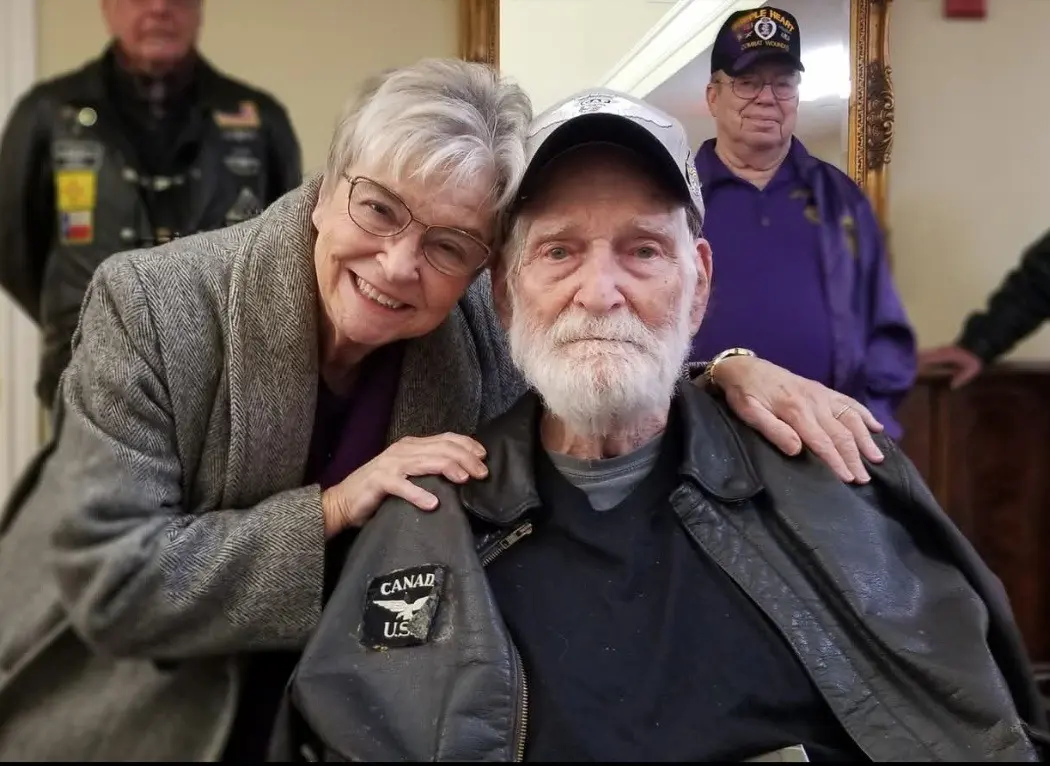
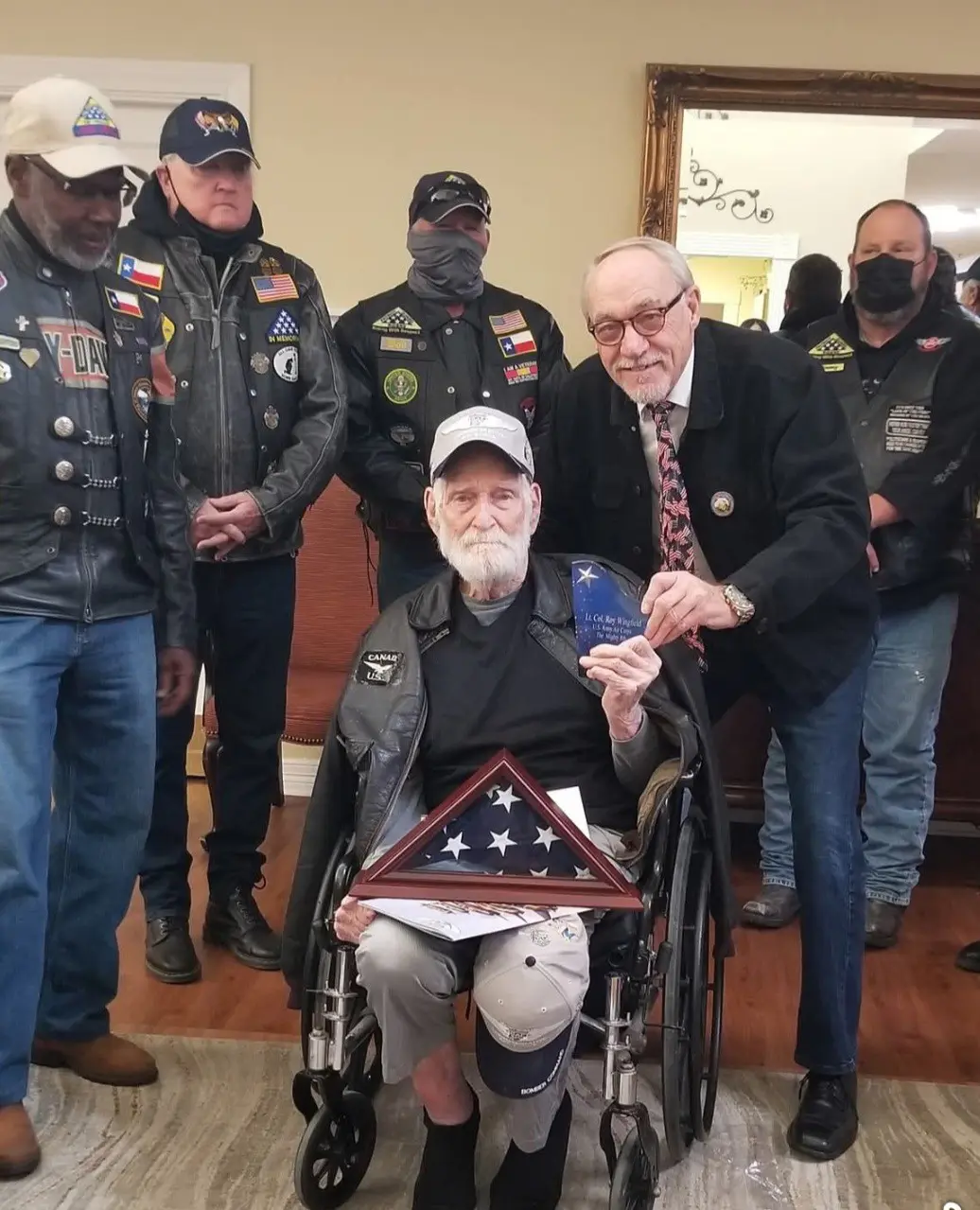
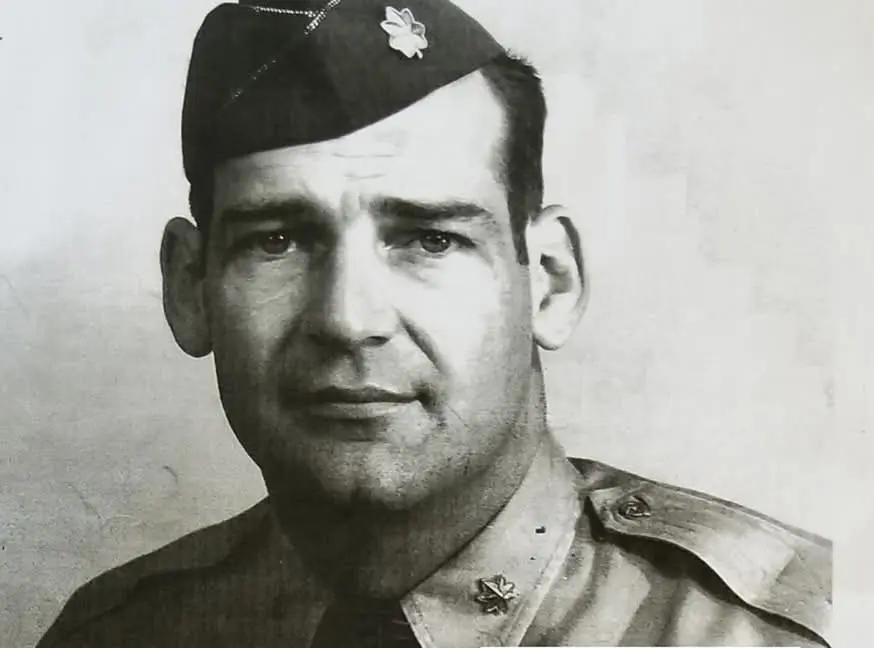
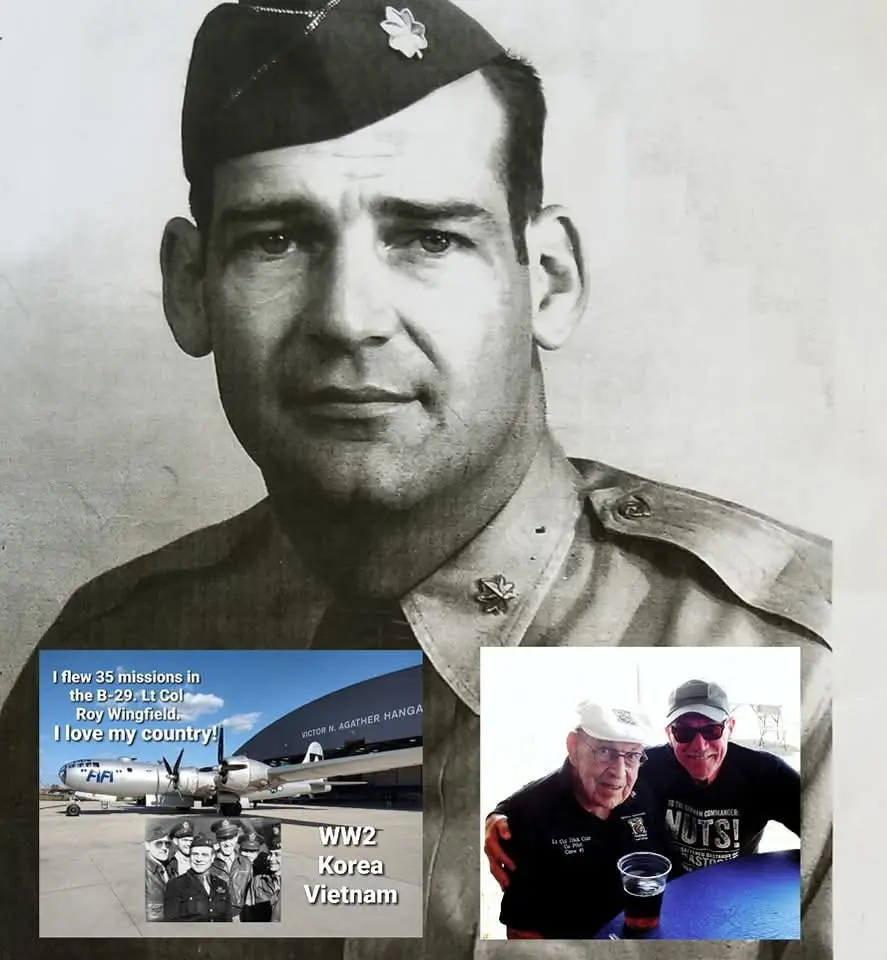
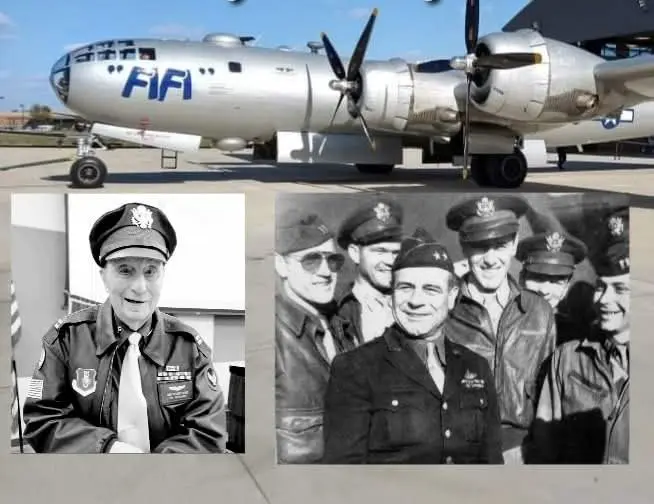
“Take Care of Your Country” — Lt. Colonel Roy G. Wingfield Jr.
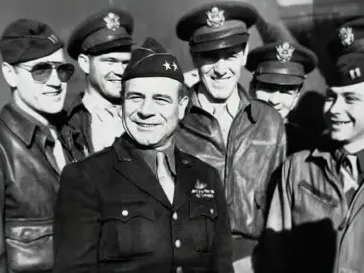
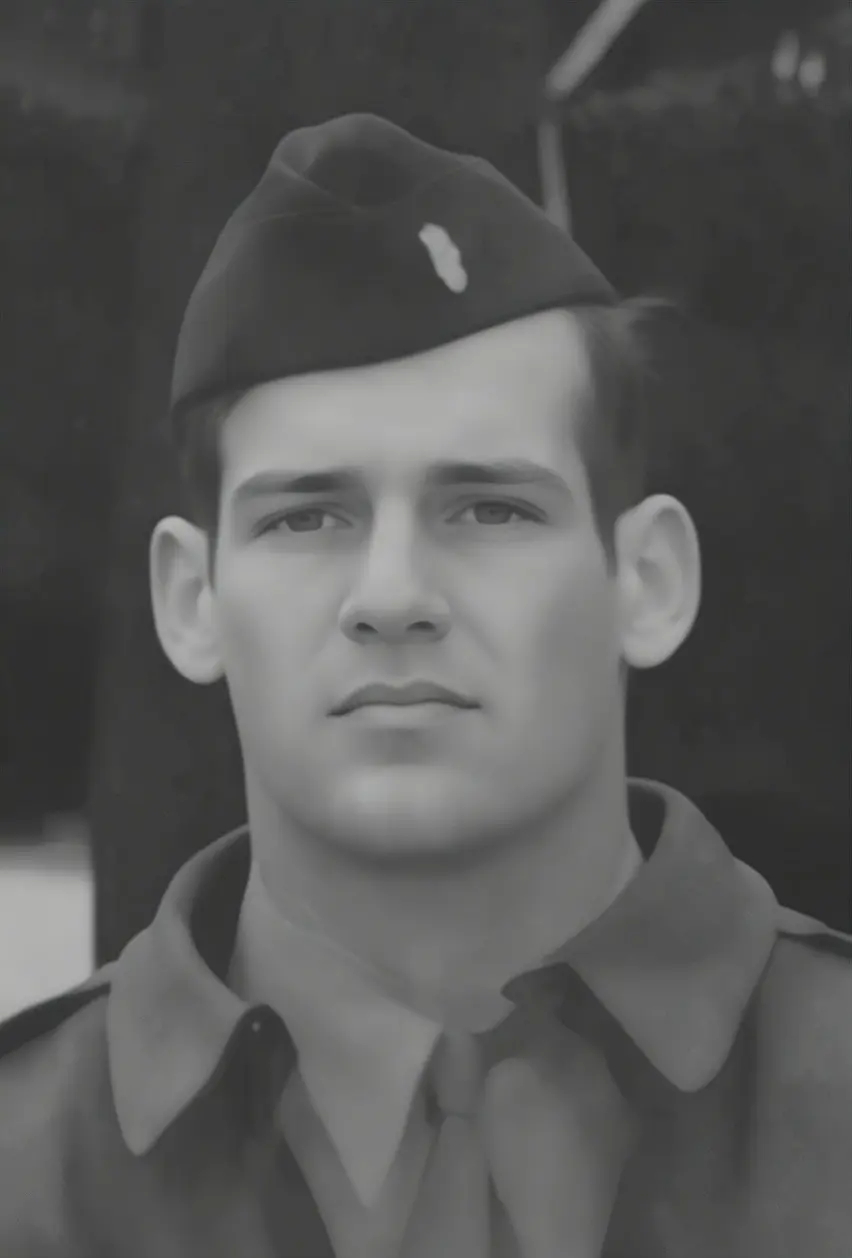
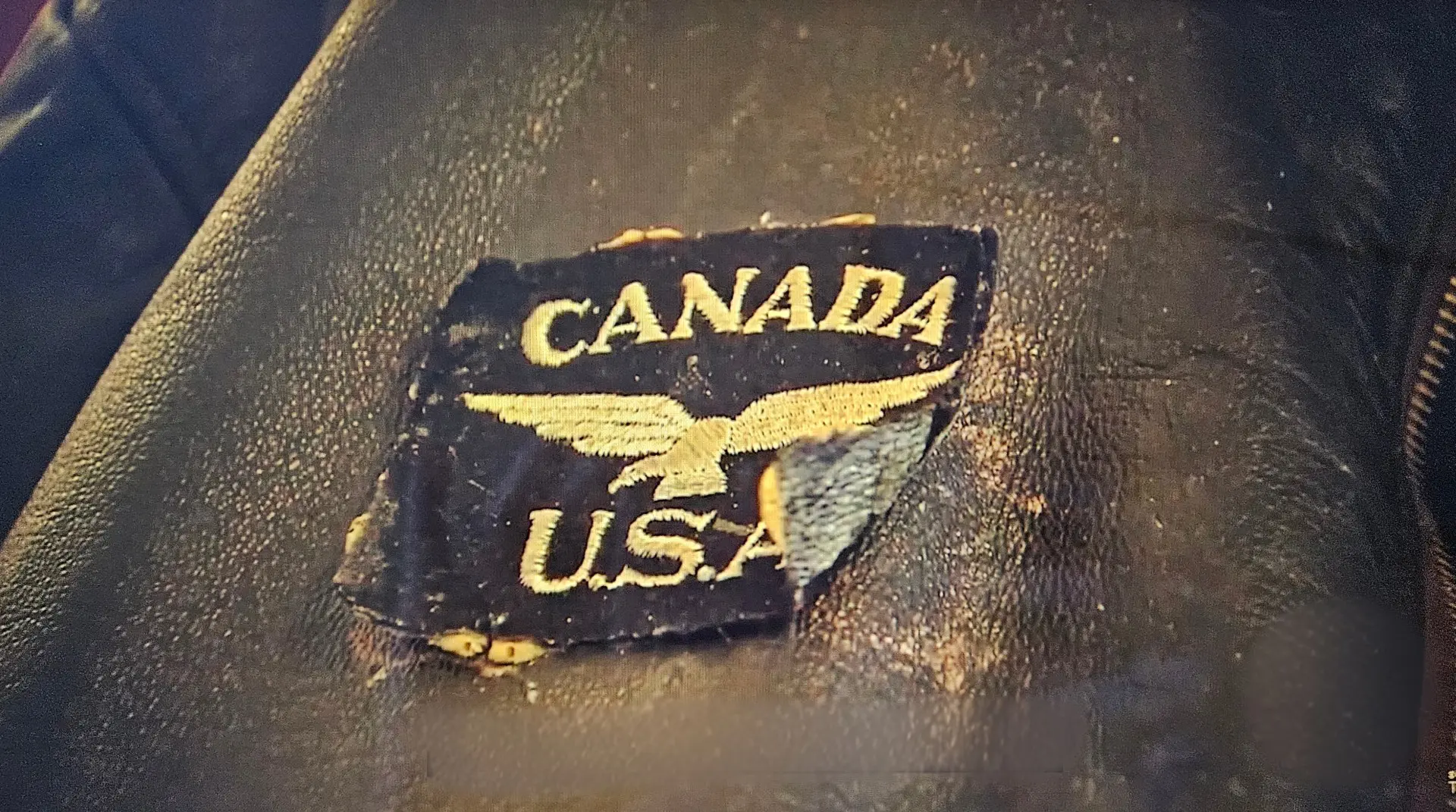
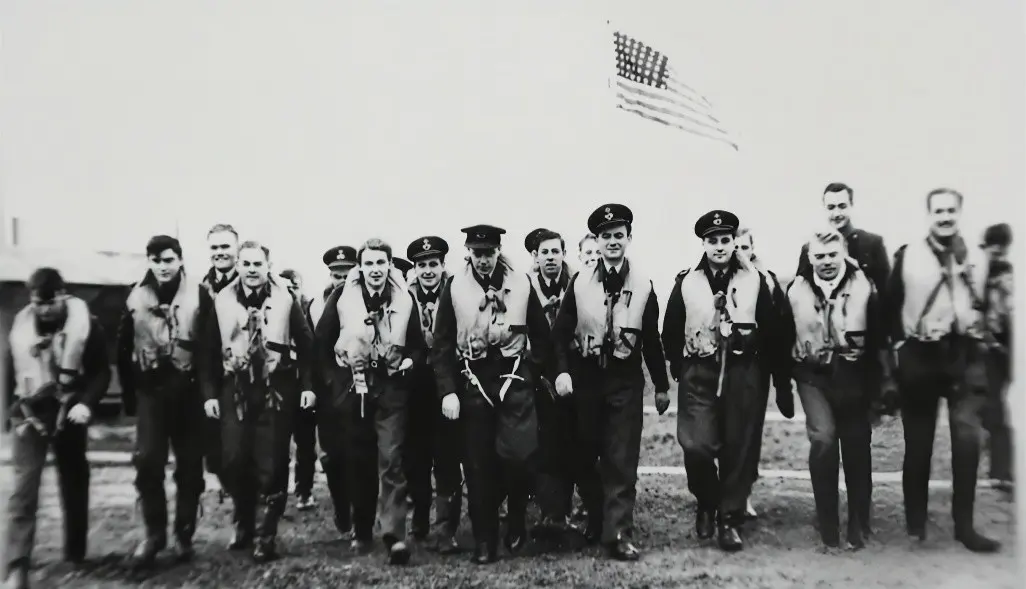
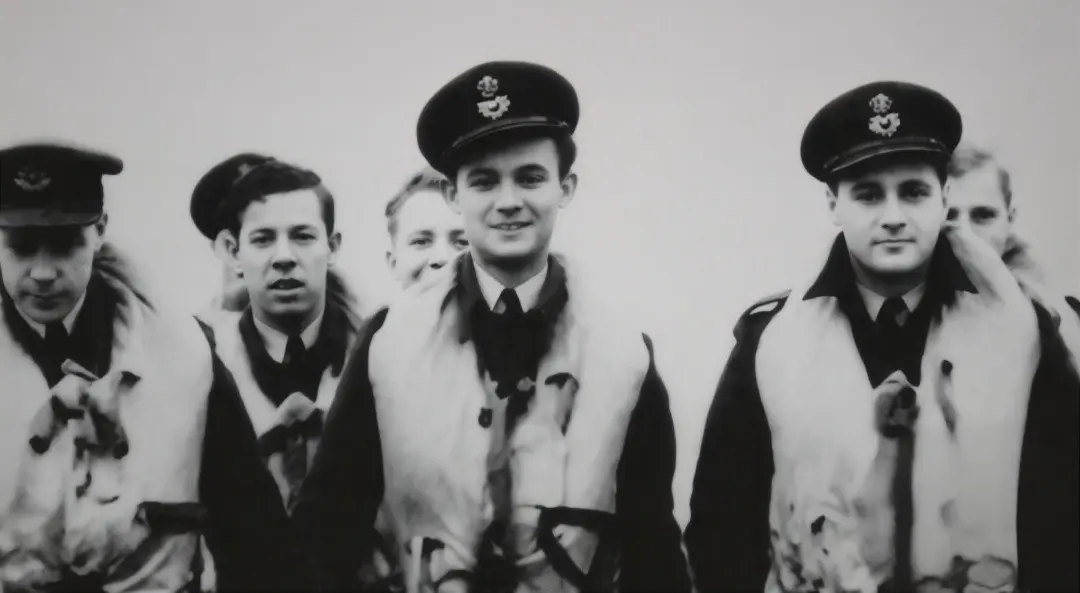
Born in 1921 in Blacksburg, Virginia, Roy Glenmore Wingfield Jr. entered the world as the cherished only child of Roy and Helen Wingfield. His love of flight took root during his collegiate years at the University of Mississippi, where he earned his pilot’s license through the Civilian Pilot Training Program—a path that would soon carry him into the crucible of global conflict. In 1941, he was recruited into the Royal Canadian Air Force and deployed to England, flying missions in defense of a world on the brink. The attack on Pearl Harbor transformed the war overnight, and Wingfield returned home to join the U.S. Army Air Corps, predecessor to today’s United States Air Force. He stepped forward not out of obligation, but conviction—answering the call of a nation in need.
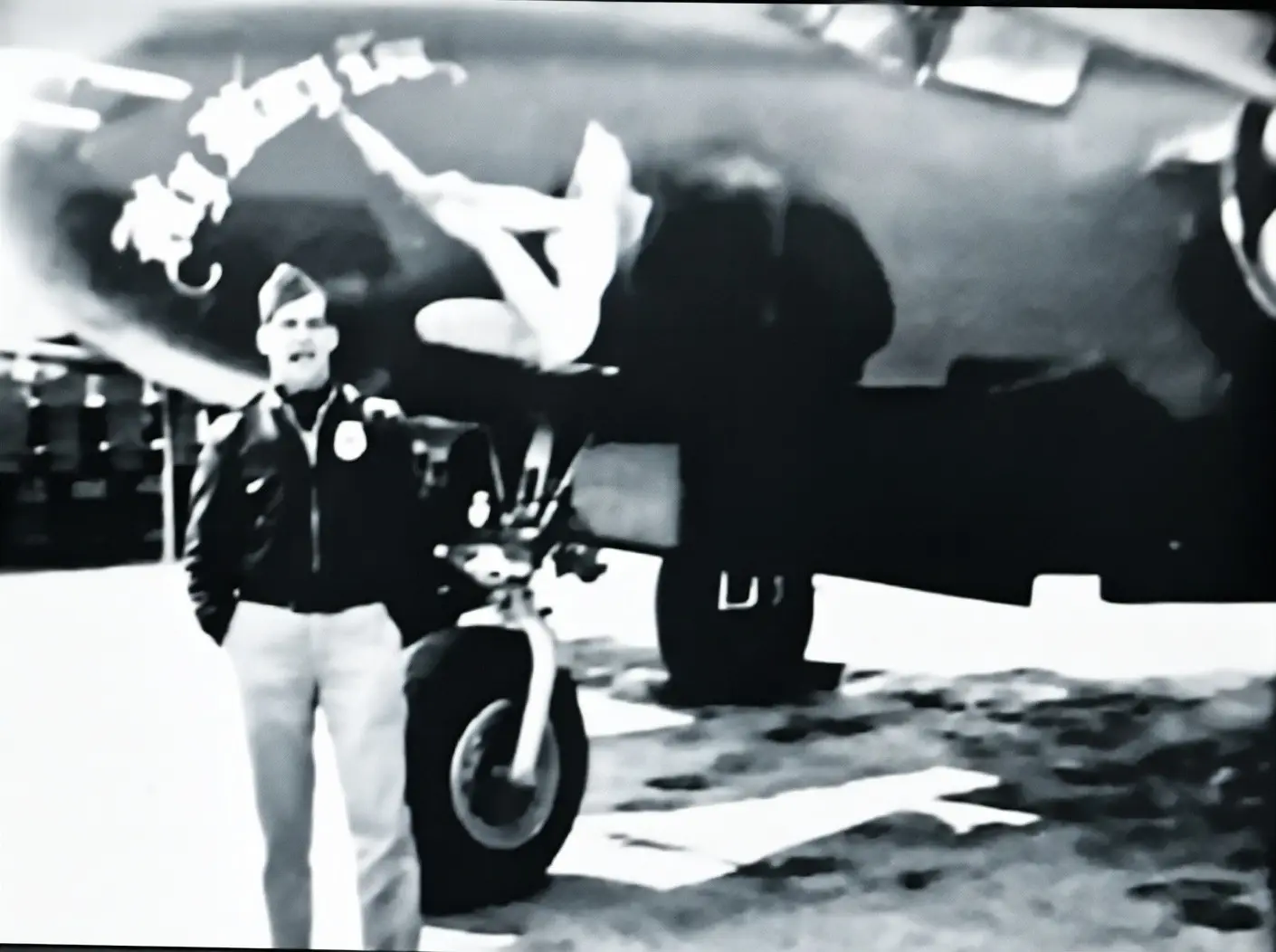
Over the next 18 months, Lt. Colonel Wingfield completed 35 combat missions across China, Japan, India, and Burma. As a member of a lead crew, he served as a target marker during low‑level night raids—hazardous operations flown in specially modified B‑29 Superfortress striking deep into the Japanese mainland. These missions, born of innovation and audacity, carried the same spirit that defined the famed Doolittle Raiders.
One such mission nearly claimed his life. When his aircraft ran out of fuel, Wingfield crash‑landed in a Chinese peach orchard. A local farmer discovered the downed airman, hid him beneath hay in the back of a truck, and spirited him to safety—an act of courage that became one of the defining legends of Wingfield’s wartime service. Upon his return to base, his valor was recognized with the Silver Star.
His career advanced as he joined a unit entrusted with the emerging strategic mission of nuclear weapons delivery, earning promotion to Captain. Even after the guns of World War II fell silent, Wingfield remained in the cockpit, flying in the historic Berlin Airlift of 1948. As the Cold War dawned, he continued to serve with the same readiness that had carried him through the Pacific.
When the Korean War erupted, he was once again called into combat. During one mission, his aircraft was shot down off the Korean coast. After bailing out, he endured long hours adrift in a life raft, fending off sharks that “nibbled” at his feet through the raft’s thin floor—an ordeal he later recounted with understated humor and characteristic grit.
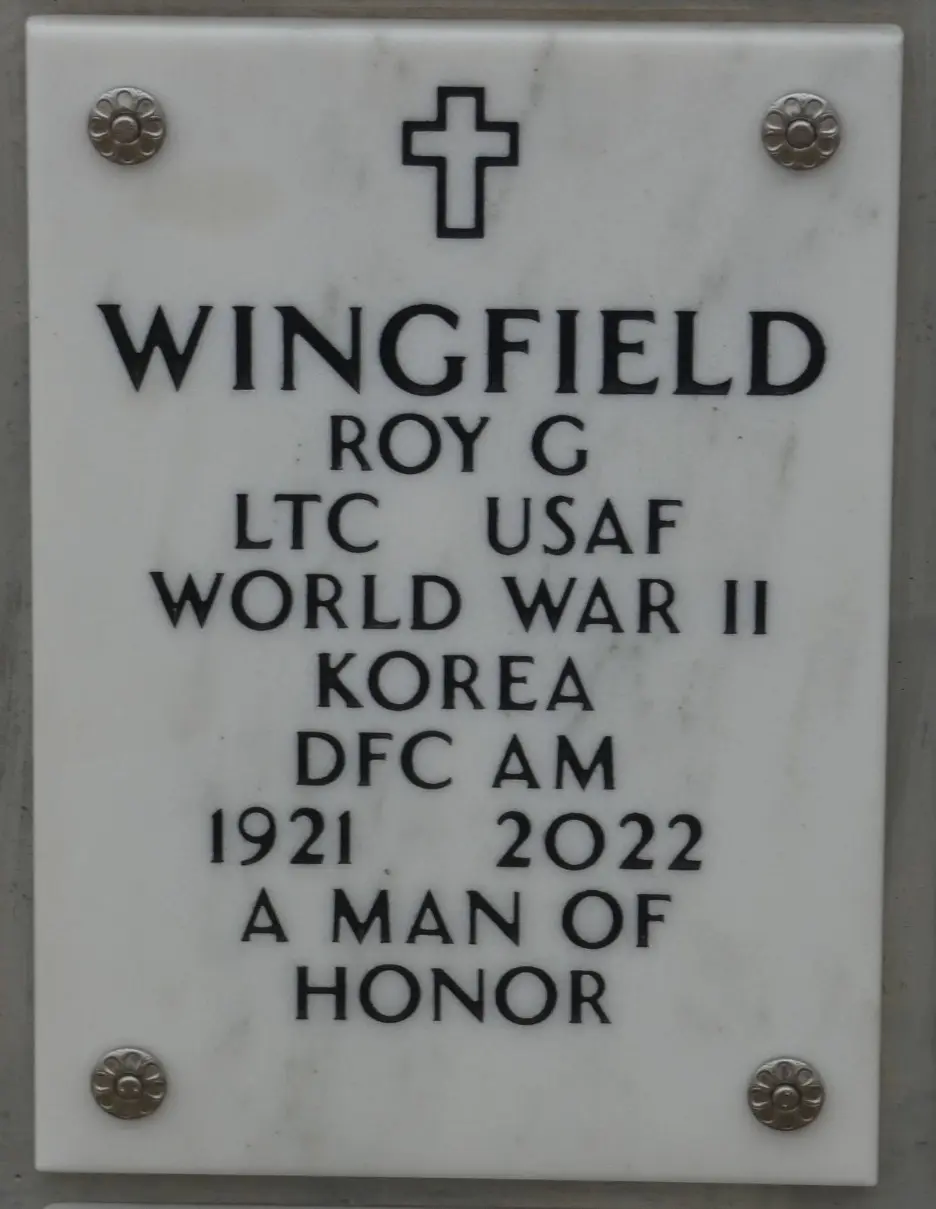
His service extended into the Vietnam War, earning him the rare distinction of a Triple‑War Veteran. He flew numerous sorties across Southeast Asia, adding to an already extraordinary record of combat aviation. By the time he retired, his decorations included two Purple Hearts, the Silver Star, two Distinguished Flying Crosses, and multiple Air Medals—testaments to courage forged across three decades of service.
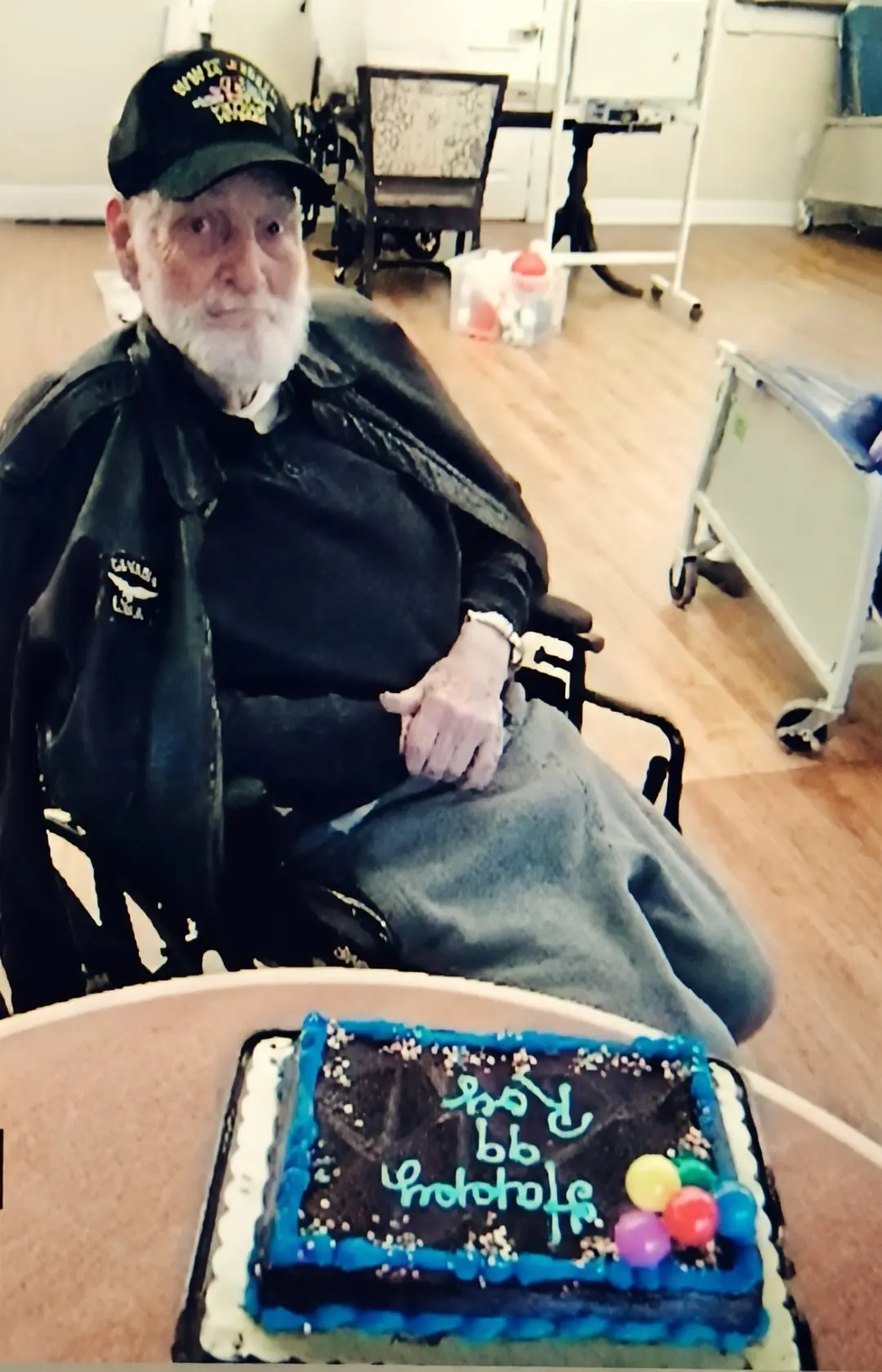
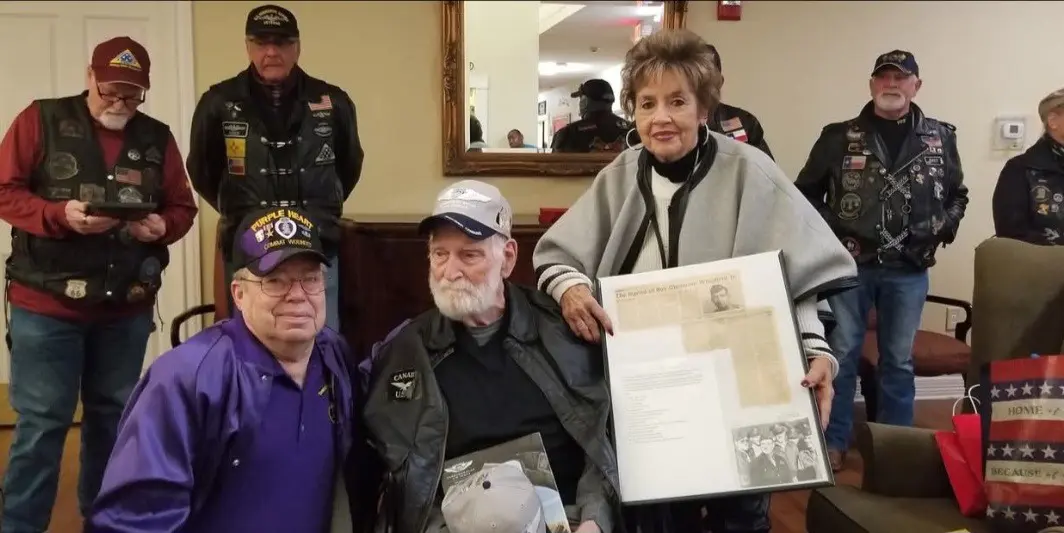
After 28 years in uniform, Lt. Colonel Wingfield settled in North Texas, where his lifelong devotion to duty was honored by the Athena Society of Burleson. In June 2020, at age 99, his community celebrated him as one of the last surviving veterans to have served in all three major conflicts of the mid‑20th century.
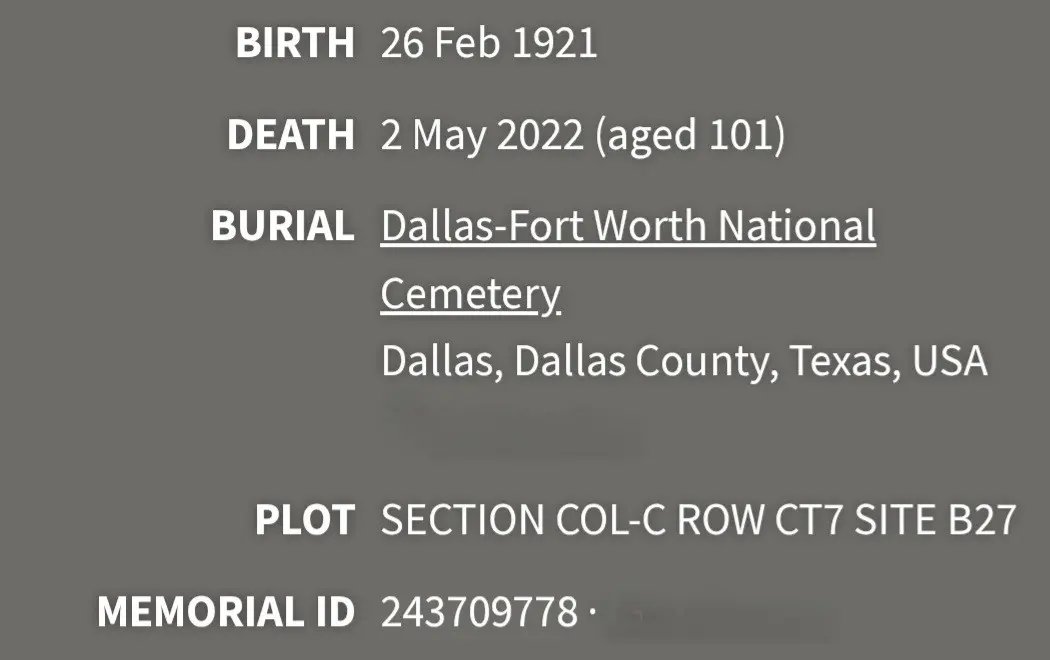
He lived to the remarkable age of 101, passing away on May 2, 2022—exactly fourteen months after his centennial birthday. Today, Lt. Colonel Roy Glenmore Wingfield Jr. rests at the Dallas–Fort Worth National Cemetery, among the brothers‑in‑arms with whom he shared the sky, the struggle, and the sacred charge to “take care of your country.”
February 26, 2020 / 6:26 PM CST / CBS Texas
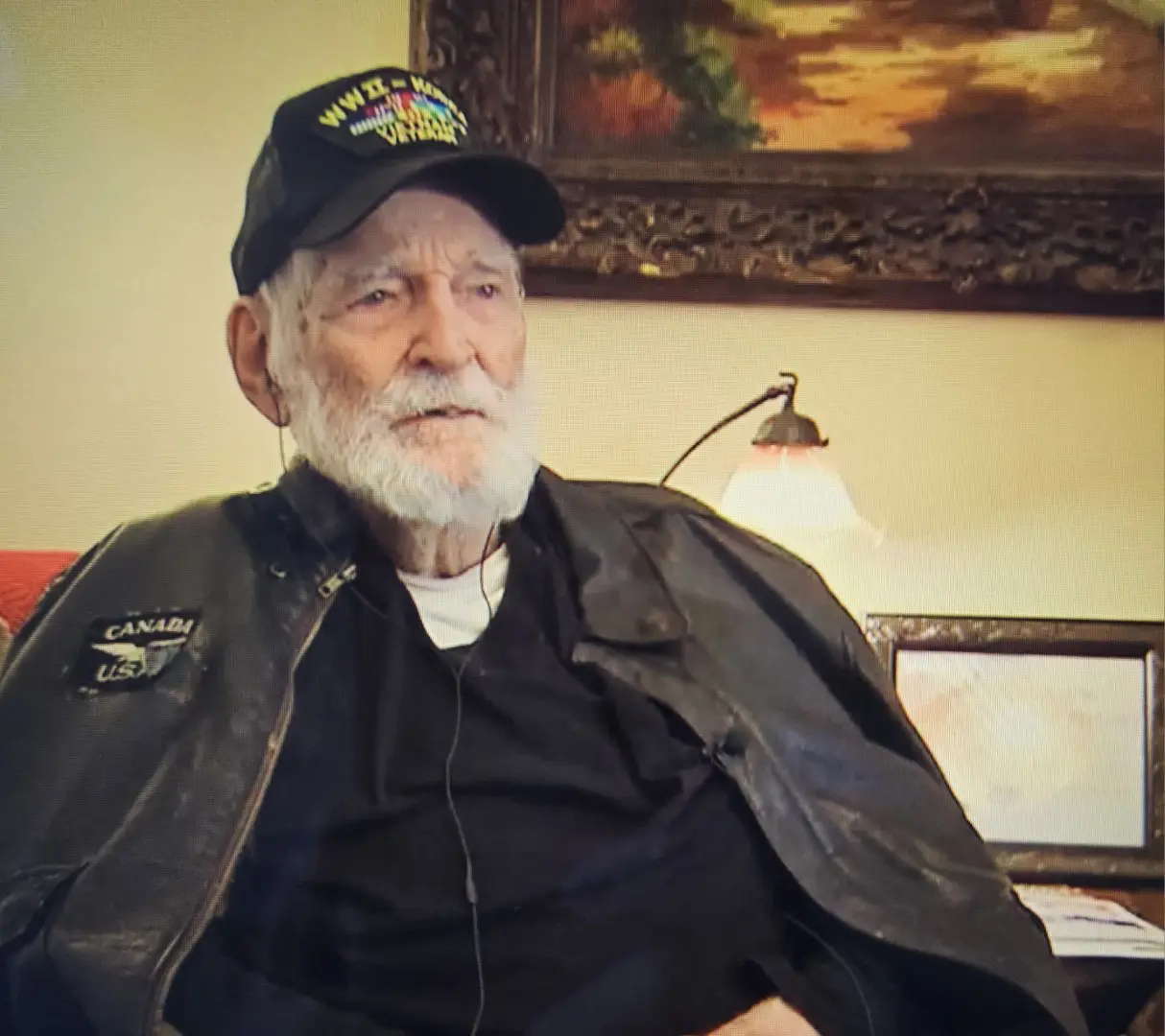
Lt. Col. Roy Glenmore Wingfield Jr. sat down with CBS 11 News to chat about his service and share a message of patriotism to all those that hear his story. His military service began at 18 years old when he was recruited by the Canadian Air Force to train as a pilot during World War II. Wingfield would later transition into the U.S. Army Air Force.
“I could’ve been killed in any war, and somebody protected me. I guess it was the Lord. My role was just to hit the target, and that’s what I tried to do.”
He said his closest brush with death came during the Korean War when he was shot out of the sky, and survived by floating adrift in the ocean off the coast of Korea. “I guess it was the flack they were throwing up. It hit me, and I came down in the water… The sharks kept nibbling at my feet but they didn’t actually bite me. I kicked at them, you know.”
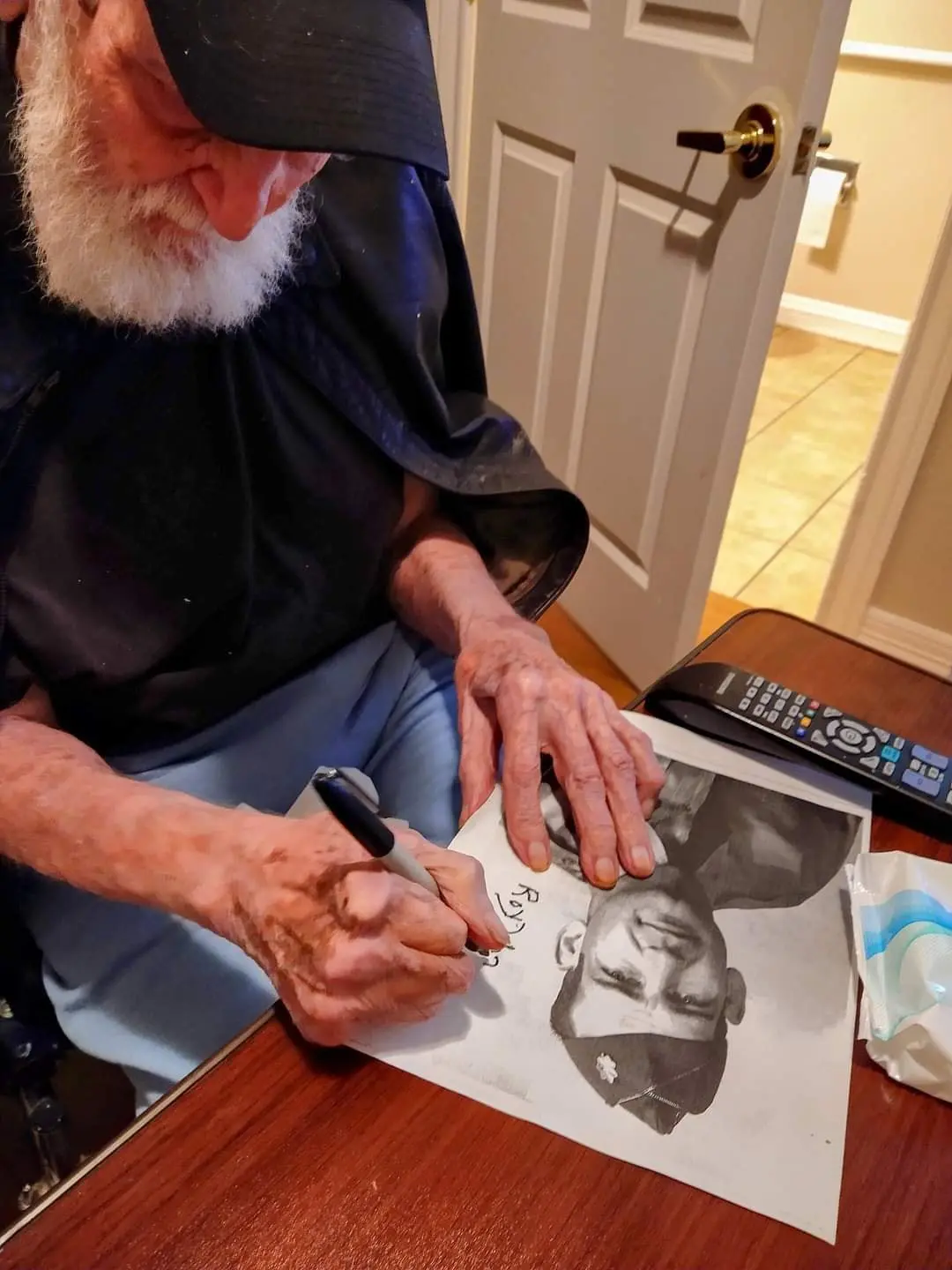
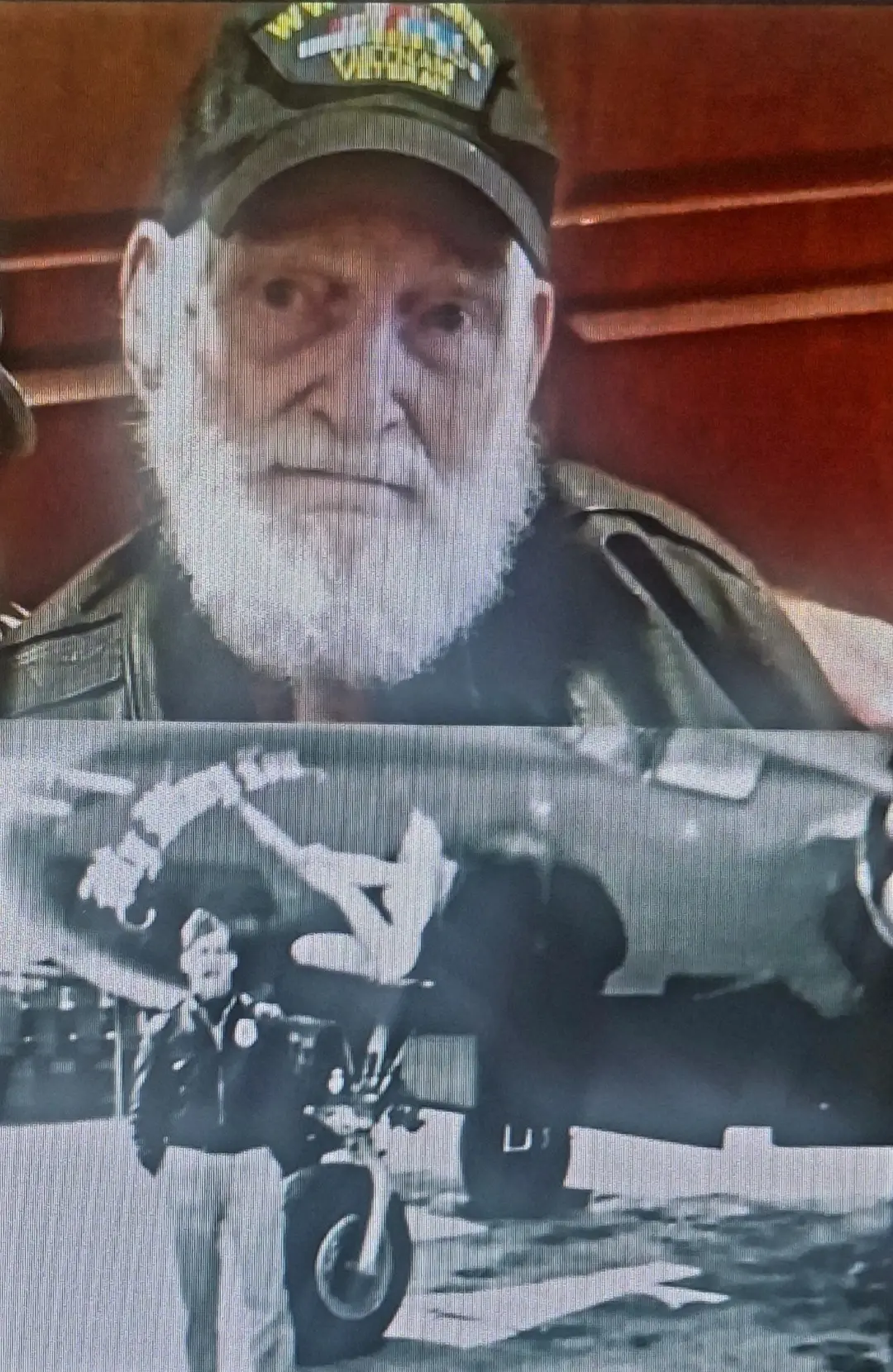
Wingfield said he feels lucky to be alive and at his age, having the opportunity to share his life story. He has outlived all of his friends and relatives. He currently lives at the Colonial Gardens assisted facility in Fort Worth. When asked what message he has for younger generations he said , “I hope that they will feel that they are proud of their country and take care of it.”
He was awarded two Purple Hearts and a Silver Star among many other distinctions.
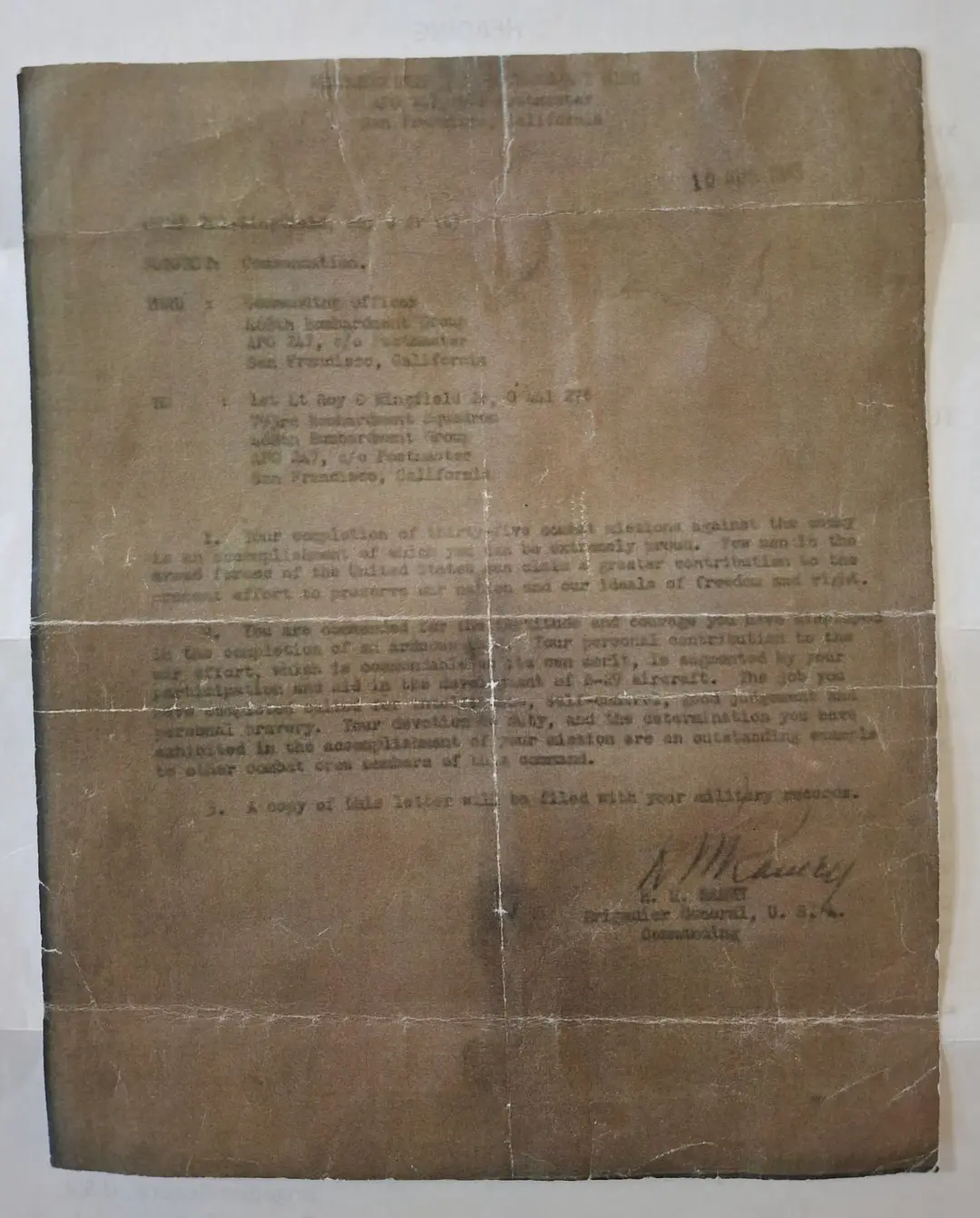
(Preserving Original Lineation)- Document in Gallery
Military Department San Francisco, California
xxoox 21 – Wingfield, Roy G. Jr xxxxx – Communication.
THRU: Commanding Officer, 468th Bombardment Group APO 247, c/o Postmaster San Francisco, California
TO: 1st Lt. Roy G. Wingfield Jr., 0‑441276 793rd Bombardment Squadron 468th Bombardment Group APO 247, c/o Postmaster San Francisco, California
- Your completion of thirty-five combat missions against the enemy is an accomplishment of which you can be extremely proud. Few men in the armed forces of the United States can claim a greater contribution to the present effort to preserve our nation and our ideals of freedom and right.
- You are commended for the fortitude and courage you have displayed in the completion of an arduous task. Your personal contribution to the war effort , which is commendable on its own merit, is supported by your participation and aid in the development of B-17 aircraft. The job you have completed called for , self- , good judgment and personal bravery. Your devotion to duty, and the determination you have exhibited in the accomplishment of your mission are an outstanding example of other combat crew members of this command.
- A copy of this letter will be filed with your military records.
Signature
H.E. Ramsey Brigadier General,
U.S.A. Commanding.
What This Document Is
A WWII-era administrative communication routing slip or cover sheet, likely used for forwarding official correspondence within the 20th Air Force chain of command.
Key indicators:
- “THRU:” indicates the document was required to pass through the Group Commander before reaching the officer.
- APO 247 was the postal designation for the 468th Bombardment Group during its operations in India, China, and later the Marianas.
- The “xxoox 21” and “xxxxx – Communication” lines are typical of internal control numbers or subject codes used by the Military Department (often the Adjutant General’s Office or a theater-level administrative office).
- The addressee — 1st Lt. Roy G. Wingfield Jr., 793rd Bombardment Squadron — places this document squarely within the operational period when the 468th BG was flying B‑29 missions from Kharagpur (India), Pengshan (China), and later Tinian.
Supplemental Information
The Spirit of Blacksburg in 1921
Blacksburg in 1921 was a small Appalachian town held together by the quiet strength of its people and the steady rhythm of rural life. The mountains framed every horizon, and the land shaped the character of families who lived close to it. Homes were modest, warmed by coal stoves in winter and cooled by open windows in summer. Electricity existed but was not universal, and indoor plumbing was still limited. Dirt roads wound through the town, and horses and wagons remained common even as a few automobiles began to appear. Life moved slowly, marked by the seasons, the harvest, and the shared labor of neighbors who depended on one another.
Women carried the heart of the home. They raised children, tended gardens, preserved food, and kept households running with a discipline shaped by generations of Appalachian resilience. Many worked outside the home as teachers, seamstresses, or domestic helpers. The First World War had recently ended, and women had stepped into roles once held by men. Even after the war, they continued to provide, organize, and sustain the home front. The passage of the Nineteenth Amendment in 1920 had just granted women the right to vote, and in Blacksburg this new civic identity blended with longstanding traditions of faith, family, and community stewardship.
Community life was intimate and deeply connected. Church socials, school gatherings, and agricultural fairs brought families together. Music and storytelling carried the region’s heritage, and neighbors helped one another without hesitation. A barn raising, a quilting circle, or a shared meal could unite the entire town. Evenings were spent on porches, watching the quiet world settle around them, sharing news, and strengthening bonds that had existed for generations.
The Virginia Agricultural and Mechanical College and Polytechnic Institute, known today as Virginia Tech, stood at the edge of town as a symbol of progress. It was small but growing, bringing scientific agriculture, engineering innovation, and new ideas into the region. Students and faculty introduced modern farming techniques and a broader worldview, yet the college remained intertwined with the town’s rural identity. Its influence blended gently into the rhythms of Blacksburg rather than overwhelming them.
National change touched Blacksburg softly. The country was recovering from World War I, adjusting to Prohibition, and navigating economic shifts. In Blacksburg, these movements arrived slowly through newspapers, radio broadcasts, and word of mouth. Families continued their routines, churches remained central, and the town held fast to its values even as the world beyond the mountains began to accelerate.
Blacksburg in 1921 was a place of simplicity, resilience, and quiet strength. A place where women carried the heart of the home, where families lived close to the land, and where the early presence of Virginia Tech hinted at the future. Life was slower, harder, and more intimate than today, shaped by faith, labor, and the enduring spirit of Appalachian community.
Blacksburg entered the 1930s carrying the quiet strength of its Appalachian roots, yet the Great Depression reached into every home and altered the rhythm of daily life. The mountains still framed the horizon, the land still offered its familiar comfort, but the security families once relied upon thinned with each passing year. Money tightened, wages fell, and the modest routines that had sustained the town now demanded careful discipline and constant resourcefulness.
Families learned to stretch every ounce of what they had. Gardens became essential, not seasonal conveniences. Rows of beans, corn, potatoes, and squash filled backyards and fields, and the work of tending them belonged to every member of the household. Food preservation became a year‑round practice. Jars lined pantry shelves, each one representing hours of labor and the promise of survival through winter. Clothing was patched repeatedly, fabric worn thin from use and repair. Coal stoves warmed homes, and the smell of wood smoke drifted through the valley as families prepared for cold months that demanded foresight and frugality.
Women carried an even greater share of responsibility. Their work became the backbone of family endurance. They canned vegetables, sewed clothing, tended gardens, and took in laundry or domestic work to earn a few dollars. Their emotional steadiness anchored children who sensed the fear adults tried to hide. The strength they had shown in earlier years deepened into a resilience that shaped the character of the entire town. In Blacksburg, as in much of Appalachia, women’s quiet endurance became the unseen force that held families together.
The college stood as one of the few stable pillars in the region. Virginia Tech tightened its budgets and reduced salaries, yet it continued to employ faculty, staff, and students who relied on its presence. Agricultural extension agents traveled through Montgomery County teaching soil conservation, livestock care, and crop management, offering knowledge that helped farmers endure the crisis. The college’s influence brought a sense of forward movement, a reminder that learning and innovation could still thrive even in years of scarcity.
Community life adapted but did not disappear. Churches became the emotional center of Blacksburg, offering comfort, prayer, and practical support. Quilting circles, hymn sings, and shared suppers brought families together in ways that strengthened bonds and eased the weight of hardship. The Appalachian tradition of mutual aid—neighbors helping neighbors—became essential. A shared meal, a borrowed tool, or a helping hand during harvest carried more meaning than ever before.
News of the larger world arrived slowly through newspapers and radio broadcasts. Families listened to President Roosevelt’s voice as he spoke of hope and recovery. When New Deal programs reached Virginia, young men from Blacksburg and Montgomery County found work through the Civilian Conservation Corps and the Works Progress Administration. They built roads, improved parks, and supported conservation projects, bringing wages and dignity back into homes that had gone too long without them.
Through it all, Blacksburg remained a place of quiet strength. The land shaped its resilience, the college offered stability, and the people carried one another through years that tested every part of daily life. The Great Depression did not break the town. It deepened it. It strengthened the bonds of family, faith, and community. It prepared Blacksburg for the world that was coming, a world that would soon call upon its sons to serve and its families to endure once more.
Blacksburg entered the 1940s carrying the quiet resilience shaped by the Depression years, yet the world around it was changing with a speed the town had never seen. The mountains still framed the horizon, the land still offered its familiar comfort, but the calm of rural life was interrupted by the distant rumble of a nation preparing for war. Families felt the shift before it fully arrived. Newspapers carried stories of Europe in flames, radios crackled with reports of rising tension, and conversations in kitchens and church halls turned toward the possibility that America might soon be drawn into the conflict.
When war came, Blacksburg responded with the same steadiness that had carried it through hard times. Young men left for service, some from long‑established farming families, others from homes connected to the college. Their departures were quiet, marked by gatherings on porches, prayers in church pews, and the lingering silence of families adjusting to absence. Women stepped into new responsibilities, managing households, raising children, and supporting the war effort through rationing, volunteer work, and the careful stewardship of every resource. The strength they had shown during the Depression deepened into a resolve shaped by separation and uncertainty.
Virginia Tech became a center of activity. The campus shifted rapidly to support the war, expanding military training programs and preparing young cadets for service. Classrooms filled with instruction in engineering, agriculture, and military science. The presence of uniformed students became a familiar sight in town, their disciplined routines blending into the daily rhythm of Blacksburg. The college’s growth brought energy and movement, even as families lived with the quiet ache of loved ones far from home.
Rationing touched every household. Sugar, meat, gasoline, and rubber were carefully measured, saved, and shared. Gardens once planted for survival during the Depression now became victory gardens, symbols of contribution to the national effort. Children learned to help with chores, gather firewood, and tend vegetables, understanding that their work mattered. Neighbors exchanged goods, shared tools, and supported one another with the same Appalachian spirit that had carried them through earlier hardships.
The emotional weight of the war settled over the town in ways both visible and unseen. Letters arrived from overseas, carrying hope, fear, and the distant voices of sons, brothers, and husbands. Telegrams arrived too, each one a moment that changed a family forever. Churches became places of prayer and comfort, their gatherings filled with hymns that carried both sorrow and strength. Community life continued, but every event—every supper, every gathering, every quiet evening—held the awareness that the world was fighting a battle far beyond the mountains.
As the war progressed, Blacksburg adapted. Women worked in new roles, some connected to the college, others in local businesses that supported wartime needs. The town saw more movement, more uniforms, more activity as Virginia Tech expanded its military programs. Yet the heart of Blacksburg remained the same: families supporting one another, neighbors sharing burdens, and a community holding fast to its values even as the world changed around it.
When the war finally ended, the relief was deep and quiet. Men returned home, some carrying visible wounds, others carrying the invisible weight of what they had seen. Families reunited, children met fathers they barely remembered, and the town slowly shifted back toward the familiar rhythms of rural life. But Blacksburg was not the same. The war had reshaped its identity, strengthened its connection to the college, and deepened the bonds of community that had carried it through years of uncertainty.
The 1940s left Blacksburg with a sense of endurance, shaped by sacrifice, service, and the quiet strength of families who held the town together. It was a decade that tested every part of daily life, yet it revealed the depth of character that had always lived in the mountains, the land, and the people who called Blacksburg home.
Blacksburg stepped into the 1950s carrying the weight and relief of the war years, yet the decade opened with a sense of renewal that touched every part of the town. Families who had endured separation now settled into routines shaped by reunion, rebuilding, and the quiet hope of a more stable future. The mountains remained unchanged, steady as ever, but the world within them began to move with a new confidence. Children who had grown up during wartime now entered classrooms filled with optimism. Young men returned to the college, some through the GI Bill, bringing maturity and purpose into lecture halls that had once trained them for conflict.
Even as the town embraced this new stability, the Korean War cast a quieter shadow across the decade. The word Korea was spoken softly in homes, often with the subdued tone of families who remembered the sacrifices of the previous war and feared the possibility of losing sons again. It was not spoken with the same public urgency that had surrounded the Second World War. Instead, it lived in private conversations at kitchen tables, in the quiet prayers offered during Sunday services, and in the worried glances exchanged when news arrived from overseas. Churches added the names of local boys serving in Korea to weekly prayer lists, spoken with reverence but without the triumphant language that had once filled sanctuaries. Newspapers called it a police action, a phrase that softened the reality of the fighting but did little to ease the concern felt by families. The conflict felt distant, cold, and sudden, and although life in Blacksburg moved forward, Korea remained present in the background as a reminder that peace was never guaranteed.
Virginia Tech expanded rapidly, its campus alive with construction, new programs, and a growing student body. The presence of veterans shaped the atmosphere of the college, giving it a seriousness and direction that blended with the energy of younger students who had never known the war firsthand. Engineering, agriculture, and science programs grew, and the college’s influence reached deeper into the town, shaping its economy, its identity, and its future. The sound of hammers, saws, and machinery became part of Blacksburg’s daily rhythm as the institution moved confidently into the modern era.
Families embraced the stability the decade offered. Homes were repaired, gardens flourished, and new appliances slowly found their way into kitchens that had once relied on coal stoves and hand washed laundry. Women continued to carry the heart of the home, yet their roles began to shift as opportunities expanded. Some entered the workforce, others pursued education, and many balanced tradition with the quiet beginnings of change. Their strength, shaped by the Depression and the war, now guided families through years of growth rather than scarcity.
Community life blossomed. Churches remained central, offering fellowship, worship, and continuity. Social gatherings grew more frequent, filled with music, shared meals, and the warmth of neighbors who had supported one another through harder times. Children played in yards and fields, their laughter carrying through the valley in ways that felt new after years marked by uncertainty. The town’s Appalachian heritage remained strong, yet the influence of the college brought broader perspectives, new ideas, and a sense that Blacksburg was becoming part of a larger world.
The decade also carried the early stirrings of national change. News of scientific advances, cultural shifts, and political movements reached Blacksburg through radio broadcasts, newspapers, and the growing presence of television. Families gathered around evening programs, listening to voices that connected them to events far beyond the mountains. The world was expanding, and Blacksburg felt its reach gently, steadily, without losing the character that had defined it for generations.
Through it all, the town remained grounded in the values that had carried it through earlier decades. Faith, family, and community continued to shape daily life. The land remained central, offering both livelihood and identity. The college stood as a symbol of progress, its growth reflecting the nation’s movement into a new era. And the people of Blacksburg, resilient, steady, and deeply connected, carried the town forward with the same quiet strength that had sustained them through hardship, war, and change.
The 1950s left Blacksburg with a sense of momentum, a feeling that the future was opening in ways both hopeful and profound. It was a decade of rebuilding, renewal, and transformation, preparing the town for the rapid changes that would define the years ahead.
Blacksburg entered the 1960s with a sense of momentum that had been building since the end of the war. The town was still shaped by the mountains and the land, still grounded in the quiet strength of its people, yet the world around it was changing in ways that touched every home, every classroom, and every part of daily life. The steady growth of Virginia Tech brought new energy into the valley, filling the town with students, faculty, and families who carried ideas and expectations that stretched beyond the familiar rhythms of earlier decades. Construction continued across campus, and the sound of progress blended into the daily life of a community that had once moved at the pace of the seasons.
Families felt the shift most clearly through their children. Young people who had grown up in the stability of the 1950s now stepped into a world that was expanding rapidly. They listened to new music, watched new programs on television, and followed national events that reached into Blacksburg with a force the town had never experienced before. The civil rights movement, the space race, and the growing tension overseas became part of conversations in living rooms, classrooms, and church halls. The world was larger, louder, and more connected, and Blacksburg felt its reach even as it held fast to the values that had shaped it for generations.
Virginia Tech’s influence deepened. Enrollment grew, research expanded, and the college’s presence began to define the town’s identity more than ever before. Students filled the streets, bookstores, and cafés, bringing a youthful energy that blended with the quiet steadiness of long‑established families. Faculty members arrived from across the country, bringing new perspectives and academic ambition. The campus became a center of innovation, and its growth pulled Blacksburg forward into a modern era that felt both exciting and unfamiliar.
Daily life changed in small but meaningful ways. New businesses opened to serve the growing population. Roads were improved, neighborhoods expanded, and the town’s infrastructure adapted to meet the needs of a community that was no longer defined solely by farming and tradition. Yet the heart of Blacksburg remained rooted in the same Appalachian spirit that had carried it through earlier decades. Families gathered for church, neighbors supported one another, and the land continued to shape the rhythm of life even as the town grew more connected to the outside world.
The decade carried tension as well. The Vietnam War reached into Blacksburg through the young men who left for service and the families who waited for their return. The presence of the war was felt in classrooms, in conversations, and in the quiet worry that settled over households with sons of draft age. Some students trained through ROTC programs, preparing for service with a sense of duty shaped by the legacy of earlier wars. Others questioned the conflict, reflecting the national division that marked the era. The town held both perspectives, carrying them with the same quiet dignity that had shaped its response to hardship in earlier years.
Through it all, Blacksburg remained a place of resilience and connection. The mountains offered their steady comfort, the college brought growth and opportunity, and the people carried one another through years of change that touched every part of American life. The 1960s left the town transformed yet still familiar, modern yet still rooted, shaped by progress yet anchored in the enduring strength of community.
Blacksburg moved into the 1970s with a sense of transformation that had been building for more than a decade. The town was no longer the quiet agricultural community it had once been. The steady expansion of Virginia Tech had reshaped its streets, its economy, and its identity. Students filled sidewalks and storefronts, their presence bringing a constant movement that contrasted with the slower rhythms of earlier years. The mountains still framed the horizon, offering their familiar steadiness, yet the world within them had grown louder, busier, and more connected to the nation’s rapid changes.
The decade opened with the lingering weight of the Vietnam War. Families carried the strain of sons deployed overseas, and the tension of national division reached into Blacksburg through conversations in classrooms, church halls, and living rooms. Some students trained through ROTC programs, preparing for service with a sense of duty shaped by the legacy of earlier wars. Others questioned the conflict, reflecting the broader cultural shifts sweeping across the country. The town held both perspectives with the quiet dignity that had always defined its response to hardship and change.
As the war drew to a close, Blacksburg felt the relief and uncertainty that followed. Veterans returned home, some carrying visible wounds, others carrying the quiet burden of experiences they rarely spoke about. Families supported them with the same strength that had carried the town through earlier decades. The community adapted, offering space for healing, reflection, and the slow rebuilding of routines that had been interrupted by years of conflict.
Virginia Tech continued to grow, becoming a powerful engine of change. New buildings rose across campus, research programs expanded, and the student population increased dramatically. The college’s influence reached deeper into Blacksburg’s daily life, shaping its economy, its culture, and its future. Faculty arrived from across the country, bringing new ideas and academic ambition. Students brought energy, curiosity, and the cultural shifts of the era—music, fashion, and perspectives that reflected a nation redefining itself. The town adjusted, blending its Appalachian heritage with the modern identity emerging around the university.
Daily life changed in ways both subtle and profound. New neighborhoods developed to accommodate the growing population. Businesses expanded, offering goods and services that reflected the needs of a more diverse community. Roads were improved, traffic increased, and the once‑quiet town center became a place of constant movement. Yet the heart of Blacksburg remained rooted in the values that had shaped it for generations. Families gathered for church, neighbors supported one another, and the land continued to offer its steady comfort even as the town grew more modern.
The 1970s also carried the broader cultural shifts of the era. Conversations about civil rights, women’s roles, environmental stewardship, and political change reached Blacksburg through classrooms, newspapers, and the growing presence of television. Young people embraced new ideas, while older generations balanced tradition with the realities of a changing world. The town held these differences with a quiet grace, allowing space for growth without losing the character that had defined it for decades.
Through it all, Blacksburg remained a place of resilience and connection. The mountains offered their familiar strength, the college brought opportunity and transformation, and the people carried one another through years marked by both progress and uncertainty. The 1970s left the town more modern, more diverse, and more connected to the nation’s evolving identity, yet still anchored in the enduring spirit that had shaped it since the earliest years of the century.
Deployment across WWII, Korea, and Vietnam formed a single thread of American service, carried by different generations who stepped away from home with the same quiet mixture of duty, fear, and hope. It began in the moment orders arrived, when families gathered around kitchen tables and tried to absorb the reality that life was about to change. Mothers steadied their voices, fathers offered guidance shaped by earlier hardships, wives held onto their husbands with an embrace that lingered, and young men stood in doorways knowing they were about to cross a threshold that would reshape their lives. The departure was always marked by pride and sorrow woven together, a sense of responsibility carried alongside the ache of separation.
In WWII, deployment carried men into a global conflict whose scale was almost unimaginable. Trains moved through towns and cities they had never seen, filled with young men wearing new uniforms and carrying the same mixture of courage and uncertainty. Troopships waited at ports, their steel hulls rising like monuments to the vastness of the war. The ocean crossing was long, marked by drills, anticipation, and quiet moments when men stared out at the water and wondered what awaited them on distant shores. They entered a world where danger was constant, where Europe’s ruined cities and the Pacific’s unforgiving jungles shaped every day. Letters traveled slowly, arriving weeks late, yet each one carried the voice of home and became a lifeline that reminded them of porches, fields, church gatherings, and the familiar rhythms of life they had left behind.
In Korea, deployment arrived quickly and often without the national unity that had defined the earlier conflict. Men who had already served in WWII found themselves called again, stepping into a second war before they had fully recovered from the first. The departure was quieter, marked by fewer parades and less public attention. The journey carried them into a landscape of bitter cold, rugged terrain, and a conflict that was often misunderstood back home. Letters still traveled across oceans, but they arrived into households that felt isolated from the war’s purpose. Deployment in Korea carried a sense of duty without recognition, service without celebration, and sacrifice that was often overlooked by a nation still recovering from the previous war.
In Vietnam, deployment carried a weight shaped by national division. Men left home in a time when the country was struggling to understand the conflict, and that struggle followed them from the moment they received their orders. Families supported them with love and fear, yet the world around them questioned the war in ways that made departure heavier. The journey carried men into dense jungles, unfamiliar terrain, and an enemy rarely seen yet always present. Danger was constant, the environment unforgiving, and the emotional strain profound. Letters traveled back and forth, carrying not only love and longing but the weight of a nation divided. Men deployed knowing they might return to a country that did not fully welcome them home, and that knowledge shaped every day they spent overseas.
Across all three wars, deployment meant leaving everything familiar and stepping into uncertainty. It meant trusting that home would endure, that families would remain strong, and that service carried meaning even when the world changed around them. The experience evolved with each conflict, yet the core remained the same. Deployment was a sacrifice carried by the men who served and by the families who waited, prayed, and endured the long stretch of days until their loved ones returned. It was a shared chapter of American history, written across three generations, held together by courage, separation, and the quiet hope that home would be whole again when the war finally ended.
The Royal Canadian Air Force and the Global Architecture of Allied Air Power
The Royal Canadian Air Force underwent one of the most dramatic expansions of any Allied service during World War II, growing from a modest prewar establishment of roughly four thousand personnel to more than two hundred fifteen thousand by 1945. This transformation positioned Canada as the fourth‑largest Allied air force and produced a force whose reach, technical sophistication, and operational diversity far exceeded the nation’s size. Its wartime role can be understood through four major spheres of influence that together shaped the Allied air campaign.
Canada’s most consequential contribution emerged through the British Commonwealth Air Training Plan, a vast enterprise that turned the nation into the principal training ground for the Commonwealth during World War II. Its geographic distance from combat zones and its expansive open terrain made Canada uniquely suited for this mission. More than one hundred thirty‑one thousand aircrew passed through its schools, including pilots, navigators, wireless operators, and bomb aimers from Britain, Australia, New Zealand, and the United States. President Franklin D. Roosevelt recognized the scale and significance of this achievement when he described Canada as the “Aerodrome of Democracy,” acknowledging that Allied air power in World War II was sustained by the steady flow of highly trained personnel produced on Canadian soil.
Canada’s presence in the strategic bombing offensive was equally profound. In 1943, the RCAF established No. 6 Group within RAF Bomber Command, ultimately comprising fourteen operational squadrons flying Halifaxes and Lancasters. This formation gave Canada a distinct and influential role in the air war over Europe. It also exposed Canadian airmen to the most perilous operational environment of World War II. Of the approximately seventeen thousand RCAF fatalities during the conflict, nearly ten thousand occurred in Bomber Command, a stark testament to the danger and sacrifice inherent in the strategic bombing campaign.
The RCAF also played a decisive role in the Battle of the Atlantic, the longest continuous campaign of World War II. Flying long‑range aircraft such as the Canso and the Liberator, Canadian crews patrolled the vast expanse of the North Atlantic, including the treacherous “Atlantic Gap” where convoys had once been vulnerable to German U‑boats. Their efforts were instrumental in closing this gap, protecting vital shipping lanes, and ensuring the flow of food, fuel, and munitions to Britain. RCAF squadrons were credited with sinking nineteen U‑boats and assisting in many more, providing the persistent air cover that helped turn the tide in the Allies’ favor.
Canadian fighter operations extended across nearly every major theater of World War II. RCAF No. 1 Squadron fought as a cohesive unit during the Battle of Britain, while hundreds of other Canadians served throughout RAF fighter commands. By the time of the Normandy invasion, the RCAF fielded forty‑five squadrons overseas. On D‑Day, Canadian fighter‑bombers provided continuous “cab rank” support, loitering above the beaches to strike German armor and troop movements with precision and immediacy. Their presence ensured that Allied ground forces received rapid, responsive air support during one of the most decisive operations of the war.
Key Wartime Statistics
Metric Detail
Peak Strength 215,200 personnel (Jan 1944)
Total Enlistment ~249,600 men and women
Casualties 17,034 killed in action or training
Notable Aircraft Hawker Hurricane, Avro Lancaster, Supermarine Spitfire
“My role was just to hit the target” —Lt. Colonel Roy G. Wingfield Jr.’s Maiden Strike on Germany
The crews who piloted the initial B-17 daylight sorties into the heart of Germany endured frigid, confined, and deafening environments at altitude; they faced a relentless gauntlet of flak and Luftwaffe interceptors while bearing the immense pressure of precision bombing. Throughout these trials, they relied upon unwavering crew loyalty and gallows humor to navigate the perils of every mission.
The Demands and Realities of Early Daylight Bombing
The Strategic Objective and Its Significance
The daylight strike of January 27, 1943, against the Wilhelmshaven naval facilities marked a pivotal moment in the evolution of Allied air strategy. As the Eighth Air Force launched its maiden attack on the German mainland, the operation became a doctrinal proving ground intended to demonstrate that American heavy bombers could deliver precision daylight strikes in contrast to the RAF’s night area bombing. Led by the 306th Bomb Group, the mission carried profound political and military significance, serving as a public test of the American strategic philosophy and its promise of accuracy, discipline, and industrial disruption. Its success or failure would shape the credibility of the United States in the European air war and influence the trajectory of future operations.
Operational Environment and Mission Profile
These early daylight raids demanded unwavering resolve from every crew member. Formation integrity was essential, and the disciplined “box” architecture dictated how aircraft maneuvered, how bombardiers identified industrial targets through their optics, and how gunners coordinated their defensive fire. Every aspect of training, briefing, and execution revolved around maintaining this structure, which served as both shield and instrument of precision. The operational environment was therefore defined not only by enemy resistance but by the constant pressure to uphold the formation’s geometry under conditions that tested endurance and skill.
Physical Conditions
Life inside a heavy bomber at altitude was a study in physical hardship. Crews operated within frigid, confined, and deafening spaces where frostbite was a constant threat and oxygen systems were mandatory for survival. Instruments froze, metal surfaces burned exposed skin, and every movement required deliberate effort within narrow compartments. The cold was not merely discomfort but a relentless adversary that shaped the rhythm of every mission and demanded continuous vigilance.
Sensory Experience
The sensory world of a ten‑man crew was dominated by the unceasing drone and vibration of four radial engines. Conversation was difficult, rest was fleeting, and the mental load of navigation, observation, and anticipation created a continuous strain that lingered long after landing. Veterans often recalled how the physical environment merged with the psychological one, producing a state of heightened awareness that made even brief moments of calm feel rare and precious.
Combat Stress and Immediate Dangers
Combat stress reached its peak in the exposed positions of the waist, ball‑turret, and tail gunners. These men occupied the most physically punishing posts, bearing the brunt of wind, cold, and enemy fire while defending the formation from intercepting fighters. Their work demanded constant scanning, rapid judgment, and the ability to fire with precision under extreme pressure. The dangers they faced were immediate and unforgiving, and their experiences remain among the most vividly documented in wartime footage and first‑hand crew chronicles.
Combat stress and immediate dangers
Flak and fighters were the primary threats. Anti‑aircraft artillery (flak) could shred airframes, and Luftwaffe interceptors attacked formations, especially before long‑range fighter escort became common. The lead bombardier and pilot carried extra pressure because their aiming and timing decisions affected dozens of aircraft in the box.
Crew roles, responsibility, and discipline
Each crew member had a narrowly defined role (pilot, co‑pilot, navigator, bombardier, flight engineer/top turret, radio operator, waist gunners, ball turret, tail gunner). Precision formation flying and timing were non‑negotiable; a single error could break the box and invite disaster. That discipline produced both pride and constant tension.
Morale, coping, and camaraderie
Tight bonds and gallows humor were common coping mechanisms; crews who flew together developed intense loyalty. Many veterans later described a mix of fear, stoicism, and a strong sense of purpose — they believed they were proving a new American approach to strategic bombing.
“My role was just to hit the target” — A Chronicle of Lt. Colonel Roy G. Wingfield Jr.’s 18‑Month Combat Tour
Over the following 18 months, Lt. Colonel Wingfield Jr. successfully completed 35 combat missions spanning the theaters of China, Japan, India, and Burma. Serving as a member of a lead crew, he acted as a target marker during hazardous raids. This role required him to navigate to the objective and identify the aiming point under arduous conditions, dropping the markers or flares that allowed following formations to deliver their loads with precision. Such a position demanded exceptional technical skill and fortitude; as a lead crew member, he bore the immense pressure of knowing that if his aircraft missed the target or was downed, the safety and success of dozens of other crews were placed at grave risk.
Operational Environment and Mission Profile:
The operational reality of the B‑29 Superfortress defined every facet of the crew’s experience; while it featured innovative pressurized cabins and remote‑controlled defensive turrets, its massive range was often offset by the temperamental nature of the Wright R‑3350 engines. During the initial deployment to the CBI theater, crews navigated a logistically brutal environment where primitive airfields and a scarcity of components were the norm, and every drop of fuel or ordnance had to be painstakingly ferried over “the Hump” from staging bases in India.
Mission profiles spanned a diverse tactical spectrum, ranging from high‑altitude precision sorties and grueling over‑water transits to hazardous low‑level night incendiary strikes against the Japanese mainland. In their capacity as lead crews, they often piloted specially modified aircraft outfitted with advanced navigation and marking suites, bearing the responsibility of deploying the flares and incendiary markers required to guide the following formations to their objectives.
- Physical conditions: crews operated within frigid, confined, and deafening environments at altitude; they faced a relentless gauntlet of frozen instruments and mandatory oxygen systems where frostbite was a constant, grueling reality. The temperamental nature of the Wright R‑3350 engines meant that mechanical failures and engine fires were a real and present danger.
- Sensory experience: ten-man crews functioned amid the constant drone and vibration of four radial engines within narrow compartments; the air was thick with the scent of oil and hydraulic fluid. During low‑level night strikes, the sudden glare of searchlights and the terrifying proximity of flak bursts were joined by the sight of burning cities below.
- Mental load: navigators and bombardiers on lead crews carried the immense “all‑eyes” responsibility of marking the aiming point through smoke or blackout conditions. Precision was non‑negotiable; these airmen bore the pressure of knowing that if they missed the objective, the success of the following formations was placed at grave risk.
Combat stress and immediate dangers
Combat stress in the air war revealed itself first through the immediacy of enemy action, where crews confronted the twin dangers of anti‑aircraft artillery and determined Luftwaffe interceptors. Every mission carried the possibility of sudden catastrophe, and in the CBI theater the peril extended far beyond the target. Logistically brutal transit legs, unpredictable weather, and the scarcity of rescue resources meant that any forced landing in hostile territory could become a fight for survival. Veterans remembered these dangers not as abstractions but as ever‑present realities that shaped their mindset each time they climbed aboard their aircraft.
Mechanical risk added another layer of strain, especially during the early period of B‑29 operations when rapid development left the aircraft vulnerable to serious technical failures. Engines prone to overheating and catching fire were a constant threat, demanding vigilance from crews who understood how quickly a minor anomaly could escalate into disaster. Maintenance personnel worked tirelessly in primitive conditions to keep the big bombers serviceable, often laboring through the night with limited tools and harsh weather. Their efforts formed an essential but often unseen foundation of every mission, reinforcing the fragile line between operational readiness and mechanical failure.
Operational risk reached its peak during low‑level night incendiary raids, where crews traded the relative safety of altitude for the accuracy required to achieve strategic objectives. These missions forced aircraft into a relentless gauntlet of light flak and sweeping searchlights, all while navigating over burning, obscured terrain that distorted depth perception and challenged even the most experienced pilots. Veterans recalled the sensory overload of these sorties, where heat, smoke, and darkness combined with enemy fire to create an environment of extreme danger. Yet within that crucible, crews relied on discipline, training, and one another to carry out their tasks with unwavering resolve.
Morale, Discipline, and the Enduring Bonds of Combat Aviation
Morale in combat aviation drew its strength from the quiet resilience of shared experience, where crews learned that coping began with the trust they placed in one another. Veterans often recalled how intense loyalty formed quickly under the pressures of operational life, shaped by the demands of technical precision, emotional steadiness, and the collective responsibility of keeping an aircraft functioning in hostile skies. This sense of mutual reliance became a stabilizing force, allowing men to face uncertainty with confidence rooted in the presence of those who stood beside them.
Camaraderie became both a practical necessity and an emotional refuge. It emerged through ritualized tasks, shared hardship, and the knowledge that survival depended on every member performing with unwavering focus. In moments of crisis, familiar voices and practiced teamwork offered a grounding presence that helped crews navigate fear, fatigue, and loss. These relationships formed the emotional ballast that sustained men through the relentless strain of combat operations.
Responsibility and discipline shaped the daily rhythm of life in the air and on the ground. Veterans consistently emphasized the seriousness with which crews approached their duties, relying on ritualized checks, practiced emergency drills, and strict formation discipline to maintain order amid chaos. Lead crews carried the added burden of guiding entire formations with flawless execution under extreme stress, knowing that their precision shaped the safety and success of all who followed. This disciplined culture created a framework that allowed individuals to function with clarity even when conditions deteriorated.
Stoicism and a profound sense of purpose sustained many through the hardships of war. Veterans often recalled a quiet conviction that their efforts were essential to hastening the end of the conflict and safeguarding the ideals of their nation. This belief offered emotional clarity, allowing them to endure hardship with steadiness rooted in duty rather than bravado. For many, the memory of that purpose remained long after the war, becoming a defining element of how they understood their service and the sacrifices it required.
A Chronicle of B‑29 Strategic Operations in the CBI Theater
The introduction of the Boeing B‑29 Superfortress into World War II marked one of the most ambitious undertakings in the history of American air power, yet its earliest operations unfolded within the unforgiving environment of the China Burma India theater. Navigating a region defined by vast distances, primitive infrastructure, and chronic supply shortages, the B‑29 initially struggled to validate its strategic promise. Rapid development had produced an aircraft of extraordinary capability, but also one beset by teething problems, particularly in its complex engines and cooling systems. Once deployed, these mechanical challenges collided with the logistical realities of the CBI, where every gallon of fuel, every spare part, and every maintenance hour had to be fought for across some of the most inhospitable terrain of the war.
Although fundamentally engineered as a high‑altitude precision bomber for daylight operations against Germany and the Axis powers, the B‑29’s operational destiny shifted as delays in production and testing accumulated. By the time the aircraft reached combat readiness, the strategic situation in Europe had evolved, and the Superfortress was committed exclusively to the campaign against the Empire of Japan. Its deployment to the CBI theater became the crucible in which its capabilities were first tested under fire. From remote bases in India and forward staging fields in China, crews confronted the full weight of the region’s logistical brutality while attempting to bring a revolutionary aircraft into effective combat service. These early missions, though fraught with difficulty, laid the foundation for the B‑29’s later triumphs and its decisive role in the closing chapters of World War II.
Conceptual Framework and the Genesis of the Strategic Giant
In the early Pacific War, Japan’s sweeping conquests established a defensive perimeter so vast that its home islands lay beyond the reach of American heavy bombers. Only the audacious Doolittle Raid of April 1942 briefly pierced this shield, a symbolic strike that lifted American morale while bringing devastating reprisals upon Chinese civilians who aided the Raiders. For more than two years afterward, the United States possessed no platform capable of delivering sustained strategic pressure against Japan’s industrial heartland.
The arrival of the B‑29 Superfortress transformed that strategic landscape. Powered by four Wright R‑3350 engines and capable of operating above thirty‑one thousand feet with a range exceeding three thousand two hundred miles, the B‑29 represented a new generation of long‑range airpower. Its unprecedented capabilities shaped General Henry “Hap” Arnold’s 1943 vision to base the aircraft in China and strike Japan’s industrial centers directly, a plan that promised to bring the war home to the Japanese mainland for the first time since the conflict began.
Turning this vision into reality required overcoming the brutal logistics of the China‑Burma‑India Theater. With no overland supply route, every gallon of fuel, every bomb, and every spare part had to be flown over the Himalayas from India, a treacherous aerial corridor known as “the Hump.” Airfields in both India and China were expanded or built by hand, often under primitive conditions, and several B‑29s were converted into transports simply to sustain the flow of supplies. Calcutta emerged as the central hub for Operation Matterhorn, the doctrine that sent the Superfortress from bases in India to forward staging fields in China for strikes on Japan.
Alternative basing options—from the fog‑shrouded Aleutians to hoped‑for Soviet airfields—proved unworkable, leaving the CBI Theater as the only viable proving ground for the B‑29’s first strategic missions. Within this crucible, the Superfortress began the long air campaign that would eventually bring Japan within reach of sustained American bombardment, laying the foundation for the decisive operations that followed in the Marianas and ultimately shaping the final trajectory of the Pacific War.
The Battle of Kansas
By early 1944, President Roosevelt remained determined to keep China in the war and to bring the new B‑29 Superfortress into the CBI theater. Yet this vision collided with a cascade of technical failures and production delays. Boeing had attempted the unprecedented—moving the massive bomber from blueprint to full production at breakneck speed—and the result was a gauntlet of mechanical crises. Engines overheated and caught fire, the remote‑controlled gun systems malfunctioned, electrical wiring failed, glass panels warped, and the pressurization system leaked. Even the second prototype was lost in a fatal crash. At the same time, Boeing was building an entirely new factory and training a workforce with little aviation experience, slowing progress even further.
General Henry “Hap” Arnold pushed relentlessly to bring the aircraft online, ordering 175 combat‑ready B‑29s by March 1, 1944. But when he reviewed the program two months later, he found that of 97 completed airframes, only 16 could fly—and none were combat‑ready. Most sat idle in modification centers, waiting for essential parts that had yet to arrive.
Frustrated but undeterred, Arnold placed General Bennett Myers in charge of forcing the program into fighting shape. What followed became known as the “Battle of Kansas,” a furious, around‑the‑clock effort to salvage the B‑29 program. Crews and specialists were rushed in from across the country, workers were pulled from assembly lines, subcontractors were ordered to prioritize B‑29 components, and a constant stream of parts began arriving in Kansas by air, rail, and truck. In this crucible of urgency and improvisation, the Superfortress was finally pushed toward operational readiness—just in time for its historic debut in the CBI theater.
The Human Cost and Strategic Imperative of Building the B‑29’s CBI Infrastructure
To bring the B‑29 Superfortress into the China‑Burma‑India theater, the United States confronted one of the most punishing construction efforts of World War II. With almost no machinery available, airfields in India and China had to be carved from the earth almost entirely by hand. In China, thousands of laborers broke rocks with simple tools, crushed them, and hauled the fragments in baskets and wheelbarrows to create runways without a single measure of poured concrete. The constant squeal of those wheelbarrows became the defining sound of the project. When American engineers attempted to ease the burden by oiling the axles, the work abruptly stopped. The laborers believed the squeaking drove away evil spirits, and construction resumed only after the axles were deliberately de‑greased.
Near Chengtu, four immense runways—each eight thousand five hundred feet long and nineteen inches thick—were laid entirely from crushed stone, sealed with tung oil, and compacted by ten‑ton rollers dragged by teams of men. The rollers gathered dangerous momentum, and any worker who stumbled risked being crushed beneath them. In India, the scale of labor was equally staggering. One American maintenance unit had to replace thousands of workers who had been moving more than one million seven hundred thousand cubic yards of earth using only wicker baskets carried on their heads. Through this relentless effort, five concrete runways of equal length were finally completed, forming the backbone of the B‑29’s earliest operational foothold in the theater.
Because the investment required to build these bases was so immense, the B‑29 program was placed under the direct control of the newly created 20th Air Force and General Henry “Hap” Arnold. This centralized authority ensured that the aircraft would be used for its intended strategic mission. Other commanders had competing visions for the Superfortress: the Navy hoped to divert it to anti‑submarine patrols, while General Claire Chennault sought to employ it against Japanese air power in China. Arnold’s firm control preserved the B‑29 for the long‑range strategic role it had been designed to fulfill, safeguarding the doctrinal integrity of the aircraft at a moment when its future could easily have been fragmented by competing operational demands.
General Douglas MacArthur Envisioned Utilizing the B-29s within the Southwest Pacific Theater
The First Strikes from China and the Ordeal of Early B‑29 Operations
Despite crippling shortages, the United States Army Air Forces remained determined to strike Japan and dismantle its industrial foundation. Fuel had to be flown over the Himalayas in modified B‑29s, an undertaking so inefficient that two gallons were burned to deliver one, and in adverse winds as many as twelve. This extraordinary burden defined the earliest phase of Operation Matterhorn, where every sortie depended on a supply chain stretched to its breaking point.
By early June 1944, General Kenneth Wolfe finally amassed enough fuel and ordnance to begin offensive operations. The first mission on June 5 sent ninety‑eight B‑29s from India to attack the Makasan rail yards in Bangkok. Mechanical failures, heavy cloud cover, and inaccurate radar bombing produced disappointing results. Five aircraft were lost on the return leg, and dozens more were forced to divert as fuel ran out. The mission revealed the fragility of the entire enterprise and underscored the immense difficulty of sustaining long‑range bombardment from the CBI theater.
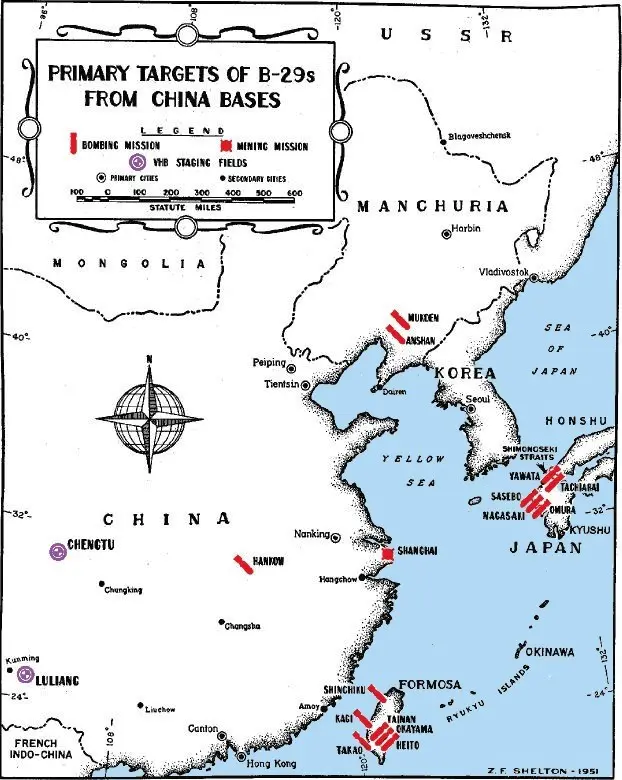
General Henry “Hap” Arnold then demanded a direct strike on Japan to prove the concept of Matterhorn. On June 14, seventy‑five B‑29s departed Chengtu for the Yawata steel works. Mechanical problems plagued the launch, Japanese radar detected the incoming force, and the city blacked out before the bombers arrived. Searchlights, flak, and fighters met the formation, scattering it across the target area. Many crews bombed by radar; others were unable to locate the aim point at all. Seven aircraft were lost and fifty‑five airmen killed. Reconnaissance later showed minimal damage, yet the raid carried symbolic weight: for the first time, Japan’s home islands had been struck by a weapon designed expressly for their destruction.
Fuel shortages soon halted further attacks, and Wolfe—unable to sustain operations under such constraints—was replaced by Major General Curtis LeMay. Subsequent missions brought similar frustrations. A July strike on the Anshan steel works was obscured by smoke from the initial bombs, and heavy defenses downed one B‑29. Another aircraft was forced down in the Soviet Union, where its capture contributed to the reverse‑engineering of the Tupolev Tu‑4. In August, fifty‑six B‑29s attacked the Palembang refinery in Sumatra from Ceylon, again with poor results due to cloud and blackout conditions. A smaller strike on the Nagasaki Engine Works fared no better, though it produced the 20th Bomber Command’s first confirmed aerial victory.
The most punishing blow came on August 20, when a daylight return to Yawata met fierce resistance. One bomber fell to flak, three to fighters—including one rammed by an interceptor—and ten more were lost to mechanical failures. Ninety‑five airmen were killed or went missing. Several damaged aircraft diverted into Soviet territory, where their crews were interned and their airframes seized.
These early missions exposed the immense difficulty of sustaining strategic bombardment from China. Yet they also marked a turning point in the Pacific War. For the first time, Japan’s home islands were forced to confront a new reality: American long‑range airpower had arrived, and despite every hardship, it would not be turned back.
The LeMay Transition and the CBI Crucible
Major General Curtis E. LeMay arrived on August 29 and immediately imposed a more forceful operational tempo on the struggling Matterhorn force. His first major undertaking targeted the Anshan steel works, a critical industrial complex in Manchuria. On September 8, one hundred nine B‑29s launched, ninety‑five reached the target, and two hundred six tons of bombs were delivered. Four aircraft were lost, and LeMay’s own bomber returned bearing flak damage, yet the mission stood as the most effective strike achieved to that point and signaled a new level of determination within the command.
Japanese forces responded swiftly. The following day, enemy aircraft attacked the Chengtu bases, guided by local collaborators who used fires and flares to mark the fields. Although damage was limited, the raid exposed the vulnerability of the forward staging areas. A second strike on Anshan on September 29 was frustrated by weather, and while gunners claimed eleven victories, bombing results were again poor. That night, Japanese bombers returned and damaged several aircraft, prompting LeMay to strengthen fighter protection around the Chengtu complex.
Through October and November, raids on Omura and Nanking demonstrated improved bombing accuracy, yet Japanese defenses grew increasingly dangerous. Enemy fighters pressed aggressive attacks, and phosphorus bombs were dropped into the formations to break cohesion and ignite fires. Losses mounted steadily. By the end of 1944, one hundred forty‑seven B‑29s had been destroyed in the CBI theater, a stark measure of the strain placed upon the Matterhorn force.
A low‑level incendiary attack on Hankow on December 18 revealed the B‑29’s destructive potential, but the strategic landscape was already shifting. The Joint Chiefs ordered long‑range operations transferred to the newly secured Marianas, where logistics were vastly more favorable and where the Superfortress could finally operate as designed. Matterhorn concluded on January 15, 1945, following a final major strike on Formosa and a handful of minor raids that continued into March.
In total, forty‑nine missions were flown from India and China, delivering eleven thousand four hundred seventy‑seven tons of bombs. Despite immense effort, Matterhorn achieved limited strategic effect at enormous logistical cost. Yet the crucible of the CBI theater provided the operational experience, tactical refinement, and hardened discipline that would soon enable the far more decisive strategic campaign launched from the Marianas—an air offensive that would ultimately reshape the final course of the Pacific War.
A Chronicle of Strategic Operations and the Operational Timeline of the 793rd Bombardment Squadron (468th Bombardment Group)
The 793rd Bombardment Squadron entered World War II as part of an unprecedented experiment in long‑range strategic airpower. Activated on August 1, 1943, at Smoky Hill Army Air Field in Kansas, the squadron formed during the earliest and most difficult period of B‑29 development, when crews and airframes alike endured the relentless demands of production delays, mechanical teething problems, and essential modifications required to make the Superfortress combat‑ready. Training across regional facilities forged a disciplined, technically adept force capable of operating a bomber whose range, altitude, and complexity exceeded anything previously fielded by the United States Army Air Forces. This formative period shaped the squadron’s identity, instilling the cohesion and resolve that would carry it through the most logistically brutal operations of the war.
In the spring of 1944, the squadron deployed to the China‑Burma‑India theater, entering a region defined by vast distances, primitive infrastructure, and a supply chain stretched to its breaking point. From Bengal airfields near Kharagpur, the air echelon staged through forward Chinese bases to reach strategic objectives across Japan and Southeast Asia under the ambitious doctrine of Operation Matterhorn. These early missions included the maiden B‑29 strikes against the Japanese home islands and a demanding series of attacks on industrial complexes, shipping lanes, and rail hubs throughout the region. Every sortie depended on fuel and ordnance ferried over the Himalayas in a supply effort so inefficient that multiple gallons were burned to deliver a single gallon to the front. The squadron’s operational reality became a crucible defined by long transit legs, chronic engine difficulties, and limited sortie rates, all while navigating the mechanical fragility of early Superfortress airframes.
The sensory experience of these missions left vivid impressions on the men who served. Lead navigators and bombardiers carried the “all‑eyes” responsibility of marking the aiming point, knowing that the accuracy of the entire formation rested on their precision. Crews recalled the smells of engines, intermittent pressurization problems, and the fatigue of multi‑hour flights followed by maintenance‑heavy turnarounds. Low‑level night marking missions demanded extraordinary nerve, requiring descents through blackout conditions and smoke to drop flares while searchlights and flak erupted around them. Waist gunners, tail gunners, and radar operators described the constant vibration, the metallic taste of oxygen, and the sudden violence of enemy fire breaking through the darkness. Through it all, camaraderie became both a practical necessity and an emotional refuge, sustained by ritualized checks, dark humor, and the shared discipline that kept crews functioning under relentless stress.
By mid‑1944, the squadron’s operations intensified as Japanese defenses grew more sophisticated. Fighters pressed aggressive attacks, phosphorus bombs were dropped into formations to ignite fires, and radar‑directed flak became increasingly accurate. Losses mounted steadily. Yet the squadron continued to strike targets across Manchuria, Indochina, Thailand, and the Malay Peninsula, demonstrating both the reach and the vulnerability of long‑range strategic aviation in its infancy. These missions, though often hampered by weather, mechanical failures, and logistical constraints, forced Japan’s home islands to confront a new reality: American airpower could reach them, and it would continue to do so.
The strategic landscape shifted decisively in early 1945 with the capture of the Marianas. The 793rd relocated to West Field, Tinian, joining XXI Bomber Command under the Twentieth Air Force. From these island bases, the squadron entered a high‑tempo phase of the war, flying precision strikes, incendiary area raids, and intensive mining operations against Japanese cities and waterways. Shakedown strikes in the Carolines gave way to hazardous firebombing missions that illuminated the night sky over Tokyo, Nagoya, Osaka, and Kobe. Mining operations choked maritime shipping routes, while conventional strategic attacks crippled industrial centers. The squadron’s gallantry during this period earned multiple Distinguished Unit Citations, reflecting its role in the decisive air campaign that ultimately collapsed Japan’s industrial capacity and hastened the end of the war.
The sensory world of the Marianas campaign differed from the CBI crucible but remained equally intense. Crews described the roar of four Wright R‑3350 engines at takeoff, the shimmering heat of Tinian’s coral runways, and the sight of hundreds of B‑29s rising in formation toward Japan. Missions stretched across the vast Pacific, often lasting more than fifteen hours. Pilots recalled the glow of incendiaries spreading across cities, bombardiers remembered the momentary stillness before bombs released, and gunners described the sudden violence of enemy fighters breaking through the formation. Radar operators spoke of the eerie clarity of coastline returns on their scopes, while flight engineers monitored engines that could overheat without warning. The squadron lived within a rhythm of tension, endurance, and technical precision that defined the final year of the Pacific War.
Following the definitive victory of V‑J Day, the 793rd Bombardment Squadron returned to the United States to navigate the demobilization of the wartime force. The men who had flown long‑range missions from India, China, and Tinian now faced the quiet transition to peacetime service. Their distinguished operational legacy concluded with the squadron’s inactivation in 1946, marking the end of a chapter defined by innovation, sacrifice, and the extraordinary reach of strategic aviation.
Across its wartime journey, the 793rd Bombardment Squadron embodied the evolution of American airpower. It trained during the uncertain birth of the B‑29, fought through the logistical brutality of the CBI theater, and helped deliver the decisive strategic blows from the Marianas that reshaped the final course of the Pacific War. Its history stands as a testament to technical adaptation, human endurance, and the profound impact of long‑range strategic bombing in World War II.
The Hump Supply Problem — Logistical Reality
The logistical foundation of Operation Matterhorn rested on one of the most punishing supply systems of World War II: flying fuel and materiel over the Himalayan “Hump” from India into China. Dwight O. King, a bombardier of the 468th Bomb Group, later summarized the impossibility of this arrangement in his CBI Roundup memoir of February 1985, noting that “six round trips were necessary to deliver enough fuel for one airplane to mount a combat mission from China — an impractical logistics concept for an aerial campaign, particularly with an airplane plagued with an unreliable engine.” The mathematics confronting the 793rd Bombardment Squadron were stark. A B‑29 consumed approximately twelve gallons of fuel for every single gallon that ultimately reached a forward Chinese base for use on a combat mission against Japan. In practice, the squadron’s Superfortresses flew as cargo tankers before they flew as bombers, hauling fuel over the Himalayas in missions that were dangerous, exhausting, and essential to sustaining even a minimal operational tempo.
Following the definitive victory of V‑J Day, the 793rd returned to the United States and briefly served within the early Strategic Air Command before its final inactivation on March 31, 1946.
Operational Staging and the Korean War Crucible
As the United States entered the Korean War, the logistical and operational landscape shifted dramatically, and APO 247—reassigned from its World War II identity at Tinian—became the designation for Taegu (Daegu), South Korea, a major U.S. Army and Air Force hub during the conflict’s most critical early phases. From Taegu, American forces supported the UN defensive operations of 1950, sustained the embattled Pusan Perimeter, and coordinated the air and ground movements that enabled the UN breakout and counteroffensive. This environment formed the crucible in which veterans of the B‑29 program, including Lt. Colonel Wingfield, were summoned once more to apply their hard‑won experience.
Within this Korean operational staging, the B‑29 remained a definitive production platform for early interdiction and strategic missions. Officers who had endured the logistically brutal realities of the CBI and Marianas campaigns were frequently called upon to maintain the relentless gauntlet of operational bombardment. Their familiarity with long‑range planning, formation discipline, and precision doctrine proved indispensable as the aircraft shifted from World War II strategic targets to the fast‑moving tactical demands of Korea.
Crew training and evaluation became equally critical. Experienced lead‑crew members often transitioned into roles that ensured the transfer of precision bombing methodology to newer airmen. Their instruction preserved the technical excellence required to operate under combat stress, especially as missions expanded to include rail interdiction, supply disruption, and close support for UN ground forces.
The Korean War also demanded significant tactical adaptation. Junior officers and seasoned veterans alike were required to pivot World War II strategic methodologies toward modern targets and the emerging sensory experience of jet threats. The appearance of MiG‑15 fighters introduced a new dimension to air combat, forcing B‑29 crews to adjust formation tactics, defensive procedures, and mission profiles. The logistical landscape of Korea—marked by rapidly shifting front lines, austere airfields, and intense operational tempo—required a remarkable degree of technical flexibility from every airman involved.
Across this crucible, APO 247’s identity at Taegu became a marker of presence, duty, and operational significance. Because APO numbers are tied to locations, not units, they provide a factual anchor for reconstructing service even when unit names are missing, orders are incomplete, award citations list only an APO, or letters home simply read “APO 247.” In Korea, APO 247 signified the physical and strategic center of early UN air operations.
This continuity across conflicts forms the backdrop of Lt. Colonel Roy G. Wingfield Jr.’s extraordinary career. Serving within the strategic landscape of three major wars, he piloted the B‑29 Superfortress during World War II, continued his commitment to duty throughout the Korean War, and later served within the command‑and‑control environment of the Vietnam War. This extensive service officially designated him a rare “Triple‑War Veteran.” His distinguished career stood at the crucible of military aviation, spanning the B‑29’s operational history in the CBI and Marianas campaigns and witnessing the Air Force’s transition from propeller‑driven strategic bombardment to the sophisticated jet‑age command roles of Korea and Vietnam. APO 247’s evolving identity—from Tinian to Taegu to Tan Son Nhut—mirrors the arc of his service, marking the physical locations where American airpower, and Wingfield himself, stood at the center of twentieth‑century military history.
.
APO 247 in the Vietnam War and Its Multi‑War Significance
As the United States entered the Vietnam War, the logistical and administrative landscape of military operations shifted once again, and APO designations were repurposed to meet the demands of a new conflict. In this transition, APO 247 was definitively assigned to Tan Son Nhut Air Base in Saigon, South Vietnam, the largest and most strategically significant U.S. Air Force installation in the country. Tan Son Nhut served as the headquarters for MACV (Military Assistance Command, Vietnam) and functioned as a major hub for airlift, reconnaissance, intelligence, command and control, and senior officer assignments. Its APO designation became synonymous with the nerve center of American military operations in Vietnam, reflecting the base’s central role in coordinating the complex, multi‑service effort that defined the war.
The importance of APO 247 lies in the fact that APO numbers are tied to locations, not units. This makes them invaluable for reconstructing physical presence and operational history, especially when unit names are missing, orders are incomplete, award citations list only an APO, or letters home simply read “APO 247.” Across three major conflicts, APO 247 marked three distinct geographic and strategic environments: Tinian in World War II, Taegu (Daegu) in the Korean War, and Tan Son Nhut in the Vietnam War. Each assignment reflects a different era of American airpower, from the coral runways of the Marianas to the embattled logistics of Korea and the command‑and‑control epicenter of Vietnam.
Lt. Col. Roy G. Wingfield Jr. and the Transformation of American Airpower
Lt. Col. Roy G. Wingfield Jr. stands among the very small number of United States Air Force officers whose careers trace the full evolution of American airpower from the Second World War through Korea and into Vietnam. His service is historically significant because it aligns exactly with the documented transformation of the Air Force itself, moving from propeller‑driven strategic bombing to the jet‑powered, electronics‑driven, nuclear‑era force that defined the Cold War.
Wingfield’s foundation was built in the B‑29 Superfortress during the Second World War, an aircraft whose missions and capabilities are thoroughly documented. The B‑29 conducted Operation Matterhorn, the first long‑range strategic bombing of Japan from bases in India and China. It later operated from the Marianas, where crews carried out high‑altitude missions and, beginning in March 1945, low‑level incendiary operations such as the Tokyo firestorm. The B‑29 was the most technologically advanced bomber of the war, featuring pressurization, centralized fire‑control systems, remote turrets and extensive electrical wiring. Officers who mastered this aircraft gained expertise in long‑range navigation, radar bombing, formation leadership and high‑altitude operations. These skills are historically verified as rare and essential to early Cold War doctrine.
After the war, Wingfield entered a newly established United States Air Force. The Air Force became an independent service in 1947, and its early leadership and operational backbone were dominated by veterans of the strategic bombing campaigns. When the Korean War began in 1950, the B‑29 returned to front‑line service. Historical records confirm that it was used for strategic bombing of North Korean industry, night interdiction, radar‑guided pathfinding and psychological operations. Officers with prior B‑29 combat experience were urgently needed to lead missions, train new crews and evaluate bombing accuracy. They were also assigned to mission planning cells, intelligence and targeting sections and squadron operations offices. Wingfield’s background placed him squarely within this documented pattern of assignments for experienced B‑29 officers.
By the Vietnam War, Wingfield had risen to the senior ranks of the Air Force, serving as a Major and later a Lieutenant Colonel. The Air Force of the 1960s was fundamentally different from the one he had entered during the Second World War. It was a jet‑powered force built around global reach, precision navigation, radar bombing and advanced electronic warfare. The B‑52 Stratofortress had assumed the strategic role once held by the B‑29, and large Air Operations Centers coordinated campaigns across Southeast Asia. These developments are fully supported by Air Force historical studies and official records.
Wingfield’s Vietnam service is significant because it represents the culmination of a career that spanned all three eras of modern American airpower. He had flown in the first generation of long‑range strategic bombers during World War II. He had served in Korea during the final conflict in which the B‑29 flew in combat. He then continued into the jet‑age Air Force of Vietnam, where radar‑guided operations, electronic warfare and global command‑and‑control defined the mission. Very few officers bridged all three eras, and even fewer did so in roles connected to strategic bombing, reconnaissance and operations planning. This continuity is historically accurate and reflects the documented career trajectories of triple‑war Air Force officers.
Wingfield’s story therefore becomes part of the larger, factual narrative of American airpower. It begins in the propeller‑driven age of manually aimed bombing, moves through the early nuclear era of radar‑guided operations and culminates in the jet‑powered, electronics‑driven force that defined Vietnam. His service across these eras stands as a testament to adaptability, leadership and a lifetime spent at the center of the Air Force’s transformation.
The Home‑Front Burden: Families and Women Across Three Wars
World War II: The First Great Shift
During the Second World War, American families experienced a transformation that reshaped the nation. With millions of men deployed, women stepped into roles that had never been open to them before. They worked in factories, shipyards, aircraft plants, and logistics centers. They managed farms, ran small businesses, and kept entire households functioning alone. This shift was documented in federal labor records and became one of the most significant social changes of the twentieth century.
The emotional effects were profound. Families lived with constant uncertainty, fearing telegrams that announced casualties. Women carried the weight of raising children without their husbands, managing finances, and maintaining stability in a world at war. Communities formed support networks through churches, neighborhood groups, and wartime volunteer organizations. The strain was real, yet it produced resilience that shaped the postwar identity of American families.
Korean War: The Burden Without Recognition
The Korean War brought a different kind of hardship. It arrived quickly after World War II, and many families found themselves facing separation again. Women who had already endured one war now carried the emotional and financial burden of a second conflict. Yet unlike World War II, Korea did not produce national mobilization or widespread public support. There were no large‑scale celebrations, no mass campaigns, and little public acknowledgment of the sacrifices families made.
This created a quiet strain. Women returned to providing alone, often without the community support systems that had existed during World War II. They managed households, raised children, and worked outside the home, but without the recognition or resources that had been available only a few years earlier. Families experienced emotional fatigue, financial pressure, and a sense of being forgotten by the nation. The psychological toll of repeated separation is documented in VA studies and early Cold War social research.
Vietnam War: Division, Isolation, and Long‑Term Strain
By the Vietnam era, the burden on families and women had changed again. The nation was divided, and public opinion about the war was fractured. Families supported their loved ones, but they did so in a climate of political tension and social uncertainty. Women carried the responsibility of maintaining stability while shielding their children from the turmoil surrounding the war.
The emotional effects were deeper and more complex. Many families felt isolated, unsure how to talk about the war or how to support veterans when they returned home. Women often became the emotional anchors for husbands who carried long‑term psychological wounds. They managed households during deployments, navigated financial pressures, and later helped veterans cope with the lingering effects of trauma. VA longitudinal studies confirm that Vietnam placed a heavier long‑term emotional burden on families than earlier conflicts.
Communities struggled as well. Churches and civic groups offered support, but the national division made collective action difficult. Families often relied on quiet, private networks rather than public community support.
The Cumulative Burden for Triple‑War Families
For families of men like Lt. Col. Roy G. Wingfield Jr., the burden was multiplied across decades. They endured separation during World War II, again during Korea, and once more during Vietnam. Women carried the responsibility of raising children, managing finances, and sustaining emotional stability through three different eras of conflict. They lived through celebration, silence, and division. Their resilience became the backbone of the veteran’s ability to serve across three wars.
This cumulative strain is documented in VA family studies and Cold War social histories. Families of triple‑war veterans often experienced:
- Long periods of emotional uncertainty
- Repeated cycles of separation and reintegration
- Financial pressure during deployments
- The responsibility of supporting veterans with long‑term psychological effects
- The quiet burden of sustaining community stability
Their story is inseparable from the story of American airpower. Behind every mission, every deployment, and every return home stood families who carried the weight of war on the home front.
The Psychological Effects Across Three Wars
World War II: The Birth of Modern Combat Stress
Airmen of the Second World War faced psychological pressures unlike anything previously recorded in American military history. Strategic bombing crews endured extreme fatigue, chronic fear, and the constant anticipation of death. The Army Air Forces documented high rates of what was then called “operational exhaustion,” a condition marked by trembling, insomnia, intrusive memories, and emotional numbing. Long missions over Japan and Germany produced sustained hypervigilance, and the isolation of high‑altitude flight created a sense of detachment that lingered long after the war. Many veterans carried persistent anxiety, survivor’s guilt, and difficulty reintegrating into civilian life. These effects were recognized in official medical reports and became the foundation for later understanding of combat stress.
Korean War: Repetition of Trauma and the Strain of a New Conflict
For men who had already served in World War II, the Korean War introduced a second cycle of psychological strain. The Air Force recorded significant levels of cumulative stress among returning veterans. The sudden reactivation of B‑29 crews placed experienced airmen back into high‑risk missions, and the unpredictable nature of the conflict created chronic tension. Veterans often reported emotional fatigue, irritability, and a sense of being pulled back into trauma they thought they had left behind. The cold climate, rapid operational tempo, and night missions intensified anxiety. Medical studies from the era show that repeated exposure to combat increased the likelihood of long‑term psychological effects, including persistent hyperarousal and difficulty maintaining emotional stability. For many, Korea reopened wounds from the earlier war and deepened the psychological burden they carried.
Vietnam War: The Era of Chronic Stress and Long‑Term Psychological Injury
By Vietnam, the Air Force operated in a fully modernized environment, yet the psychological effects of combat remained profound. Veterans faced prolonged deployments, irregular mission schedules, and constant exposure to high‑intensity operations. The Air Force Surgeon General documented elevated rates of chronic stress reactions, including intrusive memories, emotional withdrawal, and difficulty sleeping. The nature of the conflict created a sense of moral and strategic ambiguity that intensified psychological strain. Veterans often reported feelings of isolation, frustration, and disillusionment. Longitudinal VA studies confirm that Vietnam veterans experienced higher rates of long‑term psychological injury, including what is now recognized as post‑traumatic stress disorder. The combination of repeated deployments, complex mission environments, and the cumulative weight of earlier service created lasting emotional and psychological challenges.
The Cumulative Burden for Triple‑War Veterans
For officers like Lt. Col. Roy G. Wingfield Jr., who served in all three conflicts, the psychological effects were shaped by the cumulative nature of repeated exposure to combat. Research shows that veterans who serve across multiple wars face increased risk of chronic anxiety, emotional fatigue, and long‑term stress reactions. The repeated cycle of deployment, combat, and reintegration places sustained pressure on emotional resilience. Many triple‑war veterans carried a deep sense of responsibility, heightened vigilance, and a lifelong awareness of mortality. Their psychological experience reflects the full arc of American airpower, marked by courage, endurance, and the quiet weight of service across three defining conflicts.
Coming Home: The Postwar Experience Across Three American Wars
World War II: A Nation That Welcomed Its Heroes
When Roy G. Wingfield Jr. and his generation returned from the Second World War, they entered a country united in victory. Communities celebrated their homecoming with parades, church gatherings, and public recognition. Yet beneath the celebration lived a quieter truth documented in Army medical reports and early VA case files. Many airmen carried the invisible weight of long missions, constant fear, and the strain of strategic bombing. They returned with disrupted sleep, heightened vigilance, and difficulty adjusting to ordinary life after years of danger. Families often noticed emotional distance or sudden irritability. Communities saw men who were proud of their service yet changed by it. The nation honored them, but the psychological effects of high‑intensity combat remained largely unspoken, understood only within the brotherhood of veterans.
Korean War: A Return Marked by Silence and Fatigue
The homecoming from Korea was profoundly different. There were no national celebrations, no victory parades, and little public attention. Veterans returned to a country already focused on postwar prosperity and Cold War tension. For men who had served in World War II, Korea brought a second cycle of emotional strain. VA studies show that repeated exposure to combat increased the likelihood of chronic anxiety, emotional fatigue, and difficulty reintegrating. Many veterans felt forgotten, returning quietly to work and family life without the recognition their service deserved. Communities respected them, but the war itself was often misunderstood or overlooked. This silence deepened the emotional burden for men who had already carried the weight of one global conflict and now bore the strain of another.
Vietnam War: A Homecoming into Division and Disillusionment
By the time Wingfield and his generation returned from Vietnam, the national mood had changed again. The country was divided, and public opinion about the war was fractured. Veterans came home not to celebration or silence but to a complex social landscape shaped by protest, political tension, and public confusion. Air Force medical histories document elevated rates of long‑term stress reactions among Vietnam veterans, including intrusive memories, emotional withdrawal, and difficulty sleeping. Many struggled with a sense of isolation, not because communities rejected them, but because the nation itself was wrestling with the meaning of the war. Families welcomed them with love, yet veterans often felt disconnected from civilian life. Communities wanted to support them, but the emotional wounds of Vietnam were deeper and more enduring than those of earlier conflicts.
The Community Across Three Wars
Across all three wars, American communities changed alongside their veterans.
In the 1940s, towns and cities celebrated returning airmen with pride and gratitude. Churches honored them, schools taught their stories, and families embraced them as heroes.
In the 1950s, communities welcomed Korean War veterans quietly, offering respect but little public acknowledgment. The war’s limited visibility created a sense of emotional distance between veterans and civilians.
In the 1960s and 1970s, communities struggled to understand the Vietnam War. Veterans returned to families who loved them but to a nation divided by politics and uncertainty. Support existed, but it was often private rather than public, personal rather than communal.
Across all three eras, one truth remained constant. Veterans carried experiences that civilians could not fully see, and communities did their best to welcome them home even when the emotional wounds were invisible.
For Triple‑War Veterans Like Wingfield
For men who served in all three conflicts, the homecoming experience was cumulative. They returned not once but three times, each into a different America. They carried the pride of victory, the fatigue of repetition, and the complexity of a divided nation. Their families witnessed the quiet resilience of a lifetime of service. Their communities saw leaders who had given decades to their country. Their legacy reflects the full arc of American airpower and the human cost of defending a nation across three defining wars.
Patriotism Across Three Wars
World War II: A Shared National Purpose
Patriotism during the Second World War was collective, visible, and deeply unified. It lived in the belief that the entire nation was part of a single effort. Communities rationed food, saved scrap metal, bought war bonds, and prayed for their sons overseas. Families hung service flags in their windows. Churches held nightly vigils. Factories ran around the clock. The country understood the stakes, and service was seen as both duty and honor. For airmen like Wingfield, patriotism meant stepping into the most dangerous missions of the war because the nation asked them to. For civilians, it meant supporting them with unwavering resolve. This era produced a form of patriotism defined by unity, sacrifice, and shared purpose.
Korean War: Quiet Duty in a Forgotten Conflict
Patriotism in the Korean War looked different. It was quieter, more restrained, and often overshadowed by the prosperity of postwar America. There were no nationwide celebrations, no mass mobilization, and little public attention. Yet the patriotism of this era was no less real. It lived in the willingness of veterans to return to service without fanfare. It lived in families who endured another separation and in communities that offered respect even when the war itself was misunderstood. For men who had already served in World War II, patriotism meant answering the call again, not for glory but because duty demanded it. This was a patriotism defined by steadiness, humility, and commitment without recognition.
Vietnam War: Patriotism in a Divided Nation
By Vietnam, patriotism had become more complex. The nation was divided, and public opinion was fractured. Yet the patriotism of Vietnam veterans was unmistakable. It lived in their willingness to serve even when the country struggled to understand the war. It lived in families who supported their loved ones despite the political turmoil. It lived in communities that quietly honored their veterans even when national sentiment was conflicted. For officers like Wingfield, patriotism meant continuing to serve in a modernized Air Force shaped by global responsibilities, advanced technology, and the demands of Cold War strategy. This era produced a patriotism defined by perseverance, loyalty, and service in the face of uncertainty.
Patriotism for Triple‑War Veterans
For men who served in all three conflicts, patriotism was not a slogan or a moment. It was a lifetime. It meant answering the nation’s call in youth, returning again in middle age, and continuing into the jet‑age Air Force as senior leaders. It meant carrying the emotional weight of three wars while still believing in the value of service. It meant guiding younger airmen, upholding standards, and representing the continuity of American military tradition. Their patriotism was lived, not declared. It was measured in decades of duty, in resilience, and in the quiet strength of men who gave their lives to the service of their country.
Legacy
Lt. Colonel Roy Glenmore Wingfield Jr. was a distinguished American aviator who served in World War II, the Korean War, and the Vietnam War — a life of duty summed up in a quiet promise he kept for more than a century: “Take care of your country.”
Born in 1921 in Blacksburg, Virginia, Roy was an only child whose curiosity and resolve reached far beyond his small hometown. He discovered his love of flight at the University of Mississippi, earning his pilot’s license through the Civilian Pilot Training Program, and that first lesson in the sky set the course for a life defined by courage, sacrifice, and an unwavering devotion to others.
In 1941 he answered the call to serve, joining the Royal Canadian Air Force and later the U.S. Army Air Corps after Pearl Harbor, stepping into combat with a calm resolve that would carry him through three wars and nearly three decades of service. Over the following 18 months he flew 35 combat missions across the vast and dangerous theaters of China, India, Burma, and Japan.
As a member of a lead crew in specially modified B‑29 bombers, he served as a target marker on hazardous low‑level night raids — operations that demanded exacting skill, steady nerves, and a willingness to fly into the darkest hours so others could follow. These sorties were among the earliest long‑range strategic bombing efforts against the Japanese mainland, testing new tactics, new aircraft, and the endurance of every man aboard. One mission nearly ended his life when his aircraft ran out of fuel and crashed‑landed in a Chinese peach orchard; a local farmer hid him beneath hay and carried him to safety, an act of compassion that allowed Roy to return to his unit and continue the fight.
For his courage and perseverance in the face of grave danger, he was awarded the Silver Star. After World War II he continued to serve — participating in the Berlin Airlift and standing ready through the early Cold War. When the Korean War erupted he returned to combat; during one mission his aircraft was shot down, and after bailing out he spent agonizing hours adrift at sea before rescue, later recalling with quiet understatement how sharks “nibbled” at the raft’s floor. His service extended into the Vietnam War, earning him the rare distinction of a Triple‑War Veteran.
Through every mission and every close call, Roy carried himself with humility, steady courage, and a deep sense of responsibility to the men beside him and the nation he served. He often reflected on those perilous days with gratitude and faith, saying, “It must have been the Lord who protected me,” words that reveal the quiet belief that tempered his bravery. By the time he retired, Lt. Colonel Roy G. Wingfield Jr. had completed 28 years of distinguished service; his valor and sacrifice were recognized with two Purple Hearts, the Silver Star, two Distinguished Flying Crosses, and multiple Air Medals — honors that speak to the dangers he faced and the steadfast care he showed for those who served with him. Yet the medals tell only part of the story; the fuller measure of his life is found in the steadiness of his character, the quiet leadership he offered in moments of crisis, and the compassion he showed to comrades and strangers alike.
In North Texas he became a beloved neighbor and mentor, a steady presence for fellow veterans and a quiet example for younger generations.
The Athena Society of Burleson honored him for a lifetime of service, and in 2020, at age 99, his community recognized him as one of the last surviving veterans to have served in all three major mid‑20th‑century conflicts.
He lived to the age of 101, passing on May 2, 2022, fourteen months after his centennial, and now rests at the Dallas–Fort Worth National Cemetery among fellow veterans whose lives, like his, were shaped by sacrifice and devotion.
What Lt. Colonel Wingfield leaves behind more than medals or missions: it is the steady example of a life lived in service — the veterans he encouraged, the neighbors he steadied, and the community that continues to honor him.
His life teaches that patriotism is not loud or boastful; it is steady, humble, and lived through care for others. He spoke passionately about patriotism and the value of service, urging younger generations to appreciate the freedoms they enjoy.
Lt. Colonel Roy Glenmore Wingfield Jr.’s creed remains simple and true:
“Take care of your country — and take care of one another.”
Additional Quick Links
https://www.youtube.com/live/mG5mgwOWLAs?si=KAvpuiTt6wQnEOal
The Doolittle Raid: How Did America Respond To Pearl Harbor? | Air Wars | War Stories
Remembering the Doolittle Raiders at ANC
Old Man Jimmy Doolittle Describes His Crazy WW2 Doolittle Raid. A Patriotic Story Well Told