
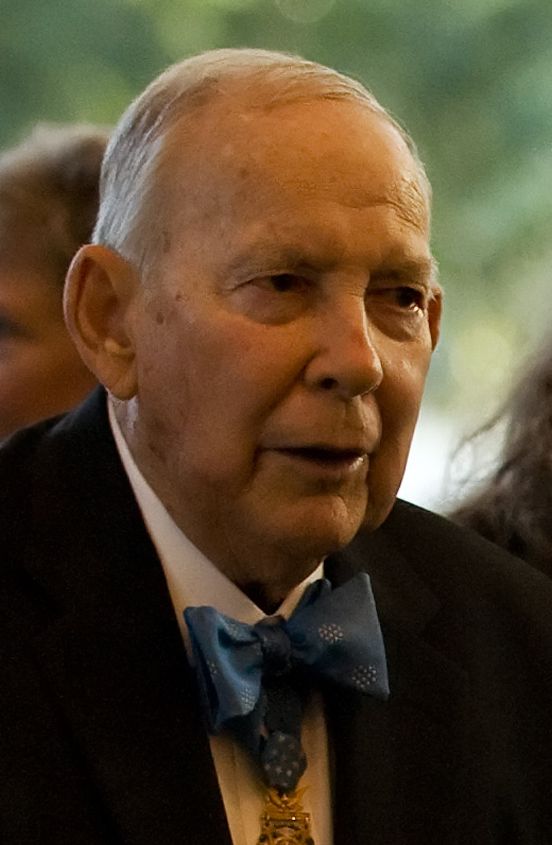
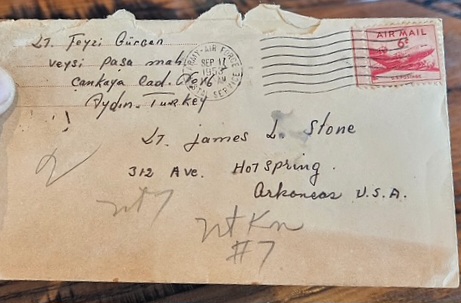
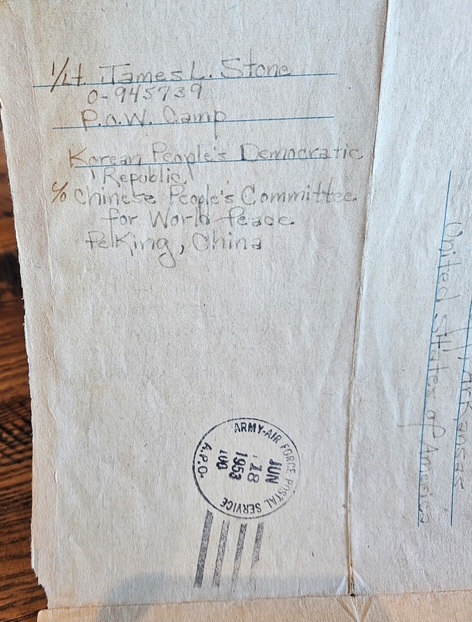
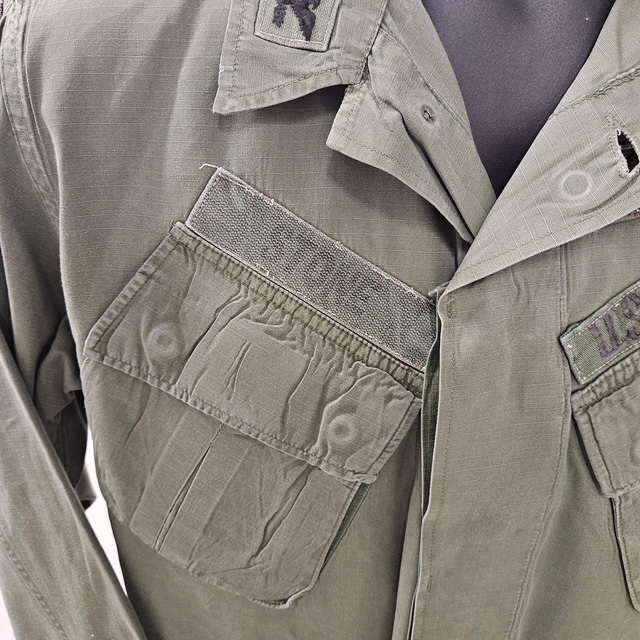
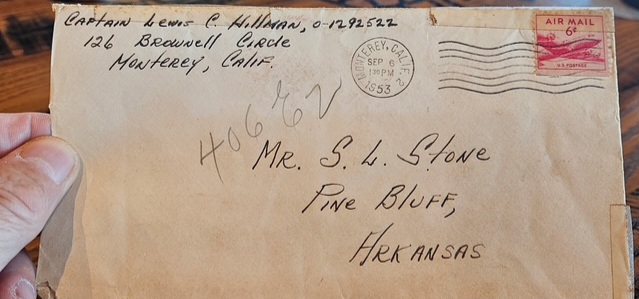
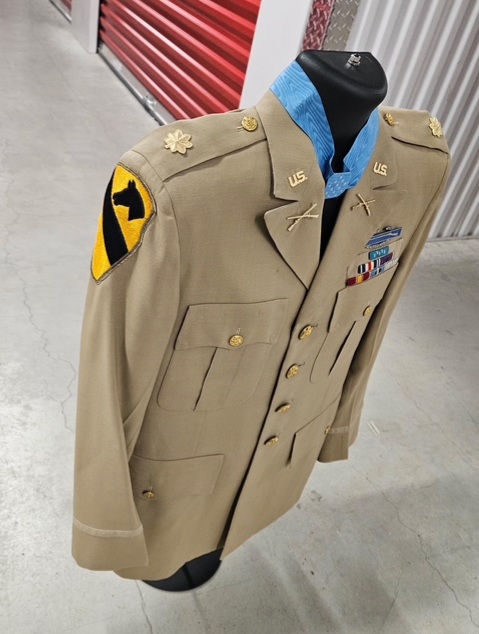
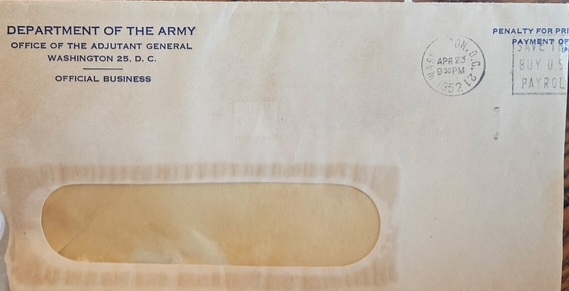
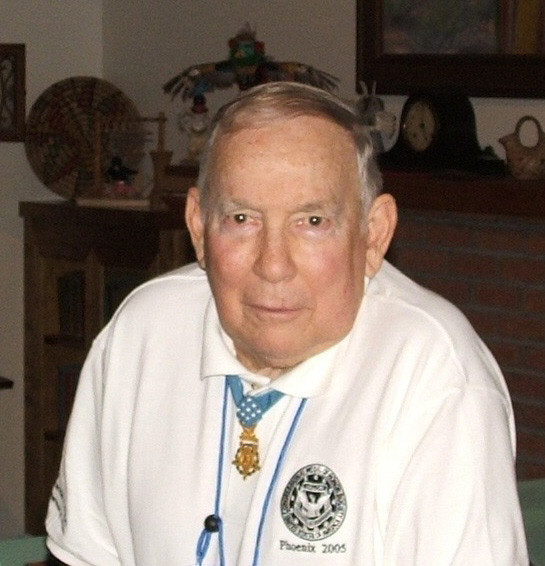
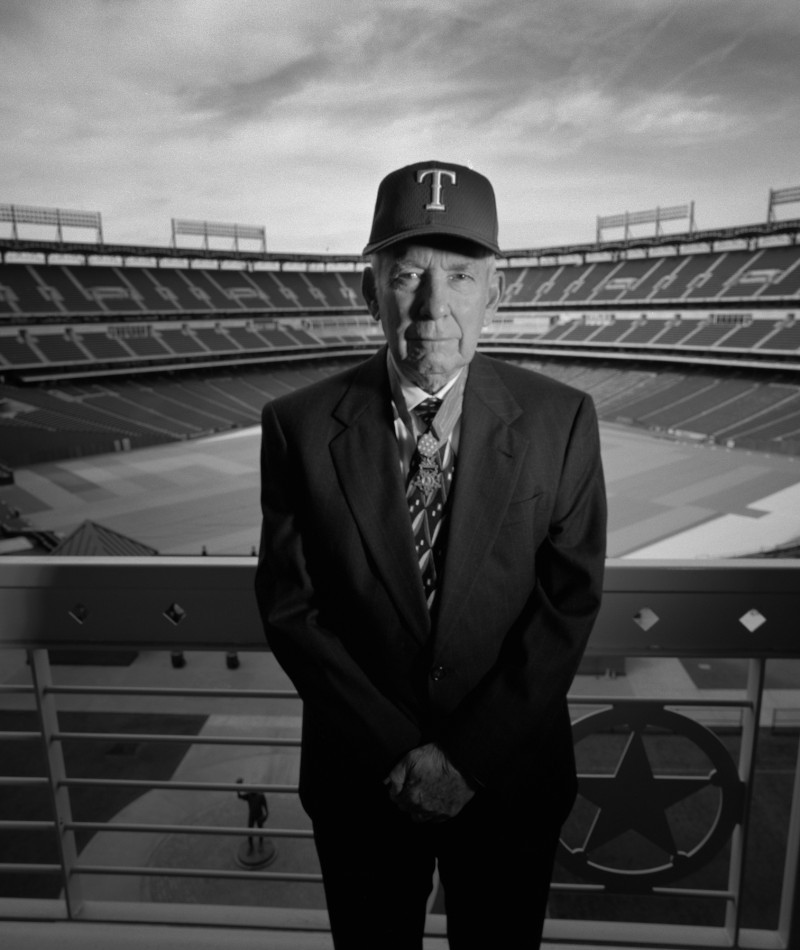


“I am an ordinary guy.” — Col. James L. Stone (1922–2012)
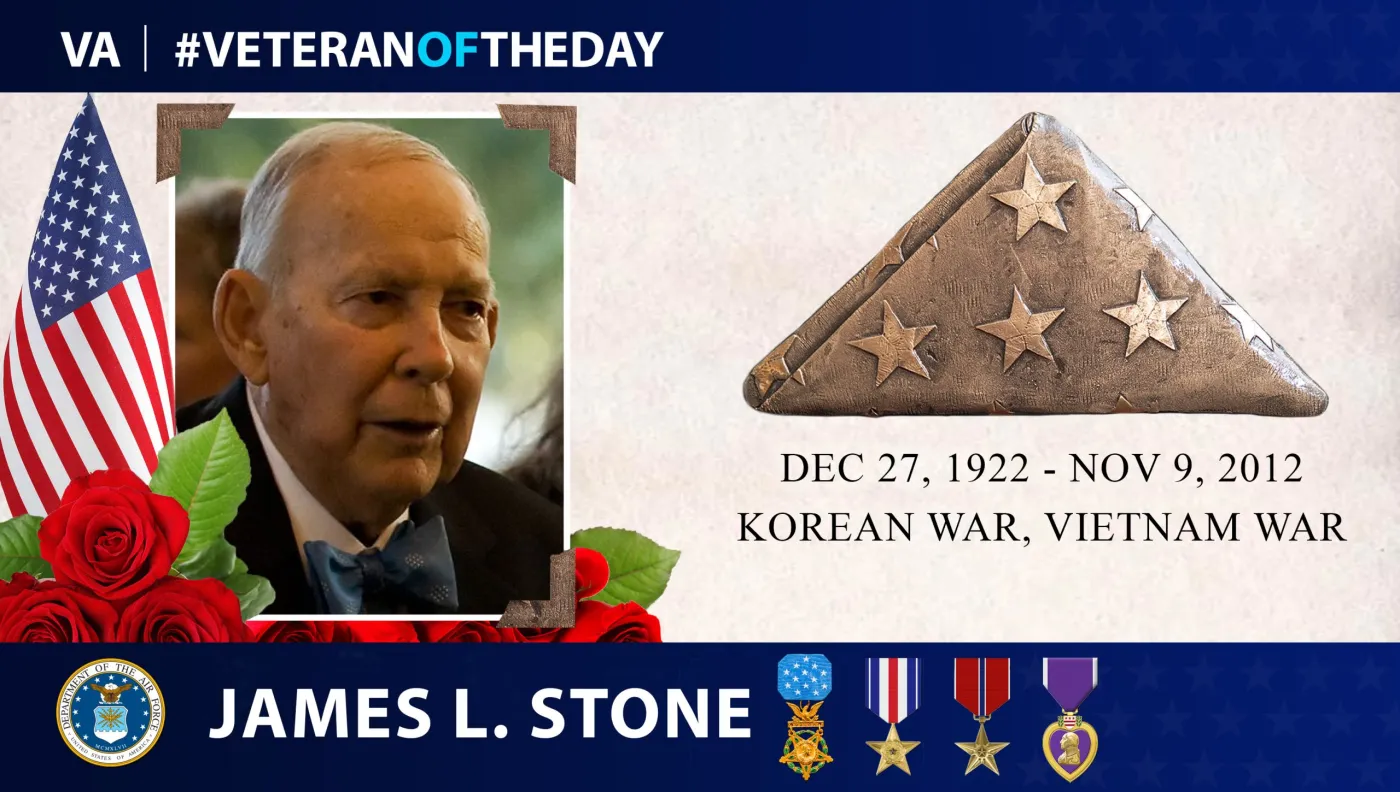
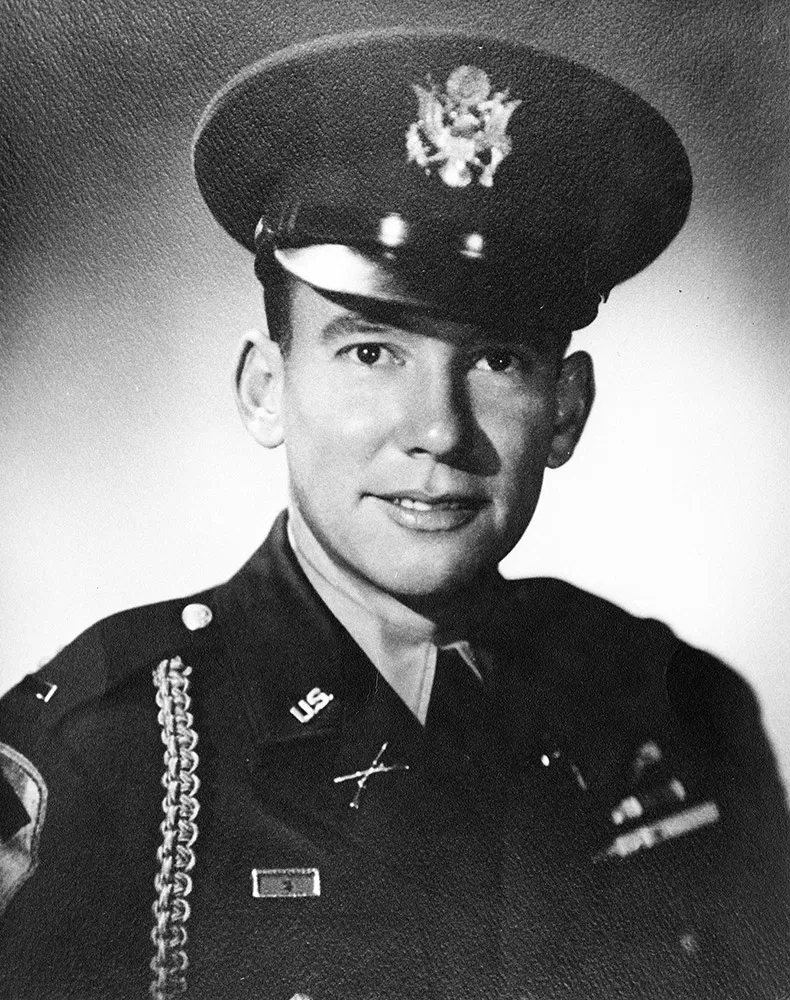
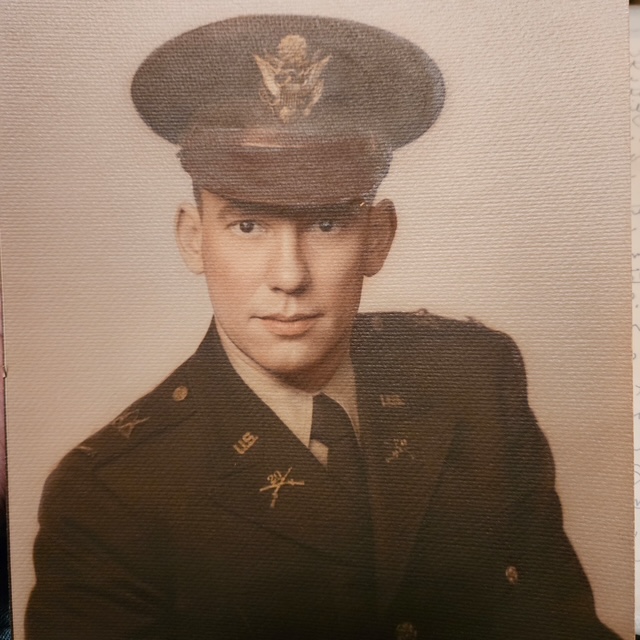
Colonel James Lamar Stone was born on December 27, 1922, in Pine Bluff, Arkansas, the son of firefighter Lamar L. Stone and Idell Stone. He grew up in Hot Springs (Garland County) and later attended the University of Arkansas in Fayetteville (Washington County), where he majored in chemistry, noting that math and zoology failed to hold his interest. He graduated in 1947.
Stone was initially called up for service in 1947, but the draft board sent him home, stating he was not needed. Determined to serve, he joined the Army Reserve Officers’ Training Corps (ROTC) summer camp at Fort Hood in Killeen, where he earned straight A’s. After completing his bachelor’s degree, he accepted a position with General Electric in Houston. In 1948, he was called to active duty and assigned to train at Fort Ord, California.
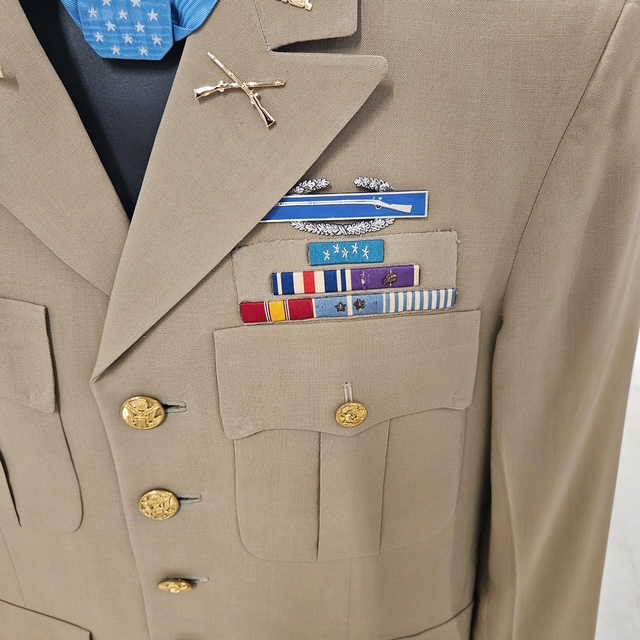
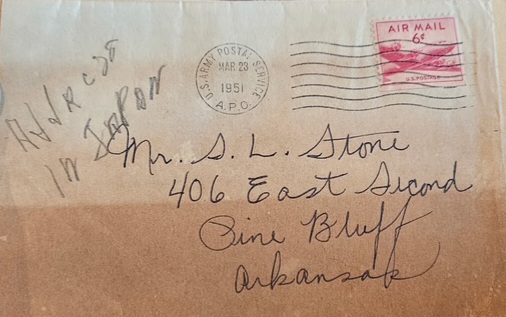
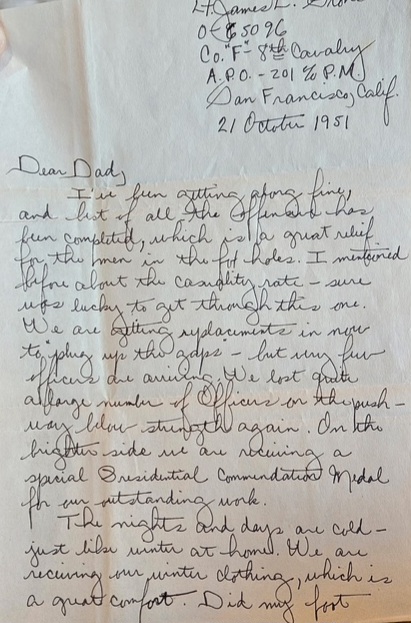
In March 1951, First Lieutenant Stone deployed to Korea as a member of Company E, Second Battalion, Eighth Cavalry Regiment, First Cavalry Division. For the next nine months, he alternated between Companies E and G due to the high casualty rates among frontline junior officers. His strongest bond remained with Company E. During this period, he earned the Silver Star for pulling two wounded men to safety after an attack on an enemy machine gun.
Lt. Stone was sent to Pusan and then to Chuncheon. On November 21, 1951, at 2 p.m., he led his platoon of about fifty men on a hilltop outpost above the Imjin River near Sakogae, North Korea. From this vantage point, Stone’s unit monitored Chinese movements along their front. At 9 p.m., the Chinese began firing white phosphorus shells to mark the American position, followed by an artillery barrage and a fireworks display—an ominous precursor to a major assault.
A battalion of roughly 1,000 Chinese soldiers advanced up the hill toward Stone’s platoon. In minutes, the outnumbered Americans were locked in desperate combat. Standing erect under fire, Stone issued orders, moved toward a malfunctioning flamethrower whose operator had been killed, repaired it, and handed it to another soldier. He even had to show one soldier how to load his M‑1 rifle, a moment he later recalled with disbelief.
The enemy attacked repeatedly throughout the night. After midnight, Chinese reinforcements increased their numbers to an estimated 800 men. Despite being wounded, Stone moved with a light machine gun from position to position, firing in two directions to repel advances. The fighting eventually devolved into hand‑to‑hand combat in the trenches.
Half of Stone’s platoon was killed. The remaining seven or eight survivors had each been wounded multiple times. Stone ordered them to retreat, offering to cover their withdrawal, but none would leave him or surrender. He later noted how his men closed in on enemy soldiers and wrested rifles from their hands.
Shot through both knees, Stone continued to encourage and direct his depleted platoon, fighting with his carbine as they repelled assault after assault for more than three hours. When the time came to retreat, he stayed behind to cover the survivors. The Chinese eventually overran the position just before dawn. According to his Medal of Honor citation, Stone’s “voice could still be heard faintly urging his men to carry on until he lost consciousness.” One soldier tended to Stone’s neck wound with nothing more than a bandage. Stone later remarked that he believed his lieutenant bars helped save his life.
By the end of the battle, 24 of the 48 platoon members had died, and 16 more were wounded. Nearly 550 of the roughly 800 attacking Chinese soldiers were killed.
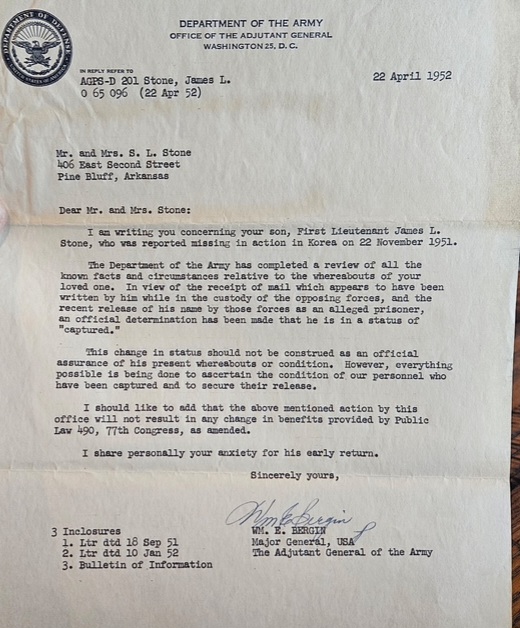
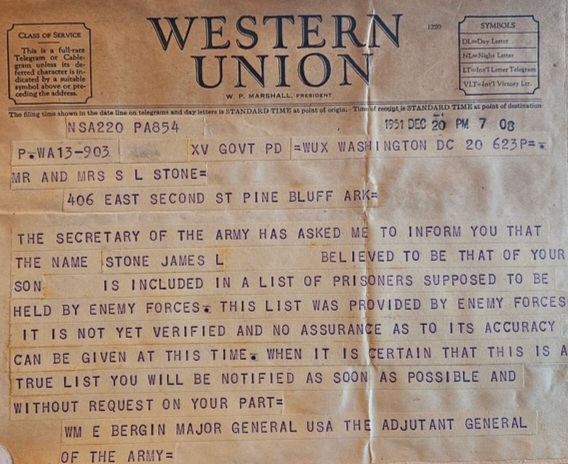
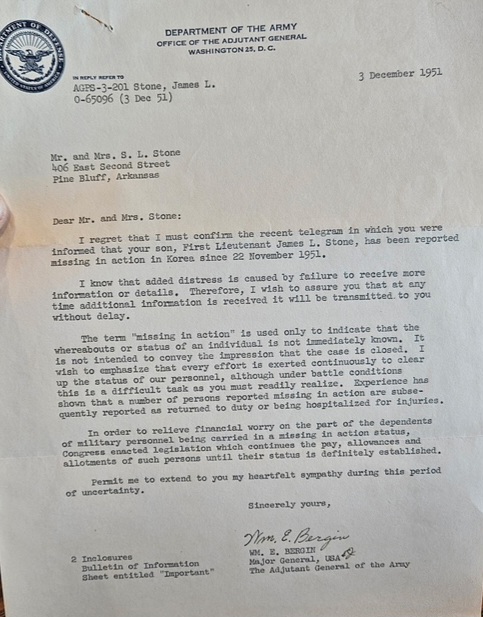
When U.S. forces recaptured the hill the next day, they discovered seven men missing, including Stone. One surviving soldier was found but was too shell‑shocked to provide details. Stone, unconscious, had been carried away on a stretcher by Chinese forces.
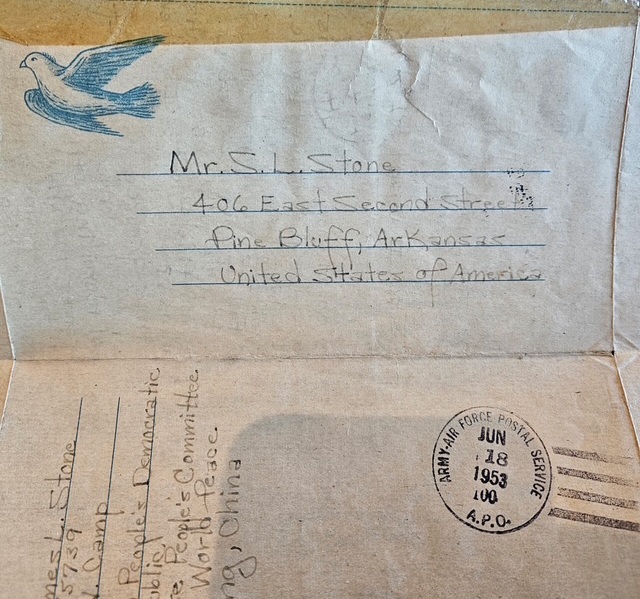
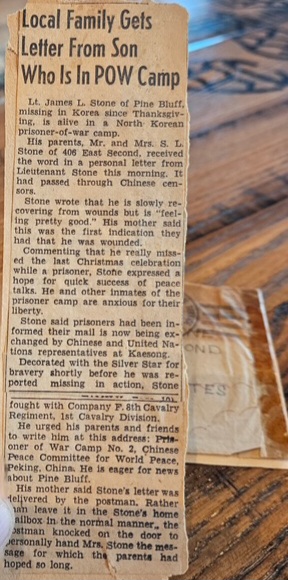
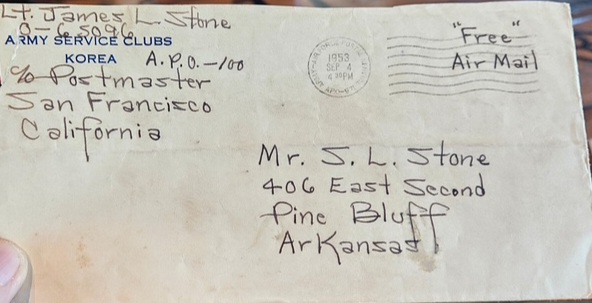
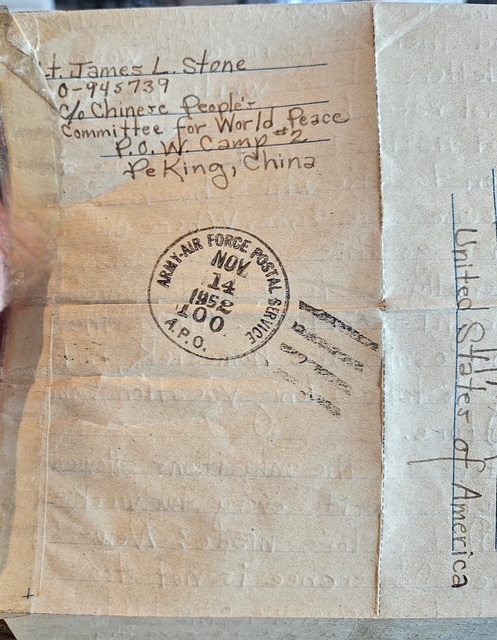
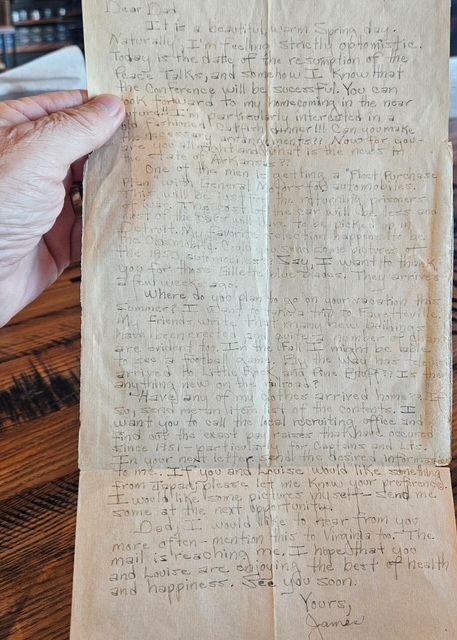
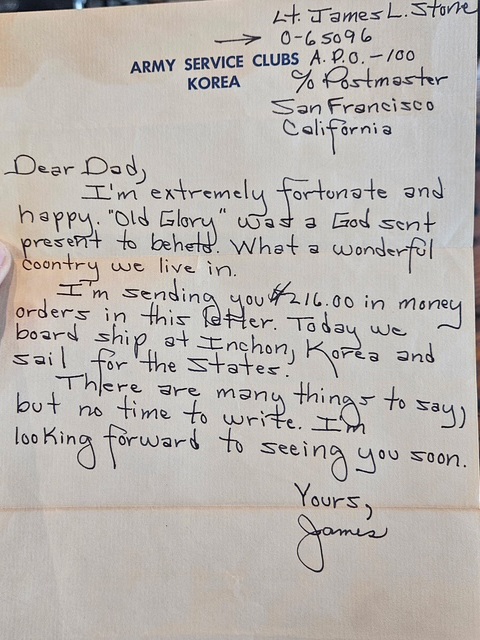
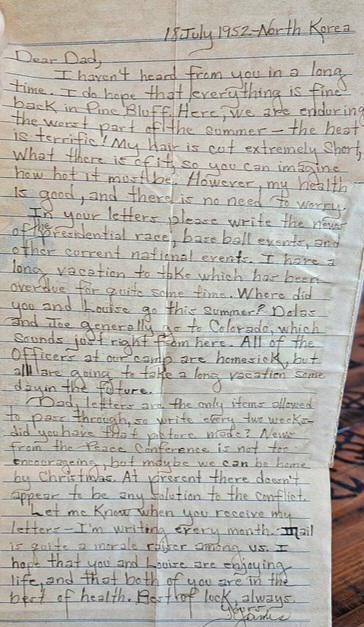
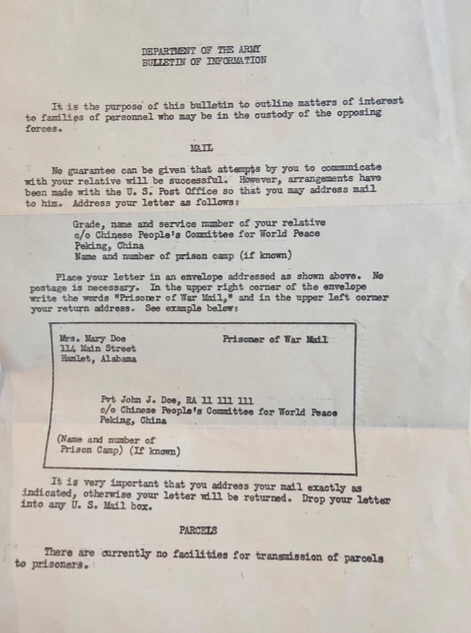
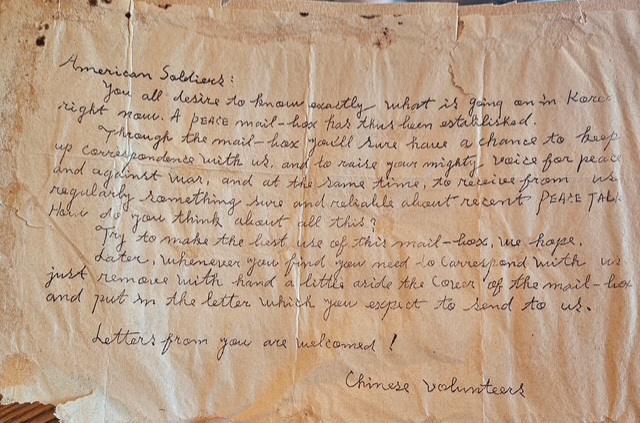
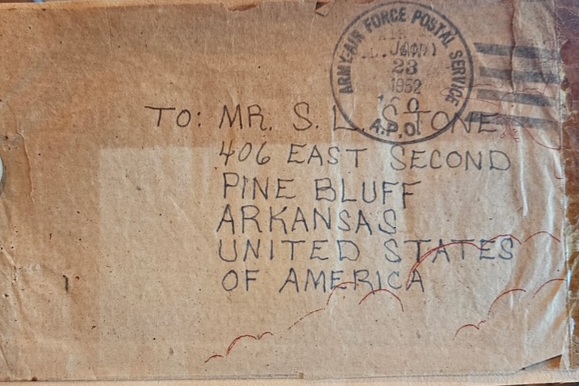
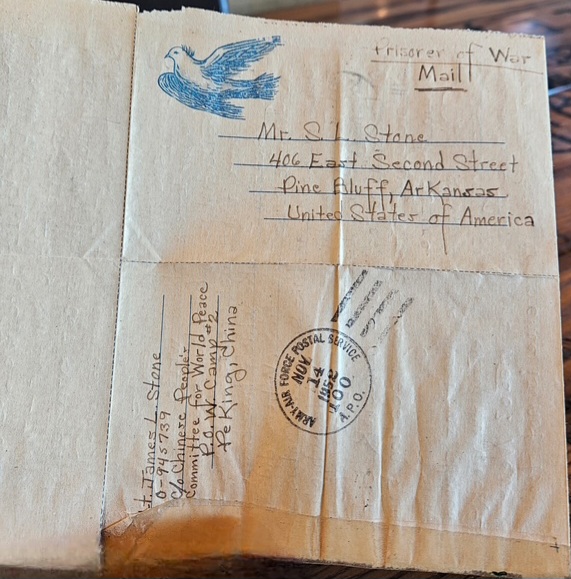
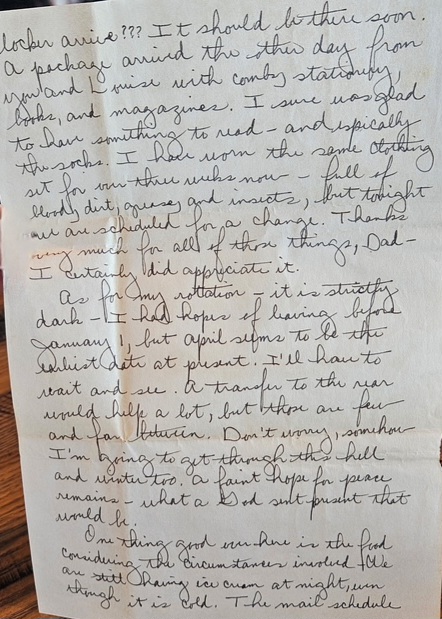
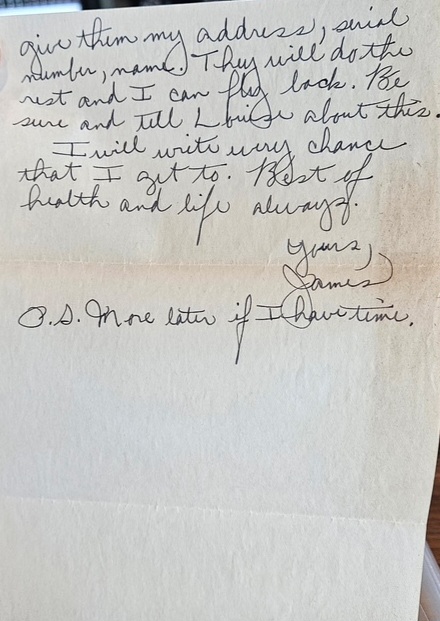
Lieutenant Stone spent twenty‑two months as a prisoner of war at Pyoktong Officers Camp No. 2 on the Yalu River near the Manchurian border. Conditions were harsh: little food, no medical care, rampant disease. Prisoners received only one bowl of rice per day. Stone later said that hunger became so consuming it overshadowed thoughts of home or family. Some of his letters reached relatives, confirming he was alive.
Peace negotiations stalled as the Chinese refused to accept the 38th parallel as the dividing line. Soviet Premier Joseph Stalin encouraged continued resistance, but his sudden death shifted the political landscape. President Eisenhower insisted on the 38th parallel and threatened to advance if the North Koreans did not agree. U.S. troops staged a mock amphibious landing, prompting North Korean forces to reposition and weakening their line, allowing Eisenhower to move troops forward twenty miles.
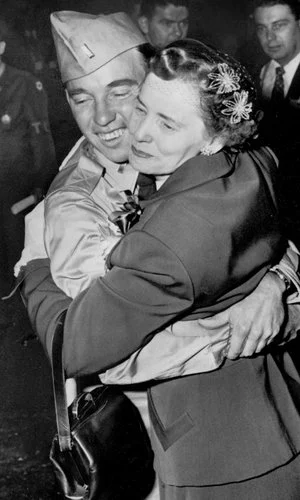
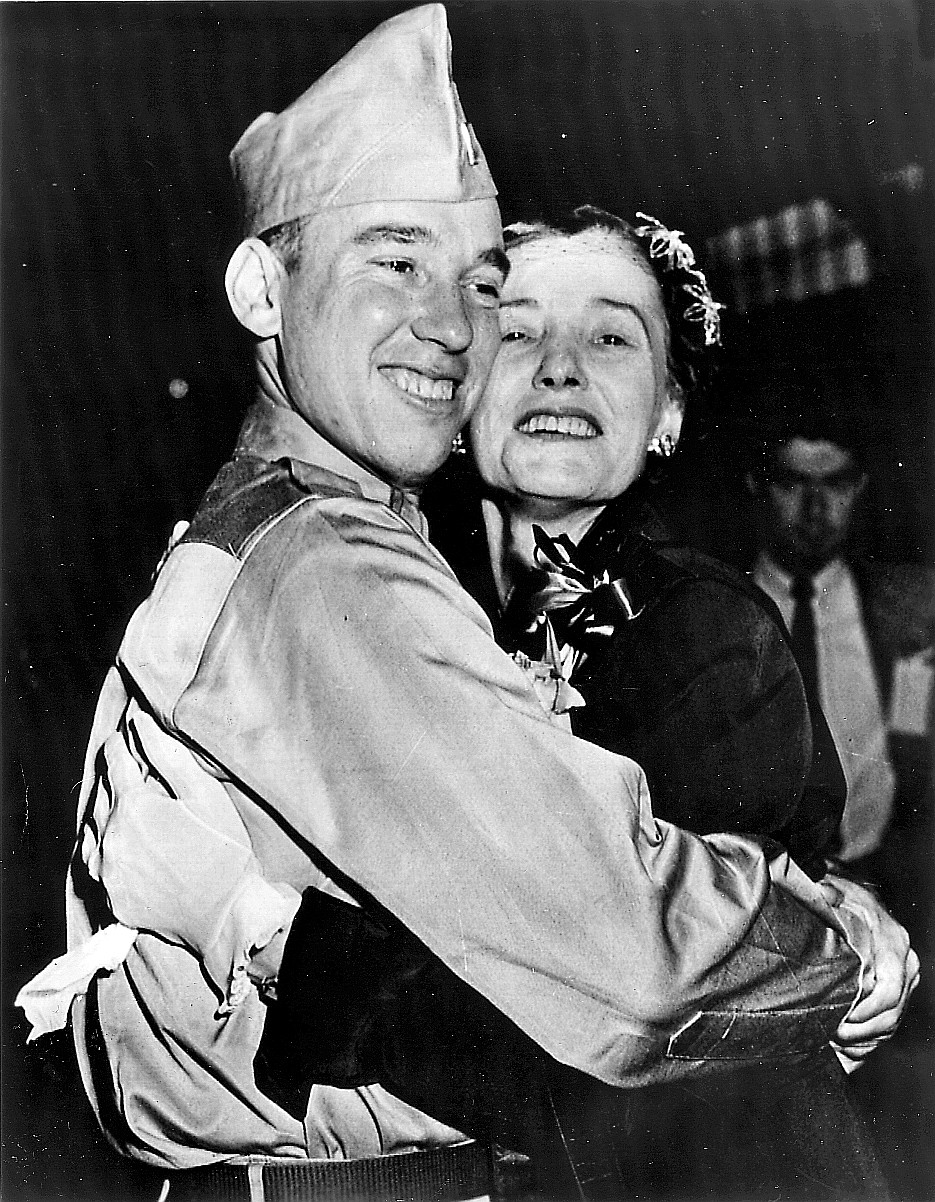
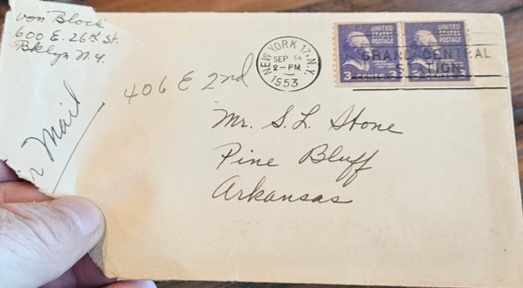
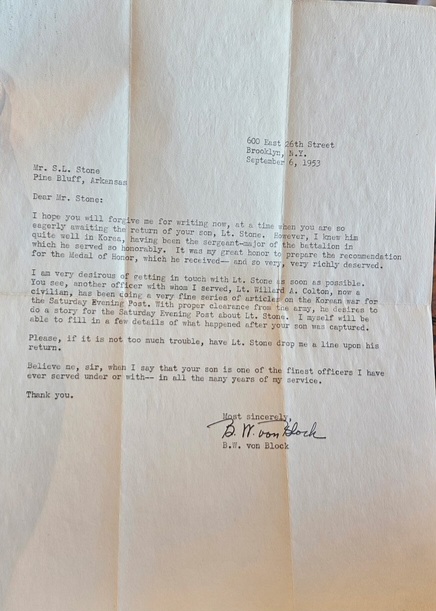
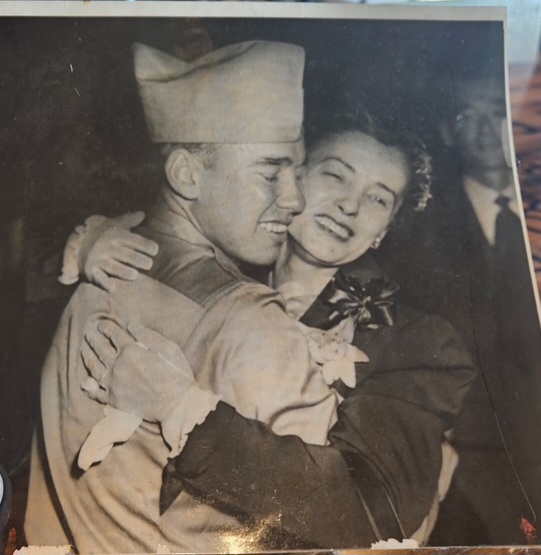
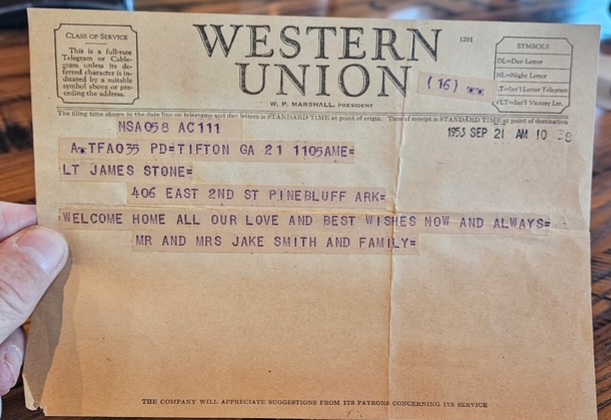
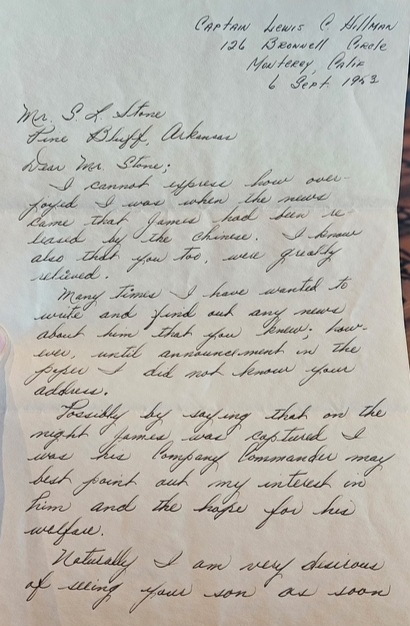
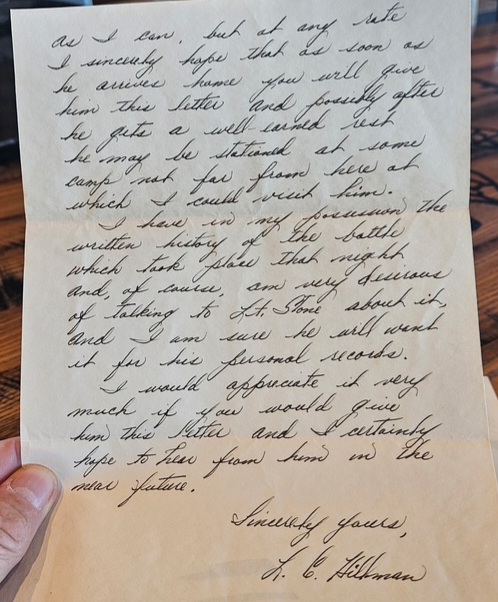
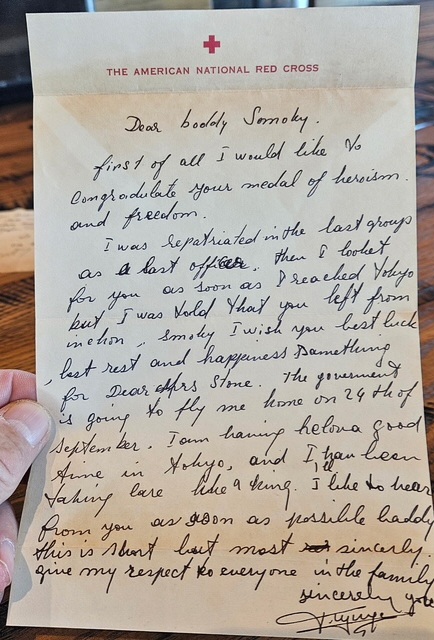
In September 1953, five weeks after the war ended, Stone was freed during the prisoner exchange known as the “Big Switch.” Seeing the American flag flying high after his release, Stone said it was “like being reborn.”
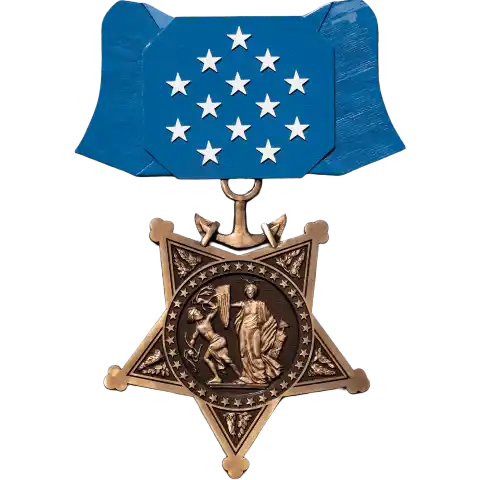
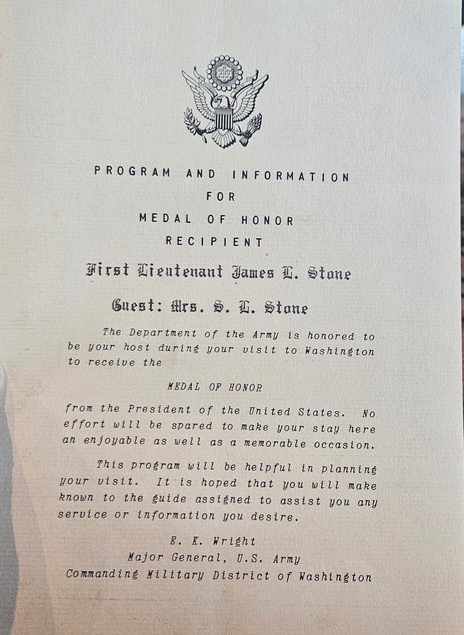
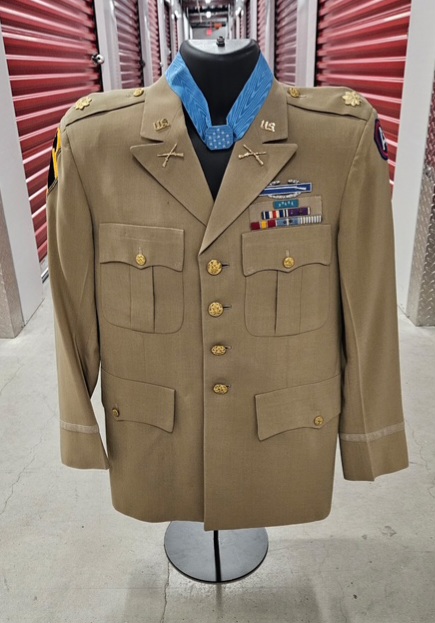
Shortly after his return, Stone learned he would receive the Medal of Honor for leading his platoon’s valiant but hopeless defense. He insisted the medal belonged to his men.
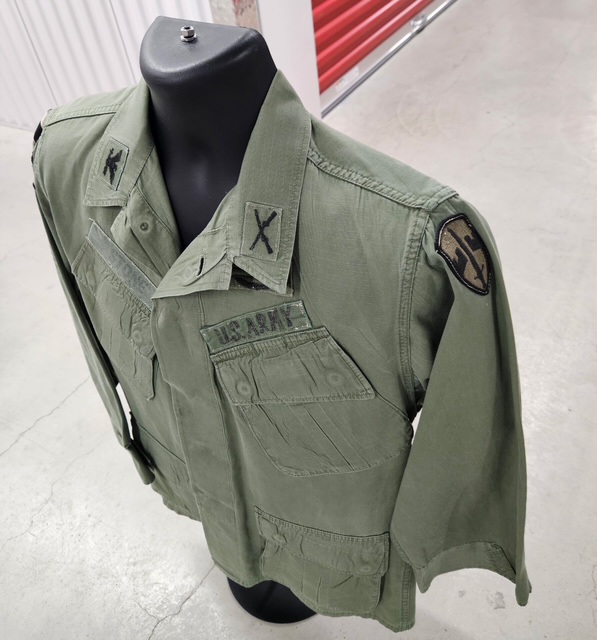
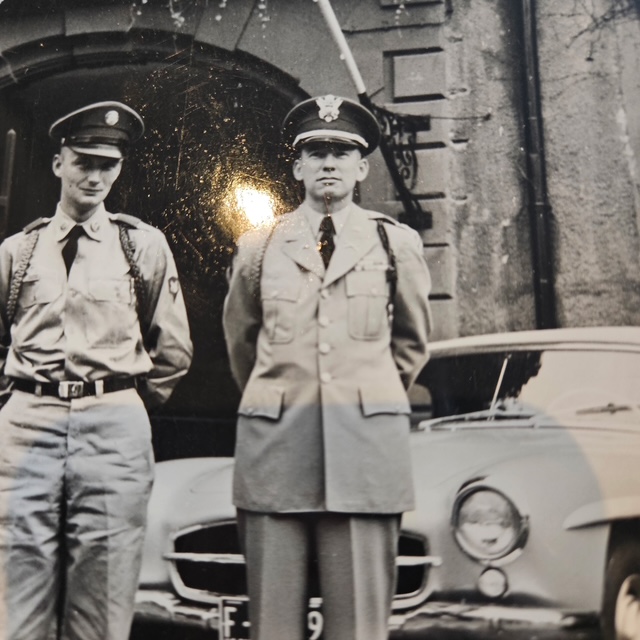
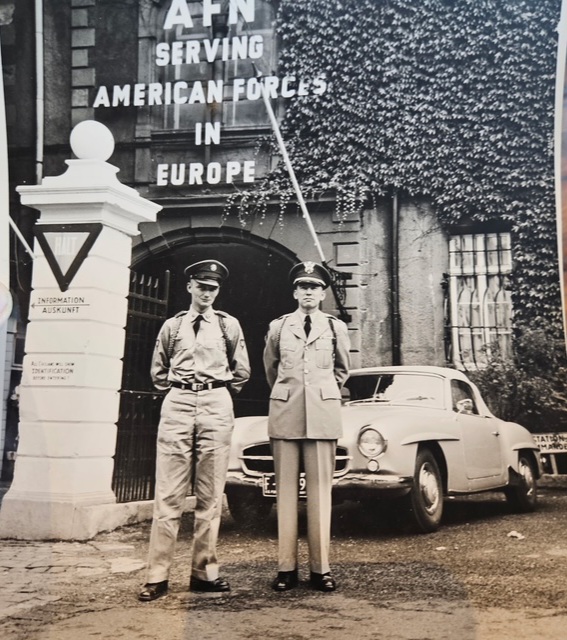
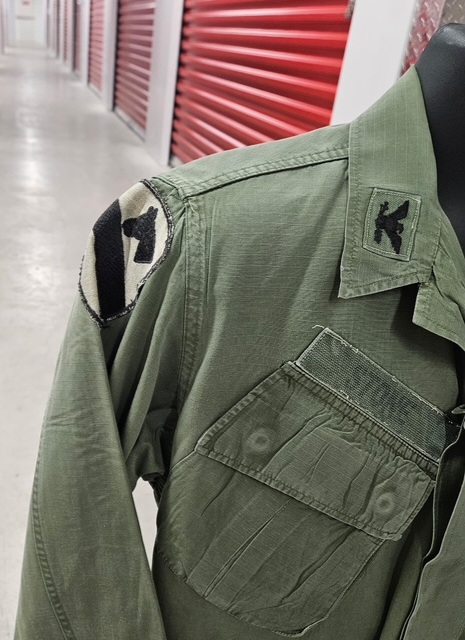
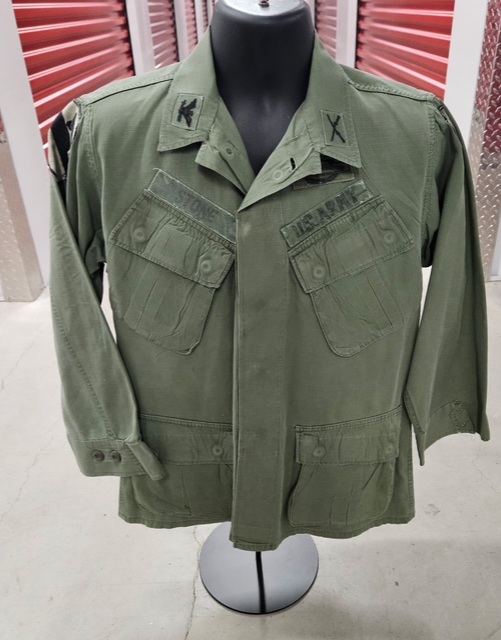
Stone remained in the Army, serving in Germany before moving to the Fort Worth area to administer several ROTC units in the 1960s. In 1971, he served a tour in Vietnam as an advisor. He retired as a Colonel in 1976 after nearly thirty years of service. A few years later, he and his wife Mary Lou settled in Arlington. Mary Lou later said, “Colonel James L. Stone would be so humble about his service in Korea I didn’t realize I was marrying a Medal of Honor recipient.” She learned of his medal only after their wedding.
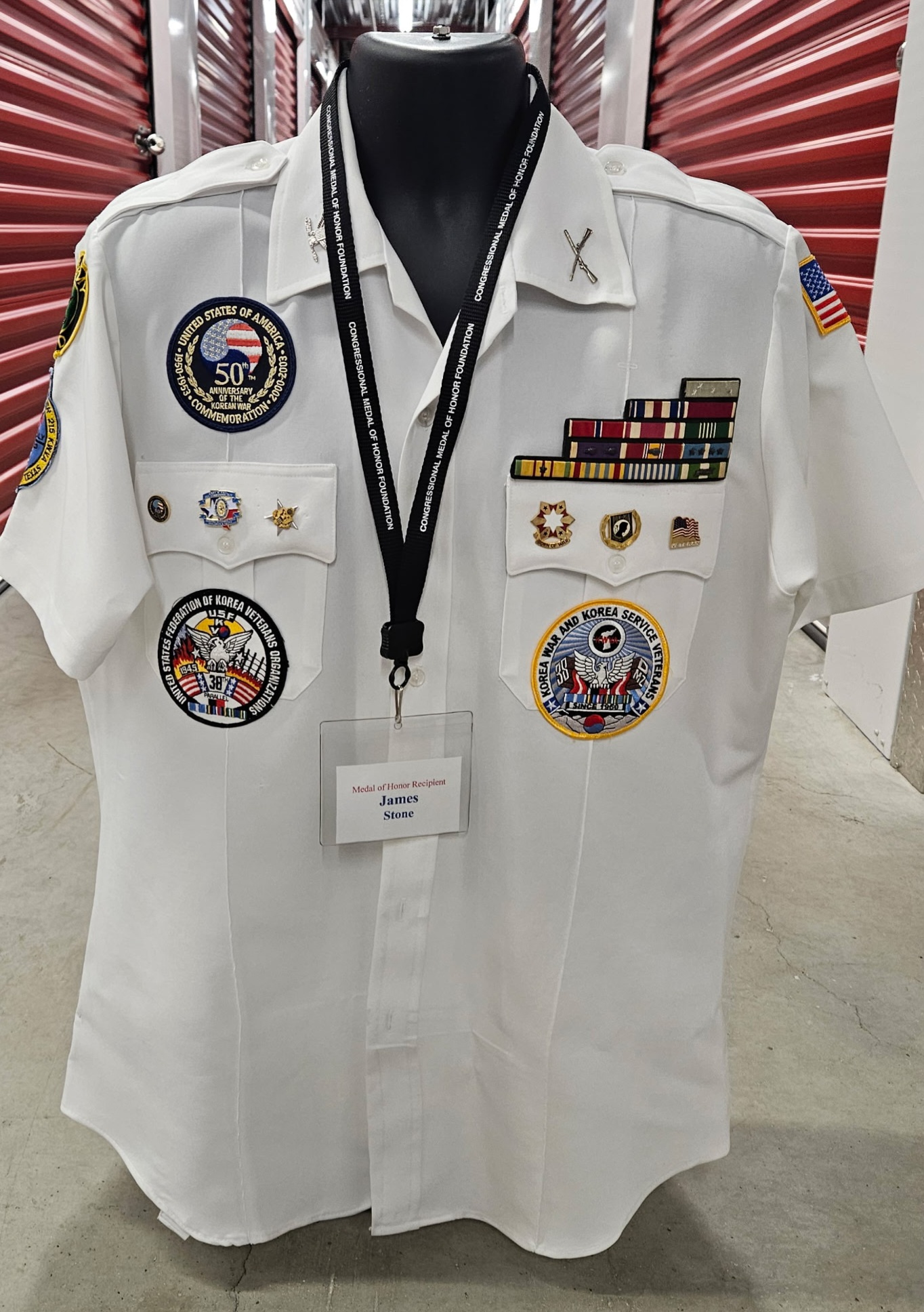
He retired as a colonel after nearly thirty years of service, closing a career defined by endurance, humility, and an unwavering devotion to duty. In retirement, Stone remained connected to the men and memories that had shaped his life. He regularly attended Veterans Day ceremonies at the Dallas–Fort Worth National Cemetery, standing among fellow servicemembers with the quiet dignity of a man who understood the cost of the freedoms being honored. He was active in the local Korean War Veterans Association, offering presence, perspective, and camaraderie to those who had shared the hardships of that earlier conflict.
Away from military life, he devoted time to his family. He found joy in simpler rhythms as well. He was an avid baseball fan, attending Texas Rangers games and cheering from the stands at Little League games. Those moments of sunlight, laughter, and family pride formed a gentle counterpoint to the years he had spent in distant places shaped by tension and war.
Stone’s retirement reflected the fullness of a life lived with purpose. He carried the weight of his experiences without bitterness, choosing instead to remain engaged, supportive, and present. His legacy extended beyond the battlefield and the advisory rooms of Vietnam. It lived in the communities he supported, the veterans he encouraged, and the family whose lives he enriched. His story stands as a testament to quiet strength, enduring service, and the grace of a man who continued giving long after his uniform was set aside.
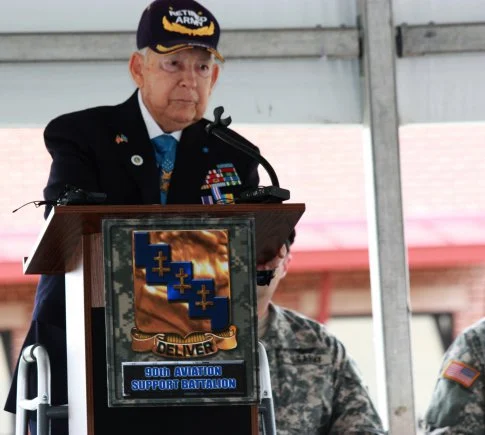
On November 6, 2011, Stone was honored by the 90th Aviation Support Battalion when it dedicated its new facility in his name, the Col. James L. Stone Army Reserve Center in Fort Worth. The tribute reflected the respect he commanded across generations of soldiers. Even as he battled cancer in his final days, he attended as many unit events as he could, greeting servicemembers with the same quiet warmth that had defined his leadership. He often remarked, “You know, a Colonel is just not a Colonel unless he’s around soldiers,” a line that revealed how deeply he valued the bond of service.
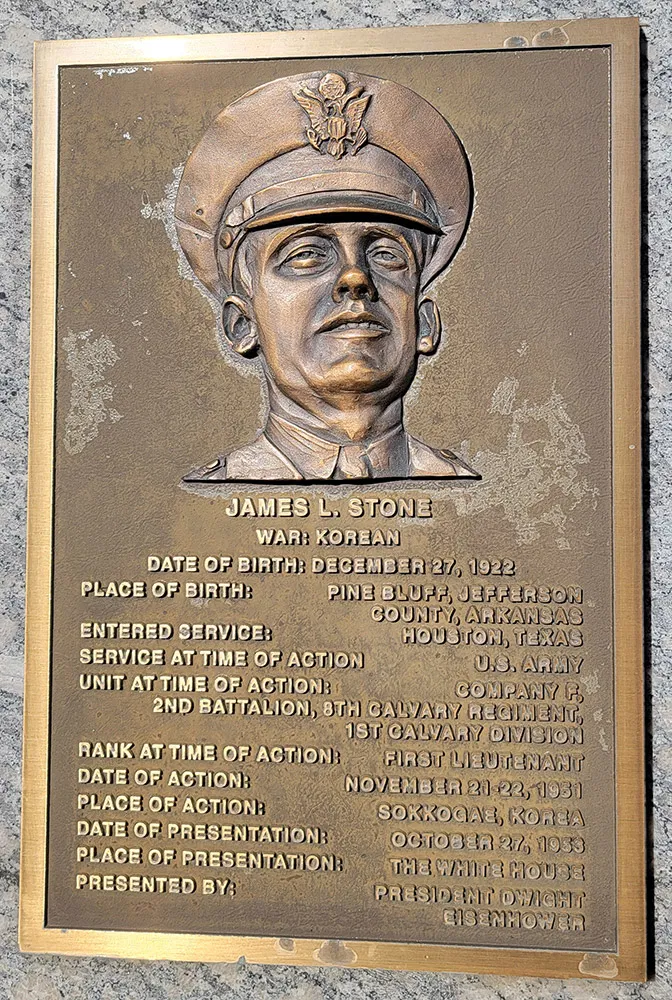
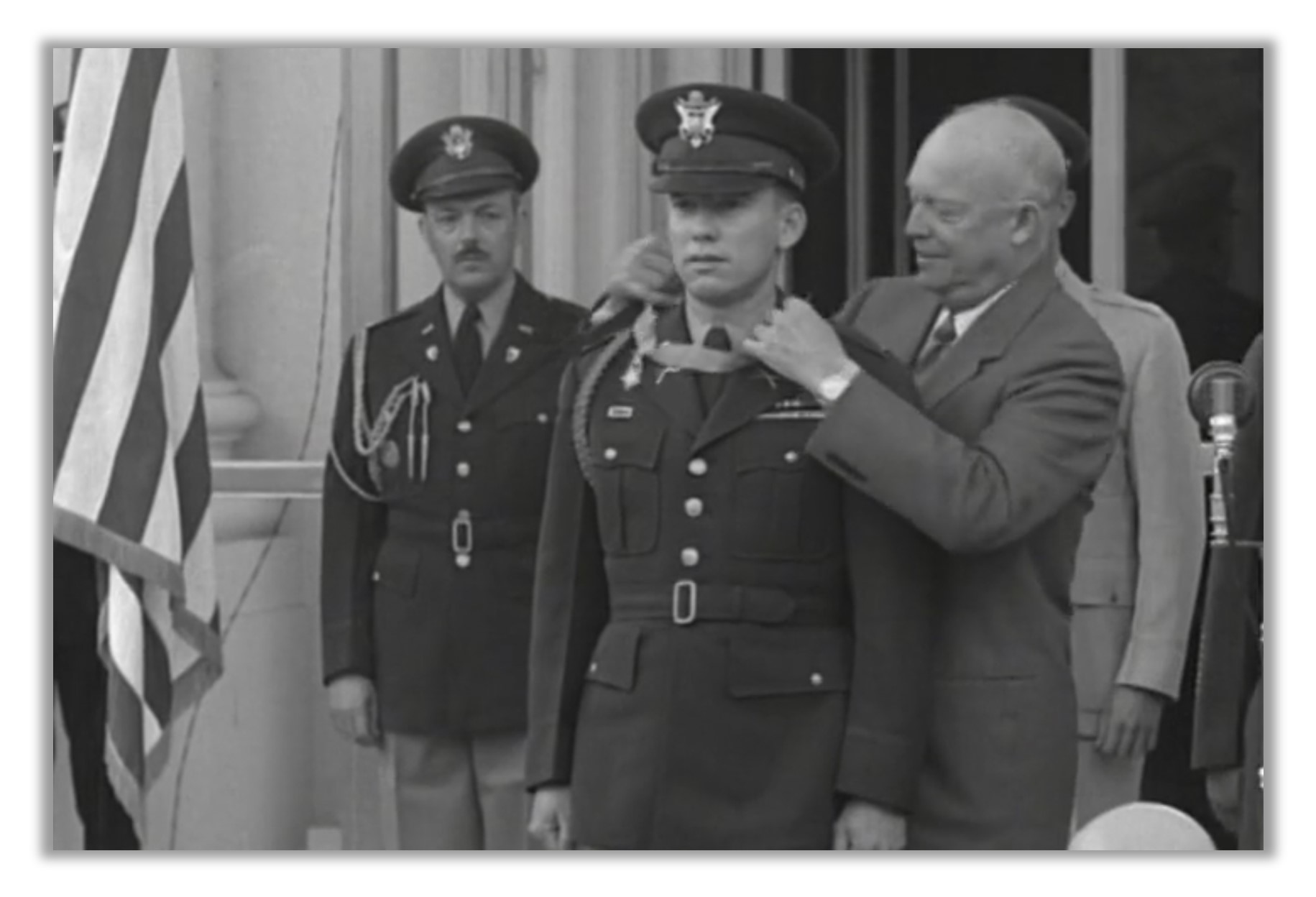
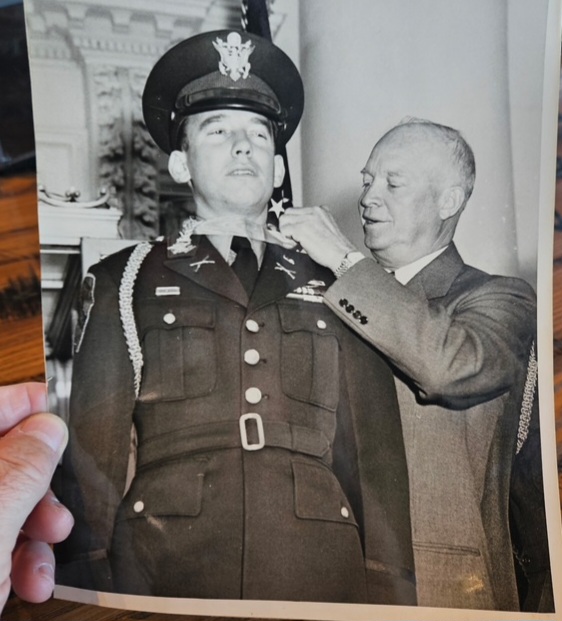
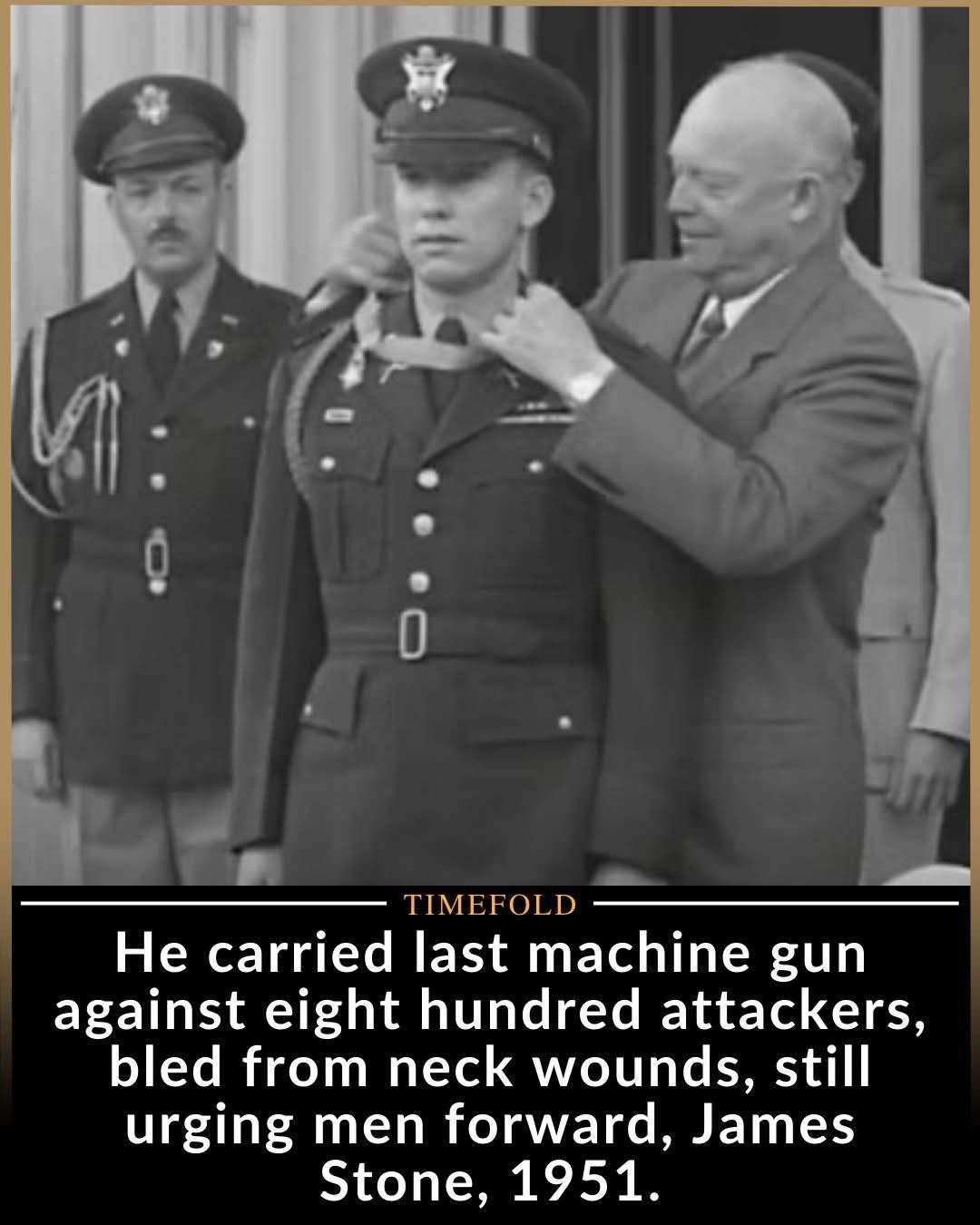
Stone’s Medal of Honor had been approved decades earlier, on October 20, 1953, and presented by President Dwight D. Eisenhower at the White House one week later, on October 27. His valor extended beyond that single night in Korea. He earned the Silver Star for rescuing two wounded men under fire, an act that reflected the same courage and selflessness that shaped his entire career.
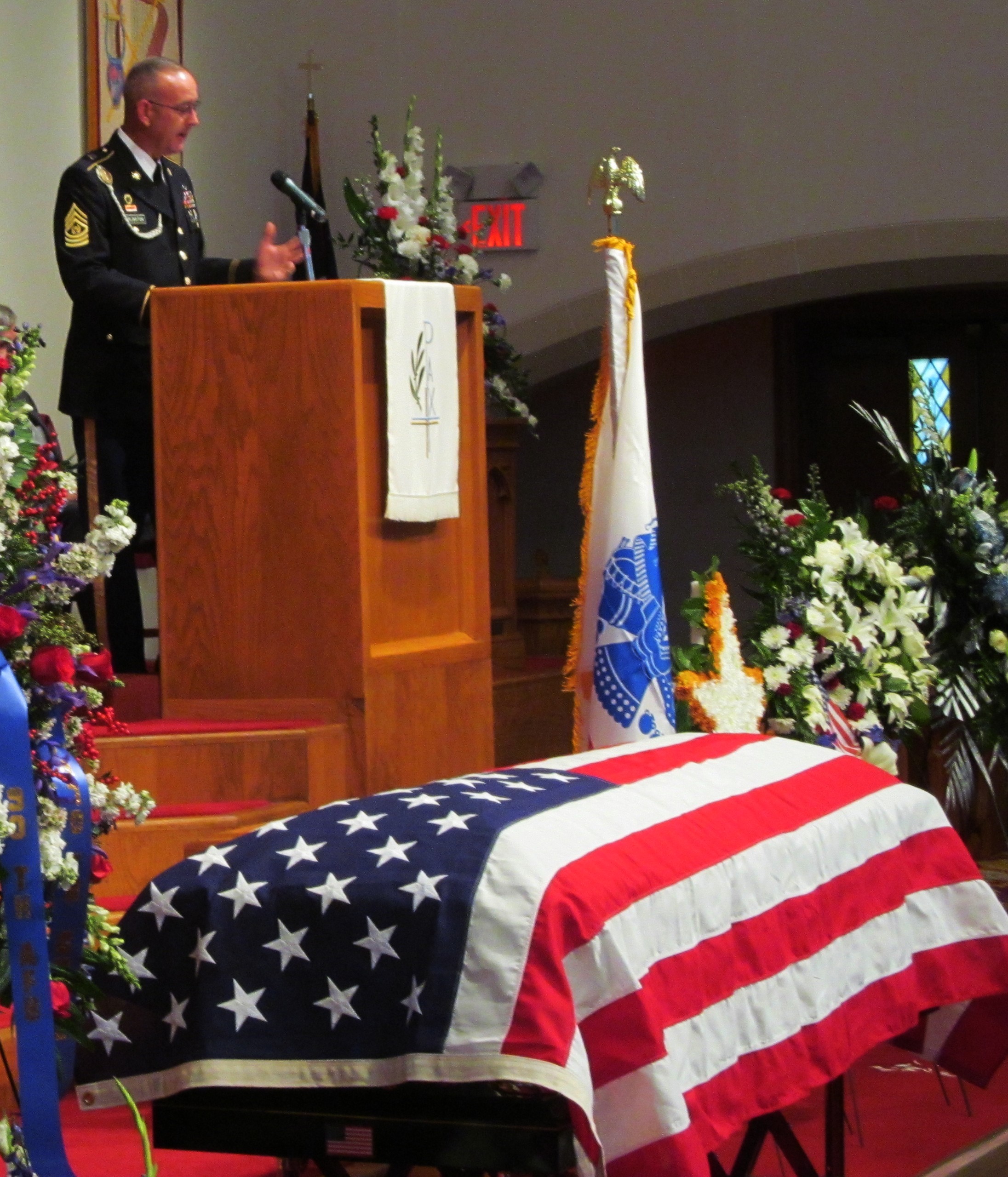
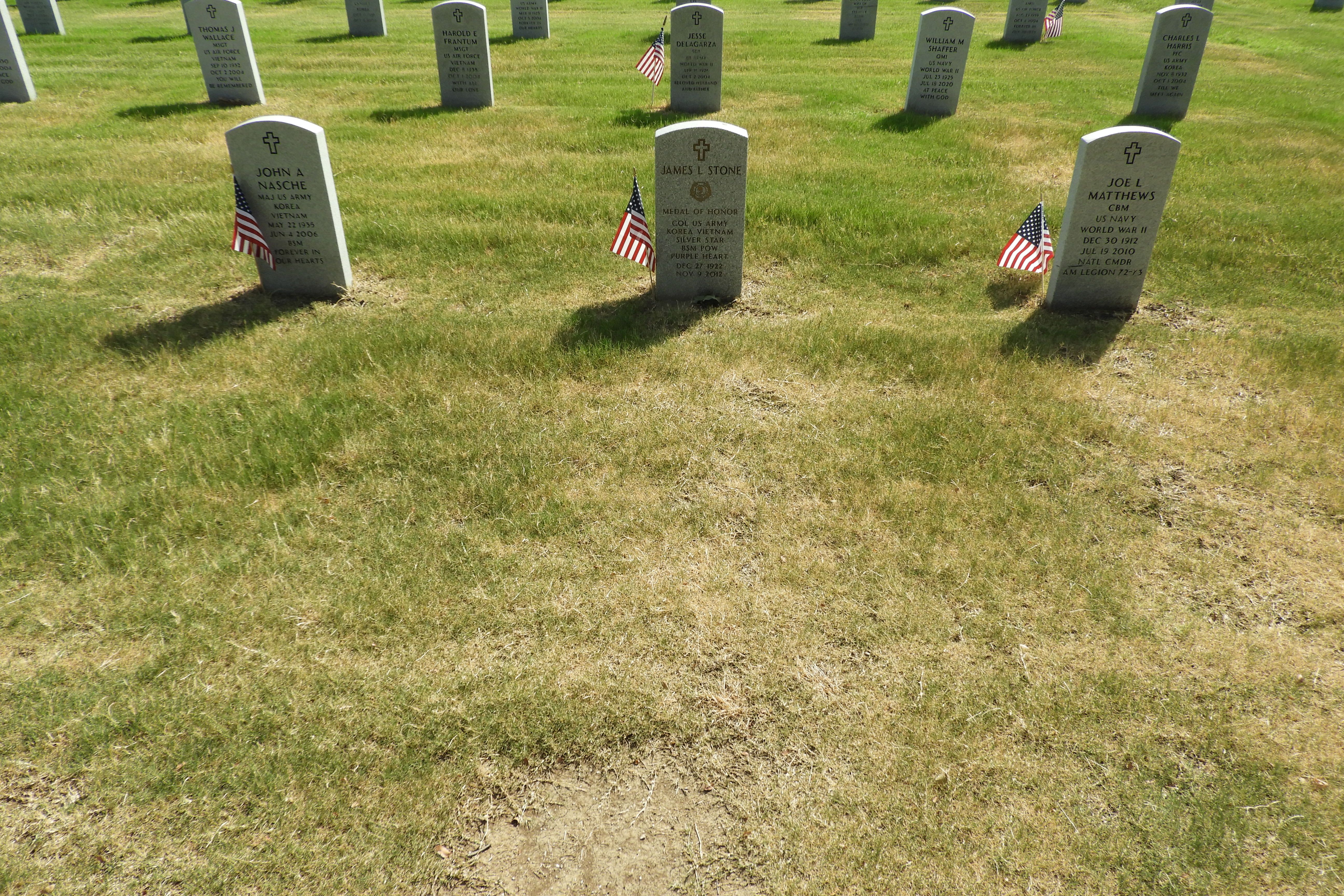
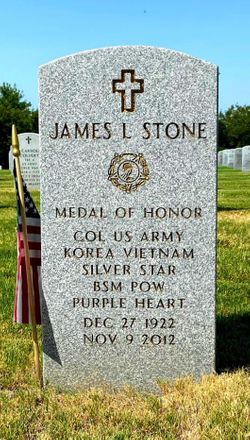
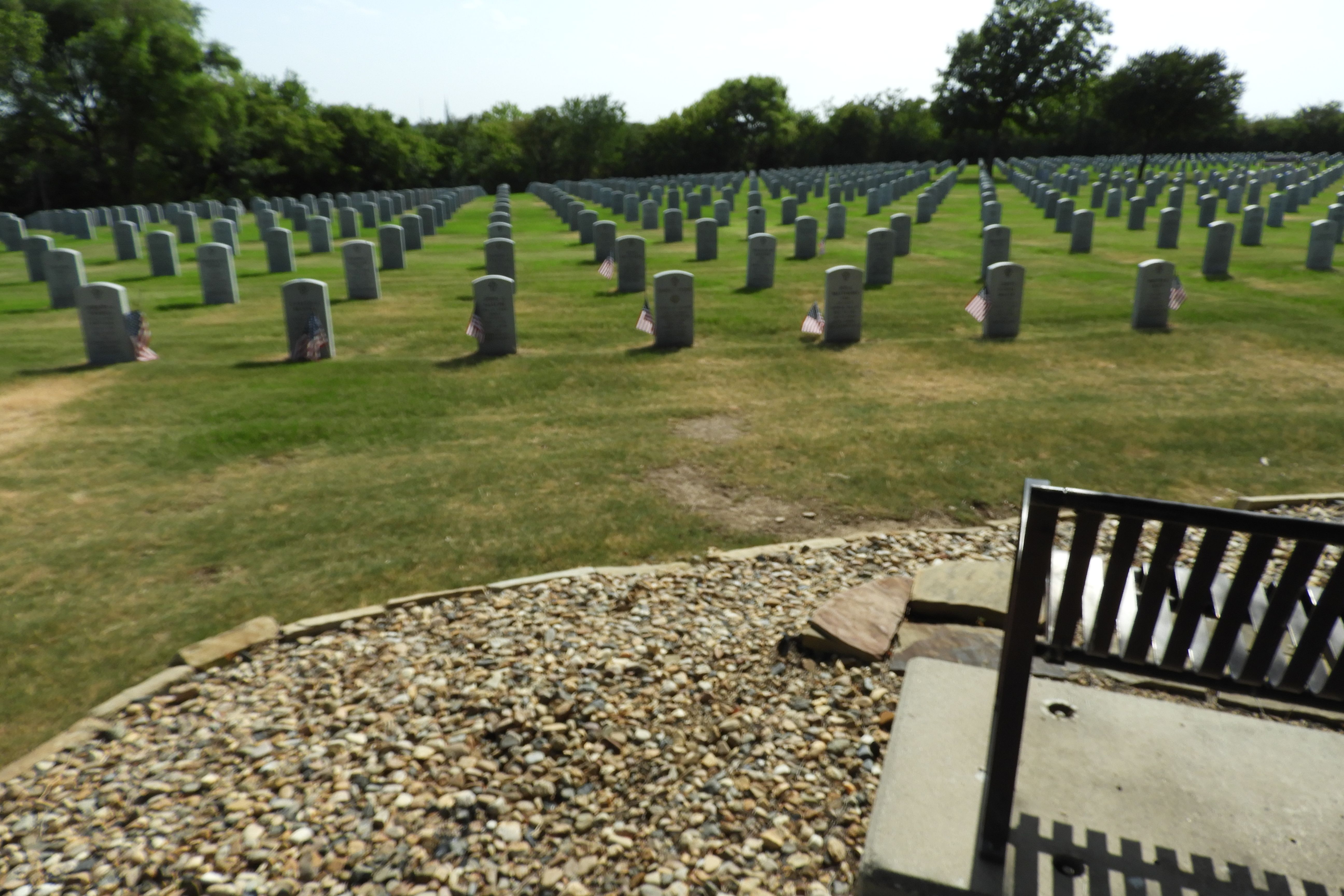
Colonel James Lamar Stone died on November 9, 2012, at his home in Arlington. His funeral was held at the First United Methodist Church of Arlington on November 14. He was laid to rest with full military honors at the Dallas‑Fort Worth National Cemetery—the first Medal of Honor recipient buried there.
War Hero Remembered as Soldiers’ Friend
By Sgt. 1st Class Phillip Eugene – May 5, 2013
Medal of Honor recipient retired Col. James Lamar Stone ignored hospice caretakers’ advice, and attended a Change of Responsibility Ceremony to see his friend Command Sgt. Maj. Jeffrey Darlington transfer his noncommissioned officer duties as the outgoing senior enlisted leader of the 90th Aviation Support Battalion.
Less than a month later, Stone’s family asked Darlington to eulogize the Korean War hero, who retired from the Army with more than 30 years of service, after he died from prostate cancer at age 89 in Arlington, Texas, Nov. 9, 2012.
The two men forged a friendship after they met at a Veterans Day event at the VFW National Cemetery in Dallas in 2009. At the event, Darlington was among representatives of all the military services, but he was the only Soldier in uniform. He said he felt a tap on his shoulder, he turned around and there was Stone with the Medal of Honor around his neck.
According to Darlington, Stone said, “Young man, I want you to stay by my side for the day because I’m surrounded by all these other services, and I like seeing somebody in the Army uniform.”
As their friendship progressed, Stone shared his combat experience and wisdom with Darlington who developed an appreciation for Stone as a leader. At the time, the 90th Aviation Battalion operated from a temporary location in Grand Prairie Texas while a new Army Reserve Center was being built. Darlington suggested naming the new facility after Stone, who also served a tour of duty in Vietnam in 1971.
“I thought it would be a great way to put younger Soldiers in touch with our past, and to connect the past with the present,” said Darlington, currently the 800th Logistics Support Brigade’s senior enlisted leader. “We ended up getting the approval after a lengthy process, and we had the building dedicated in Col. Stone’s honor. It’s now called the Col. James L. Stone Army Reserve Center, Fort Worth, Texas.”
In the eulogy, Darlington said Stone’s humble nature struck him the first time they met.
When he asked Stone for permission to name the building in his honor, Darlington told the congregation that Stone thought long and hard then replied, “‘Now surely young man you can find someone more deserving than me.'”
During the Korean War, Stone was a 28-year-old first lieutenant when Chinese troops attacked his platoon on a hilltop near Sokkogae the night of Nov. 21, 1951. According to his Medal of Honor citation, Stone moved to the location of a flamethrower that had malfunctioned and repaired it while under fire. A bullet struck him, but Stone picked up the platoon’s only working machine gun and shot back at the attackers who advanced from two directions. When the attack ended half of his 48-man platoon had been killed, and most of the survivors were wounded.
Chinese troops captured Stone, and they held him prisoner for 20 months in North Korea. Five weeks after the War ended, they released him in a prisoner exchange.
President Dwight Eisenhower presented Stone with the Medal of Honor on October 27, 1953.
Stone was terminally ill during the last two years of his life, but he attended as many 90th ASB unit events as he could. He frequently called the battalion inquiring about unit activities, and he enjoyed interacting with Soldiers.
Darlington said he suspected that the colonel’s time with the Soldiers helped keep his mind off his illness.
Stone left his home for the last time to attend the COR ceremony.
Service Beyond the Battlefield: Heroism, Captivity, and Leadership in War
Medal of Honor Citation (November 21–22, 1951)
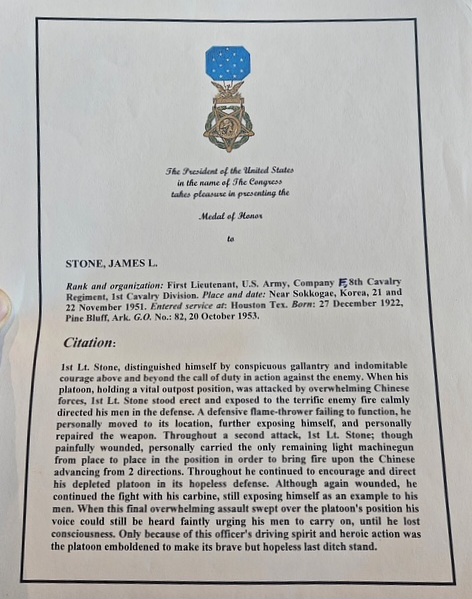
First Lieutenant Stone’s official Medal of Honor citation reads:
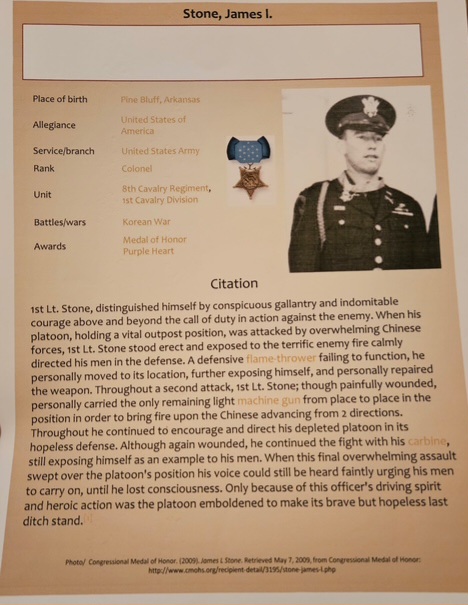
1st Lt. Stone distinguished himself by conspicuous gallantry and indomitable courage above and beyond the call of duty in action against the enemy. When his platoon, holding a vital outpost position, was attacked by overwhelming Chinese forces, 1st Lt. Stone stood erect and exposed to the terrific enemy fire, calmly directing his men in the defense. A defensive flame‑thrower failing to function, he personally moved to its location, further exposing himself, and personally repaired the weapon.
Throughout a second attack, 1st Lt. Stone, though painfully wounded, personally carried the only remaining light machine gun from place to place in the position in order to bring fire upon the Chinese advancing from two directions. Throughout, he continued to encourage and direct his depleted platoon in its hopeless defense. Although again wounded, he continued the fight with his carbine, still exposing himself as an example to his men.
When this final overwhelming assault swept over the platoon’s position, his voice could still be heard faintly urging his men to carry on until he lost consciousness. Only because of this officer’s driving spirit and heroic action was the platoon emboldened to make its brave but hopeless last‑ditch stand.
Legion of Merit (September 1970 – August 1971) Vietnam War
The President of the United States of America, authorized by Act of Congress, 20 July 1942, takes pleasure in presenting the Legion of Merit to Colonel (Infantry) James Lamar Stone (ASN: 0-65096), United States Army, for exceptionally meritorious conduct in the performance of outstanding services during the period September 1970 to August 1971, while serving as Senior Advisor to the National Noncommissioned Officer Academy, Training Center Division, Training Directorate, United States Military Assistance Command, Vietnam. Colonel Stone rendered exceptional organizational expertise and supervisory skill to the training advisory effort and greatly contributed to the mission accomplishment of the Noncommissioned Officer Academy. He effectively accomplished the planning and coordination of programs of instruction at the Noncommissioned Officer Academy to meet the varied training requirements throughout the Republic of Vietnam. His extensive staff and training experience enabled him to supervise and guide the detailed planning of training assistance provided to the Khmer Republic. By developing comprehensive plans and programs, he fostered a highly efficient and superbly motivated Student Brigade, well qualified to provide Noncommissioned Officers to the Army of the Republic of Vietnam. Colonel Stone’s professional competence and outstanding achievements were in keeping with the highest traditions of the military service and reflect great credit upon himself and the military service.
Prisoner of War
November 22, 1951 – September 2, 1953
First Lieutenant James Lamar Stone, United States Army, was captured by Communist forces on 22 November 1951 after the final collapse of his outpost on the Imjin. His capture marked the beginning of twenty‑two months of imprisonment that tested every dimension of human endurance. The Army recorded his status formally: interned as a Prisoner of War until his release on 2 September 1953. The record is precise. The reality was far more severe.
Stone entered captivity wounded, exhausted, and nearly frozen. The march north began immediately. Prisoners were moved through bitter wind and deep cold, often with little food and no medical care. Snow crusted their clothing. Breath hung in the air. The terrain was harsh, and the guards drove the column forward without regard for injury or weakness. Men who could not keep pace were left behind. Stone, already weakened from the battle, pushed himself through each mile.
In the camps, conditions were stark. Prisoners slept on rough floors or frozen ground in drafty huts where wind slipped through cracks in the walls. Food was scarce, often little more than thin broth or a handful of grain. Hunger became a constant ache. Illness spread easily. Coughs echoed through the darkness. Fevers rose and fell without medicine. Frost formed on blankets. The cold settled into bones and stayed there.
Time moved differently in captivity. Days blurred into nights. Seasons changed beyond barred windows while life inside remained suspended. Stone watched men weaken. He watched men die. He watched hope flicker and return in small acts of kindness shared among prisoners who refused to let despair take root.
Yet through it all, he endured. The Army’s official record lists the dates of his captivity. The truth is that those dates contain a world of hardship, discipline, and quiet courage. Stone survived because he refused to surrender the one thing he could still control: his will.
When he was released on 2 September 1953, he stepped back into freedom thin, scarred, and changed, but unbroken. His endurance during captivity became as defining as his stand on the ridge, completing the arc of a soldier whose courage held firm in battle and in the long silence that followed.
Silver Star (October 9, 1951) Korean War
Headquarters, 1st Cavalry Division, General Orders No. 335 (1951)
The President of the United States of America, authorized by Act of Congress July 9, 1918, takes pleasure in presenting the Silver Star to First Lieutenant (Infantry) James Lamar Stone (ASN: 0-65096), United States Army, for gallantry in action against while serving with Company F, 2d Battalion, 8th Cavalry Regiment, 1st Cavalry Division, in action against the enemy on 9 October 1951 near Homang-ni, Korea. When Company F was assigned the mission of assaulting heavily fortified enemy positions manned by a numerically superior enemy force, the unit was pinned down by an overwhelming volume of small arms, automatic weapons, mortar and artillery fire. Lieutenant Stone, with complete disregard for his own safety, rushed to the head of his platoon, and, demonstrating a remarkable degree of intrepid leadership, led his men in a charge against the enemy positions which served to relieve pressure on the company and caused a large number of hostile casualties. Leaping on the wall of an enemy trench, waving and shouting to his men to follow him, Lieutenant Stone killed and wounded several of the enemy soldiers. As a result of his gallantry and selfless devotion to duty, the hostile forces suffered very heavy casualties, and the way was eased for the company to continue in the fight and eventually to successfully achieve its assigned mission. Lieutenant Stone’s gallantry and heroism reflect the highest credit on himself and the military service.
Bronze Star Medal (December 5, 1970 – March 15, 1971) Vietnam War
The President of the United States of America, authorized by Executive Order 11046, 24 August 1962, takes pleasure in presenting the Bronze Star Medal to Colonel (Infantry) James Lamar Stone (ASN: 0-65096), United States Army, for meritorious achievement in connection with military operations against a hostile force during the period 5 December 1970 to 15 March 1971, while serving as Senior Advisor to the Republic of Vietnam Armed Forces National Noncommissioned Officers Academy, Training Center Division, Training Directorate, Headquarters, United States Military Assistance Command, Vietnam. Colonel Stone was most effective in developing a new, comprehensive Program of Instruction for the Academy. His Program of Instruction received considerable praise from Academy officials, and it was approved and forwarded to Central Training Command. To substantiate his study and recommendations, more practical work, crew-drilled and “hands-on-equipment” experience were incorporated into training with crew-served weapons and other equipment. His professionalism and genuine concern for improving the quality of Vietnamese training have contributed materially to Vietnamese combat effectiveness. Colonel Stone’s outstanding achievement was in keeping with the highest traditions of military service and reflects great credit upon himself and the military service.
First Lieutenant—later Colonel—James Lamar Stone’s gallantry in Korea, resilience as a Prisoner of War, and professional excellence in Vietnam reflect the highest traditions of military service. His courage, leadership, and lifelong dedication to strengthening allied forces stand as a lasting testament to his character and to the United States Army.
Supplemental Information
Col. James L. Stone and the Soldiers Who Stood the Imjin Ridge
Col. James L. Stone commanded 3rd Platoon, Company E, 2nd Battalion, 8th Cavalry Regiment, 1st Cavalry Division, a forward outpost platoon positioned on the Imjin Ridge in November 1951. Their stand on that frozen hillside is preserved in Stone’s own oral history, in official unit accounts, and in archival records that include personnel rosters and after action reports held in national collections. Together, these sources reveal not only what happened, but the physical world in which it unfolded — the cold, the darkness, the isolation, and the weight of responsibility carried by the men on that ridge.
Unit Identity and Context
Company E, 2nd Battalion, 8th Cavalry Regiment, 1st Cavalry Division served as a line infantry company within one of the United States Army’s most storied formations. Although the division carried a cavalry name, its soldiers fought on foot in Korea, serving as frontline infantry across the Imjin River sector and other critical areas of the peninsula. The 8th Cavalry Regiment, whose lineage stretches back long before the Korean War, was responsible for holding a broad and strategically vital stretch of the defensive line.
Within that structure, Company E was one of the rifle companies charged with manning outposts, patrolling the approaches, and providing early warning of enemy movement. Their work demanded vigilance and endurance. The men lived with the constant bite of wind off the river, the crunch of frozen earth beneath their boots, and the knowledge that the first shock of any attack would fall on them.
Stone’s 3rd Platoon was the forward most element of this chain, placed on an exposed ridge overlooking the valley below. The air there was thin and sharp. The ground was hard and uneven. At night, the cold settled into clothing and equipment, numbing fingers and slowing breath. Visibility shifted with the weather, sometimes clear enough to see movement far down the slope, other times blurred by mist or darkness. Their mission was simple in description but brutal in execution: to see the enemy first, to report their movement, and to hold long enough for the battalion to react.
The Imjin Ridge was a place where silence carried weight. The men listened for distant footsteps, for the faint clatter of equipment, for anything that might signal movement in the valley. They lived with the smell of cold earth, the metallic tang of weapons, and the ever‑present tension of knowing that the next sound could be the beginning of an assault. It was a ridge that demanded discipline, patience, and a willingness to stand firm even when the night pressed in around them.
It was on this ridge, under this lineage, that Stone and his men made their stand. A small platoon facing overwhelming odds, whose courage and refusal to yield became one of the defining actions in the regiment’s Korean War history. Their defense, recorded in official documents and remembered in the voices of those who survived, remains a testament to the discipline, loyalty, and resolve that shaped the soldiers of the 8th Cavalry Regiment — men who held their ground in the cold, in the darkness, and in the face of an enemy whose numbers dwarfed their own.
The Environment of the Imjin Ridge
The ridge above the Imjin carried the unmistakable feel of a Korean winter settling in. The soil was already stiffening with frost, and every step produced a muted crunch that carried farther than men liked in the dark. The air smelled of river water and cold stone, a thin scent that drifted up from the valley and mixed with the faint odor of charcoal fires from distant farmhouses. At night the temperature dropped until breath hung visibly in front of a man’s face, and the metal of rifles and machine guns grew so cold that bare hands stuck to it for a moment before pulling free.
The outpost positions were shallow cuts in frozen earth, lined with sandbags that had absorbed weeks of moisture and hardened into heavy, misshapen forms. Canvas shelter halves held the smell of damp wool and old mud. When men heated rations, the steam rose in pale wisps that vanished almost instantly in the wind. The radio produced a constant bed of static, a reminder of how fragile communication could be in the hills north of Seoul. The valley below looked still, but the silence was never comforting. It was the kind of silence that made men lean forward, listening for the soft thud of a footstep, the distant clatter of equipment, or the low murmur of voices carried across the river.
When the Chinese assault began, the sensory world changed with violent clarity. The first mortar rounds arrived with a hollow, descending whistle followed by a concussion that struck the chest as much as the ears. The ridge lit in brief flashes that revealed the terrain in stark detail: jagged rocks, torn earth, and the silhouettes of men moving through smoke. The air filled with the sharp smell of cordite and the heavier scent of churned soil. Machine gun bursts cracked across the slope, each one distinct, each one echoing differently against the frozen ground. Voices rose in fragments, commands shouted and swallowed by explosions. The cold that had dominated their nights was replaced by the heat of fire, the sting of flying debris, and the metallic taste of adrenaline that came with close combat.
This was the authentic sensory world of a forward platoon in Korea. It was shaped by cold, silence, vigilance, and sudden violence. It defined how they watched the valley, how they prepared for contact, and how they fought when the attack arrived in overwhelming force. It was the environment in which 3rd Platoon carried out its mission, and it is the world that framed every moment of their stand on the ridge above the Imjin.
The Lineage and Command Structure of Stone’s 3rd Platoon
Company E, 2nd Battalion, 8th Cavalry Regiment, 1st Cavalry Division. This was the full organizational identity of the unit to which James L. Stone and his 3rd Platoon belonged, a lineage shaped by decades of American military history and carried forward by soldiers who understood the weight of the traditions behind them. Each level of this structure held its own story, its own responsibilities, and its own place in the long arc of the United States Army.
Company E was one of the rifle companies that formed the fighting core of the 2nd Battalion. It was the company Stone lived with, trained with, and led in the field. Its soldiers were the men who shared his rations, his hardships, and his foxholes. In Korea, a rifle company was the Army’s fundamental maneuver element, responsible for holding ground, patrolling the approaches, and maintaining the forward presence that defined the battalion’s line. For Stone, Company E was not an abstract designation. It was the immediate world in which he commanded, the community of soldiers whose lives were tied to his decisions.
The 2nd Battalion provided the next layer of command. It was responsible for the sector of the Imjin line that included Stone’s forward outpost near Sokkogae. The battalion coordinated the placement of outposts, the flow of intelligence, the allocation of supporting weapons, and the defensive posture of its companies. Its officers and noncommissioned officers shaped the tactical environment in which Stone’s platoon operated. When the Chinese attack came, it was the battalion that depended on 3rd Platoon to provide early warning and to hold long enough for the rest of the line to react.
The 8th Cavalry Regiment carried a broader legacy. Its history stretched back to the Indian Wars, through the Philippines, and into the Pacific campaigns of World War II. By the time it reached Korea, the regiment had earned a reputation for endurance, mobility, and combat effectiveness. In the Imjin sector, the regiment directed operations across a wide frontage, coordinated intelligence from its battalions, and maintained the defensive network that protected the approaches to Seoul. Stone’s platoon was one small part of this larger structure, yet its position on the ridge placed it at the forward edge of the regiment’s responsibility.
Above all of this stood the 1st Cavalry Division, the First Team. It was one of the Army’s most storied formations, known for its combat record in the Pacific, its rapid mobility, and its presence in nearly every major conflict of the twentieth century. In Korea, the division oversaw the entire front, directing strategy, movement, and the defense of the region north of Seoul. Its commanders relied on the regiment, the battalion, the company, and ultimately the platoon to execute the mission that held the line against a determined enemy.
This chain of command placed 3rd Platoon at the very tip of the spear. It made Stone’s men the forward‑most element of a regiment and division entrusted with guarding a critical stretch of the Korean front. Their outpost on the frozen ridge near Sokkogae was not simply a position on a map. It was the point where the lineage of the First Team met the reality of a winter night on the Imjin, and where a small platoon carried out its duty with a discipline and courage that would become one of the most extraordinary small‑unit actions in the history of the division.
A Lineage Forged Long Before Korea
The unit James L. Stone entered in Korea was not a formation born of the Korean War, nor a temporary organization assembled for a single campaign. It was the product of generations of American military service, shaped by frontier duty, overseas expeditions, and the transformation of the United States Army across nearly a century. Long before Stone ever stepped onto the frozen ridge near Sokkogae, the lineage of his regiment and division had already been written by soldiers who carried the colors through eras of profound national change.
The 8th Cavalry Regiment was founded in 1866, in the unsettled years immediately following the Civil War. It emerged during the Army’s effort to stabilize the western frontier, and its earliest decades were spent in the vast, rugged territories where the regiment patrolled long distances, protected settlements, and engaged in the Indian Wars. These years forged its identity as a mobile, resilient force accustomed to harsh terrain and extended operations. As the nation expanded, the regiment’s duties shifted to overseas service, including the Philippine campaigns at the turn of the century. By World War II, the 8th Cavalry had become part of the Army’s Pacific operations, fighting through New Guinea, the Admiralty Islands, Leyte, and Luzon. When Stone joined it in 1950, the regiment was eighty‑five years old, carrying a lineage that stretched from the frontier era to the Pacific battlefields of the Second World War.
The 1st Cavalry Division, established in 1921, was likewise shaped long before Korea. Formed during the interwar period, the division represented the Army’s modernization of its mounted forces, blending traditional cavalry heritage with emerging doctrines of mobility and combined arms. During World War II, the division fought in the Pacific, earning a reputation for endurance and adaptability in campaigns marked by dense jungle, amphibious operations, and relentless movement. By 1950, the First Team was one of the most experienced divisions in the Army, its identity defined by decades of service across continents and climates. When it deployed to Korea, it brought with it a tradition of discipline, mobility, and combat effectiveness that had been tested in some of the most demanding theaters of the twentieth century.
Company E, 2nd Battalion, was part of this enduring structure. Rifle companies were permanent components of the regiment, not temporary formations created for Korea. They carried forward the traditions of the regiment and the division, serving as the basic fighting elements through which the Army executed its missions. Stone’s 3rd Platoon belonged to a company that had existed for years, trained under the regiment’s standards, and operated within the division’s doctrine. When Stone took command, he stepped into a lineage shaped by generations of officers and enlisted men who had carried the company’s identity through earlier conflicts.
The unit existed long before Stone, but Stone helped define its legacy. He entered a historic, battle‑tested formation and added one of its most extraordinary chapters. His stand on the ridge near Sokkogae became one of the defining actions in the regiment’s Korean War history, a moment when the traditions of the frontier, the Philippine campaigns, World War II, and the early Cold War converged in the courage of a single platoon. The regiment had already lived through the frontier era, the Philippine campaigns, the Pacific battles of World War II, and the first years of the Cold War. Stone’s leadership and heroism became part of that lineage, joining the long story of the 8th Cavalry Regiment and the First Team with a chapter remembered for its discipline, sacrifice, and extraordinary resolve.
The Hilltop: A Bare, Exposed, Unforgiving Outpost Above the Imjin
The hilltop Stone’s platoon occupied was never meant to be defended. It was not a fortress, not a strongpoint, and not a position built for endurance. It was a forward outpost — a lonely rise of frozen earth overlooking the Imjin River valley, chosen for what it could see, not for what it could survive.
It was the kind of ground that punished the men who held it long before the enemy ever arrived. The wind scoured its crest without mercy. The frozen soil resisted every shovel stroke. The open slopes offered no concealment, no shelter, no place for a man to disappear. Even in silence, the hilltop felt exposed — a place where a soldier could sense, in his bones, that if an attack came, the earth beneath him would offer no protection.
It was a vantage point, not a refuge. A place meant to warn of danger, not withstand it. And yet it was here, on this bare and unforgiving rise above the Imjin, that Stone and his men were ordered to stand.
A Crest With No Cover and No Mercy
The hilltop was a study in exposure — a place where the earth itself offered no kindness.
- Bald and wind‑scoured, stripped of trees, brush, or any natural shelter
- Exposed on every side, with no dead ground, no concealment, no place for a man to disappear
- Raked by freezing winds that cut across the crest day and night, stealing warmth and strength
- Overlooked by distant heights, giving the enemy every advantage in observation, approach, and timing
From the moment the platoon stepped onto the ridge, they were visible and vulnerable, working against the terrain rather than with it. Every movement was seen. Every sound carried. Every attempt to fortify the position felt like a struggle against a landscape that refused to help them.
The hilltop did not protect them. It exposed them fully, relentlessly, and without mercy.
It was a place where the men stood not because the ground was defensible, but because the mission demanded they stand there anyway.
A Position That Offered Vision, Not Protection
The outpost existed for one purpose: to watch the valley below. It offered a commanding view — but nothing else. No natural cover. No depth. No fallback positions.
It was a place where the wind never stopped, where the ground refused to yield to a shovel, and where a man could feel, in his bones, that if an attack came, the hill would give him nothing in return.
When the Chinese attack finally broke over the ridge, the hilltop changed in an instant. What had been a barren outpost only hours earlier became a place of violent upheaval, a landscape shaped by the tactics and conditions that defined Chinese night assaults during the Korean War. The transformation was not imagined. It was the documented reality of forward positions along the Imjin in late 1951, where shallow defenses, frozen ground, and massed enemy movement combined to create some of the most lethal small‑unit environments of the conflict.
The crest was suddenly lit by drifting flares, a hallmark of Chinese assault waves meant to blind defenders and expose their positions. These flares swung on their parachutes, casting pale, uneven light across the frozen earth. Burning brush ignited from tracer fire and grenade blasts, sending thin ribbons of flame along the ground. Each flicker revealed silhouettes moving through smoke so dense it erased depth and distance, a common effect of mortar impacts on frozen soil.
The air grew heavy with dust and powder, the grit of shattered earth settling into mouths, eyes, and the seams of clothing. This was the physical signature of high‑explosive rounds striking frozen terrain, where the soil fractured into fine particulate that hung in the air long after each blast. Every breath carried the taste of cold metal, scorched soil, and the faint chemical sting of explosives.
Explosions rolled across the hilltop in relentless succession. Chinese mortar teams were known for rapid, concentrated fire meant to collapse shallow positions, and each concussion pressed against the chest and rattled the bones. Grenades burst with sharp, violent snaps that tore through the thin earthworks. Automatic fire stitched the crest in long, searching bursts, the tracers carving red arcs through the smoke before vanishing into the night. Shouted orders rose and disappeared inside the overlapping blasts, swallowed by the violent chorus that drowned out thought and left only instinct.
Underfoot, the earth became treacherous. Ice cracked beneath boots. Loose debris shifted without warning. Blood slicked the frozen soil into a surface that felt unstable even when a man stood still. Sandbags ruptured and spilled their contents across the crest, turning the ground into a mixture of frozen mud, torn canvas, and jagged fragments of equipment. These conditions were typical of forward outposts on the Imjin, where the ground was too hard to dig deep and every position was vulnerable to collapse.
The hilltop offered no protection. No fold in the earth. No sheltering rock. No place to withdraw or regroup. Every blast found exposed bodies. Every round struck ground already churned by earlier impacts. The perimeter, stretched thin even before the attack, became a fragile ring of men fighting in a space that no longer resembled a defensive position at all.
In those moments, the outpost ceased to be a position. It became a killing ground, a place where survival depended not on fortifications or tactical advantage, but on courage, improvisation, and leadership. The ridge offered nothing except the narrow space the men occupied, and even that was contested with every passing second.
On that ridge above the Imjin, it was those human qualities alone that kept the platoon fighting long after the hill itself had surrendered every mercy it once held. Their endurance in that killing ground became one of the defining truths of the battle, a testament to what men can hold together when the earth beneath them offers nothing but fire, cold, and the will to survive.
The Cold as a Combatant on the Imjin
Late November on the Imjin carved a cold that felt deliberate and personal. Night temperatures routinely plunged well below freezing, often into the teens, and the wind that swept across the ridge carried nothing soft in it. It came off the river and the surrounding hills with a sharp, unbroken force, cutting through parkas, wool layers, and the thin shelter the men could fashion. On exposed outposts like Stone’s, the wind never rested. It scraped across the crest like a blade, turning breath into vapor and skin into something brittle and raw.
The earth itself turned to iron. Digging a foxhole meant chipping at frozen ground until tools sparked against the soil. Sandbags stiffened into heavy, misshapen blocks that absorbed moisture and froze solid. The men’s boots struck the ground with a hollow, metallic sound, each step reminding them that the earth beneath them had become as unforgiving as the enemy they expected to face. Even the air inside weapons condensed and froze, making rifles, machine guns, and mortars unreliable at the very moment they were needed most. These failures were not rare. They were recorded across Eighth Army positions throughout the winter of 1951.
In that environment, the weather became a silent, unforgiving combatant.
Wounds worsened quickly. Blood thinned in the cold, and injured men bled faster. Shock set in with terrifying speed. The body’s ability to regulate temperature collapsed under freezing wind, and even minor injuries became life‑threatening within minutes. Medics across the Imjin reported that men who might have survived their wounds in warmer seasons slipped away before help could reach them.
Hands failed. Fingers numbed until reloading, operating triggers, and clearing jams became nearly impossible. Men tried to warm their hands under armpits or inside pockets, but the cold reclaimed them the moment they reached for a weapon. Gloves stiffened. Skin cracked. The simple act of pulling a bolt or changing a magazine became a battle against the cold itself.
Weapons betrayed them. Lubricants thickened into sludge. Bolts froze. Springs stiffened. Machine guns slowed to uneven, unreliable bursts. Mortars misfired or refused to fire at all. These malfunctions appear repeatedly in after‑action reports from the Imjin sector, where cold weather routinely crippled equipment and forced men to improvise repairs under fire.
Special equipment failed. Flamethrowers and other temperature‑sensitive systems often froze or malfunctioned, even after desperate field repairs. Fuel thickened. Pressure lines stiffened. Ignition systems faltered. The cold stripped away the reliability of tools designed for close combat, leaving men with weapons that might or might not respond when the enemy reached the wire.
The cold did more than complicate the defense. It shaped every decision, slowed every movement, and wore the men down long before the enemy arrived. It drained strength, dulled reflexes, and eroded morale. It was a constant, invisible pressure that turned the ridge into a harsher kind of battlefield, one where the environment itself attacked with the same relentlessness as the enemy.
On that crest above the Imjin, the weather was not background. It was part of the fight, a force that punished every weakness and demanded endurance long before the first shot was fired.
Stone’s platoon had occupied the outpost only hours before the attack, given barely enough time to learn the ground, let alone fortify it. This was the common reality of forward positions along the Imjin in late 1951. Outposts were rotated frequently, often manned by units unfamiliar with the terrain, and almost always established under pressure. The men arrived carrying only what they could haul up the slope, stepping onto a crest that offered no natural protection and demanded immediate labor in conditions that punished every movement.
Their fighting positions were shallow, scraped from iron‑hard, frozen earth that had locked solid days earlier. Entrenching tools struck the ground with a metallic ring, throwing sparks when metal met stone. The men dug until their hands numbed and their breath turned to vapor, but the earth yielded only inches. These depressions offered little more than prone cover, barely enough to shield a man’s torso from incoming fire. The ridge itself was a narrow, exposed rise, its soil thin, its surface uneven, its slopes steep enough to slow movement but not steep enough to hinder an assault.
Barbed wire was scarce or not yet emplaced, leaving the approaches dangerously open. In many Imjin outposts, wire arrived days after the men did, and sometimes not at all. Claymore mines had not yet been fielded in Korea. The only early‑warning tools were trip flares, grenades, and the instincts of tired men listening into the wind for movement they could not see. The Chinese were known for infiltration tactics, often approaching silently and in darkness, and the absence of wire meant the platoon had no physical barrier to slow or channel an attack.
Communication lines ran thin across the crest, exposed to the elements and easily severed by artillery or infiltrators. Field telephones were notoriously unreliable in freezing weather, and a single mortar impact could bury or snap a line. Radio batteries drained quickly in the cold, leaving the platoon dependent on fragile connections to Company E. Once those lines failed, the outpost would stand alone.
Ammunition was issued for routine outpost duty, not for absorbing the weight of a battalion assault. Machine‑gun crews were few, their weapons stiffened by cold and threatened by casualty. Crew‑served weapons required manpower the platoon did not have, and resupply was uncertain at best. The ridge was too far forward, too exposed, and too isolated for rapid reinforcement. The men knew that once the attack began, they would fight with what they had, and nothing more.
In practical terms, they were holding a hilltop with little more than rifles, a handful of machine guns, a few boxes of grenades, and the stubborn courage to stand their ground long after the position should have been overrun. The preparation was never meant to withstand a major attack. It was meant only to warn of one. On that night, the thinness of their defenses shaped every decision, every sacrifice, and the terrible calculus of survival.
The Opening Barrage: 9:00 PM
The attack began with a sudden, coordinated barrage, a tactic consistent with Chinese assaults throughout the Imjin sector. Mortars, artillery, and probing bursts of small‑arms fire swept across the hilltop. The first rounds struck with a violence that seemed to lift the earth itself. Frozen soil shattered into clouds of dust and ice. Sandbag walls collapsed under the concussions, their seams bursting open and spilling stiffened sand across the crest.
Shallow foxholes caved in as frozen earth shook loose, turning protective depressions into jagged pits of broken soil and debris. Men scrambled to clear space, pushing aside collapsed sandbags and frozen clumps of earth while explosions rolled across the ridge in relentless succession. The blasts carried a physical force that pressed against the chest and rattled the bones, each concussion followed by a rising cloud of debris that drifted like ash.
The platoon’s perimeter, already thin, was shredded before the infantry ever appeared on the slopes. Men were wounded in the first minutes, some before they had even fired a shot. The cold amplified the damage, pushing injured men toward shock with terrifying speed. Communication with Company E flickered, then faltered, as lines were cut or buried under debris. The ridge grew isolated, its defenders fighting inside a shrinking circle of light, noise, and collapsing earth.
Every sign pointed to the same conclusion. This was not harassment or testing fire. It was the deliberate softening of a position the enemy fully intended to overrun.
The first impacts of the barrage struck the ridge with a violence that felt both sudden and calculated. Chinese mortar and artillery teams were trained to open assaults with concentrated fire designed to collapse shallow defenses, sever communications, and shock defenders before infantry ever appeared. On Stone’s outpost, the results were immediate, physical, and devastating.
Structural collapse began within seconds. Sandbag revetments, stiffened by days of freezing wind, burst open under concussive blasts. The seams split and spilled ice‑hardened sand across the crest. Shallow fighting positions, carved only hours earlier from iron‑hard earth, fractured as the frozen soil shook loose. Foxholes that had barely offered prone cover became jagged pits of broken earth, torn canvas, and debris. Men found themselves fighting from positions that no longer resembled fortifications at all, but the remnants of a ridge being physically torn apart.
Casualties and shock followed almost instantly. Mortar rounds detonated with a force that lifted men off the ground. Fragments tore through the thin cover the platoon had managed to build. The cold amplified every wound. Blood thinned. Shock accelerated. Men who might have survived their injuries in warmer seasons slipped toward collapse before medics could reach them. Leadership and medical resources, already thin, were strained to the breaking point as wounded men cried out from positions collapsing around them.
Broken communications isolated the outpost. Field telephone lines ran across the crest in exposed paths, vulnerable to shrapnel, collapsing earth, and infiltrators. The first impacts snapped or buried them. Radio batteries drained rapidly in the cold, leaving the platoon with flickering contact that failed just when they needed it most. Within minutes, Stone’s men were fighting without reliable communication to Company E, cut off from timely support and forced to rely on their own judgment.
Ammunition and equipment came under immediate stress. Rounds were fired to suppress the barrage, then conserved for the infantry assault everyone knew would follow. Machine guns stiffened in the cold, bolts slowed, and lubricants thickened. Grenades became precious. Mortar rounds were counted and rationed. The men understood that every cartridge fired now was one less available when the enemy reached the wire. Crew‑served weapons, already vulnerable to cold and casualty, were pushed to their limits.
The opening barrage set the terms of the fight. It stripped away any margin for error and turned the night into a test of endurance, improvisation, and raw courage. By the time the infantry appeared on the slopes, the outpost had already been transformed into a landscape of collapsed earth, wounded men, broken lines, and weapons strained by cold and overuse.
Unit Identity and Chain of Command
Col. James L. Stone commanded 3rd Platoon, Company E, 2nd Battalion, 8th Cavalry Regiment, 1st Cavalry Division. This was a forward outpost platoon positioned on the Imjin Ridge in November 1951, its actions preserved in Stone’s oral history, regimental narratives, and Eighth Army archival collections. The identity of the unit was not an administrative detail. It was a living chain of responsibility that stretched from a handful of men on a frozen crest to one of the Army’s most storied divisions.
3rd Platoon was the smallest maneuver element in this lineage, yet it bore the most exposed burden. It was the platoon that lived on the ridge, slept in shallow foxholes, and listened into the wind for movement that might signal an attack. Their world was defined by cold earth, thin wire, and the narrow arc of visibility that came from standing on a crest under a moonless sky. Every sound carried weight. Every shadow mattered. The platoon’s identity was shaped by proximity to danger and by the knowledge that they were the first to see what was coming.
Company E was the immediate command above them, responsible for the sector that included Stone’s outpost. Its officers depended on the platoon’s reports to understand the enemy’s intentions. Runners moved between the ridge and the company command post, carrying messages through darkness and freezing wind. When the barrage struck, Company E felt the shock through broken lines and fading radio signals, knowing that the men on the crest were absorbing the first blows of whatever force was moving in the valley.
2nd Battalion formed the next tier of command. It coordinated the placement of outposts, the flow of intelligence, and the defensive network that stretched across the Imjin sector. Battalion staff monitored reports from forward positions like Stone’s, adjusting artillery, reinforcing weak points, and preparing for the possibility of a major assault. When communication flickered and then failed, the battalion understood that the ridge was under full attack and that the warning they needed had already been paid for in blood.
The 8th Cavalry Regiment carried a broader legacy. Its lineage reached back through decades of service, from the plains of the American West to the Pacific campaigns of World War II. In Korea, the regiment held a critical stretch of the Imjin line, coordinating operations across a wide frontage and maintaining the defensive posture that protected the approaches to Seoul. Stone’s platoon was one small part of this larger structure, yet its position placed it at the forward edge of the regiment’s responsibility. The regiment’s history lived in the men who held the crest, rifles stiffening in the cold, listening for the enemy in the darkness.
Above all stood the 1st Cavalry Division, the First Team. It was one of the Army’s most storied formations, known for its mobility, its combat record, and its presence in nearly every major conflict of the twentieth century. In Korea, the division oversaw the entire front, directing strategy, movement, and the defense of the region north of Seoul. Its commanders relied on the regiment, the battalion, the company, and ultimately the platoon to execute the mission that held the line against a determined enemy.
This lineage placed Stone’s platoon at the forward edge of a division responsible for holding a critical stretch of the Korean front. Their outpost was not simply a position on a map. It was the tip of a chain of command that depended on them to see the enemy first, warn the battalion, and hold long enough for the rest of the line to react. On that ridge above the Imjin, the weight of the First Team rested on a single platoon, fighting in darkness, cold, and isolation, carrying out a duty that shaped the fate of the sector.
The Forward Outpost That Carried the First Burden
The platoon’s role on the ridge was simple in definition and immense in consequence. Their primary mission was forward observation and early warning. They manned a vital outpost positioned ahead of the regiment’s main defensive line, a crest chosen not for its ability to withstand an attack but for the view it offered into the valley and the approaches from the river. Every hour they spent on that ridge was shaped by this purpose. They watched, listened, and reported. They were the eyes of the battalion, the point where quiet could turn into danger without warning.
Their tactical posture reflected that mission. The perimeter was thin, a loose ring of shallow fighting positions scraped from frozen earth that resisted every tool. The wire was limited or absent, leaving the slopes open and unchanneled. Crew‑served weapons were few, their fields of fire narrow, their reliability threatened by cold and casualty. The ridge offered no natural protection. It was exposed to wind, to darkness, and to the full weight of any force that chose to climb it.
This forward posture explains the vulnerability that followed. Once the Chinese launched coordinated barrages and infantry assaults, the outpost’s purpose became its weakness. It had been built to see the enemy coming, not to stop them. When the attack arrived, the ridge became a place where observation turned into survival, and where the men who had been sent to warn the battalion found themselves absorbing the first blows of a force far larger than their own.
Composition and Combat Experience
Contemporary accounts record Stone’s platoon at roughly forty‑eight men when the attack escalated. They were a small unit facing a scale of violence that exceeded anything their position had been designed to withstand. The first battalion assault struck with overwhelming numbers, and the second battalion followed, doubling the pressure and turning the ridge into a battleground where every man fought inside odds that no platoon could survive.
Their combat actions reflected both training and improvisation. Stone personally repaired a flamethrower under fire, working with frozen hands and failing light to coax life back into a weapon that had jammed in the cold. He moved the last functioning light machine gun between positions, carrying it across a crest shaken by explosions so it could fire where the line was thinnest. He continued to lead after being wounded multiple times, his voice carrying across the ridge even as the perimeter collapsed around him.
He covered the withdrawal of walking wounded, sending men who could still move down the slope toward safety while he remained with those who could not. He fought until the position was overrun, until the last pockets of resistance were crushed, and until he himself was captured. His actions were recorded not only in oral histories but in the memories of the men who survived because he held the ridge as long as humanly possible.
What they did on the day of the battle
On 21–22 November 1951, 3rd Platoon was ordered to occupy a forward outpost on a bare, wind‑scoured ridge above the Imjin River. They had only hours to prepare. What they actually did during the battle was extraordinary:
Endured the opening barrage
They held their positions as artillery and mortars collapsed sandbag walls, caved in foxholes, and severed communication lines. Men were wounded before the infantry even appeared.
Repelled the first assault by a full Chinese battalion
More than 400 enemy soldiers attacked from multiple directions. 3rd Platoon fought them off with:
- Rifles and carbines
- Light and medium machine guns
- Grenades
- A single flamethrower
- Satchel charges and improvised defenses
Stone moved openly across the hilltop, directing fire and repositioning weapons.
Fought a second assault by another battalion
A second wave — another 400+ men — hit the ridge after midnight. The platoon was now outnumbered sixteen to one.
Ammunition was nearly gone. Machine‑gun crews were dead or wounded. The flamethrower froze; Stone crawled under fire to repair it.
Held the line in close‑quarters combat
As the perimeter collapsed, the platoon fought hand‑to‑hand:
- Grenades thrown at arm’s length.
- Burp guns and carbines fired at silhouettes in the dark.
- Machine guns moved from position to position.
- Men fighting from foxholes filled with ice, debris, and blood.
Stone was wounded three times but refused evacuation.
He sent the walking wounded toward safety and stayed with those who could not move, fighting through smoke, snow, and closing silhouettes until the enemy swept over the hill and he and six remaining soldiers were taken prisoner at dawn, the final fragments of a platoon that would not yield.
The first wave struck only moments after the barrage lifted. Out of the darkness below the ridge, an entire Chinese battalion — more than four hundred men — began climbing toward Stone’s thin, frost‑bitten perimeter. They advanced silently at first, shadows moving up the draws and folds of the terrain, then with the eerie blasts of bugles and whistles that signaled their assault routes. Attacking from multiple directions, they hurled grenades, fired burp guns, and used satchel charges to blast into the shallow fighting positions the platoon had carved from frozen ground.
Stone moved openly across the hilltop, fully exposed to fire, directing his men, repositioning weapons, and rallying the line as it bent under the weight of the assault. His presence — steady, visible, unshaken — became the anchor around which the defense held.
The defenders were now fighting:
- At night
- In freezing wind
- Against a force eight to ten times their size
It was the beginning of a battle no outpost was ever meant to survive — and yet, against all expectation, they held.
Second Assault: A Second Battalion Joins (Total ~800 Enemy)
Just after midnight, the battle changed with brutal suddenness. A second Chinese battalion pushed onto the ridge, doubling the attacking force and sealing every approach to the outpost. Stone’s platoon — fewer than fifty exhausted, frost‑bitten men — now faced nearly eight hundred enemy soldiers. The odds had shifted to sixteen to one, and the hilltop was on the verge of being engulfed.
Ammunition was nearly gone. Machine‑gun crews were dead or wounded, leaving weapons silent or firing in short, ragged bursts. The platoon’s lone flamethrower froze in the bitter wind; without it, the next close‑in assault would break through. Stone crawled to it under fire, working by touch in the darkness until he forced it back to life — restoring one of the few weapons capable of holding the enemy at bay.
The ridge had become a killing ground: lit by flares drifting overhead, by explosions that tore open the night, and by patches of burning brush that cast long, flickering shadows across the shattered perimeter. Every man on that hill knew the enemy was closing in from all sides. And still they fought.
Close‑Quarters Combat: The Line Collapses
As the Chinese pressed against the shattered perimeter, the battle dissolved into raw, close‑quarters combat. Fighting positions fell one after another. Grenades arced in at distances so short that men had only instinct, not time, to react. In the chaos, Stone was wounded three times — in the leg, the neck, and by additional fragments — yet he refused to leave his men or relinquish command.
Bleeding, half‑frozen, and under relentless fire, he carried the last functioning light machine gun from position to position, firing it himself when crews were lost. He continued to direct and steady his soldiers, his voice cutting through the smoke and darkness even as the final assault surged over the hilltop. For many, it was the last clear sound they heard.
The ridge had become a nightmare of combat:
- Choked with smoke.
- Littered with fallen men and shattered equipment.
- Echoing with explosions, shouted orders, and cries for help.
- Lit by muzzle flashes, drifting flares, and burning brush.
- Frozen underfoot — a treacherous mix of ice, debris, and blood.
In those final moments, the outpost was no longer a defensive position. It was a place held together only by the resolve of the men who remained — and by the unbroken leadership of Col. James L. Stone, who stood and fought until the line itself ceased to exist.
Overrun, Yet Unbroken
When the Chinese finally broke through the last shreds of the perimeter, the hilltop no longer resembled a defensive position. It collapsed into a storm of muzzle flashes, shouted orders, and wind‑driven snow that drifted through the smoke. The ridge shook under the weight of explosions. Frozen earth splintered. Sandbags burst open and spilled stiffened sand across the ground. Stone’s platoon, already bled white by hours of close‑range fighting, was nearly annihilated. Yet not a single man surrendered. The refusal was not symbolic. It was the last act of discipline in a place where discipline was the only thing left.
In those final minutes, Stone ordered the walking wounded to slip away while escape was still barely possible. Men moved through drifting smoke and broken wire, stumbling down the slope with rifles hanging from numb hands. Snow clung to their uniforms. The wind cut through torn field jackets. Behind them, Stone stayed with the severely wounded, resolved to hold the enemy long enough for his men to reach safety. The ridge around him was a blur of movement and concussion. The air tasted of cordite, cold metal, and the grit of shattered earth.
As the attackers closed in from every direction, Stone fought on until his strength failed. He had already been wounded multiple times. Shock pressed against his chest. His breath came in short, cold bursts. His hands stiffened from blood loss and freezing air. He was still resisting when he lost consciousness, his last moments spent in the act of command. He and six surviving soldiers were captured just before dawn, the final fragments of a platoon that had refused to yield even as the world narrowed to fire, ice, and the silhouettes of enemy soldiers closing over the crest.
What remained on that ridge was stark and unforgettable. A frozen, wind‑scoured hilltop. Shallow fighting positions chipped from iron‑hard ground. Spent casings half‑buried in snow. Collapsed sandbags and torn canvas. A platoon cut off and outnumbered sixteen to one. Pounded by artillery and mortars. Assaulted by two battalions of infantry. Ending in hand‑to‑hand combat and the complete loss of the position. The silence that followed was the kind that settles only after a place has been fought to its end.
It endures as one of the most desperate and heroic small‑unit stands of the Korean War, a testament to duty carried to its final breath and courage pushed to its absolute limit. On that ridge above the Imjin, Stone’s platoon wrote a chapter of valor as stark, cold, and unforgettable as the night in which it was earned.
POW Moments: What James Endured After the Ridge
The Moment of Capture
James regained consciousness in the freezing dark, surrounded by the wounded men who had refused to leave him. Chinese soldiers moved among them with flashlights and shouted commands. He was bleeding, exhausted, and barely able to stand — yet his first instinct was still to look for his men, to account for them, to understand who was alive.
The Forced March
The prisoners were marched away from the ridge in the same bitter cold they had fought in. James was:
- Weak from blood loss
- Barely able to walk
- Struggling to stay conscious
The march was slow, punishing, and indifferent to the wounded. Men who fell behind were prodded, pushed, or left. James moved because the alternative was to collapse in the snow and never rise again.
The First Nights in Captivity
There was no medical care. No bandages. No warmth. No certainty of survival.
James lay on rough floors or frozen ground, his wounds untreated, fever rising, drifting in and out of awareness. Food was scarce. Water was colder than the air. Every breath hurt.
Yet even then, he tried to encourage the men who were with him — the same instinct that had carried him across the hilltop.
Interrogation and Pressure
As an officer, James faced interrogation. He was questioned about:
- Unit strength
- Positions
- Weapons
- Future operations
He gave nothing of value. He endured the pressure with the same quiet resolve he had shown on the ridge.
Twenty‑Two Months in the Grip of Captivity
James spent twenty‑two months as a prisoner of war — nearly two years lived in a world reduced to hunger, cold, illness, and the unbroken uncertainty of survival. Captivity was not a single ordeal. It was a long, grinding sequence of hardships that pressed against the limits of human endurance, each day shaped by conditions that stripped life down to its barest essentials.
Food was scarce, often little more than a thin ladle of watery millet broth or a handful of cracked corn. Prisoners learned to chew slowly, to make each mouthful last, to quiet the ache in their stomachs with discipline rather than nourishment. Hunger became a constant presence, a dull, gnawing weight that settled beneath the ribs and never left. It shaped sleep, movement, and thought. It hollowed faces, thinned bodies, and weakened men until even standing required effort.
Illness spread easily in the cramped, unheated rooms where prisoners slept shoulder to shoulder on rough floors or frozen ground. Coughs echoed through the darkness. Fevers rose and fell without medicine. Dysentery weakened men until they could barely lift their heads. Frost formed on blankets. Breath hung in the air. The cold was not a passing discomfort — it was a force that seeped into bones, stiffened joints, and made every movement painful. Winter in captivity was a season of endurance measured in hours, not days.
The environment itself was a kind of confinement. Prisoners lived in drafty huts or makeshift barracks where wind slipped through cracks in the walls and snow drifted under doors. The smell of damp wood, unwashed clothing, and sickness filled the air. Light came through small, barred windows, casting thin gray lines across the floor. At night, darkness settled so completely that men could hear one another breathe but could not see the faces beside them.
Isolation deepened the suffering. Days blurred into nights, and time lost its meaning. Without calendars, without news, without any sense of progress, prisoners measured time by endurance — by how many mornings they could force themselves to rise, by how many nights they could survive the cold. The world outside continued its seasons, but inside captivity life felt suspended, held in place by uncertainty and the slow erosion of strength.
James watched men weaken. He watched men die. He saw the way illness hollowed their faces, how hunger thinned their bodies, how despair tried to take root in the silence between breaths. He watched seasons change through barred windows and cracks in the walls — the only reminders that the world beyond still moved forward while his own life remained confined to a room where survival was never guaranteed.
Yet through it all, James held on. He endured with the same quiet resolve that had carried him across the hilltop above the Imjin. Captivity tested him in ways no battlefield ever could. It demanded patience instead of action, endurance instead of movement, and faith instead of firepower. It did not break him. It revealed the depth of his courage, the steadiness of his character, and the strength of his faith.
He also witnessed moments of humanity — small, fragile acts that kept men alive. Prisoners shared scraps of food. They whispered encouragement in the darkness. They lifted one another’s spirits when strength faltered. In a place designed to crush hope, men created their own light, refusing to let despair claim what the enemy could not.
James survived because he refused to surrender the one thing he could still control: his will.
When He Finally Came Home
When James was finally released in September 1953, he stepped out of captivity carrying the unmistakable marks of twenty‑two months in the North. He was thin in a way that spoke of long hunger, his cheeks hollowed, his uniform hanging loosely from shoulders that had once carried the weight of command. His skin bore the scars of wounds that had healed without proper care. His eyes held a steadiness shaped by hardship — a quiet, measured calm that came from surviving what few men ever faced.
Repatriation was a moment both fragile and overwhelming. Men emerged from the exchange points slowly, blinking against sunlight they had not seen freely in years. Their clothing was worn and threadbare, still carrying the smell of cold barracks, damp earth, and smoke from makeshift stoves. Some walked with hesitation, as though unsure the ground beneath them was truly safe. Others lifted their heads with a kind of reverent disbelief, breathing deeply as though relearning what freedom felt like.
When James crossed into friendly hands, witnesses remembered the way he paused, the way he drew a long breath, the way his posture straightened as if reclaiming something captivity had tried to take. He did not speak much. He did not need to. His presence carried its own testimony — a man who had endured hunger, cold, illness, isolation, and uncertainty, yet returned with the same quiet resolve that had defined him on the ridge.
His Medal of Honor was awarded not only for the stand above the Imjin, but for the endurance, leadership, and courage he carried through captivity. The citation recognized the full arc of his service: the night he held the ridge against overwhelming odds; the months he protected the wounded; the discipline he maintained when food was scarce, when illness spread, when hope thinned; and the unwavering will that carried him through nearly two years of imprisonment.
He returned home changed, but not diminished. The scars were real. The weight loss was visible. The memories of captivity would never fully fade. Yet the man who stepped back into the world was the same one who had refused to surrender on the ridge — steady, faithful, resolute, and defined by a courage that endured long after the battle ended.
The First Sight of Freedom
When James L. Stone was finally released after twenty‑two months in captivity, he stepped forward thin, weak, and carrying wounds that reached far deeper than the eye could see. His body bore the unmistakable marks of long hunger. His movements revealed months of illness and cold. His silence carried the weight of nights spent in unheated barracks where survival was never guaranteed. The world around him felt strangely quiet. No guards shouting. No harsh commands. No wind cutting through thin clothing. No uncertainty about what the next hour might bring. In that fragile stillness, he lifted his eyes.
There it was.
The American flag.
Not a memory of it. Not the idea of it. But the real thing, bright against the sky, moving freely in air that no longer belonged to his captors. The colors were vivid after months of gray walls and dim light. The fabric caught the sun in a way that made it seem almost alive. For a moment he could not move. He simply stared, letting the sight wash over him. After nearly two years of deprivation, fear, and isolation, the flag was more than a symbol. It was home. It was safety. It was the promise that he had survived.
Men who witnessed the repatriations of September 1953 often spoke of how prisoners paused when they first saw the flag. Some cried. Some saluted. Some simply stood still, overwhelmed by the sight of something they had not seen since the day they were taken. James later said, with the simplicity that defined him, that the first thing he did was look up to that American flag. He said it felt like being reborn.
In that instant, the weight of captivity lifted. The hunger, the cold, the uncertainty, the long nights of illness and silence, all of it fell away as he looked at the flag he had not seen since the night he was taken from the ridge. It was the moment he knew he was no longer a prisoner. The moment he felt life return to him. The moment he felt American again.
For a man who always called himself ordinary, this was the moment that revealed the extraordinary endurance of his spirit. The flag did not simply mark his return. It marked the survival of everything captivity had tried to break.
His Time in Vietnam: Leadership in a Different Kind of War
After Korea, James L. Stone returned to active duty with a resolve that revealed the depth of his character. Surviving nearly two years as a prisoner of war would have ended the careers of most men. Stone chose to continue serving. The Army recognized in him a steadiness shaped by hardship and a judgment refined by experience, and his assignments across the next two decades reflected that trust.
His career carried him first to Germany, where American forces stood watch over a divided continent. The Cold War was not an abstraction there. It lived in the landscape. Border towers rose against gray skies. Armored vehicles rumbled across training grounds before dawn. Forests held a stillness broken only by the distant thud of artillery practice. Units rehearsed rapid movements designed for a crisis that could erupt without warning. Stone worked among soldiers who understood that vigilance was the backbone of deterrence. His presence offered clarity and confidence to younger men who needed guidance in an environment where tension never fully eased.
In the mid‑1960s, he returned to Texas to oversee ROTC units in Fort Worth. The setting was quieter but carried its own gravity. Cadets studied in classrooms scented with chalk and polished wood. They marched across sunlit parade fields, learning the cadence of command and the discipline required of future officers. Stone taught them the seriousness of leadership, the patience needed to make sound decisions, and the steadiness that had carried him through Korea. Many of those young men were preparing to enter an Army already fighting in Southeast Asia. His instruction carried weight because it came from lived experience rather than theory. He shaped officers who would soon face responsibilities far greater than they could yet imagine.
In 1971, he completed a tour of duty in Vietnam at a moment when the American mission had entered its most complex phase. The United States was withdrawing its combat formations, and the Military Assistance Command, Vietnam had become the structure through which American support and influence were delivered. Every American soldier in-country belonged to MACV. Advisors, liaison officers, planners, and coordinators of air and fire support all operated within its hierarchy. Stone’s assignment placed him inside this system, where credibility mattered more than rank and where experience shaped outcomes.
Vietnamization required American officers who could guide without overshadowing and strengthen an army preparing to stand alone. Stone worked alongside South Vietnamese commanders in operations centers where radios carried reports from distant outposts and maps were marked with grease pencils. He assisted with planning, reviewed intelligence, and coordinated American airpower and artillery. The terrain demanded constant attention. Jungle paths narrowed until the canopy dimmed the daylight. Rice paddies shimmered under the sun, each step a test for hidden dangers. River valleys held heat that pressed against the skin, and villages could shift from welcoming to wary with a single rumor. Stone oversaw patrols, monitored logistics, and shaped missions in a theater where movement had to be swift and where the margin between safety and danger could vanish in an instant.
As American battalions withdrew, advisors like Stone became the essential link between remaining U.S. infrastructure and South Vietnamese commanders assuming greater responsibility. His calm presence carried weight. He understood fear without being ruled by it. He understood hardship without letting it harden him. He understood leadership as a steady, daily act rather than a single moment of heroism. Men trusted him because he had already endured what few could imagine and because he carried himself with humility rather than pride.
His service in Germany, his leadership of ROTC units in Fort Worth, and his advisory role in Vietnam formed a continuum of responsibility that reflected the depth of his character. Each assignment demanded a different kind of strength, yet all were shaped by the same quiet resolve that had defined him since Korea. His career stands as a testament to endurance, humility, and the unwavering commitment of a man who continued to serve long after he had already given more than most could imagine.
A Commander Known for Steadiness
Officers who served with James L. Stone in Vietnam later described him as calm under pressure, unshakably disciplined, deeply protective of his men, and quietly authoritative. His leadership did not rely on volume or theatrics. It was the kind of steadiness that settled a unit, steadied a line, and gave frightened young soldiers someone they could anchor themselves to. Men said that when Stone entered a command post, the atmosphere changed. Conversations sharpened. Tension eased. The room felt steadier simply because he was in it.
These qualities were forged long before Vietnam. They were shaped on that ridge above the Imjin, where he learned what fear truly felt like and what responsibility truly demanded. He had seen a perimeter collapse under overwhelming force. He had held a position until his strength failed. He had endured twenty‑two months of captivity where hunger, cold, and illness pressed against the limits of human endurance. Those experiences shaped him in ways no training course ever could. They carried with him into Vietnam, where he led not only with experience, but with an understanding of hardship that few officers possessed. He knew the weight of command, the cost of decisions, and the quiet courage required to keep men alive in impossible circumstances.
Vietnam was a war where leadership mattered every hour of every day. Patrols moved through jungle so thick that visibility narrowed to a few feet. Rice paddies stretched across flat ground where every step could be watched by unseen eyes. River valleys held humidity that clung to uniforms and made breathing feel heavy. Villages could shift from friendly to hostile without warning. In that environment, Stone’s steadiness became a lifeline. Young soldiers watched him, listened to him, and trusted him because he had already survived what few could imagine.
A Teacher as Much as a Commander
Vietnam was a young man’s war. Many soldiers were eighteen or nineteen, carrying rifles in a place where the terrain itself felt alive and unpredictable. Stone, by then a combat veteran and Medal of Honor recipient, became a mentor figure whose presence shaped the next generation of leaders.
He taught small‑unit leaders how to think under fire, how to slow their breathing when fear threatened to take over, and how to read terrain that could hide danger in every fold of jungle or paddy. He emphasized discipline, preparation, and situational awareness. He insisted that patrols move with purpose, that leaders understand the ground beneath their feet, and that every soldier know not only what to do, but why it mattered.
He instilled the importance of protecting civilians and working with local allies, understanding that counterinsurgency required respect, patience, and cultural awareness. He taught young officers that leadership was not about authority. It was about responsibility. It was about steadiness. It was about the quiet courage that had defined his own survival.
He was not a distant commander. He walked the lines. He visited outposts. He listened to young leaders who needed guidance. He earned respect not through rank, but through example. Soldiers said that when Stone spoke, they listened. When he corrected them, they learned. When he praised them, they remembered.
The Patriotism He Came Home To
Patriotism in 1953 was quiet, disciplined, and deeply rooted in the belief that serving one’s country was a solemn duty. It lived in the habits of ordinary Americans who had endured the Great Depression, fought through World War II, and sent sons to Korea with the same sense of responsibility that had shaped their own lives. It was not loud or political. It was woven into daily life, carried in gestures, rituals, and the shared understanding that sacrifice was honorable and necessary.
When James came home, patriotism felt like flags hanging from porches in small towns, their colors bright against the Texas sun. It felt like church bells ringing when local boys returned, each peal carrying relief and gratitude. It felt like neighbors gathering at train stations, waiting with quiet anticipation to welcome soldiers home. It felt like handshakes that lasted longer than usual, embraces that spoke without words, and faces that softened when they saw a uniform step off the platform.
Patriotism lived in the way communities treated returning veterans. It lived in the respectful silence that fell when a man who had been a prisoner of war walked into a room. It lived in the way people lowered their voices when they asked about Korea, not out of discomfort, but out of reverence. It lived in the shared belief that service mattered, that sacrifice was part of being American, and that men like James carried something sacred back with them.
Most families had someone who served. Nearly every household kept a framed photograph of a son, brother, or father in uniform. The Korean War felt like a continuation of that responsibility, another chapter in a story the nation already understood. Patriotism was not a performance. It was a way of life. It was the quiet pride of a community that believed deeply in duty, honor, and the meaning of the flag.
People did not question whether service mattered. They believed it was part of who they were. And when James returned home after twenty‑two months in captivity, he stepped into a nation that still held that belief with sincerity, gratitude, and a reverence that shaped every welcome he received.
Returning prisoners of war were seen with a kind of reverence that is difficult to fully capture today. Americans understood, even if imperfectly, that captivity meant hunger, cold, isolation, and suffering. They knew it meant months without adequate food, nights spent in unheated barracks, and days marked by uncertainty. Newspapers printed lists of returning POWs. Radio broadcasts carried updates. Communities followed every scrap of information, hoping to see familiar names. Families prayed for sons, brothers, and neighbors whose fate had been unknown for far too long.
For a man like James, patriotism at home felt like quiet respect when he walked into a room. People lowered their voices when they asked about Korea, not out of discomfort, but out of reverence. They understood that he had endured what others could barely imagine. They saw the thinness in his face, the steadiness in his eyes, the way he carried himself with a calm shaped by hardship. They felt awe, gratitude, and a kind of solemn admiration that belonged to that era alone.
Communities treated returning POWs as living symbols of loyalty. They believed these men embodied the purest form of devotion to country: the refusal to break. In 1953, that belief was not abstract. It lived in the way people greeted him at church, in the way neighbors paused when he passed, in the way veterans approached him with quiet understanding. It lived in the respectful silence that fell when he entered a gathering, and in the way people instinctively made space for him, sensing the weight he carried.
He returned to a nation that honored endurance. A nation that believed sacrifice was sacred. A nation that saw in its POWs a strength that defined what it meant to be American. And in that reverence, James found a homecoming shaped not by celebration, but by gratitude and profound respect.
Patriotism Expressed Through Community
In 1953, patriotism was not abstract. It lived in communities. It lived in rituals. It lived in the way people treated returning veterans. It was woven into the rhythm of everyday life, carried not by speeches or slogans, but by the quiet, steady habits of towns that believed deeply in service and sacrifice.
It felt like parades moving down Main Streets, with marching bands playing familiar hymns and children waving handmade signs painted in bright colors. It felt like veterans’ halls filled with men who understood one another without speaking, their shared experiences forming a bond stronger than words. It felt like churches offering prayers of thanks for safe returns, congregations bowing their heads in gratitude for sons who had come home and in remembrance of those who had not.
It felt like families placing framed photographs of sons in uniform on mantels, the images becoming part of the household’s daily life. It felt like neighbors stopping by with food, with handshakes, with quiet expressions of relief. It felt like small towns gathering at train stations, waiting with anticipation as soldiers stepped off the platform into the arms of people who had followed every update, every list of returning POWs, every scrap of news.
Patriotism lived in the way communities honored men like James. It lived in the respectful silence that fell when he entered a room. It lived in the way people instinctively made space for him, sensing the weight he carried. It lived in the way veterans approached him with quiet understanding, recognizing in his eyes the endurance of captivity and the strength required to survive it.
Patriotism was personal. It was local. It was expressed through gestures that were small but sincere, through rituals that had meaning because they were shared. It was a community’s way of saying that service mattered, that sacrifice was honored, and that men who had endured hardship in distant places were welcomed home with gratitude and reverence.
In 1953, patriotism was not something people debated. It was something they lived. And when James returned home, he stepped into a nation where that belief was carried in the hearts of ordinary Americans who understood, in their own quiet way, what it meant to serve.
The Flag Meant Something Deeply Personal
For James, patriotism was embodied in the moment he saw the American flag after twenty‑two months in captivity. That single sight carried the weight of hunger, cold, illness, and isolation. It carried the memory of nights spent in unheated barracks, days marked by uncertainty, and the long march north after the ridge fell. It carried the knowledge that he had survived for something larger than himself. When he returned home, that same flag appeared everywhere, woven into the fabric of daily American life. It hung from front porches in small towns. It stood in schoolyards where children recited the Pledge each morning. It rose above town squares where communities gathered for parades, ceremonies, and quiet moments of remembrance.
To him, patriotism felt like the sight of the flag moving freely in warm Texas air, its colors bright against the sky he had longed to see without fear. It felt like the sound of the national anthem played without irony or division, a song that carried the sincerity of a nation still shaped by World War II and Korea. It felt like the knowledge that he had survived for that flag, and that the nation honored what he endured. The flag was not decoration. It was not political. It was the symbol of the country that had sent him into danger and welcomed him home with reverence.
In 1953, the flag was not a symbol of debate. It was a symbol of unity, sacrifice, and home. It represented families who had sent sons to war. It represented communities that believed service was sacred. It represented the quiet pride of a nation that understood, in its own way, what men like James had endured. For him, the flag was the first sight of freedom, the last memory of captivity, and the enduring reminder that he had returned to a country that still believed deeply in the meaning of service.
A Nation Still Healing From War
Patriotism in 1953 carried a sense of relief, but also a quiet ache. The Korean War had been brutal, cold, and often overshadowed by the memory of World War II. Many Americans struggled to understand it. Some barely followed it. Yet the families who sent sons to Korea felt every mile, every battle, every loss. When men like James returned, communities felt gratitude mixed with sorrow for those who did not. The homecomings were tender, emotional, and deeply sincere.
Patriotism felt like a mother’s quiet tears when she saw her son step off a bus, her hands rising to her face as though she needed to touch the moment to believe it. It felt like a father’s handshake that lasted longer than usual, his grip firm, his eyes shining with pride and relief. It felt like a town gathering to welcome home a man they feared might never return, neighbors lining the street, some holding flags, some holding children, all carrying the weight of two years of uncertainty.
It lived in the way people paused when they saw a uniform. It lived in the way conversations softened around returning veterans. It lived in the way communities honored the men who came home and mourned the ones who did not. Patriotism was emotional. It was human. It was expressed through gestures that were small but sincere, through rituals that carried meaning because they were shared.
In 1953, America was still healing. The war had left empty chairs at dinner tables, names etched into memory, and families who carried grief quietly. Yet when James returned, he stepped into a nation that believed deeply in the meaning of service, a nation that welcomed him with gratitude, reverence, and the kind of patriotism that lived not in speeches, but in the hearts of ordinary people.
The Patriotism He Returned To
Patriotism in 1953 was not loud. It was not political. It was not divided. It lived in the quiet spaces of American life, carried by families who had endured two wars in a single generation and communities that understood sacrifice without needing to speak of it. It was grateful. It was reverent. It was communal. It was felt.
It lived in the way people paused when a veteran walked by. It lived in the respectful silence that settled over a room when a former prisoner of war entered. It lived in the way neighbors instinctively softened their voices, sensing the weight a man carried after twenty‑two months in captivity. It lived in the shared belief that service was sacred and that men who had endured hardship in distant places deserved not only welcome, but honor.
For James L. Stone, patriotism was distilled into a single moment: the sight of the American flag after nearly two years of hunger, cold, illness, and isolation. That flag had been a memory in captivity, a symbol held in the mind when the world around him offered nothing but deprivation. Seeing it again — bright, living, unmistakably free — was the moment he felt life return to him. It was the moment he knew he was home.
When he stepped back into America, that same flag appeared everywhere. It moved freely in warm Texas air. It hung from porches in small towns. It stood in schoolyards where children recited the Pledge each morning. It rose above town squares where communities gathered for parades, ceremonies, and quiet moments of remembrance. To him, the flag was not decoration. It was not political. It was the symbol of the country that had sent him into danger and welcomed him home with reverence.
In 1953, the flag was not a symbol of debate. It was a symbol of unity, sacrifice, and home. It represented families who had waited through long nights of uncertainty. It represented communities that believed deeply in the meaning of service. It represented the gratitude of a nation still healing from war. And for James, it represented survival — the endurance of everything captivity had tried to break.
He returned to a country that still believed in what that flag stood for. And in that belief, he found the essence of patriotism as only a man who had suffered for it could understand.
Home Again
In the quiet of 1953 America, patriotism was something people lived rather than declared. It moved through small towns and church sanctuaries, through front porches and train platforms, through the hands that reached out to welcome men home. It carried the weight of two wars fought within a single generation and the hope that sacrifice still meant something in the life of the nation. It was grateful. It was reverent. It was communal. It was felt.
For James L. Stone, patriotism became a moment of profound recognition. After twenty‑two months of hunger, cold, illness, and isolation, he stepped back into a country that had waited for him. He saw the American flag moving freely in warm Texas air, no longer a memory held in darkness but a living symbol of the freedom he had endured so much to preserve. He heard the national anthem played without irony or division, its notes carrying the sincerity of a nation that still believed deeply in service. He felt the quiet respect of neighbors, the gratitude of families, and the reverence of communities that understood, in their own way, what he had survived.
Patriotism, for him, was not an idea. It was the sight of home. It was the sound of welcome. It was the presence of people who believed that loyalty, sacrifice, and endurance were sacred. It was the knowledge that he had returned to a nation still healing from war, yet still united in its belief that service mattered.
In that moment, James found more than relief. He found belonging. He found recognition. He found the deep, steady heartbeat of a country that honored what he had endured. And in that stillness, in that welcome, in that shared belief, he found home again.
A Career That Came Full Circle
His Vietnam service represented the culmination of a life spent in uniform. Korea tested his courage. Captivity tested his endurance. Vietnam tested his leadership. Each chapter shaped the next, building a commander whose strength came not from medals or promotions, but from lived experience.
By the time he retired as a full colonel, he had shaped generations of soldiers. His legacy was not only the Medal of Honor he carried, but the example he set every day in the field. Young officers who served under him later said that Stone taught them how to lead, how to endure, and how to remain steady when everything around them felt uncertain.
His career came full circle in a way few lives do. He survived the ridge. He survived captivity. He returned to lead in a different kind of war. And through it all, he remained exactly what his soldiers needed him to be: calm, disciplined, protective, and steady.
Military Education and Professional Development
Col. James L. Stone’s career was shaped by a deliberate and demanding progression of military and academic training, each stage sharpening a different facet of his leadership and preparing him for the responsibilities that would define his service.
Bachelor of Science, Zoology- A rigorous academic foundation that strengthened his analytical thinking, attention to detail, and disciplined approach to problem‑solving — qualities that later became hallmarks of his command style.
Infantry Officer Advanced Course- Advanced instruction in tactics, small‑unit leadership, and combined‑arms operations, equipping him for the complex realities of company‑ and battalion‑level command in both training and combat environments.
Combat Intelligence Course- Specialized training in battlefield analysis, enemy capabilities, and the integration of intelligence into tactical decision‑making, enabling him to anticipate threats and shape operations with precision.
U.S. Army Civil Disturbance and Race Relations Course- A program focused on leadership, conflict management, and the ethical responsibilities of officers during periods of social tension — reinforcing his commitment to cohesion, fairness, and disciplined command.
U.S. Army Command and General Staff Course -One of the Army’s premier professional military education programs, designed to develop strategic thinking, operational planning expertise, and the ability to lead effectively in joint and multinational environments.
Legacy
Colonel James Lamar Stone lived a life defined not by the medals he earned, but by the humility with which he carried them. To the world, he was a Medal of Honor recipient, a soldier who stood against impossible odds on a frozen Korean hillside. Yet to those who truly knew him, to Mary Lou, to his children, to his grandchildren and great‑grandchildren, to his friends, and to the community that cherished him, he was something far greater. He was a gentle, steady, humble man who met each day with quiet courage and unwavering devotion.
From his earliest years, Stone reflected the values instilled by the family who raised him. Integrity, responsibility, faith, and the belief that character mattered more than rank shaped the course of his life. These principles guided him into the Army and formed the leader he became, a man who never asked of his soldiers anything he would not do himself. His bravery in battle was extraordinary, yet it grew from the same calm strength he carried throughout his life.
At the center of his world was Mary Lou, the woman who walked beside him with grace and devotion. She was his anchor and confidante, the steady presence who understood the weight he carried from Korea and the long months of captivity that followed. Their marriage was a partnership built on tenderness, respect, and enduring love. She saw the man behind the uniform, the one who laughed softly, listened deeply, and bore his burdens without complaint.
Together, they raised children who adored him. To them, he was not the celebrated war hero, but the father who knelt to tie their shoes, who listened to their stories, who taught kindness by living it. He passed on the values he embodied, showing them that true strength is most powerful when expressed with gentleness.
As the years passed, his influence deepened in the hearts of his grandchildren and great‑grandchildren. They knew him as the quiet patriarch whose presence brought steadiness to every gathering. They sat close to him, listened to his stories, traced the shape of his medals with small hands, and sensed, even without fully understanding, that they were held by a man who had endured something extraordinary. Through them, his values became an inheritance carried forward with pride and gratitude.
Stone’s friends knew him as a man of warmth and loyalty, the kind of friend who showed up quietly, consistently, and without fanfare. He rarely spoke of his heroism unless asked, and even then he turned praise toward the men who fought beside him. His humility was not an affectation. It was the essence of who he was.
His community embraced him as one of their own. He attended local events, supported veterans, encouraged young people, and carried himself with the grace of a man who believed service did not end with retirement. He never sought recognition. He simply lived in a way that inspired it. The community honored him not only for what he had done, but for who he was, a man whose presence made others stand a little taller.
The defining moment of his military legacy, the night of November 21–22, 1951, remains inseparable from the man he was. On that frozen hill near Sokkogae, Korea, Stone led forty‑eight men against two Chinese battalions. Outnumbered sixteen to one, wounded three times, and fighting in the dark against overwhelming odds, he refused to abandon his soldiers. He repaired weapons under fire, carried the last working machine gun from position to position, and encouraged his men until the final assault swept over the crest. He stayed with the severely wounded, choosing their lives over his own safety.
Yet even this extraordinary act of valor was only one chapter in a much larger story, the story of a man who lived every day with the same quiet courage he showed in battle.
Colonel James Lamar Stone’s legacy endures in the heart of Mary Lou, who shared his journey with grace; in the lives of his children, who carry his values forward; in the memories of his friends, who were shaped by his loyalty; in the pride of his grandchildren and great‑grandchildren, who know they come from a man of uncommon strength; and in the community that honors him as a symbol of humility, devotion, and service.
He was a soldier, a husband, a father, a grandfather, a friend, and a trusted presence in the community that surrounded him. His life unfolded with a calm steadiness that never sought attention, yet offered strength to all who crossed his path. He carried himself with a humility that deepened the meaning of his courage and shaped the kindness he offered so naturally. In every part of his life, he brought sincerity, grace, and a gentle strength that endures beyond his years, leaving a legacy remembered for its quiet goodness and the enduring example of a life lived with purpose.
“I am an ordinary guy.”
For a man who insisted on his own ordinariness, the moment of liberation revealed the extraordinary depth of what he had endured. When he spoke of that day, his memory returned first to the sight of the American flag. He said that seeing it brought great relief and a wonderful feeling, that all he wanted was to sit and look at it, and that it was like being reborn. In those few words, Stone captured both the cost of captivity and the hope that sustained him through nearly two years of hardship.
The flag he saw was not merely a symbol. To him, it was the promise of home, the assurance of freedom, and the visible reminder that his suffering had not been in vain. The steadiness of his voice, even decades later, reveals how deeply that moment lived within him. Liberation was not simply the end of imprisonment. It was a restoration of identity, dignity, and belonging. In that instant, he was welcomed back into the embrace of the nation he had never stopped believing in.
Stone’s humility never faded. He continued to call himself an ordinary man. Yet his words, his endurance, and his unwavering devotion to the country he served make clear that there was nothing ordinary about him at all.