

December 26, 1974 to October 26, 1996
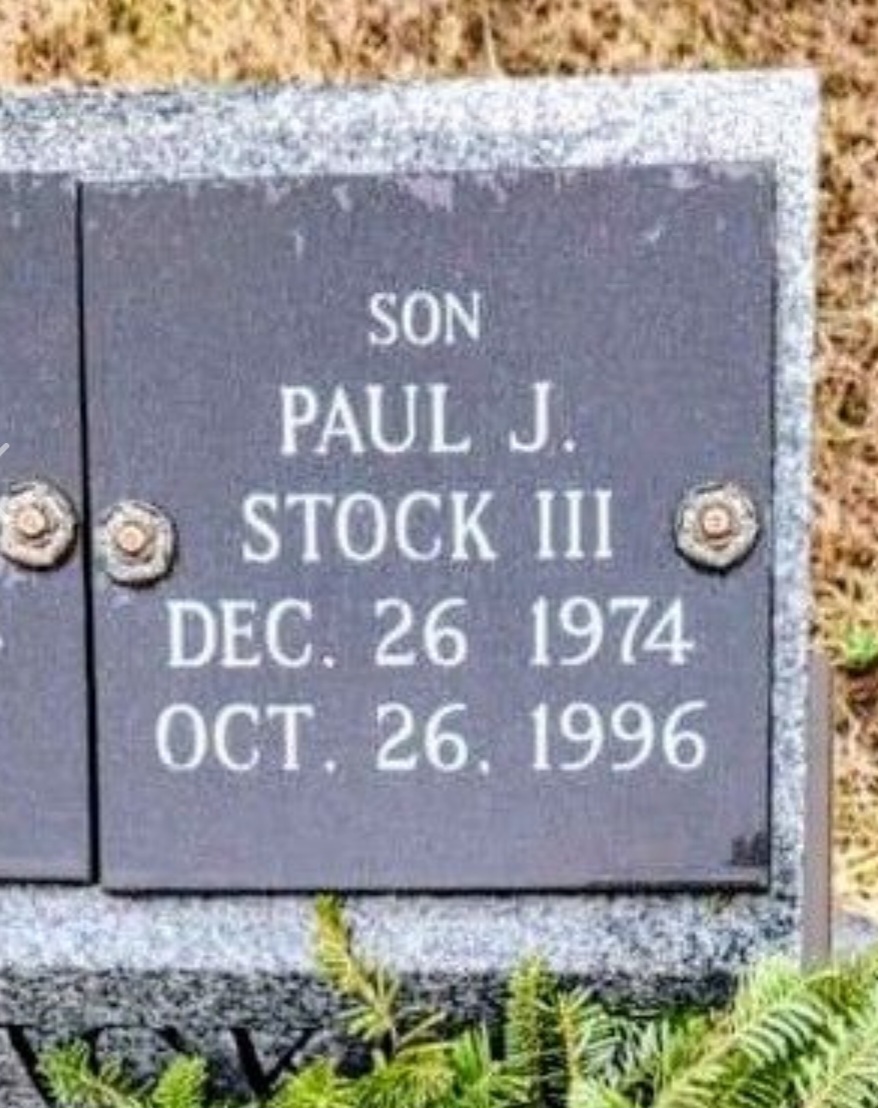
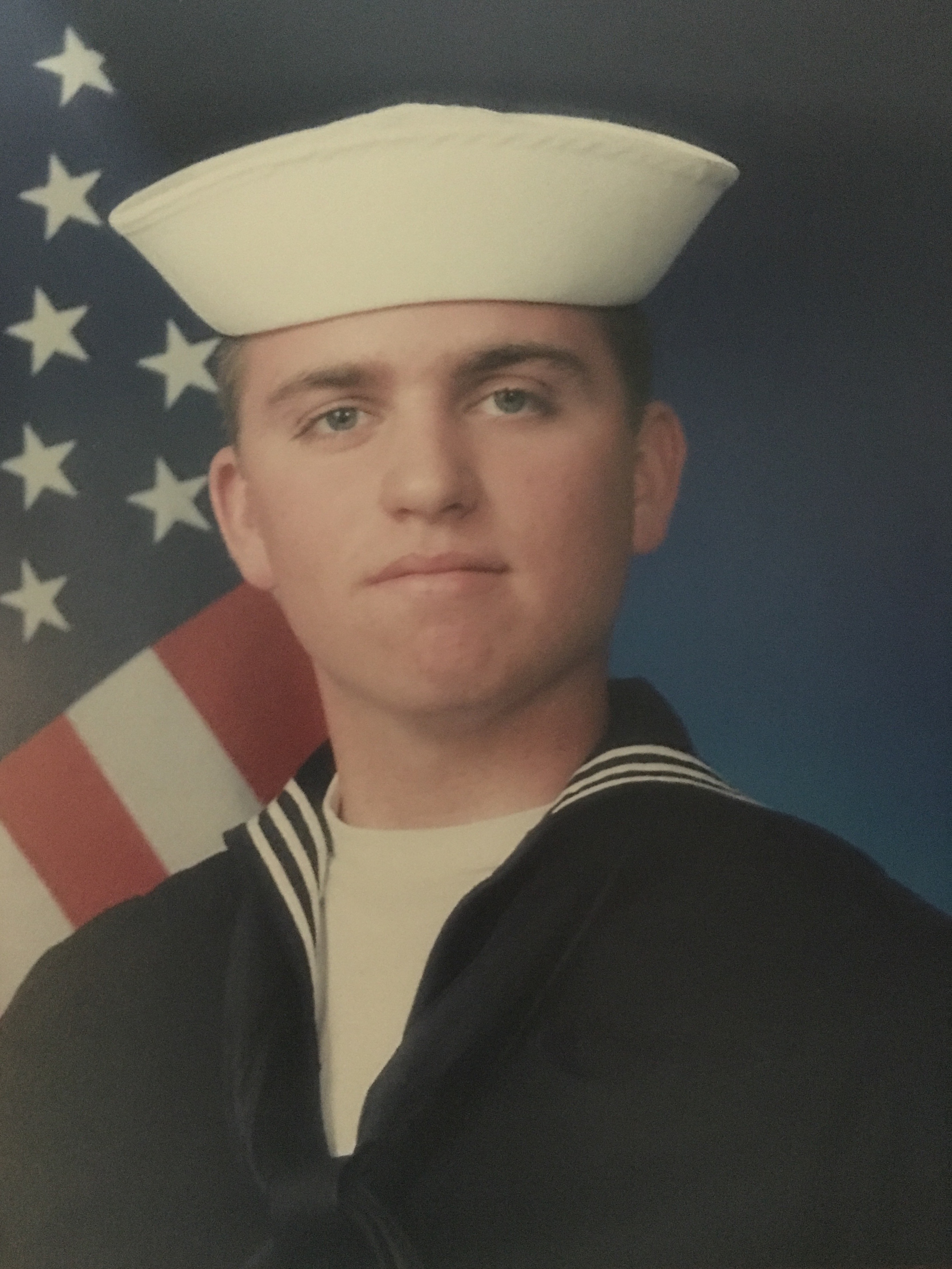
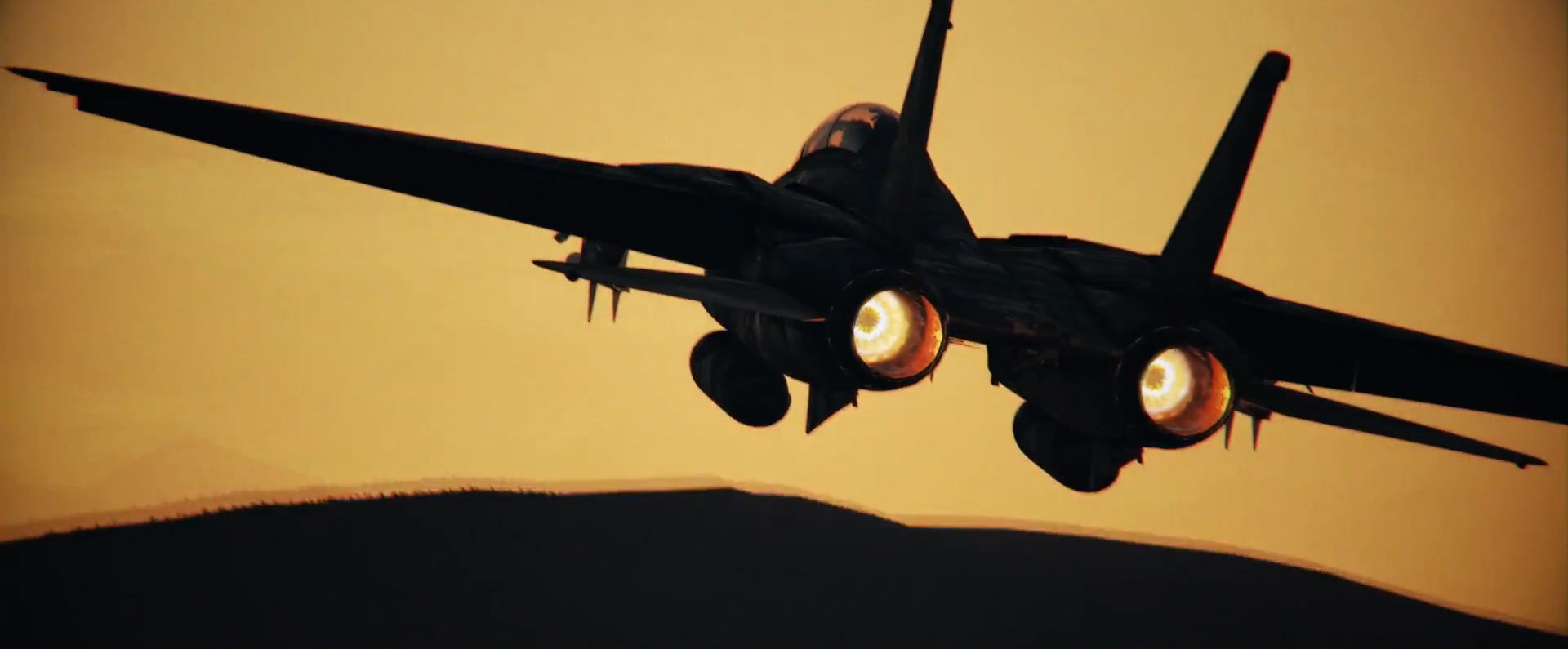
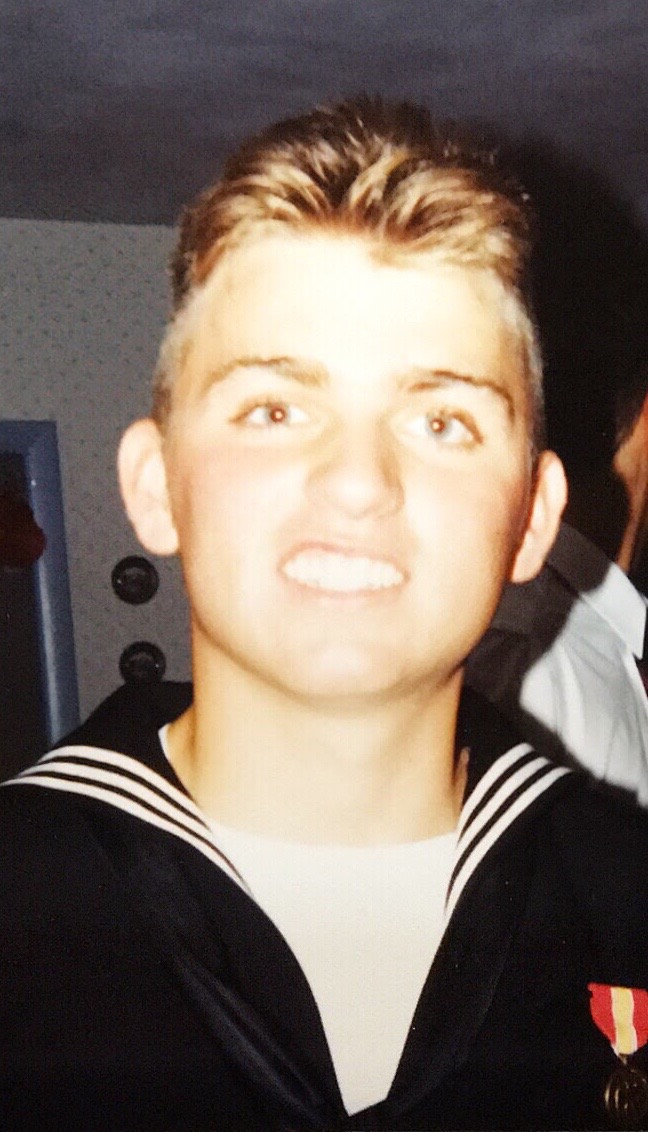
Paul J. Stock, III, known to family and friends simply as PJ, was born on December 26, 1974, in St. Petersburg, Florida. His childhood unfolded between Florida and Kansas, where his early fascination with aviation took root. At twelve, after watching Top Gun, he declared with unmistakable conviction that he would one day fly jets. That dream became the compass for the rest of his life.
He grew up in a close, deeply military family. His mother, Carla, served in the U.S. Air Force during the Vietnam Era and now resides in Fort Worth. His father, Joseph, also served in the Air Force and preceded Paul in death. His grandfather, Carl, a retired Senior Master Sergeant in the Air Force, lives in Belton, Missouri. His siblings continued the family’s tradition of service and purpose: Christina in Waco, Texas; Anthony, who served fourteen years with the U.S. Army’s 1st Cavalry Division including deployments to Iraq and Bosnia; and Jennifer, a dedicated middle school science teacher. Anthony and Jennifer make their home in Phoenix, Arizona.
After one semester of community college in Kansas, Paul chose to pursue military service and entered the United States Navy. His high aptitude scores earned him a place in the elite nuclear program for submarine service, yet his heart remained fixed on aviation. Determined to follow a path toward flying, he redirected to machinist school in Memphis with the long‑range plan of completing his degree, applying for Officer Candidate School, and ultimately competing for the Navy’s famed Top Gun program.
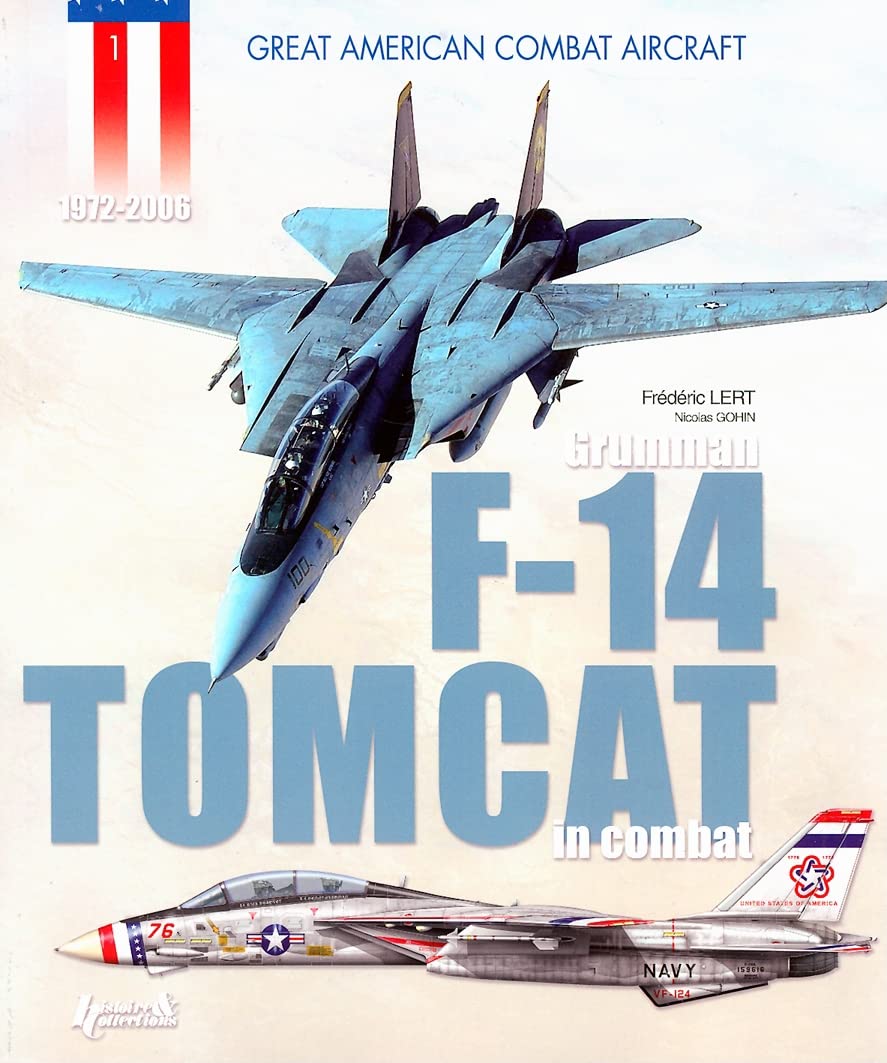
Paul’s first duty station was Naval Air Station Oceana in Virginia Beach, where he served aboard both the USS John C. Stennis and the USS John F. Kennedy. His time on the Kennedy included a North Atlantic goodwill tour to England and Ireland. When he stepped off the ship upon returning to Virginia, he told his mother with unwavering certainty that one day he would fly an F‑14 from her deck.
He pursued that dream with relentless determination. While stationed in Tennessee, he repeatedly petitioned for early separation to attend college through a Navy ROTC pathway, challenging a long‑standing rule that required four full years of enlisted service before eligibility. His work ethic, achievement awards, and tenacity drew the attention of senior leadership, and his case was elevated to the Naval Board. Against precedent, approval was granted after only two years of active duty.
Paul received the news while on temporary assignment in Reno, Nevada. Before he could return to his home base and learn of the decision that opened the door to his future, he was tragically killed in a vehicular accident on October 26, 1996.
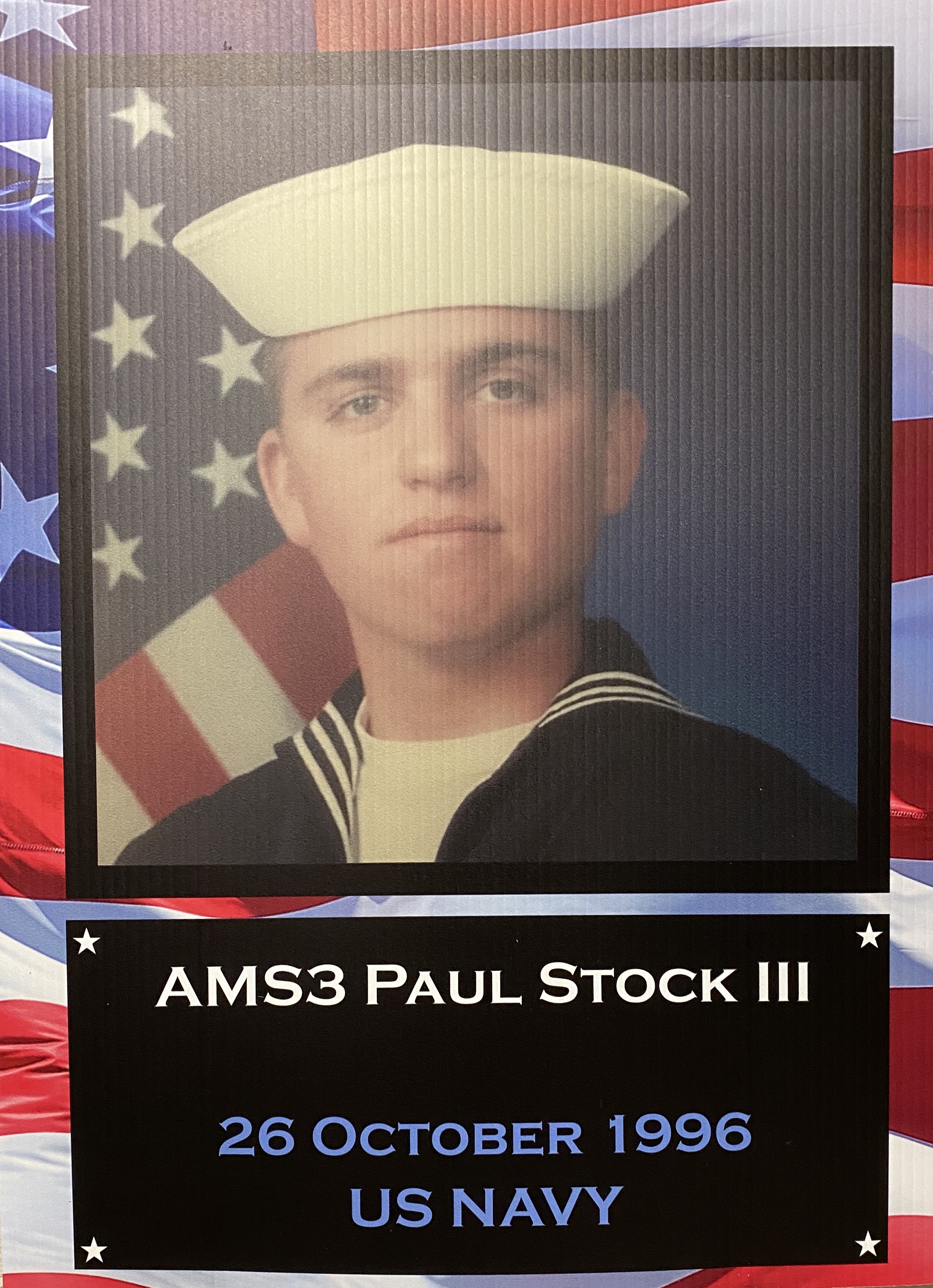
In recognition of his service and character, Paul was posthumously advanced to the rank of Petty Officer Third Class on November 21, 1996.
His life was brief, but his purpose was unmistakable. Paul lived with clarity, conviction, and a devotion to service that reflected the legacy of the family he came from and the future he intended to build. His story remains a testament to determination, honor, and the enduring power of a dream.
A Mother’s Tribute to Her Son
My son always knew he wanted to fly F‑14s. From the moment he watched Top Gun at fourteen, that dream settled into him with a certainty that never faded. When his aptitude scores qualified him for Nuclear School, he turned that opportunity down because his heart was fixed on aviation. Even in his earliest months of enlistment he began petitioning the Navy for permission to out‑process, finish his college degree, and return commissioned with Top Gun School in his sights. He was determined and continued to request this path even though approval was not granted until four years of service were normally required.
Paul earned several high achievement awards during his first years, and while away on temporary duty his commanding officer and the board agreed that he had proven himself. They made the rare decision to allow him to return to college after only two years of service. His signed paperwork was prepared and waiting for him upon his return to his permanent duty station.
He never knew that everything he dreamed of and worked so hard to accomplish was finally within reach. The night before his flight home he was killed in a vehicular accident when the driver of the car fell asleep. Losses like these are the most difficult to bear.
Supplemental Information
The Work and Leadership of Petty Officer Paul J. Stock, III
Within the United States Navy of the mid‑1990s, the Aviation Structural Mechanic in the Structures specialty served in one of the most technically demanding and historically significant roles in naval aviation. As an AMS3, Petty Officer Paul J. Stock, III entered a maintenance community whose lineage stretched back to the earliest days of flight, when the safety of fragile airframes depended entirely on the skill of the mechanic. By Paul’s era, the work had evolved into a sophisticated discipline responsible for the structural integrity of advanced aircraft operating from both shore bases and carrier decks.
Paul’s duties encompassed airframe repair across fuselage, wings, and stabilizers, each requiring exact alignment and structural soundness. These components endured tremendous stress during catapult launches and arrested landings, and even minor deviations could compromise flight safety. He maintained hydraulic systems that powered landing gear, flight controls, and arresting mechanisms, systems that had to perform flawlessly under the violent forces of carrier operations. He performed landing gear and flight control rigging, a discipline demanding meticulous measurement to ensure that control surfaces responded precisely to pilot input. His work in corrosion control and preservation protected aircraft from the constant threat posed by salt air and humidity, a challenge that had shaped naval aviation maintenance practices for decades.
Paul also carried responsibility for composite and metal structural repair, reflecting the Navy’s transition from traditional aluminum skins to advanced materials such as graphite epoxy and fiberglass laminates. His daily, preflight, and post‑flight inspections formed part of a rigorous maintenance culture built upon lessons learned from mishaps, combat losses, and the unforgiving nature of carrier aviation. Every inspection he completed contributed directly to aircraft safety and mission readiness, forming the unseen foundation upon which pilots relied each time they launched or recovered.
His rating placed him within a long tradition of aviation structural mechanics whose vigilance preserved the operational capability of naval aviation. The work he performed represented the quiet, disciplined labor that made flight possible and protected the lives of those who flew.
As a Petty Officer Third Class, Paul held a junior noncommissioned officer role shaped by generations of naval tradition. The PO3 rank marked the point at which a sailor was expected to lead, instruct, and uphold the standards of the Navy for those junior to him. In the aviation maintenance community, this leadership carried particular weight because the quality of supervision directly influenced the safety of aircraft and the effectiveness of the squadron.
Paul trained and supervised E‑1 to E‑3 sailors, guiding them through maintenance procedures, tool accountability, and the disciplined habits required in a high‑risk environment. He led maintenance tasks and work center operations, ensuring that each assignment followed technical manuals, maintenance instruction messages, and the requirements of the Naval Air Training and Operating Procedures Standardization program. He maintained technical logs, records, and inspection documentation, all of which formed the official history of each aircraft and were subject to review by quality assurance personnel and command leadership.
He supported flight operations, launches, and recoveries, roles that placed him on the flight line where coordination, communication, and precision were essential. His conduct reflected the expectations of a PO3 in Naval Aviation, where professionalism, reliability, and adherence to procedure were required at all times. Through his leadership, he upheld the standards that define naval service and contributed to the operational readiness of his squadron.
Paul’s work and leadership formed a legacy rooted in skill, discipline, and devotion to duty. His service stands within the long continuum of sailors whose craftsmanship and character sustained the strength of naval aviation.
The Operational World of Naval Aviation Maintenance
The operational world of United States Naval Aviation in the mid‑1990s placed Aviation Structural Mechanics in environments shaped by tradition, technical advancement, and the uncompromising demands of military flight. AMS3 sailors like Petty Officer Paul J. Stock, III served within aircraft squadrons, Carrier Air Wings, aircraft carriers, amphibious assault ships, and Naval Air Stations. These commands formed a global aviation network that sustained the Navy’s ability to project power, respond to international crises, and maintain continuous readiness across oceans and continents.
Their work unfolded in settings defined by intensity, precision, and constant motion. On flight lines, they operated among aircraft preparing for launch or returning from missions, where coordination and strict procedural discipline were essential. The flight line environment was shaped by decades of operational experience and carried inherent risks, requiring mechanics to remain alert to moving aircraft, support equipment, and the rapid tempo of preflight and post‑flight activity.
In hangars, AMS3 sailors performed structural repairs, hydraulic maintenance, and detailed inspections. These spaces served as the technical heart of squadron operations, where aircraft were disassembled, repaired, and restored to full mission capability. Hangar work demanded patience, technical mastery, and an understanding of the aircraft’s structural behavior under stress. It also required familiarity with the Navy’s extensive maintenance documentation, which had evolved through generations of lessons learned from mishaps, combat losses, and engineering discoveries.
On flight decks, they worked in one of the most hazardous environments in the world. The deck of an aircraft carrier presented a landscape of jet blast, rotor wash, arresting cables, and the thunder of catapult launches. Every movement required awareness and discipline. The flight deck’s dangers were well documented throughout naval history, and by Paul’s era, safety protocols had become highly refined. Even so, the environment demanded absolute focus from every sailor who stepped onto its non‑skid surface.
In maintenance shops, AMS3 sailors carried out specialized repairs, composite work, and the precise rigging of flight controls. These shops housed the tools, materials, and technical manuals required for structural restoration. Composite repair reflected the Navy’s transition from traditional aluminum skins to advanced materials such as graphite epoxy and fiberglass laminates. Rigging work required exact measurements to ensure that control surfaces responded correctly to pilot input, a discipline central to flight safety.
These environments demanded technical excellence, physical endurance, and unwavering discipline. The Navy’s aviation maintenance culture had been shaped by decades of operational experience, and by the mid‑1990s, procedures were standardized, documentation was rigorous, and quality assurance programs were deeply embedded in daily operations. Every action taken by an AMS3 contributed directly to the safety of aircrew and the readiness of the fleet.
Within this demanding world, Petty Officer Third Class Paul J. Stock, III honorably served as an Aviation Structural Mechanic in the Structures specialty. His work ensured the structural integrity, hydraulic reliability, and flight control safety of naval aircraft. He performed airframe repair across fuselage, wings, and stabilizers, maintained hydraulic systems that powered landing gear and flight controls, executed precise rigging of control surfaces, conducted corrosion control, and carried out composite and metal structural repair. His daily, preflight, and post‑flight inspections formed part of the Navy’s disciplined maintenance cycle, each inspection contributing to the safe launch and recovery of aircraft.
As a junior noncommissioned officer, Paul trained and supervised junior sailors, guided maintenance tasks, and upheld the disciplined habits essential to aviation operations. He supported flight operations, launches, and recoveries, roles that placed him in environments where precision and professionalism were required at all times. His leadership reflected the expectations of a Petty Officer Third Class, a rank that marked the transition from apprentice to instructor within the Navy’s enlisted structure.
Paul’s service demonstrated technical mastery, reliability, and devotion to duty. His work stands within the long continuum of sailors whose craftsmanship and character sustained the strength of United States Naval Aviation.
His Advancement Toward TOPGUN Training
Before his passing, Petty Officer Third Class Paul J. “PJ” Stock, III had been selected to pursue advanced training associated with the Navy’s elite TOPGUN program, formally known as the United States Navy Fighter Weapons School. This recognition placed him within a rare group of sailors whose technical skill, professionalism, and reliability distinguished them above their peers. Although TOPGUN is best known for its instruction of naval aviators, the program also relied on highly capable enlisted personnel whose expertise supported the demanding standards of fighter aviation. Paul’s selection reflected the confidence his command placed in him and the exceptional performance he demonstrated as an Aviation Structural Mechanic in the Structures specialty.
The Hidden Work That Forged TOPGUN’s Legacy
Many people know TOPGUN as a school for elite fighter pilots, yet the true institution was far more complex and far more demanding than its public image. Its development involved layers of intelligence work, tactical experimentation, and cultural discipline that shaped naval aviation for generations.
One of the most significant truths is that TOPGUN’s earliest instructors built the program by studying captured enemy documents, foreign aircraft performance reports, and classified intelligence assessments. They analyzed every detail of adversary tactics, including turn rates, climb profiles, missile envelopes, and radar limitations. This work created a body of knowledge that did not exist anywhere else in the Navy. The school became the central repository of threat understanding, and its instructors were responsible for translating intelligence into practical, survivable tactics.
Another reality often overlooked is that TOPGUN’s training flights were not simply practice engagements. They were controlled experiments designed to test new tactical ideas. Instructors recorded every maneuver, every radio call, and every weapons employment decision. After each flight, students and instructors participated in extensive debriefs that could last longer than the flights themselves. These debriefs were not casual discussions. They were forensic examinations of decision making, situational awareness, and tactical discipline. The culture demanded humility, honesty, and absolute accountability.
Few people know that TOPGUN instructors were required to master the capabilities of foreign aircraft to such a degree that they could replicate adversary tactics with precision. They flew American aircraft configured to mimic the performance of enemy fighters, and they studied foreign doctrine to understand how adversaries thought, trained, and fought. This allowed TOPGUN to create realistic threat presentations that prepared aviators for combat encounters they might never have imagined.
Another little‑known truth is that TOPGUN shaped the Navy’s communication standards. The brevity codes, radio discipline, and communication patterns used across naval aviation today were refined and standardized within the program. Instructors taught students how to speak with clarity, economy, and precision, because communication errors in combat could cost lives. This influence extended far beyond fighter squadrons and became part of the Navy’s broader aviation culture.
Many do not realize that enlisted personnel played a critical role in TOPGUN’s success. They maintained aircraft that operated at the limits of performance, often under demanding schedules and intense scrutiny. Their work required deep technical knowledge, calm under pressure, and unwavering attention to detail. The reliability of TOPGUN’s training flights depended on their expertise. Their contributions shaped the safety, effectiveness, and credibility of the program.
Another fact seldom discussed is that TOPGUN’s influence extended into the development of new aircraft and weapons systems. Instructors provided feedback to engineers, evaluated emerging technologies, and helped shape the tactical employment of new capabilities. Their insights influenced how the Navy integrated radar improvements, missile upgrades, and electronic warfare systems into operational doctrine.
Finally, TOPGUN’s greatest legacy may be its role in transforming the Navy’s approach to learning. The program created a culture in which experience was analyzed, codified, and shared. Lessons were not lost. They were preserved, refined, and passed forward. This commitment to continuous improvement became a defining characteristic of naval aviation and contributed to the Navy’s tactical superiority across decades.
The Development of TOPGUN Across the Decades
TOPGUN’s development unfolded across a series of decades in which United States Naval Aviation continually adapted to new threats, new technologies, and new understandings of air combat. Its origins lay in the Navy’s detailed analysis of air engagements during the Vietnam War, a study completed in 1968 that revealed a critical need for more advanced tactical instruction. In response, the Navy established the United States Navy Fighter Weapons School in 1969 at Naval Air Station Miramar. Its earliest instructors immersed themselves in adversary tactics, intelligence reports, and the technical capabilities of threat aircraft. They created a curriculum that emphasized precision, disciplined execution, and mastery of fighter fundamentals. The school’s guiding principle, “Train the trainers,” ensured that graduates returned to the fleet equipped to elevate the tactical proficiency of entire squadrons.
During the 1970s, TOPGUN refined its methods and expanded its influence. The Cold War provided a constant stream of intelligence on potential adversaries, and instructors incorporated this information into their teaching. Training flights became more complex, simulating real‑world combat conditions with increasing fidelity. The school’s reputation grew steadily, and TOPGUN became recognized as the premier institution for fighter tactics within the Navy. Its graduates shaped doctrine, influenced training standards, and contributed to the development of new tactical approaches.
The 1980s marked a period of significant advancement. Improvements in aircraft technology, radar systems, and missile capabilities required continual adaptation. TOPGUN instructors integrated these developments into the curriculum, ensuring that training remained aligned with the evolving nature of aerial combat. The program’s visibility increased dramatically after the release of the 1986 film Top Gun, which introduced the name to the public. Although the film dramatized aspects of naval aviation, the real TOPGUN remained focused on disciplined instruction, tactical mastery, and the pursuit of excellence. Its instructors were regarded as the finest tactical experts in the fleet, and its graduates carried a level of respect that reflected the school’s demanding standards.
In the early 1990s, TOPGUN continued to evolve in response to new aircraft, emerging threats, and the changing geopolitical landscape. The collapse of the Soviet Union altered global dynamics, but the Navy recognized that tactical excellence remained essential. The school incorporated advanced radar systems, improved missile technology, and updated adversary tactics into its curriculum. Training emphasized deep understanding of threat capabilities, precise communication, and the ability to execute complex missions under pressure. The program’s instructors refined their teaching methods, ensuring that graduates returned to the fleet with the knowledge and discipline required to elevate squadron performance.
By the mid‑1990s, when Paul served, TOPGUN had become the pinnacle of tactical excellence in naval aviation. The school’s environment was intense, highly structured, and built upon decades of operational experience. Students entered a culture that demanded absolute focus, technical accuracy, and unwavering commitment to excellence. Every lecture, briefing, and flight was conducted with precision. Every maneuver and decision was evaluated with exacting detail. The school’s standards reflected the highest expectations of naval aviation, and its graduates carried the responsibility of strengthening the fleet’s tactical capability.
The Culture and Reality of TOPGUN Training
TOPGUN’s culture was shaped by tradition, professionalism, and the pursuit of excellence. Students were expected to absorb vast amounts of information, execute complex tactics, and maintain composure under scrutiny. The school emphasized humility, discipline, and respect for the craft of naval aviation. Training flights simulated real‑world combat conditions, and instructors demanded flawless communication, precise maneuvering, and deep tactical understanding. The environment was demanding for aviators and equally demanding for enlisted personnel who supported the program.
Enlisted sailors selected for TOPGUN‑level roles worked alongside elite aviators and instructors, supporting aircraft that operated at the limits of performance. Maintenance had to be flawless, documentation exact, and every action aligned with the school’s disciplined procedures. Their presence reflected the trust placed in them by command leadership and the recognition of their technical excellence. The work required calm under pressure, deep familiarity with aircraft systems, and the ability to perform with absolute reliability.
The Meaning of His TOPGUN Advancement
Only the most capable and dedicated sailors were considered for TOPGUN‑level training, and selection required a record of excellence that set an individual apart from the larger maintenance community. Commands did not nominate sailors lightly. A recommendation for TOPGUN signaled that the individual had demonstrated exceptional reliability, disciplined conduct, and a commitment to the standards that defined naval aviation. Paul’s advancement toward this training stands as one of the clearest indicators of the trajectory he was on. It affirmed the promise he carried, the excellence he had already demonstrated, and the future his command believed he was prepared to achieve.
Although he did not live to begin the training that awaited him, Paul’s advancement remains a lasting testament to his talent, work ethic, and devotion to duty. His name joined the lineage of sailors whose dedication supported the Navy’s most demanding aviation program, and his legacy continues to reflect the honor and professionalism that defined his service.
The War Eras That Shaped the TOPGUN Program
The Vietnam War Era TOPGUN emerged directly from the realities of the Vietnam War. By 1967, Navy air‑to‑air kill ratios had fallen sharply, revealing that aviators were not receiving adequate tactical instruction. The Navy commissioned the Ault Report, a comprehensive study of every air engagement in the conflict. This report concluded that aviators needed deeper understanding of adversary aircraft, missile behavior, and maneuvering fundamentals. In response, the Navy established the United States Navy Fighter Weapons School in 1969 at Naval Air Station Miramar. The Vietnam War provided the combat data, the tactical failures, and the operational lessons that formed the foundation of TOPGUN’s curriculum. Every early lecture, flight scenario, and debrief was shaped by real engagements fought over Southeast Asia.
The Cold War Era During the 1970s and 1980s, TOPGUN matured within the strategic environment of the Cold War. This era shaped the program more profoundly than any other. Instructors studied Soviet aircraft such as the MiG‑21, MiG‑23, and later the MiG‑29, analyzing their performance through intelligence reports, radar intercept data, and foreign evaluations. They examined Soviet missile systems, radar capabilities, and doctrinal approaches to air combat. The Cold War provided a constant stream of intelligence that allowed TOPGUN to refine its threat presentations and tactical instruction. Training scenarios mirrored the capabilities of Warsaw Pact aircraft, and instructors flew American fighters configured to replicate adversary performance. This era established TOPGUN as the Navy’s premier institution for tactical excellence.
The Late Cold War and Post‑Vietnam Operational Era The late 1970s and early 1980s brought significant technological advancement. New radar systems, improved electronic warfare suites, and more capable air‑to‑air missiles transformed the nature of aerial combat. TOPGUN instructors integrated these developments into the curriculum, ensuring that aviators understood not only how to employ new systems, but how adversaries might counter them. This era also saw the introduction of the F‑14 Tomcat and the F‑18 Hornet, aircraft that required new tactical approaches. TOPGUN’s ability to adapt to evolving technology strengthened its reputation as the Navy’s authoritative source for fighter tactics. The school’s graduates shaped fleet doctrine and influenced the development of new training standards across naval aviation.
The Post‑Cold War Era The early 1990s marked the end of the Cold War and a shift in global dynamics. Although the Soviet Union dissolved, the Navy recognized that tactical excellence remained essential. TOPGUN incorporated updated threat assessments, modernized communication standards, and refined tactical approaches suited to a world where adversaries were no longer defined by a single superpower. The program emphasized precision, disciplined execution, and the ability to operate in complex mission environments. By the mid‑1990s, when Paul served, TOPGUN had reached a level of operational maturity shaped by decades of experience. The school’s culture reflected the highest expectations of naval aviation, and its graduates carried the responsibility of elevating squadron performance across the fleet.
The Gulf War Connection Although TOPGUN was not created because of the Gulf War, the conflict demonstrated the value of the program’s teachings. During Operation Desert Storm in 1991, naval aviators employed disciplined tactics, refined communication standards, and threat‑based decision making that reflected TOPGUN’s influence. The Navy achieved air superiority quickly, and many of the tactical approaches used in the conflict had been shaped by TOPGUN instruction. The Gulf War did not alter the program’s curriculum, but it validated the effectiveness of TOPGUN’s training in real combat.
The War on Terror Era After the attacks of September 11, 2001, naval aviation supported operations in Afghanistan and Iraq. TOPGUN did not evolve because of these wars, yet the program adapted to the realities of modern conflict. Instructors incorporated lessons related to precision strike missions, electronic warfare, and joint operations with other branches of the military. The nature of combat shifted toward complex mission sets that required coordination across multiple platforms. TOPGUN refined its instruction to ensure aviators could operate effectively in environments where air‑to‑air engagements were less common but tactical discipline remained essential. This era demonstrated the program’s ability to remain relevant even when traditional fighter engagements were not the primary mission.
The Modern Era of Global Competition In the twenty‑first century, TOPGUN continued to refine its curriculum in response to the rise of advanced aircraft and weapons systems fielded by near‑peer competitors. This era is defined not by a specific war, but by a global environment in which technological competition shapes tactical development. Instructors incorporated modern radar systems, advanced electronic warfare capabilities, and updated adversary tactics based on emerging global threats. The program adapted to aircraft such as the F‑18 Super Hornet and later the F‑35, ensuring that aviators understood how to employ new systems with precision. This era reflects the enduring legacy of the program Paul was advancing toward, a legacy built on continuous improvement and unwavering commitment to excellence.
Patriotism Defined by Service and Mastery
Patriotism within the TOPGUN community emerged from a culture of disciplined service. It was not displayed through outward gestures, but lived through the daily expectations of United States Naval Aviation. This culture was shaped by the lessons of the Vietnam War, the vigilance required during the Cold War, and the evolving demands of modern global competition. Aviators understood that devotion to country required mastery of their profession, respect for the responsibilities placed upon them, and a willingness to place the mission above personal ambition. Their patriotism was steady and quiet, grounded in the belief that rigorous preparation safeguarded the nation more effectively than any outward symbol.
During the Vietnam War era, patriotism took the form of determined correction. The Navy’s Ault Report revealed critical shortcomings in air‑to‑air performance, and the establishment of TOPGUN reflected a national commitment to ensuring future aviators were better prepared. Instructors and students approached this mission with seriousness, believing that every improvement in tactical understanding strengthened the nation’s defense. Their work carried the conviction that refined skill and disciplined training could save American lives.
In the Cold War era, patriotism was expressed through intellectual precision and constant readiness. TOPGUN instructors examined Soviet aircraft, missile systems, and doctrinal strategies with meticulous care. They recognized that national security depended on anticipating adversary behavior and preparing aviators for encounters that could influence global stability. This form of patriotism lived in analysis, discipline, and the pursuit of tactical truth. It reflected a commitment to understanding potential threats so thoroughly that American aviators would always hold the advantage.
Patriotism also lived in the enlisted community that sustained TOPGUN’s operations. These men and women maintained aircraft operating at the limits of performance, often under demanding schedules and intense scrutiny. Their work required technical mastery, calm under pressure, and unwavering attention to detail. They understood that each reliable aircraft reflected the nation’s trust in their skill. Their patriotism was expressed through precision, responsibility, and pride in supporting a mission that protected the country.
During the post‑Cold War era, patriotism appeared in the Navy’s determination to maintain tactical excellence despite shifting global dynamics. TOPGUN instructors refined communication standards, updated threat assessments, and adapted to new aircraft capabilities. They believed the nation deserved a fighter force capable of responding to any challenge, even in a world no longer defined by a single adversary. Patriotism meant preparing for uncertainty and ensuring the Navy remained ready for future conflict.
In the War on Terror era, patriotism took on new forms. Naval aviators supported operations in Afghanistan and Iraq, and TOPGUN adapted to mission sets requiring precision strike capability, electronic warfare expertise, and coordination across multiple platforms. Patriotism was expressed through the willingness to evolve, to learn new tactics, and to operate effectively in environments where traditional air‑to‑air engagements were rare. It reflected a belief that service to the nation required flexibility, humility, and disciplined skill.
Across all eras, patriotism within TOPGUN was defined by action rather than sentiment. It lived in preparation, discipline, and the quiet certainty that service to the nation was a calling worthy of one’s best effort. This was the culture Paul was advancing toward, a culture that honored the country through excellence, responsibility, and the unwavering commitment to protect those who depended on the strength of the United States Navy.
A Devotion Remembered in Service
In the end, the patriotism that defined TOPGUN belonged to those who lived its demands with seriousness and integrity. Paul stood among them in every way that mattered. His discipline, his devotion to the mission, and his commitment to mastering his craft reflected the very qualities that sustained Naval Aviation’s highest tradition. His journey, carried with sincerity and resolve, was concluded before he could take his rightful place among them, yet he had already embraced their values with purpose and respect. He prepared himself with the same steadiness expected of those who served at the highest levels. In doing so, he brought honor to the uniform he wore and to the nation he sought to protect. His life remains a testament to the character he carried and to the devotion that continues to inspire all who remember him.
Legacy
Paul Joseph “PJ” Stock, III’s legacy is one of loyalty, heart, and quiet strength. From his earliest years, he carried an instinctive sense of responsibility toward the people around him, a trait that revealed both his character and his calling. That same sense of duty guided him to the United States Navy, where he served as an Aviation Structural Mechanic. In that role, he approached each task with discipline, precision, and pride, safeguarding the aircraft and the aviators who depended on his workmanship. His contribution lived in the unseen details — the careful inspections, the exacting repairs, the steadfast commitment to standards that protected lives. In every way, he brought light to the work entrusted to him.
Although his life was completed earlier than those who loved him could bear, PJ’s presence left a profound and enduring imprint on everyone who knew him. He was remembered for his humor, his kindness, and the rare ability to make others feel valued and understood. He carried a brightness that lifted those around him, a warmth that made room for others, and a sincerity that could not be forgotten. His service reflects the courage of a young man willing to embrace a demanding trade, shoulder responsibility, and give his best to something greater than himself. The honor he brought to his uniform continues to shine through the memories he left behind.
The loss of PJ in 1996 reshaped the lives of his family, especially his mother, Carla Wicks. Her journey as a Gold Star Mother became a living tribute to her son’s memory. Through her advocacy, her writing, and her unwavering devotion, she ensures that PJ’s story reaches others — reminding the world of the sacrifices borne not only by those who serve, but also by the families who carry their legacy forward. Her voice keeps his name present, his character visible, and his service honored, allowing his life to continue touching hearts far beyond the circle of those who knew him personally. In her love, his light is still carried forward.
PJ’s legacy endures in the hearts of his family, in the pride of his Navy brothers and sisters, and in the enduring truth that a life shaped by courage and kindness never fades. His memory stands as a testament to service, sacrifice, and the unbreakable bond between a mother and her son — a bond strengthened by love, preserved through remembrance, and carried forward with honor. His story continues to illuminate the path for others, reminding all who hear it that even a brief life can leave a lasting radiance.
This is the legacy of Paul J. Stock, III:
A sailor who upheld his duty with unwavering pride and devotion.
A son whose love endures as a steady light in the hearts of those who cherished him.
A man whose character continues to inspire all who speak his name.
And a name carried forward with honor, remembrance, and enduring grace.