
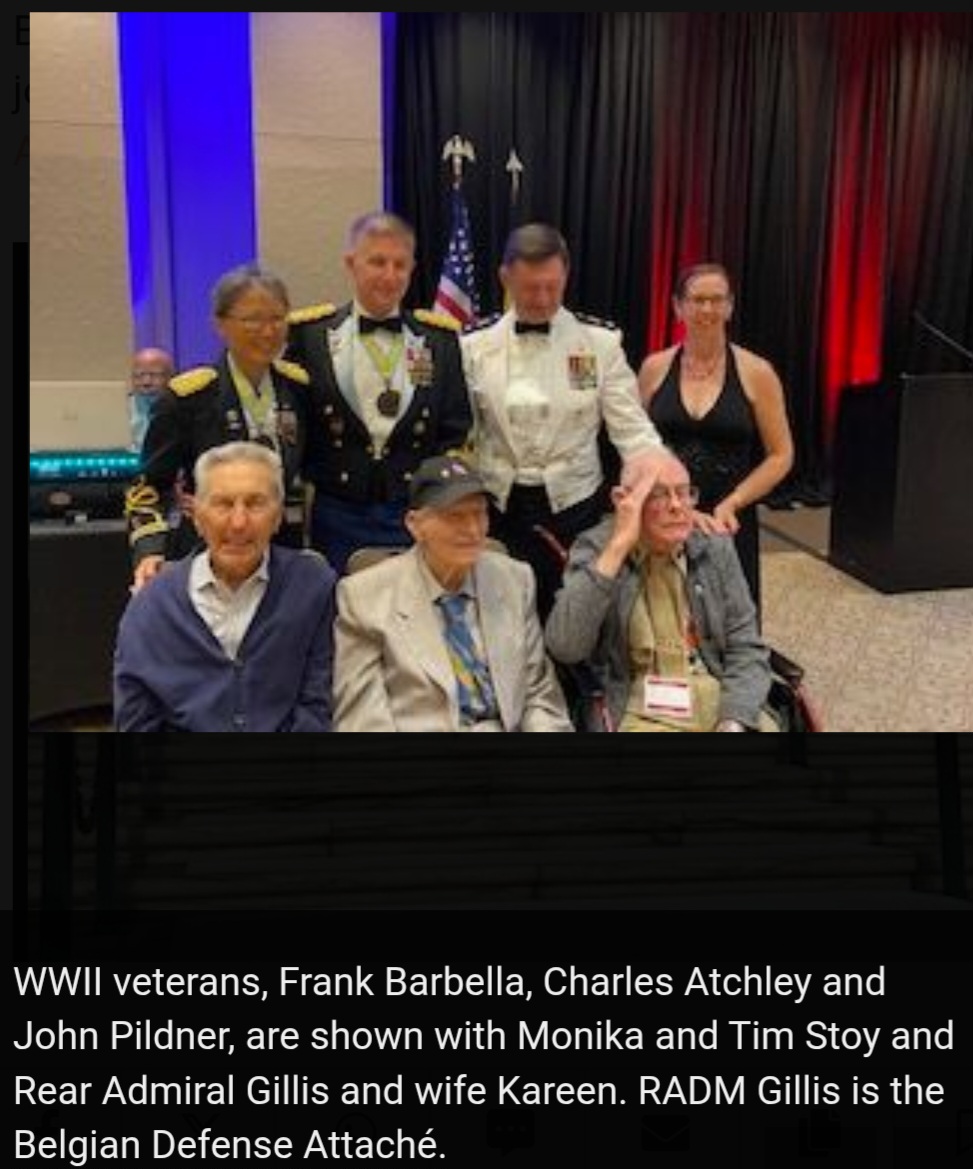
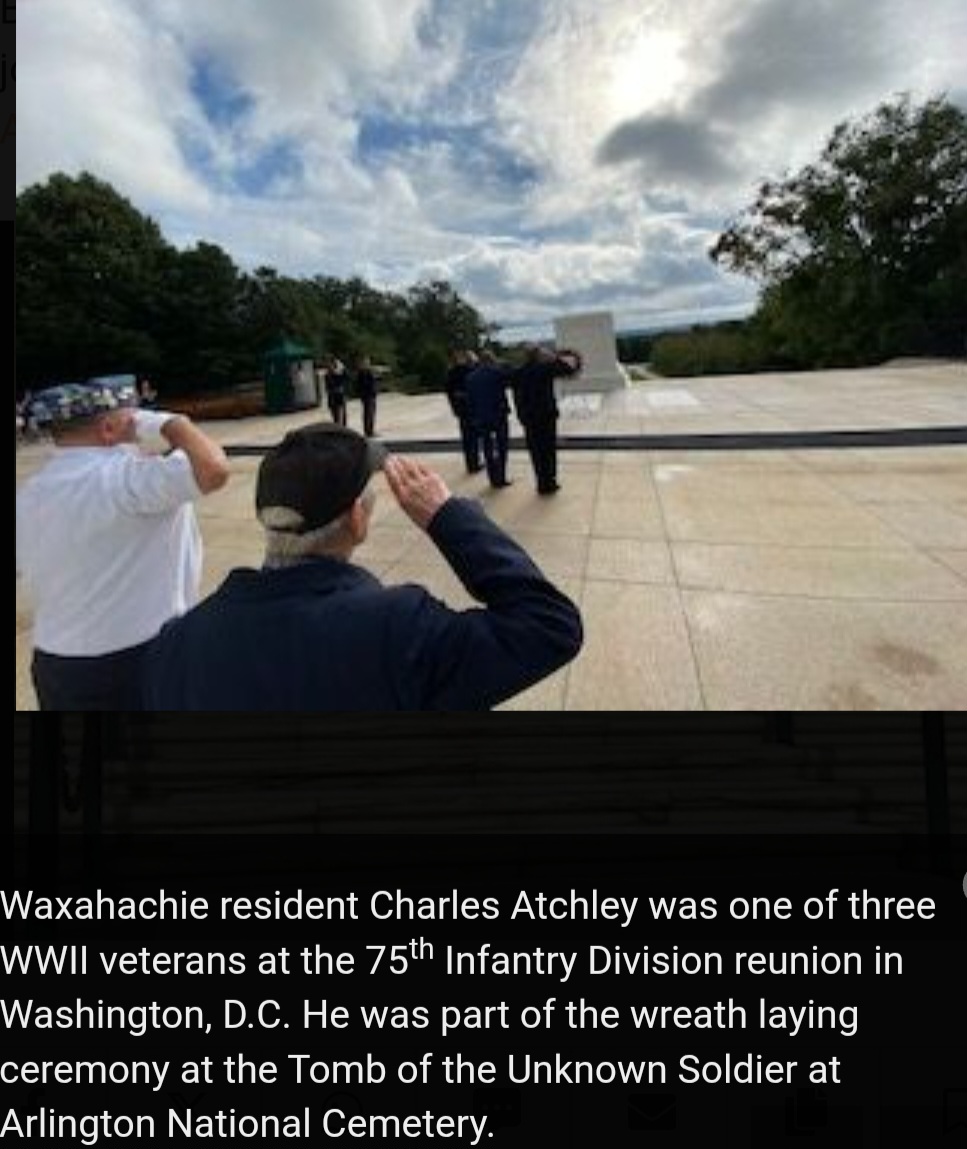
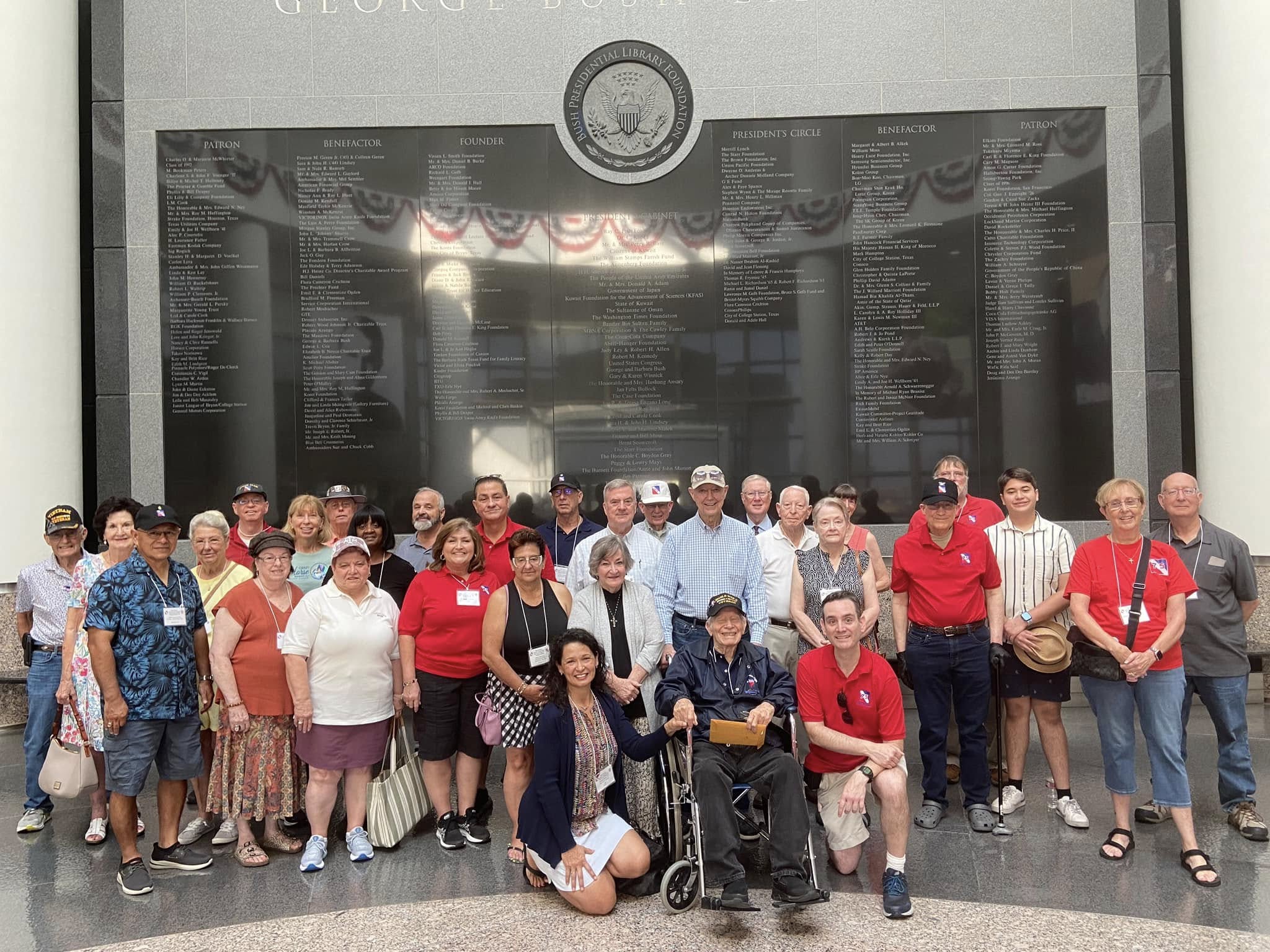
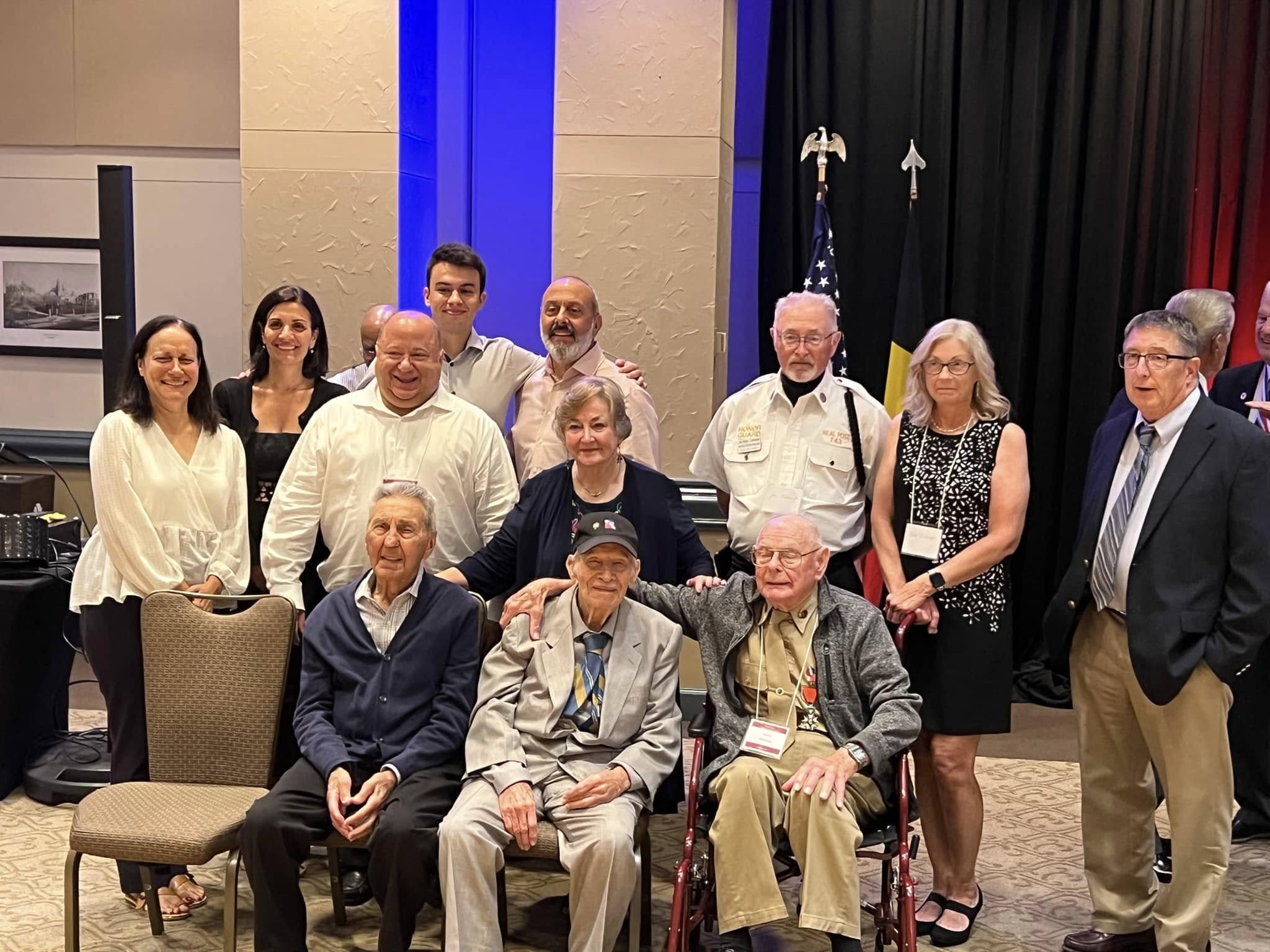
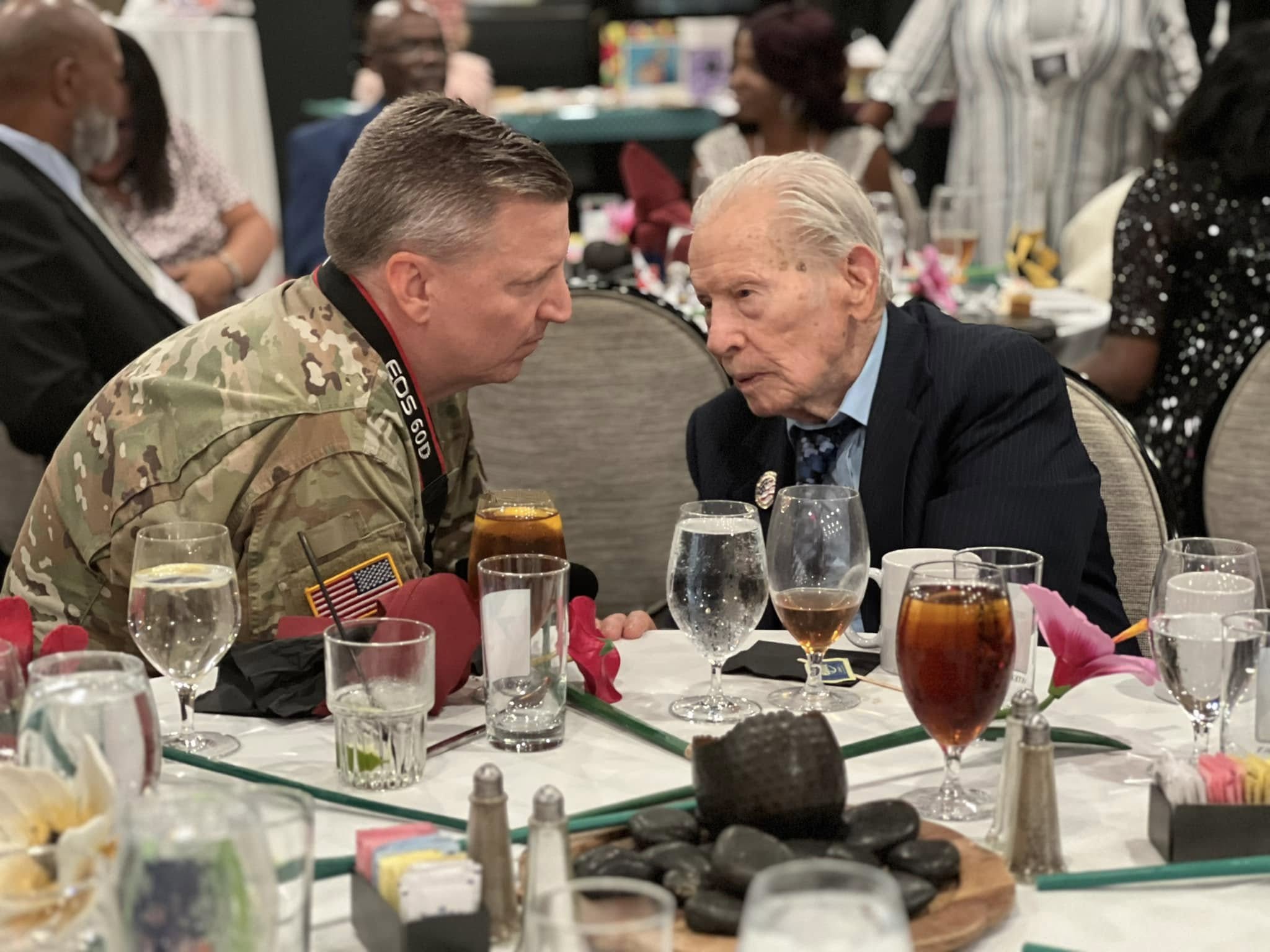
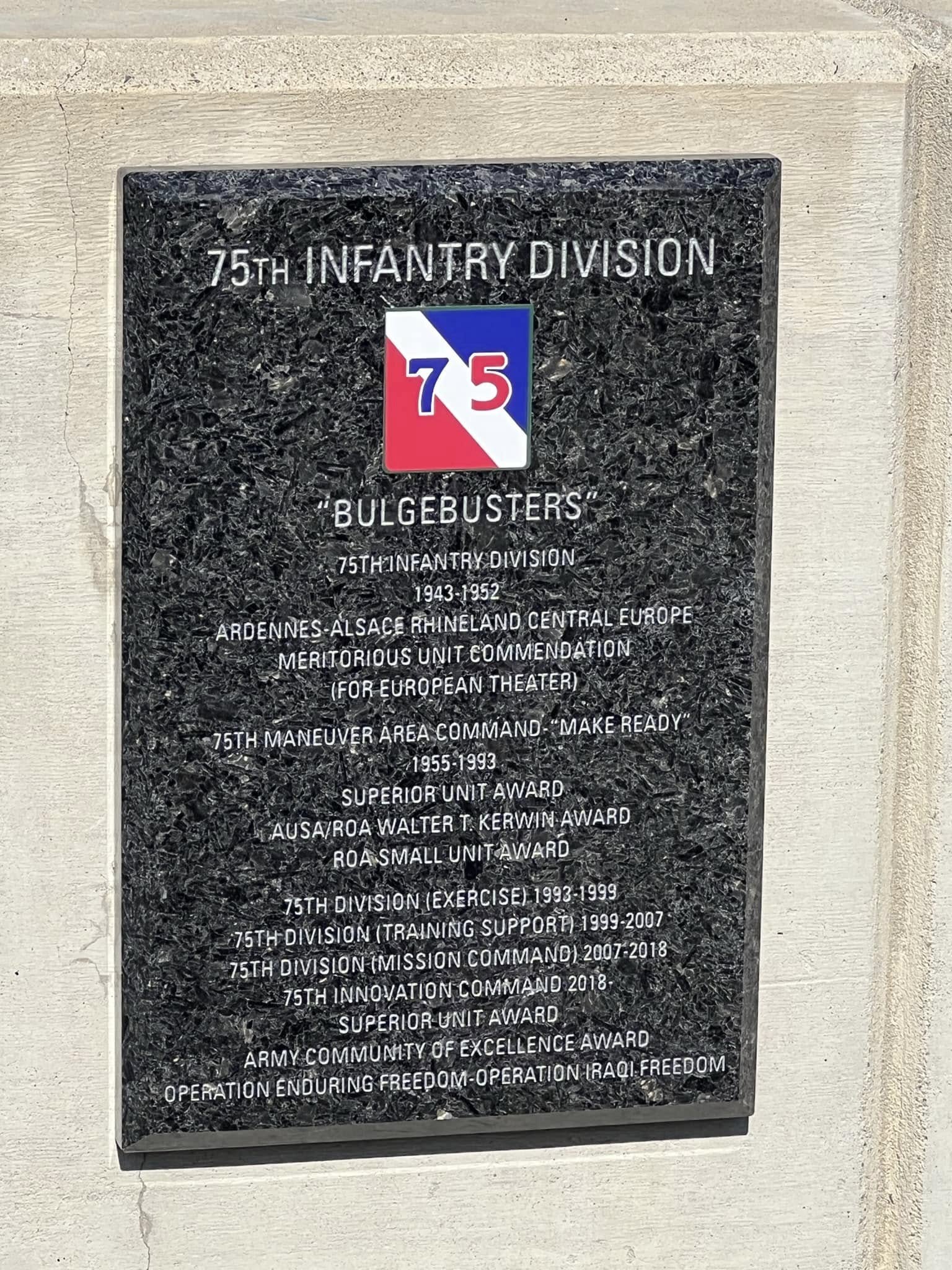
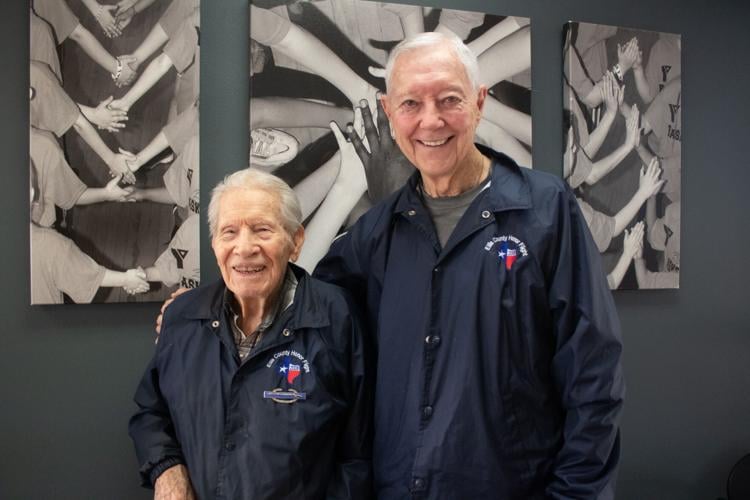
75th Infantry Division A Century of American Resolve
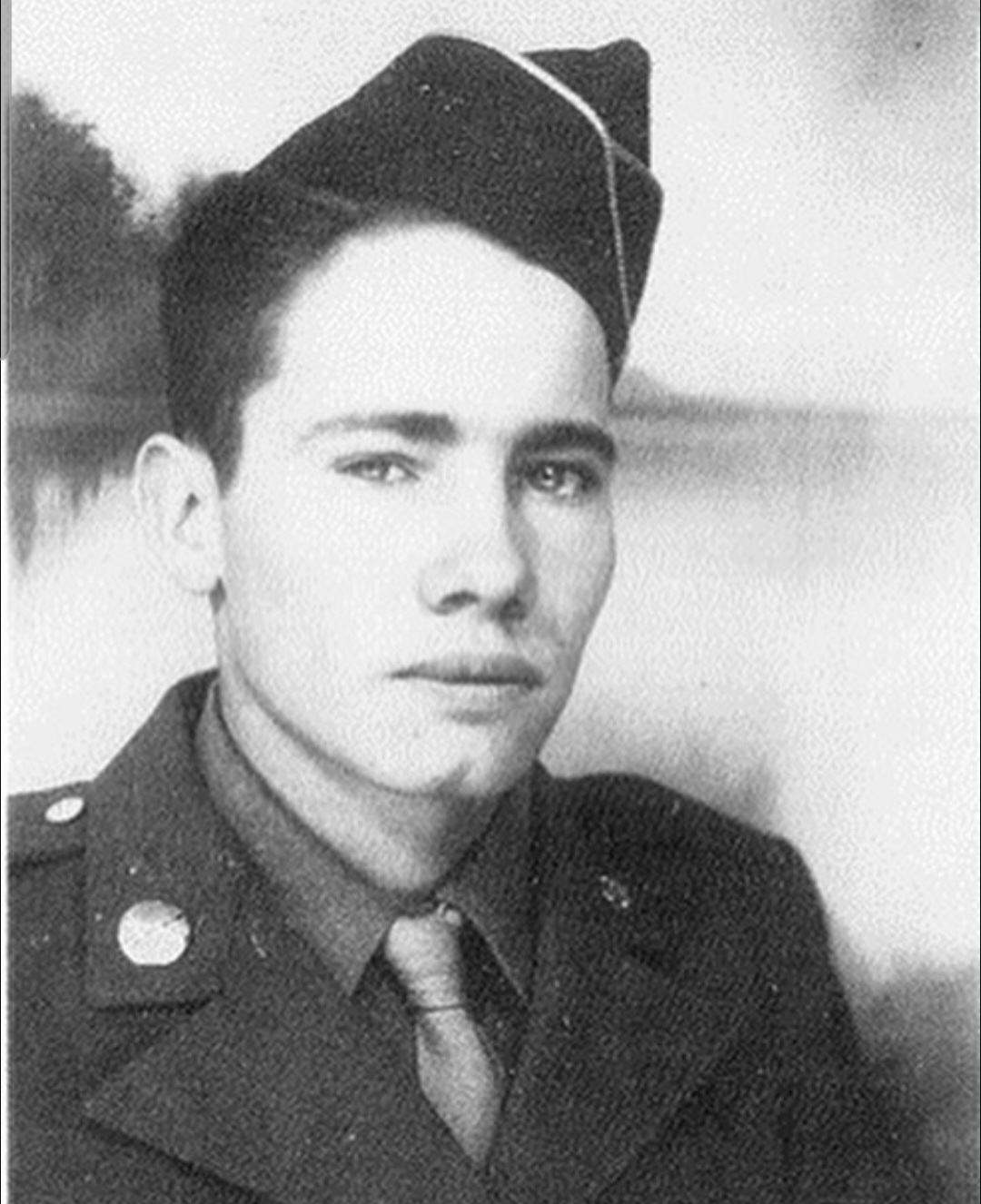
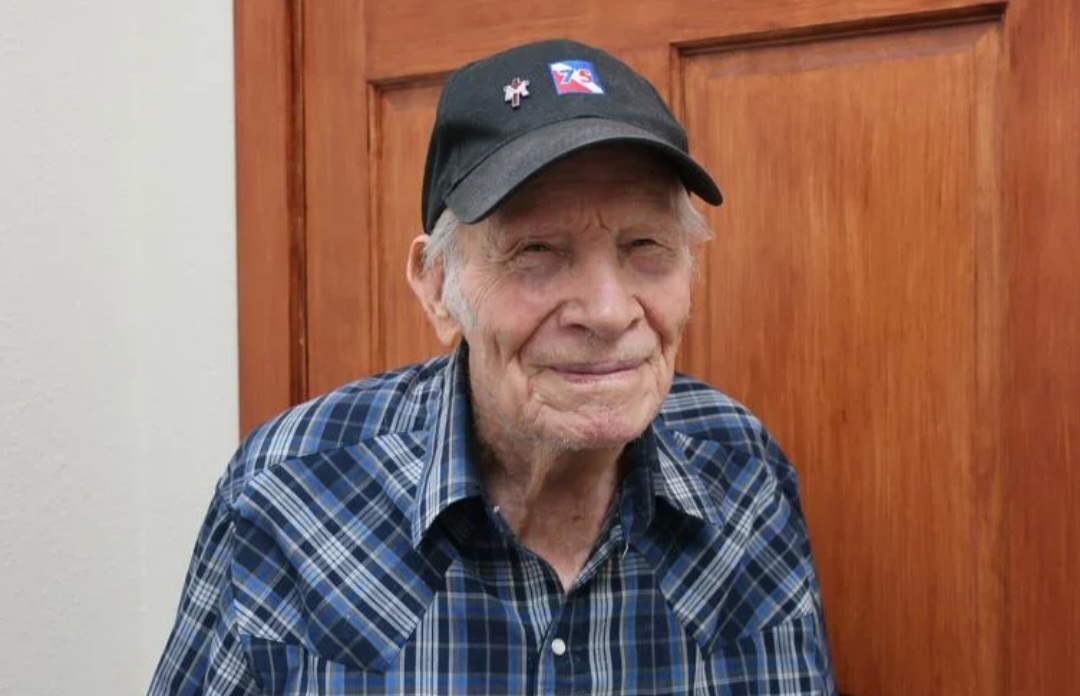
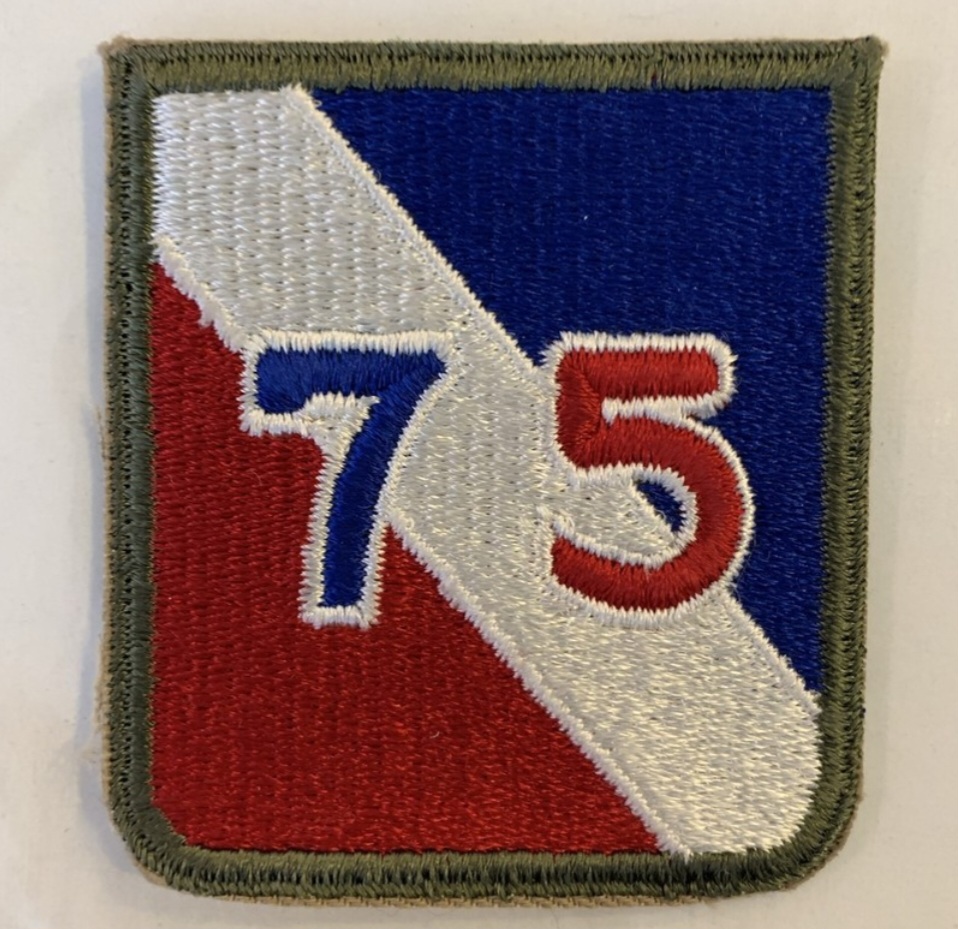
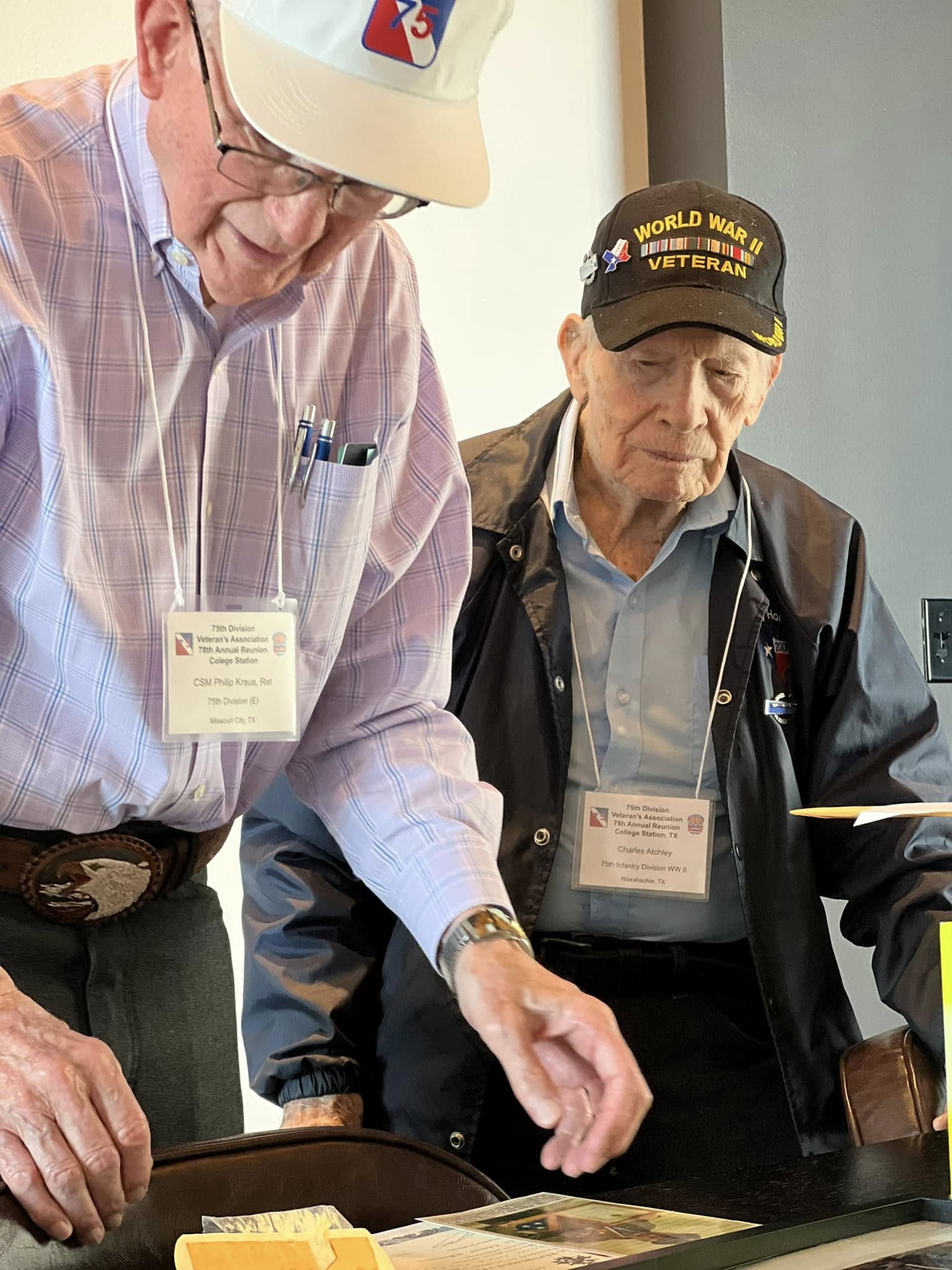
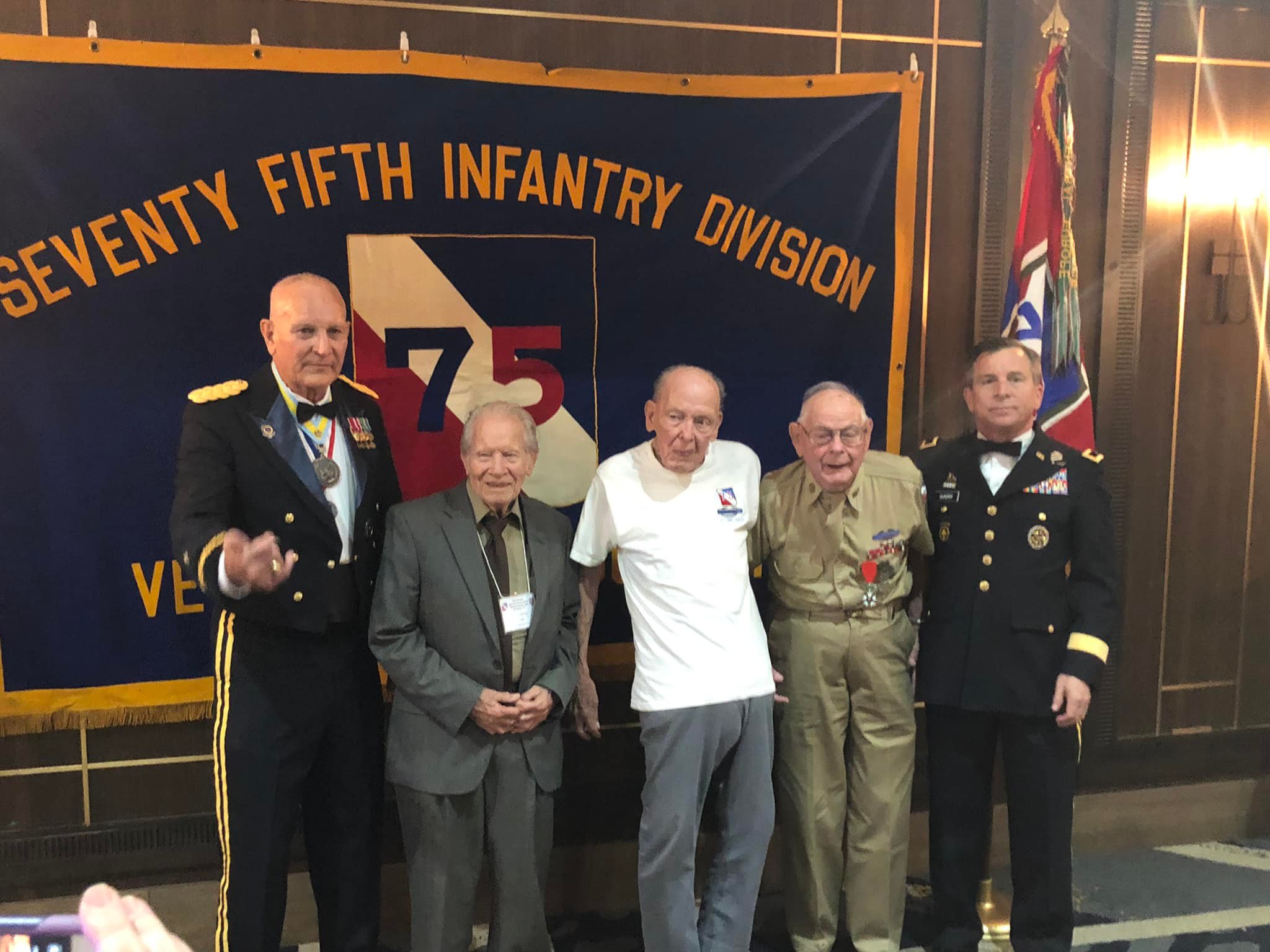
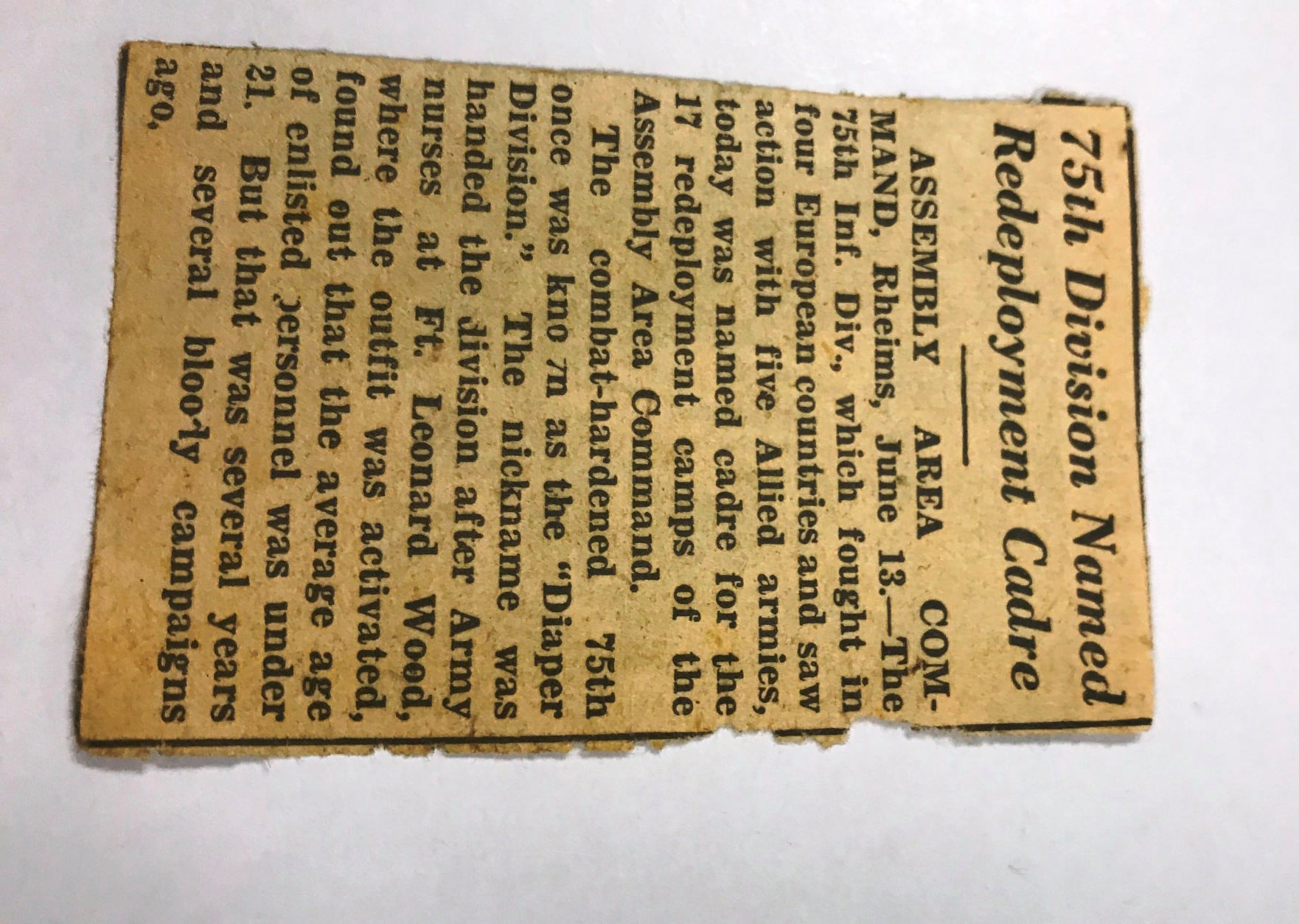
His service stands within the larger story of ordinary Americans who rose to extraordinary demands under conditions few could imagine. On April 15, 1943, the United States Army formed a new division of 14,000 young soldiers known as the 75th Infantry Division. They trained with intensity for more than a year, never knowing where the war would send them or what burden they would be asked to carry. In mid‑November 1944 they sailed to England for further combat preparation, and on New Year’s Eve 1944 they entered the Ardennes Forest to join the Battle of the Bulge. Veterans who had already endured 2 weeks of relentless fighting called the new arrivals the “Diaper Division” because of their youth. Among them was an 18‑year‑old infantry rifleman from Waxahachie named Private Charles E. Atchley, 5 feet 5 inches tall and weighing only 105 pounds, who crossed the Atlantic aboard the RMS Queen Elizabeth.
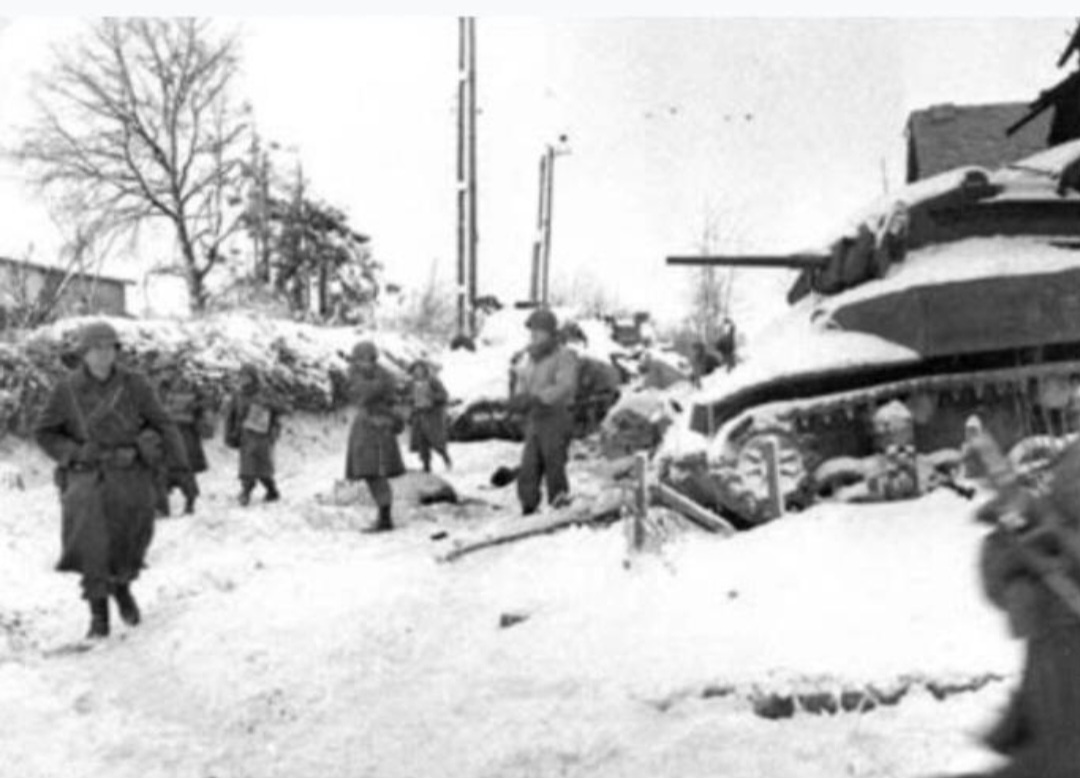
He stepped into the coldest winter France and Belgium had seen in 50 years. For 14 unbroken days he and his brothers in arms fought, ate, tried to sleep, and carried out every human necessity while seeking refuge in snow‑filled foxholes with mud and ice at the bottom. Each foxhole was dug anew as the battle shifted. In the midst of the chaos he steadied his mind with football, imagining defensive moves on a field while darting behind trees under heavy fire. He carried mortar rounds as if they were a football, weaving through gunfire and the thunder of Tiger tanks to reach his next position. His favorite team remains the Cowboys.
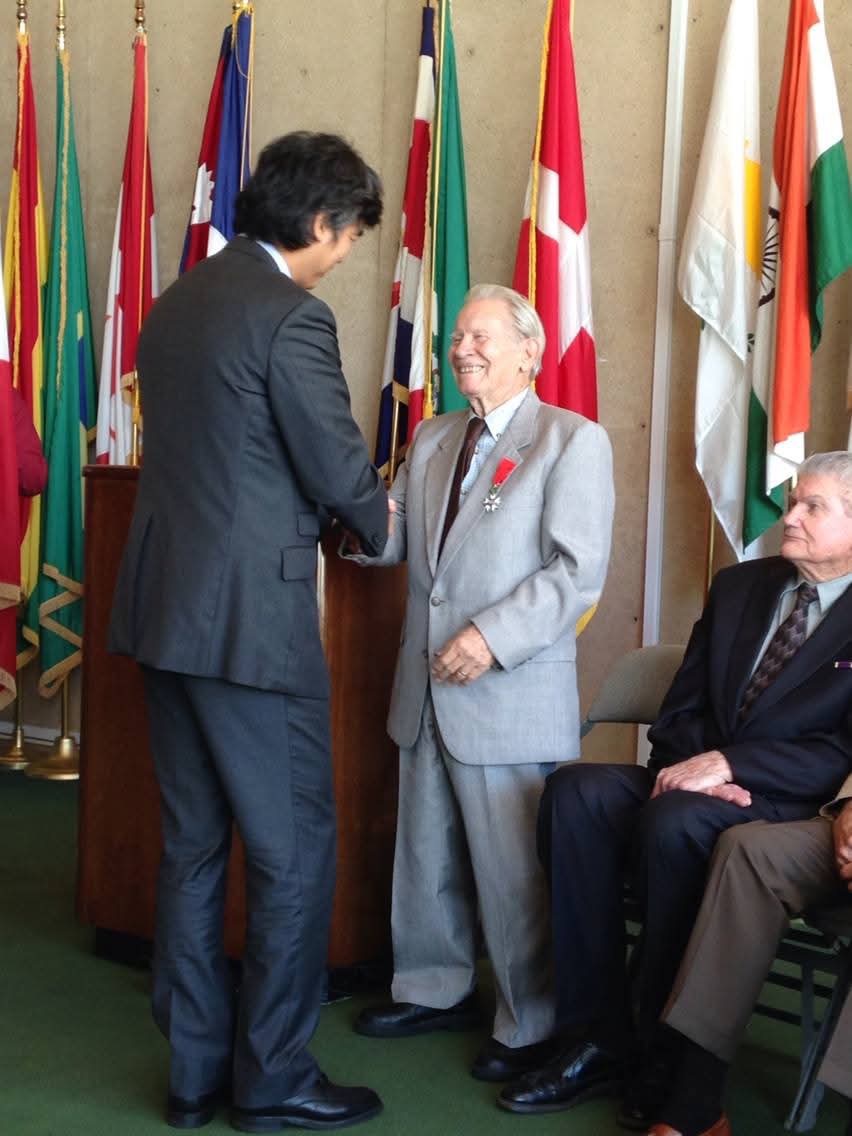
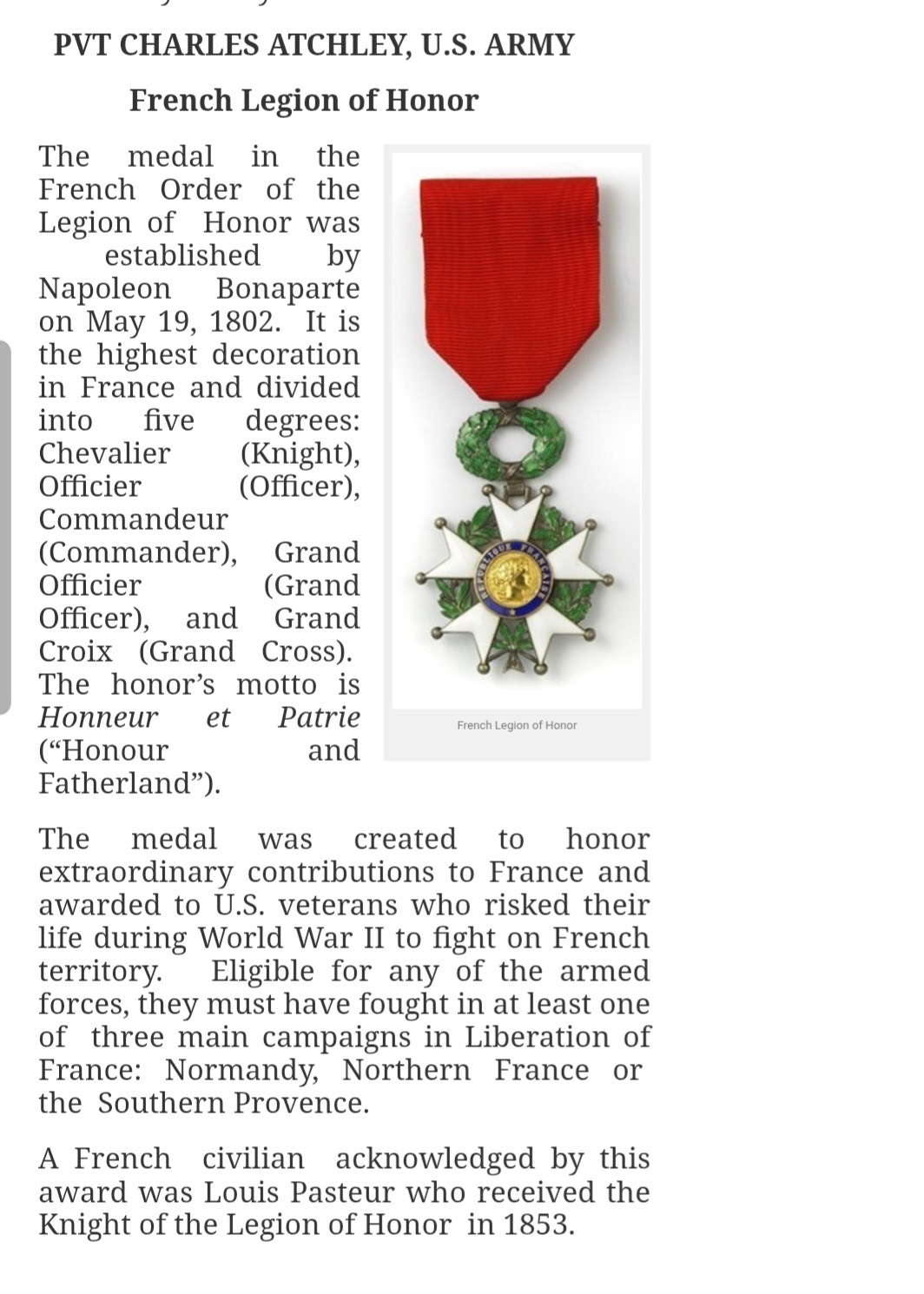
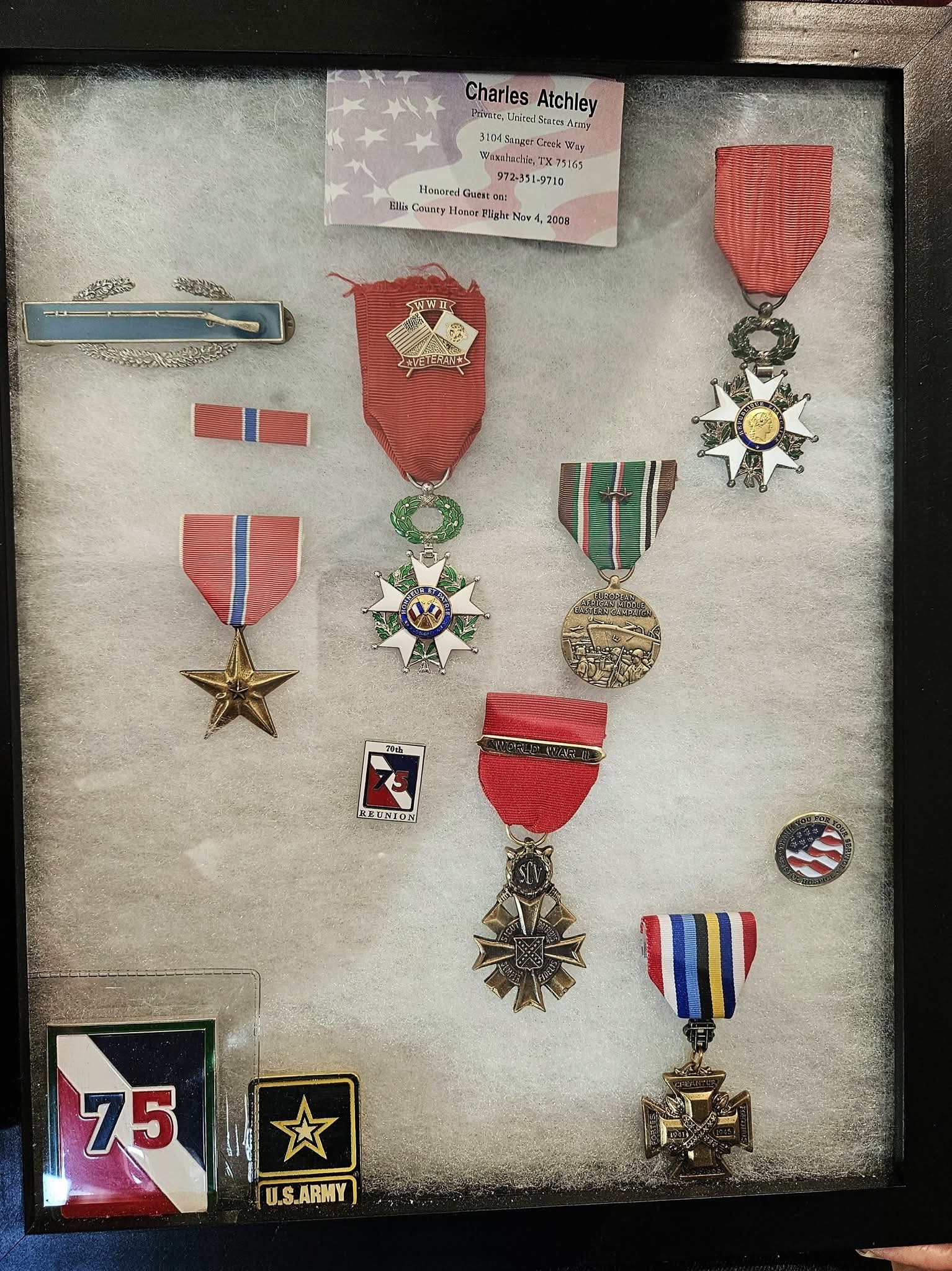
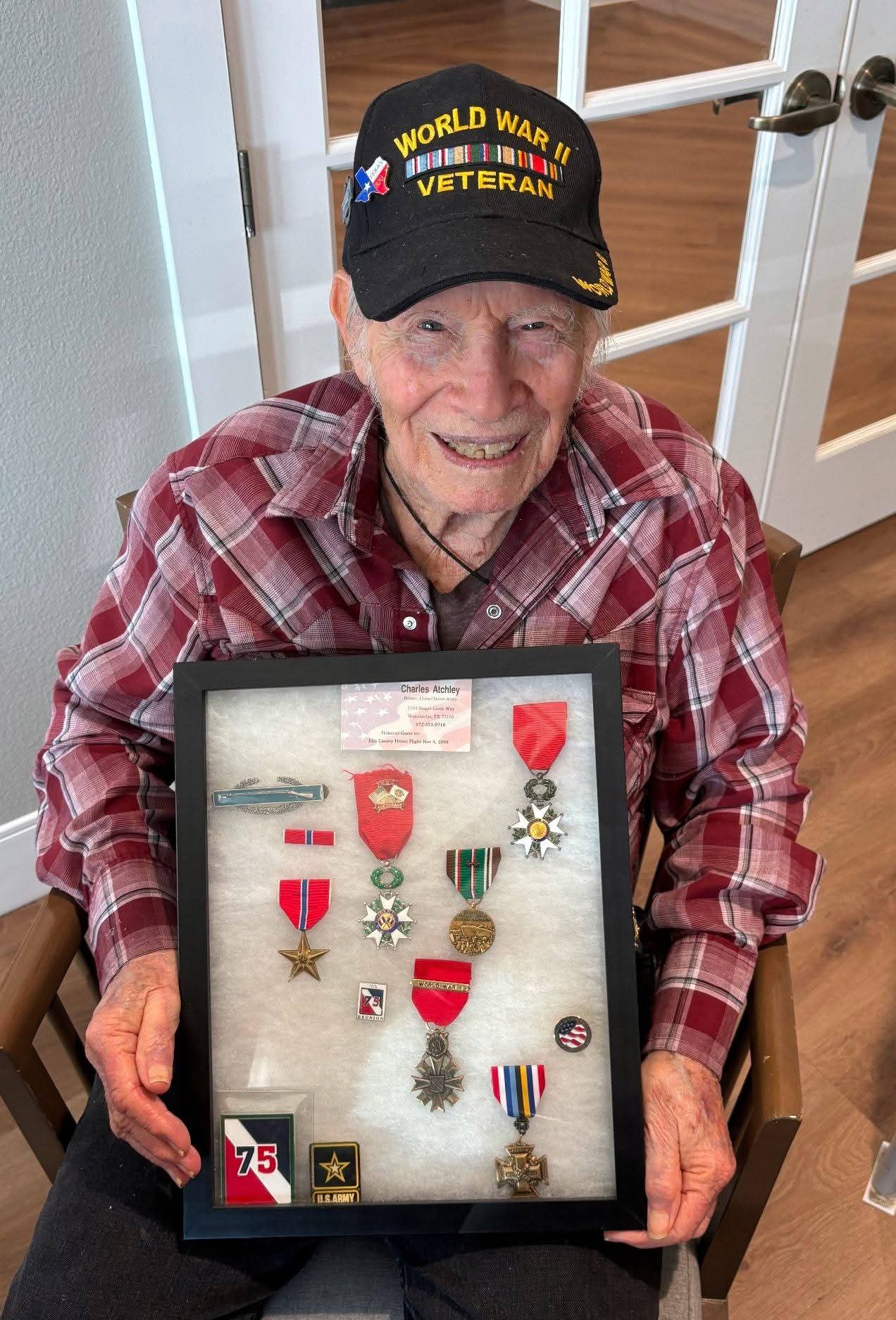
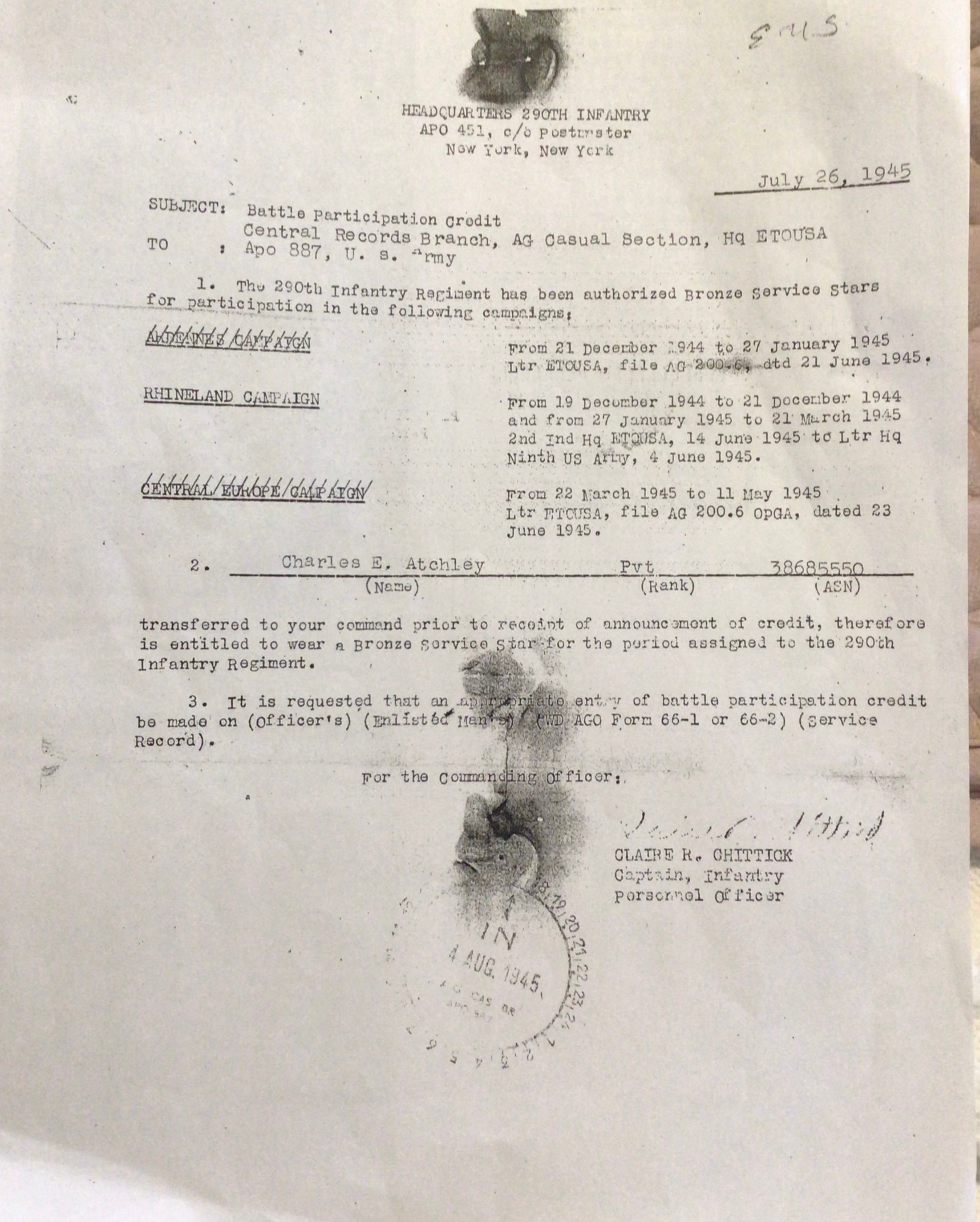
While his regiment continued to advance, his feet froze in the brutal conditions and he was forced off the line. He was evacuated to a French hospital in Marseilles where doctors worked for months to save his feet from amputation. He was later transferred to a United States hospital in Oklahoma for extensive therapy to learn to walk again. His combat service earned him 2 Bronze Stars and the French Legion of Honor, and he was 1 of only 3 soldiers in his unit to receive 2 Bronze Stars. In 2013 he was formally presented the Legion of Honor Medal during a ceremony in Dallas with the French ambassador. He has always reminded others that World War II must be remembered for what was at stake and why the nation went to war. Freedom is not free.
Before joining the Army he had been approached at age 18 by a Navy officer who encouraged him to become a combat fighter pilot because of his ability and knowledge of flying. He wanted to go, but his parents refused out of fear that he would be shot down and because the war appeared to be nearing its end. He entered the Army in 1945 at age 19 instead.
Throughout his time overseas he wrote faithfully to his mother, sending 14 to 20 letters without receiving a reply. Mail often traveled slowly during the war, and in a moment of quiet providence his letters arrived in the family mailbox on the very day he returned home. His service ended after his feet froze under the harsh winter conditions, and he still feels the effects to this day.
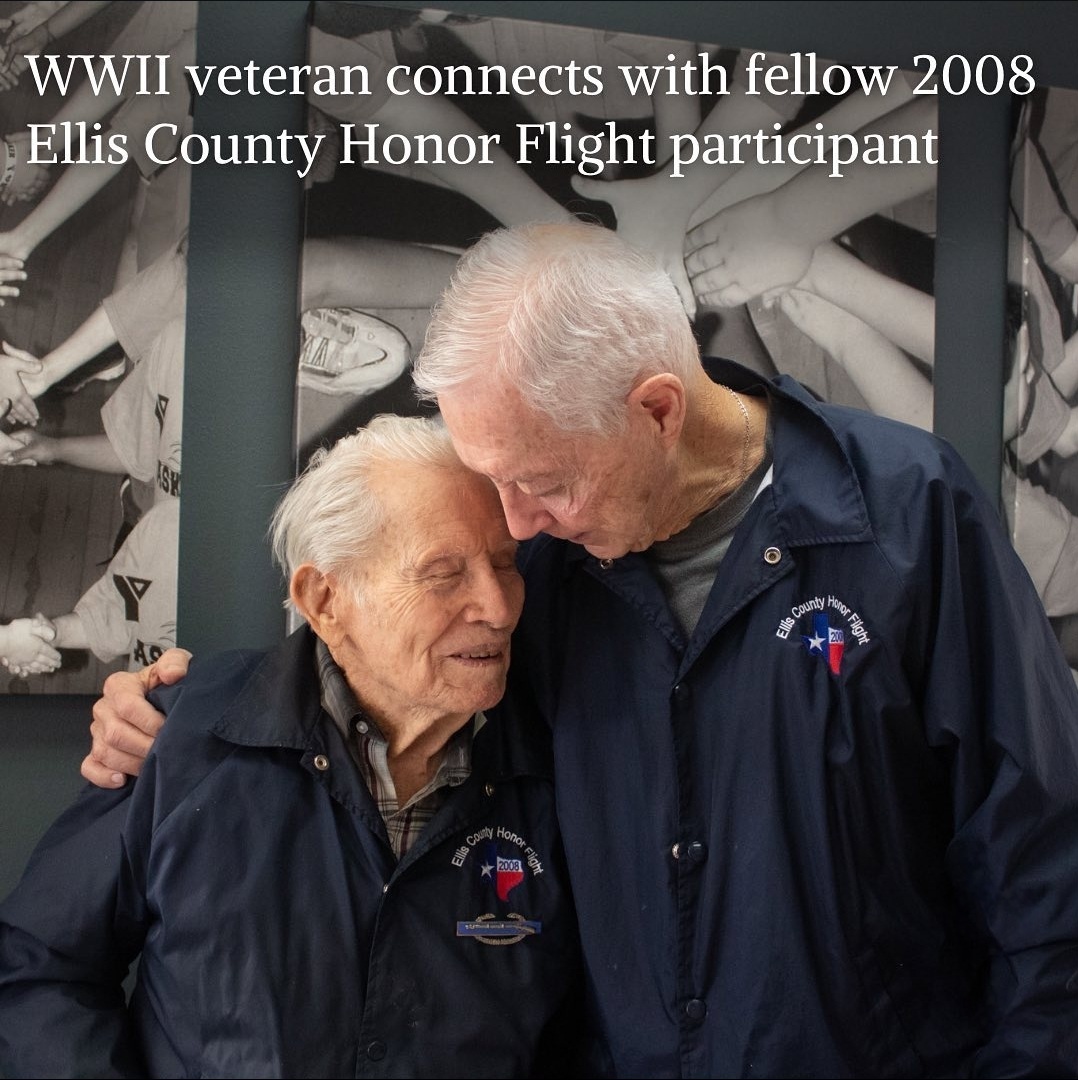
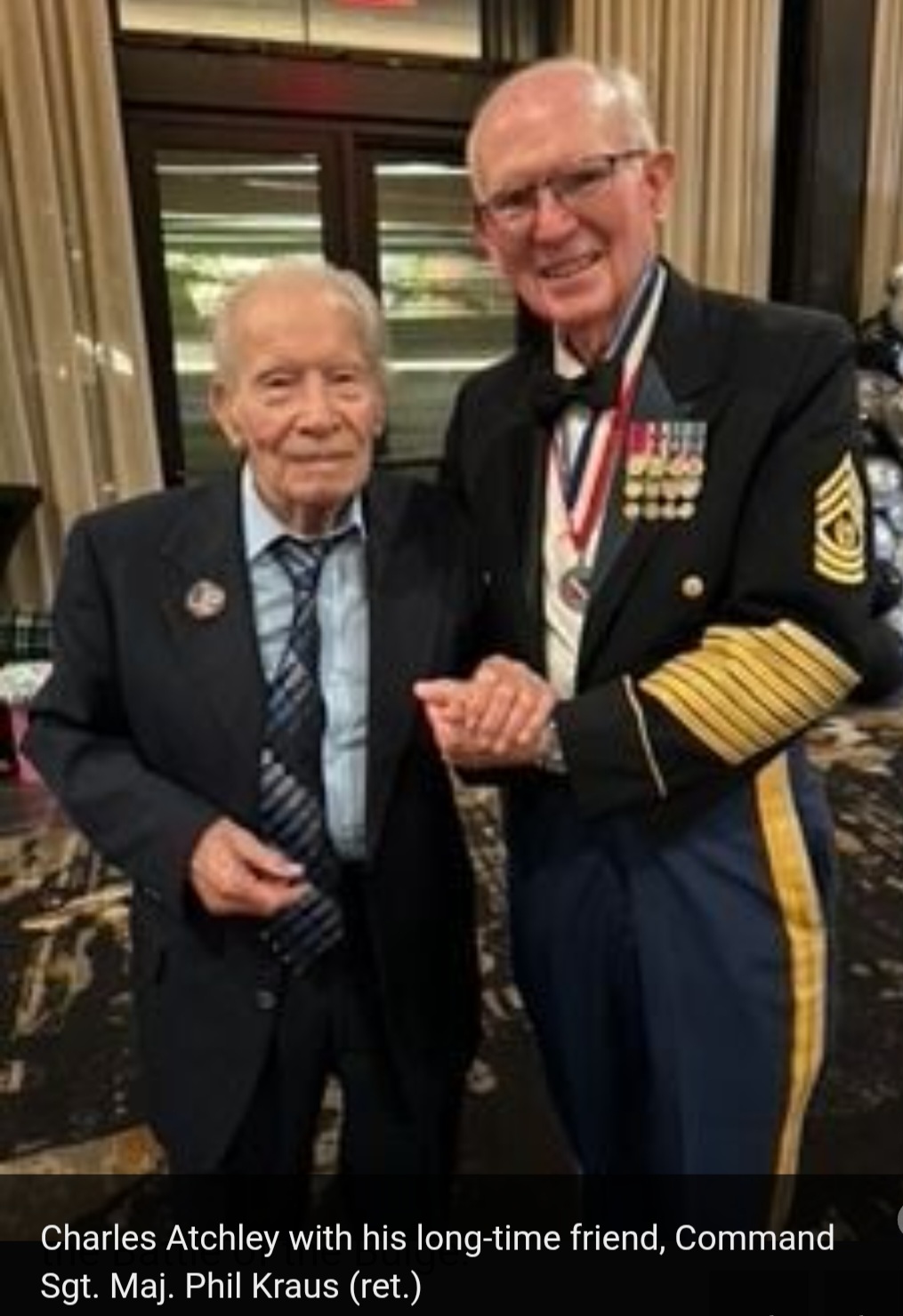
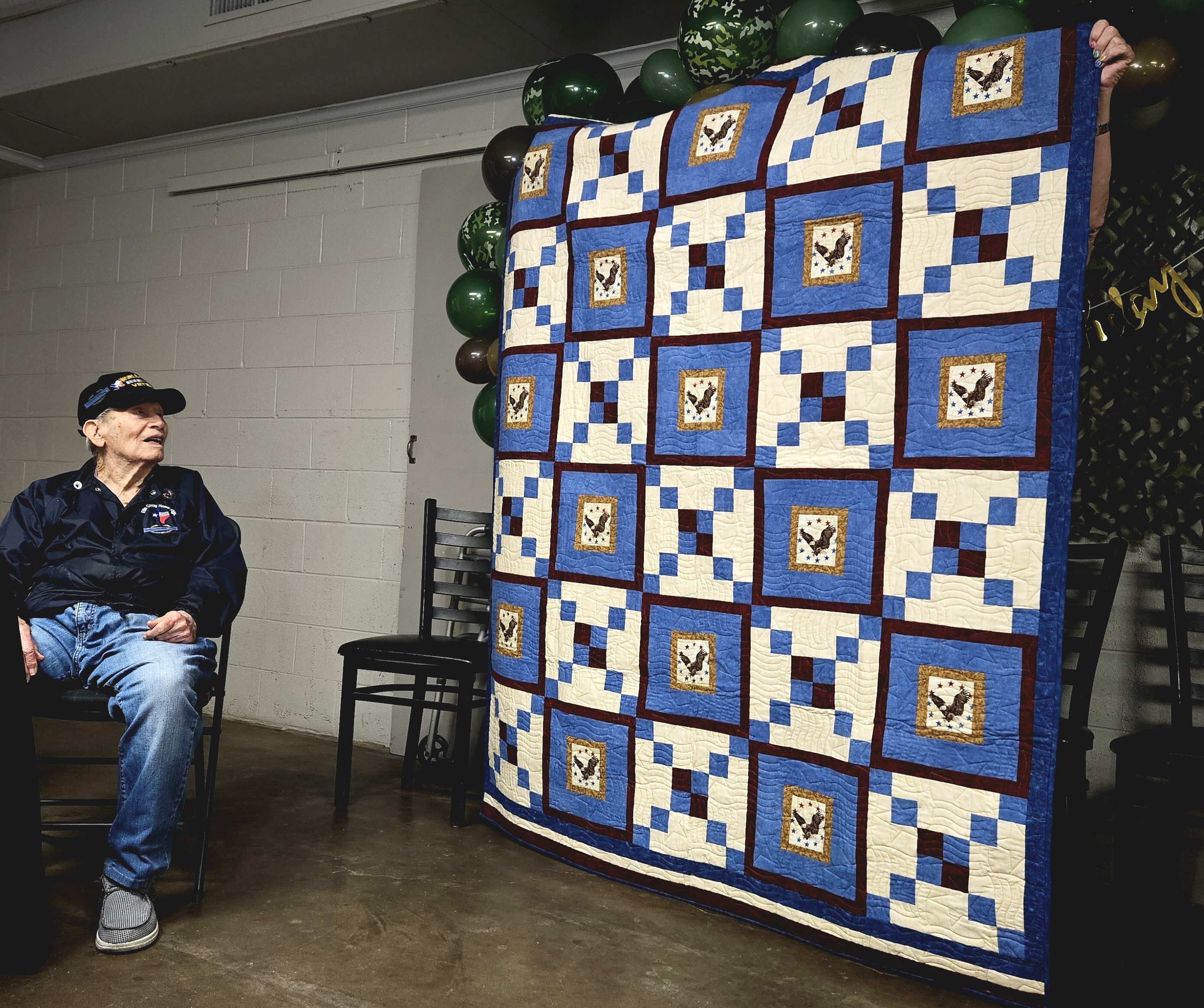
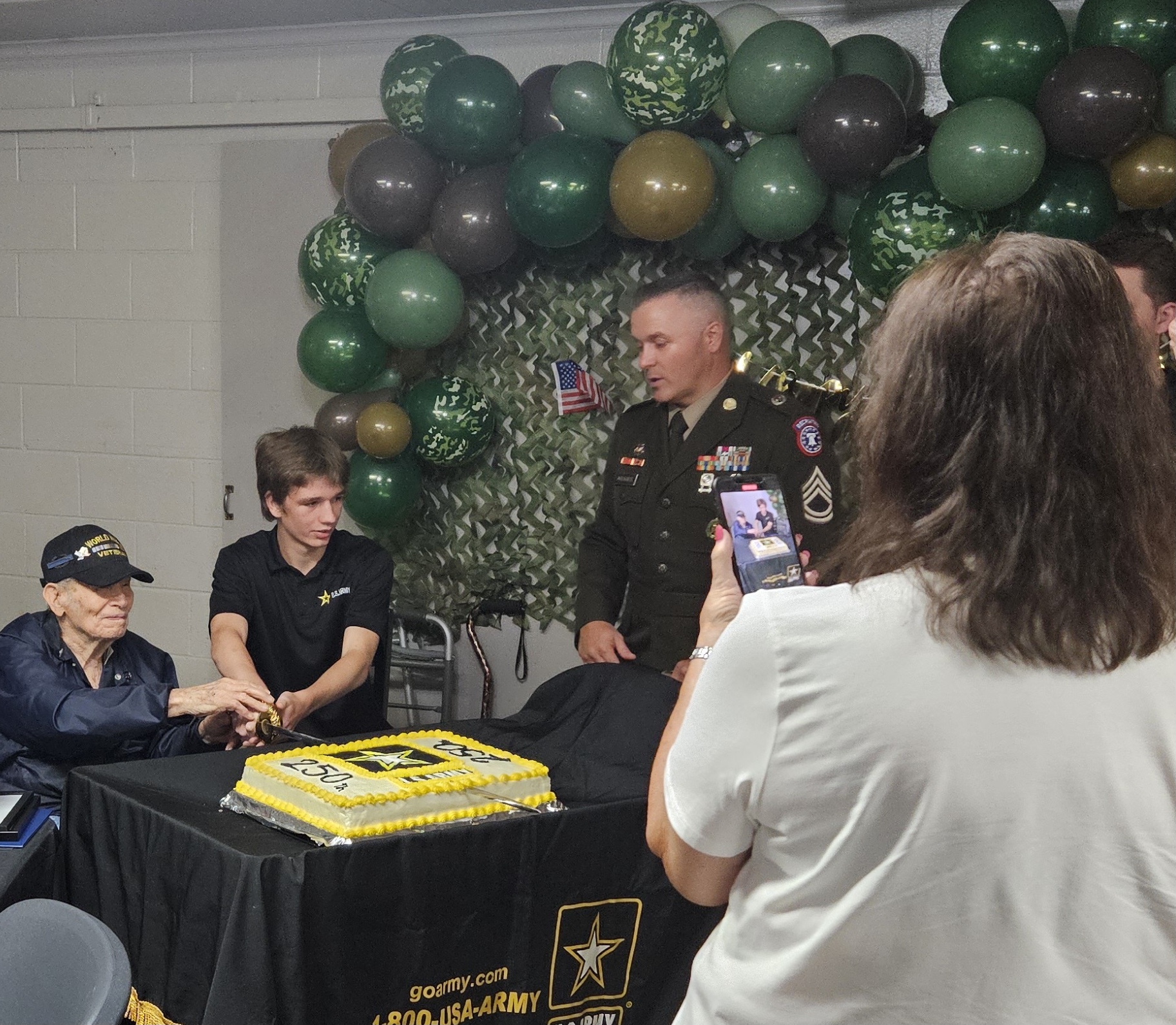
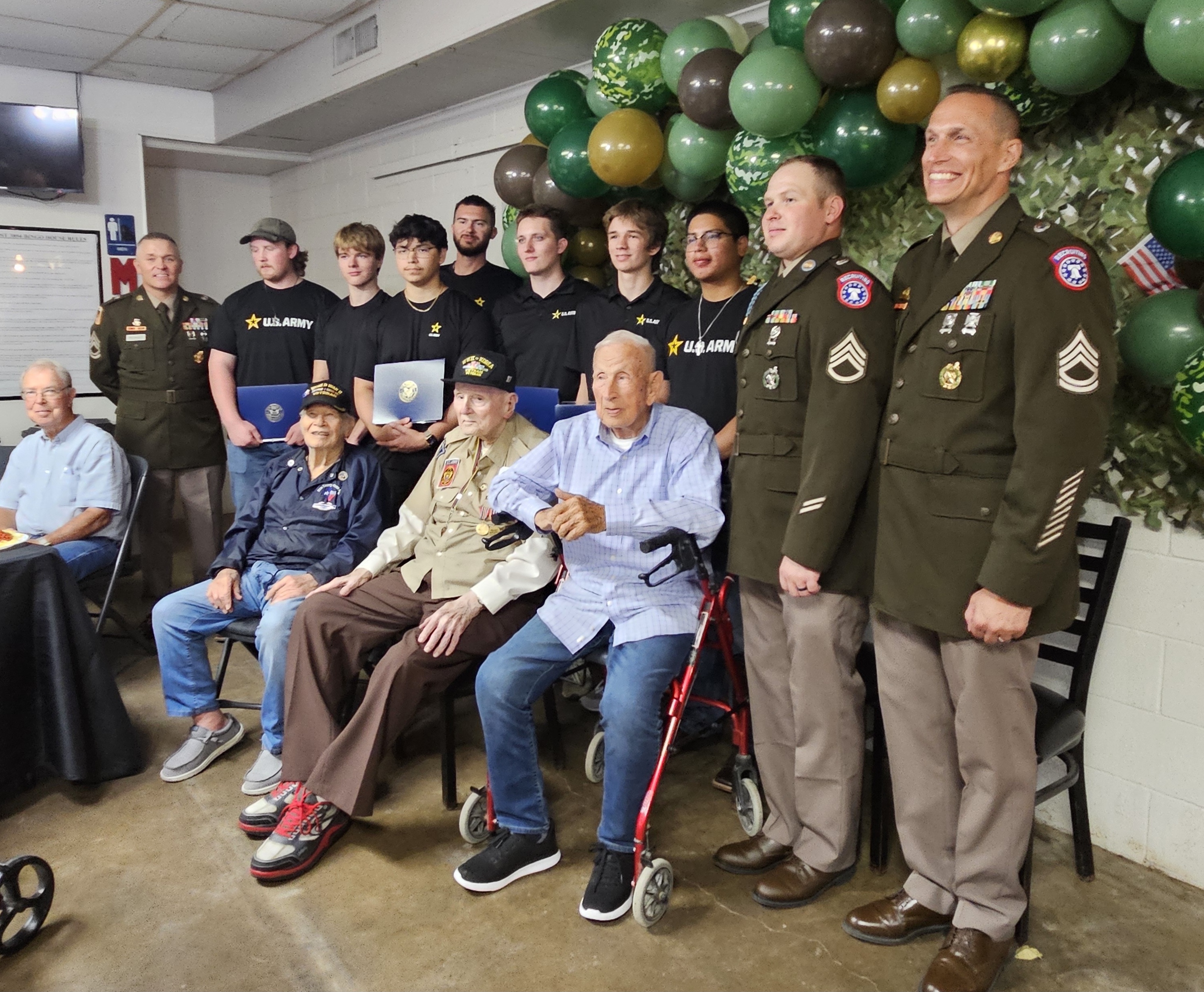
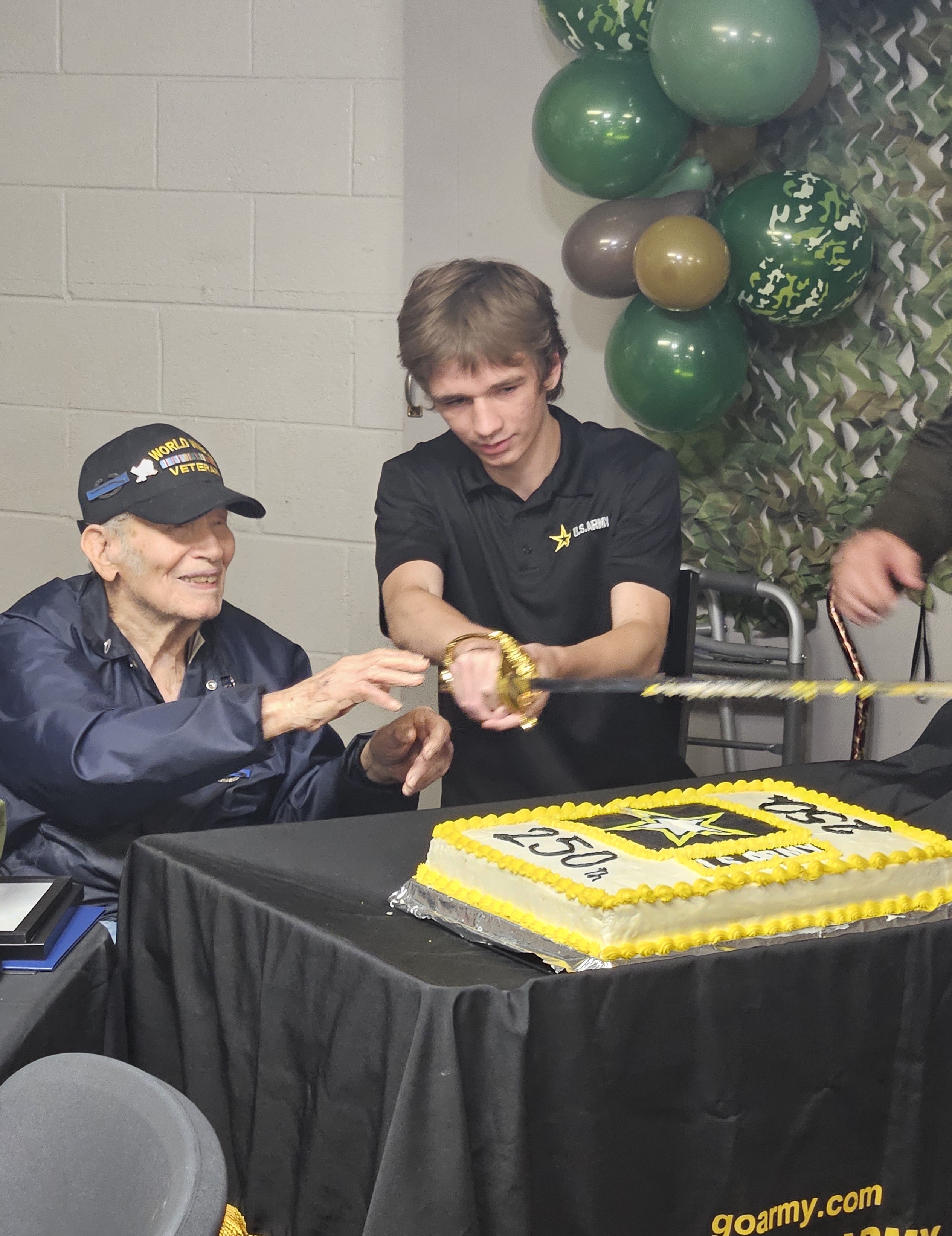
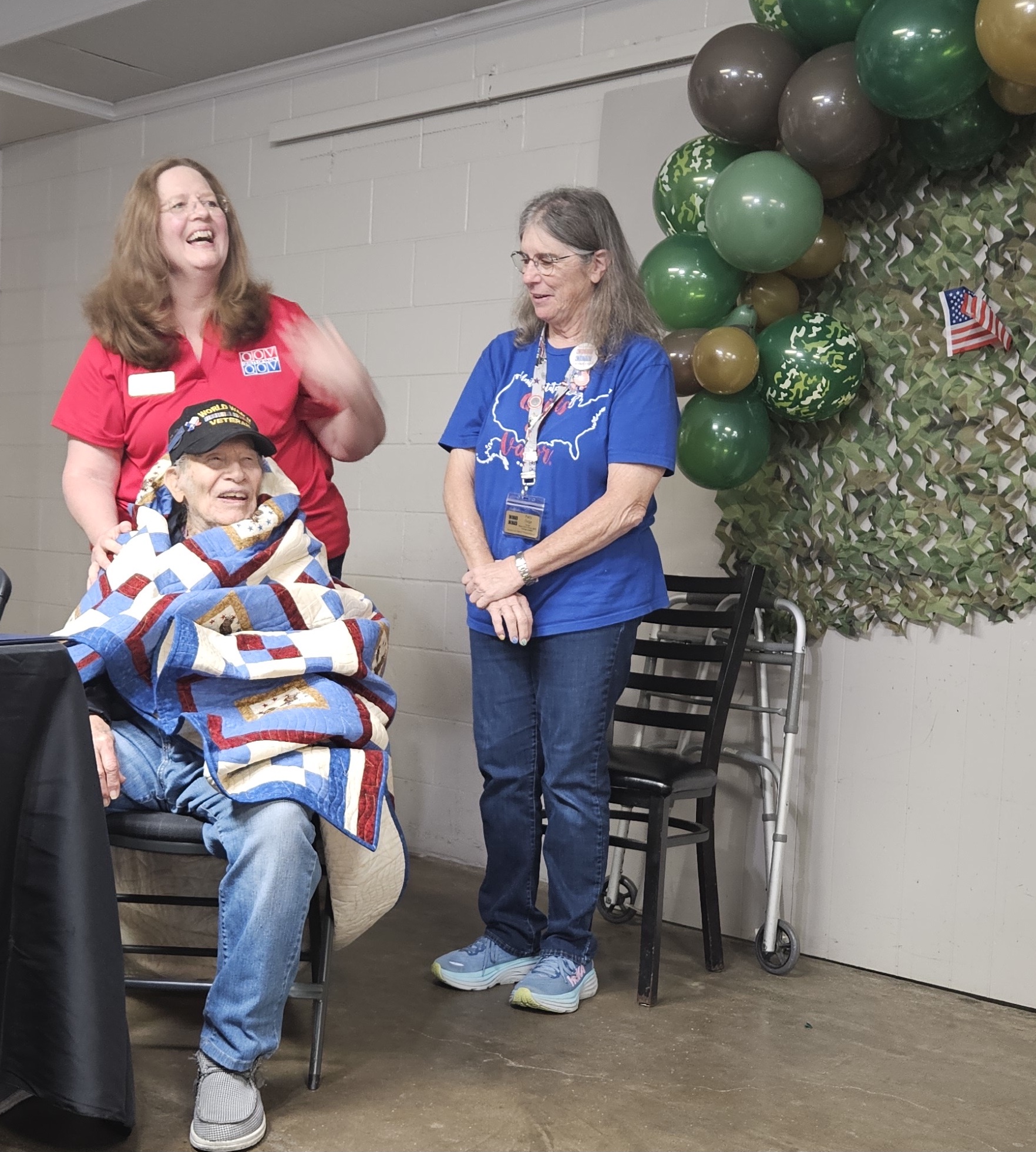
After the war he built a 33‑year career with the United States Postal Service in Dallas, beginning as a letter carrier and rising to chief of accounting before retiring. He grew up in Red Oak in Ellis County and later made his home in Waxahachie. Friends continue to help him attend veterans gatherings including an annual reunion at the Houston Stock Show. He participated in the 2008 Ellis County Honor Flight to Washington, D.C., and again in 2023 in New Orleans. On June 14, 2025, during the 250th Army Anniversary Ceremony, he received a letter from Congressman Jake Ellzey, recognition from Governor Greg Abbott, and the Quilt of Valor along with several certificates of honor.
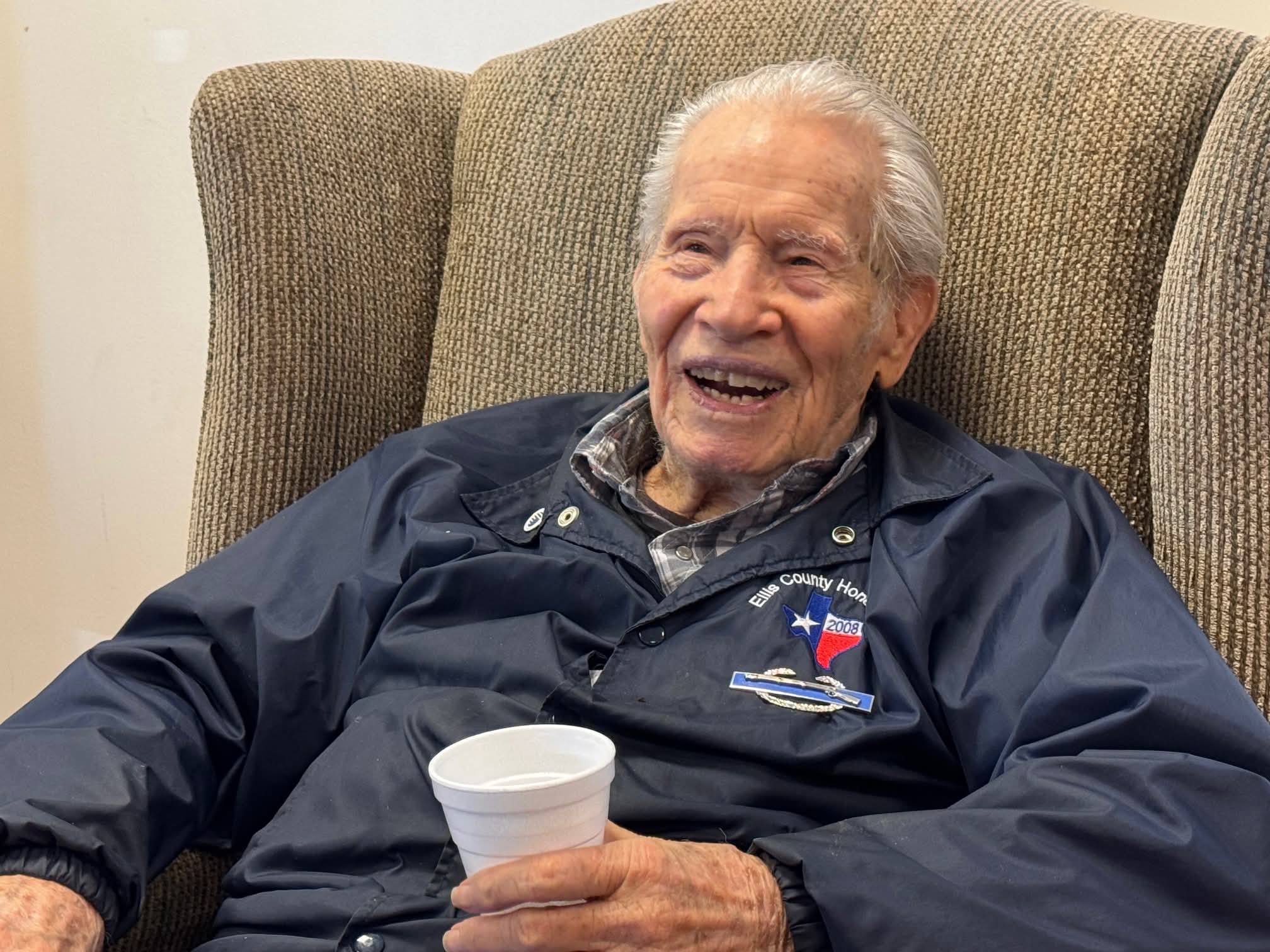
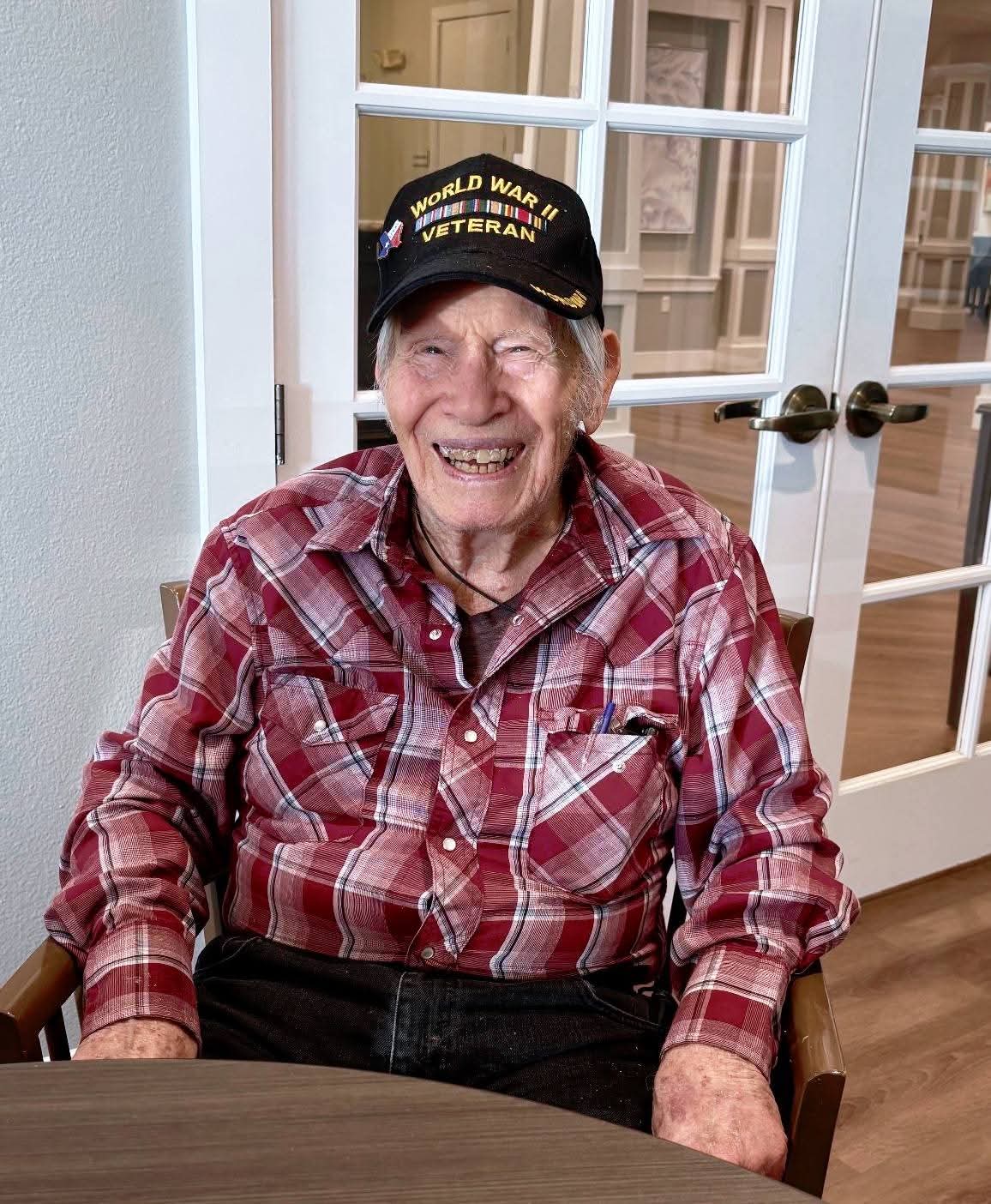
On February 3, 2025, Charles celebrated his 100th birthday. His life stands as a testament to courage, endurance, and the quiet strength of an American soldier who carried the weight of freedom through the snow and fire of the Ardennes and continued serving his country long after the guns fell silent.
Supplemental Information
Charles Atchley’s Red Oak, 1926
Red Oak in 1926 was a quiet Texas farming community shaped by the rhythms of land, labor, and faith. It was a place where the days began early, where the sound of roosters carried across open fields, and where families depended on one another in ways that were both practical and deeply personal. The town was small enough that every face was familiar, yet large enough in spirit to give a young boy room to dream. Life moved at a steady pace marked by cotton harvests, schoolhouse lessons, church gatherings, and the simple routines that defined rural Texas in the years between the First World War and the Great Depression.
For Charles, Red Oak offered a childhood built on responsibility and resourcefulness. Boys learned early how to help with chores, how to respect their elders, and how to carry themselves with quiet discipline. The values of honesty, hard work, and loyalty were not taught in speeches but lived out in everyday actions. Neighbors shared tools, families shared meals, and the community shared its joys and sorrows without hesitation. It was a place where a handshake meant something, where a promise was kept, and where character mattered more than circumstance.
The landscape itself shaped him. Dirt roads stretched across Ellis County, bordered by cotton fields, pastures, and the occasional windmill turning slowly in the Texas sun. Summers were hot and long, winters were sharp and dry, and the sky seemed impossibly wide. Children played outside until dusk, chasing each other through fields, climbing trees, and inventing games that required imagination more than possessions. The world was simple, but never small. It taught resilience. It taught patience. It taught a young boy how to endure.
Red Oak in 1926 was also a place where patriotism ran deep. Many families had sent sons to fight in World War I less than a decade earlier, and the memory of service lingered in conversations at church, in stories told by older men on front porches, and in the quiet pride of families who believed deeply in duty and country. Charles grew up hearing those stories, absorbing their lessons long before he ever held a rifle or stepped into a uniform.
This was the world that shaped him. A world of open land, honest work, strong faith, and community ties that ran deeper than geography. When he left Red Oak to serve in World War II, he carried that foundation with him. It steadied him in the Ardennes. It strengthened him in the cold. It helped him endure the frozen foxholes, the mortar rounds, the fear, and the fire. The boy who grew up in Red Oak became the soldier who carried freedom through the snow.
The Great Depression Across Ellis County: Hardship, Unity, and Enduring Strength
The Great Depression reshaped Ellis County with a force that reached into every farmhouse, every storefront, and every church pew. No corner of the county was untouched. Red Oak, Midlothian, Waxahachie, and the wide stretches of countryside between them entered a decade defined by scarcity, endurance, and the quiet strength of families who refused to surrender hope.
A County Built on Agriculture Confronts Collapse
Ellis County’s economy rested on cotton, dairy, and small‑scale farming. When cotton prices collapsed, the shock rippled across the entire region. Families who had depended on steady harvests suddenly faced fields that no longer guaranteed survival. Dairy farmers struggled to sell milk at prices that sustained their operations. Tenant farmers and sharecroppers saw their already thin margins disappear.
Across the county, work became scarce. Wages fell. The simplest necessities required careful planning. Clothes were mended repeatedly. Tools were repaired instead of replaced. Meals were stretched with whatever could be grown, traded, or shared.
Red Oak, Midlothian, and Waxahachie: Different Towns, Shared Hardship
Red Oak felt the Depression in its fields. Families relied on ingenuity to survive, planting larger gardens, preserving food, and sharing labor with neighbors. The rhythm of farm life slowed, shaped by caution and careful stewardship of every resource.
Midlothian faced the strain through its dairy operations. As purchasing power declined, dairy families struggled to sell their products. Many households turned to barter, trading milk, butter, or eggs for goods they could no longer afford to buy. Children helped with milking and fieldwork, learning responsibility early.
Waxahachie, the county seat, felt the Depression in its storefronts and factories. Merchants watched inventories shrink and customers arrive with fewer coins in their pockets. Businesses reduced hours or closed entirely. Yet Waxahachie’s churches, civic groups, and courthouse became anchors of stability, offering relief, organizing assistance, and reminding residents that the county’s identity endured even in difficult times.
Rural Ellis County: Strength in Shared Burdens
The rural communities between the towns — small settlements, farmsteads, and crossroads — carried the Depression with a quiet dignity. Families exchanged labor during planting and harvest seasons. Neighbors helped repair barns, tend livestock, and bring in crops. Roads that were usually traveled for business or church became pathways of mutual aid.
Churches across the county played a central role. They offered prayer, comfort, and practical support. Hymns sung in small sanctuaries carried a sense of unity that helped families endure the long years of scarcity.
Children Growing Up in Lean Years
Children throughout Ellis County grew up quickly. They learned the value of thrift, the importance of work, and the meaning of gratitude. Their games were shaped by imagination rather than possessions. Even in difficult times, childhood found moments of joy in open fields, wide skies, and the companionship of friends.
Lessons That Shaped a Generation
The Great Depression taught Ellis County endurance, humility, and resourcefulness. It shaped communities where character mattered more than circumstance and where strength was measured not in wealth but in the ability to keep moving forward when life was at its hardest.
A County United by Hardship and Hope
By the time recovery arrived, Ellis County emerged with deeper unity, stronger faith, and a quiet pride in having endured one of the most challenging chapters in American history. The lessons learned during those years became part of the county’s identity, carried into the wartime era that followed and remembered long after the Depression had passed.
The Arrival of World War II in Red Oak and Ellis County
When World War II began, Red Oak and the surrounding communities of Ellis County felt the shift almost immediately. Life in this rural part of Texas had long been shaped by farming, faith, and close‑knit families, but the attack on Pearl Harbor in December 1941 brought a new seriousness to daily life. People gathered around radios to hear President Roosevelt’s words, and the weight of the moment settled across the community with a quiet understanding that the world had changed.
Families watched their sons prepare to leave home. Young men from Red Oak, Waxahachie, Midlothian, and the smaller farming settlements across Ellis County reported to enlistment offices or waited for draft notices. Mothers and fathers stood on porches and in train stations as their boys departed for training camps, carrying with them the values of rural Texas and the hopes of their families. The absence of these young men was felt in every field, every classroom, and every church pew.
Rationing arrived quickly. Sugar, meat, gasoline, rubber, and many household goods became limited, and families learned to adjust their routines with discipline and creativity. Ration books were kept in kitchen drawers, and every coupon mattered. People repaired what they owned, saved cooking grease for military use, and planted victory gardens to supplement their food supply. Nothing was wasted. Every item had purpose.
Work intensified across Ellis County. Farmers worked longer hours to meet wartime demands, and local businesses adapted to shortages and new regulations. Women stepped into roles that had once been held by men, taking jobs in nearby towns, volunteering for civil defense efforts, and supporting community projects that strengthened the home front. Children collected scrap metal, rubber, and paper for war drives, understanding that even small contributions mattered.
Churches became centers of comfort and unity. Sunday services included prayers for local boys serving overseas, and families leaned heavily on their faith as they waited for letters from sons, brothers, and husbands. When a letter arrived, it was shared with neighbors and treasured. When a telegram arrived, the entire community felt its weight.
Daily life carried a mixture of hardship and determination. People lived with rationing, with absent loved ones, and with the constant awareness that the world was at war. Yet Red Oak remained steady. Neighbors checked on one another. Families shared food and labor. Children played outside until dusk, finding moments of joy even in serious times. The land still rolled across Ellis County, the sky remained wide, and the community held together with quiet strength.
By the time the war reached its height, Red Oak had become a place defined by resilience, unity, and unwavering support for the men who had left home to fight. The people of Ellis County carried the war in their hearts, not only through the sons they sent overseas but through the daily sacrifices that shaped life at home.
How World War II Reshaped Red Oak, Ellis County, the Community, and Local Women
When the United States entered World War II, Red Oak and Ellis County moved into a period of rapid and measurable change. The agricultural economy that had long defined the region was immediately influenced by federal directives. Farmers were instructed to increase production of essential food crops such as wheat and corn, while cotton acreage was adjusted to meet national priorities. These changes required families to reorganize planting schedules and adopt new methods to maintain output with fewer available workers.
The Selective Service System brought a steady departure of young men. Draft boards in Ellis County processed registrations and issued calls that removed sons from farms, shops, and classrooms. Their absence created labor shortages that affected harvests, livestock care, and daily operations across the county. Families redistributed responsibilities among older relatives and younger children to keep farms functioning.
Transportation restrictions altered daily routines. Gasoline rationing limited travel between Red Oak and nearby towns, and tire shortages made long trips difficult. Rural families adapted by combining errands, reducing visits to Waxahachie and Dallas, and relying more heavily on local resources. These limitations changed how businesses operated and how families interacted with the wider region.
Schools incorporated wartime programs that connected students to national efforts. Children collected materials for scrap drives, learned about global geography, and participated in activities that supported production needs. These programs were part of federal initiatives that reached into classrooms across Ellis County.
Women experienced significant shifts in responsibility and opportunity. Many managed farms in the absence of male labor, overseeing planting, harvesting, and livestock care. Others traveled to nearby cities for employment in manufacturing plants, offices, and warehouses that supported wartime production. Women also organized community programs, assisted with civil defense training, and contributed to Red Cross efforts that produced bandages, knitted items, and comfort kits for military hospitals.
Civil defense organizations formed throughout the county. Volunteers trained in first aid, fire prevention, and aircraft identification. These groups worked closely with local officials to prepare for emergencies and maintain readiness. Their activities reflected national concerns and brought new forms of civic participation to rural communities.
Churches strengthened their role as centers of support. Congregations organized relief efforts, maintained communication networks for families with sons overseas, and hosted gatherings that focused on encouragement and shared prayer. Pastors helped families interpret official notices and provided guidance during moments of uncertainty.
Local newspapers became vital sources of information. The Waxahachie Daily Light and other county papers published service updates, casualty lists, and reports from overseas. Families in Red Oak relied on these publications for accurate news before letters arrived from training camps or battlefronts.
Victory loan drives mobilized the community. Residents purchased war bonds during federal campaigns, and Ellis County consistently exceeded its assigned quotas. These efforts demonstrated strong local commitment to national goals and provided financial support for military operations.
Food preservation programs expanded as part of federal initiatives. Community canning centers allowed families to store vegetables grown in victory gardens, ensuring stable supplies during rationing. Women played a central role in these programs, contributing to both household stability and county‑wide preparedness.
By the height of the war, Red Oak and Ellis County had become a community defined by adaptation, cooperation, and shared responsibility. The changes brought by the conflict reshaped daily life, expanded the roles of women, and strengthened the bonds that held the community together. These historical facts reveal how deeply the war influenced every part of life in this rural Texas region.
Red Oak, Midlothian, Waxahachie, and Ellis County During World War II
As World War II advanced, Red Oak, Midlothian, Waxahachie, and the surrounding rural settlements of Ellis County became part of a coordinated home‑front effort that touched every aspect of daily life. The region’s farms, schools, churches, and civic institutions were drawn into national programs that reshaped how families worked, traveled, and supported one another. Although far from the battlefronts, these communities carried responsibilities that were essential to the nation’s wartime strength.
Agriculture remained the backbone of Ellis County, yet wartime directives changed its direction. Farmers across Red Oak and Midlothian adjusted their operations to meet federal production targets for grains, livestock, and dairy products. Waxahachie’s larger farms and distribution networks helped move these goods to regional markets that supplied military installations. Labor shortages created by enlistments required families to reorganize work, relying on older relatives, women, and teenagers to maintain output. These adjustments kept Ellis County’s agricultural contribution steady throughout the war.
Industry and commerce shifted as well. Waxahachie’s merchants adapted to limited supplies of metal goods, rubber products, and certain foods. Businesses coordinated with federal agencies to manage inventory and comply with rationing rules. Midlothian’s dairy operations became increasingly important as transportation limits made local food production vital to nearby cities with wartime industries. Red Oak’s smaller commercial district supported families who could no longer travel frequently due to fuel restrictions.
Transportation limits influenced daily life across the region. Gasoline rationing reduced travel between towns, and tire shortages made long trips difficult. Families consolidated errands, relied more heavily on local merchants, and adjusted to slower movement throughout the county. These changes affected how residents accessed goods, services, and employment in Dallas and Fort Worth.
Schools in Red Oak, Midlothian, and Waxahachie became active participants in federal wartime programs. Students collected scrap materials for national production, learned about global events, and took part in organized drives that supported military needs. Waxahachie’s school system often served as the administrative center for county‑wide efforts, while Red Oak and Midlothian contributed through local classroom initiatives. These programs connected young people to the war effort and reinforced the idea that every person had a role to play.
Women carried expanded responsibilities that reshaped community life. Many managed farms in the absence of male labor, overseeing planting, harvesting, and livestock care. Others traveled to Dallas, Grand Prairie, and Fort Worth for employment in manufacturing plants, offices, and warehouses connected to wartime production. Civic groups in Waxahachie relied heavily on women to coordinate relief efforts, organize supply drives, and maintain essential community services. Their work became central to the functioning of Ellis County during the war.
Civil defense programs operated throughout the region. Volunteers trained in first aid, fire prevention, and aircraft identification. Observation posts near Red Oak and Midlothian monitored air traffic, while Waxahachie hosted county‑wide training sessions. These programs reflected national concerns and brought new forms of civic participation to rural communities.
Churches remained anchors of stability. Congregations in all three towns organized prayer lists, letter‑writing circles, and support networks for families with loved ones overseas. Pastors helped interpret official notices and provided guidance during periods of uncertainty. These efforts strengthened the emotional resilience of Ellis County.
Local newspapers served as essential communication channels. The Waxahachie Daily Light published service updates, casualty reports, and letters from soldiers. Families across the county relied on these publications for accurate information before receiving personal correspondence.
Victory loan campaigns mobilized residents in Red Oak, Midlothian, and Waxahachie. Ellis County consistently exceeded federal bond quotas, demonstrating strong local commitment to national goals. Public gatherings at the county fairgrounds helped promote these efforts and encouraged participation.
Food preservation programs expanded as part of federal initiatives. Community canning centers in Waxahachie and smaller facilities in Red Oak and Midlothian allowed families to store vegetables grown in victory gardens, ensuring stable supplies during rationing. Women played a central role in these programs, contributing to both household stability and county‑wide preparedness.
By the height of the war, Red Oak, Midlothian, Waxahachie, and the surrounding rural communities had become a unified region defined by cooperation, adaptation, and shared responsibility. The war reshaped daily life, expanded the roles of women, and strengthened the bonds that held Ellis County together. These historical facts reveal how deeply the conflict influenced every part of life in this Texas region.
Recruitment and Departure: How Ellis County Servicemen Used the Waxahachie and Midlothian Depots
When Ellis County entered the wartime period, the movement of local recruits followed a clear and documented pattern shaped by federal Selective Service procedures and the county’s transportation network. The rail depots in Waxahachie and Midlothian became the physical gateways through which Ellis County’s young men began their military journey.
Waxahachie as the County’s Primary Departure Point
Waxahachie served as the official induction and departure hub for Ellis County. The Selective Service Board, located at the Ellis County courthouse, issued induction notices and directed recruits to report first for medical checks and administrative processing. Once cleared, the men were instructed to proceed to the Waxahachie rail depot, which held the county’s strongest passenger connections and the scheduling capacity required for wartime transport.
From Waxahachie, recruits boarded trains bound for Dallas, Fort Worth, Waco, or other regional reception centers. These trains connected Ellis County directly to major induction facilities such as Camp Wolters, Camp Bowie, Camp Hood, and naval and aviation centers in Dallas and Fort Worth. Waxahachie’s depot handled the majority of troop movement because it was the county’s most established rail facility, equipped to manage federal transportation priorities.
Midlothian’s Role as a Secondary Departure Station
Midlothian’s depot also participated in wartime departures, though in smaller numbers. Men living in Midlothian and nearby rural areas sometimes boarded trains there when schedules aligned with troop transport routes. Midlothian’s station supported local movement, but official Selective Service instructions typically directed recruits to Waxahachie, where federal coordination was centralized.
Red Oak and Smaller Communities Traveled to the Larger Depots
Red Oak did not possess a depot capable of handling wartime troop movement. Families from Red Oak traveled to Waxahachie or, less frequently, Midlothian to accompany sons reporting for departure. The journey to the depot became a shared community experience, often involving relatives, neighbors, and church members who gathered to offer support.
The Experience of Departure
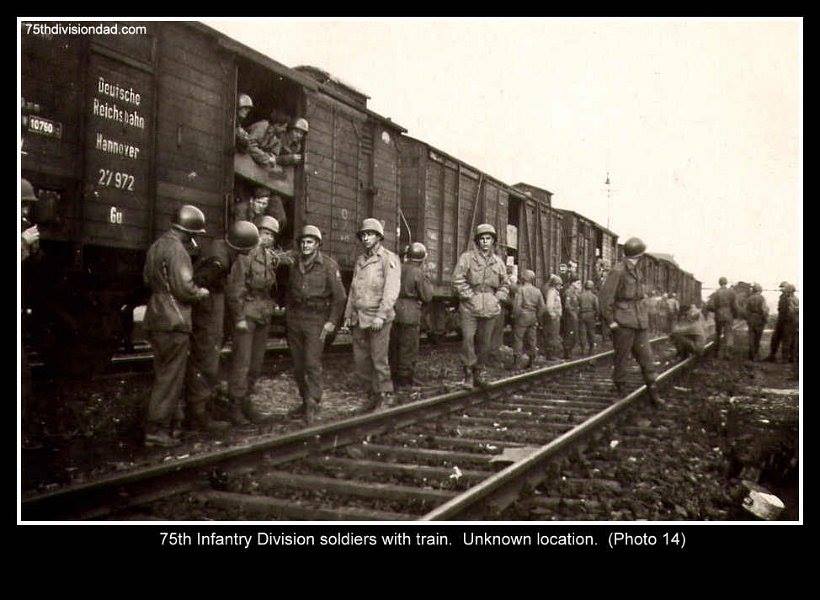
Historical accounts describe families standing along the platforms in Waxahachie as trains arrived to carry local men toward their first military assignments. The sight of recruits boarding rail cars, often carrying small government‑issued bags and wearing civilian clothes for the last time, became a defining wartime memory in Ellis County. Churches frequently organized prayer gatherings before departure, and local businesses adjusted schedules so families could be present at the depot.
Rail Transport as the Link Between Ellis County and the War
Once aboard, Ellis County recruits traveled along rail corridors that connected rural Texas to the nation’s military infrastructure. These trains carried them to induction centers, training camps, and coastal ports. The rail system served as the bridge between the quiet farmland of Ellis County and the global conflict unfolding overseas.
A County Unified Through Departure
The movement of recruits through Waxahachie and Midlothian created a shared wartime rhythm across Red Oak, Midlothian, Waxahachie, and the surrounding rural communities. Each departure reinforced the county’s collective commitment to the national effort. The depots became symbolic thresholds, marking the moment when local sons stepped from familiar ground into the vast machinery of war.
After Departure: The Wartime Journey of Ellis County Servicemen
Once Ellis County’s young men stepped onto the trains at Waxahachie or Midlothian, they entered the structured pathway of American mobilization. The moment the train pulled away marked the end of familiar life and the beginning of a disciplined military process that shaped every recruit who left Red Oak, Midlothian, Waxahachie, and the surrounding rural communities.
Arrival at Regional Induction and Training Centers
The first destination for most Ellis County recruits was one of the major reception centers that served North Texas. These facilities were designed to absorb thousands of men each week, and Ellis County’s sons became part of that steady flow.
They typically traveled to:
Camp Wolters near Mineral Wells A major infantry replacement training center where recruits received their first uniforms, identification tags, medical examinations, and basic military instruction.
Camp Hood near Killeen The home of tank destroyer training, later one of the largest Army installations in the country. Men assigned here entered specialized instruction in armored warfare and tactical operations.
Camp Bowie in Brownwood A large infantry training camp and medical replacement center where recruits learned field discipline, marksmanship, and unit organization.
Naval and Marine induction centers in Dallas These facilities processed Ellis County men entering sea service, assigning them to naval training stations or Marine Corps bases across the country.
Fort Worth Army Air Field A key aviation evaluation site where recruits were assessed for aircrew, ground support, or technical roles within the Army Air Forces.
These centers formed the backbone of North Texas military mobilization, and Ellis County men entered them through the rail lines that carried them out of Waxahachie and Midlothian.
The First Days of Military Life
Upon arrival, recruits were absorbed into a uniform system. They received clothing, equipment, vaccinations, and identification. They learned military routines, were assigned to training companies, and began the physical and mental conditioning that prepared them for service. Branch assignments were determined quickly, and men were moved into infantry, armor, aviation, engineering, or naval pathways based on national needs.
A Defining Wartime Memory in Ellis County
Community accounts from the period describe families gathering at the Waxahachie depot to witness these departures. Mothers, fathers, siblings, and neighbors stood along the platform as trains approached, often accompanied by church groups offering prayer and encouragement. The moment of boarding became one of the most powerful images of the wartime years.
The sight of young men stepping onto rail cars, carrying small government‑issued bags and preparing to leave home for the first time, became a shared memory across Red Oak, Midlothian, Waxahachie, and the surrounding countryside. It symbolized both the pride of service and the uncertainty that defined the wartime experience.
The Rail Line as the Threshold Between Home and War
For Ellis County, the railway served as the physical threshold between local life and the vast machinery of global conflict. Once the trains pulled away, the men were carried into the national system that would send them to training camps, coastal ports, and eventually overseas theaters of war. The depots in Waxahachie and Midlothian became the places where families said their farewells, where communities gathered in solidarity, and where Ellis County’s contribution to the war began its journey.
When Ellis County Gathered at the Depot: The Last Moments Before War
When Ellis County men prepared to leave for military service, the depots in Midlothian and Waxahachie became the emotional crossroads of the community. These stations, usually quiet places of routine travel, transformed into settings where families gathered in solemn unity, knowing that the moment unfolding before them would be remembered for the rest of their lives.
The Atmosphere of the Platform
On departure mornings, the platform carried a stillness that was unlike any ordinary day. Families arrived early, standing close together in the cool air, watching the horizon for the first sign of the train. The depot became a place where time seemed to slow. Conversations were gentle, often whispered, as if the weight of the moment required a softer tone.
Children clung to parents. Older relatives stood with hands folded, their expressions steady but thoughtful. Neighbors gathered beside one another, forming a quiet circle of support around each departing man. The community’s presence created a sense of shared strength, as though Ellis County itself had come to witness the moment.
Loved Ones Standing Beside the Departing Men
The men preparing to leave stood with modest bags or small suitcases, wearing the clothes they had worn at home for years. Their families surrounded them in a way that reflected both pride and tenderness. Mothers often smoothed a collar or brushed a sleeve, wanting their sons to look cared for as they stepped into military life. Fathers offered firm handshakes or brief embraces, gestures that carried unspoken encouragement.
Siblings watched closely, trying to memorize every detail. Some held onto the departing man’s arm until the last possible moment. Others stood quietly, absorbing the seriousness of the scene with wide, thoughtful eyes.
The Train’s Arrival
When the train whistle sounded, the entire platform shifted. People straightened. The departing men lifted their bags. The sound of the locomotive approaching created a mixture of anticipation and ache that settled across the crowd.
As the train rolled into the station, steam drifted across the platform, blurring the edges of the scene and giving it a sense of gravity. Families stepped closer, wanting to remain near their loved ones until the final second.
The Final Moments Before Boarding
The last moments were intimate and deeply felt. A mother’s hand lingered on her son’s shoulder. A father’s voice remained steady even as his eyes softened. Younger siblings reached upward for one more hug. Couples exchanged quiet words meant only for one another.
These gestures formed a ritual repeated across Ellis County throughout the war. They were not dramatic or hurried. They were deliberate, gentle, and filled with the kind of love that reveals itself most clearly in moments of departure.
Boarding the Train
When the men stepped onto the train, families moved toward the windows, wanting to hold onto the connection for as long as possible. Faces appeared behind the glass—some smiling with determination, others thoughtful and composed. Loved ones waved, lifted hands, or simply stood in stillness, knowing that this was the moment when home and duty parted ways.
The train began to move with a slow, steady rhythm. Families walked alongside it until the platform ended, watching until the final car disappeared down the track.
The Community’s Memory
These departures became part of Ellis County’s collective memory. People remembered the sound of the whistle, the sight of steam drifting across the platform, the feel of a final embrace, and the quiet strength shared among families. The depots in Midlothian and Waxahachie became symbolic thresholds—places where local life touched the vast expanse of the war.
For Ellis County, the image of loved ones departing by rail remains one of the most enduring and dignified memories of the wartime years.
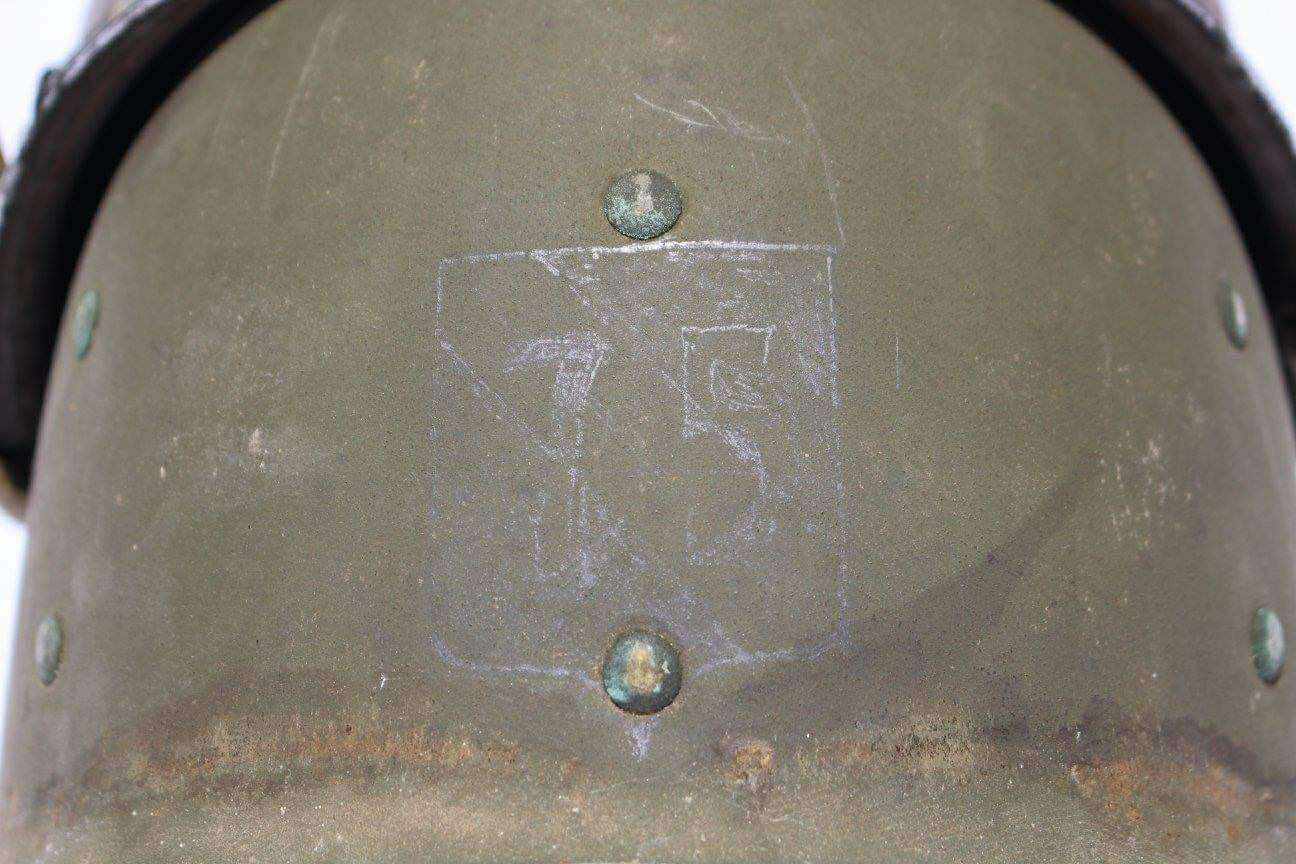
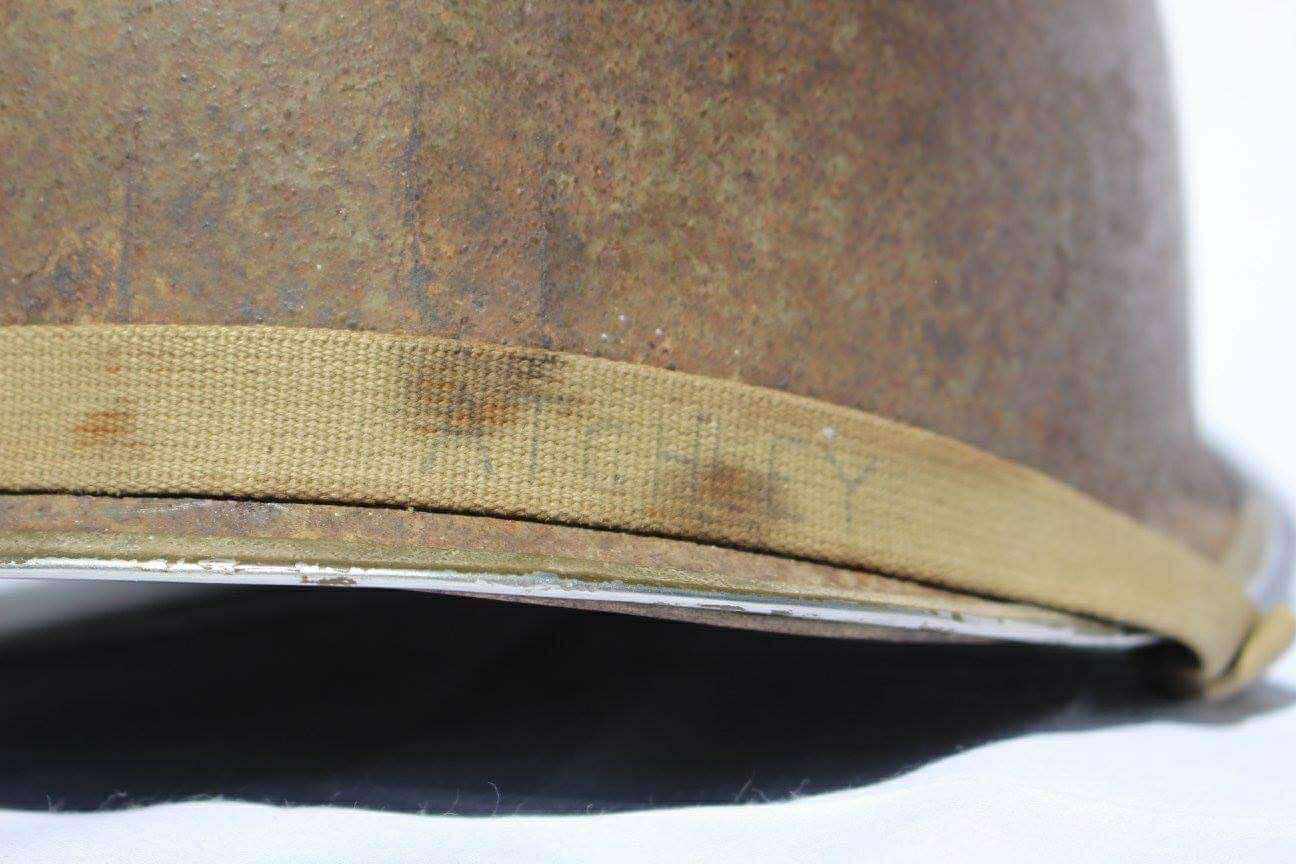
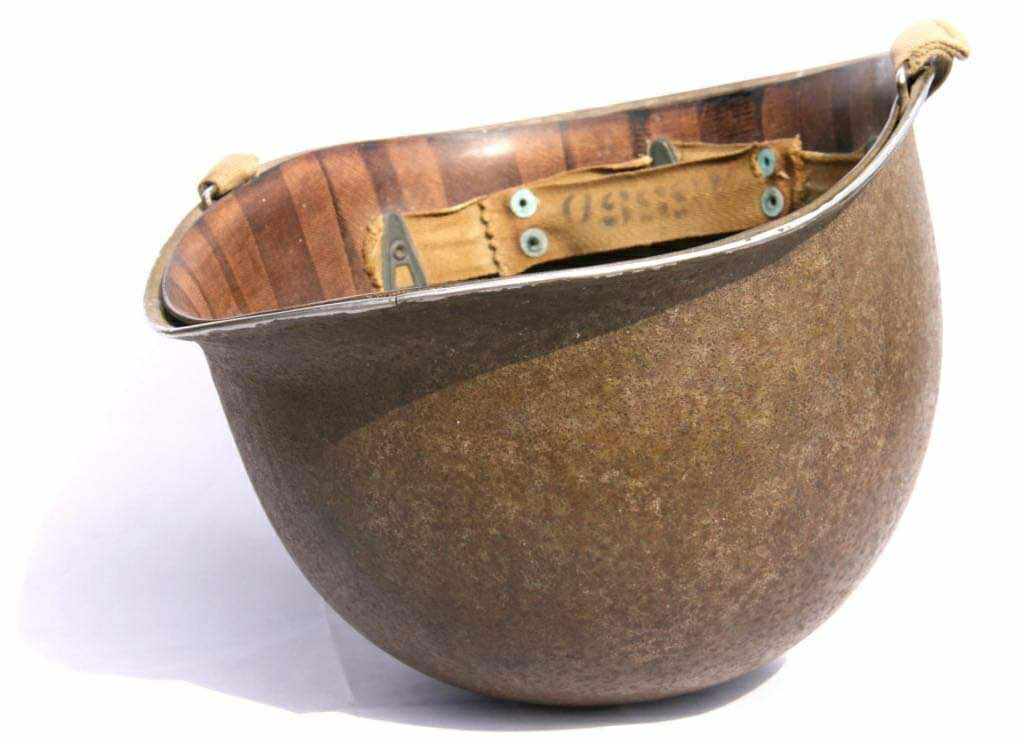
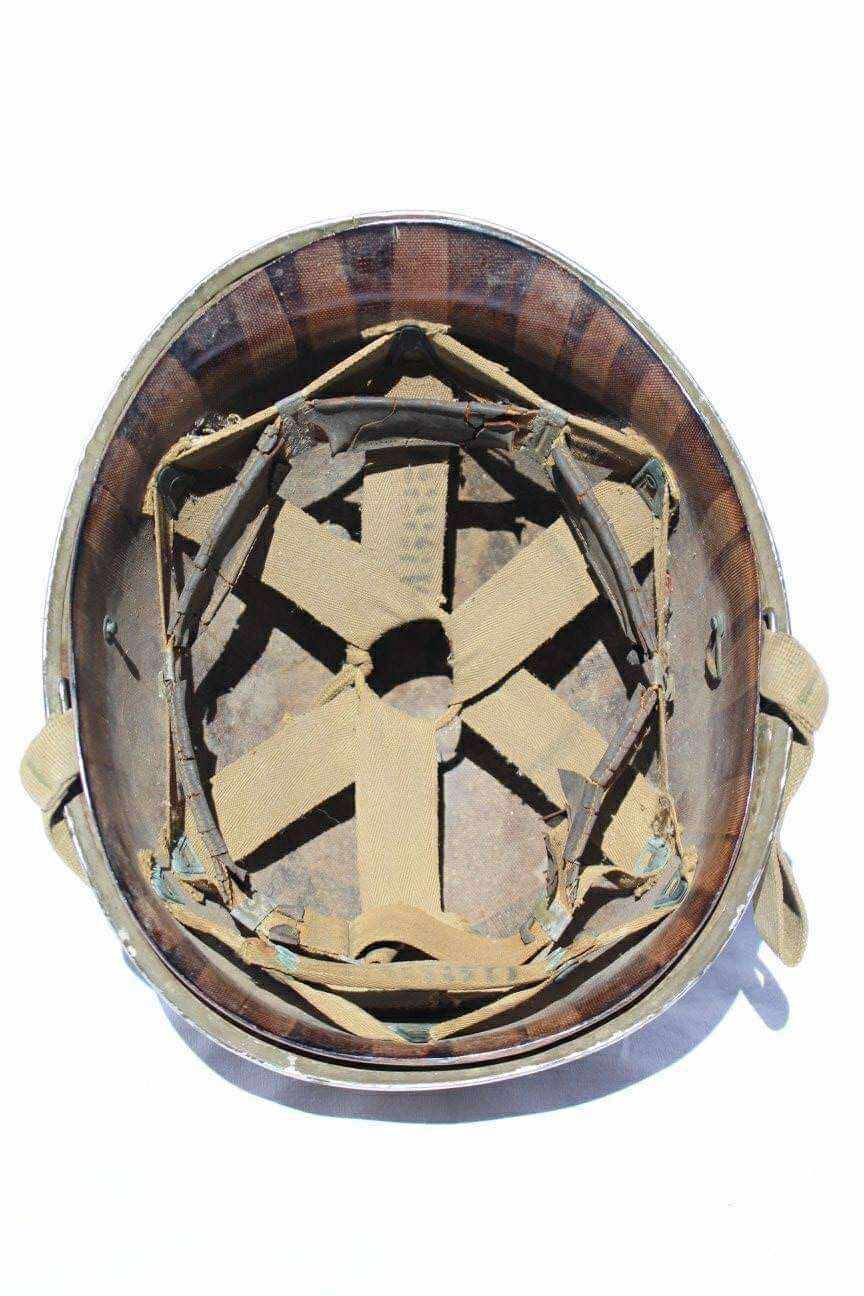
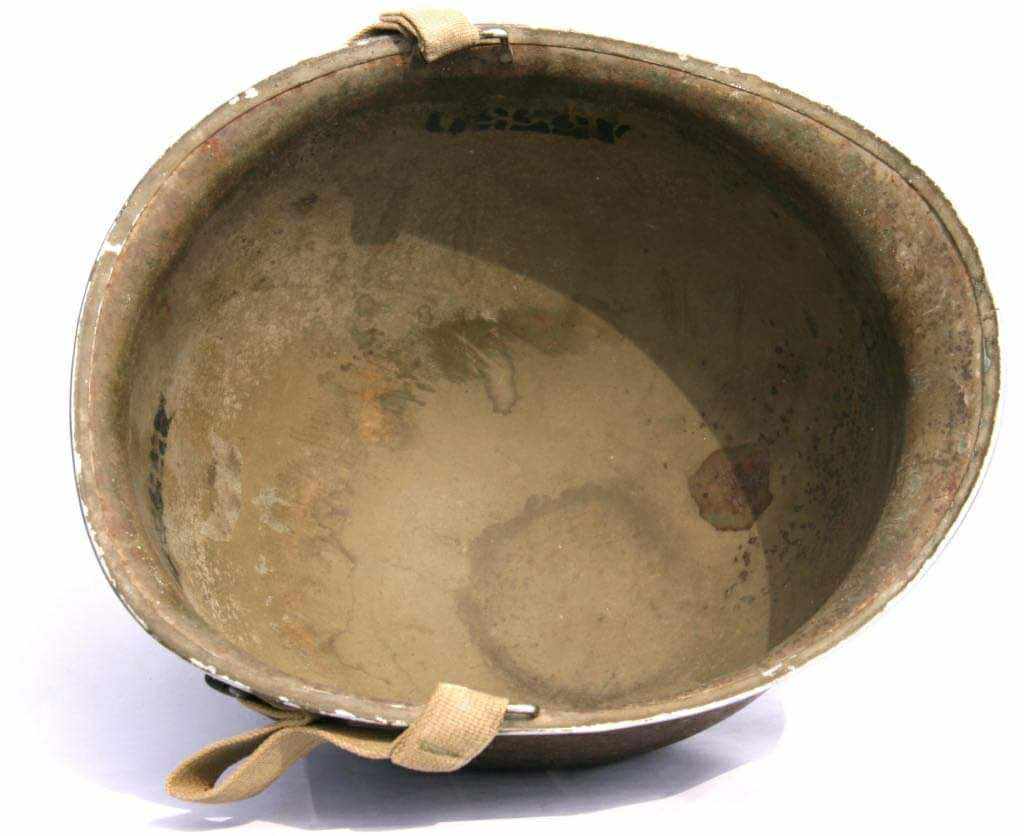
Helmet of Private Charles Atchley, Company A, 290th Infantry Regiment, 75th Infantry Division
This combat helmet belonged to Private Charles Atchley, born February 4, 1926, in Texas, who entered the United States Army on April 21, 1944, receiving ASN 38685550. Barely nineteen when he reached Europe on December 13, 1944, Atchley was swept immediately into the chaos of the Ardennes. The 75th Infantry Division arrived in Belgium around December 23, rushing into the maelstrom of the Battle of the Bulge and meeting fierce German resistance in the Grandmenil–Manhay sector.
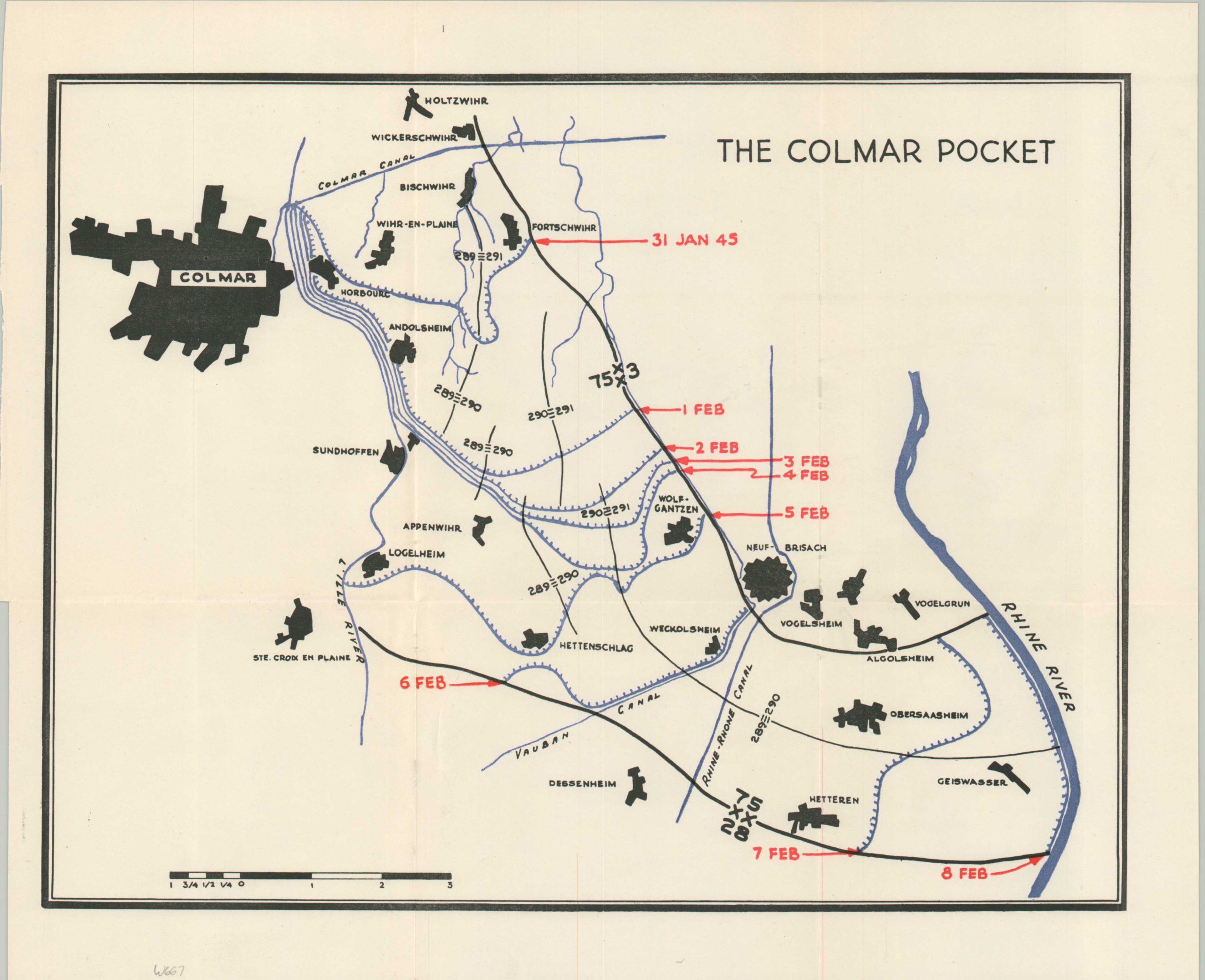
During those bitter days, Atchley distinguished himself with extraordinary courage. In the midst of a German counterattack, he destroyed two enemy tanks with a bazooka, an act for which he received the Bronze Star. A second Bronze Star followed in February 1945 during the Alsace campaign, as the 75th fought through the Colmar Pocket—harsh, freezing combat between the Rhine River and the Vosges Mountains. Trench foot eventually forced his evacuation to the rear, and he would finish the war in a hospital bed rather than on the line he had so faithfully held.
The 75th Infantry Division carried the motto “Make Ready,” and Atchley embodied it. Trained at Fort Sill’s artillery school, he served as the Number One man on a 105mm howitzer crew during the Bulge, responsible for closing the breech and firing the lanyard. He later recalled the shock of real combat—the recoil, the concussion, the unmistakable difference between training blasts and the thunder of a wartime barrage. With a young man’s mixture of grit and awe, he summed up the experience in three words: “This is fun.”
His journey to war had been its own odyssey. Germany’s U‑boats prowled the Atlantic, yet Atchley crossed aboard the Queen Elizabeth, reaching Glasgow in four and a half days. After a USO supper and show, the troops boarded a train south to Southampton, then joined a convoy of three ships carrying 19,000 men to France. From there they pushed north into Belgium along vast supply corridors—camouflaged routes as wide as football fields—where American logistics met German armor bogged down in winter mud and starved of fuel. Atchley believed his small size helped him survive the Bulge, but nothing could shield him from the cold. Ill‑equipped for winter, he endured the freezing foxholes that sent him repeatedly to hospitals for his damaged feet.
Atchley also served in a mortar squad, carrying a pack loaded with two volatile mortar rounds. He learned to run in a zigzag to keep them from being struck, a habit born of necessity. Amid the hardship, the Army managed one daily comfort: hot oatmeal with raisins. It became a lifelong ritual—he was still eating it on the morning of his reunion decades later.
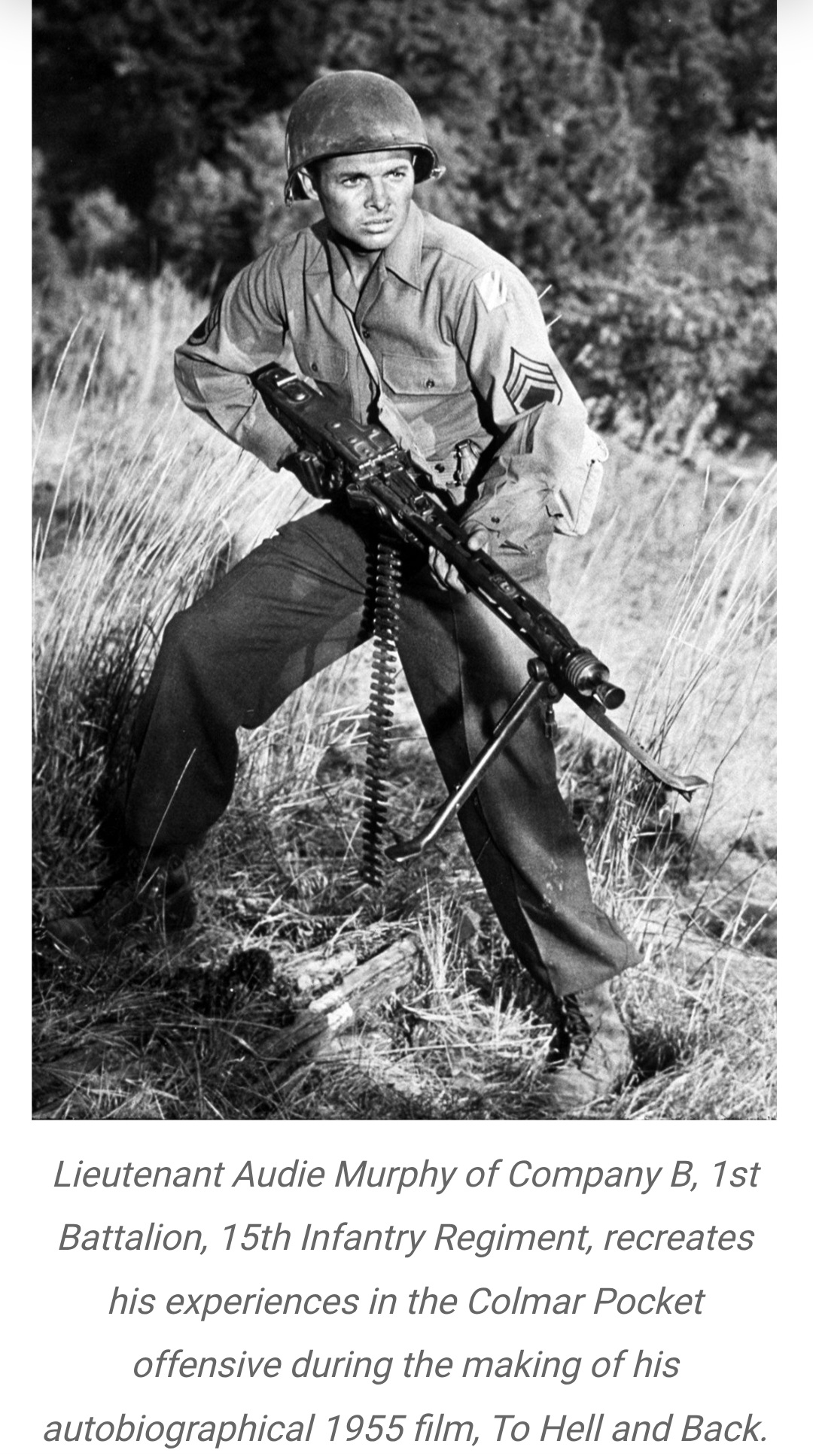
When the 75th reached the Colmar Pocket, Atchley had just turned nineteen. Serving in Company A, he was one of only ten soldiers to receive the blue Combat Infantryman Badge that day. Audie Murphy, already a legend in the making, was stationed nearby. Though the two young Texans—Murphy from Princeton, Atchley from Lucas near Allen—never crossed paths in Europe, their stories briefly touched the same frozen ground.
This helmet stands as a witness to Atchley’s service: the bitter cold of the Ardennes, the fire of the Colmar Pocket, the courage of a young Texan who carried mortars, fired howitzers, destroyed tanks, and endured the unforgiving winter of 1944–45. It preserves the memory of a soldier who met the greatest trials of his generation with steadiness, humility, and a spirit that never lost its spark.
From the Queen Elizabeth to the Ardennes: The Journey Toward War
Boarding the RMS Queen Elizabeth marked the beginning of a journey that carried American soldiers from the safety of home toward the brutal reality of the European battlefield. The ship dominated the pier, a massive gray hull stretching nearly a thousand feet, capable of transporting more troops at once than any vessel in history. Soldiers approached her in long columns, each man carrying his duffel, his rifle, and the quiet understanding that he was stepping into the unknown. Military police directed the flow of men toward the gangways, where boots clanged against metal ramps as thousands boarded in steady, unbroken lines.
Inside, the Queen Elizabeth had been transformed from a luxury liner into a wartime transport. Hammocks and bunks filled spaces once reserved for grand lounges and dining rooms. The air below deck was warm and heavy, vibrating with the constant hum of the ship’s engines and the movement of thousands of men settling into their assigned spaces. Mess lines wound through narrow corridors, and meals were eaten quickly, often while the ship rolled sharply in the heavy Atlantic seas.
The crossing itself was powerful and relentless. The Queen Elizabeth cut through the North Atlantic at high speed, moving through waves that rose like walls. Hammocks swung in wide arcs. Plates slid across long tables. Seasickness was common. Yet every man aboard knew the ship was one of the safest vessels afloat—her speed made her nearly impossible for German submarines to intercept. When weather allowed, soldiers crowded onto the open decks, staring at the endless horizon and thinking of home. The ocean became a threshold, a place where training ended and war began.
When the ship reached Britain, the transition from sea to land was immediate. Soldiers filed down gangways into a world of military police, British port officers, and American transportation units working in precise coordination. The docks were crowded with trucks, supply vehicles, and long lines of railcars waiting to receive the thousands who had just crossed the Atlantic. There was no pause. Movement began the moment boots touched the pier.
Troops boarded trains fitted with wooden seats and minimal heating, traveling south through rolling countryside and industrial towns toward the staging camps prepared specifically for American forces. These camps were not permanent bases but transition points designed to prepare men for movement toward France and Belgium. Upon arrival, soldiers underwent roll call, medical checks, equipment inspections, and briefings on European conditions. Cold‑weather gear was issued. Weapons were examined. Units were reorganized and strengthened. Every step was deliberate, ensuring that each man was ready for the front.
Training resumed immediately. Soldiers practiced weapons handling, night movement, map reading, and gas mask drills. They marched across muddy fields, learned British road systems, and adjusted to the damp English climate. The camps were crowded and constantly in motion. Thousands arrived, trained, and departed each week, part of a logistical flow that never slowed.
When orders came, units moved again—this time toward the Channel ports. Trucks and trains carried them to Southampton, Portsmouth, Plymouth, or Dover, where smaller transport ships waited to take them across the Channel. The crossing was short but tense, conducted in escorted convoys. Soldiers stood on deck in full gear, watching the English coastline fade behind them.
Once they reached France—often Cherbourg, Le Havre, or Rouen—they stepped into a world marked by war damage and military urgency. From there, trucks and trains carried them toward forward staging areas and eventually into combat. For the men of the 75th Infantry Division, this path led directly toward Belgium and the frozen forests of the Ardennes.
Company A, 290th Infantry Regiment entered the Bulge as one of the division’s first elements committed to the fight. These soldiers—many barely acclimated to Europe—were rushed into a sector already scarred by weeks of intense combat. They moved through snow‑covered fields and dense forest, relieving exhausted units and taking positions where the enemy pressed hard against the American line. Their journey from the Queen Elizabeth to the Ardennes had taken them across an ocean, through England’s camps, over the Channel, and into the heart of one of the war’s most brutal battles.
From ship to shore, from England to France, from staging areas to the front, the movement was continuous, disciplined, and purposeful. It was a carefully orchestrated transition from the safety of the Atlantic crossing to the unforgiving reality of winter combat. Every man who passed through it became part of a vast system that carried American soldiers from home to the battlefield with remarkable speed and unwavering resolve.
From Omaha Beach Inland to the Colmar Pocket
Company A, 290th Infantry Regiment, 75th Infantry Division**
Leaving Omaha Beach, he stepped into a landscape that shifted from the scars of invasion to the organized momentum of an advancing army. The beach behind him was crowded with vehicles, engineers, cranes, and supply depots, but the road ahead stretched inland through terrain shaped by months of Allied effort. Military police directed convoys with sharp gestures, keeping the flow steady as trucks, jeeps, and half‑tracks moved in disciplined columns toward the interior of France.
The first miles inland revealed the transformation of Normandy. Fields once churned by shellfire were now lined with supply dumps, fuel points, and temporary repair stations. Engineers had widened roads, reinforced bridges, and cleared debris to allow the constant movement of men and matériel. He saw long rows of ammunition crates stacked beside orchards, tents rising in former pastures, and medical stations marked by red crosses that stood out against the green countryside.
Villages appeared along the route, many bearing the marks of earlier fighting. Stone walls were cracked, roofs damaged, and church towers scarred by shrapnel. Yet life had begun to return. Civilians watched the convoys pass, some waving quietly, others standing in solemn stillness. Children gathered near the roadside, fascinated by the endless procession of American vehicles. The liberation had brought relief, but the memory of battle lingered in every street.
As he moved deeper inland, the scale of the Allied advance became unmistakable. Columns of trucks stretched for miles. Artillery units repositioned along ridgelines. Tanks rumbled forward, leaving deep impressions in the soft earth. The air carried the smell of fuel, dust, and distant smoke. Road signs hastily painted by engineers pointed toward supply hubs, division headquarters, and forward assembly areas. Every direction led toward the front.
The closer he came to eastern France, the more urgent the movement became. Rumors traveled quickly through the columns—of heavy fighting in the Ardennes, of German counterattacks in Alsace, of a stubborn German foothold still clinging to the west bank of the Rhine. That foothold was the Colmar Pocket, the last major German‑held territory in France, a winter battlefield as brutal as any in Europe.
The Colmar Pocket: What He Saw
When he reached the Colmar sector, he entered a region transformed by months of bitter fighting. The plains of Alsace were flooded, the ridgelines covered in snow, and the villages fortified into defensive strongpoints. The winter was severe—temperatures dropped far below freezing, and heavy snowfall blanketed the countryside.
He saw:
- frozen vineyards stretching across the hills
- snow‑covered fields cut by narrow farm roads
- stone villages turned into fortified positions
- church towers used as German observation posts
- burned‑out vehicles half‑buried in drifts
- craters and collapsed buildings from artillery and air strikes
The Rhine lay to the east, its western bank still held by German forces who refused to withdraw.
The fighting was close‑quarters, slow, and brutal. The Germans defended every village, every cellar, every ridge. The U.S. XXI Corps—alongside the French First Army—pushed north and south to squeeze the pocket until German units were isolated and forced to retreat. He saw American infantry advancing through frozen fields, French armored units forcing their way into towns, and colonial Moroccan troops climbing icy slopes under fire.
It was a battlefield defined by attrition, fought in temperatures cold enough to kill without a single shot fired.
Company A’s Role in Relation to the Colmar Campaign
Company A, 290th Infantry Regiment, 75th Infantry Division was not assigned to the Colmar Pocket itself. Their commitment lay in the Ardennes, where they were rushed into the northern shoulder of the Bulge to stabilize a collapsing front. But their role was directly connected to the Colmar campaign in a strategic sense.
Here is the truth, elevated and unified:
- The 75th Infantry Division fought two major winter battles: the Ardennes and the Colmar Pocket.
- Company A fought in the Ardennes, entering Belgium as one of the division’s first elements committed to the fight.
- Other regiments of the 75th—particularly the 289th and 291st—were sent south to join the Colmar operation.
- Company A’s stand in the Ardennes freed Allied forces to reinforce the Colmar sector.
- Their endurance in Belgium contributed to the larger winter campaign that eliminated the last German foothold in France.
In other words, Company A’s actions in the Ardennes were part of the same winter struggle that culminated in the destruction of the Colmar Pocket. Their fight in Belgium helped stabilize the northern front, allowing Allied commanders to shift strength southward into Alsace.
Their resolve in the Ardennes became part of the broader Allied winter offensive—a unified effort stretching from the snow‑covered forests of Belgium to the frozen plains of Alsace.
His movement inland from Omaha Beach carried him through liberated villages, across the breadth of France, and into the winter campaigns that defined the final months of the war. Whether in the Ardennes or in the shadow of the Colmar Pocket, the men of the 75th Infantry Division fought in conditions that tested every measure of endurance.
Company A’s role—holding the line in Belgium while sister units fought in Alsace—became part of a single winter narrative of American resolve. Their actions contributed to the collapse of German hopes in both sectors. Their endurance helped clear France, secure the Rhine, and open the path into Germany.
From Omaha Beach to the Ardennes, from the plains of Alsace to the final push eastward, their journey became part of A Century of American Resolve—an inheritance carried by ordinary men who answered their nation’s call and bore witness to the cost of freedom.
What Charles Saw and What They Experienced Upon Arrival in the Ardennes
When Charles and the soldiers of the 75th Infantry Division reached the Ardennes on December 31, 1944, they stepped into a world that looked nothing like the United States they had trained in. The landscape was not simply a battlefield. It was a frozen wilderness shaped by the coldest winter in France and Belgium in 50 years, a place where nature itself became an adversary as dangerous as the German Army.
A Landscape Locked in Ice
The first thing Charles saw was white. Snow covered everything — the roads, the fields, the rooftops of Belgian villages, the branches of the dense Ardennes forest. It lay in drifts so deep that boots disappeared into them. The air was sharp enough to sting the lungs. Frost clung to eyelashes. Breath turned instantly to vapor.
The cold was not a backdrop. It was a force. It froze feet, stiffened fingers, and made every movement slower and more painful. Charles, only 105 pounds and 5 feet 5 inches, felt the cold cut through his uniform and settle into his bones. The temperature dropped so low that metal burned bare skin and water froze inside canteens.
Forests That Hid Everything
The Ardennes forest was thick, dark, and disorienting. Tall pines and bare winter trees crowded together, turning the landscape into a maze. Visibility was limited. Sound carried strangely. A single rifle shot echoed through the trees in unpredictable ways.
The forest forced close‑quarters fighting. Soldiers moved tree to tree, foxhole to foxhole, never knowing what waited beyond the next line of trunks. The enemy could be twenty yards away and invisible.
Villages Already Scarred by War
The 75th passed through small Belgian villages — Grandmenil, Manhay, Vielsalm, and others along the Salm River — that bore the marks of battle. Stone houses had shattered roofs. Barns were burned out. Windows were blown open. Smoke drifted from chimneys and from ruins alike.
The soldiers saw abandoned carts, frozen livestock, and civilians who had fled or were sheltering in cellars. The villages were no longer quiet European towns. They were battlegrounds where German armor had passed only hours before.
Roads That Determined Survival
The Ardennes was a region of narrow, winding roads that cut through forests and farmland. In winter, these roads turned slick with ice and packed snow. Vehicles slid. Trucks stalled. Tanks struggled for traction.
Every road became a lifeline. Control of the road network determined whether the German offensive could advance. The 75th was sent to the northern shoulder of the Bulge precisely because those roads had to be held at all costs.
Foxholes That Offered Only the Bare Minimum of Shelter
When Charles and his fellow soldiers dug in, they carved foxholes into frozen ground. Snow filled them. Ice formed at the bottom. Mud clung to clothing. These holes were the only protection from artillery, machine‑gun fire, and the bitter wind.
For 14 straight days, Charles fought, ate, tried to sleep, and endured in these makeshift shelters. The foxholes had to be dug anew each day as the battle moved. It was in these conditions that his feet froze, forcing his evacuation from the front and beginning the long medical journey that followed.
The Sounds and Smells of a Winter Battlefield
The Ardennes was not silent. It was alive with the sounds of a battlefield locked in ice, where every noise carried through the frozen forest with a clarity that made danger feel closer than it was.
Charles heard the crack of rifles echoing through the trees, each shot snapping sharply in the cold air. The forest amplified the sound, sending it ricocheting between trunks until it was impossible to tell where the firing began. He heard the rumble of Tiger tanks in the distance, a low mechanical growl that vibrated through the ground long before the tanks themselves appeared. Their engines had a distinct, heavy tone that every soldier learned to recognize.
Artillery shells landed with a thump that sank into snow, muffled yet unmistakable. The explosions were less fiery in winter, more muted, but the shockwave still rolled through the frozen earth. Branches snapped under the weight of ice and under the boots of soldiers moving through the woods. That sharp, brittle sound — the snap of frozen branches — became part of the rhythm of the battlefield.
Officers shouted commands that were carried away by wind and gunfire. Voices rose and fell, sometimes clear, sometimes swallowed by the forest. The cold made breath visible, turning every shout into a cloud of vapor.
He smelled cordite from fired weapons, a sharp, acrid scent that lingered in the air after each burst of gunfire. Diesel from armored vehicles drifted through the trees, heavy and oily, marking the presence of tanks and half‑tracks even when they were out of sight. Smoke from burning buildings mixed with the smell of wet wool, frozen earth, and the remnants of shattered villages.
And there was the cold itself — sharp, metallic, and unmistakable. It had a smell that soldiers remembered long after the war, a scent of frozen air and iron that settled into clothing and skin. It was the smell of a winter that froze feet, stiffened hands, and turned every breath into a reminder of how unforgiving the Ardennes had become.
The Reality of Sudden Combat
For Charles, this was a baptism by fire. He arrived as an 18‑year‑old rifleman, still new to combat, and was thrust into a battle already raging at full intensity. The German Army was fighting with desperate resolve. The terrain was unforgiving. The weather was lethal.
Yet the 75th held. Their stand on the northern shoulder helped stop the German advance and contributed directly to ending Hitler’s last major offensive in the West.
What the Battlefield Itself Produced
The Ardennes battlefield generated sensory conditions unlike any other campaign of World War II. The extreme winter, the terrain, and the intensity of the German offensive combined to create an environment where the land itself shaped the experience of every soldier.
Gunpowder hung low in the air because the freezing temperatures slowed its dispersal. Instead of drifting away, it settled into the forest like a thin haze, clinging to branches, uniforms, and the inside of foxholes. Soldiers breathed it in with every inhale.
Explosions produced less flame but more smoke. Snow and moisture smothered the fireball of artillery blasts, turning them into heavy bursts of gray and black smoke that rolled across the ground. The smoke mixed with cold air, creating a dense fog that blurred the edges of the battlefield.
Frozen livestock lay in fields and near villages, casualties of the sudden German advance. Their bodies produced a faint, sour odor that lingered in the cold and mixed with the smell of burning timber and diesel. It was a reminder that the battle had swept across farms and homes, not just military positions.
Burning fuel mixed with snowmelt, creating a sharp chemical smell that coated the ground. When tanks or trucks were hit, their fuel spilled into the snow, producing a bitter, oily scent that spread through the air and soaked into clothing.
German Nebelwerfer rockets produced a shrieking sound that American soldiers called the “Screaming Meemies.” The rockets’ multiple tubes fired in rapid succession, creating a rising, wailing noise that cut through the forest and sent soldiers diving for cover even before the explosions landed.
American 105 mm artillery answered with a deep, rolling boom that echoed across valleys and through the trees. The sound traveled for miles, bouncing off frozen hillsides and returning as a low rumble that vibrated through the ground.
The forest distorted sound, absorbing some noises while amplifying others. Distant fighting often sounded close, while nearby movement could seem far away. This uneven acoustics made it difficult to judge direction or distance, adding confusion to an already chaotic battlefield.
These elements created a sensory world that was harsh, unpredictable, and unforgettable. The environment itself became part of the battle, shaping how soldiers moved, reacted, and survived.
This was the reality Charles stepped into as an 18‑year‑old rifleman. A frozen forest that magnified every sound. A sky thick with smoke. A ground marked by diesel, cordite, and burning timber. A battlefield where the cold sharpened every sensation and where survival depended on reading the environment as carefully as the enemy.
It was not only what he saw. It was what he heard. It was what he smelled. It was what he endured.
And it became part of the story he carried for the rest of his life.
January 1–3, 1945 — Movement Toward the Ardennes
Primary Location: Northern France → Belgium
What Atchley Was Doing:
- Moving with the 75th toward the collapsing northern shoulder of the Bulge.
- Snow, ice, and sub‑zero temperatures slow movement.
- Division assigned to reinforce the First Army.
January 4–7, 1945 — First Combat: Grandmenil–Amonines Sector
Primary Location: Grandmenil, Belgium
Secondary Location: Amonines, Belgium
What Atchley Was Doing:
- Entering combat for the first time.
- Fighting in forests and steep, snow‑covered terrain.
- Engaging German forces withdrawing from the Manhay–Grandmenil corridor.
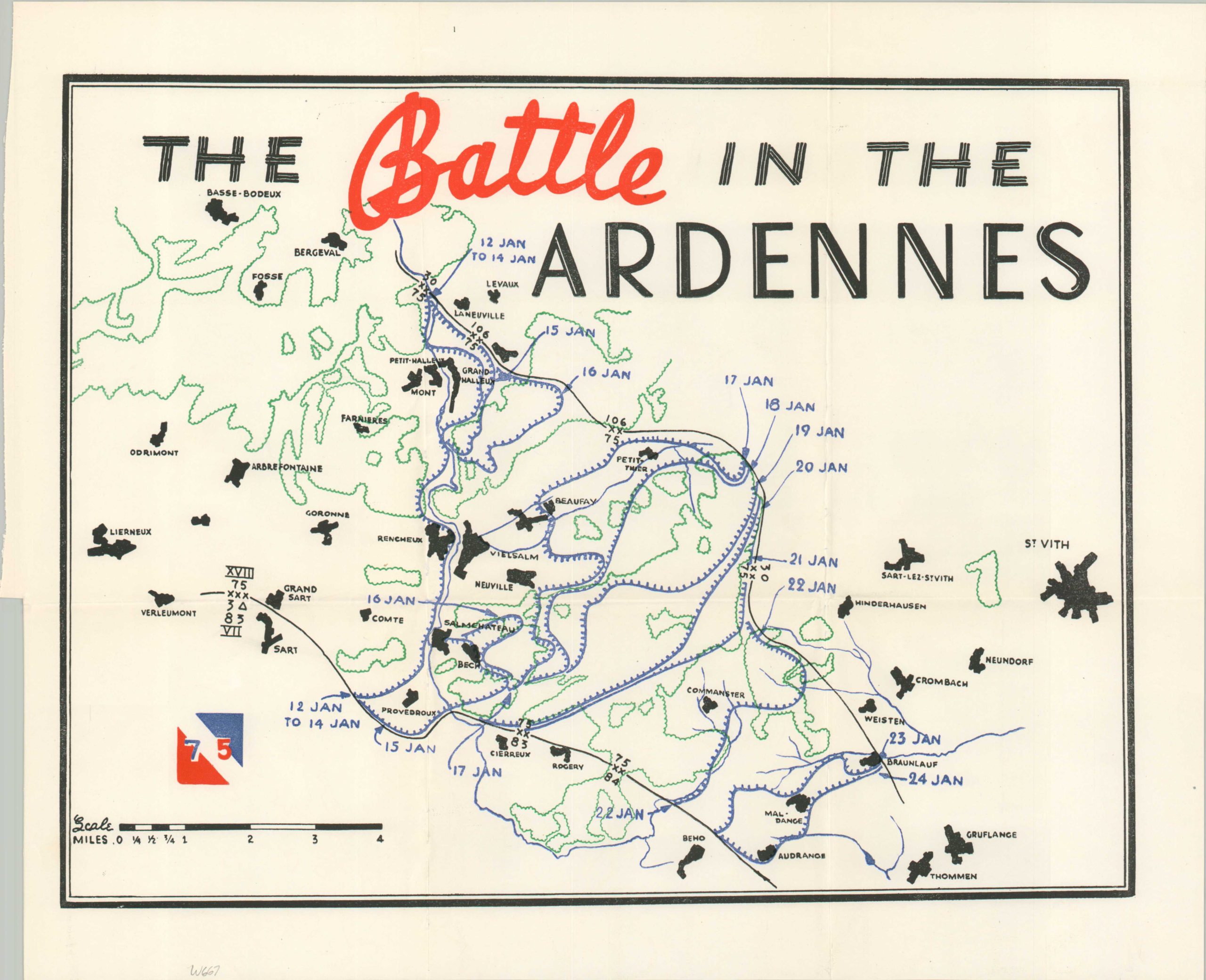
January 8–11, 1945 — Attacks Toward Vielsalm
Primary Location: Vielsalm, Belgium
What Atchley Was Doing:
- Pushing east to cut German escape routes.
- Clearing woods, roadblocks, and fortified houses.
- Fighting in deep snow and freezing fog.
January 12–17, 1945 — Crossing the Salm River
Primary Location: Salm River Crossing
What Atchley Was Doing:
- Assaulting across the icy Salm River under fire.
- Securing high ground east of the river.
- Helping collapse the last German positions in the northern Bulge.
January 18–25, 1945 — Clearing the Bulge
Primary Location: Lierneux, Belgium
Secondary Location: Burtonville, Belgium
What Atchley Was Doing:
- Driving German forces back toward the Siegfried Line.
- Fighting in villages, forests, and frozen ridgelines.
- Helping eliminate the last German footholds in the Ardennes.
Late January 1945 — Bulge Ends, Division Redeploys
Primary Location: Comblain‑la‑Tour, Belgium
What Atchley Was Doing:
- Regrouping after intense winter combat.
- Preparing for the next major campaign: the Rhineland.
What the Body Endured in the Ardennes
The Battle of the Bulge was not only a test of courage. It was a test of the human body pushed to its limits by cold, exhaustion, hunger, and the relentless demands of winter combat. For Charles and the soldiers of the 75th Infantry Division, every hour in the Ardennes was a physical trial.
The Weight of the Cold
The cold was constant. It pressed against skin, seeped through wool uniforms, and settled into bones. Soldiers felt their fingers stiffen until they could barely work the bolt of a rifle. Toes numbed, then burned, then went silent. Frostbite crept in quietly, often unnoticed until it was too late.
Charles felt the cold take hold of his feet, freezing them so severely that he had to be evacuated from the front. The cold did not simply bite. It immobilized. It threatened amputation. It changed the course of his life.
The Strain of Movement
Every step through snow demanded strength. Drifts swallowed boots. Ice made footing treacherous. Soldiers carried rifles, ammunition, rations, and sometimes mortar rounds — heavy loads that grew heavier with each mile.
Charles, only 105 pounds, carried gear that weighed nearly a third of his body weight. His legs burned with effort. His shoulders ached from the rifle strap. His breath came in sharp bursts that froze in the air.
The Pain of Digging and Fighting
Foxholes had to be dug into frozen ground. Soldiers hacked at earth that felt like stone. Their hands blistered. Their shovels bent. Their muscles strained with every strike.
Once dug in, they fought from cramped positions, bodies twisted, knees pressed into ice, backs against frozen soil. Every movement hurt. Every shift of weight sent a jolt through cold‑stiffened joints.
The Hunger and Thirst of Winter Combat
Rations froze. Water turned to ice inside canteens. Soldiers ate what they could, often cold, often quickly, often while under fire. Hunger gnawed at them. Thirst lingered. The body weakened.
Charles felt the hollow ache of hunger and the dryness of a mouth that could not find warmth. Food was fuel, but fuel was scarce.
The Exhaustion That Never Lifted
Sleep came in minutes, not hours. Soldiers rested in foxholes, curled against snow and mud, rifles across their chests. They slept with helmets on, boots on, gloves on, always ready to move.
Exhaustion blurred the edges of thought. It made time feel distorted. It made the cold feel sharper. It made danger feel closer.
Charles fought through fourteen straight days of this exhaustion, each day blending into the next, each night offering only brief moments of rest.
This was the next layer of Charles’s experience. Not only the sounds. Not only the smells. But the physical and mental toll of a winter battlefield that pushed every soldier to the edge of endurance.
It was the cold that froze his feet. The weight of gear he carried through snow. The exhaustion that blurred days into nights. The fear that lived in the trees. The memories of football that kept him moving.
These were the truths he carried — the truths that shaped his survival and became part of the story he held for the rest of his life.
Death in the Ardennes: By Fire and By Frost
In the Ardennes, Charles entered a battlefield where death came from two forces at once: the enemy and the winter. Both were lethal. Both were present every hour. And both left scenes that soldiers remembered with perfect clarity for the rest of their lives.
Combat deaths were sudden. Rifle fire cut through the trees without warning, striking men who had been moving forward only seconds earlier. Machine‑gun bursts swept across open patches of snow, and soldiers dropped where they stood, their bodies falling into drifts that swallowed them almost instantly. Artillery was even more devastating. Shells landed with a heavy, muffled impact, and the explosion sent fragments of frozen earth and metal outward in a wide circle. Charles saw men thrown backward by the force, their equipment scattered, their bodies still against the white ground. The violence was immediate, leaving no time for reaction or farewell.
Death from cold was quieter but just as real. The winter of 1944 was the coldest in decades, and soldiers weakened by exhaustion began to lose the ability to fight the temperature. Charles saw men whose hands had stiffened until they could no longer close their fingers around a rifle. He saw soldiers whose faces had turned pale and unfocused, their movements slowing as the cold drained their strength. Some collapsed simply because their bodies could no longer push through the snow. Others slipped into a deep, heavy sleep inside foxholes, unaware that the cold was overtaking them. In the Ardennes, a man who stopped moving for too long could freeze to death even without a single shot being fired.
The forest held both kinds of loss with a terrible stillness. Snow covered fallen soldiers quickly, softening the outlines of their bodies and making them appear almost part of the landscape. Ice formed on uniforms. Breath no longer rose from lips. Charles saw medics kneeling beside men who could not be revived, their own hands shaking from the cold as they tried to help. He saw soldiers carrying their comrades back through the drifts, their faces set in silence, knowing that the winter had claimed another life.
These scenes were not rare. They were part of daily reality in the Ardennes. The enemy and the cold worked together, taking men who had marched in with hope and leaving behind a battlefield marked by stillness and sacrifice. Charles witnessed these moments as an eighteen‑year‑old rifleman, and they became part of the memory he carried with quiet dignity for the rest of his life.
Charles Atchley and the 75th Infantry Division
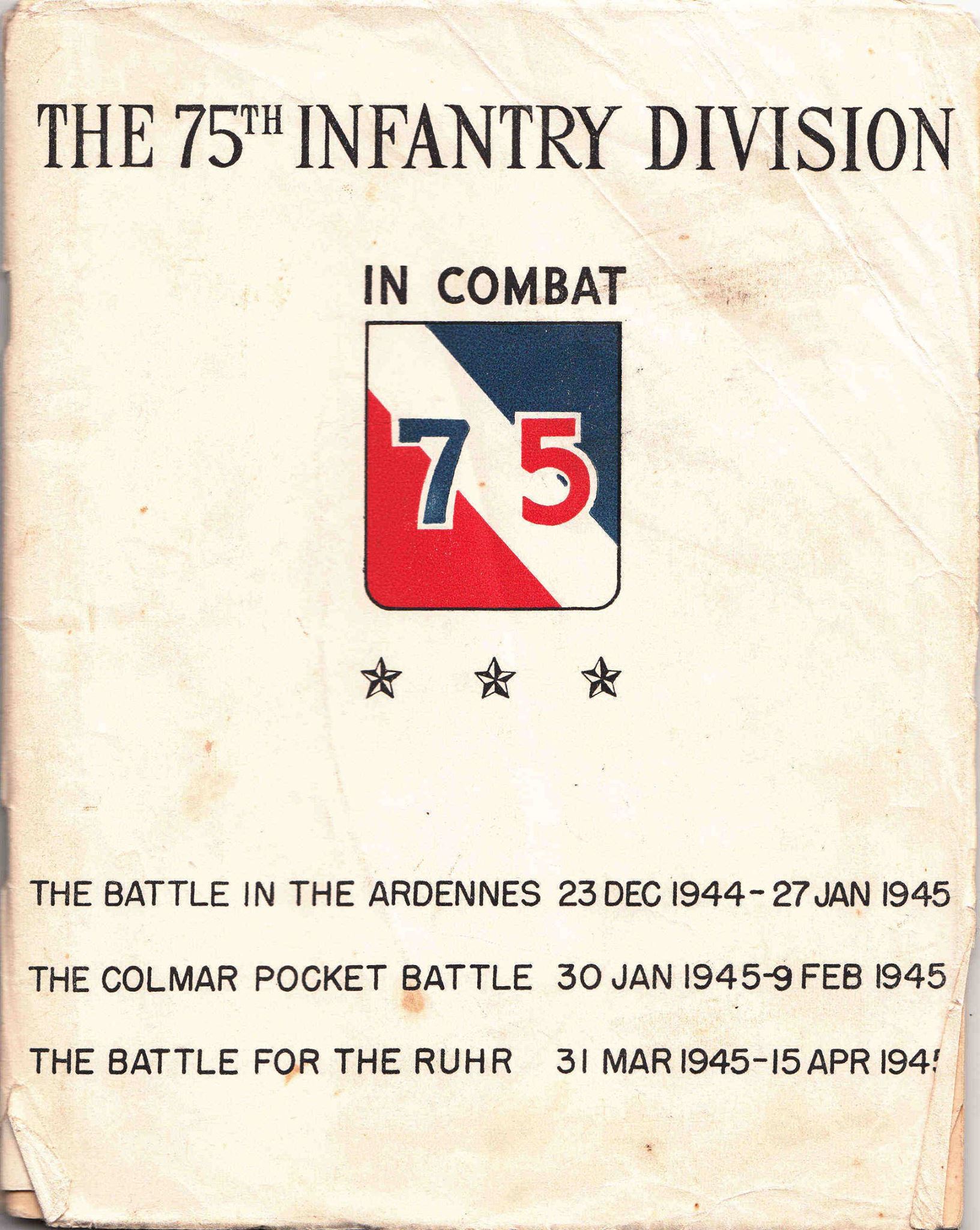
Charles Atchley entered combat with the 75th Infantry Division, one of the United States Army’s newest infantry formations. Activated in 1943, the division trained intensively across camps in the United States before shipping overseas in late 1944. Its soldiers expected a period of acclimation in England and France, but the unfolding of the war forced them directly into crisis.
In December 1944, Adolf Hitler launched his final major offensive in the West, the Battle of the Bulge. The German Army’s surprise attack drove a deep wedge into the Allied front, threatening to split American forces and seize the road networks essential to the Allied advance. With the situation deteriorating rapidly, the 75th Infantry Division, still fresh from stateside training, was rushed into the line.
The division’s three infantry regiments, the 289th Infantry Regiment, the 290th Infantry Regiment, and the 291st Infantry Regiment, were committed to some of the harshest winter fighting of the war. Snow, subzero temperatures, and the dense Ardennes forests became as formidable as the enemy itself.
Atchley’s division was assigned to the northern shoulder of the Bulge, the critical hinge the German Army needed to break if its offensive was to succeed. From Grandmenil to the Salm River, the 75th fought in a series of brutal, close‑quarters engagements that helped halt the German advance and force their retreat. Their actions stabilized the line at a moment when the outcome of the entire campaign hung in the balance.
For soldiers like Charles Atchley, this was a sudden and unforgiving baptism by fire. They faced relentless combat in the dead of winter against seasoned German units fighting with desperate resolve. Yet the 75th held. Their stand on the northern flank helped seal the fate of Germany’s last major offensive in the West and contributed directly to the eventual collapse of the German position.
Battle of the Bulge
When Charles entered the Ardennes on December 31, 1944, he stepped into the largest land battle fought by the United States Army in World War II. The scale, the stakes, and the conditions combined to create a battlefield unmatched anywhere else in the European theater. It was a moment when the fate of the Western Front hung in the balance, and he arrived precisely when the crisis was at its peak.
A Battle Born of Desperation
On December 16, 1944, Adolf Hitler launched his final major offensive in the West. His goal was to split the Allied armies, seize Antwerp, and force a negotiated peace that would halt the Allied advance. To achieve this, the Germans concentrated more than 200,000 troops, 1,000 tanks and assault guns, and thousands of artillery pieces into the Ardennes — a region the Allies believed too quiet and too rugged for a major attack.
The surprise was complete. American units already in the line were overwhelmed. Roads jammed with retreating vehicles. Communications faltered. The front bent under the weight of the assault, forming the deep protrusion that gave the battle its name.
This was the emergency into which the 75th Infantry Division was committed.
Fresh Troops in a Collapsing Front
The 75th Infantry Division had just arrived in Europe. Its soldiers expected time to acclimate, train, and prepare for combat. Instead, they were rushed directly into the fight to reinforce the northern shoulder of the Bulge — the hinge point the Germans needed to break in order to roll up the Allied line.
They entered a battlefield already in motion:
- Units had been fighting for two weeks without rest
- Casualties were severe
- Ammunition and supplies were strained
- The enemy was advancing with speed and determination
Fresh divisions like the 75th were essential to stabilize the front and prevent a breakthrough.
The Terrain That Shaped the Fighting
The Ardennes was a region of dense forests, steep hills, narrow roads, and scattered villages. This terrain favored German armor only when roads were clear. Once the Allies held key junctions, the terrain turned against the attackers.
For infantrymen like Charles, the terrain meant:
- Limited visibility inside thick forests
- Close‑quarters engagements at tree‑line distances
- Ambushes from concealed positions
- Difficult movement through deep snow and ice
- Constant exposure to artillery fire
The forest was both protection and peril, a place where danger could be twenty yards away and unseen.
The Enemy They Faced
The 75th Infantry Division confronted elements of:
- The 2nd SS Panzer Division
- The 560th Volksgrenadier Division
- The 3rd Fallschirmjäger Division
These were experienced formations, some of them elite, fighting with the desperation of a last offensive. German soldiers were hardened by years of combat. Their tanks — Panthers and Tigers — were heavily armored and deadly.
American replacements like Charles faced opponents who had already fought on multiple fronts.
The Weather That Became a Weapon
The coldest winter in 50 years shaped every aspect of the battle:
- Snowdrifts slowed movement and buried equipment
- Ice made roads treacherous and halted vehicles
- Fog grounded Allied aircraft
- Frostbite incapacitated thousands
- Weapons jammed from freezing temperatures
The weather killed nearly as many men as the enemy. Charles’s frozen feet were not unusual — frostbite casualties in the Bulge numbered in the tens of thousands.
The Importance of the Northern Shoulder
The northern shoulder, where Charles fought, was the critical hinge of the German plan. If it collapsed:
- German armor could break through to Liège
- Allied supply lines would be severed
- The front could split in two
Holding this sector prevented the Germans from widening the Bulge and protected the Allied rear areas. The 75th Infantry Division’s actions helped halt the German advance and force their eventual retreat.
The Human Cost
The Battle of the Bulge lasted six weeks. American casualties exceeded 80,000, including killed, wounded, missing, and captured. It was the costliest battle the United States fought in World War II.
Charles’s fourteen days in the Ardennes were part of this larger struggle — a moment when the outcome of the war in Western Europe depended on the endurance of soldiers like him.
Charles did not simply fight in a winter battle. He fought in the decisive turning point of the European war. He fought in a landscape chosen by the enemy for its difficulty. He fought against seasoned German units in the coldest winter in half a century. He fought in the sector whose survival determined the outcome of the offensive.
The Psychological Aftermath of the Bulge
When the guns finally fell silent in the Ardennes, the physical suffering of the Battle of the Bulge began to ease, but the psychological weight of the experience remained. For Charles and the young Americans who fought through that frozen forest, the war did not end when they left the line. The memories stayed with them, vivid and uninvited, shaping how they remembered their youth and how they carried themselves through the rest of their lives.
The Ardennes had demanded a level of vigilance that no training could fully prepare a soldier for. Danger lived in the trees, in the shadows, in the sudden quiet between bursts of gunfire. That constant alertness became a habit of mind. Even after evacuation and hospitalization, the instinct to scan surroundings, to listen for distant rumblings, to brace for the unexpected lingered. The battlefield had taught them that safety could vanish without warning.
The cold itself became a memory that never faded. It was not simply a temperature but a sensation tied to fear, exhaustion, and endurance. Charles carried the memory of that cold for the rest of his life. It was the cold that froze his feet, the cold that stiffened his hands, the cold that made every breath sharp. Winter could bring back the metallic scent of Ardennes air, the sting of frost on skin, and the feeling of a world locked in ice.
The suddenness of combat left its own mark. Charles had entered the Bulge as an eighteen‑year‑old replacement, thrust into a battle already raging at full intensity. There was no gradual introduction to war. There was only immediate survival. That kind of entry created a lasting imprint — an understanding that life could change in an instant, that calm could collapse into chaos, that youth could be interrupted by forces far beyond one’s control.
The weight of responsibility stayed with him as well. In the Ardennes, every soldier depended on the man beside him. The forest forced closeness. Men fought in pairs, in small groups, in foxholes carved into frozen ground. They shared fear, hunger, exhaustion, and the knowledge that their actions could determine whether others lived or died. When the battle ended, the bonds remained, but so did the quiet grief for those who did not return.
Charles’s way of enduring the Bulge revealed how deeply the mind searches for stability in moments of terror. He imagined football plays. He pictured defensive moves. He carried mortar rounds like a football. These memories of home and youth became anchors in a world that had lost all familiarity. After the war, those images of football and battlefield intertwined — a reminder of how an eighteen‑year‑old boy from Texas survived one of the harshest campaigns of the war.
The Bulge was not only a battle. It was an experience that reshaped the inner world of those who fought it. Veterans carried its weight quietly. They returned home, built careers, raised families, and lived full lives, but the Ardennes remained a place they could revisit in memory with perfect clarity. The cold. The fear. The responsibility. The endurance. These were not simply recollections. They were part of the identity forged in the winter of 1944.
Charles carried that identity with dignity. He did not dwell on the hardship, but he never forgot it. The Bulge became a private chapter he held within himself — a chapter that shaped his resilience, his steadiness, and his understanding of what it meant to endure.
His experience was part of a battle that shaped the end of World War II — and it became part of the story he carried for the rest of his life.
A Few Words From The Generals
From Gen. Delattre de Tassigny, French First Army Commander, came the message:
I have not allowed you any respite, and night and day have ordered you harshly “en avant!” This had to be done. No task was more imperative nor more lofty than saving Strasbourg and finally, liberating Alsace. You understood this and, covered with mud, numb with cold, exhausted, you found in yourselves the supreme strength necessary to overcome the desperate resistance of the enemy.
Thanks to you, my beloved American comrades, who had brought us your courage and who have spared nothing to help us — neither your arms nor your blood… The German has been driven from the sacred soil of France. He will never return.
Gen. Paul wrote at this time:
Throughout unit training, during our combined training, and finally during combat, let us cherish and keep alive this spark, this 75th’s way of doing things. I give you a battle cry: “Over, Around, Under, or Through””
— Gen Jacob L. Devers Commanding Sixth Army Group
The performance of the 75th Division reflects the highest credit… You can be justly proud of the part played by the Division in… victory.
The Ardennes and the Colmar Pocket
A Numerical Comparison and Company A’s Role
The Ardennes was far larger, deadlier, and strategically decisive.
Scale
The Battle of the Bulge was the largest battle fought by the United States Army in its entire history. More than 600,000 American troops were engaged. German forces committed over 200,000 soldiers, including armored divisions.
Casualties
American casualties reached approximately 89,000. German casualties were roughly 100,000. It was one of the deadliest winter campaigns in Europe.
Strategic Impact
This was Hitler’s final major offensive in the West. If successful, it could have split Allied armies and prolonged the war. The Ardennes determined the momentum of the entire Western Front.
Conditions
The battle unfolded in dense forests, deep snow, and subzero temperatures. Fire and frost claimed lives side by side. Units such as Company A of the 290th Infantry Regiment were rushed into the fight with almost no acclimation.
In every measurable way including scale, casualties, and strategic consequence, the Ardennes was the greater battle.
The Colmar Pocket was smaller but still extremely brutal and historically important.
Scale
Approximately 60,000 German troops defended the last German foothold in France. The United States XXI Corps and the French First Army conducted the assault. The 75th Infantry Division fought in this campaign, although Company A did not.
Casualties
Casualties numbered in the thousands on both sides, far fewer than the Ardennes. Fighting was intense, village to village, in deep snow and flooded plains.
Strategic Impact
The elimination of the Colmar Pocket removed the final German presence west of the Rhine. It allowed Allied forces to secure Alsace and prepare for the crossing into Germany. It was crucial for France’s liberation but did not determine the fate of the Western Front.
Conditions
The battle was fought in bitter cold, flooded terrain, and fortified villages. Combat was close quarters and often house to house. French Moroccan and Algerian troops fought alongside United States units.
The Colmar Pocket was fierce but remained a regional battle rather than a continental turning point.
Company A’s Connection to Both Battles
Company A fought in the Ardennes.
They were among the first elements of the 290th Infantry Regiment committed to the Bulge. Their endurance helped stabilize the northern shoulder of the German offensive.
Other regiments of the 75th fought in the Colmar Pocket.
The 289th and 291st Infantry Regiments were sent south to Alsace. Company A’s stand in Belgium allowed Allied commanders to shift strength toward Colmar.
Company A’s actions in the Ardennes contributed to the larger winter campaign that eliminated the Colmar Pocket. Their resolve in Belgium helped free forces to crush the last German foothold in France.
From Omaha Beach to the Ardennes, from the plains of Alsace and the bitter fighting within the Colmar Pocket to the final push eastward, their journey became part of A Century of American Resolve, an inheritance carried by ordinary men who answered their nation’s call and bore witness to the cost of freedom.
A Century of American Resolve
From Omaha Beach to the Ardennes, from the plains of Alsace and the bitter struggle within the Colmar Pocket to the final push eastward, their journey became part of A Century of American Resolve, an inheritance carried by ordinary men who answered their nation’s call and bore witness to the cost of freedom. They moved through landscapes marked by sacrifice, through winter campaigns where fire and frost claimed lives, through villages liberated and forests scarred by battle. Their endurance shaped the momentum of the war and strengthened the path toward victory. In the quiet years that followed, their memories remained as living testimony to what they had seen and what they had endured. Their service became part of the nation’s story, carried forward by families, communities, and generations who remember the weight of what was asked and the courage of those who stood to meet it.
Homecomings That Reunited the County
Returning servicemen stepped off trains wearing uniforms that bore the marks of distant places. Families waited along the platforms with a mixture of joy and reverence. Mothers embraced sons they had prayed for daily. Fathers shook hands with a firmness that conveyed pride and respect. Younger siblings, now older than when the war began, looked up at brothers who seemed changed by the world they had seen.
These reunions were not loud or extravagant. They were steady, heartfelt, and filled with gratitude. The community understood that each homecoming represented both survival and sacrifice.
Patriotism Expressed Through Daily Life
Patriotism in Ellis County after the war was not limited to ceremonies or public displays. It appeared in the way people lived, worked, and rebuilt their communities.
- Churches held thanksgiving services, offering prayers for those who returned and remembrance for those who did not.
- Local businesses displayed service flags, honoring employees who had served.
- Schools taught lessons about the war, helping children understand the sacrifices made by their families and neighbors.
- Civic groups organized memorial efforts, ensuring that the names of Ellis County’s fallen were preserved in local history.
Patriotism became woven into the county’s identity, expressed through quiet acts of respect rather than grand declarations.
Communities Rebuilding Together
The post‑war years brought new energy to Ellis County. Farms resumed full production as men returned to agricultural work. Businesses expanded to meet the needs of a growing population. Veterans brought skills learned during service—mechanical training, leadership experience, and technical knowledge—that strengthened local industries.
Midlothian’s dairies grew. Waxahachie’s commercial district revived with new shops and services. Red Oak’s farming families rebuilt equipment, repaired homes, and restored routines interrupted by wartime shortages. The county moved forward with a sense of shared purpose.
Honoring Service and Remembering Sacrifice
Patriotism in Ellis County was also expressed through remembrance. Communities created honor rolls, placed plaques in churches, and held annual gatherings to recognize those who had served. Families kept letters, photographs, and telegrams as treasured reminders of the war years.
The depots themselves became symbolic landmarks. People remembered the departures, the farewells, and the long waits for news. They also remembered the homecomings—the moment when a familiar face stepped off the train and the community breathed easier.
A County United by Experience
The war had touched every household, and the post‑war years reflected that shared history. Patriotism in Ellis County was not abstract. It was lived. It was felt. It was expressed through gratitude, community strength, and the determination to honor those who had carried the county’s hopes into distant places.
The people of Red Oak, Midlothian, Waxahachie, and the surrounding countryside emerged from the war with a deeper sense of unity. Their patriotism was steady, sincere, and rooted in the lived experience of families who had watched loved ones depart and welcomed them home again.
Ellis County After the War: Veterans, Families, and the Quiet Return to Everyday Life
When World War II ended, Ellis County entered a period defined by steadiness, reconnection, and the gradual re‑establishment of familiar rhythms. Red Oak, Midlothian, Waxahachie, and the surrounding countryside stepped into a new era as veterans returned home and families adjusted to a world no longer shaped by distant conflict.
Veterans Returning to Civilian Life
The presence of veterans reshaped daily life across the county. Men came home with experiences formed in Europe, the Pacific, and training bases scattered across the nation. Their return brought new skills, broader perspectives, and a quiet maturity that influenced the way work, community, and family life unfolded.
Many stepped back into agricultural roles, applying mechanical knowledge learned during service to tractors, dairy equipment, and field operations. Others entered trades or professions that matched the technical training they had received in the military. Some pursued education, bringing fresh ambition into Ellis County’s schools and workplaces.
Charles carried that identity with dignity. He did not dwell on the hardship, but he never forgot it. The Bulge became a private chapter he held within himself, a chapter that shaped his resilience, his steadiness, and his understanding of what it meant to endure. In this, he was not alone. Veterans who fought beside him in the Ardennes carried their own quiet memories of that winter, each shaped by the same cold, the same fear, and the same responsibility that defined the battle. They returned home with the knowledge of what they had survived and with the unspoken bond of men who had faced the same frozen forest and the same relentless enemy. Like Charles, they built lives, raised families, and moved forward with strength, yet the Bulge remained a part of them, a chapter they seldom spoke of but always remembered. It was a shared legacy of endurance carried by an entire generation.
Veterans rarely spoke at length about what they had witnessed. Their transition was steady, marked by a desire to contribute, to settle, and to restore the rhythms of home.
Communities Finding Their Pace Again
Across Ellis County, daily life regained its familiar cadence. Churches resumed full schedules of services, gatherings, and seasonal events. Schools filled with children eager to learn in classrooms no longer shaped by wartime shortages. Civic organizations became active again, offering fellowship and practical support to families adjusting to peacetime routines.
Social life returned to the towns and rural settlements. People gathered for picnics, school programs, and community celebrations. Neighbors visited one another without the weight of wartime news hanging over every conversation. The county’s sense of connection deepened as families re‑established traditions that had been paused for years.
Work and Opportunity Across the County
The post‑war economy brought new momentum to Ellis County. Agriculture remained central, but the county’s economic landscape broadened as veterans applied their training and families embraced new opportunities.
- Farms adopted improved equipment and techniques that reflected advances made during the war years.
- Dairy operations in Midlothian expanded their reach, supplying a growing region with milk and butter.
- Waxahachie’s business district grew more active, with new shops, professional offices, and civic activity.
- Red Oak’s farming families strengthened their operations, restoring routines shaped by years of limited resources.
Infrastructure improved as roads widened, utilities expanded, and public buildings received long‑delayed attention. Ellis County moved forward with a shared sense of direction.
Families Settling Into a New Normal
Households across the county adjusted to peacetime life with quiet determination. Men resumed work, often with broader perspectives shaped by experiences far from home. Women continued contributing to community life, church leadership, and local organizations, carrying forward the strength they had shown during the war years.
Homes were refreshed. Gardens flourished. New houses appeared along country roads and town streets. Families embraced routines that had been paused for years — shared meals, evening conversations, and the steady rhythm of work and rest that defined rural Texas life.
A County Moving Forward Together
Ellis County emerged from the war with a renewed sense of stability and purpose. Veterans brought home knowledge that strengthened local industries. Families regained their footing. Communities invested in schools, churches, and civic life that reflected both gratitude and ambition.
The post‑war years became a defining chapter in Ellis County’s history — a time when households found stability, communities regained their rhythm, and veterans quietly shaped the county’s future through their presence, their skills, and their steady return to everyday life.
United States Postage Stamp Prices Across Charles’s Lifetime of Service
Charles’s postal career began after World War II and continued for 33 years, placing his service roughly from the late 1940s into the early 1980s. Stamp prices during this period reflect the nation’s economic shifts — wartime stability, post‑war growth, and later inflation.
Charles’s Thirty‑Three Years with the United States Postal Service
When Charles returned from the war, he entered civilian life with a quiet steadiness that became the defining rhythm of his working years. He chose a profession built on precision, trust, and daily discipline, beginning a career with the United States Postal Service in Dallas that would span thirty‑three years. His service unfolded across one of the most transformative eras in American postal history, carrying him from the age of hand‑sorted mail to the threshold of modern mechanization.
A Career Rooted in Reliability
Charles began as a letter carrier, stepping into a system that still depended on human memory and practiced skill. Mail was sorted by hand in rooms filled with the soft cadence of envelopes being flipped, stacked, and organized. Carriers learned their routes intimately, knowing every porch, every mailbox, and every family along the way. The work demanded punctuality, endurance, and a calm temperament. Charles carried these qualities naturally, and they became the foundation of his early years.
The Nation Expands, and the Postal Service Evolves
As Dallas grew, the Postal Service changed with it. The introduction of ZIP codes in 1963 reshaped the entire sorting process, replacing the old reliance on memory with a numerical system that streamlined delivery across the country. The city’s rapid expansion brought new addresses, new businesses, and new complexities. Charles adapted to each shift with quiet competence, meeting the demands of a system that was becoming larger and more intricate with every passing year.
From the Street to the Ledger
Charles’s attention to detail and steady leadership eventually carried him into the administrative side of the Postal Service. He moved into accounting, where accuracy and consistency were essential. His responsibilities grew as he mastered evolving financial procedures and new record‑keeping systems. He advanced through the department with measured confidence, ultimately becoming chief of accounting.
His role placed him at the center of the Postal Service’s financial operations during a period of national change. When the institution transitioned from the Post Office Department to a public corporation in 1971, Charles was already a trusted figure within its administrative structure, guiding others through the new expectations and procedures that accompanied modernization.
Mechanization and the New Pace of Mail
During Charles’s career, the Postal Service introduced machines that transformed the movement of mail. Optical character readers, automated sorting equipment, conveyor systems, and improved transportation networks replaced much of the manual labor that had defined earlier decades. Facilities shifted from quiet sorting rooms to spaces filled with the hum of machinery and the pace of modern logistics.
Charles’s work in accounting supported this evolution. As the system grew more complex, financial oversight became increasingly important. His steady presence ensured that the administrative side of the Postal Service kept pace with the technological changes reshaping its operations.
A Nation’s Mail and a Lifetime of Service
The decades of Charles’s career saw dramatic increases in mail volume driven by expanding suburbs, growing businesses, government communications, and the rise of catalog and parcel delivery. The Postal Service became a central artery of American life, carrying personal letters, financial documents, medical information, and commercial materials across the country.
Through every shift, Charles’s work remained consistent. His career reflected the quiet strength of a generation that carried its wartime discipline into the everyday life of work, family, and community. By the time he retired, the Postal Service had become a modern institution, and he had witnessed — and supported — its transformation from the inside.
A Life Marked by Steady Purpose
Charles’s thirty‑three years with the United States Postal Service stand as a testament to endurance, responsibility, and the dignity of steady work. His career bridged eras, linking the hand‑sorted mail of the mid‑century to the mechanized systems of the modern age. In every role, from letter carrier to chief of accounting, he embodied the quiet reliability that defined both his generation and the institution he served.
Stamp Prices Across Charles’s 33‑Year Postal Career
When Charles entered the United States Postal Service in the late 1940s, he stepped into an institution that had been unchanged for a generation. A first‑class postage stamp cost 3 cents, the same price it had been since 1932, and the same price it remained throughout the war years when he wrote 14 to 20 letters home from Europe that arrived only on the day he returned. That single rate carried the nation through the Great Depression, through World War II, and into the early post‑war years when Charles began his career.
For more than a decade of his service, the price stayed 3 cents, reflecting a period when mail was sorted by hand, routes were memorized, and the daily rhythm of postal work depended on human precision. Charles’s early years unfolded inside this stable world, one defined by reliability and routine.
The first change came in 1958, when the rate rose to 4 cents, the first increase in 26 years. It marked the beginning of a new era. America was expanding, cities were growing, and mail volume was rising. Charles was already well into his career, adapting to a system that was beginning to modernize.
In 1963, the price increased to 5 cents, coinciding with the introduction of ZIP codes. This was one of the most significant structural changes in postal history. ZIP codes reshaped sorting, routing, and delivery nationwide, and Charles lived that transition firsthand as the Postal Service shifted from memory‑based sorting to a numerical system designed for a rapidly growing country.
By 1968, the rate rose to 6 cents, reflecting increased mail volume and the early stages of mechanized sorting. Machines began to replace manual processes, and the quiet sorting rooms of Charles’s early years gave way to facilities filled with conveyor belts, optical character readers, and the hum of automation.
In 1971, the price increased to 8 cents, the same year the Postal Service transitioned from the Post Office Department to a public corporation. This change altered administrative structures, financial systems, and national operations. Charles, already advancing in accounting, was part of the workforce navigating this shift.
The mid‑1970s brought rapid increases driven by national inflation and rising operational costs. The rate rose to 10 cents in 1974, then shifted from 10 to 11 cents in 1975, and climbed to 15 cents in 1978. These changes reflected the economic pressures of the decade and the expanding complexity of mail delivery.
Near the end of Charles’s 33‑year career, rates rose again: 18 cents in 1981, and 20 cents in 1982. The 20‑cent rate represents the culmination of a postal era that had transformed from hand‑sorted mail and neighborhood routes into a mechanized, nationally coordinated system driven by technology, ZIP codes, and modern logistics.
Across Charles’s lifetime of service, the price of a stamp rose from 3 cents to 20 cents, mirroring the evolution of the nation itself. His career carried him through the stability of the mid‑century, the modernization of the 1960s, the structural transformation of 1971, and the inflationary pressures of the 1970s. Through every change, he advanced steadily, rising from letter carrier to chief of accounting, guiding the financial operations of an institution that was changing around him.
His 33 years with the Postal Service stand as a record of endurance, precision, and quiet leadership during one of the most transformative periods in American postal history.
A Career That Spanned the Transformation of American Mail
Across the span of Charles’s 33‑year career, the United States Postal Service changed as profoundly as the nation it served. He entered the institution when a first‑class stamp cost 3 cents, a rate that had endured through the Depression and the war years when his own letters traveled slowly from Europe to Red Oak. By the time he retired, the price had risen to 20 cents, reflecting decades of national growth, modernization, and economic change.
Those numbers tell a larger story. They mark the shift from hand‑sorted mail to mechanized processing, from familiar neighborhood routes to a system guided by ZIP codes, from a federal department to a public corporation, and from mid‑century stability to the fast‑moving logistics of the modern age. Through every transition, Charles advanced steadily, rising from letter carrier to chief of accounting, carrying the same discipline he had shown as an 18‑year‑old rifleman in the Ardennes.
His postal career stands as a record of endurance and precision. It mirrors the evolution of American communication itself, a system that grew more complex with each passing decade yet remained grounded in the daily work of men and women who ensured that letters reached the hands they were meant for. Charles was one of those steady figures, guiding the financial operations of an institution that changed around him while he remained constant.
In the end, the story of stamp prices is the story of his era. It is the measure of a lifetime spent in service to a nation that was rebuilding, expanding, and modernizing. It is the quiet chronicle of a man who carried the weight of duty from the frozen forests of Europe to the sorting rooms and accounting offices of Dallas. His 33 years with the Postal Service form a bridge between eras, linking the world he returned to after the war with the world that emerged by the time he retired.
This is the closure of his postal chapter: a life of steady work, rising responsibility, and unwavering commitment during one of the most transformative periods in American postal history.
WWII veteran connects with fellow 2008 Ellis County Honor Flight participant
By CHARITY FITCH charity@waxahachiesun.com Jan 12, 202
World War II veteran Charles Atchley, 96, sat down for coffee at the Waxahachie YMCA and started talking to the man next to him, Dave McSpadden, 79. They soon realized they had both flown on the 2008 Ellis County Honor Flight and planned to wear their Honor Flight jackets together the next time they went to the Y. Honor Flight is a national program that began in 2005 and takes veterans to see their memorial and other monuments in Washington, D.C., free of charge.
In 2008, the first Honor Flight in Ellis County took about 43 veterans to D.C., including Atchley, who served in the 75th and fought in the Battle of the Bulge and the Colmar Pocket in France.
Each veteran was sponsored by somebody or by a business. McSpadden was one of the sponsors of the 2008 Ellis County Honor Flight and traveled as a guardian, meaning he was assigned a veteran to help. He also helped the program in Ellis County with its nonprofit status and helped organize paperwork. He got involved because of his father and because he too was a veteran but not for World War II.
Each veteran was sponsored by somebody or by a business.
McSpadden was one of the sponsors of the 2008 Ellis County Honor Flight and traveled as a guardian, meaning he was assigned a veteran to help. He also helped the program in Ellis County with its nonprofit status and helped organize paperwork. He got involved because of his father and because he too was a veteran but not for World War II.
“I was just a baby when he (Charles) was over there, but my dad was a World War II combat vet,” McSpadden said. McSpadden had hoped to take his dad on the trip, but he lived in San Angelo, Texas, and was too frail to travel. The “life changing” trip, as McSpadden described it, began at the Waxahachie Civic Center, where all the veterans and guardians piled into a bus. With an escort by the Waxahachie Police Department and the Patriots Motorcycle Club, the group traveled to Dallas Love Field Airport, where they flew on Southwest from Dallas to Baltimore, Maryland.
When they landed, McSpadden leaned over to his assigned veteran, who had been a bomber pilot over Germany, and asked if he enjoyed the flight. “Well, this plane is pretty quiet, and nobody was shooting at me, so I guess it was OK,” he said.
As they approached the terminal, two firetrucks from the airport sprayed arcs of water over the plane. When they arrived at their gate, they were asked to wait while everyone else left the plane, so they could leave as a group, McSpadden said. Entering the jet bridge, they could hear “God Bless America,” and there were red, white and blue balloons covering the terminal.
“When we walked in, everybody in the building applauded and cheered for us,” Atchley said. “There were probably four to five hundred people in every place they could stand, applauding these guys as they came off the plane,” McSpadden said. “There wasn’t a dry eye in the area. It was remarkable. “They visited the Pentagon, the Tomb of the Unknown Soldier, the U.S. Marine Corps War Memorial, the World War II Memorial and more. McSpadden said they were able to meet “people in high command” at the Pentagon, and they watched a company of Marines do a drill exercise at the Marine memorial.
“It went like that for three straight days of whatever we could do and whatever they could arrange for us when we arrived,” McSpadden said. “It didn’t cost the veterans anything, and it was amazing,” Atchley said of the memorable trip. “They gave us this jacket.”
McSpadden said the most powerful part of the trip was that it gave the veterans “mental and emotional permission to open up” and find peace. “When you carry the burden of an entire war in your heart, it is difficult (to find peace),” he said.
During dinner their first night, the veterans were asked if they would like to share some of their experiences.
“Many of these guys and their generation would come back and never talk about it,” McSpadden said. “This was the first time they ever talked about it. Since they felt they were among their comrades and peers, they opened up about both the good and bad of what they went through in the war. There wasn’t a dry eye in the place.”
‘One of the best’ – Charles Atchley
By DAVE MCSPADDEN Special to the Sun Aug 26, 2024
In World War II, the largest single battle that turned the tide of war in Europe was named the Battle of the Bulge. From Dec. 15, 1944, to the end of January 1945, hundreds of thousands of troops representing the Allies and German forces fought fierce battles against each other before the Allies broke through and pushed into Germany By the end of this historically desperate battle, 81,000 Americans and about 75,000 Germans lost their lives.
It was on April 15, 1943, that a new Army division consisting of 14,000 soldiers named the 75th Infantry Division was formed and began training. They trained hard for more than a year while not knowing what their role in WWII would be. They shipped to England for additional combat training in mid-November 1944. And on New Year’s Eve, 1944, the 75th Infantry Division arrived in the Ardennes Forest to join the Battle of the Bulge. As new replacements to the battle, those who had been in it for the first two weeks called them the “Diaper Division” because they were all so young.
One of the 18-year-old soldiers was infantry rifleman, Waxahachie resident, Private Charles E. Atchley. At 5’-5” and weighing only 105 pounds, Charles was greeted to the “front lines” with the coldest winter in France and Belgium in 50 years.
For 14 straight days of frantic combat, Charles and his brothers-in-arms fought, ate, tried to sleep, and did all the bodily functions you and I do daily while occasionally seeking refuge in snow foxholes with mud and ice at the bottom. The foxholes they dug each day as the fighting moved. While his regiment continued to fight, Charles was forced off the front line when his feet froze. He was shipped to a French hospital in Marseilles, France, for several months while doctors worked to save his feet from amputation.
He was then transferred to a U.S. hospital for many more months of therapy to learn to walk again. As a result of his combat, Charles was awarded two Bronze Stars and the French Legion of Merit for his bravery.
Since WWII, the 75th has gone through numerous changes of missions and assignment activations. But the bonds of those soldiers who have served in the 75th over the remaining decades have endured. One reason is that they have what has become the 75th Division Association, which gathers each year at various locations around the United States, where they share their bonds of friendship and stories. They also strive to include interesting and educational activities for the 75th members to experience at the gatherings each year.
Charles has been a regular attendee at these annual events. Now he is the oldest living member, and the only WWII veteran actively participating in the association meetings. Last year, he participated in the one held in New Orleans and was able to visit the WWII Museum. There he found the maps of the Battle of the Bulge and photos of the conditions he fought in which he fought.
This year he attended the 75th Association reunion in College Station. In addition to catching up with his many 75th friends, he went with the group to the George H.W. Bush Presidential Library and Museum and toured the Texas A&M Integrated Research Center and the Bush Combat Development Complex at the Rellis Campus of A&M. He learned about the research and development being done there to improve the military’s future combat capabilities.
This was particularly appropriate for the members of the 75th Association, like Charles, because the Department of Defense has designated the 75th as the 75th Innovation Division. The 75th is now one of the Army’s premier technology groups determining future fighting and defense missions, technologies, and innovations. One out of every five soldiers in today’s 75th Innovation Division holds a PhD degree. Charles understands and appreciates the way that his original combat infantry division has evolved into a large group of dedicated soldiers who are operating in the future’s command.
Despite his age of 98 years old, he is looking forward to the next 75th Division Association gathering in Oklahoma City. It is an honor to have this man who represents living history to also be a proud resident of Waxahachie.
Legacy
Charles Atchley’s life stands as a testament to courage, discipline, and the quiet strength that shaped America’s Greatest Generation. When World War II cast its shadow across nations, he stepped forward with unwavering resolve, joining Company A of the 290th Infantry Regiment in the 75th Infantry Division as a 105 millimeter howitzer crewman. His skill was unmistakable. He earned the Sharpshooter qualification, a mark of precision and steadiness that reflected the character he carried into every moment of service.
In the winter of 1944 and 1945, Charles and the 290th Infantry Regiment entered the crucible of the Battle of the Bulge, the largest and bloodiest battle fought by American forces in the war. The cold was severe, the snow deep, and the German attacks unrelenting. Through exhaustion, freezing winds, and constant danger, Charles and his artillery crew delivered the firepower that helped hold critical ground. Their howitzers supported infantry units fighting desperately to halt the German advance toward the Meuse River. In those decisive days, his accuracy and discipline under fire helped steady collapsing lines and protect American troops when the future of the Western Front hung in the balance. The importance of what he did in those frozen forests endures. His actions helped prevent a breakthrough that could have changed the course of the war.
No sooner had the Bulge been contained than Charles’s division was rushed south to France to help liberate the last German‑held territory west of the Rhine — the Colmar Pocket. The fighting there was fierce, the terrain unforgiving, and the winter unrelenting. Once again, Charles’s artillery skills proved vital. His howitzer crew supported French and American forces as they pushed through fortified villages, icy river crossings, and entrenched enemy positions. The liberation of Colmar became a turning point for France, and Charles’s role in that victory was later honored with the French Legion Medal, one of France’s highest distinctions. It stands as a lasting testament to the courage he displayed and the freedom he helped restore.
When the fighting in Europe drew to its close, Charles returned home not seeking praise, but seeking purpose. He built a life grounded in stability, integrity, and love. He became a respected postmaster, serving his community with the same reliability and discipline he had shown in uniform. As a successful businessman, he worked tirelessly to provide for those he loved, creating a foundation strong enough to support his family for generations.
To his children, grandchildren, and great‑grandchildren, Charles was more than a veteran or a community leader. He was the heart of the family, a man whose stories, values, and unwavering love shaped the people they became. His legacy lives on in the traditions he nurtured, the lessons he taught, and the pride his family carries in his name. The importance of his life rests in the truth that he served when the world needed men of courage, and he returned home to build a life that reflected the same devotion he had shown in war.
Today, we honor Charles Atchley as a soldier who stood firm in history’s darkest hours, a public servant who strengthened his community, a businessman who built opportunity, and above all, a family man whose life continues to inspire. His service helped secure freedom abroad, and his devotion built strength at home. His legacy endures in every life he touched and in every generation that carries his memory forward.