
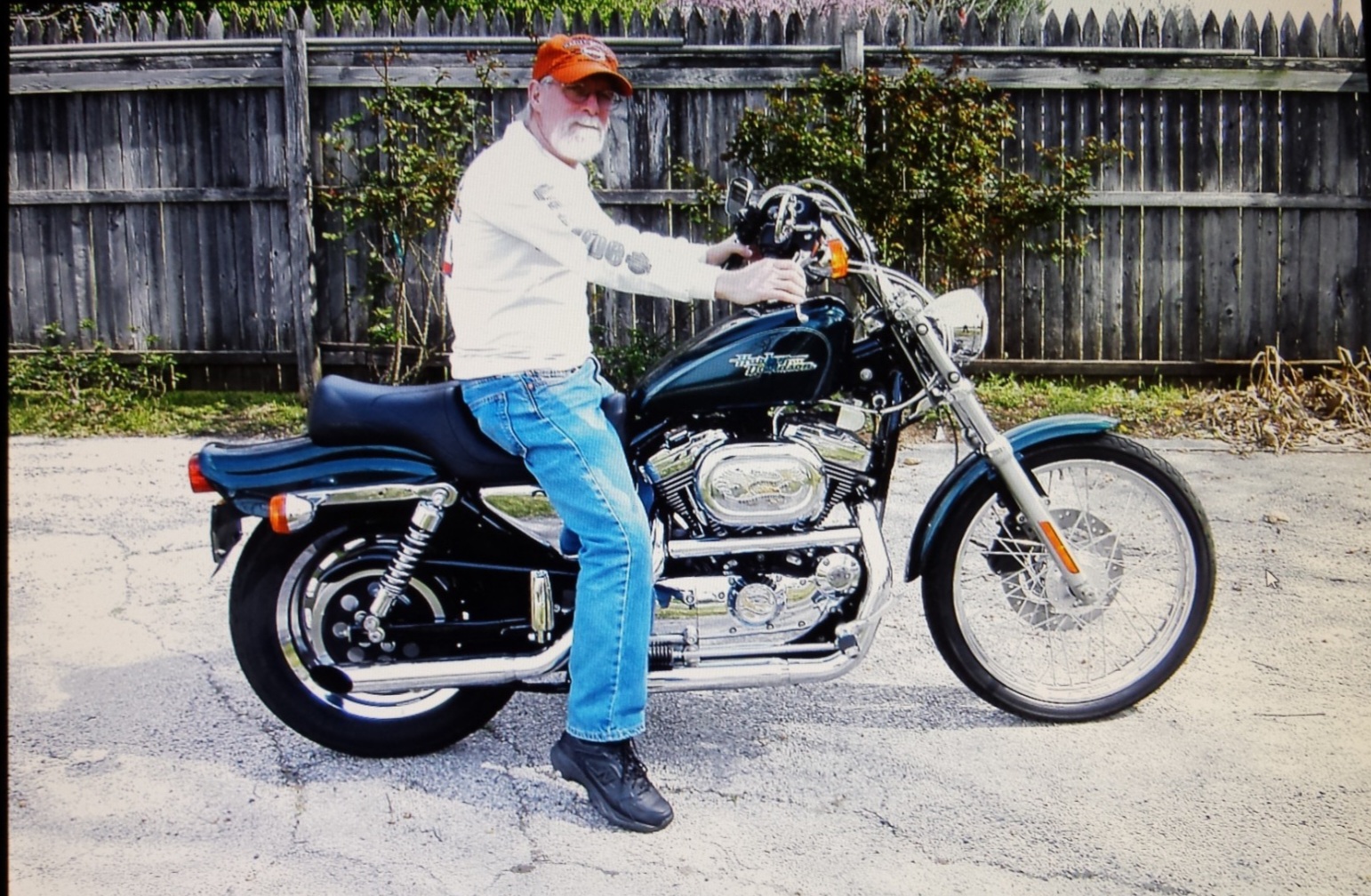
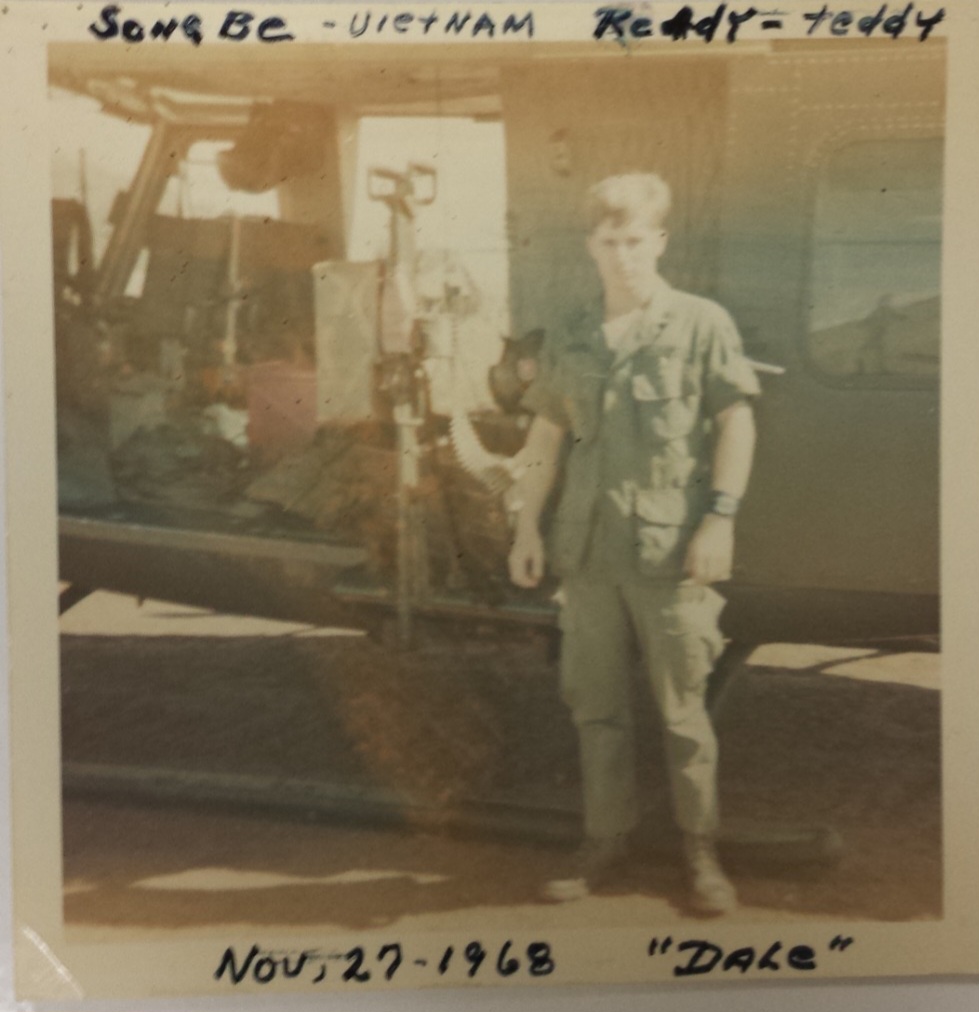
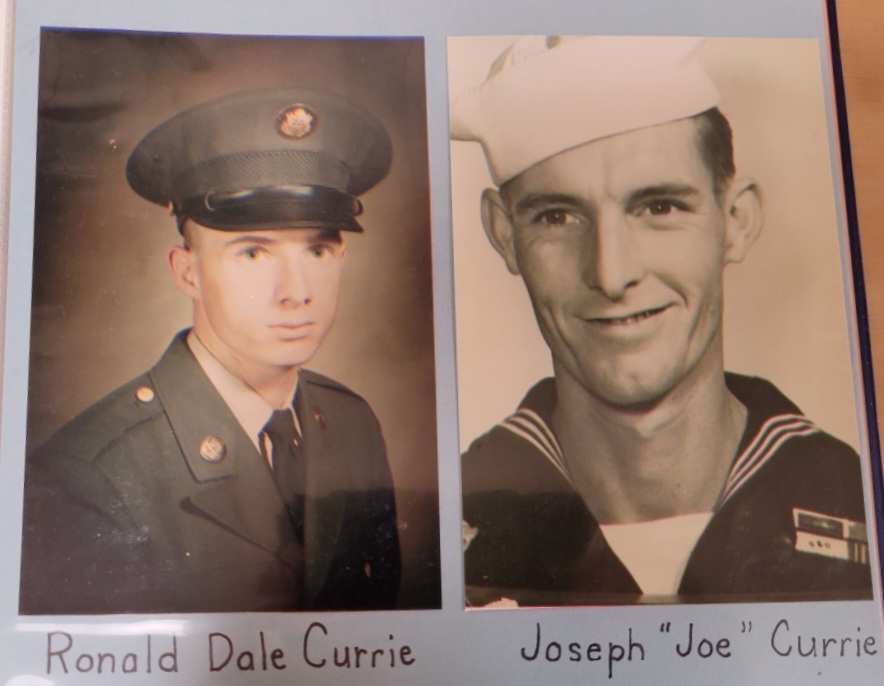
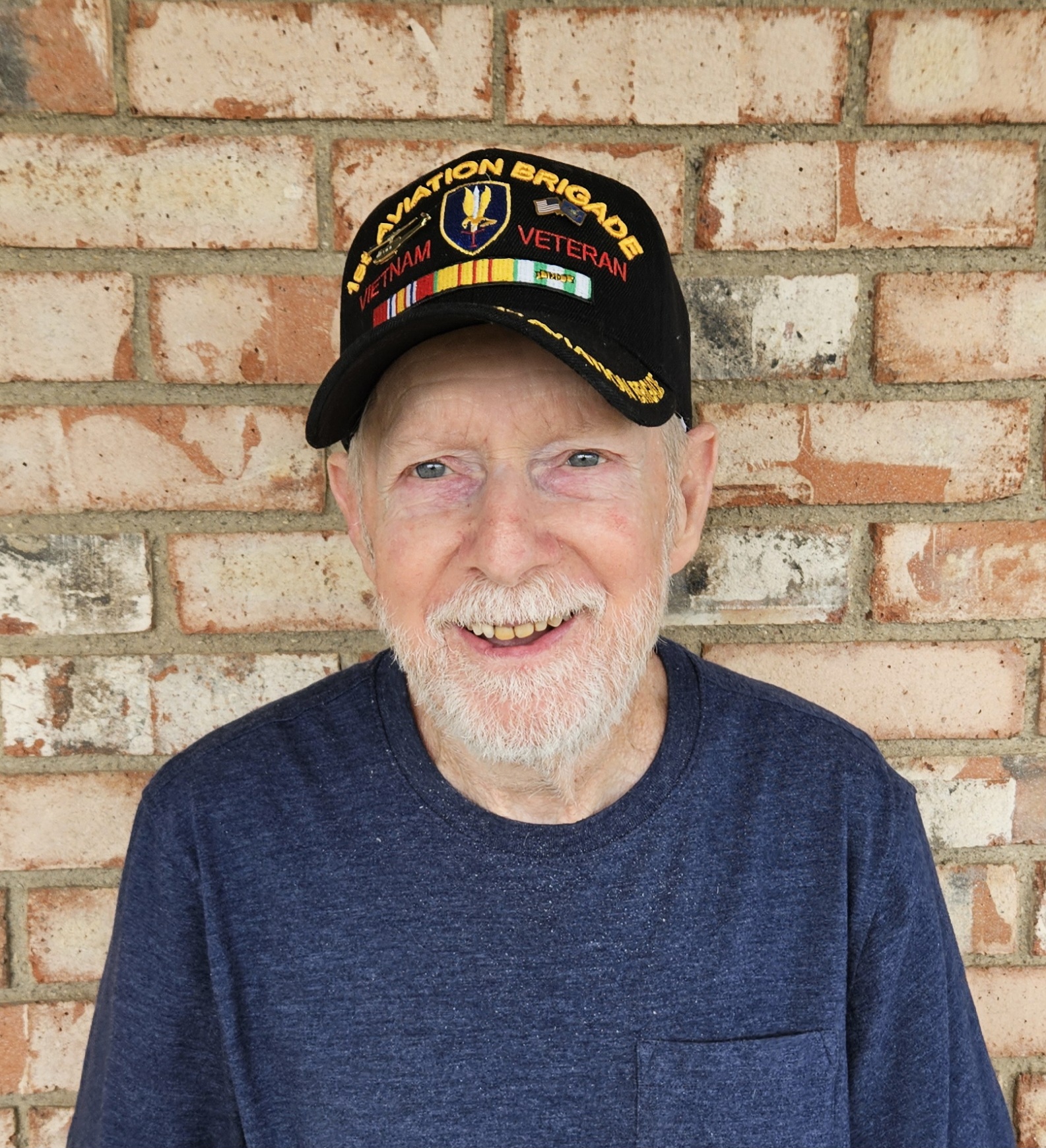
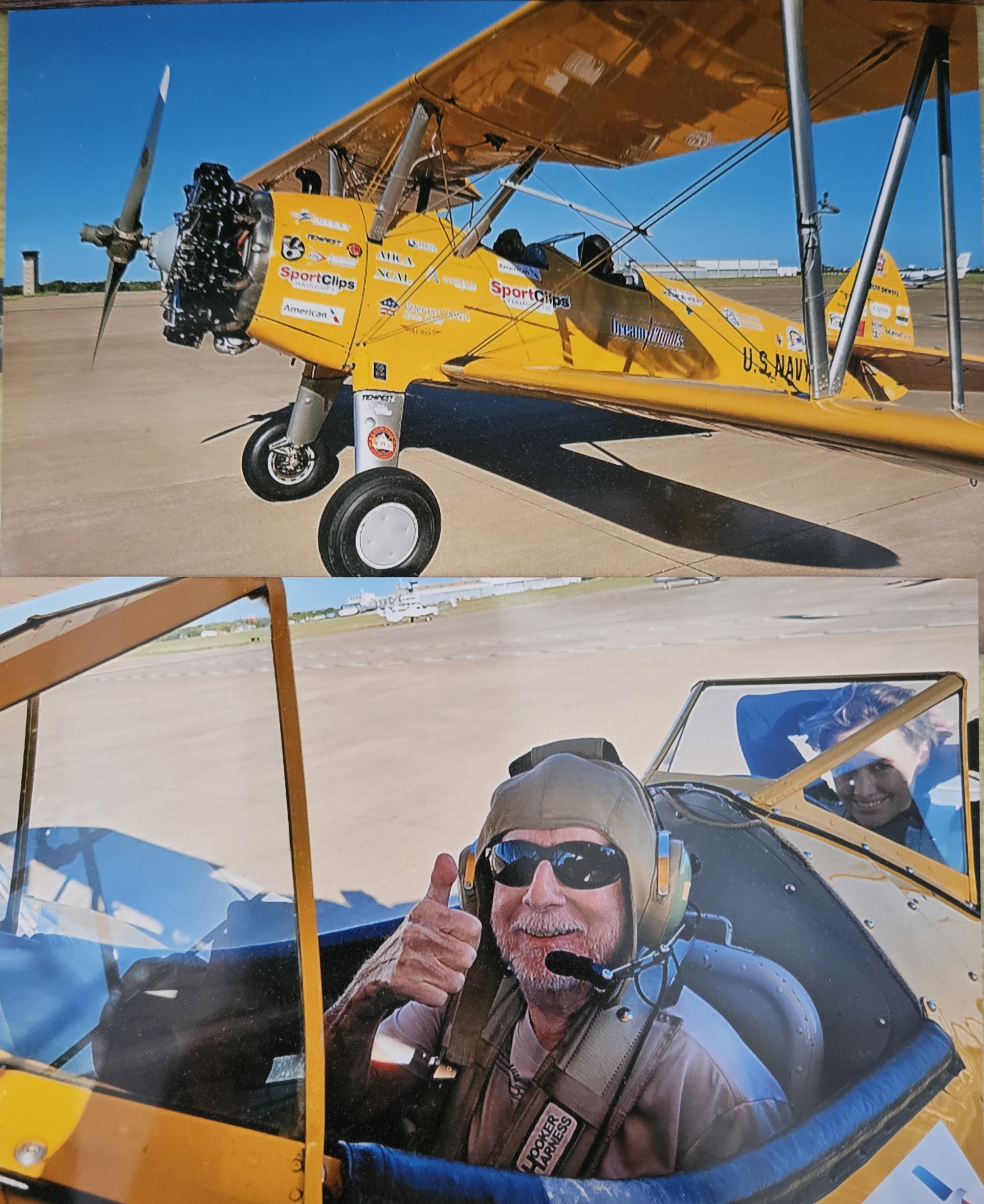
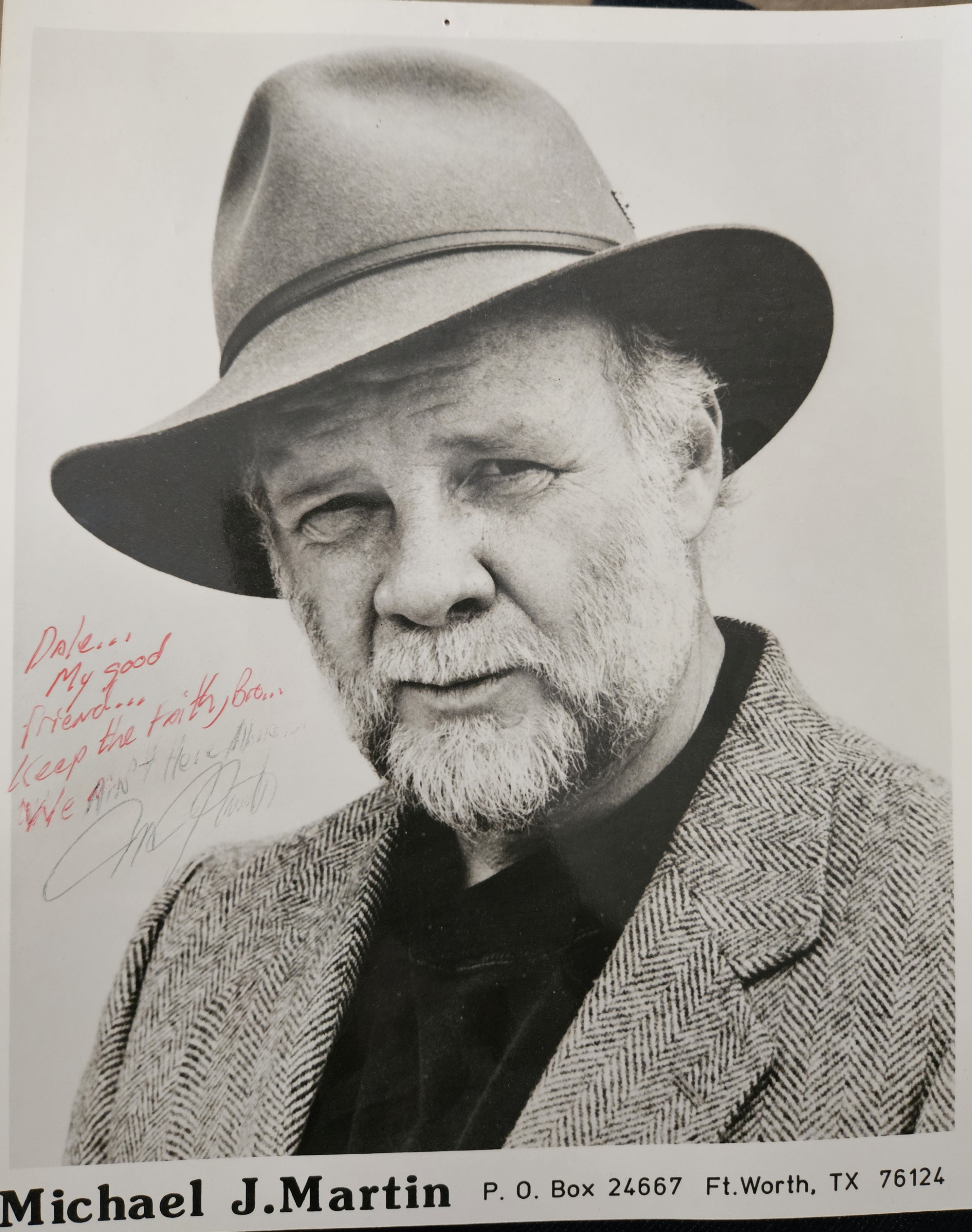
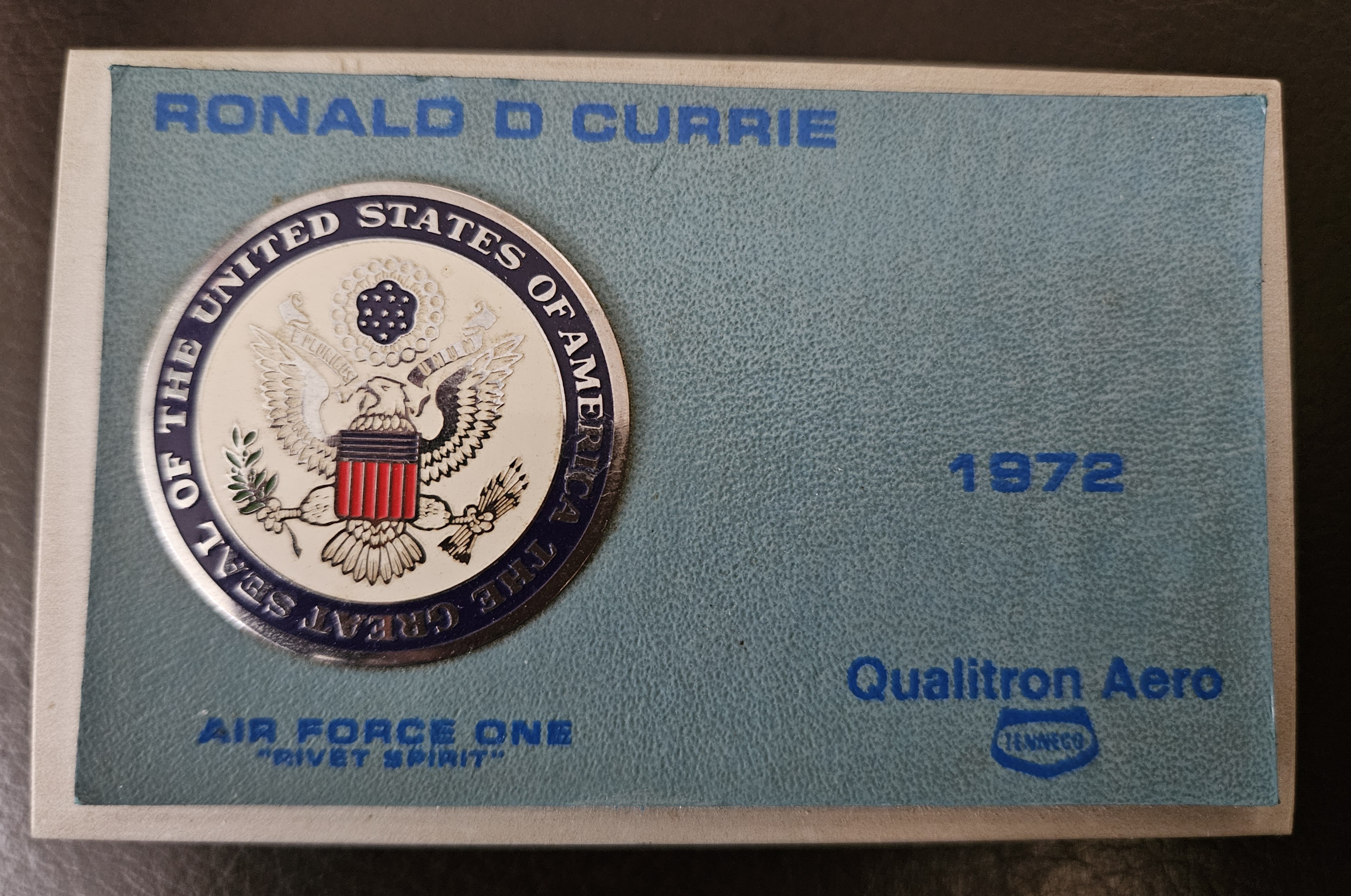
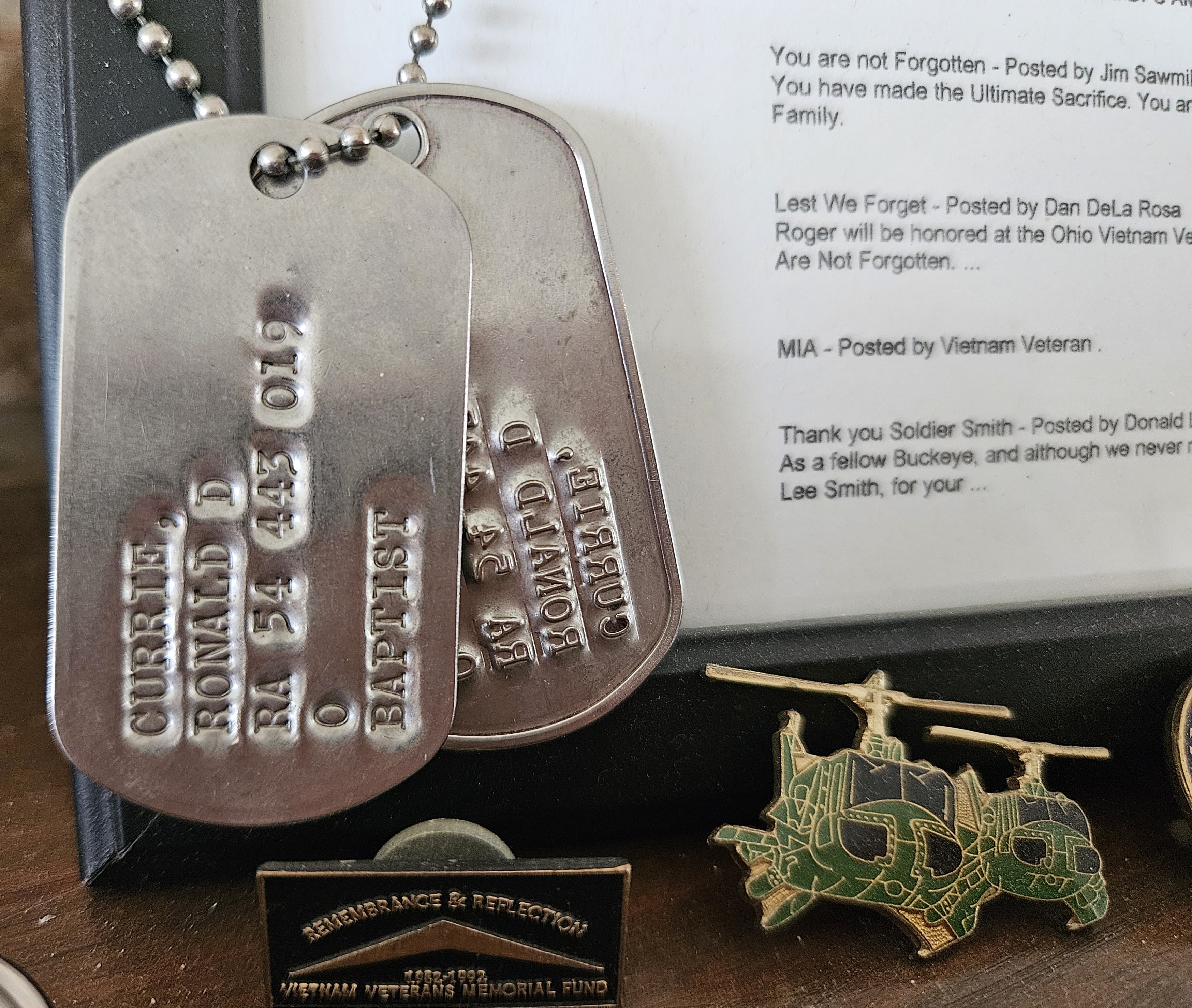
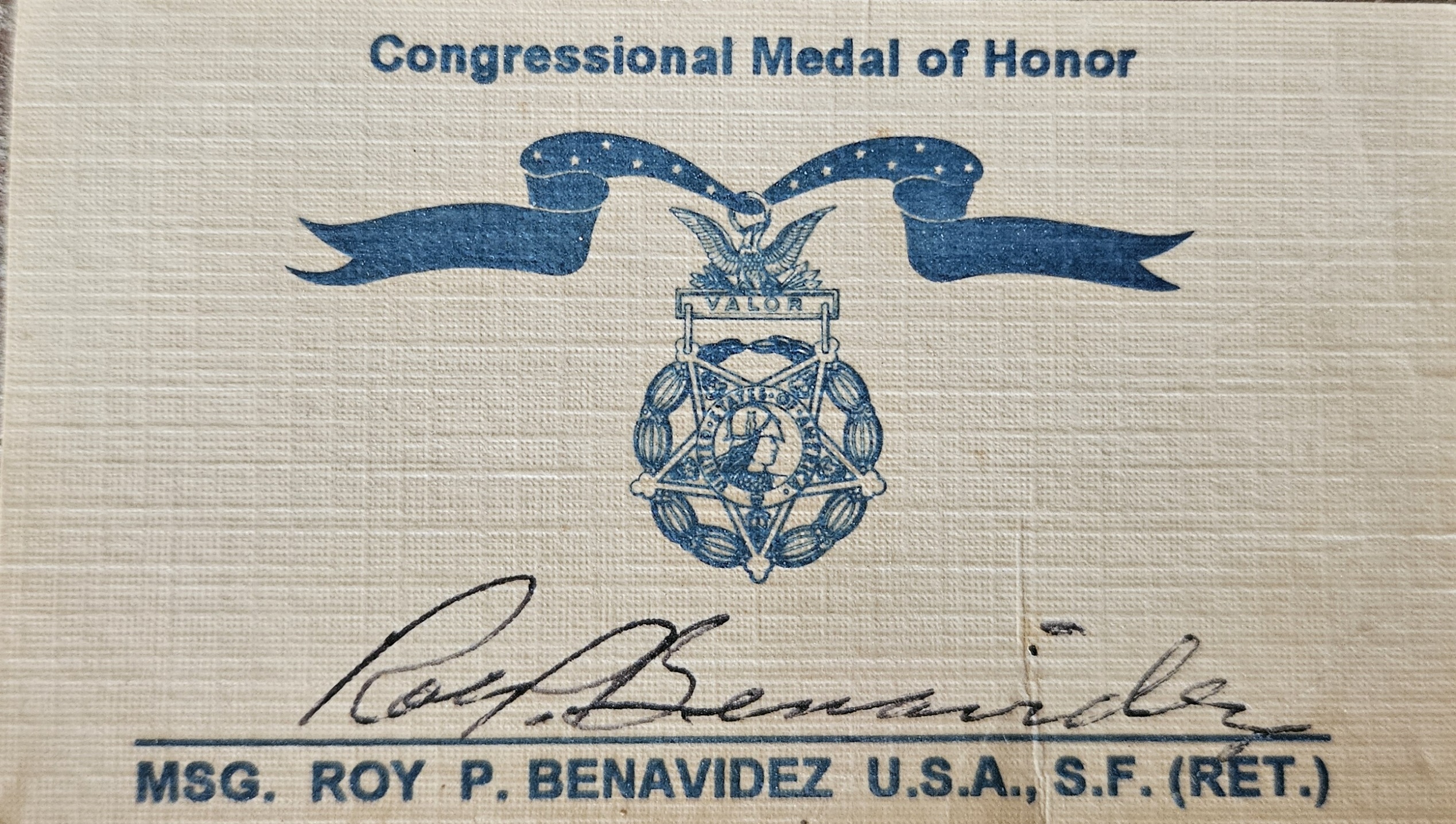
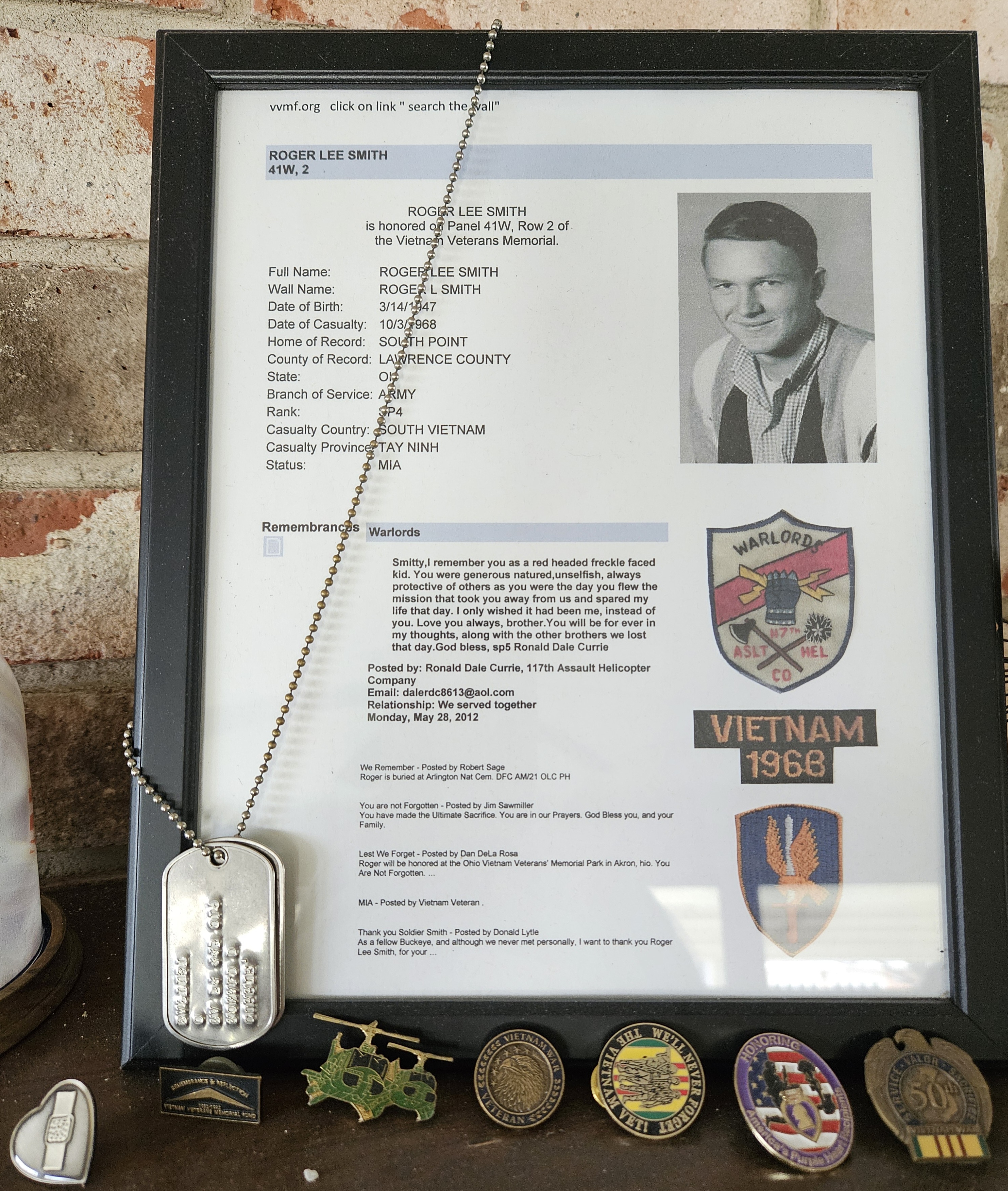
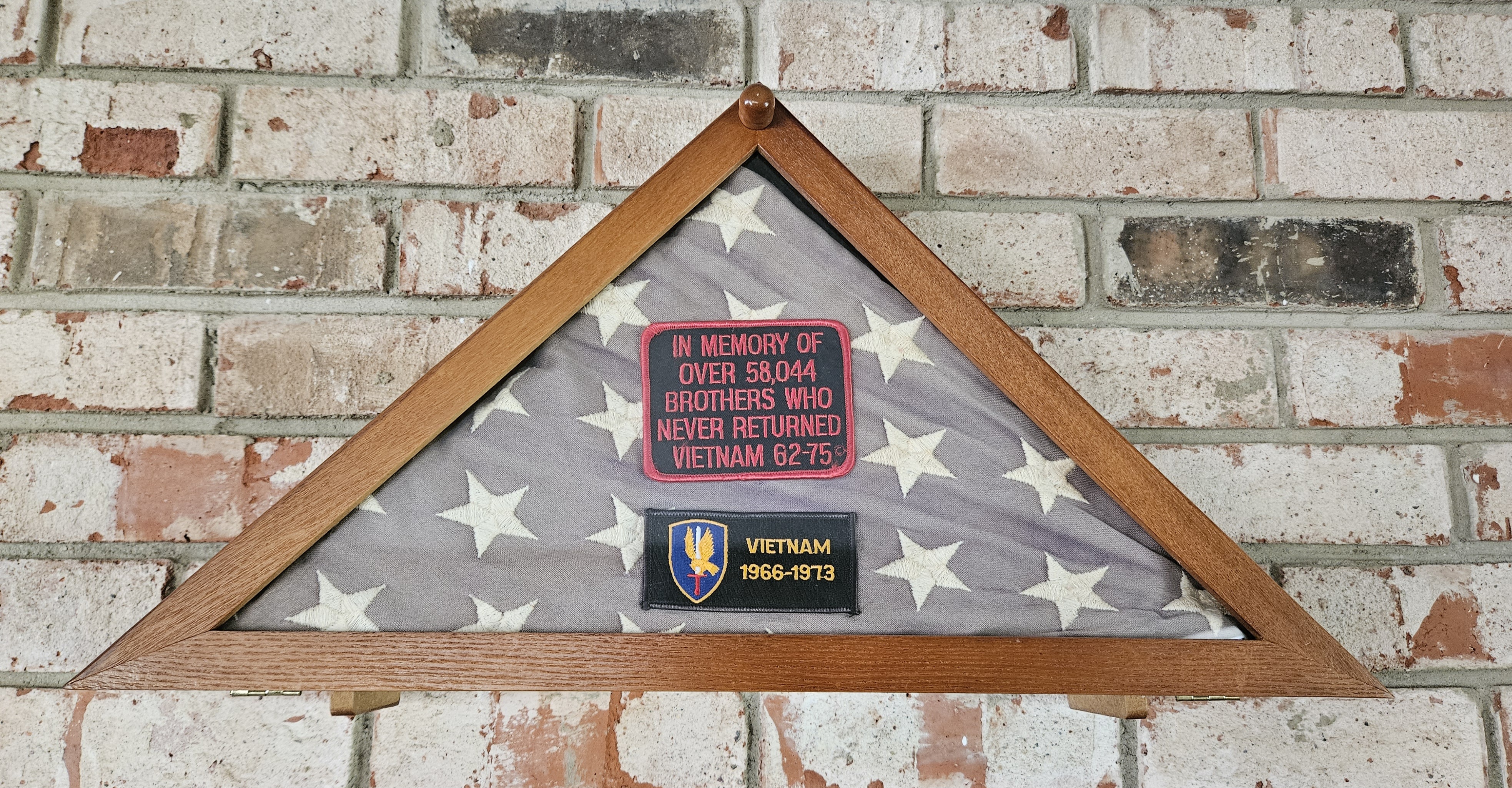
Dale Currie was born in Jackson, Mississippi, into a family marked by quiet service and deep resilience. His father, an ex‑Navy avionics radioman, rarely spoke of his wartime experience, leaving Dale to discover the truth as a child when he found a cardboard box of photographs in a hall closet. “He had been shot in the leg by a Jap fighter. He never said anything about it,” Dale recalled, a revelation that shaped his understanding of courage and silence.
He grew up admiring his great‑grandfather, who lived to ninety, and carried the memory of his Uncle Elbert, a World War II veteran who later served as sheriff of Jackson. His mother, a devoted caretaker, battled diabetes and relied on early refrigerated insulin. She cooked fresh food, kept the household running, and remained a steady presence until her sudden passing just before Dale left for Vietnam. “She would sit in her wheelchair and listen to the birds… The next morning I heard crying. My mother had died during the night.” Her loss remained a lifelong ache.
Dale’s middle name honors his father’s close friend, Donald Dale Crockett, a cousin of Davy Crockett of Alamo fame. The family eventually moved to Samson Park in Fort Worth, where his father built their home by hand. Dale absorbed his father’s work ethic and integrity, traits that shaped every chapter of his life.
As a boy, Dale delivered circulars and newspapers across Fort Worth, trudging miles in the snow with heavy bags and learning responsibility the hard way. He attended Poly High School from 1963 to 1966, marching in the band the morning President John F. Kennedy greeted crowds in Fort Worth. “We were the first band he saw,” Dale remembered, unaware that by the time they returned to campus, the president would be gone.
Drafted after high school, Dale entered the Army despite weighing only ninety‑eight pounds. At Fort Polk, he endured brutal training that forged discipline and endurance. “We were training for combat not cookies,” he wrote, recalling miles of runs with eighty pounds of gear, punishing drills, and the relentless demands of his drill instructors.
He trained as a helicopter mechanic at Fort Eustis, where he witnessed both the precision and peril of aviation maintenance. He toured the nuclear submarine USS Scorpion, later lost at sea, and learned the unforgiving realities of rotor systems—one accident costing a man his life.
Vietnam began at Bear Cat, where the heat, shots, and air‑gun vaccinations marked the start of a combat tour that would define him. He became an exceptional helicopter mechanic and later flew missions, skimming treetops at 125 mph, engaging enemy positions, and surviving the constant threat of ground fire. “Going on a flying mission was an adrenaline rush as soon as it took off.”
He served alongside Green Berets in Tay Ninh and Song Be, working with Montagnard allies and navigating the dangers of booby traps, elephant grass, and night extractions under fire. He witnessed tragedy—accidents, suicides, and the devastating loss of comrades. The death of his friend Smitty, Roger Smith of Southpoint, Ohio, left a permanent mark. “It has caused me a lot of survivor guilt,” Dale wrote. “My oath was that no one would ever say anything bad about my buddies.”
After returning to the United States, Dale reunited with his father and sister, carrying the weight of war and the memory of freshly mowed grass at Travis Air Force Base. He worked with his father, attended TCJC, and completed a four‑year apprenticeship in sheet metal. He later founded his own company, RBC, earning respect for his craftsmanship and reliability. His work included custom projects for Bell Helicopter, the President of Mexico, and even the Rockefeller family, attaching pontoons to a Huey so it could land on open water.
Through hardship, service, and determination, Dale built a life defined by grit, loyalty, and unshakeable resolve. His story stands as a testament to the belief he carried throughout his life:
“Have to work for what you want. Nothing is free.” — Dale Currie
Supplemental Information
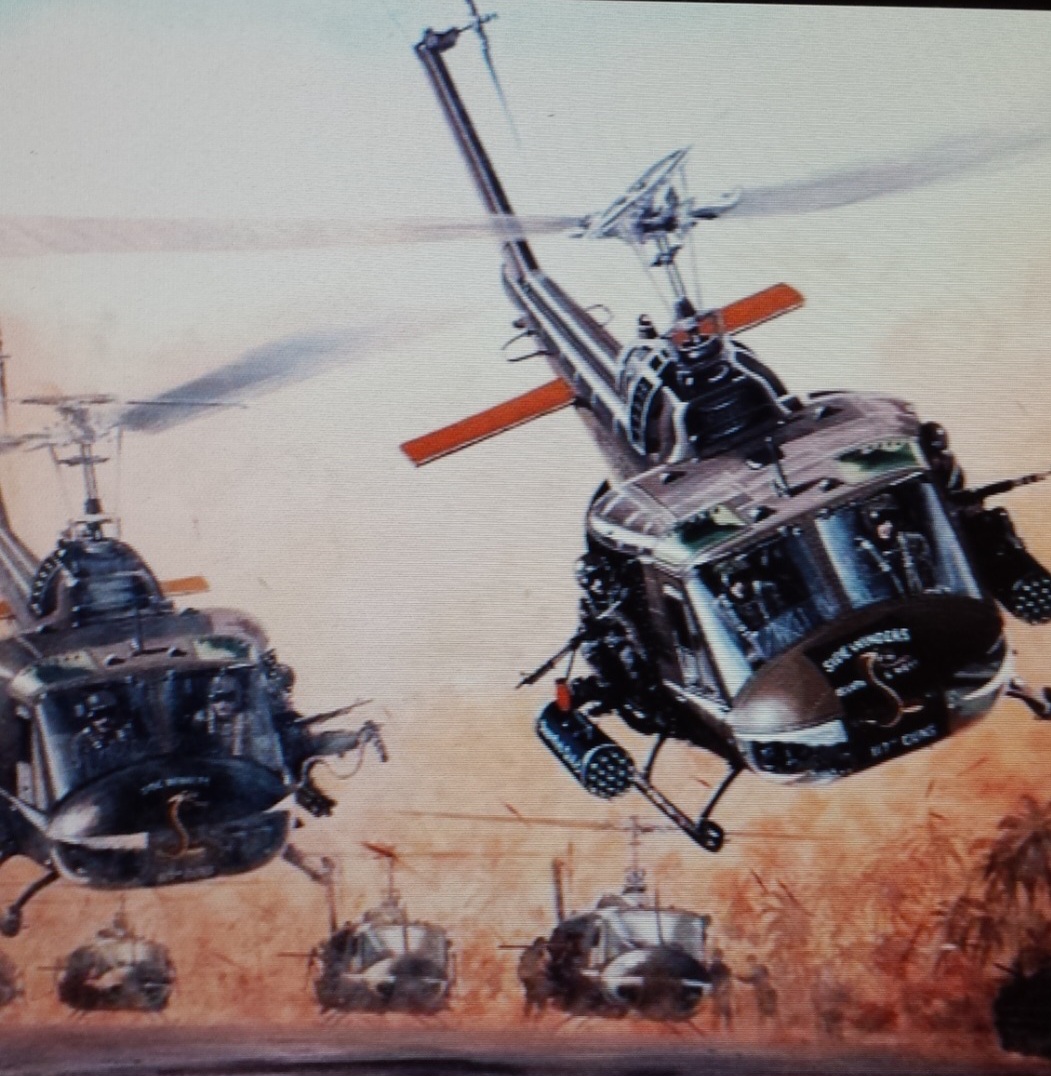
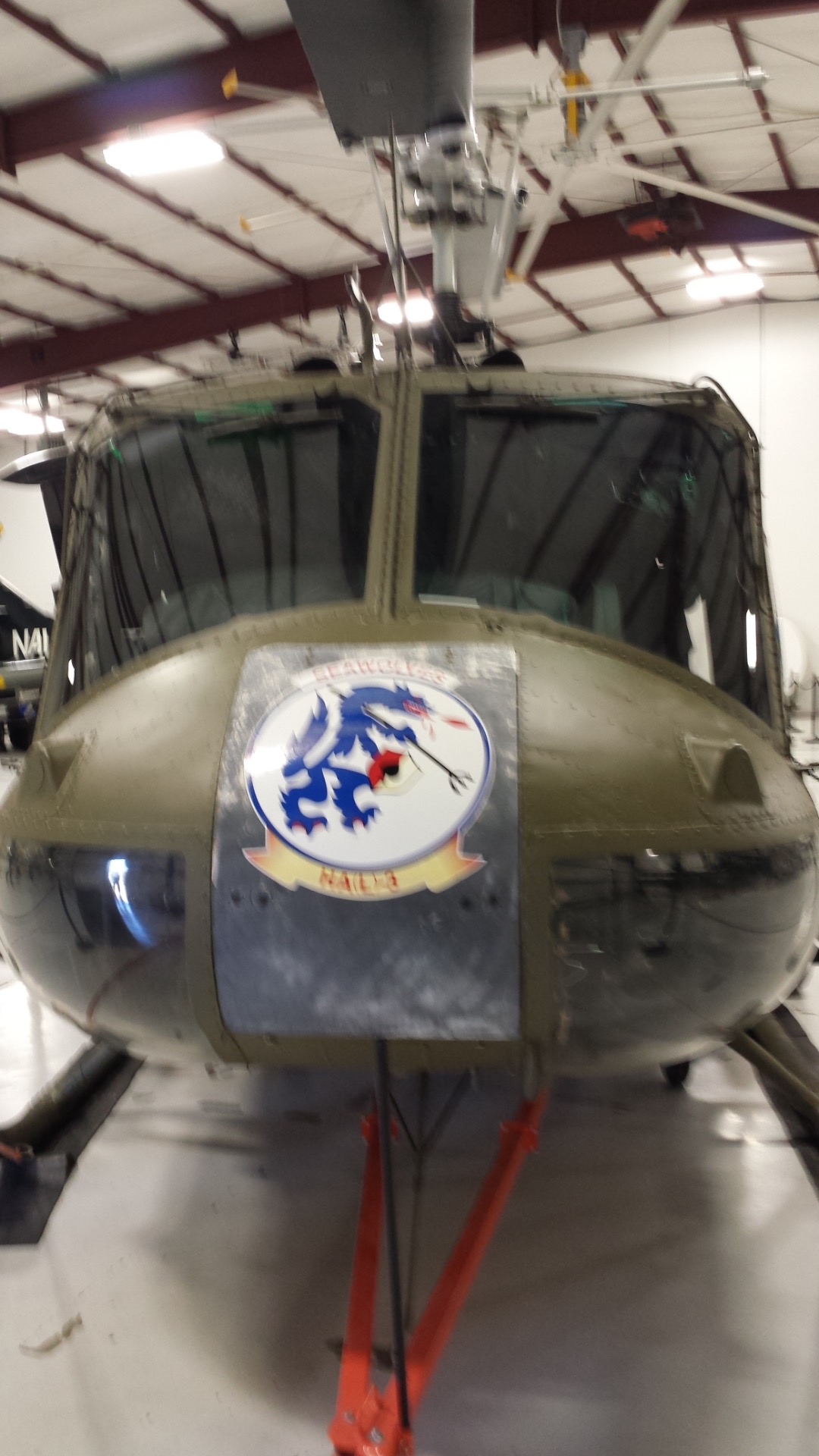
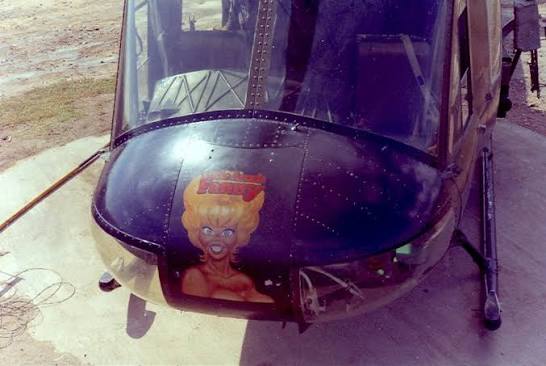
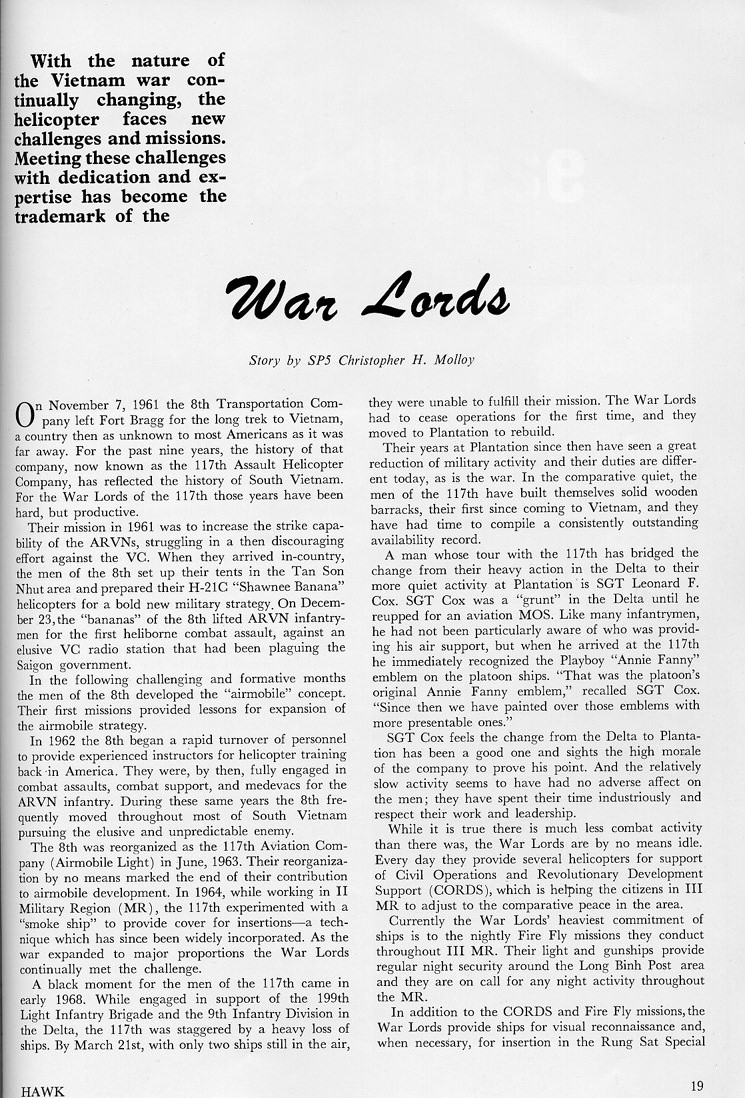
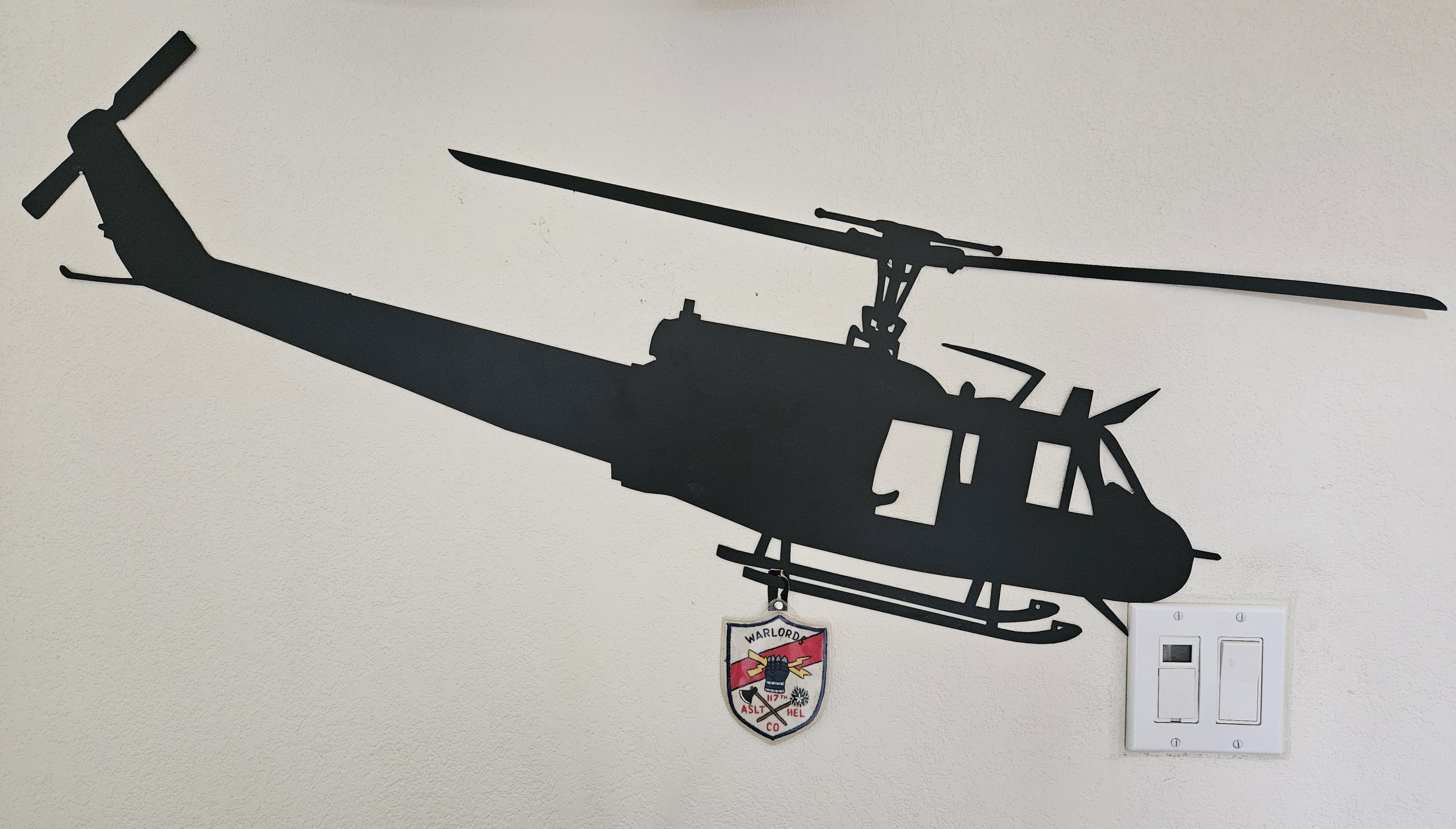
The 117th Assault Helicopter Company (“Warlords”)—part of the 12th Aviation Group, 214th Aviation Battalion, 1st Aviation Brigade—operated in the Central Highlands of Vietnam. They flew UH-1 Huey helicopters, including heavily armed gunships, which frequently featured colorful nose art.
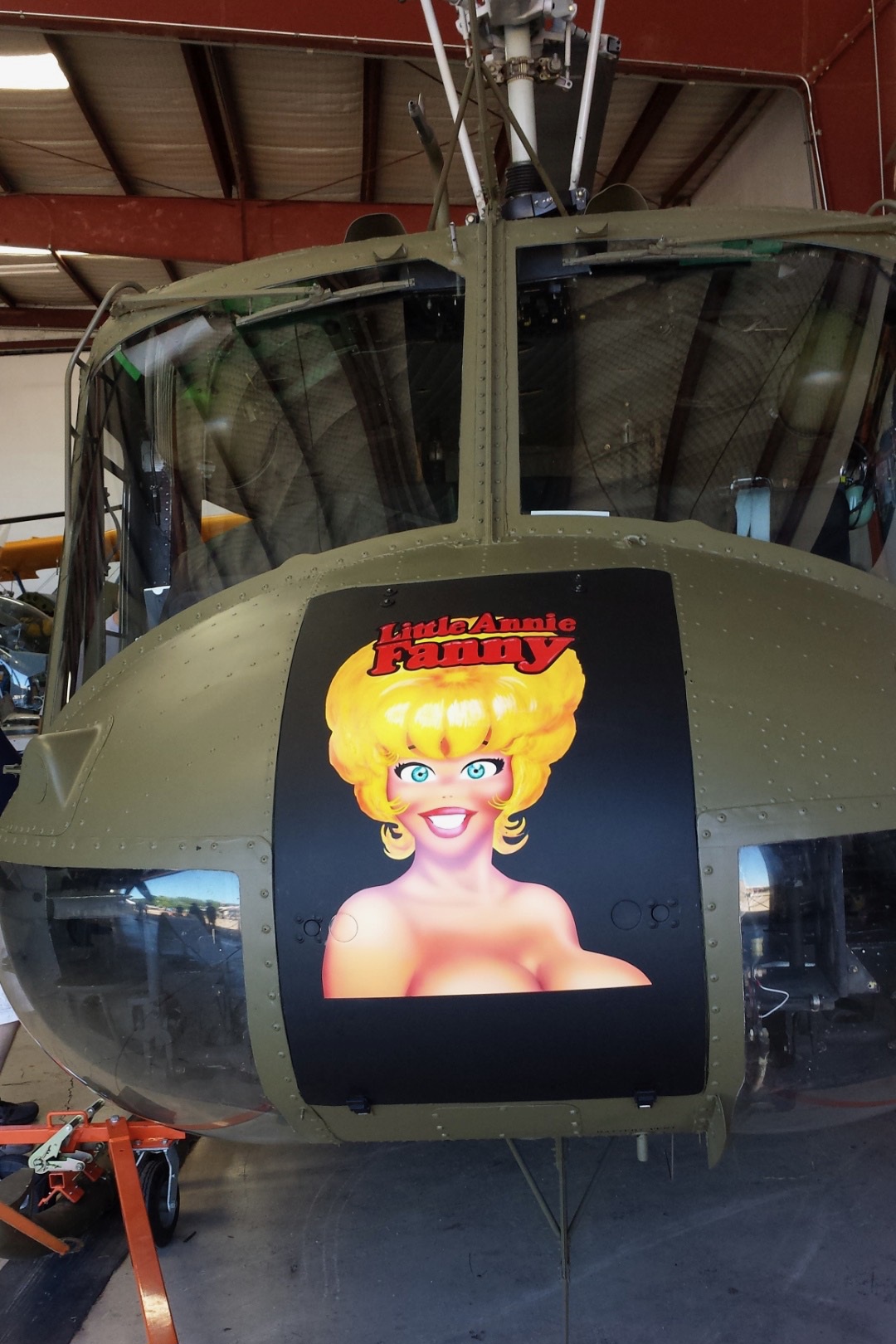
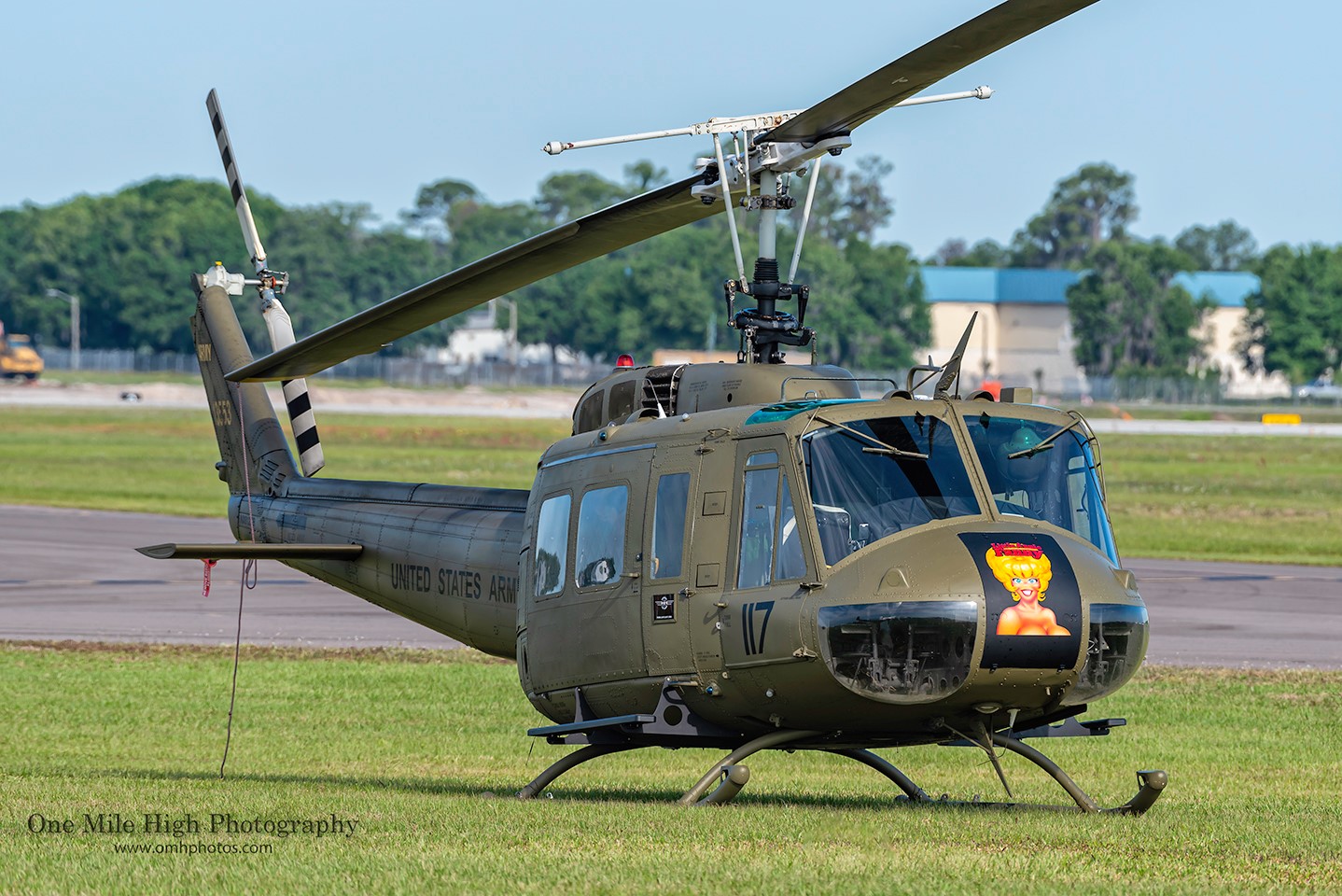
Little Annie Fannie (often referred to in the 117th AHC context as a “well-endowed” or “bad lady” character) was a known, specific nose art name for a 117th AHC gunship. The 117th AHC (Warlords) was stationed at Camp Radcliff, An Khe, and later at Lai Khe, focusing on assault missions and troop transport.
The 117th AHC (Warlords) was a prominent unit, and their gunships often sported unique, personalized, and sometimes risque artwork on the nose of their helicopters during the Vietnam War
The Vietnam War-era UH-1H Huey helicopter known as “Little Annie Fanny” (tail number 64-13553) was part of the collection at the Cavanaugh Flight Museum in Addison, Texas.
Current Location (As of 2024–2025): The Cavanaugh Flight Museum closed its Addison location on January 1, 2024, and moved its entire collection to hangars at the North Texas Regional Airport (KGYI) in Denison/Sherman, Texas. As of early 2024, the new Denison location is not open to the public, and the aircraft is not currently on public display.
“Little Annie Fannies” refers to the 1st Platoon of the 117th Assault Helicopter Company (“Warlords”), which operated in Vietnam and featured distinctive nose art inspired by the Playboy comic strip. The Specific Aircraft: The 64-13553 Huey was built in Fort Worth in 1964, served with the 117th AHC in Vietnam, was shot and repaired in 1966, and was later upgraded to a UH-1H model. It was acquired by the Cavanaugh Flight Museum in 2018 and painted in its original 117th AHC markings.
Little Annie Fannie was the primary UH‑1 “slick” platoon of the 117th AHC. Slicks were unarmed troop‑carrying Huey’s (except for door guns) responsible for:
- Combat assaults (inserting infantry under fire)
- Extractions (pulling troops out of hot LZs)
- Resupply missions
- Command & control flights
- Emergency evacuations
- General support missions across III Corps
The platoon’s identity was built around speed, precision, and the ability to get soldiers in and out of landing zones that were often under heavy fire.
The Pink Panthers were the 2nd Flight Platoon of the 117th Assault Helicopter Company.
They flew UH‑1 Huey’s on missions including:
- “Ash & Trash” (general support)
- Resupply
- Gunship escort
- Medevac escort
- Support for II Corps Tactical Zone operations.
- Support for the 101st Airborne, 4th Infantry Division, 25th Infantry Division, 5th Special Forces, Korean White Horse Division, and ARVN units.
The Pink Panthers were known for:
- Distinctive nose art and platoon insignia.
- High‑tempo flying in dangerous terrain.
- Escorting medevac birds under fire.
- Supporting major operations such as Attleboro and missions around Pleiku, Ban Me Thuot, Bong Son, and Tay Ninh .
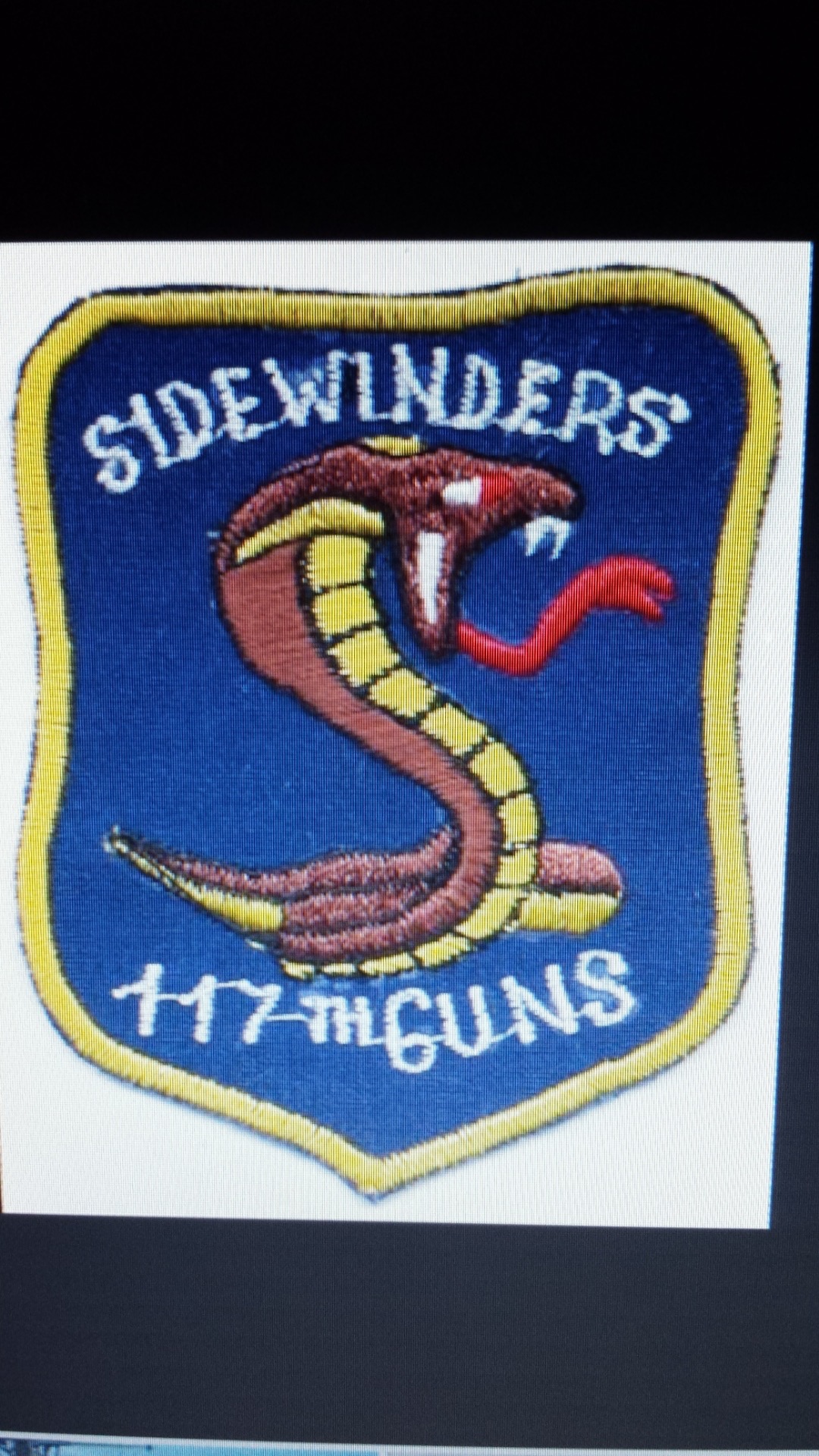
The Sidewinders were the armed escort and attack element of the 117th AHC. Their primary responsibilities included:
- Gunship escort for slicks (Little Annie Fannie & Pink Panthers) during troop insertions and extractions.
- Suppressive fire on hot landing zones.
- Close air support for ground units in contact.
- Reaction force for emergency calls (“scramble missions”).
- Armed reconnaissance along roads, borders, and suspected enemy routes.
- Counter‑rocket and counter‑mortar response.
- Night firefly missions using high‑intensity lights to expose enemy movement.
These missions required precision flying, rapid response, and the ability to deliver heavy firepower under extreme pressure.
What the Crest Communicated (their de‑facto motto)
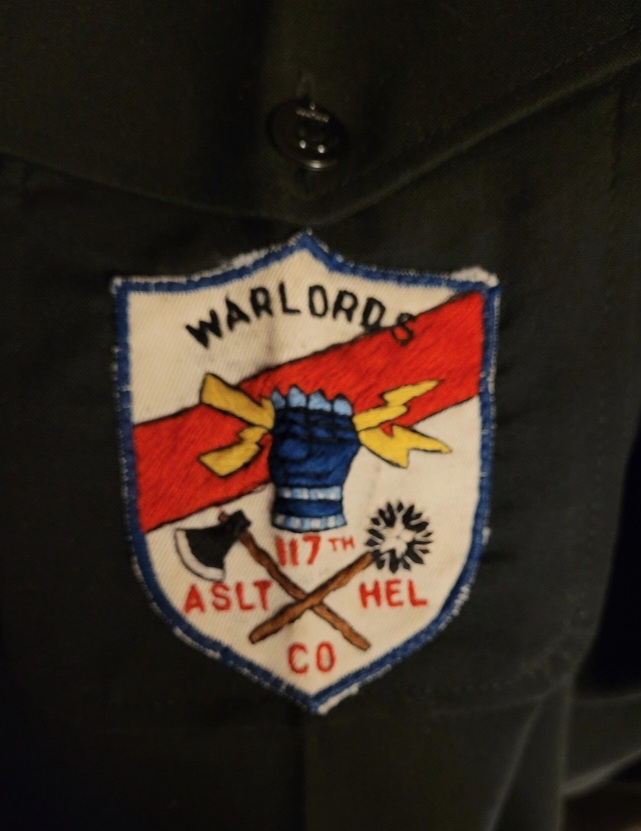
The Warlord emblem—armored fist, lightning bolts, crossed axe and mace—was not decorative. It was a statement of purpose:
- Power in the fist — overwhelming firepower.
- Lightning in the strike — speed, aggression, rapid response.
- Weapons crossed — readiness for close, brutal combat.
- WARLORDS across the top — dominance and protection.
Why This Motto Fits Historically
- The Warlord crest’s armored fist, lightning bolts, and crossed weapons communicate speed, power, and decisive violence of action.
- The platoon’s mission—gunship escort, heavy fire support, and rescue under fire—embodied those principles.
- Veterans of the 117th AHC consistently describe the Warlords as the platoon you called when things were at their worst.
- Loyalty to each other was the defining trait of gun platoons in Vietnam.
Early Morning: Wake‑Up Under Threat
Most days began before sunrise.
- Rocket or mortar attacks often hit base camps during the night or early morning. The 25th Infantry Division recorded repeated
- nighttime attacks on firebases, Special Forces camps, and even the mountaintop signal station at Nui Ba Den.
- Men slept lightly, boots nearby, because they might have to run for bunkers in seconds.
- After “stand‑to,” crews headed straight to the flight line.
For Dale, this meant walking out into the humid morning air, hearing generators, smelling JP‑4 fuel, and seeing helicopters already being prepped.
Morning: Aircraft Inspection and Repairs
Before a Huey could fly, the crew chief had to certify it as airworthy.
- Daily inspections of the engine, rotor system, transmission, hydraulics, and weapons.
- Battle damage repairs from the previous day — bullet holes, cracked panels, leaking lines.
- Loading ammunition for the M60s and checking the mounts.
- Fueling and topping fluids in the heat and dust.
During the August 1968 fighting, helicopters returned riddled with holes because the area around Tây Ninh was under constant enemy pressure.
This was Dale’s world: hands black with grease, sweat dripping, tools clanking, and the knowledge that lives depended on his work.
Types of missions flown daily:
- Troop insertions/extractions into rice paddies, rubber plantations, or jungle clearings.
- Resupply flights to firebases under attack.
- Medevac support, often under fire.
- Recon and observation flights along the Cambodian border.
- Emergency “scramble” missions when a unit was ambushed.
The 25th Infantry Division’s reports describe the area as being hit by major enemy thrusts, with heavy fighting around Tây Ninh City and surrounding villages.
Helicopters were constantly needed to reinforce, evacuate, or resupply units.
What Dale did in the air:
- Manned the M60 machine gun as a door gunner.
- Watched engine gauges and rotor RPM.
- Looked for muzzle flashes, movement, or ambush signs.
- Helped load wounded or unload supplies.
- Communicated with pilots about aircraft performance.
Every landing zone could be hot. Every takeoff could draw fire.
Afternoon: Turnaround and More Flying
Between missions, the crew chief’s work didn’t stop.
- Patch holes.
- Replace panels.
- Reload ammunition.
- Refuel.
- Check the engine again.
- Fix whatever broke during the last flight.
Then they went back up.
During the enemy’s August–September offensive, the fighting was so intense that helicopters flew multiple missions per hour, supporting infantry who were battling NVA units trying to push into Tây Ninh City.
Evening: Stand‑Down (Sometimes)
If the base wasn’t under attack, evenings were the only time to breathe.
- Quick showers if water was available.
- Letters home.
- Cards, jokes, or quiet moments with the crew.
- Cleaning weapons.
- Listening to distant artillery or the thump of helicopters still flying.
But often, evenings were interrupted by:
- Incoming mortars
- Alerts
- Emergency night missions
The Daily Illini reported that enemy forces shelled Special Forces camps, firebases, and outposts around Tây Ninh during the night as part of their push toward Saigon.
The Rhythm of Dale’s Days
When you put it all together, Dale’s daily life looked like this:
- Wake up to danger
- Inspect and repair helicopters
- Fly multiple missions under fire
- Repair again
- Fly again
- Stand down — maybe
- Work late into the night
- Sleep lightly, waiting for the next attack
It was exhausting, dangerous, and relentless — and it forged bonds between crew members that lasted a lifetime.
The Crew Chief: Lifeline of the Helicopter and Guardian of the Landing Zone
In Vietnam, the crew chief was the indispensable enlisted aircrew member whose work determined whether the helicopter lived or died. In assault helicopter companies such as the 117th AHC where Dale served, the crew chief’s responsibilities were rooted in Army doctrine, unit culture, and the unforgiving realities of combat. He was the primary mechanic responsible for the aircraft’s airworthiness, the in‑flight systems manager who monitored engine temperature, torque, rotor RPM, and transmission behavior, the ordnance handler who loaded ammunition, rockets, and flares, and the combat crewman who fought from the open door with an M60. Stars and Stripes captured the truth in January 1968 when it described crew chiefs as part mechanic, part pilot, an ordnance expert, and a darn good machine gunner. The description reflected the hybrid nature of the role, which demanded technical mastery, combat readiness, and unbroken endurance.
The helicopter was his aircraft in every meaningful sense. Pilots often said the crew chief owned the ship because he inspected every critical component before dawn, performed the twenty‑five hour and one hundred‑hour maintenance checks, repaired battle damage between missions, and certified the aircraft as safe to fly long before the pilot ever touched the controls. He worked through the night with a flashlight and the pressure of tomorrow’s operations, patching sheet metal, replacing hydraulic lines, adjusting control rigging, and checking the engine’s compressor and turbine sections for foreign object damage. Stars and Stripes noted that crew chiefs frequently worked in darkness because the aircraft had to fly at first light. Their labor kept the helicopter alive in a theater where terrain, weather, and enemy fire constantly threatened its survival.
Once airborne, the crew chief became the aircraft’s sentinel. He listened for changes in pitch that signaled rotor blade stress, felt vibrations that suggested bearing wear, and watched for fluctuations in the governor or fuel control unit. He leaned out to check for smoke or fluid leaks. He scanned the terrain for enemy movement, marked potential ambush sites, and warned the pilots of threats that instruments could not detect. His situational awareness extended beyond machinery into the tactical environment. He saw the angles of approach, the tree lines that concealed fire, and the landing zones where danger gathered. Pilots frequently said the crew chief detected problems before instruments did, a testament to his experience and intuition.
The landing zone was the crucible of the crew chief’s role. It was the most dangerous place a helicopter could exist in Vietnam. The aircraft descended into confined spaces surrounded by jungle, ridgelines, or rice paddies, and the crew chief became the pilot’s eyes, the infantry’s shield, and the aircraft’s defender. He leaned out of the open door, scanning for muzzle flashes, movement, or anything that signaled danger. He called out threats, adjusted fire, and prepared for the violent seconds when the helicopter touched down in a place already alive with enemy fire. Hot landing zones were routine. Enemy forces often waited until the helicopter was committed to its descent before opening fire, knowing the aircraft could not maneuver freely. Crew chiefs saw bullets strike the fuselage, heard rounds snap past the open doors, and felt the aircraft shudder under the impact of enemy fire.
He fired the M60 to suppress enemy positions, protect the infantry, and keep the aircraft alive long enough to complete the insertion or extraction. He coordinated with the gunner on the opposite side, creating overlapping fields of fire that shielded the aircraft during the most exposed moments of flight. Veteran David Pete described the role as being the flying mechanic who also worked as a door gunner, often taking fire in bullet‑ridden hot landing zones. The crew chief’s decisions in the landing zone were immediate, instinctive, and grounded in experience. He protected the tail rotor, the fuel cells, and the transmission housing, knowing that a single well‑placed round could cripple the aircraft.
He loaded ammunition, rockets, and flares according to mission requirements. He ensured the M60s were cleaned, lubricated, and ready. He checked the rocket pods for secure mounts and proper electrical connections. He loaded smoke grenades, flares, and emergency equipment. In many units, the crew chief handled ordnance directly because missions moved too quickly for formal armament support. His work ensured the aircraft could deliver firepower, illumination, and protection during combat operations.
The deeper truth is that crew chiefs carried a responsibility that extended beyond technical skill. They lived with the knowledge that a missed inspection could cost lives. They lived with the memory of missions where the aircraft barely survived. They lived with the exhaustion of nights spent repairing a ship that had been torn by combat. They lived with the pride of knowing they kept the aircraft flying when everything around them tried to break it. Their role was not ceremonial. It was essential. It was relentless. It was the foundation of every mission flown in Vietnam.
Ordnance, Load Specialist, and Mission Readiness
Crew chiefs in Vietnam carried responsibilities that extended far beyond mechanical stewardship. They were the ordnance handlers who managed ammunition, weapons checks, and rocket loading. They ensured the M60 machine guns were cleaned, lubricated, and ready for combat. They verified the electrical connections on rocket pods, inspected smoke grenades and flares, and prepared emergency equipment for missions that could shift from routine to life‑or‑death in seconds. Their work guaranteed that the helicopter could deliver firepower, illumination, and protection whenever the mission demanded it.
They also served as load specialists. They balanced cargo, secured equipment, and coordinated with infantry and support personnel to ensure the aircraft could lift safely under varying conditions. They understood how weight distribution affected rotor performance, how humidity and heat influenced lift, and how rapid loading under fire required both precision and speed. Their decisions shaped the aircraft’s ability to launch, maneuver, and survive.
Mission readiness was the core of their identity. Crew chiefs ensured the helicopter could launch within seconds for emergency missions, day or night. This rapid‑response capability was essential in Vietnam, where downed crews and wounded soldiers depended on immediate extraction. The crew chief’s vigilance meant the aircraft was never caught unprepared. He kept fuel levels checked, weapons loaded, hydraulic reservoirs filled, and the aircraft positioned for immediate departure. His readiness saved lives.
Rapid‑Response Launch Under Combat Conditions
The crew chief’s ability to launch in under a minute was not a theoretical expectation. It was a lived reality. Emergency calls could come at any hour. A pilot shot down. A platoon pinned in a landing zone. A medevac request that could not wait. The crew chief sprinted to the aircraft, performed a lightning‑fast visual inspection, confirmed fuel and hydraulic status, checked the weapons, and signaled the pilot that the ship was ready. His role was not just technical. It was combat, maintenance, leadership, and courage woven together.
Rapid‑response missions demanded instinct and discipline. Crew chiefs learned to recognize the sound of incoming calls, the urgency in a pilot’s voice, and the subtle cues that meant the aircraft needed to launch immediately. They mastered the art of preparing the helicopter under pressure, knowing that seconds could determine whether wounded soldiers lived or died. Their readiness was a lifeline for men on the ground.
Pride, Skill, and Constant Learning
Crew chiefs were expected to master new engine systems, evolving weapons configurations, field repairs under pressure, and ever‑changing mission profiles. They adapted to new turbine behaviors, learned the quirks of different fuel control units, and adjusted to the demands of flying in monsoon conditions or extreme heat. They absorbed knowledge from pilots, mechanics, and fellow crew chiefs, building a reservoir of experience that shaped their decisions in the air and on the ground.
Spec. 5 Bud Maher captured the truth in 1968 when he said, “We never stop learning.” The statement reflected the reality that crew chiefs operated in an environment where technology, tactics, and danger evolved constantly. Their learning was not academic. It was survival.
Their pride in their aircraft was legendary. Pilots often said the crew chief treated the helicopter like his family car. The comparison was not sentimental. It reflected the crew chief’s devotion to the aircraft’s condition, performance, and safety. He cleaned it, inspected it, repaired it, and protected it. He knew every sound it made, every vibration it produced, and every scar it carried from combat. His pride was rooted in responsibility, craftsmanship, and the knowledge that the aircraft’s survival depended on him.
The Crew Chief’s Enduring Legacy
The deeper truth is that crew chiefs carried a burden that combined technical mastery, combat readiness, rapid‑response capability, and constant learning. They lived with the knowledge that their vigilance could save lives. They lived with the memory of missions where the aircraft barely survived. They lived with the exhaustion of nights spent repairing a ship that had been torn by combat. They lived with the pride of knowing they kept the aircraft flying when everything around them tried to break it.
Their role was not ceremonial. It was essential. It was relentless. It was the foundation of every mission flown in Vietnam.
The Command Spine of Army Aviation in Vietnam
The 1st Aviation Brigade was the command spine of U.S. Army aviation in Vietnam. It coordinated nearly every helicopter company, aviation battalion, and fixed‑wing asset across the entire theater, creating the structure that allowed thousands of aircraft to operate in a war defined by speed, chaos, and constant danger. Formed officially in March 1966, the Brigade grew into one of the largest aviation commands in American history, controlling hundreds of helicopter companies and providing aviation support to every major U.S. Army division in Vietnam.
Its reach was immense. The Brigade’s authority extended from the Mekong Delta to the Central Highlands, from the coastal lowlands to the Cambodian border. It shaped the daily reality of pilots, crew chiefs, gunners, mechanics, and infantry who depended on aviation for survival. Every troop lift, every medevac, every gunship escort, every resupply flight, every reconnaissance mission, and every command‑and‑control operation existed within the framework the Brigade created.
The Brigade standardized tactics, training, and air assault doctrine. It taught pilots how to approach landing zones under fire, how to coordinate with gunships, how to extract wounded men from jungle clearings, and how to fly in monsoon conditions that turned the sky into a wall of water. It taught crew chiefs how to maintain aircraft under relentless operational tempo, how to repair battle damage overnight, and how to keep helicopters flying in heat, humidity, dust, and rain that punished every moving part. It taught units how to synchronize aviation with artillery, armor, and infantry in a landscape where the enemy used terrain with expert precision.
The sensory reality of the Brigade’s work was felt everywhere. The rhythmic thump of the UH‑1 Huey became the sound of the war. Soldiers described it as a heartbeat in the sky, a sound that carried hope, fear, urgency, and relief. It echoed across rice paddies, rubber plantations, jungle corridors, and fire support bases. It meant reinforcements arriving, wounded men being lifted out, or gunships sweeping in to break an ambush. The Brigade’s aircraft filled the air with movement and noise, creating an aerial presence that shaped every battle in Vietnam.
The Brigade’s coordination made helicopter warfare possible on a scale never seen before. It ensured that medevac ships could reach wounded soldiers in minutes, often under fire. It positioned gunships to protect infantry pinned down in rice paddies or rubber groves. It directed reconnaissance flights that mapped enemy movements along the Cambodian border. It kept aviation assets flowing into the most dangerous regions of the war, including Tây Ninh, War Zone C, and the infiltration corridors that fed the enemy’s late‑1968 offensive.
Every aviation unit in Vietnam ultimately fell under its command umbrella. The 12th Aviation Group, which controlled aviation operations in III Corps, answered to the Brigade. The 214th Aviation Battalion, which directed daily missions for assault helicopter companies like the 117th AHC, answered to the Brigade. The structure was layered, but the authority was singular. The Brigade’s decisions shaped the tempo of the war, the danger of each mission, and the survival of the men who flew into landing zones where enemy fire rose from tree lines and jungle shadows.
For aircrews, the Brigade’s influence was lived in the cockpit and on the flight line. Pilots felt it in the procedures they followed, the formations they flew, and the missions they executed. Crew chiefs felt it in the maintenance standards they upheld, the inspections they performed, and the pressure to keep aircraft flying despite bullet holes, hydraulic leaks, and rotor damage. Gunners felt it in the way they scanned terrain, fired into tree lines, and protected the aircraft during the most vulnerable moments of flight.
The sensory world of the Brigade’s operations was constant. The smell of JP‑4 fuel hung in the air. Hydraulic fluid stained uniforms. Dust coated every surface. The thrum of rotor blades vibrated through the ground. Artillery thundered from fire support bases. Illumination rounds drifted slowly downward, glowing like artificial moons suspended above the jungle. The sky carried the sound of engines, gunfire, and explosions. The ground trembled under the weight of the war.
The 1st Aviation Brigade did more than command aircraft. It created the system that allowed aviation to function as the backbone of the Army’s combat power. It shaped the environment Dale flew in. It defined the missions he launched. It influenced the danger he faced. It was the unseen structure behind every flight, every landing zone, and every moment when a helicopter lifted into the air and carried men toward the unknown.
12th Aviation Group — The Largest Aviation Command in Vietnam
The 12th Aviation Group was one of the major subordinate commands within the 1st Aviation Brigade. It was responsible for aviation operations in the III Corps Tactical Zone, which included Tây Ninh, Cu Chi, Long Binh, and the Cambodian border — the exact area where Dale served.
The 12th Aviation Group was activated on 18 June 1965 and deployed to Vietnam in August of that year. By November 1965, it had grown to 11,000 personnel and 34 aviation units, making it the largest aviation command of its kind in the war. It was assigned to the III Military Region, which included Tây Ninh, Cu Chi, Dau Tieng, Long Binh, Bien Hoa, and the Cambodian border.
This earned the Meritorious Unit Citation and multiple Vietnamese Gallantry Crosses.
It oversaw the assault helicopter companies, gunship platoons, medevac detachments, and support units that flew daily missions in the Tây Ninh region
214th Aviation Battalion — The Tactical Workhorse
The 214th Aviation Battalion was a combat aviation battalion within the 12th Aviation Group. It controlled multiple assault helicopter companies — the units that flew troop insertions, resupply missions, and gunship support. The 12th Aviation Group controlled the aviation assets that supported the 25th Infantry Division, 1st Infantry Division, and Special Forces in III Corps — the most active combat zone during the 1968 Phase III Offensive.
The 214th Aviation Battalion constituted on 1 February 1967 as the 214th Aviation Battalion fighting in Vietnam from 1967 to 1972. They were assigned to the 12th Aviation Group (Combat) based at Bear Cat and later Long Binh including assault helicopter companies such as the 190th, 191st, 200th, 240th, and 17th AHC at various times.
The 214th Aviation Battalion was responsible for the day‑to‑day combat flying that defined the helicopter war:
- Slick platoons (troop carriers)
- Gunship platoons
- Medevac support
- Resupply and emergency extraction
- Border operations near Cambodia
This battalion’s companies flew the missions that crew chiefs like Dale lived every day.
Assigned to the 12th Aviation Group (Combat).
- Headquarters located at Bear Cat, later Long Binh.
- Controlled multiple assault helicopter companies, including:
- 17th AHC
- 117th AHC
- 190th AHC
- 191st AHC
- 195th AHC
- 200th ASHC
- 240th AHC
- (Assignments varied by month and year.)
- Included medical, signal, and transportation detachments that kept aircraft flying.
The Battalion at the Heart of the Helicopter War
The 214th Aviation Battalion was the place where the helicopter war became real. It was the level of command where missions were launched, where crews lifted into danger, and where the daily rhythm of combat aviation took shape. The battalion’s flight lines were alive with noise, heat, dust, and urgency. Its aircraft rose into skies that were never fully safe. This was the world Dale stepped into every day.
The battalion’s companies flew the missions that defined the war. Troop insertions brought helicopters into landing zones where the air vibrated with gunfire and the smell of burned vegetation. Extractions pulled men out of clearings where smoke drifted low to the ground and the wounded cried out beneath the thrum of rotor blades. Medevac support demanded precision under pressure, lifting casualties from places where the earth was torn open by explosions. Gunship escort meant flying low and fast, scanning for muzzle flashes in the shadows of rubber plantations and jungle corridors. Resupply flights carried ammunition, water, and rations to firebases that shook under mortar and rocket fire. Border operations near Cambodia brought aircraft into the infiltration corridors where enemy units moved unseen. Emergency extractions under fire required crews to descend into chaos, hover over wounded men, and lift them out while bullets snapped past open doors.
The sensory world of these missions was constant. The smell of JP‑4 fuel hung in the air. Hydraulic fluid stained uniforms. Dust coated every surface. The thrum of rotor blades vibrated through the ground. The crack of small‑arms fire cut through the roar of engines. Tracers rose from tree lines in thin, bright arcs. The sky carried the sound of explosions, gunfire, and aircraft lifting into danger. The ground trembled under artillery. The air tasted of smoke and metal.
This was the level where Dale’s service lived. The cockpit. The flight line. The hot landing zone. The vibration of the aircraft beneath his boots. The heat pressing against his skin. The smell of grease and dust on his hands. The sight of bullet holes in the fuselage. The sound of pilots calling out warnings. The feeling of responsibility that never left his chest.
Even though the 214th Battalion headquarters moved during the war, the 117th Assault Helicopter Company remained operating in III Corps. Its missions centered on the most dangerous areas of the region, the places where the enemy concentrated its forces and where the fighting was most intense.
Primary operational locations for the 117th AHC in 1968 and 1969 included Tây Ninh, Dau Tieng, Cu Chi, the Cambodian border at the Fishhook and Parrot’s Beak, firebases in War Zone C, and Special Forces camps at Katum, Trai Bi, and Nui Ba Den. These were not simply names on a map. They were landscapes of danger.
Tây Ninh smelled of wet earth, smoke, and jungle rot. Dau Tieng carried the scent of dust and rubber trees. Cu Chi vibrated with the constant rumble of artillery. The Cambodian border felt like a threshold into darkness, a place where the jungle swallowed sound and movement. War Zone C was a maze of dense vegetation, open clearings, and sudden ambushes. Katum and Trai Bi were outposts where the night pressed close and the air carried the metallic scent of spent ammunition. Nui Ba Den rose above the landscape like a dark sentinel, its slopes hiding enemy positions that watched the valley below.
These were the exact areas where the 25th Infantry Division fought during the Phase III Offensive, a period marked by some of the fiercest combat of the war in III Corps. Helicopter losses were highest in these regions. The enemy used the terrain with expert precision. The danger was constant. The pressure was unbroken.
Dale’s service lived squarely inside the 214th’s command structure during the most violent period of the war in III Corps. Every mission he flew, every aircraft he repaired, every landing zone he entered, and every night he spent on the flight line was shaped by the battalion’s operations. The 214th was the level where the war touched him directly. It was the world he stepped into. It was the world he survived.
The 214th Aviation Battalion — The World Dale Flew Through
The 214th Aviation Battalion was where the helicopter war existed in its rawest form. It was the level of command where missions were not abstractions but lived experiences. The battalion’s flight lines were hot, loud, and restless. The air smelled of JP‑4 fuel, dust, sweat, and the faint metallic scent of spent ammunition. The ground vibrated under the thrum of rotor blades. Men moved quickly, speaking over engine noise, wiping grease from their hands, and watching the sky for aircraft returning with damage.
This was the world Dale stepped into every day. The cockpit. The flight line. The hot landing zone. The places where the war touched skin, senses, and memory.
The Missions That Defined the Battalion
Troop insertions brought helicopters into landing zones where the air shimmered with heat and gunfire. The smell of burned vegetation rose from the ground. Dust swirled beneath the rotor wash. Men crouched low, waiting to sprint into the jungle.
Extractions pulled soldiers out of clearings where smoke drifted low and the wounded cried out beneath the roar of engines. The smell of blood mixed with mud and cordite. Crew chiefs leaned out of open doors, scanning for movement in the tree line.
Medevac support demanded calm inside chaos. The aircraft hovered over wounded men whose uniforms were soaked with sweat and dirt. The air tasted of smoke and adrenaline. The urgency was physical.
Gunship escort meant flying low and fast, the landscape rushing beneath the aircraft. Gunners scanned the shadows of rubber plantations and jungle corridors, watching for muzzle flashes. The smell of gunpowder lingered in the cabin.
Resupply flights carried ammunition, water, and rations to firebases that shook under mortar and rocket fire. The sky glowed with illumination rounds drifting slowly downward. The ground trembled beneath artillery.
Border operations near Cambodia brought aircraft into the infiltration corridors where enemy units moved unseen. The jungle pressed close. The canopy swallowed sound. The air felt heavy, as if it carried the presence of something waiting.
Emergency extractions under fire required crews to descend into chaos, hover over wounded men, and lift them out while bullets snapped past open doors. The vibration of the aircraft felt like a heartbeat. The danger was immediate.
This was the sensory world of the 214th. It was the world Dale lived inside.
The Places Where the 117th AHC Operated
Even as the 214th Battalion headquarters moved, the 117th Assault Helicopter Company remained anchored in III Corps, flying into the most dangerous landscapes of the war. Each location carried its own sensory reality.
Tây Ninh The air smelled of wet earth, jungle rot, and smoke drifting from distant firefights. The ground was soft and uneven. The jungle pressed close to the wire. The nights were loud with artillery and quiet with fear.
Dau Tieng The rubber plantations stood in perfect rows, their symmetry hiding ambushes. The air beneath the canopy felt cooler, but the quiet was deceptive. The smell of sap mixed with dust and sweat.
Cu Chi The ground vibrated constantly under artillery. The air tasted of dust and smoke. The flight line was never silent. Helicopters returned with bullet holes in the fuselage and rotor blades scarred by fire.
The Cambodian Border — Fishhook and Parrot’s Beak The jungle swallowed sound. The canopy was so thick that sunlight reached the ground in broken fragments. The air smelled of damp leaves and mud. The sense of being watched was constant.
War Zone C A maze of dense vegetation, open clearings, and sudden ambushes. The air carried the scent of burned powder. The ground was littered with shell casings and torn earth. The danger felt close enough to touch.
Special Forces Camps at Katum, Trai Bi, and Nui Ba Den Katum and Trai Bi felt isolated, surrounded by jungle that pressed close to the wire. The nights were filled with distant explosions and the hiss of flares. Nui Ba Den rose above the landscape like a dark sentinel, its slopes hiding enemy positions that watched the valley below.
These were not simply operational locations. They were sensory environments. They were landscapes of danger. They were places where the air felt heavy, where the ground trembled, where the sky carried the sound of war.
The Most Violent Period of the War in III Corps
These were the exact areas where the 25th Infantry Division fought during the Phase III Offensive, a period marked by some of the fiercest combat of the war. Helicopter losses were highest in these regions. The enemy used the terrain with expert precision. The danger was constant. The pressure was unbroken.
Dale’s service lived squarely inside the 214th’s command structure during this violent period. Every mission he flew, every aircraft he repaired, every landing zone he entered, and every night he spent on the flight line was shaped by the battalion’s operations.
This was the world he stepped into. This was the world he survived.
The Aviation Command That Shaped Dale’s War
Dale served within the largest aviation force ever assembled in combat, a structure designed to coordinate thousands of aircraft across the entire theater of war. At the top stood the 1st Aviation Brigade, the command responsible for aviation doctrine, operational standards, and the synchronization of helicopter operations throughout Vietnam. It shaped the tactics, procedures, and mission profiles that governed every assault helicopter company in the country. Its influence reached every flight line, every maintenance hangar, and every landing zone. Dale’s missions were part of a system built and refined by this brigade.
Within that structure, the 12th Aviation Group commanded aviation operations in III Corps, the region where Dale served. III Corps included Tây Ninh Province, the Cambodian border, and the notorious expanse known as War Zone C. It was one of the most violent regions of the war, a place where enemy forces operated in dense jungle, where landing zones were often hot with fire, and where helicopter crews flew constant missions to support infantry fighting in unforgiving terrain. The 12th Aviation Group was the largest aviation command in Vietnam, responsible for coordinating the assault, lift, reconnaissance, and support aircraft that operated daily in this region. Its decisions shaped the tempo, the danger, and the demands placed on Dale’s unit.
Beneath the group level, the 214th Aviation Battalion directed the helicopter companies that flew daily combat missions. It assigned operations, coordinated with infantry and artillery units, and ensured that aircraft were positioned to respond to emergencies at any hour. It oversaw insertions, extractions, resupply flights, medevac missions, and rapid‑response operations for downed crews. It was the battalion that determined where Dale’s aircraft flew, when it launched, and which units it supported. Its orders sent the 117th Assault Helicopter Company into the most dangerous areas of III Corps.
The 117th Assault Helicopter Company, Dale’s unit, operated under this structure as one of the assault helicopter companies responsible for delivering infantry into battle, extracting them under fire, resupplying remote positions, and responding to emergency calls. It was the company that lived the doctrine of the 1st Aviation Brigade, executed the missions assigned by the 12th Aviation Group, and carried out the daily operations directed by the 214th Aviation Battalion. Its aircraft flew into landing zones where enemy fire was expected, where terrain was unforgiving, and where seconds determined survival. Its crew chiefs, including Dale, kept the aircraft alive under conditions that tested every part of their training and courage.
This chain of command explains why Dale’s unit was constantly in the air. The 1st Aviation Brigade demanded continuous support for ground forces. The 12th Aviation Group oversaw operations in a region where combat was relentless. The 214th Aviation Battalion directed missions that required immediate response. The 117th Assault Helicopter Company executed those missions with aircraft that had to be ready at all times. Dale’s helicopter flew because the structure above him required it, because the infantry depended on it, and because the war in III Corps demanded unbroken aviation support.
It also explains why his aircraft was constantly under fire. The region he served in was one of the most contested in Vietnam. Landing zones were often hot. Enemy forces targeted helicopters because they were the lifeline of American and allied troops. The chain of command placed the 117th AHC at the center of these operations, and Dale’s role as crew chief placed him at the heart of the danger.
This structure reveals the full truth of his service. He was not simply part of a helicopter company. He was part of a vast aviation system that shaped the war’s outcome, and his daily missions were the direct result of decisions made at every level of command. His courage, his skill, and his endurance were woven into the fabric of the largest aviation force ever assembled in combat.
The War That Lived in the Air Around Tây Ninh
Tây Ninh in 1968 was a place where the war had a physical presence. It pressed against the skin, filled the air, and settled into the lungs. The province lay against the Cambodian border, a line that meant nothing to the enemy. North Vietnamese units moved through the borderlands with practiced confidence, disappearing into sanctuary areas hidden beneath towering jungle canopies. Intelligence reports described the region as a living corridor, a place where entire regiments could move unseen. The jungle swallowed sound. It hid footprints. It concealed weapons and men so completely that U.S. patrols often walked past enemy units without knowing they were there.
The atmosphere carried a constant sense of pressure. Even in daylight, the air felt heavy, as if it held the memory of the last firefight and the promise of the next. The humidity clung to skin and equipment. The smell of wet earth mixed with the scent of smoke drifting from distant artillery. The sky often looked calm, but the ground forces knew attacks could come at any hour. Fire support bases ringed the province, their guns pointed toward infiltration routes. Special Forces camps monitored trails that vanished into Cambodia. Helicopter companies stood ready to launch at a moment’s notice. Dale lived inside that readiness every day.
The intensity of combat was recorded in stark numbers. In one week in August 1968, the 25th Infantry Division reported more than nine hundred enemy fighters killed in engagements around Tây Ninh. The figure reveals the density of enemy forces and the ferocity of the fighting. It also explains why helicopter crews were shot at on approach, on departure, while hovering, and while climbing out. Crews described the air as alive with small‑arms fire. The phrase carried the sound of rounds snapping past open doors, the sight of tracers rising from tree lines, and the feeling of the aircraft shuddering under impact. The sound was sharp and metallic, a crack that cut through the roar of the engine and the thrum of the rotor blades.
The environment included small‑arms fire directed at Hueys entering landing zones, mortar and rocket attacks on base camps, and sudden firefights erupting in rice paddies, rubber plantations, and jungle corridors. The rubber trees stood in perfect rows, but the order of the plantation hid the chaos of ambushes. Rice paddies looked peaceful until gunfire erupted from the dikes. Jungle corridors were dark even at midday, the canopy so thick that sunlight barely reached the ground. One nearby fire support base endured a three‑hour assault of mortars, rockets, and ground attack. The night sky glowed with explosions. The ground trembled beneath the men inside the perimeter. The smell of burned powder drifted through the air long after the attack ended. Even behind the wire, safety was an illusion.
The terrain amplified the danger. Mountain walls rose abruptly from the plains, their slopes covered in dense vegetation that concealed enemy fighters. Tight valleys funneled aircraft into narrow paths where enemy fire could concentrate. Tree lines hid machine‑gun teams who waited for the sound of rotor blades. The jungle smelled of damp leaves, mud, and vegetation that never fully dried. The air was thick enough to taste. Weather changed without warning, turning clear skies into sudden storms that trapped aircraft in confined spaces. Pilots and crew chiefs flew knowing that any lift‑off could be met with machine‑gun fire, RPGs, or the sudden appearance of enemy forces emerging from the shadows.
The flight line reflected the environment’s constant pressure. Helicopters returned with bullet holes in the fuselage, cracked windshields, and rotor blades scarred by fire. Crew chiefs worked under floodlights or moonlight, their hands blackened by grease and dust. The smell of hydraulic fluid mixed with the scent of JP‑4 fuel and the faint odor of smoke drifting from distant firefights. The perimeter flares hissed and burned through the night, casting long shadows across the sandbags. Artillery thundered from fire support bases, each blast sending a tremor through the ground. Illumination rounds drifted slowly downward, glowing like artificial moons suspended above the jungle.
This was the world Dale slept in, worked in, and launched missions from. Danger was not an interruption. It was the background of every moment. The perimeter shook at night. The flight line was never quiet. The jungle pressed close to the wire, its darkness filled with unseen movement. Every mission began with the same unspoken truth. The enemy was out there, watching, waiting, and learning.
He lived and flew in an environment defined by tension, exhaustion, and courage. Day after day. Mission after mission. It shaped his service, his memory, and the legacy he carried home.
The Land That Fought Back: Tây Ninh, 1968
The land around Tây Ninh in 1968 carried its own kind of hostility. It was not passive ground. It was an active participant in the war, shaping every movement, every mission, and every moment of fear. Rice paddies stretched across the lowlands, their waterlogged fields swallowing boots and bogging down vehicles. The mud was thick and warm, smelling of stagnant water and rotting vegetation. When helicopters descended, their rotor wash sent ripples across the paddies, revealing hidden trenches and firing positions carved into the dikes.
Rubber plantations stood in perfect rows, their symmetry masking the violence inside them. The trees were tall and pale, their bark scarred from years of tapping. The air beneath the canopy felt cooler, but the quiet was deceptive. The plantations muffled sound, turning footsteps into whispers and gunfire into sudden cracks that echoed between the trunks. Enemy fighters used the plantations as ambush corridors, slipping between the rows with practiced ease, their movements hidden by the ordered geometry of the trees.
Dense jungle pressed toward the Cambodian border, a wall of green that swallowed light and sound. The canopy was so thick that sunlight reached the ground in broken fragments. The air smelled of damp leaves, wet earth, and the faint sweetness of sap. Vines hung like ropes. The ground was soft and uneven. The jungle hid entire battalions. It hid trails worn smooth by years of infiltration. It hid bunkers dug deep into the earth. It hid the enemy’s breath, their sweat, their weapons, their waiting.
Open fields offered no protection. Helicopters descending into these spaces were exposed from every direction. The rotor wash kicked up red dust that hung in the air like smoke. The dust tasted metallic. It coated skin, uniforms, and equipment. It settled into the seams of the aircraft. The enemy watched these fields from tree lines and hedgerows, waiting for the moment when the helicopter slowed, hovered, and became vulnerable.
The heat and humidity added another layer of danger. Mechanics and crew chiefs like Dale worked in temperatures that reached one hundred degrees, with humidity so heavy it clung to the lungs. Sweat soaked through uniforms. The smell of JP‑4 fuel mixed with the scent of hydraulic fluid and the faint odor of burned powder drifting from distant firefights. Monsoon rains arrived without warning, turning the ground into red mud that clung to boots and tools. The rain hammered the tin roofs of maintenance sheds, drowned out conversation, and left the air thick enough to feel on the skin.
Aircraft came back wounded. Bullet holes peppered the fuselage. Hydraulic fluid leaked in thin, bright lines. Rotor blades carried scars from fire and vegetation. Dale’s job was to get them flying again, often overnight, with sweat running down his back and the sound of artillery rumbling in the distance. The flight line smelled of grease, dust, and fuel. Floodlights cast long shadows across the aircraft. The ground vibrated with the thump of outgoing artillery. The sky glowed with illumination rounds drifting slowly downward.
Tension was constant. The 25th Infantry Division’s reports described the area as being under continuous threat, with units deployed astride key avenues of approach because attacks were expected at any moment. The language was clinical, but the reality was not. For helicopter crews, this meant every mission could be the one that did not come back. Every landing zone could be an ambush. Every night could bring rockets or mortars. The perimeter flares hissed and burned through the darkness. The jungle pressed close to the wire, its shadows filled with unseen movement. The air carried the smell of smoke, dust, and the faint metallic scent of spent ammunition.
Loss was close. The Battle for Tây Ninh in August and September 1968 produced heavy casualties on both sides. After‑action reports describe ambushes that erupted without warning, medics killed while treating wounded, and entire crews lost in seconds when helicopters were hit on approach. Infantrymen, artillery crews, and tankers often went days without rest, moving from one engagement to the next as the enemy attempted to break through toward Saigon. Dale stepped into this world every time he climbed into his aircraft. He lived inside the same danger that surrounded the infantry on the ground, the artillery in the fire support bases, and the Special Forces teams along the border.
Life in and around Tây Ninh in 1968 was a shared ordeal for soldiers and civilians alike. The area was the center of the enemy’s late‑1968 offensive, and the fighting was so intense that U.S. forces reported more than nine hundred enemy fighters killed in a single week as they tried to push into the city. The result was a daily existence defined by fear, exhaustion, and resilience. The land itself seemed to hold the memory of every firefight, every explosion, and every loss. It shaped the world Dale survived.
The Emotional Reality for Soldiers
Life for soldiers around Tây Ninh in 1968 was defined by exhaustion that settled into the bones. Sleep came in short, shallow bursts, never deep enough to erase the tension that lived in the muscles. Men slept with their boots on, rifles within reach, and their minds half awake because every sound at night could be the beginning of an attack. The jungle did not sleep. It creaked, rustled, whispered, and shifted. A twig snapping could send adrenaline through a man’s chest. The distant thump of artillery could shake him awake. The hiss of a flare could turn the night into a moment of fear.
Meals were rushed or skipped entirely. Soldiers ate when they could, swallowing cold rations while listening for movement in the tree line. The smell of heating tabs mixed with the scent of sweat, mud, and gunpowder. Hunger became a background condition, something men learned to ignore because the next firefight could erupt without warning.
Loss was personal and frequent. Men saw friends fall beside them. They watched medics risk their lives to reach the wounded. They carried bodies through mud and jungle corridors. The grief was immediate and intimate. It lived in the eyes of the men who survived. Bonds between soldiers became unbreakable because survival depended on each other. Trust was not a concept. It was a lifeline. Men learned the sound of each other’s voices, the rhythm of each other’s footsteps, and the way each man breathed when fear pressed close.
The Battle for Tây Ninh in August and September 1968 produced casualties so heavy that infantrymen, artillery crews, and tankers often went days without rest. They moved from one engagement to the next, their uniforms soaked with sweat and rain, their faces streaked with dust and fatigue. The enemy attempted to break through toward Saigon, and the men on the ground felt the pressure of that push in every firefight. The emotional reality was simple and brutal. Every day could be the last. Every moment carried weight.
The Emotional Reality for Aircrews
For aircrews, the emotional landscape was shaped by altitude, noise, and the constant possibility of not returning. Every mission carried the knowledge that a single burst of fire could bring the aircraft down. Crew chiefs and gunners lived with the sound of rounds snapping past open doors, the sight of tracers rising from tree lines, and the feeling of the aircraft shuddering under impact. The danger was immediate and intimate. It lived in the open air around them.
The loss of fellow crews was a constant shadow. Men watched helicopters lift off and never return. They saw aircraft come back with bullet holes in the fuselage, cracked windshields, and rotor blades scarred by fire. They heard the stories of ships that went down in rice paddies, rubber plantations, and jungle corridors. They felt the weight of those losses in their chests. The grief was quiet, carried in the way men looked at empty bunks or silent flight lines.
The work was exhausting. It demanded physical strength to handle weapons, ammunition, and equipment. It demanded mental focus to monitor instruments, scan terrain, and anticipate danger. It demanded emotional endurance to climb into an aircraft knowing that the next mission could be the one that did not come back. Crew chiefs worked through the night repairing aircraft under floodlights or moonlight, their hands blackened by grease and dust. The smell of hydraulic fluid mixed with the scent of JP‑4 fuel and the faint odor of burned powder drifting from distant firefights. The sky pulsed with illumination rounds drifting slowly downward. The ground trembled under artillery. The air carried the metallic taste of fear.
For aircrews, tension was constant. Every landing zone could be an ambush. Every approach could be met with machine‑gun fire. Every lift‑off could be the moment when the enemy struck. The emotional reality was shaped by courage that had to be renewed every time the rotors turned. Men climbed into the aircraft because others depended on them. They flew because the infantry needed them. They endured because the mission demanded it.
A City That Lived the War
Tây Ninh was not only a battlefield. It was a place where families, soldiers, and aircrews breathed the same smoke, heard the same explosions, and endured the same fear. The war did not stay at the edges of the province. It moved through streets, markets, rice paddies, rubber plantations, and jungle corridors. It entered homes. It pressed against the skin. It lived in the air.
Nighttime shelling struck homes and markets where families slept close together for safety. The blasts shook walls and sent dust drifting from rafters. The air filled with the smell of smoke and shattered earth. Children woke crying as the sky flashed with fire. Mothers pulled them close, whispering comfort over the rumble of artillery. The darkness carried the echo of explosions, the crack of gunfire, and the distant thrum of helicopters moving toward the fighting.
Villages emptied as combat swept through rice paddies and rubber plantations. Families fled with what they could carry, moving along roads watched by both armies. The rice paddies smelled of wet earth and stagnant water. The rubber plantations held a quiet that felt unnatural, their perfect rows hiding movement and danger. Civilians walked through these landscapes with the knowledge that the war could erupt around them at any moment.
Homes and livelihoods were destroyed, especially during the August and September offensive. Roofs collapsed under mortar fire. Shops burned. Livestock scattered. The fear of reprisals from Viet Cong and North Vietnamese units added another layer of danger. Civilians learned to speak softly, move carefully, and trust few people. The war pressed into their daily routines, reshaping how they lived, worked, and slept.
The 25th Infantry Division reported enemy forces moving through villages and roads around Tây Ninh City, drawing civilians directly into the conflict. The war did not pass by them. It moved through their streets, their markets, their fields, and their homes.
The Emotional Reality for Civilians
Families slept in groups, huddled together on floors or in corners where they felt safest. The nights were long and restless. The air smelled of smoke and sweat. Children grew up with the sound of artillery and helicopters overhead, learning to distinguish the thump of a Huey from the rumble of outgoing fire. The sky was never fully quiet.
Markets reopened after attacks because life had to continue. Vendors swept debris from their stalls. The smell of fresh produce mixed with the scent of dust and burned wood. People moved through the streets with caution, glancing toward the horizon where smoke rose from distant fighting.
Grief lived close. Civilians buried loved ones in hurried ceremonies. They rebuilt homes with whatever materials they could find. They lived with uncertainty, fear, and the hope that the violence would pass. Their resilience was quiet but constant, shaped by necessity and by the desire to protect their families.
The Emotional Reality for Soldiers
Soldiers lived inside the same sensory world. Sleep came in shallow bursts, broken by the hiss of flares and the rumble of artillery. The air tasted of dust and sweat. Every sound at night could be the beginning of an attack. The jungle creaked and whispered. The darkness felt alive.
Meals were rushed or skipped entirely. Men ate cold rations while listening for movement in the tree line. The smell of heating tabs mixed with mud, smoke, and gunpowder. Hunger became a background condition, something men learned to ignore because the next firefight could erupt without warning.
Loss was personal. Soldiers saw friends fall beside them. They carried bodies through mud and jungle corridors. Bonds became unbreakable because survival depended on each other. Trust was not a concept. It was a lifeline.
The Emotional Reality for Aircrews
Aircrews lived inside a different angle of the same danger. Every mission carried the possibility of not returning. The cockpit smelled of JP‑4 fuel, hydraulic fluid, and sweat. The vibration of the aircraft pressed into their boots. The air around them snapped with gunfire. Tracers rose from tree lines in thin, bright arcs. The aircraft shuddered under impact.
Crew chiefs and gunners lived with the knowledge that a single burst of fire could bring the aircraft down. The loss of fellow crews was a constant shadow. Men watched helicopters lift off and never return. They saw aircraft come back with bullet holes in the fuselage and rotor blades scarred by fire. They heard the stories of ships that went down in rice paddies, rubber groves, and jungle corridors.
The work was exhausting. It demanded physical strength, mental focus, and emotional endurance. Crew chiefs repaired aircraft under floodlights or moonlight, their hands blackened by grease and dust. The sky pulsed with illumination rounds drifting slowly downward. The ground trembled under artillery. The air carried the metallic taste of fear.
A Shared Hardship
Though their roles were different, soldiers, aircrews, and civilians lived inside the same environment. The same explosions shook their nights, filling their lungs with smoke. The same fear lived in their chests. The same resilience kept them moving forward.
The Battle for Tây Ninh lasted from August seventeen to September twenty‑seven, nineteen sixty‑eight. It shaped the lives of everyone in the region. The ground forces fought through rice paddies, rubber plantations, and jungle corridors. Civilians endured the same shelling, the same sudden eruptions of gunfire, and the same uncertainty about what the next hour would bring. Aircrews flew into the same danger, hovering over wounded men while bullets snapped past open doors.
The region became the center of the war. North Vietnamese commanders deliberately chose Tây Ninh Province as the main area of operations for the August and September offensive because of its proximity to Cambodian base areas. The enemy massed forces in the jungle and villages around the city. U.S. commanders expected attacks at any time. The entire region lived under constant pressure.
The Real Survival Picture
Four thousand nine hundred one helicopter pilots and crew members were killed in Vietnam. More than forty thousand served in these roles. The fatality rate for Huey aircrew was about twelve percent. Survival depended on location, mission type, aircraft type, enemy activity, and crew coordination. Tây Ninh was one of the most dangerous places in Vietnam in nineteen sixty‑eight. Medevac and resupply missions carried the highest risk. Slicks took more fire than gunships. The Phase III Offensive put massive pressure on III Corps.
Helicopters were being shot down near the Cambodian border, including the one Dale nearly crewed on October three, nineteen sixty‑eight. He survived one of the deadliest aviation jobs in one of the deadliest regions during one of the deadliest months of the war. Danger was constant, but survival was measured in months, not minutes.
“I was especially prepared on October three, nineteen sixty‑eight, when I volunteered to take the place of two of my helicopter crew members on a critical resupply mission during the height of the Vietnam War. As expected, Crew Chief Roger L. Smitty Smith and gunner Michael McCafferty declined, and within minutes were shot down by communist forces at Tay Ninh near the border of Cambodia.” Ronald Dale Currie
They Were More Than Names
The men aboard UH‑1H 67‑17595 on October three, nineteen sixty‑eight were more than names on a roster. They were six human beings who stepped into a Huey that morning with courage in their chests and purpose in their hands. Four belonged to the 117th Assault Helicopter Company. Two were passengers. All of them climbed into the aircraft with the quiet understanding that the mission mattered and that danger waited for them beyond the tree line. Their presence on that aircraft is confirmed in the Vietnam Helicopter Pilots Association incident record.
They were sons, brothers, husbands, fathers, and friends. They carried photographs tucked into pockets and letters folded into their uniforms. Some had wedding rings that glinted faintly in the morning light. Some had children waiting for them at home. Some had mothers who prayed for their safety every night. They had laughter that filled barracks, fears they rarely admitted, dreams they planned to return to, and futures waiting for them beyond the war.
That morning, the air on the flight line carried the familiar scent of JP‑4 fuel, dust, and the faint metallic tang of spent ammunition. The Huey sat ready, its olive‑drab skin warm under the rising sun. The rotor blades were still, but the aircraft felt alive, as if it sensed the mission ahead. The men climbed aboard with practiced ease. Boots thudded against the metal floor. Seat belts clicked. Hands checked weapons and equipment. The cockpit smelled of hydraulic fluid and sweat. The vibration of the engine rose through the frame, pressing into their boots and settling into their bones.
In that moment, they became a single crew. Bound together by the mission. Bound by the danger. Bound by the unspoken promise that no one would be left behind. The aircraft lifted into the air, the rotor wash kicking up red dust that swirled beneath them. The sky over Tây Ninh carried the scent of smoke drifting from distant fighting. The Cambodian border lay ahead, a place where the jungle swallowed sound and where enemy fire waited in the shadows.
When the enemy struck, it happened with the suddenness that defined the war. The air snapped with gunfire. Tracers rose from the tree line in thin, bright arcs. The Huey shuddered under impact. The cabin filled with the deafening roar of danger. In those final moments, they were still a crew. Still together. Still committed to each other. Five of them paid the ultimate price for their service. One survived to carry their memory forward.
Their loss was not abstract. It was felt in the silence that followed. It was felt in the empty bunks, the quiet flight line, and the way men looked at the sky with the knowledge that danger lived there. It was felt in the hearts of families who waited for news that never came. It was felt in the chest of Ronald Dale Currie, who knew how close he had come to being aboard that aircraft and who carried the weight of that day for the rest of his life.
The memory of their courage, their sacrifice, and the price they paid will forever remain etched in Dale Currie’s heart. He will always remember these brave individuals and honor their legacy as true heroes. Their names live not only in records, but in the lived memory of the men who served beside them and in the story of a war that asked everything of those who stepped into its sky.
In Remembrance
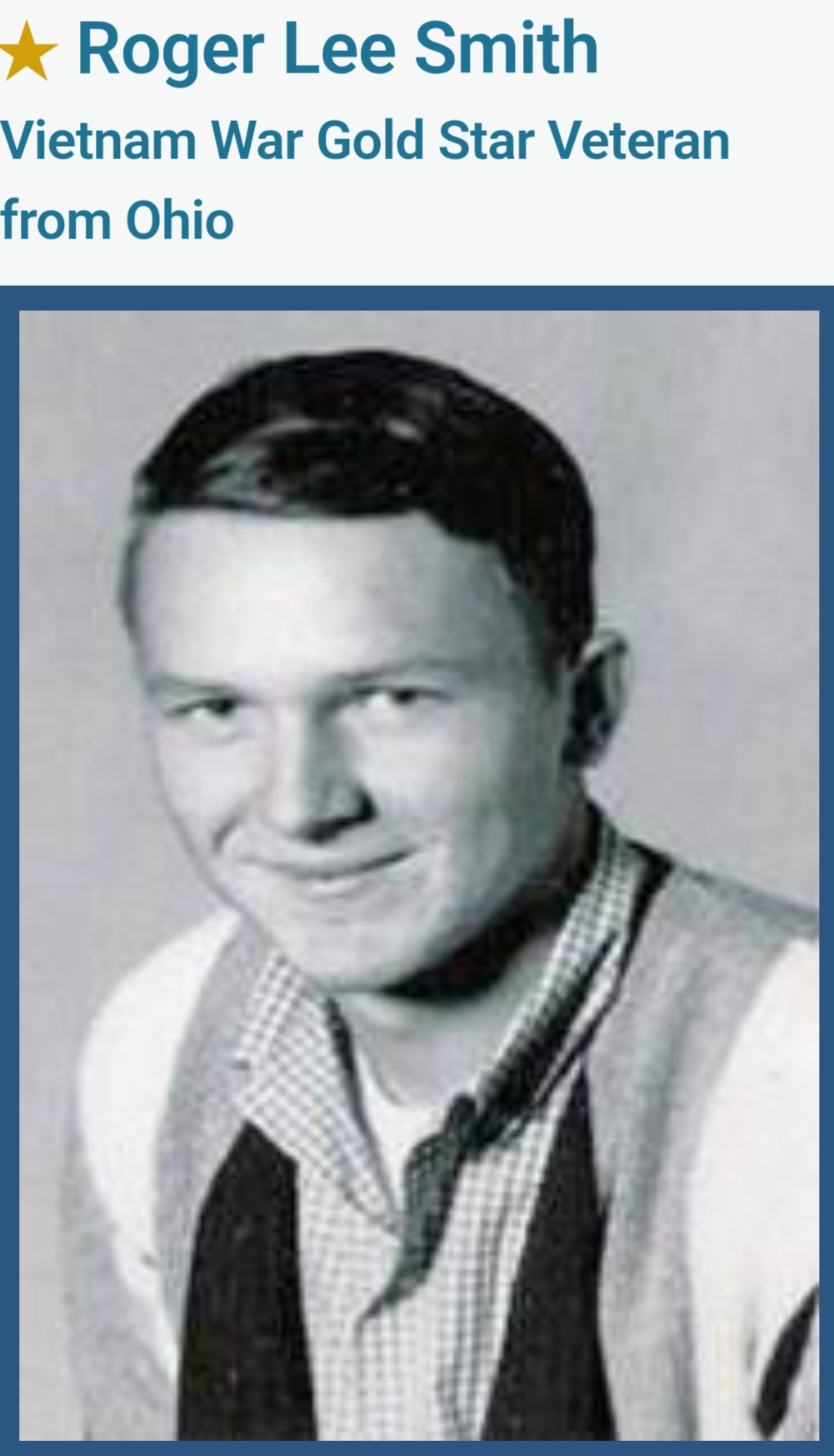
Roger Lee “ Smitty” Smith
On June 1, 1999, the Central Identification Laboratory-Hawaii (CILHI, now DPAA) identified the remains of Specialist 4 Roger Lee Smith, missing from the Vietnam War. Specialist 4 Smith joined the U.S. Army from Ohio and was a member of the 117th Aviation Company.
On October 3, 1968, he was the crew chief aboard a UH-1H Iroquois (tail number 67-17595) on a command and control mission over Phuoc Long Province, Vietnam. The Iroquois was downed by enemy ground fire during the mission, and SP4 Smith was killed in the crash. Search and rescue teams were unable to recover his remains immediately following the incident, and enemy forces in the area prevented further search efforts.
In November 1994, a joint U.S. and Vietnamese investigative team recovered remains from a crash site associated with SP4 Smith’s Iroquois. In 1999, forensic analysis identified the recovered remains as those of SP4 Smith.
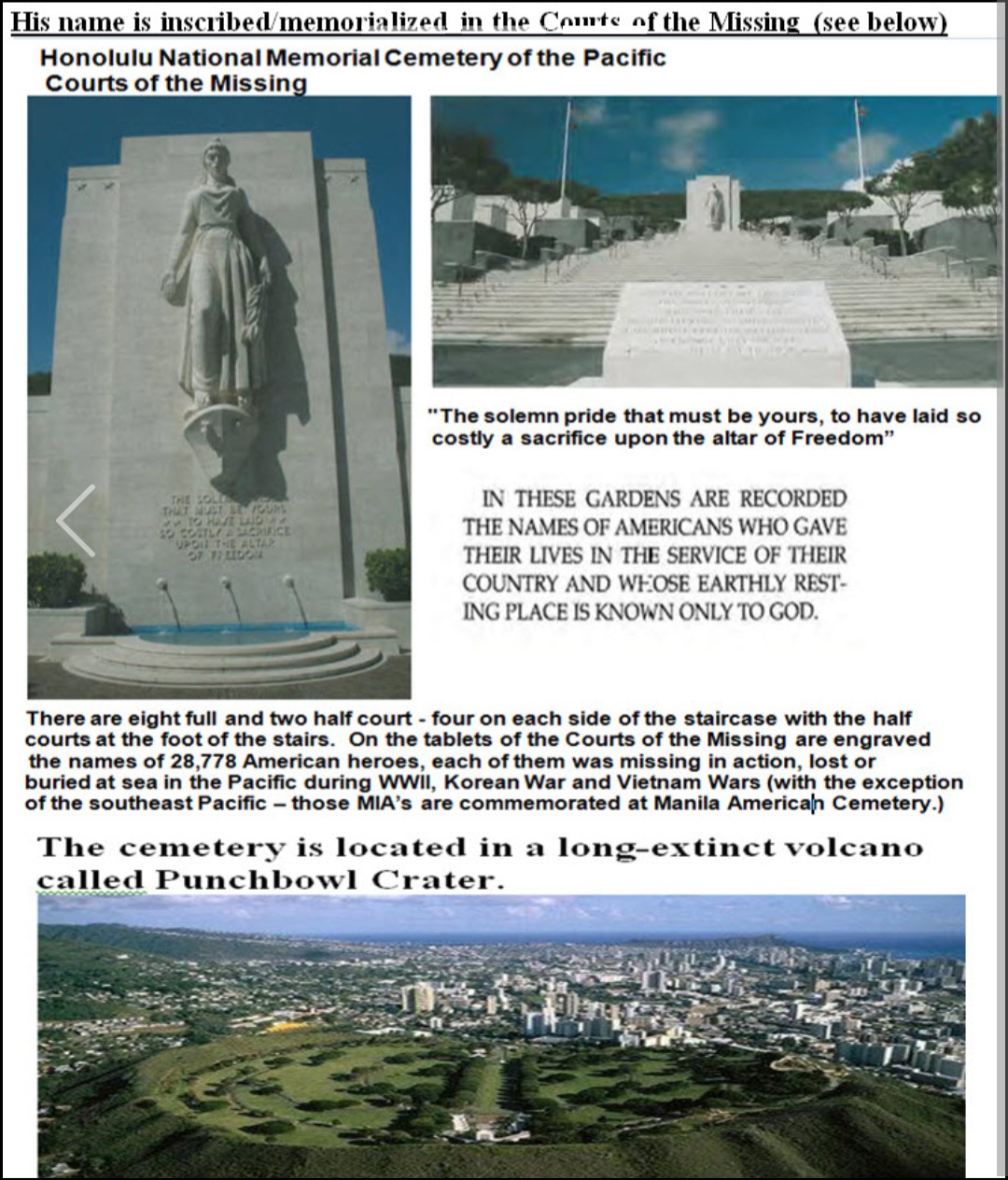
Specialist 4 Smith is memorialized on the Courts of the Missing at the National Memorial Cemetery of the Pacific. His name is also inscribed along with all his fallen comrades on the Vietnam Veterans Memorial Wall in Washington, DC.
Medals
- Purple Heart
- National Defense Service Medal
- Vietnam Campaign Medal
- Vietnam Service Medal
- Army Presidential Unit Citation
- Vietnam Gallantry Cross
- Good Conduct Medal (AGCM)
We Remember
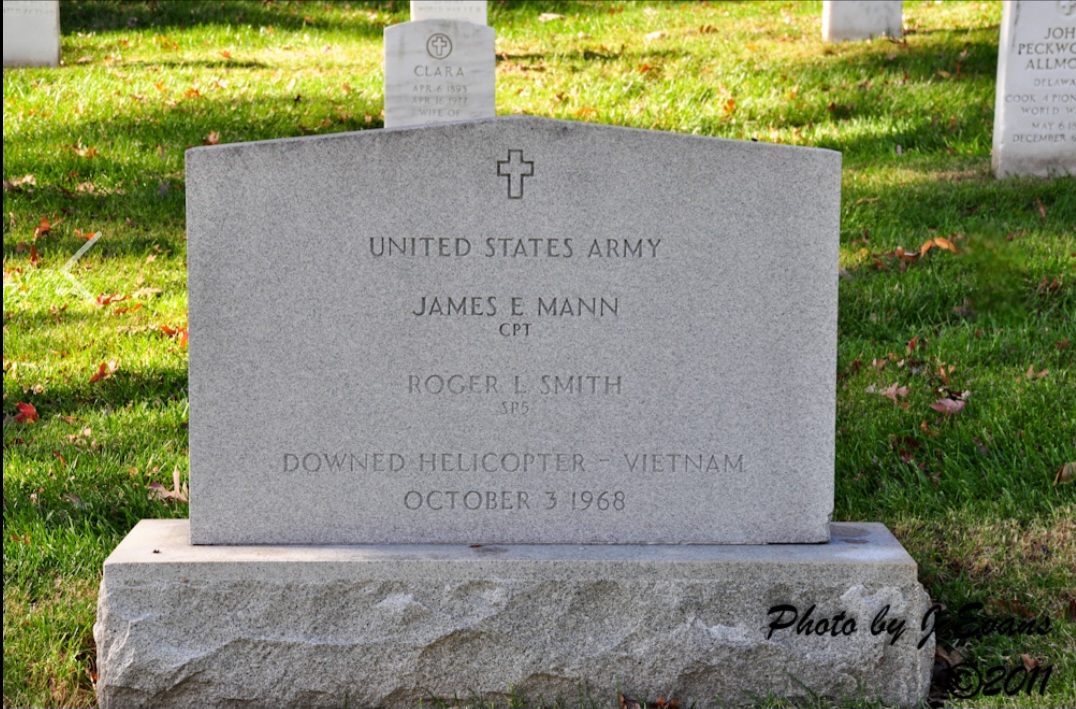
Roger Lee Smith is buried at Arlington National Cemetery . DFC AM/21 OLC PH
He is buried or memorialized at Courts of the Missing at the Honolulu Memorial. This is an American Battle Monuments Commission location.
Roger Lee Smith is honored on the Vietnam Veteran’s Memorial in Washington DC. Name inscribed at VVM Wall, Panel 41w, Line 2.
Warlords— written 5.28.2012
“Smitty, I remember you as a red headed freckle faced kid. You were generous natured, unselfish, always protective of others as you were the day you flew the mission that took you away from us and spared my life that day. I only wished it had been me, instead of you. Love you always, brother. You will be forever in my thoughts, along with the other brothers we lost that day.”
God bless,
SP5 Ronald Dale Currie -117th Assault Aviation Company
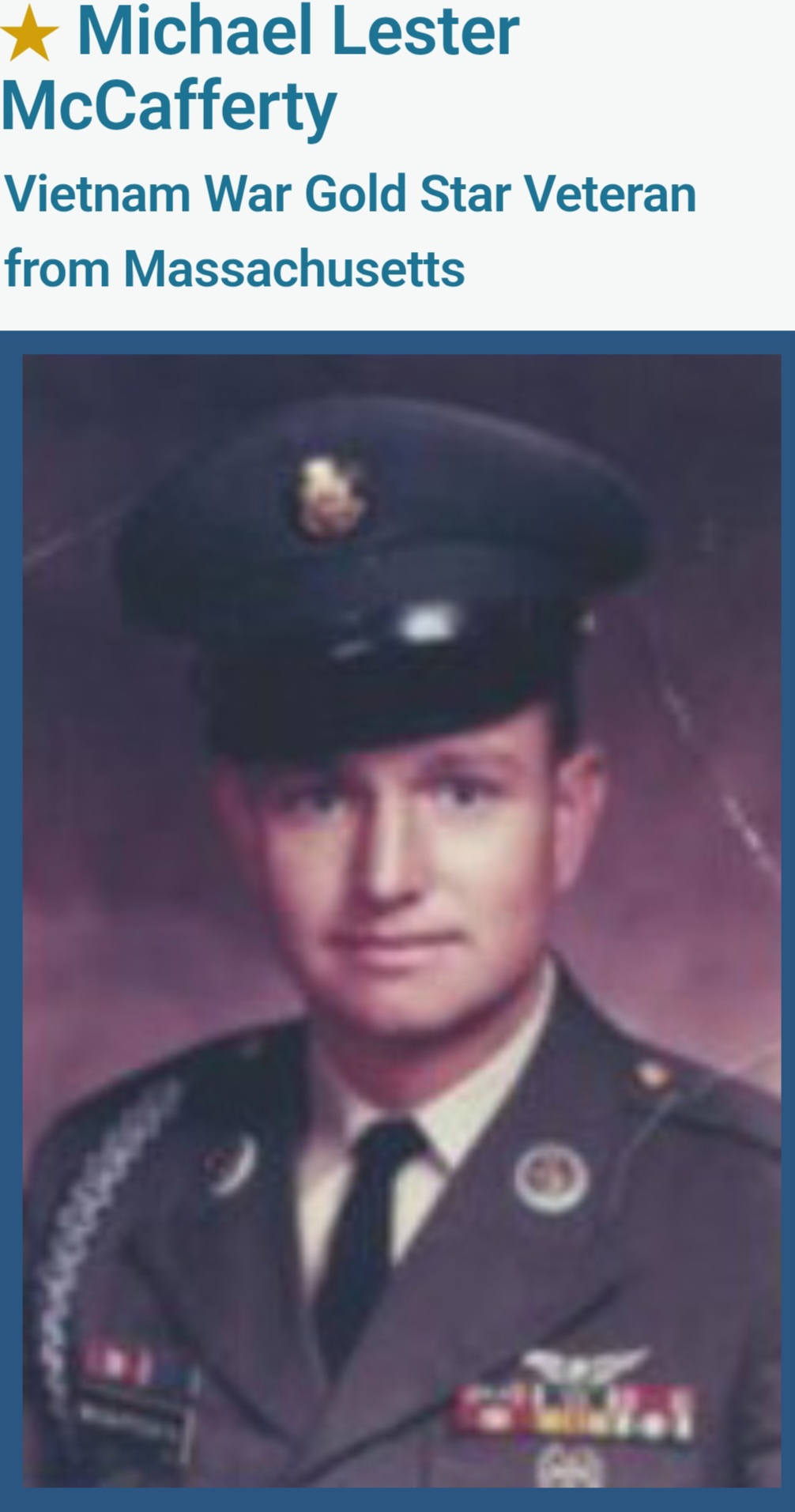
Michael Lester “Mike” McCafferty
Michael Lester McCafferty was serving his country during the Vietnam War when he gave his all in the line of duty. He had enlisted in the United States Army. Entered the service via Regular Military. He began his tour on 23 September 1966. McCafferty had the rank of Specialist Five. His military occupation or specialty was Aircraft Maintenance Crewman. Service number assignment was 11448610. Attached to 1st Aviation Brigade, 214th Aviation Battalion, 12th Aviation Group, 117th Aviation Company.
He was born on 12 April 1947. According to records Massachusetts was his home or enlistment state and Essex county has been included within the archival record. We have Lynn listed as his city. During his service in the Vietnam War, Army Specialist Five McCafferty experienced a traumatic event which ultimately resulted in loss of life on 3 October 1968.
Medals
- Purple Heart
- National Defense Service Medal
- Vietnam Campaign Medal
- Vietnam Service Medal
- Army Presidential Unit Citation
- Vietnam Gallantry Cross
- Good Conduct Medal (AGCM)
We Remember
Michael McCafferty is honored on the Vietnam Veteran’s Memorial in Washington DC. Name inscribed at VVM Wall, Panel 42w, Line 71.
His Burial- Saint Mary’s Cemetery Lynn, Essex County, Massachusetts
Plot- St. Thomas Ave, Section 463
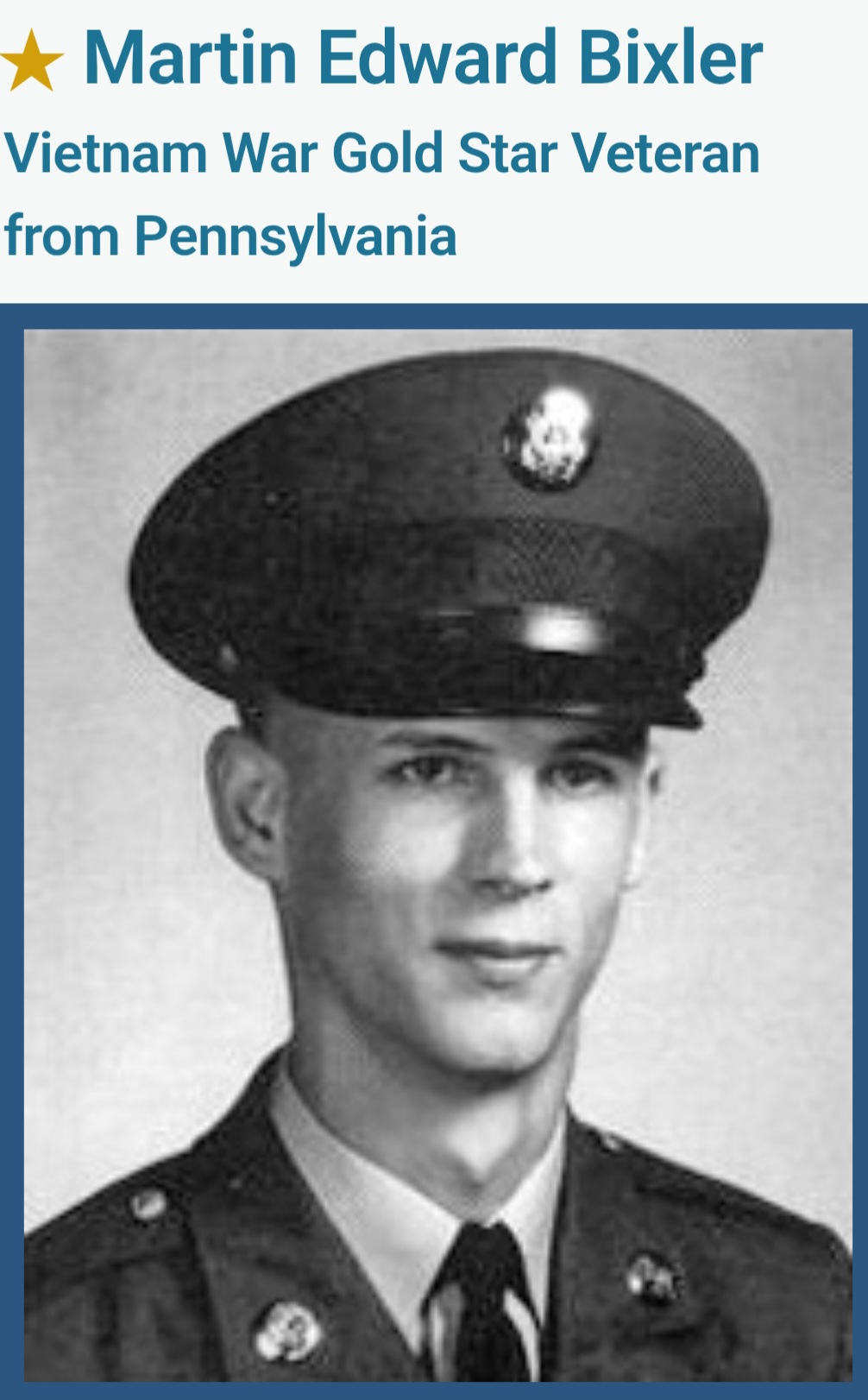
Martin Edward Bixler
Martin Edward Bixler was serving his country during the Vietnam War when he gave his all in the line of duty. He had enlisted in the United States Army. Bixler had the rank of Warrant Officer. Service number assignment was 3159584. Attached to 1st Aviation Brigade, 214th Aviation Battalion, 12th Aviation Group, 117th Aviation Company.
He was born on 10 August 1947. According to records Pennsylvania was his home or enlistment state and York county has been included within the archival record. We have Glen Rock listed as his city. During his service in the Vietnam War, Army Warrant Officer Bixler experienced a traumatic event which ultimately resulted in loss of life on 3 October 1968. Recorded circumstances attributed to: Died through hostile action .. air crash on land. Incident location: South Vietnam, Tay Ninh province.
The President of the United States of America, authorized by Act of Congress July 9, 1918 (amended by an act of July 25, 1963), takes pride in presenting the Silver Star (Posthumously) to Warrant Officer Martin Edward Bixler (ASN: W-3159584), United States Army, for gallantry in action in connection with military operations involving conflict with an armed hostile force while serving with the 117th Assault Helicopter Company 214th Aviation Battalion, 1st Aviation Brigade, in the Republic of Vietnam on 3 October 1968.
Warrant Officer Bixler distinguished himself by exceptionally valorous actions while piloting a UH-1H helicopter on an urgent re-supply mission northwest of Tay Ninh. Due to the thick jungle growth, the desperately needed ammunition had to be thrown out of the aircraft while it hovered over a bomb crater. The aircraft was hit by enemy fire, crashed and burst into flames, pinning the aircraft commander underneath the wreckage. Upon freeing himself, Warrant Officer Bixler attempted to dislodge the aircraft commander, despite the intense enemy fire.
He gradually freed the aircraft commander from the burning ship, but was fatally wounded minutes later. Through his exceptional courage and devotion to duty, he saved the life of his aircraft commander. His actions were in keeping with the highest traditions of the military service and reflect great credit upon himself, his unit and the United States Army.
Medals
- Purple Heart
- National Defense Service Medal
- Vietnam Campaign Medal
- Vietnam Service Medal
- Army Presidential Unit Citation
- Vietnam Gallantry Cross
- Good Conduct Medal (AGCM)
We Remember
Martin Edward Bixler is honored on the Vietnam Veterans Memorial in Washington DC. Name inscribed at VVM Wall, Panel 42w, Line 65.
His Burial: BETHELEM UNION CHURCH CEMETERY, STILZ, PA
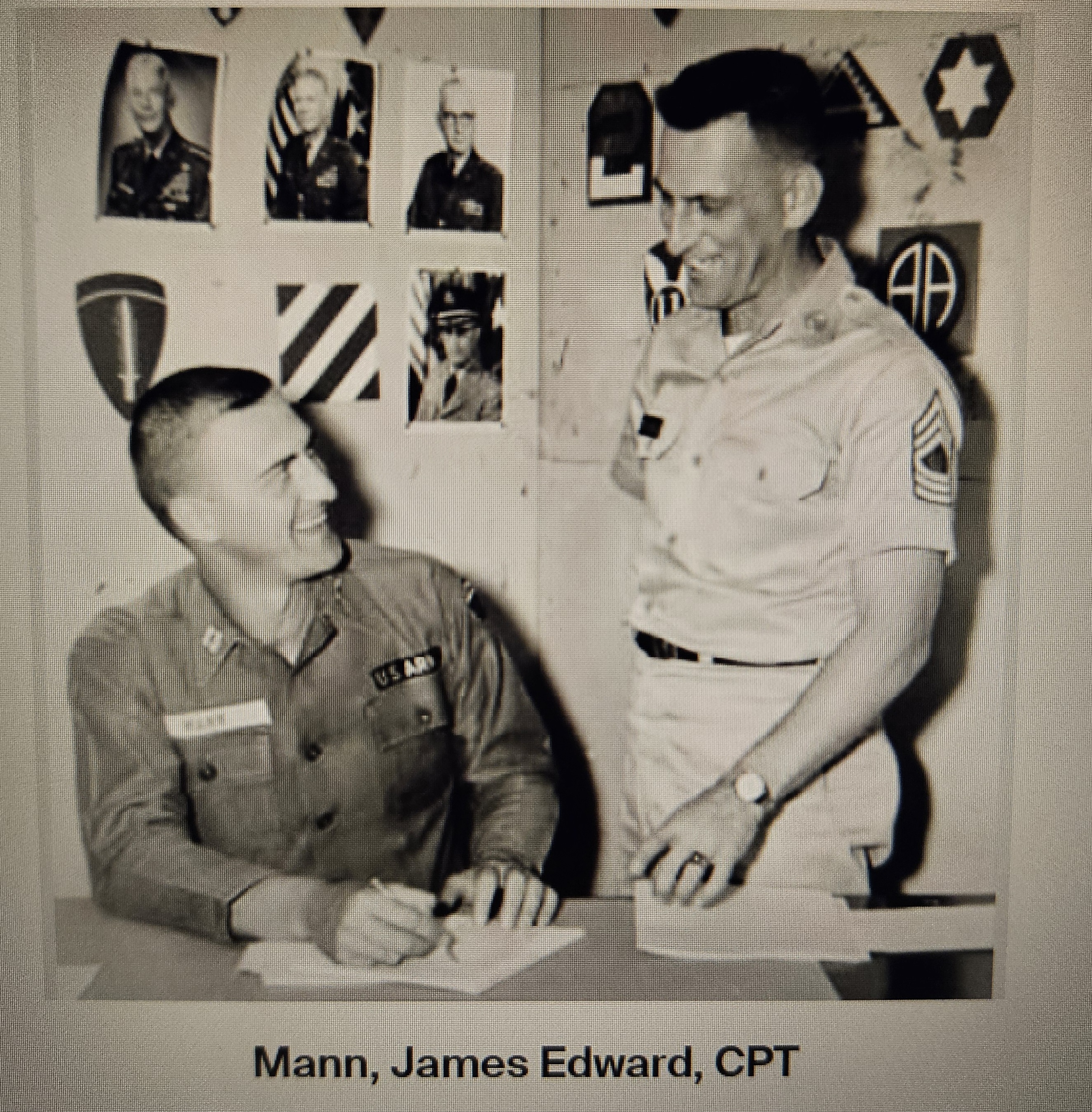
James Edward Mann
On 03 Oct 1968, during Operation CHINA BOY VI, the 3rd Mobile Strike Force Command got into a heavy engagement about 13 kilometers southwest of Thien Ngon, Tay Ninh Province.
An emergency ammo resupply was called for, and the 117th Assault Helicopter Company responded. UH-1H tail number 67-17595 flew a dual mission, carrying both ammo and Captain James Mann, Det B-34 3rd MSFC A Co, 5th SF Group Operations Officer.
The Huey was hit hard as it approached for landing, collided with trees, and fell to the ground. The crew chief, SP4 Smith, was crushed beneath the fuselage, but the remaining three crewmen were able to exit the aircraft. Two were then killed by gunfire; only the pilot, CPT Arthur Frame, was rescued.
In early June 1999, several hundred bone fragments excavated from the crash site were positively identified as belonging to Mann and another member of the crew. And on the morning of July 13, 1999, following a funeral at Memorial Chapel, Fort Myer, VA, a horse-drawn carriage brought the remains to Arlington, where a 21-gun salute honored the heroes who had been away from home for too long. “It was a very emotional ceremony,” says Bill Mann. “It was a day that brought final closure for all of us.”
Medals
- Purple Heart
- Vietnam Service Medal (VSM)
- Armed Forces Reserve Medal (AFRM)
- Republic of Vietnam Civic Action Honor Medal
- Republic of Vietnam (RVN) Gallantry Cross Unit Citation
- Republic of Vietnam Campaign Medal (RVNCM)
- National Defense Service Medal (NDSM)
- Good Conduct Medal (AGCM)
- Meritorious Unit Commendation (MUC)
- Army Presidential Unit Citation (PUC)
- Army Commendation Medal (ARCOM)
- Air Medal (AM)
- Bronze Star Medal (BSM)
We Remember
Name inscribed at Vietnam Veterans Memorial Wall, Panel 42W, Line 70
His Burial: Saint Johns Cemetery Middletown, Middlesex, Connecticut
We Remember
Davis- Army Passenger
Little is recorded about him, but he lived through a moment that shaped the rest of his life. He carried the memory of the men who died beside him, and that too is a form of service.
A Truth Worth Preserving
This was not a random loss.
It was not an accident.
It was combat, in one of the most dangerous regions of Vietnam, during one of the most violent months of the war.
And Dale carried their memory — and the knowledge that he almost shared their fate — for the rest of his life. —This is why their names mattered so deeply to him — and why they must be preserved with accuracy, dignity, and honor.
~God Bless You, My Brother’s ~
SP4 Roger Lee “Smitty” Smith — 117th AHC- KIA
SP5 Michael Lester “Mike” McCafferty — 117th KIA
PWO1 Martin Edward Bixlar— 117th AHC- KIA
AC CPT Arthur T. “Tom” Frame— 117th AHC- RES
CPT James Edward Mann— 5th Special Forces Group (Airborne)- passenger – KIA
Davis — Army passenger, unit not specified- RES
What They Carried Into the Sky
They stepped into the Huey knowing the risks. The morning air carried the scent of JP‑4 fuel and red dust. The metal floor vibrated beneath their boots as the engine came alive. They rose into a firefight because others needed them, lifting toward a sky that held danger in every direction. The rotor blades thumped overhead, a sound that pressed into their chests and reminded them that courage was not an idea but an action.
They fought for one another until the very last breath. In the cabin, they were a single crew, bound by trust, by duty, and by the unspoken promise that no one would be left behind. Their story is not only about how they died. It is about how they lived, with courage that steadied their hands, with sacrifice that shaped their days, with loyalty that held fast in the darkest moments, and with a devotion that rose above fear.
It is about the kind of bravery that flashes in seconds yet is carried forward for generations. The Huey they flew is gone. The jungle that swallowed them has grown back. The clearing where the aircraft fell has returned to silence. But the way they lived, and the way they died, endures. It lives in memory, in testimony, in the hearts of those who survived, and in the legacy of those who never came home.
They were soldiers. They were brothers. And on October three, nineteen sixty‑eight, they gave everything they had for one another.
His Words, His Burden, His Purpose
“I’m in Vietnam every day and every morning. I’ll be that way for the rest of my life.” Ronald Dale Currie
Those few words carry the truth so many combat veterans live with. The war may end, but the memories do not. For Ronald, Vietnam was not a chapter that closed. It was a presence that walked beside him, shaped him, and stayed with him long after the fighting stopped. The sounds, the faces, the moments of danger and loss remained vivid, as if time had folded and placed the past within reach.
“I started telling stories because I want people to know what happened … I don’t want these people forgotten.” Ronald Dale Currie
His storytelling was not for recognition. It was an act of remembrance. A way to honor the men who never came home. A way to speak the names of friends whose lives ended in the sky over Tây Ninh. A way to carry forward the truth of what happened in the rice paddies, the rubber plantations, the jungle corridors, and the flight lines where danger lived in every breath.
By speaking, he ensured that their sacrifices would not fade into silence. He turned memory into service. He turned grief into purpose. He turned survival into a promise kept.
Ronald’s words remind us that memory is a form of devotion. It is a way of keeping faith with those who gave everything. It is a way of ensuring that courage, sacrifice, and brotherhood endure long after the war has passed.
Legacy
Specialist 5 Ronald Dale Currie served with distinction in the 1st Aviation Brigade, 214th Aviation Battalion, 117th Assault Helicopter Company as a UH 1 Huey mechanic and crew chief with the 117th Assault Helicopter Company, one of the most heavily engaged aviation units of the Vietnam War.
His hands kept helicopters flying. His eyes caught the problems no one else saw. His presence on missions gave pilots confidence that their aircraft and their lives were in the best possible care. His pilots trusted him with their lives. His fellow crewmen trusted him with their own.
Crew chiefs were the backbone of Army aviation. Dale was one of the best. He became part of the lifeline that kept infantry units supplied, wounded soldiers evacuated, and Special Forces teams supported deep in contested territory.
Arriving in Vietnam in the late summer of 1968, Dale was assigned to the 117th Aviation Company at Tay Ninh, a volatile region pressed against the Cambodian border. The companys platoons Little Annie Fannie, Pink Panthers, and Sidewinders flew daily into areas marked by ambushes, anti aircraft fire, and some of the most dangerous terrain in III Corps.
As a Warlord gunner, Dale lived by the creed that defined the platoon. Strike fast. Hit hard. Never leave a brother behind. It shaped every mission, every decision, and every bond he carried for the rest of his life.
He began in foxholes carved into the jungles, soaked in rain, mud, and fear, learning the war one footstep at a time. Those early days shaped him, hardened him, and taught him what survival truly meant.
For two separate periods of three months each, six months total, Dale was assigned to support Special Forces Unit B 36, a Green Beret B Team responsible for coordinating multiple operations in remote and hostile regions. These missions demanded precision, courage, and absolute trust.
During his time in Vietnam from 1968 through 1969, working alongside Special Forces detachments required secrecy, courage, and complete reliance on one another. Those months exposed him to the wars most dangerous edges, including remote camps, deep jungle operations, and missions where survival depended on instinct, teamwork, and quiet bravery.
From the open door of a Huey, Dale saw the war in a way few ever could. He watched villages scarred by fire, tree lines hiding danger, columns of smoke rising from battles still unfolding, and the desperate movements of men fighting to survive on the ground below.
The landscape became a living map of courage, fear, sacrifice, and loss. That view stayed with him forever.
Dale rose into the air with the 117th Aviation Companys iconic platoons Little Annie Fannie, the Pink Panthers, and the Sidewinders. These were not just call signs. They were families. They were identities. They were the men he trusted with everything he had.
Flying with Little Annie Fannie, he learned the rhythm of slick missions, fast, precise, and always under fire. With the Pink Panthers, he saw the grit of crews who carried troops into impossible landing zones. With the Sidewinders, he witnessed the fierce protection of gunship teams who guarded every lift, every extraction, and every desperate call for help.
The 117th gun platoon, the Warlords, carried a crest that became their lived motto. An armored fist gripping lightning bolts. Strike fast. Hit hard. Never leave a brother behind. Dale absorbed that spirit. He lived it. He carried it long after the war ended.
On the morning of October 3 1968, Dale offered to take the place of his friends Roger Smitty Smith and Michael McCafferty on a dangerous emergency resupply mission near Tay Ninh. They told him no.
Minutes later, their Huey with tail number 67 17595 was shot down.
Smitty, McCafferty, Martin Bixler, and James Mann were killed.
Only Tom Frame and a passenger named Davis survived.
Dale carried that moment for the rest of his life. He never forgot that he tried to go in their place. He never forgot that they did not come home.
The loss of his brothers stayed with him. Some men bury their grief. Dale refused to. He spoke their names. He told their stories. He kept their faces close, never hidden away.
The loss remained with him every day, not as a wound that weakened him, but as a responsibility that shaped him.
He believed remembrance was a form of loyalty, and loyalty was the truest measure of a man. It became his legacy to continue telling the stories of the men who died, to make sure their courage, their sacrifice, and their humanity were never forgotten.
Dale was not one for quiet resolve. He did not sit silently with his memories. He lived them. He honored them. He shared them so others would understand the cost of service and the depth of the bonds formed in war. He spoke plainly, directly, and with the kind of honesty that only comes from someone who has seen life at its most fragile.
He did not hide from the past. He carried it with purpose.
Dale built a successful civilian career grounded in the same qualities that defined his military service. He carried precision and technical mastery into every role he held. He brought reliability under pressure, a work ethic shaped by responsibility and pride, and a style of leadership expressed through example rather than rank. The habits he formed in the jungles and flight lines of Vietnam became the foundation of a life marked by competence, steadiness, and integrity.
Later in life, he became a docent at the Cavanaugh Flight Museum, where he stood beside the aircraft that had defined his youth. He taught visitors what the Huey meant to the men who flew it, not as a machine but as a lifeline, a companion, and a place where courage lived in the open air. He spoke with the authority of someone who had felt the vibration of the rotor through his boots and had watched the world pass beneath the open door of a helicopter in war.
In those moments, he brought his brothers back into the world. One story at a time. One memory at a time. One visitor at a time. He carried their names into conversations with strangers. He carried their faces into rooms filled with families and school groups. He carried their courage into the present so it would not fade into silence.
Ronald Dale Currie’s legacy is not measured only in the missions he flew or the aircraft he kept in the air. It lives in the way he remembered. It lives in the way he honored the men who died on October 3, 1968 It lives in the way he stood with his fellow veterans, offering strength, compassion, and presence to those who carried their own burdens home.
It lives in the way he built a full, successful life without ever letting go of the ones who could not. He carried their names into every sunrise. He carried their faces into every quiet moment. He carried their memory into every story he told, every gathering he attended, every act of service he offered. His life became a bridge between the world he survived and the world they never reached.
He was a soldier, a mechanic, a crew chief, a storyteller, a veteran among veterans, and a guardian of memory. He understood that remembrance is an act of devotion. It is a promise kept. It is a way of ensuring that courage does not fade when the battlefield grows quiet.
And he proved, every day, that love for one’s brothers in arms does not fade. It deepens.
It becomes the quiet strength a man carries. It becomes the purpose that shapes his days. It becomes the devotion that outlives the war. It becomes the legacy that remains.
Ronald’s life stands as testimony that courage continues long after the fighting stops. It continues in the way a man remembers, in the way he honors, and in the way he keeps faith with those who gave everything.
His legacy is not only what he did. It is what he carried. It is what he kept alive. It is what he refused to let the world forget.
This is the promise that endures.