
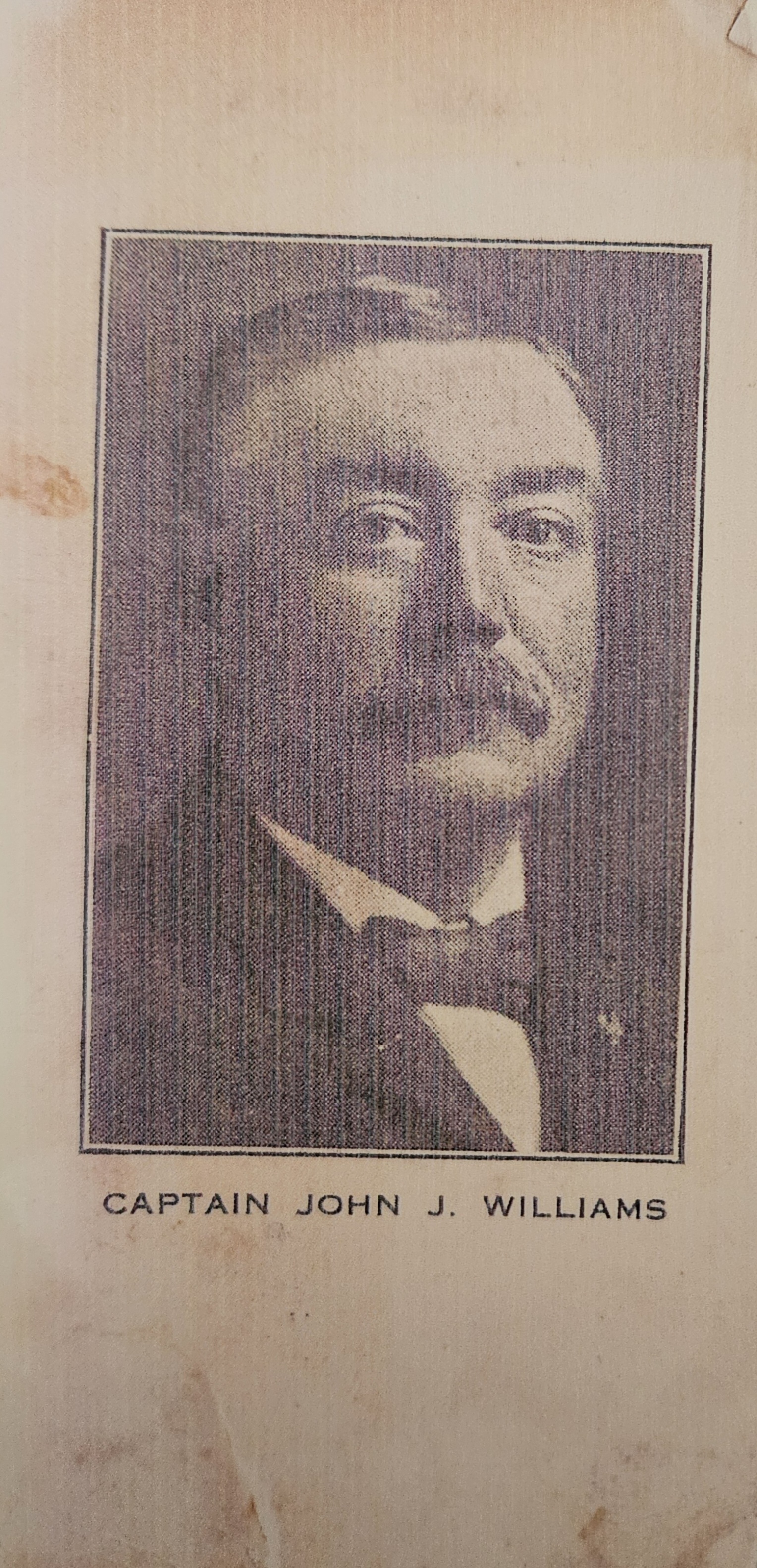
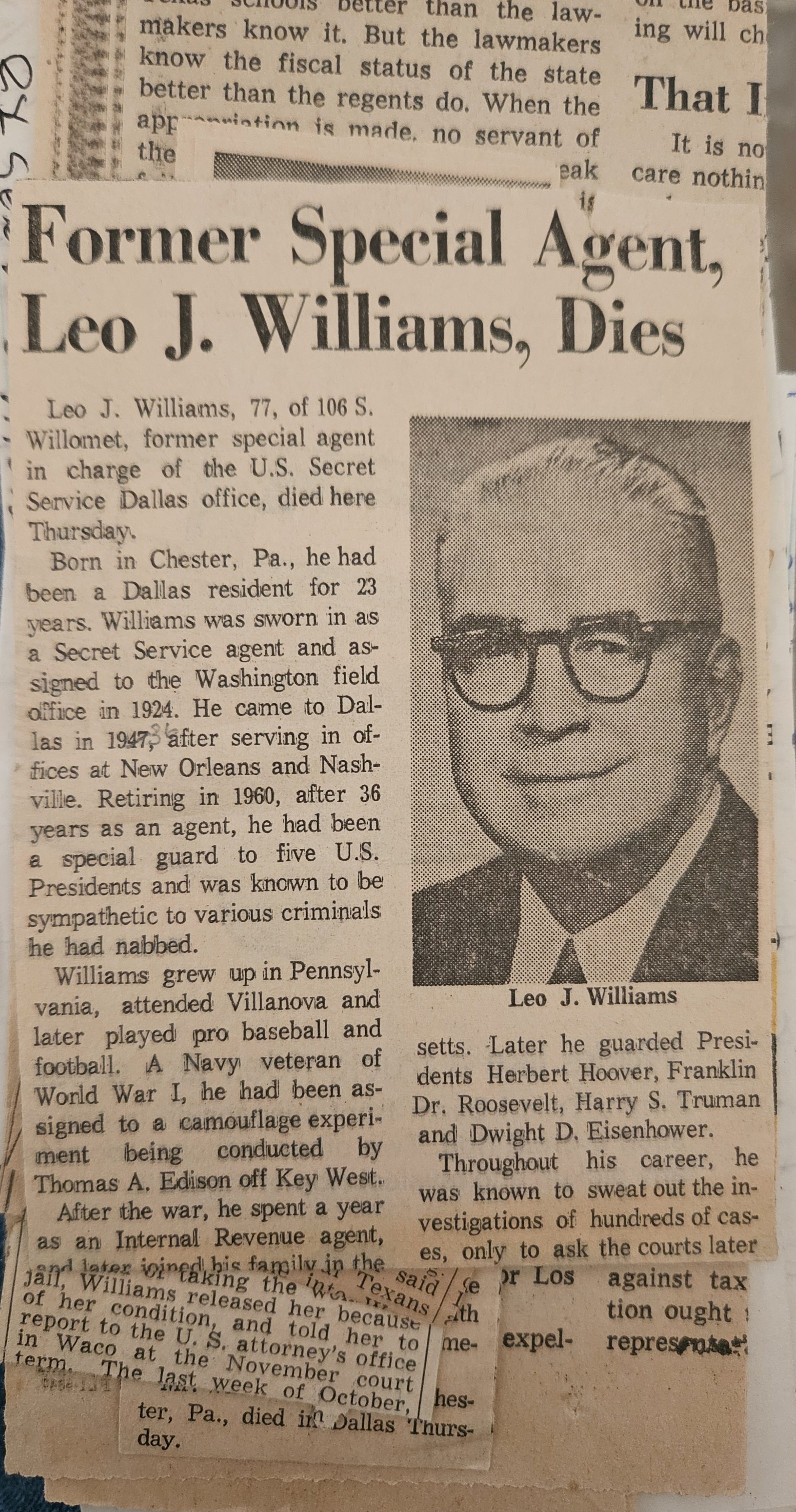
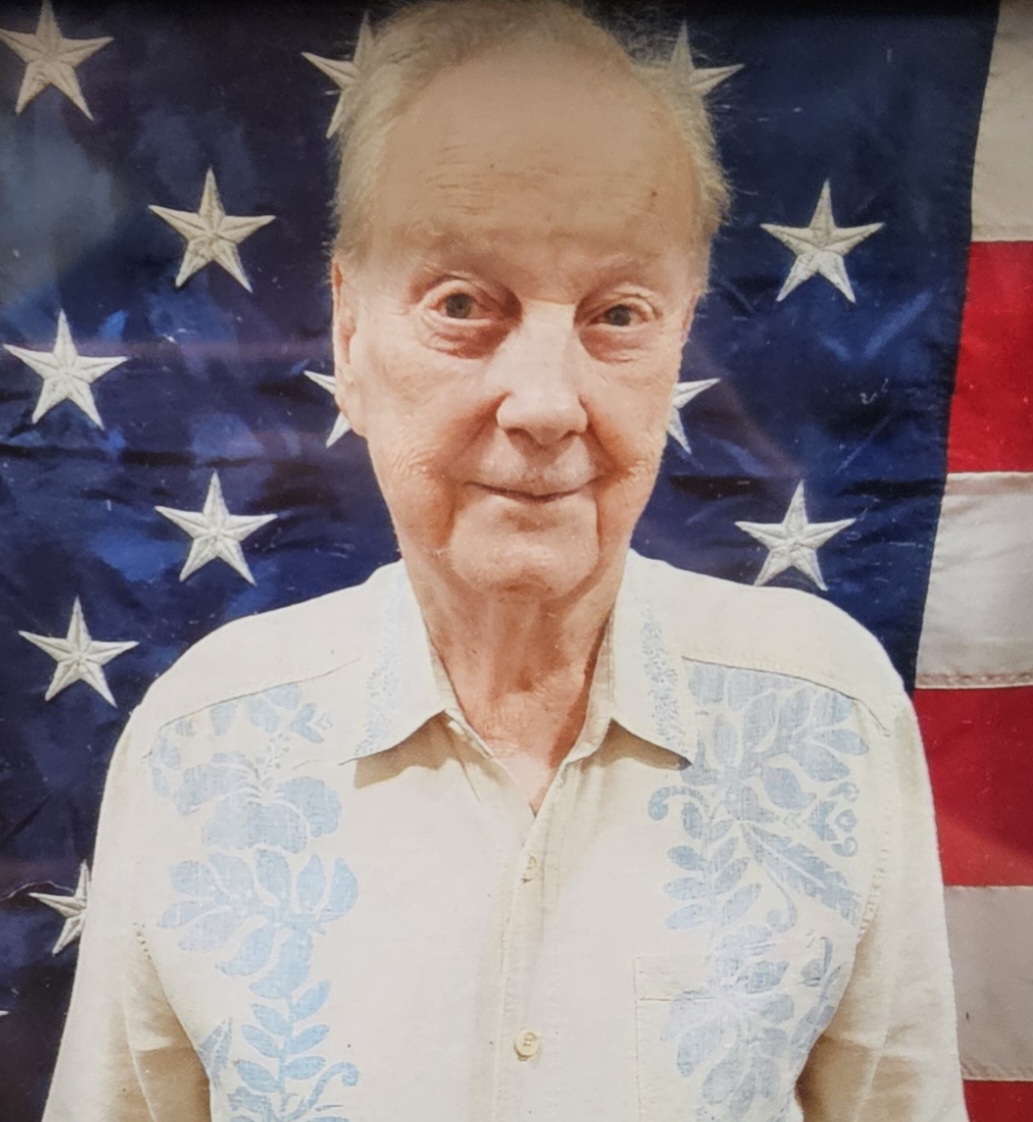
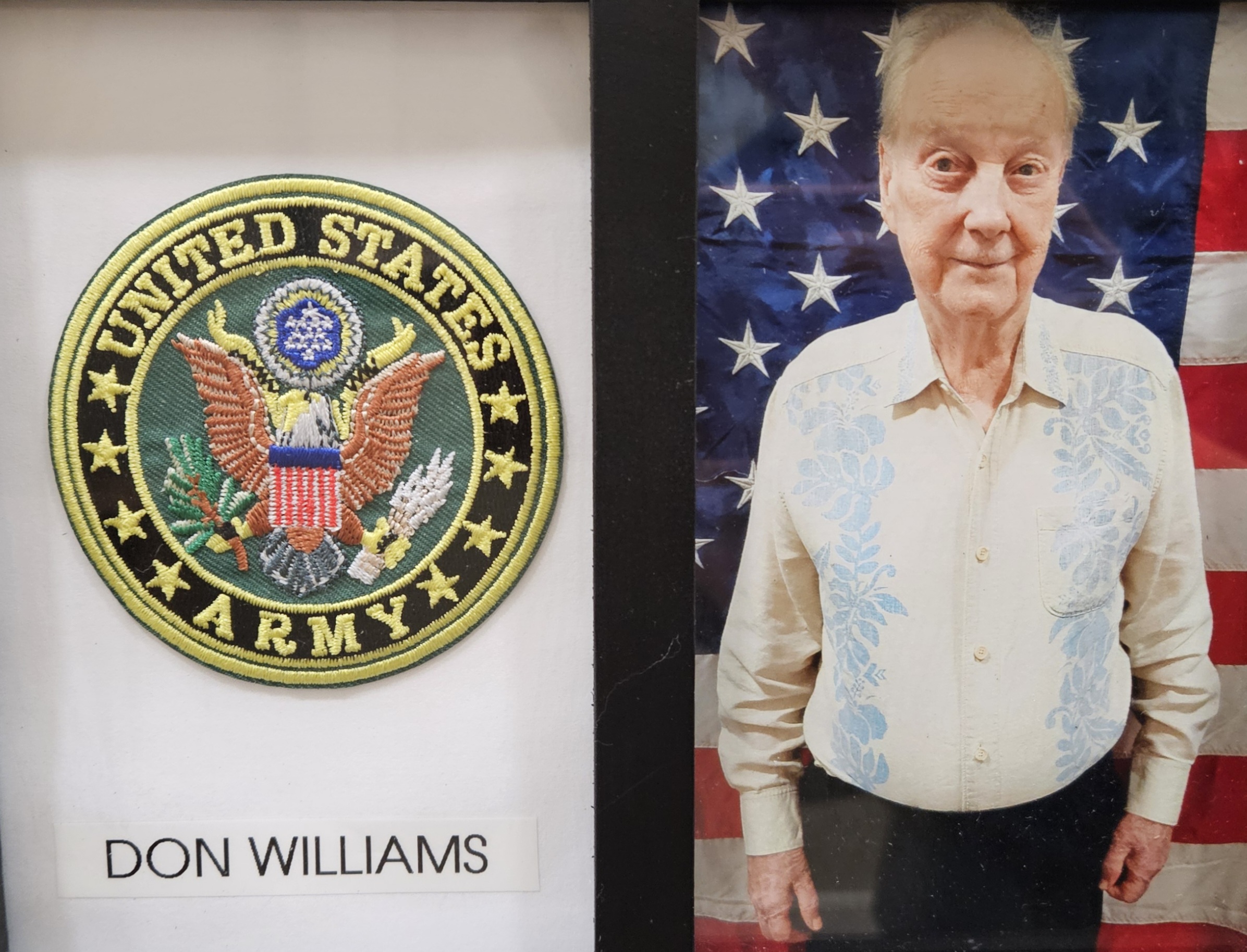
Donald Patrick Gartly Williams was born in Memphis near the end of the World War II , the beginning of a life shaped by faith, discipline, curiosity, and a deep sense of responsibility. His family later settled in Dallas, where his father, Leo J. Williams, served in the United States Secret Service and his mother, Martha Mary Harrell, created a home grounded in Catholic tradition. He grew up with one brother and one half sister, and his early years were defined by rigorous education under Nuns and Jesuits who demanded precision, scholarship, and moral clarity.
He entered a Jesuit seminary as a young man, committing himself to temporary vows of Poverty, Chastity, and Obedience. After four years of study and reflection, he realized that the priesthood was not his calling. When he informed the supervising priest, he was told that Rome would need to grant a formal dispensation. Even in departure, his path reflected the seriousness with which he approached every commitment.
His childhood memories carried the texture of Dallas in the postwar years. He remembered twenty five cent movie tickets at the Majestic Theatre in Oak Cliff, the same neighborhood where Lee Harvey Oswald was later apprehended. He loved films such as Lawrence of Arabia and Chicago, and he often found Dallas unremarkable, a sentiment echoed by French performers he once gathered at Southern Methodist University.
His fascination with languages began early. At Saint Edwards grammar school, operated by Nuns in Dallas, he befriended a classmate whose father was French from Tahiti and whose mother was French from a Caribbean island. The fall of France in 1940 affected him deeply, inspiring him to volunteer with a pro French group in New Orleans, where he helped display flags bearing the Cross of Lorraine. By the time he formally studied French, he already spoke with a natural accent. His curiosity expanded to German, Italian, Spanish, and even Japanese, which he pursued despite the anti Japanese sentiment of the era.
He later worked as a disc jockey at WJBW in New Orleans before enrolling in Merchant Marine school in Saint Petersburg, Florida. His service in the Merchant Marines carried him across Europe, including Italy, Greece, and Turkey, granting him days of exploration in each port. During one return trip, he saw headlines announcing the invasion of South Korea and sensed immediately that the conflict would shape his future.
He enlisted in the United States Army and completed basic training at Camp Chaffee in Arkansas, followed by leadership and artillery training at Fort Sill in Oklahoma. He was commissioned as a second lieutenant and deployed to Korea, despite a lifelong fear of flying shaped by childhood films of aircraft crashes. His journey carried him through California, Hawaii, Guam, Japan, and finally Pusan.
He served from 1952 through 1953, arriving after the most violent early phase of the war, during a period when the front lines had stabilized. He was assigned to Kimhwa in the Chorwon Valley, where he manned an exposed outpost visited by a general wearing a bright red scarf, a moment that made clear how vulnerable he was.
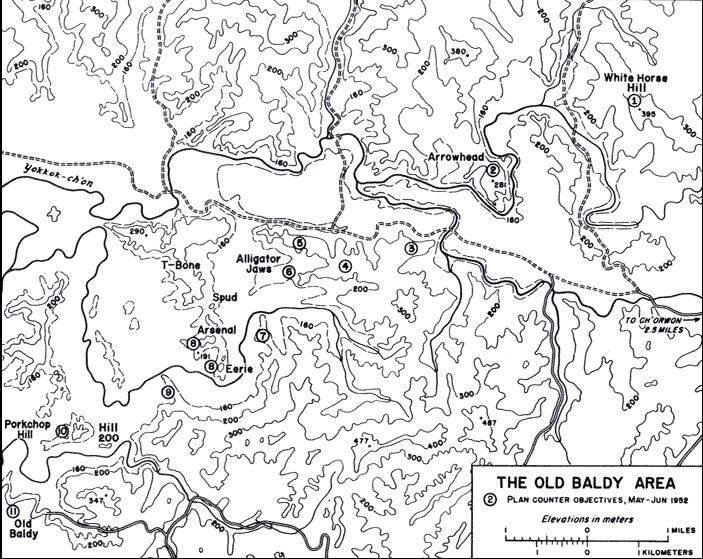
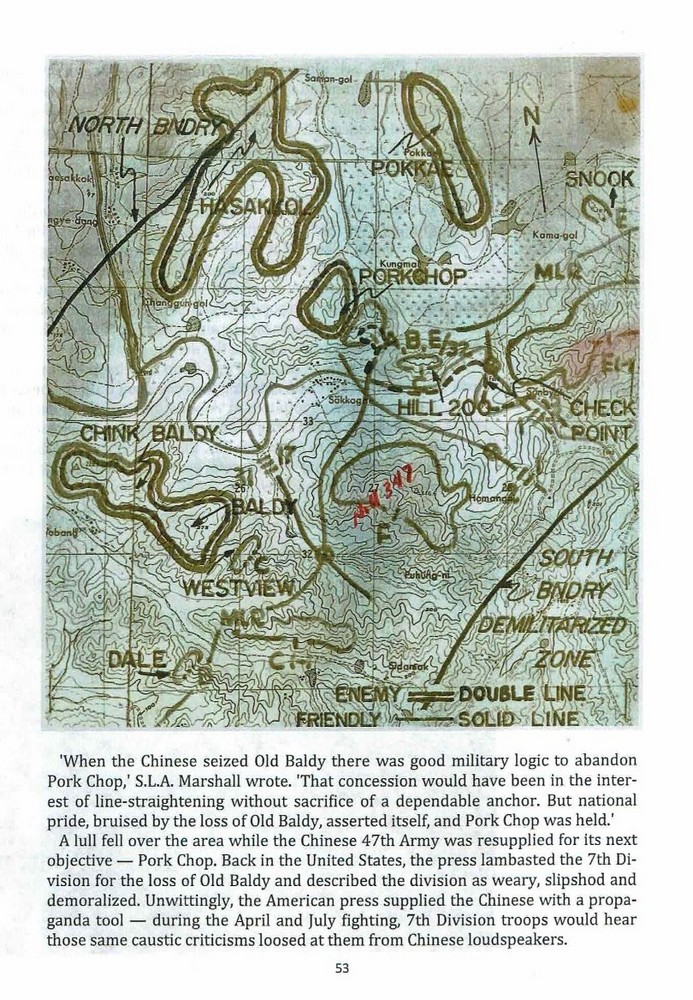
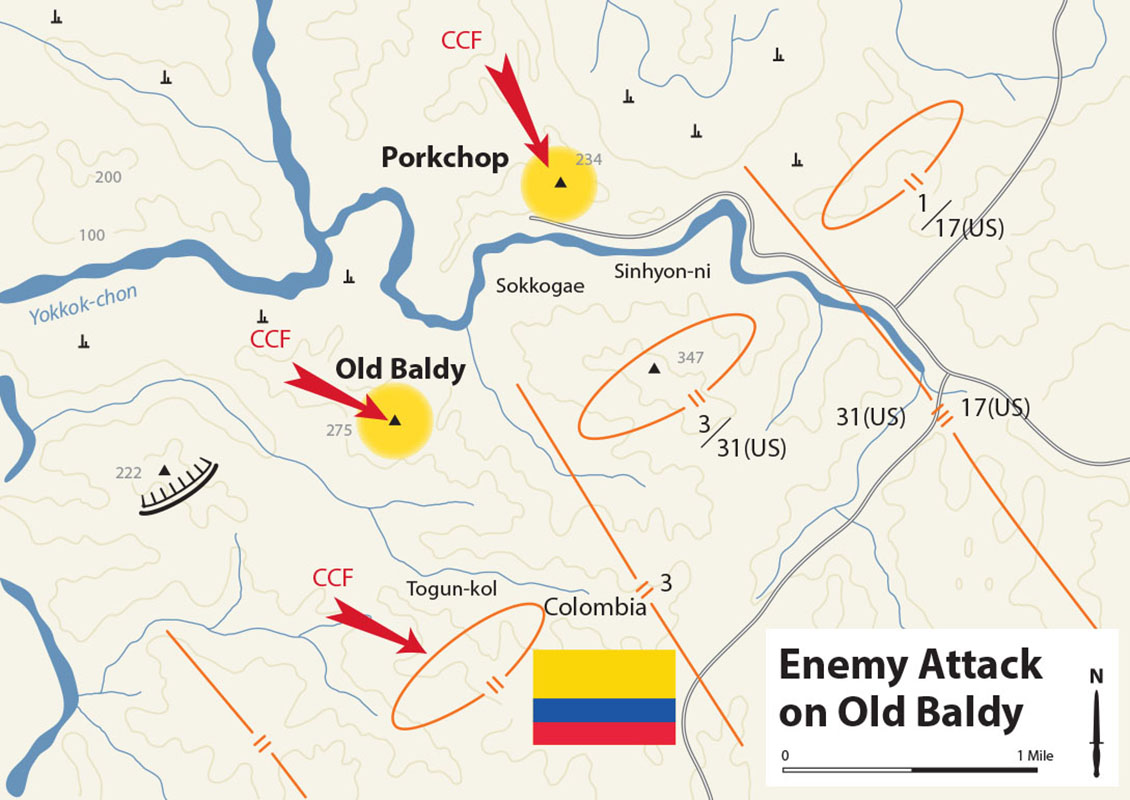
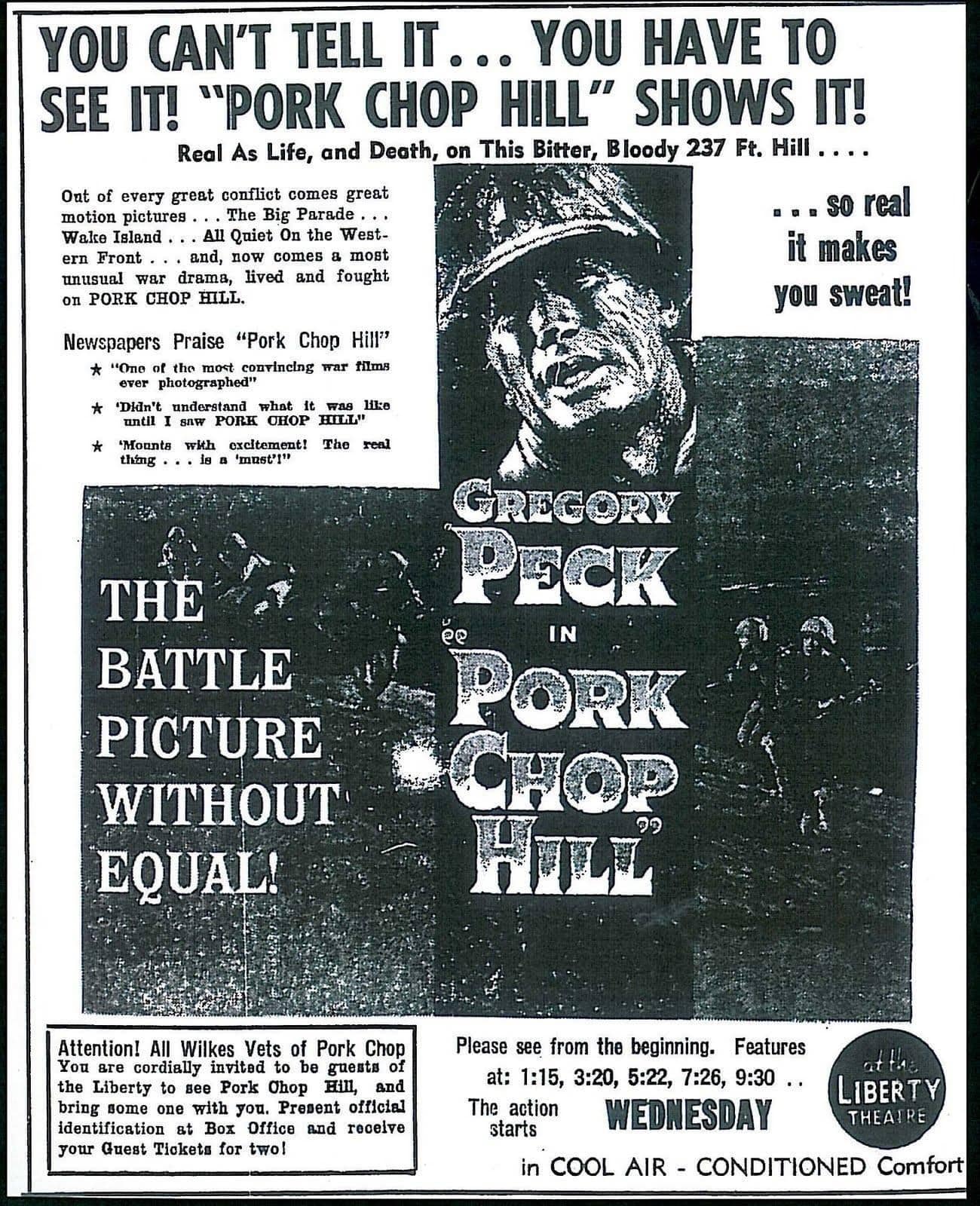
One of his most significant assignments placed him on Hill 347, overlooking Pork Chop Hill, a fiercely contested elevation that changed hands repeatedly. Nearby stood Old Baldy, a flat topped hill once taken by Ethiopian forces and later overrun when held by Colombian troops. He was sent as a forward artillery observer with the infantry, instructed not to take the hill but to gather intelligence. His patrol spent a night in an abandoned bunker before climbing to the summit at dawn, where Chinese troops suddenly emerged and opened fire. He attempted to call in artillery while retreating, becoming entangled in barbed wire and losing his helmet and phone. Four men could not reach the bunker, yet the Chinese did not fire on them as they escaped.
He later encountered American soldiers who warned him he had wandered into a minefield. His role as a forward artillery observer with the 32nd Artillery and the infantry of the 7th Army placed him repeatedly in danger. He endured nights in soaked sleeping bags, disorientation from exhaustion, and the sight of bodies on the battlefield. At one point, he was taken to a field hospital after his head began spinning and he could not speak clearly.
From Hill 347, he once called a fire mission on advancing Chinese troops. When enemy rounds struck near his cave, he dropped the phone and moved to safety. His sergeant explained the interruption, and the mission was halted. As he descended the hill, infantrymen told him they had feared he was dead.
A recurrence of childhood sinusitis eventually required evacuation to Osaka Hospital in Japan, where X rays confirmed the condition. He spent a week touring Osaka and Kyoto with his attending physician, visiting temples and historic sites. He was struck by the courtesy shown to American soldiers, despite the war having ended only seven years earlier.
Toward the end of his tour, all Korean workers were dismissed. He advocated for several workers he had grown fond of, including a man named Sukoshi with a withered arm. He and another lieutenant transported them to Seoul rather than abandoning them at the front. Seoul, devastated by war, left a lasting impression.
He returned to the United States through California and traveled by bus to San Antonio for discharge. He left the Army in 1953 as a second lieutenant.
After the war, he settled in San Francisco with his wife, Hildegard, whom he had met in business school. Unsure of his path, he consulted the Veterans Affairs office, which recommended librarianship. He earned a Masters degree in Library Science from the University of California Berkeley, followed by a second Masters degree in French. He worked first in Los Angeles, then returned to Berkeley, where he spent the remainder of his career in the university library system.
He and his wife had no children, and he did not remarry after her passing.
He purchased a home in the Southern Hills above San Francisco, with views of the ocean, the bay, and the downtown skyline. A fall on his steep driveway resulted in a serious elbow injury and hospitalization. His half sister eventually flew him back to Dallas, where he settled in Midlothian and made it his permanent home.
Supplemental Information
Bloody Battles of the Korean War
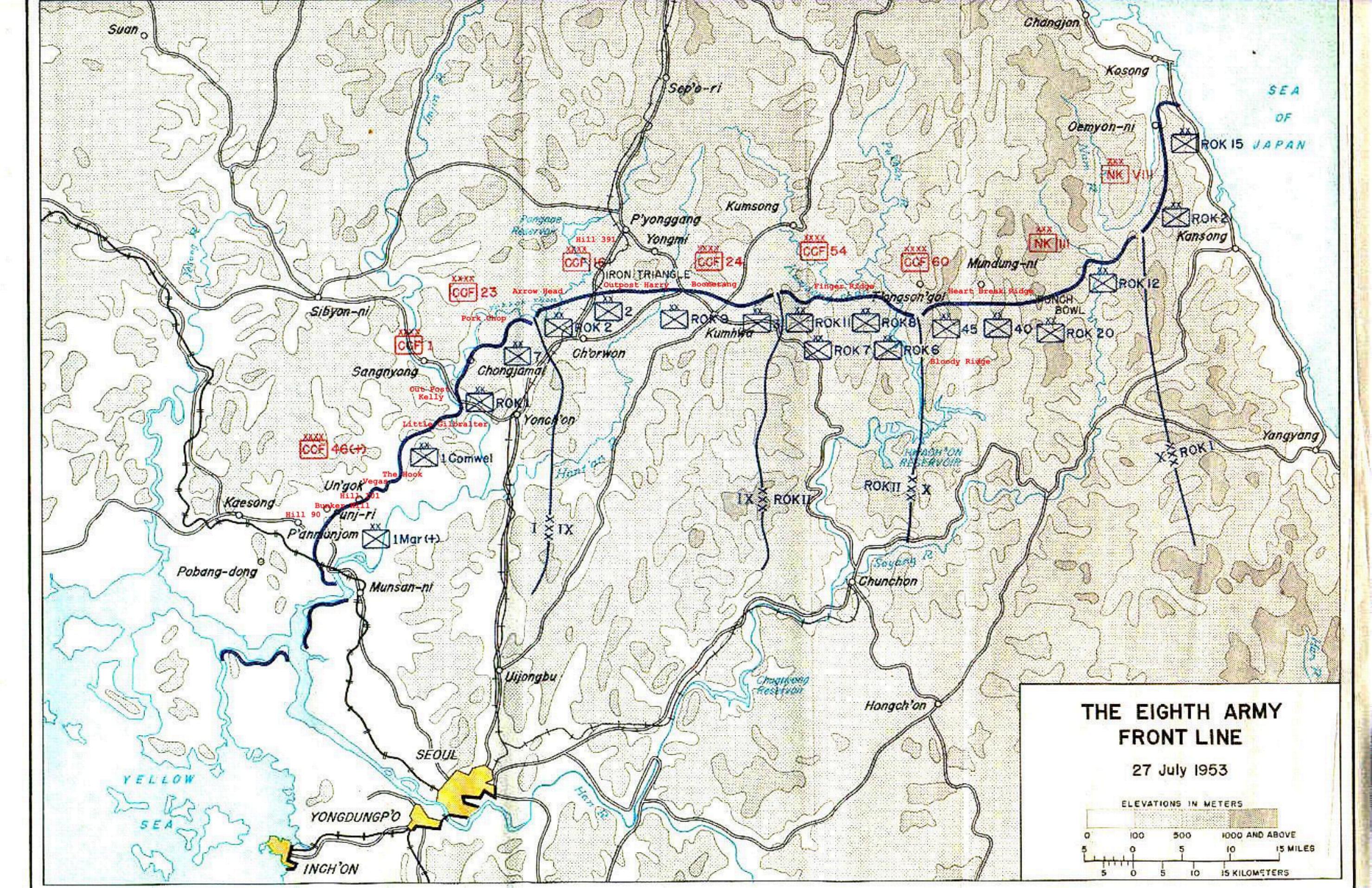
After Communist North Korean forces invaded South Korea on June 25, 1950, the early stages of the Korean War were marked by huge advances up and down the Korean peninsula in which United States, South Korean and the United Nations (U.N.) forces fought against North Korean and Communist Chinese forces there. After a huge Chinese offensive from November 1950 to January 1951 and massive American counter-attack in early 1951, the war settled into a stalemate near the 38th Parallel. By July 1952 both sides had constructed such strong defensive lines that neither could undertake a major offensive without suffering World-War-I like losses. In 1952, North Korea and China had 290,000 men on the front lines and another 600,000 in reserve. The U.N. countered with 250,000 troops on the line, backed by 450,000 reserves.
During the stalemate period bloody battles were fought from entrenched positions for relatively small tactical objectives at places with names like Pork Chop Hill, Heartbreak Ridge and Bloody Ridge. The artillery fire at some of these places was so heavy that hills were reduced by 20 feet. So many mines were laid that even today hikers occasionally get their legs blown off.
James I. Marino wrote in Military History magazine: “While the two sides engaged in tedious, often exasperating truce negotiations at Panmunjom, their soldiers huddled in trench systems resembling those of World War I. The constant patrolling and artillery duels seldom made headlines at home. But occasionally battles for outposts such as Heartbreak Ridge, the Punchbowl, Capitol Hill and the Hook drew media attention, giving them propaganda value at the talks.”
Donald moved from intense training into a cold, static war where small hills and outposts changed hands repeatedly. He served as a Forward Artillery Observer with the 32nd Artillery Battalion, 7th Army, shuttling between artillery batteries and infantry patrols on exposed positions like Hill 347, Pork Chop Hill, and near Old Baldy.
OP-13 and “The Rat’s Nest”: OP-13 was a critical observation post on Hill 347 that overlooked Pork Chop Hill, used by US forces for spotting artillery. “The Rat’s Nest” was a specific, heavily fortified staging area at the base of the hill used by Chinese forces for launching assaults on the American positions
The “Rat’s Nest”: This was the nickname for the intricate network of trenches, bunkers, and tunnels that made up the defensive fortifications on and around the hill.
Daily Life and Routine
Daily life for soldiers in the 32nd Artillery was defined by exhaustion, cold, and constant movement. Long, grinding shifts blurred into one another. Days alternated between tense hours on observation posts and short, brutal stretches of sleep in wet sleeping bags or crowded bunks. The overnight field problems at Camp Chaffee had hinted at this pace, but the front line made it real—fatigue that settled into the bones and never fully lifted.
Movement was constant and usually in small units. Patrols, trench walks, and night advances along old lines were the norm. Missions were measured not in miles but in yards—slow, careful progress through mud, wire, and darkness. The war at this stage was intimate and close‑held, fought one ridgeline, one bunker, one trench at a time.
Basic comforts were scarce. Food was whatever could be eaten quickly; dry clothing was a luxury; shelter was whatever the terrain allowed. Soldiers slept wherever they could—under ponchos, in shallow dugouts, or in crowded bunkers—and improvised against the cold, the rain, and the unending noise of artillery.
This was the rhythm of Donald’s service: long hours, constant vigilance, and the quiet endurance required to face another day on the line.
Combat, Danger, and the Front Line
Combat in the Korean hills was close, chaotic, and deeply personal. Small heights like Hill 347 and Pork Chop Hill were tactically vital and changed hands repeatedly, often under cover of darkness. Fighting came in sudden bursts—grenades, machine‑gun fire, and hand‑to‑hand clashes on narrow ridgelines where visibility was measured in feet, not yards.
For Donald, the danger was constant. As a Forward Observer, he lived inside the most lethal part of the battlefield. He called in fire missions, watched rounds land short and long, and felt the immediate threat when the enemy realized artillery was being directed from his position. Artillery duels shook the ground beneath him, and every correction he made carried the weight of lives depending on his accuracy.
Patrols brought their own hazards. Encounters were often sudden and disorienting—running into enemy troops at close range, hitting barbed wire in the dark, stumbling into minefields, or narrowly avoiding friendly fire. Confusion was common, and survival depended on split‑second decisions made under extreme stress.
Casualties were a constant reality. Units could be “chewed up” in a single night. Men saw bodies on the wire, woke soaked and disoriented after bombardments, and were evacuated to field hospitals with wounds or shock. The front line was not a place of steady progress but a place where endurance, vigilance, and courage were tested every hour.
Physical and emotional toll
- Exhaustion and exposure. Repeated wet nights, inadequate gear, and long marches produced illness and physical breakdowns.
- Fear and hypervigilance. Fear of flying before deployment and the constant threat on exposed outposts created ongoing anxiety.
- Moments of terror and relief. Close calls—explosions near a cave, thinking comrades were dead, then learning they survived—left lasting impressions.
- Disorientation after combat. Confusion, dizziness, and inability to speak clearly after intense action were common and sometimes required hospital care.
Camaraderie and small mercies
- Dependence on fellow soldiers. Survival often hinged on quick warnings from other Americans, sergeants taking over radios, and the small acts that kept men alive.
- Shared dark humor and resilience. Rumors, stories about allied brigades, and the ability to sleep despite conditions helped maintain morale.
- Pride in role. Serving as a forward observer gave Donald a crucial, if dangerous, responsibility—calling fire that protected infantry and shaped battles
“7th Army” — Why It Appears in His Records
Seeing “7th Army” in Donald’s paperwork is not only common—it is historically correct. Many artillery units carried Seventh Army lineage, meaning their organizational ancestry, traditions, and administrative history originated under the Seventh U.S. Army in Europe. When the Korean War began, the Army reassigned units with existing lineages to the Eighth Army in Korea rather than creating entirely new organizations.
This meant a soldier could accurately be described as:
“32nd Field Artillery Battalion, 7th Army (lineage), attached to Eighth Army (operational).”
His battalion’s lineage came from the Seventh Army. This means:
- The unit was originally formed under the Seventh Army organization.
- It carried Seventh Army traditions, insignia, or administrative history.
- But in Korea, it served under the Eighth Army.
In other words, its heritage was Seventh Army, but its battlefield command was Eighth Army.
What the Seventh Army Was Doing During the Korean War (1950 to 1953)
Although the Seventh U.S. Army never deployed to Korea, it carried a mission of enormous strategic weight during the conflict. Stationed in Europe at the height of early Cold War tensions, the Seventh Army became the anchor of America’s forward defense, ensuring that Western Europe remained secure while U.S. forces were heavily committed on the Korean Peninsula. Its presence deterred any Soviet attempt to exploit the moment and push into Germany, a possibility that deeply concerned U.S. and NATO planners.
During these years, the Seventh Army oversaw the training, equipping, and modernization of American ground forces in Europe. Large‑scale field exercises, artillery improvements, and infantry readiness programs kept U.S. units at a high state of preparedness. This training pipeline produced many of the formations and soldiers who would later deploy to Korea, which is why so many Korean War units carry “7th Army” in their lineage and honors.
In essence, the Seventh Army’s mission in Europe made the Korean War effort possible. By holding the line against the Soviet threat and sustaining the Army’s readiness across the Atlantic, it allowed the United States to fight a major war in Asia without leaving Europe exposed. Its contribution, though distant from the battlefield, was indispensable to the broader strategy of the Cold War.
What the Battalion Was in the Korean War
The 32nd Artillery Battalion served as a field artillery unit whose purpose was to deliver the indirect fire that kept frontline infantry alive. In the Korean War, artillery was the dominant arm of the battlefield—more decisive than armor, more constant than airpower—and battalions like the 32nd formed the backbone of the United Nations defensive line. Every major action, from holding an isolated outpost to breaking a massed Chinese assault, depended on the speed, accuracy, and endurance of these guns.
Their daily work was demanding and unrelenting. The battalion fired high‑explosive missions to tear apart Chinese attacks before they reached American trenches. At night, when the enemy relied on darkness to infiltrate, the guns sent up illumination rounds that turned the hillsides bright as day. When friendly units needed to shift positions or evacuate wounded under fire, the battalion laid down smoke to shield their movement. And whenever Chinese artillery opened up, counter‑battery crews worked with practiced urgency to silence those guns before they could inflict more casualties. Much of this support went directly to the infantry companies holding exposed hilltop outposts—small groups of men who depended on their artillery for survival.
This was not a rear‑area assignment. Artillery positions were prime targets for Chinese gunners, and the enemy regularly sent infiltrators and night raiding parties to disrupt or destroy the guns. The men of the 32nd lived under the same cold, the same danger, and the same constant pressure as the riflemen they supported. Their firepower shaped the battlefield, and their endurance helped hold the line in one of the most demanding wars of the twentieth century.
Forward Observers: The Heart of the Mission
Forward Observers like Donald were the battalion’s eyes, living not with the artillerymen but with the infantry they supported. Their job demanded a level of exposure and nerve unmatched by any other role in the fire‑support chain. To adjust artillery fire, they had to crawl up the same hills the infantry fought for, often under direct fire, and find a vantage point where they could see the enemy without being seen themselves. They slept in whatever shelter the line offered—bunkers hacked into frozen earth, caves, trenches, or nothing at all—and they worked with a wire phone, a map case, and a pair of binoculars that might as well have been a target on their backs.
Calling for fire was rarely done from safety. Many missions were adjusted while lying flat in mud or snow, rounds cracking overhead, mortars walking closer, or Chinese patrols probing the dark. Movement often happened at night along trench lines or narrow communication paths, where a single misstep could bring a sniper’s shot or a trip flare that lit the whole hillside. FOs were hunted relentlessly; the enemy knew that killing the observer meant blinding the artillery.
They were usually the first to see the enemy—and the first the enemy tried to kill. Yet the batteries trusted them completely. One wrong coordinate could bring friendly fire onto their own men, and the margin for error was measured in yards. Despite the danger, the cold, and the constant threat of being overrun, Forward Observers kept the guns firing true. Their courage and precision made the battalion’s firepower possible, and their presence on the line often meant the difference between holding a position and losing it.
For Forward Observers (Donald’s role):
- Living with infantry platoons
- Moving at night along trench lines
- Climbing hills under fire
- Calling in fire while lying flat in mud or snow
- Running wire phones, maps, and binoculars
- Being the first target when the enemy realized artillery was being directed
Donald’s story of explosions in the cave, barbed wire, minefields, and near‑misses is exactly what FO duty looked like.
Forward Observers and the Battalion They Served
Forward Observers were a rare combination of exposure, responsibility, and necessity. They were more exposed than infantry, more responsible than most NCOs, and more essential to the survival of the units they supported. Every fire mission they called carried life‑or‑death consequences, demanding exact coordinates, calm under pressure, and a willingness to work under direct enemy fire. Donald’s survival is extraordinary, and the clarity of his recollections remains historically reliable and deeply valuable.
A typical field artillery battalion in Korea consisted of Battalion Headquarters, three firing batteries (A, B, and C), a service battery responsible for ammunition, transport, and maintenance, and Forward Observer teams attached to infantry units. Donald served in the most dangerous role of all: Forward Artillery Observer. FOs were the battalion’s eyes and ears. They lived with the infantry, climbed the hills, and called in fire missions while being hunted by enemy snipers, mortars, and patrols. They were often the first target the Chinese tried to eliminate.
The battalion fought a hill war. The 32nd supported operations on Pork Chop Hill, Old Baldy, Hill 347, outposts in the Chorwon Valley, and positions near Kunwha. These were not sweeping maneuvers or large‑scale offensives—they were brutal, intimate fights over small ridges, trenches, and bunkers. The terrain dictated the battle, and the men who fought there lived in a world where every hilltop mattered and every decision could change the course of a fight.
Donald’s role placed him at the center of this unforgiving landscape. His work as a Forward Observer connected him to every hill, every patrol, and every fire mission. It was a job that demanded precision, courage, and a steady hand—qualities he carried with him through every moment of his service.
Hill 347 — The Overlook Above Pork Chop Hill
Hill 347 was a high observation point in the sector dominated by Pork Chop Hill and Old Baldy. Rising roughly 400 feet above Pork Chop Hill, it offered a commanding view of the surrounding valleys, trench networks, and Chinese troop movements. That elevation made it:
- a prime artillery observation post
- a dangerous forward position
- a constant target for Chinese counter‑fire
For a Forward Artillery Observer like Donald, Hill 347 was exactly the kind of place the Army relied on—and exactly the kind of place the enemy feared.
Hill 347 was not famous because of a single dramatic battle; it was important because of what it overlooked. From its summit, observers could see:
- Pork Chop Hill, one of the most contested outposts of the war
- Old Baldy, a flat‑topped hill fought over by U.S., Ethiopian, Colombian, and Chinese forces
- Chinese supply routes feeding the front
- Night movements, cooking fires, and troop rotations that revealed enemy intentions
In a war defined by ridgelines and outposts, whoever controlled the high ground controlled the fight. Hill 347 was the eyes of the sector.
Hill 347: Where Forward Observers Carried the War on Their Shoulders
Chinese forces knew exactly where American observers were positioned, and Hill 347 was one of the places they watched most closely. For Donald, that hill was far more than a rise on a map—it was a workstation, a responsibility, and a lifeline for the infantry spread out below him. From that height he scanned for Chinese troop movements, called in artillery fire, adjusted rounds that fell short or long, and coordinated with batteries positioned miles behind the line. His calls protected patrols, broke up attacks, and often determined whether a position held or fell. Every transmission he made carried life‑or‑death weight.
The Chinese understood this. Once they identified where the fire was being directed from, they targeted the observers with mortars, snipers, and sudden bursts of artillery meant to blind the American guns. Hill 347 became a dangerous perch—exposed, contested, and constantly under threat.
It stood at the center of what became known as the Outpost War, the brutal and grinding phase of 1952 to 1953 when the front lines barely shifted but the fighting never eased. The U.S. Eighth Army and Chinese forces battled over small hilltop positions that were attacked, lost, retaken, and shelled without pause. These outposts were miniature wars unto themselves, places where a handful of men could influence the fate of hundreds.
Hill 347 was one of those places. It was where the war was watched, measured, and fought in close quarters—where Donald’s courage, judgment, and steadiness under fire became the difference between chaos and control. It remains one of the clearest windows into the danger he faced and the strength he carried.
The Battalion Lived in a World of Mud, Cold, and Noise
For the men of the 32nd Artillery, the Korean War was fought in a landscape defined by mud, cold, and unending noise. Their gun positions sat behind the infantry but still well within range of Chinese artillery and mortars. There was no safety in the rear—only slightly more distance between them and the front line.
Artillery crews spent their days and nights digging gun pits and revetments, stacking shells shoulder‑high, and keeping their howitzers ready to fire at a moment’s notice. They lived on 24‑hour alert, knowing that a fire mission could come at any second, and that Chinese counter‑battery fire could follow just as quickly. Night raids and sabotage patrols were a constant threat, forcing crews to stay armed, awake, and wary even when the guns fell silent.
Across the battalion, daily life meant:
- Working in freezing temperatures, mud up to their ankles, and constant exhaustion
- Enduring incoming artillery, mortar fire, and the relentless concussion of their own guns
This was the environment Donald’s battalion lived in—an unforgiving world where the ground shook, the air never truly quieted, and every man carried the weight of knowing that the line depended on them.
What Daily Life Looked Like for the 32nd Artillery
For the men of the 32nd Artillery, daily life was defined by exhaustion, noise, and constant readiness. In the batteries—the rear positions where the guns were emplaced—there was no such thing as a true “rear area.” The work never stopped. Crews lived on 24‑hour fire‑mission alert, hauling heavy shells, maintaining their guns, and digging revetments to protect the pieces from incoming fire. They slept in tents or bunkers when they could, ate quickly—often cold food—and listened for the field phone to ring with the next mission. The soundscape was unending: outgoing artillery, incoming counter‑battery fire, and aircraft passing overhead. Even when the guns were silent, the tension never eased.
Forward Observers lived a different life entirely. Donald’s role placed him with the infantry platoons on the line, moving at night along trench networks, climbing hills under fire, and calling in artillery while lying flat in mud or snow. His tools were simple—wire phones, maps, and binoculars—but they made him the first target once the enemy realized artillery was being directed. FO duty meant living in caves, bunkers, or shallow trenches, always exposed, always hunted, always responsible for the accuracy of the guns miles behind him.
The dangers he described—explosions in the cave, barbed wire, minefields, sudden firefights, and near‑misses—are exactly what Forward Observers faced. His experience reflects the reality of the job:
- FOs were closer to the enemy than most artillerymen and more exposed than most infantrymen
- Every movement, every call, every correction carried life‑or‑death consequences
This was the world Donald inhabited: a life lived on the edge of danger, defined by responsibility, precision, and the quiet courage to keep doing the job day after day.
The 32nd Artillery in a Static War
By 1952 through 1953, the Korean War had hardened into a static and punishing conflict. The front lines rarely shifted, yet the danger never rested. The ridgelines were scarred and raw, carved by months of shelling. The earth carried the smell of cold soil, burned roots, and the faint metallic scent of spent ammunition. The wind moved through the valley with a thin, icy whistle, brushing against canvas tents and rattling loose stones. Nights were filled with distant rumbling, sudden cracks of rifle fire, and the low rolling thunder of artillery echoing from hill to hill. Even in moments of quiet, the silence felt tense, as if the land itself were holding its breath.
In this landscape of trenches, frozen mud, and exposed outposts, the mission of the 32nd Artillery was relentless. Their guns were the heartbeat of the line. They held back Chinese advances, supported limited offensive pushes, protected isolated positions, and answered enemy probes with instant force. The ground shook when their guns fired. Dust drifted from bunker ceilings. The air trembled with concussion. Artillery was the decisive weapon of the Korean War, more influential than tanks and more reliable than aircraft. Entire infantry companies survived because units like the Thirty Second stood ready at every hour, in every kind of weather, with every gun pointed toward the ridges where danger gathered.
This was the world Donald lived in. As a Forward Observer, he became the eyes of the artillery, the one who saw the battlefield at ground level and translated its shifting dangers into fire missions that could save lives or stop an attack before it reached the trenches. His position placed him in a uniquely perilous space. He walked through terrain where the wind carried the smell of wet canvas, cold stone, and smoke drifting from distant fires. He felt the vibration of enemy rounds striking the earth, a dull thud that traveled through the soles of his boots. He listened for movement in the darkness, for the soft crunch of footsteps on frost, for whispers carried across the valley. He watched for silhouettes rising along the ridgelines, shapes that appeared and vanished in the half light.
He stood closer to the enemy than most artillerymen. He stood more exposed than most infantrymen.
Every time he lifted the field telephone, he felt the cold metal against his palm and the weight of life and death in his fingers. The handset often trembled slightly from the concussion of nearby fire. The cord smelled faintly of rubber and dust. A single incorrect coordinate could bring friendly fire onto the men he lived beside. A single correct one could break an assault and save an entire platoon. The responsibility demanded clarity under pressure, absolute composure, and a willingness to stand in places where survival was never promised.
Forward Observers lived with the constant awareness of being watched. The enemy studied their movements, searched for the glint of a lens, listened for the faint click of a handset. The ground beneath them was uneven, littered with spent casings, broken branches, and the remnants of earlier fights. The air carried the sharp scent of explosives and the heavy quiet that settles before an attack. The sky often hung low and gray, pressing down on the valley like a lid. Every step mattered. Every breath mattered. Every decision mattered.
Forward Observers were among the most dangerous assignments in the war. Donald’s survival, along with the clarity and detail of his memories, is extraordinary. His service stands out not only for what he endured, but for the precision, courage, and steadiness he brought to one of the most demanding roles on the Korean battlefield.
Old Baldy (Hill 266)
Old Baldy—Hill 266—was one of the most bitterly contested outposts of the Korean War, and it was the hill Donald patrolled near and was sent to observe. From his position, he watched the same approaches, tracked the same enemy movements, and endured the same artillery patterns that defined the fighting on Old Baldy itself. The hill was a flat‑topped observation point, and whoever held it could see everything. That single fact made it one of the most valuable—and most dangerous—pieces of ground on the entire front.
The cost of holding Old Baldy reflects the intensity of the struggle. Verified casualties included:
- U.S. losses: 1,952 total, including 307 killed
- Colombian Battalion: 97 killed and 33 wounded
- Chinese casualties: more than 3,000 killed and wounded (combined estimate)
These numbers were driven by the nature of the hill. Because Old Baldy offered commanding visibility, it was struck repeatedly by massive artillery barrages, night assaults, counterattacks, and close‑quarters fighting that often came down to grenades, bayonets, and hand‑to‑hand combat. Control of the hill shifted multiple times, each change marked by heavy losses.
Donald’s description of Chinese troops suddenly appearing, firing, and forcing a rapid withdrawal is exactly consistent with the historical record. This was how Old Baldy was fought—violent, sudden, and unforgiving. His vantage point placed him inside the same deadly pattern, witnessing the same movements and responding to the same threats that defined one of the most brutal outpost battles of the war.
Pork Chop Hill (Hill 255)
Donald’s position on Hill 347 placed him directly above the battlefield that came to symbolize the final, punishing months of the Korean War. From that height he overlooked Pork Chop Hill—Hill 255—a small, jagged outpost whose name would become synonymous with sacrifice. He was not on the hill itself, but he was tied to it by every fire mission he called, every movement he tracked, and every burst of Chinese artillery that reached for the observers on the surrounding ridgelines.
The cost of holding Pork Chop Hill was staggering. Verified American casualties included:
- 347 killed, 1,036 wounded, and 9 captured
- Chinese losses: U.S. estimates of 1,500 killed and 4,000 wounded; Chinese records for the July battle listing 533 killed and 1,242 wounded
The numbers differ, but the truth they reveal does not—this was one of the bloodiest pieces of ground in the entire war.
From Hill 347, Donald watched the same troop movements, endured the same artillery patterns, and operated under the same threats that defined the fighting on Pork Chop Hill. His work as a Forward Observer connected him to that struggle in the most direct way possible. He saw the battlefield unfold in real time, and his calls for fire shaped the fight below. In the end, his vantage point above Pork Chop Hill stands as one of the clearest measures of the danger he faced and the quiet strength he carried.
The Outpost War, 1952 through 1953
The Outpost War was the harsh and grinding phase of the Korean conflict that shaped the world Donald lived in. It included Hill 347, Kimhwa, and the Chorwon Valley, the very ground where he served as a Forward Observer. This period was not defined by sweeping offensives. It was defined by relentless pressure. Small hills were fought over again and again, night after night, with no real movement of the front lines but constant danger for the men who held them.
The Outpost War had a physical presence that could be felt in the skin and in the breath. The ridgelines were scarred by months of shelling. The soil was packed with fragments of old battles. The wind carried the smell of cold stone, burned roots, and drifting smoke from distant fires. Even the quiet had weight. It pressed against the ears, thick and expectant, as though the hills themselves were listening. A still morning could erupt into violence without warning. A peaceful night could suddenly blaze with flares rising into the sky, turning the valley white and revealing every shadow.
It was a war of attrition fought on ridgelines and in trenches, where casualties mounted even when no major battle was underway. The fighting took the form of small unit clashes, night raids, and sudden hilltop assaults. Artillery duels rolled across the valley without pause, shaking the earth and filling the air with the metallic scent of spent rounds. The ground trembled beneath boots. Dust drifted from bunker ceilings. The sky hung low and gray, pressing down on the valley like a weight.
These were the conditions that produced the battles of Old Baldy and Pork Chop Hill, fierce and localized struggles that became symbols of the larger pattern of the war. Donald’s service on Hill 347 placed him squarely inside this world. From his vantage point, he watched the battlefield unfold in miniature. Every movement mattered. Every call for fire carried weight. Every day demanded the same quiet courage.
He lived in a world where the earth smelled of damp stone and cordite, where the wind carried the taste of smoke, where the nights pressed close and heavy. He felt the vibration of artillery through bunker walls. He heard the soft thud of enemy rounds striking the hillside. He watched shadows move along the ridgelines and listened for the faintest sign of danger. The cold seeped through clothing. The mud clung to boots. The air stung the face. Every sense was alert, tuned to the smallest shift in sound or movement.
This was the environment that shaped his experience, a war fought in miniature on isolated outposts where a handful of men could influence the fate of hundreds. It was an unending cycle of tension, danger, and responsibility that defined every moment of his time on the line.
The Line, the Cave, the Minefield, and the Hospital
Hill 347 rose above the Chorwon Valley like a dark, jagged sentinel. Donald lived on its slopes, breathing the cold air that carried the smell of damp stone, burned roots, and drifting smoke. The valley below was a patchwork of danger. Chinese forces gathered near their cooking fires, their movements faint and distant. The wind pressed against the hillside with a thin, icy whistle. Every day began with tension. Every night ended with vigilance.
Inside the cave carved into the rock, the air felt close and heavy. The walls smelled of wet stone and old dust. The field telephone rested on a small ledge, its metal cool beneath his fingers. When Donald called in a fire mission, the cave vibrated with the distant concussion of artillery. Dust drifted from the ceiling. The air tasted of grit. The hillside seemed to breathe with each impact.
Then the world changed. Two explosions struck behind the cave, sudden and violent. The sound cracked through the stone like a deep roar. Smoke drifted through the narrow opening, carrying the sharp scent of explosives. The ground trembled beneath his boots. For a moment, the cave felt alive, as though it were inhaling the shock of the blast. Donald dropped the phone and moved toward the back of the cave, his breath tight, his eyes stinging. The mission ended. The hillside held its silence.
Days later, the patrol toward Old Baldy began in darkness. The abandoned American trench line smelled of cold clay and old smoke. The men reached a half collapsed bunker halfway up the slope and spent the night inside it, listening to the distant rumble of artillery rolling across the valley. The darkness pressed close. The cold seeped through clothing. Even silence felt tense.
Just before dawn, they climbed the rest of the slope. The sky was a pale gray sheet overhead. The ground was uneven and scattered with debris from earlier fights. When they reached the crest, the hill erupted. Chinese soldiers rose from the earth as if the ground had opened beneath them. Rifles cracked. Dirt jumped. The air filled with the sharp smell of gunpowder. Donald dropped to the earth and reached for his field phone. The metal felt icy. The cord smelled of rubber and dust. He tried to call in fire as the platoon fell back.
He ran and struck a roll of barbed wire. The impact knocked him flat. His helmet flew off. His phone slipped from his hand. The wire bit into his clothing. For a moment he could not breathe. The world spun. The earth felt cold and unforgiving beneath his chest. Four men could not reach the bunker. Four could not reach the fence line. They pressed against the ground, waiting for the next burst of fire. The Chinese did not shoot. The silence felt impossible.
They moved again, climbing the slope until a figure appeared. His voice cut through the morning air. Do not shoot, do not shoot, for Gods sake, we are Americans. The warning proved true. Moments later another soldier appeared, his voice urgent. Return. You are in a minefield. The air froze. The ground beneath their boots felt suddenly treacherous. Every step became deliberate. Every breath felt tight. The hillside seemed to hold its breath with them.
When they reached the base of the hill, the valley felt changed. The air tasted sharper. The earth seemed heavier. The morning light revealed the terrain they had crossed, a place where one wrong step could have ended everything.
The strain of these days settled into Donald’s body. The pressure behind his eyes grew heavier. His thoughts slowed. His voice faltered. The cold air stung his sinuses until every breath felt sharp. One morning, as he tried to speak, the words tangled. The world tilted. The medics moved quickly. Their hands were steady. They guided him down the slope toward evacuation.
The aircraft smelled of oil and canvas. The cabin air was thin and cold. The sky outside was a pale, endless gray. When the plane descended into Japan, the air changed. It grew warmer, softer, filled with scents he had never known.
Osaka Hospital was quiet. The halls smelled of antiseptic and warm linen. The lights were gentle. The silence felt almost sacred after the tension of the valley. The doctors examined him carefully. The X rays revealed the truth. The sinus condition he had carried since childhood had returned, aggravated by the cold and strain of the front.
When he was well enough to walk, his attending physician took him into the city. Osaka’s streets smelled of rice, incense, and flowering trees. The people bowed politely. Their voices were soft. Kyoto’s temples rose like ancient guardians. The wooden beams smelled of age and cedar. Lanterns glowed in the evening light. The gardens were quiet, filled with moss and still water. The courtesy shown to American soldiers surprised him. The war had ended only seven years earlier, yet the people greeted him with kindness that felt almost unreal.
When his time in Japan ended, he returned to Korea with a steadier body and a clearer mind. The valley awaited him, unchanged in its danger, unchanged in its cold. Yet the memory of Osaka and Kyoto stayed with him, a reminder that even in the harshest conflict, there were places where the world felt gentle.
The Reality of the Outpost War
Even on days when Donald’s specific patrol or hill position was not overrun, the entire region around Hill Three Forty Seven, Kimhwa, and the Chorwon Valley lived under the same relentless pressure. The Outpost War did not pause. It moved like weather, shifting from one ridgeline to another, settling over the valley with a heaviness that could be felt in the skin and in the breath. The land seemed to hold memory. The soil was packed with old shell fragments. The air carried the scent of cold stone, burned roots, and smoke drifting from unseen fires. Even the quiet had weight. It pressed against the ears, thick and expectant, as if the hills themselves were listening.
Men could go from relative calm to chaos in minutes. A still morning could erupt into artillery fire without warning. A night that seemed peaceful could suddenly fill with flares rising into the sky, bathing the valley in harsh white light that made every shadow feel dangerous. The wind carried the faint crackle of distant rifles. The ground trembled with the low rumble of artillery fired miles away. The sky often hung low and gray, a heavy lid over the valley that made every movement feel slower, colder, and more deliberate.
Across the sector, units endured conditions that wore down the body and the mind. They faced heavy casualties and constant artillery fire. They endured repeated Chinese assaults and a rapid turnover of frontline companies.
The hills changed hands. Trenches filled and emptied. The ridgelines echoed with the sound of men fighting, retreating, advancing, and holding on. The Outpost War was a grinding contest of endurance, fought on exposed hills where survival depended on vigilance, timing, and the steady courage to do the job again the next day.
These conditions meant that Donald was never far from danger. The infantry units he lived beside suffered losses even when no major battle was underway. A single round could land short. A single patrol could vanish into fog. A single misstep could lead into a minefield. Forward Observers like him shared every risk. They walked the same ground, breathed the same cold air, and felt the same tremors of distant fire beneath their boots.
He lived in a world where the earth smelled of damp stone and cordite, where the wind carried the taste of smoke, where the nights pressed close and heavy. He felt the vibration of artillery through bunker walls. He heard the soft thud of enemy rounds striking the hillside. He watched shadows move along the ridgelines and listened for the faintest sign of danger. The cold seeped through clothing. The mud clung to boots. The air stung the face. Every sense was alert, tuned to the smallest shift in sound or movement.
This was the world Donald served in, an unending cycle of tension, danger, and responsibility that shaped every moment of his time on the line. It was a world where courage was measured not only in battle, but in the quiet hours between battles, when men waited, watched, and prepared to face whatever came next.
Why Hill 347 Matters for Donald
Although Donald never stood on Pork Chop Hill itself, he served inside the same deadly sector. From his observation post on Hill 347, he watched the approaches to Pork Chop, studied the movement of Chinese troops in the valleys below, and called fire missions into the same contested ridgelines that shaped the battles of 1952 and 1953. The air he breathed carried the same cold smoke. The ground beneath his boots trembled from the same artillery. The danger that pressed against Pork Chop pressed against him as well.
Hill 347 was not a distant vantage point. It was part of the same living battlefield. When Donald saw Chinese troops gathering “for a meal” and called in fire, he was responding to the rhythm that defined this front. Men moved constantly. Units rotated without rest. Assaults erupted without warning. The valleys below were never still. His memory matches the documented pattern of the Outpost War, a pattern of ceaseless motion, sudden violence, and the quiet moments that carried their own threat.
Historians describe the Outpost War as the grinding phase of 1952 through 1953, a period when the front lines barely shifted but the fighting never eased. Outposts like Pork Chop, Old Baldy, T Bone, and Hill 347 were small, exposed hilltops that were attacked, lost, retaken, and shelled relentlessly. They were miniature wars fought on narrow ridgelines. The men who held them or observed them lived under constant danger. The air tasted of frost and cordite. The ground trembled with distant fire. Every movement mattered.
Donald’s work as a Forward Observer placed him inside this struggle. He was both witness and participant. His calls for fire shaped the fight below. His steadiness under pressure protected the infantrymen who depended on him. He lived with the constant awareness of being watched. He breathed air that carried the scent of cold stone and smoke. He felt the earth vibrate beneath his boots. His decisions carried life and death.
For Donald, Hill 347 was not just a position on a map. It was the place where he carried his responsibility with courage. It was the place where he watched the battlefield unfold in miniature. It was the place where his voice on the field telephone could save lives. It remains one of the clearest windows into the danger he faced and the strength he carried.
Legacy
Donald Gartly Patrick Williams lived a life shaped by courage, curiosity, and a steady, quiet strength. His story began in the rugged hills of Korea, where he served as a second lieutenant and Forward Artillery Observer with the Thirty Second Artillery Battalion during the Korean War. From 1952 to 1953, he walked the ridgelines and trenches of some of the most contested ground of the conflict, including Hill 347, Pork Chop Hill, Old Baldy, and the Ch’owas Valley. He carried not only a radio and map case, but the weight of responsibility for the men around him.
As a Forward Observer, Donald lived with the infantry, often closer to the enemy than the artillerymen whose fire he directed. He climbed hills in darkness, slept in bunkers carved into frozen earth, and called in fire missions while shells burst around him. He survived cave explosions, barbed wire, minefields, and the disorienting chaos of night combat. He saw units chewed up by the relentless pressure of the Outpost War. He endured exhaustion so deep he collapsed into sleep soaked to the bone. He carried memories of comrades who never returned.
Yet even in the midst of war, Donald held onto something essential. He believed in learning, in discipline, and in the quiet power of knowledge. That belief would guide the rest of his life.
When he returned home, Donald did not allow the hardship of war to define him. Instead, he built a life rooted in service of a different kind, the service of education, literacy, and community enrichment. He pursued higher education with the same determination he had shown on the Korean hillsides, earning his Master’s degree in Library Science and becoming a professional librarian.
Where once he had carried coordinates and field maps, he now carried books, archives, and the stories of others. Where once he had guided artillery fire, he now guided students, families, and lifelong learners. His library became a place of safety, discovery, and belonging, an environment he cultivated with the same sense of duty he had shown in uniform.
Donald believed deeply in the transformative power of reading. He understood that knowledge could steady a life, open a mind, and heal a heart. He treated every patron with dignity, every question with patience, and every book with reverence. His work was not simply a job. It was a calling. He became a steward of history, a mentor to young readers, and a quiet champion of education in his community.
During his military service, Donald spent time recovering in a hospital in Japan. What began as a period of healing became a profound turning point in his life. Japan opened his eyes to a world of beauty, discipline, and cultural richness. He was moved. This experience stayed with him long after he returned home. It planted the seeds of a lifelong love for Asian culture, especially Chinese and Japanese cuisine.
Years later, as a civilian, he returned to Japan. This time, he walked the streets not as a soldier recovering from war, but as a man seeking connection, understanding, and peace. That return visit completed a circle in his life, transforming a place of recovery into a place of joy.
His love of Asian cuisine, especially Chinese food, became one of his great pleasures. He delighted in the balance of flavors, the warmth of shared meals, and the sense of connection that came from exploring dishes rooted in the same part of the world where he had once healed. Japanese cuisine held a quieter place in his heart, subtle, refined, and meaningful, much like the language he had taken the time to learn.
Donald exhibited a remarkable aptitude for languages. He earned his Master’s degree in French and spoke with a proficient French accent. He also possessed a foundational understanding of German, Italian, some Spanish, and Japanese. Each language reflected the same curiosity and discipline that characterized his life. These languages were not simply academic achievements. They were expressions of his belief that understanding another’s language is the first step toward understanding their heart.
Today, Donald is remembered not only as a soldier who faced danger with steadiness and resolve, but as a scholar who dedicated his life to learning and to helping others learn. His journey, from the trenches of Korea to the quiet stacks of the library, stands as a testament to resilience, purpose, and the enduring strength of the human spirit.
His legacy lives on in every life he touched, every student he encouraged, every book he placed in a young reader’s hands, and every moment of safety and belonging he created for others. He proved that service takes many forms, and that a life shaped by hardship can become a life that gives hope.
In both places, he served with humility. In both places, he made a difference. In both places, he left a legacy.
This is the story of a man who defended freedom abroad and nurtured knowledge at home, a soldier and a librarian whose courage and compassion will be remembered for generations.