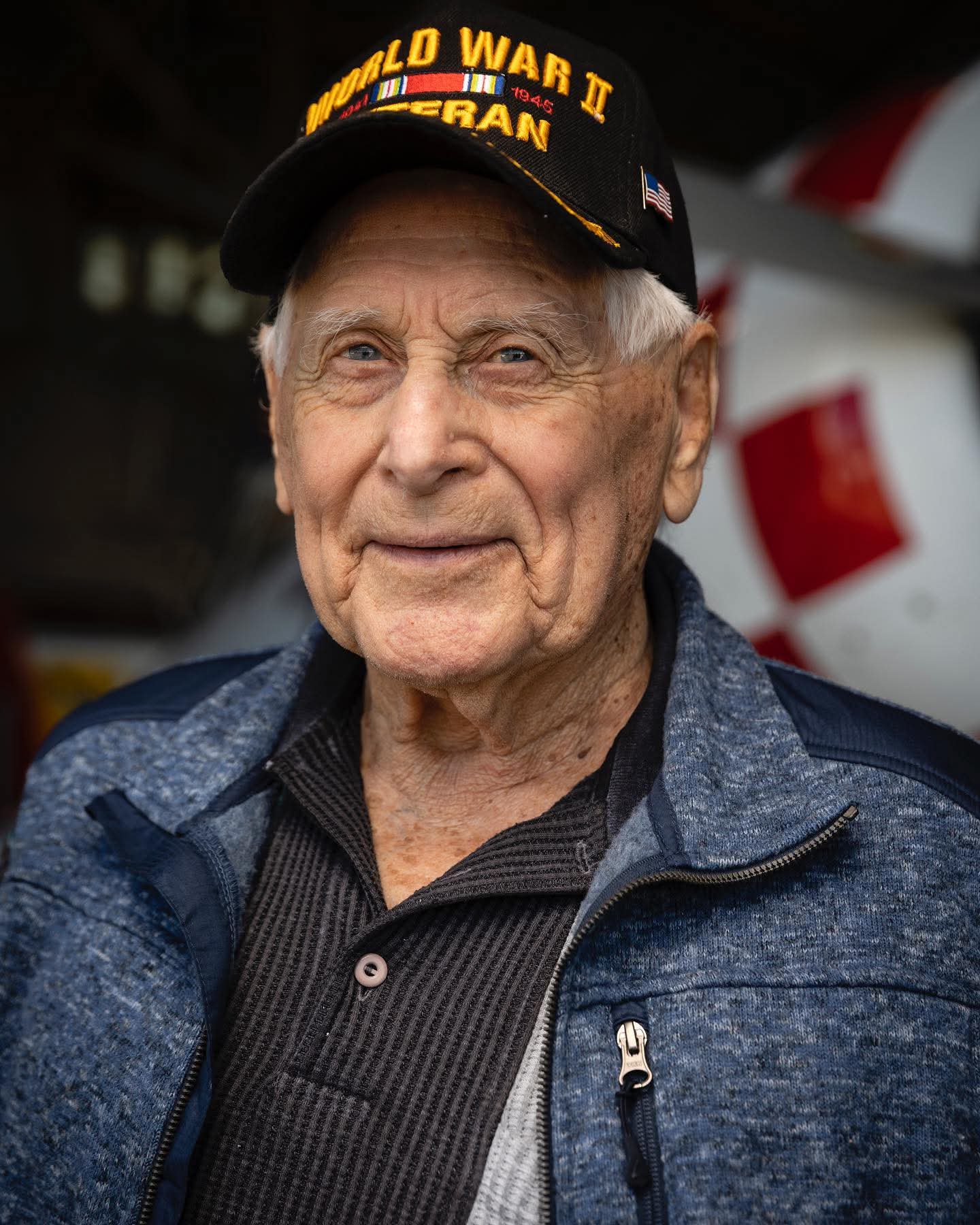
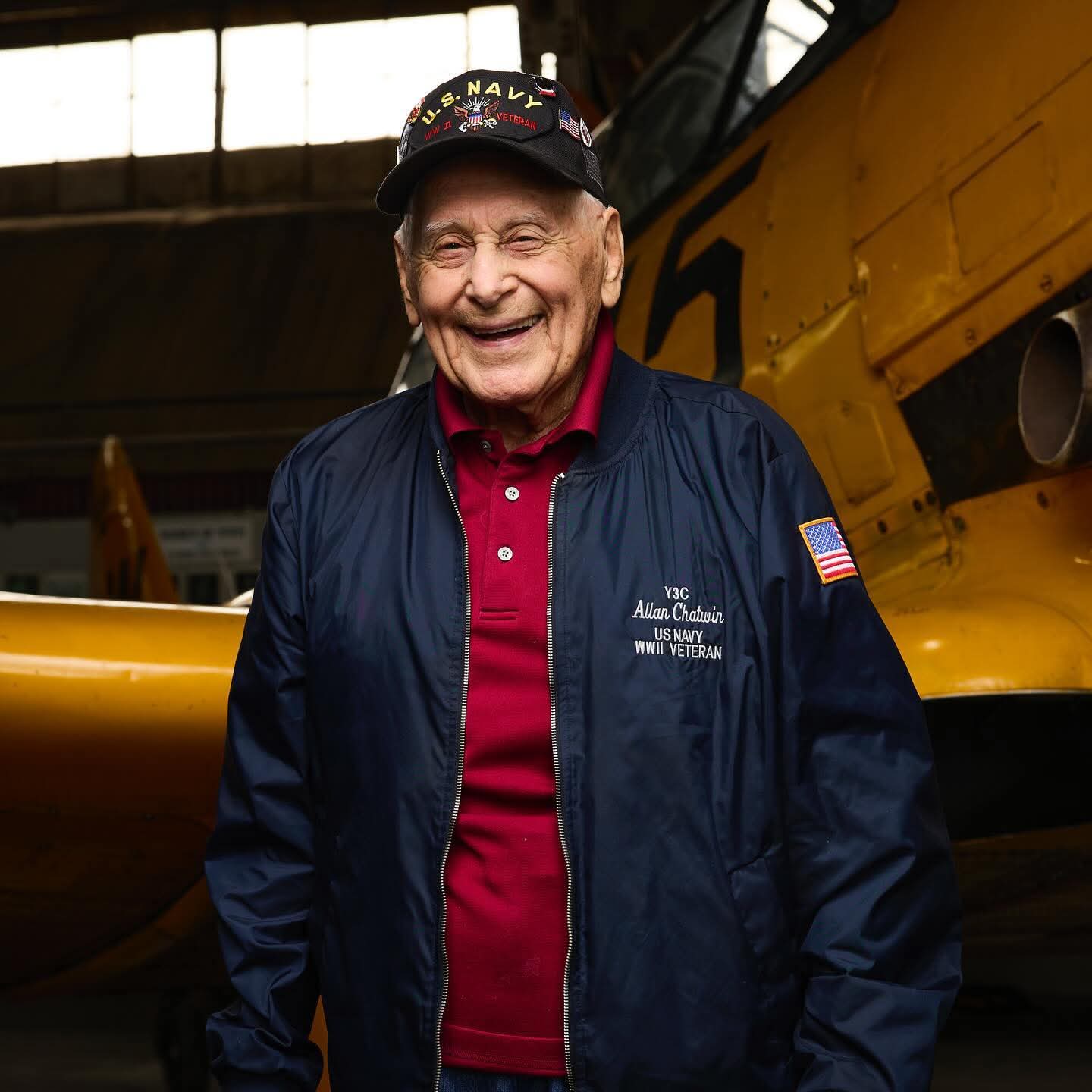
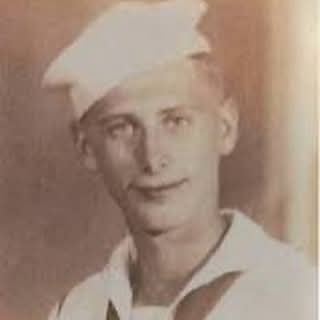
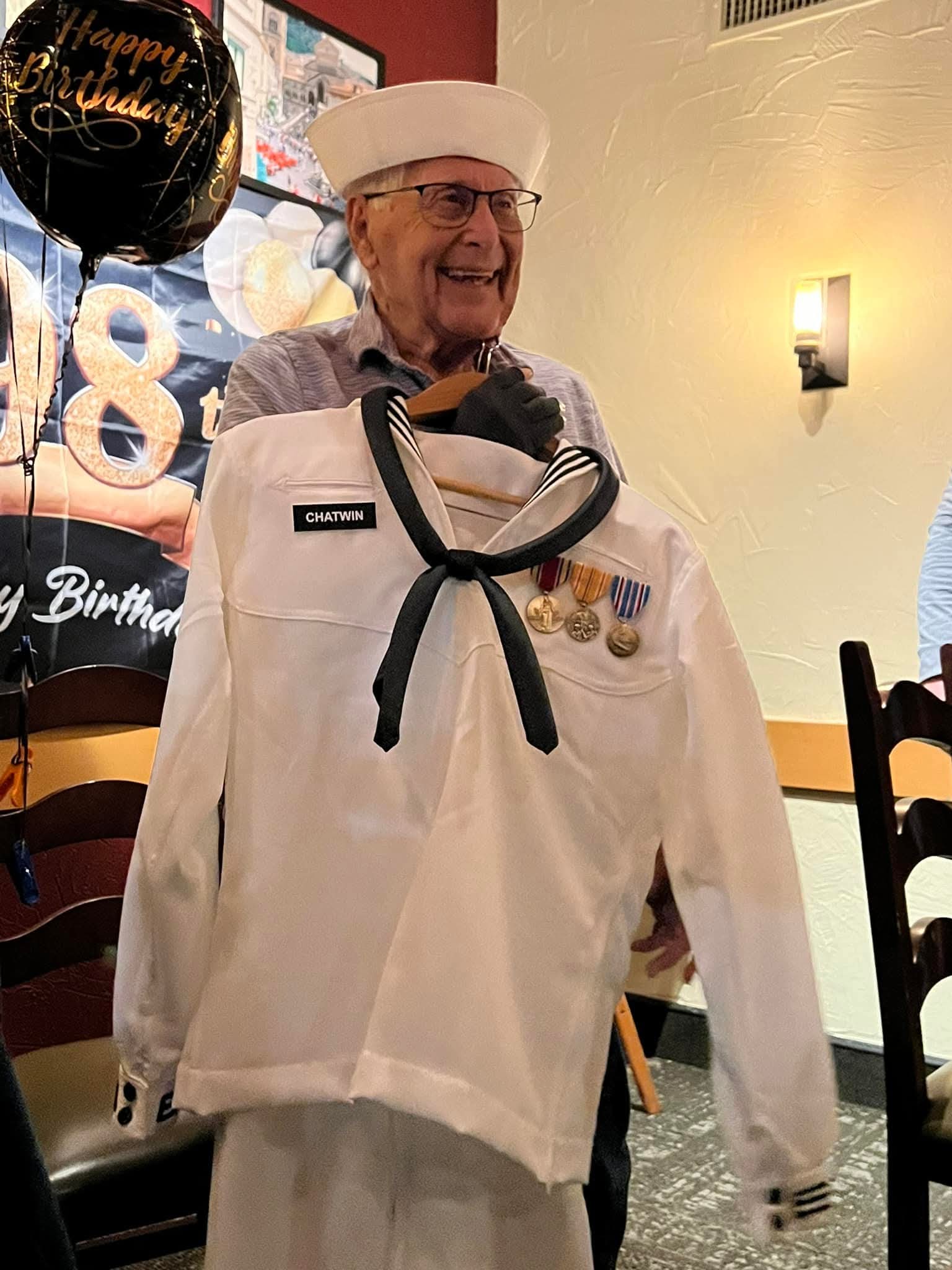
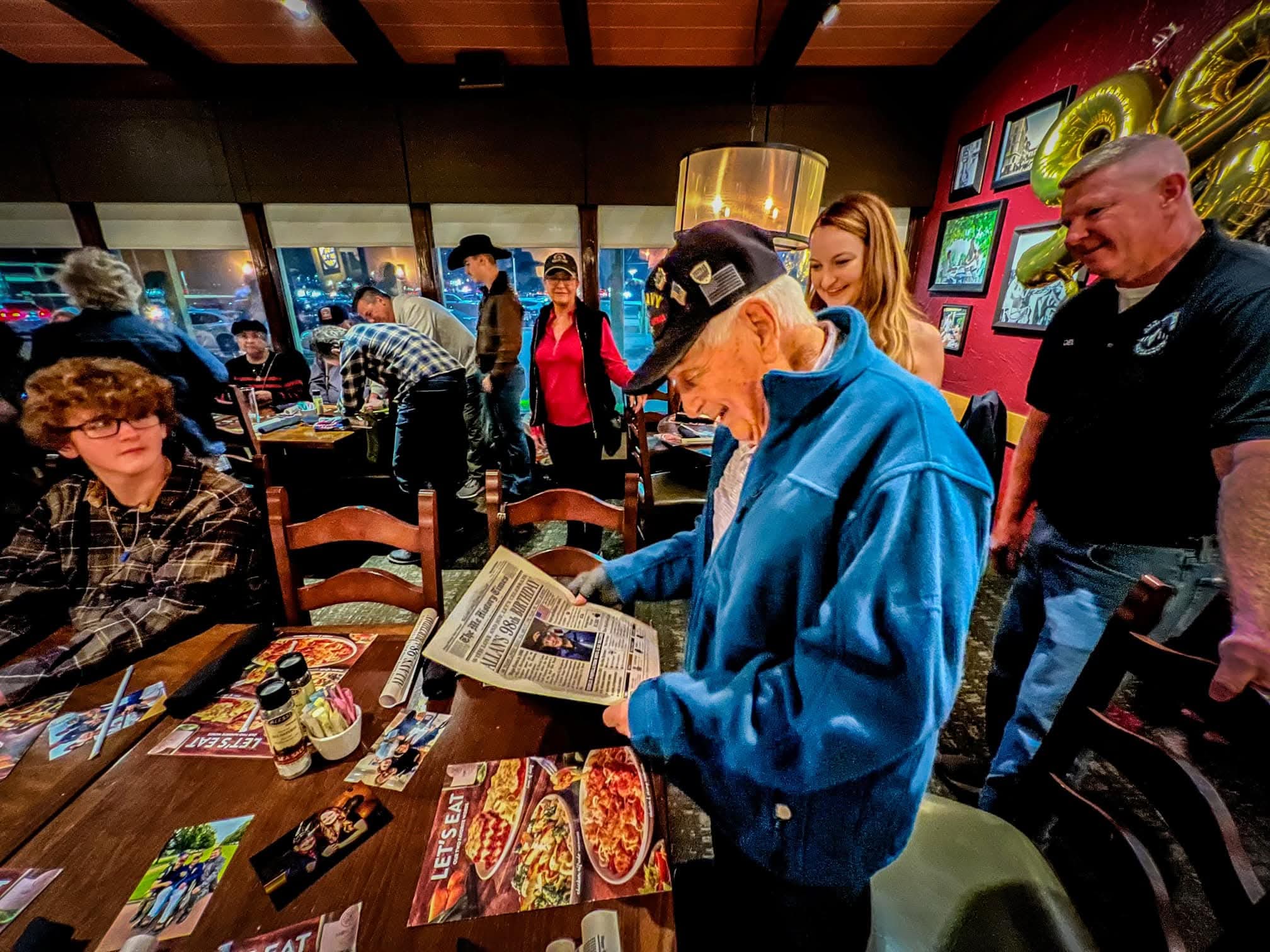
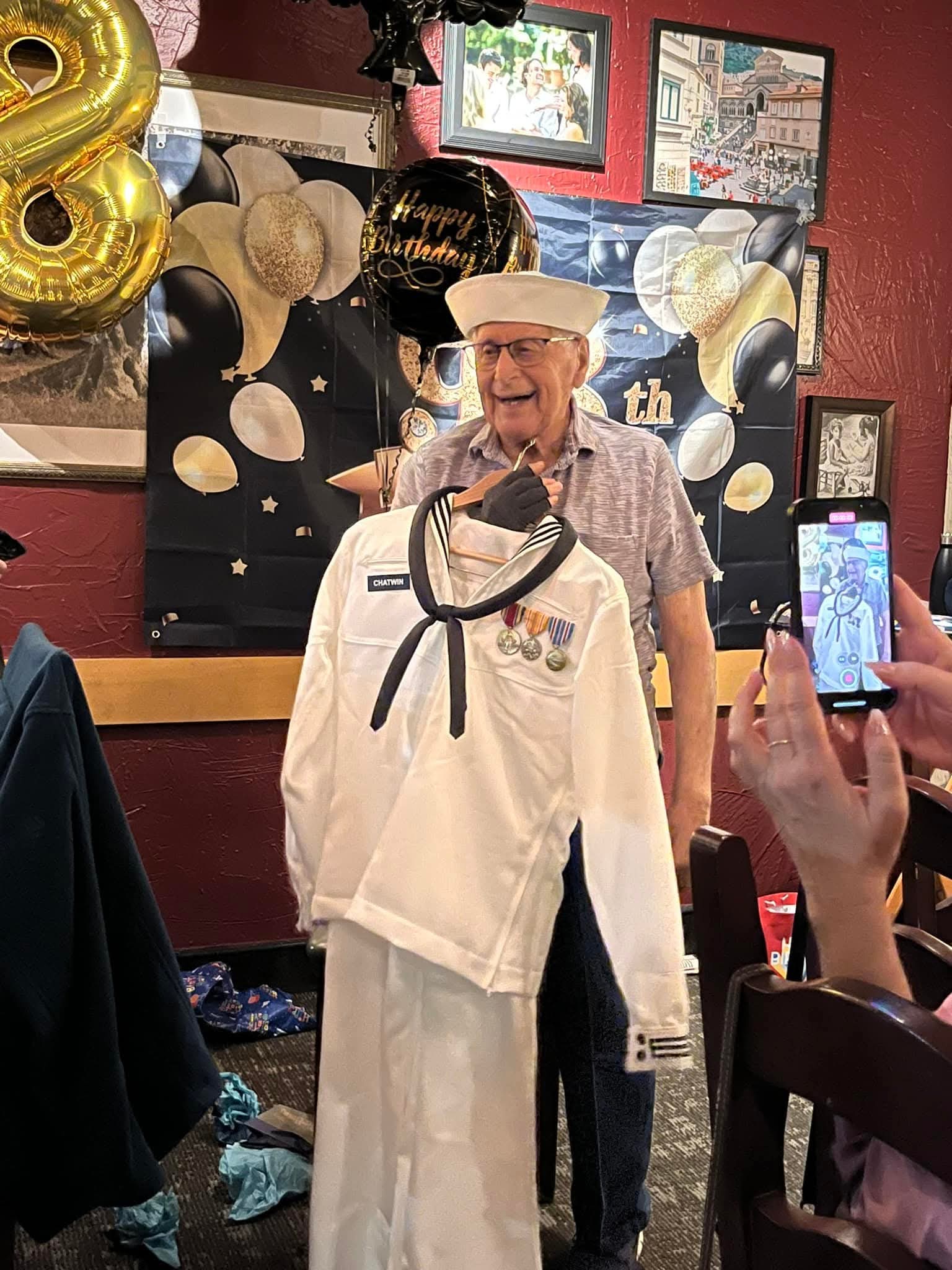
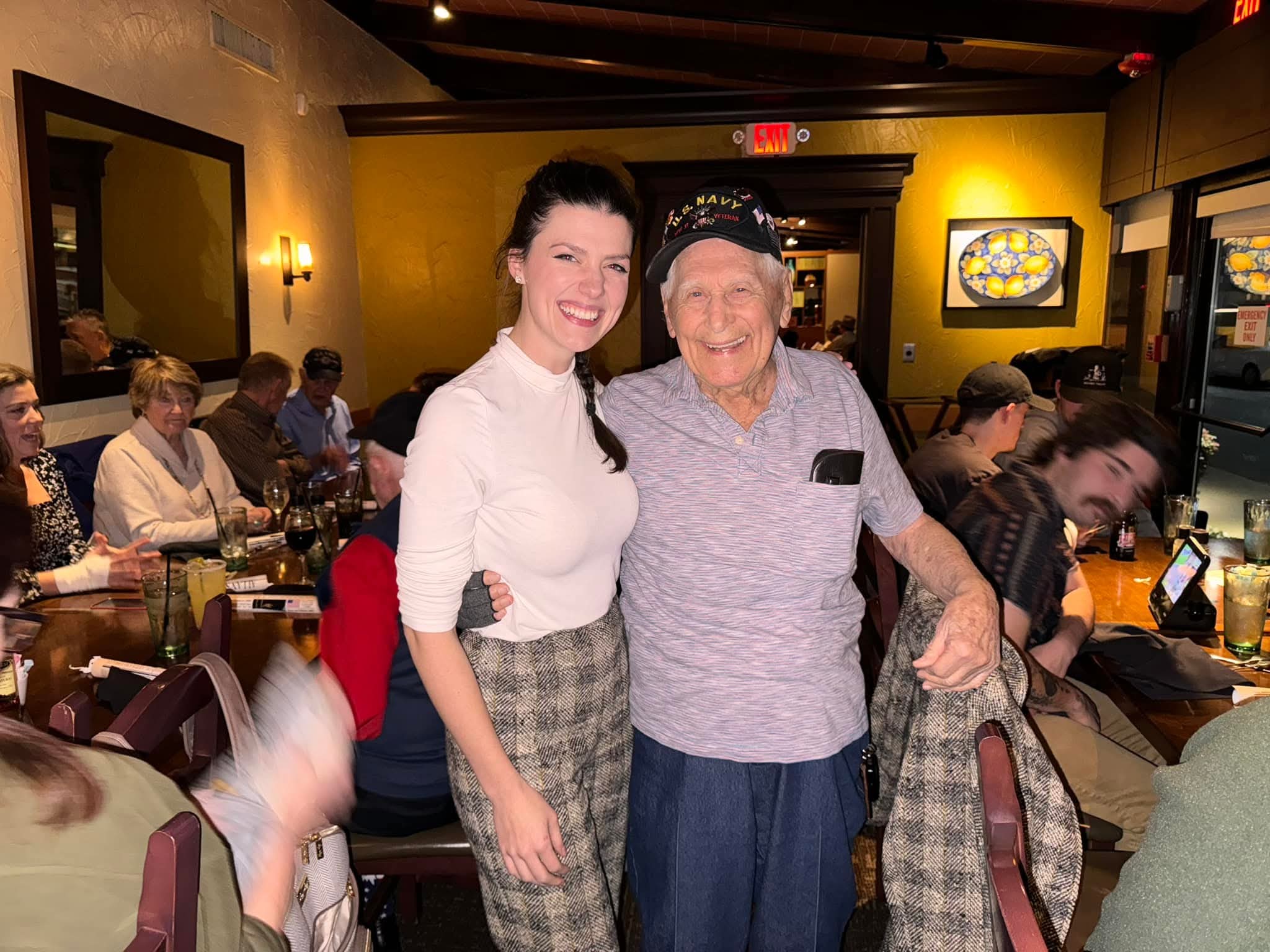
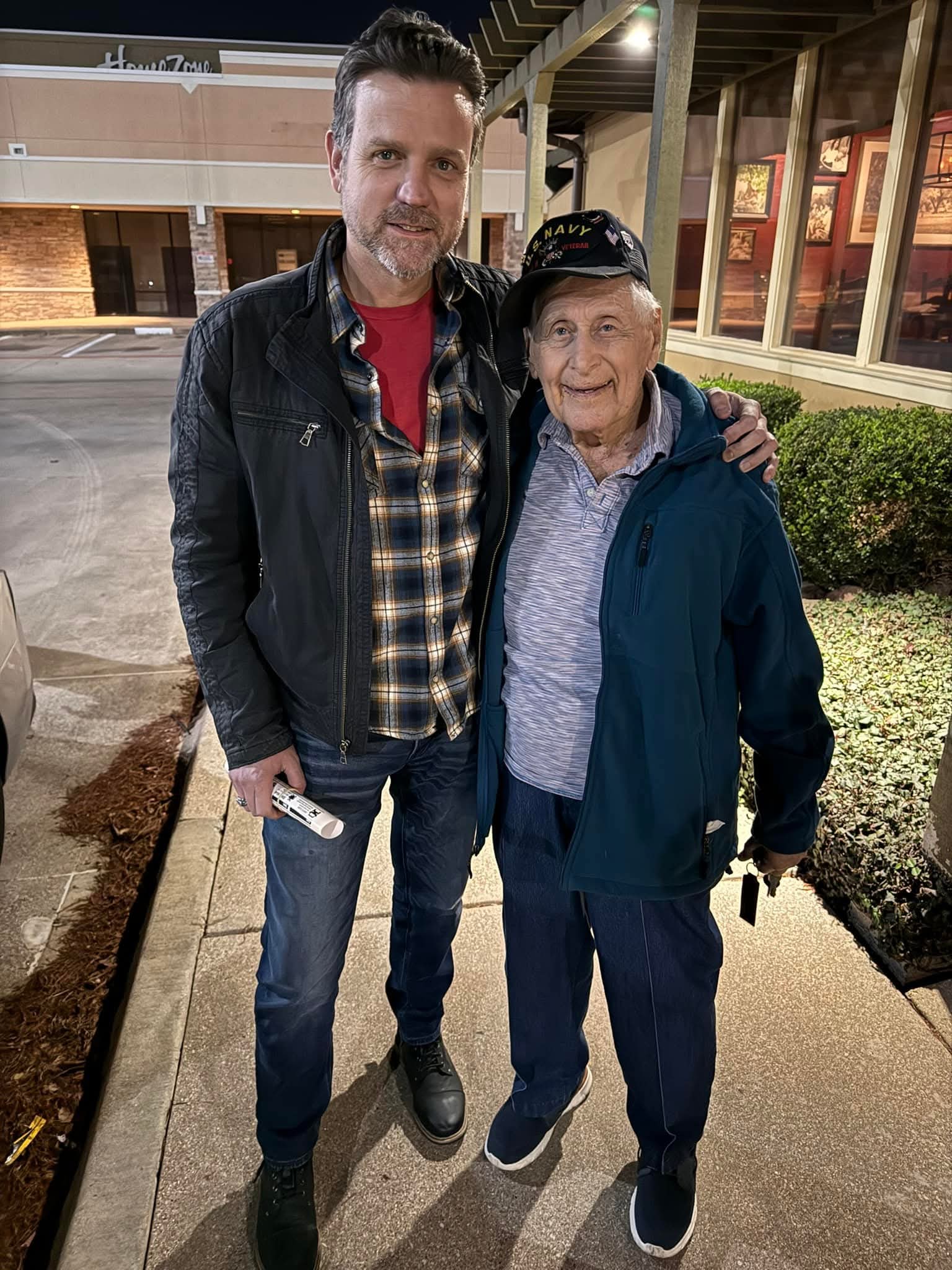
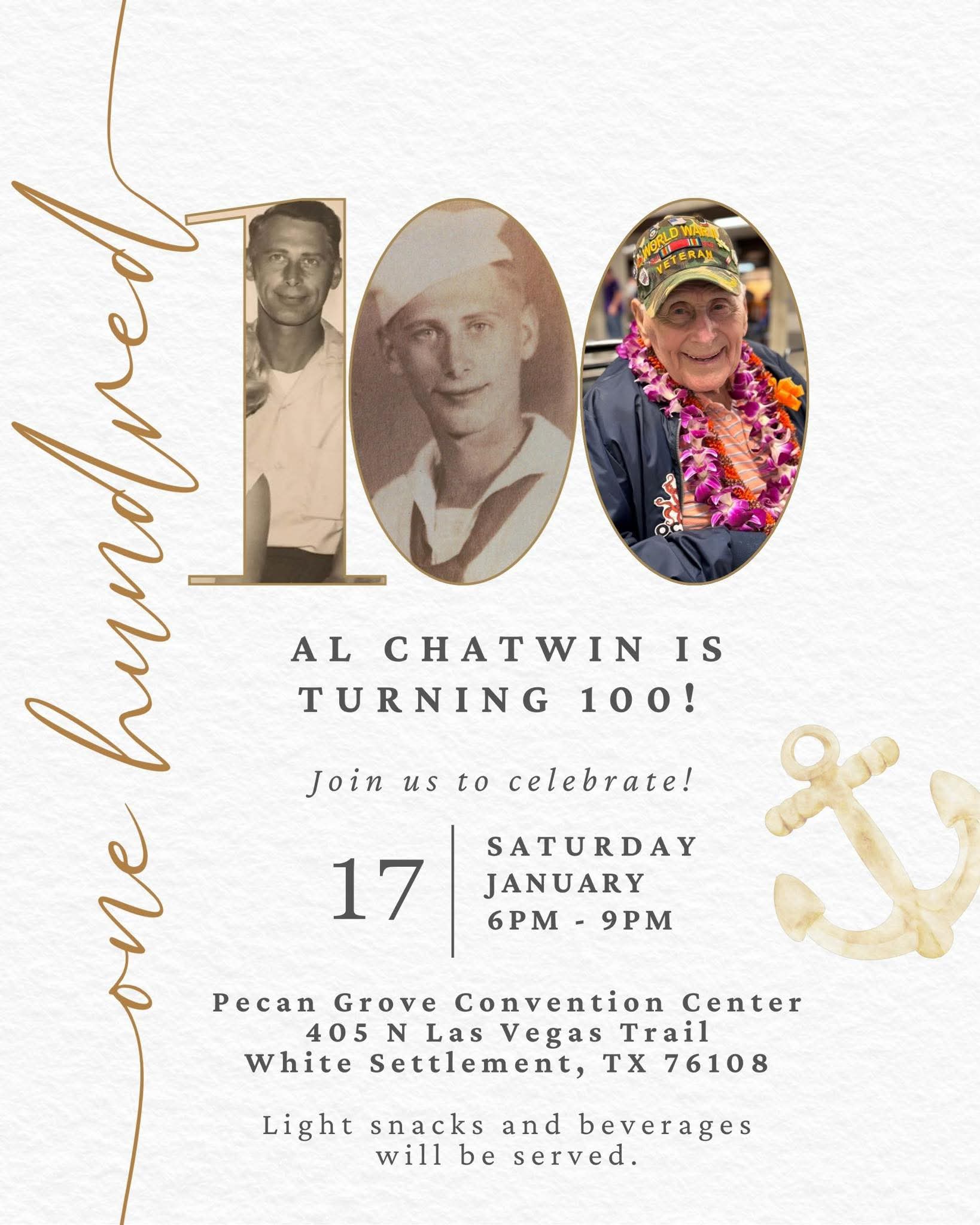
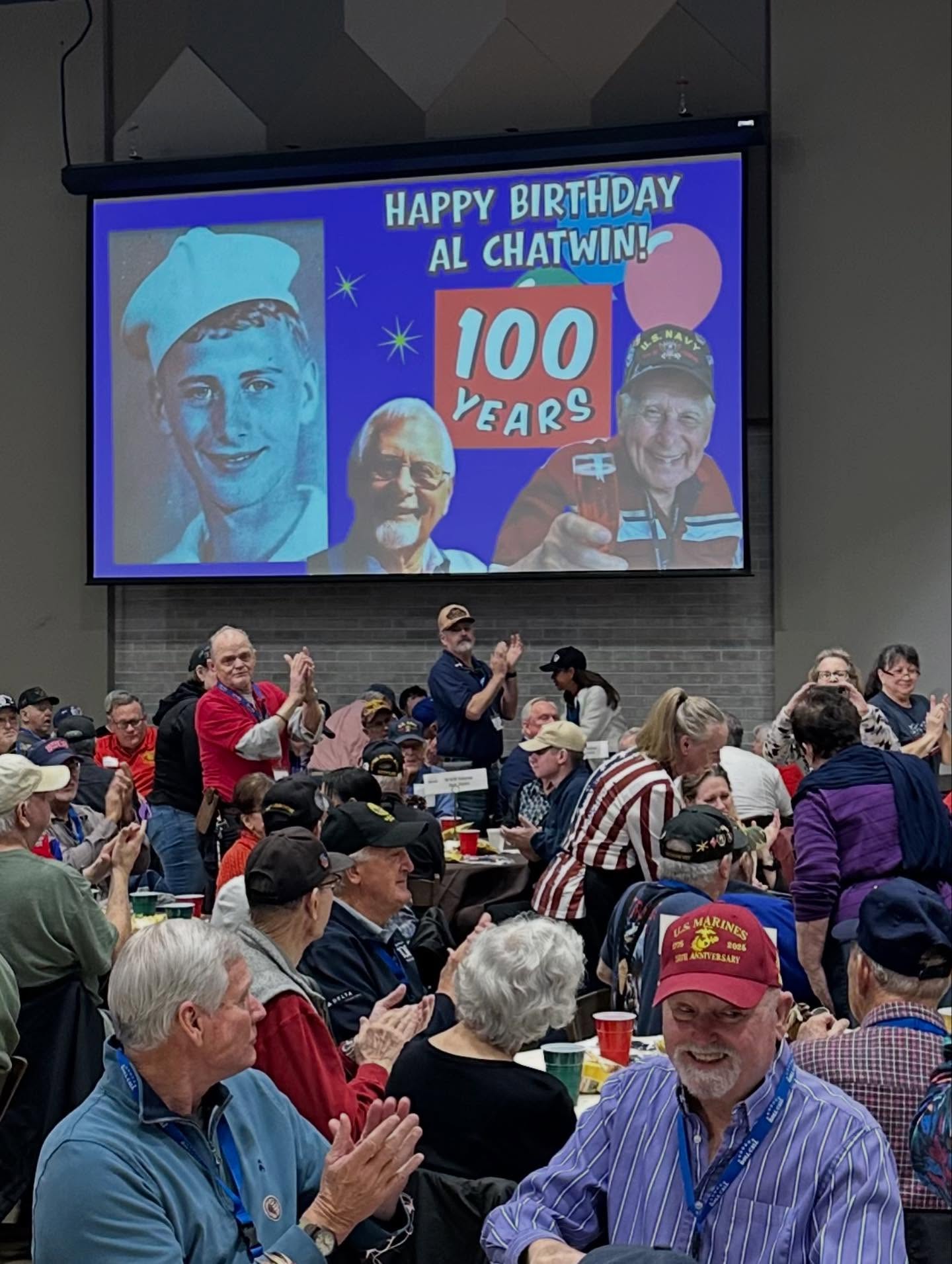
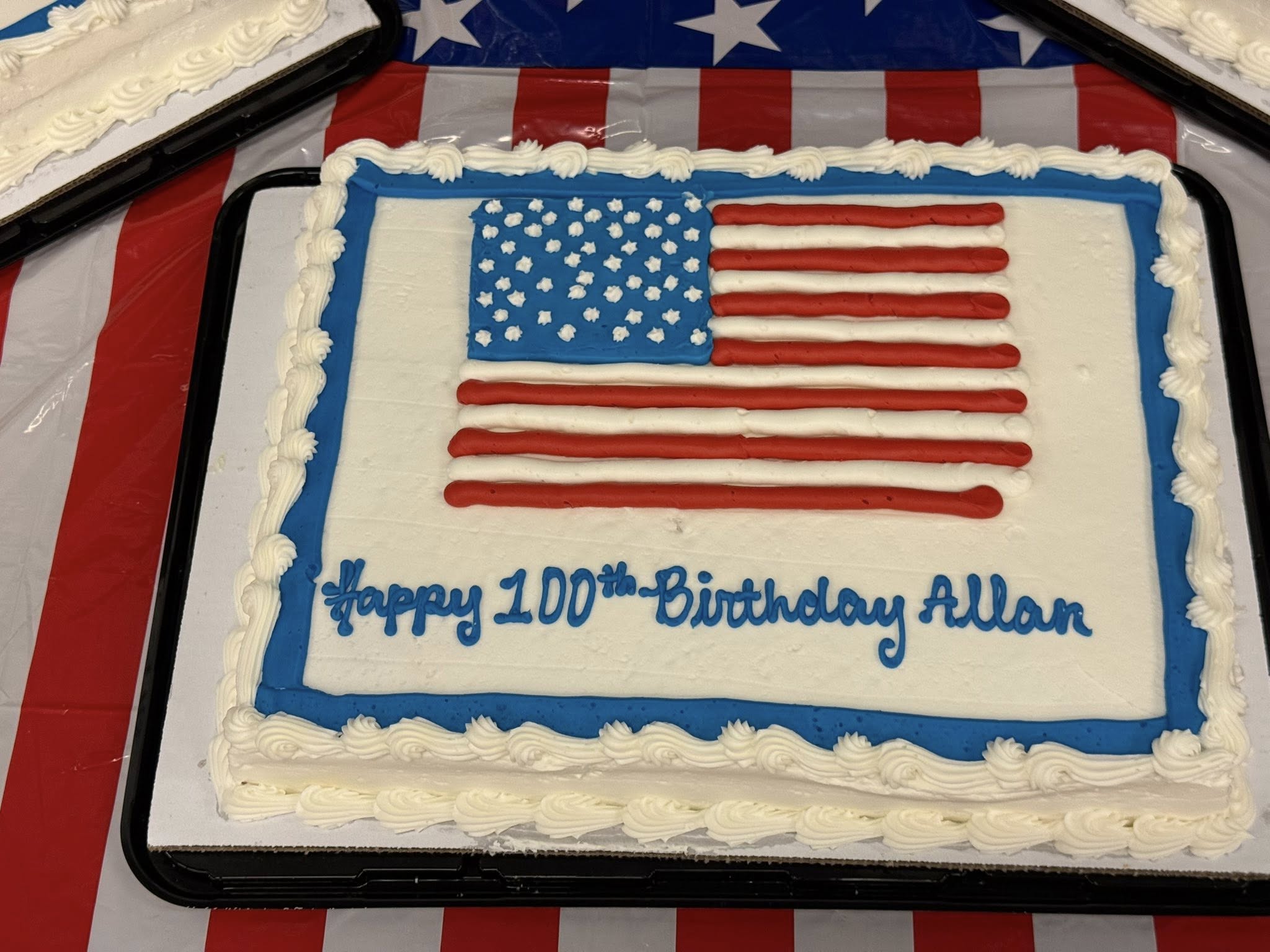
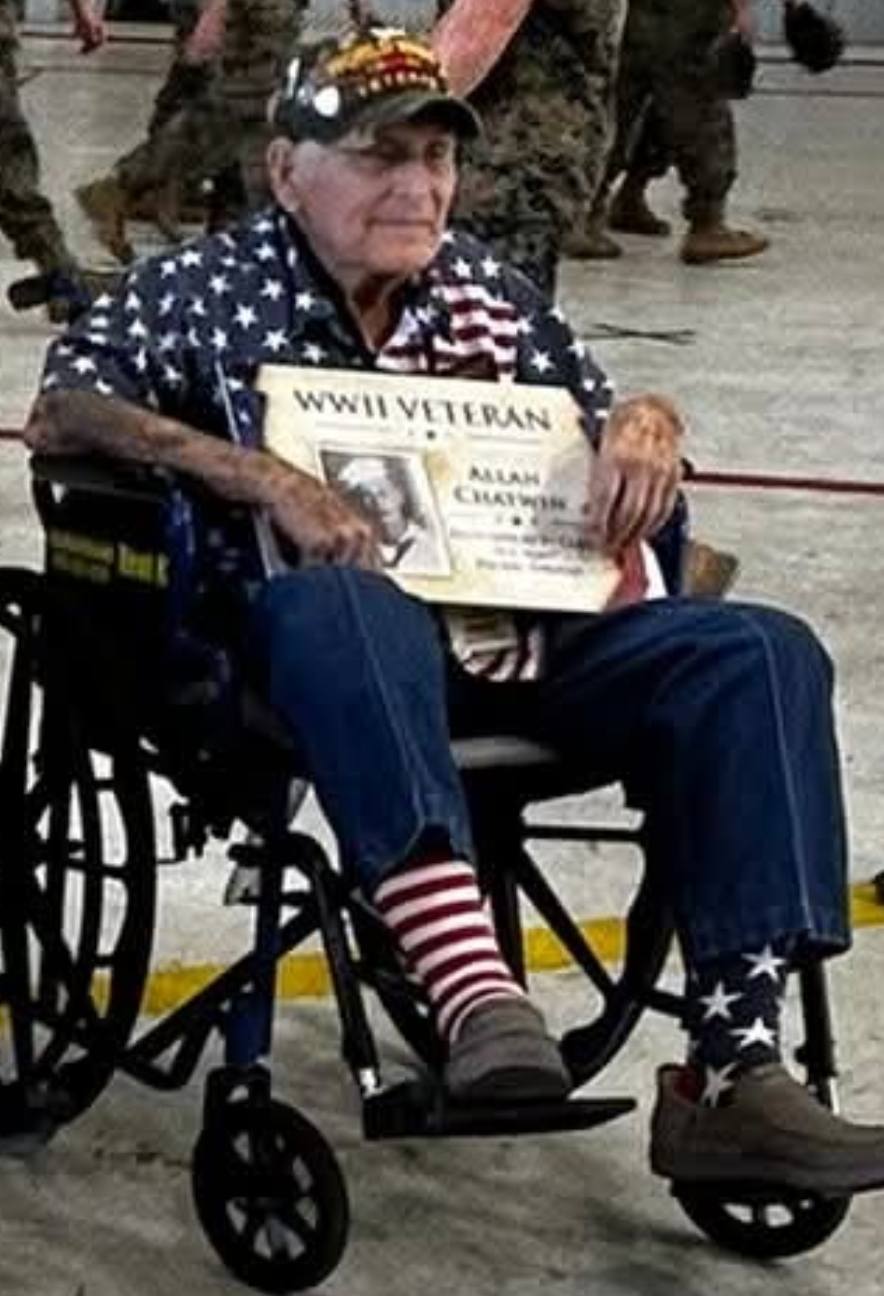
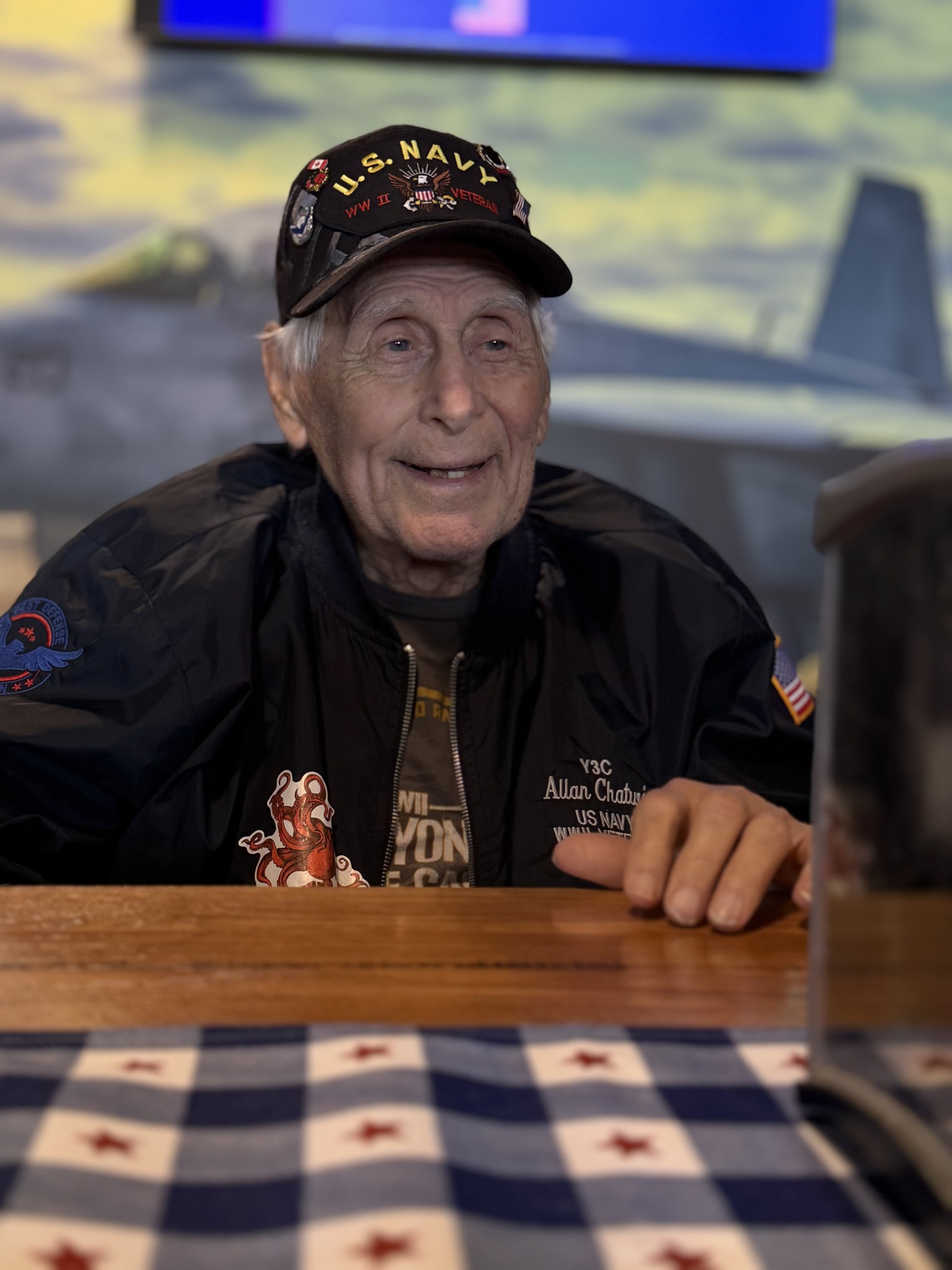
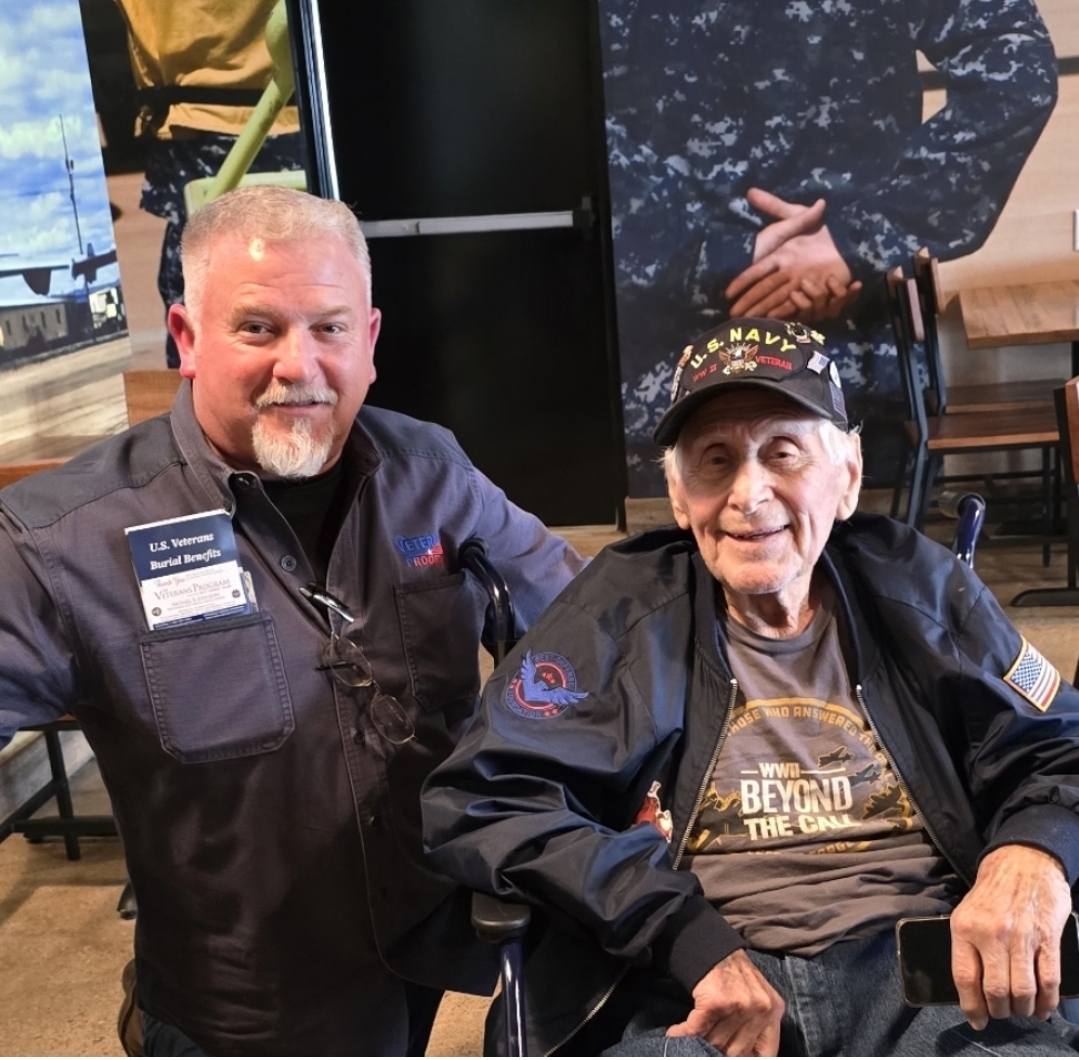
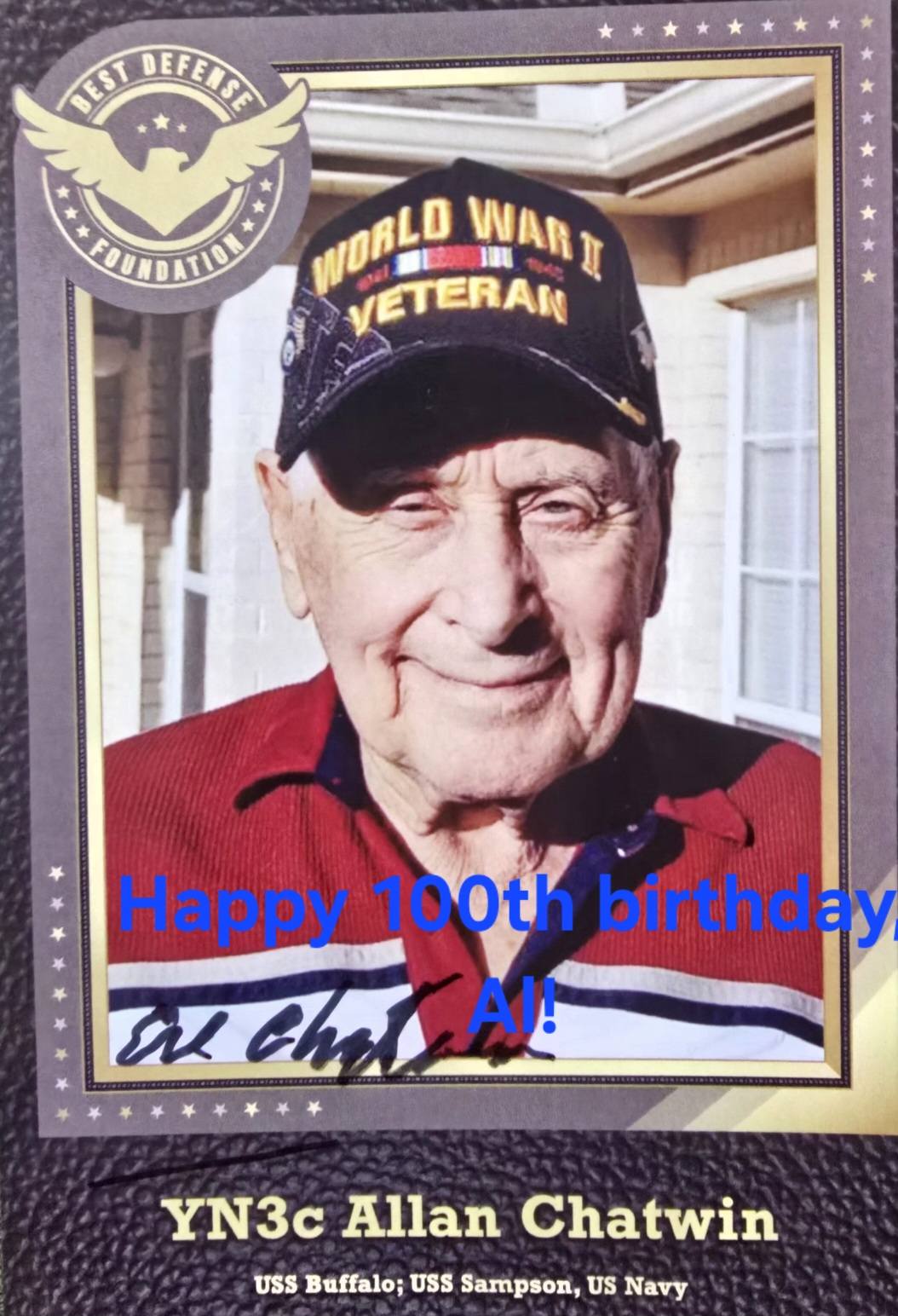
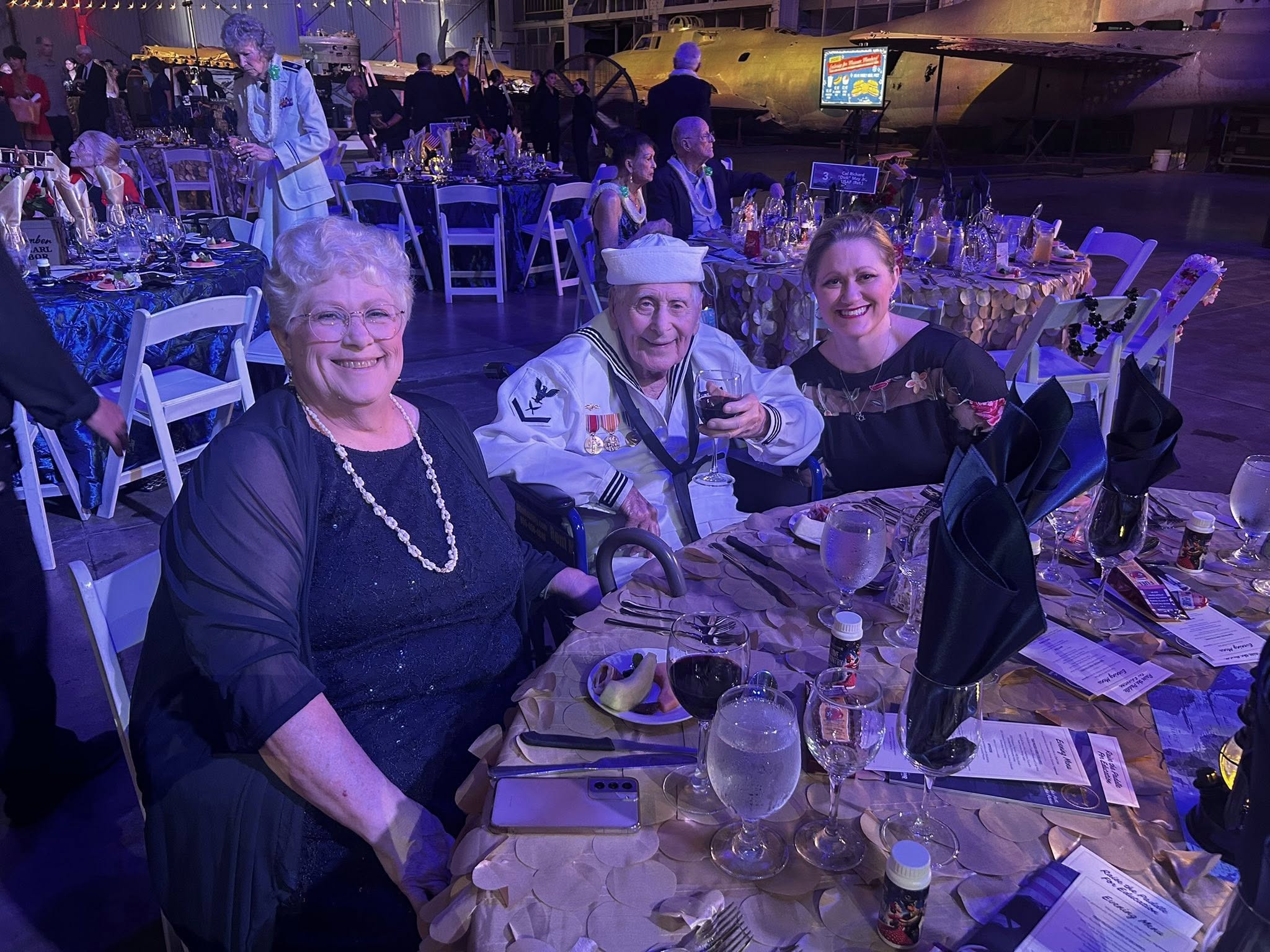
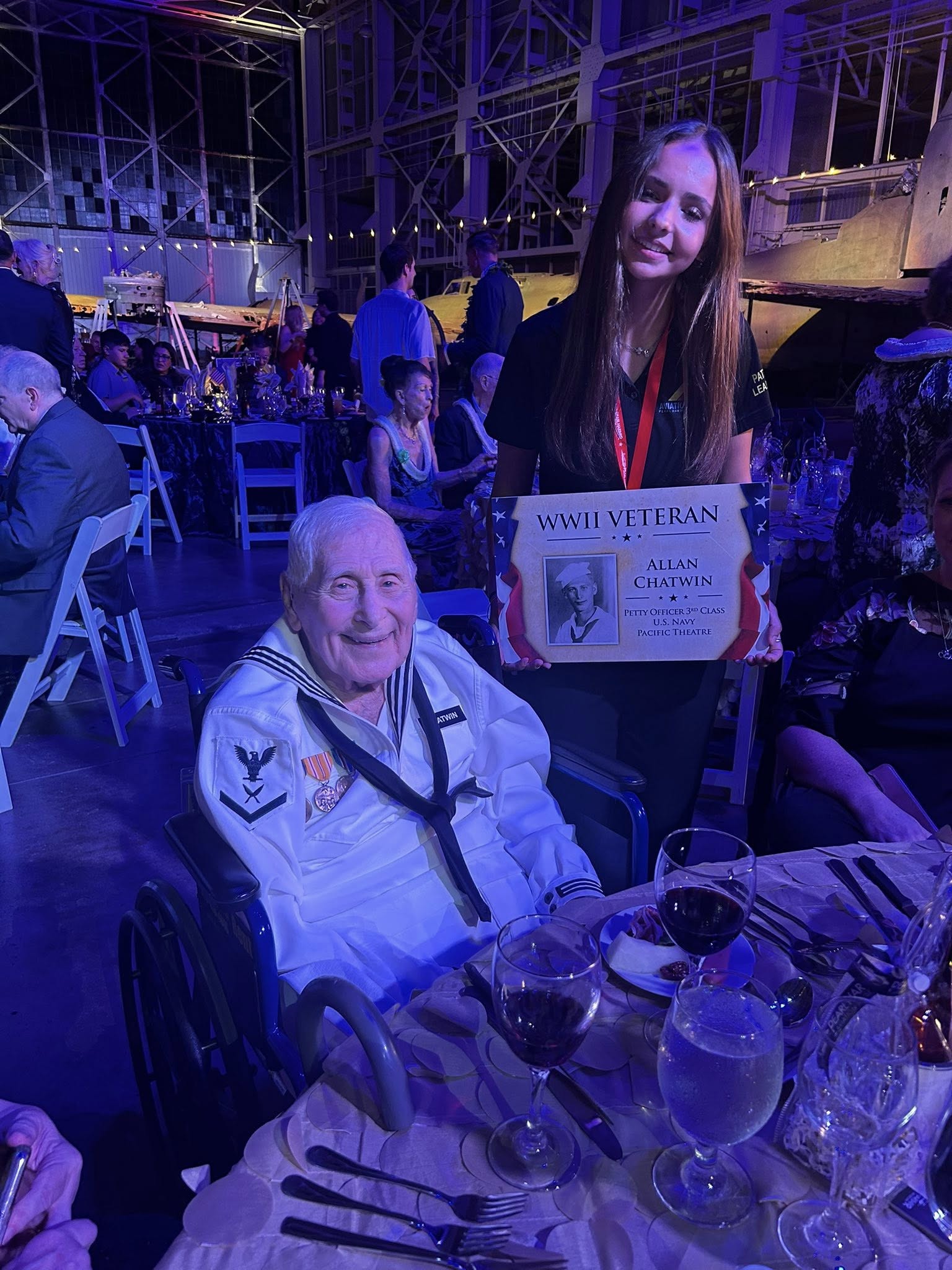
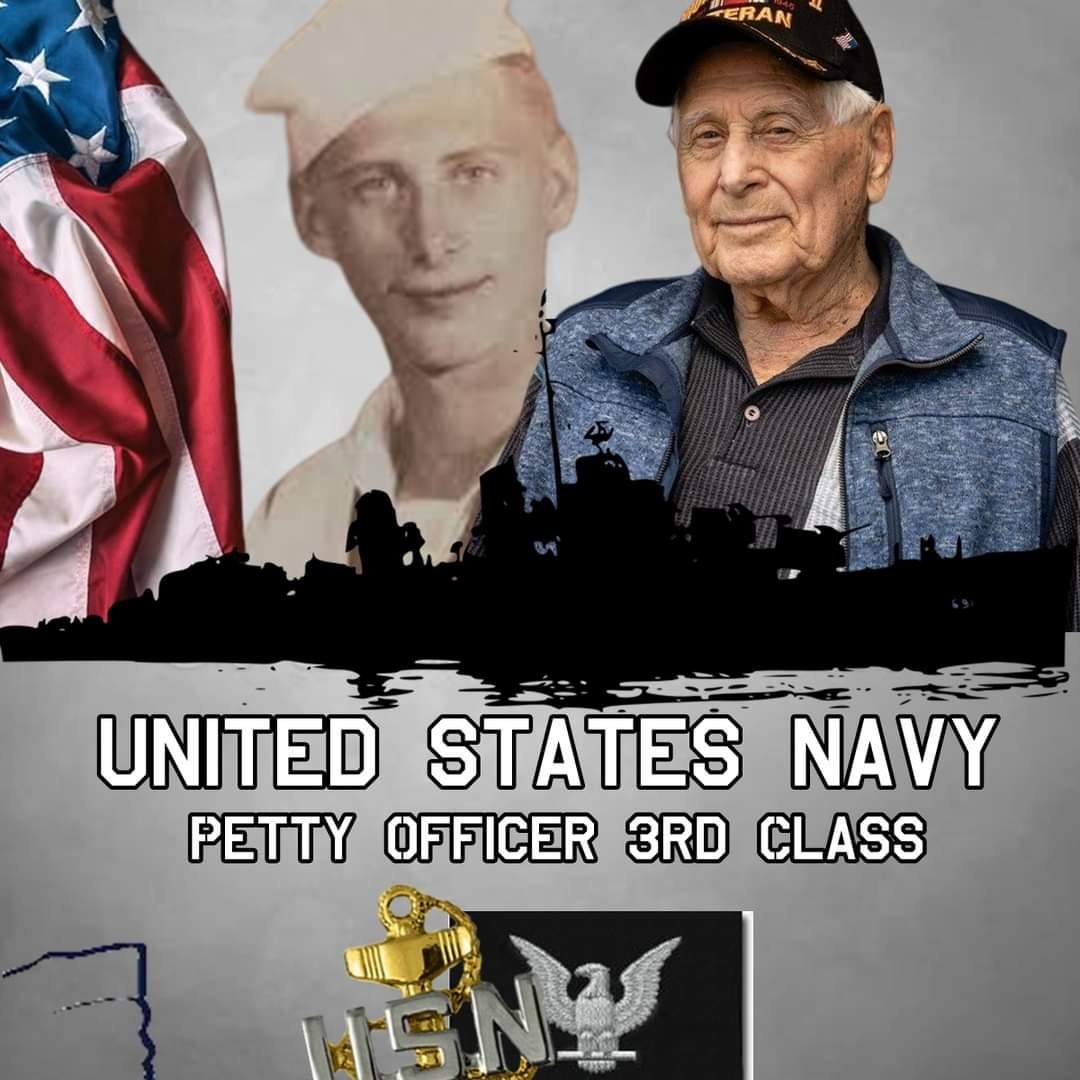
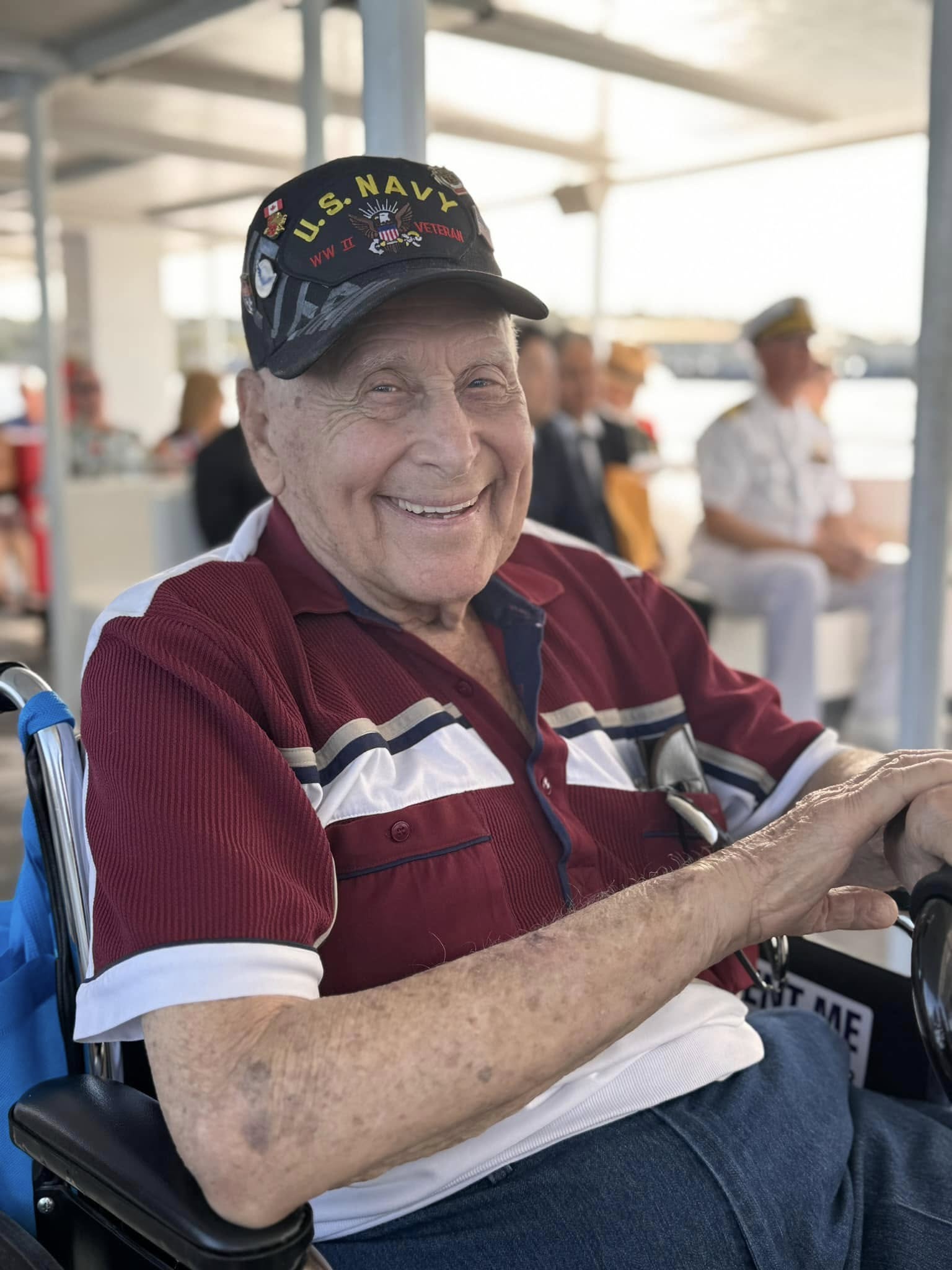
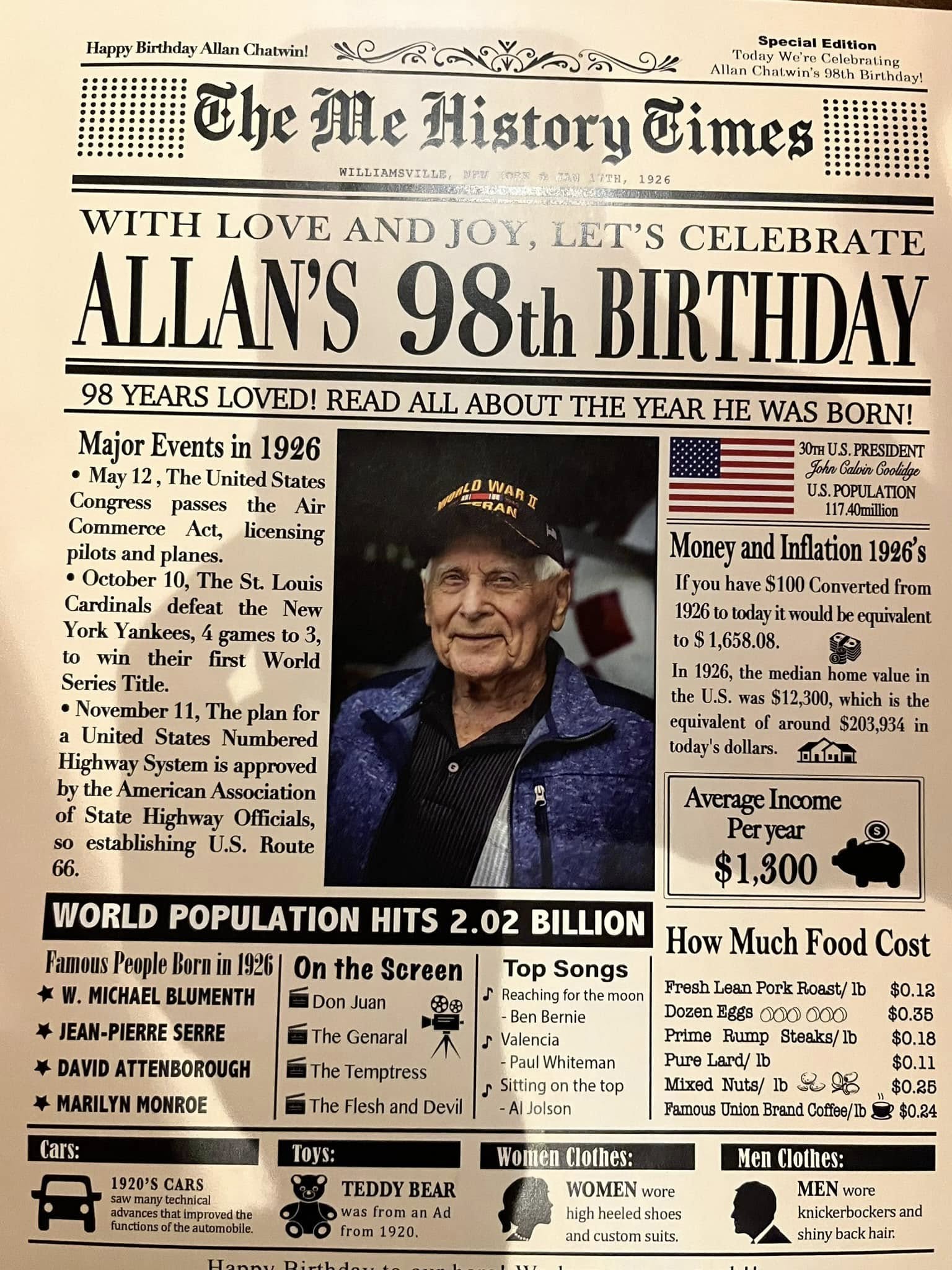
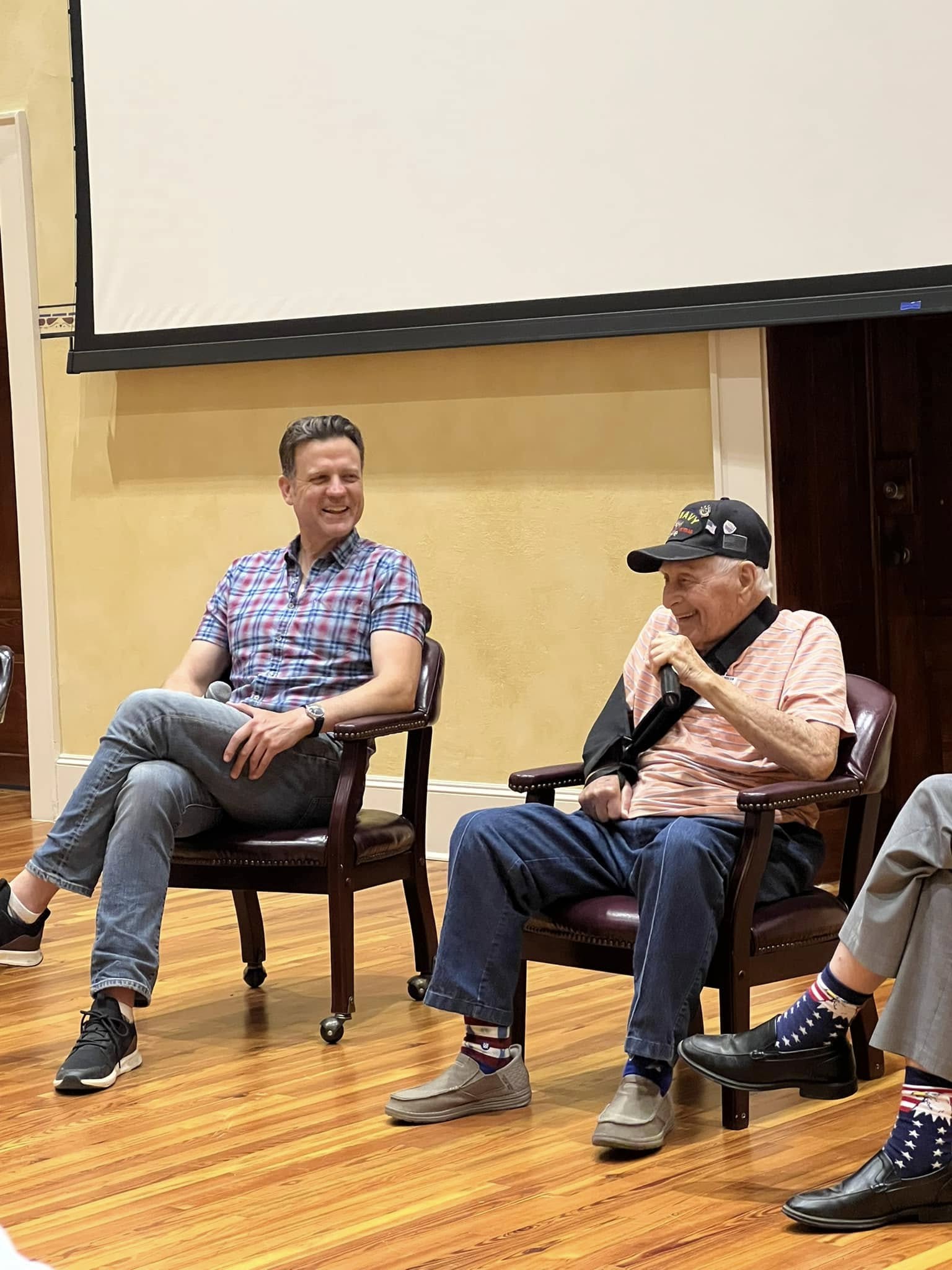
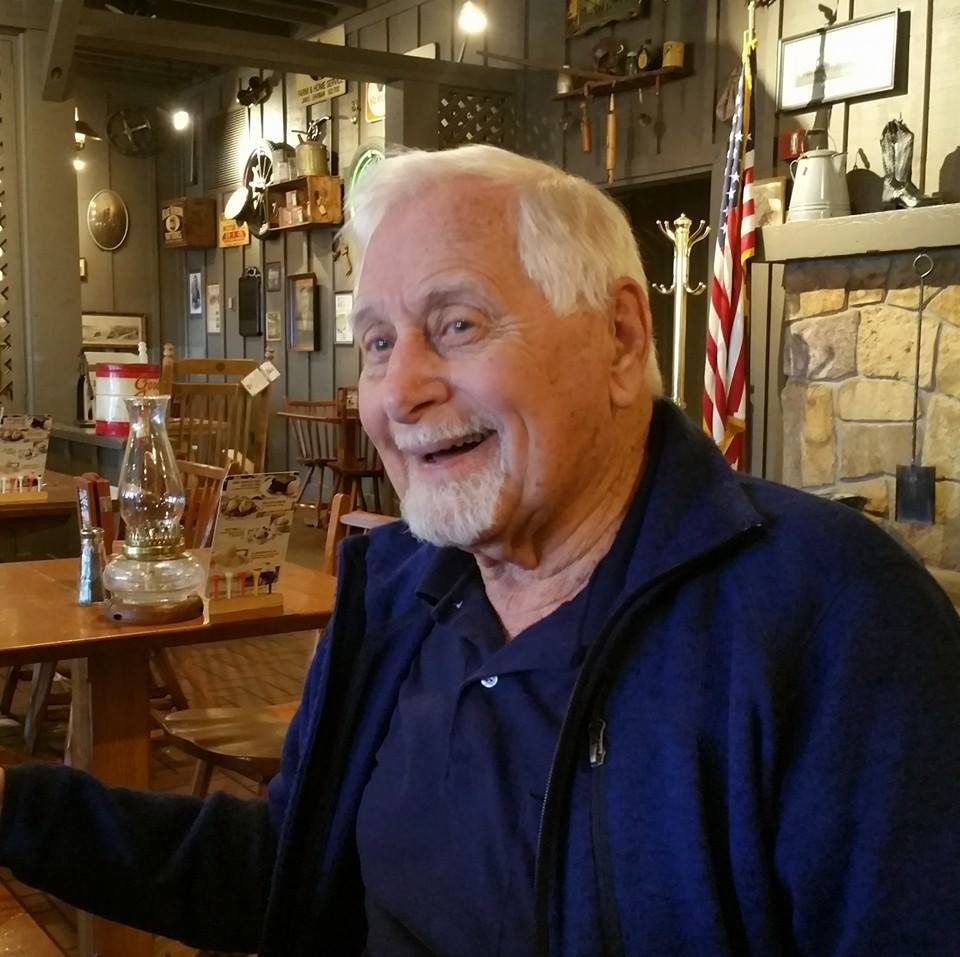
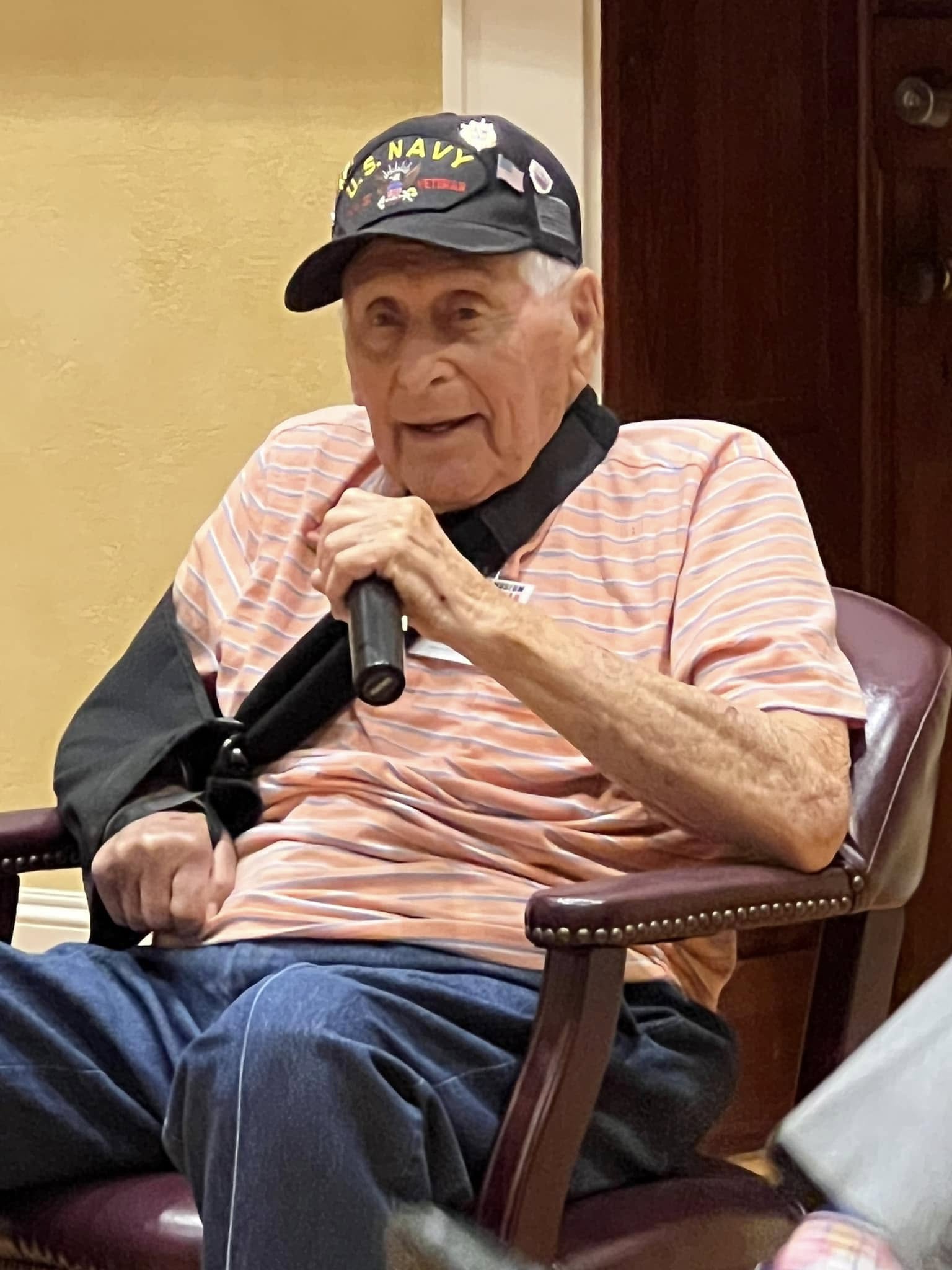
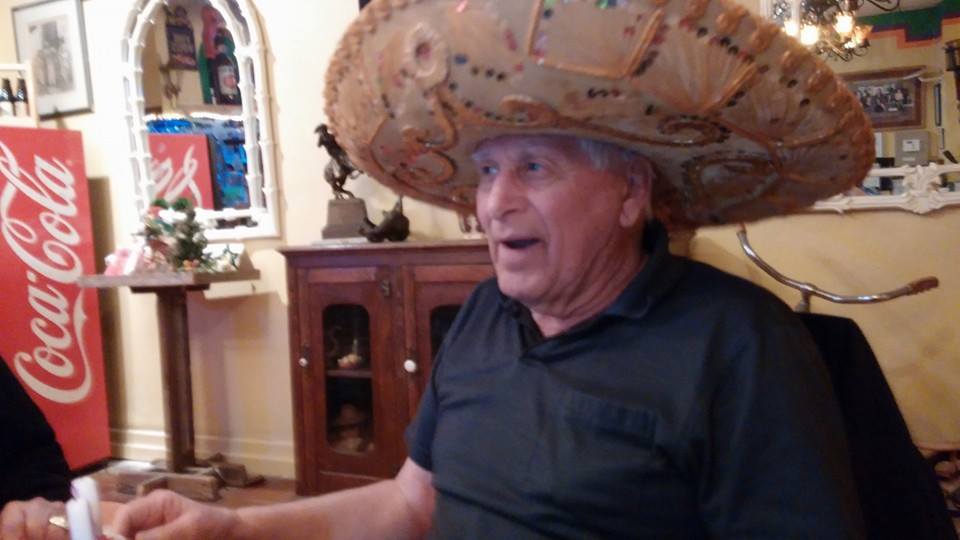
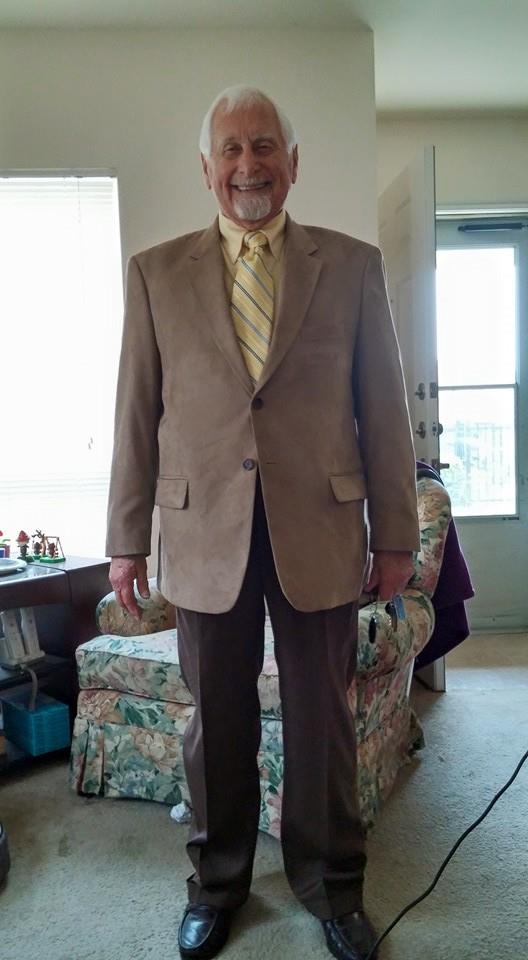
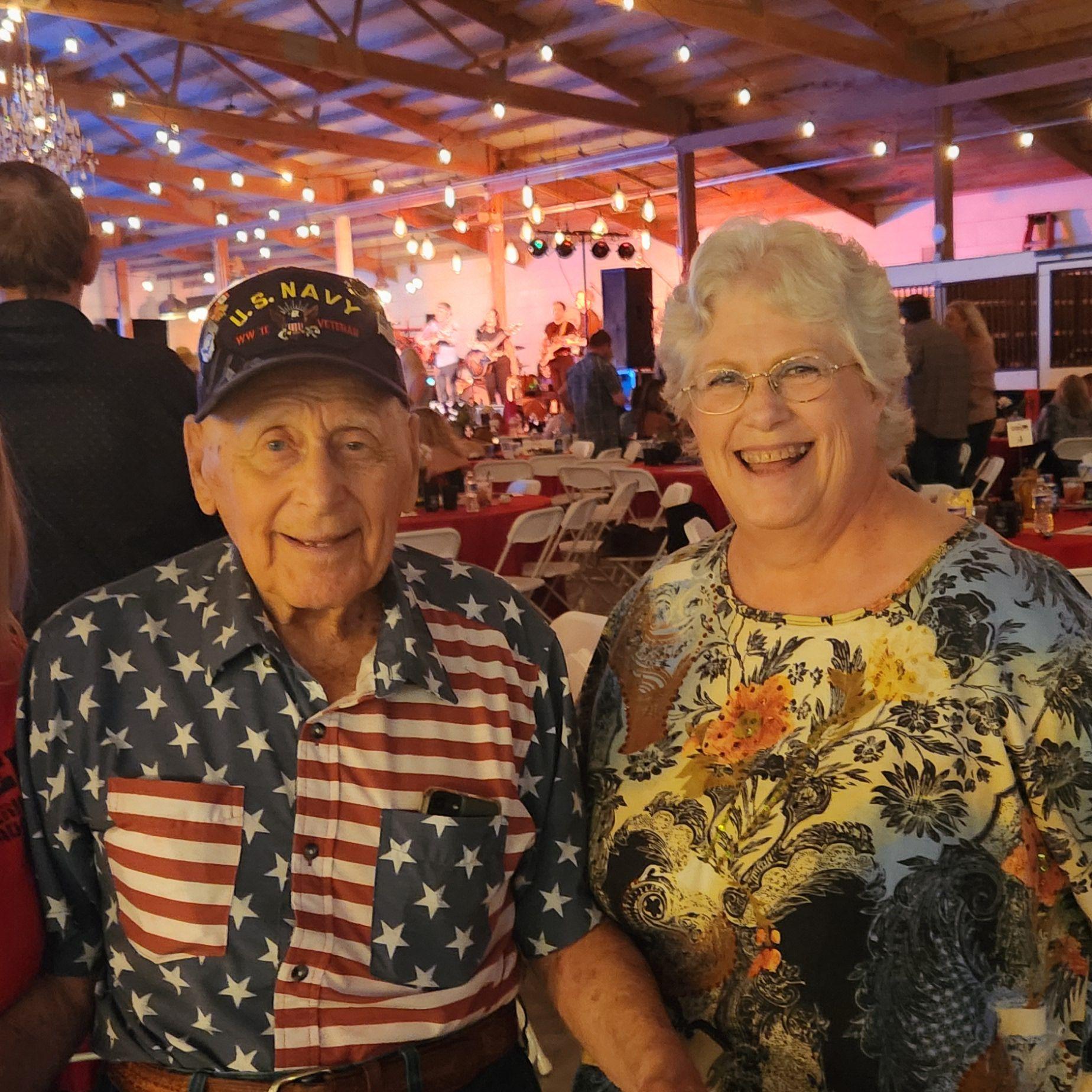
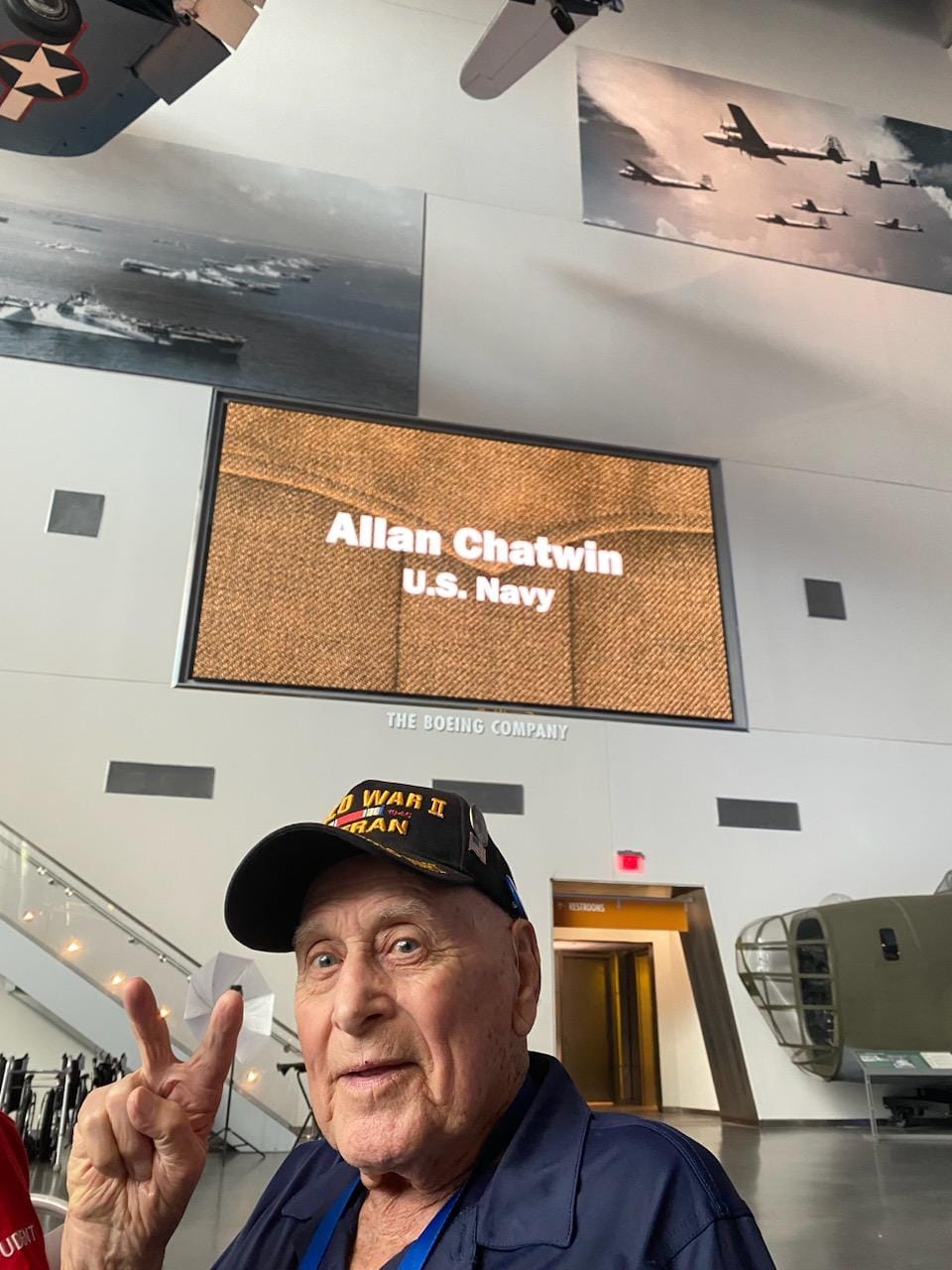
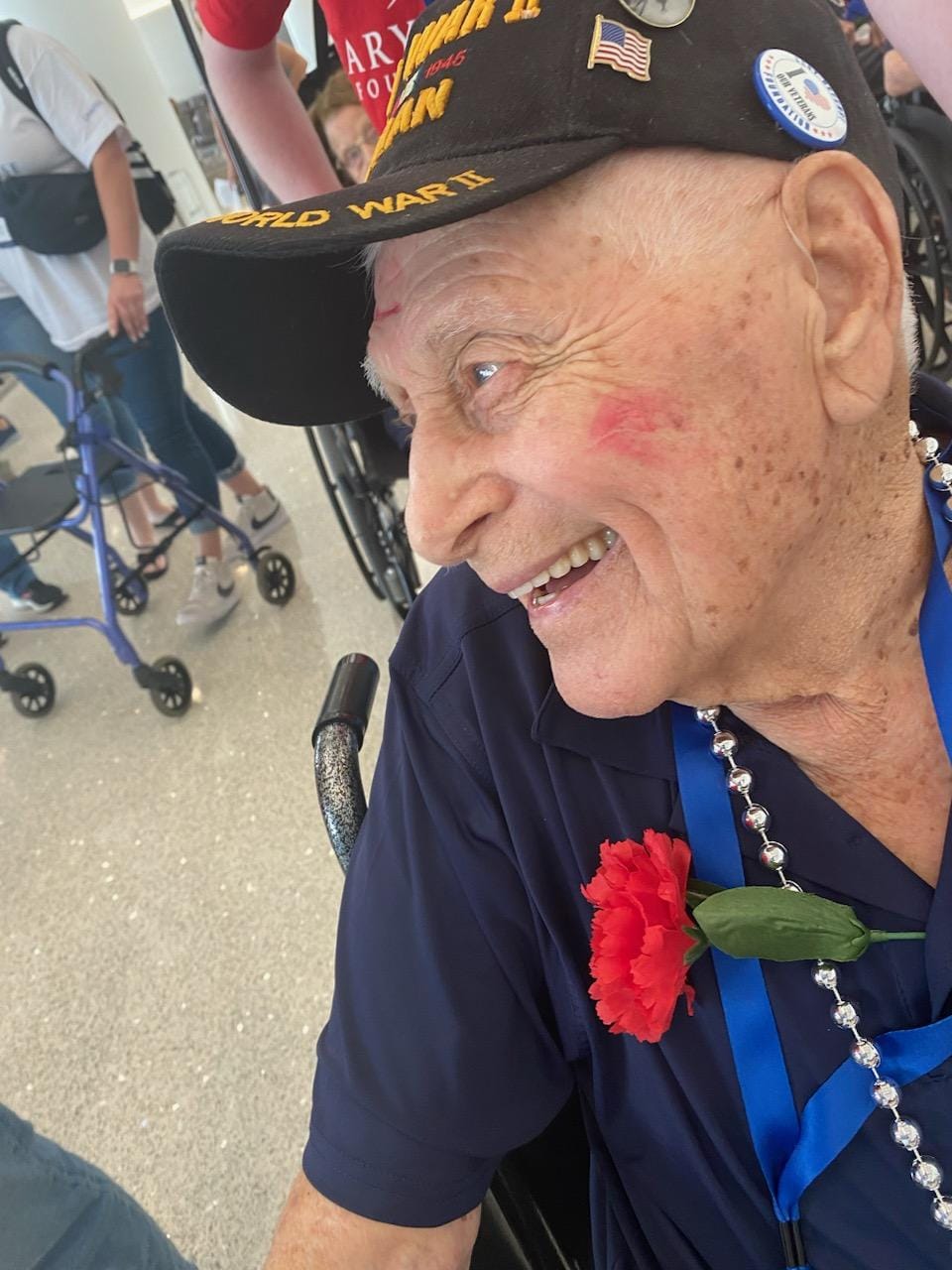
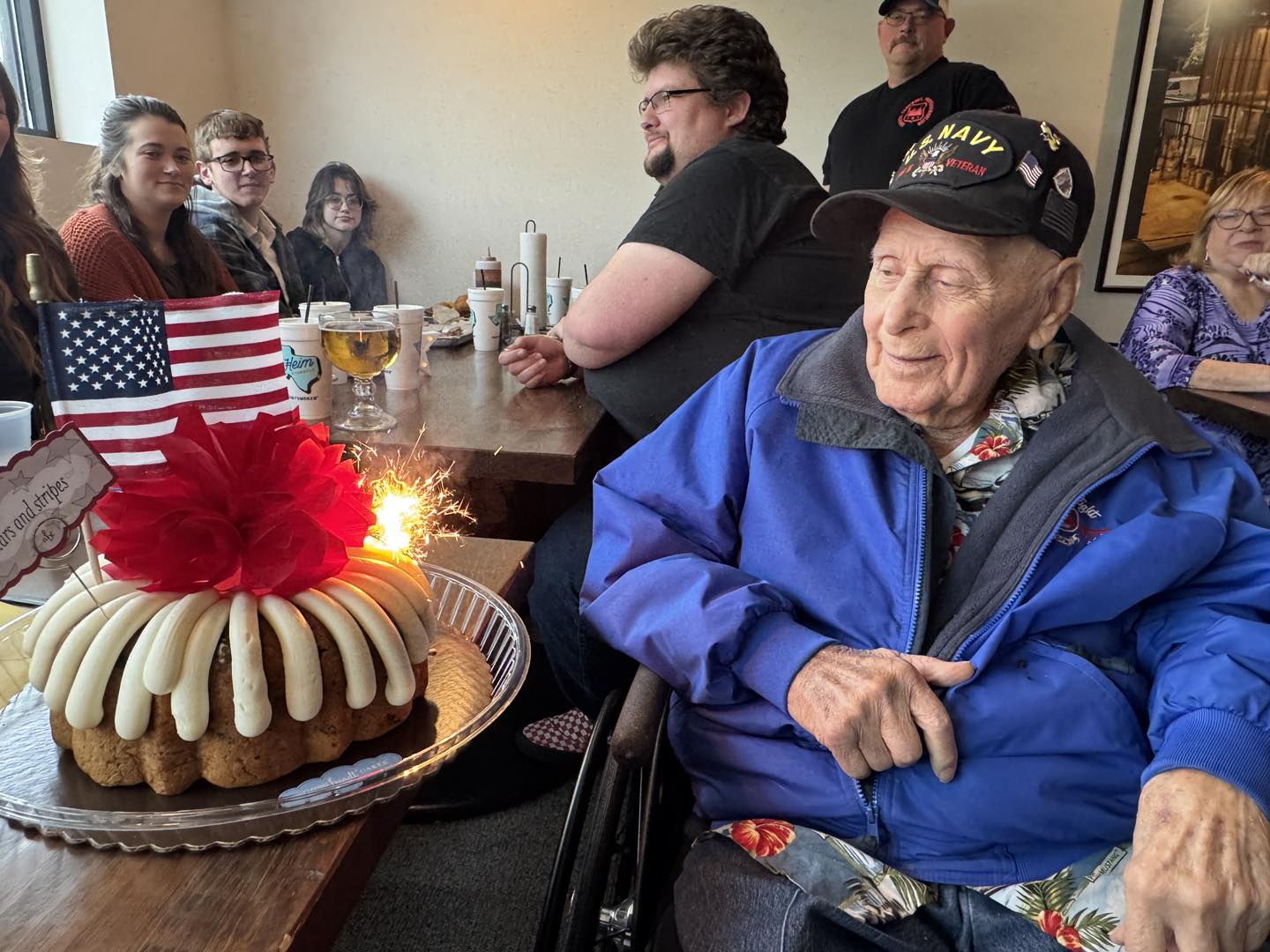
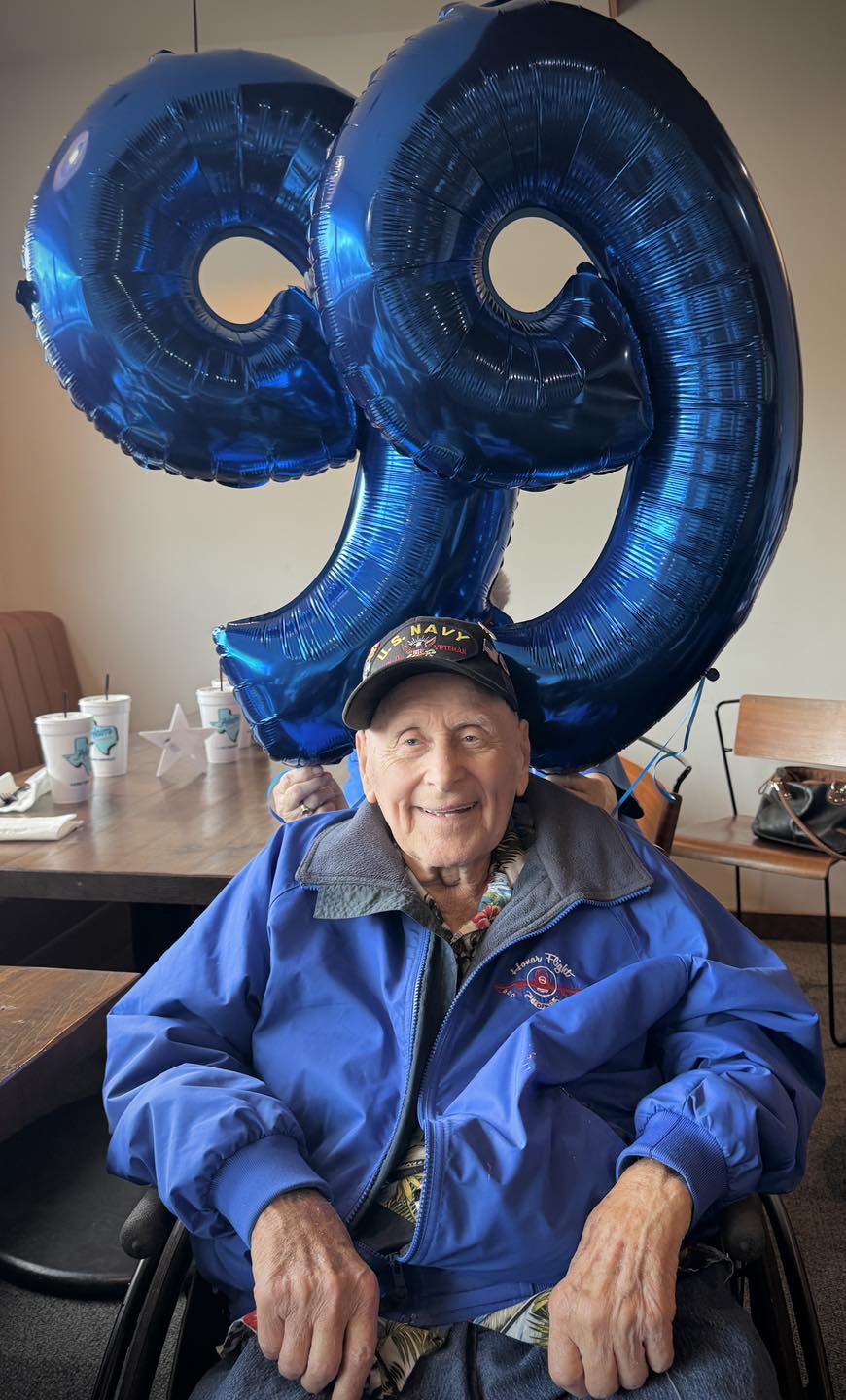
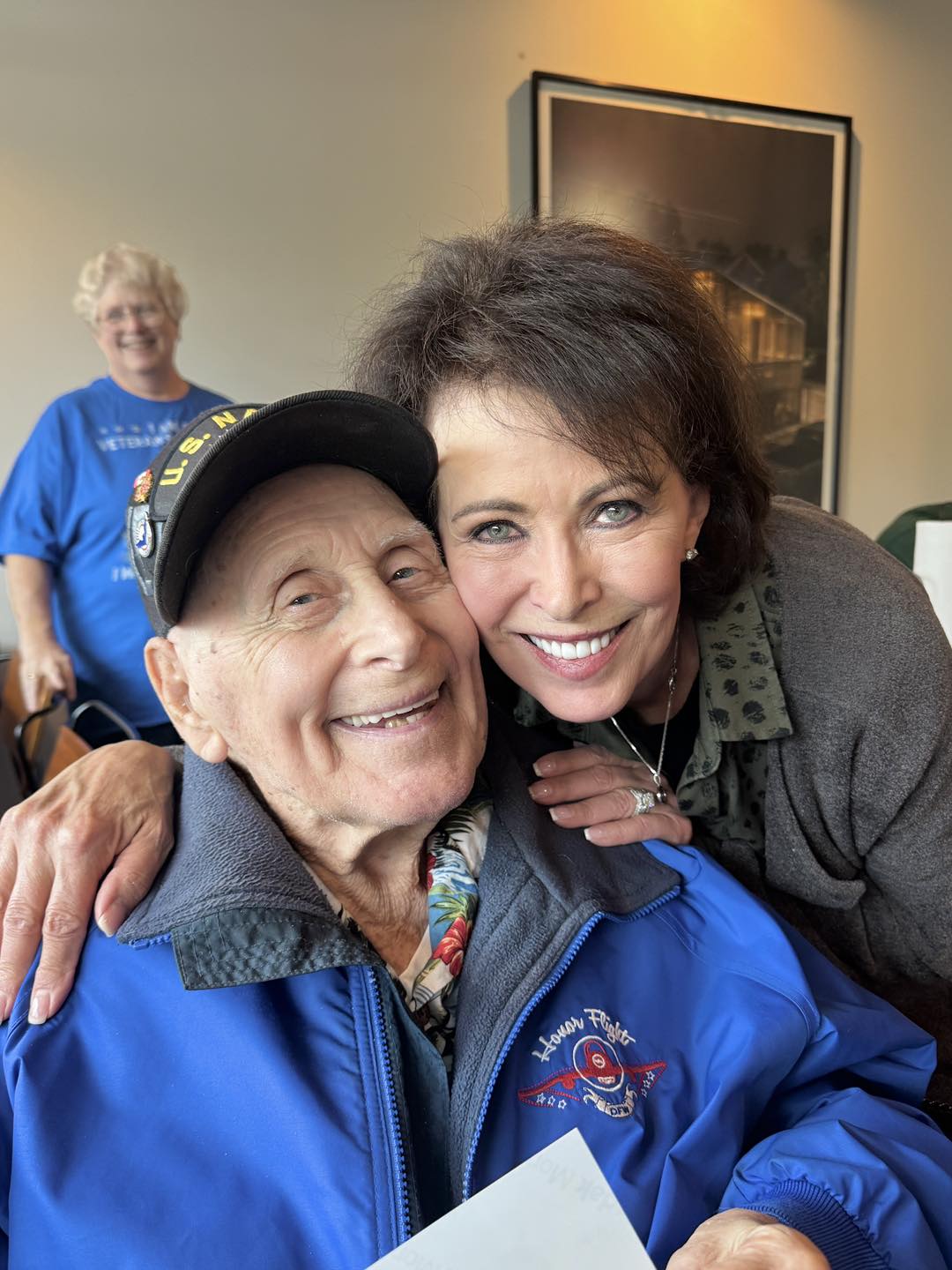
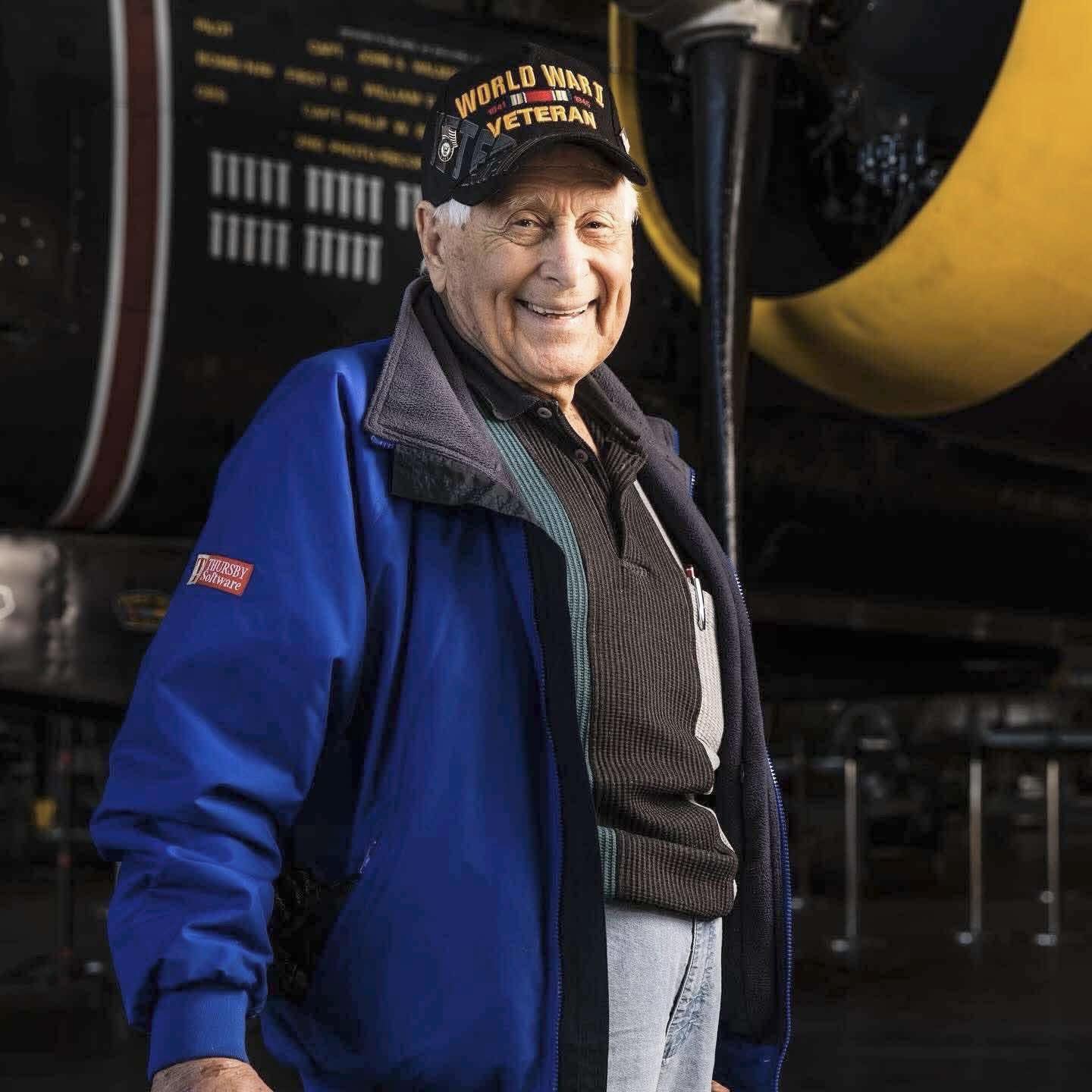
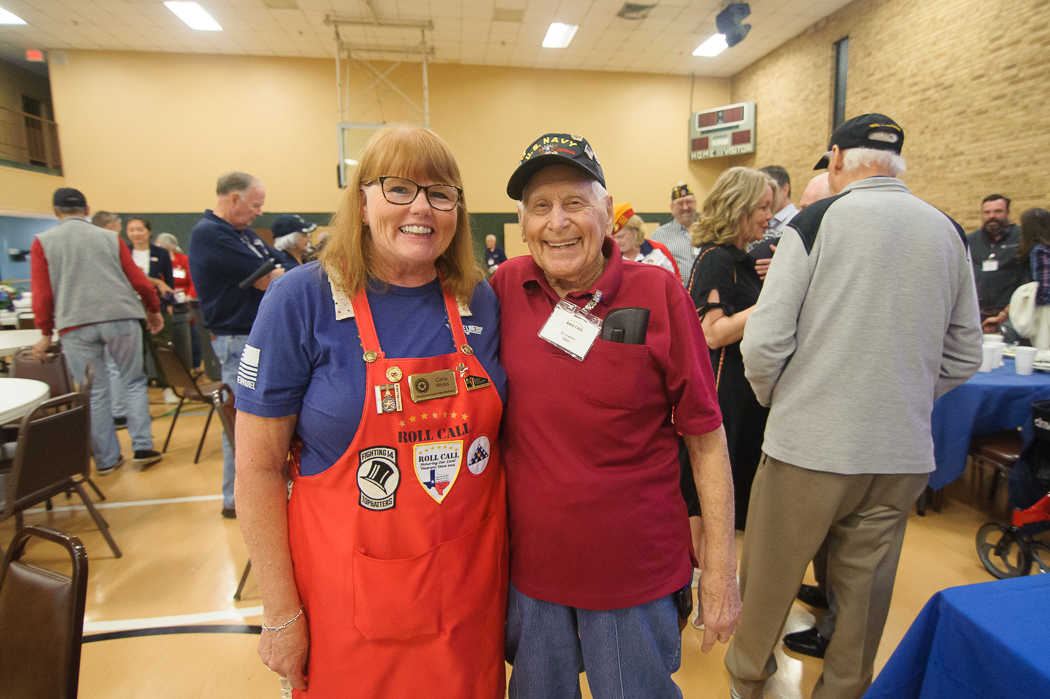
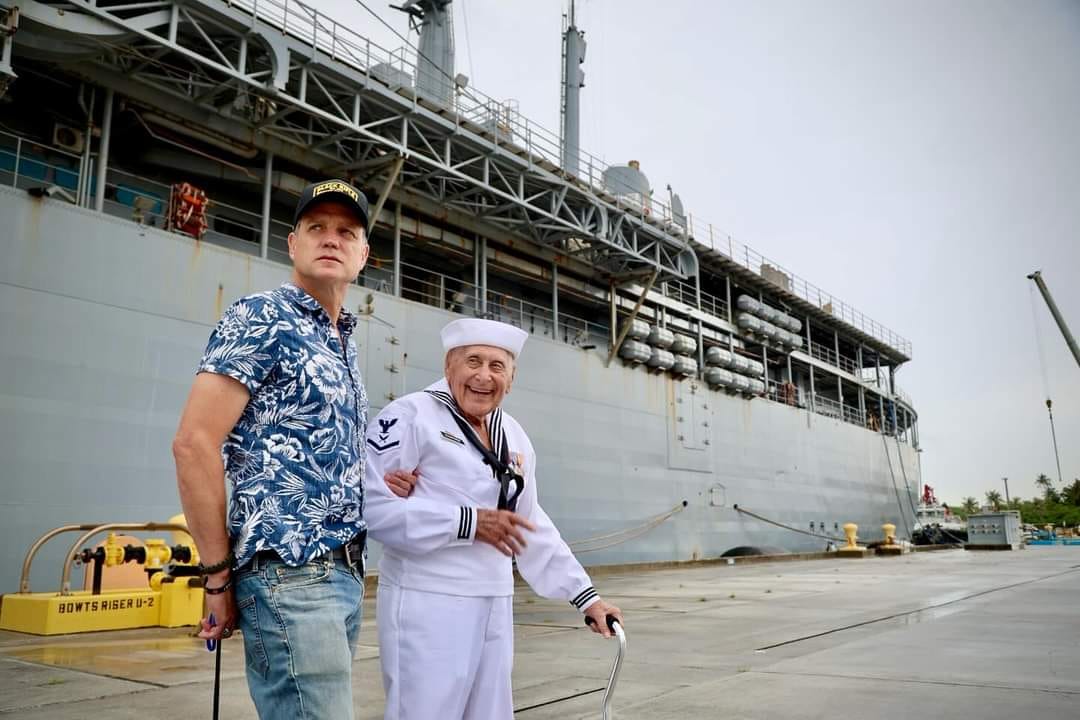
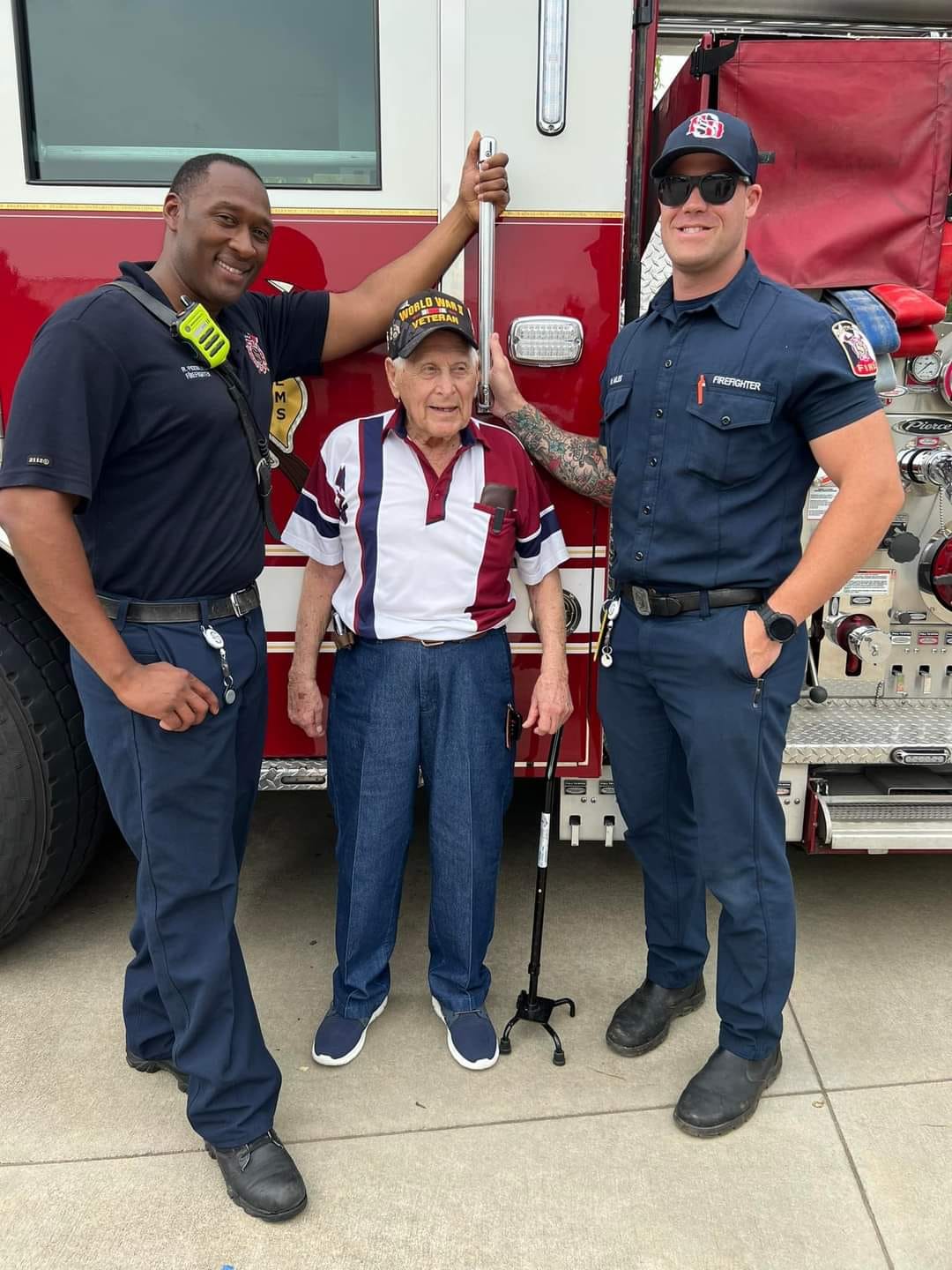
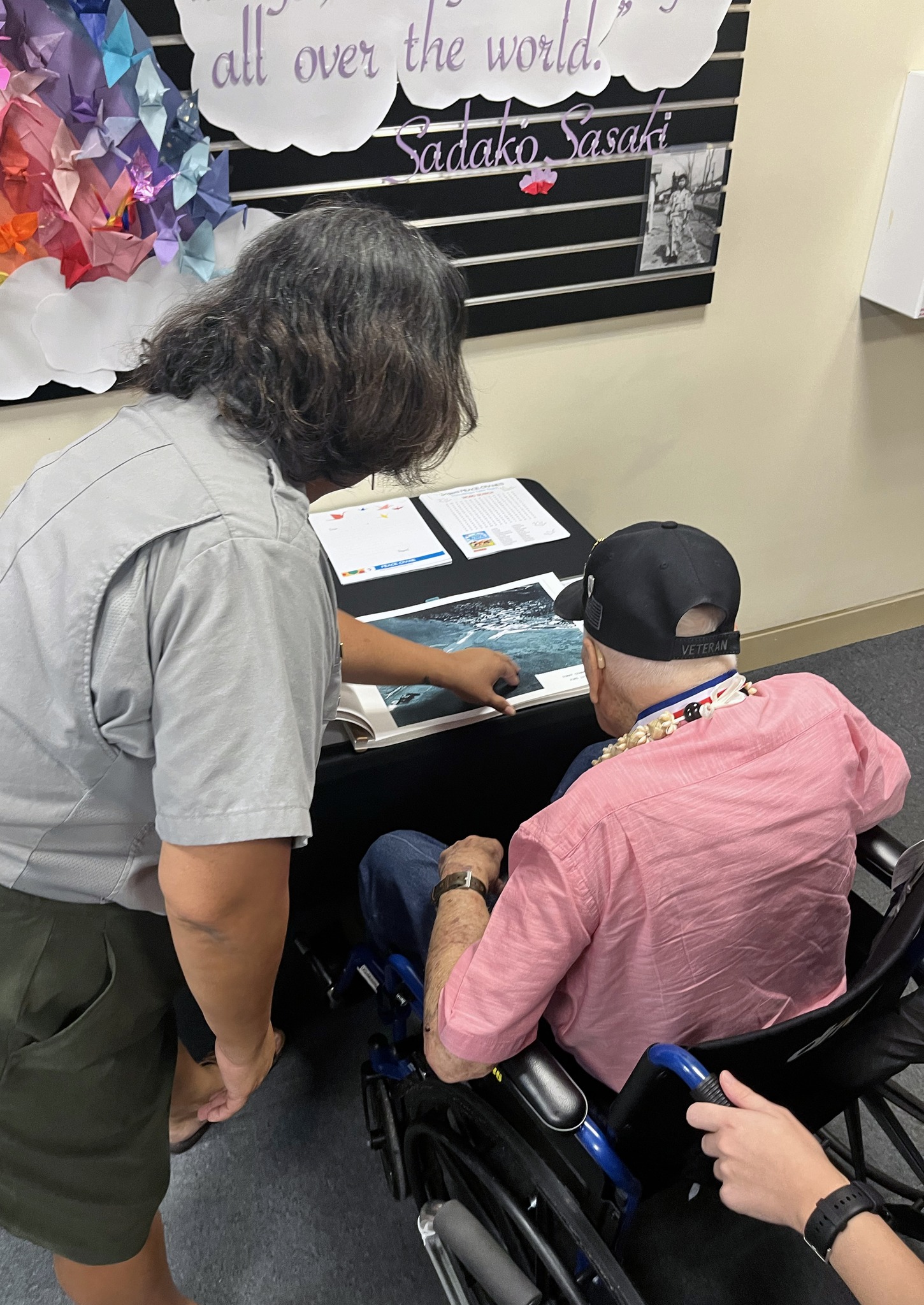
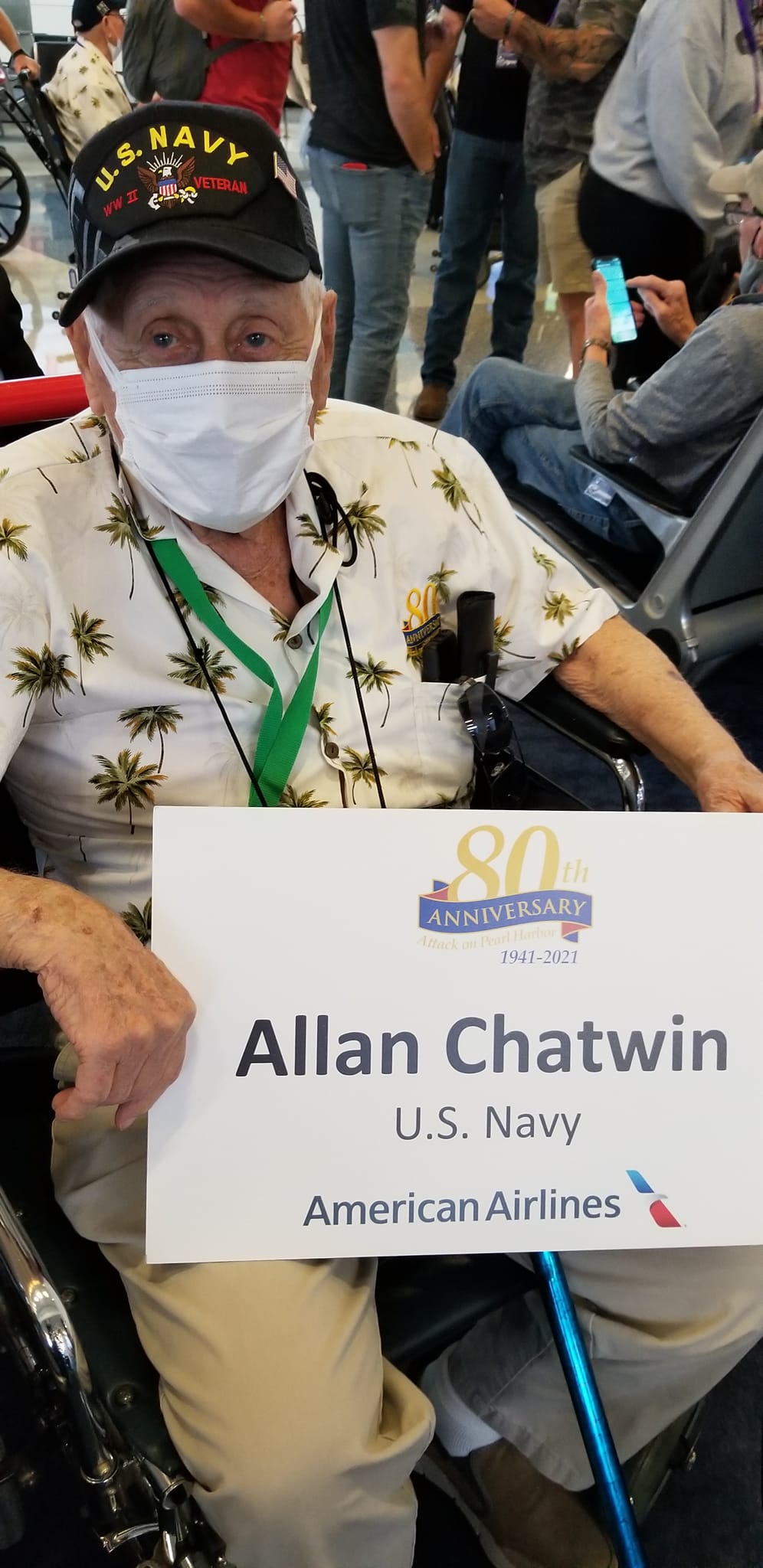
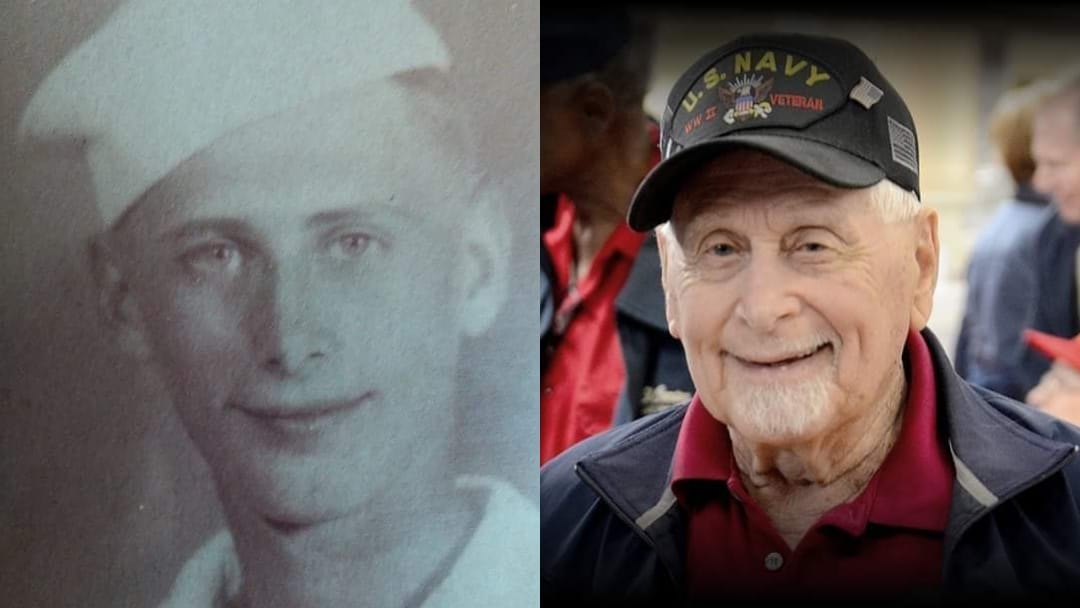
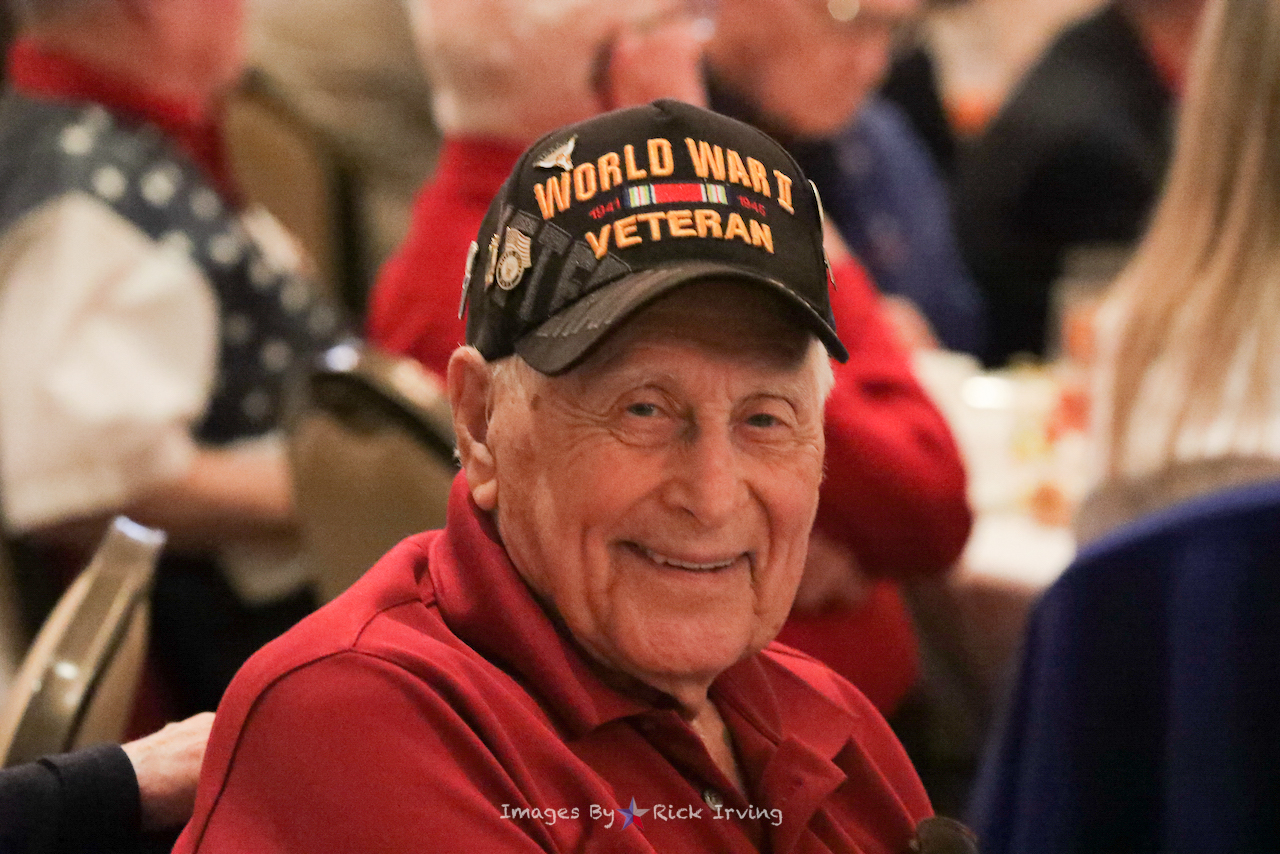
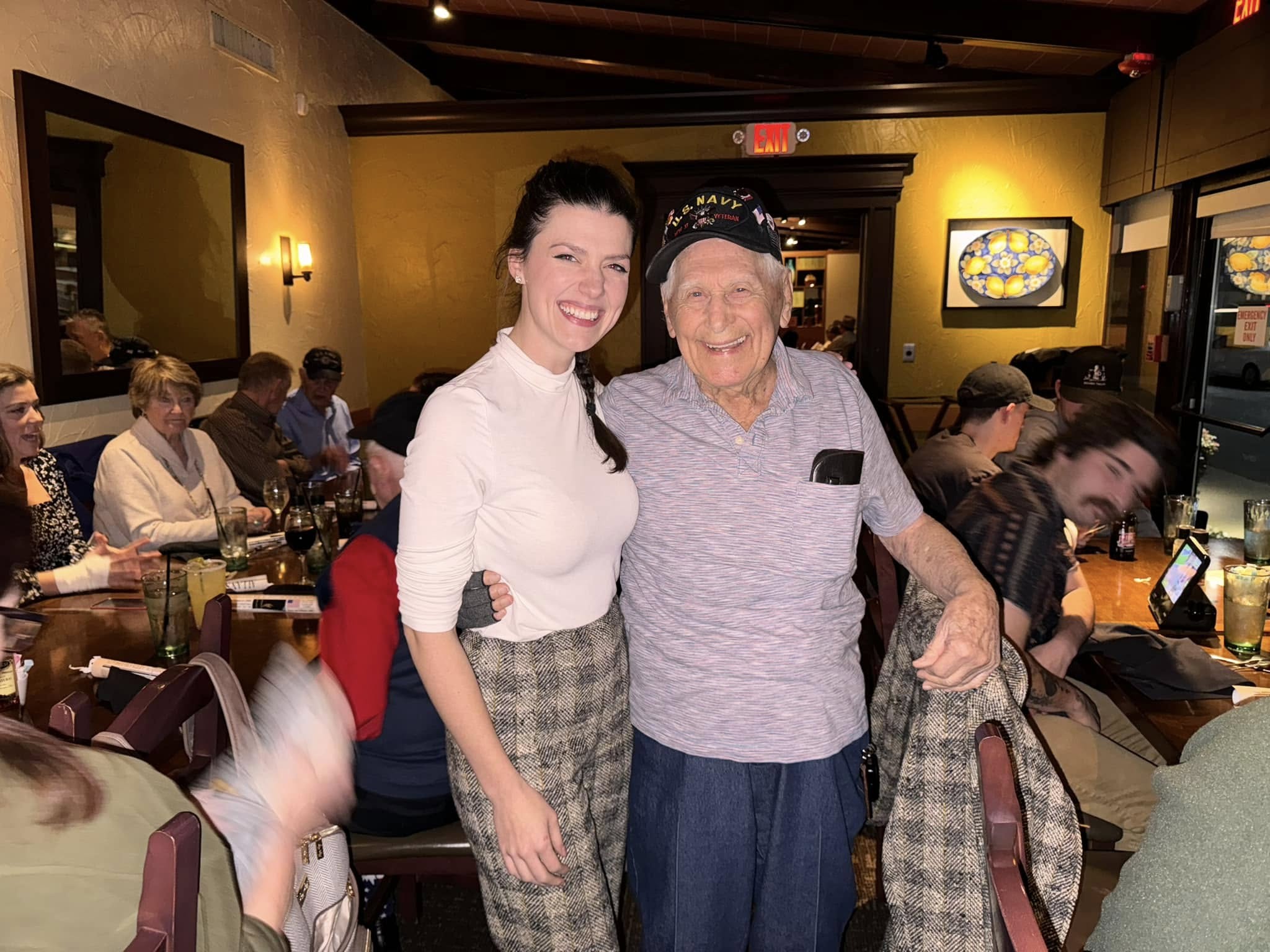
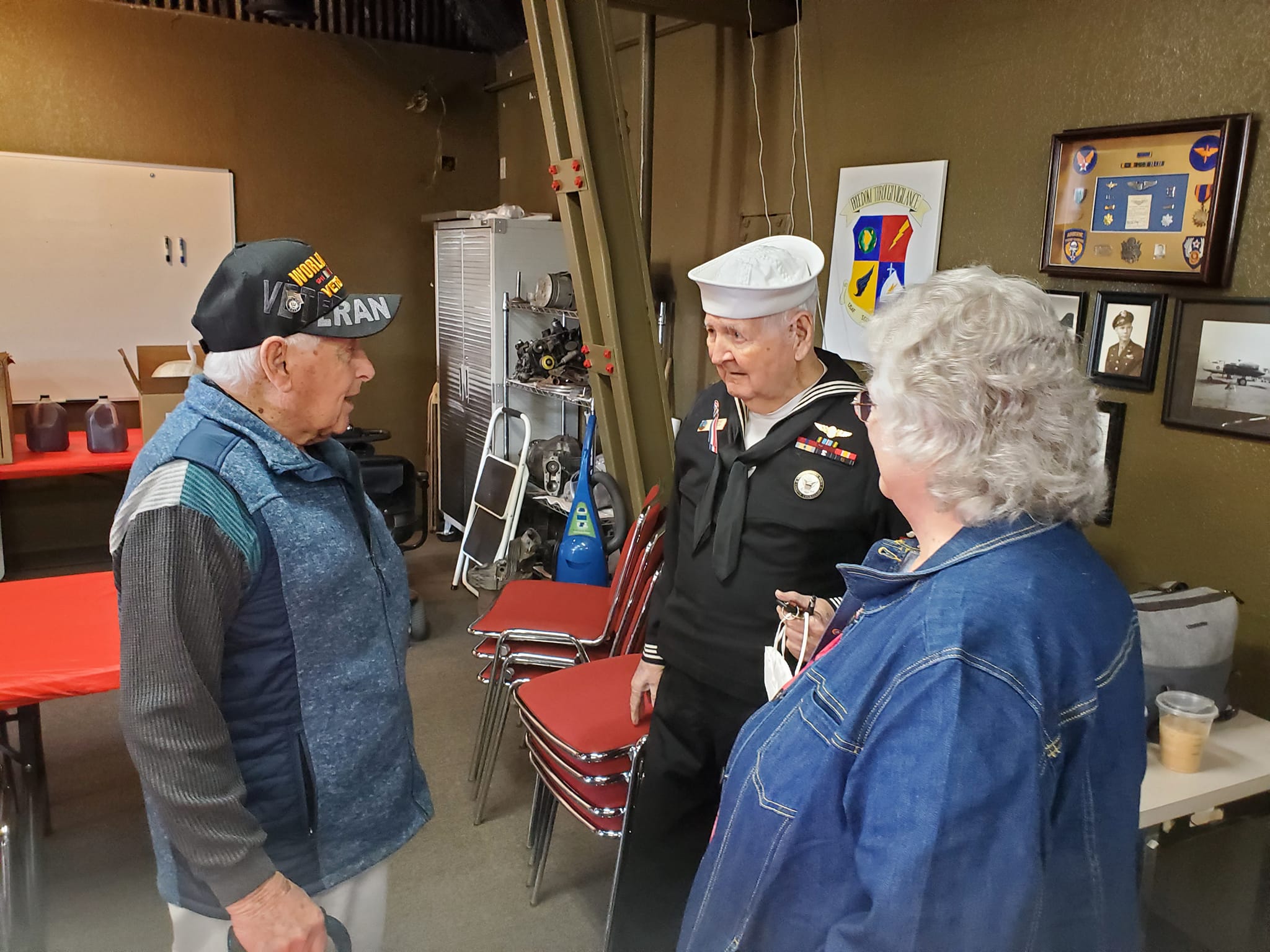
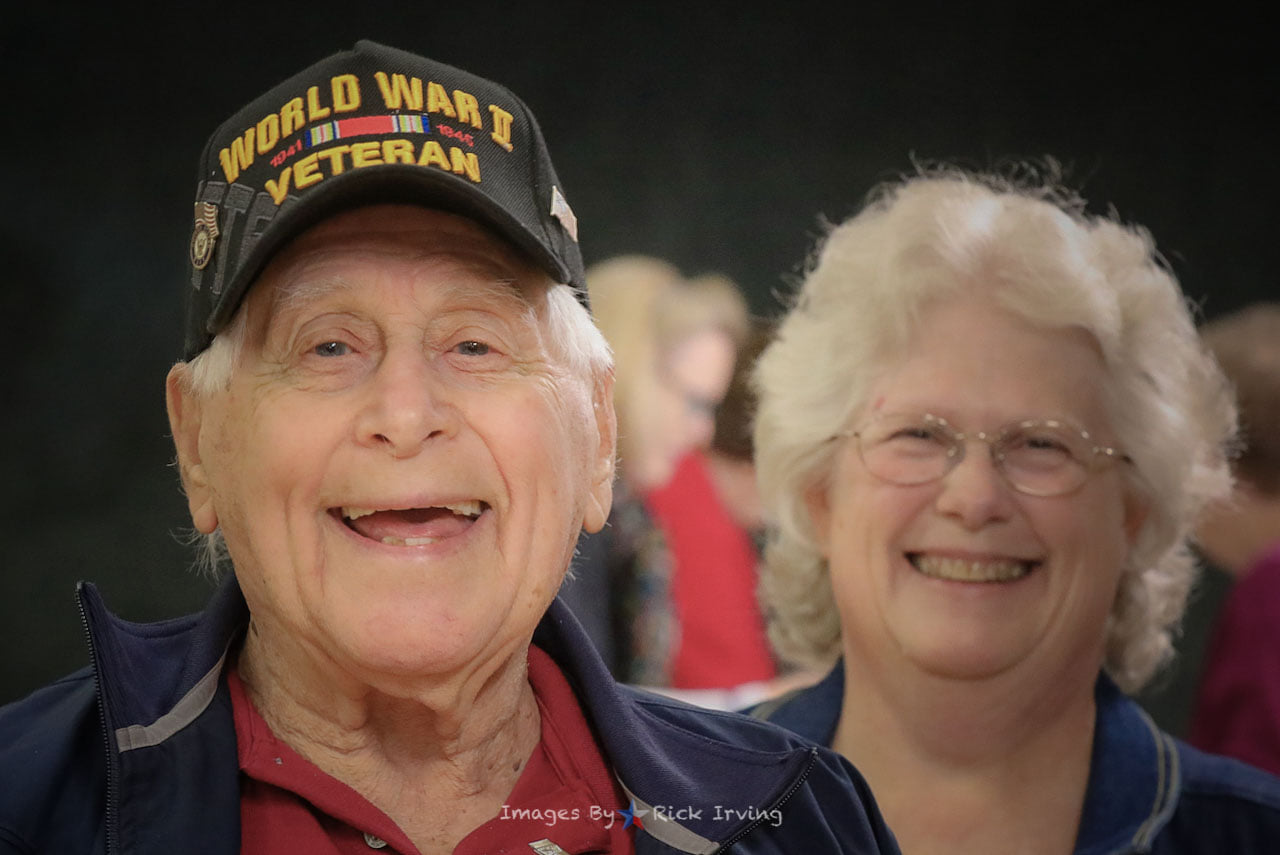
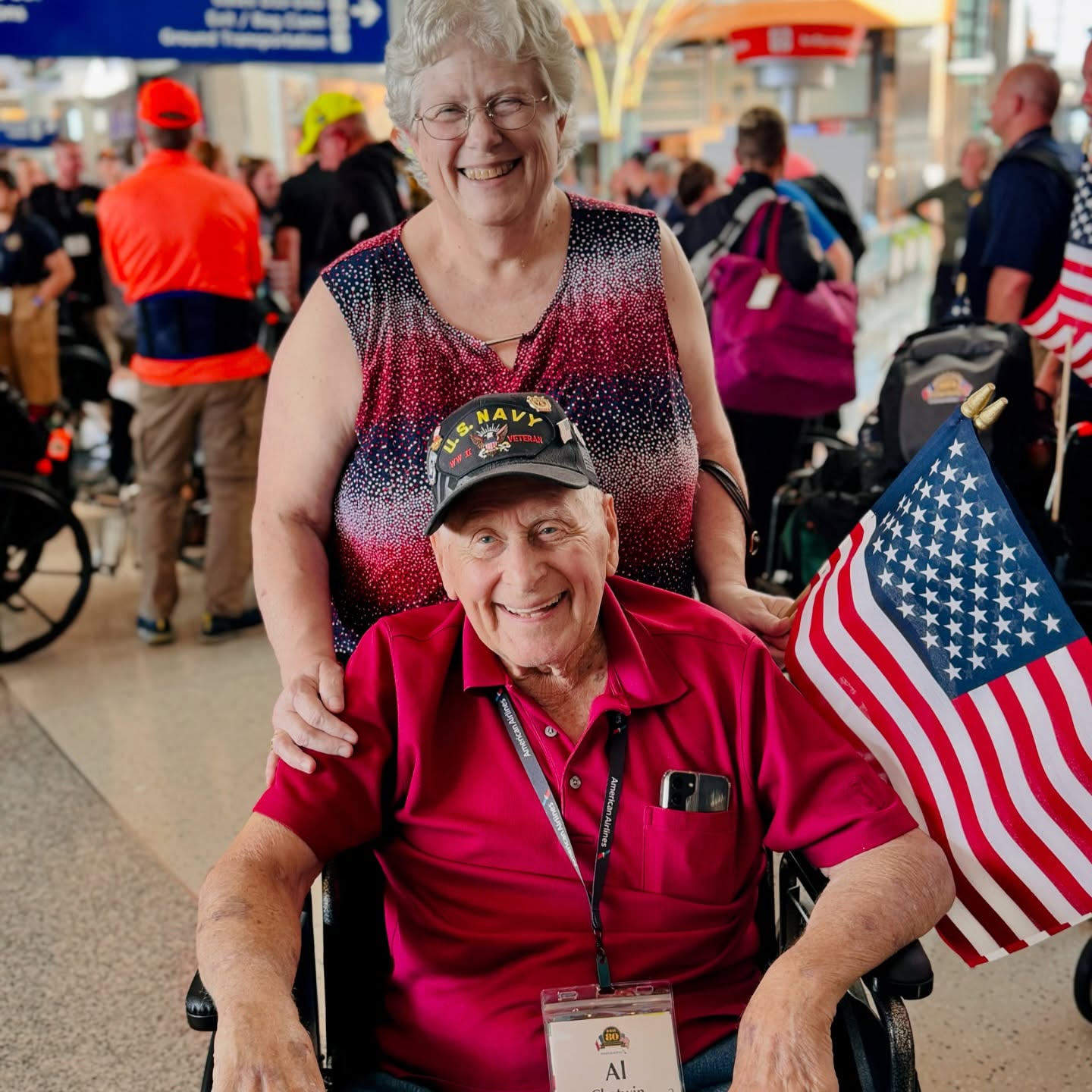

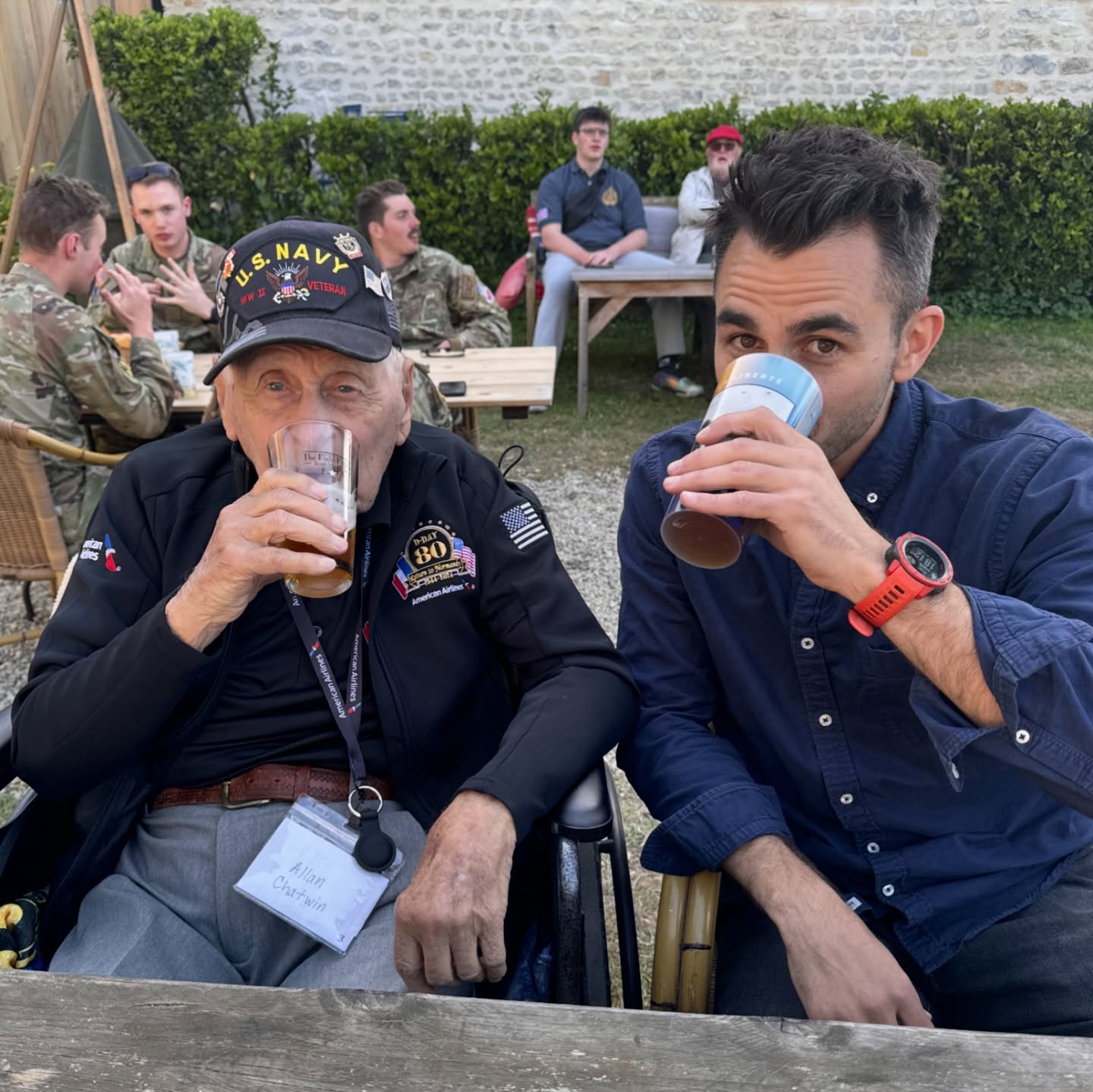
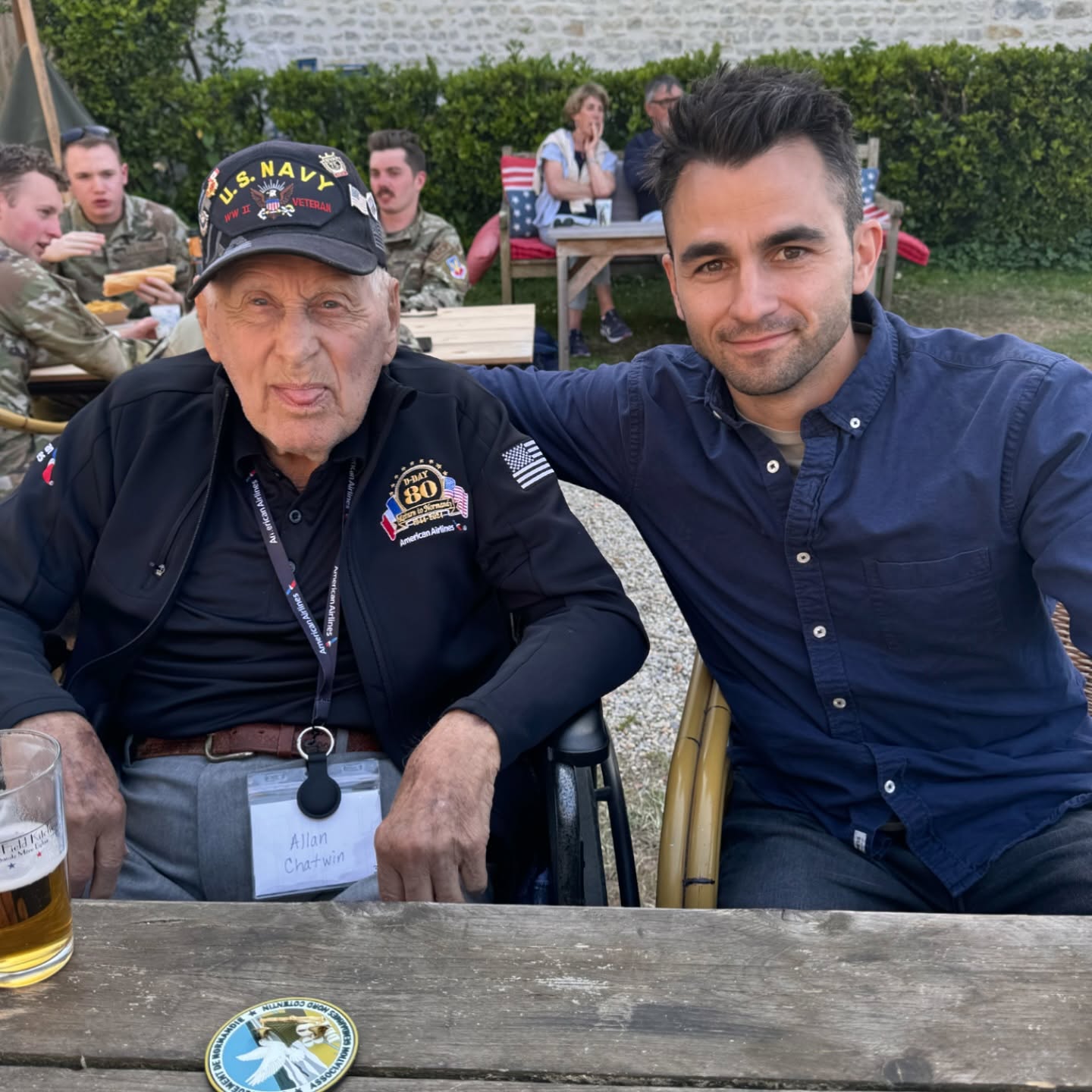
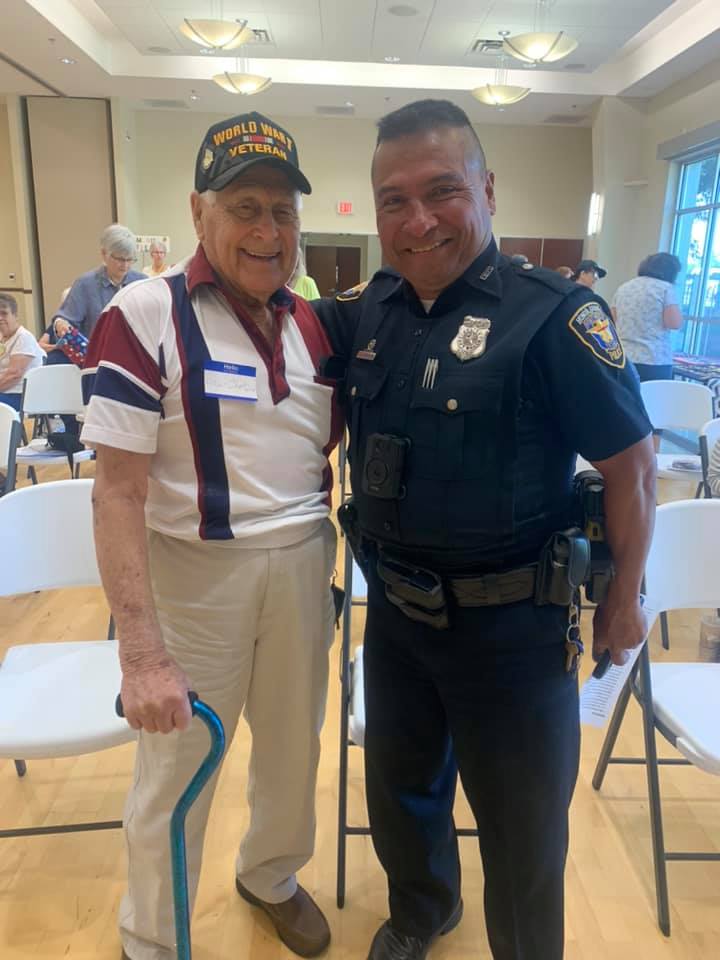
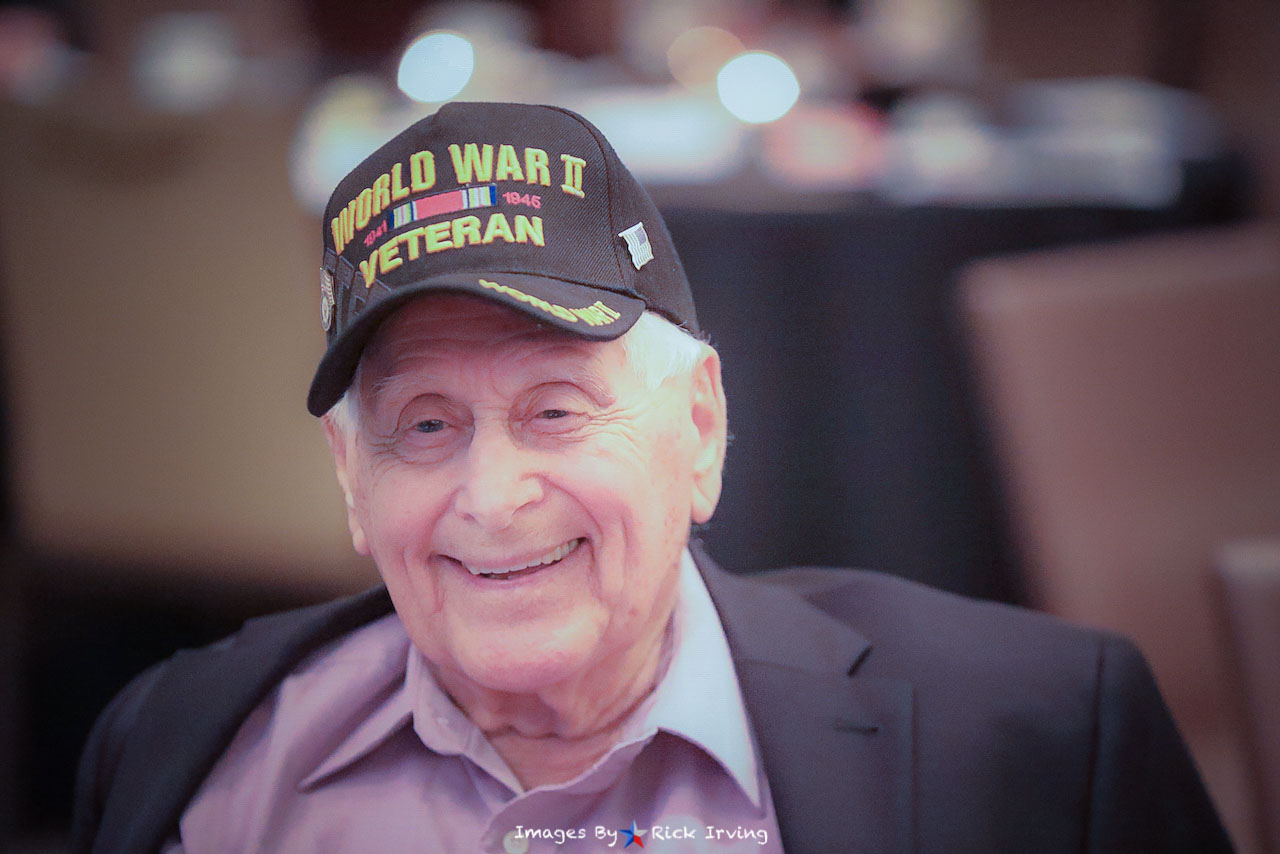
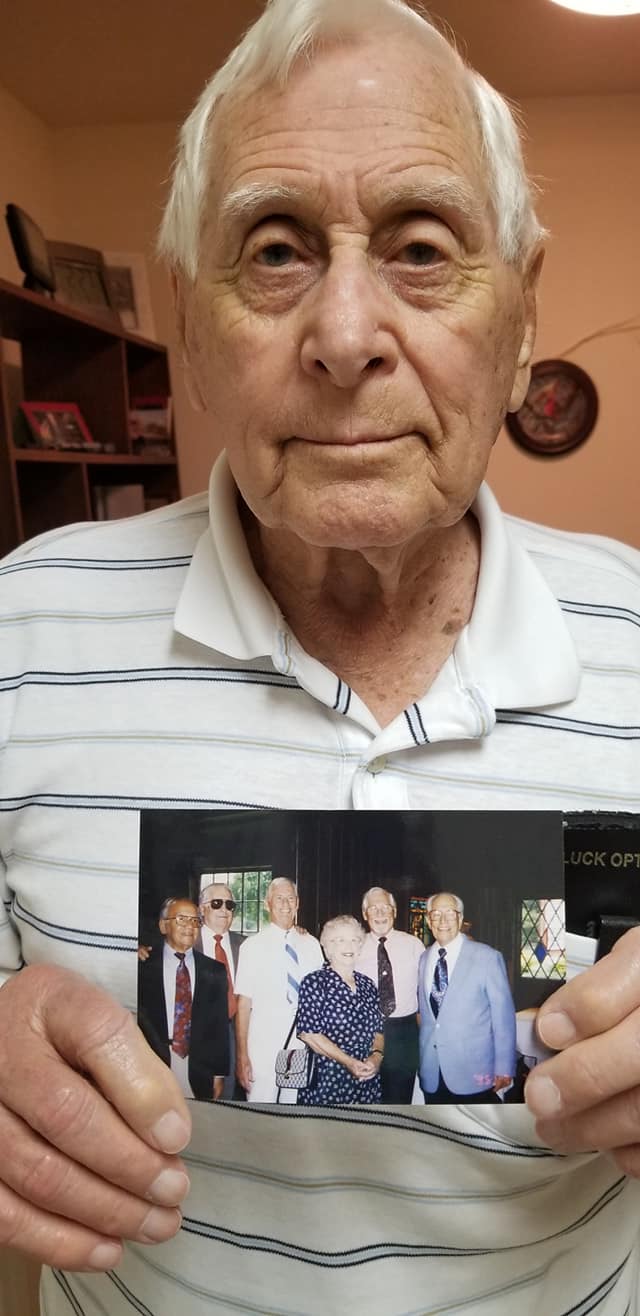
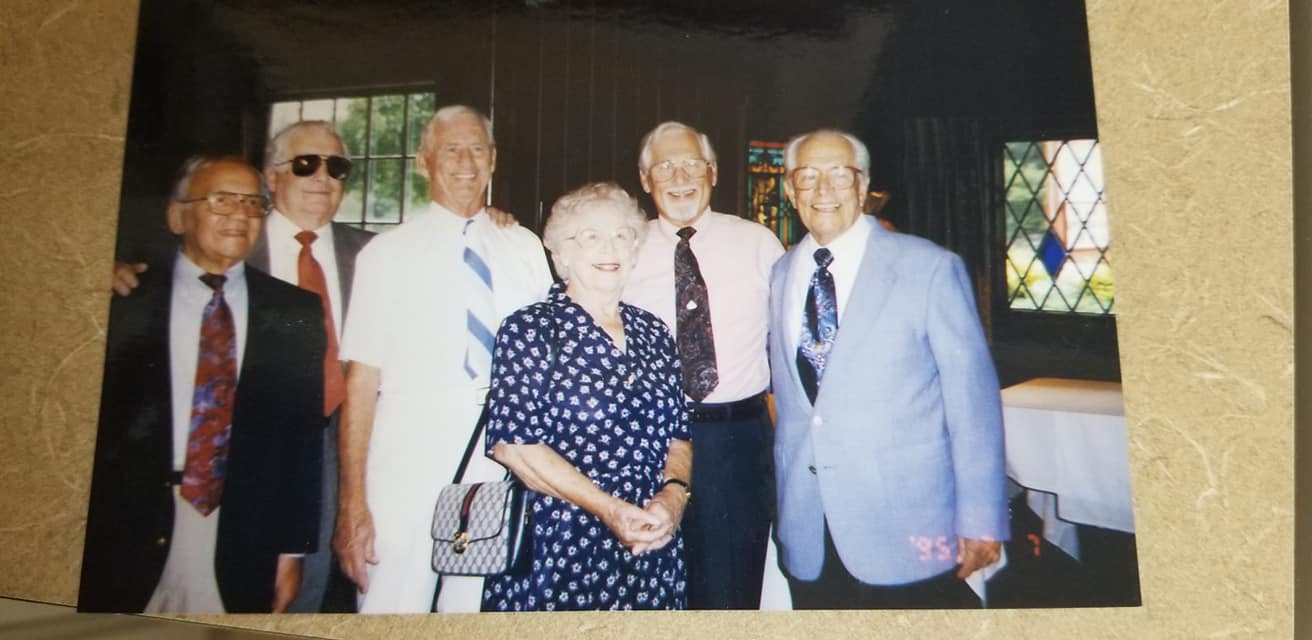
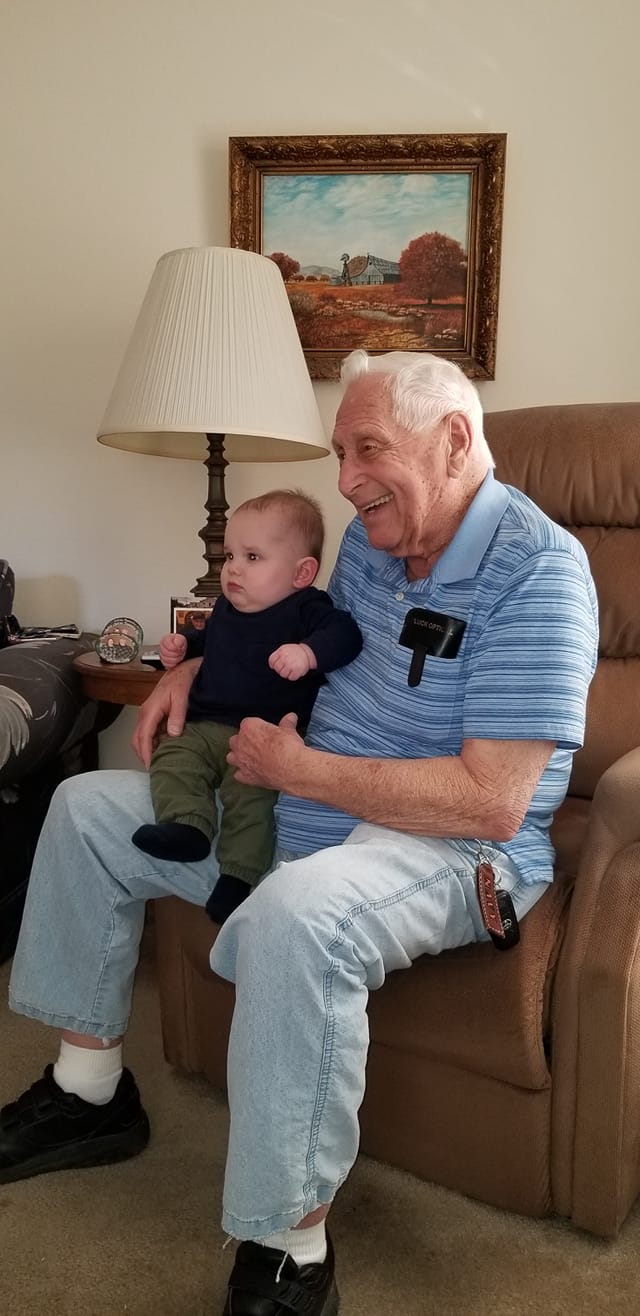
Allan Chatwin was born January 17, 1926 in Williamsville, New York. a small town located close to Buffalo. Winters were brutally cold and it wasn’t unusual for the town to be covered in several feet of snow. When he was 15 years old, Al remembered listening to President Franklin D Roosevelt’s speech concerning the Japanese surprise attack on Pearl Harbor. Americans were stunned by the news as the nation galvanized itself for the upcoming war. It was a difficult time as the country moved from the depression era to a wartime ramp up. Al remembers the ration coupons, gas rationing, and the collection of rubber and metal. Many of his friends and relatives enlisted and at the age of 18 Al was drafted. He decided to join the Navy because he figured he would be on board a ship and not sleeping in foxholes in the rain. Al had 3 brothers that also served. His oldest brother wanted to be a pilot but he waited too long to enlist and joined the AF as a radio operator. Another brother joined the Merchant Marines and his youngest brother served as a radio operator in Panama.
He was sent to Lake Canandaigua for Basic Training. After 8 weeks, he was sent to Memphis, Tennessee for advanced training as an aviation radio operator. Unfortunately he failed the course because he couldn’t take a code. He was then sent to New Orleans for General Detail and stayed in Algiers for 2 to 3 weeks before being transferred to Guam. But first he had to endure a cross country train ride to a Naval Base north of Los Angeles.
He then sailed to Hawaii but his ship was docked in a canal for 3 weeks. None of the men on board were allowed off the ship which after 3 weeks became extremely uncomfortable. Al remembered it was difficult to be stuck on the ship and not be able to enjoy the lush green surrounding them.
Then finally the men were released and they boarded an Army Transport, for transfer to Guam. In addition to the Navy sailors, there was a Marine Gun Unit. Al referred to the Marines as “Sea Going Bell Hops” and mentioned that the one thing they were afraid of was a “ Swaby with a hose”. The ship was packed so the men slept on bunks stacked 6 high. As the transport sailed into warmer temperatures the hold became hot and the majority of the men slept on the deck. It was a slow sail to Guam. Al left Oahu in October 1944 and arrived in Guam on Christmas Eve. Their progress was slowed by the ships constantly making S zig zagging turns necessary for evading Japanese submarines.
As soon as their ship docked, the men quickly tied straps around their sea bags and tossed them over the rails hoping they fell into the landing craft below.
When asked if Al was apprehensive or worried about his entrance into the war, his response was he was looking forward to new adventures.
He did mention one interesting point. He learned that failing Aviation School was not a negative. He learned that the radio men were located in the belly of the ATM torpedo planes which placed them broadside the ship and its guns. So he was glad he wasn’t an Aviation Radio man.
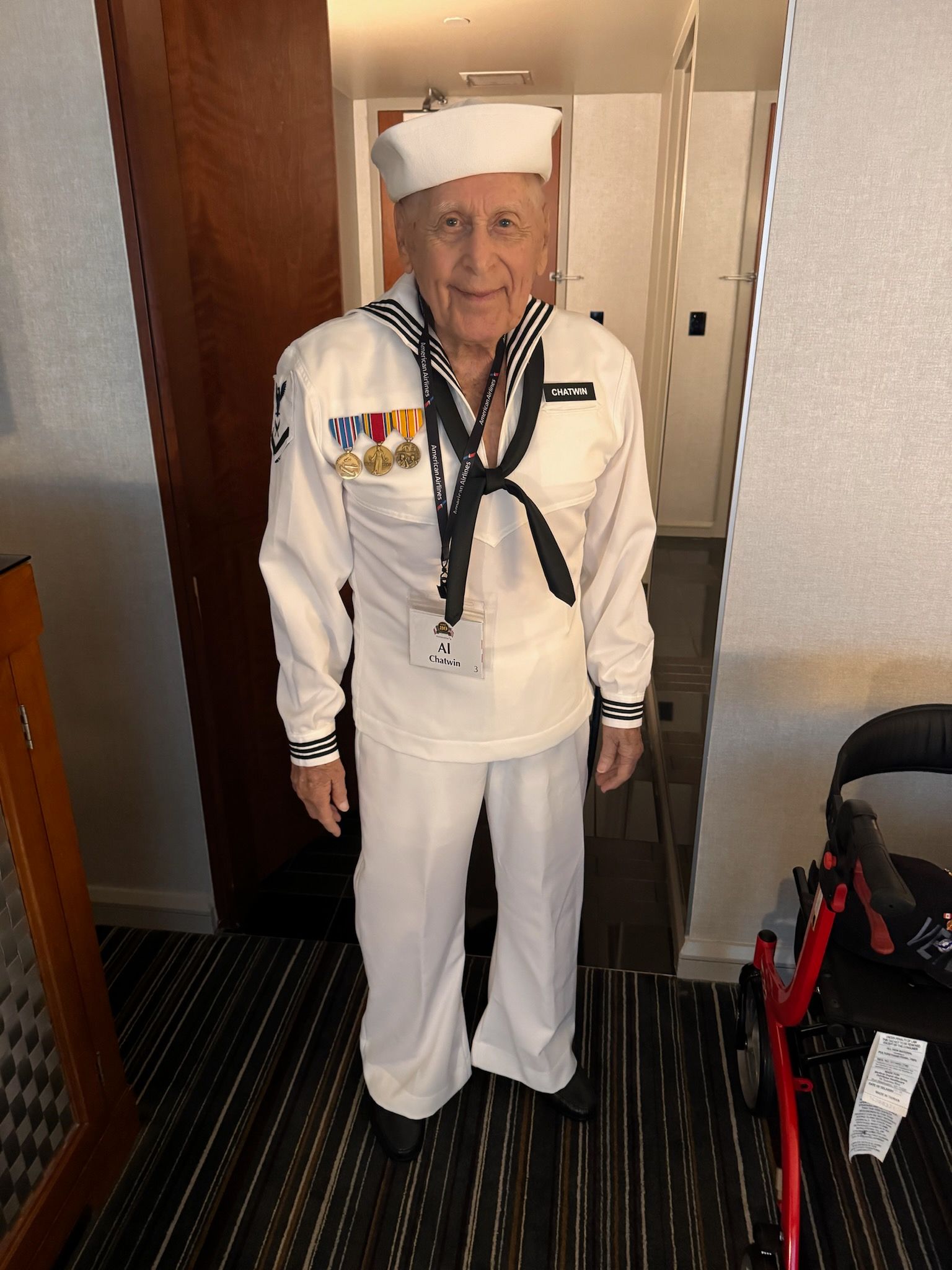
Al arrived for duty in Guam as a Seaman 1st Class. He soon learned that his duty as a Seaman 1st Class was whatever they told him to do which included mess hall, clean up, and guard duty. Even though the Japanese defending Guam had been defeated, some of the soldiers had retreated into the mountains and occasionally would shoot at the Navy personnel. One humorous story described how Japanese soldiers would steal clothes hanging on clothes lines near the barracks and disguise themselves so they could go through the chow lines.
Guam was a principal staging area for the Pacific and Al remembered seeing large numbers of ships destined for assaults on Okinawa and Iwo Jima. Al was responsible for managing the war materials that went out with the ships to support the battle readiness of the troops involved in the island attacks. He was assigned to the Naval Receiving Station that maneuvered the assignment of sailors from damaged ships to new commands, some were sent back to the US, while others were new recruits joining their assigned ships.
These duties were crucial to maintaining battle readiness through the Pacific War Theater. Without Al ‘s support, the materials and men needed to sustain the war would not have been supplied. After service for one year in Guam left the Navy at the end of 1945.
After the end of the war with Japan remember vast numbers of ships and personnel were processed through Guam for the return to the US. For Al The trip back to the states did not take as long. After picking up a contingent of Marines on Wake Island the ship continued its voyage and landed in San Francisco. Then Al boarded a train for the long ride back to Long Island. As the train entered San Antonio they were forced to a side rail for 3 days to allow supply trains to pass. The men were not allowed off the train because the officers were afraid they would not return in good shape.
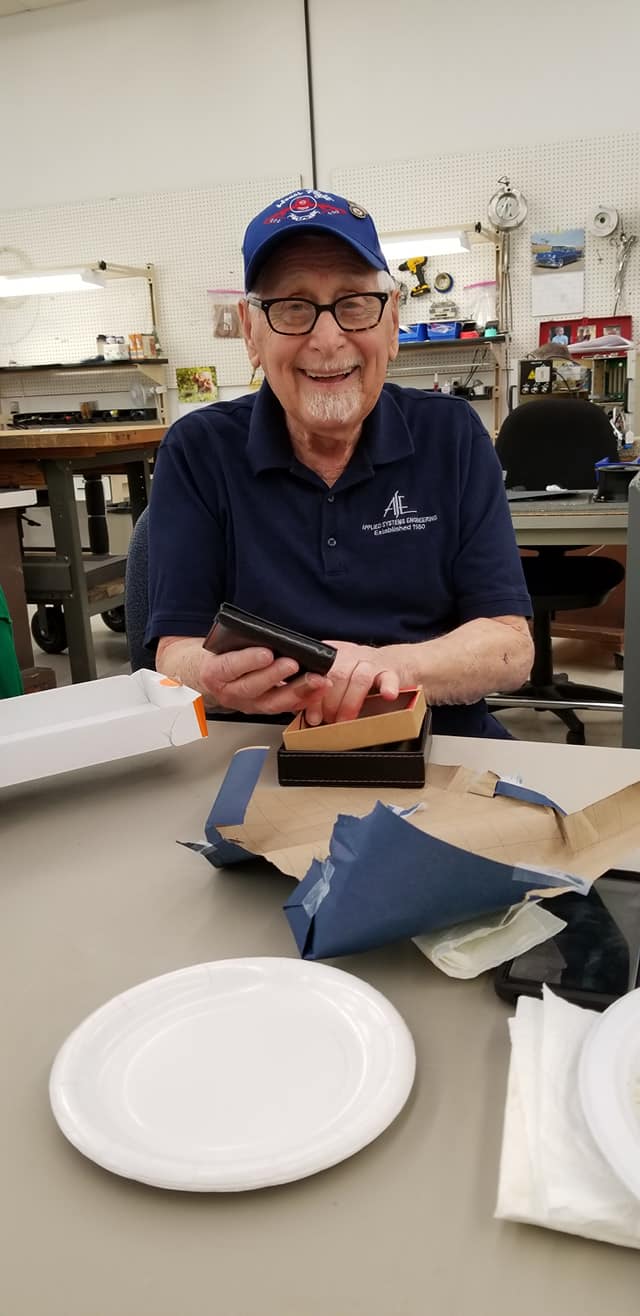
After the Navy, Al attended trade school to learn electronics. He marveled at how much electronics had changed over the last 2 years. with the invention of vacuum tubes and circuit boards. He went to work for Bell Aircraft and transferred to their Missile business and then took a position testing Flight Carrier Automatic Landing systems. Al and a pilot went to a local airport to test the system and found it brought the plane into the center line every time.
Al’s next job was with Sylvania Electronic Radar Systems. 5 Trailers were developed and shipped to different areas of the US. The trailers contained 4 to 5 transmitters that could mimic enemy radar signals. The AF would fly against the radar trailers until their signal locked and the radar men learned how to identify their signal.
One of Al’s most interesting assignments involved an earth satellite receiving station. that was placed on the North Shore of Hawaii near Sunset Beach. For the first time a Football Game was transmitted through the satellite so the Ohio State vs Michigan game could be watched in Hawaii. Al stated the streets in Honolulu were completely empty and a TV was not available anywhere.
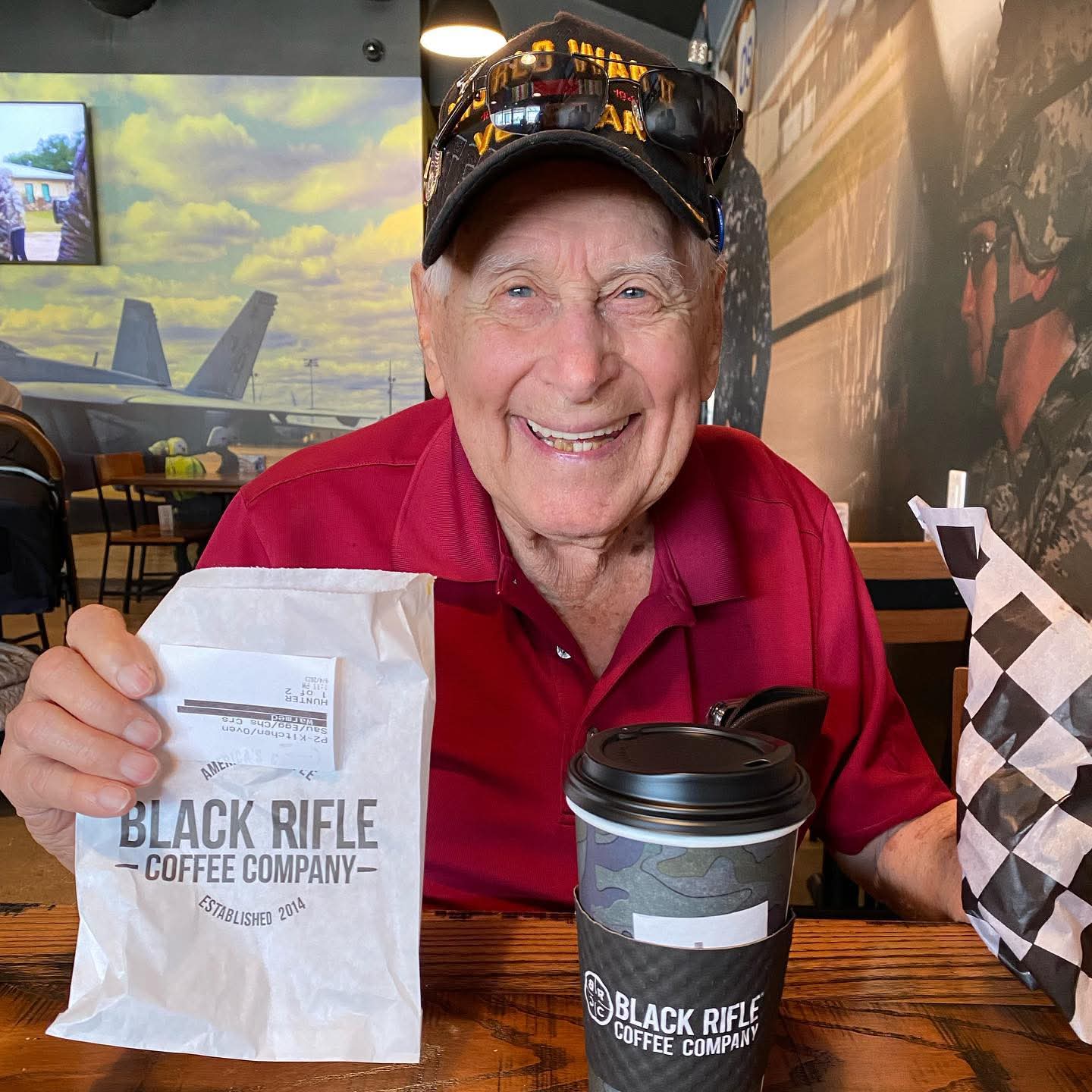
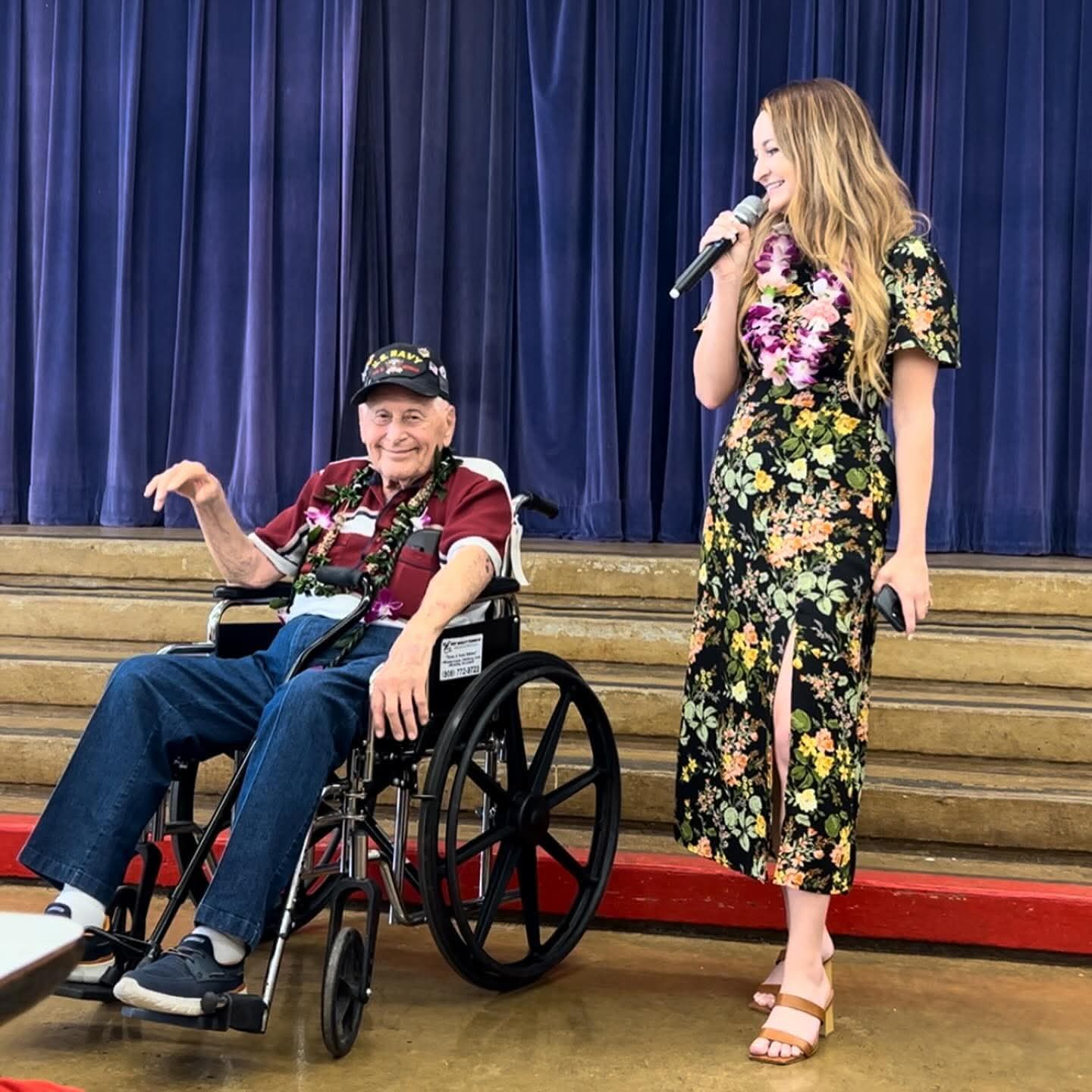
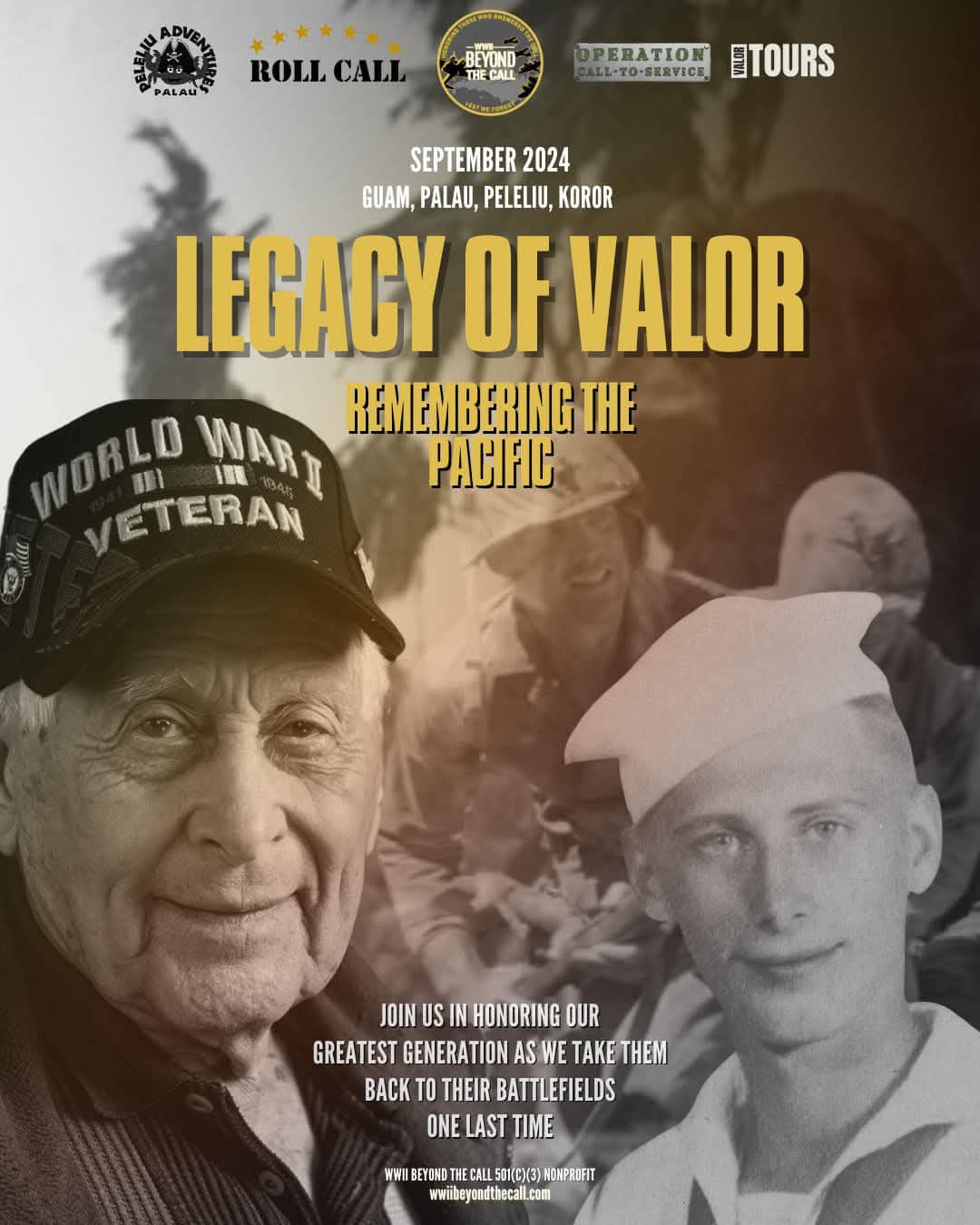
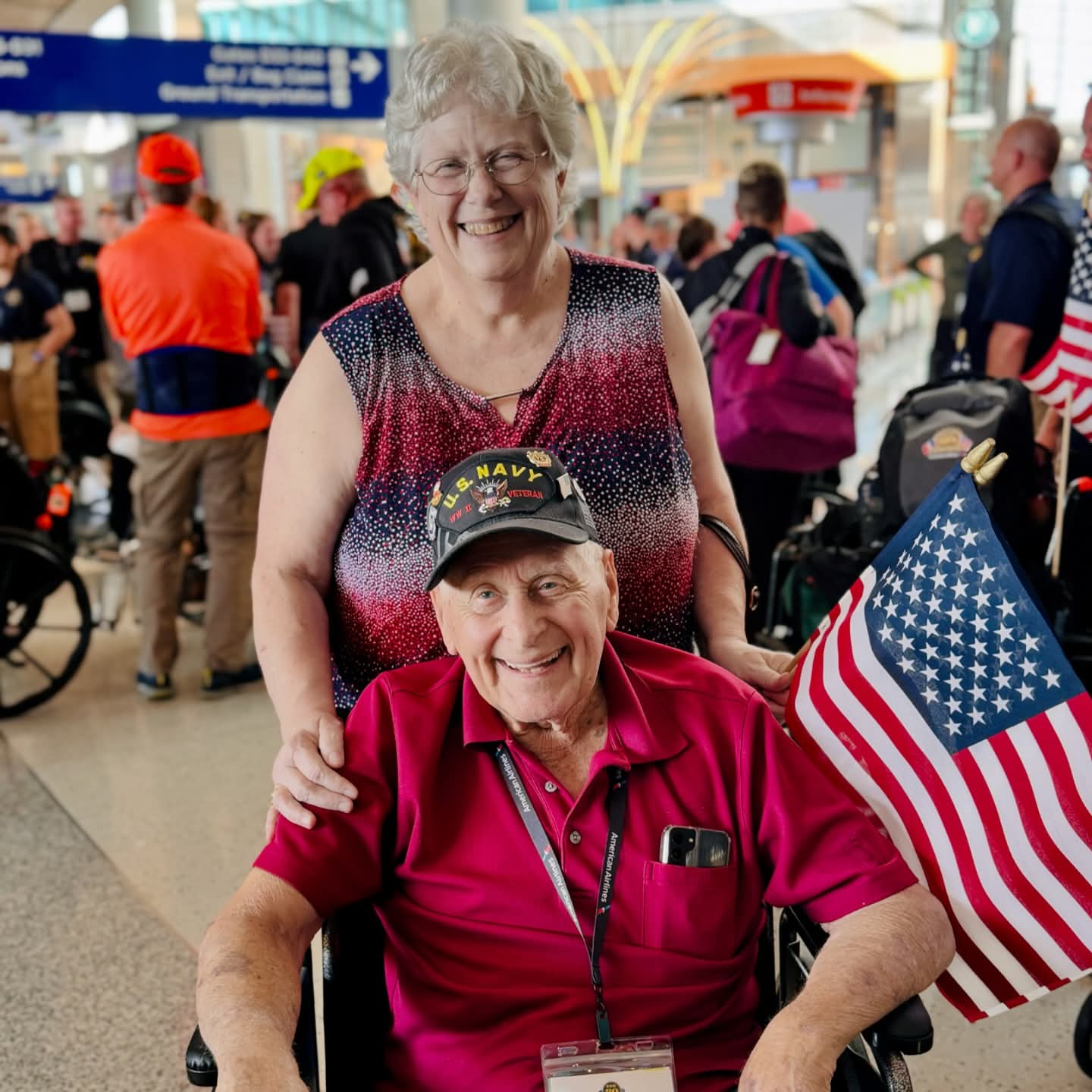
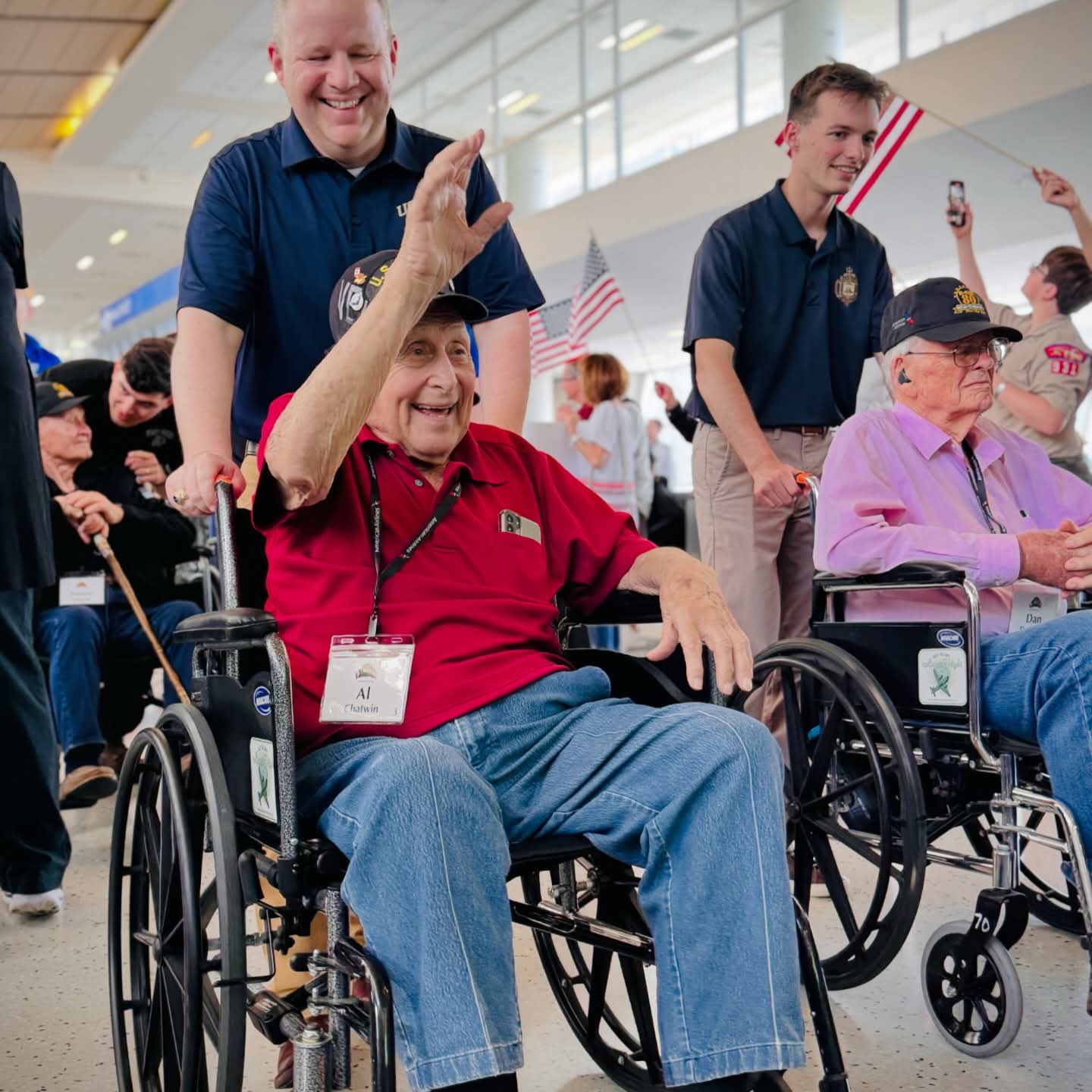
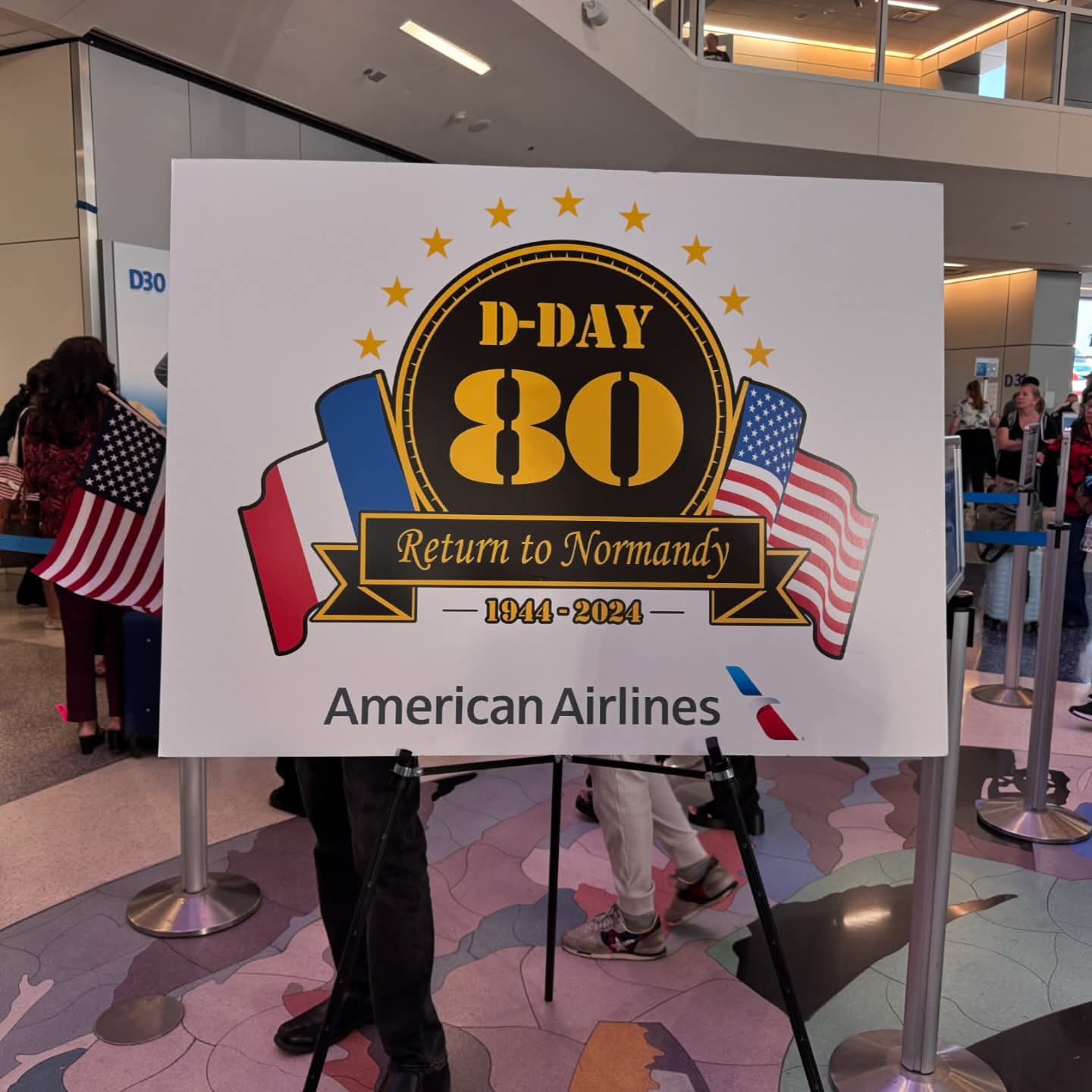
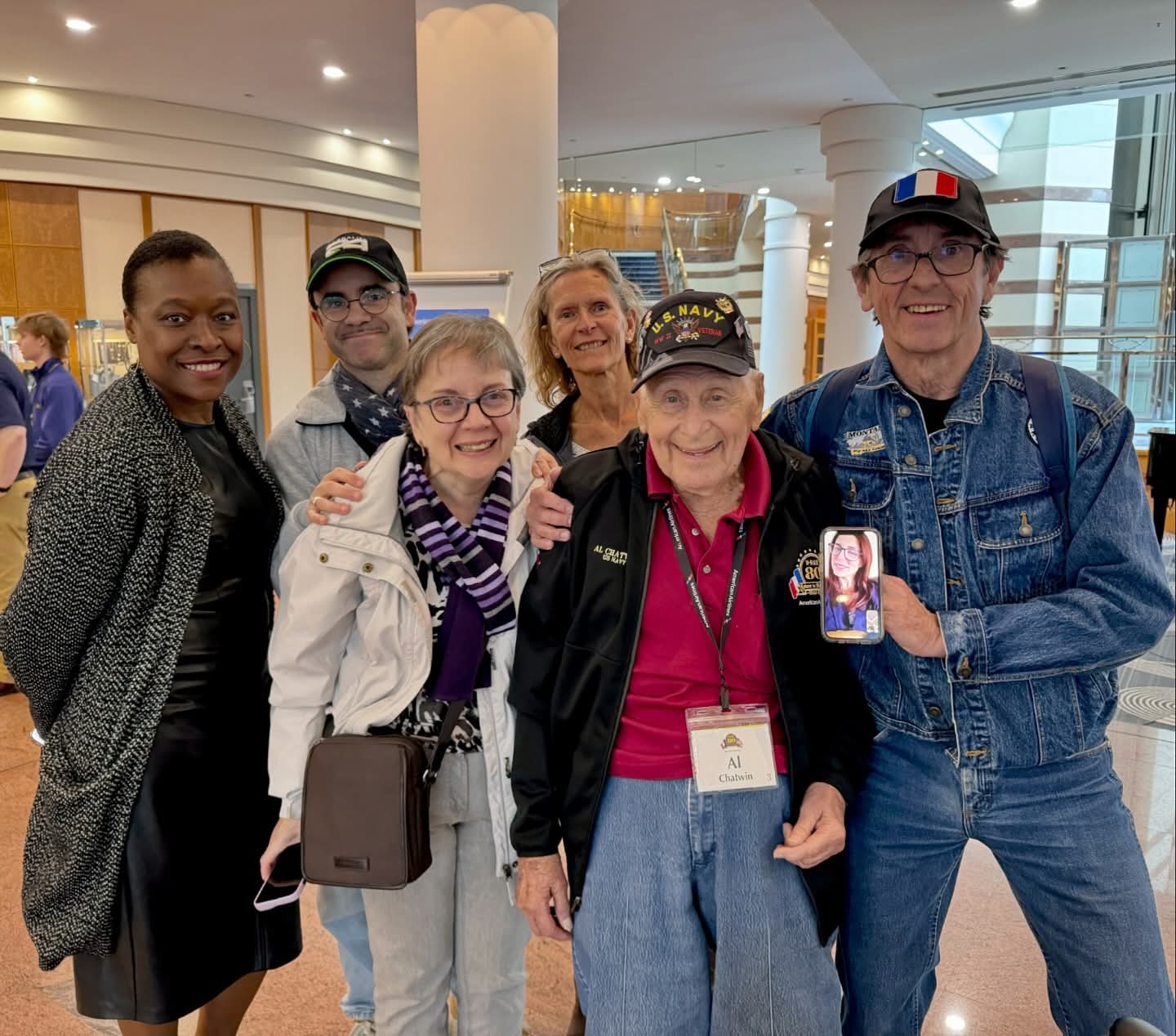
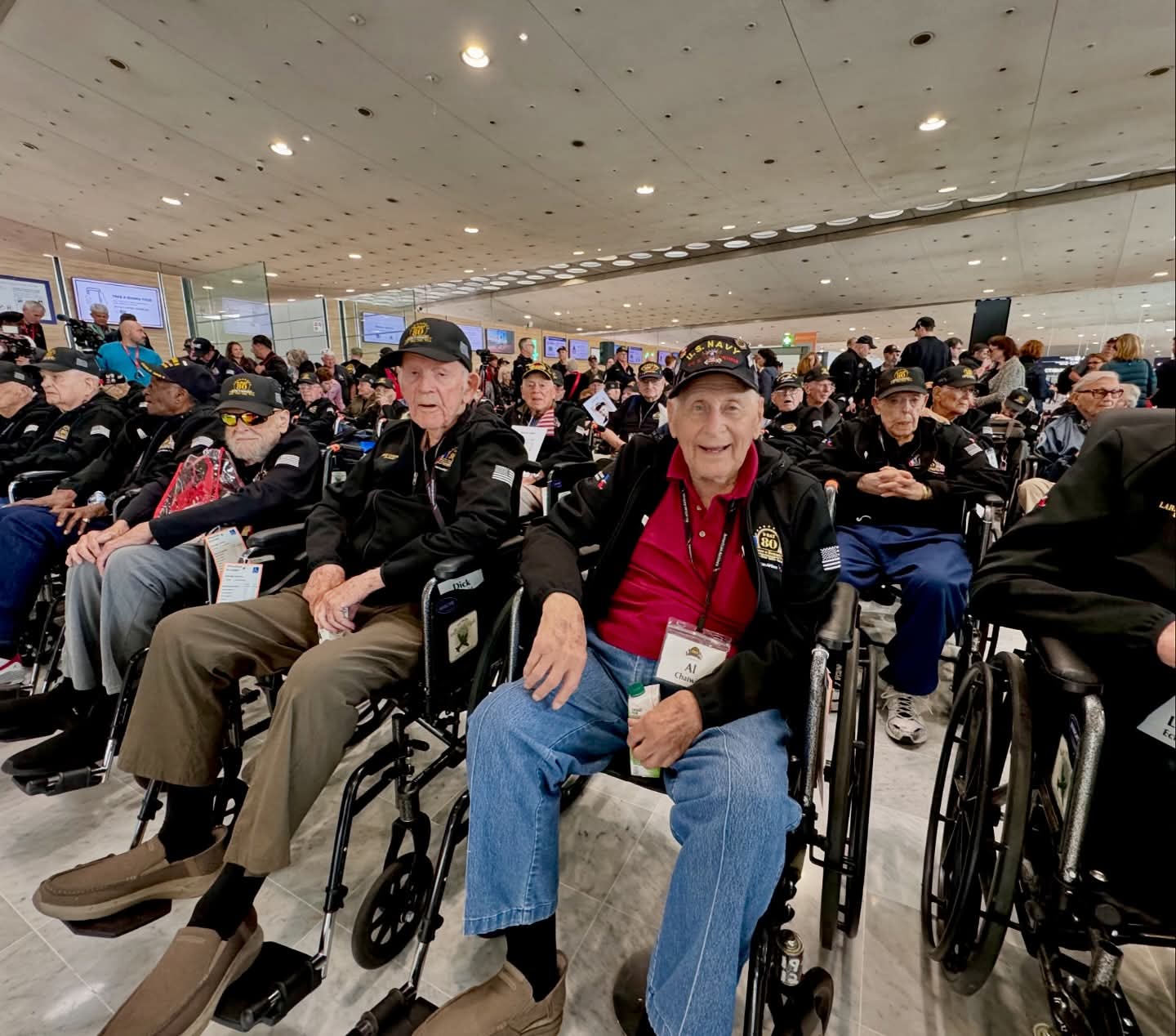
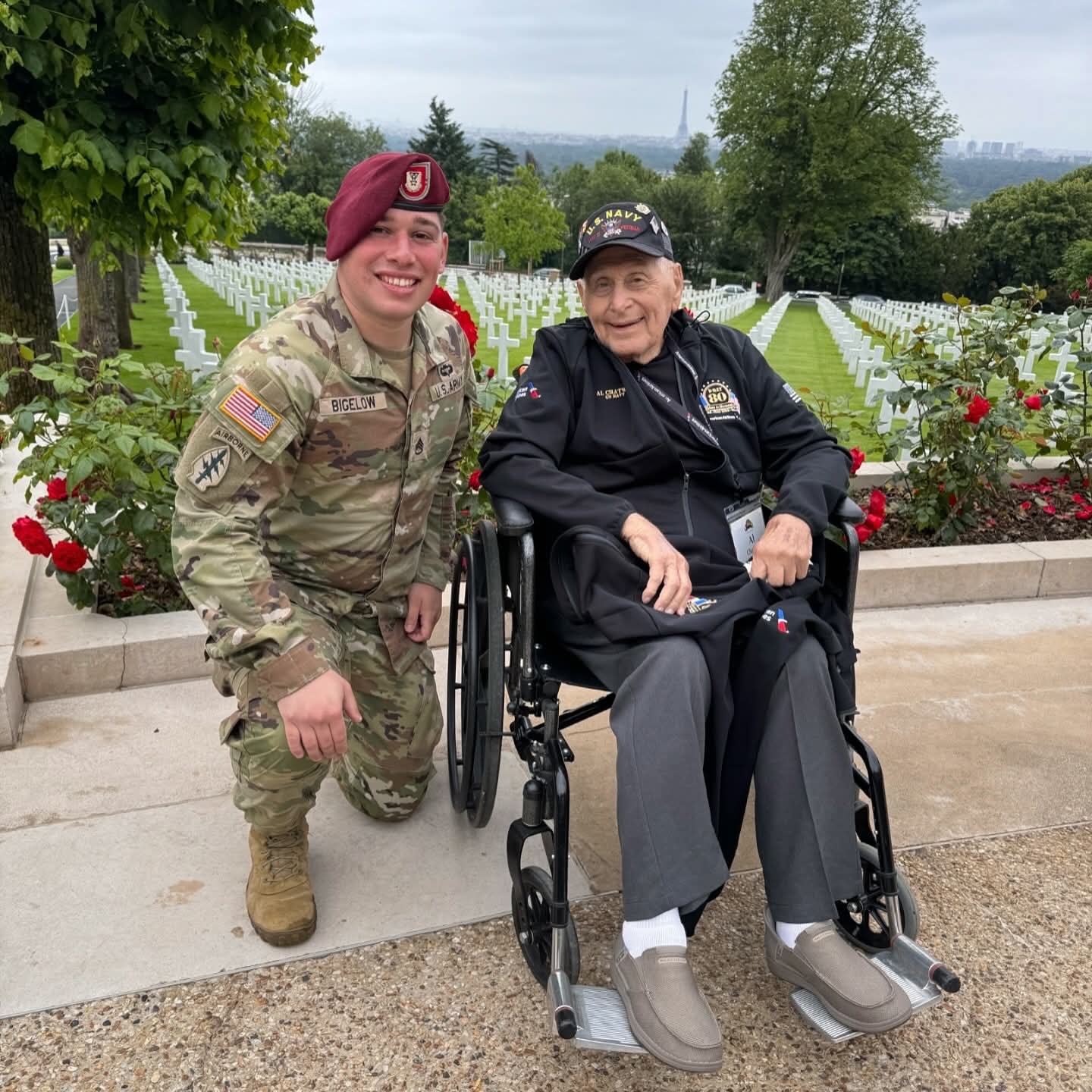
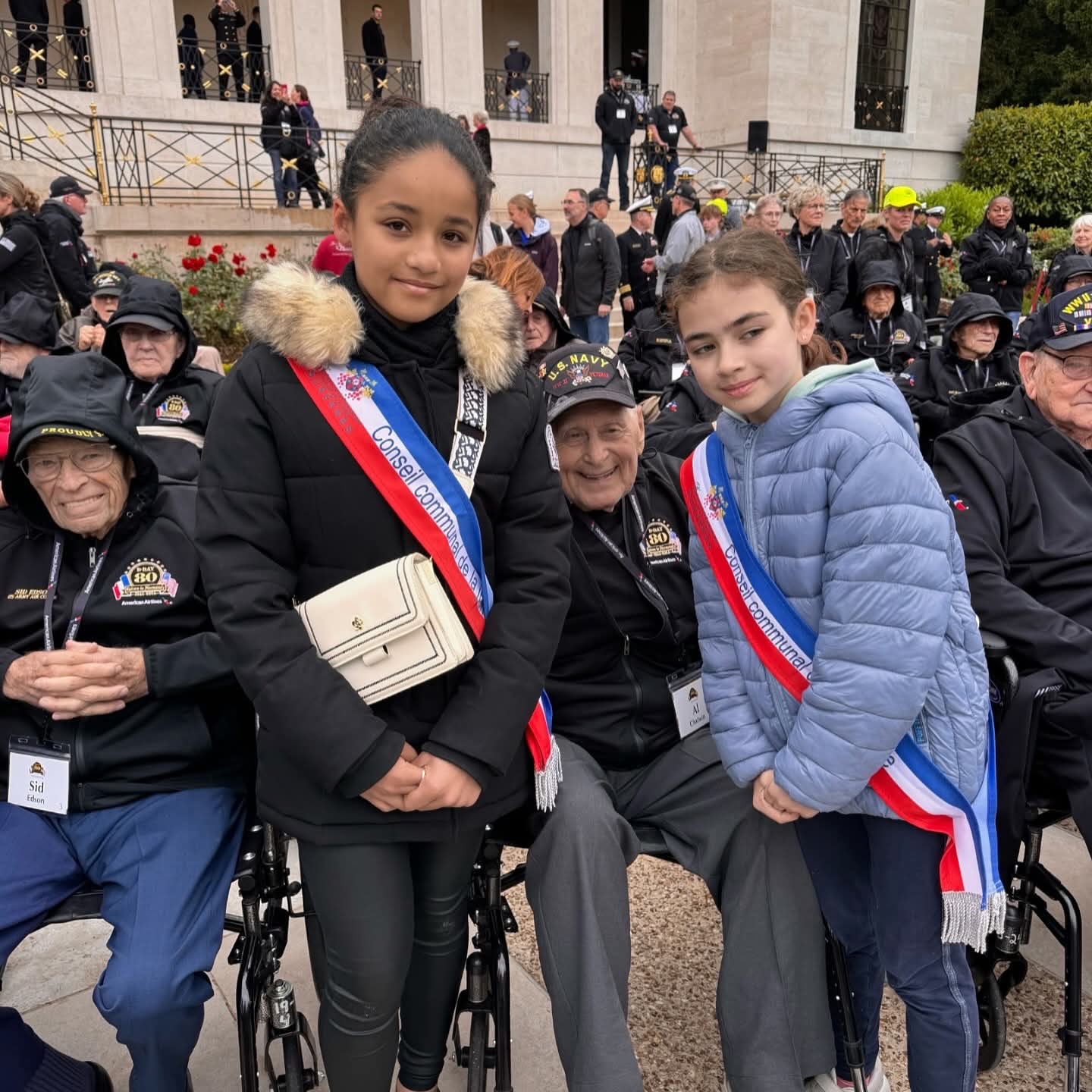
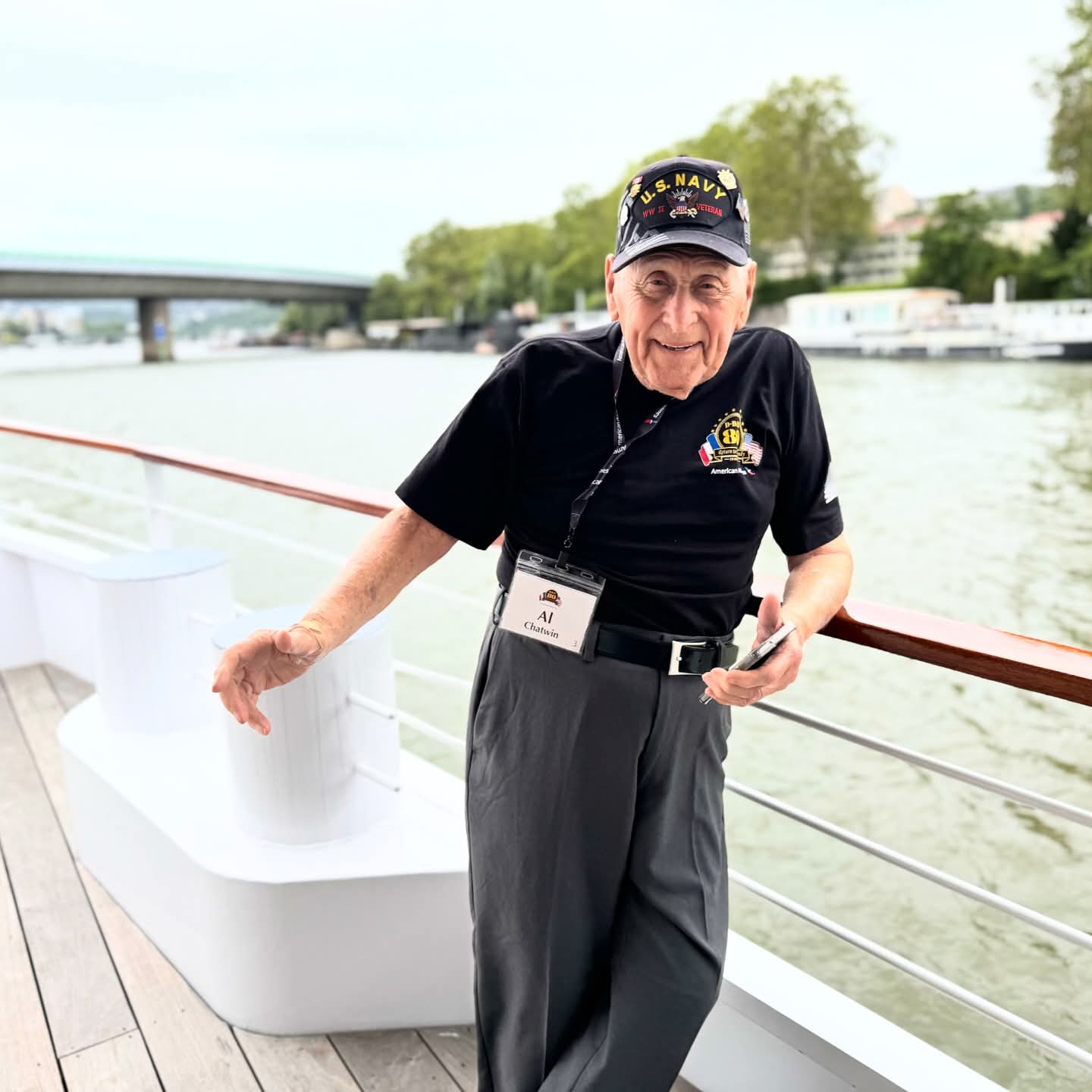
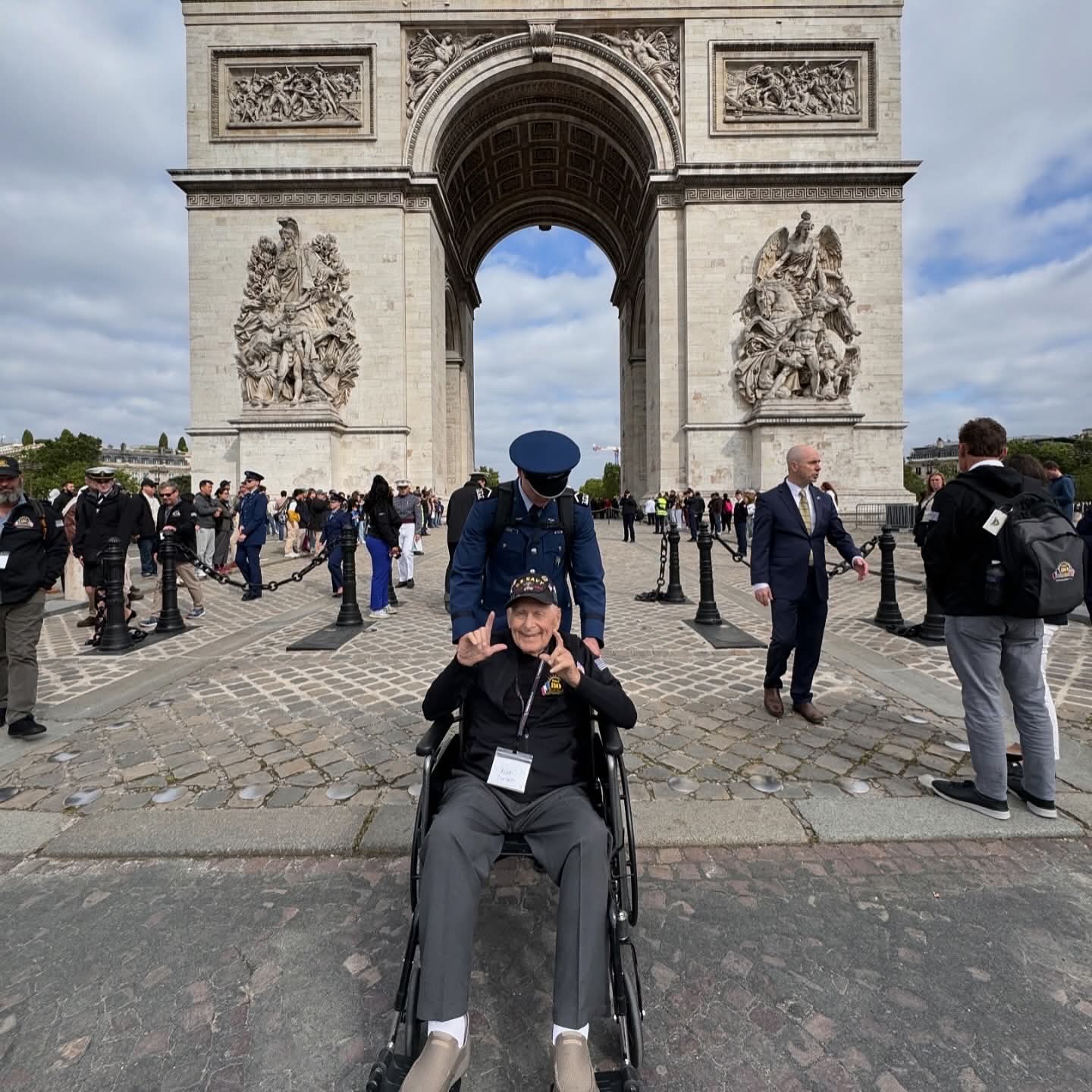
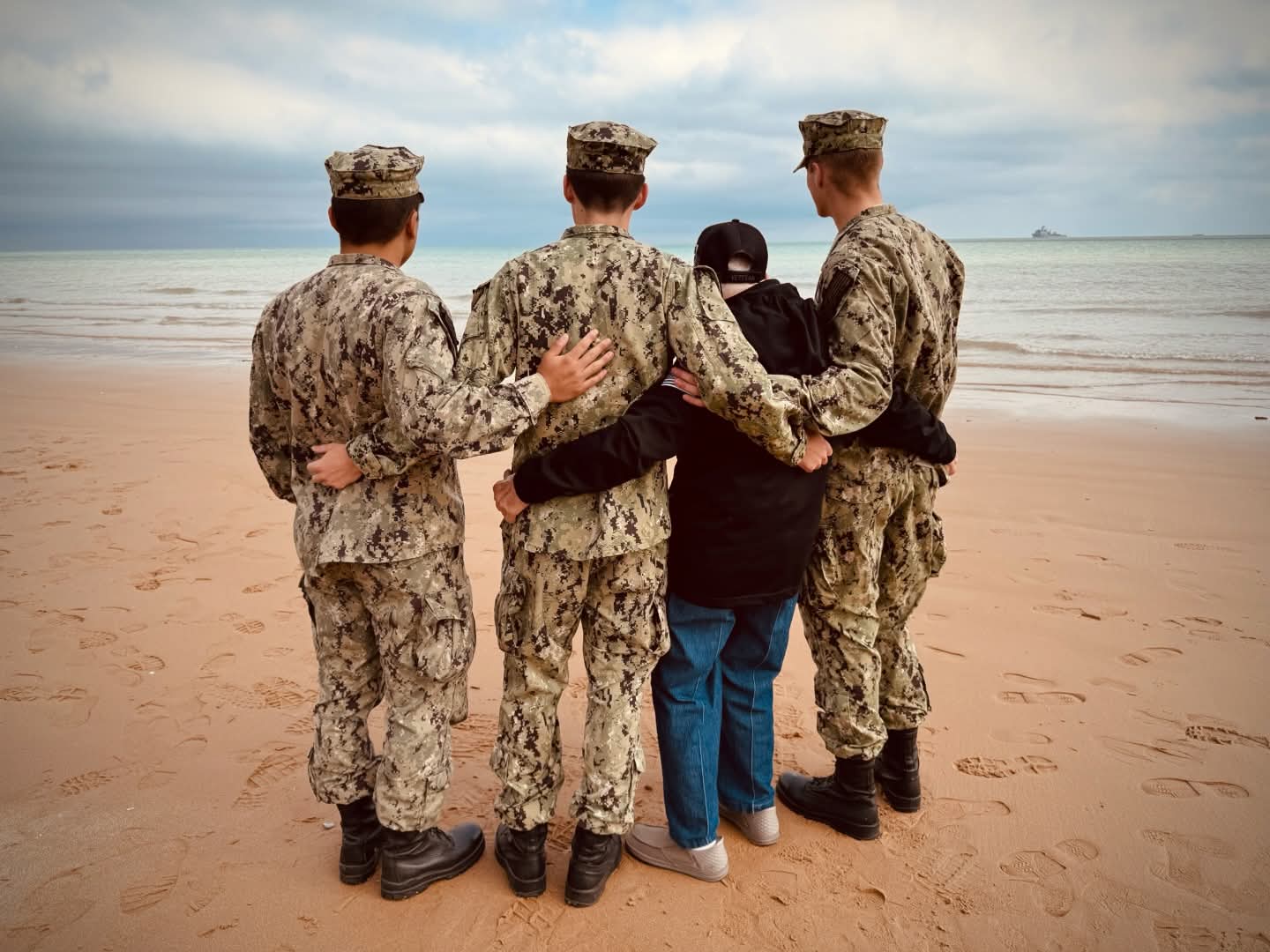
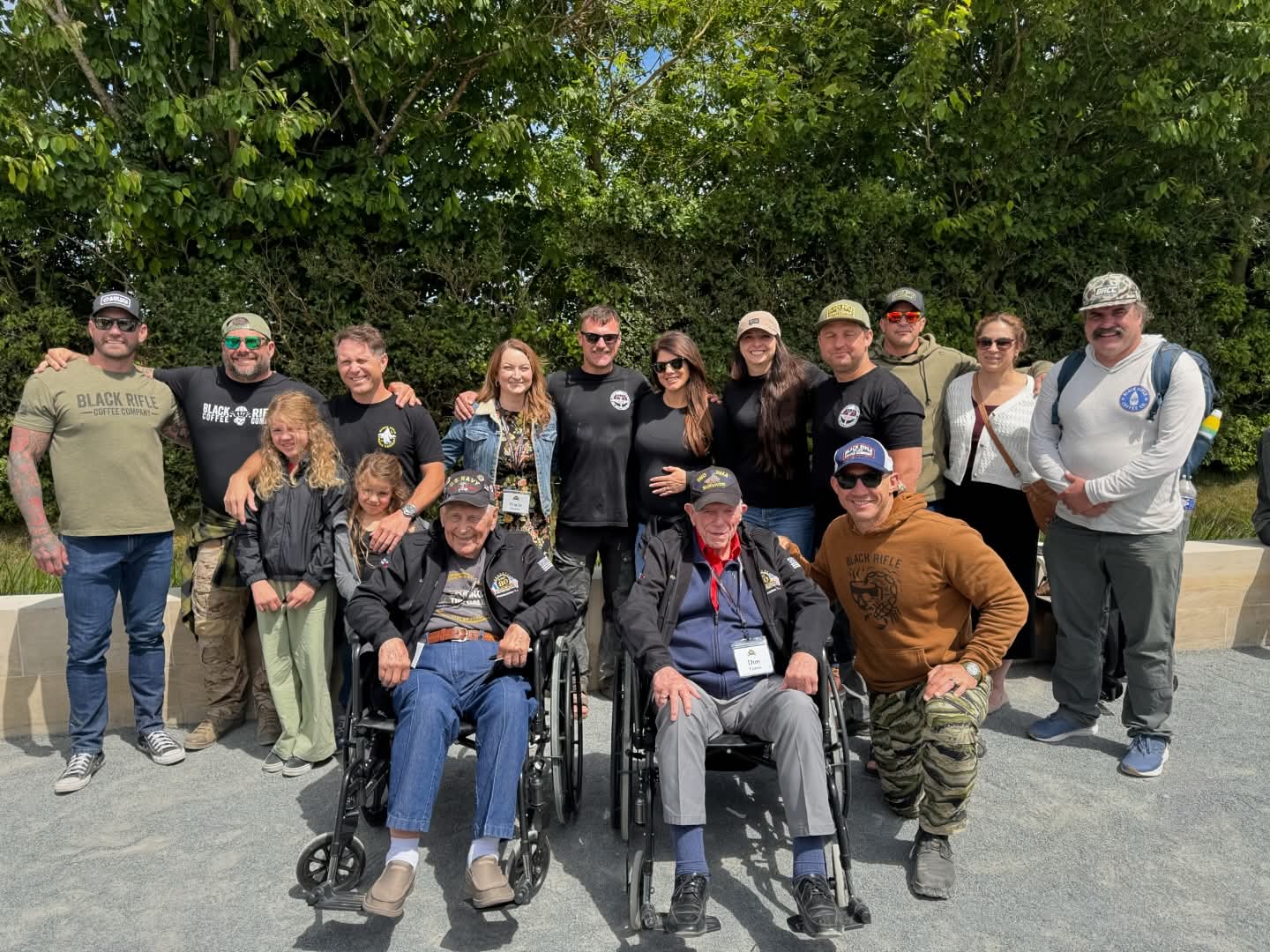
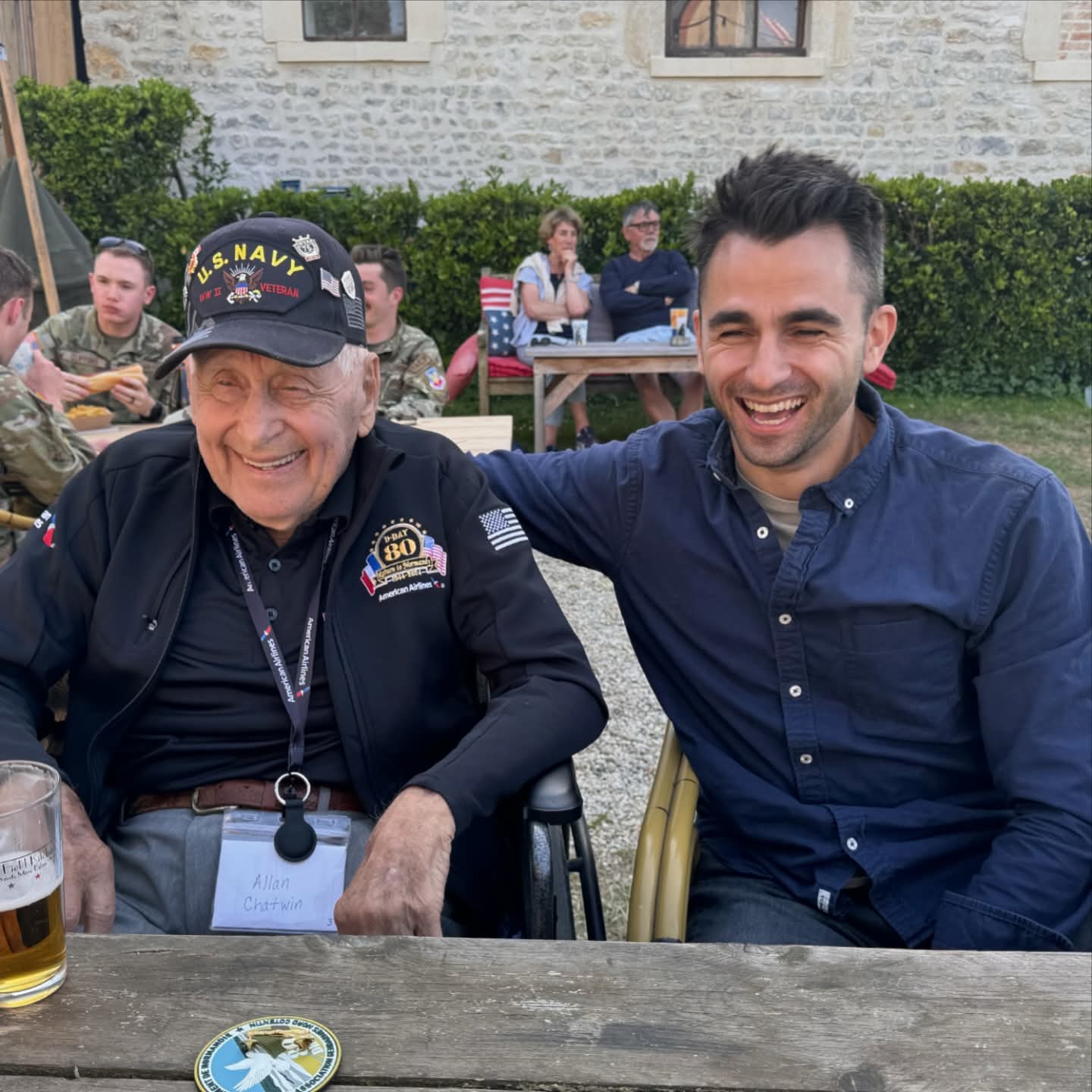
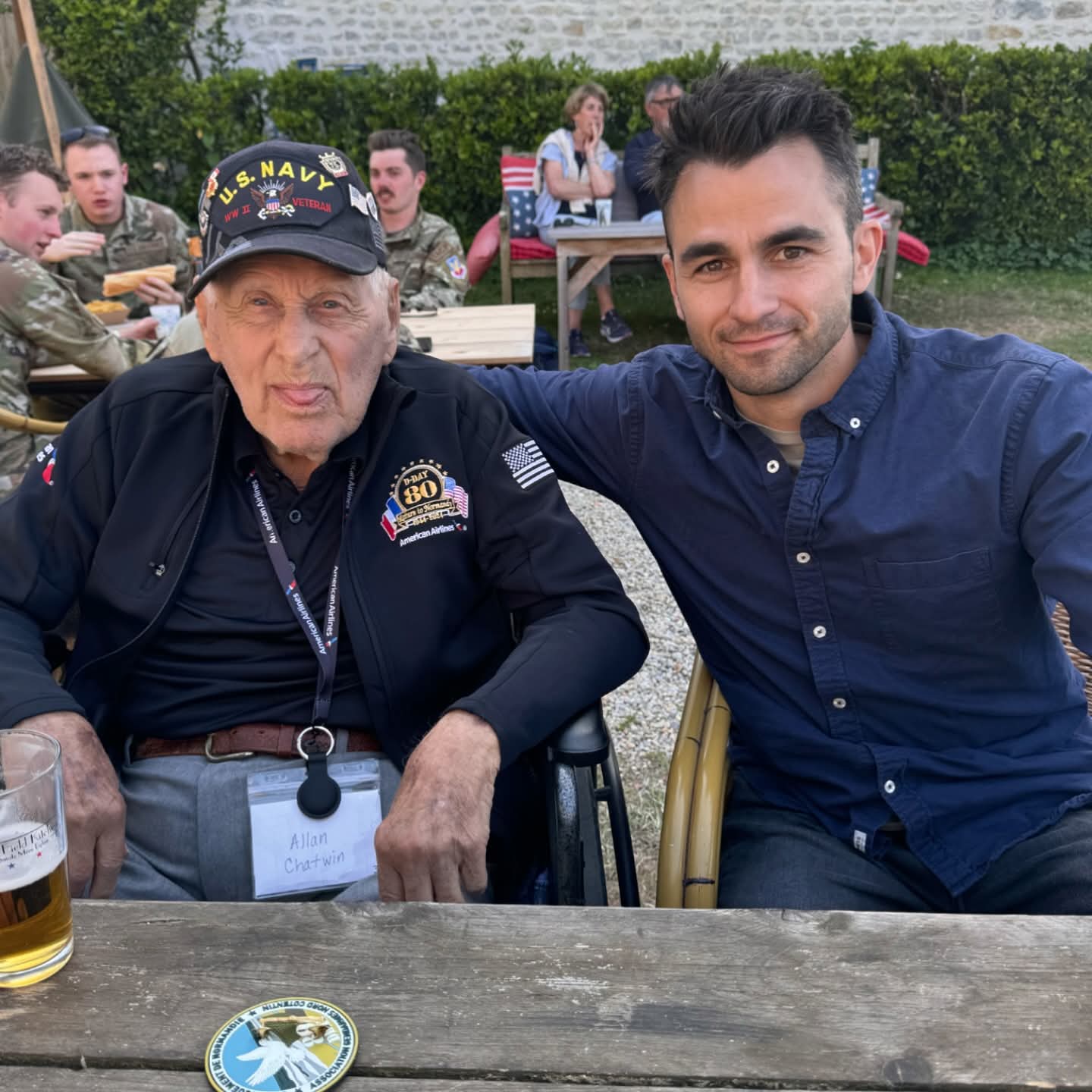
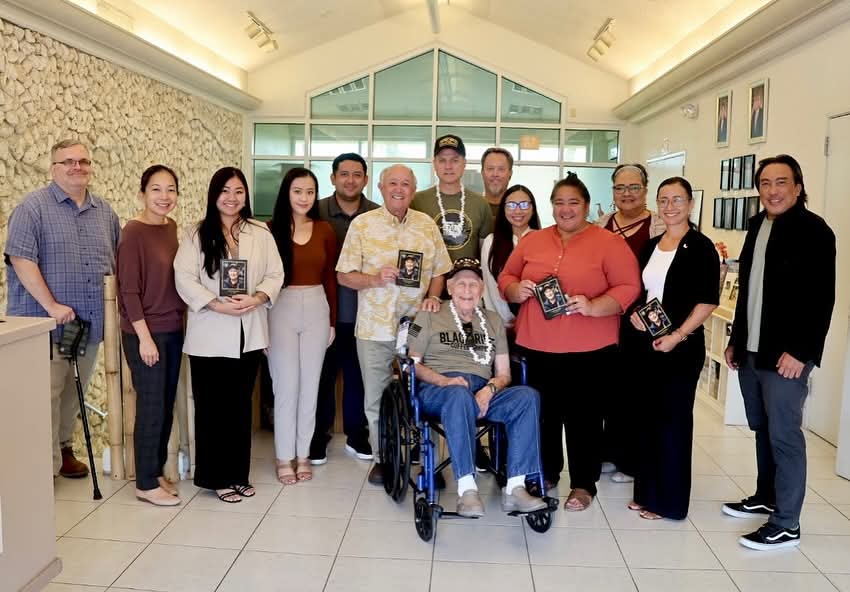
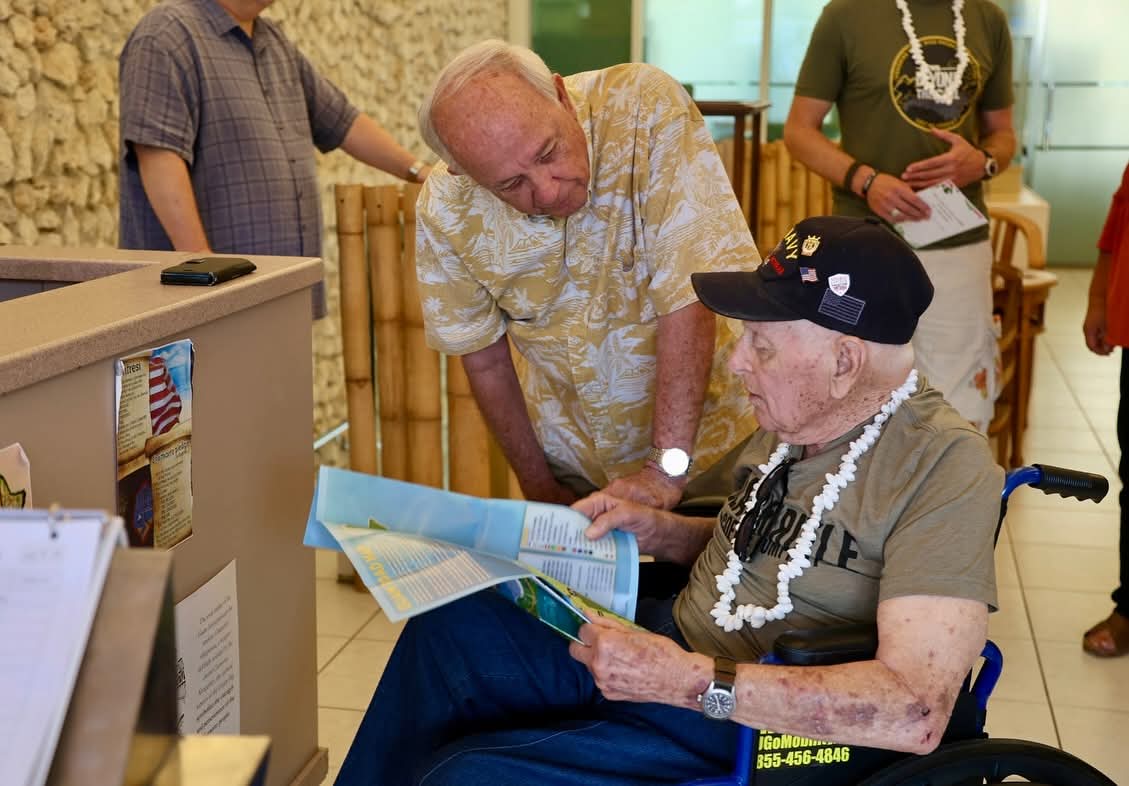
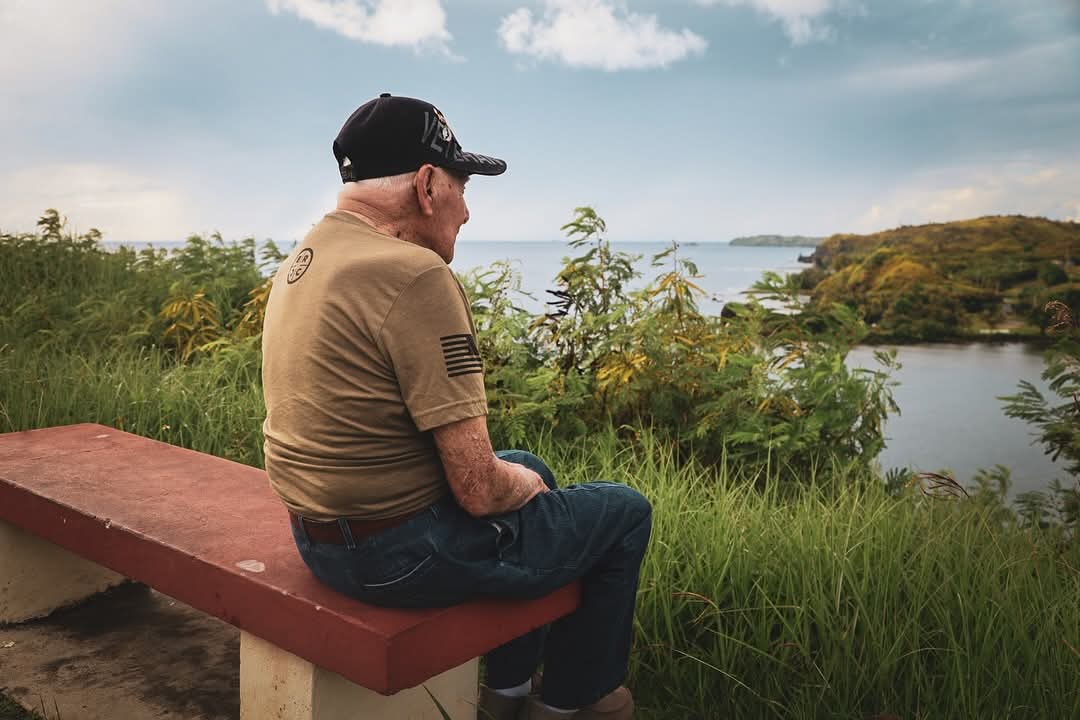
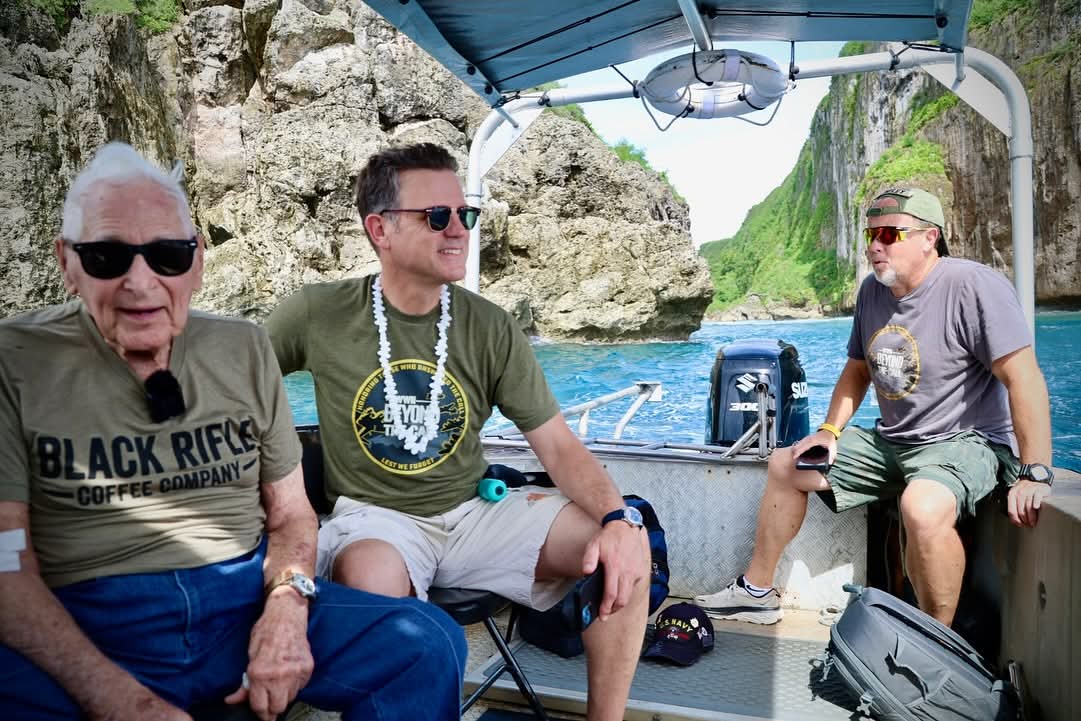
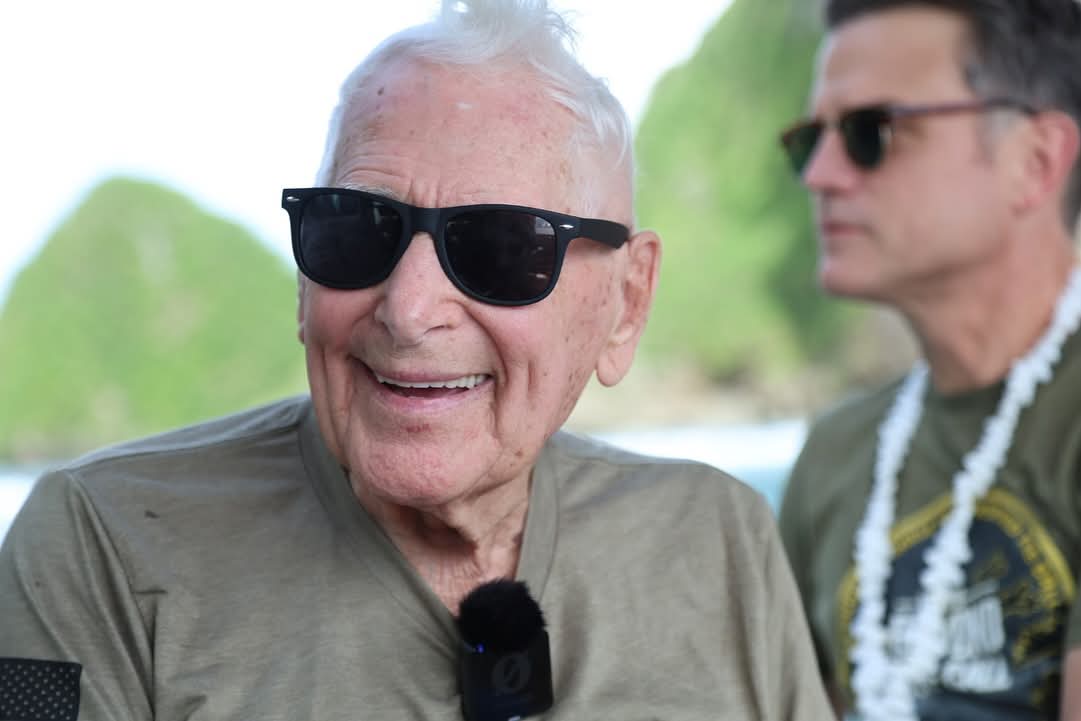
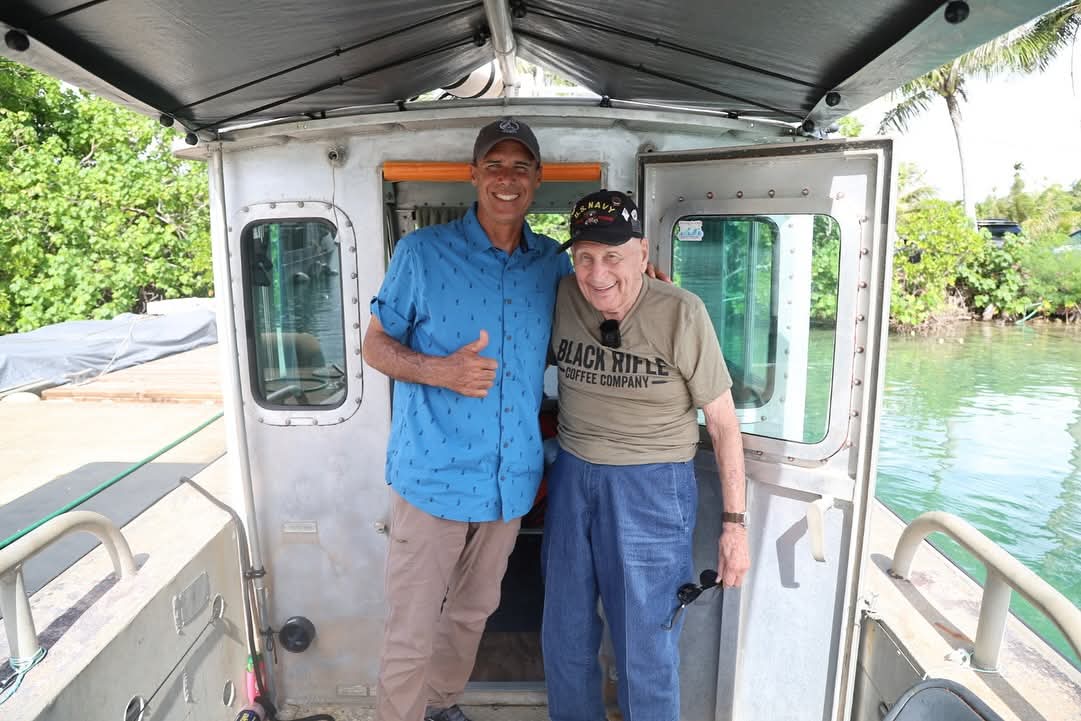
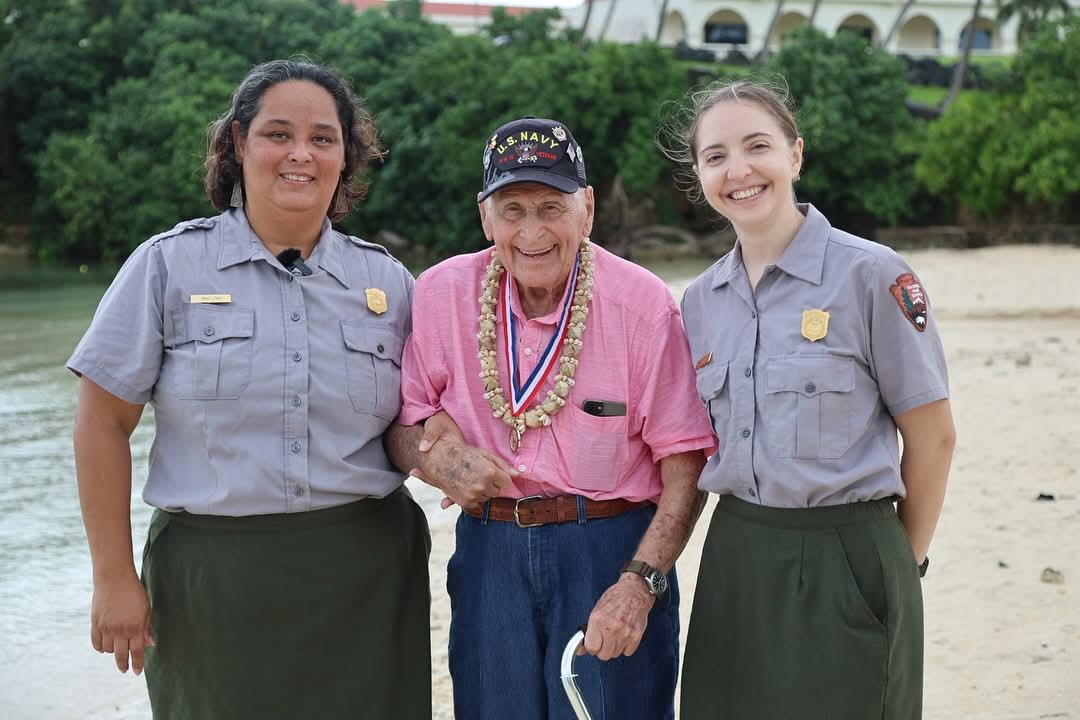
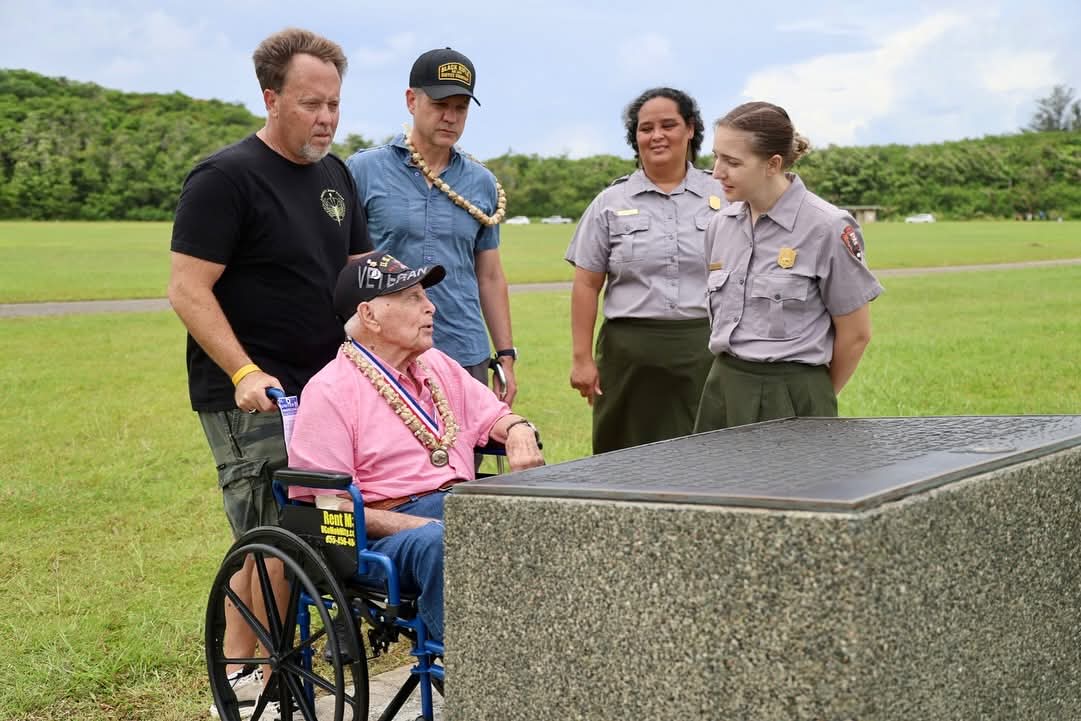
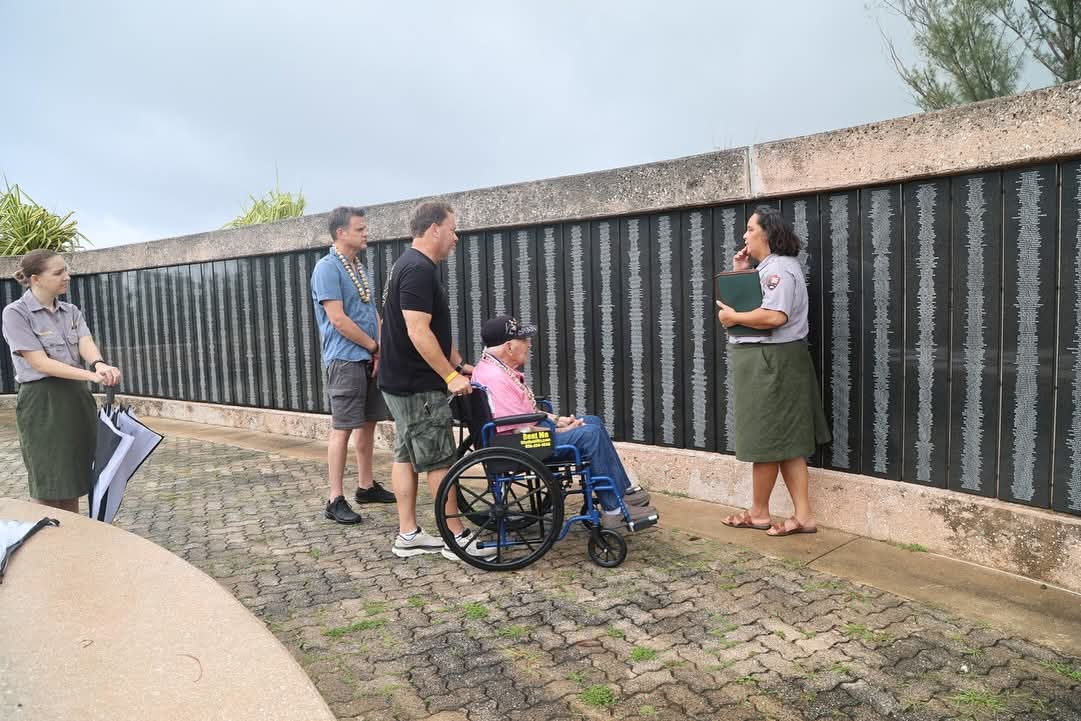
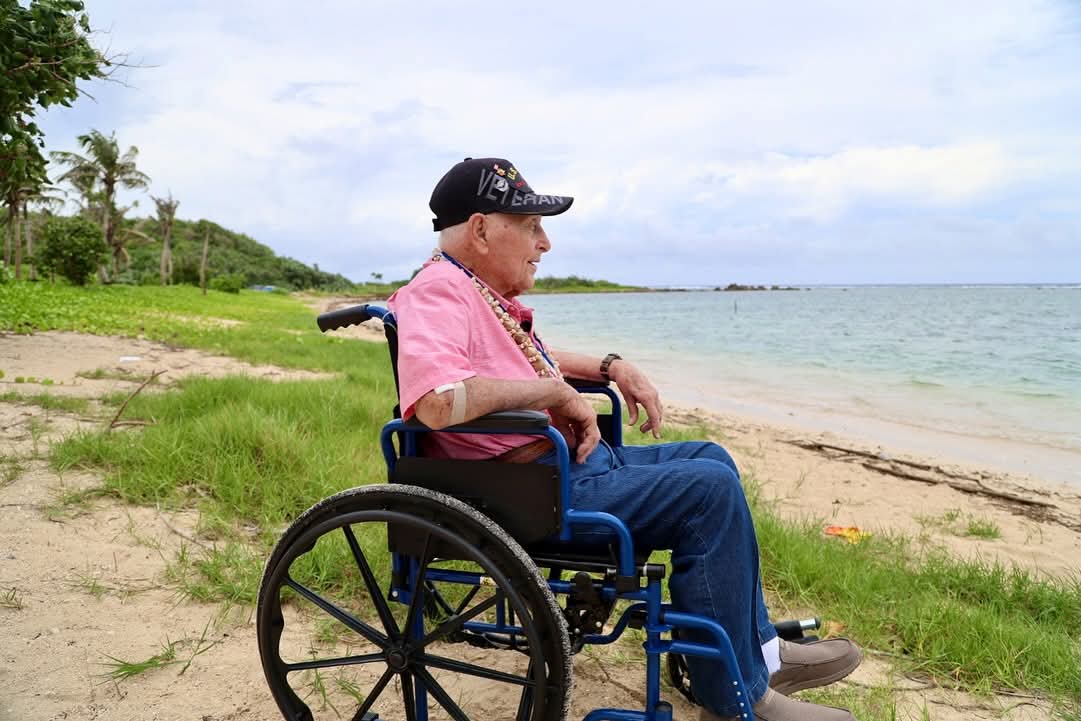
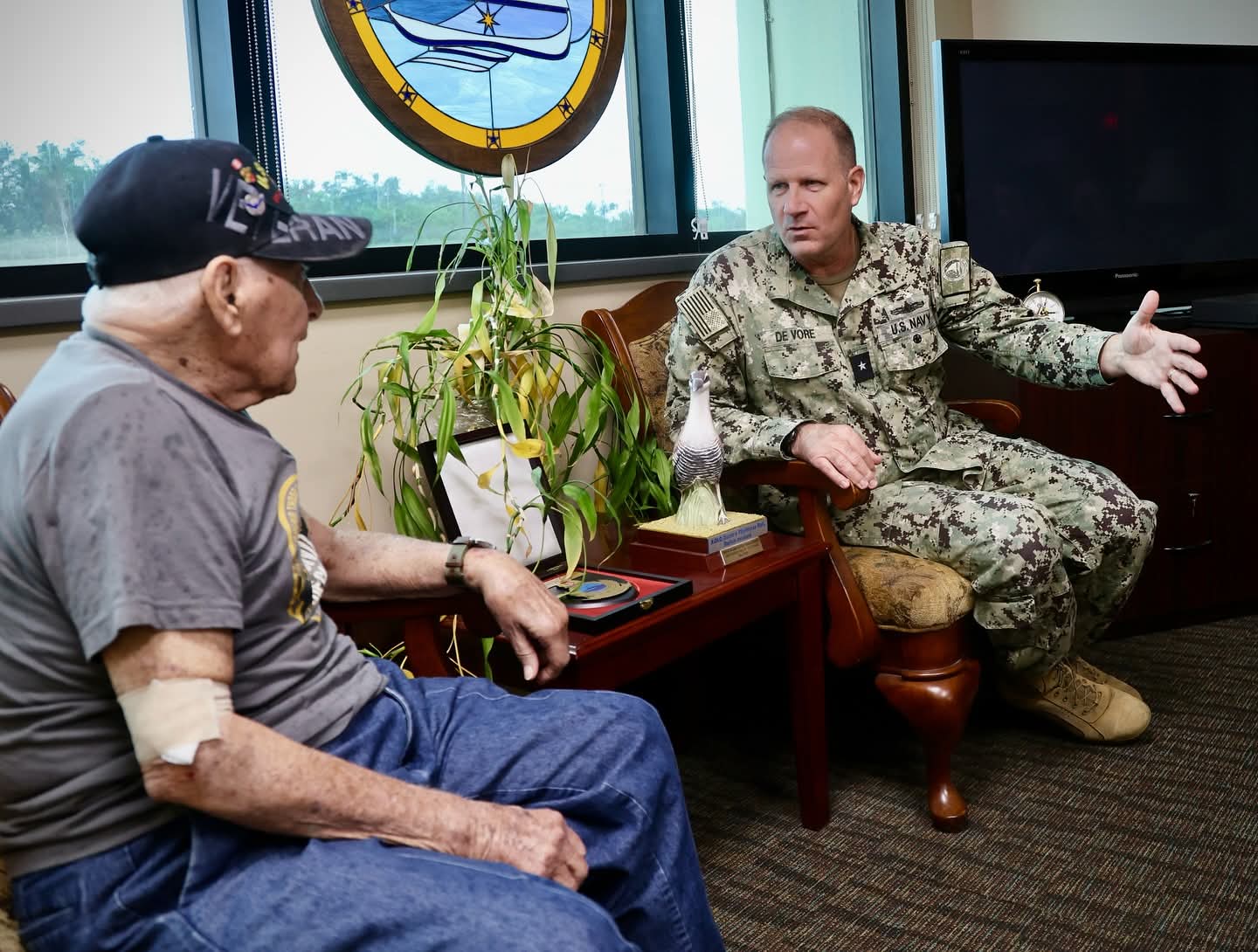
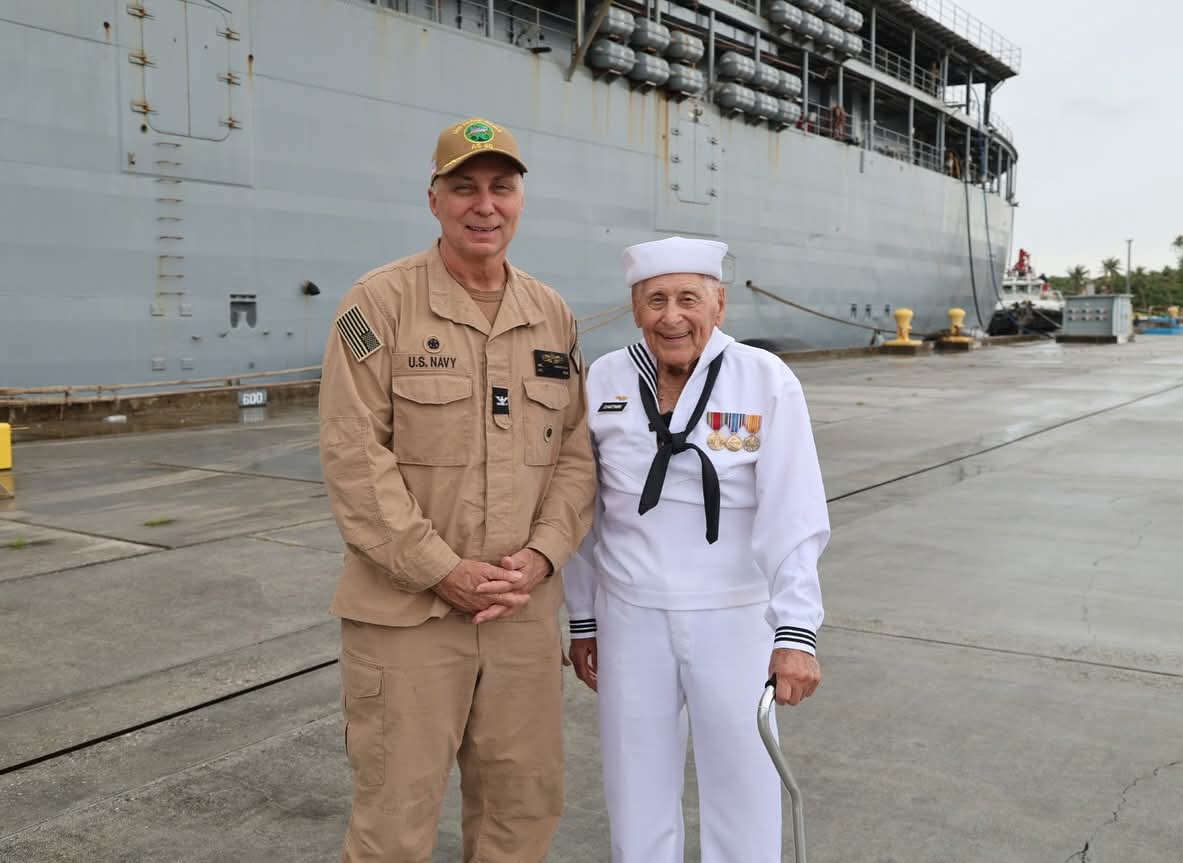
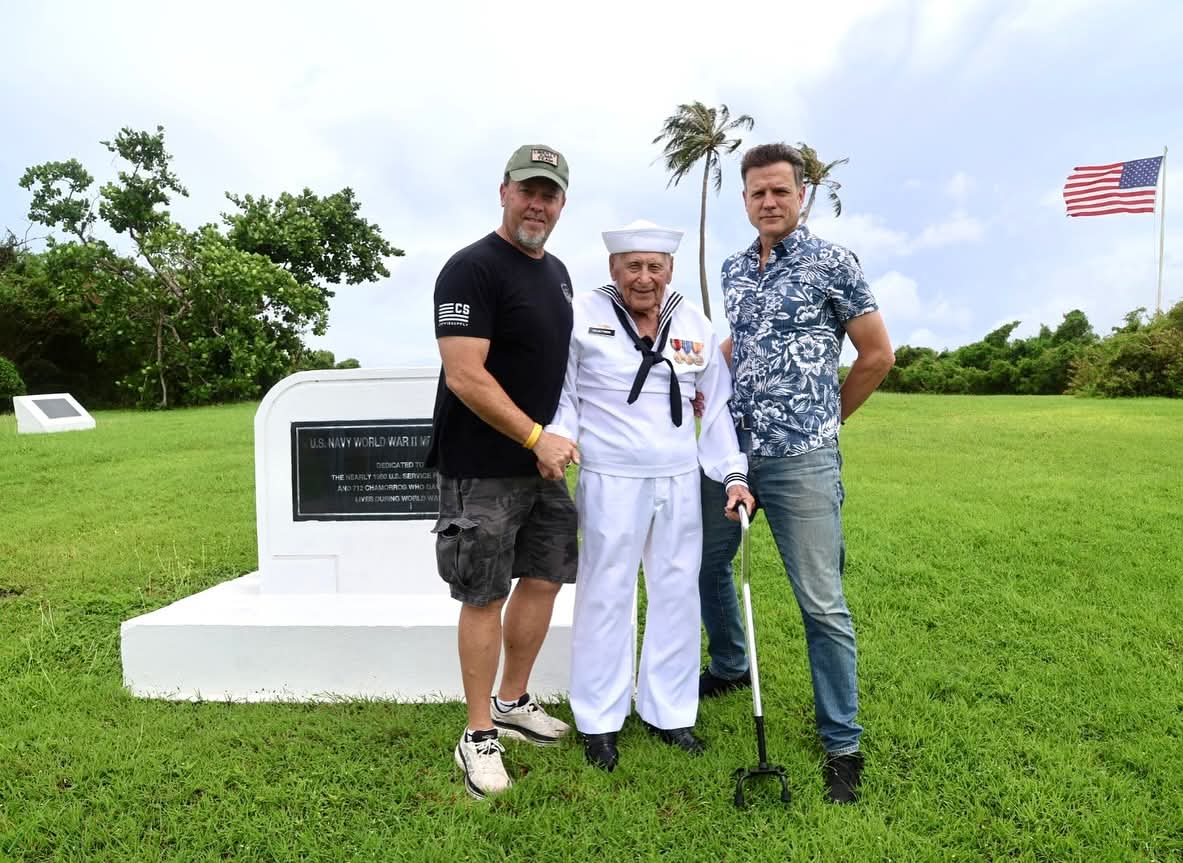
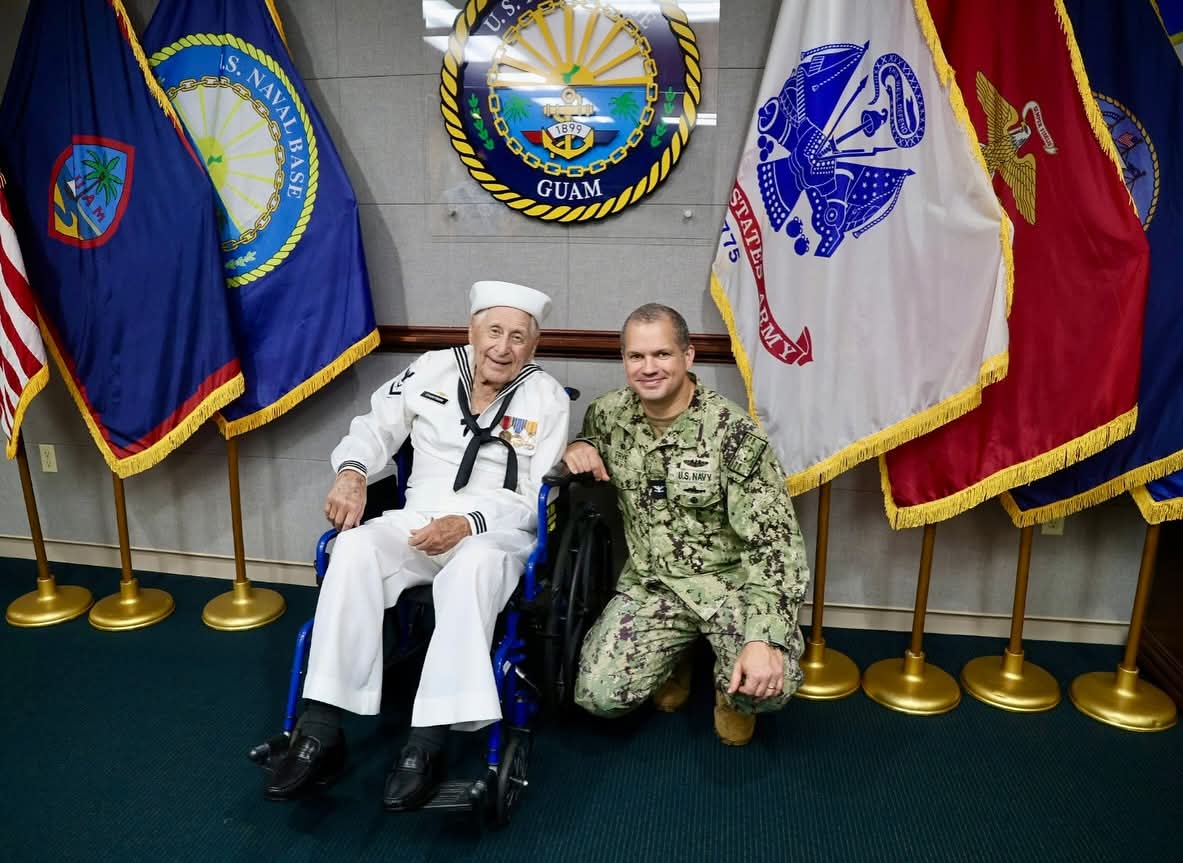
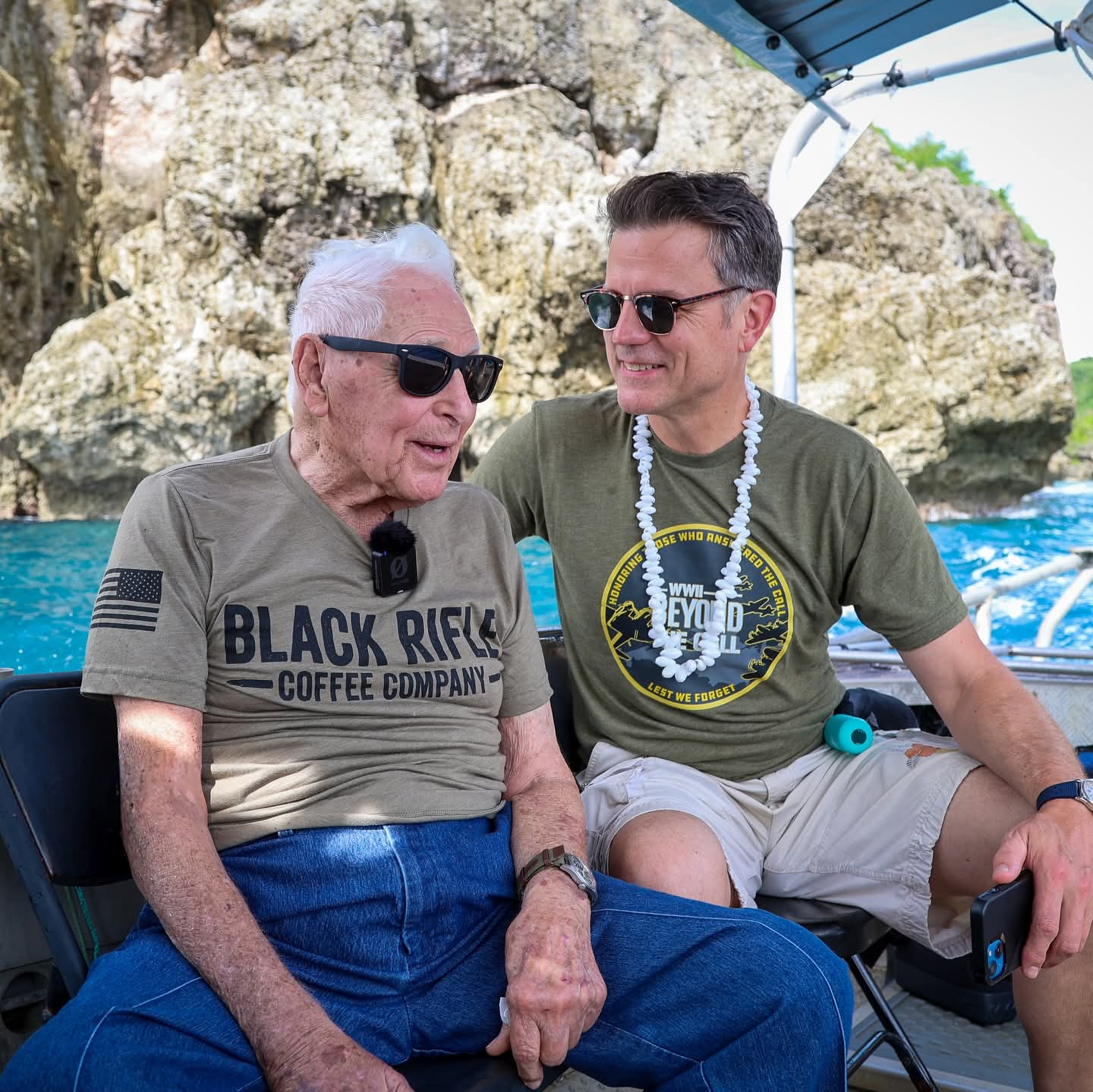
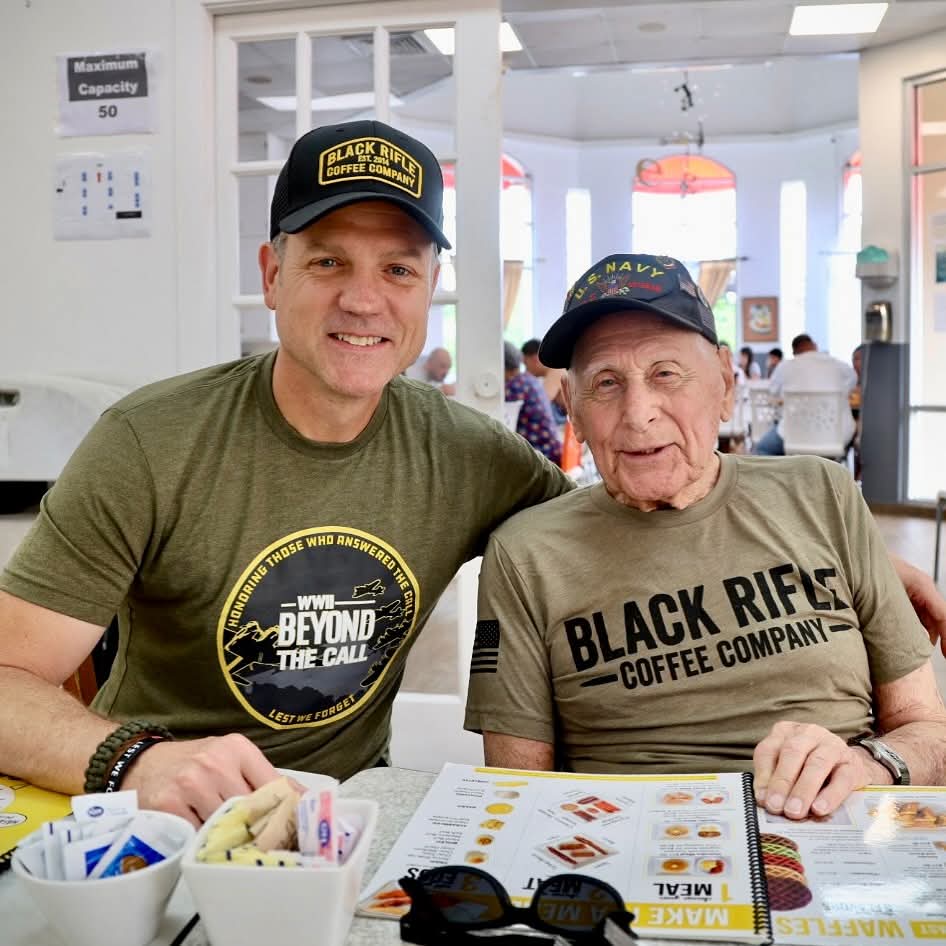
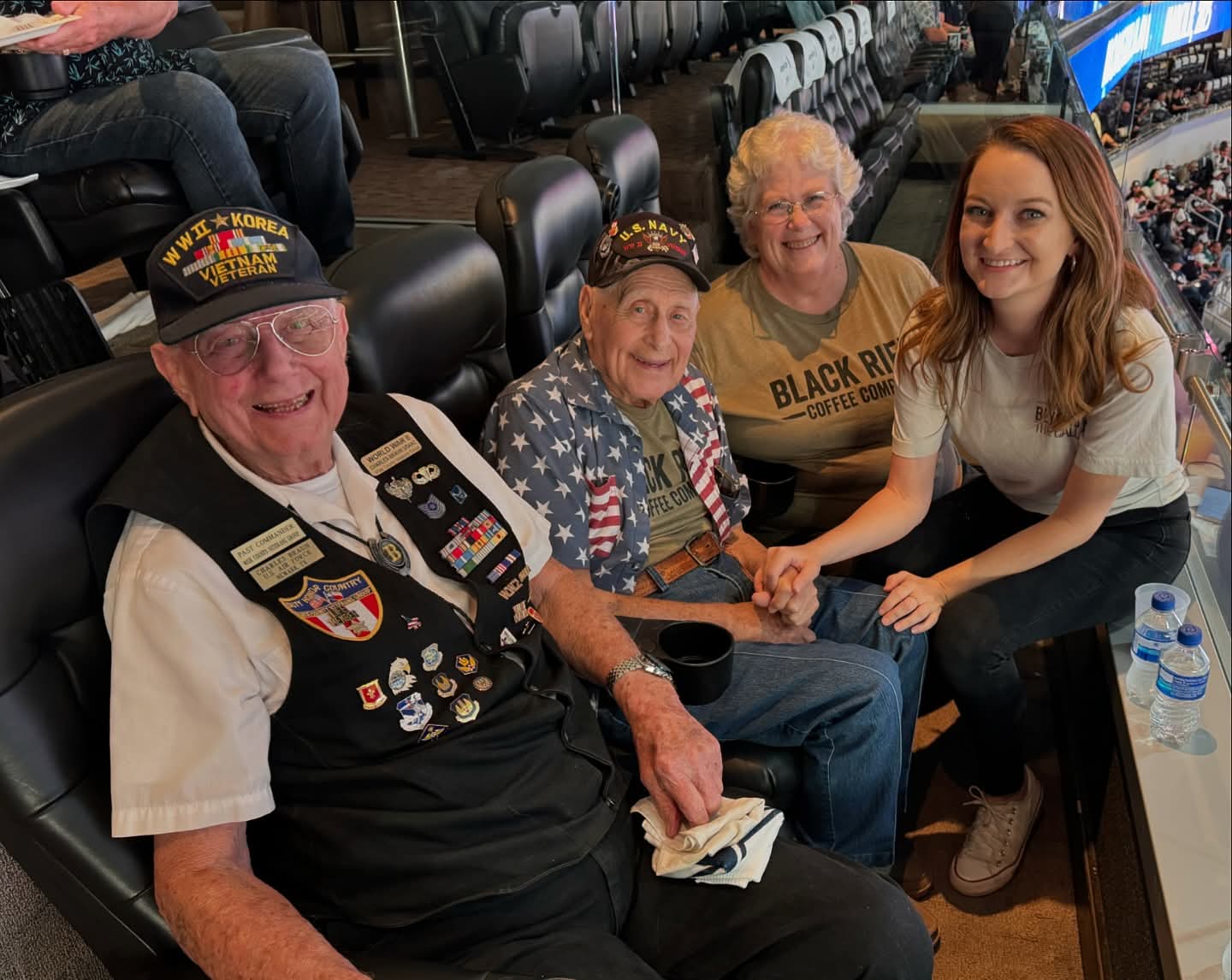
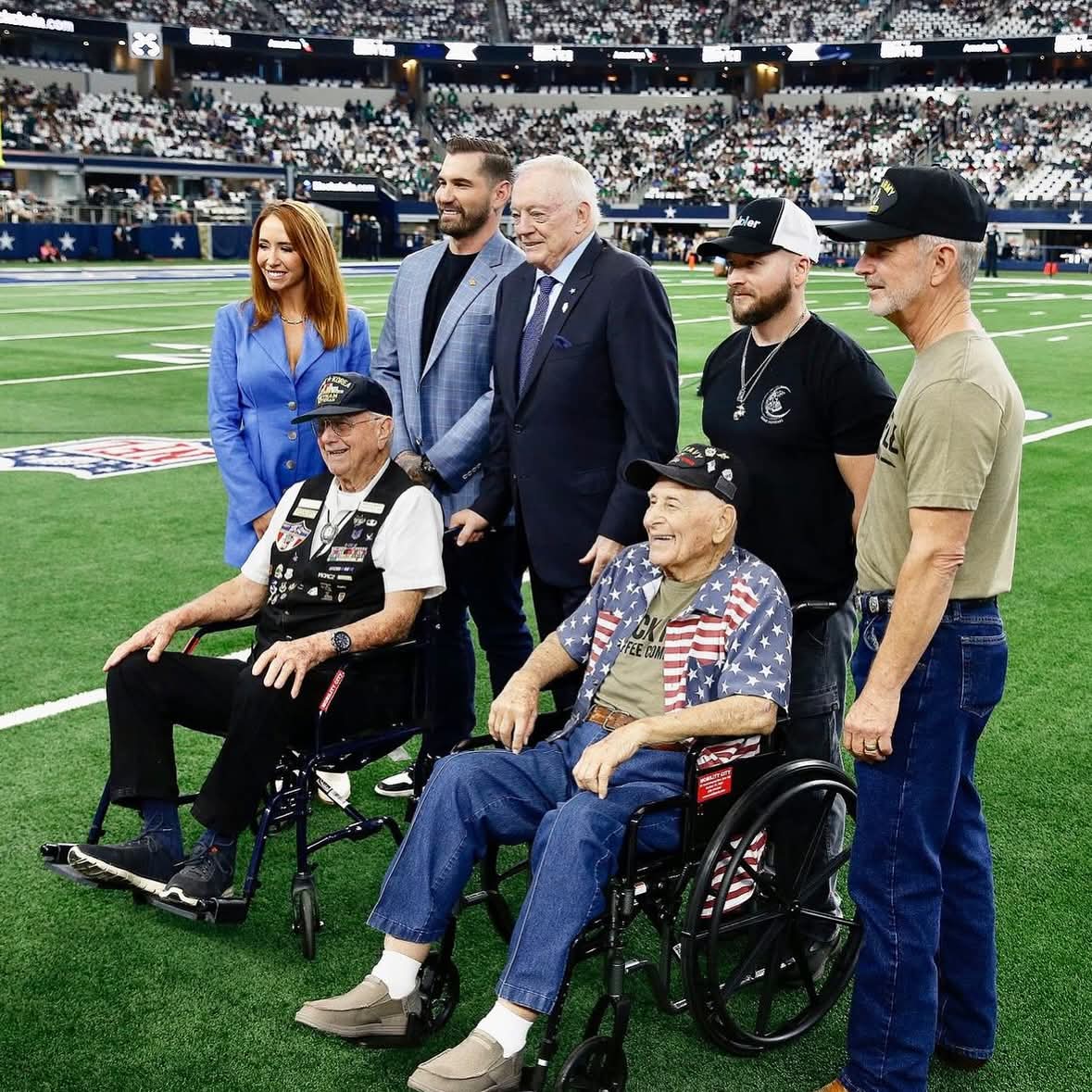
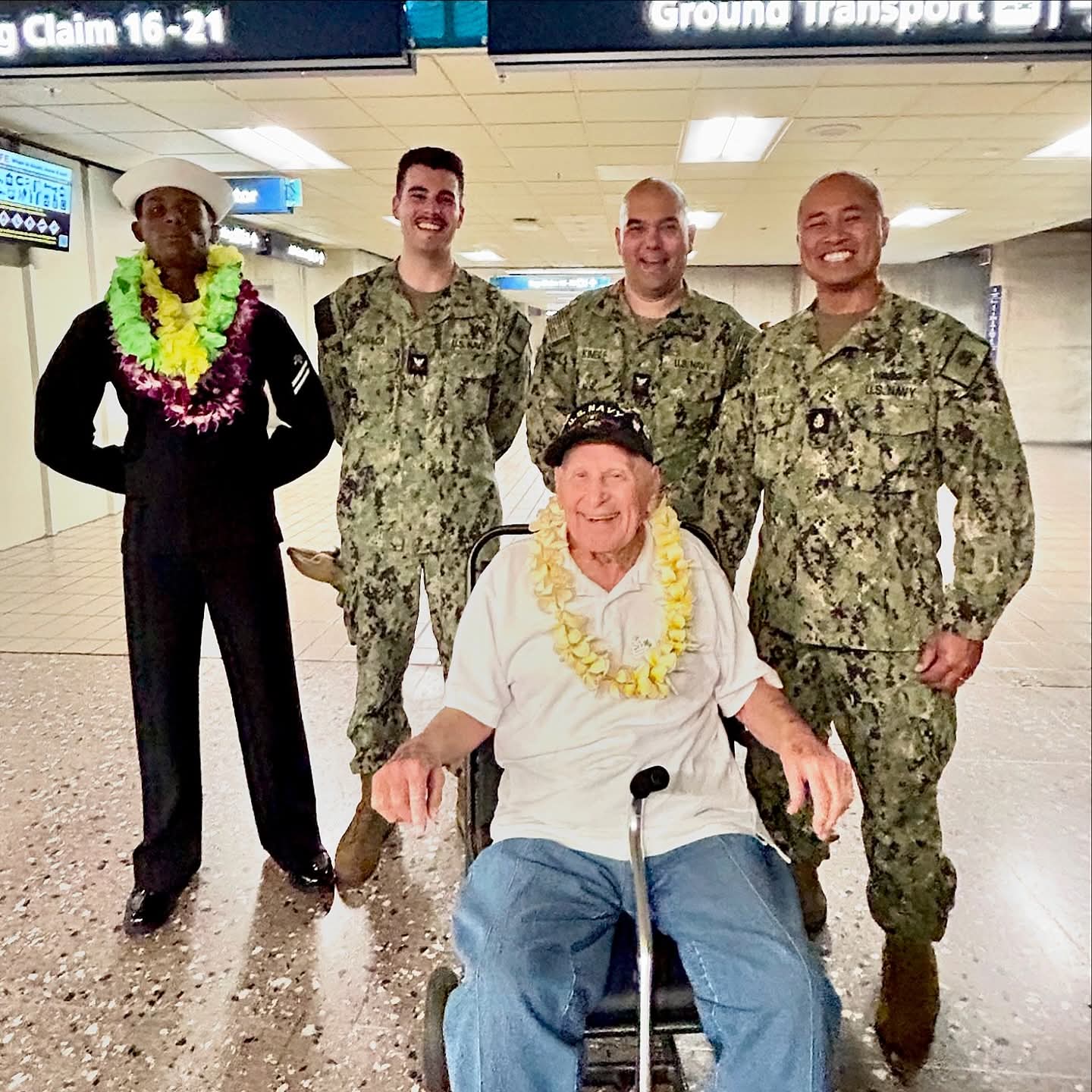
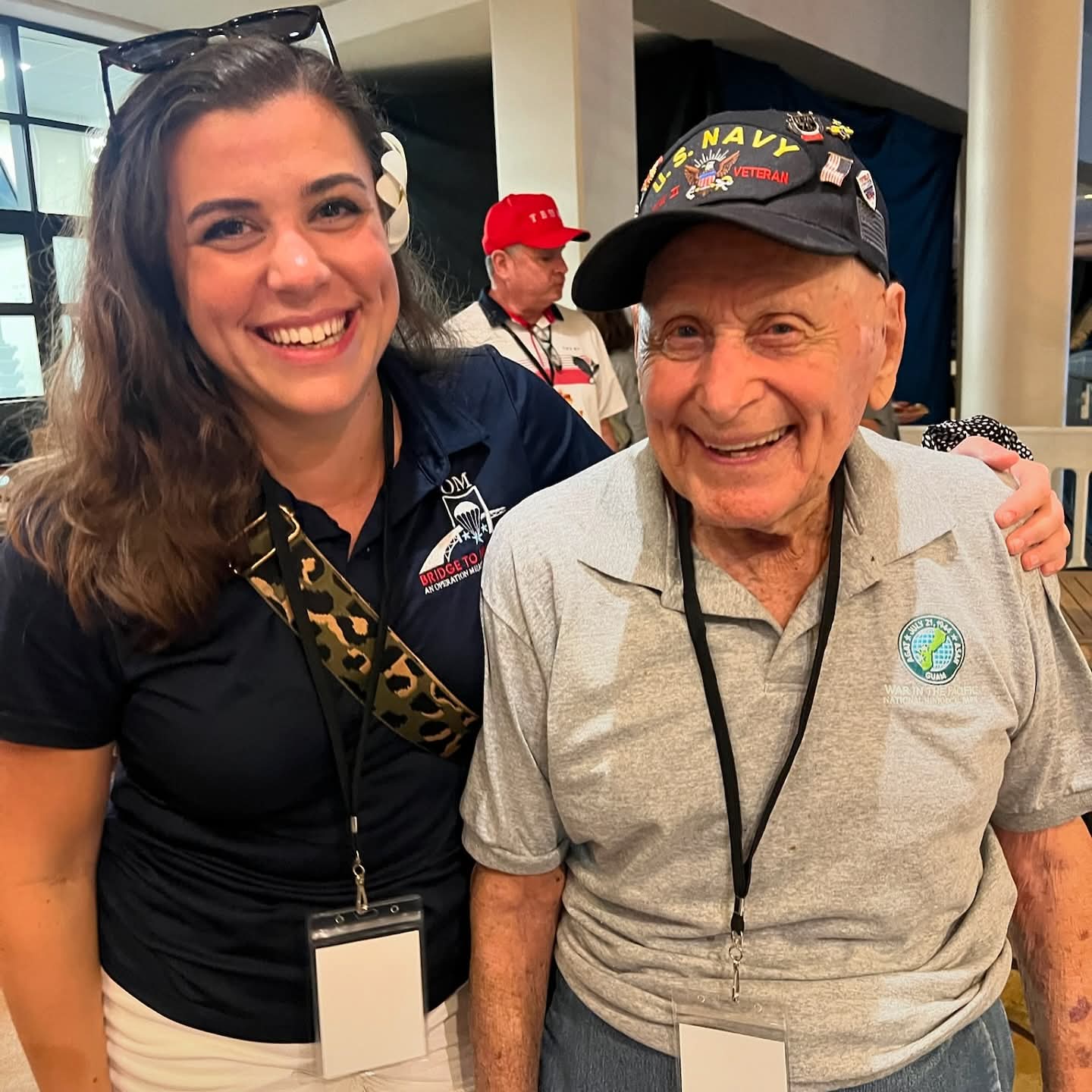
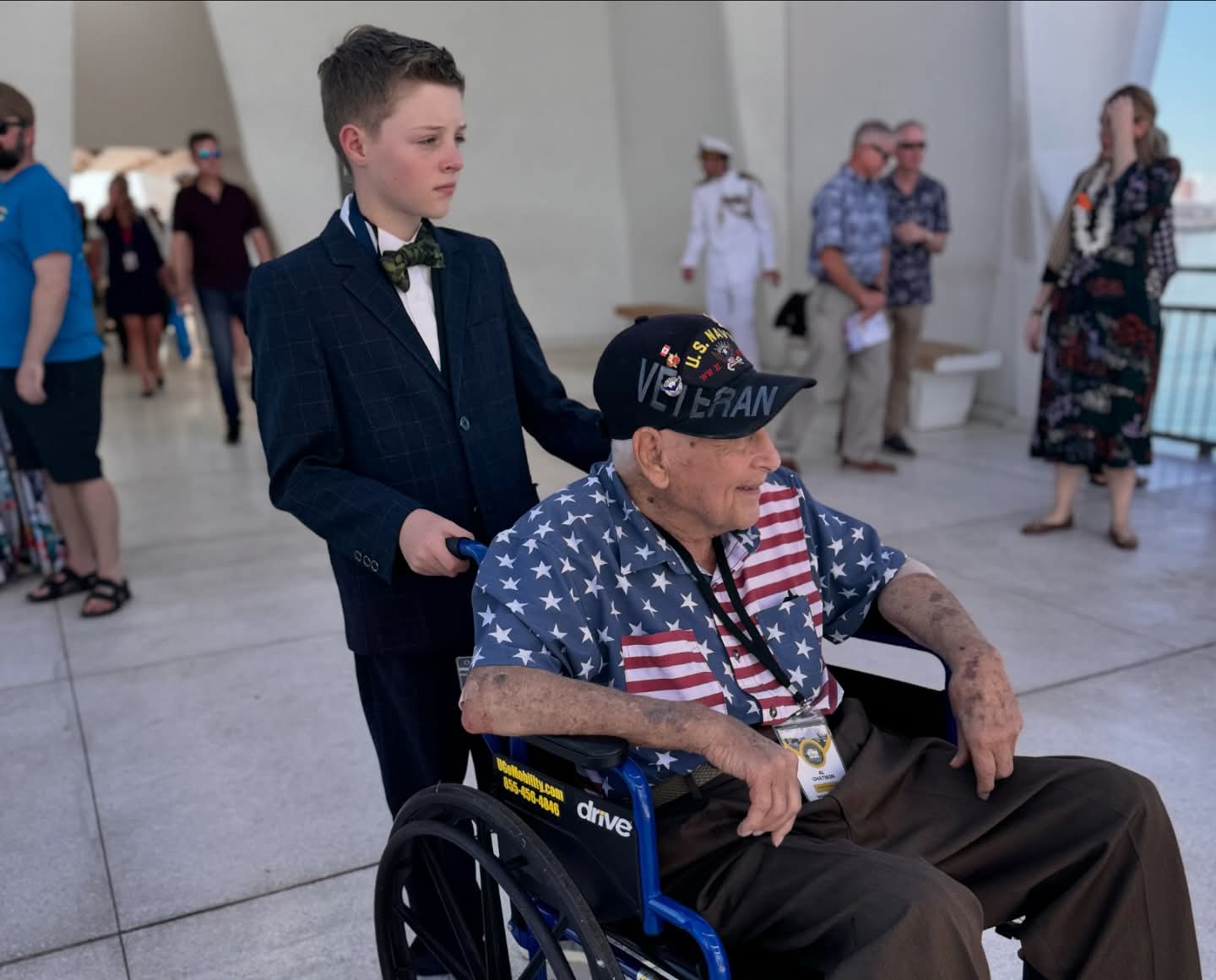
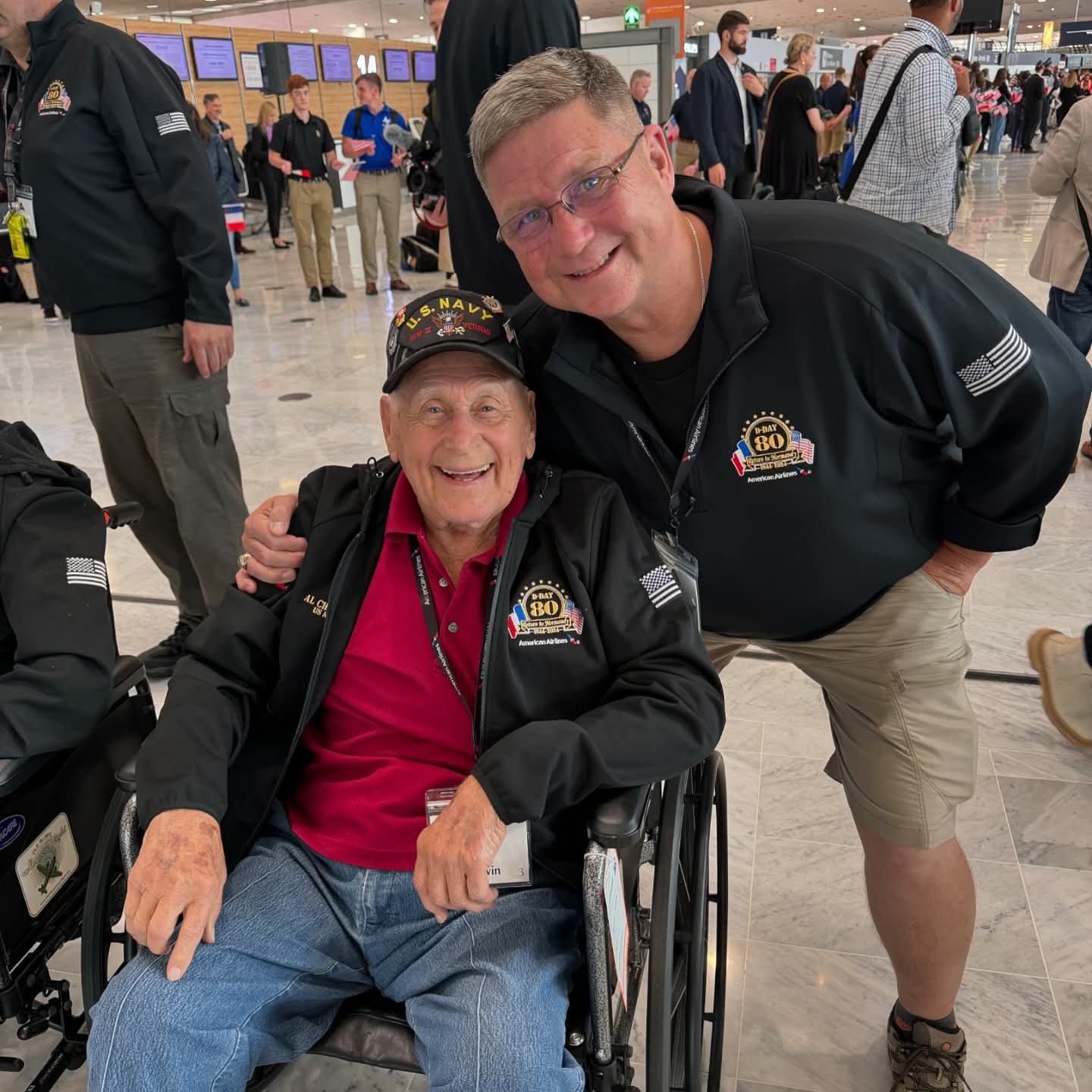
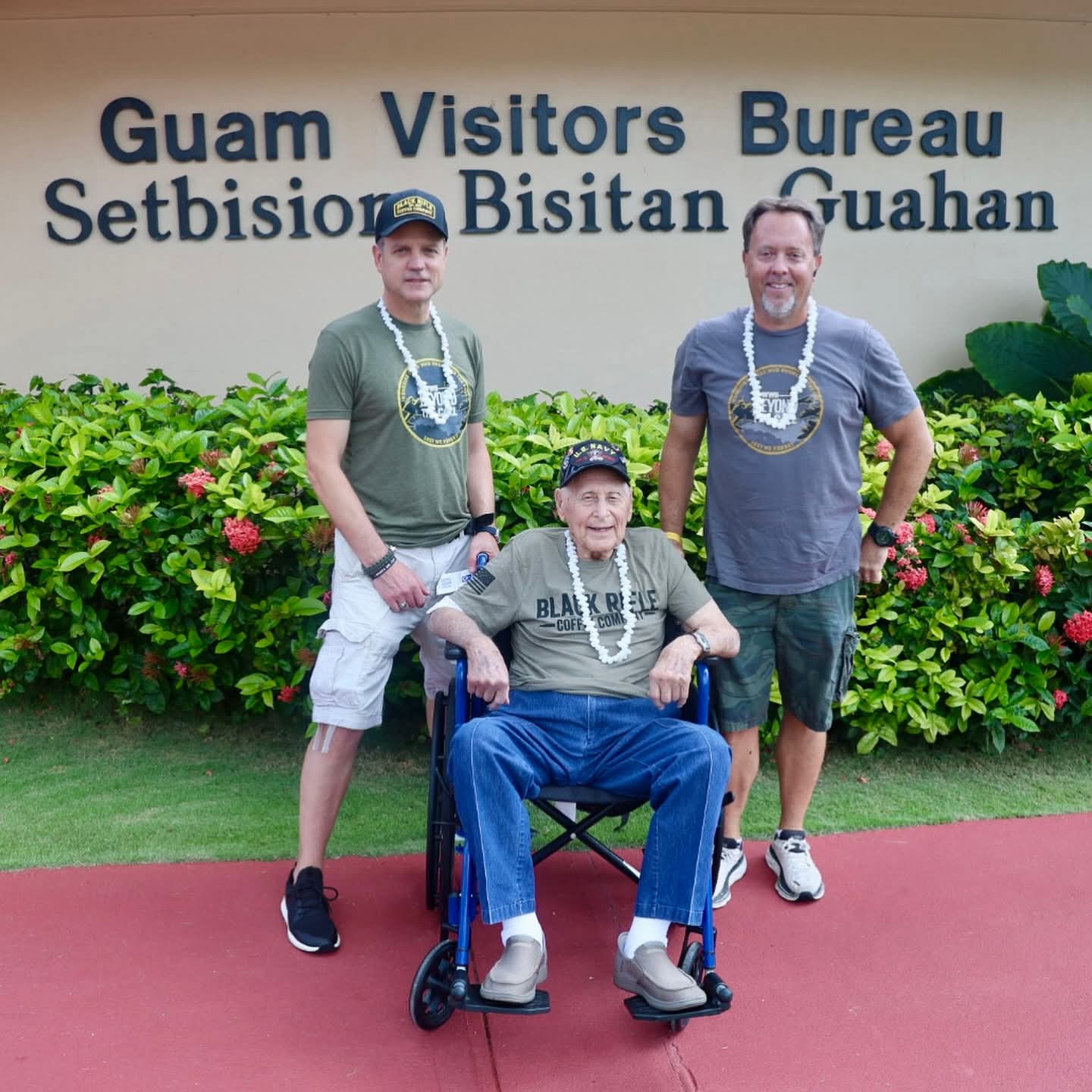
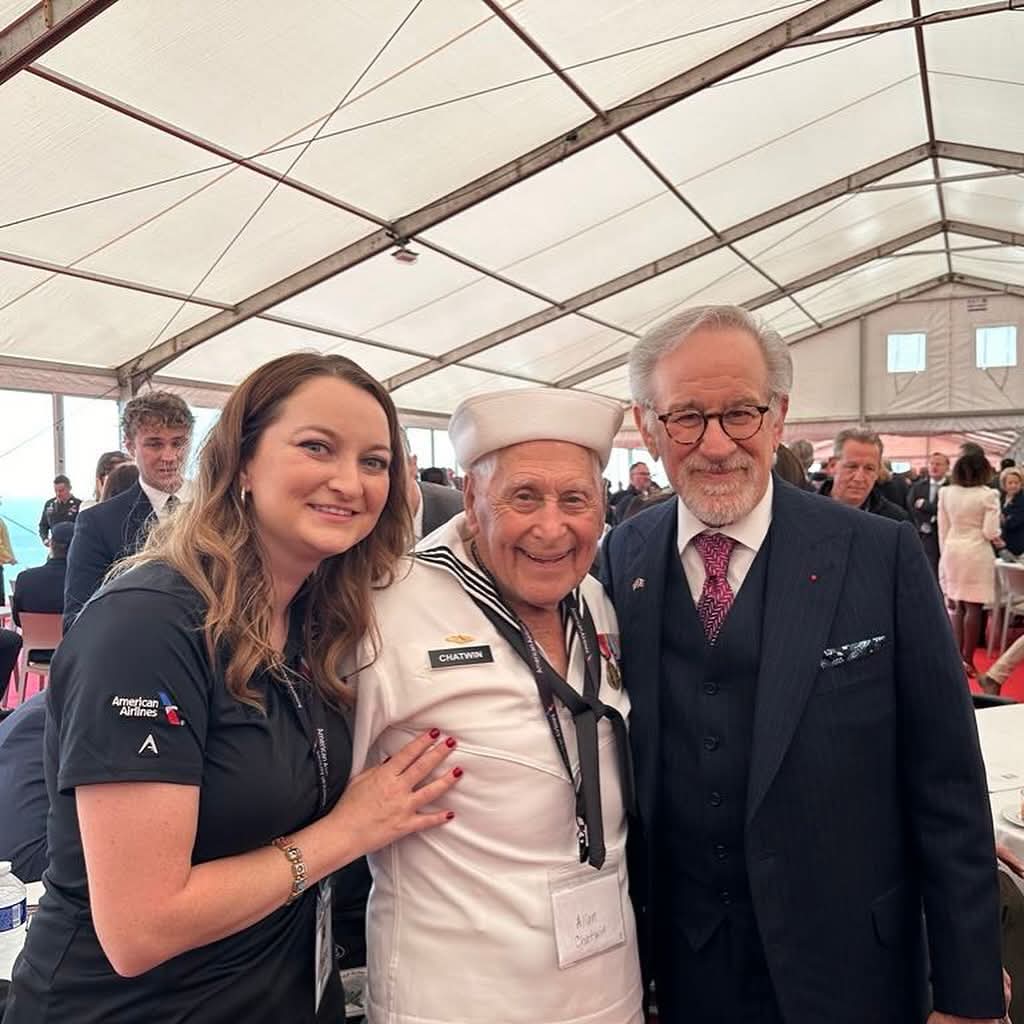
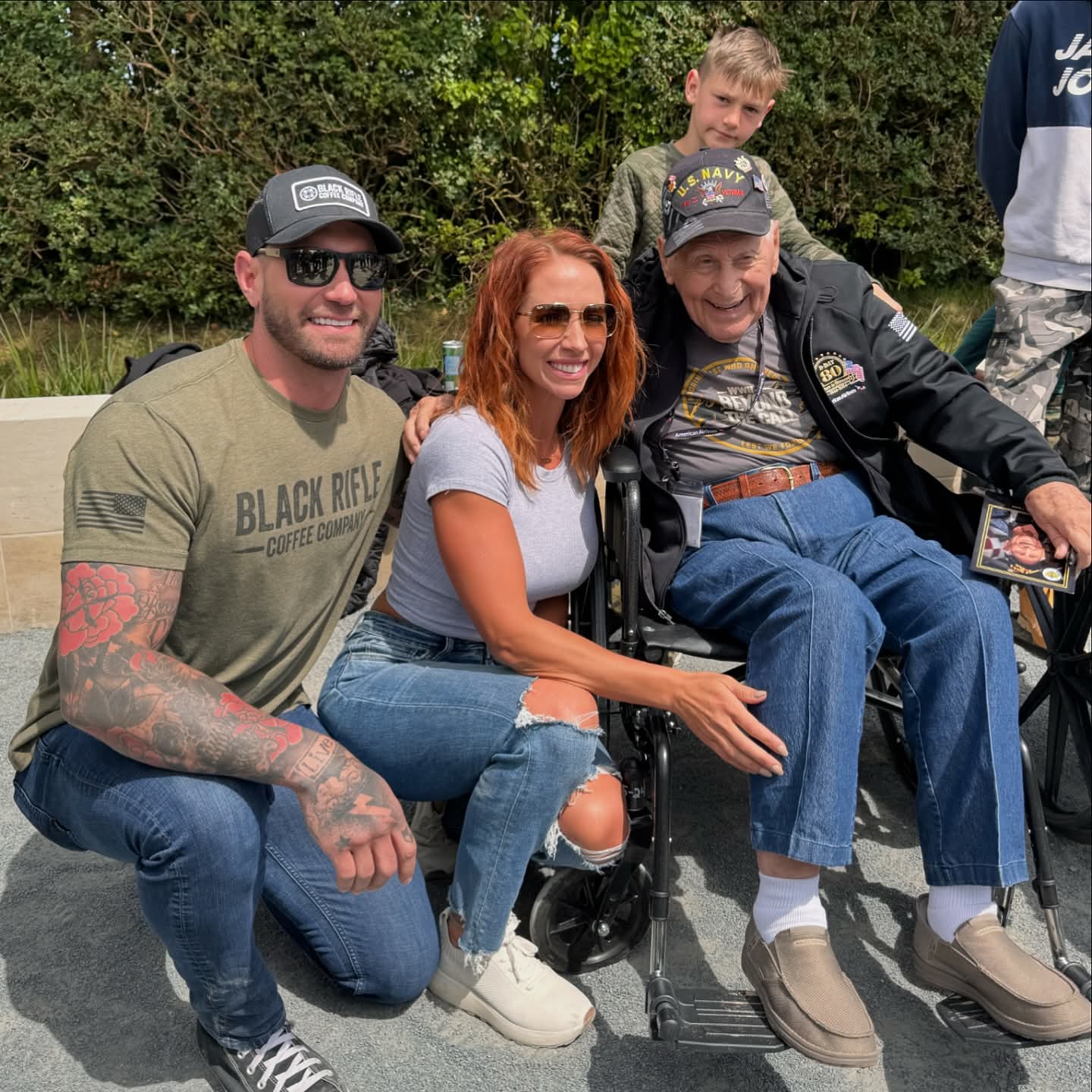
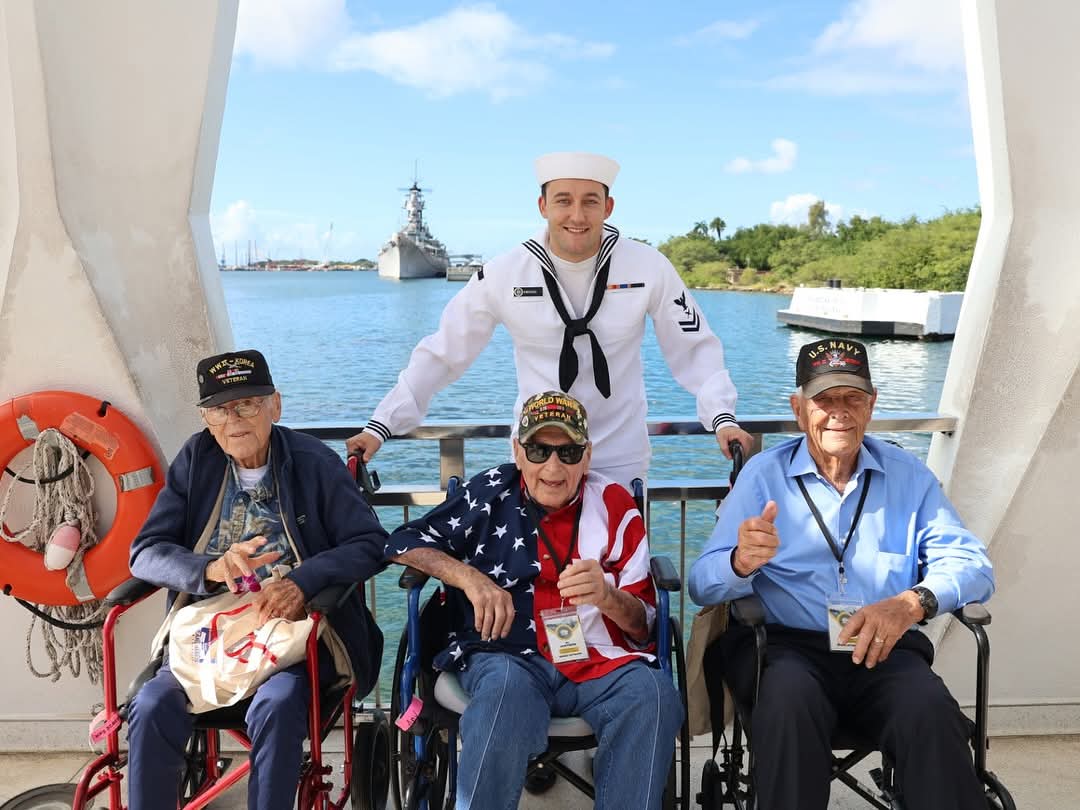
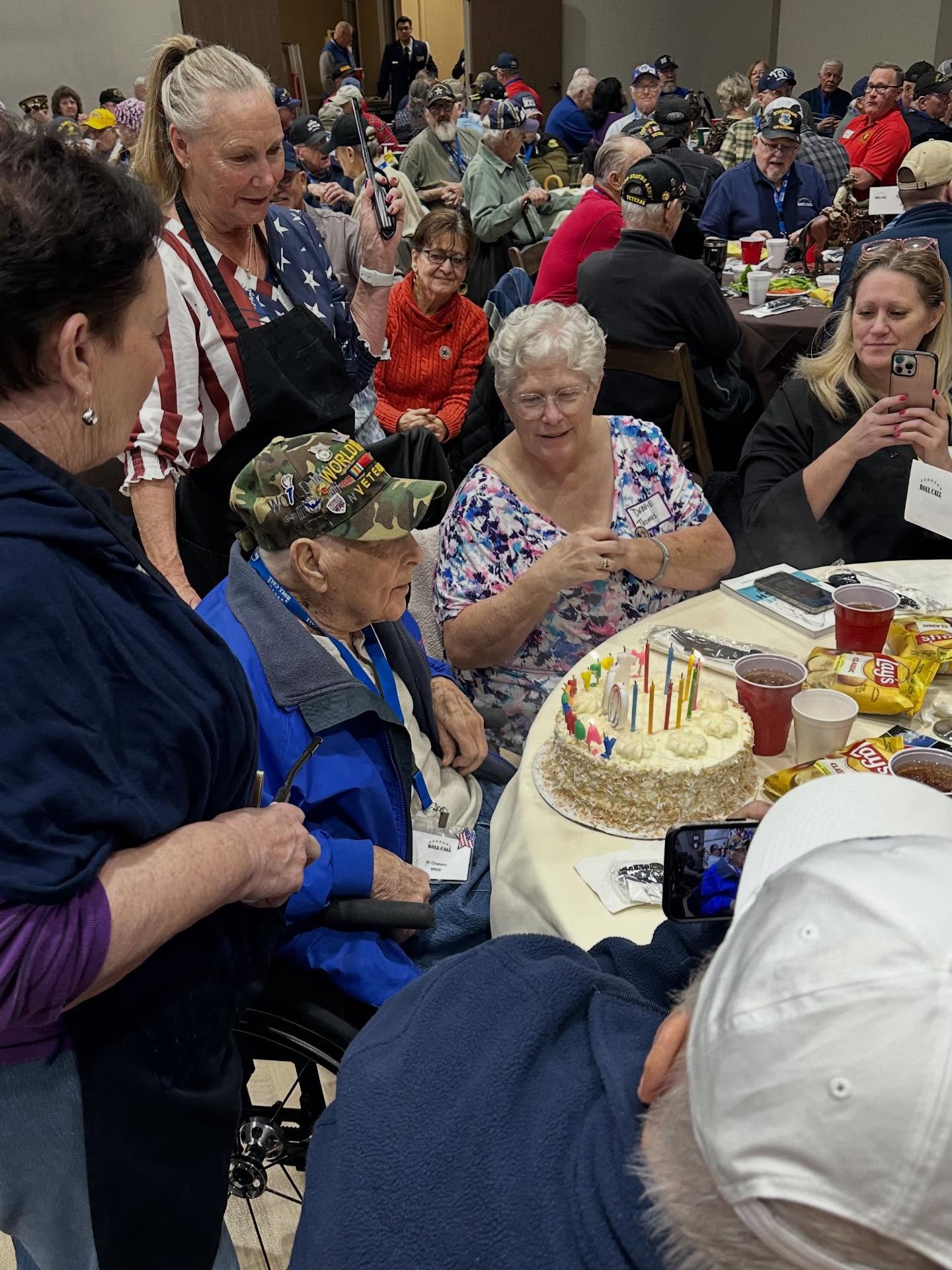
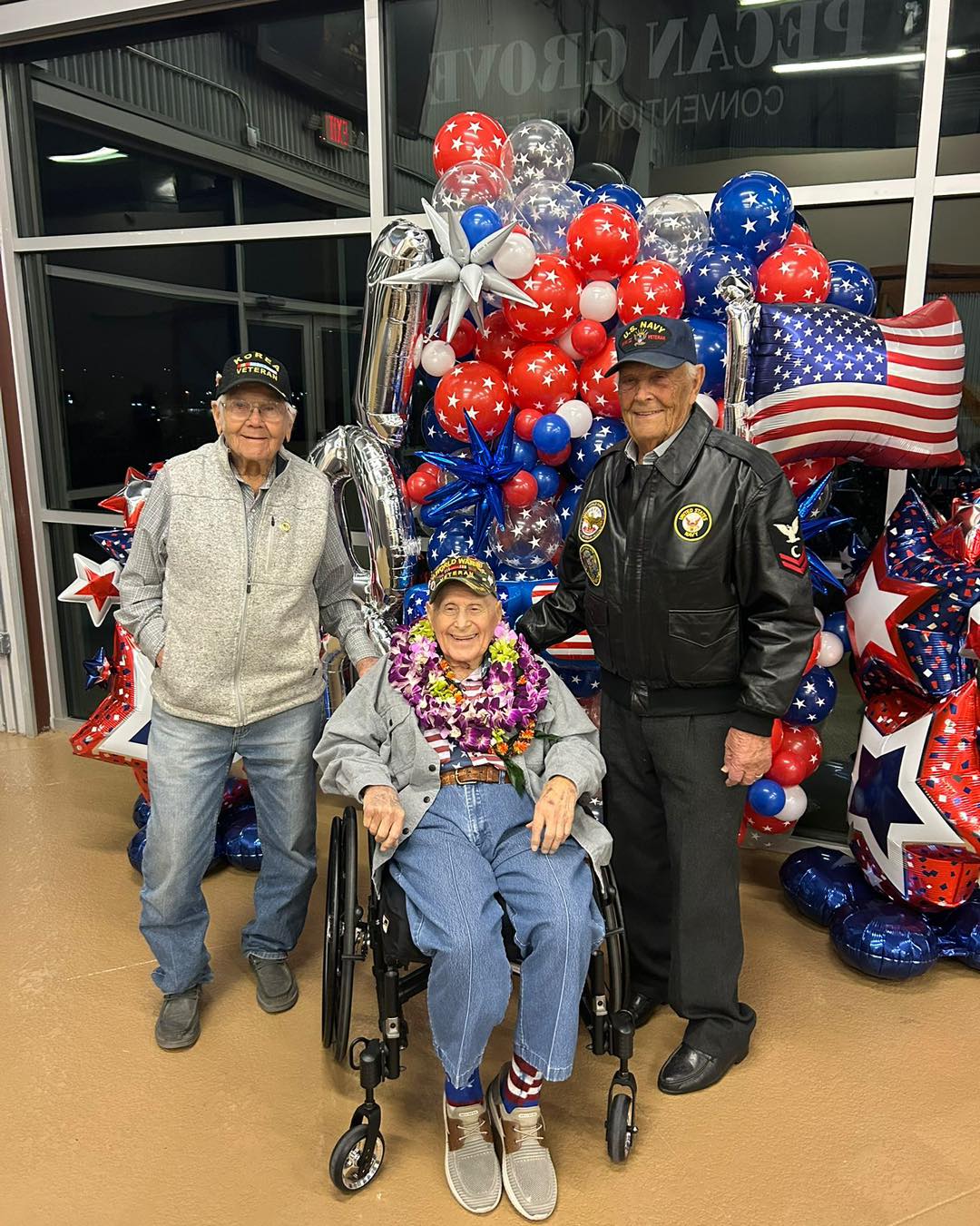
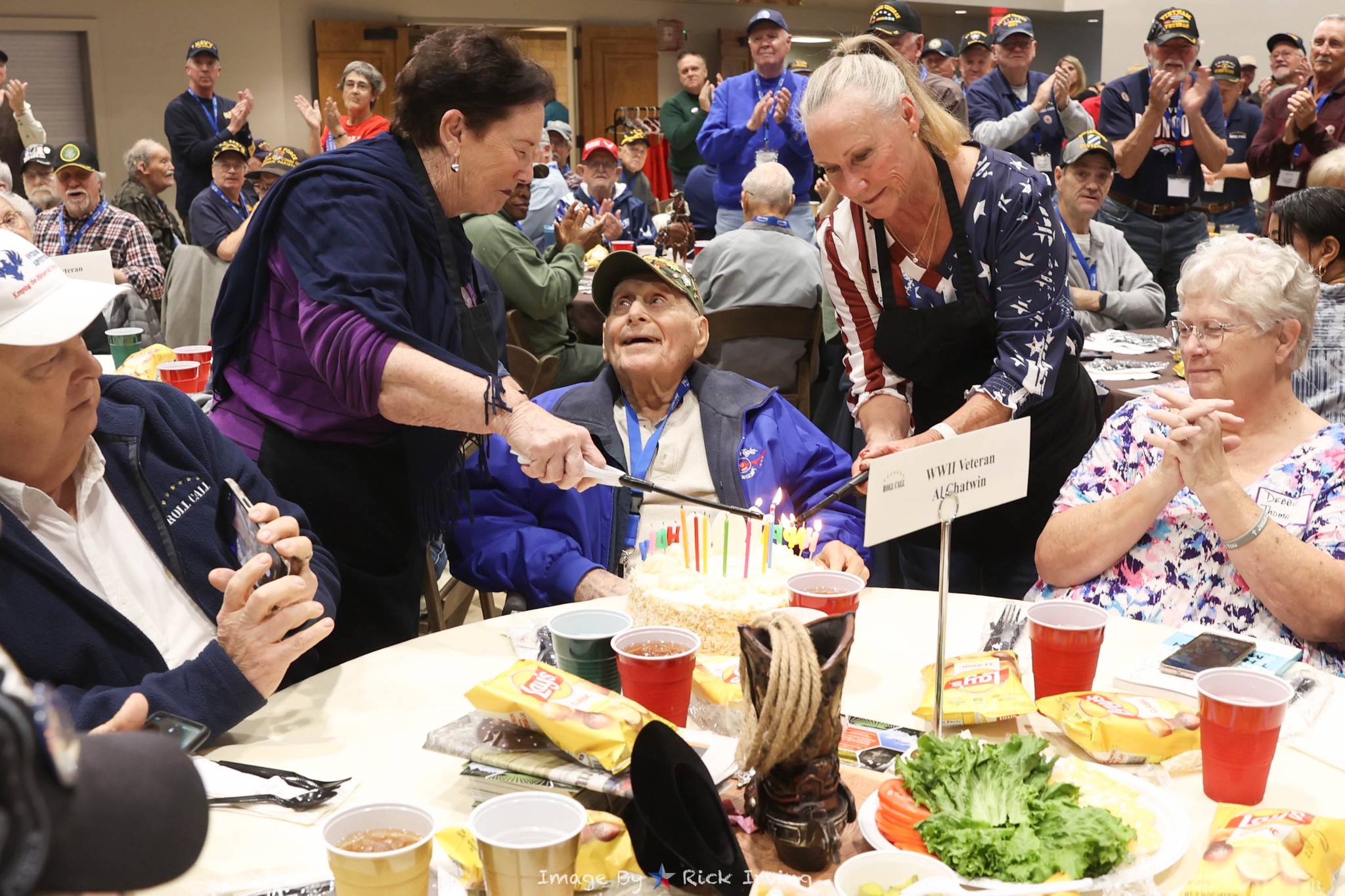
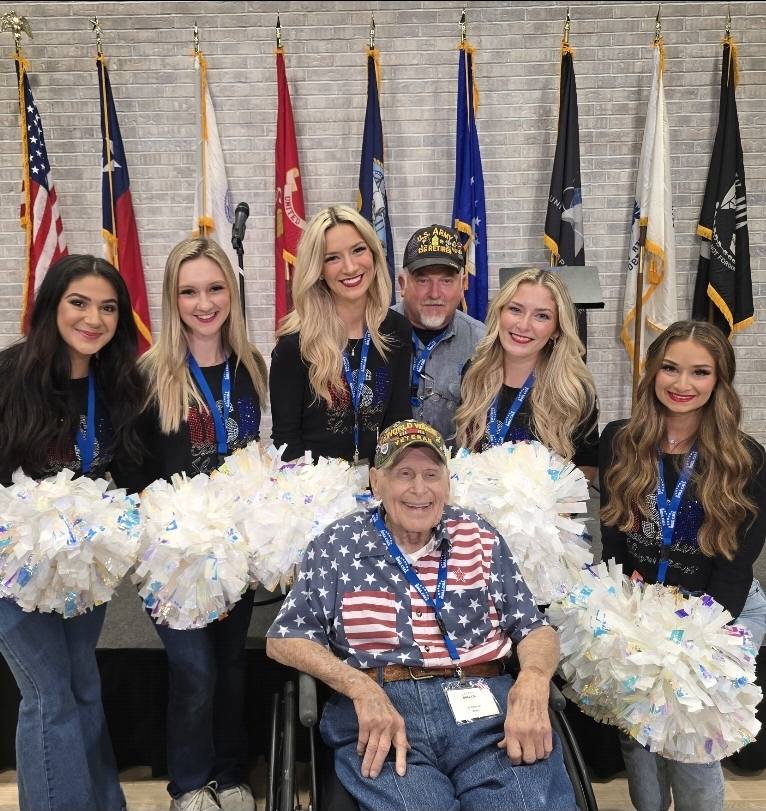
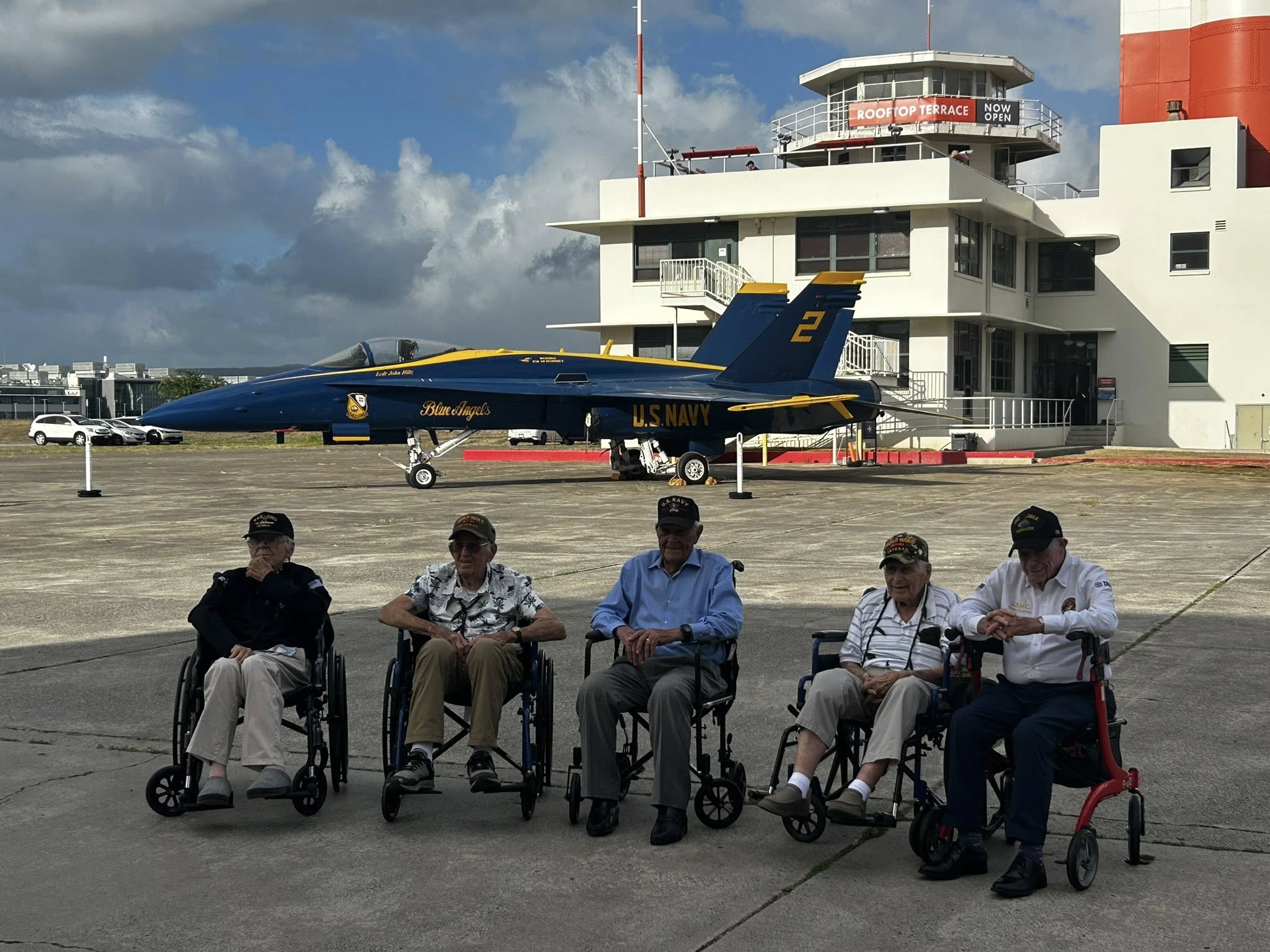
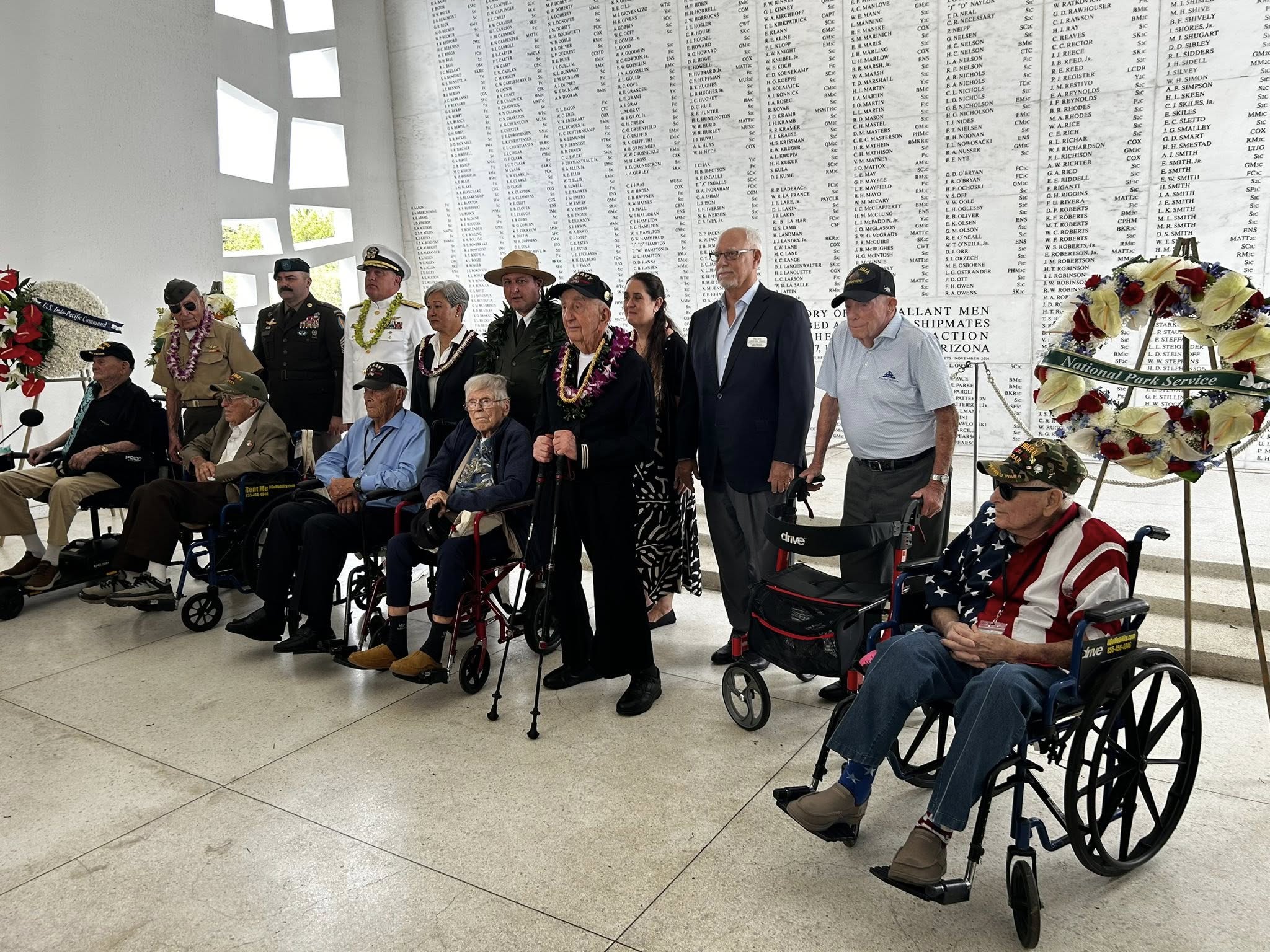
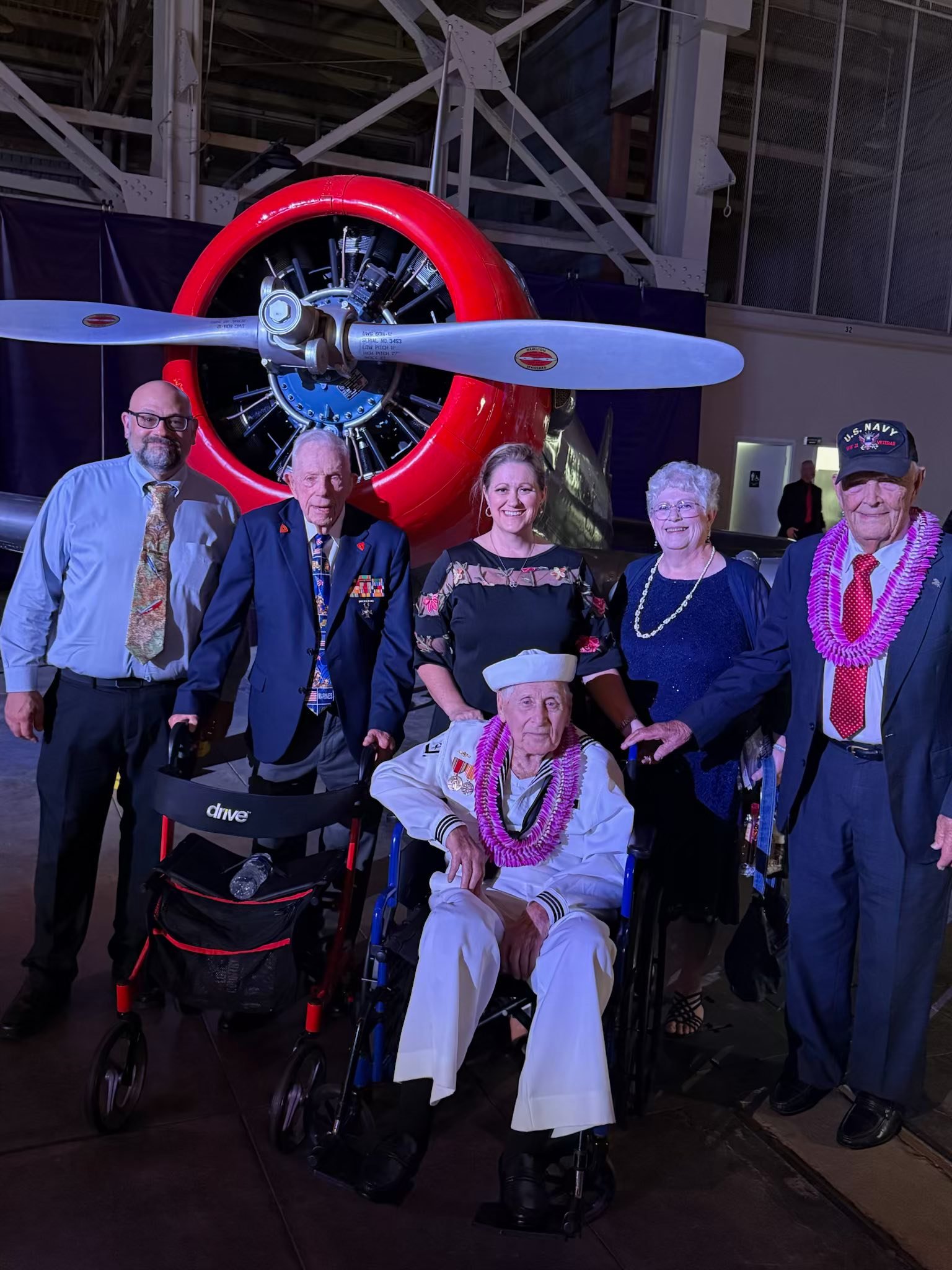
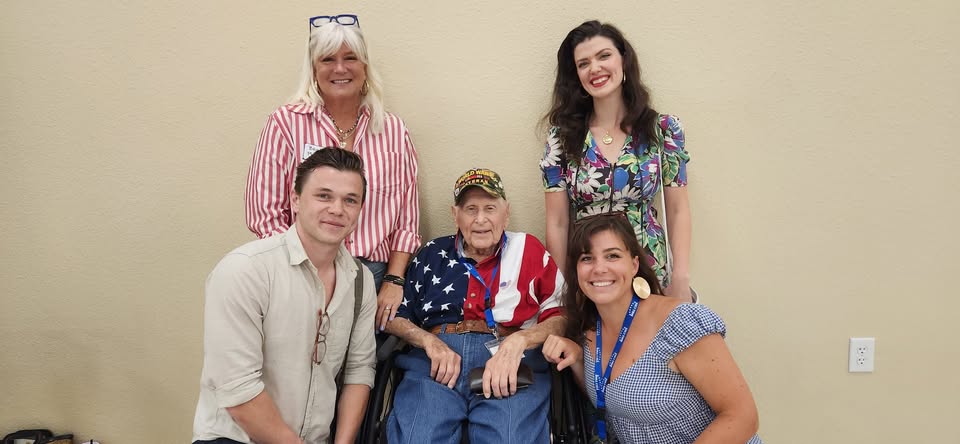
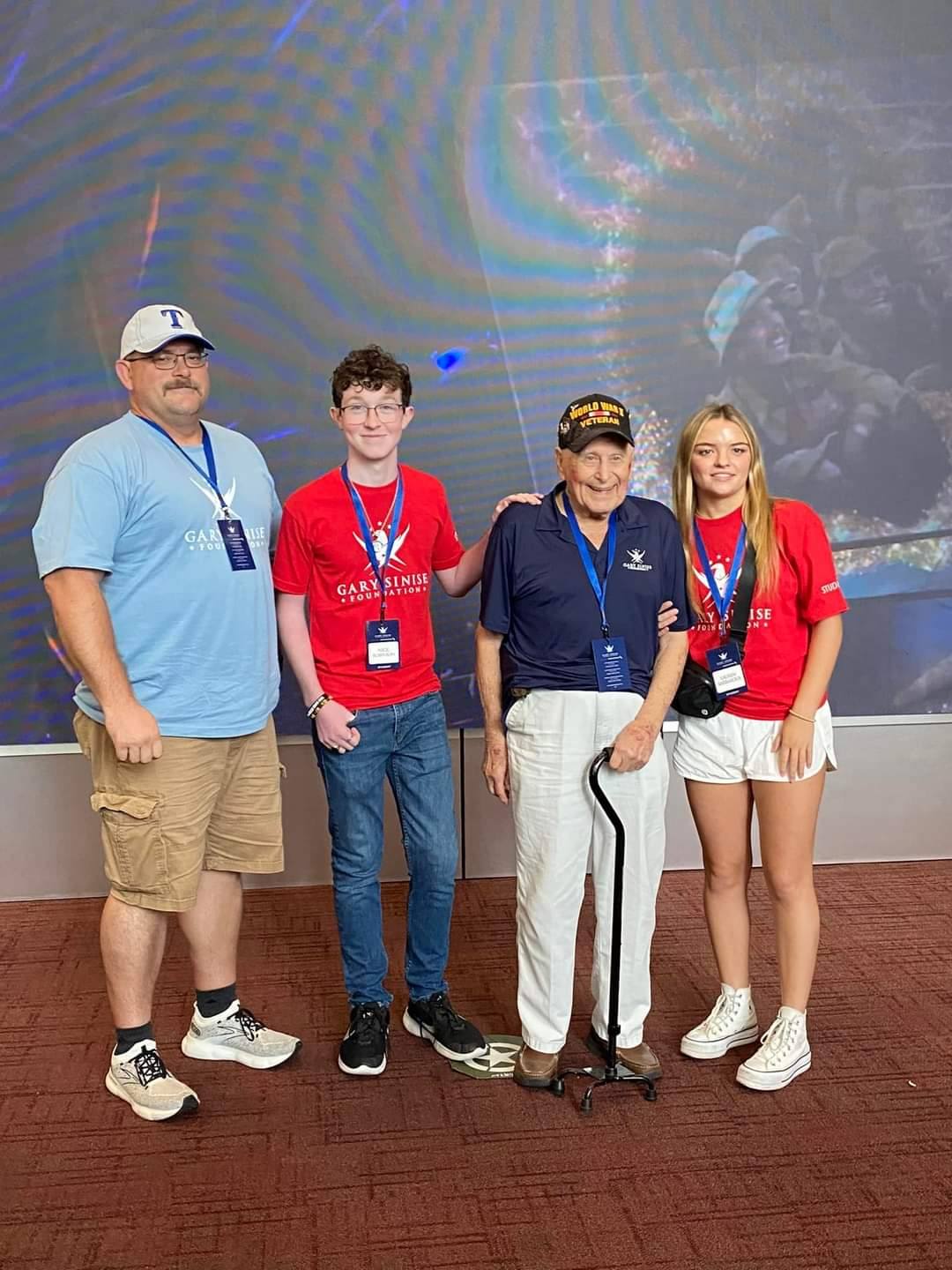
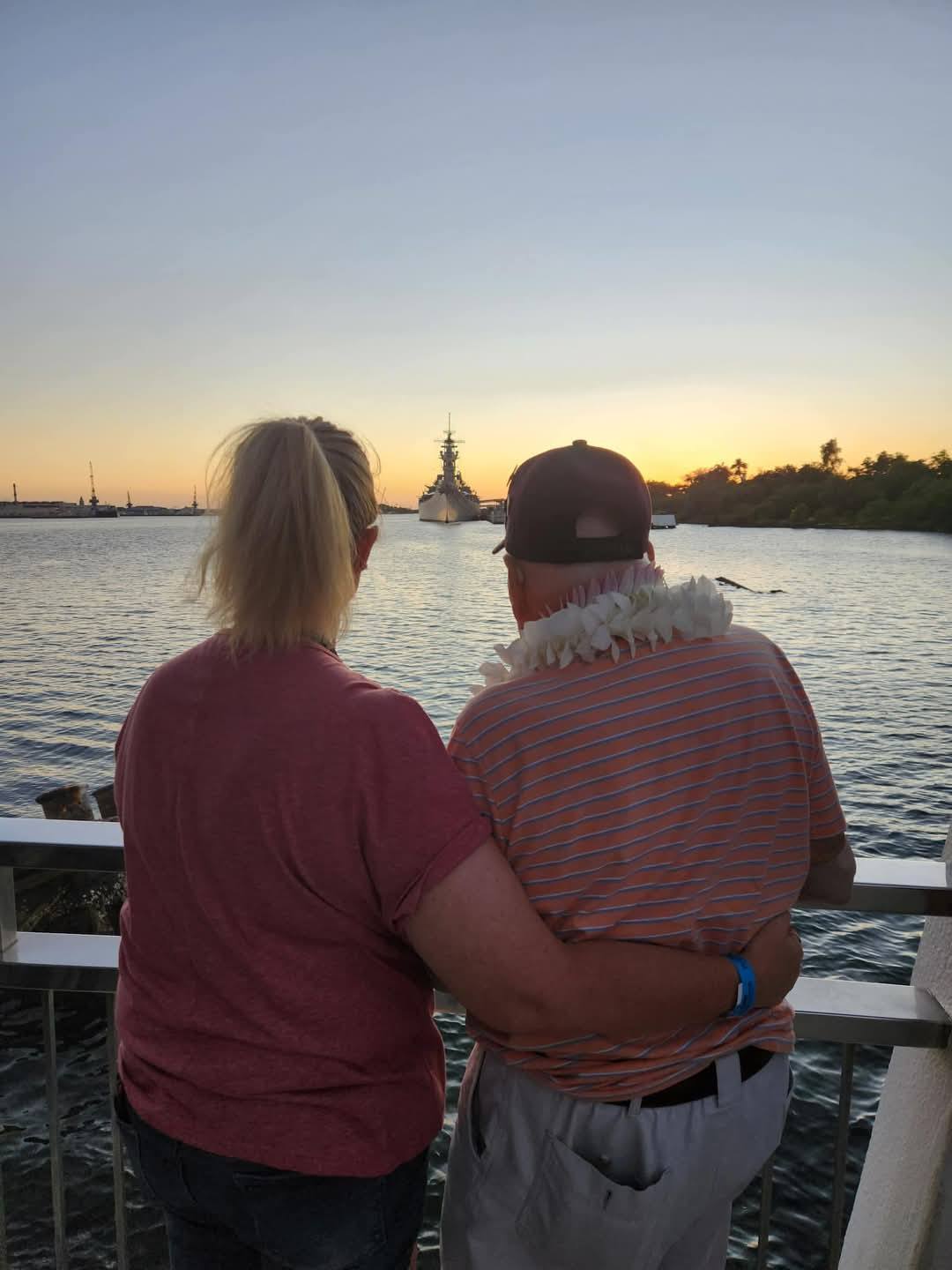
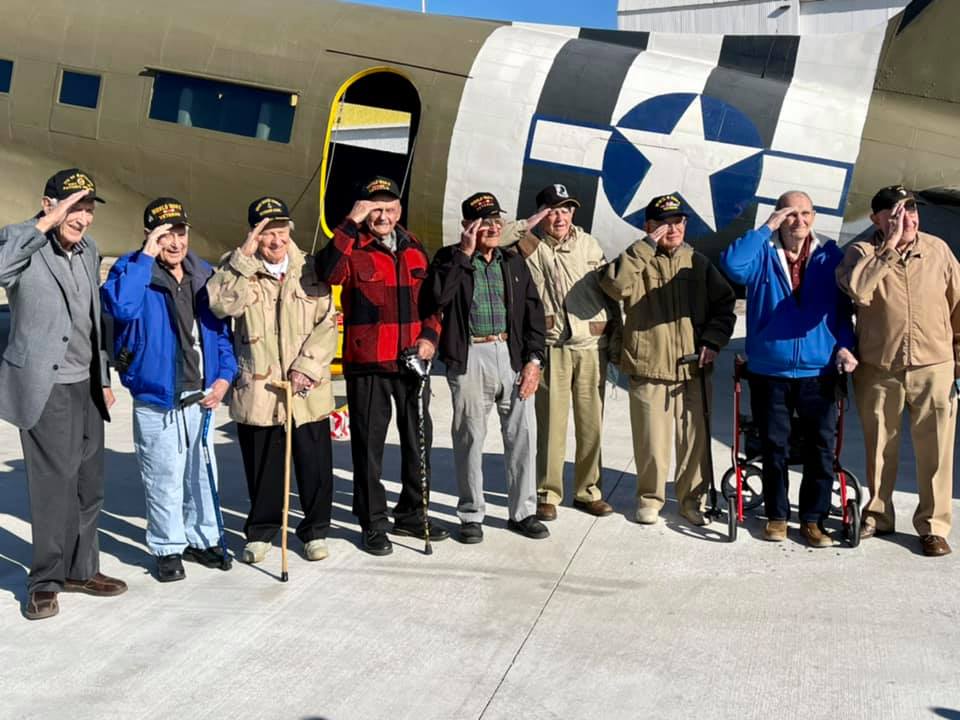
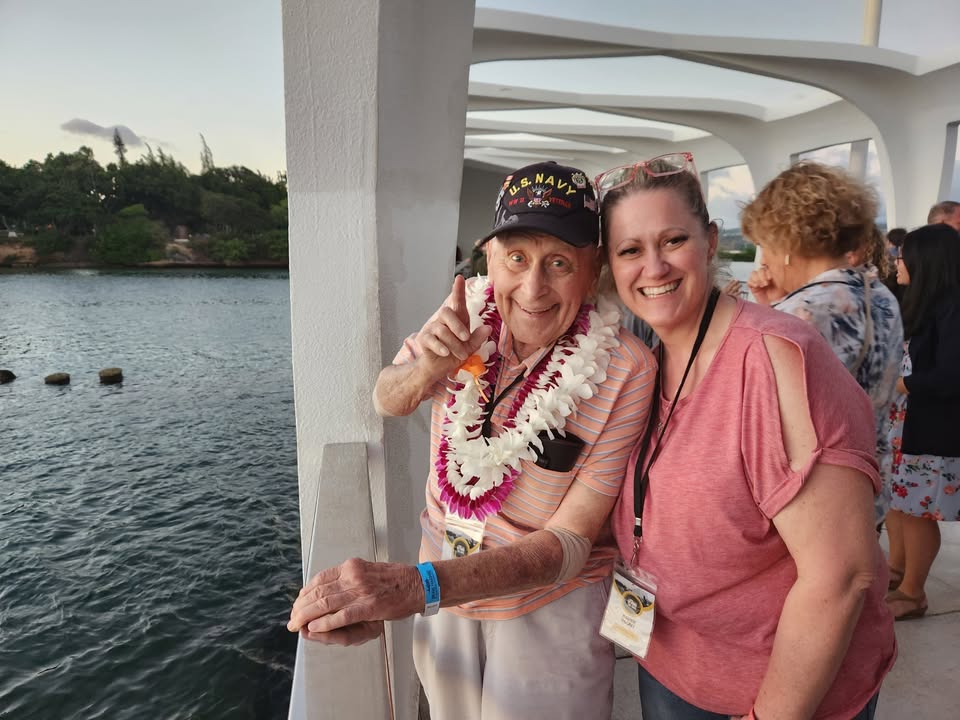
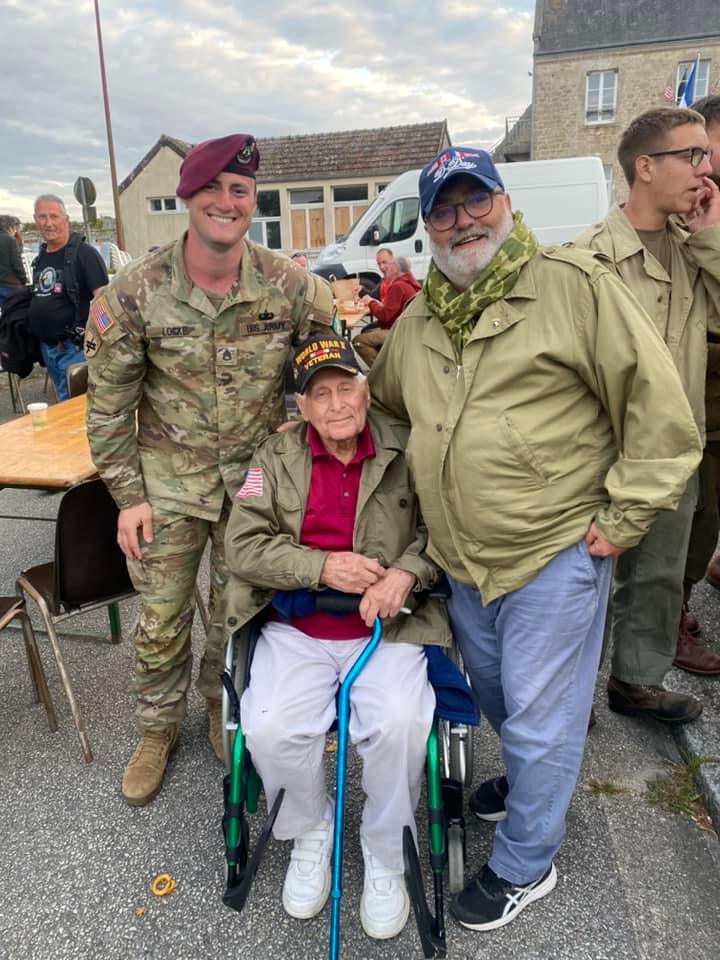
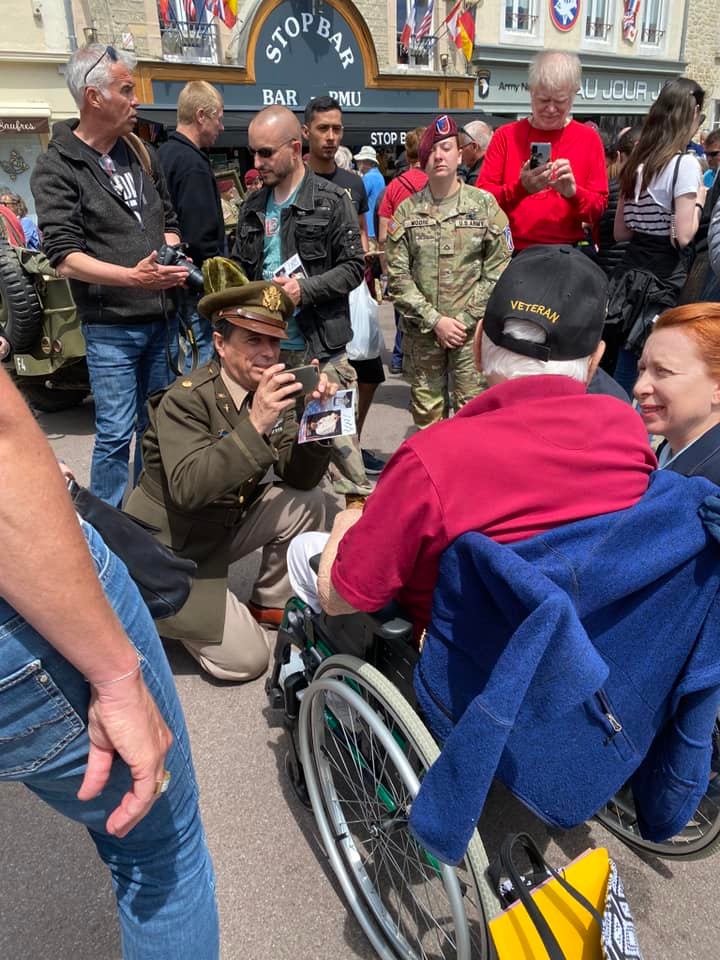
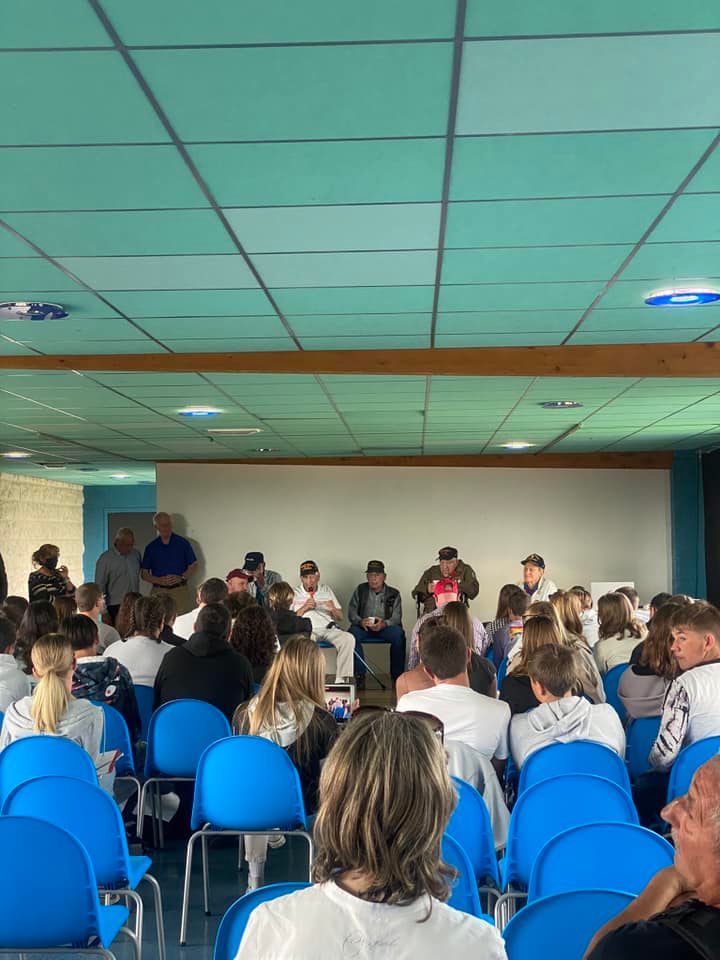
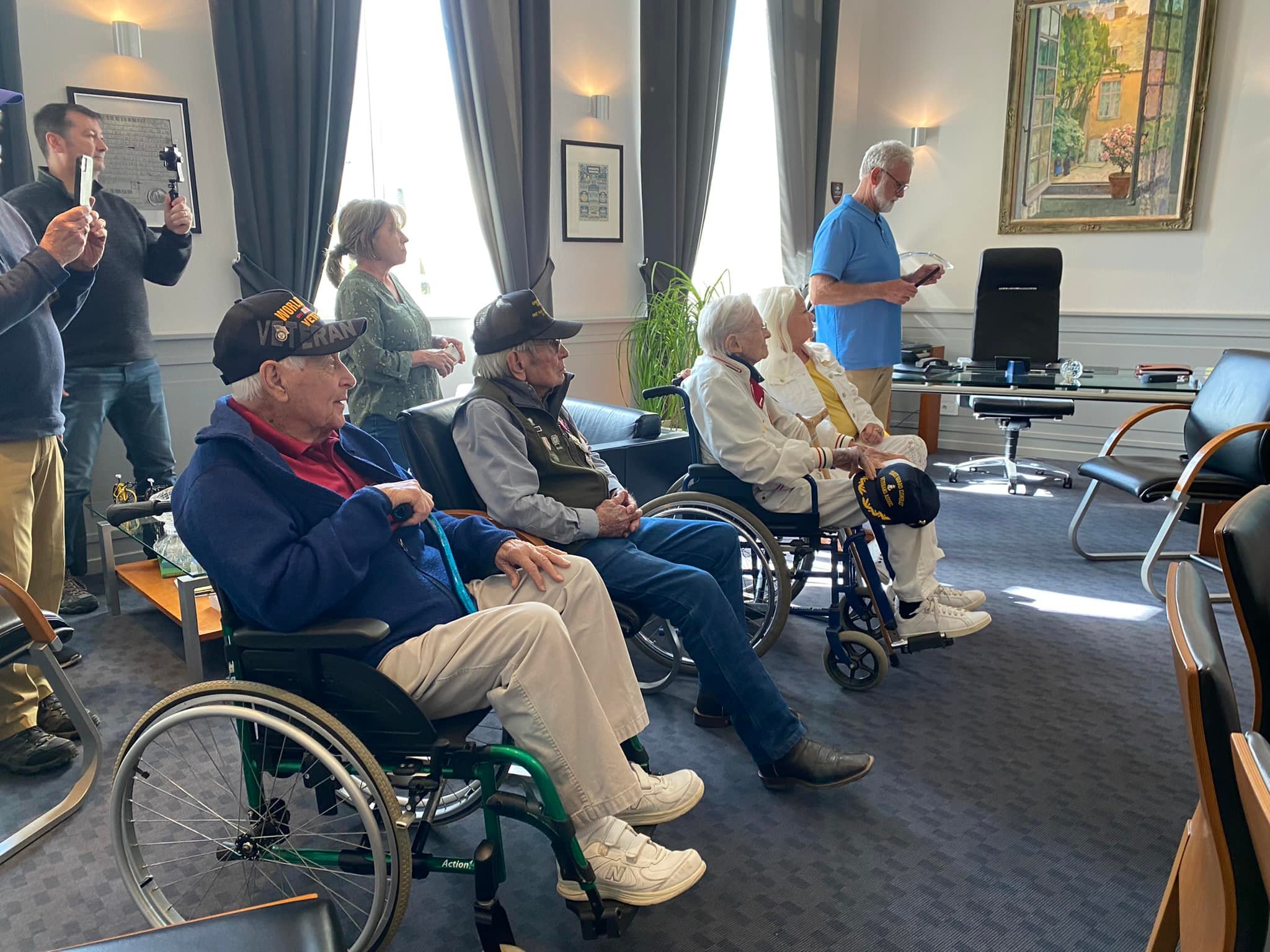
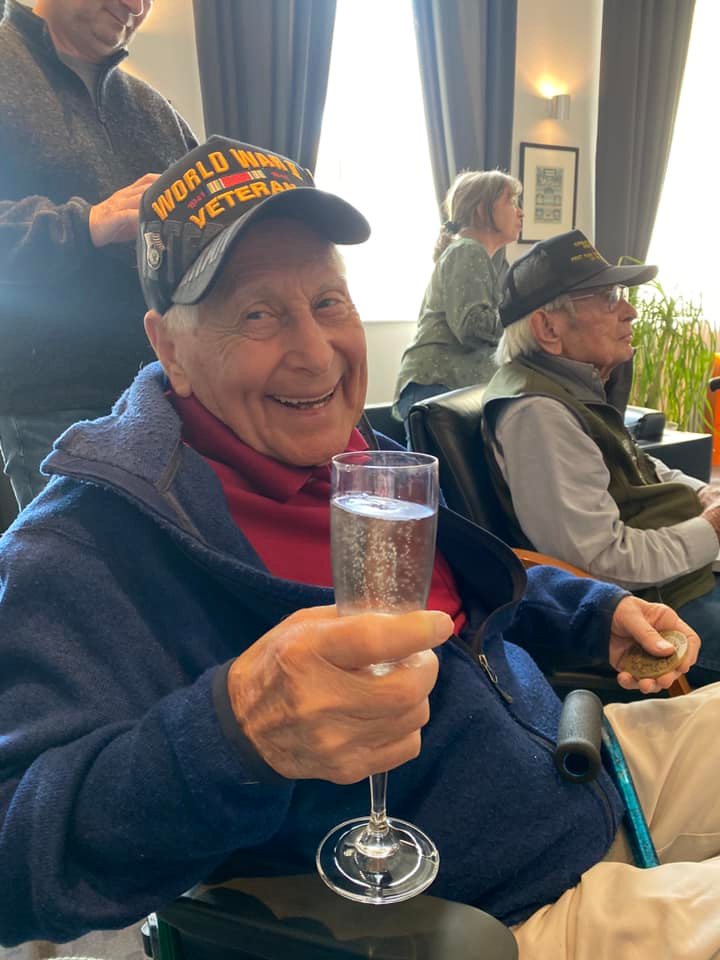
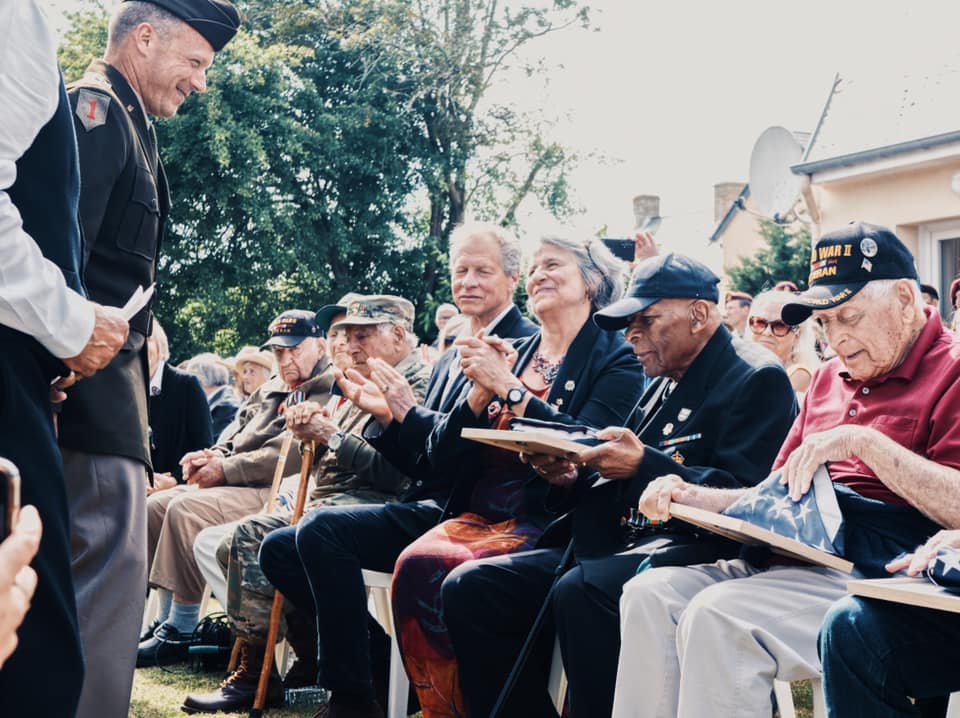
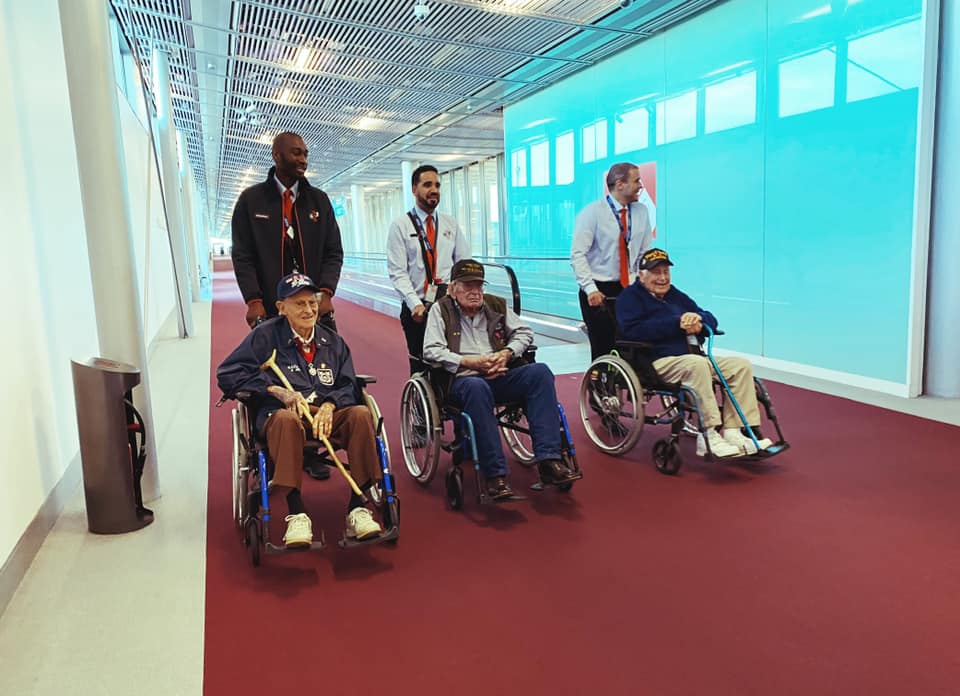
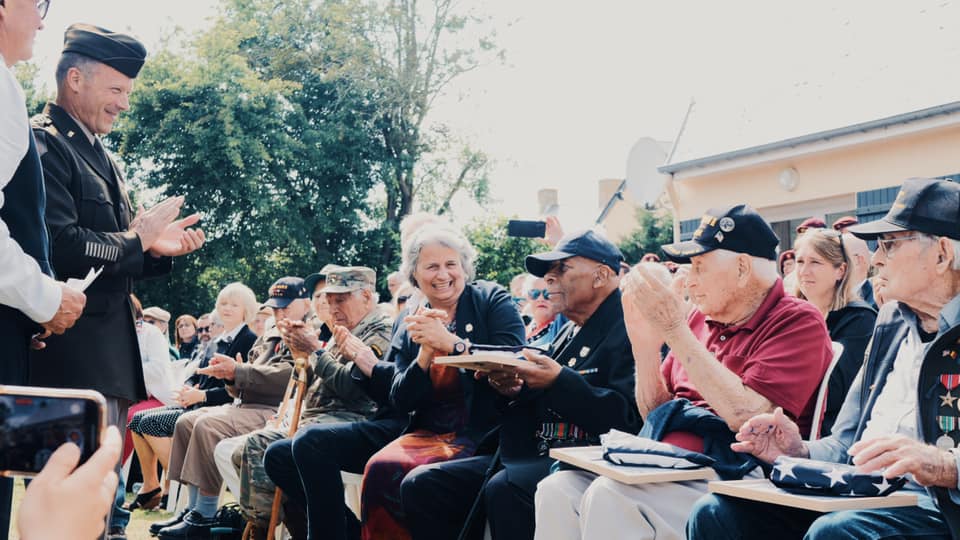
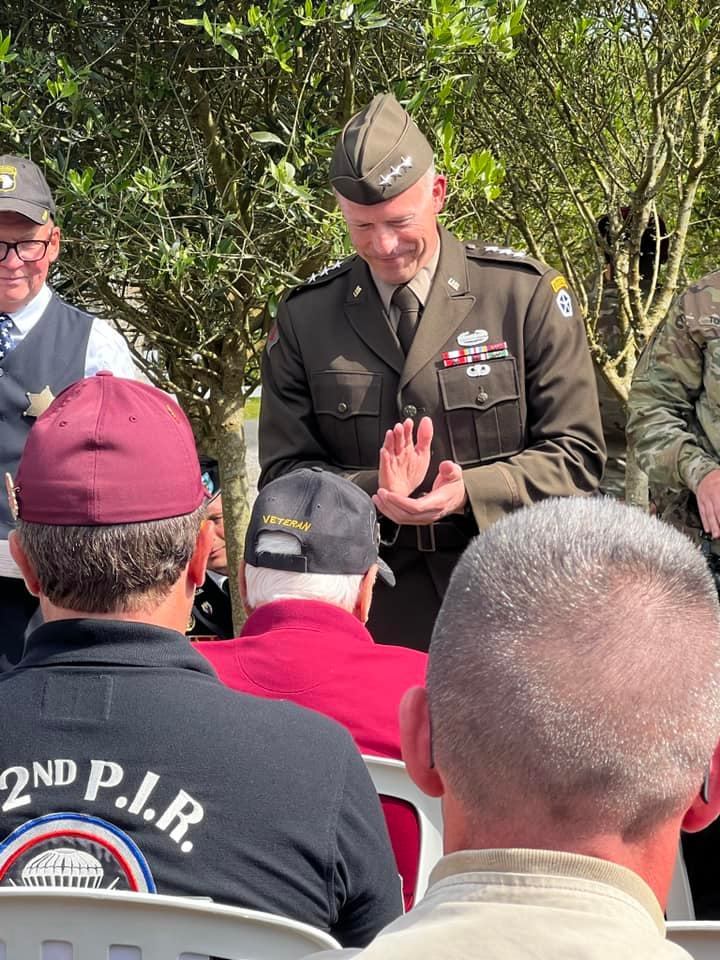
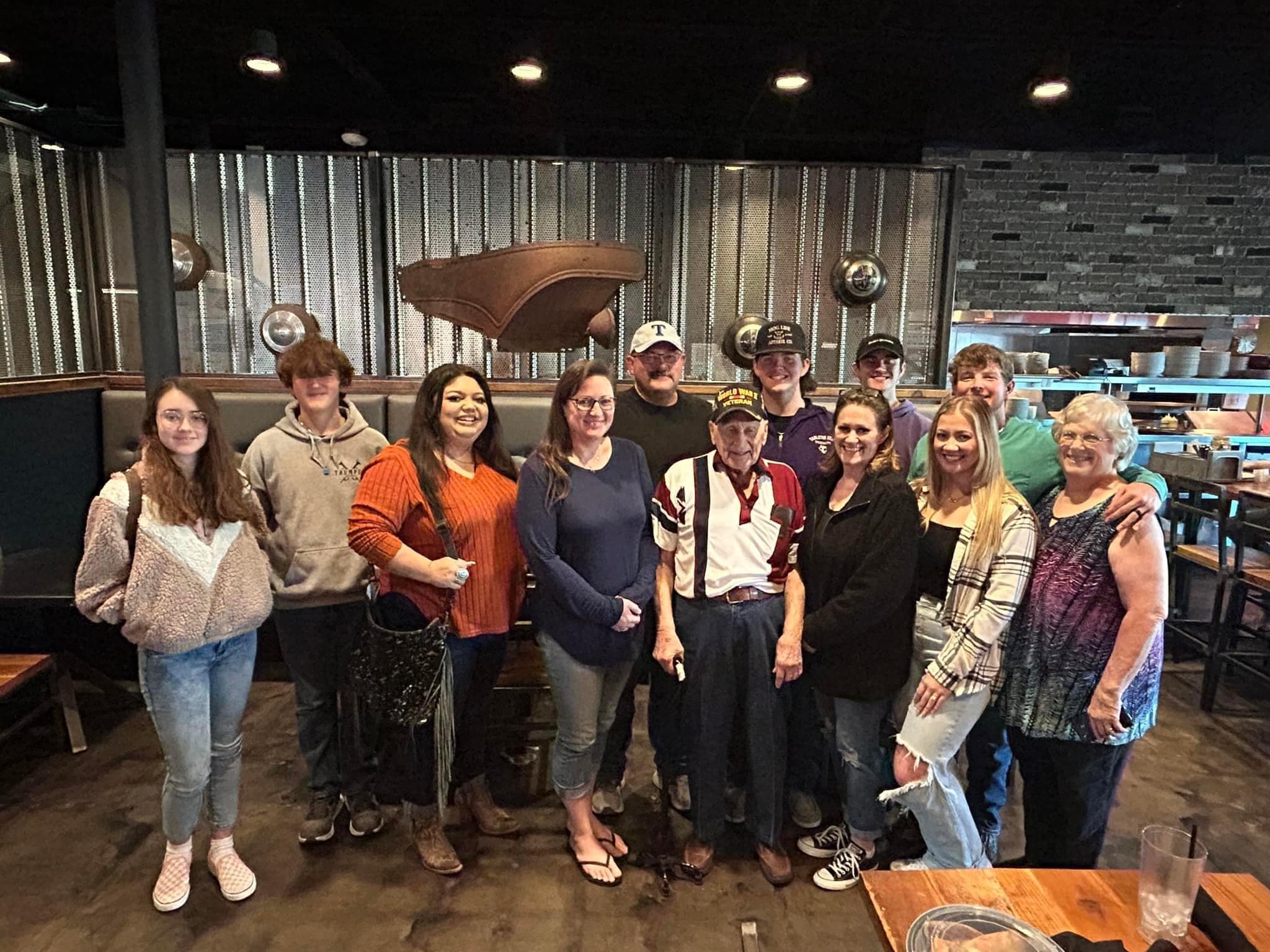
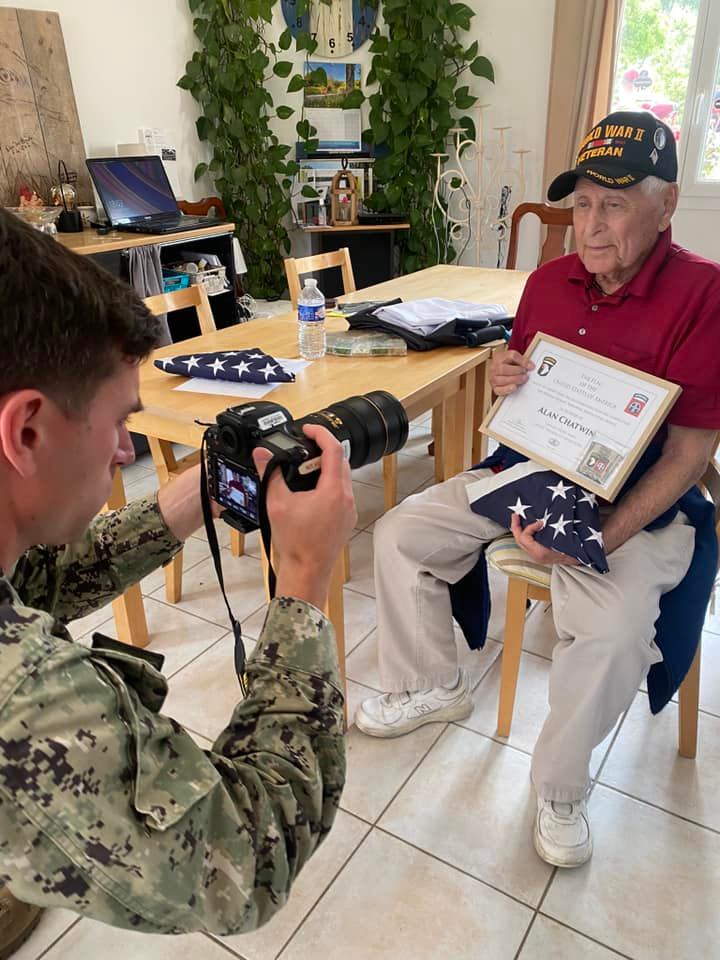
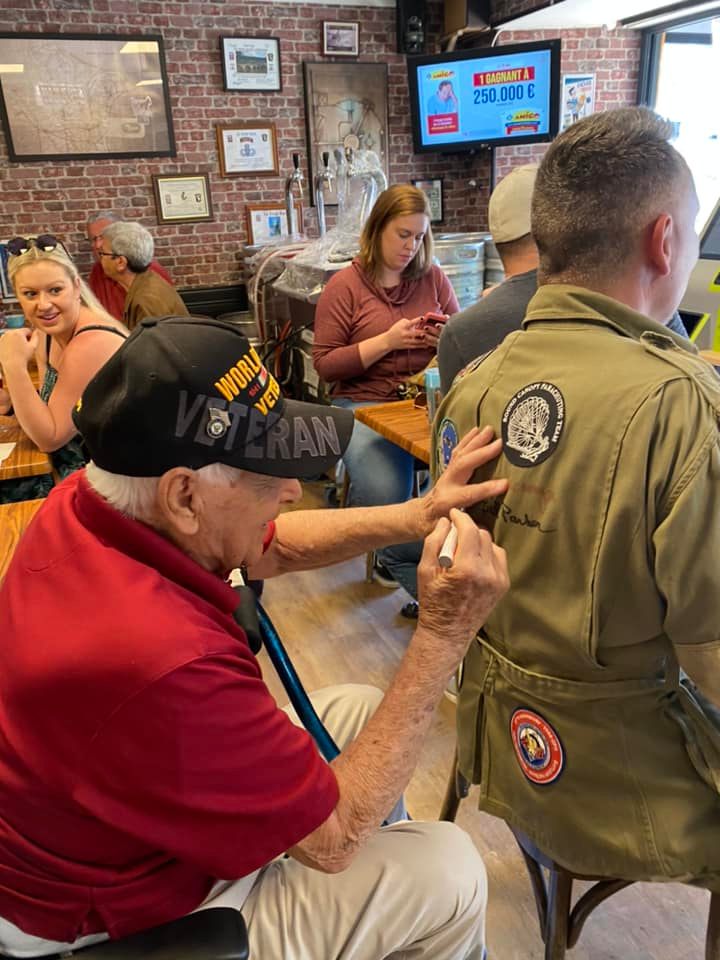
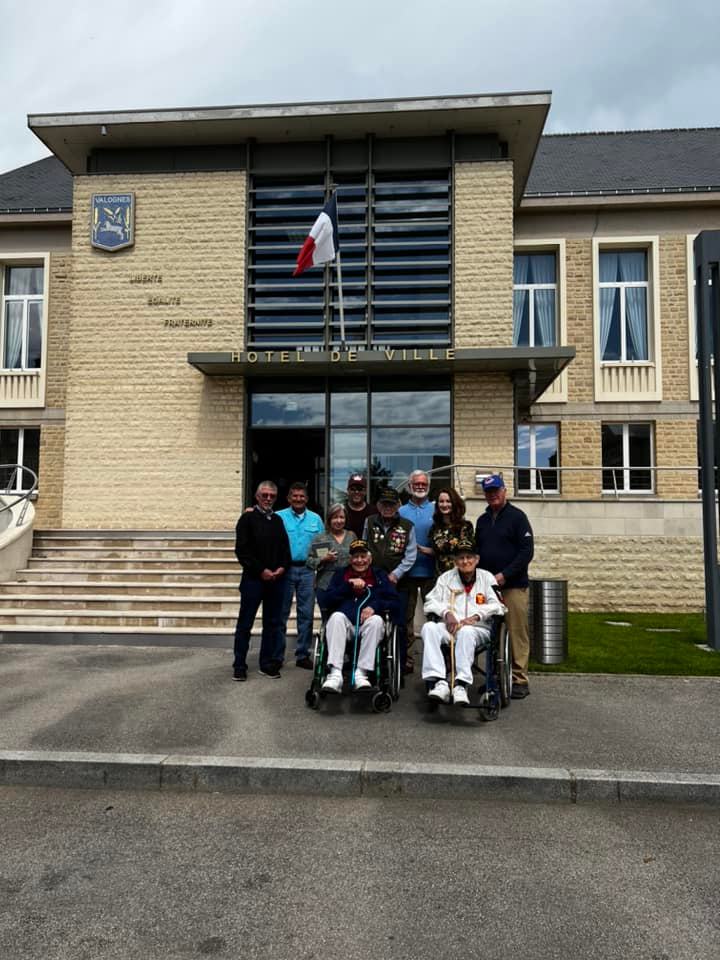
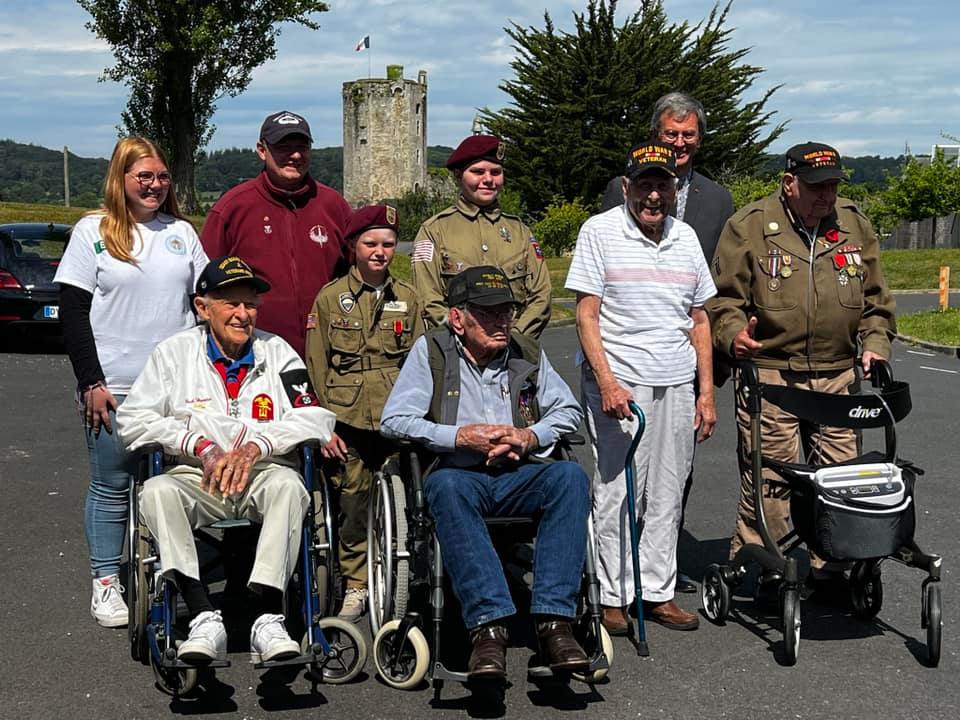
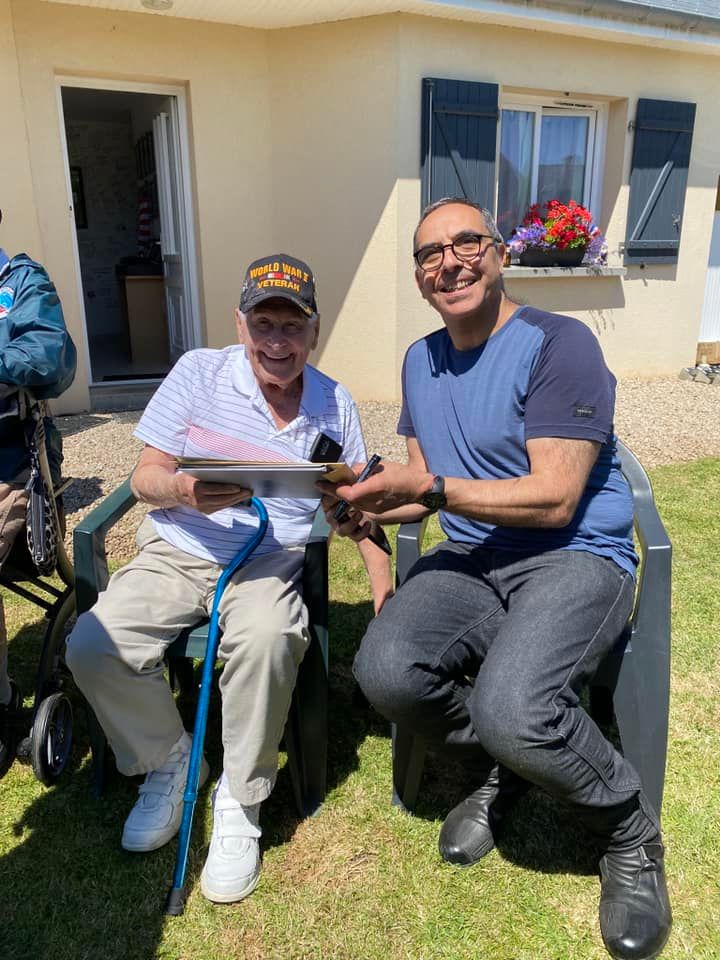
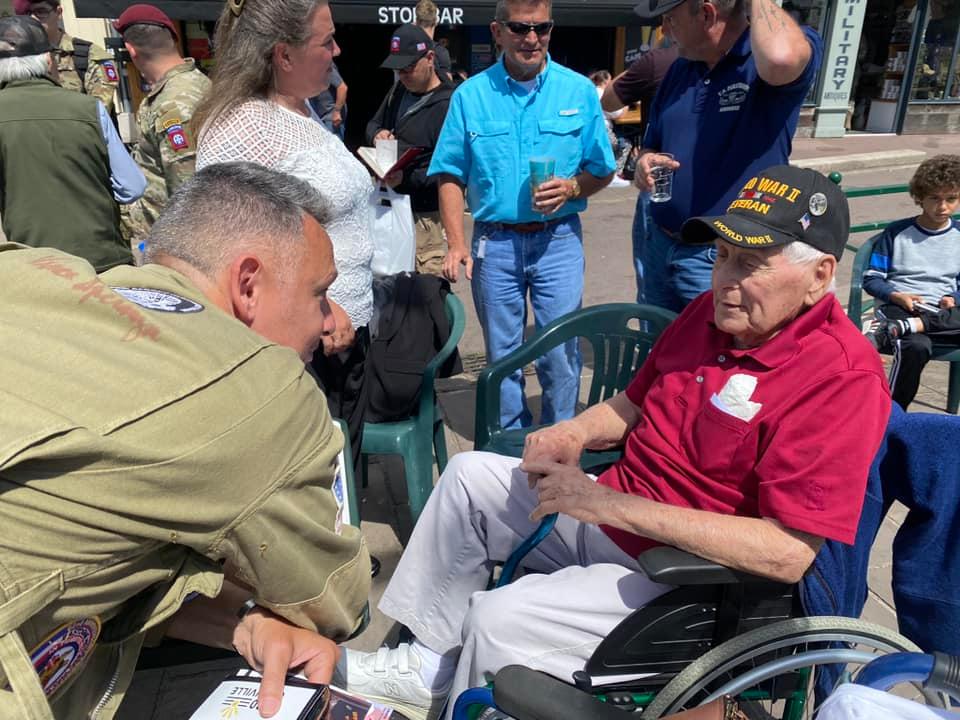
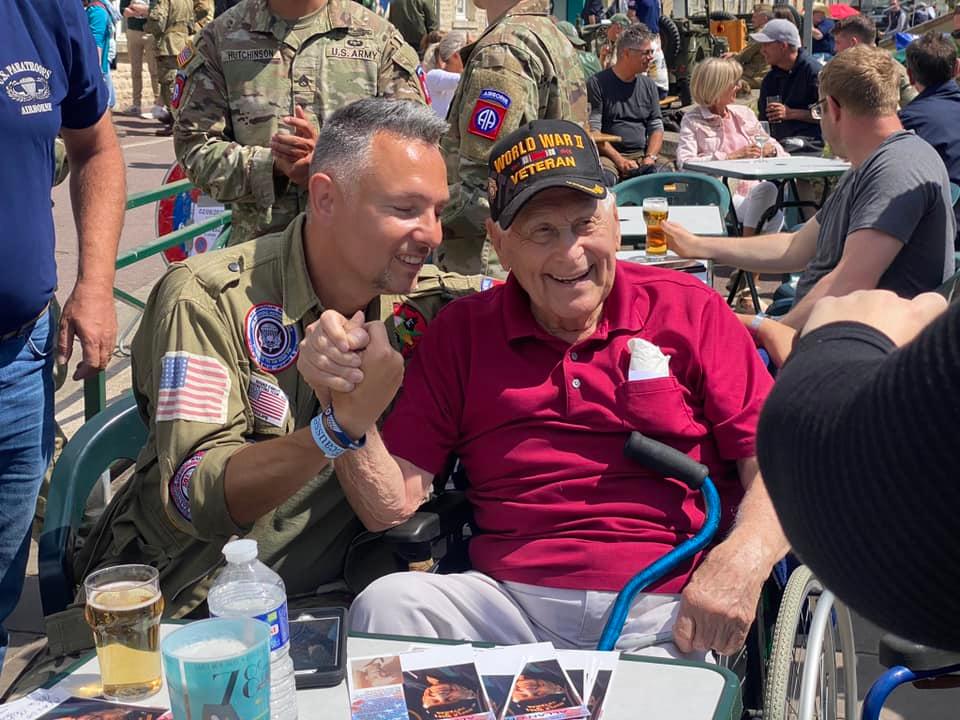
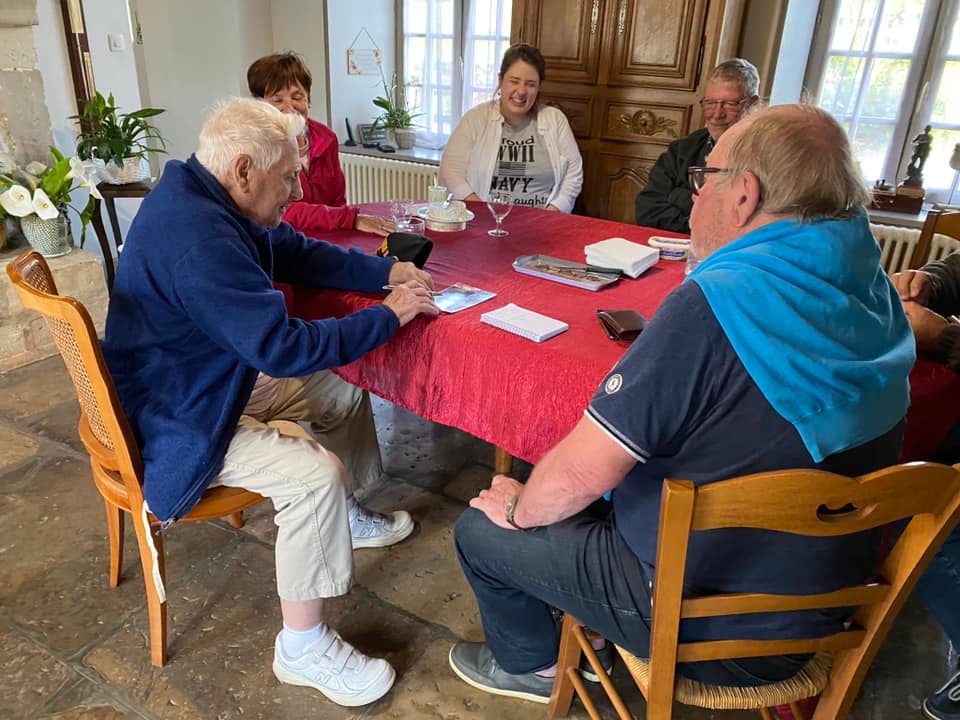
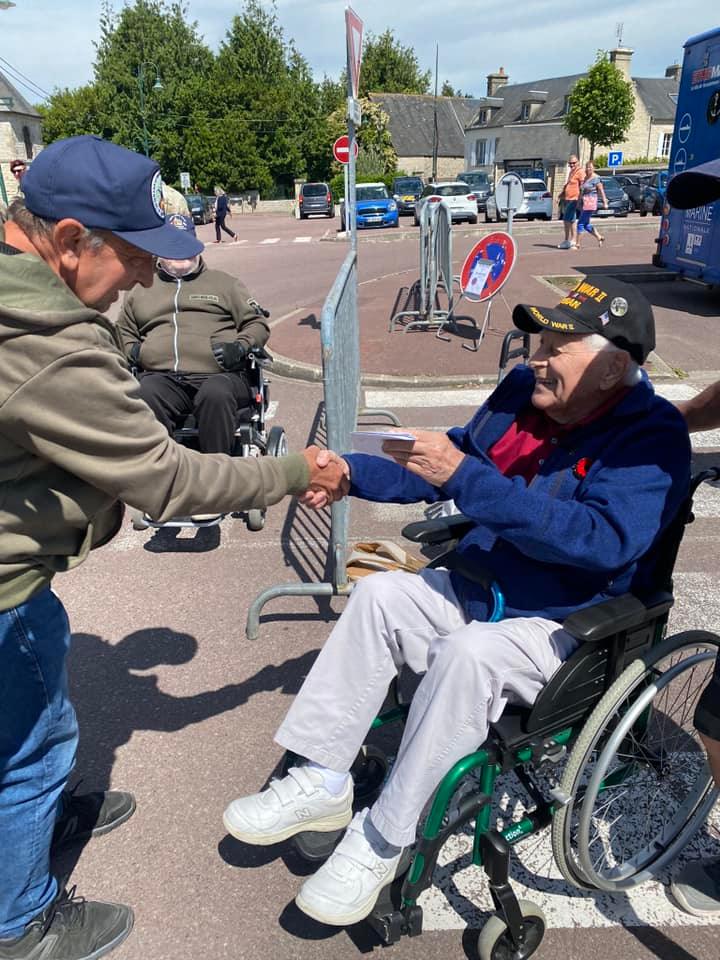
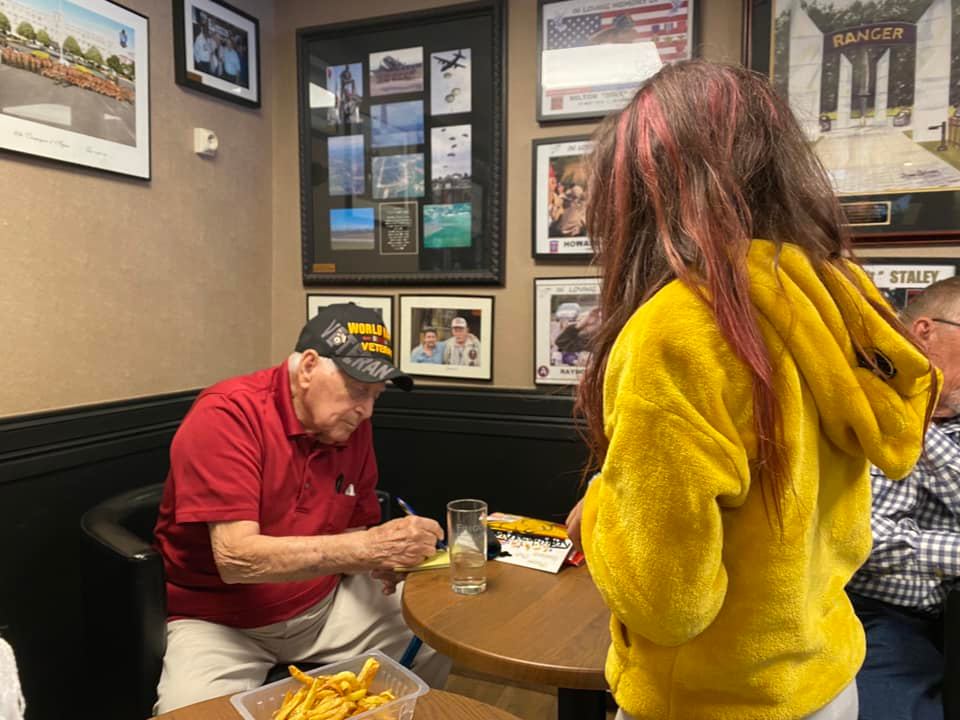
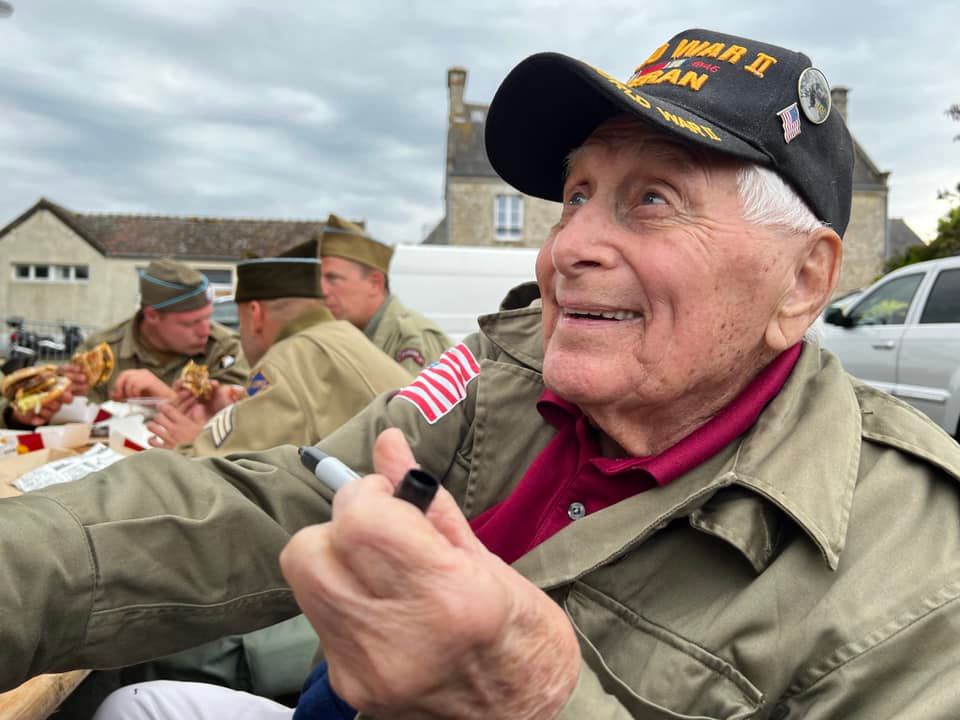
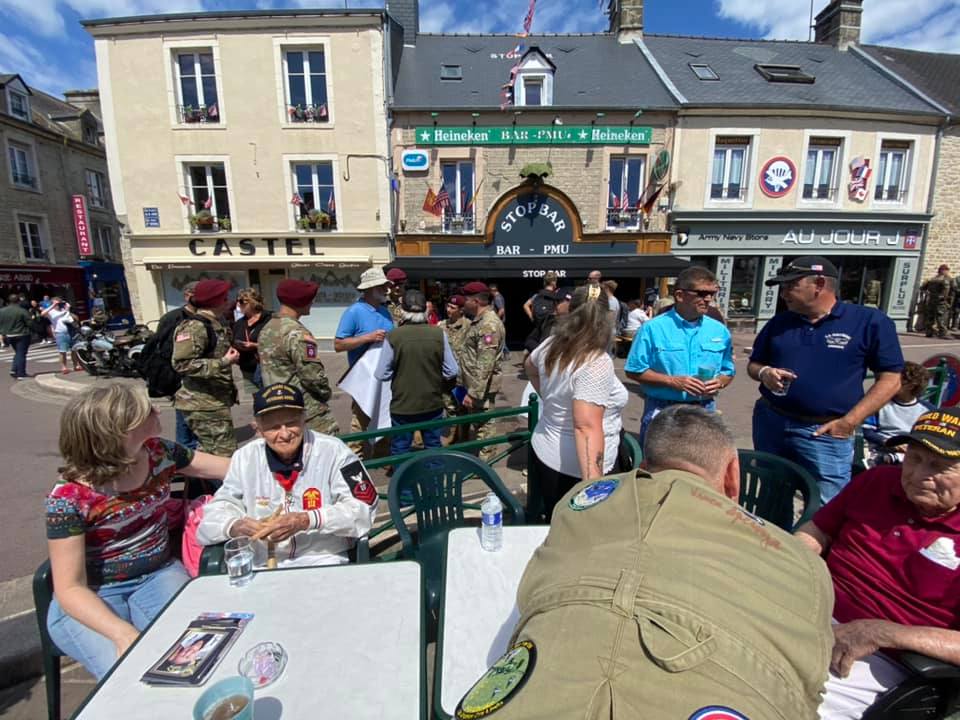
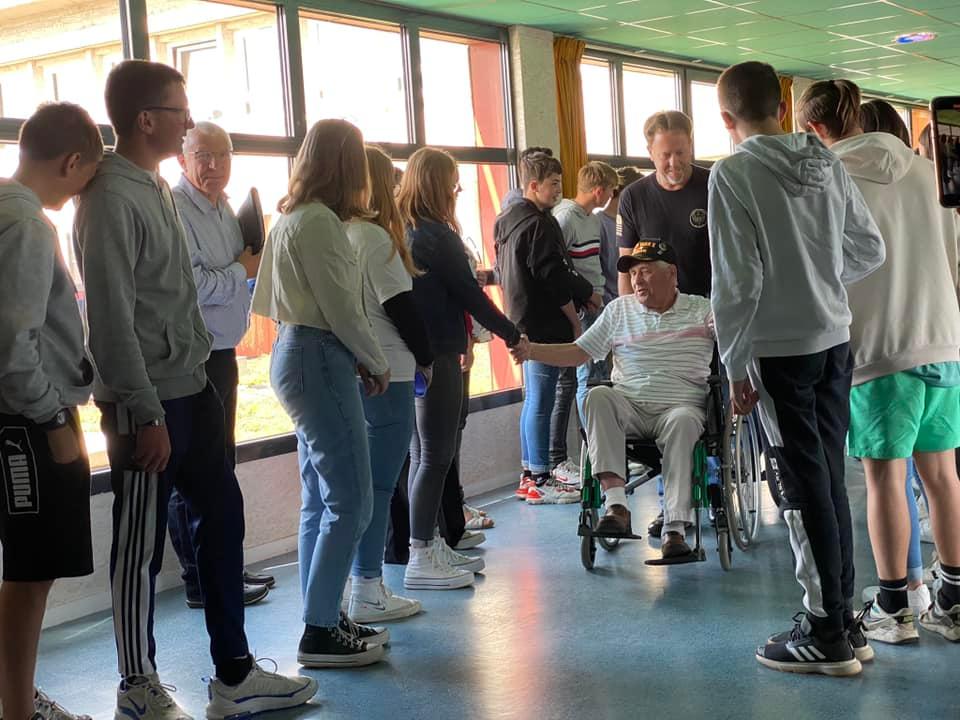
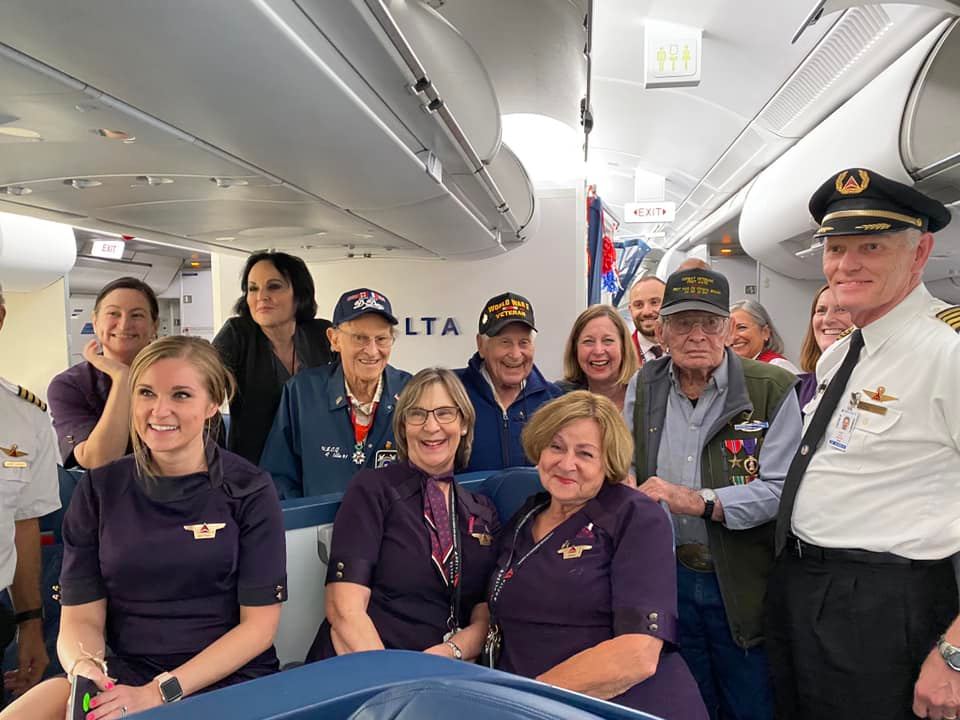
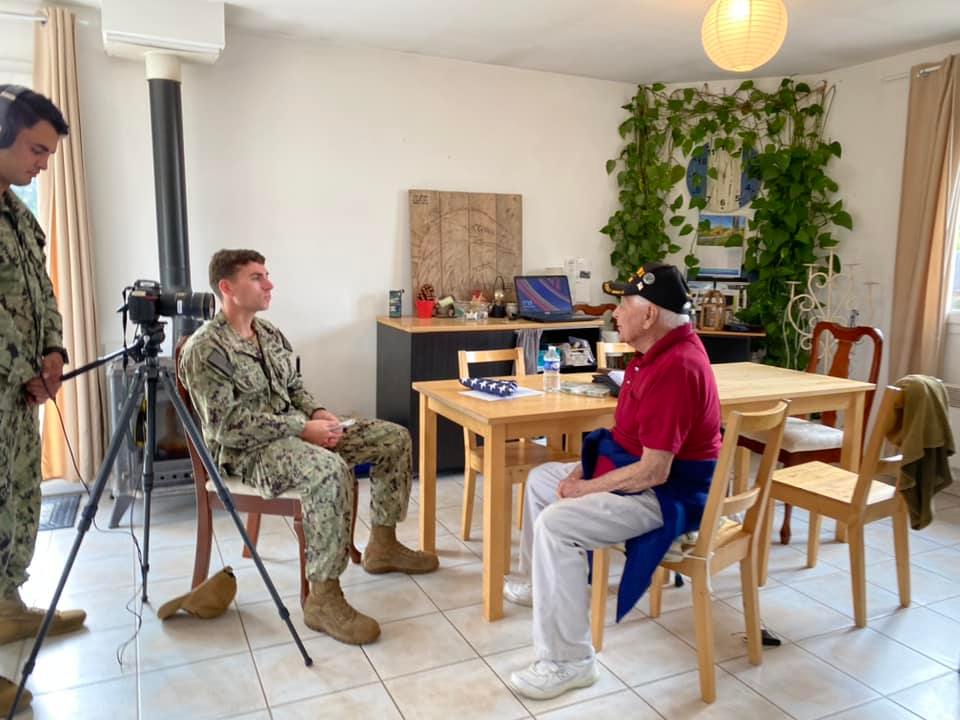
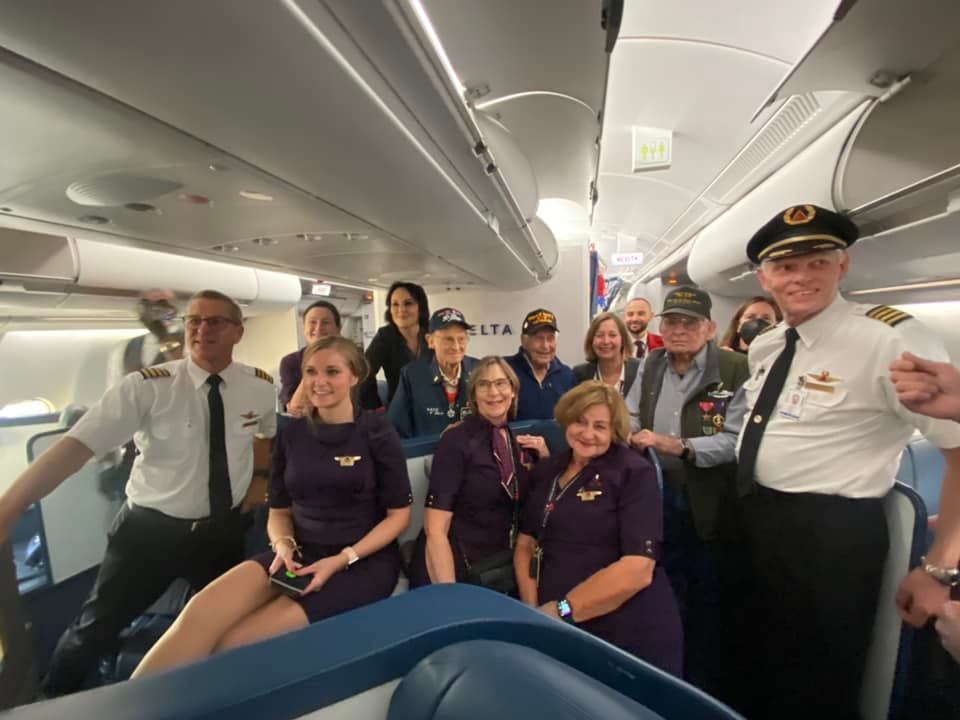
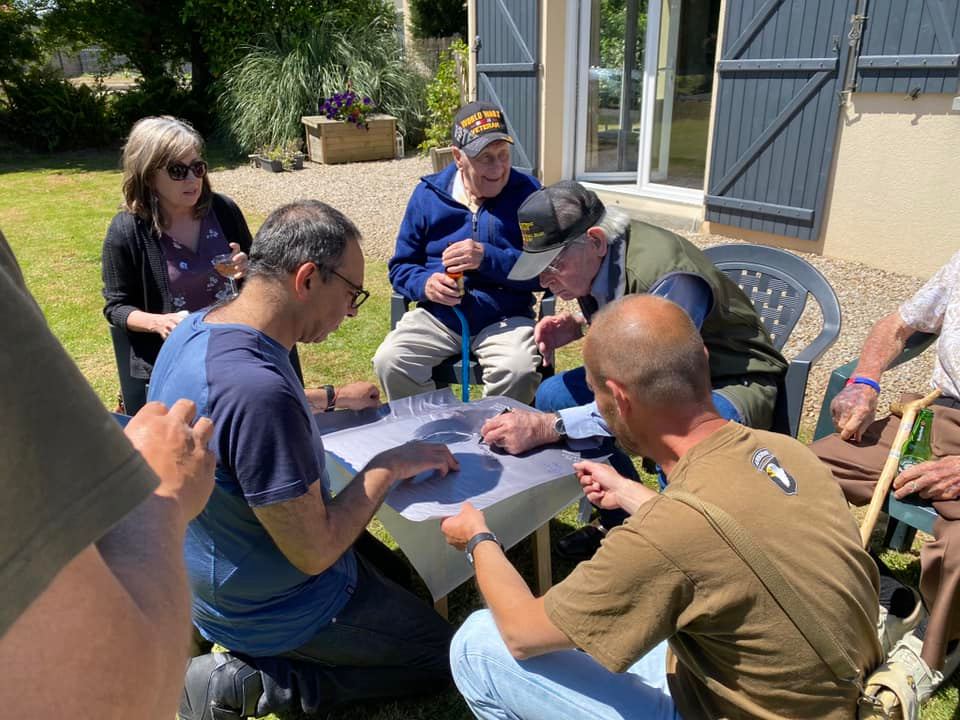
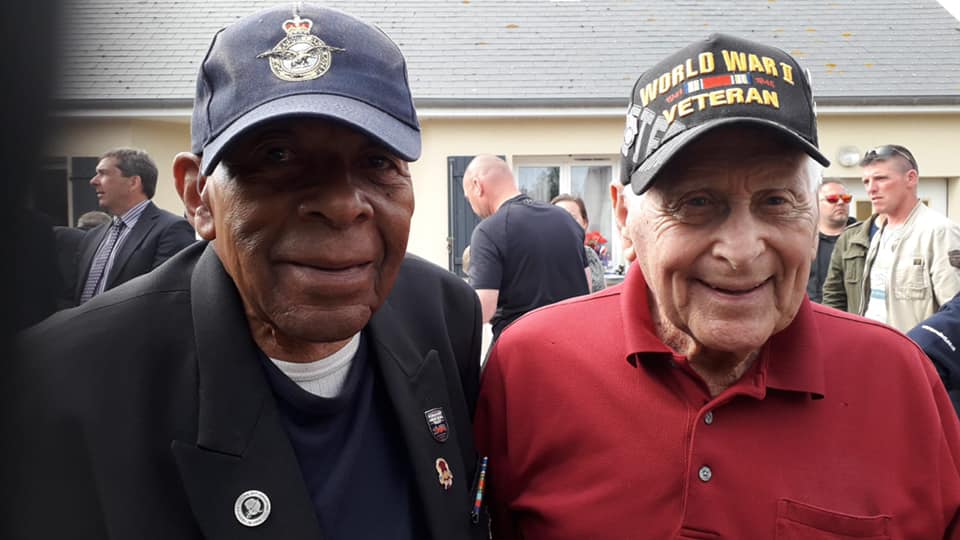
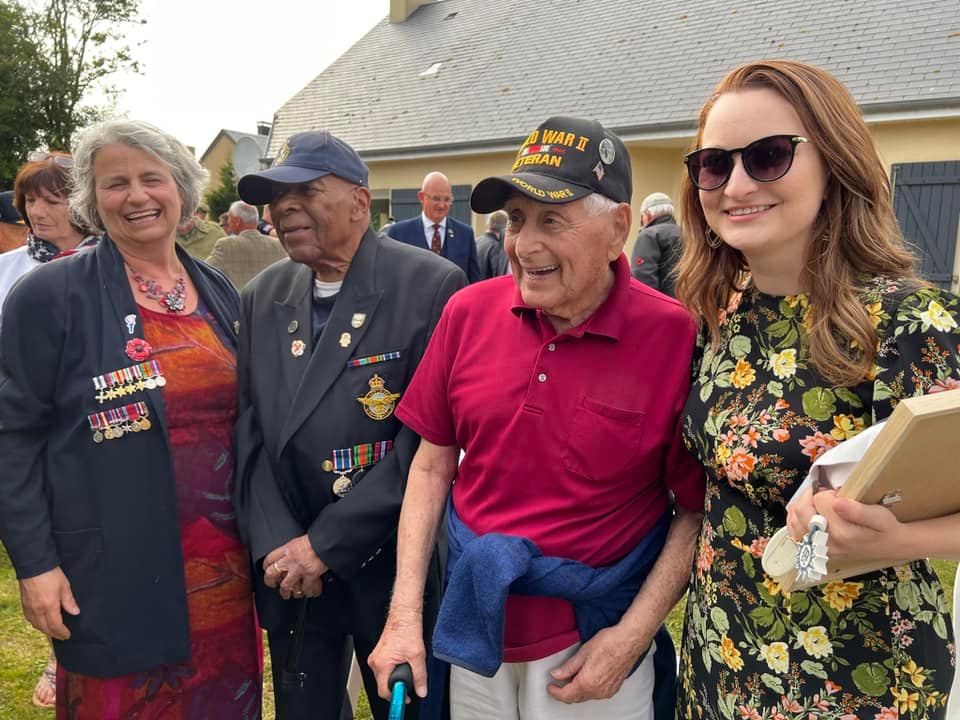
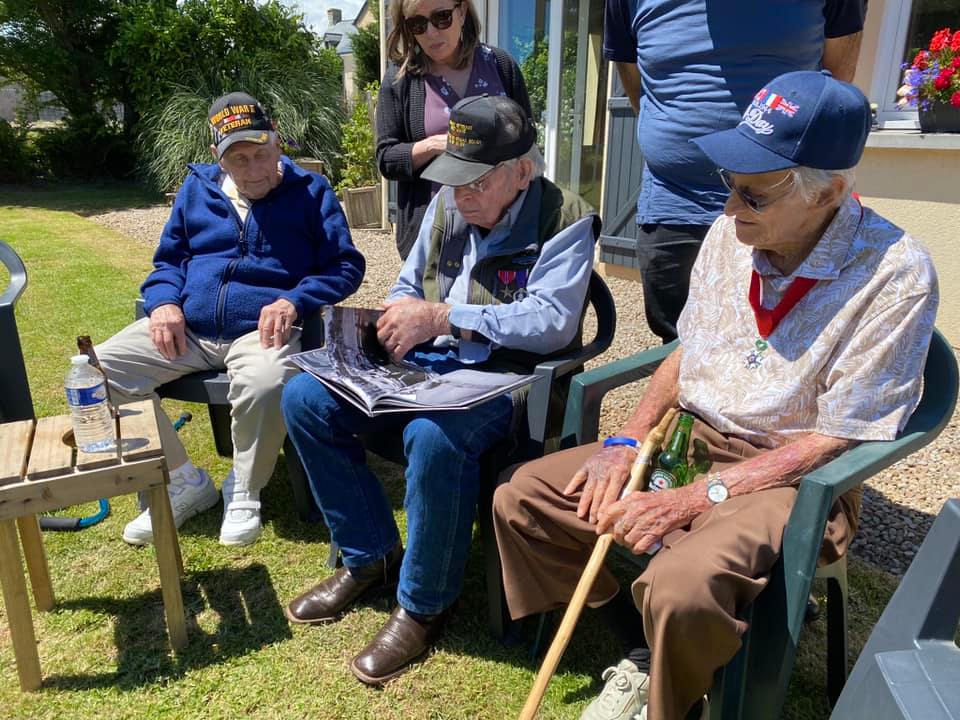
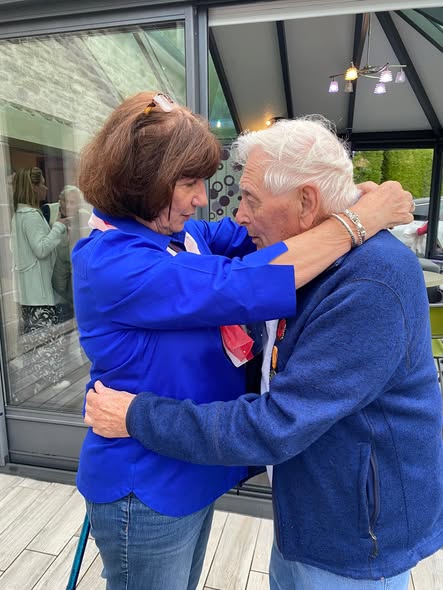
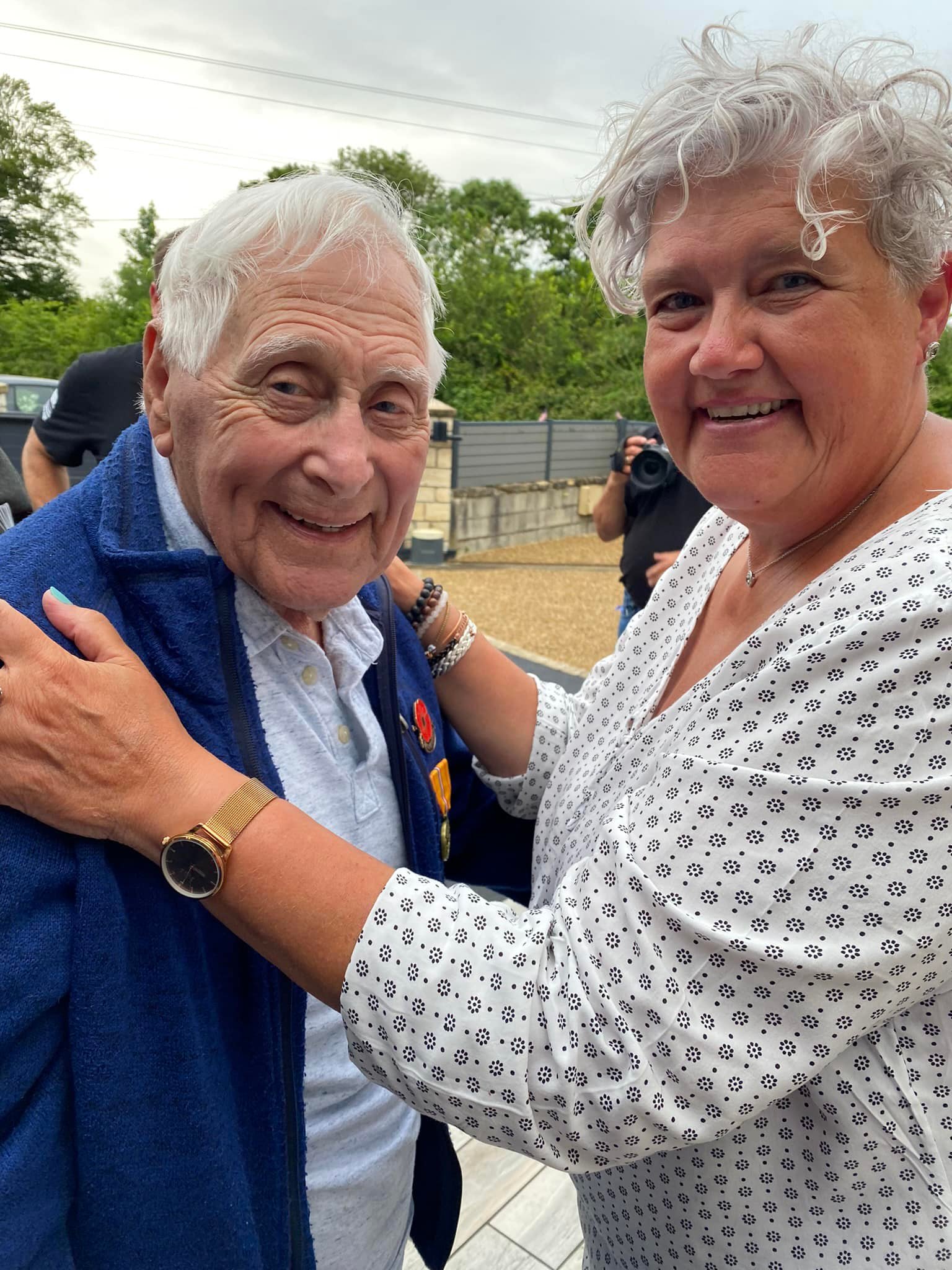
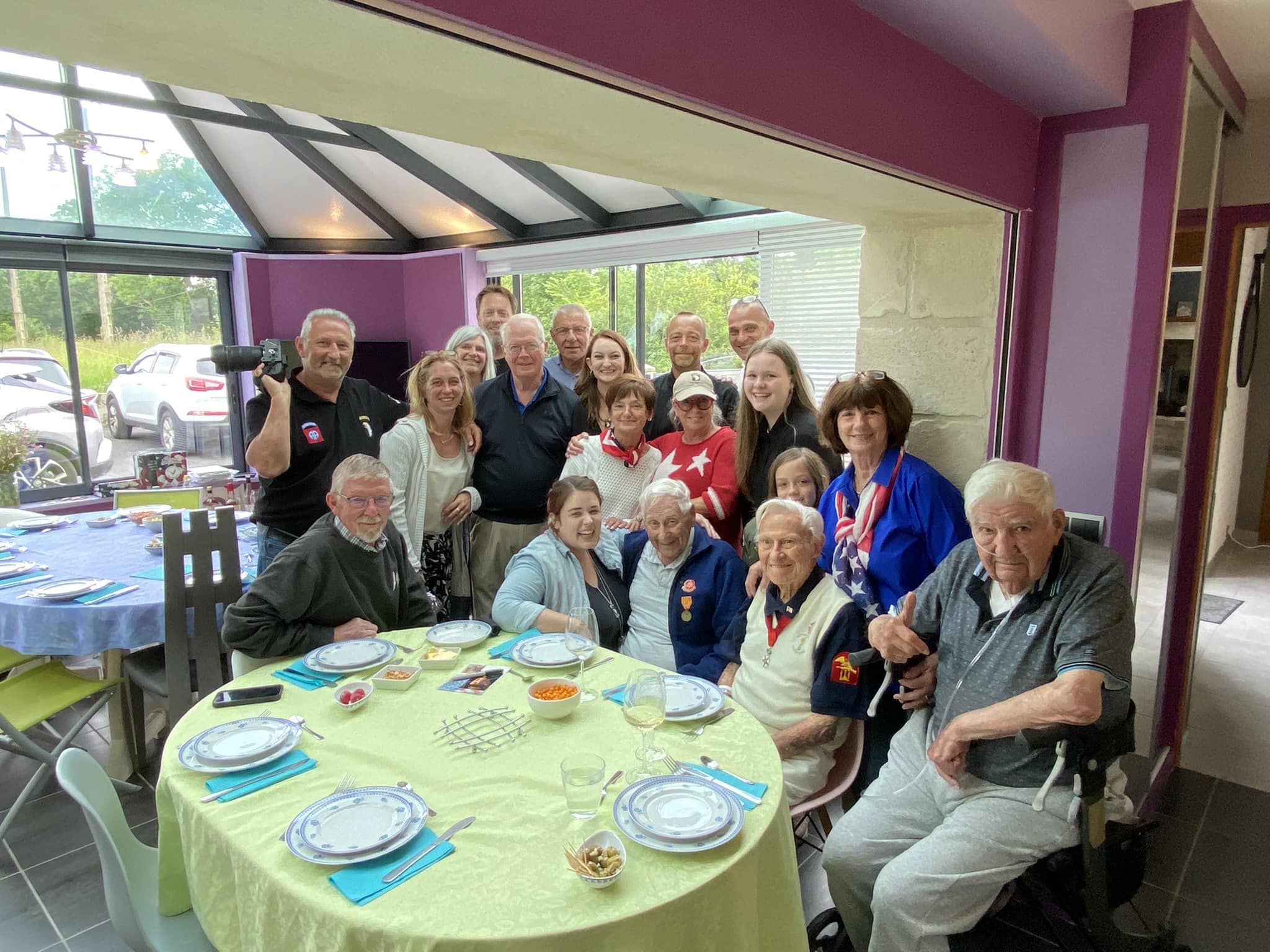
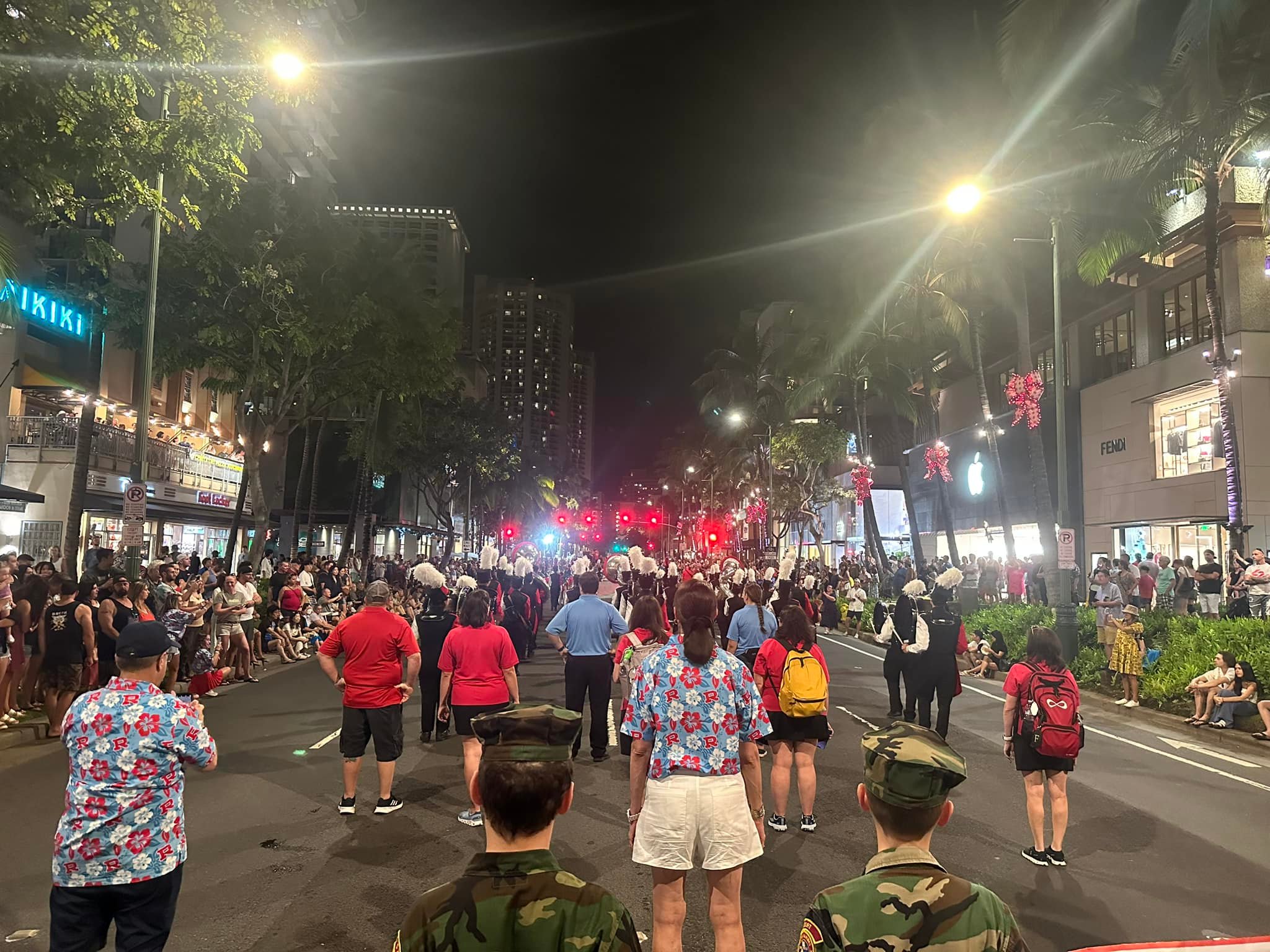
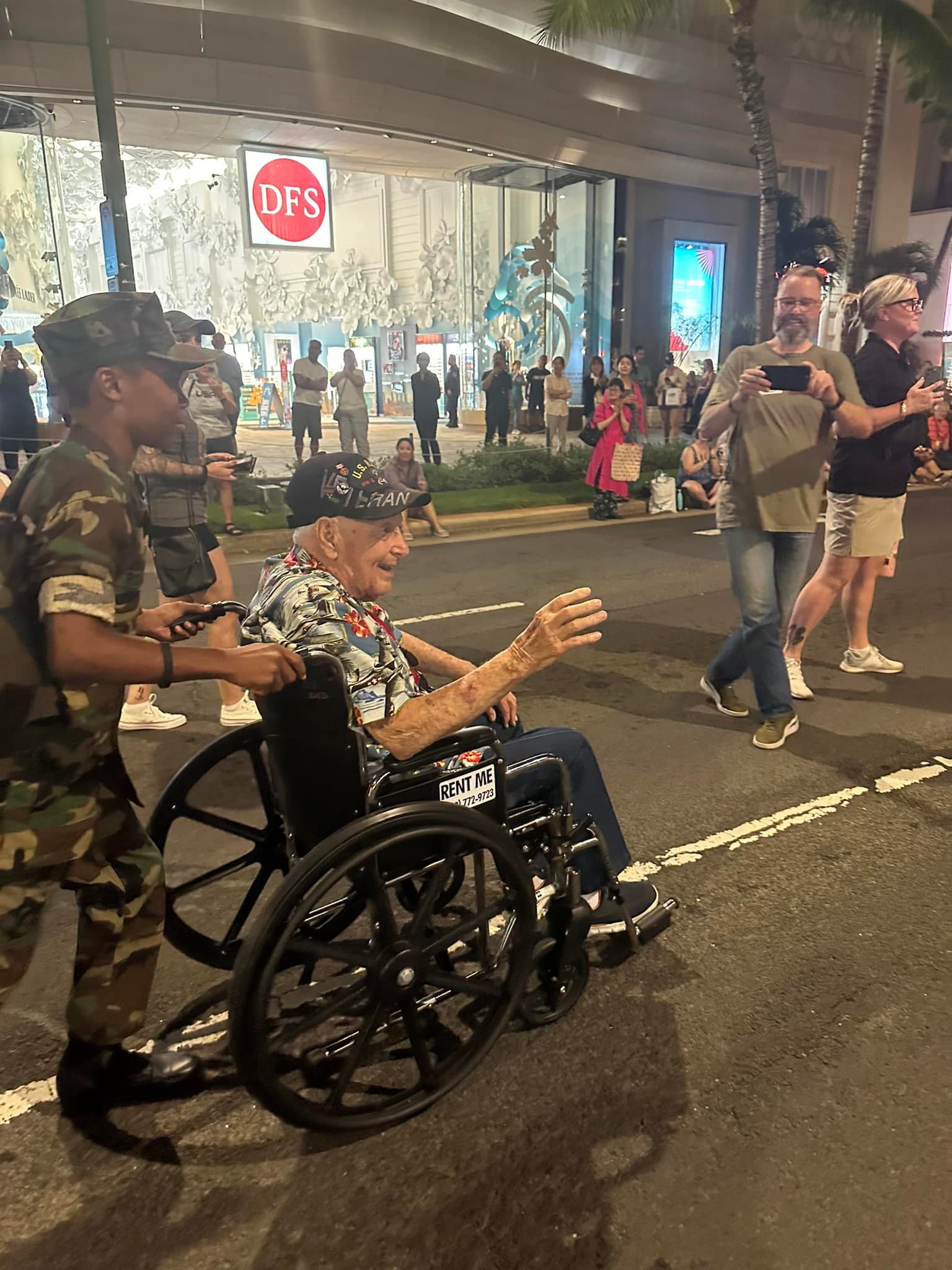
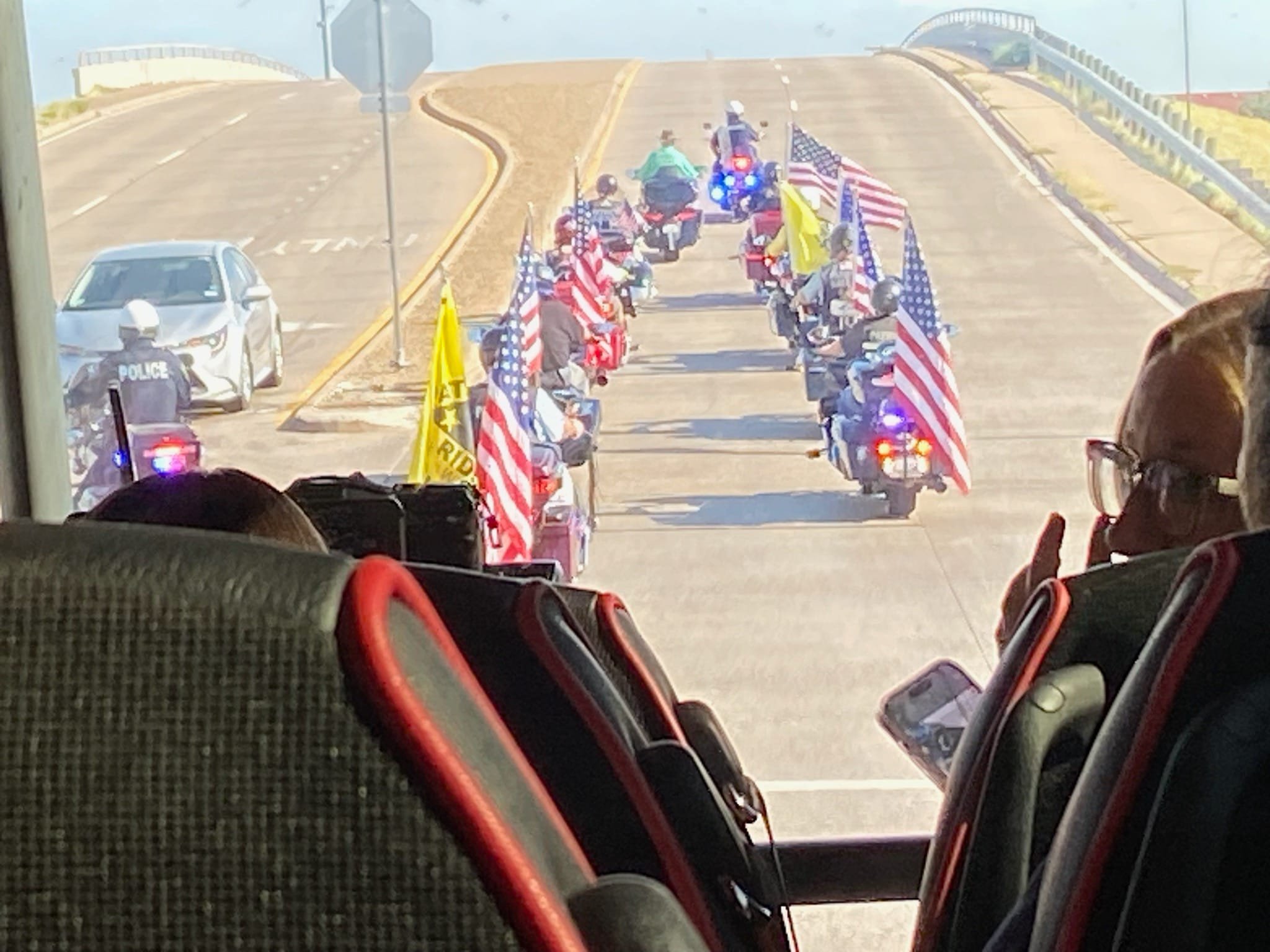
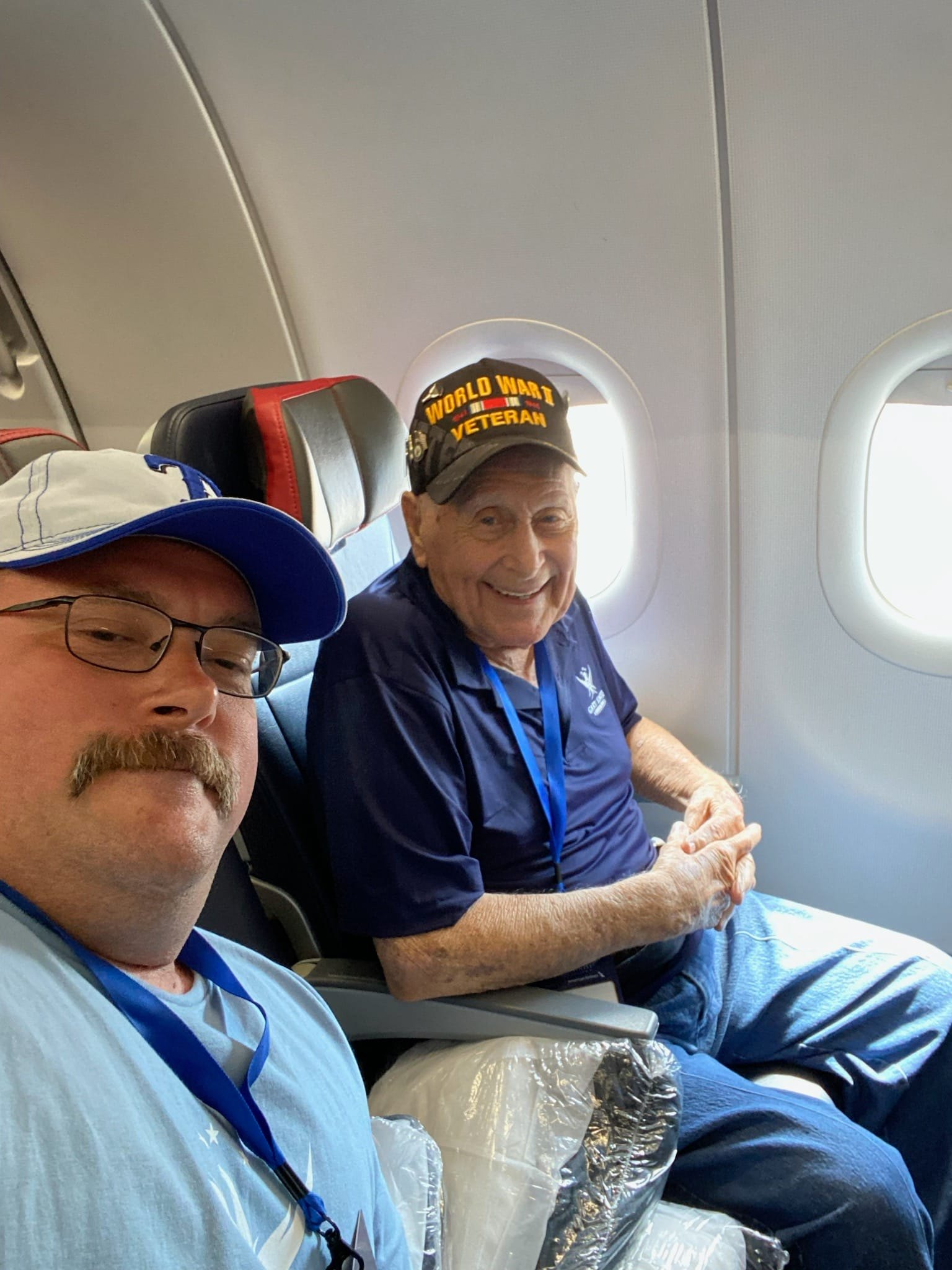
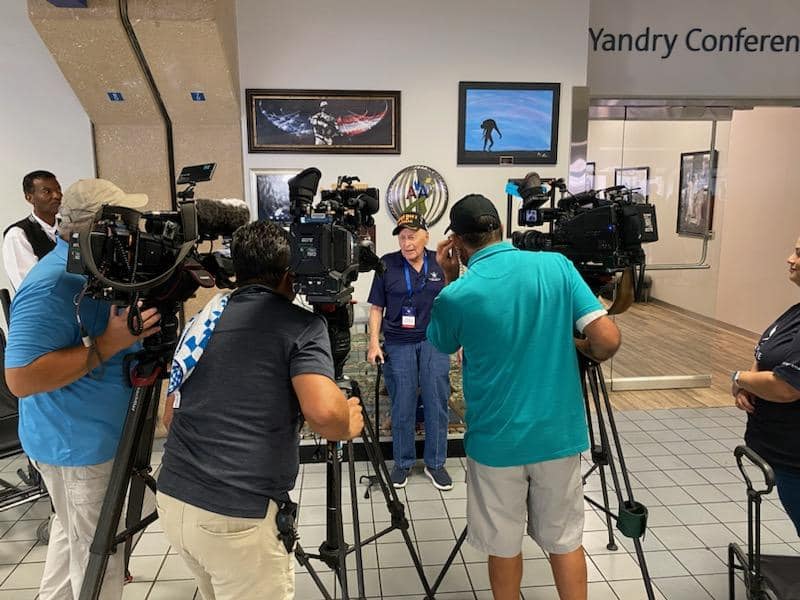
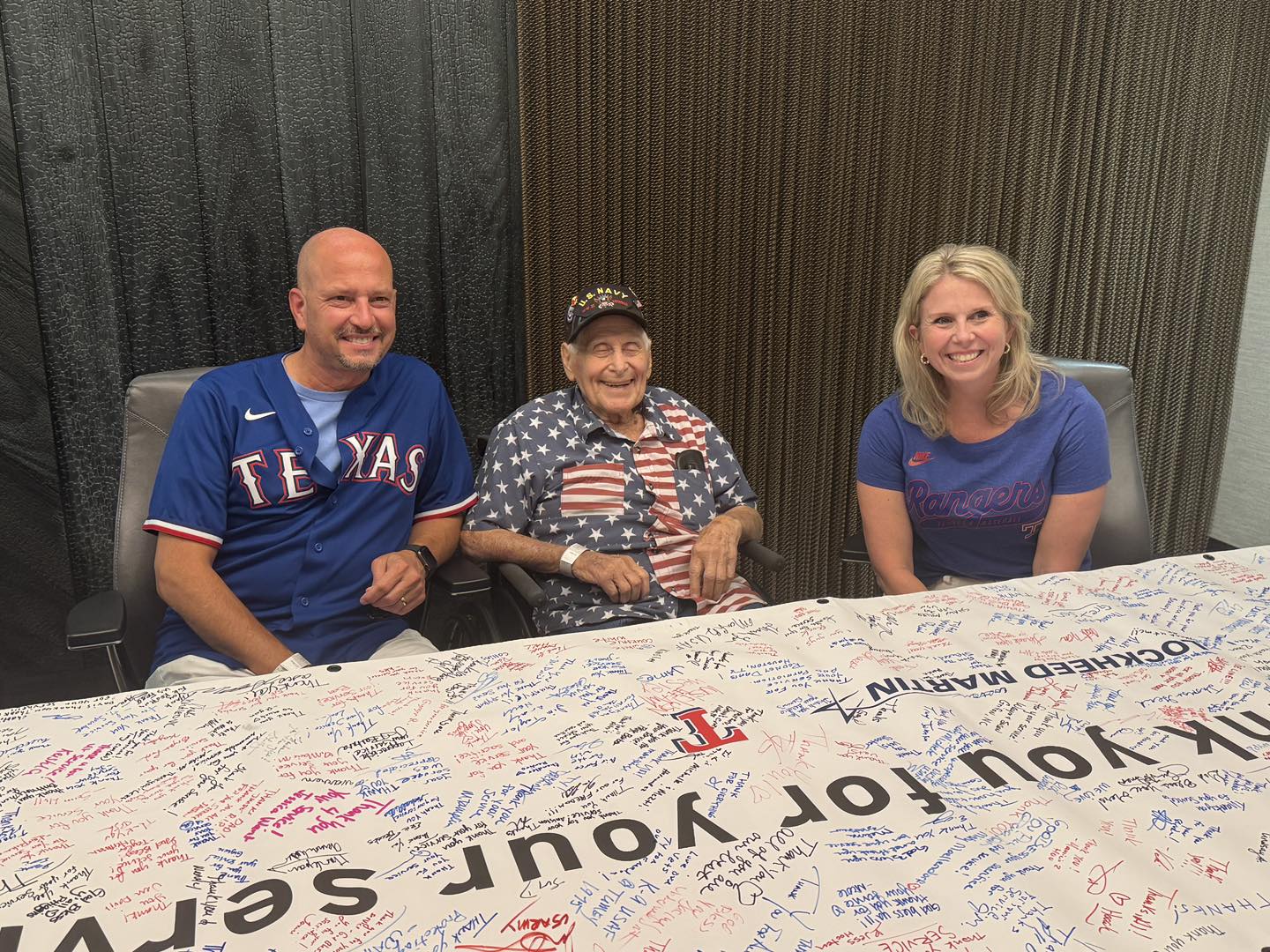
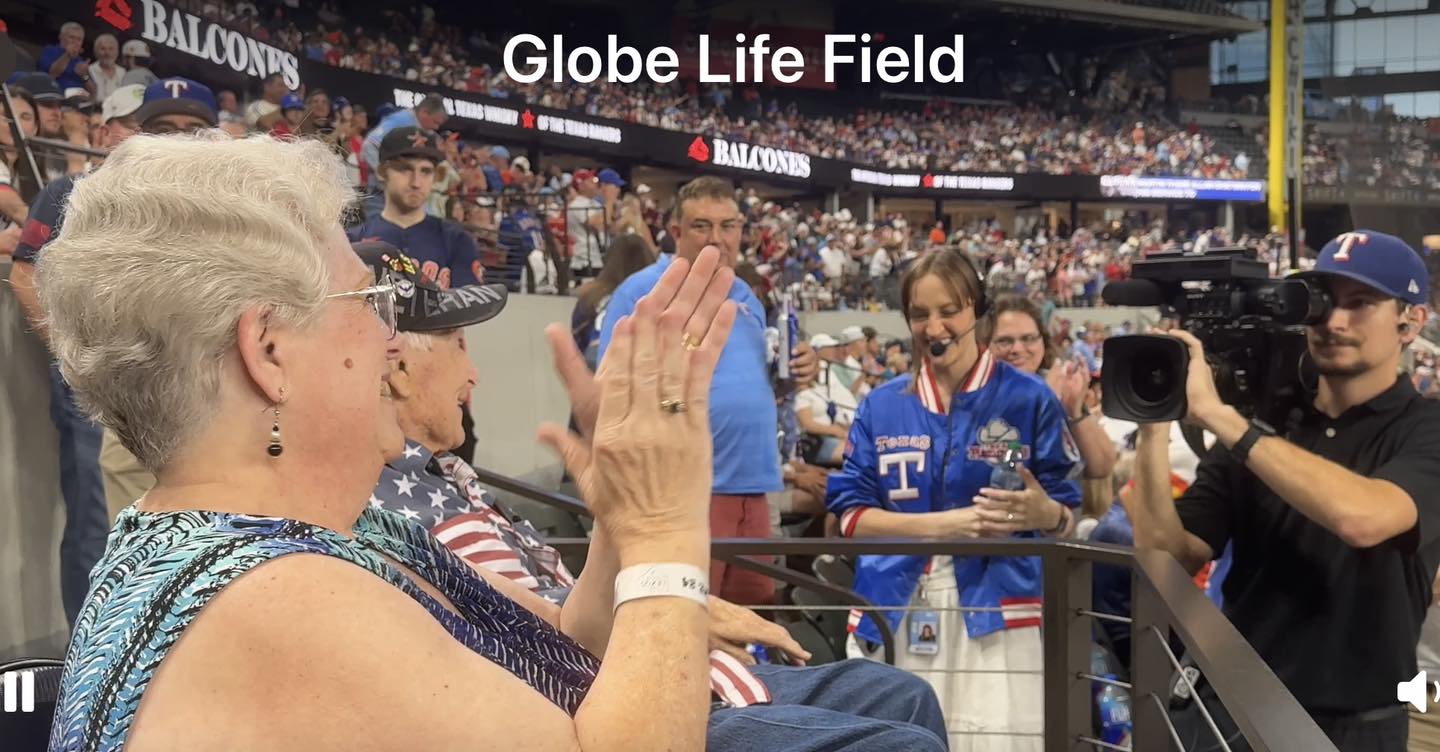
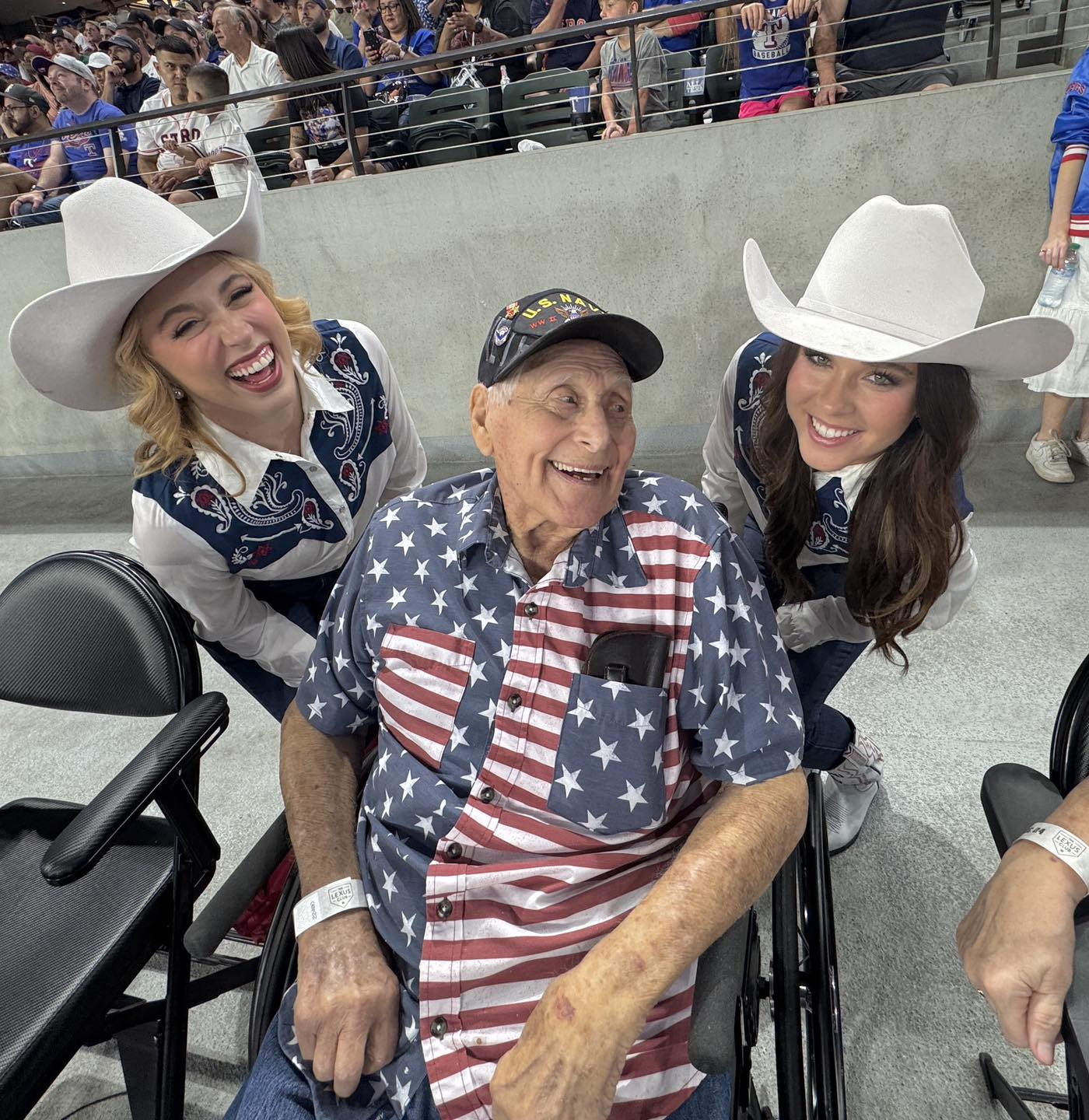
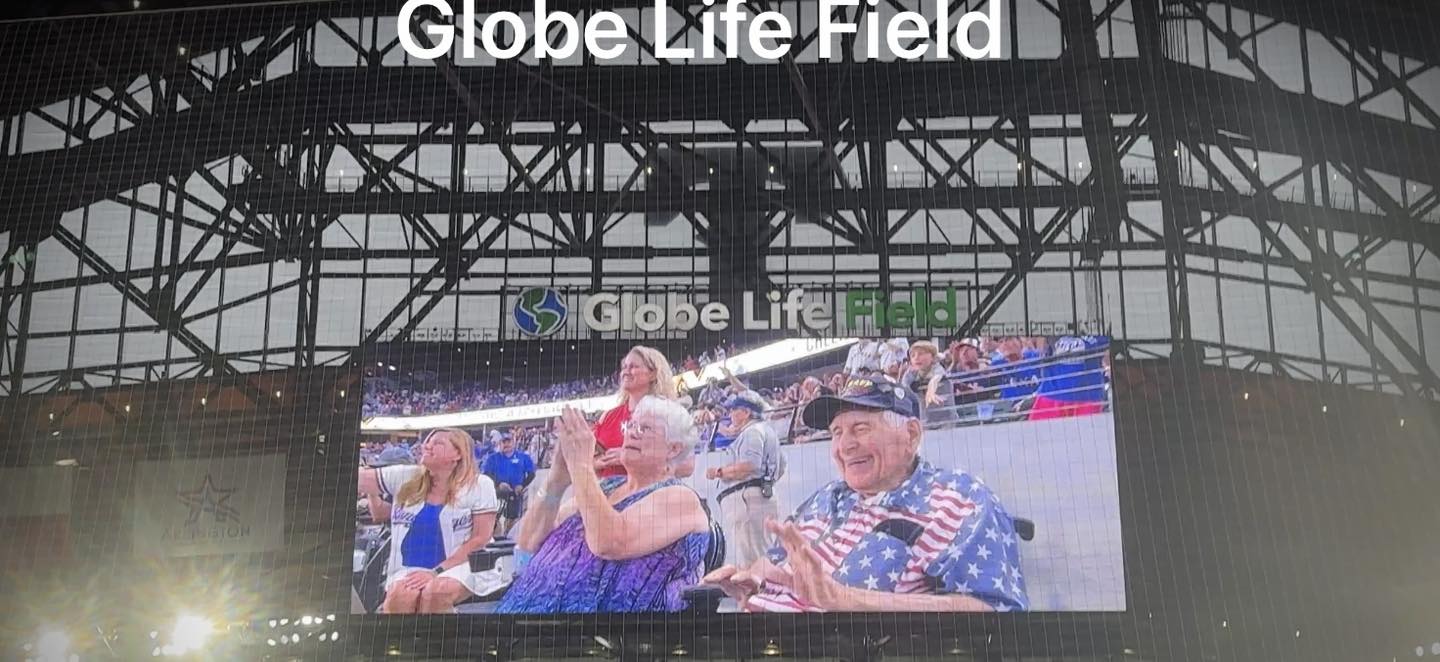
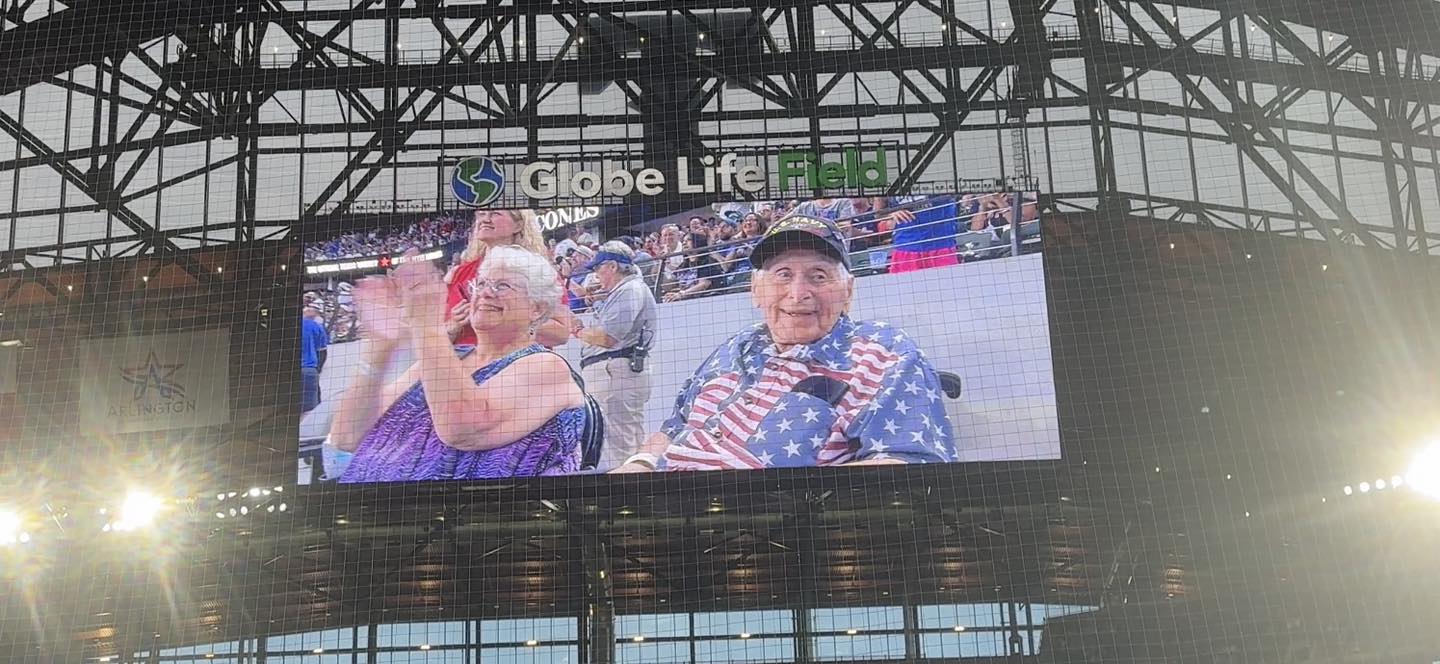
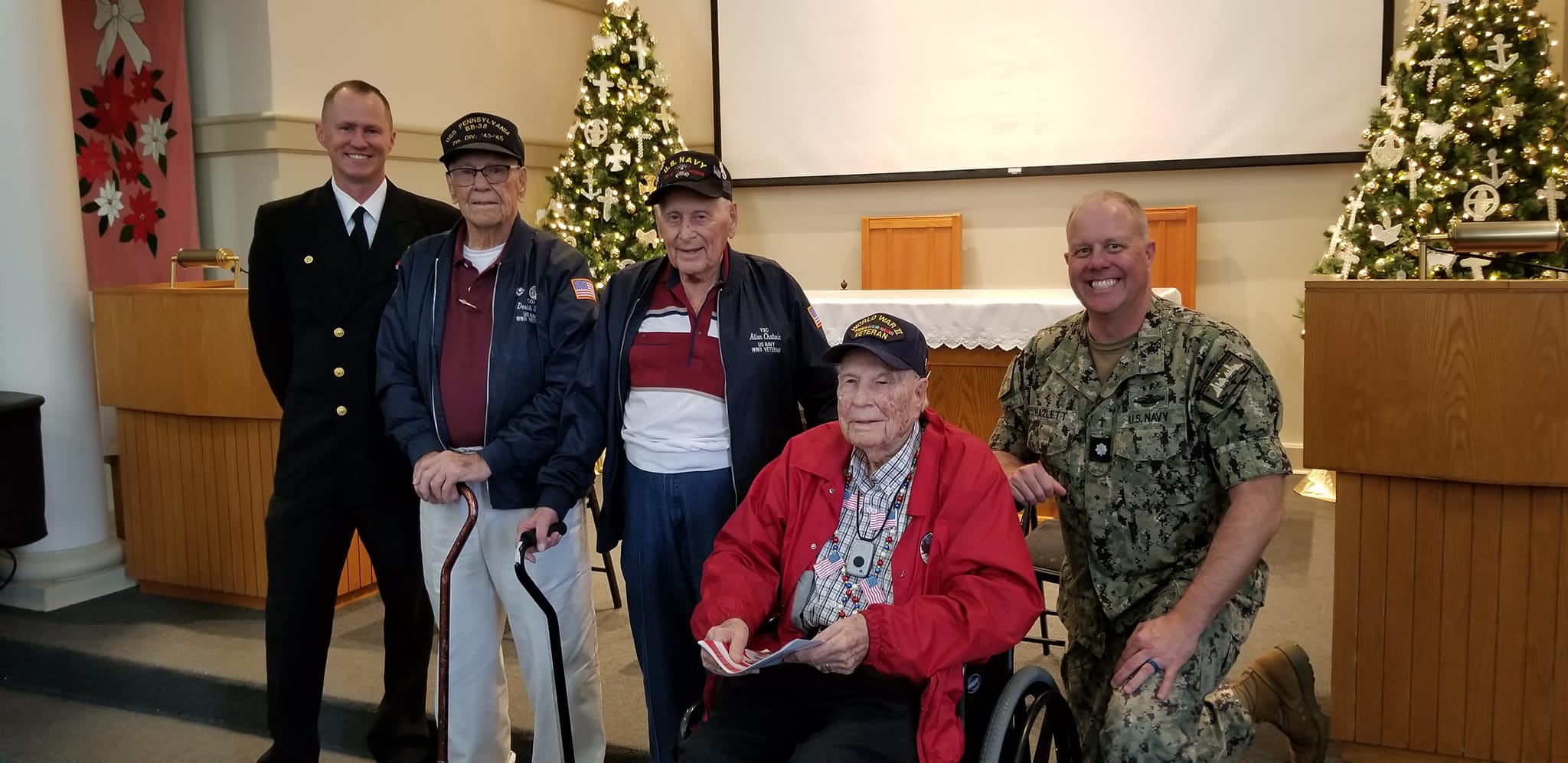
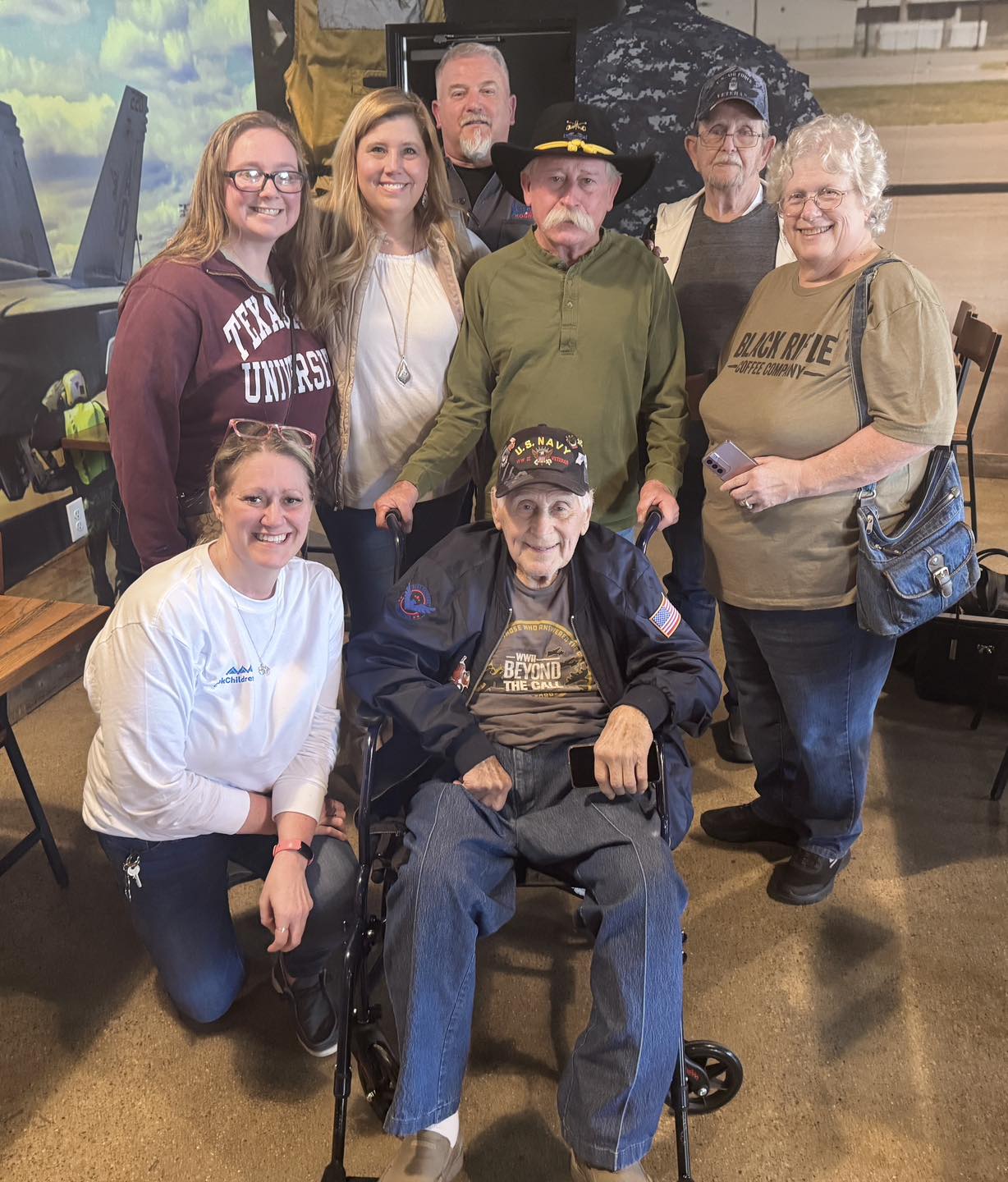
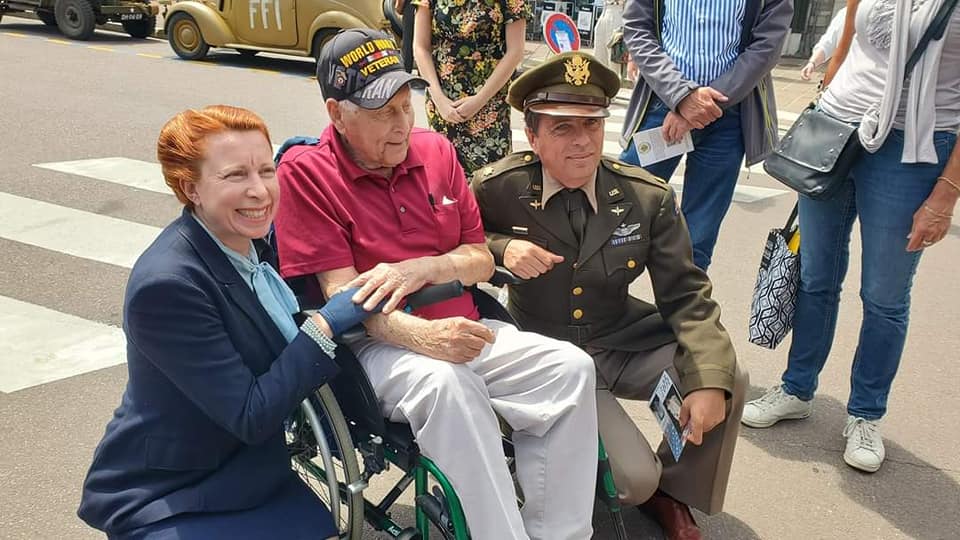
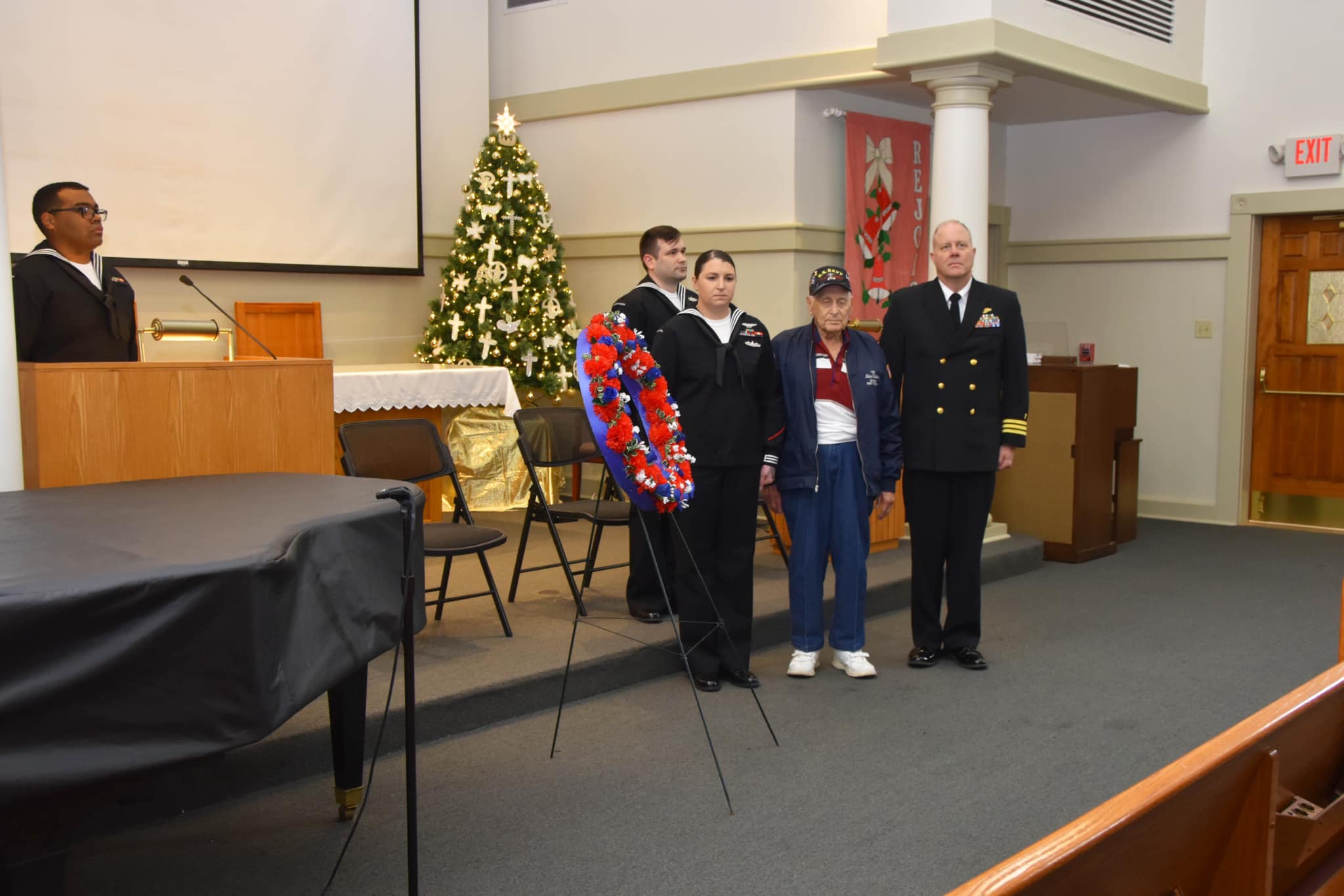
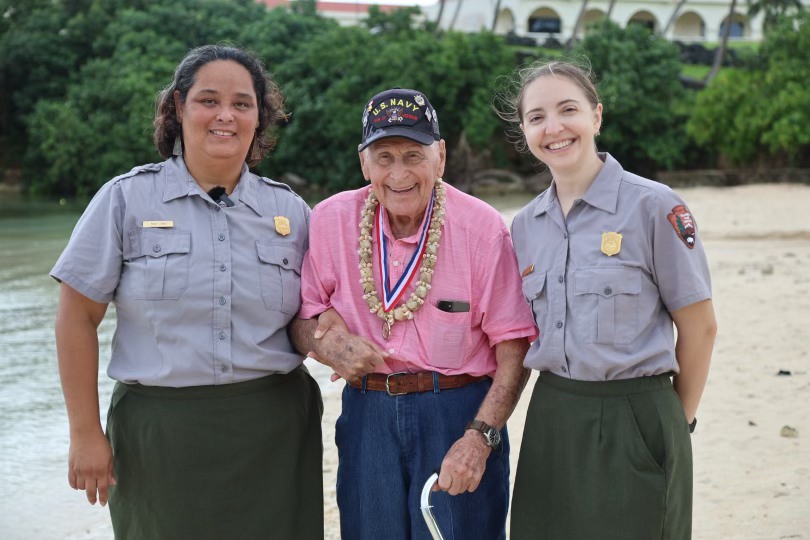
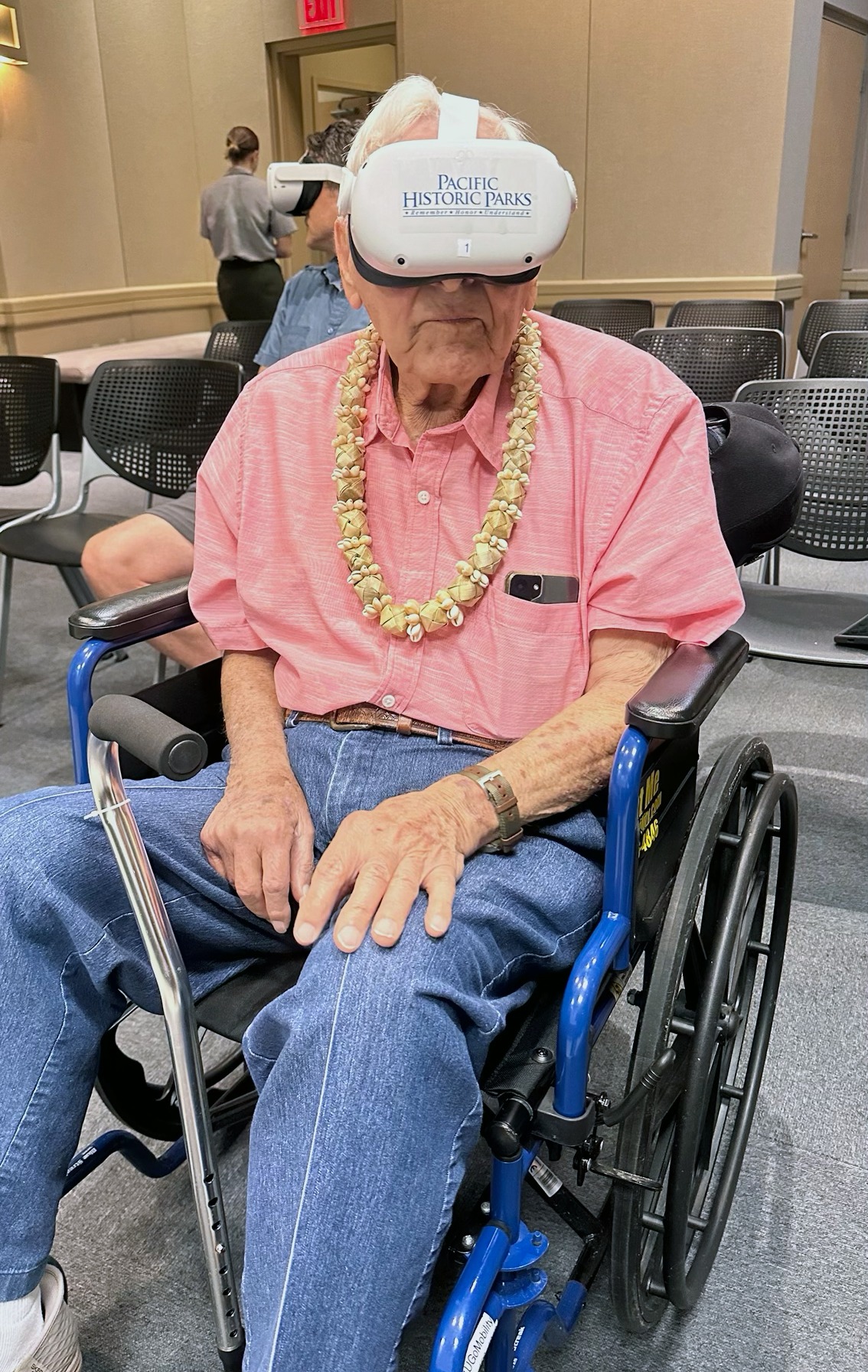
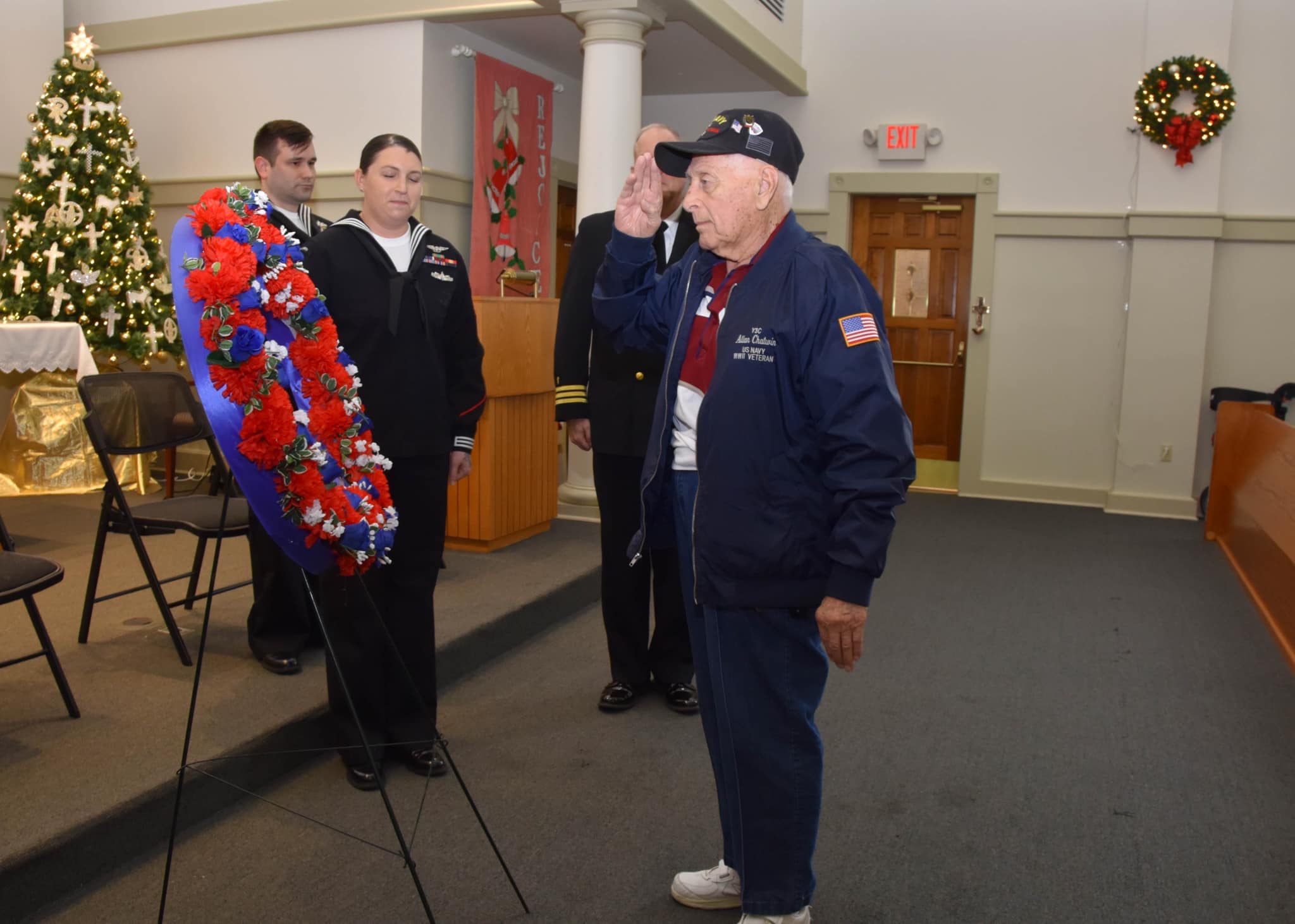
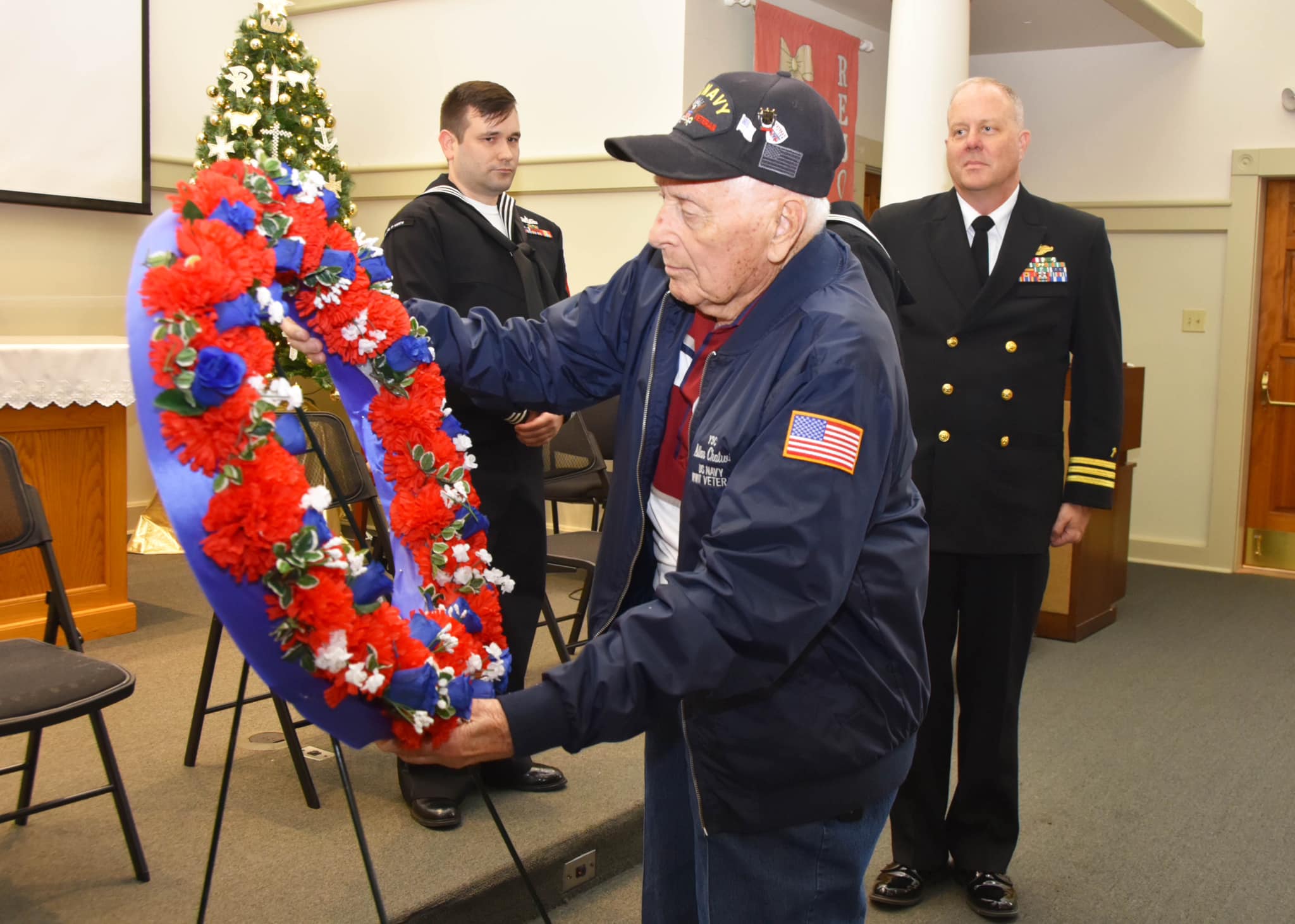
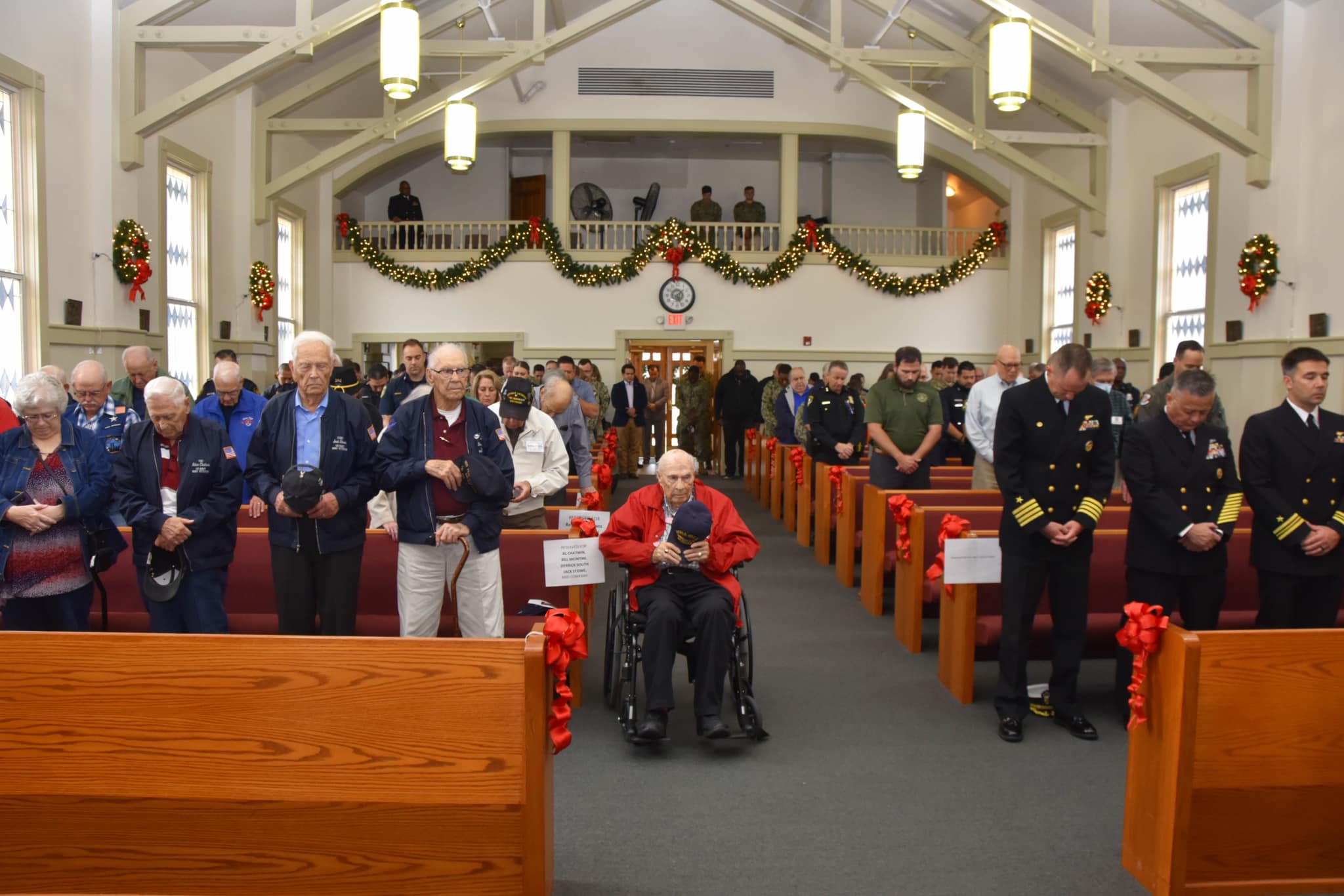
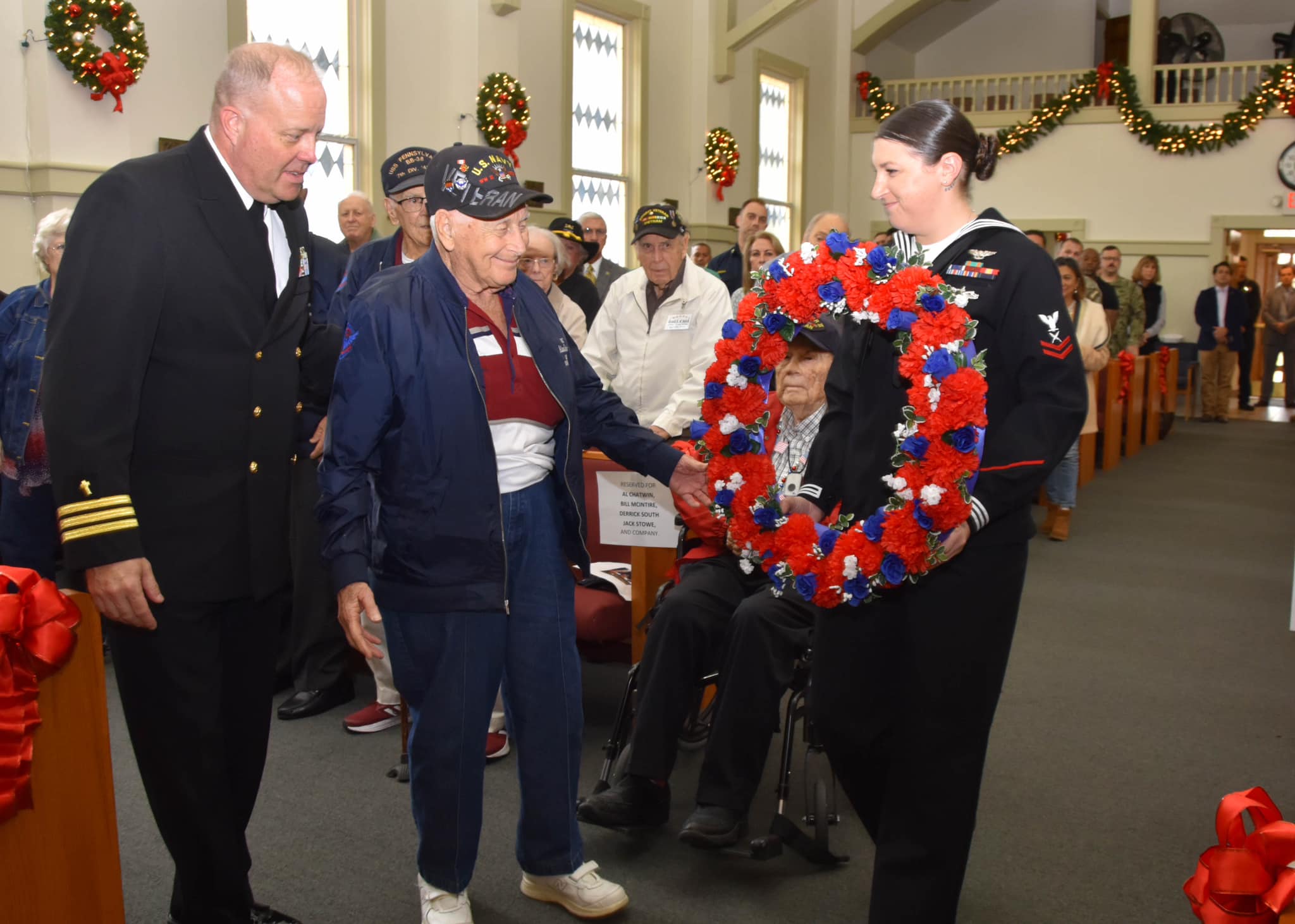
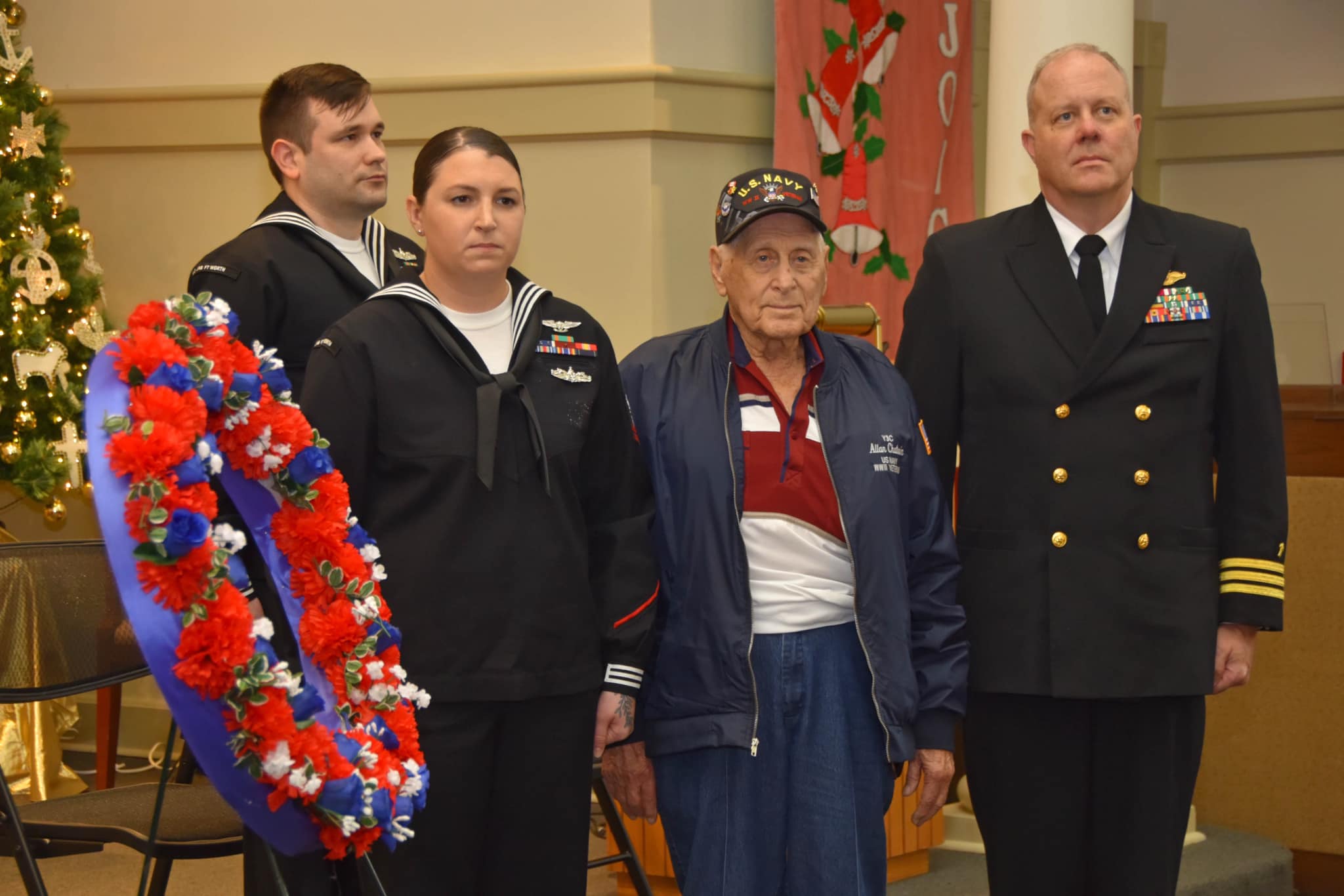
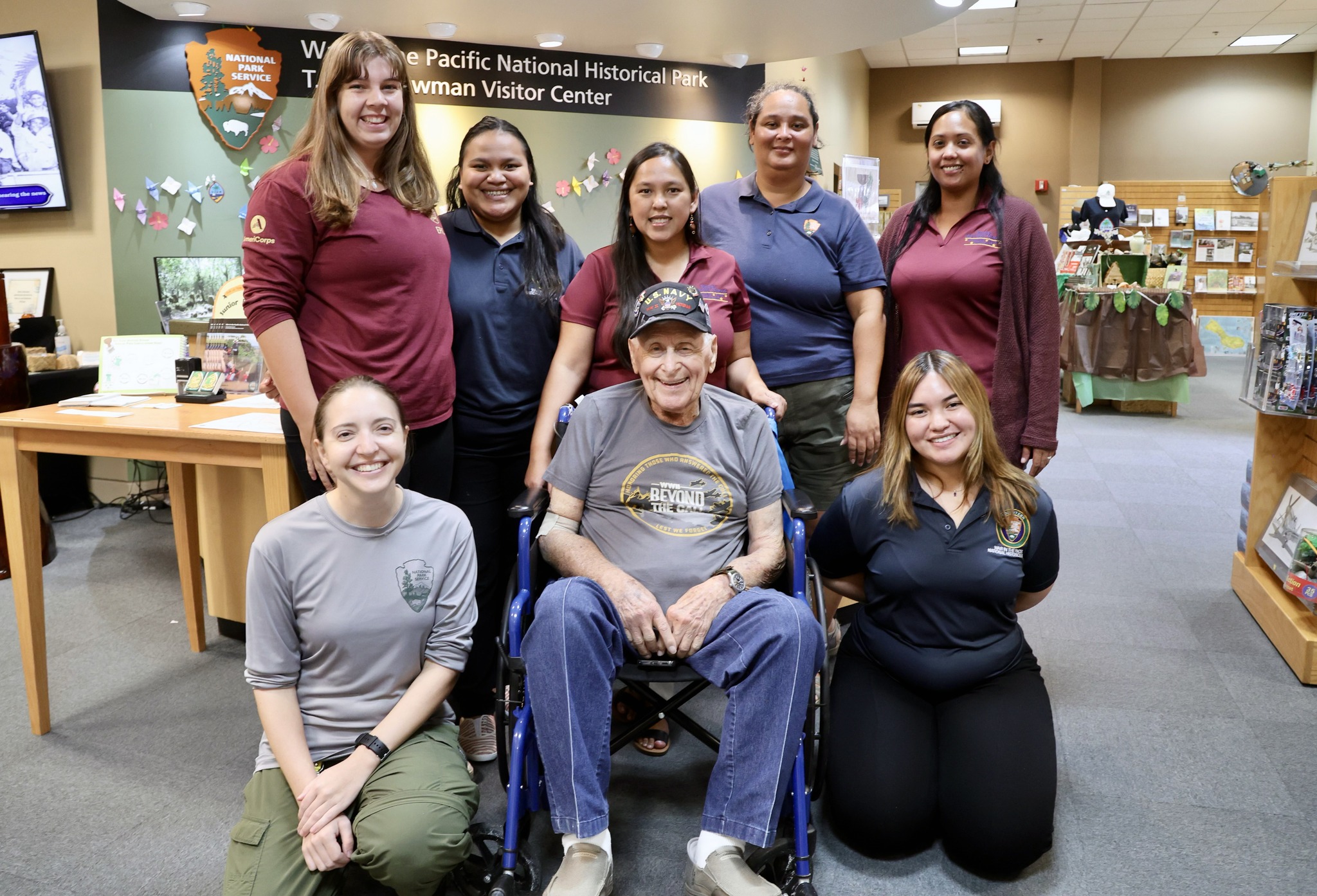
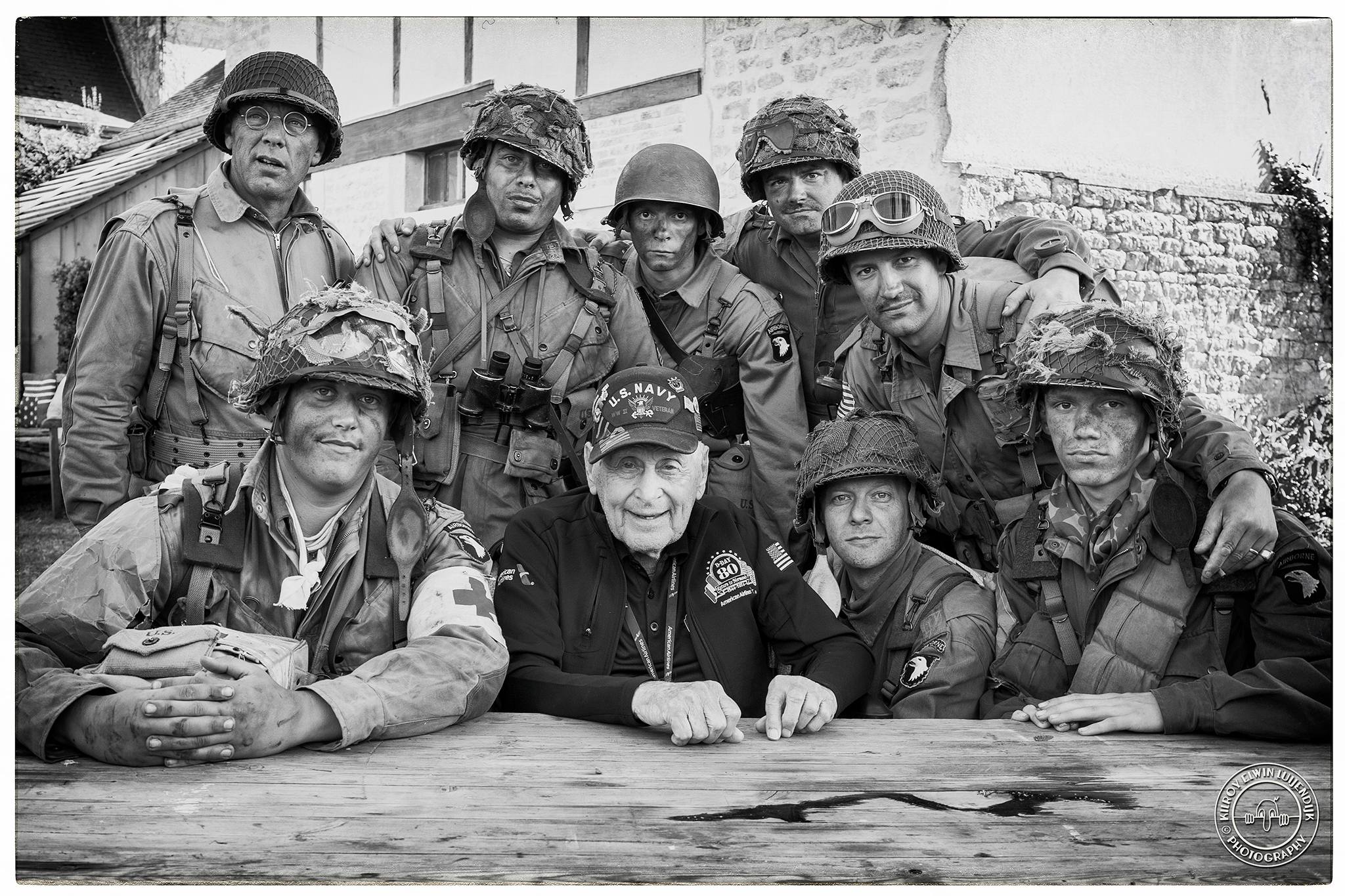
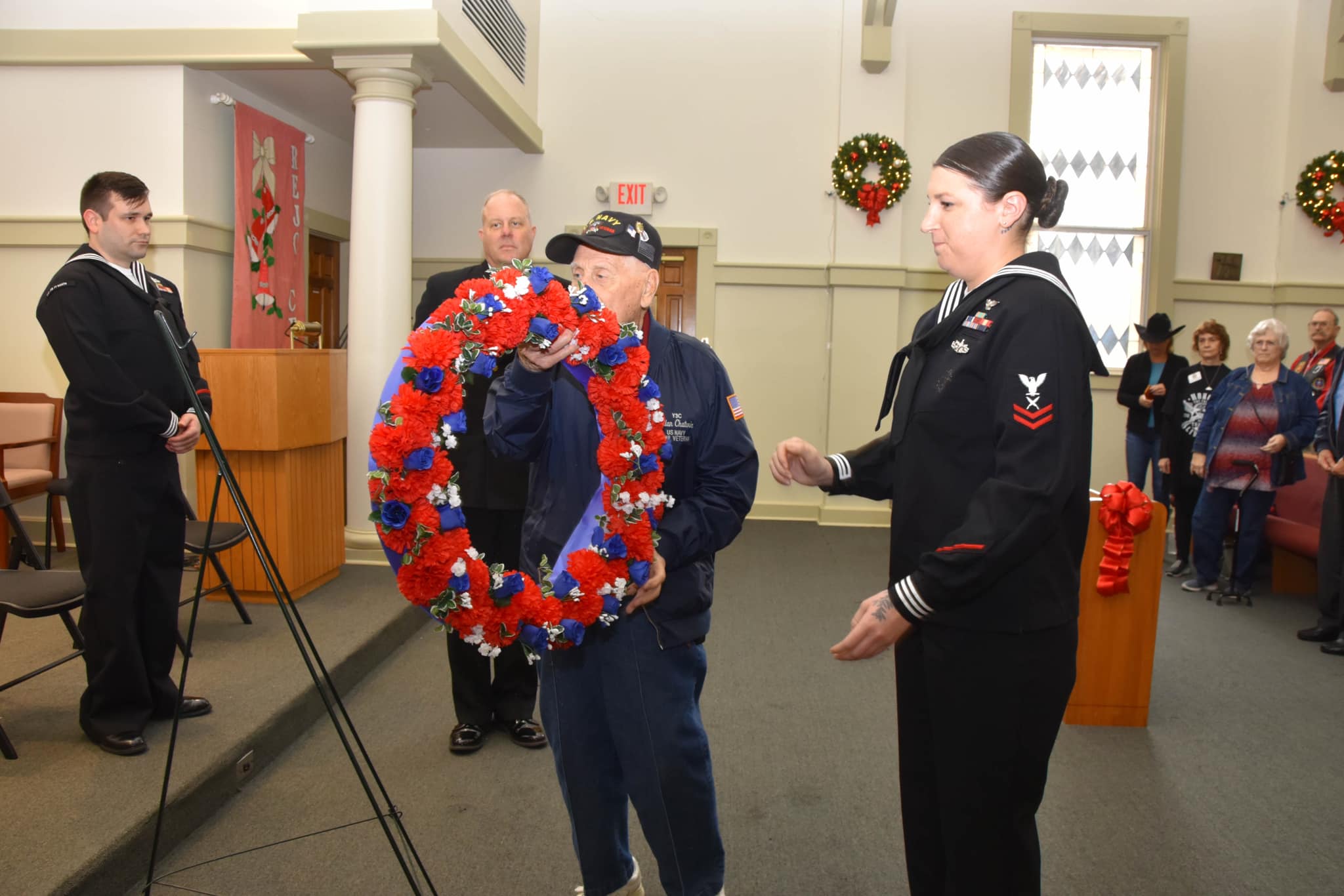
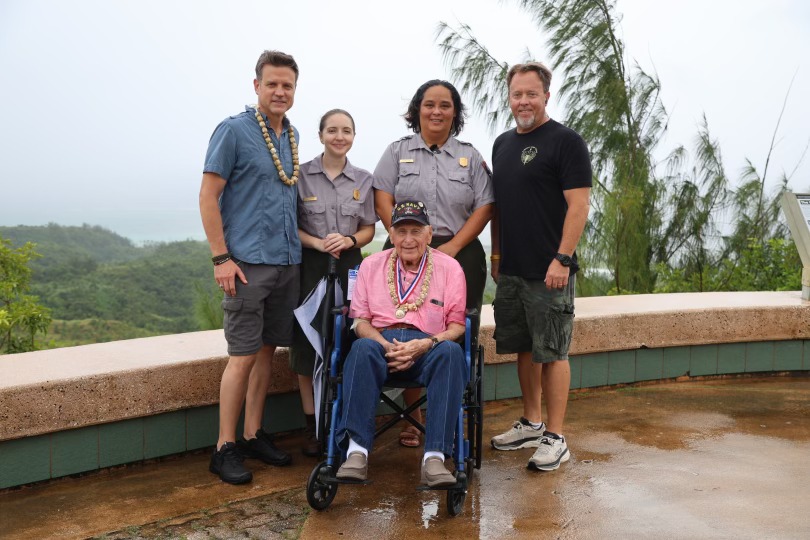
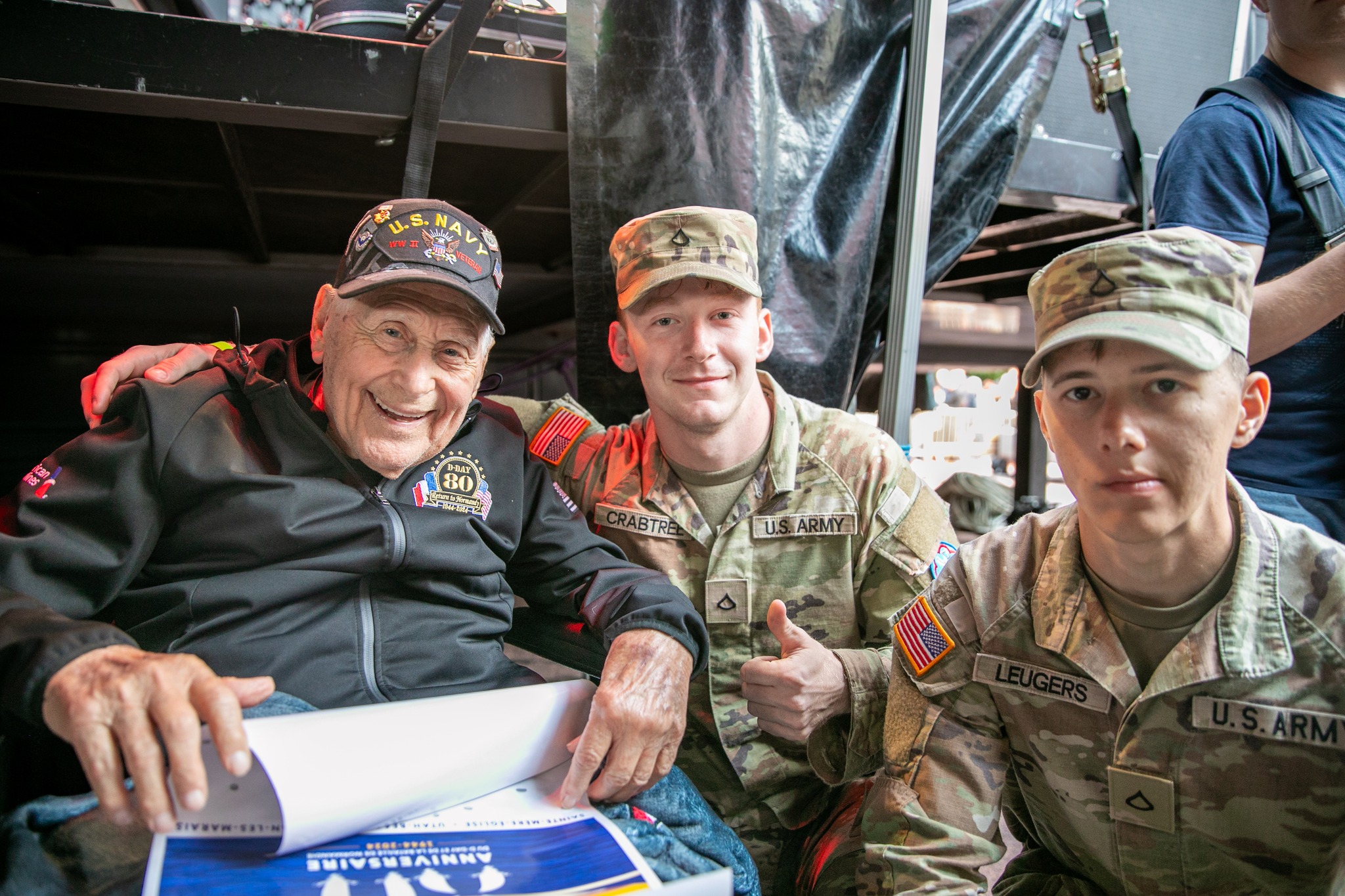
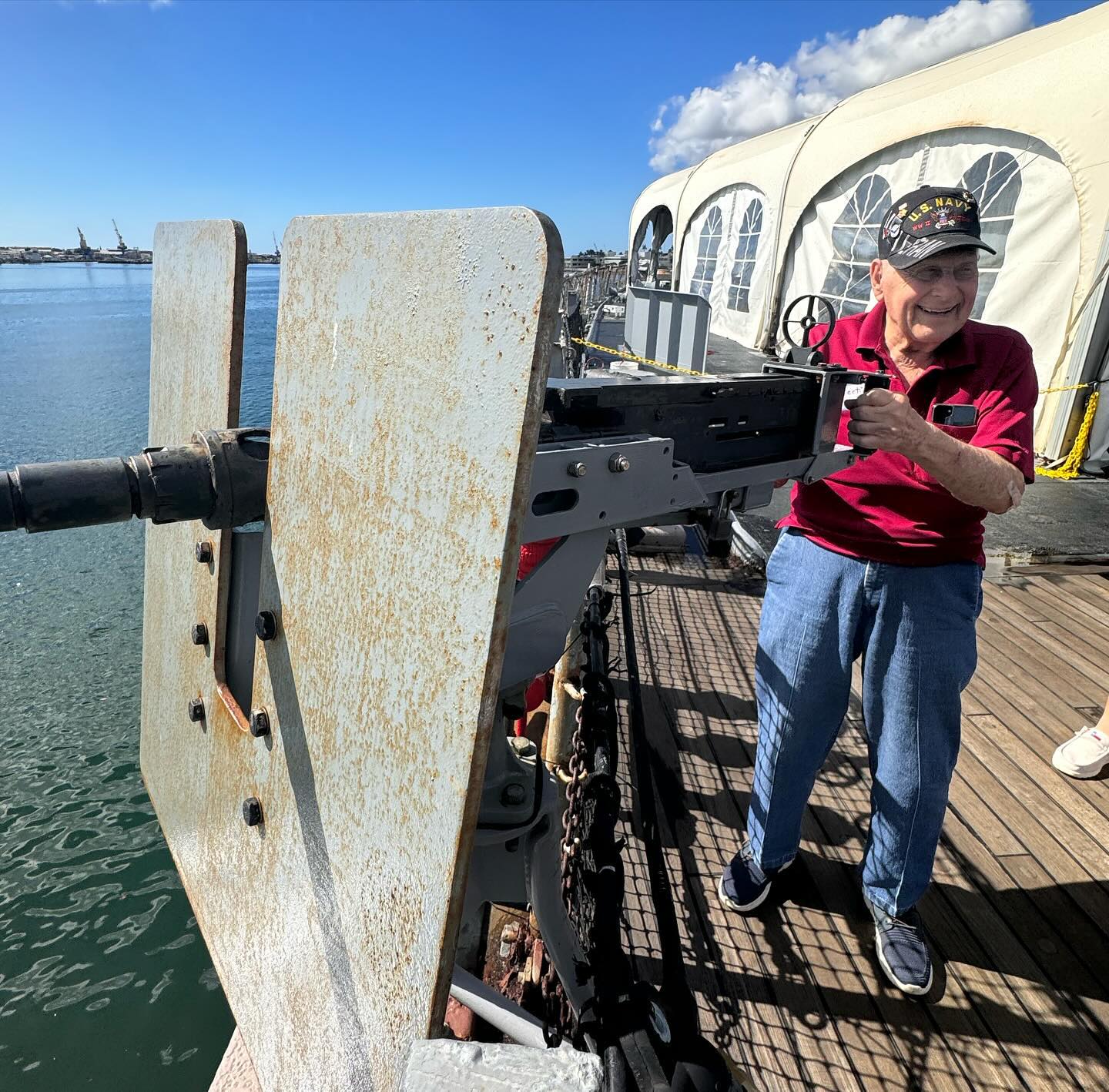
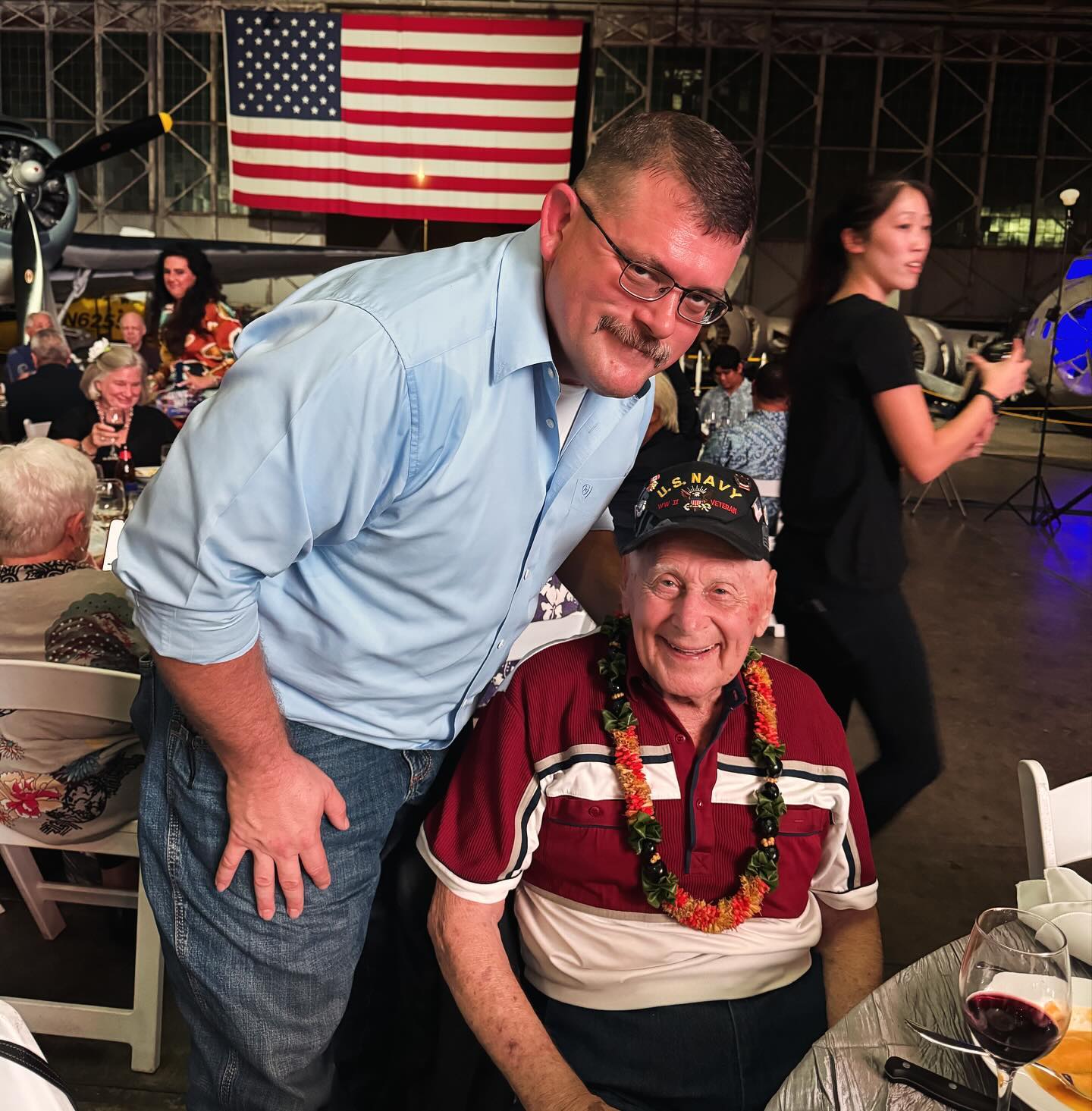
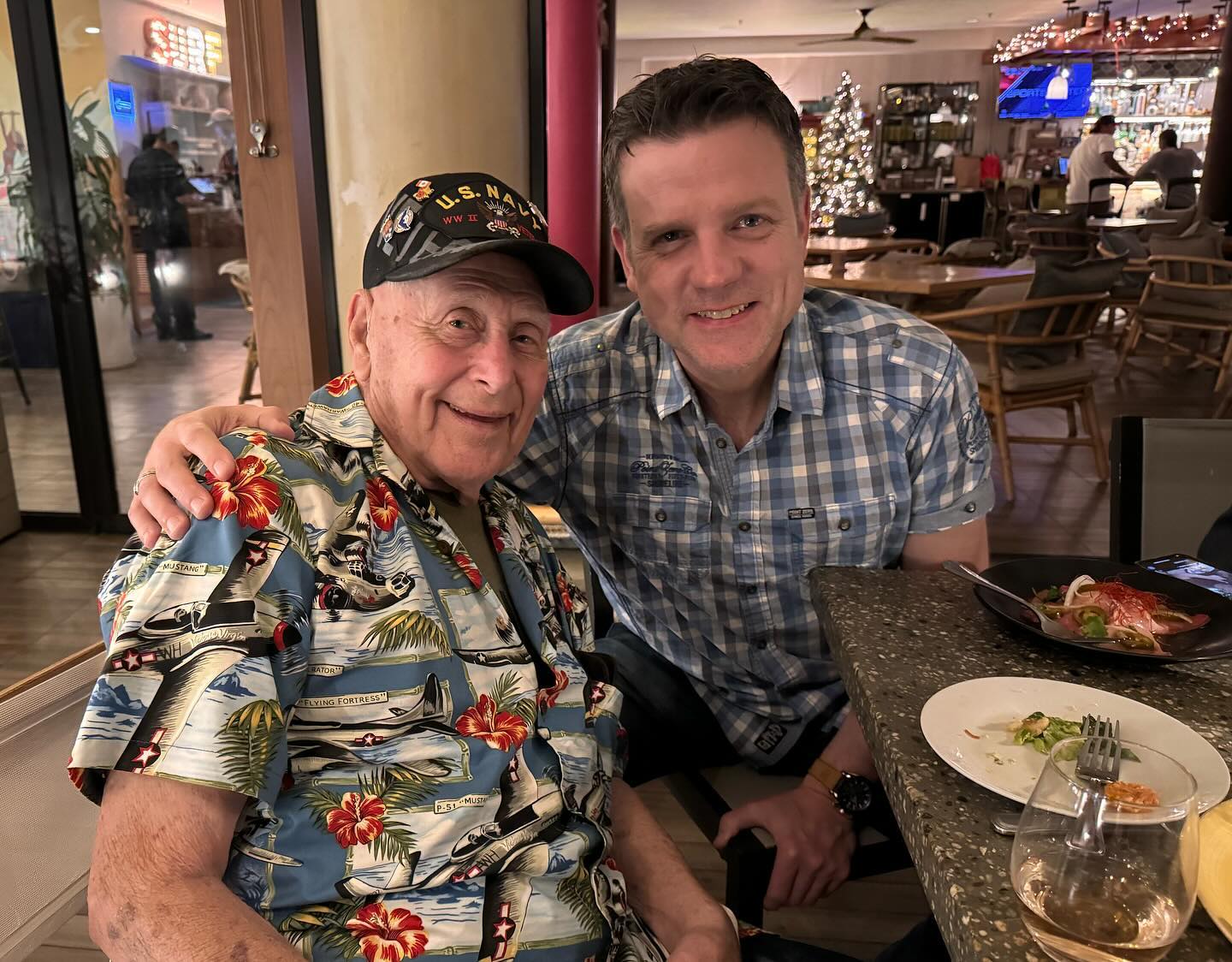
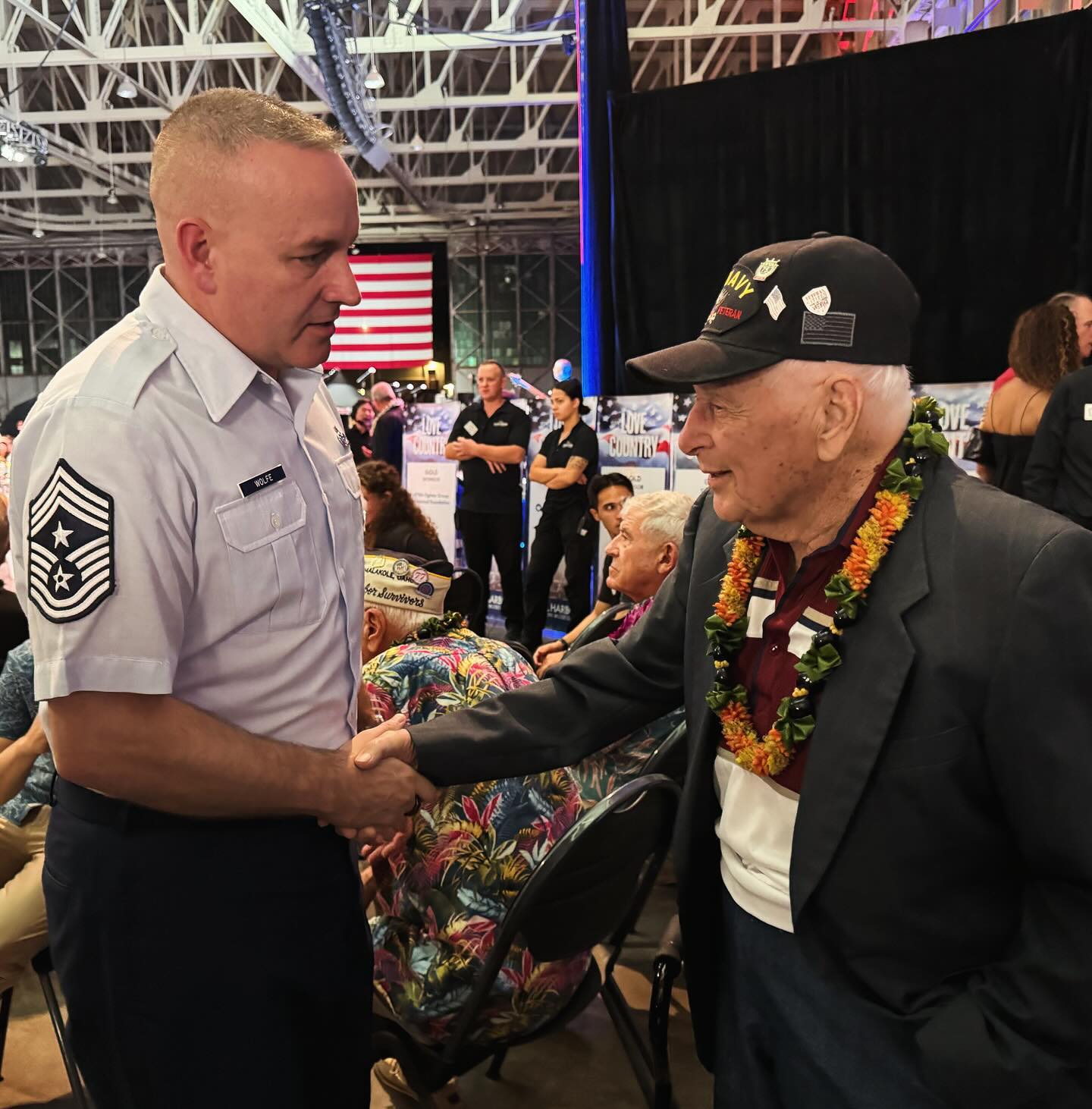
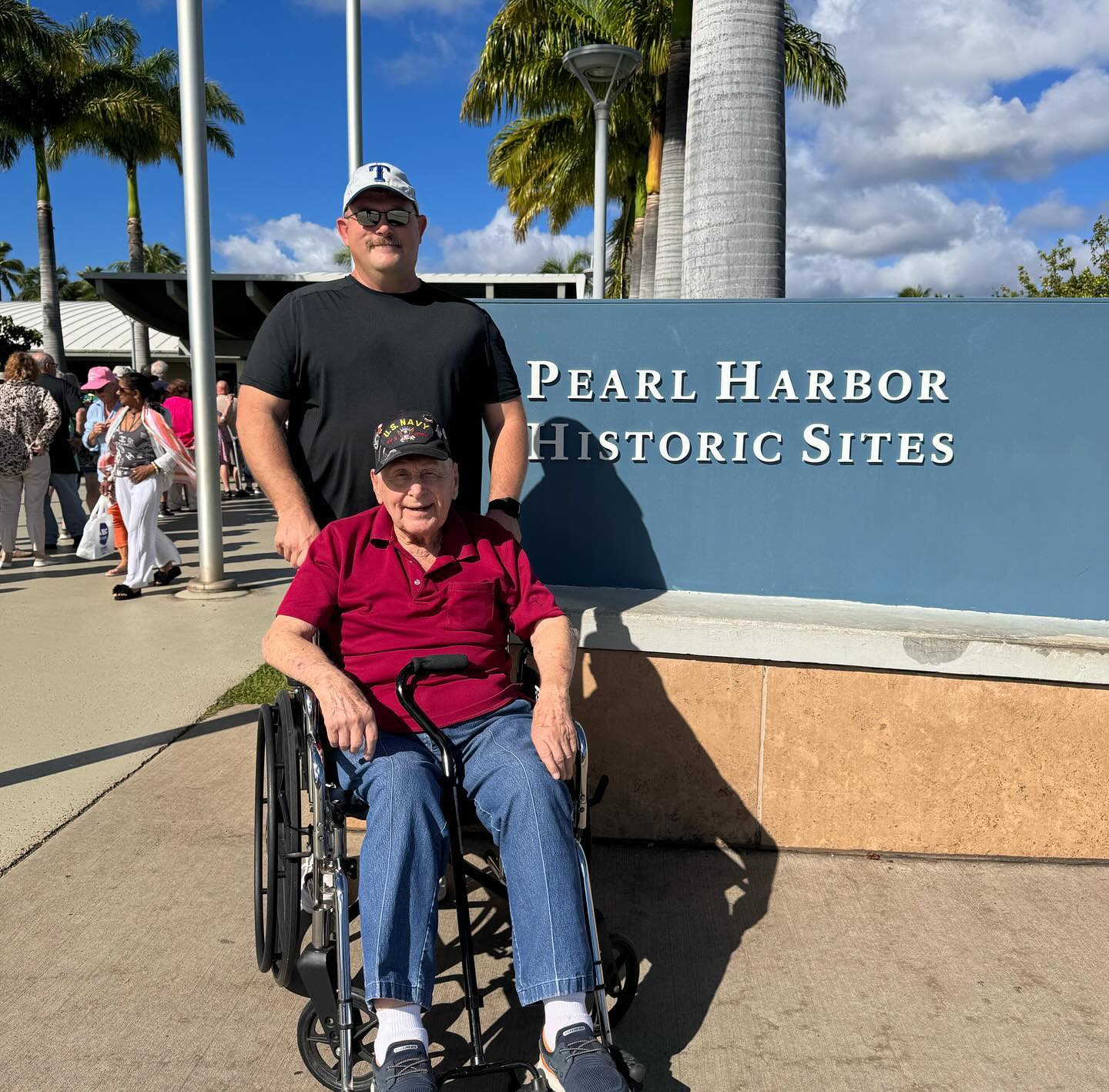
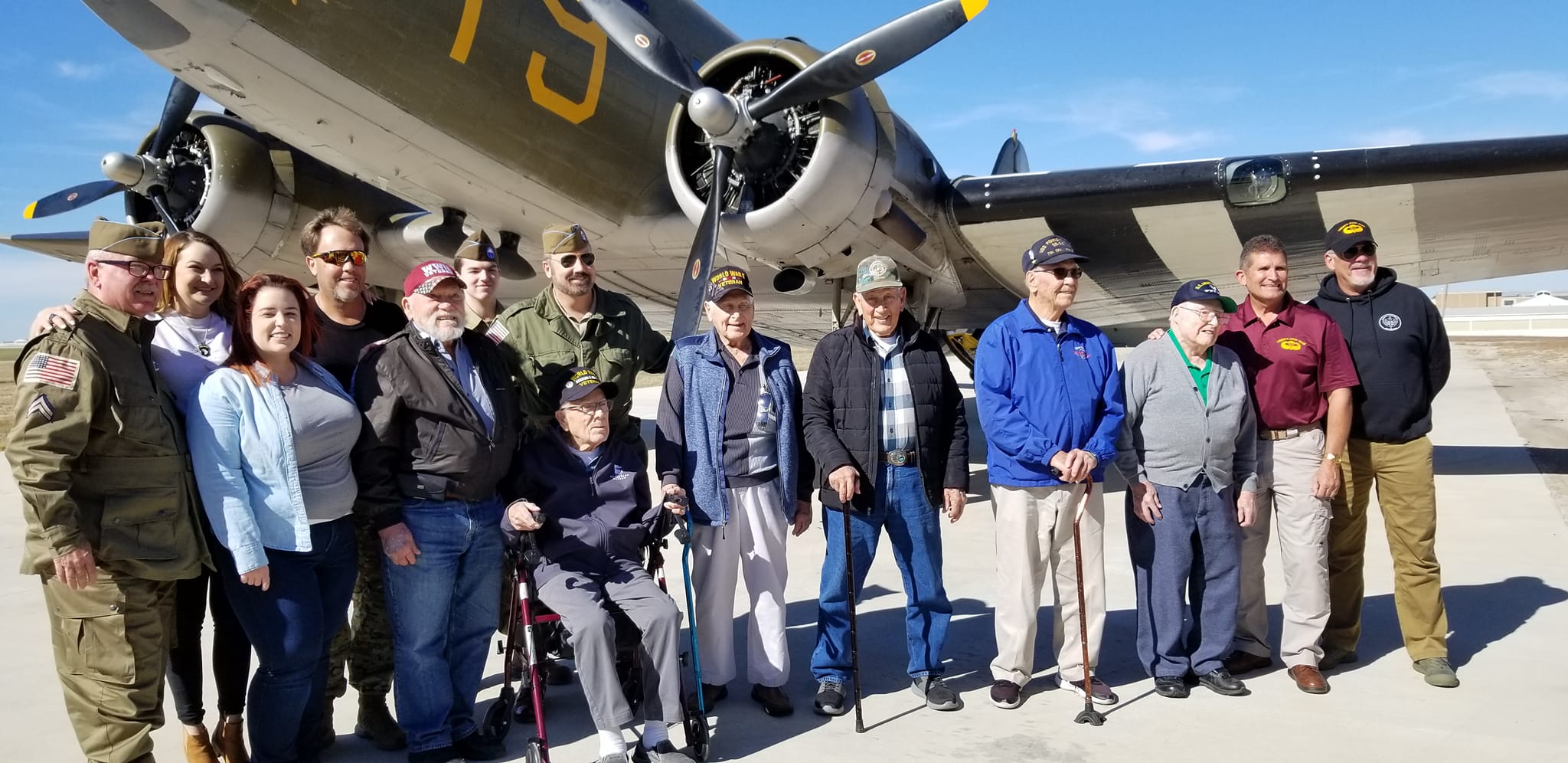
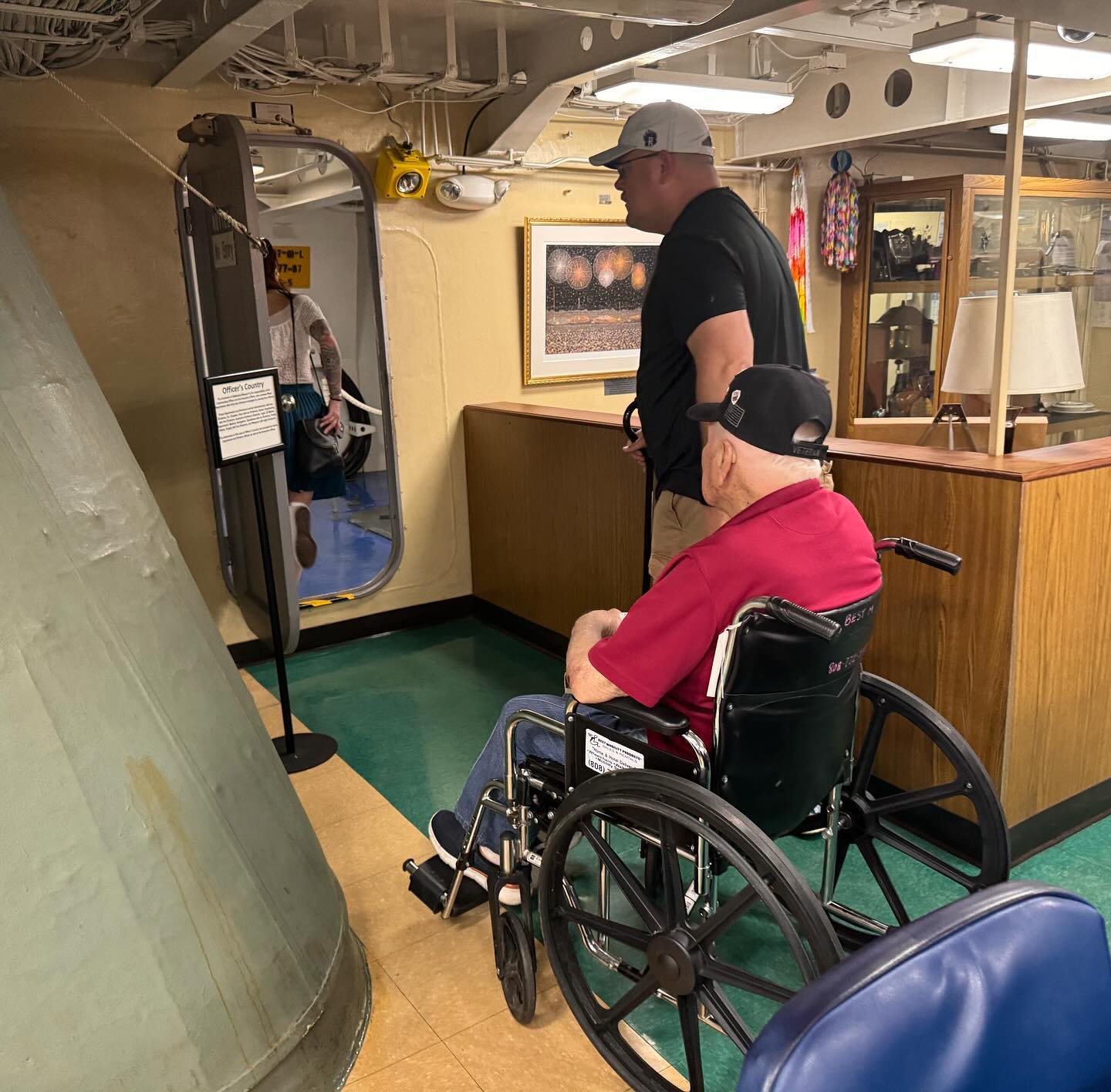
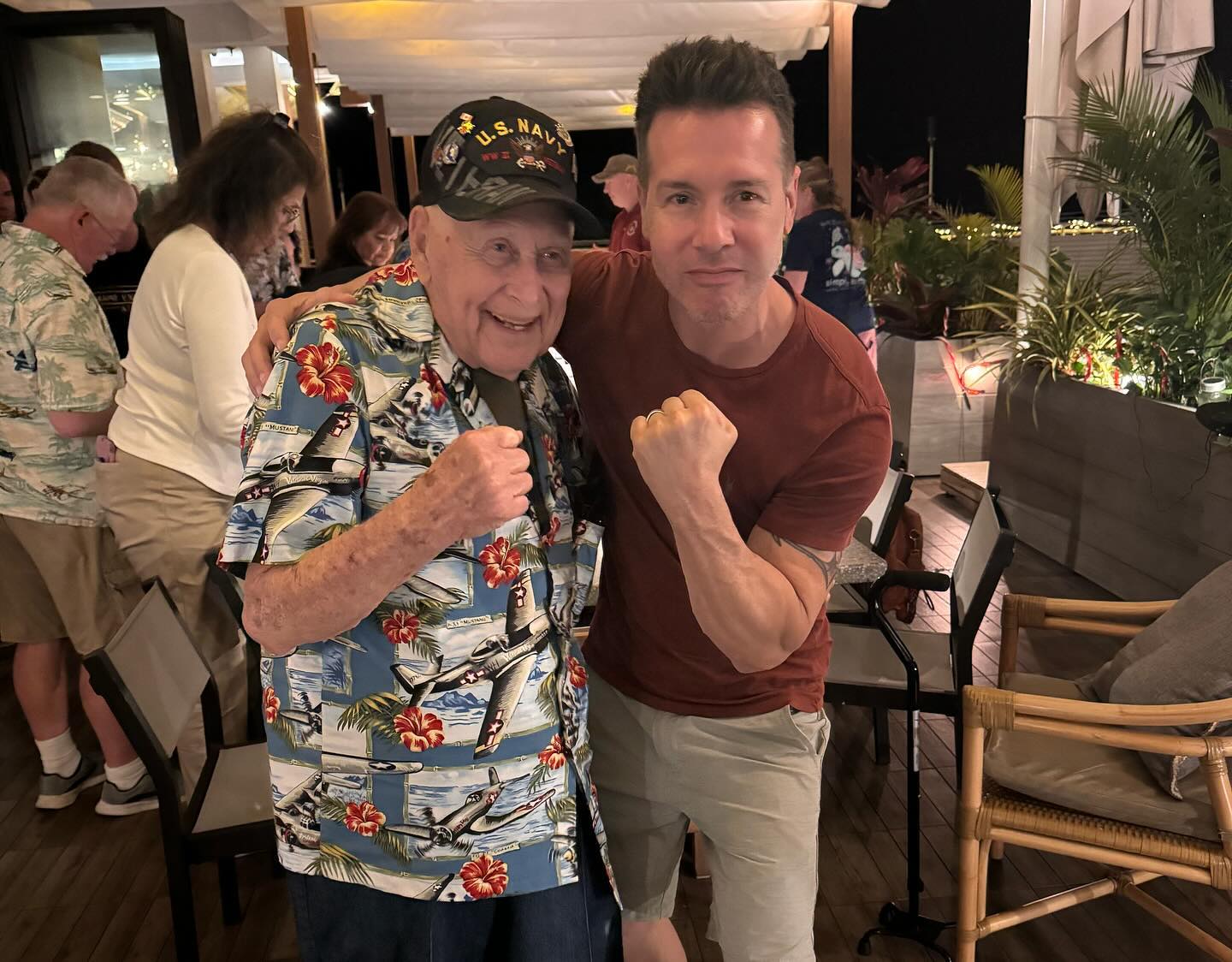
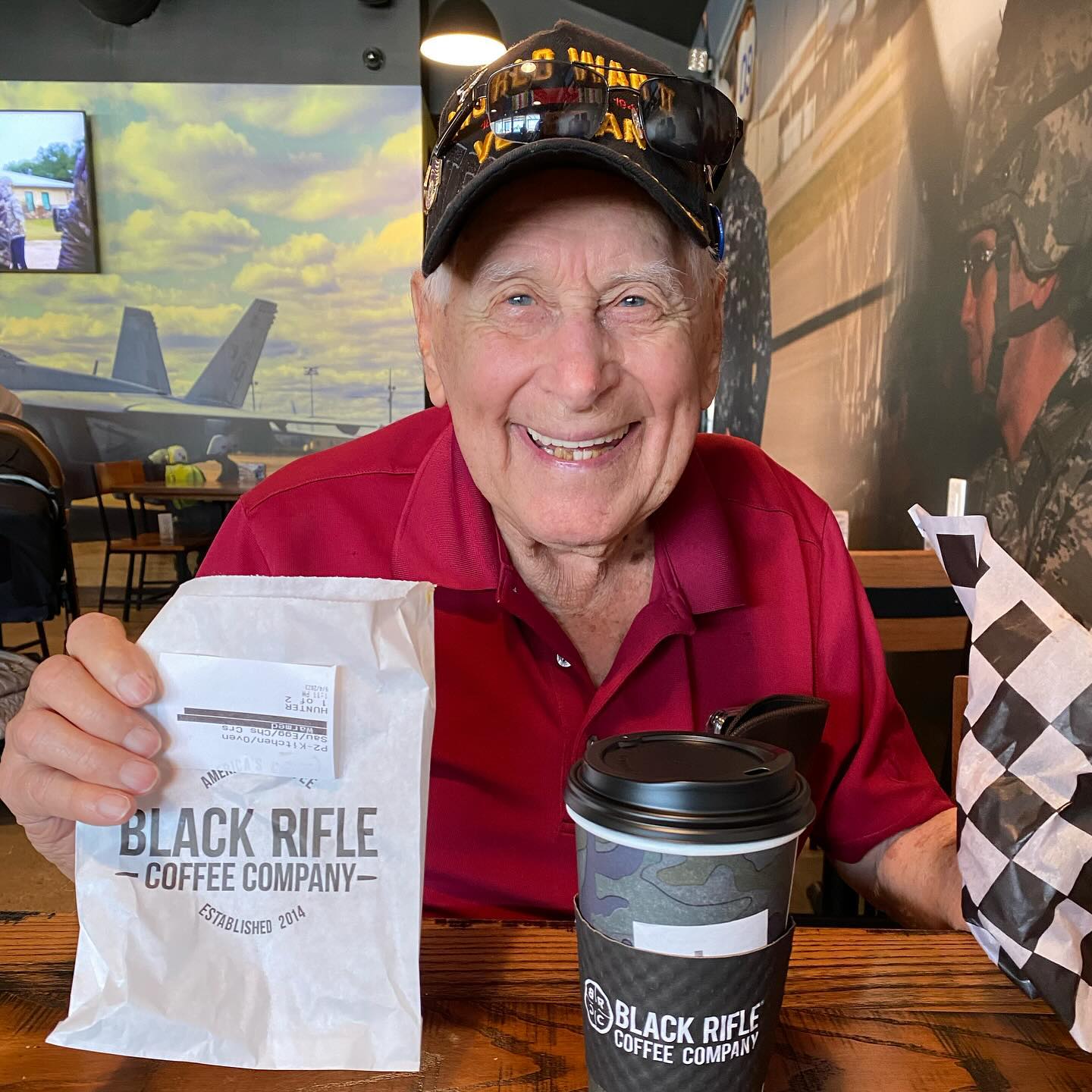
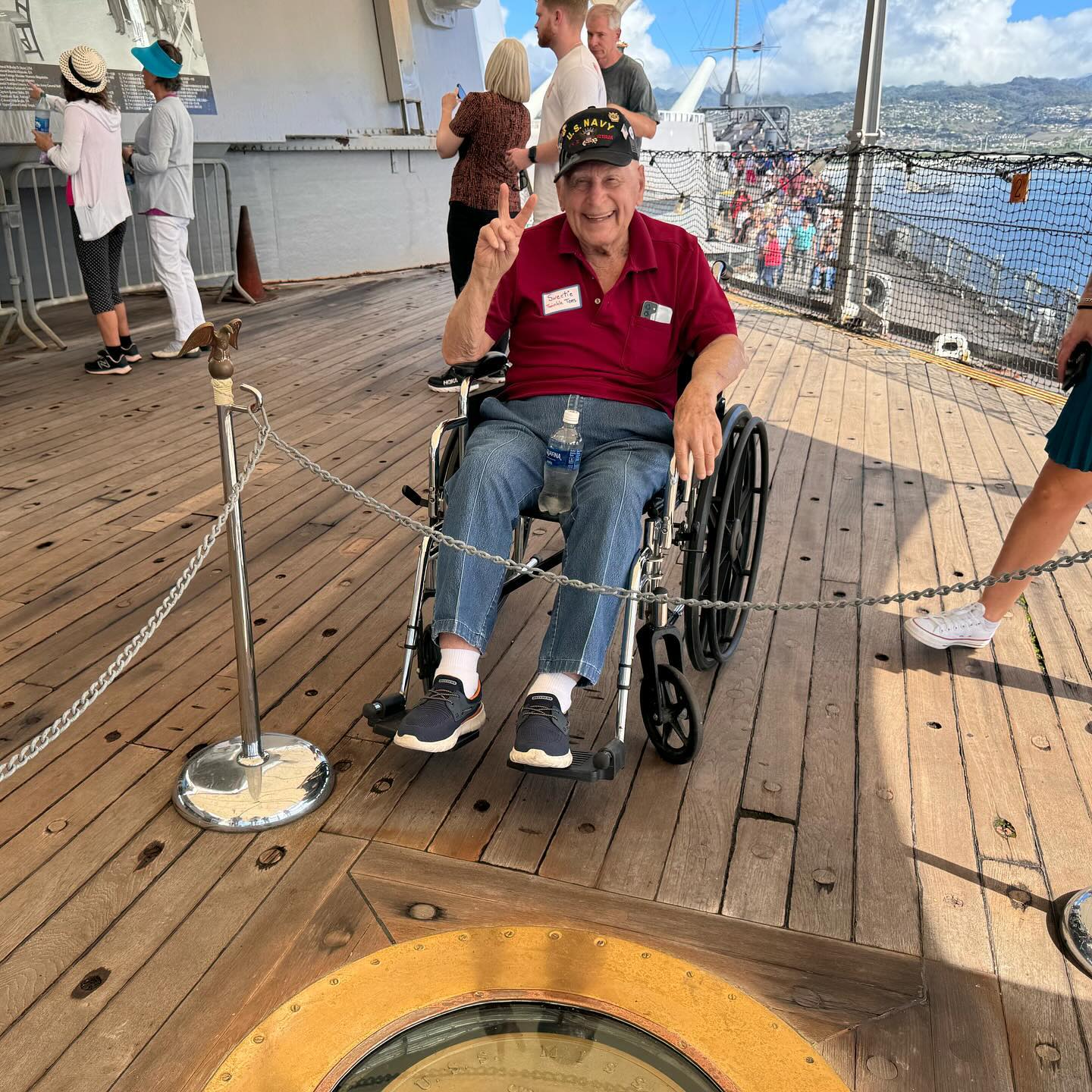
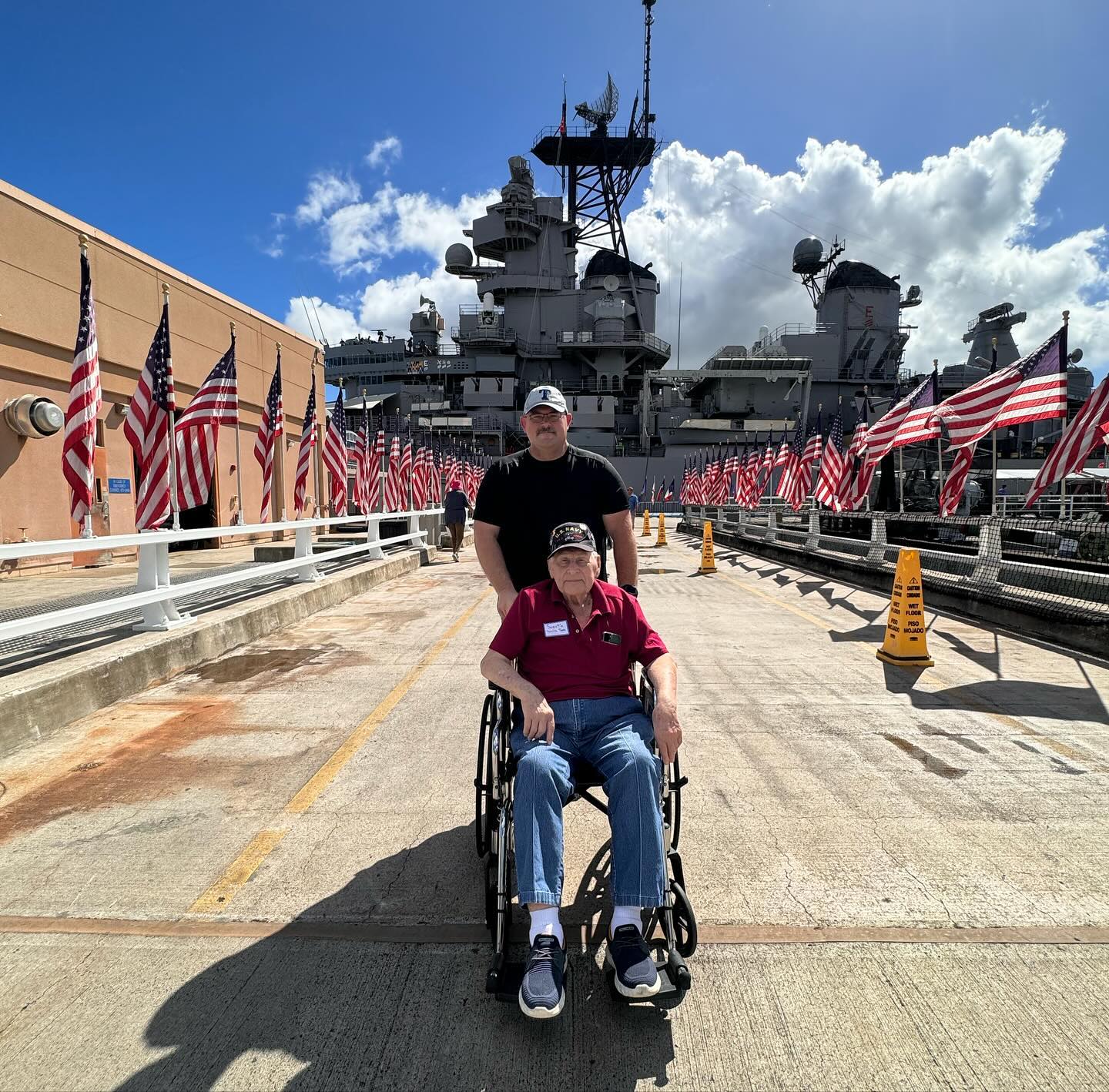
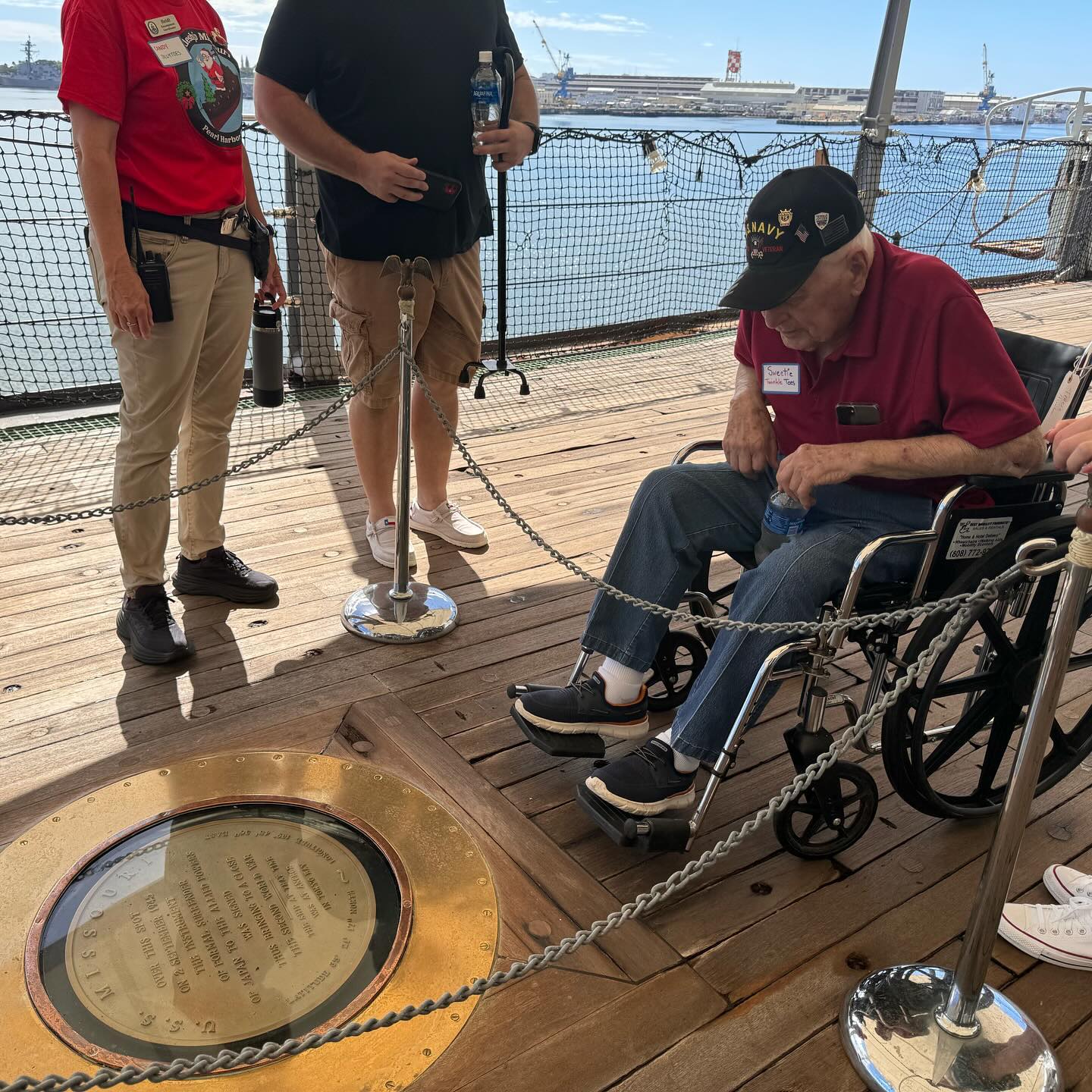
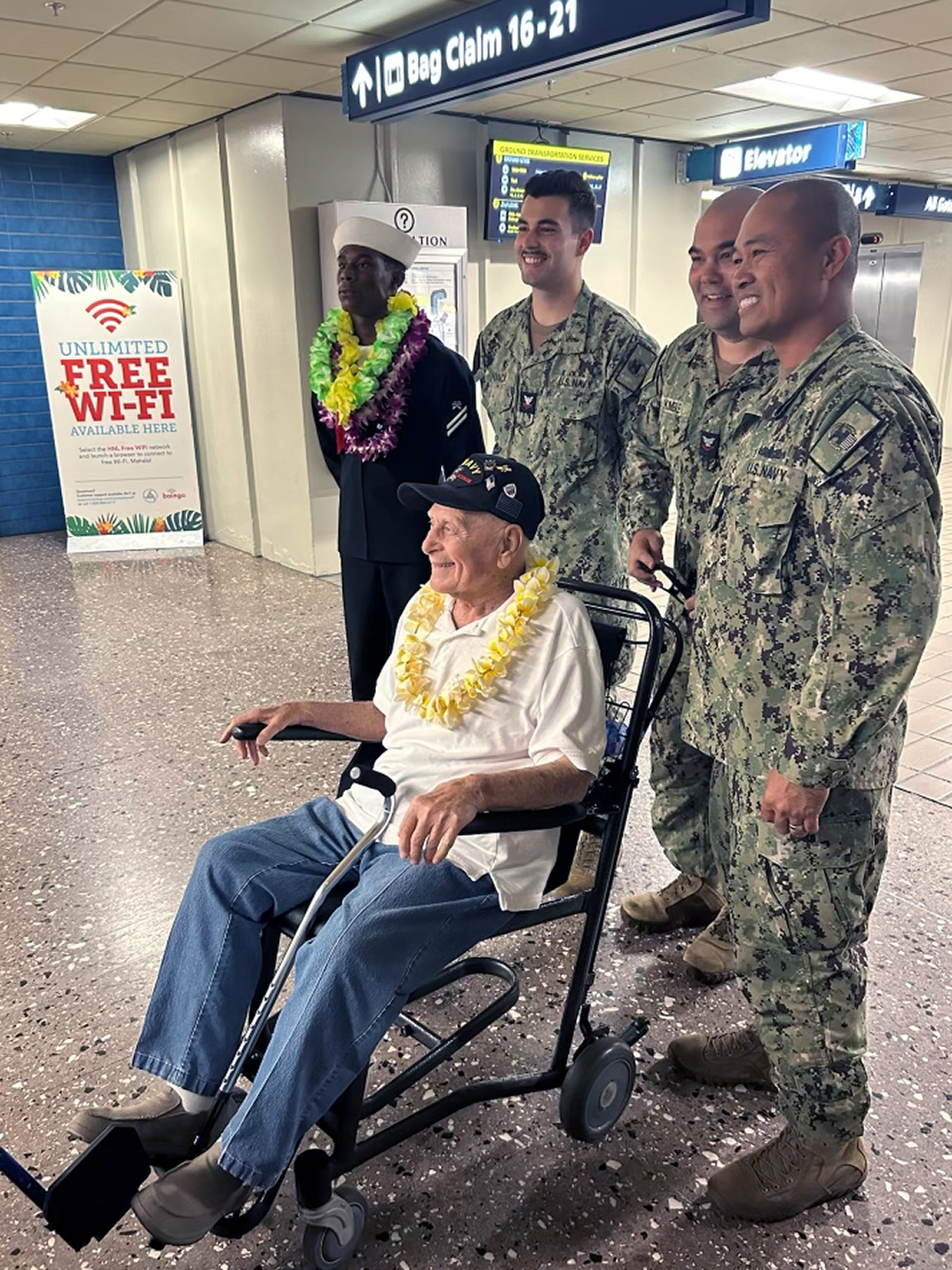
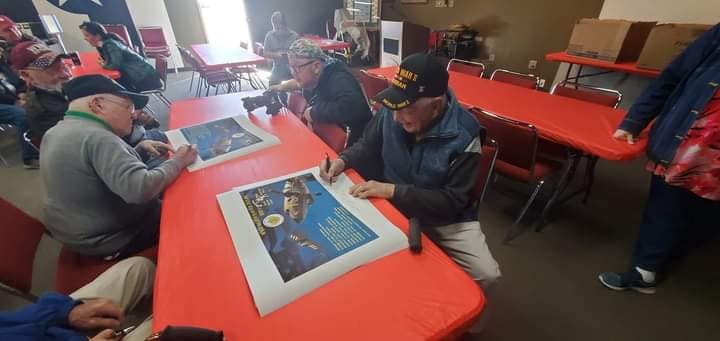
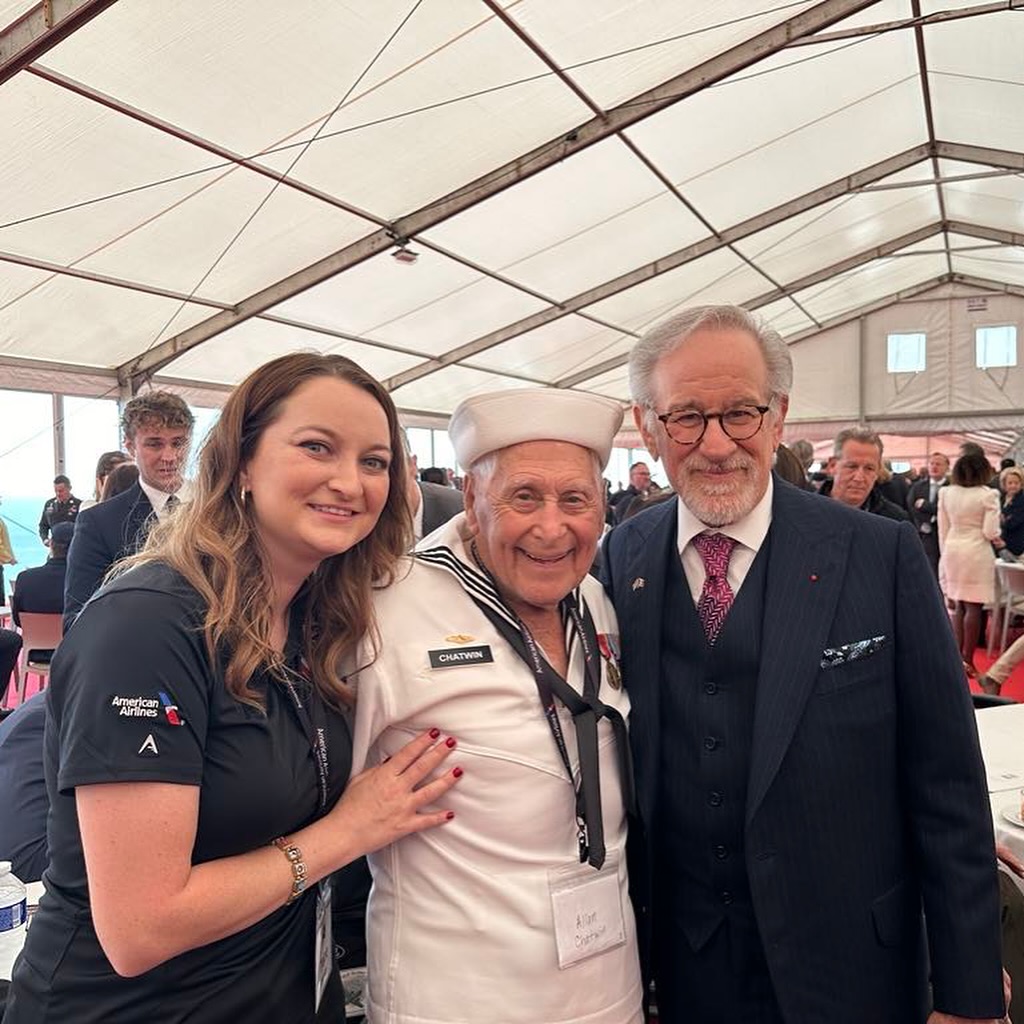
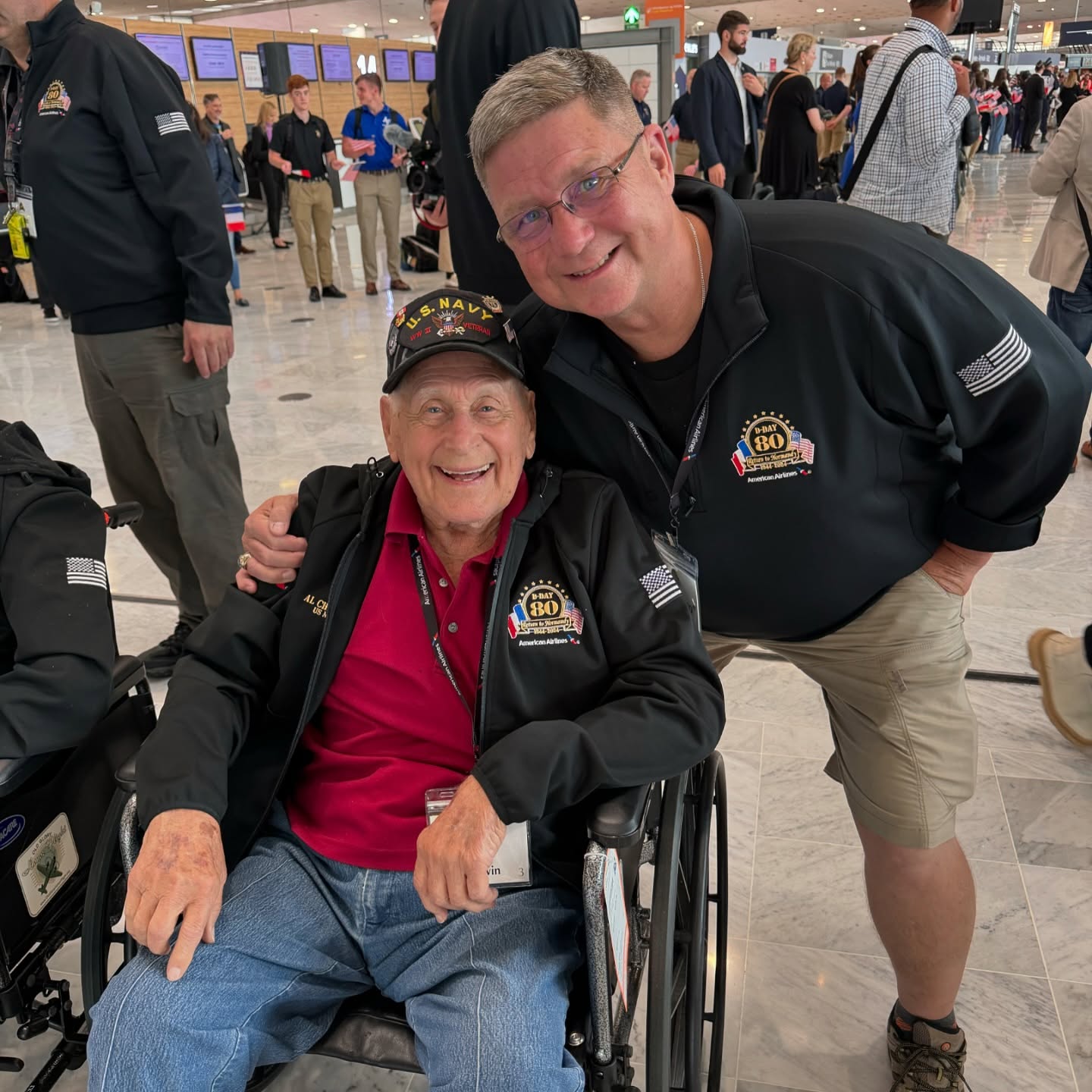
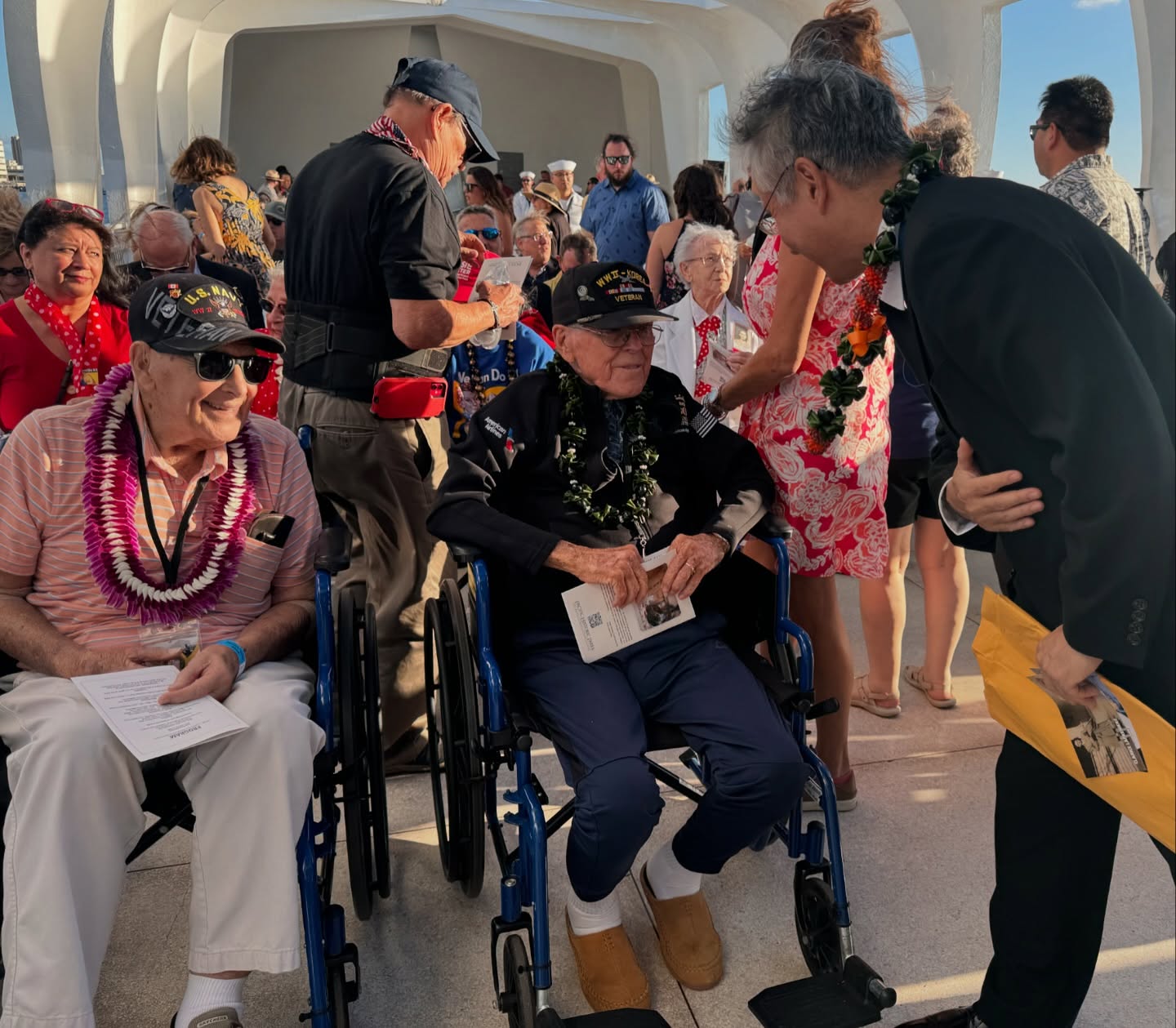
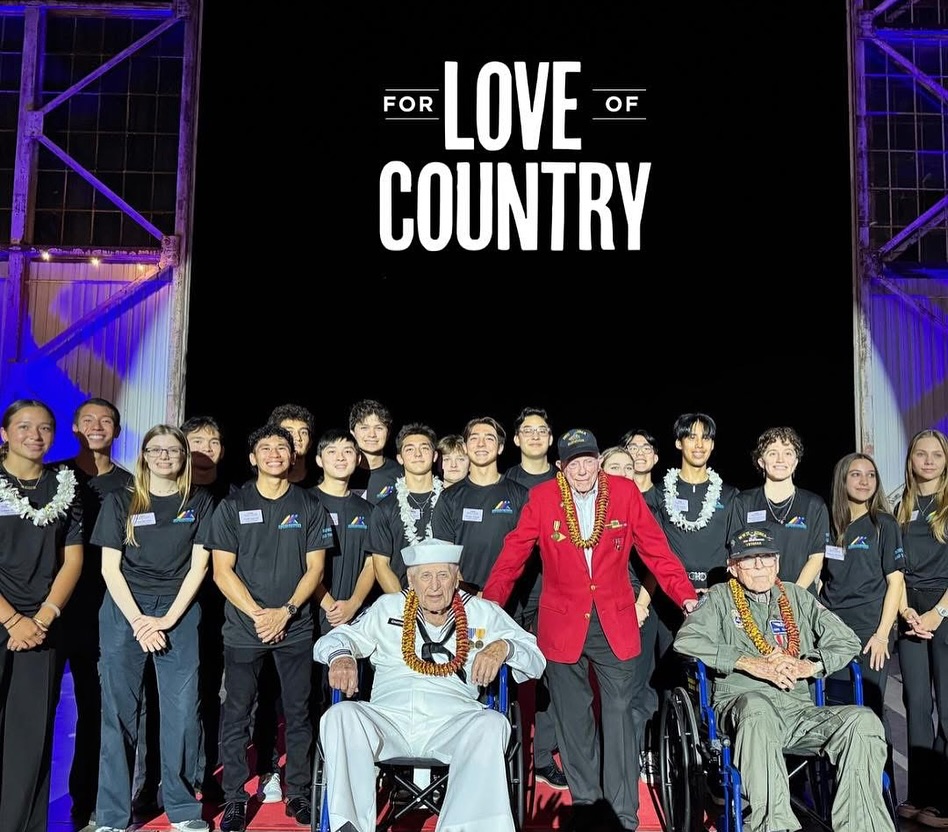
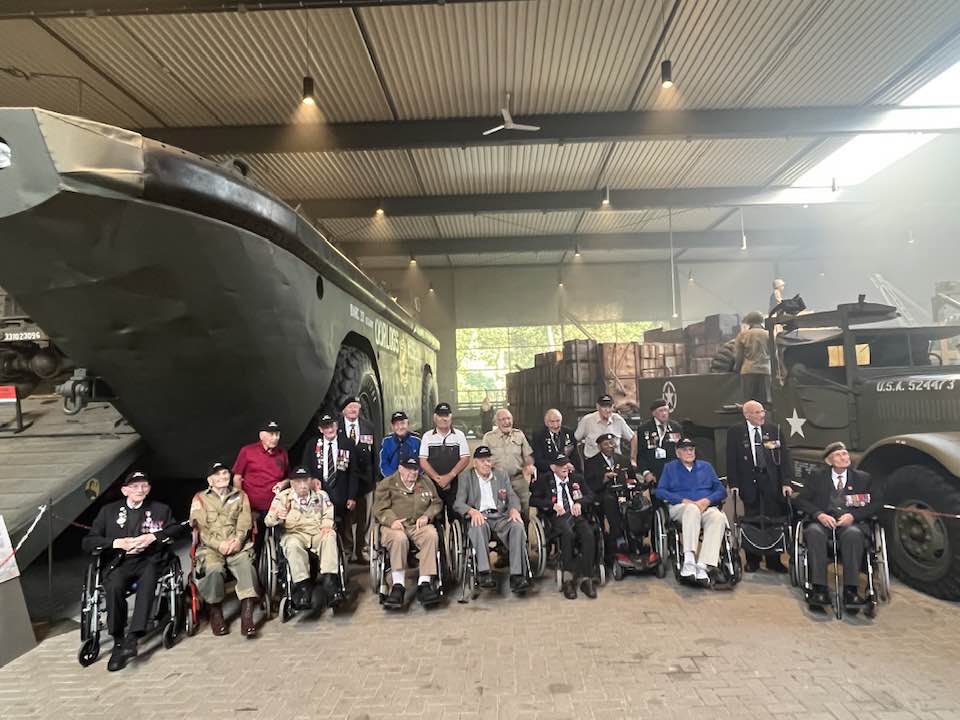
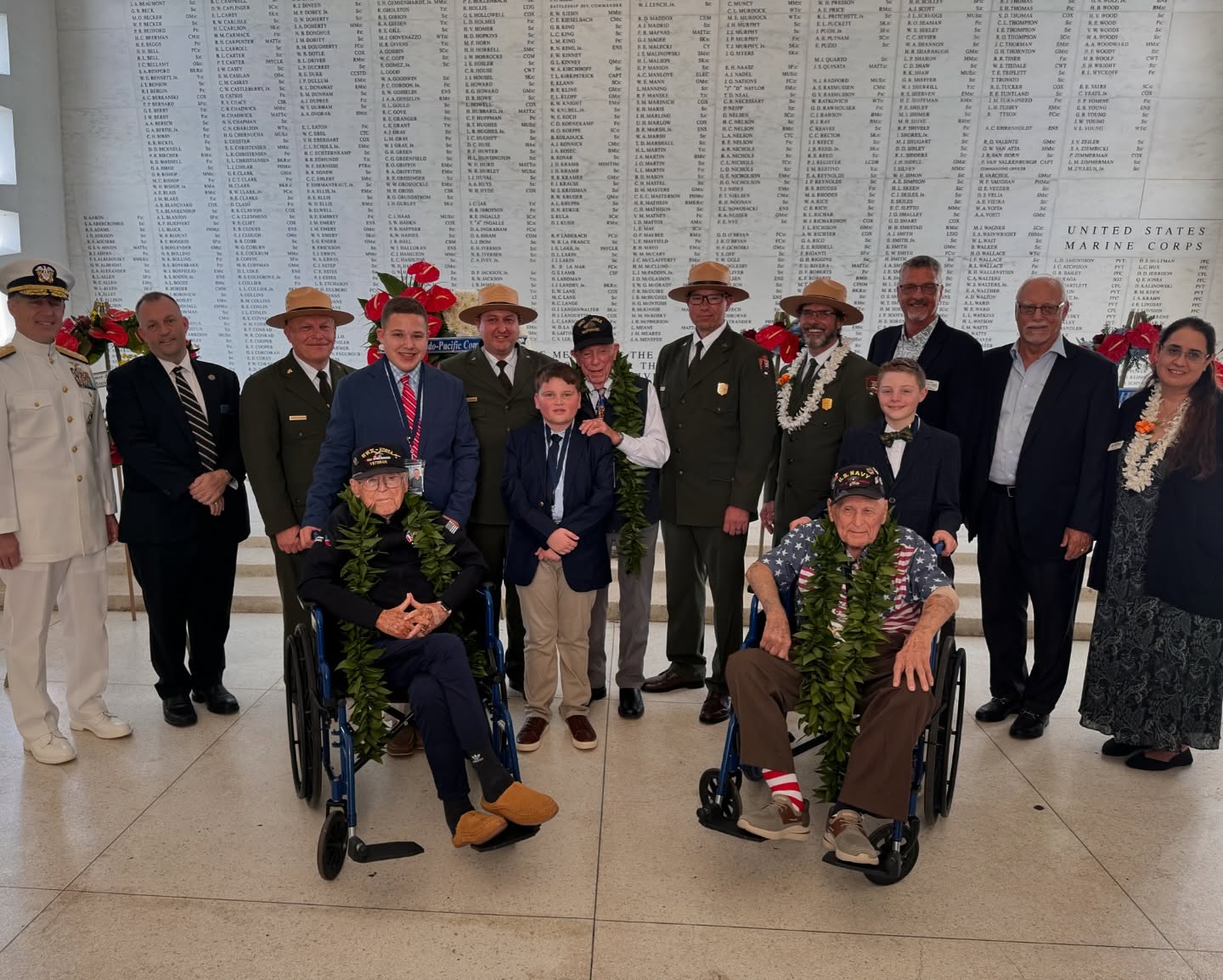
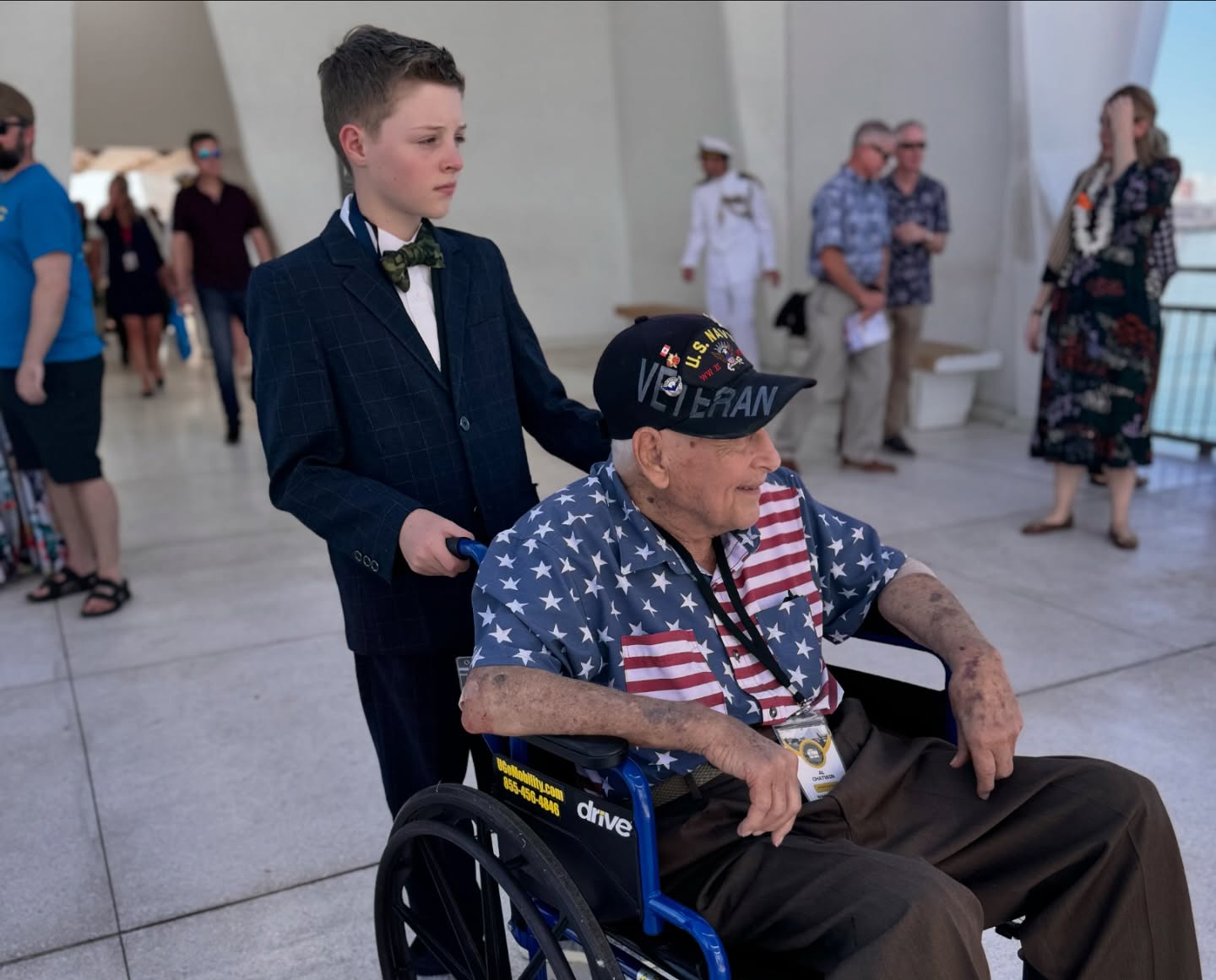
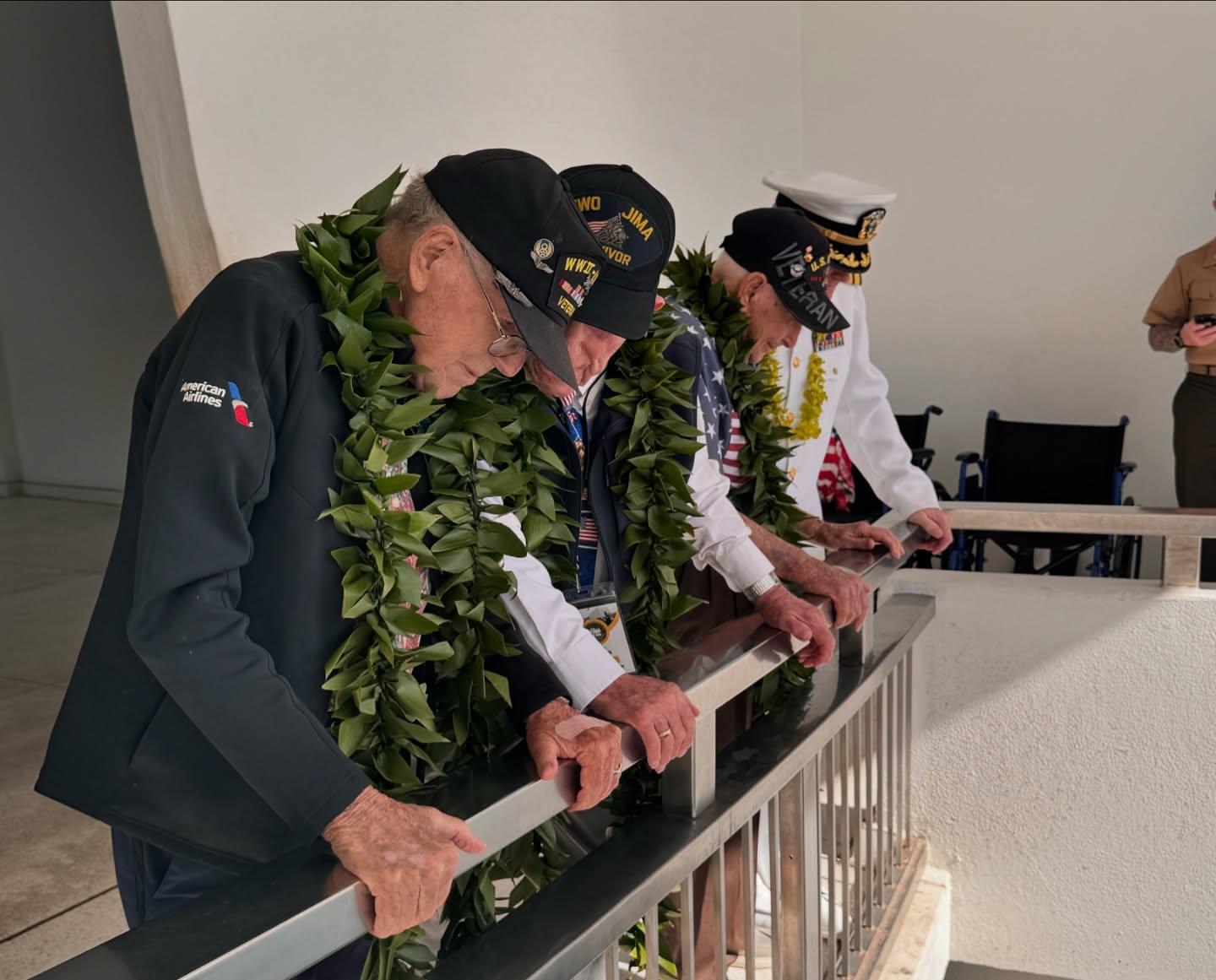
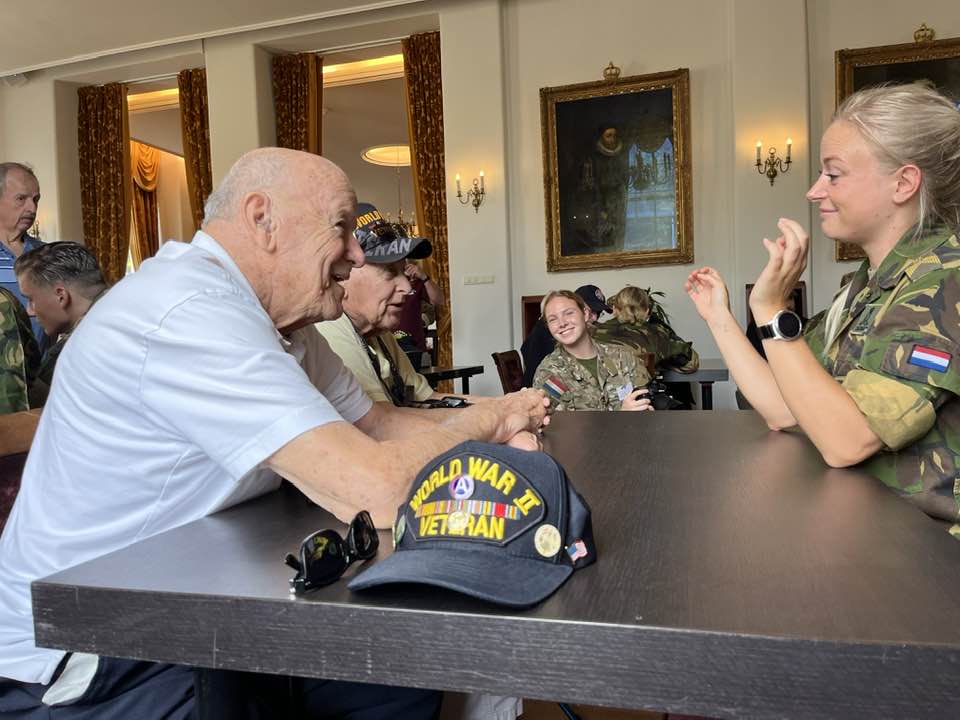
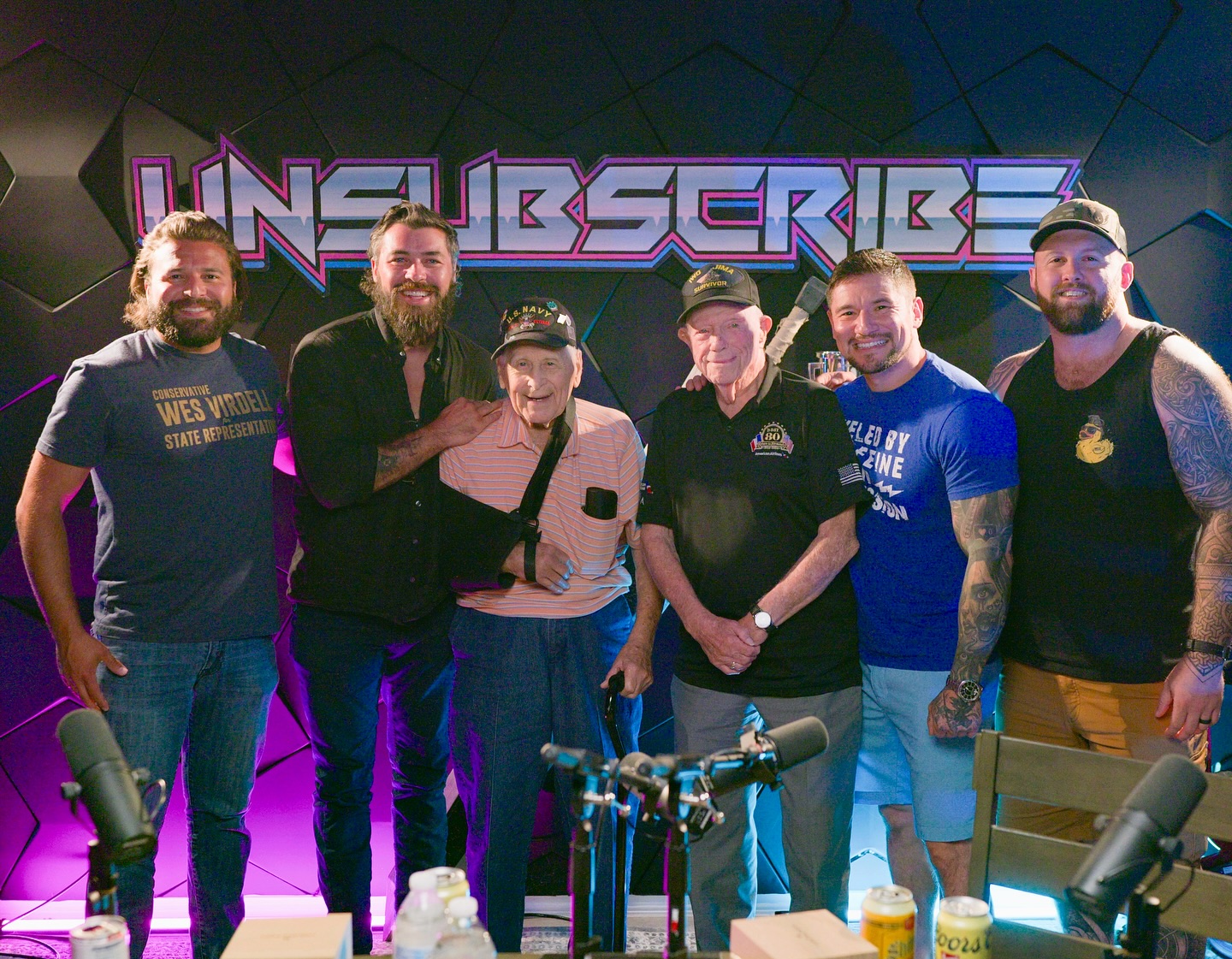
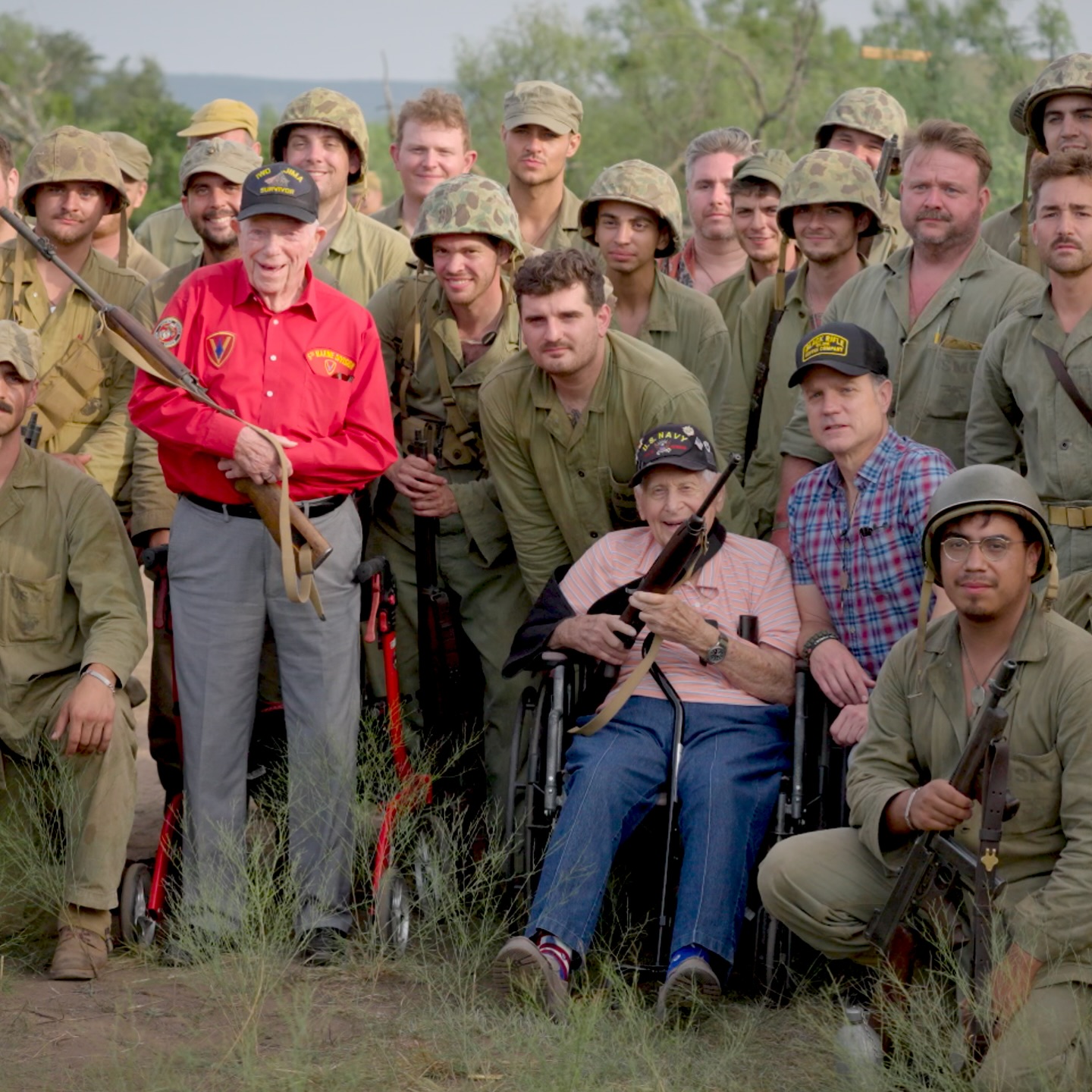
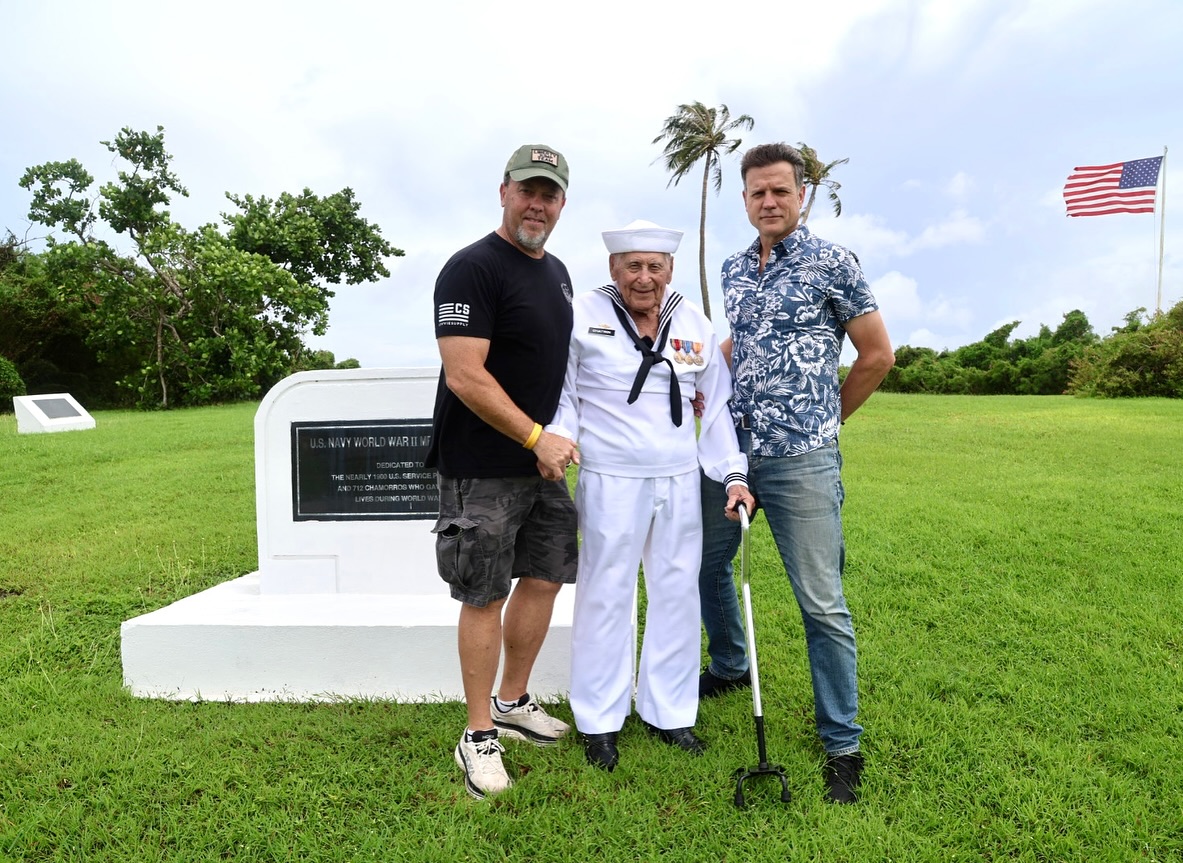
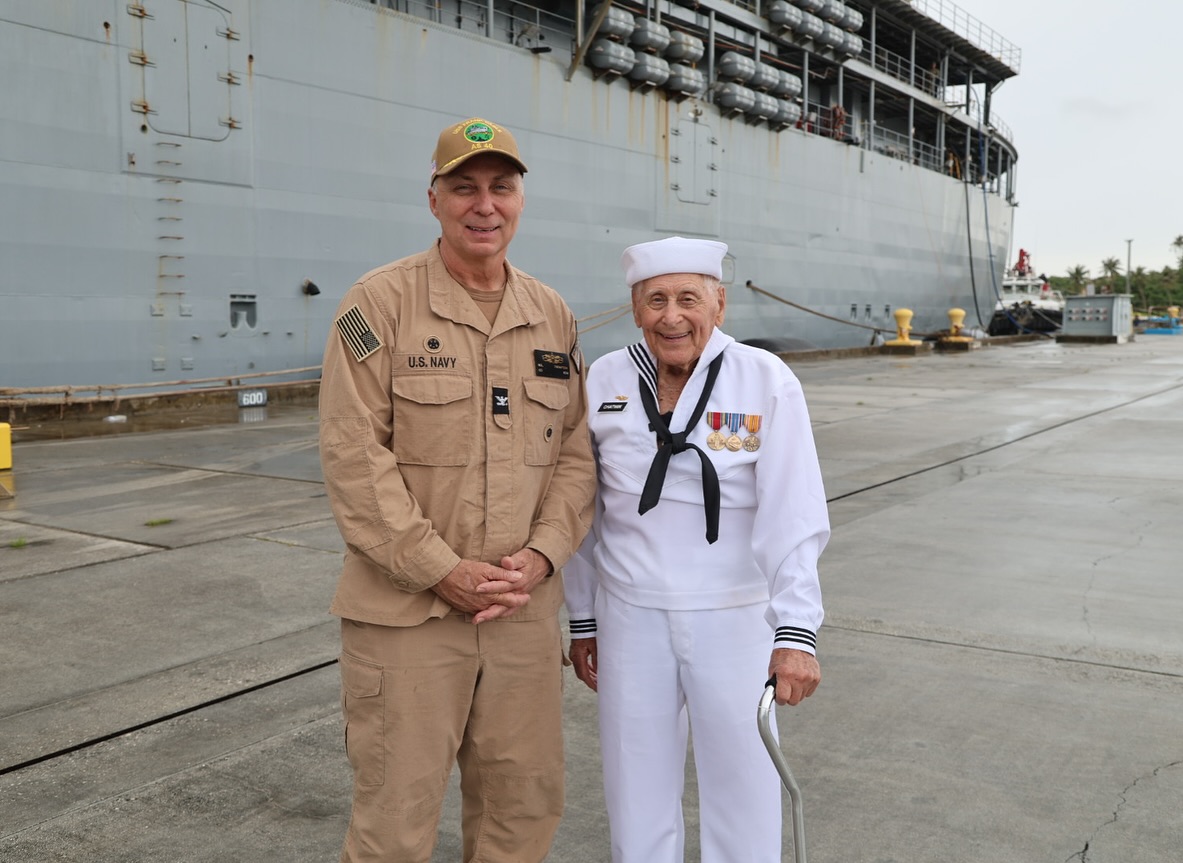
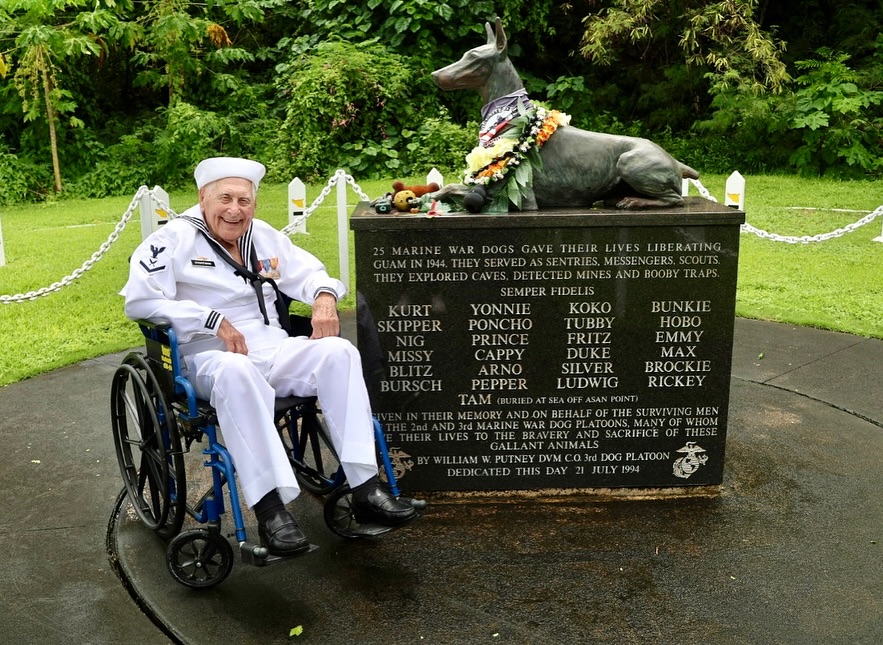
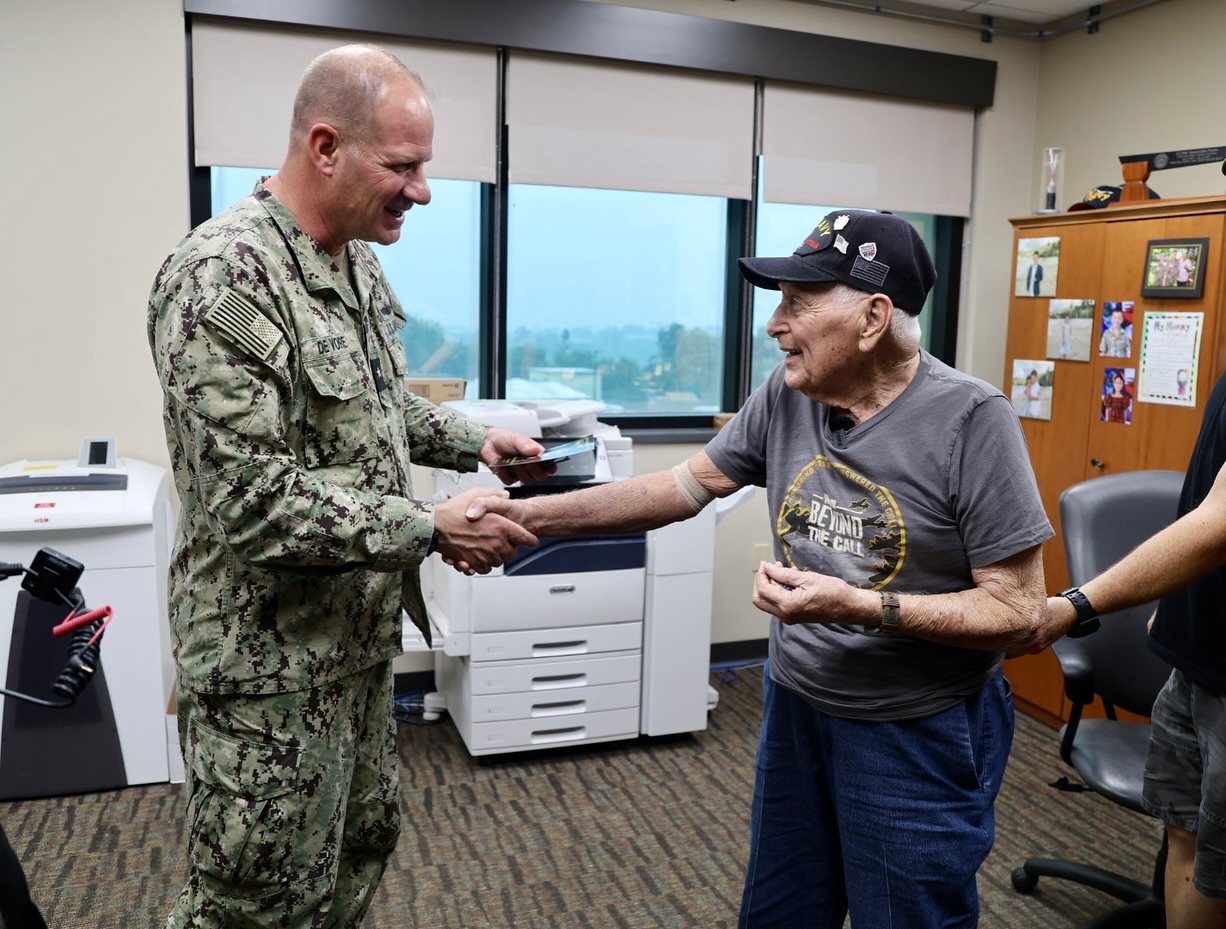
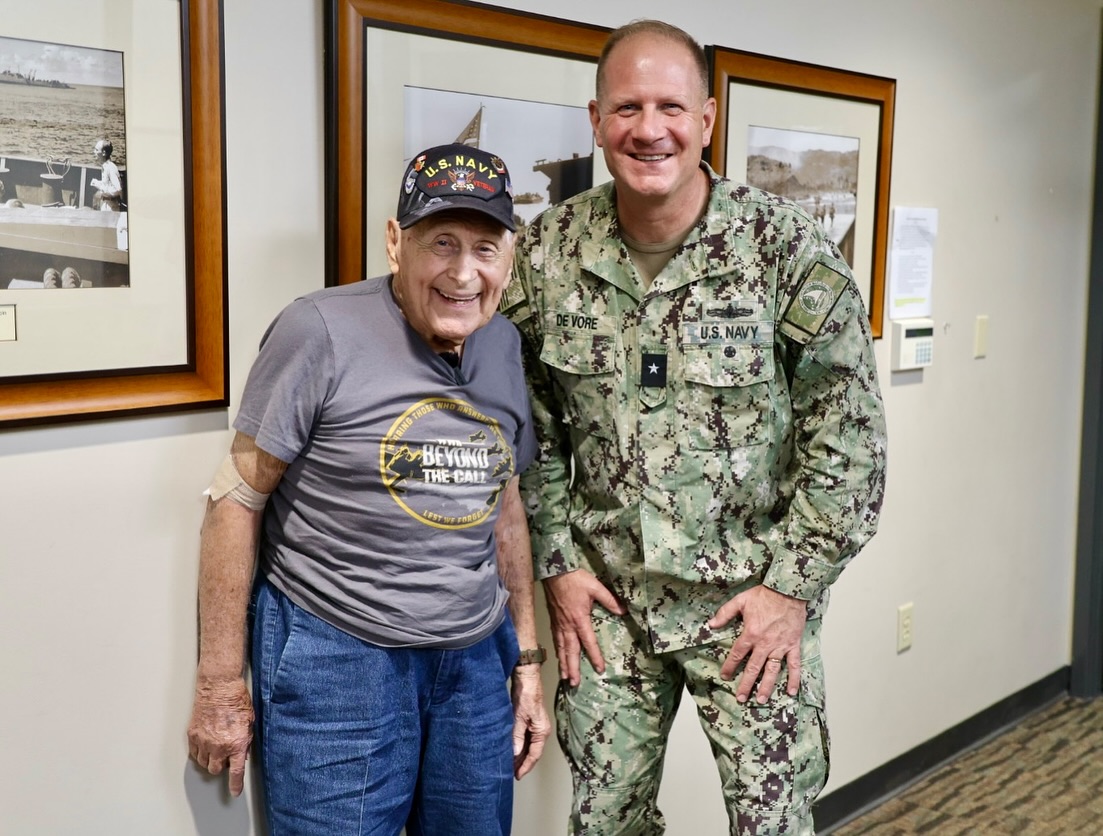
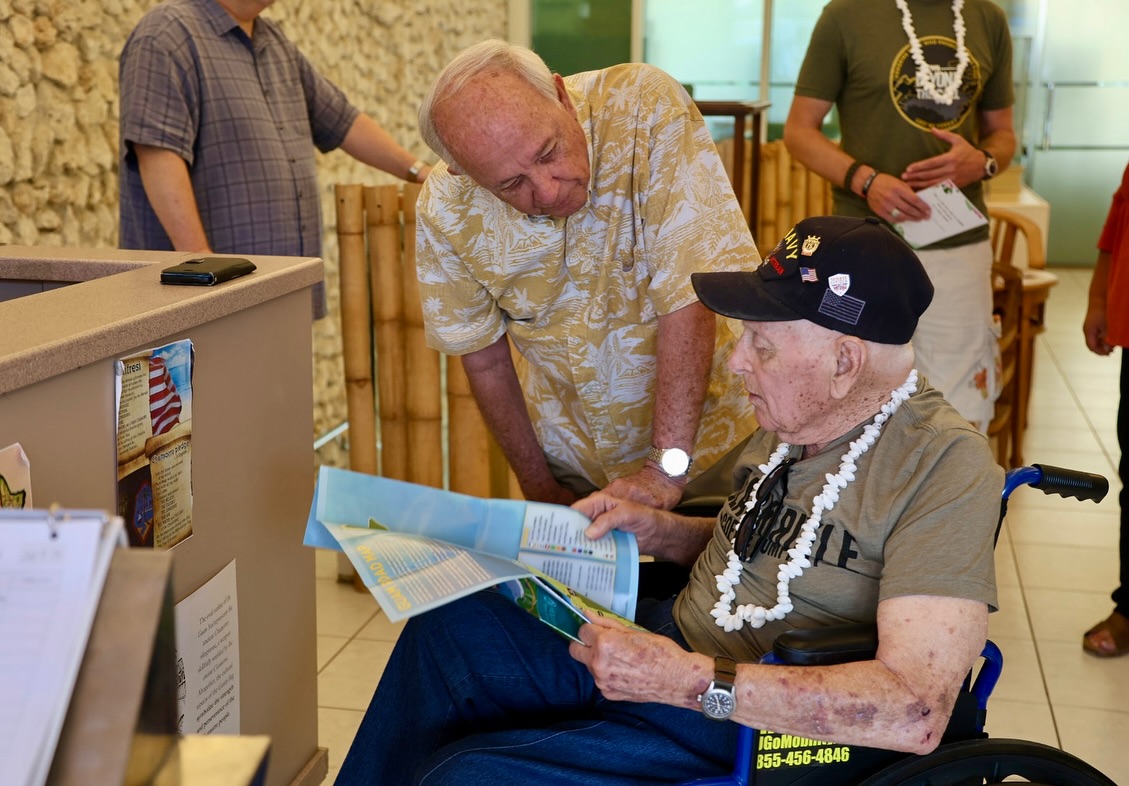
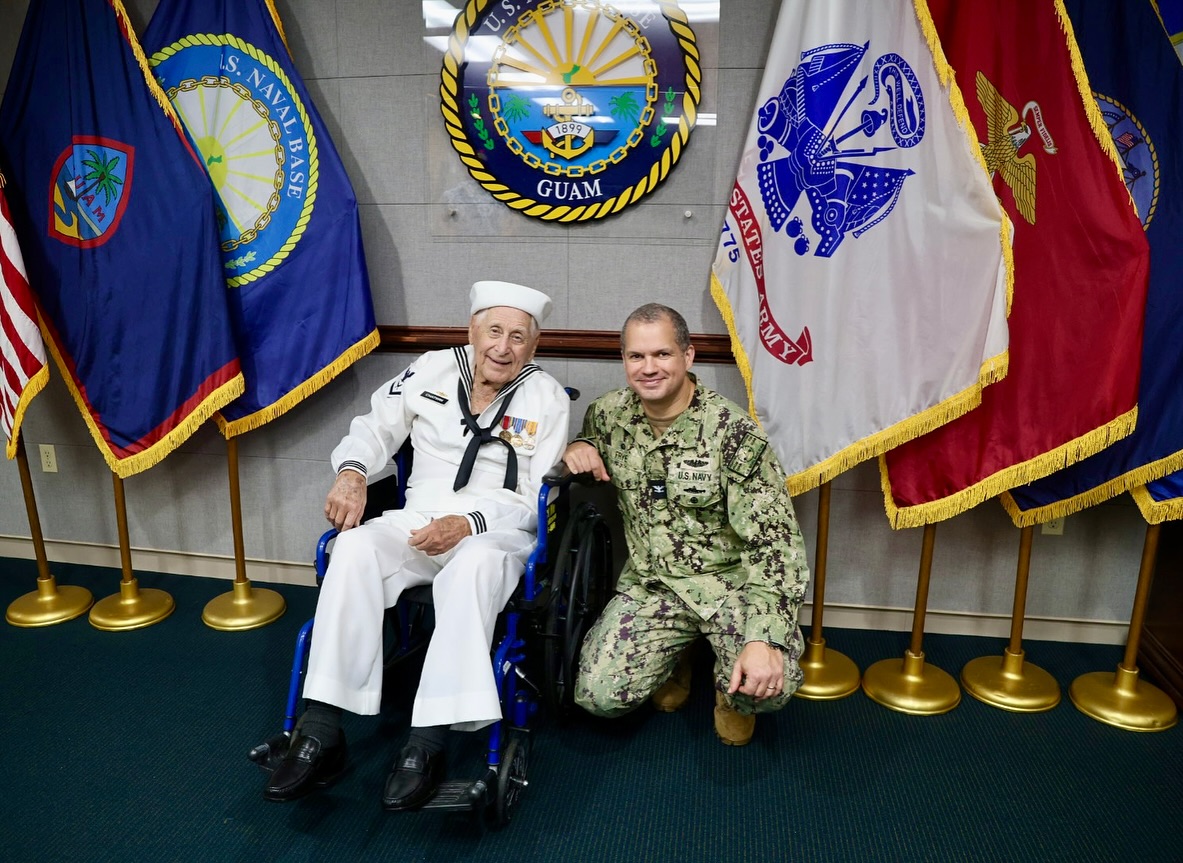
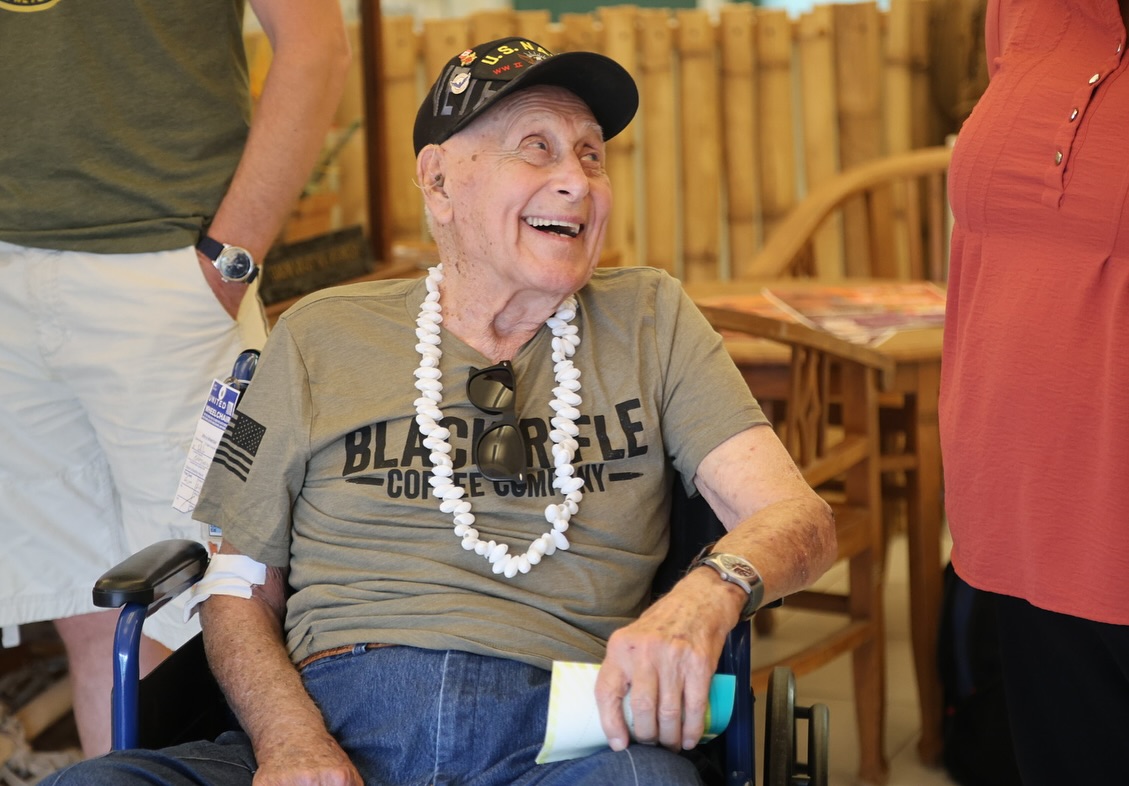
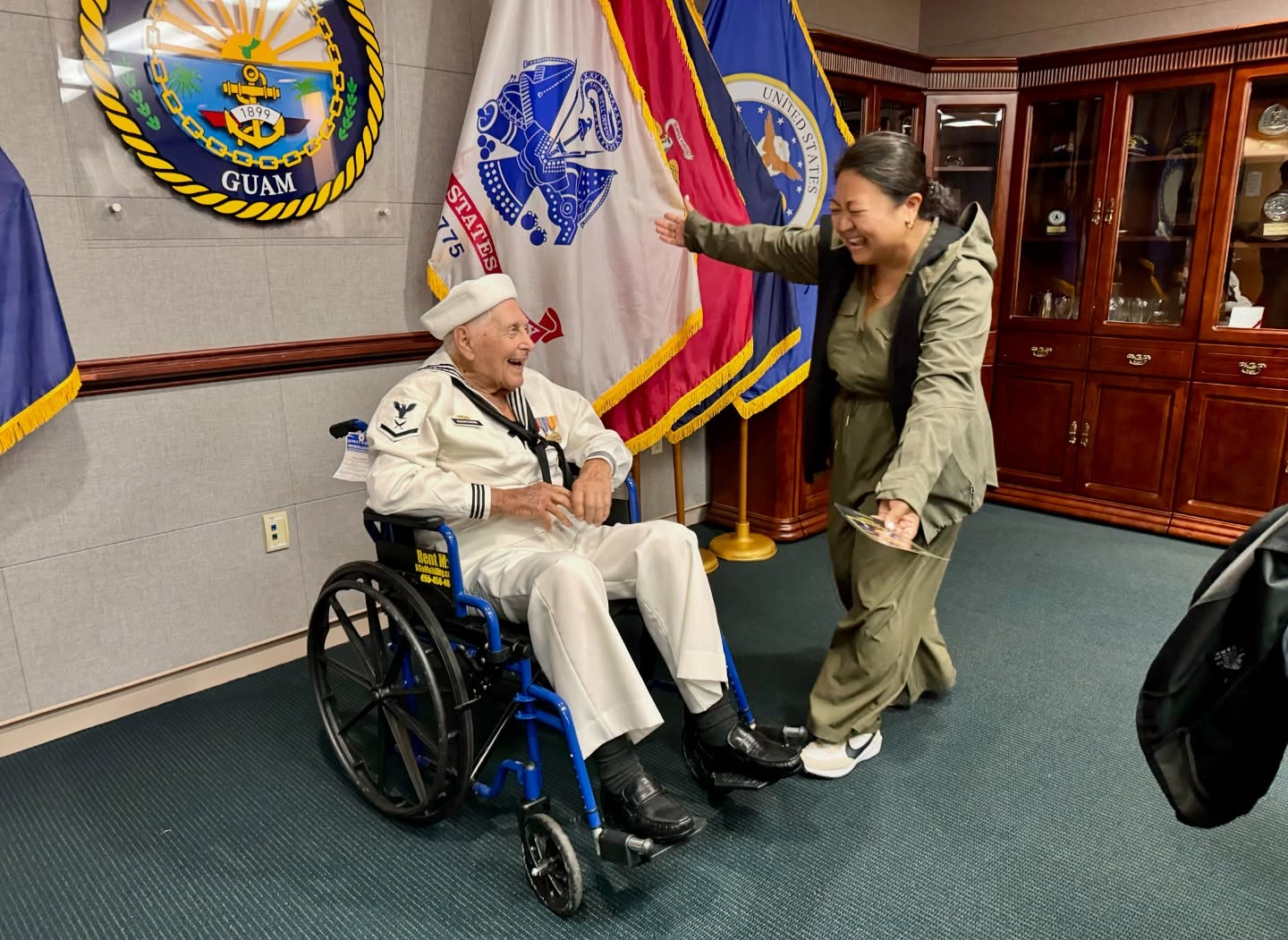
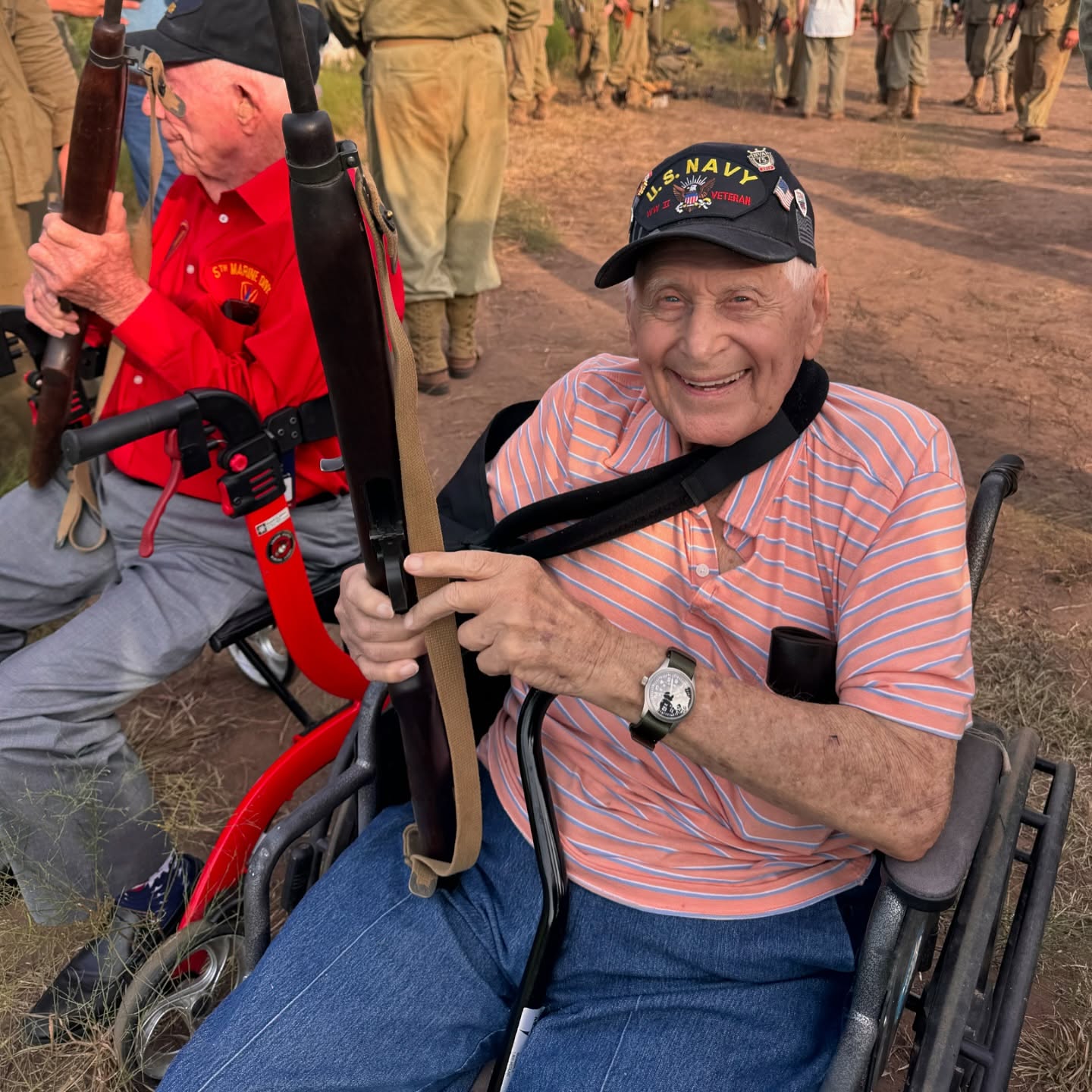
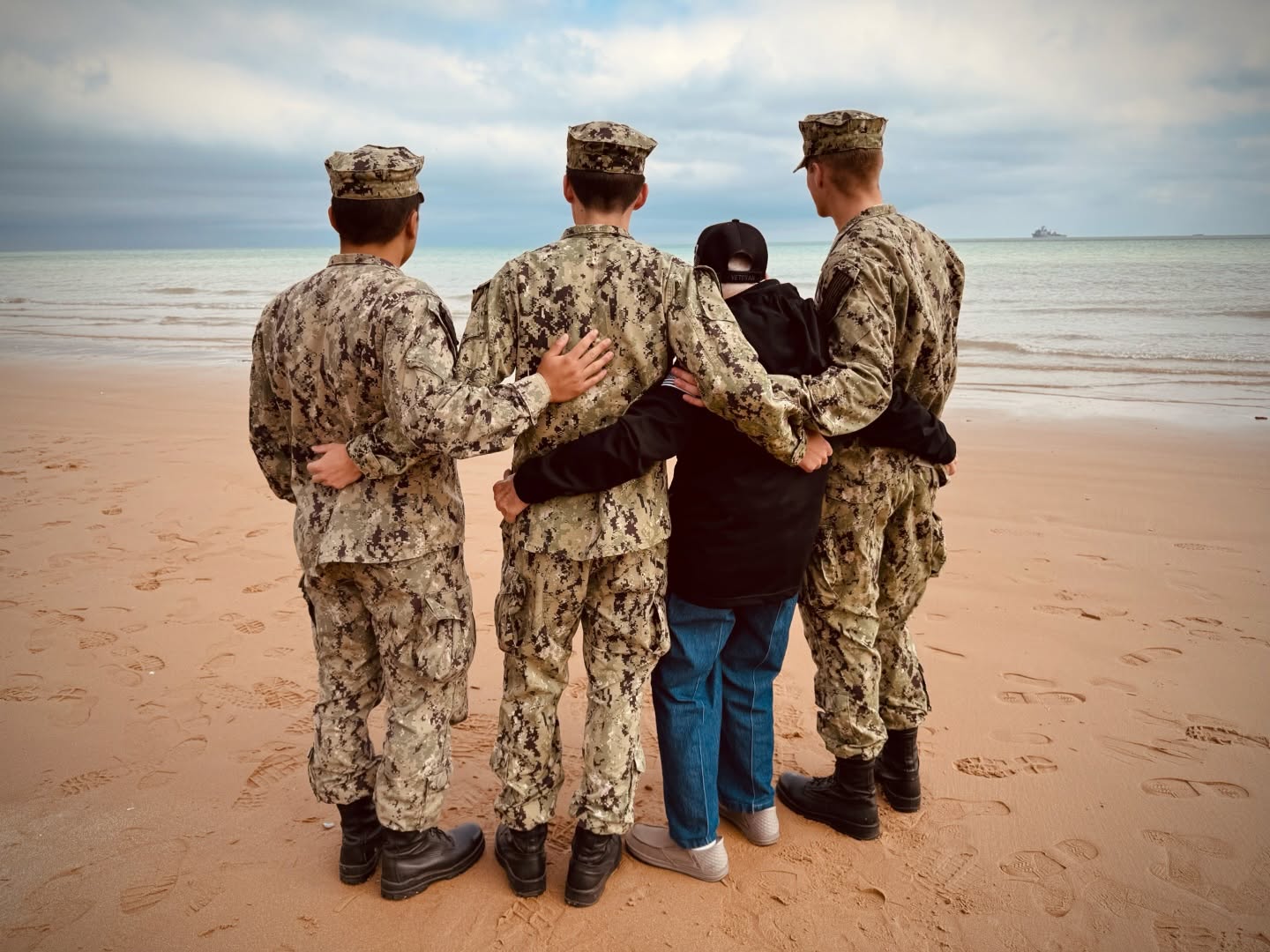
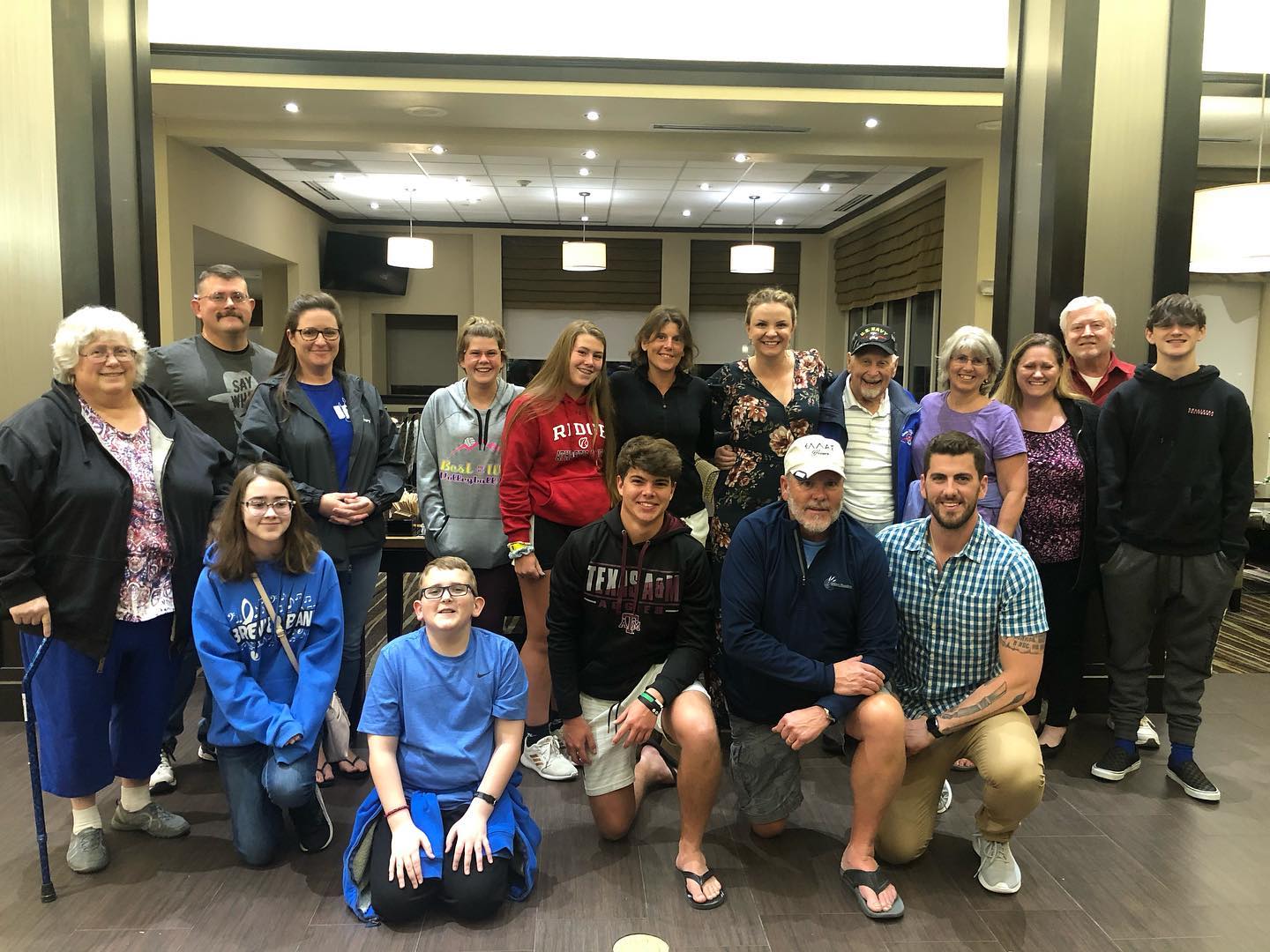
Al’s story, which includes his critical vital assignments in Guam, and his accomplishments with new radar and satellite technologies does not end there. After he had retired, his outstanding military and business contributions were rewarded with Honor Trips to Pearl Harbor, the Netherlands, Normandy, and a Special Trip to Guam. His first trip back to Guam in 80 years. With gratitude to Scott Gibson, Tracie Hunter and Beyond the Call, Liberty Phillips and Bridge to History, Black Rifle Coffee, and AA and its many customers who donated miles to make the trip possible. It should be noted that the help these organizations provided ensured that veterans could be recognized and honored for their service. For Al, his return was especially meaningful because of the warm welcome of its people who greatly appreciated what the US military had sacrificed in order to save the world.
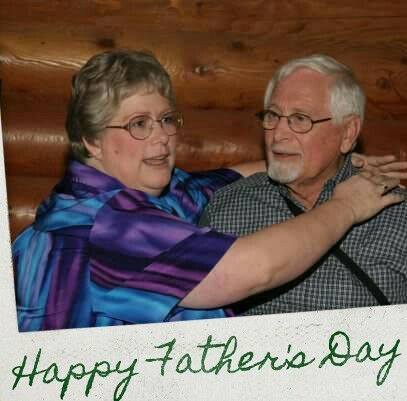
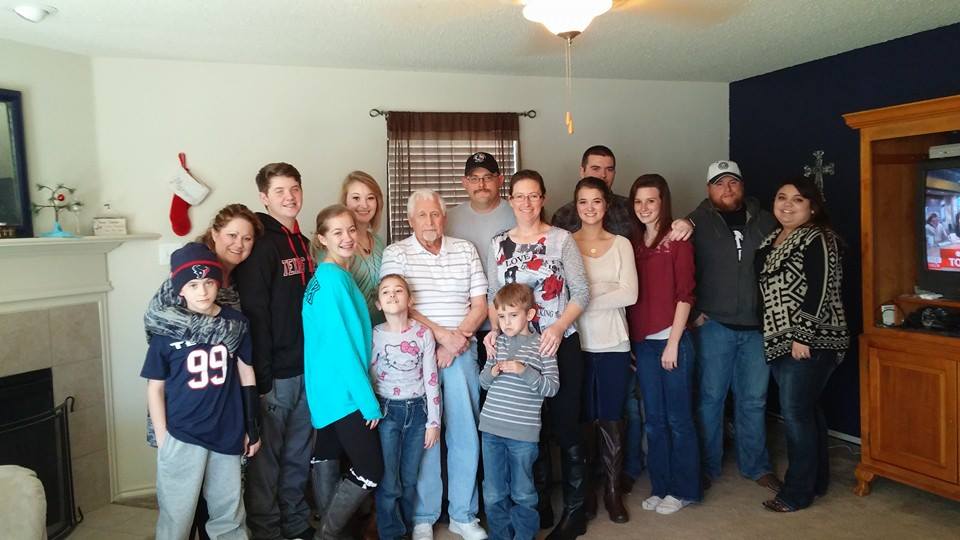
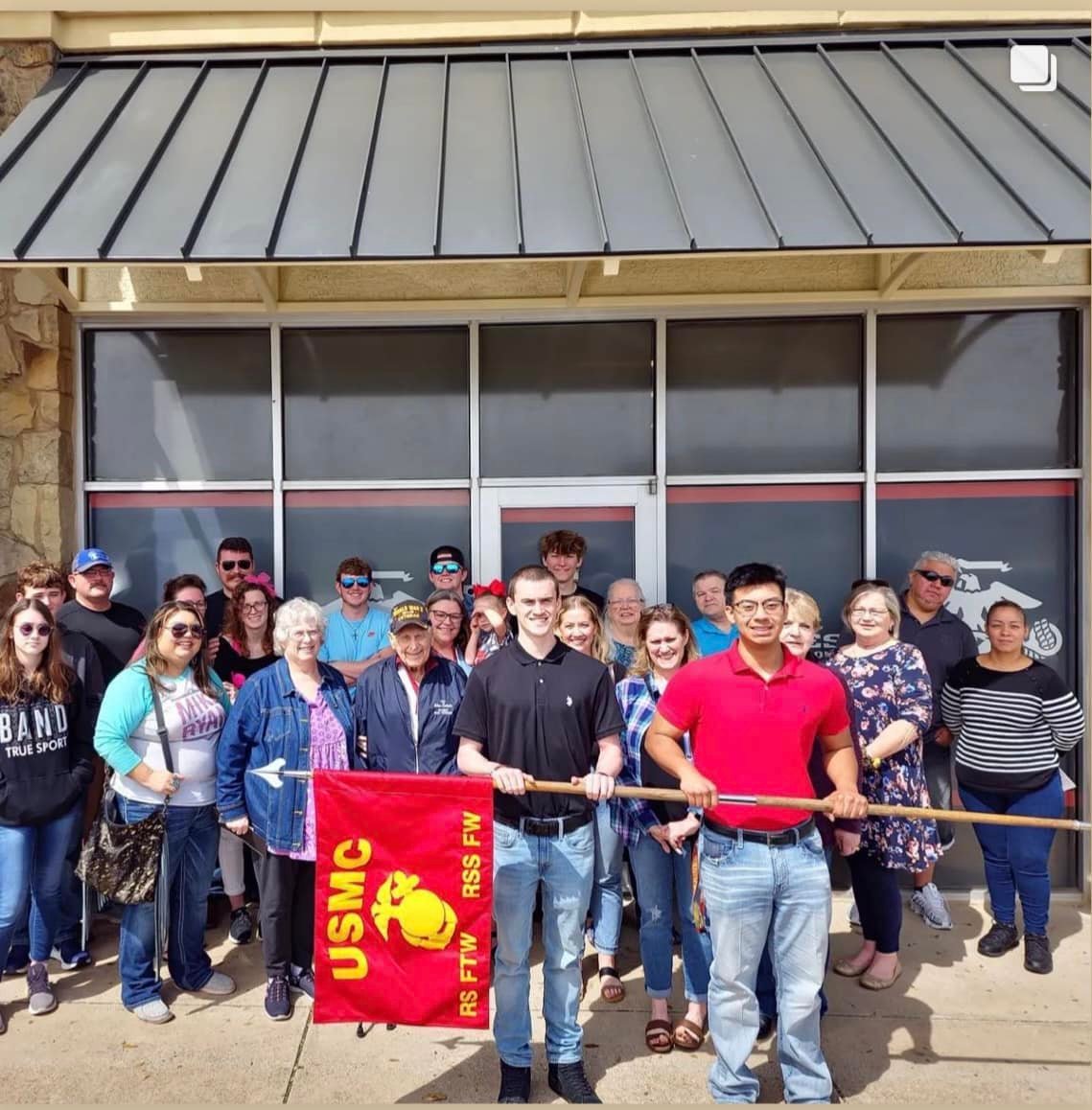
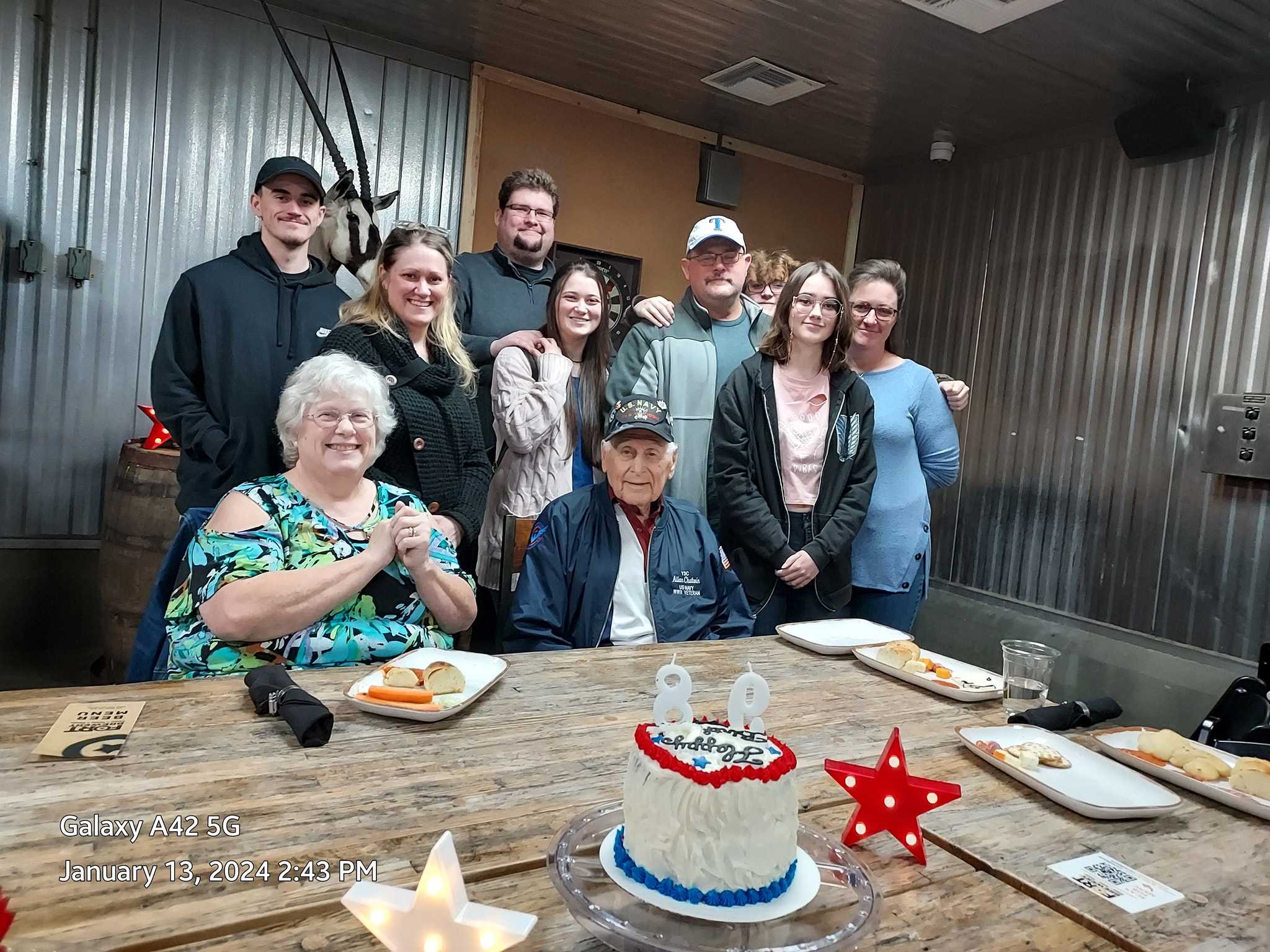
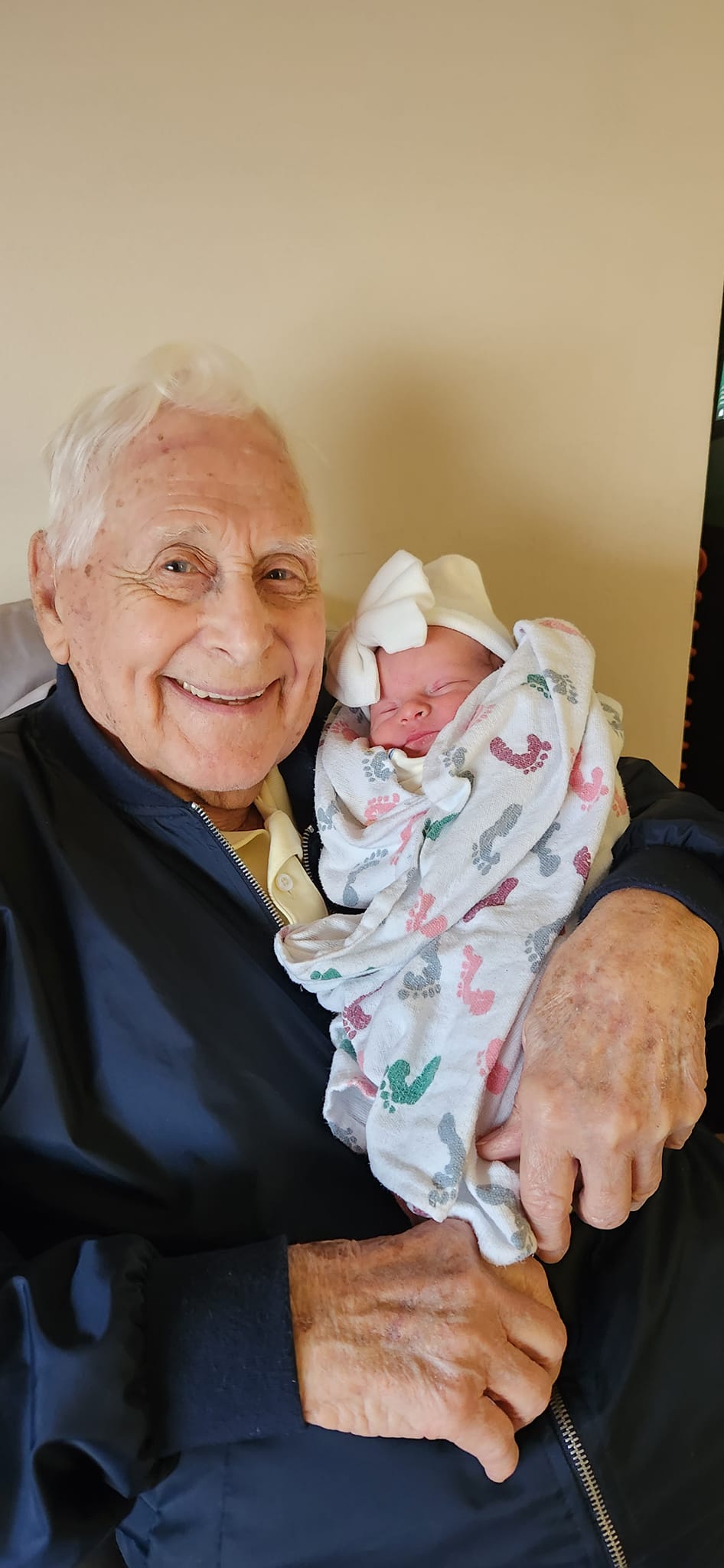
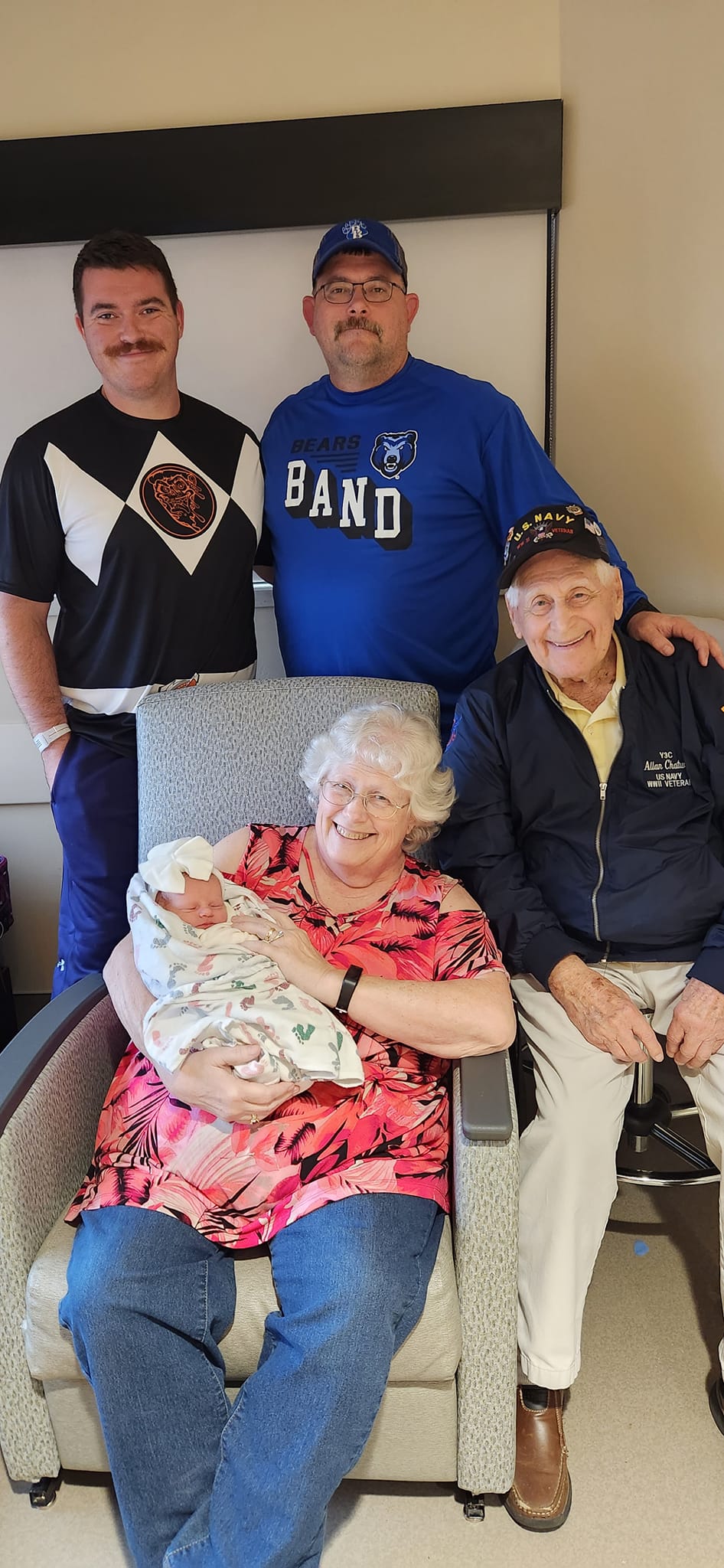
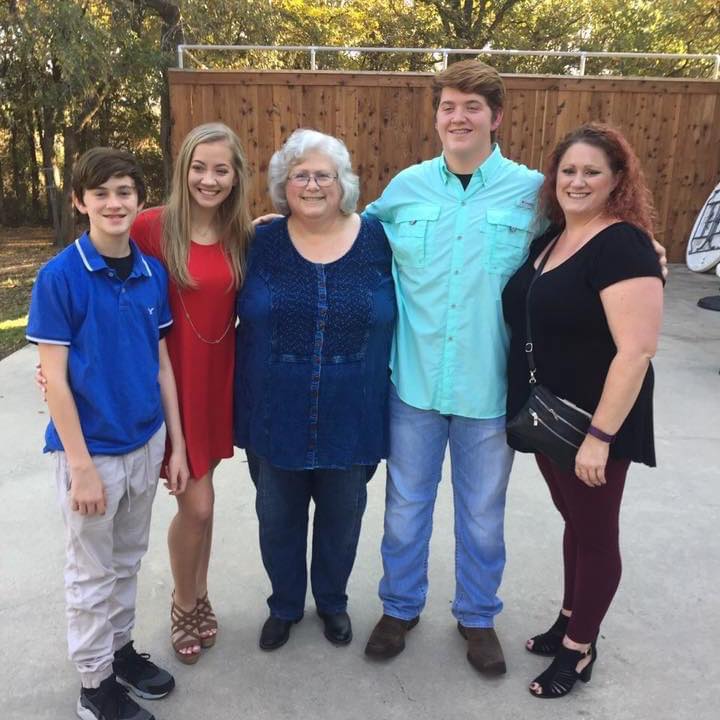
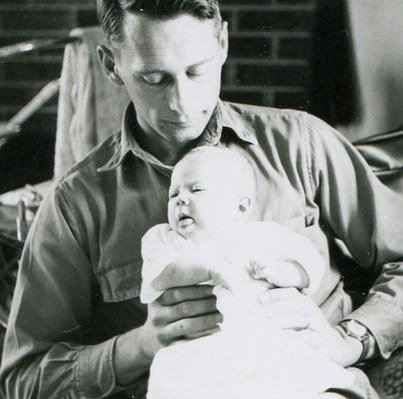
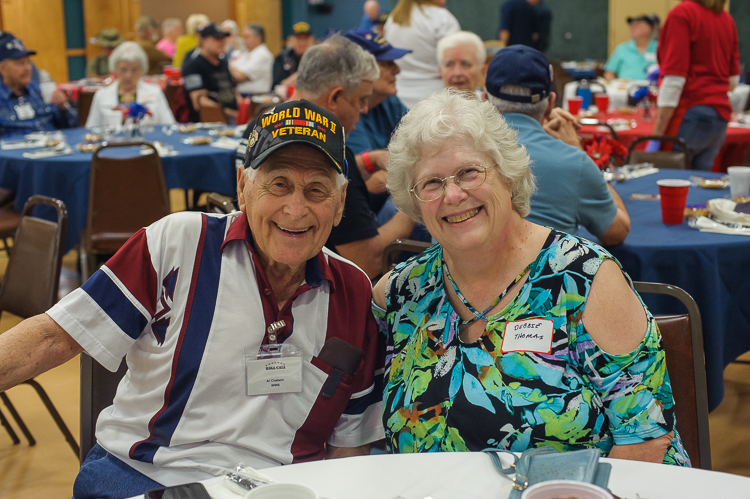
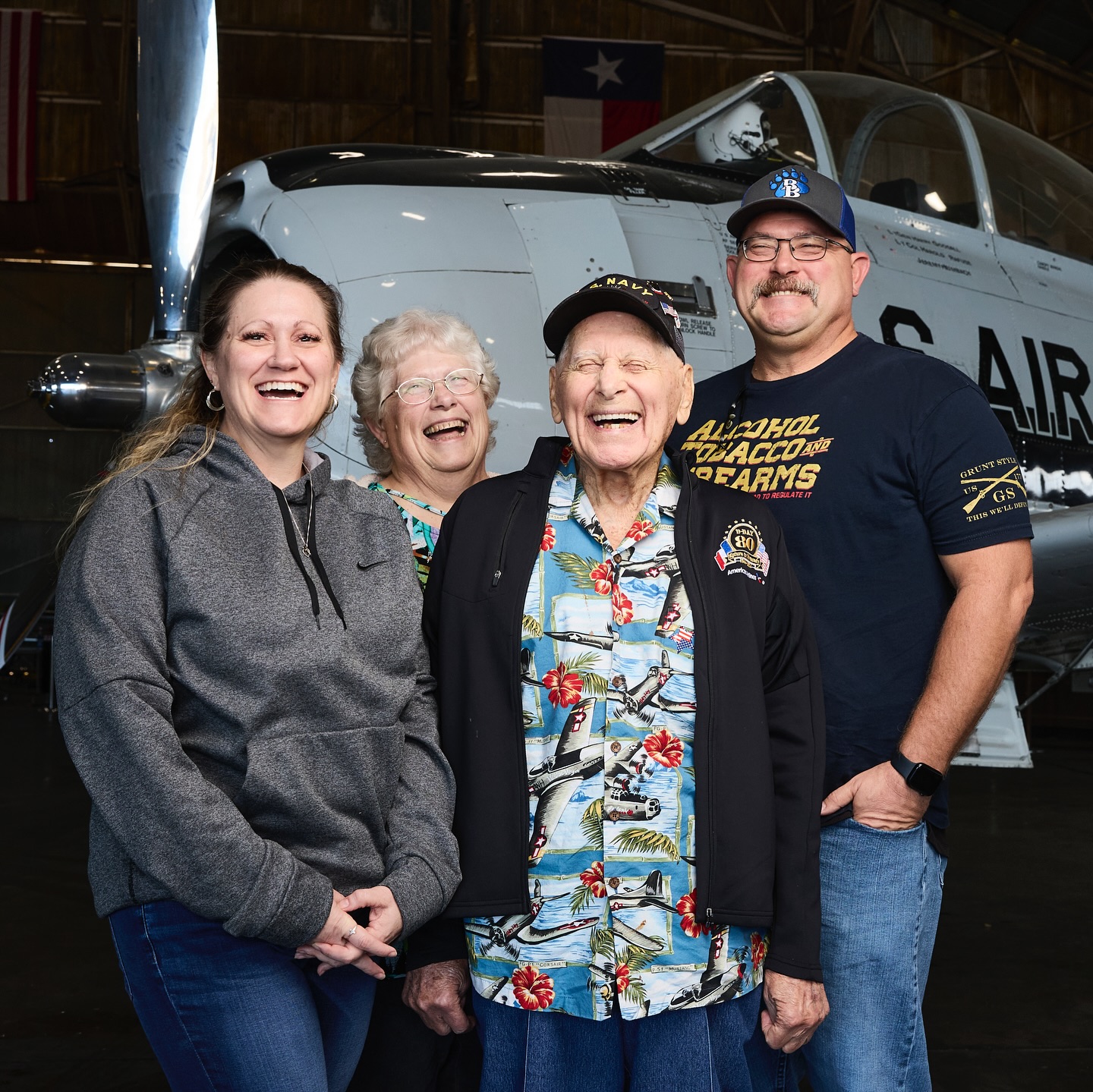
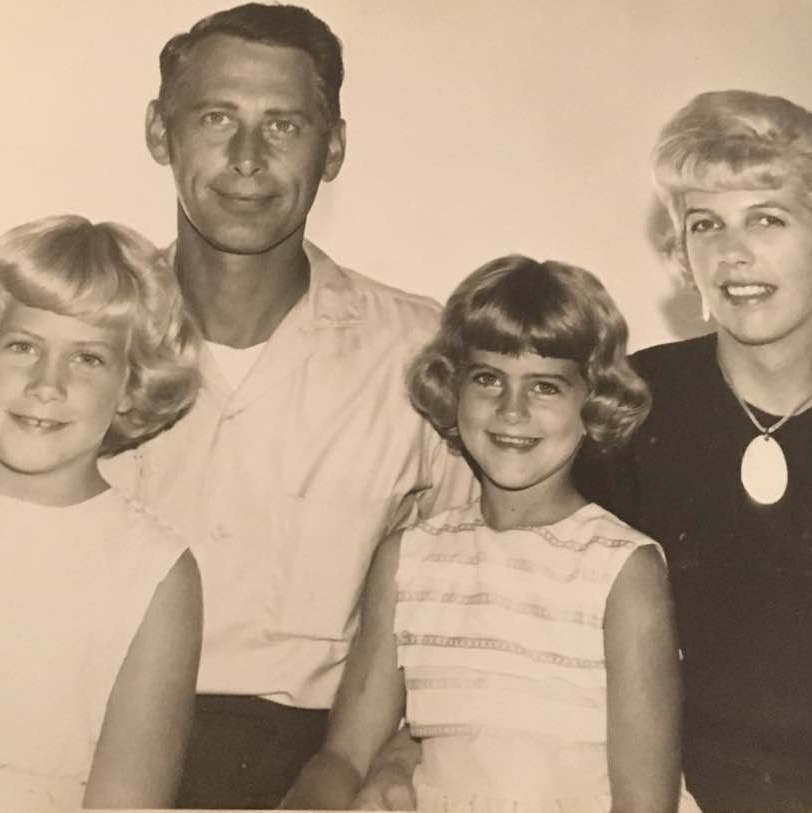
Al’s daughter Debbie remembers that when Al returned home from the war he married her mother whose first husband had died of burns suffered during the battle of Iwo Jima. Al adopted their 4 children and then had 2 more – Debbie and her sister Cindy. Al has 24 Grandchildren, 55 Great Grandchildren, 17 Great Great Grandchildren.
It was mentioned that Al referred to his grandchildren as Little Turkeys which was shortened to just Turkey. The grands soon referred to Al as Turkey Paw Paw which was soon shortened to Turkey.
Supplemental Information
Williamsville Origins: A 1926 Childhood Shaped by Western New York
Allan Chatwin was born on January 17, 1926, in Williamsville, New York, a village that had matured from its nineteenth‑century milling origins into a stable residential community within Erie County. By the mid‑1920s, Williamsville’s identity was shaped by its position along Ellicott Creek, where water‑powered industry had once anchored local life. Although the mills had declined, their presence left a lasting imprint on the village’s layout, economy, and social structure. Families lived within walking distance of churches, the village school, and small commercial storefronts that lined Main Street, forming a community where daily routines were predictable and relationships long‑standing.
Williamsville’s proximity to Buffalo placed it within the orbit of one of the nation’s most active industrial centers. Buffalo’s steel production, grain handling, and rail traffic were at their peak in the 1920s, and many residents of Williamsville commuted into the city for work or relied on its commercial networks. The region’s transportation infrastructure — including paved roadways and expanding automobile ownership — made movement between the village and Buffalo increasingly common. This connection allowed Williamsville to retain its quieter residential character while benefiting from the economic strength of the larger metropolitan area.
The physical environment of western New York shaped everyday life. Lake‑effect snowfall produced long, severe winters that influenced school operations, transportation, and household routines. Summers brought mild temperatures and abundant greenery, with farmland still present around the village’s edges. Public utilities, including electricity and municipal water systems, were well established by 1926, reflecting the modernization occurring across small communities in Erie County.
Nationally, Allan’s birth occurred during the final years of the post‑World War I economic expansion, a period marked by rising consumer goods, increased mechanization, and growing access to modern conveniences. In Williamsville, these trends appeared in the spread of automobiles, improved road surfaces, and the gradual shift from agrarian labor to wage‑based employment tied to Buffalo’s industrial economy. Children born in the village during this period grew up in a setting where traditional small‑town patterns coexisted with the accelerating pace of early twentieth‑century American life.
This historically grounded environment shaped by regional industry, local continuity, and the distinct climate of western New York formed the factual backdrop of Allan Chatwin’s earliest years.
Life in Western New York During the Great Depression
The Great Depression began with the stock market crash in October 1929 and unfolded into a decade of economic collapse. In western New York, the downturn struck hard because Buffalo’s economy depended on steel production, grain handling, rail transport, and manufacturing — industries that contracted sharply as national demand collapsed. Factories reduced hours, laid off workers, or shut down entirely. Families who relied on Buffalo’s industrial wages suddenly faced unemployment or sharply reduced income.
In small towns like Williamsville, the effects arrived through the people themselves. Many residents worked in Buffalo or depended on its commercial activity, so job losses in the city rippled outward. Households tightened budgets, postponed purchases, and relied on gardens, local farms, and extended family networks to get through lean months. Children grew up seeing neighbors lose jobs, homes, or savings, and the rhythm of daily life shifted toward frugality and caution.
Public relief programs gradually appeared as the crisis deepened. Soup kitchens, church‑run assistance, and later federal New Deal programs provided essential support. In western New York, the Works Progress Administration (WPA) and Civilian Conservation Corps (CCC) created jobs in road building, park improvements, and public works that helped stabilize families. These programs became a lifeline for communities that had been built on industrial wages no longer available.
The physical environment added another layer of difficulty. Lake‑effect winters remained severe throughout the 1930s, and heating costs strained already thin budgets. Transportation slowed during heavy snow, and families often walked to local shops or churches because automobile upkeep became too expensive. Summers were easier, but the Depression’s economic weight remained constant regardless of season.
Despite the hardship, communities like Williamsville retained strong social cohesion. Neighbors shared food, tools, and labor. Churches organized relief efforts. Schools adapted to shrinking budgets but remained central to village life. Children learned resilience early, growing up in a world where thrift, resourcefulness, and mutual support were essential.
Food Life in the Great Depression
Food during the Great Depression reflected the discipline of families who learned to stretch every ingredient. In western New York, where winters were long and industrial wages had collapsed, meals were built from staples that offered reliability, storage life, and the ability to feed many with little. The table became a place where frugality shaped every choice.
Families relied on core staples that formed the backbone of daily meals: bread, potatoes, beans, oatmeal, cornmeal, rice, noodles, and simple pasta. These foods were inexpensive, filling, and easy to store. Root vegetables such as cabbage, onions, carrots, turnips, and beets were essential because they lasted through harsh winters and could be grown locally or purchased cheaply.
Fresh produce appeared only in season, and families planted gardens to secure tomatoes, peas, green beans, squash, cucumbers, and leafy greens. Much of this was canned at home for winter use, filling shelves with jars of tomatoes, pickles, fruits, and vegetables that carried households through months of scarcity.
Protein was modest and carefully rationed. Eggs, milk, and butter were used sparingly, and meat was purchased in the form of economical cuts: liver, tripe, soup bones, chicken backs, necks, and gizzards. When available, families used ground beef, salt pork, or inexpensive sausages. Fish appeared occasionally, often canned rather than fresh. These ingredients were stretched through soups, stews, gravies, and casseroles that could feed a family for several days.
Canned goods played a central role. Households relied on canned tomatoes, canned peaches, canned pears, canned beans, evaporated milk, and condensed soups. As federal relief programs expanded, families received flour, lard, dried beans, cheese, canned beef, and powdered milk through local distribution centers and churches.
Frugality shaped cooking itself. Stale bread became bread pudding or stuffing. Vegetable scraps became broth. Potatoes appeared in countless forms: boiled, mashed, fried, baked, grated into pancakes, or simmered into soup. Simple gravies made from flour, water, and a small amount of fat transformed plain ingredients into sustaining meals.
Desserts were rare but resourceful. Families made rice pudding, bread pudding, oatmeal cookies, and fruit pies when fruit was available. “Mock apple pie,” made from crackers, sugar, and cinnamon, appeared when apples were too costly.
Regional climate influenced everything. Lake‑effect winters demanded warm, sustaining foods—soups, porridges, stews, and baked dishes that offered both heat and nourishment. Summers allowed for fresh produce, but the Depression’s economic weight remained constant regardless of season.
Through all of this, the table remained a place of resilience. Families shared what they had, neighbors exchanged produce and canned goods, and churches organized meals that carried communities through the hardest years. The food was simple, but it reflected the quiet strength of people who endured scarcity with dignity and determination.
Foods People Made to Stretch Ingredients
• “Depression gravy” Made from flour, water, and a bit of fat — poured over potatoes or bread.
• “Mock apple pie” Crackers, sugar, and cinnamon baked to mimic apples.
• “Hoover stew” Macaroni mixed with canned tomatoes, hot dogs, or whatever was available.
• Bread pudding A way to use stale bread with milk, eggs, and sugar.
• Potato pancakes and potato soup Potatoes were endlessly repurposed.
The War’s Impact on the Community
World War II transformed American communities with a speed and intensity unmatched in earlier generations. In western New York, the shift was immediate. Buffalo’s vast industrial network—steel mills, grain elevators, rail corridors, and manufacturing plants—was absorbed into the national war effort. Factories retooled to produce aircraft parts, munitions, engines, and essential military equipment, and the region’s industrial output became part of the supply chain that sustained Allied forces across Europe and the Pacific.
This mobilization altered the daily rhythm of life. Streets grew busier as workers traveled to expanded shifts, often running around the clock. Civil defense organizations formed in towns and villages, training volunteers in first aid, fire response, blackout procedures, and aircraft identification. Scrap drives became community events, with children and adults collecting metal, rubber, paper, and kitchen fats for military use. Rationing boards operated in local schools and municipal buildings, issuing coupons for gasoline, sugar, meat, and tires. The community’s identity shifted toward shared responsibility, where every household contributed to the national effort in some measurable way.
The War’s Impact on Families
The departure of servicemen reshaped the emotional and practical structure of families. Nearly every household experienced separation. Sons, brothers, and fathers left for training camps and overseas assignments, and their absence became a defining feature of daily life. Letters arrived unpredictably, often weeks apart, carrying fragments of reassurance from distant fronts. Blue‑star service flags hung in windows as symbols of loved ones in uniform, and gold‑star flags—though fewer—carried a weight felt across entire neighborhoods.
Families adapted quickly. Older children assumed responsibilities once handled by adults, managing chores, caring for younger siblings, and assisting with household tasks. Budgets tightened under rationing, and families learned to stretch food, repair clothing, and conserve fuel. The uncertainty of war created a constant undercurrent of vigilance, yet it also strengthened bonds within households. Shared sacrifice became a unifying force, and families developed routines that balanced hope, discipline, and endurance.
The War’s Impact on Women
World War II reshaped women’s lives with unprecedented force. As men entered military service, women stepped into roles that had previously been inaccessible or discouraged. In Buffalo’s factories, women operated heavy machinery, welded steel, assembled aircraft components, inspected munitions, and maintained production lines essential to the war effort. Their work was not symbolic—it was indispensable to sustaining the nation’s military strength.
Beyond industrial labor, women filled positions in transportation, agriculture, clerical offices, and civil defense. They managed ration books, organized community drives, volunteered with the Red Cross, and supported military families through correspondence, childcare, and relief efforts. Many balanced these responsibilities with the demands of maintaining households during a time of scarcity.
The war expanded women’s public identity and demonstrated their capability in fields long dominated by men. Although many returned to traditional roles after 1945, the experience left a lasting imprint. Women had proven their skill, resilience, and adaptability, and their wartime contributions became part of the nation’s evolving understanding of labor, citizenship, and gender.
The Combined Effect
World War II reshaped American life at every level. Communities became centers of mobilization, families learned to endure separation and uncertainty, and women stepped into new realms of work and responsibility. In western New York, these changes created a landscape defined by unity, sacrifice, and shared purpose. The war altered expectations, expanded horizons, and forged a generation whose values were shaped by both hardship and collective effort.
This is the factual, elevated foundation for the next chapter of Allan Chatwin’s biography. If you want, I can continue with how these wartime forces influenced the worldview, discipline, and eventual military path of young men who came of age during this era.
The Patriotic Landscape That Shaped Al’s Early World
Patriotism formed a constant, evolving presence in the world surrounding Al’s childhood, shaping the tone of public life long before he reached adulthood. It was not a single sentiment but a progression of attitudes that reflected the nation’s circumstances and the responsibilities communities believed they owed to the country.
Before the War: A Patriotism of Civic Continuity
In the years before World War II, patriotism in western New York lived in the steady rituals of community life. Schools opened mornings with flag ceremonies, churches held observances on national holidays, and veterans’ organizations maintained traditions that connected the village to earlier generations of service. This patriotism was quiet, respectful, and rooted in civic duty rather than urgency. It reflected a belief in the nation’s institutions and a confidence that the country’s strength rested in its communities.
The Great Depression added a layer of endurance to this sentiment. Patriotism became intertwined with perseverance—families supporting one another, communities organizing relief, and citizens trusting that the nation could recover through shared effort. It was a patriotism expressed through stability, cooperation, and faith in the country’s ability to withstand hardship.
During the War: A Patriotism of Mobilization and Sacrifice
World War II transformed patriotism into a visible, collective force. After 1941, the nation entered a period of total mobilization, and western New York felt this shift immediately. Buffalo’s factories operated around the clock, producing steel, aircraft components, and essential military supplies. Women entered industrial work in unprecedented numbers, civil defense units trained volunteers, and rationing shaped daily life.
Patriotism during the war was expressed through action—enlistment, labor, conservation, and vigilance. Families displayed blue‑star flags in their windows, scrap drives filled trucks with metal and rubber, and war bond campaigns became community events. The sense of national purpose was unmistakable. Patriotism was not abstract; it was lived in the choices households made every day.
The Wartime Depot: A Family’s Final Moments Before Departure
During World War II, train depots across the United States became critical points of departure for servicemen. For families, these stations were places where everyday infrastructure intersected with the gravity of national mobilization. The experience was shaped by the physical environment of the depot, the procedures of military transport, and the emotional reality of separation.
The Physical and Operational Setting
Train depots in the 1940s were utilitarian structures designed for efficiency rather than ceremony. Platforms were built of concrete or timber, lit by overhead bulbs or industrial lamps that cast sharp, practical light. Coal‑fired locomotives produced dense steam and smoke, creating a haze that hung over the tracks and settled into clothing. The smell of coal, oil, and metal was constant.
Military transport followed strict schedules. Troop trains arrived with limited dwell time, and announcements were delivered in clear, authoritative tones. Soldiers were called by unit or instructed to form lines along the platform. Railway personnel and military escorts coordinated boarding, ensuring that equipment, duffel bags, and personnel were loaded quickly. The depot operated as a logistical node in a nationwide system moving millions of servicemen to training camps and embarkation points.
The Families’ Presence
Families gathered on the platform because rail travel was the primary means of moving troops. They arrived early, often carrying small parcels—sandwiches, letters, photographs, or practical items such as gloves or stationery. Clothing reflected the era: mothers in coats and hats, fathers in work jackets or Sunday attire, children bundled against the weather.
Conversations were subdued. Families spoke quietly, aware of the military formality surrounding them. The depot was not chaotic; it was controlled, orderly, and marked by a collective understanding of the moment’s seriousness. People stood close together, forming small clusters around each departing serviceman.
The Moment of Departure
When boarding was called, soldiers moved toward the train with purpose. Some paused briefly to shake hands or embrace family members, but the process remained structured. Military escorts encouraged timely boarding, and soldiers followed instructions with discipline.
As the train prepared to depart, families stood along the platform edge. Windows filled with faces—some smiling, some solemn, some focused straight ahead. When the locomotive began to move, the sound of metal wheels against the track dominated the environment. Families watched until the last car disappeared, leaving behind only steam drifting across the platform and the fading echo of the train.
After the Train Pulled Away
Once the train was gone, the depot returned to its ordinary state. Families remained for a few moments, adjusting coats, gathering belongings, and preparing for the walk or drive home. The atmosphere was quiet, shaped by the recognition that a familiar routine had ended and a new, uncertain chapter had begun.
The depot became a place of memory for communities across the nation—a site where military mobilization intersected with civilian life, and where families experienced the practical and emotional realities of wartime departure.
Al Chatwin Early Navy Journey: From Lake Canandaigua to Guam
Lake Canandaigua and Sampson Naval Training Station: The Making of a Sailor
The Setting: Seneca and Canandaigua Lakes in Wartime
In the spring of 1942, as the United States mobilized for war, the Navy sought new sites to train the flood of recruits answering the call to service. The Finger Lakes region of central New York, with its rolling farmland and deep glacial lakes, offered an ideal location—far from the threat of coastal attack, yet accessible by rail and road. On the east shore of Seneca Lake, near the town of Romulus and not far from Canandaigua, the Navy rapidly constructed the Sampson Naval Training Station, named for Admiral William T. Sampson, hero of the Spanish-American War.
The transformation was swift and dramatic. Within weeks, local farmers and residents were notified that their land was being requisitioned for the war effort. Construction crews descended, erecting hundreds of wooden buildings—barracks, mess halls, drill halls, hospitals, and recreation centers—using over 41 million board feet of lumber and laying miles of roads and utility lines. The station would soon become a self-contained city, capable of housing and training over 40,000 recruits at a time, and ultimately graduating more than 411,000 sailors during the war.
Arrival and Induction: From Civilian to Recruit
For Al Chatwin and his fellow recruits, arrival at Sampson (often referred to as Lake Canandaigua or Seneca Lake in oral histories) marked a jarring transition from civilian life to military discipline. Most arrived by train, disembarking with little idea of what awaited them. The first day was a blur of activity: civilian clothes and personal belongings were surrendered, replaced by Navy-issue uniforms and gear. Haircuts—buzzed to regulation length—were administered en masse, earning the new arrivals the nickname “skinheads” from more seasoned boots.
Medical and dental examinations, vaccinations, and classification tests followed in rapid succession. Each recruit’s personal data was entered into Navy records, and they were assigned to a company—a cohort that would train, drill, and live together for the duration of boot camp. The emotional tone was a mix of excitement, apprehension, and homesickness, as described in countless letters home and oral histories: “As ‘raw’ civilians, recruits arrive at the training center with a blend of excitement and trepidation. They are largely unaware of the life they are about to enter. Still, they are eager to embrace the experiences that lie ahead”.
The Boot Camp Routine: Discipline, Drill, and Transformation
Basic training at Sampson was designed to rapidly transform civilians into sailors, instilling discipline, teamwork, and the fundamentals of naval life. The daily schedule was relentless:
- Reveille sounded at 0600, rousing recruits from their bunks for morning inspection and physical exercise.
- Mess halls—vast enough to seat 1,700 men at a time—served hearty but utilitarian meals, with beans a staple of the Navy breakfast.
- Drill halls, some as large as 120 by 600 feet, provided space for marching, rope climbing, and swimming instruction, regardless of the weather.
- Classroom instruction covered naval history, customs, seamanship, and the specialized vocabulary of the sea—floors became “decks,” walls “bulkheads,” and stairs “ladders”.
- Service week rotated recruits through mess duty, cleaning, and administrative support, reinforcing responsibility and attention to detail.
Physical training was rigorous, with obstacle courses, swimming tests, and marksmanship practice. Recruits learned to make their bunks and stow their gear to exacting standards—“apple-pie order” was the rule, and inspections were frequent and unforgiving.
Living conditions, though spartan, were designed for efficiency and hygiene. Barracks housed 228 men each, with their own heating and sanitary facilities. Laundry was done in auxiliary buildings, and recreation was encouraged through organized sports, movies, and occasional shore leave in nearby Geneva or Canandaigua.
Letters Home and the Bonds of Boot Camp
The emotional tone of boot camp oscillated between anxiety and pride. Letters home—preserved in archives and memoirs—often downplayed hardships, focusing instead on the novelty of Navy life and the anticipation of graduation. “It was a little scary at first,” recalled one recruit, “but as long as you obeyed orders, you’d get along”.
Camaraderie grew quickly within each company, forged by shared challenges and the relentless pace of training. The pangs of homesickness were eased by the sense of belonging to something larger than oneself—a theme echoed in oral histories: “You learn to depend on each other. You can’t survive by yourself”.
Graduation from boot camp was both a relief and a rite of passage. Recruits emerged as sailors, ready for specialized training or direct assignment to the fleet. For Al Chatwin, the next step was advanced training as an aviation radio operator—a path that would test his abilities in new and unexpected ways.
Memphis and Millington: The Challenge of Aviation Radioman School
The Naval Air Technical Training Center
A “Wartime Powerhouse” following basic training, Chatwin received orders to the Naval Air Technical Training Center (NATTC) at Memphis, Tennessee—specifically, the sprawling campus at Millington, just north of the city. Established in 1942 on the site of the former Park Field Army training ground, NATTC Memphis quickly became one of the Navy’s primary centers for aviation maintenance and technical training.
The scale of the operation was immense. The complex covered over 3,500 acres, with unpaved satellite fields radiating fifteen miles in every direction. At any given time, 600 to 800 aviation cadets trained as pilots, while the ground crew training facility was designed for up to 10,000 students. The campus included barracks, classrooms, hangars, mess halls, and recreation facilities—a city within a city, humming with the energy of wartime mobilization.
The Aviation Radioman Curriculum: Morse Code and Beyond
Chatwin’s assignment was to train as an Aviation Radioman (ARM), a critical specialty responsible for operating and maintaining radio equipment aboard Navy aircraft. The ARM curriculum was demanding, blending technical instruction with hands-on practice:
- Morse Code Proficiency: Mastery of Morse code was non-negotiable. Trainees spent hours each day at code keys and headphones, learning to send and receive messages at speeds up to 20 words per minute. Instruction was delivered through a combination of classroom lectures, practice sessions, and increasingly challenging drills.
- Radio Theory and Electronics: Courses covered the fundamentals of radio transmission, circuitry, and troubleshooting. Trainees learned to repair and calibrate transmitters, receivers, and antennas—skills essential for both routine operations and emergency repairs in flight.
- Aviation Procedures: The curriculum included navigation, aircraft recognition, and emergency protocols, preparing radiomen to serve as vital members of aircrews on patrol bombers, torpedo planes, and other combat aircraft.
The pace was intense, with four 45-minute class periods in the morning and another four in the afternoon, interspersed with drills, inspections, and physical training. Living conditions in the barracks were crowded but orderly, and the camaraderie of shared struggle was palpable.
The Struggle with Morse Code: A Common Hurdle
For many trainees, including Chatwin, Morse code proved to be a formidable obstacle. The Navy’s teaching methods relied on repetition and incremental increases in speed, but not all students could keep pace. Failure rates were significant—oral histories and training records indicate that a substantial minority of recruits “washed out” of radioman school due to difficulty mastering code.
The emotional toll was considerable. Trainees who struggled with code often felt frustration, embarrassment, and anxiety about their future in the Navy. The pressure to succeed was compounded by the knowledge that reassignment—often to less prestigious or more physically demanding duties—awaited those who could not meet the standard.
Al’s own experience mirrored that of many: despite diligent effort, he was unable to achieve the required proficiency in Morse code.
The Navy’s response was pragmatic but impersonal—trainees who failed to qualify were reassigned, sometimes with little notice or explanation. As one oral history notes, “The motivation is such that we can identify and remove a few misfits. This process ensures that only those recruits who are truly suited for military service remain, maintaining the high standards of our forces.”
Campus Life and the Broader Memphis Community
Life at NATTC Memphis was not all work and worry. The base offered a range of recreational activities—sports, movies, dances, and excursions into Memphis itself, a city alive with wartime energy and the rhythms of blues and jazz. The relationship between the base and the local community was generally positive, with Memphis businesses and residents welcoming the economic boost and the presence of thousands of young servicemen.
Yet for Al and others facing reassignment, the pleasures of liberty were tinged with uncertainty. Letters home from this period often reflect a sense of disappointment and self-doubt, but also a determination to make the best of whatever came next.
General Detail in New Orleans and Algiers: The Waiting Game
Purpose and Practice
Having failed to complete radioman school, Al was reassigned to “General Detail” (G.D.), a catch-all category for sailors awaiting new orders or performing temporary duties. The Navy’s vast wartime bureaucracy required a flexible pool of personnel to fill gaps, support base operations, and stand ready for deployment as needed.
General Detail assignments varied widely. Some sailors worked in administrative offices, supply depots, or maintenance shops; others performed guard duty, mess work, or labor-intensive tasks around the base. The work could be monotonous, but it was essential to the smooth functioning of the Navy’s sprawling infrastructure.
The New Orleans Naval Facilities: A Hub of Wartime Activity
Al’s orders took him to New Orleans, a city with deep naval roots and a critical role in the war effort. The Navy operated multiple facilities in the area, including the Naval Station on the West Bank (Algiers), the Naval Air Station on Lake Pontchartrain, and a network of radio stations and communication centers.
The Algiers neighborhood, situated across the Mississippi River from downtown New Orleans, was home to the U.S. Naval Station Historic District—an array of brick and wood buildings dating back to the early 20th century. During the war, these facilities served as staging areas, repair depots, and administrative centers, supporting both the Atlantic and Gulf fleets.
Living conditions for sailors on General Detail were basic but adequate. Barracks provided shelter and minimal privacy, with communal bathrooms and mess halls. Recreation was limited but available—sailors could venture into the city for liberty, enjoying the vibrant music, food, and nightlife that made New Orleans famous. The relationship between servicemen and the local population was generally cordial, though not without occasional friction.
Algiers and Camp Algiers: A Brief Stay and a Complex History
Al’s brief stay in Algiers placed him in a neighborhood with a layered wartime history. In addition to its naval facilities, Algiers was the site of Camp Algiers, a former quarantine station repurposed during the war as an internment camp for “enemy aliens”—primarily Europeans detained on suspicion of pro-Axis sympathies, but also Jews and anti-Nazis seeking refuge.
While Al’s duties did not intersect directly with the internment camp, the presence of such a facility added a somber note to the area’s wartime atmosphere. The camp’s history, largely forgotten in the postwar years, has recently been rediscovered and commemorated as a reminder of the complexities and contradictions of the home front.
For sailors on General Detail, Algiers was often a waystation—a place to wait for new orders, fill time with routine tasks, and wonder where the Navy would send them next. The emotional tone was one of restlessness and anticipation, punctuated by the occasional letter home or night on the town.
The Cross-Country Troop Train, America in Motion, and Orders to the West Coast
The Long Ride Begins:
Eventually, Al received orders for deployment to the Pacific, joining thousands of other sailors and soldiers in the great westward movement that defined the latter years of the war. The journey began with a cross-country train ride—a rite of passage for many servicemen, and a logistical marvel in its own right.
The U.S. Army’s Military Railway Service, in coordination with the Office of Defense Transportation, orchestrated the movement of millions of troops across the continent. Troop trains varied in configuration, but most consisted of converted passenger coaches and Pullman cars, outfitted with bunks, basic dining facilities, and minimal amenities. The focus was on efficiency and speed, not comfort.
Life Aboard the Troop Train: Routine, Camaraderie, and the American Landscape
For Al Chatwin and his fellow travelers, the days and nights aboard the train blurred together in a haze of monotony and anticipation. Meals were simple, served in shifts in the dining car or distributed as box lunches. Roll calls, hygiene routines, and brief drills punctuated the journey, while card games, letter writing, and songs helped pass the time.
The route traversed the heart of America—fields, mountains, and small towns flashing by the windows. At stops along the way, local communities often greeted the trains with food, drinks, and entertainment, offering a tangible reminder of the home front’s support and solidarity.
Despite the cramped quarters and lack of privacy, morale was generally high. The shared sense of purpose and the novelty of travel fostered camaraderie, even as uncertainty about the future loomed. Letters home from this period often reflect a mix of excitement and anxiety: “I met a lot of nice people on the train and it helped break up the monotony,” wrote one sailor. “We’re all wondering where we’ll end up next”.
Terminal Island and the Final Preparations
Naval Operating Base Terminal Island: The Gateway to the Pacific: The train delivered Chatwin to the Los Angeles area, where the Navy’s vast Terminal Island complex served as a primary staging and embarkation point for Pacific deployments. Established in 1941 by consolidating facilities in San Pedro, Long Beach, and Wilmington, the base included shipyards, barracks, hospitals, training centers, and recreational amenities—an industrial and logistical powerhouse.
Terminal Island’s Roosevelt Base was the administrative and recreational heart of the complex, while the Small Craft Training Center and Receiving Station processed thousands of troops each week. The base’s proximity to the port allowed for rapid loading of men and materiel onto transports bound for the Pacific theater.
Combat Loading and Embarkation Routines
Staging for deployment was a complex and often chaotic process. Troops were housed in temporary barracks or tents, undergoing final medical checks, equipment inspections, and briefings on shipboard procedures and security. The Navy’s logistics teams coordinated the “combat loading” of ships—ensuring that units and their gear were stowed in a manner that allowed for rapid deployment upon arrival in the combat zone.
The waiting could be nerve-wracking. Delays were common, as ships were loaded, convoys assembled, and last-minute changes made to orders. For many, this period was marked by a sense of liminality—caught between the familiar routines of stateside service and the unknown challenges of the Pacific war.
Recreation and morale-building activities were encouraged. The base offered gyms, swimming pools, theaters, and chapels, as well as opportunities for brief liberty in Los Angeles or Long Beach. Yet the emotional tone was one of anticipation and, for some, apprehension. Letters home from this period often strike a wistful note, as sailors prepared to leave the continent behind.
Into the Pacific
Operation Forager and the Guam Buildup: Al’s deployment coincided with Operation Forager, the massive U.S. campaign to seize and develop the Mariana Islands—including Guam—as forward bases for the final push toward Japan. The logistics of the operation were staggering: thousands of troops, vehicles, and tons of supplies had to be transported across thousands of miles of ocean, unloaded onto beaches or primitive docks, and rapidly organized for combat and base construction.
Convoys departed from California in tightly coordinated formations, protected by escort ships and supported by replenishment oilers and supply vessels. The journey across the Pacific was long and, at times, perilous—Japanese submarines and aircraft remained a threat, and the weather could be unpredictable.
Building the Base
Upon arrival, Al joined the swelling ranks of Navy personnel tasked with transforming Guam from a battered battlefield into a major supply, naval, and air base. The Seabees (Naval Construction Battalions) and Army engineers worked around the clock to rebuild airfields, construct piers, and erect hospitals, barracks, and warehouses.
Living conditions were initially austere. Troops slept in tents or temporary huts, contending with heat, humidity, rain, and the ever-present mud. Sanitation and medical care were priorities, as the risk of disease was high. Over time, conditions improved, with the construction of more permanent facilities and the establishment of recreation areas, chapels, and mess halls.
The work was demanding but vital. Guam became the headquarters for Admiral Nimitz and a key staging area for the final campaigns against Japan. By August 1945, more than 200,000 American troops were based on the island, including nearly 78,000 Navy personnel.
Letters from the Pacific
For Chatwin and his peers, life on Guam was a study in contrasts—moments of boredom and routine punctuated by bursts of activity and the ever-present awareness of the war’s stakes. Letters home from this period often reflect a longing for news, the comforts of home, and the hope for a swift end to the conflict. Yet there was also pride in the work being done and a sense of solidarity with fellow sailors and Marines.
Oral histories and memoirs from Guam emphasize the importance of camaraderie, humor, and small rituals—mail call, shared meals, and impromptu celebrations—in sustaining morale. The emotional landscape was shaped by the knowledge that, despite the hardships, each man was part of a larger effort to bring the war to a close.
Guam Through Al’s Eyes
When Al was on Guam, it was:
- Hot.
- Muddy.
- Dangerous.
- Overcrowded.
- Essential to the war.
- Full of ships, supplies, and movement.
- A place where every sailor’s work mattered.
- A place where he grew up fast.
- A place he would never forget.
And eight decades later, when he returned, the people of Guam remembered what men like him had done — and welcomed him with gratitude.
What Guam Was Like When Al Was There (1944–1945)
A Recently Liberated Island. Al arrived on Christmas Eve, 1944, just months after the U.S. recaptured Guam from Japanese forces.
The island was still scarred by battle:
- Burned-out tanks and wreckage scattered the landscape.
- Bomb craters and trenches cut through the jungle.
- Many buildings were destroyed or damaged.
- The jungle was thick, humid, and unforgiving.
Even though the island was under American control, it was not fully safe.
Japanese Holdouts Still in the Mountains: Hundreds of Japanese soldiers had fled into the dense interior jungles, they:
- Fired occasional shots at American personnel.
- Stole clothing from laundry lines.
- Tried to sneak into chow lines disguised as U.S. sailors.
This meant that even routine tasks — walking to the mess hall, standing guard, doing cleanup — carried real danger.
A Massive Staging Area for the Pacific War:
Guam was one of the largest U.S. bases in the Pacific, and during Al’s time there it was buzzing with activity.
He would have seen:
- Endless rows of ships preparing for Iwo Jima and Okinawa.
- Marines and sailors moving in every direction.
- Mountains of supplies: ammunition, fuel, rations, equipment.
- Airfields launching bombers and reconnaissance aircraft.
- Construction crews building roads, depots, and barracks around the clock.
It was loud, busy, and constantly in motion — the beating heart of the Pacific campaign.
Harsh Living Conditions:
Life on Guam was physically demanding:
- Intense heat and humidity.
- Torrential tropical rains.
- Mud everywhere.
- Mosquitoes and jungle insects.
- Limited comforts.
- Long working hours.
Barracks were simple, often crowded, and always hot. Fresh food was rare. Water was rationed. And everything smelled of diesel, sweat, and the jungle.
Life on Bases Like Guam
For a Yeoman stationed on Guam — like Al — the job expanded. Guam was a massive wartime hub, buzzing with movement:
- ships arriving and departing.
- aviation units rotating in.
- Marines and sailors flooding through.
- supply convoys.
- repair operations.
- medical evacuations.
Duties of a Yeoman 3rd Class
The Yeoman 3rd Class in the Navy serves as an administrative assistant and clerk, responsible for handling personnel records, correspondence, and office operations. Key duties include typing reports, filing, managing official correspondence, sorting mail, and assisting with legal proceedings. Specialized duties include assisting with shipboard legal proceedings, conducting administrative interviews, and serving as an office manager.
YN3c are fundamental to the daily administrative functions of Navy units working in environments ranging from shipboard offices to store stations worldwide.
This was critical work.
Without men like Al, the Navy could not have sustained the assaults on Iwo Jima and Okinawa.
It was in constant motion. Constant noise. Constant responsibility.
And yet, Yeomen were often the ones who kept morale steady — the ones who knew how to navigate the system, how to help a sailor get home on emergency leave, how to fix a pay issue, how to get someone’s paperwork pushed through.
They were the quiet problem-solvers.
Even in wartime, Al found moments of levity. He remembered:
- Japanese soldiers sneaking through chow lines in stolen clothes.
- Marines he jokingly called “sea‑going bellhops”.
- The fear Marines had of a “swaby with a hose”.
- The camaraderie of sailors working side by side in miserable conditions.
These stories reveal the humanity that survives even in war.
Navy Receiving Station:
Navy personnel are assigned to a ship or substation. The stations were crucial for handling personnel logistics, training, and sometimes medical care during induction, often operating at major Navy ports.
Purpose: Acted as the initial point of induction for sailors, facilitating the transition from civilian to military life.
Example: Naval Station Dallas is a historic site that served as a Naval Reserve Air Base. While the term “”Receiving Station” is less common today, the function of receiving and processing personnel remains a critical component of naval operations.
A Young Man Facing War With Curiosity, Not Fear
When asked if he was afraid, Al said he was “looking forward to new adventures.”
That tells you everything about his character:
- Steady.
- Optimistic.
- Brave.
- Practical.
- Unshaken.
He didn’t dramatize the danger. He simply did his job.
Why the Navy Valued Yeomen
Because a Yeoman was:
- the memory of the command.
- the organizer of chaos.
- the keeper of accuracy.
- the one who made sure the right people were in the right place at the right time.
In wartime, that mattered as much as any weapon.
After the War: A Patriotism of Remembrance and Reconstruction
When the war ended, patriotism shifted again. Communities welcomed returning servicemen with ceremonies that honored their sacrifice, and veterans’ experiences became part of the region’s collective memory. Patriotism after the war was reflective, shaped by gratitude and the desire to rebuild normal life. Industries transitioned back to civilian production, families reestablished routines, and the GI Bill opened new educational and economic opportunities for those who had served.
Women’s wartime contributions remained part of the public consciousness, influencing discussions about citizenship and labor in the years that followed. Patriotism after the war valued stability, remembrance, and the belief that the nation had emerged stronger through unity and shared effort.
The Arc of Transformation
Al Chatwin’s path from the quiet shores of Lake Canandaigua to the distant outpost of Guam reflects the profound, transformative power of wartime service. Each stage of his early Navy journey — boot camp, specialty training, reassignment, cross‑country travel, and deployment into the vast Pacific — carried its own tests of character, discipline, and adaptability. The geography alone tells a story: from small‑town America to the sprawling naval infrastructure of the West Coast, and finally to the far‑flung islands where the war’s demands reshaped daily life.
Within those movements lies the emotional truth of his experience. Boot camp brought anxiety and determination. Training brought pride and purpose. Reassignment brought disappointment and resilience. Long travel days forged camaraderie. And arrival in the Pacific brought the sobering realization that history was moving fast, and he was now part of it.
Through Al’s eyes, we glimpse the broader story of a generation swept into service — young men who learned to navigate uncertainty, endure hardship, and find strength in one another. His journey embodies the emotional cadence of the World War II Navy: discipline tempered by humanity, frustration balanced by duty, and the steady growth that comes from being asked to do more than you ever imagined.
In the end, his story is not just a record of where he went, but of who he became — a testament to transformation, resilience, and the enduring bonds forged in the crucible of service.
The Homefront After the Homecoming: How Families and Communities Rebuilt Their Lives
The end of World War II marked not only the return of millions of servicemen but the beginning of a national reconstruction that unfolded quietly across American towns, cities, and rural communities. The homefront entered a period defined by restoration, adjustment, and the steady reweaving of daily life. The war had reshaped families, workplaces, and social roles; the post‑war years required patience, discipline, and collective resolve to rebuild what had been interrupted.
Rebuilding Family Life
The homecoming brought relief, but it also required families to renegotiate roles that had shifted during the war. Women who had managed households, worked in factories, or taken on community responsibilities now balanced those experiences with the return of husbands, sons, and brothers. Children who had grown during years of absence met fathers they barely remembered. The rhythm of family life had to be re‑established, often slowly.
Meals, routines, and household responsibilities were reorganized. Families learned to integrate wartime habits—thrift, resourcefulness, and discipline—into peacetime living. The emotional adjustment was quiet and ongoing. The war had left its imprint on everyone, and the homefront rebuilt itself through steady, everyday acts of reconnection.
Communities Returning to Civilian Purpose
Communities across the nation shifted from wartime mobilization to peacetime restoration. Factories that had produced aircraft parts, munitions, and military equipment retooled for civilian goods. Workers returned to familiar trades, and industries expanded to meet the demands of a growing population.
Churches held thanksgiving services, civic groups organized welcome gatherings, and local newspapers printed lists of returning veterans. Veterans’ organizations—American Legion posts, VFW halls—became central places of fellowship, offering support, advocacy, and a sense of continuity for men adjusting to civilian life.
Public spaces changed as well. Rationing ended. Store shelves refilled. Schools prepared for increased enrollment. Communities that had lived under wartime restrictions began to breathe again, though the memory of sacrifice remained present in every household.
The GI Bill and the Rebuilding of Opportunity
One of the most transformative forces of the post‑war homefront was the GI Bill. It opened pathways that reshaped American society:
- Veterans enrolled in colleges and universities in unprecedented numbers.
- Trade schools expanded to train electricians, mechanics, carpenters, and machinists.
- Home loans allowed families to purchase houses, fueling the growth of new neighborhoods.
- Unemployment benefits provided temporary support as veterans sought work.
The GI Bill did not simply assist individuals; it rebuilt communities by strengthening education, stabilizing families, and expanding the middle class.
Workplaces and the Post‑War Economy
The economy shifted rapidly. Wartime production had created enormous industrial capacity, and the post‑war years redirected that capacity toward civilian needs. Factories produced automobiles, appliances, building materials, and consumer goods that had been scarce during the war.
Men returned to jobs they had held before the war, while women navigated changing expectations about work and home life. Some left wartime jobs; others remained in the workforce, contributing to a gradual redefinition of women’s economic roles.
The post‑war economy grew quickly, but the transition required coordination between employers, unions, and government agencies. Communities rebuilt their economic foundations through steady employment, expanding industries, and the return of commercial activity.
The Emotional Landscape of the Homefront
The homefront after the homecoming carried a quiet emotional complexity. Relief was real, but so was the need to adjust. Servicemen carried memories of distant battlefields; families carried memories of absence, worry, and responsibility. Communities recognized these realities and responded with patience and support.
The depot—once a place of departure and later a place of return—became a symbol of transition. It represented the end of wartime uncertainty and the beginning of peacetime rebuilding. Families walked away from its platforms not into celebration, but into the steady work of restoring normal life.
The Nation Rebuilt Through Daily Life
The rebuilding of the homefront did not happen through grand events. It happened through:
- the reopening of shops
- the return of school routines
- the rebuilding of churches and civic groups
- the reorganization of workplaces
- the quiet strengthening of families
- the steady reintegration of veterans into community life
The homefront rebuilt itself through ordinary acts carried out with extraordinary resilience.
The Post‑War Community: How Towns Preserved Memory and Honored Service
When the war ended and servicemen returned home, American communities entered a period defined not only by rebuilding daily life but by preserving the memory of what had been endured. The war had touched every household, reshaped every neighborhood, and altered the rhythm of civic life. In the years that followed, towns across the nation developed new ways to honor service, commemorate sacrifice, and ensure that the experiences of the wartime generation would not fade as peacetime routines resumed.
Reestablishing Civic Rituals
Communities revived and expanded civic rituals that had existed before the war. Memorial Day, Veterans Day, and Independence Day gained renewed significance. Parades returned to main streets, often led by newly formed or revitalized veterans’ organizations. Flags were displayed more prominently, and ceremonies at local cemeteries drew larger crowds.
These events were not celebratory in the traditional sense. They carried a reflective tone shaped by the memory of wartime absence, the weight of sacrifice, and the recognition that peace had been earned through extraordinary effort. Families who had waited through the war now stood together in public spaces, acknowledging both relief and remembrance.
Veterans’ Organizations as Anchors of Memory
American Legion posts and Veterans of Foreign Wars halls became central institutions in post‑war communities. They offered fellowship, advocacy, and a place where veterans could gather with others who understood the realities of service. These organizations organized memorial ceremonies, supported families of fallen servicemen, and preserved records of local participation in the war.
Their presence shaped the civic identity of towns. Meeting halls displayed photographs, service flags, and plaques listing the names of local men and women who had served. These spaces became informal museums of community memory, ensuring that the war’s impact remained visible and accessible.
Public Monuments and Local Memorials
The post‑war years saw a rise in public monuments dedicated to World War II service. Communities erected:
- stone markers in town squares
- bronze plaques on courthouse lawns
- memorial walls listing names of the fallen
- commemorative gardens near churches or civic buildings
These memorials were modest in scale but profound in meaning. They provided a permanent place for reflection, allowing families to honor loved ones and ensuring that future generations would understand the cost of the war.
Schools and the Preservation of Local History
Schools played a significant role in preserving wartime memory. Teachers incorporated local service stories into lessons, and classrooms displayed maps, photographs, and service flags. Students learned not only national history but the specific contributions of their own communities.
Some schools created honor rolls of former students who had served. Others held assemblies where veterans spoke about their experiences. These practices helped integrate wartime memory into the education of a new generation, grounding national history in local reality.
Churches and the Spiritual Dimension of Remembrance
Churches remained central to post‑war remembrance. They held services of thanksgiving, memorial liturgies, and community gatherings that acknowledged both the relief of homecoming and the sorrow of loss. Many churches installed stained‑glass windows, plaques, or memorial books listing the names of congregants who had served.
The spiritual dimension of remembrance provided families with a place to process the emotional complexity of the homecoming—gratitude, grief, and the quiet work of healing.
The Quiet Preservation of Memory in Daily Life
Beyond formal ceremonies and monuments, memory was preserved in quieter ways:
- photographs displayed in living rooms
- letters saved in drawers
- uniforms stored carefully in closets
- stories shared at dinner tables
- friendships formed among veterans and sustained across decades
These everyday acts ensured that the war remained part of the community’s identity. The homefront did not forget; it carried memory forward through ordinary life.
The Community’s Long Legacy of Honor
As years passed, the wartime generation aged, but the structures of remembrance they built endured. Towns continued to maintain memorials, veterans’ organizations remained active, and civic rituals preserved the connection between past and present.
The post‑war community honored service not through grand gestures but through steady, dignified acts of remembrance. It ensured that the sacrifices of the war were not lost to time, and that the homecoming marked not only a return to peace but the beginning of a long legacy of gratitude
What It Was Like — Hawaii (1966)
Imagine Hawaii in 1966: humid air, the smell of salt and plumeria, transistor radios crackling on porches, and families gathering around bulky color TVs that still felt like magic. When the broadcast came through live, people felt as if the world had suddenly become smaller — as if the islands were no longer a distant outpost but plugged directly into the mainland’s heartbeat.
- The picture wasn’t perfect — a little grainy, a little ghosted — but it was live, and that alone felt futuristic.
- Soldiers in Vietnam watched from makeshift rec rooms, the game giving them a brief, precious tether to home.
- In living rooms across Oahu, people gasped when the halftime images of Waikiki appeared on mainland screens. Hawaii wasn’t just receiving the world; it was sending itself back.
It felt like stepping into tomorrow.
First Live Television Broadcast Hawaii:
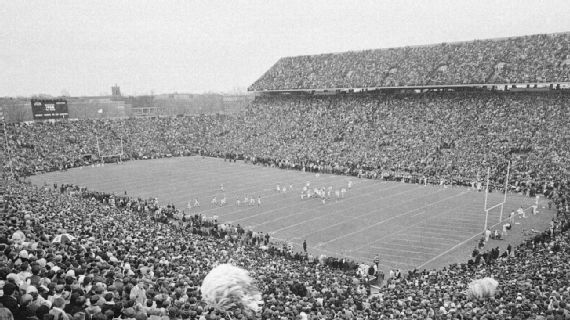
On November 19th, 1966, the first live television broadcast between Hawaii and the mainland took place. It was a football game, the so called “ Game of the Century” between #2 Michigan State and #1 Notre Dame. The game was not shown on national television. The game was shown on tape delay on the west coast and blocked in North and South Dakota, qualifying as a regional broadcast. It was only seen live in the local area, Hawaii, and to HS soldiers in Vietnam.
Weeks before the game, the Kano communication satellite was launched, establishing a live US-Hawaii link for up to eight hours per day, which enabled the game to be broadcast live to the islands. During halftime, color images of Waikiki were broadcast back to the mainland.
The MOBIDIC (Mobile Digital Computer)
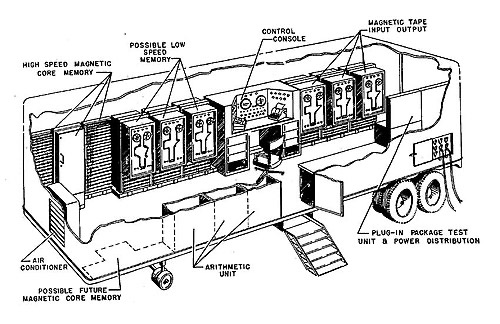
The MOBIDIC (Mobile Digital Computer), developed by Sylvania in the late 1950s for the US Army Signal Corps, was a pioneering, large-scale transistorized computer housed within a semi-trailer truck.
Key Details about the MOBIDIC (Mobile Digital Computer):
- Purpose: Designed as a “field data” computer to process and manage data in battlefield conditions.
- Design & Housing: It was constructed using approximately 32,000 transistors and housed inside a specially designed van-type trailer.
- Power Supply: A second, separate trailer was required to house the power generator for the system.
- Deployment: It was developed as part of the FIELDATA program to standardize computer technology for the US Army.
What It Was Like — The MOBIDIC Era (Late 1950s–Early 1960s)
The Army didn’t step into the computer age with chrome and glass. It stepped into it through a steel trailer parked on frozen ground.
Inside, the MOBIDIC breathed like a furnace — a 10‑ton promise of the future wrapped in riveted aluminum. The hum wasn’t gentle. It was a physical thing, a vibration you felt in your boots before you ever touched a console. Thirty‑two thousand transistors gave off a heat that fogged the windows and warmed the hands of operators who had been standing in the wind moments before.
Engineers in fatigues and white lab coats moved through the narrow aisle with the quiet urgency of people who knew they were working on something unprecedented. Clipboards. Oscilloscopes. FIELDATA printouts. The smell of warm circuitry mixed with diesel from the generator outside — the scent of a new kind of battlefield.
Racks of electronics blinked in steady rhythm, a mechanical heartbeat pulsing through the trailer. For the first time, data didn’t have to travel back to a fixed installation. For the first time, the Army could think in the field.
Soldiers who had grown up with typewriters, carbon paper, and rotary phones found themselves standing inside a machine that felt like science fiction. They learned to trust the blinking lights, the whirring tape drives, the idea that a computer could ride behind a truck and still deliver battlefield intelligence.
It was loud. It was hot. It was industrial. And it was revolutionary.
In that cramped, humming trailer, the Army discovered a truth that would reshape every decade that followed:
Computing didn’t have to stay in a building — it could move with the warfighter.
Inside the MOBIDIC Trailer
Shift the scene: a cold Army proving ground, wind cutting across open concrete. In the center sits a massive semi‑trailer humming like a living creature. Step inside, and the world changes. The air is warm, metallic, faintly oily from the generator hitched behind it.
The MOBIDIC wasn’t sleek. It wasn’t elegant. It was raw computing power — built for war.
Inside the trailer:
- Rows of transistor racks blinked in steady rhythm, a mechanical heartbeat pulsing through the narrow aisle.
- Cooling fans whirred without pause, fighting the heat thrown off by 32,000 transistors.
- The steel floor vibrated underfoot, a constant reminder of the generator feeding the machine’s appetite.
- Operators in headsets typed commands, fed in FIELDATA messages, and monitored printouts that looked like a hybrid of telegraphy and early programming.
For soldiers raised on rotary phones, typewriters, and carbon paper, stepping into that trailer felt like stepping into science fiction. This was the first time the Army had a computer that could move with the battlefield instead of sitting in a fixed building miles away.
It felt powerful — not because it was polished, but because it was possible.
It felt like the beginning of something enormous.
The Emotional Thread Between Them
Across the years, the Hawaii broadcast and the MOBIDIC trailer share the same emotional DNA — that unmistakable feeling of stepping over a threshold. It was the sensation of distance collapsing, of the world suddenly becoming smaller and more connected than it had been the day before.
In Hawaii, it was a football game beamed across the Pacific, arriving in living rooms with a clarity that felt impossible. In the proving ground, it was a 10‑ton computer rolling into the field on wheels, bringing computational power to the edge of the battlefield for the first time.
Different technologies. Different eras. But the same human reaction:
“We’ve never seen anything like this before.”
Both moments carried that quiet shock — the realization that the future wasn’t coming someday. It had just arrived, and people were standing inside it.
When the Future Arrived: Three Stories of Courage, Connection, and Change
Across these stories — a football game carried across the Pacific, a 10‑ton computer humming in a frozen proving ground, and a young sailor leaving Lake Canandaigua for the vastness of Guam — we see the same quiet truth: history advances through the lived experiences of ordinary people standing at the edge of something new. Whether confronting unfamiliar technology, crossing oceans, or stepping into a future they could barely imagine, each person felt the world shift beneath their feet. These moments, separated by decades and shaped by different kinds of courage, share a single emotional thread: the sense of entering uncharted territory and discovering that they were equal to it. Together, they remind us that progress is not only measured in machines or milestones, but in the hearts of those who carried us forward.
Legacy
At the heart of Allan “Al” Chatwin’s remarkable life was the woman he loved and the family they built together. Though he served his country in war and helped advance technologies that shaped the modern world, Al’s greatest joy — and his proudest legacy — was found at home. The friendships he nurtured, and the joy he carried into every room. Al lived a life rich in the things that matter most, and he often said that having a family made him feel like the richest man in the world. To him, family was life’s greatest treasure.
When Al returned home from World War II, he met and married a young widow whose first husband had died from wounds suffered at Iwo Jima. Their marriage was a partnership built on tenderness, patience, and unwavering devotion. Al loved his wife deeply — not with grand gestures, but with the steady, everyday faithfulness that defines a life shared well. Together, they created a home grounded in love, respect, and quiet strength.
With courage and a generous heart, Al adopted her four children as his own, giving them the stability and affection they had lost. Later, he and his wife welcomed two more daughters, Debbie and Cindy, completing a family bound not by circumstance, but by choice, commitment, and enduring love. Their home was a place where laughter came easily, where kindness was taught by example, and where every child knew they were cherished.
Their home was filled with warmth, teasing, and the kind of gentle humor that only deep love makes possible. Al affectionately called his grandchildren his “Little Turkeys,” a nickname that became a cherished family tradition. In return, they lovingly called him “Turkey Paw Paw,” later simply “Turkey”—a name that carried decades of memories, mischief, and affection. It was a title he wore with pride, because it came from the people who mattered most.
But Al’s love didn’t stop at the walls of his home. He believed in the power of community and friendship, and he lived those values every day. He was the neighbor who showed up, the friend who listened, the man who offered help before being asked. His friendships were steady and lifelong, built on trust, loyalty, and the quiet kindness that defined his character. Whether sharing stories, lending a hand, or simply being present, Al strengthened every community he touched.
Professionally, Al stood at the forefront of some of the most important technological advancements of his era. After the war, he trained in electronics and joined Bell Aircraft, later working on missile systems and Flight Carrier Automatic Landing Systems that guided aircraft safely to the runway centerline — groundbreaking work in aviation.
He then joined Sylvania Electronic Radar Systems, helping develop radar training trailers that mimicked enemy signals so Air Force crews could train effectively during the early Cold War. His work strengthened national defense and shaped the next generation of radar technology.
One of the most remarkable chapters of Al’s career unfolded on the North Shore of Hawaii, where he worked at an early satellite receiving station. There, he played a role in a moment that changed communication history. On November 19, 1966, Hawaii received its first live television broadcast from the mainland — the legendary “Game of the Century” between #1 Notre Dame and #2 Michigan State. While the game was not shown nationally and aired only on tape delay on the West Coast, it was broadcast live to Hawaii and to American service members in Vietnam. This breakthrough was made possible by the newly launched communications satellite that created a live U.S.–Hawaii link. During halftime, color images of Waikiki were transmitted back to the mainland, demonstrating the two‑way potential of satellite technology. Al was part of the team that made this historic moment possible — a moment that signaled the dawn of modern global broadcasting.
As the years passed, Al and his wife watched their family grow into a legacy all its own: 24 grandchildren, 55 great‑grandchildren, and 17 great‑great‑grandchildren with a legacy that hasn’t finished growing. —each one a living testament to the strength of the foundation they built together. Their love did not just create a family; it created a lineage.
To his family, Al was more than a veteran, more than an innovator, more than a witness to history.
He was a devoted husband, a loving father, a steady protector, a loyal friend, and the gentle heart of their home. His love for his wife shaped the way he loved his children. His devotion to his family shaped the way they love one another. His commitment to community shaped the way they show up for others. And his laughter and smile — bright, warm, unforgettable — shaped the way they remember him. A love that continues to echo through every generation that carries his name.