
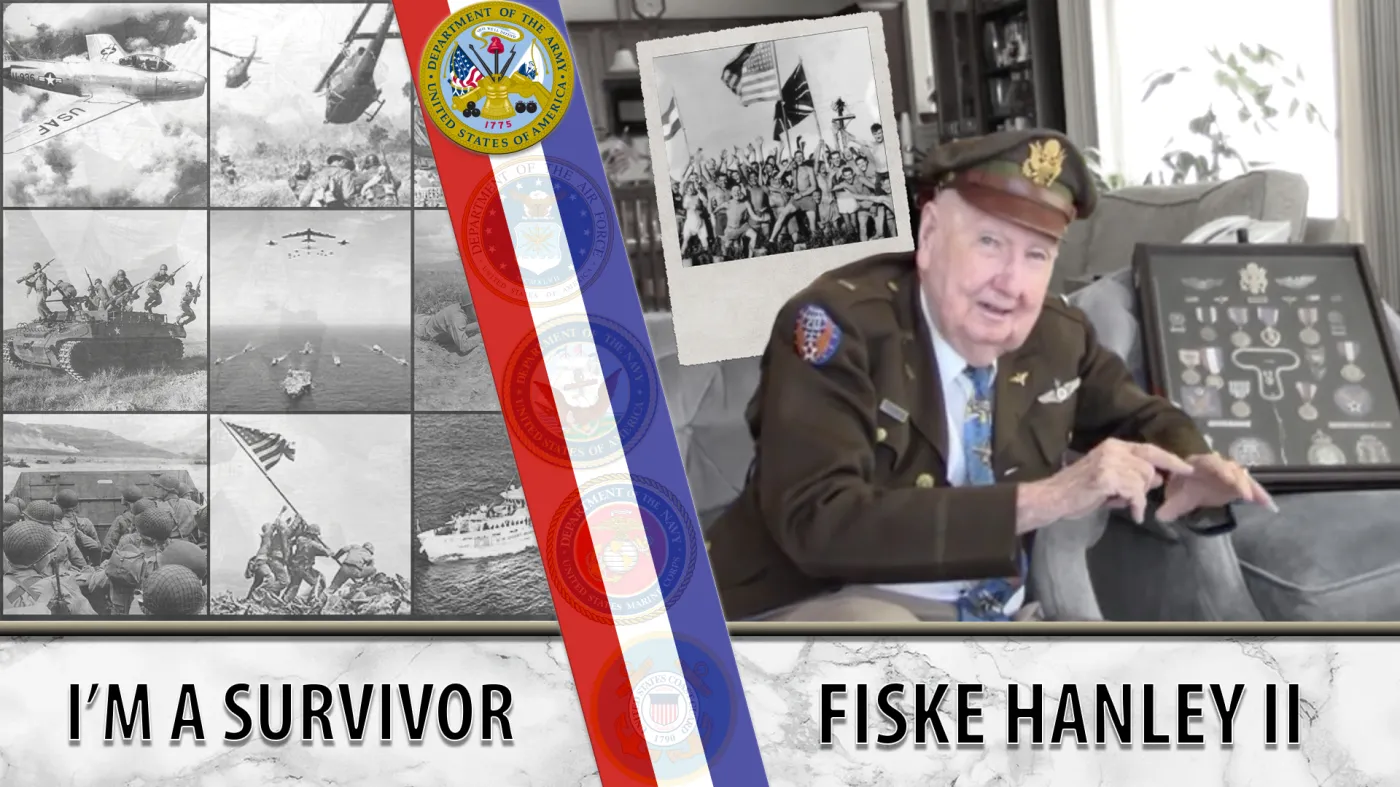
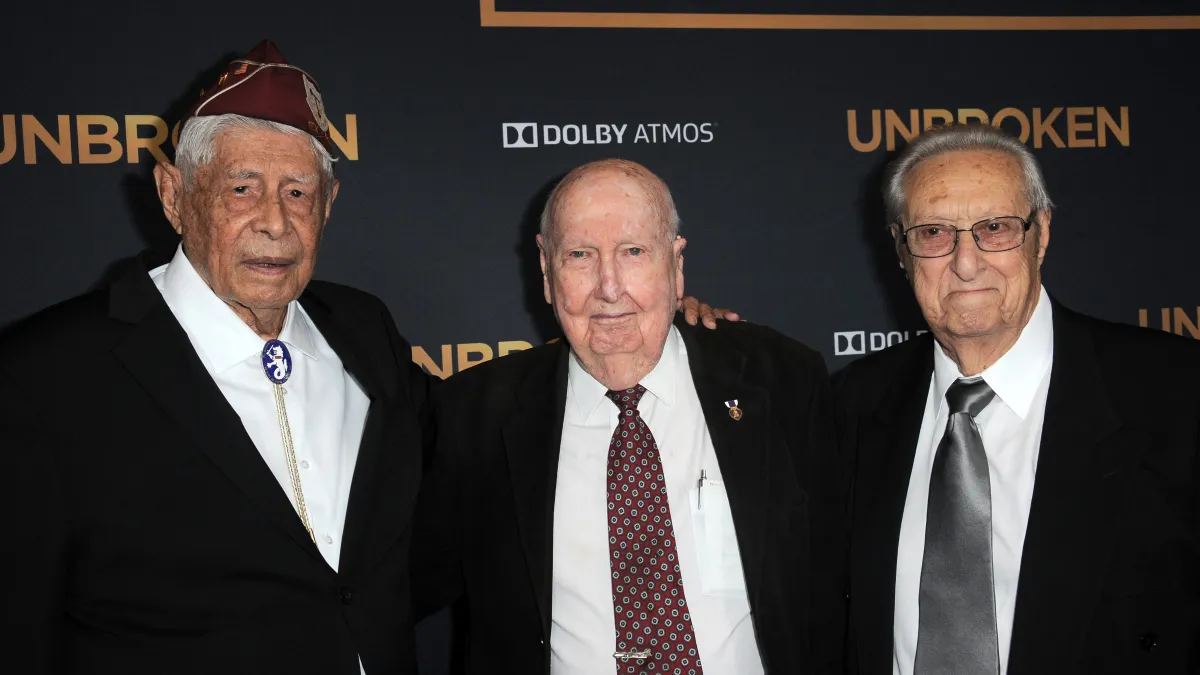
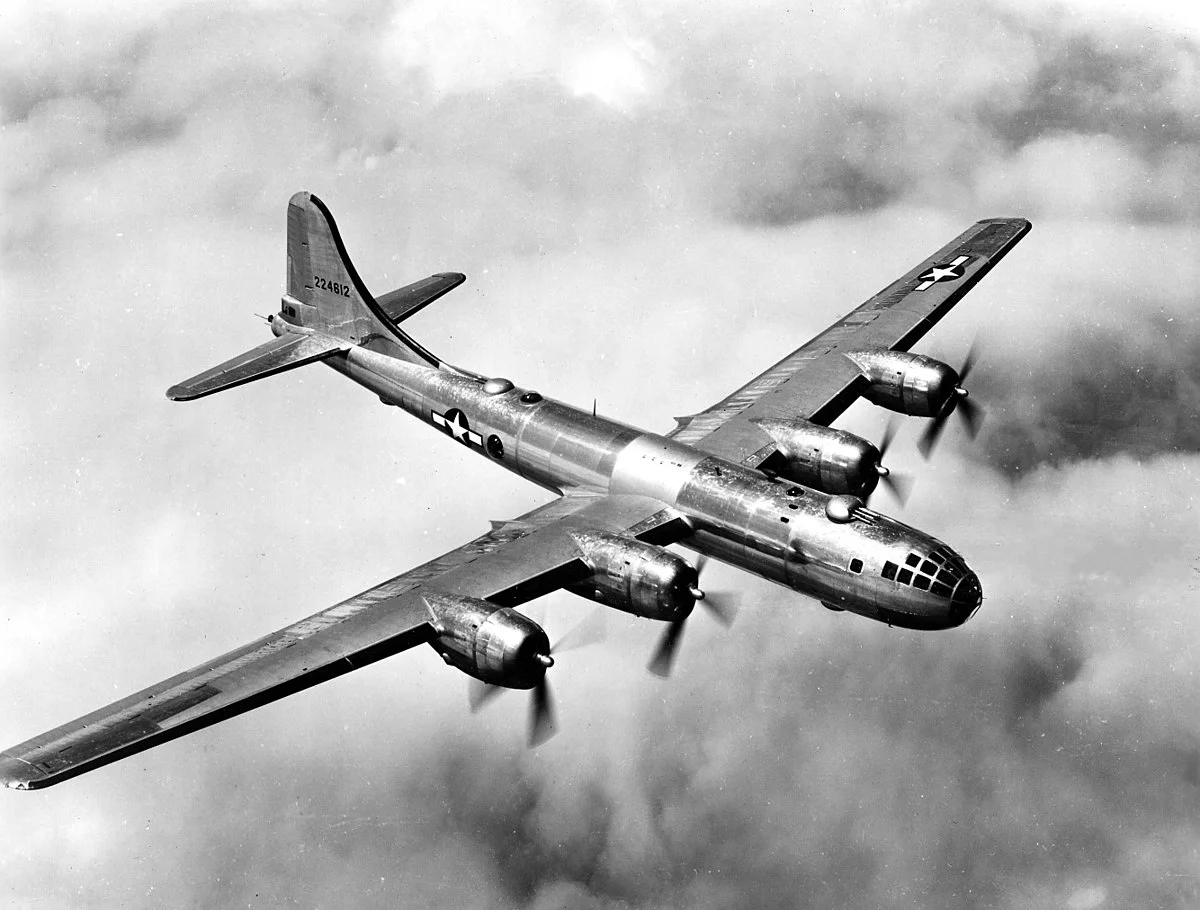
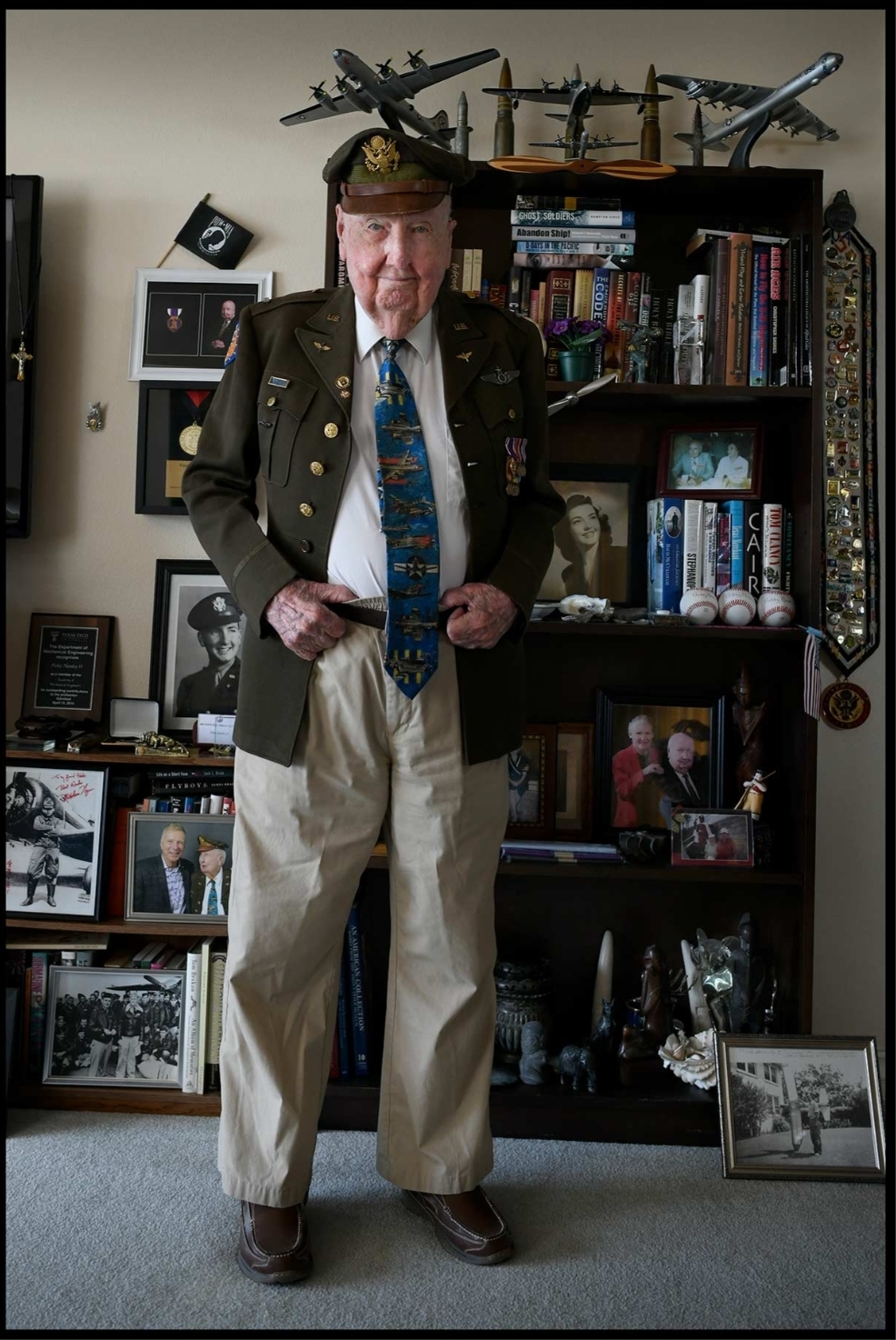
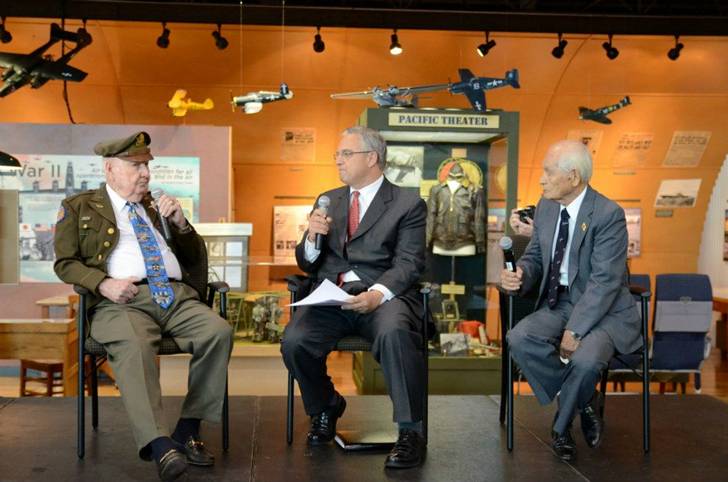
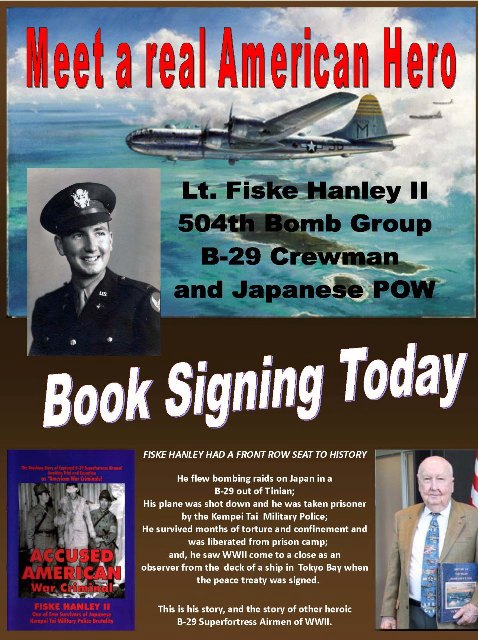
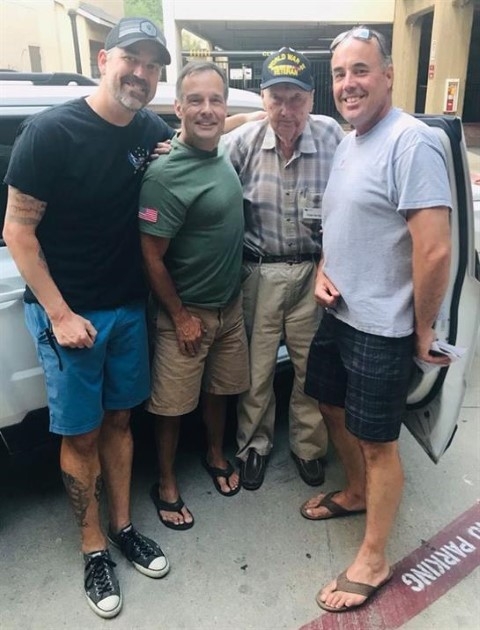
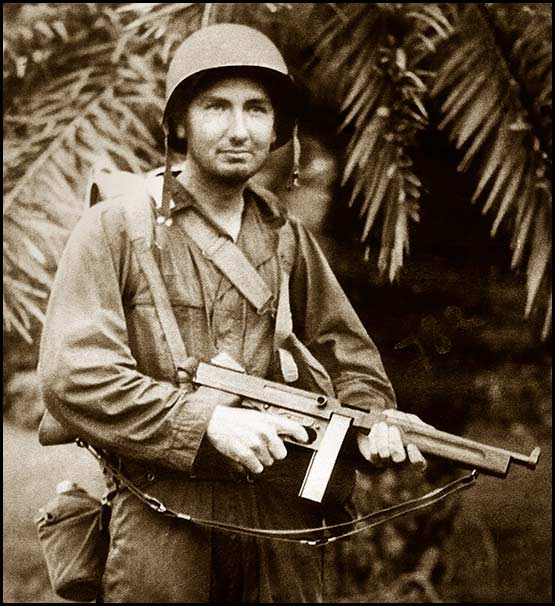
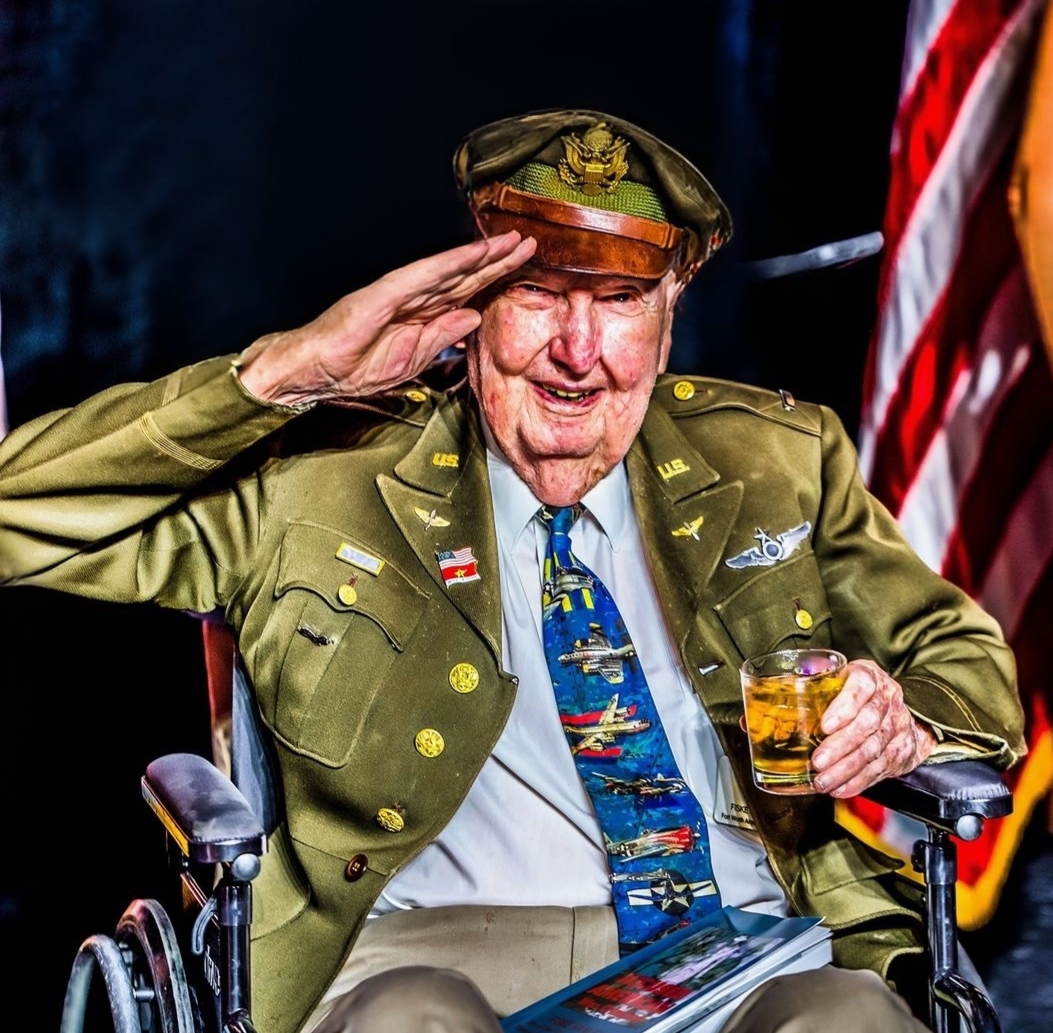
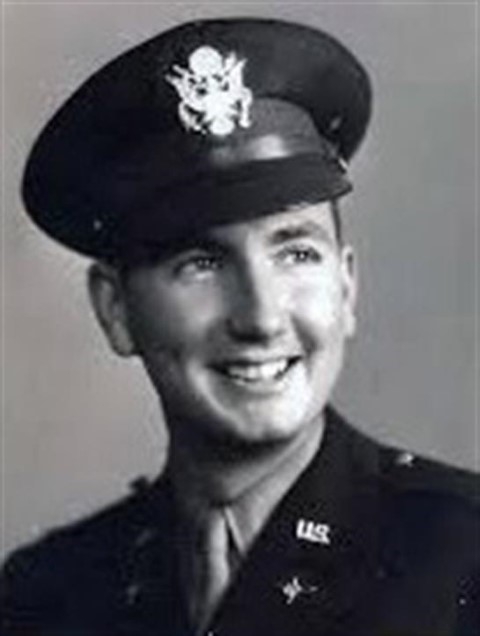
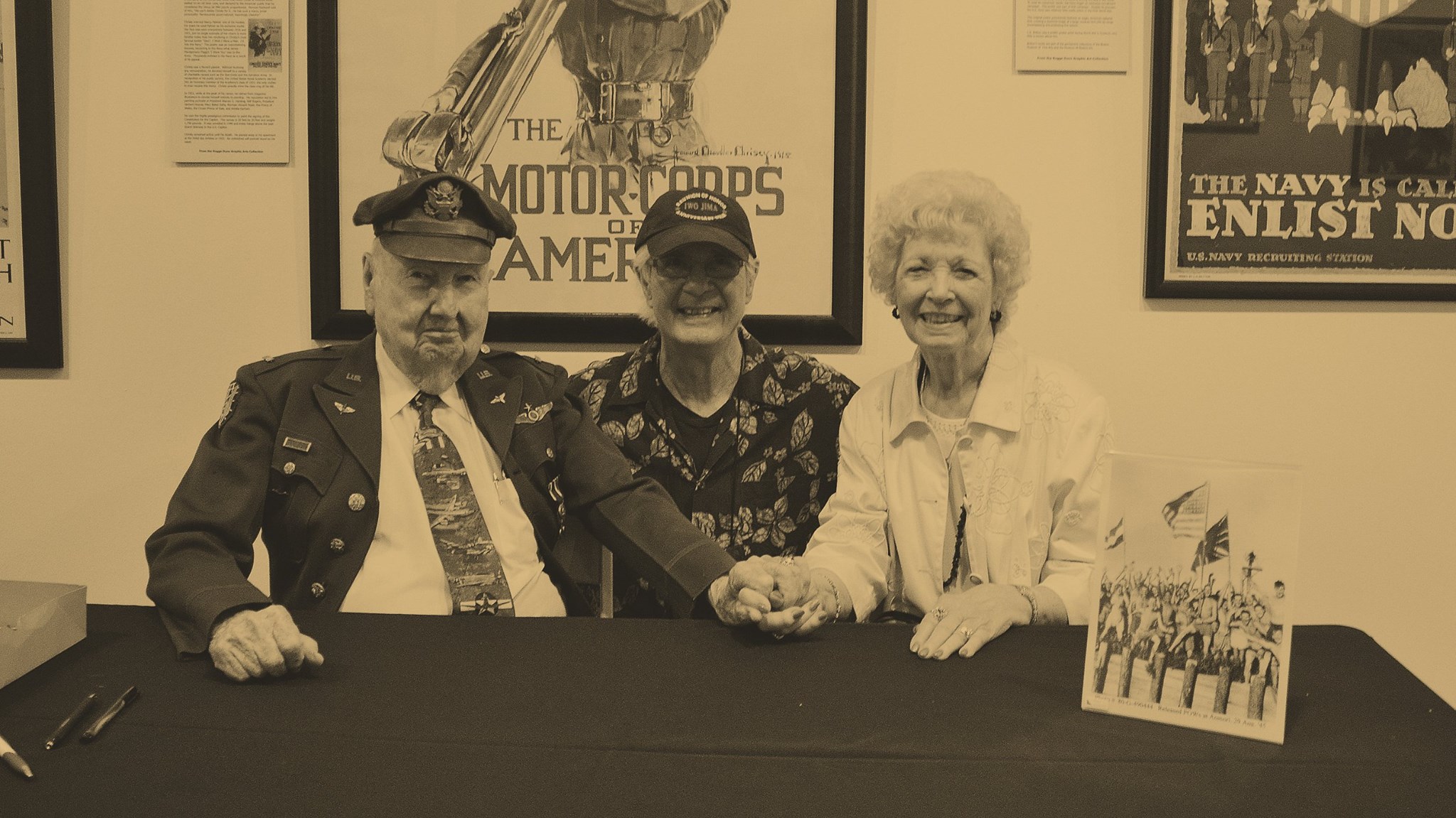
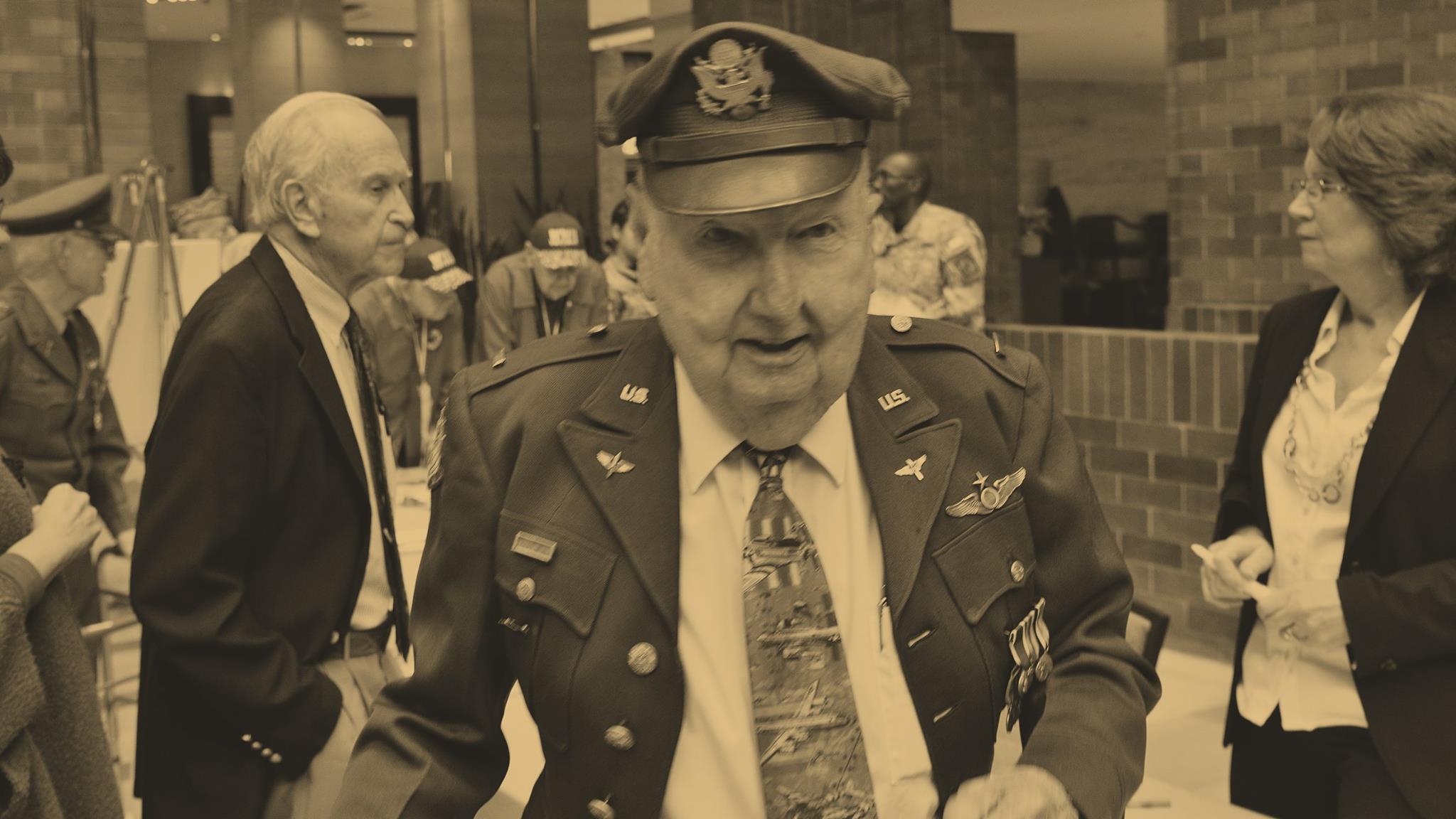
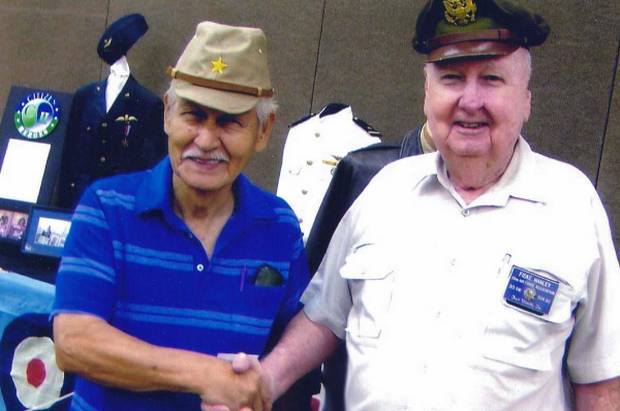
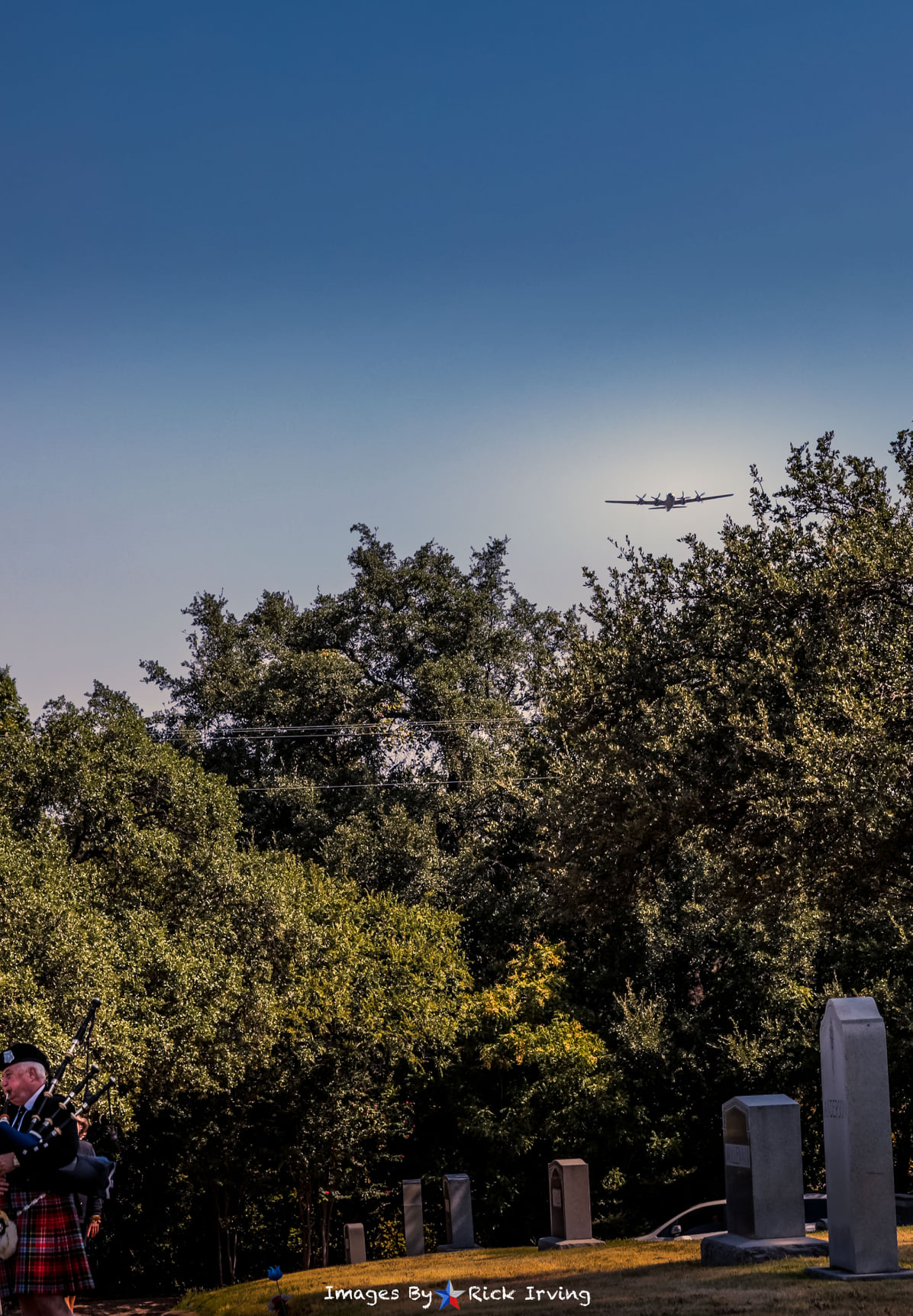

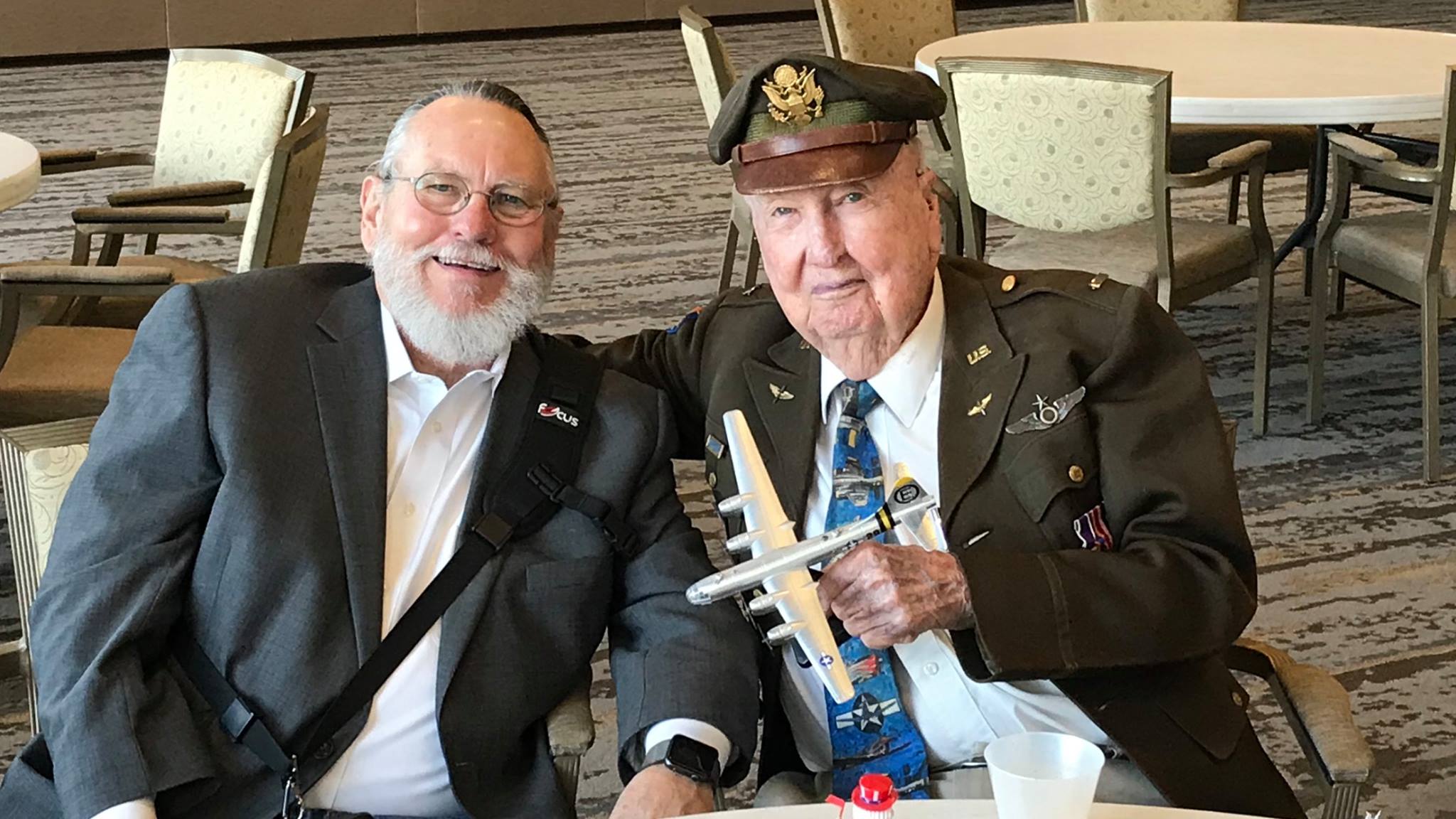
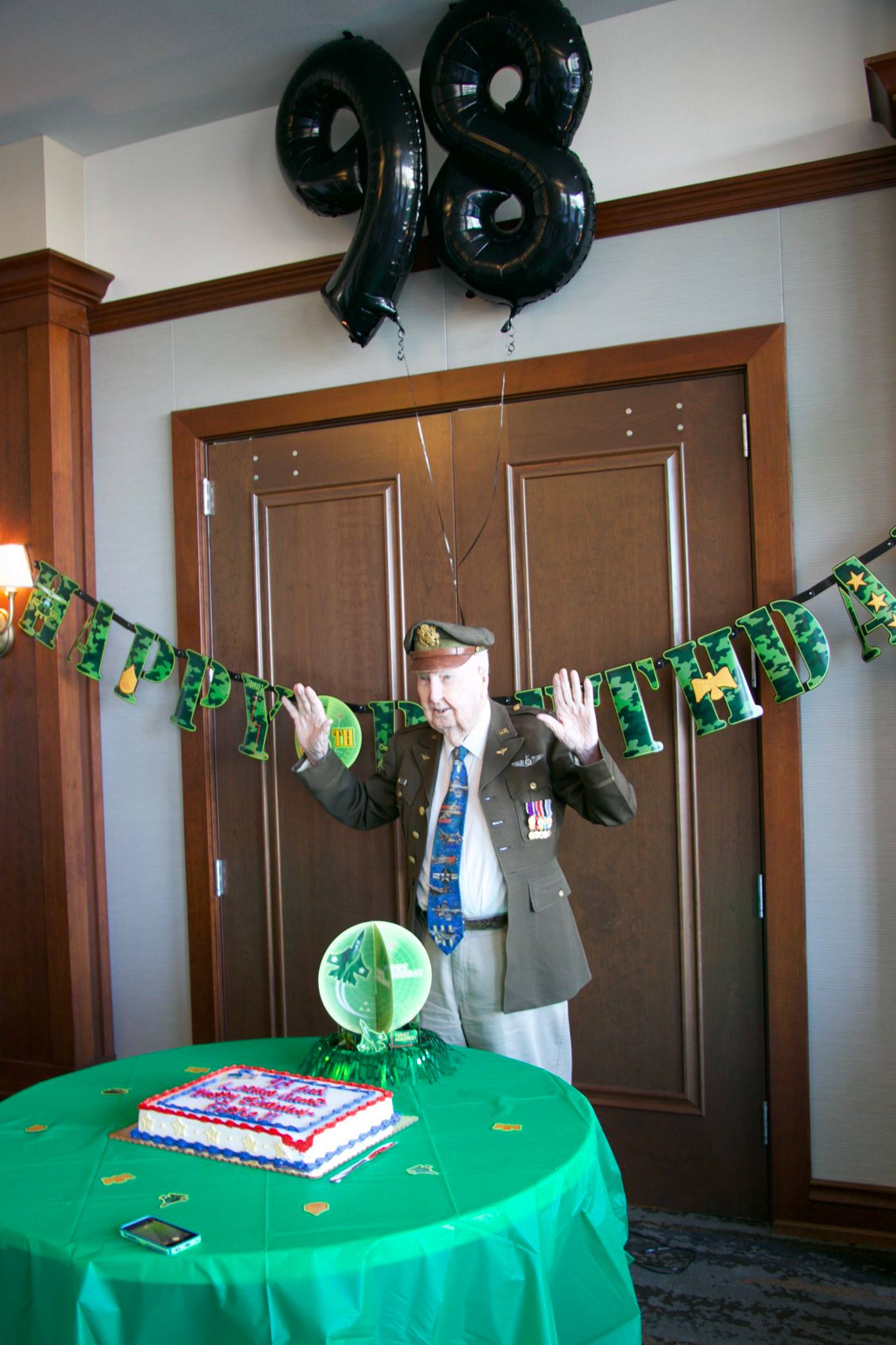
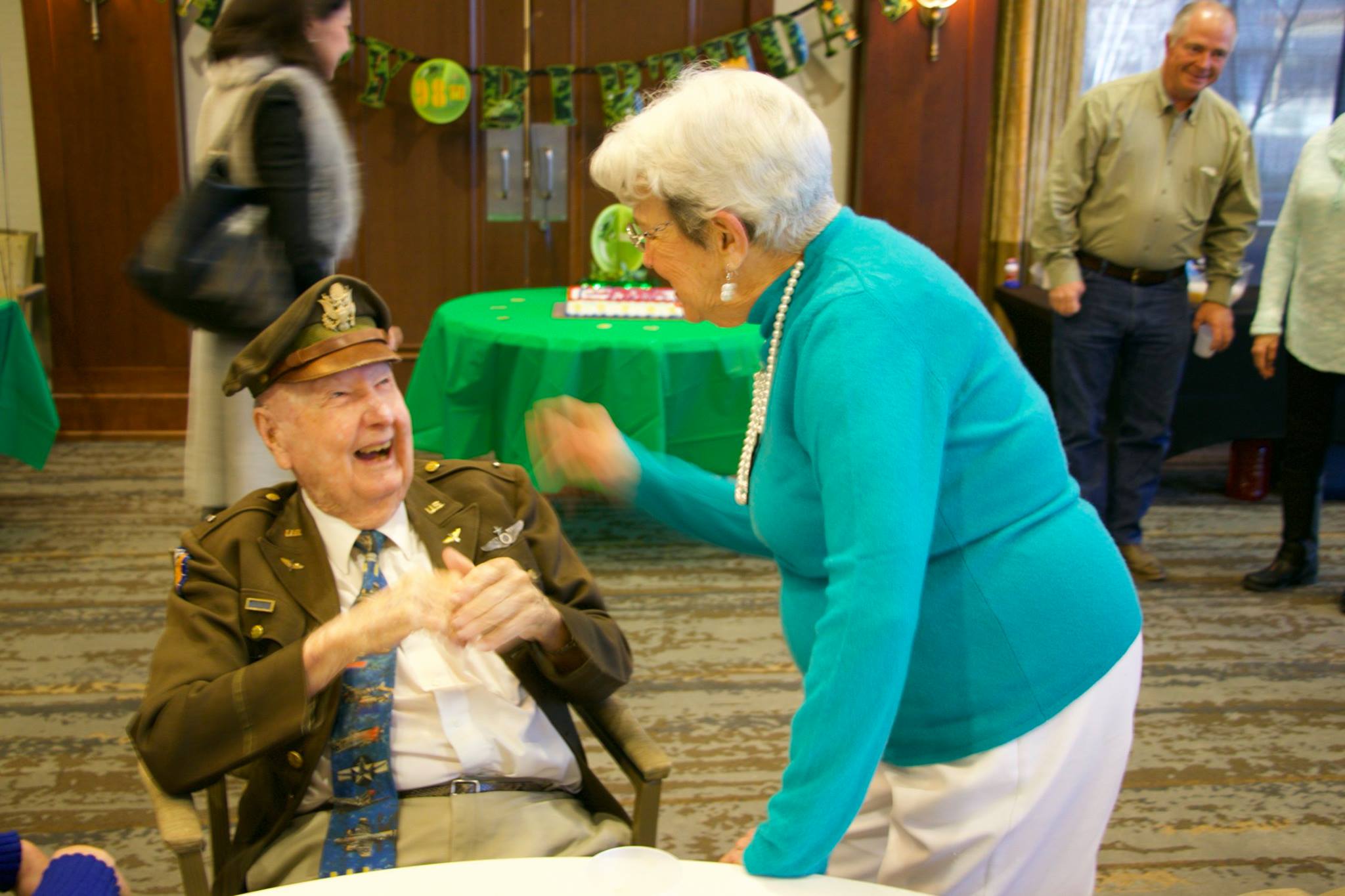
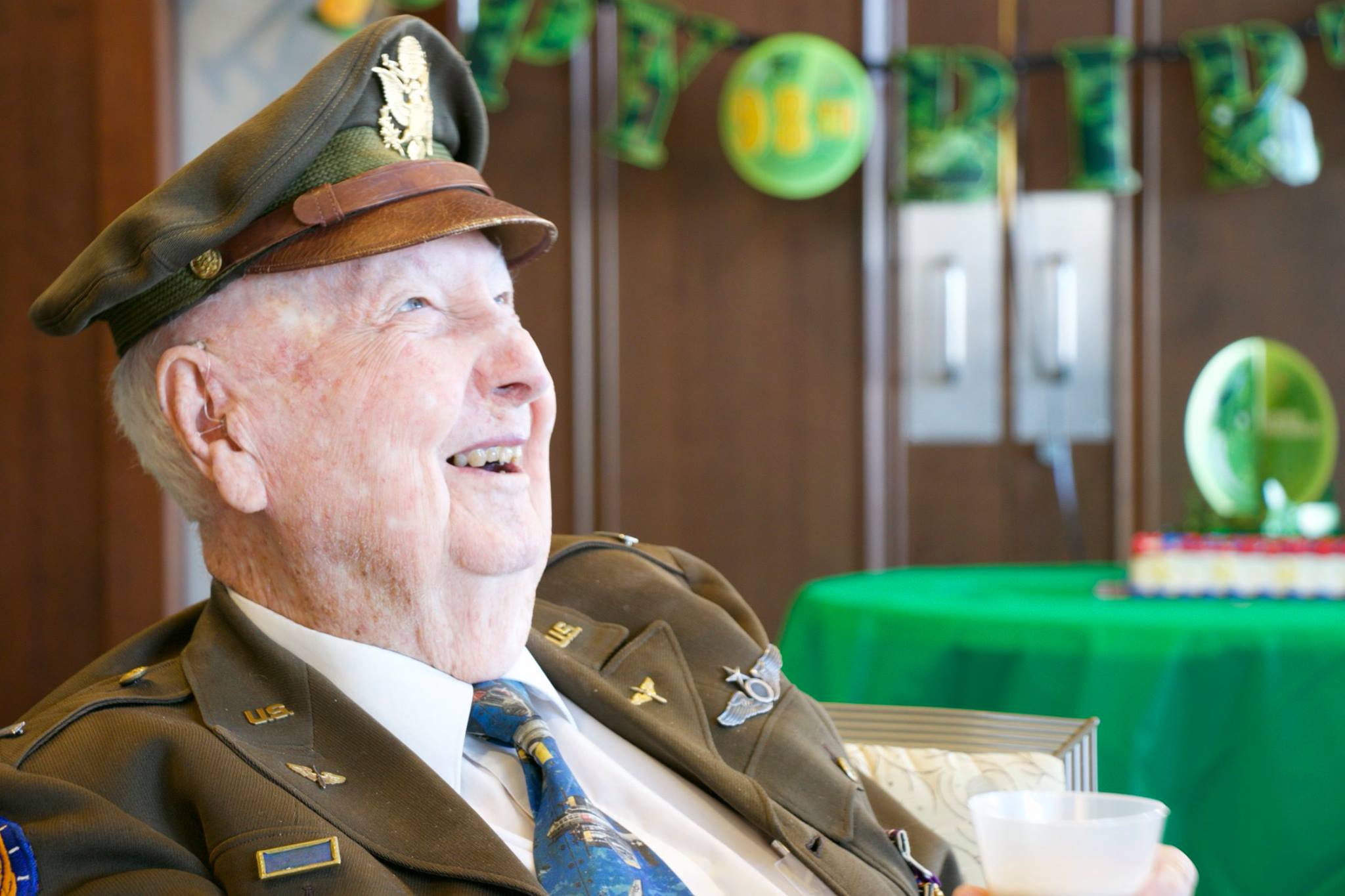
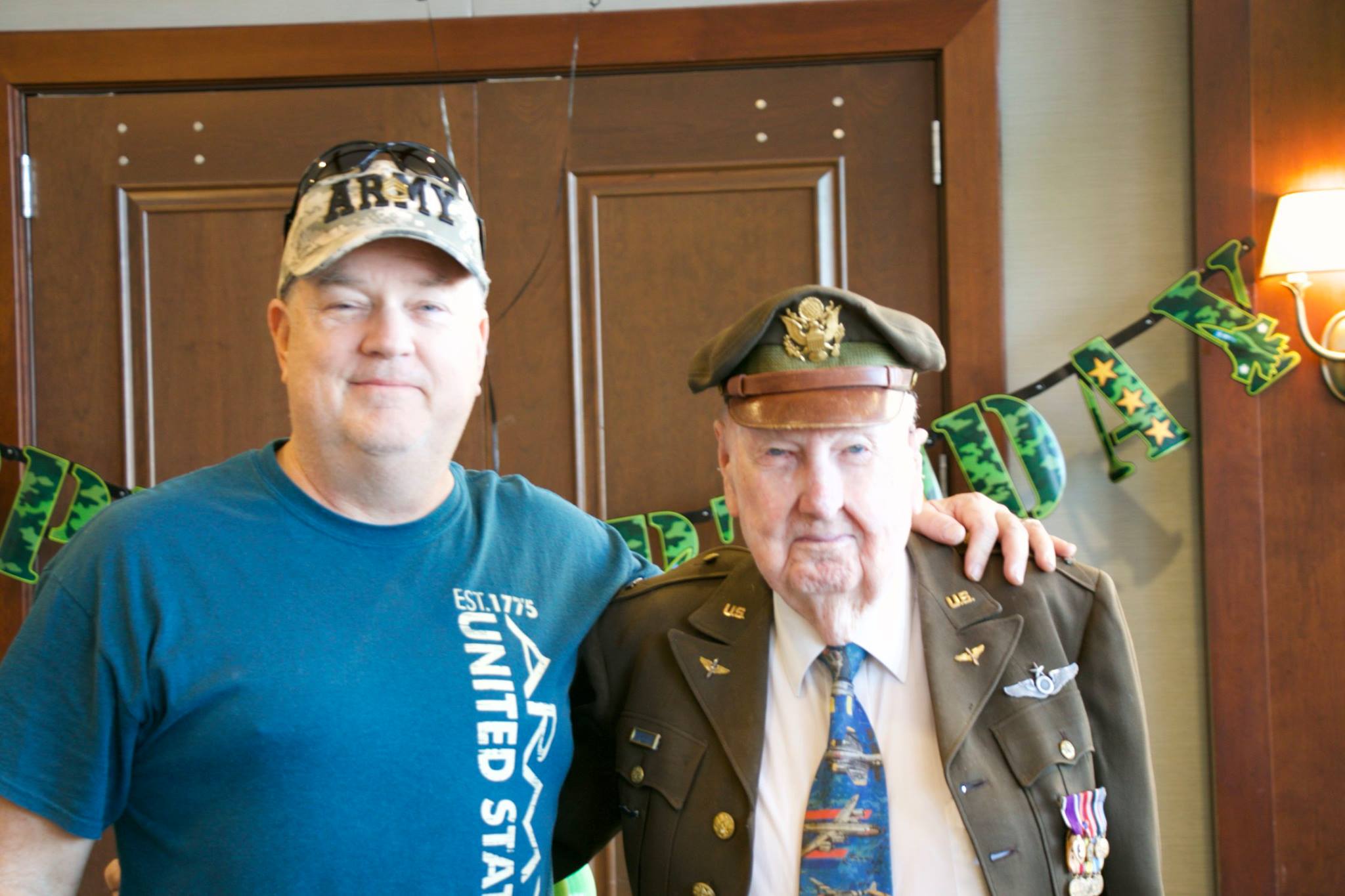
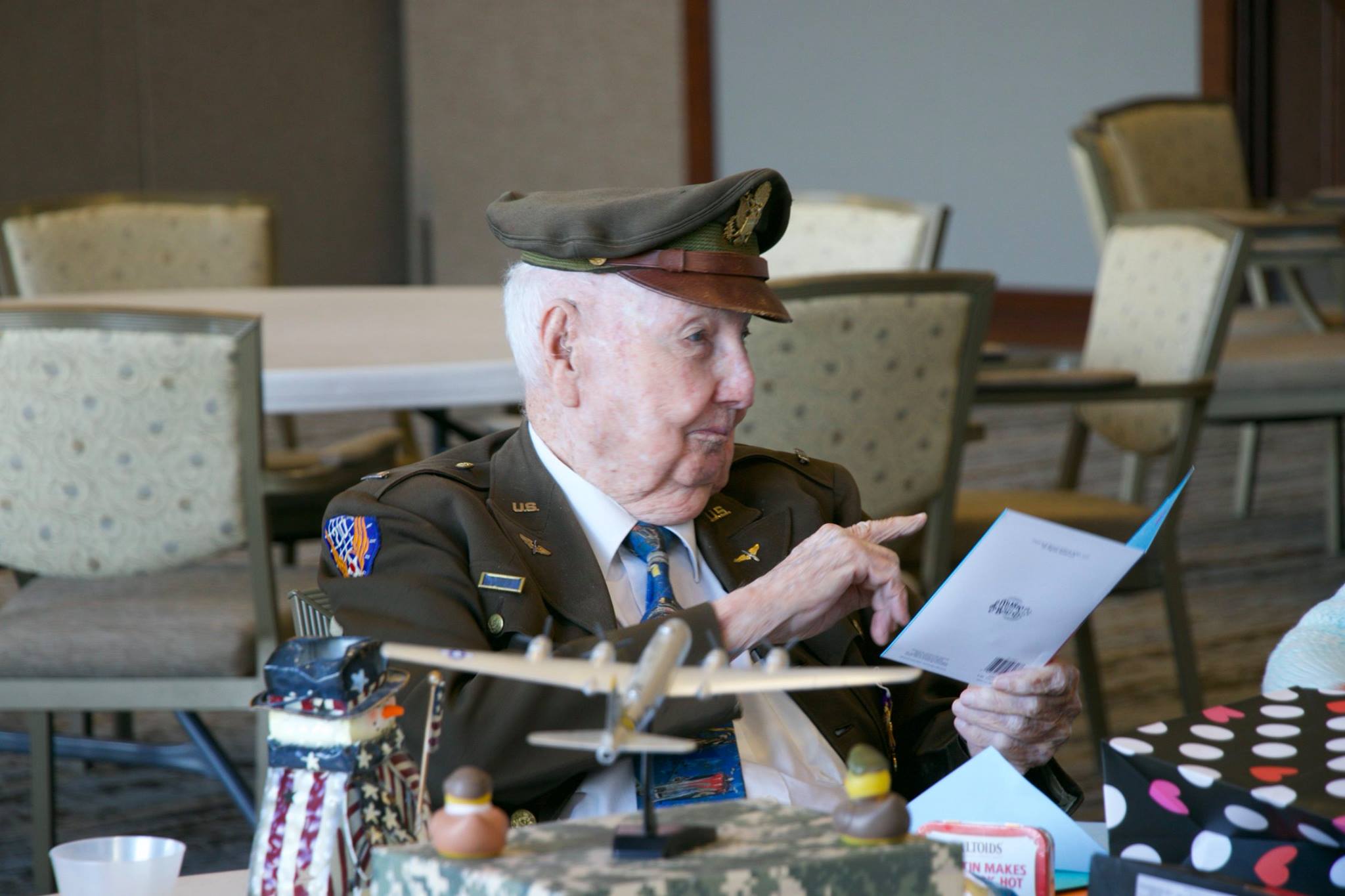
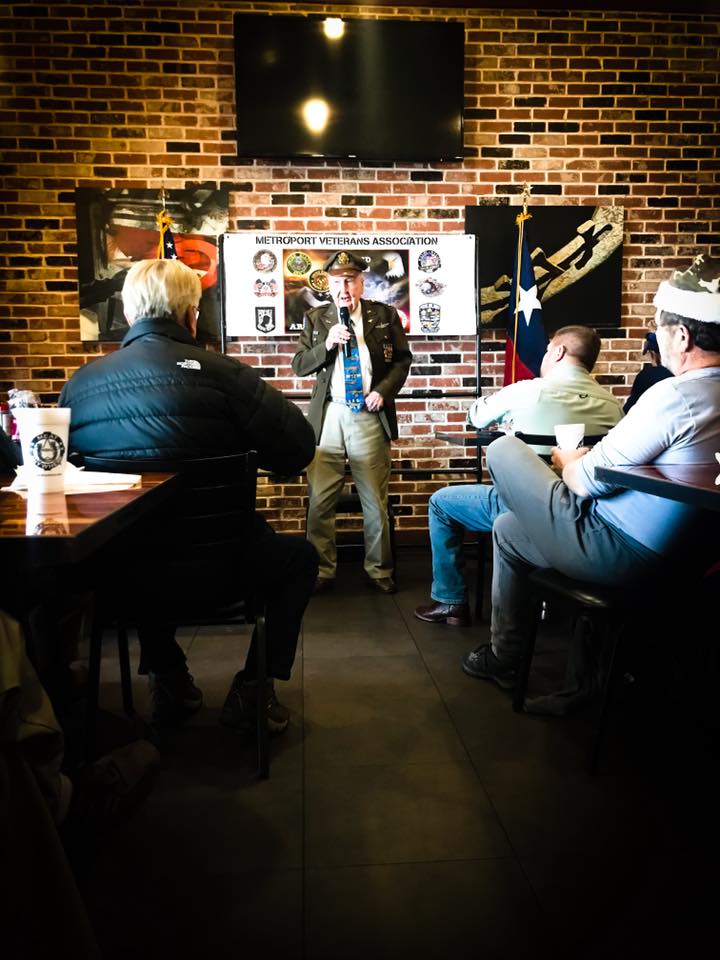
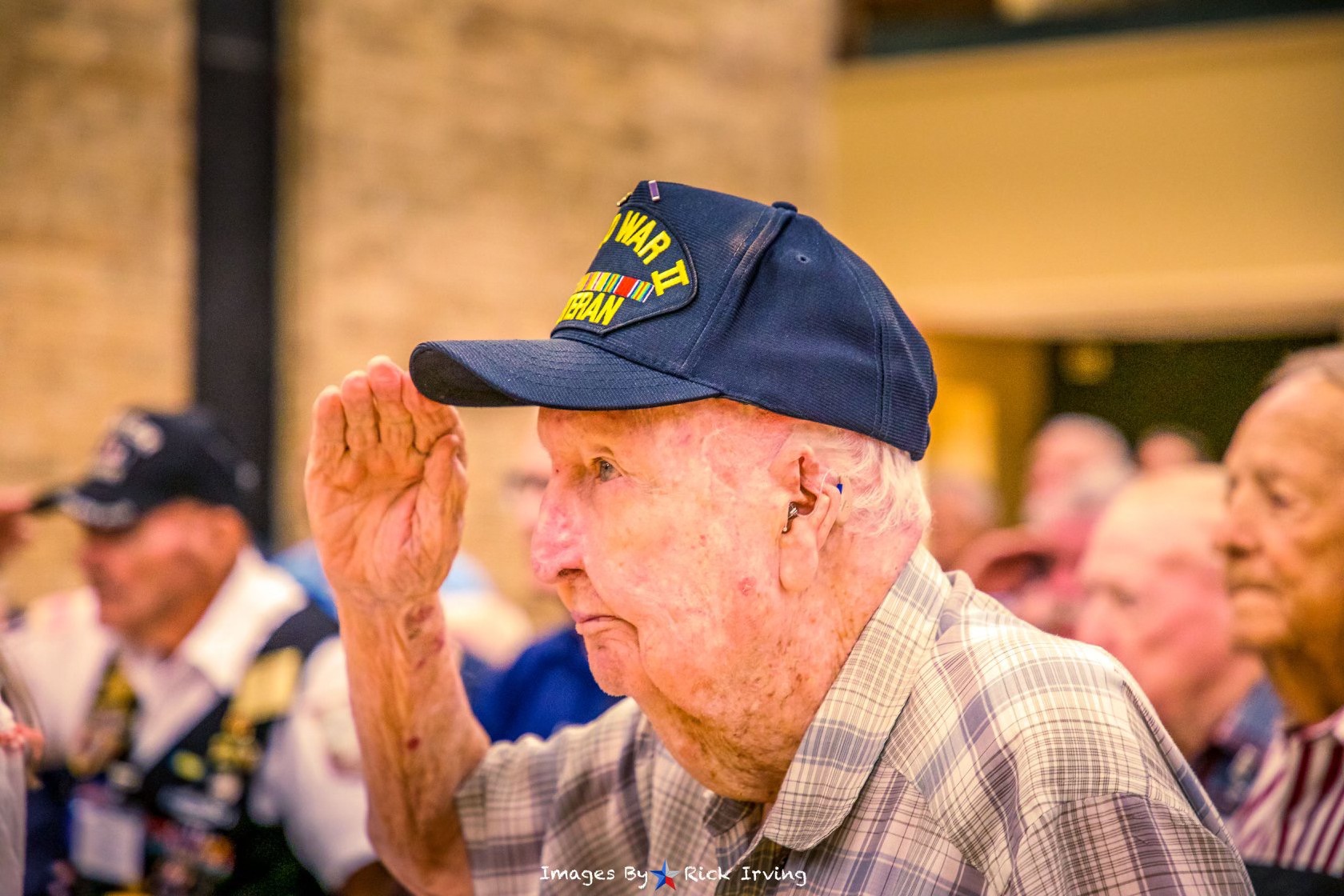
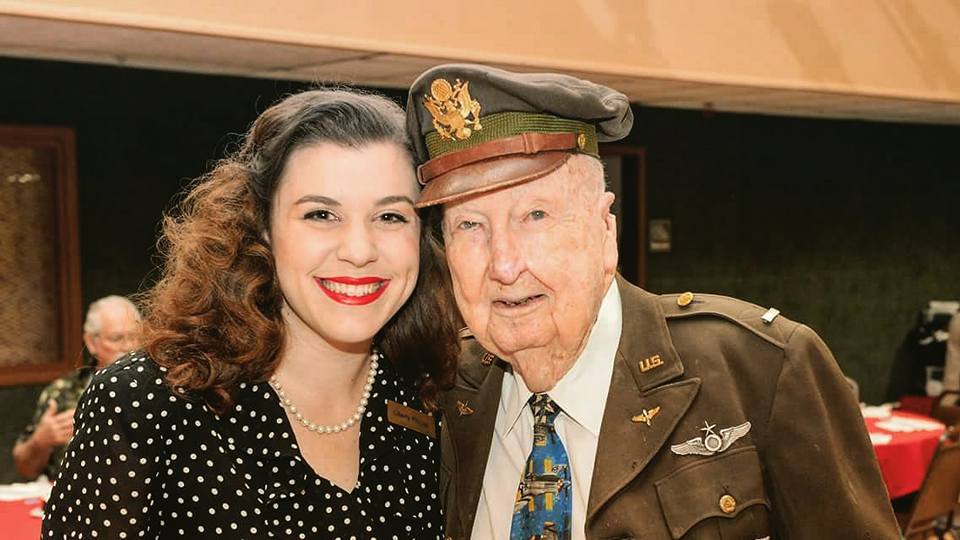
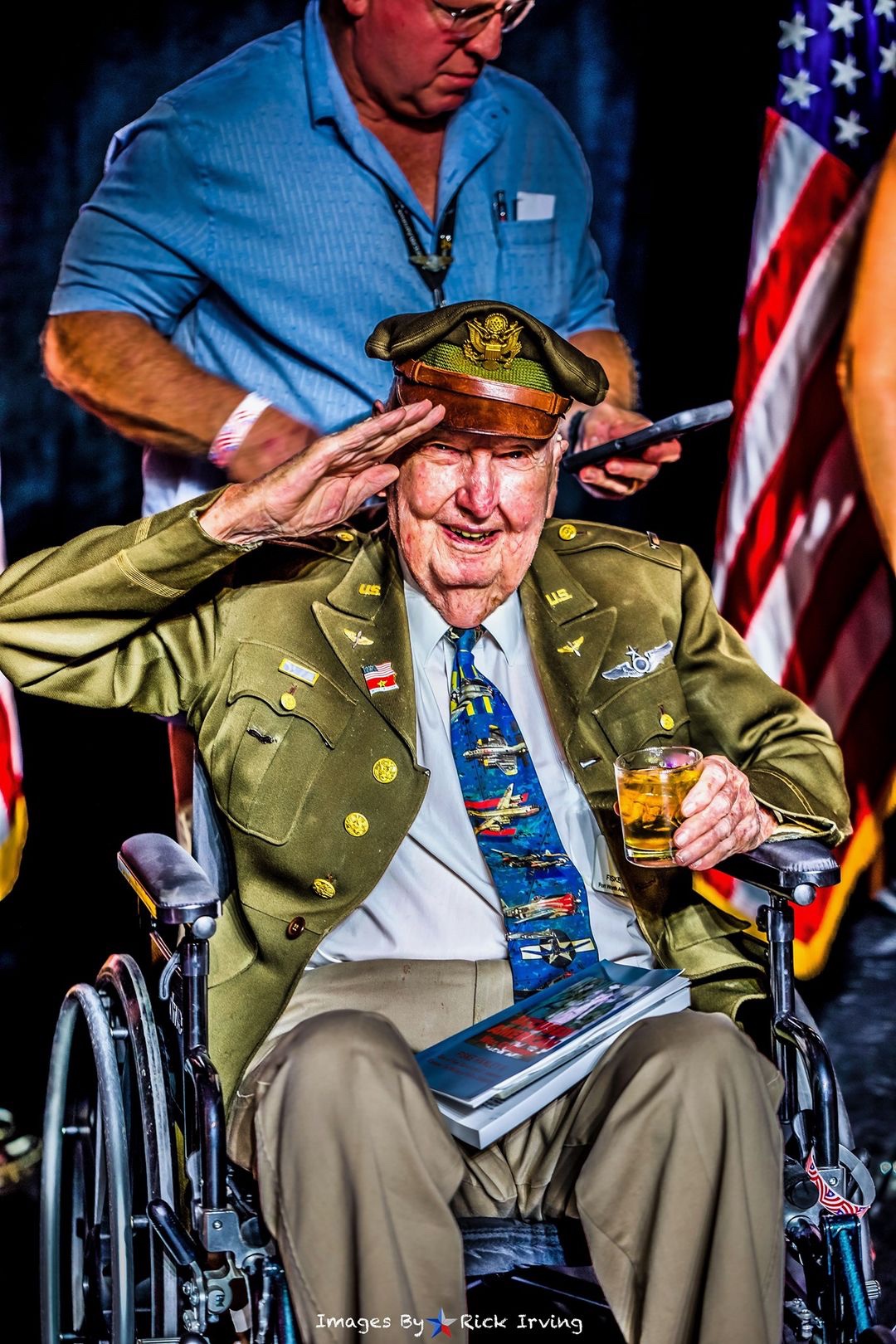
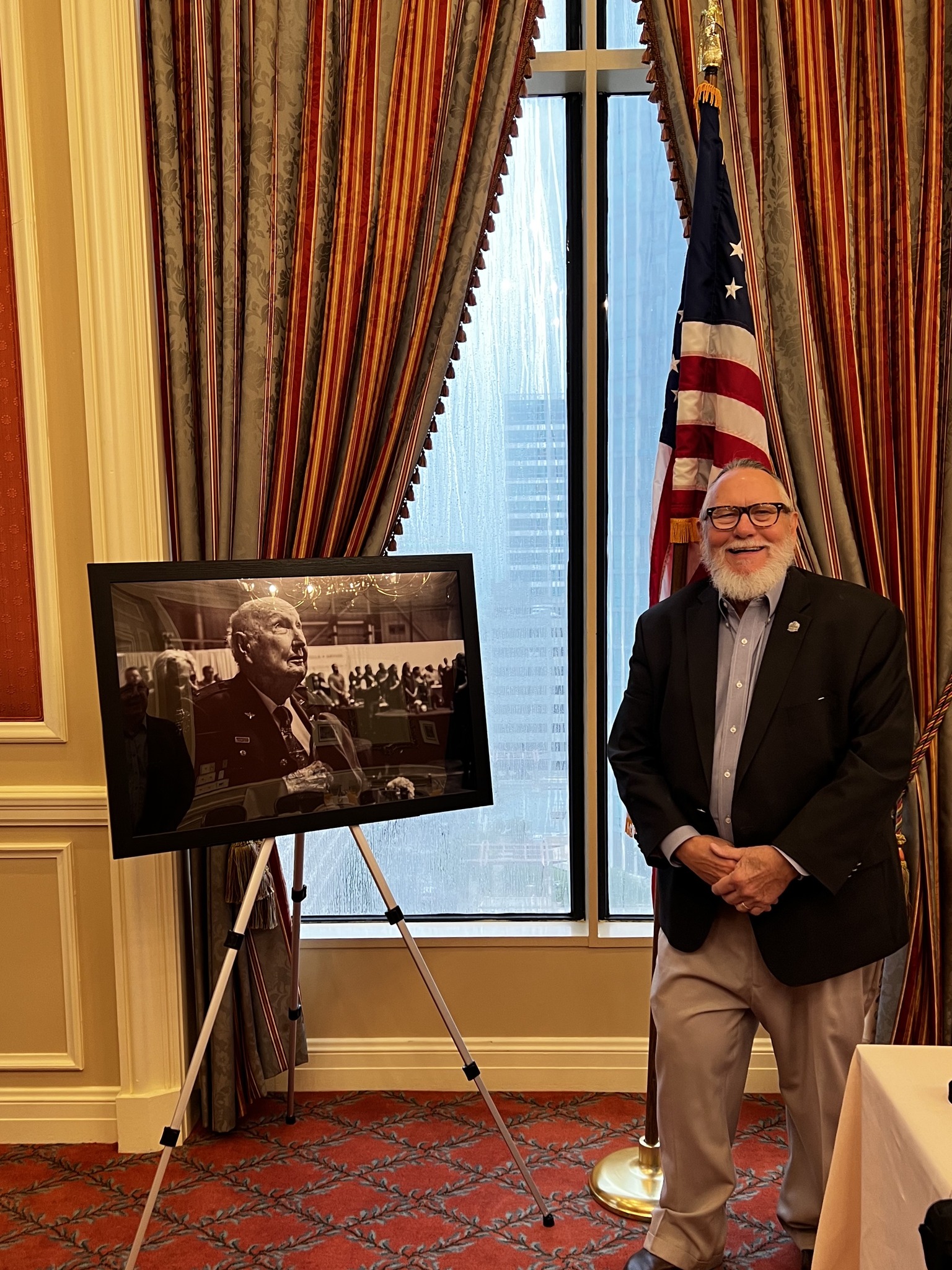
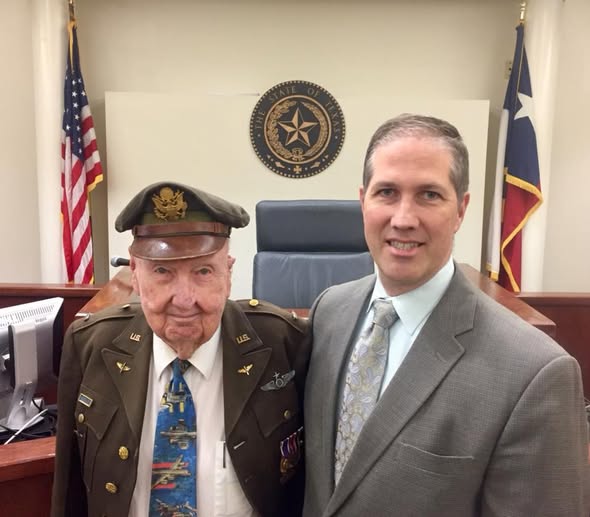
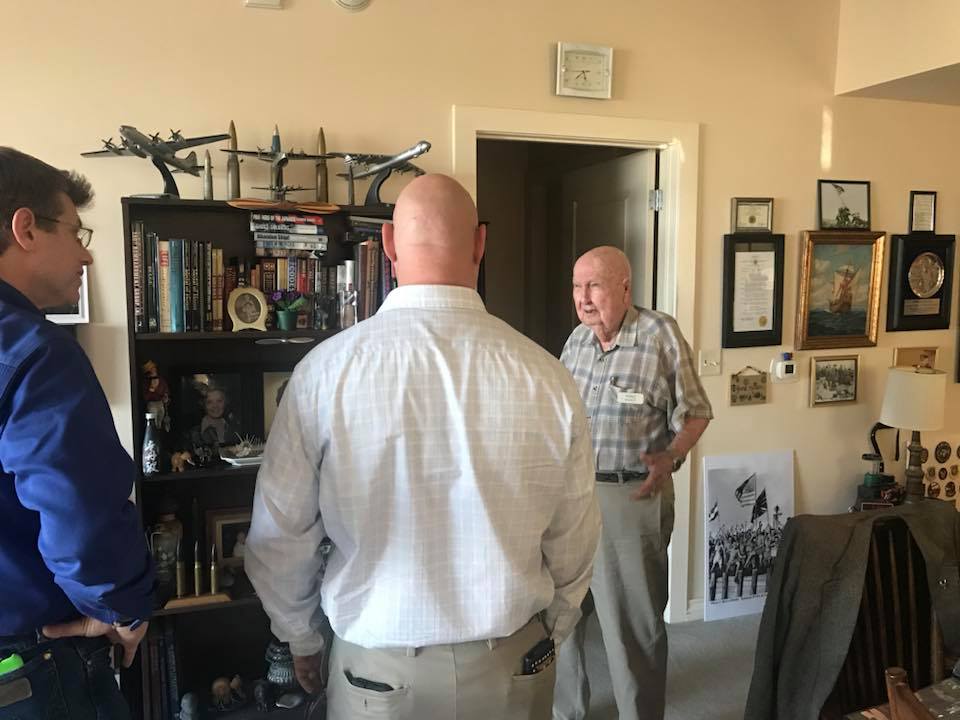
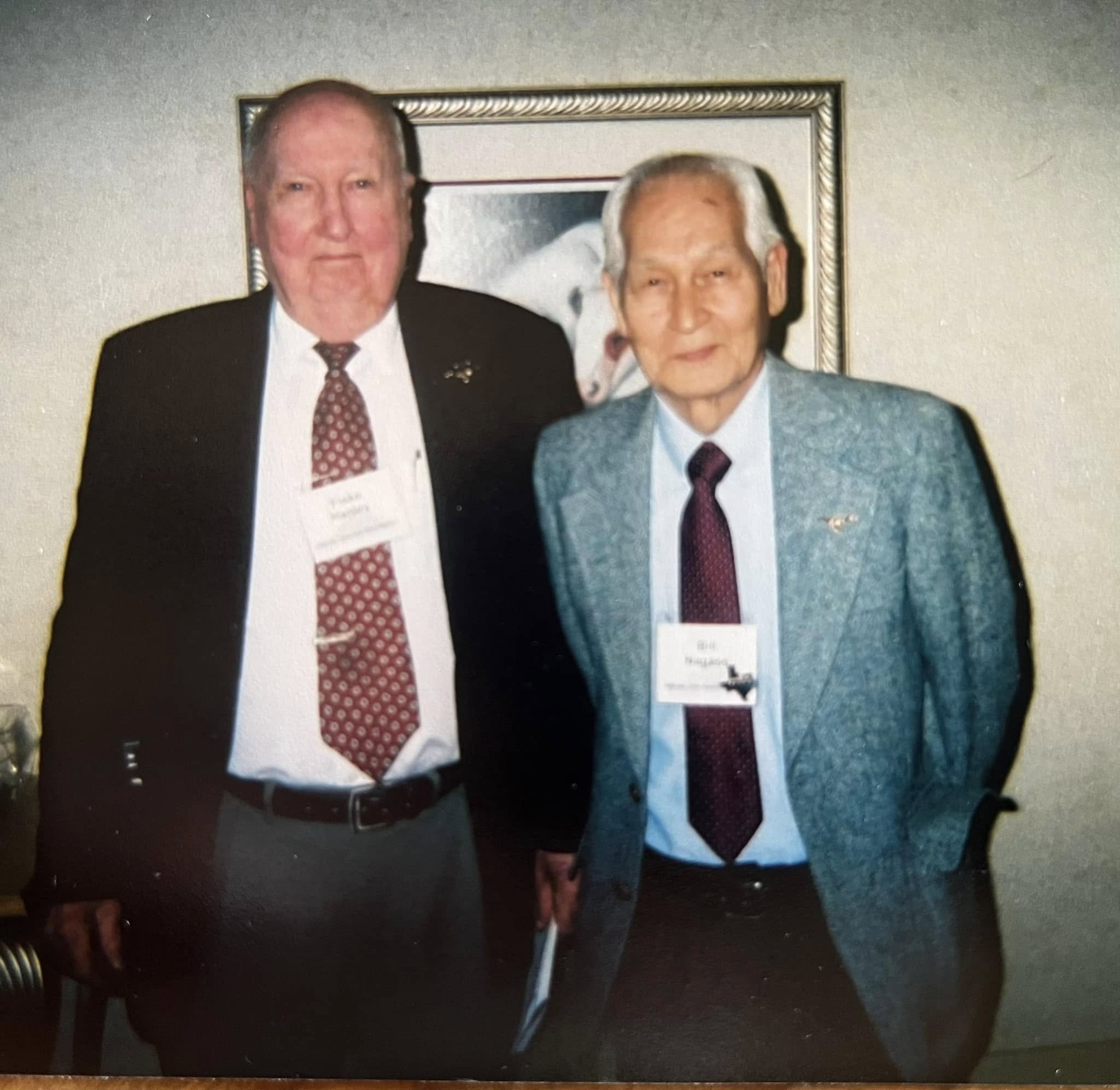
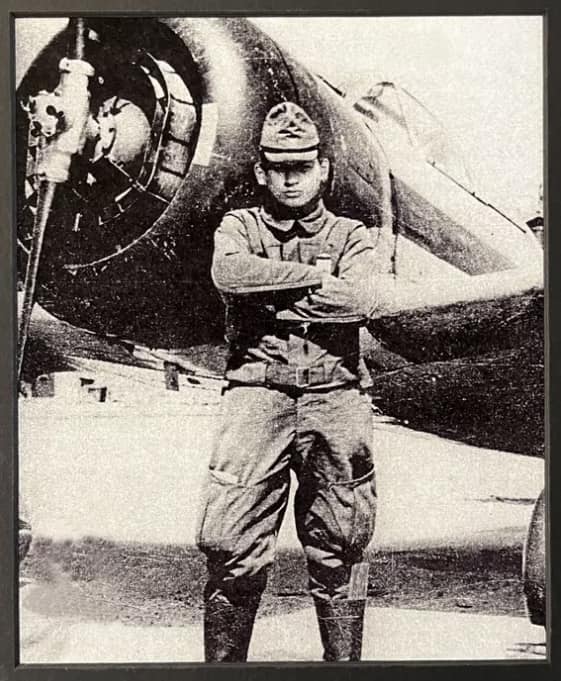
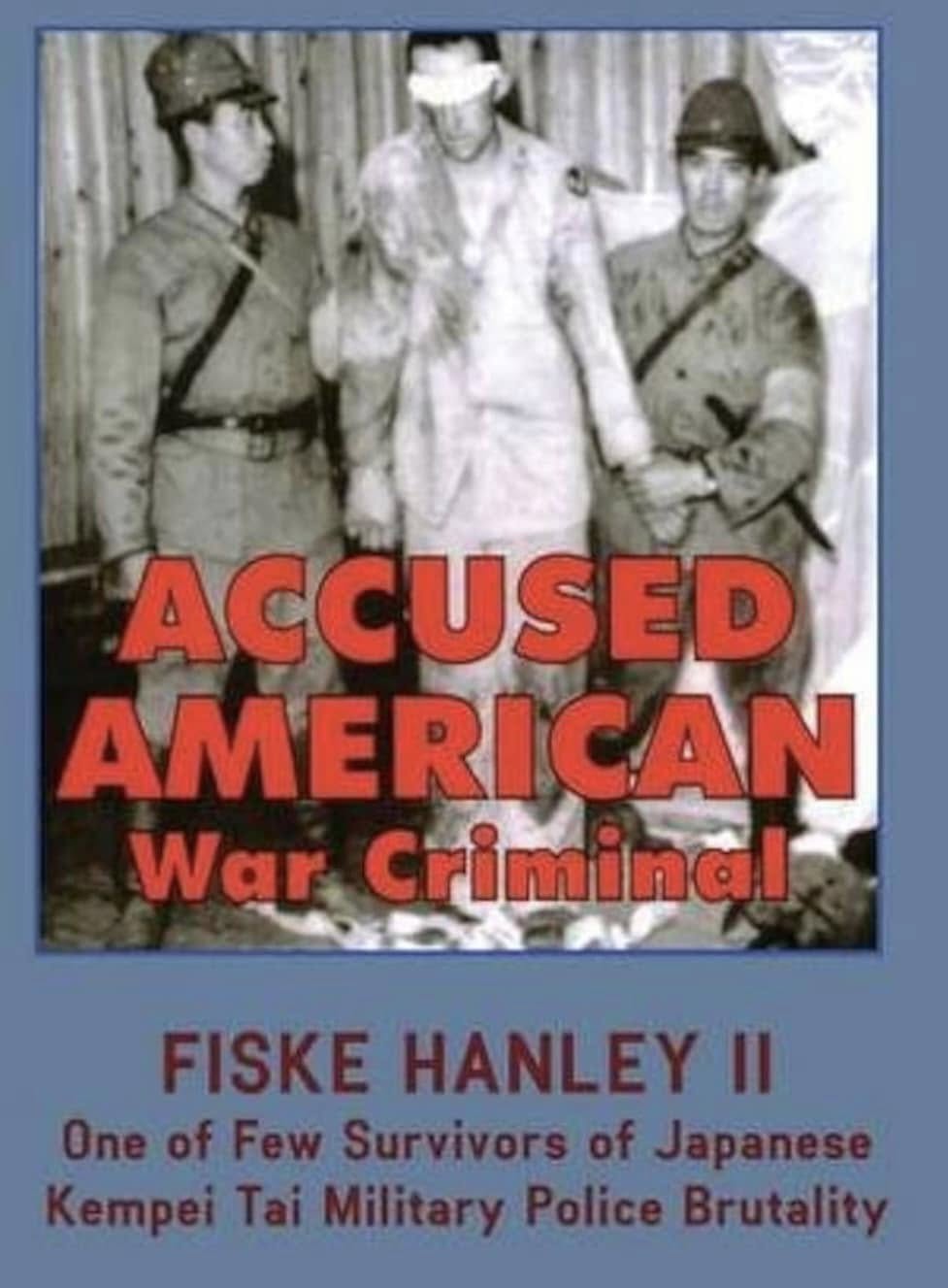
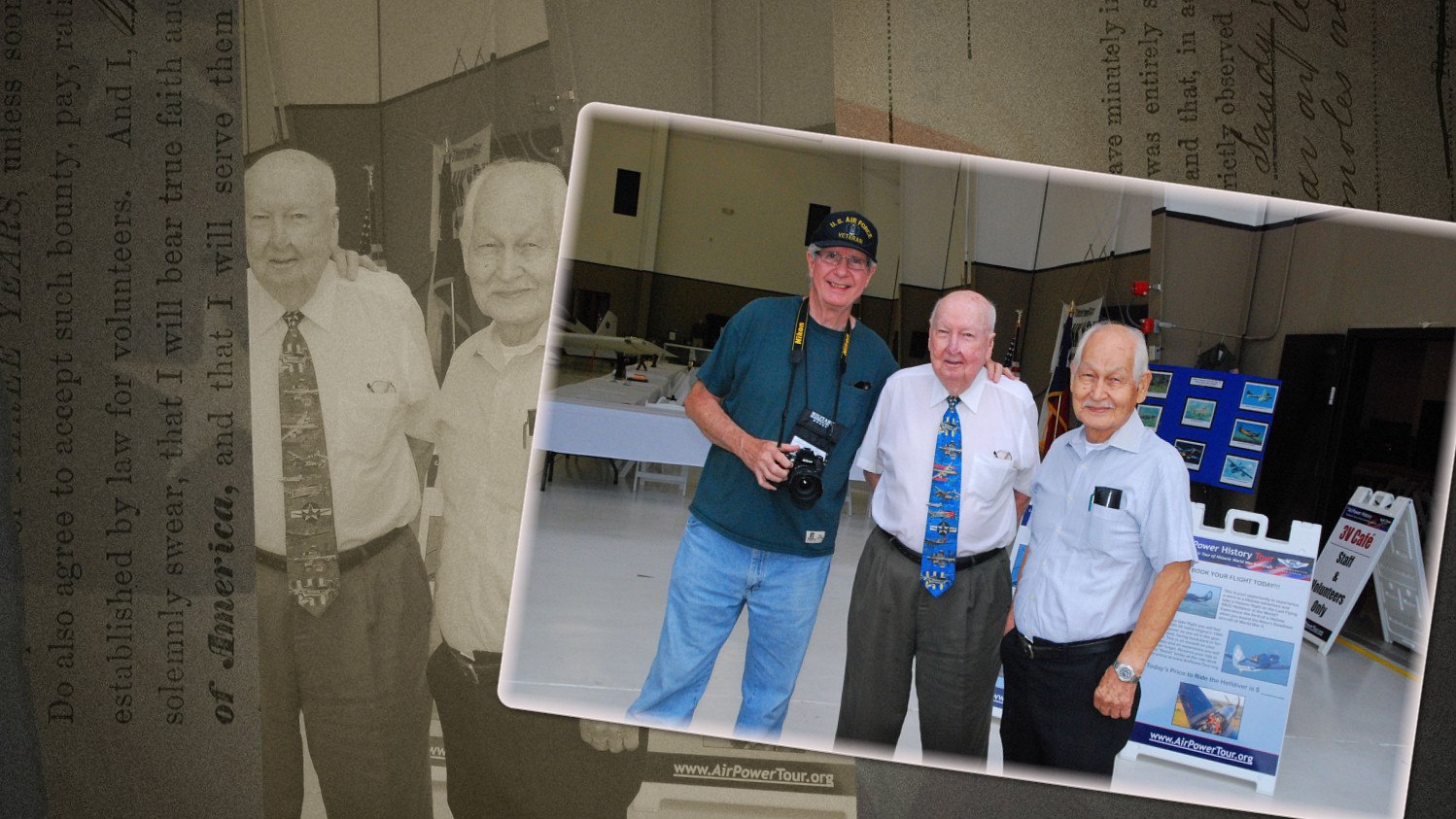
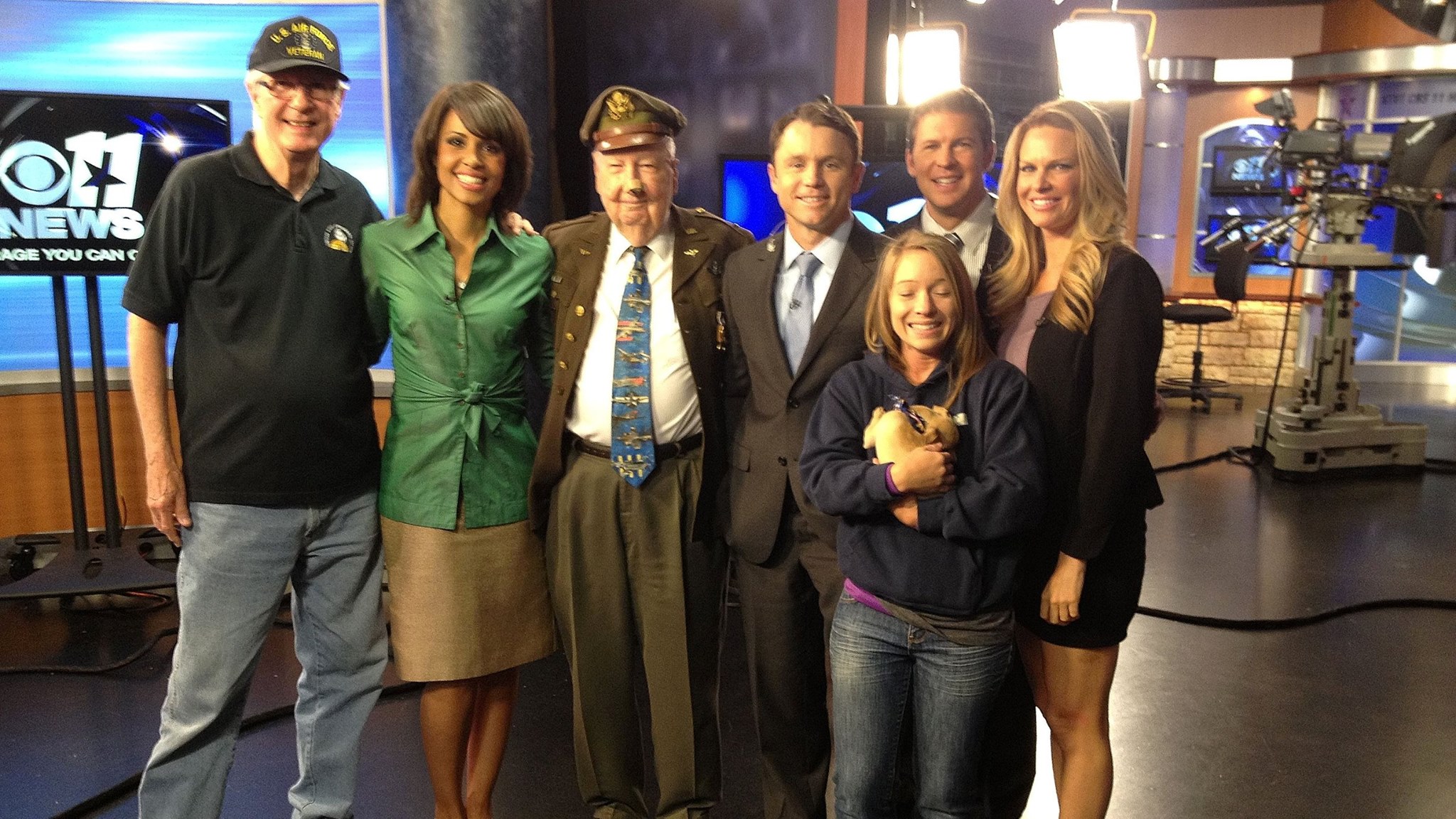
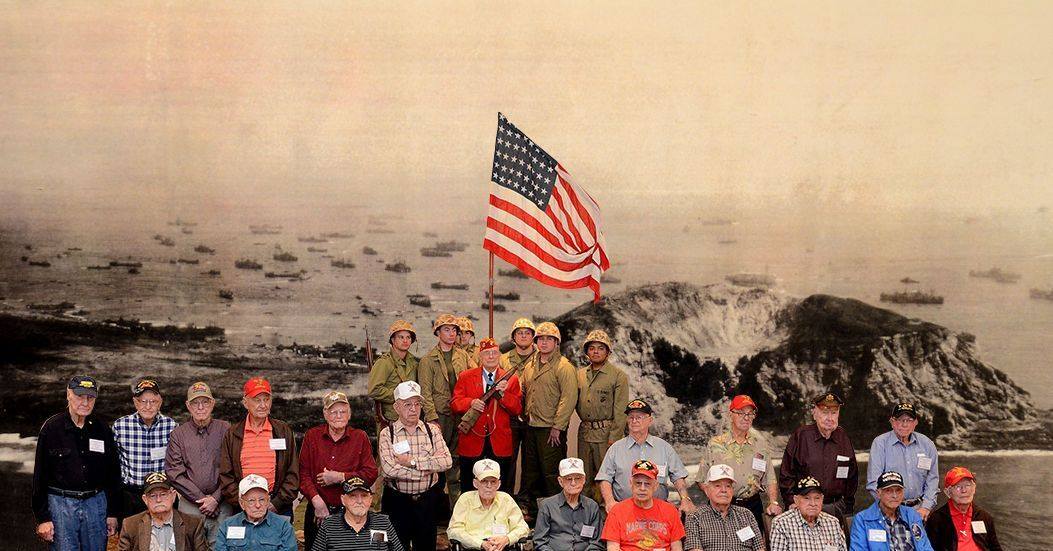
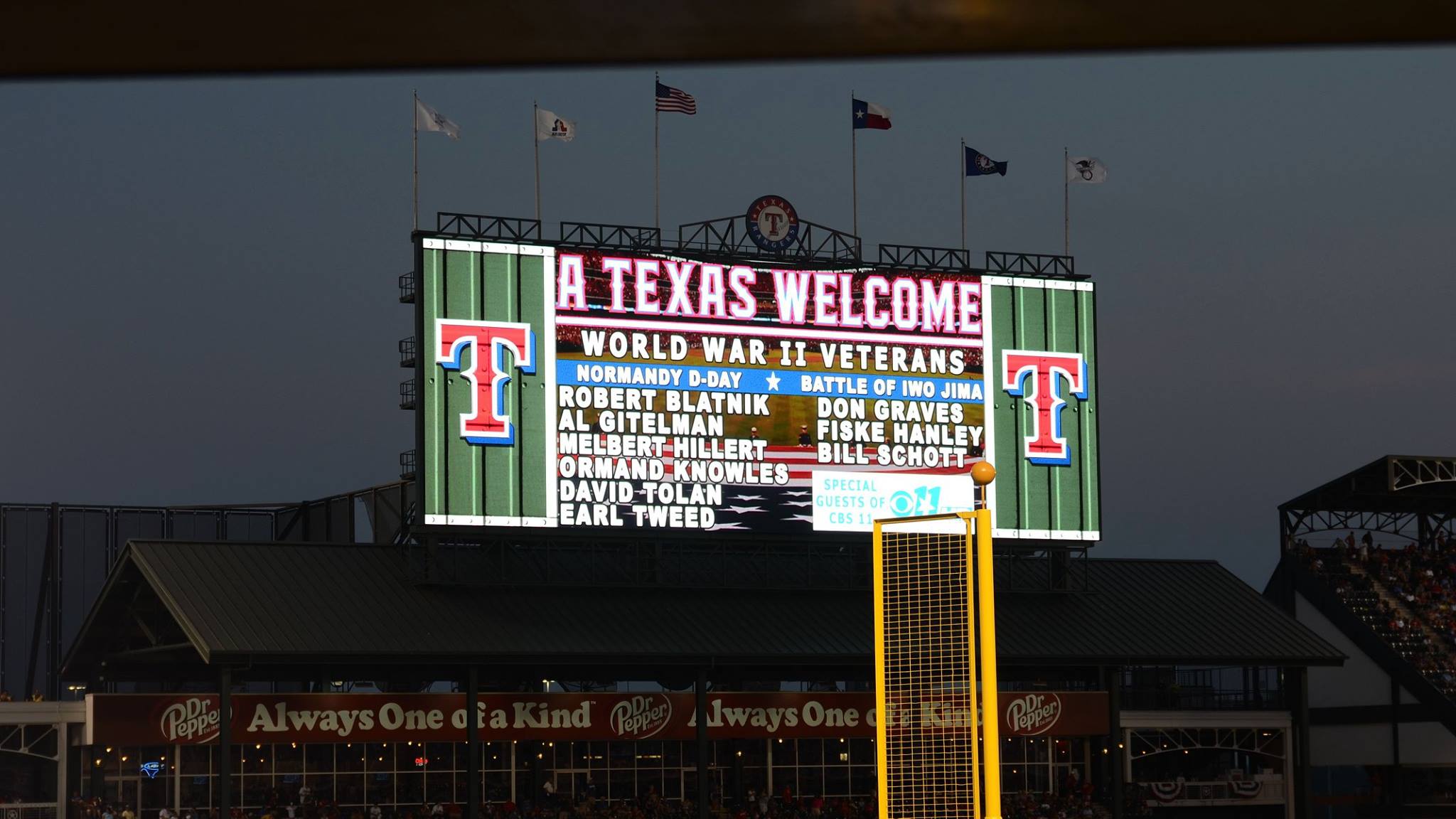
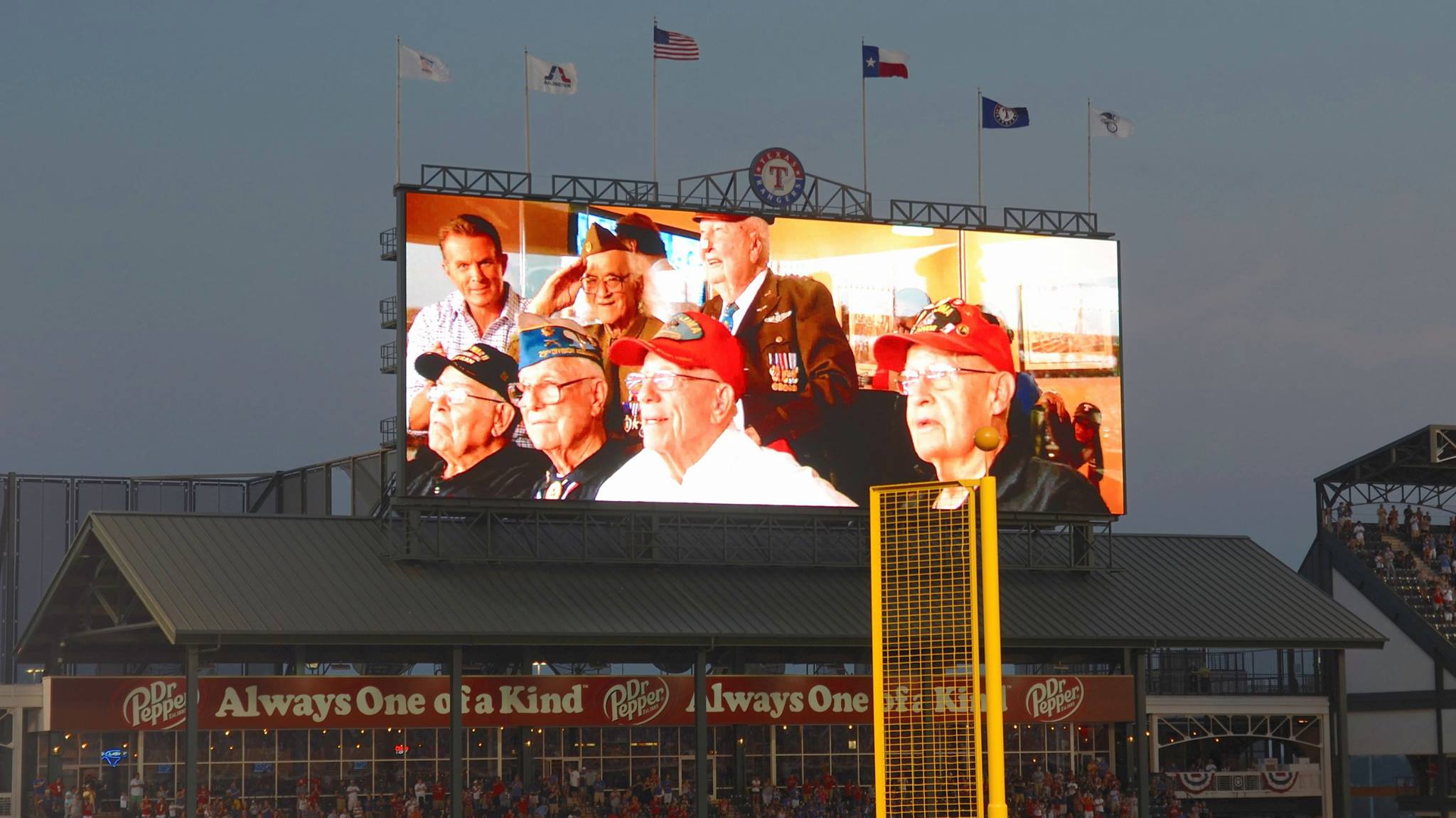
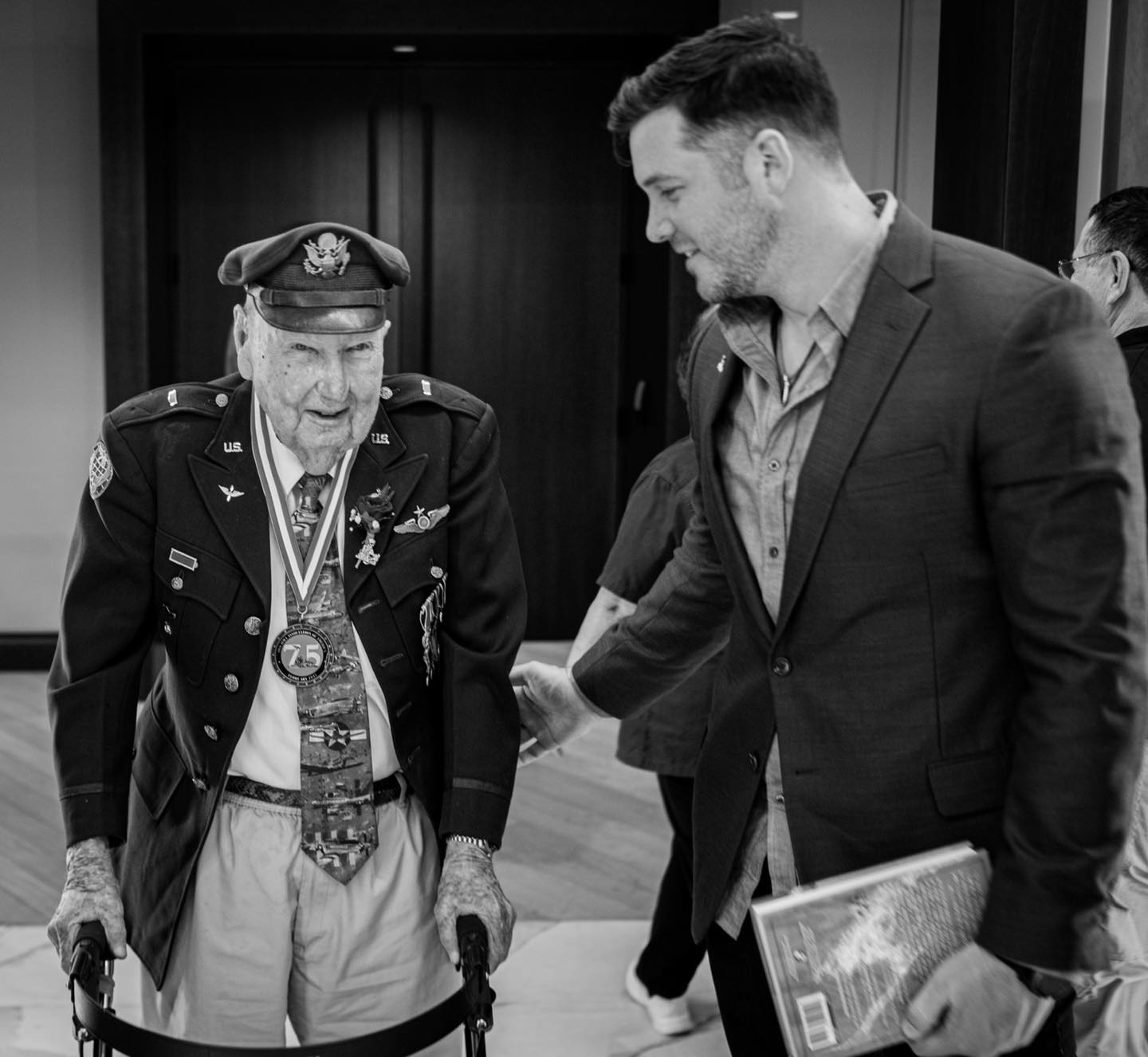
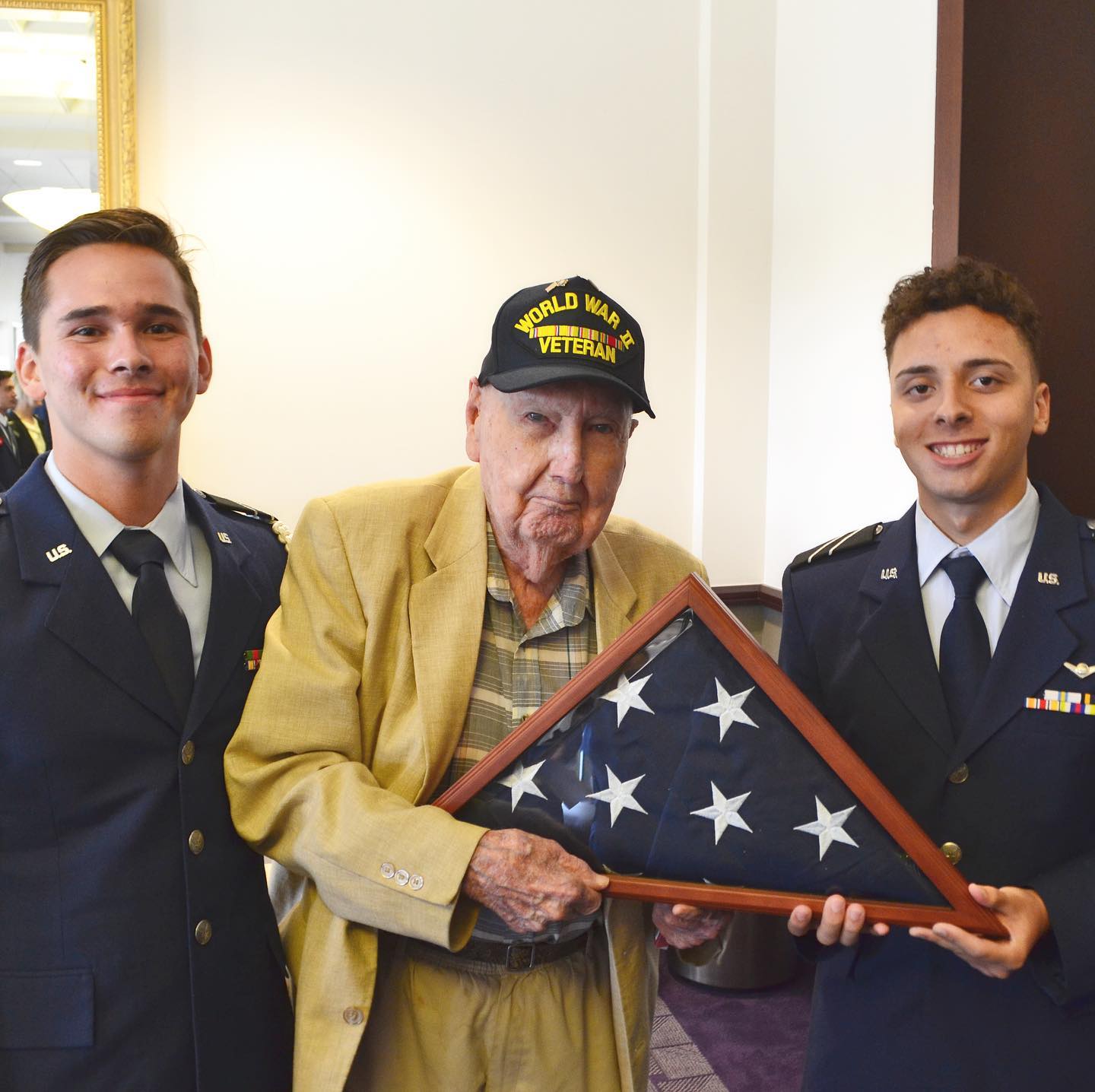
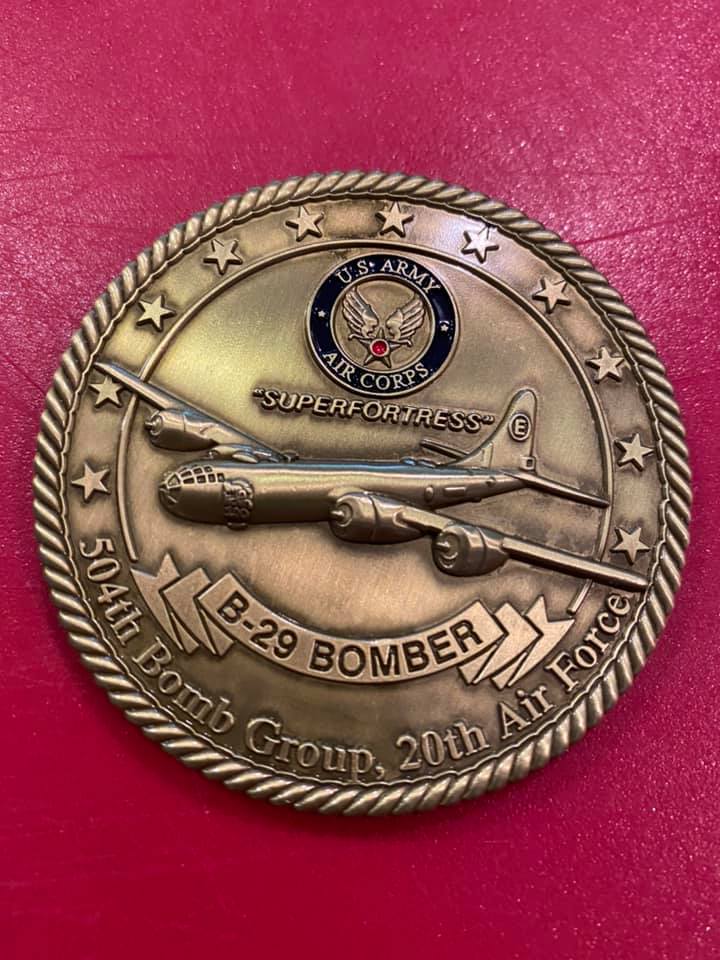
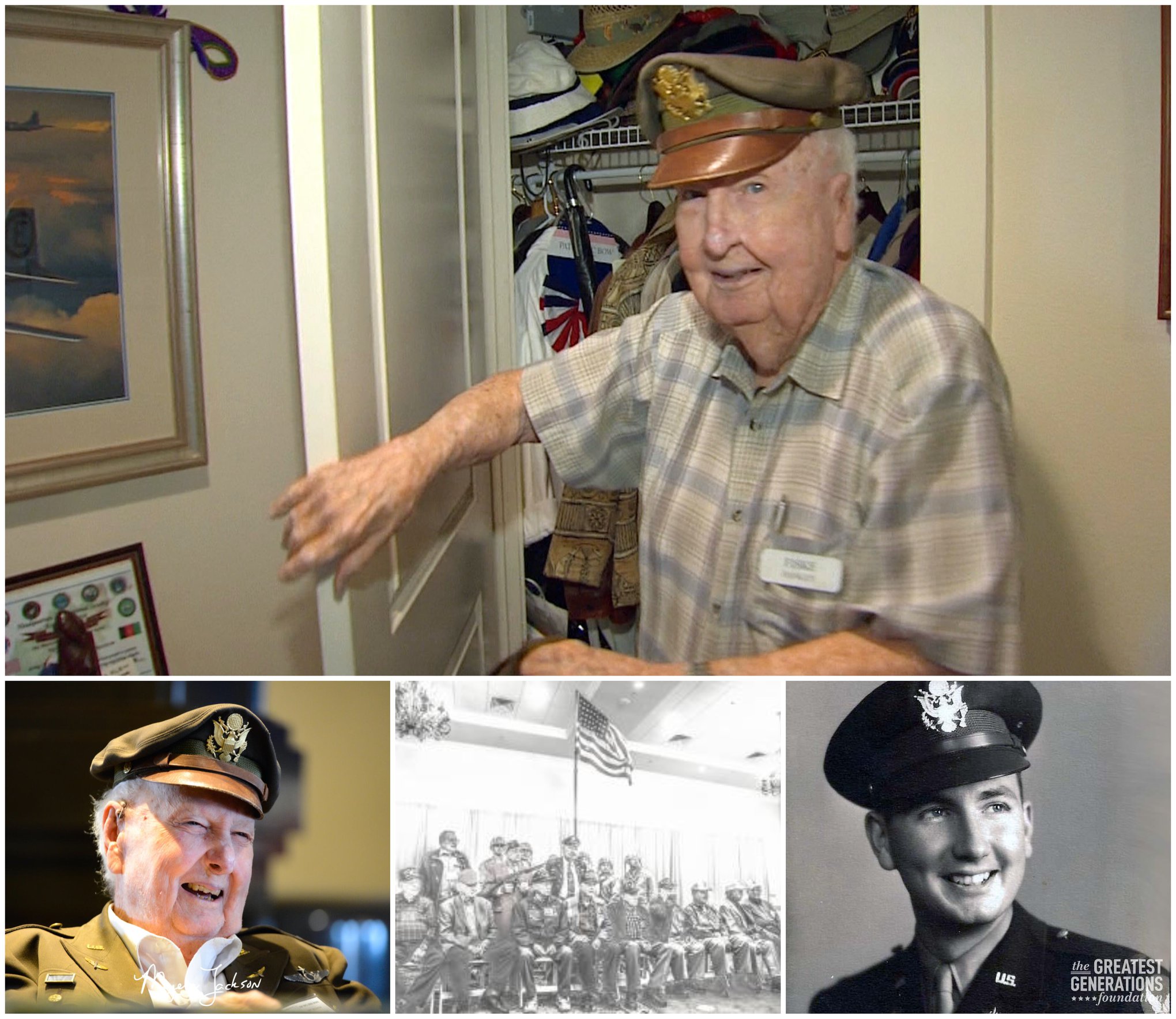
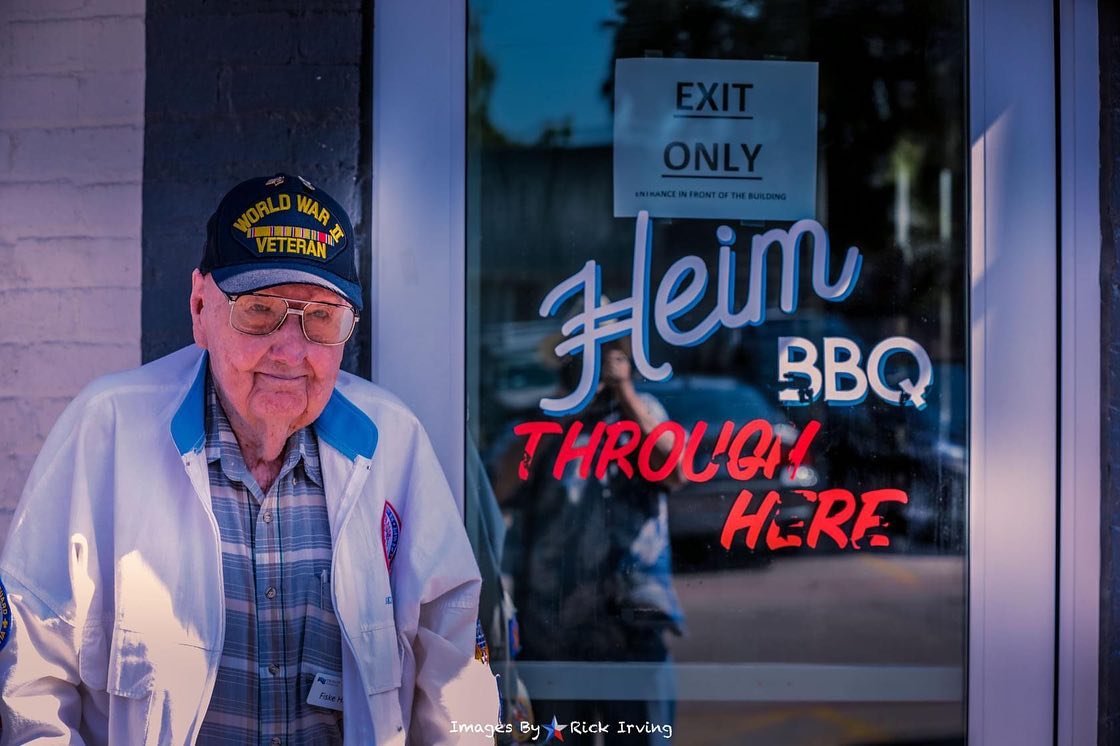
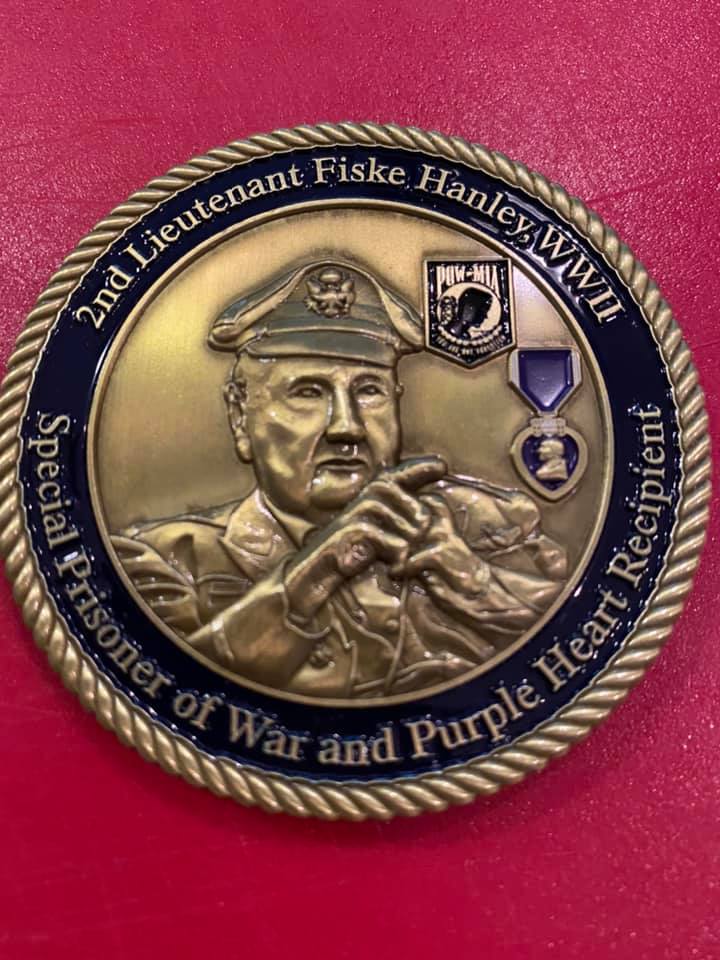
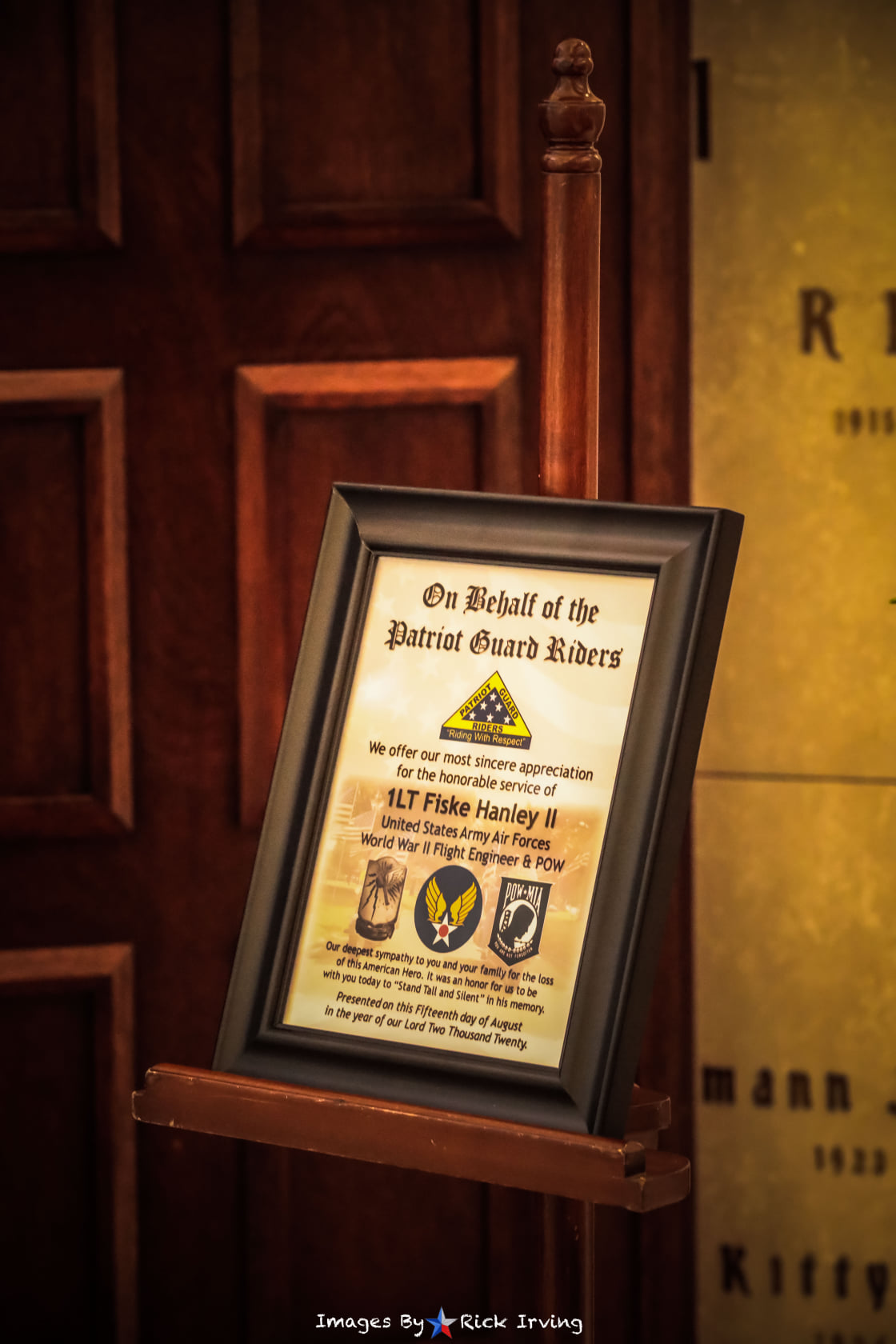
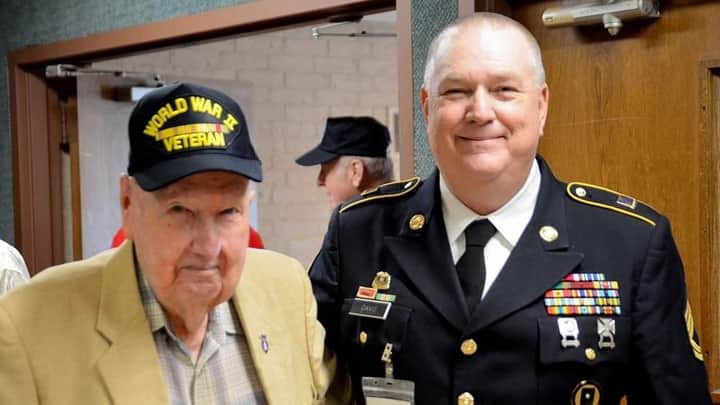
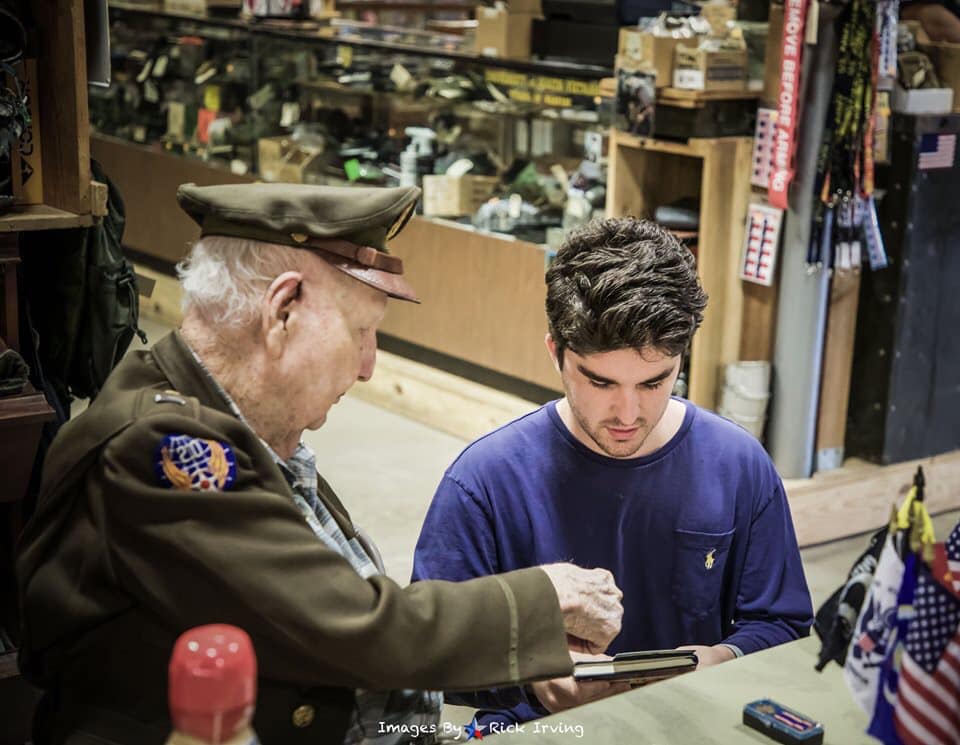
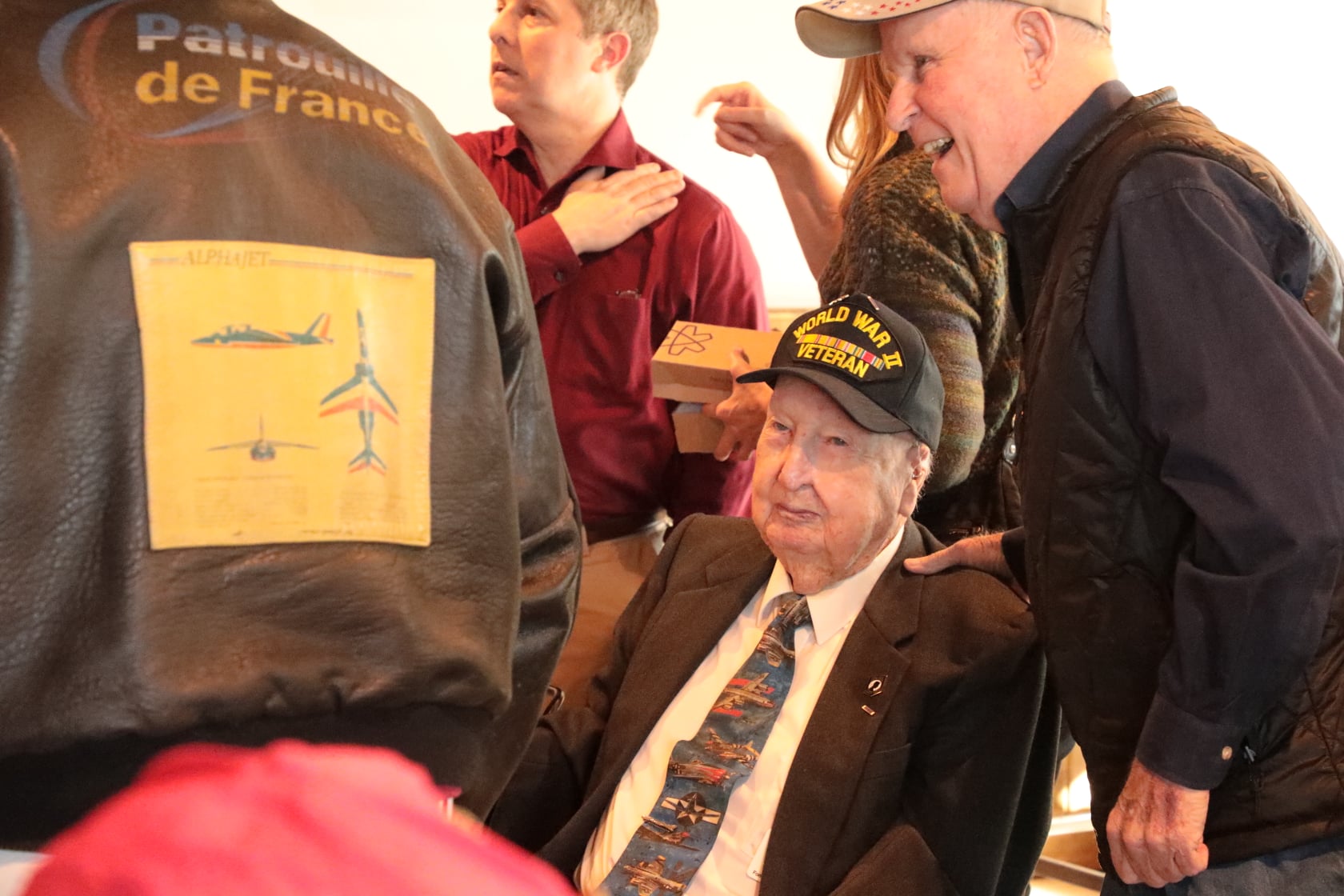
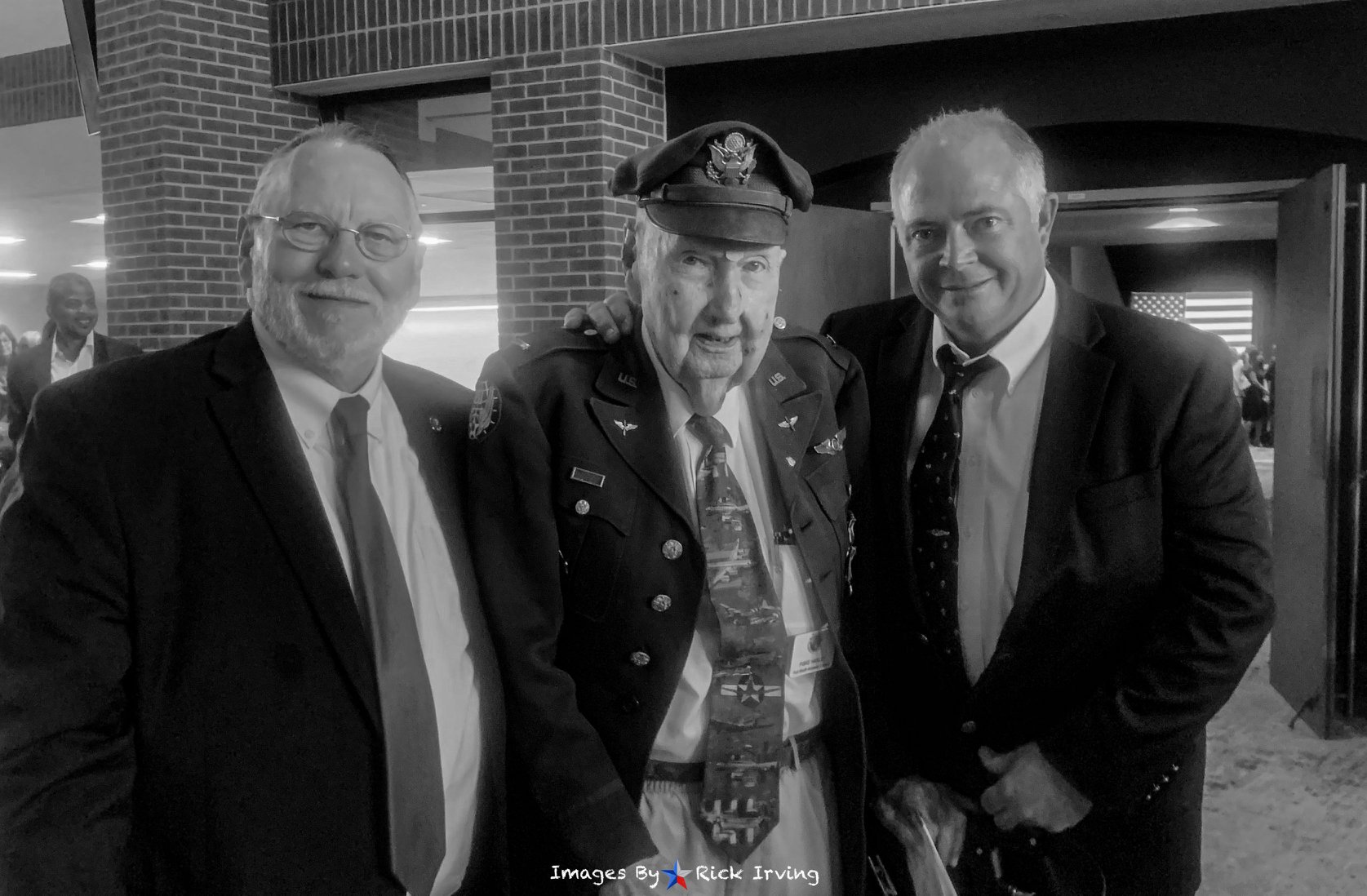
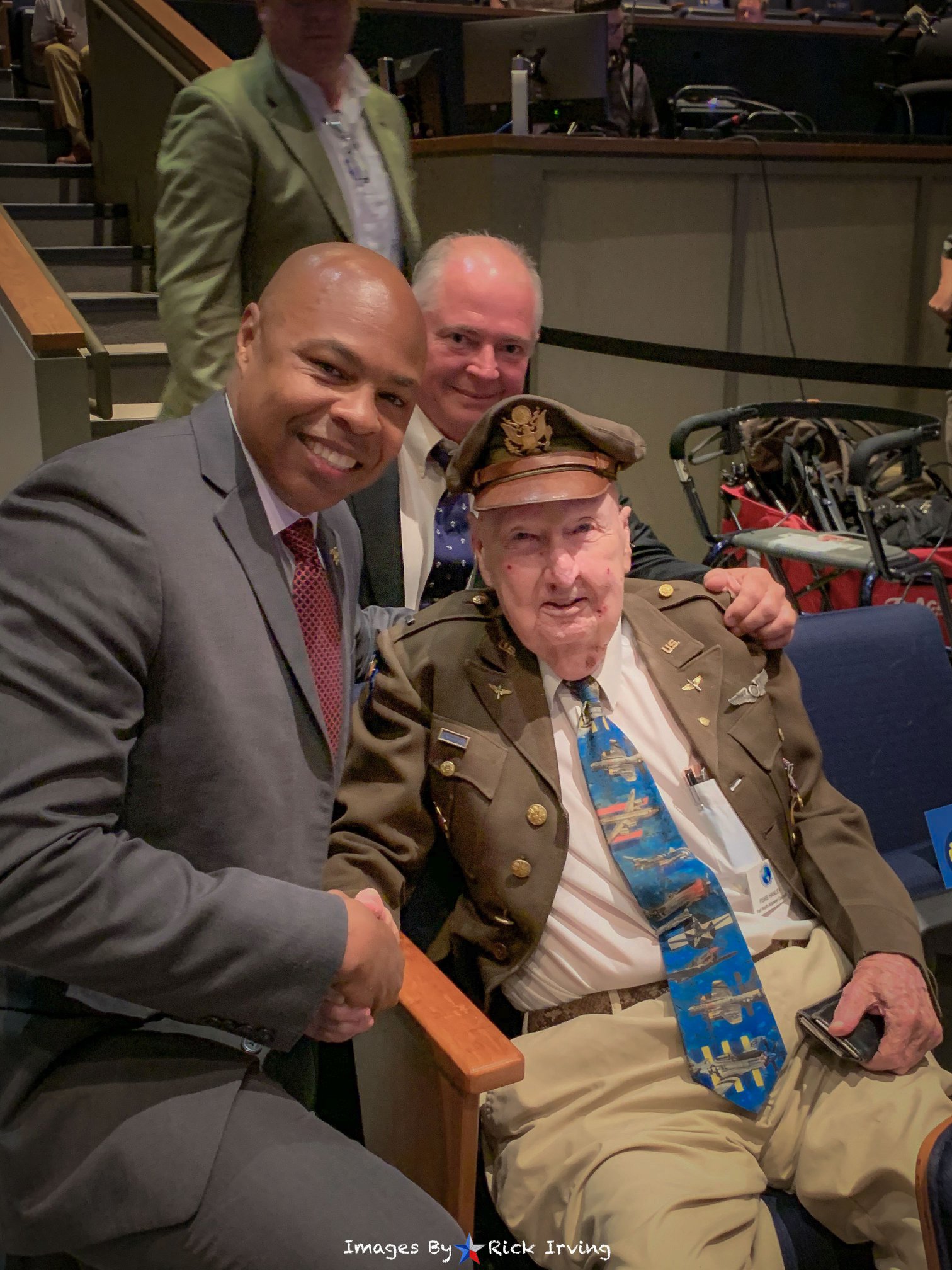
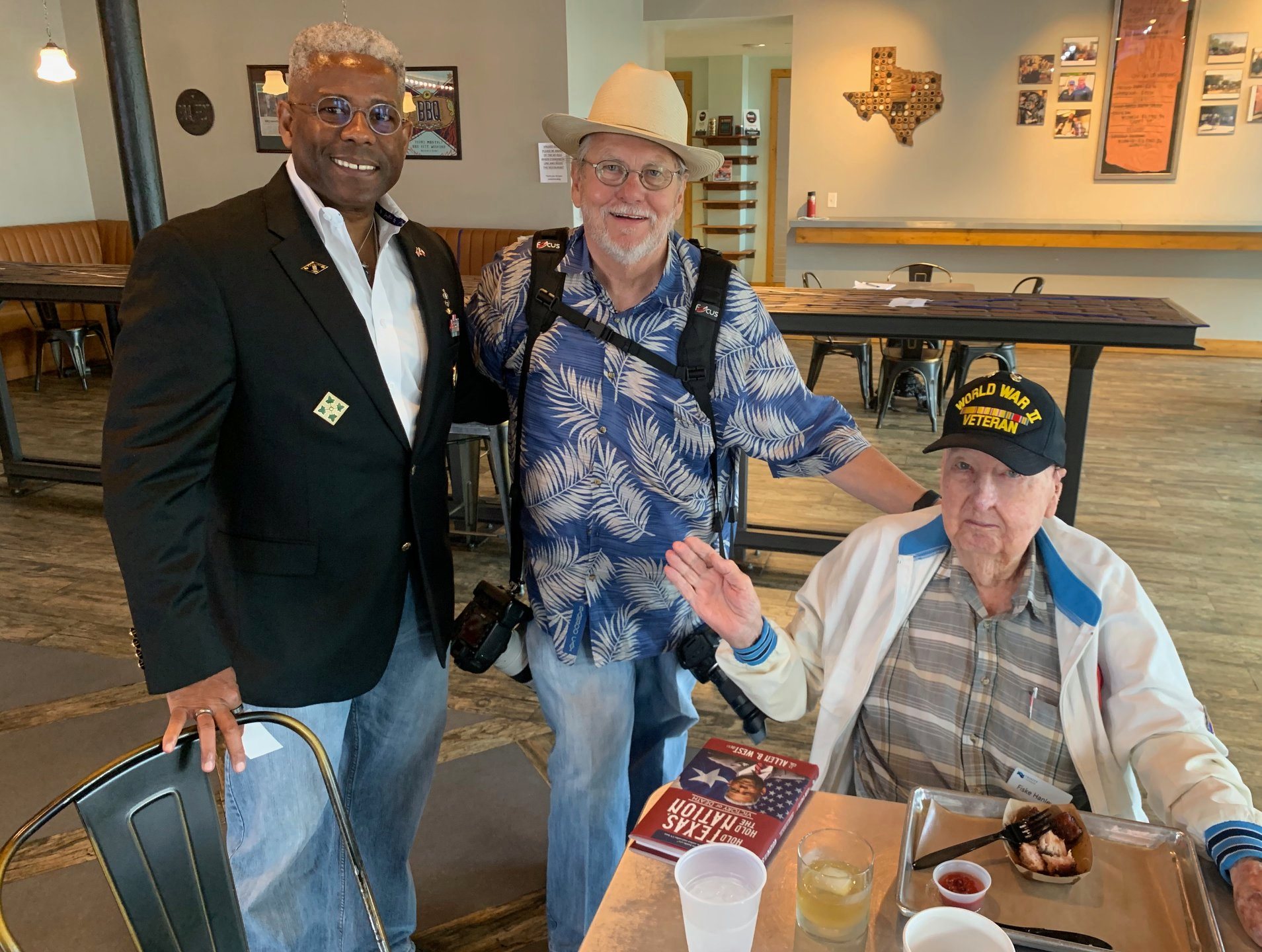
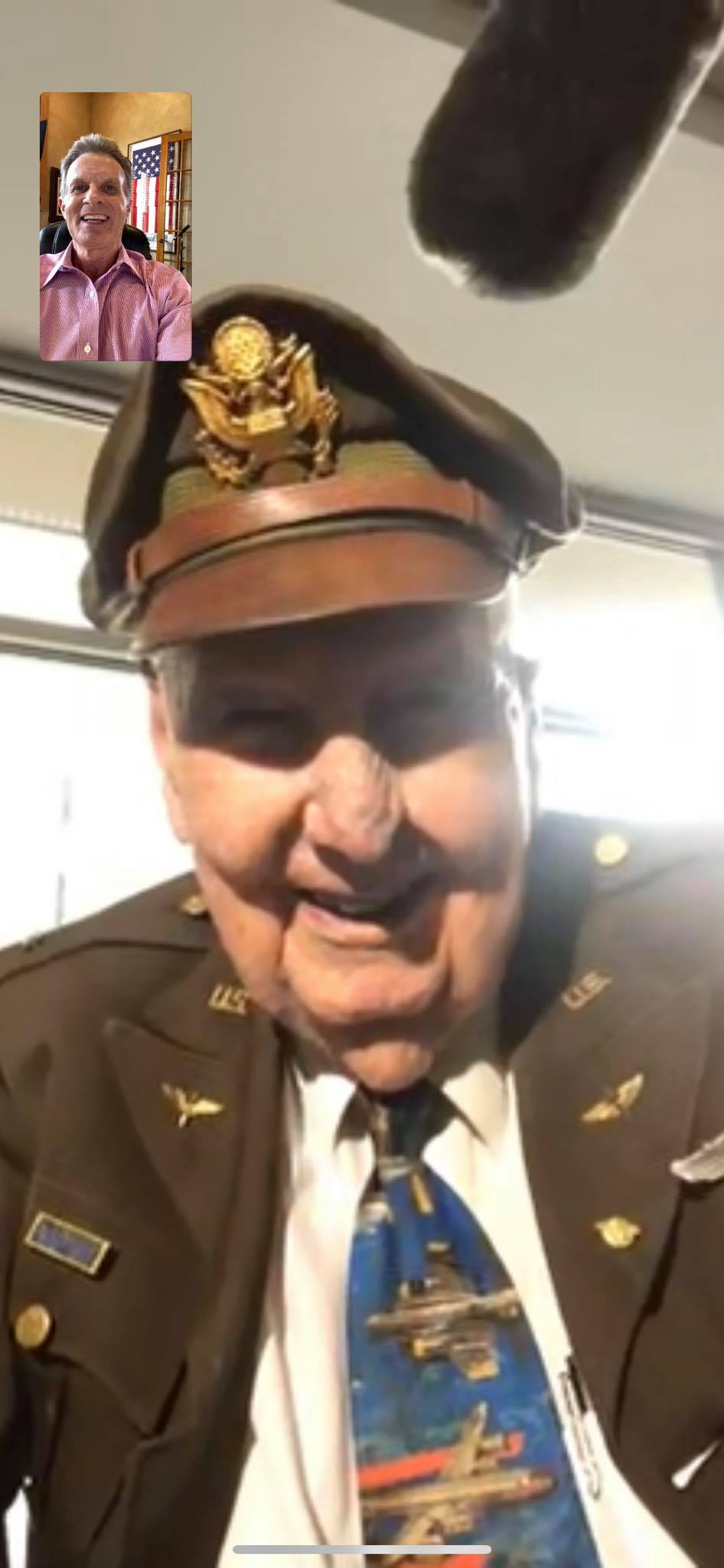
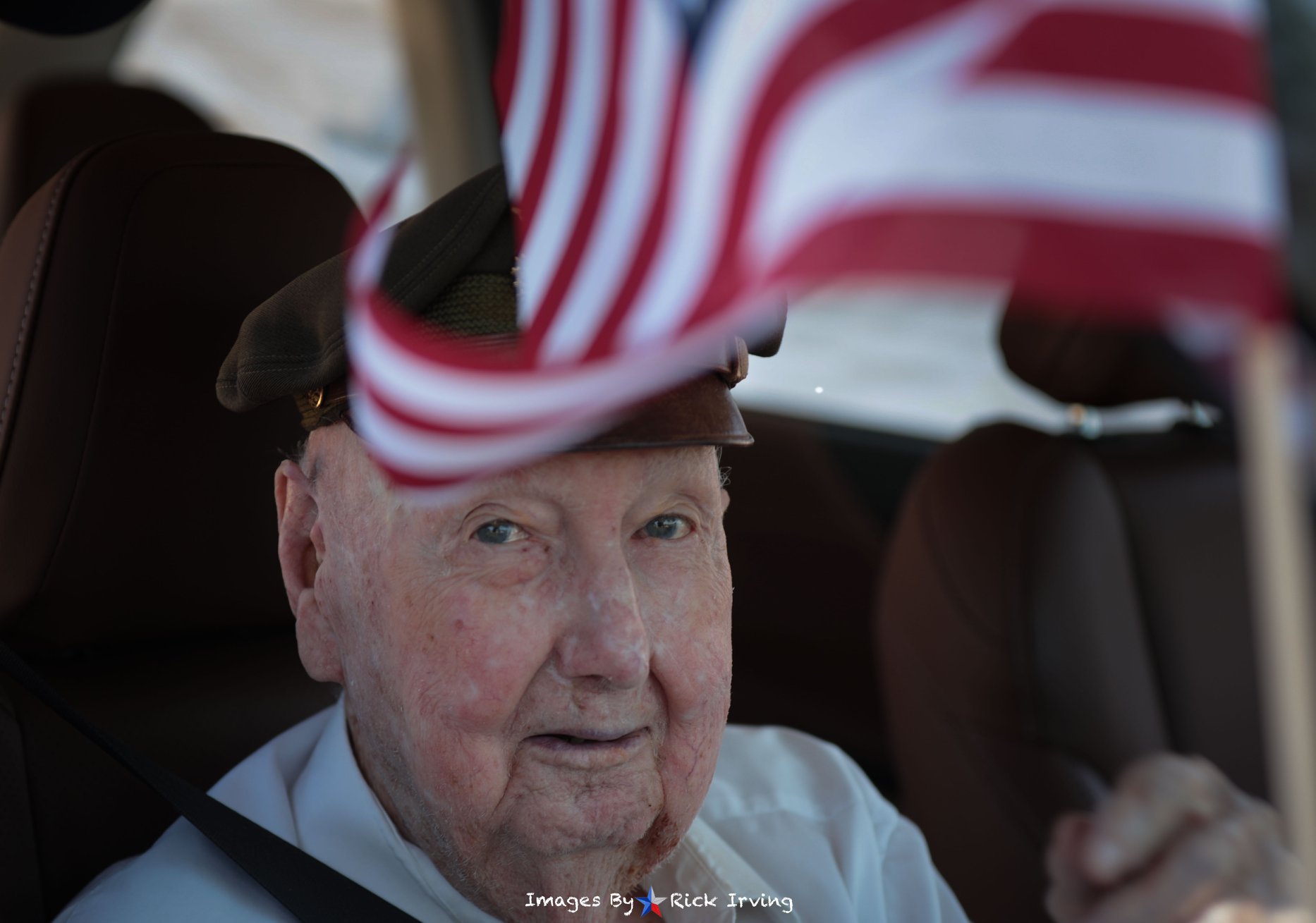
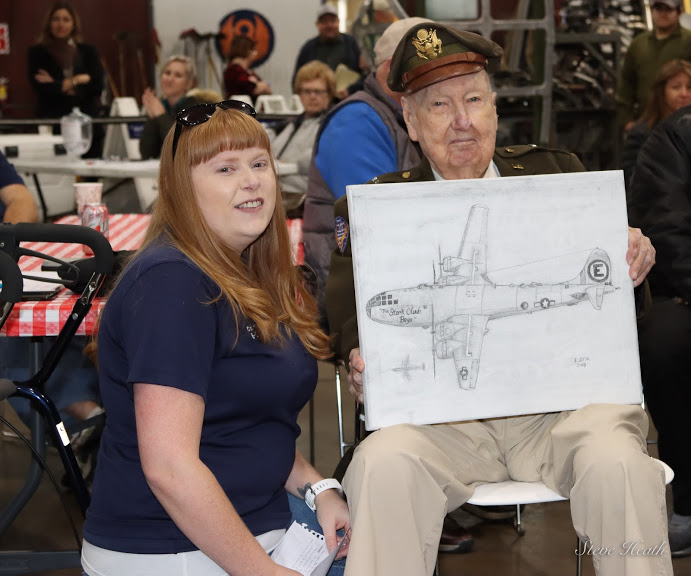
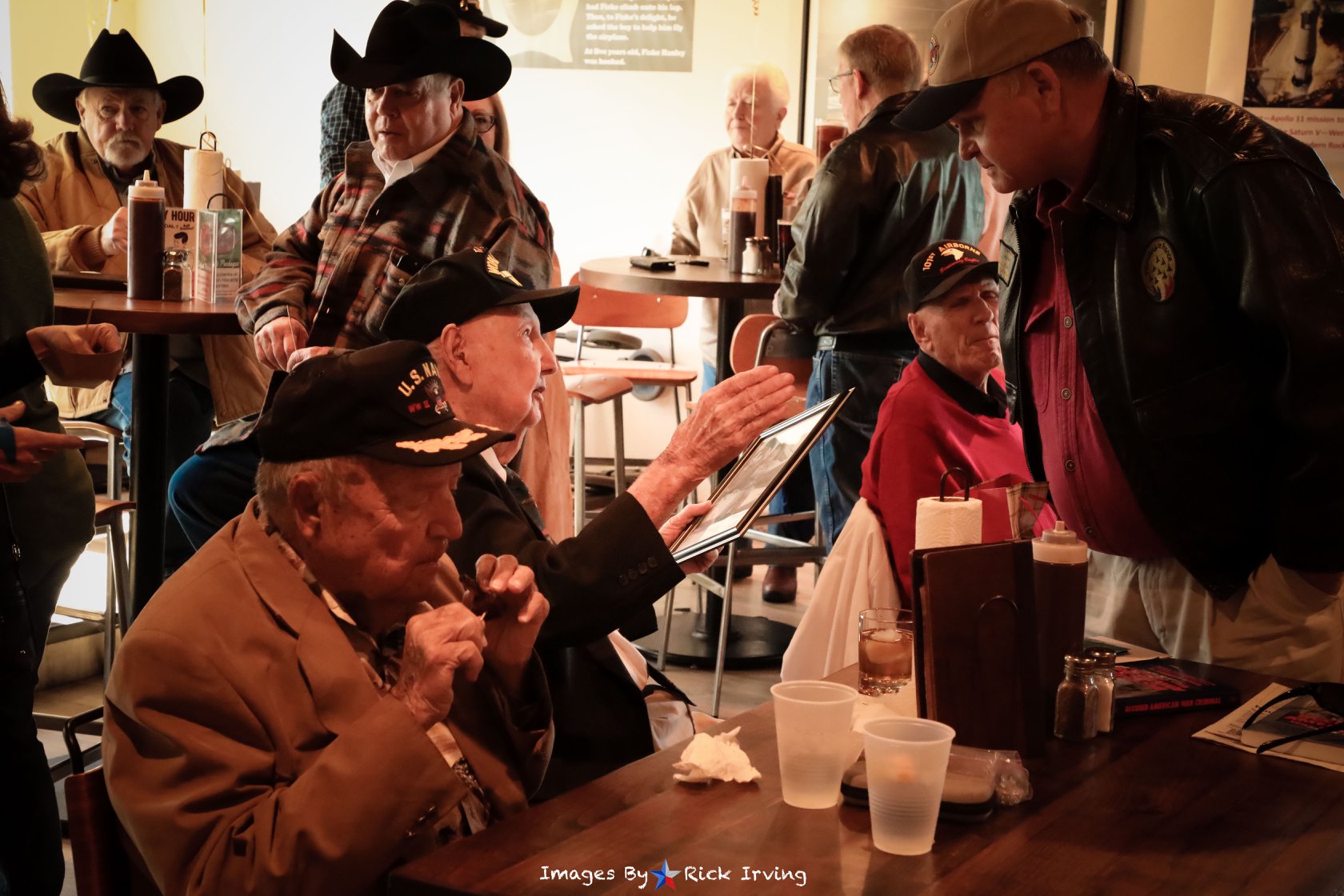
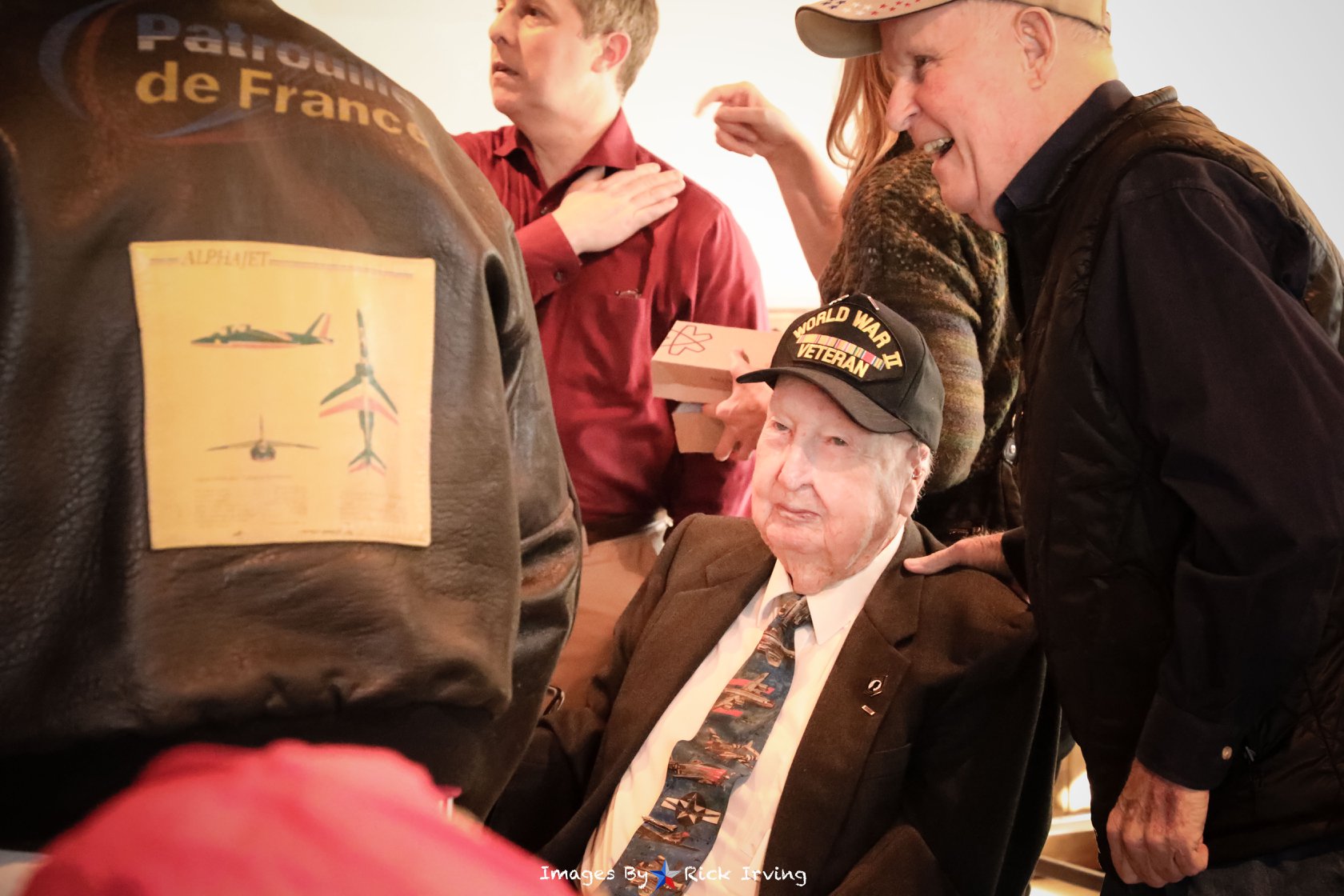
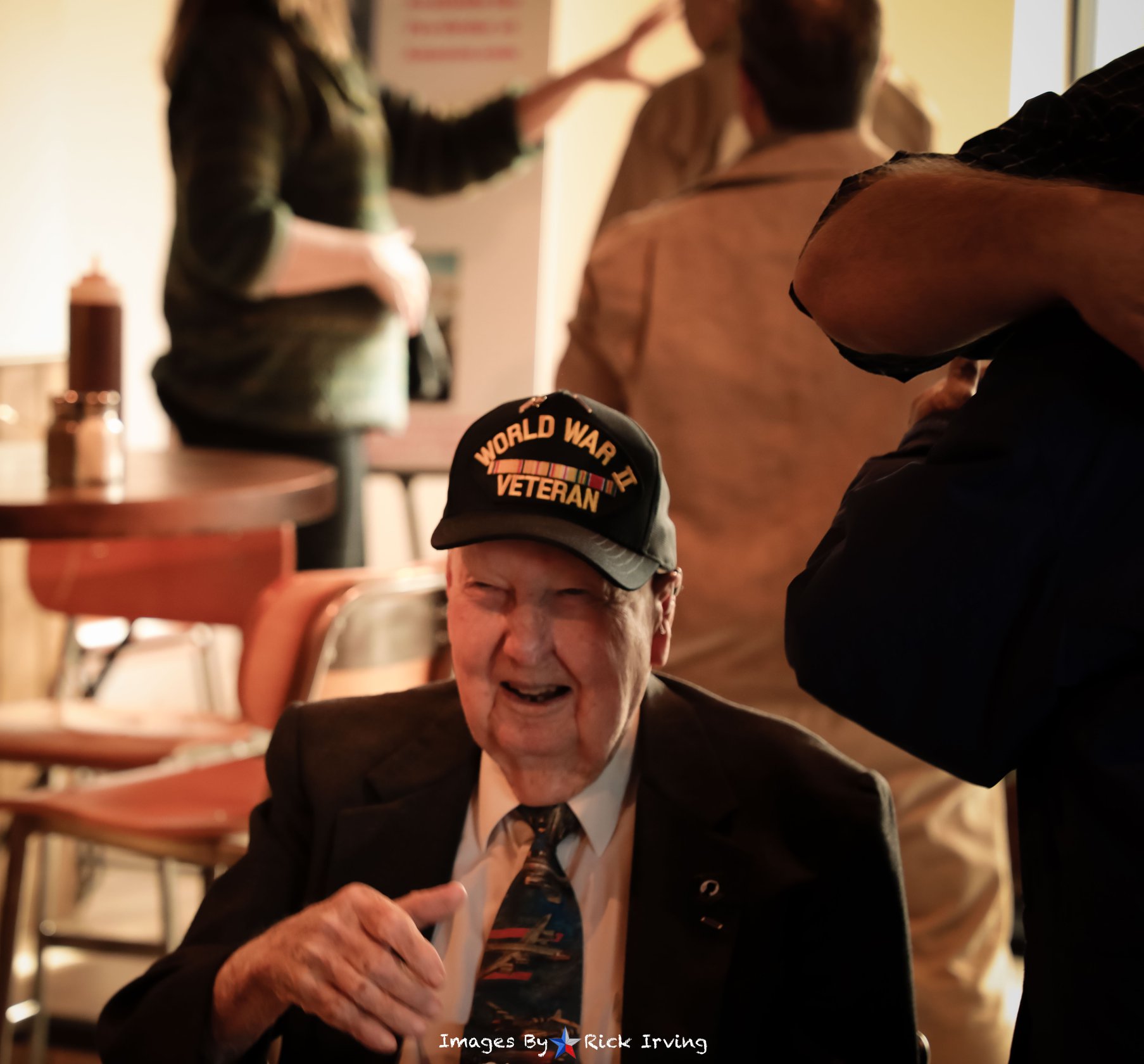
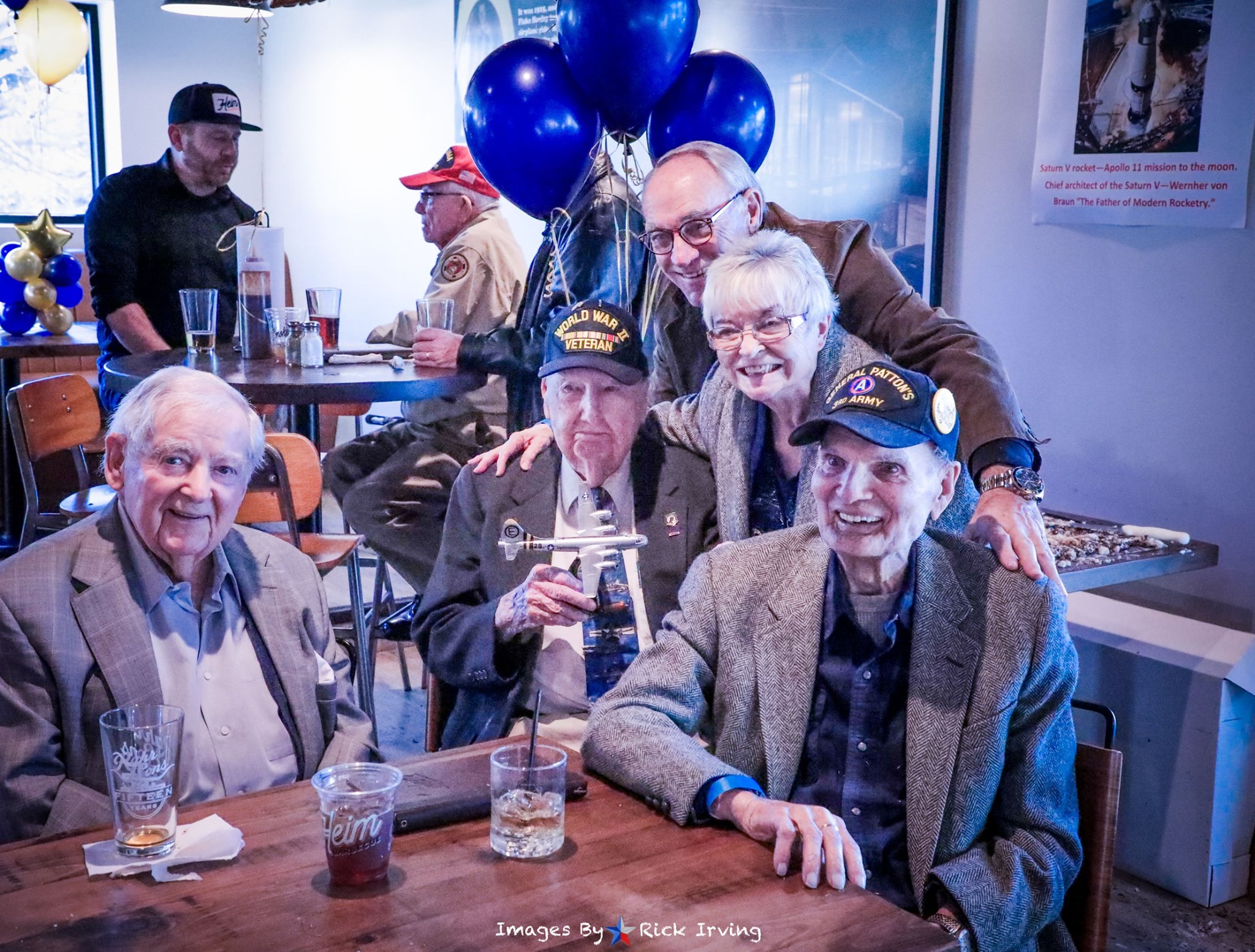
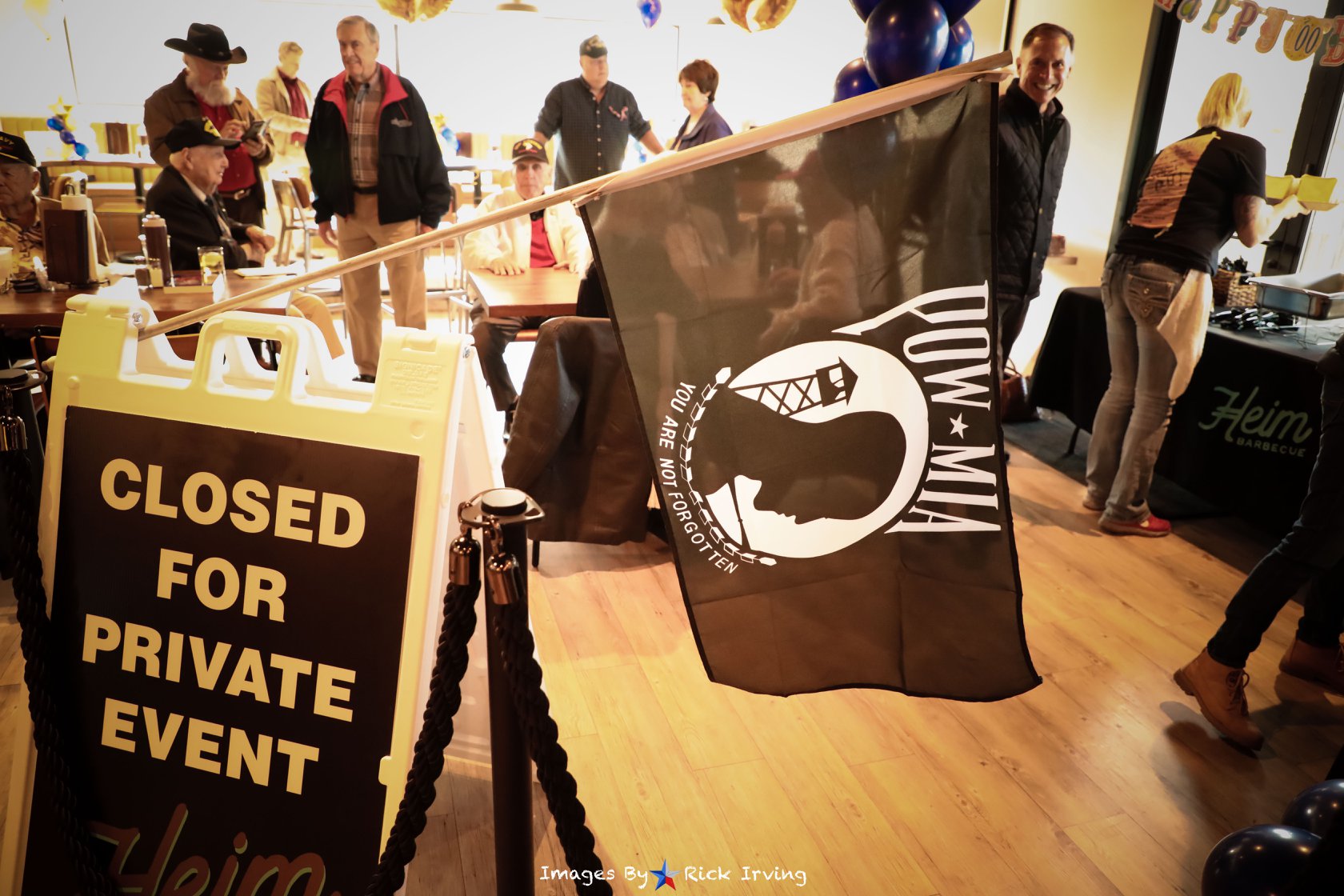
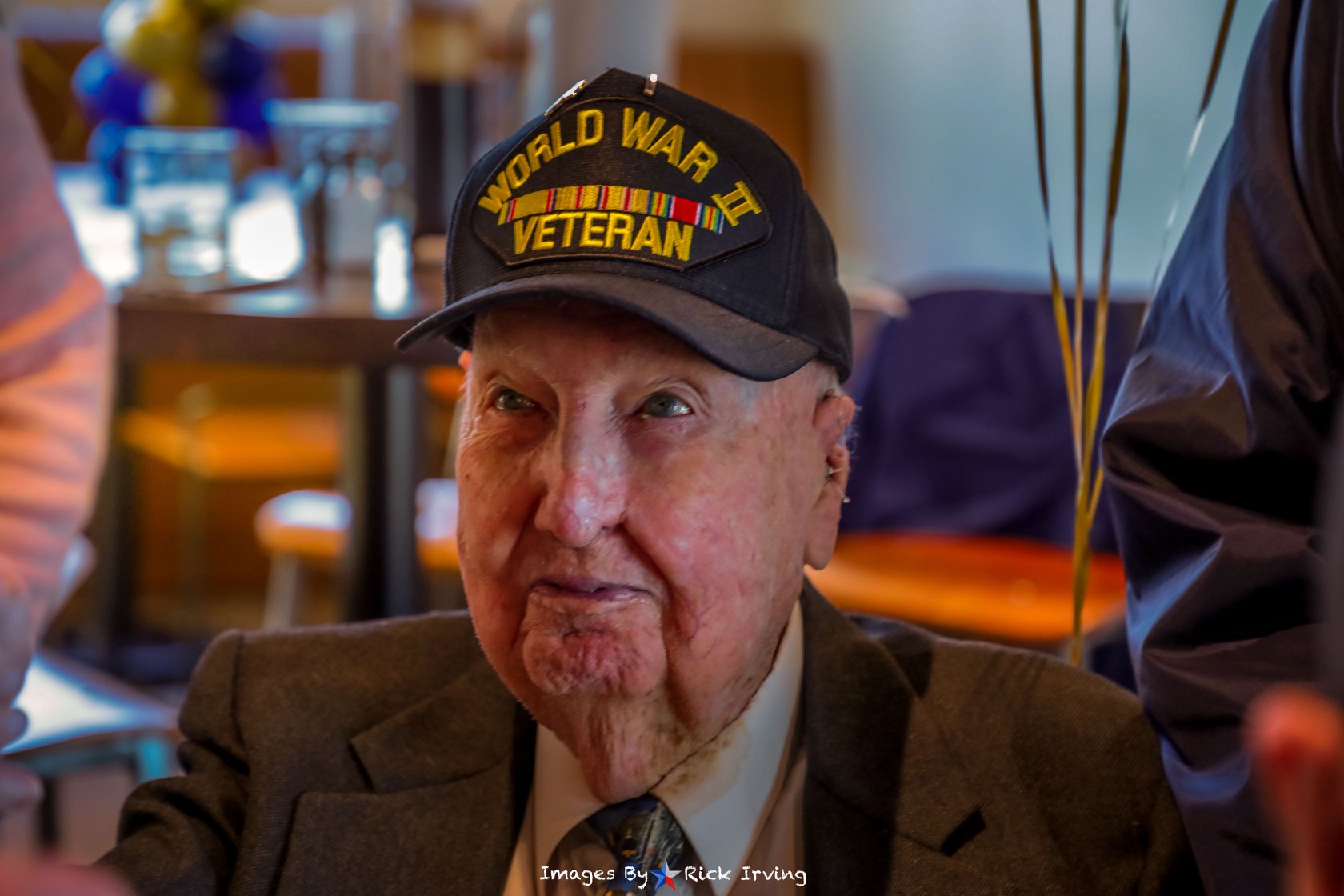
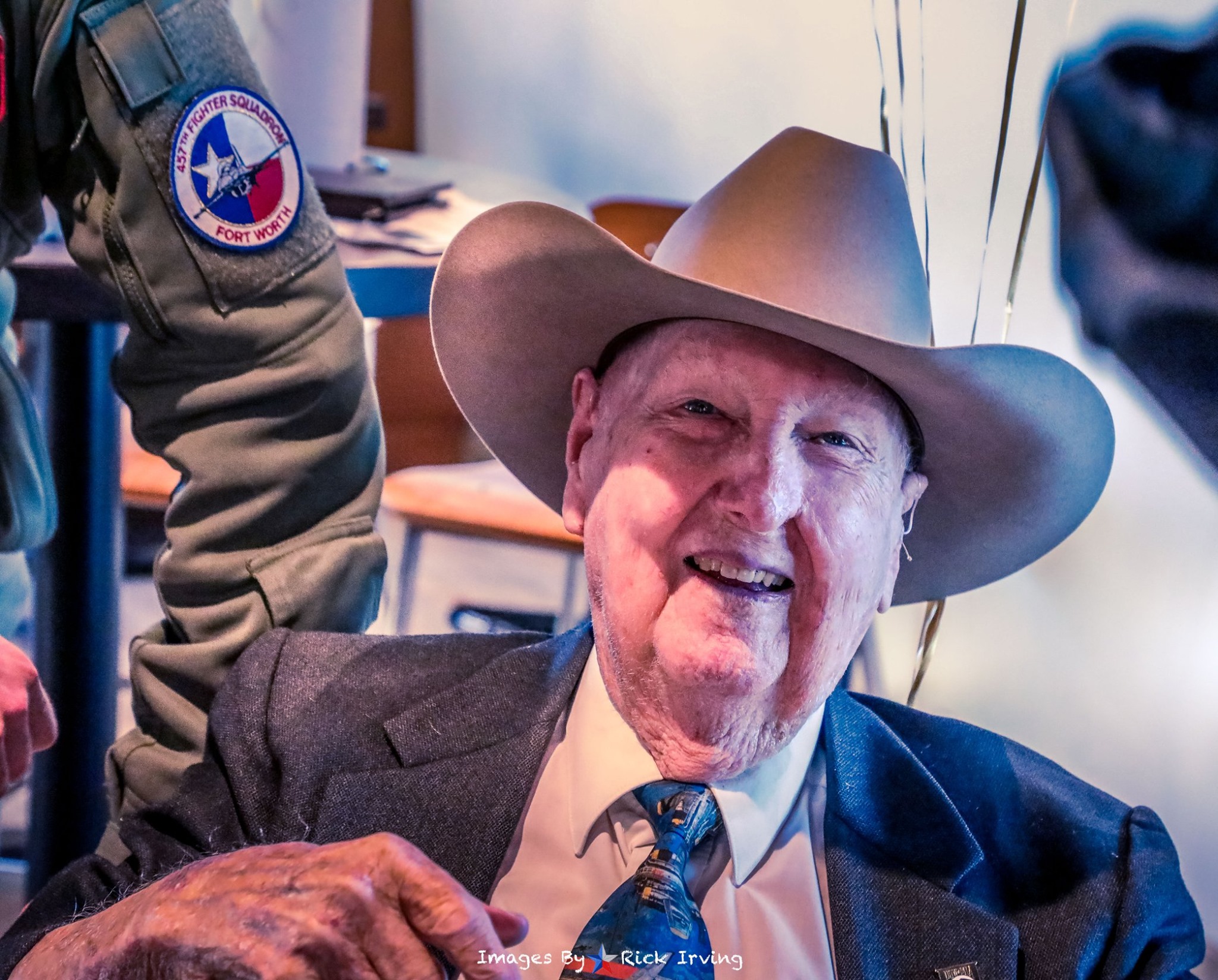
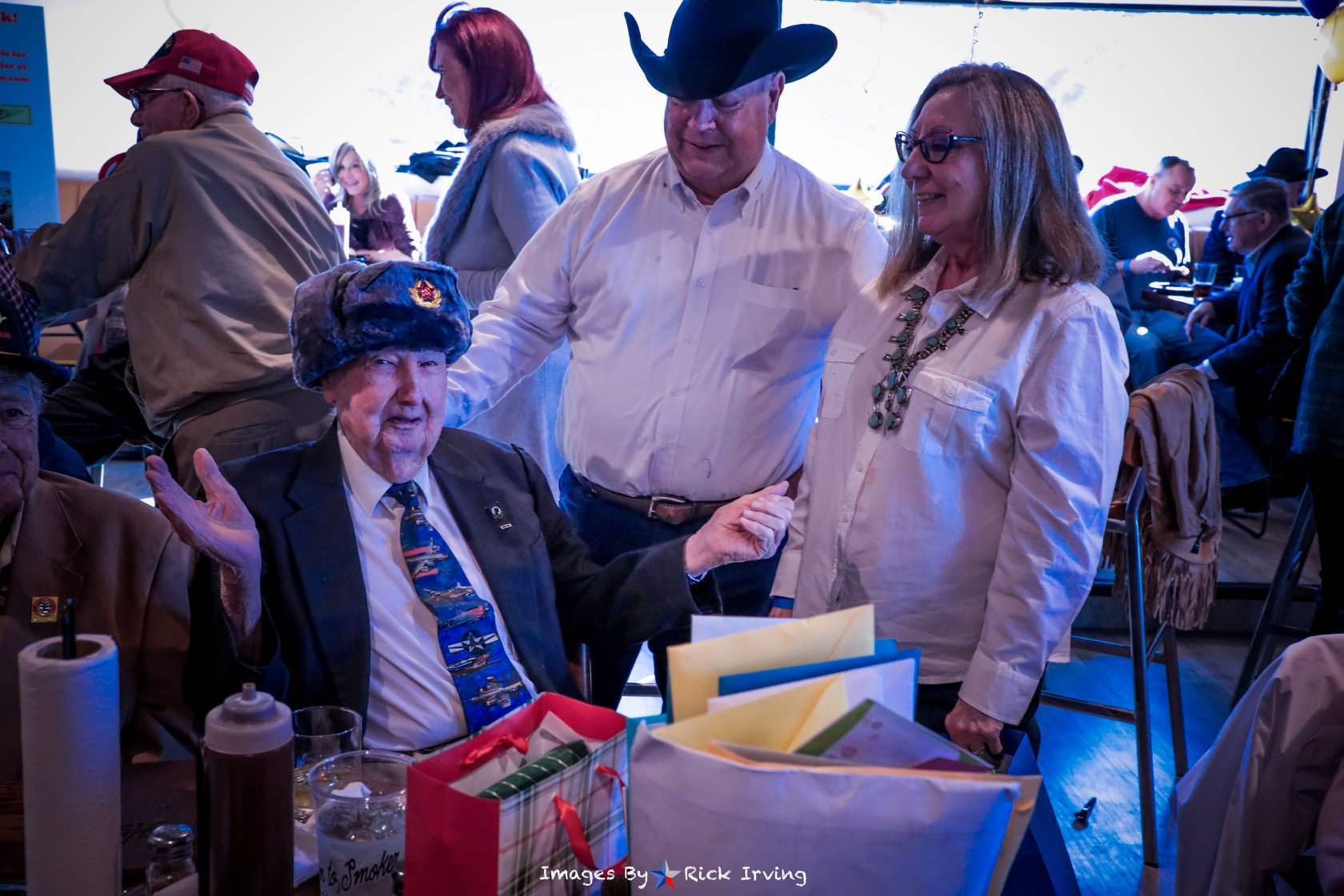
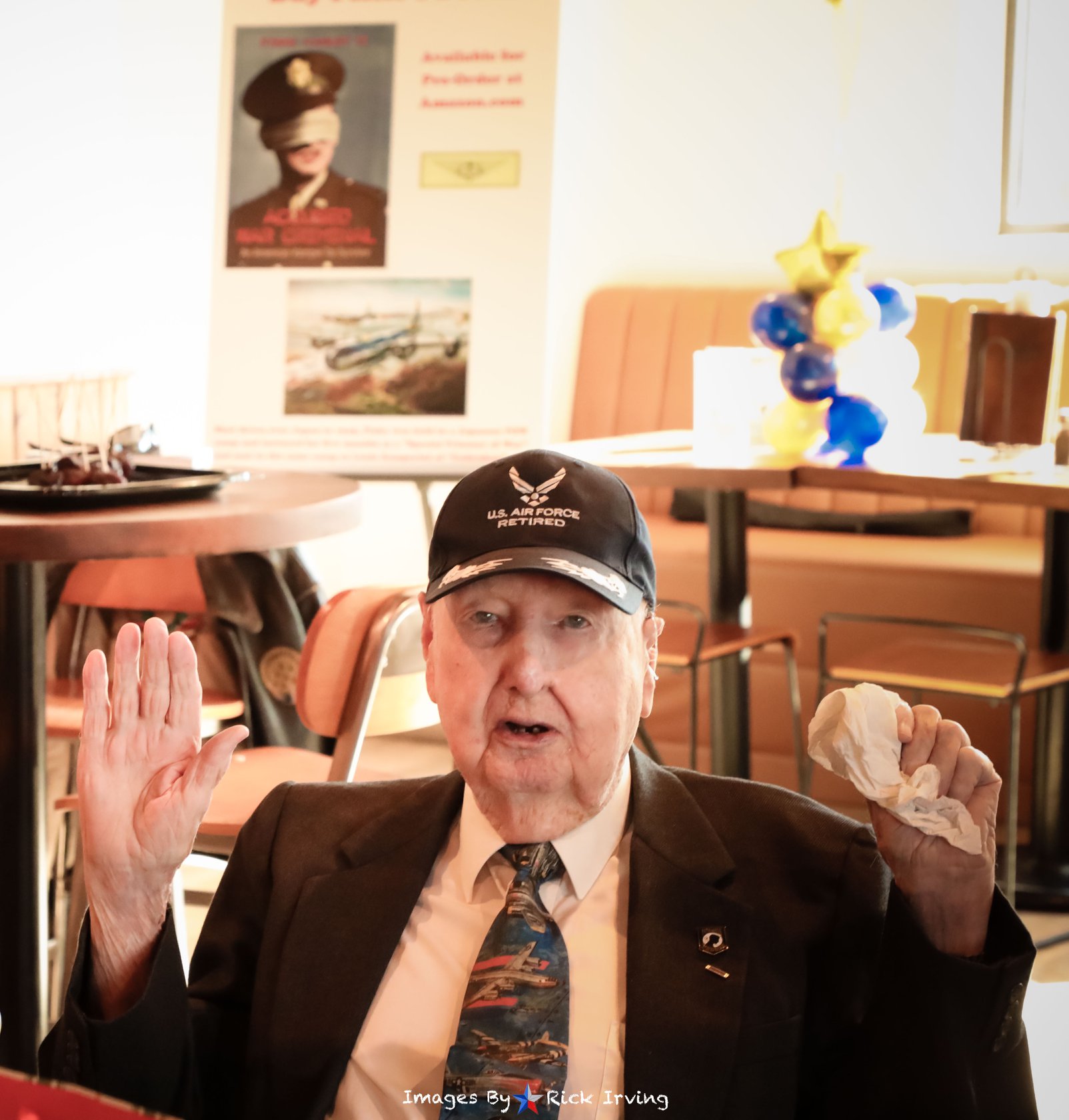
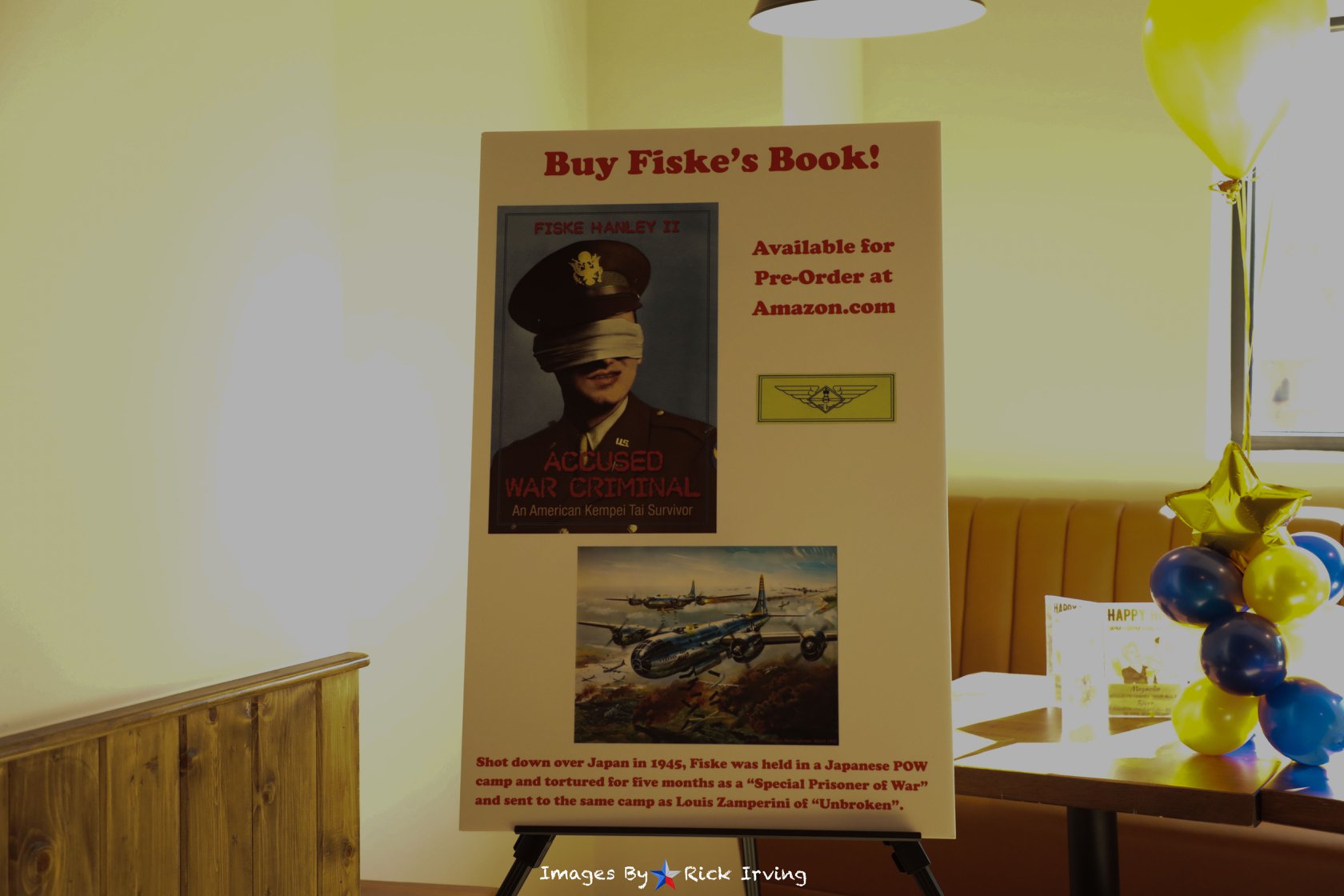
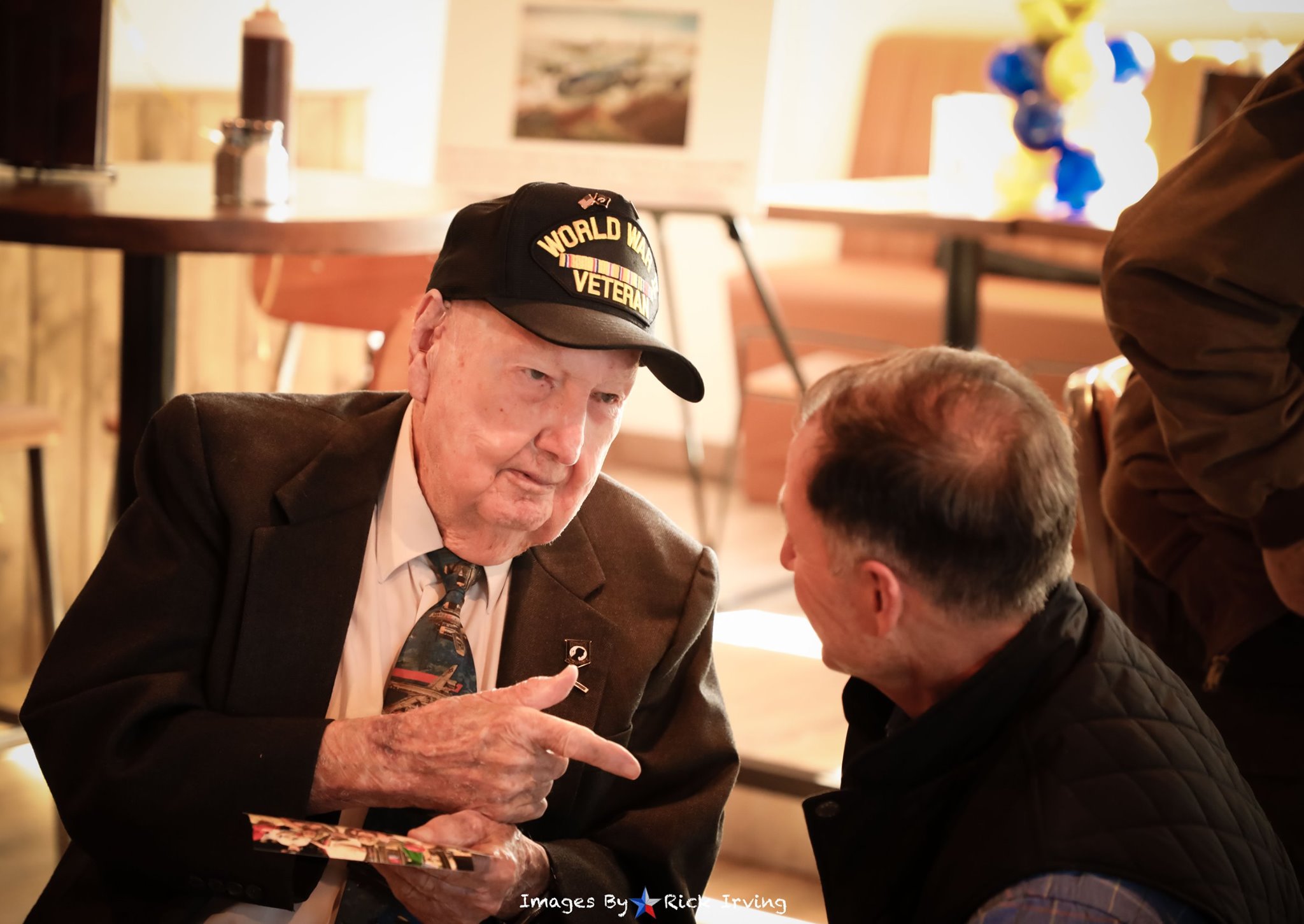
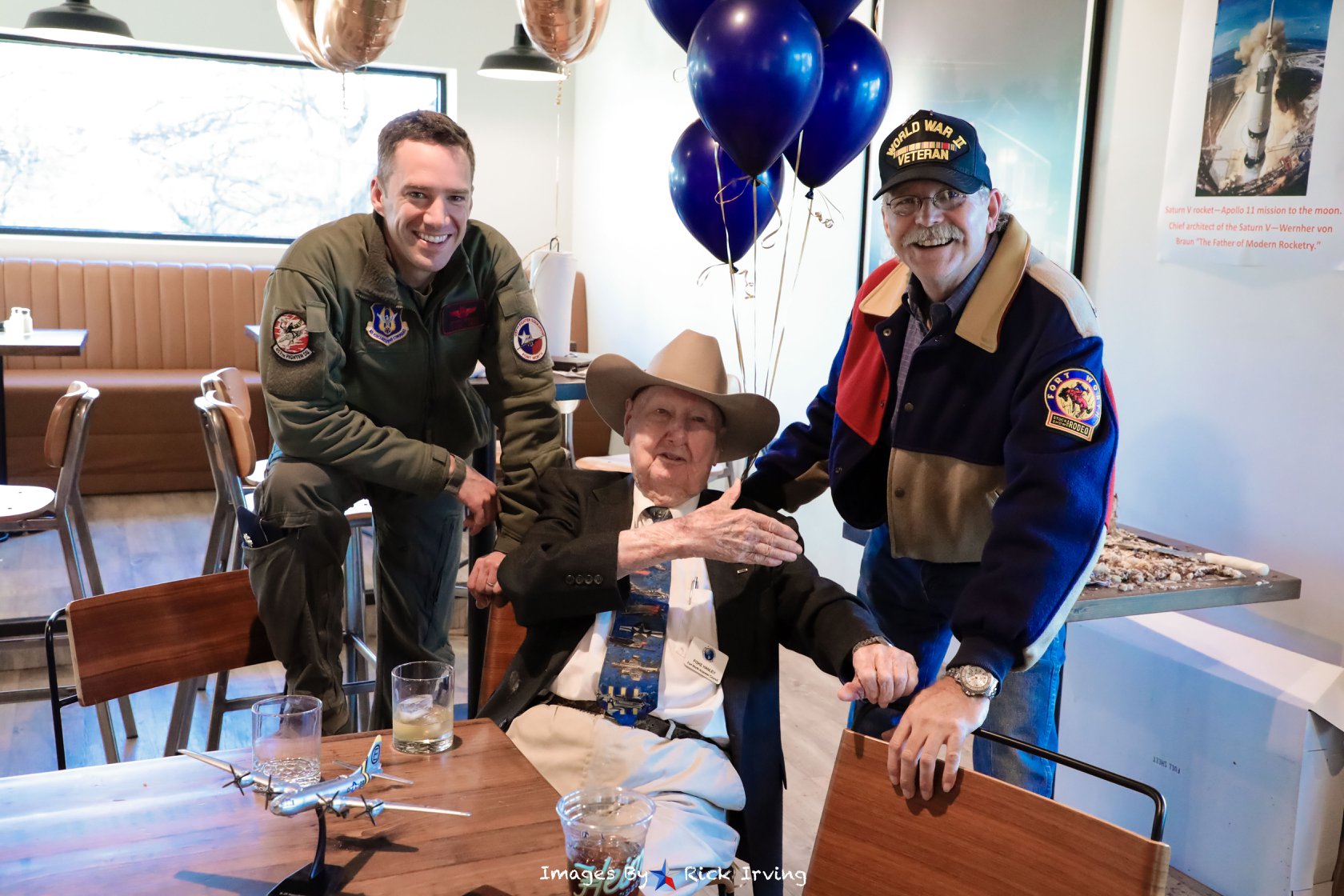
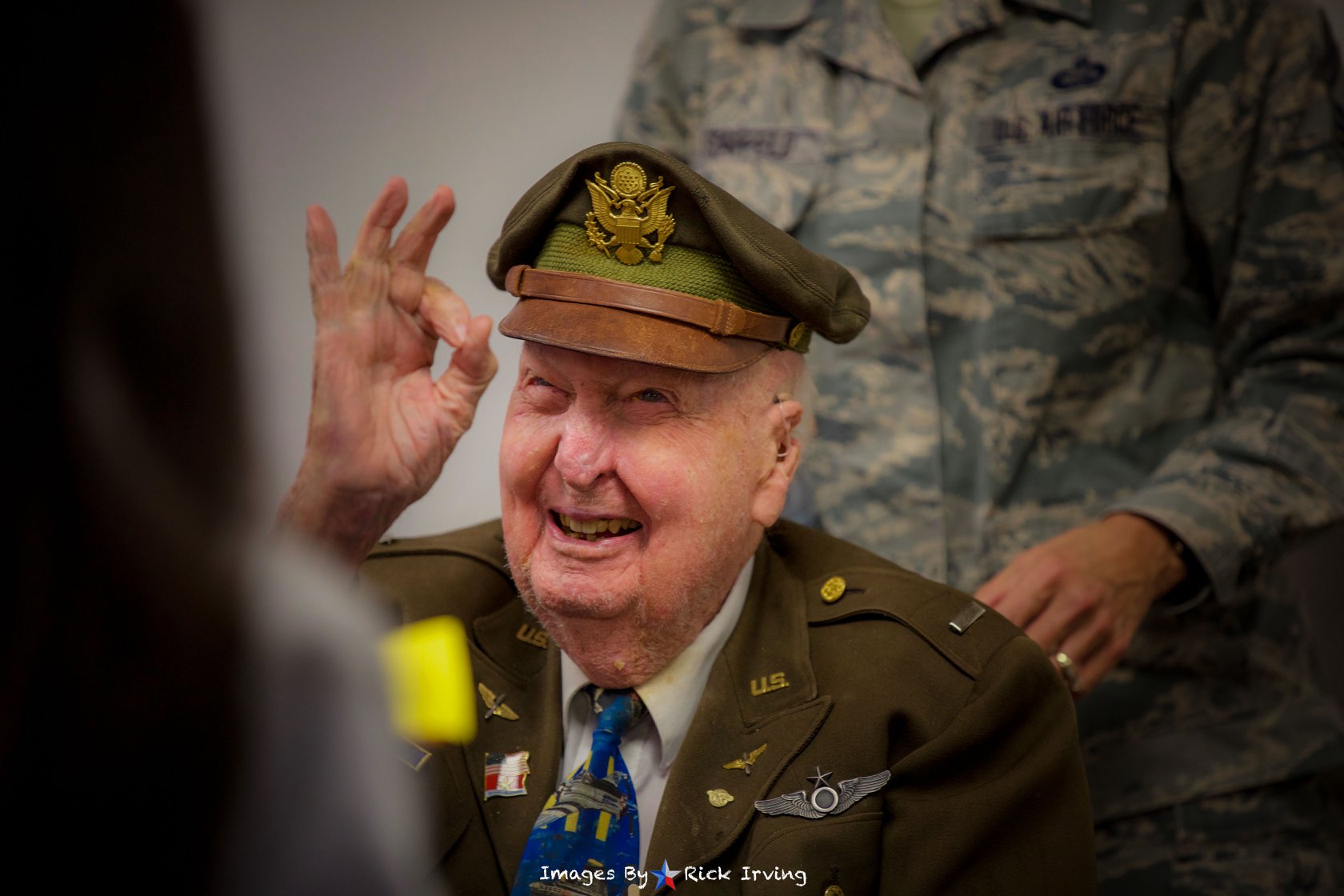
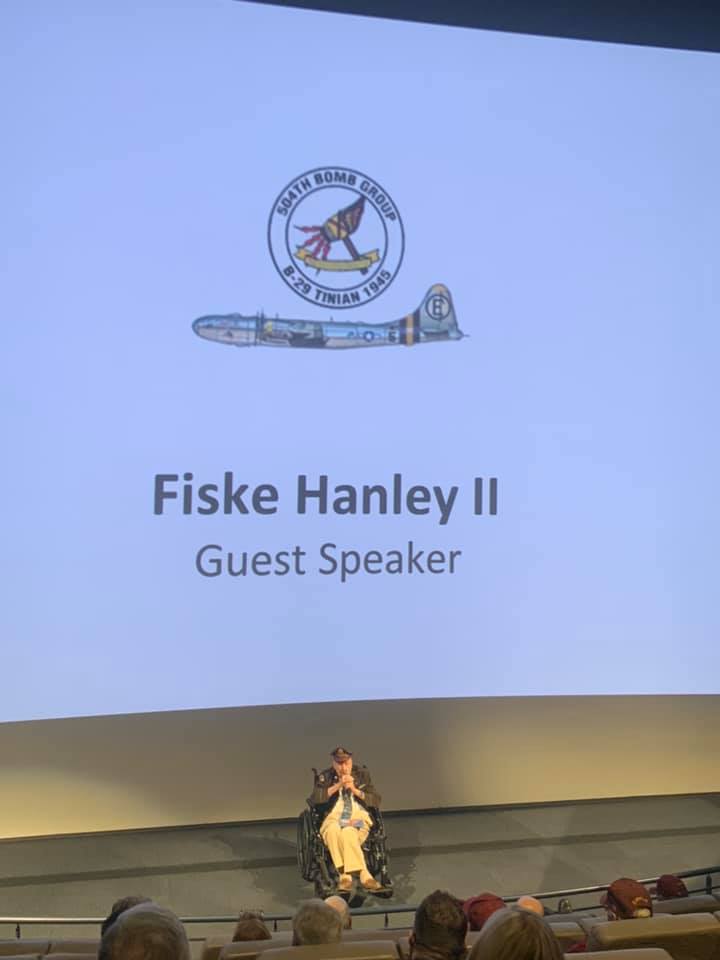
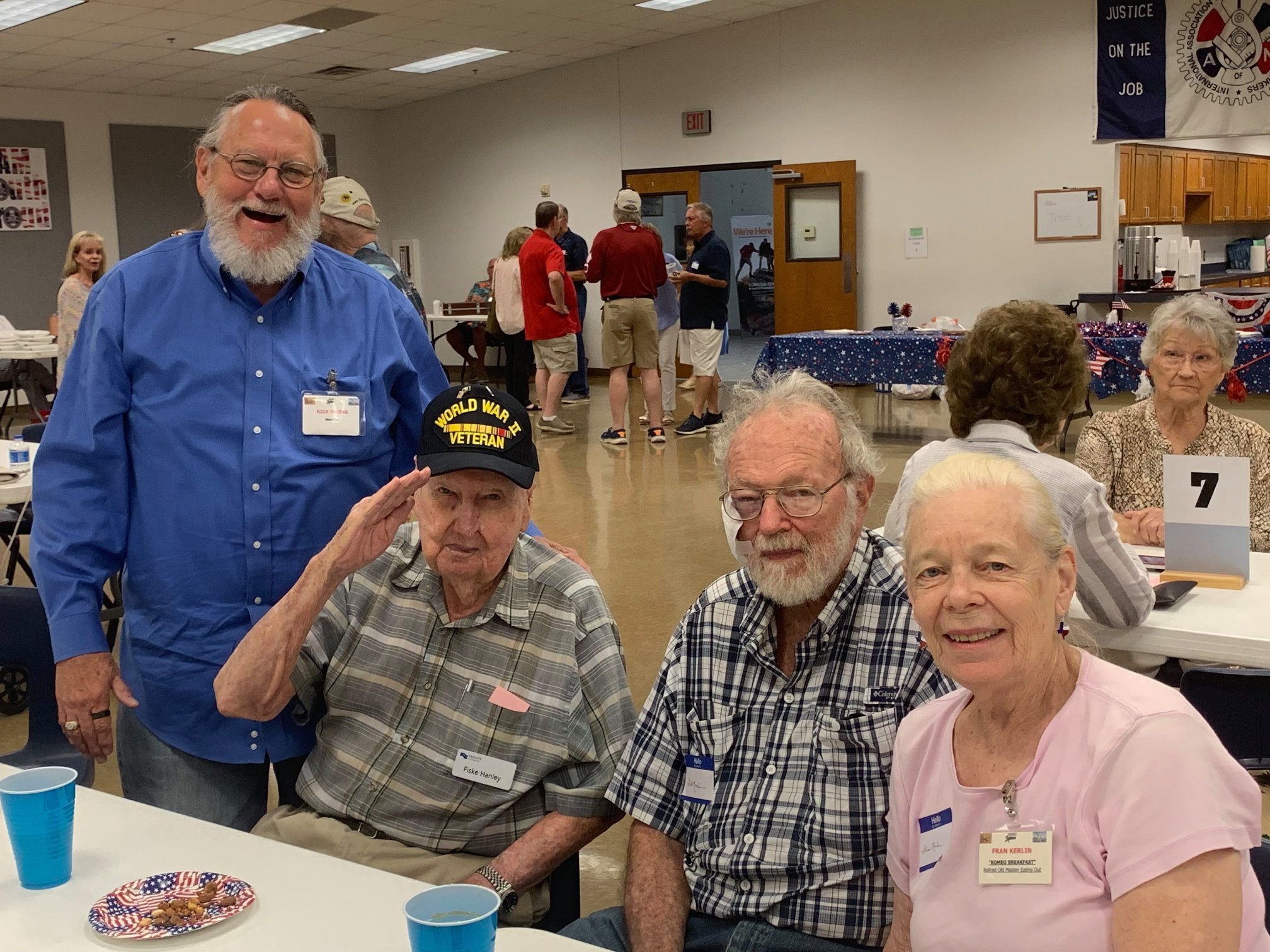
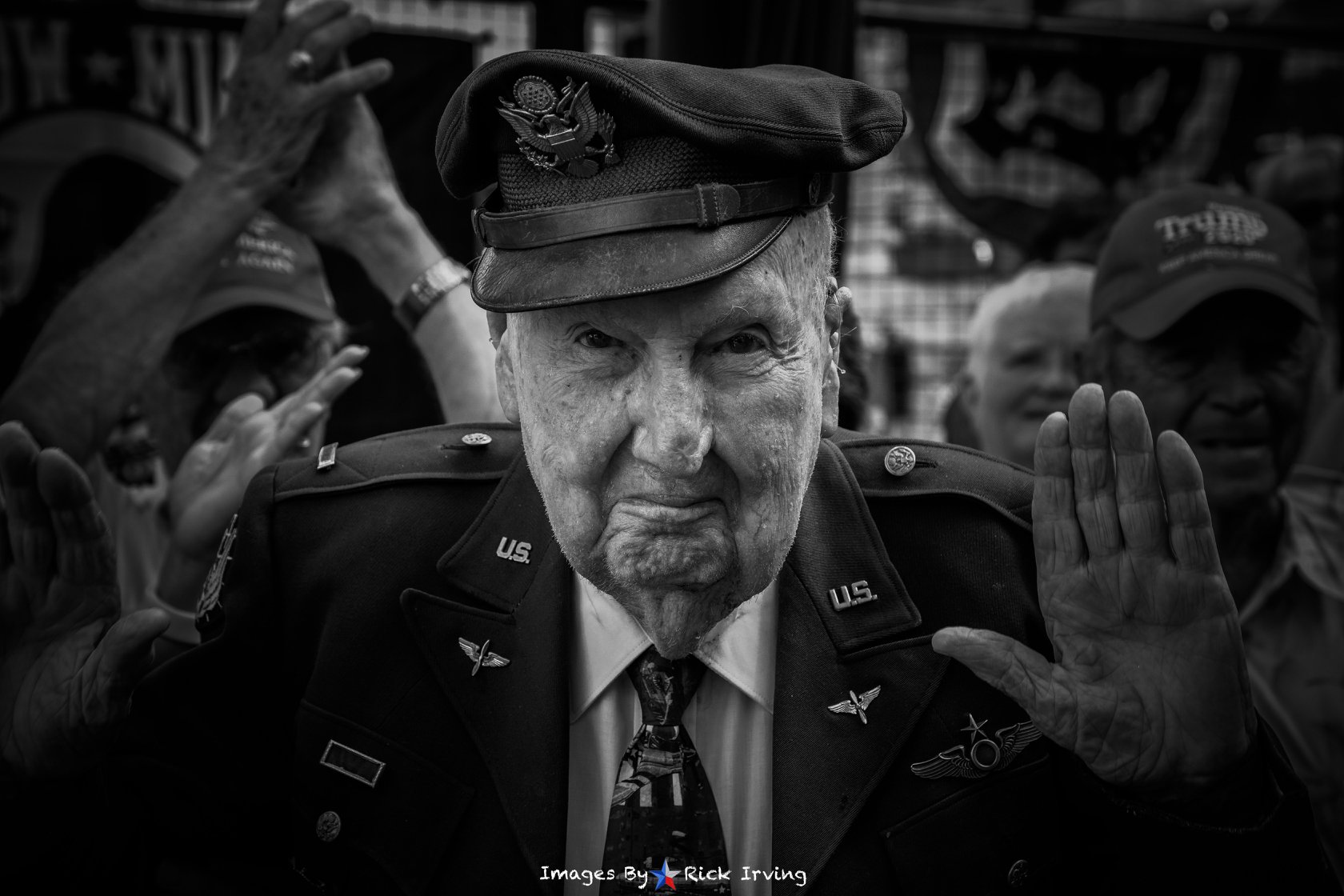
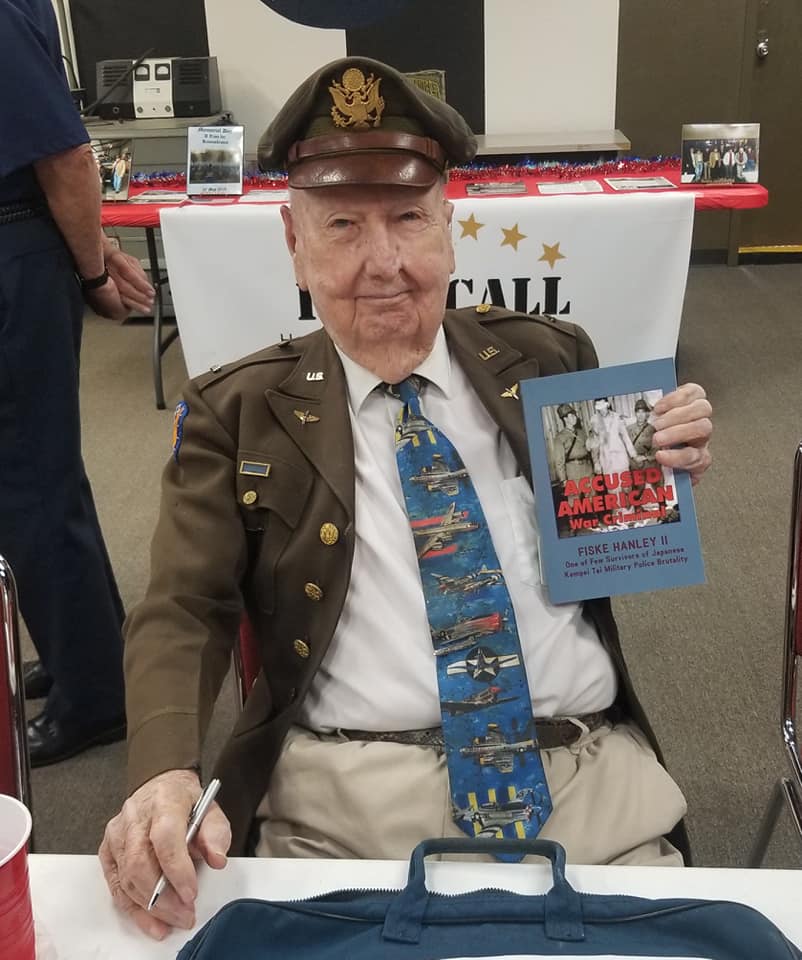
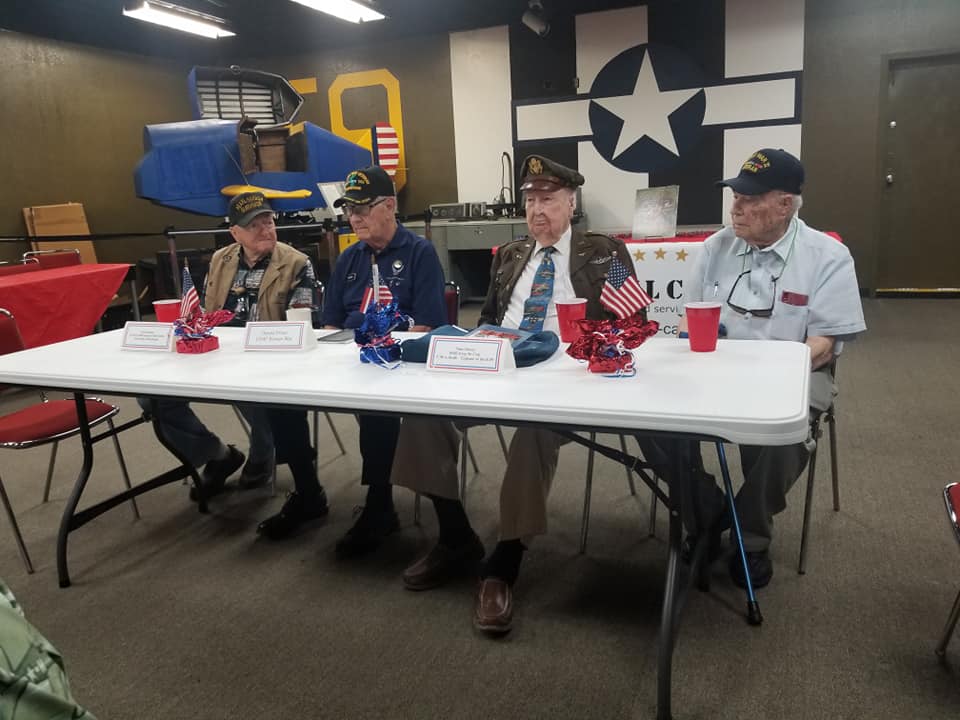
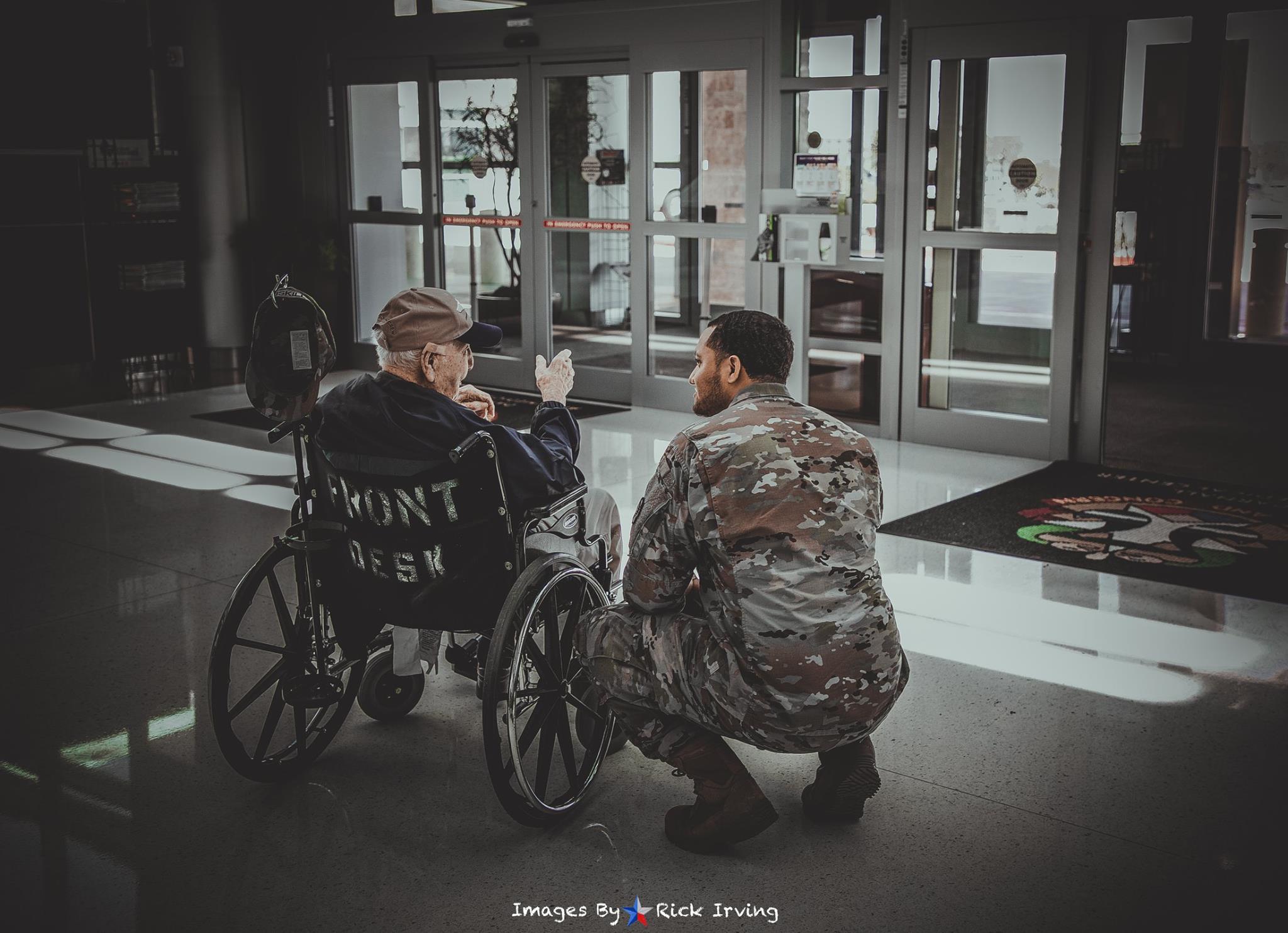
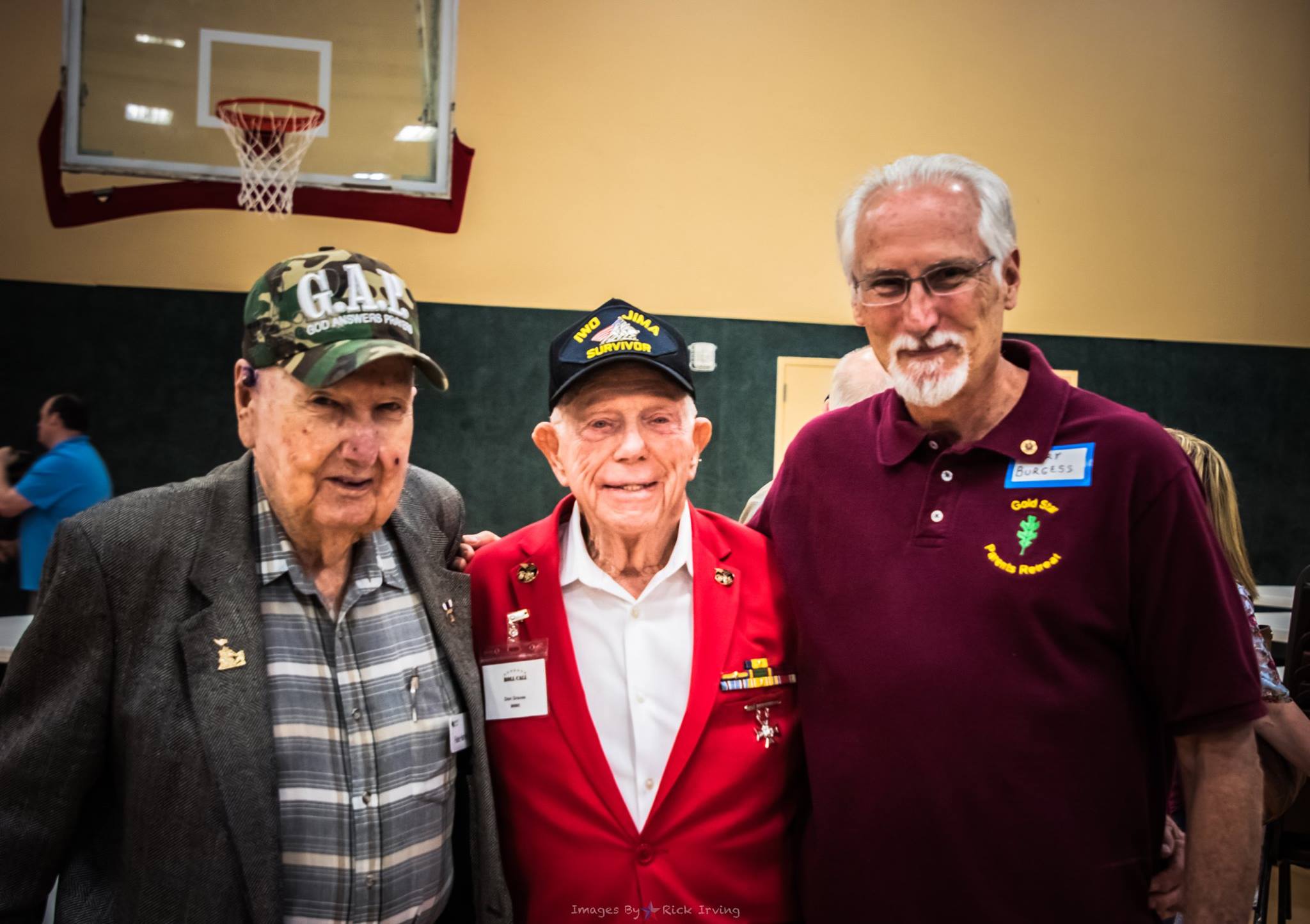
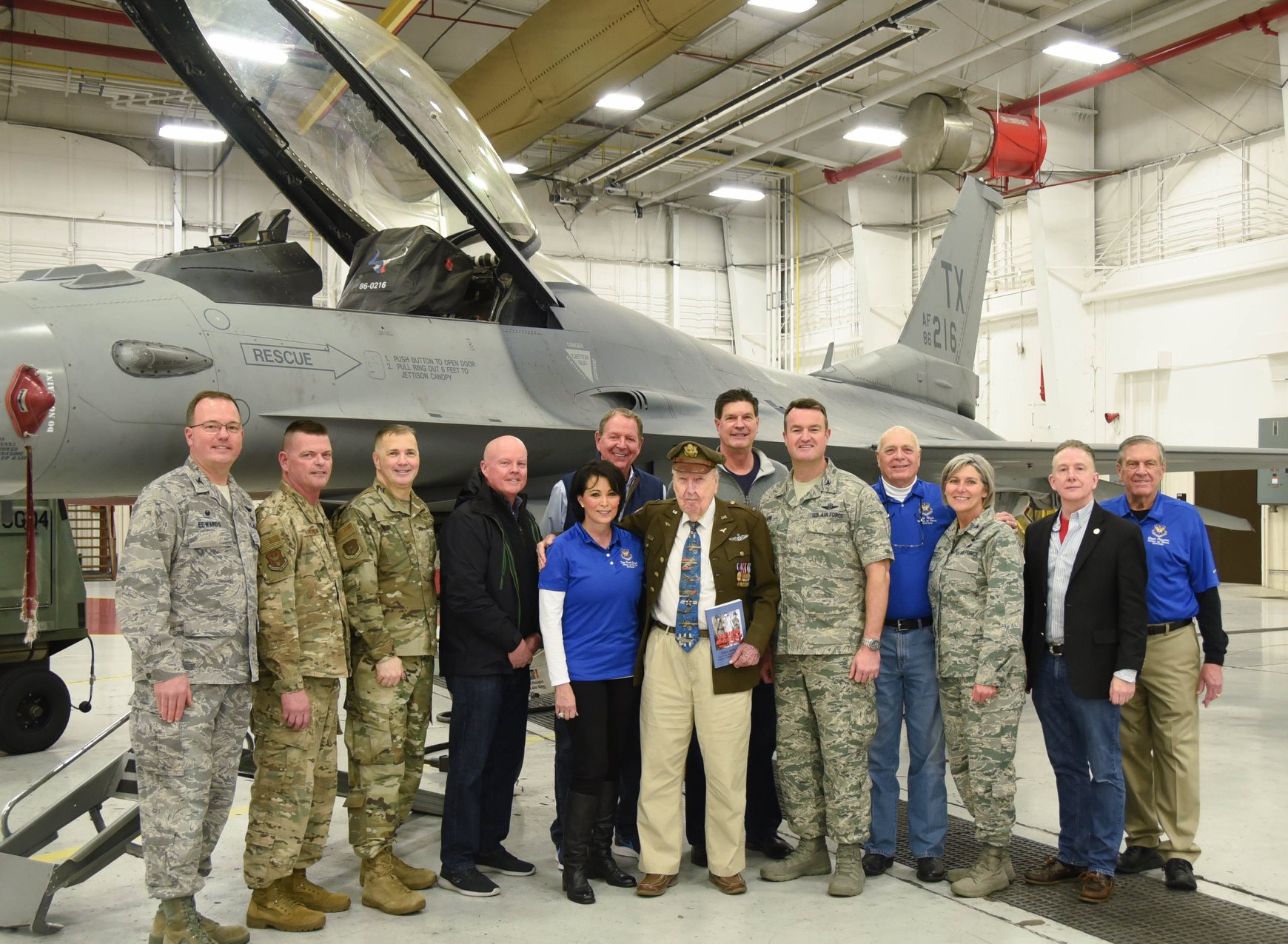
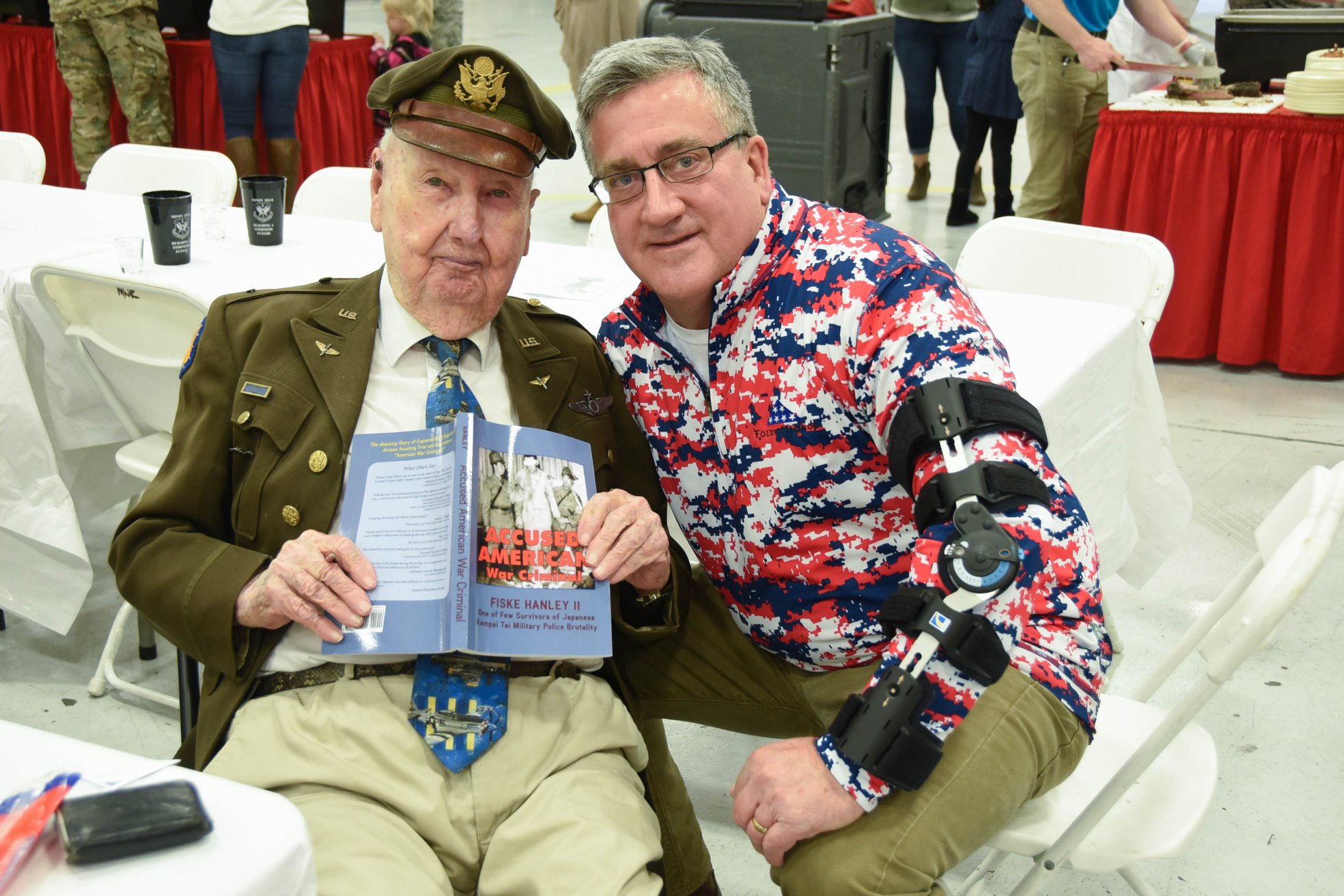
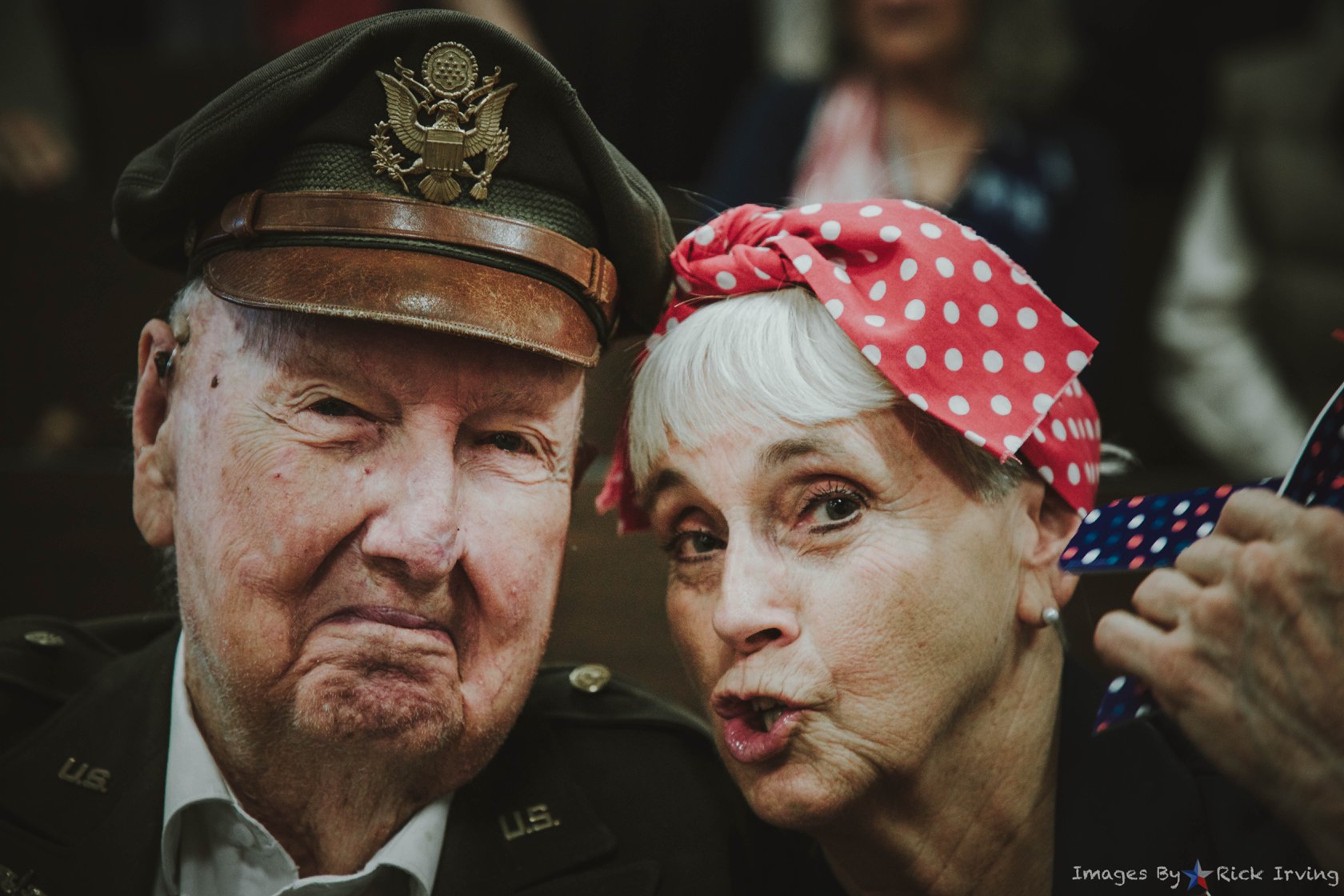
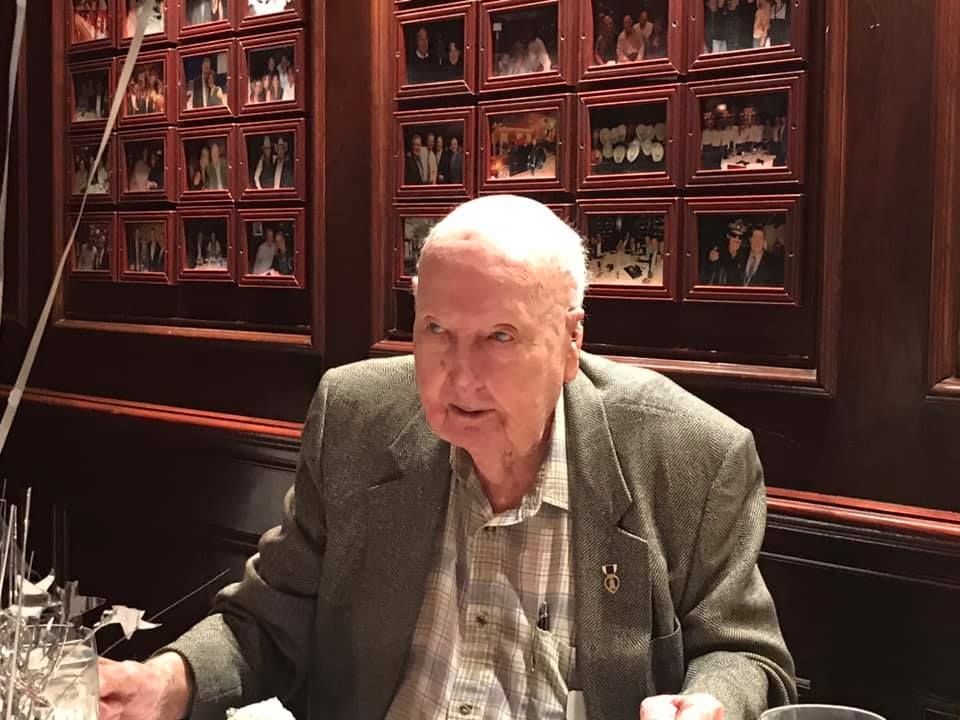
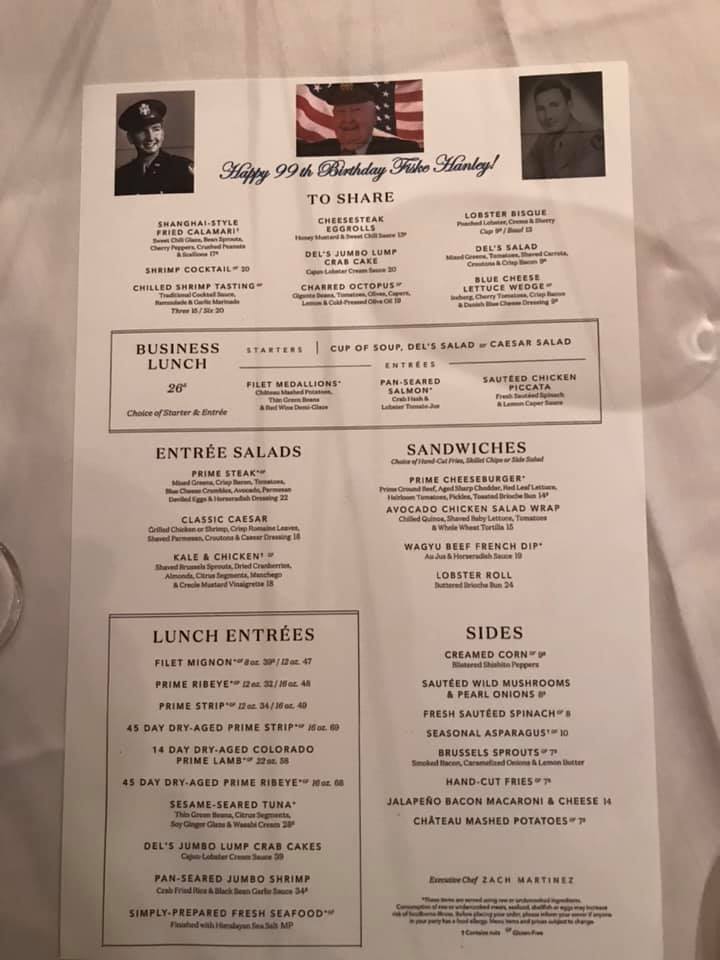
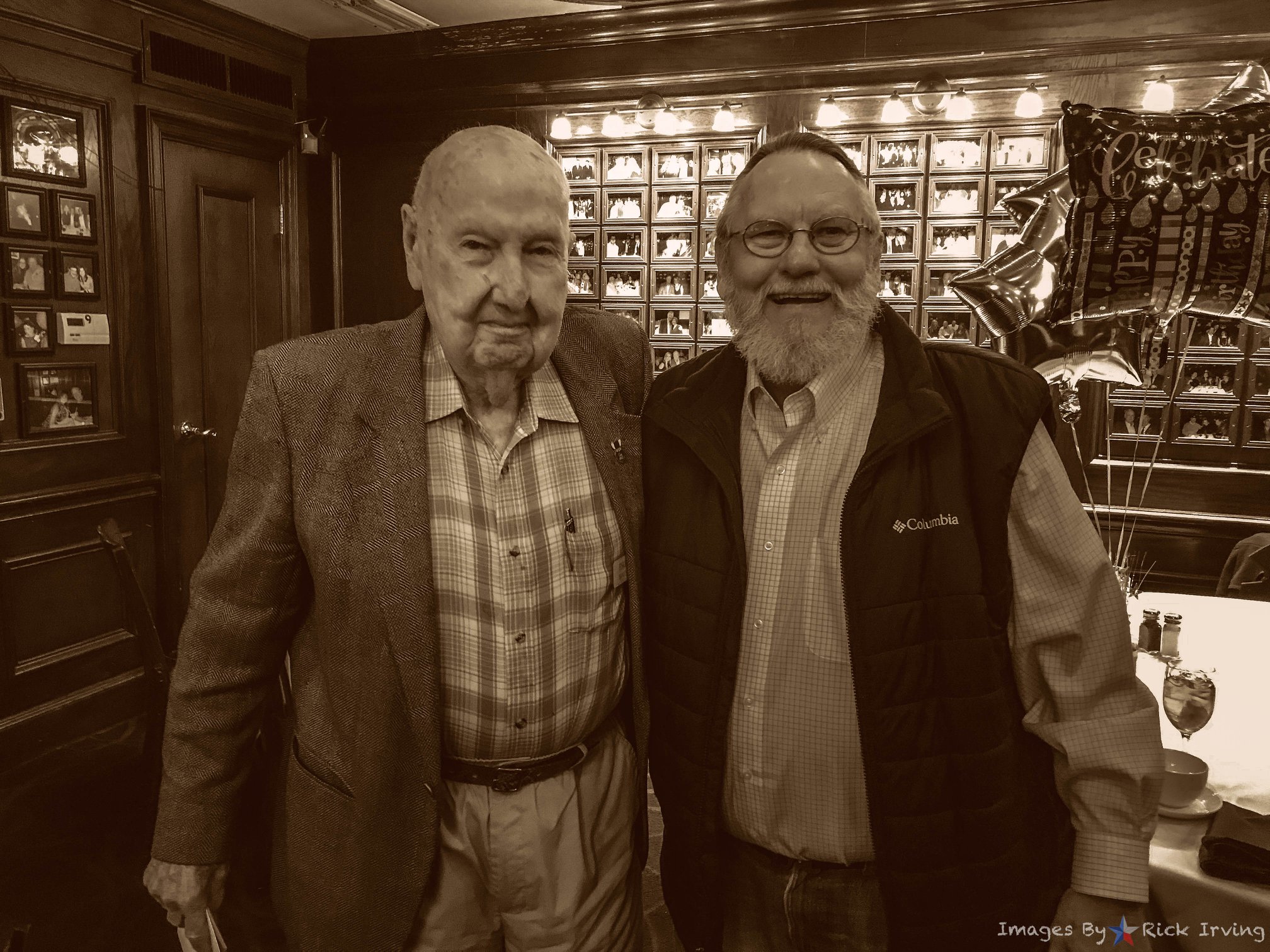
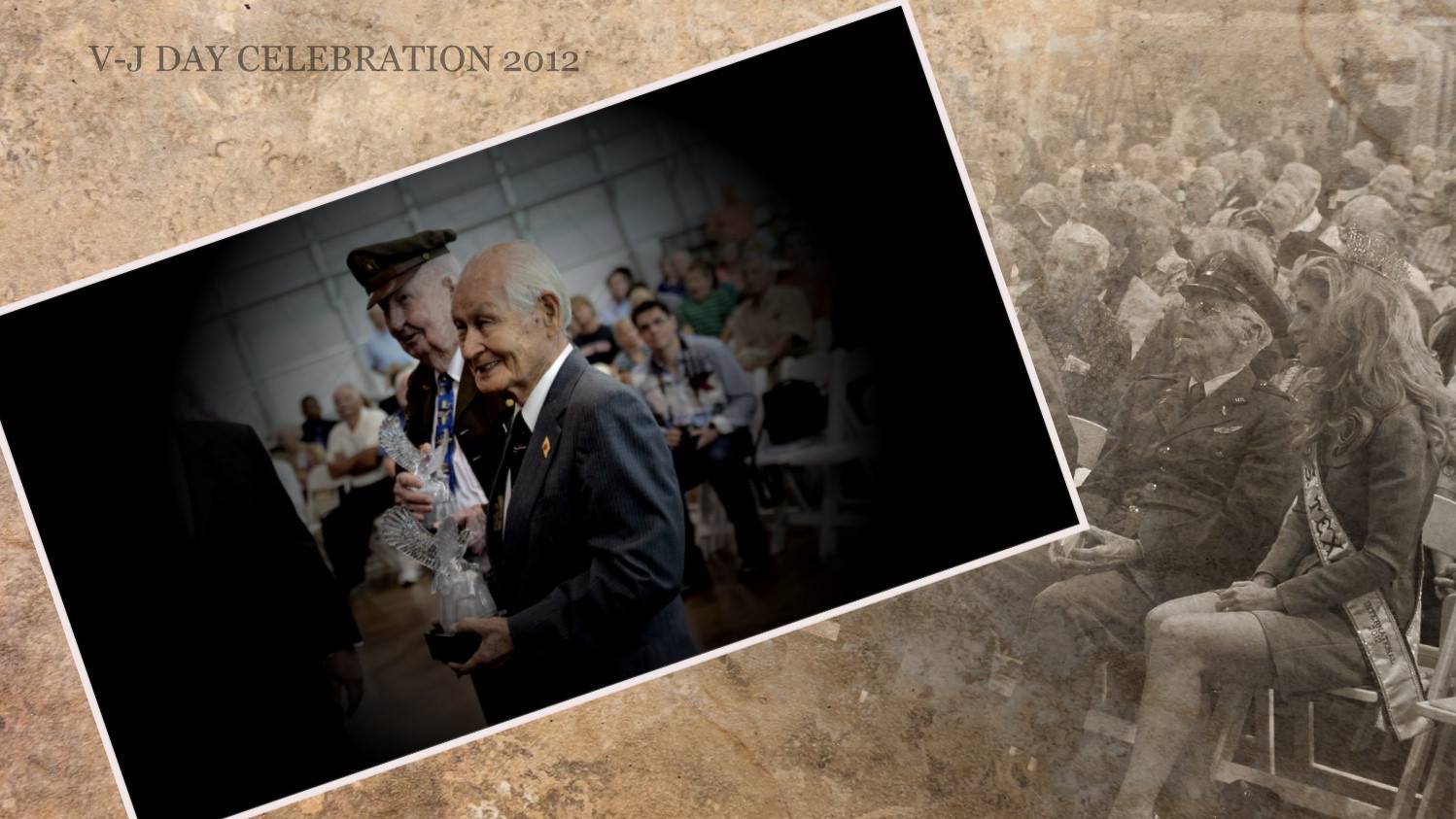
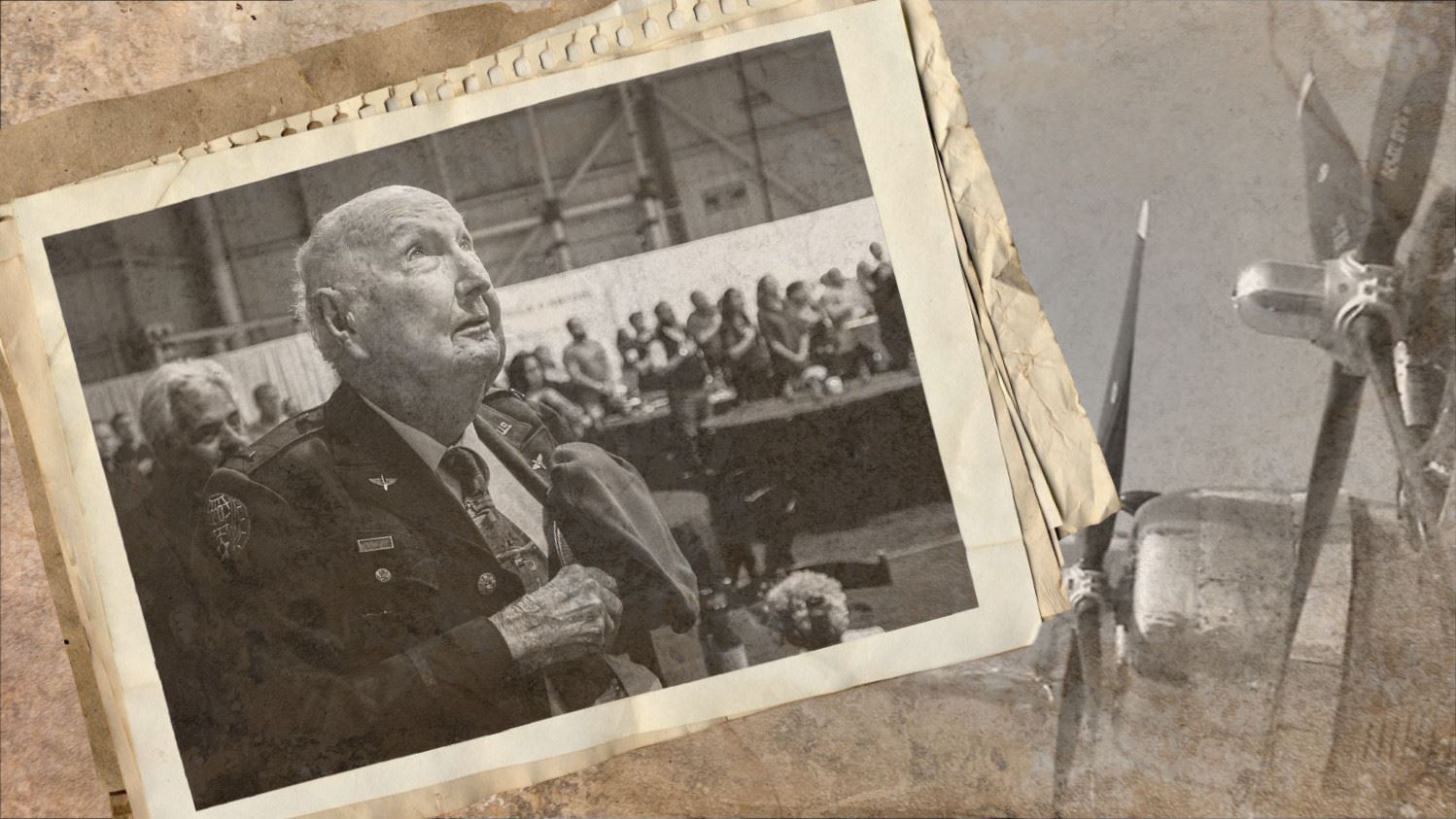
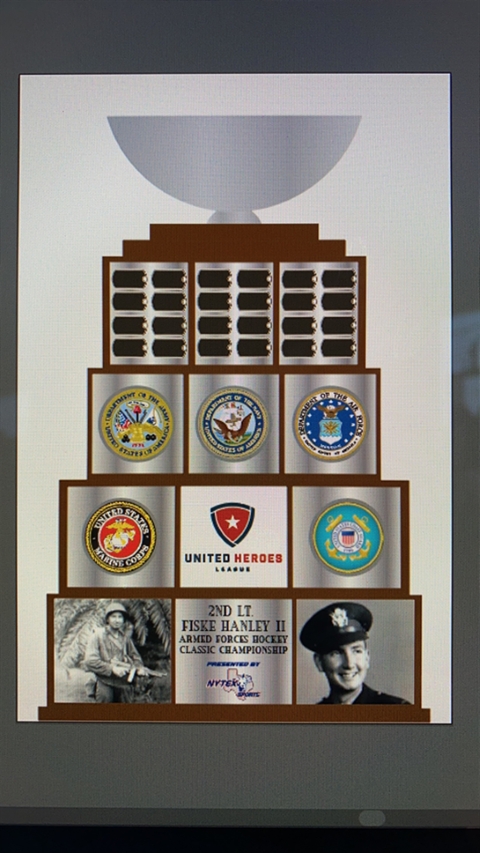
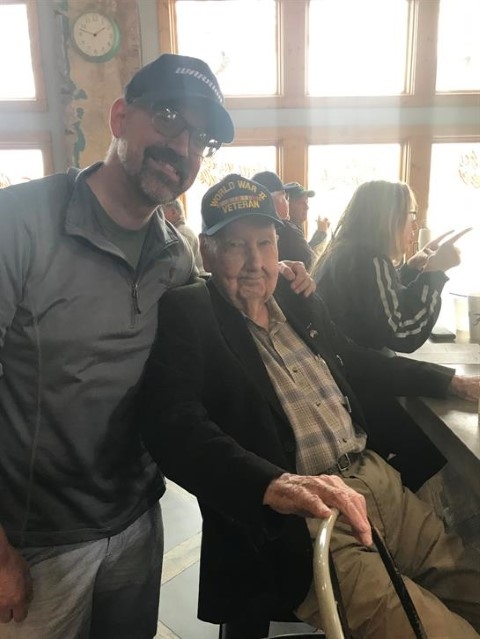
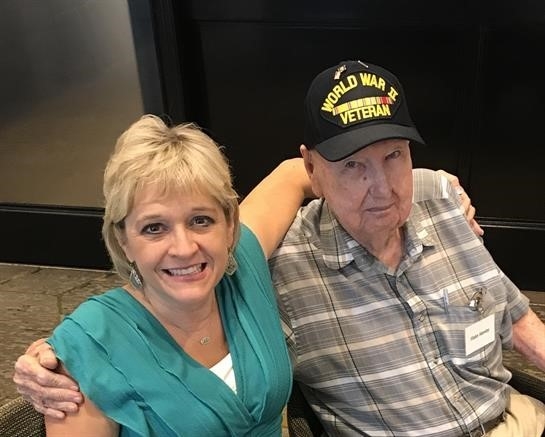
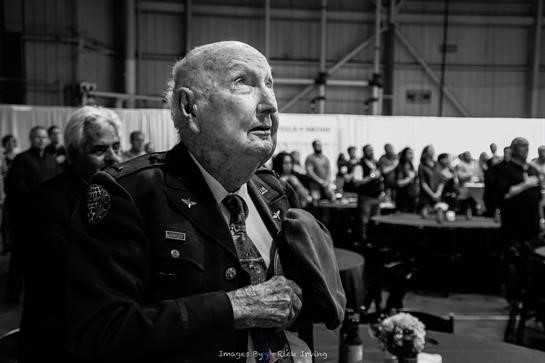
Lt. Fiske Hanley II was born in January 1920 in Brownwood, Texas, one of five children in a family that weathered the Great Depression more comfortably than most due to his father’s steady work in the oil fields. The family moved to Wichita Falls where his childhood took shape, and ten years later they settled in Fort Worth which soon became his new home.
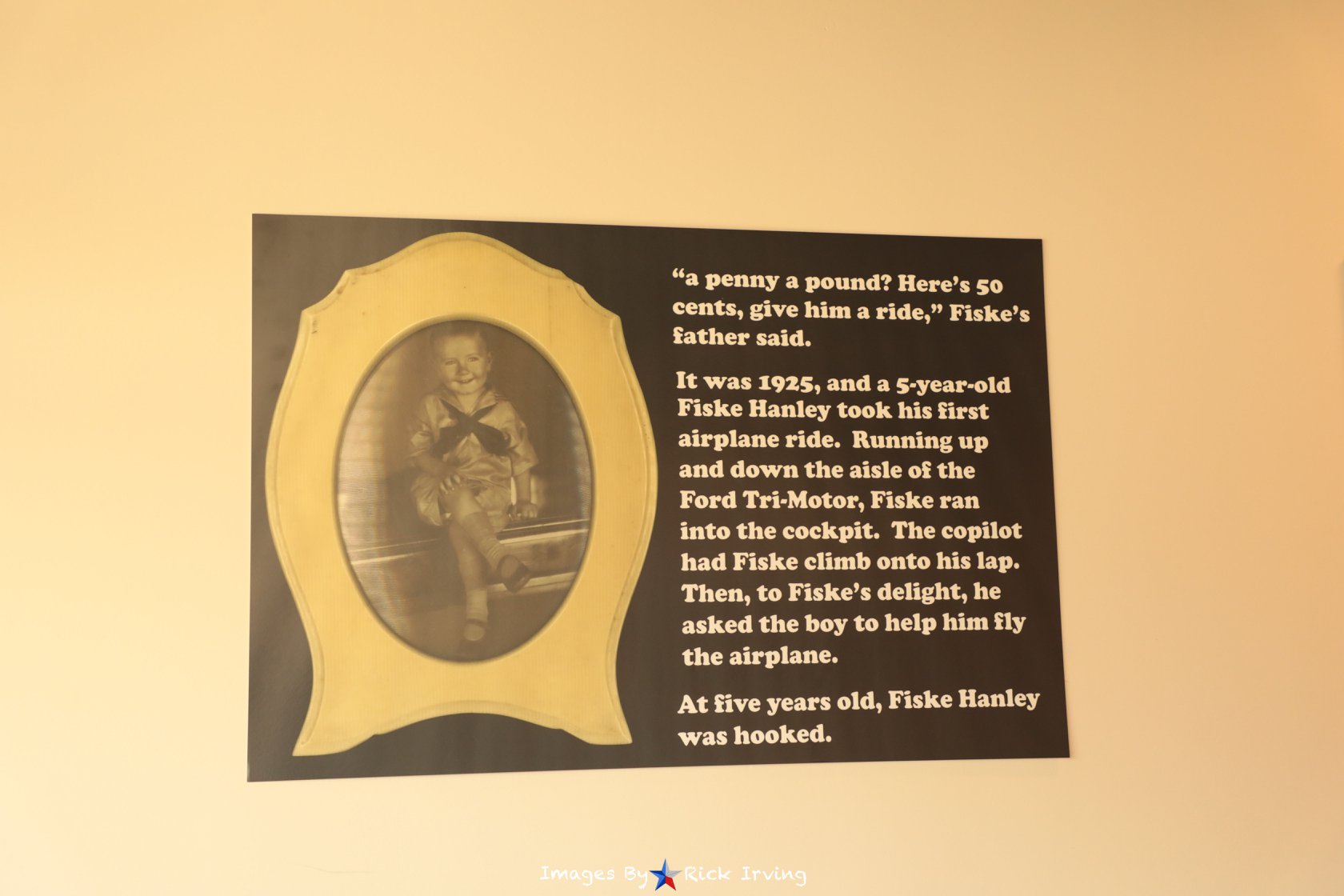
When he was five, his father gave him an 1890 silver dollar that became his lucky charm. His father often brought him to the airfield outside Wichita Falls, and on one memorable day a Ford Tri Motor pilot offered to take passengers up for a penny a pound. His father put down half a dollar and he experienced his first airplane flight.
He attended Texas Agricultural College for two years before transferring to Texas Tech in Lubbock. On 7 December 1941, while driving with a date, he heard the radio announcement of the Japanese attack on Pearl Harbor. Uncertain where Pearl Harbor was and unsure what the Japanese intended, he wondered how the war would shape his future. Although he hoped to finish his education, his draft notice arrived in the fall of 1942 and he volunteered for the Army Air Corps, believing that service as an Air Corps officer would keep him safely behind the lines.
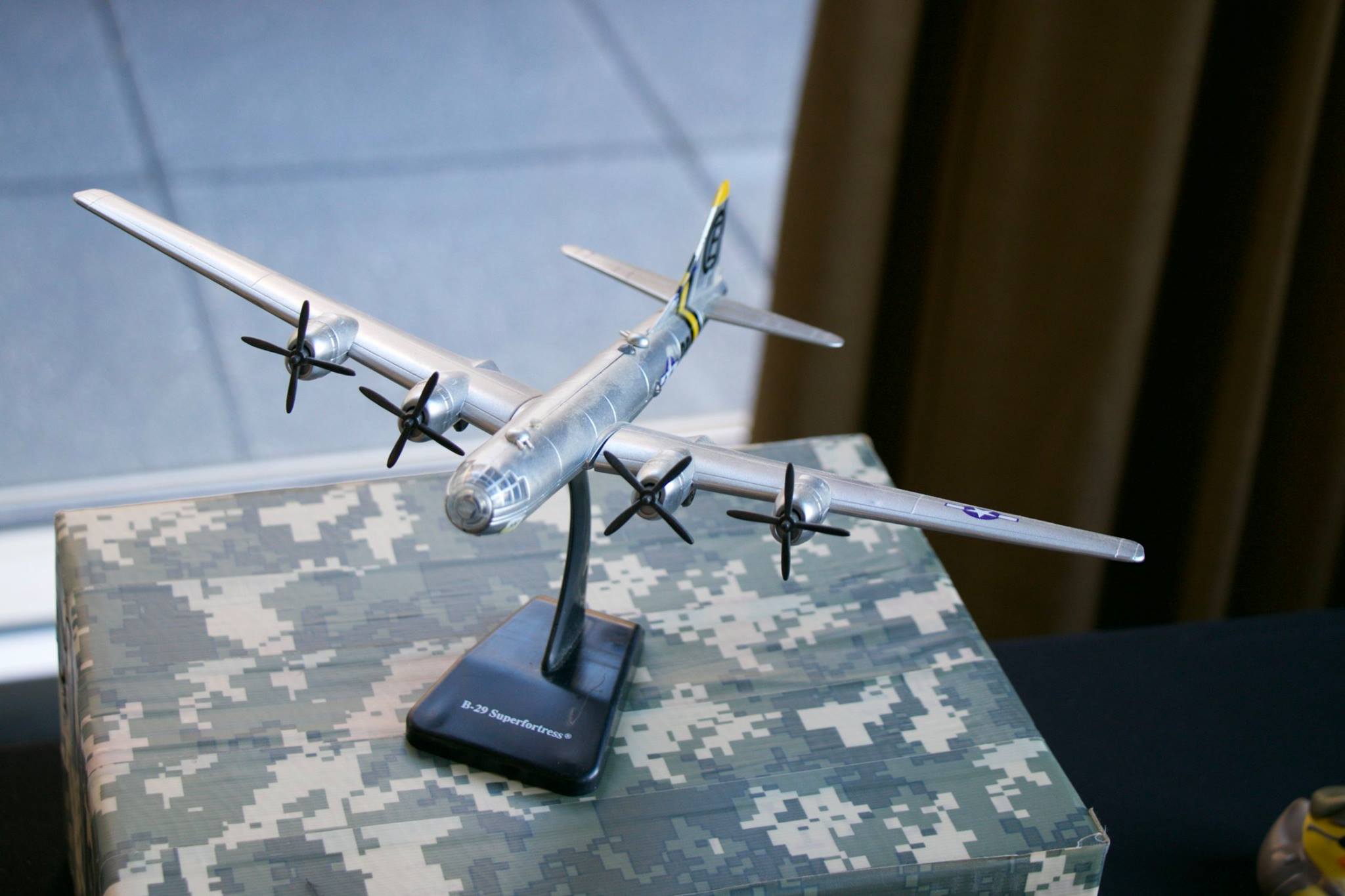
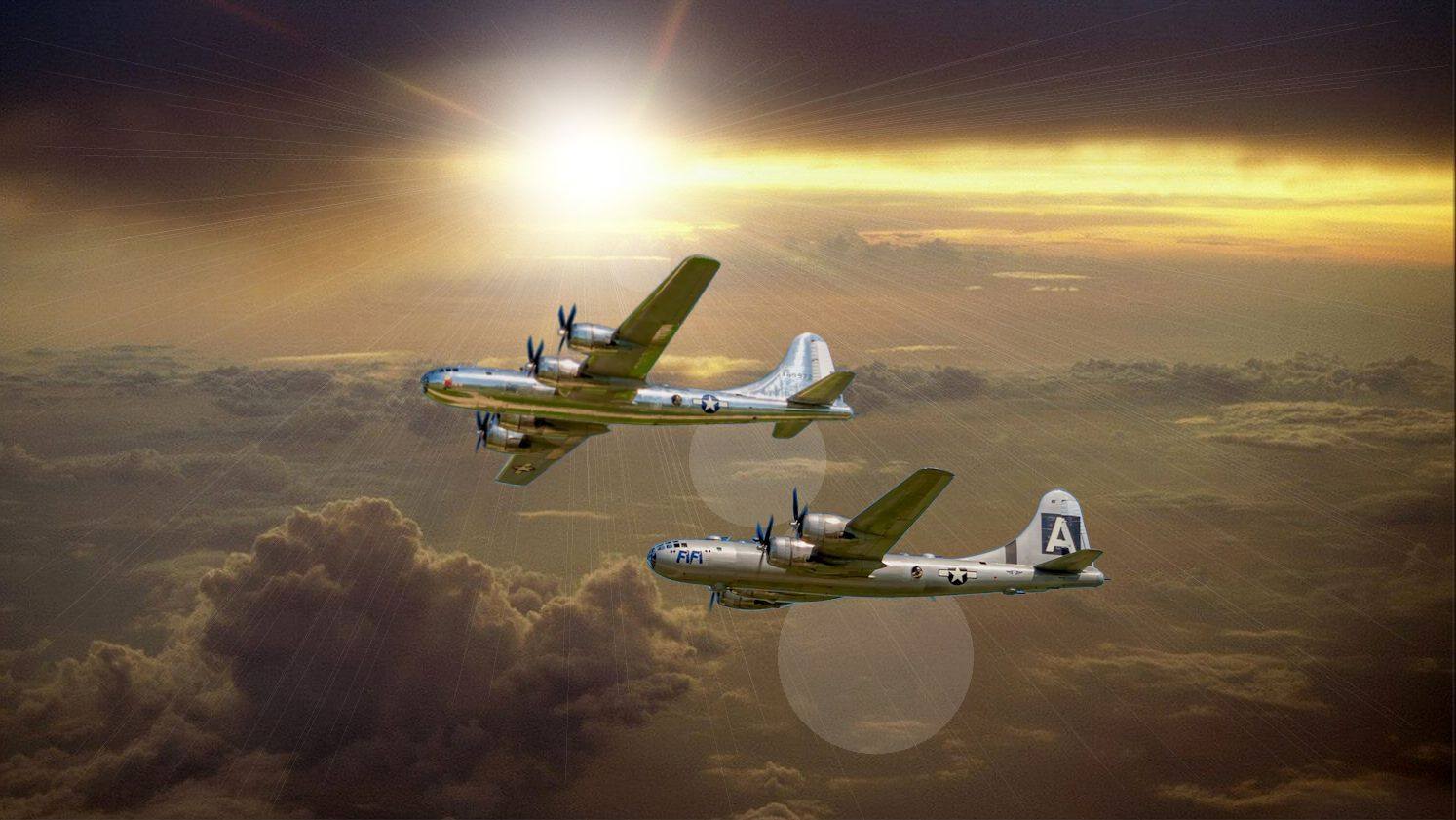
Hanley completed his degree in May 1943 and left the next morning for basic training in Boca Raton, Florida. He then studied aircraft engineering at Yale University and in February 1944 earned his wings and commission as a Second Lieutenant, qualified on the B 29 Superfortress. He trained further at Boeing in Seattle and at Lowry Field in Denver, where B 17 and B 24 aircraft substituted for the scarce B 29s. At Fairmont Army Airfield in Nebraska he joined his eleven man crew. During this period Colonel Paul Tibbets selected men from the 393rd Squadron for the atomic bomb mission that would later be flown by the Enola Gay.
Hanley’s crew departed for the Pacific in early 1945, traveling through Mather Field in Sacramento and John Rodgers Field in Hawaii. A schoolmate on the general staff informed him that he would be part of Operation Olympic, the planned invasion of Japan. A college friend on a general’s staff told me about operations Olympic and Coronet, the invasion of the Japanese home islands, right down to the November 1, 1945 start date. I did not want to know that. I would be flying over Japan, and had been trained that if taken prisoner I was to answer interrogation questions honestly.
The B 29 had serious engine problems, but after a week of repairs the crew continued west under sealed orders and arrived on Saipan on 12 January 1945. Their aircraft was taken and replaced with a B 24 for the flight to Tinian, where they began flying practice missions. In the combat zone there was no dress code. I went with suntans, khaki shirt and trousers with a watch pocket where I kept my lucky silver dollar. Our first combat flight was to Iwo Jima to hit the airfield. Unfortunately, our bombs landed on the beach. We left craters Marines were able to shelter in, so the Marines loved us.
Early high altitude bombing proved ineffective due to jet stream winds, but low level missions at four to six thousand feet brought dramatic improvements. Under General Hap Arnold, Hanley’s crew flew three major incendiary missions against Tokyo, Nagoya, Kobe and Osaka.
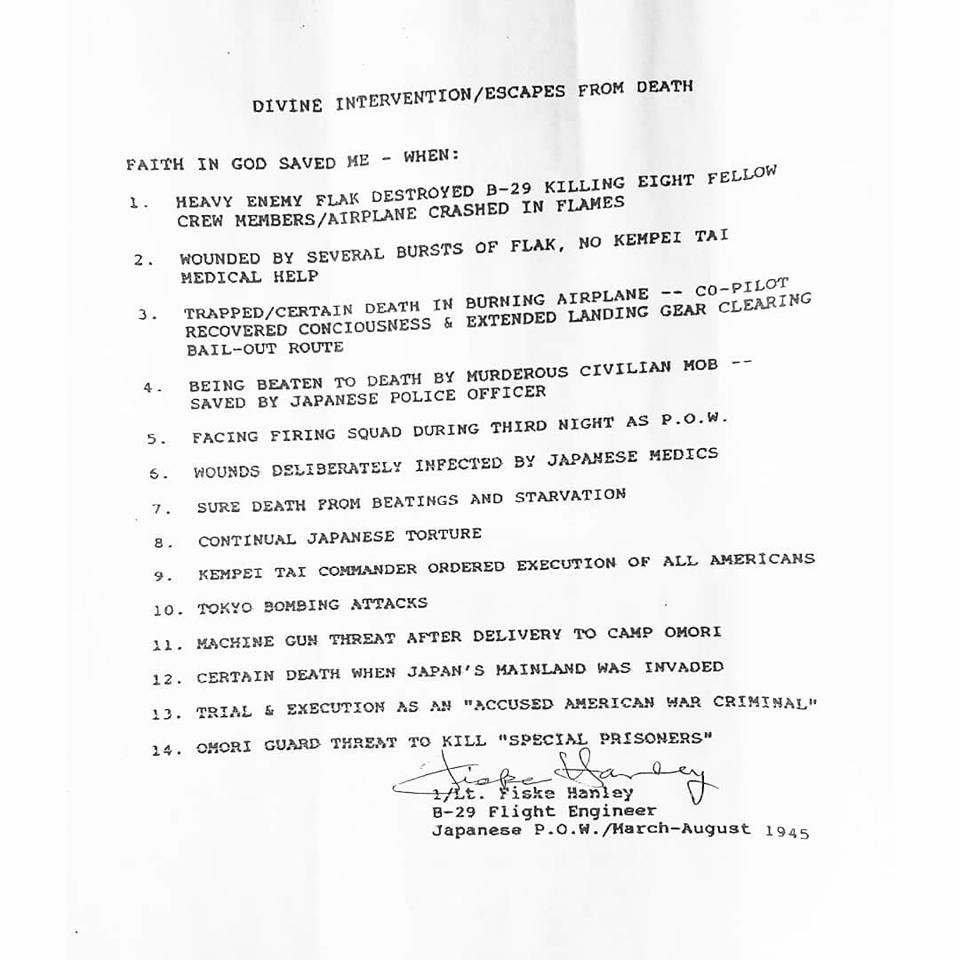
On 27 March 1945 they were assigned their first mining mission for the 313th Wing. Late March 1945 saw your crew take on a very significant mission. My crew got orders to mine the Shimonoseki Straits. It seemed like such a cinch our tail gunner stayed home. But the Japanese had learned the Allies would be invading Okinawa. There were searchlights, tracers, flak. It was terrible and chaotic. Our engines caught fire. The navigator and the gunner were killed; the copilot said the commander and the bombardier were dead. The only way out was through the nose wheel well, but to reach the hatch, that nose wheel had to be down. That required electricity and hydraulics, and our systems were shot. All of a sudden the nose wheel dropped. As the two of us were jumping, a song was in my head, Accentuate the positive, eliminate the negative. I landed on Honshu in a rice paddy, could not see anyone from my plane, and people were on me with bamboo spears and what all. A policeman pushed them back and took me away on a fire truck.
I had bad shrapnel wounds to my rear end, which I did not realize until I got to the mayor’s office and bled all over his divan. Medics put a needle into my chest and bandaged my wounds. To do this they undressed me, but they did not find my silver dollar. Kempeitai officers arrived and took me outside. I saw my copilot and tried to talk with him, but the Kempeis beat us. Next the Kempeis sat me by a charcoal grill with irons set on the coals. I thought, This does not look good. I answered every question. The Kempeis never did reach for those irons.
They crammed eight airmen and three Japanese into a five by nine foot cell. We could not bathe or wash; we used a honey bucket. Our overseer was a corporal, Yoshio Kubayashi. We called him Shorty. He would punch us and beat us with clubs made of bamboo slats called kendo clubs. For two months, they interrogated me daily, asking how it would affect the American population if everyone in Japan was willing to die in a wall of corpses. I would say, I do not know, all I read is the funny papers. But they never asked about Operation Olympic.
My silver dollar seemed to be a piece of hope. When we were by ourselves I would take it out and we would hold it. One day new prisoners came in. This fellow sits opposite me. You are from Texas, he says. You are Fiske Hanley. It was Bill Grounds. We had been in ROTC at North Texas Agricultural College.
They wanted me to sign something admitting to war crimes. I refused, so they gave me the treatment, knocking me around, sticking me with bayonets, hitting me with kendo clubs and gun butts. That would happen if POWs tried to talk with one another, too.
Japanese policy dictated that B 29 airmen be tried and executed, and special rules ensured half rations, no sanitation and no medical care. Fewer than two hundred of the captured B 29 airmen survived the war. Hanley was handed over to the Kenpeitai and taken first to Kuro in northern Kyushu, then to Tokyo for interrogation. Highly intelligent officers questioned him in English, using kendo bats, sabers and bayonets. He spent long periods in a five by nine cell with seven other prisoners, forbidden to speak. They welcomed air raids, hoping for an end to the war.
The Japanese interrogators asked about American public opinion and how soon Americans wanted the war to end. Hanley believed they were seeking an honorable peace. They asked how he would conduct an invasion of Japan, and he invented an answer, revealing nothing about Operation Olympic. They described their defensive plan, intended to make Allied victory so costly that capitulation would be the only option. Hanley later said he knew the atomic bomb saved more than twenty million lives.
His wounds were repeatedly targeted during torture. A civilian employee of the Kenpeitai oversaw the prisoners and was responsible for many deaths. Food consisted of golf ball sized clumps of rice thrown onto the filthy floor. Bodies sometimes lay for days before removal. When Hanley complained about the lack of medical care, he was taken to the infirmary where his wounds were intentionally infected.
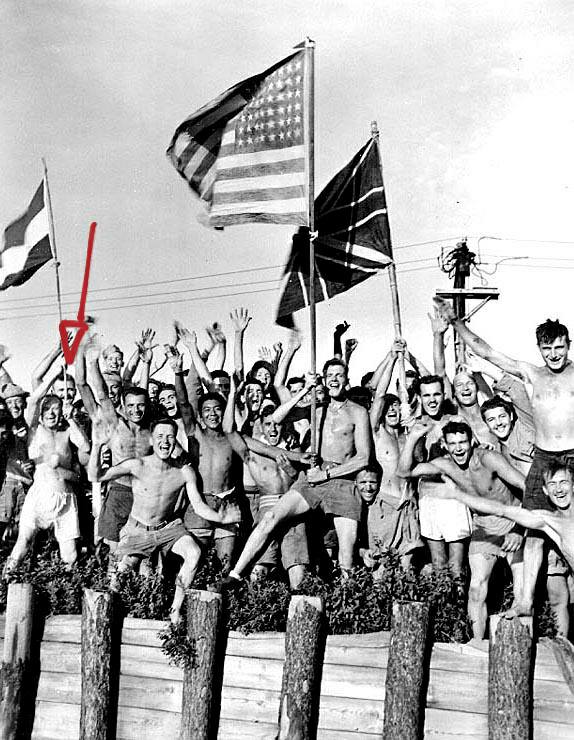
In May 1945 sixty two American prisoners, all B 29 personnel, were moved to the Tokyo military prison. When a B 29 bomb set the prison ablaze, the Japanese left the Americans inside to die. Hanley survived through faith and sheer will. He weighed only seventy pounds when, on the night of 15 August 1945, the prisoners were taken to Tokyo Bay to bathe. They were then moved to a nearby island where Navy and Marine fliers dropped candy, gum and cigarettes. Food improved and life became bearable.
I will say. Each of us had his own two by six foot sleeping spot, with clean blankets. We got full rations and then some, and brand new uniforms the Japanese had captured. We were tickled to death. I could not believe my good fortune. All day Marine and navy planes dropped food supplies. A torpedo bomber opened its bomb bay and dropped a huge load of Mounds candy bars, right into a cesspool, an awful disaster.
On August 28, a Marine fighter dropped a note reading, Tomorrow you will be liberated. At midafternoon six Higgins boats landed carrying Marines armed to the teeth. Although General MacArthur wanted liberation delayed until after the peace treaty, Fleet Admiral William Halsey ordered the release. Hanley watched six landing craft approach with American flags flying. Because of his condition he was among the first taken aboard the hospital ship USS Benevolence. He was deloused, examined and treated by nurses in white uniforms. He later said his greatest fear during captivity had been dying from infection, yet his recovery proved the resilience of the human body.
I was still badly wounded, and wound up in a hospital on Okinawa. One of the Texas newspapers let my family know I was all right, but only after getting to San Francisco in October was I able to put a call through. My mother answered, and I spoke with Dad. The next day the Red Cross said I was being expedited home because my father was dying of cancer. I can think of no happier occasion, even getting married, than being with my family again. Hanley arrived home in mid October 1945 for a joyful reunion. His father died two weeks later.
In 1947 Hanley married American Airlines stewardess Betty Baker. They remained devoted until her death in 1992. Later that year he married Ann Dana, who passed away in 2004. He married Geraldine Trahey in 2005 and cared for her until her death in 2013. He later married Peggy Day and joked that he was batting seven hundred fifty in his marriages and deserved induction into the Hall of Fame.
Hanley joined Convair’s Fort Worth plant in late 1945 as a flight engineer. After a near disastrous maiden flight of a B 58 in 1959, his wife convinced him to become a design engineer. He remained in that role until 1989 and contributed to major projects including the development of the F 16 fighter.
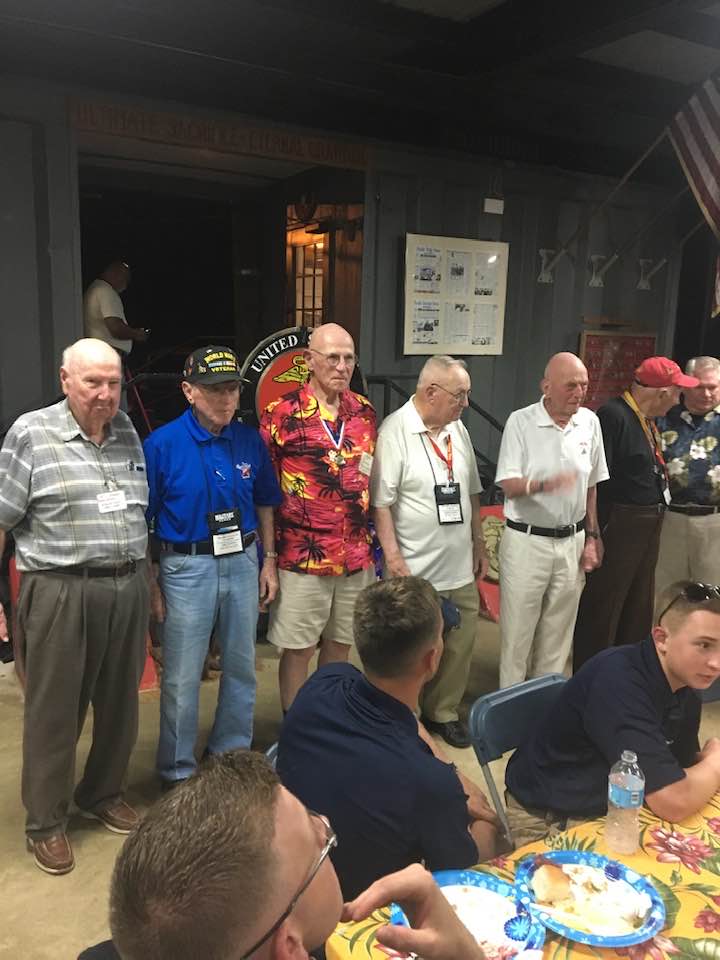
After the war he testified against the Kenpeitai. Criminal Investigation Division agents interviewed him for hours, showing photographs and recording his sworn testimony. He later reflected that the war changed him profoundly. He no longer allowed uncontrollable things to trouble his spirit and believed it made him a better man. He felt strongly that America fought to win and succeeded, changing the world forever. He believed museums such as The National WWII Museum exist to teach younger generations what happened so they may learn from the past.
Late in life Hanley asked a pastor why he had survived when so many others had not. The pastor replied that the Lord kept him alive so he could tell the world what evil men are capable of. Hanley accepted that calling with humility and devotion.
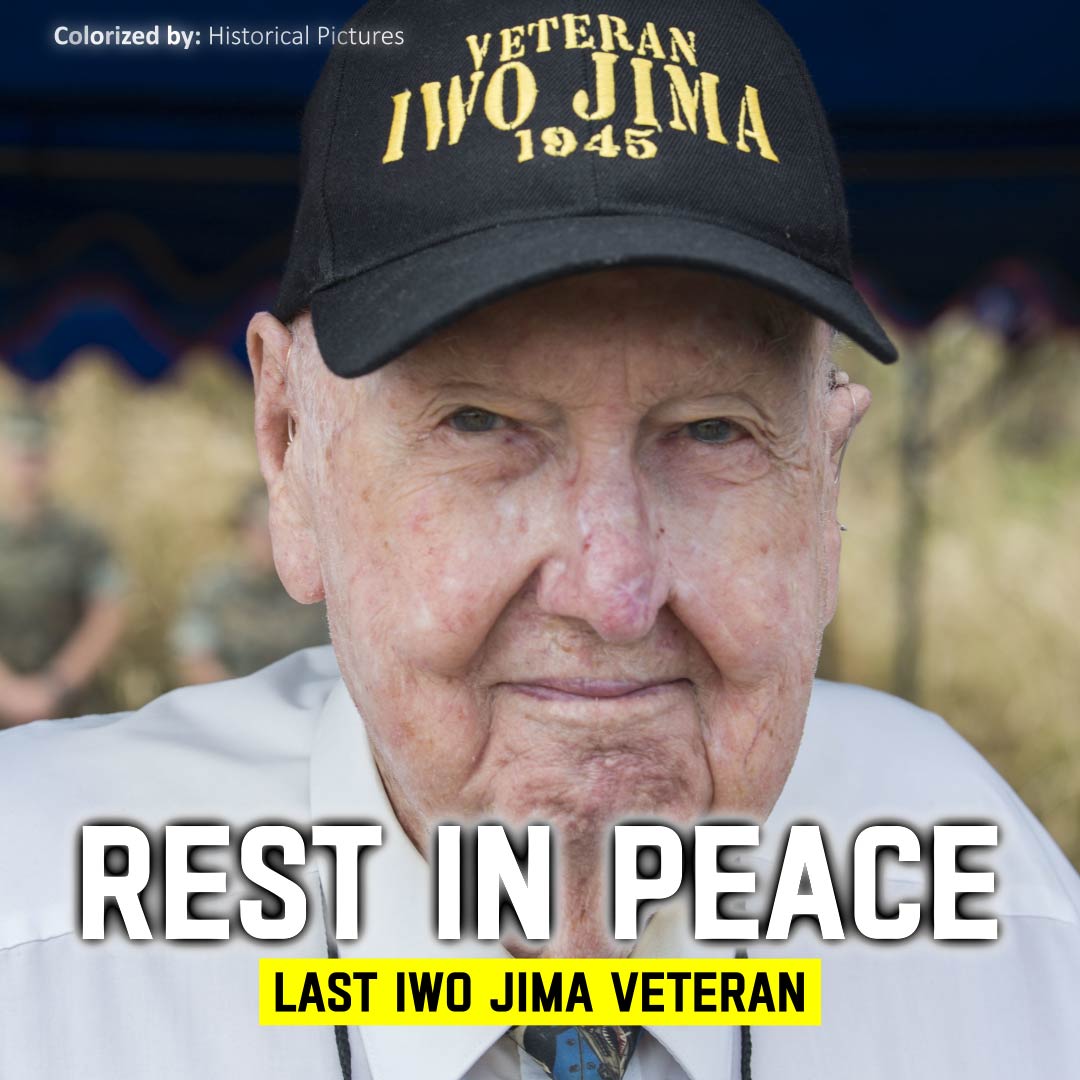
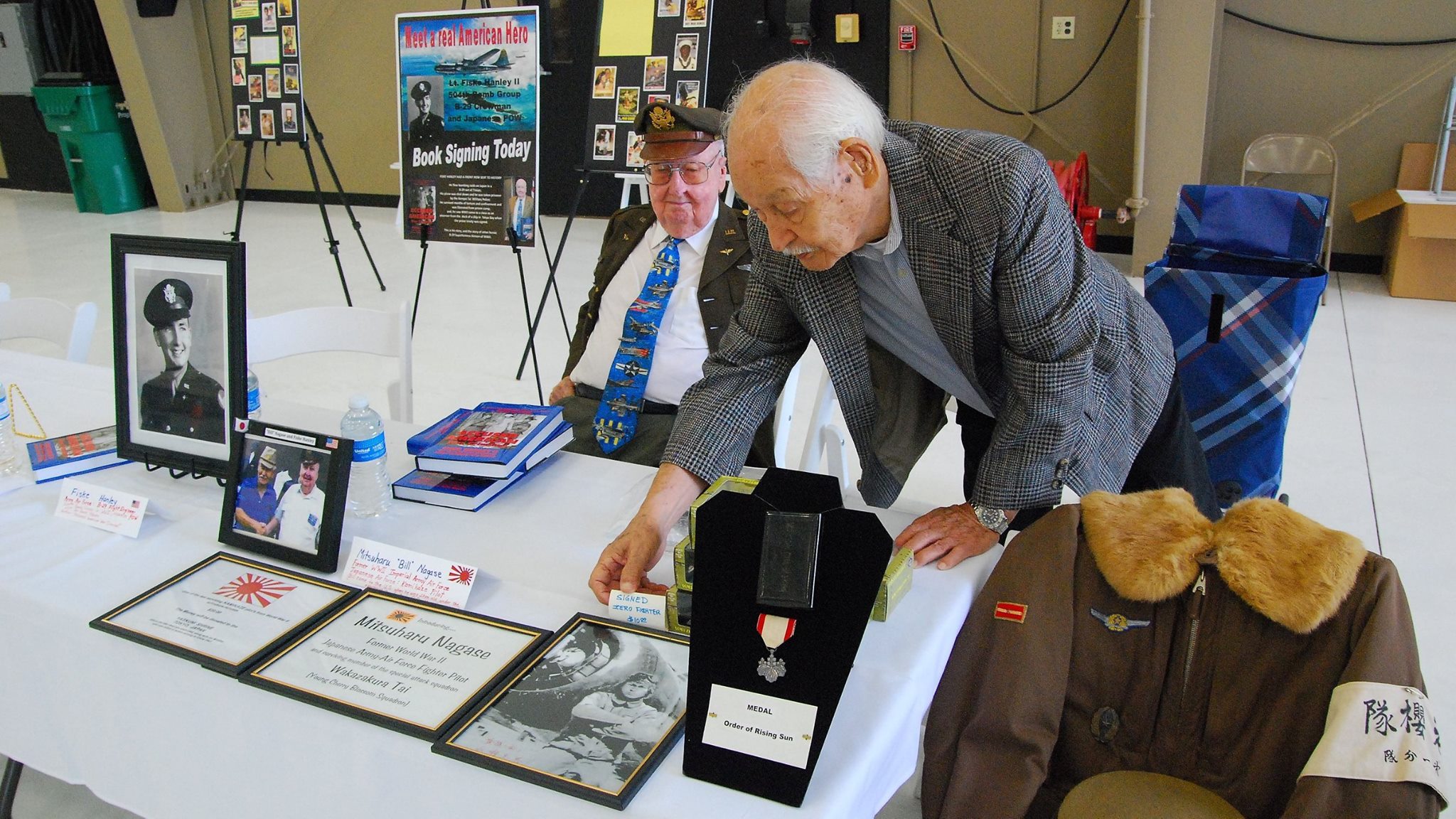
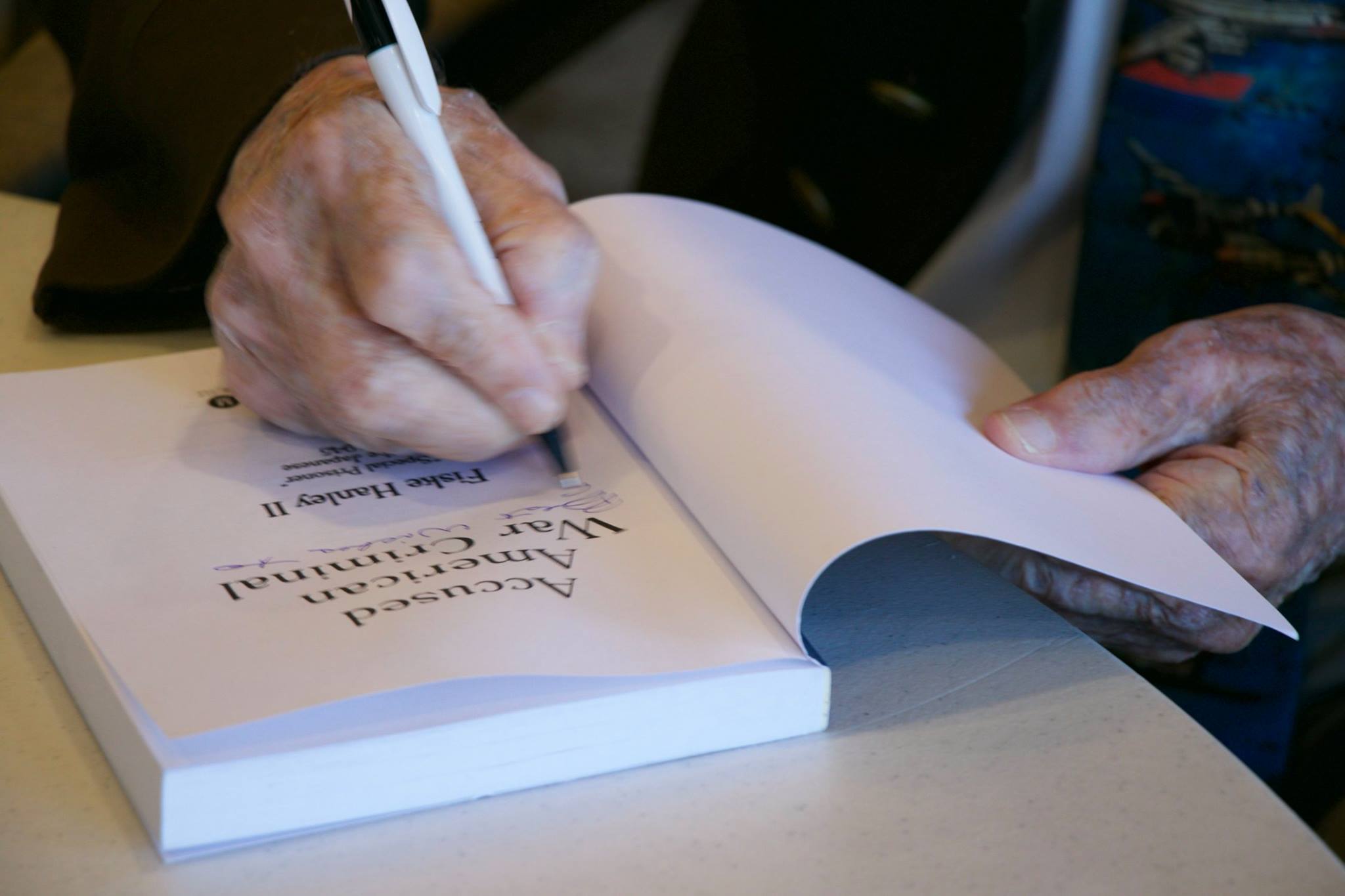
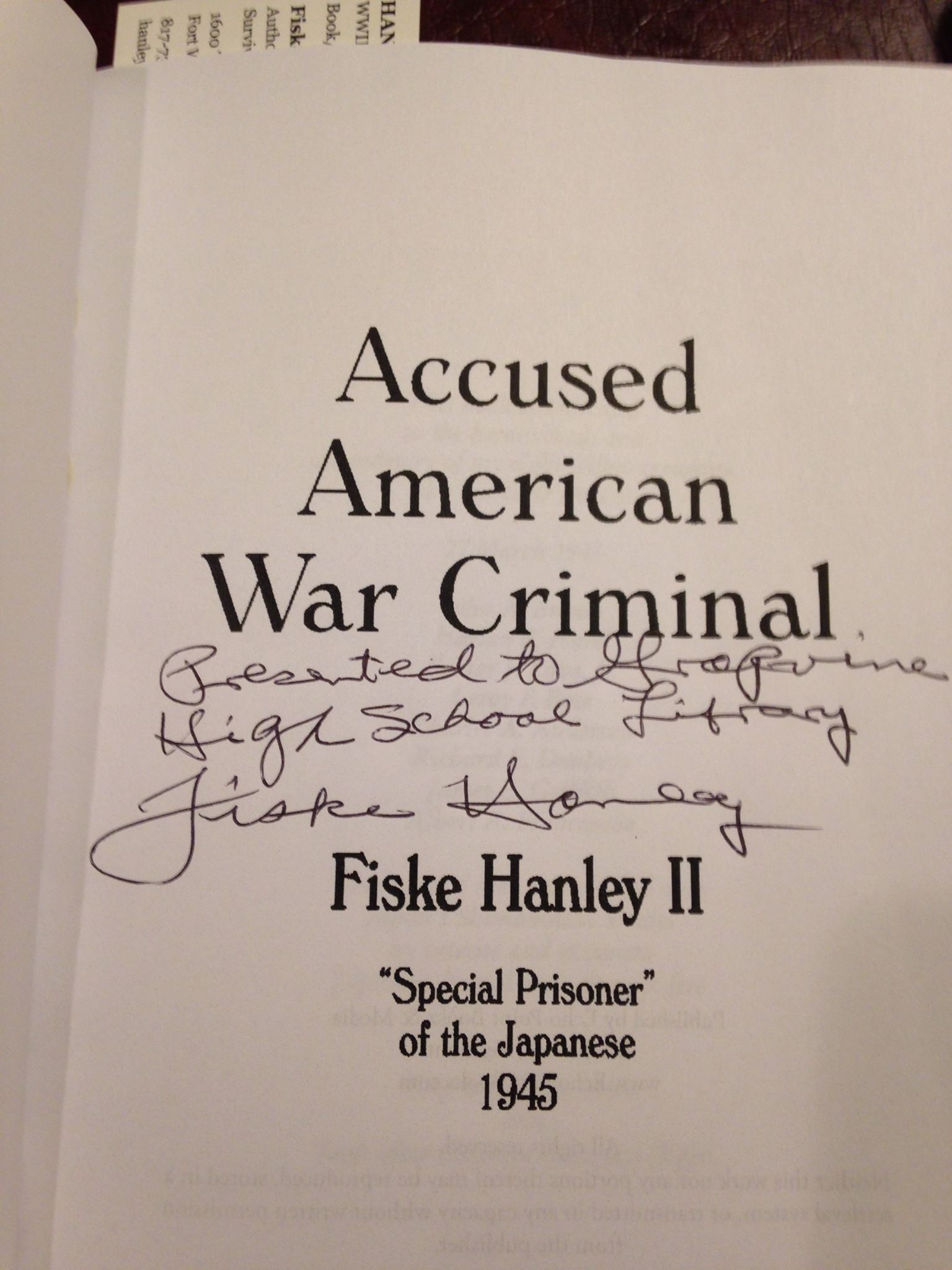
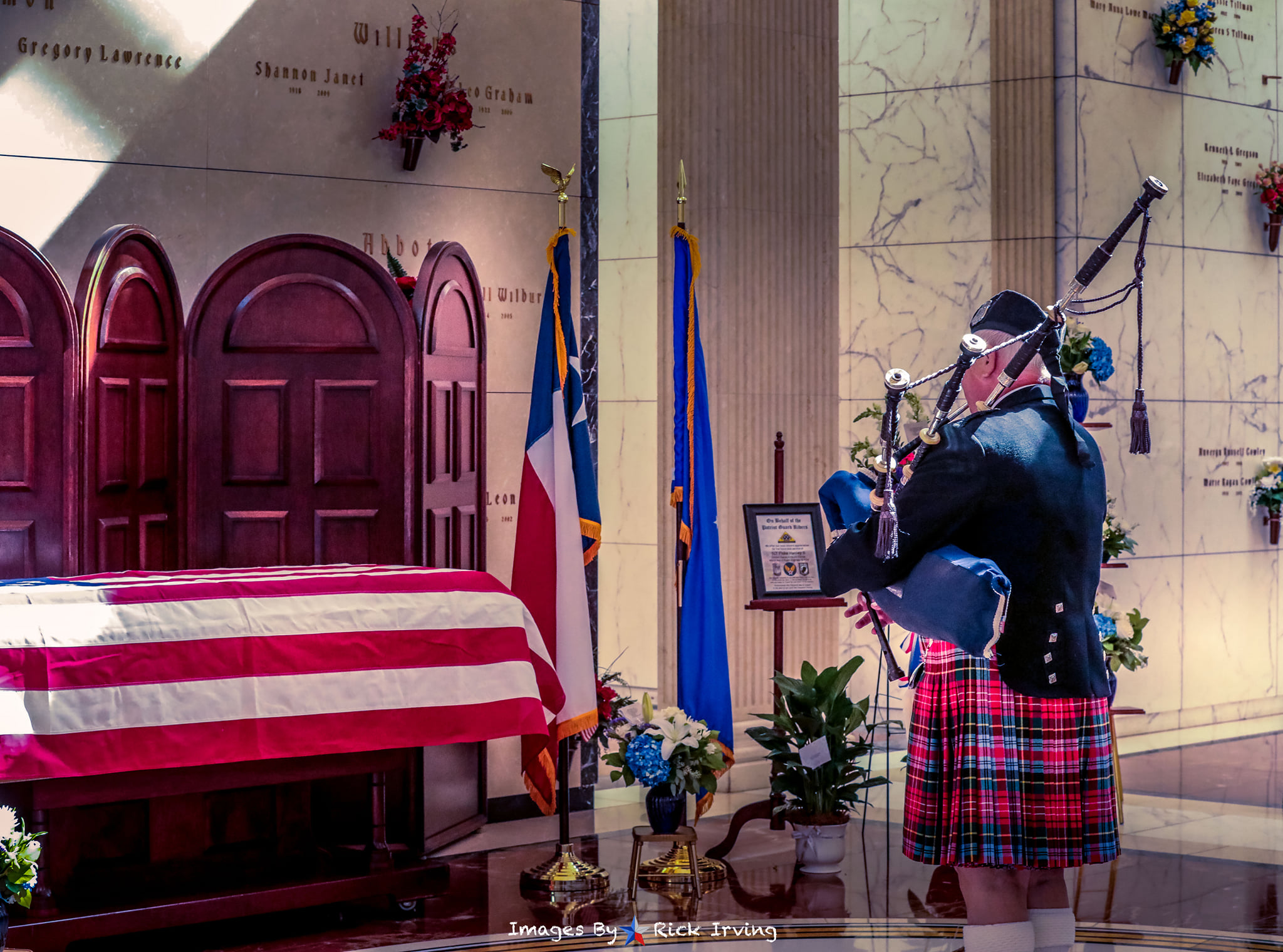
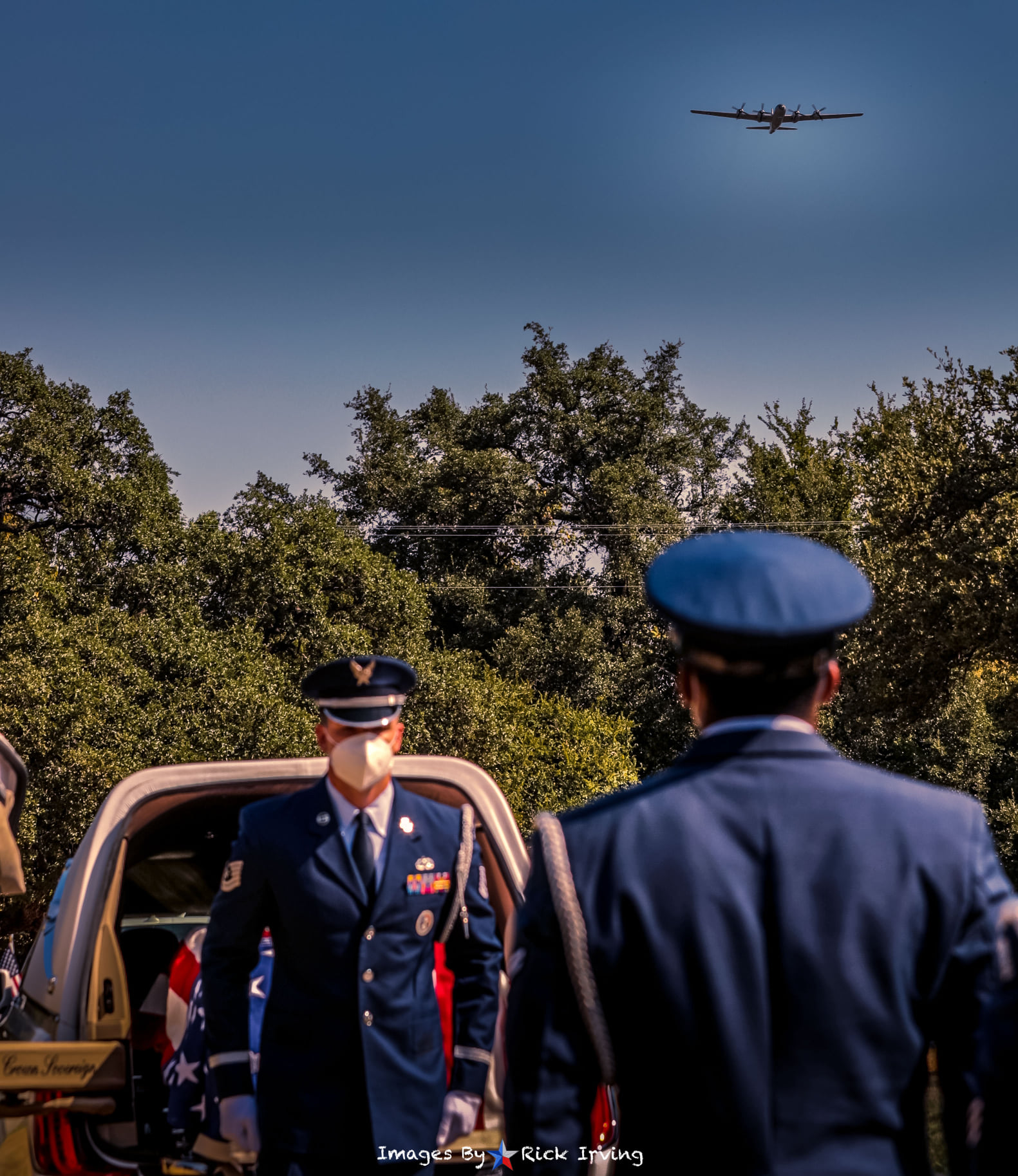
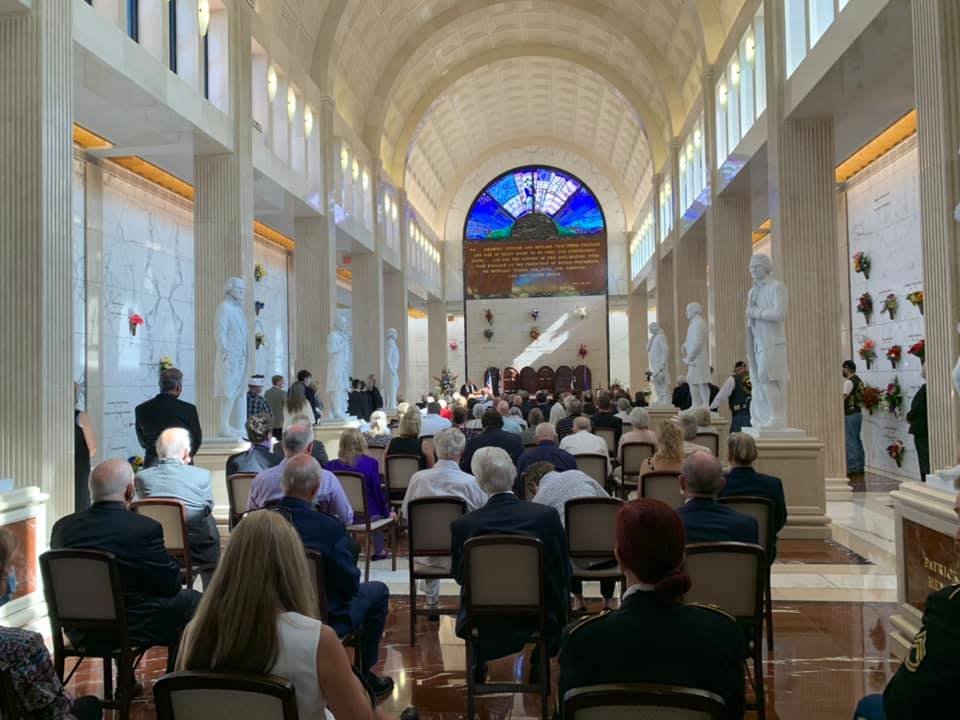
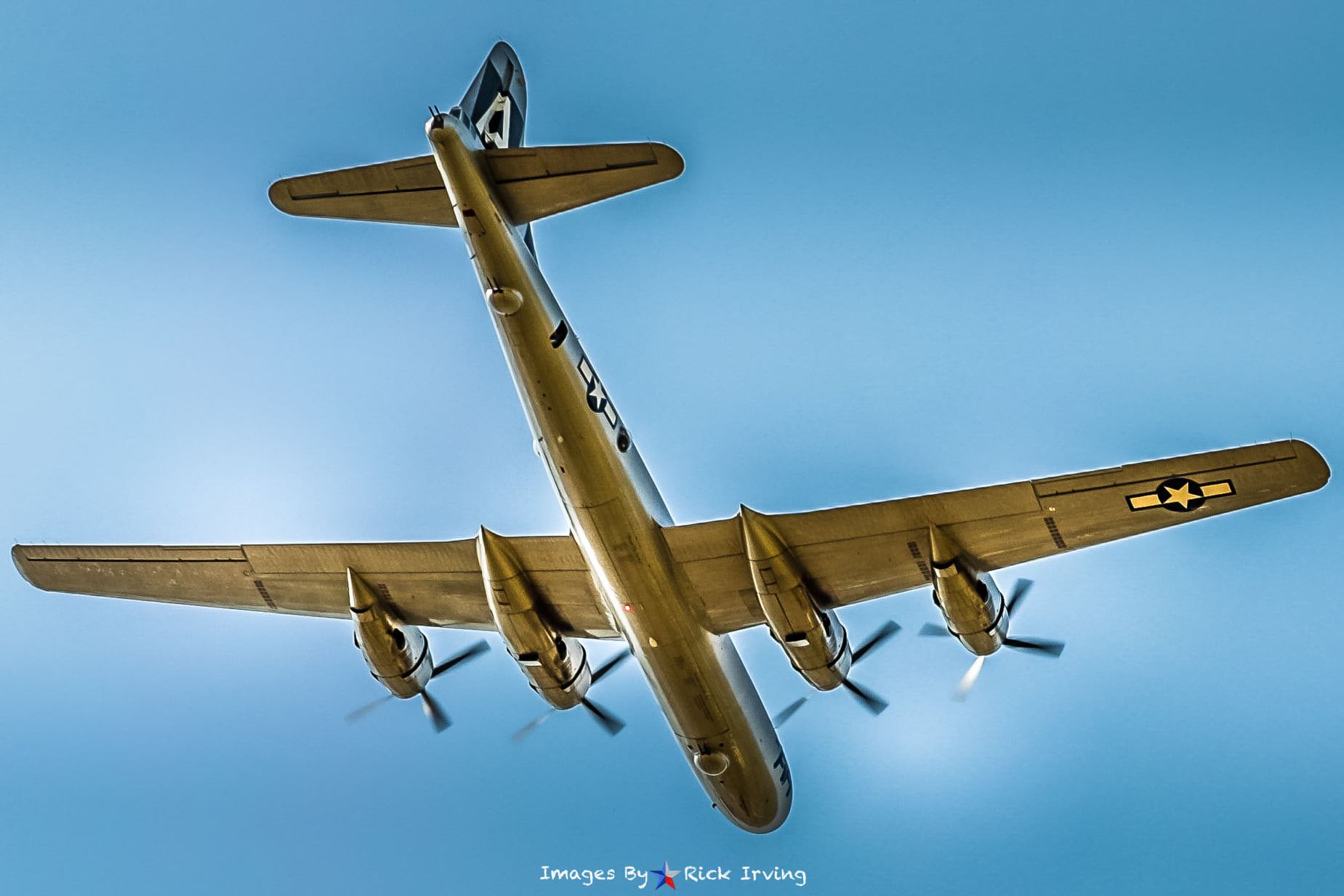
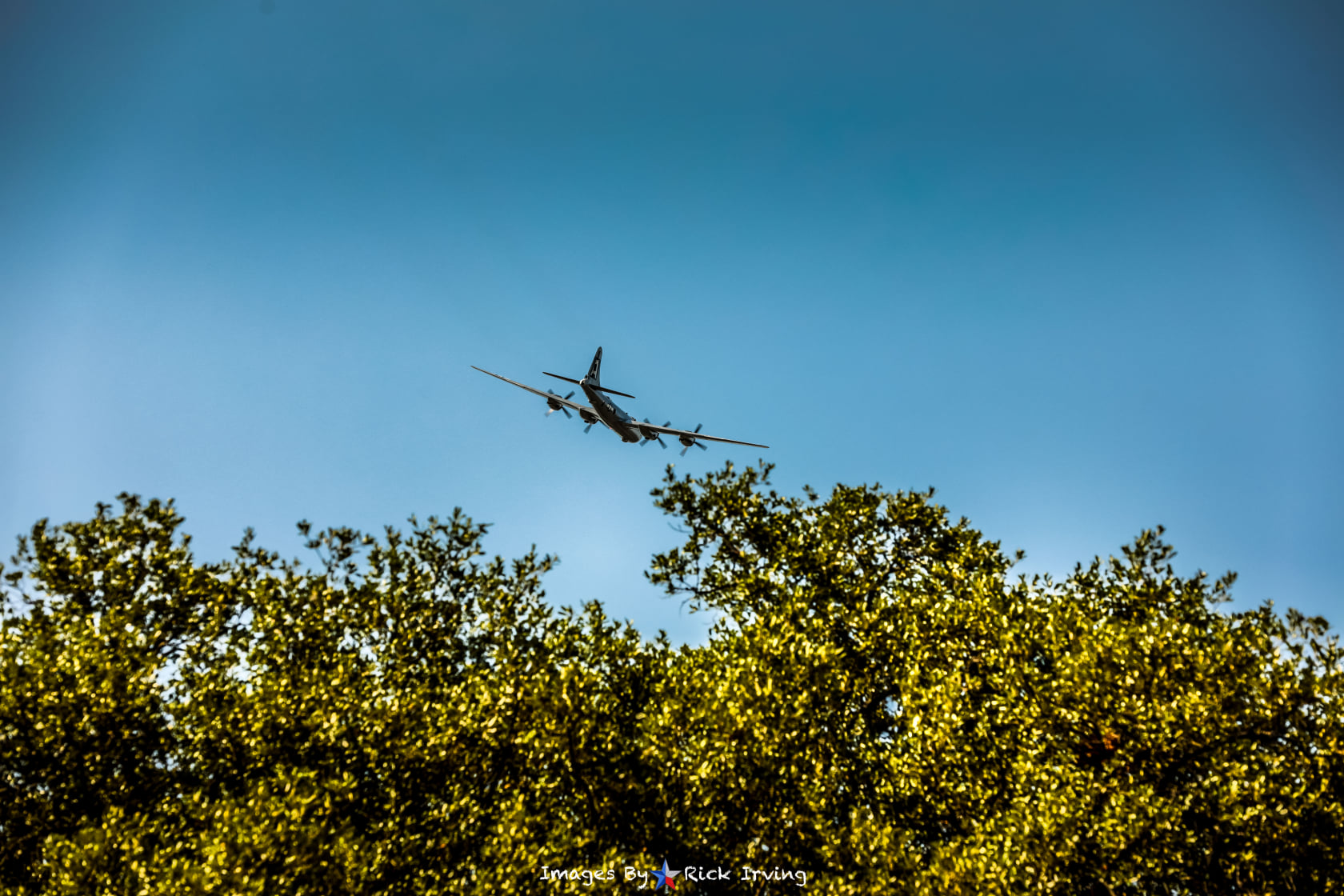
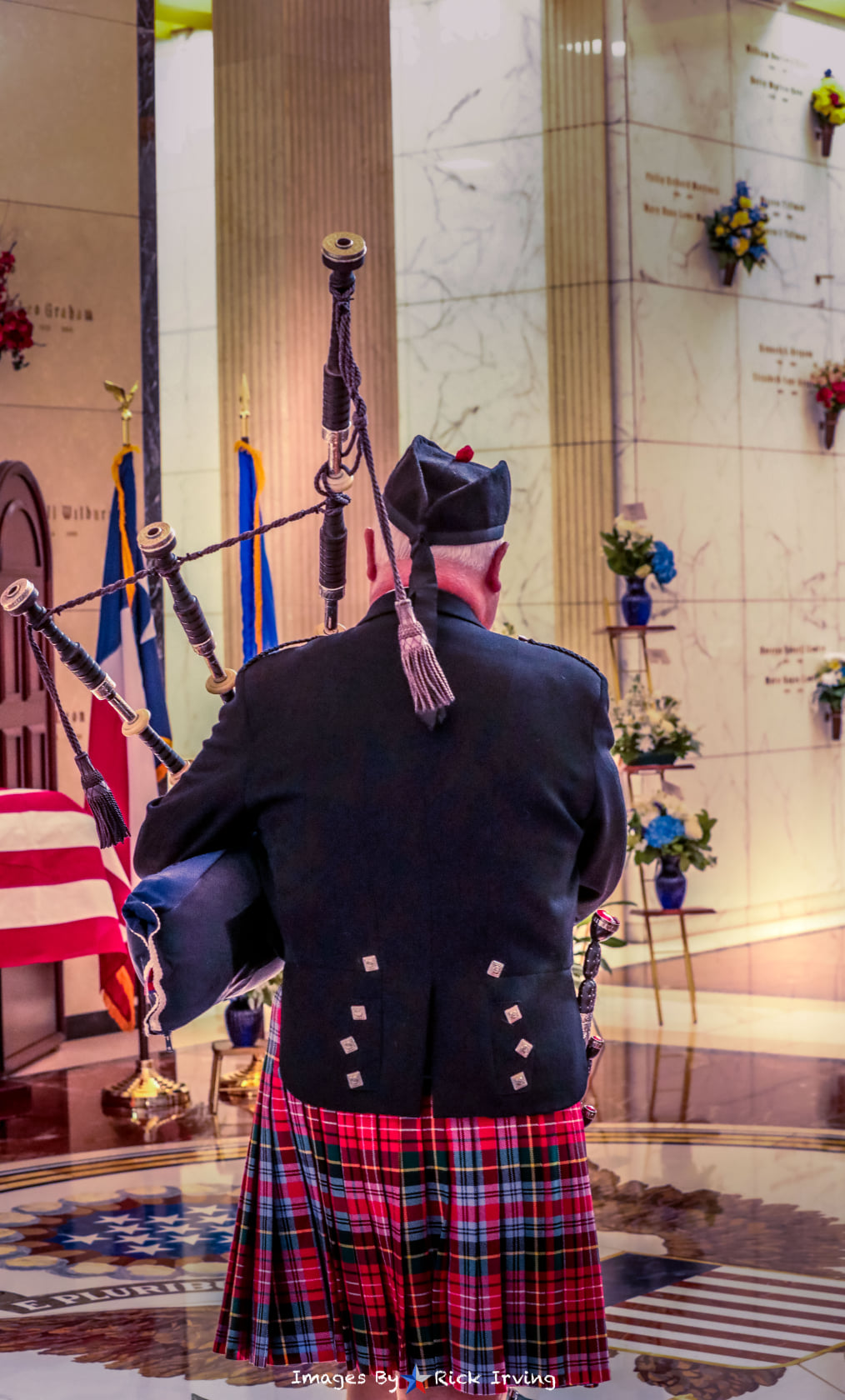
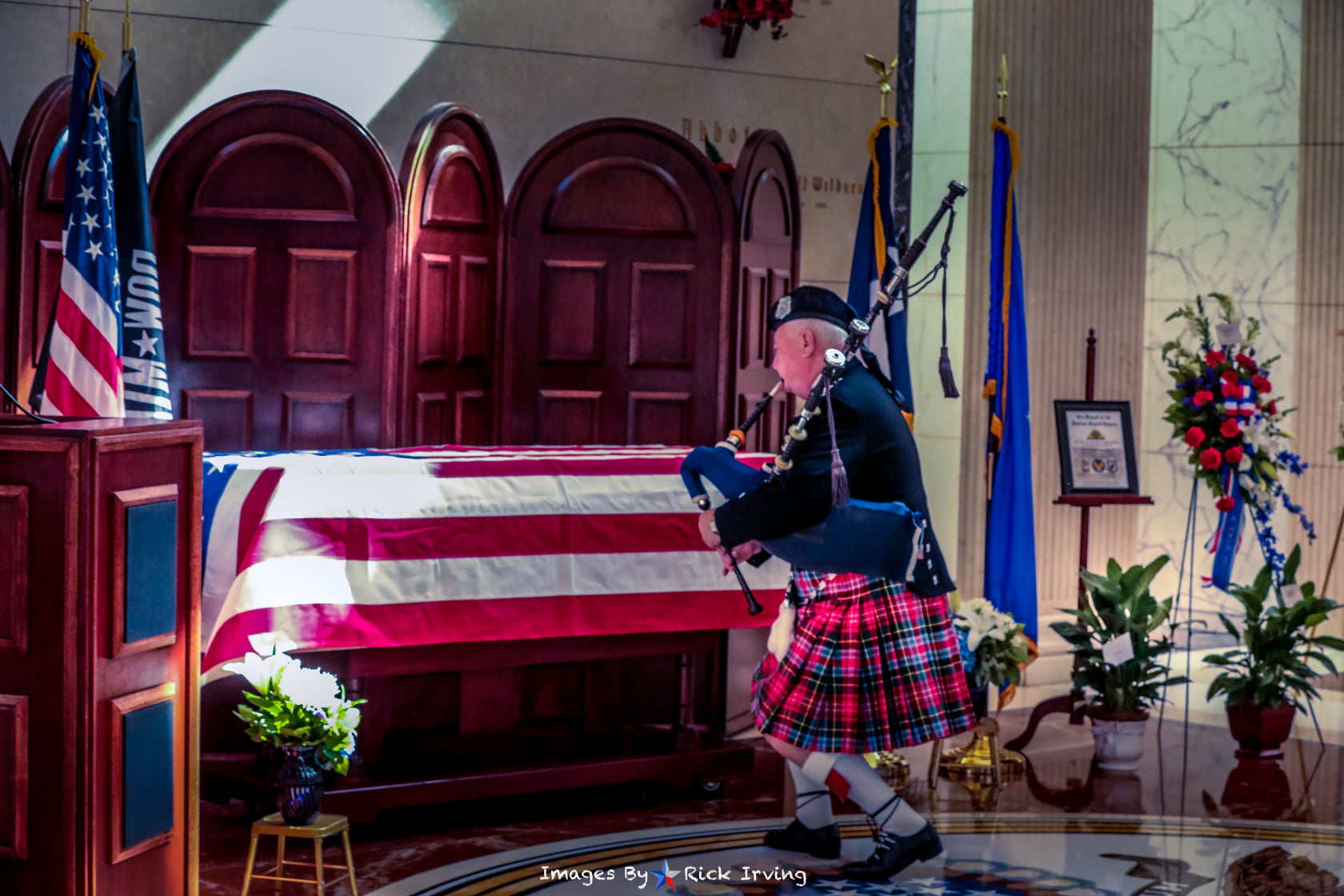
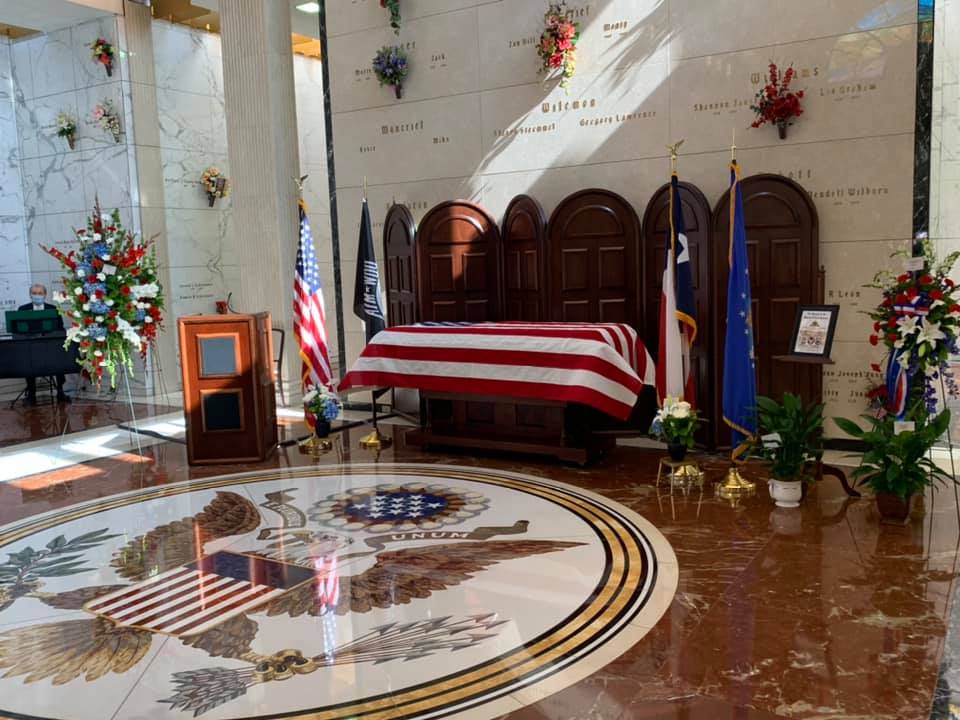
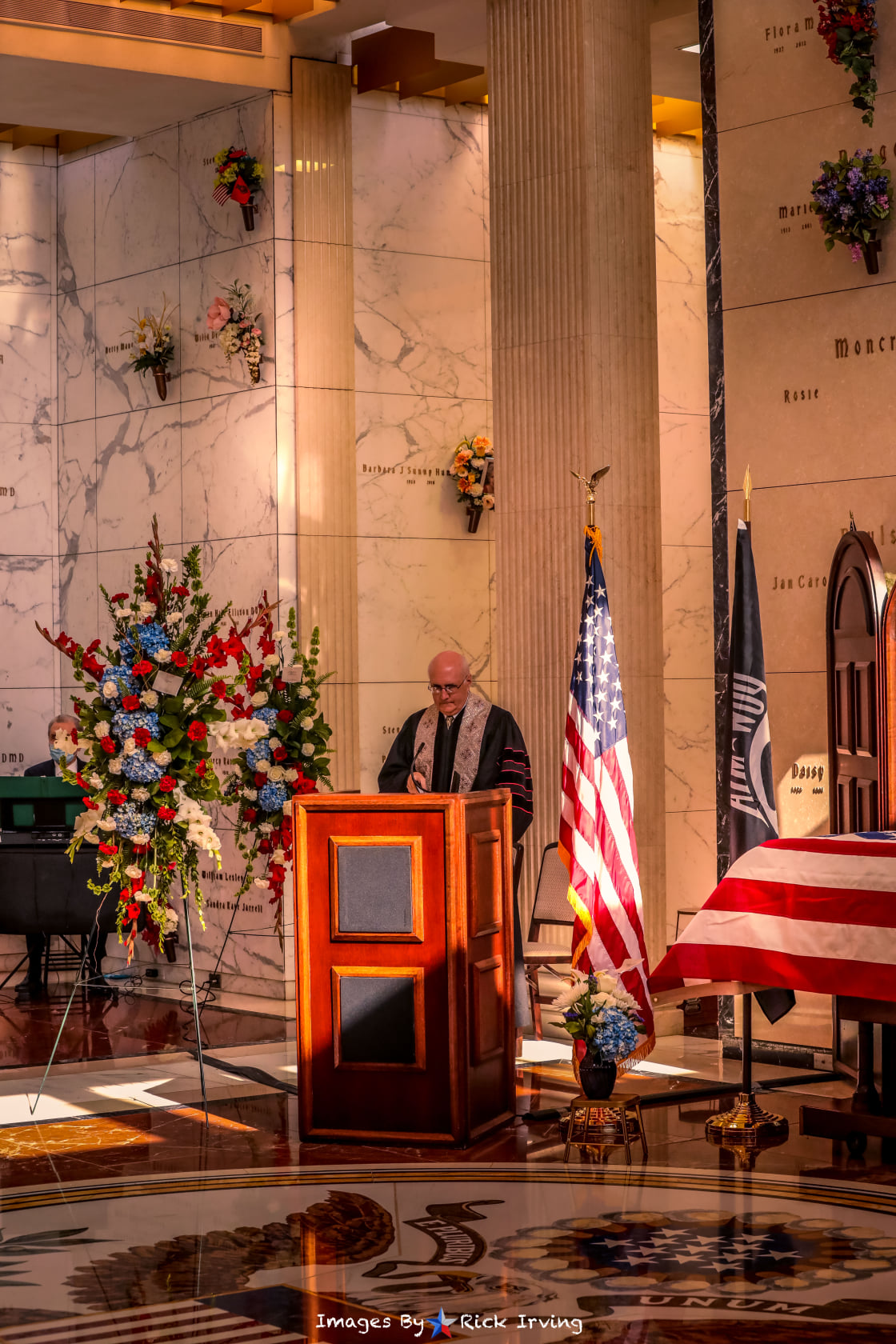
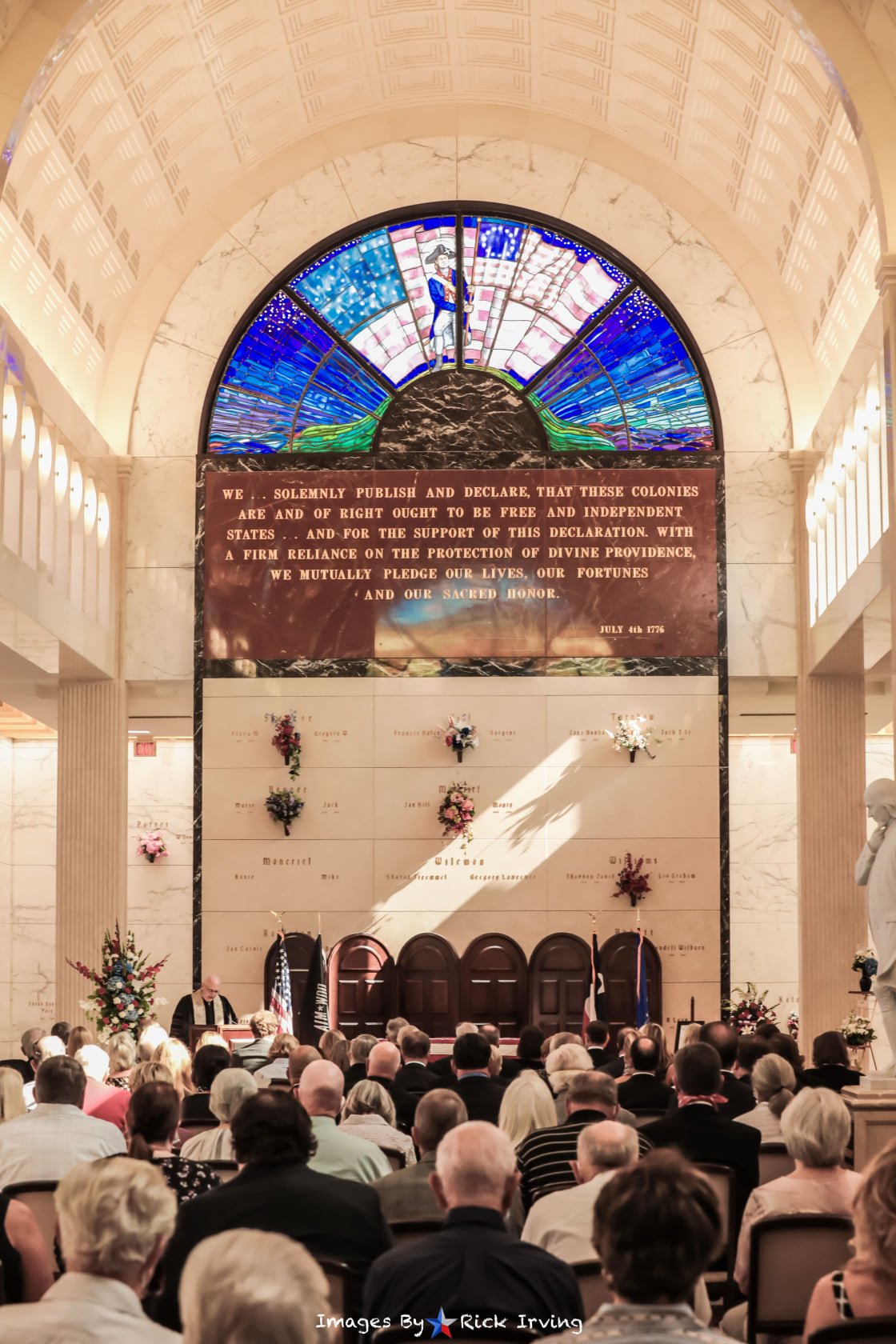
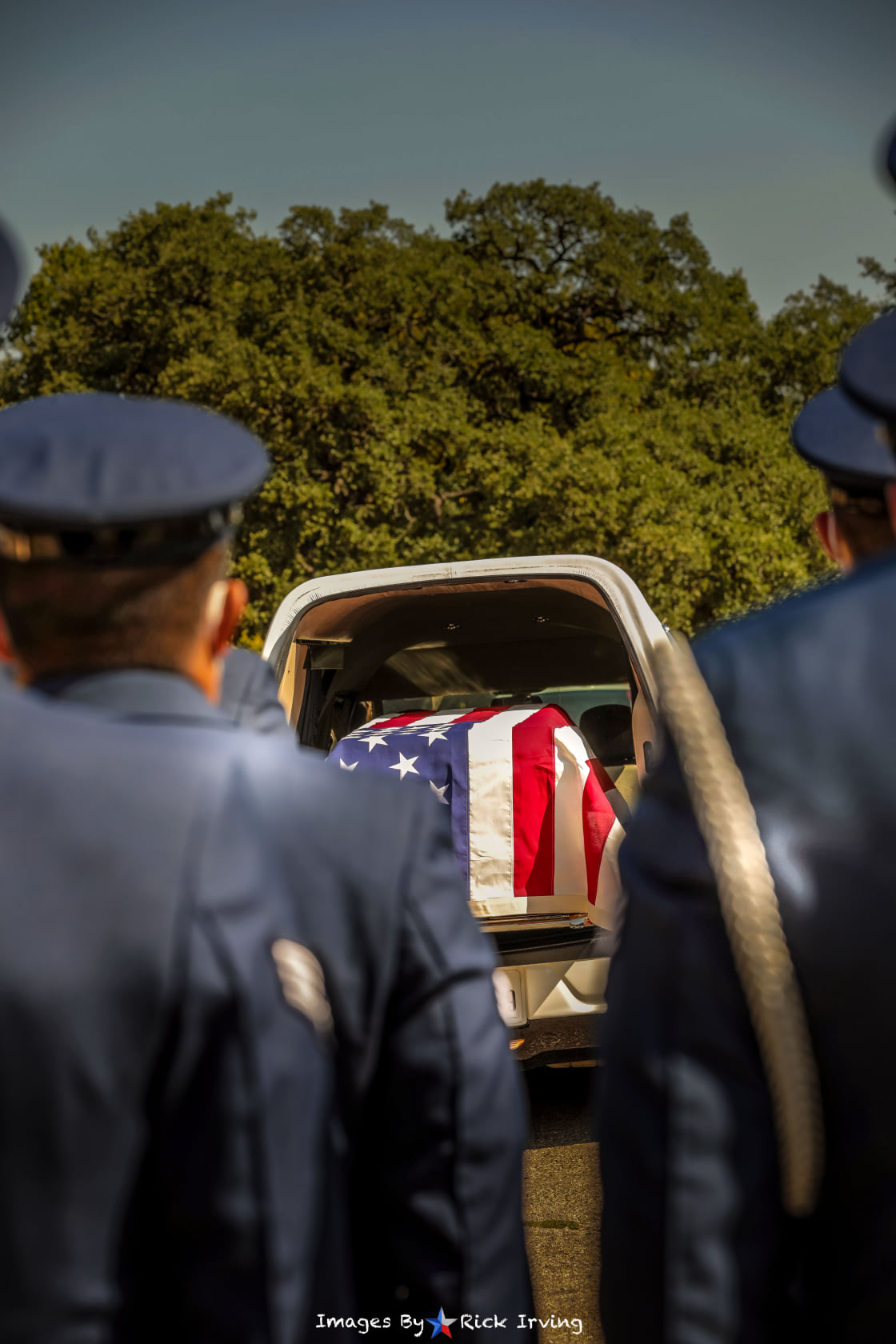
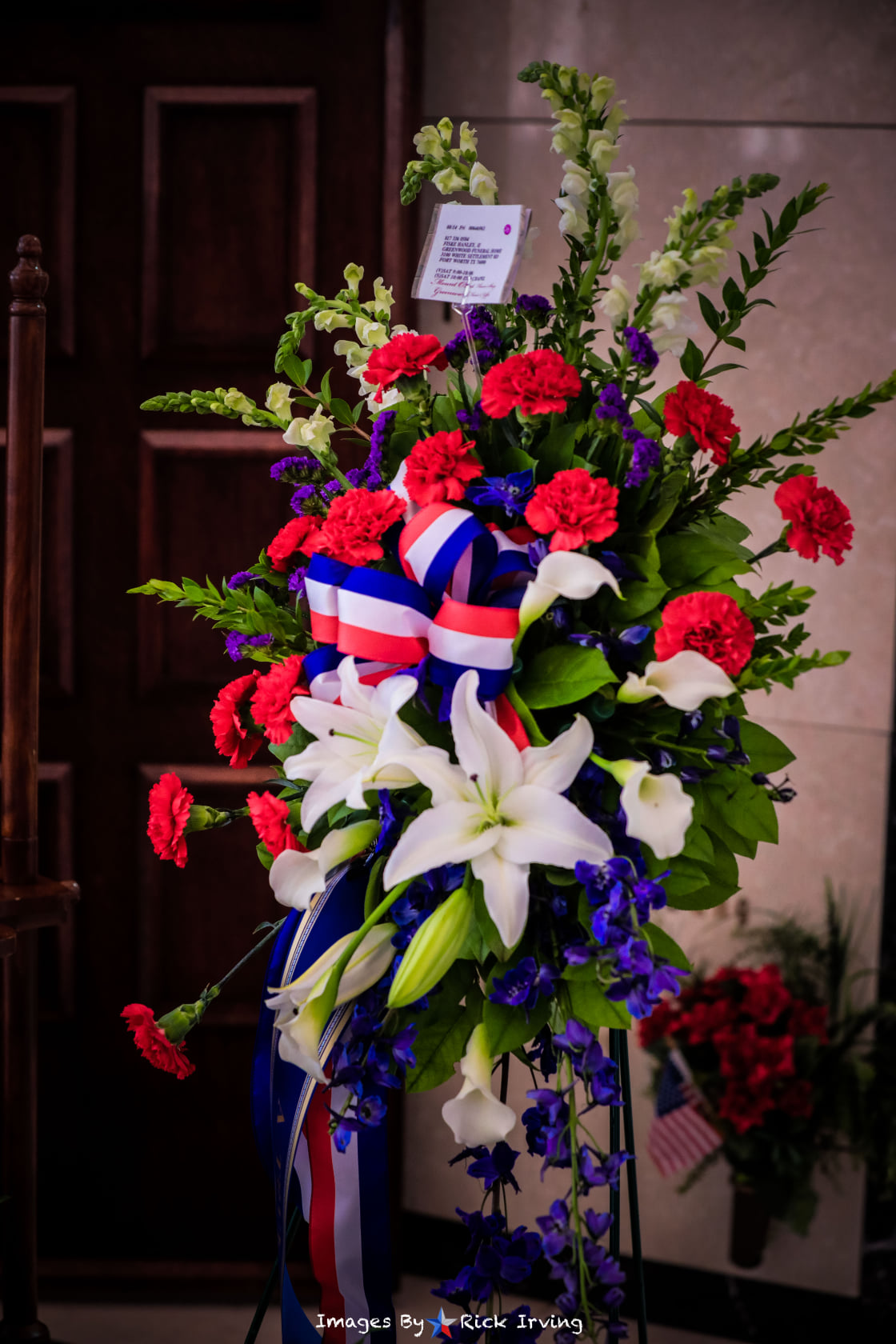
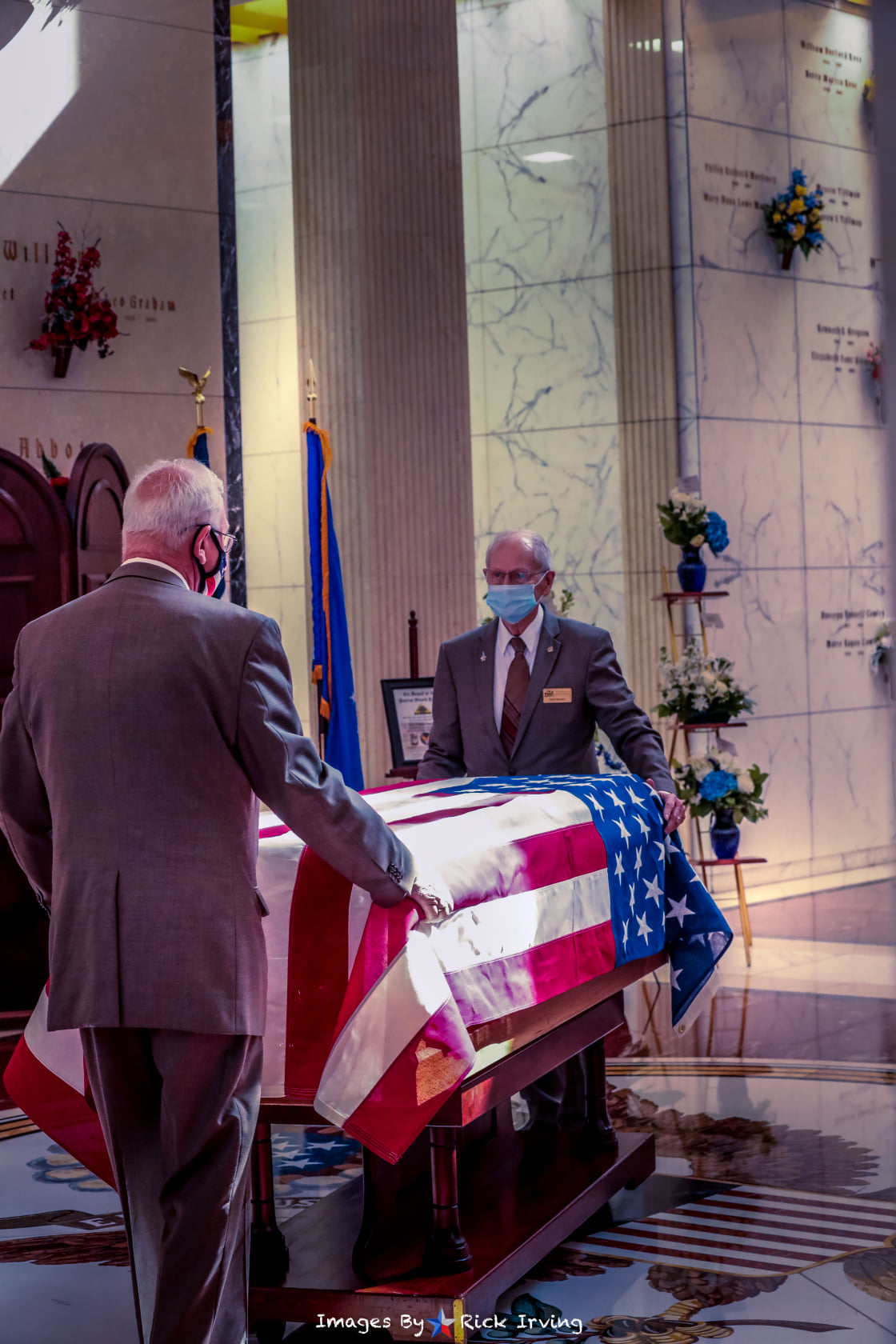
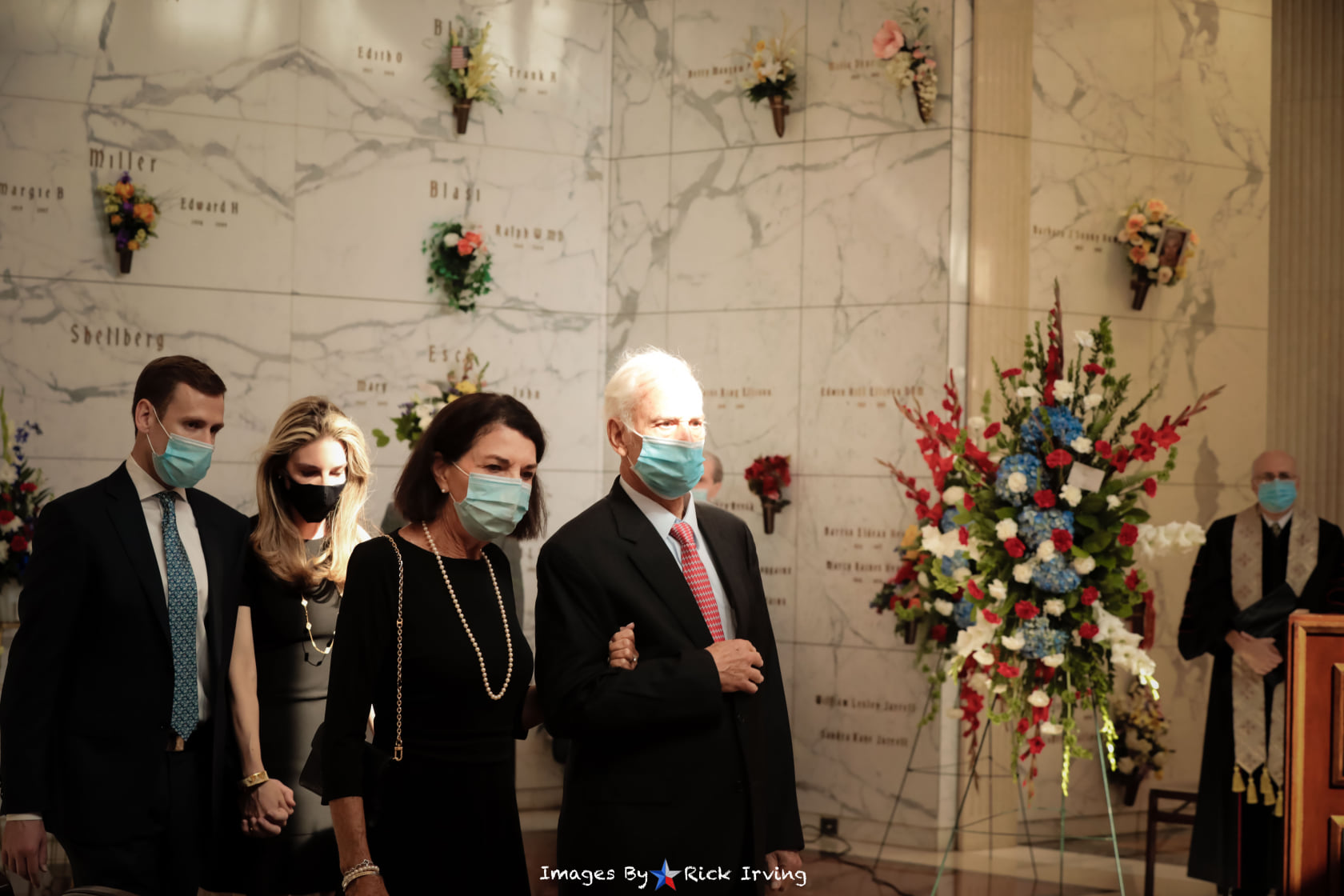
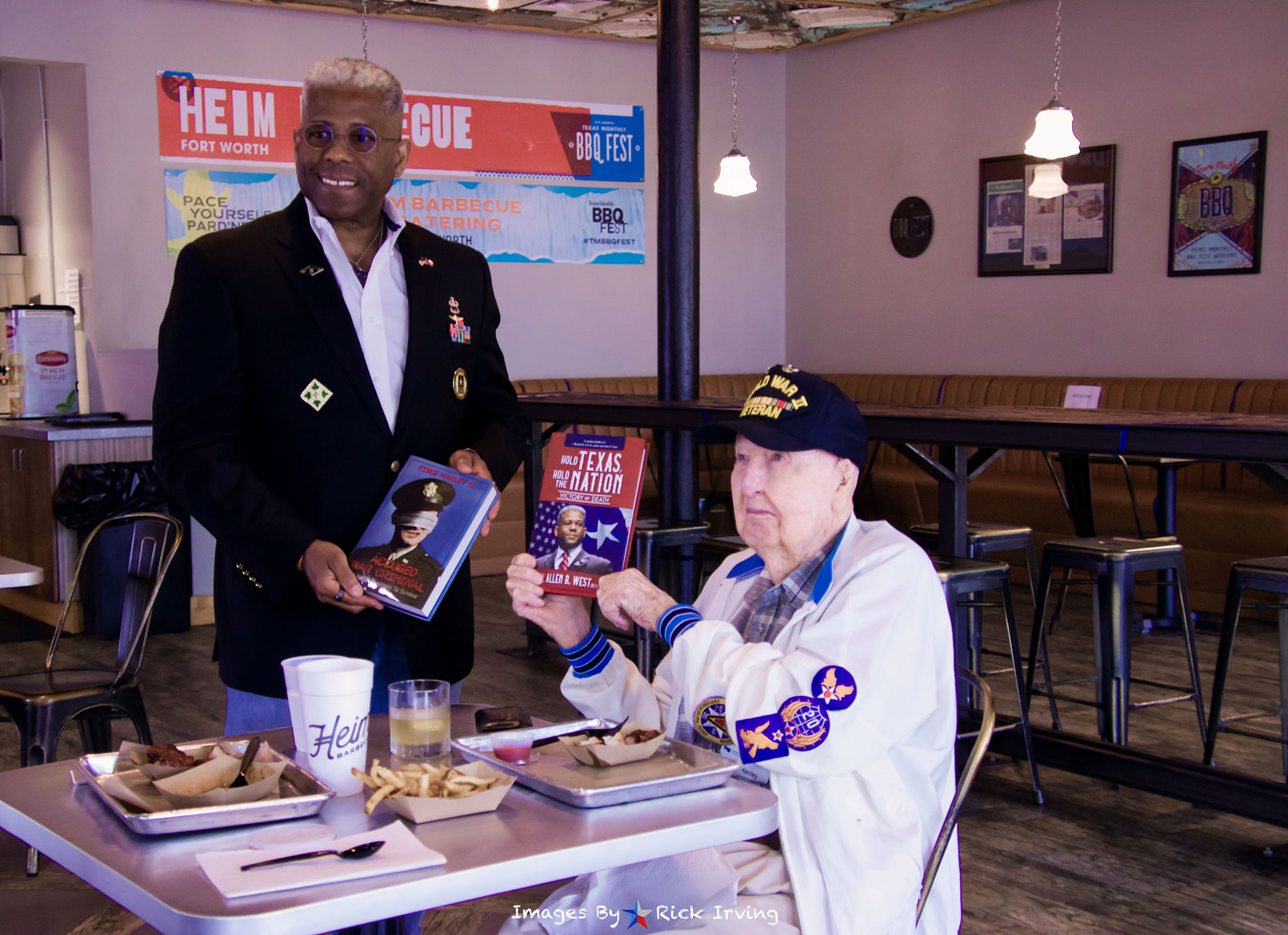
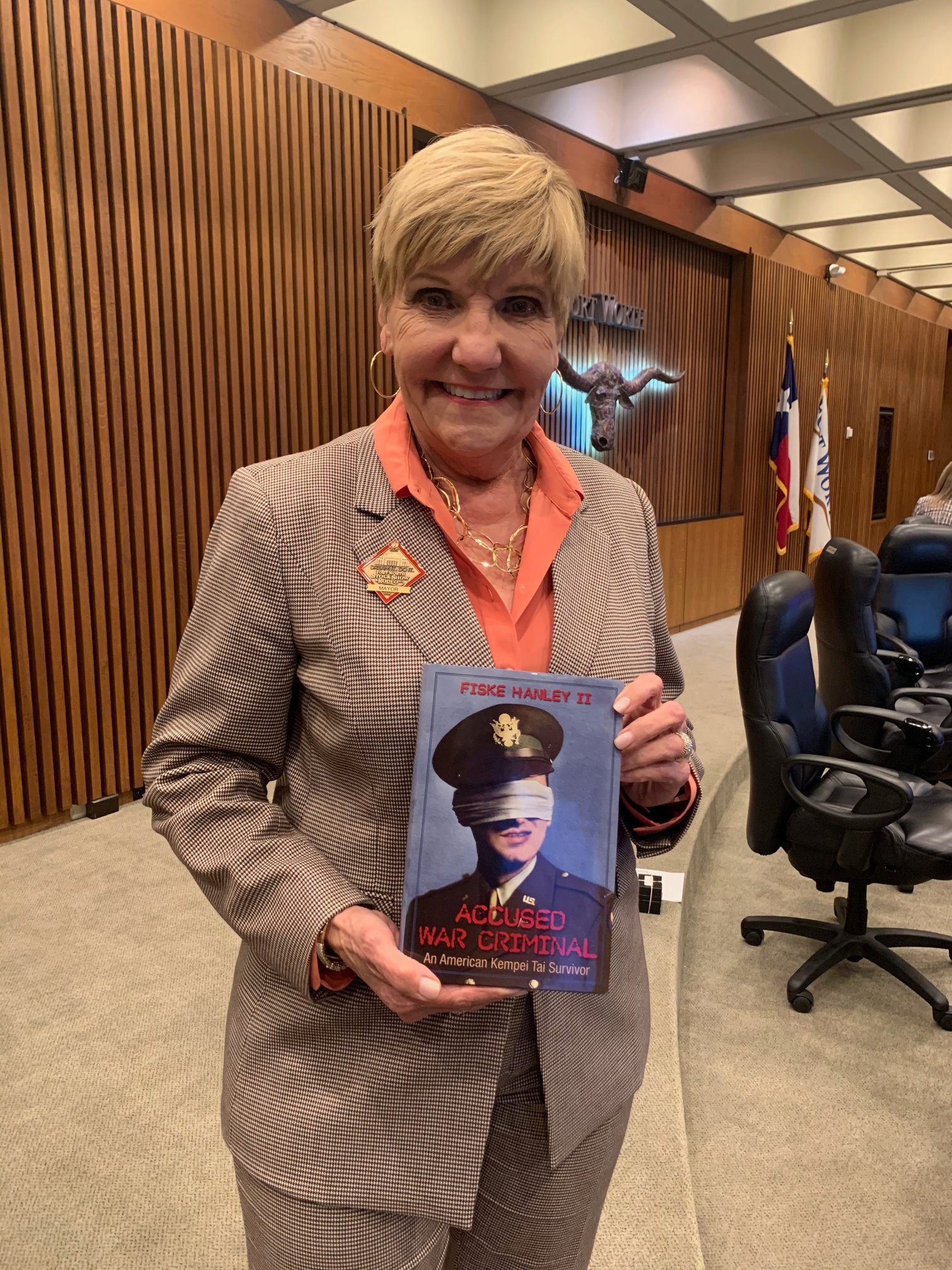
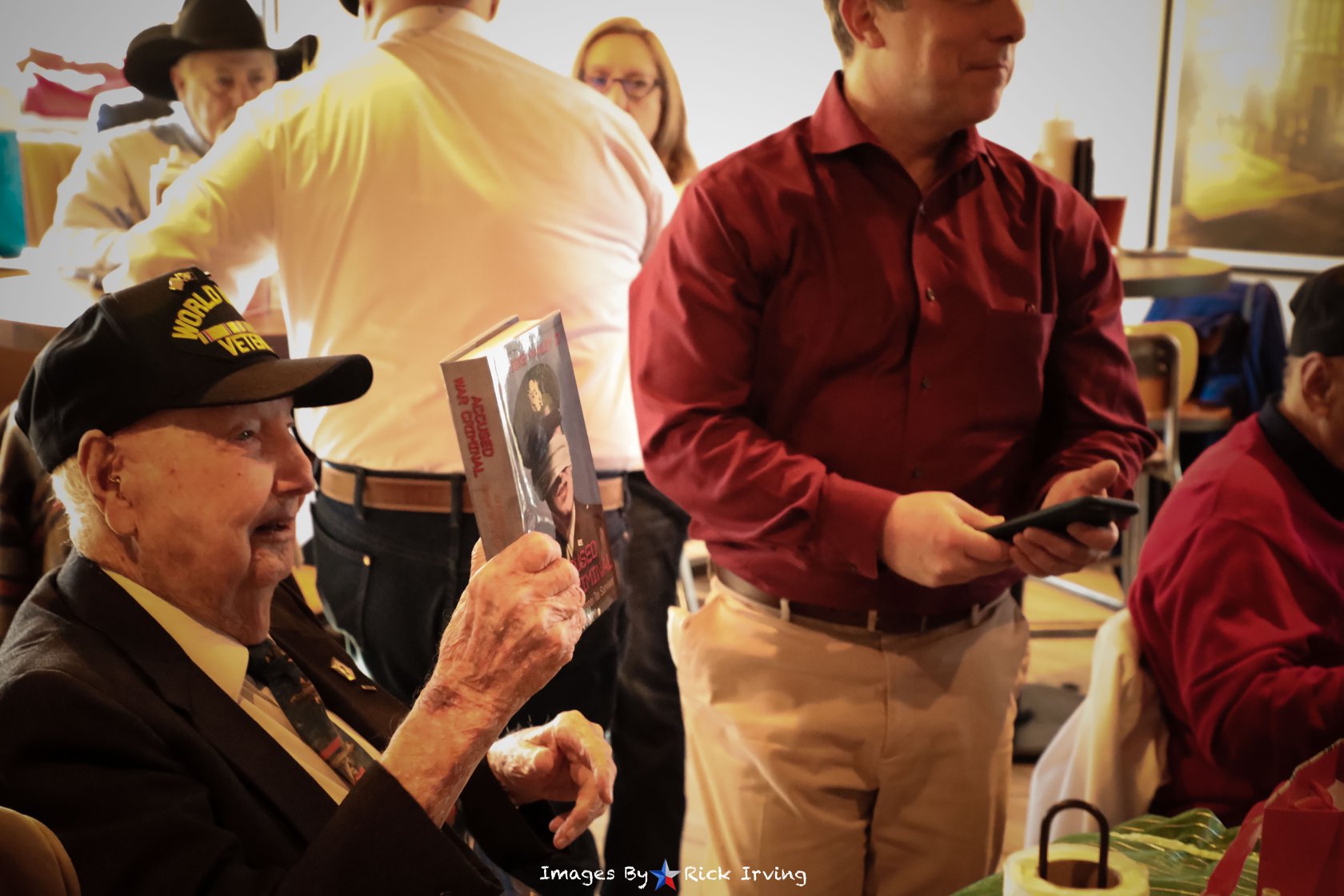
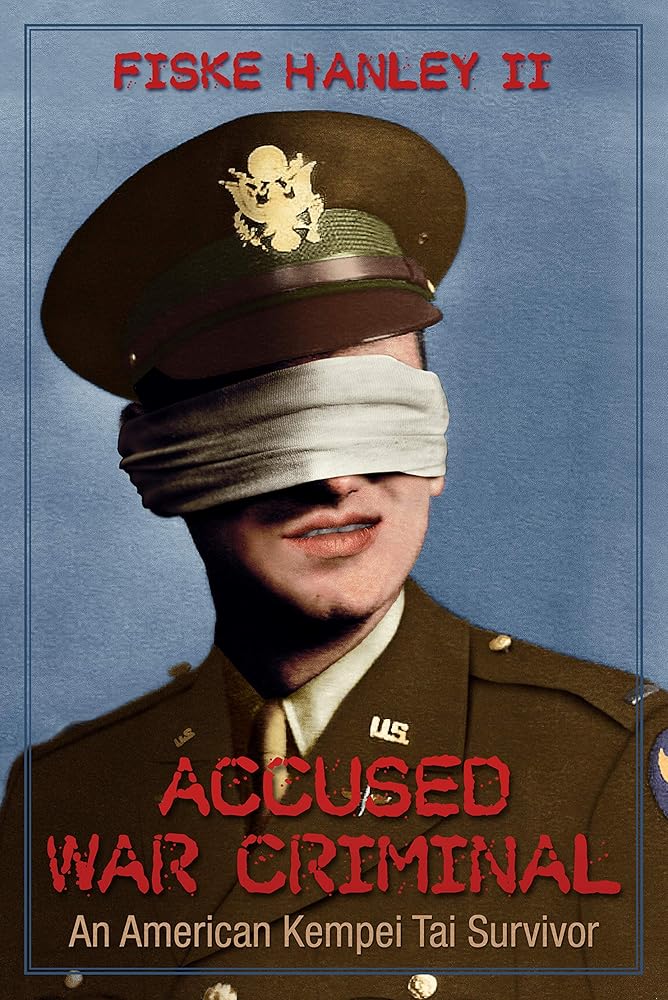
Lt. Fiske Hanley II passed away on 9 August 2020 at age one hundred. His window overlooked First Presbyterian Church, where he had been confirmed in 1931 and remained the congregation’s longest serving member. He authored two books, History of the 504th Bomb Group and Accused American War Criminal, and traveled widely to share his testimony. His funeral was held in the Independence Chapel at Greenwood Mausoleum.
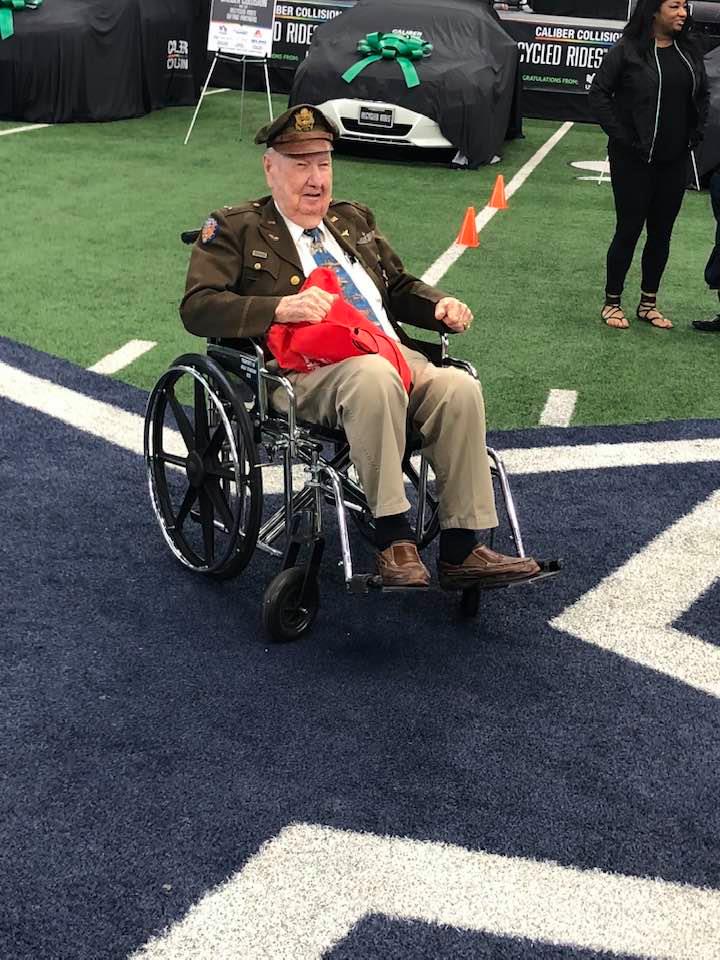
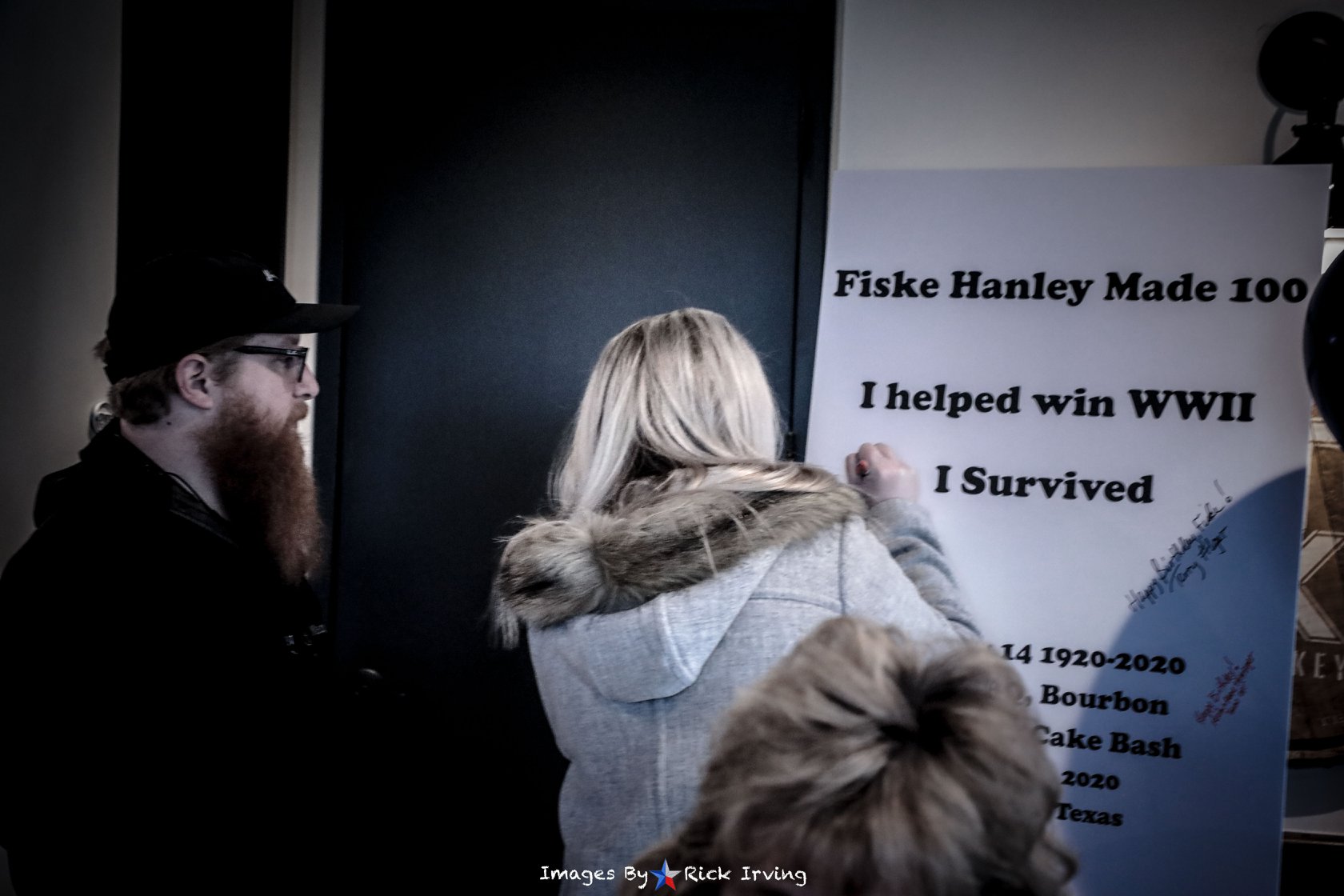
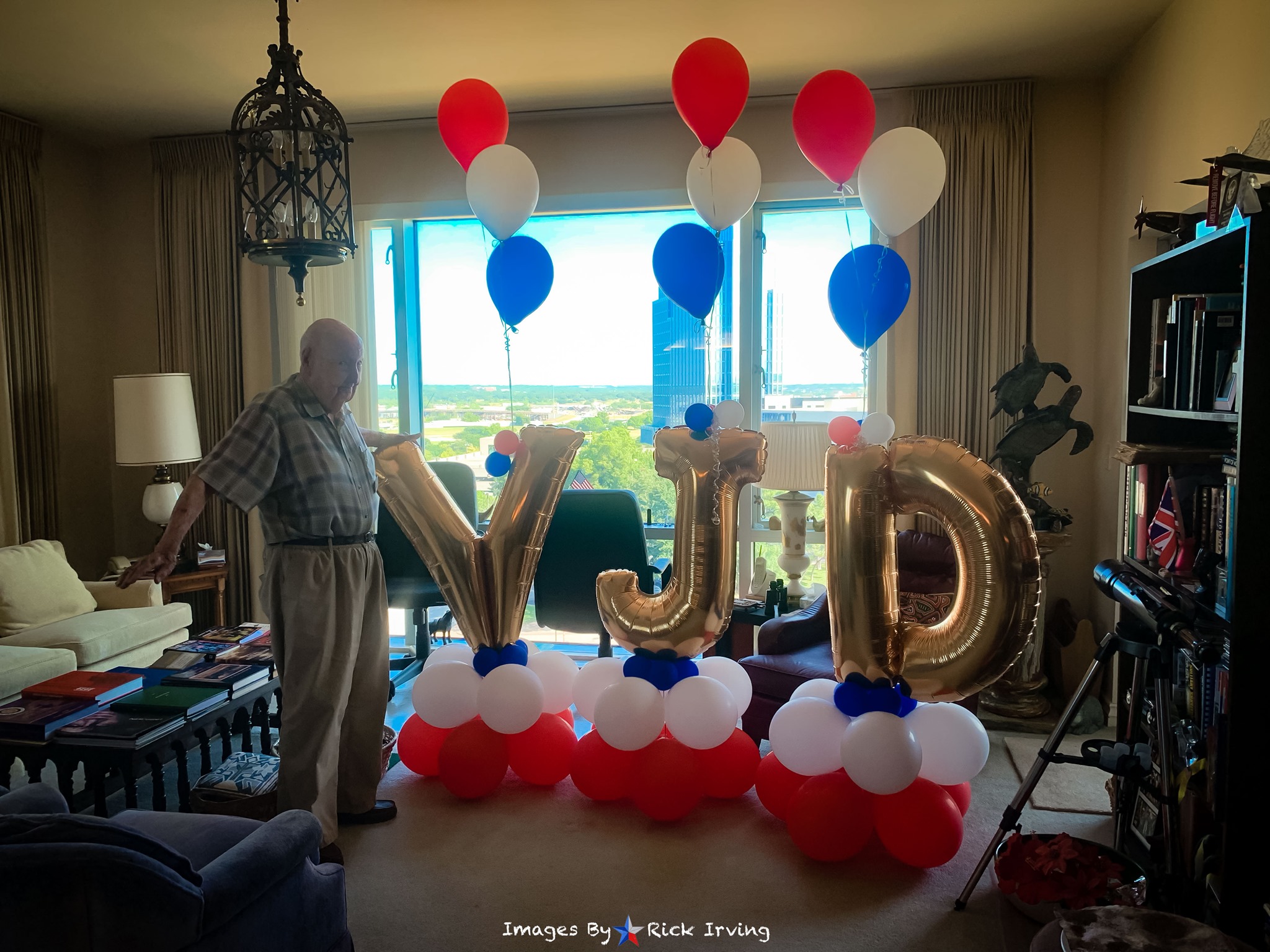
A Proclamation Declaring January 14, 2020 as Fiske Hanley Day in the City of Fort Worth
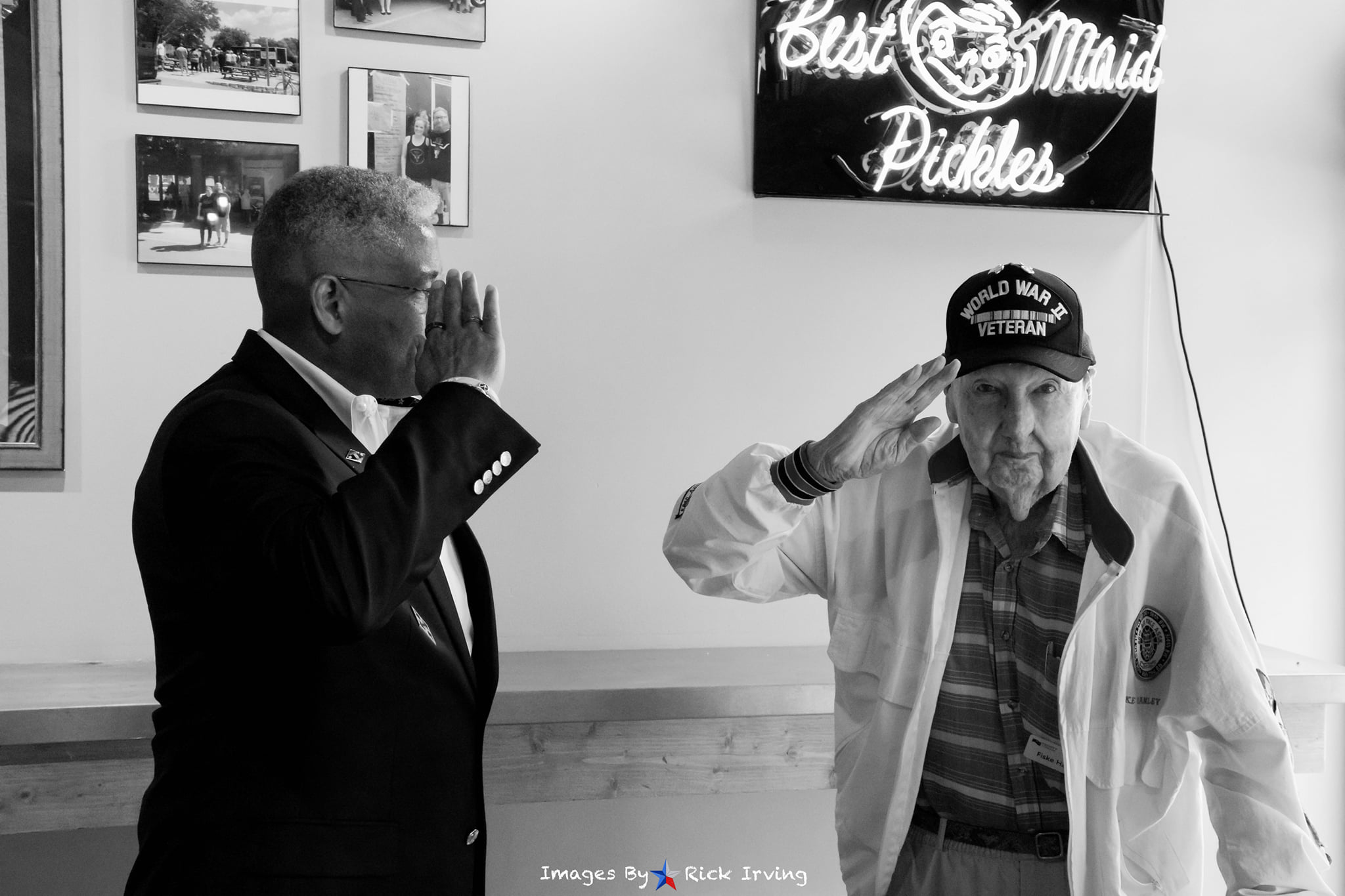
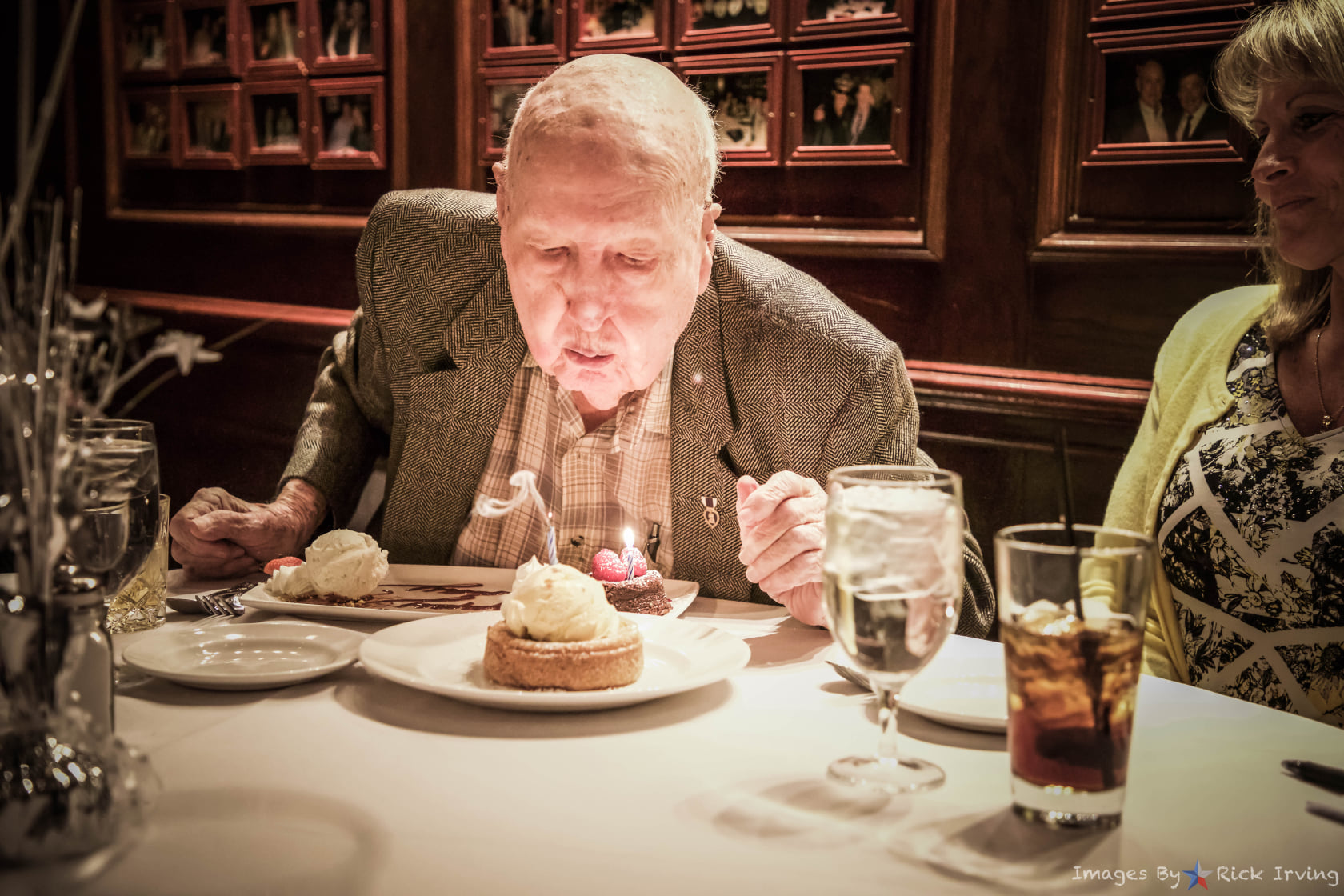
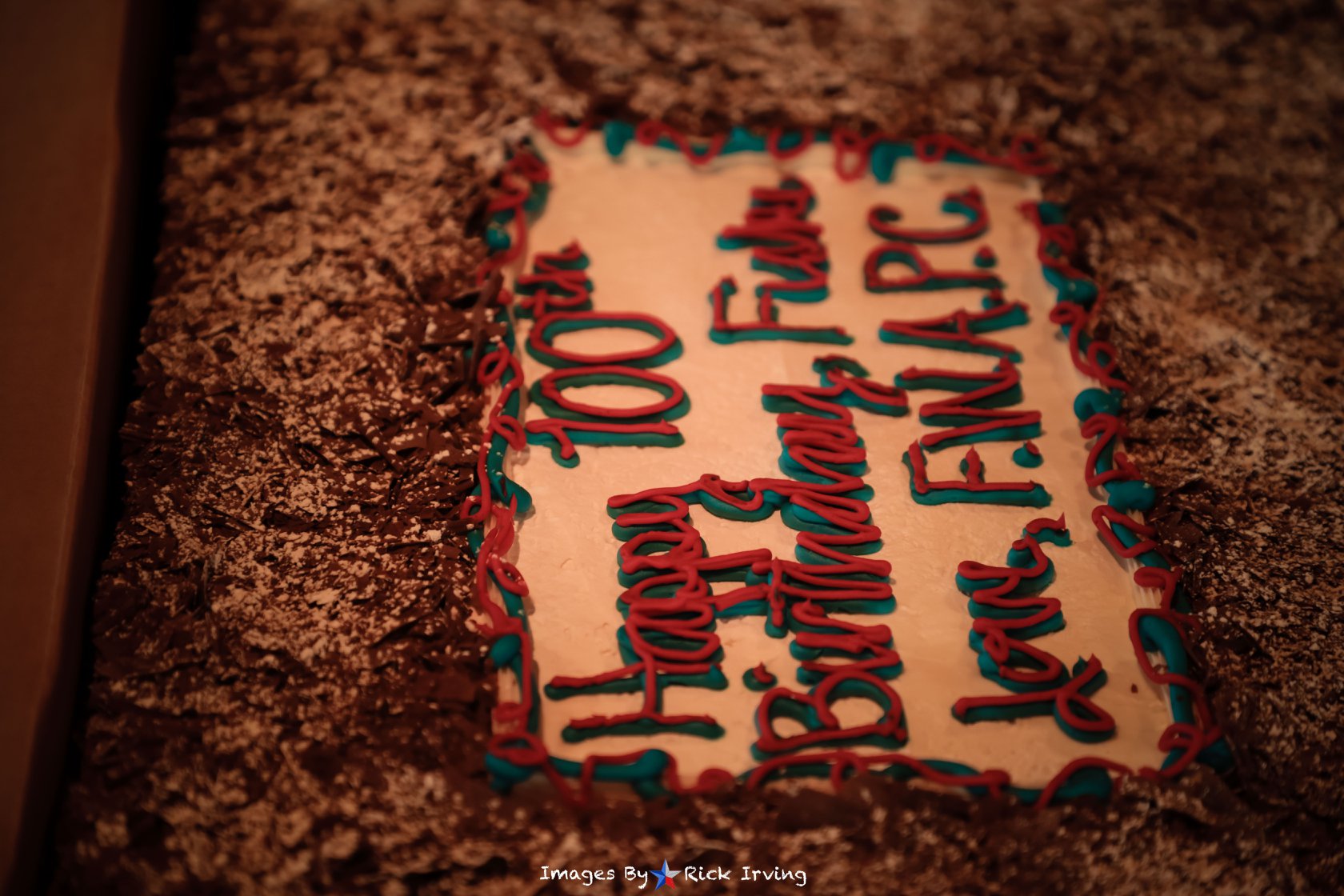
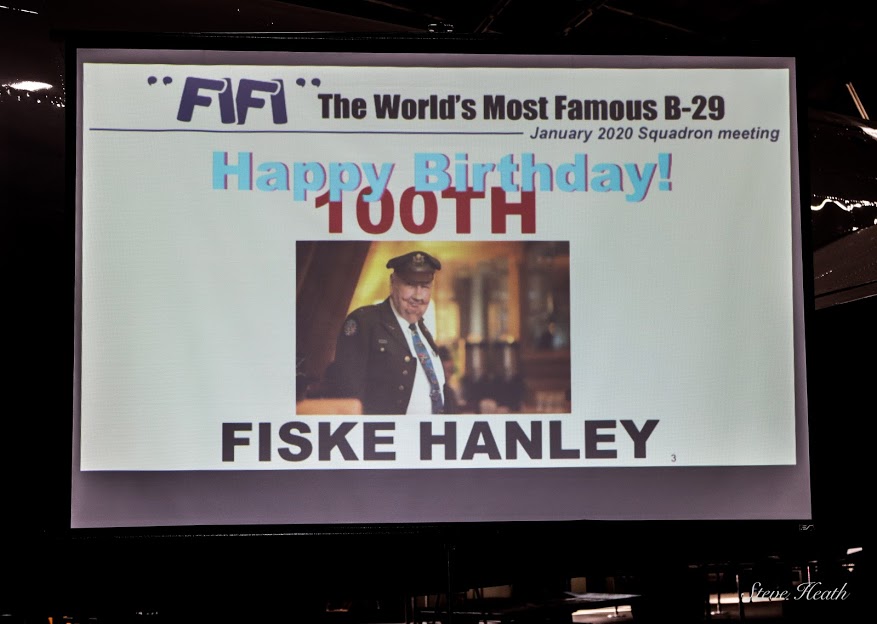
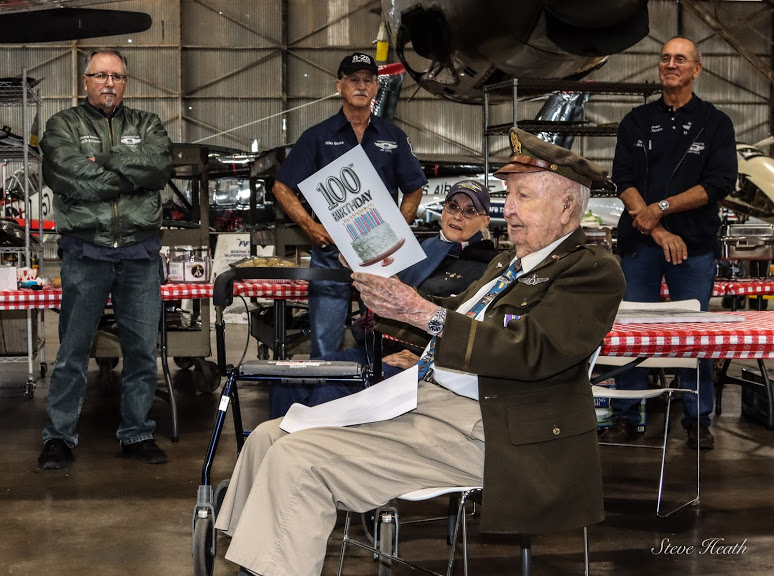
On January 14, 2020, Fort Worth Mayor Betsy Price formally proclaimed the day as Fiske Hanley Day in honor of Lieutenant Fiske Hanley II on the occasion of his one hundredth birthday. The proclamation recognized his extraordinary service as a B 29 flight engineer, his endurance during captivity in Japan, and his lifelong commitment to sharing the truth of his wartime experience so future generations might learn from the past. The City of Fort Worth affirmed his legacy as a witness to history and celebrated his century of life, faith and devotion to his community.
Supplemental Information
World War II — The Wartime Pilot
Training during the World War II was a crucible. It was fast, physical, dangerous, and shaped by the urgency of global conflict. Pilots were young, often barely out of high school, and they entered a system built to produce aviators quickly enough to meet wartime demand.
The Reality of Training
- Compressed timelines: What would normally take years was condensed into months.
- Mechanical aircraft: Heavy controls, unreliable engines, minimal instrumentation.
- Sensory flying: Pilots learned by feel — vibration, engine tone, control pressure.
- Harsh conditions: Cold, heat, noise, and constant physical strain.
- Immediate stakes: Graduation meant combat. There was no buffer, no transition period.
The B‑29 Pilot’s World
Training for the B‑29 was the apex of wartime aviation. It demanded mastery of:
- pressurization
- remote‑controlled turrets
- radar navigation
- advanced electrical systems
- the volatile Wright R‑3350 engines
Pilots learned systems that were still evolving. Manuals changed weekly. Procedures were rewritten as engineering improved. Training officers often taught material they had only recently learned themselves.
A B‑29 pilot commanded an eleven‑man crew. Training emphasized unity, communication, and shared survival. Every lesson carried the weight of the Pacific war.
What Changed When Crews Moved from the B 17 to the B 29
The transition from the B 17 to the B 29 was not simply a change in aircraft. It was a change in technology, procedure, responsibility, and operational philosophy. Every crew position experienced a major shift in training and duties.
Bombardiers : From the Norden bombsight to advanced radar bombing
Bombardiers in the B 17 relied almost entirely on the Norden bombsight. Their training focused on visual bombing, target identification, and manual release procedures. They operated in an unpressurized nose compartment and worked closely with the navigator and pilot during bomb runs.
The B 29 changed the bombardier’s role significantly.
Bombardiers now operated:
- The Norden bombsight
- The advanced radar bombing system
- The central fire control override during bomb runs
- The pressurized forward compartment systems
The B 29 introduced radar bombing for missions conducted in darkness, cloud cover, or adverse weather. Bombardiers had to learn radar interpretation, radar aiming, and radar release procedures. They also had to coordinate with the radar operator, a position not present in the B17.
Bombardiers became both visual and electronic bombing specialists. Their training expanded from optical precision to electronic warfare.
Navigators : From visual and radio navigation to long range electronic navigation
Navigators in the B 17 relied on visual landmarks, dead reckoning, radio direction finding, and celestial navigation. Their missions were long but generally within the European theater.
The B 29 required navigators to master long range navigation across the Pacific. This included:
- Radar navigation
- Loran navigation
- Advanced radio navigation
- Extended range fuel planning
- High altitude pressurized compartment procedures
Navigators had to coordinate with radar operators, bombardiers, and pilots during long missions over water. They also had to manage drift calculations, weather deviations, and fuel consumption over distances far greater than those flown by B 17 crews.
The navigator’s role became more technical, more electronic, and more critical to mission success.
Flight Engineers : From monitoring engines to managing a complex aircraft system
The B 17 engineer monitored engines, fuel, and mechanical systems. The aircraft was rugged and straightforward. The engineer’s duties were important but manageable.
The B 29 transformed the engineer’s role into one of the most demanding positions on the aircraft.
Engineers now managed:
- The Wright R 3350 engines
- The pressurization system
- The electrical distribution system
- The hydraulic system
- The remote controlled gun system power supply
- The environmental controls
- The fuel transfer system
- The long range engine discipline procedures
The B 29 required constant monitoring of engine temperature, fuel mixture, and power settings. Engineers had to coordinate with pilots during takeoff, climb, cruise, and landing. They also had to manage the pressurization system and respond to emergencies involving electrical or hydraulic failures.
The engineer became the technical backbone of the aircraft.
Gunners : From manned gun positions to remote controlled turrets
Gunners in the B 17 operated manned gun positions. They aimed their weapons directly, using visual tracking and manual control. Their training focused on marksmanship, turret operation, and coordination with the pilot.
The B 29 introduced remote controlled gun turrets. Gunners operated sighting stations that controlled multiple turrets. The central fire control system allowed gunners to coordinate turret movement electronically.
Gunners had to learn:
- Remote sighting
- Electronic turret control
- Coordination with other gunners
- Electrical and mechanical turret maintenance
- Pressurized compartment procedures
The B 29 eliminated most manned gun positions. Gunners became electronic weapons operators rather than manual turret operators. Their training expanded from physical gunnery to electronic fire control.
Radio Operators : From voice and Morse communication to managing advanced electronic systems
Radio operators in the B 17 were responsible for voice communication, Morse code transmission, and radio direction finding. Their equipment was reliable and familiar. They worked in an unpressurized compartment and focused on maintaining contact with formation leaders, ground stations, and command networks. Their duties were essential but centered on traditional radio procedures.
The B 29 expanded the radio operator’s responsibilities significantly. The aircraft carried more advanced radio equipment, including long range transmitters, improved receivers, and electronic navigation aids. Radio operators had to manage multiple communication channels, maintain contact over far greater distances, and coordinate with navigators and radar operators during long range missions across the Pacific.
Radio operators now supported:
- Long range radio navigation
- Coordination with radar bombing procedures
- Communication during extended overwater flights
- Operation of advanced radio equipment in a pressurized environment
- Monitoring of multiple frequencies for command and weather information
The B 29 required radio operators to become specialists in electronic communication rather than simple voice and Morse transmission. Their role became more technical, more demanding, and more critical to mission success.
Radar Operators : A new crew position created for electronic warfare and long range navigation
The B 17 did not carry a dedicated radar operator. Radar equipment was not part of its standard configuration, and missions relied on visual bombing, celestial navigation, and radio direction finding. The absence of radar limited operations in darkness, cloud cover, and adverse weather.
The B 29 introduced a new crew position. Radar operators became essential members of the crew. They operated the aircraft’s advanced radar sets, which supported navigation, bombing, and target identification. Radar operators worked in the pressurized forward compartment and coordinated closely with bombardiers and navigators.
Radar operators were responsible for:
- Radar navigation across the Pacific
- Radar target identification
- Radar bombing procedures
- Coordination with the bombardier during electronic bomb release
- Interpretation of radar returns in darkness or cloud cover
- Assistance with drift calculations and weather avoidance
The introduction of radar transformed the operational capabilities of the B 29. Radar operators allowed missions to continue regardless of visibility. They provided electronic precision that did not exist in the B 17 era. Their role represented one of the most significant technological advancements in heavy bomber warfare.
Every crew position underwent a profound transformation when moving from the B 17 to the B 29. The Flying Fortress provided the essential foundation of discipline, teamwork, and the basic skills of heavy bomber combat. The Superfortress introduced an entirely new level of complexity. It required mastery of advanced systems, electronic navigation, radar bombing, remote gunnery, pressurization, and long range operation across the Pacific.
Bombardiers evolved into specialists who combined visual precision with electronic bombing techniques. Navigators became long range electronic navigators capable of guiding the aircraft over thousands of miles of open water. Flight engineers assumed responsibility for the most complex aircraft system of the war, managing engines, pressurization, electrical networks, and hydraulic controls. Gunners transitioned from manual turret operation to electronic weapons management through remote sighting stations. Radio operators became experts in long range electronic communication, supporting navigation and command coordination. Radar operators emerged as essential members of the crew, providing electronic navigation, target identification, and radar bombing capability in darkness or cloud.
Together, these changes marked the shift from the mechanical era of the B 17 to the technological era of the B 29. The men who made that transition entered a new world of aviation that demanded precision, technical mastery, and a deeper understanding of strategic airpower. They did not simply learn a new aircraft. They learned a new way of flying and fighting.
Dalhart Army Air Field, Texas
504th Bombardment Group’s Activation
Dalhart Army Air Field operated as one of the major organizational bases of the Second Air Force, the command responsible for forming, equipping, and preparing heavy bombardment groups for overseas service. By early 1944, the Army Air Forces were accelerating the creation of B 29 units, and Dalhart became a central location where new groups were assembled before moving to specialized B 29 transition fields.
Dalhart’s location in the Texas Panhandle offered wide open terrain, stable flying conditions, and access to auxiliary fields used for gunnery and navigation training. The base contained long runways capable of supporting heavy bombers, large hangars for aircraft maintenance, administrative headquarters, barracks, supply depots, and technical training buildings. It also included ordnance storage areas, fuel facilities, and engineering shops. These resources allowed Dalhart to assemble entire bombardment groups, establish command structures, and begin the initial phases of heavy bomber training.
Dalhart did not conduct advanced B 29 instruction. Its mission was to activate new units, assemble personnel from across the country, and prepare them for movement to bases such as Fairmont, Smoky Hill, Great Bend, and Pratt, where full B 29 transition training occurred.
The Army Air Forces Activation System : How a Bombardment Group Was Created in 1944
The activation of a bombardment group followed a standardized procedure used throughout the war. This process ensured that each new unit had the personnel, equipment, command structure, and training foundation required for later deployment.
Official Constitution and Activation Orders
The 504th Bombardment Group was constituted on 18 February 1944. This administrative action created the unit on paper. Activation occurred on 11 March 1944 at Dalhart. Activation orders assigned the group to the Second Air Force and directed Dalhart to begin organizing personnel, equipment, and training.
Assignment of Command and Headquarters Staff
Upon activation, the group received a commanding officer, an executive officer, and a headquarters staff. These officers were drawn from experienced heavy bomber units and training commands. The headquarters section included operations officers, intelligence officers, engineering officers, communications personnel, clerks, and administrative staff. This structure allowed the group to function as a complete unit from the moment of activation.
Activation of Component Squadrons
The group initially consisted of four bombardment squadrons. These included the 393rd, 398th, 421st, and 507th. Each squadron was activated simultaneously with the group. Squadron commanders established rosters, training requirements, and operational procedures. They received their own officers, enlisted personnel, clerks, armorers, mechanics, radio operators, and gunners.
Later in 1944, the Army Air Forces reorganized B 29 groups, reducing the number of operational squadrons. The 393rd Bomb Squadron was reassigned to the 509th Composite Group, the unit that carried out the atomic bomb missions.
Personnel Assembly from Training Schools Nationwide : A National Pipeline Feeding Dalhart
Dalhart served as a reception point where officers and enlisted men arrived from training schools across the United States. The Army Air Forces did not activate new groups using local or regional personnel. Instead, it followed a national distribution system that drew men from every major training specialty.
Personnel assigned to the 504th came from pilot schools, bombardier schools, navigator schools, radio operator programs, radar instruction centers, aerial gunnery schools, and aircraft maintenance training bases. They arrived from the Midwest, the South, the Northeast, the West Coast, the Mountain States, the Great Plains, Alaska, Hawaii, Puerto Rico and other territorial commands.
Men traveled to Dalhart by troop trains, Army transport buses, military flights, and individual travel orders. Troop trains were the most common method. They carried personnel from distant states to Texas on multi day routes coordinated by the Army Transportation Corps.
Upon arrival, men reported to group headquarters, received squadron assignments, and began the process of forming heavy bomber crews.
Formation of Heavy Bomber Crews
Officers and enlisted men were grouped into ten man heavy bomber crews. At this stage, they trained with B 17 aircraft because B 29s were not yet available. Crew formation followed a deliberate process. Pilots were paired with copilots, navigators with bombardiers, and gunners with radio operators. Engineers and maintenance personnel ensured that crews understood aircraft systems. This early phase established the teamwork required for later B 29 operations.
The Foundation for B 29 Operations
Training at Dalhart focused on the fundamentals of B-17 heavy bomber operations. This included formation flying, bombing practice, gunnery exercises, long range navigation, radio communication procedures, aircraft maintenance routines, and standardization of operational discipline. This phase did not involve B 29 aircraft. Instead, it prepared crews for the advanced training they would receive at B 29 transition bases.
Building a Fully Functional Bombardment Group
The group received vehicles, tools, aircraft parts, administrative materials, and technical equipment required for heavy bomber operations. Supply officers established inventories, coordinated with Second Air Force depots, and prepared the group for later deployment. Dalhart’s supply system ensured that each squadron had the necessary equipment to function independently.
Second Air Force Headquarters : Ensuring Readiness for B 29 Transition
Second Air Force headquarters monitored the progress of newly activated units. It reviewed training reports, personnel rosters, equipment inventories, and readiness assessments. Once the group met the required standards, headquarters issued movement orders directing the unit to a B 29 transition base.
Preparation for Movement to Fairmont Army Air Field
Dalhart’s role was organizational rather than technical. Once the group was fully assembled and initial training was complete, it was scheduled for movement to Fairmont Army Air Field in Nebraska. Fairmont was one of the major B 29 transition bases and provided the facilities necessary for advanced training. At Fairmont, the group received its first B 29 aircraft and began full transition training.
Dalhart’s Strategic Role in the B 29 Program
Dalhart was selected for activation duties because it had runways capable of supporting heavy bombers, existing infrastructure for large unit activation, access to satellite fields for gunnery and navigation, and the ability to accommodate rapid wartime expansion. Dalhart did not conduct full B 29 training. That responsibility belonged to bases such as Fairmont, Smoky Hill, Great Bend, and Pratt. Dalhart’s mission was to activate new groups, assemble personnel, establish command structures, and begin heavy bomber training before the group moved to a specialized B 29 field.
Why Dalhart Received Personnel from So Many States
The Army Air Forces did not activate new groups using local or regional personnel. Instead, it followed a national distribution system:
- Pilots were assigned from pilot training schools nationwide.
- Navigators and bombardiers were assigned from specialized training centers.
- Radio operators and radar technicians were assigned from technical schools.
- Gunners were assigned from aerial gunnery schools in the South and West.
- Mechanics and engineers were assigned from aircraft maintenance programs across the country.
Dalhart’s mission was to assemble these men and form them into a complete bombardment group.
After They Arrived
Once personnel reached Dalhart:
- They reported to headquarters.
- They were assigned to one of the four squadrons.
- They were grouped into ten man heavy bomber crews.
- They began initial heavy bomber training using B 17 aircraft.
- They prepared for movement to Fairmont Army Air Field for B 29 transition.
Dalhart transformed thousands of individual trainees from dozens of states into a unified, functioning B 29 group.
Personnel who formed the 504th Bombardment Group came from every region of the United States. Dalhart Army Air Field served as the national assembly point where these men were organized, trained, and prepared for B 29 transition. The Army Air Forces used a nationwide system to supply pilots, navigators, bombardiers, gunners, radio operators, radar technicians, and maintenance specialists to Dalhart, where they were formed into the 504th Bombardment Group.
504th Bombardment Group’s B 29 Transition Training
Fairmont Army Air Field in Nebraska served as one of the major B 29 transition bases operated by the Second Air Force. It was part of a network of specialized installations created to prepare newly activated bombardment groups for the advanced systems, extended range, and operational demands of the B 29 Superfortress. Fairmont’s mission differed from Dalhart’s. Dalhart assembled and organized new units. Fairmont trained them to operate the most complex bomber of the war.
Fairmont was located in the central plains of Nebraska, a region chosen for its stable flying conditions, open terrain, and proximity to other heavy bomber training bases. The installation contained long concrete runways designed to support the weight and takeoff requirements of the B 29. It included large hangars capable of housing multiple aircraft, technical training buildings, engineering shops, ordnance storage areas, fuel depots, barracks, administrative headquarters, and supply warehouses. These facilities allowed Fairmont to conduct full transition training for entire bombardment groups.
Why the Army Air Forces Chose Fairmont for B 29 Training
The Army Air Forces selected Fairmont because it met several critical requirements for B 29 operations. It had runways long enough to support heavy aircraft, maintenance hangars large enough to accommodate the B 29’s wingspan, and technical buildings equipped for instruction in advanced systems. Fairmont also had access to auxiliary fields used for gunnery and navigation training. Its location allowed crews to practice extended range flights across the central United States.
Fairmont was part of a group of B 29 bases that included Smoky Hill, Great Bend, Pratt, and Herington. These installations formed the core of the Second Air Force’s B 29 training system. Fairmont’s role was to receive newly activated groups from bases such as Dalhart and prepare them for deployment to the Pacific.
B 29 Transition Training at Fairmont
Training at Fairmont focused on the advanced systems and operational requirements of the B 29 Superfortress. Instruction included:
Engine Management and Flight Procedures
Crews learned to operate the Wright R 3350 engines, which required careful monitoring of temperature, fuel mixture, and power settings. Pilots and engineers practiced extended range flight procedures, high altitude operations, and emergency engine shutdown and restart techniques.
Pressurized Compartment Operation
The B 29 contained pressurized forward and aft compartments connected by a tunnel. Crews learned to operate the pressurization system, oxygen equipment, and environmental controls. This instruction prepared them for high altitude missions over Japan.
Remote Controlled Gun Systems
The B 29 used remote controlled gun turrets operated by gunners using sighting stations. Crews learned to operate the central fire control system, coordinate turret movement, and maintain the electrical and mechanical components of the system.
Radar and Navigation Training
Navigators and radar operators received instruction in long range navigation, radar bombing techniques, and the operation of advanced radar sets. This training prepared them for missions conducted in darkness, cloud cover, and adverse weather.
Bombing and Gunnery Practice
Crews conducted bombing practice at designated ranges and gunnery exercises at auxiliary fields. These operations allowed them to refine their skills under realistic conditions.
Extended Range Flight Training
The B 29’s long range capabilities required crews to practice flights that simulated the distances they would encounter in the Pacific. Fairmont’s location allowed for extended training routes across the central United States.
Maintenance and Engineering Instruction
Ground crews received training in aircraft maintenance, engine repair, electrical systems, hydraulic systems, and structural inspection. This instruction ensured that the group could maintain its aircraft during combat operations.
Fairmont’s Role in Preparing the 504th for Overseas Deployment
Fairmont served as the final training location for the 504th before deployment to the Pacific. Second Air Force headquarters monitored the group’s progress, reviewed training reports, and conducted readiness assessments. Once the group met the required standards, headquarters issued movement orders directing the unit to the Mariana Islands.
Fairmont’s training program ensured that the 504th was prepared for the operational demands of B 29 missions over Japan. The group completed its transition training, received its full complement of aircraft, and prepared for movement to North Field on Tinian.
Fairmont Army Air Field was one of the major B 29 transition bases operated by the Second Air Force. It provided the facilities, instruction, and technical training required to prepare newly activated bombardment groups for the advanced systems and extended range capabilities of the B 29 Superfortress. Fairmont served as the location where the 504th Bombardment Group received its first B 29 aircraft, completed full transition training, and prepared for deployment to the Pacific.
The Kansas B 29 Complex
Smoky Hill, Great Bend, Pratt, and Herington Army Air Fields
During World War II, Kansas became the center of the B 29 program. Four major Army Air Fields operated under the Second Air Force. These bases formed the first generation of B 29 training installations and were responsible for preparing the earliest combat wings for operations in the Pacific. They also played a critical role in the Battle of Kansas, the emergency effort to correct defects in early B 29 aircraft before they could be deployed overseas.
The bases were:
- Smoky Hill Army Air Field at Salina
- Great Bend Army Air Field at Great Bend
- Pratt Army Air Field at Pratt
- Herington Army Air Field at Herington
Each base had a distinct mission, but together they formed a unified system that trained crews, modified aircraft, and prepared bombardment groups for deployment.
Smoky Hill Army Air Field, Salina, Kansas :The First Operational Center of the B 29 Program
Smoky Hill Army Air Field was one of the earliest B 29 bases. It served as a primary training and modification center during the critical early months of the program. Smoky Hill was part of the initial group of bases selected for B 29 operations in 1943. It supported the formation of the 58th Bombardment Wing, the first B 29 combat wing of the war.
Smoky Hill played a central role in the Battle of Kansas. During the winter of 1943 and 1944, mechanics from Boeing assembly lines worked outdoors in severe weather to correct defects in early B 29 aircraft. These aircraft required dozens of mandatory modifications before they could be certified for combat. Smoky Hill’s runways, hangars, and maintenance facilities became the center of this effort. The base supported engine testing, electrical system correction, pressurization system repair, and structural inspection.
Smoky Hill’s mission included:
- Initial B 29 crew training
- Aircraft modification and correction
- Formation of early B 29 combat groups
- Preparation of aircraft for deployment to India and later to the Marianas
Smoky Hill remained one of the most important B 29 bases throughout the war.
Great Bend Army Air Field, Great Bend, Kansas : One of the First B 29 Training Bases
Great Bend Army Air Field was built in 1942 and became operational in 1943. It was part of the first group of B 29 bases selected for initial training. Great Bend supported the formation of the 58th Bombardment Wing and trained crews for long range strategic bombardment.
Great Bend’s facilities included three eight thousand foot concrete runways, large hangars, a mile long parking apron, and more than two hundred buildings. The base was originally intended to serve as a satellite of Smoky Hill, but its mission expanded as the B 29 program grew. Great Bend trained pilots, navigators, bombardiers, radar operators, radio operators, and gunners. It also supported aircraft maintenance and engine repair.
Great Bend’s mission included:
- Initial B 29 crew training
- Support for the 58th Bombardment Wing
- Preparation of aircraft for deployment to India
- Participation in the early phase of B 29 operations
Great Bend remained active until 1946.
Pratt Army Air Field, Pratt, Kansas : Birthplace of the B 29 Program
Pratt Army Air Field was one of the most historically significant B 29 bases. It was considered the birthplace of the B 29 program. Construction began in 1942, and the base became operational in early 1943. Pratt trained the first B 29 group to see active service overseas, the first group to raid Tokyo, and the first group to conduct incendiary raids on the Japanese capital.
Pratt’s mission included:
- Full B 29 crew training
- Formation of eleven man B 29 crews
- Maintenance and repair of B 29 aircraft
- Preparation of aircraft for deployment to China and later to the Marianas
Pratt processed more than thirteen thousand men and women during its three years of operation. It trained three hundred ninety two B 29 crews. Two hundred thirty two of these crews were deployed to China, Guam, Saipan, and Tinian for raids on Japan.
Pratt’s significance in the B 29 program cannot be overstated. It trained the first combat groups and supported the earliest strategic bombing missions against Japan.
Herington Army Air Field, Herington, Kansas :The Kansas Staging Base for Overseas Deployment
Herington Army Air Field served a different but equally critical role. It was the primary staging base for heavy bombardment groups preparing for overseas deployment. Herington did not conduct full B 29 training. Instead, it received fully trained groups from Smoky Hill, Great Bend, and Pratt and prepared them for movement to the Pacific.
Herington’s mission included:
- Final processing of personnel
- Inspection of aircraft
- Preparation of equipment and supplies
- Coordination of overseas movement orders
- Staging of entire bombardment groups for deployment
Herington ensured that groups were fully equipped, fully staffed, and fully prepared before they departed for the Marianas. It served as the final checkpoint in the Kansas B 29 system.
Smoky Hill, Great Bend, Pratt, and Herington formed the core of the B 29 program. These bases trained crews, modified aircraft, prepared bombardment groups, and staged units for overseas deployment. They supported the earliest B 29 combat wings and played a central role in the strategic bombing campaign against Japan.
Together, they created the foundation that allowed groups such as the 504th Bombardment Group to operate effectively in the Pacific.
The Making of a B‑29 Officer
His journey from Boca Raton to the Pacific was not simply a sequence of assignments. It was a transformation shaped by the rapid expansion of wartime aviation technology, the formal discipline of Army Air Forces training, and the increasing complexity of the aircraft he was expected to master. Each phase carried its own instructional purpose, its own technical demands, and its own place within the larger system that produced B‑29 officers. The Army Air Forces designed this progression with deliberate intent, building a pathway that moved men from the emerging science of radar to the engineering realities of heavy bombers and finally to the unified discipline of a combat crew. What he experienced was the architecture of modern air warfare, a structure created to prepare him for the most advanced aircraft of the World War II.
Boca Raton Army Air Field:
Boca Raton Army Air Field was the Army Air Forces’ primary center for airborne radar instruction. This is not an embellishment. It was the only base in the United States devoted entirely to radar training, and its mission was classified under wartime security regulations. Personnel were prohibited from discussing their training outside authorized areas. Even the base’s existence as a radar school was concealed from the public.
The environment you describe is accurate. The base operated within the coastal landscape of southern Florida, surrounded by sandy terrain, humid air, and subtropical vegetation. Veterans recalled the smell of salt, warm earth, and the thick humidity that clung to uniforms during outdoor drills.
Radar Curriculum and Classified Instruction
Inside the technical buildings, instructors taught the principles of oscilloscopes, antenna systems, and early airborne radar sets. This is historically correct. Students learned:
- how to read cathode‑ray tube displays
- how radar pulses behaved in weather and terrain
- how to identify moving targets on faint traces
- how to maintain vacuum‑tube equipment that required constant calibration
The SCR‑720 was indeed one of the central systems taught at Boca Raton. It was the primary radar set used in American night fighters and later adapted for bomber applications. Instruction also covered related systems such as the SCR‑729 and the fundamentals of microwave radar, which were cutting‑edge technologies at the time.
Technical Accuracy and the B‑29 Connection
The technical demands of radar instruction at Boca Raton were exacting and entirely grounded in the realities of wartime electronics. Radar sets of the era were fragile, heat sensitive, and built around vacuum tubes that required constant calibration. Operators had to understand both the electronic architecture of the equipment and the tactical interpretation of the signals it produced. They learned to read cathode‑ray displays, identify faint traces that revealed aircraft moving through darkness or cloud, and diagnose faults in circuitry that could fail under vibration, heat, or moisture. These systems represented the cutting edge of American aviation technology, and mastery required disciplined study.
Students worked through dense manuals filled with mathematics, electrical theory, and operational procedures. Instruction continued into the evenings, because proficiency demanded repetition and familiarity with every component. Examinations measured their ability to operate and maintain the equipment, a necessity because radar operators in combat often had to repair systems in flight. This was not theoretical training. It was preparation for the conditions they would face in the air, where radar could determine navigation, bombing accuracy, and survival.
The instruction at Boca Raton formed the electronic foundation for the aircraft he would later encounter. The B‑29 relied heavily on radar for navigation across the Pacific, for bombing through cloud and darkness, and for penetrating weather fronts that obscured visual reference points. Its advanced systems required operators who understood signal behavior, equipment limitations, and the precise calibration needed to keep radar functioning at high altitude. Crews trained at Boca Raton were among the few in the Army Air Forces equipped to handle such systems, and their expertise became essential once they entered the operational world of the Superfortress.
February 1944 — Wings, Commission, and the B‑29
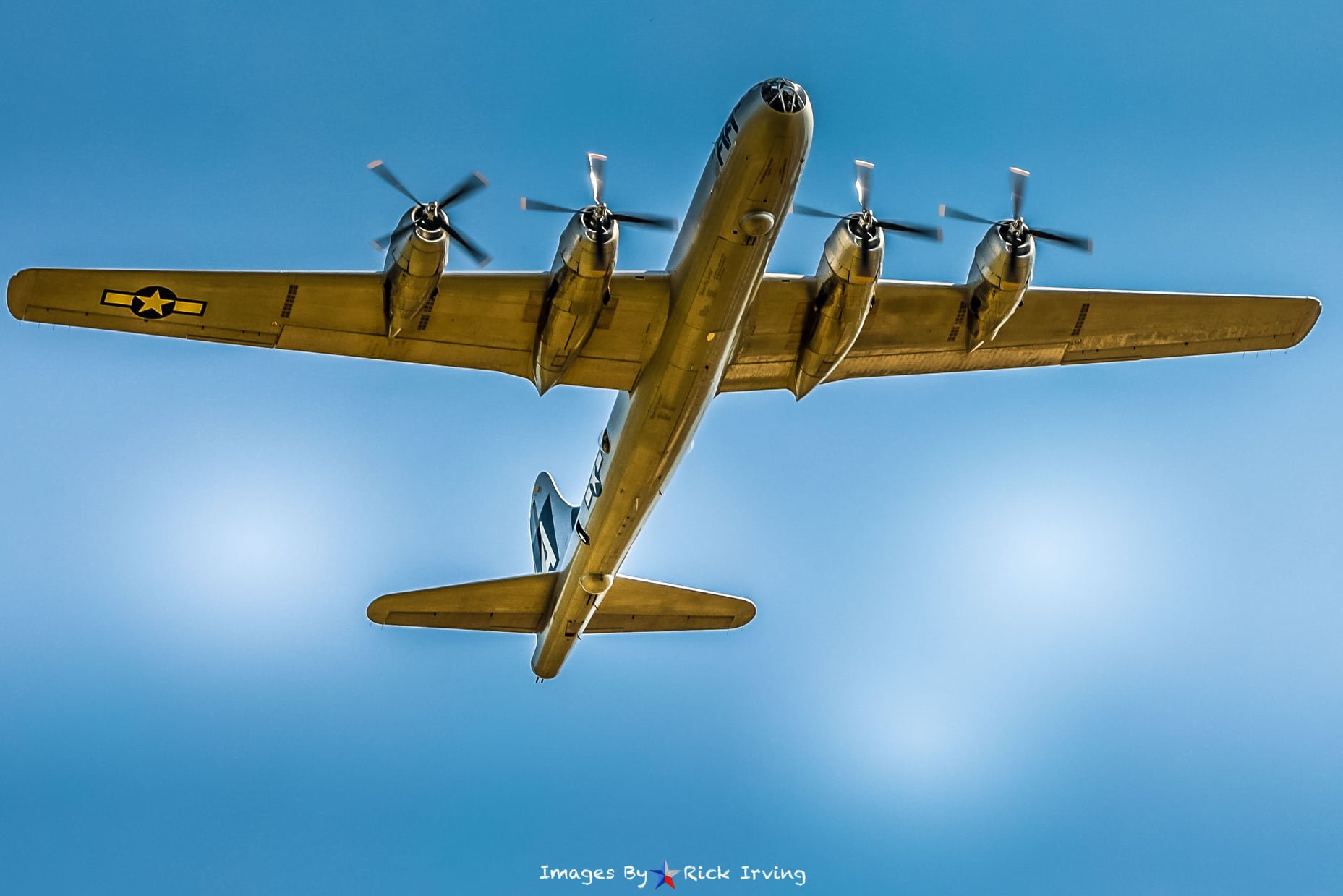
The B‑29 Superfortress surrounded its crews with an atmosphere that began long before they stepped inside. On the ramp, the aircraft’s immense fuselage caught the morning light in a way that made the metal seem almost warm to the touch. The scent of aviation fuel drifted across the field, mingling with the earthy smell of sun‑baked concrete and the faint sweetness of hydraulic fluid. Ground crews moved beneath the wings with purposeful rhythm, their voices rising above the steady hum of auxiliary power units that fed life into the aircraft’s electrical systems. The sound carried a subtle vibration that settled into the chest, a reminder that the machine was waking from stillness and preparing to climb into a realm where human senses strained to keep pace.
Inside the cabin, the air felt different. The pressurization system created a cool, dry environment that contrasted sharply with the heat outside. The metal floor held a faint chill, and the walls carried the sterile scent of aluminum warmed by sunlight. The cockpit glowed with soft illumination from instrument panels, each gauge flickering with the pulse of the engines as they prepared to start. The crew felt the quiet pressure in their ears as the cabin sealed, a gentle reminder that they were entering a space where the air itself was manufactured by machinery rather than nature.
When the engines came alive, the sensory world shifted again. The Wright R‑3350s produced a deep, resonant vibration that traveled through the floor and into the bones of every man aboard. The smell of hot oil and exhaust filled the cabin, carried through the ventilation ducts in a way that made the aircraft feel both powerful and vulnerable. The sound was not merely loud. It was enveloping, a constant presence that settled into the body and became part of the rhythm of flight. The crew felt the subtle tremor of the propellers as they bit into the air, and the aircraft responded with a slow, deliberate movement that signaled the beginning of ascent.
As the B‑29 climbed, the world outside transformed. The sky deepened into a darker blue, and the ground below softened into a distant mosaic of fields, rivers, and towns. The air thinned, and the engines strained with a tone that blended strength and fragility. Frost gathered at the edges of the windows, and the light inside the cabin took on a pale clarity that made every surface appear sharper. The crew felt the dryness of the pressurized air in their throats, and the temperature shifted with each adjustment of the environmental controls. The aircraft carried a faint metallic scent that mingled with the aroma of heated wiring and lubricants used to keep the remote turrets responsive.
Each crew position held its own sensory world. In the nose compartment, the bombardier sat surrounded by glass that offered a sweeping view of the sky and earth, a view so expansive it created a sense of isolation even among the crew. The central fire control station carried the hum of gyroscopic sights and the soft mechanical whisper of turret motors responding to the slightest movement of the controls. The tail gunner lived in a narrow compartment where the vibration of the aircraft felt more pronounced, and the cold pressed against the metal skin with a force that could be sensed even through layers of clothing. Every man aboard learned to read the aircraft through sound, touch, and smell, sensing changes in vibration, listening for shifts in engine tone, and watching for the smallest movement of a needle that might signal danger.
During long missions, the experience became a test of endurance. The hum of the engines settled into a constant presence that filled the cabin like a heartbeat. The smell of heated metal lingered in the air, and the crew felt the subtle ache of sitting for hours in a pressurized environment that dried the skin and tightened the muscles. The sighting screens glowed with a soft clarity that seemed almost otherworldly, and the faint vibration of the aircraft created a rhythm that accompanied every thought and movement. The men learned to inhabit this world fully, to understand its moods, and to respect the delicate balance that kept them alive at altitudes where the air could not sustain them.
The B‑29 became a landscape, a place where sight, sound, smell, and touch blended into a single experience of power and risk. It asked its crews to surrender to its environment, to trust its strengths, and to remain vigilant against its weaknesses. In this way, the aircraft became more than a machine. It became a realm, a presence, and a measure of human resolve, carrying the truth that progress often arrives with sensations that linger long after the engines fall silent.
Seattle — The Birthplace of the Superfortress
At Boeing Field in Seattle, he trained at the very place where the B‑29 first emerged from blueprint into living metal. The air carried the layered scent of the Pacific Northwest, a mixture of rain drifting in from the Sound, pine rising from the wooded edges of the field, and the metallic breath of factory work that hung over the runways like a signature of industry. He walked past assembly lines where the aircraft took shape piece by piece, each fuselage resting in the glow of overhead lamps that reflected off aluminum skins still warm from the hands that shaped them. Riveters struck their tools with rhythmic certainty, each impact echoing through the hangars with a sound that felt both mechanical and human. Sparks rose from welding torches in bright cascades that briefly illuminated the faces of workers who carried the weight of wartime urgency in their eyes. Engineers moved among the half‑finished giants with clipboards pressed to their chests, explaining the aircraft’s systems with a blend of pride in its innovation and caution born from its complexity.
He studied the Wright R‑3350 engines, immense creations that represented the cutting edge of American engineering. Their power was undeniable, yet their temperament demanded humility. He learned how the engines breathed, how heat gathered beneath their cowling, and how a moment of mismanagement could turn strength into danger. The training bays carried the scent of hot oil and warm metal, and the engines themselves radiated a steady warmth that could be felt even before they roared to life. Instructors spoke of cooling baffles, cowl flap settings, and the delicate balance required to keep the engines alive during long climbs into thin air. Their voices carried the quiet gravity of men who understood that mastery of the R‑3350 was not optional. It was survival.
He practiced emergency procedures in simulators that felt almost alive. The wooden frames creaked as hydraulic systems reproduced turbulence, and the instrument panels glowed with the soft light of training scenarios designed to test his composure. The air inside held the scent of varnish, heated wiring, and canvas seats worn smooth by countless trainees who had passed through before him. He learned to respond to engine fires, electrical failures, and pressurization loss with calm precision, guided by instructors who watched every movement with the seriousness of men preparing him for a future where hesitation carried consequences.
He learned the rhythm of the aircraft itself, a rhythm that revealed the B‑29’s character through vibration, sound, and touch. The engines produced a deep resonance that settled into the body, a vibration that changed with altitude, temperature, and throttle. The control columns carried a faint tremor that revealed the aircraft’s mood, and the pressurization system cycled with a soft mechanical sigh that reminded him of the thin air waiting beyond the cabin walls. He learned to listen for the subtle shift in tone that signaled an engine struggling against heat, and he learned to feel the gentle change in pressure that marked the aircraft’s ascent into the realm where only machinery could sustain human life.
Boeing Field became more than a training ground. It became a threshold, a place where he first understood the sensory truth of the B‑29, shaped by rain on aluminum, sparks in factory air, the hum of simulators, and the living pulse of engines that demanded both mastery and respect. It was here that he began to carry the knowledge that the aircraft was not merely flown. It was inhabited, understood, and felt.
Denver — High‑Altitude Mastery
From Seattle he moved to Lowry Field in Denver, carrying with him the memory of Boeing Field where the B‑29 had first taken shape. In Seattle he had walked through hangars filled with the scent of rain drifting in from the Sound, pine rising from the wooded edges of the airfield, and the metallic breath of factory work that hung over the runways like a signature of industry. He had watched riveters strike aluminum skins with rhythmic certainty, each impact echoing through the vast spaces where the aircraft grew from raw metal into living machines. Sparks rose from welding torches in bright cascades that briefly illuminated the faces of workers who carried wartime urgency in their eyes. Engineers moved among the half‑finished giants with clipboards pressed to their chests, explaining the aircraft’s systems with a mixture of pride in its innovation and caution born from its complexity. It was there that he studied the Wright R‑3350 engines, immense creations whose power demanded humility, and practiced emergency procedures in simulators that rattled and hummed like creatures preparing him for the thin air where only machinery could sustain human life.
Denver sharpened everything he had learned. Lowry Field sat beneath a sky washed clean by mountain winds, a sky that carried the scent of frost even in daylight. The thin atmosphere of the Front Range made every breath feel different, and the cold air pressed against the skin with a clarity that seemed to heighten awareness. Because B‑29s were scarce and urgently needed overseas, crews trained on B‑17s and B‑24s, older bombers whose interiors carried the marks of long service. Their metal skins felt colder, their systems simpler, and their compartments narrower, reminders that the aircraft he was destined to fly belonged to a new generation not yet available in sufficient numbers for training.
Inside these older bombers, the sensory world shifted. The air smelled of hydraulic fluid warmed by sunlight, canvas stretched tight across worn seats, and cold aluminum that held the chill of altitude even while parked on the ground. The fuselage carried a steady vibration that settled into the hands and feet, a pulse that revealed the age of the aircraft and the endurance of the men who had flown it before him. He learned to navigate turbulence that arrived without warning as mountain winds pressed against the wings. He learned to manage oxygen systems that hissed softly in the background, their presence a constant reminder of the thin air waiting above ten thousand feet. He coordinated with gunners and engineers in cramped, noisy compartments where voices rose above the drone of engines and communication depended on clarity, patience, and trust.
He practiced long‑range navigation by tracing maps with gloved fingers, watching the landscape shift beneath the wings as the aircraft crossed plains, foothills, and distant peaks. He learned formation flying in tight patterns that demanded precision, each aircraft holding its place in the sky like a moving constellation. He rehearsed emergency descent procedures that required calm hands and steady nerves, feeling the sudden drop of altitude as the aircraft responded to his commands. Every flight reinforced the truth that teamwork was survival, for the older bombers revealed how much depended on unity, discipline, and the quiet understanding that each man carried responsibility for the others.
Together, Seattle and Denver formed the crucible that shaped him. One taught him the future of aviation, born in sparks and innovation. The other taught him the enduring truths of flight, carried in cold aluminum, thin air, and the shared resolve of men who learned to trust one another. These lessons prepared him for the moment he would finally step into the pressurized world of the B‑29, ready to inhabit a machine that demanded mastery, respect, and the steady confidence that could not be feigned.
Fairmont Army Airfield — Becoming a Crew
At Fairmont Army Airfield in Nebraska, he joined his eleven‑man crew, the group of men who would become his world in the sky. The base stretched across open prairie that seemed endless, a landscape shaped by wind that carried the scent of wheat, dust, and diesel from the vehicles that moved steadily along the runways. The airfield felt exposed beneath a wide Midwestern sky, its silence broken only by the rumble of engines warming for training flights. The prairie light had a clarity that revealed every detail of the aircraft lined along the hardstands, their silver skins gleaming against the horizon. It was a place where the immensity of the war met the quiet determination of men preparing for missions that would carry them far beyond the familiar fields of Nebraska.
Here he met the men who would share every risk. Pilot, co‑pilot, bombardier, navigator, engineer, radio operator, radar operator, and gunners formed a single organism whose strength depended on unity. They trained together until they moved with instinctive coordination, each man learning the rhythm of the others. They learned how the pilot breathed when the engines strained, how the navigator traced maps with steady hands, how the engineer listened for subtle changes in vibration, and how the gunners reacted when turbulence pressed against the wings. They learned each other’s voices in the interphone, each tone carrying confidence, urgency, or calm depending on the moment. They learned habits, strengths, and fears, and they learned how to steady one another when the aircraft shuddered or when instructors introduced the unexpected.
Training at Fairmont carried a relentless pace. They practiced formation flying in tight patterns that demanded precision, each aircraft holding its place in the sky like a moving constellation. They rehearsed bombing runs over distant targets, feeling the aircraft settle into its steady approach as the bombardier prepared for release. They learned emergency landings that required calm hands and steady nerves, long‑range navigation that traced invisible paths across the prairie, turret coordination that blended mechanical skill with instinct, engine‑failure drills that tested their composure, and night missions that carried them into darkness where only instruments and trust guided their way. The aircraft became a classroom where every vibration, every shift in tone, and every movement of a needle taught them something essential.
The world inside the aircraft shaped their bond. The air smelled of hydraulic fluid, canvas, and cold aluminum. The fuselage carried a steady vibration that settled into their hands and feet, a pulse that revealed the aircraft’s mood. The compartments were cramped and noisy, filled with the hum of engines and the soft hiss of oxygen systems. The interphone crackled with voices that rose above the drone of flight, each man speaking with clarity because clarity meant survival. They learned to read one another through sound and silence, through the way a man tightened his harness before a difficult maneuver or the way he steadied his breathing during a steep descent.
Fairmont carried an atmosphere of quiet intensity. During this period, Colonel Paul Tibbets quietly selected elite men from the 393rd Bombardment Squadron for a mission so secret that even commanders spoke of it only in guarded tones. These men would later fly the Enola Gay on the atomic mission to Hiroshima. The selection process was discreet, yet its presence was felt across the base. Conversations softened when officers passed by. Rumors drifted through the barracks in fragments, never fully formed. Everyone sensed that history was being shaped, though few knew how or where it would unfold. The prairie wind carried that feeling across the runways, blending it with the scent of wheat and the hum of engines preparing for the next ascent into the sky.
Fairmont became the crucible where he learned that a crew was not simply a team. It was a single organism, shaped by shared responsibility, shared danger, and the quiet understanding that every life depended on the others. It was here, on the open prairie of Nebraska, that he began to carry the truth that unity was not a concept. It was survival.
Departure for the Pacific — Early 1945
In early 1945, his crew received orders for the Pacific, a summons that carried both urgency and inevitability. By that stage of the war, trained B‑29 crews were dispatched as soon as aircraft and logistics allowed, because the strategic bombing campaign over Japan demanded constant reinforcement. Orders arrived with the quiet finality of wartime bureaucracy, a simple document that signaled the end of training and the beginning of operational service.
They departed through Mather Field in Sacramento, a major staging base for crews heading west. Eucalyptus trees lined the edges of the runways, releasing a sharp, medicinal fragrance that mingled with the smell of aviation fuel and winter wind sweeping down from the Sierra foothills. The airfield pulsed with activity. Mechanics moved with practiced efficiency, their voices rising above the hum of engines as aircraft cycled through final checks. The metallic clatter of tools echoed across the hardstands, blending with the steady rumble of B‑29s, C‑54 transports, and other aircraft preparing for departure. Mather served as a gateway to the Pacific, and every crew passing through felt the shift from training to deployment.
From Sacramento, the crew continued to John Rodgers Field in Hawaii, then the primary Army Air Forces base on Oahu for trans‑Pacific movement. Palm trees swayed beside runways crowded with aircraft bound for Saipan, Tinian, Guam, and other forward bases. The tropical air carried the scent of salt, rain, and warm vegetation, and sunlight reflected off the ocean with a brightness that felt almost unreal after the muted tones of the mainland. The contrast between the island’s beauty and the machinery of conflict created a strange tension. Paradise stood beside rows of bombers, transports, and fighters, each preparing to cross the vast Pacific toward the war’s final theater.
On the tarmac, a schoolmate serving on the general staff pulled him aside. In a quiet, urgent tone, he revealed that Hanley would be part of Operation Olympic, the planned invasion of Japan scheduled for late 1945. The scale of the mission was staggering. Historical projections estimated hundreds of thousands of American casualties and far greater losses among Japanese forces and civilians. The truth hung in the air like a storm cloud. It was the kind of information spoken only once, then carried silently, because even officers discussed the invasion in guarded tones. The knowledge settled into him with a weight that felt both personal and immense, a reminder that the war’s final chapter would demand sacrifices on a scale few could fully comprehend.
Their B‑29 soon suffered serious engine problems, a historically common and dangerous flaw. The Wright R‑3350 engines, powerful yet temperamental, were prone to overheating, fuel leaks, and fires, especially in early production models. Many crews experienced delays or grounding during transit because the engines required constant attention. For a week, mechanics worked tirelessly, their hands blackened with grease, tools clattering against metal as they coaxed the engines back to life. The hangars echoed with the hiss of acetylene torches, the thump of mallets adjusting cowling panels, and the low murmur of men discussing cooling baffles, cowl flap settings, and the delicate balance required to keep the engines alive during long climbs into thin air.
The crew waited under sealed orders, unable to discuss their destination or mission. This was standard procedure for crews moving into the Pacific theater, especially those assigned to operations involving Japan. The tension was palpable. The air smelled of hot oil and tropical rain, a mixture that settled into memory with the weight of foreboding. Each day felt suspended, a pause before the next great unknown. They lived inside that pause, knowing that once the engines roared back to life, they would leave the last familiar shore behind and cross into the vastness of the Pacific, where the war’s final chapter waited beyond the horizon
Saipan to Tinian — January 1945
On 12 January 1945, they arrived on Saipan, where their aircraft was immediately taken and replaced with a B‑24 for the short flight to Tinian. The island was a vast military machine — coral runways, endless rows of Quonset huts, and the constant roar of engines preparing for missions over Japan.
On Tinian, they began flying practice missions that sharpened every skill they had learned:
- long‑range navigation across open ocean
- formation flying in tropical turbulence
- bombing runs over coral targets
- radar‑guided approaches
- emergency procedures under combat conditions
- night operations with blackout protocols
- turret coordination under simulated attack
The air tasted of salt and dust. The heat pressed against the skin. The horizon shimmered with the presence of hundreds of bombers preparing for the final phase of the Pacific war.
The Route of His Runs — Including Iwo Jima
When he began flying practice and later operational missions from Tinian, his crew entered one of the most demanding flight corridors of World War II. The route from the Marianas to Japan was long, exposed, and shaped by geography, weather, and enemy defenses. Every mission followed a path that became etched into the memory of every man aboard.
Departure from Tinian — The Beginning of Every Mission
Every run began on the coral runways of North Field, Tinian, the largest bomber base in the world. The air smelled of aviation fuel, salt, and sun‑baked coral. Engines roared as B‑29s lined up for takeoff, their propellers throwing dust into the air.
Once airborne, the aircraft climbed slowly, heavy with fuel and equipment. The ocean stretched beneath them like a vast blue plain.
The Northern Turn — Toward Iwo Jima
After leaving Tinian, the crew followed a northern arc across the Pacific. This was the standard route for all B‑29 operations.
The navigator plotted a course that took them:
- northwest from Tinian
- past Saipan
- toward the Bonin Islands
- directly over or near Iwo Jima
This leg was long and monotonous, yet tense. The ocean below was endless. The sky was often clear, but weather could shift without warning.
The Long Haul to Japan — The Open Pacific
After Iwo, the crew entered the longest and most vulnerable stretch of the mission. This was the point where:
- engine temperatures were monitored constantly
- fuel consumption was recalculated
- gunners scanned the sky for fighters
- the navigator tracked winds and drift
- the radar operator prepared for landfall
The Pacific jet stream could be brutal, pushing the aircraft off course or slowing their progress.
Landfall Over Japan — The Final Approach
Depending on the mission type, their route varied:
Northern industrial targets:
- Tokyo
- Yokohama
- Kawasaki
- Nagoya
- Osaka
Radar practice runs:
- coastal approaches
- inland navigation
- formation training
Low‑level incendiary missions (later in 1945):
- night approaches
- blackout conditions
- turbulence from rising heat columns
The smell of heated aluminum, the vibration of engines straining, and the tension of approaching enemy territory defined this phase.
The Return Route — Back Over Iwo
Every mission home retraced the same path:
- leaving Japan
- descending into safer airspace
- crossing back over Iwo Jima
- turning south toward Saipan and Tinian
Crews often passed over Iwo at dusk or night, seeing the faint glow of runway lights — a beacon of survival.
If an engine ran hot, if fuel ran low, if damage occurred, Iwo was the difference between ditching in the ocean and living to fly again.
Final Descent to Tinian — Mission Complete
Approaching Tinian, the crew felt the weight of exhaustion and relief. The coral runways appeared as pale stripes against the island. The aircraft descended through humid air, engines throttled back, wheels dropping into place.
Landing meant:
- debriefing
- maintenance checks
- fuel calculations
- mission reports
- quiet moments of reflection
The route was complete — but its memory stayed with every man aboard.
How His Crew Helped Every Area They Flew To
His missions across the Pacific formed a chain of influence stretching from the Marianas to Japan. Each island, each airfield, each stretch of ocean became part of a larger system that depended on the skill, discipline, and endurance of crews like his. Their flights did more than deliver bombs or practice navigation — they shaped operations, protected ground forces, strengthened air corridors, and supported the final push toward victory.
Helping Saipan — The Nerve Center of the Marianas
Saipan was the first major waypoint on every mission. Flying past it helped:
- maintain airspace security
- test radio channels used by multiple bomber groups
- confirm weather patterns moving north toward Japan
- support coordination between Saipan’s command centers and Tinian’s bomber wings
His crew’s consistent presence in the corridor helped reinforce the operational rhythm of the Marianas, ensuring that Saipan’s radar stations and command posts had continuous data on bomber movement and enemy activity.
Helping Tinian — The Heart of the B‑29 Offensive
Tinian was more than a base; it was the largest bomber platform in the world. Every takeoff, every formation, every return flight helped:
- calibrate runway operations
- refine takeoff spacing for mass bomber launches
- test emergency procedures for aircraft returning damaged
- support the logistical flow of fuel, ordnance, and maintenance crews
His crew’s reliability strengthened the tempo of operations that allowed hundreds of B‑29s to launch night after night.
Helping the Bonin Islands Corridor — The Open Pacific
The long stretch between the Marianas and Japan was not empty. It was a contested airspace where:
- Japanese submarines lurked
- picket boats reported bomber movement
- enemy aircraft occasionally patrolled
His crew’s flights helped:
- identify enemy vessels
- track weather systems forming over the Pacific
- maintain the integrity of the bomber corridor
- provide early warning of Japanese reconnaissance activity
Their presence helped secure the vast ocean that connected the Marianas to Japan.
Helping Chichi‑Jima and Haha‑Jima — The Enemy’s Outer Defenses
Flying near these islands helped:
- expose Japanese radio traffic
- reveal anti‑aircraft activity
- track fighter launches
- support Navy operations targeting supply routes
His crew’s radar logs and visual sightings contributed to intelligence used in submarine and carrier operations.
Helping the Japanese Coastline — The Approach to Enemy Territory
As they neared Japan, his crew helped:
- map coastal radar sweeps
- identify searchlight patterns
- track fighter climb rates
- refine approach routes for later incendiary missions
- support timing for diversionary flights
Every crossing helped planners understand how Japan defended its skies.
Helping Tokyo, Nagoya, Osaka, and Yokohama — The Strategic Targets
Even practice runs helped these operations by:
- testing formation integrity
- calibrating radar bombing techniques
- refining altitude profiles
- improving fuel consumption estimates
- strengthening the accuracy of later combat missions
His crew’s discipline in training directly improved the effectiveness of the strategic bombing campaign.
Helping the Return Corridor — The Path Home
On the way back, his crew helped:
- confirm weather changes for following bomber groups
- report damaged aircraft needing assistance
- maintain radio contact with Iwo’s emergency fields
- support rescue coordination for ditching crews
Their vigilance helped save other airmen returning from missions.
Helping Tinian Again — The Final Descent
Every landing helped:
- refine recovery procedures
- test runway lighting under blackout conditions
- support maintenance crews preparing aircraft for the next mission
- strengthen the operational tempo that kept the bomber force moving
Their safe return meant the system worked — and would work again tomorrow.
How His Crew Helped the Pacific War
His missions helped:
- Saipan, by strengthening command coordination
- Tinian, by sustaining the world’s largest bomber base
- the Bonin corridor, by securing the open Pacific
- Chichi‑Jima and Haha‑Jima, by exposing enemy defenses
- Japan’s coastline, by mapping enemy radar and fighter activity
- major Japanese cities, by refining strategic bombing accuracy
- the return corridor, by safeguarding damaged crews
- Tinian again, by sustaining the operational cycle
Every flight helped someone. Every crossing mattered. Every mile carried purpose.
His crew did not simply fly missions — they held the Pacific air war together, one run at a time.
The Full Life of the B‑29 Superfortress — Beyond World War II
Although your airman flew the B‑29 at the moment when it mattered most, the aircraft’s story did not end with the Pacific war. The Superfortress went on to serve across two decades, shaping three eras of American airpower. Its legacy stretched far beyond the Marianas, carrying the nation from the final battles of World War II into the dawn of the nuclear age and the crucible of Korea.
World War II — The Crucible of Its Creation (1944–1945)
The B‑29 entered combat in the final year of the war, immediately becoming the decisive long‑range bomber of the Pacific. It carried out:
- strategic bombing of Japan
- incendiary raids that reshaped the air campaign
- mining operations that strangled maritime supply routes
- the atomic missions of the Enola Gay and Bockscar
- long‑range operations from Saipan, Tinian, and Guam
This was the era your airman lived — when the aircraft was new, temperamental, and untested, yet entrusted with the weight of ending the war. It was the moment when the B‑29’s capabilities were pushed to their limits and its crews carried the burden of missions that stretched across oceans and into enemy skies.
The Korean War — The Last Great Piston‑Engine Bomber (1950–1953)
Only five years after WWII, the B‑29 returned to combat in a very different world. Jet fighters now ruled the skies, and the Superfortress faced dangers it had never encountered in the Pacific.
How it was used:
- daylight bombing early in the war
- nighttime radar bombing once MiG‑15 jets made daylight missions too dangerous
- attacks on bridges, rail lines, factories, and troop concentrations
- close air support and interdiction missions
The B‑29 became the primary heavy bomber of the Korean War, flying over 20,000 sorties. It was still vital, but no longer unmatched. Jet combat forced new tactics, new altitudes, and new reliance on radar.
What changed from WWII:
- MiG‑15s made the skies far more lethal
- B‑29s shifted to night missions to survive
- radar bombing became standard
- crews faced bitter cold, mountainous terrain, and Soviet‑trained pilots
The aircraft proved it could adapt, even as the world moved toward jet power.
The Early Cold War — America’s First Nuclear Deterrent (1946–1950s)
Between WWII and Korea, the B‑29 became the backbone of early Strategic Air Command. It was America’s first nuclear‑capable bomber force, carrying the responsibility of deterrence in a world reshaped by atomic weapons.
Roles included:
- strategic nuclear readiness
- nuclear delivery training
- long‑range reconnaissance
- weather and atmospheric sampling
- electronic intelligence missions
Specialized variants:
- B‑29B — streamlined for speed
- F‑13 / RB‑29 — reconnaissance
- WB‑29 — weather reconnaissance
- KB‑29 — aerial refueling
- SB‑29 — search and rescue
The aircraft evolved into a versatile platform that supported intelligence, science, and strategic defense.
The B‑50 Superfortress — The Second Life of the B‑29 (1947–1955)
The B‑50 was a heavily upgraded descendant of the B‑29 — new engines, stronger structure, improved performance — but still part of the same lineage. It carried the Superfortress legacy into the jet age.
Used for:
- nuclear delivery
- long‑range reconnaissance
- aerial refueling
- Cold War patrols
Its most famous achievement was the first nonstop around‑the‑world flight in 1949, when Lucky Lady II demonstrated America’s global reach. Though technically a new designation, the B‑50 was the B‑29’s second life — proof that the original design had room to grow.
Where the B‑29 Was Not Used
- Vietnam War — retired before major U.S. involvement
- Post‑1953 conflicts — replaced by B‑47, B‑52, and jet aircraft
- European theater WWII — too short‑ranged for Europe; designed for the Pacific
The B‑29 belonged to the Pacific, to the vast distances and long missions that defined that theater.
Three Eras, One Legacy
The B‑29 was not a single‑war aircraft. It was a three‑era machine:
- World War II — the decisive long‑range bomber
- Korea — the last great piston‑engine bomber in combat
- Cold War — America’s first nuclear deterrent platform
Your airman flew the B‑29 at the moment when its destiny was forged — when it was new, unproven, and carrying the weight of the Pacific war on its wings. He served in the era that defined the aircraft, the missions, and the legacy that would echo across decades.
Fiske Hanley II: Flight Engineer, Survivor, and Witness of the Pacific Air War
Fiske Hanley II’s World War II experience occupies a singular place in the history of the Pacific air war, not only for the ferocity of the missions he flew as a B‑29 flight engineer, but for the extraordinary ordeal that followed the destruction of his aircraft over Japan. His service with the 504th Bombardment Group placed him within the first generation of airmen to operate the B‑29 Superfortress, a revolutionary aircraft whose long range, pressurized cabin, and advanced radar systems made possible the strategic bombing campaign against the Japanese home islands. Yet the B‑29 was also plagued by mechanical failures, rushed production, and catastrophic engine problems that made every mission a test of skill and endurance. Hanley entered this world at a moment when the United States was preparing to carry the war directly to Japan’s industrial centers, transportation networks, and food supply.
The 504th Bombardment Group was part of the 313th Bombardment Wing, headquartered on Tinian in the Mariana Islands. From this base, the B‑29 force launched high‑altitude raids that initially proved ineffective due to the powerful jet stream winds that distorted bomb trajectories. Hanley witnessed firsthand the frustration of these early missions, including the massive strike on Iwo Jima in which nearly ninety percent of the bombs missed the island entirely. The shift to low‑level incendiary attacks in March 1945 transformed the campaign. Under the direction of General Henry Arnold and General Curtis LeMay, B‑29 crews flew at altitudes between four and six thousand feet, dropping incendiaries that devastated Tokyo, Nagoya, Kobe and Osaka. Hanley’s crew flew three of these missions, each one marked by intense heat, smoke, and the sight of entire districts burning beneath them.
On 27 March 1945 the 313th Wing undertook its first mining operation, part of a broader effort to sever Japan’s maritime lifelines. These missions, known collectively as Operation Starvation, were among the most dangerous of the war. Flying at low altitude over narrow straits, B‑29 crews dropped naval mines intended to block shipping lanes and starve Japan of food and fuel. The Japanese had broken American codes and were waiting. Searchlights swept the sky, and antiaircraft fire erupted from naval vessels including the battleship Yamato. Three B‑29s were shot down that night, including Hanley’s. With engines three and four on fire and the aircraft breaking apart, Hanley fought to keep the engines running long enough for the crew to escape. When the navigator opened the bomb bay door, flames incinerated him and the radio operator. Hanley followed the pilot, copilot and bombardier through the nose hatch and parachuted into a rice paddy. Only he and the copilot survived.
His capture marked the beginning of one of the most brutal chapters in the history of American airmen in Japan. Japanese policy dictated that B‑29 airmen be treated as war criminals, subject to execution after interrogation. Hanley was beaten by civilians armed with bamboo spears until a Japanese policeman intervened. He suffered forty to fifty flak wounds and additional injuries from the beatings. He was handed over to the Kenpeitai, the military police and secret police force responsible for counterintelligence, political repression, and prisoner interrogation. The Kenpeitai operated under a system that classified certain prisoners as Special Prisoners, a designation reserved for airmen accused of war crimes. These prisoners received half rations, no medical care, and were subjected to systematic torture.
Hanley was first taken to Kuro in northern Kyushu, then transported by train to Tokyo for interrogation at the Kenpeitai headquarters. The interrogators were highly educated officers who spoke English fluently. They questioned him about American public opinion, the expected duration of the war, and how he believed an invasion of Japan should be conducted. Hanley fabricated an answer, revealing nothing about Operation Olympic. The interrogators described Japan’s defensive strategy, which relied on inflicting such catastrophic losses on the Allies that surrender would become the only acceptable outcome. Hanley later said he knew the atomic bomb saved more than twenty million lives, a conclusion shaped by the defensive plans he heard directly from his captors.
The conditions of his imprisonment were lethal. Hanley was confined in a five‑by‑nine cell with seven other prisoners, forbidden to speak. Food consisted of golf‑ball sized clumps of rice thrown onto the filthy floor. Bodies of dead prisoners sometimes lay for days before removal. When he complained about the lack of medical care, he was taken to the infirmary where his wounds were intentionally infected. The civilian overseer of the prison, known for his cruelty, repeatedly told prisoners, “you dog, you are going to die.” Fewer than two hundred B‑29 airmen captured in Japan survived the war, and thirteen of those survivors came from Hanley’s final mission.
In May 1945 sixty‑two American prisoners, all B‑29 personnel, were moved to the Tokyo military prison. When a B‑29 bomb ignited the structure, the Japanese guards abandoned the building and left the prisoners inside to burn. Hanley survived through faith, willpower, and the instinct to endure. By August he weighed only seventy pounds. On the night of 15 August 1945, after Japan’s surrender, the prisoners were taken to Tokyo Bay to bathe. They were then moved to a nearby island where Navy and Marine fliers dropped candy, gum and cigarettes. Food improved and life became bearable for the first time in months.
On 28 August a Marine fighter dropped a note announcing liberation the next day. Although General MacArthur wanted liberation delayed until after the peace treaty, Fleet Admiral William Halsey ordered the release. Hanley watched six landing craft approach with American flags flying. Because of his condition he was among the first taken aboard the hospital ship USS Benevolence, where he was deloused, examined and treated by nurses in white uniforms. His recovery demonstrated the resilience of the human body and the power of hope in the face of overwhelming suffering.
Hanley’s testimony later played a role in the prosecution of Kenpeitai personnel responsible for war crimes. His experience stands today as one of the most detailed and documented accounts of the fate of downed airmen in Japan. It illuminates the realities of strategic bombing, the moral and legal consequences of wartime conduct, and the enduring responsibility to bear witness. His journey from flight engineer to prisoner to witness forms a vital chapter in the history of the Pacific War and remains a testament to courage, endurance, and the unbroken human spirit.
Life and Training on Tinian
Life on Tinian placed Fiske Hanley II at the center of one of the most ambitious air operations ever undertaken. When he and his crew joined the 504th Bombardment Group at North Field, they stepped into a landscape transformed by American engineering power. Only months earlier, Tinian had been a fortified Japanese stronghold. By the time Hanley arrived, the Seabees had reshaped the island into the largest and most productive airbase in the world, a logistical marvel that supported the full weight of the B‑29 campaign against Japan.
North Field contained four immense runways, each more than eight thousand feet long, carved from coral and paved under relentless tropical heat. These runways were arranged with mathematical precision to allow continuous takeoffs and landings of fully loaded B‑29 Superfortresses. The scale of operations was staggering. Thousands of men worked around the clock to fuel aircraft, load bombs, repair engines, calibrate Norden bomb sights, and maintain the complex radar and electrical systems that made the B‑29 the most advanced bomber of its era. The island hummed with activity day and night, a living organism built for war.
Hanley’s living conditions reflected the hierarchy of the air forces. Officers resided in Quonset huts that offered modest comfort, including cots, fans, and improvised furniture. Enlisted men lived in canvas tents that provided little protection from heat, humidity, and the constant coral dust kicked up by vehicles and aircraft. Yet despite these differences, the entire base shared a sense of shared purpose. The Seabees continued to expand infrastructure, building roads, water systems, mess halls, and even recreational facilities. They constructed a performance stage where traveling USO groups entertained the men, and they improved the mess facilities so crews could enjoy brief moments of normalcy between missions.
Training on Tinian was relentless. The 504th Bombardment Group flew practice missions to Iwo Jima, Truk, Aguijan, and Pagan Islands, each flight designed to simulate the conditions crews would face over Japan. These missions tested navigation, fuel management, radar operation, and the coordination required among the eleven men who formed a B‑29 crew. Simulated bombing runs prepared crews for the unique challenges of high‑altitude operations, including oxygen management, extreme cold, and the powerful jet stream winds that could distort bomb trajectories by miles. Crews learned to trust one another completely, knowing that a single mistake could doom an entire aircraft.
The dangers were ever present. The B‑29 was a technological marvel but also a temperamental machine. Engine failures were common, and the aircraft’s complex systems required constant attention. Crews often returned from training flights with engines overheating, electrical systems malfunctioning, or mechanical components failing under strain. Every mission reinforced the reality that the aircraft itself could be as dangerous as enemy fire.
The requirement to complete thirty‑five missions before rotating home weighed heavily on every crew. Attrition rates were high, and the sight of empty bunks or silent Quonset huts reminded the men of the risks they faced. The long hours of training, the meticulous attention to aircraft maintenance, and the discipline demanded by the 313th Bombardment Wing were all shaped by the knowledge that each mission could be the one that ended a crew’s journey. The men lived with the constant awareness that their survival depended on skill, teamwork, and a measure of luck.
Yet amid the strain, life on Tinian developed its own rhythms. Crews found moments of rest in shared meals, letters from home, and evenings spent listening to music or attending Seabee‑organized performances. They forged bonds that would carry them through the most dangerous operations of the Pacific War. For Hanley, Tinian became the crucible in which skill, endurance, and faith were tested daily, preparing him for the missions that would define his wartime experience and ultimately lead to the ordeal that followed the destruction of his aircraft over Japan.
Operations and Tactics in the Pacific Theater
The Strategic Bombing Campaign
The strategic bombing campaign against Japan represented one of the most complex and consequential undertakings of the Second World War. At its center stood the B‑29 Superfortress, a machine that embodied the highest aspirations of American engineering. Its gleaming aluminum fuselage stretched across the coral landscape of Tinian like a symbol of industrial power. Inside, its pressurized cabins allowed crews to ascend into altitudes where the air thinned to a biting cold and the sky darkened into a deep indigo. The aircraft’s remote‑controlled gun turrets, guided by analog computing systems, astonished even veteran airmen who had flown earlier bombers. Its unprecedented range and payload capacity made it the only aircraft capable of striking the Japanese home islands from the Marianas.
Yet the B‑29 was also a creature of contradictions. Beneath its technological promise lay a temperamental heart. The Wright R‑3350 engines, rushed into wartime production, were prone to overheating and sudden failure. Crews often smelled burning oil before they saw the temperature gauges climb. The scent of scorched metal and hot lubricant became a familiar warning, a sensory cue that danger was building inside the nacelles. Electrical systems flickered, pressurization failed without warning, and the aircraft’s intricate wiring hummed with static as crews climbed toward twenty thousand feet. The B‑29 demanded constant vigilance, and flight engineers like Fiske Hanley lived in a world of gauges, levers, and instinct, listening to the engines as though they were living beings.
When the strategic bombing campaign began from the Marianas, American planners envisioned high‑altitude, daylight precision bombing modeled on the European theater. The B‑29’s Norden bomb sight and radar systems were expected to deliver accurate strikes on industrial targets. Yet the skies over Japan revealed a reality far more treacherous than anticipated. Crews encountered unpredictable weather, heavy cloud cover, and turbulence that rattled the aircraft from nose to tail. Most disruptive was the discovery of the jet stream, a powerful river of air that roared across Japan at altitudes between twenty and thirty thousand feet. Bombs released from these heights drifted far off target, sometimes landing miles away from their intended aim points.
The jet stream introduced a sensory dimension that crews had never experienced. At altitude, the wind screamed against the fuselage, producing a constant vibration that pulsed through the metal floor. The aircraft shuddered as gusts struck its broad wings, and the sound of rushing air filled the cabin like a living force. Bombardiers watched helplessly as their carefully calculated trajectories were undone by invisible currents. The frustration was palpable. Crews returned from missions with the knowledge that their bombs had missed entire cities or landed harmlessly in open countryside. The massive strike on Iwo Jima, in which nearly ninety percent of the bombs missed the island, underscored the futility of high‑altitude precision bombing in the Pacific.
This failure forced a dramatic shift in doctrine. Under General Henry Arnold and General Curtis LeMay, the B‑29 force abandoned high‑altitude bombing and embraced low‑level incendiary attacks. Flying at altitudes between four and six thousand feet, crews dropped incendiary clusters designed to ignite the wooden cities of Japan. These missions were sensory assaults. The heat rising from burning neighborhoods washed over the aircraft like a physical wave. Smoke curled around the fuselage, dimming visibility and filling the cabin with the acrid smell of charred timber. The glow of fires below illuminated the underside of the aircraft, casting flickering light across the faces of the crew. Antiaircraft bursts erupted at close range, their concussions rattling the metal skin and sending shivers through the control surfaces.
The effectiveness of these raids was devastating. Tokyo, Nagoya, Kobe and Osaka suffered catastrophic destruction. Entire districts burned in sweeping firestorms that consumed homes, factories, and infrastructure. The strategic bombing campaign began to achieve the results envisioned by American planners, but at immense human cost. Crews witnessed the scale of destruction from above, seeing cities transformed into glowing grids of flame. The sensory imprint of these missions remained with many airmen for the rest of their lives.
The B‑29’s versatility extended beyond incendiary raids. Mining operations, including Operation Starvation, demonstrated the aircraft’s ability to wage economic warfare. Flying at low altitude over narrow straits, crews dropped naval mines intended to sever Japan’s maritime supply lines. These missions were among the most dangerous of the war. The smell of saltwater mixed with engine exhaust as aircraft skimmed the surface. Searchlights pierced the darkness, sweeping across the sky in white arcs. Antiaircraft fire erupted from naval vessels, including the battleship Yamato, whose guns produced concussions that shook the aircraft like physical blows. Hanley’s final mission, in which his aircraft was destroyed over the Shimonoseki Strait, exemplified the peril of these operations and the courage required to carry them out.
The strategic bombing campaign against Japan remains one of the most complex and debated aspects of the Pacific War. It combined technological innovation, doctrinal evolution, and immense human sacrifice. For Fiske Hanley II, it formed the backdrop of his service, shaping the missions he flew, the dangers he faced, and the ordeal that followed the destruction of his aircraft. His experience offers a deeply personal window into the broader history of the B‑29 program and the strategic effort to bring the war to an end.
The Shift in Strategy and the Firebombing Campaign
By early 1945, General Curtis LeMay had concluded that the high‑altitude daylight bombing doctrine inherited from the European theater was failing in Japan. The jet stream scattered bombs unpredictably, cloud cover obscured targets, and the B‑29’s engines struggled in the thin air. LeMay’s decision to shift to low‑altitude, nighttime incendiary attacks marked one of the most consequential tactical transformations of the Pacific War. It was rooted in hard data, meteorological analysis, and a clear understanding of Japanese urban construction. More than half of Japan’s major cities were built of wood, bamboo, and paper, creating conditions in which incendiaries could ignite sweeping firestorms.
Operation Meetinghouse, the firebombing of Tokyo on 9 to 10 March 1945, became the defining example of this new strategy. More than three hundred B‑29s from the 20th Air Force dropped nearly two thousand tons of incendiaries, including M‑69 napalm bomblets designed to penetrate roofs before igniting. The fires merged into a single inferno that consumed sixteen square miles of the city. The official death toll of one hundred thousand people makes it the deadliest air raid in history. The heat rising from the burning districts reached such intensity that crews flying thousands of feet above the city felt it through the aircraft’s metal skin. The glow of the firestorm illuminated the underside of the B‑29s, turning the night sky into a shifting field of orange and red.
Hanley’s 504th Bombardment Group participated in this new phase of the campaign, flying both high‑explosive and incendiary missions against Tokyo, Nagoya, Kobe, and Osaka. These cities were chosen not only for their industrial value but for their vulnerability to fire. Nagoya contained aircraft factories, including plants producing components for the Mitsubishi A6M Zero. Kobe was a major port and steel center. Osaka housed textile mills, shipyards, and electrical works. Each mission carried strategic significance, and each demanded extraordinary skill from the crews.
The sensory reality of these missions was unforgettable. At low altitude, the engines roared with a deeper, more urgent tone as they pushed through humid night air. The smell of burning timber and smoke rose toward the aircraft, carried upward by the heat of the fires. Crews saw entire neighborhoods ignite in seconds as incendiaries cascaded downward. The glow of burning cities reflected off the polished aluminum fuselage, casting flickering patterns across the faces of the men inside. Smoke sometimes curled around the aircraft so thickly that visibility dropped to mere yards. The acrid scent of charred wood mixed with the ever‑present smell of hot metal and engine exhaust.
Japanese defenses grew increasingly desperate as the raids intensified. Antiaircraft batteries, including 75 mm and 88 mm guns, fired with ferocity from factory districts, rail yards, and coastal installations. Their bursts erupted so close that crews felt the concussions through the aircraft’s metal skin. Night fighters, including Nakajima J1N “Irving” and Kawasaki Ki‑45 “Nick” aircraft, attempted interception using upward‑firing cannon and radar guidance. Searchlights swept the sky in white arcs, probing for the silver shapes of B‑29s. Crews often heard the distant rumble of fighters before seeing their silhouettes against the glow of burning cities.
The psychological toll on aircrews was immense. They witnessed firsthand the devastation their bombs produced, seeing cities transformed into vast fields of flame. The knowledge that tens of thousands of civilians were suffering below weighed heavily on many men, even as they understood the strategic necessity of the campaign. The physical dangers were equally severe. Every mission demanded absolute concentration. Flight engineers like Hanley monitored engine temperatures, fuel consumption, and electrical systems with relentless attention. Pilots fought turbulence and smoke. Bombardiers released their payloads while navigating through the glow of burning neighborhoods. Gunners scanned the darkness for fighters that might appear without warning.
For Hanley, these operations formed the final chapter of his combat service before the catastrophic events of Operation Starvation. They shaped his understanding of the war’s scale, its moral complexity, and the immense burden carried by the men who flew into danger night after night. The firebombing campaign remains one of the most consequential and debated aspects of the Pacific War, and Hanley’s participation places him within the heart of its history.
Operation Starvation and Hanley’s Early Combat Missions
By early 1945, the strategic bombing campaign had already inflicted immense damage on Japan’s industrial centers, yet the nation’s ability to move food, fuel, and raw materials along its coastal shipping routes remained a critical lifeline. Recognizing this vulnerability, American planners launched Operation Starvation, a comprehensive aerial mining campaign designed to collapse Japan’s maritime transportation system. The operation was entrusted to the B‑29 Superfortress, whose long range, heavy payload, and advanced radar systems made it uniquely capable of sowing mines across vast stretches of ocean and narrow straits that no surface vessel or submarine could reach with comparable speed or precision.
The True Mechanics and Strategic Impact of Aerial Mining
The mines dropped during Operation Starvation were among the most advanced naval weapons of the war. Many were magnetic mines triggered by the metal hull of a passing ship. Others were acoustic mines that detonated in response to the sound signature of engines. Pressure mines activated when a vessel displaced water above them. The B‑29s released these mines in carefully calculated patterns, often flying between five hundred and fifteen hundred feet to ensure accuracy. Radar operators used AN/APQ‑13 and AN/APQ‑7 Eagle radar systems to identify coastlines, straits, and shipping lanes in darkness or heavy weather.
The Shimonoseki Strait, where Hanley’s aircraft was later destroyed, was one of the most strategically important waterways in Japan. It served as the narrow passage between Honshu and Kyushu, carrying a significant portion of Japan’s coastal shipping. Mining this strait threatened to choke the nation’s internal distribution system. Japanese naval vessels, including the battleship Yamato, patrolled the area, and coastal batteries lined the shore. Searchlights swept the sky in coordinated patterns, and antiaircraft guns fired from ships, piers, and fortified hillsides.
Operation Starvation proved devastatingly effective. Between March and August 1945, aerial mining sank or damaged more than six hundred Japanese vessels. In the final months of the war, mines dropped by B‑29s sank more ships than American submarines, despite the submarine force’s formidable record. By July 1945, Japan’s shipping capacity had collapsed. Food shortages became severe, fuel reserves dwindled, and the nation’s ability to move troops and supplies was crippled. The economic impact was catastrophic, and the operation is now recognized as one of the most decisive maritime interdiction campaigns in history.
The Reality of Mining Missions
Aerial mining demanded exceptional skill and exposed crews to intense sensory experiences. Flying at low altitude over water created a unique soundscape. The roar of the engines echoed off the surface, producing a deep, resonant vibration that pulsed through the fuselage. The smell of saltwater mixed with engine exhaust as the aircraft skimmed the waves. Radar screens glowed in the dim cabin, illuminating the faces of the navigator and radar operator. Searchlights pierced the darkness in white arcs, sweeping across the sky in synchronized patterns. Antiaircraft bursts erupted so close that crews felt the concussions through the aircraft’s metal skin.
The danger was constant. A single miscalculation could send the aircraft into the water. A single hit from antiaircraft fire could ignite the fuel tanks or cripple an engine. Yet the missions were extraordinarily effective, and crews understood that their work was hastening the end of the war.
Hanley’s First Combat Missions
Hanley’s first combat mission targeted Kobe, a major port city whose shipyards, steel mills, and transportation networks made it a critical industrial center. The raid introduced him to the full sensory and physical reality of combat. The flight lasted fourteen to sixteen hours, a grueling endurance test that began with the roar of engines on Tinian’s coral runways and ended with the long, silent return across the Pacific. At altitude, the cabin grew cold and the air thin. The engines vibrated with a steady metallic hum. The smell of hot oil and electrical ozone filled the pressurized compartments.
As the aircraft approached Japan, the glow of coastal cities appeared faintly through the haze, followed by the sudden eruption of antiaircraft fire. Kobe’s defenses were formidable. Antiaircraft batteries fired from factory districts, rail yards, and harbor installations. Their bursts erupted so close that crews felt the concussions through the aircraft’s metal skin. Searchlights swept the sky in white beams, probing for the silver shapes of B‑29s. Night fighters, including Nakajima J1N “Irving” and Kawasaki Ki‑45 “Nick” aircraft, attempted interception using upward‑firing cannon and radar guidance.
Hanley’s subsequent missions targeted Tokyo, Nagoya, and Osaka. He participated in three of the five major incendiary raids that devastated these cities in March 1945. These missions were among the most destructive air operations in history. Flying at altitudes between five and seven thousand feet, crews dropped incendiary clusters designed to ignite the wooden cities below. The heat rising from burning neighborhoods washed over the aircraft like a physical wave. Smoke curled around the fuselage, dimming visibility and filling the cabin with the acrid scent of charred timber. The glow of fires below illuminated the underside of the aircraft, casting shifting patterns of orange and red across the faces of the crew.
The True Psychological and Physical Toll
The psychological toll on aircrews was immense. They witnessed firsthand the devastation their bombs produced, seeing cities transformed into vast fields of flame. The knowledge that tens of thousands of civilians were suffering below weighed heavily on many men, even as they understood the strategic necessity of the campaign. The physical dangers were equally severe. Every mission demanded absolute concentration. Flight engineers like Hanley monitored engine temperatures, fuel consumption, and electrical systems with relentless attention. Pilots fought turbulence and smoke. Bombardiers released their payloads while navigating through the glow of burning neighborhoods. Gunners scanned the darkness for fighters that might appear without warning.
These missions formed the final chapter of Hanley’s combat service before the catastrophic events of Operation Starvation that destroyed his aircraft over the Shimonoseki Strait. They shaped his understanding of the war’s scale, its moral complexity, and the immense burden carried by the men who flew into danger night after night. His participation places him within the heart of one of the most decisive and historically significant phases of the Pacific air war.
The Shimonoseki Strait Mission and the Shootdown
By late March 1945, Operation Starvation had become one of the most strategically decisive components of the Pacific air war. The mining of the Shimonoseki Strait was considered among the most dangerous assignments given to B‑29 crews. This narrow passage between Honshu and Kyushu carried a significant portion of Japan’s coastal shipping, and its defenses reflected its importance. Japanese naval vessels, including destroyers, cruisers, and the battleship Yamato, patrolled the strait with orders to fire on sight. Coastal batteries lined the hillsides, searchlights were positioned in overlapping grids, and radar stations monitored the approaches. Every element of Japanese defensive doctrine converged in this single corridor.
On 27 March 1945, Hanley’s crew was assigned to the first mining mission undertaken by the 313th Bombardment Wing. The briefing promised a mission with minimal resistance, yet intelligence had failed to detect a critical development. The Japanese had broken portions of the American code used to describe mining operations. They knew the B‑29s were coming. They prepared accordingly.
The Flight Toward the Strait
The mission began like many others. The engines roared across the coral runways of Tinian, lifting the aircraft into humid night air. Inside the pressurized cabin, the familiar scent of hot oil, electrical ozone, and metal filled the space. The flight engineer’s station glowed with gauges and dials. The navigator studied charts illuminated by a small lamp. The radar operator monitored the AN/APQ‑13 screen, watching the coastline of Kyushu emerge as a pale outline.
As the aircraft approached the strait, the sensory environment changed. The smell of saltwater rose through the ventilation system. The engines produced a deeper, resonant vibration as the aircraft descended to low altitude. The water below reflected faint moonlight, creating a shimmering surface that made altitude judgment difficult. The crew prepared for the mine release, each man focused on his role.
The Ambush
The Japanese defenses activated with sudden violence. Searchlights snapped on in coordinated patterns, their beams sweeping the sky in intersecting arcs. The strait erupted with antiaircraft fire. The first bursts appeared as bright flashes below, followed by concussions that shook the aircraft. The roar of the engines mixed with the thunder of exploding shells. The smell of cordite drifted upward as smoke rose from the water.
The battleship Yamato, anchored nearby, opened fire. Its massive guns produced shockwaves that struck the aircraft like physical blows. The sky filled with tracers, each one a streak of red or white light arcing upward toward the B‑29 formation. The aircraft shuddered as fragments struck the fuselage. The crew felt the vibrations through the metal floor.
Hanley’s aircraft was hit. Engines three and four erupted into flames. The temperature gauges spiked. Smoke filled the cabin. The flight engineer’s station became a battlefield of failing systems. Hanley fought to keep the engines running long enough for the crew to escape. He handed the fire extinguisher to the navigator. When the navigator opened the bomb bay door, a rush of oxygen fed the flames. The fire surged. The navigator and radio operator were incinerated instantly.
The pilot ordered the crew to bail out.
The Final Moments of the Aircraft
The aircraft descended rapidly. The roar of the engines became uneven, punctuated by the crackle of fire. The smell of burning fuel filled the cabin. The bombardier, copilot, and pilot moved toward the nose hatch. Hanley followed, feeling the heat intensify behind him. He leapt into the darkness.
The aircraft exploded moments later, its burning wreckage falling into the rice paddies below. Only Hanley and the copilot survived.
The Descent and Capture
Hanley’s parachute opened with a jolt. The night air rushed past him. He saw only one other parachute. Below, the landscape of Kyushu appeared as a patchwork of fields and villages. The glow of fires from the strait flickered in the distance. The smell of smoke lingered in the air.
He landed in a rice paddy. The impact drove mud and water upward. Within seconds, civilians surrounded him. They carried bamboo spears and farm tools. They beat him repeatedly, striking his arms, legs, and back. His flak suit absorbed many blows, likely saving his life. He attempted to surrender, raising his hands, but the crowd continued its assault.
A large Japanese policeman intervened. He pushed through the crowd, seized Hanley by the arm, and led him away. The beating stopped. Hanley’s body throbbed with pain. He had sustained forty to fifty flak wounds, along with injuries from the assault. He was taken to a nearby town, where his fate would be decided according to Japanese policy for captured B‑29 airmen.
The Beginning of Captivity
Japanese military doctrine classified B‑29 airmen as war criminals. They were to be interrogated, starved, and executed. Special Prisoner status meant half rations, no sanitation, no medical care, and systematic torture. Fewer than two hundred B‑29 airmen captured in Japan survived the war. Thirteen of those survivors came from Hanley’s final mission.
Hanley’s ordeal had begun.
Capture and Initial Treatment
Encounter with Civilians
When Hanley struck the muddy water of the rice paddy, the shock of impact drove cold mud up his legs and sent a jolt through his already wounded body. The night air smelled of wet earth, smoke drifting from distant fires, and the faint tang of salt carried inland from the strait. His parachute collapsed behind him in the water, its silk sinking slowly as he struggled to free himself from the harness. His ears still rang from the roar of the burning aircraft and the concussions of antiaircraft fire.
Before he could orient himself, villagers began to appear along the edges of the field. At first they came in small groups, then in larger clusters, until the narrow footpaths and embankments were crowded with men, women, and older children. Their faces were illuminated by lanterns and the faint glow of the moon. Many wore work clothes stained with soil and ash. Their expressions carried a mixture of shock, grief, and fury.
Japan in early 1945 was a nation living under the constant trauma of firebombing. Entire neighborhoods had been reduced to ash. Families had been lost in the infernos. The smell of smoke had become a part of daily life. The villagers who surrounded Hanley were not simply reacting to the presence of an enemy airman; they were responding to months of devastation that had reached into their homes and taken their loved ones.
The crowd surged toward him. The sound of shouting rose in a chaotic chorus. Bamboo spears, farm tools, and wooden poles were raised. The first blow struck his shoulder, sending a sharp burst of pain through his body. Another hit his leg. A spear jabbed his ribs. The blows came from every direction, each one fueled by grief and rage. The air filled with the scent of crushed vegetation, sweat, and the sharp, dry smell of bamboo striking metal.
Hanley’s flak suit absorbed many of the impacts. The thick layers of metal and fabric cushioned his torso and prevented fatal injuries. Even so, the beating left him bruised, bleeding, and barely able to stand. The sensory world narrowed to pain, shouting, and the relentless rhythm of blows landing against his body. The mud beneath him churned as villagers pressed closer, determined to finish what the antiaircraft guns had begun.
Amid the chaos, a single figure forced his way through the crowd. A Japanese police officer, unusually large and imposing, intervened with authority. His uniform smelled of sweat and tobacco. He seized Hanley by the arm and pushed the civilians back, shouting commands that cut through the noise. The crowd hesitated, then slowly dispersed, leaving Hanley battered and barely conscious.
The officer led him away from the field, supporting his weight as they walked toward the village. The path was narrow and lined with small homes whose windows glowed faintly in the night. Dogs barked in the distance. The air carried the scent of cooking fires and damp soil. Hanley’s vision blurred, but he remained aware of the officer’s firm grip and the rhythmic crunch of gravel beneath their feet.
At the local mayor’s office, Hanley received cursory medical attention. The room smelled of tatami mats, ink, and antiseptic. A clerk examined his shrapnel wounds with detached efficiency. The injuries from the beating were noted but not properly treated. The mayor and police officer spoke quietly, their voices calm but their expressions unreadable. Hanley sensed that his fate was shifting from civilian anger to military judgment.
Transfer to Military Custody
The transition from local custody to military control occurred swiftly. Within hours, Hanley was handed over to the Kempeitai, the feared military police and secret police force of the Imperial Japanese Army. The Kempeitai operated with sweeping authority, enforcing military discipline, conducting intelligence operations, and overseeing the interrogation and punishment of suspected enemies. Their reputation for brutality was well known among Allied forces.
The moment Kempeitai officers entered the room, the atmosphere changed. Their uniforms were crisp, their movements precise, and their expressions cold. They examined Hanley with clinical detachment. Their boots clicked sharply against the wooden floor. The scent of leather, ink, and metal filled the space. Hanley was informed, through gestures and curt phrases, that he would not be treated as a prisoner of war. He was a “Special Prisoner,” a designation reserved for airmen accused of killing civilians through incendiary bombing.
This status carried severe consequences. Special Prisoners received half rations, no sanitation, no medical care, and interrogation methods designed to extract information through pain and deprivation. Summary execution was considered an acceptable outcome.
Hanley was transported to a Kempeitai base in Kuro, located in northern Kyushu. The journey was disorienting and frightening. He was moved by truck along narrow roads that wound through rural villages and forested hills. The vehicle smelled of diesel, sweat, and rust. Guards sat beside him, their rifles resting casually across their knees. They spoke little, but their presence was constant and oppressive.
At Kuro, Hanley was placed in a holding cell. The air was damp and smelled of mildew. The walls were stained, and the floor was cold. Guards examined him with detached curiosity, noting his injuries but offering no treatment. He was informed that he would be transported to Tokyo for interrogation. The words carried a weight he could feel even without understanding the full implications.
The train journey to Tokyo marked the beginning of true captivity. Hanley and other captured airmen were confined in cramped compartments that smelled of coal smoke, sweat, and stale air. The rhythmic clatter of wheels on rails offered no comfort. The wooden walls vibrated with each turn of the tracks. Guards watched the prisoners with unblinking eyes, their expressions revealing nothing. The men were told repeatedly that they were not prisoners of war but criminals who would be punished for killing civilians. The threat of execution hung over them like a shadow.
As the train moved north, Hanley’s fear deepened. He understood that he was entering a world governed by the Kenpeitai, a world where interrogation was conducted with precision and cruelty, where survival depended on endurance, faith, and the will to live. The Shimonoseki Strait had been the beginning of his ordeal. The journey to Tokyo marked the descent into its darkest depths.
Classification as a “Special Prisoner” by the Kempeitai
Legal and Political Context
By 1945, Japan’s legal and political posture toward captured American airmen had hardened into a doctrine shaped by desperation, national trauma, and the catastrophic destruction inflicted by the B‑29 campaign. The firebombing of Tokyo, Nagoya, Kobe, and Osaka had produced scenes of devastation unprecedented in human history. Entire districts were reduced to ash. Rivers boiled from the heat of the flames. Civilians fled through streets filled with burning debris. The smell of smoke lingered permanently in the air of the home islands. The nightly glow of burning neighborhoods became a grim and familiar sight.
The Japanese government faced a population traumatized by loss. In response, the Ministry of War issued directives declaring that B‑29 airmen were not lawful combatants but criminals responsible for the “indiscriminate and inhumane bombing of civilians.” This language appeared in internal memoranda, Kempeitai briefings, and regional command orders. It provided the legal foundation for Special Prisoner status, a classification that stripped airmen of all protections under the Geneva Convention.
Japan had signed the Geneva Convention of 1929, but wartime leaders argued that the firebombing campaign constituted a violation so severe that the treaty no longer applied. They claimed that the destruction of civilian neighborhoods justified extraordinary punishment. This argument was repeated in official statements, military briefings, and public broadcasts. It was also used to justify the denial of food, medical care, sanitation, and humane treatment to captured airmen.
The Kempeitai were given broad discretion to interrogate, punish, and dispose of Special Prisoners. Their authority was nearly absolute. They operated with secrecy, discipline, and a reputation for cruelty that extended across the home islands. Their interrogation centers were places where silence, darkness, and pain were used as tools of control. Their methods were shaped by a belief that fear produced truth and that terror produced obedience.
The political climate of Japan in 1945 intensified this brutality. The nation was suffering from food shortages, fuel scarcity, and the collapse of transportation networks. Civilians were encouraged to view American airmen as murderers responsible for the suffering of their families. Propaganda posters depicted B‑29 crews as monsters. Newspapers described them as “devils in the sky.” This environment created a social and political justification for the harsh treatment of captured airmen.
This was the legal and political world into which Hanley was delivered.
When the War Came Home
For families across America, the war arrived not through the roar of engines or the flash of distant battle, but through a quiet knock at the door. The Western Union messenger carried the weight of the Pacific in his hands, stepping carefully up the front walk with a yellow envelope that could alter a family’s future in a single moment. Mothers watched from windows, praying he would pass their home. Fathers met him at the porch with a steadiness that concealed the storm inside. The envelope was unmistakable. It was the color of fear.
The telegrams were brief, shaped by military protocol and the vast distances separating the battlefield from the living room. “Missing in action.” “Failed to return from mission.” “No further information available.” These words were not explanations. They were wounds. They left families suspended between hope and grief, unable to mourn and unable to believe fully that their loved one might still be alive.
After the telegram came silence. Days stretched into weeks. Weeks into months. Families searched newspapers for casualty lists, listened to radio broadcasts for mention of their son’s unit, and wrote letters to the War Department that returned with formality and uncertainty. The waiting became its own battlefield. Mothers prayed with a depth born of desperation. Fathers carried their grief quietly, believing they must remain strong for the family. Younger siblings tried to understand why the world had changed overnight.
Communities stepped forward with compassion that history often overlooks. Neighbors arrived with casseroles and quiet embraces. Pastors brought scripture and prayer, offering comfort when words failed. Church congregations gathered around grieving families, lifting them in faith when their strength faltered. Women’s groups organized support circles. Veterans of earlier wars offered guidance, knowing the weight of waiting. In small towns and large cities alike, the homefront became a network of shared endurance.
For most families of the Stork Club Boys, confirmation of death came months later. The second telegram carried finality. It arrived with the same solemn knock, but its message ended the fragile balance between hope and fear. “The Secretary of War desires me to express his deep regret…” “Your son was killed in action…” “Remains not yet recovered…” Some families collapsed in tears. Others stood in stunned silence. All understood that their lives had been irrevocably altered.
Families of Special Prisoners like Hanley faced a different kind of anguish. The Kempeitai did not report their captives to the International Red Cross. No notice of captivity arrived. No assurance of life. Loved ones lived in a void where hope and grief coexisted painfully. Hanley’s family prayed without knowing what they prayed for. They held onto faith because faith was all they had.
When liberation finally came, the news traveled through radio broadcasts, newspaper headlines, and official military communication. Families learned that prisoners had been freed. They waited for lists of names. They waited for confirmation. For Hanley’s family, the message that he had survived arrived like a miracle. He returned weighing barely seventy pounds, carrying the scars of captivity and the strength of endurance. His arrival restored hope that had been held in fragile balance for months.
After the war, recovery teams identified remains, established graves, and provided families with detailed reports. The families of the Stork Club Boys learned that eight of the crew had been recovered and interred together in a common grave at Zachary Taylor National Cemetery. The shared burial brought a measure of peace. Their sons had died together. They now rested together.
The war’s echo in American homes was carried in telegrams, silence, prayer, and the eventual return of truth. Families bore the emotional weight of uncertainty, grief, and hope. Their endurance became part of the nation’s story. Their faith became part of the legacy carried forward by survivors like Hanley, whose testimony preserved not only his own experience but the memory of those who never returned.
The homefront was not a place of passive waiting. It was a place of courage. It was a place of sacrifice. It was a place where love endured even when news did not.
Hanley’s Experience as a Special Prisoner
Hanley understood his precarious status from the moment Kempeitai officers examined him. Their uniforms were immaculate. Their movements were precise. Their expressions were cold and unreadable. The air in the room smelled of ink, leather, and metal. The officers informed him, through curt phrases and gestures, that he would be tried and executed for killing innocent women and children. They told him that “special rules” applied to him and other B‑29 crewmen. These rules were designed to degrade, weaken, and terrorize.
Half Rations
By 1945, Japan’s food system was collapsing. The nation had entered a state of agricultural emergency. Rice production had fallen sharply due to fertilizer shortages, labor depletion, and the destruction of transportation networks. Imports from Korea, Manchuria, and Taiwan had nearly ceased. Civilians were living on ration coupons, substitute grains, and emergency reserves. Soldiers received reduced portions. Prisoners of war received even less. Special Prisoners received less still.
Hanley’s daily ration was not simply small. It was deliberately insufficient, crafted to weaken the body and soften the mind for interrogation.
The Rice Portion: True Wartime Reality
The rice given to Special Prisoners was not the polished white rice that had long symbolized prosperity in Japan. It was wartime rice, coarse and yellowed, often mixed with husks. The grains were broken and irregular, a sign of poor milling and scarcity. Sometimes pebbles were present, either from careless preparation or deliberate cruelty. The rice was frequently thrown onto the filthy cell floor, where it absorbed dirt, dust, and the smell of human waste before prisoners were allowed to pick it up with their fingers.
The rice clump was roughly the size of a golf ball. It was cold. It clung together in a sticky mass. It smelled faintly of mildew and stagnant water. When eaten, it produced a chalky texture that clung to the tongue. The taste was bland, sour, and metallic, as if the grains had been stored too long in damp sacks.
This portion contained fewer than one hundred calories.
The Soup Portion: True Wartime Broth
If soup was provided at all, it was a thin broth made from boiled vegetable scraps or seaweed stems. The broth was cloudy and tasted of little more than warm water. Occasionally, a sliver of radish or a wilted leaf floated in the bowl. The smell was faintly briny, reminiscent of decaying seaweed. The soup offered no real nourishment. It served only to fill the stomach with liquid, delaying hunger for a short time.
Meat was almost never present. When it was, it appeared as a single stringy fiber that offered no flavor and no calories.
This portion contained fewer than twenty calories.
Barley and Millet: True Substitute Grains
On rare occasions, prisoners received a small portion of barley or millet. These grains were hard, dry, and difficult to chew. Barley scraped against the teeth and left a bitter aftertaste. Millet produced a gritty texture that clung to the tongue. Both smelled of damp storage rooms and moldy sacks. They were substitutes for rice, used when supplies ran dangerously low.
These portions contained fewer than fifty calories.
Water: True Wartime Contamination
Water was often contaminated. It smelled of rust from the pipes and tasted faintly of chlorine or stagnant pools. Prisoners drank it because they had no choice. Dehydration was a constant threat. The water intensified the hunger, making the stomach feel hollow and unsettled.
Caloric Reality: True Starvation
A healthy adult requires more than two thousand calories per day. Special Prisoners often received fewer than five hundred. This level of deprivation produced immediate and severe physiological effects.
Within days, prisoners experienced dizziness, weakness, and difficulty standing. Within weeks, their faces grew hollow. Their ribs became visible. Their muscles wasted. Their skin took on a sallow, grayish tone. Their bodies began consuming their own tissue to survive. The sensation of hunger became a physical ache that never subsided, a constant gnawing that made sleep difficult and movement exhausting.
The Sensory Experience of Eating: True Captivity
The act of eating became an exercise in endurance rather than nourishment. The rice clump was cold and sticky. It smelled faintly of mildew. The soup tasted of metal from the tin bowls. The barley scraped against the teeth. The millet left a dry film on the tongue. The food offered no comfort, no relief, and no satisfaction.
The psychological impact was equally profound. Prisoners knew that their captors controlled every aspect of their survival. The small clump of rice became a symbol of their vulnerability. The meager soup became a reminder of their isolation. The absence of flavor became a metaphor for the absence of hope.
True Symbolism of Rice
In Japanese culture, rice was more than food. It was a symbol of life, prosperity, and national identity. To deny rice, or to provide it in degraded form, carried cultural meaning. It signaled that the prisoner was beneath consideration, unworthy of dignity, and destined for death. The Kempeitai understood this symbolism. They used it deliberately.
Prisoner Behavior Around Food: True Human Response
In the cell, food became a currency of survival. Prisoners guarded their portions with quiet desperation. Some attempted to share with those who were dying. Others hid small grains in their clothing. The sound of rice hitting the floor became a moment of tension. The smell of soup drifting through the bars became a reminder of the thin line between life and death.
Hanley endured this diet day after day, his body weakening even as his will remained unbroken. The half ration was not simply a reduction in food. It was a deliberate tool of control, designed to break the spirit of Special Prisoners and prepare them for interrogation, punishment, or execution.
No Medical Attention
Inside Kempeitai custody, wounds and illnesses were not simply neglected. They were used as instruments of control. The Japanese military police understood that pain weakened resolve, fever clouded judgment, and infection eroded the will to resist. For Special Prisoners like Hanley, untreated wounds became a deliberate method of interrogation and punishment.
Hanley entered captivity with dozens of injuries. The shrapnel wounds from the Shimonoseki Strait ambush throbbed with a deep, pulsing ache. The cuts from bamboo spears, inflicted by civilians during his capture, were jagged and contaminated with mud, rice‑paddy water, and human sweat. These wounds were already inflamed when he reached the first Kempeitai facility. The skin around them reddened and tightened. The edges grew warm to the touch. A faint smell of iron and earth rose from the broken flesh. The infection began almost immediately.
In a starvation environment, the body’s ability to fight bacteria collapses. Hanley’s immune system, deprived of calories and protein, could not produce the white blood cells needed to contain the infection. The wounds darkened. The skin became glossy and stretched. A thin yellow fluid seeped from the deeper cuts. The smell changed from the metallic scent of fresh blood to the sour, sickly odor of infection.
When Hanley complained, he was taken to the infirmary. The room smelled of antiseptic, but the scent was deceptive. It mingled with the odor of pus, sweat, and old bandages. The air was humid and heavy. The floor was stained. The instruments were few and poorly maintained. Wartime shortages meant that even legitimate medical facilities lacked supplies. In Kempeitai custody, scarcity became cruelty.
The attendants were not healers. They were extensions of the Kempeitai’s authority. Their purpose was not to treat wounds but to intensify suffering. They pressed on the infected areas, forcing pus to the surface and intensifying the pain. They scraped the edges of the wounds with rough cloth or wooden sticks, reopening partially healed tissue. Sometimes they inserted unsterilized instruments into the deeper cuts, introducing new bacteria. The sensation was excruciating. A burning, tearing pain radiated through his limbs. His breath caught in his throat. His vision blurred.
The smell of pus grew stronger. It mixed with the sharp scent of antiseptic, creating a nauseating combination that clung to the air. Blood trickled down his skin, warm at first, then cooling as it dried. The attendants offered no bandages. They offered no relief. They returned him to the cell with wounds that were now deliberately aggravated.
The infection produced a fever. It began with a subtle warmth behind the eyes, then spread through his body. His skin burned while his body shivered. His muscles ached. His joints throbbed. His thoughts became hazy. The cell felt both suffocatingly hot and unbearably cold. Sweat soaked his clothing. His breath grew shallow. The fever intensified the dizziness caused by starvation, making it difficult to stand or even sit upright. His heartbeat pulsed through the infected tissue. His vision wavered. The world around him blurred into shifting shadows.
The sensory world of infection was overwhelming. The smell of his own wounds mingled with the stench of the cell. The taste of bile rose in his throat. His skin felt tight and hot. His breath came in shallow, uneven waves. His thoughts scattered under the weight of fever and pain. The infection became a constant presence, pulsing with each beat of his heart.
In this state, prisoners often drifted in and out of consciousness. Some muttered incoherently. Others lay motionless, their bodies too weak to respond. The Kempeitai guards showed no concern. They viewed infection as a natural consequence of Special Prisoner status. They believed that suffering produced compliance. Their doctrine held that pain was a legitimate instrument of interrogation and that weakness made prisoners more malleable.
Hanley endured this ordeal with a will strengthened by faith and determination. His survival was not the result of medical care. It was the result of endurance, resilience, and the refusal to surrender his spirit to the cruelty that surrounded him.
The Collapse of Cleanliness and the Human Body
The Kempeitai cells were places where the human body was forced to decay. The denial of bathing, fresh clothing, and even the smallest means of washing was deliberate. It served a purpose. Dirt weakened the immune system. Filth eroded dignity. The environment itself became a tool of punishment.
The prisoners’ bodies changed quickly. Sweat collected in thick layers that never dried, forming a greasy film across their skin. Dust settled on their faces and arms, turning their natural complexion into a dull, grayish tone. Without water, even wiping the eyes or mouth was impossible. The skin cracked. Small scratches became open sores. The prisoners could feel the grime tightening across their bodies, as if the cell itself were claiming them.
Insects thrived in the crowded space. Lice burrowed into the seams of their clothing, laying eggs that hatched in waves. Fleas jumped from one prisoner to another, feeding on exposed skin. The bites swelled into angry red welts. The itching became constant, a torment that followed them through every hour of captivity. Scratching offered momentary relief but tore the skin, creating new wounds that quickly became infected. The insects were not simply nuisances. They were part of the environment, as unavoidable as the air itself.
The air inside the cell carried a weight that made breathing difficult. Moisture clung to the walls and ceiling, forming droplets that slid down the surface and pooled on the floor. The humidity trapped every odor. Nothing escaped. The smell of sweat hung in the air like a heavy curtain. The scent of infected wounds added a sweet, rotting note. The odor of human waste settled into the corners of the room and clung to the prisoners’ clothing. Each breath carried the taste of decay.
The latrine bucket stood in the corner, a crude container that served as the only means of relief. It was emptied once each day, often without urgency. As the hours passed, the contents rose. When the bucket reached its limit, waste spilled onto the floor. The liquid seeped into the cracks between the boards. The smell intensified, becoming sharper and more acidic. The prisoners slept beside it. They ate in its presence. The odor soaked into their hair and clothing. It became part of their bodies, impossible to escape.
Their clothing, never washed, transformed from fabric into a stiff, foul‑smelling shell. Sweat hardened the fibers. Dirt embedded itself in the weave. The garments clung to the skin, rubbing against wounds and causing fresh abrasions. The prisoners could feel the weight of the filth in every movement. The clothing no longer protected them. It became another source of suffering.
The floor was a mixture of dirt, moisture, and human residue. The prisoners sat on it, slept on it, and ate from it. The surface was gritty and damp. Mold grew in patches along the edges of the room. When the bucket overflowed, the liquid spread across the floor, carrying bacteria into every corner. The prisoners’ bare feet absorbed the filth. Their hands touched it whenever they shifted position. The floor became a constant reminder of their captivity, a surface that offered no comfort and no escape.
The psychological impact was profound. The prisoners felt themselves losing their sense of identity. Their bodies no longer resembled the men they had been. Their skin darkened with grime. Their hair matted. Their clothing stiffened. The smell of their own bodies became unbearable. The inability to clean themselves created a sense of helplessness. The insects created a sense of violation. The waste created a sense of humiliation. The humidity created a sense of suffocation. Every breath, every movement, every moment reminded them of their captivity.
These conditions are not imagined. They are documented in testimonies of B‑29 survivors, diaries of Japanese political prisoners, postwar inspections by Allied investigators, medical reports from the USS Benevolence, and war crimes tribunal records. This is the truth of the environment in which Hanley lived.
Physical Restraints
Restraints inside Kempeitai custody were designed to keep the body in a state of constant discomfort. They were applied with precision, not carelessness. The goal was to ensure that every breath, every shift of weight, every attempt to rest carried pain.
The handcuffs were narrow and rigid, made of metal that absorbed the chill of the cell. When they closed around the wrists, the edges pressed into the skin with a sharp bite. As the hours passed, the skin swelled against the cuffs, turning tender and inflamed. The slightest movement caused the metal to scrape against bone. Prisoners learned to hold their arms still, not out of discipline but out of necessity.
Blindfolds were tied with deliberate force. The cloth pressed into the eye sockets, creating a steady pressure that radiated into the temples. Sweat collected beneath the fabric, making it damp and abrasive. Without sight, the prisoners lost all sense of orientation. They could not tell where the walls were. They could not anticipate footsteps. The darkness became a living presence, surrounding them with uncertainty. Every sound carried threat because they could not see its source.
Ropes were looped around the necks of prisoners with just enough tension to remind them of their vulnerability. The fibers scratched the skin, leaving thin lines that deepened into raw marks. When a prisoner moved too quickly, the rope tightened, restricting air. The sensation was immediate and frightening. It forced the prisoners to move slowly, carefully, and with constant awareness of the rope’s presence. The rope became a silent overseer, controlling posture, movement, and breath.
The restraints created a sensory world defined by pressure, abrasion, and suffocation. The body felt compressed. The skin burned where metal and rope touched it. The darkness of the blindfold created disorientation. The restraints were not simply physical. They were psychological, reminding prisoners that every movement, every breath, every moment belonged to their captors.
Isolation and Silence
Isolation inside Kempeitai cells was not merely the absence of conversation. It was the removal of human connection. The prisoners lived in a world where silence was enforced with violence and where even the smallest gesture carried risk.
Communication was forbidden. Speaking was forbidden. Whispering was forbidden. Even glancing at another prisoner could result in a beating. The guards watched constantly, waiting for any sign of interaction. The prisoners learned to keep their eyes lowered and their bodies still. The absence of communication created a profound sense of separation. Men who sat inches apart felt as distant as strangers.
The silence inside the cell was oppressive. It was not the silence of peace. It was the silence of fear. The only sounds were the footsteps of guards, the labored breathing of sick prisoners, and the occasional cry of pain from another cell. These sounds echoed through the corridors, reminding the prisoners of the suffering around them.
The lack of human contact eroded identity. Without conversation, the prisoners could not share memories, hopes, or fears. They could not comfort one another. They could not affirm their own existence. The silence stripped away the sense of self. Days blended together, unmarked by speech or companionship. Time lost meaning. The prisoners lived in a haze where each moment felt identical to the last.
The psychological impact was severe. Isolation created confusion. Silence created despair. The inability to speak created a sense of invisibility. The prisoners felt forgotten, abandoned, and erased. The Kempeitai understood this effect. They used silence as a tool, knowing that a man deprived of human connection became easier to control.
The Cell and Its Inhabitants
Hanley’s cell was a convergence point for men the Kempeitai considered dangerous. American airmen lay beside Japanese communist leaders, labor organizers, student activists, and political dissidents. The mixture of prisoners reflected the reach of the Kempeitai. Anyone who threatened wartime obedience, military secrecy, or ideological purity could be thrown into the same darkness. The cell became a living archive of fear, resistance, and suffering.
The space itself was barely large enough for the number of men forced inside. Prisoners lay shoulder to shoulder, their bodies pressed together in the cramped space. The floor offered no comfort. It was cold, gritty, and uneven, covered in a thin layer of dirt that clung to skin and clothing. The walls were damp, absorbing moisture from the humid air. Drops of water collected on the surface and slid downward, leaving dark streaks that fed patches of mold. The humidity made the air feel heavy, as if each breath had weight. The smell of decay lingered in every corner.
Lice and fleas thrived in the crowded space. They crawled across the prisoners’ arms, legs, and necks, feeding on exposed skin. The bites swelled into red welts that burned and itched. Scratching offered momentary relief but tore the skin, creating new wounds that quickly became infected. The insects were not simply nuisances. They were part of the environment, as unavoidable as the air itself.
Some prisoners were delirious with fever. Their bodies trembled. Their eyes stared blankly at the darkness. Others were too weak to stand. They lay motionless, their breathing shallow. The cell became a place where illness spread easily. The humidity trapped every odor. The smell of sweat mixed with the scent of infected wounds. The odor of human waste settled into the corners of the room and clung to the prisoners’ clothing.
The Kempeitai guards entered the cell with bamboo kendo sticks and rifle butts. They beat prisoners without warning. The sound of bamboo striking bone echoed through the chamber. The metallic thud of rifle butts against ribs produced sharp bursts of pain. The guards moved with purpose, striking men who were already weakened. The beatings served as reminders that the prisoners had no control over their bodies or their fate.
Mock executions were common. Guards would drag prisoners from the cell, march them to a courtyard, and simulate the preparations for execution. The prisoners heard the footsteps, the commands, the click of rifles being readied. They felt the cold air outside the cell. They waited for the shot that never came. The psychological torment was as severe as the physical abuse. The prisoners returned to the cell shaken, their minds filled with fear.
The sensory world of the cell was defined by suffering. The air smelled of sweat, blood, and human waste. The floor was slick with grime. The walls were stained with mold. The sounds of coughing, groaning, and quiet weeping filled the darkness. Death became a familiar presence. Bodies weakened. Spirits faltered. Yet Hanley endured.
Interrogation, Torture, and Incarceration at Kempeitai Headquarters, Tokyo
The Kempeitai Headquarters
Hanley was incarcerated at the Kempeitai Headquarters in Tokyo, located near the Imperial Palace. The facility included both former horse stalls—converted into overcrowded cells—and basement dungeons, each measuring approximately 5 by 9 feet and holding up to eight prisoners. Prisoners were denied daylight for weeks at a time and were let out only for interrogation, torture, or execution.
Methods of Interrogation and Torture
Interrogations were conducted by high-ranking, English-speaking Japanese officers who sought both military and psychological information. While some questions focused on technical aspects of the B-29 and American bombing tactics, the Japanese were particularly interested in the morale of the American people and their willingness to continue the war. Hanley was asked how he would conduct an invasion of Japan and, following his commander’s advice, fabricated answers designed to mislead his captors.
Torture was routine and brutal. Hanley’s wounds were deliberately targeted, with guards using kendo sticks, sabers, and bayonets to inflict pain. On one occasion, when he complained about the lack of medical care, his wounds were intentionally infected by the prison infirmary staff. Psychological torture included mock executions, sleep deprivation, and threats of imminent death. The notorious Yasuo Kobayashi (“Shorty”) was particularly sadistic, taking pleasure in the suffering of prisoners and personally overseeing many beatings and executions.
Survival Strategies and Psychological Impact
Hanley credited his survival to a combination of faith, willpower, and the ability to mentally detach from his circumstances. He learned to accept and appreciate life, even in the face of constant death and despair. Many prisoners, he observed, died not only from wounds and starvation but from the loss of hope. Hanley’s greatest fear was dying from his infected wounds, but he ultimately survived, albeit at a tremendous physical and psychological cost
Conditions at Tokyo Prison and Camp Omori
Tokyo Military Prison
In May 1945, Hanley and 62 other American prisoners, all B-29 airmen, were transferred to the Tokyo military prison. The facility was overcrowded, unsanitary, and lacked basic necessities. When a B-29 bombing raid set the prison on fire, the Japanese guards abandoned the building, leaving the prisoners locked inside to die. Hanley narrowly escaped death, attributing his survival to luck and determination.
Transfer to Camp Omori
On the night of August 15, 1945, following Emperor Hirohito’s announcement of Japan’s surrender, Hanley and other surviving prisoners were blindfolded, handcuffed, and transported by truck to Tokyo Bay. There, they were ordered to strip and bathe—a shocking experience after months without hygiene. The prisoners were then taken to Camp Omori, a POW camp located on a man-made island in Tokyo Bay.
At Omori, conditions improved markedly. Although Hanley and other Special Prisoners were initially segregated with barbed wire, they received food, medical attention, and clothing from other prisoners. Navy and Marine aircraft began dropping supplies—candy, gum, cigarettes, and food—by parachute. For the first time in months, Hanley felt a glimmer of hope and the prospect of survival.
Life at Camp Omori
Camp Omori was notorious for its harsh treatment of prisoners, but compared to the Kempeitai dungeons, it was a “country club.” Prisoners were allowed to talk, bathe, and exercise. The camp housed a diverse population of Allied POWs, including notable figures such as Marine ace Gregory “Pappy” Boyington and Olympic runner Louis Zamperini. The camaraderie and mutual support among prisoners played a crucial role in their recovery and morale.
Medical Treatment, Wounds, and Survival
Physical Condition at Liberation
By the time of his liberation, Hanley weighed just 70 pounds, having lost nearly half his body weight due to starvation, disease, and untreated wounds. He suffered from dozens of shrapnel wounds, many of which remained in his body for the rest of his life. The lack of medical care, combined with deliberate infection and malnutrition, left him in a precarious state.
Medical Evacuation and Recovery
On August 29, 1945, U.S. Marines liberated Camp Omori. Hanley, due to his serious condition, was among the first prisoners evacuated to the USS Benevolence (AH-13), a hospital ship anchored in Tokyo Bay. There, he received immediate medical attention: he was stripped, deloused, examined, and treated by Navy nurses. The experience of clean uniforms, proper food, and compassionate care was overwhelming after months of deprivation.
After initial stabilization, Hanley was transferred to a destroyer and then flown to a hospital in Okinawa. Persistent fever delayed his discharge, but he eventually convinced the doctors to release him. He was flown to Hawaii, then to Letterman Hospital in San Francisco, where he finally reestablished contact with his family. The Red Cross assisted in notifying his relatives, and Hanley was granted emergency leave to visit his dying father in San Antonio, Texas, arriving home in October 1945.
Liberation and Repatriation
The liberation of Camp Omori arrived with the sudden clarity of grace after months of starvation, brutality, and silence. On August 28, a Marine fighter plane swept low over the compound and released a small weighted message that fluttered into the yard. Prisoners gathered around as the note was read aloud: “Tomorrow you will be liberated.” The words felt almost impossible. Hope, long buried beneath suffering, rose again with a force that left men trembling.
The next morning, six landing craft crossed Tokyo Bay, their bows cutting through the water with unmistakable purpose. American flags snapped in the wind. Heavily armed Marines stormed ashore and took control of the camp without resistance. The Japanese guards were disarmed and arrested, their authority evaporating in an instant. For the first time since his capture, Hanley saw American uniforms, American faces, and the unmistakable assurance of rescue.
The prisoners were processed quickly, their conditions shocking even seasoned Marines. Emaciated bodies, infected wounds, hollow eyes — the physical evidence of months spent under the Kenpeitai’s cruelty. Hanley, weighing barely seventy pounds, was among the first evacuated. He was carried aboard the hospital ship USS Benevolence, where nurses in white uniforms tended to him with gentleness that felt almost unreal after so much brutality. He was deloused, examined, fed, and given clean clothing. The simple act of being treated with dignity marked the beginning of his return to life.
Post‑Liberation Recovery and Later Life :Psychological and Physical Recovery
Liberation did not erase the memories of the dungeon, the interrogations, or the deaths he witnessed. The scars of Hanley’s ordeal extended far beyond the injuries that covered his body. Nightmares followed him home. Sleep came fitfully. Sudden noises triggered flashes of terror. What the world would later call post‑traumatic stress disorder shaped his early postwar years, long before the condition had a name.
To confront the weight of these memories, Hanley turned to writing. He began keeping a daily journal, recording the details of his captivity, the faces of the men he survived alongside, and the moments that nearly ended his life. Over time, the act of writing became a form of healing — a way to give shape to trauma, to understand it, and eventually to lay it down. Those journals formed the foundation of his memoir, Accused American War Criminal, preserving not only his own story but the truth of what happened to B‑29 airmen captured in Japan.
Writing allowed him to “bury” the stress, as he later described it, not by forgetting but by transforming memory into testimony. His words became part of the historical record — a voice for those who did not survive, and a reminder of the moral weight carried by those who endured.
Career, Family, and Legacy
When Hanley returned to Fort Worth after his discharge in July 1946, he stepped back into civilian life with the same discipline and quiet determination that had carried him through war and captivity. He began a long and distinguished career as an engineer with Convair, later General Dynamics and Lockheed Martin, contributing to some of the most significant aerospace achievements of the twentieth century. His work touched the B‑36 Peacemaker, the supersonic B‑58 Hustler, the F‑16 Fighting Falcon, and even NASA’s Saturn V moon rocket. The man who had once fought to keep a burning B‑29 aloft now helped shape the next generation of American aviation and space exploration.
In 1947 he married Betty Baker, an American Airlines stewardess whose warmth and steadiness matched his own. Together they raised three children, building a life grounded in family, faith, and the quiet resilience forged through hardship. Hanley remained active in veterans’ organizations, wrote two books, and lectured widely on his wartime experiences, ensuring that the truth of what happened to B‑29 airmen in Japan would never fade into silence.
His reflections on his ordeal carried a mixture of survival, resilience, and a solemn commitment to bearing witness. He participated in war crimes trials against the Kenpeitai, offering testimony that helped bring accountability to those responsible for the abuse and execution of Allied prisoners. Yet even with the weight of what he had endured, Hanley found room for forgiveness. He worked alongside Japanese colleagues during his postwar engineering career and later returned to Japan as part of reconciliation efforts, demonstrating a grace that rose above the suffering he had endured.
Hanley lived to the age of one hundred, passing away in August 2020. He was honored as a distinguished alumnus of Texas Tech University and remembered as one of the few survivors of the Kenpeitai’s Special Prisoner system — a living testament to the extremes of human cruelty and endurance. His life, stretching from the burning skies over Japan to the frontiers of American aerospace, stands as a story of courage, recovery, and the enduring strength of the human spirit.
Survival Rates and the Pursuit of Justice
The fate of B‑29 airmen captured in Japan stands among the darkest chapters of the Pacific War. Their treatment was marked by systematic brutality, starvation, and deliberate neglect. The survival rate for those classified as Special Prisoners — men accused of war crimes simply for flying bombing missions — was less than five percent. Hanley was one of only two survivors from his crew and one of a handful from his mission, a living exception in a system designed to ensure that none returned.
After the war, the United States undertook extensive investigations into the treatment of Allied prisoners held throughout Japan. The Yokohama War Crimes Trials became the central venue for prosecuting Japanese officers and guards responsible for torture, execution, medical experimentation, and the deliberate mistreatment of POWs. Hundreds were charged. Testimony from survivors like Hanley provided crucial evidence, illuminating the conditions inside Kenpeitai prisons and the fate of airmen who never came home.
Notable convictions included Yasuo Kobayashi, known to prisoners as “Shorty,” who received a forty‑year sentence for his role in the abuse of American airmen, and Colonel Kaijiro Otani, commander of the Tokyo Kenpeitai headquarters, who was sentenced to ten years. Yet the pursuit of justice unfolded within the shifting realities of the postwar world. As the United States sought to rebuild Japan as a Cold War ally, many sentences were later commuted or reduced, reflecting the geopolitical pressures that shaped the early years of the occupation.
Even so, the record remained. The trials preserved the truth of what had been done, and the testimony of survivors ensured that the suffering of the Special Prisoners would not be lost to time. Hanley’s voice — steady, factual, and unflinching — became part of that legacy, a reminder of the moral weight carried by those who endured and those who bore witness.
The Crew of the Stork Club Boys
The men of the Stork Club Boys were more than names on a roster. They were a tightly knit crew who had trained together, flown together, and trusted one another with their lives. Their B‑29, a machine of immense power and fragile complexity, depended on the coordination of every man aboard. First Lieutenant John A. Brown commanded the aircraft with calm authority. Co‑pilot Albert H. Andrews shared responsibility for the controls, monitoring the engines and assisting with the demanding workload of long‑range flight. Navigator Baxter James Love Jr. charted the course across thousands of miles of ocean. Bombardier LeRoy Francis Rose prepared the aircraft’s payload with precision.
The remaining crew members filled essential roles. Each man had a station. Each man had a duty. The Stork Club Boys were a living system, bound by training and trust.
Their final mission ended in catastrophe. The ambush over the Shimonoseki Strait destroyed the aircraft in seconds. Flames engulfed the fuselage. The engines tore free. The bomb bay became a furnace. Men were thrown against bulkheads or lost in the explosion. Some never escaped the wreckage. Others were killed immediately upon landing by civilians or military personnel who viewed B‑29 airmen as war criminals.
Only Hanley and Andrews survived both the shoot‑down and the brutal aftermath. Their survival was not the result of luck alone. It was the result of instinct, training, and the will to endure.
After the war, the remains of eight crew members were recovered and interred together in a common grave at Zachary Taylor National Cemetery. Their shared burial reflects the truth of their final moments. They died as a crew, bound by duty, sacrifice, and the unforgiving reality of war.
Fellow Special Prisoners
Inside Kempeitai custody, Hanley was not alone. His cellmates included other B‑29 airmen who had survived shoot‑downs over Japan. Some were burned. Some were wounded. Some were barely conscious. Their shared suffering created a bond that transcended rank, background, and nationality.
Japanese political prisoners occupied the same space. These were men accused of resisting wartime policies, criticizing the government, or organizing labor movements. Their presence revealed the breadth of Kempeitai authority. Anyone who threatened military control could be imprisoned beside foreign airmen.
At times, Japanese communists were held in the same cell. They had been arrested for ideological dissent, for distributing pamphlets, or for refusing to support the war effort. Their knowledge of the prison system, their resilience, and their quiet acts of solidarity offered strength to the American prisoners.
These men formed connections that were essential to survival. They shared whispered encouragement when guards were absent. They helped one another sit upright when fever made movement impossible. They offered companionship in a place designed to erase identity.
After the war, Hanley maintained contact with several fellow survivors. They exchanged letters. They attended reunions. They spoke at commemorative events. Their shared experience created a lifelong bond, forged in suffering and sustained by remembrance.
Fiske Hanley II’s World War II experience stands as one of the most complete and harrowing testimonies of twentieth‑century warfare. His story encompasses the technological marvel of the B‑29, the moral complexity of strategic bombing, the brutality of Kempeitai captivity, and the long pursuit of justice after liberation.
His survival as a Special Prisoner was extraordinary. The system was designed to ensure that none returned. The interrogations, the starvation, the untreated wounds, the beatings, the mock executions, and the sensory deprivation were intended to break the human spirit. Yet Hanley endured. He bore witness to the suffering of his comrades. He carried their memory into every speech, every interview, and every written account.
His legacy extends beyond the historical record. It speaks to the necessity of upholding the laws of war. It warns against the dangers of dehumanization. It affirms the importance of remembrance and accountability. His life after the war, marked by professional achievement, family, and public engagement, demonstrates the resilience of the human spirit.
When asked what it was like, Hanley did not soften the truth. It was a nightmare. A deliberate system of starvation, torture, humiliation, and sensory deprivation.
And yet he survived. And because he survived, the world knows what happened there.
The Treatment: Systematic Torture
The Kempeitai did not rely on improvisation. Their cruelty followed a pattern shaped by doctrine, training, and wartime rage. Hanley entered a system where suffering was engineered with precision. The guards understood how to break a man’s body and spirit, and they applied those methods relentlessly.
One guard became the embodiment of this brutality. Prisoners called him Shorty, a name whispered with dread. His stature was small, but his presence filled the cell with fear. He moved with quick, sharp steps, striking without warning. His blows were calculated, aimed at ribs, kidneys, and joints. He seemed to study the reactions of the men he beat, searching for the moment when pain crossed into despair. His cruelty was not impulsive. It was practiced. Hanley later described him as a man whose pleasure in suffering felt almost ritualistic.
Shorty’s violence was only one part of the psychological landscape. The Kempeitai made certain that every prisoner understood his fate. Hanley was told repeatedly that he would be tried as a war criminal. He was told he would be executed. He was told that no one would intervene. The guards spoke with certainty, reinforcing the idea that B‑29 airmen were responsible for the destruction of Japanese cities. The message was clear. The prisoners were not soldiers. They were condemned men.
This atmosphere created a world where fear became constant. Hanley had no contact with other Americans. He received no news of the war. He did not know whether his family believed he was alive. The isolation was profound. It stripped away the sense of time. Days blurred together. The future felt unreachable. The only anchor he had was his faith, which became the one element the Kempeitai could not touch.
The sensory environment intensified the psychological torment. The screams of other prisoners echoed through the corridors, rising and falling like waves. The sound of boots striking the floor signaled the approach of guards. Keys rattled against metal doors. Occasionally a gunshot rang out, sharp and final. Above it all, the distant rumble of American bombers passed overhead, a reminder that the war continued even as the prisoners remained trapped in darkness.
This was not chaos. It was a system. A deliberate structure built to break human beings.
Transfer, Liberation, and Survival
When Japan’s surrender became inevitable, the Kempeitai began transferring prisoners out of the underground cells that had served as interrogation chambers. Hanley was moved to Camp Omori on Tokyo Bay, a place that, while still harsh, bore little resemblance to the dungeon he had endured. For the first time in months, he saw daylight. The sky felt almost unreal after so long in darkness. The air carried the scent of the sea rather than the stench of confinement. He received slightly more food, enough to steady his hands. He stood among other Allied prisoners, men who had survived their own ordeals and who recognized the signs of suffering etched into his face.
The atmosphere at Omori carried a strange tension. Guards were unsettled. Prisoners sensed change. The distant thunder of American aircraft no longer brought fear but anticipation. The war was ending, and the men felt it in the way the guards hesitated, in the way orders were delivered without conviction, in the way the camp seemed to hold its breath.
Liberation came on 29 August 1945. American forces arrived by landing craft, their flags visible long before their voices could be heard. For Hanley, the moment felt unreal. He had lived through conditions designed to ensure that no man survived. Yet he stood on the shore of Tokyo Bay, alive, watching the arrival of his countrymen.
In later years, Hanley spoke of survival not as triumph but as mystery. He believed he lived because of his faith, because of a will that refused to break, and because circumstances aligned in ways no one could predict. His experience stands among the most severe endured by any American airman in the Pacific War, not because of a single moment, but because of the sustained brutality of a system built to erase human beings.
Those Who Helped in the Fight — Key Figures and Forms of Aid
Crew of the B‑29
- Hanley’s own crewmates fought to keep the aircraft stable as fire consumed the fuselage.
- Their final actions created the brief window that allowed Hanley and Andrews to escape.
- Their sacrifice formed the foundation of Hanley’s survival.
American Airmen in Captivity
- Fellow prisoners shared scraps of food in conditions of deliberate starvation.
- They offered whispered encouragement and companionship inside cells meant to erase identity.
- Their presence reminded Hanley that he was not facing the ordeal alone.
Japanese Political Prisoners
- Dissidents imprisoned by their own government quietly aided the Americans.
- They shared knowledge of prison routines and warned when guards approached.
- Their resilience demonstrated courage within the same oppressive system.
Japanese Communists Held for Ideological Dissent
- These prisoners endured harsh interrogation without breaking.
- Their refusal to yield offered hope to American captives who witnessed their strength.
- Their presence showed that conviction could survive even under extreme cruelty.
American Bomber Crews Overhead
- Passing formations signaled that the war continued and liberation remained possible.
- The distant sound of engines carried reassurance that the prisoners had not been forgotten.
- Each flyover brought a spark of hope into the darkness of captivity.
U.S. Forces at Liberation
- Navy and Army personnel who landed at Camp Omori ended the prisoners’ ordeal.
- They provided food, medical care, and immediate protection.
- Their arrival restored life to men who had been starved, beaten, and isolated.
War Crimes Investigators and Tribunal Judges
- Investigators documented testimony, identified perpetrators, and preserved evidence.
- Judges condemned those responsible for torture, execution, and abuse of Special Prisoners.
- Their work ensured that the suffering endured in captivity was formally recognized.
Families at Home
- Families sustained hope through letters, prayers, and unwavering faith.
- Their devotion supported survivors long after liberation.
- Their remembrance honored those who never returned.
Fiske Hanley II Himself
- Hanley helped by speaking openly about his captivity.
- He wrote, testified, and preserved the truth for future generations.
- His voice ensured that the memory of the crew, the prisoners, and the fallen would not fade.
Roll Call of the Fallen: A Memorial of Names and Lives
A memorial is not only a record of death. It is a restoration of identity. It is the act of speaking names that war tried to silence. The men of the Stork Club Boys deserve to be remembered not as casualties, but as individuals whose lives carried purpose, skill, and devotion. Their final mission bound them together. This roll call restores them to the world.
The Crew of the Stork Club Boys
First Lieutenant John A. Brown Pilot. Leader of the aircraft. Responsible for guiding his crew through the most dangerous airspace in the Pacific. He died at his station as the aircraft broke apart around him, fulfilling the duty he had sworn to uphold.
Second Lieutenant Albert H. Andrews Co‑pilot. One of only two survivors. He escaped the burning aircraft and endured captivity beside Hanley. His survival ensured that the story of the crew would not be lost.
Second Lieutenant Baxter James Love Jr. Navigator. Master of charts, bearings, and celestial calculations. He perished in the explosion that consumed the bomb bay, still at the heart of his responsibilities.
Second Lieutenant LeRoy Francis Rose Bombardier. Trained to deliver precision in the midst of chaos. He fell before reaching the escape hatch, lost in the inferno that overtook the aircraft.
Technical Sergeant William E. McCarty Flight engineer. Keeper of the engines, the fuel systems, and the mechanical lifeblood of the B‑29. His knowledge kept the aircraft airborne through countless missions. He did not survive the final descent.
Staff Sergeant Robert L. McDonald Radio operator. The voice of the aircraft. The link between crew and command. He died in the explosion that tore through the fuselage.
Corporal James R. McGowan Gunner. Defender of the aircraft against enemy fighters. He perished in the crash, fulfilling the role he had trained for with unwavering commitment.
Corporal Harold E. Smith Gunner. Protector of the crew. He died in the wreckage, one of the eight whose remains were later interred together.
Corporal Charles W. Hensley Gunner. His station placed him at the outer edge of the aircraft, where danger was constant. He did not survive the shoot‑down.
These eight men were later gathered and laid to rest in a common grave at Zachary Taylor National Cemetery, their names inscribed together as they had flown together. Their burial reflects the truth of their final moments. They died as a crew, united in duty, sacrifice, and the unforgiving reality of war.
The Prisoners Who Shared the Darkness
The memorial extends beyond the crew. Inside the cells of the Kempeitai, Hanley encountered men whose names rarely appear in official histories, yet whose suffering forms an essential part of the truth.
American Airmen from Other B‑29 Crews Some were burned. Some were wounded. Some were barely conscious. Their presence revealed the scale of the air war over Japan and the human cost hidden behind mission reports.
Japanese Political Prisoners Labor organizers, teachers, journalists, and citizens who had spoken against militarism. Their courage placed them in the path of the Kempeitai. Many did not survive long enough to see liberation.
Japanese Communists and Dissidents Imprisoned for distributing pamphlets, resisting wartime policies, or refusing to abandon their convictions. Their resilience offered strength to the American prisoners, forming bonds that crossed national and cultural boundaries.
Their names were not recorded with the same care as Allied personnel, yet their suffering was real, their courage profound, and their presence essential to understanding the full truth of captivity.
The Purpose of the Roll Call
A roll call is an act of restoration. It returns individuality to men who were reduced to numbers, prisoners, or casualties. It affirms that each life carried meaning. It acknowledges that their final moments were not anonymous. It ensures that their memory endures.
Hanley carried these names with him for the rest of his life. He spoke them at reunions. He honored them at memorials. He wrote so that their stories would not fade. Through him, their voices reached the generations that followed.
This roll call stands for all of them. For the crew who died in the fire over the Shimonoseki Strait. For the prisoners who perished in the cells of the Kempeitai. For the men whose suffering remained hidden until survivors stepped forward to speak.
They are gone, but not forgotten. Their courage remains. Their sacrifice instructs. Their memory guides the living toward accountability, justice, and the enduring responsibility to bear witness.
Gold Star Families — The Homefront’s Quiet Heroes
Among the families who waited for news, some carried a burden that reshaped the rest of their lives. They became known as Gold Star families, a title born from the small banners hung in windows during the war. A blue star meant a loved one was serving. A gold star meant a loved one had been lost. These banners were simple pieces of cloth, yet they carried the weight of sacrifice, grief, and national gratitude.
For Gold Star mothers and fathers, the telegram announcing their son’s death marked the moment the war entered their home with finality. The messenger’s knock, the yellow envelope, the formal language of regret — all became part of a memory that never faded. They held the telegram as if it were the last physical connection to the child they had raised, the young man they had sent into service, the life that had been given for the nation.
Communities recognized the significance of the gold star. Neighbors approached with quiet reverence. Churches offered prayer and comfort. Pastors spoke their son’s name from the pulpit, honoring his life and lifting the family in faith. Women’s groups delivered meals, understanding that grief often made even simple tasks difficult. Veterans visited to offer companionship, knowing that loss carried its own kind of silence.
Gold Star families learned to navigate a world that continued moving even as their own had changed forever. They preserved letters, photographs, uniforms, and the small personal items their sons had left behind. These objects became sacred reminders of lives lived with courage and devotion. Some families kept their son’s room exactly as it had been. Others created memorial spaces within their homes, places where memory could be honored and grief could be expressed without words.
For the families of the Stork Club Boys, the gold star became a symbol of shared sacrifice. Their sons had flown together, fought together, and died together. When the War Department confirmed their deaths, these families became bound by a common grief. Later, when they learned that eight of the crew had been recovered and interred together in a common grave at Zachary Taylor National Cemetery, the shared burial brought a measure of peace. Their sons had not died alone. They now rested together.
Gold Star families carried their grief with dignity. They attended memorial services, supported one another, and ensured that their sons’ names were spoken with honor. Their strength became part of the nation’s story. Their faith became part of the legacy carried forward by survivors like Hanley, whose testimony preserved not only his own experience but the memory of those who never returned.
The gold star was not merely a symbol. It was a testament to love, sacrifice, and the enduring courage of families who bore the war’s greatest cost. Their presence on the homefront revealed that heroism is not confined to battlefields. It lives in living rooms, in church pews, in folded telegrams, and in the quiet resolve of parents who carried their son’s memory forward with grace.
A Tribute to Fiske Hanley II
B‑29 Flight Engineer • “Special Prisoner” Survivor • Witness to History
Fiske Hanley II stood among the rarest of men — one who walked through the deepest shadows of war and emerged with his humanity, his faith, and his dignity intact.
Born with a love of flight and a mind built for engineering, he answered his nation’s call during World War II and became a B‑29 Flight Engineer with the 504th Bombardment Group. His skill, discipline, and quiet courage helped carry America’s newest and most advanced bomber into the heart of the Pacific war.
But it was not the missions he completed that defined him.
It was the one he did not return from.
Shot down over Japan in March 1945, Fiske entered a world few Americans ever saw and even fewer survived. Classified by the Kempeitai as a “Special Prisoner,” he was denied the protections of a POW and subjected to conditions designed to break the body and extinguish the spirit.
He endured starvation, beatings, isolation, and the constant threat of execution.
He lived in darkness — literally and spiritually — in a dungeon beneath Tokyo where hope was a fragile, flickering thing.
And yet he held on.
He held on to faith.
He held on to the belief that his life still had purpose.
He held on to the quiet strength that had carried him into the skies.
When liberation finally came in August 1945, Fiske Hanley emerged not as a victim, but as a witness — a man who had seen the worst of war and chose to spend the rest of his life telling the truth so that others might understand the cost of freedom.
He returned home, rebuilt his health, and rebuilt his life.
He honored the memory of those who did not survive by living with gratitude, humility, and purpose.
He shared his story not for recognition, but for remembrance — so that future generations would know what courage looks like when everything else is stripped away.
Fiske Hanley II’s legacy is not only one of survival, but of testimony.
He stands as a reminder that even in the darkest places, the human spirit can endure.
His life is a tribute to resilience, to faith, and to the unbreakable will of a man who refused to surrender his soul.
Today, we honor him —
for the missions he flew,
for the suffering he endured,
for the truth he carried home,
and for the light he left behind.
May his story continue to inspire courage.
May his endurance continue to teach strength.
May his legacy continue to speak for those who never returned.
The Legacy He Carried Home
When Fiske Hanley stepped back onto American soil, he carried more than the physical scars of captivity. He carried a legacy shaped by fire, loss, endurance, and the quiet strength that sustained him in the darkest hours of the war. His return was not simply a homecoming. It was the beginning of a life lived with deliberate gratitude, shaped by the memory of those who never returned.
He built his future with intention. Every day became an act of thanksgiving. He poured himself into family, work, and service, not out of obligation but out of reverence for the men whose lives ended in the Shimonoseki Strait and in the cells of the Kempeitai. He understood that survival carried responsibility. He honored that responsibility by living fully, with humility, faith, and a deep appreciation for the ordinary blessings of peace.
He spoke openly about his experience, not to seek sympathy but to ensure that truth endured. His testimony became a bridge between generations. Through his words, families learned what their loved ones had faced. Communities gained a clearer understanding of the cost of freedom. Students and historians discovered the resilience of the human spirit in circumstances designed to extinguish it. His voice preserved the memory of the fallen and protected the integrity of history.
His life became a living memorial. Every act of kindness, every moment of service, every expression of gratitude carried the imprint of the men who did not return. He understood that courage is not confined to battle. It is found in survival, in testimony, in the willingness to speak truth even when truth is painful. His presence reminded others that endurance is a form of heroism, and remembrance is a form of justice.
Legacy
There are lives remembered for what they achieved, and lives remembered for what they overcame.
The legacy of Lt. Fiske Hanley II is both a story of extraordinary service, unimaginable suffering, and a return to life defined by love, community, and purpose.
From his earliest years, Fiske carried a quiet determination. A Texas boy with a fascination for airplanes and a gift for engineering, he grew into a young man shaped by family values, faith, and a deep sense of responsibility. When his nation called during World War II, he stepped forward without hesitation, becoming a B‑29 Flight Engineer with the 504th Bombardment Group. He served with skill, humility, and unwavering devotion to the men beside him.
But the defining chapter of his life began the day his aircraft fell from the sky.
Shot down over Japan in March 1945, Fiske entered a world few Americans ever saw and even fewer survived. Classified by the Kempeitai as a “Special Prisoner,” he was stripped of every protection and thrown into a Tokyo dungeon designed to break the human spirit.
He endured starvation, beatings, disease, and the constant threat of execution.
He lived in darkness — literally and spiritually — with no certainty he would ever see home again.
And yet, he held on.
He held on to faith, the one light his captors could not extinguish.
He held on to the memory of family, whose love gave him strength.
He held on to the thought of friends and community, waiting for him on the other side of the war.
He held on to the bond of other airmen, many of whom never returned.
When liberation finally came in August 1945, Fiske emerged not only alive, but determined to live with purpose. He returned home to a family who embraced him, friends who stood by him, and a community that welcomed him with open arms. He rebuilt his life with gratitude, humility, and a profound appreciation for every day he was given.
Fiske became a man who valued relationships deeply:
Family was his anchor, the people whose love reminded him why he fought and why he survived.
Friends became his circle of joy, sharing laughter, stories, and the everyday moments he once feared he would never experience again.
His community became the place where he invested his time, his wisdom, and his heart.
Lt. Fiske Hanley II’s greatest pride was not only surviving the unimaginable, but building a family rooted in love, resilience, and faith. After returning home from the war and rebuilding his life with quiet determination, he and his wife raised a family that became the heart of his purpose and joy.
Fiske was blessed with children who became the living proof of his resilience.
They grew up knowing their father had endured horrors he rarely spoke of, yet what they felt from him was gentleness, steadiness, and a quiet strength that anchored their world.
He taught them that faith carries a man through the darkest valleys. Humility is a greater honor than any medal, and that love is shown in the way you show up, day after day.
Fiske’s children and grandchildren are the continuation of a story that began in fire and ended in grace.
They carry his courage, his humility, his faith, and his deep appreciation for the simple gift of being alive.
His family is his greatest legacy — the one he cherished above all others. They were his pride, his purpose, and the reason he thanked the Lord for every sunrise.
Other veterans became his brothers—men who understood sacrifice, service, and the unspoken bond of survival. He honored them by living with integrity and purpose, carrying forward the values they had fought to defend. Fiske never forgot that many who shared his fate never came home. He bore their memory with quiet reverence, speaking for them not for recognition, but for truth.
In time, he became a witness to history, a guardian of memory, and a voice for those who could no longer speak. He told his story so families would understand the cost of freedom, so communities would never forget the sacrifices made on their behalf, and so other veterans would know they were never alone.
His legacy is defined not only by what he endured, but by the life he built afterward. A life shaped by gratitude, service, connection, and love.
He leaves behind a family who carries his courage forward. Friends who were shaped by his kindness and wisdom. A community strengthened by his presence.
Veterans who found comfort in his honesty and brotherhood with a world that remembers because he chose to speak.
Fiske dedicated his post‑war life to telling the truth about the brutality he survived and the courage of those who did not return. His testimony stands as a powerful reminder of the cost of freedom and the strength of the human spirit.
This is the legacy of Lt. Fiske Hanley II —
A legacy of faith, resilience, community, and love.
A legacy that proves the human spirit cannot be broken.
A legacy that will continue to shine for generations.
Additional Quick Links