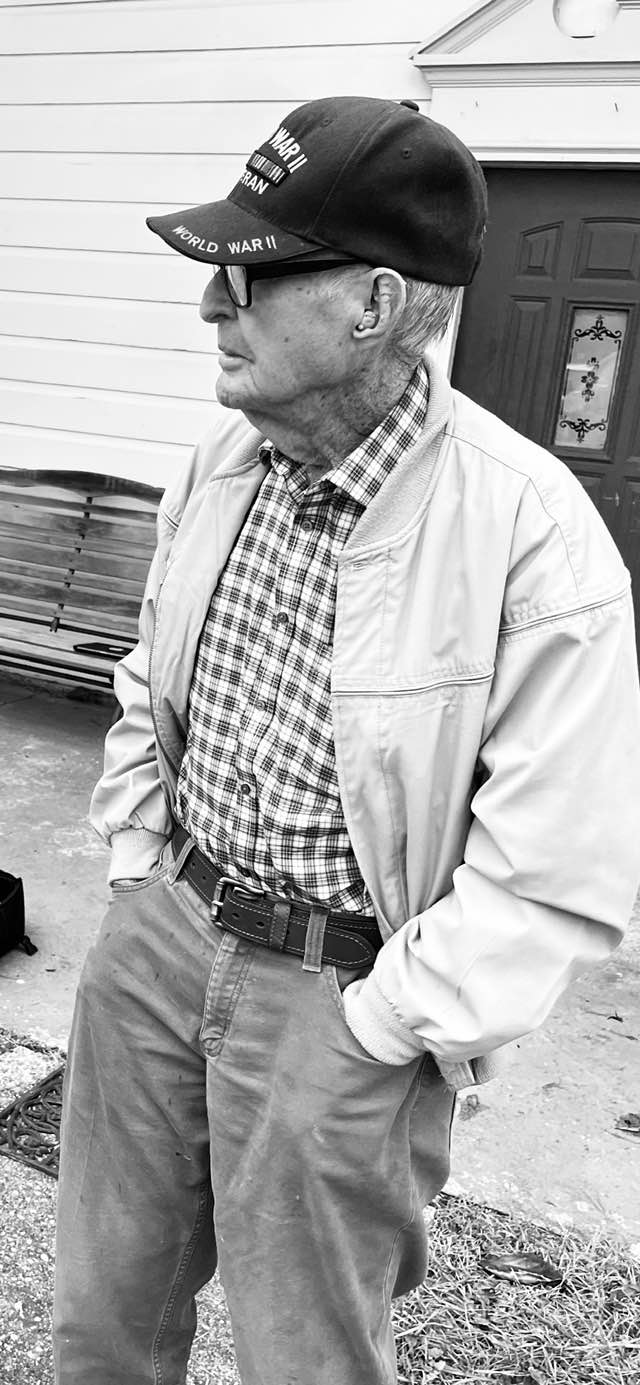
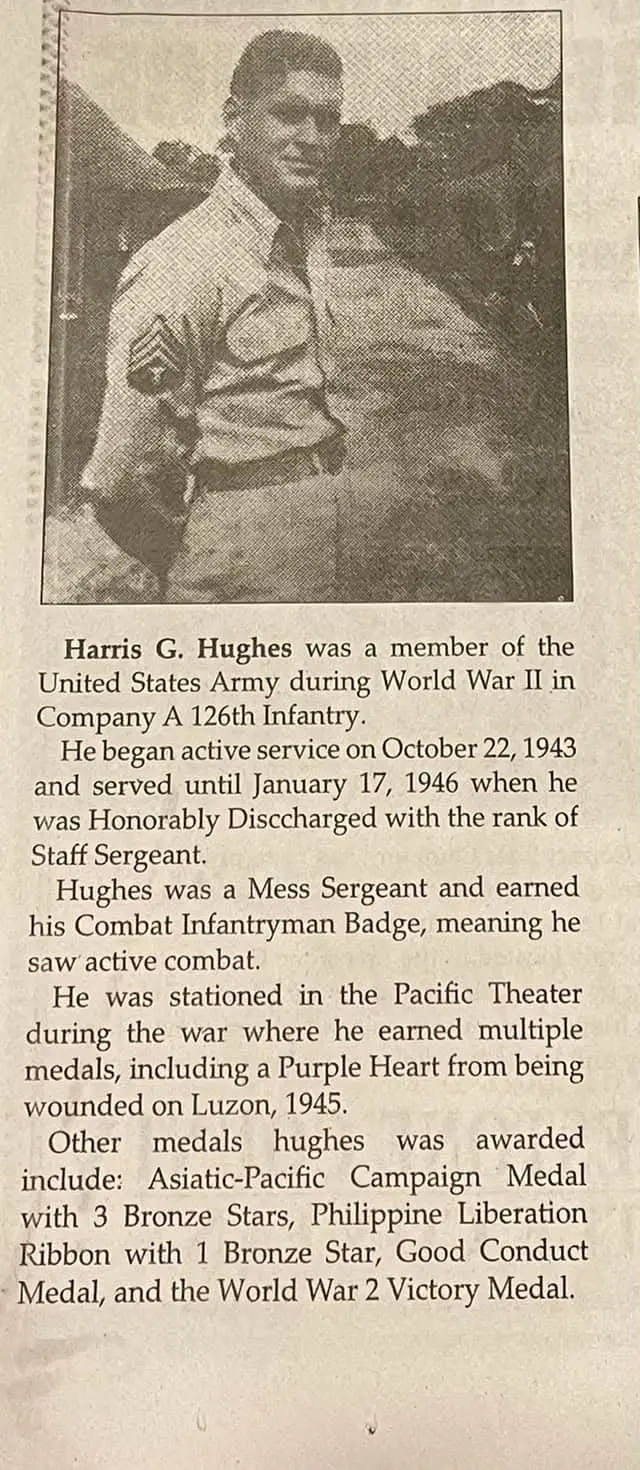
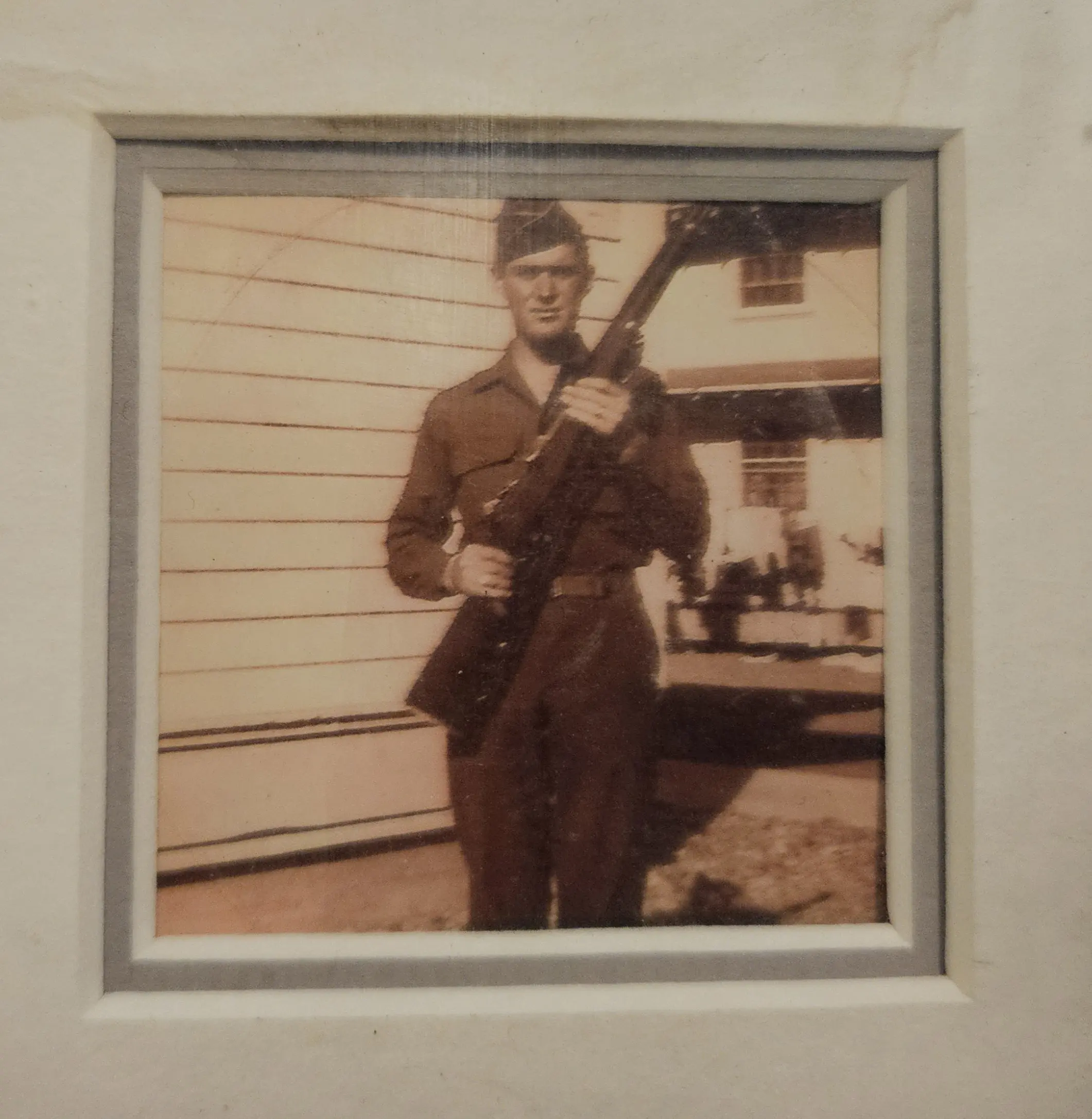
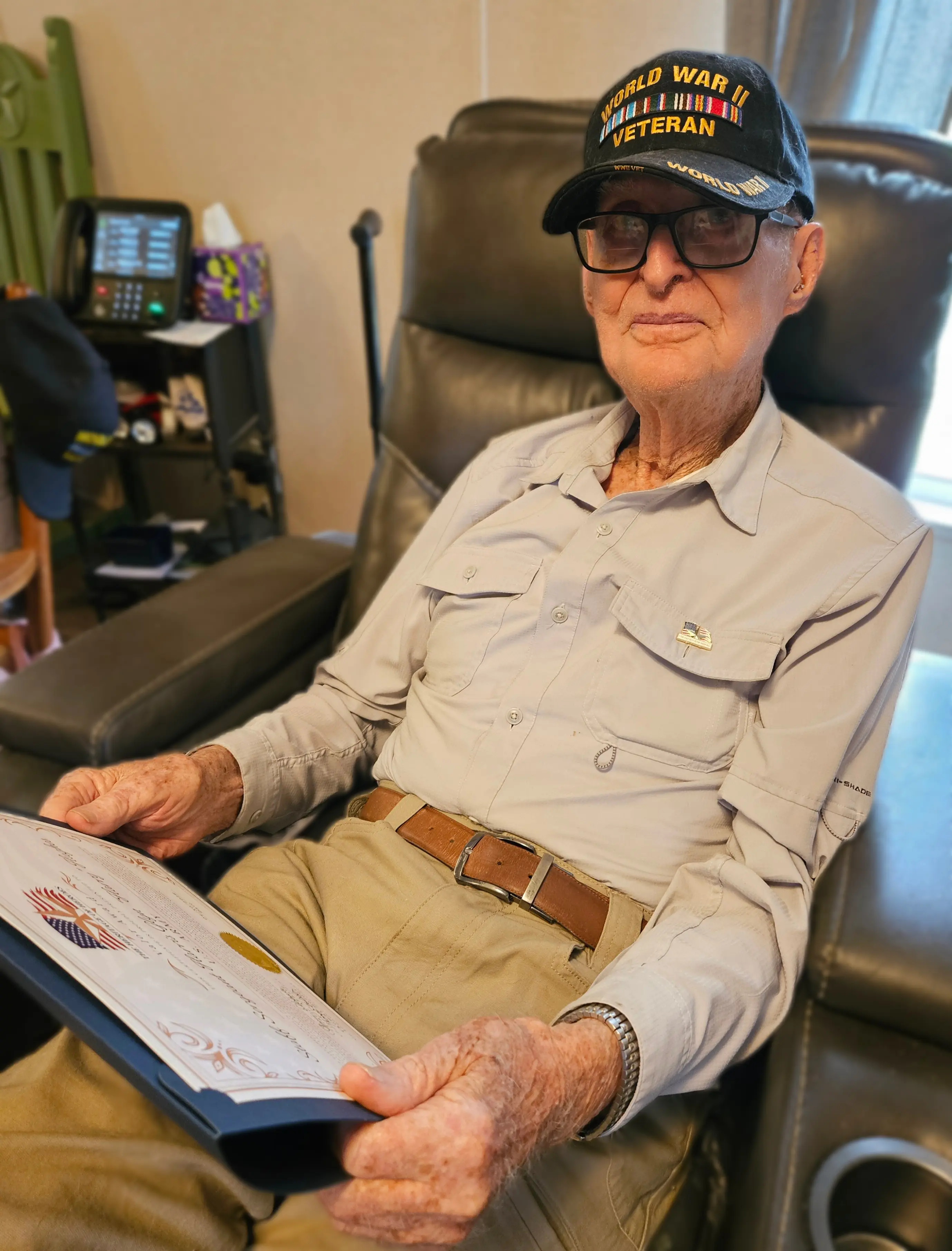
I was born on August 21st, 1925, in a rural area of Navarro County, specifically Corsicana, Texas. Dr. Halbert served as the delivering physician. My parents are John Talmadge Hughes and Faye Johnston Hughes. My birth certificate says something about Pisgah Ridge. In the Bible had written Mount Pisgah… lofty heights of Mount Pisgah…and some quotes. I am one of four siblings. The eldest was a girl, Johnnie Ray, followed by Billy D. (the initial D I didn’t know the meaning), then myself, and finally Jack. My mother taught me about Pisgah Ridge. Pisgah Ridge was a cliff where minerals, specifically a rock-type phosphorus, were mined. Pin Oak Creek Valley runs through the area, where we discovered numerous arrowheads and other Indian relics. The valley is also where Pin Oak Creek provided water.
My grandparents resided there, and we engaged in farming on the property as tenant farmers. My father was, at that time, a tenant farmer, and my grandparents were also there. My grandmother raised 11 children; my father was the eldest. Tragically, the last surviving member of that family generation passed away last year. I lived in Pisgah Ridge until the age of nine.
I attended Mount Nebo school, which required a walk of approximately a mile and a half. Considering the short distance my legs could cover, it was a considerable trek. Everyone walked. Reflecting on it now, I find it somewhat unusual that I never had the experience of riding a school bus, as the district was not consolidated. It was a local school, and transportation was not provided. Later, the school consolidated with some neighboring rural schools, expanding its size and extending its duration of operation, but it ultimately closed, and students were relocated to schools within the cities.
The schooling system involved three grades sharing one classroom with a total of twelve teachers. Desks were arranged in rows, with each row designated for a specific grade, and the classroom was managed accordingly. The schools lacked gymnasiums, featuring only dirt courts where both boys and girls participated in sports such as volleyball, limited basketball, and baseball.
This educational structure persisted for approximately ten years after our departure before the schools were finally dissolved. We continued to encounter students from these schools in various tournaments and other events.
I participated in basketball. We also engaged in what was termed indoor baseball, utilizing a 14-inch out seam baseball, significantly larger than the standard nine-inch baseball. This was a common practice among all the participating schools, including the smaller rural institutions. Initially, as we did not have a school bus, everyone walked to school. However, once the schools consolidated, a school bus system was implemented, and transportation was provided to students living further away. Prior to the consolidation, walking was the primary mode of transportation to school.
I had scarlet fever when I was a child. I remember getting a shot of arsenic. That was what they had. They didn’t have antibiotics. Arsenic was what they used. Arsenic, bismuth and antimony. It was the heavy metals that they used. So that’s the only thing they had. But then when the antibiotics came here, then that took care of everything to cure anything with that. So some of them tried to get resistance to it and so forth there.
My father was appointed postmaster. A change in the political climate occurred with the election of President Roosevelt, succeeding President Hoover, whom my father supported. This political shift automatically created vacancies in all federal positions. Consequently, we departed Pisgah Ridge and relocated to establish residency for a minimum of six months.
We hitched the wagon to the team, loaded the furniture, and were accompanied by some Black individuals who worked with us, assisting my father with farming; Eli and Oprah were their names. I rode with them from Mount Nebo to Kirvin, a journey that consumed the entire day. They picked me up near the small schools they attended, and I rode atop the furniture, the wagon, and the mules. Upon our arrival in Kirvin, my father, driving his Model A, met us with sandwiches for a meal. As darkness descended, I recall my mother burning sulfur inside the rental house.
Each room was infested with vermin; lacking modern insecticides, this was the treatment she administered before we moved in. The property included an acreage that we farmed. My dad had already received his appointment and completed the requisite qualification tests. There were sixteen candidates. My father was required to establish residence and lived there for six months before his appointment became official.
My father served in World War I in Europe. Upon his return, my parents had relocated from Mississippi to Texas, citing that the land there had been depleted from farming. Due to the lack of improved agricultural techniques, some neighbors had moved and informed them that the land in Texas was more fertile and conducive to earning a better livelihood. Consequently, when my father was discharged, he was sent to Texas because his family had moved from Mississippi, specifically the Jackson area.
My mother was a teacher in Streetman, Texas, where she rented a room from my father’s sister, who operated a boarding house. My father, upon his discharge from service, returned to Streetman, which is where my parents met. At that time, my father held various jobs, including a Maginnis route. This was similar to a Watkins or Rawleigh peddler, involving the use of a Model A vehicle to transport goods such as vanilla extract. It should be noted that this extract, being approximately 35% alcohol, was occasionally consumed as a beverage, though it was also known to be used for different purposes.
My father secured the route in Maginnis when a friend of his in that business facilitated an opening for him in Corsicana. He accepted the opportunity and obtained a loan from the bank sufficient to purchase a Model A Ford and procure complimentary chewing gum, which served as an introductory item when approaching rural homes.
In later years, my father served as a county judge in this area after successfully running for office. He was intelligent, as was my mother. She taught school, raised children, and managed numerous other responsibilities.
My father also ventured into the construction business, specifically manufacturing concrete blocks. He collaborated with someone to build a machine, and they began producing the blocks using local sand and cement, which they dampened. A bouncing mechanism was utilized for compacting the material. This machine was custom-built for him, and they proceeded to manufacture the blocks. Our house was constructed entirely from these blocks, sourced directly from the earth where we lived.
Remarkably, they remain standing today. He built this house, as well as one for my grandmother in Wortham. He constructed several structures primarily to facilitate the sale of the concrete blocks. They were solid blocks, not the typical tall, hollow variety. They were quite heavy, measuring sixteen inches in length, and lifting them all day resulted in significant wear on one’s hands. While it was physically demanding work, he successfully sold a substantial quantity of them.
We resided in Kirvin, which featured a two-story brick building that housed all twelve grades. Kirvin was once a boom town, but it experienced significant community issues, including incidents reminiscent of race riots. While we were not residents at the time these events occurred, our neighbors were.
We would often sit on the floor while our parents and neighbors played dominoes (42), and the adults would discuss these incidents. This is how I learned most of the details, from people who were directly involved in the capture and subsequent burning of individuals—truly horrific stories.
The events transpired in 1923, prior to my birth, and we did not reside in this location at the time. My father recounted that this was his first awareness of Kirvin. A rumor circulated regarding a race riot in Kirvin. The hardware stores in Corsicana distributed rifles; individuals signed a ledger to receive a weapon. These armed citizens were then transported by rail, utilizing a flatcar, to Kirvin, where they disembarked. This action was characteristic of that era.
The community was served by two main churches, a Methodist and a Baptist congregation. Periodically during the summers, various revival meetings, including those from Pentecostal denominations, would take place. Attendance was consistently high across the community, regardless of individual denominational affiliation, as these events were significant social gatherings.
My father became a member of the Baptist church subsequent to our relocation to Kirvin. His mother was Roman Catholic, and all of her children except for him and one of his brothers were also Roman Catholic. The remaining children were Protestant, with one being Methodist and the other Baptist.
We attended church regularly. The preacher was illiterate; his wife would read the Scriptures, and he would then expound upon the passage. It was strictly prohibited for her to preach, and she never did—she only read. I distinctly recall the two of them at the pulpit because he would become so emotional, screaming and shouting, which frightened me.
Consequently, my father spoke to him about it, suggesting he not get so carried away in his sermons and to be a little more reserved, speaking conversationally. That was the custom at the time.
Later in life, when I resided in Angleton, I worked with several Lutheran individuals. They had relocated there, and the services were somewhat different, more liturgical, which was a new experience for me. I subsequently converted to the Lutheran faith.
Upon completing school in 1943, I married my high school teacher when I was seventeen. My father was on the school board, and I inquired with him, asking if there had been any comments. He replied, “Oh, yes, we had the usual protest, but it didn’t bother him.”
We dated for a period. It is quite surprising how such occurrences transpire. We had a superintendent there, and they were putting on a Junior/Senior play. There were not enough students in one class to produce the play, so they combined the juniors and seniors. As I was a junior at the time, I was included with the seniors.
The practice sessions took place at night, and the superintendent was present. He instructed me, “Harry, would you escort Miss Allen and Miss Smith home?” It was dark, around eight or nine o’clock at night. I readily agreed. Initially, it was a group of students, and everyone walked home together.
Then, on one occasion, it was just Sadie and me. She lived with Miss Mayo, and she mentioned, “Miss Mayo usually has hot chocolate when I return from practice.” She then suggested, “Why don’t you come in and have coffee with us?” And we did. I was already acquainted with Miss Mayo; she was a family friend. That is how the relationship began. Following the end of the school year, we were married. I traveled to Houston to work there for the summer.
I was employed at Windsor Mill, a Brooks System establishment specializing in sandwich preparation, which exclusively hired young men. The uniform consisted of a white shirt, tie, and a white apron. They operated twelve shops in Houston. One of the locations was initially a hamburger shop, but the focus shifted, and even the mention of a hamburger became somewhat discouraged, suggesting a move toward a more sophisticated clientele. My specific workplace was the River Oaks location, situated in an affluent part of town. Consequently, I had the opportunity to interact with many pleasant people in Houston.
As a young person from the country, I was surprised by the number of people who were drawn to young men from rural areas. They spoke differently, always using honorifics such as “Mr.” and “Mrs.” and phrases like “Yes, sir” and “No, sir.” I did not initially understand the reason for this positive attention, but that was the source of it. People expressed their approval, and that was their method of showing that approval, whether they were neighbors or customers.
I worked at the Houston sandwich shop for the summer and during the Christmas holidays. I hitchhiked back to Houston, and the third vehicle that stopped transported me the entire distance from Fairfield to Houston.
My educational pursuits ceased upon receiving my draft notice. I was seventeen when I initially intended to join the service, but I was formally drafted at the age of eighteen. My eighteenth birthday was on August 21st, and I was inducted in October 1943. I had considered enlisting, but due to the quota system, which balanced the number of draftees against enlistees, I was advised against it.
They recommended I proceed with the draft, explaining that it would alleviate the quota and potentially allow another individual to defer their service for an additional month or so. I accepted this advice, and the system functioned as intended.
I took a Boyd bus, the primary bus line in Fairfield, to attend court. Subsequently, I departed for Dallas. It was there that we were sworn in and granted a 15-day leave to organize our personal affairs before reporting back, which was the established procedure at the time. Upon entering the service, my wife accepted a secretarial position at Consolidated Vultee Aircraft in Ft. Worth, a company notable for building bombers.
This was a significant undertaking. Following this, we were dispatched to Camp Wolters, situated approximately four miles northeast of Mineral Wells, Texas. We remained there for five or six days before I was transported to California. We arrived at Camp Roberts, located on the Central Coast of California, specifically between San Miguel and Bradley.
This served, of course, as the location for infantry training. Following this, I was reassigned. Given my prior employment in a restaurant—my vocational background, as farming was not considered—I was subsequently sent to the Army’s cooks and bakers school, which proved to be quite engaging.
Following basic training, a ten-day delay en route allowed me to return home briefly to see my wife. Subsequently, I reported to Fort Ord, situated on the Monterey Bay coast in Monterey County, California, which served as the Port of Embarkation (POE). I traveled to the West Coast via a Pullman train. During the journey, the train was placed on a desert siding for three days.
The nights were intensely cold, as the car was unattached to the engine. We were eventually given a higher priority and proceeded to California. I spent seventeen weeks there for basic training in preparation for deployment to the Pacific theater. I recall being in California during Christmas of 1943.
The voyage to our deployment location in the Pacific spanned approximately 20 days. Personnel were prohibited from documenting their destination or prospective location; mail was subject to censorship, initiating the practice of mail review aboard the vessel.
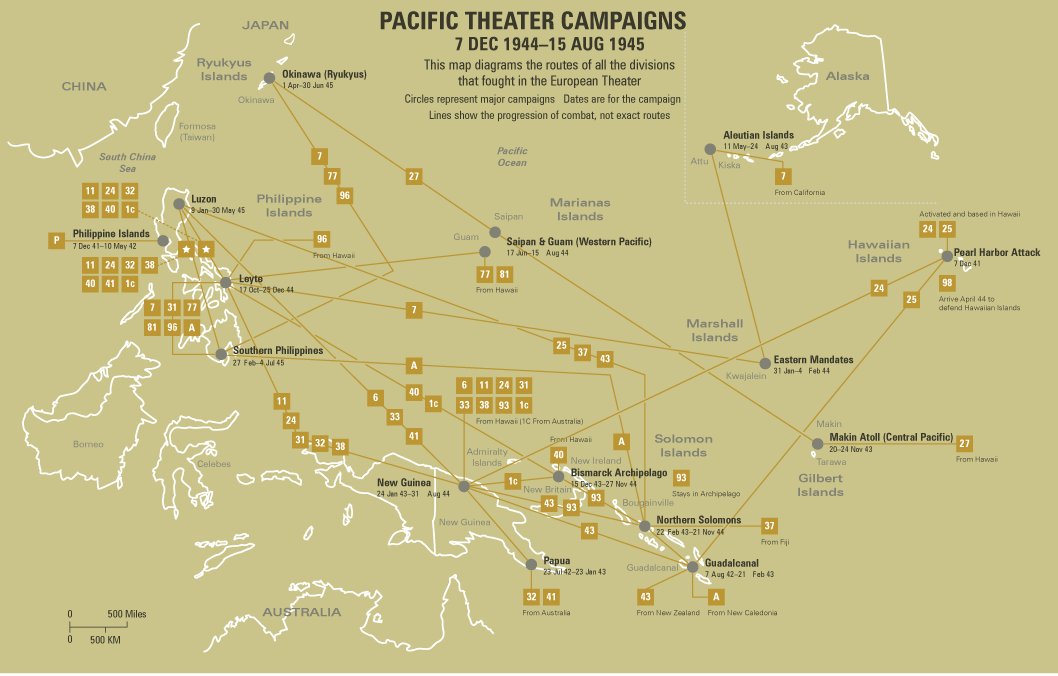
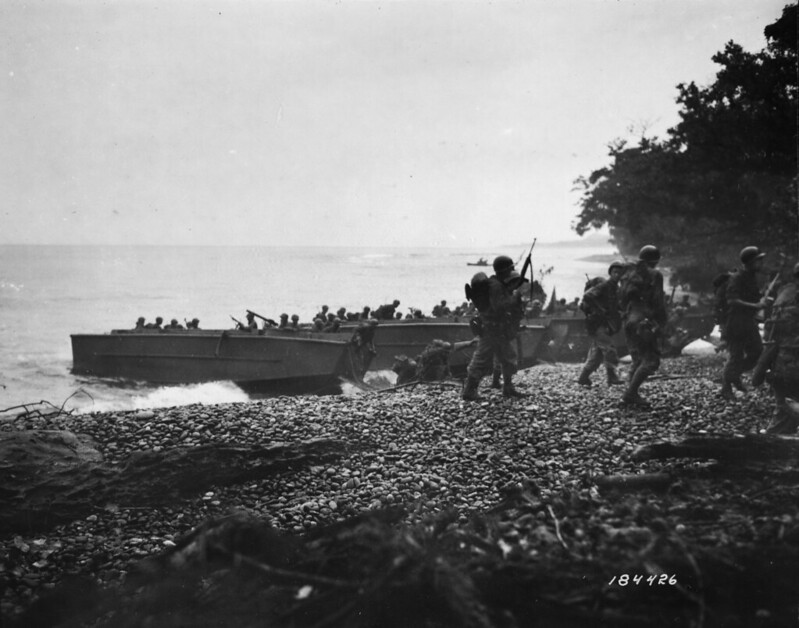
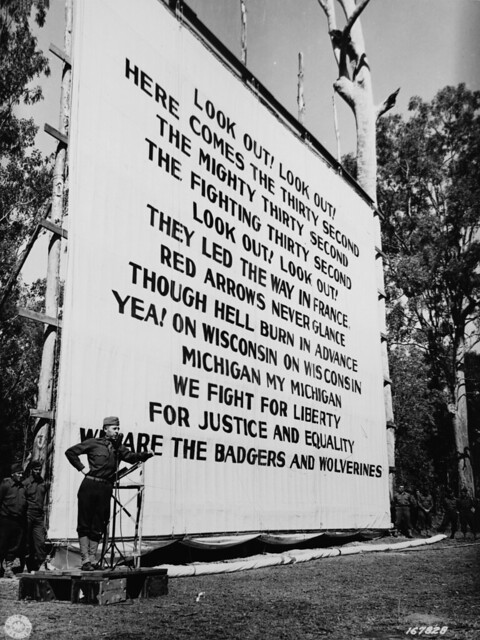
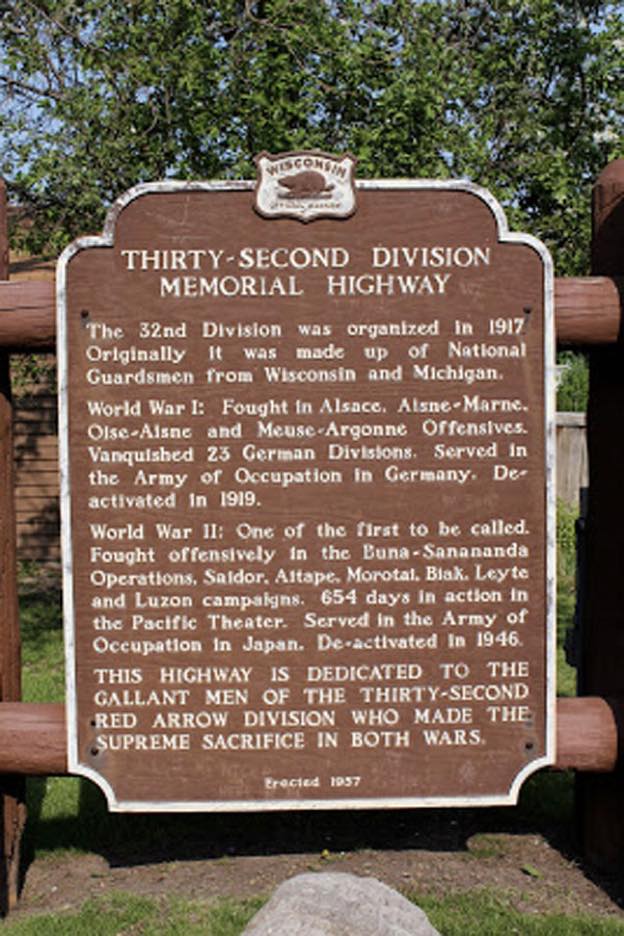
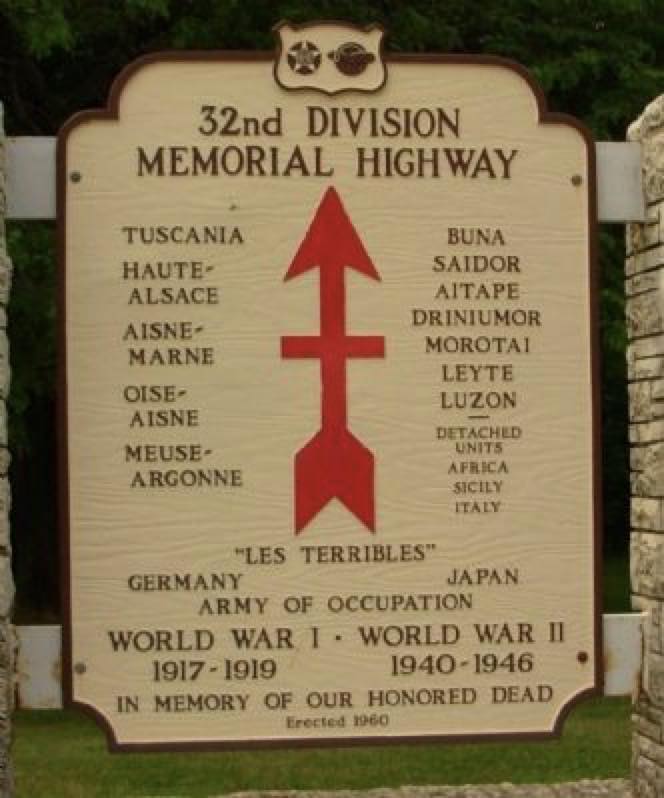
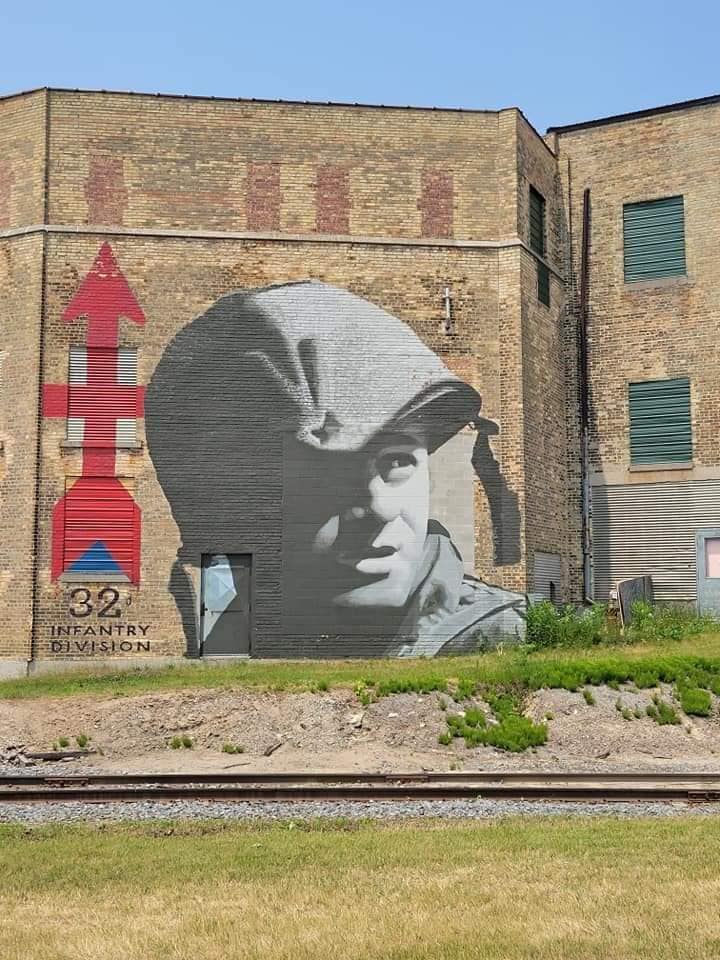
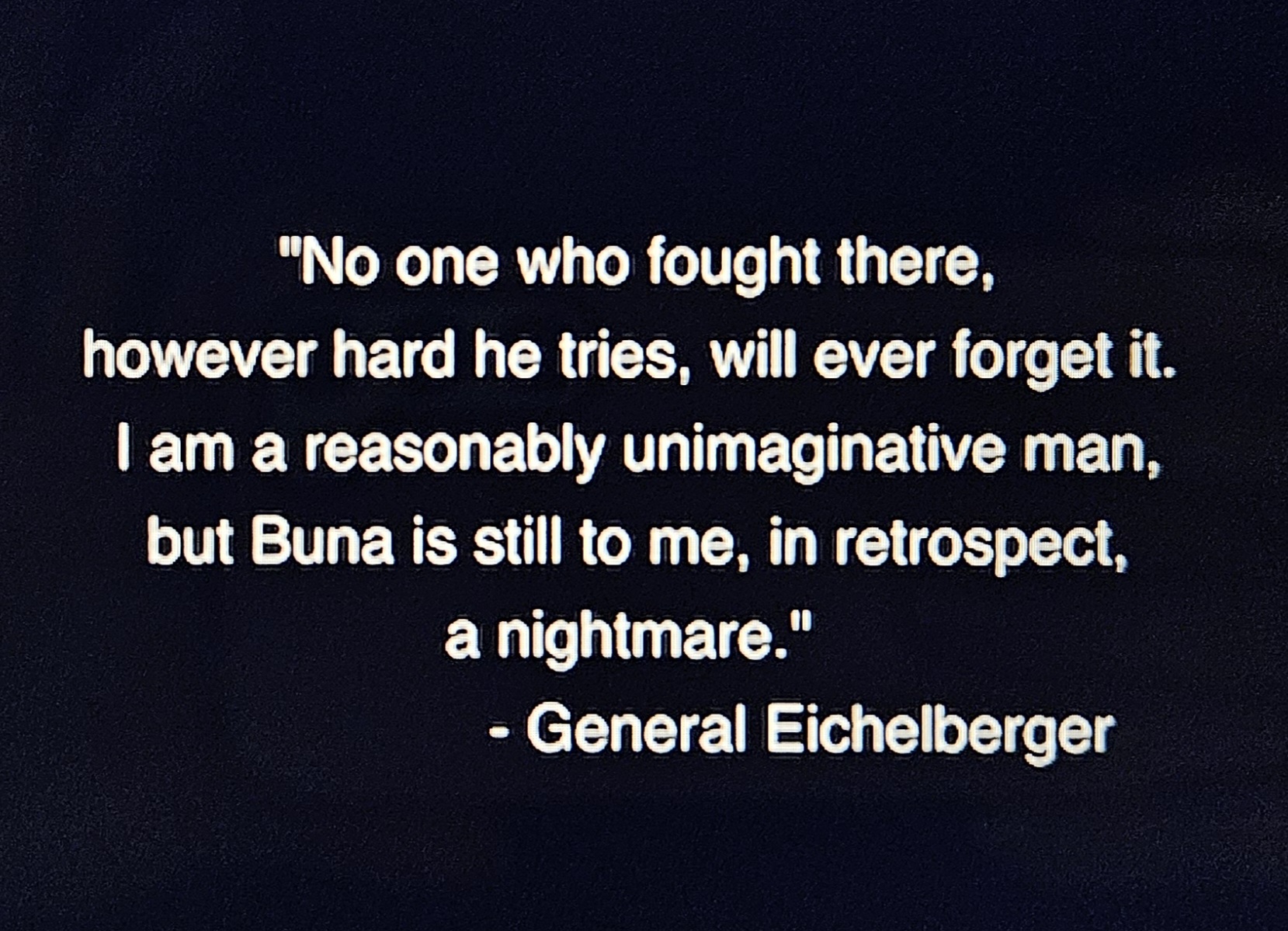
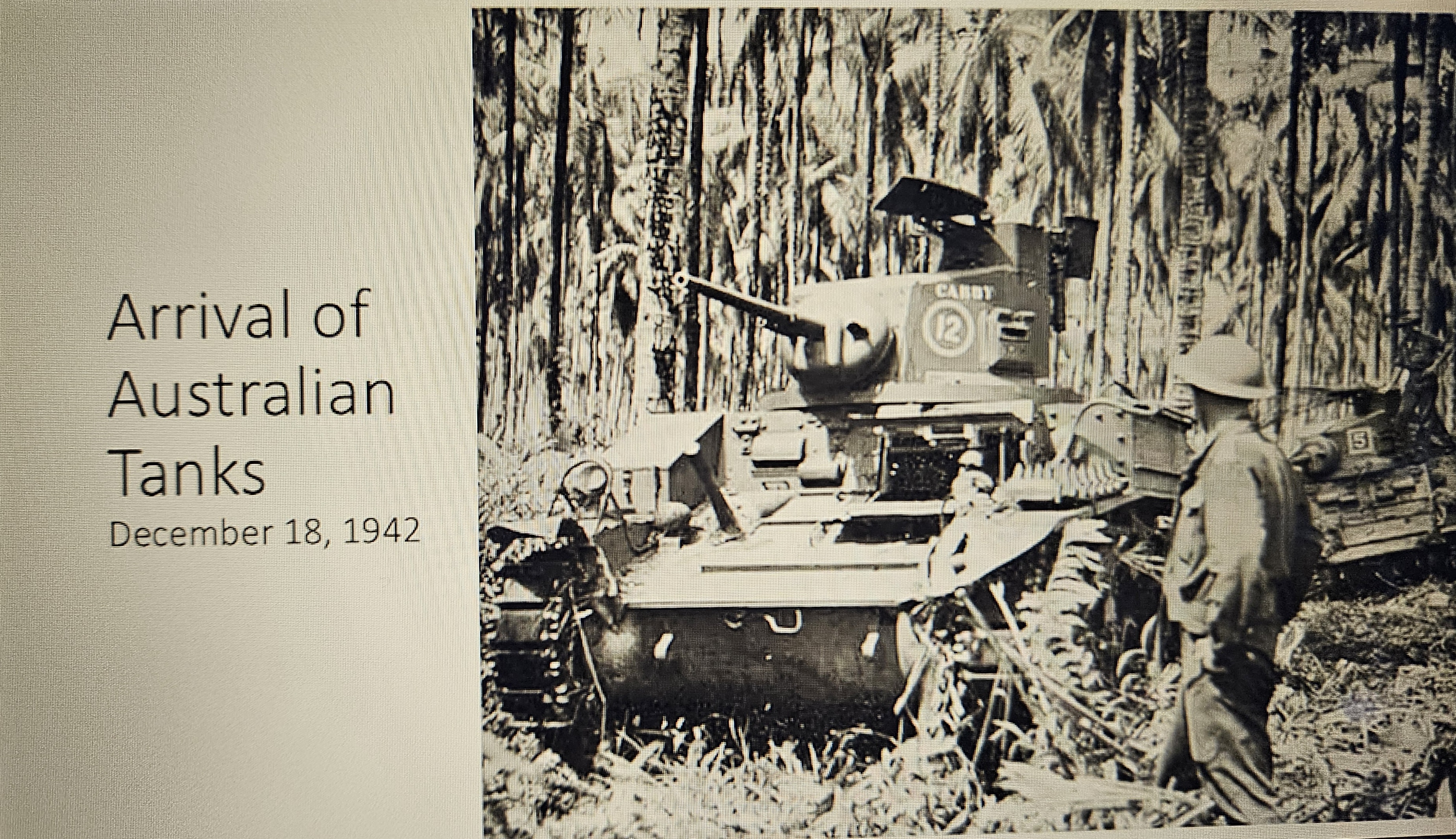
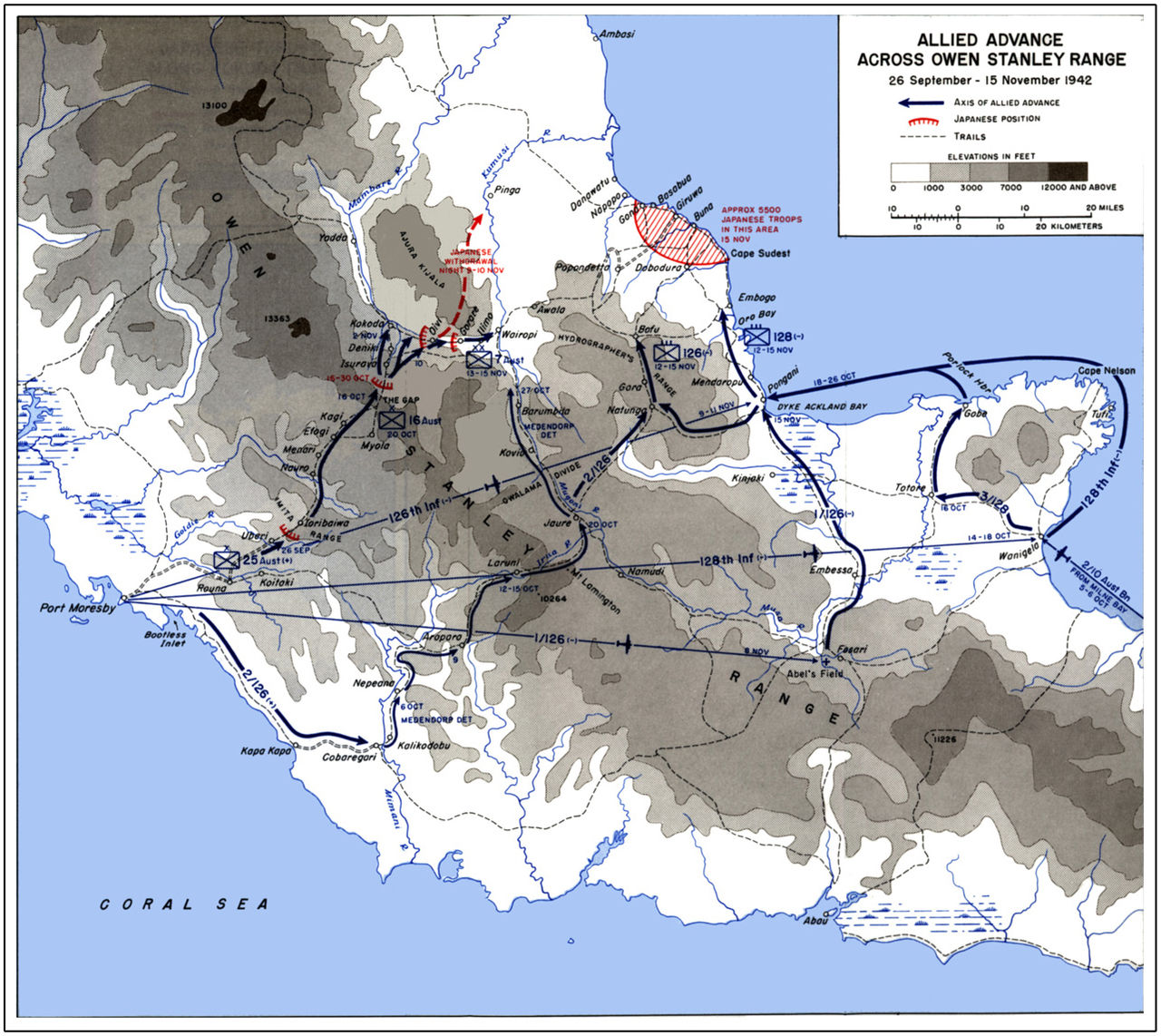
We disembarked in New Guinea, specifically at Aitape. However, my unit initially landed at Buna. My unit, comprised of the Michigan and Wisconsin National Guard, conducted the first offensive in the Pacific theater. I joined as a replacement following significant casualties. This engagement marked our initial encounter with the enemy.
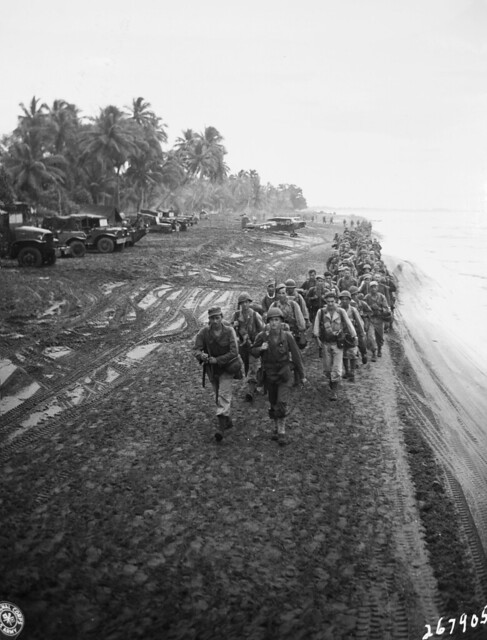
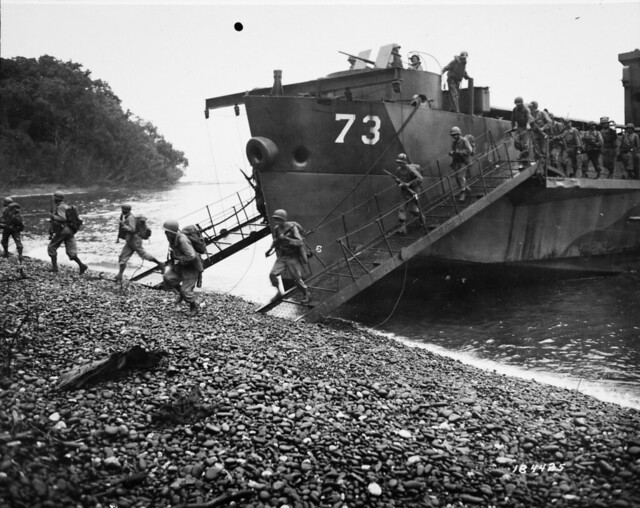
During the shipboard transit, disembarkation utilized a cargo net, a flexible rope net secured over the side, with a shark apron deployed below. Small boats were responsible for recovering any personnel who fell into the water and transporting them to the designated ride ashore. Buna, our landing site, had been converted into a replacement center where necessary processing occurred. Subsequently, we proceeded up the island to Aitape.
We were stationed in the British sector of Hollandia, which was a Dutch territory. Although the local currency was the Dutch guilder, we utilized the British pound. The coins, such as florins, were made of a softer silver. During our leisure time, we would take a spoon or a mess spoon and pound the edge of a coin, rotating it on our bunk.
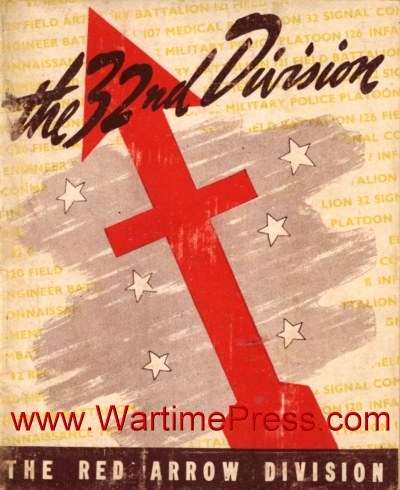
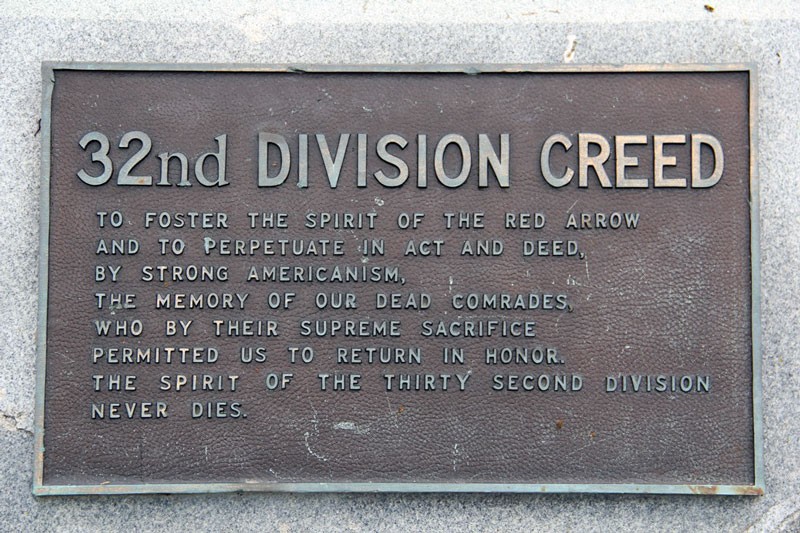
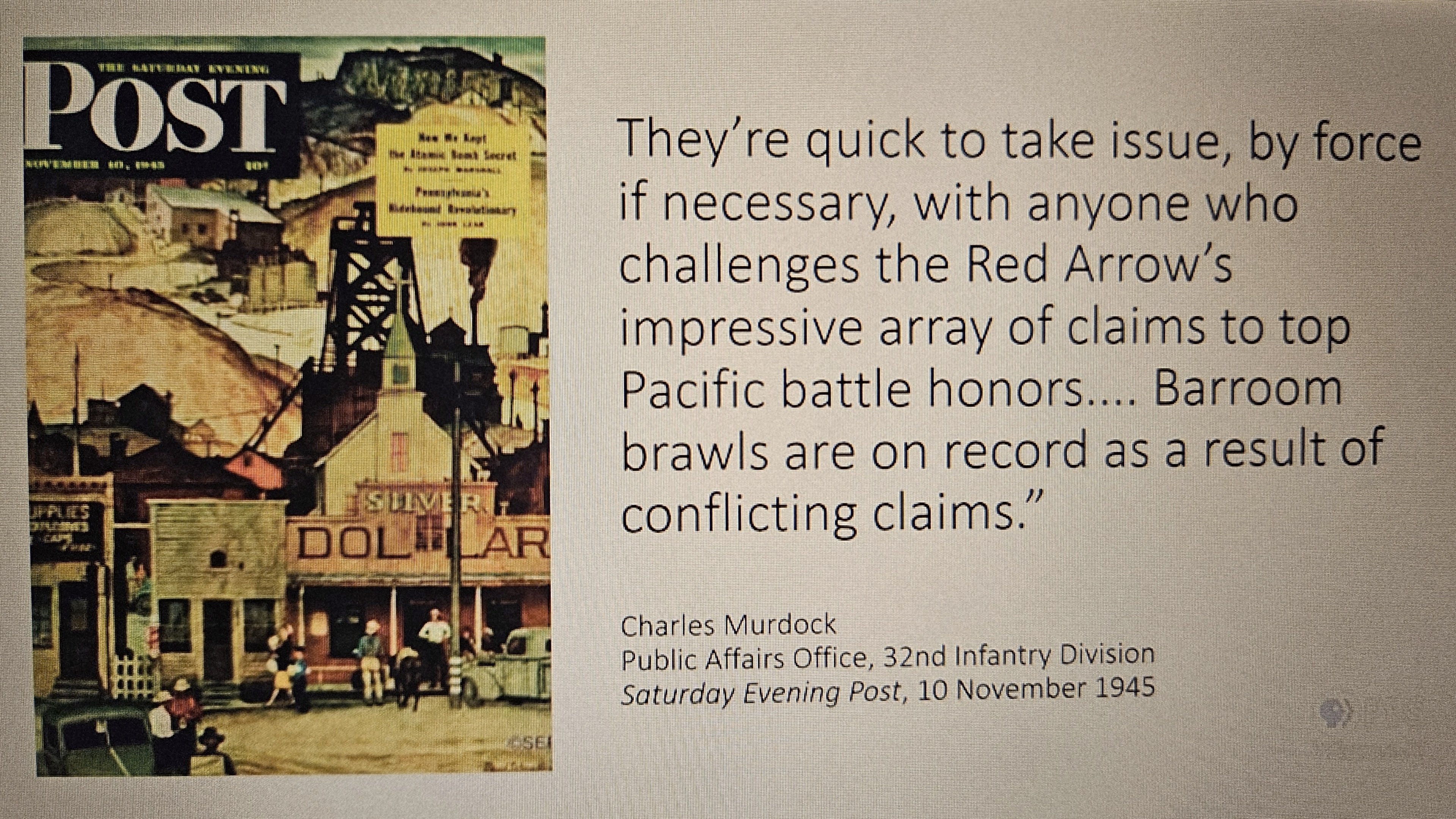
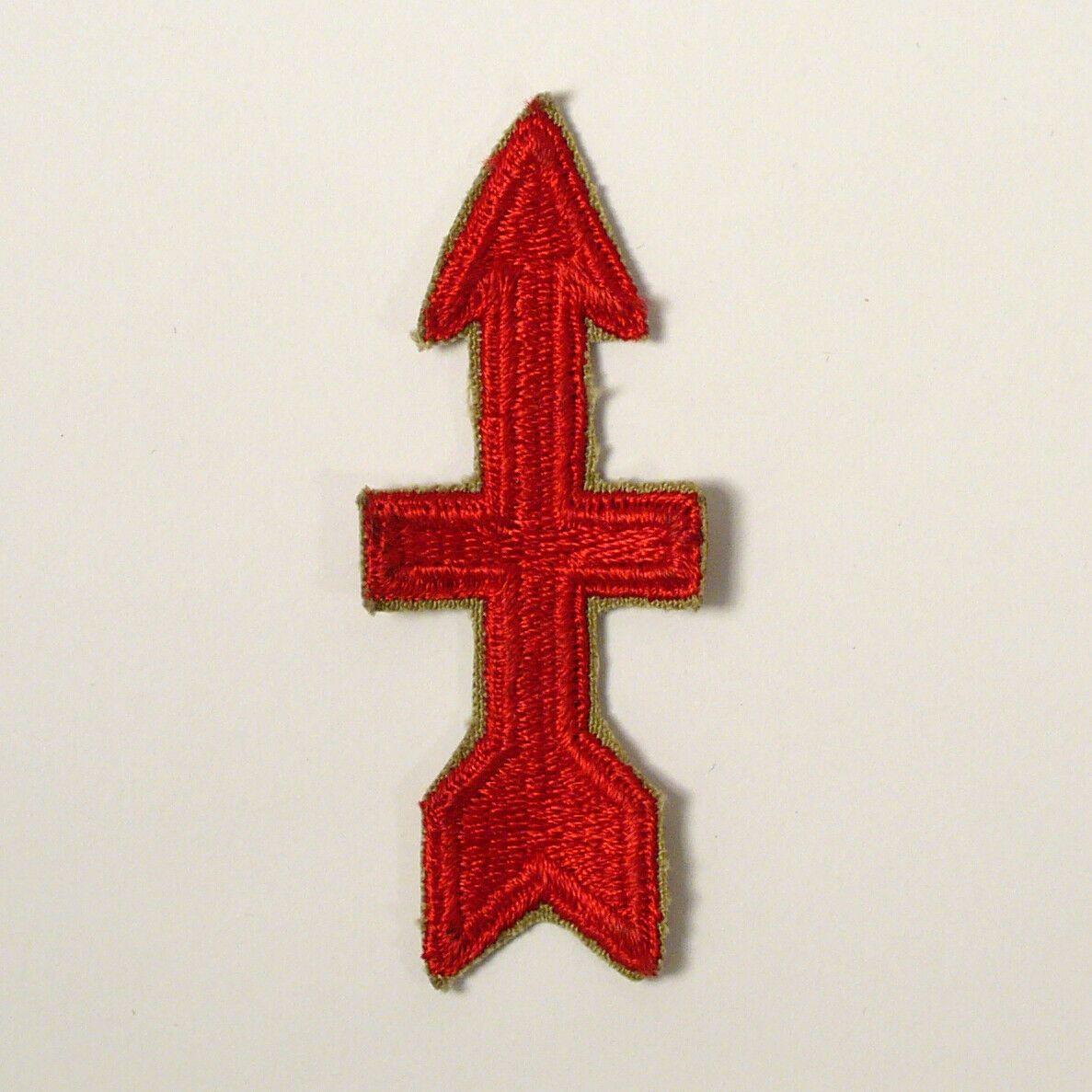
This activity could be heard throughout the tents and occupied our time until the coin’s edge folded over. We would then use a knife to cut out the center, creating a ring. My unit was the “Red Arrow Division,” the 32nd Infantry, and the Red Arrow was our prominent symbol. Consequently, we would engrave a small disc with a red arrow, melt a toothbrush, and press the molten plastic into the arrow design on the ring. This served as a recreational activity during our spare hours.
Our deployment began immediately upon landing. Within approximately one week, we joined our assigned unit, which was already engaged in combat operations. Prior to our arrival ashore, the unit had not been in action. It was near dusk, or dark, when we reached the shore, and the standing rule dictated that we be fed. Consequently, we were provided with fruit cocktail, which was served in our mess gear. As we were consuming the fruit cocktail, a blackout was enacted.
Although we were in an active zone, we utilized a small container of range fuel—a low-grade gasoline—mixed with sand. Upon striking a match, this concoction served as a rudimentary flare. We placed this on the bunk and ate whatever rations were available; I opened some canned fruit. During this time, an air raid commenced, causing everyone to scramble.
Someone inadvertently knocked over one of the flares, spilling the gasoline and illuminating the entire beach area. The following morning, the aircraft caused damage, leaving bullet holes in the tent. The spilled gasoline ignited, resulting in large flames that were eventually extinguished without injury to personnel, though the tent sustained holes, as did the makeshift table we were using for eating.
I was as frightened as I have ever been, due to the uncertainty of the situation. The experienced soldiers held their wounded and recovering personnel, who were awaiting return to their units. They waited until they had a sufficient number to form an active squad, as we had to force our way back into the outfit, which could occasionally be challenging.
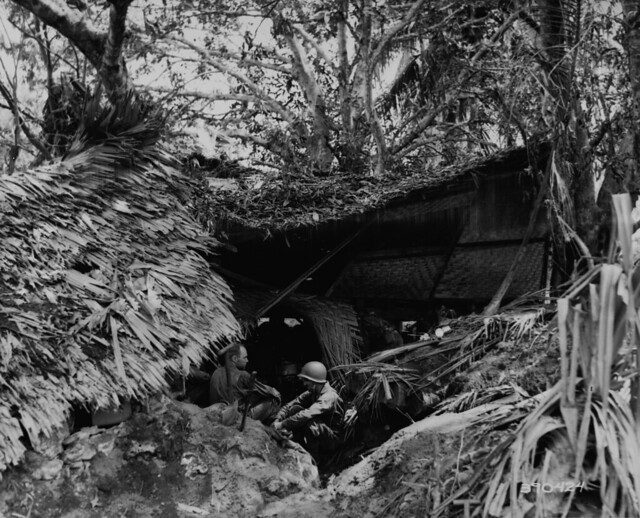
We had German Shepherd dogs accompanying us; they served as guard dogs. At night, we slept in hammocks suspended between trees, some of which were not very sturdy. We quickly learned which trees were reliable for tying the hammocks. If you moved too abruptly, you would fall to the ground, which was quite chaotic. We lost one man; he had dug in near a creek, and they reported an alligator or, more accurately, a crocodile, got him.
He dug in right on the bank and was unaware of the danger. He had not adhered to the rule of two men per hole with one always awake, as was supposed to be the case. Most everyone generally followed that protocol, so one didn’t have to worry excessively. However, you knew who was likely to doze off. Some individuals, I suppose, struggled to stay awake. You knew who they were, so you wouldn’t dare sleep if you were dug in with them. The first incident involved a flare burning, and suddenly we heard rapid gunfire right there in the tent immediately next to ours.
We were in Aitope, and the troops were awaiting a crew to return to the outfit, as they were engaged in combat approximately three to four miles up the beach. The terrain was strictly jungle, with no roads. We proceeded there the following day. However, a machine gun discharged accidentally, and the projectile struck the top of a soldier’s foot. It was a .45 caliber.
I initially believed we were under attack due to the gunfire, and flares were burning while we shouted “medic.” The incident occurred in the tent directly next to ours; the soldier was sitting on his bunk when the weapon discharged, hitting the top of his foot.
The impact shattered the foot and removed the central toe. He returned to the unit after about three to four months. Although the middle toe was lost, surgeons successfully realigned the remaining bones, making the missing toe difficult to detect upon casual inspection. Consequently, his balance remained sufficient due to the presence of his other toes, and he was not sent home. His balance was maintained, and he survived. His name was Wolsztynski, and he was from Wisconsin.
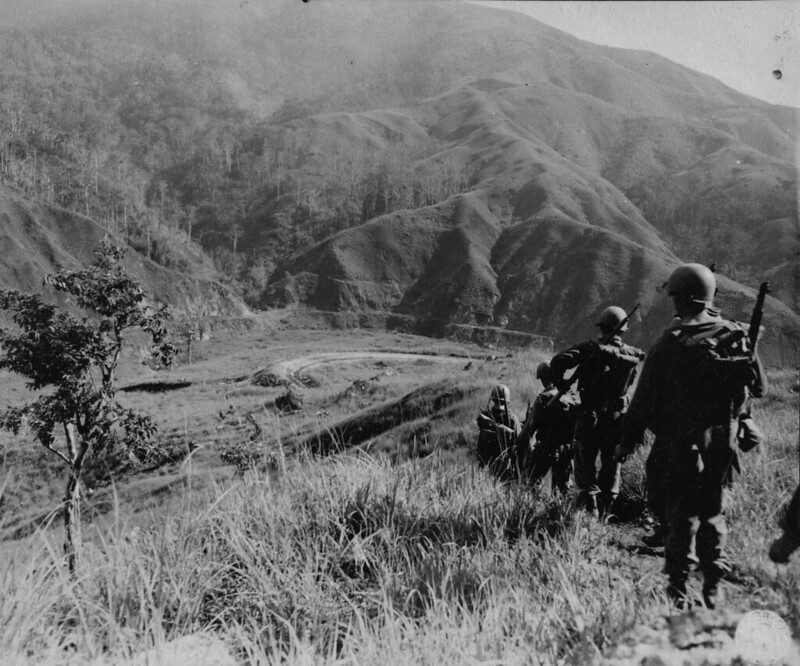
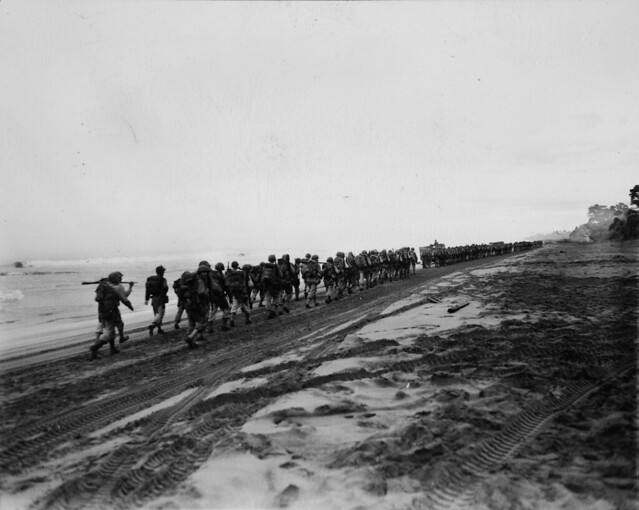
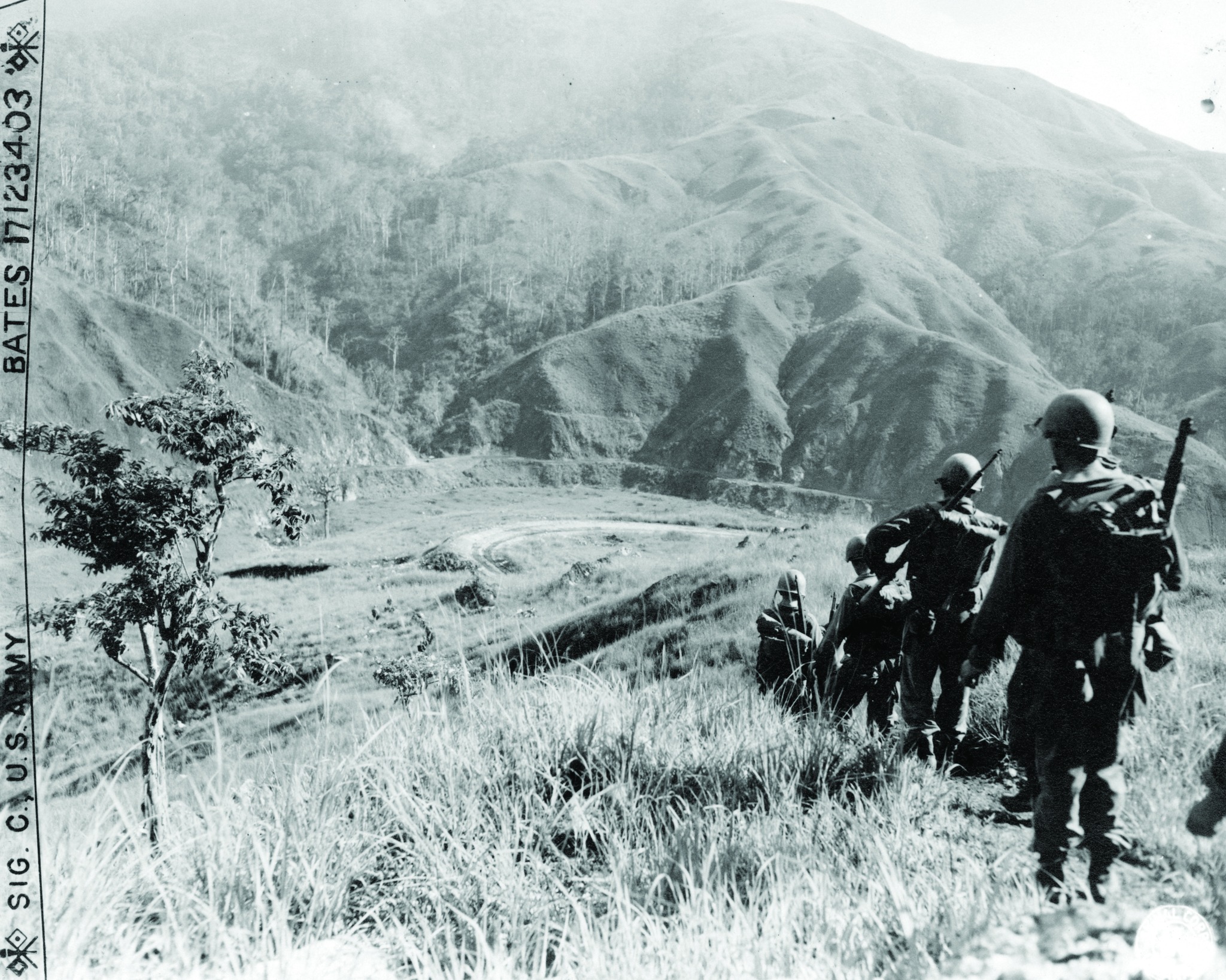
The initial encampment was in a rest area, where the first night’s bedding consisted of what was available on the bunks. We did not depart until the group numbered approximately ten individuals, which included men returning from hospitals or sick calls. We were assigned a Second Lieutenant who had been signed to the unit. The unit was engaged in action, necessitating a march of somewhere between three and five miles through dense jungle.
It required the better part of a day to reach the location due to our presence in an occupied country. We had to navigate our way to the unit, where everyone was establishing defensive positions in a circular formation. Within the center of this perimeter was the headquarters, including the Company Commander, Executive Officer, and Junior Officers. The Second Lieutenants were positioned with their respective personnel in their squads. Many of the soldiers were quite young, as was I.
I was eighteen, and our Captain was nineteen. He did not receive his bars until he was promoted to Captain at the age of twenty-one. He claimed to be from New York. However, the First Sergeant informed me, “Hughes, he is not from New York. He has never been to New York.” He explained that the Captain’s family relocated to New York while he was already in the service and wrote to him, saying, “We finally moved to New York,” at which point he adopted the identity of a New Yorker. Some individuals confronted him about this, not in the kindest manner.
We celebrated Christmas back at the beach after being relieved from the outpost. The 31st Division, a Louisiana National Guard unit, relieved us. We initially believed they were from Texas due to their dialect. Regardless, they were good people and shared a similar conversational style and demeanor with us.
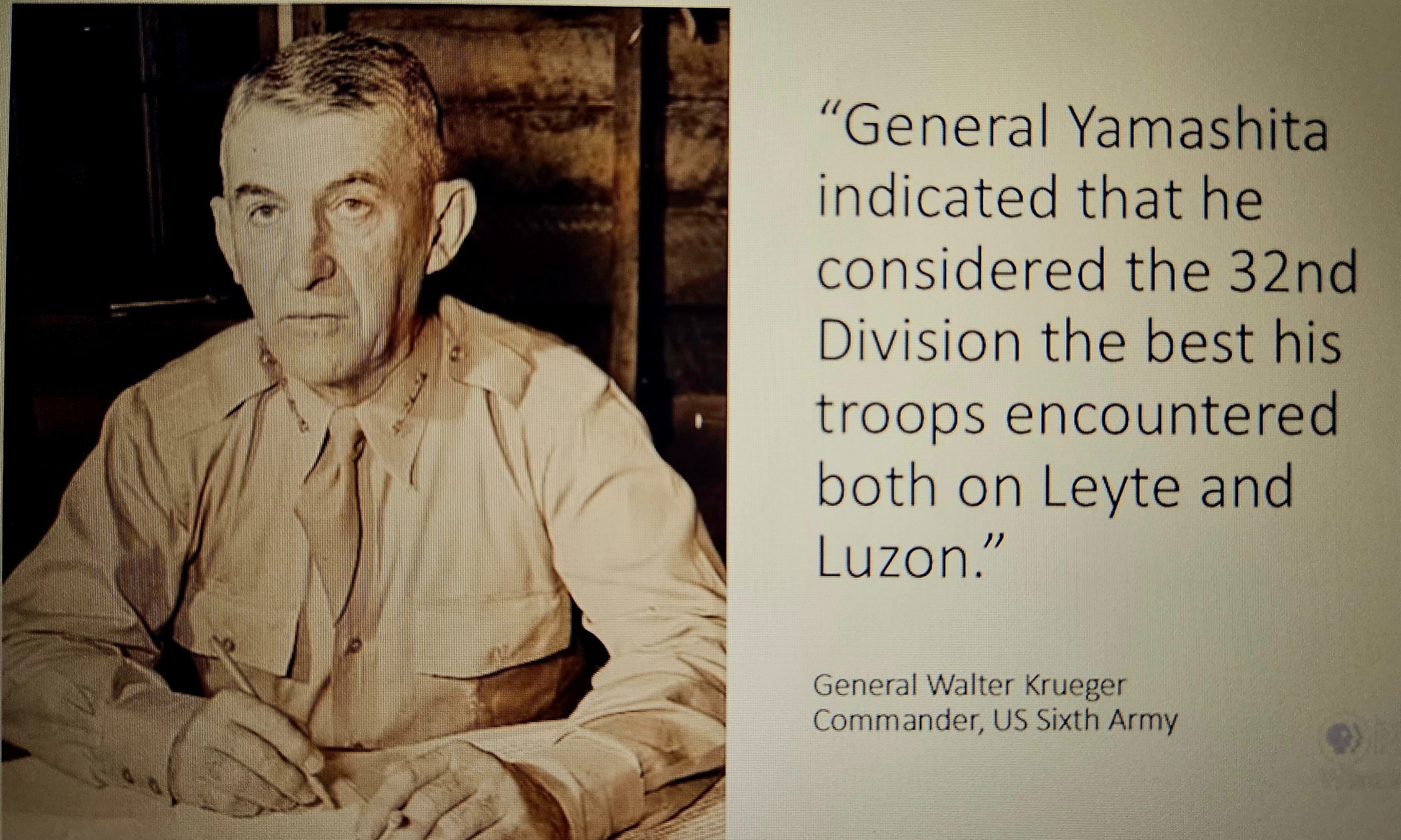
I had no prior experience or familiarization with firing a Thompson. However, we were informed that we would eventually be deploying to the Philippines after being relieved from our current position. We were in Leyte, where we received battle plans and related details. We were told we would be relieved and relocated elsewhere, which subsequently occurred.
Upon arriving in Leyte, Philippines, one of the cooks was killed. Since I had been trained in basic culinary skills and it was my Military Occupational Specialty (MOS), I was assigned a position in the kitchen. In retrospect, this assignment likely saved my life, as we were in different positions. The first cook and two others were brothers.
In fact, there were three sets of brothers. The youngest of the sets was killed in Buna. He had been killed before I joined as a replacement, so I did not know him. He was one of the casualties for whom a replacement was sought. The other two brothers were Rex and Roy.
Roy was hospitalized with dengue and malaria. Rex Philly was assigned to the weapons platoon, which utilized machine guns and mortars, within this rifle company. Two of the “Philly boys” were killed in action; the survivor was subsequently sent home.
Roy was a cook; I knew him and worked with him. He served as the first cook, and I was on his shift. They hailed from Coldwater, Michigan. Notably, the company included 13 sets of brothers from Coldwater, Michigan, and three separate sets of three brothers. The presence of relatives within a squad, particularly a combat squad, was unusual.
Inevitably, they provided mutual support in addition to caring for all their comrades. They were exemplary soldiers. While one might not typically associate Yankees with being formidable fighters, they proved that assumption incorrect. They were, indeed, exceptionally commendable individuals.
When you’re digging in with a guy, you talk about anything you want to. And we did. I think about that very often. These guys were from all over the U.S., and some of them were Mexican Nationals. You wouldn’t think they’d be in the American Army, but they were and you went in. Los Rodriguez was one of them. He was from San Antonio.
So he and I visited because he worked out of Houston. One of the ones of the clubs there and a really, really nice guy. I met his wife. She came out during basic training, and he had a little girl, and we’d go to lunch with him in the evening because they’d talk about home. But he got killed in Manila in a fight with another soldier. But he wasn’t… he was trying to break up a fight.
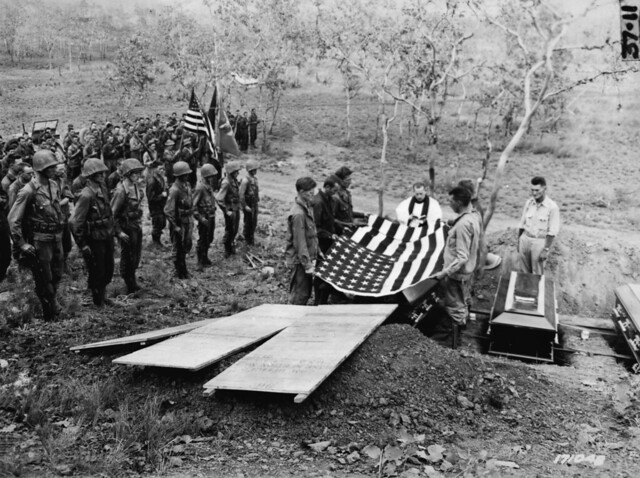
There was, some that were drinking or something and there was a knife involved in it, and I didn’t know that. I knew what his unit was, and I knew I saw a vehicle with the markings on it. So I knew he was close by and I got the Chaplain to look him up, and he came back and told me. He said they had his funeral, just a surface burial there at the edge of Manila.
I finally got the Chaplain to go back and find out what happened. I thought they were in action or something, but no, he was breaking up a fight and he got stabbed and he killed him. And I visited his wife back in Houston because she was working there where he had worked, at the country club. I kept up with him for a little bit, but they went their way and we went ours.
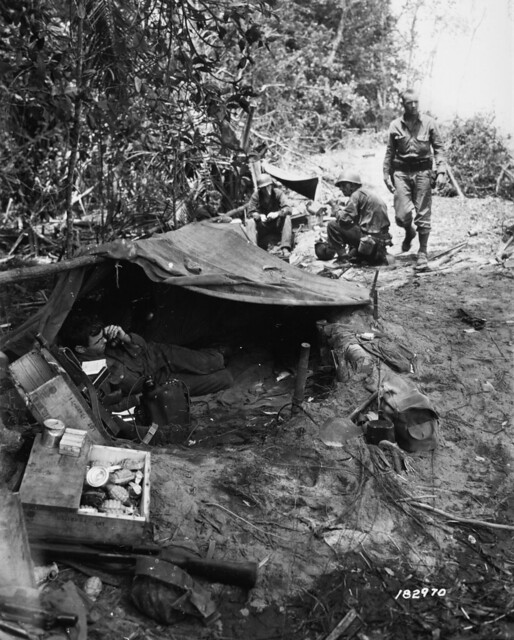
In a unit such as that, one establishes a defensive perimeter by digging a circle of foxholes. The command post and communication personnel, including the radio operators, are situated in the center. Medical personnel, perhaps two or three per company, are also present, though a company of 200 men was rarely at full strength. We were consistently short of personnel, as individuals remained on the roster while on leave, in hospitals, or otherwise absent. Nevertheless, becoming acquainted with one’s comrades was inevitable, as we dug in and conversed together.
I made a discovery: when in a foxhole with a fellow soldier, both are on guard. Your comrade is awake, with the safety off, mirroring your own actions. Ammunition is kept in small roll clips, and one’s belt is similarly equipped. One believes they are prepared. However, if you are positioned low when the shooting begins, you instinctively will not rise. You keep your head down; you do not fight or engage because you feel safe. When this occurs, one is irrevocably changed.
I state this because you failed to perform your duty. This results in a complex of guilt, stemming from an inability to leave a place of relative safety to face an almost certain casualty. This feeling, I believe, troubled me more than anything and persisted for a considerable time.
However, one eventually overcomes this sentiment. Subsequently, one is actively involved in the situation. Consequently, the pursuit of safety is diminished. While some individuals assert their ability to disregard the need for cover—a claim I cannot validate—I was consistently concerned about my personal security and the imprudence of self-exposure, given the gravity of the circumstances. Nevertheless, this represents the authentic nature of the experience.
Our first encounter with the Japanese occurred at night, when an individual would occasionally appear. They were a genuine threat, leading us to deploy booby traps. I utilized a hand grenade, which is armed by removing a safety pin secured by a bent quarter-key. This key must be straightened for removal. Once the pin is withdrawn, the lever must be held down before being released. Upon release, the spring-loaded lever activates the fuse, allowing approximately three seconds before detonation. This method, however, sometimes resulted in unintended consequences.
We also utilized a technique involving the securing of grenades to a tree, approximately one foot above the ground, using electrical tape—not duct tape. The pin was straightened and nearly withdrawn, with a string attached to the ring. This string was then fastened to two opposing trees. It was imperative to ensure the pull was consistently in the same direction, and the subsequent trap might be positioned with an opposite pull direction originating from the other side.
Upon detonation, the sound of these devices was universally identifiable, although not all personnel were safely concealed in a foxhole. Regrettably, we sustained casualties from these incidents.
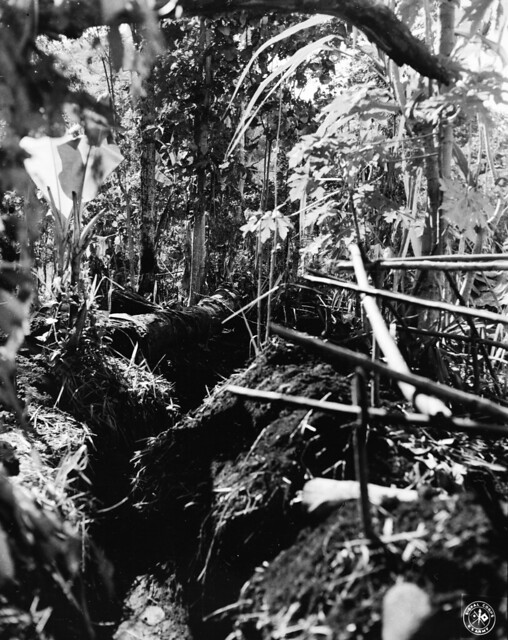
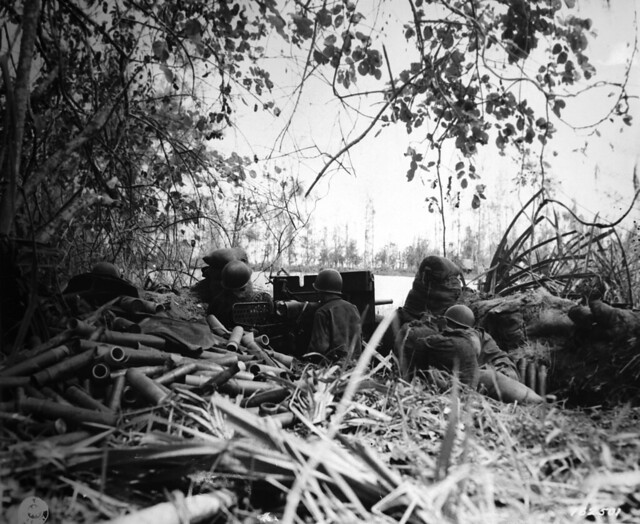
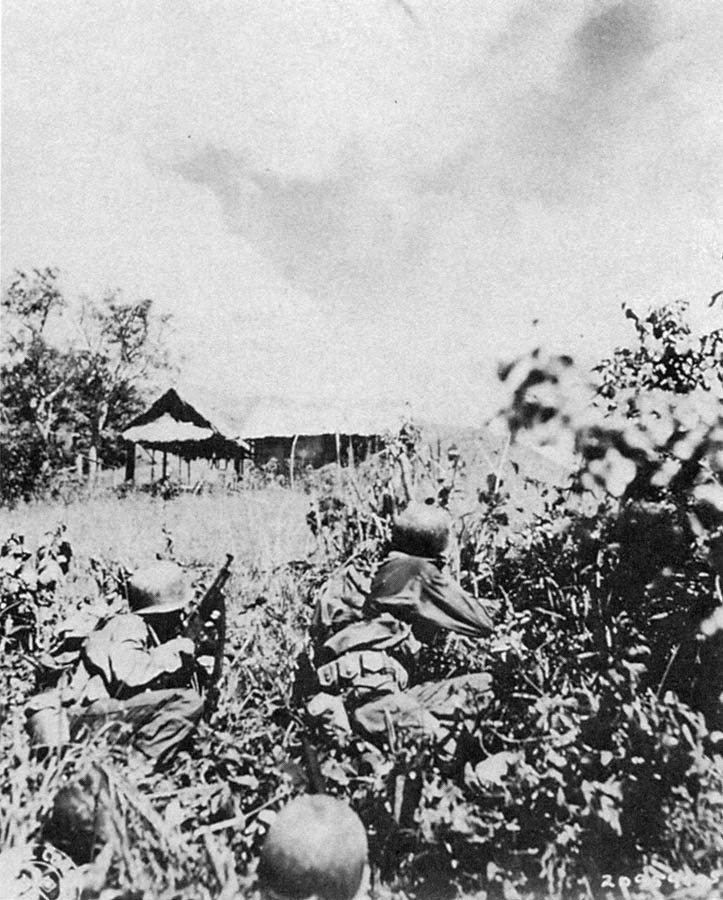
We were positioned at the front and around the entire perimeter, whenever time permitted. If movement was required during the night, time was often a constraint. Consequently, one might remain vigilant throughout the night, a grenade held ready, the pin secured by one’s fingers, if necessary. Protection of the perimeter from Japanese soldiers was paramount. This exemplified jungle warfare, conducted from one foxhole to the next. This occurred in Aitape.
The journey required walking several miles through dense, mountainous jungle terrain to reach the enemy’s established positions. Upon arrival, the group, which consisted of approximately ten individuals, experienced a palpable tension. Even the seasoned veterans exhibited nervousness, much like the younger soldiers, when facing difficult circumstances. However, once engagement begins, the action becomes continuous—one simply reloads and perseveres.
Conversely, if an individual takes cover, very few will risk exposing themselves again. I observed this tendency in myself and my comrades; I presume it is simply a matter of human nature. Yet, if one is caught outside cover when the shooting commences, reaching the fighting position, securing one’s weapon, and entering the battle effectively bypasses the initial impulse to duck. Once in motion, one is fully engaged in the fight, which, I believe, is simply how human nature functions in such a scenario.
My initial thoughts regarding combat, during the first instance of engaging in gunfire and witnessing Japanese soldiers being shot, focused solely on the enemy. That was the exclusive consideration. Human beings did not factor into the equation due to overwhelming fear and other intense emotions.
They were simply the opposition.
While there were a few isolated instances where the situation felt slightly different, these were rare. Almost every engagement elicited the same reaction toward the opposing forces. I recall one of my closest friends, Morgan, a native of Texas. We often spent time together. He hailed from a small town located in the Panhandle region, the name of which currently escapes me. Nonetheless, he was among the finest soldiers with whom I ever served.
He survived what we went through in the battle. He consistently demonstrated accuracy and comprehension. Due to his actions, he was quickly promoted to squad leader. He was trapped in difficult situations on one or two occasions but managed to overcome them, making it almost through the engagement before being wounded. I placed some money in his pocket as he lay on the litter after being struck. I spoke with him and administered morphine via a small syringe.
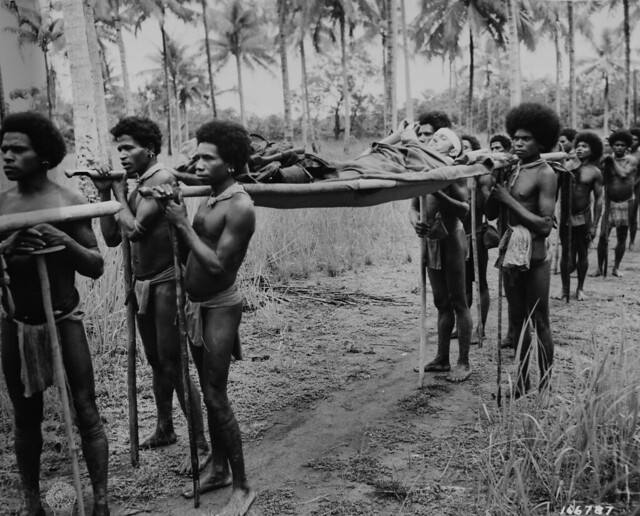
He was able to converse. The projectile had missed his vertebrae, remaining in the flesh on his back, entering one side and exiting the other. The pain was severe until the morphine took effect. The medic, First Lieutenant Jaffe, the battalion medical officer, believed Morgan had a strong chance of survival if we could evacuate him. We walked throughout the night, carrying him on a litter. We had assistance from some Filipinos who helped carry the litter and brought in rations.
We accompanied Morgan to ensure his return to the triage center. They indicated that if we could get him back, he had a good prognosis for survival. We successfully returned him, and he was still conscious and speaking. I attempted to contact him later but was unsuccessful. I enlisted the Chaplain’s help, but he reported that the last address on file for Morgan’s family was different. I never learned what became of him. I speculated that he may have become an alcoholic and perhaps did not wish to be located, despite having survived the battle we endured.
Several comrades were lost during the engagement. One incident, in particular, was unnecessarily tragic. We were operating in the Philippines when we encountered a substantial log spanning a trail, likely a carabao path. The log provided significant cover. It was an ambush position, and when we crossed the log, every individual on the near side was killed. Those positioned beyond the log remained safe. I had friends among the casualties; one survived but was severely wounded.
Lieutenant Baylor began to advance but advised the Captain, stating that we lacked sufficient intelligence to proceed and required more information. The Captain misinterpreted this as a refusal to obey an order and became enraged, stating, “You are refusing this order.” The Lieutenant responded, “Captain, you misunderstood me. We require additional information before advancing.” In the ensuing minutes, they lost seven men—all positioned on the near side of the log. We had one survivor from that group, though we never reestablished contact with him; he was, however, physically unharmed.
The sustained lack of judiciousness exhibited was a consistent source of concern. I frequently pondered the rationale behind their disregard for Lieutenant Baylor’s admonitions. I subsequently ascertained that a minor professional animosity was a contributing factor, stemming from the fact that Lieutenant Baylor had received a direct, or field, commission, having previously served as an enlisted man and not being a graduate of Officer Candidate School (OCS).
The Captain erroneously presumed the Lieutenant was deliberately delaying his squad’s advance, when, in reality, he was underscoring the critical need for additional reconnaissance before proceeding. Subsequent events ultimately corroborated the Lieutenant’s judgment.
The Lieutenant was among seven casualties in that engagement. I considered this at length, as I believe Captain Frost understood that he exposed them to this situation because additional intelligence was necessary due to the ambush. We were unaware of the enemy’s proximity, yet they surrounded us.
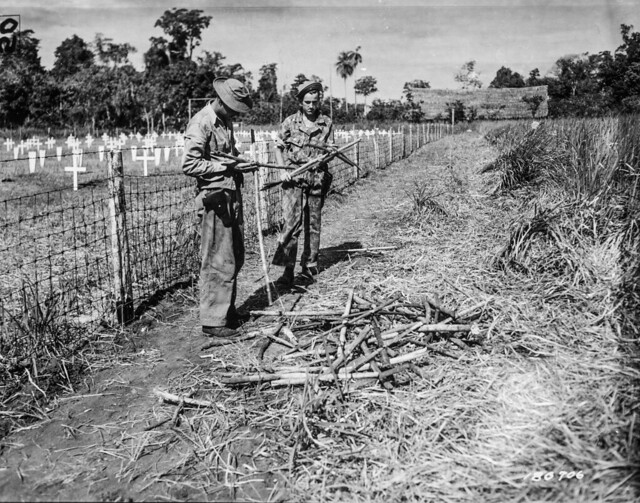
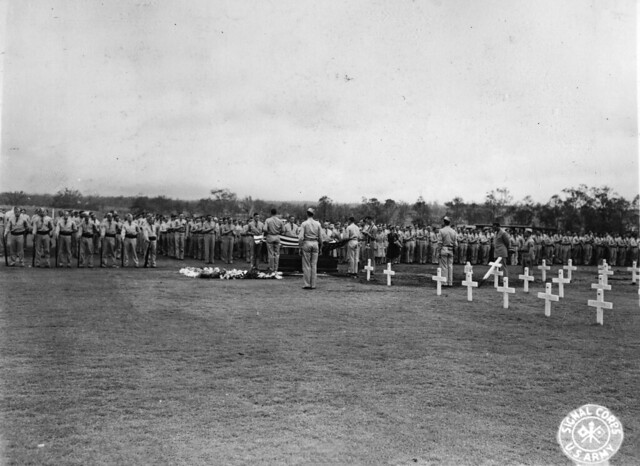
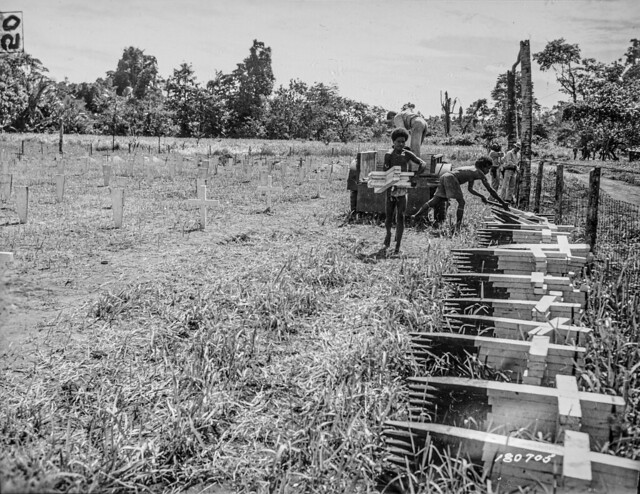
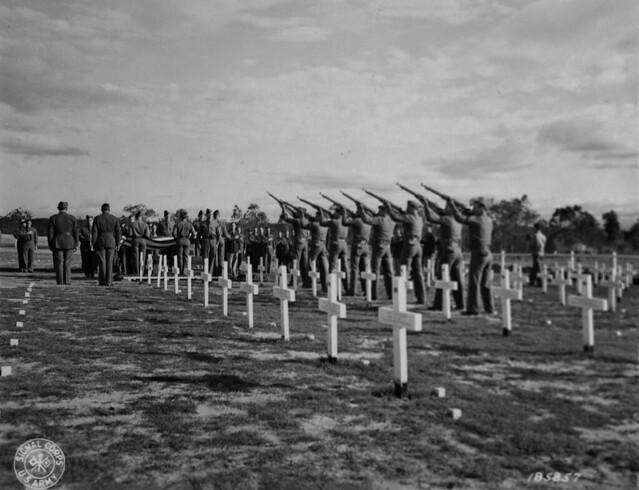
Our assignment involved the burial of the deceased, followed by the difficult task of exhumation and transport of the bodies. I was assigned to that squad as a disciplinary measure for retrieving “souvenirs” from what was unknowingly an active foxhole. The First Lieutenant was also slated for Kitchen Patrol duty, but that assignment was disallowed; consequently, the punishment was disproportionate.
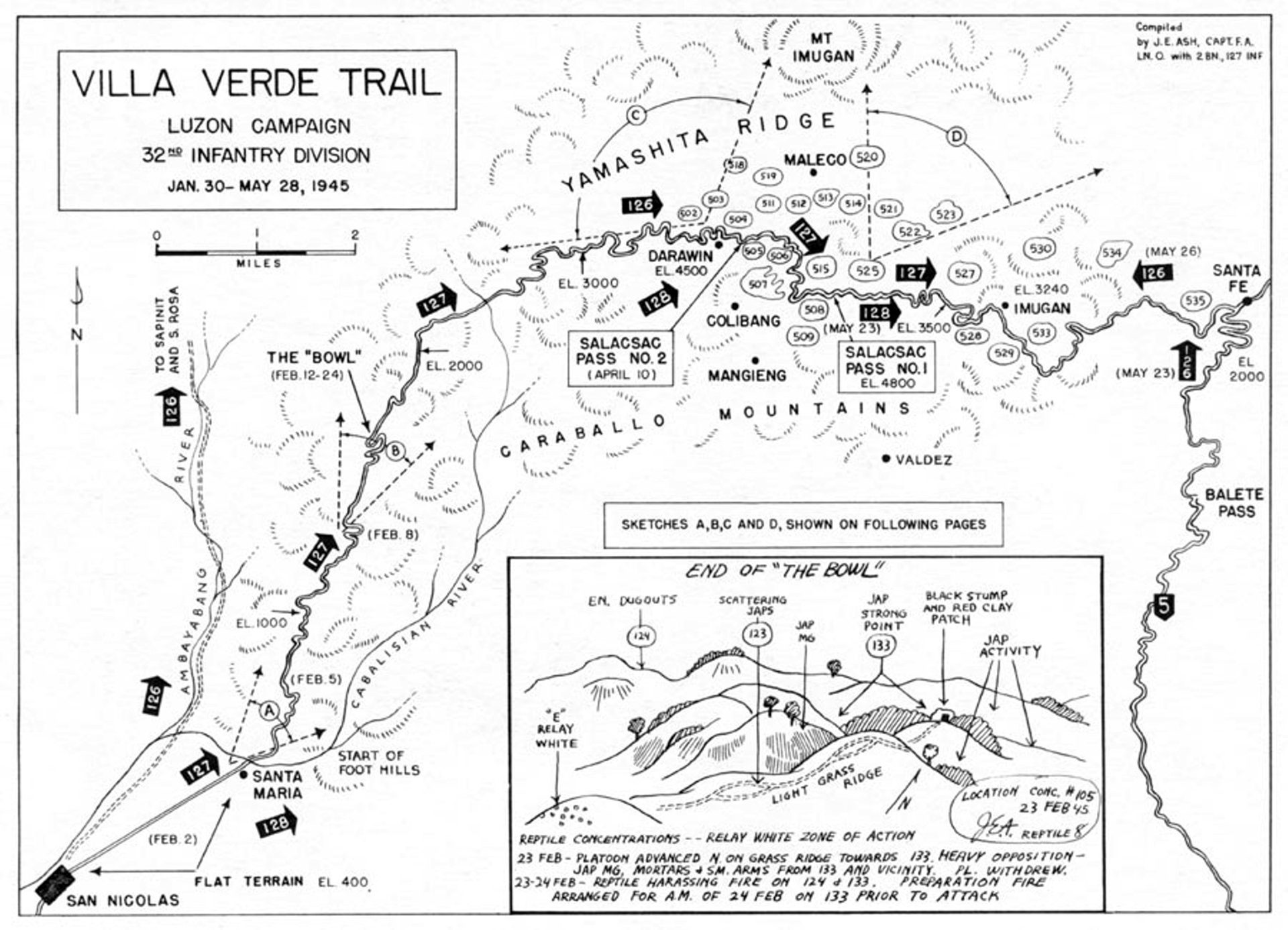
The Battle of Luzon commenced in December. Upon being wounded, I called out for a medic named Lewis. The area was densely populated, and we were disoriented as to the movements of the surrounding individuals. When I sustained the injury, I was on the ground and observed my hand, which appeared intact.
However, I lost sensation in my leg; it was numb due to a minor shrapnel wound in the shin. This injury was easily treated; the shrapnel was removed with a small surgical instrument, and the wound was dressed. I also sustained injuries to my feet. A cast was placed on my arm, which was visibly injured, and though I still have foreign material embedded, I retain the use of my hand.
There were a few other individuals injured simultaneously; however, no fatalities occurred. When that device detonated, there was a visible flash and an auditory blast. My ears began to ring continuously. I called for the medic, who inquired if I could walk. I replied that I could not feel my leg. He initially believed my leg had been severely injured and that I was deceased.
He immediately attended to me with his medical kit, positioned directly above me. Upon seeing me conscious, he reprimanded me, stating that I could have caused his death. This incident transpired on May 3, 1945.
My injuries were addressed, and I was bandaged. The ambulance was able to approach within one or two miles. There was a mountain road that encircled Mount Imugan, where the ambulances were stationed. I was aware of our location because we had received rations. Filipinos were transporting these rations, strapped to their backs.
They also carried water in Marmite cans with clamped tops, which they transported on back carriers. Those five-gallon cans of water constituted a considerable load, perhaps eighty pounds or more, but they managed the task effectively. However, returning to the subject of the personnel, it remains exceedingly difficult to revisit that period.
One’s thoughts, and those of everyone involved, were in disarray. Lieutenant Baylor was gone, and both Lieutenant Kelly and Lieutenant Mitchell had been killed. They were all excellent officers, each of them a direct commissioned officer, not products of Officer Candidate School.
They were engaged in combat and held Non-Commissioned Officer (NCO) ranks, which led to my promotion to First Sergeant. Although they were enlisted personnel, they received a direct commission. However, one cannot remain with their original unit after a direct commission; a transfer to another unit is mandatory for sound operational reasons.
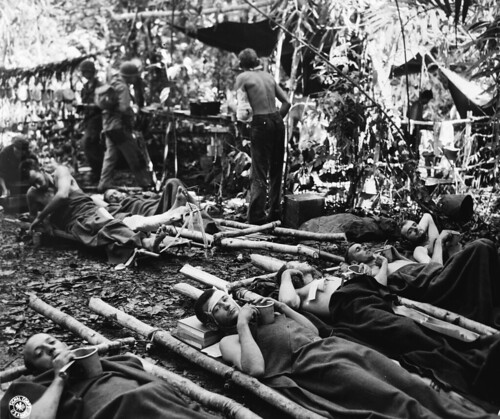
I was admitted to the 43rd Field Hospital and subsequently transferred to the 144th Station Hospital. I remained at the station hospital from May until June of 1945, at which time I was discharged.
I needed to locate my company. They were situated in Baguio, a mountain city, and I had to hitch rides. Whenever I encountered a ration truck stopping to get coffee or for another reason, I would ascertain its direction. I secured passage on a truck transporting furniture and supplies for an officers’ building, an officers’ mess hall, and similar destinations. This allowed me to travel with them up to Baguio, where I found my company, and that is where I was stationed when the war concluded.
The eight individuals who were part of the medical team set up a portable hospital. They recaptured the nurses who had been in the mountains and subsequently had to address the issue of lice. The nurses were treated with a fog machine to eradicate the lice. As captives of the Japanese, these American individuals were also sprayed daily with DDT.
One of my buddies had come down with dengue fever and malaria. I too came down with dengue fever and malaria real bad. That’s in the states though. I was discharged. We were given Atabrine and I was taking 18 tablets a day. I picked this up back in the Philippines. We received it while in the service, but it was controlled.
Each day, during meal service, after proceeding through the chow line, one would open their mouth, and the aid man would administer the tablets and provide water, requiring immediate ingestion. This measure was necessary because some individuals attempted to discard the medication to become ill.
The hospital environment was preferable to our previous location. At one point, I was prescribed 18 tablets daily by civilian physicians who were former military personnel. The Texas City explosion occurred while I was a patient at the Veterans hospital, and victims of the Grandcamp explosion, the fertilizer ship that detonated, were admitted there. There were two such ships involved in the incident.
I remained in the Philippines when the Japanese surrendered in August of 1945. We were situated in the countryside just outside of Manila and were still actively engaged.
However, the circumstances were distinct. Everyone was equipped with automatic weapons, and we were utilizing unpaved but functional highways. There was significant support, with people present everywhere, and a noticeable shift in perspective. It became apparent that the conflict was nearing its conclusion. We finally recognized this, though previously I had doubted it would ever end. I had thought it was an insurmountable situation, believing no one would survive.
The situation was protracted, with persistent rumors suggesting that the unit was no longer fit for combat due to widespread illness. Despite these challenges, the personnel recuperated. We subsequently integrated with the Australian 7th and 9th Infantry Divisions. They were positioned on our perimeter and frequently requested cigarettes. They would approach and ask, “Hey, Yank, could I have a bloody smoke?” I would comply, offering them one or more packages.
However, I consistently cautioned them not to light the cigarette while positioned there, citing the remaining daylight and the associated risk. Their response was typically, “Oh, Yank, the bloody Nips know we’re here.” I would then clarify that while the enemy knew of our general presence, they did not know our precise location. Subsequently, I was ridiculed for prohibiting smoking in my foxhole, as I deemed it too hazardous, given the threat posed by snipers. I distinctly recall a recent replacement named Guest, G-U-E-S-T.
He was a somewhat heavyset man. We were in Luzon, entrenched in our position, when a sniper fatally wounded him in the abdomen. I witnessed the incident. His final audible utterance was “Mama.” Following this, Captain Frost… He instructed the medic to administer a sedative, and he was given morphine. We never heard from him again. His name was Guest. A good man. Guest. I always intended to return and speak with his family, a promise that regrettably went unfulfilled.
Another individual was a man named Jim. Sergeant Jim was the most exemplary soldier with whom I ever served. I was distributing field jackets because the nights in the mountains were cold, and we lacked proper night gear. They delivered his field jacket and his… We had a communication trench. A small trench was dug between foxholes to allow movement without exposure. When the Filipinos delivered and unloaded the field jackets, additional ammunition, and water, I used these communication trenches to carry the jackets to the soldiers dug in outside our perimeter.
As I was presenting a jacket to Sergeant Dems, I observed his collar flip up and his mouth open, revealing blood. I immediately comprehended the situation: he had been struck by a sniper. He had not needed to expose himself; I was utilizing the communication trench to reach him and was merely passing the jacket. However, he was exposed and was struck directly in the neck, resulting in instantaneous death. He was regarded as a highly proficient soldier.
Lieutenant Kelly, our Executive Officer, was also fatally wounded. I reported his death to Captain Frost. Captain Frost, who had instructed me to check on Kelly, vehemently denied the report, stating with evident anger, “He is not,” adding, “I just talked to him. I just left him.” I insisted, “Captain, he is deceased. They have already tagged him.” This news visibly distressed the Captain; I observed him become shaken due to their very close relationship. Captain Frost, originally from Kentucky but whose family relocated to New York while he was serving, was a commendable soldier.
Despite the Japanese surrender, the immediate situation in our location remained uncertain, as word of the cease-fire had seemingly not reached all enemy units. We received notification of the cessation of hostilities via a bulletin distributed during mail call, which also stated that our forces had been ordered to await a response from the enemy. At the time, we were in the Philippines, preparing on the beach for the planned invasion of Japan.
As a forward operating company, we were privy to all subsequent battle plans and realized survival would have been improbable. The enemy force was extensive, comprising personnel “wall to wall,” including those armed with non-functional wooden weapons, as well as minors and women. We encountered soldiers as young as 15 years old. Following the cessation of hostilities, we participated in the demilitarization of schools where the students, approximately 15 or 16 years of age, had been trained for combat. Upon our entrance, they reacted with hostility.
In Japan, They would begin to hiss, a protest noise, indicating their displeasure. We understood their actions, and when they did this, the Captain was with us. He nodded to me, and my crew was with him. He nodded his head and chambered a round in that M1 rifle; it produces a distinctive, loud sound, which immediately silenced them. There was not another sound from that group of children, but they clearly intended to protest. We chambered a round as a precaution. It was noisy, but we never encountered any actual difficulties there.
Following our time in the Philippines, we shipped out to Japan, a process that likely took less than a month. Preparations were already underway; ships were in position, and our unit had received all battle orders, including details regarding our landing. It was after this period that the German music, specifically Herman Clausen’s French harp, became significant.
I heard Herman Clausen playing that music while I was lying on the sand beach. Herman was a soldier, my baker, a German boy who had arrived in 1937, part of the last group to leave Germany. He was young, purely German. However, there was a German Jewish man who was not a soldier. We found him and his small son in Manila. The presence of the boy was startling to us; we had not seen a young white child since leaving the States. While there were many native children, this particular boy was spoiled rotten. Everyone pampered him, and we even made uniforms for him. He remained with our unit.
He was a native of Germany. He was enroute to the United States when he was unfortunately caught in that situation at an inopportune time, preventing his arrival. Consequently, he was in Manila, and we provided him meals in our kitchen. There were several individuals, but he was the only one with whom we directly interacted. He became somewhat ornery later on because… it was our fault. We catered to his every request.
We were in the Philippines, preparing for the advance on Japan. The war had concluded. We still carried live ammunition, purely as a precautionary measure. We were uncertain what conditions we would encounter upon arrival in Japan; one naturally expected the worst, yet the anticipated resistance did not materialize. General MacArthur, in this regard, demonstrated brilliant foresight to us. After our arrival in Japan, we were scheduled for return, and a ship was designated for our loading and embarkation.
Upon reaching the train assigned to us, we began the process of loading our equipment. Some of the soldiers used white chalk or paint to write the phrase, “Stick with Mac and Never Come Back.” This sign of insubordination was immediately noticed. They subsequently ordered us to thoroughly clean the entire train. The sentiment did not please the command at all. We, however, considered the slogan quite humorous, but they quickly put a stop to that foolishness.
Following the conclusion of the war, supplies such as rations, candy bars, chewing gum, and cigarettes were distributed. His cigarettes were highly sought after; one could sell them constantly because the Australian cigarettes were extremely poor quality. A person would likely cease smoking if those were their only option.
As the war ended in the Philippines, I was back running a kitchen. I was a Staff Sergeant then, and I had a crew… responsibilities… enlisted people like myself, but I had to organize them to get PX duty and collect the money and all this sort of thing. Just details on a lousy ship. It was a merchant ship. It was not a Navy ship.
They had those things and somebody’s brother in law back in the States had an interest in a shipping line, and they kept it busy and docked the good ships, put them in dry dock. But those old beat up deals, they use them. We accused them of it anyway but yeah everybody got seasick.
Upon the conclusion of the war in the Philippines, I returned to managing a kitchen. At that time, I held the rank of Staff Sergeant and was responsible for a crew. My duties included organizing enlisted personnel to manage the Post Exchange (PX) operations, collecting funds, and handling related logistical matters.
These were the details of service aboard a less than desirable merchant ship—it was not a naval vessel. Such ships were utilized, we suspected, to maintain profitability for shipping lines with political connections back in the States. While the superior vessels were dry-docked, these older, dilapidated ships were kept active. We often accused the authorities of this practice, and consequently, many personnel suffered from seasickness.
We encountered a severe storm, one of the worst typhoons to impact the South China Sea. The conditions were so extreme that even seasoned veterans became ill. I recall witnessing individuals leaning over the ship’s sides, and it was during this period that I permanently stopped adding cream and sugar to my coffee. The coffee in question had been stored in a perpetually heated urn, likely for over 24 hours, concentrating and thickening over time.
This was the only available beverage. Few personnel regularly consumed coffee; I was one of the few who did and received a cup of this particular brew. Shortly thereafter, I also succumbed to the sickness. This remains my most distinct memory of coffee with cream and sugar, and I find the combination intolerable to this day. I now prepare my coffee black, as the mere thought of consuming it otherwise triggers a powerful sensory memory of that experience.
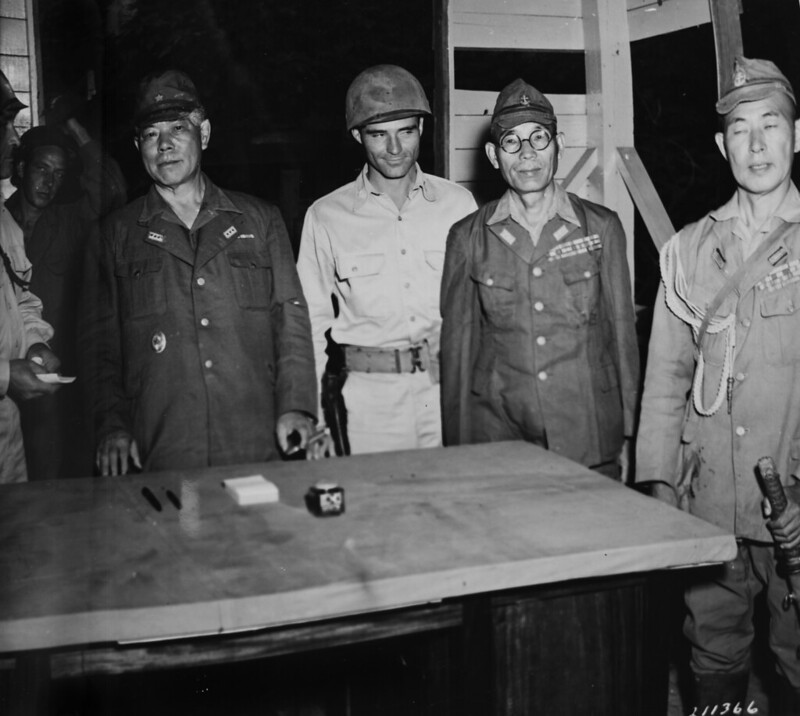
Upon arrival in Japan, our company was stationed in Sasebo, a submarine base located within a narrow strait and an adjacent bay. During wartime, Sasebo was the operational area for submarines. Many of these vessels were run aground as they sought refuge, resulting in the forward sections being elevated and the aft portions submerged. We undertook efforts to right some of these submarines, with assistance from Navy personnel, achieving a level surface.
We utilized the leveled areas, as well as the vehicle deck (topside) of the LSTs, for playing basketball. The LSTs were equipped with specialized securing mechanisms, colloquially known as “frogs,” to which vehicles were tethered. This was a measure to prevent movement during transit, particularly in rough waters. While en route to Japan, our deployment coincided with a typhoon—the most severe ever recorded in the South China Sea. The intensity of the storm caused seasickness even among experienced sailors. It was a harrowing ordeal that lasted both day and night, but we eventually navigated through it and reached our destination.
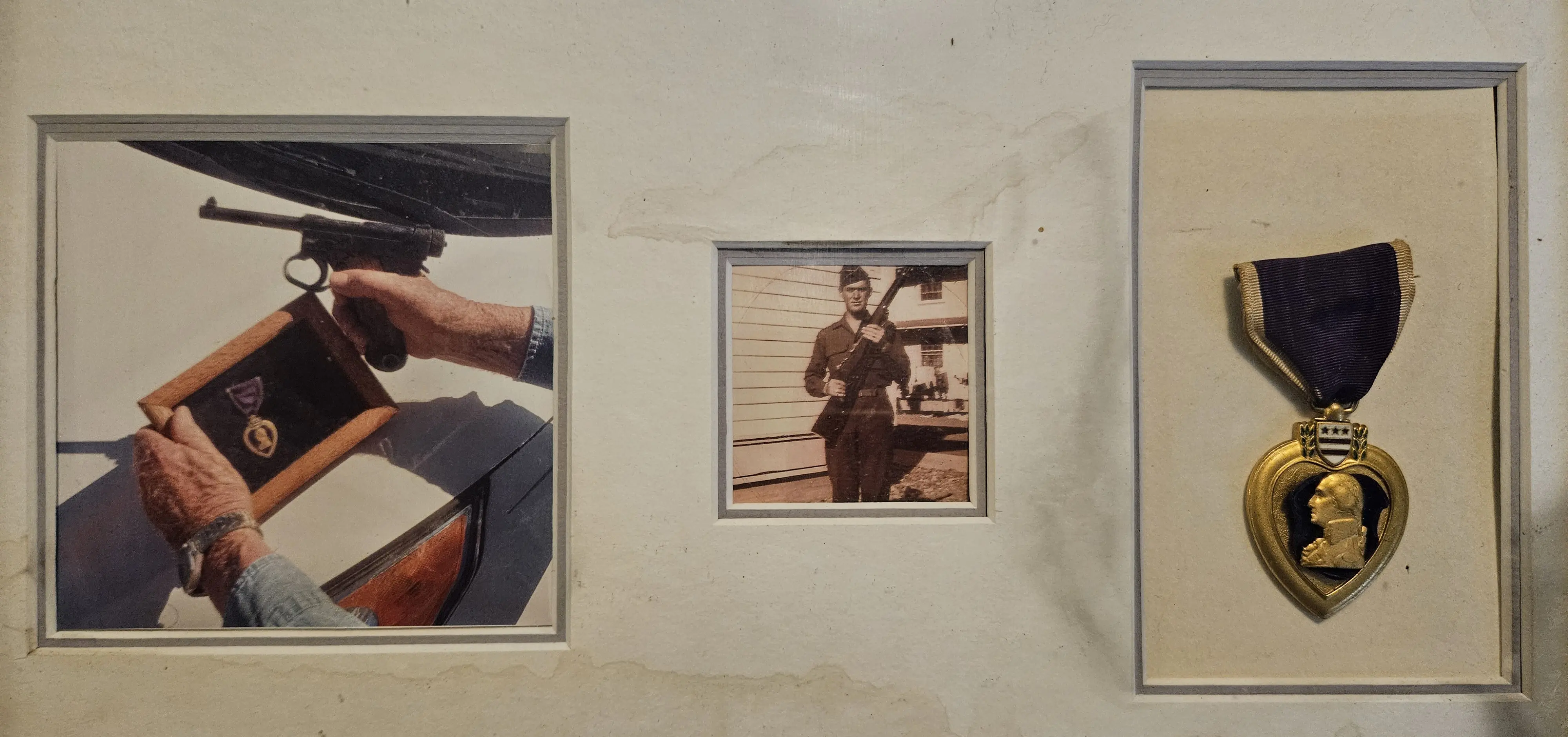
Our arrival in Sasebo was marked by a lack of experience and clear expectations. All actions and logistical arrangements were negotiated by the team, and everything was anticipated to proceed without incident. There was no indication of trouble, and indeed, no weapons were openly displayed. We were located at an arsenal, the Jono Arsenal. It was there that I acquired the Nambu pistol, the one I later gave to Bobby, as he requested it.
The weapon is functional. We attempted to fire .30 Luger ammunition in it. While the cartridge expanded slightly and did not fit perfectly, this resulted in difficulty extracting the spent casings; the extraction process would often tear the rim from the hull during blowback operation. Nevertheless, these pistols were lethal, highly accurate, and very reliable. We were situated within the arsenal, where patterned dye works and wooden molds were used to stamp out components. This was our location when I obtained the pistol, as we were occupying the facility at the time.
I retained responsibility for the kitchen and accepted the arrangement. While the others could engage in activities such as basketball, I would not be required to cook when ashore, as one of my personnel would handle the duty. I considered this a favorable agreement, as it allowed for liberty and the freedom to travel. I had a Jeep and a water truck assigned to my kitchen, and we would use the Jeep to travel as far as possible, ensuring our return by daylight.
We encountered two men, Inger and Elkins, whom we did not know until we reached Japan. They were part of the crew and, in civilian life, had worked for the railroad. After consuming Saki, they managed to start one of the engines in the railyard. Subsequently, an unfamiliar train began moving in and out of the railyard at night. It was Inger and Elkins, one acting as the engineer and the other as the fireman. They had the engine operational, which greatly distressed the local population. Eventually, the Military Police intervened, apprehended the servicemen, and impounded the train. They often recounted the incident with amusement, acknowledging they were highly intoxicated and driving recklessly, though fortunately, no one was injured.
I returned in December of 1946. Actually, it was January, as we were aboard ship at the start of the new year. It was approximately 2:00 in the morning when we arrived. We were assigned to excellent duty. We traveled to Spokane, Washington. Ex-GIs had already returned home, and their families were present when the retreat was played.
They offered to take the returning soldiers home for dinner and other hospitality, recognizing that we had just returned, and they treated us exceptionally well. The fog at night in Seattle was dreadful. We were stationed at Vancouver Barracks, an old post. We were then placed on a Pullman troop train.
We had a porter who made the beds and provided other services. I was placed in charge of that particular railcar because I was the Non-Commissioned Officer (NCO) in charge, although we had a Second Lieutenant present. A Major served as the Train Commander. We noticed a liquor store in a small town outside the city, so I gave a couple of men permission to pool some money and purchase alcohol, which they did. However, some civilians approached, claiming they had better deals at another liquor store owned by a relative. Several people gave them a large sum of money, and we never saw the civilians again; they apparently took the money and fled.
We were aboard this first-class Pullman train. Alcohol was being consumed freely, and people began singing off-key. The First Lieutenant, who was the compartment or Train Commander, announced that all the alcohol was gone and that they were going to lock it up. He stated that no one could sleep due to the excessive noise and singing at the top of our voices. Nevertheless, he managed to acquire several bottles with assistance and presented them to the Major, the Train Commander, explaining what he had done.
The Major consented, saying, “Okay, come with me. I know a place to put it.” He returned to our compartment, instructed the Lieutenant to put the rest of the alcohol away, took a bottle for himself, and sat down with us. We all drank together for the next two cities down the road. He told the Lieutenant that if he disliked the train, he could disembark at the next stop and find his own way home.
We were journeying all the way back to Texas. The Lieutenant was not seen again; he had acquired a different compartment somewhere. He was, he was well. He simply desired sleep. We were aware, however, that the young man, Blackledge, was on that ship, and he was on the train returning home. He was the individual against whom I played basketball at Pisgah Ridge throughout the years. I would encounter Billy Jack repeatedly.
Even in Japan, when the roll was being called to board the ship for the return voyage, in pitch darkness at 2:00 in the morning, they called your last name and middle initial, and you responded with the middle initial. So, they called Blackledge, and the person standing directly behind me responded “Billy J.” I turned around and saw old Blackledge once more.
We began together and ended up together all the way back. He, his brother, and his sister all passed away, the entire family, right there at Pisgah Ridge. It was quite unusual; the whole family was gone. I went to check on them one time, and they informed me they had already buried two of them. It was truly unusual, I thought, because our crew did not experience that kind of misfortune, not the Hughes boys and girls and so forth. But I do not know; every one of them was gone. I do not know.
I took a photograph while I was in Leyte. I had an old box camera. There were GI casualties there, and the bodies were up this hillside where we had to retake the area. Here were these bodies in the hot weather, and the uniforms were sweaty and and so forth.
They were all positioned with their rifles behind logs and the like, and they had been struck by shell bursts. There were fires occurring above ground, and they were drawing maximum fire. There they were, perhaps 20 of them. All of them died out there. It was the strangest feeling because those men were not moving, yet they still had their rifles in their hands when the shell burst struck them. We were proceeding up through there and needed to get rations through.
There was still enemy scavenging through the area, and a ration dump was situated there, with boxes of K rations and canned ones. They were all stacked up, with little islands or alleyways between them. They were stacked as far as they could go. Supply S4 would not go into the necessary locations and simply refused to do it. They were not combat soldiers; they were S4 personnel.
The enemy’s supplies were stacked on the side of the road. We were inspecting these rations to determine the best ones for distribution. Simultaneously, we began to dig in. A bulldozer had previously cleared the road, moving wrecked and damaged vehicles to the side to allow traffic to pass. While digging our positions that night, we encountered human remains, which was a deeply unsettling experience. We had no choice but to dig where we were. This incident was one of the most significant nightmares I have ever experienced.
That same night, enemy soldiers were observed walking on the road. They were close enough to touch, but since we were already entrenched and it was completely dark, they were merely talking and walking past us. We chose not to initiate engagement that night, intending to cut them off the following morning, which we successfully did, although they had already passed our position.
Returning to the subject of the rations, the dump where they were placed also contained a quantity of shoes, which were in high demand due to the daily rain causing the leather to rot. We applied dubbin or grease to preserve them. One soldier had taken a rest near the supplies. An enemy soldier came through the area, noticed the soldier’s shoes protruding, and attempted to pull one off. The American soldier, who had been napping, awoke to find his rifle missing.
The Japanese soldier, also unarmed, started running in the opposite direction. They both ran past our position where we were digging on the road. Since our rifles were not immediately at hand—as we were focused on digging foxholes and organizing rations—we had to locate them. Upon finding a rifle, a general barrage of fire began. The enemy scattered and, to my knowledge, continued running.
After expending our ammunition, I observed a squad of enemy soldiers across the valley, walking in a single-file formation, presenting perfect targets. A .50 caliber anti-tank machine gun and several .30 caliber heavy machine guns were set up and dug in nearby. Upon closer inspection, I realized their uniforms were not ours.
They were traversing a small trail parallel to the creek. I quickly informed the officer in charge of our squad about the spotted enemy troops. I explained that they were running parallel to the creek and requested assistance. Everyone immediately grabbed their weapons and opened fire.
We discharged everything we could access. The enemy soldiers either scattered or were struck. It was an astonishing sight, like shooting sitting ducks. The war was nearing its end, and had they remained concealed, they would have been safe. However, nobody surrendered; they fought until they died.
They would detonate explosives, typically a hand grenade, which would cause significant internal injury. Just hollow them out. I will never forget the sight of those people running, including the man struggling with his shoe. However, moments of levity were also present. We had a fellow named Easton, a Mormon, who was seeking a commission as a chaplain to be relieved of his current duties. He intended to return to the rear for preaching or other related activities. I knew him from the ship, where we had a prayer group organized by the ship’s chaplain. Attendance was voluntary, and most participated while aboard the ship.
The atmosphere was acceptable, and the Chaplain managed it fairly well, though it did not completely eliminate all disturbances. Nevertheless, the language softened somewhat, and the attitudes changed considerably. It was unusual to see such a reaction, a “the war is over” sentiment, on a ship heading home. Yet, it existed. A soldier maintains professionalism when required, but that state is not always necessary. Therefore, liberty time was a distinct contrast to the journey home. While traveling by train, we began firing at swans and geese that were paralleling a river. I had some souvenirs and live ammunition in my canteen, which I had filled…
While traveling homeward on the train, we possessed all of our equipment and remained in uniform, though we were unarmed, having relinquished our weapons. We did, however, carry souvenirs, which we distributed. Among these was a Nambu pistol, and I had a canteen filled with ammunition for it. After consuming a share of alcohol, we positioned ourselves at the rear of the train, which had a platform. Observing swans and geese on the river, we began firing at them.
Subsequently, the train had to be searched to confiscate all weapons and ammunition, which were then secured. We failed to successfully hit any of the geese. Reflecting on this, I recognized the foolishness of such actions. The only available route through the mountains was to follow the river, road, or rail line when returning from the West Coast to Fort Worth.
Upon my return, I went to see Vernor, who was then a student. I traveled back to Huntsville and remained there for a week until she completed that semester and earned her degree. We attended her graduation ceremony, a significant event, where she formally received her diploma. I had to purchase a new outfit for the occasion, as we were still wearing our military uniforms and could not acquire white shirts. She had been attending Sam Houston University and completed her education while I was in the service. Although we did not frequently communicate, she had been teaching prior to this, holding a temporary or emergency certificate, a provision available at the time for those with two years of college.
Upon arrival in Huntsville, all facilities, including the dormitories, were closed. My wife was a student and residing in a locked dormitory, leaving me at the bus station. I engaged in conversation with other recently discharged servicemen, still in uniform, discussing the necessity of traveling to Houston to purchase civilian clothing, particularly white shirts, which none of us possessed. I mentioned having a closet full of them at home on the farm, only to discover later that my civilian brothers had used every one.
In Houston, I patronized a store, with whom I maintained a lifelong relationship during my residency there, because they had reserved white shirts specifically for ex-servicemen. The proprietor, after ensuring discretion, retrieved the shirts, placed them in a tied sack, informed me of the count, and I paid for them. While reflecting, the urgency seems excessive, but at the time, we were utterly without civilian attire. Historically, dress clothing, including ties and dress shirts, were standard. This custom has largely faded; I recently purchased a necktie for approximately $23, whereas one could once acquire the finest tie in town for a dollar. The former reality simply no longer applies.
My brother subsequently acquired a GMC truck. My father had a priority status, which allowed him to secure a truck they located in Harlingen. Because of this priority, if a vehicle was found, it was reserved for him. His priority status was due to points earned for dairy production, for which he qualified. At the time, we were milking 25 cows. My mother milked six, Jack twelve, and my father a certain number. We employed one truck driver who was unable to milk and consequently did not share our workload.
I missed my wife, Sadie. She wrote a paper, Hughes News, and it was mailed to all service members in the family. I made a copy using the old gel duplicator process—I forget what they called that material—but it was a duplicate process before the Xerox or similar machines. This involved a gel pad onto which an indelible copy was placed and transferred. Then, a blank sheet was placed over it, wiped down, and pulled up, resulting in the duplicate. All schools possessed these devices, and teachers utilized them.
Therefore, Sadie had access to it and sent Hughes News and one letter to everyone, though she copied the letter for all. She changed the heading for each recipient, including Barnes, Frank, Milton, the Allens, me, Bill, and Jack on my side, along with an unknown number of other cousins. Furthermore, mail was free if sent as a “victory letter.” This was simply an unsealed piece of paper that everyone could read. They called it a “victory mail.” Consequently, everyone read your mail, which, while not a boycott, did save money.
My oldest brother, Bill, spent a significant amount of time in the brig, thus missing the war. He was already enlisted in the regular Army during peacetime. He would return home without authorization, necessitating authorities to retrieve and return him, resulting in periods of confinement. Upon his return to the company, he would shortly reappear at home. When our father inquired about his leave papers, Bill would assure him he possessed them, claiming they were in his suitcase, despite never having official leave. He simply decided to come home.
However, Jack enlisted in the Air Force and was stationed in Florida for 96 days. As his service exceeded 90 days, he qualified for the G.I. Bill and consequently received an education.
Sadie completed her schooling. We returned home, and I immediately began working for the Brooks System sandwich shops. I subsequently returned to Houston, and she was employed by one of the Houston newspapers. She was responsible for measuring advertising for the Houston Chronicle, a position she held for a considerable period.
Following my deployment, I contracted malaria, which necessitated hospitalization in Houston. I only worked there briefly before accepting a position in the instrument department at Armco Steel, which was a favorable role. However, I would experience illness and a fever around 3:00 p.m., though my shift did not conclude until 5:00 p.m., often requiring transport home by ambulance. I resided in Galena Park, which was in close proximity to Armco.
Ultimately, medical personnel, including former Army associates, advised me, “you’re going to have to hang them up.” They recommended I take a leave of absence, stating that the current situation was unsustainable. Consequently, I took a year off. I relocated here, constructed a residence, and spent my time fishing.
I was informed that there was no cure for malaria and that, like Mr. Hughes, I would be required to manage the condition for the remainder of my life. Subsequently, the Atabrine tablets were introduced at Armco.
Dr. Hamric initiated the treatment. They would administer adrenaline, which would empty the spleen, releasing stored toxins into the bloodstream. At that point, they would give me an injection to neutralize the toxins. The treatment was effective. They were collaborating with a research group investigating a treatment for malaria, a widespread affliction affecting, particularly, men in the Pacific. The treatment cured my condition, and I never experienced another attack, which had previously occurred every evening around 3:00. I subsequently took a year for leisure activities, focusing on fishing and hunting.
I purchased a new truck for $900. I had priority for the purchase; it was one of the Chevrolet trucks featuring small side windows on the top. My father teased me about the red color, but vehicles were scarce at the time, and obtaining one required being on multiple waiting lists and having a priority status. My malaria diagnosis granted me priority for the vehicle.
They facilitated the purchase because transportation was necessary, especially during the time I traveled to Houston following the Texas City explosion, when facilities needed to accommodate numerous casualties.
After a year’s sabbatical, I accepted a position at Dow Chemical in Freeport, Texas, while simultaneously attending the University of Houston, where I earned my degree as a Chemist. Dow Chemical, which was the largest chemical plant globally, employed me until I was forced to take a leave of absence due to malaria. I subsequently terminated my employment, though I had a standing agreement that allowed me to return at any time. I held the position of an instrument man, and it was a good career.
I purchased 113 acres for $2,000 and began farming and raising cattle, which I greatly enjoyed. Sadie was teaching in Fairfield and was highly regarded there. They considered her a genius, as she possessed the highest IQ in the 8th Service Command (military). She was planning to enter the military, but I dissuaded her from it, viewing “women soldiers” as an unnecessary endeavor, though it was a popular wartime pursuit. She ultimately decided to continue teaching. We were married for 13 years before our daughter, Jill, was born in 1956, followed by our son, Jack, approximately 16 months later.
After my wife passed I remarried. Nelwyn was her name and she had 3 children. A total of 5 kids all together with her 3. The youngest one was four years old, and then the next one was the same age as Jill, which was our oldest one. My oldest one, Bill Bailey was four. Vicki was 12 and Julie was 19. We married and they were all very prolific Roman Catholics.
As of Christmas 2024, the family includes a total of 41 grandchildren and great-grandchildren.
The experience of losing comrades and witnessing the death and destruction of war, followed by returning to the United States to lead a prosperous and meaningful life, conveys a significant message. Confronting such profound devastation at a young age is deeply formative.
The Army serves as an effective environment for maturation. I entered the Army as a naive youth, but the circumstances, largely dictated by the era, necessitated rapid personal growth. Nevertheless, I would have preferred for my sons to have served in the military. If I possessed absolute authority, I would mandate military service for all high school graduates.
Many educational institutions, such as public schools with an integrated Reserve Officers’ Training Corps (ROTC) program, successfully instill the necessary discipline, including adherence to orders, respect for authority, and the swift realization of the necessity of these values. This development, I believe, was significantly influenced by my father.
It is a profound contradiction that one day an individual is decorated for killing an adversary, and the next, a similar act results in life imprisonment or execution. Society must address this inconsistency. The rationale for this difference is not intrinsically understood for various reasons; however, personal experience often accelerates one’s maturity.
Following my injury, my arm was placed in a sling extending to my fingertips. One learns to cope with discomfort, such as scratching with a welding rod. The care received at the hospital was exceptional. There were physicians and nurses of the highest caliber; the doctors, in particular, were outstanding professionals. One often does not associate the military with such profound expertise, given the perceived coarse nature of some service members.
However, I gained significant knowledge within the military hospital setting. My First Lieutenant was in the adjacent bunk—a deviation from the standard practice of separating officers and enlisted personnel. He was a direct commission officer. We exchanged books, brought by a nurse for him and by another individual for me. We engaged in extensive, serious conversations and introspection. The proximity of the bunks replicated the intimacy of the foxhole experience. These were truly valuable interactions, contingent upon the character of the individuals involved.
The details of that time remain vivid, likely due to the significance of the individuals and the circumstances. We had “Joe” Joey Brown, a true comedian, known for his elaborate fake baseball pitch—a routine involving facial and bodily contortions. He visited the hospital barracks, a long, tan structure in the Philippines. As he reached the end of the building, someone shouted, “Throw me the ball.” He proceeded with his twenty-minute routine before finally “throwing” the ball, waving, and departing.
The time spent in the Philippines was memorable. My company was headquartered in Baguio, though we were operating in the field. The final soldier killed in World War II belonged to my division, the 32nd Infantry Division, though not my immediate unit. This fact was not known until later.
We were also tasked with providing meals to Japanese nurses. I managed this in my kitchen, which was located nearby. Upon request, I agreed to feed them, provided that rations were allocated for them, as my existing supply was insufficient. They were housed in a barracks. The process involved dusting them with an anti-louse powder applied to their clothing and bodies to address body and head lice infestations. They then received medical care and went through a constructed shower facility. This process spanned several weeks, during which I supplied them with food from my kitchen by drawing the necessary rations.
Over time, these individuals seemed to undergo a transformation, or perhaps our perception of them changed. Their expressions evolved; the cessation of the war brought them a sense of finality. They had been apprehensive due to negative narratives they had heard upon capture. However, they were treated with respect, which fundamentally altered their reality. We observed this change firsthand. Despite the war being over, we were still required to wear our suntan uniforms, complete with neckties.
Following the war, there was a certain amount of bitterness stemming from the experiences. It was a part of it, but one must know an individual; a person’s race is irrelevant. You must know the person, and they must prove themselves. We proceeded into Japan, and the populace wore masks universally. One did not venture onto the street without a mask.
We initially considered this strange. However, before we disembarked from the ship, there was a distinct odor pervading the entire country, noticeable from the ships in Sasebo Harbor and throughout the town. They utilized what they referred to as “honey barges,” which served as garbage collection and their sanitary sewer system.
These vehicles transported waste day and night along the streets to designated burial or dumping sites. All of that has since changed; they have returned to normalcy and are an extremely intelligent people. They are highly skilled in mathematics, are inventors, and can replicate almost anything. While perhaps not always original, they achieve the desired results.
Regarding the people, specifically the Geishas, in the Geisha district, they were situated similarly to displays in a general store, behind glass windows. They remained completely motionless, not a muscle moving, sitting there in their kimonos and elaborate hairdos. Yet, their eyes would follow you. If you paused to look, you realized they were alive, not mannequins. These were geishas, entertainers who sang. They performed songs in Japanese, which we did not understand, merely seeming like chatter. The melodies possessed a yin-yang quality, and nothing ever sounded quite right. However, before our departure, they were singing “The Star-Spangled Banner” and other songs we requested. They knew them.
I recall having to submit a work order for, perhaps, six to ten people. We were tasked with rebuilding this arsenal, converting it into bunkhouses, kitchens, and mess halls. The construction, within the arsenal, involved working with concrete. However, instead of using steel to reinforce the concrete, they employed bamboo.
If you used a sledgehammer on the tables, they would crack open, revealing bamboo inside for reinforcement, not steel. Everything was constructed in this manner—the walls of the buildings, and so forth. This was necessary because they lacked steel, which was reserved for bullets and armament. It was that different.
I observed the creation of fishhooks. They utilized a spool of wire, sitting cross-legged on the sidewalk, extending a piece of wire and twisting it to form the requisite shape. Subsequently, they employed a chisel to fashion a barb near the end and filed the tip. This process constituted a fishhook, which they would then suspend. I found the method of crafting these items individually to be unconventional. I acquired a pocketful of them but eventually lost them.
They broke, or for various reasons, the souvenirs proved to be impermanent. I did not retain many of those objects. I regret not having kept more and, regrettably, I gave a considerable amount of it away. I am fortunate to have disposed of that particular pistol, as the weapon possessed an extremely sensitive trigger.
Upon my return home one day, having secured the pistol in a built-in gun case with a glass front that was installed when the house was constructed, my son-in-law opened the case and was handling the firearm when it discharged. I also owned a standard GI issue .45, which was struck and rendered unusable by the bullet. It required rebuilding and was thus no longer in its original state; it became a “Maverick.” I believe I eventually gifted it to someone.
He allowed that weapon to discharge. Subsequently, my wife’s younger brother was attending choir practice one evening, and I received a telephone call. He spoke with a high-pitched voice, “Harry… do you recall that old pistol you had from the war?” I affirmed this. “I was manipulating it and it went off,” he stated. I inquired if he had sustained any injury. He replied, “Well, yes, the bullet passed through my hand.” I immediately contacted a physician to meet me at the house. Indeed, Sam had a superficial wound that ran through his thumb.
On a different day, my son-in-law returned home from work and was handling the weapon inside the house near the gun case, which was built into a cabinet. Suddenly, a “bang” occurred. This incident is when the bullet struck the .45 and ruined it. Given that two individuals had inadvertently caused it to discharge, I subsequently gave it to someone who would neither fire nor handle it.
The sensitivity is such that merely touching the trigger causes it to fire. I was concerned that someone would accidentally cause a fatal injury to themselves or another person. When Sammy discharged it, the bullet penetrated both walls of my house and entered the neighbor’s house next door. We resided in a densely built subdivision, and thankfully, no one was injured.
However, the incident was not Sam’s fault. I simply found it incredible that it had occurred. I should have mitigated that sensitivity, which was possible. A gunsmith could have adjusted it so that a specific amount of pull was required before it would fire. Nevertheless, they still possess that firearm. I stipulated that one grandson would receive the gun and the others the ammunition, ensuring the items would not be kept together. We temporarily resolved the problem, but inevitably, someone will desire to fire it one day. It is a highly dangerous weapon.
That specific weapon was assembled on-site. We were required to put it together, utilizing parts from the pattern die works at Juneau Arsenal. We assembled it, and we would spend half the night working on them for anyone who desired one, enabling them to obtain it. They were legally permissible. We transported them home, complete with accompanying passes and official orders.
Regarding social interactions, I have never visited any of the individuals with whom I served. One person encountered me in Galena Park, where I was working at Armco, shortly after my discharge. I had just disembarked from the Armco bus that provided transportation for people from Houston.
I traveled to work daily by bus, utilizing the route that passed through Galena Park. Upon entering the restaurant where a number of us former servicemen regularly gathered for coffee, I heard someone from the rear of the establishment call out, “Sergeant Hughes.” Initially, the glare from the outside prevented me from seeing clearly, but as I moved further inside, I identified the speaker as Adams, a soldier who had served in my unit.
He was employed by the same company as I was but in a different department, which is why I hadn’t seen him previously. I sat down and visited with him. For a period of perhaps a month to six months, I had coffee with him maybe once or twice a week. I had also maintained contact with his brother-in-law, with whom I worked in the instrument department at Armco, and through him, I received updates on Adams’ whereabouts and activities. However, Adams subsequently moved out of town and changed jobs, and I lost contact with him. He is the only individual from my unit whom I have encountered since.
While it is possible to share numerous experiences, reliving much of it encompasses the good, the bad, and the regrettable aspects. It is simply part of the experience. Certain memories are best left unmentioned, as reminding someone of what occurred to them, myself, or others might not be well-received. Individual experiences may not align with everyone’s perspective. One can never anticipate how such conversations might unfold.
I have few regrets regarding my service. I did not engage in malicious acts to harm people; that was simply the duty. It is noteworthy that one receives a medal for eliminating a sufficient number of the enemy—a peculiar instance of injustice or justice, depending on one’s viewpoint.
There were some genuinely exceptional people, but there were also individuals whom I would prefer not to associate with outside of the military context. I witnessed one such individual fatally shoot a wounded prisoner with a pistol and subsequently boast about the act. A group of us decided to report the incident. Although he never discovered who reported him, several of us saw it and signed the incident report.
This individual had submitted an application for officer training school, but we successfully ensured his application was rejected. His actions were incomprehensible and indicated he was unfit for his position. It is one of those occurrences that one might attribute to circumstances or the time, but I could never truly understand his motive, as it was unequivocally murder. One of the men who was closer to the shooter and I discussed the event, and I stated that his action contradicted the very principles we strongly opposed. Like the rest of us, he could not comprehend why someone would commit such an act. It simply never made sense.
I do not know what became of him, nor do I feel the need to know. I am confident that whatever occurred, he merited it, although he may have evaded consequences. We acted in a manner we believed was right. While we could have pursued the matter further, it certainly would not have brought the victim back, and the effort seemed futile. Regrettably, if one examines closely, unfortunate events occur in every setting, not exclusively within the military. It is simply a factor of one’s circumstances.
The circumstances were simply the reality of the situation: the climate, the people, and the local mines. These gold mines were owned by an Anglo family. One of my initial cooks, Whitey Statham, a Mormon from Idaho, acquired some of this gold. He approached me, inquiring if I would be willing to exchange five pounds of coffee for a gold nugget. I stated that I would, provided the nugget was genuine. He affirmed its authenticity, noting its high purity. I agreed to the exchange, finding the situation intriguing.
Subsequently, everyone desired to obtain coffee for trading. Ultimately, we exchanged the gold for a caribou, which was then butchered and prepared as a roast for the mess hall. We did have the official authority to trade and barter for equivalent goods. However, we encountered issues with certain individuals, primarily our mess officer, who would take supplies from the kitchen and trade them for personal items, not for the benefit of the crew or the other men.
He was conducting personal business, and I later learned this was a practice he engaged in during civilian life. We addressed this matter with our company commander. It was widely upsetting because these individuals were supposed to be examples of gentlemen to the crew, embodying the principles we were taught. They demonstrated the opposite through their actions. This was the only instance where I witnessed crude, petty thievery. Never again.
Many of the soldiers married Australians. My unit was sent back to Australia after the Buna campaign. The men did not expect to return to combat due to prevalent malaria and dengue fever, complete units were sent back, maintaining their integrity. Personnel still had duties, but were relocated either to New Zealand or Australia.
My unit went to Australia, and a number of the men married Australian women. I knew a gentleman at church in Angleton who married one such woman; however, she never fully acclimated to the American way of life. She attended the same church and was part of the community, but she eventually returned to Australia for a visit and never came back. She stated that she had reconnected with a high school friend and had decided that Australia was where she belonged. This situation highlights the unpredictable nature of human relationships.
Sasebo is the only town I have visited that I would consider returning to, particularly to view the orchids, hydrangeas, and other blooming flowers since military time.
I believed the experience would be straightforward. However, it is not. Some of those memories remain quite real and are indelible. There are moments, even at 2 in the morning, when other thoughts surface. There were many stories that could have been recounted, I suppose, but some should perhaps remain untold. It simply reflects the reality of the situation. That concludes the matter. That’s pretty much it.
Harry Glyn Hughes served in the Pacific with a steadiness and courage that placed him directly inside three of the most punishing campaigns of the Second World War. His official record New Guinea, South Philippines, and Luzon (Villa Verde Trail) reflects not only geographic movement but the full weight of the Pacific War’s brutality. These were not peripheral operations; they were among the most strategically decisive and physically demanding campaigns fought by American forces. New Guinea tested endurance in terrain that swallowed entire units. The South Philippines campaign required relentless advance through fortified positions and dense jungle. Luzon, and specifically the Villa Verde Trail, was one of the deadliest operations in the entire Pacific theater, a place where progress was measured in yards and paid for in lives. Harry was physically present with his unit through all of it, carrying the burden of combat across islands, mountains, and ravines that defined the war’s hardest fighting.
His service belongs to the generation that crossed oceans, liberated nations, and endured conditions that reshaped the course of history. It is a record of presence real, physical, unbroken in campaigns where the outcome of the war was decided by the men who advanced one ridge, one ravine, one trail at a time.
Harry passed away on August 17, 2026, surrounded by his family. His departure closed a life marked by duty, endurance, and quiet heroism, leaving behind a legacy carried forward by those who knew him and by the history he helped shape.
Supplemental Information
From the Jungles of New Guinea to the Black Sands of Iwo Jima: America’s Rising Path Through War
The American road to Iwo Jima began in a world of heat, mud, and tangled jungle far from the volcanic rock of that distant island. It began in Papua, where the United States first met the Japanese on land and discovered the nature of the enemy it would face for the rest of the war. At Buna, Gona, and Sanananda, the air pressed close with humidity that clung to the skin and turned every breath heavy. The ground was soft and treacherous, a mixture of swamp water and rotting vegetation that swallowed boots and slowed every step. Malaria drifted through the ranks like an invisible predator. The Japanese had carved bunkers into the earth so skillfully that they seemed to grow out of the jungle itself. Their refusal to surrender forced American soldiers to learn new forms of combat, to clear hidden positions one by one, and to understand that this war would demand endurance beyond anything they had known. In these early struggles, the character of the Pacific War revealed itself with unmistakable clarity.
From Papua the campaign moved westward along the northern coast of New Guinea. At Aitape and the Driniumor River, the rainforest pressed close on every side. The canopy filtered the sunlight into a green haze, and the river ran dark beneath the trees. When the Japanese launched their massive counterattack, the night erupted with rifle fire and shouted commands. The roar of artillery rolled through the jungle, and the riverbanks became a place of desperate struggle. The smell of wet earth mixed with smoke as American troops fought to hold the line. Here the United States learned how to absorb and reverse Japanese massed assaults, how to reinforce under pressure, and how to fight in terrain where visibility vanished and every sound carried a threat. By the end of the New Guinea campaign, the southern flank of the Pacific was secure. The Japanese threat to Australia had been broken, and American naval and air power could now shift toward the Central Pacific, where the island chain leading to Japan awaited.
With New Guinea secured, the path opened toward the Philippines. The landings on Leyte brought American troops into a world of mountains, valleys, rice paddies, and coastal plains. The scent of wet earth rose after each tropical rain. The fighting demanded mastery of amphibious operations and coordination of air and ground forces. Villages became battlegrounds, and ridges became obstacles that had to be taken one at a time. The sound of distant aircraft blended with the rumble of artillery. The victory on Leyte shattered Japan’s ability to reinforce its armies and opened the door to Luzon, the largest American ground campaign of the Pacific War.
Luzon was a land of contrasts. Its plains stretched wide beneath the sun, while its mountains rose in steep, jagged lines. The Villa Verde Trail wound through these mountains like a narrow scar carved into stone. The air grew thin as troops climbed higher, and mist clung to the ridges in the early morning. Japanese defenders had transformed the mountains into a fortress of caves and hidden positions. Every ridge held another line of resistance. The sound of explosions rolled through the valleys, and the smell of cordite lingered in the air. The lessons learned in Papua and New Guinea now reached their fullest expression. Cave clearing, mountain assaults, and the relentless pressure required to break entrenched defenders became daily realities. Luzon proved that American forces could overcome the most determined resistance in the most unforgiving terrain.
As the Philippines fell, the strategic picture of the Pacific changed. The victory secured the sea lanes, protected the Marianas, and freed American resources for the Central Pacific drive. From the Marianas, long range bombers began striking the Japanese homeland. The engines of the B twenty nine Superfortresses thundered across the sky, carrying the weight of the war toward Japan. Those bombers needed fighter escort bases and emergency landing fields. The volcanic island of Iwo Jima, scarred by tunnels and fortified positions, became essential. Its black sand absorbed heat until it shimmered beneath the sun. Its sulfur smell drifted across the beaches. Beneath its surface lay a labyrinth of tunnels where Japanese defenders waited in silence.
The battle for Iwo Jima was fought by Marines, yet the knowledge that made victory possible had been forged years earlier in the jungles of Papua, along the rivers of New Guinea, on the beaches of Leyte, and in the mountains of Luzon. The determination to clear bunkers, the skill to fight through caves, the endurance to advance against an enemy who refused surrender, all of it had been learned long before the first landing craft touched the shore of Iwo Jima.
The journey from Buna to Iwo Jima was not a straight line on a map. It was a progression of understanding, a deepening of skill, and a hardening of resolve. America’s earliest battles against Japan shaped every step that followed. The swamps of Sanananda, the riverbanks of Driniumor, the valleys of Leyte, and the ridges of the Villa Verde Trail formed a single chain of experience that ultimately made the conquest of Iwo Jima possible. The road to Iwo Jima began in New Guinea, and every mile of that road was paid for long before the first flag rose over Mount Suribachi.
Unique Honors & “Firsts”
Across two world wars, the 32nd Infantry Division accumulated distinctions unmatched by any other American formation. It fought 654 days of combat in World War II, the most of any U.S. division, a testament to its endurance and relentless operational tempo. In World War I, its regiments became the only National Guard units ever awarded the French Croix de Guerre with Palm, the highest level of that decoration. The French also bestowed upon the division an honor no other American unit received: an official nom‑de‑guerre — “Les Terribles” — in recognition of its ferocity and unbroken advance.
The Red Arrow was also a division of historic “firsts.” In 1918, it became the first U.S. division to pierce the Hindenburg Line, a feat immortalized in its insignia: a red arrow driving through a barrier. A generation later, in the Pacific, it became the first U.S. division to launch an offensive against Japanese forces in World War II, beginning a combat record that would define the division’s legacy for decades.
The Red Arrow was also a division of historic “firsts.” In 1918, it became the first U.S. division to pierce the Hindenburg Line, a feat immortalized in its insignia: a red arrow driving through a barrier. A generation later, in the Pacific, it became the first U.S. division to launch an offensive against Japanese forces in World War II, beginning a combat record that would define the division’s legacy for decades.
The 32nd Infantry Division: Origins, Identity, and National Guard Roots Forged from the Heartland:
Michigan and Wisconsin National Guard the 32nd Infantry Division’s lineage is deeply rooted in the citizen-soldier tradition of the American Midwest. Formed in July 1917 from National Guard units of Michigan and Wisconsin, the division’s heritage stretches back to the Iron Brigade of the Civil War and the volunteers who served in the Black Hawk War and the Spanish-American War. By the time of World War II, the 32nd was a living embodiment of the communities from which it drew its strength—farmers, factory workers, teachers, and tradesmen who answered the call to serve.
The division’s prewar years were marked by annual training at Camp Grayling in Michigan and Camp McCoy, Camp Williams, or Camp Douglas in Wisconsin. These exercises fostered a sense of camaraderie and state pride, binding together men who would soon face the crucible of global conflict. When the division was federalized on October 15, 1940, it was authorized a peacetime strength of about 11,600 soldiers, though like most units of the era, it was understrength and under-equipped.
The Red Arrow: Symbolism and Spirit
The division’s insignia—a red arrow piercing a line—was adopted after World War I to commemorate its role in breaching the Hindenburg Line in France. The French, recognizing the division’s tenacity, dubbed them “Les Terribles.” The Red Arrow became more than a patch; it was a symbol of the division’s resolve to “pierce any line,” a spirit that would define its actions in the Pacific.The insignia is one of the oldest continuously used division symbols in the U.S. Army.
By World War II, the 32nd Infantry Division had transitioned from a “square” division of four regiments to a “triangular” structure with three infantry regiments: the 126th, 127th, and 128th. Supporting these were artillery battalions, engineers, medics, and essential service units
The 32nd Infantry Division’s journey through World War II was marked by some of the most grueling and pivotal battles in the Pacific. The division logged 654 days of combat—more than any other U.S. Army division—fighting from the jungles of New Guinea to the mountains of Luzon and finally to the occupation of Japan.
Federal Activation and Early Challenges
The division’s mobilization in 1940 came amid a nation preparing for the possibility of war. Training was initially focused on conventional warfare, with little anticipation of the jungle environments that would soon define the Pacific theater. The division participated in the massive Louisiana Maneuvers of 1941, honing its skills in large-scale operations but still lacking experience in the unique demands of tropical combat
The Call to War: Deployment Overseas
Following the attack on Pearl Harbor, the 32nd was among the first U.S. divisions ordered overseas as a complete unit. In April 1942, the division sailed from San Francisco to Australia, arriving in May. The urgency of the war meant that training for jungle warfare was minimal; many soldiers learned their craft under fire, adapting to the harsh realities of New Guinea’s swamps, mountains, and disease-ridden jungles.
Combat Roles Beyond the Mess: A Rifleman in the Pacific Jungle
Although he served as a Mess Sergeant, his place within an Infantry Regiment’s Service Company meant he was trained, equipped, and expected to fight whenever the situation demanded it. In the Pacific, especially within the 32nd Infantry Division, the environment itself erased distinctions between combat and support. The jungle did not permit specialization. It demanded survival. Under these conditions, every man became a rifleman.
The division fought through some of the most unforgiving terrain of the war. In New Guinea and the Philippines, the air hung heavy with humidity. The jungle pressed close, thick with vines, rotting vegetation, and the constant hum of insects. Mud swallowed boots. Rain fell in relentless sheets. The smell of wet earth, sweat, and decay clung to everything. Visibility shrank to a few feet, and movement slowed to a crawl. Under these conditions, mess personnel took their place on the perimeter whenever the division halted to establish a bivouac or forward position. They manned foxholes, stood guard through long nights, and listened for the faint rustle of movement beyond the wire. Night fighting was not an occasional threat but a nightly expectation. Japanese patrols probed the lines with stealth and determination, and infiltration attempts were common.
These responsibilities intensified during the campaigns at Buna and Gona, Sanananda, Leyte, and the Villa Verde Trail. Each battle carried its own sensory world. At Buna, the air smelled of swamp water and rot. The ground was a mixture of mud and stagnant pools, and every step felt uncertain. At Sanananda, the jungle canopy was so dense that daylight barely reached the ground, creating a dim green twilight even at noon. On Leyte, rain turned trails into rivers of mud, and the sound of distant gunfire echoed through the valleys. Along the Villa Verde Trail, the mountains rose steep and unforgiving, and the narrow ridges forced men into exposed positions where every movement drew fire.
In all these places, night assaults were frequent. Mess Sergeants, clerks, and medics found themselves shoulder to shoulder with riflemen, repelling attacks in darkness lit only by muzzle flashes. The smell of gunpowder mixed with the damp jungle air. The crack of rifles and the sharp bursts of machine‑gun fire shattered the night. Men gripped their weapons tightly, listening for footsteps, whispers, or the sudden rush of an enemy charge.
Their duties extended far beyond the perimeter. Mess personnel carried rations forward to rifle companies, moving along narrow jungle trails where snipers waited in silence. They crossed swampy ground where ambushes were common. They escorted supply details armed with rifles, knowing that any movement outside the perimeter invited danger. During the Buna campaign, supply routes were so hazardous that cooks, clerks, and medics were routinely shot at while moving food forward. The simple act of delivering a meal became an operation requiring courage, vigilance, and the readiness to fight.
In the Pacific, the 32nd Division lived in a world where every man, regardless of title, faced the same dangers. A Mess Sergeant was not only a provider of food but a defender of the line, a bearer of supplies through hostile terrain, and a soldier who met the enemy in the same mud, the same darkness, and the same unforgiving jungle as any rifleman. His service carried the full weight of combat, shaped by the terrain, the enemy, and the relentless demands of war.
Field Kitchens in the Pacific: Innovation and Hardship
In the Pacific campaigns, the challenges of feeding troops were immense. Field kitchens—mobile, tent-based, or improvised—were set up in jungles, on beaches, and in the shadow of enemy fire. The Mess Sergeant had to ensure that hot meals reached the front lines, often carrying supplies by hand or relying on native carriers and makeshift transport.
Rations evolved to meet the demands of the environment. While “A” and “B” rations provided fresh and canned foods in garrison, “C” and “K” rations became staples in the field. The monotony of canned meat and beans, the universally disliked D-ration chocolate bars, and the prized K-rations were all part of the daily fare. The Mess Sergeant’s ability to make these rations palatable, to improvise with local ingredients, and to maintain sanitation under primitive conditions was vital to the health and fighting spirit of the division.
Leadership Under Fire
The Mess Sergeant was more than a cook; he was a leader responsible for the welfare of his men. In the chaos of battle, the field kitchen was a sanctuary—a place where soldiers could find a moment of normalcy, camaraderie, and sustenance. The ability to provide a hot meal, even under shellfire or in pouring rain, was a morale booster of incalculable value. Mess Sergeants like Hughes were often called upon to make split-second decisions, to adapt to shortages, and to inspire their teams to persevere.
Emergency Rifleman in the Line: When Every Man Became Infantry
When casualties mounted, support personnel were pulled directly into the rifle line. The 32nd Infantry Division suffered 7,268 casualties, a number that reveals the scale of its sacrifice and the relentless pressure placed on its ranks. In these moments, cooks, clerks, medics, and mess sergeants stepped forward as emergency riflemen. The transition was immediate. There was no time to adjust. The need was urgent, and every available soldier was expected to fight.
He could have been assigned to hold a section of trench or foxhole, gripping a rifle while the humid air pressed against his skin and the jungle rustled with unseen movement. Reinforcing a rifle platoon during an attack meant advancing through mud that swallowed boots, vines that clung to uniforms, and smoke that drifted low across the ground. Replacing wounded riflemen during assaults placed him in the midst of chaos, where shouts mixed with the crack of gunfire and the sharp smell of gunpowder hung in the air. Providing suppressive fire during advances meant firing into thickets so dense that the enemy could be only yards away yet invisible.
This was especially common in the division’s most brutal operations.
At the Driniumor River near Aitape, the air was thick with humidity and the smell of wet earth. The riverbanks echoed with gunfire. Japanese forces launched repeated assaults, breaking through American lines multiple times. The jungle vibrated with the thump of mortars and the sharp crack of rifles. Every man was needed. Mess personnel grabbed rifles and moved into the nearest defensive position, firing from foxholes slick with mud and holding ground until reinforcements arrived.
Along the Pinamopoan–Ormoc Highway on Leyte, rain fell in sheets, turning trails into rivers and foxholes into pools. The mountains forced close‑quarters combat. Support personnel found themselves reinforcing rifle platoons during sudden attacks, firing from positions where the smell of wet vegetation mixed with smoke and sweat. Casualties soared, and the line held only because every soldier stepped forward.
On the Villa Verde Trail in Luzon, the division endured 119 days of combat through steep ridges, caves, and narrow defiles. The air smelled of wet stone and moss. The enemy used the terrain with precision. Snipers fired from hidden ledges. Mortars dropped onto exposed positions. Breakthroughs were frequent. Mess personnel fought beside riflemen, defending positions carved into rock and earth, their hands slick with sweat and mud as they reloaded rifles under fire.
Defensive Fighting During Counterattacks
The Japanese frequently launched sudden, violent counterattacks. These assaults came without warning, often at night when the jungle felt alive and every sound carried threat. Mess personnel were expected to grab rifles and reinforce the nearest company, moving through darkness where the smell of damp foliage mixed with the metallic scent of fear. They held defensive positions until reinforcements arrived, firing into shadows lit only by muzzle flashes. They protected the battalion command post and supply area, knowing that a breakthrough could collapse the entire line.
The Driniumor River battle stands as a prime example. The Japanese broke through multiple times, and the fighting became chaotic and close. The air filled with smoke and shouted commands. The ground shook with explosions. Every available soldier fought. Mess personnel fired from foxholes, defended supply routes, and held the command post against sudden charges. The line held only because every man, regardless of assignment, became an infantryman.
In these moments, the distinction between combat and support disappeared. A Mess Sergeant became a rifleman. The jungle became the front line. The air smelled of earth, smoke, and sweat. The night pulsed with danger. Survival depended on courage, steadiness, and the willingness to step forward when the battalion needed every hand.
Combat on the Move: Danger in Every Step Through the Pacific Jungle
Movement in the Pacific was not a march. It was an ordeal. For the 32nd Infantry Division, the jungle erased the very idea of a rear area. There were no safe trails, no quiet zones, no protected spaces where support personnel could move without fear. The battalion advanced as a single living column, and every man—riflemen, medics, clerks, cooks, and mess sergeants—walked through terrain where the enemy was close enough to hear, smell, and sense.
Mess sections moved with the battalion, carrying rations, stoves, and supplies along narrow paths carved through vines, ferns, and towering trees. The air was thick and wet, heavy with humidity and the scent of rotting vegetation. Sweat soaked uniforms within minutes. Boots sank into mud that clung like tar. The jungle pressed in from all sides, shrinking visibility to a few feet and turning every bend in the trail into a place where danger could erupt.
The soundscape was constant. Insects droned in waves. Distant birds shrieked. Leaves rustled overhead. Beneath it all lay a deeper silence—the silence of men listening for something unnatural, something human, something deadly. Ambushes came without warning. A quiet stretch of trail could explode with rifle fire. Japanese patrols moved with uncanny stealth, slipping through foliage without breaking a branch. Sniper shots cracked from hidden perches high in the canopy, the sound sharp and startling in the humid air. Mortar rounds thumped overhead and burst with muffled violence beneath the trees, showering men with dirt, leaves, and splintered wood. Close‑quarters engagements erupted at distances so short that men could smell gunpowder and hear the enemy’s breath.
This constant exposure intensified in the division’s most difficult campaigns.
In the Owen Stanley Mountains during the approach to Buna, the terrain rose steep and slick with rain. Trails clung to ridges and dropped into ravines. The air grew thin and cool at elevation, but the jungle remained dense. The smell of wet stone mixed with the scent of moss and earth. Mess personnel climbed with rifles slung beside their cooking gear, knowing that any pause could bring an ambush from the shadows.
In the swamps of Sanananda, movement became a slow, exhausting crawl through waist‑deep water. The smell of stagnant pools and decaying plants filled the air. Mosquitoes swarmed in clouds so thick they blurred vision. The mud sucked at boots with every step. Japanese bunkers were hidden behind walls of kunai grass, and infiltration attempts came at night when the darkness felt alive. Supply details carrying food forward often found themselves fighting for survival in terrain where every step was uncertain.
In the mountains of Luzon, especially along the Villa Verde Trail, the division advanced through a gauntlet of ridges, caves, and narrow defiles. The air smelled of wet stone and pine. The enemy used the terrain with precision. Snipers fired from ledges. Mortars dropped onto exposed stretches of trail. The echo of gunfire rolled through the valleys. Close‑quarters fighting was common, and support personnel were forced into the same brutal engagements as the rifle companies.
The sensory world of movement was relentless. Sweat stung eyes. Mud coated hands. The metallic taste of fear lingered in the mouth. The jungle smelled of earth, mildew, and decay. The air felt heavy enough to press against the skin. Every sound mattered. Every shadow carried possibility. Every step carried the weight of survival.
In all these places, movement itself was combat. A Mess Sergeant walking with the battalion lived under the same dangers as any infantryman. The jungle pressed close. The enemy watched from the shadows. The trail ahead was never just a path. It was a battlefield.
Campaigns of the 32nd Division: Battles Carved in Jungle, Rain, and Relentless Combat
The battles fought by the 32nd Infantry Division in New Guinea and the Philippines were among the most grueling of the Pacific War. These were infantry campaigns in every sense, and even support personnel lived under constant threat. The terrain, climate, and Japanese defensive tactics ensured that cooks, clerks, medics, and mess sergeants faced the same dangers as riflemen.
Buna–Gona, New Guinea The first major U.S. offensive ground combat against Japan unfolded in a world of swamp water, rotting vegetation, and oppressive heat. The jungle pressed close, visibility shrank to a few feet, and every movement invited fire. Fighting was horrific and intimate, often measured in yards gained through mud and mangrove thickets.
Sanananda, New Guinea Casualties soared as American forces advanced through swamps, kunai grass, and dense jungle. Combat was close‑quarters and relentless. Japanese bunkers were expertly concealed, and assaults often required crawling through mud under fire. Support personnel manned foxholes, carried supplies forward, and fought beside infantrymen during night infiltrations.
Aitape–Driniumor River, New Guinea This campaign was defined by constant ambushes and heavy infantry action. The riverbanks were thick with vegetation, and Japanese patrols moved with stealth. Supply routes were narrow, exposed, and dangerous. Mess personnel escorting rations frequently encountered sniper fire and sudden attacks.
Leyte, Philippines Mountain fighting, torrential rain, and deep mud shaped the battle for Leyte. Trails turned into rivers, and ridgelines became killing grounds. Japanese positions were entrenched and stubborn. Every man, regardless of assignment, stood guard at night, defended the perimeter, and moved supplies through terrain where ambushes were common.
Luzon, Villa Verde Trail, Philippines The Villa Verde Trail demanded 119 days of brutal combat. The mountains rose steep and unforgiving. Caves, ridges, and narrow defiles forced hand‑to‑hand fighting. The trail became a gauntlet of sniper fire, booby traps, and sudden charges. Support personnel fought, carried ammunition, and held defensive positions in the same mud and darkness as the rifle companies.
These were infantry battles, and even those whose primary duties involved feeding the regiment lived under daily threat. The Pacific did not allow distance from danger. It pressed every man forward.
New Guinea itself was one of the wettest combat zones American soldiers ever endured. Depending on the exact area where Harris Glyn Hughes served, he likely lived under 150 to more than 300 inches of rain per year, with some coastal jungle zones reaching 400 inches. This meant daily or near‑daily rainfall, often torrential, for months at a time. Clothing never fully dried. Mud swallowed boots. The air smelled of wet earth, mildew, and decay. Rain shaped every movement, every march, every night spent listening for the enemy beyond the perimeter.
In these campaigns, the environment was as dangerous as the enemy. The jungle, the rain, the terrain, and the darkness created a battlefield where every man became a combat soldier, and every step carried the weight of survival.
How much rain fell in the areas where the 32nd Division fought?
The 32nd Infantry Division fought in Papua and northern New Guinea, including Buna, Saidor, Aitape, and the Huon Gulf region. These areas are documented as some of the wettest inhabited places on earth.
Annual rainfall ranges (historical WWII‑era climate data):
Source: U.S. Army Center of Military History campaign study on New Guinea, which describes the region’s extreme tropical climate and environmental conditions.
What this meant for a soldier on the ground
Rain in New Guinea wasn’t occasional — it was relentless.
Daily lived conditions:
- Rain almost every day, often several times a day.
- Torrential downpours lasting hours.
- Humidity near 100% even when not raining.
- Mud knee‑deep or waist‑deep in many areas.
- Clothing never dried — everything rotted.
- Weapons rusted overnight without constant oiling.
- Trenches filled with water within minutes.
- Mosquitoes exploded after each rainfall, worsening malaria risk.
- Jungle rot on feet, legs, and hands was nearly universal.
Australian and American commanders described New Guinea as “a rain-soaked hell” and “the wettest battlefield of the war.”
Even aircraft operations were devastated by New Guinea’s weather, as documented in historical accounts of severe storms and aviation losses.
- Region (32nd Division area) — Approx. Annual Rainfall
- Papua / Buna–Gona 150 to 200 inches/year Constant rain, swamp, monsoon flooding.
- Huon Gulf / Saidor 200 to 300 inches/year Extremely heavy monsoon rains.
- Northern New Guinea coastal jungles 250 to 400 inches/year Among the wettest regions on earth.
- Aitape / Driniumor River 150 to 250 inches/year Daily rain, deep mud, river flooding.
New Guinea and Beyond: Saidor, Aitape, Biak, and Morotai
Amphibious Operations and Jungle Warfare
After a period of rest and refitting in Australia, the 32nd returned to combat in New Guinea. The Saidor operation in January 1944 saw the division execute an amphibious landing, securing vital airfields and cutting off Japanese retreat. At Aitape, the division faced savage counterattacks along the Driniumor River, holding the line against determined enemy assaults.
The Biak and Morotai campaigns further demonstrated the division’s versatility. These operations required coordination between infantry, artillery, engineers, and service units—including the mess sections that kept the troops fed and fighting. The ability to establish field kitchens quickly, adapt to local conditions, and maintain supply lines was critical to the success of these campaigns.
Aitape was one of the most strategically important and environmentally brutal battle zones of the New Guinea campaign. As of 8 March 2026, the clearest verified fact is that the 127th Infantry Regiment of the 32nd “Red Arrow” Division fought there as part of Persecution Task Force, facing Japanese forces of the 18th Army in a months‑long struggle along the Driniumor River.
Intelligence warned of a possible 50,000 to 60,000‑man Japanese counterattack from Wewak.
The Human Cost
The division’s casualty rates remained high, a reflection of the intensity of the fighting and the unforgiving environment. Yet, through it all, the Red Arrow soldiers maintained their cohesion and fighting spirit, sustained in no small part by the efforts of their Mess Sergeants and support personnel.
Each campaign tested the division’s endurance and adaptability. The Papuan Campaign at Buna-Gona was the division’s baptism by fire, introducing American troops to the horrors of jungle warfare and the tenacity of the Japanese defense. The subsequent New Guinea operations at Saidor, Aitape, and Morotai further honed the division’s skills in amphibious assaults and sustained combat in hostile terrain.
The Leyte and Luzon campaigns in the Philippines were marked by some of the fiercest fighting of the war. The Battle of Breakneck Ridge and the epic struggle along the Villa Verde Trail demanded every ounce of courage and resourcefulness from the Red Arrow soldiers. The division’s final mission—occupation duty in Japan—was a testament to its discipline and professionalism, as it helped oversee the transition from war to peace.
The Papuan Campaign: Baptism by Fire at Buna-Gona
The Battle Unfolds
The 32nd Infantry Division’s first major engagement came in the Papuan Campaign, specifically at Buna-Gona, from September 1942 to January 1943. The division, alongside Australian forces, was tasked with ejecting the Japanese from fortified beachheads that threatened the security of Australia and the Allied position in the Southwest Pacific.
The terrain was a nightmare—swamps, dense jungle, and disease-infested lowlands. The Japanese defenses were expertly constructed, with bunkers, trenches, and interlocking fields of fire. The division’s initial attacks met with fierce resistance, and the lack of adequate training for jungle warfare became painfully evident. Soldiers suffered not only from enemy fire but also from malaria, dengue fever, dysentery, and tropical ulcers. The division’s casualty rate soared, with illness claiming more men than bullets.
Buna was one of the most brutal battles of the entire war. Harris endured:
- Malaria, dengue, dysentery, and jungle rot.
- Fevers of 103 to 105 degrees that soldiers fought through.
- Rations reduced to almost nothing.
- Water contaminated with parasites.
- Japanese bunkers made of coconut logs, nearly impossible to destroy.
- Night attacks, where the enemy crawled through the grass to bayonet sleeping soldiers.
The Mess Sergeant’s Challenge
For Mess Sergeants like Hughes, the Papuan Campaign was a trial by ordeal. Supplying hot meals was often impossible; rations had to be carried by hand through mud and under fire. Sanitation was a constant concern, as unsanitary conditions could quickly lead to outbreaks of disease. The ability to improvise—using local ingredients, adapting menus, and maintaining morale—was essential. The field kitchen became a lifeline, offering a brief respite from the misery of combat
Valor and Sacrifice
Despite the hardships, the division persevered. The capture of Buna in January 1943 was a turning point in the Pacific war, demonstrating that Japanese positions could be overcome. The cost was staggering: of the 9,825 men who entered combat, 2,520 were battle casualties, including 586 killed in action, and over 7,000 were hospitalized for illness. The division’s resilience in the face of adversity became a model for subsequent operations.
The Leyte Campaign: Breaking the Japanese Line in the Philippines
Strategic Importance
The invasion of Leyte in October 1944 marked the beginning of the liberation of the Philippines. The 32nd Infantry Division was initially held in reserve but was soon committed to relieve exhausted units and drive the Japanese from key positions along Highway 2 and Breakneck Ridge.
The terrain was familiar—jungle-covered mountains, swamps, and treacherous roads. The Japanese had fortified the high ground, and the fighting was brutal and costly. The division’s advance was hampered by supply shortages, with rations and ammunition often delivered by light observation planes (“grasshoppers”) in daring airdrop operations.
Mess Operations Under Fire
For the Mess Sergeant, Leyte presented unique challenges. Supply lines were tenuous, and the risk of ambush or artillery fire was ever-present. The ability to coordinate with quartermasters, requisition supplies, and ensure the safe delivery of food was a daily test of leadership and ingenuity. The division’s service units, including mess sections, were praised for their “devoted highly effective work…to serve and support their comrades in the battle line”.
Casualties and Honors
The cost of victory was high: nearly 2,000 battle casualties in 47 days, with 450 killed and 1,491 wounded. Yet, the division’s actions were instrumental in breaking the Japanese defense and paving the way for the liberation of the Philippines. Numerous soldiers from Michigan and Wisconsin National Guard units distinguished themselves, earning Silver Stars, Distinguished Service Crosses, and the Purple Heart.
The Luzon Campaign: The Ordeal of the Villa Verde Trail
The Villa Verde Trail: A Mountain Gauntlet
The Luzon campaign, and specifically the battle for the Villa Verde Trail, stands as one of the most grueling episodes in the division’s history. The trail—a narrow, winding path through the Caraballo Mountains—was heavily fortified by Japanese defenders. The 32nd Division was tasked with forcing its way across this treacherous terrain to open the gateway to the Cagayan Valley.
The fighting lasted 119 days, with progress measured in yards. The Japanese had constructed elaborate cave networks and defensive positions, requiring repeated frontal assaults. The division suffered 825 killed, 2,160 wounded, and over 6,000 evacuated for illness or combat fatigue—a casualty rate of over 80%.
Sustaining the Will to Fight
In this crucible, the role of the Mess Sergeant was more vital than ever. Supplying food and water to troops on exposed ridges and in isolated positions demanded extraordinary effort. Filipino porters, engineers, and mess personnel braved sniper fire and shelling to deliver sustenance. The ability to provide a hot meal, however simple, was a lifeline for men on the edge of exhaustion.
Acts of Heroism
The Villa Verde Trail campaign was marked by acts of extraordinary valor. The division earned 28 Silver Stars, 20 Distinguished Service Crosses, and four Medals of Honor during this period. The division’s commander, Major General William H. Gill, called the capture of Japanese General Yamashita “a glorious finish to this long bitter struggle”.
The 126th, 127th, and 128th Infantry Regiments were the three core combat regiments of the 32nd Division, each fighting through New Guinea and the Philippines but with distinct roles.
The 126th is famous for the Kapa Kapa Trail and brutal Buna fighting, the 127th for Buna, Saidor, and especially Aitape, and the 128th for heavy combat at Buna and Saidor before moving into the Philippines.
The 32nd Infantry Division’s 126th Regiment (Co A, 1st Bn) fought the brutal Villa Verde Trail campaign on Luzon (21 Feb–31 May 1945); their work was mountain‑jungle offensive operations — hill‑to‑hill assaults, patrols, roadblocks, close‑in cave and bunker clearing — with heavy combat and large non‑battle sickness losses.
What a Staff Sergeant or squad leader faced
A Staff Sergeant in Co A would have been responsible for:
- Leading a 9 to 12 man squad in assaults.
- Clearing caves with grenades, satchel charges, and flamethrower teams.
- Holding captured ridges under counterattack.
- Coordinating casualty evacuation under fire.
- Maintaining morale and cohesion as losses mounted.
This was the most dangerous job in the company — small‑unit leaders took the brunt of the fighting.
Casualties and sickness: The hidden enemy
The Villa Verde Trail was one of the costliest operations the 32nd Division fought.
- Hundreds killed.
- Thousands wounded.
- Thousands more evacuated for malaria, dysentery, trench foot, and exhaustion.
The division’s own history notes that the 126th Infantry was initially held in reserve, then committed into some of the worst terrain and resistance of the campaign.
Operational context: Why Co A was there
The 32nd Division’s mission was to break through the Caraballo Mountains, seize the Villa Verde Trail, and link with forces advancing along Route 5 toward Santa Fe.
- This was essential to cutting Japanese supply lines.
- It opened the route toward the Cagayan Valley.
- It prevented Japanese forces from reinforcing northern Luzon.
HyperWar’s official Army history describes the 32nd’s reconnaissance, probing actions, and eventual full commitment to the trail as part of I Corps’ push north.
What daily life looked like for Co A on Villa Verde Trail
- Terrain and tempo: narrow 27‑mile trail through the Caraballo Mountains; progress often measured in yards per day; weather alternated between heat, cloudbursts, fog, and mud.
- Combat tasks: frontal assaults on ridges, company/battalion outflanking attempts, clearing camouflaged caves and bunkers, close‑in fighting (rifles, bayonets, knives), patrols and ambushes, establishing blocking/road‑block positions.
- Command and small‑unit reality: NCOs (sergeants/staff sergeants) led squads in direct assaults, organized casualty evacuation, and managed supply under fire; replacements frequently integrated into depleted squads.
- Casualties and non‑battle losses: division totals for Villa Verde ≈ 825 KIA, 2,160 WIA, ~6,000 sick—disease and combat fatigue were major factors.
The Fighting: Yard‑by‑yard, bunker‑by‑bunker
For Co A, the campaign meant 119 days of continuous skirmishes, including:
- Hand‑to‑hand combat.
- Close‑range cave fighting.
- Ambushes and counter‑ambushes.
- Night infiltration attempts.
- Daily casualties from snipers, machine guns, and mountain artillery.
The division earned 28 Silver Stars, 20 Distinguished Service Crosses, and 4 Medals of Honor during this campaign — a measure of how intense the fighting was. A Signal Corps photo from April 12, 1945 shows Co A, 1/126th on Hill 511, fully alert for enemy action — a snapshot of their daily reality.
Occupation of Japan: From Combat to Peace
Transition to Occupation Duty
With the Japanese surrender in August 1945, the 32nd Infantry Division was among the first American units to land in Japan for occupation duty. The division’s responsibilities included supervising the disarmament of Japanese forces, maintaining order, and assisting in the repatriation of displaced persons.
The transition from combat to occupation was not without challenges. The division had to integrate large numbers of replacements, maintain discipline, and adapt to new roles in a foreign land. Yet, the Red Arrow soldiers approached their mission with the same professionalism and dedication that had characterized their combat service.
The Purple Heart: Symbol of Sacrifice
The Purple Heart stands as the oldest active military decoration in the United States, its lineage reaching back to the Badge of Military Merit created by George Washington in 1782. Washington intended it as a recognition of singular service and fidelity, a mark of honor worn openly on the uniform. When the decoration was revived in 1932, its purpose evolved into something both simpler and more profound. During World War II, the Purple Heart was awarded to any service member wounded or killed in action against an enemy of the United States. It required no recommendation, no chain of approval, no citation of heroic deed. The wound itself was the testimony. The sacrifice was the qualification.
Unlike other decorations, the Purple Heart does not celebrate achievement. It acknowledges cost. It marks the moment when service demanded blood, pain, or life. It is a symbol carried not for what a soldier accomplished, but for what a soldier endured.
During World War II, more than one million Purple Hearts were awarded. The 32nd Infantry Division, fighting through New Guinea and the Philippines in some of the most brutal terrain and closest combat of the Pacific War, accounted for more than 11,500 among its ranks. Each one represented a moment of impact, a moment when the enemy’s fire found its mark, a moment when duty and danger met. Together, they form a silent ledger of sacrifice, written not in ink but in the wounds of the men who carried the division forward.
The Purple Heart remains one of the most solemn emblems of American military service. It is a reminder that freedom has a cost, that courage often comes with suffering, and that the men of the 32nd Infantry Division bore that cost with steadfast resolve.
The Journey of a Purple Heart Recipient: Wounds, Evacuation, and Endurance
Evacuation and Field Hospitals
Wounds sustained in the Pacific campaigns were rarely simple. The environment itself magnified every injury. Heat, humidity, insects, and the ever‑present threat of infection turned even minor wounds into dangerous conditions. Tropical diseases such as malaria, dengue, and dysentery weakened the body’s ability to heal. The first hands to reach a wounded soldier were often those of field medics who worked in mud, rain, and darkness, their aid stations little more than canvas shelters or cleared patches of jungle floor.
Evacuation was its own ordeal. There were no easy routes to safety. Wounded men were carried by hand or stretcher along narrow trails slick with rain, through swamps where water rose to the waist, and over mountains where every step demanded strength from both the bearers and the injured. The air smelled of wet earth and sweat. The jungle pressed close. The journey was slow, painful, and perilous.
When possible, wounded soldiers reached evacuation hospitals, sometimes by air ambulance. These facilities offered more advanced treatment, though they were still close enough to the front to feel the tremors of distant artillery. Surgeons worked tirelessly, often through the night, treating shrapnel wounds, gunshot injuries, burns, and fractures. The sound of aircraft engines, the murmur of nurses, and the quiet groans of the wounded filled the wards. For many, these hospitals were the first place where the chaos of battle gave way to the fragile hope of recovery.
The Aftermath of Wounds
For countless soldiers, the journey did not end with physical healing. The scars of combat endured long after the guns fell silent. Some carried visible wounds that marked their bodies for life. Others bore injuries hidden beneath the surface, carried in memory and spirit. Pain lingered. Nightmares returned. The weight of survival pressed heavily on the heart.
The Purple Heart became a visible reminder of this cost. It was a badge of honor, but also a symbol of suffering. It represented the moment when duty demanded blood, when courage met danger, and when a soldier paid a price that could never be fully measured. For many, it stood as a testament to resilience. It marked not only the wound but the endurance that followed.
In the Pacific, where the environment was as dangerous as the enemy, the journey of a Purple Heart recipient was one of pain, perseverance, and profound sacrifice. It is a story carried in the memories of those who survived and in the solemn dignity of the decoration itself.
Casualties, Decorations, and the Human Cost
Battle Casualties and Honors
The 32nd Infantry Division’s service in World War II came at a tremendous cost:
- Total battle casualties: 8,974+.
- Killed in action (KIA): 1,854.
- Wounded in action( WIA): 6,954.
- Missing in action (MIA): 171.
- FOD (Finding of Death) =8.
- the category used for confirmed POW deaths.
- One of the highest kill‑to‑loss ratios in the Pacific.
The Hardest Jungle Fighting of Any U.S. Division: Endurance in the Swamps of New Guinea
The Red Arrow Division fought in the wettest, thickest, most disease‑ridden jungles encountered by any American unit in World War II. Historians consistently identify the New Guinea campaigns—Buna, Gona, Sanananda, Aitape, and the Driniumor River—as the most physically punishing jungle fighting endured by U.S. forces. The terrain was not merely difficult. It was hostile. It resisted movement, swallowed equipment, and weakened the body long before the enemy fired a shot. Harris endured conditions that shaped every hour of the campaign.
He moved through chest‑deep swamps, a defining feature of the Buna–Sanananda front. Soldiers waded for hours through water the color of tea, warm and stagnant, filled with insects and rotting vegetation. The swamp bottom sucked at boots, pulling them off feet. The smell of decay rose in waves—sour, earthy, and constant. Every step drained strength. Every movement slowed the column. Men emerged from the water exhausted before the fighting even began.
The jungle floor was a world of rotting vegetation, stench, and unbroken mud. New Guinea’s rainfall—150 to more than 300 inches per year, with some coastal zones reaching 400—ensured that nothing ever dried. Uniforms stayed wet for weeks. Skin softened and cracked. Equipment rusted. The air smelled of mildew, earth, and the sweet rot of decomposing plants. Mud coated hands, rifles, and faces. Soldiers slept in it, marched in it, and fought in it.
Visibility shrank to a few feet ahead, a documented hallmark of the kunai grass plains and mangrove thickets around Buna and Sanananda. The grass rose taller than a man. The mangroves formed walls of roots and branches. Movement became a crawl. Soldiers advanced by sound—listening for breathing, footsteps, or the faint click of a rifle bolt. The enemy could be ten yards away and remain unseen.
Enemy snipers hid in trees, a tactic repeatedly reported by the 32nd Division. They wrapped rifles in cloth to muffle sound and fired from high perches where the canopy concealed them. A single shot echoed through the jungle, sharp and startling. Men dropped without ever seeing who fired. The canopy amplified fear. Every rustle overhead carried threat.
Ambushes erupted at 10 to 20 yards, distances confirmed in after‑action reports from Buna, Sanananda, and the Driniumor River. The fighting was sudden and intimate. Gunfire flashed in the shadows. Shouts mixed with the crack of rifles. The smell of gunpowder hung in the humid air. The enemy struck from so close that soldiers could see expressions, hear breathing, and feel the heat of muzzle blasts.
Hand‑to‑hand fighting broke out in kunai grass and mangrove swamps, where visibility vanished and movement slowed to inches. Men grappled in mud, water, and tangled roots. The grass cut skin. The mangroves trapped legs. Bayonets, rifle butts, and knives became essential. The jungle became a suffocating arena where survival depended on instinct, strength, and the ability to fight in darkness and confusion.
The Red Arrow Division’s combat environment was a world of water, mud, disease, and danger. Harris endured it all. The jungle pressed close. The enemy watched from the shadows. Every step carried the weight of survival.
“No American Division Has Ever Been Through Worse”: The Red Arrow’s Record of Endurance and Sacrifice
General Robert Eichelberger’s judgment of the 32nd Infantry Division was stark and unequivocal: “No American division has ever been through worse.” Harris lived that reality every single day. The Red Arrow’s ordeal in New Guinea, Leyte, and Luzon carved a record of endurance and sacrifice unmatched in the Pacific War. Its legacy was not defined solely by unit distinctions, but by the individual courage of the men who carried rifles, bore wounds, and pressed forward through terrain and combat conditions that broke lesser formations.
The division’s decorations tell the story with a clarity beyond words. Soldiers of the 32nd were recognized with 11 Medals of Honor, 157 Distinguished Service Crosses, 845 Silver Stars, and more than 11,500 Purple Hearts, along with thousands of additional awards for heroism and sacrifice. These numbers are not statistics. They are the measure of what the 32nd endured. They reflect moments of impact, moments when duty demanded blood, moments when courage met danger at arm’s length.
They represent what men like Harris carried on their backs, in their memories, and in their scars. They are the ledger of a division that fought in the wettest jungles, the darkest swamps, the steepest mountains, and the closest combat of the Pacific. They are the testament of a unit that survived conditions so brutal that its commanding general could only describe them with a single, unflinching truth: no American division had ever been through worse.
What 654 Days of Combat Does to a Human Being: The Unbroken Burden of the Red Arrow
The 32nd Infantry Division endured 654 days of combat in World War II, the longest sustained fighting record of any American division. For Harris, that number was not a statistic. It was a lived ordeal — a measure of days spent keeping men alive in a world that refused to give them rest.
He moved through jungle so dense it erased distance, swallowed daylight, and muffled sound. The air clung to the skin. Mud pulled at every step. Fatigue settled into the bones and never left. Unlike units in Europe, the Red Arrow had no rotation to quiet sectors, no long pauses, no sanctuary where the mind could recover. Harris marched, worked, fought, and led in an environment where the war pressed against him without interruption.
He saw death at close range, often sudden and violent, when Japanese soldiers emerged from foliage so thick it hid movement until the final moment. As a Mess Sergeant, he carried responsibilities that went far beyond food. He sustained morale. He preserved routine. He offered the small anchors that kept men tethered to their humanity. Leadership in the Pacific was not an abstract duty. It was a daily weight that never eased.
Nightfall brought a different kind of danger. Darkness belonged to the enemy. Harris lived with the constant fear of infiltration — listening for faint movement, a whispered command, or the brittle snap of a twig that meant the enemy was already inside the perimeter. Sleep came in fragments. Rest was a luxury the jungle did not allow.
He bore exhaustion, grief, vigilance, and responsibility simultaneously, day after day, month after month. That is the human reality behind the Red Arrow’s combat record, and the lived truth beneath General Eichelberger’s unflinching assessment:
“No American division has ever been through worse.”
Harris did more than witness that judgment. He endured it.
The Records They Earned, the Memories They Could Not Leave Behind
Many Red Arrow veterans later said that the jungle never left their dreams. The mud that clung to their legs, the rain that soaked them without mercy, the darkness that erased all sense of direction, the sudden eruptions of violence that came without warning — these sensations followed them into the quiet years after the war. Memory became a landscape they carried inside themselves, surfacing in silence, in sleep, and in moments when the past refused to stay buried. Their recollections form a human counterpoint to the extraordinary record the 32nd Infantry Division brought home, a record unmatched by any other American formation.
The division fought 654 days of combat, more than any other U.S. division in World War II. Its soldiers endured 15,696 hours of combat, the highest total ever recorded by an American division in any conflict, amounting to 48 percent of the entire time the United States was at war. Across six major engagements and four campaigns, the Red Arrow spent 41 months overseas, including more than 21 months in continuous combat. These figures do not simply measure time. They measure the strain placed on men who lived under constant threat, who woke each day knowing the war would demand more of them.
The division’s battlefield impact reflected the same relentless pressure. It was responsible for an estimated 35,000 Japanese soldiers killed in action, a stark indication of the ferocity and closeness of its fighting in New Guinea, Leyte, and Luzon. This number speaks to battles fought in swamps, in kunai grass, in mountain passes, and in darkness where the enemy moved silently until the final moment. It reflects a war where terrain, climate, and enemy tactics combined to create conditions so punishing that only endurance kept the line from breaking.
The record the Red Arrow carried home was written in statistics, but remembered in sensations — the smell of rot, the weight of wet uniforms, the shock of sudden gunfire, the faces of friends lost in the foliage. It is a ledger of sacrifice and survival, measured not only in days and hours, but in the memories that stayed with the men long after the fighting ended.
The decorations earned by its soldiers reflect the same relentless intensity. Members of the 32nd received:
- 11 Medals of Honor.
- 157 Distinguished Service Crosses.
- 49 Legion of Merit awards.
- 845 Silver Stars.
- 1,854 Bronze Stars.
- 98 Air Medals.
- 78 Soldier’s Medals.
- 11,500 Purple Hearts.
These honors were not earned in isolated flashes of heroism, but through years of relentless, close‑quarters fighting in landscapes that punished the body and strained the mind. Every decoration represents a moment when a soldier stepped forward in conditions that offered no margin for error — rain‑soaked nights, choking humidity, sudden ambushes, and terrain so unforgiving it seemed to resist every advance. The Red Arrow’s record was built through endurance that never loosened its grip.
The Day the Fighting Stopped, and the Day the World Confirmed It
The end of the war carries two dates in public memory, each holding a different kind of weight. In the United States, September 2, 1945, the day Japan formally surrendered aboard the USS Missouri, stands as the official close of the conflict. It is the moment the signatures were placed, the moment the war became history rather than a living reality.
Yet August 15, 1945, the day Japan announced its surrender, is remembered as the day the world felt the war end. Radios crackled with the news. Cities erupted in relief. Families embraced with a kind of joy that only comes after years of fear. In Australia, that date is formally observed as VP Day, honoring the instant the Pacific finally fell silent.
For the men of the Red Arrow, both dates carried profound meaning. August 15 marked the moment the danger evaporated — the moment the jungle no longer hid an enemy in every shadow, the moment a soldier could breathe without listening for footsteps. September 2 marked the moment the world recognized what they had endured — the months of combat, the losses carried, the wounds borne, and the memories that would follow them home.
One date ended the fighting. The other acknowledged the cost.
What Patriotism Meant in the Historical Reality of the Red Arrow
Patriotism for the soldiers of the 32nd Infantry Division was not expressed through slogans or ceremonies. It was defined by the conditions they faced and the responsibilities they carried in one of the most punishing theaters of World War II. Their patriotism was a lived discipline, shaped by the demands of the Southwest Pacific and the relentless nature of their combat record.
Patriotism meant accepting a mission that offered no rotation, no relief, and no quiet sectors. The Red Arrow fought 654 days of combat — the longest of any American division — because the strategic reality of New Guinea and the Philippines required continuous pressure against entrenched Japanese forces. Their patriotism was expressed through obedience to orders that placed them in the line for months at a time, often without the rest cycles common in Europe.
Patriotism meant enduring terrain and climate that broke men physically. The division fought in jungles where malaria, dengue, dysentery, and fungal infections were constant threats. Soldiers operated in mud that swallowed boots, in humidity that rotted equipment, and in rain that fell for weeks. Their patriotism was measured in the willingness to keep advancing through conditions that killed as surely as enemy fire.
Patriotism meant fighting an enemy who used the environment as a weapon. Japanese forces in New Guinea and the Philippines fought from concealed positions, launched night infiltrations, and used terrain to negate American advantages. Red Arrow soldiers faced ambushes at arm’s length, banzai attacks in darkness, and snipers hidden in foliage. Their patriotism was expressed through courage in battles where survival depended on vigilance and discipline.
Patriotism meant carrying responsibility for others. Noncommissioned officers like Mess Sergeant Harris embodied patriotism through leadership. Feeding men in the jungle was not a routine task — it required improvisation, protection of supplies, and maintaining morale when exhaustion threatened to break the unit. Patriotism was expressed through care, steadiness, and the refusal to let one’s men falter.
Patriotism meant sacrifice recorded in the division’s casualty and decoration totals. The Red Arrow suffered thousands of casualties and earned more than 11,500 Purple Hearts, 845 Silver Stars, 157 Distinguished Service Crosses, and 11 Medals of Honor. These numbers reflect documented acts of heroism, wounds endured, and lives lost. Patriotism was written into the division’s official record through actions that met danger directly.
Patriotism meant carrying the war home in memory. Veterans reported recurring dreams of jungle darkness, sudden violence, and the faces of men lost in combat. Their patriotism did not end with V‑J Day or VP Day. It continued in the weight of memory — the psychological cost borne by those who survived.
The Historical Truth
Patriotism for the Red Arrow was not abstract. It was the cumulative result of: • 654 days of combat • 15,696 hours under fire • 41 months overseas • 21 months in continuous operations • Six major engagements across four campaigns • An estimated 35,000 enemy killed in action • Thousands of decorations earned through documented acts of valor
This is patriotism as history records it: endurance, duty, sacrifice, and the willingness to continue despite conditions that no American division had ever faced for so long.
Patriotism Carried Through 654 Days of Relentless Combat
Patriotism for the men of the 32nd Infantry Division was expressed through endurance rather than proclamation. It lived in the long marches through jungle darkness, in the steady resolve required to face an enemy who used the terrain as a weapon, and in the discipline that held the line when exhaustion threatened to break entire companies. Their service in the Southwest Pacific demanded a level of commitment no other American division was asked to sustain, and they met that demand with a quiet determination that defined their character more clearly than any ceremony or speech could.
When the war ended, the Red Arrow returned with a combat record unmatched in American history. Six major engagements, four campaigns, 41 months overseas, and 654 days of fighting formed the official ledger of their service. Yet the deeper truth was carried home in memory. They remembered the faces of men lost in the foliage, the weight of responsibility borne in silence, and the knowledge that they had fulfilled every duty placed upon them in a theater where nothing came easily.
August 15 brought the moment the guns fell silent. September 2 brought the moment the world formally recognized what they had endured. Together, those dates marked the close of a long and punishing journey. For the Red Arrow, patriotism was not a sentiment but a lived reality, shaped by sacrifice, duty, and steadfast courage in the hardest places the war could offer. They carried the nation’s burden with a resolve that remains one of the most demanding tests any American division has ever faced.
Legacy
World War II Staff Sergeant Harris “Harry” Glyn Hughes belonged to a rare generation, men who never sought heroism yet became heroic through the quiet, unwavering belief that duty mattered. His life was shaped by steadiness, humility, and a devotion to others that never bent under pressure. When his country called, he stepped forward as an infantryman not for recognition or reward, but because he believed answering that call was simply the right thing to do.
He served in Company A, 126th Infantry Regiment, part of the storied 32nd “Red Arrow” Infantry Division, a formation known for breaking through enemy lines and refusing to yield under the harshest conditions. That lineage placed him among some of the most battle‑tested soldiers of the Pacific War. Company A carried that legacy into the mountains of Luzon, where the Red Arrow faced its most punishing challenge on the Villa Verde Trail, a narrow twisting corridor carved into the Caraballo Mountains and transformed by the Japanese into a fortress of ridges, ravines, caves, and ambush points. For 119 days, progress was measured in yards, each one bought with courage, exhaustion, and sacrifice.
As a Staff Sergeant, Harry stood at the center of this struggle. Small‑unit leaders like him bore the responsibility of guiding their squads through terrain where artillery could not reach and visibility vanished into fog and jungle. He led assaults on fortified positions, cleared bunkers and caves under fire, and held ground against counterattacks launched from hidden tunnels and reverse‑slope defenses. His steadiness became the anchor his men depended on.
He endured the same hardships they did — the heat, the rain, the mud, the hunger, the fear — yet he rose above them, setting the example others followed. Disease, exhaustion, and constant danger claimed many, but Company A pressed forward, driven by duty, discipline, and the unspoken bond between soldiers who fought for one another. Their perseverance opened the route toward the Cagayan Valley and helped secure northern Luzon, contributing directly to the collapse of Japanese resistance in the Philippines. The Red Arrow’s reputation, “They Shall Not Pass,” was earned again in blood and endurance.
Harry endured the most arduous campaigns of the Pacific War. He traversed jungles where sunlight scarcely penetrated, mud that swallowed boots whole, and heat and disease that tested even the strongest men. Snipers, ambushes, and night attacks were constant threats. The 32nd Division fought longer than any other American division in World War II, and Harry bore that weight with unwavering dedication.
Within this crucible, he also carried the responsibilities of a Mess Sergeant, a role demanding both leadership and sacrifice. He hauled provisions to the front under fire, prepared meals in monsoon conditions, and fed soldiers too ill or wounded to feed themselves. When the perimeter broke, he fought as an infantryman. When the wounded cried out, he rendered aid. When others faltered, he pressed on. His Purple Heart stands as a tangible reminder of the peril he faced and the injuries he endured in service to his men.
He endured what few could imagine — starvation rations, disease, exhaustion, and the relentless grind of combat — yet he carried himself with quiet strength. He did not boast. He did not complain. He simply did what needed to be done, day after day, because others depended on him. That is the truest measure of a soldier’s heart.
And when the war finally released him, he returned home with the same humility that had guided him in battle. He did not speak often of what he had endured, not to hide it, but to protect those he loved from its weight. He laid down his rifle and picked up the tools of everyday life, determined to build something good, something steady, something lasting.
He became a husband, a father, and the foundation of a family that would grow far beyond anything he could have imagined in those distant jungles. He raised children who learned from his example what it meant to work hard, to stand firm, and to love without condition. He held grandchildren who brought laughter back into a heart once shaped by the sounds of war. He lived to see great‑grandchildren — tiny hands reaching for him, unaware that the gentle man before them had once survived some of the hardest fighting of the Pacific.
Each child, each grandchild, each great‑grandchild is a living testament to his endurance. They exist because he came home. They thrive because he chose love over bitterness, hope over fear, and family over the shadows of the past.
His family — children, grandchildren, and great‑grandchildren — are the living proof that his life mattered far beyond the battlefield. They are his legacy, his triumph, and his enduring gift to the world.
Those who knew him remember a man who showed up every day, without fail. A man whose word was good, whose heart was steady, and whose presence brought comfort. He lived his life with the same quiet bravery that carried him through the jungles of New Guinea and the mountains of the Philippines.
His legacy is not only in the medals he earned or the battles he survived. It is in the family he built. It is in the generations who carry his name, his strength, his gentleness, and his resilience.
Today, his legacy stands as a testament to the enduring spirit of the American infantryman. He was a Red Arrow soldier, an arrow that never broke. He was a leader who fed and protected his men. He was a survivor of some of the hardest fighting of the war. And he was a man who returned home determined to live with kindness, humility, and love.
His story reminds us that true heroism is often quiet, found in the soldier who keeps moving when the path is impossible, in the man who carries the weight of war so his family never has to, in the heart that chooses love after witnessing the worst of humanity.
This is the legacy of Harris “Harry” Glyn Hughes — Staff Sergeant, Combat Infantryman, Mess Sergeant, Purple Heart recipient, father, grandfather, and great‑grandfather. A man whose quiet courage, steadfast duty, and lifelong devotion to those he loved continue to echo through every generation that follows him, ensuring his name endures not only in memory, but in the lives shaped by his strength and gentleness.