
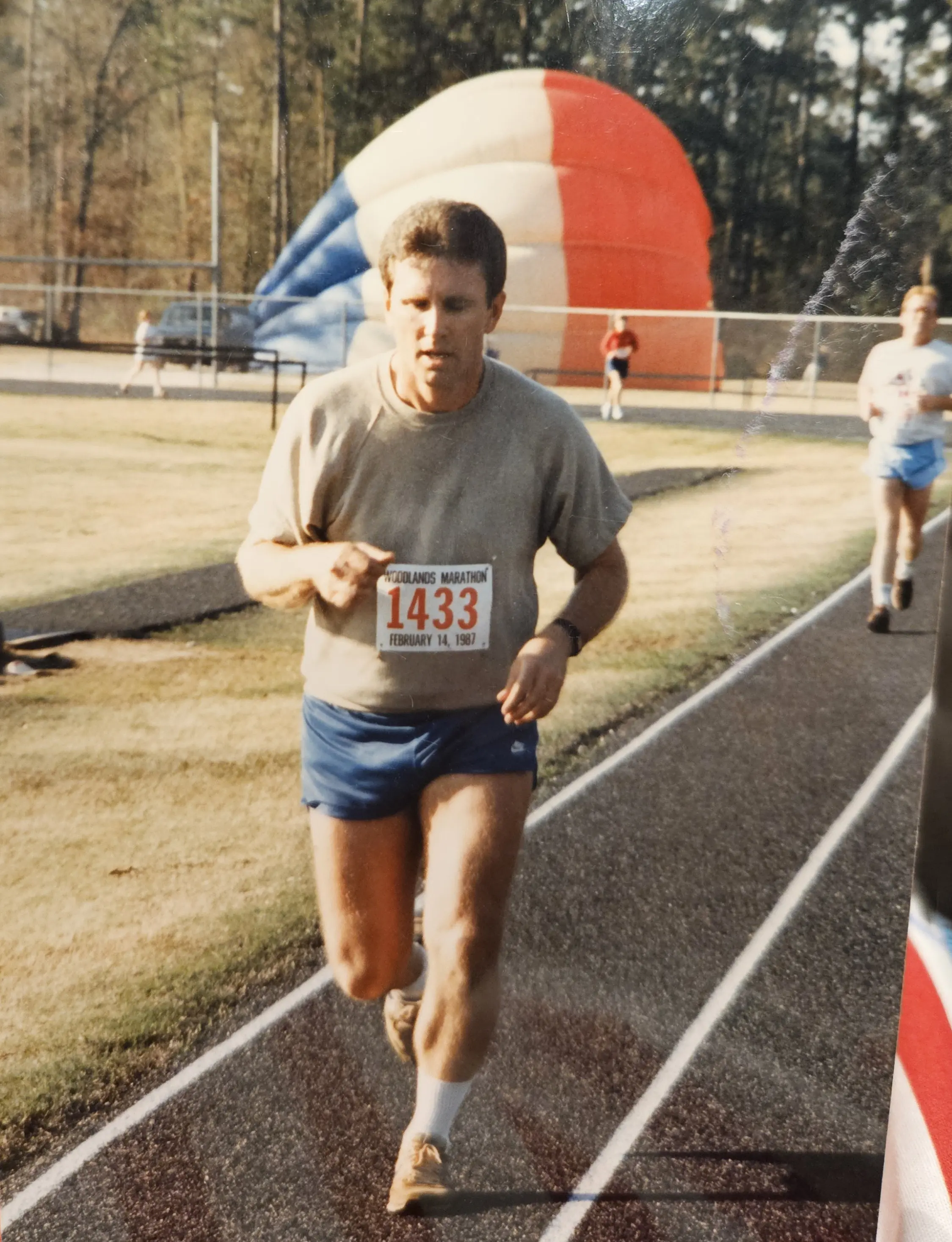
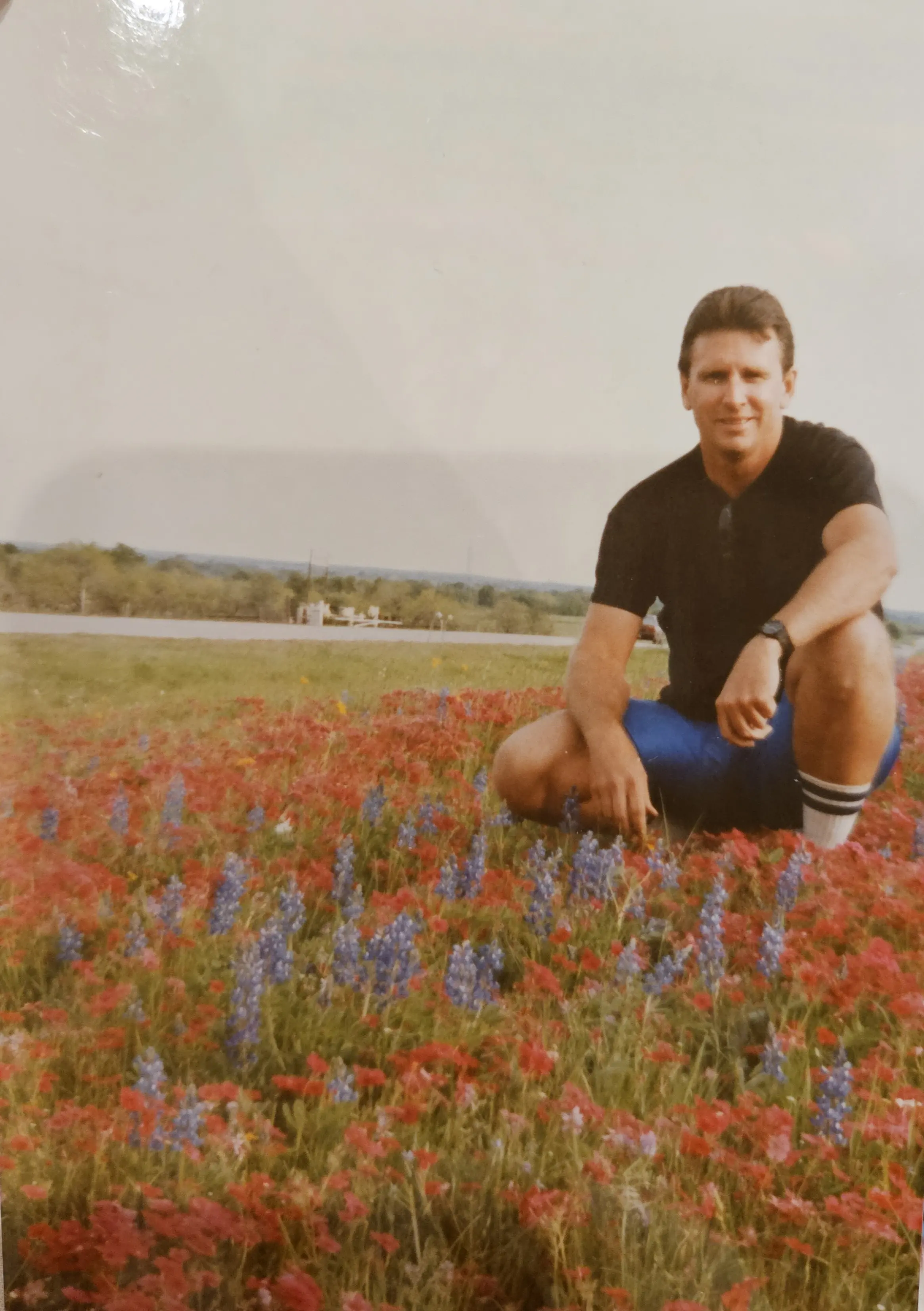
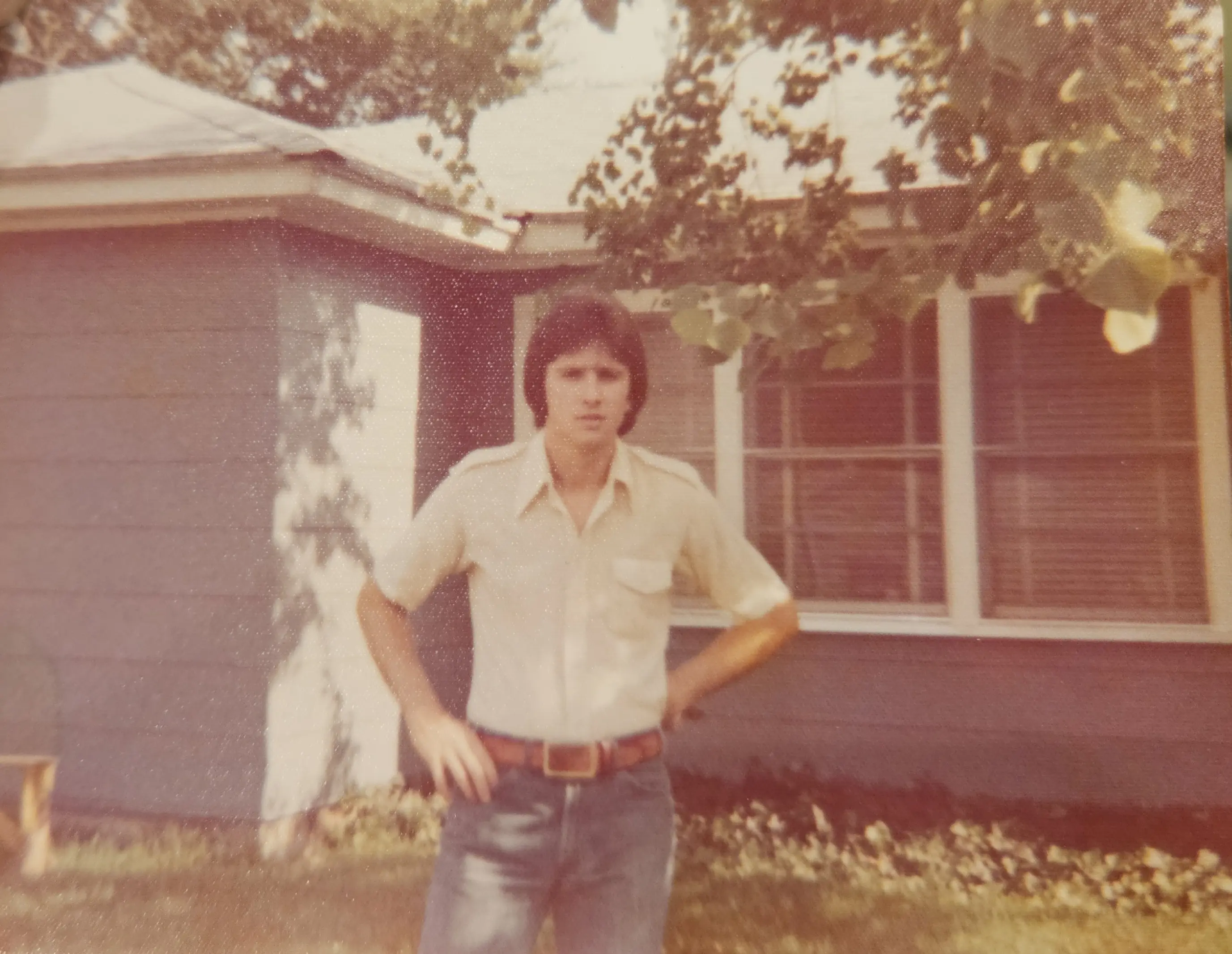
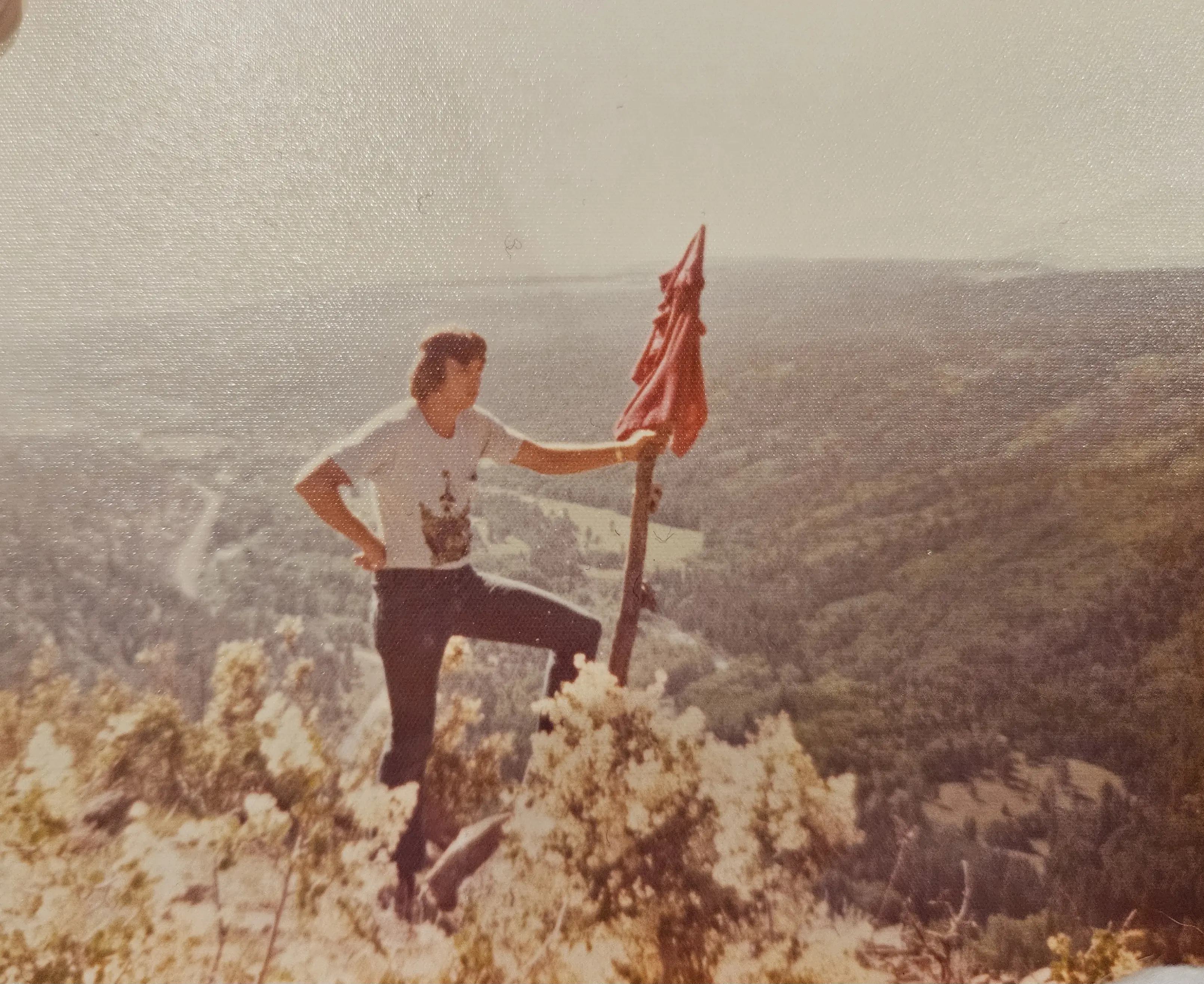



“A Life Redeemed: The Journey of a Soldier Called Back to God”
I was born in Houston in 1950 and grew up in Pasadena, a place I didn’t leave until I was eighteen. My childhood was shaped by simple neighborhoods, sandlot baseball, comic books, and the laughter of my mother, my best friend. She came from a rough childhood and a first marriage that had not been good to her. My father, though a provider, could be harsh. Because he worked long hours, it was mostly just the two of us at home. We played jokes on each other, and I can still hear her laugh echoing through movie theaters where she could barely contain herself.
She asked one thing of me and made me promise: when her time came, she wanted me to hold her hand. My father asked the same. Keeping those promises changed me. Because of what I did for my parents, I have no fear of death. I believe that when I die, I will go straight to heaven and not sleep on the earth until Jesus calls us home. A hospice nurse once told me she could see spirits moving in the room when someone passed. I’ve wondered who they were.
At thirteen, I was thrifty and determined. I cut grass all summer to buy a Western Auto bicycle, complete with baseball cards in the spokes and streamers on the handlebars. My friends and I played sandlot baseball in our Pasadena neighborhood just like The Sandlot. I loved comic books, especially Superman, and watched the old TV series with Steve Reeves.
Summers meant Camp Strake on Lake Conroe. We sang silly songs like “You can’t go to heaven in a boat like that,” slept in bunkhouses full of scouts, and battled chiggers. My favorite song that summer was “Satisfaction” by the Rolling Stones. We played pranks on each other frogs or spiders in bedrolls and I attended a Scouting Jamboree in Houston. The big ones in West Texas were too expensive, so we stayed local.
I grew up loving the history of Cowboys and Indians, the Civil War, Confederate and Union flags, and the stories behind them. My friends and I played “Confederates vs. Yankees” with homemade uniforms, toy muskets, and fake beards. Our bicycles were our horses, and our cavalry charges usually ended in spectacular crashes. I loved Westerns, and when Robert Duvall died, I felt like an era ended. Lonesome Dove was one of my favorites. I admired Gary Cooper, Jimmy Stewart, and authors like Louis L’Amour and Michael Shaara. Shaara’s Killer Angels and his son Jeff’s WWII novels were among my favorites.
My family history ran deep. My grandmother, Julie August Winfrey, was related to Davy Crockett through Mary J. Crockett, whose father was John Crockett, and whose grandfather Samuel Crockett fought in the Revolutionary War. Elizabeth Patton Crockett, buried in Acton, Texas, was Davy Crockett’s wife. These stories gave me a sense of heritage rooted in courage and frontier grit.
I had a younger brother, eight years my junior. My mother’s mother died of leukemia when she was twelve. My mother was raised by my grandmother and her father had fought in the Civil War. Because of instability at home, I was largely raised by my grandparents. My grandfather my Pappy was a World War I medic and became the father figure my own father couldn’t always be. My dad struggled with alcoholism and wasn’t always present, though he worked hard so my mother wouldn’t have to. He had joined the Navy at seventeen because his father gave him no choice, and when he came out, he was a hell‑raiser.
Pappy taught me how to fish and took me to the zoo. We played games like wahoo, and as the only grandchild, I had free rein. Sundays were sacred: Magnolia Christian Disciples of Christ, then chicken dinner at my grandparents’ home. Pappy was seventy, smoked a pipe, and his hands usually trembled except one morning when he told me he felt unusually good. That day, he died in my grandmother’s arms from a massive aneurysm. The Sunday school teacher said he had requested “Jesus Is Calling,” Softly and Tenderly, just hours before. His death shattered me. I turned away from God and became an atheist.
My first job was as a “bottle boy,” earning forty‑five cents an hour. I worked there from age thirteen to eighteen, eventually becoming assistant manager. Later, I worked at other grocery stores, but they were dangerous. The owners were being robbed and killed and I didn’t like carrying bags of money to the bank. I quit.
A friend told me about NASA, and in 1969 I began working there as a microfilm technician. I remember the moon landing, the excitement, and the grief over the deaths of Gus Grissom, Ed White, and Roger Chaffee. My job was to print the microfilm that recorded dialogue between NASA and the astronauts. Once, we lost contact with the crew as they passed to the dark side of the moon. Everyone held their breath until communication returned. I can confirm without hesitation: the moon landing was not staged. I met many remarkable people, especially Neil Armstrong.
I remember the 1960s Kent State, Vietnam protests, Woodstock. I wanted to be a disc jockey, so music was everything. I loved the Animals, Beatles, Doors, Cream, and the Beach Boys. “Wouldn’t It Be Nice” and “God Only Knows” were our songs. In the 1970s, I loved the Eagles and saw them perform with the Rolling Stones at the Cotton Bowl. I enjoyed the Four Tops, Otis Redding, Chicago, Pink Floyd, the Allman Brothers, Percy Sledge, and Bruce Springsteen. My favorite hymn was “The Old Rugged Cross.” My grandfather told me, “You’ll probably only have five friends you can truly count on.” I had three and two are gone. My mother lived by the Golden Rule: treat people the way you want to be treated.
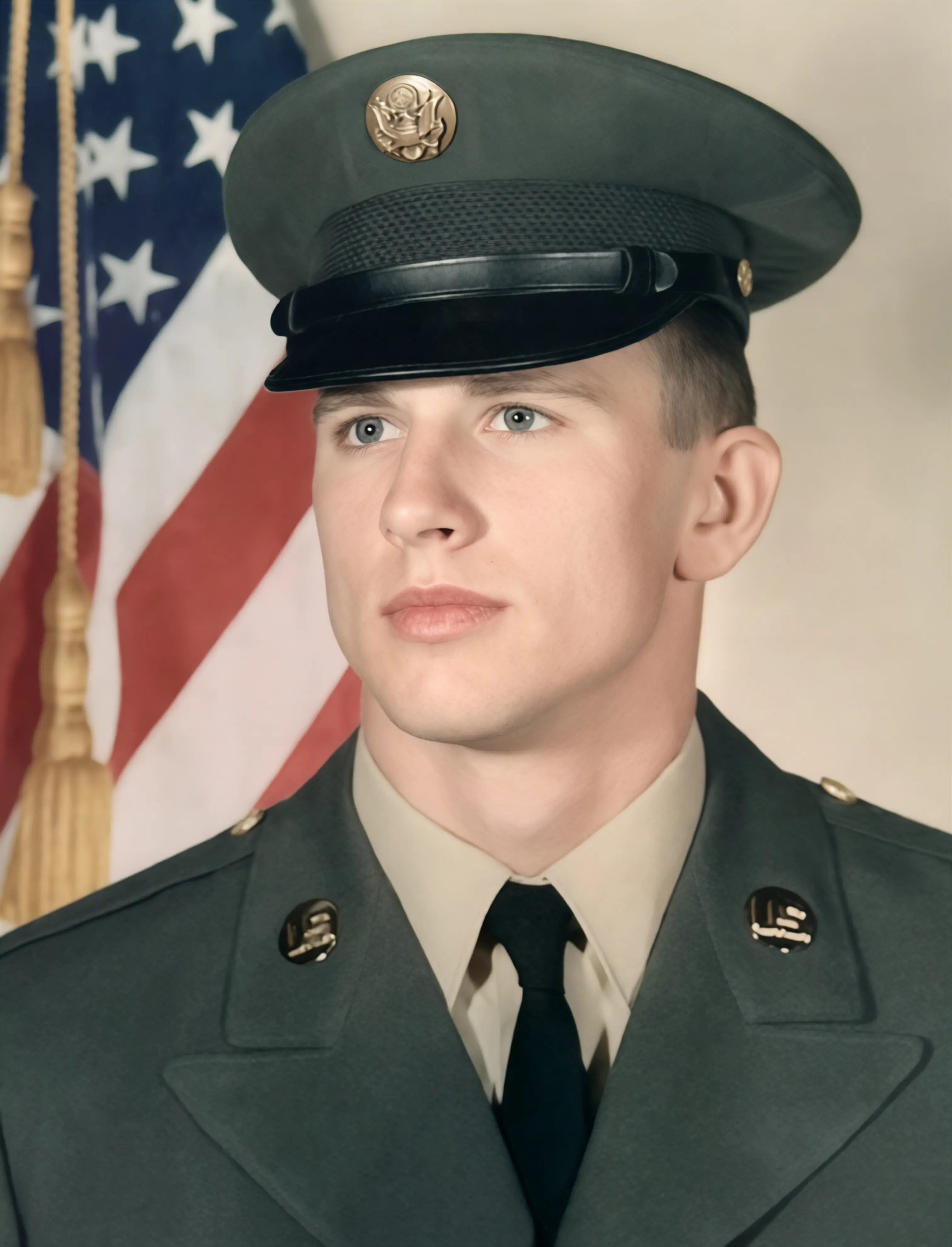
At nineteen, I was a burned‑out college freshman. My draft lottery number was number 17. I took a college deferment and stayed in school two more years. I joined the military on November 13, 1970. At the Induction Center, a Marine Gunnery Sergeant pointed at three drafted men and said, “You, you, and you Marines.” I was already sworn into the Army.
Boot camp at Fort Leonard Wood was brutal twenty degrees below zero. We lived in Quonset huts with freezing concrete floors. After eight weeks, I received two weeks of Christmas leave, but spinal meningitis kept me bedridden. We marched five miles with hundred‑pound packs and ran constantly. I gained a lot of muscle.
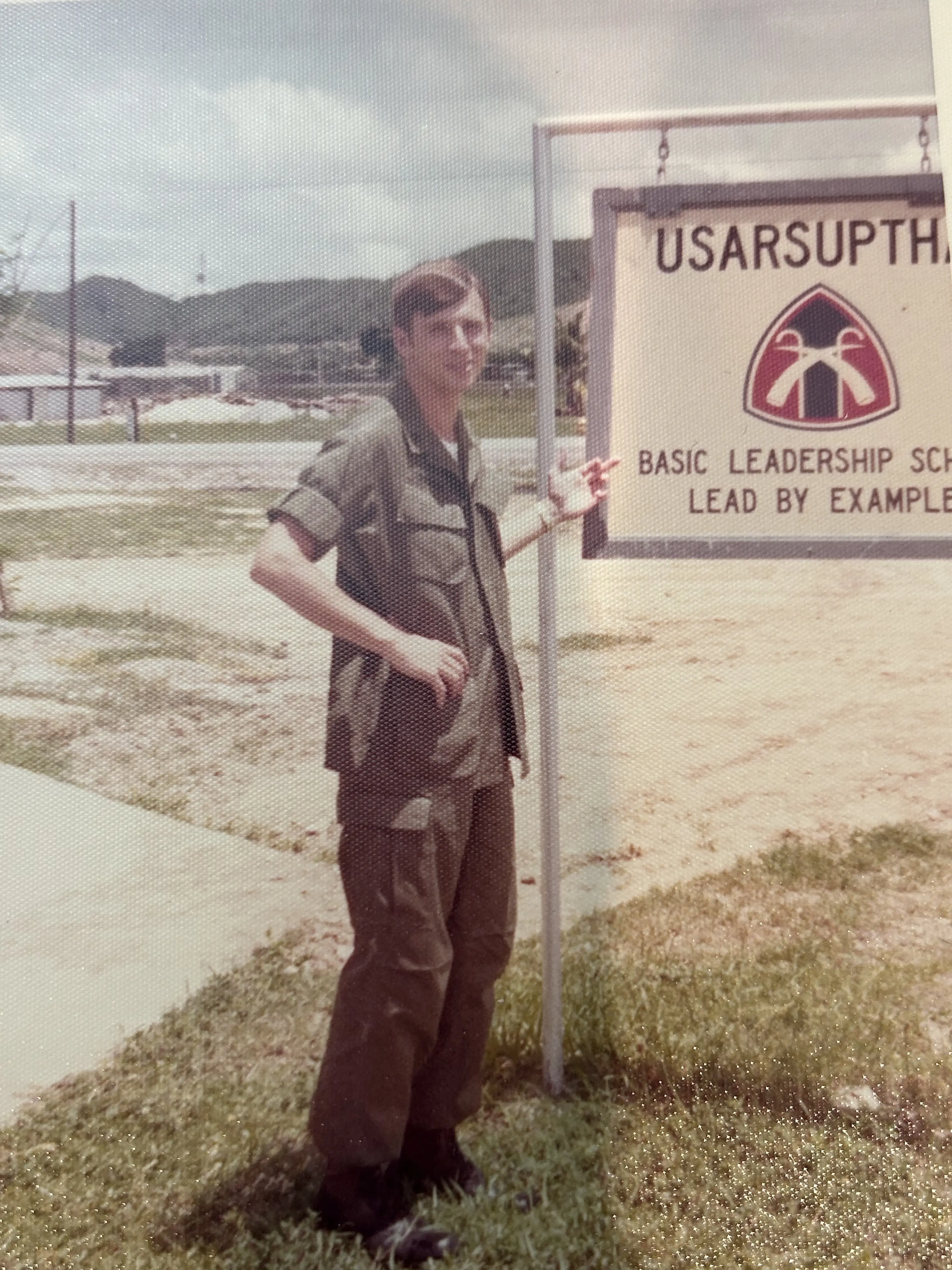
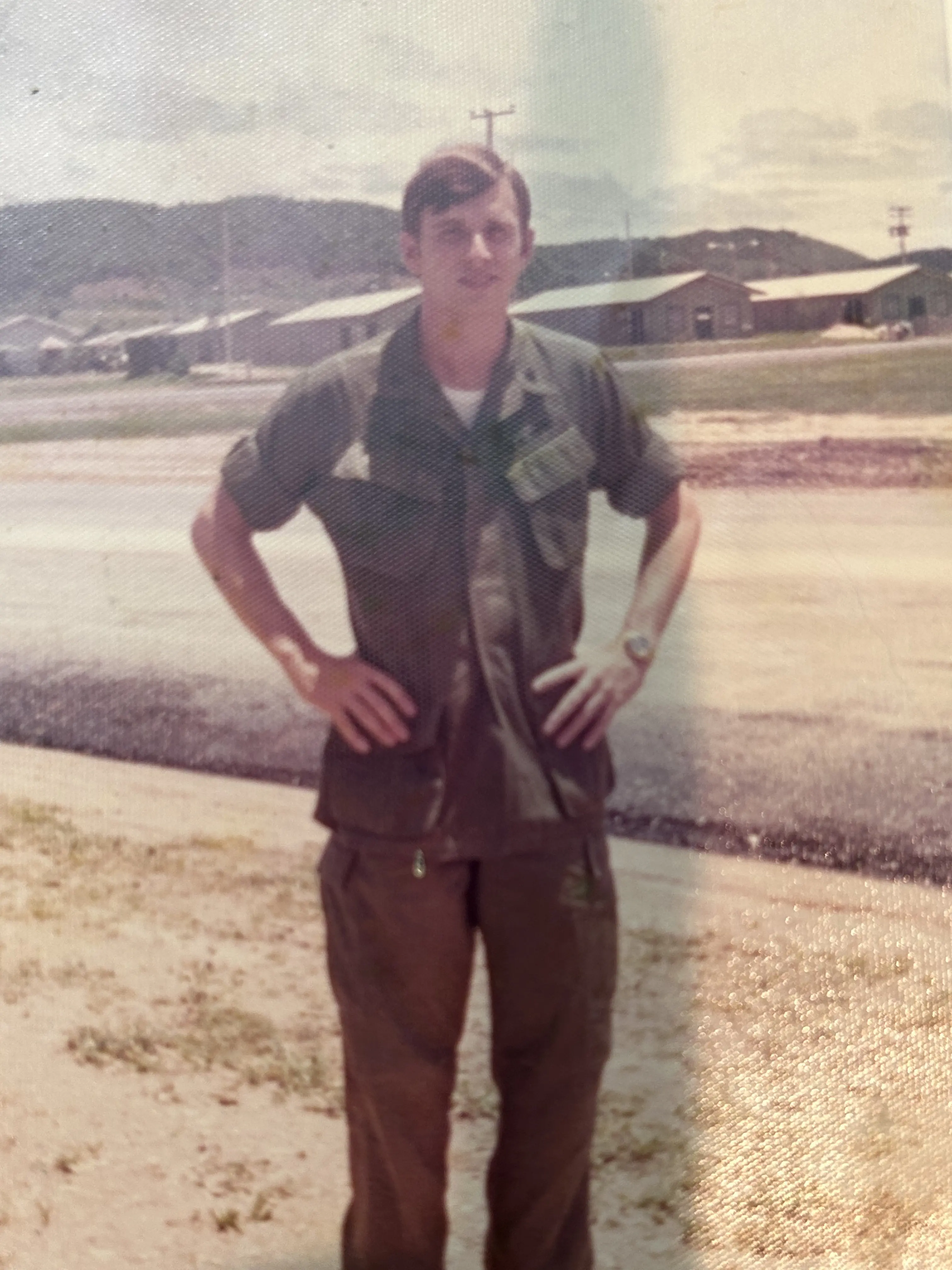
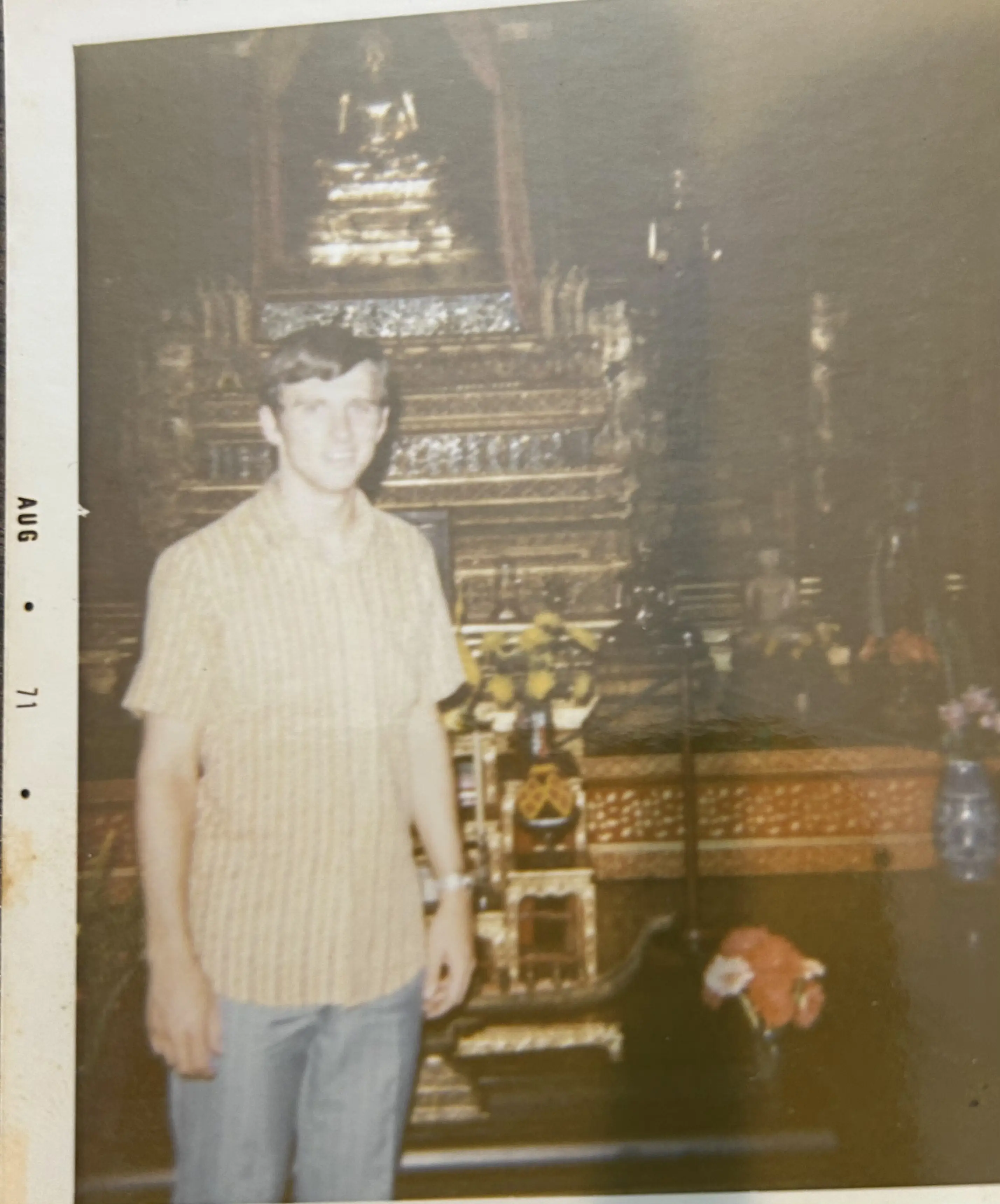
In August, I went to Fort Gordon for ten weeks of teletype telecommunications school. I graduated in April and was sent to Bangkok, Thailand, to join the Signal Corps. Thailand had numerous air bases, including B‑52 installations. The journey took me through Travis AFB, Manila, Tokyo, and finally Bangkok.
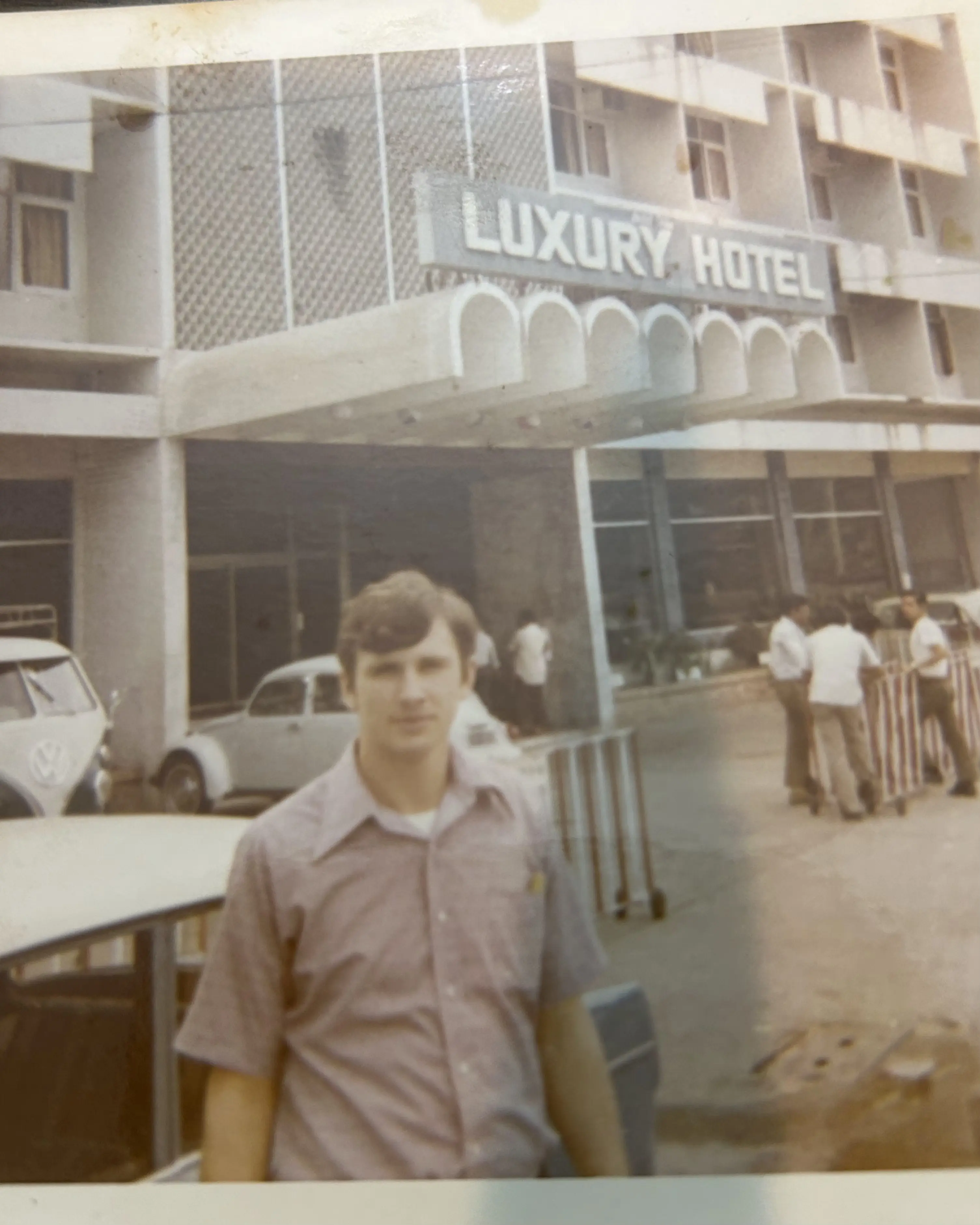
Thailand was a sensory shock, strange smells from stagnant ponds, spicy food, and even monkey‑brain soup. I lived in a hotel with a pool and bar and worked twelve hours a day, seven days a week. I wanted to experience Thai culture, so I lived in a floating hut made of grass and scrap lumber.
I spent two years and three months in Thailand. Vietnam soldiers came through daily for R&R, spending money freely because they weren’t sure they’d live to see tomorrow. I volunteered for TDY to test myself and traveled to U‑Tapao Air Base, 150 miles from Bangkok and 80 miles from the Cambodian border. Khmer Rouge insurgents attacked B‑52 bases with RPGs and mortars. We lived in metal barracks and were told we would be attacked. One night, it happened. We ran out, terrified of RPGs punching through the thin walls. The order was simple: fight or die.
We were a community. I typed hundreds of letters for soldiers killed in battle. It was one of the hardest things I ever did. Handling classified correspondence, I knew we were losing the war. I stayed close to the base and the villages weren’t safe. After three months, I didn’t extend TDY.
I spent a couple of months in Bien Hoa, Vietnam. I got sick from the food and hated the rations. Our barracks were metal containers, moved around on trucks because we were targets. Soldiers suffered terrible foot diseases from constant wet conditions. Many had been in the bush for over a month without a shower. It was heartbreaking that when they returned home, they were spit on or rejected.
After three attempts, I returned to Bangkok. I continued working around the clock, twenty‑four hours a day, seven days a week, keeping the circuits open and the equipment ready for anything that came through. Admiral John S. McCain Jr., a decorated World War II commander and Commander‑in‑Chief of United States Pacific Command, was staying in the five‑star hotel just three doors down from my room. I set up a communication center for him. I didn’t speak to him because I simply did my job; besides, what would a Sergeant say to an Admiral. I remember one time seeing him walking down the hall in a plain white t‑shirt and shorts, heading to work out. After he retired, I later set up a communication center for Admiral Gayler, and yes, I did speak to him when he took position.
After two years and three months overseas, I left the military. I nearly reenlisted for a third tour to leave as an E‑4, but I didn’t have the required six months. I left as an E‑4, MOS 72 Bravo. I was discharged ninety days early on August 20, 1973. Coming home was strange. Only veterans understood. There were no parades. Vietnam was considered a loss.
After coming home from Vietnam, I tried to find my footing again. I went back to the University of Houston and explored different majors, hoping to discover what direction my life should take. I needed one hundred twelve hours to graduate and left with one hundred two. Even though I did not finish, I loved the classes I took. Oceanography, Architecture, and Geometry. The art of design and the beauty of angles stayed with me.
Those years taught me something important: you are not promised tomorrow. When you turn back to God, you come home like the returning Prodigal Son. I was still searching for purpose, still trying to understand where my life was headed. I was not happy then, but that was when everything changed.
That was when I met Carolyn.
We met through Great Expectations, a popular dating service in the early nineties. It was October 5, 1992, and from the beginning there was something different about her. Our preacher gave us a compatibility test with about one hundred questions. We took the test in separate rooms, and when the results came back, every answer matched. It felt as if God Himself was stitching our lives together. Later that same year, we were married.
Not long after that, my grandmother encouraged me to follow in my grandfather’s footsteps and join the Postal Service. He retired after 35 years. She wanted me to have stability, and she wanted me to finish something in life without quitting. So I agreed, and that decision became the next chapter of my life. I realized something important: I could not be fired. That kind of stability mattered. I worked as a postal clerk handling mail distribution, registered and certified mail.
Later, I transferred to Accounting, where I worked with financial registers and postal revenue. I also worked in customer relations, helping people with their postal needs and questions. I was never a mailman delivering mail.
My most bizarre moment was when a package tore open on the conveyor belt and spilled ashes everywhere. We had to find a bag and gather them carefully. I also remember the letter sorters falling asleep at their machines, especially the ones who thought Houston was a state.
After thirty years, it was time to hang it up. I was burned out, and I knew it was time to move forward. But my grandmother would not let me fall short. She held me accountable, reminding me of the legacy my grandfather had built and the importance of finishing what I started. Because of her, I completed my career, followed through, and retired with thirty years of service behind me. My brother teased me, saying I had a pattern: I would get close to achieving something, then quit. But this time, I finished. I stayed. I honored her expectations and my grandfather’s legacy.
My wisdom is simple: you’re not promised tomorrow. When you turn back to God, you are the returning Prodigal Son. I wasn’t happy then, but that was when I met Carolyn. She found me on a dating site. Our preacher gave us a compatibility test about a hundred questions and though we took them in separate rooms, our answers matched exactly. We married in 1992.
This last year was one of the hardest of my life. I lost my best friend, a good father and a hard worker. His death sent me into a deep depression. Friends grew frustrated. I looked in the mirror and told myself I needed to get over it. Making new friends was difficult, but in November everything changed. People who see me now are happy for me.
I’m coming back to You, Lord.
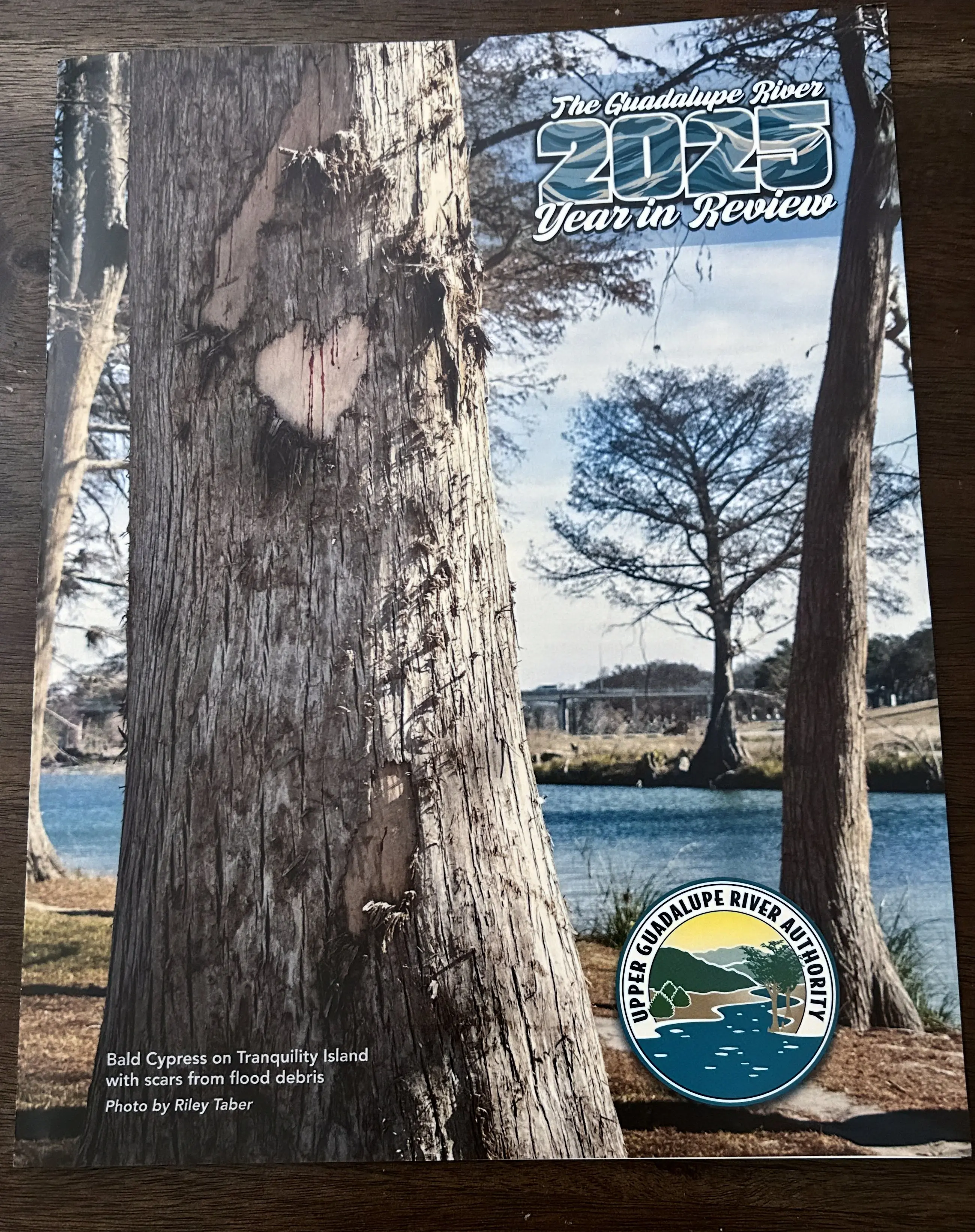
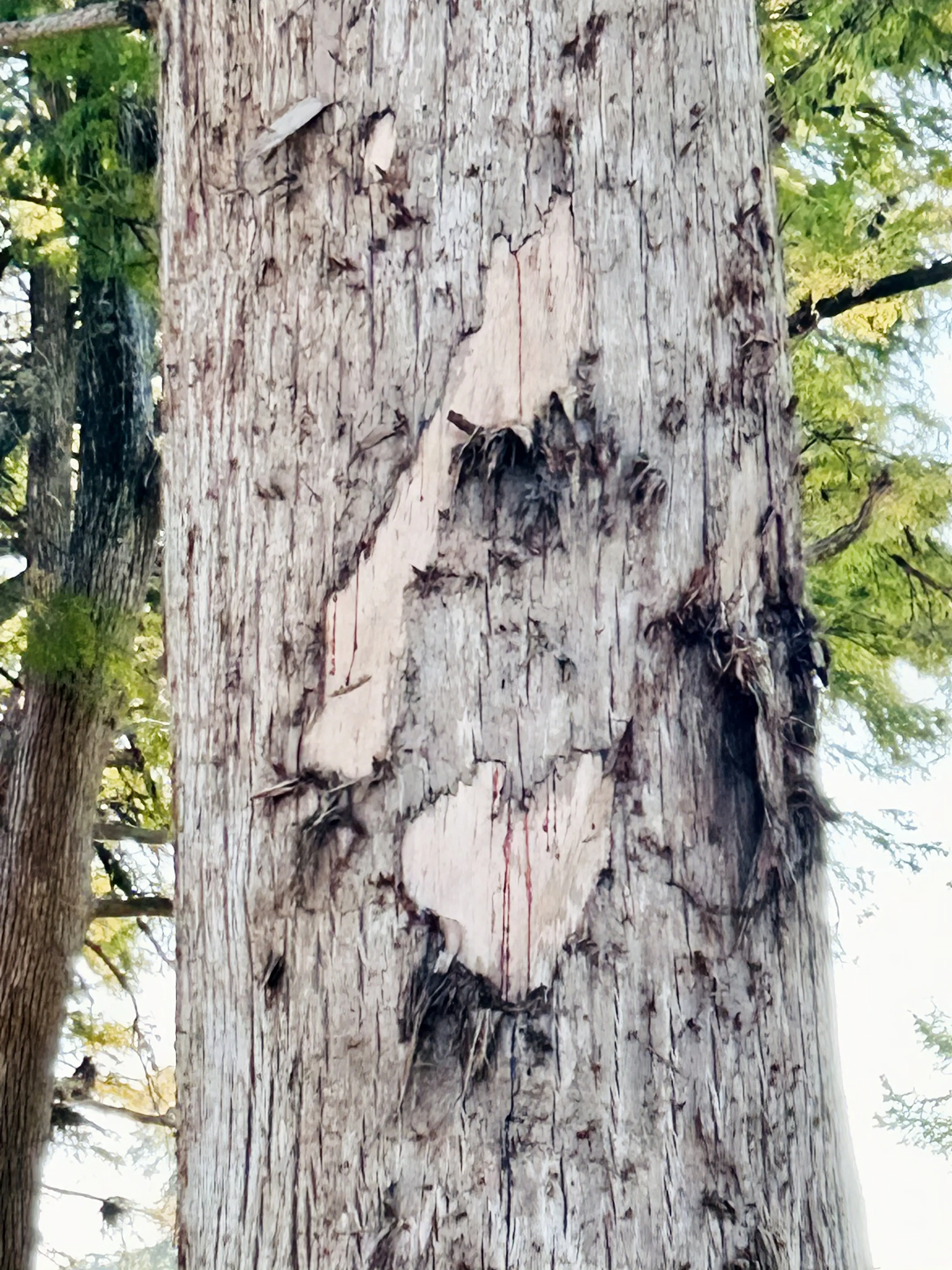
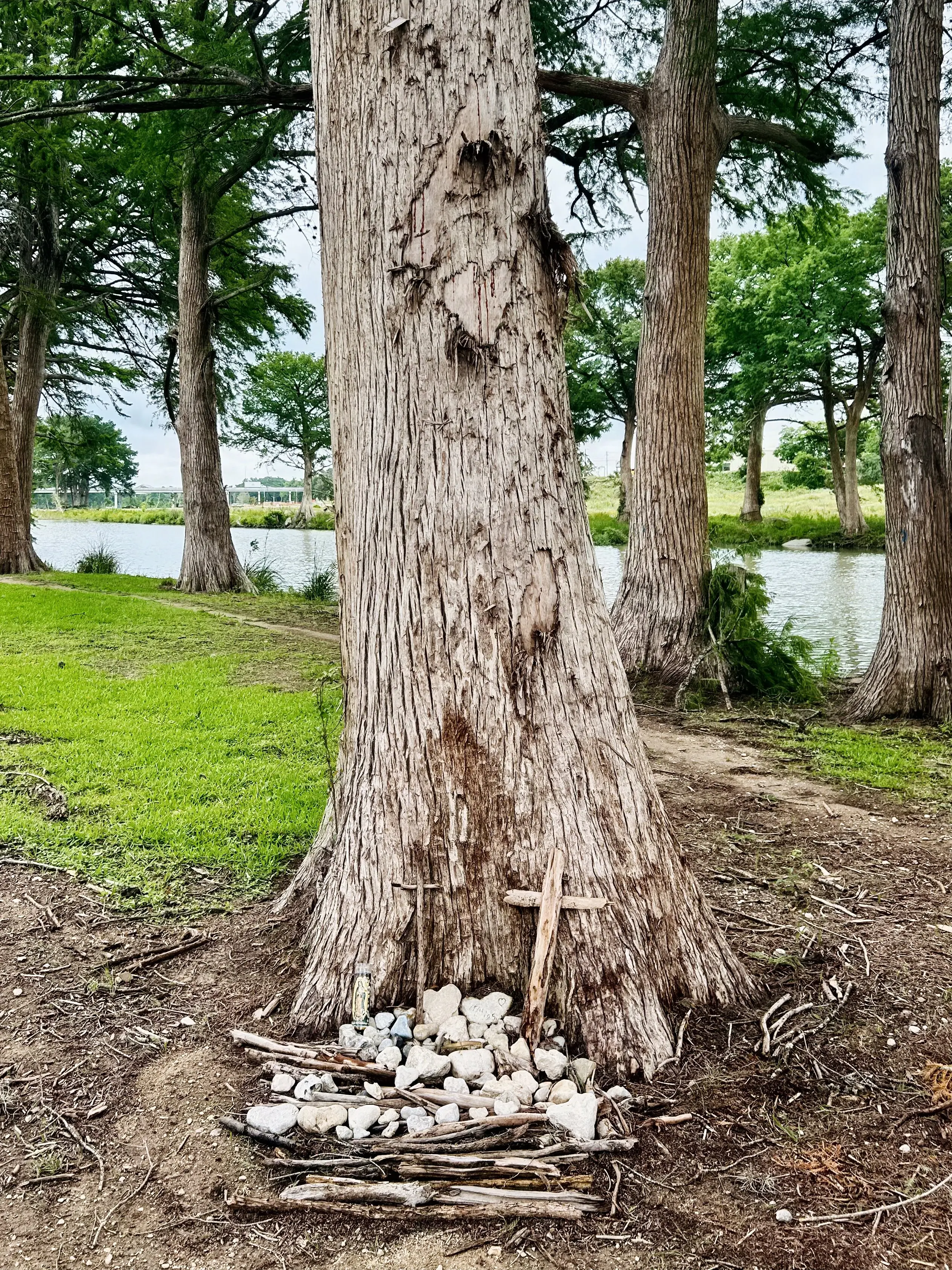
After the devastating floods that struck Kerrville on July 4, 2025, I walked alone along the Guadalupe River in Louise Hays Park. The floodwaters had risen nearly fifty feet, tearing through the landscape and taking lives with them. As I walked, I noticed a tree with a dark mark on its trunk. When I stepped closer, I realized the mark was shaped like a heart carved by the force of the floodwaters themselves. The wood looked dark and wet, almost as if the heart was bleeding.
It looked like it was weeping for the lives lost. There was no one else around, just me, the river, and that wounded heart. I had been asking God for signs, asking Him to confirm what I felt deep inside. When I saw that heart, shaped by devastation yet unmistakably present, I fell to my knees. At that moment, I knew God was speaking to me. I knew he was calling me back.
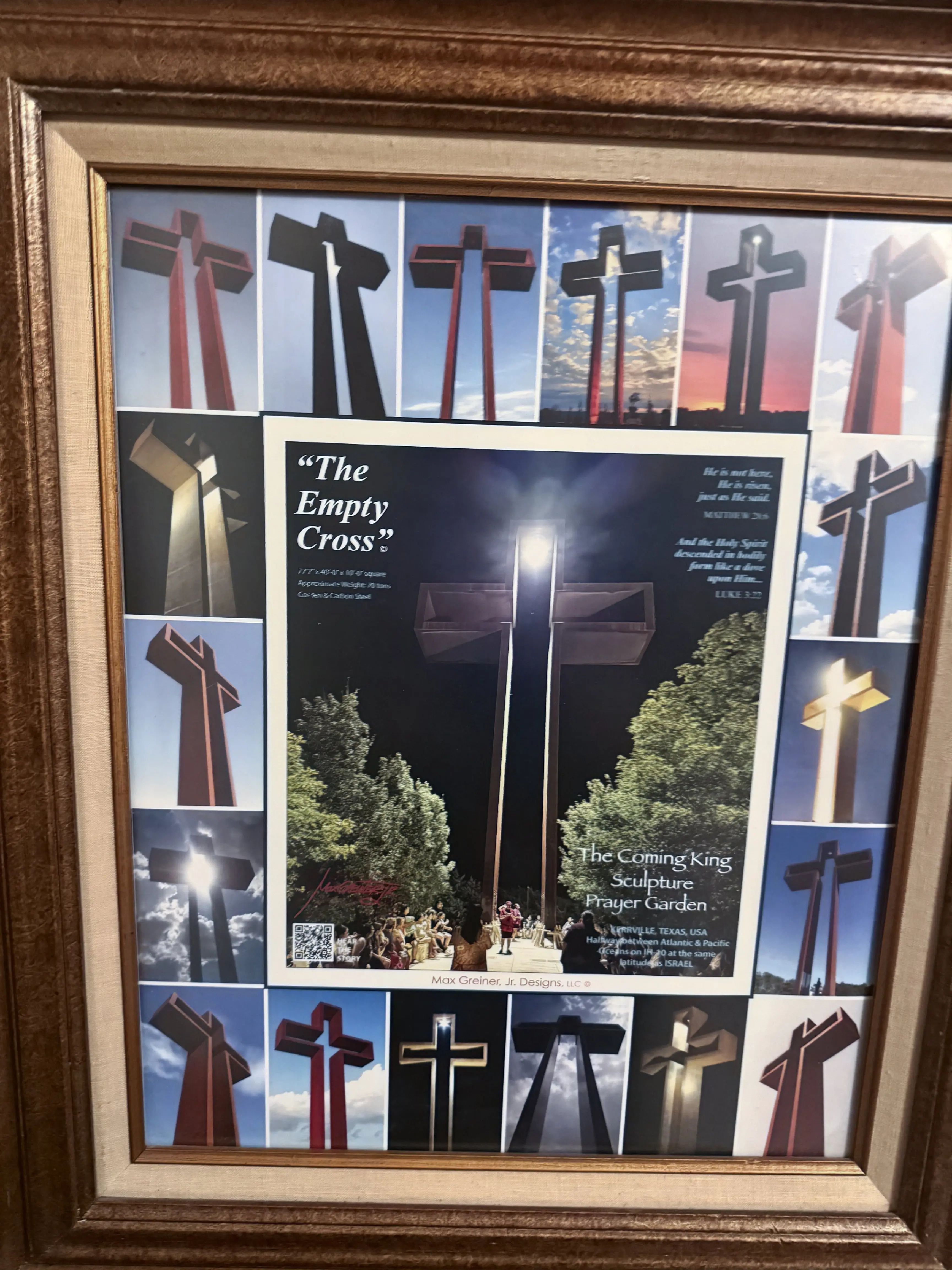
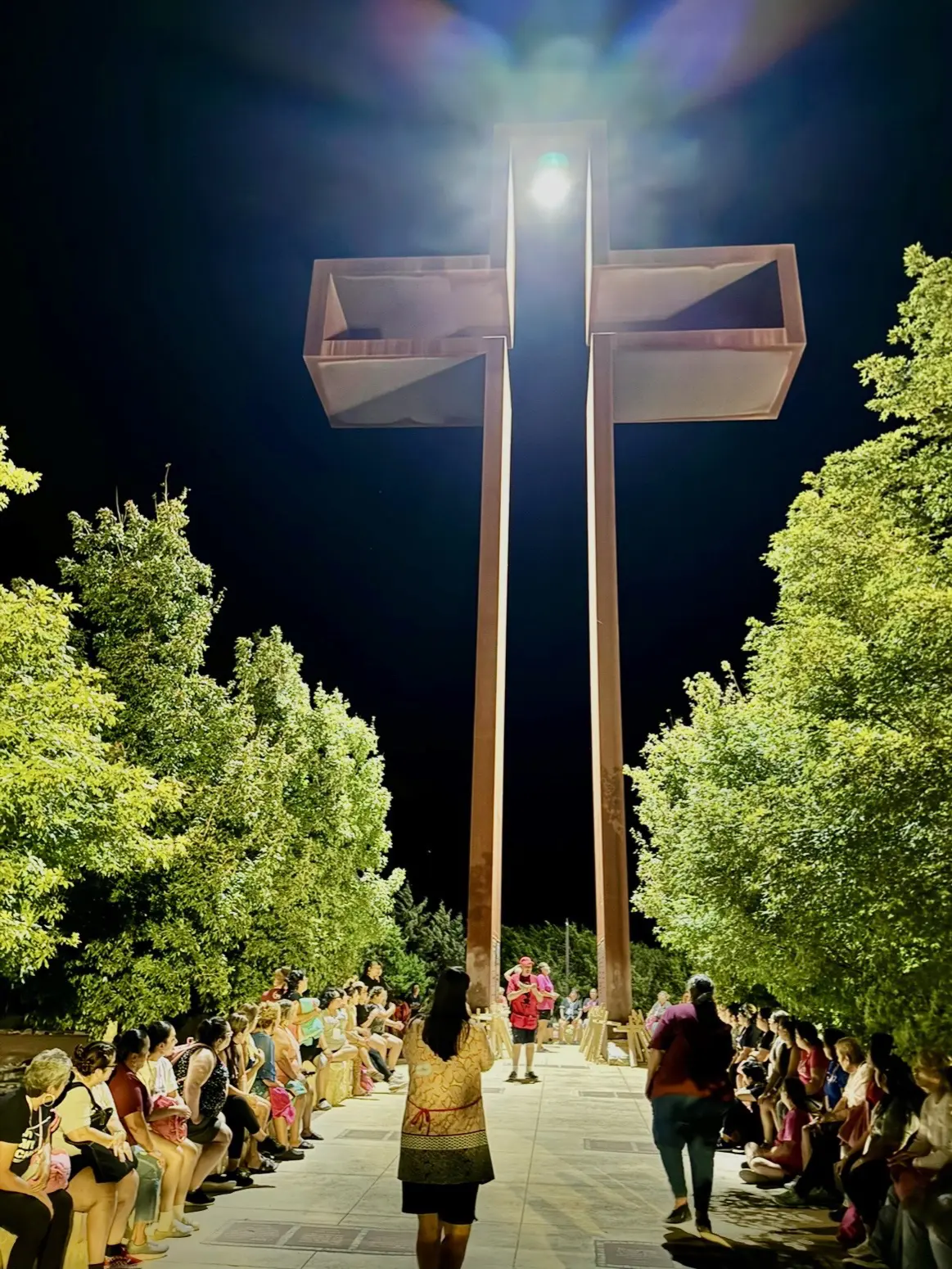
On Sunday, November 23, 2025, at The Coming King Sculpture Prayer Garden in Kerrville, I met Tracie and Tom for the first time. I had gone there with my granddaughter and her soon‑to‑be fiancé, still carrying the weight of everything I had been through. As we walked through the Prayer Garden, Tom noticed my cap and walked up to me, saying, “Thank you for your service.” That simple act of kindness struck me deeply. Tracie stood beside him, and the two of them felt like they had been placed there by God Himself.
They gave me a beautiful challenge coin showing a man kneeling at the cross with scripture from Ephesians 6 around the edge, along with a special baptism coin. Standing there with my granddaughter and her soon‑to‑be fiancé beside me, I realized this meeting was divine intervention. It was another confirmation that God was calling me back.
I decided to be baptized at the cross and waited seven months so Trent could graduate. Family and friends attended, including my best friend’s wife. My granddaughter is marrying her grandson. My niece brought my grandmother’s Bible filled with her notes. I could not sleep the night before. During baptism, I joked, “Well, I’m ready to get wet.” I was baptized holding the coin. Chaplain Bryan said no one had ever done that before. The coin was later used for another baptism. Replacement coins were given to chaplains. The vision of baptisms at the cross became reality. My words of wisdom are simple: “Do not give up on God, because He does not give up on you.” I returned to the Lord on October 22, 2025, at 7:16 a.m.
Colorado has always held a special place in my heart. I first discovered it at age six, and my mother loved it just as deeply. In 1975, my brother and I found Buena Vista. We drove north toward Chalk Creek and followed a dirt road to a quiet camp spot. We stayed seven days, fishing and exploring the mountains. At a pay‑to‑fish lake, we met a remarkable man named Jerry Hornbuckle, a former NASA rocket scientist who looked like Einstein himself. I asked him how someone like me could get hired there. He told me plainly, “You have to move up here, and I can get you hired.”
So the next year, we moved to Colorado. I submitted my papers and was hired. I worked there for eight years, greeting visitors, answering questions, and helping people enjoy the beauty of the Rockies. My wife worked at the golf course, even though she wasn’t a golfer. Those years were peaceful, meaningful, and full of purpose.
Today, my wife and I are enjoying our retirement years, spending time with our grandchildren and traveling to Colorado as the seasons change. Those trips feel like returning to a place God stitched into my heart long ago, a place of peace, memory, and renewal. After everything I have lived through, I feel blessed beyond measure.
I’ve learned that when you talk with veterans, you don’t start by preaching or advising. You listen. You sit with them, hear their stories, and understand where they’ve been. Veterans carry memories that are heavy, complicated, and often unspoken. Listening is how you honor them. Listening is how you love them.
That’s why ministering to people at the cross has become my calling. What began as a desire to help others has become my ministry. I feel very blessed to stand at the cross, meet people where they are, and let God work through simple conversations, quiet moments, and shared stories.
Scripture has guided me:
John 8:12
“I am the light of the world. Whoever follows me will never walk in the dark.”
1 Corinthians 13
“Don’t repay evil with evil because the Lord is leading your steps.”
These verses remind me that God’s light reaches even the darkest places: war zones, grief, loneliness, and the long road back to faith. He led me through all of it, and now he lets me help lead others.
Supplemental Information
What Bill Tanner Did at NASA (1969 to 1970)
Microfilm Technician – Apollo Program Operations
When Bill Tanner arrived at NASA in 1969, he stepped into a world unlike anything he had ever known. The Apollo program was in full motion, and every department, even the ones that seemed small from the outside, carried a critical share of responsibility in getting astronauts to the moon and bringing them home safely. His job title was simple: microfilm technician. The work itself was anything but simple.
NASA in 1969 was electric. Every hallway carried a sense of urgency. Every office, even those tucked behind steel doors, felt the weight of the moon mission. You didn’t just walk into a job. You walked into a national effort, a race against the Soviets, and a moment that would define human history. The building smelled of warm electronics, developing chemicals, machine oil, and coffee that had been sitting too long. Engineers moved quickly with blueprints under their arms. Technicians rushed between labs. Astronauts passed through the corridors with a quiet confidence that made everyone straighten up.
Bill worked in the Microfilm and Records Division, a department few people outside NASA ever knew existed, yet one that formed the backbone of Apollo’s information system. Computers were present, but they were enormous, limited, and unreliable for long‑term storage. Microfilm, by contrast, was permanent, stable, tamper‑proof, immune to data corruption, and capable of storing thousands of pages on a single reel.
His division handled mission transcripts, engineering drawings, flight plans, telemetry logs, astronaut communications, emergency procedures, and classified reports. Everything that mattered, everything that needed to be preserved, passed through the hands of the microfilm technicians.
During the Apollo era, microfilm served as a hidden nerve center. It preserved mission data, archived communications, stored engineering drawings, recorded astronaut dialogue, and maintained permanent mission logs. Every transmission between Mission Control and the astronauts was recorded on microfilm. Every engineering change, every checklist, every update to a flight plan — all of it flowed through the microfilm department.
Bill Tanner’s work ensured that the history of Apollo was not only created, but preserved.
What Bill Tanner Did Every Day at NASA (1969 to 1970)
Microfilm Technician – Apollo Program Operations
Bill Tanner’s daily work at NASA placed him inside one of the most critical information pipelines of the Apollo program. Although his job title was “microfilm technician,” the responsibilities behind that title were far more consequential. Every shift he worked contributed directly to the preservation of mission data, astronaut communications, engineering decisions, and the technical heartbeat of spacecraft traveling to the moon.
Capturing Mission Communications
Every word spoken between Mission Control and the astronauts passed through systems that ultimately produced microfilm copies. Bill handled the microfilm processing for:
- CAPCOM transmissions
- Astronaut status reports
- Navigation and guidance updates
- Emergency alerts
- Lunar surface communications
These were not abstract records. They were the living dialogue of Apollo. When Armstrong said, “The Eagle has landed,” that transmission became part of a microfilm record. Bill was one of the people responsible for ensuring that moment was preserved with absolute clarity and permanence.
During Apollo, voice transmissions were routed through analog recording systems, then converted into microfilm so engineers, analysts, and historians could review them long after the mission ended. Bill’s work ensured that the spoken history of the moon landings would never be lost.
Processing Telemetry: The Spacecraft’s Vital Signs
Telemetry was the spacecraft’s heartbeat. It streamed in continuously from the command module and lunar module, documenting the health and performance of every critical system. Bill helped convert these streams into microfilm records, preserving data such as:
- Oxygen levels
- Fuel consumption
- Cabin pressure
- Electrical load
- Guidance computer status
Telemetry was essential for post‑mission analysis. Engineers used these microfilm records to reconstruct events, diagnose anomalies, and refine future missions. Bill’s precision ensured that every frame of telemetry was readable, aligned, and permanently archived.
Inspecting and Verifying Microfilm Reels
Quality control was one of the most demanding parts of Bill’s job. Every reel had to be perfect. He inspected each one under magnification, checking:
- Frame clarity
- Absence of missing or duplicated frames
- Alignment and focus
- Accurate timestamps
- Physical integrity of the film
If a reel showed even minor flaws, it had to be redone immediately. Apollo missions operated under unforgiving standards. A single unreadable frame could compromise engineering analysis or historical documentation. Bill’s work required patience, technical skill, and an unwavering commitment to accuracy.
Archiving Permanent Mission Records
Bill helped create the permanent archival record of the Apollo missions. The microfilm he produced became part of NASA’s official documentation—records that still exist today in federal archives, research centers, and historical collections.
These microfilm reels preserve:
- Mission transcripts
- Engineering drawings
- Flight plans
- Telemetry logs
- Astronaut communications
- Emergency procedures
- Classified reports
The Apollo program generated millions of pages of technical and operational data. Microfilm was the only reliable long‑term storage medium of the era. Bill’s work ensured that the scientific, engineering, and human story of Apollo would remain intact for future generations.
The Hidden Importance of His Role
Although the microfilm division operated behind the scenes, it was a nerve center of information preservation. Computers in 1969 were enormous, limited, and prone to failure. Microfilm was stable, tamper‑proof, and immune to data corruption. It allowed NASA to store thousands of pages on a single reel and maintain permanent records of every mission.
Bill Tanner’s work ensured that the Apollo program’s history was not only created but safeguarded. Every reel he processed became part of the enduring legacy of humanity’s first journey to the moon.
The Pressure Men Like Bill Worked Under
NASA was not a relaxed workplace. It was a crucible, a place where deadlines were absolute, precision was non‑negotiable, and mistakes could cost lives. Every person in the building carried a piece of the mission on their shoulders, and every department felt the weight of sending human beings into space and bringing them home safely.
Bill worked in a room where the intensity never eased:
- machines hummed with a constant, electrical urgency
- microfilm cameras clicked in steady, rhythmic pulses
- technicians spoke in short, clipped sentences, always focused, always alert
- supervisors hovered with military precision, checking every frame, every reel, every detail
The air itself felt charged with a mix of warm electronics, developing chemicals, and the quiet tension of people who knew the stakes. There were no casual days, no slow afternoons, no room for error. Every transmission mattered. Every frame mattered. Every second mattered.
Bill was not simply performing a job. He was supporting astronauts who were risking their lives in the vacuum of space. He was preserving the record of missions that could turn on a single miscalculation. He was part of a chain that had to be perfect, because imperfection could mean disaster.
The pressure was constant, and the responsibility was enormous. Yet Bill carried it with the quiet steadiness of someone who understood exactly how much his work mattered.
The Moment You Lost Contact
When the astronauts slipped behind the moon and radio signals were eclipsed by the lunar mass, the room fell into a heavy silence as the microfilm machine kept running but the audio feed went dead, freezing everyone in place eyes locked on monitors, engineers leaning forward, supervisors holding their breath, tension tightening across your chest until, suddenly, the signal snapped back and the room erupted in clapping and even tears, and you witnessed one of the most dramatic moments of the mission from the inside.
The Truth About the Moon Landing
Because Bill handled the raw microfilm recordings the real transmissions and the real data he knows with absolute certainty that the moon landing was real, because he saw the evidence, printed the records, heard the astronauts’ voices, watched the data stream in, and witnessed firsthand that there was no Hollywood trick, no studio, no deception only thousands of people working together to achieve something humanity had never done before.
Why Bill’s Work Mattered
Bill’s work at NASA preserved the living heartbeat of the Apollo missions. Every reel he handled, every frame he inspected, every transmission he captured became part of the permanent record of how mankind reached the moon. Without microfilm technicians like Bill, the mission’s most critical evidence could have vanished:
- Mission data could have been lost forever
- Astronaut transcripts could have been corrupted or incomplete
- Engineering records could have disappeared without a trace
- History itself could have been fractured, missing the very details that prove what humanity accomplished
Bill was one of the quiet custodians of the Apollo legacy, the unseen hands ensuring that future generations would know exactly what happened, how it happened, and who made it possible.
The Winter That Forged Him: Bill Tanner’s Arrival at Fort Leonard Wood
Bill arrived at Fort Leonard Wood in the dead of winter, stepping off the bus into a Missouri cold so severe it felt as if it could cut straight through bone. Winter at Fort Leonard Wood was infamous. The Ozark Plateau could produce temperatures that plunged far below zero, and during his arrival the air hovered near minus twenty degrees. The cold did not simply sting. It pressed against the skin like a weight. Breath burned in the lungs. Fingers ached even inside gloves. Snow lay across the ground in hard, wind‑scoured sheets, and the open training fields offered no protection from the gusts that swept across them with relentless force. It was the kind of cold that made every movement deliberate and every mistake painful.
The reception battalion was Bill’s first introduction to Army life, and it was intentionally disorienting. Recruits were processed in large groups, moving through a maze of stations for medical examinations, paperwork, inoculations, haircuts, and initial evaluations. The buildings were crowded and loud, filled with the constant echo of boots on concrete and the sharp voices of drill sergeants directing the flow of new arrivals. Outside, formations were held for long stretches, and the cold punished anyone who shifted, slouched, or failed to stand at attention. The Army used the environment as part of the training. The message was unmistakable. You adapted, or you suffered.
Bill waited an entire week before receiving his uniform. That meant standing in formation in civilian clothes, exposed to the full brutality of the winter while drill sergeants barked orders with no regard for the weather or the discomfort of new recruits. The Army did not slow down for cold, fatigue, or inexperience. The uniform was not issued until the Army decided you had earned the right to wear it. Until then, you endured the elements with nothing but determination and the knowledge that thousands of soldiers before you had done the same.
The psychological impact of those first days was profound. Boot camp was designed to strip away the familiar and replace it with discipline, resilience, and the ability to function under pressure. Even simple tasks became lessons. How to stand in line without speaking. How to fold a blanket with precision. How to move as a unit rather than an individual. Every detail mattered. Every mistake was corrected immediately and loudly. The cold amplified everything. It made the body tense, the mind alert, and the stakes feel higher.
At night, the barracks offered little comfort. Rows of metal bunks, wool blankets that never seemed warm enough, and the constant hum of recruits trying to make sense of their new reality. Sleep came lightly, interrupted by the sounds of boots on concrete, distant shouting, and the knowledge that reveille would come long before the body felt ready. The barracks smelled of floor wax, damp wool, and the nervous energy of young men learning how to become soldiers.
By the time Bill finally received his uniform, he had already learned one of the most important truths of military life. Hardship was not an obstacle to training. It was the foundation of it. The cold, the waiting, the discomfort, the relentless pace all served a purpose. They stripped away the familiar and replaced it with endurance, discipline, and the ability to function under pressure. Fort Leonard Wood did not ease recruits into Army life. It forged them from the first moment they arrived.
Bill’s introduction to the military was not softened or staged. It was raw, demanding, and real. It shaped the endurance he would carry into every challenge that followed, from the barracks to the training fields and eventually into the work that defined his service.
Life in the Quonset Huts
Life in the Quonset huts at Fort Leonard Wood was a test that never let up, a constant reminder that the Army shaped soldiers not only through training fields and drill sergeants but through the environment itself. Bill lived in long, curved metal huts that trapped the cold rather than kept it out. The thin walls rattled in the wind, and the concrete floors stayed icy no matter how many bodies filled the space. The cold settled into the room like a permanent resident, refusing to leave even for a moment.
Reveille came at four thirty in the morning, long before the sun rose over the Ozark hills. The sound was abrupt and unforgiving, a blast that tore through the stillness and forced men out of their bunks and into the freezing air. The huts erupted with noise. Boots hit the floor in heavy thuds. Metal lockers clanged open and shut. Drill sergeants shouted for formation with voices that carried through the thin walls and left no room for hesitation. The shift from sleep to movement was immediate, and the cold made every action sharper, faster, more urgent.
Inside the huts, the conditions were harsh. Condensation froze on the windows in delicate patterns that looked almost beautiful until you remembered they were formed from the breath of men trying to stay warm. Boots never fully dried. They stayed damp from snow, ice, and sweat, and recruits learned to put them on quickly before the cold could settle into their feet. Blankets felt thin against the winter air, offering little comfort against temperatures that seemed determined to test every recruit’s resolve. Every breath looked like smoke, rising in faint clouds that drifted through the dim light of the early morning.
The huts smelled of cold metal, damp wool, and the lingering scent of sweat from men who worked hard, slept lightly, and woke early. The air carried the constant hum of nervous energy, the awareness that every day would demand more than the one before it. The cold made conversations short and movements efficient. Recruits learned to dress quickly, lace boots tightly, and prepare for formation with a speed born from necessity rather than discipline alone.
At night, the huts offered little relief. The concrete floors radiated cold upward, and the metal walls amplified every gust of wind outside. The lights dimmed, but the discomfort remained. Recruits lay under thin blankets, listening to the distant sounds of drill sergeants, the hum of generators, and the restless shifting of men trying to find warmth in a place that offered almost none. Sleep came lightly, interrupted by the awareness that reveille would arrive long before the body felt ready.
Yet the misery served a purpose. The huts forged discipline in ways the training fields could not. The cold demanded resilience. The early mornings demanded obedience. The discomfort demanded focus. Bill learned quickly that the Army did not simply train soldiers through instruction. It trained them through environment, through hardship, through the relentless expectation that they would rise to meet every challenge placed before them.
The Quonset huts were unforgiving, but they shaped him. They taught him that endurance was not a trait you discovered. It was a trait you earned. The cold, the noise, the discomfort, the early mornings all became part of the foundation he carried into every chapter of his service.
Training Under Pressure
Basic Training at Fort Leonard Wood in Bill’s era followed the standard U.S. Army Basic Combat Training (BCT) model. The purpose was to take civilians and turn them into disciplined, physically capable soldiers. The training was intentionally difficult and structured to test endurance, obedience, and adaptability.
Bill completed the same core requirements all recruits faced:
Physical Training and Marches
- Long marches carrying full gear (often 50 to 100 lbs depending on load).
- Marches took place in all weather conditions, including snow, mud, and freezing temperatures common at Fort Leonard Wood in winter.
Weapons Training
- Instruction and qualification on the M16 rifle.
- Weapons drills were conducted outdoors, meaning recruits often trained with cold or numb hands during winter months.
Obstacle Courses
- Standard Army obstacle courses included walls, rope climbs, balance beams, and crawl pits.
- In winter, these courses were frequently slick with ice or mud, increasing difficulty.
Inspections and Discipline
- Daily inspections of uniforms, bunks, and equipment.
- Drill instructors enforced discipline through constant corrective instruction, often loud and direct, which was standard Army practice.
Mental and Physical Stress
- Recruits experienced physical exhaustion from long days, early mornings, and continuous activity.
- Mental pressure came from strict schedules, rapid instruction, and the expectation to follow orders immediately and precisely.
Skills Learned
Through this training, Bill learned:
- Speed and efficiency in movement and task completion.
- Immediate obedience to commands.
- Tolerance for discomfort, including cold, fatigue, and stress.
- Calmness under pressure, a key requirement for all soldiers.
These skills were foundational for his later service in Thailand and Vietnam, where discipline, endurance, and adaptability were essential.
Daily Schedule
A standard day in U.S. Army Basic Combat Training (BCT) at Fort Leonard Wood followed a rigid, structured timeline. Bill’s daily routine would have included the following components:
Reveille (0430 to 0500)
- The wake‑up call sounded between 0430 and 0500.
- Recruits dressed quickly, made their bunks, and prepared for formation.
Morning Formation
- Accountability roll call.
- Uniform and equipment inspection.
- Instructions for the day’s training schedule.
Physical Training (PT)
- Calisthenics (push‑ups, sit‑ups, running).
- Conditioning drills.
- Group runs or ability‑group runs.
- Conducted outdoors regardless of weather.
Classroom Instruction
Recruits attended mandatory classes covering:
- Army values and discipline
- First aid
- Weapons safety
- Chemical, biological, radiological (CBR) training
- Map reading and basic field skills
Drill and Ceremony
- Marching practice
- Learning formations
- Practicing movement as a unit
- Essential for discipline and coordination
Field Exercises
- Tactical movement
- Camouflage and concealment
- Basic survival skills
- Patrol basics
- Conducted in wooded or open terrain around Fort Leonard Wood
Weapons Qualification
- M16 rifle training
- Zeroing and grouping
- Live‑fire qualification
- Range safety procedures
- Cleaning and maintenance of weapons
Night Training
- Night marches
- Low‑light navigation
- Night infiltration courses
- Additional instruction depending on the training cycle
End of Day
- Equipment cleaning
- Barracks maintenance
- Final formation
- Lights out typically around 2100 to 2200
Communications and Telecommunications Specialist – MOS 72B
During the Vietnam era, MOS 72B was one of the most critical specialties within the United States Army Signal Corps. Soldiers in this field formed the backbone of military communication long before computers, digital networks, or satellite systems became standard. They operated and maintained the Army’s long‑distance message systems, ensuring that information moved reliably across bases, commands, and international theaters. Bill Tanner served in this role, and his work was essential to the daily functioning of military operations throughout Southeast Asia.
The Teletype Machine: The Army’s Written Voice
The teletype machine was the Army’s primary instrument for transmitting written messages across installations and between countries. It was the lifeline of military communication, carrying everything from routine administrative updates to critical operational orders. The machine produced continuous streams of printed text on narrow paper strips, each character punched through mechanical precision. Every message mattered. Every line had purpose.
As a 72B, Bill’s duties centered on the disciplined operation of these machines. He operated teletype terminals connected through secure communication circuits, typing and transmitting official messages using standardized military formats that ensured clarity and uniformity. These formats were rigid and universally recognized across the Army, allowing messages to be understood instantly regardless of where they were sent.
He received incoming messages and routed them to the correct departments, maintaining strict accountability through detailed message logs. Every transmission had to be recorded, filed, and preserved. Nothing could be lost. Nothing could be misrouted. The Army’s operational rhythm depended on the accuracy of these records.
Bill ensured continuous operation of communication lines during his shift, monitoring circuits for interruptions and responding immediately to any irregularities. Teletype networks carried information vital to logistics, personnel movements, supply chain updates, aircraft operations, intelligence routing, and administrative orders. These networks were the arteries of the Army’s information system, and Bill’s work kept them flowing.
Inside the Communications Center: The Nerve Hub of Military Operations
Bill worked inside a communications center, a facility that operated around the clock. These centers were staffed twenty‑four hours a day, seven days a week, because the Army’s message traffic never stopped. The environment was intense, technical, and highly structured.
A typical communications center contained multiple teletype machines arranged in rows, each connected to different circuits and message channels. The constant clatter of machines created a rhythmic backdrop that never ceased. Switchboards allowed operators to manage voice and data lines. Encryption equipment, depending on the location, protected sensitive transmissions. Message racks held incoming and outgoing traffic, organized by priority and destination. Routing boards displayed circuit status and message flow. Line‑monitoring equipment tracked the health of communication channels and alerted operators to outages or degradation.
Bill’s duties included monitoring message traffic, ensuring circuits stayed open, reporting outages immediately, and coordinating with signal maintenance personnel to restore communication lines. He kept the center running during long shifts, often through the night, ensuring that every message reached its destination without delay.
The communications center demanded precision. Operators had to remain alert, focused, and ready to respond to sudden changes in circuit status. A single error could disrupt operations across an entire region. The work required discipline, technical skill, and the ability to remain calm under pressure.
Thailand: A Critical Communications Theater
Bill’s environment was factual and typical for all Signal Corps communications specialists serving in Thailand during the Vietnam era. Thailand was a major communications hub for the United States military, supporting operations throughout Southeast Asia. Bases in Thailand handled enormous volumes of message traffic, connecting units in Vietnam, Laos, Cambodia, and the Pacific.
Communications centers in Thailand were responsible for:
- routing intelligence summaries
- coordinating aircraft movements
- transmitting supply chain updates
- supporting personnel transfers
- relaying operational orders
- maintaining secure communication lines across multiple countries
The reliability of these centers was essential. They supported air operations, logistics networks, and command decisions across the region. Bill’s work ensured that these systems remained stable, accurate, and continuous.
The Importance of His Role
Bill’s work as a 72B was not simply technical. It was foundational to the Army’s ability to function. Every movement of personnel, every supply request, every aircraft schedule, every intelligence update relied on the communication systems he operated. In an era before digital networks, before email, before satellite data links, the teletype machine was the Army’s written voice. Bill ensured that voice was clear, continuous, and reliable.
His service in the communications center placed him at the center of military coordination during a complex and demanding period. The accuracy of his work supported commanders, sustained operations, and kept the Army connected across vast distances. His role was essential, and his performance directly contributed to the success of daily military operations.
The Center That Never Slept
Inside the communications center, Bill lived in a world shaped by sound, motion, and precision. The room never slept. Even in the middle of the night, the air vibrated with the constant clatter of teletype machines. Their keys struck with sharp metallic certainty, producing a steady rhythm that filled the space like a mechanical heartbeat. The machines hummed, clicked, and printed without pause, their warm paper strips curling into soft piles beside each operator. The scent of ink, warm circuitry, and faint ozone lingered in the air, creating an atmosphere that felt both technical and alive.
Bill sat at his station with disciplined focus. ACP 127 governed every message he touched, dictating how headers were typed, how routing indicators were assigned, and how precedence codes were applied. These codes shaped the tempo of the room. Routine messages blended into the background flow. Priority messages quickened the pace. Immediate messages sharpened the operators’ attention. Flash messages changed the atmosphere entirely. When a Flash message arrived, the room tightened as if holding its breath.
A sharp electronic tone cut through the clatter. Operators lifted their heads. The rhythm shifted. Bill leaned forward, eyes fixed on the incoming transmission. The machine began printing with a faster cadence, each character striking the paper with crisp force. The strip slid out warm against his fingertips. The ink smelled fresh, almost sharp. The header confirmed it. Flash. The highest urgency.
The room fell silent except for the machines. Conversations stopped. Chairs stilled. The other operators watched the strip feed through Bill’s printer. He scanned the message quickly, verifying routing indicators and precedence code. He checked spacing, confirmed the format, and ensured absolute accuracy. There was no room for error. Not with this level of urgency.
He moved to the routing board, the paper held carefully between his fingers. The board glowed with indicator lights, each one representing a circuit or destination. He matched the routing indicators to the correct station, feeling the familiar weight of responsibility settle into his chest. He transmitted the message through the designated circuit, watching the indicator light shift from idle to active. The hum of the line deepened. The machine responded with a rapid burst of typing as the message left the center. When the confirmation signal returned, a soft pulse of green, he exhaled. The message had reached its destination.
He logged the transmission in the message book, the pen moving in steady strokes across thick pages filled with entries from countless shifts. The log smelled faintly of ink and paper. He filed the original strip into the secure rack, sliding it into its designated slot with careful precision. The rack clicked softly as it closed. Around him, the room slowly returned to its normal rhythm. The machines settled back into their steady clatter. The tension eased.
This was the sensory reality of his work. The clatter of keys. The hum of circuits. The warmth of paper strips fresh from the printer. The smell of ink and metal. The tension in the room when a high‑precedence message arrived. The quiet satisfaction of a perfectly formatted transmission. The discipline of logging each message with exact detail. The awareness that every line he typed moved through a network that stretched across countries and commands.
His responsibilities extended beyond typing. Teletype machines demanded constant care. He cleared paper jams with practiced movements, replaced ribbons with stained fingertips, and adjusted typing mechanisms until characters printed cleanly again. He checked circuit continuity by listening to the faint hum of the line and watching indicator lights for signs of instability. The machines warmed under constant use, radiating gentle heat that mixed with the cool air of the center. Operators learned to sense when a machine was straining or when a circuit was beginning to flicker.
Security shaped the atmosphere of the communications center. The door was heavy, and the room felt insulated from the outside world. Classified messages were handled with care. Sensitive material was stored in locked containers. When destruction procedures were required, the smell of burning paper filled the air as message strips curled into ash. The faint smoke drifted upward, carrying the last traces of information that could never be allowed to remain.
Bill controlled access to the communications center, checking identification and ensuring that only authorized personnel entered. Routing documents were kept secure. Operational traffic was monitored with disciplined attention. Thailand bases often handled Vietnam‑related communications, and COMSEC rules were enforced with seriousness. The hum of machines, the glow of indicator lights, and the constant flow of message traffic created an environment where security was not simply a rule. It was a mindset.
His work kept the Army connected. It kept operations coordinated. It kept information flowing across Southeast Asia. The precision behind his duties formed the backbone of military communication during one of the most demanding periods in modern history. In that room, surrounded by machines that never slept, Bill Tanner carried out one of the most essential roles of the Vietnam‑era Signal Corps.
Work Conditions in Thailand
Thailand hosted several U.S. Army and Air Force communications sites. A 72B stationed there typically worked:
- 12‑hour shifts
- 7 days a week during high‑traffic periods
- in air‑conditioned communications rooms (to protect equipment)
- alongside other Signal Corps soldiers and Air Force communications personnel
Message traffic was heavy because Thailand supported:
- Vietnam operations
- logistics hubs
- air bases
- R&R processing
- regional command centers
Bill’s workload and shift schedule match documented Signal Corps operations.
Role in Vietnam‑Era Operations
Although Bill was stationed in Thailand, his work directly supported Vietnam because:
- Thailand was a major communications relay point
- Teletype circuits connected Thailand bases to Vietnam bases
- Many Vietnam‑related messages passed through Thailand
- Signal Corps personnel ensured uninterrupted communication between commands
This made Bill part of the larger operational network that kept the war’s communication system functioning.
The Color and Calm Before the Storm
Thailand was a world of color, warmth, and movement, a place where life pressed close but never threatened. Before Vietnam, Bill lived in a country shaped by contrasts yet softened by familiarity. Poverty was visible, but it carried a rhythm of endurance rather than fear. The smells of open markets mixed with diesel fumes from passing tuk tuks, creating an air that felt thick with life. Long work hours stretched into humid evenings, but even the fatigue carried a sense of normalcy. Thailand moved at its own pace, steady and human.
The country was alive with color. Saffron robed monks walked barefoot at dawn, their quiet presence drifting through the streets like a blessing. Flower garlands hung from taxi mirrors, their fragrance sweet and bright against the scent of exhaust. Teakwood houses perched above water, their stilts reflected in slow moving canals. Markets overflowed with fruit, spices, and chatter. Vendors called out in warm voices. Children wove through crowds with effortless familiarity. Every corner held something vivid.
The air carried its own signature. Humid, yes, but filled with the scent of cooking fires rising from street stalls, incense drifting from temple courtyards, and the constant hum of people moving through their day. The humidity wrapped itself around the skin like a warm cloth. The sounds of sizzling pans, temple bells, and distant traffic blended into a single living pulse. Crowds pressed in from every direction, but they were part of the country’s heartbeat, not a threat. Noise meant normalcy. Movement meant routine.
Even the work, long shifts inside the communications center, constant message traffic, and the pressure of supporting United States operations unfolded in a place where danger did not lurk in the shadows. Bill could step outside after a shift and feel the evening settle around him with a softness that belonged only to Thailand. Streetlights glowed through the humidity. Vendors packed away their stalls. The smell of jasmine drifted through the air. Nighttime meant rest instead of risk. Silence was simply silence, not a warning.
He could walk through a market without fear. He could sit at a small table and eat food cooked inches from the street. He could hear laughter from nearby homes. He could watch monks pass in the early morning light. Thailand was foreign, but it was not hostile. It was a place where life continued with a steady rhythm that wrapped itself around him like a second home.
This was the world he stepped out of when he boarded the aircraft for Vietnam. A world of color, warmth, and predictable rhythm. A world where the air carried life instead of tension. Leaving Thailand meant leaving safety. Arriving in Vietnam meant entering a place where every sound mattered, where every shadow carried possibility, and where every breath felt heavier.
Thailand was foreign. Vietnam was at war.
Thailand During the Vietnam War
A Major U.S. Military Hub
During the Vietnam War, Thailand was one of America’s most important allies in Southeast Asia. The U.S. used Thailand as a strategic support and operations center, which included:
- Air bases used for bombing missions over Vietnam and Cambodia
- Communications centers supporting Vietnam operations
- Logistics hubs for supplies and personnel
- R&R (Rest and Recuperation) destination for soldiers coming from Vietnam
Major United States bases in Thailand included U Tapao, Korat, Udorn, Ubon, Nakhon Phanom, and Don Muang in Bangkok. Each installation carried its own atmosphere and operational rhythm. U Tapao held the deep thunder of heavy bombers rising into humid air. Korat and Udorn pulsed with the sharp roar of fighters lifting from sun‑baked runways. Ubon’s reconnaissance aircraft moved with quiet precision, their missions threading through the borderlands. Nakhon Phanom sat close enough to Laos that the river carried distant echoes of conflict. Don Muang blended military activity with the constant civilian hum of Bangkok, a place where uniforms and travelers crossed paths beneath the same roof.
Bill’s communications work directly supported these installations. Every message he handled moved through circuits that connected to their operations, carrying orders, intelligence, confirmations, and updates essential to aircraft, personnel, and command decisions. His accuracy sustained the flow of information that kept these bases functioning, linking their missions to the wider conflict across Southeast Asia.
Political Climate
Thailand was governed by a military‑aligned government that supported U.S. involvement in the region. The country allowed:
- U.S. air operations
- U.S. communications facilities
- U.S. troop presence
Thailand itself was not a combat zone, but it was deeply involved in the war effort.
The Border Where the War Had No Edges
The Cambodian border region was one of the most volatile landscapes of the entire Vietnam War, a place where conflict did not simply exist but shifted, breathed, and changed shape inside the jungle. Thailand itself was not at war with Vietnam, yet the borderlands carried the pulse of multiple insurgencies. Communist activity simmered in rural Thai provinces. Pathet Lao influence seeped across the Laotian frontier. Khmer Rouge expansion pressed outward from Cambodia. The result was a region where danger did not announce itself but moved quietly beneath the canopy.
Bill’s assignment near the Cambodian border placed him inside this blurred frontier, a place where the war’s boundaries dissolved into dense foliage and where every day carried the weight of uncertainty. The jungle was thick, humid, and restless. Cicadas screamed from the trees with a shrill intensity that rose and fell like waves. The air smelled of wet earth, rotting vegetation, and distant cooking fires from villages that might be occupied one day and abandoned the next. Trails wound through the undergrowth like veins, narrow footpaths that could carry farmers, refugees, or insurgents with equal ease.
The Ho Chi Minh Trail was not a single road but a vast network of hidden arteries threading through Laos and Cambodia before reentering Vietnam. North Vietnamese Army units moved along these routes with practiced silence, slipping across borders to avoid direct American engagement. Their supply runners traveled at night, carrying ammunition, rice, and medical kits in woven baskets. Their footsteps were soft, almost inaudible, leaving only faint impressions in the mud. Viet Cong fighters used the same terrain, establishing medical stations, supply caches, and communication hubs beneath the canopy. Their camps were concealed with woven palm leaves and bamboo screens, invisible until you were almost upon them. The smell of extinguished fires, still warm ash, and damp canvas lingered long after they moved on.
Layered into this already volatile environment was the rise of the Khmer Rouge. Intelligence briefings described their presence in stark, clipped language. Camps tucked deep into the foliage. Recruitment from isolated communities. Movement patterns that ignored borders entirely. Their raids were sporadic but unmistakable. A village emptied overnight. A trail showing fresh bootprints. A report of unfamiliar armed groups moving silently through the trees. Their influence added a new dimension of unpredictability to a region already shaped by secrecy and movement.
For United States personnel like Bill, danger came from multiple directions. Patrols might encounter North Vietnamese supply runners one day, Viet Cong scouts the next, and signs of Khmer Rouge movement the day after. The border offered no protection. Insurgent groups crossed it freely, using Cambodia as a sanctuary where American forces were restricted from pursuing them. Artillery fire echoed across the border at night, sometimes Cambodian, sometimes North Vietnamese, sometimes American. The sound rolled through the jungle like distant thunder, a reminder that conflict was always near even when the sky was clear.
Villages near the border changed hands repeatedly. One week they were quiet, filled with cooking fires, children’s laughter, and the smell of rice steaming in clay pots. The next week they were silent, houses empty, livestock gone, belongings scattered as families fled shifting loyalties and competing armies. Bill would have seen abandoned camps still warm from recent use, fresh bootprints pressed into the mud, or makeshift bamboo structures hidden beneath the canopy. He would have heard briefings warning that the border region was hot, fluid, or active, meaning insurgent movement was expected.
The jungle itself carried threat. Trails could lead to friendly units or hostile ones. A clearing might be safe or might conceal an ambush. The canopy hid everything. Light filtered through the leaves in narrow shafts, illuminating patches of ground while leaving others in deep shadow. The air was thick with humidity, heavy enough to cling to the skin. Every sound mattered. A snapped twig. A distant shout. The rustle of leaves that might be wind or might be movement.
Even the silence carried meaning. In Thailand, silence meant rest. Here, silence meant something was watching or waiting. The jungle felt alive in a different way, not with the warmth of markets and temples but with the tension of unseen movement. The smell of damp soil mixed with the faint metallic scent of spent ammunition. Smoke from distant artillery drifted through the trees, thin and gray, barely visible but unmistakable.
This was not a quiet assignment. It was a region shaped by secrecy, pressure, and constant threat. A crossroads of overlapping conflicts where armies, insurgent groups, and civilians moved through the same terrain with different intentions. Bill’s service placed him inside one of the most unstable environments of the entire war, a place where the boundaries of conflict blurred into jungle and where vigilance was not simply required but essential.
Daily Life and Culture
Thailand in the late 1960s and early 1970s was:
- predominantly rural
- Buddhist
- traditional in culture
- economically developing
Common factual observations from Americans stationed there included:
- Teakwood houses
- Decorated taxis
- Flower garlands (phuang malai) hung in vehicles for good luck
- Monks in saffron robes
- Strong Buddhist presence in daily life
- Warm, humid climate except in northern regions
R&R Destination
Thailand, especially Bangkok, was a major R&R location for Vietnam soldiers. Factual reasons:
- Short flight from Vietnam (1.5 to 2 hours)
- Safe environment compared to Vietnam
- Hotels, entertainment districts, and markets
- Soldiers often spent saved pay during their short leave
Bill’s observation of Vietnam soldiers arriving for R&R is historically accurate.
Men’s and Women’s R&R
R&R “Rest and Recuperation” was designed to give soldiers a brief escape from the relentless pressure of Vietnam. For men coming out of Bien Hoa, Da Nang, or the Mekong, R&R felt like stepping into another world. Thailand was one of the most popular destinations, and it offered something Vietnam could not: safety, color, culture, and human warmth.
Men’s R&R: A Return to Humanity
For male soldiers, R&R meant:
What R&R Meant for Male Soldiers
- A real bed instead of a metal cot or a cramped container bunk
- Cool air from air‑conditioning instead of the suffocating heat that clung to them in Vietnam
- Clean food and safe water instead of rushed meals eaten under pressure or contamination
- Silence without threat, no alarms, no rockets, no sudden danger
- A steady breath, unguarded, without bracing for the next moment
How They Spent Their Time
- Swimming, letting the water wash away months of sweat, dust, and adrenaline
- Sleeping deeply, sometimes for entire days, reclaiming the rest their bodies had been denied
- Eating full meals, tasting food instead of consuming calories for survival
- Walking through markets, hearing laughter, music, and everyday life
- Visiting temples, absorbing peace in places untouched by war
- Writing letters home, reconnecting with the world they hoped to return to
- Buying small souvenirs, reminders that life existed beyond the battlefield
Men stayed in hotels the Dusit Thani, the Montien, the Erawan, beachfront bungalows in Pattaya, guesthouses in Chiang Mai. They swam, slept, ate real meals, walked through markets, visited temples, and felt human again.
Many spent time simply sitting in silence, letting their bodies unwind from months of hypervigilance. Others explored the city, bought souvenirs, wrote letters home, or just enjoyed the feeling of being somewhere that wasn’t trying to kill them.
Women’s Presence: Everyday Life, Not Just Nightlife
Women were part of the fabric of Thailand’s daily life and their presence shaped the R&R experience in ways that were human, not sensational.
Women worked as:
- hotel clerks
- restaurant servers
- market vendors
- shopkeepers
- dancers and entertainers
- tour guides
- café workers
- temple attendants
Their presence made Thailand feel warm, safe, and alive. For soldiers who had been surrounded by danger, exhaustion, and the absence of normal human interaction, simply seeing women going about their daily routines smiling, selling fruit, arranging flowers, guiding tourists reminded them of the world outside the war.
There was also a nightlife and hospitality industry that grew around R&R tourism. Some women worked in bars and entertainment districts, providing company, conversation, and escape for soldiers who needed relief from the emotional weight of combat. This was part of the economic reality of the era, not glamorous, not shameful, simply a facet of Thailand’s tourism economy during wartime.
The Human Contrast
The most important truth is this: Thailand felt human. Vietnam did not.
- women laughed openly
- children played in the streets
- markets overflowed with color
- monks walked barefoot at dawn
- life moved with rhythm instead of urgency
For soldiers like Bill, Thailand offered a reminder of normal life, a world with warmth, culture, and humanity. It was foreign, but never hostile. It was a place where he could breathe again
Compassion Under Fire
American women in Vietnam lived inside the war with a sensory intensity that shaped every hour of their service. They woke to the smell of damp earth, diesel fumes, and the faint metallic scent of spent ammunition drifting across bases that had been hit during the night. They walked through mornings where the air was already warm, heavy with humidity, and thick with the distant thrum of helicopters rising into the sky. They were not visitors. They were part of the war’s daily rhythm, moving through danger with a steadiness that came from necessity rather than choice.
They served as Army nurses, Air Force nurses, Navy nurses, Red Cross Donut Dollies, medical evacuation personnel, civilian aid workers, clerks, typists, administrative staff, Special Services recreation workers, USO staff, chaplains’ assistants, morale support personnel, and civilian welfare teams. Their workplaces smelled of antiseptic, blood, sweat, and the sharp sting of burned powder carried in on uniforms. Field hospitals were hot, crowded, and loud. Generators hummed. Fans rattled. Boots thudded against concrete floors. The air vibrated with urgency.
Their mission was simple but profound. They offered moments of humanity in a place where humanity was constantly under assault. They ran recreation programs, visited firebases, organized games, delivered mail, and sat with soldiers who needed someone to listen. They traveled by helicopter, jeep, and truck, often into areas where smoke still drifted from the treetops and the ground felt unsettled beneath their feet. The smell of burned vegetation, cordite, and dust clung to their clothing after these trips. They brought compassion into places where war had stripped nearly everything else away.
Their reality was harsh and unrelenting. Their days were filled with treating catastrophic wounds, comforting dying soldiers, working through rocket attacks, evacuating patients under fire, and living in barracks that shook during mortar strikes. The sound of incoming rounds had a distinct tone, a rising whistle that made the heart seize before the explosion followed. Dust fell from rafters. Lights flickered. The air tasted of smoke and fear. Yet they kept working, moving from patient to patient with hands that trembled only when the danger passed.
They were often the last voice a wounded soldier heard. They leaned close so he could see a face instead of the ceiling. They spoke softly so he could hear something human instead of the chaos around him. They carried memories that stayed with them for life. The smell of blood mixed with disinfectant. The weight of a hand going still in theirs. The sight of stretchers lined in rows after a mass casualty event. The sound of helicopters bringing in the wounded, blades chopping the air with a rhythm that meant more work, more pain, more loss.
They lived inside the war just as surely as the men they cared for. Their courage was quiet, constant, and woven into every moment of their service. They brought light into places where darkness pressed close. They carried hope into rooms where hope was fragile. They gave comfort in a world that offered very little of it. And they did it day after day, in heat, in danger, in exhaustion, and in grief, because the men around them needed someone who could still offer kindness in a place where kindness was rare.
The Women Who Served Without Weapons
For VSO women, Vietnam was not a distant conflict. It was the world they lived in every day. They were civilians under contract, responsible for morale, not combat, yet they lived inside the same danger as the men they served. Their days unfolded in heat that pressed against the skin, in noise that never stopped, in an atmosphere shaped by urgency and uncertainty. They carried responsibilities that were emotional rather than tactical, yet the weight of those responsibilities was immense.
They lived with rocket and mortar attacks that arrived without warning. The ground shook beneath their feet. Dust drifted from rafters. Sirens cut through the air. Lights flickered. The smell of smoke drifted across the compound. They moved to bunkers with the knowledge that they were unarmed in a combat zone, relying on the protection of men who understood that their presence carried a different kind of value.
They lived with sudden evacuations, moments when the air changed and danger rose quickly. Trucks arrived. Orders were given. The women gathered their belongings and moved with urgency shaped by fear and discipline. The world outside the compound pressed close. The jungle held its silence. The sky carried the faint glow of distant fire.
They lived with long days in extreme heat. The air inside recreation huts felt heavy with humidity. Sweat gathered beneath collars. Fans rattled against the walls. The smell of dust, fuel, and earth drifted through open doors. They organized games, wrote letters, delivered messages, and listened to men who needed someone to hear them. Their work was simple in description but profound in impact. They offered moments of normalcy in a world shaped by danger.
They lived with emotional exhaustion. They spoke with men who carried fear, grief, and loneliness. They listened to stories shaped by loss. They offered comfort shaped by compassion. They carried the knowledge that the men they had just spoken with might not return. They saw faces that stayed with them. They remembered voices that faded. They carried memories that remained long after the war ended.
They lived with the constant fear of losing the men they had just encouraged. They watched helicopters lift from the pads, carrying soldiers toward missions shaped by danger. They saw stretchers carried across the tarmac. They saw chaplains walking beside the wounded. They saw nurses moving with quiet urgency. The war moved through all of them, binding their experiences together.
VSO women were civilians, not soldiers. Their safety, reputation, and emotional well‑being were closely monitored. They were often the only American women a soldier saw during his entire tour. Their presence reminded men of home, humanity, and the world outside the war. They carried a kind of influence that could not be measured in military terms. They brought steadiness into a world shaped by fear. They brought compassion into places where compassion was scarce. They carried hope into rooms where hope was fragile.
Their service was not defined by weapons or combat. It was defined by presence. It was defined by courage shaped quietly. It was defined by the ability to stand inside danger and offer humanity to men who lived with the constant weight of war.
They were part of Vietnam’s living presence. They were part of the war’s human dimension. They were part of the story Bill walked through every day.
Did American Women Receive R&R?
Yes, but not like the men.
American women did receive R&R, but:
- it was far less common
- it was not guaranteed
- it was often shorter
- it was usually taken in Japan, Hawaii, Hong Kong, or Singapore
- it was not the Thailand R&R experience that male soldiers had
Most nurses and Donut Dollies worked exhausting schedules and often chose to spend their limited time off sleeping, writing letters, or recovering emotionally rather than traveling.
Some did take R&R, but their experience was different:
- They traveled in small groups, not large units.
- They stayed in quiet hotels, not nightlife districts.
- They sought rest, not entertainment.
- Their R&R was about emotional recovery, not escape.
They were not part of the nightlife or hospitality world that male soldiers encountered in Thailand. Their service was professional, disciplined, and deeply human.
U.S. Military Lifestyle in Thailand
American personnel stationed in Thailand lived a life that was structured, disciplined, and shaped by the demands of the war next door. Though safer than Vietnam, Thailand was still considered a hardship tour, and daily life reflected that reality.
They typically lived:
- on base, inside fenced compounds
- in barracks or Quonset huts, built for function rather than comfort
- under full U.S. military regulations, inspections, and duty schedules
- working long shifts, especially in communications, air operations, and logistics
Thailand offered stability, but not luxury. It was a place where the mission never stopped, even if the danger was not as immediate as Vietnam.
Proximity to Vietnam
Thailand and Vietnam were close neighbors, separated only by Laos and Cambodia. This geography shaped everything about the American presence in Thailand.
- Straight‑line distance: approximately 809 kilometers (503 miles)
- Flight time: usually 1.5 to 2 hours, depending on departure and arrival points
- Regional separation: Thailand sat just west of Vietnam, with Laos and Cambodia forming the buffer between them
This proximity is precisely why Thailand became a major support hub for the war:
- air bases launching missions into Vietnam
- communications centers relaying message traffic
- logistics hubs supplying aircraft, personnel, and equipment
- R&R destinations offering brief psychological relief
Thailand was not the war zone but it was the platform from which much of the war was sustained.
Everyday Morale in Vietnam
Men in Vietnam relied on simple, practical activities to keep morale steady amid constant stress. Card games such as poker, spades, hearts, and gin rummy were among the most common ways to relax and build camaraderie. These games filled evenings in hooches, tents, and makeshift shelters, offering familiarity in a place where the days were unpredictable and the nights carried the distant rumble of artillery.
Music from the Armed Forces Vietnam Network played through small transistor radios that soldiers carried in their pockets or kept beside their bunks. AFVN broadcast rock, country, soul, Motown, and popular hits of the era, creating a thread of connection to home that cut through the humidity and the noise of the war. The sound drifted across compounds, mixing with the hum of generators and the steady chorus of insects. For many men, hearing a familiar song was enough to lift spirits for hours.
Letters and photographs from home were treasured. Men read them repeatedly, folded them carefully, and shared them with friends in their units. Mail call could transform the atmosphere of an entire company, turning a tense afternoon into one filled with laughter, quiet reflection, or renewed determination. These moments are consistently documented in oral histories and military records as some of the most powerful morale boosters of the war.
Bases with projectors showed films when equipment and schedules allowed. Soldiers gathered on benches or sat on the ground, watching movies that offered brief escape from the realities of Vietnam. The smell of dust, sweat, and diesel hung in the air as men leaned back and let the flickering images carry them somewhere else, even if only for an hour.
Sports played a major role in sustaining morale. Volleyball courts appeared on bases across Vietnam. Softball games brought units together. Makeshift weightlifting areas helped men burn off tension and maintain strength. These activities strengthened unit cohesion and provided a sense of normalcy in a world shaped by uncertainty.
Humor, conversation, and barracks talk eased fear and reinforced bonds. Soldiers told stories, shared jokes, and talked late into the night. These small rituals created stability. Brewing coffee, cleaning gear, writing letters, organizing personal space, and maintaining routines gave structure to days that could change without warning.
These activities are consistently documented across military records, AFVN archives, oral histories, and veteran accounts. Together, they form the factual foundation of how men sustained morale during the war, relying on simple comforts, shared moments, and familiar rituals to steady themselves inside Vietnam’s living presence.
Everyday Morale for Women in Vietnam
Everyday morale for American women in Vietnam grew out of the realities of their service. Their days were shaped by smaller living quarters, stricter supervision, constant medical workloads, and the isolation of being few in number. These conditions created a world where morale was sustained not through large‑scale recreation but through quiet, personal moments that offered brief relief from the intensity of their work.
Women shared some of the same morale‑boosting activities as men. They played cards during short breaks, listened to AFVN broadcasts that drifted through the humid air, wrote letters home, watched movies when schedules allowed, and talked together in the evenings. These moments offered familiarity in a place where everything else felt foreign. Yet their experience was not identical to the men’s. Their routines were shaped by the demands of hospital wards, evacuation units, and Red Cross centers where the flow of wounded never fully stopped.
They did not typically participate in male‑dominated sports leagues or large‑group recreation. Instead, their morale rested on quieter forms of connection. Nurses gathered for coffee in small groups, often in break rooms that smelled of antiseptic and brewed grounds. Red Cross workers shared conversations that helped ease the emotional weight of their days. Many read during rare moments of stillness, choosing books that offered escape or comfort. Others found strength in mutual support, leaning on one another during long nights when rocket fire shook the barracks or when mass casualty events filled every bed in the ward.
These differences are well documented in Army Nurse Corps histories, Red Cross archives, and veteran interviews. Women relied on one another because their numbers were small and their responsibilities immense. Their morale was sustained not by organized recreation but by the quiet resilience that grew from shared experience, shared burden, and shared compassion inside a war that demanded everything of them.
Religion in Thailand During the Vietnam War Era
Buddhism (Majority Religion)
- About 90 to 94% of the Thai population practiced Theravada Buddhism.
- Monks, temples, and Buddhist customs were part of daily life.
Buddhism was not the only religion present.
Buddhism did not decline. It remained the dominant religion and grew in total numbers beyond the 1970s.
- 1970s: ~90% Buddhist
- 1980s to 2000s: ~90 to 94% Buddhist
- Today: ~92 to 94% Buddhist
- Total Buddhists today: over 63 million
Catholicism in Thailand – Vietnam War to Present
Catholicism has been in Thailand since the 1500s
- First Catholic missionaries arrived in 1555.
- The Catholic Church established permanent missions in 1662.
- Catholic communities grew steadily through the 1800s and 1900s.
Catholicism was active during Bill’s service (late 1960s to early 1970s)
- Catholic churches existed in Bangkok and several provinces.
- Catholic schools and hospitals were operating.
- Catholic priests and missionaries were present.
- U.S. servicemen often attended Catholic Mass on base.
Catholicism continued after the 1970s
This is fully factual:
- In 1985, Pope John Paul II visited Thailand.
- Catholic dioceses expanded in the 1980s to 2000s.
- Catholic schools and hospitals continued to grow.
- Today, Thailand has over 300,000 Catholics and 11 dioceses.
Present Day
Catholicism is still practiced in Thailand, especially in:
- Bangkok
- Eastern Thailand
- Northern provinces with missionary history
- Thai‑Chinese communities
- Areas with long‑standing Catholic schools
Protestant Christianity in Thailand
Protestantism began in Thailand in the 1800s
- The first Protestant missionaries arrived in 1828 (American Board of Commissioners for Foreign Missions).
- By the late 1800s, Thailand had:
- Presbyterian missions
- Baptist missions
- Methodist activity
- Early Protestant schools and clinics
So Protestant Christianity was already well‑established long before Bill’s era.
Protestant presence during Bill’s service (1960s to 1970s)
- Protestant churches existed in Bangkok and major cities.
- Missionaries operated:
- schools
- hospitals
- community centers
- U.S. servicemen attended Protestant services on base.
- Protestant chaplains served at American military installations in Thailand.
Protestant Christianity was active and visible during the Vietnam War years.
Protestantism continued after the 1970s
- In 1976, the Church of Christ in Thailand (CCT) became the main Protestant umbrella organization.
- Protestant denominations expanded through the 1980s to 2000s.
- Missionary work continued in education, healthcare, and rural development.
- Today, Thailand has:
- over 600,000 Protestants
- multiple denominations
- active churches in both urban and rural areas
Protestant Christianity never disappeared; it grew.
Present Day
Protestant communities in Thailand today include:
- Baptists
- Presbyterians
- Seventh‑day Adventists
- Pentecostal churches
- Independent evangelical churches
- Church of Christ in Thailand (largest Protestant body)
They operate:
- universities
- hospitals
- seminaries
- social service programs
Islam
- Thailand had (and still has) a significant Muslim minority, especially in the southern provinces near Malaysia.
- In the 1960s to 70s, Muslims made up about 3 to 4% of the population.
- Some Muslim communities existed in Bangkok as well.
Today
- Thailand’s Muslim population is over 3.5 to 4 million people.
- Percentage: about 5 to 6% of the national population.
- Still concentrated in the southern provinces, but present nationwide.
Hinduism & Sikhism
Small communities of:
- Hindus
- Sikhs
They lived mainly in Bangkok and major cities, often connected to Indian or Pakistani immigrant families
Today
- Thailand has tens of thousands of Hindus, mostly in Bangkok.
- Hindu temples remain active and culturally influential.
- Hinduism continues to play a role in Thai royal ceremonies.
Hinduism did not decline. It continued and remains present today.
Today
- Thailand has over 20,000 Sikhs.
- Multiple gurdwaras operate across the country.
- Sikh communities remain active in commerce, education, and charity.
Sikhism did not decline. It continued and expanded beyond the 1970s.
Chinese Folk Religion
Many Thai citizens of Chinese descent practiced:
- ancestor worship
- Taoist traditions
- Confucian customs
These were often blended with Buddhism.
Today
- Thailand has millions of people who practice some form of Chinese folk religion.
- It is often blended with Buddhism, making it culturally widespread.
- Major Chinese temples in Bangkok attract thousands of worshippers daily.
Chinese folk religion is now considered one of Thailand’s major minority religious traditions, especially in urban areas.
Into the Heart of the War
Bill was not sent to a random place in Vietnam. He was sent to Bien Hoa Air Base, twenty miles northeast of Saigon, one of the most strategically important, heavily used, and frequently attacked American installations in the entire war. Bien Hoa was the beating heart of the conflict, a place where the war’s full intensity was felt every hour of the day.
Vietnam confronted him with an atmosphere that felt heavier the moment he stepped into it. The sky seemed lower. The air pressed close. The sounds were sharper. Helicopters beat the air with a rhythm that never fully stopped. Distant artillery rolled across the horizon like muted thunder. Even quiet moments carried the smell of smoke drifting through the trees. Nothing moved without meaning. Every sound mattered. Every shadow carried possibility. The land itself seemed to listen.
Bien Hoa was not quiet. It was not rural. It was not distant from danger. It was a massive military hub, larger and busier than most American bases stateside. United States Air Force squadrons, United States Army aviation units, South Vietnamese Army forces, intelligence sections, and communications centers operated side by side. Bombing missions launched from its runways. Helicopter operations lifted from its pads. Troop movements and supply routes flowed through it without pause. The base lived in constant motion.
The sensory world struck Bill immediately. The air carried the sharp smell of jet fuel, burned trash, wet earth, and humidity so thick it wrapped around the skin. Aircraft engines roared without pause. F‑100s, F‑4s, and A‑37s lifted from the runways with engines screaming against the heat. Helicopters thumped overhead in steady rhythms shaped by urgency. Trucks rattled past with speed and purpose, their tires grinding dust into the ground. Men moved quickly, speaking in clipped tones, their faces shaped by exhaustion and vigilance. The base felt tense even in moments of stillness.
Beyond Bien Hoa, the Cambodian border region intensified everything. It was a landscape where the war had no edges, where North Vietnamese units moved along hidden arteries of the Ho Chi Minh Trail, where Viet Cong fighters slipped through the canopy, and where Khmer Rouge expansion added a new layer of unpredictability. Villages emptied overnight. Trails carried refugees, insurgents, and supply runners with equal ease. Artillery echoed across the border at night, sometimes close enough to rattle the air. Bill lived inside this blurred frontier, where vigilance was not simply required but essential.
His work placed him inside the war’s nervous system. Messages moved through his hands that shaped missions, redirected aircraft, warned of movement along the border, and carried the weight of decisions made far from the jungle but felt inside it. The communications centers were hot and crowded, filled with the hum of machines and the constant clatter of message traffic. Paper warmed as it slid from the teletype. Ink smudged slightly under the fingers. The air smelled of oil, dust, and the faint metallic scent of electronics that never rested.
Outside, the world was never still. Trucks rumbled across the compound. Helicopters lifted in slow arcs, their blades chopping the air with a steady beat. The sky shifted from bright heat to deepening dusk, and the jungle responded with its own chorus. Cicadas screamed from the trees. Birds called from hidden branches. The wind carried the smell of wet earth and distant smoke. Even the quiet felt alive, as if the land itself breathed with intention.
Bill learned to read the atmosphere the way others read maps. A sudden silence meant something had changed. A distant rumble meant artillery somewhere along the border. A shift in the air meant rain or movement or both. The jungle taught its own language, and he absorbed it without realizing he was learning. Every day carried the possibility of something unexpected. Every night carried the memory of what had already happened.
Yet the war was not only fought in jungles, firebases, and borderlands. It was also lived in hospitals, evacuation units, and bases where American women carried a different kind of burden. Their world existed inside the same heat, the same danger, the same constant thrum of helicopters. Their courage formed the human counterweight to the violence that surrounded them. They brought compassion into places where compassion was scarce. They carried hope into rooms where hope was fragile. They offered steadiness in a world that shook with mortar strikes and rocket fire.
Their story rose naturally from the same landscape Bill walked through. It belonged to the same Vietnam. The war’s human dimension stayed close to him. He saw the medevac helicopters rise from the airfield, carrying men whose lives now rested in the hands of the women who served under fire. He saw stretchers carried across the tarmac, boots dangling, uniforms torn, faces pale beneath the heat. He saw chaplains walking beside them, heads bowed slightly, voices low. He saw nurses moving with quiet urgency, their expressions steady even when their eyes carried exhaustion. The war moved through all of them, binding their experiences together.
Bill’s world and theirs were not separate. They were two halves of the same reality. The danger he lived in created the wounds they treated. The messages he transmitted shaped the missions that brought men into their care. The border he monitored produced the casualties that filled their wards. The war was a single, continuous line, and every person who served walked some part of it.
Vietnam became not only a place but a world that surrounded him completely. It pressed close in the heat, in the dust, in the noise, in the silence. It lived in the smell of earth, in the taste of humidity, in the chorus of insects, in the distant rumble of artillery. It lived in the people who served beside him, each one carrying some part of the war’s weight. And it lived in him, shaping the way he listened, the way he watched, the way he understood danger and courage and the quiet strength of those who endured the war’s relentless presence.
THE REGION: BIEN HOA — WHAT BILL STEPPED INTO
Bill was not sent to a random place in Vietnam. He was sent to Bien Hoa Air Base, located about twenty miles northeast of Saigon, one of the most strategically important, heavily used, and frequently attacked American installations in the entire war. Bien Hoa was the beating heart of the conflict, a place where the war’s full intensity was felt every hour of the day.
Bien Hoa was not quiet. It was not rural. It was not distant from danger. It was a massive military hub, larger and busier than most American bases stateside, and its tempo reflected the reality of a country at war. The base housed United States Air Force units, United States Army aviation elements, South Vietnamese Army forces, intelligence and communications centers, and support operations that fed missions across the region. It served as a major launch point for bombing runs, helicopter operations, troop movements, and supply routes that stretched across South Vietnam.
It was a place where nothing ever stopped.
The sensory world struck Bill immediately. The air carried the sharp smell of jet fuel, burned trash, wet earth, and humidity so thick it wrapped around the skin. Aircraft engines roared without pause. F‑100s, F‑4s, and A‑37s lifted from the runways with engines screaming against the heat. Helicopters thumped overhead in steady rhythms shaped by urgency. Trucks rattled past with speed and purpose, their tires grinding dust into the ground. Men moved quickly, speaking in clipped tones, their faces shaped by exhaustion and vigilance. The base felt tense even in moments of stillness.
Bien Hoa’s atmosphere carried its own weight. The ground trembled when aircraft launched in rapid succession. The smell of aviation fuel drifted across the tarmac. The air tasted faintly of smoke from burn pits that operated day and night. The sky often held a haze created by heat, dust, and the residue of operations that never paused. The jungle beyond the perimeter fence looked close enough to touch, yet carried a sense of danger that never eased.
Bien Hoa was also one of the most frequently attacked bases in South Vietnam. Mortar fire, rockets, and sapper assaults were part of its history. The men stationed there lived with the knowledge that danger could arrive without warning. Sirens cut through the night. The ground shook under explosions. Lights flickered. Dust drifted from rafters. Even when the base was quiet, the silence felt watchful.
Bill stepped into the center of the machine. He stepped into a place where every sound mattered, every movement carried purpose, and every moment reminded him that he was no longer in Thailand’s world of color and rhythm. He was in Vietnam’s living presence, and Bien Hoa made sure he felt it from the moment he arrived.
A Region Under Constant Threat
Bien Hoa was one of the most attacked bases in the entire war.
Documented attacks include:
- mortar attacks
- rocket attacks
- sapper infiltrations
- perimeter probes
- aircraft sabotage attempts
The region around Bien Hoa was full of Viet Cong activity.
The jungle was close.
The enemy was close.
The threat was constant.
Even if Bill wasn’t on the perimeter, he lived inside a place where danger was part of the daily rhythm.
The Landscape: Jungle, Dust, and Heat
The region around Bien Hoa was a mix of:
- dense jungle
- red clay soil
- dusty roads
- swampy lowlands
- rubber plantations
The heat was different from Thailand — heavier, more oppressive, mixed with smoke, fuel, and the smell of burning trash.
The jungle pressed in on the base.
It felt like the war was sitting just outside the fence line.
The Base Environment: Metal, Noise, and Movement
Bien Hoa surrounded Bill with a world built entirely for war. The metal container barracks where he lived were more than temporary housing. They were part of the base’s defensive logic. Their steel walls absorbed heat until they felt warm beneath the palm. At night, they cooled quickly, leaving the air inside sharp and thin. The roof amplified every sound. Rain struck it with a metallic rattle that echoed through the narrow rooms. The vibration of aircraft engines traveled through the floor and into the soles of boots. The air inside carried the smell of dust, oil, canvas, and the faint residue of fuel drifting from the flight line.
Outside, the base stretched in every direction with the geometry of conflict. Rows of aircraft sat ready for missions, their metal skins shimmering under the harsh Vietnamese sun. Heat rose from the tarmac in wavering sheets that blurred the edges of the runway. The smell of hot rubber and scorched earth drifted across the ground. Helicopters lifted off in constant intervals, their rotors sending waves of hot air that rippled across the compound. Fuel trucks rolled past with hoses coiled across their frames, leaving behind the sharp scent of aviation fuel. Sandbagged bunkers stood at intervals along the perimeter, their surfaces darkened by weather and past attacks. Radar towers turned slowly, their dishes sweeping the sky with mechanical precision. Communications huts hummed with equipment that never rested, their interiors warm from the constant pulse of electricity. Guard towers watched the horizon with an unblinking presence. Trenches and blast walls cut through the landscape, their edges packed with dirt and reinforced with timber.
The ground itself carried memory. Dust rose with every step. Oil stains marked the places where aircraft had idled. The earth near the perimeter held the faint smell of burned vegetation from past rocket strikes. Even the sunlight felt different, reflecting off metal surfaces until the entire base seemed to shimmer with heat. The air tasted faintly of smoke, fuel, and the metallic tang of machinery.
Bien Hoa was not a peaceful place. It was a living, breathing war zone, built to withstand danger and shaped by the constant expectation of attack.
The Soundscape: War in Every Direction
Bien Hoa had a sound that never stopped. It was not background noise. It was the living pulse of a war that never slept.
Jets screamed overhead as they launched in rapid succession, their engines tearing through the air with a force that shook the ground. The vibrations traveled through the soles of boots and into the bones. The air trembled when aircraft accelerated down the runway. The smell of burned fuel drifted across the compound in thick waves.
Helicopters thumped across the sky, their blades beating the air with a rhythm shaped by urgency. The sound pressed against the chest, a deep, physical thrum that could be felt even when the aircraft were out of sight. Dust lifted from the ground as they passed overhead, settling slowly in the humid air.
Artillery rumbled in the distance, rolling across the horizon like muted thunder. Sometimes the sound was faint, barely noticeable beneath the hum of the base. Other times it carried a weight that made the air tremble. The ground shivered under the force of distant explosions. The sky seemed to hold its breath.
Alarms cut through the atmosphere when rockets were detected, their sharp tones slicing through conversation, sleep, or silence. The sound carried urgency that tightened the chest. Explosions shook the earth during attacks, sending vibrations through the barracks walls and leaving dust drifting from rafters. The smell of smoke drifted across the compound, mixing with fuel and wet earth.
Trucks ground their gears as they moved supplies across the compound, their engines coughing under heavy loads. Radios crackled with clipped voices carrying orders, warnings, and updates. The static had its own texture, a dry, electrical whisper that filled the air. Generators hummed through the night, their steady vibration settling into the bones until it became part of the body’s rhythm.
Even at night, the base felt awake. The darkness carried movement. The air held tension that never fully settled. The silence had weight, pressing against the senses with the reminder that danger could rise without warning. The faint glow of perimeter lights cast long shadows across the ground. The smell of fuel lingered in the air. The distant rumble of artillery drifted across the horizon. The wind carried the scent of wet earth from the jungle beyond the fence. Bill lived inside that sound, inside that atmosphere, inside a world where vigilance never truly ended.
He slept lightly, listening for changes in the rhythm of the night. A sudden silence meant something had shifted. A distant explosion meant the border was active. A rising hum meant aircraft were preparing for missions. Even the wind carried information. Bien Hoa taught him to listen with more than his ears. It taught him to read the air, the ground, the sky, and the silence itself.
This was the world he stepped into. This was the heart of the war.
Communications Under Pressure and the Lifeline Called Dustoff
Bien Hoa wrapped Bill in an environment where information moved as urgently as aircraft. The communications center was warm from machines that never rested. The air carried the smell of ink, hot metal, and the faint electrical tang of circuits under load. The teletype printers clattered with a rhythm that filled the room, a constant metallic pulse that pressed against the ears. Paper curled from the machines in long ribbons that felt warm when Bill tore them free. His fingertips picked up the slight smudge of fresh ink. The hum of transformers vibrated through the floor. The room felt alive.
Message traffic surged at all hours. Operators moved with practiced speed, their motions shaped by repetition and urgency. The clatter of keys, the soft thump of paper being torn, the click of switches, and the low murmur of voices formed a soundscape that never stopped. The air felt close, heavy with heat and concentration. Bill could sense the tempo of the war through the machines. Routine messages created a steady rhythm. Priority messages sharpened the air. Immediate messages tightened the room. Flash messages changed everything. When a Flash transmission arrived, the atmosphere shifted. Operators leaned forward. The machines seemed louder. The urgency became physical.
Casualty reports arrived with stark language that carried weight beyond the words. Bill felt the warmth of the paper as he tore off the strip. He read names, units, locations, and times. The ink felt slightly raised beneath his fingertips. The room’s hum continued, indifferent to the human cost printed on the page. He logged each report with quiet seriousness, aware that every line represented a life altered forever. The smell of ink mixed with the faint scent of sweat from men working under pressure.
Circuits had to stay open. The machines were sensitive to heat, dust, and vibration. Bill could hear when a circuit strained. A slight change in pitch. A hesitation in the rhythm. A faint irregularity in the clatter. His hands moved quickly, clearing jams, replacing ribbons, adjusting tension. The machines responded with renewed steadiness. The hum returned to its familiar tone. The network lived because he kept it alive.
Classified information moved fast. Routing indicators marked messages that carried sensitive intelligence. Bill checked spacing with careful eyes. He verified codes. He ensured every line matched protocol. The air inside the center felt warm from the constant pulse of electricity. The machines clicked and whirred with mechanical certainty. The work demanded focus shaped by responsibility. He saw the war through the messages that passed through his hands. Operational orders. Urgent dispatches. Battlefield updates. Loss notifications. Intelligence routing. And woven through all of it were the medevac requests.
The calls for Dustoff.
Dustoff arrived first as a sound. A distant thump that grew into a physical presence. The rotors beat the air with a rhythm that pressed against the chest. Dust lifted in swirling clouds as the helicopter descended. The smell of fuel drifted across the clearing. The vibration settled into the bones. The aircraft hovered, its silhouette sharp against the sky. The air churned beneath the blades, sending waves of hot wind across the ground.
Dustoff crews stepped into danger with a calm shaped by experience. Their aircraft carried no weapons. Their mission was rescue. They flew low, often below treetop level, to reach wounded soldiers quickly. They flew into areas still under fire. They flew at night, in rain, in smoke, and in terrain that offered no safe approach. Their courage became part of the war’s living memory.
The interior of the helicopter smelled of metal, oil, and blood. The air was hot and close. The rotors drowned every other sound. Medics worked in constant vibration. They held pressure on wounds while the aircraft banked sharply. They started IV lines in turbulence. They spoke to the wounded in calm voices meant to anchor them. Their hands moved with practiced certainty. Sweat gathered at their temples. The smell of fuel mixed with the metallic scent of blood.
Dustoff pilots landed in places that seemed impossible. Narrow clearings. Rice paddies. Jungle openings barely wide enough for rotor blades. Roads cut by craters. Firebases under attack. They read the ground the way medics read wounds. They angled the aircraft to avoid incoming fire. They hovered with precision while crews loaded the wounded under pressure. The helicopter lifted with a surge of power, rising through smoke and heat.
Dustoff missions were tracked through the communications network. Medevac requests moved across circuits with precedence codes that signaled urgency. Bill saw those requests. He handled the messages that called Dustoff into motion. He saw the language that marked wounded men waiting for rescue. He saw the routing indicators that moved those requests across the network. The paper felt warm in his hands. The ink smelled sharp. The urgency pressed against his chest.
Dustoff’s survival rate was extraordinary. The system saved thousands of lives. It became one of the most effective medical evacuation operations in military history. Its success rested on courage, coordination, and the relentless commitment of crews who flew into danger because someone needed them.
Dustoff became a symbol of hope. Soldiers listened for the thump of the rotors. Medics looked toward the sky for the silhouette of the helicopter. Nurses felt the vibration of landings through the hospital floors. The sound meant life. The sound meant rescue. The sound meant someone was coming.
Dustoff was the thread that connected the battlefield to the hospital. It was the human heartbeat inside the machinery of war. It was the promise that no wounded man would be left behind.
And Bill, sitting at his console in the communications center, was part of that promise. The war’s urgency moved through his hands. The war’s lifeline moved through his circuits. The war’s hope moved through the messages he routed with precision and care.
He lived inside the war’s voice. He lived inside its rhythm. He lived inside its urgency.
The Human Reality: Fear, Fatigue, and Focus
Bien Hoa carried an emotional climate shaped not by imagination but by experience. It was a place where danger lived in the air, in the ground, in the sky, and in the rhythm of daily life. Fear was not theatrical. It was practical. It settled into the body as readiness, a quiet tightening in the chest, a habit of listening for changes in the atmosphere, a reflexive scan of the horizon before stepping outside.
Bill lived in a place where rockets could hit the base. The sound arrived first as a rising whistle that cut through conversation and sleep. The impact shook the ground, rattled metal walls, and sent dust drifting from rafters. The air carried the smell of smoke and burned earth. Sirens rose across the compound. Lights flickered. The night changed instantly.
He lived in a place where mortars could land anywhere. The explosions came with a heavy thump that pressed against the ribs. The shockwave rolled through the air. The smell of dust and fuel mixed with humidity. Men moved quickly toward bunkers. The sky glowed faintly where rounds had struck. Even silence felt tense afterward, as if the land itself held its breath.
He lived in a place where sappers could infiltrate. The perimeter lights cast long shadows across the ground. The jungle beyond the fence held its silence. Every rustle mattered. Every shape carried possibility. Guards scanned the tree line with disciplined focus. The air felt thick with heat and anticipation. The possibility of infiltration shaped the way men walked, listened, and rested.
He lived in a place where aircraft could be attacked. The runways were loud with engines, fuel fumes, and heat. The thump of helicopters and the roar of jets formed a constant backdrop. When attacks came, the sky lit with flares. The smell of burning fuel drifted across the tarmac. The vibration of explosions pressed into the ground. The air tasted metallic.
He lived in a place where convoys were ambushed. The roads outside the base carried danger that could rise without warning. Reports arrived through the communications center. Names. Locations. Times. The paper felt warm in his hands. The ink smelled sharp. The words carried the weight of men caught in sudden violence.
He lived in a place where casualties arrived constantly. Dustoff helicopters thumped overhead, their rotors beating the air with a rhythm that pressed against the chest. The smell of fuel drifted across the compound. The vibration of landings traveled through the ground. Stretchers moved across the tarmac. Nurses walked with quiet urgency. Chaplains followed with bowed heads. The war’s human cost passed through Bien Hoa every day.
Fear was not dramatic. It was practical. It lived in the body as a constant readiness. It shaped posture. It shaped breathing. It shaped the way men listened to the night. It shaped the way they moved through the day. It was not panic. It was vigilance. It was the steady awareness that danger could rise without warning.
Fatigue lived beside fear. The heat pressed against the skin. The noise never stopped. The machines in the communications center hummed without pause. The air smelled of ink, metal, and sweat. The work demanded focus shaped by responsibility. Sleep came lightly. Rest came in fragments. The body learned to function inside exhaustion.
Focus became survival. Bill’s attention sharpened in the communications center. He listened to the machines the way others listened to the jungle. He sensed changes in rhythm. He recognized urgency in the clatter of keys. He felt the weight of messages that carried loss, danger, or hope. His work kept circuits alive. His accuracy kept missions moving. His vigilance kept information flowing across Southeast Asia.
This was the emotional climate of Bien Hoa. Steady vigilance shaped by experience, not imagination. A world where fear lived quietly in the body, where fatigue pressed against the mind, and where focus became the anchor that held everything together.
Meals They Had
For TDY soldiers at Bien Hoa, meals were a daily challenge. Most of what Bill ate came from C‑rations, small, heavy cans packed with food that was often bland, greasy, or hard on the stomach. Common meals included ham and lima beans, meat and beans, spaghetti with meatballs, chicken and noodles, beef slices with potatoes, and frankfurters with beans. Each ration came with crackers, canned fruit, instant coffee, and sometimes peanut butter or cheese spread.
When mess halls were available, the food was rushed, hot, crowded, and often prepared under difficult conditions. Soldiers ate powdered eggs, boiled hot dogs, thin soups, rice, canned vegetables, and mystery meat stews. Water quality was unreliable, and contamination was common.
Local food was sometimes offered rice, fish, jungle greens, cassava, sweet potatoes, and fresh fruit but unfamiliar spices, preparation methods, and water sources made many Americans sick.
For Bill, meals were not comfort or nourishment. They were something he endured. His stomach reacted badly, and sickness made everything harder. Working long shifts, staying alert, sleeping, and keeping morale steady. In Vietnam, food wasn’t enjoyable. It was survival.
ENEMY ACTIVITY IN BILL’S REGION
The Enemy Did Not “Invade” in the Hollywood Sense
The enemy did not storm Bien Hoa in massive waves. There were no sweeping charges across open fields. No lines of soldiers rushing the perimeter. No dramatic battlefield scenes. The Viet Cong and the North Vietnamese Army did not fight that way at Bien Hoa. They understood the terrain. They understood the darkness. They understood the vulnerabilities of a base built on constant motion.
Their attacks came from the edges of sight. They came from tree lines, from abandoned paddies, from small clearings carved into the jungle. They came from places where shadows held stillness. They came from positions chosen with care, where a rocket tube could be set, fired, and abandoned in seconds. They came from the quiet, from the places where the land seemed to breathe.
Their tactics relied on stealth. They relied on surprise. They relied on the cover of night. They relied on infiltration through the smallest gaps in the perimeter. They relied on indirect fire, rockets and mortars launched from hidden positions that left no trace except the smoke drifting upward. Their goal was precise. Damage aircraft. Kill personnel. Disrupt operations. Create fear. Force the Americans to live with the knowledge that danger could rise without warning.
Bien Hoa was one of the most attacked bases in Vietnam, not because of chaos but because of strategy. Every strike was designed to cripple the air power that supported American and South Vietnamese forces across the region. The enemy understood that destroying a single aircraft on the ground could change the outcome of missions far beyond Bien Hoa’s fence line. They understood that a well‑timed rocket attack could halt operations for hours. They understood that fear was a weapon as real as any explosive.
The Sensory Reality of an Attack
The attacks did not begin with a warning. They began with a sound that tore through the night. Rockets screamed overhead, their engines leaving a sharp, rising pitch that cut through sleep and conversation. The air seemed to tighten. The ground shook beneath the barracks. Dust drifted from rafters. The metallic walls of the container housing vibrated with each impact.
The smell arrived next. Smoke drifted across the compound, carrying the scent of burned earth and shattered metal. Fuel fumes mixed with the smell of dust and humidity. The air tasted sharp, metallic, unsettled.
Sirens rose across the base, their tones slicing through the darkness. Lights flickered. Men ran for bunkers. Boots struck the ground in hurried rhythm. Radios crackled with urgent voices. The generators hummed beneath the chaos, their steady vibration becoming a strange anchor in the confusion.
Outside, the sky glowed faintly where rockets had struck. The perimeter lights cast long shadows across the ground. The jungle beyond the fence held its silence, as if watching. The enemy was already gone. Their launch sites abandoned. Their positions empty. Their presence felt only in the smoke drifting upward and the damage left behind.
The Psychological Weight
The attacks carried more than physical danger. They carried psychological weight. They taught men to sleep lightly. They taught them to listen for changes in the rhythm of the night. They taught them to read silence as carefully as sound. A sudden stillness meant something had shifted. A distant thump meant the border was active. A rising hum meant aircraft were preparing for missions.
The enemy understood this. They understood that fear could shape behavior. They understood that uncertainty could erode confidence. They understood that a single rocket could change the atmosphere of an entire base.
This was the enemy Bill faced. Not a cinematic army charging in daylight, but a force that moved through shadows, struck without warning, and vanished before the smoke cleared. A force that understood the power of fear, the value of precision, and the advantage of darkness. A force that made Bien Hoa one of the most dangerous places in Vietnam.
How the Enemy Approached Bien Hoa
Bien Hoa did not sit in open terrain. It was surrounded by a landscape that favored stealth:
- dense jungle that swallowed sound and movement
- rubber plantations with long, straight rows perfect for concealment
- swampy lowlands that hid footpaths and firing positions
- villages with VC sympathizers who provided shelter, intelligence, and cover
The VC used these areas to move undetected crawling, crouching, and slipping through the terrain with practiced silence. They studied the perimeter, learned guard routines, and waited for darkness, fog, or distraction.
They did not need to “invade.”
They only needed to get close enough to strike.
Enemy Tactics
Sappers were elite North Vietnamese and Viet Cong infiltration teams trained to breach U.S. base defenses with silence, speed, and precision. Operating at night in small, highly disciplined groups, they slipped through wire and darkness with minimal gear often wearing only shorts and grease to move freely carrying satchel charges, cutters, and knives.
Their attacks were coordinated, deliberate, and aimed at aircraft, fuel depots, and ammunition stores, striking the heart of a base before defenders could react. Feared not for myth but for effectiveness, sappers demonstrated how a handful of determined infiltrators could penetrate fortified positions, inflict heavy damage, and vanish into the night. Their methods and impact are thoroughly documented across U.S. Army reports and after‑action records, standing as one of the most formidable enemy tactics of the war.
What an Attack Looked Like
The Warning
Sometimes there was no warning at all.
Other times:
- sirens blared
- guards shouted
- radios crackled
- lights snapped on
Men woke instantly, already braced for impact.
The First Strike
The attack usually began with:
- 122 millimeter rockets
- mortars
- explosions slamming into the flight line
- aircraft catching fire
- fuel tanks erupting
The ground began to tremble, sending a low vibration through everything around us. The metal barracks shuddered against their frames, and dust drifted down from the ceilings in thin, unsettled sheets. In an instant, the darkness shifted, and the night outside turned a deep, unnatural red.
The Infiltration
If sappers were involved:
- they crawled low
- cut through wire
- placed satchel charges
- targeted aircraft, fuel depots, or communications huts
They moved fast, often under the cover of the rocket attack — using chaos as camouflage.
The Response
The response to an attack at Bien Hoa did not rise slowly. It erupted. It came alive in a surge of coordinated fire and movement shaped by training, instinct, and the knowledge that hesitation could cost lives. The first seconds after the rockets hit carried a strange stillness, a moment when the air seemed to hold its breath. Then the base answered.
Machine‑guns opened first. Their sharp metallic rhythm stitched the darkness with lines of defense. The sound was immediate and violent, a rapid pulse that cut through the night. The muzzle flashes lit the sandbags with brief bursts of orange. The smell of gunpowder drifted across the air, mixing with smoke and humidity.
Flares rose and burst overhead, turning night into daylight. Their bright white glow washed across the compound, revealing the edges of the jungle, the shapes of buildings, the movement of men running to their posts. The sudden light changed everything. Shadows vanished. The perimeter became visible in stark detail. The tree line appeared as a jagged silhouette. Every shape carried meaning. Every flicker of movement demanded attention.
Helicopters lifted from their pads, rotors thundering as crews scrambled into the fight. The air churned beneath the blades, sending dust swirling across the ground. The vibration pressed against the chest. The smell of fuel intensified. Pilots leaned forward, scanning the tree line for launch flashes, movement, or the faint glow of abandoned rocket tubes. The helicopters rose in arcs that cut through the flare‑lit sky, their silhouettes sharp against the brightness.
Counter‑battery fire roared back toward the jungle, seeking the hidden rocket and mortar positions. The sound rolled across the horizon with a force that made the air tremble. The ground shivered beneath the weight of outgoing rounds. The sky flickered with the light of returning fire. The jungle absorbed the impact, sending smoke drifting upward in thin, wavering columns. The smell of burned earth carried on the wind.
Perimeter troops moved swiftly to their posts, engaging the enemy with disciplined precision. Boots struck the ground in hurried rhythm. Voices carried orders across the compound. The air tasted metallic. The humidity clung to the skin. The smell of dust, sweat, and smoke mixed into a single heavy presence. Men crouched behind sandbags, scanning the tree line for movement. The glow of flares reflected off their helmets. Their faces carried focus shaped by experience.
For minutes, sometimes for hours, Bien Hoa became a battlefield. The sky glowed with flares. The ground shook with explosions. The air carried the smell of fuel, earth, and smoke. The base felt alive, held together by the men who refused to yield. Their discipline shaped the response. Their vigilance kept the perimeter intact. Their actions turned chaos into control.
The Most Famous Attack on Bien Hoa
Bien Hoa suffered a major attack on November 1, 1964, an assault that destroyed aircraft, killed personnel, and revealed the base’s vulnerability. It became one of the defining moments of the air war in Vietnam. In the years that followed, Bien Hoa endured many smaller strikes. During Bill’s period of service in the late 1960s through the early 1970s, the base was hit repeatedly. Rockets, mortars, and infiltration attempts became part of its rhythm.
Bien Hoa became one of the most targeted installations in Vietnam not because of chaos, but because the enemy understood its strategic value. Every aircraft on its runway represented missions across South Vietnam. Every communications hut carried information that shaped operations. Every helicopter pad supported movement along the border. The enemy knew that striking Bien Hoa meant striking the heart of American air power.
The attacks were not random. They were calculated. They were precise. They were designed to remind every man on the base that the war could reach them at any moment.
The Psychological Impact
Enemy attacks left Bill living in a state where rest was never real and silence was never safe. Sleep came in fragments, broken by distant explosions or the simple awareness that danger could rise without warning. Hypervigilance became instinct; even in quiet moments, his body stayed ready, listening for sounds that didn’t belong. Nighttime carried tension, and silence felt unsettling, because in Vietnam silence often meant the enemy was moving.
Though he wasn’t always on the perimeter with a rifle in his hands, he lived in a place where the enemy could strike at any moment. That constant readiness settled deep inside him. It shaped how he walked, how he listened, how he slept, and how he understood the world long after he left Vietnam behind.
When the Enemy Came Through the Wire
Bill Tanner lived in a world where the hum of machines and the crack of gunfire existed side by side. By training, he was a Signal Corps operator, a man whose hands moved with practiced certainty across teletype keys, routing messages that shaped missions, saved lives, and carried the war’s truth across Southeast Asia. But Vietnam demanded more than technical skill. It demanded readiness, courage, and the quiet resolve of a soldier who understood that the enemy did not distinguish between job titles. Bill was an expert with the M‑16 rifle and hand grenades, and in Bien Hoa, that expertise was not optional. It was survival.
Bien Hoa Air Base was a place where danger lived just beyond the perimeter fence. Rockets fell without warning, mortars shook the ground, and sappers silent, disciplined, and deadly crawled through the darkness searching for aircraft, fuel depots, and communications huts to destroy. When the alarms sounded and flares burst overhead, the base transformed instantly. The sky glowed with harsh white light, shadows jumped across the ground, and the air filled with the sharp scent of smoke, fuel, and fear.
Inside the communications center, Bill felt the war closing in. The building trembled with each explosion, dust drifted from the rafters, and the machines clattered on, indifferent to the chaos outside. Bill stayed at his station because the mission demanded it. Lives depended on the circuits he kept open, the messages he transmitted, and the intelligence he routed. But he stayed ready because the enemy demanded it. His rifle leaned against the wall beside him, never out of reach. His training, the hours on the range, the drills with grenades, the discipline of controlled fire lived in his muscles and memory.
When infiltration warnings erupted over the radios, the men inside the communications hut locked the doors and chambered rounds. They worked with one eye on the machines and one eye on the entrance, listening to the firefight outside, feeling the building shake, and waiting for the possibility that the next shadow might be an enemy sapper. In those moments, the distinction between technician and soldier vanished. Bill was both. He was responsible for the lifeline of information that kept units alive, and he was responsible for defending that lifeline with a weapon in his hands.
He knew how to throw a grenade with precision, how to defend a doorway, how to fire accurately even under the pressure of explosions and alarms. He knew how to destroy classified equipment if the enemy breached the room, and he knew how to hold his ground until reinforcements arrived. Vietnam blurred every boundary, and Bill lived inside that blur a man who carried the war in two forms: in the messages he typed and in the rifle he kept ready.
This was Bill’s reality. It shaped how he walked, how he listened, how he slept, and how he remembered. It shaped the man he became long after he left Vietnam. He was a Signal Corps operator, but he was also a soldier who fought when the enemy came through the wire and that truth is central to his story.
Who Helped the Americans During the Vietnam War
American troops were not alone in Vietnam. A wide network of allies, partners, and civilian organizations supported U.S. operations each in distinct, meaningful ways.
South Vietnamese Forces (ARVN): The Primary Partner
The Army of the Republic of Vietnam (ARVN) fought directly beside American troops.
They provided:
- infantry and armored units
- regional security forces
- intelligence and local terrain knowledge
- joint operations in cities, villages, and remote provinces
ARVN soldiers carried the burden of defending their homeland and were America’s closest military ally.
South Vietnamese Civilians
Countless civilians supported the American mission through:
- translation and interpretation
- construction and engineering
- transportation and logistics
- medical assistance
- administrative and clerical work
Many risked their lives daily simply by working with Americans.
Allied Nations “The Free World Forces”
Several countries sent combat troops or specialized units to support the U.S. effort:
South Korea
- The largest foreign contingent
- Highly trained, disciplined combat units
- Conducted major operations in central and northern provinces
Australia
- Infantry battalions, artillery, engineers
- Known for jungle warfare expertise
New Zealand
- Artillery batteries and medical teams
- Often attached to Australian units
Thailand
- Sent troops to Vietnam
- Hosted major U.S. air bases, communications hubs, and R&R centers
- Provided critical regional support for American operations
Philippines
- Engineers, medical teams, civic action groups
- Built roads, hospitals, and infrastructure
These nations formed the backbone of America’s international coalition.
Medical and Humanitarian Aid Groups: The Quiet Lifeline of the War
Beyond the military hospitals and evacuation units, a network of medical and humanitarian organizations worked throughout Vietnam, tending to civilians, refugees, and sometimes even wounded soldiers. Their presence did not change the course of the war, but it changed the lives of the people living inside it.
These groups served in villages, mission hospitals, refugee camps, and makeshift clinics — places where the war’s human toll was felt most sharply.
Catholic Relief Services (CRS)
One of the largest humanitarian organizations in Vietnam, CRS operated hospitals, orphanages, and refugee centers. Their staff treated malnutrition, disease, and war‑related injuries, often with limited supplies and overwhelming need.
International Volunteer Services (IVS)
IVS workers were teachers, engineers, and medical volunteers who lived among Vietnamese communities. They built schools, improved sanitation, and provided medical care in rural areas where government services had collapsed under the strain of war.
Mission Hospitals and Religious Charities
Catholic, Protestant, and Buddhist mission hospitals formed the backbone of civilian medical care.
They offered:
- surgery and emergency treatment
- maternity care
- treatment for infectious diseases
- long‑term support for displaced families
Many of these hospitals operated within earshot of artillery fire.
Local Vietnamese Aid Workers
Often overlooked, Vietnamese nurses, midwives, and volunteers carried the heaviest burden. They treated civilians injured by crossfire, mines, and bombings. They worked without the protection of bases, without evacuation helicopters, and without the promise of R&R. Their courage was quiet, constant, and essential.
American Civilian Contractors (Medical Support)
They stitched wounds with steady hands, delivered babies in mission hospitals, fed refugees who had nowhere else to turn, and comforted families who had lost everything. Their service was not measured in battles won, but in lives steadied even briefly in the midst of chaos. Some contractors supported this work by providing medical logistics, repairing critical equipment, and maintaining supply chains for both military and civilian hospitals. Their efforts kept operating rooms functioning and ensured that medical units had the tools they needed to save lives.
These groups did not fight the war; they fought its consequences. They stood in the gap where suffering was greatest, offering care, stability, and humanity in places where violence had stripped those things away.
America did not fight alone. Allies, aid workers, contractors, and civilians all played roles in the vast machinery of support. Yet no one, not partners abroad, not humanitarian teams, not technical specialists carried the emotional weight of the conflict the way American troops and the women serving inside Vietnam did. They lived inside the war’s hardest places, absorbing its fear, its exhaustion, and its relentless demands.
Thailand offered humanity a breath of normalcy, warmth, and relief.
Vietnam demanded endurance every hour, every day, from every person who served within its borders.
Those Who Were Never Counted
There is no complete or unified record of the civilians, contractors, missionaries, aid workers, and local Vietnamese, Cambodian, and Laotian helpers who supported American forces and lost their lives. Their stories survive only in fragments scattered mission archives, denominational reports, humanitarian files, occasional obituaries, and personal testimonies. No government or military agency ever created a comprehensive list, leaving their sacrifices buried within broad civilian casualty totals and rendering their individual contributions historically invisible. Yet their service was real, their losses were profound, and their absence in the official record remains one of the quiet tragedies of the war.
The Human Cost of the Vietnam War
The Vietnam War’s human cost was immense, and historians must draw from multiple sources to understand the full scale of loss. Because different studies include different regions, time periods, and categories of casualties, the numbers vary yet the most authoritative ranges still reveal the magnitude of suffering.
Total deaths across all sides and all regions including Vietnam, Cambodia, and Laos are estimated between 1.3 million and 3 million people. Guenter Lewy’s widely cited analysis places the number at approximately 1,353,000 deaths during the years of heaviest U.S. involvement (1965 to 1974).
Civilian losses were staggering. A 1975 U.S. Senate subcommittee estimated 1.4 million civilian casualties in South Vietnam, including 415,000 deaths, while a Department of Defense study recorded 1.2 million civilian casualties, including 195,000 deaths. These figures reflect the devastating impact of ground combat, air campaigns, displacement, and the collapse of local infrastructure.
U.S. military losses are precisely documented. The National Archives records 58,220 American fatalities, with slight variations in other official tallies depending on how missing‑in‑action cases and later‑confirmed deaths are counted.
The numbers vary because the war itself defied boundaries. Some studies include or exclude Cambodian and Laotian casualties, civilian deaths from bombing campaigns, Viet Cong and North Vietnamese losses, and fatalities linked to Khmer Rouge activity during overlapping conflict periods. With the war spilling across borders and involving multiple insurgent groups, exact totals are impossible. These represent the most credible historical consensus.
Bill Tanner’s Postal Days After the War
When William “Bill” Tanner returned home from Vietnam, he carried memories that did not fade easily. The trembling ground, the red‑lit nights, the vigilance that never slept. Civilian life was quieter, but it required a different kind of strength. The U.S. Postal Service became the place where Bill rebuilt his life, one day at a time, through work that demanded accuracy, patience, and integrity.
A Postal Clerk With Military Precision
Bill began his Postal career as a clerk, bringing with him the discipline he had carried in uniform. His days often started before sunrise, stepping into a sorting floor alive with the hum of letters, packages, and deadlines. He handled:
- Incoming mail distribution
- Sorting by ZIP code and route
- Preparing outgoing mail for dispatch
- Managing registered and certified mail with strict accountability
His hands moved quickly but carefully. Veterans often excel at repetitive, detail‑driven tasks because they understand the cost of mistakes. Bill treated every letter as a responsibility placed in his care. He didn’t rush. He didn’t cut corners. He simply did the job right.
Accounting: The Quiet Backbone of the Office
Bill’s reliability soon led him into the accounting side of the Postal Service — a role requiring trust, accuracy, and a steady mind. He handled:
- Daily financial reports
- Postal revenue tallies
- Money order reconciliation
- Stamp inventory and accountability
- Balancing registers and verifying transactions
Accounting is the unseen backbone of every post office. It demands honesty, consistency, and calm presence. Bill excelled in it. Supervisors relied on him because he was the kind of man who double‑checked his numbers, stayed late when something didn’t balance, and treated every dollar with the same seriousness he once gave to military message traffic.
Customer Service: Serving His Community With Grace
Bill also served at the front counter, the place where the public meets the Postal Service. This was where his gentle strength shined. He helped customers with:
- Mailing packages
- Purchasing stamps
- Filing claims
- Navigating postal regulations
- Asking questions, sharing concerns, seeking help
People trusted him. They recognized his calm demeanor, his patience, and the way he explained things clearly without frustration. Children waved at him. Elderly residents leaned on him. He became a familiar face, a steady presence who treated everyone with respect.
Customer service became a ministry long before he returned fully to the Lord. Bill listened. He encouraged. He offered kindness in small, quiet ways. His counter became a place where people felt seen.
Stamp Prices Throughout Bill Tanner’s Postal Career
Across Bill Tanner’s thirty years in the U.S. Postal Service, the price of a first‑class stamp rose steadily as America modernized its mail system. His career spanned one of the most transformative eras in postal history, and stamp prices reflected that evolution.
1970s – Manual, Muscle‑Driven Years
Stamp prices increased from 8¢ to 13¢ as the Postal Service still relied heavily on hand‑sorting, paper ledgers, and physical labor.
1980s – Mechanization and Rising Volume
With the introduction of sorting machines, barcodes, and early computer terminals, stamp prices climbed to 15¢ to 25¢.
1990s – Technology and Tracking
Automation expanded, tracking numbers became standard, and customer expectations grew. Stamp prices rose from 29¢ to 33¢.
Early 2000s – Digital Systems and High Demand
By the time Bill approached retirement, the Postal Service had become a blend of tradition and technology. Stamp prices reached 34¢ to 37¢, reflecting the cost of a modern nationwide delivery network.
Stamp Prices in Bill’s Grandfather’s Postal Days
During Bill Tanner’s grandfather’s years in the U.S. Postal Service roughly the 1910s through the 1950s the price of a first‑class stamp remained remarkably low and stable. For most of his working life, mailing a letter cost only 2¢ to 3¢, rising to 4¢ near the end of his career.
- 1910s to 1920s: 2¢ was the standard rate, with a brief wartime increase to 3¢ during World War I.
- 1930s: The rate settled at 3¢ and stayed unchanged throughout the Great Depression.
- 1940s: Even through World War II and the postwar years, the price remained 3¢.
- 1950s: The first significant increase came in 1958, raising the rate to 4¢.
His grandfather worked in an era when the Postal Service was deeply manual, personal, and community‑centered and postage reflected that simplicity. A stamp cost only a few cents, yet the work carried enormous dignity.
Stamp Collections Across Two Generations
Bill Tanner stepped into a profession shaped long before his own career began, and even the stamp art he handled reflected that lineage. During his grandfather’s Postal Service years — from the 1910s through the 1950s stamps were classical, engraved, and deeply patriotic. He worked with the elegant Washington–Franklin Series, early commemoratives like the Pilgrim Tercentenary, the beautifully detailed National Parks Series, and the WWII‑era Four Freedoms and Overrun Countries issues.
These miniature works of art were symbols of national pride, handled by hand and accounted for in pencil‑written ledgers. Decades later, Bill entered a Postal Service transformed by automation and modern printing, yet still rooted in the heritage his grandfather knew. While Bill saw stamp art expand into Americana, fine‑art reproductions, and modern commemoratives, the foundation had been laid by the classical, engraved designs his grandfather once sorted and sold. Together, their eras form a living timeline of American philatelic history: two generations connected by service, united by the quiet dignity of the mail, and framed by the evolving artwork that passed through their hands.
Two Generations, Sixty‑Five Years of Service
For thirty years, Bill Tanner became the steady presence people counted on a man who understood both the old ways and the new. He explained regulations clearly, calmed frustrated customers, and caught errors before they became problems. He handled millions of pieces of mail, balanced thousands of ledgers, supported countless customers, and encouraged many coworkers. Through heat, cold, rain, and holidays, he showed up with quiet resolve, adapting to new machines, new rules, and a rapidly modernizing Postal Service.
And in doing so, Bill carried forward the legacy of his grandfather, who had served thirty‑five years before him in an era of hand‑sorted mail, engraved stamps, and pencil‑written ledgers. His grandfather’s decades were marked by discipline, precision, and the dignity of manual work, the foundation upon which Bill built his own career. Together, their sixty‑five combined years form a continuous line of service stretching across two eras of American postal history. One man mastered the traditions of the past; the other bridged those traditions into the future. Both stood as steady, faithful servants of their community, each honoring the mail and the people who depended on it.
Legacy
Specialist 4 William Bryan “Bill” Tanner’s life was a tapestry woven across generations, shaped by the hands of those who loved him and carried forward now by those who love him still. His story began in the arms of his grandparents, who raised him with steadiness, devotion, and a quiet dignity that became the blueprint for his character. His grandfather, a World War I medic and a thirty‑five‑year veteran of the U.S. Postal Service, was more than a guardian. He was like a father to Bill, the man he followed, the man whose footsteps he eventually walked in, the man whose discipline and honor shaped the core of who he became. Together, his grandparents were the tapestry of his early church involvement. They brought him to worship, taught him reverence, and wove faith into the rhythm of his childhood. Their devotion planted the first seeds of belief in his heart, seeds that would lie dormant for a season but never die.
His mother was near and dear to him, his best friend, the first person he trusted, the first person who truly saw him, and the one whose love shaped him more deeply than words can hold. She was his best friend, his confidant, his comfort, and the steady presence who taught him how to love with gentleness and courage. Her laughter filled his childhood, her resilience steadied his youth, and her compassion became the blueprint for the way he treated others. When her time came, Bill held her hand just as he had promised, a final act of devotion that marked him forever. She remained near and dear to him all his life, a quiet guiding light in every season.
As a teenager, Bill felt a stirring in his heart, a desire to become a minister. He led youth ministries, and imagined a life spent sharing God’s Word. The dream was born from the faith his grandparents had woven into him and nurtured by his mother’s tenderness. But life took him down difficult roads. Pain, loss, and anger pulled him away from the faith he once held so close, and for years that dream lay quiet, not forgotten, just waiting.
Before Bill ever wore the uniform, God placed him in one of the most extraordinary environments on earth: NASA during the Apollo era. As a young microfilm technician, Bill carried a responsibility far larger than his age. He preserved the voices of astronauts, the silences behind the moon, and the fragile moments when communication slipped into darkness. He printed the microfilm that recorded every word between Mission Control and the men risking their lives in space. He witnessed the tension when the crew passed behind the moon and contact vanished. The entire room holding its breath until the signal returned. He carried the memory of Gus Grissom, Ed White, and Roger Chaffee, and he met Neil Armstrong himself, not as a spectator, but as a man entrusted with the record of history. NASA shaped him before the war ever touched him. It taught him precision, discipline, and how fragile life truly is lessons that would follow him into the red‑lit nights of Vietnam.
He answered his nation’s call and served in Vietnam with courage that cost him more than he ever said aloud. He carried memories that trembled through his bones, red‑lit nights, shaking ground, vigilance that never slept. War changed him, but it did not break him. It carved depth into him, compassion into him, and a quiet wisdom that would later help him guide others through their own storms.
After the war, Bill wandered, searching for peace, searching for footing, searching for the man he wanted to be. And like the prodigal son, he came home to the Lord. On May 16, 2026, at the fountain of The Coming King Sculpture Prayer Garden, Bill dedicated his life fully to the Lord. It was not simply a baptism. It was a return, a surrender, a restoration of everything God had planted in him as a child. Surrounded by the presence of the Holy Spirit, Bill stepped into the water carrying decades of pain and rose from it carrying peace. In that moment, the dream he had carried since his teenage years awakened again. Not in a pulpit, not in a sanctuary, but in the quiet, everyday places where God often does His best work.
From that day forward, Bill planted seeds wherever he went. He talked about the Lord in grocery lines, at the post office, at the cross, with veterans, with strangers, with friends. He encouraged, he listened, he shared hope in small, steady ways. The veterans he meets become part of his ministry. He sits with them, hears their stories, understands their burdens, and reminds them that God has not forgotten them. He speaks to them as only another veteran can, with the kind of compassion that comes from shared experience and the kind of faith that comes from redemption. In these moments, his teenage dream comes to life. He became the minister he once hoped to be, just in God’s timing and in God’s way.
Among all the blessings God placed in his life, Carolyn was the greatest earthly gift. She was not simply his wife. She was his best friend, his confidant, his partner in every joy and every hardship. She loved him through the shadows of war, through the long years of rebuilding, through the seasons when he struggled to find himself, and through the beautiful years when he returned to the Lord. Her presence steadied him, her laughter lifted him, her faith encouraged him, and her love shaped him. Together, they built a life marked by devotion, resilience, and deep companionship. Carolyn walked beside him, hand in hand, heart to heart, through every chapter of his story.
For thirty years, Bill rebuilt his life inside the U.S. Postal Service, the same institution his grandfather had served for thirty‑five years before him. Two generations, sixty‑five combined years of faithful service. Bill became the steady presence people counted on. He understood both the old ways and the new. He explained regulations clearly, calmed frustrated customers, and caught errors before they became problems. He handled millions of pieces of mail, balanced thousands of ledgers, supported countless customers, and encouraged many coworkers. Through heat, cold, rain, and holidays, he showed up with quiet resolve, just as his grandfather had done decades earlier.
To his wife, Bill was a protector, a partner, and a man whose love was steady and unwavering. To his children, he was a teacher, showing them how to work hard, how to stand tall, and how to live with integrity. To his grandchildren, he was a storyteller, sharing wisdom, laughter, and the gentle strength that made them feel safe. To his great‑grandchildren, he became a legend, someone they may be too young to remember clearly, but whose influence will shape their lives through the stories told about him. His family did not simply love him. They admired him. They trusted him. They learned from him. They carry him forward.
Bill’s legacy is not a chapter. It is a lineage. It is the faith of a prodigal son restored. It is the discipline of a soldier who came home. It is the reliability of a postal worker who served his community for three decades. It is the devotion of a man shaped by his grandparents, the very tapestry of his early church involvement, anchored by his near‑and‑dear mother, strengthened by his wife, and multiplied through his children, grandchildren, and great‑grandchildren. It is the quiet fulfillment of a teenage dream, a man who once wanted to be a minister, who wandered far from God, who dedicated his life fully to the Lord on May 16, 2026, and who now plants seeds of faith everywhere he goes, especially among the veterans whose hearts he understands and whose burdens he helps carry.
Bill is a new man who has fully dedicated the rest of his days to the Lord and to spreading what God has done for him and what the Lord can do for you. In the quiet way he lives his life, he carries a heritage of honor and a ministry of love, and Carolyn, his best friend and love, walks every step of that journey beside him.
I was lost, but now I see. Amazing Grace restored my sight, renewed my spirit, and compels me to share His hope with everyone I encounter.