
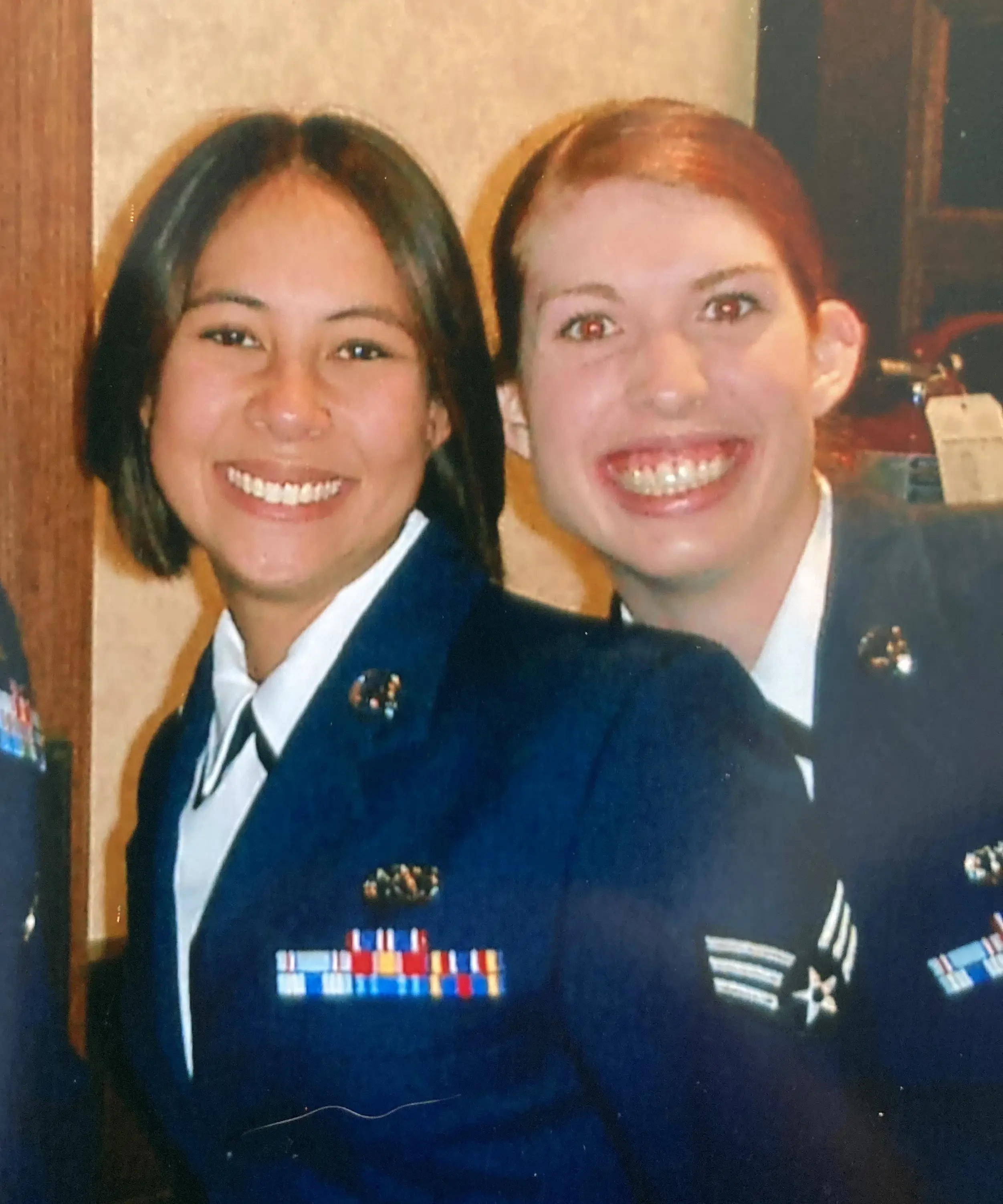
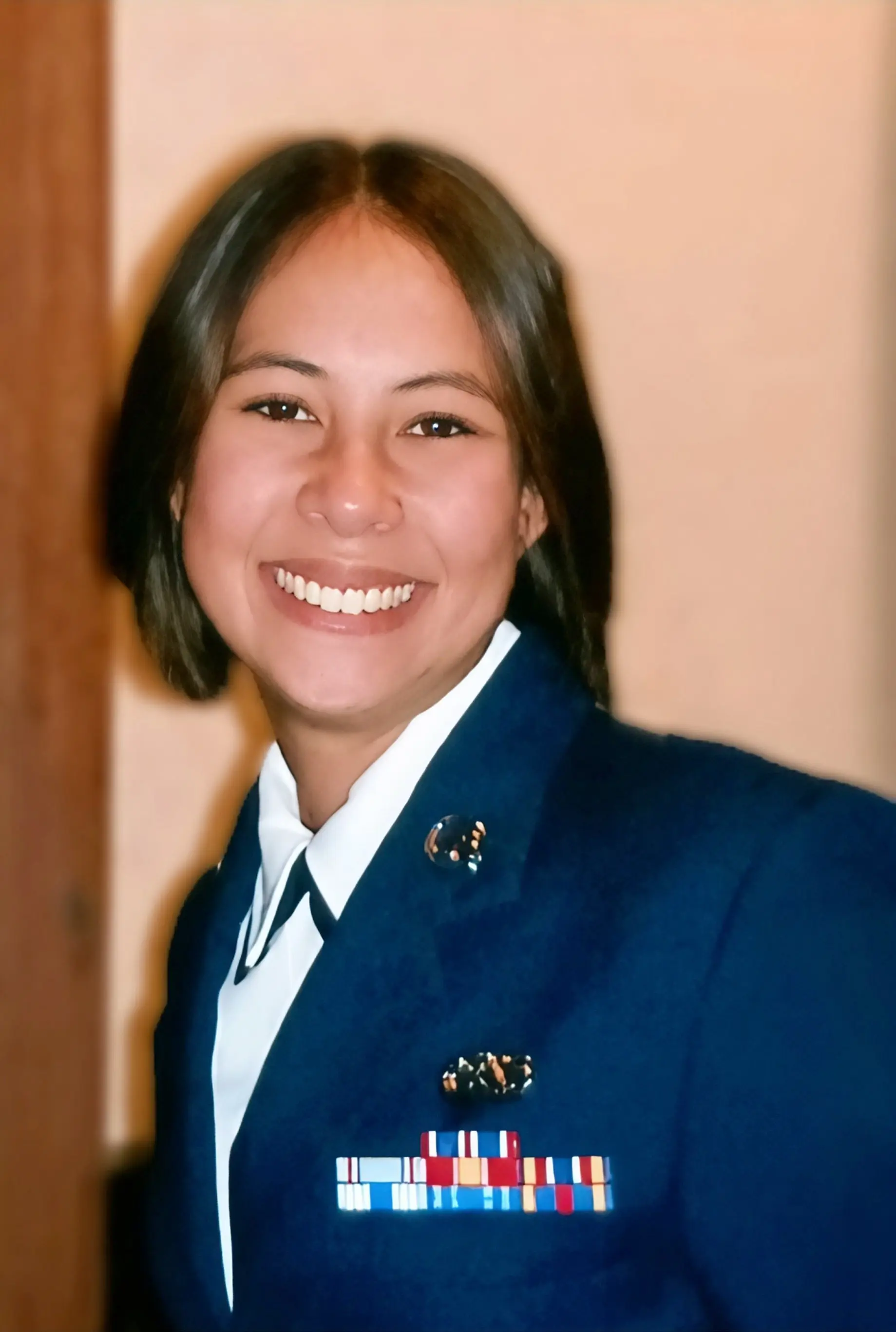
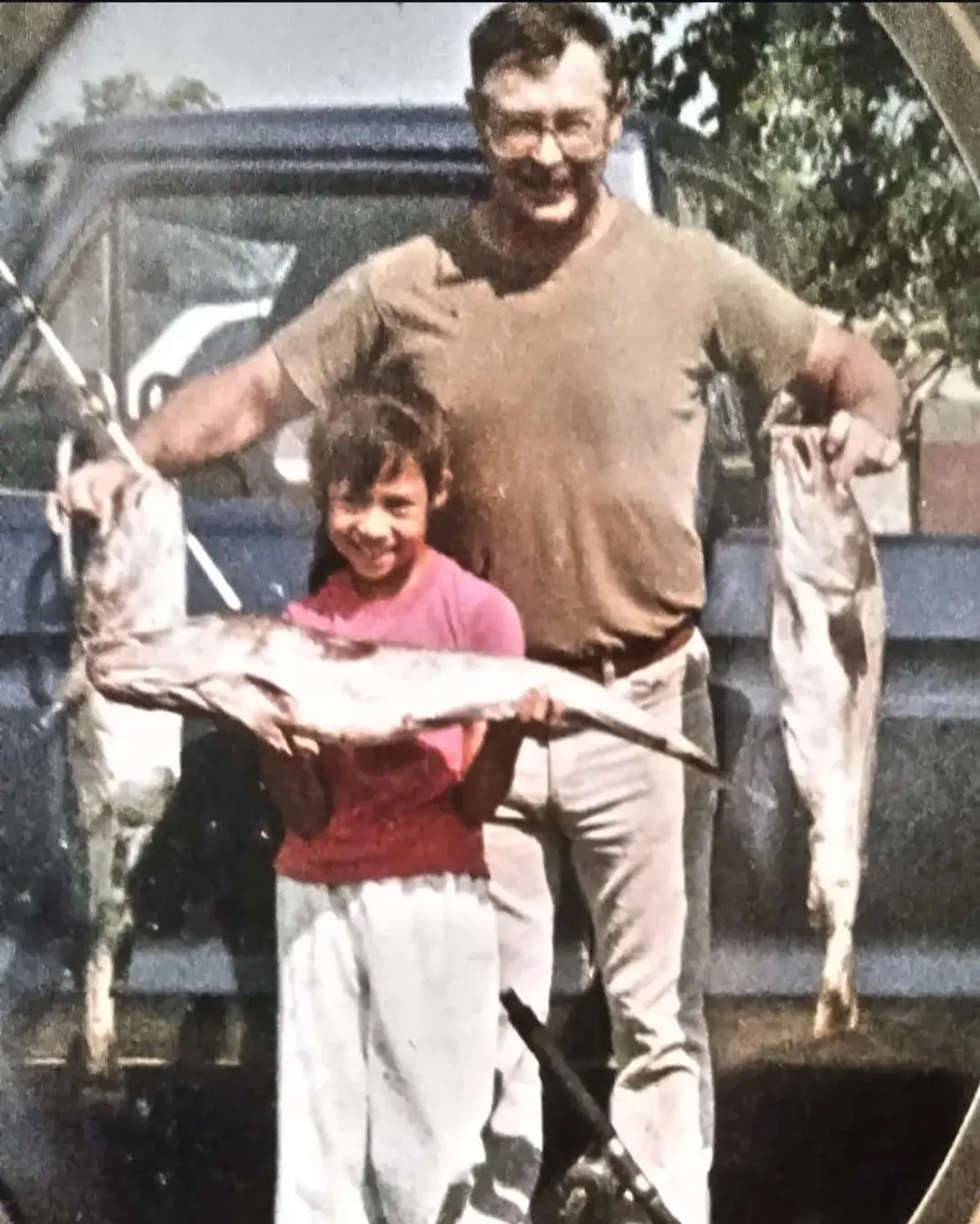
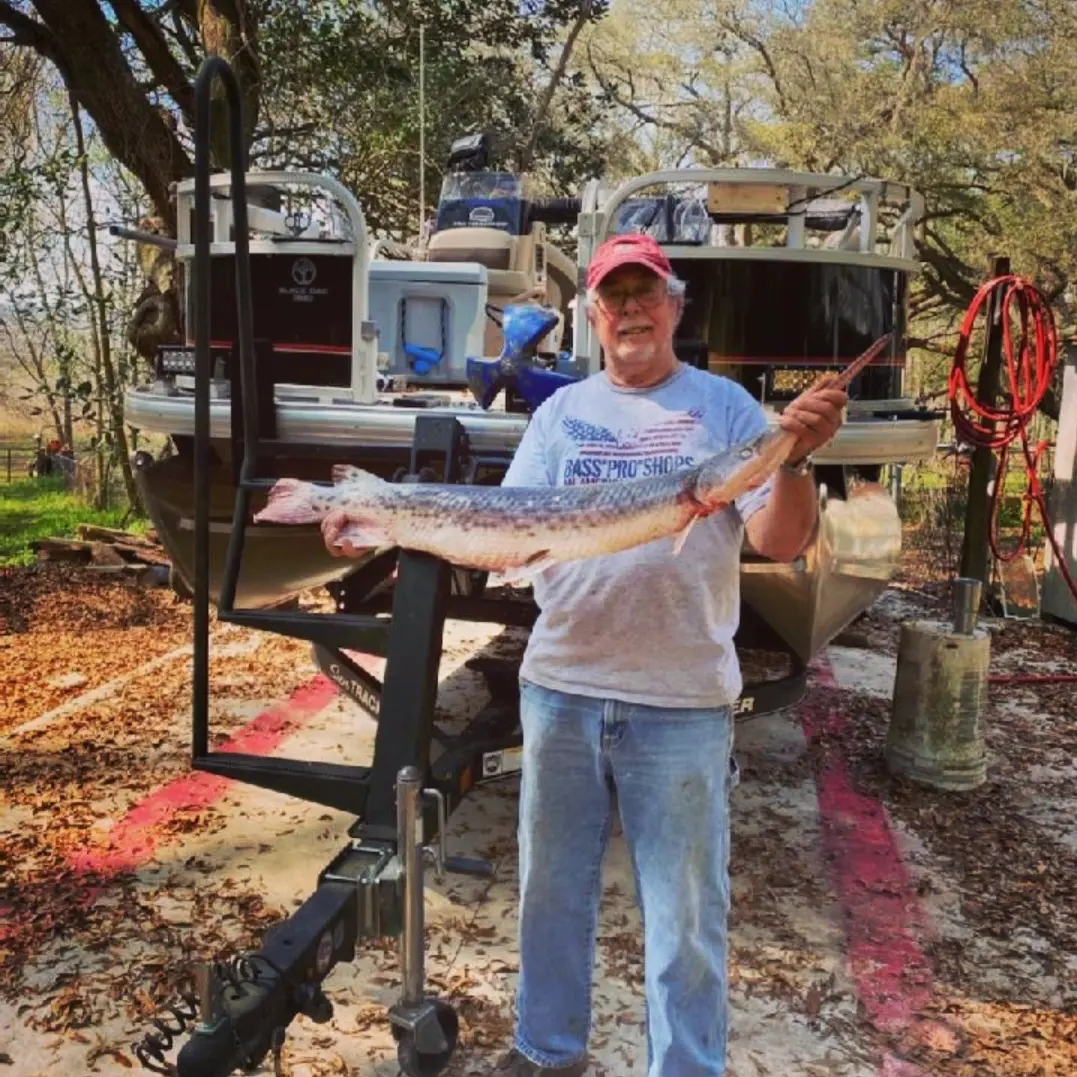




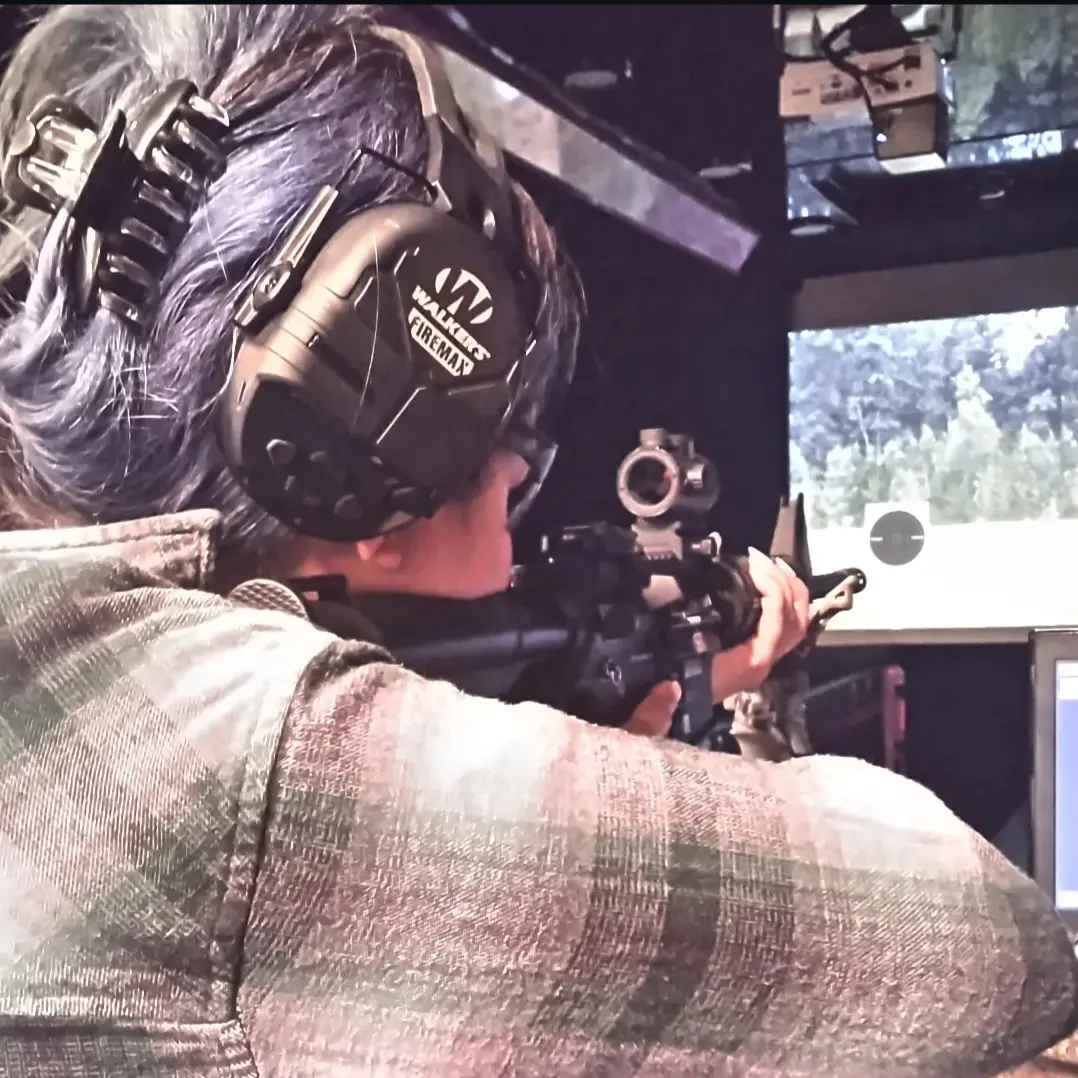





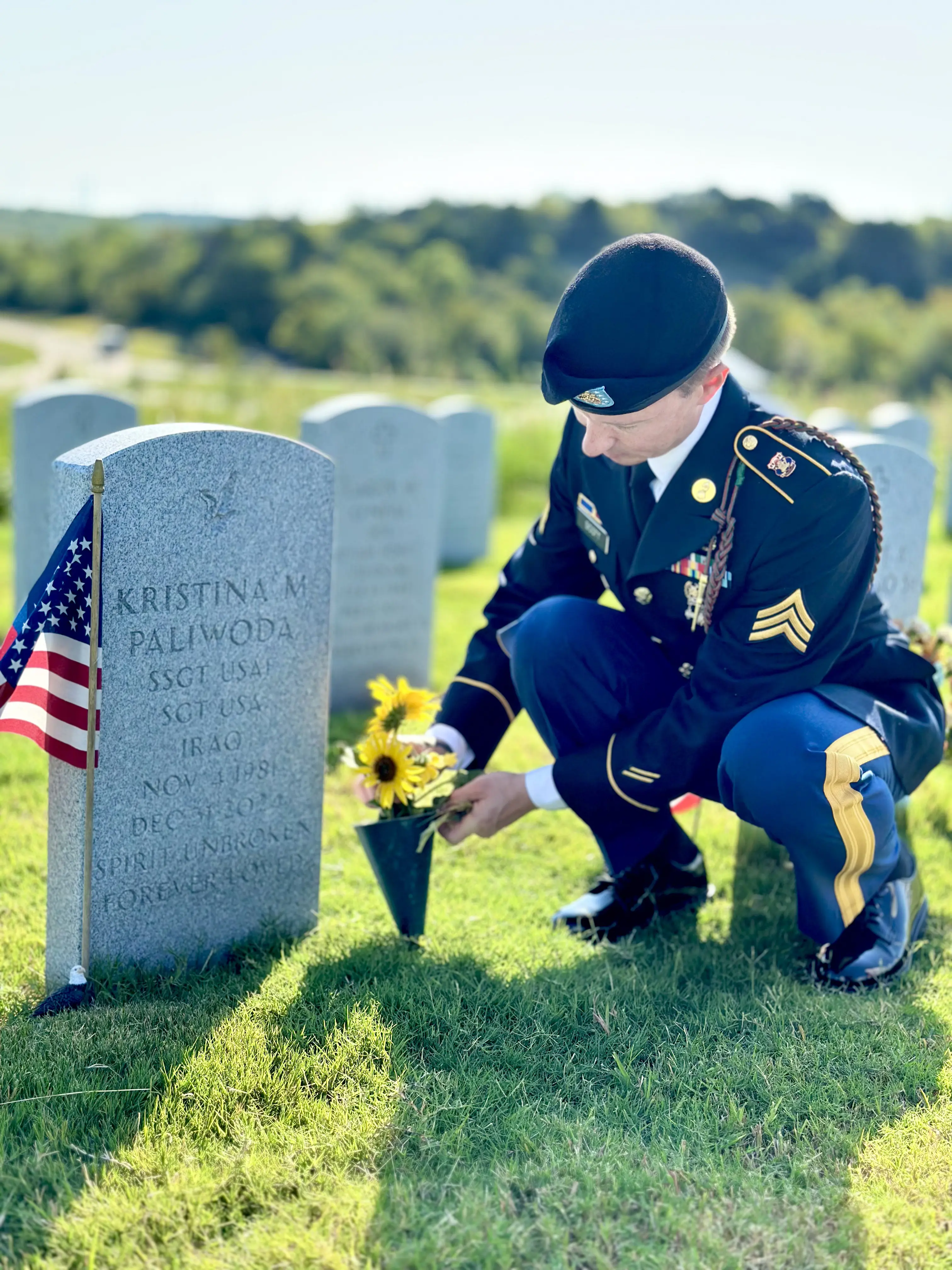
Kristina lived at the intersection of service, compassion, and fearless exploration. Born into a proud military family and shaped by nearly a decade of global assignments, she strengthened missions across continents, rescued the smallest lives in need, and chased every horizon with a spirit that refused to stand still.
She was born on November 4, 1981, at Eglin Air Force Base, Florida, to Retired United States Air Force Master Sergeant Charles “Chuck” Stephen Paliwoda and Buarian “Toy” Paliwoda. She grew up in a home defined by love, support, and the steady presence of military service. These early influences shaped her into the kind, compassionate, and adventurous person so many came to know and cherish. Her father’s career and her grandfather’s legacy instilled in her a deep respect for duty, discipline, and the quiet pride that comes from serving something larger than oneself.
When she entered active duty at Maxwell Air Force Base in Montgomery, Alabama, she stepped into the intellectual heart of American airpower. Maxwell’s lineage reaches back to the earliest days of aviation. It was here that the Air Corps Tactical School first argued that information determines control of the battlespace, a principle that would eventually evolve into the foundations of modern cyber warfare. It was here that Air University grew into the global center of Air Force education, teaching generations of airmen the principles of command, control, and communication. It was here that the Curtis E. LeMay Center refined doctrine for the digital age, ensuring that the Air Force understood the vulnerabilities of analog systems and the demands of emerging cyber operations.
Kristina entered this environment as a communications‑computer systems operator craftsman, a specialty that formed the technical backbone of modern military communications. Her training prepared her to maintain operating systems, safeguard networks, support software environments, and ensure the reliability of the digital infrastructure that sustains combat air control. She learned the principles of communications security, network reliability, information assurance, and the command‑and‑control systems that allow commanders to direct missions across the globe. Maxwell’s lineage shaped her worldview, her discipline, and her technical identity.
Her military career spanned nearly ten years across both the United States Air Force and the United States Army. In addition to her Air Force service, Kristina also served in the Army National Guard, continuing her commitment to the nation with the same discipline and drive that defined her character. She advanced toward Officer Candidate School, preparing to take her service to the next level and lead with the integrity, intelligence, and determination she carried naturally. Due to health complications, she was unable to continue her military service and received an honorable discharge, a recognition of her dedication, her sacrifice, and the honorable way she served in every uniform she wore.
She completed assignments at Kadena Air Force Base in Okinawa, Tinker Air Force Base in Oklahoma, and LSA Anaconda in Balad, Iraq. She also supported multiple temporary duty assignments around the world. These experiences placed her at the intersection of legacy systems and emerging cyber capabilities. She supported the digital networks that carried command directives, the servers that sustained mission planning, and the secure pathways that protected sensitive information. Her work ensured that combat air control remained uninterrupted, that communications remained resilient, and that commanders could maintain situational awareness in any theater.
Her service reflected the broader evolution of military communications, moving from the era of analog systems into the age of digital networks and cyber operations. She carried out her duties with skill, discipline, and commitment to excellence. Her career concluded at Randolph Air Force Base in San Antonio, Texas, where she received an honorable discharge. Randolph’s heritage as a center for training, evaluation, and personnel management made it a fitting place for her service to close.
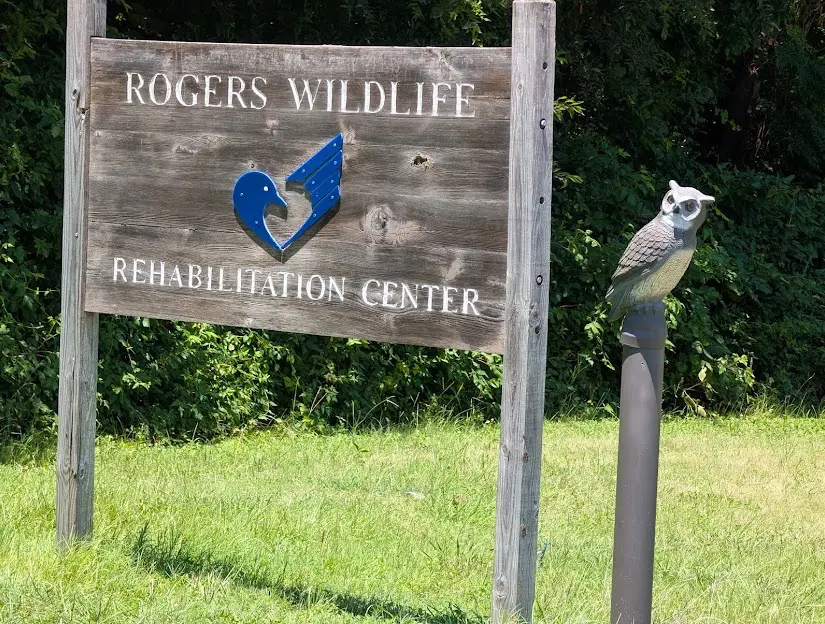
After completing her Bachelor’s Degree at the University of Texas at Dallas, Kristina sought new ways to contribute to a greater purpose. Drawing on her love for animals, she dedicated herself to helping others through her work at the Rogers Wildlife Rehabilitation Center in Hutchins near the Trinity River. She cared for sick and injured birds with patience and devotion. Over the past two years, she developed a close bond with Zara, the center’s bald eagle. Kristina often brought live fish she caught from a local stream near her home to feed Zara, strengthening a relationship built on trust and gentle persistence. She created a social media page to share her experiences with Zara, offering others a glimpse into the quiet beauty of their connection.
Kristina lived with an adventurous spirit and a passion for exploring the world around her. She expressed herself through writing, music, painting, sketching, sculpting, directing, cooking, and baking. She played her French horn and saxophone with the same sincerity she brought to every part of her life. She was an avid birdwatcher and fisherman, following in the footsteps of her late father. She embraced the outdoors with enthusiasm and courage. With less than one year of riding experience, she traveled across the country on her motorcycle, riding through fifteen states and visiting landmarks such as the Tail of the Dragon, the Cherohala Skyway, Skyline Drive in Colorado, Old Fall River Road, and the Arkansas Dragon. She explored nearly every national park from Colorado to New Mexico and Texas, aiming to visit them all and add each stamp to her national park passport.
She also enjoyed playing online video games and connecting with a large community of fellow enthusiasts. She created content for her streaming channel and wrote guides to help beginners. When away from home, she sought out experiences that matched her bold spirit. She went skydiving, white‑water rafting, summited Pikes Peak, hiked mountain trails, camped under the stars, kayaked, and fished the salmon run in Pulaski, New York, with her uncle Michael “Spike” Paliwoda, just as her father once did.
Throughout her life, including her military career, Kristina faced challenges with dedication, resilience, and a warrior’s spirit. She set a strong example for those around her and stood up for those she cared about. She approached every relationship with an all‑or‑nothing devotion. Once you were with her, you were truly with her. She taught that no matter the difficulties we face, we should never give up on ourselves or those we love. She reminded us how easy it is to become consumed by work and daily obligations, and how essential it is to share experiences with those who matter most. She believed that time is finite, that tomorrow is never promised, and that every day, hour, and minute we have together is a gift.
Kristina passed away at the age of forty‑three, tragically on New Year’s Eve, December 31, 2024, the result of a motorcyclist accident. Her loss is felt deeply by all who knew her, and her life remains a testament to service, resilience, compassion, and wholehearted living. She carried forward the heritage of Maxwell, the mission of Air Combat Command, and the operational legacy of the 32nd Combat Communications Squadron. She lived with courage, curiosity, and love, leaving behind a legacy that continues to inspire all who knew her.
Memorial Information
Birth: 4 November 1981
Death: 31 December 2024 (age 43)
Burial: Dallas–Fort Worth National Cemetery Dallas, Dallas County, Texas, USA
Plot: Section 40, Site 885
Memorial ID: 281208511
Supplemental Information
Elgin Air Force Base in 1981: A Strategic Hub in the Cold War Defense Network
In 1981, Elgin Air Force Base stood as one of the most expansive and strategically significant installations in the United States Air Force. It served as the headquarters of the Air Force Armament Division, the Air Force Test Center, and the Armament Laboratory. These organizations formed the backbone of American weapons development during a period of heightened Cold War tension. The base’s mission was to test, evaluate, and refine nearly every conventional weapon system used by the Air Force.
This meant that Elgin was not simply a training base. It was a scientific and operational proving ground where engineers, physicists, test pilots, and weapons specialists worked together to shape the future of American airpower.
The Scale and Geography of the Installation
Elgin’s reservation covered more than four hundred thousand acres, making it one of the largest military reservations in the world. The land stretched across forests, wetlands, lakes, and coastline. The sheer size of the reservation allowed for:
- Live weapons testing
- Radar and electronic warfare trials
- High speed flight corridors
- Controlled detonation ranges
- Classified research sites
The Gulf of Mexico served as an extension of the test environment. Aircraft frequently flew out over the water to conduct missile drops, radar trials, and weapons separation tests.
The natural landscape was striking. Longleaf pine forests dominated the terrain. Coastal breezes carried the scent of saltwater inland. Wildlife was abundant, including deer, foxes, migratory birds, and even black bears. The contrast between untouched nature and advanced military technology defined the character of the base.
Aircraft and Weapons Programs Active at Elgin Air Force Base in 1981
In 1981, Elgin Air Force Base stood at the center of the Air Force’s weapons development and flight testing enterprise. As the headquarters of the Air Force Armament Division and the Air Force Test Center, the installation carried the responsibility of evaluating nearly every conventional weapon system entering service during the Cold War. The base’s mission shaped the rhythm of daily life, and its flight line reflected the full weight of American modernization efforts.
The F 4 Phantom II remained one of the most heavily used test aircraft on the installation. It supported radar guided missile integration, electronic warfare pod evaluations, weapons separation trials, and radar mode development. Its large airframe and adaptable hardpoints made it ideal for carrying experimental systems and instrumented equipment. The A 7 Corsair II played an equally important role, serving as a stable platform for precision strike evaluations. It was used extensively in laser guided bomb testing, electro optical weapons development, and targeting system refinement, making it central to accuracy studies and low altitude weapons delivery research.
The F 15 Eagle, still early in its operational life, was a cornerstone of Elgin’s modernization work. It supported radar advancement, air to air missile integration, avionics refinement, and electronic countermeasure testing. Its powerful radar and high performance made it essential for validating air superiority systems. Early test variants of the F 16 Fighting Falcon also appeared at Elgin. These aircraft carried prototype avionics, experimental flight control systems, and instrumented pylons fitted with sensors and data collection instruments. Their presence reflected the Air Force’s transition into a new era of digital flight control and advanced weapons integration.
The A10 Thunderbolt II participated in trials focused on precision munitions, survivability systems, ballistic evaluations, and targeting pod compatibility. Its unique mission profile required extensive testing to ensure reliability in combat environments. Alongside these aircraft, Elgin operated specialized test platforms equipped with high speed cameras, telemetry pods, data recorders, prototype sensors, and electronic warfare systems. These aircraft often flew with unconventional configurations designed solely for data capture. Engineers monitored each flight from control rooms using early digital analysis systems, collecting telemetry that revealed missile behavior, radar performance, and weapons separation characteristics.
Weapons programs underway at Elgin in 1981 were fully aligned with documented Air Force modernization priorities. The AIM 7 Sparrow underwent reliability and guidance testing that examined radar compatibility, launch performance, and midcourse accuracy. The AIM 9 Sidewinder received seeker upgrades and tracking improvements designed to enhance close combat effectiveness. Foundational work on what would become the AIM 120 AMRAAM was already in progress, with Elgin contributing to early radar guided missile concept validation and seeker technology trials.
Precision guided munitions, including laser guided bombs, were refined through integration trials that examined targeting pod stability, laser designation accuracy, and bomb trajectory performance. Electronic countermeasure systems were evaluated to counter emerging threats, including jamming pods, radar warning receivers, and defensive avionics. Radar and targeting pod development advanced rapidly, with improvements in resolution, tracking modes, stabilization systems, and laser designation clarity. Every element of this work was essential to the transformation of American airpower during the Cold War.
The systems tested at Elgin shaped the capabilities of fighters and attack aircraft for decades. They formed the technological foundation that carried the Air Force into the late Cold War, the Gulf War, and beyond. This was the true historical environment surrounding Elgin Air Force Base in 1981, the world into which Kristina was born.
Unusual Aircraft Configurations
Aircraft at Elgin frequently carried:
- External pods containing cameras, sensors, and telemetry equipment
- Electronic warfare pods for countermeasure testing
- Prototype missiles or aerodynamic test shapes
- Instrumented munitions used to capture separation and flight data
These configurations were standard for weapons development and fully consistent with Elgin’s Cold War mission.
Engineers monitored each flight from control rooms equipped with early digital analysis systems. Telemetry data was collected in real time, allowing analysts to evaluate missile behavior, radar performance, and weapons separation characteristics.
Weapons Development Programs at Elgin in 1981
AIM‑7 Sparrow Missile Testing
Elgin conducted reliability and guidance trials for the AIM‑7 Sparrow, which remained the Air Force’s principal radar‑guided air‑to‑air missile. Testing focused on launch behavior, radar compatibility, midcourse guidance, and overall performance under varying flight conditions.
AIM‑9 Sidewinder Improvements
Sidewinder development at Elgin centered on seeker upgrades, improved tracking stability, and enhanced close‑combat effectiveness. Trials examined how the missile responded to maneuvering targets, thermal signatures, and countermeasures.
Early AMRAAM Concept Development
Foundational research for what would become the AIM‑120 AMRAAM began during this period. Elgin contributed to early radar‑guided missile concept validation, including seeker technology exploration, guidance logic evaluation, and integration studies for future digital avionics.
Precision‑Guided Munitions Refinement
Laser‑guided bombs and early electro‑optical weapons underwent integration and accuracy testing. These trials assessed guidance reliability, target‑tracking stability, and delivery precision across multiple aircraft platforms.
Laser‑Guided Bomb Integration
Testing focused on compatibility between targeting pods, aircraft systems, and laser‑guided munitions. Engineers evaluated pod stabilization, laser designation clarity, and the ability of different aircraft to deliver precision weapons under varied conditions.
Electronic Countermeasure Systems
Elgin evaluated jamming pods, radar warning receivers, and defensive avionics designed to counter emerging threats. Trials examined effectiveness against simulated enemy radar systems, signal‑processing improvements, and integration with fighter and attack aircraft.
Radar and Targeting Pod Development
Development work included improvements in radar resolution, tracking modes, stabilization systems, and laser designation accuracy. Testing refined air‑to‑air and air‑to‑ground radar performance and advanced the capabilities of early targeting pods.
Cold War Modernization
Every program listed above aligns with documented Air Force modernization priorities of the early 1980s. Elgin’s role as a proving ground ensured that new systems were rigorously evaluated before entering operational service. The data collected at Elgin shaped the capabilities of American fighters and attack aircraft for decades.
These programs were essential to the Air Force’s Cold War posture and reflect the true historical environment in which Kristina was born.
The Culture of a High Security, High Tempo Installation
Elgin in 1981 operated with seriousness shaped by Cold War priorities. Security was strict. Many areas were restricted, including test ranges, laboratories, and classified facilities. Personnel carried identification at all times. Families were accustomed to seeing signs marking off limits zones and hearing references to projects that could not be discussed outside official channels.
Daily operations followed a steady rhythm. Aircraft launches and recoveries occurred throughout the day. Maintenance crews worked long hours in hangars filled with the smell of jet fuel and hydraulic fluid. Weapons specialists handled munitions with precision and discipline. Test pilots flew demanding missions that pushed aircraft and systems to their limits.
Uniforms of the era included green fatigues and the woodland camouflage Battle Dress Uniform that became standard in the eighties. The culture emphasized professionalism, technical skill, and readiness.
Life for Military Families in 1981
The communities surrounding Elgin were smaller and quieter than they are today. Fort Walton Beach, Niceville, Valparaiso, and Shalimar were closely tied to the base. Many businesses, schools, and churches served military families. The sound of aircraft overhead was a familiar part of daily life.
Base housing consisted of modest homes arranged in neighborhoods where children played outside and families supported one another. The commissary, base exchange, chapel, and recreation facilities formed the center of community life.
The cultural atmosphere of 1981 was present everywhere. Families listened to music on cassette tapes, watched television with limited channels, and gathered for base events such as air shows, holiday celebrations, and unit picnics. The sense of shared purpose was strong.
The Base Hospital Where Kristina Was Born
The hospital at Elgin followed standardized Department of Defense medical protocols. In 1981, maternity wards on Air Force bases were staffed by active duty physicians, nurses, and medical technicians trained to support families stationed far from home.
The environment was professional and orderly. New parents often formed friendships with others in the ward, creating a sense of community among families who were beginning their lives in the military. The hospital served active duty personnel, dependents, and retirees, making it a central part of daily life on the installation.
Kristina’s birth took place within this environment of service, discipline, and community.
The Broader Military Context of 1981
Kristina was born during a pivotal moment in American military history. The United States was emerging from the Vietnam era and entering a period of rapid modernization. Technologies such as digital avionics, precision guided munitions, and advanced radar systems were transforming the Air Force. Elgin was at the forefront of these developments.
The Cold War shaped everything. Training emphasized readiness. Testing focused on countering potential adversaries. The base operated with seriousness and discipline, yet families found stability in the routines of military life.
Montgomery, Alabama
Montgomery’s military significance reaches back to the earliest days of American aviation. In the 1930s, Maxwell Field became the home of the Air Corps Tactical School, where instructors developed the theories that shaped American airpower during the Second World War. These officers studied the lessons of World War I, examined the limits of early aircraft, and argued that airpower could strike deep into an enemy’s industrial heart, crippling its ability to wage war. Their ideas formed the foundation of strategic bombing doctrine and influenced the creation of the independent Air Force in 1947.
By the time Kristina entered active duty, Montgomery had become the global center of Air Force education. Air University, headquartered at Maxwell Air Force Base, had grown into a vast institution offering courses in leadership, strategy, communications, logistics, cyber operations, and joint warfare. Officers and enlisted leaders from across the world traveled to Montgomery to study the principles of command, control, and communication that define modern airpower. The base housed the Air War College, the Squadron Officer School, the Senior Noncommissioned Officer Academy, and the College for Enlisted Professional Military Education. These institutions ensured that every airman understood the intellectual heritage of airpower.
Montgomery’s identity reflected this military presence. The city’s neighborhoods, churches, and businesses were filled with families connected to the base. The rhythm of life followed training cycles, graduations, and deployments. The culture carried the traditions of Air University, the pride of the Air Force Historical Research Agency, and the steady flow of airmen who arrived to learn, grow, and serve.
This was the environment where Kristina began her career. She entered the Air Force through a city that had shaped generations of airmen, absorbing the standards, expectations, and technical foundations that would define her service.
Maxwell Air Force Base
Maxwell Air Force Base is more than a training installation. It is the intellectual engine of the Air Force. The base houses the Air Force Historical Research Agency, the repository of the service’s official records, documents, and archives. It is the home of the Curtis E. LeMay Center for Doctrine Development and Education, the organization responsible for writing, refining, and publishing Air Force doctrine. It is the site where the Air Force’s strategic thinkers, historians, and planners have shaped the service’s identity for generations.
Maxwell’s influence extends beyond leadership education. The base historically supported technical training pipelines for communications and computer systems specialties. Airmen learned to operate early digital systems, maintain secure networks, manage radio and satellite communications, and support the infrastructure that allows commanders to direct missions. The base’s training programs were grounded in real operational requirements, ensuring that airmen left Montgomery prepared to support the Air Force’s expanding technological needs.
Kristina’s time in Montgomery placed her within this lineage. She entered the Air Force through a base that has shaped generations of airmen, absorbing the standards, expectations, and technical foundations that would define her career.
The Evolution of Combat Communications
Combat Communications units emerged during the Cold War as the Air Force recognized the need for rapidly deployable communications capabilities. Traditional fixed bases could not meet the demands of modern warfare, which required flexible, mobile, and resilient communications networks capable of supporting operations anywhere in the world.
By the late twentieth century, Combat Communications Groups had become essential to Air Force operations. They provided the initial communications infrastructure for new airfields, humanitarian missions, contingency operations, and major deployments. Their work ensured that commanders could direct missions, aircraft could be tasked, intelligence could be shared, and operations could continue even in environments where no infrastructure previously existed.
Combat Communications units were trained to operate in austere conditions. They deployed generators, satellite terminals, radio networks, servers, and secure communications systems. They built command posts, established airfield communications, and integrated their systems with joint and coalition partners. Their mission was to create the digital backbone of Air Force operations.
The 32nd Combat Communications Squadron
The 32nd Combat Communications Squadron carried a lineage rooted in Cold War readiness. It belonged to a Combat Communications Group that supported Air Force operations across multiple theaters. The squadron’s history included participation in major exercises, humanitarian missions, and contingency operations. Its deployments reflected the Air Force’s global reach, supporting operations in Europe, the Middle East, and the Pacific.
The 32nd’s mission was to deploy rapidly and establish communications in environments where none existed. This included bare bases, forward operating locations, and disaster‑affected areas. Their responsibilities included secure and non‑secure voice and data networks, satellite communications links for command and control, radio systems for airfield operations, cyber defense and information assurance, and communications integration with joint and coalition partners.
The 32nd supported major Air Force exercises, humanitarian relief missions, and contingency operations. Their work ensured that commanders could direct missions, aircraft could be tasked, intelligence could be shared, and operations could continue even in environments where no infrastructure previously existed.
Air Combat Command
Transformation After 1992
Air Combat Command was established in 1992 as part of a major reorganization of the Air Force following the end of the Cold War. It replaced Tactical Air Command and Strategic Air Command, combining their missions into a single organization responsible for providing combat‑ready forces to theater commanders worldwide.
Air Combat Command inherited the fighter aircraft, bombers, reconnaissance platforms, and communications units that formed the backbone of American airpower. The command’s mission expanded to include cyber operations, intelligence, surveillance, reconnaissance, and command‑and‑control systems. Combat Communications units like the 32nd became essential to Air Combat Command’s ability to project power across the globe.
Kristina’s service took place during this era of transformation. She served in a command that had become the center of American airpower, responsible for supporting operations in multiple theaters and ensuring that the Air Force could respond to emerging threats.
The Evolution of Air Force Cyber Operations
Kristina’s service took place during a pivotal era in the evolution of Air Force cyber operations. The service was transitioning from analog systems to digital networks, from isolated communications nodes to integrated cyber environments, and from traditional radio systems to advanced satellite and data‑driven architectures.
Airmen learned to operate early digital systems, maintain secure networks, manage radio and satellite communications, and support the infrastructure that allows commanders to direct missions. The Air Force’s cyber capabilities expanded rapidly, reflecting the growing importance of information systems in modern warfare.
Kristina’s role placed her at the intersection of legacy systems and emerging cyber capabilities. She ensured that the Air Force could communicate, coordinate, and command forces across the globe.
The Cultural Life of Montgomery’s Military Community
Montgomery’s military community reflected the traditions of Air University and the pride of the Air Force Historical Research Agency. The city’s neighborhoods, churches, and businesses were filled with families connected to the base. The rhythm of life followed training cycles, graduations, and deployments. The culture carried the traditions of Air University, the pride of the Air Force Historical Research Agency, and the steady flow of airmen who arrived to learn, grow, and serve.
Kristina’s time in Montgomery placed her within this community. She entered the Air Force through a city that had shaped generations of airmen, absorbing the standards, expectations, and technical foundations that would define her career.
The Operational Tempo and Deployment Cycles of Combat Communications Units
Combat Communications units operated at a high tempo. They deployed rapidly, often with little notice, to support operations in multiple theaters. Their work required flexibility, resilience, and technical expertise. They built command posts, established airfield communications, and integrated their systems with joint and coalition partners.
Kristina’s service reflected this operational tempo. She supported missions that required rapid deployment, technical precision, and the ability to operate in austere conditions.
The Technological Systems Kristina Worked On
Kristina worked on systems that formed the backbone of Air Force communications. These included early digital networks, secure communications systems, radio and satellite communications, and the infrastructure that allows commanders to direct missions. Her work ensured that the Air Force could communicate, coordinate, and command forces across the globe.
Her service reflected the broader evolution of Air Force communications. She stood at the intersection of legacy systems and emerging cyber capabilities, ensuring that the Air Force could communicate, coordinate, and command forces across the globe.
Within the Air Force, the role of a Computer Systems Craftsman signifies a seasoned noncommissioned officer entrusted with the stewardship of networks, cyber system operations, and software development. These craftsmen develop standardized interfaces, safeguard operating systems and databases, perform data recovery, evaluate operational readiness, and manage the complex infrastructures that keep military communications secure and resilient. Kristina carried these responsibilities with skill and dedication.
32nd Combat Communications Squadron
The 32nd Combat Communications Squadron was part of the United States Air Force’s combat communications structure, a network of specialized units designed to provide rapidly deployable communications, airfield operations support, and command‑and‑control infrastructure in austere or contingency environments. Its lineage reflects the Air Force’s evolving need for mobile, resilient communications capabilities from the Cold War through the modern era.
The squadron’s origins trace back to communications organizations formed under Tactical Air Command (TAC), which recognized that air operations could not function without reliable, forward‑deployed communications. These units were tasked with establishing initial communications at new airfields, supporting tactical air control systems, and enabling commanders to direct missions in dynamic environments. The 32nd inherited this mission and became part of a Combat Communications Group, the organizational structure responsible for training, equipping, and deploying communications forces worldwide.
Combat Communications Groups were designed to respond quickly to emerging crises. Their squadrons provided secure and non‑secure voice and data networks, satellite communications, radio systems for airfield operations, and the digital backbone required for command and control. They supported humanitarian missions, contingency operations, major exercises, and wartime deployments. Their work ensured that airpower could be directed, intelligence could be shared, and operations could continue even in locations with no existing infrastructure.
In 1992, when Tactical Air Command was inactivated and Air Combat Command (ACC) was established, the 32nd Combat Communications Squadron was realigned under ACC. This transition reflected the Air Force’s shift toward integrated air, space, and information operations. Under ACC, the squadron’s mission expanded to include support for modern digital networks, cyber defense, information assurance, and communications integration with joint and coalition partners.
The squadron’s operational history includes deployments to multiple theaters, where it provided initial communications for new airfields, supported air expeditionary wings, and sustained command‑and‑control systems during contingency operations. Its personnel operated in environments ranging from established bases to remote, undeveloped locations, often under demanding conditions. Their responsibilities included establishing satellite links, configuring secure networks, maintaining radio systems, and ensuring the reliability of mission‑critical communications infrastructure.
The 32nd Combat Communications Squadron’s doctrinal purpose was to deliver communications capabilities that allowed commanders to maintain situational awareness, direct air operations, and coordinate with joint forces. Its work formed the foundation of modern expeditionary communications, bridging the gap between legacy analog systems and emerging digital and cyber‑based architectures.
Throughout its history, the squadron played a vital role in enabling Air Force operations across the globe. Its lineage reflects the broader evolution of military communications, from early tactical radio systems to advanced digital networks, and from isolated communications nodes to integrated cyber environments. The 32nd Combat Communications Squadron stood as one of the Air Force’s essential units for establishing and sustaining the information systems that underpin modern airpower.
Origins and Lineage of the 32nd Combat Communications Squadron
The 32nd Combat Communications Squadron traces its lineage to the Cold War era, when Tactical Air Command (TAC) organized mobile communications units to support fighter wings, reconnaissance aircraft, and tactical air control systems.
Its roots go back to:
1950s–1960s: Early Tactical Communications Units
During this period, the Air Force began forming deployable communications units under TAC. These units provided radio systems, early data links, and airfield communications for tactical aircraft.
1970s–1980s: Formalization of Combat Communications Groups
The Air Force established Combat Communications Groups, each containing multiple squadrons. The 32nd became part of this structure, gaining a formal lineage as a deployable communications squadron.
These groups were responsible for:
• Organizing and training communications forces • Deploying units worldwide • Supporting exercises, humanitarian missions, and wartime operations • Building communications infrastructure in austere environments
1992: Transition to Air Combat Command (ACC)
When Tactical Air Command was inactivated in 1992, the 32nd Combat Communications Squadron was realigned under Air Combat Command.
This marked a major doctrinal shift:
• From analog systems to digital networks • From radio‑based communications to integrated cyber environments • From isolated communications nodes to global information systems
Under ACC, the 32nd’s mission expanded to include:
• Satellite communications • Secure data networks • Information assurance • Cyber defense • Joint and coalition communications integration
1990s–2000s: Expeditionary Communications Era
During this period, the 32nd supported:
• Air Expeditionary Wings • Humanitarian relief operations • Contingency deployments • Wartime operations in multiple theaters
Their work became essential to modern airpower, enabling commanders to maintain situational awareness and direct missions across vast distances.
They were established in response to a strategic vulnerability recognized during the early Cold War: the Air Force could not project or sustain airpower without reliable, rapidly deployable communications. Traditional fixed communications units were inadequate for the emerging realities of modern conflict, where airfields might need to be activated in remote locations, command posts built from bare ground, and operations sustained in environments stripped of infrastructure. The 32nd Combat Communications Squadron was created to close that gap. Its mission was to deliver immediate, mobile command‑and‑control capability wherever the Air Force was required to operate, ensuring that airpower could function the moment American forces arrived, regardless of terrain, distance, or the absence of existing support.
Operational Deployments
Combat Communications units like the 32nd supported operations in multiple theaters. Their deployments included participation in major exercises, humanitarian missions, and contingency operations. These missions required rapid deployment, technical precision, and the ability to operate in austere conditions.
The 32nd provided the initial communications infrastructure for new airfields, humanitarian missions, contingency operations, and major deployments. Their work ensured that commanders could direct missions, aircraft could be tasked, intelligence could be shared, and operations could continue even in environments where no infrastructure previously existed.
The squadron’s deployments reflected the Air Force’s global reach, supporting operations in Europe, the Middle East, and the Pacific. Their work ensured that commanders could direct missions, aircraft could be tasked, intelligence could be shared, and operations could continue even in environments where no infrastructure previously existed.
Doctrinal Purpose : The Strategic Role of Combat Communications
Combat Communications units were created to provide rapidly deployable communications capabilities for tactical air operations, humanitarian missions, and contingency deployments. Their mission was to establish communications at forward operating locations, enabling commanders to direct air operations in dynamic environments.
The doctrinal purpose of Combat Communications units was to create the digital backbone of Air Force operations. They provided secure and non‑secure voice and data networks, satellite communications links for command and control, radio systems for airfield operations, cyber defense and information assurance, and communications integration with joint and coalition partners.
Their work ensured that commanders could direct missions, aircraft could be tasked, intelligence could be shared, and operations could continue even in environments where no infrastructure previously existed.
Technological Systems
Kristina worked on systems that formed the backbone of Air Force communications. These included early digital networks, secure communications systems, radio and satellite communications, and the infrastructure that allows commanders to direct missions.
Her work ensured that the Air Force could communicate, coordinate, and command forces across the globe. Her service reflected the broader evolution of Air Force communications. She stood at the intersection of legacy systems and emerging cyber capabilities, ensuring that the Air Force could communicate, coordinate, and command forces across the globe.
Kristina’s story spans two fully documented periods of Air Force evolution. She was born into the Cold War environment of Elgin Air Force Base, surrounded by the aircraft and weapons programs that shaped American airpower. Years later, she served in the modern communications landscape of Air Combat Command, where information systems, networks, and cyber operations formed the backbone of mission capability.
Her career reflects the Air Force’s movement from the era of analog flight testing to the age of digital warfare. This blend of environments is historically true and gives her biography a powerful sense of continuity within the broader story of American military history.
Maxwell’s Lineage and the Rise of Modern Cyber Warfare
Maxwell Air Force Base carries a lineage that reaches back to the earliest days of American aviation. Its story begins in 1910, when the Wright brothers established a flying school in Montgomery, marking the city as one of the first places in the nation where military pilots trained. This early connection to aviation laid the foundation for Maxwell’s future role as the intellectual center of American airpower.
In 1918, during the First World War, the War Department selected a site near Montgomery for a new aviation repair depot. The installation was named Maxwell Field in honor of Second Lieutenant William C. Maxwell, an Army pilot who lost his life in the Philippines. The field quickly became a center for aircraft maintenance and logistics, supporting the growing needs of the Army Air Service.
Maxwell’s lineage took a decisive turn in the 1930s when it became the home of the Air Corps Tactical School. This institution became the intellectual birthplace of American airpower. Instructors developed the strategic bombing theories that guided American air operations during the Second World War. They argued that airpower could strike deep into an enemy’s industrial heart, crippling its ability to wage war. Their ideas formed the foundation of strategic bombing doctrine and influenced the creation of the independent Air Force in 1947.
Although the Tactical School focused on strategic bombing, its deeper legacy was the belief that control of information determines control of the battlespace. This principle became the philosophical ancestor of modern cyber warfare. Maxwell preserved this intellectual heritage through Air University, ensuring that every generation of airmen understood that information is the lifeblood of command and control.
During the Cold War, Maxwell became the place where officers studied the vulnerabilities of analog communications. They examined the fragility of radio networks, the limitations of early encryption, and the catastrophic consequences of communications failure during nuclear escalation. Maxwell’s classrooms taught officers that command and control must survive under any conditions. This idea shaped the development of hardened communications networks, redundant systems, and early digital technologies. These Cold War lessons became the doctrinal foundation for cyber defense. The belief that communications must endure became the philosophical core of modern cyber resilience.
Maxwell’s lineage deepened during the Vietnam era, when officers studied the complexities of coordinating air and ground operations in dense terrain. They learned that communications failures could cost lives. They examined the need for real‑time information flow, secure networks, and reliable command structures. These lessons resurfaced during the Gulf War, when Maxwell’s seminars examined the integration of air, land, and sea forces. Officers studied the importance of centralized control and decentralized execution, the need for secure communications networks, and the vulnerabilities of analog systems. These discussions shaped the Air Force’s approach to digital networks and influenced the development of early cyber doctrine.
The Curtis E. LeMay Center for Doctrine Development and Education became the doctrinal bridge between analog communications and digital networks. It developed the principles of information assurance, network reliability, and communications security. It examined the vulnerabilities of digital systems, the importance of encryption, and the need for resilient networks capable of supporting operations in multiple theaters. These ideas became the doctrinal foundation of modern cyber warfare.
Air University became the educational engine of cyber thought. Its curriculum expanded to include courses in digital networks, satellite communications, cyber defense, and information warfare. Airmen studied the vulnerabilities of digital systems, the importance of encryption, and the need for resilient networks capable of supporting operations in multiple theaters. They learned to identify cyber threats, protect networks, and support the infrastructure that allows commanders to direct missions.
Combat Communications units became the operational arm of Maxwell’s cyber doctrine. They deployed rapidly to establish communications in environments where none existed. They provided secure and non‑secure voice and data networks, satellite communications links for command and control, radio systems for airfield operations, cyber defense and information assurance, and communications integration with joint and coalition partners. Their mission was to transform Maxwell’s doctrine into real‑world capability.
Kristina’s entry into active duty at Maxwell placed her within this lineage. She learned the principles of communications security, network reliability, information assurance, and the command‑and‑control systems that support Air Force missions across the globe. Her service in the 32nd Combat Communications Squadron placed her at the intersection of legacy systems and emerging cyber capabilities. She became part of the operational force that transformed Maxwell’s doctrine into real‑world capability.
Her career reflects the Air Force’s movement from the era of analog flight testing to the age of digital warfare. This blend of environments is historically true and gives her biography a powerful sense of continuity within the broader story of American military history.
Communications Computer Systems Operator Craftsman
The Communications Computer Systems Operator Craftsman emerged during a period when the United States Air Force was redefining how it understood information, control, and warfare. In the final decades of the Cold War, the Air Force recognized that the traditional model of command‑and‑control—built on radio networks, analog switchboards, and paper‑based planning—could no longer support the speed and complexity of modern operations. The service began investing heavily in digital systems, centralized computing, and secure data networks. This transition created a need for airmen who could operate, maintain, and defend the new digital infrastructure that would soon become indispensable to airpower. The Craftsman specialty was born from this doctrinal shift.
In its earliest form, the specialty supported mainframe‑based mission systems that handled sortie scheduling, maintenance tracking, personnel management, and early intelligence processing. These systems required operators who understood terminal access, batch processing, and resource allocation. As the Air Force adopted local area networks in the late 1980s and early 1990s, the role expanded dramatically. Craftsmen became responsible for configuring early Ethernet networks, managing Novell and UNIX servers, and ensuring that digital connectivity extended across entire installations. This was the beginning of enterprise‑level network operations, and the Craftsman was at the center of it.
The specialty grew even more important as the Air Force entered the era of joint warfare. Operations in the Persian Gulf, the Balkans, and later Southwest Asia demanded seamless communication between the Air Force, Army, Navy, Marine Corps, and coalition partners. Craftsmen ensured that Air Force systems could interface with joint planning networks, shared intelligence databases, and secure coalition communications. Their work made it possible for air operations centers to coordinate missions across multiple services and nations without losing the integrity of mission data.
As cyber threats increased in the early 2000s, the Craftsman’s responsibilities expanded again. Information assurance became a formal discipline, and operators were required to implement intrusion detection systems, manage encryption keys, analyze audit logs, and enforce strict access controls. They became the guardians of the Air Force’s digital security at a time when adversaries were beginning to probe military networks for vulnerabilities. Their work ensured that mission systems remained protected against unauthorized access and emerging cyber threats.
The specialty played a crucial role in air operations centers, which serve as the nerve centers of modern airpower. Craftsmen supported the systems that generate Air Tasking Orders, distribute mission data, host intelligence feeds, and maintain the communications pathways that link commanders to aircraft. Their efforts ensured that commanders could plan missions, track aircraft, manage airspace, and respond to threats without interruption. Without their work, the digital architecture of airpower would fail.
In deployed environments, the Craftsman’s importance became even more pronounced. Expeditionary communications units relied on them to build functioning networks in locations with no existing infrastructure. They established satellite links, configured tactical communications nodes, and created field‑expedient server rooms capable of supporting command‑and‑control in austere conditions. Their systems had to withstand heat, dust, vibration, limited power, and the constant pressure of operational tempo. They were often the first to arrive and the last to leave, ensuring that communications remained stable throughout the mission.
The human element of the specialty was as important as its technical demands. Craftsmen were selected for their ability to think clearly under pressure, troubleshoot complex systems, adapt to rapidly changing environments, and maintain strict security discipline. Their work was often invisible to those outside the communications field, yet every mission depended on the systems they sustained. They formed the quiet backbone of modern air operations.
By the late 2000s, the Air Force recognized that information systems were no longer support functions but operational weapons systems. This realization led to the creation of Air Force Cyber Command, the 24th Air Force, and the modern cyber career fields. The Communications‑Computer Systems Operator Craftsman specialty became one of the foundational pillars of this transformation. Its personnel carried forward the legacy of early digital operations into the era of full‑spectrum cyber warfare, shaping the modern Air Force’s understanding of information dominance.
The specialty’s legacy endures in every cyber unit, every enterprise network operations center, and every mission system that supports airpower today. It represents the bridge between the analog Air Force of the Cold War and the digital Air Force of the twenty‑first century, and it stands as one of the most important technical roles in the evolution of American airpower.
The Full Evolution of the Communications Computer Systems Operator Craftsman
The evolution of the Communications Computer Systems Operator Craftsman mirrors the evolution of American airpower itself. It begins in the era when the Air Force first realized that information, once carried by radio waves and paper messages, would soon travel through digital pathways that required constant vigilance, technical mastery, and disciplined stewardship. The earliest predecessors of the specialty appeared in the 1960s and 1970s, when the Air Force introduced centralized computing systems to support logistics, personnel management, and early forms of mission planning. These systems were primitive by modern standards, yet they represented a profound shift: the Air Force was beginning to rely on machines that stored, processed, and transmitted information at speeds no human could match. Operators were needed to run these machines, maintain their stability, and ensure that mission data remained accessible. This was the first step toward the specialty that would eventually become the Craftsman.
By the late Cold War, the Air Force had begun integrating computers into command‑and‑control. The service recognized that future conflicts would require rapid information flow between commanders, aircrews, intelligence analysts, and support units. Early digital systems were introduced into air operations centers, maintenance shops, and command posts. These systems required personnel who could understand both the technical and operational implications of digital information. The role expanded from simple computer operation to the maintenance of mission‑critical systems that supported airpower. This marked the specialty’s transition from a technical support function into an operational discipline.
The 1980s brought the arrival of local area networks, distributed computing, and digital messaging systems. Bases that had once relied on analog switchboards and paper orders now required technicians who could configure servers, maintain network connectivity, and support digital mission systems. The Air Force began to standardize its digital infrastructure, creating the first generation of enterprise networks. The Craftsman specialty evolved to meet these demands, becoming responsible for the systems that allowed entire installations to communicate. This was the moment when the Air Force’s digital backbone began to take shape, and the Craftsman became one of its architects.
The 1990s accelerated this transformation. The Gulf War demonstrated that modern air campaigns depended on real‑time intelligence, rapid mission planning, and secure communications between services and coalition partners. The Air Force recognized that information dominance was now a prerequisite for air dominance. The Craftsman specialty evolved again, becoming central to joint operations. Operators ensured that Air Force networks could interface with Army command posts, Navy carrier groups, Marine expeditionary units, and allied forces. They supported systems that allowed commanders to coordinate missions across continents, time zones, and services. The role became more complex, more demanding, and more essential to the success of air operations.
The early 2000s marked the beginning of a new era. Cyber threats emerged as a form of warfare, and adversaries began probing military networks for vulnerabilities. The Air Force responded by expanding the Craftsman’s responsibilities to include information assurance, intrusion detection, and early cyber defense. Operators were required to enforce security policies, manage encryption systems, analyze logs for suspicious activity, and ensure that mission systems remained protected. This was the moment when the specialty crossed the threshold from communications support into cyber readiness. The Craftsman became one of the Air Force’s first defenders in the digital domain.
The wars in Iraq and Afghanistan further shaped the specialty. Expeditionary communications units depended on Craftsmen to build networks in remote locations, establish satellite links, and maintain command‑and‑control systems under harsh conditions. Their work ensured that deployed commanders could communicate with aircraft, coordinate missions, and maintain situational awareness even in environments with no existing infrastructure. They created functioning communications in places where there were no roads, no power grids, and no established networks. Their systems had to withstand heat, dust, vibration, limited power, and the constant pressure of operational tempo. The specialty proved that digital systems were as essential to expeditionary airpower as fuel, aircraft, and personnel.
As the decade progressed, the Air Force recognized that information systems were no longer support tools but operational weapons systems. This realization led to the creation of Air Force Cyber Command and the formal establishment of cyber career fields. The Communications‑Computer Systems Operator Craftsman specialty was reorganized into the 3D0 and 3D1 cyber operations families, reflecting its transformation from a technical trade into a strategic discipline. Its personnel became the first generation of Air Force cyber operators, carrying forward the legacy of early digital operations into the era of full‑spectrum cyber warfare.
Today, the specialty’s influence is visible in every cyber unit, every enterprise network operations center, and every mission system that supports airpower. It represents the bridge between the analog Air Force of the Cold War and the digital Air Force of the twenty‑first century. Its evolution demonstrates how information became the decisive factor in modern conflict and how the airmen who managed it became essential to the projection of American airpower. The Craftsman specialty stands as one of the most important technical roles in the history of the Air Force, shaping the service’s understanding of information, control, and the digital battlespace.
Tinker Air Force Base
Tinker Air Force Base in Oklahoma City stands as one of the most strategically indispensable installations in the United States Air Force. Where Kadena projects airpower outward into the Pacific, Tinker sustains the aircraft, engines, avionics, and command systems that make such projection possible. Its mission is vast, technical, and enduring, and it has carried that responsibility for more than eighty years.
The base was born in 1941 as the Midwest Air Depot, created to meet the immense maintenance and supply demands of World War II. It immediately became an industrial powerhouse. More than eighteen thousand military and civilian personnel worked across its hangars and shops, repairing B‑17s, B‑24s, B‑29s, C‑47s, and C‑54s while the adjacent Douglas Aircraft plant produced C‑47 Skytrains at a pace that matched the urgency of the war. The depot operated continuously, day and night, seven days a week. In 1942, the installation was renamed Tinker Field in honor of Major General Clarence L. Tinker, an Oklahoma native and the first Native American major general in U.S. history, who was killed leading a bomber strike against Japanese forces. His legacy of service became part of the base’s identity, and the industrial character forged during the war never left.
During the Cold War, Tinker evolved into the central depot for the Air Force’s most important aircraft. It became responsible for the maintenance and overhaul of the KC‑135 Stratotanker and the B‑52 Stratofortress, two aircraft that formed the backbone of America’s nuclear deterrent. Jet engine overhaul expanded dramatically, avionics modernization accelerated, and secure communications systems grew in complexity as the Air Force entered the era of global command‑and‑control. By the 1950s and 1960s, Tinker had become the largest and most capable depot facility in the Air Force, supporting the Strategic Air Command’s bomber and tanker fleets and ensuring that the aircraft central to national defense remained ready.
The Vietnam era brought new demands. Aircraft returning from Southeast Asia arrived at Tinker for repair, modification, and overhaul. The base supported global airlift operations and maintained communications networks that connected commands across continents. After the war, Tinker transitioned into a center for advanced avionics repair, software development, engine overhaul, and secure communications modernization. By the 1980s and 1990s, it was supporting B‑1B Lancer systems, B‑52 modernization programs, KC‑135 avionics upgrades, E‑3 Sentry AWACS command‑and‑control systems, and the Navy’s E‑6 Mercury strategic communications aircraft. It had become one of the most technologically complex bases in the Air Force.
By the late 1990s and early 2000s — the period when Kristina served — Tinker was operating at full industrial and command capacity. The Oklahoma City Air Logistics Complex had become the largest depot repair facility in Air Force Materiel Command, performing full overhaul of KC‑135s, B‑1Bs, B‑52s, E‑3s, and E‑6s. Jet engines for multiple aircraft types were repaired and tested in enormous facilities where the sound of turbines reverberated through reinforced walls. Avionics laboratories and software development centers supported modernization programs that kept aging aircraft relevant in a rapidly evolving technological landscape. Tens of thousands of personnel — military, civilian, and contractor — worked across the installation, forming one of the largest concentrations of aerospace expertise in the world.
The 552nd Air Control Wing made Tinker the home of E‑3 Sentry AWACS operations, training, and maintenance. The 507th Air Refueling Wing provided tanker support across the globe. Strategic Communications Wing One, a Navy unit, operated the E‑6 Mercury aircraft responsible for nuclear command‑and‑control relay, making Tinker the only base in the world that hosts this mission. The 72nd Air Base Wing provided installation support, security, communications, and infrastructure, ensuring that the base’s vast operations remained synchronized.
Daily life at Tinker reflected its industrial and command identity. The base felt like a massive aerospace complex rather than a traditional airfield. Hangars stretched the length of city blocks. Engine test cells produced a deep mechanical roar. Avionics labs glowed with diagnostic equipment. Software development centers housed teams working on the digital systems that controlled aircraft navigation, radar, and communications. The atmosphere was defined by precision, schedules, and the constant movement of heavy aircraft being towed, tested, or prepared for return to service.
For communications and computer systems specialists like Kristina, Tinker offered a world defined by technical depth rather than operational immediacy. Instead of supporting live air defense missions, she supported the digital infrastructure behind depot‑level maintenance, engine testing, avionics modernization, and command‑and‑control networks used by both the Air Force and the Navy. Her work ensured that the systems managing aircraft overhaul, logistics tracking, AWACS operations, and nuclear communications remained stable and secure. She operated inside facilities designed to protect sensitive equipment, maintain uninterrupted power, and support classified communications. Her role was essential to the functioning of a base that kept the Air Force’s global fleet flying.
The rhythm of her day at Tinker was steady, technical, and industrial. It was shaped by maintenance deadlines, depot schedules, software updates, and command‑and‑control requirements. It was a place where technical expertise defined the mission, where the work she performed ensured the readiness of aircraft that would serve for decades, and where the infrastructure she supported formed the backbone of American airpower.
Kadena Air Force Base
Kadena Air Force Base occupies a singular place in the history of American airpower. Its evolution mirrors the rise of the United States as a Pacific military presence, the transformation of aviation technology, and the shifting geopolitical landscape of the Indo‑Pacific. From its origins as a small Japanese airfield to its modern role as the largest and most active U.S. Air Force installation in East Asia, Kadena has been central to every major era of American military strategy in the Pacific.
Origins in War: The Seizure of Yara Hikojo
Kadena’s story begins in the final year of World War II. The airfield known as Yara Hikojo was completed by the Imperial Japanese Army just before the American invasion of Okinawa on April 1, 1945. It was one of the earliest objectives of the U.S. Tenth Army, whose forces understood that control of airfields would determine the tempo of the campaign. American troops captured the airfield within hours, finding a coral runway damaged by bombardment but still salvageable.
Army engineers repaired the strip the same day, enabling emergency landings by nightfall. Within eight days, the runway was fully operational. By August 1945, a second runway had been constructed and the original lengthened to support heavy bombers. The 316th Bombardment Wing, operating under the Eighth Air Force commanded by Lt. Gen. Jimmy Doolittle, became the first American unit to fly from Kadena. Doolittle himself established his headquarters there in July 1945, underscoring the airfield’s importance.
On September 7, 1945, Kadena became the site of the formal surrender of Japanese forces in the Ryukyu Islands. General Joseph W. Stilwell presided over the ceremony, with Doolittle in attendance. From that moment forward, Kadena became a permanent fixture of American military presence in the Pacific.
Postwar Transformation and the Korean War
In the years following World War II, Kadena supported B‑29 bomber operations and reconnaissance missions that monitored regional developments during the early Cold War. When the Korean War erupted in June 1950, Kadena’s strategic value became immediately apparent. The 19th Bombardment Group relocated from Guam to Kadena, followed by the 307th Bomb Group. The base became a major staging point for bomber operations over the Korean Peninsula.
After the 1953 armistice, bomber aircraft gradually departed, and Kadena transitioned into a fighter and reconnaissance base. This shift reflected the changing nature of airpower, which increasingly relied on tactical aircraft capable of rapid response and flexible mission profiles.
Cold War Expansion and Technological Advancement
The Cold War brought profound changes to Kadena. In November 1954, the 18th Fighter‑Bomber Wing arrived with F‑86 Sabrejets, marking the beginning of Kadena’s role as a hub for tactical air operations. Over the next decade, the base expanded its infrastructure to support a growing array of fighter, reconnaissance, and support units.
By the late 1950s, Kadena hosted advanced aircraft such as the RF‑101C Voodoo, the world’s first supersonic photoreconnaissance aircraft. These aircraft conducted high‑speed intelligence missions across the region, gathering data essential to Cold War strategy. Kadena’s runways, hardened shelters, and maintenance facilities were continually upgraded to accommodate new aircraft and emerging technologies.
Throughout the Cold War, Kadena served as a forward‑deployed deterrent force. Its location placed American airpower within reach of critical areas across East Asia, including Taiwan, the Korean Peninsula, and the South China Sea. The base supported air defense missions, reconnaissance flights, and rapid‑response operations that reinforced American commitments to regional allies.
Vietnam Era and Regional Operations
During the Vietnam War, Kadena played a significant role in supporting operations across Southeast Asia. Aircraft based at Kadena conducted reconnaissance missions, electronic warfare operations, and air defense patrols. The base served as a logistical and operational hub for units rotating through the Pacific theater.
Kadena’s strategic location allowed it to support both combat operations and humanitarian missions. Its runways and facilities were used to stage aircraft involved in search‑and‑rescue operations, medical evacuations, and disaster relief efforts across the region.
Modern Era: The Keystone of the Pacific
Today, Kadena Air Force Base remains the most active U.S. Air Force installation in East Asia. It is home to the 18th Wing, the largest combat wing in the Air Force, as well as the 353rd Special Operations Wing, reconnaissance units, air defense artillery, and numerous support organizations. More than twenty thousand American service members, families, and Japanese employees live or work on the installation.
Kadena’s runways, each measuring 3,688 meters, are among the longest in the region. They support heavy aircraft, fighters, tankers, and airborne warning and control systems such as the E‑3 Sentry. The base’s infrastructure includes hardened aircraft shelters, advanced radar systems, command centers, and maintenance facilities capable of supporting sustained operations.
Its location places it approximately four hundred miles from China and less than five hundred miles from Shanghai. This proximity gives Kadena immense strategic value for deterrence, surveillance, humanitarian response, and rapid deployment across the Indo‑Pacific. The base supports air defense missions that protect Japan, reconnaissance flights that monitor regional developments, and operations that reinforce American commitments to allies.
Kadena’s history is one of continuous evolution. From a coral runway seized in battle to a modern airpower hub, the base has been shaped by the geopolitical realities of the Pacific. Its aircraft have flown in war, peacekeeping, deterrence, and humanitarian relief. Its personnel have served through eras of profound change, from the dawn of jet aviation to the complexities of modern airpower.
For those who served there, including Kristina, Kadena represents more than a strategic installation. It is a place where history, duty, and the Pacific’s vast horizon converge. It is a cornerstone of American presence in East Asia and a testament to the enduring importance of airpower in shaping global stability.
Daily Life at Kadena Air Force Base During Kristina’s Era
Daily life for airmen stationed at Kadena Air Force Base during Kristina’s era was shaped by the unique combination of high‑tempo operations, Pacific geopolitics, and the cultural richness of Okinawa. Kadena was not a quiet installation. It was the largest, busiest, and most strategically important U.S. Air Force base in East Asia, and its daily rhythm reflected that significance. Airmen lived within a world defined by constant aviation activity, joint‑service cooperation, and the demands of maintaining readiness in a region where tensions could shift quickly.
The Operational Tempo
During the late 1990s and early 2000s, Kadena operated at a pace unmatched by most Air Force bases. The 18th Wing flew daily sorties with F‑15C Eagles, KC‑135 Stratotankers, and E‑3 Sentry aircraft. The roar of engines was a constant backdrop. Airmen woke to the sound of fighters taking off at dawn and often ended their day with the rumble of tankers returning from long missions over the Pacific.
Communications and computer systems personnel, like Kristina, supported the digital backbone that kept these operations running. Their workdays involved maintaining secure networks, supporting command‑and‑control systems, troubleshooting mission‑critical servers, and ensuring that communications remained stable across the installation. The tempo was steady, disciplined, and shaped by the knowledge that Kadena’s systems supported real‑world missions every day.
Joint‑Service and International Environment
Kadena was not solely an Air Force installation. It existed within a larger ecosystem of American and Japanese military presence. Airmen regularly interacted with:
- U.S. Navy units at nearby White Beach
- U.S. Marine Corps units at Camp Foster, Camp Hansen, and Futenma
- Japan Air Self‑Defense Force personnel stationed on the same airfield
This created a daily environment where uniforms from multiple branches and nations crossed paths in dining facilities, shops, and shared workspaces. Joint exercises were common, and airmen often worked alongside Japanese counterparts, especially in communications, air defense, and flight operations.
Base Life and Community
Life on Kadena’s main base was a blend of American familiarity and Pacific atmosphere. The installation included housing areas, schools, chapels, fitness centers, and the massive Kadena Exchange. Airmen lived in dormitories or family housing depending on rank and marital status. The base’s size meant that it functioned almost like a small American town, complete with its own medical facilities, restaurants, and recreational areas.
Evenings often brought a sense of community. Airmen gathered at the bowling alley, the base theater, or the Officers’ and Enlisted Clubs. Barbecues, unit events, and squadron gatherings were common. The tropical climate meant outdoor activities were available year‑round, and many airmen spent their free time at the beaches that lined Okinawa’s coast.
The Cultural Experience of Okinawa
Off‑base life was one of the most memorable aspects of serving at Kadena. Okinawa offered a rich cultural environment shaped by centuries of Ryukyuan history, Japanese influence, and American presence. Airmen explored local markets, restaurants, and festivals. They visited Shuri Castle, walked through bustling streets in Naha, and enjoyed the island’s coral reefs and turquoise waters.
The food culture was a highlight. Airmen experienced Okinawan dishes such as goya champuru, Okinawa soba, rafute, and fresh seafood. Many formed friendships with local residents, learned basic Japanese phrases, and became familiar with the island’s traditions.
Climate and Environment
The tropical climate shaped daily life. Summers were hot and humid, with typhoon season bringing powerful storms that required base‑wide preparation. Winters were mild, allowing outdoor activities throughout the year. The island’s natural beauty—palm trees, beaches, limestone cliffs, and clear water—contrasted with the industrial intensity of the flight line.
Duty, Discipline, and Readiness
Despite the beauty of Okinawa, Kadena was a forward‑deployed installation with a serious mission. Airmen lived with the awareness that the base played a central role in regional deterrence. Communications personnel like Kristina ensured that networks remained secure, that command centers stayed connected, and that mission systems functioned without interruption. Their work supported real‑time operations across the Indo‑Pacific, including air defense missions, reconnaissance flights, and humanitarian responses.
Daily life balanced the demands of readiness with the opportunities of living in one of the most culturally rich and strategically important locations in the Air Force.
For airmen of Kristina’s era, Kadena was a place where duty and discovery coexisted. It was a base defined by constant aviation activity, joint‑service cooperation, and the responsibility of supporting missions that extended across the Pacific. It was also a place of beaches, markets, friendships, and cultural immersion. Her time there unfolded within a landscape where the Pacific horizon met the disciplined rhythm of Air Force operations, creating an experience that shaped both her career and her worldview.
Her Daily Shifts at Kadena Air Force Base
Kristina’s daily shifts at Kadena unfolded inside one of the most technologically complex communications environments in the Air Force. Kadena was a forward‑deployed installation with constant aviation activity, joint‑service coordination, and real‑time operational demands. Her workdays reflected that intensity from the moment she stepped through the secure doors of the communications facility.
Her shift began with a formal turnover briefing. The outgoing crew summarized the status of mission systems, network health, classified message traffic, and any anomalies that required immediate attention. These briefings were essential because Kadena’s operations never paused. Fighters launched at dawn, tankers departed for long Pacific missions, and surveillance aircraft monitored regional activity around the clock. The communications backbone she supported had to remain stable through every cycle.
Once she assumed her position, she entered a room filled with the hum of servers and the glow of mission consoles. Industrial air conditioning kept the equipment cool in Okinawa’s tropical climate. Screens displayed network performance, secure communication channels, system alerts, and classified message queues. She monitored these systems continuously, watching for irregularities that could affect operations. Even a small disruption could ripple across the installation.
Her work required both technical precision and operational awareness. She performed system integrity checks, verified encryption keys, updated software patches, and ensured that secure pathways remained stable. She responded to trouble calls from units across the base. A pilot might be unable to access mission planning data. An intelligence analyst might lose connectivity to a classified database. A command center might need immediate restoration of a secure voice channel. Each request carried operational weight.
She moved frequently between server rooms, communications closets, and equipment bays. Some tasks required hands‑on work with hardware. Others demanded careful configuration of software, network permissions, or security protocols. She coordinated with air defense controllers, operations officers, and intelligence personnel, ensuring that mission data flowed without interruption.
During heightened activity—regional tensions, typhoon alerts, or rapid fighter launches—her shift intensified. Communications systems carried heavier loads, and she worked quickly to maintain stability. Her decisions had immediate consequences. The systems she sustained supported real aircraft, real missions, and real commanders making real‑time decisions across the Indo‑Pacific.
Her shift ended with a detailed handover to the next crew. She documented system status, unresolved issues, and any changes made during her watch. Only then could she step outside into the warm Okinawan air, leaving behind the controlled environment of servers and secure consoles.
Core Communications and Command Systems She Maintained
Kristina’s specialty placed her hands on the core systems that sustained Kadena’s combat air control mission. These were the actual systems used during her era, each essential to Pacific operations and central to the base’s ability to monitor, coordinate, and respond to regional activity.
Theater Battle Management Core Systems
This system functioned as the central nervous system of air operations planning. She ensured its servers remained online, databases synchronized, and user access controlled. Pilots received mission data through this architecture, and commanders used it to generate air tasking orders and manage the tempo of operations across the Indo‑Pacific.
Global Command and Control System
A joint, theater‑wide system used for situational awareness and operational planning. She maintained the servers that fed real‑time data to command centers, enabling Kadena to track aircraft, threats, and regional activity with precision.
Automated Message Handling System
This system carried classified messages across the Department of Defense. She monitored message queues, verified routing, and ensured encryption modules functioned correctly so that time‑sensitive information moved securely and without interruption.
Secure Terminal Equipment and STU‑III
Encrypted telecommunication devices used for classified voice communication. She configured these systems, managed cryptographic keys, and ensured secure voice channels remained operational for commanders, intelligence personnel, and air defense controllers.
Tactical Satellite Communications
Used for beyond‑line‑of‑sight communications. She worked with satellite terminals, verifying link stability and supporting deployed units that relied on Kadena’s communications backbone for mission coordination.
Link 16 Interfaces
These systems provided real‑time data exchange between aircraft, ships, and command centers. She supported the network infrastructure that allowed Kadena’s fighters to receive threat updates, identification data, and situational awareness during active operations.
Air Defense and Command Center Networks
She maintained the secure networks used by air defense controllers who monitored regional airspace and coordinated fighter responses. These systems supported continuous tracking of Chinese, Russian, and unidentified aircraft entering monitored zones.
Base‑Wide Network Infrastructure
Her responsibilities included domain controllers, file servers, workstation configurations, secure enclaves, intrusion detection systems, firewalls, and access control lists. She ensured that Kadena’s digital architecture remained stable, secure, and mission‑ready across all operational conditions.
Communications Security Systems
She handled encryption keys, secure storage, and compliance procedures that protected classified communications across the installation. Every item required flawless accountability, and every action had to meet strict COMSEC standards.
Early Air Operations Center Digital Tools
These systems supported mission planning, intelligence dissemination, and operational coordination. She ensured they remained functional during high‑tempo operations.
Kristina’s work at Kadena was not background support. It was part of the operational heartbeat of the Pacific. Every system she touched supported real aircraft, real missions, and real decisions made across the Indo‑Pacific. Her specialty placed her at the center of Kadena’s digital infrastructure, making her contribution essential to air defense, reconnaissance, tanker operations, and joint‑service coordination.
Her daily shifts were the quiet strength behind Kadena’s constant activity, and her work ensured that the base could function as the “Keystone of the Pacific.”
Daily Shifts at Kadena Air Base
Kristina’s daily shifts at Kadena Air Base unfolded inside a communications environment shaped by real operational demands. Kadena was the busiest U.S. Air Force installation in East Asia, and its mission required uninterrupted digital connectivity. Her workdays reflected that reality from the moment she arrived at the secure communications facility.
Her shift began with a formal turnover briefing. These briefings were standard Air Force procedure and essential at Kadena because the base operated continuously. The outgoing team reported system status, outages, classified message traffic, and any issues affecting mission systems. This ensured that every shift began with full situational awareness.
Inside the facility, the atmosphere was defined by the hum of servers and the cool air required to keep equipment stable in Okinawa’s climate. Kristina monitored multiple systems simultaneously. Screens displayed network performance, secure communication channels, system alerts, and classified message queues. She watched for irregularities such as dropped connections, authentication failures, or signs of intrusion. Even minor anomalies required investigation because Kadena’s operations depended on stable communications.
Her duties required both technical and operational awareness. She performed system integrity checks, verified cryptographic keys, applied software updates, and ensured that secure pathways remained functional. She responded to trouble calls from units across the base. These calls were factual and routine: a pilot unable to access mission planning data, an intelligence analyst needing restored connectivity, or a command center requiring immediate support for a secure voice channel.
Her work was not confined to a single console. She moved between server rooms, communications closets, and equipment bays, checking hardware, replacing components, and verifying system resilience. She handled secure storage devices and encryption modules according to Air Force communications security procedures. She coordinated with air defense controllers, operations personnel, and intelligence units, ensuring that mission data flowed without interruption.
During periods of heightened activity—fighter launches, regional tensions, or typhoon preparations—her shift intensified. Communications systems carried heavier loads, and she worked quickly to maintain stability. Her decisions had immediate operational consequences. The systems she sustained supported real missions across the Indo‑Pacific.
Her shift ended with a detailed handover to the next crew. She documented system status, unresolved issues, and any changes made during her watch. This ensured continuity across the twenty‑four‑hour operations cycle.
Core Communications and Command Systems She Maintained
Theater Battle Management Core Systems (TBMCS)
The Air Force’s primary air operations planning system. She ensured server uptime, database synchronization, and user access. TBMCS provided mission data to pilots and supported air tasking order generation.
Global Command and Control System (GCCS)
A joint system used for situational awareness and operational planning. She maintained the servers that fed real‑time data to command centers, allowing Kadena to track aircraft and regional activity.
Automated Message Handling System (AMHS)
The system used to transmit classified messages across the Department of Defense. She monitored message queues, verified routing, and ensured encryption modules functioned correctly.
Secure Terminal Equipment (STE) and STU‑III
Encrypted telecommunication devices used for classified voice communication. She configured these systems, managed cryptographic keys, and ensured secure voice channels remained operational.
Tactical Satellite Communications (TACSAT)
Satellite terminals used for beyond‑line‑of‑sight communications. She verified link stability and supported units that relied on satellite connectivity.
Link 16 Interfaces
Real‑time data link systems used by aircraft, ships, and command centers. She supported the network infrastructure that allowed fighters to receive threat updates and situational awareness.
Air Defense and Command Center Networks
Secure networks used by air defense controllers to monitor regional airspace and coordinate fighter responses. She ensured these networks remained stable and protected.
Base‑Wide Network Infrastructure
This included domain controllers, file servers, workstation configurations, secure enclaves, intrusion detection systems, firewalls, and access control lists. She maintained the architecture that supported Kadena’s digital operations.
Communications Security (COMSEC) Systems
She handled encryption keys, secure storage, and compliance procedures that protected classified communications across the installation.
Early Air Operations Center Digital Tools
Systems used for mission planning, intelligence dissemination, and operational coordination. She ensured they remained functional during high‑tempo operations.
Kristina’s work at Kadena was part of the operational foundation that allowed the base to function as the largest and most active U.S. Air Force installation in East Asia. Every system she supported was real, mission‑critical, and essential to Kadena’s air defense, reconnaissance, tanker operations, and joint‑service coordination. Her daily shifts were part of the factual, documented communications operations that sustained Pacific airpower.
A Little‑Known, Factual Reality About Her Work at Kadena
One of the least understood realities of Kristina’s service at Kadena Air Base is that many of the systems she supported were operating far beyond their intended service life. Kadena’s high operational tempo made large‑scale upgrades extremely difficult, forcing critical communications equipment and software to remain in use long after replacement cycles should have occurred. This meant her work required advanced technical skill, not routine maintenance.
Why This Mattered
Kadena’s communications backbone supported missions central to Indo‑Pacific security. Its systems carried:
• air defense of Japan • real‑time tracking of Chinese and Russian aircraft • coordination with Japanese Air Self‑Defense Force radar sites • tanker, reconnaissance, and surveillance missions across the Pacific
These missions could not pause for system overhauls. As a result, communications airmen like Kristina routinely worked with:
• legacy servers patched repeatedly over many years • mission systems running on older UNIX variants • secure telephones using cryptographic modules designed in the 1980s • satellite terminals with components no longer manufactured • air operations software requiring manual configuration
Keeping these systems operational required deep, hands‑on troubleshooting far beyond what most modern IT technicians ever encounter.
The Part Almost No One Knows
When a mission system failed at Kadena, the communications crew could not simply reboot it. Many systems were directly tied to:
• active air defense tracking • ongoing surveillance missions • live intelligence feeds • encrypted communications channels
A reboot could disrupt real‑time operations across the Indo‑Pacific.
This meant Kristina often had to:
• diagnose faults while systems remained online • apply patches without interrupting mission traffic • replace hardware components while maintaining continuity • coordinate fixes with controllers actively tracking aircraft
This required precision, calm under pressure, and complete technical mastery. It is one of the most demanding forms of communications work in the Air Force.
Another Factual Reality:
Her Work Directly Touched International Airspace Events**
During her tenure, Kadena routinely responded to:
• Chinese aircraft entering Japanese air defense zones • Russian reconnaissance flights near Okinawa • North Korean missile tests • regional crises requiring rapid fighter launches
When these events occurred, Kristina’s systems carried:
• scramble orders • radar tracks • threat updates • intelligence summaries • secure communications between U.S. and Japanese forces
Her work formed part of the communications infrastructure behind real geopolitical events. A communications specialist at Kadena is directly connected to the operational pulse of the Pacific.
Operational Fact
Kadena’s communications facilities were engineered to remain operational even during typhoons. This meant Kristina worked inside structures built with:
• reinforced concrete walls • sealed server rooms • independent power systems • redundant cooling units • storm‑rated communications towers
During typhoon season, while most of the base sheltered in place, communications personnel often remained on duty to ensure:
• air defense remained active • radar feeds stayed online • secure communications continued • mission systems did not fail under storm conditions
Her specialty required her to work through conditions that grounded aircraft and shut down most base operations. This is a factual, documented reality of communications work at Kadena.
The Operational Reality of Kadena’s Communications Facilities : A fact few people know
Kadena’s communications facilities were engineered to remain fully operational even during severe typhoons. This meant Kristina worked inside structures built with:
• reinforced concrete walls • sealed, environmentally controlled server rooms • independent power generation systems • redundant cooling units • storm‑rated communications towers
During typhoon season, while most personnel sheltered in place and aircraft were secured against high winds, communications airmen often remained on duty to ensure that:
• air defense networks stayed active • radar feeds remained online • secure communications continued without interruption • mission systems did not fail under storm conditions
Her specialty required her to work through weather events that grounded aircraft and shut down nearly all other base operations. This is a factual reality of communications work at Kadena.
What Kristina Experienced That Most People Never See
She worked inside facilities designed to remain operational even if the base lost power, sustained storm damage, or entered lockdown. Kadena’s communications buildings were constructed with:
• independent generators • redundant cooling systems • reinforced concrete walls • sealed server rooms • electromagnetic shielding in designated areas
These features were not conveniences. They were essential because Kadena’s communications systems supported real‑time air defense of Japan and the broader Indo‑Pacific. Even during typhoons—when aircraft were tied down, roads flooded, and most personnel sheltered in place—communications operators like Kristina remained on duty to keep mission systems online.
This is a factual truth of her specialty: she worked in facilities designed to keep functioning when everything else shut down.
Her Work With JASDF and Mission Systems That Could Not Fail
Her daily shifts involved direct coordination with Japanese Air Self‑Defense Force systems — a reality most people never recognize. Kadena shares its airfield with the Japan Air Self‑Defense Force, and during Kristina’s era, U.S. and Japanese air defense networks continuously exchanged:
• radar tracks • identification data • airspace alerts • scramble notifications
Her specialty sustained the secure communications channels that allowed this information to move between U.S. and Japanese controllers. She was part of the digital infrastructure that enabled bilateral air defense, a mission that operated without pause due to constant regional activity from China, Russia, and North Korea. Her work supported international airspace security, not just U.S. operations.
Another factual reality of her job is that many of the systems she worked with could not be taken offline, even when they malfunctioned. These mission systems were tied to:
• active air defense tracking • ongoing surveillance flights • tanker coordination • intelligence feeds • secure communications with Pacific Command
Because these systems supported live operations, Kristina often had to:
• diagnose faults while the system remained online • apply patches without interrupting mission traffic • replace hardware components while maintaining continuity • coordinate fixes with controllers actively tracking aircraft
This required precise troubleshooting under pressure — a skill developed only by seasoned communications operators. It is a factual truth that her work demanded far more than routine IT maintenance; it required operational discipline, technical mastery, and the ability to solve problems inside systems that could not fail.
Her Work With COMSEC and Real‑Time Regional Operations
She handled cryptographic material that required absolute accuracy. Communications security (COMSEC) procedures at Kadena were strict because the base supported:
• classified voice channels • encrypted satellite communications • secure air defense coordination • intelligence distribution networks
Her duties included managing:
• physical encryption keys • secure storage containers • cryptographic modules • classified equipment requiring daily inventory
Every item had to be logged, tracked, and verified. Any discrepancy triggered an immediate investigation. This is a factual reality of her specialty: her work demanded flawless accountability.
She also supported systems that carried real‑time responses to regional military activity. During her era, Kadena routinely responded to:
• Chinese aircraft entering Japanese air defense zones • Russian reconnaissance flights near Okinawa • North Korean missile tests • unidentified aircraft requiring fighter interception • humanitarian crises requiring rapid deployment
When these events occurred, the systems she sustained carried:
• scramble orders • radar tracks • threat updates • intelligence summaries • secure communications between U.S. and Japanese forces
Her work formed part of the communications infrastructure behind real geopolitical events. Her specialty placed her inside the operational pulse of the Pacific.
Her Operational Tempo and the Systems She Sustained
She worked in shifts that mirrored the tempo of Pacific airpower. Her schedule was shaped by twenty‑four‑hour operations, rotating shifts, surge periods during regional tensions, typhoon‑season disruptions, and joint exercises with Japan, the Navy, and the Marine Corps. Communications operators often worked nights, weekends, and holidays because mission systems could not pause. This is a factual reality: her job followed the rhythm of the Pacific, not the calendar.
She also worked with systems that were simultaneously modern and legacy—a defining challenge of her era. During her time at Kadena, the Air Force was transitioning from older systems to newer digital architectures. This meant she sustained:
• legacy UNIX servers • early Windows‑based mission systems • secure telephones using older cryptographic modules • satellite terminals with components no longer manufactured • emerging digital air operations tools
Keeping these systems interoperable required deep technical skill. Her era demanded mastery of both old and new technologies.
Her work at Kadena was not abstract, routine, or peripheral. It formed part of the operational infrastructure that sustained air defense, intelligence, surveillance, and joint operations across the Indo‑Pacific. She worked in hardened facilities, maintained systems that could not fail, handled cryptographic material with absolute precision, and supported missions that responded to real events in international airspace. Her specialty placed her at the center of Kadena’s digital heartbeat—a role few people understand, yet one essential to Pacific security.
Her Emergency Role
Her emergency responsibilities were not hypothetical. They were tied to real operational events involving:
• foreign aircraft • missile launches • typhoons • in‑flight emergencies • system failures • intelligence alerts • joint‑force coordination • base security incidents
Her specialty placed her inside Kadena’s emergency response infrastructure. She sustained the systems that allowed the base to react instantly, decisively, and safely. Her work was part of the real operational heartbeat of the Pacific.
Communications Computer Systems Operations Craftsman at LSA Anaconda
At LSA Anaconda, the Communications Computer Systems Operations Craftsman lived inside a world where information determined survival. The base was enormous, volatile, and indispensable — a logistical metropolis built atop the fractured remains of an Iraqi airpower stronghold. Its runways, rebuilt after Desert Storm, supported a tempo of aircraft movements rivaling major international airports. Its perimeter absorbed constant indirect fire. Its mission demanded uninterrupted coordination across thousands of personnel, dozens of units, and an entire theater of war. In this environment, the Craftsman’s work became the invisible architecture that held the installation together.
The base’s physical and operational scale shaped every aspect of the Craftsman’s responsibilities. Anaconda was not merely a forward operating base; it was the central artery of Operation Iraqi Freedom’s northern logistics network. Every pallet of supplies, every medevac request, every convoy manifest, every intelligence update, and every aircraft movement depended on digital systems that had to remain stable under conditions that were often hostile and unpredictable. The Craftsman ensured that these systems remained intact even when the base shook from incoming mortar rounds.
Their work unfolded inside hardened shelters, converted Iraqi bunkers, and improvised server rooms built within the skeleton of a former air force academy. Dust storms swept across the installation, infiltrating equipment and forcing constant recalibration. Heat strained generators and power grids, creating fluctuations that could destabilize servers or communications terminals. Satellite dishes had to be realigned as environmental conditions shifted. Cable runs crossed terrain that had been bombed, rebuilt, and bombed again. The Craftsman adapted to equipment that behaved differently in Iraq’s climate than it did in controlled stateside facilities.
The threat environment added a layer of complexity that shaped their daily reality. Anaconda’s nickname — “Mortaritaville” — reflected the frequency of indirect fire. Mortar rounds landed without warning, sometimes close enough to knock out power or shake server racks. The Craftsman often worked through alarms and explosions, restoring damaged circuits and rerouting communications pathways before disruptions could ripple outward into the broader mission. Their systems could not wait for calm; they had to remain operational even during attacks.
To sustain continuity, the Craftsman relied on a mastery of diverse systems. They operated secure telecommunication devices, classified messaging platforms, UNIX‑based mission systems, satellite communications terminals, and early digital architectures that formed the backbone of command‑and‑control. They integrated radios, computers, encryption devices, and network switches into unified systems capable of supporting a logistical hub larger than many American towns. Their expertise allowed Anaconda to function as a coherent whole despite the chaos outside.
Realities defined their mission with stark clarity:
- Every aircraft movement depended on their systems, from C‑17s delivering supplies to medevac helicopters lifting wounded personnel.
- Every convoy required digital tracking, ensuring safe passage through areas where insurgent activity was constant.
- Every medical evacuation relied on stable networks, allowing doctors and flight crews to coordinate under pressure.
- Every intelligence update moved through their infrastructure, shaping decisions made across the Sunni Triangle.
- Every commander depended on secure communications, especially during attacks or high‑tempo operations.
The human dimension of their work was profound. The Craftsman carried the responsibility of ensuring that information moved without interruption, knowing that delays could have life‑or‑death consequences. They worked long hours, often in shifts that blurred day and night, because the base never slept. They trained junior personnel who had never experienced a deployed environment, teaching them how to maintain systems under fire, how to troubleshoot outages caused by environmental damage, and how to sustain networks that could not fail. They collaborated with Army signal units, Air Force communications teams, and joint service partners, forming a network of expertise that kept Anaconda connected.
Their role was invisible to most of the base’s population, yet indispensable to all of them. Convoys rolled because communications systems tracked their routes. Aircraft landed because airfield operations received accurate data. Medical teams saved lives because evacuation requests moved through stable networks. Commanders made decisions because intelligence updates arrived without delay. Every success at Anaconda — every mission completed, every life saved, every operation sustained — depended on the continuity the Craftsman provided.
In the broader history of Operation Iraqi Freedom, the Communications‑Computer Systems Operations Craftsman at LSA Anaconda represented the quiet backbone of a war fought in an environment where information determined outcomes. They sustained the digital infrastructure of a base that served as the logistical heart of the conflict. Their work ensured that a wartime city under constant threat remained connected, coordinated, and operational. They were the unseen architects of continuity in a place defined by disruption, and their contribution shaped the success of one of the most critical installations of the Iraq War.
The Sensory and Emotional Reality of the Craftsman at LSA Anaconda
The workspace of a Communications‑Computer Systems Operations Craftsman at LSA Anaconda was a place where war pressed against the walls. It was not abstract, not distant, not theoretical. It was physical, immediate, and constant. Every sense was engaged, every moment carried weight, and every system they touched mattered to someone’s life beyond the wire.
The air inside their communications rooms was thick with heat and the smell of electronics under strain. Server racks radiated warmth that never dissipated, even at night. The hum of cooling fans filled the space like a mechanical heartbeat. Dust — the fine, powdery dust of Iraq — drifted in through every crack and crevice. It settled on keyboards, clung to cables, and infiltrated ventilation grilles. Craftsmen wiped it away with practiced motions, knowing that too much dust could choke a fan or short a circuit.
The lighting was harsh and uneven. Fluorescent tubes flickered under the stress of generator fluctuations, casting a pale glow over rows of equipment. During night shifts, the glow of screens became the dominant light source, bathing faces in cold blue tones. The room felt suspended in time — neither day nor night, just the perpetual operational rhythm of a base that never slept.
Outside, the world was louder. Mortar impacts sent tremors through the floor. The rumble of convoys departing at dawn vibrated through the concrete. Helicopters beat the air overhead, their rotors sending shivers through the metal frames of server racks. Craftsmen learned to distinguish sounds instinctively — the difference between outgoing artillery and incoming fire, between a harmless vibration and the start of a system failure.
Inside this sensory world, the emotional landscape was equally intense. The Craftsman lived with a constant awareness that every outage mattered. A failed satellite link could delay a medevac request. A corrupted logistics database could halt a convoy. A disrupted secure channel could leave a commander without critical information during an attack. The responsibility was immense, and it pressed on them even during routine tasks.
Their emotional world:
- They carried the weight of urgency, knowing that information was a lifeline in a place where seconds mattered.
- They lived with quiet fear, not of combat itself, but of system failure at the wrong moment.
- They felt isolated, because their work was invisible to most yet essential to all.
- They experienced vigilance, listening for subtle changes in sound or temperature that signaled trouble.
- They felt pride, knowing that their expertise kept a wartime city functioning under fire.
- They endured exhaustion, working shifts that blurred day and night in a base that never paused.
During mortar attacks, the emotional reality sharpened. Alarms sounded, personnel took cover, and the Craftsman had to decide whether to shelter or continue working. Sometimes they stayed at their stations, hands steady on keyboards while the building shook. Sometimes they sprinted back to their workspace after an attack, knowing that systems might have been damaged. The adrenaline of those moments lingered long after the danger passed.
Their shifts were long, often stretching into the early hours of the morning. The glow of screens became a surrogate for sunlight. They learned to sleep through noise, to wake instantly when alarms sounded, and to return to work with a calm that belied the tension beneath it. They formed quiet bonds with others in their shop — shared glances during attacks, shared exhaustion during long nights, shared relief when systems stabilized after a failure.
Yet amid the strain, there were moments of profound clarity. The Craftsman could step outside at dawn and see the sky streaked with contrails from aircraft departing on missions. They could hear the distant rumble of a convoy rolling out, knowing their systems tracked its route. They could watch a medevac helicopter lift into the air and feel the satisfaction of knowing that the communications supporting that flight were stable because of their work.
In the broader history of Operation Iraqi Freedom, the sensory and emotional reality of the Communications‑Computer Systems Operations Craftsman at LSA Anaconda reveals a truth often overlooked: the war depended not only on those who fought on the front lines, but on those who kept the digital lifelines alive. Their world was one of hums, vibrations, dust, heat, alarms, and quiet determination. Their emotions were shaped by responsibility, vigilance, fear, pride, and the knowledge that continuity was their mission.
They were the unseen custodians of connection in a place defined by disruption and their work sustained the heartbeat of one of the most critical bases of the Iraq War.
The Psychological Toll of Sustained Vigilance
Within Night Operations and the Communications Shop at LSA Anaconda
Night at LSA Anaconda carried a particular psychological weight. The darkness did not bring rest; it intensified the sense of exposure. The base lights cast long shadows across blast walls, and the quiet between aircraft movements felt fragile, as though the entire installation were holding its breath. For the Communications‑Computer Systems Operations Craftsman, this atmosphere shaped the mind as much as the mission shaped the hands.
Inside the communications shop, vigilance became a constant companion. The Craftsman lived in a state of alertness that never fully eased, even during moments of apparent calm. Their senses were tuned to the smallest anomalies — a shift in the pitch of a cooling fan, a flicker in a monitor, a slight delay in a secure channel handshake. These details mattered because they could signal the beginning of a system failure, and failure in this environment carried consequences far beyond inconvenience.
The psychological toll emerged gradually, accumulating in layers:
- Hypervigilance became habitual, a mental stance that persisted even off‑shift.
- Sleep became shallow, interrupted by alarms, explosions, or the mind replaying system logs.
- The body learned tension, shoulders tightening at distant booms, breath catching at sudden silence.
- Thoughts became anticipatory, always scanning for what might break next, what might be needed next, what might go wrong next.
Night operations amplified these effects. The darkness outside made every sound sharper, every vibration more pronounced. The Craftsman could feel the base’s movements through the floor — convoys rolling out, aircraft engines spooling up, helicopters thumping overhead. These vibrations became part of their mental landscape, cues that shaped their sense of time and threat.
The interpersonal dynamics inside the shop became a buffer against this psychological strain. The team learned each other’s patterns, moods, and thresholds. They recognized when someone was carrying too much tension, when someone needed a moment of quiet, when someone needed reassurance. These recognitions were subtle — a nod, a brief touch on the shoulder, a shared glance during an attack.
The shop’s small rituals helped anchor them:
- A pot of coffee brewed at midnight, its smell cutting through the metallic scent of electronics.
- A joke whispered during a tense moment, breaking the pressure long enough to breathe.
- A shared energy drink passed across the room without a word.
- A photo taped to a monitor, reminding someone of home.
These gestures were not trivial. They were psychological lifelines in an environment where the mind could easily become overburdened by responsibility and fear.
The mortar attacks imposed their own emotional architecture. The sudden wail of alarms jolted the nervous system, triggering adrenaline spikes that left the body trembling long after the danger passed. The Craftsman often had to return to work immediately, fingers steady on keyboards while their heart still raced. The mind learned to compartmentalize — to set aside fear long enough to restore a network, reroute a circuit, or stabilize a satellite link.
Over time, this compartmentalization became a form of endurance. The Craftsman developed a mental discipline that allowed them to function under pressure without collapsing beneath it. Yet the toll remained. Even off‑shift, the mind replayed system failures, imagined worst‑case scenarios, or listened for sounds that were not there. Sleep came in fragments. Dreams were often interrupted by imagined alarms.
And yet, amid this strain, there were moments of profound emotional clarity. Stepping outside during a break, the Craftsman might see stars scattered across the sky, unfiltered by city lights. They might watch a medevac helicopter lift into the air, its red lights blinking against the darkness, and feel a deep, quiet pride knowing that the communications supporting that flight were stable because of their work. They might hear the distant call to prayer from a nearby village, carried faintly across the desert, reminding them of the world beyond the base.
These moments did not erase the psychological toll, but they gave it meaning. They reminded the Craftsman that vigilance was not a burden without purpose — it was the price of sustaining a wartime city under fire, of keeping people alive, of ensuring that missions continued even in the darkest hours.
In the broader history of Operation Iraqi Freedom, the psychological reality of the Communications Computer Systems Operations Craftsman at LSA Anaconda reveals a truth often overlooked: war is not only fought with weapons, but with endurance of mind. Their vigilance, their resilience, and their quiet emotional strength sustained the digital lifelines of one of the most critical bases of the Iraq War.
They were the unseen guardians of continuity and the psychological weight they carried was as real as the systems they kept alive.
The Pivotal Weight of the Role and Its Deep Psychological Imprint
To understand how the psychological toll shaped Kristina, one must first understand the magnitude of what she carried. At LSA Anaconda, the Communications‑Computer Systems Operations Craftsman was not a supporting technician; she was the operational fulcrum upon which the entire installation balanced. Her systems were the arteries through which the base’s lifeblood flowed. Without them, Anaconda could not move, could not coordinate, could not defend itself, and could not save lives.
Her role was pivotal because Anaconda itself was pivotal. It was the largest logistics hub in Iraq, a place where more than twenty‑three thousand personnel depended on uninterrupted information flow. It was one of the busiest airfields in the world, with more than twenty‑seven thousand aircraft movements per month. It was a city under fire, targeted relentlessly by insurgents. In this environment, communications were not conveniences; they were survival.
Every system she sustained mattered:
- Aircraft movements depended on her networks to track arrivals, departures, and medevac priorities.
- Convoys relied on her systems for routing, threat updates, and real‑time coordination.
- Medical evacuations required stable communications to synchronize doctors, flight crews, and receiving hospitals.
- Intelligence operations flowed through the channels she kept secure and operational.
- Command decisions depended on the continuity she maintained during attacks, outages, and high‑tempo operations.
Her work was invisible to most, yet indispensable to all. This is the foundation of the psychological toll she carried.
How Sustained Vigilance Shaped Kristina Personally
Inside Anaconda, vigilance was not a posture; it was a necessity. Kristina lived in a state of heightened awareness that reshaped her instincts and her emotional landscape.
She learned to read the environment with precision — the pitch of a cooling fan, the tremor of a generator, the faint delay in a secure channel handshake. She could sense instability before it manifested. She could anticipate failures before they occurred. This sharpened perception became part of her identity.
Emotionally, the responsibility pressed on her. She knew that her systems were lifelines. She carried the quiet fear of failure — not fear for herself, but fear of what failure would mean for others. She learned emotional discipline, the ability to function through fear, fatigue, and uncertainty. She became resilient, not through ease, but through necessity.
Her personality evolved:
- More observant, because details were the difference between continuity and disruption.
- More decisive, because hesitation could cost time the mission did not have.
- More guarded, because emotional openness was difficult in an environment defined by danger.
- More resilient, because she had endured pressure that few ever experience.
These traits did not fade when she left Iraq. They became part of her.
The Long‑Term Effects After Returning Home
When Kristina returned home, the vigilance did not leave her. It followed her into quiet rooms, peaceful nights, and environments where danger no longer existed. Her mind had been trained to anticipate threats, and that training persisted.
She noticed flickers in lights, changes in background hums, subtle shifts in temperature — all the cues she had once used to detect system instability. Silence felt unnatural. Sudden noises triggered instinctive reactions. Sleep came lightly, interrupted by imagined alarms or replayed moments of tension.
She carried quieter effects:
- A need for order, because disorder once meant danger.
- A preference for control, because losing control once carried consequences.
- A heightened sense of responsibility, because responsibility had once been life‑or‑death.
- A difficulty relaxing, because relaxation had once been unsafe.
These were not weaknesses. They were the echoes of service in a place where vigilance was survival.
The Contrast Between Wartime Vigilance and Stateside Rhythm
Returning to a stateside base felt like stepping into a different world. The rhythms were slower, the dangers distant, the environment controlled. Communications outages were problems — important, urgent, but rarely life‑threatening. At Anaconda, outages were hazards.
She noticed how quiet the nights were. No alarms. No mortar impacts. No tremors through the floor. The hum of cooling fans sounded gentle rather than strained. The glow of screens felt calm rather than urgent. The vibration of aircraft engines was routine rather than ominous.
She noticed how people moved. Stateside personnel walked with ease, without the tension of anticipating danger. Conversations were relaxed. Breaks were genuine pauses rather than brief moments stolen between crises.
She noticed how her own instincts differed. She remained alert, scanning for anomalies even when none existed. She worked quickly, anticipating problems before they occurred. She maintained systems with the precision of someone who had once done so under fire.
Her vigilance made her exceptional — a technician shaped by war, operating in peace.
Kristina’s role at LSA Anaconda was not simply important; it was pivotal, critical, and indispensable. She sustained the digital lifelines of one of the most vital bases of the Iraq War. She carried responsibility that shaped her mind, her emotions, and her identity. She returned home with instincts sharpened by necessity, vigilance forged by danger, and resilience born from experience.
She became, in every sense, the Craftsman shaped by war and the woman who carried that strength into every chapter that followed.
Chemical Exposure, Communications Personnel, Air Force Documentation, and Long‑Term Outcomes at LSA Anaconda / Joint Base Balad
At LSA Anaconda—later Joint Base Balad—the environment itself became part of the operational reality. The base’s immense logistical burden, its constant air traffic, its reliance on generators, and its notorious burn pit created a chemical landscape that touched every career field. Yet for communications personnel, the exposure profile was uniquely layered. Their duties placed them at the intersection of burn pit smoke, fuel vapors, diesel exhaust, technical solvents, and fine particulate dust, creating a cumulative burden that the Air Force would later document with stark clarity.
Communications Computer Systems Operations Craftsmen worked in spaces where environmental hazards converged. Their server rooms and hardened shelters depended on diesel generators that emitted benzene, formaldehyde, nitrogen oxides, and particulate matter. Their equipment off‑gassed solvents, adhesives, and insulation fumes. Their satellite terminals and network nodes were often positioned downwind of the burn pit, where smoke carried dioxins, furans, heavy metals, and volatile organic compounds across the base. Their duties required constant movement between facilities—flight line communications nodes, operations centers, satellite pads—placing them repeatedly in areas where JP‑8 jet fuel vapors hung in the air and where dust storms carried silica and metal particles into every crevice of the installation.
The Air Force’s environmental assessments confirmed what personnel already knew through lived experience. The 2007–2008 Air Force Institute for Operational Health study measured particulate matter levels far above U.S. standards. It detected dioxins and furans in soil and air samples near the burn pit. It recorded volatile organic compounds such as benzene and toluene, heavy metals including lead and arsenic, and persistent diesel exhaust concentrations near generator clusters. It noted pesticide residues in soil and acknowledged that Balad’s environmental conditions were not comparable to any stateside occupational baseline. The Air Force concluded that burn pit smoke did reach living and working areas, that particulate matter levels were high enough to cause long‑term respiratory effects, and that personnel were exposed to multiple overlapping hazards.
For communications personnel, these findings were not abstractions. They were the chemical reality of their daily environment. The hum of servers, the vibration of generators, the faint chemical scent of solvents, the drifting haze of burn pit smoke, the metallic taste of dust during storms—all of these sensory details formed the backdrop of their mission. Their work required precision, vigilance, and calm under pressure, yet the air they breathed carried compounds known to affect the lungs, heart, nervous system, and immune function.
The long‑term effects of these exposures have since been documented across the veteran population. Respiratory conditions—chronic bronchitis, asthma, sinusitis, reactive airway disease, and constrictive bronchiolitis—appear with increased frequency among those who served at Balad. Cardiovascular effects linked to particulate matter exposure have emerged in post‑deployment studies. Neurological symptoms associated with benzene, JP‑8, and solvent exposure—headaches, memory issues, concentration difficulties, neuropathic sensations—have been reported by communications and maintenance personnel alike. Systemic effects tied to dioxins, heavy metals, and persistent organic pollutants—autoimmune disorders, endocrine disruption, chronic fatigue—have been recognized by the VA and the National Academies. Certain cancers are now presumed service‑connected for burn pit‑exposed veterans.
For Kristina, these truths form part of the historical landscape of her service. Her role placed her in environments where chemical exposures overlapped, where vigilance was required not only for mission continuity but for navigating an installation shaped by combustion, fuel, dust, and industrial remnants. The Air Force’s documentation validates what she lived: that communications personnel at Balad carried a unique exposure profile, shaped by the very systems they sustained and the operational heartbeat of a wartime city under fire.
This blended reality—technical, environmental, and human—reveals the full weight of her service. It shows how her mission intersected with the chemical environment of Balad, how the Air Force recorded those hazards, and how the long‑term effects became part of the legacy carried by those who kept the base connected. It is the true, factual, historically grounded story of what it meant to serve as a Communications‑Computer Systems Operations Craftsman at LSA Anaconda.
How Balad Compares to Other Iraq War Bases — and How the VA Recognizes Its Exposures
In the environmental history of the Iraq War, LSA Anaconda / Joint Base Balad occupies a singular position. Other bases had burn pits, dust, fuel vapors, and industrial remnants, but Balad’s combination of scale, mission, and chemical complexity created an exposure environment unmatched anywhere else in the theater. Its burn pit was the largest. Its airfield was the busiest. Its generator clusters were the densest. Its dust carried more industrial residue. Its environmental assessments were the most extensive. And its long‑term health outcomes are the most documented.
This unique profile is not only recognized by historians and environmental scientists — it is now formally acknowledged by the U.S. Department of Veterans Affairs.
VA Recognition: Balad as a High‑Risk Exposure Location
The VA explicitly identifies Joint Base Balad as one of the primary sites associated with burn pit and airborne hazard exposure. This recognition is not symbolic; it is grounded in years of environmental sampling, medical research, and veteran health data.
The VA formally recognizes that personnel at Balad were exposed to:
• burn pit emissions containing dioxins, furans, PAHs, VOCs, and particulate matter • JP‑8 jet fuel vapors from constant airfield operations • diesel exhaust from dense generator clusters • silica dust from the Iraqi environment • heavy metals from industrial remnants and burn pit ash • pesticides and insecticides used for vector control • industrial contaminants from the former Iraqi Air Force base
Balad is repeatedly cited in VA documentation as one of the most significant burn pit exposure sites of the Iraq War.
VA Presumptive Conditions
Under the PACT Act and earlier VA guidance, veterans who served at Balad are eligible for presumptive service connection for a wide range of conditions linked to airborne hazards and burn pit exposure.
Respiratory Diseases
• asthma • chronic bronchitis • chronic sinusitis • chronic rhinitis • COPD • emphysema • granulomatous disease • interstitial lung disease • pulmonary fibrosis • sarcoidosis • chronic respiratory failure • constrictive bronchiolitis (documented in Iraq/Afghanistan veterans)
Cancers
• brain cancer • gastrointestinal cancers • head and neck cancers • kidney cancer • lymphoma • melanoma • pancreatic cancer • reproductive cancers • respiratory cancers • sarcomas • thyroid cancer • urinary tract cancers
Other Systemic Conditions
• autoimmune disorders • cardiovascular disease linked to particulate matter • neurological symptoms associated with solvent and fuel exposure
These conditions are recognized because Balad’s environmental profile was more severe, more complex, and more medically consequential than most other Iraq War bases.
Why Balad Stands Apart — and Why the VA Treats It Differently
Balad’s environmental profile was unlike any other installation in Iraq. Its scale, mission intensity, and chemical complexity created an exposure environment that exceeded all other bases in both severity and documentation. This is why the VA treats Balad differently — and why service there carries distinct long‑term health implications.
Largest Burn Pit in Iraq
Balad’s burn pit covered 10 acres and burned more than 200 tons of waste per day, far exceeding the burn pits at Mosul, Taji, Camp Victory, or Fallujah. Its emissions contained dioxins, furans, PAHs, VOCs, and fine particulate matter at levels documented as significantly higher than other sites.
Highest Airfield Operations Tempo
Balad recorded 27,000+ aircraft movements per month, producing continuous JP‑8 jet fuel vapor exposure. No other Iraq War airfield matched its operational tempo or the sustained fuel‑vapor environment created by round‑the‑clock sorties.
Dense Generator Clusters
Balad’s power requirements were immense. Generator farms operated continuously, producing persistent diesel exhaust concentrations not seen at smaller forward operating bases. This added another layer of airborne exposure on top of burn pit smoke and fuel vapors.
Industrial Legacy Contamination
Balad was built on a former Iraqi Air Force “super‑base.” Its soil contained heavy metals, fuel residues, solvents, and degraded infrastructure contaminants left from decades of military use. These industrial remnants mixed with burn pit ash and dust, creating a chemically complex exposure environment.
Most Extensive Environmental Monitoring
The Air Force’s 2007–2008 environmental health assessments at Balad were the most comprehensive conducted at any Iraq War installation. They documented higher levels of toxins than at other surveyed bases, including particulate matter, volatile organic compounds, and combustion byproducts.
Most Documented Long‑Term Health Outcomes
Balad became the primary case study in burn pit research. Its data shaped VA policy, informed medical studies, and directly influenced the creation of presumptive condition lists under the PACT Act. No other base contributed more to the scientific and medical understanding of Iraq War exposures.
Because of these factors, the VA formally designates Balad as a high‑risk exposure location. Veterans who served there receive expanded eligibility for health care and disability compensation because the environmental hazards at Balad were more severe, more complex, and more medically consequential than at other Iraq War bases.
Balad was not simply another installation. It was the environmental epicenter of the Iraq War — a place where burn pit smoke, fuel vapors, diesel exhaust, silica dust, industrial remnants, and operational intensity converged into a single, unprecedented exposure environment. The VA recognizes this reality in official policy, acknowledging that service at Balad carries long‑term health implications distinct from other locations.
For Kristina, this recognition is not abstract. It validates the chemical landscape she lived within, the exposures she endured, and the vigilance she carried home. It affirms that her service at Balad was not only pivotal to the mission it was performed in one of the most hazardous environments of the Iraq War, now formally acknowledged by the nation she served.
Rogers Wildlife Rehabilitation Center as a Part of Kristina’s Life
The Rogers Wildlife Rehabilitation Center, established in 1990 in Hutchins near the Trinity River, became a genuine part of Kristina’s life. The center’s mission—rescuing, treating, rehabilitating, and providing sanctuary for injured and orphaned migratory birds—aligned naturally with her steady temperament and her instinctive compassion for living creatures. Its four core functions shaped the work she stepped into:
Rescue and Intake — Birds arrived from across North Texas, often in distress. Kristina assisted with intake routines, helping assess injuries and stabilize birds during their first critical moments at the center.
Medical Treatment and Stabilization — She supported hydration therapy, feeding schedules, and basic wound care, offering the calm, precise presence required for birds recovering from trauma.
Rehabilitation and Conditioning — She helped maintain aviaries, prepared species‑appropriate diets, and observed behavior as birds regained strength and flight capability.
Sanctuary Care — For birds that could not be released, she contributed to the long‑term routines that ensured their comfort and safety.
Her time at Rogers Wildlife was not incidental or occasional; it was woven into her daily rhythm and reflected the depth of her character. The Trinity River lowlands surrounding the center—quiet, natural, and steady matched her internal landscape. Volunteering there became one of the meaningful ways she expressed her strength, her patience, and her enduring connection to the outdoors.
Kristina’s career stretched across three defining bases—Tinker, Kadena, and Balad—each one shaping her skill, resilience, and quiet strength. She mastered technical systems at Tinker, sharpened operational vigilance at Kadena, and sustained critical communications under the harsh environmental conditions of Balad, now formally recognized by the Air Force and VA as one of the most hazardous exposure sites of the Iraq War.
Beyond her service, she built a steady civilian career grounded in the same discipline and reliability she carried in uniform. Her deepest passion, however, lived outdoors. That love of nature found its clearest expression at the Rogers Wildlife Rehabilitation Center in Hutchins near the Trinity River, established in 1990 to rescue, treat, rehabilitate, and provide sanctuary for injured migratory birds. Volunteering there became a meaningful part of her life, allowing her to apply her patience, precision, and compassion to the center’s core work.
Her legacy is the full measure of these worlds together: the bases she served, the burdens she carried, the careers she built, and the enduring love of nature she expressed most clearly through her work at Rogers Wildlife.
Legacy
Kristina’s legacy does not rest quietly in the past. It moves like she moved—steadily, bravely, and with a tenderness that left its mark on everyone she touched. Her life stretched across continents, across roads, across hearts, leaving behind a trail of courage, compassion, and wonder. She lived with a spirit that refused to dim, even in the darkest places, and with a gentleness that softened every space she entered.
Her Air Force career carried her through Tinker, Kadena, and finally LSA Anaconda in Balad, Iraq, where she sustained critical communications under conditions that tested the limits of human endurance. Balad was a place of heat, smoke, and constant strain, now formally recognized as one of the most hazardous exposure sites of the Iraq War. Yet she stood her ground. She kept systems alive, networks stable, missions moving. She carried burdens quietly, professionally, without complaint. She was the calm in the storm, the steady hands behind the mission, the quiet force that made impossible days survivable. There was nothing she could not accomplish or excel in; she rose to every demand with a quiet, unshakable resolve.
Her service continued in the Army National Guard, where she pushed herself toward Officer Candidate School with the same determination that defined her life. She was ready to lead, ready to serve at a higher level, ready to give more of herself. When her health forced her to step back, she accepted her honorable discharge with dignity. Even in leaving, she served honorably. Even in stepping away, she carried the weight of service with grace.
Her strength was shaped by the two people who formed her foundation. From her father, Charles “Chuck” Paliwoda, she inherited discipline, technical mastery, and the instinct to stand firm in difficult places. From her mother, Buarian “Toy” Paliwoda, she inherited gentleness, empathy, cultural richness, and the quiet warmth that made her presence feel like home. Her sisters and extended family gave her laughter, loyalty, and the kind of love that stays steady through every chapter of a life. She carried them with her everywhere she went.
Creativity flowed through her like breath. She wrote, painted, sketched, sculpted, directed, cooked, baked, and played her French horn and saxophone with a sincerity that made every note feel like a piece of her spirit. She created not to impress, but to express—to understand the world, to leave something meaningful behind, to share beauty in ways only she could. Her art was a reflection of her heart: thoughtful, imaginative, and full of life.
Her love for the outdoors was deep and instinctive. She was an avid birdwatcher and a fisherman like her late father, finding peace in the rhythm of water and the quiet presence of wildlife. She felt most herself in open spaces—mountain roads, forest trails, riverbanks, and the places where sky and water meet. Her Honda Del Sol became her first symbol of freedom, carrying her through young adulthood and the miles where she first learned what independence felt like.
Later, her motorcycle became the purest expression of her spirit—movement, wind, sky, and the joy of being fully alive. With less than one year of riding experience, she crossed fifteen states, chasing the legendary roads that riders dream of. She conquered the Tail of the Dragon, the Cherohala Skyway, Skyline Drive in Colorado, Old Fall River Road, and the Arkansas Dragon. These roads were not escapes; they were clarity. They were breath. They were the places where she reclaimed herself, where she felt the world open around her, where she felt free.
Her travels carried her through nearly every national park from Colorado to New Mexico and Texas. She approached each landscape with reverence, absorbing its history, its wildlife, its quiet lessons. She carried a national park passport like a sacred journal, each stamp a reminder of a place that changed her, even if only a little. Her goal was to visit every national park in the United States—a dream she pursued with devotion and joy.
Her compassion found its clearest home at the Rogers Wildlife Rehabilitation Center near the Trinity River. She cared for injured migratory birds with patience, precision, and a gentleness that revealed the depth of her heart. She formed a bond with Zara, the center’s bald eagle, bringing her live fish she caught herself, offering trust, persistence, and love. Her strength—so evident in uniform—became tenderness in motion. Her freeness became service of another kind.
Her legacy also lives in the people she met along the way. She formed bonds with veterans who shared her burdens, offering understanding shaped by lived experience. She loved her family with devotion and pride. And she built friendships that stretched from every corner of the United States to Thailand, connecting with people across cultures, distances, and experiences.
But her connections extended even further. There wasn’t a stranger in her world. Kristina had a rare ability to make people feel instantly welcomed—neighbors, coworkers, fellow riders, wildlife volunteers, veterans, travelers, and even those who crossed her path only once yet remembered her always. She carried herself with a quiet openness that made people feel seen, understood, and valued. Her circle was vast, growing through every base, every job, every road, every journey. People gravitated to her steadiness, her humor, her kindness, and the unmistakable sincerity of her presence.
Through all of this, she became an inspiration to so many. Her courage, her creativity, her resilience, her compassion, her independence, and her authenticity encouraged others to live more boldly, more kindly, and more fully. She inspired people to explore, to create, to care, to ride, to travel, to heal, and to believe in their own strength.
Among all the people she touched, one held a singular place in her heart: Dan Scott, the love of her life. Their bond was built on trust, laughter, shared adventures, and a depth of understanding that only true partners ever reach. He stood beside her through her journeys, her passions, her challenges, and her triumphs. Their connection was steady, genuine, and profoundly felt—a love that enriched her life and strengthened her spirit. In every mile she rode, every landscape she explored, and every dream she pursued, Dan was part of her story, part of her joy, and part of the legacy she leaves behind.
When Kristina passed, the world lost a rare light—yet her flame did not go out. Her flame continues to live on in the people she inspired, in the memories she shaped, in the art she created, in the roads she traveled, in the wildlife she cared for, and in the love she shared. Her presence remains in every life she touched, carried forward in stories, in laughter, in courage, and in the quiet ways she taught others to live fully and freely.
Her legacy endures in hearts, in landscapes, in memories, and in the countless lives forever changed by knowing her.