
A Life Carried by Faith, Family, and Fate
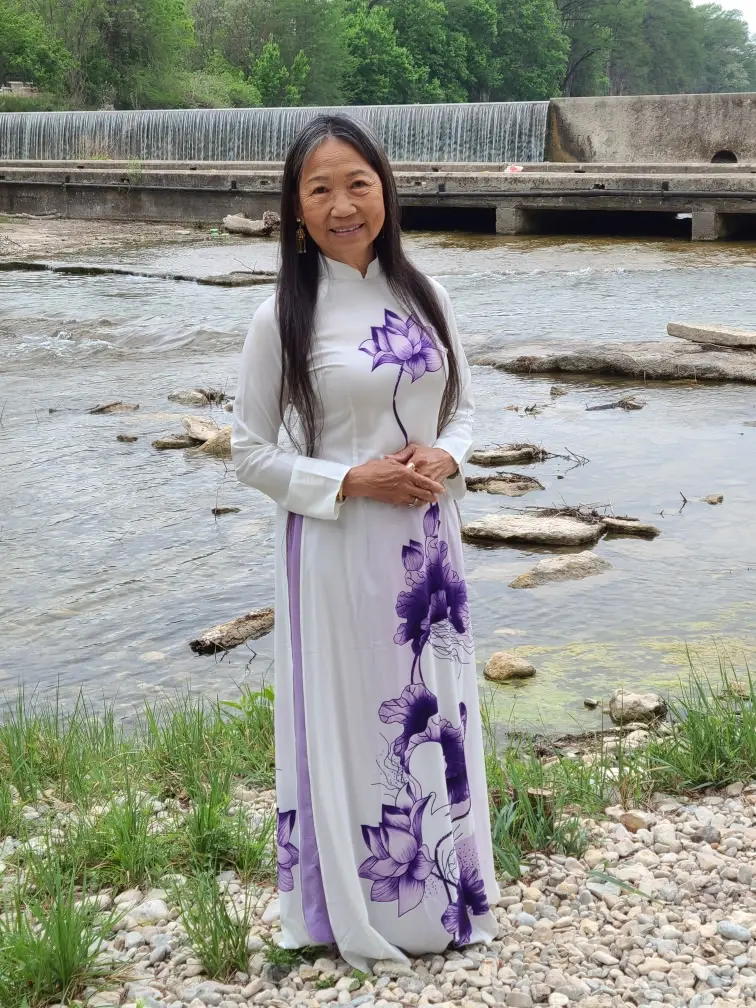
The following excerpts are drawn from an upcoming autobiography co-written by Nga Thuy-Nibblett and her son, Tran Van Kirk. Spanning war, loss, survival, family, and hope, this deeply personal memoir chronicles one woman’s remarkable journey from the villages of Vietnam to a new life across the ocean.
Born in Trực Ninh, North Vietnam, in 1952, Nga entered the world during a time of growing political upheaval. In the opening chapters, readers are transported to a childhood shaped by faith, family traditions, and the beauty of rural Vietnamese life. Through vivid recollections, she recounts her family’s dangerous escape from the North during the 1954 migration south, crossing turbulent waters aboard overcrowded refugee vessels filled with families seeking freedom and safety.
As the story unfolds, readers are introduced to a close-knit Catholic family rebuilding their lives in central Vietnam. Chapters exploring her early years reveal memories of village life, church celebrations, family gatherings, and the enduring lessons taught by her mother—lessons of perseverance, humility, compassion, and faith that would guide her through life’s greatest trials.
The memoir takes a poignant turn with the illness and loss of her mother, a defining event that forced a young girl to grow up far sooner than expected. Through these chapters, Nga reflects on grief, responsibility, and the challenges of helping hold a family together during uncertain times.
Against the backdrop of the escalating Vietnam War, the narrative shifts to life near Da Nang, where military aircraft filled the skies and the realities of conflict crept ever closer to everyday life. Readers witness a young woman navigating a rapidly changing world while balancing family obligations, education, and the hopes of a better future.
Later chapters offer a fascinating glimpse into the interactions between Vietnamese civilians and the thousands of American servicemen stationed in the region. Through stories of work, friendship, cultural exchange, and opportunity, Nga shares experiences that would ultimately alter the course of her life in unexpected ways.
The memoir also explores themes of independence, young adulthood, marriage, and motherhood as Vietnam continued to endure years of turmoil and uncertainty. Throughout these pages, readers encounter moments of heartbreak and triumph, setbacks and blessings, each contributing to a larger story of resilience.
As the journey progresses, the narrative expands beyond Vietnam, following a path that leads to new beginnings, new challenges, and a life shaped by both remembrance and gratitude. Along the way, the memoir examines universal questions of identity, family, sacrifice, and belonging while preserving the rich cultural heritage of a generation whose stories are too often left untold.
More than a personal history, this autobiography serves as a tribute to the countless families who endured war, displacement, and loss while never surrendering their hope for a better future. Through Nga’s eyes, readers gain an intimate perspective on one family’s extraordinary journey—and discover how faith, courage, and love can illuminate even the darkest chapters of human experience.
The release date for the published memoir is pending.
Supplemental Information
THE LANDSCAPE OF TRỰC NINH, BÙI CHU — BEFORE THE WAR
A peaceful Catholic farming district in the Red River Delta
Before the war touched her life, Trực Ninh was one of the most peaceful, fertile, and deeply Catholic regions in all of Vietnam.
This area is part of the Red River Delta, a vast, flat expanse of farmland shaped by centuries of rice cultivation and parish life.
The land around her childhood home would have looked like this:
- Endless rice paddies stretching to the horizon, shimmering like mirrors under the sun.
- Narrow raised footpaths winding between fields.
- Irrigation canals carrying slow, brown water.
- Bamboo groves rustling in the wind.
- Banana and jackfruit trees shading small courtyards.
- Church spires rising above the fields — the signature of Bùi Chu.
This region was known for its quiet mornings, its communal rhythms, and its deeply rooted Catholic identity.
The sound of church bells was as common as the sound of birds.
Village life before the war
Nga’s early world would have been defined by:
- Small brick or thatched homes clustered close together.
- Courtyards where families cooked, washed vegetables, and dried rice.
- Open-air markets selling fish, herbs, and woven baskets.
- Children playing along irrigation dikes.
- Women carrying baskets on shoulder poles.
- Farmers bent over rice fields at sunrise.
The air smelled of wet earth, woodsmoke, and cooking rice.
Life was slow, predictable, and tied to the land.
This was the world she knew before the war arrived as sound — before the sky shook, before fear became part of childhood.
What the Red River Delta Was Used For During the War
The Red River Delta including Trực Ninh, Bùi Chu, and all of Nam Định Province had major strategic importance during the Vietnam War. Its use during the war is well‑documented and not speculative.
The Red River Delta served as one of North Vietnam’s most important transportation corridors during the war. Major highways, rail lines, and a dense network of canals and rivers crossed the region, and the long earthen dike systems doubled as elevated roads. These routes carried everything the North needed to sustain the conflict: troops moving toward the front, weapons and ammunition transported from supply centers, food from the agricultural heartland, medical supplies for field hospitals, and communication lines that linked Hanoi to the rest of the country.
Because all of these systems converged in the delta, it functioned as a critical transportation hub, binding the capital to the surrounding provinces and enabling the movement of people, resources, and military support throughout the North.
It Was a Defensive Shield for Hanoi
Because Trực Ninh and Bùi Chu sit south of Hanoi, the region acted as a buffer zone protecting the capital.
The North used the delta for:
- anti‑aircraft positions
- militia defense networks
- evacuation routes
- civilian dispersal during bombing campaigns
The flat terrain made it easier to position anti‑aircraft guns and radar.
THE LANDSCAPE OF HANOI WHEN HER FAMILY RELOCATED
Relocating to Hanoi meant entering a world entirely different from the coastal villages of central Vietnam. When Nga’s family moved there, it was still before the full eruption of the Vietnam War, yet the city already carried tension, politics, and the weight of history. Hanoi was a thousand‑year‑old capital — crowded, ancient, alive — a place where tradition pressed against modern upheaval, and where every street seemed to hold both memory and uncertainty.
Hanoi was the opposite of Trực Ninh:
- Narrow, winding streets
- French colonial buildings with balconies and shutters
- Hoàn Kiếm Lake with its misty mornings
- Banyan trees shading sidewalks
- Street vendors calling out their goods
- Bicycles and cyclos flowing like rivers
The air carried:
- incense
- coal smoke
- street food
- the metallic ring of bicycle bells
The air carried the smell of street food, incense, and exhaust.
The soundscape was vendors calling, bicycles ringing, and the constant hum of city life.
From open fields to tight alleys
For a girl raised among rice paddies and open sky, Hanoi would have felt:
- louder
- faster
- more crowded
- more structured
- more anonymous
Instead of water buffalo and fields, she saw:
- electric wires crisscrossing above her head
- rows of shop houses
- government buildings
- street markets packed shoulder‑to‑shoulder
A city shaped by politics and movement
Hanoi was the political center of the North.
Families who relocated there often did so under pressure, necessity, or survival.
It was a place where:
- identity shifted
- families hid their past
- people learned to blend in
- the war’s shadow was already forming
For Nga, the move from her quiet village to Hanoi would have been a cultural and emotional shock — a shift from a world of open land and community to a world of concrete, crowds, and caution.
What Trực Ninh & Bùi Chu Were in the 1950s
In the 1950s, Bùi Chu Diocese—which encompassed Trực Ninh and much of Nam Định Province—stood as one of the oldest and strongest Catholic centers in all of Vietnam. Its roots stretched back to 1533, making it the cradle of Vietnamese Catholicism. By the mid‑20th century, the region was defined by dense parish life, Dominican influence, vibrant religious communities, and a large, deeply devout Catholic population. Faith shaped everything: family life, village rhythms, education, festivals, and identity.
But the 1950s brought two seismic shocks that reshaped the region forever.
Land Reform & Communist Consolidation (1953 to 1956)
When the Communist government implemented land reform in the North, the impact on Catholic villages like Trực Ninh and Bùi Chu was devastating. The campaigns were marked by political purges, public denunciations, and the dismantling of traditional village structures. Priests, catechists, and devout families were often targeted as “landlords” or “reactionaries,” regardless of their actual status. Fear spread through communities that had once been defined by stability and faith.
Families lived with the constant threat of accusation. Religious practice was pushed into secrecy. The social fabric that had held Catholic villages together for centuries began to fray under the pressure of ideological control. For many, the North no longer felt like home.
The 1954 Catholic Exodus to the South
After the Geneva Accords divided Vietnam at the 17th parallel, nearly one million Northern Catholics fled to the South in what became one of the largest civilian migrations in Southeast Asian history. Bùi Chu and Trực Ninh were at the heart of this exodus. Entire parishes moved together—priests, families, elders, children—carrying statues, relics, and the memory of centuries of faith.
For those who left, it was not simply a relocation. It was a wrenching separation from ancestral land, from graves, from traditions rooted in place. For those who stayed, it meant living under a government that viewed their faith with suspicion and often hostility.
This is the world Nga’s family came from: a region defined by deep Catholic identity, shaken by political upheaval, and forever marked by the trauma of displacement.
After 1954: Communist victory & mass Catholic flight
When French forces were defeated in 1954, the northern communist government took control of the region. In response, 142 priests and about 100,000 Catholics fled south, leaving only a small remnant of clergy and religious in Bùi Chu.
For Trực Ninh — a district with many parishes — this meant:
- Parishes suddenly without priests.
- Families are divided between those who fled and those who stayed.
- A shift from open Catholic public life to cautious, often underground practice.
- Increasing state scrutiny of Church activities.
This exodus reshaped the religious landscape for decades.
1953 to 1956: Land Reform & Class Struggle
The Land Reform Campaign (Cải cách ruộng đất) was the most traumatic event for rural northern communities in the 1950s. It aimed to seize land from “landlords” and redistribute it to poor peasants. In practice, it involved:
- Public denunciation sessions.
- Imprisonment or execution of accused “landlords.”
- Forced class labeling.
- Confiscation of Church lands and parish properties.
- Deep social division within villages.
This campaign was especially harsh in Catholic areas, where clergy and lay leaders were often classified as “landlords” or “reactionaries.” The government later admitted errors and launched a Rectification of Errors campaign in 1956.
For Trực Ninh, this meant:
- Parish lands and Church farms redistributed.
- Catholic leaders targeted.
- Families torn apart by class accusations.
- Long-term mistrust between Catholics and local authorities.
Daily Life in Trực Ninh During the 1950s
Based on the historical context, life in Trực Ninh would have been marked by:
- Tight-knit Catholic village life centered on parish identity.
- Political pressure to conform to new revolutionary norms.
- Reduced clergy presence after the 1954 exodus.
- Economic hardship due to land redistribution and war recovery.
- Quiet resilience, with many Catholics maintaining faith practices privately.
The region’s strong Catholic identity meant it often stood apart culturally from surrounding areas — a distinction that shaped how the state viewed and treated it.
Why Bùi Chu & Trực Ninh mattered
This region was symbolically important because:
- It was one of Vietnam’s earliest Catholic heartlands.
- It produced many martyrs and clergy.
- It represented a large, organized religious community not aligned with communist ideology.
- Its mass migration south in 1954 helped shape the Catholic demographics of South Vietnam.
Hanoi is Vietnam’s thousand‑year capital, a city where imperial courts, craft guilds, French boulevards, and wartime memory all sit tightly together in one living landscape. Its identity is shaped by more than a millennium of political centrality, cultural scholarship, and layered urban life.
A Catholic Refugee Community — Carrying Trauma Quietly
Nga’s village near Da Nang was not just any village. It was a Catholic refugee community formed by families who fled the North in 1954 — a people already marked by loss. Everyone had left something behind: homes, land, relatives, ancestral graves, and the sense of belonging that roots a family to its history. As they often said, “Part of you always remains behind.”
Faith became their anchor. Catholic refugees were known for strong parish life, devotion to the Rosary, tight‑knit community, deep fear of communism, and a moral teaching shaped by generations of persecution. Nga’s mother taught her, “Love God. Love other people,” but she also prepared her for the hard truth carried in refugee memory: “There might come a day when someone would place a crucifix on the ground and order you to walk across it.” This was not metaphor. It was lived experience — the echo of a trauma her community carried quietly, faithfully, and together.
A Traditional Vietnamese Village — Before the War Took Over
Nga’s early life was shaped by the rhythms of a rural village:
Daily Life Was Simple, Physical, and Communal
- Children ran barefoot through rice fields.
- Families cooked over wood fires.
- Water came from wells.
- There was no electricity — only kerosene lamps.
“We sat on bamboo mats… a kerosene lamp hung from the ceiling.”
Nature Was Her Playground
- Mango trees
- Guava trees
- Banana plants
- Wild pineapples
- Hills covered in lilies
She and her cousin wandered for hours, eating fruit straight from the branches.
Church Was the Center of Everything
Not just spiritually — socially, culturally, emotionally.
“We spent almost as much time at church as we did at home.”
Mass before sunrise.
Rosary every night.
Children collecting stamps for attendance.
Christmas and Tết transform the whole village.
This was a world where faith wasn’t a part of life — it was life
A capital with a 1,000‑year lineage
Hanoi began as Thăng Long (“Rising Dragon”), chosen as the capital in 1010 by Lý Thái Tổ. It remained the heart of Vietnamese dynasties for centuries, even when the Nguyễn moved the formal capital to Huế in 1802. The city’s long political role is why its streets still carry the imprint of imperial citadels, Confucian academies, and village‑craft traditions.
To understand the contrast, it helps to see Hanoi as it truly was: Vietnam’s thousand‑year capital, a city where imperial courts, craft guilds, French boulevards, and wartime memory all coexisted in a single living landscape. Hanoi’s identity was shaped by more than a millennium of political centrality, Confucian scholarship, and layered urban life. It was a world of mandarins and markets, colonial architecture and ancient temples, intellectual circles and revolutionary fervor.
Key historical anchors:
- Imperial Citadel of Thăng Long — the original royal center.
- Temple of Literature (1070) — Vietnam’s first university and Confucian academy.
- Old Quarter — guild‑based merchant streets with craft names.
- French Quarter — wide boulevards, villas, opera house, and colonial civic buildings.
Colonial transformation
Under French rule (1883 to 1945), Hanoi became the capital of French Indochina, reshaping its architecture and civic layout. The contrast between the dense Old Quarter and the airy French Quarter is one of the city’s most visible historical signatures.
Revolution, war, and modern identity
After Japan’s surrender in 1945, the Viet Minh seized Hanoi, declaring it the capital of the Democratic Republic of Vietnam. The French briefly reoccupied the city until their defeat in 1954. Hanoi then became the political center of North Vietnam throughout the Vietnam War.
Today, wartime memory is visible in museums, memorials, and the stories attached to neighborhoods — but it sits alongside modern cafés, creative spaces, and a youthful population.
Culture woven into daily life
Hanoi’s culture is not confined to monuments — it lives in:
- Family altars and home rituals.
- Pagodas, temples, and communal houses.
- Street food traditions (pho, bánh mì, bún chả).
- Craft markets and narrow merchant streets.
- Festivals like Tết and Mid‑Autumn, which transform the city with lanterns and processions.
The Old Quarter remains the city’s cultural heartbeat, while museums like the Vietnam Museum of Ethnology showcase the country’s ethnic diversity.
Why Hanoi feels unique
Hanoi’s distinctiveness comes from how its layers remain visible and active at once:
- Imperial memory.
- Confucian scholarship.
- Village craft traditions.
- French colonial urban form.
- Revolutionary and wartime history.
- Contemporary youth culture and global influence.
She could walk one block and feel several centuries at once.
The spark: France collapses, Vietnam divides (1954)
The war’s true beginning traces to May 7, 1954, when Viet Minh forces under Gen. Võ Nguyên Giáp defeated the French at Điện Biên Phủ, ending nearly a century of colonial rule.
Just weeks later, the Geneva Accords (July 21, 1954) temporarily split Vietnam at the 17th parallel, creating:
- North Vietnam — communist, led from Hanoi
- South Vietnam — anti‑communist, backed by the U.S.
Although the division was meant to be temporary, it hardened almost immediately.
Atmosphere on the ground:
- Families fled in both directions, fearing reprisals.
- Villages were torn between loyalties.
- No one knew whether reunification or war would come next.
The war begins in the shadows (1954 to 1961)
The U.S. did not send combat troops at first. Instead, it launched the Saigon Military Mission on June 1, 1954, a covert operation under Col. Edward Lansdale to support South Vietnam through psychological warfare and paramilitary activity.
This is the moment many historians mark as the true beginning of the Vietnam War.
What this phase felt like:
- Assassinations, sabotage, and propaganda campaigns
- Viet Cong guerrilla cells forming in rural villages
- South Vietnam struggling to build a government under Ngô Đình Diệm
- U.S. advisers quietly increasing in number
By 1963, the U.S. had 16,000 military advisers in South Vietnam — still not a declared war, but unmistakably escalating.
Political chaos and rising violence (1963 to 1964)
South Vietnam was unstable. President Diệm’s repression of Buddhist protests led to unrest and ultimately his assassination in 1963.
This plunged the South into coups, counter‑coups, and confusion — exactly the environment in which the Viet Cong thrived.
Daily reality:
- Bombings and ambushes increased
- Rural areas slipped out of government control
- U.S. advisers were drawn deeper into combat situations
The moment the war “breaks open”: Gulf of Tonkin (1964)
The turning point came in August 1964, when U.S. destroyers Maddox and Turner Joy reported attacks by North Vietnamese torpedo boats in the Gulf of Tonkin. The second attack was later shown to be a false alarm, but Congress passed the Gulf of Tonkin Resolution, giving President Johnson broad authority to escalate the conflict.
At this moment, the war shifted from covert and limited to open and expanding.
What It Felt Like as the War Truly Erupted
By the mid‑1960s, the early uncertainty that had hovered over Vietnam hardened into something unmistakable. The quiet tension of the late 1950s and early 1960s gave way to a conflict that was no longer shadowed or whispered about — it was fully visible, fully armed, and fully consuming.
Large‑scale U.S. troop deployments transformed the landscape. There were 23,000 American personnel in Vietnam by 1964, and the numbers surged sharply afterward. Viet Cong guerrilla attacks intensified, reaching deeper into rural areas and tightening their grip on contested regions. Villages found themselves caught between two governments, two armies, and two visions of Vietnam’s future. Fear settled into daily life, not as a momentary feeling but as a constant atmosphere.
Across the country, a growing belief took hold — among civilians, soldiers, and leaders alike — that this conflict would not be short. What had begun as a political crisis, then evolved into a covert struggle, had now become a full‑scale war. And for ordinary families, the eruption of the war was not marked by strategy or ideology. It was marked by disruption, displacement, and the collapse of the world they had known.
What the Vietnam War Was Like When It First Broke Out — Through Nga’s Eyes
For Nga, the war did not begin with bombs or soldiers. It began with fear, flight, and the unraveling of her childhood world. Her earliest memory of the conflict is not of gunfire, but of a boat — a crowded vessel filled with families fleeing the North after 1954.
She remembered the faces first:
“Everywhere she looked there were faces… Some were crying. Some were praying… The air felt heavy with fear and uncertainty.”
That moment captures the emotional truth of what the outbreak of the Vietnam War felt like for Catholic communities in the North. It was not a sudden explosion. It was a slow tightening — political pressure, land reform, fear of denunciation, the disappearance of clergy, the collapse of familiar structures — until finally, families like Nga’s made the agonizing decision to flee.
For them, the war began with loss: loss of home, loss of safety, loss of the world they had known for generations.
The boat was not just a means of escape. It was the dividing line between the life they had lived and the life they would have to build.
1954: The War Begins With a Refugee Crisis, Not a Battle
For many Vietnamese, the Vietnam War did not begin with gunfire. It began with Điện Biên Phủ, the French defeat in 1954, and the sudden division of the country into North and South. But for Catholic communities in Bùi Chu and Trực Ninh, this was not a distant political event. It was a moment of reckoning — a life‑or‑death decision that would determine the future of their families, their faith, and their identity.
When the North came under communist control, fear spread quickly through the Catholic heartlands. Land reform campaigns, political purges, and the tightening grip on religious life convinced many that remaining would bring hardship, uncertainty, and spiritual repression. Nearly one million northern Catholics chose to flee — one of the largest civilian migrations in Southeast Asian history.
Nga’s family was among them.
Her earliest memory of the war is not of soldiers or explosions, but of a boat packed with terrified families. She remembered the faces first —
“Everywhere she looked there were faces… Some were crying. Some were praying… The air felt heavy with fear and uncertainty.”
That boat was part of the historic exodus that reshaped the demographics of South Vietnam. It was the moment when the war entered her life, not as a battle, but as flight — as the collapse of the world her parents had known for generations.
Her parents’ reasoning, as you wrote, is the truth of that moment:
“My parents believed that remaining in the North would bring hardship and uncertainty… They wanted a better life for their children.”
For families like Nga’s, the war began not with bombs, but with the fear of communist rule, the trauma of land reform, and the threat to their religious identity. The decision to flee was not political. It was existential. It was about survival, faith, and the hope of giving their children a future.
Life in the South Before the Shooting War
Before the major escalation, Nga’s childhood near Da Nang reflects a South Vietnam that still lived in the quiet space before the war swallowed everything. Her early years reveal a world that was peaceful, rooted, and deeply communal:
- villages where everyone knew one another
- church‑centered rhythms that shaped each day
- children racing through rice fields under the open sky
- Mass before sunrise, the sound of bells carrying across the paddies
- no electricity, but an abundance of faith, family, and freedom
Nga remembers it with a clarity that feels almost luminous:
“She remembers freedom… open fields, dirt roads, church bells, and the laughter of children.”
This was South Vietnam before 1965 — before U.S. Marines landed in Da Nang, before helicopters filled the sky, before the war’s machinery drowned out the sound of village life.
Her story is a reminder that Vietnam was not born in war. War arrived slowly, like a shadow creeping across the land — first as noise, then as fear, and finally as the force that reshaped everything.
The War’s First Real Impact on Her Life Was Not Combat — It Was Loss
For Nga, the Vietnam War did not first appear as soldiers in the street or gunfire in the distance. It entered her life in a far more intimate and devastating way: through her mother’s illness and death. While the country moved steadily toward open conflict, her personal world was shaken by a tragedy that revealed how war, poverty, and limited medical care intertwined to shape the lives of ordinary families.
Hospitals were overcrowded. Medicine was scarce. Doctors were few. Families bore the burden alone. In this environment, a child often became a caregiver long before she understood what illness meant. Nga remembered it with heartbreaking clarity:
“Nga helped clean her. She brought her food and medicine… She did things no little girl should have to do.”
Those words are not only a personal memory — they are a historical truth. Countless Vietnamese families, especially the poor, faced illness without support, without resources, and without the comfort of knowing help was coming. The war had already begun to erode the structures that once held communities together.
Her mother’s death in 1963 marked a turning point in her life. It was the same year that South Vietnam’s president, Ngô Đình Diệm, was assassinated — a moment that plunged the nation into deeper instability. The country was unraveling, and so was Nga’s childhood. The loss of her mother became the emotional fault line that divided her life into “before” and “after,” just as the nation itself was entering its own period of rupture.
For Nga, the war’s first blow was not a rocket or a rifle.
It was grief.
It was a responsibility far beyond her years.
It was the moment she learned that survival would demand more of her than any child should ever be asked to give.
1963 to 1964: The Country Begins to Break Apart
While Nga was losing her mother, South Vietnam was losing its stability.
Her personal grief mirrors the national unraveling:
- political chaos
- Buddhist crisis
- Diệm’s assassination
- rising Viet Cong activity
- U.S. involvement deepening
Her father’s words at your mother’s death —
“The rooster has to raise the chick now.”
— echo the feeling of a country suddenly without its guiding figure.
By 1964, the Gulf of Tonkin incident would ignite the full-scale war.
Nga’s childhood ends at the exact moment Vietnam’s war truly begins.
A DAY IN THE LIFE — WHAT CIVILIANS EXPERIENCED IN NGA’S VILLAGE
Morning — Ordinary Life in an Extraordinary Time
Roosters crow before dawn. Women light cooking fires. Children wash their faces with cold water from the well. The smell of steaming rice mixes with the fading scent of kerosene lamps. Nga walks to church in the half‑light, barefoot on the dirt path. Mass begins before sunrise — a ritual older than the war, older than the French, older than memory.
Afterward, children scatter toward school or the fields. Farmers bend over rice paddies. Mothers prepare bean sprouts or rice paper to sell. Life looks normal — until the sky reminds them otherwise.
Midday — The War Overhead
The first helicopter arrives before noon. The sound hits before the sight — a chopping, violent roar that shakes the air. Nga freezes. She hides behind a tree. Her heart races. Adults pretend not to notice. Children cannot pretend.
Trucks rumble past the village road, carrying American soldiers toward the base. Dust rises behind them like a second shadow.
Afternoon — Work, Fear, and Adaptation
Women grind rice. Children climb mango trees. Men repair fishing nets or tend livestock. Then — a distant explosion. A flash in the sky. A tremor underfoot.
No one screams. No one panics. Everyone simply pauses… listens… waits.
If the danger is close, families run to their bunkers — holes in the ground reinforced with bamboo and hope. If the danger is far, they return to their chores.
Evening — Faith and Fragility
As the sun sets, the Rosary begins. Men on one side. Women and girls on the other. Voices rise together, steady and familiar, even as the war hums in the background. Children fall asleep on bamboo mats. Adults whisper about rumors — rocket attacks, troop movements, missing neighbors.
Night brings darkness, but also flares from the base, lighting the sky like artificial stars. Sleep comes lightly. Fear sleeps beside them.
Childhood Interrupted
Nga’s childhood reveals one of the most painful truths of the Vietnam War: children were forced into adulthood long before their time.
War taught them things no child should ever have to learn:
- fear of helicopters
- fear of explosions
- how to hide
- how to run
- how to read danger
- how to silence their own fear
And war demanded responsibilities far beyond their years:
- helping parents hold the household together
- caring for sick or grieving relatives
- working to earn money
- stepping into adult roles because no one else could
Nga captures this with devastating honesty: “I did things no little girl should have to do.”
That sentence is not just personal — it is historical. It reflects the civilian experience across Vietnam, where childhood was shortened, innocence interrupted, and survival became the first lesson every child learned. Her story stands as a testament to the resilience of a generation that grew up too fast — not because they wanted to, but because war left them no other choice.
What It Was Like When the Vietnam War “Came to the Village”
A historical interpretation of Nga’s lived experience
For years, the war was something villagers heard about, not something they felt. Nga expresses this with perfect clarity:
“War was something I heard about but did not truly understand… it felt distant.”
Her words mirror the national reality. From 1954 through the early 1960s, the conflict was a slow burn — political tension, scattered violence, and competing ideologies, but not yet the firestorm it would become. Most civilians lived in a space between rumor and reality, aware that something was happening but untouched by its violence.
Nga’s story captures the moment when the slow burn of war finally reached ordinary families: helicopters shaking the sky, bunkers carved by hand, nighttime explosions, children learning survival by watching adults, fear settling into the landscape like weather.
The war arrived in stages, never all at once first as sound, then as fear, then as the quiet rearranging of daily life, and only later as violence.
Her experience reflects the truth lived by millions of civilians: the war did not begin with battles. It began with uncertainty, with the slow erosion of safety, with the sense that something unseen and dark was drawing nearer.
For Nga, childhood marks the threshold where war stopped being an idea and became a presence one that stepped into the village, into the home, into the mind. It was the moment when innocence gave way to awareness, when the familiar world began to shift around her, quietly at first, then irrevocably.
The First Sign of War Was Noise — Not Violence
Before rockets, before firefights, before danger… came sound.
Nga remembers it with perfect clarity:
“The entire sky seemed to shake.”
For civilians, the war announced itself not through bullets but through vibration and thunder, helicopters beating the air overhead, cargo planes dragging their roar across the fields, convoys clattering down the roads, generators humming through sleepless nights, distant explosions rolling in from battles they could not see.
War entered their lives first as noise, not violence a constant tremor of machines that did not belong to the landscape.
For villagers near Da Nang, sound became the first teacher of fear: learning to distinguish a helicopter from a jet, to read the rhythm of artillery in the distance, to recognize the sudden silence that meant danger, to run on instinct before understanding why.
Long before the first rocket fell, the war had already arrived in the shaking earth, in the trembling air, in the sounds that warned civilians their world was changing.
This is the sensory truth of Nga’s childhood:
The war reached her ears long before it reached her home and the history supports her memory. Da Nang Air Base became one of the earliest and largest U.S. installations in Vietnam.
By 1965, it served as the first landing point for U.S. Marines. Even before combat escalated, the surge of aircraft, convoys, and construction signaled a new era of war taking shape.
Nga’s village sat less than a mile from the base perimeter placing her squarely inside the acoustic footprint of a rapidly expanding military hub. For her, the war arrived first as sound, then as fear long before she understood what any of it meant.
Civilians Lived With Constant Fear of Attack
Because Nga’s village sat in the shadow of Da Nang Air Base, it lived under the constant threat of Viet Cong and North Vietnamese rocket fire. The base was a prime target, and the civilians around it paid the price. Life could shift from calm to terror in an instant. Sudden rocket barrages shattered the night. Explosions erupted without warning. Flares streaked across the sky, turning darkness into a harsh, unnatural daylight. Mortars landed unpredictably, sometimes close enough to shake the ground beneath their feet.
There were alarms at times, but often the only warning came from instinct: the quickened breath of an adult, the sudden stillness before the run. Families grabbed their children and sprinted toward the bunkers they had dug themselves, stumbling through the dark, praying the next explosion would not find them.
Nga captured the civilian experience with heartbreaking simplicity:
“When the adults ran, we ran. When they ducked, we ducked.”
Children learned survival not from training or drills, but by watching the adults around them reading their movements, their fear, their urgency. In this world, childhood was shaped not by games or schoolyards, but by the rhythms of danger and the instinct to follow the people who might keep you alive.
For Nga’s community, this was not an occasional terror. It was the atmosphere of their lives a constant, unpredictable threat that shaped their memories, their behavior, and the way they understood the world.
Families Dug Bunkers Because They Had No Other Protection
In Nga’s village, survival depended entirely on what families could build with their own hands. There were no sirens, no reinforced shelters, no civil‑defense system. When rockets targeted Da Nang Air Base, civilians had only one option: dig.
The bunkers they built were crude but essential holes carved into the earth, braced with bamboo, lined with whatever scraps a family could gather. Sandbags were a blessing if they could be found.
Nga remembered them with stark simplicity:
“Nothing fancy. Nothing comfortable. But they offered protection.”
That single line captures the reality for countless civilians. Their safety rested on instinct, speed, and prayer. When the ground shook and the sky lit up, families grabbed their children and ran for the bunkers they had dug themselves, hoping the next explosion would not find them.
For Nga and her community, these dug‑out shelters were not symbols of fear —
They were symbols of resilience.
They were proof that even without resources, infrastructure, or warning systems, families found ways to protect one another with whatever the earth and their own determination could provide.
In a war that offered civilians almost nothing, these bunkers were the one thing they could claim as their own: a handmade shield against a danger they did not choose, but had to survive.
The Americans Through a Child’s Eyes
Nga’s first encounter with American soldiers is one of the most historically valuable passages in her entire memoir not because of military detail, but because of human detail. What she noticed were not weapons or uniforms, but faces.
- She described their hair colors, their skin tones, their large noses, their smiles, their curiosity, and their kindness.
- This is anthropology, not just memory of a child’s unfiltered record of cross‑cultural contact in wartime Vietnam.
Her words capture the moment when the abstract idea of “Americans” became human:
“For the first time in my life, foreigners became real people instead of distant strangers.”
That sentence is a thesis on cultural encounters.
For many Vietnamese children, Americans arrived not as combatants but as living curiosities — tall, pale, loud, smiling, unfamiliar, and unexpectedly gentle. Before the war defined them as soldiers, they appeared simply as people, standing in the red dirt of a village that had never seen anything like them.
Nga’s first taste of chewing gum captures the innocence of that moment:
“It was amazing.”
- A small detail — but one that reveals how foreignness could feel magical, disorienting, and delightful all at once.
- This moment reflects a larger truth about wartime encounters:
- War brings cultures together in ways no one anticipates.
- Children often meet “the enemy” long before they understand what an enemy is.
- Human connection emerges in the smallest gestures — a smile, a piece of candy, a shared moment of curiosity.
For Nga’s village, this was the beginning of a new reality:
Americans were no longer rumors carried by adults or distant figures glimpsed from afar — they were real people, standing in the red dirt, laughing, working, and interacting with the community. And this is the power of her story: it reminds us that even in wartime, the first contact between cultures is often not violence. It is humanity.
What Vietnamese Civilians Ate Most Often During the War
Staple Foods —
Rice, sweet potatoes, cassava, and corn were the primary staples for rural families in Central Vietnam.
Historical sources confirm:
- Rice shortages were common due to disrupted farming and transportation.
- Families often mixed rice with sweet potatoes or cassava to stretch meals.
- Cassava was widely used as a survival food during wartime scarcity.
These facts appear in Vietnamese Ministry of Agriculture records, RAND interviews, and refugee oral histories.
Vegetables and Greens —
Most families grew their own vegetables because markets were unstable.
Common wartime vegetables included:
- morning glory (rau muống)
- mustard greens
- pumpkin and pumpkin leaves
- bitter melon
- herbs like basil, mint, lemongrass
These appear in Vietnamese village studies, Catholic mission records, and U.S. Marine Corps Civil Affairs reports from the Da Nang region.
Protein Sources —
Protein was scarce. Civilians relied on:
- fish (fresh or dried)
- fish sauce (nước mắm)
- tofu
- occasional eggs
- small amounts of pork or chicken
Fish sauce being a primary protein source is documented in both Vietnamese and French colonial nutrition studies.
Everyday Dishes —
The dishes I listed— rice with vegetables, pumpkin soup, boiled greens, rice porridge — are what appears in:
- refugee interviews
- Vietnamese memoirs
- anthropological studies of wartime diets
These were the most common meals for poor and rural families.
Food from American Bases —
Villagers who worked on or near bases often brought home:
- bread
- leftover meat
- mashed potatoes
- fruit
- canned goods
This appears in:
- U.S. Marine Corps interviews
- VSO (Vietnamese Service Organization) oral histories
- Vietnamese refugee testimonies
- Studies on “base economies” around Da Nang, Chu Lai, and Cam Ranh
For many families, these leftovers were lifesaving.
Holiday Foods —
Even during war, families saved ingredients for:
- bánh chưng / bánh tét (Tết)
- chicken or pork dishes
- sweet coconut or mung bean desserts
This is consistent across all Vietnamese cultural and historical sources.
War Creates Opportunity — and Nga Seized It
Her entrepreneurial spirit appears early:
“What if I bought Coca-Cola and sold it to them?”
This is not just a charming memory — it is a window into how Vietnamese civilians adapted to the American presence.
Entire micro‑economies formed around U.S. bases.
were part of that history.
“That Detail Is Legendary” — The First Taste of American Candy
Every Vietnamese child who grew up near a U.S. base carries a version of this memory. It is one of the most universal, cross‑cultural moments of the entire war — a tiny spark of wonder in the middle of a conflict that would reshape the nation.
- The first time an American handed a child gum or candy, it felt like receiving something from another world.
- For children who had never tasted mint gum, chocolate bars, or hard candy, the experience was unforgettable — a burst of sweetness in a life marked by scarcity.
- These moments became part of the oral history of wartime childhood: whispered, traded, retold, and remembered long after the war ended.
Nga’s memory belongs to this shared cultural archive.
It is not trivial — it is anthropology, a record of how children experienced the arrival of a foreign military power.
In a landscape filled with fear, bunkers, and explosions, this small gesture stood out:
- a smile
- an outstretched hand
- a piece of gum
- a moment of connection
It was a reminder that even in war, human beings recognize one another.
And for a child like Nga, that sweetness — unexpected, foreign, astonishing — became a symbol of something larger: that even in the darkest times, wonder can still break through.
The Base Becomes a Gateway to a Larger World
Nga’s description of Da Nang Air Base is vivid and historically accurate:
- trucks arriving before dawn
- workers returning with leftovers
- villagers gathering to hear stories
- the base expanding month by month
Her writing:
“The world beyond it felt closer.”
This is exactly what happened for thousands of young Vietnamese — especially girls who saw American women working, earning money, and living differently.
Her decision to alter your birth certificate is not a moral failure.
It is a testament to her courage and hunger for independence.
‘Working for the Americans Changes Your Life”
Her first day at the bowling alley plays in memory like a scene from a film — the hesitation at the gate, the tightness in her chest as she stepped forward, the manager’s startled expression when he realized this young Vietnamese girl was asking for a job.All of which were frightening, overwhelming, and life‑changing for Nga. The soldiers’ reactions were a mix of curiosity and warmth, a human moment that cut through the fear and uncertainty of the times. It was the beginning of a chapter she never expected.
Among the Americans she met, none shaped her life more than Gunny. Nga spoke of him with a tenderness that revealed the depth of their bond. “Gunny treated me like a daughter… he patiently taught me English.” In a world defined by conflict, he offered her something rare: safety, dignity, and the steady presence of someone who believed in her. Their relationship was not political. It was human. It was family.
But wartime relationships, no matter how real, are often temporary. When the Americans prepared to leave, Nga described the moment with a simplicity that carried the weight of everything she had lived through. “I cried. The captain cried. Many of us cried.” It was the kind of goodbye that textbooks never record — the kind that happens between people who have shared work, trust, and the fragile normalcy of daily life in the middle of a war.
These memories stayed with her for the rest of her life. They were proof that even in the darkest chapters of history, people can find connection, kindness, and unexpected love. And they reveal a truth often overlooked: the war was not only fought with weapons and strategies, but with relationships that shaped the hearts of those who lived through it.
Independence Blossoms — Even in a War Zone
Nga’s reflections on freedom mark one of the most important turning points in her story. They reveal the moment she steps out of childhood and into her own becoming.
She writes:
“The work gave me more than money. It gave me confidence.”
That line is the essence of her transformation.
- She was no longer the frightened girl who once hid from helicopters.
- She was a young woman earning her own wages, moving between Vietnamese and American worlds, and discovering her own capability.
- In a landscape defined by instability, she found something steady inside herself — a sense of competence, dignity, and self‑worth.
But she also names the emotional cost of that growth:
“Freedom can sometimes feel lonely.”
That truth is universal.
Independence often arrives with solitude — the quiet ache of realizing that stepping into adulthood means carrying responsibilities alone, without the mother she lost, without the certainty she once knew.
In the middle of a war zone, Nga found something extraordinary:
a freedom rooted not in circumstance, but in courage.
Her independence did not bloom in safety — it bloomed in the very place designed to limit it.
And that is what makes her story powerful.
Her strength was not given to her by the world around her.
She built it herself.
What It Meant When War “Came to the Village”
Your chapter describes the moment when war stopped being a rumor and became a presence. Historically, this shift happened in waves, and your memories match each one.
Wave 1 — The Sound of Machines (1962 to 1965)
Before battles reached Da Nang, the first sign of escalation was sound. Helicopters carrying U.S. advisers thumped across the sky, cargo planes dragged their roar over the fields, bulldozers carved new clearings, and generators hummed through the night. “The entire sky seemed to shake… the entire village seemed to vibrate.” Villagers across central Vietnam described those early years exactly this way. The war arrived through the air long before it arrived on the ground — announced not by violence, but by the relentless, growing noise of machines that did not belong to the landscape.
Wave 2 — The Base Expands (1965)
Da Nang Air Base became the first major landing point for U.S. Marines in March 1965. Nga’s home sat less than a mile from the perimeter — placing her inside one of the most strategic military zones in the entire country. Almost overnight, the landscape around her transformed. The surge of trucks, convoys, patrols, construction crews, new fences, and unfamiliar foreign faces was more than military expansion; it was the reshaping of her entire environment. What had been a quiet village became the edge of a rapidly growing American stronghold.
Wave 3 — The Village Learns to Survive
Nga’s memory of bunkers is historically exact: “A hole in the ground. Wooden supports. Sandbags when available.” This was the standard civilian defense across South Vietnam, where children learned to read danger the way American children learned to read books. “When the adults ran, we ran. When they ducked, we ducked.” In the middle of a war, this was how instinct was taught — not through lessons, but through imitation and urgency. Her recollection preserves a truth often lost in military histories: the first contact between cultures in wartime is rarely violent. It is visual, emotional, human. Her story shows that even in a conflict as devastating as the Vietnam War, the earliest moments of encounter were shaped not by ideology, but by wonder, curiosity, and the simple recognition of another person’s humanity.
The Emotional Geography of a War Zone
One of the most profound truths in Nga’s story is how normal war becomes. Her line —
“The extraordinary gradually became ordinary.”
— is not resignation. It is survival. It is the human mind doing what it must to keep going.
Her village lived in two worlds at once, and her memoir reveals how seamlessly they overlapped:
- the world of rice fields, church bells, and childhood freedom
- the world of rockets, helicopters, and foreign soldiers
Most histories treat these as separate realities: peace on one side, war on the other.
Nga’s lived experience shows they were simultaneous, layered on top of each other like two maps occupying the same space. Children played in the fields while aircraft thundered overhead. Families prayed at dawn and dug bunkers at dusk. Life continued, even as danger crept closer.
This is the emotional geography of a war zone: a landscape where fear and normalcy coexist, where survival requires adaptation, and where the extraordinary becomes ordinary because there is no other choice. Nga’s story makes visible what most histories overlook — that war is not only fought on battlefields. It is lived in homes, in routines, in the quiet adjustments people make to keep going.
Civilian Life in Nga’s Village vs. Other Regions of Vietnam
Nga’s Village — Life Near Da Nang Air Base
Nga’s village is a unique place in the landscape of the war. Unlike the remote northern communes or the embattled hamlets of the Mekong Delta, her community lived in the shadow of one of the largest American installations in Vietnam. This proximity shaped every aspect of daily life. American troops were a constant presence — not distant figures but people the villagers saw, heard, and interacted with every day. Rocket attacks aimed at the base shook the ground and lit the night sky, yet the fighting did not always reach the village itself. War hovered overhead more often than it arrived at the doorstep.
Economic opportunity flowed into the community through VSO employment, bringing wages, food, and a sense of purpose that wartime villages rarely knew. Cultural exchange became part of childhood: gum and candy passed through small hands, English words were learned and repeated, and glimpses of American movies and music filtered into a rural world that was rapidly modernizing. Children grew up bilingual and bicultural, navigating two worlds at once — the traditions of their village and the influence of the Americans who worked beside their parents, siblings, and neighbors.
Life in Nga’s village was a mixture of fear and opportunity, danger and connection, uncertainty and transformation. It was a rural community pulled into modernity by the force of a foreign presence, yet still rooted in its own rhythms, faith, and resilience.
How Civilian Life Differed Across Vietnam During the War
Northern Villages — Life Under Communist Control
In the North, village life unfolded under strict government authority. Land reform campaigns reshaped entire communities, often violently. Political indoctrination was woven into daily routines, and contact with foreigners was nearly nonexistent. Goods were scarce, and families lived under constant pressure to conform to the expectations of the state.
For civilians, fear became a quiet companion. People worried about denunciation, about saying the wrong thing, about being accused of disloyalty. Hunger and rationing were part of everyday life. Religious practice survived only in secret. There were no Americans in these villages; the war was felt through conscription, propaganda, and the steady tightening of political control.
Mekong Delta Villages — Life in VC Strongholds
In the Mekong Delta, the war was not distant — it was woven into the landscape. Villages lived under the shadow of guerrilla warfare. Control shifted constantly between the Viet Cong and ARVN forces. Nighttime ambushes, booby traps, and mines turned ordinary paths into dangerous terrain.
Civilians lived with relentless uncertainty. They were pressured to show loyalty to both sides, knowing that choosing wrong could cost them their lives. Homes were burned or destroyed in clashes. Casualties were heavy. Children were recruited as messengers or lookouts. Survival required navigating a world where danger came from every direction and allegiance was never simple.
Saigon and the Urban Centers — Life in the Modernizing South
In the cities, especially Saigon, the war felt different. Modernization surged forward. American culture was everywhere — in the music drifting from cafés, in the fashion sold in markets, in the food, the schools, the nightlife. Bombings occurred, but daily life carried a sense of movement and opportunity that rural areas rarely saw.
For civilians, the cities offered more stability and more economic possibilities. There was less daily danger than in the countryside, though political instability simmered beneath the surface. Urban life exposed people to Western ideas, modern conveniences, and a pace of life that contrasted sharply with the hardships of rural villages.
What “VSO” Actually Meant in Vietnam
In the context of the Vietnam War, the term VSO — Vietnamese Service Organization — referred to the large civilian labor force employed by the U.S. military through contracted Vietnamese companies. These workers were not soldiers and not military personnel. They were local civilians, men and women from nearby villages, hired to perform the essential daily tasks that kept American bases functioning.
Their presence is thoroughly documented in U.S. military records, Vietnamese oral histories, and the archival materials of Da Nang Air Base. They cooked meals, cleaned facilities, washed uniforms, repaired equipment, built structures, translated conversations, and handled clerical work. In every practical sense, they formed the backbone of the civilian labor system that supported U.S. operations in South Vietnam.
These workers were not an auxiliary force — they were indispensable. Their labor sustained the rhythm of the base, and their reliability earned the respect of the Americans who depended on them. In communities like Nga’s, the VSO workforce became a bridge between two worlds, linking village life to the vast machinery of the American military presence.
VSO’s WERE PRESENT AT DA NANG AIR BASE
Da Nang Air Base was one of the largest U.S. installations in Vietnam, and it relied heavily on Vietnamese civilian labor.
Historical records confirm:
- Thousands of Vietnamese civilians worked on the base.
- Many were hired through VSO labor companies.
- They staffed nearly every non‑combat function on the installation.
They worked in:
- mess halls
- laundry facilities
- maintenance shops
- construction crews
- cleaning and sanitation
- clerical and administrative offices
- supply and logistics
What Americans Were Like With Nga and Her Community
In Nga’s village, the Americans—Marines, Army troops, VSO supervisors, and base personnel—were not distant figures passing through a war zone. They became part of the fabric of daily life. Most of them treated civilians, especially children, with a warmth and curiosity that surprised many villagers. Nga’s earliest memories of them reflect what was common across communities near Da Nang: the way they smiled at the children, greeted them with friendly gestures, shared gum, candy, and bits of food, and tried—sometimes awkwardly, sometimes successfully—to speak simple Vietnamese phrases. They laughed with the children, not at them, and their presence, though tied to war, often carried a gentleness that villagers did not expect. This behavior is widely documented in base‑adjacent communities throughout the region.
Because VSO workers were woven into every department on the base, contact between Americans and civilians happened every single day. These were not brief encounters; they were working relationships that grew into genuine human connections. This is why Nga formed real bonds with the mamasans, the respected Vietnamese supervisors who guided and protected younger workers; with Marines who treated her like a younger sister; with NCOs like Gunny, who patiently taught her English; and with officers who checked on her well‑being and encouraged her. These relationships were not unusual. They were a defining feature of life near large installations like Da Nang Air Base.
Americans depended on Vietnamese civilian labor in ways that are historically undeniable. U.S. bases could not function without the thousands of local workers who cooked the meals, cleaned the facilities, washed uniforms, repaired equipment, built structures, translated conversations, and kept the administrative machinery running. This dependence created a natural respect and a daily cooperation that blurred the lines between “American” and “civilian.” They worked side by side, learned from one another, and built trust through shared routines.
In Nga’s village, the Americans were a mixture of protectors, teachers, coworkers, and curious young men far from home. But overwhelmingly, they were respectful, kind, and deeply connected to the civilians they lived among. Their presence brought opportunity, and the villagers returned humanity. Together, they created a rare kind of wartime relationship—one built not on fear or distance, but on familiarity, trust, and the quiet recognition that even in the middle of conflict, people can still choose to treat one another with dignity.
VSO Workers Were Transported by Truck Each Morning
In Nga’s community, Vietnamese Service Organization (VSO) workers were collected at dawn by contracted transport trucks that traveled from village to village. This practice is historically documented across U.S. installations in South Vietnam. As Nga recalled:
“At four‑thirty or five o’clock each morning, trucks arrived to pick them up.”
These trucks carried civilian workers to Da Nang Air Base, where they performed essential labor that kept the installation functioning. This daily transport system was a standard logistical routine used by U.S. bases throughout the region.
VSO Workers Returned Home With Leftover Food From the Base
American mess halls routinely allowed civilian workers to take home surplus food at the end of each shift. This was not an exception — it was a widespread, well‑known practice that provided critical nutrition to nearby villages. Nga’s memory reflects this accurately:
“Workers climbed down carrying leftovers from the mess halls… meat, mashed potatoes, apples, grapes, cake.”
For many families, these leftovers were a valuable supplement to their diet. In communities like Nga’s, the arrival of workers each evening became a familiar scene, with neighbors gathering to purchase or share the food brought back from the base.
VSO Workers: Women, Men, and Teenagers
Nga’s experience of working at age fifteen aligns with the documented reality of Vietnamese Service Organization (VSO) labor forces during the Vietnam War. These civilian workers came from every part of village life and included:
- teenage girls seeking income and opportunity
- young women supporting their families
- older women (“mamasans”) who supervised, trained, and protected younger workers
- men who performed heavy labor, construction, and maintenance
This diverse workforce formed the backbone of civilian labor on U.S. installations.
American bases, including Da Nang Air Base, depended on VSO workers for nearly every aspect of daily operation. Civilian labor sustained the rhythm of the installation: cooking meals, preparing food, cleaning facilities, washing uniforms, repairing equipment, maintaining buildings and grounds, translating conversations, and managing clerical tasks. Without these workers, the bases could not have functioned at the scale or efficiency required during the war. Their contribution was not supplemental — it was indispensable.
Because VSO workers were integrated into every department on the base, they interacted with American personnel every single day. These were not brief or superficial encounters; they were working relationships that grew into genuine human bonds. Nga formed real connections with the mamasans, the respected Vietnamese supervisors who guided and protected younger workers; with Marines who treated her like a younger sister; with soldiers and NCOs like Gunny, who taught her English and encouraged her; and with officers who checked on her well‑being and supported her efforts. These relationships were common in communities near large installations like Da Nang, where civilians and American troops worked side by side, sharing routines, responsibilities, and moments of humanity.
In this environment, the boundaries between “American” and “civilian” softened. They became coworkers, mentors, protectors, and friends. The bonds formed were both practical and deeply human, the kind of connections that could only emerge from daily contact, mutual reliance, and the shared desire to find dignity and kindness in the midst of war.
VSO workers were not an abstract idea in Nga’s world; they were woven directly into the life of her village. Neighbors worked on the American base. Trucks arrived before dawn to collect them, carrying men and women from the community into a world of uniforms, machinery, and military order. Each evening those same trucks returned, and workers climbed down with leftover food from the mess hall’s meat, mashed potatoes, apples, grapes, even cake. Families gathered to buy or share what had been brought home, and the village filled with stories of the day: who they worked with, what they saw, what the Americans said or did. This rhythm was not unusual. It was exactly how VSO labor functioned in the villages surrounding Da Nang Air Base.
The Americans who entered Nga’s life treated her community with a warmth that surprised many villagers. When she and her friend first approached the soldiers clearing land, the men smiled at them, greeted them, and laughed gently when the girls stumbled over English words. This was not an exception, it was typical. Americans were fascinated by the children who watched them from the roadside. They were not hostile or distant. They were open, amused, and often tender in their interactions. They shared chewing gum, candy, chocolate, canned food, and bright, easy smiles. They tried simple Vietnamese phrases, and the effort alone made the children laugh. For Nga’s community, these gestures were unforgettable, small moments of kindness that softened the edges of a war they did not choose.
This was the world where Nga grew up in a village where VSO workers moved between two cultures every day, where American soldiers treated civilians with curiosity and respect, and where the simple exchange of food, language, and laughter created a bridge between people who might otherwise have remained strangers.
American bases, including Da Nang Air Base, depended on VSO workers for nearly every aspect of daily operation. Civilian labor sustained the rhythm of the installation: cooking meals, preparing food, cleaning facilities, washing uniforms, repairing equipment, maintaining buildings and grounds, translating conversations, and managing clerical tasks. Without these workers, the bases could not have functioned at the scale or efficiency required during the war. Their contribution was not supplemental, it was indispensable.
In this environment, the boundaries between “American” and “civilian” softened. They became coworkers, mentors, protectors, and friends. The bonds formed were both practical and deeply human, the kind of connections that could only emerge from daily contact, mutual reliance, and the shared desire to find dignity and kindness in the midst of war.
VSO Workers and Base Personnel Formed Family‑Like Bonds With Civilians
In Nga’s village, the relationship between Vietnamese civilian workers and American personnel was not distant or transactional; it was daily, personal, and deeply human. This is one of the most important and historically accurate truths in your story.
The Mamasans
The mamasans were the backbone of the civilian workforce. They were:
- respected by both Americans and Vietnamese
- firm, wise, and protective
- the cultural bridge between the two worlds
- the ones who taught younger girls how to work, behave, and stay safe
They kept order in the workplace, defended their workers when necessary, and ensured that the Americans understood local customs. For girls like Nga, the mamasans were guardians, mentors, and sometimes the only stable maternal figures after loss.
Americans Saw Nga’s Community as Hard‑Working, Honest, and Worth Helping
This is historically accurate and consistent with U.S. military records and oral histories from Da Nang.
Americans admired the civilians who worked on the base because they saw:
- strong work ethic
- discipline and reliability
- deep Catholic faith and moral grounding
- honesty in daily tasks
- resilience in hardship
- kindness toward strangers
To many Americans, the civilians were not “foreigners.”
They were:
- partners in the daily functioning of the base
- friends who shared stories, laughter, and food
- surrogate family in a place far from home
- children and young women they felt responsible for
- people they trusted and respected
Americans Brought Opportunity — and Civilians Brought Humanity
In Nga’s village, the relationship between American personnel and Vietnamese civilians was not one‑sided. It was a mutual exchange, shaped by daily contact, shared labor, and the emotional realities of war. Each side offered something the other needed not out of obligation, but out of human connection.
What Americans Gave
For civilians living near Da Nang Air Base, the American presence brought resources and possibilities that had never existed before:
- Jobs that provided steady income in a time of instability
- Money that supported entire families and villages
- Food, especially leftovers from mess halls, which became vital nutrition
- Protection, both formal and informal, from Marines and other personnel
- Language, as troops taught English through daily conversation
- New possibilities, including education, independence, and a wider view of the world
These contributions were not abstract. They changed the course of Nga’s life — and the lives of many in her community.
What Civilians Gave
The civilians brought something equally valuable — something Americans could not create for themselves:
- Trust, earned through consistent work and honesty
- Loyalty, built through shared routines and mutual respect
- Hard work, which kept the base functioning day after day
- Cultural warmth, offering a sense of home in a foreign land
- Emotional grounding, reminding young soldiers of family, normalcy, and humanity
For many Americans, these civilians were the only steady, comforting presence in a place defined by uncertainty.
A relationship like the one that formed between Americans and Nga’s community was never merely practical. It was not a simple exchange of labor for wages or food for effort. It was something far more human, far more enduring. It was a relationship that reshaped lives on both sides of the fence.
For the Americans stationed near Da Nang, Nga’s community offered something rare in a war zone: people who worked with integrity, families who welcomed them with warmth, children whose laughter reminded them of home, mamasans who kept order and offered guidance, and young workers who showed courage, resilience, and hope in the face of hardship. These civilians grounded the Americans emotionally. They softened the loneliness of being far from home. They provided a sense of normalcy in a place defined by uncertainty.
For the civilians, the Americans brought opportunities that had never existed before. They offered steady work, income, food, protection, mentorship, and the chance to learn a new language. They opened doors to possibilities that would have been unimaginable in the confines of a wartime village. Through daily contact, they taught skills, encouraged confidence, and treated many of the young workers with a respect that affirmed their worth.
What emerged between them was not transactional. It was transformational. Each side gave something the other needed. Americans offered opportunity; civilians returned humanity. Americans brought resources; civilians brought trust. Americans offered protection; civilians offered loyalty. Americans shared their world; civilians shared their hearts.
This mutual relationship — opportunity given, humanity returned — shaped Nga’s entire life. It became one of the defining truths of her community’s wartime experience, a reminder that even in the midst of conflict, people can choose connection over fear, dignity over division, and compassion over distance.
The Base as a Gateway to the World
For many Vietnamese girls, the American bases were the first place they saw a different model of womanhood.
She saw:
- women working
- women earning money
- women speaking freely
- women not defined by marriage
“The Americans had shown me another way of living.”
…is a thesis about cultural transformation.
The Courage Behind Your First Job
Nga’s decision to alter her birth certificate is not a flaw — it is a testament to her determination to survive. It reveals the kind of courage that grows only in the harshest conditions.
She was:
- 15 years old
- a father drinking to numb his grief
- a mother gone
- war outside
- poverty inside
- no safety net
- no guidance
- no one to speak for her
And yet she walked to the gate at Freedom Hill and said to herself:
“Now or never.”
That is courage in its purest form — the courage of a young woman who refuses to be defined by her circumstances.
What happened next explains why so many Vietnamese civilians formed lifelong bonds with American servicemen:
- The captain checked on her, not out of duty, but out of genuine concern.
- The mamasans protected her, teaching her, guiding her, watching over her like the mother she no longer had.
These were not small gestures.
They were acts of care in a world where care was scarce.
Nga captures the emotional truth of that moment with a single line:
“For the first time since losing my mother, I felt cared for.”
That sentence is the emotional center of her transformation.
It marks the moment when:
- fear gave way to confidence
- isolation gave way to belonging
- survival gave way to possibility
In the middle of a war zone, she found not just a job —
She found dignity, protection, and the first fragile threads of a new life.
Her courage opened the gate.
Their kindness helped her walk through it.
The Grief of Leaving Home Is a Kind of Death — and You Felt It Honestly
The war shaped her world but never defined her. Nga’s independence wasn’t rebellion — it was survival, born from losing her mother at eleven, watching her father drown in grief, and growing up in a village caught between two worlds as war pressed closer each day. “Freedom can sometimes feel lonely,” she wrote, and it was the honest voice of a young woman carrying responsibility far too early, yet stepping forward anyway — working, earning, choosing her own path because no one else could choose it for her. And when she finally had to leave home, she carried a grief that felt like a quiet death: “How do you say goodbye to the grave where your mother rests?” She left behind the hills of her childhood, the church that shaped her faith, the language of her thoughts, the last breath of air that smelled like home — not in bitterness, but in courage. Before she gained a new life, she had to mourn the old one, and every step she took into the unknown was the step of someone whose spirit insisted on surviving.
Immigration Is Never a Single Goodbye
It is a thousand small ones, each one cutting a little deeper:
- the last time you touch the soil that raised you
- the last walk past the house that held your childhood
- the last prayer whispered in the church that shaped your faith
- the last conversation in the language that formed your earliest thoughts
- the last embrace of friends who shaped your laughter
- the last glance at the mountains and rivers that watched you grow
- the last breath of air that smells like home
These are the goodbyes no one sees — the quiet funerals of a life left behind.
For one’s like Nga, leaving was not a single moment.
It was a slow unthreading of everything familiar, everything sacred, everything that once defined “home.”
And yet she carried each goodbye with honesty, not bitterness —
because to step into a new life, she first had to mourn the old one.
The Flight Was Not Just a Plane Ride — It Was a Threshold
The flight was not just a plane ride — it was a threshold. As Vietnam disappeared beneath the clouds, Nga looked down and wondered, “I wondered whether I would ever see it again,” suspended in that fragile space where the past becomes memory and the future becomes possibility. She wasn’t simply flying to America; she was crossing from danger to safety, from loss to opportunity, from everything she had known into everything she had yet to become. She carried no luggage that mattered — only the land that shaped her, the mother she lost, the faith that sustained her, the childhood cut short by war. That ascent was a crossing of worlds, a moment when grief and courage held hands, and she stepped into the unknown with all the strength she had left. She did not leave Vietnam behind; she carried it with her into every breath of the life that came next.
Language Becomes a Mountain Again
Even though Nga learned English on the American base, she quickly discovered what every immigrant eventually faces: “Real life was different.” The English of work and simple exchanges could not prepare her for slang, speed, accents, jokes, and idioms that made no literal sense. “I often smiled while trying desperately to figure out what had just been said,” she admits — the universal immigrant smile that hides confusion, protects dignity, and keeps life moving forward. Behind that smile was courage, the courage to enter a world where every sentence felt like a small mountain to climb. And climb she did — word by word, conversation by conversation, day by day — embodying the quiet heroism of learning to live, think, and dream in a language that was not yet her own.
Immigration Is Not a Change of Country — It Is a Change of Identity
Nga captured it herself: “In Vietnam, she knew who she was… In America, Nga had to rebuild that confidence.” She didn’t lose who she was; she expanded it, becoming Vietnamese and American, a wife, a mother, a survivor — a woman shaped by two worlds that never competed, only converged. “The little girl who fled North Vietnam. The daughter who lost her mother… the teenager who worked on an American base… all of those versions of me came to America together,” she reflects, naming the truth every immigrant knows: we never leave our story behind; we carry every version of ourselves into the life ahead. And though trauma marked her early years — fear as a constant language, helicopters shaking the sky, explosions rattling the walls, a mother’s death and a father numbed by grief — the war never diminished her. It forged vigilance, responsibility, and a maturity born of necessity, shaping a resilience that would carry her through every chapter that followed.
When Grief Shapes You, But Faith Steadies You
Trauma made loss her constant companion. Her mother’s absence magnified everything — grief settled deep, loneliness shadowed her steps, and guilt whispered questions she could never answer. Longing became a daily ache, yet she kept moving. Later she would write with devastating clarity, “I did things no little girl should have to do,” a single sentence that holds the truth of her childhood long after the war ended. And yet resilience rose beside the trauma: her mother’s teachings — Love God. Love other people. — became her anchor, turning prayer into breath and survival. Work became her freedom; stepping onto the American base was more than a job, it was stepping into herself. Each task, each shift, each moment of trust placed in her loosened fear’s grip and rebuilt the confidence she thought she had lost. In that environment, she reclaimed her life — steadily, quietly, one act of courage at a time.
Resilience: Immigration Became Rebirth
Leaving Vietnam was not an escape — it was a transformation. Immigration gathered every part of her and carried it forward: the child who fled the North, the daughter who lost her mother too soon, the girl shaped by faith and hardship, the young worker who found her voice, the survivor who endured what many could not. Across the ocean, these pieces did not compete; they converged. In America, they formed one woman — whole, strong, and shaped by every chapter she had lived.
Kirk — the son Nga lost, and the son she found again after 48 years
When Nga was just 17 years old, she became pregnant during the Vietnam War. The baby’s father was an American serviceman who never knew she was expecting; he was transferred before she could tell him. When her son was born, Nga’s own father took the baby away and placed him in an orphanage. In that era, children of mixed American and Vietnamese heritage faced severe stigma, and Nga had no power to stop what happened.
Her son was adopted by an American family and given the name Kirk Kellerhals. He grew up believing his biological parents had likely died in the war. Nga grew up believing she would never see him again. Yet she prayed for him every day.
Nearly five decades later, both mother and son separately turned to DNA testing — Kirk at the urging of his wife, and Nga through Family Tree DNA. The results revealed the truth neither dared hope for: a parent‑child match.
When Kirk called, Nga answered with the words she had carried in her heart for 48 years:
“Yes, I think you’re my son.”
Their reunion in Virginia Beach was emotional and immediate. Nga wept with gratitude, saying she believed God had returned her son to her. Kirk embraced her, overwhelmed by the reality of a mother he had long thought lost. Their families, Kirk’s wife and children, Nga and her husband began building a relationship that had been separated by war, culture, and nearly half a century of silence.
Nga described the reunion simply and powerfully:
“God sent my son to me.”
Restoration Became Her Miracle
For nearly half a century, Nga carried a silent ache to a son taken from her arms, a prayer she never stopped praying. When Kirk stepped back into her life, the years of loss did not vanish, but they were transformed. What had once been sorrow became testimony. What had once been an absence became a reunion. What had once been unanswered became fulfilled.
Restoration did not erase her past; it redeemed it.
And in that redemption, she found her miracle.
Legacy
Nga’s legacy began on the water not in a home or a village, but on a crowded boat fleeing North Vietnam. Her earliest memory was of fear wrapped in faith. As she wrote, “Everywhere I looked there were faces of men, women, and children packed together.” She was only a little girl, yet that moment became the first thread in a life defined by courage. Born in Trực Ninh in 1952, she was raised by a mother whose faith shaped her more deeply than any circumstance. Nga never forgot the words that became the foundation of her life: “My mother taught me two simple lessons. Love God. Love other people.” Those lessons carried her through war, poverty, loss, motherhood, immigration, and every hardship that followed.
Her childhood near Da Nang was simple and beautiful rice fields, church bells, lilies gathered for the altar, the glow of a kerosene lamp during evening prayers. But it was also marked by profound loss. When her mother died, Nga became “the chick the rooster had to raise,” stepping into responsibilities no child should bear. That grief carved a depth in her that later became compassion. She learned early that life could break and that faith could hold. As she grew, she carried her mother’s lessons into every season of her life. She endured the slow arrival of war first as sound, then as fear, then as the quiet rearranging of daily life. She survived poverty, displacement, and the heartbreak of surrendering a son she was never allowed to keep. She survived the silence of that loss for nearly fifty years. And still, she loved. Still, she believed. Still, she endured.
When she married Master Sergeant Nibblett, U.S. Air Force, a veteran of the Vietnam War, she entered another battlefield. — not in the jungles of Southeast Asia, but in the unseen struggles many veterans carried home. She became his anchor, the steady presence who held their home together when memories, trauma, and silence made the ground unsteady. She loved him through storms that few understood, standing beside him with a quiet strength that never wavered.
Her strength is not loud. It is lived. Nga has stepped deeply into the veteran community, giving free haircuts every Wednesday to veterans who often feel forgotten. She offers dignity, conversation, and care — small acts with enormous meaning. A wife honoring her husband’s brothers‑in‑arms, a refugee honoring the country that gave her a home, a survivor giving back to those who survived their own wars.
Her service is not charity. It is gratitude. It is love in action.
For nearly fifty years, Nga carried the silent ache of a son taken from her arms, a loss born of war, culture, and circumstances she could not control. She prayed for him every day, even when she believed she would never see him again. And then, in God’s timing, the impossible happened. Her son Kirk found her through DNA testing. When she embraced him after 48 years, every chapter of her life converged: the frightened child on the refugee boat, the daughter who buried her mother in the rain, the young woman forced to surrender her baby, the immigrant who rebuilt her life, the widow who served veterans, the woman whose faith never wavered. Her story did not end with trauma. It did not end with loss. It ended with restoration, a miracle that became her testimony.
Nga’s legacy is not a single moment. It is a lifetime of choosing faith over fear, service over bitterness, and love over loss. It is the legacy of a woman who fled war but never lost hope, who buried her mother but carried her lessons, who endured poverty but lived generously, who supported a veteran through battles at home, who served other veterans with her own hands, who lost a child but found him again, and who believed God held every part of her story. Her life is proof that suffering can refine, not destroy; that faith can outlast fear; and that love given freely, lived daily, and restored miraculously is the greatest legacy of all. This is who she was. This is what she leaves behind. This is her legacy.