
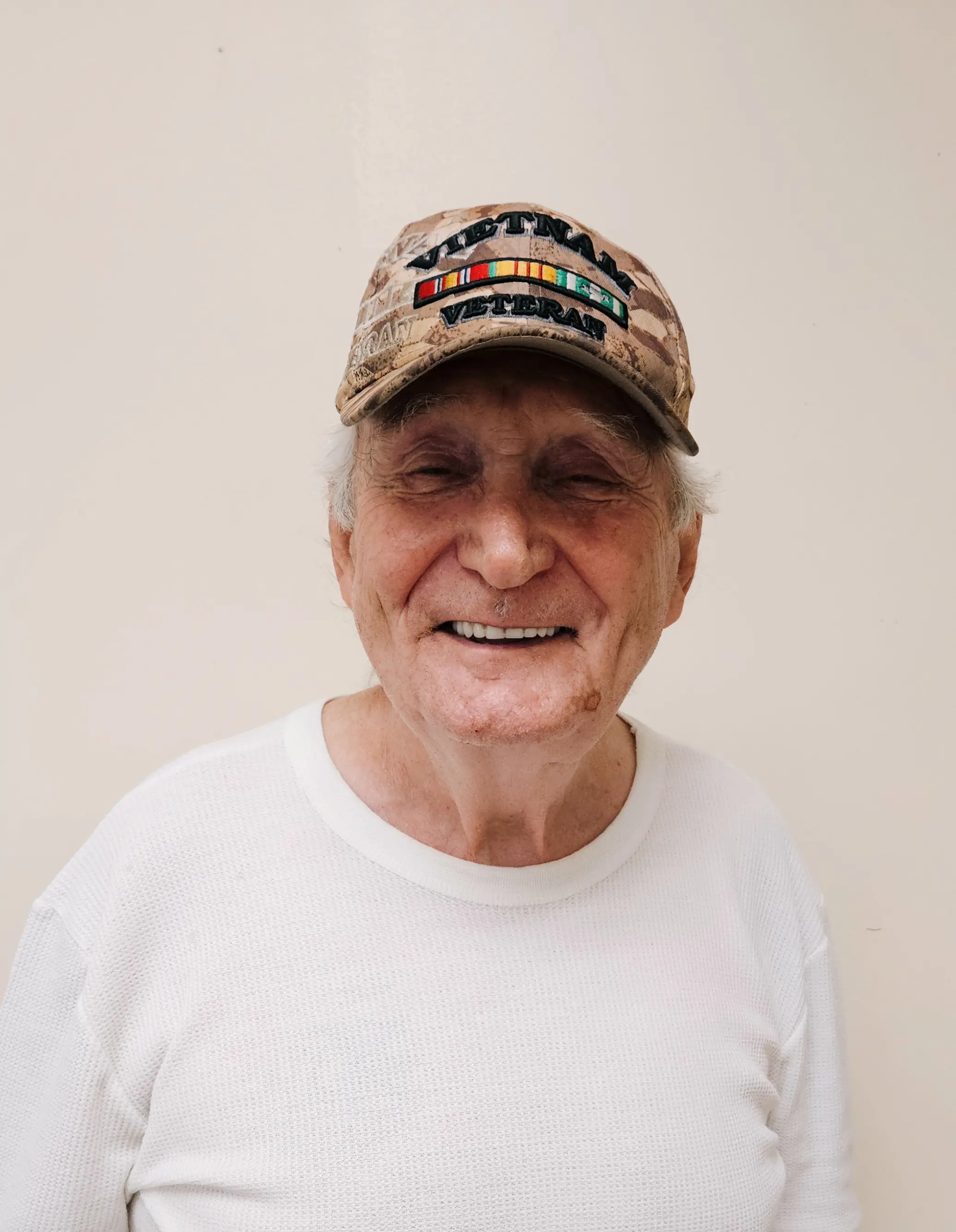
I was born on June 25, 1954, in Granite City, Illinois. My childhood was full of movement and imagination, spent climbing trees and leaping from their branches with the fearlessness only a young boy possesses. I had one brother, Butch, and I remember going to school and standing up to older boys when trouble found me. We lived in a coal town, and one of my responsibilities was to bring in a week’s worth of coal. I used a hard wooden board to slide it into the house, where our pot‑belly stove provided heat through the winter. My mother, Hazel, cooked our meals and baked cakes on that stove, filling our home with warmth and comfort. My father encouraged me to enlist in the Army to help support our family.
I enlisted in St. Louis, but before reporting for duty I traveled to Union Station in New York because I wanted to see the Christmas lights at Rockefeller Square. I had never seen a tree illuminated so brilliantly. I also went because I wanted to be certain I was making the right decision by enlisting. I traveled alone, wearing my uniform, and I felt proud of myself.
After returning to St. Louis, I was transferred to Fort Leonard Wood and assigned as a mechanic, taking apart and reassembling vehicles. I worked alongside a fellow who was very smart. I wasn’t as smart, but I was strong, willing, and determined. Later I moved to working on helicopters Hueys and Chinooks. We were shifted around often, and some of the repairs were not done well, so I backed them up and made sure the work was completed correctly.
Arriving in St. Louis made me feel like a new kid. I was just a country boy, and everything seemed big and overwhelming. I joined the Army at seventeen to help my family because we were poor. My brother Butch served as a Corpsman, and my other brother, Leroy, died from cigarettes. My father was crippled, and we lived in an old, broken‑down house. I wanted to get my mother out of that place.
I loved boot camp. It was tough, but it made me into a man. I had a lot of KP duty, and once I went AWOL with another soldier because I needed to get money for my mother. I didn’t know any other way to do it. When we returned, I told the sergeant what I had done and that it was a mistake. He told me not to ever do it again.
I enlisted at seventeen, but the Army required me to be eighteen before I could enter service officially, so they kept me on base until my birthday. In 1971 I received my orders for Vietnam and waited thirty days before deployment. When I arrived in the country, I felt nervous but not afraid, because I believed I was doing something meaningful for my family. My time was divided between Saigon and the bush, where the Viet Cong were present everywhere. I served in the infantry and remember watching them move across the horizon on Black Virgin Mountain. We were advancing along the lower slope on the far side of the hill, and when the fighting began, I returned fire and killed some of them.
I feel sorrow about it now, but I had to remember that it was what I was trained to do. It was my job. I had to protect my brothers. They were being killed next to me. Some of them were kids, and I was a man. We tried to train them the best we could. We didn’t know where the enemy was in the bush or what traps they had set. The foliage was so heavy you couldn’t see them. We walked through rice fields to reach our destinations, but I don’t remember seeing much death. We didn’t go into villages because some enemy lived there, and we didn’t know who was good or bad. Because of the wet rice fields, we had to take our boots off to dry them, but the enemy was on top of us and we needed to move. Staying behind was a bad idea. I remember seeing napalm used. It was dropped on everyone, but I wasn’t scared.
The rains were heavy during monsoon season. I wasn’t a tunnel rat, but one of my friends was. You had to be small to push down into the tunnels. I stood at the other end to help him when he came out.
I went to jump school but never became a paratrooper because President Nixon was pulling out materials. We didn’t have enough to work with. We had to be innovative. Some areas had more than we did.
I was rescued by a Huey Dust Off pilot. He came in above us and pulled us out. The stronger men stayed behind and kept fighting because the Viet Cong were throwing things at us. I had been wounded and was taken to a field medic hospital where they cleaned me up. I didn’t stay long and was sent back to the bush. I wasn’t awarded a Purple Heart, maybe because the wound wasn’t severe. I’m not sure.
My first impression of Vietnam was wanting to go home. In the villages, some enemy soldiers had women they stayed with. When they returned from the bush, the women took care of them. We went through villages because we had to, but I don’t want to speak badly about anyone.
I received my orders to go home in 1974. Nixon was pulling troops out, and the country was changing quickly.
When I returned home, there wasn’t much to do. I worked odd jobs and repaired cars. I went back to my hometown of Staunton, Illinois. It was difficult because there wasn’t much for a soldier, so I started hitchhiking. Maybe I did it to clear my mind after the war. I’m not sure, but hitchhiking was good. I went to Tennessee and Louisiana, where I ate raccoon. I met a woman and her husband who asked if I was hungry. They were very hospitable.
I hitchhiked all over the country over a period of four years. I traveled to every state twice. I didn’t have problems hitchhiking, but once I met a girl who wanted to go somewhere, so I told her to come along. We were freelancing. In one place, a man threw a can and hit another man. Two others punched him out. When they left, they asked the girl if she wanted to go with them. She said, “No, I’m with him.”
My favorite state was Louisiana. I could walk through the swamps with no shoes. I didn’t wrestle alligators, but people there knew which ones you could approach and which ones you couldn’t. Otherwise, I would have been their lunch.
I had a wonderful time hitchhiking and would do it again. I met a man who made outdoor movies. He said he was going to sit down and watch one, so I did, then got up and walked off. I was a free spirit.
I hitchhiked with girls sometimes, and we stayed in people’s homes. That was common then. A husband and wife once offered me a place to stay. The next morning, I was up and gone.
Mostly I hitchhiked alone. I think I was trying to clear my head from the war. I could sleep in the woods. The animals would come up and check me out. It was their place. I wasn’t a threat.
I don’t know how I ended up in Texas, especially since I was from Illinois. I met my wife while walking down the road. She pulled over and asked if I wanted a ride. She had her friend with her. I got in the car, and she told her friend, “Keep driving, we’re getting in the back seat.” That moment changed my life.
My words of wisdom are that I learned to be steady in uncertainty, hopeful in hardship, and grateful for every moment of peace.
Supplemental Information
Early Life in Granite City Shaped by War and Industry
Growing up in1954 in Granite City, Illinois meant living in a working‑class industrial city shaped by steel production, rail transport, and the labor of families who kept those industries running. The town was part of America’s postwar backbone, supplying materials essential to national infrastructure and military needs. Children grew up in neighborhoods built around mills, factories, and the steady rhythm of shift work.
Granite City’s connection to America’s wars was direct and visible. During World War II, the city’s steel mills produced plate steel, structural components, and industrial materials used in ships, vehicles, and military construction. The factories operated continuously, and many local women worked in industrial roles while men served overseas. When the war ended, returning veterans brought home discipline, seriousness, and the physical and emotional weight of combat. Their presence shaped the tone of family life throughout the late 1940’s and early 1950’s.
The Korean War, which ended in 1953, left its mark as well. Granite City families sent sons and fathers into service, and the community absorbed the impact of casualties, injuries, and the quiet resilience of men who returned from a difficult conflict. By 1954, nearly every neighborhood had households connected to wartime service. Some families had fathers who fought in Europe, others had uncles who served in Korea, and many had neighbors who worked in the mills that supplied America’s military. The early stirrings of the Vietnam conflict were beginning to appear in national news, although the war had not yet escalated. Even so, the expectation of service was part of the cultural atmosphere. Boys growing up in the nineteen fifties understood that military duty was a possibility, shaped by the examples of the men around them.
Life in a coal‑heated home added another layer of reality. Many houses in Granite City had been built between 1910 and 1930, long before modern heating systems existed. These homes were modest, sturdy, and worn by time. They often had drafty windows, uneven floors, and plaster walls that cracked with age. Insulation was minimal, so families relied heavily on coal heat to keep warm during winter.
Coal was central to daily living. Families heated their houses with pot belly stoves or basement coal furnaces. The furnace required constant attention. Someone in the household had to shovel coal into the firebox, adjust the dampers to control airflow, and remove ash from the grate. Banking the fire at night was a daily ritual that kept the house warm enough to prevent pipes from freezing. Coal dust settled on floors, clothing, and furniture, and homes required frequent sweeping. Coal was stored in a basement bin or an outdoor shed, and children often helped carry it inside using buckets or wooden boards to slide it into the house.
The pot belly stove served as the center of family life. It warmed the main living area, dried boots and clothing, and provided a flat surface where meals and cakes could be cooked. Rooms farther from the stove remained cold, especially bedrooms. Heavy curtains were used to block drafts, and rugs were placed over worn wooden floors. Furniture was practical rather than decorative, chosen for durability and necessity.
Neighborhoods near the mills were dense and close to the industrial centers of the city. Historic maps of Granite City from the nineteen fifties show rows of modest houses built near rail lines and factories. The proximity to industry meant that smoke, noise, and coal dust were part of everyday life. Families lived simply but with pride. Work was honest, expectations were clear, and children grew up watching adults endure hardship with quiet strength.
Growing up in Granite City in 1954, in a coal‑heated home and in a town shaped by World War II, the Korean War, and the emerging Vietnam era, meant being raised in an environment that forged resilience, humility, and duty. It was a childhood built on simplicity, hardship, and family loyalty, forming the foundation of the man he would become.
Enlisting in St. Louis in the Mid Twentieth Century and the Vietnam War Era
When Nicolas came of age in the mid twentieth century and traveled to St. Louis to enlist for service in the Vietnam War, he entered a process shaped by decades of military tradition and the evolving demands of a new conflict. St. Louis had long served as a major enlistment and induction point for Missouri and southern Illinois. Its federal recruiting offices had processed thousands of men during World War II and the Korean War, and by the nineteen sixties those same rooms were preparing a new generation for Vietnam.
The enlistment station was a plain federal building operated by the United States Army Recruiting Service. Its interior reflected the practical style of mid century government offices. Desks, benches, and filing cabinets filled the rooms. Bulletin boards displayed official notices, regulations, and recruiting posters. Some posters still carried the visual language of earlier decades, while newer ones addressed the needs of the Vietnam conflict. The atmosphere was serious and orderly, shaped by the weight of national service.
Young men arrived by bus, by car, or on foot. Some came alone, others with a parent or a friend. The mood carried a mixture of anticipation and uncertainty. For many, it was the first time they had stood inside a federal building or spoken directly with military officials. The staff guided recruits through the first steps, beginning with identification, age verification, and the signing of enlistment documents. If a recruit was seventeen, he needed parental consent. If he was eighteen or older, he signed for himself. Once the paperwork was complete, he was officially entered into the rolls of the United States Army.
A medical examination followed. Army medical personnel conducted height and weight measurements, vision and hearing tests, and a general physical evaluation. The standards were strict, shaped by lessons learned in earlier wars and by the physical demands of Vietnam. Recruits moved from station to station, following instructions from the staff. The process was efficient and impersonal, designed to evaluate each man quickly and accurately.
After the medical clearance, recruits received a briefing from an Army representative. This briefing explained the expectations of military life, the timeline for departure, and the location of basic training. For many men enlisting in St. Louis during the Vietnam era, the next destination was Fort Leonard Wood in central Missouri. The briefing emphasized discipline, structure, and the seriousness of the commitment they were about to undertake.
Recruits were issued travel documents and instructions for reporting to transportation. Many boarded buses or trains that carried them from St. Louis to Fort Leonard Wood. The departure marked a turning point. Some recruits waved to family members, while others traveled alone, watching the city recede behind them as they began the transition from civilian life to military service.
Enlisting in St. Louis during the Vietnam era carried a distinct atmosphere shaped by the mid twentieth century. The memory of World War II remained strong, and the Korean War was still within living memory. Vietnam introduced new complexities, but military service continued to hold respect in working‑class communities. For someone like Nicolas Tooley, born in nineteen fifty‑four, this moment represented the shift from the familiar world of southern Illinois to the disciplined structure of the United States Army during one of the most challenging periods in modern American history.
Fort Leonard Wood and the Beginning of Military Life
When Nicolas Tooley arrived at Fort Leonard Wood after enlisting in St. Louis, he entered one of the largest and most active training installations in the United States during the Vietnam era. Fort Leonard Wood had been built during World War II and expanded through the Korean War. By the nineteen sixties it was a central training site for recruits from Missouri, Illinois, and much of the Midwest. Its size, its pace, and its strict routines marked the beginning of a new life for every man who stepped off the bus.
The first hours at the installation were structured and direct. Recruits were met by drill instructors who introduced them to the discipline and expectations of Army life. The tone was firm and uncompromising. The Army wanted recruits to understand that they were entering an institution built on order, responsibility, and obedience. The arrival process included the issuing of uniforms, bedding, and basic equipment. Recruits were assigned to barracks that housed long rows of metal bunks, footlockers, and simple wooden tables. The environment was plain and utilitarian, designed for efficiency rather than comfort.
Basic training at Fort Leonard Wood followed a strict schedule. Reveille sounded early each morning, and recruits assembled outside in formation. Physical conditioning was a central part of the program. Running, calisthenics, and obstacle courses were conducted daily. The Army needed men who could endure the physical demands of Vietnam, and the training reflected that requirement. Marching instruction taught recruits how to move as a unit, maintain formation, and follow commands with precision.
Classroom instruction covered military structure, field conduct, first aid, and the responsibilities of a soldier in combat. Recruits learned how to maintain equipment, read maps, and understand the chain of command. Weapons training was a major component. Recruits learned to handle, clean, and fire the M fourteen rifle, which was still in use during the early Vietnam years, and later the M sixteen as it became standard issue. Range days were long and demanding, with instructors emphasizing accuracy, safety, and discipline.
Field exercises introduced recruits to the conditions they might face overseas. They practiced movement through wooded terrain, learned how to dig fighting positions, and trained in small unit tactics. These exercises were designed to prepare men for the realities of Vietnam, where dense vegetation, heat, and unpredictable terrain shaped every aspect of combat. Recruits learned how to work as a team, communicate under pressure, and respond quickly to changing situations.
Life in the barracks was structured and communal. Recruits cleaned their living areas daily, maintained their uniforms, and followed strict rules regarding conduct and order. Meals were taken in large mess halls that served simple, practical food. Evenings were spent preparing equipment, studying instructions, or resting before the next day’s training. The environment fostered discipline, endurance, and a sense of shared purpose.
For someone like Nicolas, born in 1954 and raised in the working‑class neighborhoods of southern Illinois, Fort Leonard Wood represented a profound shift. The modest coal‑heated homes and industrial streets of his childhood gave way to the regimented world of Army training. The transition marked the beginning of his transformation from civilian to soldier, shaped by the expectations of the United States Army during the Vietnam War.
A Century of Army Mechanics and Vehicles: From Early Motorization to the Hueys and Chinooks of Vietnam
The history of Army mechanics follows the development of American military mobility. It begins when the Army introduced motorized vehicles in the early twentieth century and continues through World War I, the interwar period, World War II, the Korean War, and the Vietnam War. Each era produced new vehicle designs, new maintenance requirements, and new training standards. By the time mechanics worked on Hueys and Chinooks in Vietnam, they were part of a fully developed maintenance system shaped by decades of experience.
Early Motorization and the Birth of Army Mechanics
The Army began replacing horses with motorized vehicles in the nineteen teens. Early vehicles included trucks built by companies such as White, Jeffery, and FWD. These machines used wooden frames, chain drives, and simple carbureted engines. Mechanics learned basic engine repair, lubrication, ignition systems, and fuel delivery. Their work established the Army’s first motor pools and introduced formal mechanical instruction.
World War I and the Expansion of Motor Transport
During World War I, the Army operated large numbers of trucks, ambulances, and tractors. Vehicles such as the Liberty Truck carried supplies across the Western Front. Mechanics repaired engines, transmissions, cooling systems, and fuel systems under field conditions. They worked in mud, cold, and rain, often with limited tools. Their work kept supply lines functioning and allowed units to maneuver.
Interwar Standardization and Technical Manuals
In the nineteen twenties and nineteen thirties, the Army standardized vehicle designs and expanded motor pool organization. Vehicles became more reliable, with steel frames, improved carburetors, and more advanced electrical systems. The Army introduced technical manuals that provided step‑by‑step procedures, diagrams, and specifications. These manuals formed the basis of Army maintenance doctrine and were used throughout World War II and beyond.
Motor pools became permanent installations with repair bays, tool rooms, parts storage, and inspection lanes. Preventive maintenance procedures were formalized, including lubrication schedules, fluid checks, and regular inspections.
World War II and the Largest Vehicle Fleet in Army History
World War II produced the largest fleet of Army vehicles to date. Mechanics worked on jeeps, 2½‑ton trucks, armored support vehicles, engineering equipment, and specialized transport. They repaired engines, transmissions, brakes, electrical systems, and hydraulic components. Motor pools operated continuously in all theaters of war.
Vehicles returned from combat damaged by terrain, weather, and enemy fire. Mechanics performed field repairs, replaced components, and restored vehicles to service. Their work sustained the Army’s mobility across Europe, Africa, and the Pacific.
Korean War Mechanics and Extreme Conditions
The Korean War introduced severe cold, mountainous terrain, and muddy roads. Mechanics maintained vehicles such as the M38 jeep, M37 truck, and engineering equipment. Cold weather affected lubricants, batteries, and fuel systems. Mechanics used established preventive maintenance procedures to keep vehicles operational. Their work ensured mobility in harsh conditions.
Vietnam Era Ground Vehicle Mechanics
By the Vietnam War, Army maintenance training had become highly structured. Fort Leonard Wood served as a major training center for vehicle mechanics. Soldiers learned to maintain M151 utility vehicles, M35 trucks, engineering machines, ambulances, and specialized support vehicles.
Vietnam’s climate created constant mechanical challenges. Heat and humidity affected electrical systems. Dust and mud entered air intakes and fuel systems. Rough terrain strained suspensions and drivetrains. Mechanics performed inspections, replaced worn components, and kept vehicles operational for convoys, supply missions, and base support.
Mobile maintenance teams were used to support convoys and remote sites. Mechanics carried tools and parts to perform repairs away from established motor pools.
The Air‑Mobility Revolution
The introduction of helicopters changed Army operations. The UH‑1 Huey and CH‑47 Chinook became central to troop movement, medical evacuation, supply transport, and combat support. Their reliability depended on trained aviation mechanics.
Army aviation mechanics followed technical manuals that detailed inspection procedures, torque values, lubrication requirements, and component replacement intervals. Maintenance included daily inspections, scheduled services, and unscheduled repairs.
The Huey
The UH‑1 Huey used a single Lycoming T53 turbine engine. Mechanics inspected compressor sections, turbine blades, fuel control units, and lubrication systems. The transmission transferred power to a two‑bladed rotor system. Mechanics checked gearboxes, bearings, and couplings for wear or vibration.
The rotor system required precise alignment. Mechanics inspected blades for cracks, erosion, and structural fatigue. Hydraulic systems controlled flight surfaces. Electrical systems powered radios, instruments, and navigation equipment. Mechanics maintained wiring, connectors, and circuit components affected by humidity.
The Huey’s airframe was aluminum and required inspection for stress, corrosion, and combat damage. Mechanics repaired panels, fittings, and structural components.
The Chinook
The CH‑47 Chinook used two Lycoming T55 turbine engines. Mechanics inspected compressors, turbines, fuel systems, and lubrication systems. The aircraft used a tandem‑rotor system with forward and aft rotors. Mechanics maintained rotor hubs, pitch control systems, and drive shafts.
The Chinook’s transmission system distributed power from both engines to both rotors through multiple gearboxes and drive shafts. Mechanics inspected these components for wear, vibration, and overheating. Hydraulic systems controlled flight surfaces. Mechanics maintained pumps, valves, and lines.
The Chinook’s airframe carried heavy loads and required inspection for structural fatigue. Mechanics repaired panels and reinforced stressed areas.
Mechanics lived in barracks, tents, or hooches depending on location. They worked in heat, humidity, rain, and dust. Flight lines were active areas with constant aircraft movement. Mechanics performed inspections, repairs, and component replacements according to technical manuals and established procedures.
Their work sustained Army mobility and supported every major operation. The Huey and Chinook represented the culmination of decades of mechanical development. Mechanics who maintained them carried forward the traditions established in earlier conflicts.
Saigon, the Viet Cong, the Easter Offensive, the Laos–Cambodia Artery, and the Refugee Collapse, 1971–1973
Saigon in the early 1970s experienced two wars at once. On its surface, the capital moved with the rhythm of a functioning city: markets crowded, traffic dense, storefronts open, families navigating daily life. Beneath that outward motion lay a quieter conflict woven directly into the city’s fabric. The Viet Cong maintained an interior presence that never disappeared, even as American forces withdrew and the South Vietnamese government attempted to project stability. Saigon’s outward brightness concealed a network that operated silently within its districts and a countryside where the conflict remained visible every day.
Inside the capital, the Viet Cong infrastructure functioned as a covert system designed to survive pressure and maintain continuity. Intelligence assessments from mid‑1971 described it as diminished but still capable of sustaining contact with civilians, rebuilding political structures, and operating discreetly across the city. Safehouses were hidden in districts whose geography offered concealment: Cholon’s labyrinthine alleys, Gia Định’s dense neighborhoods, Gò Vấp’s semi‑rural edges, and Phú Nhuận’s crowded residential lanes. Couriers, often women and teenagers, moved through markets and bus stops with natural anonymity, carrying messages and small supplies that kept the underground system alive. The political cadre worked inside factories and student circles, maintaining ideological contact and monitoring sentiment. Intelligence cells observed ARVN rotations, police operations, administrative changes, and security patterns around key installations. This infrastructure did not dominate Saigon; it survived within it, persistent and impossible to fully eradicate.
Beyond the city limits, the war was visible. Infantrymen saw Viet Cong units moving across ridgelines, tree lines, and open high ground. Their silhouettes appeared against the horizon, shifting positions at dawn or dusk to exploit low light. These movements reflected established patterns: dispersed formations to avoid air strikes, elevation used for observation, and hamlet‑to‑hamlet travel through corridors that had been used for years. Local force units operated within their home districts, familiar with every trail and ravine, while main force battalions repositioned ahead of major engagements and coordinated with PAVN elements. The countryside surrounding Saigon carried the conflict openly, forming an outer ring of pressure that never disappeared.
This dual reality covert inside the city, visible outside it existed alongside immense civilian suffering. By the early 1970s, the war had already produced 1,050,000 civilian casualties, including 325,000 deaths, and displaced 6 million refugees across South Vietnam. Saigon absorbed a significant portion of this human tide. Families displaced from Bình Long, Tây Ninh, Quảng Trị, and countless rural hamlets arrived with little more than what they could carry. Hospitals overflowed. Markets strained. Entire districts absorbed waves of displaced families seeking safety. The human cost of the war was staggering, and Saigon became the final refuge for those fleeing destruction.
The Easter Offensive of 1972 intensified this crisis. It was the largest conventional assault launched by North Vietnam during the war, made possible by a vast logistical system built quietly across Laos and Cambodia. Through Laos ran a layered military highway network concealed beneath jungle canopy, capable of supporting armored regiments, long‑range artillery, truck convoys, and infantry divisions advancing in waves timed to supply cycles. By late 1971, over 60 percent of truck tonnage moving through Laos consisted of fuel, buried in camouflaged pits to sustain armored thrusts. Anti‑aircraft batteries guarded key junctions, and damaged roads were rebuilt overnight. The corridor’s resilience allowed PAVN to position heavy equipment and large formations close to South Vietnam’s borders without exposing them to early detection.
Cambodia formed the western arm of this system. After the collapse of Sihanoukville’s neutrality and the expansion of Communist sanctuaries, PAVN established logistical hubs in eastern Cambodia that fed directly into the provinces surrounding Saigon. These hubs stored artillery shells, rockets, medical supplies, food stocks, and fuel reserves. They also contained forward surgical stations hidden in rubber plantations and forested areas near Mimot and Snuol, allowing wounded soldiers to be treated and returned to battle without long evacuation routes. From Cambodia, supply routes entered South Vietnam through Hậu Nghĩa, Tây Ninh, and Bình Dương, the same provinces that formed the outer defensive belt around Saigon. These routes allowed PAVN to position units close enough to threaten the capital while remaining shielded by the political ambiguity of Cambodian territory.
The offensive began on 30 March 1972 and mobilized more than 120,000 PAVN troops, supported by T‑54 and PT‑76 tanks, 130mm and 152mm artillery, and SA‑2 and SA‑7 anti‑aircraft systems. Quảng Trị collapsed under sustained bombardment, falling on 1 May 1972 and sending tens of thousands of civilians fleeing southward. Kontum endured weeks of intense fighting, its surrounding districts destroyed and its population displaced. An Lộc suffered a prolonged siege, with families trapped under constant shelling and those attempting to escape facing artillery fire along Highway 13. Entire neighborhoods were reduced to rubble. Survivors moved southward toward safer districts, many ultimately reaching the outskirts of Saigon.
The refugee catastrophe intensified as the offensive progressed. Saigon’s perimeter absorbed over 400,000 displaced civilians between April and September 1972, swelling shantytowns along canals, railroad easements, and open fields. Mortality was highest during movement, not after arrival. Exposure, dehydration, artillery fire, and lack of medical care caused thousands of deaths along roads and jungle paths. Refugee columns sometimes became inadvertent cover for Viet Cong couriers, who used the mass displacement to move messages and small supplies into the capital. Entire districts in Quảng Trị, Bình Long, and parts of Kontum ceased functioning as administrative units; internal South Vietnamese documents referred to them as “non‑administrative zones,” reflecting the complete collapse of civil governance.
ARVN fought with determination but suffered enormous losses. More armored vehicles were lost to breakdown than enemy fire, a consequence of strained maintenance and scarce spare parts. Counterattacks stalled not only from enemy resistance but from mechanical failure. South Vietnamese intelligence detected increased PAVN movement through Laos and Cambodia in late 1971 but underestimated the scale of the offensive; the presence of multiple armored regiments was not confirmed until the campaign was already underway. In several sectors, PAVN used captured ARVN radios to transmit misleading information, causing momentary confusion during critical defensive moments.
The United States responded with massive airpower. Operation Linebacker targeted bridges, rail lines, supply depots, and staging areas across North Vietnam. Carrier‑based aircraft and B‑52 strikes played decisive roles in halting armored advances and relieving besieged cities. Without American air intervention, the offensive would likely have broken South Vietnam’s defensive belts entirely.
The Easter Offensive forced both sides back to the negotiating table, leading to the Paris Peace Accords of 27 January 1973. Yet the ceasefire did not remove Communist forces from South Vietnam; it froze them in place. PAVN divisions remained entrenched around Saigon, strengthening their positions and refining their supply routes. The Viet Cong infrastructure inside the city persisted, adjusting to new surveillance patterns and continuing its quiet work. ARVN attempted to rebuild defensive belts around the capital, but the army remained weakened by the losses of 1972 and the departure of American ground forces. Inflation worsened. Refugee belts grew denser. Saigon lived in a moment between two storms: the offensive behind it, and the final collapse ahead.
This unified truth reveals the full environment in which Saigon existed. The city experienced two wars at once: the hidden war within its districts and the open war beyond its gates. The Easter Offensive exposed the scale of the next blow and showed how close it had already come. The logistical system through Laos and Cambodia supplied the offensive; the refugee catastrophe endured its consequences. Together, they defined the world Saigon entered as the conflict moved toward its end.
Saigon, 1973: Conditions After the Paris Peace Accords
Saigon entered 1973 under a ceasefire that reshaped the conflict without ending it. The Paris Peace Accords, signed on 27 January 1973, halted American combat operations and required both sides to stop offensive action. Yet the agreement permitted Communist forces to remain exactly where they stood at the moment of signing. This single clause locked the battlefield in place and left Saigon ringed by PAVN and Viet Cong units that had advanced during the Easter Offensive. The capital was not protected by the treaty; it was surrounded by fortified enemy positions now shielded by international legitimacy.
American Departure and the Strategic Gap
The withdrawal of U.S. ground forces created an immediate void. Advisors stayed, and American airpower still operated from carriers and regional bases, but the physical presence of American infantry, armor, and artillery, the decisive weight behind South Vietnam’s defense was gone. ARVN inherited the entire burden while still recovering from the devastation of 1972. The absence of American logistical strength was felt at once. Fuel shipments declined, ammunition stocks tightened, and spare parts became scarce. South Vietnam’s economy, long sustained by American spending, contracted sharply. Inflation accelerated. Black markets expanded. Saigon’s outward motion continued, but its foundation weakened steadily.
The strain was intensified by the hidden consequences of the Easter Offensive. ARVN’s armored units had lost more vehicles to mechanical failure than enemy fire, a result of exhausted maintenance crews and dwindling parts. Intelligence branches had detected increased PAVN movement through Laos and Cambodia in late 1971 but underestimated the scale of the coming assault; the presence of multiple armored regiments was not confirmed until the offensive was already underway. These failures shaped the city’s understanding of 1973: the enemy had demonstrated its reach, and Saigon now faced that reach without American ground forces.
Urban Viet Cong Infrastructure Under the Ceasefire
Inside Saigon, the Viet Cong adapted quickly to the new political landscape. The ceasefire restricted overt attacks but did not dismantle the underground network. Safehouses remained active in districts where anonymity was easiest to maintain. Courier routes shifted to avoid new police checkpoints. Political cadre intensified their work in factories, refugee districts, and student circles. Intelligence teams monitored ARVN redeployments, advisor movements, and administrative changes. The VCI’s objective in 1973 was continuity, preserving its structure, protecting its personnel, and watching for vulnerabilities created by the new political environment.
The refugee surge created by the Easter Offensive occasionally provided cover for VCI couriers. Amid the mass displacement, small groups moved within civilian columns, carrying messages or supplies into the capital. This was not widespread, but it occurred often enough to appear in internal reports. The VCI inside Saigon did not expand dramatically, but it remained steady, patient, and attentive to the city’s shifting conditions.
Communist Forces Around Saigon: Entrenched and Expanding
Outside Saigon, Communist units held their ground and strengthened it. The ceasefire allowed PAVN divisions, regiments, and battalions to remain in fortified positions across III Corps. These units expanded supply caches, improved defensive works, and refined infiltration routes. Movement continued, though more discreetly, to avoid overt violations of the agreement. Concentrations in Tây Ninh, Bình Dương, Hậu Nghĩa, and Long Khánh formed a hardened ring around the capital. The infiltration corridors that had carried the Easter Offensive Củ Chi, Lai Khê, Xuân Lộc, Đức Hòa remained active, enabling quiet movement of personnel, weapons, and intelligence toward Saigon.
Behind these positions lay the deeper machinery of the war: the Laos–Cambodia logistical system. Through Laos ran a layered military highway network capable of sustaining armored regiments, long‑range artillery, and infantry divisions. By late 1971, over sixty percent of truck tonnage moving through Laos consisted of fuel, buried in camouflaged pits to support armored thrusts. Cambodia’s sanctuaries contained not only supply depots but forward surgical stations hidden in rubber plantations, allowing wounded PAVN soldiers to be treated and returned to battle without long evacuation routes. These systems remained active after the Accords, feeding the fortified ring around Saigon.
ARVN’s Condition After the Accords
ARVN entered 1973 determined but strained. The army reorganized divisions, redistributed units across III Corps, and attempted to rebuild defensive belts around Saigon. Without American ground forces, ARVN relied heavily on U.S. airpower and dwindling logistical support. Morale fluctuated. Officers understood that the ceasefire did not remove the enemy and that future offensives were likely. ARVN increased its presence inside Saigon, establishing more checkpoints, more patrols, and more security around government buildings and Tan Son Nhut Air Base.
The leadership also understood that the Easter Offensive had exposed structural weaknesses: dependence on American airpower, fragile armored maintenance, and vulnerable provincial defenses. These lessons shaped ARVN’s posture in 1973, but the resources to correct them were limited.
Civilian Conditions: Refugee Pressure and Economic Decline
Civilian suffering remained immense. Refugee settlements around Saigon did not shrink after the Accords; they grew. Families displaced during the Easter Offensive had no homes to return to. Many provinces remained contested or occupied by Communist forces. Refugee belts around the capital expanded, forming large settlements along canals, open fields, and the city’s perimeter. By late 1972, Saigon had absorbed over 400,000 displaced civilians, a surge that overwhelmed hospitals, strained transportation networks, and intensified shortages.
Inflation worsened as American spending declined. Prices for food, fuel, and basic goods rose steadily. Transportation networks struggled. Hospitals remained crowded. Mortality had been highest during movement exposure, dehydration, and artillery fire claimed thousands along roads and jungle paths but the suffering did not end upon arrival. Saigon’s outward liveliness existed beside a quiet anxiety that shaped daily life.
Political Atmosphere: A City Waiting
The political atmosphere in Saigon grew increasingly tense. The government attempted to project confidence, but the public understood that the ceasefire was temporary. Rumors circulated about future Communist offensives, about shifting alliances, and about the possibility of renewed fighting. Foreign journalists noted that Saigon seemed to be living in an interval not peace, but a pause between two phases of the war. The fortified ring around the capital, the persistent VCI interior, the weakened economy, and the swollen refugee belts all pointed toward a future shaped not by reconciliation, but by the next blow.
Black Virgin Mountain: The Complete Hidden War Beneath the Horizon
Black Virgin Mountain rose alone from the Tây Ninh plain, a dark volcanic mass that dominated the horizon and shaped the war around it. Its isolation made it a landmark for infantrymen and a sanctuary for the Viet Cong. The silhouettes you saw crossing a distant ridge were not isolated figures; they were the visible edge of a concealed system that lived inside the mountain and radiated outward into Cambodia, Tây Ninh, and the approaches to Saigon.
The Mountain’s Strategic Reality
Núi Bà Đen was the most important terrain feature in III Corps. Its height provided unmatched observation over the plains, Highway 22, the rubber plantations, and the infiltration corridors leading from Cambodia. Whoever controlled the mountain’s interior controlled movement across the region. ARVN and U.S. forces could seize the summit, but the Viet Cong controlled the mountain itself, its slopes, ravines, caves, and the ground surrounding it. The mountain was not a position; it was a system.
The Infiltration Routes: The Arteries Feeding Black Virgin Mountain
Black Virgin Mountain stood at the center of a lattice of infiltration corridors that tied Cambodian sanctuaries to the interior of South Vietnam. These routes were not improvised trails; they were the product of decades of clandestine engineering, shaped by terrain, vegetation, and the operational needs of the Viet Cong and PAVN.
Across the border, in the rubber plantations near Mimot and Snuol, regimental‑level complexes belonging to the VC 9th Division, 7th Division, and their supporting units operated as fortified zones. These complexes contained command centers, medical stations, training grounds, and storage bunkers. From these sanctuaries, units moved eastward through Bến Củi, Trảng Bàng, and Dầu Tiếng, entering the mountain’s lower folds through ravines and bamboo thickets that concealed movement even at close range. The terrain allowed entire companies to shift positions without leaving a trace visible from the air.
To the southeast, the Củ Chi tunnel network extended outward into footpaths that ran along the plains and fed directly into the mountain’s southern approaches. Fighters could move from Củ Chi to the mountain without ever exposing themselves to open terrain. This corridor linked two of the most resilient VC base systems in III Corps, creating a continuous underground artery.
Parallel to Highway 22 ran a shadow route used for night movement, logistics teams carrying fuel and ammunition, and reconnaissance elements observing ARVN convoys. This path allowed Viet Cong units to shadow the highway without being seen, maintaining constant pressure on the main supply road into Tây Ninh.
Inside the mountain itself were vertical infiltration paths narrow, hand‑cut steps and goat‑trails invisible from above. These allowed small units to move up and down the mountain without touching the obvious trails. They were used for liaison, messenger traffic, and rapid repositioning during combat. These were the routes behind the silhouettes you saw crossing the horizon, the visible edge of a system designed to remain unseen.
The Cave and Tunnel Systems: The Hidden Architecture of Black Virgin Mountain
Black Virgin Mountain was hollow in the ways that mattered. Its interior held a network of caves, overhangs, and tunnels that allowed the Viet Cong to survive bombardment, store supplies, and launch attacks with precision.
The mountain’s geology created natural caves, but the Viet Cong transformed them. Chambers were reinforced, entrances concealed, rock‑fall traps installed, and ventilation shafts disguised as natural cracks. Some caves served as command posts; others stored ammunition, food, or medical supplies. These spaces allowed units to remain operational even under sustained artillery fire.
The mid‑slopes contained tunnel systems that connected fighting positions, observation posts, and escape routes. These tunnels allowed units to vanish instantly when spotted, reappearing hours later in a different sector. They formed a hidden grid beneath the mountain’s surface, linking positions that appeared isolated to anyone unfamiliar with the terrain.
Rock shelves and overhangs provided natural protection from artillery. Many fighting positions were built beneath these shelves, making them nearly impossible to detect from the air. The enemy used these formations to create firing points that could withstand bombardment and still deliver accurate fire onto the plains below.
Some caves contained vertical shafts used to move supplies between levels. These were carved by hand and disguised with vegetation. They allowed ammunition, food, and medical equipment to be shifted without exposing movement to observation.
This architecture made the mountain impossible to fully clear. Even when ARVN or U.S. forces seized the summit, the enemy remained alive inside the mountain in its caves, its tunnels, its ravines, and its hidden vertical chambers. The mountain’s interior was a world unto itself, a fortress built into the earth.
The Cambodian Sanctuaries: The Mountain’s External Support
The mountain’s strength came not only from its terrain but from what lay beyond it. The Cambodian border region contained fully functioning base complexes with surgery rooms, mess halls, training areas, storage bunkers, and defensive works. Local Cambodian chiefs often cooperated, providing food, shelter, and permission to stay long‑term. Wounded fighters from the Black Virgin Mountain sector were moved into these sanctuaries, treated, and returned to the same terrain rather than evacuated far north. This cross‑border system allowed the Viet Cong to maintain pressure around the mountain even after heavy fighting.
Fuel: The Hidden Lifeblood of the Mountain
By late 1971, more than half of the tonnage moving down the Laos corridor consisted of fuel. This fuel fed trucks, generators, and later tanks, but it also powered the small vehicles and equipment that kept base areas around Tây Ninh functioning.
Around Black Virgin Mountain, fuel and ammunition were stored in small, dispersed caches, buried drums, sealed pits, and camouflaged lean‑tos rather than in one large depot. Each cache was known only to a few men, ensuring that a single capture never exposed the entire system.
Supplies coming from Cambodia moved in carefully timed night windows based on moonlight and expected air activity. Convoys pushed through specific segments in ninety‑minute bursts, then disappeared into cover before dawn.
The Battles: How Terrain Dictated Combat
Every battle around Black Virgin Mountain was shaped by terrain, concealment, and the enemy’s mastery of movement.
American and ARVN units fought their way to the summit multiple times. These battles were brutal steep approaches, ambush points at every bend, and booby‑traps woven into natural cover. Even when the summit was taken, the Viet Cong simply shifted to the mid‑slopes and lower folds.
The real fighting occurred below the summit. Here, Viet Cong units used caves, overhangs, bamboo thickets, and invisible vertical paths. Infantrymen often fought blind, advancing into terrain the enemy had shaped for years.
When U.S. and ARVN forces pushed into Cambodia in 1970, the mountain became a pivot point. Viet Cong and PAVN units withdrew into Cambodian sanctuaries, then re‑entered the mountain’s lower slopes through infiltration routes. Battles erupted along these corridors as American units attempted to cut the flow.
During the Easter Offensive, the mountain served as an observation hub, a movement corridor, and a staging area. The silhouettes you saw were part of this operational rhythm unit shifting between observation posts, assembly areas, and infiltration routes.
Even after the Paris Peace Accords, fighting continued. Viet Cong and PAVN units clashed with ARVN patrols along the foothills and infiltration routes. These engagements were rarely reported publicly but were documented in internal ARVN summaries.
The men you saw crossing the horizon were part of a larger architecture of infiltration routes from Cambodia, cave systems inside the mountain, tunnel networks on the mid‑slopes, supply caches hidden in ravines, and observation posts carved into rock shelves.
The Ground War Beneath the Canopy: Real Infantry in III Corps
Infantry combat in III Corps unfolded inside terrain that erased distance, swallowed sound, and hid danger in every direction. It was a close‑range war, fought by young men led by those who had lived enough life to steady them. By the late war years, most riflemen were nineteen, still learning how to move, listen, and survive. Their team leaders were barely older, and the squad leaders who carried the real burden were often in their mid‑twenties. This age structure was the result of draft cycles and casualty replacement patterns, and it meant that older infantrymen became anchors, the ones who trained younger soldiers, corrected their mistakes, and kept them alive when the line tightened.
The terrain dictated everything. Elephant grass often rose above a man’s head, sharp enough to cut skin and thick enough to hide entire squads. Bamboo thickets formed rigid barriers that absorbed movement and sound, turning every patrol into a slow, deliberate advance. In the triple‑canopy jungle, sunlight barely reached the ground, and visibility collapsed to a few feet. Rubber plantations created orderly rows that looked peaceful from a distance but formed predictable movement lanes that the enemy used to shape ambushes. Rice paddies were unavoidable; they connected tree lines, hamlets, and infiltration corridors. Moving through them meant stepping into waterlogged mud that clung to boots and slowed every motion. Boots became heavy and soaked, and sometimes they had to be removed just to prevent trench foot. But bare feet in mud meant vulnerability, and if contact came, reaction time shrank. The enemy understood this and used the bordering tree lines to close distance quickly, approaching along dikes and shallow channels until they were within firing range.
The Viet Cong and PAVN fought with doctrine built around concealment, patience, and terrain mastery. They preferred to engage at close range, often under fifty yards, where American firepower mattered less and instinct mattered more. They cut narrow firing lanes through brush days or weeks before contact, invisible to anyone who had not carved them. These lanes allowed accurate fire from positions that remained hidden even after the first shots were fired. Ambushes were shaped by terrain: L‑shaped ambushes along trails, linear ambushes along paddies, point ambushes near streambeds, and spider holes positioned to fire from below eye level. Once they initiated contact, enemy fighters rarely stayed in place. They disengaged quickly, using escape routes mapped through dense foliage, leaving American patrols to navigate a battlefield that had already shifted.
Booby traps were part of the landscape. Pressure‑plate mines made from repurposed artillery shells lay beneath leaves and soil. Tripwires were woven into vines at ankle height, connected to grenades or directional charges. Punji pits were camouflaged beneath thin mats of brush, designed to wound and force evacuation. Command‑detonated charges were placed along predictable routes the places infantrymen had no choice but to walk. In III Corps, booby traps caused more casualties than direct fire, and they forced patrols to move slowly, deliberately, and with constant tension. Even when no enemy fighters were present, the terrain itself demanded caution.
Villages carried their own uncertainty. Some civilians supported ARVN, some were neutral, and some quietly aided the insurgency. Enemy fighters lived among families, blending into daily routines and using homes as observation posts. A farmer could be a courier. A teenager could be a lookout. A doorway could conceal a rifle. This ambiguity shaped American tactics: avoid villages unless ordered, limit exposure, and reduce the chance of walking into an ambush disguised as ordinary life.
Contact was sudden and violent. Firefights rarely unfolded at long range. They erupted at distances where voices carried over gunfire and where the first seconds determined survival. Men dropped instantly. Leaders shouted orders to steady the line. Radio operators fought to reach support. Movement became instinct forward if the terrain allowed, out if it did not. Casualty patterns reflected the nature of the terrain. Many patrols ended without losses. Many firefights were brief. Death often came to single men, not entire squads. But the deaths that did occur were intimate, close, sudden, and unforgettable. Infantrymen remember faces, not statistics. They remember the silence after contact, the weight of responsibility, and the knowledge that survival depended on discipline, training, and the bond between men who walked the same dangerous ground.
Infantry Health in the Monsoon Season
The monsoon season in III Corps did not simply change the terrain; it changed the human body. Infantrymen lived inside a climate that attacked skin, lungs, joints, digestion, and endurance every hour of the day. The rain, humidity, and heat formed a medical environment that no training could fully prepare a man for. The monsoons were not whether they were a physiological assault.
The first change came with the air itself. Humidity rose until sweat could not evaporate, leaving the body unable to cool itself. Heat exhaustion became a constant threat. Men moved slowly not because they lacked discipline, but because the climate forced the body into a state of continuous strain. Every breath felt heavy. The lungs worked harder. The heart rate climbed even at rest. The body lived in a state of low‑grade dehydration despite the constant presence of water.
Skin broke down quickly. Uniforms stayed wet for days, and the constant friction of soaked fabric against the body created rashes, infections, and open sores. Jungle rot is a bacterial and fungal breakdown of skin spread across feet, legs, and groin. Once it began, it was difficult to stop. The combination of moisture, mud, and friction made healing nearly impossible. Infantrymen walked with raw skin, knowing that stopping to treat it was often not an option.
Feet suffered the most. Boots remained waterlogged, and socks never dried. Trench foot, a condition caused by prolonged exposure to wet conditions, became common. The skin softened, cracked, and peeled. Pain increased with every step. Infection followed quickly. Infantrymen removed boots whenever possible, but the moment they did, they were exposed. Bare feet in mud meant vulnerability, and contact could come at any moment. The monsoon forced a choice between physical damage and tactical risk.
The digestive system struggled under monsoon conditions. Water sources were contaminated by runoff, animal waste, and human activity. Even treated water carried risk. Food spoiled quickly. C‑rations heated in the rain often became lukewarm, waterlogged, or contaminated by the environment. Diarrheal diseases dysentery, enteritis, and bacterial infections spread rapidly. A soldier could lose strength in a single day, and dehydration. Respiratory health deteriorated. The constant dampness encouraged fungal infections in the lungs. Men developed persistent coughs, chest congestion, and respiratory irritation. Mold grew inside clothing, gear, and even shelters. Sleeping in wet conditions weakened the immune system, making soldiers more vulnerable to illness. The monsoon season created a cycle in which the body never fully recovered.
Insects flourished. Mosquitoes bred in standing water, carrying malaria and dengue fever. Leeches clung to skin and hid inside clothing. Ants, spiders, and biting flies thrived in the saturated environment. Each bite carried risk of infection. Malaria was a constant threat, and even with prophylactic medication, soldiers often contracted it. Fever, chills, and weakness struck without warning, reducing combat effectiveness and forcing evacuation.
The monsoon also affected mental endurance. Constant wetness, lack of sleep, physical discomfort, and the inability to stay dry created a psychological strain that accumulated over weeks. The body felt heavy. Movement felt slower. The mind lived in a state of continuous vigilance while fighting fatigue. The climate eroded morale, discipline, and emotional resilience. Infantrymen learned to endure because there was no alternative.
Weapons and equipment suffered alongside the body. Moisture infiltrated chambers, magazines, and firing mechanisms. Rifles rusted. Ammunition corroded. Radios malfunctioned. Medical supplies degraded. Bandages became damp and useless. Antibiotics lost potency. The monsoon season attacked the tools of survival as aggressively as it attacked the men who carried them.
The monsoons were not a backdrop to the war. They were a force that shaped the health, endurance, and survival of every infantryman in III Corps. The climate imposed a medical reality that demanded constant adaptation. Soldiers fought not only the enemy, but a season that weakened the body, eroded strength, and turned every mile into a test of endurance became a serious threat even in a landscape filled with water.
Napalm: Development, Deployment, and Historical Reckoning
Napalm did not begin as a symbol of the Vietnam War. Its origins trace back to the early 1940s, when the United States sought an incendiary weapon capable of burning longer, hotter, and more predictably than gasoline. The research was conducted at Harvard University under the National Defense Research Committee. The lead chemist, Louis Fieser, developed a thickened fuel by combining gasoline with aluminum salts derived from naphthenic and palmitic acids. These compounds gave the new incendiary its name: NaPalm. The mixture transformed gasoline into a sticky gel that adhered to surfaces and burned at temperatures far beyond ordinary fire.
The U.S. military adopted napalm during World War II. It was used in flamethrowers and in incendiary bombs dropped on Japanese cities, where wooden construction made fire a devastating weapon. Its effectiveness was undeniable. Napalm burned hotter, spread farther, and consumed oxygen in enclosed spaces, creating lethal conditions even for those not directly touched by the flames. By the end of the war, it had become a standard component of American incendiary doctrine.
After 1945, the formula evolved. Chemists replaced the original aluminum salts with a mixture of gasoline, benzene, and polystyrene, creating Napalm‑B. This new version was cheaper, more stable, and far more adhesive. Polystyrene gave it a glue‑like consistency, while benzene helped it spread. Napalm‑B burned longer and resisted extinguishing even when submerged in water. By the early 1960s, it had become the primary incendiary used by the U.S. Air Force and Marine Corps.
Napalm’s expansion into Vietnam was deliberate and authorized at the highest levels of government. Under President John F. Kennedy, large shipments were sent to support South Vietnam in 1962. The weapon was integrated into counterinsurgency doctrine as a means of clearing jungle cover, destroying enemy fortifications, and breaking concealed positions. When Lyndon B. Johnson escalated the war, napalm became a routine component of close air support. Aircraft such as the F‑4 Phantom, A‑1 Skyraider, and F‑100 Super Sabre carried 500‑ and 750‑pound canisters. Pilots used napalm to burn away foliage, expose tunnel entrances, and strike enemy concentrations hidden in tree lines, villages, and riverbanks.
Napalm’s tactical purpose was rooted in the nature of the enemy. The Viet Cong and PAVN relied on concealment tunnels, spider holes, bamboo thickets, and triple‑canopy jungle. Conventional explosives could destroy structures but could not reliably clear vegetation or flush fighters from cover. Napalm did both. It created firestorms that consumed oxygen, collapsed bunkers, and forced enemy units into the open. It also prepared helicopter landing zones by scorching potential ambush sites before troop insertion.
The human effects were catastrophic. Napalm burned at temperatures often exceeding 1,000 degrees Celsius. When it touched skin, it adhered instantly, melting flesh and causing deep, irreversible injuries. Victims often tried to wipe it off, but this only spread the burning gel. In enclosed spaces, napalm produced lethal carbon monoxide concentrations. In open terrain, it caused wounds that resembled molten tar fused to the body. Medical personnel struggled to treat napalm burns because the gel penetrated deeply and continued burning even after initial contact.
Its psychological impact was immense. Commanders acknowledged that fear was part of its intended effect. The sight of a napalm striking a rolling fireball erupting across a jungle or village created shock and disorientation among enemy forces. But its use also struck civilians, farmland, and hamlets, turning it into a symbol of the war’s brutality. Photographs of napalm victims circulated globally, fueling protest movements and reshaping public opinion. The weapon became inseparable from the moral controversies of the conflict.
By the late 1960s, napalm had become one of the most politically charged weapons in the American arsenal. Antiwar activists condemned its use. International observers questioned its legality. The U.S. military defended it as a necessary tool against an enemy that fought from concealment. The debate intensified after the publication of images showing civilians burned by napalm, including the now‑iconic photograph of Phan Thi Kim Phúc in 1972. Although the strike that injured her was carried out by South Vietnamese aircraft, the image became a global symbol of the war’s human cost.
Napalm’s legacy continued after the war. In 1980, the United Nations adopted protocols restricting the use of incendiary weapons against civilian populations. The United States eventually signed these protocols, though napalm itself remained in limited use under different formulations. The original Na-palm‑B was phased out, replaced by newer incendiaries with different chemical compositions. Yet the word “napalm” retained its historical weight as a reminder of a weapon that burned itself into the memory of soldiers, civilians, and history.
Napalm was not simply a battlefield tool. It was a weapon of fire that shaped strategy, influenced politics, and left a permanent mark on the historical record. Its story is inseparable from the Vietnam War, from the decisions that authorized its use, and from the human suffering it caused.
Dust Off: Rescue in Vietnam
A Dust Off rescue was the moment when the chaos of battle met the precision of men who flew into danger without hesitation. For the wounded soldier, it began with the distant thump of a Huey’s rotor blades. “That sound carried a meaning that every infantryman understood. Help was coming.” Dust Off crews launched the instant a call arrived, guided by the creed established when Major Charles Kelly vowed that he would come when he had their wounded. His death fixed that promise into the identity of the unit and shaped every rescue that followed.
Each mission carried four men whose coordination bordered on instinct. The pilot commanded the aircraft and made the decisions that determined whether the rescue was possible. The copilot assisted with navigation, radio communication, and control inputs during hover. The crew chief managed the cabin, operated the hoist, and watched the tree lines for enemy movement. The medic treated the wounded under conditions no civilian medical system could reproduce. “These four men formed a team that operated with instinctive coordination, each anticipating the others without spoken instruction.”
The helicopter approached at treetop level because altitude increased vulnerability. Most extractions were performed between ten and twenty feet above the ground. The pilot held the aircraft steady through constant micro adjustments. The main rotor turned at approximately three hundred twenty five revolutions per minute, producing a downward column of air strong enough to flatten elephant grass, lift dust and debris, and whip foliage into a violent circle around the wounded soldier. “The air struck with the force of a continuous blast. The noise drowned out speech.”
For the medic on the ground, the rotor wash was overwhelming. Dust filled his eyes. Leaves and debris struck his face. He worked inside this turbulence while stabilizing the wounded man, securing straps, and preparing for the hoist. He moved with urgency but also with precision because the cable could swing or twist under the force of the wind. He often shielded the wounded man with his own body to protect exposed skin and open wounds.
The hoist cable descended with a metallic hum, vibrating from the rotor wash and the movement of the aircraft. The medic attached the wounded soldier to the harness or stretcher, checked the locking points, and signaled upward. The cable tightened and the soldier began to rise. “The stretcher swayed and spun slowly because the cable twisted under tension.” The wind struck his face and body. The helicopter seemed impossibly loud. The medic steadied the stretcher until it rose beyond his reach.
The crew chief leaned out of the cabin, braced against the frame, guiding the stretcher inward with practiced strength. The pilot held the hover steady despite crosswinds, turbulence, and enemy fire. The copilot monitored instruments and radio traffic to ensure stability. Once the wounded man was inside, the medic resumed treatment immediately. The cabin vibrated with engine power. The wind still entered through the open doors. The medic worked inches from the soldier, monitoring breathing, checking circulation, reinforcing dressings, and preparing for shock.
He controlled hemorrhage by tightening tourniquets, reinforcing bandages, and applying direct pressure. He sealed chest wounds to prevent air from entering the cavity. He adjusted the soldier’s position to improve breathing. In cases of collapsed lungs, he performed needle decompression inside the aircraft. He administered morphine when appropriate, watching carefully for signs of respiratory depression. He monitored skin color, temperature, and responsiveness to detect shock. “He spoke directly into the soldier’s ear, keeping him conscious and oriented.”
The crew chief assisted by securing equipment, adjusting the soldier’s position, and watching the tree lines for enemy movement. The medic and crew chief worked as a single unit. The pilot climbed sharply once the hoist was complete, accelerating away from the landing zone. The wounded soldier felt the shift in gravity and the sensation of rising above the canopy into open air.
The flight to the field hospital was short but decisive. Vietnam’s medical system was built on the principle of the golden hour, and Dust Off made that principle real. The medic prepared the soldier for transfer before the helicopter touched down. He ensured that dressings were secure, that tourniquets were visible, and that treatment notes were attached to the uniform. When the aircraft landed, the medic and crew chief carried the stretcher directly into the hands of doctors and nurses who were already waiting. The medic delivered a rapid verbal report summarizing the injury, treatment, and changes during flight. He then returned to the aircraft, cleaned the cabin, restocked supplies, and prepared for the next mission.
Dust Off crews paid heavily for their courage. Their casualty rate was among the highest of any aviation unit in Vietnam. They flew into ambushes, monsoon storms, and night missions where visibility collapsed to nothing. They operated with minimal armor, no escort, and no hesitation. Infantrymen spoke of Dust Off with reverence because they knew these crews risked their lives for every wounded man, regardless of rank or circumstance.
For the wounded soldier, the rescue was the moment when survival became possible. “It was the ascent through turbulence into the hands of men who came without conditions.” It was the experience of being lifted out of the bush by a crew whose creed was absolute. They came when called, no matter what waited below.
The Physical Environment
The ride to the field hospital placed the wounded inside the UH‑1 helicopter, a space defined by overwhelming noise, vibration, and wind. Internal sound levels regularly exceeded one hundred decibels, erasing every human voice except the medic’s when he leaned close enough to speak directly into the patient’s ear. The airframe vibrated continuously from the two‑blade rotor system, sending a rhythmic shudder through the stretcher and into bone, muscle, and open wounds. Wind poured through the open doors with the force of rotor downwash that could reach ninety miles per hour at hover, lifting dust and debris into the cabin and mixing with the sharp smells of aviation fuel, hydraulic fluid, hot metal, sweat, and blood.
What the Wounded Saw and Felt
The wounded saw the medic’s face close to theirs, the crew chief braced against the frame, the sky tilting as the helicopter climbed, and the tree line falling away beneath them. Their field of vision narrowed to fragments because of shock, blood loss, and the angle of the stretcher. They felt gravity shift during sharp turns, pain intensifying with each movement, and the medic’s hands anchoring them to consciousness through pulse checks, bandage adjustments, and steady touch. Many later recalled the metallic taste of blood in their mouth, the dryness in their throat from adrenaline and dust, and the way their hearing narrowed to the medic’s voice alone.
Emotional Reality for the Wounded
Emotion rose through fear, relief, and trust as the battlefield fell away beneath the aircraft. Relief came first, often overwhelming, because Dust Off had arrived under fire. Fear followed during ascent, when the stretcher swayed and the wind struck their face. Trust settled in as the medic’s calm presence steadied them, his voice becoming the only human anchor inside the roar of the cabin. Many wounded later described the ride as the moment when they felt themselves crossing a boundary between death and survival, carried by men who had risked their own lives to reach them.
What Medics Remembered
Medics remembered the cabin as a space that never stopped shaking, where they relied on touch rather than instruments because stethoscopes were useless in the noise. They watched skin color and chest movement through vibration and wind, reinforced dressings, tightened tourniquets, and performed needle decompression when necessary. They remembered shielding patients when rounds struck the fuselage, the smell of fuel mixing with blood, and the weight of bodies shifting during turns. They recalled the faces of the wounded looking at them for reassurance, and the immediacy of the handoff at the hospital before returning to clean the cabin, restock supplies, and launch again.
The short flight, often no more than five to twelve minutes, carried the wounded from battlefield chaos into the chain of survival. A soldier who reached a Dust Off helicopter had a survival rate of approximately ninety‑eight percent, the highest of any war up to that time. The sensory reality of the ride noise, vibration, wind, pain, smell, fear, and the medic’s steady presence formed the bridge between danger and safety, sustained by crews who worked with unwavering calm inside a machine roaring through the sky.
The Bush Environment
For Infantrymen
The bush was a full sensory enclosure that dictated how infantrymen lived, moved, and survived. Elephant grass rose above their heads, cutting exposed skin and obscuring everything beyond arm’s reach. Triple‑canopy jungle filtered sunlight into dim green shadows, trapping humidity until uniforms stayed wet from dawn to dusk. The ground shifted unpredictably with mud, roots, and sudden drops that twisted ankles and slowed progress. Bamboo thickets forced men to crawl or wedge themselves sideways through narrow gaps, scraping their gear and leaving fibers clinging to their sleeves. Mangrove swamps held stagnant water that smelled of rot and sulfur, and every step sank into muck that clung to boots and fatigues. Insects swarmed constantly. Leeches attached without sensation. Sweat mixed with dirt until the skin felt coated. The bush restricted vision, muffled sound, and shaped every decision.
Infantrymen learned to read the bush by sound because sight was unreliable. Cicadas drowned. Birds called. Frogs pulsed. Insects buzzed. Leaves whispered. Bamboo knocked. Water dripped. When this rhythm changed, danger was close. Silence meant an ambush was forming. A single twig snap could freeze an entire patrol. The bush forced men to rely on instinct sharpened by repetition and fear.
For Medics
For medics, the bush was a confined, improvised treatment space where every second mattered. They crawled through vegetation to reach wounded men, feeling vines catch on their sleeves and mud pull at their knees. They worked by touch because visibility shrank to inches. They tightened tourniquets, sealed chest wounds, checked pulses, and stabilized fractures while insects crawled across exposed skin and humidity soaked their uniforms. The bush hid the wounded beneath layers of grass and branches, forcing medics to locate them by sound — labored breathing, faint calls, or the rustle of movement.
Medics treated injuries under fire, with rounds snapping through leaves and vegetation brushing their faces. They spoke directly into ears because shock narrowed hearing. They worked with limited supplies, often improvising with what they carried or what the environment allowed. The bush made every medical action slower, harder, and more physically demanding.
For Point Men and Scouts
For point men and scouts, the bush was a constant test of perception. Visibility collapsed to a few feet. Shadows hid everything. Movement revealed itself only through slight shifts in vegetation. They listened for changes in the natural rhythm — cicadas falling silent, birds stopping their calls, or the faint rustle of crouched movement. They scanned for tripwires hidden beneath leaves, punji pits concealed under natural cover, and mines buried in mud. Every step carried risk. Every sound mattered. The bush punished distraction and rewarded awareness.
Point men often felt danger before they saw it. They sensed shifts in air pressure, changes in insect noise, or subtle disturbances in vegetation. The bush demanded constant vigilance and offered no forgiveness.
For Radio Operators (RTOs)
For RTOs, the bush turned equipment into a burden. Heavy radios caught on vines. Antennas scraped against bamboo. Mud pulled at boots. They had to maintain communication while navigating terrain that resisted every movement. The bush made their equipment heavier, their pace slower, and their role more exposed. They carried the lifeline of the platoon, yet the environment fought every step they took.
For the Wounded
For the wounded, the bush became confinement and sensory overload. They lay on ground that pressed against their bodies, feeling insects crawl across exposed skin and heat rise from the earth. They smelled blood, sweat, earth, and gunpowder. Many could not see the sky. Leaves and branches formed a ceiling above them. Some heard enemy movement nearby. Others heard their unit shifting position. They listened for the distant thump of rotor blades, knowing Dust Off had been called.
The bush held them in place while they waited for rescue, unable to move and aware that danger remained close. Their world shrank to breath, pain, and the sounds around them.
For Dust Off Crews
For Dust Off crews, the bush dictated how they flew, hovered, and extracted. Pilots saw only the tops of trees, the ripple of elephant grass, and narrow openings where ground troops signaled. Rotor wash flattened vegetation, lifted debris, and shook branches. Crew chiefs scanned the bush for movement, searching for wounded men hidden beneath foliage. Medics prepared to descend into terrain that swallowed bodies and hid injuries.
The bush forced helicopters to hover rather than land, turning every extraction into a balance of wind, vibration, and precision. Dust Off crews operated in an environment that obscured everything except the urgency of the mission.
For the Enemy
For the enemy, the bush was familiar ground. They knew its paths, its hiding places, and its rhythms. They used silence as a weapon. They moved through vegetation without disturbing it. They positioned themselves in shadows where visibility collapsed. They set booby traps beneath leaves, tied tripwires to branches, and buried mines in mud. The bush gave them concealment, protection, and advantage. They used the environment to dictate when and where contact occurred.
The Bush Environment as a Whole
The bush was not simply terrain. It was a living environment that shaped every movement, every breath, and every decision. It touched the skin, filled the ears, narrowed the eyes, and dictated survival. It hid friends and enemies alike. It slowed rescue and complicated combat. It created exhaustion, vigilance, and constant tension. For men, medics, Dust Off crews, and the enemy, the bush was the defining physical reality of the war.
The Bush: The Dominant Force of War in Vietnam
The bush in Vietnam was a full sensory enclosure that shaped every moment of a soldier’s existence. Elephant grass rose above eye level and cut exposed skin with fine serrated edges. Triple‑canopy jungle filtered sunlight into dim green shadows, trapping humidity until uniforms stayed wet from dawn to dusk. The air carried a constant mixture of rot, stagnant water, mildew, sweat, and gunpowder residue. Mud smelled of organic decay. Smoke from firefights clung beneath the canopy. Even the metallic scent of blood lingered after contact. Smell became a navigational sense as much as sight or sound.
The ground shifted unpredictably. Soft loam swallowed boots. Moss‑covered rock turned slick underfoot. Loose shale on slopes caused sudden slides. Tree roots formed natural trip hazards. Rotten logs collapsed under weight. Hidden animal burrows and sinkholes opened beneath men without warning. Termite mounds rose like natural barricades. Every step required caution because the bush hid micro‑terrain hazards that caused injuries even without enemy fire.
The canopy itself was layered and alive. Vines formed natural nets that caught gear and slowed movement. Low branches forced men to crouch. Fallen canopy debris hid movement and masked silhouettes. Smoke from explosions became trapped beneath the upper layers, forming a low‑hanging haze that obscured shapes. Sudden canopy gaps created shafts of light that exposed silhouettes and revealed movement. Light filtered green through leaves, flickering with wind and creating illusions that made stationary vegetation appear to shift.
Terrain varied by region. In the Central Highlands, steep slopes and dense hardwood forests created vertical obstacles. Men climbed over fallen trees slick with moss, navigated ridgelines that hid enemy positions, and descended into valleys where humidity intensified. In the Iron Triangle, vegetation grew over a labyrinth of tunnels. The earth beneath soldiers’ feet was hollow in places, creating subtle shifts that signaled underground movement. The bush concealed tunnel entrances, fighting positions, and trapdoors built into natural cover. In the Mekong Delta, the bush merged with water. Canals, rice paddies, and marshland forced units to wade through waist‑deep water that hid debris, holes, and submerged traps. Vegetation floated on the surface, masking movement and complicating navigation.
Climate cycles altered the bush’s character. During monsoon rains, water poured through canopy layers, turning trails into streams and low ground into deep mud. Visibility dropped as sheets of rain blurred everything. Weapons rusted quickly. Radios crackled with interference. Clothing clung to skin, heavy and cold. Flooded areas hid debris and submerged traps. During the dry season, vegetation became brittle and noisy, making silent movement difficult. Dust rose with every step, coating skin, gear, and weapons. Water sources shrank, forcing units to ration supplies. Heat intensified under the canopy, creating pockets of stifling air. At altitude, cold snaps chilled soaked uniforms. Night brought temperature drops that stiffened muscles and made movement slower.
Biological hazards were constant. Fungal infections developed quickly in damp boots and saturated uniforms, eating into skin and causing raw, painful patches. Minor scratches became infected within days due to soil bacteria. Tropical ulcers formed when wounds were exposed to mud and stagnant water. Waterborne parasites entered through cuts. Ants delivered painful bites that swelled and lingered. Spiders hid beneath leaves and inside boots. Snakes blended into vegetation and struck without warning, forcing units to halt until the threat was identified.
Equipment degraded under environmental pressure. Webbing mildewed. Boots rotted. Metal corroded. Wooden rifle stocks swelled. Ammunition pouches softened and lost shape. Radios suffered moisture damage. Maps blurred when humidity softened ink. Even waterproof items failed under prolonged exposure to heat and moisture. Men learned to maintain gear constantly, improvising repairs with tape, cord, or scavenged materials.
The bush distorted sound in ways that complicated movement and combat. Cicadas droned. Birds called. Frogs pulsed. Insects buzzed. Leaves whispered. Bamboo knocked. Water dripped. Soldiers learned to read this rhythm, recognizing instantly when it changed. Silence meant danger. A single twig snap could freeze an entire patrol. The enemy used these shifts to mask movement, advancing when natural noise resumed and freezing when it paused. The bush made sight unreliable and forced men to rely on instinct sharpened by repetition.
Point men and scouts moved at the front, probing for tripwires hidden beneath leaves, punji pits concealed under natural cover, and mines buried in mud. They advanced slowly, feeling the ground with their boots and scanning for subtle disturbances in vegetation. RTOs carried heavy radios through terrain that resisted every movement, shielding antennas from vines and bamboo. Medics navigated the same environment with the added burden of reaching wounded men under fire, working by touch because visibility often shrank to inches. The bush shaped every role, imposing physical strain, sensory distortion, and constant vigilance.
The enemy engineered the environment to their advantage. They built camouflaged fighting holes into root systems. They reinforced natural cover with vegetation. They used water routes for silent movement. They constructed tree platforms for observation. They manipulated vegetation to mislead patrols, creating false trails and deceptive clearings. Their familiarity with terrain allowed them to dictate when and where contact occurred.
When night arrived, it dropped through the canopy abruptly, turning the jungle into a sealed interior without shape or horizon. Moonlight rarely reached the ground. Trails vanished. Landmarks dissolved. Even the outlines of nearby men disappeared. The bush became a narrow corridor of touch, breath, and sound. Movement slowed to a deliberate crawl. Soldiers advanced by feel, sliding their hands across vegetation to avoid snapping branches, probing the ground for roots, holes, or tripwires. Equipment caught on vines. Packs shifted unexpectedly when brushing against foliage. Every action had to be silent because noise carried farther in darkness.
Sound replaced sight as the primary sense, but the bush distorted it. Humidity thickened the air, making noise travel unevenly. A whisper could carry farther than a shout. A footstep sounded heavier than it was. Insects created a constant drone that masked faint movement. Soldiers listened for breaks in the rhythm cicadas falling silent, frogs stopping, or the subtle rustle of crouched movement. These shifts signaled danger. The enemy used silence as preparation, moving through vegetation without disturbing it and approaching within yards before detection.
Night combat occurred at extremely close range. Muzzle flashes illuminated faces for fractions of a second before darkness swallowed them again. Incoming rounds snapped through leaves with sharp cracks that sounded closer than they were. Grenades detonated with concussive force that shook branches and sent debris raining down. Echoes overlapped, making direction difficult to judge. Combat became a series of violent bursts separated by tense silence, where men fired toward sound rather than sight and relied on instinct sharpened by repetition.
Medics entered this environment the moment they heard a wounded man’s voice break through the chaos. A groan, a call, or the uneven rhythm of labored breathing became their direction. They moved toward it without waiting for clarity because seconds mattered. Darkness removed visual reference, forcing them to navigate by touch. They crawled through vegetation, feeling vines catch on their sleeves and mud pull at their knees. They advanced low to avoid detection, probing the ground for traps and listening for changes in sound that signaled enemy proximity.
As they neared the wounded, sound became more distinct. Medics whispered the soldier’s name into the darkness, listening for any response. When they reached him, the first confirmation came through touch a hand finding a sleeve, a shoulder, or the edge of a flak vest. Treatment occurred entirely by feel. Medics located wounds with their fingertips, tightened tourniquets, sealed chest injuries, and checked pulses without light. They spoke directly into the soldier’s ear, grounding him with calm, steady words while the bush pressed against both men.
Extraction required movement through terrain that resisted every step. Medics positioned the wounded to minimize noise, secured dressings to prevent shifting, and guided him through vegetation by touch. If he could not walk, they dragged or carried him, navigating obstacles they could not see. The bush made every foot of progress slow and physically punishing. Enemy movement remained a constant threat, masked by darkness and distorted sound.
Rescue operations were shaped entirely by terrain. Dense vegetation prevented helicopters from landing, forcing Dust Off crews to hover above narrow openings. Rotor wash flattened grass, lifted debris, and shook branches, but could not clear enough space for safe landing. Medics had to carry or drag wounded men through foliage that resisted every step. Hoist operations were slow because vines and branches caught on straps and equipment. The bush made rescue a race against time, terrain, and enemy fire.
The environment itself became a constant unknown. It hid enemy positions, masked movement, distorted sound, and limited vision. It produced physical strain, psychological pressure, and operational constraints. It shaped casualty patterns, slowed evacuation, and dictated the pace of entire operations. The bush was not simply terrain, it was the dominant physical reality of the war, a living environment that governed survival for infantrymen, medics, RTOs, Dust Off crews, and the enemy.
Saigon in 1974: Orders to Go Home and the Shadow of Watergate
By 1974, Saigon carried the atmosphere of a war entering its final American phase. The city’s heat rose from pavement and machinery, carrying the smell of diesel fumes, river water, and the metallic scent of aging infrastructure. Helicopters still crossed the sky, but their numbers had diminished. Convoys moved through intersections with fewer vehicles and fewer uniforms. The American presence was thinning in ways that were visible in every compound, every airfield, and every administrative corridor.
Your orders to go home arrived in this environment. They came quietly, delivered through chain of command in the same clipped tone used for any movement directive. Men who had lived inside the bush’s sensory enclosure now stood in Saigon’s heat, preparing to leave the war’s terrain behind. Barracks that once housed full companies now held only scattered personnel. Motor pools that once overflowed with vehicles now had empty rows. Airfields that once launched constant flights now saw long pauses between departures. The reduction was steady and unmistakable.
Nixon’s troop withdrawals had been underway for months. Vietnamization had changed the structure of the war, and by 1974 the American footprint was a fraction of what it had been. The change was visible in every corner of Saigon. Fewer advisors in briefing rooms. Fewer Dust Off crews passing through airfields. Fewer American voices in the corridors of military compounds. The war’s operational heart continued to beat, but with a quieter rhythm.
Watergate unfolded far away, yet its presence reached Saigon in subtle ways. Soldiers did not gather to debate hearings or political consequences. Instead, the scandal appeared as a distant disturbance that affected the tone of official communications. Messages from Washington carried a different cadence. Administrative decisions took longer. The sense of divided attention was unmistakable. The war did not pause for scandal. Helicopters still lifted off. Advisors still coordinated operations. Medics still treated wounded men arriving from the bush with mud on their uniforms and infections already beginning. The environment remained unchanged. Only the number of Americans within it shifted.
Saigon in 1974 was a place of transition. Men packed gear worn thin by humidity and time. They turned in equipment that had survived the bush’s pressure. They walked across airfields where heat shimmered above concrete instead of rising from jungle clearings. They waited for flights that would carry them away from the war’s terrain. The city’s soundscape reflected the moment. Engines. Horns. Vendors. The distant thump of artillery echoing from outer provinces. The war’s outer edge was still audible, even as the American presence receded.
Watergate in 1974: The Distant Crisis That Touched the War’s Final Phase
Watergate reached its decisive stage in 1974. The scandal had begun with a break‑in two years earlier, but by 1974 it had become a national crisis. Hearings intensified. Investigations deepened. Senior officials resigned. The presidency itself was under pressure. Nixon’s authority weakened as the scandal expanded, and the consequences rippled outward across every federal institution.
For men in Saigon, Watergate was not a daily conversation. It was a distant event unfolding in Washington, carried into Vietnam through radio broadcasts, newspaper summaries, and official communications that felt increasingly strained. The scandal created an atmosphere of uncertainty that touched the military indirectly. Decisions from Washington arrived more slowly. Policy guidance carried a tone of distraction. The sense of divided attention was unmistakable.
The war continued regardless. Helicopters still lifted off from Tan Son Nhut. Advisors still reviewed operational reports. Medics still worked in aid stations where wounded men arrived from the bush with infections already beginning. The environment remained constant. The war’s demands did not change. Only the political center of gravity in Washington shifted.
By the time Nixon resigned in August 1974, the American withdrawal from Vietnam was already well advanced. The scandal did not cause the withdrawal, but it shaped the atmosphere in which the final phase occurred. The military continued its mission, but the sense of diminishing support from Washington was felt in every compound and every airfield.
The Early Movements Toward Eagle Pull
Although Operation Eagle Pull would not occur until April 1975, its earliest foundations were already forming in 1974. Not as a named operation. Not yet. But as a pattern of preparation shaped by experience in Southeast Asia.
American planners in Saigon reviewed evacuation routes. They studied airfield capacities. They examined embassy landing zones. They traced extraction corridors on maps. They evaluated helicopter approach paths. They updated medical evacuation contingencies. They refined advisor relocation protocols. These were not predictions of collapse. They were standard military precautions shaped by years of operational experience.
The withdrawal of troops in 1974 made these preparations more urgent. With fewer Americans in-country, evacuation plans had to be updated to reflect smaller staffs, reduced air assets, and limited ground support. Lessons learned from years of Dust Off operations in the bush informed urban evacuation planning. Narrow openings. Unpredictable terrain. Rapid extraction under pressure. These principles carried over into the planning rooms of Saigon.
Saigon in 1974: Morale in the Final Phase of the American Presence
By 1974, Saigon carried the atmosphere of a war entering its last American chapter. The city’s heat rose from pavement and machinery, carrying the smell of diesel fumes, river water, and the metallic scent of aging infrastructure. Helicopters still crossed the sky, but their numbers had diminished. Convoys moved through intersections with fewer vehicles and fewer uniforms. The American presence was shrinking in ways that were visible in every compound, every airfield, and every administrative corridor.
Morale reflected this shift. It did not collapse, but it changed. The energy that had once filled barracks and briefing rooms had softened into a quieter, more reflective tone. Men understood that the war was moving toward its conclusion for the United States. They felt the weight of years spent in the bush, the strain of constant vigilance, and the relief that came with orders to go home. The atmosphere was not celebratory. It was steady, calm, and marked by a sense of completion.
Your orders to go home arrived in this environment. They came quietly, delivered through chain of command in the same clipped tone used for any movement directive. Men who had lived inside the bush’s sensory enclosure now stood in Saigon’s heat, preparing to leave the war’s terrain behind. Barracks that once housed full companies now held only scattered personnel. Motor pools that once overflowed with vehicles now had empty rows. Airfields that once launched constant flights now saw long pauses between departures. The reduction was steady and unmistakable.
Nixon’s troop withdrawals had been underway for months. Vietnamization had changed the structure of the war, and by 1974 the American footprint was a fraction of what it had been. The change was visible in every corner of Saigon. Fewer advisors in briefing rooms. Fewer Dust Off crews passing through airfields. Fewer American voices in the corridors of military compounds. Morale adjusted to this reality. Men focused on completing their remaining duties, supporting the units still in the field, and preparing for departure.
Watergate unfolded far away, yet its presence reached Saigon in subtle ways. Soldiers did not gather to debate hearings or political consequences. Instead, the scandal appeared as a distant disturbance that affected the tone of official communications. Messages from Washington carried a different cadence. Administrative decisions took longer. The sense of divided attention was unmistakable. Morale absorbed this atmosphere. It did not break, but it became more reserved. Men sensed that the nation’s focus had shifted, and they continued their mission with quiet professionalism.
The war did not pause for scandal. Helicopters still lifted off. Advisors still coordinated operations. Medics still treated wounded men arriving from the bush with mud on their uniforms and infections already beginning. The environment remained unchanged. The war’s demands did not change. Only the political center of gravity in Washington shifted. Morale in Saigon reflected this dual reality. Duty continued. The mission continued. Yet the horizon was changing.
Saigon in 1974 was a place of transition. Men packed gear worn thin by humidity and time. They turned in equipment that had survived the bush’s pressure. They walked across airfields where heat shimmered above concrete instead of rising from jungle clearings. They waited for flights that would carry them away from the war’s terrain. The city’s soundscape reflected the moment. Engines. Horns. Vendors. The distant thump of artillery echoing from outer provinces. The war’s outer edge was still audible, even as the American presence receded.
Morale during this period was defined by three truths. Men felt relief that their service was nearing its end. They felt responsibility toward the units still operating in the field. They felt the quiet weight of a nation distracted by crisis. These currents shaped the final months of the American presence in Saigon.
The Early Movements Toward Eagle Pull and Their Effect on Morale
Although Operation Eagle Pull would not occur until April 1975, its earliest foundations were already forming in 1974. Not as a named operation. Not yet. But as a pattern of preparation shaped by experience in Southeast Asia.
American planners in Saigon reviewed evacuation routes. They studied airfield capacities. They examined embassy landing zones. They traced extraction corridors on maps. They evaluated helicopter approach paths. They updated medical evacuation contingencies. They refined advisor relocation protocols. These preparations were not predictions of collapse. They were standard military precautions shaped by years of operational experience.
Morale absorbed these preparations in a quiet way. Men understood that planning was part of military discipline. They did not interpret it as a sign of imminent danger. Instead, they saw it as a reflection of the changing American role. The war was shifting. The mission was narrowing. The focus was turning toward safe withdrawal and the protection of remaining personnel.
For men receiving orders to go home in 1974, these preparations were invisible. They saw only the practical signs. Fewer Americans in compounds. Reduced convoy traffic. Smaller formations at airfields. Advisors rotating out. Dust Off crews flying fewer missions. Supply depots consolidating. Administrative offices closing sections. Morale adjusted to these realities. It became steady, reflective, and shaped by the knowledge that the American chapter of the war was drawing to a close.
Tooley’s Return Home and the American Landscape of the Early Seventies
When Tooley, as many other veterans, returned from Vietnam in the early seventies, he entered a country undergoing profound social, political, and cultural change. The war had stretched across more than a decade, and by the time these men came home, the United States was wrestling with the consequences of a conflict that had touched every part of national life. The Tet Offensive had shaken public confidence in official reports of progress. The revelations surrounding My Lai had intensified moral outrage. The Cambodian incursion had sparked nationwide protests, including the tragedy at Kent State, where students were killed during demonstrations. These events shaped the atmosphere that greeted returning soldiers. Some communities welcomed them warmly. Others offered silence. Many did not know how to respond at all.
The political climate added to the uncertainty. The Watergate investigation dominated national attention, and the resignation of President Nixon in 1974 created a sense of instability that reached into every household. Inflation was rising. Jobs were harder to find. The draft had ended, and the country was transitioning to an all‑volunteer force, a shift that reflected a broader desire to move away from compulsory service. This transition marked a turning point in American military culture and contributed to the feeling that the nation was closing a chapter without fully understanding the cost borne by those who had served.
The economic landscape made reintegration even more difficult. The country was entering a recession. Factories were closing. Unemployment was high, especially among young men returning from combat. The GI Bill existed, but its benefits were far weaker than those offered to World War II veterans. Tuition had risen sharply, and housing assistance was limited. Many veterans discovered that the support they expected was not enough to stabilize their lives.
- Many veterans struggled to secure stable employment.
- Rising living costs made education and housing difficult to obtain.
- Economic pressure intensified the sense of dislocation after returning home.
The broader cultural shifts of the era added another layer of complexity. The civil rights movement had reshaped national consciousness. The women’s movement was expanding rapidly. Generational change was visible in music, art, and public discourse. The counterculture encouraged exploration, self‑discovery, and a questioning of traditional institutions. Veterans returned to a society that was redefining itself, and many felt caught between the world they had known before the war and the new one emerging around them.
Tooley, like countless others, carried the memories of his service with him. He had been in Saigon and in the bush. He had watched enemy movement across the horizon on Black Virgin Mountain. He had advanced along the lower slope on the far side of the hill. He had returned fire when the fighting began. These experiences remained vivid and immediate, and the country he returned to had no language to help him understand them.
Combat trauma had not yet been recognized as a medical condition. Post‑traumatic stress disorder would not be formally identified until 1980. Before that time, the psychological effects of war were described with vague terms that did not capture the depth of what veterans felt. Sleeplessness, hypervigilance, sudden anger, emotional numbness, and intrusive memories were common, yet there was no established treatment plan. The Department of Veterans Affairs struggled to meet the needs of thousands of returning soldiers, and many veterans found themselves navigating the aftermath of their service without meaningful support.
- PTSD had no formal name or diagnostic criteria.
- VA hospitals lacked specialized mental health programs.
- Veterans often relied on personal resilience rather than institutional care.
Veteran advocacy was only beginning to emerge. Groups such as Vietnam Veterans Against the War and small local networks formed during the early seventies. They were not large, but they represented the earliest attempts to address trauma, unemployment, and social isolation. Their efforts laid the groundwork for the eventual recognition of PTSD in 1980 and the expansion of veteran services in the decades that followed.
The national mood was also shaped by the early emergence of what later became known as Vietnam Syndrome. The country grew reluctant to engage in foreign conflicts, and public discourse often reflected uncertainty about the meaning and legacy of the war. Veterans felt this shift acutely. They returned to a nation that was unsure how to interpret the conflict they had survived, and many sensed that the country wanted to move forward without fully confronting what the war had cost.
In this environment, the open road became a refuge. Hitchhiking was widespread and accepted across the United States during the early seventies. The interstate highway system had expanded rapidly during the previous decade, creating long, uninterrupted routes that connected cities, towns, and rural landscapes. Young people traveled widely during this period, influenced by the counterculture movement, the rise of folk and rock music, and a growing sense of exploration that defined the era.
American road literature had shaped the cultural imagination. Writers such as Jack Kerouac had celebrated the freedom of travel, the search for meaning, and the idea that the road itself could be a place of transformation. This spirit lingered into the early seventies and influenced how many veterans approached the country they returned to.
- The road symbolized freedom and possibility.
- Travel offered anonymity and emotional distance.
- Movement provided relief from intrusive memories.
The cultural landscape encouraged movement. Music festivals, roadside diners, small towns along the interstate, and the growing youth travel culture created a national environment where hitchhikers were a familiar sight. Veterans blended naturally into this movement. They were part of a generation that traveled widely, searching for meaning, connection, or simply a place where their thoughts could quiet.
Tooley, as many other veterans, moved through the plains, the mountains, the deserts, and the coasts. Each ride carried him into a different part of the country, offering brief encounters with strangers who knew nothing about the war and nothing about him. These interactions provided moments of connection without the pressure of explanation. The road offered movement instead of confinement, silence instead of questions, and distance instead of the stillness that made memories sharper.
Hitchhiking was not a rejection of responsibility. It was a search for equilibrium. It was a way to understand himself after surviving a conflict that had changed him. The miles he traveled became part of his healing, part of his effort to find balance, and part of his quiet attempt to build a life that could hold both the weight of Vietnam and the hope of something better.
This was the historical reality facing many who returned. And it was part of Tooley’s story as well.
A Generation Carrying Its War Into an Uncertain America
Tooley’s journey home reflected the experience of an entire generation of veterans who returned from Vietnam carrying memories that did not fade and responsibilities that did not diminish. They stepped back into a nation that was changing faster than anyone could fully understand, a nation wrestling with political scandal, cultural transformation, economic strain, and a growing reluctance to confront the meaning of the war they had fought. The country was familiar in appearance yet altered in spirit, and many veterans found themselves navigating a landscape that no longer resembled the one they had left behind.
They carried the imprint of combat into a society that lacked the language to recognize their wounds. They faced an economy that offered limited opportunity and a support system still years away from understanding the psychological cost of their service. They moved through a culture redefining itself, searching for a place where they could belong. For many, the open road became the only space wide enough to hold their thoughts. Hitchhiking offered movement, silence, and distance, allowing them to breathe in a country that had not yet learned how to welcome them home.
His travels across the plains, mountains, deserts, and coasts were part of this larger story. His miles on the road were not an escape but a quiet effort to find balance after surviving a conflict that had changed him. His search for equilibrium mirrored the search undertaken by thousands of veterans who carried their memories into a nation still learning how to understand them.
In the end, Tooley’s story stands as a testament to resilience. It reflects the strength of a man who endured the demands of war, returned to a country in transition, and found his own way forward when the path was not clearly marked. His experience belongs to the history of a generation whose service shaped the nation and whose return revealed the challenges of reintegration. It is a story of endurance, reflection, and the long journey toward peace that many veterans walked after the war had ended.
Legacy
Nicholas Tooley’s legacy rises from the quiet strength of a man whose character was shaped long before he entered the jungles of Vietnam. The lessons he learned growing up formed the foundation of the resilience he carried into adulthood. He learned responsibility early, understood independence, and developed a steady inner compass that guided him through every stage of his life. These early lessons became the grounding force he relied on when the world around him shifted, and they remained with him long after the war had ended.
He carried the imprint of Vietnam with the same resolve he carried his responsibilities at home. The memories of Saigon, the bush, and Black Virgin Mountain remained part of him, yet he moved through the world with a calm that revealed the depth of his character. He had watched enemy movement across the horizon, advanced along the lower slope on the far side of the hill, and returned fire when the fighting began. These moments stayed with him, but they did not overshadow the life he built after the war. His travels across the country, his search for equilibrium, and his ability to keep moving when stillness made memories sharper reflect a man who understood that healing is often found in motion. The miles he crossed were not escapes. They were acts of endurance, quiet steps toward balance, and a testament to the strength required to carry war into peace.
For several years after returning home, Nicholas hitchhiked across the country, finding his freedom within again. Those long stretches of open road restored the part of him that war had strained but never broke. He moved through the wilderness with a natural ease, one with the open plains, mountain passes, forests, and desert stretches that shaped his long journey. He met new people along the way, climbing into rides with strangers who became brief companions, each encounter adding another thread to the quiet tapestry of his travels. Even after the road eventually settled behind him, he still wanted to be that free bird, carrying the same openness, independence, and quiet confidence that had guided him across the miles. His free spirit was not confined to youth or circumstance. It remained a defining part of his character throughout his life, and he will always be the free bird that always wanted to fly, still a hitchhiker in heart, flying free.
Nicholas’ legacy also rests in the way he stood among thousands of veterans whose stories shaped the nation. He shared in their resilience, their perseverance, and their determination to build lives in a country that was changing around them. He carried the same burdens they carried, yet he met them with a steadiness that revealed the depth of his spirit. His life reflects the truth that the journey home can be as demanding as the journey to war, and that the men who walked that long road did so with courage that was often unseen but always present.
His legacy endures in the quiet places where strength is revealed. It lives in the landscapes he crossed, the people he met, and the resolve that guided him forward. It remains in the memory of a man who faced his war, faced his country, and found his way with dignity. It is a legacy of endurance, reflection, independence, and the unwavering steadiness of a veteran who carried his story with honor, shaped by the lessons of his youth, strengthened by the journey of his life, and defined by the freedom he reclaimed on the open road.