
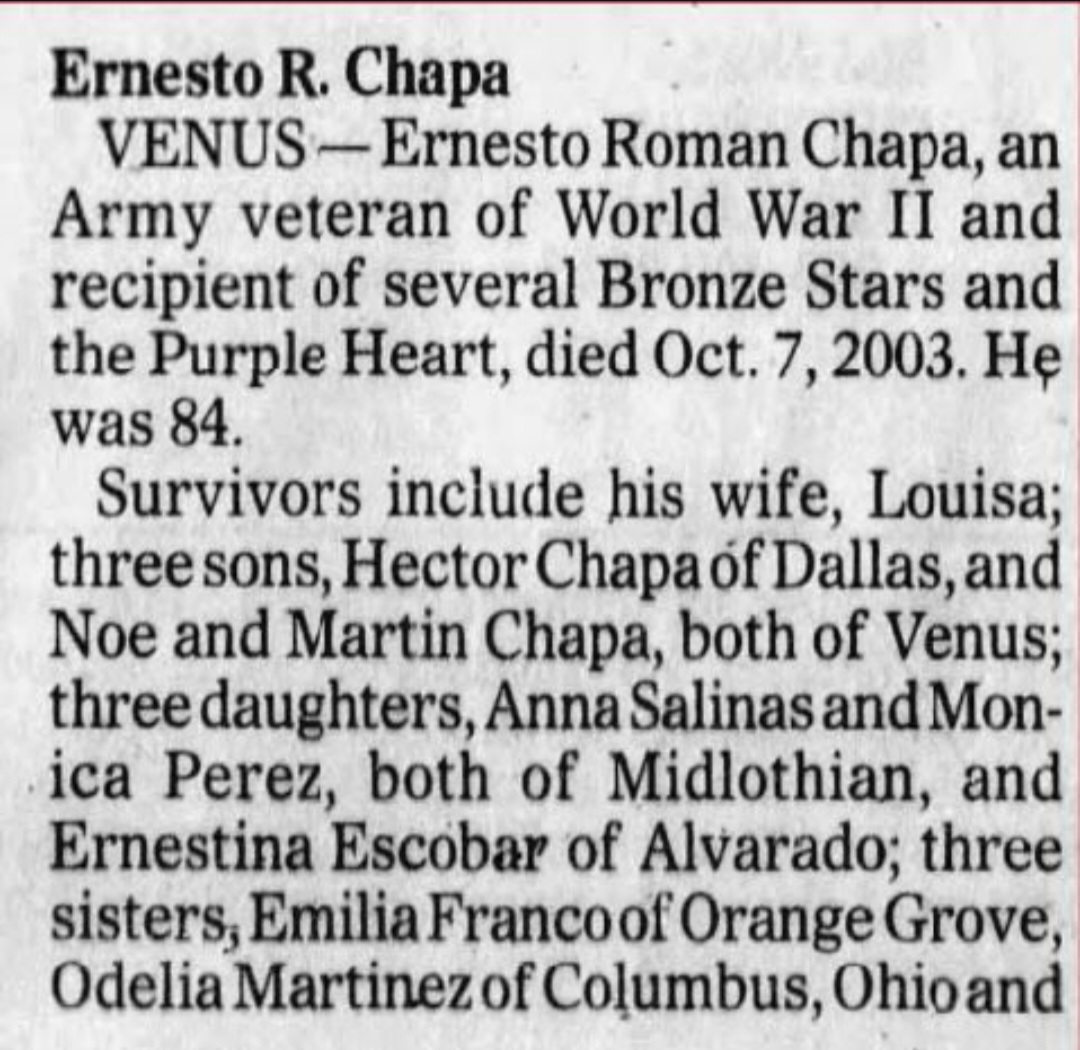

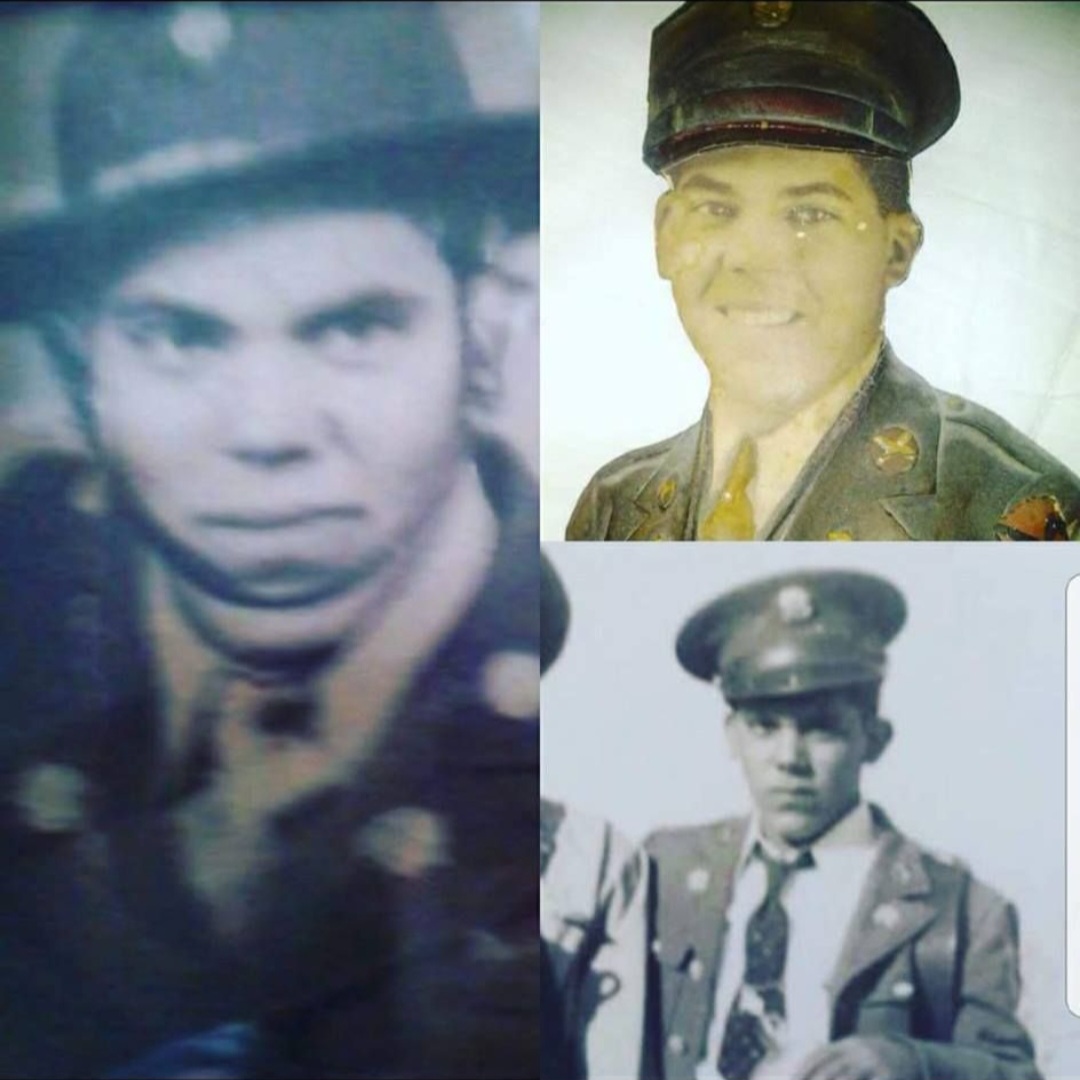
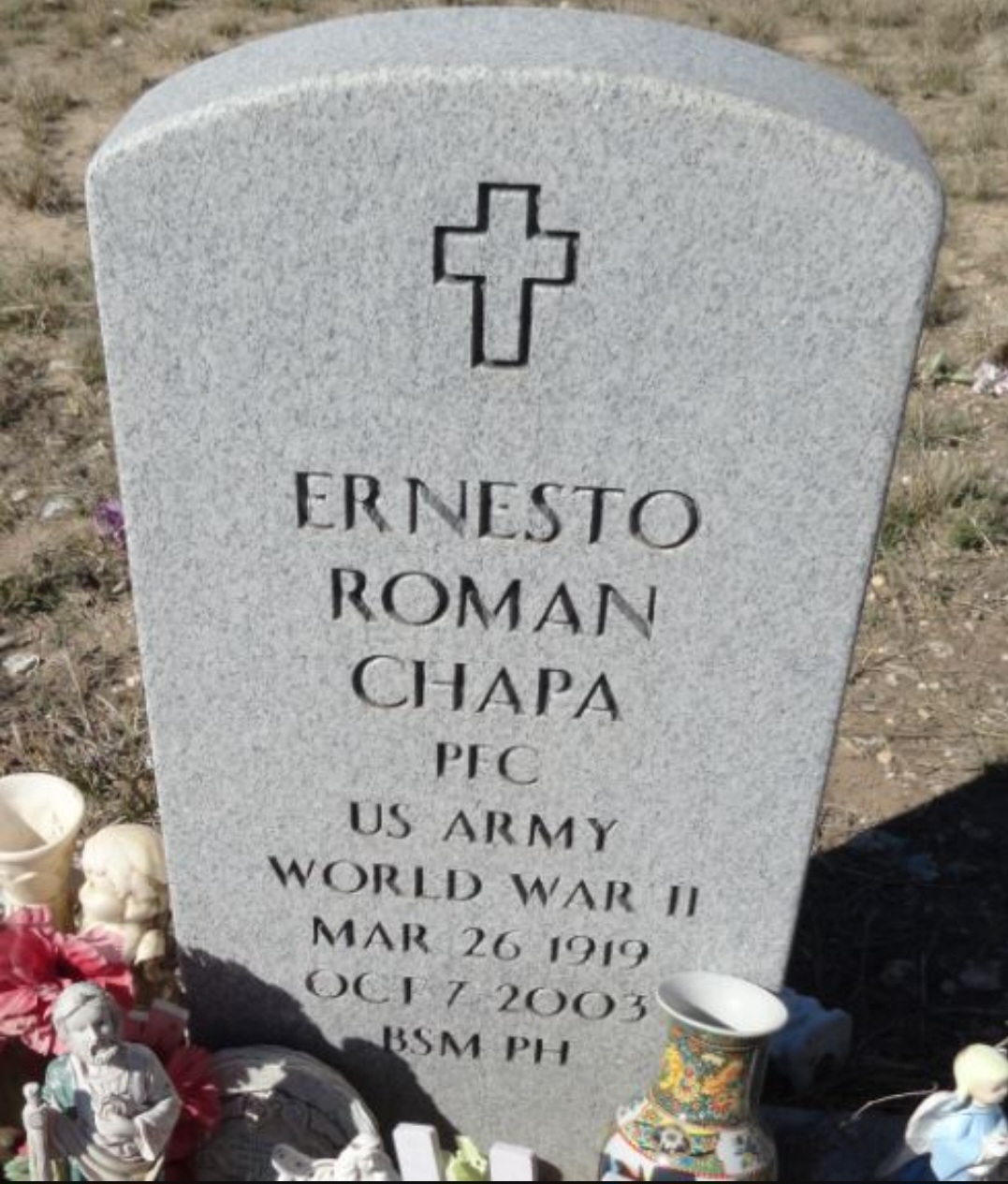
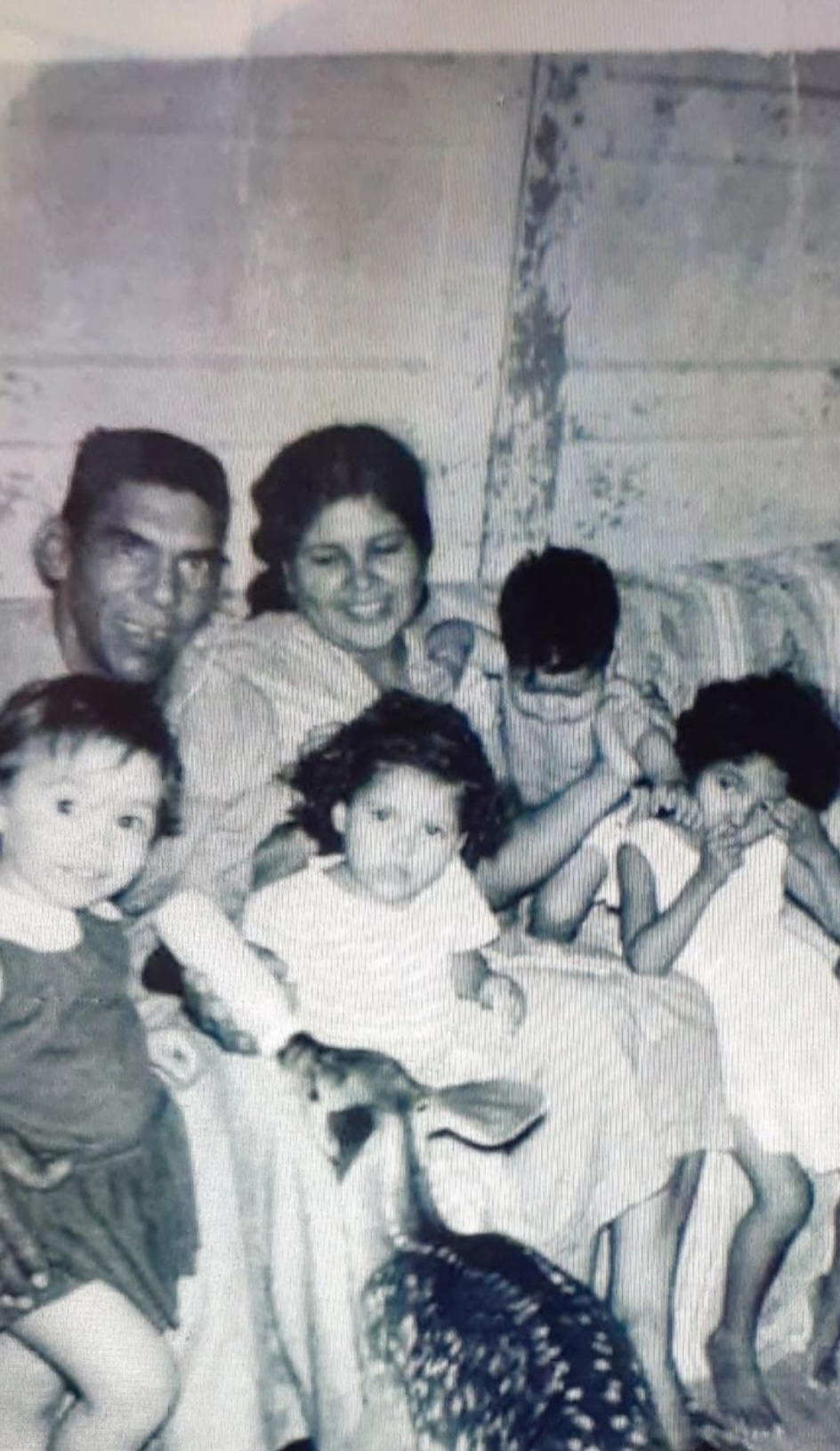
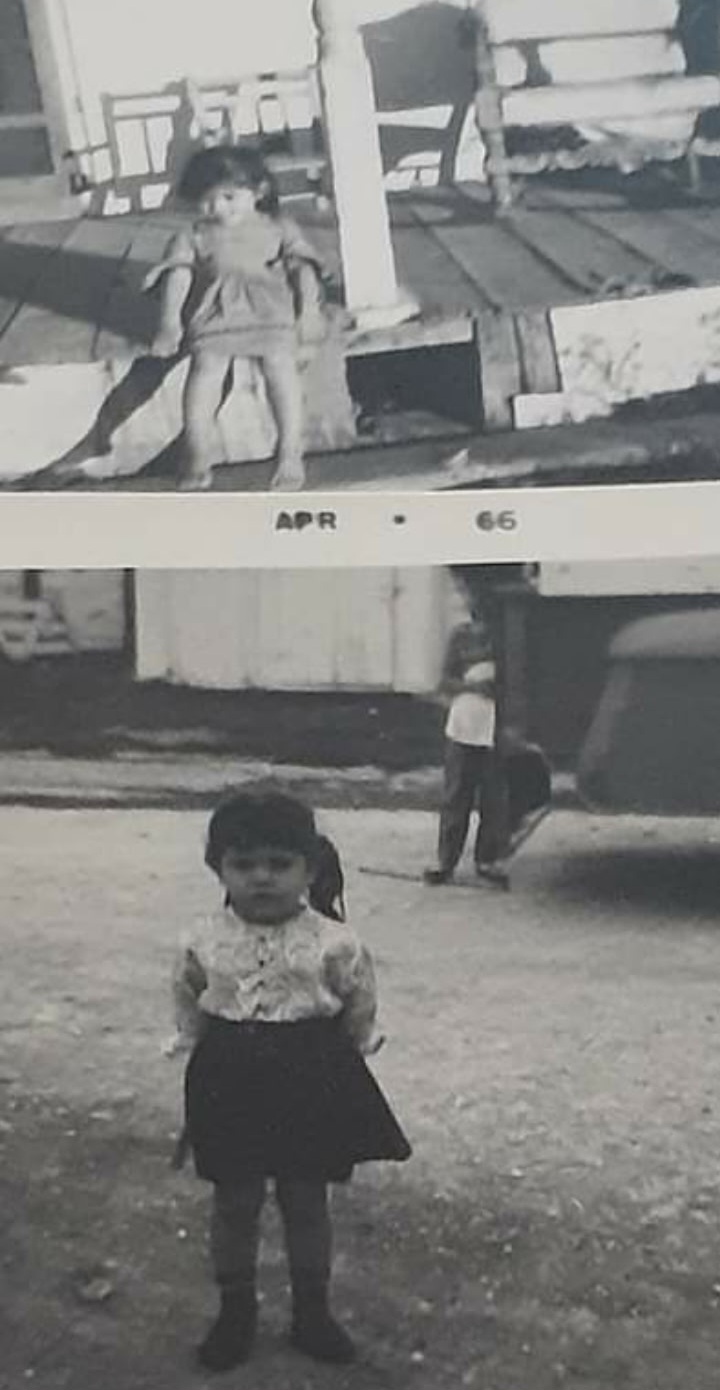
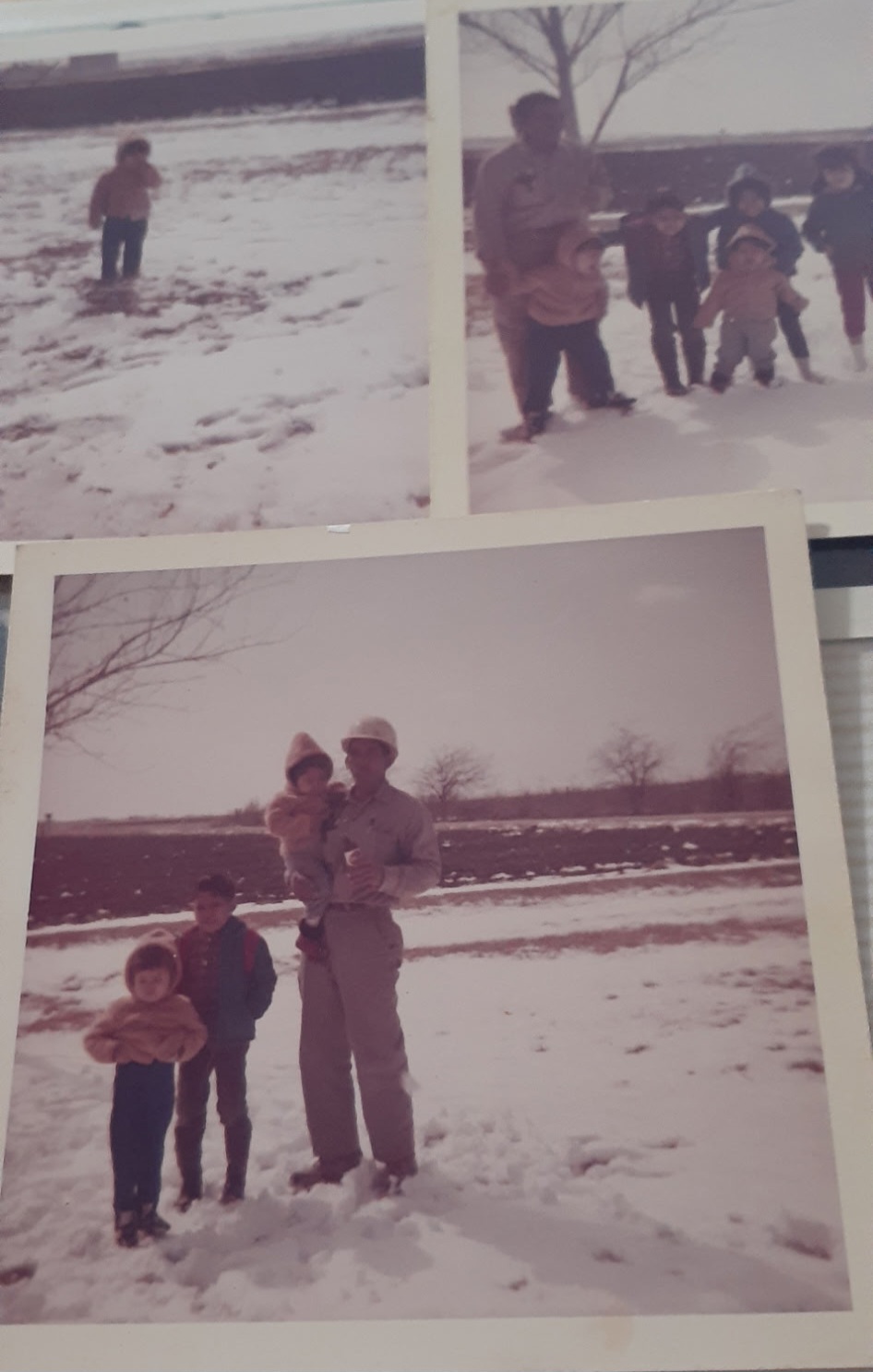
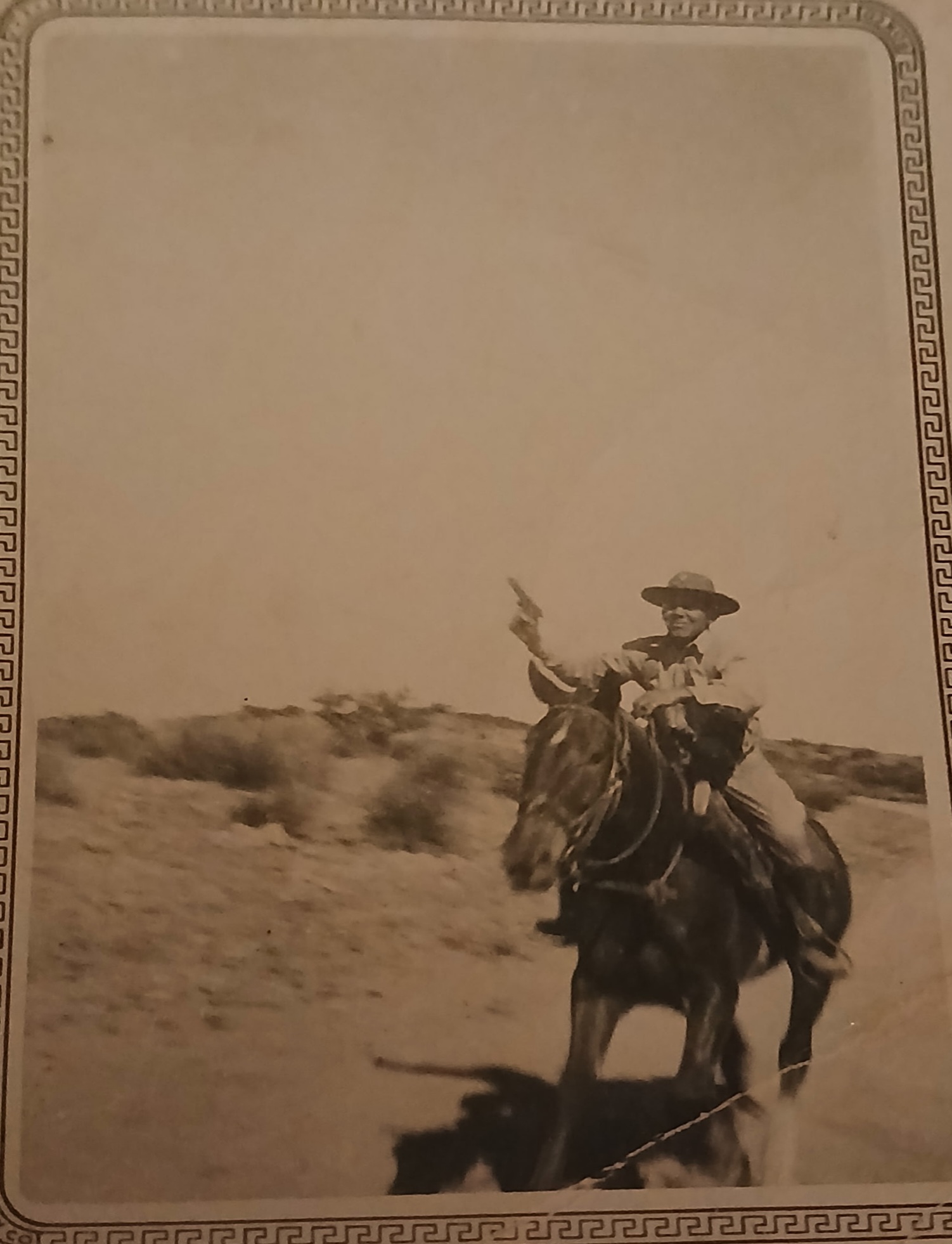
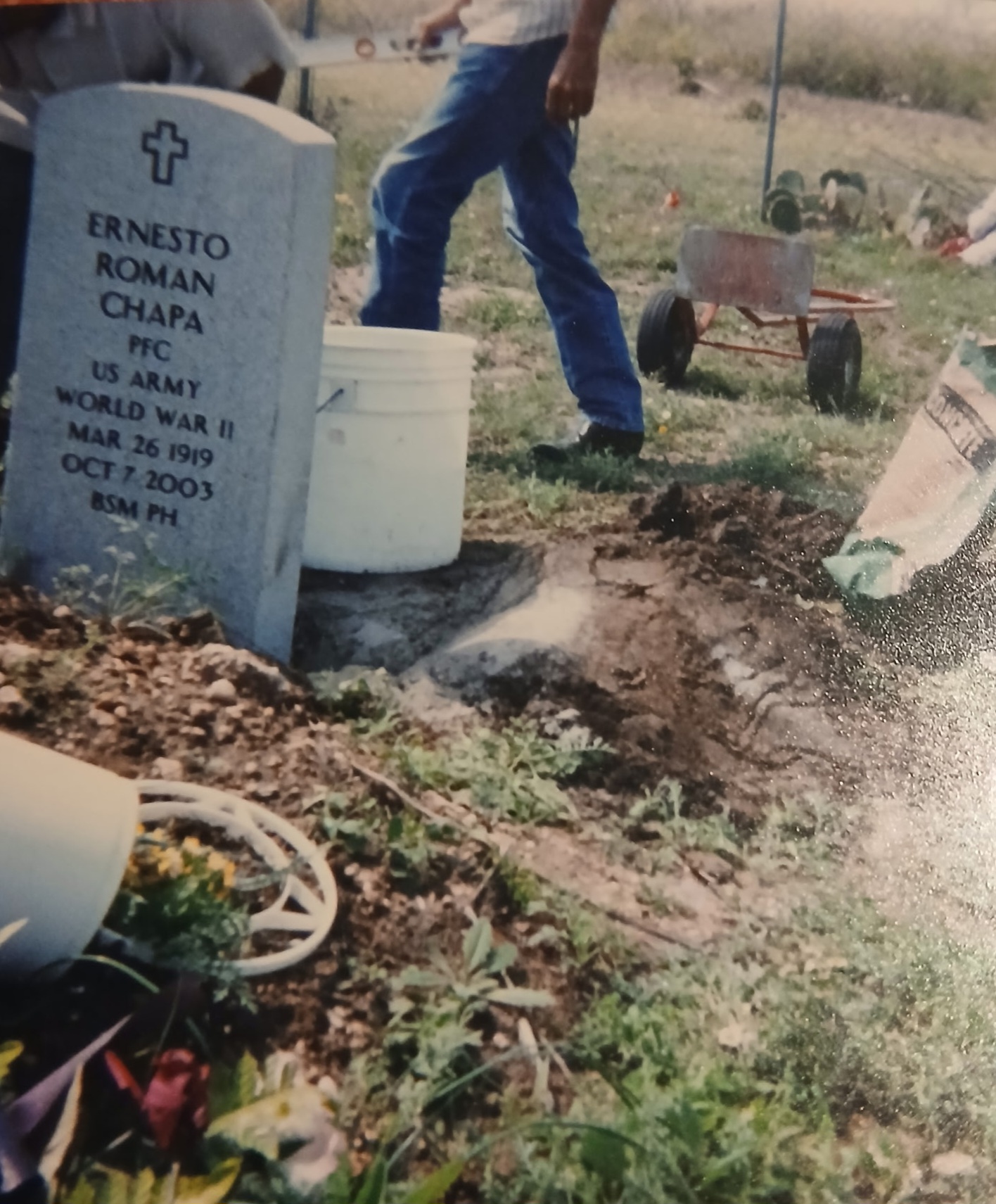
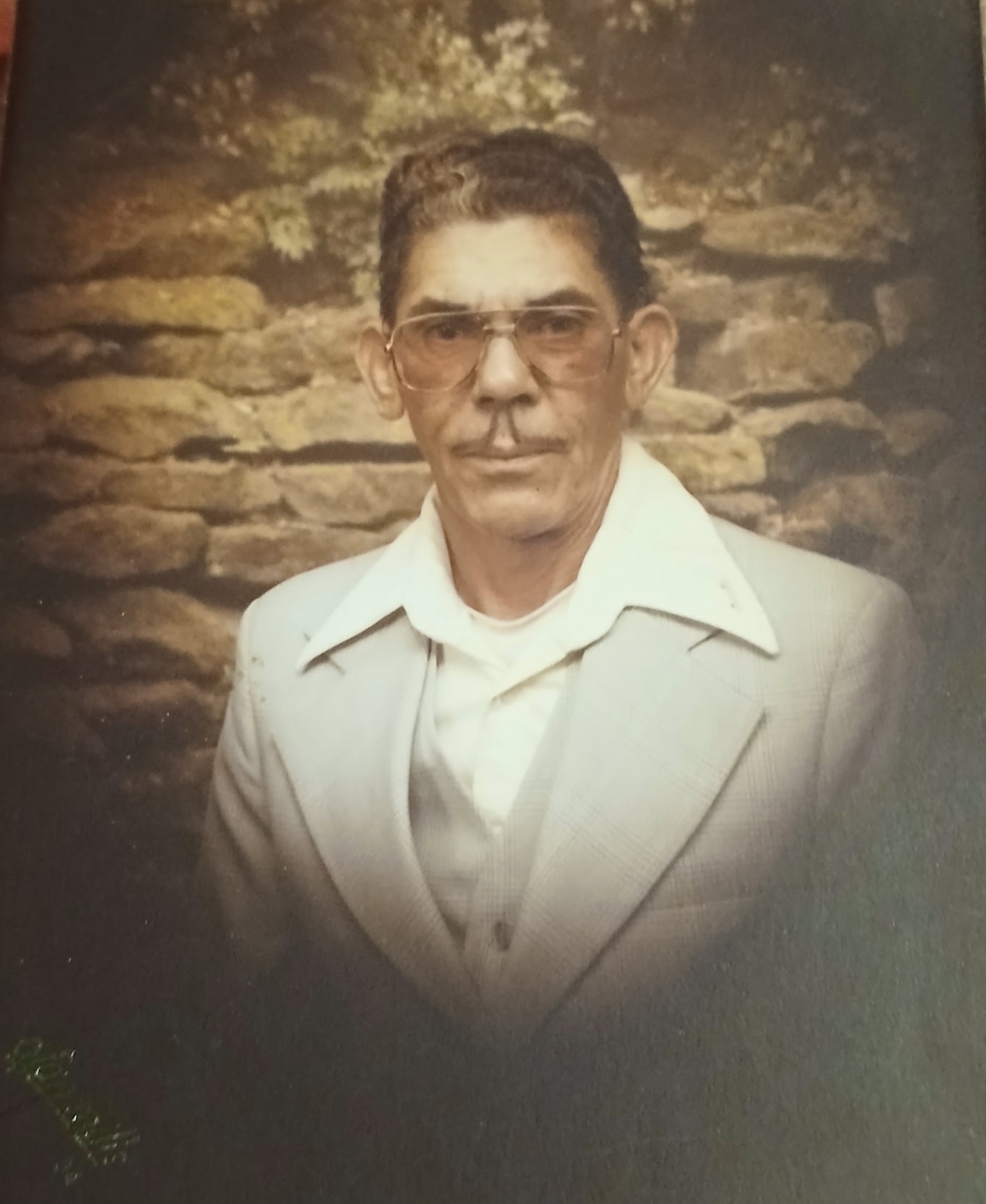
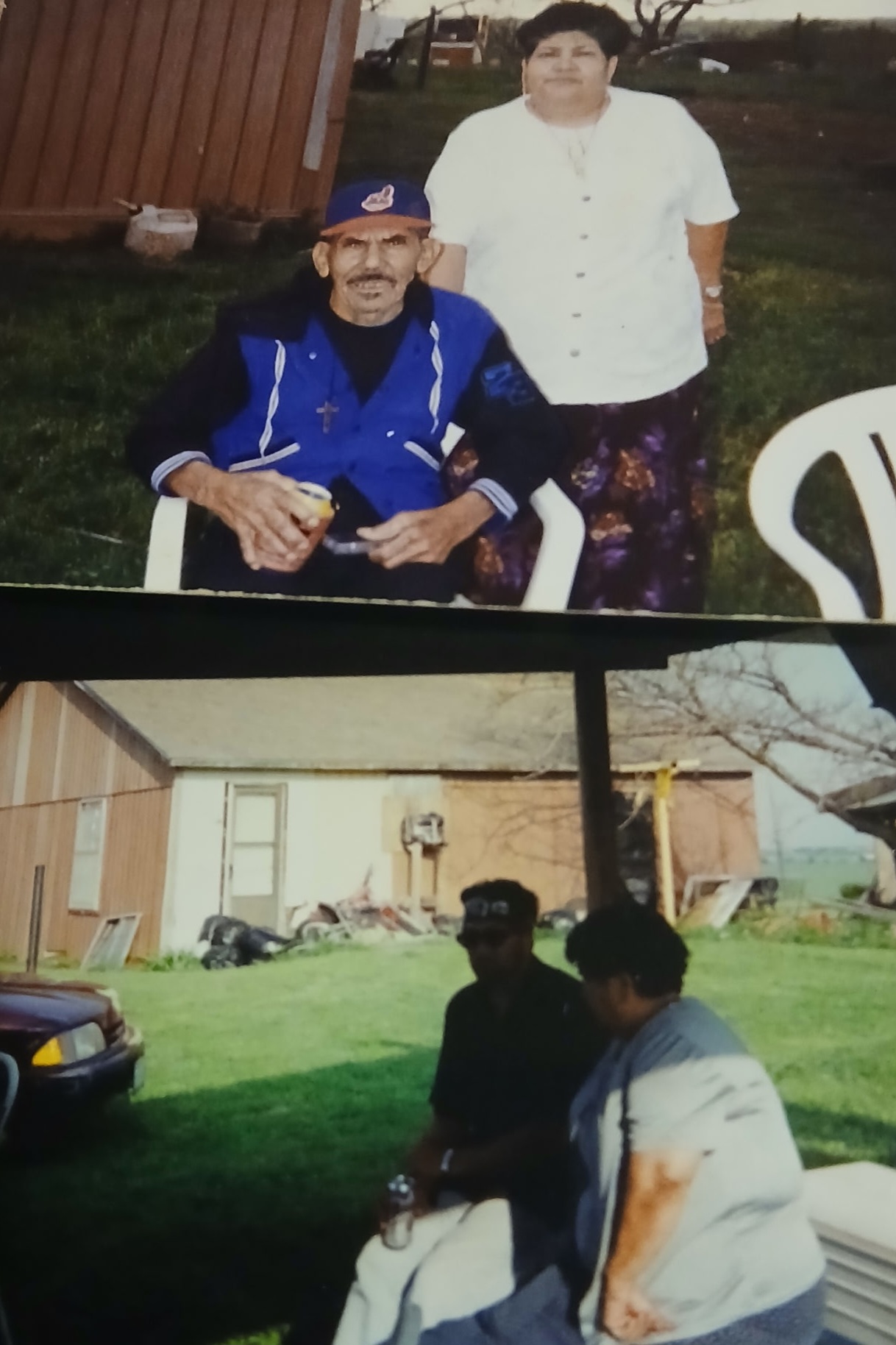
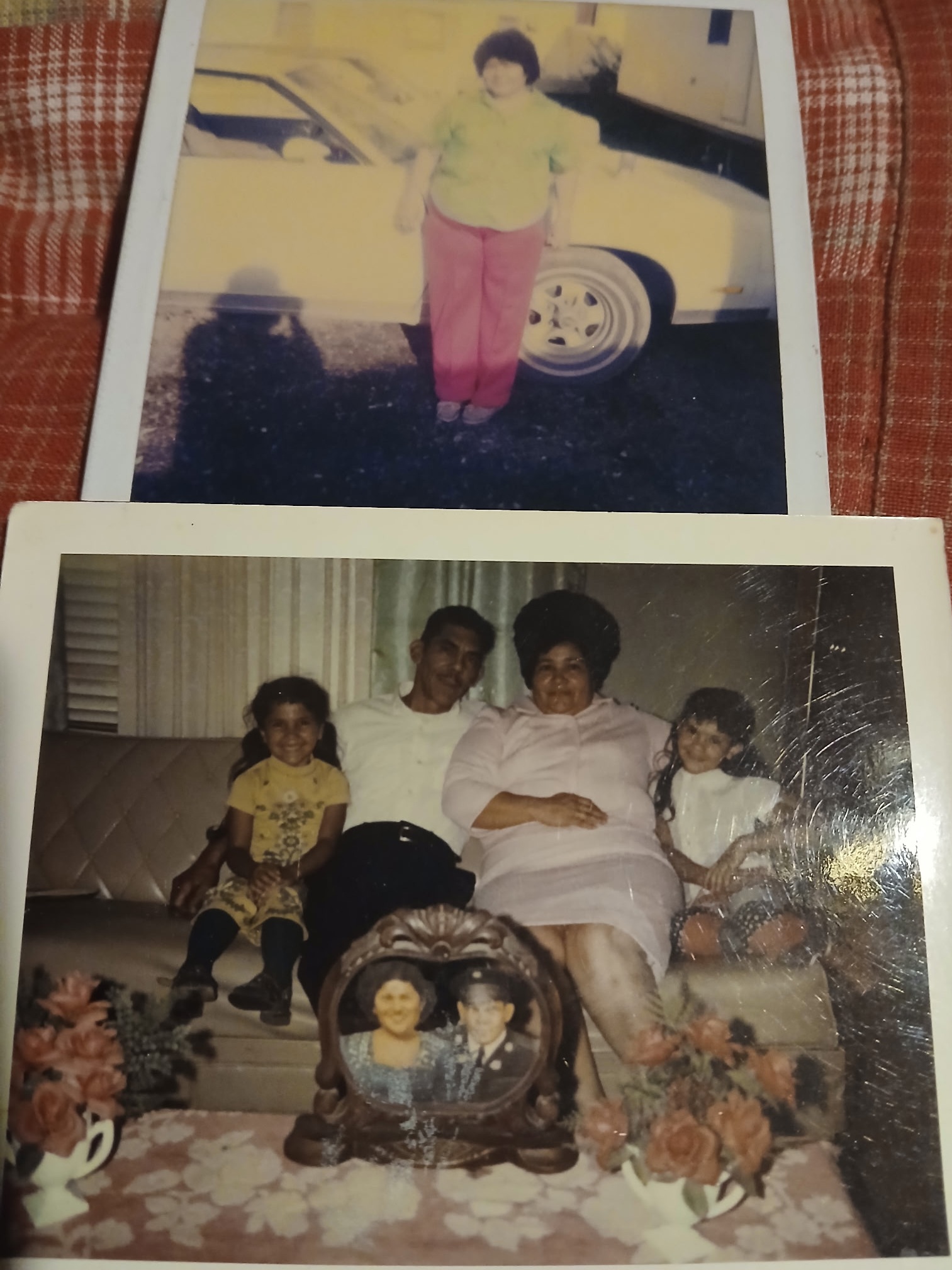
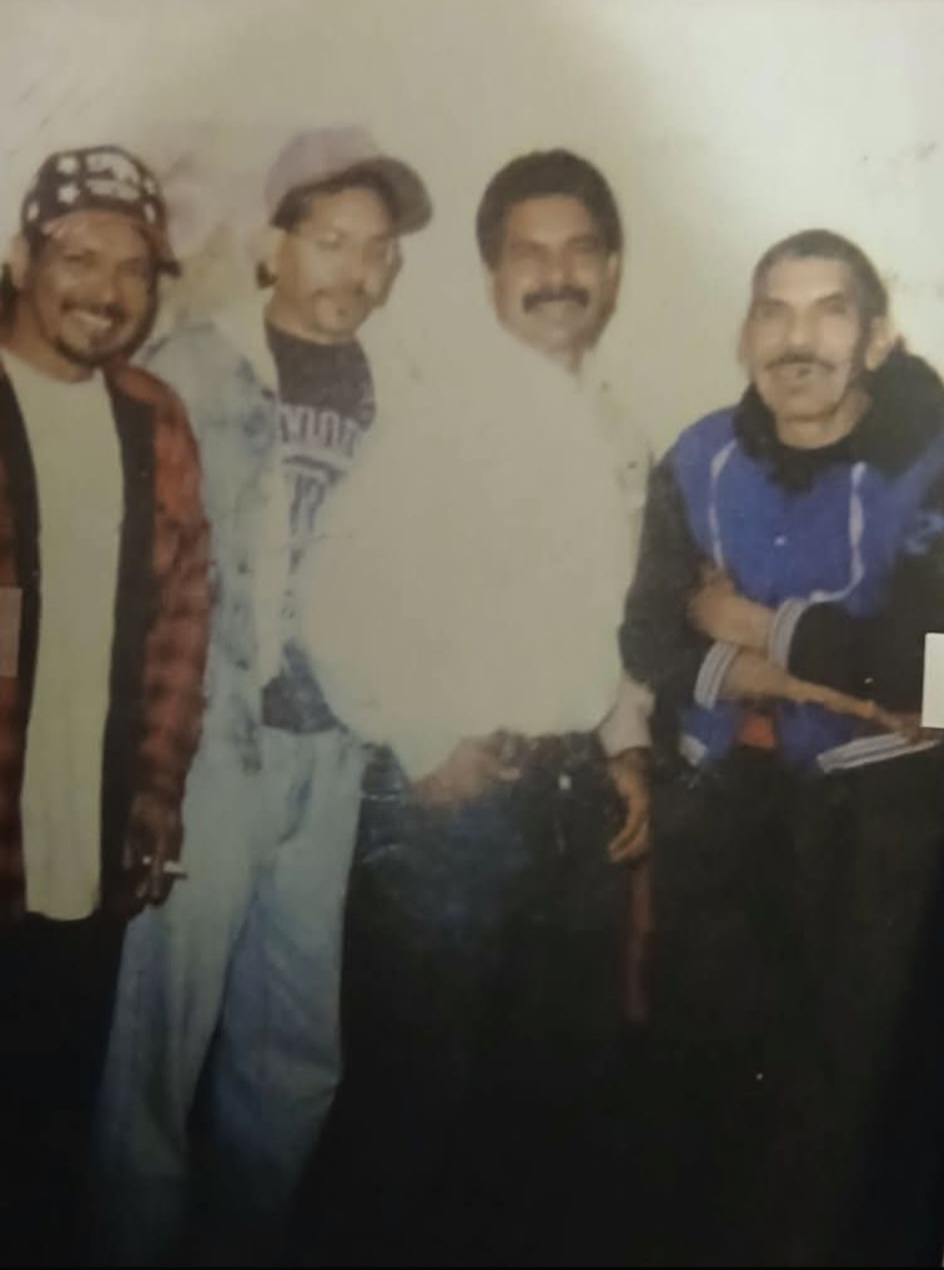
Ernesto Roman Chapa was born on March 26, 1919, in Anna Rose, Texas, and was later a resident of George West, Texas. Before commencing his military tenure, Ernesto Roman Chapa dedicated three years, from 1936 to 1940, to support his father and the family with their 150-acre farm in Live Oak County, Texas. His primary responsibilities encompassed the systematic cultivation and harvesting of cotton. Furthermore, he applied technical proficiency toward the maintenance of the farm’s equipment and provided essential oversight for the family’s dairy cattle.
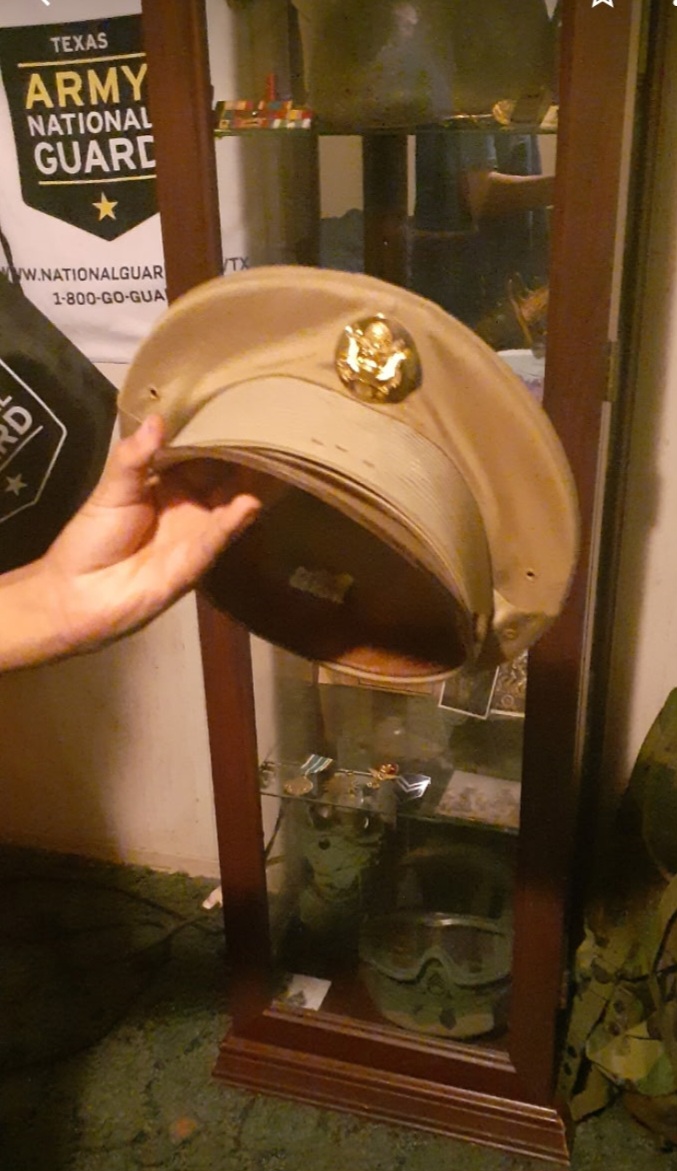
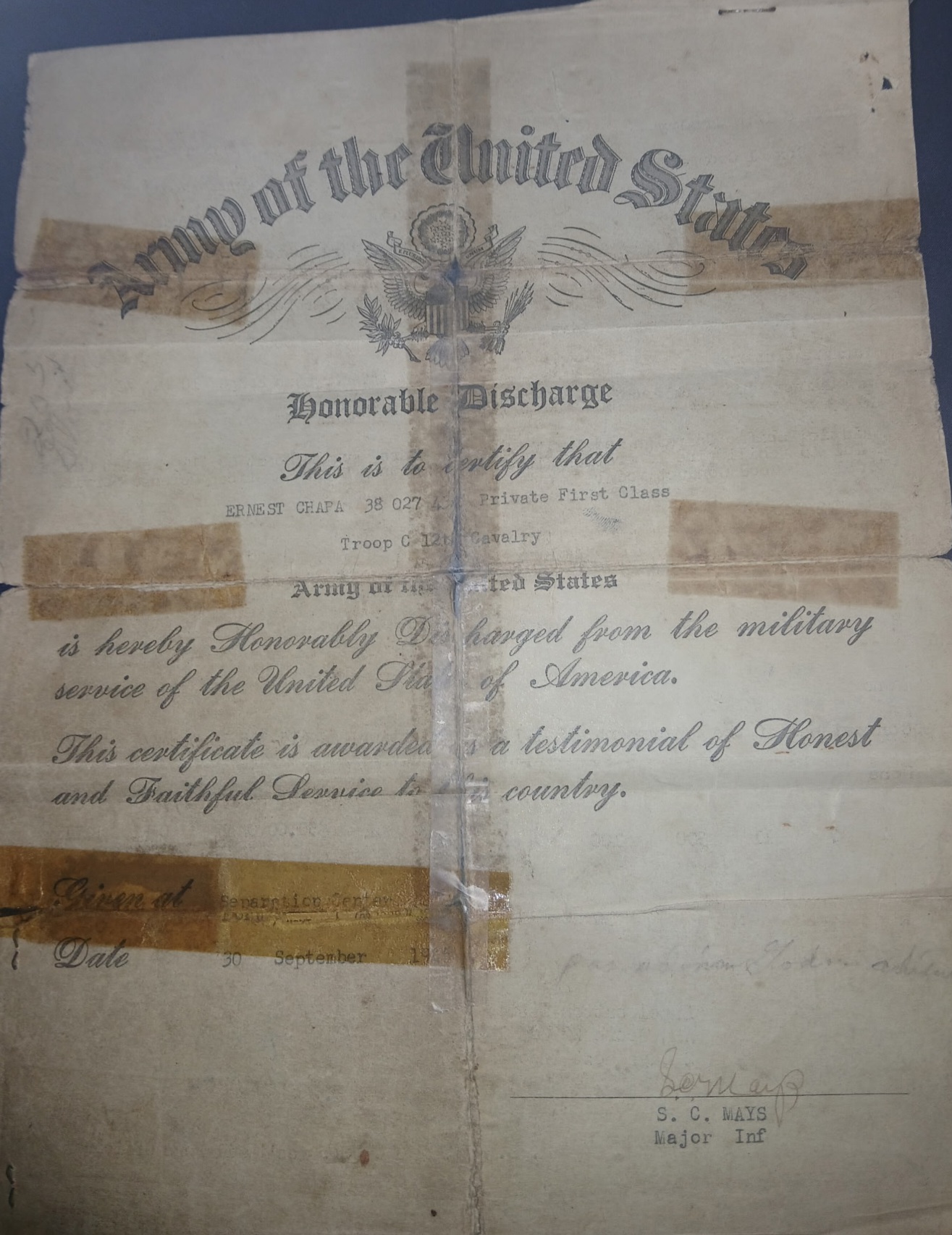
Ernesto served with distinction in the United States Army during World War II. Enlisting in 1941, he served until 1945, primarily within Troop C of the 12th Cavalry Regiment, 1st Cavalry Division in the Pacific theater. Trained in the operation of diverse weaponry, including mortars and light machine guns, he performed the duties of both a rifleman and a machine gunner.
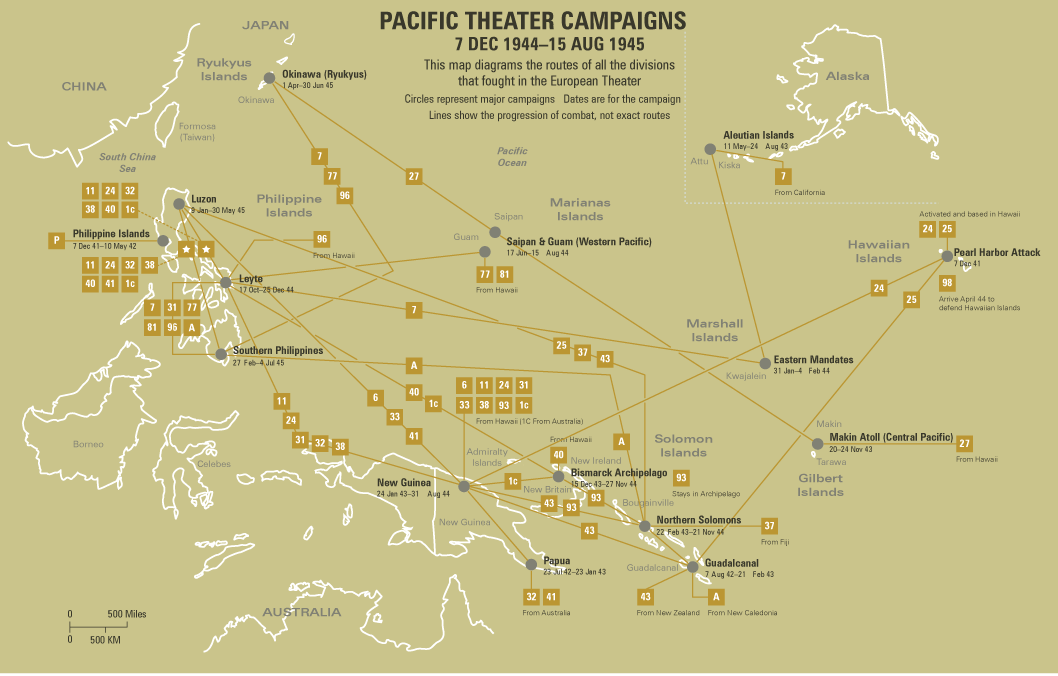
Ernesto participated in several critical operations, including the campaigns in New Guinea, the Bismarck Archipelago, Leyte, and Luzon, frequently engaging in intense combat within challenging jungle environments. His direct involvement in frontline actions is evidenced by wounds sustained in combat during February 1945. In recognition of his honorable service and valor, he was awarded several commendations, including campaign stars and the Combat Infantryman Badge. Following the conclusion of the war, he returned to civilian life.
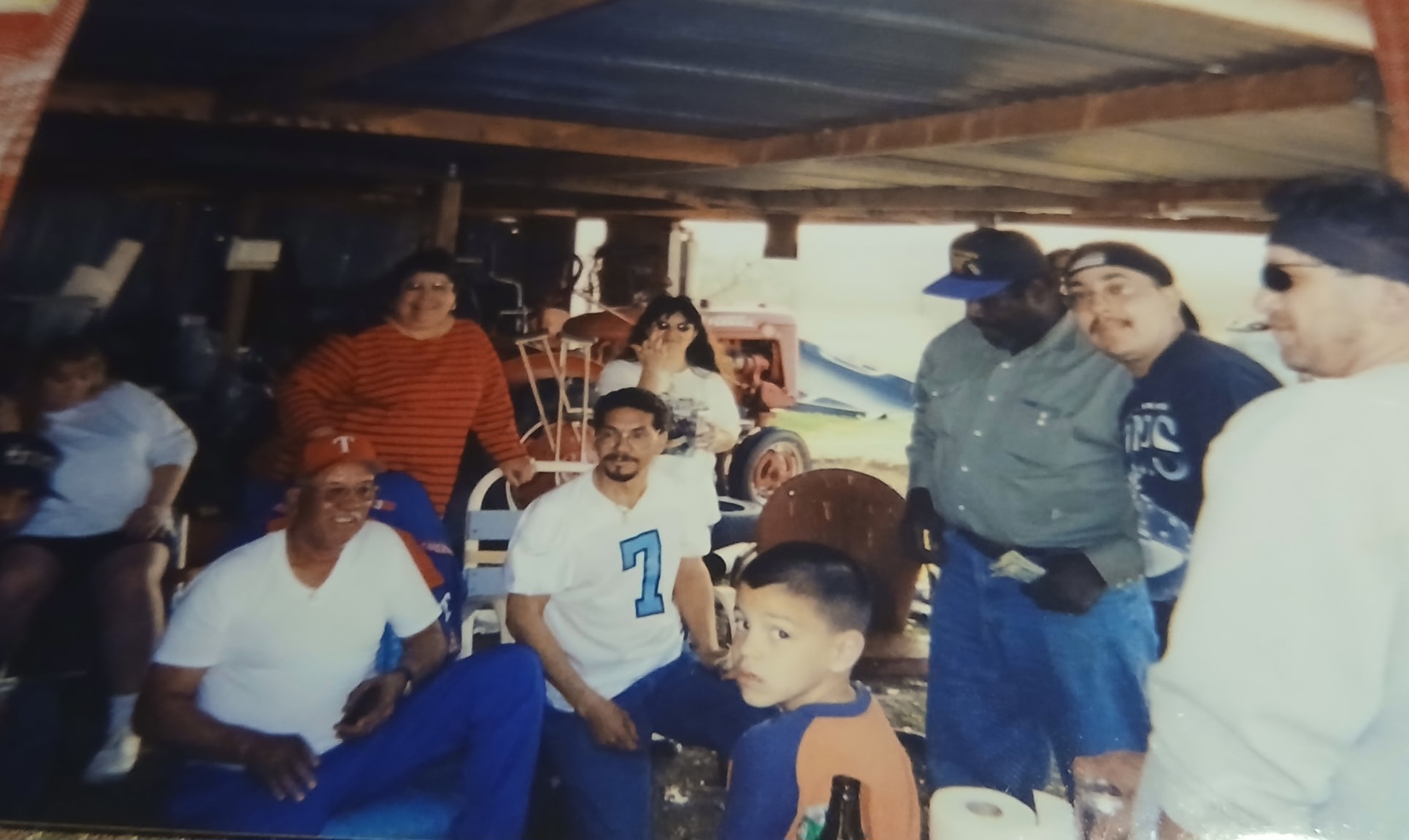
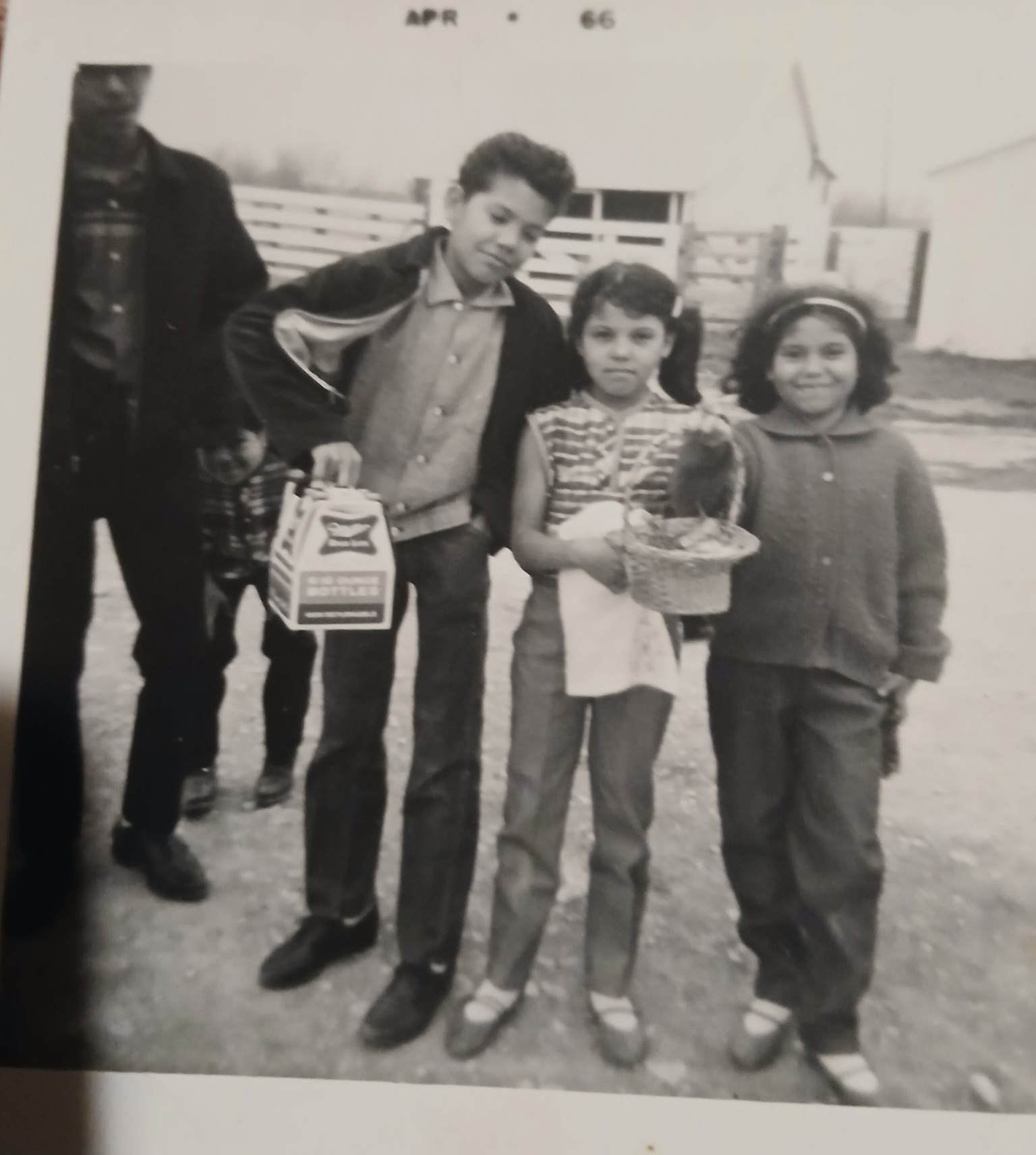
A devoted family man, he shared many years of marriage with his wife, Louisa, and was the father of ten children, seven of whom—three sons and four daughters—survived him. Within the agricultural sector of South Texas, Ernesto managed his own farm in Alice, where he oversaw livestock including horses and cattle.
His entrepreneurial spirit extended to the operation of a local dance hall and the establishment of the Chapa Family Cemetery. Deeply connected to the land, he found great satisfaction in farming, equestrian activities, and the labor of picking cotton. His personal interests included fishing, camping, and hunting; he was also a gifted musician who played the guitar, harmonica, and accordion.
Following his tenure in George West, he relocated to Venus, Texas, where he contributed several years of service to LTV Vought in Grand Prairie and TXI in Midlothian before entering retirement. Ernesto Roman Chapa passed away at his home in Venus on October 7, 2003, leaving behind a legacy of affection among his extensive family and friends.
Supplemental Information
Life for Ernesto, His Family, and Their Community in 1919
In 1919, the world into which Ernesto Roman Chapa was born in Anna Rose, Texas carried the weight of profound national and global upheaval. WWI had ended only months earlier, and its effects reached even the most rural corners of South Texas. Families lived with the memory of young men who had gone off to serve, some returning changed by the experience, others never returning at all. The influenza pandemic had swept through Texas with devastating force, leaving sorrow in many households and a lingering caution in daily life. Communities were rebuilding their strength, drawing on faith, family, and the land to restore a sense of stability.
Life in Anna Rose and George West was shaped by agriculture, tradition, and the quiet endurance of families who depended on one another. Most households lived on farms or ranches, raising cotton, corn, hogs, cattle, and dairy cows. Work began before sunrise, often with the milking of cows, the feeding of livestock, and the preparation of fields for cultivation. Cotton remained the region’s most valuable crop, and its planting and harvesting required long hours of labor under the South Texas sun. Families worked side by side, with children learning responsibility early. Every task mattered, and every member of the household contributed to the family’s livelihood.
Homes were simple and built for practicality. Many were constructed of wood, with tin roofs and wide porches that offered shade during the heat of the day. Water was drawn from wells, and cooking was done on wood‑burning stoves. Light came from kerosene lamps, and evenings were spent in conversation, prayer, or quiet reflection. Clothing was often handmade or mended repeatedly, and shoes were worn until they could no longer be repaired. Life was modest, but it carried a dignity rooted in self‑reliance and the shared understanding that hardship was met with perseverance.
Community life was intimate and deeply interconnected. Neighbors helped one another with planting, harvesting, and repairs. Churches served as the heart of social and spiritual life, offering fellowship, guidance, and a place where families gathered for worship, baptisms, weddings, and funerals. Sunday was a day of rest, reflection, and community. Local stores provided basic goods, though many families relied on what they produced themselves. News traveled slowly, often through newspapers brought in from larger towns or through stories shared at church gatherings or community events.
Transportation was limited. Many families traveled by horse, wagon, or on foot. Roads were unpaved and often difficult to navigate after rain. Trips to nearby towns such as George West were planned carefully, sometimes taking an entire day. Yet these journeys were important, offering opportunities to trade goods, purchase supplies, and connect with the broader community.
The cultural life of South Texas in 1919 reflected a blend of traditions. Families of Mexican heritage, like the Chapa family, carried forward customs rooted in faith, family unity, and respect for elders. Spanish was spoken in many homes, and cultural celebrations brought families together in moments of joy and remembrance. Music, storytelling, and shared meals strengthened bonds and preserved traditions that had endured across generations.
Economically, the region was still recovering from wartime shortages. Prices for goods fluctuated, and families managed their resources carefully. Yet despite these challenges, there was a sense of cautious hope. The end of WWI promised a return to normalcy, and communities looked toward the future with quiet optimism. The land remained the foundation of life, offering both sustenance and identity.
For Ernesto’s family, these conditions shaped every part of daily living. They worked the land with care and discipline, relied on their own skill, and drew strength from their faith and community. The values of responsibility, endurance, and resourcefulness were learned early and lived fully. These qualities became the foundation of Ernesto’s character long before he entered military service. The world of Anna Rose and George West in 1919 was not defined by ease. It was defined by strength, faith, and the steady commitment of families who faced hardship with courage and who built their lives through honest work.
Portrait of Life for Ernesto, His Family, and Their Community from 1936 to 1940
From 1936 to 1940, the world in which Ernesto Roman Chapa lived was shaped by the final, grinding years of the 1930s and the slow, uneven recovery that followed. Rural Texas felt these pressures more sharply than the cities. Families in Live Oak County depended on the land, their labor, and the strength of their community to endure the challenges of the time. Life on the one hundred fifty acre farm demanded discipline, endurance, and a steady commitment to work that began before sunrise and continued until the last light faded.
Cotton remained the backbone of the region’s economy, and its cultivation required constant attention. Planting, chopping, and harvesting were done by hand, and each stage of the crop’s life demanded long hours in the fields. Ernesto’s responsibilities were essential to the family’s survival. He worked the rows of cotton with patience and endurance, maintained the farm’s equipment with practical skill, and tended the dairy cattle that provided milk and income. Every task mattered. Every day carried purpose. The rhythm of farm life shaped his character with the quiet strength that later defined his service in uniform.
Food availability reflected both hardship and resourcefulness. Families relied heavily on what they could grow, raise, or preserve. Corn, beans, squash, and tomatoes filled gardens that were tended with care. Milk from the dairy cattle provided butter, cheese, and cream. Chickens supplied eggs and occasional meat. Pork was common, often cured or smoked to last through the year. Flour, sugar, and coffee were purchased sparingly from local stores, and each item was used with caution because money was limited and prices fluctuated. Meals were simple but nourishing, built from ingredients that came directly from the land. Nothing was wasted. Leftovers were reused, bones were boiled for broth, and vegetables were canned to carry families through the winter months.
The effects of the 1930s reached into every household. The economic collapse of the earlier decade had stripped many families of savings, livestock, and land. Even by the late nineteen thirties, recovery was slow. Cotton prices rose and fell unpredictably, and families managed their resources carefully. Many farms operated on credit, relying on local stores that extended accounts until harvest season. The New Deal brought cautious hope. Federal programs improved roads, strengthened schools, and provided occasional work opportunities, yet rural families still lived with modest means and constant vigilance.
Hardships extended beyond the economy. Droughts and unpredictable weather threatened crops. Equipment failures could halt work for days. Illness carried heavy consequences because medical care was limited and often far from home. Travel was difficult. Roads were unpaved, and wagons or early trucks struggled through mud after rain. Families lived with the constant awareness that a single failed harvest or a single injured work animal could jeopardize their stability.
Daily life reflected both hardship and resilience. Homes were simple, built for practicality rather than comfort. Water was drawn from wells, and cooking was done on wood‑burning stoves. Light came from kerosene lamps, and evenings were spent in quiet conversation, prayer, or the steady work of mending clothes and preparing for the next day. Radios brought news from the outside world, but many farms still lived at a distance from modern conveniences. Electricity reached some rural areas during these years, but many families continued to rely on lanterns and hand‑powered tools.
Community life was intimate and deeply interconnected. Neighbors helped one another with planting, harvesting, and repairs. Churches served as the heart of social and spiritual life, offering fellowship, guidance, and a place where families gathered for worship, baptisms, weddings, and funerals. Sunday was a day of rest, reflection, and community. Local stores provided basic goods, though many families relied on what they produced themselves. Entertainment was simple and rooted in family traditions, community events, and the small joys found in daily life.
The cultural life of South Texas reflected a blend of traditions. Families of Mexican heritage, like the Chapa family, carried forward customs rooted in faith, family unity, and respect for elders. Spanish was spoken in many homes, and cultural celebrations brought families together in moments of joy and remembrance. Music, storytelling, and shared meals strengthened bonds and preserved traditions that had endured across generations.
The world beyond Live Oak County began to shift as tensions overseas grew. News of conflict in Europe appeared in newspapers and radio broadcasts, and young men listened with growing awareness that the future might call them far from home. By nineteen forty, the possibility of war felt increasingly real. Families continued their work, but they did so with a quiet understanding that change was coming.
For Ernesto, these years formed the bridge between childhood and adulthood. They taught him responsibility, endurance, and the value of steady labor. They shaped his understanding of duty and prepared him for the demands he would soon face when he enlisted in the United States Army in 1941. The world he lived in from 1936 to 1940 was not defined by ease. It was defined by strength, faith, and the quiet resilience of families who built their lives through honest work and who faced hardship with courage.
Portrait of Life for Ernesto, His Family, and Their Community from 1941 to 1945
From 1941 to 1945, the war years reshaped every part of life for Ernesto Roman Chapa, his family, and the community of George West and Live Oak County. When Ernesto entered the United States Army in 1941, he left behind the familiar rhythm of farm work and stepped into the disciplined world of military service. Training introduced him to weapons that required precision and calm under pressure, and he learned the responsibilities of both a rifleman and a machine gunner within Troop C of the Twelfth Cavalry Regiment. The Pacific theater demanded endurance and adaptability. Soldiers moved through dense jungles, endured extreme humidity, faced monsoon rains, and lived with the constant presence of insects, disease, and an enemy determined to hold its ground. Clothing deteriorated quickly, equipment rusted, and food was often limited to canned meat, powdered eggs, hard biscuits, and strong coffee. Fresh food was rare, and letters from home became a source of strength, carrying reminders of familiar fields and the voices of loved ones.
While Ernesto served overseas, the community at home entered a period of profound change. Families who had long depended on the labor of their sons now faced the challenge of maintaining farms and ranches with fewer hands. Mothers, sisters, and younger brothers stepped into roles that had once belonged to the men who were now serving far from home. The work continued because it had to, and because the land remained the foundation of survival. Rationing shaped daily life. Sugar, coffee, flour, gasoline, tires, and clothing were limited by government-issued ration books, and families learned to stretch every ingredient. Gardens became essential, providing corn, beans, squash, tomatoes, and potatoes. Milk from dairy cattle supplied butter and cheese. Chickens provided eggs and occasional meat. Pork was cured or smoked to last through the year. Store-bought items were used sparingly, and every meal reflected the discipline of families who understood that waste was impossible during wartime.
Hardships extended beyond rationing. Droughts threatened crops, and equipment failures carried heavy consequences because repairs were costly and parts were scarce. Medical care was limited, and illness created worry in households already strained by the absence of loved ones. Travel remained difficult, with unpaved roads that became nearly impassable after rain. Yet despite these challenges, the community drew closer. Neighbors helped one another with planting, harvesting, and repairs. Shared labor became essential, especially when multiple families had sons serving overseas. Churches offered comfort and prayer, becoming places where families gathered not only for worship but for strength and reassurance. Sunday services carried new meaning, and congregations prayed for the safety of young men serving in distant places.
The emotional weight of the war touched every household. Letters from soldiers were treasured, read repeatedly until the paper softened at the edges. News arrived slowly through radio broadcasts and newspapers, and families listened with anxious hearts, hoping for word that their sons were safe. A telegram brought fear. A letter brought relief. Every day carried the quiet courage required to continue living while loved ones faced danger far from home.
The economy of rural Texas shifted as the war progressed. New jobs appeared in factories and military installations, drawing some families toward urban centers. Yet many remained on the land, committed to the work that sustained their households and supported the war effort. Agricultural production became a patriotic duty, and farmers increased output to supply food for soldiers overseas. Women and older men took on heavier workloads, proving that the community’s strength did not depend solely on those who had gone to war.
Children grew up quickly during these years. They learned responsibility early, helping with chores that had once belonged to older siblings. They gathered scrap metal, rubber, and paper for war drives. They listened to radio broadcasts that spoke of battles in distant places, forming an understanding of the world far beyond their rural community. Their childhoods were shaped by the knowledge that the war touched every part of life.
Cultural traditions continued, offering moments of joy and connection. Families of Mexican heritage preserved their language, music, and celebrations, finding comfort in gatherings that reminded them of continuity and identity. Shared meals, storytelling, and community events strengthened bonds and provided emotional relief during difficult times.
For Ernesto, the war years were defined by duty, danger, and the steady courage required of every soldier in the Pacific. For his family and community, those same years were defined by waiting, praying, and enduring with the strength that had always sustained them. Together, these experiences reveal the deeper truth of how the war shaped both the soldier and the community he left behind. It was a time of sacrifice, unity, and quiet resilience, lived both in distant battlefields and in the familiar fields of Texas.
Patriotism and Its Effect on Hispanic Women from 1941 to 1945
The areas where Ernesto Roman Chapa lived were part of deeply rooted Hispanic communities whose presence in South Texas stretched back long before his birth. Families of Mexican heritage had settled the region during the Spanish and Mexican periods, establishing ranches and farms that remained in place even after Texas entered the United States. By the early twentieth century, Live Oak County and the rural lands surrounding George West contained a strong and enduring Hispanic population that shaped the cultural and social identity of the area. Spanish was spoken in many homes, Catholic faith guided family life, and traditions such as communal meals, storytelling, seasonal celebrations, and close kinship networks remained central to daily living. These families formed a significant portion of the agricultural workforce, cultivating cotton, raising livestock, and sustaining the rural economy through their labor and resilience. Their presence created the cultural world in which Ernesto was raised and shaped the values that guided families through the war years.
Patriotism during the war was not an abstract idea in these communities. It was a lived reality that touched every household. When young men like Ernesto entered military service, families understood that their sons were answering a national call. This understanding created a shared sense of duty that influenced daily life. Flags appeared on porches. Churches prayed for soldiers by name. Community gatherings carried a new seriousness, rooted in the belief that every sacrifice, whether made on distant battlefields or in the quiet fields of Texas, strengthened the nation.
For Hispanic women, patriotism became both a guiding force and a source of profound responsibility. The departure of husbands, sons, and brothers placed new burdens on their shoulders. They managed farms, tended livestock, oversaw planting and harvesting, and made decisions that affected the survival of their households. Their work was essential. It kept families fed, kept farms operating, and supported the war effort through agricultural production that supplied food for soldiers overseas. Their labor was an act of devotion to family, community, and country, carried out with discipline and quiet pride.
Patriotism shaped the emotional world of Hispanic women as deeply as it shaped their responsibilities. Letters from soldiers became treasured lifelines, read repeatedly until the paper softened at the edges. Women gathered in kitchens, on porches, and in church halls to share news, offer comfort, and steady one another through moments of fear. The possibility of receiving a telegram created a constant undercurrent of worry, yet they carried themselves with a calm strength that steadied their families. Their courage was quiet, rooted in faith and the belief that endurance at home mattered as much as bravery overseas.
Rationing intensified the demands placed on Hispanic households. Sugar, coffee, flour, gasoline, tires, and clothing were limited by government‑issued ration books. Women learned to stretch every ingredient. Gardens became essential, providing corn, beans, squash, tomatoes, and potatoes. Milk from dairy cattle supplied butter and cheese. Chickens provided eggs and occasional meat. Pork was cured or smoked to last through the year. Women preserved vegetables, rendered lard, reused fabric, and repaired clothing until it could no longer hold a stitch. Their resourcefulness kept households functioning during years when store shelves were often bare and supplies unpredictable.
Patriotism also shaped the public roles of Hispanic women. They organized scrap drives, collected rubber and metal, prepared care packages, and volunteered in church groups that supported families with loved ones overseas. They wrote letters to soldiers who had no family nearby. They visited neighbors who had received difficult news. They became the emotional center of the community, offering strength, comfort, and stability during a time when uncertainty touched every home.
The war years changed the identity of Hispanic women in Live Oak County. They became leaders, decision makers, and protectors of family traditions. They preserved Spanish language in the home, maintained Catholic faith as a source of unity, and continued celebrations that reminded families of continuity and hope. Their work ensured that children grew up with a sense of security despite the absence of fathers and older brothers. Their presence held the community together, creating a foundation of resilience that carried families through the most challenging years they had ever faced.
Patriotism during the war was lived quietly in kitchens, fields, and church pews. It was expressed through labor, prayer, sacrifice, and unwavering devotion to loved ones far from home. For Hispanic women, it became both a burden and a source of strength. It shaped their days, guided their decisions, and revealed a depth of courage that matched the courage of the soldiers they supported.
What It Was Like Departing for War
Departing for war during the years 1941 to 1945 followed a pattern shaped by national mobilization, military procedure, and the social realities of rural American communities. Young men received official notification through draft orders or enlistment papers issued by local Selective Service boards. These notices provided reporting dates, transportation instructions, and the location of induction centers. In rural South Texas, including Live Oak County and George West, men typically traveled to regional hubs such as San Antonio or Corpus Christi for processing. This step included physical examinations, administrative paperwork, and formal induction into the United States Army.
Once inducted, soldiers were transported by bus or train to basic training camps. These movements were coordinated by the War Department and followed standardized procedures. Trains were the primary mode of long‑distance transport, and depots across Texas saw steady movement of recruits throughout the war. Soldiers traveled in groups, often with others from their county or region, creating a shared experience shaped by military order rather than personal choice. Uniforms were issued early in the process, and recruits departed wearing standardized clothing that identified them as members of the armed forces.
The departure itself reflected the wartime atmosphere of the nation. Families accompanied their sons to local bus stations or train depots, which served as the final point of civilian contact. These locations were common gathering places during mobilization, and historical records describe them as crowded, busy, and marked by the presence of multiple families seeing off their sons at once. The departure was public, shaped by the movement of large numbers of recruits rather than private ceremony. Military schedules dictated departure times, and once soldiers boarded, families remained behind as transportation carried the recruits toward their assigned training centers.
For Hispanic families in South Texas, the departure followed the same federal procedures as all American families, yet it occurred within the cultural framework of communities that had long valued service, duty, and family cohesion. Spanish was commonly spoken in homes, Catholic faith guided family life, and community networks provided support during periods of transition. These cultural elements shaped how families understood military service, but the departure process itself remained governed by national mobilization policies.
Upon leaving home, soldiers entered a structured military environment. The journey to training camps marked the beginning of formal instruction, discipline, and preparation for overseas deployment. Recruits traveled through landscapes familiar to them, yet the movement was organized entirely by the Army. Their departure represented the shift from civilian life to military service, a transition experienced by millions of Americans during the war.
Departing for war was a standardized military process shaped by federal mobilization, regional transportation networks, and the social realities of rural American communities. It marked the beginning of a journey that transformed young men from civilians into soldiers and connected families to the national effort that defined the wartime years.
What Deployment Looked Like
Deployment during World War II followed a standardized military process shaped by War Department policy, transportation logistics, and the operational needs of the global conflict. Once a soldier completed basic and advanced training, his unit received movement orders directing it to a designated staging area. These orders were issued through the Army Service Forces and coordinated with the Transportation Corps, which managed the movement of personnel from camps across the United States to ports of embarkation.
For soldiers trained in Texas or the southern United States, deployment commonly began with rail transport. Trains were the primary means of long‑distance movement, and units traveled in organized groups under military supervision. Cars were assigned by company or battalion, and soldiers remained with their units throughout the journey. The trains carried them to major embarkation hubs such as Camp Shanks in New York, Camp Kilmer in New Jersey, or the West Coast ports at San Francisco and Los Angeles, depending on the theater of assignment.
Upon arrival at a port of embarkation, soldiers entered a controlled military environment designed to prepare them for overseas movement. They underwent medical inspections, equipment checks, and administrative processing. Personal items were reduced to essentials. Security restrictions were enforced to prevent disclosure of troop movements. Soldiers were briefed on ship procedures, issued final supplies, and assigned to transport vessels according to unit structure.
Boarding the transport ships followed strict order. Soldiers moved up gangways in formation, carrying full field equipment and assigned gear. Once aboard, they were directed to troop compartments, which were arranged in tiers of bunks to maximize capacity. Conditions were crowded, reflecting the scale of wartime mobilization. The ships used for deployment included converted passenger liners, cargo vessels, and purpose‑built troop transports, all operated under the control of the War Shipping Administration and the U.S. Navy.
Departure from port was conducted without public ceremony. Ships left at scheduled times, often at night or early morning, escorted by naval vessels when necessary. Once underway, soldiers entered the routine of ocean transit. Daily life aboard ship included drills, briefings, inspections, and limited recreation. Security measures restricted movement on deck, especially in areas vulnerable to observation or attack. In the Atlantic, ships traveled in convoys to reduce the threat of German submarines. In the Pacific, routes were planned to avoid known enemy activity.
The length of the voyage depended on destination. Crossings to England or North Africa typically lasted one to two weeks. Movement to the Pacific theater could take longer, especially when ships traveled through the Panama Canal or made stops at intermediate bases. Throughout the voyage, soldiers remained under military discipline and received instructions regarding the conditions they would face upon arrival.
Deployment concluded when the ship reached its assigned port overseas. Soldiers disembarked in formation, passed through reception centers, and moved to staging areas where they received theater‑specific briefings. Equipment was inspected again, weapons were issued or reissued, and units prepared for movement to forward areas. From this point forward, soldiers were under the command structure of the theater in which they served, whether the European, Mediterranean, or Pacific theaters.
Deployment was a structured military process governed by federal mobilization, transportation logistics, and wartime operational requirements. It marked the transition from training to active service and placed soldiers into the global movement that defined the World War II.
12th Cavalry Regiment — Semper Paratus (Always Ready)
The 12th Cavalry Regiment carried a long prewar lineage into the Pacific, having been constituted in 1901 and assigned to the 1st Cavalry Division by 1933. On the eve of the Second World War, the regiment—like the rest of the division—underwent a fundamental transformation, reorganizing from traditional horse cavalry into dismounted infantry capable of fighting in the demanding environments expected overseas. This shift reshaped its training, equipment, and tactical role, preparing the regiment for the campaigns that lay ahead.
The regiment’s wartime service began in the Southwest Pacific. After staging in Australia, the 1st Cavalry Division moved into New Guinea and then launched the assault on the Admiralty Islands. The landing on Los Negros on 29 February 1944, originally conceived as a reconnaissance in force, quickly escalated into a full‑scale invasion when Japanese resistance proved far stronger than anticipated. The immediate objectives—seizing the Momote airstrip and securing Seeadler Harbor—were essential to controlling the approaches to the Bismarck Archipelago. The fighting that followed tested the newly converted infantrymen in dense jungle, rain‑soaked terrain, and close‑quarters engagements that demanded both endurance and adaptability.
After securing the Admiralties, the division shifted into the Philippines campaign, beginning with the Leyte landings in October 1944. There, the 12th Cavalry fought across rice paddies, ridgelines, and jungle corridors in operations that blended large‑scale logistics with constant small‑unit combat. In January 1945, the regiment took part in the Lingayen Gulf landings on Luzon and joined the drive toward Manila, where the fighting intensified into some of the most brutal urban combat of the Pacific War. House‑to‑house clearing, river crossings under fire, and the reduction of fortified positions defined the campaign through early 1945. Across each of these operations, the 12th Cavalry lived up to its motto—Semper Paratus, Always Ready—meeting every new environment and every new threat with the same determination and skill.
Overview of Troop C, 12th Cavalry in the Pacific Theater
Troop C was one of the rifle troops—the cavalry equivalent of an infantry company—within the 12th Cavalry Regiment of the 1st Cavalry Division after the division dismounted for service in the Southwest Pacific. As the regiment traded horses for boots and landing craft in 1943–1944, Troop C’s mission evolved dramatically. What had once been a mounted cavalry troop became a hard‑driving infantry force trained for amphibious assaults, jungle clearing, perimeter defense, and, later, the urban and flank‑security operations that defined the Leyte and Luzon campaigns. The troop’s identity shifted with the war, but its role remained constant: to close with the enemy, seize ground, and hold it under the most demanding conditions.
- Troop C. operated as a full infantry company, with rifle squads, machine‑gun teams, and a weapons section capable of independent action.
- Its versatility became its hallmark, shifting from jungle patrols to beachhead defense to street‑to‑street fighting as the campaigns demanded.
- Crew‑served weapons were central to its effectiveness, giving the troop the firepower needed to break fortified positions and repel counterattacks.
- The troop’s combat path mirrored the division’s, from New Guinea to the Admiralties to Leyte and Luzon, each campaign sharpening its cohesion and resilience.
Organization and Battlefield Role of a Troop C Rifle Troop
Troop C functioned as a company‑sized infantry element composed of several rifle squads, a weapons section equipped with light machine guns and mortars, and a small headquarters that coordinated movement and fire. Its weapons crews were organic to the troop, providing the suppressive and indirect firepower essential for both offensive and defensive operations. This structure allowed Troop C to operate independently when needed, maneuvering through jungle, rice paddies, and urban streets with the flexibility required in the Pacific Theater.
The troop’s missions were varied and often grueling. It conducted reconnaissance in force to probe enemy positions, assaulted and cleared fortified strongpoints, and established defensive sectors around airstrips, beachheads, and key terrain. Troop C provided flank security during major advances, ensuring that larger formations could move without fear of ambush from the sides. It also carried out constant patrols and ambush operations in jungle and rice‑paddy terrain, tasks that demanded endurance, discipline, and the ability to react instantly when the enemy appeared at close range. In every campaign—from New Guinea to the Admiralties, Leyte, and Luzon—Troop C embodied the regiment’s motto: Semper Paratus, Always Ready.
Campaigns and Key Actions Where Troop C Would Have Been Engaged
Troop C entered combat in the Pacific during the Admiralty Islands campaign, beginning with the assault on Los Negros from 29 February through March 1944. In this operation, the troop took part in the amphibious landings that secured the initial foothold around the Momote airstrip. Once ashore, its rifle squads and weapons crews helped consolidate the beachhead, fighting through night infiltrations, probing attacks, and the dense jungle that concealed Japanese counteroffensives. The Admiralties hardened the regiment, giving Troop C its first sustained exposure to the close‑quarters, terrain‑driven combat that would define its later service in the Philippines.
On Leyte, from October to December 1944, Troop C fought across rice paddies, ridgelines, and the central mountain ranges in operations that demanded endurance and constant vigilance. The regiment saw heavy fighting in areas such as Hill 2348 and throughout the Leyte Valley, where rifle troops were tasked with clearing entrenched positions and holding ground under repeated counterattacks. The combination of monsoon rains, mud, disease, and determined resistance made Leyte one of the most grueling campaigns the troop would face.
In early 1945, Troop C moved with the division into the Luzon campaign, beginning with the Lingayen Gulf landings and the rapid advance toward Manila. By February, the troop was providing flank security for larger formations and then entering the Manila area itself, where it participated in street fighting, clearing operations, and the brutal push through fortified neighborhoods. After the city’s liberation, Troop C continued operations against the Shimbu Line east of Manila, fighting through steep terrain, river valleys, and well‑prepared defensive positions. A wound sustained by a Troop C trooper in February 1945 is most plausibly tied to these Luzon operations, where close‑range combat and constant exposure to fire were daily realities.
Daily Life, Equipment, and Hazards for Troop C Troopers Like Ernesto
Daily life for Troop C troopers was defined by the weight they carried and the terrain they crossed. Riflemen and weapons‑crewmen moved on foot through mud, jungle thickets, and waist‑deep water, burdened with rifles, ammunition, grenades, entrenching tools, and the extra loads required of the weapons section—tripods, spare barrels, and heavy mortar rounds. Every movement demanded strength and endurance, and even short patrols became grueling tests when the terrain closed in and the humidity rose.
The environment itself was a constant adversary. Weeks of rain left uniforms and boots perpetually soaked, rubbing skin raw and inviting fungal infections and trench foot. Mosquitoes swarmed at dusk and dawn, spreading malaria and dengue; contaminated water brought dysentery and other intestinal diseases. In many campaigns, these noncombat casualties outnumbered those caused by enemy fire, a reminder that the Pacific climate could be as dangerous as any battlefield.
Combat added its own hazards. Troop C fought close‑in firefights in terrain where visibility was often measured in feet, and night infiltrations kept nerves taut long after darkness fell. Booby traps and concealed positions turned every step into a risk. In Manila, the troop shifted into deliberate urban clearing—moving through shattered buildings, stairwells, and narrow streets where snipers, explosives, and interlocking fields of fire made progress slow and deadly. Weapons crews were essential in these environments, their machine guns and mortars providing the firepower that allowed rifle squads to advance, but their visibility and importance made them prime targets for Japanese defenders.
Across the Southwest Pacific, the 1st Cavalry Division’s campaigns formed a relentless sequence of jungle, amphibious, and urban operations. From New Guinea and the Admiralty Islands in 1943–44, through the Leyte landings in late 1944, and finally the Luzon campaign from Lingayen Gulf to Manila in early 1945, dismounted cavalrymen fought as infantry in some of the most demanding environments of the war—dense jungle, coral beaches, steep ridgelines, and the ruins of a devastated city.
These battles unfolded across a region that had been occupied by Japan since 1942, contested fiercely in 1944, and shaped by the presence of the major Japanese base at Rabaul. After the war, the territory returned to Australian administration until Papua New Guinea achieved independence in 1975. For Troop C troopers like Ernesto, this landscape was not a map or a campaign chart—it was the world they lived in, fought through, and carried with them long after the war ended.
New Guinea and the Admiralty Islands (Los Negros)
Service in New Guinea and the Admiralty Islands placed Troop C troopers in one of the most unforgiving environments of the Pacific War. Amphibious landings often meant stepping directly from landing craft into narrow beaches, swampy shorelines, and dense jungle that began only a few yards inland. The Los Negros landing on 29 February 1944—initially planned as a reconnaissance‑in‑force—immediately escalated into a desperate fight to hold the Momote airstrip against determined Japanese counterattacks. Troopers found themselves digging in on rain‑soaked ground, patrolling through tangled undergrowth, and repelling night infiltrations that tested nerves as much as fire discipline. Heat, monsoon rains, malaria, and supply shortages compounded the danger, and for days the beachhead’s survival depended on the ability of small units to hold improvised perimeter positions until reinforcements and naval and air superiority could stabilize the situation.
The tactical environment demanded constant vigilance. Small‑unit patrols pushed into the jungle to clear snipers and locate enemy strongpoints hidden in the foliage. Mortars and medium machine guns became indispensable, their firepower suppressing counterattacks while engineers worked to expand the airstrip and secure the ground needed for follow‑on operations. For Troop C, the Admiralties were a crucible—an introduction to the close‑quarters, terrain‑driven combat that would define the rest of the Pacific campaign.
Leyte
The Leyte campaign, beginning in October 1944, brought Troop C into a new scale of operations. The division landed as part of a large amphibious assault aimed at seizing Tacloban and its nearby airfields, key objectives that would anchor the liberation of the central Philippines. Once ashore, the advance moved rapidly inland across rice paddies, ridgelines, and the Ormoc Valley corridor, where narrow roads and thick vegetation shaped every movement. Ambushes, booby traps, and concealed positions were constant threats, and the terrain often forced units into close‑range engagements where visibility was limited and reaction time was measured in seconds.
For the soldiers, Leyte meant long marches under oppressive humidity, frequent small‑unit actions to clear villages and ridgelines, and the unrelenting strain of tropical disease and supply delays. Heavy casualties required frequent reorganization, and replacements often arrived directly into active combat. The fighting around Hill 2348 and throughout the Leyte Valley underscored the intensity of the campaign, as rifle troops were tasked with clearing entrenched positions and holding ground against repeated Japanese counterattacks. Leyte tested endurance, discipline, and cohesion, and it prepared Troop C for the even more brutal fighting that awaited on Luzon.
Luzon and Manila
The Luzon campaign marked a dramatic shift in the character of combat for Troop C. After months of jungle and beach fighting, the troopers found themselves moving into the largest urban battle of the Pacific War. The Lingayen Gulf landings in late January 1945 put the division ashore under the cover of naval bombardment and the persistent threat of kamikaze attacks. From the beaches, the advance southward was rapid, and by 3–4 February elements of the 1st Cavalry Division reached Manila, liberating the internees at Santo Tomas before pushing deeper into the city. What followed was a grueling combination of house‑to‑house fighting, street‑level clearing, and river‑crossing operations along the Marikina and into the Tagaytay–Antipolo line. The campaign blended every environment the troopers had already endured—amphibious landings, jungle approaches, and now the shattered streets of a city turned into a fortress. For many, this was the most intense and unforgiving phase of the war.
Unit‑Level Note for 12th Cavalry Troopers
The men of the 12th Cavalry Regiment had entered the war as dismounted cavalrymen trained to operate mortars and .30‑caliber machine guns, functioning as infantry weapons platoons within their rifle troops. Their transition from horse cavalry to foot combat had begun before they ever saw battle, and by the time they reached the Philippines they were seasoned infantrymen whose skills with crew‑served weapons were essential to every advance and every defensive stand.
- Their cavalry heritage shaped their mindset, emphasizing mobility, initiative, and small‑unit independence even after the horses were gone.
- Weapons proficiency defined their role, with machine‑gun and mortar crews providing the firepower that anchored both attacks and defenses.
- The regiment’s adaptability became its strength, allowing troopers to shift seamlessly between jungle fighting, amphibious landings, and urban combat.
- Every rifle troop relied on its weapons platoons, making these men central to the regiment’s success from New Guinea to Manila.
New Guinea: Staging and Approach
Before reaching the Admiralties or the Philippines, the division trained and staged in Australia and New Guinea, where dense jungle, heavy rains, and poor roads shaped every aspect of daily life. Disease was a constant threat—malaria, dysentery, and skin infections spread quickly in the humid environment. As a rifleman and machine‑gunner or mortar crewman, Ernesto would have spent long patrols cutting trails through thick vegetation, establishing listening posts along vulnerable approaches, and manning defensive positions through long nights of rain and uncertainty. Weapons teams were indispensable, providing the suppressive fire needed to protect engineers, supply parties, and patrols as they pushed deeper into contested terrain. These early operations emphasized small‑unit patrols, ambushes, and the clearing of jungle strongpoints, forging the skills and endurance that would carry the troop through the campaigns to come.
Daily life in New Guinea was defined by long marches under heavy loads—ammunition, rations, water, and the additional weight of machine‑gun or mortar equipment. Wetness was constant; uniforms and boots rarely dried, and bivouacs were improvised wherever the jungle allowed. Weapons and ammunition had to be kept dry and serviceable despite the climate, a task that required constant attention. In this environment, discipline and routine were as vital as courage, and the habits formed in New Guinea became the foundation for survival in the Admiralties, Leyte, and ultimately the brutal fighting on Luzon and in Manila.
Admiralty Islands (Los Negros) — February–May 1944
The campaign in the Admiralty Islands began with the 1st Cavalry Division’s bold landing on Los Negros on 29 February 1944, an operation intended as a reconnaissance‑in‑force but one that immediately escalated into a full‑scale battle. The initial seizure of the Momote airstrip placed the troopers in a precarious position—holding a narrow, exposed perimeter against fierce Japanese counterattacks that came by day and by night. The fight for Momote demanded sustained firepower, and mortars and medium machine guns became the backbone of the defense as engineers worked under fire to expand the airfield and secure ground for reinforcements.
For a machine‑gunner or mortar crewman like Ernesto, this was a crucible of endurance and courage. He would have been positioned forward enough to deliver suppressive fire during daylight counterattacks, shifting barrels, adjusting sights, and keeping ammunition flowing as enemy forces pressed in. At night, he would have helped repel infiltrations—sudden, violent clashes in the darkness where every sound carried danger and every burst of fire had to be precise. These duties meant long, exposed shifts under tropical heat, drenching rain, and the constant threat of malaria, all while the perimeter remained fragile and the outcome uncertain. The experience hardened the men of the 12th Cavalry and prepared them for the demanding campaigns that awaited in the Philippines.
Operational Overview
The Admiralty Islands campaign—Operation Brewer—began on 29 February 1944 when elements of the 1st Cavalry Division landed on Los Negros to seize the Momote airstrip and secure Seeadler Harbor as part of the wider effort to isolate the major Japanese base at Rabaul. What had been planned as a swift reconnaissance quickly transformed into a full‑scale invasion when commanders realized the islands were still heavily defended. The fighting that followed stretched until 18 May 1944, turning the Admiralties into one of the division’s defining early tests.
- The operation shifted instantly from reconnaissance to combat, catching both sides in a moment of rapid escalation.
- Momote airstrip became the focal point, its capture and defense determining the tempo of the entire campaign.
- The 1st Cavalry Division proved its adaptability, transitioning from training to sustained combat in a matter of hours.
- The campaign’s duration—nearly three months—revealed the depth of Japanese resistance, far greater than initial intelligence suggested.
What the Fighting Looked and Felt Like for Frontline Troopers
For the men who came ashore in the first waves, the assault began with shock and urgency. The landing force struck a small, unexpected beach and pushed rapidly toward the airstrip, securing Momote in roughly ninety‑five minutes. But the speed of that initial success masked the danger gathering in the jungle beyond. Japanese forces were close, organized, and ready to counterattack. Within hours, the troopers found themselves digging in on a narrow perimeter, bracing for the first of many assaults.
Night brought its own terrors. Japanese infiltrators probed the lines, slipping through the darkness to toss grenades into foxholes or test the alertness of sentries. Listening posts sat in the blackness, straining to distinguish wind from movement, knowing that a moment’s hesitation could be fatal. Sleep came in fragments, nerves stretched tight by the knowledge that the next attack could erupt at any time.
Holding the perimeter required every ounce of discipline and firepower the small force could muster. Rifle squads, machine‑gun teams, and mortar crews fought from exposed positions with limited immediate naval support, repelling repeated counterattacks while engineers worked under fire to expand the airfield. For machine‑gunners and mortar men like Ernesto, this meant long, punishing shifts behind their weapons—laying down suppressive fire during daylight assaults, shifting barrels as they overheated, and responding instantly to sudden clashes in the darkness. The combination of tropical heat, rain, exhaustion, and close‑quarters combat made the defense of Momote one of the most demanding actions the 12th Cavalry would face.
By the time reinforcements arrived and naval and air superiority tipped the balance, the troopers had endured a crucible of endurance and courage. The Admiralties hardened the division for the campaigns that followed, shaping the men who would later fight on Leyte, Luzon, and in the streets of Manila.
Daily Tolls and Noncombat Hardships
Life on Los Negros imposed a relentless physical and environmental burden on the men of the 12th Cavalry. Tropical heat and torrential rain soaked uniforms and gear until nothing ever fully dried, while swarms of mosquitoes made malaria and dysentery constant companions. Fungal infections, trench foot, and the effects of poor sanitation were daily struggles that eroded strength long before the enemy fired a shot. In these conditions, simply staying healthy became a battle of its own.
Logistical strain added to the fatigue. During the early days of the operation, the 1st Cavalry Division held its perimeter with only limited support at night, forcing small units to carry heavy loads of ammunition, water, and entrenching tools while cutting trails and expanding defensive works. Engineers worked to enlarge the airstrip under intermittent fire, and riflemen, machine‑gunners, and mortar crews labored beside them, hauling equipment through mud and rain while remaining ready to respond instantly to any attack. Exhaustion was constant, and rest came only in brief, uneasy intervals.
Logistical strain added to the fatigue. During the early days of the operation, the 1st Cavalry Division held its perimeter with only limited support at night, forcing small units to carry heavy loads of ammunition, water, and entrenching tools while cutting trails and expanding defensive works. Engineers worked to enlarge the airstrip under intermittent fire, and riflemen, machine‑gunners, and mortar crews labored beside them, hauling equipment through mud and rain while remaining ready to respond instantly to any attack. Exhaustion was constant, and rest came only in brief, uneasy intervals.
Casualties and Strategic Outcome
The Admiralty Islands campaign inflicted significant losses on both sides, but it achieved its strategic purpose. By securing Momote airfield and Seeadler Harbor, Allied forces gained a major forward base that supported operations across the Southwest Pacific in 1944. Reported Allied casualties numbered in the low hundreds killed and more than a thousand wounded, while Japanese losses were far higher, reflecting the intensity of the fighting and the determination of the defenders.
For a trooper of the 12th Cavalry on Los Negros—especially a machine‑gunner or mortar crewman—the experience was a crucible of endurance. He would have faced the shock of an amphibious assault onto a narrow, contested beach; the immediate transition into defensive fighting; long, rain‑soaked bivouacs; and the constant vigilance required to detect night infiltrators. The physical strain of hauling and emplacing heavy crew‑served weapons made these roles both essential and highly exposed. In this environment, courage was measured not only in moments of combat but in the daily resolve to endure heat, exhaustion, disease, and the unending uncertainty of what the next hour might bring.
- The campaign’s success reshaped the theater, giving Allied forces a secure base from which to launch future operations.
- Casualty figures reveal the ferocity of the fighting, with small units absorbing the brunt of the struggle to hold the perimeter.
- Weapons crews bore disproportionate risk, their positions drawing concentrated enemy fire during every counterattack.
- Survival depended on endurance as much as skill, with disease, weather, and fatigue proving as dangerous as bullets.
Leyte — October–December 1944
The Leyte campaign unfolded across a landscape that demanded both large‑scale coordination and relentless small‑unit action. After the amphibious landings on 20 October 1944, troops pushed inland across rice paddies, ridgelines, and thick jungle, advancing toward Tacloban and the Ormoc corridor. The operational environment shifted constantly: one moment defending a beachhead under threat of counterattack, the next clearing a village or probing a narrow trail for concealed positions. Machine‑gun and mortar teams moved repeatedly to dominate chokepoints, covering infantry as they advanced through mud, heat, and monsoon rains. At sea, kamikaze attacks disrupted supply lines; ashore, disease and exhaustion claimed more men than bullets. Time on Leyte meant enduring a campaign where logistics, terrain, and weather were as formidable as the enemy, and where every mile gained required both tactical skill and sheer physical endurance.
- Terrain dictated tempo, slowing advances and forcing constant adaptation.
- Weather became a combatant, with monsoon rains turning every movement into a struggle.
- Firepower mattered, and weapons crews were constantly repositioned to secure narrow approaches.
Why February 1945 Matters for Ernesto
By late January and February 1945, the 1st Cavalry Division was fully engaged in the Luzon and Manila operations, fighting through a mix of jungle approaches, river crossings, and dense urban streets. For a frontline rifleman or machine‑gunner like Ernesto, this was the period of greatest exposure to close‑range fire, snipers, booby‑trapped buildings, and sudden ambushes. The division’s rapid advance toward Manila and its brutal house‑to‑house fighting created conditions in which combat wounds were tragically common. Given the timing and the division’s movements, Ernesto’s February 1945 wound most plausibly occurred during these Luzon–Manila operations, where the intensity of combat and the proximity of the enemy left little margin for safety.
- Urban combat magnified danger, bringing the enemy within feet rather than yards.
- River crossings exposed troops, forcing them into predictable, vulnerable routes.
- The division’s rapid tempo increased risk, leaving little time for rest or recovery.
Luzon and Manila — January–March 1945
The Luzon campaign began with the Lingayen Gulf landings in early January 1945, followed by a determined push south toward Manila. The fighting combined amphibious assaults, long advances through jungle and farmland, and some of the most intense urban combat of the Pacific War. Manila’s liberation in February brought street‑to‑street and building‑to‑building fighting, river crossings under fire, and the clearing of fortified positions that had been prepared for months. Casualties were high, and the city’s destruction reflected the ferocity of the battle. Luzon remained the central Philippine campaign through mid‑1945, with large Allied formations committed to retaking the island and securing its strategic value.
- The campaign blended every form of combat—amphibious, jungle, and urban—often in rapid succession.
- Japanese defenses were layered and deliberate, turning Manila into a maze of fortified positions.
- Progress was measured in yards, each one earned through coordinated fire and relentless pressure.
Manila and Urban Combat
The liberation of Manila in January and February 1945 plunged American forces into some of the most punishing urban combat of the Pacific War. Block‑to‑block fighting unfolded across a shattered cityscape where every building, intersection, and courtyard had been transformed into a defensive strongpoint. Japanese forces fortified schools, homes, and government structures with barricades, firing ports, and anti‑armor weapons designed to slow the American advance to a crawl. Elements of the 1st Cavalry Division moved methodically through this maze, coordinating infantry, mortars, engineers, and supporting fire to clear each position. Progress was measured in yards, not miles, and every doorway or stairwell carried the threat of ambush. The ferocity of the battle left deep scars on Manila and on the men who fought through its ruins.
- Every structure became a battlefield, forcing troops to clear rooms, rooftops, and basements one by one.
- Civilians were trapped in the crossfire, adding urgency and emotional weight to every advance.
- Urban terrain neutralized many advantages, making small‑unit leadership and individual initiative decisive.
- The destruction was overwhelming, with entire districts reduced to rubble by the time the fighting ended.
The Physical Hardships
The physical demands of the campaign were unrelenting. Heat and humidity soaked uniforms and boots until they never fully dried, rubbing skin raw and fostering blisters and fungal infections that lingered for weeks. Machine‑gun crews, mortar teams, and ammunition carriers bore especially heavy burdens, hauling dozens of extra pounds of gear on every patrol. Sudden sprints, long advances, and repeated repositioning pushed bodies to the edge of exhaustion. Limited rest, constant movement, and the oppressive climate produced a chronic fatigue that dulled reflexes and heightened the risk of injury. In such conditions, endurance became as essential as courage, and simply keeping pace with the march demanded a level of determination few could have imagined before the war.
- Urban combat magnified every danger, forcing troopers to fight at close range in confined spaces where snipers, explosives, and hidden firing points were constant threats.
- Weapons crews were especially exposed, their firepower essential for breaking fortified positions but their positions quickly targeted by Japanese defenders.
- Fatigue became cumulative, with days of clearing operations blending into nights of vigilance, leaving little time for recovery.
Combat Rhythm and Immediate Danger
Combat followed a rhythm that swung violently between tense stillness and sudden chaos. Long stretches of waiting could be shattered in an instant by ambushes, mortar bursts, close‑quarters firefights, or night infiltrations that erupted without warning. As a rifleman and machine‑gunner, Ernesto shifted constantly between laying down suppressive fire to shield his squad and pushing forward to clear enemy positions room by room or trench by trench. Weapons crews were especially exposed; their firepower shaped the battlefield, and Japanese forces targeted them with precision. Manila’s rubble‑strewn streets and Luzon’s river crossings added new layers of danger—snipers hidden in collapsed buildings, booby‑trapped approaches, and narrow passageways that funneled men into deadly crossfire. Every movement carried risk, and every day demanded the same blend of discipline, instinct, and endurance simply to survive.
- Stillness was never safety—quiet moments often preceded sudden, violent contact.
- Close‑range engagements were the norm, with visibility limited by jungle, rubble, or darkness.
- River crossings and urban chokepoints magnified danger, forcing men into exposed, predictable routes.
Weapons Crews: Workload and Exposure
Serving on a machine‑gun or mortar team meant living with constant labor under constant threat. Crews had to emplace their weapons quickly, adjust sights, change overheated barrels, and keep ammunition flowing even as enemy fire closed in. Sustained firing filled the air with heat, smoke, and concussive blasts that left men disoriented and drained. Ammunition was heavy, and resupply was never guaranteed; running low could force a withdrawal or a desperate shift to rifles. The physical strain of loading, firing, and carrying extra rounds made these roles among the most punishing in the company, and the visibility of their weapons ensured they were always high on the enemy’s target list.
- Crew‑served weapons drew immediate enemy fire, making their positions some of the most dangerous on the line.
- Overheated barrels and constant repositioning demanded technical skill even under fire.
- Ammunition shortages were critical moments, forcing rapid decisions that could determine whether a position held or collapsed.
Medical Care, Wounds, and Evacuation
Medical care in the field saved countless lives, but it remained primitive by modern standards. The first hands on a wounded man were usually those of his buddies or a nearby medic—tourniquets pulled tight, pressure dressings applied in the dirt, and a shot of morphine to blunt the shock. From there came the rough journey by stretcher to an aid station, where surgeons worked with limited tools and relentless urgency. Severe wounds meant further evacuation to a rear‑area hospital or a hospital ship. A man wounded in February 1945 faced a painful, uncertain path: infection was a constant danger, and delays in treatment could turn survivable injuries into lasting disabilities. Even after recovery, many carried lingering pain, restricted movement, and scars that marked both the body and the memory.
- Medics worked within arm’s reach of danger, often treating wounds under fire or in darkness.
- Evacuation was slow and physically brutal, with stretcher teams navigating mud, rubble, and enemy fire.
- Infection remained a deadly threat, even when the initial wound was not.
- Long‑term effects were common
Sleep, Food, and Morale
Sleep came only in fragments, rarely long enough to restore the body and never deep enough to silence the noise of war. Rest was stolen in muddy, crowded bivouacs where rain drummed on ponchos, boots squelched through the darkness, and distant artillery kept nerves taut. Food offered little comfort. Rations swung from barely adequate to outright meager, with fresh meals so rare they felt like gifts from another life. Most days were fueled by canned or dehydrated rations eaten on the move, their taste secondary to the calories they provided. Morale rose and fell with the rhythm of mail call, the steadiness of leadership, and the small triumphs that briefly broke the monotony of hardship. What sustained the men more than anything was camaraderie—the shared jokes, the quiet understanding, the knowledge that they were enduring the same trials together. In those moments, humor and fellowship became as essential as food or rest, the fragile threads that held spirits together in a world defined by uncertainty.
- Sleep was a luxury, often measured in minutes rather than hours.
- Rations were functional, not comforting, and hunger was a constant companion.
- Mail from home lifted spirits, sometimes more than any hot meal could.
- Camaraderie became the anchor, binding men together through fear, fatigue, and loss.
What This Meant Emotionally and Physically
The emotional and physical toll of combat accumulated slowly but relentlessly, shaping the men long after the shooting stopped. Repeated exposure to ambushes, night attacks, and the sudden loss of friends created a constant state of hypervigilance, a fatigue that no amount of sleep could erase, and the quiet burden of survivor’s guilt that many carried without ever speaking of it. Physical wounds, even when treated quickly, often left lasting pain or limited mobility, while tropical diseases lingered in the body long after evacuation. These human costs appear again and again in unit histories and veteran testimonies, reminders that the battlefield’s reach extended far beyond the moment of injury and into the decades that followed.
- Hypervigilance became a habit, a survival instinct that persisted long after the war.
- Losses were deeply personal, often involving men who had shared foxholes, rations, and danger for months.
- Fatigue settled into the bones, a weariness that sleep could not cure.
- Invisible wounds—fear, guilt, memory—lasted as long as the physical ones.
Long‑term Effects and Recognition
For many veterans, the war did not end with discharge. Scars—both visible and hidden—followed them into civilian life, shaping their routines, their work, and their relationships. Chronic pain, recurring infections, and psychological wounds became part of daily existence. Decorations such as campaign stars, the Combat Infantryman Badge, Bronze Stars, and Purple Hearts honored courage and sacrifice, but they could not erase the long‑term consequences of combat. Returning home meant rebuilding a life from the ground up: finding employment, reestablishing family rhythms, and learning how to live with memories that never fully faded. The transition demanded a different kind of resilience, one seldom recorded in official histories but deeply felt by those who lived it.
- Recognition honored bravery, but it could not heal the wounds carried home.
- Reintegration was its own battle, requiring patience, support, and inner strength.
- Lingering pain and limited mobility shaped daily life long after uniforms were folded away.
- Memories of combat remained close, surfacing in quiet moments, anniversaries, or dreams.
Strategic Setting and Unit Role
Ernesto’s service in New Guinea placed him in one of the most demanding environments of the Pacific War. His days were shaped by long, wet patrols through jungle heat and mud, and his nights by manning machine guns and mortars on exposed perimeters where visibility was limited and danger constant. Small‑unit engagements erupted without warning, testing endurance as much as tactical skill. Disease, supply shortages, and the relentless climate wore men down as surely as enemy fire. The 1st Cavalry Division, having staged in Australia before moving into New Guinea in mid‑1943, was still adapting to its transformation from horse cavalry to dismounted infantry. That shift reshaped every aspect of daily life—training, equipment, tactics, and the physical expectations placed on each soldier. By the time the division prepared for amphibious operations in the Bismarck Archipelago, its troopers had become seasoned infantrymen whose hard‑won experience in the jungle would carry forward into every campaign that followed.
- The division’s identity was changing, moving from mounted tradition to the realities of jungle warfare.
- Every patrol doubled as training, sharpening instincts and building cohesion under fire.
- The environment dictated tactics, forcing small units to operate independently in dense, unforgiving terrain.
Daily Routine and Physical Conditions
Daily life for the men of the 12th Cavalry was shaped by labor as relentless as the climate itself. Marches pushed through dense jungle where every step demanded cutting new trail, hauling supplies, and dragging heavy weapons through mud that clung to boots and slowed progress to a crawl. Machine‑gun and mortar crews carried the heaviest burdens, their weapons and ammunition adding dozens of extra pounds to every patrol and turning even short movements into exhausting tests of endurance. Camp offered little relief. Bivouacs were crowded, wet, and never fully secure; uniforms and boots stayed damp for days, inviting blisters, fungal infections, and the early signs of trench foot. Mosquitoes rose in clouds at dusk and dawn, and contaminated water made malaria, dysentery, and other tropical illnesses constant threats. In such conditions, simply staying healthy became a battle of its own, and maintaining strength required the same determination and grit as facing the enemy across a jungle clearing.
- Mud was a constant adversary, slowing movement and sapping strength hour after hour.
- Illness spread quickly, often sidelining more men than combat itself.
- Weapons crews bore crushing loads, their equipment essential but punishing to carry.
Strategic Setting and What the 12th Cavalry Was Ordered To Do
The 1st Cavalry Division’s move from Australia into New Guinea set the stage for Operation Brewer, the assault on the Admiralty Islands. When the division made its first combat landing on Los Negros on 29 February 1944, the mission was immediate and unforgiving: seize and hold the Momote airstrip and secure Seeadler Harbor, both essential for controlling the approaches to the Bismarck Archipelago. The fighting that followed tested the newly dismounted cavalrymen, who had only recently traded horses for rifles and machine guns. Their success in the Admiralties opened the way for the division’s next major role in the Philippine campaign, where the 12th Cavalry fought on Leyte and later on Luzon. In each operation, the regiment confronted demanding terrain, determined resistance, and the constant strain of combat in environments that challenged even the most experienced troops.
- The division’s first combat test came abruptly, with little time to adjust from training to real battle.
- Control of Momote and Seeadler Harbor was strategic, enabling Allied forces to project power deeper into the Pacific.
- The 12th Cavalry’s adaptability became its hallmark, shifting from jungle fighting to amphibious assaults to urban combat as the war progressed.
Combat Tasks and the Tactical Environment
Amphibious operations shaped the opening phase of many campaigns, and the men of the 12th Cavalry experienced this pattern repeatedly. Before any inland push, units rehearsed landings, coordinated with naval support, and prepared to establish defensive perimeters the moment they hit the beach. Once ashore, machine‑gun and mortar crews moved quickly to emplace their weapons, covering airstrips, supply points, and beachheads against Japanese counterattacks. The landing on Los Negros on 29 February 1944 exemplified this rhythm: a sudden, violent insertion followed by the urgent task of securing ground under fire.
From there, the work shifted to patrols and clearing operations. Small‑unit patrols probed the jungle for bunkers, ambush sites, and snipers, often advancing through terrain where visibility was measured in feet. Clearing strongpoints required close coordination between riflemen, machine‑gun crews, and mortar teams, who delivered suppressive fire at ranges so short that sound and smoke blurred the edges of the fight. Every movement demanded caution, discipline, and the ability to react instantly when the jungle erupted around them.
- Patrols were slow, deliberate, and dangerous, with ambushes possible at any bend in the trail.
- Crew‑served weapons shaped the fight, anchoring defensive lines and enabling assaults on fortified positions.
- Terrain dictated tempo, forcing small units to operate with autonomy and trust in their NCOs.
Psychological and Medical Toll
The psychological strain of this environment was profound. Days of monotonous labor—cutting trail, hauling supplies, digging in—were punctuated by sudden bursts of violence that kept nerves stretched tight. Hypervigilance became second nature, sleep was shallow and easily broken, and the loss of friends left wounds that no amount of rest could heal. Close bonds within squads became essential, the primary means of coping with fear, exhaustion, and the constant uncertainty of what lay ahead.
When wounds came, the path to safety was long and painful. Medics provided immediate care—tourniquets, bandages, morphine—but evacuation to aid stations or hospital ships could be slow and hazardous. Infection was a constant threat, made worse by limited supplies and the tropical climate. Even injuries that should have been survivable could turn deadly, and those who did recover often carried the effects for the rest of their lives.
- Fear never fully receded, even in quiet moments; danger felt only a heartbeat away.
- Sleep offered little refuge, broken by artillery, infiltrations, or the simple strain of anticipation.
- Medics worked miracles under fire, but their tools were limited and conditions unforgiving.
- Survival carried its own burden, as men grappled with the loss of friends and the weight of memory.
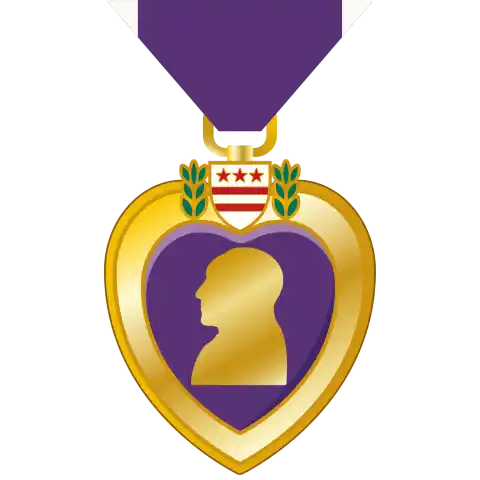
Ernesto’s Purple Heart
For wounds received in action while serving as a rifleman and machine‑gun/mortar crewman with the 12th Cavalry Regiment, 1st Cavalry Division, during the Luzon campaign, Republic of the Philippines, February 1945.
Trooper Ernesto Roman Chapa was wounded in action while exposing himself to hostile fire in order to protect his fellow soldiers and maintain his unit’s position during intense combat operations. His steadfast courage under fire, his devotion to duty, and his willingness to risk his life for the safety of others reflect great credit upon himself, the 12th Cavalry Regiment, and the United States Army.
- His actions placed the safety of others above his own, embodying the highest traditions of military service.
- His wound situates him squarely within the fiercest fighting of the Luzon–Manila campaign, where close‑range combat was constant.
- His Purple Heart stands as both recognition and remembrance, honoring sacrifice while acknowledging the cost.
How Postwar Life Changed Hispanic Families and All Communities After 1945
The areas where Ernesto Roman Chapa lived were part of deeply rooted Hispanic communities whose presence in South Texas stretched back long before his birth. Families of Mexican heritage had settled the region during the Spanish and Mexican periods, establishing ranches and farms that remained in place even after Texas entered the United States. By the early twentieth century, Live Oak County and the rural lands surrounding George West contained a strong and enduring Hispanic population that shaped the cultural and social identity of the area. Spanish was spoken in many homes, Catholic faith guided family life, and traditions such as communal meals, storytelling, seasonal celebrations, and close kinship networks remained central to daily living. These families formed a significant portion of the agricultural workforce, cultivating cotton, raising livestock, and sustaining the rural economy through their labor and resilience. Their presence was foundational to the region’s history, its culture, and its community structure.
When the war ended in 1945, the entire community entered a period of profound transition. Hispanic families, Anglo families, and Black families all experienced the same mixture of relief, reunion, and quiet uncertainty as soldiers returned from distant battlefields. Men came home carrying memories of combat, separation, and hardship. They returned older in spirit, shaped by experiences that could not be fully spoken. Families embraced them with gratitude, yet they also recognized that the war had changed them in ways that time alone would reveal. Healing became part of daily life, supported by faith, patience, and the closeness of a community whose strength rested on shared endurance.
For women across all backgrounds, the postwar years brought a different kind of change. During the war, they had managed farms, tended livestock, overseen planting and harvesting, and made decisions that sustained their households. Hispanic women preserved language, faith, and cultural traditions. Anglo women maintained church networks and community programs. Black women continued to support families and neighbors despite the barriers of segregation. Their work had been essential, and it had proven their capability in every aspect of daily life. When soldiers returned, women stepped back from certain duties, yet the strength they had developed remained. Their leadership had become part of the community’s identity. They continued to guide families, preserve traditions, and maintain the stability that had carried the region through the war.
Postwar cultural life regained its familiar warmth. Hispanic families returned to gatherings filled with music, storytelling, and seasonal celebrations. Anglo families restored church socials, community suppers, and school events. Black families strengthened their own church-centered communities, which had always served as places of resilience and unity. These traditions offered continuity at a time when families were learning to live with the changes the war had created.
Agricultural life resumed its rhythm, yet the work felt different. The presence of returning men restored the balance of labor that had been strained during the war. Farms once again operated with the combined strength of fathers, sons, and brothers working side by side. New equipment appeared. Rural electrification reached more homes, bringing light, refrigeration, and modern convenience to families who had long relied on lanterns and iceboxes. The pace of work shifted as technology slowly entered the fields, and families across all backgrounds adapted with the same resilience that had carried them through earlier hardships.
The economy expanded as the nation moved into a period of postwar growth. Some returning soldiers sought work in nearby towns or cities, drawn by opportunities in construction, manufacturing, and transportation. Others remained on the land, committed to the agricultural life that had sustained their families for generations. Roads improved. Schools expanded. Access to medical care strengthened. Hispanic families, Anglo families, and Black families all experienced a gradual rise in stability and opportunity, shaped by national prosperity that reached even the most rural corners of Texas.
Children who had grown up during the war entered a new world filled with possibility. They had lived through rationing, uncertainty, and the absence of fathers and older brothers. Now they experienced a sense of normalcy that had been absent for years. Schools grew. Community programs expanded. Families invested in education with renewed hope. Children carried memories of wartime responsibility, yet they also experienced the optimism of a nation moving forward.
The community itself changed. It became more outward looking, more connected to national events, and more aware of the world beyond its borders. The war had broadened perspectives. Soldiers returned with knowledge of distant places. Families carried a deeper understanding of sacrifice and unity. Hispanic identity remained strong, Anglo traditions endured, and Black community networks continued to provide strength, yet all existed within a broader awareness of national belonging. The community’s sense of purpose deepened, shaped by the shared belief that they had endured something profound and had emerged with resilience and dignity.
Postwar life was not a return to the past. It was the beginning of a new era built on the strength of every family who had carried one another through hardship. It was shaped by the courage of soldiers who returned home, the resilience of women who had sustained the community, and the determination of children who grew up in a world marked by both struggle and hope. The land remained central to life, yet the people who worked it carried a new understanding of what they had endured and what they had overcome. This was the world Ernesto returned to, the world his family rebuilt, and the world his community carried forward with dignity and grace.
Legacy
Ernesto Roman Chapa was born on March 26, 1919. He was a man whose life was guided by his Catholic faith. He measured his years by the honest rhythm of planting and harvest, the arc of military service, and the steady rituals of family. Born in Anna Rose, Texas, Ernesto learned early that labor was an expression of love; tending and helping his father with the 150-acre farm, maintaining equipment, and overseeing the few dairy cows which taught him the endurance and skills he would later pass down through generations.
From 1936 to 1940, the family farm in Live Oak County served as his primary classroom. During these formative years, he was responsible for the systematic cultivation and harvesting of cotton. Bending in the heat to pick the crop and providing technical maintenance for the farm equipment taught him patience and the quiet pride of a day’s labor. He learned to read the soil and coax a harvest from the ground—lessons that became the enduring grammar of his life.
His military legacy is anchored by the Purple Heart he received for his actions in February 1945. While serving with the 12th Cavalry in the Philippines, Ernesto demonstrated exceptional valor during the Luzon campaign, where he was wounded after braving enemy fire to ensure the safety of his comrades and the integrity of his unit’s line. This sacrifice, born of the same endurance he learned on the family farm, became a cornerstone of the heritage he left behind.
When war necessitated his departure from the fields, Ernesto enlisted in 1941, serving until 1945 with the 12th Cavalry Regiment, 1st Cavalry Division, in the Pacific theater. He participated in several critical operations, including the campaigns in New Guinea, the Bismarck Archipelago, Leyte, and Luzon. Trained in diverse weaponry, he performed the duties of both a rifleman and a machine gunner. In February 1945, during the Luzon campaign, he was awarded the Purple Heart for wounds sustained in action while exposing himself to hostile fire to protect fellow soldiers and maintain his unit’s position. The campaign stars and Combat Infantryman Badge he earned, alongside this recognition of his courage and sacrifice, remain official tokens of his honorable service.
Following the war, Ernesto returned to the agricultural sector of South Texas. In Alice, he managed his own farm, overseeing livestock including horses and cattle. His entrepreneurial spirit also led him to operate a local dance hall, creating a place where community was renewed through music and laughter. Furthermore, he established the Chapa Family Cemetery, ensuring a legacy of rest and memory for his descendants.
Music remained one of Ernesto’s primary languages; he was a gifted musician who played the guitar, harmonica, and accordion. His personal interests included fishing, camping, and hunting—activities through which he taught his children, grandchildren, and great-grandchildren to know the land and find peace. Those who remember him recall a man of two halves: one who dedicated himself to the labor of the fields and one who found great satisfaction in the joy of song.
Throughout his industrial tenure, Ernesto applied the same unwavering steadiness, technical proficiency, and profound sense of responsibility that had characterized his character since his youth. Upon entering retirement, he carried with him the quiet satisfaction of a man who had dedicated his utmost effort to every season of his life.
He leaves behind a large and devoted family, and a legacy rooted in affection, integrity, and the land that shaped him.
For all his travels and accomplishments, Ernesto Roman Chapa’s identity remained anchored in family, work, and the soil of Texas. He retired with the quiet pride of a life well worked and well loved.