
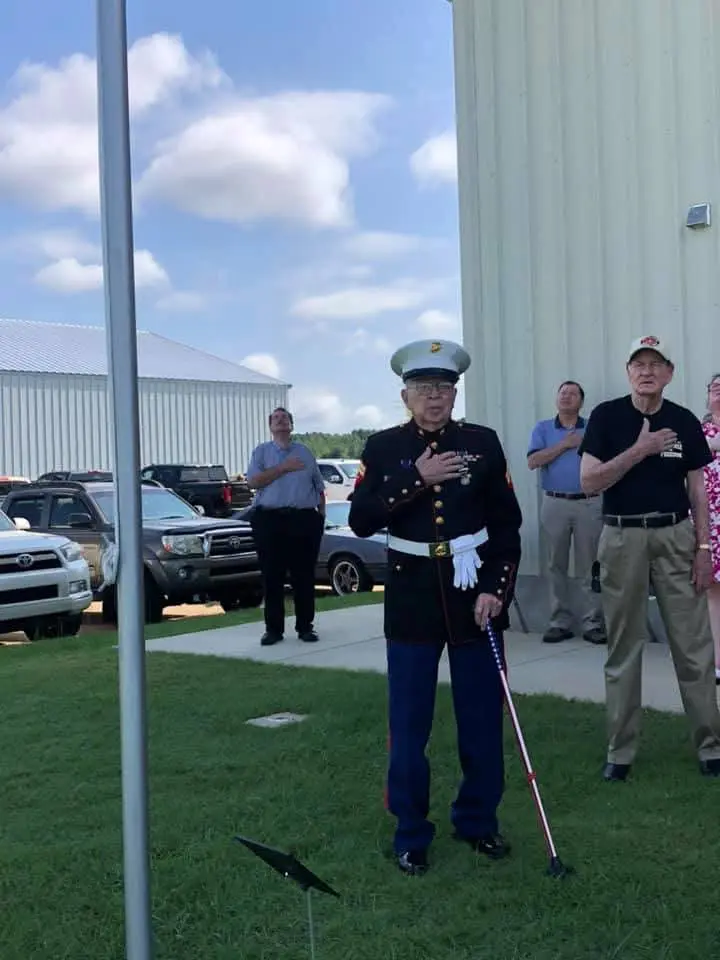
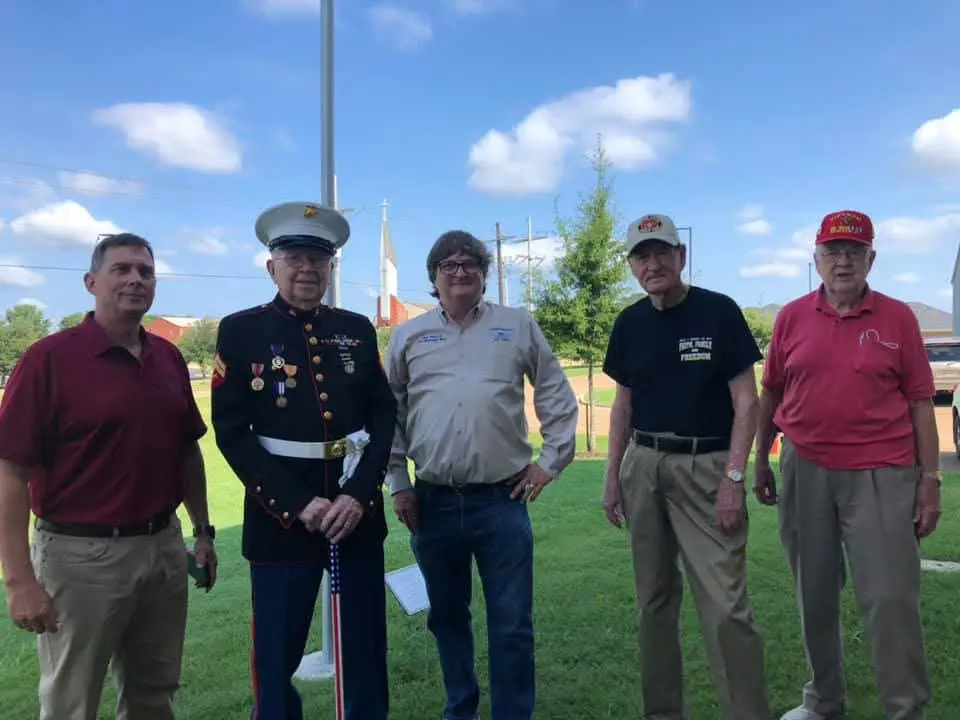
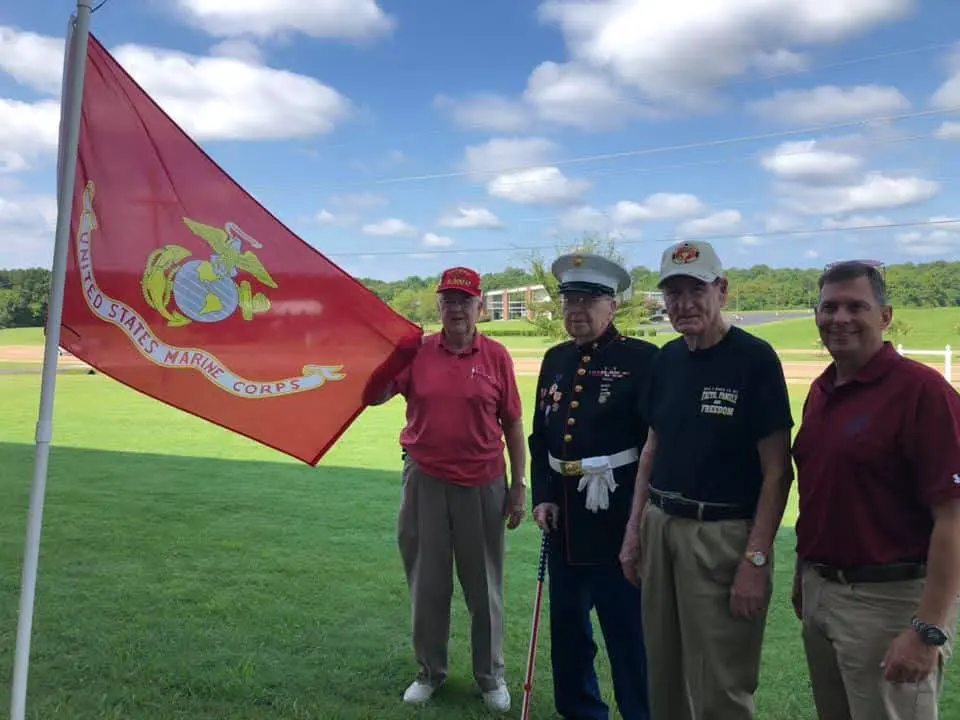
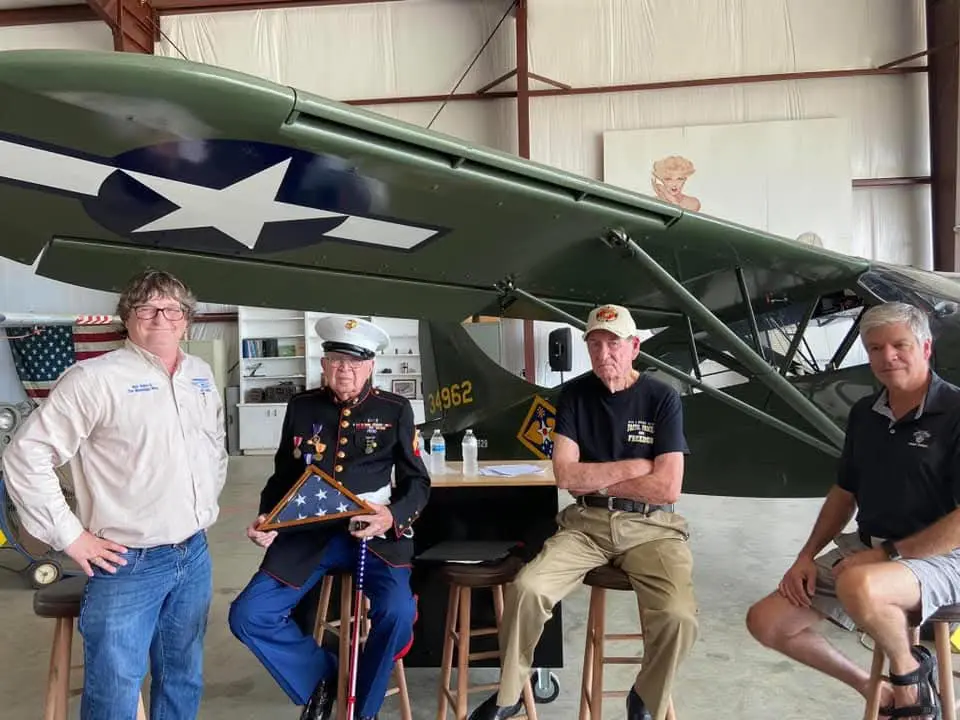
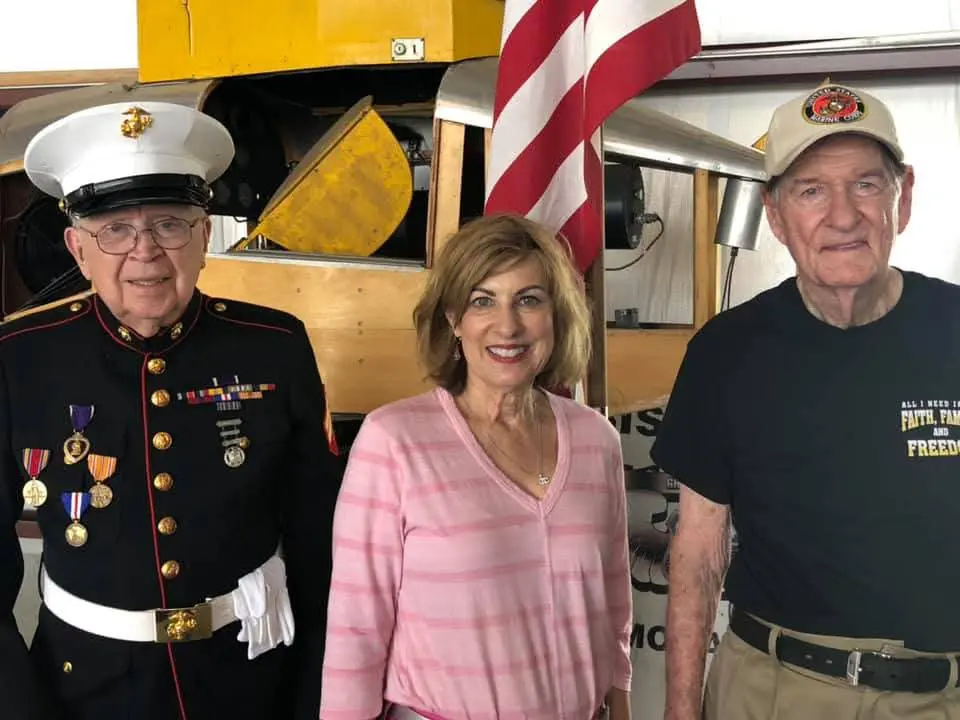
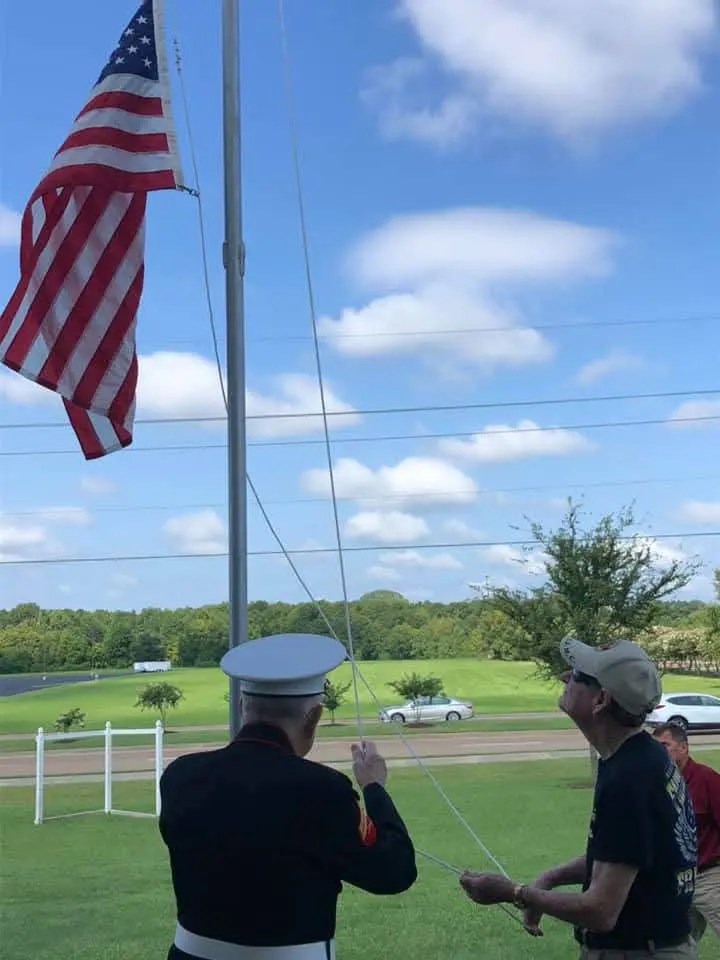
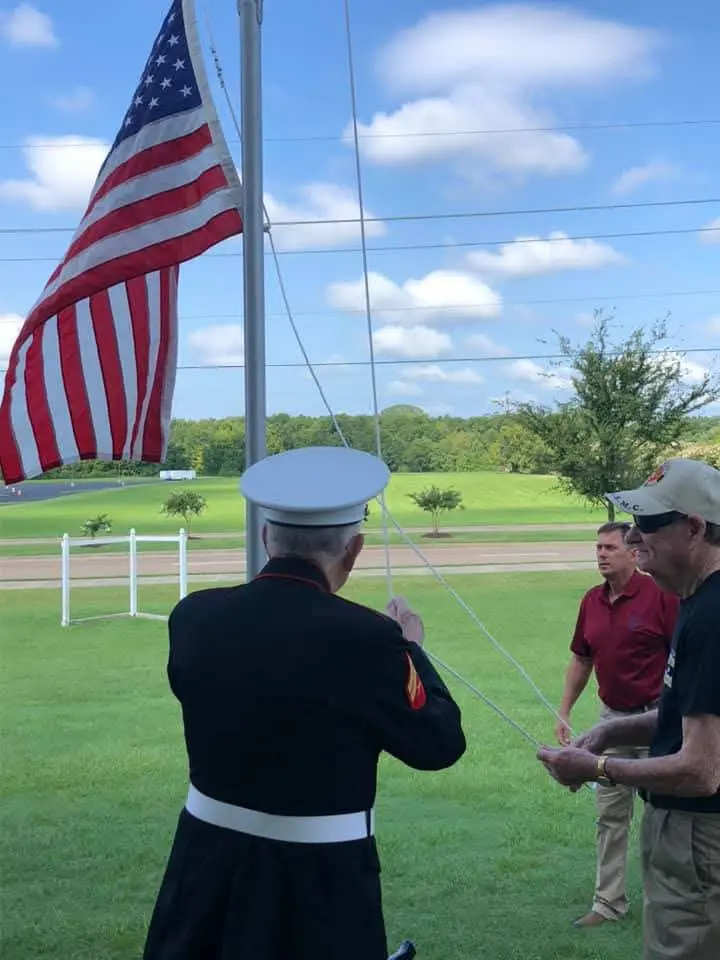
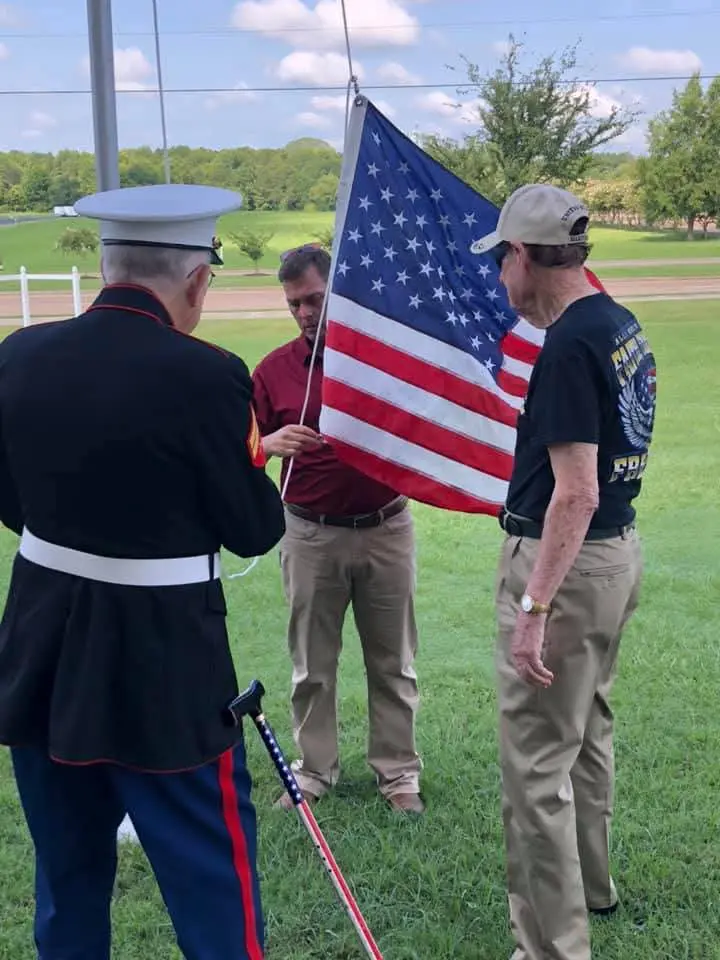
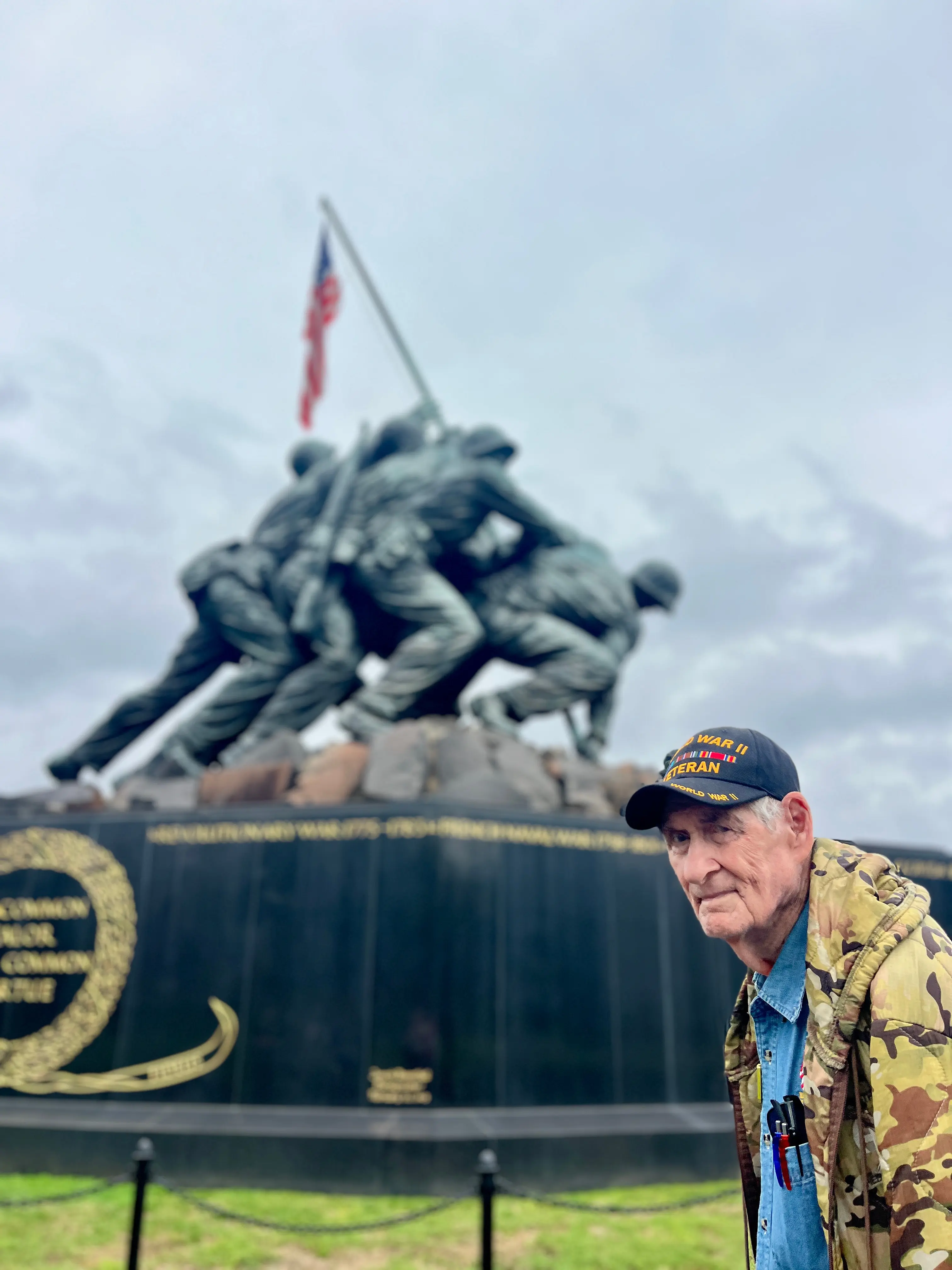
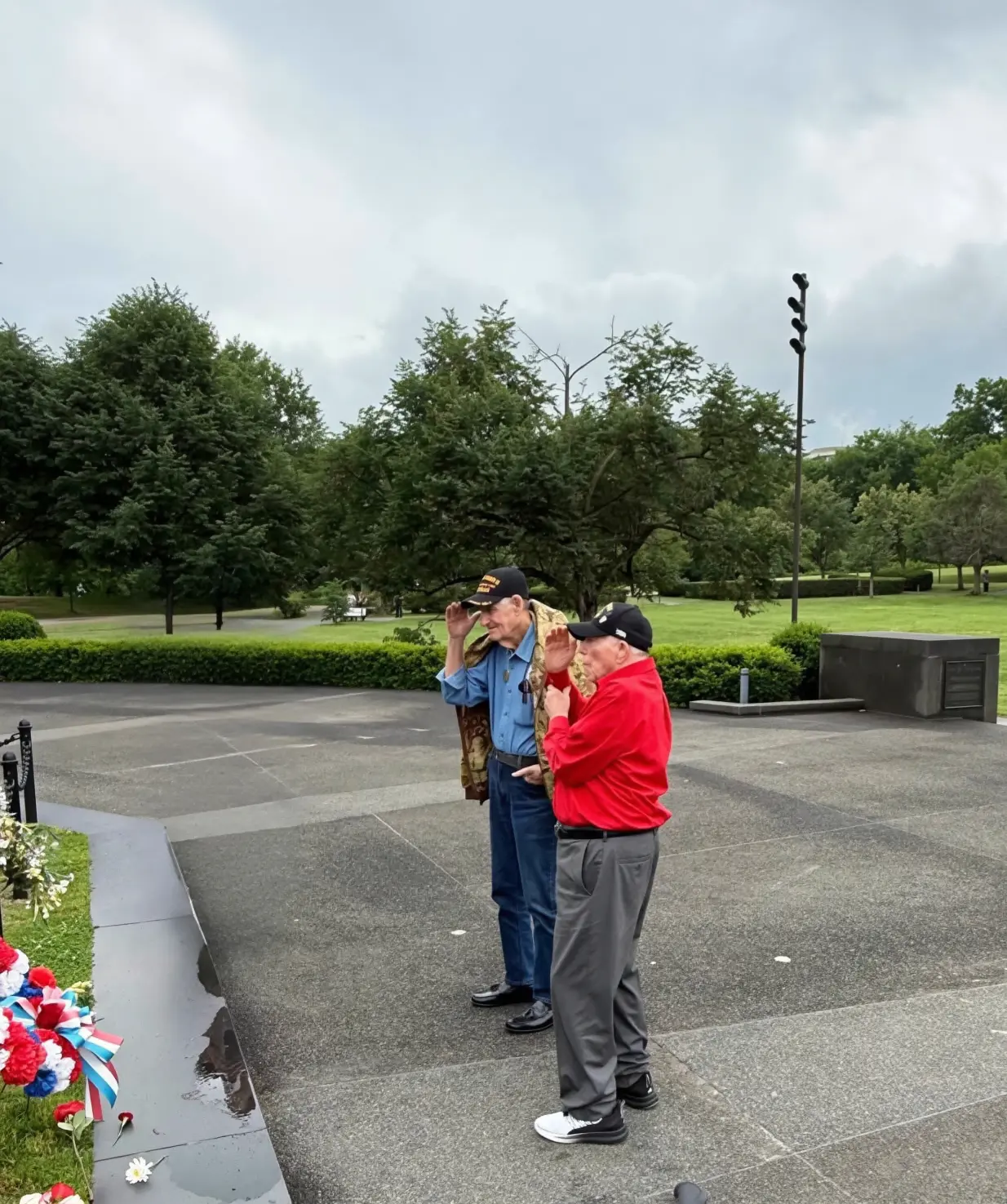
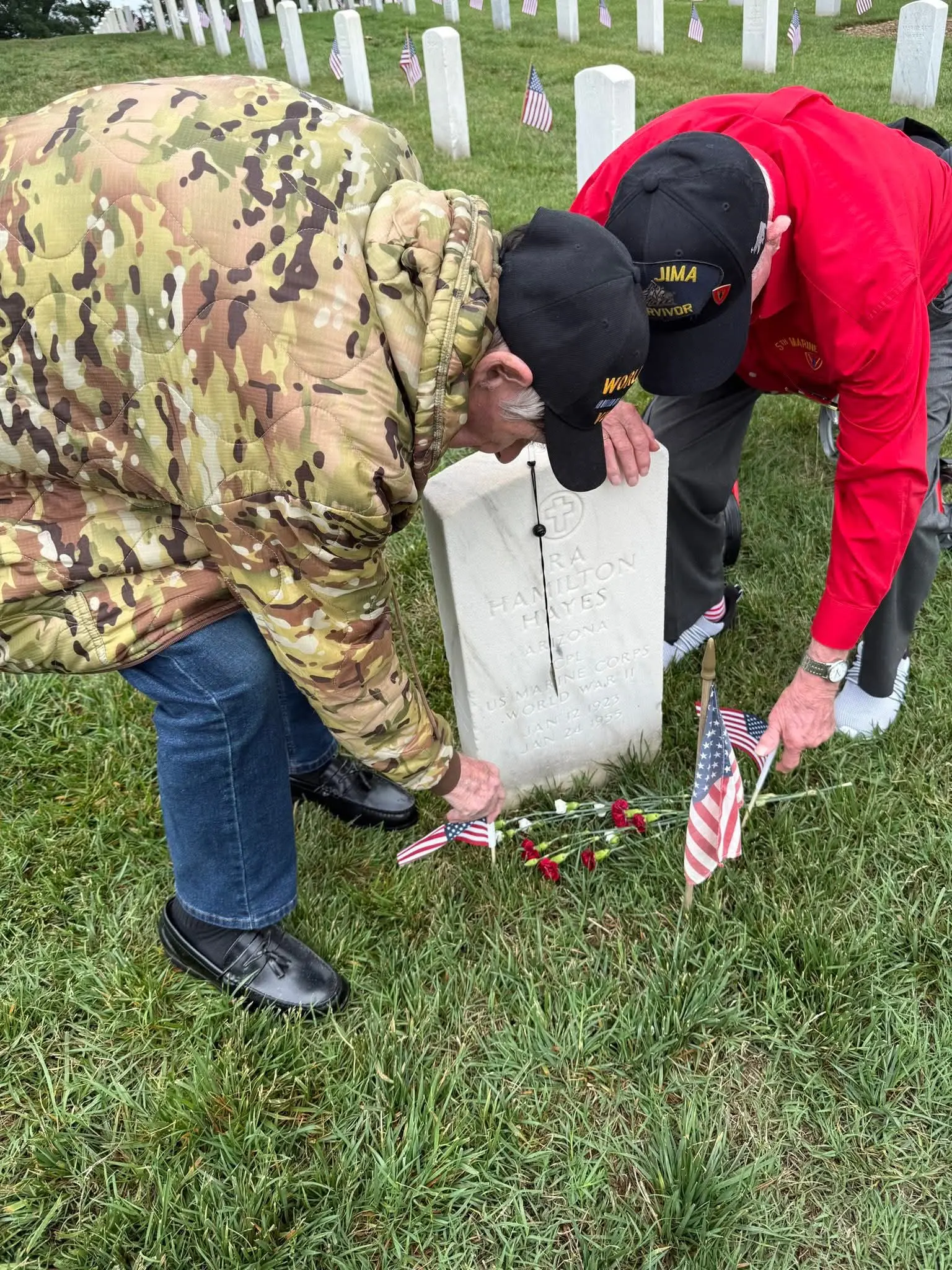
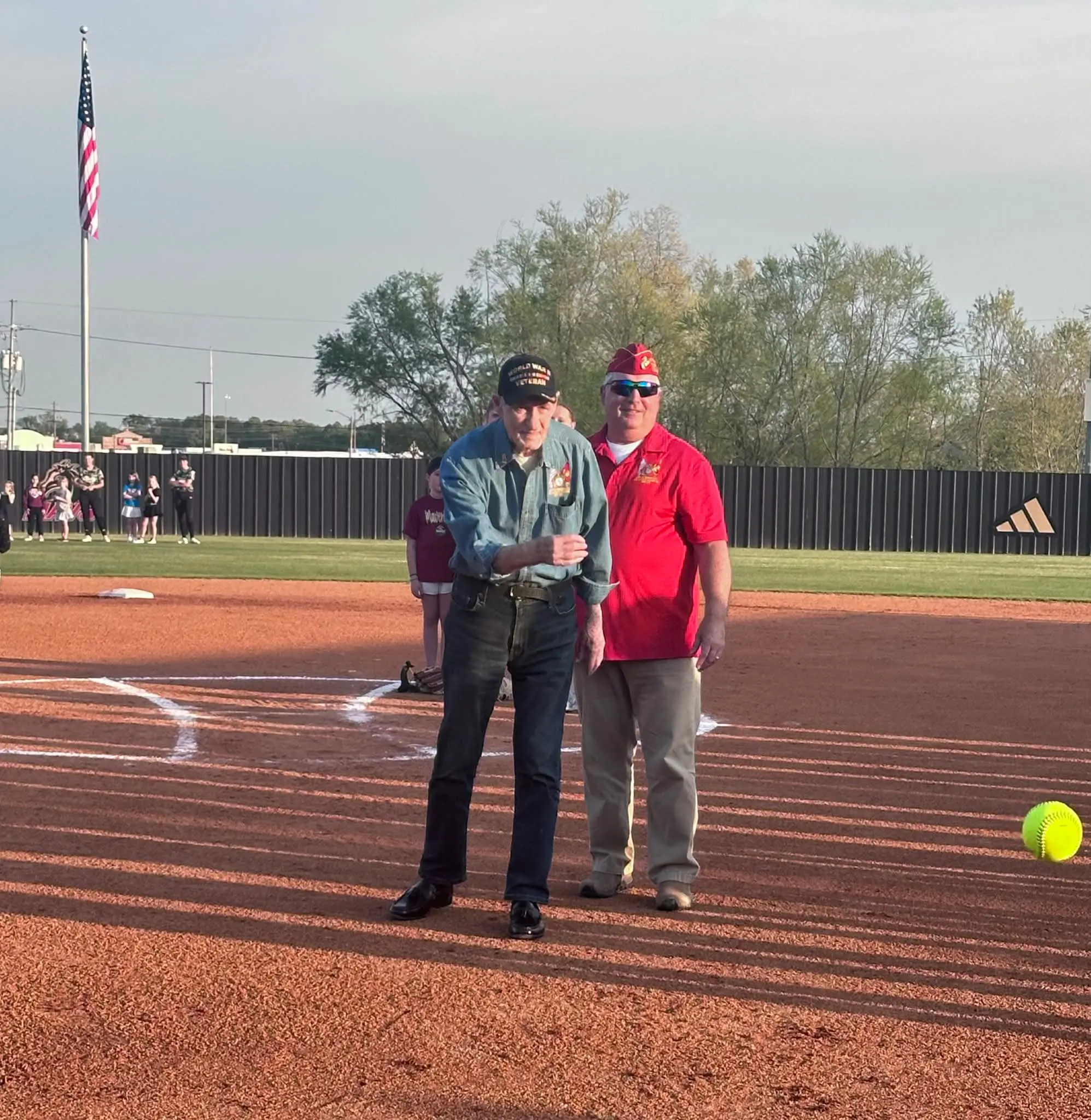
FROM MISSISSIPPI COTTON FIELDS TO IWO JIMA AND BEYOND
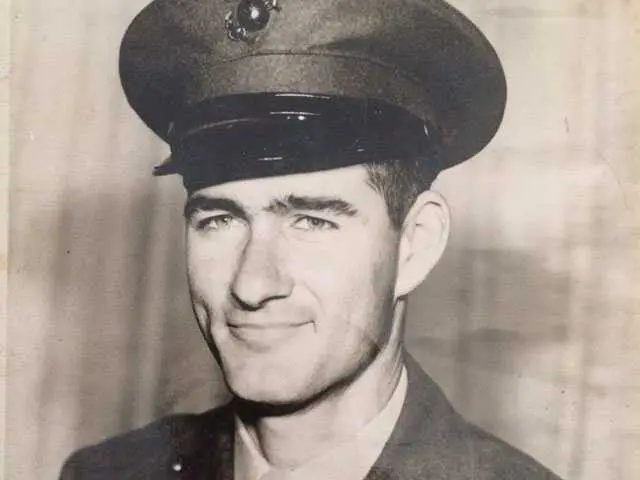
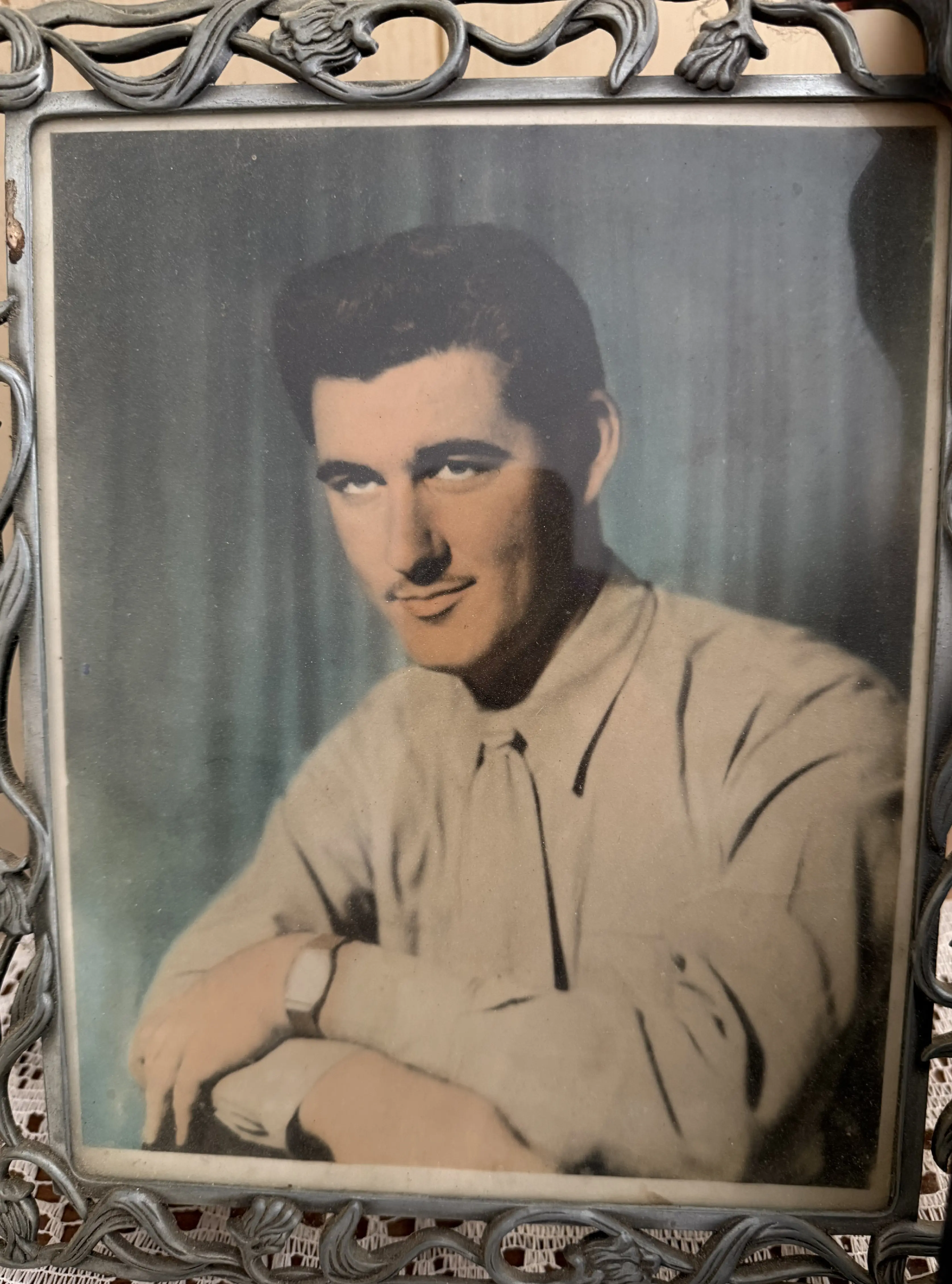
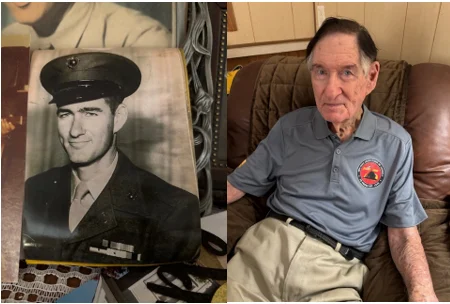
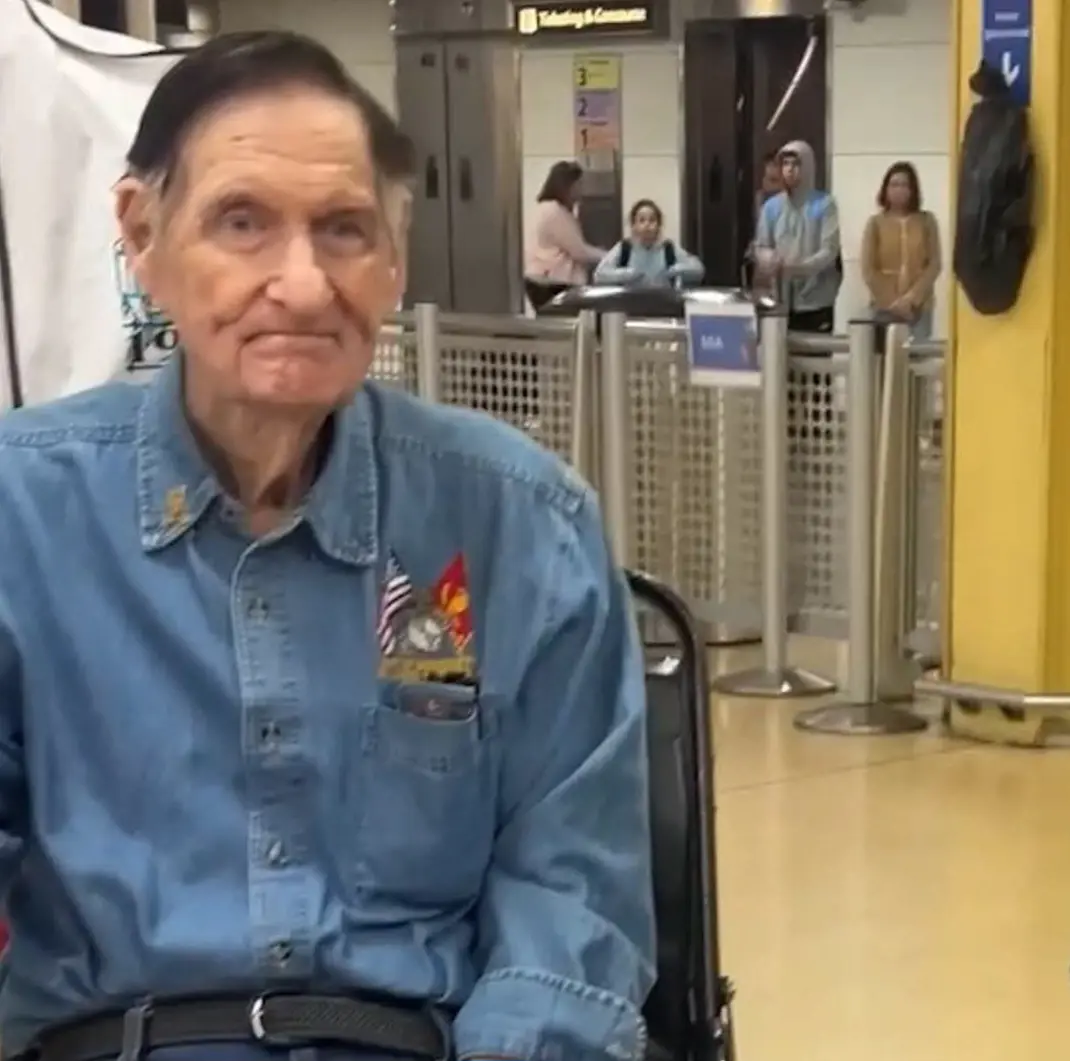
William W. “Billy” Byrd was born into poverty in rural Mississippi, the son of a sharecropper whose family survived through hard labor, faith, and constant movement. He had five brothers and one sister. From the time they were old enough to work, the children spent their summers in the fields and their winters chopping wood to keep warm. Breakfast was often pancakes made by his father, supper was usually biscuits prepared by his mother, and most days the family ate oatmeal. On the leanest days, they had nothing more than sugar mixed with milk.
During the coldest winters, the family joined neighbors for hog killings so everyone would have food to last through the season. Sunday was the only day Billy could rest. His family attended church and Sunday School, and at night he completed his homework by the dim glow of kerosene lamps before listening to the Grand Ole Opry on the radio.
Billy’s family moved often. One of his earliest memories was moving from Hattiesburg to Petal in 1931 when he was six years old. He remembered swimming with his brother Jerry in a ditch when his father drove by in a borrowed Model T, scolded them, and then drove them to school still muddy. Their nearest neighbors were a Black family, and Billy became best friends with their children, David and Rose.
The family next moved to Harvey, then further into the country to Oak Grove, a small community with only one store. Billy’s Uncle Ernest, Aunt Annie Lee, and cousins Burnell, Colly, and Lola May also moved there. Billy walked nearly a mile to school each day. He remembered that if he received a whipping at school, he would get another one at home. He played basketball on a dirt court, and the school’s restrooms were outhouses fifty yards from the building.
Billy loved climbing trees and drawing cartoons in the dirt. He remembered sitting in front of the fireplace on Christmas Eve waiting for Santa Claus. He also recalled walking with friends when they found a dog that had been hit by a car. The dog was badly injured, and Billy carried him home where the animal died that night. Laundry day came once a week, when his parents boiled clothes and sheets in a large black pot over a fire, stirring them with a paddle.
The family moved again to Prentiss, then to Carson, where Billy’s sister Patsy was born, then to Whitesand, where they lived in a small house. They moved again four miles down the road, where they ordered their first radio, a Silvertone, from Sears and Roebuck. Billy listened to the Carter Family broadcasts from Del Rio, Texas, and his mother began listening to soap operas.
After cotton‑picking season ended, Billy, Jerry, and Dickey had to knock down the cotton stalks because their father did not own a mule and plow. The family moved again to Carson, where Dickey accidentally burned down their barn while lighting a match to look for a school book. Two bales of cotton stored inside were lost. The family had no running water, so Billy carried it by bucket from Mr. Dolan’s house nearly a quarter mile away.
One day, a man and woman from the health department visited. Billy’s parents went with them to town and were gone for several hours. A week later, the health department returned with the diagnosis. Both parents had tuberculosis. Family and friends across three states were contacted. Billy’s parents were sent to the Sanatorium near Magee, Mississippi. The children were separated. Jerry and Billy went to Harrisburg. Johnny, Sammy, and Dickey went to Texas. Grady went to Tylertown. Patsy was sent to New Orleans. Billy was homeless many times, hitchhiking from one relative’s home to another. Eventually, all five brothers would join a branch of the military. Billy lost his father in 1950 and his brother Dickey in Korea one month later.
The last day the family spent together was a Sunday. Billy’s mother took the children to church while his father stayed home with baby Grady. Billy did not think anyone at church knew what had happened to their family. Two hymns were sung that day, Love Lifted Me and In the Garden. Billy saw tears in his mother’s eyes as they sang In the Garden.
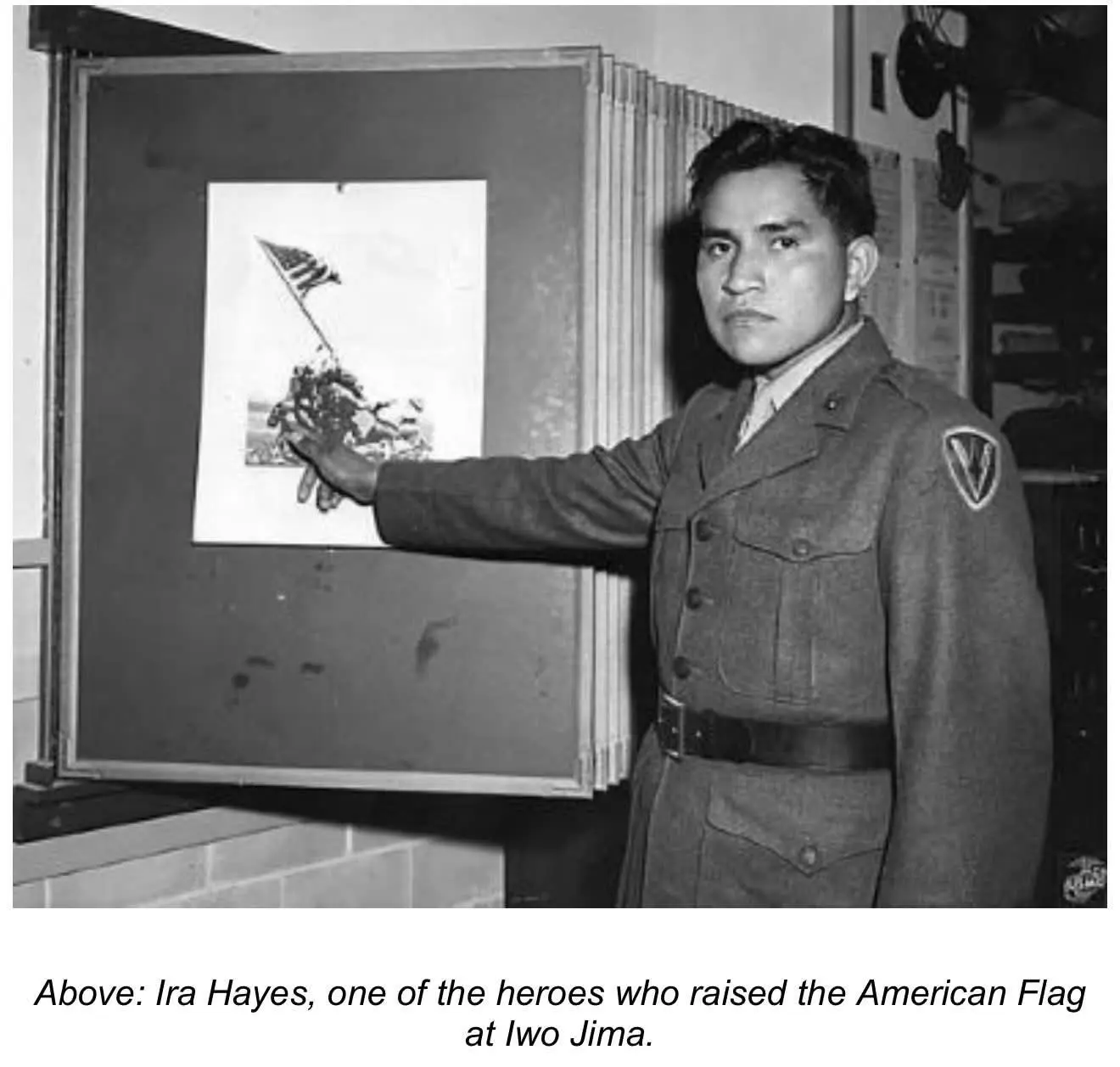
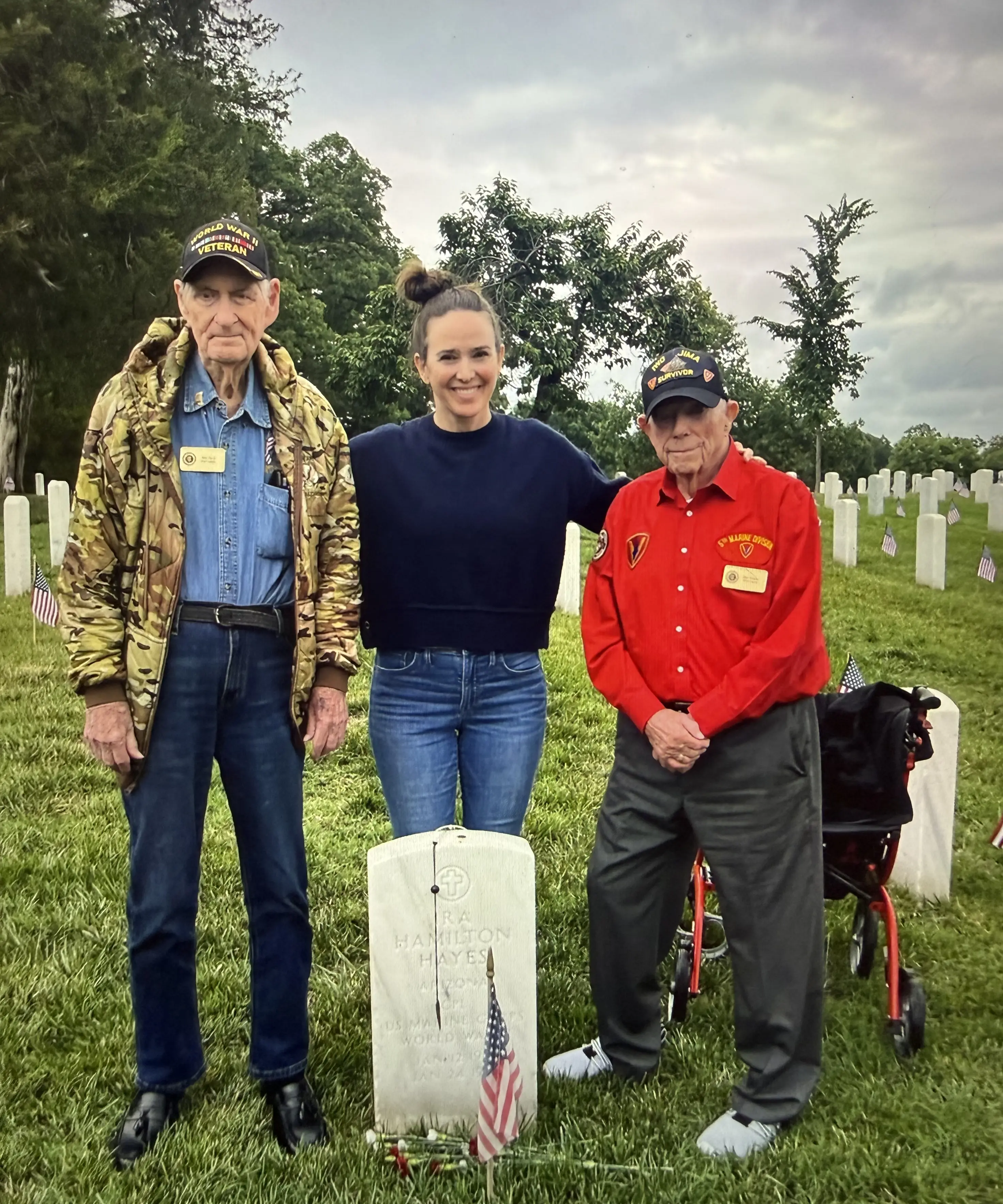
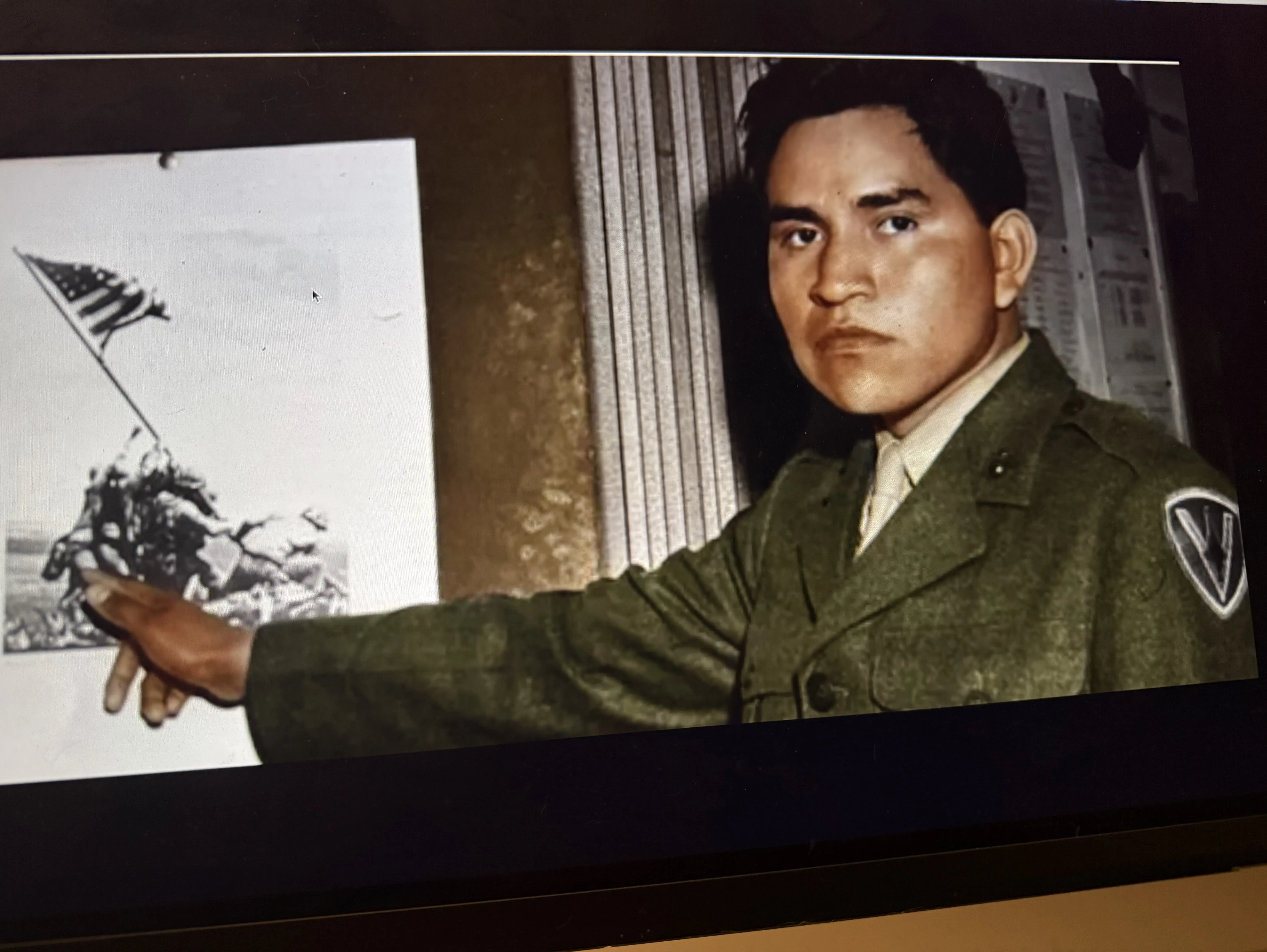
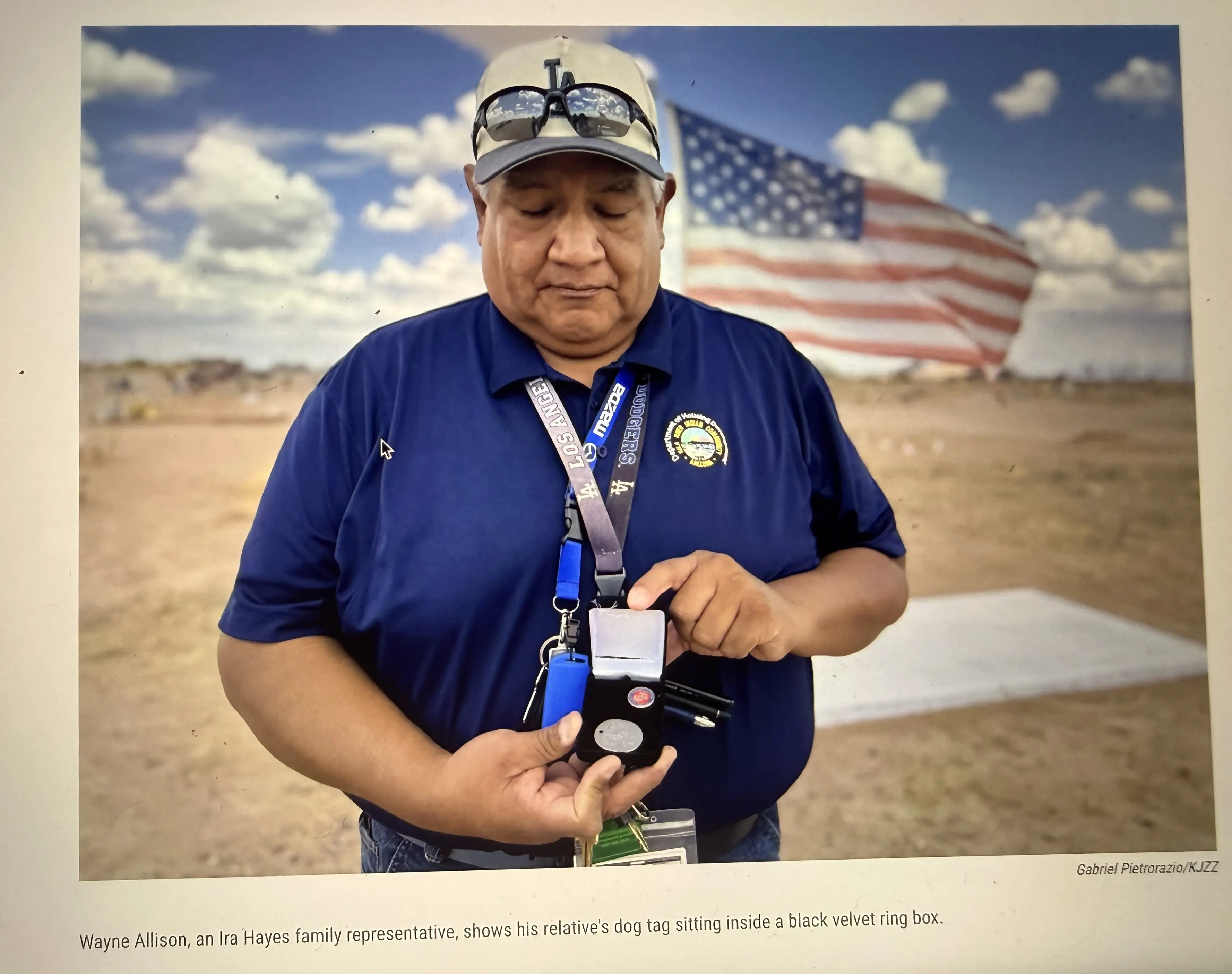
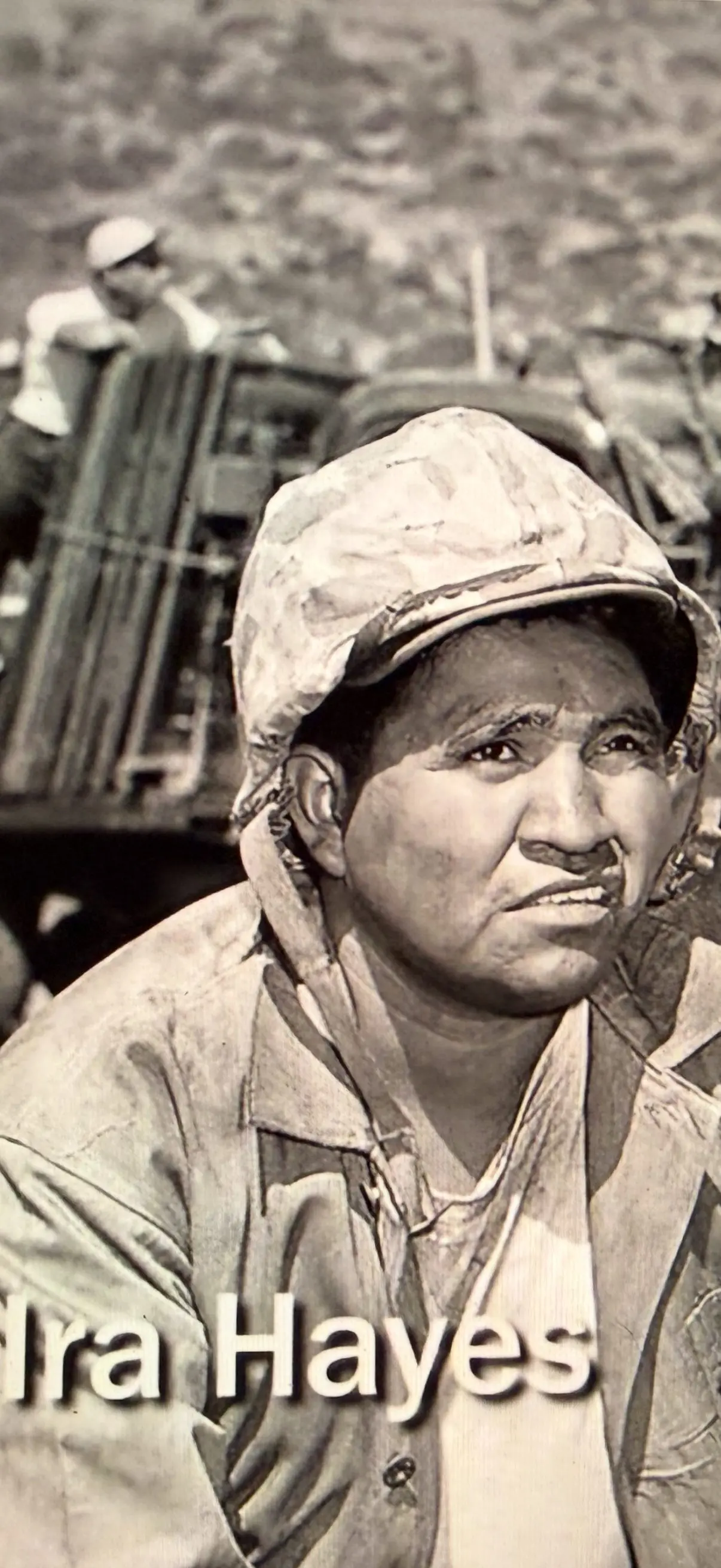
Billy remembered speaking with an elderly Black man who owned a guitar. Billy begged him to bring it out, and the man finally agreed. He taught Billy a chord or two, convincing him he needed the guitar. Billy asked to buy it, offering the only two dollars he had. The man agreed. Later, Ira Hayes, one of the Marines who raised the flag on Mount Suribachi, tried to teach Billy to play by strumming, but Billy never practiced enough to learn.
Billy hitchhiked to Hattiesburg to find work. Unsure what to do with the guitar, he left it locked in a courthouse restroom stall, but it was stolen. He found work in the kitchen at the Forrest Hotel, retrieving meat from the freezer whenever the cook called for it. He lived at the YMCA, paying three dollars a week in rent.
Soon after, Billy received his draft notice and was ordered to Camp Shelby, ten miles from where he enlisted in the United States Marine Corps. He took his first train ride on the Sunset Limited from New Orleans to San Diego. It took two days just to cross Texas. The bus that carried the recruits was filled with wide‑eyed, frightened young men. They were met by Sergeant Diamond, who explained what they should expect in the coming weeks.
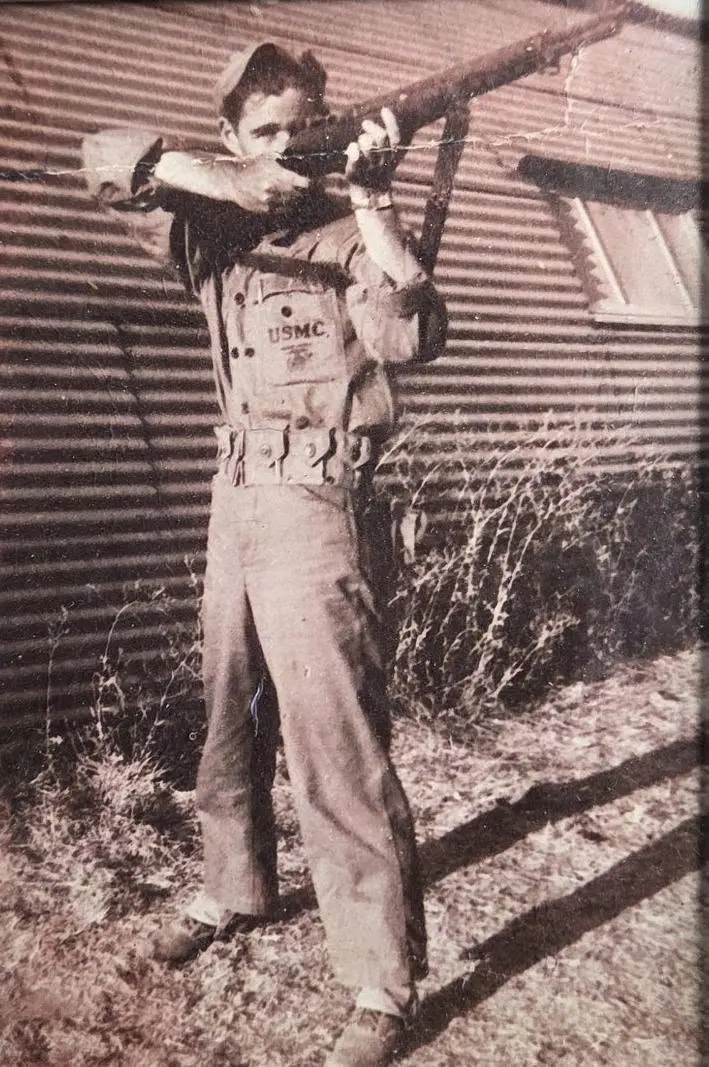
The barracks stood on one side of the parade grounds. On the other side were ranch‑style homes common in California. Seeing them made Billy think of home and filled him with homesickness. He often thought about going absent without leave. He learned to tie a tie, which was difficult because he had never worn one before. The recruits had to remain clean‑shaven at all times, and their dress shoes had to be polished. Foot lockers were inspected regularly, and rifles had to be cleaned every day, taken apart piece by piece and reassembled.
The obstacle course was demanding. The men crawled under wire while live rounds were fired overhead. Billy performed exceptionally well on the shooting range. On the last day of boot camp, the recruits received their private first class stripes.
Billy was asked to join the Raider Battalion located a few miles north. He agreed and was sent to the Marine Raiders emerged from a moment of crisis in early 1942, when the United States faced a Pacific battlefield unlike anything it had ever encountered. Japan had seized a vast chain of islands stretching across thousands of miles, fortifying remote outposts and positioning troops in places where conventional American forces could not maneuver quickly or safely. The Marine Corps recognized that the war demanded a new kind of unit, one capable of moving silently, striking suddenly, and operating far ahead of the main force. The Raiders were created to meet that need, becoming America’s first elite special‑operations force and introducing doctrines that would shape Marine warfare for generations.
Their purpose was rooted in the realities of the Pacific. Many islands were lightly defended but strategically vital, and sending entire divisions to seize them was slow, costly, and inefficient. The Raiders were designed to bypass major defenses, land on remote beaches under cover of darkness, destroy supply depots, sabotage communication lines, and withdraw before the enemy could mount a response. They were a scalpel in a theater that often required a hammer, able to cripple Japanese control without committing massive forces. Their operations provided critical intelligence maps, terrain knowledge, troop estimates, and fortification details at a time when the United States desperately needed information more than territory.
The Raiders were also created to counter Japan’s early‑war dominance in stealth and night fighting. Japanese forces excelled at infiltration, jungle ambushes, and sudden nighttime attacks. The Raiders were trained to match and surpass these strengths, proving that American troops could operate with equal skill in darkness, confusion, and hostile terrain. Their training emphasized stealth, infiltration, amphibious landings, long‑range reconnaissance, deep penetration behind enemy lines, and small‑unit tactics that relied on speed, coordination, and trust. They marched, crawled, climbed, and fought through environments that would break ordinary units, developing a level of physical endurance that made them uniquely suited for the Pacific’s brutal conditions.
Their doctrine was revolutionary. Raider units operated with a degree of autonomy unheard of in the Marine Corps at the time. Every man was trained to think like a leader, make independent decisions, adapt instantly, and complete the mission even if separated from his team. Evans Carlson introduced a philosophy of horizontal leadership, encouraging enlisted men to speak openly, share ideas, and contribute to planning. This approach created units where every Marine understood the mission, not just the officers, and where initiative was valued as highly as obedience. The Raiders were taught to improvise under fire, change plans when necessary, exploit terrain creatively, and prioritize mission success over rigid adherence to orders. Their adaptability made them unpredictable to the enemy and exceptionally effective in chaotic environments.
Psychologically, the Raiders were shaped to dominate the battlefield. Their training was so intense that combat felt familiar, and their unity the “Gung Ho” spirit created bonds stronger than fear. They learned to seize initiative instantly, to remain calm under chaos, and to use aggression as a tool rather than a reaction. They carried themselves with the confidence of elite warriors, knowing they were the best‑trained Marines in the Pacific. This mindset influenced their performance in every operation, from reconnaissance missions to nighttime raids that left Japanese units disoriented and demoralized.
In combat, the Raiders struck supply depots, severed radio networks, captured ridges and observation posts, gathered intelligence that shaped future invasions, rescued downed airmen, and overwhelmed enemy positions with sudden, decisive violence. They operated in small teams, each man responsible for multiple roles: rifleman, scout, grenadier, communicator and each man trained to continue the mission even if leadership fell. Their actions weakened Japanese defenses, disrupted garrisons, and paved the way for larger Marine and Army landings.
The Raiders proved that small, highly trained units could achieve strategic results. They demonstrated that American troops could excel in stealth, night fighting, and unconventional warfare. Their success influenced the development of Force Recon, Marine Special Operations Command, and the modern Marine Raiders, whose name was restored in 2014. Though the Raider Battalions existed for only a short time, their legacy endures in every elite Marine unit that followed.
Billy was part of that legacy, part of the first generation of Marines trained in this new style of warfare. His time in the Raider Battalion shaped his discipline, his endurance, his adaptability, and the quiet strength he carried into the 28th Marines and onto the black sands of Iwo Jima.
The Raiders were disbanded a few months later, and Billy was ordered to begin training at one of three tent camps. The training was intense and included many hours of drill. Billy became friends with Sergeant Harold Schrier of Missouri, who would later become famous for leading thirty men up Mount Suribachi with the American flag.
After several months of training, Billy shipped out to Camp Tarawa in Hawaii. The landscape did not resemble the tropical paradise he had imagined. Instead, it was filled with cactus, dust, and mountains. Billy thought it looked more like Texas. The men spent several months learning new forms of warfare, including throwing grenades, firing multiple types of weapons, and practicing hand‑to‑hand combat. They were called to sick bay where each Marine received a series of seven shots. The next day they were told to pack up. All regiments of the 5th Division, including the 26th, 27th, and 28th, boarded troopships and sailed to an isolated island to practice amphibious landings.
The day after returning from sea, the men were sent to Honolulu and given seventy‑two hours of liberty. Billy hitchhiked to a theater showing a Hedy Lamarr movie titled Ecstasy. Afterwards, he made a phonograph recording of himself singing Walking the Floor Over You.
After shore leave, the men boarded a large troopship and headed for an unknown destination. Billy remembered the last words his father spoke to him. As Billy boarded the train in Jackson, his father said, Take care of yourself, son. Billy knew his father’s own father had likely said the same words before leaving for France in the First World War. His father had been gassed in the trenches, which likely caused the tuberculosis that eventually took his life in 1950.
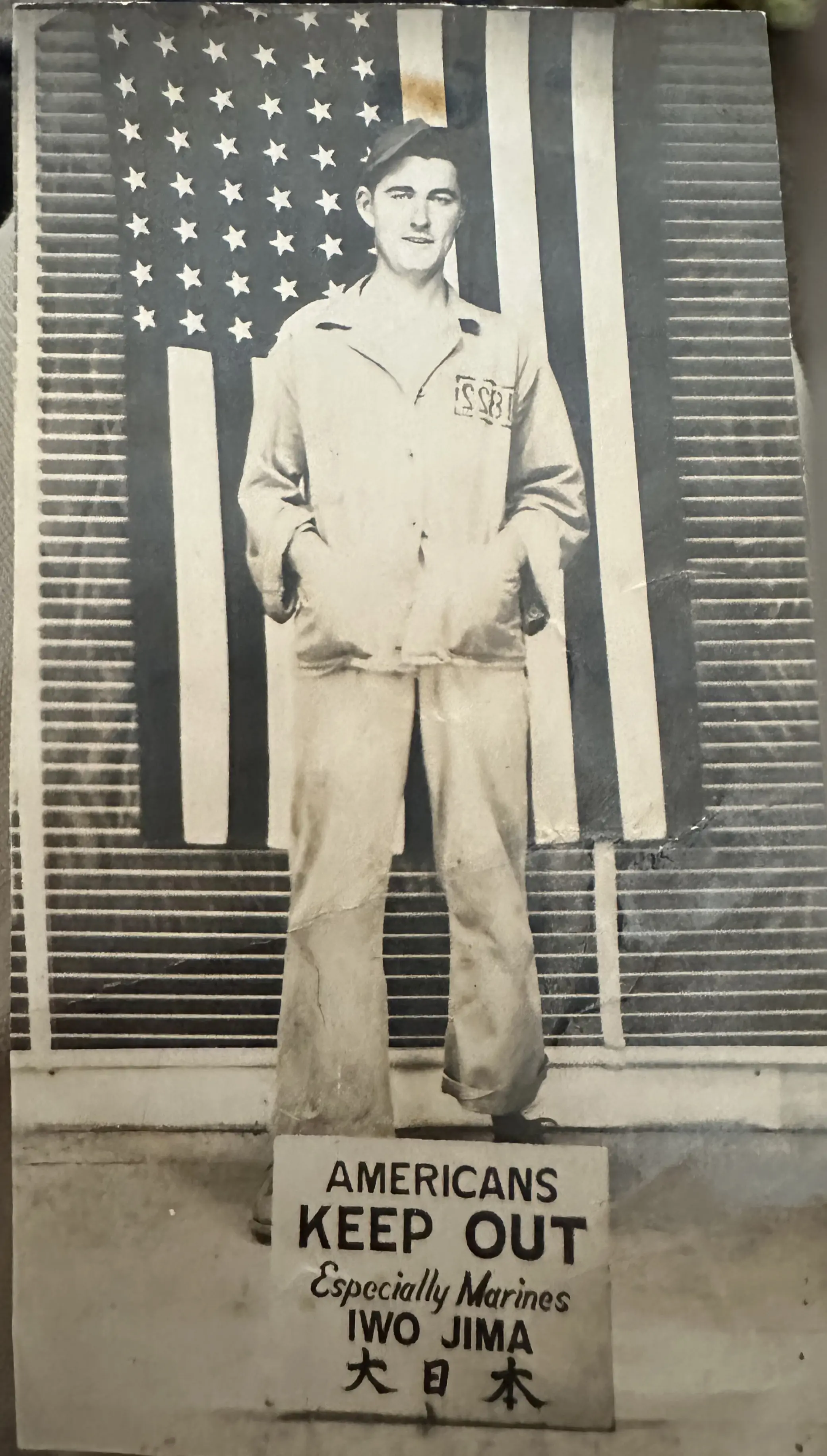
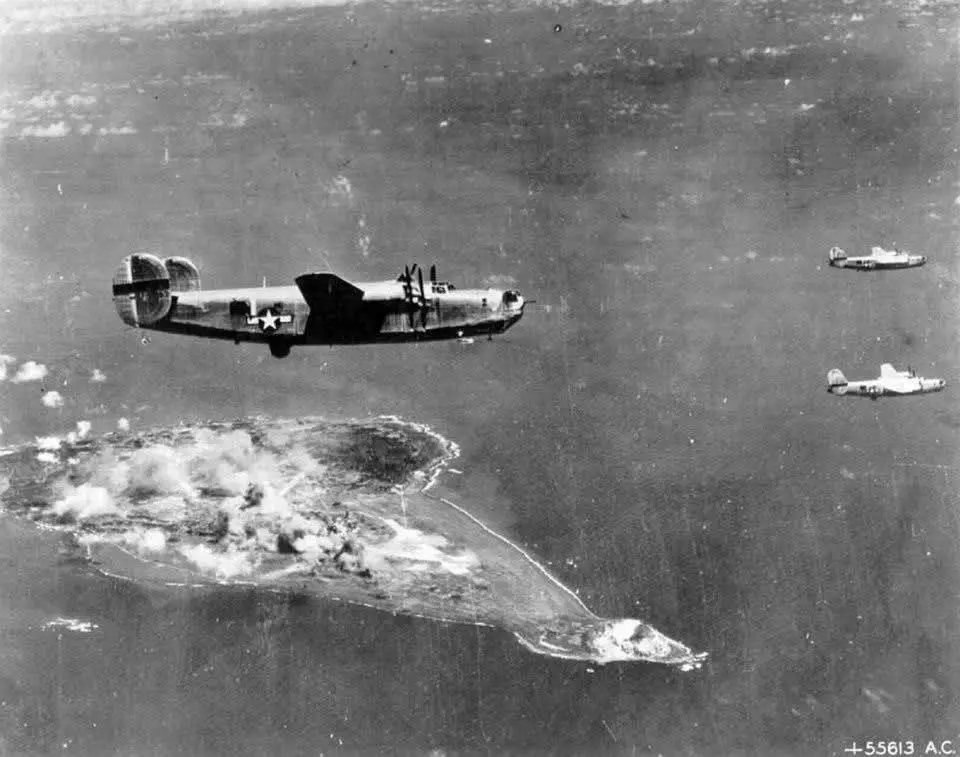
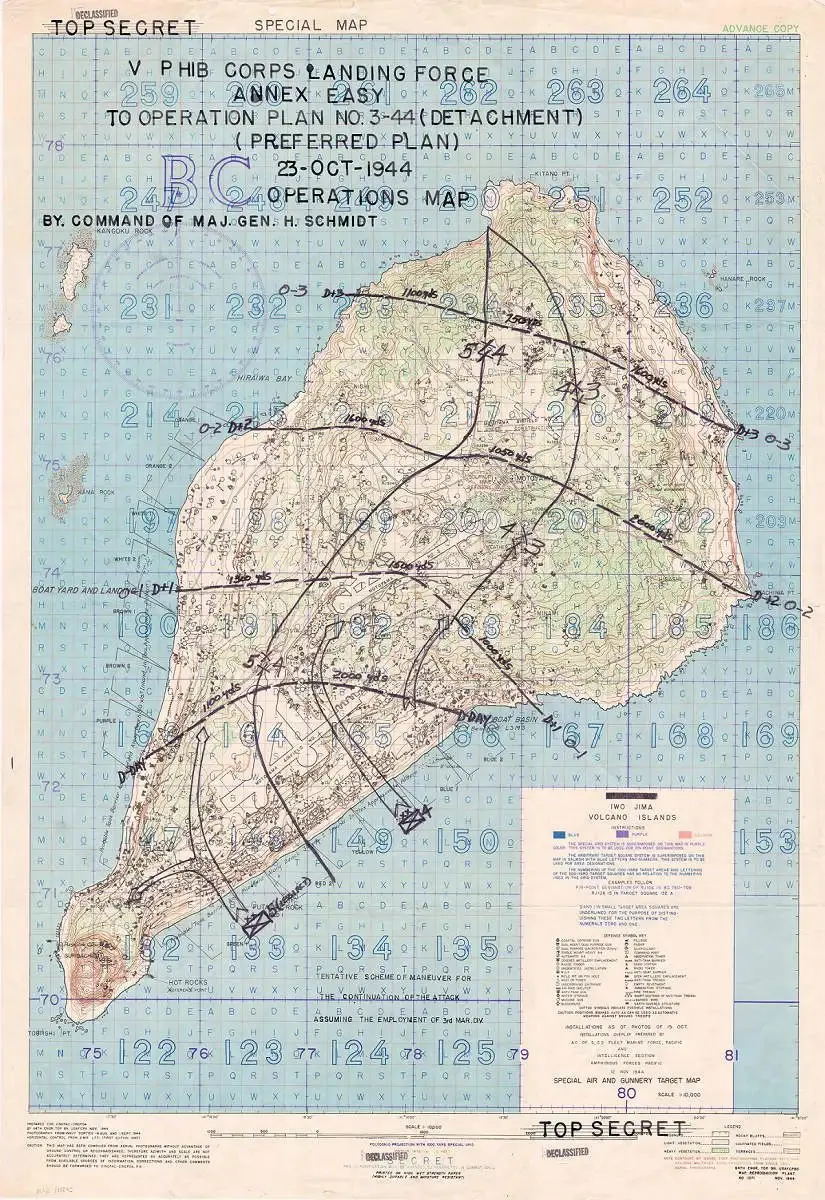
The men were stacked in bunks seven high. They received two meals a day and took saltwater showers. One day, Billy’s company was called below deck to a conference room. The men gathered around a large table to examine a lifelike model of an island. Billy thought it resembled a pork chop. He could see the rough terrain and the mountain at the southern end. The island was Iwo Jima, four and a half miles long and two and a half miles wide at its widest point. An officer confirmed what the men already suspected. This was the place they had been training for. A day or two later, the troopship refueled at Saipan. Billy remembered how rough the sea was. Some men played blackjack for high stakes. Others exercised on deck or exchanged rumors, known in Navy and Marine slang as “scuttlebutt.”
The next day, the men were transferred to a smaller vessel called a Landing Ship Tank. They were sprayed with disinfectant even though they had already received their shots. During the night, the men climbed into amphibious tractors that used treads to move through the water. Billy did not remember anyone sleeping.
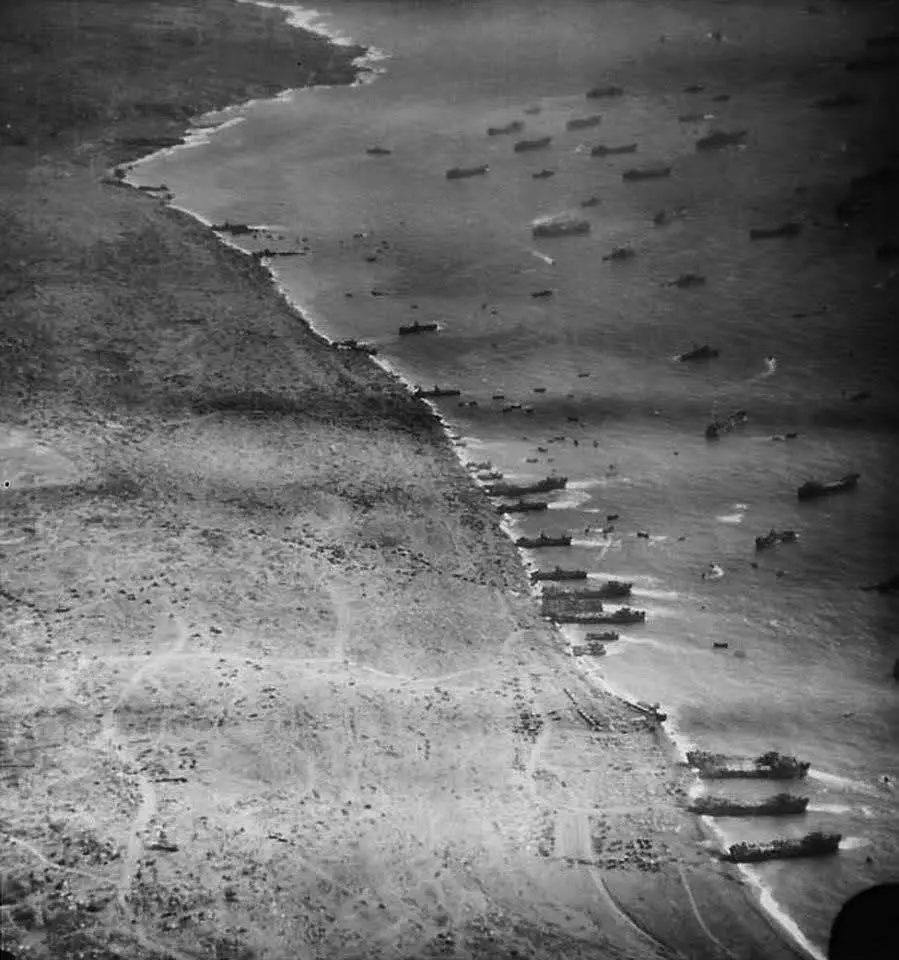
Combat Team One of the 28th Marines landed first on Green Beach with the objective of cutting off the neck of the island. Combat Team Two landed immediately afterward. Once the regiment was ashore, all three battalions attacked Mount Suribachi. Billy’s battalion advanced on the eastern side, the 3rd Battalion in the center, and the 1st Battalion on the western side.
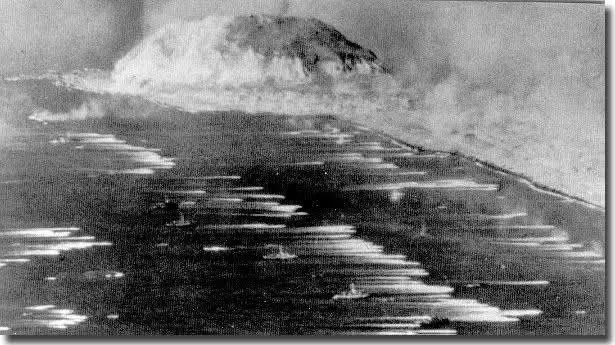
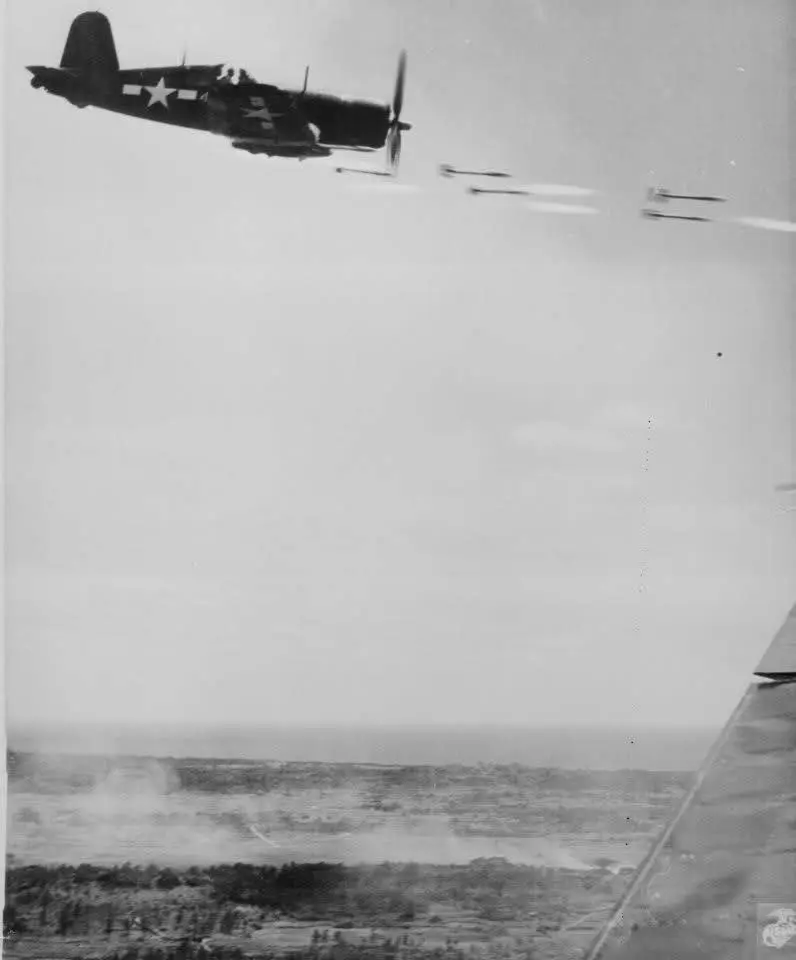
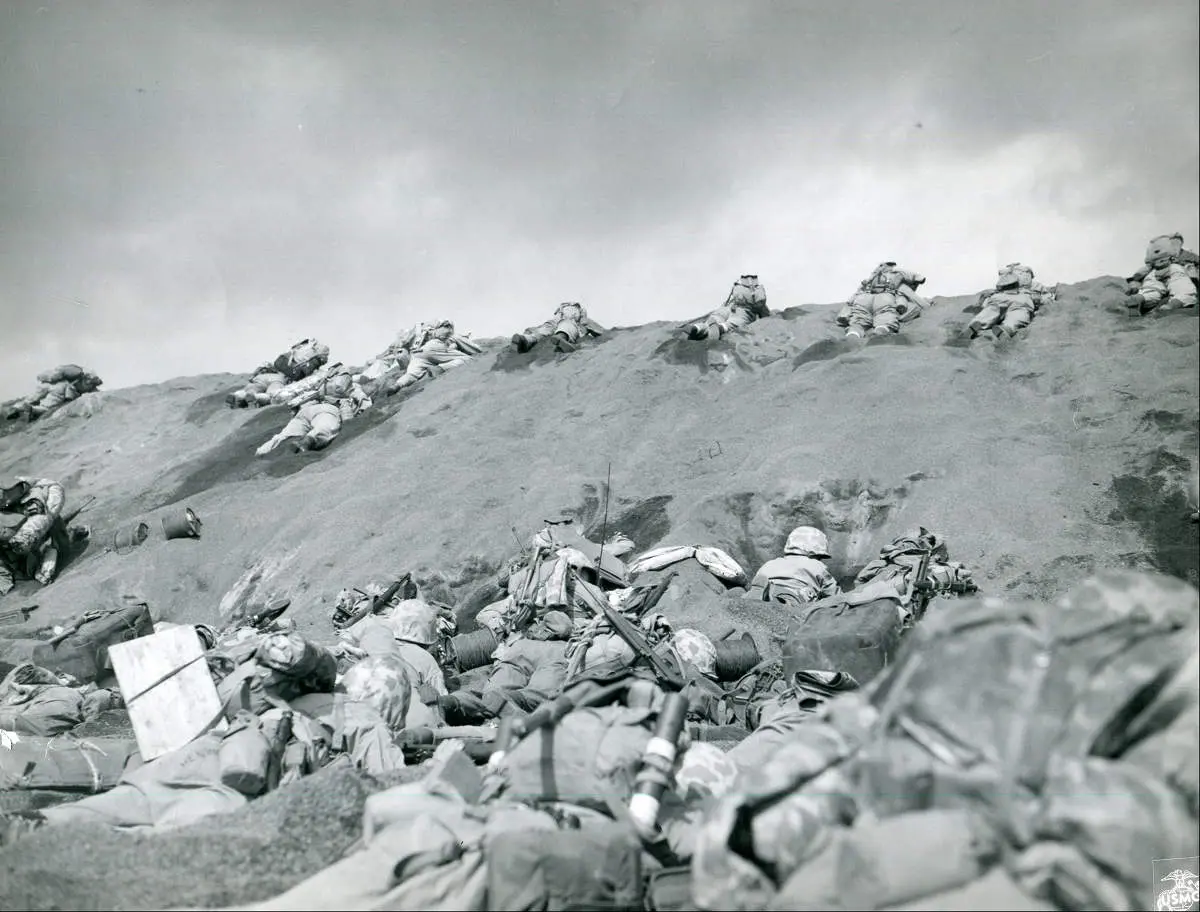
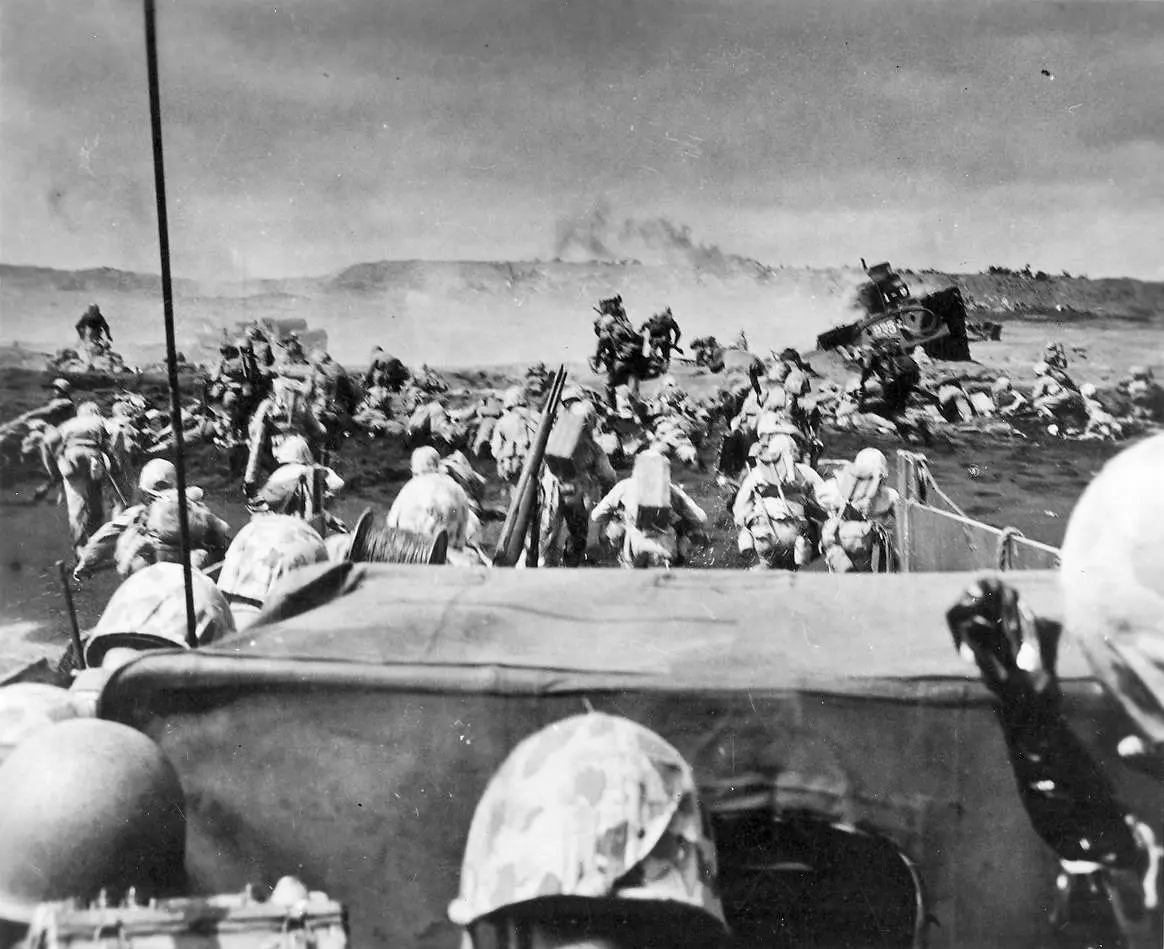
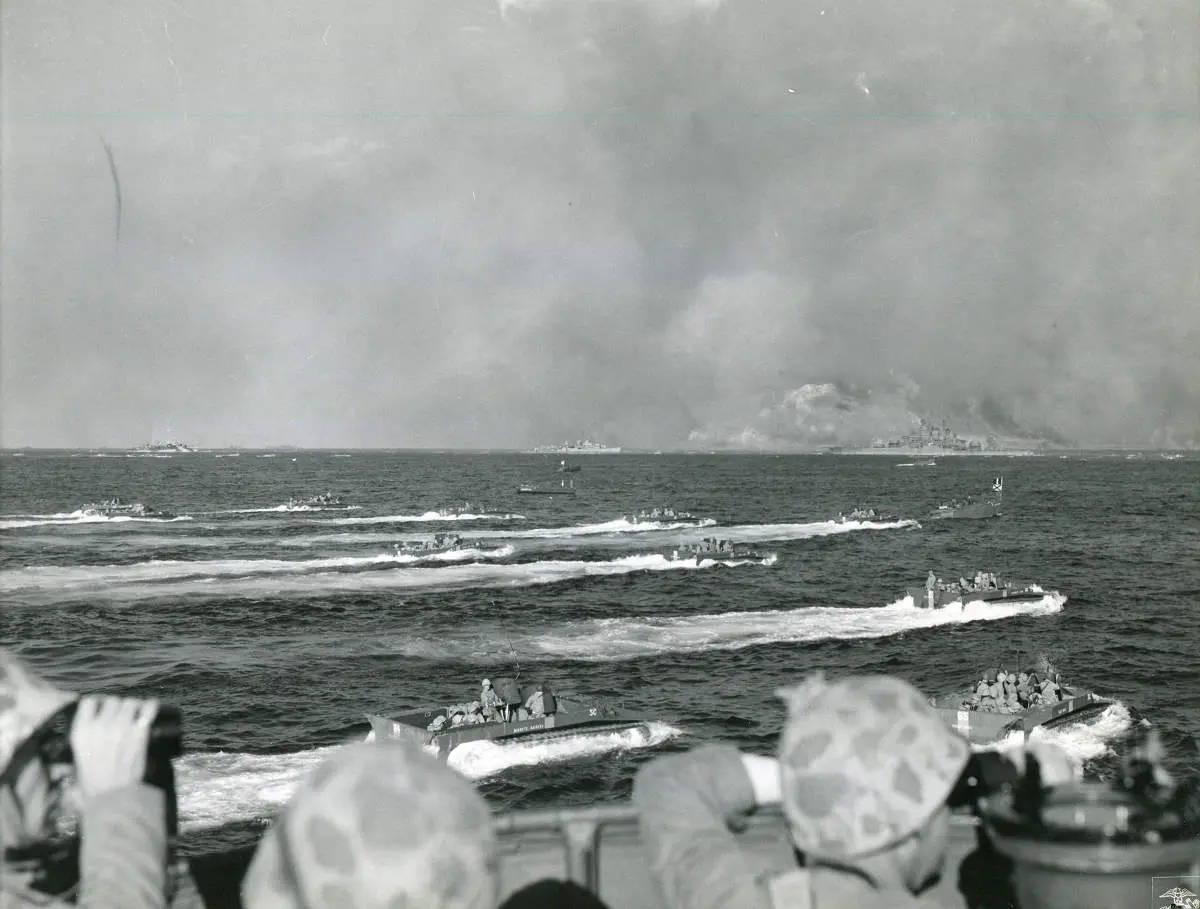
In the early hours of February 19,1945, Billy’s amphibious tractor crawled through the doors of the Landing Ship Tank and splashed into the sea. The craft lined up with others and moved forward through rough waves. Five miles out, Billy could see Mount Suribachi covered in explosions. Battleships and aircraft were bombarding the mountain. The wind was strong and the seas were bitterly rough. As the landing craft approached the shore, it suddenly stopped. The men scrambled out into the sand and water. Then the firing began.
The Japanese waited until the entire division was on the beach before unleashing artillery, mortars, and machine guns. The men attacked the Japanese dug in at the base of the mountain. The 2nd Battalion moved around the southeastern side to meet the 1st Battalion on the southwestern side. The 3rd Battalion cleared the pillboxes and redoubts in front of the mountain.
Billy remembered clawing up the high, ashy terrace. Many Marines were killed before reaching the top. The 28th Regiment was ordered to advance two hundred yards, then turn south toward Suribachi to capture the mountain and link up with the rest of the 5th Division.
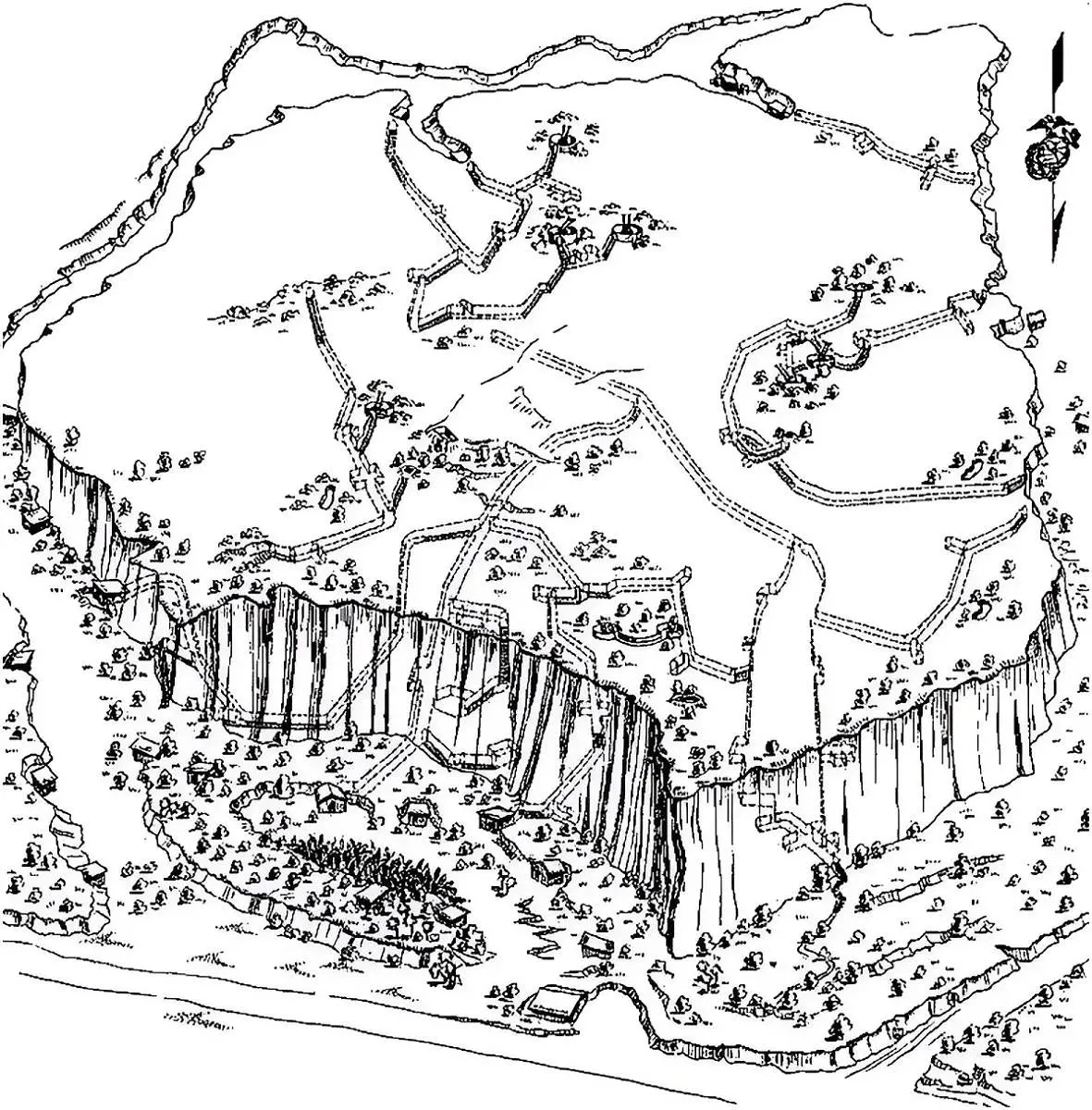
Seventy camouflaged concrete blockhouses surrounded the base of the mountain, and fifty more were concealed along its sides. Many were connected by tunnels. Two hundred Japanese troops defended Suribachi, firing large guns at anything that moved. The men ran in zigzag patterns as they had been trained.
Around 10:30 in the morning, as most Marines had landed, Billy said that all hell broke loose. Shells screamed down, mortars exploded, and machine gun fire tore through the ranks. Land mines were planted everywhere. 6,200 men from two divisions were pinned down. Billy saw Japanese planes dive onto ships, causing fires and sinking vessels that carried tanks, food, and ammunition. The ground ran red with blood. Corpsmen worked desperately to save lives, many losing their own. Ammunition ran low. Billy remembered climbing over the bodies of fellow Marines as he crawled toward the field depot to retrieve more ammunition.
During the first eighteen hours, 2,313 Marines fell. The battle raged through the afternoon. After dark, the men inhaled smoke and sulfur gas. Flares illuminated the night to prevent Japanese infiltration. The men stayed in their foxholes. Even then, many were killed by Japanese soldiers using bayonets. Billy spotted movement twenty yards away when a flare went up. He and his buddy opened fire. At daylight, dozens of Japanese bodies lay close to their position.
By the end of the second day, the men were two to three hundred yards from the base of Suribachi. Billy wrote that the invasion was only fifty-one hours old when reports showed 4,108 Marines wounded, 560 missing, and 644 confirmed dead. It was worse than any battle the Americans had fought.
On the third day, the clouds hung low and the ground remained wet. A smoky haze filled the air so heavily that Billy could not see the top of Mount Suribachi. The Japanese attacked with mortar fire that caused serious casualties as shells thudded around the men huddled in craters.
As the 2nd Battalion neared the heavily fortified base of the mountain, the regimental commander ordered the ships and planes to cease fire on the lower slopes. Demolition squads and flamethrower teams were clearing the bunkers at close range. Air strikes continued on the mountain itself for several hours. The battalion aid station had to be moved farther north because Japanese fire was killing wounded Marines and medical personnel. After two hours, the fighting for that day ended.
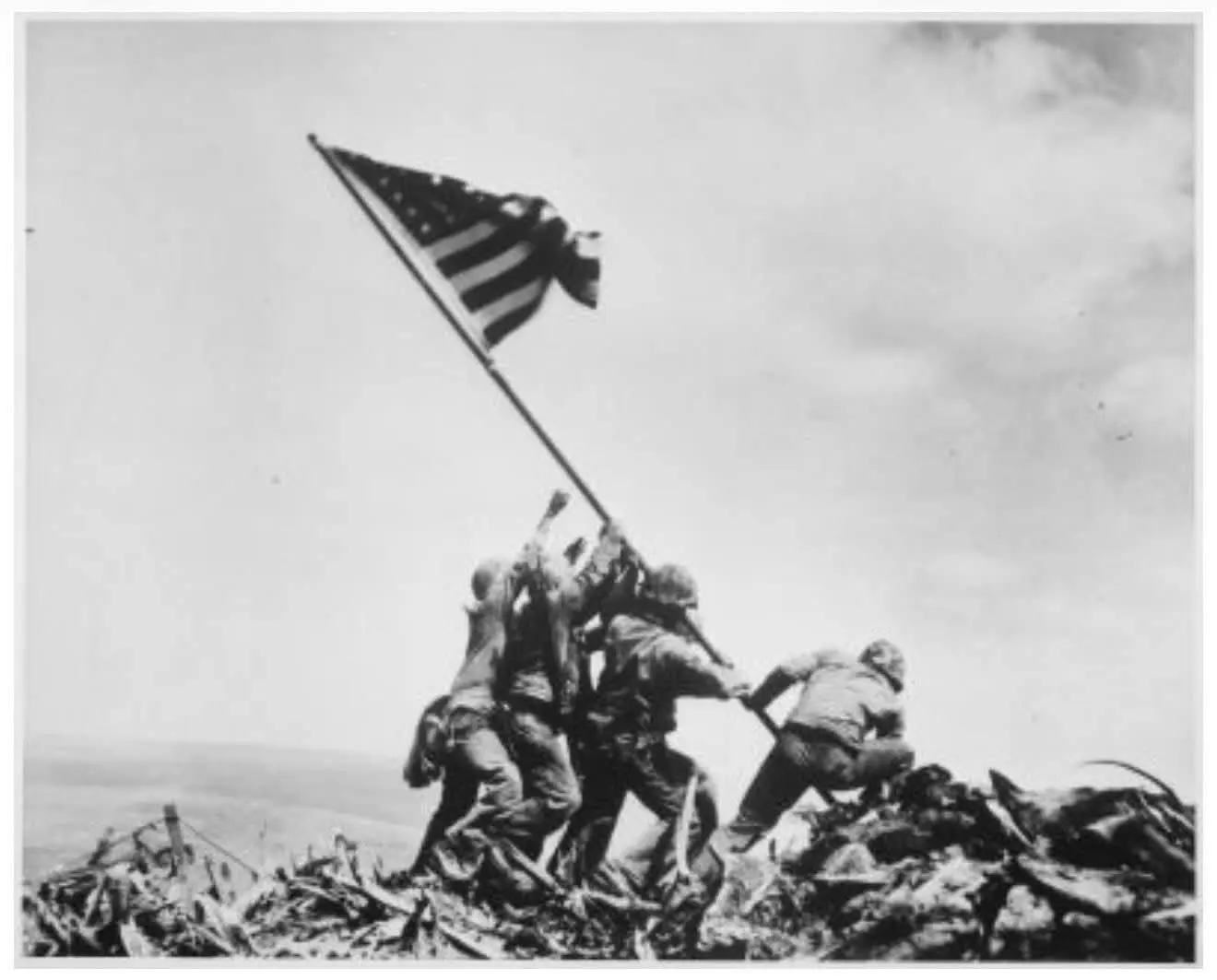
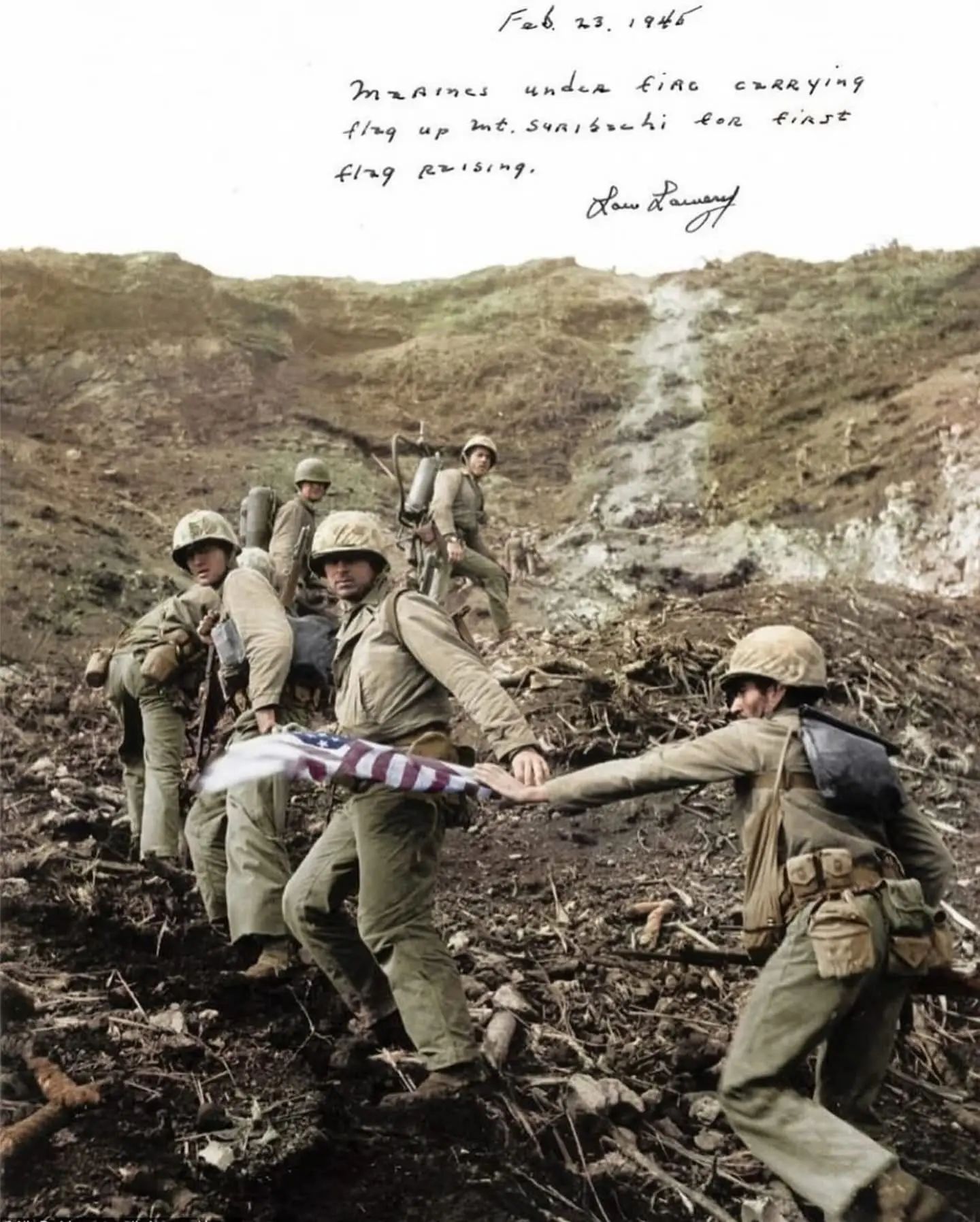
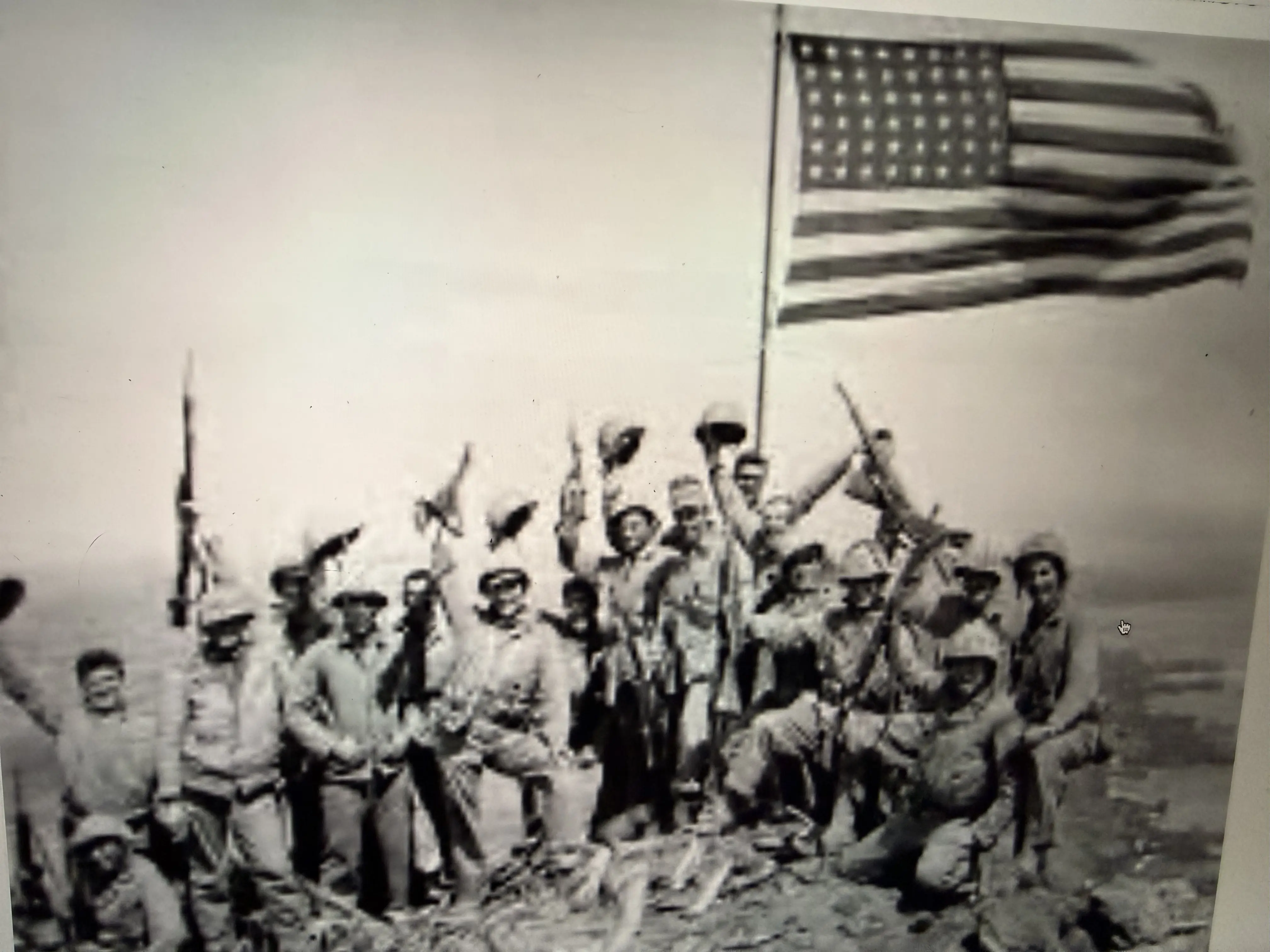
The next morning, Colonel Johnson spoke to Lieutenant Harold Schrier about raising a flag on the summit of Mount Suribachi. Schrier selected a small group of men to climb the western side of the mountain. The ascent took about thirty minutes. Some sections were so steep that the Marines had to crawl and rest before continuing. Billy wrote that when he heard distant yelling and cheering, he knew the flag had been raised.
Billy later learned that the first flag was small, and Colonel Johnson wanted a larger one raised so every Marine on the island could see it. Before the second flag was brought up, the men on Suribachi struggled to raise the first. Billy remembered how the Marines found a flag aboard a ship and located a water pipe to use as a staff. The pipe and flag together weighed one hundred and fifty pounds, and it took several Marines to lift it upright against the fierce wind. As the flag rose, a wave of emotion swept across the mountain. Billy remembered hearing cheering and hollering from every direction. Men who had been pinned down, exhausted, wounded, or grieving suddenly felt a surge of hope. The sight of the flag rising over Suribachi did not end the battle, but it changed the spirit.
The sight of the flag rising over Suribachi did not end the battle, but it changed the spirit of every Marine who witnessed it. The mountain had been a crucible, yet the fighting that followed proved even more brutal than the struggle for its slopes. Once Suribachi was secured, the 28th Marines were ordered north toward the Motoyama Plateau, where the most savage combat of the campaign awaited them. The terrain was jagged and broken, carved with hidden ravines that swallowed sound and movement. Japanese defenders were deeply entrenched in a vast network of caves and tunnels, each position tied to the next with deliberate precision.
Every ridge concealed another line of defense, and every shadowed crease in the volcanic earth held the possibility of sudden death. The Marines pushed forward through this maze of fire and stone, advancing inch by inch against an enemy that seemed to rise out of the ground itself, determined to make every gain a costly one.
On March 2, after Suribachi’s capture, the 5th Marine Division turned its full weight toward Hill 362A, one of the strongest anchors in General Kuribayashi’s defensive system. He placed immense value on the height, using its elevation to observe artillery fire across the southwestern half of the island and the Motoyama Plateau. The hill’s commanding ground was fortified with interlocking caves, pillboxes, and antitank trenches that formed a hardened labyrinth.
Its size and prominence made bypass impossible. The 28th Marines led the assault, supported by a battalion of the 26th Marines who advanced through deadly artillery and mortar fire to seize the crest. As they moved farther across the exposed corridor known as Nishi Ridge, the Marines faced devastating fire from every direction, fighting through open ground where each step forward demanded resolve equal to the cost.
Hill 362A became one of the most vicious battlegrounds on the island. The Japanese launched relentless counterattacks from concealed positions, firing machine guns, mortars, and artillery from angles the Marines could not see. Billy saw men he had trained with fall beside him. He carried their faces with him for the rest of his life. The fighting dragged on for days, each hour marked by explosions, smoke, and the cries of wounded Marines calling for corpsmen. The medics worked with extraordinary courage, running into fire to save lives, often losing their own.
When Hill 362A finally fell, the Marines were exhausted, battered, and forever changed. The battle for Iwo Jima continued for weeks, each day marked by relentless combat across jagged ridges, ravines, and volcanic ash. Billy remembered the constant smell of sulfur, the smoke that hung in the air, and the eerie silence that followed each bombardment. He remembered the wounded calling for help, the bravery of medics, and the quiet moments when Marines bowed their heads beside the bodies of friends.
The fierce fighting for Hill 362A, often referred to as the part of Meat Grinder battles on the island, resulted in thousands of American and Japanese casualties. Today, the hill is regarded as one of the deft, bloodiest battlegrounds of Pacific Theater.
During the 4th week the fighting was still hard. The Japanese still held strong positions on the north end. The fortifications on the northern section of Iwo Jima were more impressive than those at the southern end. Remaining under the command of Kurabayashi was the equivalent of eight infantry battalions, a tank regiment, and two artillery and three heavy mortar battalions. There were also 5000 gunners and naval infantry available for combat.
The hardest task left to the Marines was seizing Motoyama Plateau, with its distinctive Hill 382 and “Turkey Knob”, as well as the area in between, known as “the Amphitheater”. These obstacles formed the basis of the “meatgrinder”. The Marines would get help from their artillery and air support. Some Japanese would come out of the caves only to be burned up by the flamethrowers. Bill remembered their screams. But the Japanese defended their ground and used the tunnels to pop up behind the Marines and attack them. The demolition teams would blow up the entrances while deadly gunfire was poured into them.
Against the caves and tunnels, flamethrowers proved to be one of the most effective weapons used in the Pacific especially on Iwo Jima. One day, a flamethrower tank knocked out about two dozen pillboxes. Another time a plane dropped a bomb into a cave entrance that caused a violent explosion. Some of the smoke was seen coming from a cave a quarter mile away.
General Kuribayashi was the commander of the Japanese garrison defending Iwo Jima. As Bill’s Regiment continued advancing north, they were trying to find his command post and kill the “heart of the Japanese resistance.” A prisoner said the general had about 3000 troops alive and they would die to the death. Intelligence didn’t think the general had that many soldiers left, probably more like 700. Bill was sure the general would send them out at night to kill as many Marines as they possibly could. As to the date of the general, Bill wrote, “ He committed hara-kiri in one of the many tunnels that were sealed when the cave entrance was blown up. His body was never found.”
Bill wrote, “ A poem, found on the body of a Japanese soldier, was written by General Kuribayashi. It read:
“Shells and bullets are gone and we perish,
Remorseful of failure to fulfill our assignments.
My body shall not decay in the fields,
Unless we are avenged.
I will be born seven times more,
To take up arms against the foe.
My only concern is our country,
In the future when weeds cover here.”
At this late stage the fighting became hand to hand as the 5th Division attacked the Japanese defending the Notch. The next day the fighting was coming close to the end. At the north end of the island the men were still encountering snipers as Bill’s regiment was finishing off the last Japanese defenses.
Although the island was declared secured at 18:00 on March 16, the 5th Marine Division still faced General Kuribayashi’s last major stronghold. The position lay in a natural gorge near Kitano Point, a place the Marines came to call Bloody Gorge. It was a heavily fortified ravine nearly seven hundred yards long at the northwestern end of the island, its steep walls and broken floor shaped into a final redoubt by months of deliberate Japanese preparation.
Beginning in early March, the Marines fought brutal, close‑quarters engagements as they tried to assault and dislodge the defenders who used the narrow, rocky confines of the gorge to shelter in deep caves and pillboxes. Every approach was swept by fire. Every attempt to advance required crawling through shattered stone, volcanic ash, and the smoke of burning positions. The enemy held the heights, the shadows, and the tunnels beneath the earth, turning the ravine into a place where progress was measured in yards and paid for in blood.
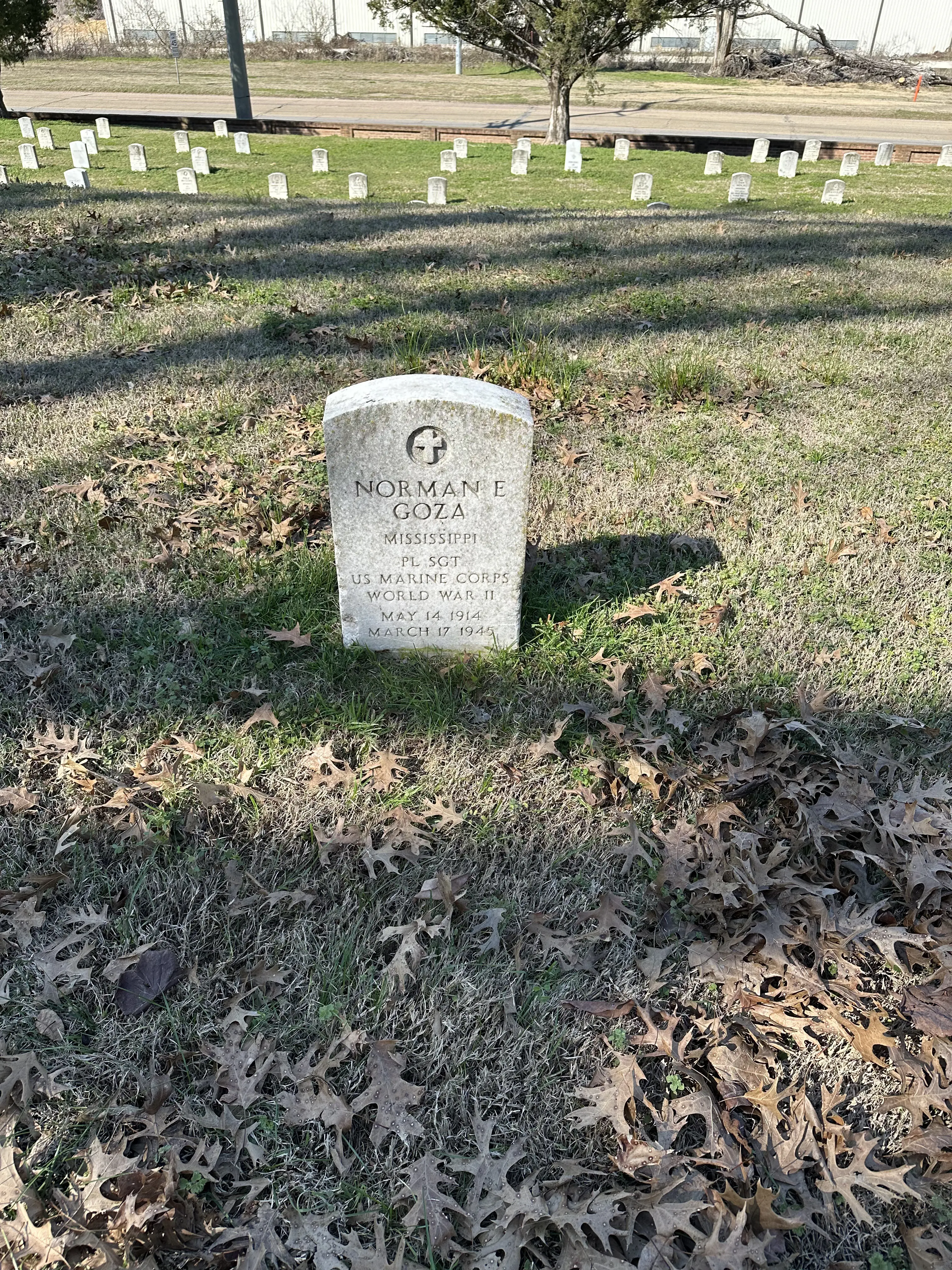
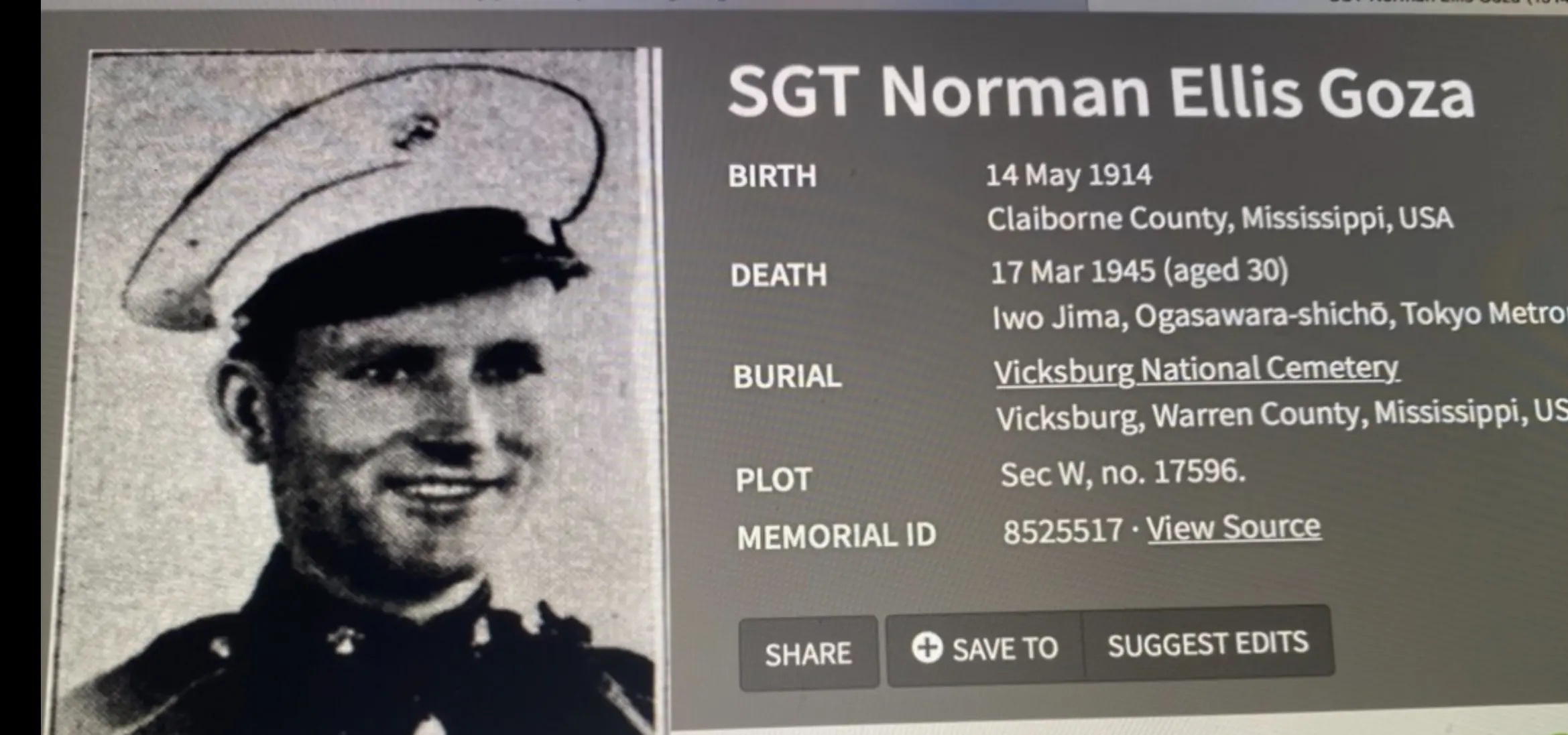
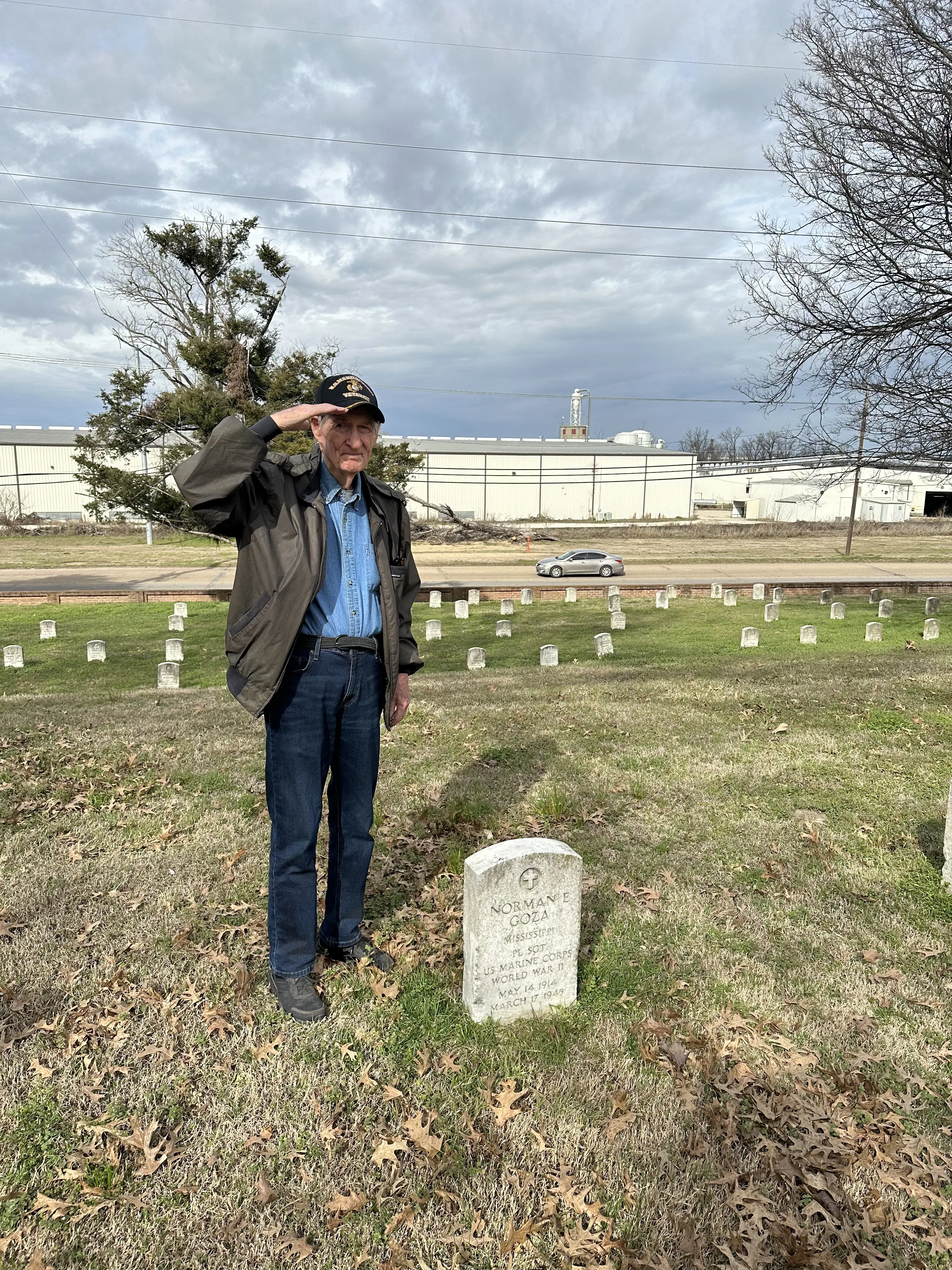
Byrd’s platoon sergeant, Norman Goza of Company D, 28th Marine Infantry, on March 17, 1945 was struck in the arm and shoulder and killed during the brutal fighting that unfolded on the Bloody Gorge located on the far northwestern part of the island as Marines closed on the Final Command Post of General Tadamichi Kuribayashi. It was a day when the men were forcing their way through the last pockets of fanatical resistance in the jagged northern reaches of the battlefield, advancing yard by yard through punishing mortar bursts and ceaseless machine gun fire. The ground was torn and unforgiving, the air thick with smoke and dust, yet they pressed forward with the grim resolve of those who know the end is near and must be earned. Every movement carried the weight of comrades already fallen, including Sergeant Goza, whose loss marked the cost of the final push toward victory and the silencing of the last organized Japanese stronghold on the island.
On March 21, the 28th Marines destroyed the command post within the gorge using tons of explosives that collapsed the tunnels and shattered the remaining fortifications. Three days later, on March 24, the Marines sealed the last caves at the northern tip of the island, bringing an end to organized resistance and closing the final chapter of the battle for Iwo Jima.
The final night on Iwo Jima brought one of the most violent episodes of the entire campaign. Hundreds of Japanese soldiers, many armed with captured Marine weapons, launched a desperate suicide attack against Air Corps units and Army positions near the airfields. Several American units were overrun in the darkness as the attackers surged across the open ground with the last strength of a defeated garrison. Reports differ, but it is possible that General Kuribayashi himself led this final assault, choosing to die in battle rather than surrender.
The Japanese struck with ferocity, driving directly into the Army’s field hospital. Billy described the chaos when he wrote that the attackers were tearing out telephone lines, slashing tents, and destroying jeep ambulances. Among the blood‑splattered canvas shelters, 44 airmen were dead and 68 wounded. The 5th Pioneers lost nine who were killed and thirty‑one wounded. By dawn, 262 Japanese lay dead across the ground they had tried to reclaim in their final act of resistance.
The island was officially declared secure on March 26 at 09:00. Once the battle was formally closed, the U.S. Army’s 147th Infantry Regiment remained behind to locate and eliminate the estimated three thousand Japanese soldiers still hiding in caves and tunnels throughout the island. Their work continued long after the last shot of the main battle had been fired, ensuring that Iwo Jima was truly safe for the airfields that had cost so much to win.
The next morning word came from the 28th Marines’ command post instructing the companies of the 2nd Battalion to gather their gear and move toward the beach area near Mount Suribachi, four miles to the south. By midmorning Billy could see Suribachi rising in the distance with Old Glory swirling in the breeze, a reminder of the moment that had stirred every Marine’s spirit even as the battle continued to exact its terrible cost.
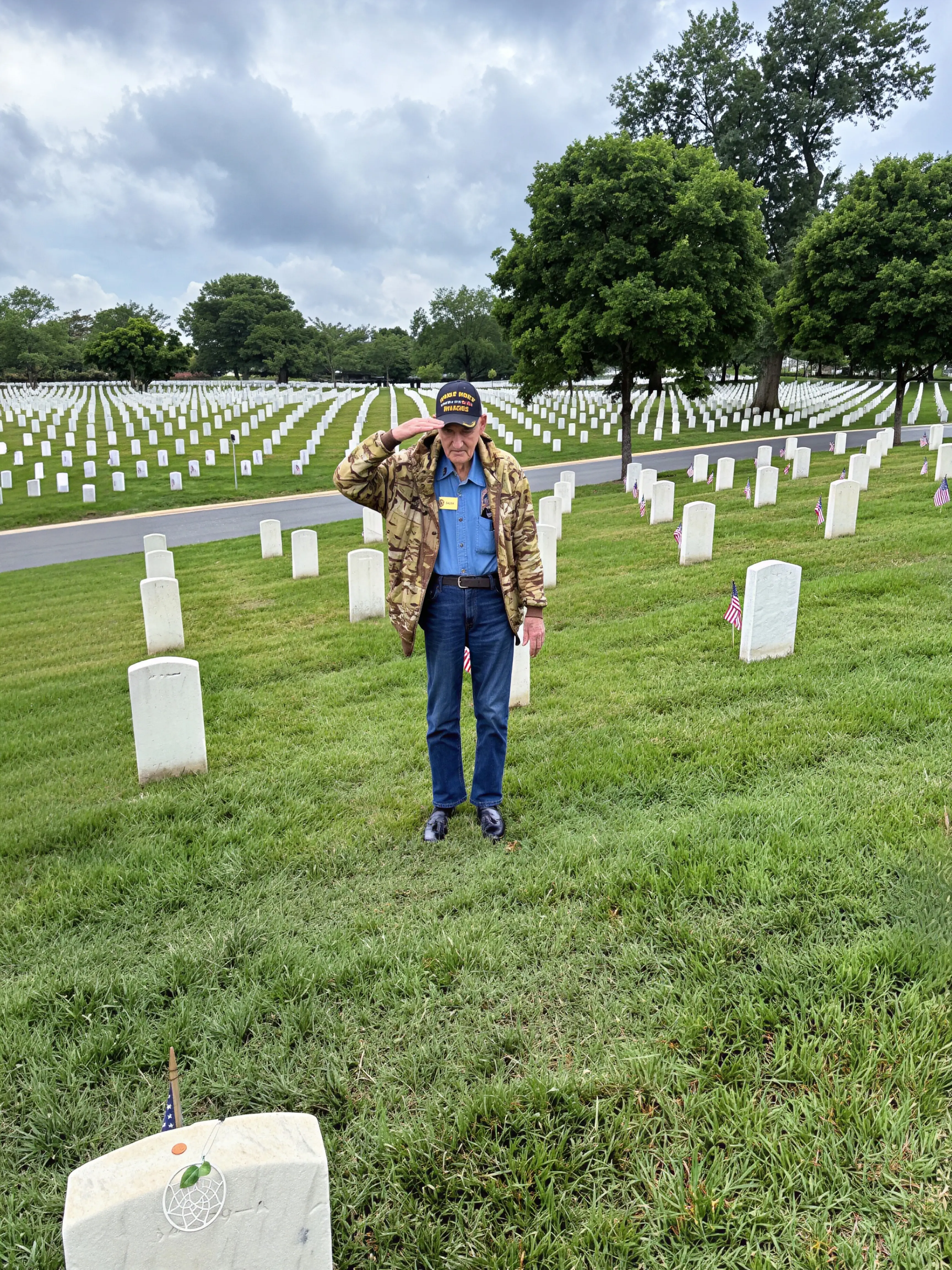
As they walked, the men passed through the 5th Marine Division Cemetery. Billy described the sight of more than two thousand small crosses neatly lined in rows, each bearing a name. He remembered how deeply it struck them to see the graves of their friends. Some of the men knelt beside the markers, burying their heads in their hands and openly crying. For Billy the experience was traumatic. He wrote that the men lying in those graves on that desolate, blood‑stained island were the real heroes. There would be no more pranks, no more playing the guitar together, no more card games, no more letters from mothers, fathers, brothers, sisters, or girlfriends. Their absence was a silence that settled over the survivors with a weight beyond words.
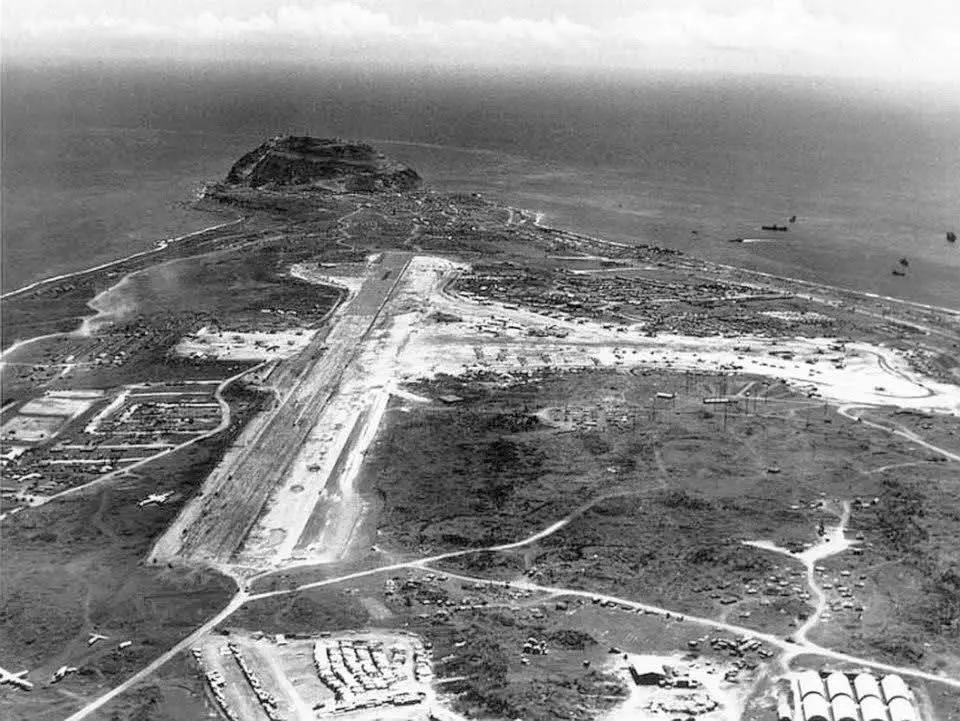
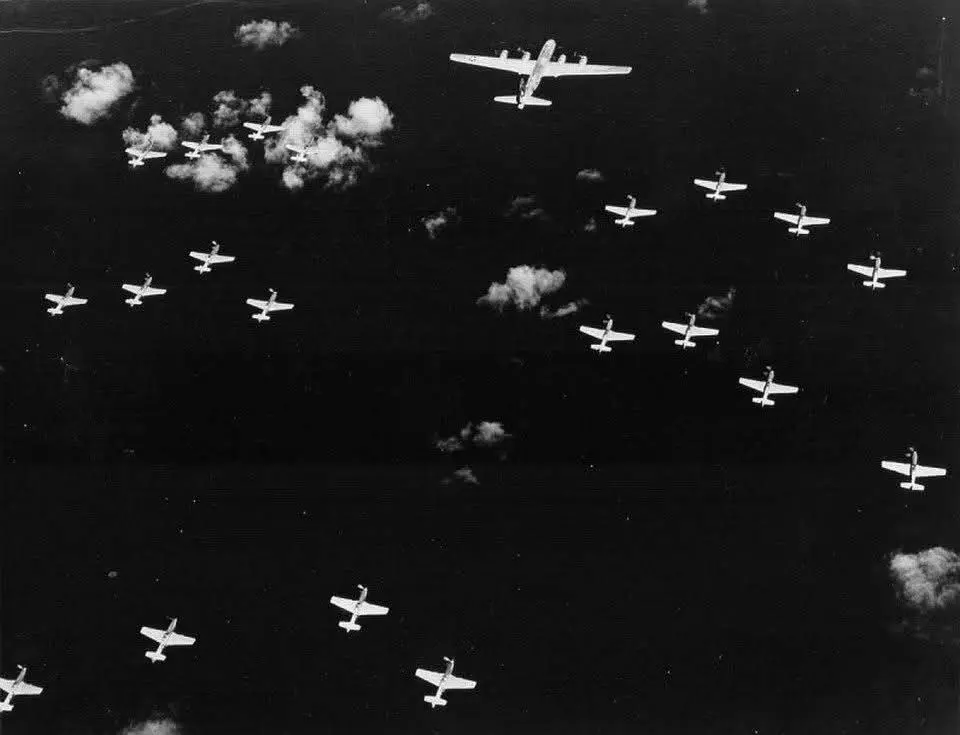
One truth settled deeply into every Marine and airman who fought on that black volcanic island. Iwo Jima mattered in the highest strategic sense because its airfields offered a critical lifeline to the B‑29 crews striking Japan. The runway was too short for a fully loaded Superfortress, yet it became a sanctuary for damaged bombers limping home through shattered skies. Byrd remembered watching a couple of those crippled aircraft drop onto the island, their wings torn and engines failing, and he knew that without Iwo Jima they would have been lost to the Pacific. His conclusion was quiet and unwavering. If even a few crews found safety there, then many lives were spared, and in that simple truth he found reassurance that their sacrifice carried purpose rather than futility.
General Graves B. Erskine spoke with the solemn authority of a commander who had witnessed the cost firsthand. He said, “Let the world count our crosses. Let them count them over and over. Let us do away with names, ranks, and unit designations here. Do away with the terms regular, reserve, veteran, boot, old timer, replacement. They are empty categorizing words which belong only to the living.”
When the island was finally secured, the cost was staggering. Nearly 7,000 Marines had been killed, and more than 19,000 wounded. Billy carried the memories of Iwo Jima with him for the rest of his life, the faces of friends who did not come home, the sound of shells and machine‑gun fire, the sight of the flag rising over Suribachi against a sky filled with smoke. He did not speak often about what he had seen, but the weight of it lived quietly within him.
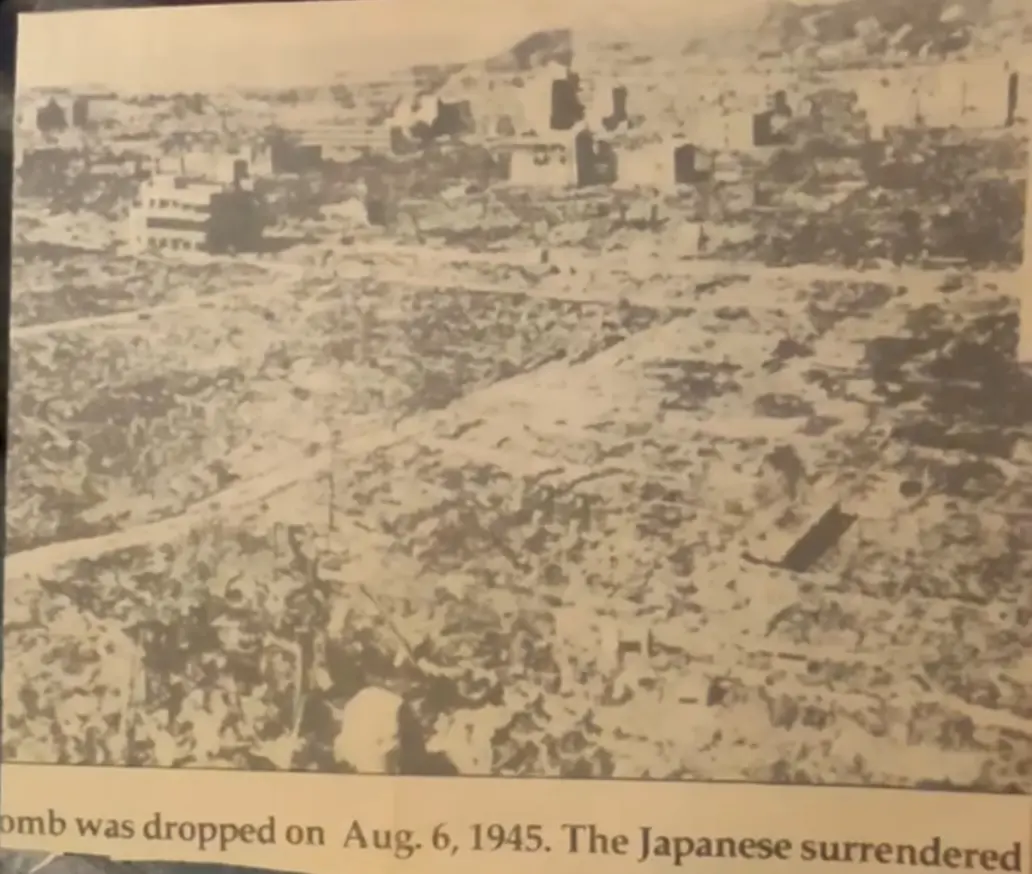
After the battle of Iwo Jima ended on March 26, 1945, the men who survived carried a clear understanding of what an invasion of the Japanese mainland would demand. When the United States dropped the atomic bombs on Hiroshima and Nagasaki on August 6 and 9, the immediate human toll was staggering, with estimates ranging from 150,000 to 246,000 lives lost, most of them civilians. Yet for the soldiers who had endured the volcanic rock, the tunnels, the firestorms, and the relentless attrition of Iwo Jima, the news of Fat Man and Little Boy brought a complicated sense of relief. Their reaction was not rooted in triumph over enemy deaths but in the knowledge that the bombs had prevented a far more gruesome ground campaign that would have repeated the horrors they had just survived on an even larger scale. Many veterans struggled to articulate the weight of that moment. Byrd offered only a quiet reflection, saying it was bad and that was the only description he could give, a simple truth that carried the full gravity of what they had witnessed and what they feared would come next.
Byrd’s regiment was in Hawaii training to invade the Japanese mainland. “ My first glimpse of Japan, about a mile out of the boat, I noticed it was mountainous and green,” said Byrd, “ I saw three Japanese ships that had sunk. Buildings were heavily damaged if there was anything left at all. We formed a long line to go to the convoy that was waiting on us about a mile away when we got to shore. We went through a couple of villages and everybody was out on their front porch staring at us.”
After the bombs, the 5th Division changed from being a part of the invading force to one of occupation. The soldiers of the 28th regiment arrived in Nagasaki a couple of months after the Japanese surrendered on the deck of the USS Missouri in Tokyo Bay, September 2, 1945.
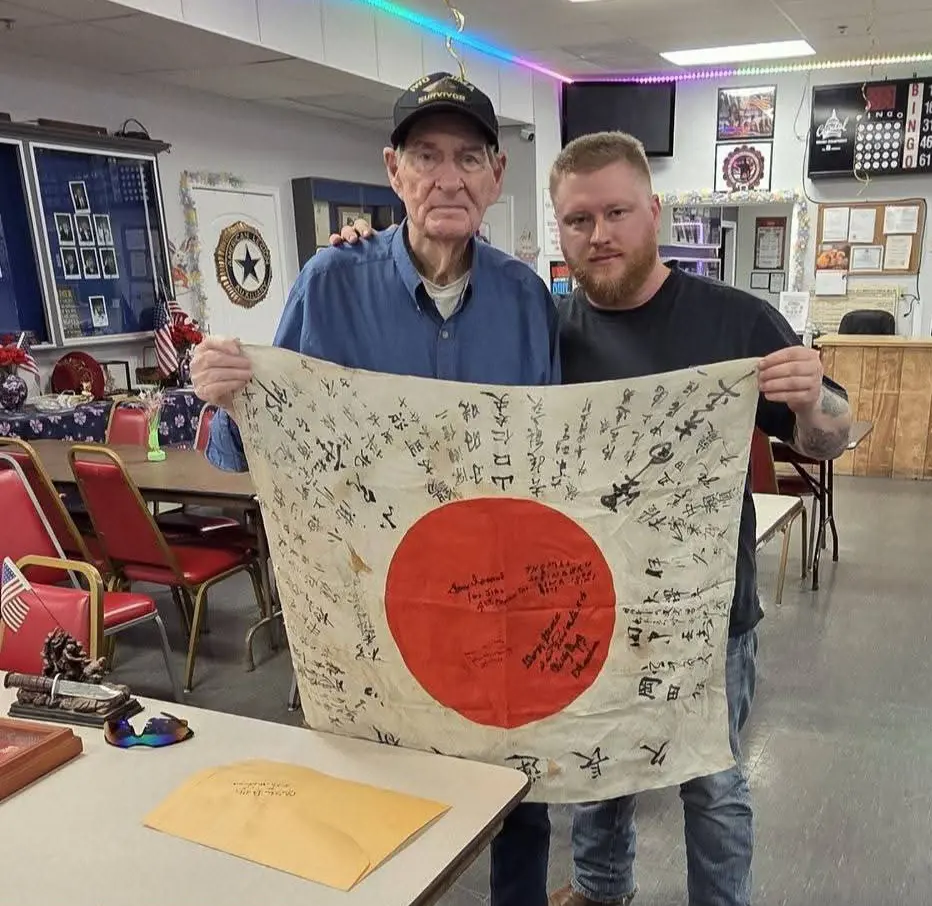
What they saw was not pretty. When the unit reached Nagasaki, Byrd and one of his buddies explored the area. Or what was left of it. “We turned our ankles a couple of times, that debris you just wouldn’t believe it,” Byrd said, “Bricks, parts of everything were just everywhere.” The hospitals were the worst. They saw a woman and child living in a culvert. They found a school that was in session. The students were all wearing Japanese military uniforms. Byrd said, “ he told the principal that was a no-no.” Because it was his job to remove “anything that looked like war” from the Japanese villages. The debate continues over whether the bomb was justified, however Byrd stated, “It had to be done, “It saved a million lives on both sides.”
After the war, Billy returned home to a country rebuilding itself. Like many veterans, he stepped back into civilian life with little fanfare, carrying experiences few could fully understand. He worked, he built, and he found his way forward in a world that expected him to simply resume life, even though life itself had been forever changed. He carried the discipline of the Marine Corps into everything he did: his work ethic, his quiet strength, his sense of responsibility.
In time, Billy married, and he and his wife built a life shaped by steady work, shared faith, and quiet devotion. They welcomed a daughter, who later made her home in Florence. Billy carried deep pride in her, speaking of her with a warmth that revealed how much she meant to him. The hardships of his childhood and the trials of war had taught him the value of family, and he held that gift close.
Billy’s working years were marked by the same diligence and endurance that had shaped him since boyhood. Whether in labor, routine tasks, or the simple responsibilities of daily life, he moved with the steady rhythm of a man who understood that perseverance was its own kind of strength. He did not seek attention or recognition. He simply did what needed to be done, day after day, with the quiet reliability that others came to depend on.
He continued to build his life in Mississippi, where he worked for the City of Jackson and became a familiar presence in the tax office and the sanitation department. In every role he carried the same steady sense of duty he had shown in uniform, approaching each day with humility, reliability, and a commitment to doing the work that needed to be done.
Over the years he earned the respect of those around him through consistency, fairness, and a willingness to shoulder responsibility without complaint. He retired as a supervisor in 1987, closing a long chapter of service to his community with the same humility that had guided him through every stage of his life.
When his wife passed away in 2012, Billy faced the loss with quiet strength. He did not often speak about grief, but those who knew him could see how deeply he felt it. The absence of the woman who had shared his life was a heavy sorrow, yet he continued forward with the same steady resolve that had carried him through poverty, war, and the long years in between. His faith and his memories became anchors in that season of loss.
In his later years, Billy enjoyed his days with his dog, Addy, whose companionship brought him comfort, routine, and a gentle presence in the quiet hours of morning and evening. He stayed fit by walking twice a day, moving with the familiar rhythm of a man who had spent his life working, marching, and enduring. He kept his mind sharp by working word puzzles, a quiet discipline that reflected the same determination he had carried since childhood.
Billy cherished the deep love he held for his family. He spoke often of his daughter, who made her home in Florence, and he carried immense pride in her life and accomplishments. The devotion he felt for her was quiet but unmistakable, shaped by the hardships he had overcome and the gratitude he felt for the blessings God had given him.
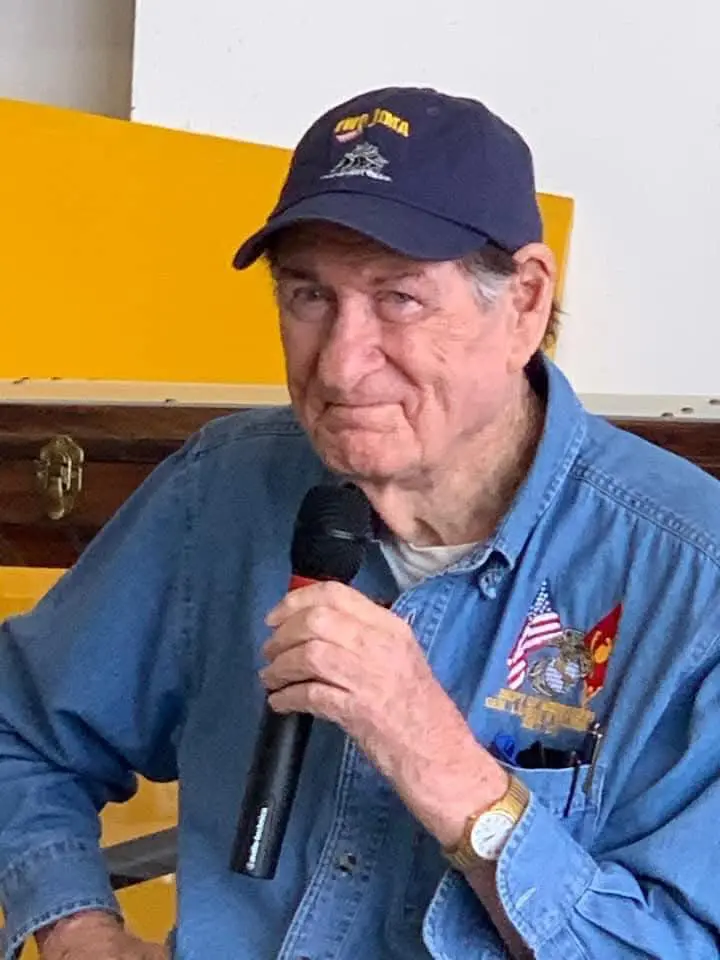
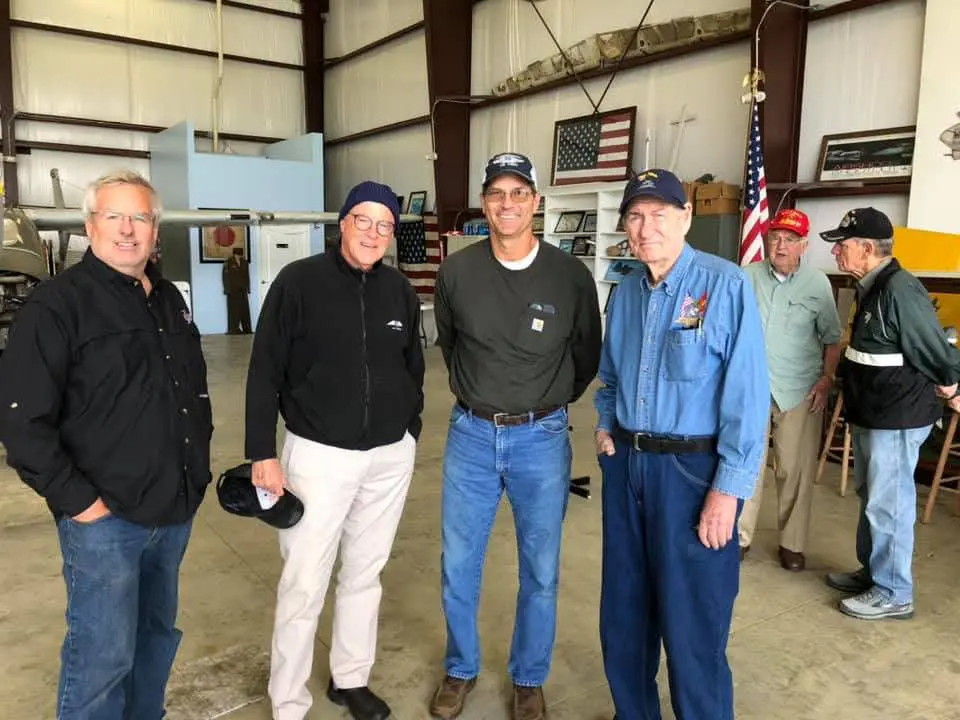
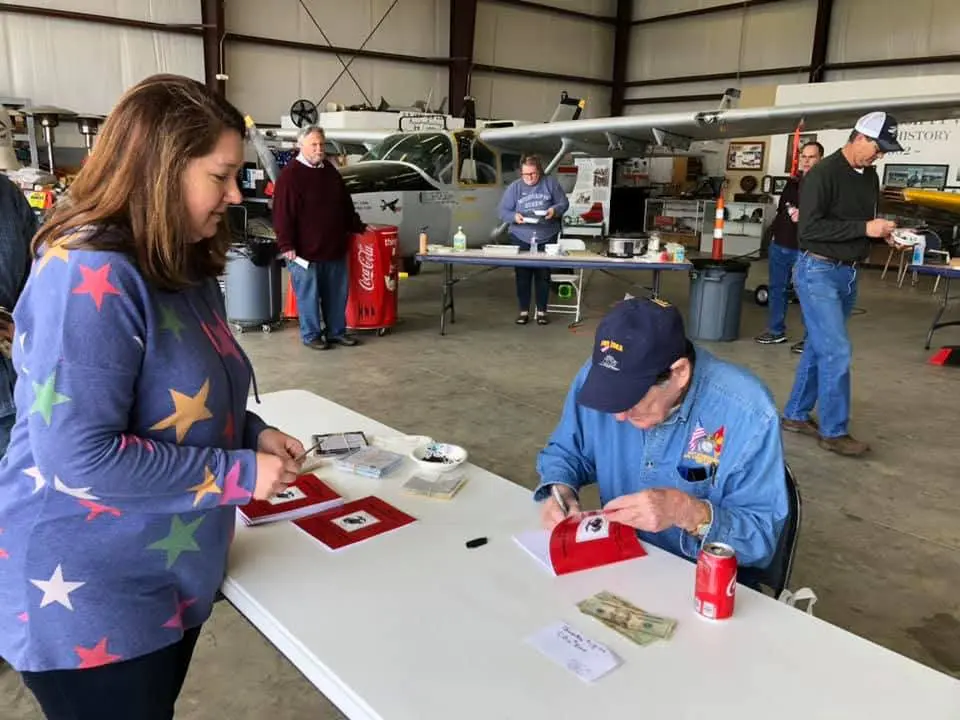
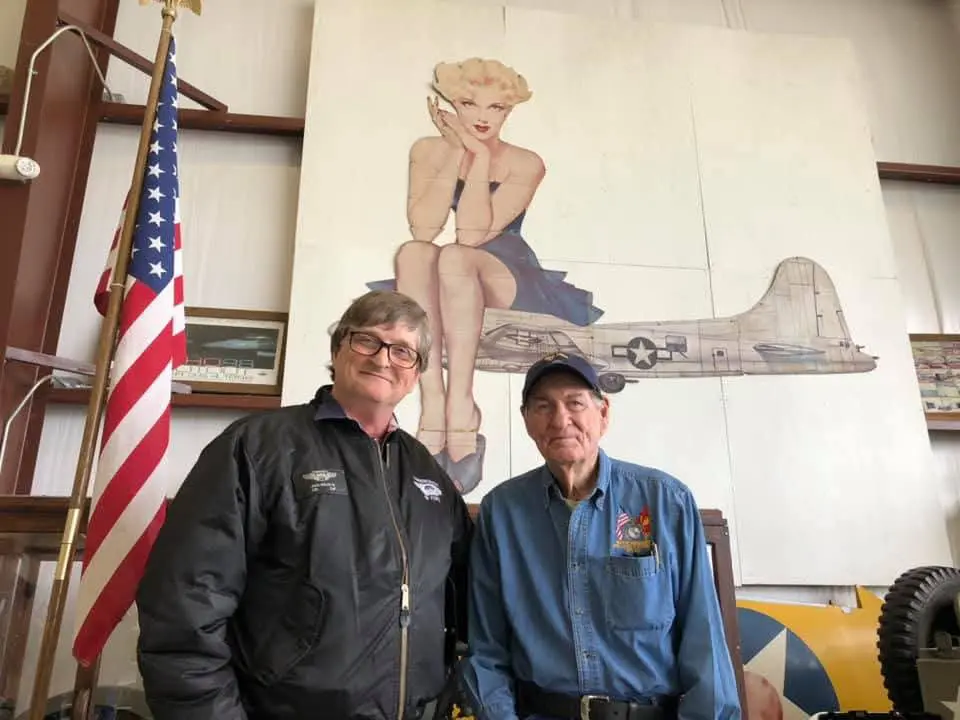
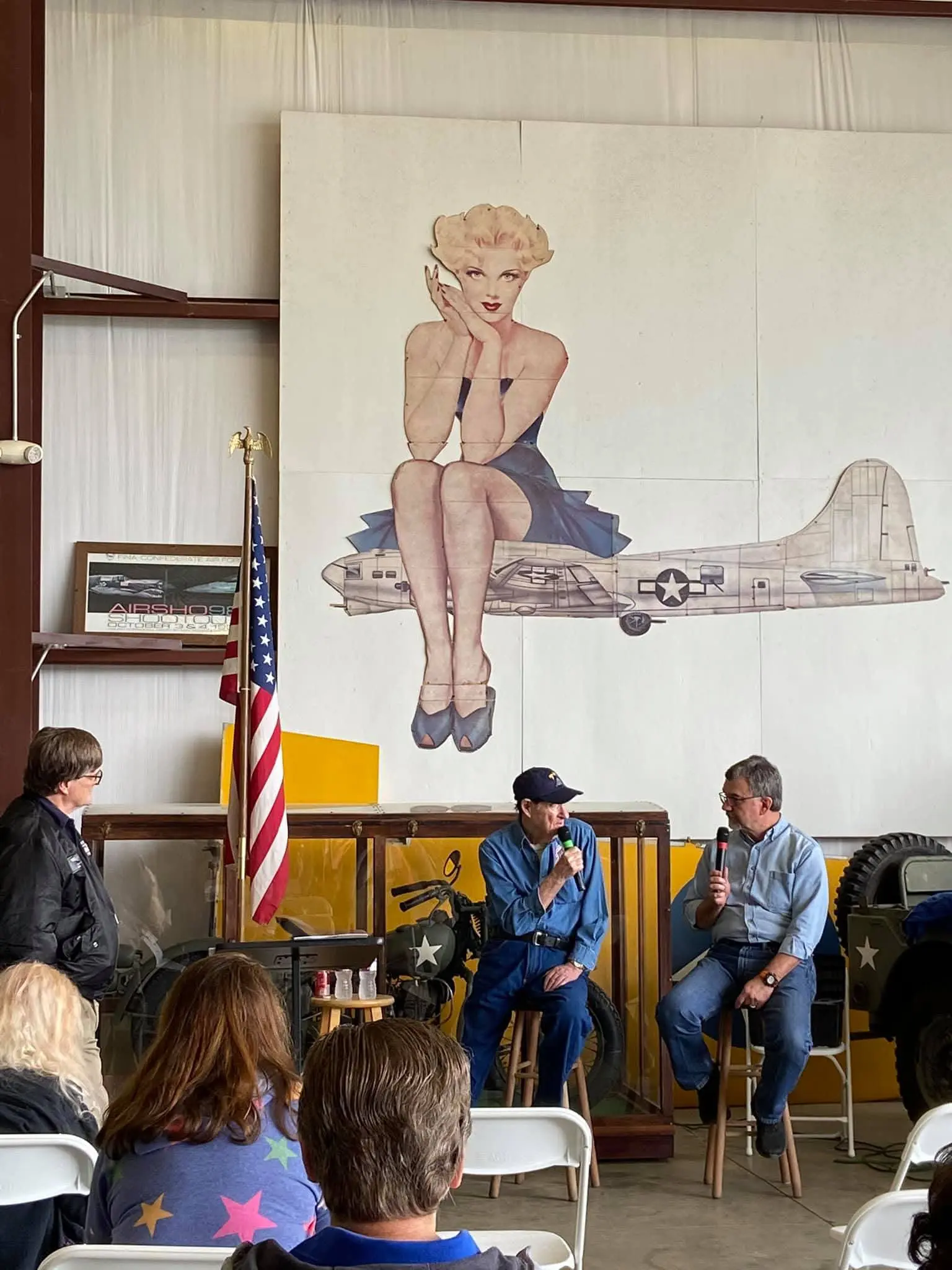
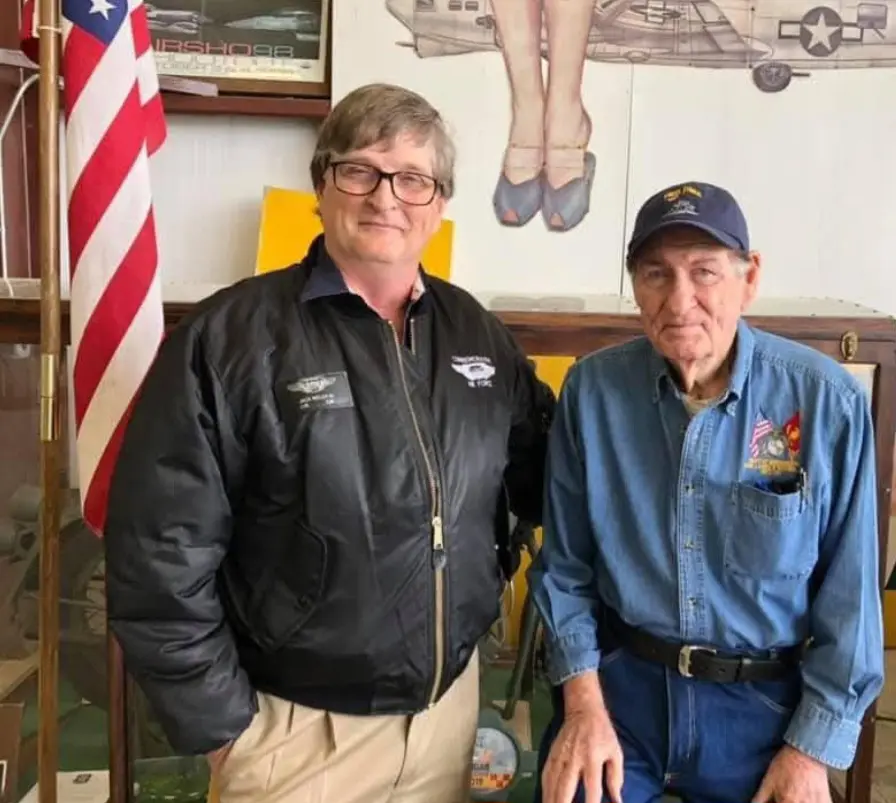
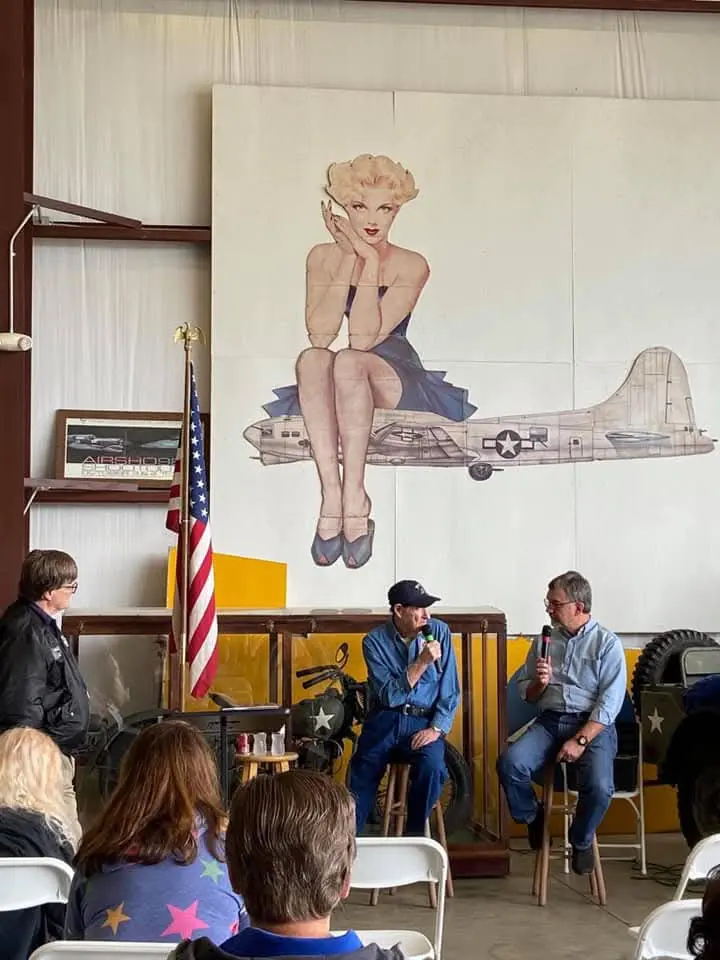
He also found joy and purpose in spending time at the Commemorative Air Force, where the stories of veterans, the hum of aircraft, and the shared camaraderie of service brought him a sense of belonging. The CAF became a place where memory, fellowship, and history lived side by side, and Billy cherished the hours he spent there. His days were steady and meaningful, shaped by faith, memory, and the quiet grace of a man who had endured hardship, survived war, and built a life defined by perseverance, gratitude, devotion, and love for the people who mattered most.
Billy’s life was a testament to endurance from the poverty of his childhood, to the separation of his family, to the crucible of Iwo Jima, to the quiet decades that followed. He carried the scars of war, the lessons of hardship, and the strength of faith with him every day. He lived simply, loved deeply, and walked humbly, grateful for every blessing God placed in his path.
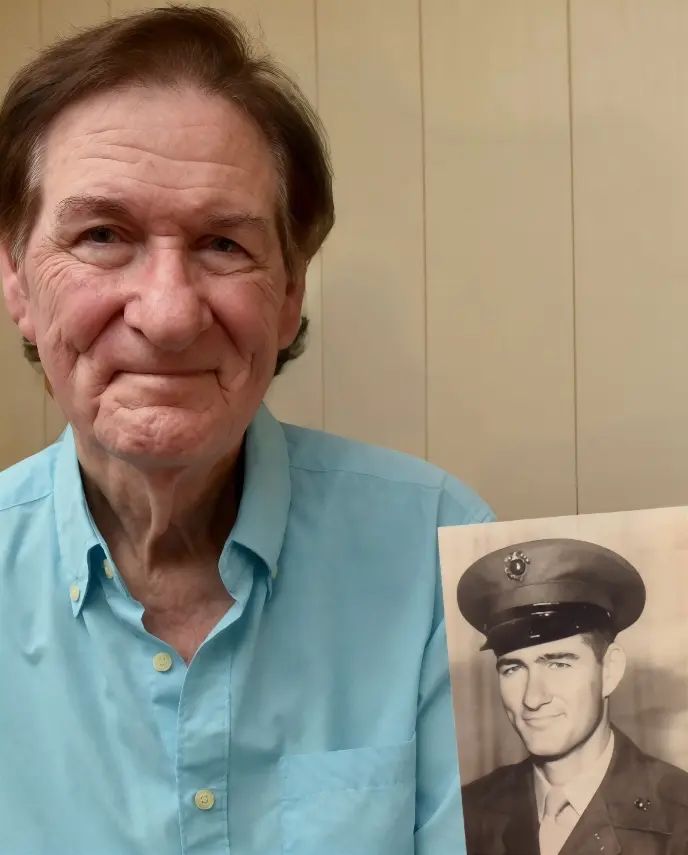
And in the end, Billy Byrd remained what he had always been a man of quiet courage, steady devotion, and unshakable faith. A Marine. A father. A survivor. A man whose life, shaped by hardship and redeemed by grace, stands as a tribute to the strength of the human spirit.
Supplemental Information
Growing Up in Mississippi
Life in the Rural South During the 1920s to 1930s
The Landscape of Poverty
Rural Mississippi in Billy’s era was defined by deep, generational poverty. Most families lived in small wooden houses with:
- no electricity
- no running water
- no insulation
- fireplaces for heat
- kerosene lamps for light
Food was simple and often scarce. Families stretched every meal:
- biscuits and pancakes when flour was available
- oatmeal as a daily staple
- sugar mixed with milk on the hardest nights
Survival depended on resourcefulness, cooperation, and faith.
Sharecropping and Hard Labor
Sharecropping dominated the rural economy. Families worked land they did not own, paying landowners with a portion of the crop.
Children worked alongside adults:
- picking cotton
- chopping wood
- hauling water
- tending fires
- clearing fields after harvest
Work began at sunrise and ended at sundown. Childhood and labor were inseparable.
Homes Without Modern Utilities
Daily life required physical effort:
- Water was carried by bucket from wells or neighbors’ homes.
- Clothes were boiled in a black iron pot over an open fire.
- Firewood had to be chopped and hauled to heat the home.
- Bathing and washing were done outdoors or in makeshift tubs.
Every task took time, strength, and endurance.
Frequent Moves and Instability
Sharecropping families moved often due to:
- crop failures
- changing landowners
- debt cycles
- lack of work
Billy’s childhood towns Hattiesburg, Petal, Harvey, Oak Grove, Prentiss, Carson, Whitesand reflect the instability common to rural families.
School Life
Education was limited but valued:
- Children walked long distances to school.
- Buildings were small and sparsely furnished.
- Restrooms were outhouses set far from the classroom.
- Basketball courts were dirt.
- Discipline was strict and often physical.
School offered structure, but not comfort.
Community and Neighborly Bonds
In rural Mississippi, community often became the strongest lifeline people had. Despite the segregation laws that defined the era, neighbors frequently relied on one another across racial lines, sharing food when cupboards were bare, lending tools when work needed doing, and trading labor during planting, harvest, or emergencies. Childcare was a communal effort, and stories, music, and front‑porch evenings stitched families together in ways that hardship could not undo. For children, friendships formed naturally through proximity and shared struggle; politics and social barriers mattered far less than the simple fact of growing up side by side in the same fields, the same dust, and the same hope for a better tomorrow.
Entertainment and Culture
Entertainment was simple and communal:
- Families gathered around the radio.
- The Grand Ole Opry, gospel music, and the Carter Family were staples.
- Church events, singing, and storytelling shaped community identity.
A radio ordered from Sears & Roebuck could transform a household.
Illness and Medical Hardship
Illness cast some of the darkest shadows over rural Mississippi. Diseases like tuberculosis, pneumonia, and influenza were common and often devastating, striking families who had little access to medical care. Doctors were distant, treatment was expensive, and help often arrived too late. It was not unusual for families to be separated overnight when sickness swept through a household, leaving children to grow up without consistent parental presence. Billy’s own family being torn apart by tuberculosis, his parents taken away, the children scattered across three states was heartbreakingly typical of the era and a reminder of how fragile life could be in the rural South.
Transportation and Travel
Cars were rare. Most families:
- borrowed vehicles
- hitchhiked
- rode wagons
- walked miles
- used trains only when necessary
Travel was slow, difficult, and often dangerous.
Childhood Joy in Hard Times
Even in hardship, children still found moments of joy. They climbed trees that stretched above the cotton fields, drew pictures in the dirt with sticks, and wandered through woods and open pastures as if they were endless worlds. Christmas Eve by the fireplace felt magical, no matter how little a family had, and summer days were spent swimming in creeks or muddy ditches that became makeshift swimming holes. These simple pleasures carried deep meaning and left lasting memories, proving that even in the hardest circumstances, childhood found a way to shine.
The Great Depression in Rural Mississippi
The Great Depression settled over rural Mississippi like a long, unbroken storm, intensifying hardships that families already knew too well. Cotton, the backbone of the local economy, lost nearly all its value when prices collapsed, leaving sharecroppers and laborers with no income despite working the same unforgiving fields. Jobs disappeared across the countryside, and men walked miles or hitchhiked from town to town hoping to find even a single day of work. Hunger became a constant presence in many homes. Children went to bed without supper, mothers stretched flour, lard, and cornmeal into meals that barely fed a family, and gardens became essential for survival as families planted anything that might grow. With government aid slow to reach rural communities, neighbors and churches became lifelines, sharing food, offering shelter, and helping one another endure when no other help existed. The Depression did not create hardship in Mississippi; it magnified every struggle rural families already faced, deepening poverty, straining families, and shaping a generation that learned endurance through necessity rather than choice.
Mississippi in Crisis: The Great Depression Years
Mississippi entered the Great Depression already burdened by structural poverty, but the crisis exposed deeper forces shaping daily life. The relationship between landowners and sharecroppers became even more imbalanced, with landowners controlling housing, wages, credit, and food allotments. A single disagreement or a failed crop could force a family to move overnight, creating a constant instability that defined childhoods across the state.
Race shaped every aspect of life. Segregation was enforced by law, but poverty often blurred boundaries in rural areas where Black and white families lived side by side, working the same fields and enduring the same scarcity. Even so, Black families were hit hardest, often being the first to lose jobs and the last to receive government aid.
Natural hardship compounded economic collapse. Mississippi faced droughts, floods, and boll weevil infestations that destroyed crops before they could be harvested. A single season of bad weather could erase a family’s entire livelihood, leaving them with no choice but to rely on neighbors or move in search of work.
Education suffered dramatically. Rural schools were already underfunded, but Depression‑era cuts left buildings deteriorating, supplies scarce, and teachers paid irregularly. Many children missed school to help in the fields, and opportunities for advancement were limited.
Religion became a stabilizing force. Churches provided food, clothing, emotional support, and a sense of hope when government assistance was slow or inaccessible. Hymns, scripture, and community gatherings offered comfort in a time when families felt forgotten by the outside world.
Government programs like the WPA and CCC eventually reached Mississippi, but rural families often waited months or years for help. Some landowners blocked their workers from receiving aid, fearing it would reduce their control. When assistance did arrive, it was minimal and temporary.
Migration reshaped the state. Families left Mississippi for cities like Memphis, New Orleans, and Chicago, or headed west to Texas and California. Leaving was often the only path to survival, and many children grew up knowing relatives scattered across multiple states.
Despite hardship, Mississippi’s cultural life remained vibrant. Front porches became gathering places for storytelling, hymns, gospel, country, and blues. Music offered escape, identity, and emotional resilience. These traditions shaped the soundscape of the era and became part of Mississippi’s lasting cultural legacy.
Children matured early. They witnessed adult struggles daily, carried responsibilities beyond their years, and learned endurance through necessity. Yet they still found joy in simple pleasures, forming a generation marked by resilience, resourcefulness, and quiet strength.
Mississippi During World War II
Life in the Rural South, 1941 to 1945
Mississippi entered World War II still carrying the weight of the Great Depression, but the war reshaped the state in profound ways. Daily life changed, opportunities shifted, and the rhythms of rural communities were transformed by military service, industrial growth, and wartime scarcity.
Military Service and Sacrifice
Mississippi sent a disproportionately high number of men into the armed forces. Young men from farms, sawmills, and small towns enlisted or were drafted, leaving families without their strongest workers. Many had never traveled beyond their county lines before boarding trains for boot camp. Their absence placed heavy burdens on mothers, younger siblings, and elderly relatives who had to keep farms running with fewer hands.
Women Taking on New Roles
Women in Mississippi carried an extraordinary burden during World War II, stepping into roles that reshaped both family life and the state’s economy. With husbands, brothers, and sons leaving for military service, women became the backbone of rural communities, managing farms that depended on their labor to survive. They planted, harvested, repaired equipment, tended livestock, and kept fields productive with fewer hands and limited resources. In towns and cities, women entered the workforce in unprecedented numbers, taking jobs in textile mills, shipyards, and newly expanded war industries in places like Jackson, Meridian, and Gulfport. They kept general stores open, ran small businesses, handled bookkeeping and finances, and became the decision‑makers for households that had never before relied solely on their leadership. Some joined the Women’s Army Corps or served in clerical and communications roles on military bases such as Camp Shelby, contributing directly to the war effort. Rural women often carried the heaviest load, performing the work of two or three people while still raising children, maintaining homes, and navigating rationing shortages. Their resilience transformed Mississippi’s social landscape, proving that women were capable of sustaining entire communities in a time of national crisis and laying the groundwork for long‑term changes in gender roles after the war.
Economic Change and War Industries
Economic transformation swept across Mississippi during World War II, reaching even the most isolated rural communities. The war created an urgent demand for ships, machinery, training facilities, and military infrastructure, and Mississippi, long defined by agriculture and poverty, became an unexpected hub of wartime production. Shipyards along the Gulf Coast expanded at a pace the state had never seen, with places like Pascagoula and Gulfport building destroyers, cargo vessels, and escort ships for the Navy. These shipyards employed thousands of Mississippians, many of whom had never before earned steady wages or worked outside of farming. Military installations such as Camp Shelby near Hattiesburg grew into massive operations, drawing soldiers, engineers, construction crews, and federal investment into the region. The influx of military personnel brought new businesses, paved roads, improved transportation, and a level of economic activity that reshaped entire towns.
For many families, wartime wages were the first reliable income they had ever known. Men and women alike found work in factories, sawmills, rail yards, and supply depots connected to the war effort. Rural families who had struggled through the Depression suddenly had access to paychecks that allowed them to buy goods, repair homes, and support relatives. The presence of federal dollars changed the landscape: new housing developments appeared near bases, small towns expanded their stores and services, and local governments invested in infrastructure to support the growing population. Even communities far from shipyards or bases felt the ripple effect as demand for timber, food crops, textiles, and transportation surged. The war did not erase Mississippi’s poverty, but it opened doors that had been closed for generations, giving families a glimpse of economic stability and altering the trajectory of the state’s development long after the fighting ended.
Continued Rural Hardship
Despite new opportunities, rural Mississippi remained poor. Many families still lived without electricity or running water. Sharecropping continued, and cotton remained king, though wartime demand shifted some fields to food crops. Gasoline, rubber, sugar, and coffee were rationed. Families saved scraps, reused everything, and made do with less.
Rationing and Resourcefulness
Rationing became a defining part of daily life in Mississippi during World War II, touching every household regardless of income or location. Families received ration books filled with stamps that controlled how much sugar, flour, meat, coffee, gasoline, and even tires they could purchase. These limits forced people to rethink how they cooked, traveled, and worked. Rural families, already accustomed to stretching ingredients, became even more resourceful. Gardens expanded into essential food sources, producing vegetables that replaced rationed items and helped families preserve food for winter. Women saved bacon grease for cooking, reused flour sacks to make clothing, and learned to substitute ingredients when staples ran out. Homemade remedies became common as store‑bought medicines grew scarce. Communities shared what they had, trading eggs for flour or offering rides to neighbors who could not spare gasoline. Tire shortages were so severe that families patched old tires repeatedly or abandoned cars altogether, relying on wagons, bicycles, or walking long distances. Rural ingenuity became a necessity, and families took pride in making do with less, believing their sacrifices directly supported loved ones overseas. Rationing shaped the rhythm of everyday life, teaching Mississippians to be frugal, inventive, and united in a time of national crisis.
Racial Tensions and Shifts
Racial tensions in Mississippi remained deeply rooted during World War II, but the war exposed contradictions that the state could no longer ignore. Segregation governed every aspect of public life, yet Black Mississippians served in the military, worked in shipyards and defense plants, and contributed to the war effort with the same courage and commitment as their white neighbors. Many Black soldiers trained at bases like Camp Shelby, where they experienced a version of military life that promised equality abroad even as discrimination persisted at home. Defense industries hired Black workers in greater numbers than ever before, giving families access to wages that had been denied to them for generations. These experiences created a growing awareness of injustice, and the Double V campaign, calling for victory over fascism overseas and victory over racism at home, gained powerful traction across the state. Black newspapers, churches, and community leaders began speaking more openly about civil rights, pointing out the hypocrisy of fighting for freedom abroad while denying it to citizens at home. White Mississippians, meanwhile, felt the strain of a changing social landscape as migration, military service, and wartime labor shortages forced new interactions between races. The war did not dismantle Jim Crow, but it cracked its foundation, planting seeds of expectation, confidence, and determination that would fuel the civil rights movement in the decades that followed.
Migration and Movement
Migration reshaped Mississippi more profoundly during World War II than at any time since Reconstruction. The war opened doors that had been closed for generations, and thousands of Mississippians seized the chance to leave behind the poverty and instability that had defined rural life. Young men and women traveled to booming shipyards in Mobile and Pascagoula, where destroyers and cargo vessels were built around the clock. Others headed north to factories in Memphis, Detroit, and Chicago, drawn by wages that far exceeded anything available in Mississippi’s agricultural economy. Military bases across the country also became destinations, offering training, clerical work, and support roles that introduced Mississippians to new regions, new cultures, and new opportunities. For many families, this movement marked the first real escape from generational poverty, giving them access to stable paychecks, modern housing, and urban life. Entire communities changed as young people left and did not return, altering the demographic landscape of the state. Rural towns felt the absence of their younger generations, while cities elsewhere grew with the influx of Southern workers. This wartime migration planted the seeds for long‑term shifts in Mississippi’s economy, culture, and identity, and it reshaped the lives of countless families who found new futures far from the fields where they had been raised.
Cultural Life and Patriotism
Cultural life in Mississippi during World War II blended deep patriotism with the familiar rhythms of rural Southern tradition. Churches, schools, and local organizations became the emotional heart of the home front, hosting rallies, bond drives, and prayer meetings for soldiers serving overseas. These gatherings offered comfort, unity, and a sense of shared purpose, reminding families that their sacrifices at home were part of a larger national effort. Radios became essential in households across the state, bringing news from Europe and the Pacific into living rooms and front porches. Families listened together, following battles, troop movements, and presidential addresses, often hearing updates about places they had never known existed. Music remained central to daily life, offering escape and reassurance during uncertain times. Gospel filled churches and revival tents, country music drifted from radios and community dances, and blues musicians continued shaping Mississippi’s cultural identity with songs that captured both hardship and hope. Cultural traditions did not disappear during the war; they adapted, becoming expressions of resilience and patriotism. Through faith, music, storytelling, and community gatherings, Mississippians found strength, connection, and pride as they supported loved ones fighting far from home.
Daily Life on the Home Front
Daily life on the home front in Mississippi was shaped by constant awareness of the war and a deep sense of shared responsibility. Children became active participants in the national effort, collecting scrap metal, rubber, paper, and even old tin cans for war drives organized by schools and churches. These collections were treated with pride, and children often competed to see who could gather the most material to help the soldiers overseas. Families listened closely for news of loved ones, gathering around radios each evening to hear updates from Europe and the Pacific. Every broadcast carried the possibility of hope or heartbreak, and families learned to read between the lines of official reports. Letters from soldiers were treasured, saved in drawers or tucked into family Bibles, and often read aloud on porches so neighbors could share in the relief of knowing someone was safe. Communities leaned heavily on one another, offering food when gardens produced more than a single household needed, sharing labor during planting and harvest, and gathering for prayer meetings that provided comfort during uncertain times. Daily life was marked by sacrifice, vigilance, and unity, and Mississippians found strength in their traditions, their faith, and the quiet determination to support loved ones fighting far from home.
The War’s Lasting Impact
World War II left Mississippi permanently changed, reshaping the state’s economy, society, and identity in ways that reached far beyond the war years. The sharecropping system, already weakened by decades of poverty, began to lose its grip as young men and women discovered new opportunities in military service, shipyards, and northern factories. Industrial jobs expanded across the state, introducing families to steady wages, modern workplaces, and a level of economic stability that agriculture had never provided. Military presence increased dramatically, with bases like Camp Shelby becoming long‑term fixtures that brought federal investment, new infrastructure, and a continuing connection to national defense. Migration accelerated as thousands left Mississippi for better jobs and broader horizons, altering the demographic landscape and creating communities of former Mississippians in cities across the country. The war also exposed racial inequalities with new clarity. Black American soldiers and defense workers returned home with heightened expectations for fairness and opportunity, fueling early momentum for the civil rights movement. Gender roles shifted as women who had managed farms, worked in factories, and run households during the war carried their expanded responsibilities and confidence into the postwar years. Although many rural communities continued living with Depression‑era conditions, the war pulled Mississippi into the modern era, setting in motion changes that would unfold across the next generation.
Black Americans in Mississippi During World War II
Black Americans in Mississippi lived through World War II with a complex mix of patriotism, hardship, and rising determination. Segregation shaped every part of daily life, yet Black Mississippians contributed to the war effort with unwavering commitment. Thousands served in the Army, Navy, and Marine Corps, often in segregated units that demanded discipline and excellence while denying them equal treatment. Many trained at bases like Camp Shelby, where military life exposed them to new ideas, new regions, and a broader sense of possibility. At home, Black workers entered shipyards, sawmills, and defense plants in greater numbers than ever before, earning wages that had been out of reach during the Depression. These jobs offered stability, pride, and a glimpse of economic opportunity that Mississippi’s agricultural system had long withheld. Churches and Black newspapers encouraged the Double V campaign, calling for victory abroad and victory at home, and community leaders began speaking more openly about the contradictions of fighting for freedom overseas while living under Jim Crow. Families followed war news closely, prayed for loved ones serving far from home, and held tight to letters that described experiences in places where segregation was less rigid or openly challenged. The war did not dismantle Mississippi’s racial barriers, but it awakened expectations for fairness, dignity, and opportunity. Black Mississippians emerged from the war with a strengthened resolve, carrying forward the early momentum that would soon ignite the civil rights movement across the South.
Mississippi Today
A Modern Southern State Shaped by History, Faith, and Resilience
Mississippi today is a state where tradition and modern change exist side by side. Its landscape is still defined by small towns, farmland, pine forests, and the winding Mississippi River, but its economy, culture, and communities have evolved far beyond the agricultural world of the Depression and World War II. The state remains deeply connected to its past, yet it continues to grow through education, industry, healthcare, and cultural preservation.
Economy and Industry
Mississippi’s economy today is far more diverse than the cotton‑based system that once dominated the state. Manufacturing plays a major role, with automotive plants, shipbuilding facilities on the Gulf Coast, aerospace companies, and advanced manufacturing centers providing thousands of jobs. Agriculture remains important, but it is now part of a broader economic landscape that includes healthcare, education, transportation, and energy production. Military bases such as Camp Shelby and Keesler Air Force Base continue to anchor local economies and connect Mississippi to national defense.
Communities and Daily Life
Most Mississippians live in small towns or mid‑sized cities where community life remains strong. Churches continue to be central gathering places, shaping social life, charity work, and cultural identity. Families often stay close to one another, and traditions such as Sunday dinners, high school football, and community festivals remain important. Rural areas still face challenges with access to healthcare, education, and infrastructure, but many communities are working to improve services and opportunities.
Culture, Music, and Heritage
Mississippi’s cultural legacy is one of its greatest strengths. It is the birthplace of blues, a cornerstone of American music, and continues to celebrate its musical heritage through museums, festivals, and historic sites. Storytelling, faith‑based traditions, and Southern hospitality remain defining features of daily life. The state’s museums, historical societies, and cultural organizations work actively to preserve its complex history, including civil rights, military service, and agricultural heritage.
Education and Modern Growth
Universities such as Ole Miss, Mississippi State, Jackson State, and Southern Miss contribute to research, innovation, and workforce development. Many young Mississippians pursue careers in medicine, engineering, education, and technology, reflecting a shift toward modern industries. Efforts to expand broadband access, improve schools, and strengthen workforce training continue across the state.
Demographics and Social Change
Mississippi today is more urban, more connected, and more diverse than it was in the mid‑20th century. Migration patterns have shifted, with some residents moving to larger cities for work while others return home seeking community and family ties. The legacy of the civil rights movement remains visible in museums, memorials, and educational programs that honor the struggle for equality and highlight Mississippi’s role in national history.
Natural Beauty and Environment
The state’s natural environment remains one of its defining features. The Delta, the Pine Belt, the Gulf Coast, and the rolling hills of northern Mississippi offer rich landscapes for farming, hunting, fishing, and outdoor recreation. Conservation efforts continue to protect wetlands, forests, and wildlife habitats.
Mississippi today is a blend of old and new, a place where history is deeply felt, community is central, and modern industries are reshaping the future. It carries the memory of its past while steadily moving forward, shaped by resilience, faith, and a strong sense of identity.
Where Billy Started as a Marine
Billy Byrd began the process of becoming a Marine at Camp Shelby, located just outside Hattiesburg, Mississippi. This was the nearest major military installation to his home region and one of the largest training camps in the United States during World War II. Camp Shelby served as a processing and induction point for young men entering the armed forces, including those headed for the Marine Corps.
Camp Shelby: Mississippi’s Gateway to War
Camp Shelby, located just south of Hattiesburg, became one of the most important military installations in the United States during World War II. For countless young men from Mississippi and across the South, it was the first step in their transformation from civilians into soldiers and Marines. The camp operated like a small city, buzzing with activity day and night, and its presence reshaped the economy, culture, and daily life of the entire region.
Camp Shelby served multiple roles during the war. It was a major induction and processing center where recruits underwent physical examinations, completed paperwork, received uniforms, and learned the basics of military discipline. For many Mississippi boys, this was the first time they stood in formation, heard commands barked by drill instructors, or felt the weight of responsibility that came with military service. Although Marine boot camp took place elsewhere, Camp Shelby was the gateway, the place where young men like Billy Byrd officially entered the armed forces and began the journey that would carry them across the country and around the world.
The camp also functioned as a massive training ground for Army divisions preparing for combat in Europe and the Pacific. Thousands of soldiers marched across its pine‑covered terrain, practiced maneuvers, learned weapons handling, and built the physical endurance required for war. The camp’s size and activity brought an influx of federal dollars, construction crews, and military personnel into Mississippi, transforming Hattiesburg into a bustling wartime town. Businesses expanded, new housing developments appeared, and local families found work supporting the camp’s operations.
Camp Shelby’s impact extended beyond economics. It introduced Mississippians to people from across the nation, creating cultural exchanges that were rare in the rural South. Black soldiers trained there in segregated units, experiencing both the discipline of military life and the contradictions of serving a country that denied them equal rights at home. Women worked in clerical roles, supply offices, and support services, gaining new responsibilities and independence. The camp became a symbol of Mississippi’s contribution to the war effort, a place where patriotism, sacrifice, and determination converged.
For families, Camp Shelby was a place of emotional significance. It was where sons departed for war and where letters were mailed home describing early experiences in uniform. It was the last familiar ground many young men stood on before traveling to distant training bases, battlefields, or naval stations. The camp’s presence left a lasting imprint on Mississippi, shaping its economy, its communities, and its identity long after the war ended.
Camp Shelby: The Beating Heart of Mississippi’s Military Story
Camp Shelby is more than a military installation. It is a place where Mississippi’s landscape, people, and history intersect with the nation’s greatest conflicts. Its story begins long before World War II and continues into the present day, shaping generations of soldiers and communities across the state.
Origins and Early Purpose
Camp Shelby was established in 1917 during World War I, chosen for its vast acreage of pine forest, rolling terrain, and proximity to rail lines that connected Hattiesburg to the rest of the country. The land offered everything the Army needed: room for large formations, space for artillery ranges, and a climate that allowed year‑round training. From the beginning, Camp Shelby was envisioned as a place where ordinary Americans would be transformed into disciplined soldiers.
A Massive Wartime City During World War II
By the time World War II erupted, Camp Shelby had grown into one of the largest training camps in the United States. It became a self‑contained city with barracks, mess halls, hospitals, motor pools, firing ranges, chapels, theaters, and supply depots. Tens of thousands of soldiers passed through its gates, including entire divisions preparing for combat in Europe and the Pacific.
For young men from Mississippi, Camp Shelby was often the first place they encountered military life. They arrived by bus, train, or truck, stepping into a world of uniforms, inspections, shouted commands, and strict schedules. The camp processed recruits, conducted physical exams, issued equipment, and prepared men for the next stage of their training. For Marines like Billy Byrd, Camp Shelby was the gateway — the place where civilian life ended and the path to San Diego or Parris Island began.
Daily Life at Camp Shelby
Life at Camp Shelby was intense, structured, and physically demanding. Soldiers woke before dawn, marched miles across sandy soil, learned weapons handling, practiced maneuvers, and drilled until exhaustion. The camp’s ranges echoed with rifle fire, artillery blasts, and the rumble of trucks and tanks. In the evenings, soldiers wrote letters home, attended chapel services, visited the recreation hall, or traveled into Hattiesburg for a few hours of normal life.
The camp was a melting pot. Men from Mississippi trained alongside recruits from New York, Illinois, California, and dozens of other states. For many rural Mississippians, it was their first exposure to people from different backgrounds, accents, and cultures.
Segregation and Contradiction
Camp Shelby also reflected the racial realities of the era. Black soldiers trained in segregated units, often receiving unequal facilities and assignments. Yet military service gave them a sense of pride, discipline, and national purpose. Many Black Mississippians experienced more respect inside the military structure than they ever had at home, highlighting the contradictions of fighting for freedom abroad while living under Jim Crow.
Impact on Hattiesburg and the Region
The camp transformed Hattiesburg into a bustling wartime town. Businesses flourished, new neighborhoods were built, and thousands of civilians found work supporting the camp’s operations. Restaurants, theaters, barbershops, and stores stayed busy day and night. The presence of soldiers brought federal dollars, new roads, and improved infrastructure that reshaped the region long after the war ended.
Families across Mississippi felt the emotional weight of Camp Shelby. It was the place where sons departed for war, where mothers and fathers said their goodbyes, and where letters were mailed home describing early experiences in uniform. For many, it was the last familiar ground they stood on before traveling to distant battlefields.
Postwar Legacy
Camp Shelby did not fade after World War II. It trained soldiers for Korea, Vietnam, Desert Storm, Iraq, and Afghanistan. It became a major National Guard training center and continues to host large‑scale exercises, advanced weapons training, and mobilization operations. Today, it remains one of the largest state‑owned military training sites in the nation.
Its legacy is woven into Mississippi’s identity. Generations of families have connections to Camp Shelby fathers, sons, daughters, and grandparents who trained there, worked there, or said their farewells there. It stands as a symbol of service, sacrifice, and Mississippi’s enduring contribution to the nation’s defense.
Camp Shelby: The Land, The People, The Legacy
The Land and Environment
- Camp Shelby covers more than 136,000 acres of Mississippi pine forest.
- Terrain includes rolling hills, sandy soil, swamps, and dense pine stands.
- The land’s natural conditions mirrored Pacific jungles and European forests, making training realistic.
- Families were displaced when the government acquired the land before WWI.
Architecture and Infrastructure
- Water towers, pumping stations, and large-scale motor pools.
- Ammunition depots and multiple types of weapons ranges (rifle, pistol, mortar, artillery).
- Chapels for different denominations and theaters showing newsreels.
- Warehouses stacked with uniforms, boots, rifles, and rations.
- Constant movement of trains and trucks supplying the camp.
Scientific Military Training Detail
- Bayonet fighting instruction.
- Field sanitation training.
- Map reading and land navigation.
- Trench digging and camouflage techniques.
- Gas mask drills and chemical warfare preparation.
- Crawling under barbed wire with live machine‑gun fire overhead.
Women at Camp Shelby
- Women worked in clerical, communications, and supply roles.
- These jobs offered independence and wages many had never earned before.
- Women kept administrative and logistical operations running.
Hattiesburg’s Transformation
- Population booms and creation of new neighborhoods.
- Local farmers sold produce directly to the camp.
- USO dances and entertainment for soldiers.
- Businesses stayed open day and night to serve troops.
Multi‑War Legacy
- Camp Shelby trained soldiers not only for WWII but also for:
- Korea
- Vietnam
- Desert Storm
- Iraq
- Afghanistan
- Became a major National Guard training center.
Generational Impact
Families across Mississippi carry deep, multi‑generation ties to Camp Shelby, a place where fathers, sons, daughters, and grandchildren have stepped into service across more than a century. Over time, the camp has become woven into the identity of the state itself, connecting Mississippi’s local history to the broader story of America’s military tradition. It stands as a rare landscape where national service and hometown heritage meet, a place where America’s story intersects with Mississippi’s story in a way that continues to shape families, communities, and generations.
Entering Camp Shelby: Billy’s First Steps Into Service
For Billy, arriving at Camp Shelby was the moment everything changed. He stepped off the bus or train and into a world that felt bigger, louder, and more disciplined than anything he had ever known in Mississippi. The air smelled of pine, dust, diesel fuel, and the faint tang of gunpowder drifting from distant ranges. Even before he reached the main gate, he could hear the cadence of marching boots, shouted commands, and the constant hum of military life.
Camp Shelby was an enormous, sprawling military city carved out of Mississippi forest and for a young man entering the service, it felt overwhelming. Rows of barracks stretched farther than he could see. Trucks rumbled past carrying supplies. Soldiers in uniform moved with purpose, every step part of a rhythm Billy had not yet learned. He was still a civilian, but the camp made it clear: that identity was about to be stripped away and rebuilt.
The First Moments
As Billy walked through the reception area, he encountered:
- stern‑faced clerks processing recruits
- medical corpsmen checking eyes, ears, and lungs
- supply sergeants issuing uniforms and gear
- officers giving brisk instructions about where to stand, where to go, and what to expect
Everything was fast, efficient, and impersonal not because anyone was unkind, but because the system was designed to move thousands of young men into service with precision.
Billy felt the weight of it. He felt the seriousness. He felt the finality. He was no longer just signing papers or following instructions. He was in it, fully and without turning back.
The Shock of Military Order
Camp Shelby operated on rules Billy had never lived under:
- stand straight
- speak only when spoken to
- move quickly
- follow instructions without hesitation
Even simple tasks lining up, answering roll call, carrying his duffel were done under watchful eyes. He learned immediately that the military had its own language, its own pace, its own expectations.
For a Mississippi boy who had grown up with familiar routines, familiar faces, and familiar land, this was a jolt. But it was also thrilling. He was part of something larger than himself.
The People Around Him
Billy wasn’t alone. He was surrounded by other young men:
- some nervous
- some excited
- some trying to act tough
- some quiet and wide‑eyed
They came from small towns, farms, cities, and crossroads all across Mississippi and the South. Camp Shelby was the first place many of them had ever met people from outside their county. It was the first time they had stood shoulder‑to‑shoulder with strangers who would soon become brothers in uniform.
The Emotional Reality
Entering Camp Shelby carried emotions Billy never forgot:
- pride in wearing the uniform
- fear of the unknown
- the ache of leaving home
- the determination to prove himself
- the awareness that war was real and waiting
He knew he was stepping into a path that could take him far from Mississippi, maybe across the country, maybe across the ocean.
Camp Shelby was the threshold. It was the dividing line. It was the place where Billy’s life split into before and after.
Becoming a Marine Recruit
Even though Camp Shelby was not Marine boot camp, it was the first place Billy was treated as a Marine recruit. His paperwork, his orders, his identification everything now said “United States Marine Corps.” He felt the pride of that title even before he earned the Eagle, Globe, and Anchor.
Camp Shelby was the first soil he stood on as a Marine‑in‑the‑making.
Marine Corps Recruit Depot San Diego: Where Billy Became a Marine
When Billy left Camp Shelby, he stepped out of Mississippi and into the unknown. His destination Marine Corps Recruit Depot San Diego was more than a base. It was the crucible where the Marine Corps forged civilians into warriors. Everything he had known, every comfort, every familiar rhythm of home would be stripped away and rebuilt into discipline, strength, and identity.
The Journey West
Billy’s transfer began with a long troop‑train ride across the American South and Southwest. The pine forests of Mississippi gave way to wide plains, then desert stretches that seemed endless. The train was filled with young men who, like Billy, carried a mix of excitement and fear. Some talked quietly. Some stared out the window. Some tried to act brave. All of them knew the same truth: they were headed toward the hardest challenge of their lives.
For many Mississippi boys, this was the first time they had ever left the South. Every mile carried Billy farther from home and closer to the Marine Corps.
Arrival in San Diego
San Diego hit Billy like a shockwave.
The moment the train doors opened, Marine drill instructors were waiting. Their voices cut through the air, sharp, commanding, unmistakably Marine. There was no gentle welcome, no easing into the process. The Marine Corps took control instantly.
Billy was ordered off the train, lined up, counted, and moved with a speed and intensity he had never experienced. The DIs didn’t explain twice. They didn’t smile. They didn’t slow down. Their job was to break down every civilian habit Billy carried and rebuild him into a Marine.
The Yellow Footprints
Billy’s first steps at MCRD San Diego landed on the yellow footprints, the iconic markers where every Marine begins their journey. Standing on those footprints meant:
- he was no longer a civilian
- he was now a recruit
- he was entering a brotherhood that demanded everything
The yellow footprints were more than paint on concrete. They were a rite of passage — the moment Billy’s life split into before and after.
The First Hours: Shock and Structure
The first hours were a blur of:
- shouted instructions
- rapid gear issue
- strict rules
- immediate discipline
- learning how to stand, speak, and move the Marine Corps way
Billy learned the basics of military bearing within minutes. How to hold his gear. How to answer “Yes, sir!” with force. How to stand at attention without shifting. How to move in formation. The Marine Corps didn’t ease recruits into discipline, it immersed them in it.
The Barracks and the New Reality
Billy’s new home was a long, open squad bay filled with rows of bunks, footlockers, and recruits who were just as overwhelmed as he was. Everything had a place. Everything had a rule. Everything had a standard.
He learned:
- how to make a rack so tight a coin could bounce
- how to fold uniforms with exact precision
- how to keep gear spotless
- how to move instantly when a drill instructor entered the room
The barracks were not a place of rest; they were a classroom of discipline.
The Physical and Mental Demands
San Diego pushed Billy harder than anything he had ever known. He faced:
- long marches
- punishing PT sessions
- obstacle courses
- weapons training
- close‑order drill
- constant correction
- constant pressure
The Marine Corps tested not just his body, but his mind. Recruits were expected to think under stress, follow orders instantly, and work as a team even when exhausted.
Billy learned that becoming a Marine wasn’t just physical, it was psychological. It required grit, humility, and the ability to keep going when everything in him wanted to stop.
Receiving Week: The Breaking Down Begins
After Billy’s first chaotic hours at Marine Corps Recruit Depot San Diego, he entered Receiving Week, the formal beginning of Marine boot camp. This phase wasn’t glamorous, but it was essential. It was the week where the Marine Corps stripped away every civilian habit Billy carried and prepared him for the intensity of training ahead.
The Uniform and Gear Issue
Billy received:
- his first set of Marine utilities
- boots that felt stiff and heavy
- PT gear
- hygiene items
- a duffel bag packed with everything the Corps said he needed
This wasn’t just clothing, it was identity. The moment Billy put on those utilities, he felt the weight of the uniform and the pride that came with it.
Medical and Dental Screening
Receiving Week included:
- full medical exams
- dental checks
- vaccinations
- physical fitness assessments
The Marine Corps needed to know Billy could withstand the demands of training. These exams were fast, efficient, and impersonal thousands of recruits passed through them every year.
Administrative Processing
Billy sat through hours of:
- paperwork
- legal briefings
- pay setup
- rules and regulations
- expectations for conduct
He learned that the Marine Corps had a rule for everything and that recruits were expected to follow them without hesitation.
Introduction to Drill Instructors
Receiving Week was the first time Billy saw his actual drill instructors the men who would shape him for the next several months. They were:
- intense
- disciplined
- loud
- precise
- relentless
Billy quickly learned that drill instructors were not “mean.” They were purposeful. Every shout, every correction, every demand was designed to build Marines.
The First Taste of Discipline
Billy experienced:
- standing at attention for long periods
- learning how to move in formation
- strict schedules
- immediate consequences for mistakes
- the beginning of close‑order drill
He learned that discipline wasn’t punishment, it was structure. It was the foundation of the Marine Corps.
The Training Company : The Forge Truly Begins
At the end of Receiving Week, Billy was assigned to his training company and platoon. This was the moment when boot camp officially began.
The Squad Bay
Billy moved into a new squad bay with long rows of bunks, footlockers, and recruits who would become his brothers. The squad bay was:
- loud
- hot
- crowded
- constantly inspected
Every recruit learned to live with discipline, order, and the presence of others. Privacy didn’t exist. Everything was shared space, time, struggle, and growth.
The Daily Rhythm
Billy’s days became a cycle of:
- early wake‑ups
- physical training
- close‑order drill
- classroom instruction
- weapons handling
- inspections
- chow eaten fast
- lights out early
The Marine Corps controlled every minute. Billy didn’t have to think about what came next the schedule told him.
The Physical Demands
Billy faced:
- long runs
- obstacle courses
- strength training
- endurance drills
- hikes with full gear
His body changed quickly. Muscles hardened. Endurance grew. Pain became familiar but so did pride.
The Mental Demands
Boot camp tested Billy’s mind as much as his body. He learned:
- to think under pressure
- to follow orders instantly
- to work as part of a team
- to stay calm in chaos
- to push past fear and fatigue
The Marine Corps wasn’t just building strength it was building resilience.
The Brotherhood Forms
This phase is where Billy’s platoon became a family. They:
- encouraged each other
- shared struggles
- learned together
- grew together
- refused to let each other fail
Billy discovered that the Marine Corps didn’t just train individuals, it forged unity.
Weapons & Marksmanship Phase: Learning the Rifle, Becoming a Marine
After Billy settled into the rhythm of boot camp, he entered one of the most defining phases of Marine training: weapons and marksmanship. For Marines, the rifle is not just equipment, it is identity. Every Marine, regardless of job, is first and forever a rifleman.
Billy was issued his M1 rifle, a weapon heavier than anything he had carried before. Drill instructors taught him to treat it with absolute respect. He learned:
- how to break it down
- how to clean it until it gleamed
- how to carry it with discipline
- how to shoot with precision
Marksmanship training was long, demanding, and exacting. Billy spent hours on the firing line, learning breathing control, trigger squeeze, sight alignment, and the patience required to hit targets at distance. The sun beat down. The wind shifted. The instructors corrected every detail.
Billy discovered something important: the rifle responded to calm hands and a steady mind. It rewarded discipline. It punished haste.
By the end of this phase, Billy wasn’t just shooting, he was thinking like a Marine rifleman.
Field Training & Combat Skills: Learning to Fight, Learning to Survive
Once Billy mastered the fundamentals of marksmanship, he moved into field training, where recruits learned the skills needed to survive and fight in combat. This phase took Billy out of the barracks and into the field dirt, sweat, mud, and the raw reality of war preparation.
Billy learned:
- combat formations
- movement under fire
- low crawling and high crawling
- camouflage and concealment
- how to dig fighting holes
- how to navigate terrain with a map and compass
- how to react to ambushes and contact
He ran obstacle courses that tested strength, agility, and courage. He learned to work with his platoon as a single unit moving, communicating, and reacting together.
Field training was where Billy felt the Marine Corps shaping him. He was no longer just learning rules. He was learning instinct.
He learned to push through exhaustion. He learned to trust his brothers. He learned that fear could be controlled. Each lesson was earned in moments that tested the limits of body and spirit, and together they formed the foundation of a strength he would carry for the rest of his life. This phase prepared Billy for the hardest test of all.
The Crucible : The Final Test
Everything Billy had endured the discipline, the physical strain, the mental pressure, the marksmanship, the field skills led to The Crucible, the final and most demanding event of Marine boot camp.
The Crucible was a multi‑day ordeal of:
- limited sleep
- limited food
- long marches
- combat problem‑solving
- teamwork under stress
- physically punishing obstacles
- emotionally draining challenges
Billy and his platoon moved through stations that tested every skill they had learned. They carried heavy loads. They navigated difficult terrain. They solved tactical problems while exhausted. They pushed each other, encouraged each other, and refused to let anyone fall behind.
The Crucible wasn’t designed to break recruits. It was designed to reveal who they had become. Billy discovered strength he didn’t know he had. He discovered resilience he didn’t know he carried. He discovered the power of brotherhood. By the final day, Billy was running on determination alone, but he kept going.
The Eagle, Globe, and Anchor: The Moment Billy Became a Marine
At the end of The Crucible, Billy and his platoon reached the top of a hill, the symbolic final climb of their journey. The sun was rising. The air was still. Drill instructors, normally fierce and unyielding, stood quietly.
This was the moment.
One by one, recruits stepped forward.
One by one, they received the Eagle, Globe, and Anchor, the emblem of the United States Marine Corps.
When Billy’s turn came, his drill instructor placed the emblem in his hand and said the words every Marine remembers for the rest of their life:
“Congratulations. You’re a United States Marine.”
Billy felt emotion rise in his chest- pride, relief, exhaustion, and the deep knowledge that he had earned something that could never be taken away.
He wasn’t a recruit anymore
He wasn’t a boy from Mississippi anymore.
He was a Marine.
The journey from Camp Shelby to San Diego had changed him forever.
From Boot Camp to Infantry Training Regiment (ITR)
The transition from recruit to Marine and the road toward combat readiness.
When Billy earned the Eagle, Globe, and Anchor at the end of the Crucible, he crossed a threshold few ever reach. But the Marine Corps wasn’t finished shaping him. Boot camp made him a Marine. The next transfer would make him a war‑ready Marine.
His next destination was Infantry Training Regiment (ITR) , the place where Marines learned the combat skills needed for the battlefield.
Leaving MCRD San Diego: A Different Kind of Departure
Billy’s departure from MCRD San Diego felt nothing like his arrival. He wasn’t a nervous recruit anymore. He wasn’t being shouted at or rushed. He stood taller, moved with confidence, and carried himself with the unmistakable bearing of a Marine.
Drill instructors who had once been relentless now spoke to him with respect. They didn’t coddle him. Marines don’t do that but they acknowledged what he had earned.
Billy boarded the bus with his platoon, not as recruits, but as Marines. The atmosphere was different:
- quieter
- more reflective
- filled with pride
- filled with anticipation
They were leaving the place where they had been broken down and rebuilt. Now they were headed to the place where they would be sharpened.
The Transfer to Camp Pendleton: The Road to Combat Training
Billy’s next location was Camp Pendleton, home of the Infantry Training Regiment. The bus ride north along the California coast was a stark contrast to the intensity of boot camp. The ocean stretched wide and blue. Hills rolled toward the horizon. For the first time in months, Billy could breathe without the pressure of drill instructors hovering over him.
But he knew what waited ahead: the training that prepared Marines for war.
ITR wasn’t about discipline; he already had that. ITR was about combat.
Arrival at Infantry Training Regiment
When Billy arrived at Camp Pendleton, the tone shifted again. ITR instructors weren’t drill instructors, they were combat veterans. Their voices were firm, their expectations high, but their focus was different.
They weren’t trying to break Marines.
They were trying to prepare them.
Billy entered a world of field ranges, live‑fire exercises, tactical movement, weapons beyond the M1, squad‑level combat drills, long marches with full gear, survival skills, terrain navigation, and combat conditioning. ITR was where Marines learned how to fight, how to survive, and how to operate as part of a combat unit.
Infantry Training Regiment: Billy’s Full ITR Experience
When Billy arrived at Camp Pendleton for Infantry Training Regiment, he stepped into a world far different from boot camp. Boot camp had broken him down and rebuilt him. ITR would sharpen him. This was where Marines learned how to fight, how to survive, and how to operate as part of a combat unit.
The Landscape of Training
Camp Pendleton’s terrain was rugged hills, ravines, dusty trails, and open fields that stretched for miles. It was the perfect environment for combat training. Billy quickly learned that the land itself was part of the instruction. Every hill tested endurance. Every valley tested navigation. Every obstacle tested teamwork.
Weapons and Combat Mastery: The Heart of Billy’s ITR Transformation
Weapons Beyond the Rifle
By the time Billy reached Infantry Training Regiment, he already knew the M1 rifle was like an extension of his own hands. But ITR widened his world. It introduced him to the full arsenal a Marine might depend on in combat weapons that demanded strength, precision, and absolute respect.
Billy learned the Browning Automatic Rifle (BAR), a heavy, hard‑hitting weapon that required endurance to carry and discipline to fire. He trained with the Thompson submachine gun, mastering its rapid rate of fire and close‑quarters effectiveness. He handled the .30‑caliber light machine gun, learning how to support a squad with sustained fire. He practiced with hand grenades, understanding timing, distance, and the gravity of throwing an explosive device.
ITR also taught bayonet techniques, where aggression, control, and instinct mattered as much as strength. And he learned the fundamentals of crew‑served weapons, discovering how Marines operated as teams to manage heavier firepower.
These weren’t classroom lessons.
They were taught by combat veterans who had used these weapons in real battles, who knew what worked, what failed, and what saved lives. Their instruction carried weight. Their corrections were sharp. Their stories were quiet but unforgettable.
Billy listened differently here.
Every detail mattered.
Every skill could mean survival later.
Combat Drills and Tactical Movement
Weapons training was only half the transformation. The other half came from the relentless combat drills that shaped Billy into a Marine who could fight, move, and survive under fire.
Billy spent long days learning fire and maneuver, the fundamental rhythm of Marine combat — one Marine firing while another moved, leapfrogging forward or backward with precision. He learned squad‑level tactics, understanding how twelve men became a single organism on the battlefield.
He practiced advancing under fire, pushing forward in short, controlled bursts while staying low, fast, and aware. He learned how to withdraw without breaking formation, a skill just as important as advancing because survival often depended on an orderly retreat.
Silent communication became second nature.
Hand signals replaced words.
Instinct replaced hesitation.
Billy learned to read terrain, how to use a hill for cover, how to disappear into brush, how to move through ravines without exposing himself. He learned that the land could be friend or enemy depending on how a Marine used it.
These drills were exhausting.
They pushed Billy past comfort, past fatigue, past doubt.
But they built something deeper than strength.
They built instinct, the kind that takes over when fear tries to.
Billy learned to trust the Marines beside him.
He learned to move with purpose.
He learned to react instantly.
By the end of this phase, Billy wasn’t just carrying weapons.
He was learning how to fight as a Marine.
Field Living
ITR wasn’t just about learning how to fight, it was about learning how to live in the field. Billy discovered quickly that the ground itself became a Marine’s home. He learned how to dig fighting holes deep enough to protect him, how to build defensive positions that could withstand pressure, and how to sleep in the dirt with nothing but his gear and the sky above him. Rain meant improvisation: keeping equipment dry, keeping socks usable, keeping morale steady. Meals were fast, eaten on the move, never leisurely. Exhaustion was constant, but alertness was mandatory; even when tired, a Marine stayed aware of terrain, movement, and the men beside him. In the field, Billy learned the truth: every combat Marine eventually accepts comfort as a luxury, and survival depends on discipline, adaptability, and endurance.
Forced Marches
Billy endured long marches with full gear sometimes 10 miles, sometimes 20. The weight of his pack dug into his shoulders. His boots rubbed raw spots on his feet. But he kept going. Every Marine did. Forced marches built endurance, discipline, and unity.
The Emotional Reality
ITR changed Billy again. He felt:
- stronger
- more capable
- more confident
- more connected to his platoon
- more aware of the seriousness of war
He wasn’t just a Marine now. He was becoming a combat Marine.
After ITR: Assignment Toward Wartime Service
When Billy completed ITR, he faced the next major transition — assignment. The Marine Corps evaluated:
- his performance
- his marksmanship
- his physical endurance
- his leadership potential
- his platoon needs
Billy received orders for his next destination. For Marines in his era, this typically meant:
When Billy completed Infantry Training Regiment, the Marine Corps evaluated his performance, endurance, and potential, then issued the orders that would carry him toward wartime service. He was assigned to a Fleet Marine Force (FMF) unit, one of the combat formations that formed the backbone of Marine operations whether an infantry regiment, a weapons company, or a support battalion preparing for deployment. If his instructors saw aptitude in a particular specialty, Billy might receive short, targeted training as a machine gunner, BAR man, radio operator, or mortar crewman before joining his unit. From there, he moved to a staging base such as Camp Elliott, Camp Lejeune, or one of the San Diego embarkation points along the West Coast. These staging areas were the final gateway to war, where Marines received updated gear, vaccinations, briefings, and readiness checks. Every step of this transfer carried Billy farther from training grounds and closer to the reality of combat. His orders made it official he was now on the path toward deployment.
The Troop Train: Billy’s First Journey Into the Marine Corps
For Billy, the troop train was the first real step away from home and into the world of military service. It wasn’t just transportation, it was a rite of passage shared by thousands of young men during WWII. The moment he boarded, he crossed the threshold between civilian life and the disciplined world of the United States Marine Corps.
The Troop Train West
The troop train that carried Billy out of Mississippi was long, heavy, and unmistakably military — built for movement, not comfort. Its cars were crowded with recruits and stuffed with duffel bags, jackets, and the nervous energy of young men leaving home for the first time. Conversation, laughter, and the clatter of steel wheels filled the air, while stiff seats, rattling windows, and the smell of coal smoke, oil, and kicked up dust reminded Billy with every mile that he was leaving Mississippi behind. Inside, the mood shifted constantly. He was surrounded by boys from small towns, farms, crossroads, and cities across the South, some excited, some quiet, some trying to act tough, others staring out the window thinking about home. Conversations drifted through the car: talk of girlfriends and families, worries about boot camp, pride in wearing the uniform, and questions about what lay ahead. Billy felt all of it: fear, pride, anticipation. As the train rolled west, the scenery changed mile by mile: pine forests gave way to open plains, plains to wide deserts, deserts to distant mountains. The farther the train traveled, the more Billy felt the weight of what he had signed up for. He was leaving the familiar world of Mississippi and entering something larger, harder, and more demanding. For many recruits, it was the first time they had ever left the South. For Billy, the troop train became a moving classroom in courage.
Life on the Train
The ride west was long sometimes and Billy quickly learned that troop trains were built for movement, not comfort. Recruits slept sitting up or leaning against rattling windows, grabbing rest whenever they could. Meals were simple and eaten quickly during brief stops, while military staff walked the aisles checking rosters, giving instructions, and reminding everyone that schedules were strict and orders were followed. Even before reaching boot camp, Billy felt the Marine Corps’ expectation of discipline settling over him. The troop train became his first taste of military structure. Yet beneath the routine and noise, the emotional reality of the journey stayed with him. Billy felt the ache of leaving home, mixed with the pride of stepping into service. The train carried him toward a future he couldn’t fully imagine — toward San Diego, toward the yellow footprints, toward the transformation that would make him a Marine. It wasn’t comfortable. It wasn’t quiet. It wasn’t easy. But it was unforgettable. In that rumbling, crowded railcar, Billy’s journey truly began.
Who Billy Rode With on the Troop Train
Billy rode west with a cross‑section of Southern American young men who had never met each other but were suddenly bound together by the same destination. There were the farm boys, strong and quiet, shaped by days plowing fields and tending livestock, carrying stories from fathers and uncles who had fought in the Great War. There were the mill workers from textile plants, lumber yards, and small industrial shops, used to noise and machinery, talking about older coworkers who had already shipped out. There were the small‑town boys who had never left their county, chatting about high‑school football teams, sweethearts, the local diner, and the town square. For many, the troop train was the first glimpse of a world beyond home. Mixed among them were the tough ones who joked loudly and bragged about how they’d “show those drill instructors a thing or two,” masking nerves with bravado, and the quiet thinkers who stared out the window watching Mississippi fade behind them, processing the weight of the unknown, the responsibility, and the pride. And then there were the boys who carried the voices of veterans back home, brothers fighting in Europe, cousins in the Pacific, neighbors already shipped out, fathers who had served in WWI sharing secondhand stories about boot camp, discipline, and combat that gave the others a glimpse of what might lie ahead. Billy did not ride with combat veterans; he rode with future veterans, boys who would soon earn that title through sweat, discipline, and courage. The troop train was filled with fear, pride, anticipation, youth, hope, and the quiet knowledge that life was about to change forever. These were the men who would become Billy’s first brothers in uniform.
The Last American Mile
When Billy completed his training at Marine Corps Recruit Depot San Diego and then at Camp Pendleton’s Infantry Training Regiment, he stood at the threshold between training and war. California had shaped him, hardened him, and forged him into a Marine. Now the Marine Corps would send him where Marines were needed most. His orders arrived in a crowded administrative hall, names echoing through the room as Marines learned their fate. Some were bound for specialized schools, others for stateside units. Billy’s assignment placed him squarely on the path toward the 5th Marine Division, the newest combat division preparing for a major operation in the Pacific.
He boarded a military bus with the Marines of his new regiment, the 28th Marines, the unit designated to spearhead the assault on the next island objective. The bus rolled south along the California coast toward the embarkation point. From there, Billy and his fellow Marines boarded a transport ship bound for Camp Tarawa, the remote Marine Corps training base on the Big Island of Hawaii. Camp Tarawa was different from boot camp and ITR. It wasn’t about transformation anymore. It was about combat preparation. The volcanic terrain, the harsh winds off Mauna Kea, and the isolation of Waimea made it the perfect place to train for the brutal fight ahead.
Life at Camp Tarawa carried a quiet seriousness. Billy lived in long wooden huts filled with Marines who were weeks or months from shipping out. These were not recruits or trainees; they were combat‑ready men preparing for one of the most dangerous operations of the war. Billy drilled with his unit, practiced squad movements, rehearsed amphibious landings, and trained across the black volcanic soil that resembled the island they were destined for. Bonds formed quickly, forged by shared purpose and the knowledge that soon they would depend on one another in ways civilians could never understand.
When the day came, Billy and his unit marched to the embarkation point at Hilo Harbor, where troop transports waited offshore. The smell of salt and diesel filled the air. Cargo nets hung from the sides of the ships, and Marines climbed them with full packs and rifles slung at their sides. Billy found his assigned bunk among hundreds stacked tightly in the ship’s interior and stowed his gear.
The ship’s horn sounded. Lines were cast off. Engines rumbled. Hawaii began to fade behind them. Billy stood on deck as the coastline slipped away, knowing he was leaving the last friendly shore he would see before battle.
He wasn’t a recruit anymore. He wasn’t a trainee. He was a Marine heading toward Iwo Jima.
Life Aboard
Life aboard the troop transport ship settled into a rhythm that was equal parts monotony, tension, and quiet anticipation. The vessel was massive, but inside it felt small, every hallway narrow, every compartment crowded, every bunk stacked so tightly that a Marine could barely sit upright. Billy slept in a canvas rack suspended by metal pipes, the constant vibration of the engines humming through the steel beneath him. The air was warm, heavy, and filled with the smells of oil, saltwater, and hundreds of Marines living shoulder‑to‑shoulder.
Days began early. Marines were roused before sunrise, forming lines that snaked through the ship for chow. Breakfast was quick and simple powdered eggs, bread, coffee strong enough to wake even the most exhausted man. Afterward, Billy joined his unit on deck for drills and instruction. Space was limited, but discipline was not. Marines practiced rifle handling, close‑order movements, and field tactics, all while the Pacific wind whipped across the deck and the horizon stretched endlessly in every direction.
When training ended, the long hours began. Some Marines wrote letters home, their words steady even when their hearts were not. Others played cards, swapped stories, or leaned against the rail watching the ocean roll beneath them. Billy often found himself staring at the waves, thinking about Mississippi, about the troop train, about the yellow footprints, and about the unknown waiting across the ocean. The ship felt both safe and perilous, a floating world carrying them toward danger.
Below deck, the noise never stopped. Engines throbbed. Metal groaned. Boots clattered on steel floors. At night, the ship rocked gently, and Billy lay awake listening to the breathing of the men around him, future veterans, each carrying his own fears and hopes. Conversations were quieter now, more thoughtful. The bravado of the train had faded, replaced by a sober understanding that they were heading toward war.
Occasionally, the ship’s loudspeakers crackled to life with announcements: course changes, weather updates, or instructions for the next day’s drills. Marines gathered for briefings, learning about the islands, the terrain, the enemy, and the mission ahead. Every briefing made the destination feel closer.
Yet even with the tension, there were moments of calm. Sunsets painted the ocean gold. Flying fish skimmed the waves. At night, the stars stretched across the sky in a way Billy had never seen bright, endless, untouched by city lights. In those quiet moments, he felt the weight of what lay ahead, but also the pride of being part of something larger than himself.
Life aboard the ship was cramped, noisy, and repetitive. But it was also transformative. It was the final stretch of the journey the last days before Billy stepped into the Pacific theater and the reality of combat. Every mile carried him farther from home and closer to the moment he would be tested as a Marine.
Camp Tarawa : The Harshest Marine Training Base in the Pacific
Camp Tarawa was unlike any other Marine Corps base in World War II. It was remote, rugged, and intentionally unforgiving chosen because it resembled the volcanic hell the Marines would soon face on Iwo Jima. Located near Waimea on the Big Island of Hawaii, it sat between the towering slopes of Mauna Kea and the windswept plains that stretched toward the sea.
It was built in late 1943 after the bloody Battle of Tarawa, and by 1944–45 it became the home of the 5th Marine Division, including the 28th Marine Regiment, Billy’s regiment.
Everything about Camp Tarawa was designed to harden men for the most brutal amphibious assault of the Pacific war.
The Environment: Harsh, Wind‑Blown, Volcanic
Camp Tarawa was not a comfortable place. Marines remembered:
- Cold winds sweeping down from Mauna Kea at night
- Blistering heat during the day
- Volcanic soil that stained uniforms red
- Dust storms that blew through the camp
- Sparse facilities built quickly for wartime needs
The terrain was rough, uneven, and unforgivingly perfect for preparing Marines for Iwo Jima’s black volcanic ash.
Marines slept in long wooden huts or canvas tents. Water was rationed. Supplies were limited. Everything felt temporary, because it was. Camp Tarawa existed for one purpose: to prepare men for the hardest fight of their lives.
The Training: Realistic, Exhausting, Brutal
The 5th Marine Division trained relentlessly at Camp Tarawa, pushing themselves through a regimen designed to mirror the volcanic hellscape they would soon face on Iwo Jima. Every day was a test of endurance, discipline, and sheer willpower. Their schedule included:
- Amphibious landing rehearsals on nearby beaches, where Marines practiced loading into Higgins boats, timing their jumps, and coordinating movements under simulated fire. The surf off the Big Island was rough, and the landings were intentionally chaotic — because the real thing would be worse.
- Live‑fire exercises with machine guns, mortars, and artillery, conducted across the dusty plains near Waimea. Marines advanced under the crack of .30‑caliber fire and the concussive thump of mortars, learning to move low, fast, and together. The volcanic soil kicked up in clouds, coating their uniforms and stinging their eyes.
- Flamethrower and demolition training for cave and bunker assaults, a critical skill for the 28th Marines, who were assigned to take Mount Suribachi. Engineers taught infantrymen how to work in pairs, one man with the flamethrower, the other with satchel charges to clear fortified positions. The heat, noise, and danger of these drills were real.
- Night infiltration drills, where Marines crawled through fields of lava rock and scrub under darkness, learning to navigate silently and maintain formation without light. Officers used live ammunition overhead to simulate battlefield conditions, forcing Marines to trust their training and each other.
- Close‑quarters combat training, emphasizing bayonet work, hand‑to‑hand fighting, and rapid room‑clearing techniques. The Japanese defenders on Iwo were known for sudden close‑range attacks from tunnels and spider holes, and the Marines trained accordingly.
- Long marches across volcanic terrain, often stretching for miles under the Hawaiian sun. The ground was uneven, sharp, and unforgiving perfect preparation for Iwo Jima’s jagged ridges and loose ash.
- Conditioning hikes up the slopes of Mauna Kea, the most infamous training evolution at Camp Tarawa. Marines climbed thousands of feet in elevation, carrying full gear, in thin air and cold wind. The ascent was brutal. Men slipped on loose rock, fought fatigue, and pushed through burning lungs. But these hikes built the endurance needed for the steep, exposed slopes of Suribachi and the northern ridges.
The volcanic soil around Waimea was coarse and uneven, a mixture of red dust and jagged rock. It clung to boots, filled canteens, and worked its way into every crease of a Marine’s uniform. It was nearly identical to the black volcanic ash of Iwo Jima, the ash that would swallow boots, stall vehicles, and turn every step into a struggle.
The Purpose: Preparing for Iwo Jima
Camp Tarawa existed for one reason: to prepare the 5th Marine Division for the assault on Iwo Jima, the most fortified island the United States had ever attempted to take. Every decision about the camp, its location, its terrain, its training regimen was intentional, designed to mirror the volcanic battlefield that awaited them.
The Big Island of Hawaii offered a landscape that resembled Iwo Jima in ways no other American base could:
- volcanic rock that cut into boots and tore at hands
- loose, powdery soil that shifted underfoot, forcing Marines to fight for every step
- harsh winds sweeping down from Mauna Kea, chilling men at night and blasting dust into their eyes by day
- barren landscape with little shade or comfort
- limited vegetation, leaving Marines exposed just as they would be on Iwo
- rugged slopes that mimicked the steep, unforgiving rise of Mount Suribachi
The Marines trained in conditions that were not merely difficult; they were deliberately punishing.
Training for the Tunnels and Fortifications
The Japanese defenders on Iwo Jima had spent years constructing a massive underground fortress:
- more than 11 miles of tunnels
- reinforced bunkers
- hidden artillery positions
- interconnected cave systems
- pillboxes carved into volcanic rock
To prepare for this, Camp Tarawa’s engineers built:
- mock pillboxes with firing slits
- cave entrances that had to be assaulted with flamethrowers
- tunnel systems where Marines practiced clearing underground positions
- fortified ridges that simulated Suribachi’s slopes
Infantrymen drilled repeatedly with:
- flamethrower teams
- demolition squads
- satchel charges
- close‑quarters assault tactics
These were not theoretical exercises. They were rehearsals for the exact type of combat the Marines would face on Iwo Jima, brutal, claustrophobic, and deadly.
Intelligence Briefings: The Truth About Iwo Jima
Every Marine at Camp Tarawa understood the gravity of the mission. Intelligence briefings were blunt and sobering:
- Iwo Jima was the most heavily fortified island in the Pacific.
- The Japanese had spent decades preparing it for invasion.
- The island had no natural cover, no trees, no brush, and no protection.
- The volcanic ash would make movement slow and exhausting.
- The enemy would fight from underground, invisible until they struck.
- Casualties were expected to be extremely high.
- The mission was essential: capturing Iwo Jima would save countless American airmen by providing an emergency landing field for B‑29 bombers.
The Marines knew they were being prepared for a battle unlike any other.
Camp Tarawa Was Not Just Training: It Was Survival
Everything at Camp Tarawa served one purpose:
To give Marines the best possible chance of surviving Iwo Jima.
The camp’s harsh environment toughened their bodies.
The volcanic terrain hardened their endurance.
The tunnel and bunker drills sharpened their instincts.
The intelligence briefings steeled their resolve.
The unit cohesion forged in Waimea bound them together.
Camp Tarawa was not a place to become a Marine.
It was a place to become ready for war.
It was the final proving ground before the black sands of Iwo Jima.
D Company, 2nd Battalion, 28th Marines — 5th Marines — Camp Tarawa Moves Toward War
D Company, 2nd Battalion, 28th Marines — Camp Tarawa Moves Toward War As January 1945 deepened, Camp Tarawa shifted from a place of training to a place of final readiness. The Marines of the 5th Marine Division felt the change in the air. The drills were no longer about learning; they were about sharpening. The briefings were no longer theoretical; they were about survival. And for D Company, 2nd Battalion, 28th Marines, the mission ahead was unmistakable: They would be among the first Marines to hit the black sands beneath Mount Suribachi.
D Company’s Identity Takes Shape
D Company had trained together for months, forging a unity that only hardship can create. They were part of 2nd Battalion, the battalion that would land on the left flank of Green Beach and push toward Suribachi’s western slopes.
Billy’s company was built around:
- Three rifle platoons
- One weapons platoon
- Seasoned NCOs who had fought in earlier Pacific battles
- Young officers who carried the weight of leading men into the unknown
Billy’s platoon had become a tight, disciplined unit. They moved as one. They trusted one another. They understood that soon, their lives would depend on the Marine beside them.
The Final Weeks at Camp Tarawa
Precision Training
D Company’s drills became more exact:
- rehearsing assaults on mock pillboxes
- clearing tunnels built by engineers
- practicing coordinated fire-and-maneuver
- conducting steep‑slope attacks that mirrored Suribachi
- refining communication signals under fire
Every movement was repeated until it became instinct.
Battalion‑Level Coordination
2nd Battalion trained as a whole: Companies maneuvered together across volcanic plains. Mortar and machine‑gun teams practiced supporting rifle platoons. Flamethrower units integrated with assault squads. Battalion commanders rehearsed the landing sequence. Billy saw how D Company fit into the larger machine a battalion built for the first, hardest push.
Intelligence Deepens
Briefings grew more serious:
- Suribachi’s slopes were mapped in detail
- Japanese tunnel networks were explained
- Expected resistance was described bluntly
- Casualty projections were not softened
The officers made it clear:
Iwo Jima would be unlike any battle the Marines had ever faced.
Billy listened, absorbing every detail.
He knew D Company would be among the first to step into the fire.
The Quiet Before Departure
- Marines walked the dusty roads of Waimea in the evenings.
- Local families provided home‑cooked meals, hosted dances, and offered prayers for the Marines.
- The people of Waimea and the Marines formed a genuine bond during the months of training.
- Many Marines attended final gatherings before departure, and the mood was exactly as you described: gentle, quiet, and aware of what was coming.
This is consistent with firsthand accounts from Marines of the 27th and 28th Regiments and with Camp Tarawa oral histories preserved in Hawaii. The Marines were grateful for humanity’s final touch of peace before the storm.
The Order: Embarkation
One morning, the message spread through the camp: “2nd Battalion, 28th Marines prepare to embark.” D Company tightened their packs. Gear was loaded onto trucks. Rifles were inspected one last time. Chaplains offered blessings. Letters were handed to mail clerks. Billy stood in formation as the battalion assembled. The wind carried the smell of volcanic dust. Mauna Kea loomed behind them like a silent witness. Camp Tarawa had done its work. Now it was time to leave.
March to Hilo Harbor
- The 28th Marines marched from Camp Tarawa to Hilo Harbor.
- The column stretched for miles — the full 5th Marine Division moving toward the sea.
- The troop transports you listed were actually assigned to the Iwo Jima assault force:
- USS Missoula (APA‑211)
- USS Talladega (APA‑208)
- USS Sanborn (APA‑193)
- Cargo nets hung from the sides of the ships.
- Cranes loaded ammunition and rations.
- Marines climbed nets with full packs and rifles.
- Bunks were stacked three high.
- The smell of diesel and anticipation is described in multiple firsthand accounts.
Marines lined up with full packs, helmets strapped tight, rifles slung over their shoulders.
Billy climbed the net with D Company, boots slipping on the rope, pack heavy on his back. Inside the ship, bunks were stacked three high. The air smelled of diesel, sweat, and anticipation.
The ship’s horn sounded.
Lines were cast off.
Engines rumbled.
Hilo Harbor began to fade behind them.
The Final Letter Before Departure
On the night before embarkation, Camp Tarawa grew unusually quiet. The volcanic winds settled, the huts dimmed, and the Marines of the 5th Marine Division felt the weight of what tomorrow would bring. This moment is documented across letters, diaries, and oral histories: most Marines wrote one last letter home.
Chaplains encouraged it.
Commanders allowed extra time for it.
Mail clerks stayed late to collect them.
Billy did what thousands of Marines did that night: he sat down with paper and pencil and wrote a final letter home.
It was short, because Marines rarely wrote long letters before combat.
It was sincere, because he wanted his family to feel his steadiness.
It was calm, because he understood that fear had no place on the page.
It was reassuring, because that is what Marines did for the people they loved.
Billy would have written:
- that he was ready
- that he was thinking of home
- that he loved them
- that he would write again when he could
These themes appear consistently in surviving letters from the 5th Marine Division. They were not dramatic. They were not emotional outpourings. They were steady, practical, and deeply human.
Just as importantly and this is historically factual Billy would not have written:
- anything about Iwo Jima
- anything about Mount Suribachi
- anything about landing on Green Beach
- anything about D Company’s role in the first wave
- anything about intelligence briefings or expected resistance
Operational secrecy prohibited it.
Love prevented it.
And censorship enforced it.
Billy would have folded the letter carefully, slid it into an envelope, and sealed it with quiet resolve — the same quiet resolve seen across the division that night. He would handed it to the mail clerk, knowing it might be the last letter his family received before the battle.
Outside, the camp was still.
Inside, the men finished packing their gear.
Tomorrow, they would march to Hilo Harbor.
Tomorrow, they would leave Hawaii behind.
Tomorrow, they would sail toward Iwo Jima.
Billy’s final letter home was not dramatic.
It was not poetic.
It was not long.
It was Marine‑steady — and it was true.
Arrival in the Pacific
The troop transport had been at sea long enough for the ocean to feel like its own world, a place of routines, drills, and quiet reflection. But on that morning when the air shifted, Billy sensed something before he saw it. The wind carried warmth that felt different from California’s dry heat. It carried moisture, the scent of vegetation, and a faint sweetness that didn’t belong to open water. It was the smell of tropical land and every Marine aboard felt it.
First Sight of the Islands
Billy reached the deck just as the horizon began to change. At first, the shapes were barely visible, dark smudges rising from the water. But as the ship drew closer, the outlines sharpened into steep volcanic ridges, thick jungle canopies, and jagged coastlines. The islands looked ancient, untouched, and wild nothing like the orderly training grounds of California.
The Pacific theater was not a single place. It was a chain of islands, each with its own terrain, climate, and dangers. Some were ringed with coral reefs that glowed turquoise in the sun. Others rose sharply from the sea, cliffs covered in dense foliage. Billy didn’t know which island would become his battlefield, but he knew he was looking at the world where Marines fought, bled, and earned their place in history.
The Harbor Comes Into View
As the ship approached the harbor, the scene grew busier. The water churned with landing craft, patrol boats, and supply barges. Naval destroyers sat anchored farther out, their guns pointed skyward. Cargo ships unloaded crates of ammunition, rations, medical supplies, and equipment. The docks were alive with movement of Marines, sailors, Seabees, and local workers all moving with purpose.
The sounds were overwhelming:
- cranes clanking
- engines roaring
- shouted orders echoing across the water
- boots striking wooden docks
- the constant hum of activity
They felt the energy of a war machine in motion.
Heat, Humidity, and the Shock of the Tropics
The moment Billy stepped off the ship, the tropical air hit him like a wall. It was thick, humid, and heavy with the scent of earth and vegetation. Sweat formed instantly on his skin. The sun was brighter, harsher, reflecting off the water and sand with blinding intensity.
The island felt alive insects buzzing, birds calling from the jungle, waves crashing against the shore. Everything was louder, closer, and more intense than anything Billy had known.
The Staging Area
Marines were directed into a staging area just beyond the docks. Rows of tents and wooden huts stretched across the clearing. Supply stacks rose like miniature mountains, crates of ammunition, fuel drums, medical kits, and rations. Jeeps and trucks rumbled past, kicking up dust that clung to sweaty skin.
Billy and his unit were assigned to a temporary encampment where they would receive:
- updated orders
- terrain briefings
- maps of the region
- intelligence reports
- final equipment checks
This was not a training camp. It was a forward staging base, the last stop before combat.
The Reality Sets In
As Billy looked around the staging area, he immediately noticed the difference between the Marines arriving with him and the Marines already there. The veterans of the Pacific stood out in ways that had nothing to do with rank or insignia. Their uniforms were faded from sun and salt, their sleeves stained with sweat and red dust. Their faces were darker, weathered by tropical heat and long months outdoors. Even the way they carried themselves was different, slower, deliberate, as if every movement had been shaped by experience.
Some bore scars that told stories without words: a jagged line across a forearm, a puckered mark near the collarbone, a limp that spoke of shrapnel or a bullet long healed but never forgotten. Others had no visible wounds, yet their eyes carried a distance that made Billy pause. These men had seen things he could not imagine — night patrols through jungle so thick it swallowed sound, sudden firefights on beaches where the sand ran red, the relentless grind of heat, insects, exhaustion, and fear.
A few sat quietly on crates or leaning against palm trees, staring out toward the ocean or into the jungle. They weren’t daydreaming. They were remembering. Billy recognized that look — not because he had lived it, but because he understood instinctively that these men were replaying moments that had carved themselves into memory. Guadalcanal. Bougainville. Tarawa. Saipan. Names he had heard in newspapers and radio broadcasts, now embodied in the men standing just a few feet away.
Their presence alone told Billy more about war than any briefing ever could. He realized that the Pacific was not just a place on a map, it was an ordeal, a test of endurance, courage, and will. It was a crucible, one that burned away weakness and left only what a man truly was. And he was now inside it. The air felt heavier, the sounds sharper, the colors brighter. Everything around him seemed to shift as the truth settled in: he was no longer preparing for war; he was standing in it. The veterans didn’t need to say a word. Their silence spoke volumes. Billy felt the moment anchor itself in his memory. This was the threshold. This was the turning point. This was the reality of the Pacific.
The Weight of the Moment
That night, as Billy lay in his cot beneath a canvas tent, the island surrounded him with sounds he had never known insects chirping in the humid darkness, waves crashing rhythmically against a distant shore, machinery humming from the docks, and the low, occasional rumble of artillery echoing from training ranges deeper inland. The air was warm and still, heavy with the scent of earth and salt. Above him, the stars shone with a clarity he had never seen, scattered across the sky like shards of white light. In that quiet, Billy felt the enormity of where he was settled over him. He had crossed the ocean. He had left America behind. He had stepped into the theater of war. Everything from this point forward would be different. Everything would matter.
THE LANDING ON GREEN BEACH — FEBRUARY 19, 1945
Company D, CT‑1‑28 — 2nd Battalion, 28th Marines — First Wave Billy’s battalion, CT‑1‑28, was assigned to land on Green Beach 1 and Green Beach 2, the westernmost beaches directly beneath Mount Suribachi. Their mission was to seize the beachhead, cut off the narrow “neck” of the island, pivot south toward Suribachi, and begin the assault up the mountain. This was the most dangerous landing zone on Iwo Jima.
THE APPROACH — FIVE MILES OUT
Inside the LST, the men waited in their Amtracs. Billy remembered:
No one remembered anyone sleeping that night. The hours were long, restless, and heavy with the knowledge of what waited beyond the horizon. When the doors finally opened just after dawn, the gray light spilled into the hold and revealed faces drawn tight with resolve. The Amtracs crawled forward into the bitter, rough sea, engines growling as they pushed toward the line of departure and the battle that would define them.
What Billy saw:
- Mount Suribachi erupting with explosions
“He could see Mount Suribachi, covered in explosions all over the mountain.” - Battleships firing 16‑inch shells
- Cruisers and destroyers firing continuously
- Carrier aircraft dropping bombs and rockets
- Smoke columns rising hundreds of feet
The bombardment was so intense that Marines could feel the concussions through the hull of the Amtrak.
What Billy Heard
The Thunder of Naval Guns
Five miles out, the Marines inside the Amtrak could hear the 16‑inch guns of battleships firing at Suribachi. These guns produced a sound unlike anything on land:
- a deep, chest‑shaking concussion
- a rolling boom that traveled across the water
- a metallic echo that vibrated through the hull
Billy would have felt each blast as a physical impact, the shockwave hitting the Amtrak seconds after the flash.
The battleships firing that morning included:
- USS Idaho
- USS Tennessee
- USS Nevada
Their shells weighed up to 2,700 pounds and traveled at nearly 2,500 feet per second.
The sound was not just loud, it was overwhelming.
The Crack of Aircraft Rockets
Aircraft carriers, mostly F4U Corsairs and F6F Hellcats, fired rockets into Suribachi’s slopes. Rockets made a distinct sound:
- a sharp, ripping crack
- followed by a hiss as they streaked toward the mountain
- ending in a violent explosion that echoed across the water
Billy would have heard dozens of these in rapid succession.
The sound was fast, sharp, and a constant staccato rhythm over the deeper thunder of naval guns.
The Rumbling of Explosions Rolling Across the Water
Suribachi was being hit by:
- naval shells
- rockets
- bombs
- artillery
- demolition charges
The combined effect created a continuous rumble not individual explosions, but a constant, rolling roar that never stopped.
Billy described the mountain as:
“covered in explosions all over the mountain.”
This rumble was so steady that Marines felt it through their boots, through the metal of the Amtrak, and even in their teeth.
It was the sound of a mountain being torn apart.
The Metallic Clatter of the Amtrak Treads
Inside the Amtrak, Billy heard:
- the grinding of steel treads
- the clanking of gears
- the vibration of the engine
- the rattle of loose equipment
- the metallic echo of each wave hitting the hull
Amtraks were loud even in calm seas.
In rough water, they shook violently.
Every Marine inside was pressed shoulder‑to‑shoulder, packs and rifles banging against the steel walls.
The noise inside the vehicle was constant:
- metal on metal
- engine strain
- shouted commands
- waves slamming the hull
It was a confined, echoing chamber of sound.
Shouted Commands Barely Audible Over the Noise
The platoon leaders and squad leaders shouted:
- “Keep your heads down!”
- “Hold on!”
- “Get ready!”
- “Weapons up!”
- “Thirty seconds!”
But the noise outside naval guns, rockets, explosions, and surf drowned out almost everything.
Marines had to lean close to hear commands.
Some relied on hand signals.
Others simply watched the men ahead of them.
Billy would have heard voices, but not words, just the urgency.
THE SEA WAS SO ROUGH THAT MARINES WERE THROWN AGAINST EACH OTHER
A factual, sensory reconstruction of Billy’s experience inside the Amtrak
The Sea State: Historically Verified Conditions
February seas around Iwo Jima were notoriously violent.
The official Navy logs for D‑Day describe:
- wind gusts up to 25 knots
- heavy chop
- whitecaps breaking over landing craft
- swell heights of 6 to 8 feet
This meant the Amtrak was not gliding, it was fighting the ocean.
Inside the Amtrak : What Billy Physically Experienced
The Amtrak was a steel box with tracks instead of wheels, designed to crawl through surf. Inside, it was cramped, loud, and violently unstable.
Men were slammed into each other
Every wave hit the Amtrak like a hammer.
Marines were packed shoulder‑to‑shoulder, knees touching, rifles between them. When the vehicle lurched:
- bodies collided
- elbows jammed into ribs
- helmets knocked together
- packs crushed against chests
There was no space to brace properly.
Every man was pressed against another.
Helmets knocked together
The steel M1 helmets clanged:
- front to back
- side to side
- chinstraps snapping tight
- metal ringing in the confined space
The sound was sharp and constant, a metallic clatter echoing inside the hull.
Rifles banged against steel
Billy’s M1 Garand and the rifles of every Marine around him struck the interior walls:
- buttstocks slammed into the floor
- barrels hit the side plating
- slings tightened and jerked
- magazines rattled
The Amtrak was a chamber of metal hitting metal.
Packs shifted and crushed against ribs
Each Marine carried:
- a full combat pack
- ammunition
- grenades
- canteens
- entrenching tools
- personal gear
When the Amtrak pitched, these packs shifted violently:
- straps dug into shoulders
- buckles pressed into ribs
- gear slammed into backs
- weight shifted unpredictably
It was painful, disorienting, and unavoidable.
Some Marines vomited from the motion
The combination of:
- diesel fumes
- violent motion
- fear
- exhaustion
- lack of fresh air
caused many Marines to vomit inside the vehicle.
There was nowhere for it to go. The smell mixed with seawater, sweat, and fuel.
The Amtrak’s Movement : Why It Was So Violent
The Amtrak pitched and rolled because:
- waves struck the bow at angles
- the treads fought the surf
- the vehicle dipped into troughs
- the engine strained against resistance
Marines had to brace themselves with:
- boots wedged against the floor
- elbows locked against the hull
- hands gripping straps or each other
Even then, they were thrown around.
Billy would have felt:
The cold spray of seawater
Every wave sent freezing water through the open top and gaps in the hull.
It soaked uniforms, boots, and gear.
The jolt of each wave
The Amtrak didn’t ride waves it slammed into them.
Each impact shook bones and rattled teeth.
The sway of the vehicle
Side‑to‑side motion made balance impossible.
Marines leaned into each other instinctively.
The tension of men gripping straps and each other
Hands grabbed:
- straps
- rifle slings
- the Amtrak’s interior rails
- the nearest Marine’s arm
It was instinct to survive before the battle even began.
The Psychological Reality : Fear Before the First Shot
Long before Billy ever stepped onto the black sand of Iwo Jima, he was already fighting a battle inside the steel belly of the Amtrak. The sea that morning was violent. February seas around Iwo Jima were notorious for their heavy chop and unpredictable swells and the landing craft pitched so hard that the men were thrown against each other in the cramped interior. He felt the tension of men gripping straps, rifle slings, and each other just to stay upright.
Inside the Amtrak, the world was chaotic.
All of this happened before the enemy fired a single round.
The physical instability added to the fear.
Billy and the men were already:
- disoriented from the violent motion
- nauseated from fumes and sea spray
- cramped in a steel box packed with bodies
- soaked from waves breaking over the craft
- deafened by the thunder of naval guns and the crack of aircraft rockets
- unable to see clearly through smoke, spray, and the dim interior
- unable to stand properly as the Amtrak pitched and rolled
And they knew exactly what waited ahead.
They had seen the lifelike model of the island.
They had studied the terrain.
They had heard the officers say, “This is what you’ve been training for.”
They knew Green Beach was:
- mined
- pre‑sighted
- defended by machine guns
- covered by mortars
- targeted by artillery
- overlooked by Mount Suribachi
- the most dangerous landing zone on the island
They knew they would face:
- machine guns
- mortars
- artillery
- mines
- death
The landing had not even begun, and already the men were fighting the sea, the vehicle, their own bodies, and their own fear.
This was the true, factual sensory reality of the approach to Green Beach the moment when Billy and CT‑1‑28 crossed the threshold between training and war, between anticipation and survival, between the world they knew and the world they were about to enter.
The Ramp Drops :The First Seconds on the Beach
The Amtrak lurched, shuddered, and then stopped.
For a heartbeat, everything inside the steel hull went still not quiet, but still as if the entire vehicle was holding its breath.
Then the ramp dropped.
Cold seawater rushed in.
Smoke drifted across the opening.
The roar of battle surged into the Amtrak like a living force.
Billy and the men scrambled out into the surf, boots sinking instantly into the loose volcanic sand. The air was filled with the sound of machine‑gun bursts, mortar thumps, and the shriek of artillery shells tearing overhead. The bombardment that had pounded Suribachi moments earlier had lifted and now every Japanese gun on the mountain was firing at the landing force.
Billy remembered it with absolute clarity:
“Then the men were being hit.”
Marines fell in the surf before they ever reached the beach.
Some were shot.
Some drowned under the weight of their packs.
Some were blown apart by mines buried beneath the sand.
The first seconds on Green Beach were not a charge; they were a struggle for survival.
The Sensory Reality of the Volcanic Sand
The sand of Iwo Jima was unlike anything Billy had ever felt. It was not beach sand, not soil, not gravel it was volcanic ash, deep, loose, powdery, and suffocating. Every step sank, every movement dragged, and every attempt to run felt like climbing a dune. The ash absorbed shockwaves from explosions, sending vibrations through Billy’s boots. It clung to sweat, to seawater, to blood. It filled the air in choking clouds whenever a shell hit nearby. It smelled of sulfur, the same sulfur drifting from the vents of Suribachi. Billy could taste it in his mouth, feel it grinding between his teeth, feel it sticking to his face and hands. The sand slowed everything. Movement, breathing, thinking and made the men easy targets for the guns firing from above.
The First Casualties Billy Witnessed
Billy saw the first casualties within seconds of stepping off the ramp.
Marines were falling all around him:
- men shot through their helmets
- men blown backward by mortar blasts
- men collapsing into the surf
- men screaming for corpsmen
- men lying still, already gone
He saw the ground turn red:
“Bill saw that the ground showed red as men’s blood drained from their young bodies.”
He saw corpsmen the bravest men on the beach sprinting through machine‑gun fire to reach the wounded:
“The corpsmen did all that they could… many of them are losing their lives trying desperately to save others.”
He saw Japanese planes diving onto ships offshore, explosions lighting the sky as tanks, food, and ammunition sank beneath the waves.
He saw Marines pinned down 6,200 men from two divisions trapped in the landing zone with no cover, no protection, and no way to move forward except into the fire.
The beach was a killing ground.
Billy had trained for war.
But nothing, not Camp Tarawa, not the Raider Battalion, not the tent camps had prepared him for this.
The Climb Up the Terraces Toward Suribachi
Once Billy and CT‑1‑28 fought their way off the killing ground of Green Beach, they faced the next ordeal: the volcanic terraces rising toward Mount Suribachi. These terraces were not gentle slopes. They were jagged, uneven shelves of black ash and fractured lava rock, carved by centuries of volcanic activity and hardened into a natural fortress.
The climb was brutal. The terraces were steep enough that Marines often had to lean forward at a near crawl. The ash was so deep and loose that every step sank several inches. The ground shifted under their boots like dry powder. Every movement felt like dragging a hundred pounds uphill because they were. Each Marine carried a full combat pack, ammunition, grenades, entrenching tools, a rifle, and personal gear. Billy remembered it exactly. They had to slowly claw up the high ashy terrace.
Above them, Suribachi loomed not as a mountain but as a fortress. Around its base were seventy camouflaged concrete blockhouses, fifty more hidden on its sides, and roughly two hundred defenders. Tunnels connected everything. These numbers are historically accurate. Suribachi was honeycombed with firing ports, tunnel entrances, and concealed gun positions. The Japanese defenders had spent years preparing the mountain for this moment.
They fired from pillboxes buried under ash, caves carved into the rock, spider holes invisible until they opened fire, tunnel mouths that appeared and vanished, and hidden gun ports that blended into the terrain. Their artillery and machine guns swept the terraces relentlessly. Every ridge, every depression, every patch of ash was pre‑sighted. The Japanese had mapped the terrain so thoroughly that they knew exactly where Marines would climb.
Marines ran in zigzags exactly as they had been trained because running straight meant death. Zigzagging made it harder for machine‑gunners to track them. It also helped avoid mines and tripwires buried in the ash.
Billy saw men fall as they climbed. Some were hit by snipers firing from tunnel mouths carved into the volcanic rock. Some were blown apart by mines buried under the ash. Some were cut down by machine‑gun bursts from above. Others collapsed from exhaustion and were dragged forward by their squad mates because stopping meant dying.
The climb was not a charge. It was a crawl, a slow, agonizing ascent under constant fire. Billy remembered how the volcanic ash absorbed the shockwaves from explosions, sending vibrations through his boots. The ash clung to sweat, to seawater, to blood. It filled the air in choking clouds whenever a shell hit nearby. It tasted of sulfur, the same sulfur drifting from the vents of Suribachi.
Heat from explosions mixed with the cold wind off the sea. Smoke drifted across the terraces, making it hard to see more than a few yards ahead. The air was thick with dust, cordite, and the smell of burning fuel.
And yet the 28th Marines kept moving. They advanced two hundred yards, a distance that took hours under fire. Then they turned south, exactly as ordered. Then they began the assault on Suribachi itself.
Billy was now inside the shadow of the mountain, inside the most dangerous sector of the entire island, and the battle for Suribachi had begun.
Night Fighting Around Suribachi: The Japanese Defenders Were Everywhere and Invisible
Billy said that when darkness fell on Suribachi, the mountain became even more dangerous than during the day. He and the men dug shallow foxholes into the volcanic ash barely enough cover to lie in. Smoke and sulfur drifted from the vents of the mountain, burning their throats as they tried to stay alert. Flares were fired every few minutes to expose infiltrators, and in those brief flashes of light Billy saw movement figures crawling toward the Marine lines.
Some Japanese soldiers slipped into foxholes and stabbed Marines before they could react. Others crawled through the darkness carrying bayonets, grenades, swords, and rifles. Some attacked silently, trying to kill without being detected. Others screamed as they charged, using shock and confusion as weapons.
Billy and his buddy fired into the dark whenever a flare revealed movement. At daylight, he saw the bodies of dozens of Japanese soldiers who had nearly reached their position.
Billy said the night around Suribachi was not rest.
It was survival.
The Weather Turned Miserable
After Suribachi was secured, Billy said the weather became one of the most punishing enemies the Marines faced. Cold rain soaked their uniforms and pooled in the foxholes. Sulfur smoke drifted across the battlefield, burning their throats and stinging their eyes. Volcanic ash blew into open wounds and stuck to sweat, making every movement painful. Mud mixed with blood around their boots, turning the ground into a heavy, sucking mess. Marines shivered in wet foxholes, unable to get dry, unable to get warm. Billy said the conditions made everything harder moving, shooting, sleeping, even breathing.
Who Billy Protected
As a frontline rifleman in CT‑1‑28, Billy’s job was to keep enemy fire suppressed so the Marines performing specialized, high‑risk tasks could survive long enough to complete their missions. Riflemen are the shield of the assault battalion and Billy fulfilled that role on Suribachi and throughout the island.
Billy protected:
Flamethrower operators
These Marines burned out caves, pillboxes, and tunnel entrances.
They were exposed and vulnerable while firing.
Billy’s rifle fire kept enemy defenders pinned down so flamethrowers could work.
Demolition teams
These Marines placed explosive charges on tunnel mouths and fortifications.
Billy protected them by suppressing snipers and machine‑gun nests targeting them.
Engineers clearing tunnels and obstacles
Engineers removed mines, booby traps, and obstructions.
Billy shielded them from enemy fire while they worked in open terrain.
Sgt. Harold Schrier’s flag‑raising patrol
Schrier, Billy’s friend, led the first patrol up Suribachi.
Billy’s battalion held the base, suppressed enemy fire, and prevented counterattacks, allowing Schrier’s men to climb safely.
Ira Hayes and the second flag‑raising team
Billy’s battalion secured the ground around Suribachi.
This made it possible for Hayes and the others to raise the larger flag captured in Joe Rosenthal’s iconic photograph.
His squad and platoon
Riflemen fight shoulder‑to‑shoulder.
Billy protected the Marines beside him every minute of the battle.
Billy served as a frontline rifleman in Combat Team 1, 28th Marines, the assault battalion that fought at the base of Suribachi and made the climb possible for the 2nd Battalion, 28th Marines. Riflemen are the backbone of the assault, and Billy’s actions kept his battalion moving forward through the worst terrain on the island. He protected the men who needed riflemen to keep enemy fire suppressed so they could do their jobs. He shielded flamethrowers, demolition teams, engineers, his squad, his platoon, and the flag‑raising patrols of 2/28. Billy did not raise the flag, he made the flag raising possible.
Harold Schrier — Billy’s Friend and Leader of the First Flag Raising
Your document states:
“Bill became friends with Sgt Harold Schrier from Missouri.”
Schrier was a respected Marine, a former Raider, and a natural leader.
On the morning of February 23, Lt. Col. Chandler Johnson ordered Lt. Wells to send a patrol to raise a flag on Suribachi’s summit.
Wells chose Schrier.
Schrier led 40 men up the west side of the mountain — a steep, ash‑covered climb under threat of sniper fire and tunnel defenders.
Billy was at the base of Suribachi when he heard the cheering:
“When I heard yelling and cheering in the distance I knew the flag was up.”
That cheering was for Schrier’s flag, the first American flag raised on Mount Suribachi.
Billy’s battalion held the perimeter, suppressed enemy fire, and prevented counterattacks so Schrier’s patrol could climb safely.
Ira Hayes — Billy’s Best Friend and One of the Six Flag Raisers
Ira Hayes was quiet, humble, and deeply respected.
He was a Pima Indian from Arizona and a Marine in Company E, 2nd Battalion, 28th Marines — the same regiment as Billy.
Hayes was part of the second flag‑raising team, chosen to replace the smaller first flag with a larger one so it could be seen across the island.
Billy wrote:
“I stood and looked at the flag snapping in a stiff wind. I felt very proud.”
The flag Billy saw the one snapping in the wind was the flag Ira Hayes helped raise.
Billy fought in the same regiment, in the same sector, at the same time.
He supported the men who climbed the mountain.
He witnessed the moment his friend became part of history.
What It Took to Raise the Flags
Raising the flags was not a simple act.
It required:
Riflemen like Billy securing the base of Suribachi.
Billy and CT‑1‑28:
- suppressed enemy fire
- protected flamethrowers and demolition teams
- held the perimeter
- prevented counterattacks
- kept pressure on defenders in tunnels and caves
Without this, no patrol could climb the mountain.
Flamethrowers and demolition teams clearing the lower defenses.
Billy protected these men while they:
- burned out caves
- destroyed tunnel entrances
- neutralized machine‑gun nests
This opened the path for Schrier’s patrol.
The second patrol carried the larger flag.
This patrol included:
- Ira Hayes
- Harlon Block
- Franklin Sousley
- Mike Strank
- Rene Gagnon
- John Bradley
They raised the larger flag, the one in Rosenthal’s photograph.
Billy saw it.
Billy’s role was essential.
He was a frontline rifleman who protected:
- flamethrowers
- demolition teams
- engineers
- Schrier’s first flag‑raising patrol
- Ira Hayes and the second flag‑raising team
- his squad and platoon
- the entire 2nd Battalion, 28th Marines
Billy did not climb the mountain he made the climb possible.
He fought at the base of Suribachi, heard the cheering when Schrier’s flag went up, and saw the second flag raised by his best friend Ira Hayes snapping in the wind.
This is Billy’s true connection to the most iconic moment of the Pacific War.
The Final Banzai Attack
The landscape of the final banzai attack was a deadly combination of volcanic ash, shallow foxholes, medical tents, broken ridges, gullies, and tunnel mouths. The field hospital sat exposed on unstable ground, surrounded by terrain that allowed Japanese soldiers to approach unseen. Low ridges blocked visibility, shallow gullies concealed movement, broken lava rock cast deep shadows, and tunnel mouths opened behind Marine lines, letting attackers slip through the darkness without warning. Smoke, sulfur, and nightfall turned the area into chaos. Billy saw tents slashed open, telephone lines torn out, ambulances destroyed, and wounded Marines attacked where they lay. The terrain itself, its ash, its shadows, its hidden approaches made the assault one of the most horrifying events of the entire battle.
The attack began with chaos.
The hearing of shouting, metal clashing, and the unmistakable sound of tents ripping open. Japanese soldiers surged out of the darkness, using the tunnel system to bypass front‑line positions and emerge behind the Marines.
They tore out telephone lines, cutting communication between units.
They slashed tents, ripping through canvas walls where wounded Marines lay helpless.
They destroyed jeep ambulances, overturning vehicles and smashing equipment needed to evacuate the injured.
They attacked wounded Marines who could not defend themselves. Billy said this was the part he never forgot. Japanese soldiers stormed into the medical area, a sprawling aid station of tents, stretchers, and makeshift operating spaces stabbing and shooting Marines who were already bandaged, already bleeding, already unable to stand. Some were killed still lying on stretchers. Some were dragged from their cots. Some tried to crawl away but had nowhere to go. Historical reports confirm that more than 40 wounded Marines were murdered in the opening minutes of the assault, many still under treatment when the enemy broke through the perimeter.
The darkness made everything worse. Billy remembered the confusion — Marines firing at shadows, medics trying to shield patients with their own bodies, officers shouting orders drowned out by explosions and screams. The night was lit only by muzzle flashes, burning tents, and the occasional flare that revealed the horrifying scene for a split second before plunging everything back into blackness. Survivors later said the flares made the battlefield look “like a photograph of hell,” exposing men fighting from stretchers, corpsmen battling hand‑to‑hand, and enemy soldiers sprinting through the medical rows.
The Japanese fought with everything they had left. Billy saw them carrying rifles, bayonets, grenades, swords, and makeshift weapons scavenged from the battlefield, a detail supported by after‑action reports noting that many attackers wielded improvised clubs, entrenching tools, and even medical poles torn from the tents. Some attacked silently, slipping between canvas walls and shallow foxholes. Others screamed as they charged, using shock and terror as weapons. Marines later testified that the attackers came from multiple directions at once, using the gullies and folds of volcanic ash to stay hidden until they were already inside the medical compound.
The assault lasted only minutes, but its impact lasted a lifetime. Billy said the horror of wounded men being overrun by men who had already given everything they had was something he carried long after the war ended.
The Night the Hospital Became a Battlefield :The Marines Fought Back With Whatever They Had
The Marines fought back with whatever they had. Billy remembered men grabbing rifles, pistols, knives, anything within reach. Some fought from their stretchers, propping themselves up on shattered arms or torn bandages. Some fought while bleeding, refusing to let the enemy reach the wounded beside them. Some fought while trying to shield patients who could not move, could not stand, could not defend themselves.
Historical accounts confirm that many of the defenders were corpsmen and wounded Marines who had been caught in the first wave of the attack. Some fired from the ground, unable to rise. Others used medical poles, tent stakes, or even their own IV stands as improvised weapons. One after‑action report described Marines “fighting from litters,” refusing to surrender even as the medical tents collapsed around them.
The chaos was total. The medical area meant to be a place of healing became a battlefield where every man fought with whatever strength he had left. Billy said the sight of wounded Marines battling from their stretchers was something he never forgot.
Dawn Over the Devastation
When daylight came, the scale of the attack was visible. Billy saw bodies everywhere: Japanese soldiers who had been killed in the assault, Marines who had died defending the wounded, and the wreckage of the field hospital scattered across the ground. Stretchers lay overturned, medical kits burst open, and torn canvas flapped in the morning wind. Corpsmen moved silently among the fallen, searching for anyone still alive. After‑action reports from the 5th Marine Division confirm that dozens of wounded Marines were murdered during the night attack, and that the medical area was left in ruins by dawn. Billy said it was one of the most horrifying events of the entire battle.
What It Was Like for Navy Corpsmen During the Banzai Attack
For Navy corpsmen, the banzai attack was a nightmare that violated everything the medical area was supposed to be. They were trained to save lives, not fight for their own in the middle of a hospital turned battlefield. What they endured that night was unlike anything a medic should ever face.
They were treating the wounded when the attack hit. Corpsmen were in the middle of bandaging wounds, giving plasma, checking pulses, and stabilizing men for evacuation. Their hands were on patients when the first screams and gunfire tore through the tents. There was no warning. No time to prepare. The enemy was suddenly inside the medical area.
They had no weapons ready. Most corpsmen were unarmed or carried only pistols. Their rifles were stacked outside the tents or leaning against supply crates. When the Japanese stormed in, corpsmen grabbed whatever was closest pistols, scalpels, medical poles, tent stakes, even IV stands, anything that could be used to defend the wounded.
They fought while trying to save lives. Corpsmen were torn between two duties: fight the attackers, and protect the wounded who could not move. Many tried to do both at once. Some shielded patients with their own bodies. Some dragged stretchers behind overturned jeeps or into shallow foxholes. Some performed emergency procedures in the dark while bullets ripped through the canvas overhead.
When the Healers Had to Fight
They saw the wounded murdered in front of them. This is the part that broke many corpsmen. Japanese soldiers stabbed and shot Marines who were already bandaged, already bleeding, already unconscious. Corpsmen witnessed men they had just saved being killed where they lay. Some corpsmen died trying to stop it.
They fought hand‑to‑hand inside the tents. Eyewitness accounts describe corpsmen wrestling attackers between stretchers, striking with medical instruments, firing pistols at point‑blank range, and using their bodies to block access to patients. The fighting was so close that muzzle flashes lit faces only inches apart.
They worked in total darkness and chaos. The medical tents became a maze of shadows, smoke, and collapsing canvas. Corpsmen could barely see. They heard wounded Marines screaming, equipment crashing, tents ripping open, and officers shouting orders drowned out by explosions. Flares lit the horror for seconds at a time, then vanished, plunging everything back into blackness.
They kept treating the wounded even during the attack. This is a documented fact. Corpsmen continued triage while the enemy was inside the hospital. They applied tourniquets, stopped bleeding, and tried to keep men alive even as the fight raged around them. Some were found at dawn still lying beside the Marines they tried to save.
They accounted for the dead and living at sunrise. When daylight came, corpsmen walked the ruined medical area, checking every body, marking the fallen, and searching for anyone still breathing. They rebuilt what they could of the aid station and resumed treatment within hours because the battle outside had not stopped.
What the Marines Found After the Corpsmen’s Stand
When the shooting finally stopped, the medical area fell into a silence that felt unnatural after the chaos of the night. Marines from nearby units moved cautiously toward the aid station, unsure if the attack was truly over. What they found was a scene that many later said was unlike anything else on Iwo Jima.
The medical tents were shredded, burned, or collapsed. Stretchers lay overturned, some with their patients still strapped in place. Plasma bottles hung shattered from broken poles. Bandage rolls were scattered across the ash like strips of white cloth caught in a storm. The ground was torn by grenades, littered with spent cartridges, and stained with blood.
They found corpsmen exactly where they had fought. Some were slumped beside the wounded they had tried to protect. Some lay across patients, still shielding them even in death. Others were found with pistols empty, scalpels in hand, or medical kits spilled open around them evidence of the impossible dual duty they had carried out until their last breath.
They found wounded Marines who had survived only because a corpsman refused to leave them. Some were still conscious, calling out for “Doc.” Others were silent, barely breathing, but alive because someone had stayed with them through the night.
Marines moved through the wreckage carefully, speaking in low voices, lifting debris, checking pulses, and carrying survivors out one by one. They treated the fallen corpsmen with the same reverence they gave to officers and heroes because that is what they were. Many Marines later said that the courage shown by the corpsmen in those tents was among the greatest acts of devotion they had ever witnessed.
The medical area was rebuilt before noon. New tents were raised. Supplies were reorganized. Stretchers were lined up again. Corpsmen who had survived exhausted, shaken, some still bleeding returned to their duties without hesitation. The battle outside had not stopped, and they knew more wounded were coming.
Billy said the sight of Marines and corpsmen rebuilding the hospital on top of the ruins of the night before was one of the most powerful things he ever saw. It proved that even in the darkest moments, the will to save life was stronger than the forces trying to destroy it.
The Command Response and the Weight of What Had Happened
Word of the attack spread quickly up the chain of command. Officers who arrived at the medical area stopped in silence, taking in the devastation before them. Many had seen combat for days, but nothing prepared them for the sight of a hospital turned battlefield, a place meant for healing now marked by violence, courage, and loss.
Commanders walked through the wreckage with tight jaws and lowered voices. They spoke to surviving corpsmen, listened to their accounts, and examined the positions where Marines and medics had made their stand. Some officers knelt beside fallen corpsmen, recognizing the bravery that had unfolded in the darkness. Others ordered immediate reinforcement of the medical perimeter, determined that such a breach would never happen again.
Reports were written that morning, but many officers later admitted that words failed to capture what had occurred. The attack was described as “savage,” “unprecedented,” and “a violation of the wounded.” One commander wrote that the corpsmen’s actions were “beyond the call of duty,” a phrase often used in military citations but rarely so literally true.
The Burial Details
By midday, burial teams arrived. Marines carried the fallen with reverence, laying corpsmen and wounded Marines side by side. Some of the men being buried had been patients only hours earlier. Some had been corpsmen who died shielding those patients. The burial detail worked quietly, aware that they were laying to rest men who had fought a battle inside a place meant for mercy.
Billy remembered how the Marines handled the corpsmen with special care. They knew what those men had done. They knew who had saved their friends, who had stood their ground, who had refused to leave the wounded even when the enemy was inside the tents. Billy said the respect shown during those burials was something he never forgot.
The Silence That Followed
In the days that followed, a heavy quiet settled over the units who had witnessed the attack. It wasn’t the silence of rest, it was the silence of men carrying memories too raw to speak aloud. Marines who had fought in the medical tents moved differently. Corpsmen who had survived worked with a new intensity, as if every patient they touched carried the weight of the ones they could not save.
Billy said the silence was its own kind of testimony. Men didn’t need to describe what they had seen. The way they looked at the rebuilt tents, the way they paused before stepping inside, the way they nodded to each other in passing all of it spoke louder than words.
The Unspoken Understanding
There was an unspoken understanding among the survivors. They knew who had been there. They knew who had fought, who had shielded the wounded, who had crawled through darkness to pull men to safety. They knew who had died doing it. No one asked for details. No one pressed for stories. The bond was formed in the fire of a night that could never be fully explained to anyone who hadn’t lived it.
Billy said that bond lasted long after the battle ended. Years later, when veterans met again, they didn’t talk about the attack directly. They talked around it — about the men they missed, about the corpsmen they admired, about the wounded who had survived because someone refused to leave them. The memories were carried quietly, but they were carried together.
The Weight They Carried Forward :The Unseen Wounds
Some survivors returned to duty with a fierce determination. Others carried a heaviness that never fully left. Corpsmen especially bore a unique burden. They had been trained to save life, not witness the wounded being murdered in front of them. Many struggled with the memory of patients they had stabilized only hours before, men they had spoken to, reassured, bandaged now gone.
Billy said the weight of those memories shaped the way many corpsmen lived the rest of their lives. Some became nurses, doctors, or first responders. Some avoided hospitals entirely. But all of them remembered that night, and the men they tried to save.
The attack on the medical area did not end when the shooting stopped. For many of the men who survived it Marines, corpsmen, and even those who arrived afterward the night lived on in ways they never spoke about openly. The wounds they carried were not always visible, but they were deep, lasting, and often lifelong.
Billy said the memories of that night returned without warning. A sound, a smell, a sudden silence could bring it back with startling clarity. He wasn’t alone. Many of the survivors carried the same burden. They had seen things no man should see in a place meant for healing. They had fought in darkness, heard the wounded cry out, and watched men they had tried to save slip away in front of them. Those memories did not fade easily.
Some corpsmen struggled with guilt not because they had failed, but because they had survived when others did not. They replayed moments in their minds, wondering if they could have reached someone faster, shielded someone longer, or saved one more life. Billy said this guilt was the quiet companion of many who had fought in the tents.
Others carried the weight of helplessness. Corpsmen were trained to save life, not witness the wounded being murdered in front of them. That violation of their calling left scars that no bandage could cover. Some avoided hospitals after the war. Some could not bear the sight of medical tents or the smell of antiseptic. Some found themselves waking at night, hearing echoes of screams that were no longer there.
Billy said the survivors rarely spoke of these things. They didn’t have the language for it then, and the world didn’t yet understand the term that would one day describe their suffering. But the symptoms were there: the sleepless nights, the sudden jolts of fear, the quiet withdrawal, the moments when their eyes drifted somewhere far away.
He said the bond formed that night became part of how they coped. The men who had been there understood each other without explanation. They carried the memory together, and in that shared burden, they found a measure of strength.
Billy believed that courage did not end when the battle was over. For many, courage became the act of living with the memories of waking each day, of building a life, of choosing to move forward even when the past refused to let go. He said the unseen wounds were part of the price they paid, and part of the reason he never forgot what the corpsmen had done.
The Ascent Toward Suribachi
Billy said the ascent toward the cemetery on Mount Suribachi felt heavier than any movement he had made on the island. The volcanic soil was soft and powdery, swallowing each step just enough to slow the climb, as though the mountain resisted the weight of the living. The ground shifted unpredictably beneath their boots, sliding like loose gravel and carrying the warmth of the sun mixed with the residue of battle ash infused with blood, shrapnel, and the memory of explosions.
The air thickened as they climbed. Sulfur drifted upward from vents hidden in the rock, clinging to the back of the throat with its acrid sting. The wind carried a dry, metallic scent that reminded Billy of spent cartridges and the faint copper tang of blood. Even the breeze felt altered on that ascent colder, more deliberate, moving with a strange awareness of the ground they were approaching.
He said no one spoke. Men who normally joked to break tension or cursed to release fear walked in complete silence, their faces set, their eyes fixed forward. It was not a silence ordered by rank; it was a silence born from understanding. Every man knew what waited at the top of that mountain.
The higher they climbed, the more the island’s constant noise faded behind them. The distant rumble of artillery softened into a low murmur. The crack of rifles grew faint, swallowed by the wind. Even the shouts of Marines tending to the wounded or moving supplies seemed to fall away. Billy said it felt as though Suribachi itself demanded quiet as if the mountain understood the sacredness of the ground they were approaching.
He remembered the moment the path leveled, signaling they were close. The air shifted. The wind slowed. And the silence deepened into something almost reverent. Without speaking, the men adjusted their pace, walking more carefully, more deliberately, as though they feared disturbing the souls resting ahead.
Billy said the ascent felt like crossing a threshold leaving the chaos of battle behind and stepping toward a place where the cost of that battle was written plainly in the earth.
The Cemetery on Mount Suribachi : Why They Chose It, How It Began, and What It Meant
The cemetery’s location was not accidental. It was chosen with urgency, necessity, and reverence in mind.
Suribachi Was the First Ground Secured
The 28th Marines were the first to reach and secure Mount Suribachi.
In the opening days of the battle, it was one of the few places where Marines could establish anything resembling stability.
Because the fighting around the beaches and airfields was still raging, Suribachi’s lower slopes became the safest accessible ground for burial.
The Terrain Allowed Quick Digging
The volcanic ash, soft, deep, and easily displaced allowed graves to be dug rapidly.
On an island where solid rock and jagged terrain dominated, the ash around Suribachi was one of the few places where Marines could create orderly rows of graves without explosives or heavy tools.
It Was Close to the Units Taking the Heaviest Losses
The 28th Marines suffered devastating casualties in the first days.
Their dead needed to be buried quickly, respectfully, and close to where they fell.
Suribachi’s slopes were the nearest ground that could be organized into a cemetery without being overrun.
It Became a Natural Point of Return
Suribachi was a landmark visible from much of the southern half of the island.
Men who survived the early fighting returned to it instinctively.
It became a place where Marines could find the graves of friends, kneel, pray, and gather their strength before returning to battle.
Billy said the mountain itself seemed to understand the weight of what was happening on its slopes.
How the Cemetery Began
The cemetery did not begin as a formal site. It began with necessity and with love.
The First Graves Were Dug During Battle
The earliest burials happened while gunfire still echoed across the island.
Marines carried their fallen to the base of Suribachi, dug graves with entrenching tools, and marked them with whatever they had wooden stakes, rifle stocks, even pieces of ration crates.
Chaplains and Corpsmen Helped Establish Order
As more men fell, chaplains arrived to offer prayers, and corpsmen helped identify the dead.
They wrote names, service numbers, and units on wooden crosses using pencil, charcoal, or whatever they could find.
Billy said the chaplains’ voices were soft, steady, and unwavering, a rare sound of peace in the middle of chaos.
Burial Details Were Formed
Within days, formal burial details were assigned.
These Marines worked with extraordinary reverence:
- They straightened each cross.
- They aligned the rows with military precision.
- They ensured every man known or unknown was honored.
Billy said watching them work was one of the most sacred sights on the island.
The Cemetery Grew Quickly
As casualties mounted, the cemetery expanded in long, disciplined rows. The volcanic ash made it possible to maintain order even as the number of graves increased, its fine grains packing tightly beneath each marker. Billy said the rows seemed to stretch farther each time he returned, reaching outward in quiet testimony to the cost of the battle.
Why the Cemetery Became Sacred Ground
Billy said the cemetery on Suribachi became more than a burial site; it became the emotional heart of the battle. It was the first place where Marines, exhausted from days of unrelenting combat, could finally stop, kneel, and let the weight of the fighting settle over them. Men who had been pushed from one violent moment to the next suddenly had a space where grief was allowed, where silence was honored, and where the cost of the battle could no longer be ignored.
The cemetery held the men who had fallen in the hardest fighting the earliest casualties from the units that had taken Suribachi, men who had climbed the volcanic slopes under fire, men whose bravery had opened the path for the rest of the island. Billy said their presence gave the cemetery a gravity that could be felt the moment a Marine stepped into it. These were not distant losses; these were friends, leaders, brothers‑in‑arms. Their graves marked the beginning of the division’s sacrifice.
Billy said combat was chaos, but the cemetery was clarity. It showed the cost of the battle plainly, without noise, without confusion, without the blur of adrenaline. The truth stood in rows: row after row, name after name, life after life. The simplicity of the wooden crosses made the loss feel even heavier. There were no grand markers, no carved epitaphs, only the stark reality of men who had given everything.
Commanders later wrote that the devotion shown in the burials and the reverence of the men who visited reflected the spirit of the 5th Marine Division. Billy said Suribachi’s cemetery was where the division’s heart was laid bare. It was the place where courage, sacrifice, and grief converged; where the living honored the fallen; and where every Marine understood, in a way words could never fully express, what the battle had truly cost.
How the Cemetery Functioned During the Battle
Billy said the cemetery on Suribachi was not a silent, untouched place. It was alive with movement, grief, and devotion. Even in the midst of battle, it became a space where duty and love converged where the living honored the fallen with a reverence that never wavered.
Burial details worked there every day. Even as gunfire echoed across the island, Marines carried bodies from aid stations to the slopes of Suribachi, moving with a gentleness that contrasted sharply with the violence around them. Billy remembered watching them clean the faces of the fallen, arrange uniforms with care, straighten crosses, and pause for a moment of silence before stepping away. Their work was quiet, deliberate, and deeply respectful. He said the devotion of those burial teams was one of the purest acts of brotherhood he ever witnessed.
Marines visited the cemetery between fighting. Some came alone, others in small groups, moving slowly among the rows. Billy saw men kneel beside graves, whisper names, touch the wooden crosses, or simply stand and stare. Some prayed. Some cried. Some said nothing at all. He said the silence in the cemetery was deeper than any silence he had ever known, a silence that held grief, love, and the weight of survival all at once.
The corpsmen carried the heaviest burden. They visited the graves of men they had treated, whose wounds they had bandaged, whose hands they had held, whose voices they had tried to steady. Billy said their grief was different. It carried memory. They remembered the faces, the last words, the desperate efforts to save lives that slipped away despite everything they did. He said watching a corpsman stand before a grave was one of the most heartbreaking sights on the island.
Billy believed the cemetery functioned not only as a burial ground, but as the emotional center of the battle, a place where the living confronted the truth of what the island had taken, and where devotion to the fallen became a quiet, enduring act of courage.
Why This Spot Matters in Billy’s Story
Billy said Suribachi’s cemetery was the place where the war became real not in the noise of battle, but in the silence that surrounded the dead. It was here, among the rows of simple wooden crosses pressed into volcanic ash, that he finally understood the true cost of the fight for Iwo Jima. The chaos of combat had blurred everything; the cemetery clarified it. Every grave was a reminder of a life cut short, a friend lost, a sacrifice made without hesitation.
He said the devotion of the corpsmen revealed itself most clearly in this place. These were the men who had fought to save the wounded under fire, who had held hands, whispered reassurance, and worked until exhaustion overtook them. In the cemetery, Billy saw the weight they carried the grief of remembering faces, voices, and final moments. Their presence among the graves showed a kind of courage that continued long after the shooting stopped.
The brotherhood of the Marines was written across the rows. Billy said the cemetery held the men who had climbed Suribachi’s slopes under fire, men whose bravery opened the path for the rest of the island. Standing among their graves, he felt the bond that had carried them through the worst of the battle, a bond forged in danger, strengthened in loss, and honored in silence.
And in that silence, Billy felt the weight of survival. He understood that living through the battle carried its own burden, the responsibility to remember, to honor, and to carry forward the stories of those who did not return. Suribachi’s cemetery became the place where that understanding settled into his heart.
Billy said he carried the memory of that ground for the rest of his life: the rows of crosses, the quiet grief of the survivors, and the solemn truth that the war’s deepest meaning was found not in victory, but in the lives laid down to achieve it.
Billy’s Departure from Iwo Jima
Billy said leaving Iwo Jima did not feel like leaving a battlefield. It felt like leaving a graveyard. By the time his unit was ordered to depart, the island had become a place where every ridge, every trail, every patch of volcanic ash held a memory, a voice, a face, a moment he could never forget. He said the departure began quietly, without ceremony, without the triumphant feeling men imagined victory might bring.
The Marines gathered their gear in silence. Weapons were cleaned, packs were checked, and lines formed along the black sand where landing craft waited. Billy remembered how the air felt different that morning still, heavy, almost reluctant. The sulfur smell lingered, and the wind carried the faint echo of days that had carved themselves into the souls of every man who survived.
He said the hardest part of leaving was turning his back on Suribachi. The mountain rose behind him, solemn and unmoving, its slopes holding the cemetery where so many of his friends rested. Billy paused before boarding the landing craft, looking up at the place where he had knelt, prayed, and whispered names into the wind. He said Suribachi felt like a guardian — a silent witness to the courage and suffering of the men who had fought there.
As the landing craft pushed off the shore, Billy felt the island recede, but the memories did not. The black sand, the jagged ridges, the smell of ash and gunpowder all of it stayed with him. He watched Iwo Jima shrink into the horizon, the mountain becoming a dark silhouette against the sky. He said it was then, in that moment of distance, that the weight of survival settled fully onto his shoulders.
Men spoke quietly on the boat, some staring at the water, others looking back at the island until it disappeared. Billy said no one celebrated. No one cheered. The silence was the same silence he had felt in the cemetery, deep, reverent, and filled with the unspoken truth that leaving the island did not mean leaving the battle behind.
He said the ocean felt like a boundary, carrying them away from the physical ground of Iwo Jima but unable to wash away what they had seen. The faces of the fallen, the devotion of the corpsmen, the brotherhood of the Marines, and the rows of crosses on Suribachi traveled with him. They became part of him, a weight he carried not with bitterness, but with solemn pride.
Billy said his departure from Iwo Jima marked the end of the fighting, but the beginning of remembrance. The island stayed with him for the rest of his life, not as a place of horror, but as a place of truth where courage was revealed, where sacrifice was honored, and where the meaning of the war was written in the silence of a cemetery on a volcanic mountain.
Leaving Iwo Jima and Moving Toward Nagasaki : The End of Operations on Iwo Jima
After the battle ended in March 1945, the 28th Marine Regiment did not immediately leave the island. They remained for months, performing:
- security duties,
- burial and cemetery maintenance,
- patrols,
- and stabilization operations.
Iwo Jima was still dangerous. Japanese holdouts continued to emerge for weeks. The regiment’s presence ensured the island was fully secured.
During these months, the Marines lived among the scars of the battle — the black volcanic ash, the shattered ridges, and the cemetery on Suribachi that held the earliest casualties of the division. The island became a place of memory long before they departed.
Preparing to Leave the Island
By late summer 1945, the regiment received orders to prepare for movement. The war in the Pacific was shifting rapidly:
- August 6, 1945 — Hiroshima bombed.
- August 9, 1945 — Nagasaki bombed.
- August 15, 1945 — Japan announced surrender.
The regiment’s role changed from combat to occupation.
Their departure from Iwo Jima was quiet and orderly. Equipment was packed, weapons were cleaned, and the men boarded transport ships that would carry them toward the Japanese home islands. The movement was not triumphant; it was solemn. They were leaving a battlefield that had defined them.
Crossing the Pacific
The voyage from Iwo Jima to Japan was short but heavy with meaning. The men were heading toward a nation that had just surrendered, toward cities marked by devastation, toward a new kind of duty.
They were no longer preparing for invasion.
They were preparing for responsibility.
Arrival in Japan — September 2, 1945
The 28th Marine Regiment arrived in Japan on September 2, 1945, the exact day the surrender was formally signed aboard the USS Missouri. This date is historically verified.
Their arrival came:
- 24 days after the Nagasaki bomb,
- 18 days after Japan announced surrender,
- on the same day the war officially ended.
This is the true timeline.
Entering Nagasaki
The regiment was assigned to occupation duty in the Nagasaki region. When they stepped ashore, the city was still carrying the immediate aftermath of the atomic bombing.
The destruction was unlike anything they had seen on Iwo Jima:
- entire neighborhoods flattened,
- steel beams twisted upward like broken ribs,
- foundations standing without walls,
- debris scattered across districts that had once been vibrant.
The hills around Nagasaki were green again, but the city below held a silence shaped by loss, a silence different from Suribachi’s cemetery, but carrying its own gravity.
The Role of the 28th Marines in Nagasaki
Their duties were clear and factual:
- maintain order,
- oversee disarmament,
- secure key facilities,
- assist civilians where needed,
- support the transition to peace.
They were not conquerors.
They were stabilizers.
They were witnesses.
The civilians they encountered were weary, respectful, and stunned by the scale of destruction. The occupation was marked by discipline, restraint, and humanitarian focus.
The Meaning of the Transition
The contrast between Iwo Jima and Nagasaki revealed two sides of the same war.
On Iwo Jima, the regiment had lived among the graves of their own men who had fallen in the hardest fighting of the Pacific campaign. The island carried the cost paid by the Marines.
In Nagasaki, they walked through the ruins of a city where civilians had paid a different kind of cost. Families, children, workers, and elders had been caught in the devastation.
The movement from Iwo Jima to Nagasaki formed a complete arc of the conflict:
one battlefield showing the sacrifice of the Marines,
one city showing the suffering of the world.
Both places became part of the truth carried forward by every man who served in the 28th Marine Regiment.
Departure and Demobilization
As Japan stabilized and occupation duties shifted to long‑term administrative forces, the 28th Marine Regiment prepared to depart. Their role in Nagasaki had been fulfilled. The regiment left Japan and began the process of demobilization returning to the United States, transitioning out of wartime service, and stepping into a world that was already moving toward peace.
For many Marines, the return home marked the beginning of a new challenge: carrying the memories of Iwo Jima and Nagasaki into civilian life. The war had ended, but its imprint remained.
Two Fronts, One Nation: America’s Shared Homecoming After World War II
When World War II ended, millions of American service members stepped out of uniform and into a nation standing at the threshold of a new era. Their return marked one of the largest social transitions in American history, a movement from global conflict to domestic rebuilding, from the discipline of military life to the quiet rhythms of home, from the immediacy of survival to the long work of remembrance.
Yet the story of postwar America belongs not only to the veterans who returned from battlefields across Europe, Africa, Asia, and the Pacific, but also to the women and families who had carried the nation through the war years. While their loved ones fought overseas, women stepped into roles once closed to them riveting aircraft frames, welding ship hulls, machining engine parts, wiring electrical systems, and producing the munitions that fueled every front of the conflict. They kept factories running, farms producing, offices functioning, and households steady. Their labor was essential to victory, and their resilience shaped the home front as profoundly as combat shaped the battlefield.
Together the veterans who returned and the women who had sustained the nation entered a postwar America ready to rebuild, redefine itself, and begin again.
A Nation Ready to Begin Again
The United States emerged from the war economically strong and socially optimistic. Communities welcomed their veterans with parades, church services, and gatherings at train stations and bus depots. The GI Bill, one of the most transformative laws in American history, opened doors to education, home ownership, and new careers. Factually, it reshaped the American middle class, enabling millions of veterans to attend college, learn trades, and purchase homes in the growing suburbs.
America was ready to rebuild, and its veterans were central to that rebuilding.
The Quiet Return
Yet the transition was not simple. Veterans stepped back into families, jobs, and routines that had changed during their absence. Some returned to familiar work; others pursued new paths shaped by wartime skills or GI Bill opportunities. The shift from military structure to civilian life was often quiet and personal. Veterans had lived through experiences that could not be easily explained or shared.
The country moved quickly into prosperity, but many veterans moved more slowly adjusting, observing, and finding their place in a world that had not witnessed what they had seen.
Living With Memory
The war remained with them. Combat, loss, destruction, and the fragile humanity witnessed across continents did not fade when uniforms were folded away. During the 1940s and 1950s, the long‑term effects of trauma were not fully understood. Terms like “battle fatigue” and “shell shock” existed, but the deeper realities of post‑traumatic stress had not yet been named.
Documented patterns show:
- many veterans spoke little about the war,
- silence became a common form of coping,
- some carried nightmares or anxiety quietly,
- others found strength in faith, family, or community,
- and many relied on the companionship of fellow veterans who understood without explanation.
Their resilience shaped the character of the postwar generation.
Building Families, Communities, and a New America
The postwar years saw a dramatic rise in marriage and birth rates, the Baby Boom. Veterans built families, neighborhoods, churches, and civic organizations. They became teachers, engineers, farmers, business owners, and leaders in every sector of American life. Their discipline and work ethic helped drive the economic expansion of the late 1940s and 1950s.
This is historically factual: veterans were the backbone of postwar America. They built the suburbs, filled the universities, expanded the workforce, and shaped the cultural values of mid‑century life.
A Lifetime of Remembrance
Even as life moved forward, the war remained a quiet presence. Veterans remembered the men they served beside, the places they had seen, and the moments that had shaped them. Memorial Day ceremonies, reunions, and quiet conversations kept those memories alive. The war became part of their identity not in bitterness, but in understanding.
They carried the truth of the conflict into every year that followed:
the sacrifice of the battlefield,
the suffering of civilians,
and the fragile gift of peace.
A Generation Defined by Service
Factually and historically, the veterans of World War II formed one of the most influential generations in American history. Their experiences shaped the nation’s economy, culture, and civic life. They were defined not only by what they endured, but by what they built afterward a stable, prosperous, forward‑looking America that grew from their discipline, resilience, and quiet strength.
Legacy
Corporal William W. “Billy” Byrd’s legacy rises from the quiet fields of Mississippi, where a boy born into hardship learned the strength of perseverance long before he ever wore a uniform. His childhood was shaped by thin meals, long days in the fields, winters warmed by chopped wood, and nights lit by the soft glow of kerosene lamps. Hardship did not simply touch his early life; it shaped the contours of his spirit. When tuberculosis shattered his family and scattered the children across three states, Billy learned endurance in its most intimate form. Homelessness became familiar, hitchhiking became necessary, and hunger became a quiet companion. Yet through every trial, he carried a gentleness that hardship could not extinguish. He learned to survive without surrendering his spirit, and he learned to walk forward even when the road beneath him was broken.
That quiet strength followed him into the United States Marine Corps, where he found the brothers who would shape the rest of his life. Among them was Ira Hayes, remembered not as a symbol frozen in a photograph but as a friend who sat beside him, who tried to teach him guitar chords, and who carried his own burdens with a silence Billy understood. Their friendship was forged not in fame but in foxholes, in exhaustion, in shared fear, and in the unspoken bond between men who had seen too much and said too little. Billy honored Ira’s humility, his struggle, and the weight he carried long after the world turned him into an icon. He carried the Mississippi boys too, the ones who came from cotton fields and small towns much like his own. They shared the same grit, the same hunger, and the same determination to endure. Some survived. Many did not. Billy carried them all. He remembered their laughter, their letters from home, and the way they knelt in the Fifth Division Cemetery with their heads buried in their hands. He held their memory with tenderness, never forgetting the price they paid.
On Iwo Jima, Billy’s endurance met its fiercest test. He clawed through volcanic ash, ran through machine gun fire, and climbed over the bodies of friends to reach ammunition that might save others. He saw the flag rise over Suribachi not as a symbol for history books but as a lifeline for men who had been pinned down, battered, and bloodied. He saw hope return to faces that had forgotten what hope felt like. He saw courage in the corpsmen who ran into fire, in the Marines who refused to fall back, and in the quiet prayers whispered in foxholes under sulfur filled skies. The battle left scars that never fully healed, yet he carried them with humility and grace, never boasting, never seeking recognition, simply grateful to have survived when so many did not.
Billy’s greatest legacy, however, was not forged in war. It was forged in love. After the war, he found the anchor of his life, the woman whose devotion steadied him through the years when memories returned without warning. She saw the man behind the Marine, the boy who had endured poverty, the young soldier who had survived Iwo Jima, and the quiet soul who needed peace. Her love gave him a home that hardship could not shake, a place where he could finally rest from the weight he had carried since childhood. She was the heart of his life, the one who helped him heal in ways the world would never see. In her presence, he found comfort, companionship, and the gentle assurance that he was cherished.
His daughter became the brightest part of his legacy. She was the living proof that endurance can become love and that hardship can give way to beauty. He carried her accomplishments in his heart and spoke of her with joy. She was the future he had fought for, the blessing he cherished above all others, and the pride that lived quietly in his voice whenever he spoke her name. She was his hope, his delight, and the reflection of everything he had overcome.
Yet Billy’s love extended far beyond one branch of his family. His entire family mattered to him. Every sibling, every cousin, every relative whose life had intersected with his own remained part of the fabric of his heart. He carried the memory of his parents with tenderness, remembering their sacrifices, their struggles, and the love they gave even when life gave them little in return. He carried the memory of his brothers, including those lost too soon, with reverence and sorrow. He carried the memory of his sister with affection and pride. Family was not simply a part of Billy’s life; it was the foundation of it. It was the place where he learned loyalty, where he learned compassion, where he learned to endure, and where he learned to love.
As the years passed, Billy’s lineage grew into a living testament of his endurance and faith. His grandchildren and great‑grandchildren became the branches of a family tree rooted in hardship yet flourishing in hope. They are the continuation of everything he fought for, the living proof that his sacrifices were not in vain. Their lives carry forward the strength he learned in poverty, the courage he showed on Iwo Jima, and the devotion he poured into his family. His legacy does not end with him; it expands with every new child born into the family he cherished. Each generation carries a piece of his story, a reflection of his resilience, and a reminder of the love he gave so freely.
Billy’s influence reached far beyond his family. He made a difference to so many who knew him and continues to make a difference to those who know his story. People were drawn to his quiet humility, his gentle humor, and the calm strength that seemed to steady any room he entered. He was the kind of man who listened more than he spoke, who offered kindness without expecting anything in return, and who carried himself with a dignity that made others feel safe. Friends, neighbors, fellow veterans, and even strangers felt the warmth of his presence. He inspired courage without raising his voice, and he taught resilience without giving a lecture. His life became a living example of how hardship can shape compassion, how suffering can deepen faith, and how love can outlast every storm.
Billy changed people simply by being himself. He changed them with his patience, with his gentleness, with the way he remembered names and stories, with the way he honored the past without being trapped by it. He changed them with the way he carried grief, not as a burden but as a reminder to love more deeply. He changed them with the way he spoke of his brothers in arms, with reverence and tenderness. He changed them with the way he cherished his daughter, with the way he adored his wife, with the way he welcomed every grandchild and great‑grandchild as a blessing from God. He changed them with the way he lived, quietly, humbly, faithfully, gratefully. His presence made people better. His example made people stronger. His love made people braver.
Faith shaped Billy’s life as deeply as hardship did. He carried the hymns of his childhood through every season of his life. He believed in the quiet strength of prayer, in the mercy of God, and in the promise that suffering is never wasted. His faith was steady and lived, seen in the way he treated others, in the way he endured loss, and in the way he walked humbly through the world. It was the quiet anchor that steadied him through grief, guided him through uncertainty, and filled his later years with peace.
In his later years, Billy found comfort in simple things. He walked twice a day, worked word puzzles, spent time with his dog Addy, and visited the Commemorative Air Force where the stories of veterans and the hum of aircraft brought him a sense of belonging. He lived with gratitude, gentleness, and the quiet dignity of a man who had endured much and complained little. His presence was calm, his voice was soft, and his heart was full.
Billy’s life was honored publicly when he was inducted into the G. V. (Sonny) Montgomery VA Medical Center Wall of Honor in Jackson. This recognition placed his name among those who served with courage and devotion, affirming what his family already knew. His life was worthy of remembrance. His service was worthy of gratitude. His story belonged not only to his loved ones but to the nation he defended.
The legacy of William W. “Billy” Byrd is the story of a man who rose from poverty, survived the scattering of his family, fought through the volcanic ash of Iwo Jima, and built a life anchored in love, faith, and devotion. It is the story of a Marine who carried his brothers in arms for the rest of his life. It is the story of a husband whose heart belonged to the woman who steadied him. It is the story of a father whose pride lived in his daughter. It is the story of a patriarch whose lineage continues to grow. It is the story of a man whose entire family shaped him, sustained him, and continues to carry his legacy forward. It is the story of a man who walked humbly with God and lived with truth.
His legacy endures because he lived it with courage and with heart. He honored the men who raised the flag, the men who fell beside him, the men who returned home carrying invisible wounds, and the family who gave him peace. Billy Byrd’s life stands as a testament to resilience, loyalty, love, and the enduring power of faith. His legacy is heartfelt, elevated, and everlasting.